A Warrior’s Heart: Warren Davidson and Vivek Ramaswamy are the center of the political universe

It was an intriguing week in Ohio politics, one that began with the State of the State address at the Statehouse in Columbus, where I had the opportunity to engage with Governor Mike DeWine and several legislators deeply invested in the direction of our state and nation. These conversations unfolded in a setting that felt both historic and intimate, surrounded by the echoes of decisions that shape lives far beyond the marble halls. As someone who’s been navigating the blurry lines between business, authorship, and political commentary for years, I find these moments invaluable—they peel back the layers of headlines and reveal the human elements driving policy and principle. The air was thick with concern over Congressman Warren Davidson’s recent vote against President Trump’s war powers in the context of the Iran situation, a decision that aligned him with Democrats like Thomas Massie and sparked alarm among some Republicans. I spoke with several people in the legislature who expressed real unease about this, viewing it as a potential fracture in party unity at a time when the margins are razor-thin. Yet, after spending at least ten minutes talking directly with Warren about it, I came away with a deeper appreciation for his stance. I like Warren a lot; he’s a principled man, and his position makes sense when you consider the broader implications for executive power. [1]
The vote in question stemmed from the recent escalation with Iran, where decisive action was taken and not yet resolved within 24 hours, but it reignited debates about the boundaries of presidential authority. Warren’s point, as he explained it to me, is that while we all appreciate a strong leader like Trump who can act swiftly in defense of the nation, we don’t want unchecked executive powers that could drag us into prolonged conflicts without congressional oversight. Congress alone has the constitutional mandate to declare war and authorize sustained military engagements; the president can respond defensively, but perpetual conquests à la Napoleon aren’t the American way. I get that—it’s about trusting the process, not just the person. With Trump in the White House, everyone might agree with Warren’s caution because we’ve seen how he handles power responsibly, but what about future administrations? That’s the crux of it. Warren is aligned with Trump on nearly everything else; if you look at his record, it’s a testament to conservative values. For instance, there was that illuminating hearing where he went toe-to-toe with Maxine Waters over her attempts to label ICE as a terrorist organization. He defended ICE vigorously, emphasizing its role in maintaining national security under the Trump administration. It was a moment of clarity amid partisan noise, underscoring Warren’s commitment to border integrity and law enforcement.[2]

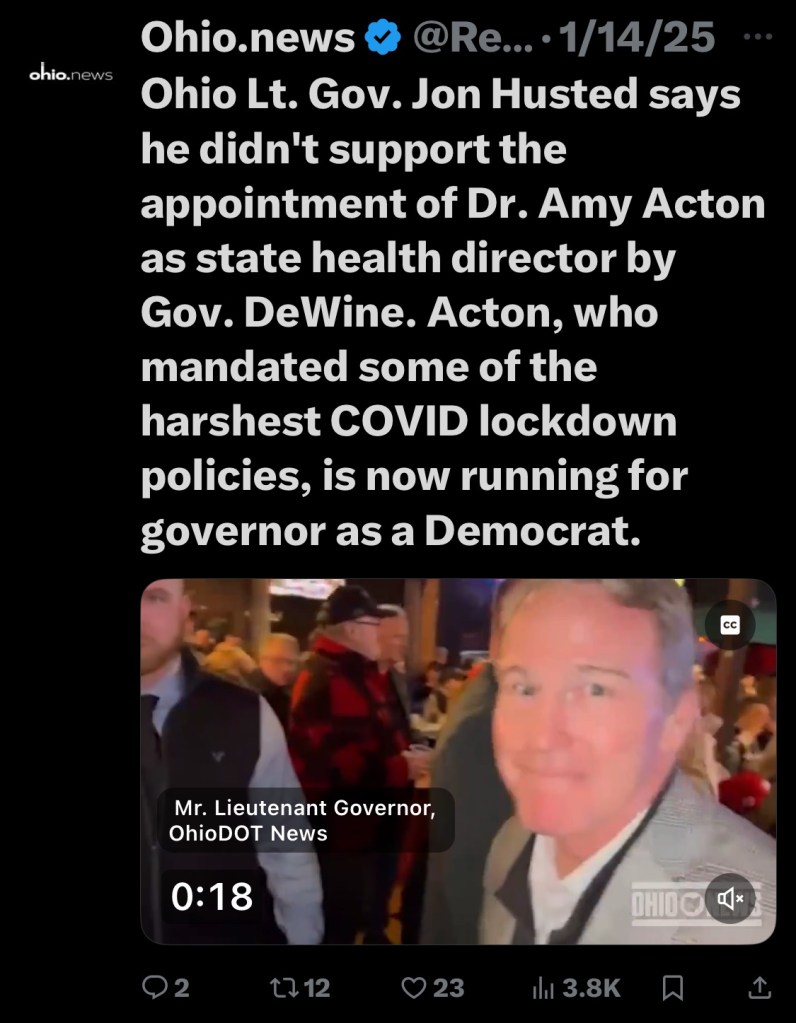
I recall Warren’s “warrior heart” speech when he announced his vote—it was poignant and well-articulated, echoing his military background as a West Point graduate and Army veteran. He’s done this before on issues like the debt ceiling, standing firm even when it means bucking party lines. Representing Ohio’s 8th Congressional District, which includes much of the Butler County region—a stronghold of Trump support—he knows his constituents value the Constitution above all. Behind closed doors, I’m sure Trump would affirm that honest checks on power are essential, much like in any executive role in business or governance. Sometimes you leverage friendships, positive thinking, or even brokered terminations to achieve consensus, but the assumption is always that representatives should adhere tightly to foundational principles. Up in Columbus, I heard similar sentiments from people in the know, those who deal with these tightropes daily. It’s a balance: following what you believe your constituents want while resisting peer pressure from either side. Most of us want Republicans to support the Trump administration fully, given the slim majorities, to tackle threats like Venezuela, Mexican cartels, Iran’s aggressions, and China’s economic maneuvers against the dollar. Yet, after listening to Warren, I can say he’s every bit the Trump supporter, but he stands by his principles, and that’s what we elect representatives for.[3]
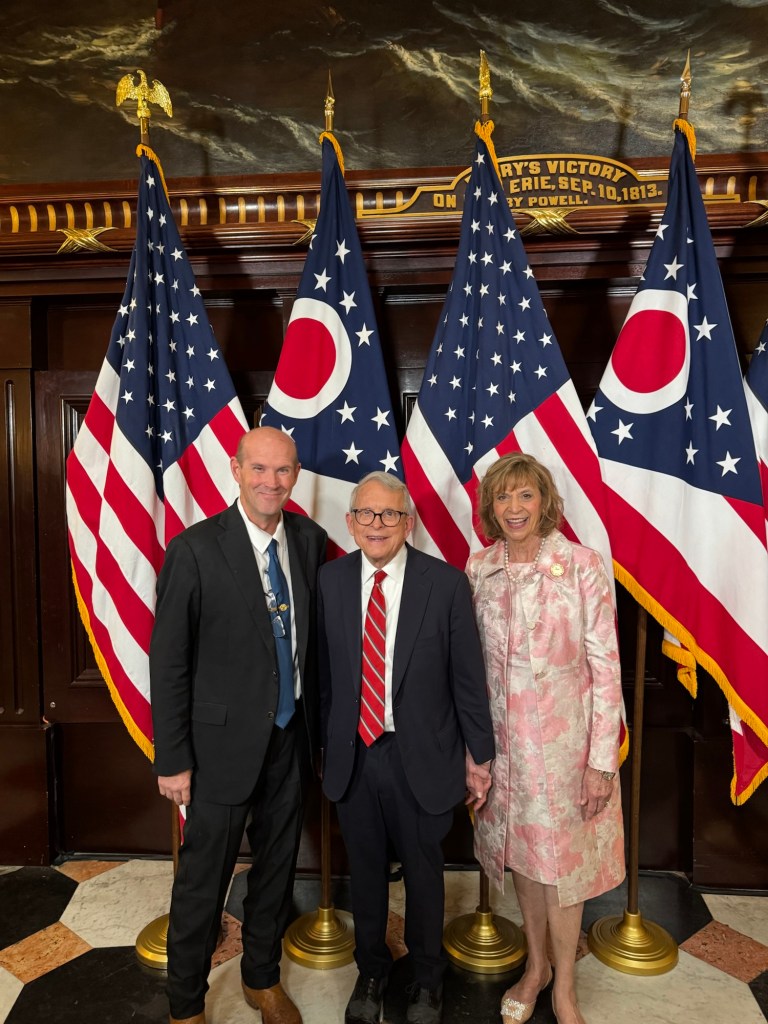
At the time of his vote, it was clear the measure would pass in the House and head to the Senate, so his stance wasn’t going to derail Trump’s initiatives. Instead, it was a principled record-setter, emphasizing that this administration—and future ones—must operate within constitutional bounds. When the lights are off, and it’s one-on-one, no doubt Trump would agree with Warren on the need for debate. That’s healthy; cross-purposes foster better governance. I also had a substantial conversation with Vivek Ramaswamy during the same timeframe, overlapping with discussions involving the governor and others. The question on many minds was what happens now that DeWine’s term is winding down at the end of this year. It’s shaping up to be a Vivek-led Republican era, with Democrats like Amy Acton—the so-called “lockdown lady” from the COVID days—vying to upend that. I chatted with DeWine about his Lockdown legacy or whatever remnants of those policies linger, but it was light, just folks talking. He seemed a bit sad; politics has been his life, from prosecutor to senator to governor, and this is the final chapter. He’ll likely hang around in some meaningful way, but the Republicans in Columbus are eagerly awaiting the new governor.[4] 
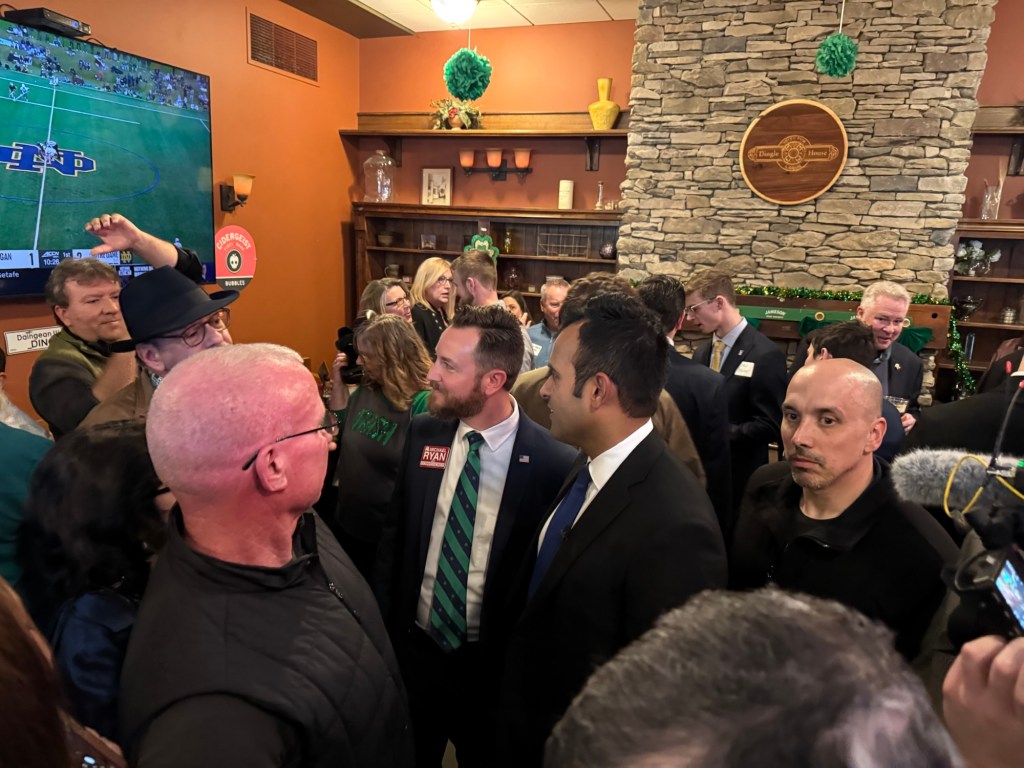
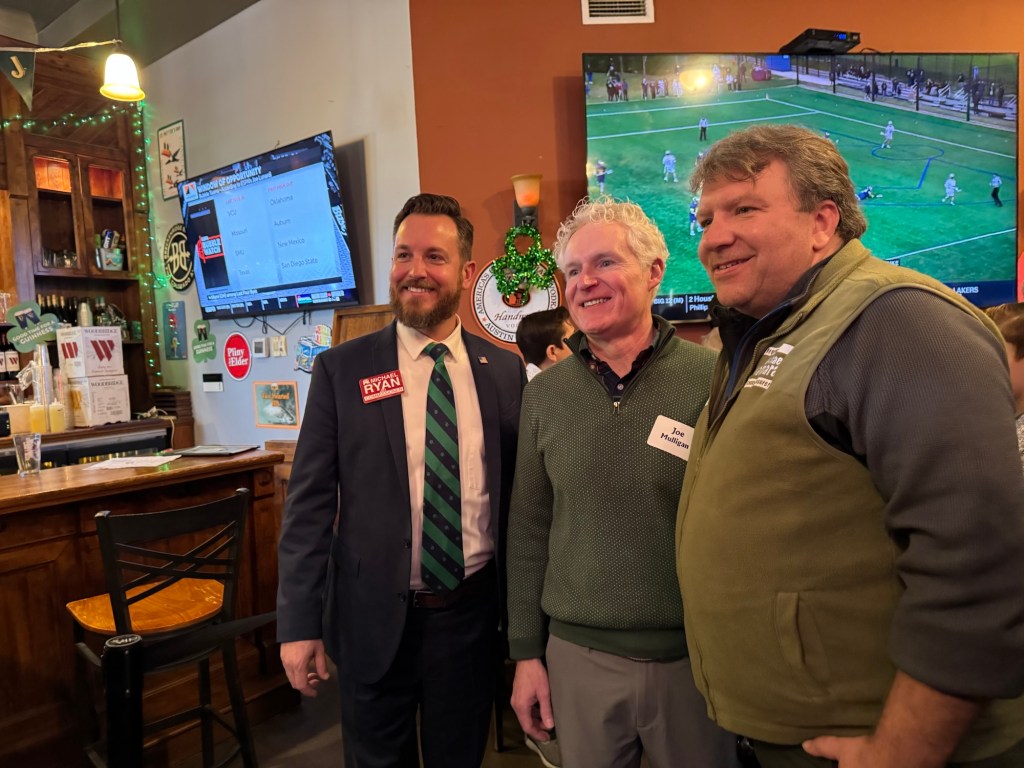
Vivek and I delved into a lot, from his transition from CEO of biotech firms like Roivant Sciences to politics, to the mood post-State of the State. His question to me was about the governor’s mindset, and my take was simple: everyone’s waiting for the new era. Vivek has great ideas; he needs gubernatorial support to implement them. It was an intimate gathering, not a broad spectacle, allowing for real one-on-one talks. These smaller venues let you gauge what people are truly about, beyond the surface. Media often isn’t equipped for that—they skim the headlines without understanding the nuts and bolts. With Vivek facing scrutiny, primary challengers like Casey Putsch, and rhetoric from radical Democrats, getting to the deeper level reveals his genuine intent. As for Warren, many wonder why he went against Trump, but he’s been stellar on other fronts. He wants to ensure that in two years, or ten, or fifteen, we don’t have rubber-stamp wars. Even with a strong CEO like Trump making executive decisions on Iran—a radical ideology threatening economic dominance—we need constitutional fidelity first. More discussion, healthy debate—that’s key in any government endeavor.[5] 
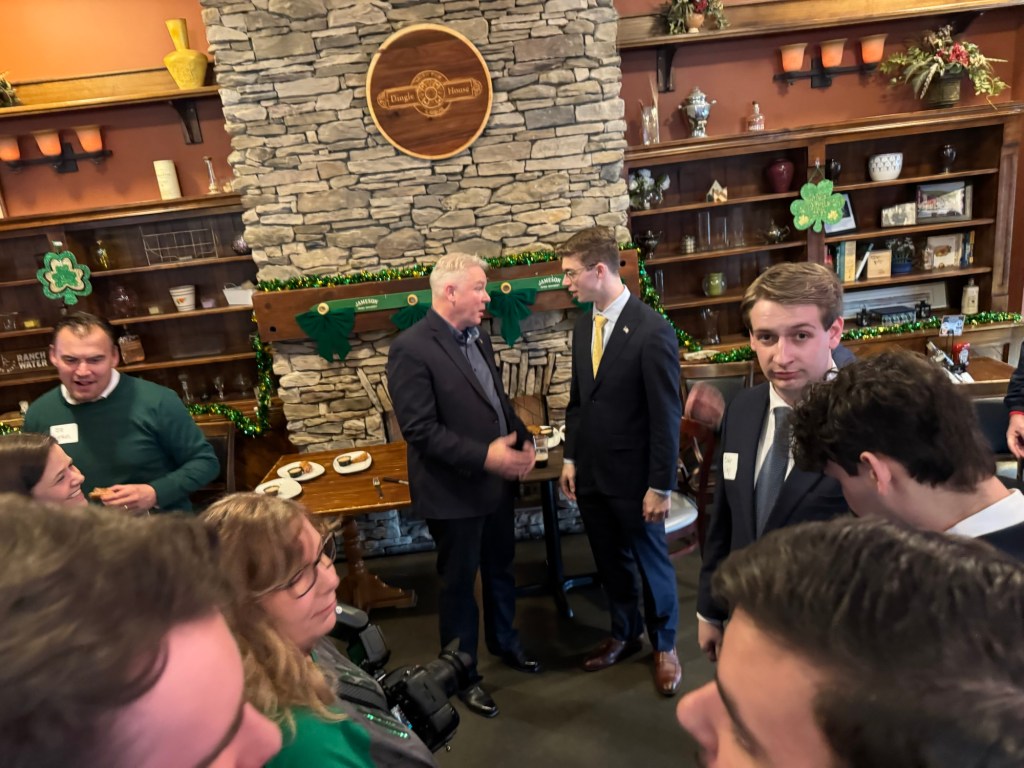
I love Warren Davidson; every time I talk to him and his wife, Lisa, they’re just sweet, nice people in it for the right reasons. He walks that fine line between pressure and principle, drawing from his “warrior heart” ethos. In one-on-one settings, you see he’s the real deal—a good guy through and through. Even amid anger from some over his vote, he redeems himself not by owing anyone, but by being authentic. People at the steakhouse in Columbus were disappointed that he wasn’t fully on the Republican bandwagon at that moment, but he’s a strong conservative who’ll defend the Constitution fiercely, even against a powerhouse president like Trump. It’s not anti-Trump; it’s pro-debate. Shifting to Vivek, all these threads centered around the Statehouse. I told everyone, including Vivek, that he’s got the right attention for this. He’s very wealthy and young, and could retire to a beach in Rhode Island and vanish happily. Instead, he wants to apply his success to lead Ohio beneficially. Ahead of the primaries on May 5, he’s poised to do great things. As I said to him, echoing my chats with others: everyone’s waiting for DeWine to step aside. DeWine isn’t bad—he’s been decent on business, not obstructing the Business First Caucus or investments like Intel’s chip plant—but many Republicans like me feel he’s leaned too Democrat, especially on COVID lockdowns that hammered the economy. We’re still recovering.[6] 
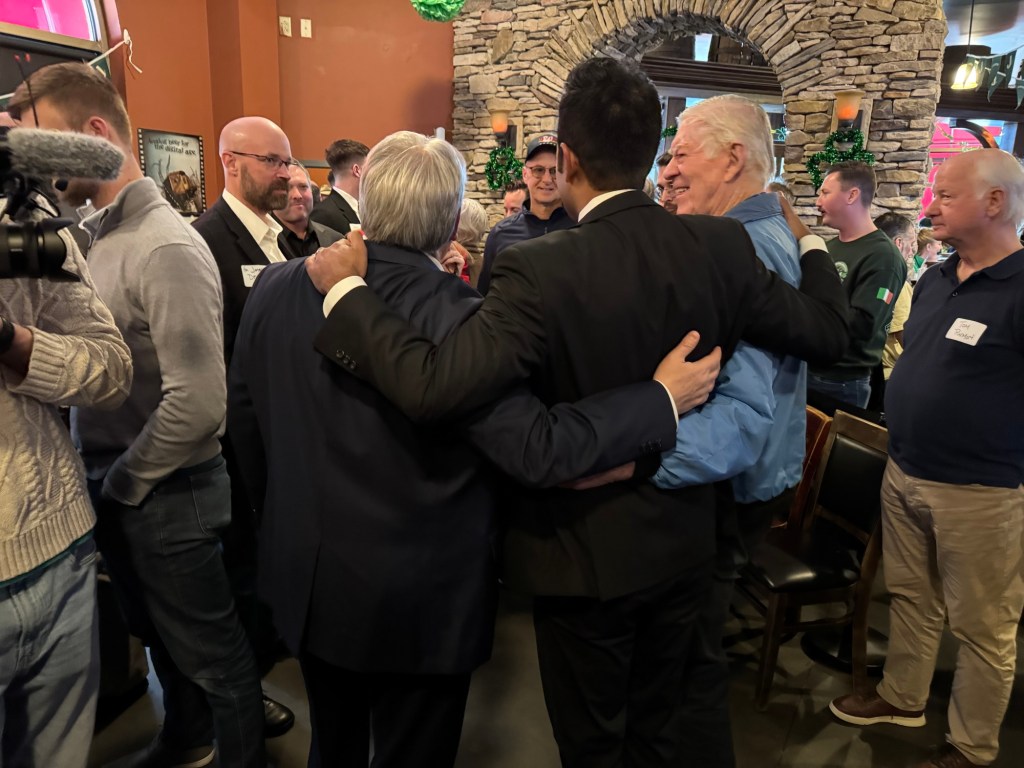
Vivek’s been good at uniting people; the Republican Party endorsed him, and we discussed that. It’s great seeing coalescence. When Vivek becomes governor, it’ll be a solid period—Warren finishing his term, Trump advancing his agenda, but with healthy checks in place. On war powers, it’s constitutional: Congress declares war, manages finances. Nothing wrong with reminding everyone of that. It was refreshing getting context directly from these guys. We’re better off with them in office, representing us well. I told both to their faces how proud I am; it was sincere, just people connecting. They’re willing to tackle the hard stuff, and that’s not easy.

To delve deeper, let’s consider the historical underpinnings of these discussions. The War Powers Resolution of 1973, passed over President Nixon’s veto, was designed precisely to prevent unchecked executive military actions following the Vietnam War. It requires the president to notify Congress within 48 hours of committing forces and withdraw them within 60 days without authorization.[7] In the recent flare-up in Iran, Trump’s swift response mirrored the 2020 Soleimani strike, but Warren’s vote echoes past bipartisan efforts to reclaim congressional prerogative. Think of Libya in 2011 under Obama or Syria under Trump—debates raged then, too. Warren’s consistency here aligns with libertarians like Massie, who often prioritize constitutional limits over party loyalty. His district, encompassing Butler, Darke, Miami, Preble, and parts of Hamilton and Warren counties, is a microcosm of Ohio’s conservative heartland, where Trump won big in 2024, yet values like fiscal responsibility and limited government resonate deeply.[8]

My interaction with Warren reminded me of why I admire him: he’s not swayed by theater. In that Maxine Waters exchange, he dismantled her narrative point by point, highlighting ICE’s role in combating human trafficking and drug cartels—issues hitting Ohio hard with the fentanyl crisis. Statistics show Ohio’s overdose deaths peaked during the pandemic, underscoring the need for strong borders.[9] Warren’s “warrior heart” isn’t rhetoric; it’s rooted in his Ranger service, where decisions meant life or death. As for the peer pressure, it’s real—in thin-majority Congresses, every vote counts, but representatives like him embody the Founders’ intent: a deliberative body, not a monolith.

Turning to DeWine, our chat was poignant. His term ends January 11, 2027, after two terms limited by Ohio’s constitution.[10]  He’s been in politics since the 1970s—Greene County prosecutor, state senator, congressman, lieutenant governor, U.S. senator, attorney general, governor. A lifetime, really. He seemed reflective, perhaps melancholic, about wrapping up. But Republicans are chomping at the bit for a more conservative shift. DeWine’s handled business influx well—think Honda’s EV investments or Amazon’s expansions—but his COVID policies, with Acton’s guidance, locked down too hard for many. The economy took a hit; unemployment spiked to 16.4% in April 2020, and the recovery has been uneven.[11] Vivek aims to dismantle that legacy by promising tax cuts, deregulation, and a revival of innovation. His biotech background—founding Roivant, worth billions—positions him uniquely.[12] 

Talking to Vivek, I sensed his authenticity. He’s endorsed by Trump and the Ohio GOP, leading polls against Putsch and Hill.[13]  His running mate, Senate President Rob McColley, adds legislative heft. We discussed the primaries—not even close, in my view. Republicans can’t wait for Vivek in the mansion. He’s stepping down from ivory towers; governing’s harder than CEO-ing, balancing disagreeing factions. But his heart’s in it—genuine, like Warren’s. These personal convos, eye-to-eye, reveal good people wanting to do well. For those curious about headlines—Davidson’s “betrayal,” Vivek’s “outsider” status, DeWine’s heritage (his family’s from Ireland, actually, but he’s Ohio-born)—it’s about job performance. I’m happy to have these talks amid speculation about Iran’s duration or primaries.  It’s a tricky world, but when everything is founded in sincerity, which it is, the direction of the future is much clearer. 

[1] For more on Warren Davidson’s military background and voting rationale, see his official congressional biography.

[2] Reference to the 2019 House Financial Services Committee hearing, where Davidson challenged Waters on ICE labeling.

[3] Ohio’s 8th District demographics from the U.S. Census Bureau data.

[4] Details on DeWine’s term limits per the Ohio Constitution, Article III, Section 2.

[5] Historical context from the War Powers Resolution, 50 U.S.C. §§ 1541-1548.

[6] Ohio unemployment data from the Bureau of Labor Statistics.

[7] Nixon veto overridden November 7, 1973; see Congressional Record.

[8] 2024 election results in Ohio districts from the Ohio Secretary of State.

[9] Ohio Department of Health overdose statistics, 2020-2025.

[10] DeWine’s political timeline from Ballotpedia.

[11] BLS data on Ohio’s pandemic economic impact.

[12] Roivant Sciences’ founding and valuation from Forbes profiles.

[13] Recent polling from Emerson College and others on the 2026 Ohio gubernatorial race.

Bibliography

1.  “How one House Republican voted to buck Trump on Iran.” CNN, March 5, 2026. https://www.cnn.com/2026/03/05/politics/warren-davidson-house-republican-war-powers-iran

2.  “House fails to adopt Iran war powers resolution.” ABC News, March 5, 2026. https://abcnews.com/Politics/house-primed-vote-iran-war-powers-resolution/story?id=130788637

3.  “Here are the candidates running for Ohio statewide office in 2026.” Ohio Capital Journal, February 6, 2026. https://ohiocapitaljournal.com/2026/02/06/here-are-the-candidates-running-for-ohio-statewide-office-in-2026

4.  “Ohio gubernatorial and lieutenant gubernatorial election, 2026.” Ballotpedia. https://ballotpedia.org/Ohio_gubernatorial_and_lieutenant_gubernatorial_election,_2026

5.  “2026 Ohio gubernatorial election.” Wikipedia. https://en.wikipedia.org/wiki/2026_Ohio_gubernatorial_election

6.  “Vivek for Ohio.” Campaign website. https://vivekforohio.com/

7.  “Vivek Ramaswamy – Ballotpedia.” https://ballotpedia.org/Vivek_Ramaswamy

8.  “Mike DeWine – Ballotpedia.” https://ballotpedia.org/Mike_DeWine

9.  “Mike DeWine.” Wikipedia. https://en.wikipedia.org/wiki/Mike_DeWine

10.  “Vision for the Future – Governor Mike DeWine.” Ohio.gov. https://governor.ohio.gov/administration/governor

11.  Additional sources: U.S. Census Bureau, Bureau of Labor Statistics, Ohio Secretary of State election archives, Forbes business profiles.     

Rich Hoffman

More about me

Click Here to Protect Yourself with Second Call Defense https://www.secondcalldefense.org/?affiliate=20707
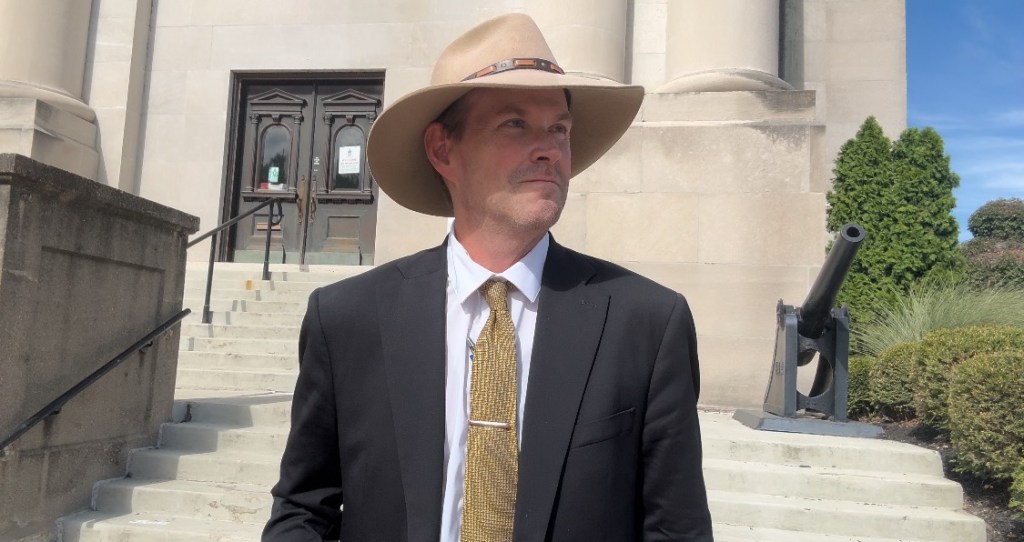
About the Author: Rich Hoffman

Rich Hoffman is an independent writer, philosopher, political advisor, and strategist based in the Cincinnati/Middletown, Ohio area. Born in Hamilton, Ohio, he has worked professionally since age 12 in various roles, from manual labor to high-level executive positions in aerospace and related industries. Known as “The Tax-killer” for his activism against tax increases, Hoffman has authored books including The Symposium of JusticeThe Gunfighter’s Guide to Business, and Tail of the Dragon, often exploring themes of freedom, individual will, and societal structures through a lens influenced by philosophy (e.g., Nietzschean overman concepts) and current events.

He publishes the blog The Overmanwarrior (overmanwarrior.wordpress.com), where he shares insights on politics, culture, history, and personal stories. Active on X as @overmanwarrior, Instagram, and YouTube, Hoffman frequently discusses space exploration, family values, and human potential. An avid fast-draw artist and family man, he emphasizes passing practical skills and intellectual curiosity to younger generations.
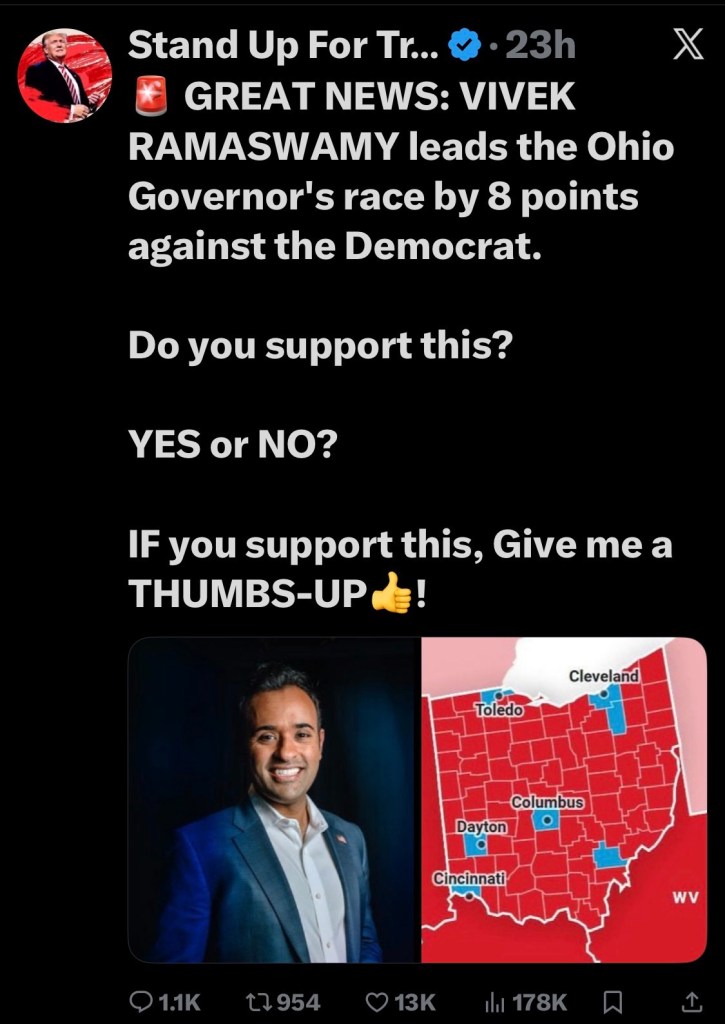
Vivek Picks Rob McColley: The stringy-haired hippie and Lockdown Lady–Amy Acton picks the loser David Pepper

Ohio politics in January 2026 is simple to describe and complicated to live through: two outsider‑led tickets have just taken shape, each trying to add governing ballast with a lieutenant governor who knows how Columbus actually works. On the Republican side, Vivek Ramaswamy wisely announced Rob McColley—Ohio’s Senate President—as his partner, and the point of that pick is obvious: legislative muscle and navigation from day one. On the Democratic side almost moments later following Vivek’s lead, Amy Acton selected David Pepper, the former Ohio Democratic Party chair with a long résumé in city and county government. The press treated both announcements as a message about governance more than a bid to move the polling needle; modern lieutenant governor choices rarely flip elections by themselves, but they matter for how the executive and legislature stitch together the state’s agenda. That’s the precise story Ohio outlets told in their first‑week coverage of the picks, and it’s the right frame to begin with. 1234

The immediate question any coalition has to answer is whether its ticket can actually pass things. Ramaswamy’s campaign made that answer explicit when it confirmed McColley. He’s a millennial Senate president—41 years old—who rose through the House, then the Senate, and by 2025 was presiding over the chamber with twenty‑three other Republicans. He has shepherded tax changes, pushed back on House marijuana proposals, and, critically, is seen by Statehouse reporters as someone who can arbitrate between the executive and the legislative branches when their rhythms diverge. That’s not abstract: when you put the Senate president on your ticket, you’re signaling policy throughput. Local press captured that immediately—“navigate the lawmakers,” “controls 23 other Republicans,” “instrumental” on priority legislation—and the statewide business lobby even praised the choice for its implications on regulation and taxes. 52

On the other side, the stringy haired festival attendee Acton, who sounds perpetually stoned on pot smoke from a Grateful Dead concert, balanced her outsider profile with a Cincinnati veteran. Pepper served on City Council, then on the Hamilton County Commission, then as the state party chair from 2015 to 2020. Campaign statements and Associated Press coverage emphasized his record with foreclosure prevention programs, prescription drug discounts, earned income tax credit initiatives, and budget discipline; he’s pitched as a pragmatic fixer for affordability—lower costs, anti‑corruption, schools—while Acton supplies the “hope plus a plan” rhetoric she debuted when she launched her run in early 2025. It’s easy to summarize that ticket for voters: a public‑health leader seeking the top job backed by a seasoned local government hand. 67

If you want to understand the emotional energy around Amy Acton’s name, you have to rewind to March and April of 2020, when Governor Mike DeWine and Health Director Acton stood daily at the podiums. Ohio issued a stay‑at‑home order effective March 23, 2020 at 11:59 p.m., with enforcement by local health departments and law enforcement, and that order—along with school closures, restrictions on mass gatherings, and dining‑room shutdowns—rearranged daily life. Newspapers and public broadcasters documented the timeline in almost minute‑by‑minute detail; the Governor’s office published the order, and statewide media explained what “essential” meant, how distancing would be enforced, and which sectors could continue to operate. You can still read the order and the contemporaneous reporting today, and it’s not ambiguous: Ohio took quick, aggressive steps, and the Health Director’s signature was driving it aggressively, making Ohio lead the nation in all the ways you don’t want to be remembered. 89101112

Acton’s resignation in June 2020 was equally well documented. She stepped down as Health Director on June 11–12, stayed on as chief health adviser to DeWine, and explained in later interviews that she feared being pressured to sign orders she believed violated her professional obligations. ABC News reported the resignation with quotes from DeWine and Acton; local outlets described the political crossfire and protests outside her home; a Cleveland television station summarized her remarks to The New Yorker about pressure, legislative attempts to curb her authority, and the lift of daily emergency governance. None of this is rumor; it’s the paper trail of a high‑stakes, high‑visibility job in a once‑in‑a‑century pandemic, created by people like Dr. Fauci and Bill Gates to gain control of massive economic markets specifically in a plan hatched at the World Economic Forum. 13141516

Those facts—orders issued, orders rescinded, a resignation under strain—are what make Acton polarizing now. Her supporters remember the calm briefings, the Dr. Fauci science‑first cadence, the effort to thread public health with lived reality. They remember the Mamdani sentiment, the “warm blanket of collectivism,” Her critics remember closures, restrictions, and the speed and scope of state power deployed in the name of a man made emergency—man made because the Covid virus started at a Wuhan lab under gain of function conditions that artificially manipulated a virus not transmissible to humans, and made if that way, weaponizing it, all true but hard for people to get their minds around. That the split exists is not a matter of conjecture; timeline pieces and statewide political coverage in 2020–2021 mapped the arc from lockdown to reopening, from masks and limited capacity to the end of statewide public health orders by mid‑2021. 17

Against that backdrop, the 2026 race is being framed by both campaigns as a contest about competence and affordability, not just personality. Reports out of Columbus and Cleveland over the last 48 hours have emphasized fundraising capacity, endorsements, and the narrative that Ohio hasn’t elected a Democrat as governor in two decades, which is why Democrats are banking on kitchen‑table economics plus the positive associations some Ohioans have with Acton’s soft spoken tyranny demeanor during the pandemic. Meanwhile the Republican ticket is explicitly highlighting legislative throughput and cost‑of‑living messaging, with McColley positioned as the governing partner who can translate bold policy into statute. Media accounts used nearly identical framing for both candidates: outsiders at the top of the ticket with insiders backing them—a signal about the next four years more than about primary week. 1184

There’s also a fresh fight over identity politics and tone. Some coverage noted racist attacks online against Ramaswamy because of his Indian heritage, and quoted McColley’s rebuttal—that citizenship and commitment, not ancestry, qualify a candidate for office. Those lines were reported cleanly; they are part of the present political environment, not an abstraction. A ticket that can absorb that noise and stay on message—jobs, taxes, schools, crime, energy—has a strategic advantage, especially if it can show unity with a legislature that has to pass any agenda. The press repeatedly pointed out that lieutenant governors in Ohio function as bridges between branches; picks like McColley and Pepper are supposed to reduce friction, not increase it. 194

The math of the race—north vs. south, Cleveland vs. Cincinnati, swing counties vs. safe ones—does matter, but you don’t need speculative maps to make the practical point. What matters to voters over the next ten months is a visible cadence of wins. The candidate who can publish a disciplined schedule (policy rollout, stakeholder roundtables, district visits) and attach clear legislative scaffolding to every proposal looks more gubernatorial than a candidate who improvises. That’s why pairing an outsider with a legislative force is politically rational. Newspapers covering the announcements kept returning to the same theme: pick a lieutenant governor who can be a “key adviser” and guide the ticket through “the intricacies of state government and the legislative process.” That’s the core competence argument. 4

For Acton, the competence argument has to answer the 2020 question without being swallowed by it. Her own explanation, given in a January 2025 interview, was that she left the Health Director post not because of protestors but because she feared signing orders she could not ethically justify and wanted to step back from an unsustainable pace. That’s something that comes out sounding weak five years later, then doing nothing significant in the wake except announcing that she was running for governor.  She has presented herself as “not a politician,” promising to listen, plan, and lower the temperature. Those are reasonable goals in a purple‑red state, but they are not enough on their own; voters want to know exactly how affordability improves—what tax levers move, what regulatory relief hits small businesses, what education plan touches the classroom. Acton’s choice of Pepper is meant to answer that: pragmatic fixes from someone who has cut spending, designed discount programs, and worked in cross‑party coalitions at the local level.  Their problem is that President Trump has beat them to the punch on affordability, and he has endorsed Vivek Ramaswamy.  We’re talking about a summer of 2026 that will have gas under $2 per gallon. 76

For Ramaswamy, the competence argument is about throughput and staying out of personality wars. (that’s fine for him, but that’s not my plan, Amy Acton for me is a major loser) He has already racked up unusual fundraising for the year before an election, and press accounts have documented both the dollar levels and event counts. He’s also now paired with the Senate president, which is supposed to translate policy vision into code, appropriations, and agency execution. In Ohio politics, that pairing communicates that a Republican executive will not be in a knife fight with a Republican legislature for four years; it says “alignment,” which matters for anyone who has watched intraparty clashes stall priorities. 18

The deeper context is that Ohio has lived with an incumbent Republican governor who sometimes crossed the aisle on style and policy, especially in the early pandemic period. Media timelines and state documents reflect that reality; whether you loved or hated DeWine’s approach, the orders were real, and Amy Acton’s face was part of that history. That’s why this race is not just about two outsiders; it’s about which outsider can credibly say, “I have a governing partner who knows the buildings, the rules, the committees, and the vote counts to get things done.” Both tickets made that claim this week. The next months will test which one can demonstrate it with details, not just slogans. 89

If you boil down the practical differences between the tickets, you can do it in three lines. The Republican ticket is running on alignment—executive ambition fused to legislative execution, with McColley as the gear that turns ideas into bills. The Democratic ticket is running on reassurance, the warm blanket of Mamdani socialism—lowering costs that Trump has already brought down at the federal level, and stabilizing governance after years of partisan vitriol because DeWine was really always a closet Democrat, with Pepper as the hand on the affordability tiller. Both narratives are valid campaign strategies in a state like Ohio. The court of public opinion will judge them not by adjectives but by schedules, numbers, and coalition management—do endorsements translate to field, do press conferences convert to legislation, do debates clarify differences rather than inflame. Ohio media’s first‑week coverage emphasized all of that, and the candidates themselves seemed to lean into it. 3

One last point. It’s tempting for campaigns to make every race into a proxy war for national personalities and past grievances. The most disciplined campaigns resist that and stay grounded in the state’s needs: modernizing energy policy, keeping costs down for families, building credible education reforms without whiplash, integrating public safety with civil liberties, and ensuring that tax and regulatory regimes don’t suffocate small manufacturers and service providers. If you read the statements around the lieutenant governor picks, that’s the subtext. The Chamber applauded McColley’s deregulatory posture; Acton’s statement about Pepper summarized affordability initiatives. Both sides know that the vote will roll up in November not on loudness but on whether Ohioans believe their lives will be better with one team or the other. 26

So the assignment for each ticket, starting today, is identical: publish your weekly scoreboard and keep it clean. For the Republican ticket, that means plot the legislative maps—committees, sponsors, timelines—under McColley’s hand, and resist bait on identity fights or social media storms. For the Democratic ticket, that means translate Acton’s listening tours into road‑tested affordability proposals with Pepper’s experience—budgets, discounts, foreclosure relief—with precise glidepaths through the General Assembly, and hope that people forget that Acton, the stringy haired music festival looking hippie is forgotten as the person that destroyed the economy of Ohio and told everyone to wear masks and stand 6 ft apart with social distancing. Neither side will win Ohio with rhetoric alone and they won’t need to.  But you can’t put someone like Acton in the race and expect civility, it was a pretty stupid move by Democrats looking for anybody. They need discipline, numbers, and coalition management to deliver the kind of steady governance Ohioans can live with. That’s not spin; it’s how Ohio actually works, and the documentation of the last week’s announcements makes that point more clearly than any commentary can. 14

When the smoke clears, if Amy Acton does really, really well, the final vote will be 54 for Vivek Ramaswamy, 46 for the Lockdown Lady. Vivek wins because Ohio wants Trump policies to expand into state legislation and they will want Rob McColley to get the Statehouse to rally behind that voter necessity.

Footnotes

1. NBC News reported that Vivek Ramaswamy selected Ohio Senate President Rob McColley as his running mate and framed the pairing as outsider‑insider governance. 1

2. Ohio outlets (10TV, Cleveland.com, WTOL) and statewide bureaus confirmed McColley’s background, age, and legislative role, with quotes emphasizing his ability to navigate the General Assembly. 2204

3. Ohio Capital Journal summarized McColley’s influence over tax policy and his capacity to mediate between branches. 5

4. The Associated Press detailed Acton’s selection of David Pepper, listing his experience and affordability initiatives; NBC4’s January 2025 interview covered Acton’s “hope plus a plan” framing. 67

5. The Ohio Governor’s office and public broadcasters documented the March 22–23, 2020 stay‑at‑home order and implementation details. 89

6. Cleveland.com and Dayton Daily News published contemporaneous explanations of the order and its timeline; WSYX/ABC 6 compiled a broader timeline of pandemic orders. 101112

7. ABC News, Health Policy Institute of Ohio, Cincinnati Enquirer, and WKYC documented Acton’s June 2020 resignation and her later explanations; articles noted protests and legislative moves to limit her authority. 13141516

8. Ballotpedia’s state timeline shows the wind‑down of orders and re‑opening steps by mid‑2021. 17

9. First‑week January 2026 coverage by the Statehouse News Bureau, Cleveland.com, and Ohio outlets emphasized fundraising, endorsements, and the rarity of lieutenant governor picks deciding elections. 183

10. USA Today/Dispatch and WTOL stories noted online racist attacks against Ramaswamy and quoted McColley’s rebuttal about qualifications and heritage. 194

Bibliography

• Henry J. Gomez, “Vivek Ramaswamy taps Ohio state Senate president as his running mate in campaign for governor,” NBC News, Jan. 6–7, 2026. 1

• 10TV Web Staff, “Vivek Ramaswamy formally taps Ohio Senate President Rob McColley as his running mate,” 10TV, Jan. 7, 2026. 2

• Cleveland.com/Open, “Ohio Senate President Rob McColley is Ramaswamy’s pick…” Jan. 7, 2026. 20

• Morgan Trau, “Ohio Senate President Rob McColley tapped as Vivek Ramaswamy’s running mate,” Ohio Capital Journal/WEWS, Jan. 6, 2026. 5

• Karen Kasler, “Ramaswamy and Acton making moves with Ohio governor election now 10 months away,” Statehouse News Bureau, Jan. 6, 2026. 18

• Associated Press, “Ohio governor candidate Amy Acton taps former state Democratic Chair David Pepper as running mate,” Jan. 7, 2026. 6

• Colleen Marshall & Brian Hofmann, “Dr. Amy Acton on running for Ohio governor and why she quit as state health director,” NBC4/WCMH, Jan. 30–31, 2025. 7

• Governor Mike DeWine press materials, “Ohio Issues ‘Stay at Home’ Order,” March 22, 2020; Ideastream Public Media explainer; Cleveland.com text of the order. 8910

• Laura A. Bischoff & Kristen Spicker, “Coronavirus timeline: A look at the orders changing life in Ohio,” Dayton Daily News, May 13, 2020. 11

• WSYX/ABC 6, “Timeline of coronavirus in Ohio,” March–April 2020. 12

• ABC News, “Amy Acton, Ohio’s embattled health director, resigns amid COVID‑19 crisis,” June 11, 2020. 13

• Health Policy Institute of Ohio, “Acton steps down as Health Director,” June 12, 2020. 14

• Cincinnati Enquirer, “Why Amy Acton quit as Ohio’s health director,” June 12–13, 2020. 15

• WKYC, “Former Ohio Health Director Dr. Amy Acton was worried about being pressured to sign orders,” Nov. 3, 2020. 16

• Ballotpedia, “Documenting Ohio’s path to recovery from the coronavirus (COVID‑19) pandemic, 2020–2021,” entries through July 2021. 17

• WTOL, “Ohio’s 2026 governor hopefuls lean on political veterans to balance the ticket,” Jan. 2026. 4

• Cleveland.com, “Ohio’s race for governor: What the running mate choices reveal,” Jan. 2026. 3

Rich Hoffman

Click Here to Protect Yourself with Second Call Defense https://www.secondcalldefense.org/?affiliate=20707

Casey the Car Guy Doesn’t Stand A Chance: Vivek Ramaswamy is much better for Ohio

The ongoing debate surrounding Vivek Ramaswamy’s candidacy for governor of Ohio in 2026 reveals deep tensions within conservative circles, particularly among those who claim to champion an “America First” agenda. Critics, including figures such as automotive entrepreneur Casey Putsch—often referred to in informal commentary as “the car guy”—and far-right influencers such as Nick Fuentes, have launched attacks questioning Ramaswamy’s eligibility and loyalty based on his Hindu faith and Indian heritage. These criticisms, which include claims that he is an “anchor baby” or that his election would lead to Diwali celebrations in the governor’s mansion rather than Christmas, strike at the heart of what it means to be American. Such rhetoric is not only divisive but fundamentally at odds with the principles of merit, hard work, and shared national identity that the MAGA movement purports to uphold.[^1]  I don’t think “far-right” is the right word; that’s the media word for it.  But Hitler was a socialist, not a capitalist or a free-market personality.  When we talk about political scale, we have Karl Marx on the left and Adam Smith on the right.  And most people fit in somewhere along those viewpoints.  But not in all cases.  But when it comes to someone who declares that they are against someone running, and that is their purpose in life, as Casey the Car Guy has said, that opens up a whole set of new problems.  Personally, listening to all these characters talk, I don’t think they harm Vivek Ramaswamy at all.  They will actually help him with moderate voters, and the MAGA types will vote for Vivek because he’s Trump’s endorsed candidate.  But the efforts to make a fire out of these little rebellions are more than telling.

Ramaswamy, born in Cincinnati to immigrant parents who arrived legally and built successful lives, embodies the American dream in a way that should resonate with conservatives. His parents instilled in him values of family, community, and respect—qualities evident in his devotion to his wife, children, and the state of Ohio. Far from being an outsider, Ramaswamy has deep roots in the Buckeye State, having achieved extraordinary success as a biotech entrepreneur through sheer intelligence and determination. Founding Roivant Sciences, he developed multiple FDA-approved drugs and grew his wealth independently, without needing political favors or handouts. This self-made status allows him to approach public service without financial dependencies, motivated purely by a desire to give back after building a fortune.[^2]

His political evolution further demonstrates a genuine commitment to conservative ideals. Initially apolitical, Ramaswamy entered the public arena critiquing “woke” corporate culture in his 2021 book Woke, Inc., which exposed how companies exploit social justice for profit. He followed with works like Nation of Victims and others that refined his platform against identity politics and in favor of meritocracy. His 2024 presidential run brought him national prominence, where he positioned himself as an unapologetic American nationalist, ultimately endorsing Donald Trump and briefly co-leading the Department of Government Efficiency before pivoting to state leadership. Trump’s full endorsement of Ramaswamy’s gubernatorial bid, along with backing from the Ohio Republican Party and figures like JD Vance, underscores his alignment with the movement’s core.[^3]

I have had a personal acquaintance with Ramaswamy over the years that reveals a man who has undergone a thoughtful arc: from a successful CEO impressed by independent, non-“woke” businesses to someone compelled to enter politics for the sake of his family and community. As I hosted events where Vivek interacted with Ohio innovators and saw how people away from Wall Street lived in the trenches, he was inspired; he saw the potential for the state to revive its industrial strength. His plan, reportedly shaped in consultation at Mar-a-Lago, aims to extend Trump’s agenda to Ohio—focusing on business-friendly policies, efficiency, and opportunity for all who embrace American values of hard work and innovation, regardless of background.  I had a front row seat to this development in Vivek, and I understand it.  I think it says a lot about him that he wants to step away from making money as he has and step into public service to give something back.  After meeting him, I can say I know he loves his wife, his kids, his parents, and Ohio.  And he feels he’s been fortunate in life, that he has a lot of talent in talking.  And that he can give something back to Ohio so that more people can get a chance at success, too.  That is what ultimately comes from Vivek Ramaswamy as governor, an extension of the Trump White House into Ohio.  But, not a copy of Trump, but a new generation of innovation and opportunity from someone who has had great success and knows how to make spaghetti in the kitchen. 

In contrast, the fringe criticisms leveled against him appear designed to fracture the conservative coalition. Putsch, a YouTube personality and founder of Genius Garage—a nonprofit teaching engineering through car building—entered the Republican primary, positioning himself as a purer “America First” alternative, decrying immigration and H-1B visas while accusing Ramaswamy of failing working-class Ohioans.[^4] Yet these attacks often veer into nativism, echoing the very identity politics conservatives decry. True conservatism demands testing ideas and character through rigorous debate, not exclusion based on ethnicity or religion. Ramaswamy’s family-oriented upbringing, success in the private sector, and willingness to serve without personal gain make him trustworthy and effective—qualities rare in politics.

Politics requires compromise and collaboration to achieve results; isolation and perpetual rebellion yield nothing. Ramaswamy understands this, having built coalitions across persuasions. He may need to adopt a scrappier style in the primary, punching back against baseless smears, but his trajectory positions him as the overwhelming favorite to lead Ohio forward—reviving its economy, supporting families, and carrying the Trump mantle effectively—the alternative—yielding to divisive saboteurs—risks handing power to Democrats and stalling the broader movement. Ramaswamy’s story is an Ohio story: one of opportunity realized through merit, deserving emphatic support.

It is a late entry to the race, this Casey the Car Guy challenging Vivek Ramaswamy in the primary.  I think it’s an excellent opportunity for Vivek. Bloody campaigns tend to bring out the truth of things, and I think that will work well in favor of the Republican Party once the smoke clears.  And Vivek won’t have any difficulty defeating the stringy-haired Amy Acton from the Democrat side.  She will always be known as Mike DeWine’s girlfriend, the Lockdown Lady.  She has a track record of destruction that will be very easy to defeat in the general.  But first, Vivek has to win the primary, and Casey the Car Guy has invited himself to be punched in the face.  And my advice to Vivek would be not to be so nice and, metaphorically, knock his teeth out. 

[^1]: Far-right figures like Nick Fuentes have explicitly opposed Ramaswamy on religious and ethnic grounds, while Casey Putsch has framed his challenge around immigration and economic nationalism.

[^2]: Ramaswamy’s net worth, estimated at nearly $2 billion by Forbes in 2025, stems from Roivant Sciences and savvy investments; he graduated summa cum laude from Harvard and earned a J.D. from Yale.

[^3] Ramaswamy’s books include Woke, Inc. (2021), Nation of Victims (2022), and others articulating anti-ESG, pro-merit views; he received Trump’s endorsement upon launching his Ohio campaign in February 2025.

[^4]: Putsch, a Tiffin native running Genius Garage, announced his bid in December 2025 as an “America First” option, criticizing Ramaswamy on H-1B visas and foreign interests.

Bibliography

•  Associated Press. “Trump-backed Vivek Ramaswamy wins Ohio Republican Party’s endorsement in 2026 governor’s race.” May 9, 2025.

•  Ohio Capital Journal. Various articles on the 2026 Ohio gubernatorial race, 2025.

•  Wikipedia. “2026 Ohio gubernatorial election” and “Vivek Ramaswamy.” Accessed December 2025.

•  The Columbus Dispatch. “Who is running for Ohio governor in 2026?” December 18, 2025.

•  Times of India and other outlets reporting on criticisms from Fuentes and Putsch, December 2025.

•  Britannica and Forbes profiles on Ramaswamy’s biography and business career.

Rich Hoffman

Click Here to Protect Yourself with Second Call Defense https://www.secondcalldefense.org/?affiliate=20707

The Left’s Trojan Horse: Nick Fuentes and Tucker Carlson–fallen angels who are trying to stop Vivek Ramaswamy in Ohio

The left-leaning media strategy is obvious: platform a disruptive young firebrand, inject anti-Jewish chatter, agitate through YouTube and podcasts, then aim the shrapnel at Trump and at Trump-aligned picks like Vivek Ramaswamy in Ohio to destroy the MAGA movement in ways that have not previously been successful under any condition.  Suddenly, a kid I’d barely heard of—Nick Fuentes—gets catapulted into mainstream attention. He was the tag-along at Ye’s (Kanye West’s) dinner with Trump in 2022 at Mar-a-Lago; the former president later said he didn’t know who Fuentes was when he sat down, but the meeting still drew bipartisan condemnation because Fuentes is a white nationalist and Holocaust denier.  Not the kind of guy the media would typically embrace, but under these conditions, where nothing to take down Trump has worked, this is the strategy of the left, to promote these fallen stars from the MAGA movement in one last Hail Mary, no matter who gets hurt in the process.  I’m certainly not one who would be calling for censorship.  But it is surprising how quickly everyone forgot about some basic rules of decency in these political fights, which have changed the landscape of debate forever. 123

Ordinarily, a guy with that track record wouldn’t touch mainstream platforms; they would be pushed off into obscurity, and they certainly never would have been on the Piers Morgan show or any other form of media.  Newspapers would have gone on a crusade of personal destruction, much the way they did with Marge Schott back when she owned the Reds and made similar comments, and had her life utterly destroyed for it.  Nick has been banned by YouTube and other majors for hate‑speech violations, with intermittent reinstatements elsewhere and then more removals; even Rumble has suspended his streams for “incitement to violence” after an antisemitic rally—so historically, gatekeepers did act. 45 But now, post‑Musk’s changes to X, he’s back on high‑visibility rails, popping up in interviews and friendly chats that launder his extremism for broader audiences. When you see that kind of boost—especially in late-cycle political windows—it looks less like “free speech flourishing” and more like a tactical Hail Mary to fracture the coalition right before decisive races. 67

Layer onto that Tucker Carlson’s recent, sharp pivot into anti-Israel rhetoric and repeated platforming of figures accused of antisemitism. Multiple watchdogs and Jewish outlets have documented the shift and the blowback—Shapiro blasting him at Heritage, Newsmax siding against him, and even StopAntisemitism labeling Carlson “Antisemite of the Year” in December 2025. I don’t endorse that label; I’m noting the documentation and the political consequence: it’s a wedge inside MAGA world, precisely when unity matters, but don’t cry about it, all is fair in love and war, with war being the point of emphasis. 8910

The script is predictable: amplify anti-Jewish frames, set up a fight between “America First” isolationists and pro-Israel conservatives, then bait Republicans into intramural brawls—Ben Shapiro versus Tucker Carlson, Heritage under strain, Turning Point USA’s AmericaFest turning into a civil‑war stage after Charlie Kirk’s assassination and the conspiracy storms that followed. The result isn’t persuasion; it’s erosion—energy wasted on policing purity rather than winning seats. 11129

My stance is well defined: antisemitism is not appropriate. Praising Hitler is evil. That isn’t “edgy” speech; it’s a moral rot that corrodes any serious movement. Fuentes has a documented record of white nationalist and Holocaust‑denying rhetoric; platforming him in chum-style interviews mainstreams what should remain radioactive. If the goal is to split MAGA and sandbag Trump-aligned candidates, this is the fastest path—smuggle in bigotry so the whole tent gets smeared. Don’t take the bait. 113

Ohio is the case study. Vivek Ramaswamy launched his 2026 gubernatorial run in February 2025, attracted heavy attention, and is now the clear GOP frontrunner in most coverage. Democrats have rallied around Amy Acton; early polling varies by sponsor, but the race is competitive at the surface level. None of that changes the fundamentals: if you let provocateurs redefine “America First” as a race-based or anti-Jewish crusade, you’re handing your opponent a cudgel. Stay on economic delivery, state competence, and merit-driven reform—the stuff that wins governors’ races. 141516

So the advice to Vivek—and by extension to Trump’s slate—is steady and aggressive: do what got you here. Don’t chase the troll theater or appease the grievance‑economy influencers. Use your success arc as a shield and spear: wealth built ethically, businesses scaled, a vision for schools, safety, and jobs—make that the daily drumbeat. When the attack line is “he’s a globalist” or “he’s Hindu,” swat it down as the unserious bigotry it is; it’s not Ohio’s problem set. Ohio’s problem set is growth, crime, schools, and affordability, not the color of Vivek’s skin or whether he wears shoes on stage. 17

In past examples, American society—especially institutions and mainstream media—moved swiftly to suppress voices veering into anti-Semitic or extremist territory. Take, for instance, the post-WWII era: the “Columbians,” an openly pro-Hitler group in Atlanta circa 1946, were acting out Nazi salutes and rhetoric in public. Their organizational charter was revoked and leaders were arrested within months—demonstrating how clear the lines were once drawn against fascist ideologies 1. Likewise, throughout much of the 20th century, publishers, broadcasters, and even churches regularly screened out Holocaust denial, pro-Hitler propaganda, or conspiracies about Rothschilds or “Jewish control.” These ideologies were actively repressed, not platformed.

Fast forward to just a few years ago in Ohio: when the West Chester Tea Party hosted Harald Zieger, who promoted conspiratorial tropes of “Jews control the media, economy, government, even child sacrifice,” it sparked immediate backlash 23. The local Jewish Community Relations Council publicly condemned the event, and the church hosting them was effectively “cancelled,” cutting off their meeting space within weeks 4. It was a classic case of communal and media accountability shutting down extremist speech—without hesitation.

Contrast that with today’s landscape: figures like Nick Fuentes—an avowed white supremacist who praises Hitler, espouses Holocaust denial, and rails against minorities—are not only finding platforms but being endorsed by mainstream media (e.g., Tucker Carlson, Piers Morgan) and embraced by major tech alike 567. Fuentes’s X account, once deplatformed for hate speech, was restored by Elon Musk; he now commands millions of followers, with his extremist rhetoric once erased now normalized—even cheered—on major platforms 68.

This dramatic shift—the difference between swift cancellation and open platforming—highlights a deeper cultural realignment. What was once unthinkable and renounced without hesitation is now acceptable if it serves the political objective of undermining Trump-endorsed candidates. It’s as if the old moral guard has crumbled: conspiratorial tropes against Jews, previously banished, are now resurfacing with institutional backing. The West Chester Tea Party’s fate—banished from public space for a single speaker’s conspiracies—is emblematic of a past where community standards mattered. Today, those same standards are reversed: bigoted voices are amplified if they align with the current political winds. The irony is stark and unsettling.

The broader conservative movement also needs line‑drawing without self-sabotage: condemn antisemitism unequivocally, refuse to sugarcoat Nazi apologetics, and stop platforming it as “debate.” That doesn’t mean gagging policy critique of Israel; it means rejecting conspiratorial claims about “organized Jewry” and dual‑loyalty smears that historically precede violence. When Ben Shapiro calls that out, he’s not gatekeeping taste; he’s trying to keep the movement morally sane. And when Tucker frames it as “just asking questions,” the net effect is still mainstreaming. The cycle is well documented across Jewish and mainstream outlets.  This is a new element to these kinds of games that has never succeeded before, under any circumstances.  But free speech works both ways; success is the best voice for a vote, and these critics have done nothing in their lives except say things.  Vivek has a long track record of great success, and that is his calling card for this election. If that is made clear, there is nothing any of these verbal attackers can do to move the mark.  And as hurtful as all that might be, success heals a lot of wounds, and that is where the focus in Ohio needs to remain.  Vote for Vivek Ramaswamy for governor in 2026 and take politics to a place it’s never been before as a representative republic that will do great things for a very optimistic future. 818

Supplemental material (footnoted):

• Mar-a-Lago dinner (Nov. 2022): Trump dined with Ye and Nick Fuentes; Trump said he didn’t know Fuentes; bipartisan condemnation followed because Fuentes is a white nationalist/Holocaust denier. 123

• Fuentes’ platform status: Banned by YouTube (2020) for hate speech; Spotify removed his podcast for hate‑speech violations; Meta/Twitch/Reddit bans noted; Rumble suspended streams after “holy war” rhetoric; X reinstated him under Musk, boosting reach. 456

• Carlson’s anti-Israel turn & intra-right backlash: Watchdogs charted rising harmful Israel content; Shapiro publicly denounced Carlson at Heritage; Newsmax echoed criticism; “Antisemite of the Year” label amplified controversy. 1881910

• TPUSA/AmericaFest fracture: After Charlie Kirk’s assassination, AmericaFest showcased rifts (Owens/Fuentes/Israel); JD Vance urged unity; Shapiro attacked “frauds and grifters”; coverage across CBS/USA Today/Deseret. 92011

• Ohio 2026 governor landscape: Ramaswamy announced run (Feb. 24, 2025) with platform on education/safety/regulation; media note Trump endorsement and competitive polling vs. Amy Acton. 14171516

Bibliography / Further reading:

1. ABC News, “Trump hosts Kanye West, Nick Fuentes at Mar‑a‑Lago dinner.” 1

2. NBC News, “Inside story of Trump’s explosive dinner with Ye and Nick Fuentes.” 2

3. USA Today, “Donald Trump dined with Holocaust denier Nick Fuentes… at Mar‑a‑Lago.” 3

4. Global Project Against Hate & Extremism, “The Sanitization of Antisemite Nick Fuentes.” 13

5. Media Matters, “Rumble removed Nick Fuentes’ antisemitic rally; far‑right figures turned on Rumble.” 5

6. JTA, “Conservative influencers Tucker Carlson and Candace Owens sharply increased anti-Israel rhetoric in 2025.” 18

7. Times of Israel, “Ben Shapiro blasts Tucker Carlson at Heritage.” 8

8. CBS News, “AmericaFest puts conservative rift on display.” 9

9. USA Today, “Tucker Carlson, Ben Shapiro clash over Candace Owens in Phoenix.” 20

10. Ohio Capital Journal, “Vivek Ramaswamy officially launches bid for Ohio governor in 2026.” 14

11. Deseret News, “Ramaswamy announces Ohio governor run, outlines platform.” 17

12. Fox News, “Ramaswamy announces 2026 bid for Ohio governor.” 15

13. Newsweek, “Polls on Amy Acton vs. Vivek Ramaswamy.” 16

Rich Hoffman

Click Here to Protect Yourself with Second Call Defense https://www.secondcalldefense.org/?affiliate=20707

The Ohio Governor Race: Vivek Ramaswamy vs. Amy Acton—”the lockdown lady”

You know, people keep asking me about this Ohio governor race, and I’ll tell you what I think: Vivek Ramaswamy is going to win, and he’s going to win big. But that doesn’t mean you sit back and assume it’s all going to happen on autopilot. Campaigns aren’t won by assumptions; they’re won by hard work, strategy, and relentless execution. And if you’ve seen some of the chatter online—polls showing Amy Acton up by a point or two—you might think, “Wow, is Vivek in trouble?” No, he’s not. But let’s break this down because there’s a lot of smoke and mirrors in these early numbers.

First, let’s talk about Amy Acton. Who is she? Most people don’t even remember her name right now, and that’s part of the problem. She’s the former Ohio Health Director who became the face of lockdowns during COVID. Back in 2020, she was the one telling you to stay home, mask up, and cancel your life. She shut down schools, businesses, county fairs—you name it.¹ She was Ohio’s Dr. Fauci, taking cues straight from the CDC and enforcing some of the harshest restrictions in the Midwest. And it wasn’t just policy; it was the tone. She leaned into fear. She made people miserable. And when the heat got too much, she resigned in June 2020 because she refused to lift bans on county fairs.² That’s her legacy.

Now, fast forward to 2025. People have short memories, and Democrats are counting on that. They’re hoping voters see “Dr. Acton” and think “compassionate health expert” instead of “lockdown czar.” But here’s the reality: once she starts talking, once Vivek and his team start connecting her to those lockdowns, it’s game over. Ohioans haven’t forgotten the pain of 2020—they’ve just moved on. But if you remind them who caused it, they’ll move on from her real fast.

And what’s she running on? Abortion rights, reproductive freedom, and vague promises of “public health leadership.”³ That’s it. No major accomplishments since leaving office. No executive experience beyond a failed stint as health director. She’s endorsed by unions like AFSCME and UAW, and big-city mayors are lining up behind her.⁴ But endorsements don’t erase a record of failure. And in a state that leans red, with Trump back in the White House and MAGA energy surging, that’s not enough.

Now, Vivek Ramaswamy—he’s the opposite story. Entrepreneur, author, former presidential candidate. He’s smart, articulate, and aggressive. He’s raised nearly $10 million for this race, compared to Acton’s $1.4 million.⁵ He’s got Trump’s endorsement, JD Vance in his corner, and the Ohio GOP machine behind him.⁶ His platform? Bold: eliminate income and property taxes, merit pay for teachers, work requirements for Medicaid.⁷ He’s even courting unions, which is a savvy move in a state where blue-collar voters matter.⁸

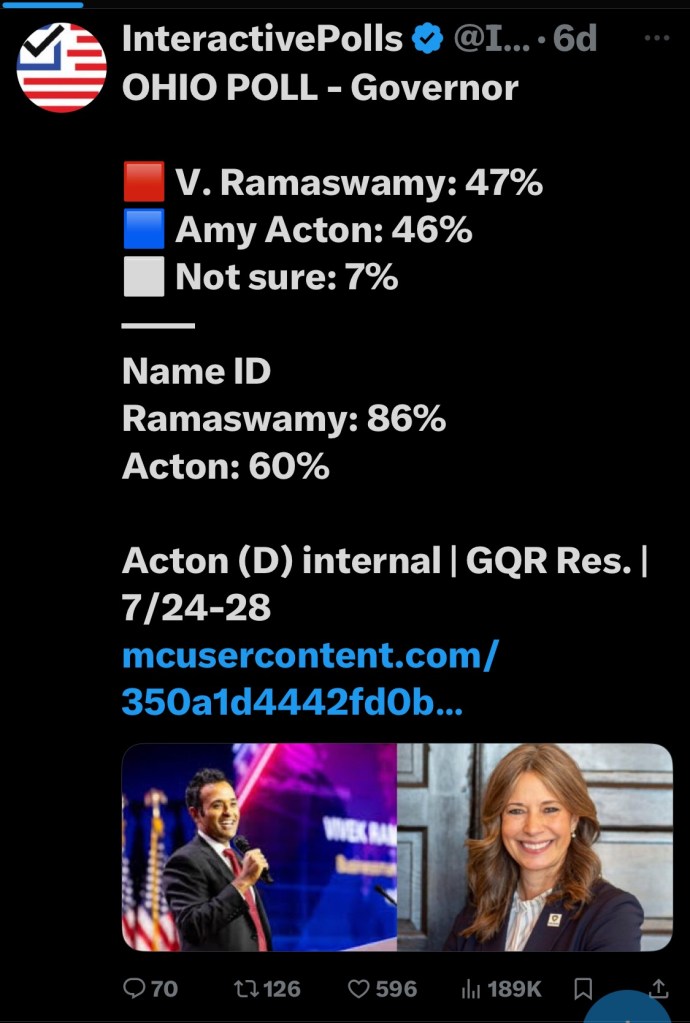
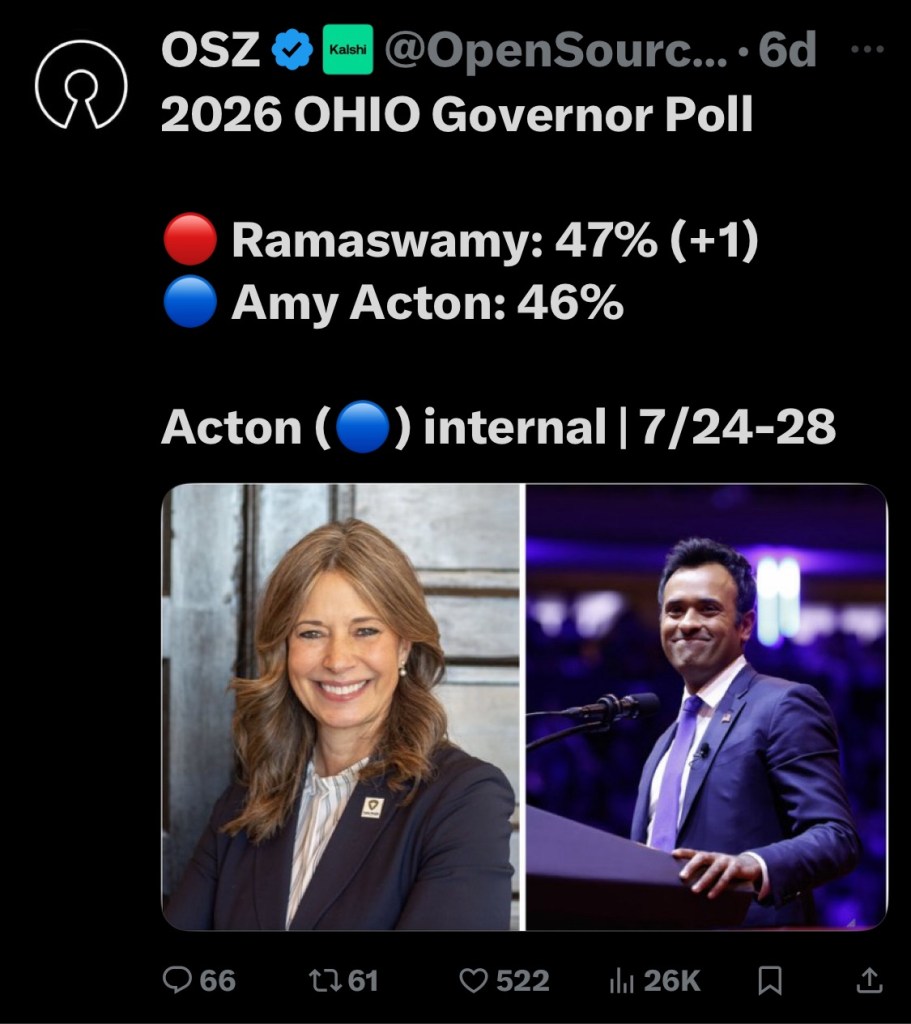
So why the tight polls? Because polls lie. Or, more accurately, they mislead. Early polls oversample urban areas, lean left in methodology, and create narratives that help Democrats fundraise. RealClearPolitics has Vivek up by 6.5 points (49.5% to 43%).⁹ But Impact Research claims Acton is down by just one point, and Hart Research even shows her up by one among likely voters.¹⁰ Sounds scary, right? Until you realize these are snapshots taken before the campaign really starts. Acton hasn’t been vetted yet. She hasn’t faced Vivek on a debate stage. She hasn’t had to answer for the misery she caused during COVID. When that happens, those numbers will swing hard.

Here’s what I told people: don’t panic, but don’t get complacent. Vivek could walk out today and win by 15 points, maybe more. On Acton’s best day, she loses by eight. But campaigns aren’t about best days; they’re about execution. Vivek needs ads, billboards, ground game, and a war chest big enough to drown out the noise. And that’s why he’s smart to push fundraising now. Take nothing for granted. Because Democrats will throw everything at this race—they know Ohio is a battleground, and they’d love to embarrass Trump by flipping it blue.

And let’s not forget the Trump factor. If Trump does a couple of rallies in Ohio for Vivek, it’s lights out for Acton. He probably doesn’t even need that help, but it would seal the deal. MAGA voters will turn out in force. Independents? They’ll break for Vivek once they see Acton’s record. And suburban moms—the group Democrats are banking on—aren’t going to forget who kept their kids out of school for months. That’s political kryptonite.

So what happens when Acton starts talking? Disaster. She’s awkward, ideological, and out of touch. She was a radical during COVID, and she hasn’t changed. Democrats think they can hide that, but they can’t. The minute Vivek’s team rolls out ads showing her press conferences from 2020, it’s over. She’s the lockdown lady. The face of fear. And Ohioans aren’t voting for that in 2026.

Now, let’s talk strategy. Vivek needs to keep doing what he’s doing: stay aggressive, stay visible, and keep hammering the contrast. He’s a builder; she’s a bureaucrat. He’s about freedom; she’s about control. And he needs to remind voters that elections have consequences—because if Acton wins, Ohio goes backward. More mandates, more government overreach, more progressive nonsense. That’s the choice.

So, bottom line: Vivek wins. Easily. But only if he fights like he’s ten points down. No coasting, no assumptions. Raise the money, run the ads, knock the doors. Because politics is like football—you don’t win by reading the headlines; you win by playing the game. And when the game starts, Amy Acton is going to get crushed. She’s going to be exposed for what she is: a failed health director with no vision, no leadership, and no chance. 

And let’s not forget just how angry people were at Amy Acton during and after those lockdowns. This wasn’t mild criticism—it was rage, rage that she provoked.  People had been pushed beyond their limit, and she knew it as she did it. Protesters showed up at her home in Bexley, some carrying rifles, shouting slogans, and waving signs with anti-Semitic slurs.¹ Armed demonstrators patrolled her street while others plastered her address online.² She had to be assigned a security detail and eventually went into hiding because the threats were so severe.³ People doxed her, compared her to Nazis, and called her a “globalist” for extending stay-at-home orders.⁴ It got so bad that she resigned under pressure, citing concerns for her safety and her family’s well-being.⁵ That’s the level of backlash we’re talking about—the kind of fury that doesn’t just disappear. Ohioans haven’t forgotten that, and once voters are reminded, it will come roaring back.  And all that was just for a member of the DeWine administration.  Imagine her as the head of the Executive Branch. 

Notes on doxing actions:

1. Forward. “Ohio Protesters Gather in Front of Dr. Amy Acton’s Home.” May 2020.

2. Times of Israel. “Jewish Ohio Health Official Resigns After Anti-Semitic Backlash.” June 2020.

3. FOX 5 New York. “Public Health Officials Resign, Some Assigned Security Detail Amid Threats.” June 2020.

4. WKYC. “Why Did Dr. Amy Acton Resign as Ohio Health Director?” November 2020.

5. Jewish Telegraphic Agency. “Amy Acton Faced Anti-Semitic Backlash After Lockdown Orders.” February 2021.

Bibliography

1. Cleveland.com. “Amy Acton’s Role in Ohio COVID Lockdowns.” June 2020.

2. Columbus Dispatch. “Acton Resigns Amid Controversy Over Fair Bans.” June 2020.

3. Cincinnati Enquirer. “Amy Acton Campaign Platform: Abortion Rights and Public Health.” October 2025.

4. Dayton Daily News. “Unions Back Acton for Governor.” November 2025.

5. RealClearPolitics. “Ohio Governor Race Polling Average.” December 2025.

6. Fox News. “Trump Endorses Vivek Ramaswamy for Ohio Governor.” November 2025.

7. Politico. “Ramaswamy’s Policy Agenda: Taxes, Education, Medicaid.” November 2025.

8. Wall Street Journal. “Ramaswamy Courts Unions in Ohio.” December 2025.

9. RealClearPolitics. “Ohio Governor Race Polling Average.” December 2025.

10. Impact Research and Hart Research Polls. “Ohio Governor Race Polling.” November 2025.

Rich Hoffman

Click Here to Protect Yourself with Second Call Defense https://www.secondcalldefense.org/?affiliate=20707

The Illusion of Perpetual Wealth: A Crisis in Housing Affordability

In Butler County, Ohio, neighborhoods that were once sprawling fields of corn and cattle have transformed into tightly packed subdivisions of homes priced between $350,000 and $500,000. These homes, built 15 to 20 years ago for $150,000 to $200,000, now represent a perceived wealth that has ballooned far beyond the original investment. The transformation from farmland to suburban sprawl was driven by the promise of upward mobility and the American dream—owning a home, building equity, and passing on wealth. But as the next generation comes of age, the math behind this dream is beginning to unravel. The assumption that home values will perpetually increase, and that each generation will have the income to buy in at higher prices, is proving to be dangerously flawed.  Many young people, and I know a lot about this because I have kids in this age group, and I hear what they say, as well as what their friends are saying and doing.  They are not encouraged to do what built this economic system: getting married before they are 30, starting to have kids, and both parents working professional jobs where their combined incomes put them into the six figures.  That is no longer happening, as the goal is now out of reach for most of them.  They can’t participate. Instead, because of hook-up culture making sex easy, most of them are staying home, smoking pot, and playing video games because the traditional game their parents played isn’t something this next generation is willing to do.  They are getting off the hamster wheel and not showing a desire to get back on, which will dramatically change the political landscape and our entire economic system. 

According to the Harvard Joint Center for Housing Studies, the median price of an existing single-family home in the U.S. hit a record $412,500 in 2024, a 60% increase over six years. Meanwhile, the median household income in 2025 is $83,150, meaning the price-to-income ratio has climbed to 5.0—well above the traditional “affordable” benchmark of 3.0. This affordability gap is especially acute for younger Americans. The National Association of Realtors reports that the share of first-time homebuyers has plummeted to a record low of 21%, and the median age of first-time buyers has surged to 40 years old, up from 28 in 1991. Gen Z and millennials, burdened by student debt, stagnant wages, and rising costs, are increasingly opting out of homeownership altogether. Many are choosing to rent, live with their families, or delay major life milestones, such as marriage and having children—decisions that have cascading effects on the economy and social stability.  Most people over 40 have at least enjoyed some aspect of this game, but you can really see the impending doom in affordable items like cars.  When people no longer take pride in their vehicles, clothes, or any aspect of property ownership, there is nothing to hold them to the assumptions of wealth creation.  And when video games provide a more rewarding experience, they will instead put their time into those aspects of society rooted in fantasy rather than the managed economic system they inherited from their parents.  This really came to my mind the other day as I was interviewing several young people for a job right out of college, where they told me they needed six figures for their positions, which I, of course, asked them why.  They reported that they wanted to buy a house rather than rent, and they were 25 years old at the time of the interview.  And that kind of money just wasn’t on the table, especially for such a young person.  However, there are many thousands just like them who might have hopes of pursuing the American dream, but they haven’t yet realized just how unrealistic the income they will need to live it will be.  I felt sorry for the kid; he had a lot to learn about life, which was going to be very tough in the years to come. 

This generational shift is not just a cultural phenomenon—it’s a systemic economic crisis. The U.S. Chamber of Commerce estimates a shortage of 4.7 million homes, a deficit that has cost states billions in GDP and personal income. The National Low Income Housing Coalition reports a shortage of 7.1 million affordable rental homes for extremely low-income renters, with only 35 affordable units available per 100 households in need. These numbers underscore the unsustainable nature of our current housing model, which relies on perpetual price increases and assumes a steady stream of buyers with rising incomes. But with mortgage rates hovering around 6.8%, and the income needed to afford a median-priced home now exceeding $126,700, the dream is slipping away for millions. The result is a society where wealth is concentrated in aging homeowners, while younger generations are locked out of the market, fueling resentment and a growing interest in socialism and government intervention.  Most of the young people coming out of school these days, as it’s been for decades now at an increasing rate, have been taught socialism.  After speaking with very advanced financial experts and bankers recently, I am convinced that all of them have been caught up in the short-term game and never saw any of this coming.  When these kids can’t benefit from the system, of course, they were going to turn to what they were taught in public schools, and for the worst of our society, they knew what they were doing with the poison they fed everyone.  There really aren’t any defenders of capitalism when it was never capitalism that created this ownership bubble; it was managed economies that were always chained to a ticking time bomb.  That bomb was going to go off in a future generation.  And we have arrived at that destination point.  I would say that I have always been aware of it, but when those kids told me they needed $ 100,000 to start a white-collar job, it wasn’t laughter that first came to mind.  It was a hopelessness that resided behind the request.  An unrealistic expectation was the only path to hope that these young people had, who might otherwise be young Republicans looking to marry a nice person and start building a family.  If those same people, once they realized the reality of the labor market, waited until age 40 to start a family and buy a home, with a couple of cars in the driveway, many of these same homes would be nearly a million dollars by then.  And that is not realistic for any economy. 

This is the backdrop against which Vivek Ramaswamy’s campaign for Ohio governor is unfolding. Ramaswamy has made affordability a cornerstone of his platform, advocating for the elimination of income and property taxes, implementing work requirements for Medicaid, and revitalizing Ohio’s industrial base through biotech, semiconductors, and nuclear energy. He’s also pushing for zoning reform and merit-based pay for educators, aligning with national GOP efforts to address housing supply and affordability. But the challenge is deeper than policy—it’s philosophical. The GOP must confront the reality that many young Americans are rejecting capitalism, not because they understand socialism better, but because they’ve never seen capitalism work for them. If Republicans want to remain politically relevant, they must articulate a vision of capitalism that includes sustainable wealth creation, not just asset inflation. That means infusing wealth into the broader population, stabilizing the money supply, and reevaluating the assumptions that contributed to the housing bubble. The next generation isn’t getting on the treadmill—and unless we change course, the American dream may become a relic of the past.  It’s not a hopeless enterprise.  The solution lies in genuine capitalism, where genuine competition inspires actual market value, rather than protecting the house of cards of previous generations and their assumed cost structure.  The only way out for many young people is capitalism.  However, they must see it work before they will accept it as a viable path forward.  And that is the task of the next generation of political ambition.

Rich Hoffman

Click Here to Protect Yourself with Second Call Defense https://www.secondcalldefense.org/?affiliate=20707

The Future of Healthcare Is Regenerative: Repulicans need to redefine the discussion for 2028 and beyond

The American healthcare system is broken. Not just cracked or inefficient—broken. It’s a bloated, bureaucratic monstrosity built not to heal, but to manage decline. It’s a system designed to keep people sick just long enough to extract maximum profit from their suffering. And the worst part? It’s been institutionalized through policies like Obamacare, which entrenched a model that props up insurance companies, pharmaceutical giants, and hospital unions at the expense of innovation, affordability, and actual healing.

Let’s be clear: the Affordable Care Act (ACA) didn’t fix healthcare. It expanded coverage, yes, but it did so by inflating costs and embedding a rigid structure that rewards inefficiency. Since its implementation in 2010, the uninsured rate dropped from 16.3% to 8%—a 51% improvement. But premiums for employer-sponsored family plans surged from $13,770 to $22,463—a 63% increase. Deductibles rose 67%, and federal spending on healthcare ballooned from $814 billion to $1.5 trillion. That’s not reform. That’s a transfer of wealth from taxpayers to insurance companies.  A lot of money was made off the healthcare industry, but it did not improve people’s lives, which was the whole debate after the 2025 government shutdown.  Republicans really need to take away the emotional message that Democrats tried to exploit for a system built on pure insanity.

The ACA’s economic impact is staggering. Over the decade from 2023 to 2032, the Congressional Budget Office estimates it will reduce the deficit by 0.5% of GDP annually, totaling $1.6 trillion. But that reduction comes with a catch: it’s built on a model that sustains high costs and low innovation. It’s a system where a basic CAT scan can cost thousands, not because of the technology, but because of the insurance and administrative overhead baked into every transaction.  The system is built on taking advantage of sick people who can’t afford the diligence of skepticism.  The worst kind of exploitation.

The future of healthcare is regenerative medicine. It’s not about managing decline—it’s about reversing it. It’s about healing, restoring, and optimizing the human body using stem cells, gene therapy, and cellular regeneration. It’s about moving beyond the pharmaceutical treadmill and embracing treatments that actually work.  For instance, in placentas, which hospitals throw away after every birth, there are a lot of stem cells that can save lives and dramatically improve healthcare.  Yet, you didn’t hear Democrats saying anything like this during the shutdown, because for them, it’s all about the scam of healthcare costs and padding the pockets of their donors. 

Consider the case of Ohio State Senator George Lang. Diagnosed with stage four colon cancer—a death sentence under traditional protocols—Lang refused to accept the managed decline model. He sought out regenerative treatments, including stem cell therapy, and spent a small fortune traveling the globe to access care that should be available in every Walgreens in America. Today, his tumor is shrinking. He’s not dying—he’s healing. And he’s living proof that regenerative medicine isn’t science fiction. It’s science fact.

Stem cell therapy is already showing success rates of 60–70% in blood cancers and up to 80% in autoimmune and joint conditions. The National Cancer Institute confirms that stem cell transplants are effective in treating leukemia, lymphoma, multiple myeloma, and other cancers. Yet these treatments remain out of reach for most Americans, locked behind regulatory barriers and insurance exclusions.

Why? Because the current system isn’t built to accommodate healing. It’s built to perpetuate illness. Pharmaceutical companies don’t profit from cures—they profit from chronic conditions. Insurance companies don’t thrive on competition—they thrive on predictable, inflated costs. Hospitals don’t want disruption—they want stability, even if it means stagnation.

Medicaid fraud alone costs the U.S. upwards of $100 billion annually. That’s not just waste—it’s theft. It’s money that could be funding regenerative research, subsidizing stem cell therapies, and building a decentralized, competitive healthcare model that puts patients first.

The regenerative medicine market is exploding globally. It’s projected to grow from $24.88 billion in 2025 to $148.42 billion by 2033—a compound annual growth rate of 25.09%. Over 3,100 companies are driving innovation, backed by $7.11 billion in investments from firms like Bayer, Merck, and Zimmer Biomet. The U.S. leads in patents, with over 430 filed in 2025 alone.

And yet, the FDA and insurance industry lag behind. Treatments that could save lives are stuck in clinical trial purgatory or only available overseas. Ivermectin, for example, is showing promise in cancer treatment by disrupting cancer stem cells and enhancing immune response. But it’s not available as a mainstream option because it threatens the status quo.

Republicans have a strategic opportunity here. Stop defending the old model. Stop arguing over the merits of Obamacare. It’s a dead system. Instead, embrace the future. Make regenerative medicine a campaign pillar. Show America that healing is possible—and affordable—when you unleash market forces and innovation.

JD Vance, as he gears up for 2028, should take note. This is a winning issue. It’s pro-life, pro-family, pro-freedom. It’s about giving people hope, not just coverage. It’s about making healthcare affordable by making it effective. It’s about taking away the emotional leverage Democrats have wielded for decades and replacing it with real solutions.

The insurance industry will adapt. They’ll have to. Just like energy is shifting toward decentralization and personal autonomy, healthcare must follow. The grid is outdated. The classroom is outdated. And the hospital is outdated. It’s time to reimagine the entire infrastructure.

Let’s build a system where every birth provides stem cells that can heal. Let’s make regenerative therapies as common as antibiotics. Let’s stop throwing billions at managed decline and start investing in managed recovery.

George Lang’s story is just the beginning. There are thousands more waiting for their chance—not just to survive, but to thrive. The science is here. The market is ready. All we need is the political will to make it happen.

Republicans, take the lead. Be the party of healing. Be the party of innovation. Be the party that ends the racket and restores the promise of American medicine.  Ohio is uniquely positioned to lead the charge in this transformation. Senator George Lang, drawing from his personal battle with stage four cancer, is preparing to introduce legislation that would make ivermectin and other emerging precancer treatments more widely available. His experience—traveling the world to access regenerative therapies that ultimately reversed his terminal diagnosis—has galvanized his commitment to reform.

This initiative gains even more momentum with the potential governorship of Vivek Ramaswamy, a biotech entrepreneur who understands the science and the stakes. Under his leadership, Ohio could become a national model for healthcare innovation, breaking the stranglehold of pharmaceutical monopolies and insurance cartels. Imagine a future where ivermectin, stem cells, and other regenerative treatments are available at your local Walgreens—not just in elite clinics overseas.

The COVID-19 pandemic exposed the fragility and politicization of our healthcare system. It also revealed untapped potential in treatments like ivermectin, which showed promise not only in viral suppression but also in inhibiting cancer cell replication. These discoveries, once dismissed, are now gaining traction among researchers and legislators alike. Lang’s proposed legislation would open the door to these therapies, allowing patients to access life-saving options before their conditions become terminal.

This is not just about Ohio. It’s about setting a precedent. If Ohio can pass laws that prioritize healing over decline, other states will follow. And if Republicans embrace this vision nationally, they can redefine the healthcare debate—away from coverage quotas and toward actual cures. It’s a chance to reframe the narrative, reclaim the moral high ground, and offer a future where healthcare is not a burden, but a blessing.  And, it would allow Republicans to take away from Democrats the moral argument of healthcare funding.  And once that is done, the Democrats would have nothing to stand on, politically. 

Rich Hoffman

Click Here to Protect Yourself with Second Call Defense https://www.secondcalldefense.org/?affiliate=20707

Congratulations to Ben Nguyen To the Lakota School Board: What would it take for me to support public schools

There’s a lot to say about the recent Lakota school board election, and I want to start by congratulating Ben Nguyen on his historic win. At just 18 years old, he’s now the youngest person ever elected to the Lakota Board of Education, and he achieved this with a clear, conservative message that resonated with voters in Butler County. Nguyen earned 18.61% of the vote, joining incumbent Kelley Casper and newcomer Alex Argo on the five-member board. His victory wasn’t just symbolic—it was a direct response to the district’s failed $506 million levy, which voters rejected by a 61% margin. That levy, which would have demolished nine buildings and built four new ones, was a bloated attempt to reinvent the district with taxpayer money. Nguyen’s campaign stood firmly against it, and his win signals that the community is tired of being asked to fund ideological experiments disguised as infrastructure upgrades.  However, there is much more to all this.  The questions that arose during this campaign and election season, in general, concern my support of Lakota schools, which school board member Doug Horton brought up in a video he posted just before the election.  In short, if Lakota management wants to know what it would take to get my support, I would say to them to stop destroying the kind of school board members that I support.  And I would be a lot less critical.  But when the school board pushes away good people and lobbies to keep the kind of people who glaze over sex scandals, horrendous Democrat strategies in the school to teach young people, and ask for tax increases, especially the most expensive in the history of Ohio, then I’m going to be very critical, and I will provide that criticism in voluminous detail so much so, that the anti tax movement in Butler County will continue to grow, as it has over these years since 2013, and even earlier.

Ben Nguyen is a start, not a solution to what I would call a detrimental school board full of liberal losers. The real problem is systemic. For years, we’ve seen conservative school board members pushed out by coordinated efforts from union-backed liberals and their media allies. Darbi Boddy is a prime example. Elected in 2021, she was removed in 2024 after a civil protection order filed by fellow board member Isaac Adi—once her political ally—barred her from attending meetings for over 90 days. The board declared her absence “insufficient,” and just like that, she was gone. Her removal wasn’t about functionality—it was a matter of political theater. Boddy had challenged DEI programs, opposed transgender policies, and criticized the district’s hiring practices. That made her a target. The board censured her, demanded her resignation, and ultimately replaced her with Christina French, a longtime district insider. It’s a pattern: elect a conservative, stir up controversy, isolate them, and replace them with someone more “manageable.”  I know all the characters of that conservative board very well, and I know what was done to pit them against each other, and when a school system plays that game, and expects to get away with it, well, they have another thing coming.  I’m not in the business of putting up with that, and I never will be.  I was in the district long before many of these people were even born, and I will be around long after they all leave to buy condos in Florida to escape the high taxes they leave behind.  Darbi is just one example of this kind of radical school board behavior; therefore, when asked what it would take to win my support for Lakota schools, the answer is easy.  Don’t run off school board members whom I support.  Radicalism can go both ways, ladies and gentlemen. 

This is why I’ve been so critical of Lakota Schools over the years. It’s not that I hate education—I would say my track record shows where my heart is; there are few people anywhere who love education more than I do.  I respect people who read books and work to sharpen and utilize their intelligence.  I do not trust institutionalized education because it’s often populated by less-than-great individuals, which is reflected directly in the product. And with public schools, I don’t respect the system that’s been built on a century-old foundation of progressive ideology. Public schools, as they exist today, are more about managing perception than delivering results. When you fill school boards with people like Julie Shaffer and Kelley Casper—both endorsed by the Butler County Democrat Party—you get a culture of spending, secrecy, and suppression. They don’t want scrutiny because scrutiny threatens their funding. They don’t wish to be judged because judgment exposes their failures. And when scandals happen—whether it’s inappropriate teacher behavior, administrative misconduct, or ideological overreach—they bury it. That’s why I created my own media platform: to report what they won’t. If you want to know what’s really going on in Lakota, you won’t find it in the district’s press releases. You’ll find it in the stories they try to silence.

So here’s the deal: I’ll support Lakota when Lakota supports the community. That means electing people like Ben Nguyen—people who understand the value of education without being beholden to the liberal establishment. It means rejecting levies that ask for hundreds of millions without accountability. It means standing up for parents, taxpayers, and students—not just the union’s comfort level of lazy labor desires, such as short workdays, fewer students to teach, summers off, and high pay for doing very little. I’ve seen good people try to make a difference on the board, only to be run off by political manipulation; it’s all well-documented. I’m encouraged that Nguyen, with his sharp mind and diplomatic personality, can navigate those waters and bring real change. If we can recruit two or three more like him, we might finally see a board that genuinely reflects the community’s values.  But given the election cycles, it’s going to take a while unless we push off some of these losers the way they have pushed away our conservatives, like Darbi, and Todd Parnell—even Lynda O’Connor.  And with Lynda, I know exactly how that game unfolded; she became so deeply involved in the liberal Lakota movement that she essentially had to adopt its values to attend the meetings.  I don’t think strong personalities like Ben Nguyen will be pushed away, because he has that extra gear that is so needed in these kinds of controversial political environments.  He, like Vivek Ramaswamy, who will be Ohio’s next governor, is part of a new generation that will play these old political games better than they have been played in the past.  We have tried to play it straight with these current school board members, and all they have given us are Antifa like union tactics of left-wing radicalism, and many people in the district simply aren’t going to put up with it.  I’m certainly not going to, under any conditions.  And until there are more options on the school board, I’ll continue to call it as I see it. If you want me to stop criticizing Lakota, stop putting bad people in charge. Put in people I can respect.  But asking, even demanding respect when Lakota hasn’t earned it, is a ridiculous proposition that only losers would even think of.  And until there are more people like Ben Nguyen involved in Lakota schools, I will criticize them extensively because they deserve it.

Rich Hoffman

Click Here to Protect Yourself with Second Call Defense https://www.secondcalldefense.org/?affiliate=20707

It’s All About Family: Why Michael Ryan is Right for Butler County Commissioner

It was a successful fundraiser for Michael Ryan on the West Side of Hamilton, Ohio, where he has served as a vice mayor for several years.  Ryan is running for Butler County Commissioner, so a fundraiser was held at the Shooter’s Event Center, which was very well attended and well represented among donors, showing a great early sign for his campaign.  Under normal conditions, a person like Michael Ryan would be an easy one to vote for.  However, this campaign represents a significant shift in direction for the Republican Party, as two incumbent candidates are running for the same position.  Cindy Carpenter is already a commissioner, and it’s her seat that is up for election.  There are some serious issues with her that we’ll address specifically.  But as to who is best for this commissioner seat, Michael Ryan is the easy favorite.  Then there is the latecomer to the race, Roger Reynolds, whom I have supported a lot in the past.  For him, this is the wrong seat at the wrong time for a lot of reasons.  Things I’d rather not discuss, but he put himself out there for a public seat, so it’s going to get uncomfortable.  As for the Michael Ryan fundraiser and why he is the best pick for the seat, as well as the future of the Butler County Republican Party being best represented by him, there is no question.  The task will be to show the average voter the differences between those three Republicans in name.  It really comes down to how we define what the “Grand Old Party” is, and I would say its economic viability as best represented by the MAGA movement and political figures like J.D. Vance, Vivek Ramaswamy, and locally, Michael Ryan.  They are all around the same age, and the young Republicans, who were well represented at Michael’s event, are looking toward the next generation.  Not the over-50 crowd.  Many people are seeking Republicans for a fresh start, and that is why Michael Ryan is the best candidate for consideration.

Lots of great options on High Street in Hamilton, Ohio

As I met Michael’s parents and his wife Amanda’s, I couldn’t help but notice a pattern in the kind of politician I most support, in virtually all cases.  They are good families with working relationships with their spouses.  One thing that really stands out about Michael is that his wife, Amanda, is very engaging, and they make a strong political couple, working together as a team to meet the needs of a political office.  For instance, there is a lot that goes into a political job that goes well beyond the function of doing the job itself.  Being a representative means talking to a lot of people all the time, and it is best when there is a supportive spouse to help with that task as a team.  And Amanda fits right into that role very well.  However, what’s also noticeable is that they both have very supportive and intact parents who are deeply involved in the process.  That’s great when it comes to Michael and Amanda, but it’s something I notice among all the political people I support.  They all have strong families that help them in the background, and for me, that is the first ingredient for success in a political position.  How can you offer yourself as a manager of the public trust if you can’t work with the trust within a family unit?  That is certainly the case with George and Debbie Lang, a compelling political couple who are supporting Michael Ryan’s campaign very early in the process.  George was supposed to attend the fundraiser, but was held up in Columbus and was running late. 

There were other notable couples present as well. Mark Welch has been very supportive, as a West Chester Trustee.  And Nancy Nix, who has a great relationship with her husband, Bob, ended up covering for George’s absence.  But what they all have in common, which I think a lot of, is that they have functional relationships with their spouses, which I would say is the foundation of any political office.  If you can’t work well together with your spouse, how can you work together with other people in the party, or the community as a whole?  Even more than that, I had a chance to talk to the Butler County Young Republicans, who were there to support Michael from Miami University, all dressed up in suits and ties. All of them were inclined toward that kind of life, including a healthy marriage, good personal decisions, and taking responsibility for themselves. Ben Nguyen, a very young man running for the Lakota school board, was there to support Michael Ryan as one of those young Republicans. He represents the new generation of hopeful people joining the Republican Party, which is very family-oriented. I am very encouraged by meeting them; they are part of the party that has emerged from Charlie Kirk’s efforts at Turning Point USA.  Gone are the days when the public would support scandalous figures who used a powerful political office to nurture sexual affairs and financial despondency by abusing the public trust.  No, these were all people who expect the best from those running for public office, and they are being judged on how well they handle their affairs, starting at home.

Downtown Hamilton is Thriving These Days

And whether it’s fair or not, for people to know what a good family is, it starts with having a good family, so it’s no surprise that Michael and Amanda Ryan both had their parents at this event, and they were very engaging.  They actually reminded me of a younger version of George and Debbie Lang, in terms of a couple who work well together.  When you deal with the public, you really need a good partner in life to help keep everything sorted out. Typically, that’s what I look for when supporting a political person: how well they maintain a relationship with their spouse.  If they are bouncing around between girlfriends or boyfriends and wearing gold rings on their pinky fingers, I likely won’t be endorsing them because, in my experience, those types of people don’t fare well in politics.  And ultimately, the measure of a good office holder is in what they have done, and for Michael, because he has a happy home life, that has translated into being an outstanding city council member who has helped build a good team that has brought excellent economic value to a city that has needed it.  Hamilton, Ohio, is on the uptick economically largely because Michael Ryan has been very effective at attracting investment interest to the town, and it all starts with being a good person who doesn’t get swept away by the tides of influence that often accompany such activity.  Having a good spouse to help keep everything grounded is a key to being successful when those pressures are applied.  And they are usually the difference between success and failure.  And upon meeting the family of Michael Ryan, it becomes obvious very quickly that the headlines that emerge from his public life will lean in the positive direction, rather than the negative, as people who lean into an office to fill a void inside them often do.  In my experience, to run a successful public office, you need a good private life with a supportive spouse as a partner.  And Michael Ryan certainly has that.

Rich Hoffman

Click Here to Protect Yourself with Second Call Defense https://www.secondcalldefense.org/?affiliate=20707

The Lockdown Lady: Amy Acton should have stayed under her rock

This is going to be fun, the governor’s race in Ohio.  Not that I think it will be close, but it will serve as a cherry on top for a vast evil that transpired, which was never settled.  Because she resigned from her job before the full wrath of anger came down on her for what she did during COVID in Ohio.  We’re talking about Amy Acton, the stringy-haired hippy chick who ran the Health Department in Ohio for Mike DeWine.  She hilariously tried to claim this past week that she was statistically tied with Vivek Ramaswamy in the race for governor, which I find laughable.  However, she’s trying to create excitement among a Democrat base that is flatlining.  Democrats across the country are trying to generate enthusiasm for their campaigns, and in her case, they hope people have forgotten.  After all, she was a media darling for most of 2020 as she reported daily from Columbus on the latest lockdown procedures, which she perfected to an extreme.  And the media loved having a mom telling them to go to bed and telling them what to do about everything.  Amy Acton’s tenure as Director of Health in Ohio was a disaster, but she did reveal what Democrats have in mind for government.  All the metaphorical masks came off during COVID, literally, and in many cases, by putting actual masks on we learned a lot.  However, we learned a great deal about ourselves during that period, despite it being so scary.  We came to know the differences between Republicans and Democrats beyond polite discourse over salary fairness and race relations.  Amy Acton led the nation in lockdown procedures that were statistically insane, essentially stopping the Ohio economy until a virus, created in China and released by very sinister forces, would stop spreading through a crazy strategy of separating people from each other until the case infections stopped. 

I didn’t discuss it at the time, but a couple of the most prominent con artists I have ever known started a company that conducted COVID-19 tests because they thought that was going to be the future.  They were radical lefty types and were dumb as rocks.  However, they had significant, essential jobs that paid them far too much money.  And they left those jobs thinking Covid tests in Ohio were going to be big business.  I explained to them that Amy Acton was not going to last, that Ohio was breaking the law by violating the Constitution, and that COVID was one of the biggest scams in the history of the world.  And I said all this because they tried to recruit me to their cause, wanting me to sell their new COVID-19 testing lab to the political world, and wanted to pay me a lot of money to use my voice to validate their existence.  (a lot of money)  Which anybody who knew me back then should have known better.  I was dressed every day like Mad Max, ready for a fight at any moment with anybody.  I was prepared for a showdown with the tyrannical forces of Amy Acton’s health direction at the drop of a dime. The Government was way out of control and getting worse by the day, and Governor Mike DeWine lost control of his government over fear of the stupid Covid virus, which was killing people who got it left and right.  And that same government was basing all their statistics on these COVID-19 tests, which people ran, like I mentioned, who were essentially designed to give false positives, and that Amy Acton would use those results to grab for more government overreach, as if to justify their actions. 

Of course, I proved to be right.  Those guys ended up out of a job, Amy Acton resigned.  The court challenges to the lockdown procedures all went against the DeWine administration, and he quickly had to start backtracking once he realized his abortion loving Health Director had screwed up Ohio detrimentally over a government power grab to use a health crisis to control every part of people’s lives.  And every conspiracy that I had talked about regarding the entire process turned out to be exactly as I said it was during that horrible period.  But the lessons learned were extremely valuable, even if a lot of innocent people died in the process, and the mandatory vaccines of the Biden administration damaged many.  It was a bad time, and Amy Acton was the queen of it all.  So I think it is pretty hilarious that she is going to climb out from under a rock and run for governor.  And, that she believes she can run against Vivek Ramaswamy, one of the most intelligent people on planet earth, who can talk the ears off a donkey.  I don’t think so.  If Amy Acton is the best that Democrats have, then they have next to nothing.  However, there is good in all this. I believe that a lot of what was unsettled needs to be settled as a result of that terrible period.  What can, or should, the government do for people?  And that will be a great debate where Vivek Ramaswamy will have many opportunities to discuss during this gubernatorial race in Ohio. I think it will get further worse for Amy Acton with the upcoming race, as Sherrod Brown wants to return to the Senate by challenging the incumbent, Jon Husted, who was Lieutenant Governor at the time Amy Acton was Health Director.  He was on TV with her every day, and there was a lot to discuss regarding the day-to-day operations of COVID management in Ohio, which serves as a warning for all about the power of big government.  And it’s going to get a lot of attention during these campaigns. 

I think it’s crazy for Amy Acton to stick her head out of the ground from which she has been hiding to run for Governor, which is going to expose her in ways she can’t imagine.  However, it’s not her failures as a person that will be so detrimental, but rather the lessons of letting a government, run by people like her, take over the day-to-day management of our lives from the utopian fantasy of communist/Democrat politics.  Amy Acton was among the worst, leading all states with her lockdown approach to managing the virus.  And because she did, she empowered a lot of con artists like those Covid testing people I mentioned, to profit off the demise of Ohio, and the nation, in ways that no fiction writer prior would have dared to put forth a plot because nobody would believe it.  And I think she is going to be destroyed politically by Vivek Ramaswamy, and to a greater extent, the Trump administration that has never been right with Mike DeWine since those many Covid mistakes.  People are going to get a chance to get revenge on Amy Acton for what she did to them, and the wrath will be harsh.  People generally left her alone because she stepped away from politics.  But now she’s climbing right back in, and I don’t think she, nor any of her advisors, know what they are getting into.  This won’t be a friendly election about ideas.  This will be a way for people to take their anger out on Amy Acton, as a result of what she did to their lives.  Amy Acton will, for the rest of her life, be known as the Lockdown Lady.  And people will never let her live it down, especially once they learn that she was the one responsible, which will be the centerpiece of this upcoming election.

Rich Hoffman

Click Here to Protect Yourself with Second Call Defense https://www.secondcalldefense.org/?affiliate=20707