I Tried to Tell Them: Why consultants often fail

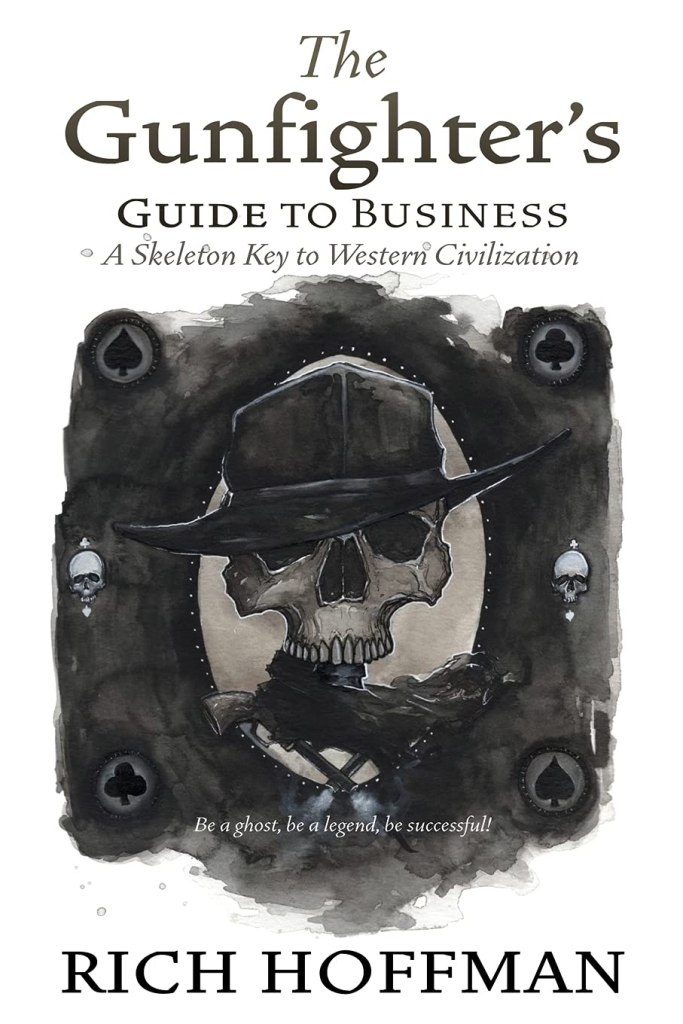
It’s been a little time now, but I suppose it’s appropriate to spike the football a bit and talk a bit more about the details of why I wrote my book, The Gunfighter’s Guide to Business.  I had in my life at that time a lot of people who were really gunning for me, literally.  They did many terrible things, and their world has crumbled around them, leaving them surprised by the consequences.  However, I had already informed them of what was going to happen in my book, which is one of the reasons I wrote it.  I really wanted to be fair, but the bloodthirsty nature of people provoked a lot of bad behavior that has since collapsed, and there was always something of a science to it.  So they can’t say they weren’t warned.  And it really is simple.  One of the key metaphors in The Gunfighter’s Guide to Business, which has achieved what I wanted out of it as a book on business that can help a select few understand why success or failure occurs, is the use of Wild West metaphors to put everything into context.  Why are some people successful while others aren’t? There is a real shell game in the world of people who seek equality and inclusion, who don’t want to admit to themselves the facts of this very distinct reality.  It takes courage to be successful, and you can’t replicate that with process improvements and administrative handholding.  And most of the world doesn’t want to believe that, so I had to write it down in a way that would predict the future.  And that future is now before many people who are finding their personal destruction quite a surprise.  So I explained it to them beforehand.

I love Wild West towns and the idea of them on the open expansion of the American idea.  A vast horizon of opportunity coming together to form a city of ambition, unleashed by capitalist ideas.  Wild West towns were unique to the American experience for many reasons, and I find them infinitely fascinating as a result of human need.  And upon their formation, of course, there were always bad guys trying to get a lot for very little and were willing to bring significant harm to people for their own profit.  So, in that way, how could you bring security to a town without hampering the ambitions of people seeking capitalist outcomes?  And to do so without letting bad guys take everything that was made.  Successful towns established a law and order that centered on gunslingers fighting it out in duels, and good guys like Doc Holiday, Wyatt Earp, and Wild Bill Hickock would meet the bad guys in the street and be willing to risk their lives to shoot their nemesis dead.  And as long as the bad guys were removed from harming good people, a town would grow and thrive.  But without such characters, evil would overrun the process and everything would fall apart.  And that is pretty much true in any endeavor that human beings involve themselves in, even to this day.  You can’t fake courage, and others need to survive in the world and lead good lives.  It all starts with a few unique personalities who have abundant courage and the skill to defeat all others.  Gunfighters come to mind in the concept of fast draw for obvious reasons; they are a uniquely American invention that points directly to why the United States has the largest GDP of any country in the world, especially considering the relatively small number of people contributing to the economy. 

The trick is, once a town was formed, then what?  In those cases of success, there were always plenty of parasites who would come into the city and try to establish rules to maintain order without losing the courage that the town was founded on.  In historical terms, these “Dandies” and “Bounty Hunters,” as I call them, are contemporaries of today’s consultant class, which is quite extensive, who attempt to feed off the carcass of those who have come before them and to steal the profit of their lives ruthlessly.  And they expect everything to work out well.  My response to all these occasions, including before I wrote that book, is to, as the gunslinger, get on my horse and leave town, not sharing the crime-fighting of the town’s profits with the newcomers.  Usually, the gunslinger would move from town to town once success set in, as tag-alongs would then create an administrative barrier.  Instead of a gunslinging gunman, towns would then form a sheriff and a court system. Although things were never quite as good, more people could join in stabilizing a town’s economy.  Gunslingers were not welcomed once things were working well, as collective-based people would then want to share in the glory of success without having the courage to propel it forward with their own sentiments. Consistently, these parasites would seek to steal success from those who created it, without expecting that success to fail in their hands.  However, it never works out that way; yet, after many thousands of years, people still expect a different outcome.  So I wrote my book to explain why that outcome never changes.  Success is directly attached to courage, and you can’t fake that.

I have dealt with people who think they are the most intelligent individuals in the world at many levels, and their ruthlessness has been very easy to overcome.  Usually, these people come out of the consultant classes, and they have a belief that collective administration can replace courage in process improvement, and it just doesn’t work that way.  And no matter what the tag-alongs try to do, when faced up against courageous personalities, they can not compete.  This was the reason that Wild Bill was shot in the back of the head in Deadwood, South Dakota.  The town did not want law and order.  They wanted crime to thrive, and they wanted an administrative mechanism to rule instead of a reputable gunman.  And that is the typical reaction that most people have toward the few who actually achieve success in the world.  Once they see success, they try to shoot the person who made it possible dead, and throw their bodies off the side of the road into an unmarked grave.  They steal the wealth and hope to mimic success.  However, they never quite manage to do it.  Knowing all this, I have not allowed anybody to sneak up on me, which has robbed them of the opportunity to steal what I have created.  They are pretty surprised by the results.  But if only they had listened, I told them well beforehand how it was going to be.  And it is always that way.  Courage beats collectivism every time.  And collectivism allows those with fake courage to appear bold.  But you can’t change the heart of what people are.  They either are, or they aren’t.  And everyone knows the difference.  Courage can’t be duplicated, just as a gunfighter can stand in a dusty street and face down a bullet intended to kill them, and laugh at the danger.  While others hope they can hire a sheriff to do that hard work for them.  But it’s never quite the same.  It takes courage to achieve true success.  And the truth is, there just aren’t many in the world who have real courage.  And when they find they can’t fake it, they get very frustrated when they lose because the illusions of the world couldn’t hide the truth about their bland natures.  That’s why I wrote the book.  As I often say about some of the books I like most, there may be only 20,000 to 30,000 people in the world who read such books, and only 4 of them understand it.  I tend to write books like The Gunfighter’s Guide to Business for those who do.  And to let the other 20,000 people scratch their heads in confusion, because that is about the ratio of people in the world with real courage and an opportunity to be successful at the things they do.  Success is not for everyone; you can’t fake it.  And yes, I tried to tell them.

Rich Hoffman

Click Here to Protect Yourself with Second Call Defense https://www.secondcalldefense.org/?affiliate=20707

Rich Hoffman Derangement Syndrome: Solving problems people don’t want solved

This has arisen recently due to the fallout between Elon Musk and President Trump, during which he discussed Trump Derangement Syndrome.  However, I understand why people dislike President Trump.  And here’s the deal: it’s not his job to change the opinion of those who hate him.  I know that hate all too well because it’s a personality thing.  There are a lot of people who hate me; they have Rich Hoffman Derangement Syndrome for sure.  And I know why people have it.  So I get Trump, and I understand why Elon Musk self-sabotaged his relationship with the President.  I see it all the time, every single day.  And there isn’t anything anybody can do to change that status.  People are going to feel what they are going to feel, and that’s just the way it works.  In Trump’s case, there are many people, including Elon Musk, who fall out of favor with the President due to the factors that contribute to the development of Trump Derangement Syndrome.  And the burden for change is on the people who hate, knowing that people like Trump set a bar too high for weak people to live up to, and they hate the person who sets that high bar because they are too lazy to live up to it.  That is the start of the hatred, but of course, it runs deeper than that.  But for some dumb reason, people have been taught that society owes them some unearned merit, to make them feel less bad about themselves, and when people don’t give them that, they grow to hate the targets of their anxiety.  And that relationship often descends into hatred.  One of the reasons President Trump has been as successful as he has in life is that he developed the ability to not care about changing his status against him, but to embrace it and live with it.  And once that happens, a certain freedom is experienced which allows for exemplary leadership and personal virtue. 

The Rich Hoffman Derangement Syndrome, which is a very real thing, is completely unprovoked by me.  I am about as friendly to people as anybody could be.  Yet I have a list of people who hate me for a reason.  And I understand it all too well, and I can therefore see it in other people with the same ease, such as in President Trump.  I don’t go out of my way to harm people at all, yet there is no shortage of people every day, at a different level than President Trump, of course, who lose their minds just by hearing my name.  And to maintain your level of happiness, you have to develop the ability not to care what people think of you.  President Trump has certainly created that over the years, which is why he can be such a good President.  But the same could be said of the head of any company or a family.  If someone had to pinpoint the most essential ingredient in any successful enterprise, I would say that it resides in Trump Derangement Syndrome, and how he deals with that derangement as a person.  Most human beings have an innate desire to be liked.  So they find themselves going out of their way to appease those around them, which gives people who don’t deserve it unearned merit, more power than they deserve to have, because they get to decide whether or not they like you.  And if you want to be liked, then you give people who don’t deserve that power, power over you, because you want something from them. 

It’s a psychological problem from people who have significant, destructive personality traits that they desire to hide from the world through this little game of popularity.  One thing that people, for the most part, do is introduce problems into the world so they can hide their insecurities behind them.  It’s a deep psychological problem that most people have in their lives to some extent.  So, when you bring someone into their life who likes to solve problems, and they solve those problems easily, of course, for those with the problems, that’s the worst thing in the world.  Because they want to hide behind problems with no prospect of ever being solved, those types of people dislike individuals who solve problems, as they want the problems to persist so they can conceal deeper issues within themselves that they seek to hide from the world.  That is why there is, and always will be, Rich Hoffman Derangement Syndrome.  Solving problems comes very naturally to me, and I do it everywhere I go.  I see through people to who they are, and when I see problems, I solve them.  And people hate me for it.  And since I don’t give them unearned merit just for breathing, as they have been taught, society should not be structured that way. As a result, they have no barrier to reality to insulate themselves from the truth. So they hate me.  And they hate anybody who shows an inclination to solve their problem because they want the problems to exist so they can hide behind them.  We’re talking about the kind of people who create problems in the world so they can hide their insecurities behind them, protecting themselves from needed reforms, and putting pressure on them to be good people.  To avoid that fate, they create problems as a barrier to the pressures of judgment.

So if you are a problem solver who sees easily through these smokescreens of issues, you will be hated.  Just as a child wants to hide under the covers to avoid the monsters that they think are in their closet, they will hate the person who rips away the covers and forces them to see what is hidden in their room.  And when you show them that there is no monster, they will not be happy, but sad, because they liked to hide under the covers, as it simulated a primal desire they have to be back in the womb of their mother, all cozy and warm, and cared for.  Because life is tough, and they aren’t adamant, or smart, and they fear most of all the world knowing that about them.  And with me, I see everything, I know everything, I can read a person just walking down the sidewalk and tell you just about everything you need to know about them.  Solving problems comes naturally to me.  And when I do, some people want the issues to remain, for their own needs of concealment.  And over time, if you want to be successful with such a talent, you learn not to care what other people think.  Because you don’t give those people the unearned merit to leverage friendship for compliance, people who don’t deserve it don’t get to use their control over relationships to keep problems intact as an extortion strategy.  And when that doesn’t work, as seen with Elon Musk maintaining a relationship with President Trump to gain leverage over a NASA administrator, or some EV mandate in the new Big Beautiful Bill, you find out real fast who your real friends are and what they want out of a relationship with you.  And when you couldn’t care less what they think, of course, they will develop a hatred for you and will suffer from a Derangement Syndrome.  And there is nothing you can do to help them.  I have certainly learned not to get pulled into other people’s problems.  But to solve them, regardless of their feelings about it.  And when they learn they can’t use friendship to retain their problems.  Of course, they will hate you for it, so if you want to be a successful person, you need to solve problems.  You have to learn not to care when people develop a hatred for you. Instead, you learn to accept and even embrace that hatred.  There is nothing I can do about Rich Hoffman Derangement Syndrome.  Except learn not to solve the problems people want to hide behind.  And we all know that’s not going to happen. 

Rich Hoffman

Click Here to Protect Yourself with Second Call Defense https://www.secondcalldefense.org/?affiliate=20707

Trump’s West Point Speech: Its all about gaining “momentum” in life

I thought Trump’s speech to West Point for their commencement was remarkable and not discussed enough.  The theme of the entire speech was momentum, which was excellent advice that you usually don’t hear coming from a President of the United States, nor do you hear such a thing discussed at any military academy.  Military endeavors, like political experiences, are typically about conformance to a static norm.  Not gaining momentum in life by challenging that static order.  And as examples of capturing momentum in life, Trump mentioned military figures like Billy Mitchell, who was court-martialed and forced into retirement for insisting that the army adopt aerial strategies that utilized the airplane.  Trump mentioned Patten and others who openly challenged the static norms of their day to gain strategic momentum for a tactical advantage, which was excellent advice.  As he was speaking, I thought of the way the great Claire Lee Chennault, the leader of the Flying Tigers, was treated by the military.  There is a long history of clashes between inside-the-box thinking and challengers from the outside.  Yet what is being celebrated at any graduation ceremony is conformance.  The school you are graduating from sets up rules you must learn and comply with, and if you successfully do so, you get a paper from them saying you graduated, and that the world can trust you to play by the rules that are set up.  That’s what employers think they are looking for when they hire people through their human resources department.  If they want a college graduate, they want someone who will follow the rules and not challenge them, and their graduation from an educational institution provides that proof.  However, instead of celebrating compliance, Trump was advocating for rebellion. 

Trump told the inspiring story, but with a sad ending, of William Levitt, who developed Levittown with his family’s company, Levitt & Sons, on Long Island from 1947 to 1951. This development defined the concept of a planned community that has been copied all over the United States ever since.  Bill Levitt was known for walking his building sites picking up nails to save money and pushing his teams to be very frugal on expenses, and Trump indicated that the key to the success of Levitt was his strong work ethic that captured momentum in life and that through that momentum, he achieved a lot of success.  However, Levitt found it challenging to sustain that momentum after achieving success, and by 1968, they were facing mounting debts and struggling to manage the company’s growth.  They got too far out over their skis and started failing with everything they worked on, leaving Levitt as a crumpled-up old man by the time Trump met him in the 1980s at a party with other very influential real estate developers.   Trump found him in the corner of the party of the big shots, sitting alone, with nobody talking to him.  And when President Trump spoke with him, Levitt told him regretfully that he had lost momentum in life and didn’t have it in him anymore, which is an unfortunate story, but it’s essential and motivational because of what it means to the human race.  Playing it safe is not the path to success.  Neither is doing what other people tell you.  Most people who experience the most tremendous success in life work very hard, take a lot of risks, and manage those risks with significant momentum, riding one success story to another with sheer force.  And if they lose their edge, they start to find all their projects failing. 

Remarkably, Trump discussed the momentum killers in life that impacted Bill Levitt, such as his three marriages, most of which were under the strain of collapsing financial circumstances, and the sale of Levitt & Sons to ITT in 1968 for $92 million.  Levitt had gone from that frugal construction site leader picking up nails to buying lavish mansions and purchasing a yacht.  Then, he moved to a house in southern France.  And he blew through his money quickly and wanted to get back into the game, but had to wait ten years due to a non-compete clause preventing him from developing any real estate in the U.S. until 1978.  And after this period, Levitt tried to make his comeback, but failed miserably, until he was the crumpled mess that Trump saw at the party of tycoons in New York City, broken and pushed aside.  And when Trump asked him what happened, the old man said that “he had lost his momentum.”  This was very valuable information for a group of graduating students from a military academy.  Not the kind of things they typically teach in places like West Point.  However, it is very accurate, and one of those topics we should study more.  And Trump would know.  His life had gone through many of those same types of momentum killers.  However, Trump, guided by his basic philosophy of the Power of Positive Thinking, never lost his momentum.  No matter how bad things got, Trump never stopped being that guy on a construction site who picked up nails.  And he always worked hard and long.  Sure, he married three times, but the women could wait until he was done with work for the day, long after most people go to bed.  Rising early and working until everyone else is sleeping is a great way to maintain momentum in life.

And that’s the point of Trump’s commencement speech to the graduates of West Point in 2025.  It’s one thing to bring in a motivational speaker who says these things, and many consultants out there talk a big game, but they don’t stick around long enough to fight through things and do real work.  The world is starving for these kinds of people who say lots of pretty words, but lack the work ethic to be on a job site picking up nails to save money.  I receive numerous offers to be one of those talkers.  But to Trump’s point, you have to do more than talk in life.  You must be genuinely successful, and one key to achieving this is maintaining momentum.  Not to get sidetracked with fancy boats and expensive vacations, or to live in a house in the south of France.  But to think out of the box and break the rules with an all-in bid to gain momentum.  And once you get it, to keep it, you must work harder than everyone else.  And not listening to the negative people who want to break your momentum so that they can compete with you.  Trump’s West Point speech was wonderfully anti-institutional to a group of people who were graduating from a very rigid institution.  The advice about success is one that few people ever realize in life, but Trump, as a President who had to overcome a lot to even be in that position, gave free advice that was worth many millions of dollars.  And it is valuable to anyone who listens, and it is the key to making America Great Again.  Greatness is not achieved by doing what people tell you to do.  It is achieved by capturing momentum and using it to achieve success where others fail, and avoiding challenges to momentum that might stop it and force people to be just like everyone else in life, stuck in the mud, and complaining that their life is meaningless.  Some people gain momentum in life for a short period, such as when they are teenagers moving out of their parents’ home.  Or as business leaders who happen upon a good thing.  But few people ever get it and maintain it.  And Trump’s advice to the West Point graduates was good in that it told them how to keep it so that their graduation ceremony wouldn’t be the best thing to ever happen to them, but rather, just the beginning of an extraordinary life to come. 

Rich Hoffman

Click Here to Protect Yourself with Second Call Defense https://www.secondcalldefense.org/?affiliate=20707

The Secret to Elon Musk’s Success: His high score on the video game Diablo

I could tell Elon Musk was expanding his intellect as much as a few years ago, and I covered it as I witnessed it.  It was in the kind of books that he was reading, and because of that, I’m not surprised by his support of President Trump.  The only way you can remain a Democrat with Marxist foundations is through ignorance.  When you start learning things, you can’t support dumb politics.  While Elon Musk has always been intelligent and very successful, his political positions are more a result of knowledge than of upbringing or regional considerations.  For him, the realities of running his businesses have driven him to learn more to survive and, ultimately, provide him with a political point of view that facilitates productivity.  Having compassion for other people is one thing.  Destroying the world over compassion is quite another, and I could tell that as Elon Musk dealt with the realities of politics through his businesses, especially the Department of Labor trying to push him to unionize his Tesla plants, he was heading toward more small government than an imposing, all-powerful government that could take everything you own, and sit on FAA permits because you weren’t supporting their political party to stay in power.  For that matter, President Trump also went through the same kind of conversion throughout his life.  That doesn’t make all these people suddenly conservative the way I would be.  I grew up in a conservative area around a lot of conservative people, so I started that way.  As I learned more in life, my roots in conservative thought deepened.  But logic dictates that we all get to the same place once we figure out how the world works and the people in it strive to live in it. 

So, with all that said, people wonder why Elon Musk is so successful and why those who work for him are so engaged.  Now, I talk to many people at a consulting level.  If people listen to me, they are successful.  If they don’t, then they fail.  There isn’t any muddy middle.  There is no consensus on where everyone gets a participation trophy; success is a very rigid standard, and I always get asked about it by compelling people worldwide.   My joint statement toward any successful enterprise is that engagement is the most important and challenging thing to manage in a business.  You can see it in sports when two NFL teams play football.  Usually when one team wins over another given that all the players are the same essentially, they all weigh the same, they are all just as tall and have talented players at all the positions.  The element that determines winners from losers is the coaching staff and their ability to get good engagement from their players.  Labor unions tend to be unproductive because people aren’t motivated to engage in the business through collective bargaining.  They are always fighting the company management they work for to do as little as possible and still get paid wages at a highly engaged value.  Getting people engaged in a project or company is elusive, and the easiest thing that most management turns to is wages, hoping that people will be motivated to make more money and that they might work harder as a result of how much they are paid.  But of course, as I always say, money is not a good motivator.  Throwing money at people does not get people to be more engaged; most of the time, it lowers it as more money often destroys the things that make a person good and strive to be better.  Once a person stops striving for goals in their life, they tend to be less engaged in the things they do, from raising children to buying a new car. 

I thought it was interesting that Elon Musk during the middle of October 2024 had launched new Tesla products, the Tesla Bot and the Tesla Taxi, then a few days later launched with SpaceX, the first Super Heavy Booster into space carrying a Starship, then landed it back at Boca Chica right on target to be captured by the giant chopsticks, to be reloaded with fuel and to launch again.  It was a remarkable feat of engineering by thousands of people, and Elon Musk had created the culture that performed it.  But Musk wasn’t done.  The next day, SpaceX used a Falcon Heavy to launch the Europa Clipper, which is going to Jupiter to study a moon there, and it came off without a hitch.  That launch alone a few years ago would have resulted from a decade of work at NASA.  But after all that, do you know what Elon Musk was most proud of?  He leveled up in the Diablo video game, which he does quite a lot playing video games.  With all his success, he lives in a little shack at Boca Chica, runs around in t-shirts, and plays video games with his co-workers.  He’s one of the wealthiest people in the world, if not the richest, and he has no pretense of measuring success the way we traditionally do, with great wealth hanging from him in a social context.  And he cares about his high score in a popular video game. 

What is expected at Elon Musk companies, and I know this personally, is that he recruits and retains highly engaged people. Business schools have yet to unlock this mystery because everyone learns the same wrong things.  Elon Musk does a lot that goes well beyond Lean Manufacturing techniques, and no consulting firms in the world have yet figured it out.  But I’ll tell everyone here for free because I like you.  The secret to Elon Musk’s success is that he does not, as a management culture, rob his employees of their emotional investment in their work.  By providing a job, they have a means to make a living.  But he does not impose himself on their work and instead removes barriers to success.  Not success measured in monetary value.  Once people can pay for their lives, families, homes, and social engagements, they want to do work they feel good about.  Elon Musk gives them jobs in which they can invest to create high-engagement cultures.  Cultures where people want to work and express themselves through good work.  If you watch employees at SpaceX, you see them highly engaged at all hours of the day, 7 days a week.  Because they like their work, and it shows in what they do. Most companies miss these traits altogether because engagement is challenging to measure.  But once it is unlocked, the results are apparent.  Elon Musk showed how he gets high engagement by not being pretentious at so much success, especially after a week where he started it on stage with President Trump at that now famous rally at Butler, Pennsylvania.  Musk was equally impressed with his high score on Diablo; people see that in him and can relate to him.  When an owner or job provider does not rob people of the value of their work through social conditions that impose a static order upon them, people will then invest in themselves into a project because they want to, for all the same reasons that people play video games with no monetary compensation provided, at all.  People do things because they feel good doing them.  The world is far better off for a business or capitalist enterprise when people are engaged in their jobs because the products produced reflect that engagement.  And when people are allowed to invest in themselves and not be robbed by some cultural stigma, success always follows.   And winning becomes expected, not just some fantasy folklore from some island that time forgot.  But it is available to all who dare to tap into its vast secrets and opportunities for the curious and hardworking.

Rich Hoffman

Click Here to Protect Yourself with Second Call

Slump Busters: Setting aggressive targets, and hitting them

It comes up a lot since the dumb and ridiculous Covid rules of employment, but Slump Busters are every bit as much of a thing now as they have always been.  People didn’t decide to loosen up their target acquisition consciously.  The human race still expects excellence even though the New World Order is clearly trying to make it easier for losers to succeed in the world at the expense of excellence and competency.  Setting low targets that are easy to hit has become the norm in the world regarding political expectations, and that trend has had disgusting consequences.  I have been talking about those observations for a while now, and they are most evident in drive-thru windows, which have become incredibly slow as Gen Z has become so much slower and cumbersome as they were taught during their education years by a society that has been infected by Marxist political movements to severely lower their expectations on what can be achieved in life.  People are still people and always will be, and it’s most evident in the sexual practices of a society what their true essence is regarding expectation.  And to that point, I have been talking about slump busters a lot lately.  I don’t participate in the slump-buster mentality and never have.  I set aggressive targets for myself in all aspects of my life, and I hit them.  Thinking like a shooter, I aim for the bottlecap at 100 yards.  Not the side of the barn, to make it easy to be successful.  Even though I have been married for many decades, almost 40 years, I remember the mating game well enough when I would go to a bar or nightclub with friends and watch the process unfold of slump busting, and it is precisely what we are seeing in our economy now, along the same lines, and it’s a disgusting reality that needs significant reform.

It’s not sexist to talk about this topic as it’s all-natural biology.  Women can pick any sex partner they’d like any time they want to.  All they have to do is let the male of their choice know they are interested, and men are designed always to be ready.  So these rules don’t apply to women as they are in the role of biology, the target that men must hit.  It’s up to the women to set aggressive targets and make things difficult for men.  And the more beautiful they are, the more motivated men are to attract the woman’s attention for the necessity of success.  When a wealthy man has an attractive young woman on their arm, they are communicating to the world that they are good at what they do and can attract a prime female to their bed.  So when going out to the meat market, I remember well enough how the game was played and still is.  People didn’t change; only the approach to politics by radical Marxist forces setting policy at the level of the United Nations to micromanage the way people interact with each other with new woke rules that are not applicable to the desires of all human beings.  When picking up women at a bar, the rules never change.  There are eight o’clock girls.  Then, some are still available at 2 in the morning.  And those are the slump busters.  If a woman is still available late at night, nobody wants her, and taking her home would be very easy and much less rewarding.  But if you are trying to knock the rust off social engagement with the reward of sexual conquest, then a slump buster may be the thing.  I would add that it’s a loser mentality to lower yourself to that level, but those lacking confidence in hitting a target may need to hit the broad side of a barn to make themselves feel better.

When you first get to a bar, if there are pretty girls there at all, because they don’t need to go to those places to get male attention, they can pick anybody off the rack at the grocery store.  But if they do end up at a bar or nightclub and are intent on finding a sexual partner for the short term, then they might be there at 8 PM, but they’ll be leaving with someone of their choosing by 9.  They don’t last long.  But the ugly people are still around late at night, and the most hideous of the ugly are all that’s left at 2 in the morning. Nobody will be bragging the next day that they ended up with a slump buster at the end of the night, just as nobody who thinks of themselves as a good shooter is bragging about hitting a barn from 100 yards.  Slump busters are confidence builders.  But for a person with a lot of confidence already, they would be disgusted in selling themselves short of a true victory in the realm of conquest.  Slump busters might satisfy the need to hit a target, but the quality of the effort isn’t worth sharing with the public.  I never liked the game, so I was married to my wife by the time I was 19.  I had seen enough very early in my life.

I met my wife while she was in the car with another guy.  I saw her at a traffic light and followed her boyfriend’s car to a parking lot, pulled up next to her side of the vehicle, and asked her for her phone number.  I was very aggressive with dating whoever I wanted and did not have any restrictions on confidence.  On the confidence front, I still shoot at very aggressive targets.  I shoot at the printed details on a bottlecap from 1000 yards.  I’m not just happy hitting the bottlecap.  And that’s what I expect from the world around me.  And when they indicate they are only excited to hit the side of a barn from ten feet, I naturally get very mad at them.  I would walk up to random women and ask them out, even in groups of four or five.  I had no fear of failure, and most of them said yes on the spot and if they were indifferent, they said yes a few weeks after.  And that’s still true to this day.  My wife was very beautiful, and everyone wanted to go out with her.  So, if you want to target pretty people like that, you must be bold.  So I took her from her date and married her.  And I can say that I never had a slump buster.  I never settled and never will, which is valid for everything.  And just because a bunch of pinheaded globalists suddenly think the human race is going to lower their expectations for what is possible in the world and that slump-busters will become the norm, not the exception, well, they have another thing coming.  I would say that people are embarrassed by their slump-busting trends over the last few years. Making America Great Again with high expectations and the kind of women who are off the market at 8 PM instead of building the world around the losers at 2 AM is coming back in style.  And the business world better accommodate for it because, ready or not, here it comes.  Slump busters are for losers.  And people don’t want to be losers.

Rich Hoffman

Click Here to Protect Yourself with Second Call Defense https://www.secondcalldefense.org/?affiliate=20707

‘The Art of the Deal’: Trump’s magnificant historical significance

With Trump about to re-enter the White House, after all that he has been through, and all of us, I am thinking about the road that brought us all here quite a lot lately.  A lot of it feels providential.  Especially when I think back on the many books that Trump wrote that were self-help in nature.  And if the question had to be answered as to why Donald Trump wants to be president, I think he told himself and everyone else the answer to that question in his very first book and his most famous, The Art of the Deal.  That is a book that I love a lot, and I have read it many times over the years.  The copy I have in the video is one I bought in 2015 when he was running for president, and I’d carry it around with me in case I had a chance to get him to sign it, which I had an opportunity to do at least twice.  In 2015, it wasn’t so hard to get access to him.  It was nearly impossible after he became president.  But in 2015, when nobody, including most area Republicans, thought he had a snowball’s chance, I was one of his early cheerleaders. I was heavily involved in his early rallies, especially at the Savannah Center in West Chester, Ohio.  Then again, I was at the Sharonville Convention Center, where I was given VIP access to that event.  But I’m never that guy who worships celebrities.  Later, I would learn my lesson on being so discreet with Vivek Ramaswamy and J.D. Vance on getting my books signed.  If I get another chance, I’ll have Trump sign my current copy of The Art of the Deal because of its enormous historical significance.  I read a lot, and my grandchildren, my great-grandchildren, and their children will most likely remember me for my books and love of reading as they go through my things over the next hundred years; I think some of these signatures will be important to them.  Perhaps inspire them to reach their own levels of greatness by example.  And President Trump’s signature on anything will say a lot about this current age. 

The Art of the Deal is a book I have loaned out to many people over the years who have asked to borrow it.  I have an extensive collection of books that have always been the ones people ask me to read.  But it’s also the book they are least likely to bring back.  The 2015 edition was released after Trump left The Apprentice and launched his presidential campaign.  But since then, publishers and media companies have been trying to pull Trump’s books off the market by not replacing the ones out there so they can pretend that one of the most well-known celebrities in the world doesn’t exist.  But with that one, I didn’t complain much; I would buy another one after people didn’t bring it back because I felt that more of those books floating around out there were good for the country.  This is, of course, before Trump was president and why I was an early supporter.  I first read The Art of the Deal when it came out and was on the top of the charts at number one in the fall of 1987, which was an extraordinary time for me.  It was my first year out of high school; I was engaged to my wife and trying to find ways that I could bring success to our family.  Trump was the hottest ticket in the world toward self-help success and the embodiment of achievement during Reaganomics.  My wife and I would spend most of our evenings at her parent’s house, and they were very successful.  So there was a lot of pressure on me by the nature of expectation so I had to learn a lot, fast.

We were planning a fancy wedding at the Beckett Ridge Country Club, where they were members.  There was more going on here than just kindness.  My wife was a fashion model at the time, and she was being groomed for New York society in that industry, and I was in the way of that.  So, the expectations for me were very high, so I would sit each night and read many books about success and how to get it because that was the world I was stepping into to have a wife like that.  Trump had some wise words based on his personal experience.  Out of all the books on success and finance, I read that year under those conditions, it was The Art of the Deal that most spoke to me and gave me the impression that it would be an essential book someday, even beyond the measure of a New York Times bestseller.  As I read the book, I thought this guy would be a good next president.  The Reagan years were ending, and George Bush offered to continue the goodwill.  But I was suspicious.  It would take someone with a lot of energy who loved talking to people and making deals who would need to continue Reagan’s excellent work.  That line of thinking would later encourage me to step away from Bush and the other Republicans at the time and go on quite a young adventure with Ross Perot and his daughters down in Texas, but that’s a whole story of its own. 

What is most evident in The Art of the Deal is that Trump is doing all this running-for-president stuff for more than revenge after all that has been done to him.  He is one of the most positive people functioning in the world today, and he has a unique sense of business and communication that few people ever master, and he loves bringing people together.  He likes people a lot more than I do.  He enjoys making deals, so The Art of the Deal was an important book.  Before Trump came along, I didn’t know that any successful people enjoyed making deals like Trump did.  As President of the United States, he would get a chance every day to have the life he talked about at the beginning of that now-famous book.  Trump is happiest when every minute of every day is filled with talking to people and helping them succeed.  And making deals with people doesn’t mean screwing them over, but finding mutual benefits in working together that they might not see themselves.  And that Trump could invent that role for himself lent directly to this idea that he would be a great president.  And as the years would tell, he was.  And now he’s poised to do it again.  And if I had to do it again, I don’t have many regrets, but the times that I met Trump, I just stood there cooly, not getting wrapped up in his celebrity; in the context of history, I’d get him to sign The Art of the Deal for me.  It’s been a long history, and the significance of that book can’t be underestimated, especially in the context of this second term.  I think I do love President Trump.  I don’t feel that way about many people in the world, and my support of him started with that book many years ago.  Ross Perot was the next best thing for me in those early years, which began with The Art of the Deal and my need to be successful in life because I was expected to be successful because of the person I married.  But more than all that, The Art of the Deal was an insight into the future before the rest of the world realized how important it would be and how the future of all human civilization has formed around it uniquely.  And it’s been a journey I have enjoyed being a part of.

Rich Hoffman

Click Here to Protect Yourself with Second Call Defense https://www.secondcalldefense.org/?affiliate=20707

The Secret to Elon Musk’s Success: An obsession with risk and the management of its destructive elements

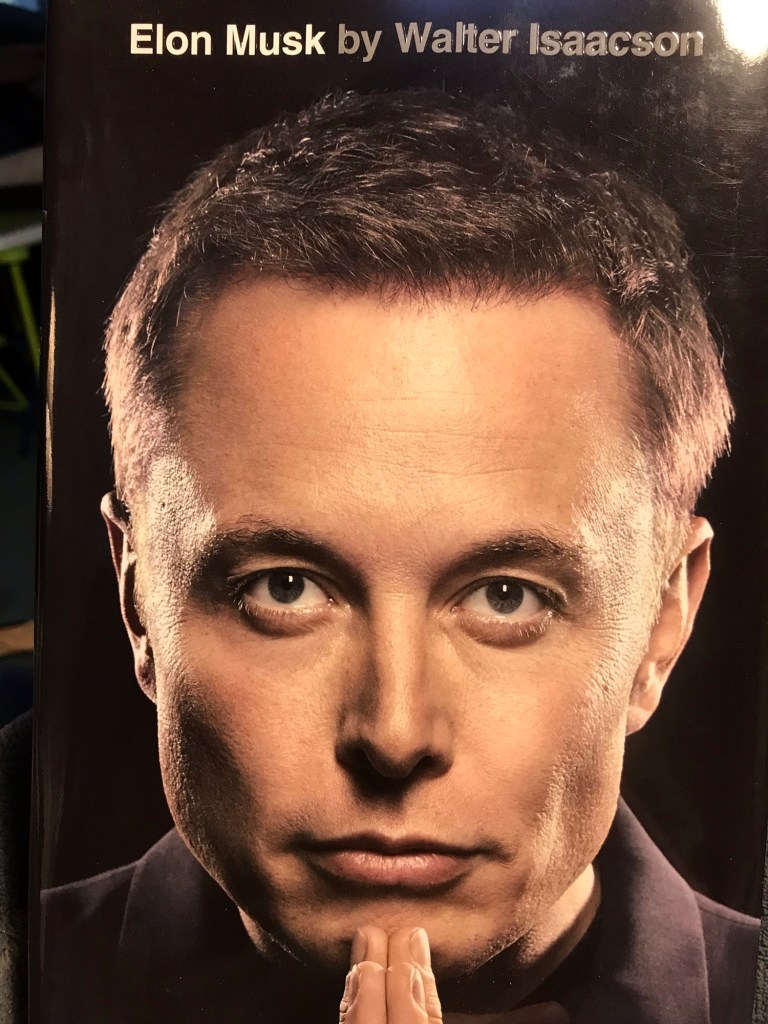
It’s certainly worth a discussion, although I had been avoiding reading the book Elon Musk by Walter Isaacson, mainly because it was a Time Magazine view of the world, and I tend not to enjoy books like that very much.  I’ve read other books by Isaacson and enjoyed them enough to learn new things.  In this case, Isaacson was given access to Elon Musk for the last few years to study him and learn all he could.  So, it was worth reading about the daily life and details of a person who is often the wealthiest in the world and runs some of the most successful companies.  But politically, I think of Elon Musk as a Barack Obama fanboy and a global greenie weenie.  But I do admire how he built Tesla.  I’m certainly not a EV fan of electric cars, but Tesla has carved out a nice little niche for themselves that I think is valuable.  SpaceX is an incredible company that is doing wonderful things.  I’m a tremendous fan of the Starship program and what has been done with Falcon 9 and the Dragon program.  I appreciate them for what they are, and I think Musk is just a unique personality to continue healthily pushing society places it needs to go.  I think of him as a great case of “dynamic intellectualism” that I talk about with the Metaphysics of Quality and the philosophy of Robert Persig.  But Elon Musk smoked pot on the Joe Rogan Show and wanted to put fart apps into his very expensive Tesla cars, so he’s not my kind of guy and people like Isaacson tend to get the surface qualities of his subjects, but not the real intellectual gist of their value.  However, after reading Elon Musk by Isaacson, the unavoidable trait of the secret to success did emerge without question, which is why I kept hearing about the book from friends and respected business leaders. 

Since the book came out in the fall of 2023, I have had at least someone once a week asking me if I had read the book since I usually read everything that comes out.  But I typically avoid the trendy stuff and lean more toward big-picture things.  I wasn’t interested in another get-rich book by people fascinated with wealth creation viewed through a popular cultural lens.  But so many people were getting the book and passing it out to their management teams, looking for some secret sauce that Musk obviously has.  So when I was at dinner with some very important people at Son of the Butcher at Liberty Center in Ohio, and under great encouragement from those people indicated that I would love the book, I left that dinner, stopped by the bookstore, and bought it just before Barnes and Noble closed for the night, and I promised them the next time I would see them, I would have read the book and told them what I thought of it.  That was on a Thursday night, so by Monday, when I would see some of them again, I had read the book, it’s a pretty big book with a lot of details in it.  Many people had bought the book, but they hadn’t made it very far through, and they wanted to know my opinion on whether to continue slugging through it.  In truth, it was a good book; Walter did a good job for a Simon and Schuster publication intended for static society audiences.  And I would say it’s one of the most important books of our time, for a lot of reasons, which I’ll spend separate articles covering.  But the secret sauce, yes, it was there and in all its glory.  I understood it, and it’s something I relate to. 

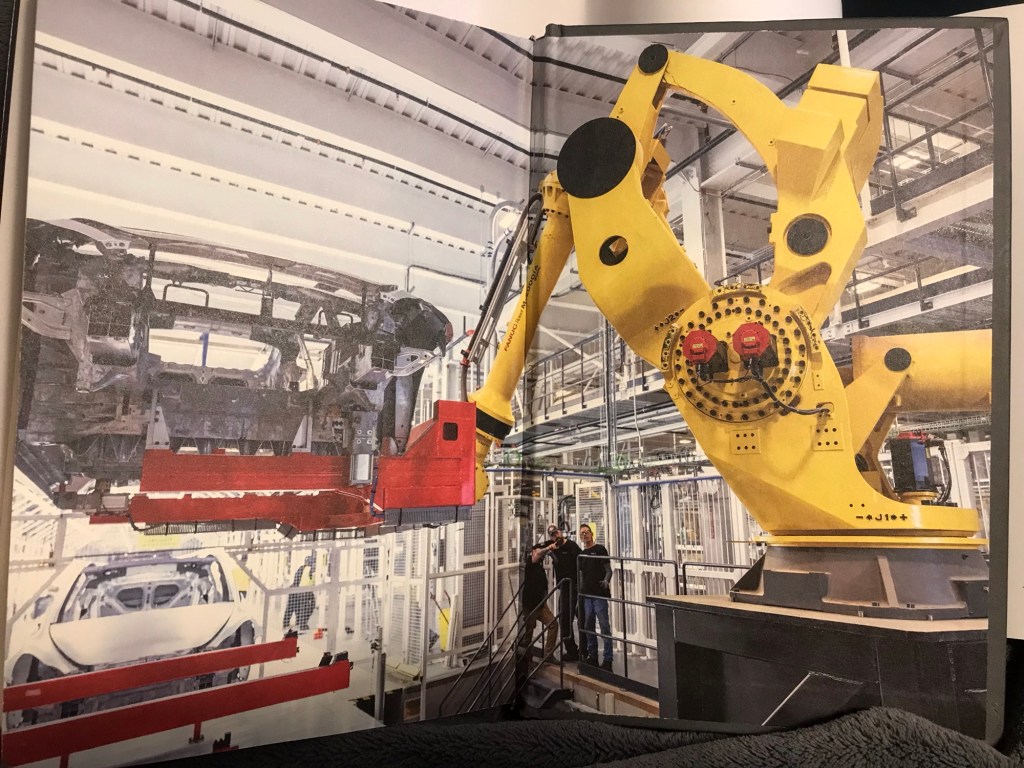
Throughout the book, I couldn’t help but think of President Trump when I think of Elon Musk and how wealth has been projected over time.  Trump’s Art of the Comeback from 1997 was about knowing influential people, supermodels, wives, exotic cars, and tall skyscrapers.  And in the part of the book where Elon Musk went through his period of wealth acquisition, Walter Isaacson seemed to be on comfortable ground.  However, in the cover inserts were exciting value changes for Elon Musk.  The things that Musk thinks are successful and what Trump thought was successful have changed a lot over time.  Musk had exhibitions of massive engineering feats displayed in his book, where Trump featured the building of skyscrapers and the New York skyline.  But while the things that wealth could buy as a value may have changed, getting there had not.  Most wealthy people have some prevalent traits they share in common, which is the concern of Walter’s books, especially with Steve Jobs.  What makes successful people successful?  And everyone talking to me about the book wanted to know this.  “If I read this book, will it make me successful?  Can we pass this book on to our super managers and sales teams and learn something from Elon Musk to help us be more successful?”  The answer is yes.  However, knowing how to be successful doesn’t mean most people have the guts to do so.  You can’t cheat that, even though that is what causes most of the corruption in the world—the desire to take the easy way to wealth to have the benefits without the downside. 

The downside with Musk and Trump, along with many others who have done similar things, even Jeff Bezos, is that they are addicted to risk and obsessed with it.   Elon Musk is a classic riverboat gambler who loves risk.  But has the unique personality to be very intelligent enough to know when and how to mitigate risk.  But yes, he is an obsessive gambler who would play Texas Hold ’em’ by pushing all in for every pot, blowing a lot of money in the process.  But in so doing, he would also get the biggest jackpots.  And that’s clearly how he achieved success at the level he did.  Anybody wanting to succeed would have to learn to bring more risk to their lives to have the success that comes from winning big.  A gambler like that might spend a fortune on betting.  But mathematically speaking, people like Musk and Trump know that eventually, things will swing in your direction.  What separates them from everyone else is how much you can take until you fold up on yourself, broke and destitute.  Musk certainly has a personality that could be homeless and poor beyond any reasonable scale because he is a person obsessed with risk.  I get it; I have many of those same traits.  It’s not the money someone like him is interested in.  But its success in risking and surviving, that is.  And without that risk, there would be no success.  Elon Musk would be just another person with Asperger’s and too much brain power, applying it to a static society that is not interested in risk.  They wanted everything safe and predictable and would push themselves by nature as far from the Elon Musk types as they could, to maintain their safe lives.  That’s what makes Walter’s book so good because it indeed chronicles this risky behavior in ways that the public usually doesn’t get to see in people.  But just buying the book wouldn’t make people successful by itself.  What it could do, though, was let people understand that risk is critical to business and how risk is managed is the key to all successful enterprises, which is my general opinion of the book.  Yes, people should read it.  However, they should learn from it how to put more risk into their lives without becoming destructive.  Because there is no way to cheat risk, you either develop a healthy relationship with risk or get standard, predictable results that stagnate and rot you and your culture from the inside out.  Luckily for us, there are people like Elon Musk out there who are making things exciting.  But, there should be a lot more, and maybe yet, there will be.

Rich Hoffman

Click Here to Protect Yourself with Second Call Defense https://www.secondcalldefense.org/?affiliate=20707

The Art of the Comeback: Trump has been there before, and he can do it again

This is for the many Trump campaign people who read here; I have noticed something useful that should be utilized. It’s not just a campaign of unfairness what the FBI and Biden Democrats are doing by abusing their relationship with the Department of Justice to prosecute President Trump and keep him off the ballot in 2024. We all understand that, and yes, it’s grossly unfair. But their continued use of that pressure is more than just an abuse of authority; it’s a strategy. The raid on the President’s home was a stamp on him that there was an authority bigger than him. By calling into question Trump’s right to evoke executive privilege, the enemies on the other side want to deny that Trump was ever President and could never evoke such a thing. That is the game we are playing here. It’s more like football than anything, where the Biden cheaters’ defensive line intends to create so much pressure that our quarterback, Trump, can’t make his reads and complete his throws. Even though it’s evident that Trump earned more than 75 million votes in the last election and likely will again, the strategy going into a 2024 election cycle can’t be what it is today, where the message is victimhood.   Even though it has been unfair, Trump must stop saying it and appeal to people’s sympathy. He needs to show that he is bigger than the system, which is how he became elected in 2016. The system miscalculated him and figured he would never beat Hillary Clinton anyway, so they didn’t attack him enough. They won’t make that mistake in 2024.

Likely, the Democrats will put up Gavin Newsom to replace Joe Biden. Once Biden gets through the midterms, they will retire him off into the sunset, and he’ll play along, stating his age. That will all be to make way for Newsom, who is much younger and will pressure Republicans to give more support to DeSantis and lower the age of the candidates into something more favorable to Democrats. And they’ll hope to split Republican support between Trump and DeSantis and cause a rift between MAGA supporters since most of the Republican Party has already turned against Never Trumper types and RINOs. The constant pressure of investigation and court action are all designed to keep Trump off his game and reacting, rather than setting the stage for what the next election will be about. That is where Trump would benefit significantly from changing his strategy to more offense than trying to appeal to people’s sense of unfairness. Everyone knows the system is rigged. Everyone sees how corrupt everything is. What they want to know is what Trump would do about it. The first time around, in 2015, it was The Art of the Deal presidency. People wanted a real deal maker, and Trump had his books and television shows that showed he was a master at it. They voted for him to do what he would eventually do, run circles around the politicians of the rest of the world and make fools of them, and put America back into the winning column. And it worked, it worked too well, in fact, and the globalist types hit the panic button and pulled every string at their disposal to get rid of Trump so that the threats to their Liberal World Order would stop, which is where we are today. 

But Trump has another best seller, it’s hard to get these days, but it’s still out there, The Art of the Comeback, which I think is much more appropriate for this next campaign run. 2024 is much different than things were in 2016. Before Trump’s first presidency, we only suspected certain things, and so did he. After we have confirmation on many of those things, a different approach will be needed, and the ground rules for the next election must be set by him, just as he did in 2016. He made that election about deal-making and took it out of the realm of the professional advisors who wanted it to all be about taxes, abortion, women’s rights, and climate change. Democrats in 2024 will try to sell California socialism to the rest of the nation, which will be the platform. Usually, Republicans get caught reacting to that platform instead of setting it themselves, with inflation out of control. With respect around the world, that is so terribly bad. With the crush of the electric car market that is grossly underpowered and saturating American car makers by force of government intrusion, people won’t just want to Make America Great Again. Still, they will want to do so with a big fat exclamation point.   They will want a president that has shown them the roadmap to victory before and can handle the extreme odds stacked against us with poise and grace. Obviously, the enemies of America worldwide have set things in motion that many people don’t think could be recovered. They think it’s too late for America and that nothing we do can stop the country’s destruction at this point. And that is the primary issue going into 2024. It’s one thing to win seats and gain majorities in 2022. But how do you keep people focused on task for another two years once we’ve stopped the bleeding?

I’ve always liked Trump because of his books on business. And I thought The Art of the Comeback was one of Trump’s better books because it tells the story of how a big-time investment player lost everything, to become billions of dollars poorer than a homeless person, and picked himself up to become once again and permanently, one of the world’s wealthiest people. And in the aftermath of all that success, and running the hit show on NBC, The Apprentice, Trump married Melania and then set the stage for a run for President, which he won, of course. That is a story that everyone can appreciate, and it’s the story that Americans want to hear about in 2024. They don’t want to hear about the FBI and the election fraud, although that is the biggest story in the human race. If election fraud continues, then Republicans will never win, so we have to deal with it with tighter controls. But people don’t want to hear about how Trump is a victim. They want to see that he’s bigger than the system and that he is untouchable by the enemies of America. They want to see The Art of the Comeback. They want confidence, bravado, and an America First platform. Voters want to know that Trump made a comeback for himself; now they want to see it done for them, to save their country from the obviously bad people around the world who hate America and us and are salivating our destruction. When I went to campaign events for Trump in 2015 and 2016, I saw many people carrying around copies of The Art of the Deal, hoping they could get Trump to sign it for them. They would hold it up at rallies, and Trump would positively point them out to the audience. In a lot of ways, that was the campaign slogan of 2016. But few people know about his Art of the Comeback, and it’s time to educate them on its success. It’s the perfect way to start this new campaign and the ideal way to take the momentum away from the government antagonizers who are terrified that Trump will win in 2024. And the way to keep everyone focused on the right things would be to make The Art of the Comeback the foundation for the 2024 run. It’s part of Trump’s brand, and it certainly would set in motion great things to come, politically and socially. 

Rich Hoffman

Click to buy The Gunfighter’s Guide to Business

J.D. Vance is Right About Women in the Workplace: The corporate job was not worth destroying the American family

I think the J.D. Vance comment about women in the workplace was a very smart thing to say, even though it was apocalyptic to the progressives in politics. Apparently, it’s still a very controversial thing even to question women’s role in the workplace; even now, in 2022, where we are re-thinking just about everything politically in American society. In a Tweet at the end of June, J.D. Vance said, “If your worldview tells you that it’s bad for women to become mothers but liberating for them to work 90 hours a week in a cubicle at the New York Times or Goldman Sachs, you’ve been had.” He said that in reaction to comments made in the wake of Roe v. Wade, which was overturned by the Supreme Court, leaving progressive politicians apocalyptic because it attacks a basic premise of the Democrat Party over the last 100 years. The assumption was that women were equal to men; to prove it, they needed to be in the workplace, paid the same, and expected to be the same in every way possible. However, now we see something I have been saying all my adult life. I’ve never been on board with the progressive premise for women, and the facts have proven the pitfalls more than valid. The question isn’t whether having a career makes a woman equal to a man or socially viable. The real question in society is whether a career is the priority over building a family and who does what task to maintain the social priorities within a marriage.

What is amazing about this specific time is that the MAGA movement, which J.D. Vance represents as an Ohio senate candidate, is about questioning the basic assumptions regarding all progressive positions made over the last century. It’s not enough to be a conservative; the new Trump emergence of MAGA conservatives is to question what we have seen and done as a country and to define what actually makes America Great and how we can do it again. And increasingly, we are asking these kinds of questions, which were off the table in progressive political discussions. Women in the workplace and the death cult of abortion are taboo subjects at the center of their entire political platform. But I have argued for years that women would have gained the right to vote, the right to own property, and many other issues of equality because of the American Constitution, regardless of socialist, progressive politics sticking its noses into micromanaging family life in the United States. Yet, at the core of the progressive movement was something much more sinister, becoming apparent to many more people over the last several years, especially since the Trump presidency challenged progressives in ways they were never prepared for. Progressives were intent on destroying the concept of the American family. The goal was to put a husband and wife into a corporate job and let the state raise the children. And now we see with the push from progressives to assert gay rights, to have drag queens in public schools, and to start teaching sex education under the third grade, there is a sinister reason that they wanted moms away from their children and slaving away at some ridiculous job as J.D. says, 90 hours a week so that women could earn the respect of their peers at the next wine tasting. 

Women are second-guessing everything now that we’ve seen a few generations of this behavior, and many women are starting to question whether or not it was all worth it openly. They went out and obtained their degree, worked in the power job, and played the corporate game. But then their kids grew up resenting them because they weren’t there and were always busy. They had a nice house to live in, cars, and food in the refrigerator. But that nurturing family environment that all humans crave was left lacking, and the government could not provide a viable substitute. I’ve watched this trend, I know quite a few power couples, and many of them have turned to the housewife life for their own survival of marriage and family. Those who could best afford it have put their families first, and that often means having someone in the home who runs it like a CEO runs a business. There is a lot to running a family, and the trend emerging now that we’ve seen past mistakes is to put family more as a priority in the future. My mom was a stay-at-home mom in the heart of the 70s when the social pressure to get out into the workplace was incredibly brutal. I watched her be tormented for her decisions all her life. I married a woman who wanted to stay home with our kids, and we’ve now been married for over 30 years, and it was worth it. It was even more challenging for her. But recently, with Melania Trump making the same decisions in a high-profile White House that people could see was running correctly, a lot of younger people like J.D. Vance and his wife, who jumped through all the hoops, went to all the right schools, are asking themselves if the career priority life was worth it. And for many, it just isn’t. It’s a path to an elderly life of misery and lots of regrets. 

This is just another doomsday scenario for progressives, which under the pressure of the MAGA movement, do not have good answers to any of these questions. We’ve watched corporate influence on humanity spiral out of control, especially in the wake of Covid, where the government game became very apparent with the vaccine mandates. If you wanted a job, you had to get the jab, and this opened the door for homeschooling options and to protect the home by having the woman in a family stay home to protect it and the children. The corporate/government alliance was just too much, and people saw the ugly face of it too quickly, which is where we find ourselves today. People are more than validated to start asking questions about all things progressive. Was it all worth it to put career before family so that you could tell your friends and neighbors that you had a powerful job and were equal to men in the world? For many women, it’s not enough. Corporate life has led them to a miserable life, and they are now old enough to cast an opinion about it in the voting booth. And J.D. Vance understands this problem very well. If you want to make America Great Again, do you start with a priority for the American family, or do you stand by the corporations so they can have easy access to labor, who have just sold us all out to the Desecrators of Davos dedicated to the same progressive causes that have destroyed the fossil fuel industry and cost us all many more dollars at the fuel pump for basic necessities? In the hundred-year march of progressive politics, they moved toward our destruction with a steady drumbeat until 2016, when President Trump was elected, and MAGA became a real  political platform, which rattled progressives. And over the last six years, they have accelerated their plans, especially with Covid, and it has instigated a tipping point for many people where they are now prepared to ask the kind of questions that J.D. Vance is asking. And for many women, the answer is no. The cubicle job has not been worth it at the expense of their families. They were promised by progressive politicians, like Hillary Clinton, that they could have it all. But now reality has set in, and they have buyer’s remorse. And they are voting based on the result. 

Rich Hoffman

Click to buy The Gunfighter’s Guide to Business

CEOs Deserve to Make a Lot of Money: Average workers don’t own equally the risk it takes to run a business–Karl Marx never figured that out

It’s the same old communist push from progressives in the United States, politicians like Sherrod Brown from Ohio and Elizabeth Warren, the loser we know so well as the Indian claiming “Pocahontas.”  We’re talking about their positions on CEOs, that they make too much money, many times more than the average worker.  Whenever you hear some loser like them saying, “CEOs make 400 times more than the average worker, and that something needs to be done about it, what you are hearing is a know-nothing loser who has the economic maturity of a cat spaced out on catnip.  I address this issue in some detail in the supplied video but let me spell it out briefly.  CEOs make a lot of money because it is they who shoulder the risk for all the workers.  There is nothing wrong with being an average worker, but there is also a lot of safety in earning a living.  CEOs have no such comfort.  It is they who make a company successful or not, and it is they who own the risk for possible failure, of whether there is a job to even punch a time clock to.  There is no such thing as shared ownership of workers and creating a business, any business.  Such thoughts that they are in any way come directly from the works of Karl Marx and are picked up by loser politicians like Sherrod Brown and exploited purely for political purposes by the ignorant and purposely malicious. 

CEOs are great for society

Cliffhanger the Overmanwarrior


Share, subscribe, and see you later,https://rumble.com/embed/vciikp/?pub=3rih5#?secret=bniNjt4gIIhttps://rumble.com/embed/vd9a53/?pub=3rih5#?secret=I8cwvuaVB9


Sign up for Second Call Defense at the link below. Use my name to get added benefits.
http://www.secondcalldefense.org/?affiliate=20707