Keywords: SpaceX Starship Flight 14, Falcon 9 cadence, Port Canaveral economic vitality, drone delivery Walmart Amazon, data centers Butler County Trenton, Elon Musk job creators, vertical mobility air taxis, Overman Warrior Podcast, George Lang Michael Ryan.
Traveling Ohio, Independent Media, and Looking Forward to Starship Flight 14
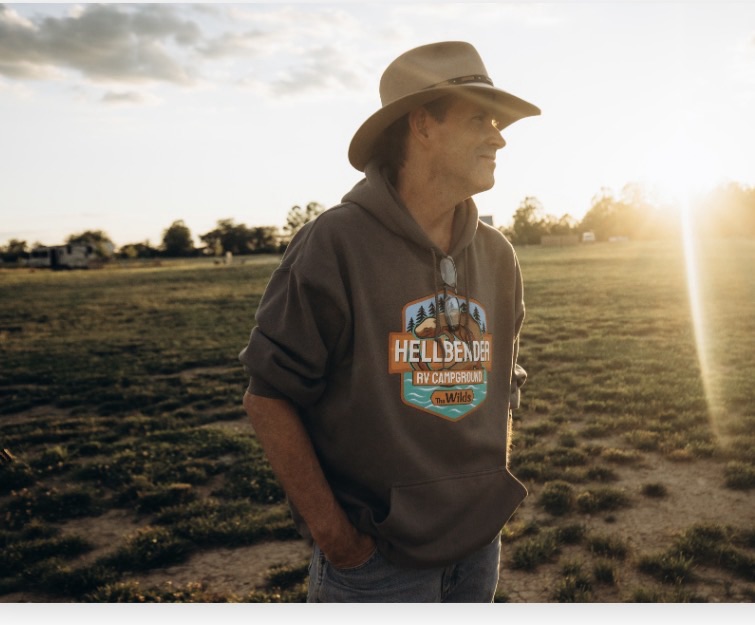
I traveled all over Ohio this summer, and I heard everybody’s point of view. Right now I’m looking forward to Starship Flight 14.[1] I’ve been wearing the Mars shirt. A few months ago, I was at the Kennedy Space Center, touring the facilities, walking through the exhibits, looking at the Artemis hardware still on display after the scrubbed flight. The space economy is real. It is changing what I want to do with the next chapter of my life.
Independent media lets me say the things that need saying. Sometimes I’m with almost everybody. Sometimes I’m against people I usually agree with. I’ve written against certain marijuana-economy interests in Ohio even while knowing many of the people involved. The same independence lets me stand with Elon Musk and SpaceX when the purity voices and the fear voices turn against them.
The Best Day of 2026 So Far: Grills, Cruise Ships, and a Falcon Landing at Port Canaveral
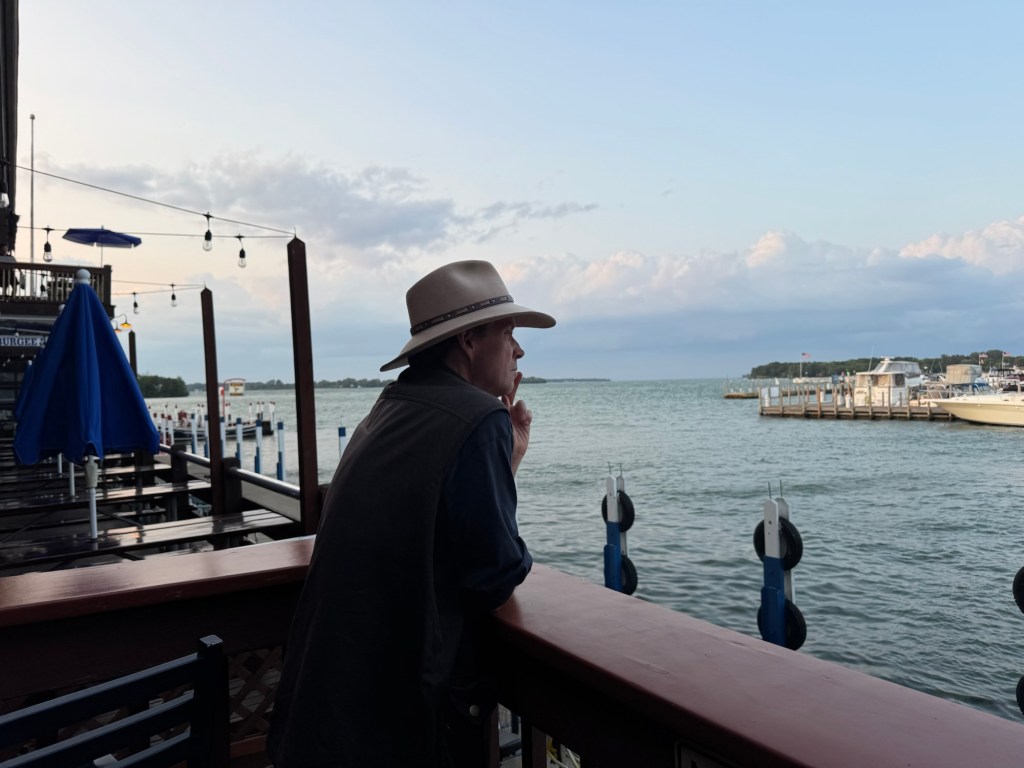
My wife and I were down at the family condo after the Kennedy tour. A Falcon recovery was coming in. I made a point of it with everyone who was with us—I wanted to see the rocket. We ended up at that seafood place right by the cruise ships at Port Canaveral, the one where the doors stay open, and the air moves through.[2] February, eighty degrees, a big plate of shrimp in front of me, cruise ships loading, and then the booster coming back out of the ocean on the drone ship. Of Course I Still Love You—one of the best days I’ve had in 2026.
That is economic vitality in one frame: technical genius, tourism money, working people, snowbirds with full bank accounts, and a company that launches several times a week. SpaceX has already flown a record cadence of Falcon 9 missions in 2026.[3] I love watching it. I love the people who make it possible.
The Guy at Publix Who Hates Elon Musk
A couple of days later, we were in the fruit aisle at Publix. I had the Mars shirt on. A guy in his sixties with the stretched tattoos and the younger crew started in: Elon Musk is a bum, he’s with Trump, he’s taking our jobs, data centers, robots, the whole list. I looked at him and thought the same thing I always think. Some people create jobs, and others get jobs. Most people live in the second category. A few live in the first. Elon Musk lives in the first.[4]
The guy at Publix is not a villain. He is just afraid. He wants the world to stay still enough that his corner of it remains safe. Growth feels like a threat. That is the psychology of the job-getter when the job-makers start moving faster than the old arrangements can absorb. I have no patience for it when it turns into active opposition to the very companies that are expanding the frontier.
Data Centers, Dark Skies Full of Drones, and the Next Delivery System
I support data centers. I want more of them. Amazon is in talks for a large hyperscale campus near Trenton in Butler County—hundreds of acres, major private capital, long-term tax and infrastructure implications.[5] The same computational capacity that runs those centers will also run the autonomous systems that move packages.
Walmart has already crossed a million drone deliveries. Amazon is expanding Prime Air toward hundreds of cities and towns, including Ohio.[6] I have been talking about this market for fifteen years. Same-day, then same-hour, then the quiet electric traffic stacked over the highways—AI-managed corridors carrying 200- and 400-pound payloads between distribution centers and airports. The complaints will come exactly as they always do: the sky will be dark, the sunset will be ruined, a drone might fall on a dog. I find those objections small.
I sit in the RV office in the driveway and watch cars pull up three times in an afternoon dropping packages for my wife and the grandkids. She cannot always load every child into a vehicle and run to a store. The delivery system already changed the household. The next layer—autonomous aerial—will finish the job.
Job Makers Versus Job Getters: The Moral Line I Will Not Cross
I have spent decades working in manufacturing and logistics, and with the people who actually build conveyors and warehouses. I helped put systems into Amazon facilities when most people still thought the model was crazy. Twenty years later, a book I order at night is on the porch the next morning because infrastructure was built by people willing to take risks. That is the side of the line I stand on.[7]
Elon Musk works seven days a week. He barely sleeps. He pushes the schedule. He used to vote the other way, and then he learned. I respect anyone who gets better with time. The people burning Teslas, cursing data centers, or treating SpaceX as a threat are defending a static world that never actually existed. Growth is the only moral path that does not end in rationing and decline.
Why I Keep Coming Back to George Lang and Michael Ryan
Local politics matters because the permission structure for all of this sits with people who either understand job creators or do not. I talk with George Lang about economic questions. Michael Ryan understands the same distinction. You need officeholders who will slow-walk the parasites off the body of the economy instead of ripping the host apart or surrendering to the fear lobby.[8] That is the practical work. The romantic work is watching a Falcon come home and knowing the same spirit can fill the sky with useful machines.
The Condo Deck at Night and the Magic I Will Not Give Up
Later that same trip, we were back on the condo deck after Publix. Nine-thirty at night, ocean breeze, and another routine Starlink Falcon climbing out of the Cape and arcing over the water. The booster came back. The next day it would be under tow into Port Canaveral again. That is the magic. Technical competence, economic surplus, people with money in their pockets ordering shrimp and watching rockets, and a future that keeps expanding instead of contracting.
I want the dark sky full of quiet electric drones. I want thousands of Starships on a cadence that makes today’s Falcon schedule look leisurely. I want data centers humming in the river valley and vertical ports moving people and cargo. I want the job makers protected, and the job getters invited into the larger game, rather than being told the game is the enemy.
The guy at Publix can keep his fear. I will keep the plate of shrimp, the open doors at Grills in Port Canaveral, the rocket on the horizon, and the packages arriving while the grandchildren are still in the house. That is the side of history I intend to stand on.
Footnotes
[1] Starship Flight 14 was originally targeted for late August 2026 and later slipped toward mid-September. Statements from SpaceNews and NASA indicated that the flight remains a key step toward a higher cadence and orbital capability.
[2] Port Canaveral and the Cape Canaveral/Kennedy Space Center economic zone combine cruise tourism, SpaceX recovery operations, and hospitality into a visible example of layered economic vitality.
[3] SpaceX Falcon 9 launch cadence reached record levels in 2026, with multiple doubleheader launches and more than 95 Falcon 9 missions already flown by mid-August. See SpaceX launch manifests and contemporaneous reporting.
[4] The distinction between job makers (entrepreneurs and capital builders) and job getters (those who primarily seek employment within existing structures) is a recurring theme in the author’s economic commentary.
[5] Amazon Web Services has been in active negotiations for a large hyperscale data-center campus on roughly 600 acres near Trenton in Butler County, Ohio, one of several major data-center projects reshaping the regional economy in 2026. See Cincinnati Enquirer and Journal-News reporting, August 2026.
[6] Walmart reported crossing one million drone deliveries by May 2026, with rapid expansion through its partnership with Wing. Amazon Prime Air announced plans in 2026 to reach nearly 500 U.S. cities and towns by year-end, with expansion into Ohio markets.
[7] The author’s long-standing support for SpaceX, data-center development, and job-creator policy is documented in prior essays and episodes of The Overman Warrior Podcast at hoffmanbooks.com.
[8] The author cites George Lang and Michael Ryan as local elected officials who understand the distinction between protecting job creators and merely managing the distribution of existing jobs.
Bibliography and Further Research
SpaceX and Launch Cadence
SpaceX launch manifests and public flight data, 2025–2026.
SpaceNews coverage of Starship Flight 14 schedule adjustments, August 2026.
Contemporary reporting on Falcon 9 doubleheader records and annual cadence (Space.com, Benzinga, and related outlets).
Drone Delivery and Logistics
Walmart / Wing drone delivery milestone reporting (1 million deliveries, expansion plans through 2027).
Amazon Prime Air expansion announcements, 2026, including Ohio markets.
Industry analyses of BVLOS regulation and commercial drone payload/range trends (DroneXL, Reuters, and related coverage).
Data Centers and Regional Economy
Cincinnati Enquirer / Journal-News reporting on Amazon hyperscale data-center negotiations near Trenton, Butler County, August 2026.
Ohio data-center economic impact analyses (capital investment, employment, GDP contribution), 2024–2025 interim reports.
Related coverage of construction employment and local fiscal agreements in Butler County and surrounding counties.
Author’s Related Work
Hoffman, Rich. Essays and podcast episodes at hoffmanbooks.com and The Overman Warrior Podcast on SpaceX, economic vitality, data centers, and job-creator policy.
Hoffman, Rich. The Politics of Heaven (forthcoming) and prior books on leadership and institutional combat.
Rich Hoffman
More about me
Click Here to Protect Yourself with Second Call Defense https://www.secondcalldefense.org/?affiliate=20707
About the Author: Rich Hoffman
Rich Hoffman is an author, political consultant, and strategic advisor based in Cincinnati, Ohio, and the creator of The Politics of Heaven—a unique framework that connects biblical theology, ancient history, and modern power structures to explain how moral alignment and spiritual forces shape global events. Blending real-world political experience with deep research into archaeology, UFO phenomena, and suppressed historical narratives, Hoffman offers compelling commentary on topics ranging from ancient civilizations and the Dead Sea Scrolls to modern populist movements, paranormal continuity, and leadership strategy in chaotic environments. As the author of The Gunfighter’s Guide to Business and the forthcoming Politics of Heaven, he brings a grounded yet provocative voice to media discussions, supported by firsthand experiences and a cross-disciplinary approach that bridges science, history, and theology. For interviews, speaking engagements, or expert analysis, visit richhoffmanbooks.com or contact directly via phone at 513-307-5815 or email at rhoffman@richhoffmanbooks.com. If you’ve seen the movie, Disclosure Day and want to talk about it and the implications of Presidnet Trump’s UAP disclosures, let me know and we can bring some color to your coverage. https://richhoffmanbooks.com/media-inquiries-broadcast-topics-and-contact-info/?frame-nonce=ad51e7ecba I do have a firsthand UFO encounter to discuss.