
Volynt Dreams on Elm Street: Turning Innovation into Reality

A Community Night at Miami University’s Innovation Center

On September 21, 2026, we hosted a special community event at Miami University’s Innovation Center on Elm Street in Oxford, Ohio.

We called the evening “Dreams on Elm Street”, a lighthearted nod to the classic 1980s film. But what we’re building at Volynt isn’t the stuff of nightmares. It’s the realization of a dream, one that is taking shape right here in Butler County and has the potential to transform the future of logistics, aviation, and economic development in Ohio.

The turnout exceeded our expectations. The room was filled with Miami University staff, students, local business leaders, elected officials, and community members who wanted to learn more about what Volynt is building and where we’re headed.

We were honored to welcome Senator George Lang, Butler County Auditor Nancy Nix, and Michael Ryan, who is poised to become Butler County’s next commissioner. Their presence reflected the growing enthusiasm for innovation, entrepreneurship, and advanced aerospace development in our region.

Sharing the Vision

I opened the evening by welcoming our guests and providing an overview of the event. From there, our leadership team took the stage.
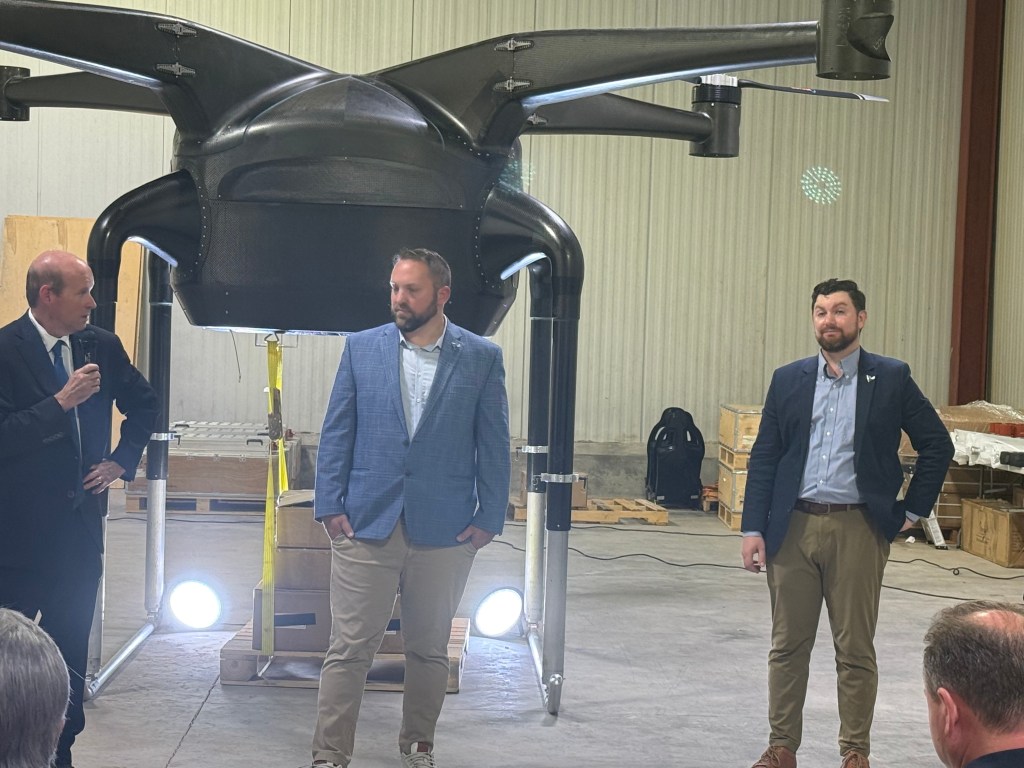
Our CEO shared Volynt’s long-term vision and mission. Our Chief Technology Officer highlighted the engineering milestones we’ve achieved and the technology behind the Volynt Vyper platform. As Chief Operating Officer, I discussed how Volynt is transforming cutting-edge aviation technology into a scalable and sustainable business. I outlined our operational strategy, manufacturing roadmap, partnerships, and the steps required to move from prototype development to commercial deployment.

The presentations were engaging, the audience was attentive, and the questions that followed demonstrated genuine interest and excitement.

Most importantly, this wasn’t a flashy product launch filled with unrealistic promises. It was an honest conversation about where we are today, what we’ve accomplished, and what the next several years may hold.

From Prototype to Production

Our immediate focus is straightforward.

Over the next six months, our team will complete the full-scale Vyper prototype that was unveiled at the Innovation Center. That aircraft represents years of design work, engineering refinement, and determination.

Once completed, the aircraft will enter an intensive testing phase designed to validate performance, reliability, and operational capabilities.

Looking ahead to 2027, we plan to participate in major industry competitions, build broader recognition within the aerospace community, and begin manufacturing multiple aircraft.

The goals are ambitious, but they are supported by a clear roadmap and a dedicated team committed to execution.

The Drone Revolution Is Already Here

One of the most important messages of the evening was that autonomous aviation is no longer a future concept.

It’s happening today.

Just one day after our event, Dayton-area company Dexa launched a drone delivery service in Kettering. The program delivers food orders from TJ Chumps on East Stroop Road to customers within a several-mile radius across Kettering, Oakwood, and Centerville.

These smaller drones operate as last-mile delivery systems. Flying at approximately 400 feet, they lower food orders safely to customers using a cable-delivery system. Dexa has spent years developing this capability and is helping demonstrate that drone delivery is becoming a practical reality.

Volynt’s mission is different.

While companies like Dexa focus on last-mile delivery, Volynt is developing larger autonomous aircraft designed for middle-mile logistics. Our aircraft are intended to transport meaningful payloads between regional hubs such as Cincinnati/Northern Kentucky International Airport (CVG), Dayton International Airport, Indianapolis, and other distribution centers.

This approach has the potential to reduce transportation bottlenecks, address driver shortages, and create more efficient supply chains.

Whether it’s delivering a meal across town or transporting freight across a region, autonomous aviation is rapidly reshaping how goods move through our economy.

Why Ohio Is Positioned to Lead

Ohio’s aviation legacy is unmatched.

The birthplace of powered flight now has an opportunity to become a leader in autonomous flight.

Few regions are better positioned than Butler County to participate in that transformation.

Our region offers access to multiple airports, including Miami University’s airport, where initial flight operations can be conducted. At the same time, substantial investment continues at Butler County Regional Airport, where significant infrastructure improvements are being planned.

The resources, workforce, educational institutions, and transportation network already exist. What remains is bringing together the innovators, investors, and community leaders who can turn opportunity into reality.

Creating Careers That Stay Close to Home

One topic that resonates deeply with me is talent retention.

I have spoken with countless parents who have made tremendous sacrifices to provide educational opportunities for their children through Miami University, Butler Tech, and the University of Cincinnati. Too often, those graduates leave Ohio because they believe the best opportunities are elsewhere.

That reality creates a challenge for families and communities alike.

One of our long-term goals at Volynt is to help change that story.

We envision creating thousands of high-quality aerospace, engineering, technology, and manufacturing jobs throughout Southern Ohio. We want talented young people to have the option of building exciting, fulfilling careers without leaving their families, communities, and hometowns behind.

Strong Community Support

One of the most encouraging moments of the evening was seeing the level of support from the community.

Michael Ryan delivered an excellent presentation about economic development in Butler County and how innovative companies such as Volynt can contribute to future growth and prosperity.

The participation from Miami University, local leaders, educators, students, business professionals, and community members reinforced something I’ve believed from the beginning:

Innovation succeeds when communities embrace it.

Dreams on Elm Street was more than a company presentation. It was a milestone. It brought together people from different backgrounds and perspectives to discuss a shared vision for the future of our region.

The energy in the room was unmistakable. The conversations were thoughtful. The questions were insightful. The enthusiasm was genuine.

For me, that confirmed that we’re moving in the right direction.

Looking Ahead

Volynt’s journey is still in its early chapters.

There is much work ahead, many challenges to overcome, and numerous milestones still to achieve. But the momentum is real, and the opportunities are significant.

We will continue sharing updates with the community as we progress from prototype development to testing, certification, manufacturing, and beyond.

This is only the beginning.

Thank you to everyone who attended Dreams on Elm Street and supported our mission. Your encouragement and belief in what we’re building means more than you know.

Together, we’re not just dreaming about the future.

We’re building it.


About the Author

Rich Hoffman is Chief Operating Officer of Volynt, where he leads operational strategy, business development, manufacturing planning, and growth initiatives for the company’s autonomous aerospace programs. A longtime Butler County leader and aerospace executive, he is committed to building high-quality technology careers and advancing innovation throughout Southwest Ohio.

Rich Hoffman

More about me

Click Here to Protect Yourself with Second Call Defense https://www.secondcalldefense.org/?affiliate=20707

About the Author: Rich Hoffman

Rich Hoffman is an author, political consultant, and strategic advisor based in Cincinnati, Ohio, and the creator of The Politics of Heaven—a unique framework that connects biblical theology, ancient history, and modern power structures to explain how moral alignment and spiritual forces shape global events. Blending real-world political experience with deep research into archaeology, UFO phenomena, and suppressed historical narratives, Hoffman offers compelling commentary on topics ranging from ancient civilizations and the Dead Sea Scrolls to modern populist movements, paranormal continuity, and leadership strategy in chaotic environments. As the author of The Gunfighter’s Guide to Business and the forthcoming Politics of Heaven, he brings a grounded yet provocative voice to media discussions, supported by firsthand experiences and a cross-disciplinary approach that bridges science, history, and theology. For interviews, speaking engagements, or expert analysis, visit richhoffmanbooks.com or contact directly via phone at 513-307-5815 or email at rhoffman@richhoffmanbooks.com.  If you’ve seen the movie, Disclosure Day and want to talk about it and the implications of Presidnet Trump’s UAP disclosures, let me know and we can bring some color to your coverage. https://richhoffmanbooks.com/media-inquiries-broadcast-topics-and-contact-info/?frame-nonce=ad51e7ecba I do have a firsthand UFO encounter to discuss.
Starship, Shrimp, and a Sky Full of Drones: One of the many reasons I support data centers and the efforts of job creators. 

Keywords: SpaceX Starship Flight 14, Falcon 9 cadence, Port Canaveral economic vitality, drone delivery Walmart Amazon, data centers Butler County Trenton, Elon Musk job creators, vertical mobility air taxis, Overman Warrior Podcast, George Lang Michael Ryan.

Traveling Ohio, Independent Media, and Looking Forward to Starship Flight 14

I traveled all over Ohio this summer, and I heard everybody’s point of view. Right now I’m looking forward to Starship Flight 14.[1] I’ve been wearing the Mars shirt. A few months ago, I was at the Kennedy Space Center, touring the facilities, walking through the exhibits, looking at the Artemis hardware still on display after the scrubbed flight. The space economy is real. It is changing what I want to do with the next chapter of my life.

Independent media lets me say the things that need saying. Sometimes I’m with almost everybody. Sometimes I’m against people I usually agree with. I’ve written against certain marijuana-economy interests in Ohio even while knowing many of the people involved. The same independence lets me stand with Elon Musk and SpaceX when the purity voices and the fear voices turn against them.

The Best Day of 2026 So Far: Grills, Cruise Ships, and a Falcon Landing at Port Canaveral

My wife and I were down at the family condo after the Kennedy tour. A Falcon recovery was coming in. I made a point of it with everyone who was with us—I wanted to see the rocket. We ended up at that seafood place right by the cruise ships at Port Canaveral, the one where the doors stay open, and the air moves through.[2] February, eighty degrees, a big plate of shrimp in front of me, cruise ships loading, and then the booster coming back out of the ocean on the drone ship. Of Course I Still Love You—one of the best days I’ve had in 2026.

That is economic vitality in one frame: technical genius, tourism money, working people, snowbirds with full bank accounts, and a company that launches several times a week. SpaceX has already flown a record cadence of Falcon 9 missions in 2026.[3] I love watching it. I love the people who make it possible.

The Guy at Publix Who Hates Elon Musk

A couple of days later, we were in the fruit aisle at Publix. I had the Mars shirt on. A guy in his sixties with the stretched tattoos and the younger crew started in: Elon Musk is a bum, he’s with Trump, he’s taking our jobs, data centers, robots, the whole list. I looked at him and thought the same thing I always think. Some people create jobs, and others get jobs. Most people live in the second category. A few live in the first. Elon Musk lives in the first.[4]

The guy at Publix is not a villain. He is just afraid. He wants the world to stay still enough that his corner of it remains safe. Growth feels like a threat. That is the psychology of the job-getter when the job-makers start moving faster than the old arrangements can absorb. I have no patience for it when it turns into active opposition to the very companies that are expanding the frontier.

Data Centers, Dark Skies Full of Drones, and the Next Delivery System

I support data centers. I want more of them. Amazon is in talks for a large hyperscale campus near Trenton in Butler County—hundreds of acres, major private capital, long-term tax and infrastructure implications.[5] The same computational capacity that runs those centers will also run the autonomous systems that move packages.

Walmart has already crossed a million drone deliveries. Amazon is expanding Prime Air toward hundreds of cities and towns, including Ohio.[6] I have been talking about this market for fifteen years. Same-day, then same-hour, then the quiet electric traffic stacked over the highways—AI-managed corridors carrying 200- and 400-pound payloads between distribution centers and airports. The complaints will come exactly as they always do: the sky will be dark, the sunset will be ruined, a drone might fall on a dog. I find those objections small.

I sit in the RV office in the driveway and watch cars pull up three times in an afternoon dropping packages for my wife and the grandkids. She cannot always load every child into a vehicle and run to a store. The delivery system already changed the household. The next layer—autonomous aerial—will finish the job.

Job Makers Versus Job Getters: The Moral Line I Will Not Cross

I have spent decades working in manufacturing and logistics, and with the people who actually build conveyors and warehouses. I helped put systems into Amazon facilities when most people still thought the model was crazy. Twenty years later, a book I order at night is on the porch the next morning because infrastructure was built by people willing to take risks. That is the side of the line I stand on.[7]

Elon Musk works seven days a week. He barely sleeps. He pushes the schedule. He used to vote the other way, and then he learned. I respect anyone who gets better with time. The people burning Teslas, cursing data centers, or treating SpaceX as a threat are defending a static world that never actually existed. Growth is the only moral path that does not end in rationing and decline.

Why I Keep Coming Back to George Lang and Michael Ryan

Local politics matters because the permission structure for all of this sits with people who either understand job creators or do not. I talk with George Lang about economic questions. Michael Ryan understands the same distinction. You need officeholders who will slow-walk the parasites off the body of the economy instead of ripping the host apart or surrendering to the fear lobby.[8] That is the practical work. The romantic work is watching a Falcon come home and knowing the same spirit can fill the sky with useful machines.

The Condo Deck at Night and the Magic I Will Not Give Up

Later that same trip, we were back on the condo deck after Publix. Nine-thirty at night, ocean breeze, and another routine Starlink Falcon climbing out of the Cape and arcing over the water. The booster came back. The next day it would be under tow into Port Canaveral again. That is the magic. Technical competence, economic surplus, people with money in their pockets ordering shrimp and watching rockets, and a future that keeps expanding instead of contracting.

I want the dark sky full of quiet electric drones. I want thousands of Starships on a cadence that makes today’s Falcon schedule look leisurely. I want data centers humming in the river valley and vertical ports moving people and cargo. I want the job makers protected, and the job getters invited into the larger game, rather than being told the game is the enemy.

The guy at Publix can keep his fear. I will keep the plate of shrimp, the open doors at Grills in Port Canaveral, the rocket on the horizon, and the packages arriving while the grandchildren are still in the house. That is the side of history I intend to stand on.

Footnotes

[1] Starship Flight 14 was originally targeted for late August 2026 and later slipped toward mid-September. Statements from SpaceNews and NASA indicated that the flight remains a key step toward a higher cadence and orbital capability.

[2] Port Canaveral and the Cape Canaveral/Kennedy Space Center economic zone combine cruise tourism, SpaceX recovery operations, and hospitality into a visible example of layered economic vitality.

[3] SpaceX Falcon 9 launch cadence reached record levels in 2026, with multiple doubleheader launches and more than 95 Falcon 9 missions already flown by mid-August. See SpaceX launch manifests and contemporaneous reporting.

[4] The distinction between job makers (entrepreneurs and capital builders) and job getters (those who primarily seek employment within existing structures) is a recurring theme in the author’s economic commentary.

[5] Amazon Web Services has been in active negotiations for a large hyperscale data-center campus on roughly 600 acres near Trenton in Butler County, Ohio, one of several major data-center projects reshaping the regional economy in 2026. See Cincinnati Enquirer and Journal-News reporting, August 2026.

[6] Walmart reported crossing one million drone deliveries by May 2026, with rapid expansion through its partnership with Wing. Amazon Prime Air announced plans in 2026 to reach nearly 500 U.S. cities and towns by year-end, with expansion into Ohio markets.

[7] The author’s long-standing support for SpaceX, data-center development, and job-creator policy is documented in prior essays and episodes of The Overman Warrior Podcast at hoffmanbooks.com.

[8] The author cites George Lang and Michael Ryan as local elected officials who understand the distinction between protecting job creators and merely managing the distribution of existing jobs.

Bibliography and Further Research

SpaceX and Launch Cadence

SpaceX launch manifests and public flight data, 2025–2026.

SpaceNews coverage of Starship Flight 14 schedule adjustments, August 2026.

Contemporary reporting on Falcon 9 doubleheader records and annual cadence (Space.com, Benzinga, and related outlets).

Drone Delivery and Logistics

Walmart / Wing drone delivery milestone reporting (1 million deliveries, expansion plans through 2027).

Amazon Prime Air expansion announcements, 2026, including Ohio markets.

Industry analyses of BVLOS regulation and commercial drone payload/range trends (DroneXL, Reuters, and related coverage).

Data Centers and Regional Economy

Cincinnati Enquirer / Journal-News reporting on Amazon hyperscale data-center negotiations near Trenton, Butler County, August 2026.

Ohio data-center economic impact analyses (capital investment, employment, GDP contribution), 2024–2025 interim reports.

Related coverage of construction employment and local fiscal agreements in Butler County and surrounding counties.

Author’s Related Work

Hoffman, Rich. Essays and podcast episodes at hoffmanbooks.com and The Overman Warrior Podcast on SpaceX, economic vitality, data centers, and job-creator policy.

Hoffman, Rich. The Politics of Heaven (forthcoming) and prior books on leadership and institutional combat.

Rich Hoffman

More about me

Click Here to Protect Yourself with Second Call Defense https://www.secondcalldefense.org/?affiliate=20707

About the Author: Rich Hoffman

Rich Hoffman is an author, political consultant, and strategic advisor based in Cincinnati, Ohio, and the creator of The Politics of Heaven—a unique framework that connects biblical theology, ancient history, and modern power structures to explain how moral alignment and spiritual forces shape global events. Blending real-world political experience with deep research into archaeology, UFO phenomena, and suppressed historical narratives, Hoffman offers compelling commentary on topics ranging from ancient civilizations and the Dead Sea Scrolls to modern populist movements, paranormal continuity, and leadership strategy in chaotic environments. As the author of The Gunfighter’s Guide to Business and the forthcoming Politics of Heaven, he brings a grounded yet provocative voice to media discussions, supported by firsthand experiences and a cross-disciplinary approach that bridges science, history, and theology. For interviews, speaking engagements, or expert analysis, visit richhoffmanbooks.com or contact directly via phone at 513-307-5815 or email at rhoffman@richhoffmanbooks.com.  If you’ve seen the movie, Disclosure Day and want to talk about it and the implications of Presidnet Trump’s UAP disclosures, let me know and we can bring some color to your coverage. https://richhoffmanbooks.com/media-inquiries-broadcast-topics-and-contact-info/?frame-nonce=ad51e7ecba I do have a firsthand UFO encounter to discuss.

The Next Great Thing: Making People Extremely Wealthy is my favorite hobby 

The autonomous drone delivery market has moved from a distant Jetsons fantasy to operating infrastructure in 2026. What once required years of regulatory and technical work now appears in everyday retail and logistics conversations across American suburbs. Last-mile packages weighing roughly eight pounds or less arrive in under thirty minutes from select stores. Intermediate and heavier-payload systems are advancing in parallel. The combination creates a rare window for regional economic expansion, particularly in places positioned between major air hubs and dense distribution networks.

Autonomous Drone Delivery Reaches Critical Mass in 2026

Walmart surpassed one million cumulative drone deliveries by May 2026, with roughly 40 percent of that volume occurring in a single quarter. Operations ran from 66 stores across multiple states and metro markets, averaging about 23 minutes from order to drop. Partners include Alphabet’s Wing for broad national expansion and Zipline for higher-payload and restaurant-focused routes in select areas. 

Cincinnati and the greater metro area form part of the 2026–2027 rollout. Walmart and Wing announced the market as part of a plan to add roughly 150 more stores and reach more than 270 locations, serving over 40 million Americans by 2027. Service is free for limited periods for Walmart+ members and typically around $19.99 otherwise. Eligible items stay within weight limits of approximately 2.5–8 pounds, depending on the operator, and include groceries, household goods, electronics, and prepared food in an increasing number of locations. 

Local conversations in Butler County point to even nearer-term activity. Future Commissioner Michael Ryan has noted that the Walmart on the west side of Hamilton is positioning for drone delivery within a short window. Whether that specific site activates in the next month or two, the broader Cincinnati network is already advancing. Amazon Prime Air is simultaneously expanding toward Cleveland and other Ohio markets. The pattern is clear: consumer-facing drone delivery is no longer experimental.

How Zipline Solved the Last-Mile Safety and Precision Problem

Zipline began in 2014 and launched commercial medical deliveries in Rwanda in 2016. Fixed-wing Platform 1 aircraft, catapult-launched, carried blood and vaccines over long distances and released packages by parachute to remote clinics. The model scaled across African nations, later expanding to additional countries and use cases. By early 2026, the company had exceeded two million commercial deliveries and more than 120–130 million autonomous miles, with U.S. operations accounting for a growing majority of daily volume. 

Platform 2 shifted the architecture for denser suburban and urban environments. The aircraft flies and hovers at higher altitudes—often around 200–300 feet—well above trees, power lines, pets, and people. A tethered “droid” or delivery pod, equipped with its own sensors, thrusters, and cameras, lowers the package with high precision to a customer-selected spot such as a driveway, backyard, deck, or patio. The main aircraft never descends into the risk zone. Payload capacity reaches approximately eight pounds. This tethered approach removes many of the earlier concerns about rotor wash, noise near the ground, and physical conflict with ground activity. 

The technology matured through years of medical logistics under demanding conditions before consumer retail partners arrived. Walmart, multiple restaurant chains (including Little Caesars and others), and more recent partnerships, such as Uber Eats (announced in August 2026 for Dallas–Fort Worth with ambitious volume targets), demonstrate commercial viability. Cleveland Clinic has begun using the system for prescription deliveries in the Beachwood area of Ohio, with plans to expand medical logistics. OhioHealth had earlier explored similar capabilities in the Columbus region. 

Manufacturing follows a vertically integrated model. Aircraft, docks, and droids are produced primarily in the United States, with significant capacity in the South San Francisco area that has been expanded to support thousands of units annually. Core systems—motors, batteries, flight computers, and software—are designed in-house. The approach emphasizes rapid iteration, quality control, and the ability to scale production in response to demand, drawing practical lessons from high-volume advanced manufacturing environments.

Intermediate Payload Drones and the Middle-Mile Opportunity

Consumer last-mile delivery creates a secondary effect: higher inventory turnover at the store level. Impulse purchases—ketchup for a backyard cookout, shoes, small electronics, or prepared meals—arrive faster and more frequently. Stores therefore require more frequent replenishment from regional distribution centers and airport hubs. Traditional semi-truck schedules become a bottleneck.

This is where intermediate autonomous systems matter. Vehicles capable of carrying several hundred pounds of payload between points such as CVG and distribution centers in Monroe, Hamilton, or West Chester can compress lead times. Several developers are advancing hybrid or eVTOL designs in the 250–550 pound class for military and commercial logistics. Demonstrations of precision airdrop and unattended delivery already exist. Scaling these systems for routine civil middle-mile use remains earlier-stage than the eight-pound consumer platforms, yet the economic logic is straightforward: faster store replenishment supports higher sales volume without proportional increases in ground traffic. 

A regional vertical port or staging facility in the Butler County area sits at a logical geographic node. Proximity to CVG, major interstate corridors, existing distribution infrastructure, and a growing advanced manufacturing base creates natural advantages. Costs for a functional facility in the low tens of millions are considered realistic when private capital and public partnerships align. The same logic that once applied to highway interchanges and rail spurs now applies to low-altitude airspace corridors and charging or docking infrastructure.

Space Economy Linkages and Regional Positioning

Global rapid cargo movement is also advancing. Reusable orbital systems continue to reduce the cost and increase the frequency of long-distance transport. Once high-value or time-sensitive goods reach a continental hub such as CVG, the final legs—from airport to distribution center, then from distribution center to store or home—determine whether the speed advantage is preserved. Autonomous intermediate and last-mile drones close that chain. Regions that develop the supporting infrastructure, manufacturing capacity, and regulatory familiarity capture disproportionate economic activity.

Butler County already hosts advanced manufacturing initiatives and has examined advanced air mobility concepts at the regional airport. Conversations with local economic development leaders focus on scalable employment, high-skill technical roles, and long-term tax base growth rather than one-time projects. The model is not a simple replication of any single company. It is the disciplined application of rapid iteration, vertical integration where it adds value, reliable, autonomous operations, and customer-driven volume growth—qualities evident in both SpaceX’s production approach and Zipline’s evolution from medical necessity to consumer logistics.

Ground-Level Entry Before the Narrative Hardens

Technology adoption follows a familiar curve. Early technical risk and capital intensity give way to proven systems, regulatory clarity, and rapid commercial deployment. Those who engage while the infrastructure is still being built—manufacturing capacity, docking networks, airspace procedures, and local partnerships—participate in the steeper part of the value creation curve. Later entrants often pay higher multiples for the same assets.

An event on September 18  at Miami University, where I will be one of the hosts, will present specific examples of technology and partnership frameworks. The focus remains practical demonstration rather than abstract vision. Anyone who has worked alongside long-term economic development efforts in the region already knows the key points of contact. The opportunity is visible now in a way it was not two or three years earlier.

Why the Timing Matters for Southern Ohio

Consumer drone delivery is already operating at meaningful volume in multiple U.S. metros and is expanding into the Cincinnati market. Medical applications are live in Ohio. Intermediate heavy-payload systems are progressing from demonstration toward commercial readiness. Manufacturing capacity for autonomous aircraft is scaling inside the United States. Local leadership is actively discussing vertical airspace and advanced manufacturing as part of the county’s longer horizon.

The combination is unusual. Windows of this character do not remain open indefinitely. Regions that organize capital, talent, and regulatory alignment around the intermediate and supporting layers of the drone logistics stack position themselves for durable employment and wealth creation. The consumer-facing flights that will soon appear over Hamilton and surrounding communities are the visible surface of a deeper shift in supply chain and manufacturing. The deeper layer is where the larger and more lasting economic effects concentrate.

Footnotes

1.  Aggregate delivery and timing statistics drawn from industry reporting on Walmart’s May 2026 milestone and subsequent expansions.

2.  Platform technical details synthesized from Zipline operational descriptions, FAA-related documentation, and independent technical coverage of the tethered droid system.

3.  Manufacturing capacity and vertical integration details from company announcements and facility reporting covering 2025–2026 expansions.

4.  Cincinnati and Ohio market timing from contemporaneous business and local news coverage of the Wing–Walmart rollout.

5.  Heavy-lift payload platforms referenced from public demonstrations and developer disclosures in the 250–550 lb class.

6.  Local advanced air mobility discussion at Butler County Regional Airport from public meeting summaries.

7.  Cleveland Clinic and OhioHealth medical delivery pilots from regional health-system announcements and industry tracking.

Bibliography and Further Reading

•  DroneXL and related industry trackers for cumulative delivery volumes, operator comparisons, and market maps (2026 updates).

•  Chain Store Age and retail trade coverage of Walmart–Wing and Walmart–Zipline expansions.

•  Scientific American and technical press on Zipline Platform 2 tethered delivery mechanics.

•  Zipline official materials on operational history, platforms, and U.S. manufacturing.

•  Cincinnati Business Courier, Cincinnati Enquirer, and local broadcast reporting on the Cincinnati drone delivery timeline.

•  FAA environmental assessments and Part 135 operational documentation relevant to commercial package delivery.

•  Public materials on intermediate cargo UAS programs (Elroy Air Chaparral, AIR heavy-lift platforms, and related dual-use systems).

•  Butler County commission and airport authority records regarding advanced air mobility planning.

•  Broader logistics analyses of middle-mile autonomous systems and the interaction between last-mile speed and inventory velocity.

The infrastructure is being built in real time. The economic consequences will accrue to the regions and operators that treat the present window as operational rather than speculative.

Rich Hoffman

More about me

Click Here to Protect Yourself with Second Call Defense https://www.secondcalldefense.org/?affiliate=20707

About the Author: Rich Hoffman

Rich Hoffman is an author, political consultant, and strategic advisor based in Cincinnati, Ohio, and the creator of The Politics of Heaven—a unique framework that connects biblical theology, ancient history, and modern power structures to explain how moral alignment and spiritual forces shape global events. Blending real-world political experience with deep research into archaeology, UFO phenomena, and suppressed historical narratives, Hoffman offers compelling commentary on topics ranging from ancient civilizations and the Dead Sea Scrolls to modern populist movements, paranormal continuity, and leadership strategy in chaotic environments. As the author of The Gunfighter’s Guide to Business and the forthcoming Politics of Heaven, he brings a grounded yet provocative voice to media discussions, supported by firsthand experiences and a cross-disciplinary approach that bridges science, history, and theology. For interviews, speaking engagements, or expert analysis, visit richhoffmanbooks.com or contact directly via phone at 513-307-5815 or email at rhoffman@richhoffmanbooks.com.  If you’ve seen the movie, Disclosure Day and want to talk about it and the implications of Presidnet Trump’s UAP disclosures, let me know and we can bring some color to your coverage. https://richhoffmanbooks.com/media-inquiries-broadcast-topics-and-contact-info/?frame-nonce=ad51e7ecba I do have a firsthand UFO encounter to discuss.

Air Taxis in West Chester, Ohio: The future is now, and its very exciting

The future is now

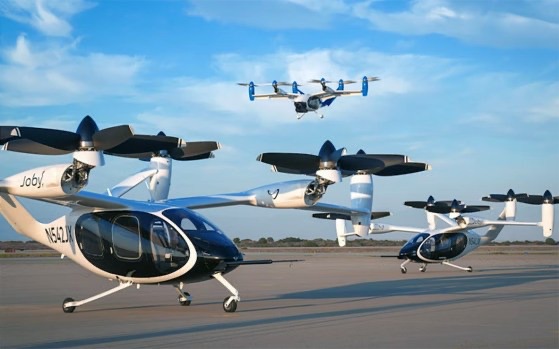
It’s going to happen at this point anyway.  My bringing it up now is more of a formality of connecting the dots and explaining to anybody who will listen how the future economy under President Trump will look.  I have conversations about making Ohio the number one state for business-friendly conditions all the time.  I attend many seminars on economic development and Chamber of Commerce incentives for depressed areas looking to rebound.  And when I say the only thing holding back this technology is the FAA, politics has changed.  Deregulation under Trump will get stuffy bureaucrats out of the way, and a second wave of aviation and aerospace development will be unleashed.  The other day, I talked a lot about Hyperloop and how and why a terminal should be built in Monroe, Ohio. But today, I’m talking about an old idea that is about to be unleashed and create an all-new transportation mode: skycars, or more technically speaking, VTOL air taxis.  I can say from personal experience that Joby Aviation, up the road from West Chester and Liberty Township, is at the front of the market.  They have air taxis ready to go, built, tested, flushed out, and prepared for delivery to market in 2025/2026; essentially, all that is standing in the way is the FAA approval process.  Joby Aviation is making a piloted version, but they will quickly become fully automatic and will work by calling one on your phone and having them pick you up and perform just like an Uber.  The future is here, now.  All that needed to happen was that politics would have to get behind it.  We don’t already have these air taxis in use because the Biden administration was a slow and Marxist micromanager that stalled all these efforts.  If Trump had stayed in the White House in 2020, these Joby air taxis would have been out for a few years by now.  So once we get a Trump administration back in the White House and install a pro-business mindset back into America, Joby and a few other companies are going to move quickly, and technical innovation on this front will happen at a blistering pace. 

Knowing all that, I would propose that we get all the minds together in West Chester and Liberty Township and become the first areas in the world to develop official Sky Ports.  Abu Dhabi and China are already deep in development.  And Europe is already all over it.  But they don’t have Joby Aviation right down the road and a stable environment to perform the early day development of the technology, which could make Ohio the first to fly again.  Here’s how and why it would work.  For instance, there is a nice little piece of property across from Ikea in West Chester that is just big enough for a sky port, a mini runway kind of helipad where these air taxis would land and take off like a helicopter, but much quieter and with much more stable flight.  This always happens to me; people come and see me from out of town.  They stay at the many hotels and have to get back and forth between CVG and West Chester, and their biggest problem is the traffic down I-75, which gets back to the airport to catch their flight when doing business in West Chester.  This air taxi system would take all that worry away and improve life for many people. 

For instance, when business guests were ready to leave their hotel, they would walk or catch a little transport from their hotel to Sky Port by Ikea. Theoretically, a sky taxi would be waiting for them.  In this case, a piloted version of the Joby VTOL vehicle would be waiting for them just like an Uber, dialed up by their phone with the ticket, and everything would be paid.  The guests would arrive and get into the craft like a car.  The sky taxi would fly them down to the airport at CVG and land at the front of the terminal, likely on top of the parking garage there, and fly over all the traffic, making the trip in about 15 minutes, which usually takes over 50 minutes.  Another problem I have is bringing people from West Chester who are in town without a car to sporting events.  I typically pick them up and drive to the Great American Ballpark to attend a game for the evening.  Getting downtown with all the rush hour traffic is a pain in the neck.  It would be much better to get into an air taxi and fly straight to the stadium, land in a nice, safe place along the river, and get to the game in about 10 minutes instead of an hour during those peak hours of 5 to 6 PM.  When the game was over, the passengers would just let the air taxi service know you were about to leave, and they would come and pick you up just like an Uber driver now.  Only it would be a VTOL instead of a car.  The same air taxi service could be set up to get to Kings Island from all over Cincinnati.  It could also be set up to serve politicians from their districts directly to the Ohio Statehouse.  There are a vast number of immediate applications that would benefit immediately from the low price of freshly poured concrete. 

After the FAA permit process, the next barrier would be to win over the public.  So, the sooner people see these vehicles working and overcome their fear of flying, the more the concept will expand rapidly.  At first, it would be similar to a helicopter ride experience that you see in very safe tourist areas.  Only this air taxi concept is even safer and much quieter.  It would be at a small volume, maybe a few flights every hour throughout the peak hours of a business day.  But enough people are interested now to make that happen with the Joby Aviation vehicles right out of the box.  However, the flight frequency would quickly increase to a flight every couple of minutes, and even several flights from several pads at the Skyport would come and go all the time.  It will also greatly enhance the business climate wherever sports reside.  So, I think Ohio has a unique opportunity to be the first.  West Chester, precisely because of its hotels and business traffic, could be the first in the world to demonstrate this technology and benefit economically from the visionary approach.  I’m just connecting the dots here for the many people I know in this business who need to know about each other.  And to explain that this isn’t some far off Jetson’s fantasy concept.  I’ve been involved in these Skycars for over three decades now, so when I say that they are here, I can say it with confidence.  Air taxis are here; they will happen and will be the hottest ticket in town for the next half of a decade.  People will find them very convenient, safe, and pleasant.  And they will become nearly as common as a personal car in a very short time.  The VTOL market needed a president like Trump in the White House.  The rest was waiting for the permit approval, which is about to happen as you read this.  If not sooner. 

Rich Hoffman

Click Here to Protect Yourself with Second Call Defense https://www.secondcalldefense.org/?affiliate=20707

The Truth About Drones Over New Jersey and the World: Forces losing control are trying to scare us back into submission

So, what’s going on with the drones all over New Jersey and many other places around the world?  I think many people are partially correct about what they think they are.  Alex Jones is not wrong; I do not doubt that the evil forces in the world are trying to provoke a nuclear war with a false flag event.  That is how they have gained and stayed in power after all these years, through fear, so ahead of Trump’s return to the White House, there are no doubt plans for mass chaos in any way possible.  I also know a lot of people who think that the actual government of the world, behind the World Economic Forum activity, are aliens running everything from behind the military-industrial complex, and they are all stirred up that they feel they are losing control with the incoming anti-globalist position of President Trump.  As Trump said, and I agree with him, if aliens are flying around harassing our people over our sovereign country, then shoot them down.  Don’t assume that just because they have UFOs or whatever they want to call them these days, they are superior to any of us.  We have sovereign rights over our domestic country and do not yield them to anything or anybody.  That has to be the American policy.  We do not yield to anything “greater” than us.  Never forget, H.G. Wells, who wrote War of the Worlds, was a major socialist, so this idea of fear of something that pushes everyone to support global communist governments out of fear of some superior otherworldly force is a rather stupid one, yet many are hoping that such a fear might prevent what is going to come from the new Trump administration.  There is plenty to be concerned about, but if I bump into any of these characters, the same rules of personal protection apply, no matter who they are.  I’m with Trump; shoot them down.

I’ve done a lot of research on this topic; I went to Roswell, New Mexico, to study this topic.  I’ve seen plenty of UFOs.  And while I do have lots of very complicated thoughts about how the world was seeded with life and that I think humanity is much older than what we find on Earth through linear history, most of the UFO sightings that we experience are primarily politically motivated by those who are seeking to control us through the fear of what might be.  By constantly reminding us of something superior that is out there beyond our world, their hope is to shepherd us into following global leadership toward a one-world international government for personal protection.  It’s no different than when a rancher cracks a whip to drive cattle or some other herd of animals in the direction they want them to go.  Not long ago, I did a whole report about the CIA and UFOs at the old LeSourdsville Lake Park in Monroe, Ohio, and just a few days later, one appeared right over the Speedway there.  It hovered in the sky just a few miles from my house, clearly in front of the cars stuck at the traffic light for all to see.  Then it flew off to the north at such a pace that the centrifugal force would have killed everyone inside it, as it went from zero to thousands of miles an hour in less than a fraction of a second.  I think there were a lot of things going on with that UFO sighting, but I don’t think it was aliens visiting us.

There are a lot of AI programs watching everything being said, and with drone technology being what it is today, they are very advanced and can run entirely off computer programs to create brilliant illusions. If you’ve ever seen some of these modern drone shows, they are very sophisticated.  There are also skycars, the size of buses that fly around all the time and can fly very well.  Additionally, projection technology, which I think was the case with the UFO in Monroe, directly addressed my comments and explained how it moved so fast in the sky.  It is possible to project a 3D image in an almost holographic imprint against the molecular structure of air, especially on high-humidity nights or similar cloudy conditions.  So I think we are seeing a lot of attempts here to scare the human race back into submission as the world is seeing all these trends toward populism that are getting well out of control.  After all, we have people like Giorgia Meloni of Italy and Javier Milei of Argentina, who are the rising stars of leadership in the world, and that is a very new thing, which is joining Trump as an anti-globalist force in control now.  And globalism has been attached to UFO phenomena from the beginning of the United Nations.  That’s why there is so much on Netflix: to train the human race in such speculations so that the government can provide parental roles for protection.  However, the trend is to reject that projection and control the fate of each country individually.  And ahead of Trump returning to the White House, the globalist forces are in a panic, which they are showing through control over this particular kind of technology that is more visual than actually dangerous. 

So what I think, whatever forces they are, the powers that have been in control are losing control and are throwing a fit ahead of Trump’s inauguration.  And they are trying every trick in the book to hold power from a world that is quickly rejecting globalism massively.  When I witnessed the UFO event in Monroe, it was just a letdown to be so obvious.  I did a video and written article about all this and here was an answer just a few days later in an attempt to re-establish an alien attack narrative that organizations like the CIA count on to keep mass society under control.  But my research in Roswell had already convinced me that much of the UFO talk out there was more commercial than realistic.  Oh, I do believe in life on other planets.  I think there is a lot of it out there, and as we move into space, we will learn a lot about ourselves.  But most of the Roswell incident was out of commercial needs to boost their economy more than alien visits.  And that is most of the time the case.  Democrats, like Hillary Clinton and John Podesta, have been very excited about a Full Disclosure event that will reveal all that we know about aliens interacting with our government, and that same type of mentality is behind this current drone invasion that is happening all over the world.  But none of that will change the political trajectory we are all on.  If something flies over our countries, we need to shoot them down.  We do not want more government to protect us from aliens, which has always been the push.  If the aliens want to talk, we can talk.  But we are moving on as a human race to a government representing the work people need to have done.  Not one that people worship like a god out of fear of some force that’s out there and has more technology than we do.  Those days are over, and they are never coming back. 

Rich Hoffman

Click Here to Protect Yourself with Second Call Defense https://www.secondcalldefense.org/?affiliate=20707