The Jaw-dropping Impact of David Flynn’s Work: Uncovering a lost history of Mars and the migration of people to Earth

I’ve talked about Cydonia: The Secret Chronicles of Mars by David E. Flynn before, but after diving into the newly republished edition, I felt compelled to share my thoughts in depth. This book, originally self-published around 2002 by End Time Thunder Publishers, was ahead of its time—a dense, brilliant exploration that ties ancient mythology, biblical narratives, and apparent anomalies on Mars into a cohesive narrative about humanity’s origins. Thanks to Timothy Alberino’s advocacy, including his foreword in the new edition released in early 2026 by Sunteleia Press (with contributions from Mark Flynn), it’s now more accessible in hardcover, paperback, and digital formats, reaching a broader audience ready for these ideas.

I wouldn’t have picked it up without Alberino’s influence. I’ve followed his work since Birthright in 2020, appreciating how he bridges scriptural truth with adventurous inquiry into giants, Nephilim, and posthuman themes. He’s a genuine explorer with a scriptural backbone, not the stereotypical “New Age” figure some might dismiss. His promotion of Flynn’s work—calling it one of the most consequential books ever written—sparked my interest. I grabbed the new edition as soon as it dropped, read it multiple times to let the concepts sink in, and recorded my podcast thoughts because this material deserves serious consideration.

Flynn was a high-IQ thinker who operated outside mainstream channels. Through his Watcher website in the 1990s and early 2000s, he delved into biblical ufology, eschatology, sacred geometry, and the implications of structures photographed in Mars’ Cydonia region—like the so-called “Face on Mars” from the 1976 Viking images and nearby pyramid-like formations. He argued these weren’t mere pareidolia but encoded remnants of a civilization that fled Mars after catastrophe, bringing knowledge to Earth. Myths from Sumer, Egypt, the Indus Valley, Greece, Rome, and even indigenous Americas trace back to this diffusion, centered in the Near East near Mount Hermon—the biblical entry point for fallen angels (Watchers) in the Book of Enoch.

In Flynn’s view, these “sons of God” descended, fathered giants (Nephilim), taught forbidden arts, and corrupted humanity, leading to the Flood. Post-flood, survivors or their cultural echoes rebuilt civilizations, with megalithic sites worldwide aligning on geometric grids—pentagrams anchored at Giza and the Prime Meridian. This “As Above, So Below” principle suggests Mars’ Cydonia as a template for earthly monuments, from Stonehenge to Ohio’s Serpent Mound. Flynn connected this to ley lines, occult symbolism (serpents, hyperborean origins), and mystery schools preserving elite knowledge while suppressing it from the masses.

I’ve long collected accounts of giants in Ohio mounds—newspaper clippings from the 19th and early 20th centuries reporting oversized skeletons unearthed during excavations, often dismissed or “lost” by institutions like the Smithsonian. Many researchers chase these leads, get excited, then fade when mainstream scrutiny hits. Flynn escaped that cycle by grounding his work in scripture and comparative mythology rather than pure speculation. He wasn’t chasing kooks; he was synthesizing evidence that scripture and emerging science increasingly align.

This shift—from fringe “New Age” shelves (Graham Hancock, Zecharia Sitchin, Erich von Däniken) to respectable inquiry—began with thinkers like Flynn and accelerated with Michael Heiser’s The Unseen Realm and Reversing Hermon. Heiser, a Semitic languages scholar, unpacked Genesis 6 without extraterrestrial leaps, focusing on divine council and supernatural rebellion. Alberino builds on this, applying it to modern threats like transhumanism. Reading Flynn after Heiser and Alberino feels like puzzle pieces clicking: ancient myths aren’t fiction but distorted memories of real events, possibly involving ultra-terrestrial and/or extraterrestrial contact preserved in Enochian texts and global lore.

Critics point to NASA’s higher-resolution images (Mars Global Surveyor 1998 onward) showing the “Face” as a natural mesa eroded by wind, with no artificial symmetry. Pareidolia explains much—humans see faces in rocks, just as in clouds or toast. Yet Flynn’s geometric arguments persist intriguingly: if alignments predict undiscovered sites, why not consider cosmic origins? Hallucinogens like ayahuasca induce shared visions across cultures, echoing cave art from Lascaux to remote tribes, suggesting subconscious or spiritual exchanges. UFO phenomena add layers—disclosure talks under recent administrations hint at deeper truths.

I want to go to Mars not to abandon Earth but to verify. SpaceX and commercial efforts make it inevitable; we’ll build habitats, explore, and likely find preserved ruins—pyramids, mounds, architectural echoes—on a stripped world. No thick atmosphere or active society buries evidence there. If we discover ancient civilization remnants 10,000, 100,000, or millions of years old, it redefines history: humanity as refugees or engineered arrivals, not isolated evolution. Myths become chronicles; scripture’s miracles include survival of truth through millennia.

Power structures suppress this—China buries pyramids to control narrative; mystery schools hoard knowledge for dominance. Flynn exposed that, self-publishing because no mainstream house would touch it. Early internet allowed geniuses like him to connect, compare notes at 3 a.m., and build followings organically. Alberino, inspired, helped republish it, giving it legitimacy. His podcasts dissecting it (dozens in his community) make it digestible.

This book shatters illusions but in a good way. As disclosure ramps up—political, technological, archaeological—we must prepare. Root-cause analysis demands we question origins beyond Darwin or uniformitarianism. Mars may have been part of our past, not just future. Stories of tragedy, survival, and migration from the asteroid belt (Phobos/Deimos as remnants?) to Earth explain gods’ names and shared archetypes.

I’ve read extensively—Heiser, Sitchin (for contrast), Enoch translations, Hoagland’s Monuments of Mars—and Flynn stands out as genius-level synthesis. It’s dense, requires rereading, but rewards with awe at God’s design amid cosmic drama. Humanity’s dominion over Earth includes exploring to reclaim lost truth, bringing heaven here as representatives.

In these times, with information exploding and institutions failing, books like this empower us. Read it on your terms before media forces the conversation. It prepares for paradigm shifts—good ones, shattering control for freedom.

Bibliography

•  Flynn, David E. Cydonia: The Secret Chronicles of Mars. End Time Thunder Publishers, 2002 (original); Sunteleia Press edition with forewords by Timothy Alberino and Mark Flynn, 2026.

•  Alberino, Timothy. Birthright: The Coming Posthuman Apocalypse and the Usurpation of Adam’s Dominion on Planet Earth. Self-published, 2020.

•  Heiser, Michael S. The Unseen Realm: Recovering the Supernatural Worldview of the Bible. Lexham Press, 2015.

•  Heiser, Michael S. Reversing Hermon: Enoch, the Watchers & the Forgotten Mission of Jesus Christ. Defender Publishing, 2017.

•  The Book of Enoch (R.H. Charles translation, 1917; various modern editions).

•  Hoagland, Richard C. The Monuments of Mars: A City on the Edge of Forever. North Atlantic Books, 5th ed., 2001.

•  Sitchin, Zecharia. The 12th Planet. Bear & Company, 2004 reprint.

•  Hancock, Graham. Fingerprints of the Gods. Crown, 1995 (for comparative ancient mysteries context).

•  NASA Mars mission archives (Viking 1976, Mars Global Surveyor 1998–2006, etc.).

•  Flynn’s Watcher website (archived materials via secondary sources).

Footnotes for Further Reading

1.  On Cydonia anomalies and pareidolia: NASA press releases post-1998; Carl Sagan, The Demon-Haunted World: Science as a Candle in the Dark (1995).

2.  Nephilim and divine council: Genesis 6; Deuteronomy 32; Job 1–2; Heiser’s works above.

3.  Alberino’s role: His X posts and The Alberino Analysis community podcasts on Cydonia.

4.  Giant mound reports: 19th-century newspapers (e.g., New York Times archives); critiques in mainstream anthropology.

5.  Sacred geometry/ley lines: Alfred Watkins, The Old Straight Track (1925); Flynn’s pentagram grid discussions.

6.  Disclosure context: 2020s UAP Task Force reports; SpaceX Starship/Mars plans.

7.  Myth diffusion: Joseph Campbell, The Hero with a Thousand Faces (1949).

8.  Mystery schools/esotericism: Manly P. Hall, The Secret Teachings of All Ages (1928).

9.  Enochian influences: Dead Sea Scrolls fragments; 1 Enoch translations.

10.  Mars exploration potential: Recent Perseverance rover findings; astrobiology papers on ancient habitability.

Rich Hoffman

More about me

Click Here to Protect Yourself with Second Call Defense https://www.secondcalldefense.org/?affiliate=20707
The NFL’s Miscalculated Globalist Push: The Bad Bunny Halftime Show and the Perils of Prioritizing Foreign Markets Over Domestic Loyalty

The NFL’s Miscalculated Globalist Push: The Bad Bunny Halftime Show and the Perils of Prioritizing Foreign Markets Over Domestic Loyalty serves as a stark warning about the dangers of corporate strategies that chase international appeal at the expense of core domestic audiences. In the wake of Super Bowl LX (played February 8, 2026, concluding the 2025 NFL season), the decision to feature Puerto Rican superstar Bad Bunny as the halftime headliner ignited widespread discussion. While the performance celebrated Puerto Rican heritage through vibrant choreography, family-themed elements (including a live on-stage wedding), and Spanish-language hits, it coincided with a measurable dip in traditional U.S. viewership during the slot—highlighting tensions between global expansion ambitions and the league’s foundational American fanbase.

Official Nielsen data confirms the Super Bowl averaged 124.9 million viewers across NBC, Peacock, Telemundo, NBC Sports Digital, and NFL+ platforms—a solid but slightly declining figure from the prior year’s record of 127.7 million. The game’s peak reached an all-time high of 137.8 million in the second quarter (7:45–8:00 p.m. ET). However, Bad Bunny’s halftime show (8:15–8:30 p.m. ET) averaged 128.2 million viewers, ranking it fourth all-time behind Kendrick Lamar (133.5 million in 2025), Michael Jackson (133.4 million in 1993), and Usher (129.3 million in 2024). Quarter-hour breakdowns reveal the issue: viewership fell approximately 7% from the game’s peak (to around 128.2 million from 137.9 million in the prior high quarter), with a 5.7% drop from the immediate pre-halftime segment. This translated to an estimated loss of 9–10 million viewers in some windows compared to game highs, particularly among non-Latino English-speaking audiences, as Telemundo’s share surged during the set.

The performance’s entirely Spanish-language format boosted international and Hispanic viewership—Telemundo hit record levels, and social media clips amassed over 4 billion views in 24 hours (with more than 55% from overseas markets, per NFL and Ripple Analytics). Yet domestically, the shift prompted channel changes, as evidenced by the drop-off. Critics argued this reflected Roger Goodell’s broader strategy: using the halftime platform as cultural promotion for Latin American growth, akin to a televised showcase for Puerto Rican vibrancy, family structures, and resilience amid issues like power outages.

In direct response, Turning Point USA (TPUSA) mounted the All-American Halftime Show, featuring patriotic performances by Kid Rock, Brantley Gilbert, Lee Brice, Gabby Barrett, and others. Streamed on YouTube, Rumble, and allied platforms, it peaked at around 6.1 million concurrent viewers during overlap (with live estimates of 5–6.4 million across carriers). Post-event, the YouTube upload surpassed 21 million total views (some reports cited 19–25 million including Rumble). While dwarfed by the official show’s scale, it symbolized a bold conservative counter-narrative, drawing those alienated by perceived progressive undertones (e.g., immigration-related themes some interpreted in Bad Bunny’s presentation). TPUSA’s event amplified Charlie Kirk’s reach and positioned the group as a cultural alternative at a moment of peak visibility.

The real stakes lie in advertising revenue, where the Super Bowl’s value hinges on sustained high engagement. Thirty-second spots fetched $7–10 million in 2026, with advertisers expecting minimal churn during premium slots like halftime. The documented 7% drop during Bad Bunny’s set likely reduced effective impressions for those ads, potentially leading to under-delivery on promised audiences. Networks and the NFL may have faced pressure to justify rates amid the dip, even as overall game averages remained strong. The league’s bet on Bad Bunny—Spotify’s most-streamed artist in 2025—prioritized Latin market penetration over retaining every domestic viewer, but the cost showed in softer traditional metrics.

This mirrors the NFL’s aggressive international expansion. The league announced a record nine international games for 2026 across four continents, seven countries, and eight cities—including returns to Mexico City (at Estadio Banorte, with the San Francisco 49ers as a designated home team for a multiyear run), plus debuts or returns in Paris, Madrid, Rio de Janeiro, Melbourne, Munich, and London. Mexico and Brazil rank among the NFL’s largest overseas fanbases (tens of millions each), and Goodell has openly discussed future possibilities like dedicated international teams or further Latin ties, including deeper Puerto Rico involvement. Bad Bunny’s show aligned perfectly as soft-power outreach, highlighting cultural affinity to build loyalty in these markets.

Yet American football’s appeal—strategic individualism, decisive big plays—contrasts sharply with soccer’s more fluid, defense-heavy style, which some parallel to collectivist systems. Exporting the product risks dilution when overly customized for foreign preferences, potentially alienating the tailgating, weather-defying U.S. core that sustains the league financially.

Hollywood’s trajectory offers the clearest cautionary parallel. In the 2000s–2010s, studios chased China’s exploding box office, often prioritizing global totals in announcements and altering content to appease censors (e.g., removing sensitive themes). Blockbusters drew $100–200 million+ from China, sometimes rivaling or exceeding domestic hauls, offsetting ballooning U.S. union production costs. But over-reliance eroded trust: audiences sensed “watered-down” American essence, “woke” shifts alienated segments, and China’s domestic films surged to dominate 80–90% of its market. Hollywood’s U.S. theatrical revenue declined, theaters closed, streaming fragmented the model, and independents (e.g., Angel Studios) rose to fill voids. The pivot neglected the domestic foundation that once made global appeal possible.

The NFL treads similar ground. By assuming domestic loyalty while expanding abroad, it risks betraying advertisers targeting that base. Progressive framing in the show—perceived accommodations to immigration debates—further polarized, turning off viewers and dollars. Sustainable growth strengthens the home market first; overextension without it invites erosion.

Weeks after the event, data confirms the patterns: strong but not record-breaking U.S. numbers, explosive international/social metrics, yet a clear domestic halftime dip. Future Super Bowls could see trend lines worsen if bad choices persist. The league must recalibrate—honor the American essence that built its empire—or face permanent damage akin to Hollywood’s decline.  While I watched both shows to see how the stories would unfold, and Bad Bunny stayed on good behavior during the halftime show, the damage was done before the show ever started.  It was a bad decision to have Bad Bunny sell family values when advertisers bought viewer appeal, not a progressive rebellion.  And picking Bad Bunny with all the baggage was a letdown to the advertisers, and it will hurt the NFL product going into next year.  The betting problem of rigged games is already having an impact.  And this whole problem certainly didn’t help. 

Footnotes

1.  Nielsen, “Super Bowl LX Delivers 125.6 Million Viewers,” February 10, 2026. (Official averages and halftime figures.)

2.  ESPN, “Super Bowl LX, Bad Bunny’s halftime fall shy of ratings records,” February 10, 2026. (Peak and ranking details.)

3.  Front Office Sports, “Bad Bunny Halftime Viewership Fell 7% From Super Bowl Peak,” February 11, 2026. (Quarter-hour drop analysis.)

4.  The Athletic / New York Times, “Super Bowl LX draws 124.9 million viewers, Bad Bunny 128.2 million,” February 11, 2026. (Comparative declines.)

5.  Fox News / various outlets, coverage of TPUSA All-American Halftime Show (e.g., peaks at 6.1 million concurrent, 21+ million total views on YouTube).

6.  NFL.com announcements on 2026 international schedule (nine games, Mexico City return, etc.).

7.  Reuters / The Guardian, reports on Hollywood’s China market shift and subsequent domestic erosion (contextual parallels from industry analyses).

8.  Launchmetrics / Forbes, media impact value tied to Bad Bunny’s performance (e.g., $942M+ MIV for the event, heavy international skew).

Bibliography / Further Reading

•  Nielsen Big Data + Panel reports (February 2026).

•  ESPN, The Athletic, Front Office Sports, and Variety articles on ratings (February 10–13, 2026).

•  NFL.com international games announcements (February 2026).

•  Historical Hollywood analyses (e.g., Reuters, The Economist on China box office dynamics).

•  TPUSA and YouTube metrics for All-American Halftime Show.

Rich Hoffman

More about me

Click Here to Protect Yourself with Second Call Defense https://www.secondcalldefense.org/?affiliate=20707
The Hidden Library of Ecuador: Another block falling away from Disclosure

The narrative surrounding Erich von Däniken’s The Gold of the Gods (1973) exemplifies how speculative literature can propel real-world exploration, blending pseudoscience with genuine adventure and leaving enduring questions about hidden histories. Von Däniken’s book amplified claims originating from Juan Moricz, who described discovering artificial tunnels, gold artifacts, peculiar sculptures, and a “metallic library” of inscribed plates—potentially chronicling ancient knowledge or extraterrestrial intervention—within Ecuador’s Cueva de los Tayos, a sprawling natural cave system in the Morona-Santiago province amid the eastern Andean foothills. These assertions tied into von Däniken’s broader ancient astronaut hypothesis, suggesting advanced civilizations received extraterrestrial aid, and the book’s bestseller status amplified global fascination with the Amazon’s subterranean mysteries.

The claims directly catalyzed the most ambitious investigation of the site: the 1976 Anglo-Ecuadorian expedition, orchestrated by Scottish civil engineer and explorer Stan Hall. Inspired by von Däniken’s account, Hall secured backing from the governments of Ecuador and the United Kingdom, assembling a formidable team of more than 100 members. This included speleologists, archaeologists, geologists, biologists, film crews, and logistical support from British and Ecuadorian military forces—joint special forces handled security, helicopter transport, and clearing landing zones in dense jungle terrain. The operation, one of the largest and costliest cave explorations ever mounted, transported 45 tons of equipment and provisions into remote wilderness. At its helm as Honorary President stood Neil Armstrong, the first human to walk on the Moon in 1969 during Apollo 11. Armstrong, who had retired from NASA but retained an insatiable curiosity for uncharted frontiers, accepted Hall’s invitation—partly due to shared Scottish ancestral ties (Hall hailed from Dollar, near Armstrong’s family roots in Clackmannanshire). Armstrong’s participation lent unparalleled credibility, drawing media attention and underscoring the expedition’s serious intent beyond mere sensationalism.

The mission unfolded amid challenging conditions: participants descended via vine ladders or ropes through vertiginous entrances, including a primary 213-foot (65-meter) vertical shaft leading to vast chambers—one measuring 295 by 787 feet—and passages extending at least 4-5 km (with more potentially unmapped). The team employed rigorous scientific protocols, mapping the karstic limestone-sandstone system, documenting unique ecology (such as colonies of oilbirds, whose eerie screams echoed through the darkness, alongside newly identified species of bats, butterflies, and beetles), and recovering archaeological evidence. Artifacts and human remains dated to approximately 3500 BCE confirmed ancient indigenous use, likely for rituals or shelter, while natural formations like the symmetrical “Moricz Portal” briefly mimicked artificial construction before geological analysis affirmed their natural origins.

Despite exhaustive searches—no metallic library, gold mounds, inscribed plates, or extraterrestrial artifacts emerged—the expedition yielded substantial value. It advanced speleological knowledge, cataloged biodiversity, and highlighted human historical engagement with the cave. Armstrong, ever the reserved engineer, participated actively in descents and surveys, reportedly expressing profound satisfaction with the endeavor. Accounts from expedition members and later reflections suggest he viewed the underground journey as comparable in exploratory thrill to his lunar experience—entering unknown territories, confronting isolation, and learning anew. One reported remark framed both as profound encounters with the uncharted: ascending to the Moon and descending into Earth’s depths represented complementary frontiers of human inquiry. Though Armstrong remained characteristically private, avoiding extensive public commentary, his involvement spoke to a lifelong pursuit of discovery beyond fame.

Armstrong’s post-Apollo life reflected this exploratory ethos, often intersecting with mysteries and anomalies that fueled speculation. While mainstream records show no verified extraterrestrial encounters during Apollo 11—claims of UFOs trailing the spacecraft or structures on the lunar surface stem from hoaxes (e.g., those propagated by science fiction writer Otto Binder) or misinterpretations (jettisoned panels matching the craft’s velocity)—persistent rumors have linked his reticence to unspoken observations. Some narratives suggest the lunar mission’s isolation, the stark desolation of the regolith, or fleeting visual phenomena (like transient flashes reported by astronauts across missions) left lasting impressions. Armstrong’s reclusive retirement—avoiding interviews, shunning celebrity, and focusing on teaching aeronautics—has been interpreted by some as evidence of deeper reflections on cosmic unknowns, though he consistently emphasized scientific rigor over speculation.

His Tayos participation fits this pattern: drawn to a site steeped in legend, he approached it methodically, prioritizing evidence over myth. The expedition’s “failure” to locate von Däniken’s treasures did not diminish its legacy; instead, it exemplified how adventurous inquiry, even when debunking exaggeration, advances knowledge. The Shuar people, traditional stewards of the region with historical warrior practices including headhunting and tsantsa creation, likely influenced outcomes—guiding teams to accessible areas while protecting sacred or sensitive zones, contributing to incomplete searches amid cultural secrecy and remote dangers (jungle hazards, cartel-adjacent violence in parts of the Amazon).

Contemporary tools like LiDAR continue to validate the potential for hidden layers in such landscapes. Recent surveys in Ecuador’s Upano Valley revealed extensive pre-Columbian networks—platforms, roads, and settlements dating to 500 BCE—buried beneath the canopy, reshaping views of Amazonian complexity. Parallel discoveries in Peru, Bolivia, and Brazil uncover engineered features that align with indigenous lore, suggesting that legends like Tayos may encode real, undiscovered elements. Adjacent caves or modifications near Tayos could await detection, as LiDAR penetrates vegetation and soil anomalies.

Later explorations, including Josh Gates’ 2018 Expedition Unknown revisit with Shuar collaboration, employed drones and scanning to expand mapped areas, uncovering more tools and ceramics, but no library. Ongoing efforts propose UNESCO recognition of the Tayos as a natural and cultural geosite.

Von Däniken’s work, though critiqued for embellishment, ignited healthy debate and mobilization. It parallels transformative finds like the Dead Sea Scrolls, which authenticated ancient texts yet revealed only fragments of broader histories. The Amazon’s emerging record—vast subterranean and surface engineering—hints at greater mysteries, accessible through funded, technology-driven research.

In an era of accelerating disclosure through remote sensing and interdisciplinary collaboration, such stories highlight the interplay between speculation and science. Questioning narratives, when grounded in boots-on-the-ground verification, propels understanding of shared planetary history—preparing humanity for future frontiers, from Earth’s depths to space.  But with all that said, I think the library is still out there, not unlike what von Däniken proposed in his original text.  There is a lot hidden, sometimes in plain sight.  And when you have headhunters as your guides, I don’t think enough people questioned their methods of direction.  And that they well know of other caves in the area still hidden, and under their protection. And that with just a little bit of looking, we’ll find it.  And a whole lot more.

Bibliography / Further Reading

•  von Däniken, Erich. The Gold of the Gods. Putnam, 1973.

•  Hall, Stan. Tayos Gold: The Archives of Atlantis. The Athol Press, 2006.

•  Rostain, Stéphen et al. “2000 years of garden urbanism in the upper Amazon.” Science, vol. 383, no. 6679, 2024.

•  Wikipedia contributors. “Cueva de los Tayos.” Wikipedia.

•  Tayos.org (expedition archives).

•  Expedition Unknown, “Hunt for the Metal Library” (2018).

•  Toulkeridis, Theofilos. Geological studies on Tayos karst.

•  Atlas Obscura, “Cueva de los Tayos.”

•  Outside Online, “A Journey Inside the World’s Most Mysterious Cave” (2020).

•  Ancient Origins, Tayos expedition coverage.

Footnotes

1.  Von Däniken, The Gold of the Gods; Wikipedia, “Cueva de los Tayos.”

2.  Jason Colavito analyses: archaeological consensus.

3.  Tayos.org; BBC Mundo on Armstrong.

4.  Hall, Tayos Gold; Outside Online.

5.  Atlas Obscura; Ecuador Eco Adventure on Shuar.

6.  Expedition Unknown summaries.

7.  ResearchGate geosite proposals.

8.  Science 2024; BBC/Guardian Upano coverage.

9.  Smithsonian, Nature on Amazon LiDAR.

10.  Historical parallels; disclosure themes in exploration literature.

Rich Hoffman

More about me

Click Here to Protect Yourself with Second Call Defense https://www.secondcalldefense.org/?affiliate=20707
Dirty Hands at the Dinner Table: How Authority Conceals the Temple Mount Secrets

I find the stories of the Temple Mount in Israel infinitely fascinating.  The way authority figures hide things—whether it’s a father at the dinner table deflecting his daughter’s question in the movie Fire Walk with Me or entire systems built around keeping eyes off what’s buried—keeps echoing louder in the news and in the air. That scene isn’t just cinema; it’s a blueprint for how power protects itself. Laura asks the direct, impossible-to-ignore question—“Why were you in my room?”—and the response isn’t denial or apology. It’s inversion: Leland grabs her hand, inspects it closely, and declares, “Your hands are filthy… look, there is dirt way under this fingernail.” Suddenly, the spotlight shifts, the original inquiry evaporates, and the hierarchy snaps back into place. The abuser stays safe behind the façade of parental authority, and the victim is left doubting her own reality. I see that exact mechanism repeating at every scale, from family secrets to the kind of institutional cover that goes on at the Temple Mount.

What makes it so gripping is how deliberate it can feel when you zoom out. After the 1967 war, Israel had the Mount in hand—full military control, the keys to the gates, the ability to reshape everything. Yet the Waqf keeps running the show day to day. The official line has always been peace preservation: don’t inflame the Muslim world, avoid a wider religious war, and show tolerance as the new custodian of holy sites for all faiths. It sounded pragmatic at the time, almost noble. But layer on the archaeology angle, and it starts looking like genius-level deflection. Create a permanent tension zone where any serious dig—any probe into the tunnels, chambers, ancient wells, or pre-Davidic features—gets framed as an assault on Islam’s third-holiest site. The Waqf has a motive to block it (preserving their narrative overlay), the world has a motive to pressure Israel against escalation, and nothing changes underground. No permits for neutral international teams, no comprehensive mapping with modern tech without diplomatic blowback, no accidental exposure of whatever Solomon’s people might have sealed away before the Babylonians arrived. Hostility becomes the perfect guard dog: it barks at intruders, keeps the curious at bay, and nobody has to admit they’re hiding something.

The red heifer push keeps underscoring how serious this feels on the ground. Preparations haven’t stopped; they’ve accelerated in ways that are hard to ignore. The Temple Institute has been at it for over a decade, educating, crafting vessels, training priests, and monitoring candidates. Those five from Texas back in 2022 got a lot of attention—flown in, raised under strict conditions in Shiloh. Some were disqualified over time for developing imperfections (a single white hair can disqualify under halachic rules). There was that big July 1, 2025, event in the Samarian hills: a full simulation of the ritual burning with a disqualified animal, complete with priests in garments, ashes collected. The Institute clarified it was practice only, non-kosher because the heifer wasn’t perfect, and the setup wasn’t fully consecrated. Still, four candidates remain under observation there as of early 2026. Ministers have visited the site; photos circulate, and the message is clear: when a truly flawless one is ready, and everything else aligns, purification of the ashes becomes possible. That’s the biblical prerequisite for resuming Temple-level purity and service. No ashes, no Third Temple activity. With record numbers of Jewish visitors to the Mount lately—over 76,000 in 2025, shattering previous highs—and quiet shifts like police allowing limited prayer pages or sheets on site (a crack in the old status quo since late 2025 into this year), the momentum builds.

Those tunnels are key to the story. Explorers like Josh Gates have documented what they can—ancient passages, some possibly water systems from way back, others sealed or restricted. In episodes of Expedition Unknown, he rappels into shafts beneath Jerusalem, navigating cramped, centuries-sealed tunnels that hint at connections to the Mount area, though collapses and restrictions halt full exploration. Rabbis and Orthodox groups have long held traditions that the Ark never left Jerusalem: hidden by Solomon in purpose-built chambers, or by Josiah, or Jeremiah, or someone in that chain before the First Temple fell. A few bold digs happened quietly decades ago—1981 efforts by rabbis like Yehuda Getz chiseling into bedrock passages under the Mount, rumors of cleared rooms but no public Ark reveal. Modern statements from some rabbis lean hard on “it’s here, well hidden, we know where.” If it’s in those under-Mount networks—pre-David threshing-floor caves, Solomon-era vaults—the current setup is an ideal lock. Islamic administration means no Jewish-led archaeology without crisis. Muslim sensitivities mean no validation of biblical claims through digs. Politics means endless stalemate. And yet the pressure cooker is heating: October 7 still looms as a possible reaction to perceived Temple threats, red heifer talk fuels messianic expectations across lines, and post-COVID distrust means fewer people accept the old “don’t ask, don’t dig” deflection.

Whether it’s unaccountable governments sitting on restricted zones (Afghanistan caves, Chinese pyramids, Iraqi museums), or mystery-school oral traditions guarding knowledge, or straight gaslighting at the family level, the playbook is the same: manufacture antagonism or taboo to keep inquiry radioactive. But the erosion of blind trust changes everything. People aren’t swallowing “your hands are dirty” as an answer anymore. They’re asking why the room was entered in the first place. That’s why this feels like disclosure season—UFO files crack open, ancient anomalies get debated publicly, and the Temple Mount simmers closer to a boil. If the Ark surfaces, or a red heifer ritual goes live, or the status quo finally snaps, the cascade could rewrite maps, faiths, and power structures overnight.

Footnotes

1.  The dinner table scene in Twin Peaks: Fire Walk with Me, where Leland inspects Laura’s hands and says, “Your hands are filthy… look, there is dirt way under this fingernail,” is from the screenplay by David Lynch and Bob Engels (1991 shooting draft).

2.  Moshe Dayan’s decision to maintain the status quo on the Temple Mount, granting the Waqf administrative control while Israel handles external security, was made shortly after the Six-Day War in June 1967, without formal cabinet ratification.

3.  The Waqf’s role and the ban on Jewish prayer have been key elements of the status quo, though recent reports indicate limited allowances for Jewish prayer pages or sheets as of early 2026.

4.  Jewish visitor numbers to the Temple Mount reached record highs, with over 76,000 in 2025, according to activist groups.

5.  The Temple Institute conducted a practice red heifer ritual simulation on July 1, 2025, in the Samarian hills using a disqualified heifer; four candidates remain under monitoring in Shiloh as of early 2026.

6.  Explorations of tunnels beneath Jerusalem, including potential links to the Temple Mount, feature in Expedition Unknown episodes with Josh Gates, showing sealed passages and historical signatures but no conclusive Ark discovery due to restrictions.

7.  Jewish tradition and rabbinic statements often hold that the Ark was hidden in underground chambers beneath the Temple Mount before the Babylonian destruction, with some rabbis claiming knowledge of its location.

Bibliography

•  Lynch, David, and Bob Engels. Twin Peaks: Fire Walk with Me screenplay (shooting draft). Lynch/Frost Productions, August 8, 1991.

•  Shragai, Nadav. “The ‘Status Quo’ on the Temple Mount.” Jerusalem Center for Public Affairs, November-December 2014.

•  “What is the Temple Mount ‘status quo’?” JNS.org, June 19, 2022.

•  “Jewish prayer signals Temple Mount’s shifting status quo.” The Jerusalem Post, 2026.

•  “UPDATE AND CLARIFICATION REGARDING THE RED HEIFER.” The Temple Institute official website and Instagram, November 2025.

•  “Record Temple Mount Visits and Red Heifers Signal Prophetic Momentum in Israel.” MyCharisma.com, February 4, 2026.

•  “Josh Gates Searches For The Lost Ark Of The Covenant In Jerusalem.” Expedition Unknown, Discovery Channel.

•  “The Ark of the Covenant.” Associates for Biblical Research.

•  Moskoff, Harry H. “The Enigma of the Lost Ark of the Covenant.” The Times of Israel Blogs, September 10, 2017.

Rich Hoffman

More about me

Click Here to Protect Yourself with Second Call Defense https://www.secondcalldefense.org/?affiliate=20707
Cheering on Artemis II: One step closer to a vacation on the Moon

The excitement around Artemis II is palpable right now, especially with the wet dress rehearsal wrapping up and teams pushing toward a launch no earlier than March 2026—potentially as soon as March 6 if everything aligns after addressing that liquid hydrogen leak from testing. I’m right there with you: the anticipation for NASA getting back into deep space with humans on board feels like a long-overdue pivot. This mission—four astronauts (Reid Wiseman commanding, Victor Glover piloting, Christina Koch and Jeremy Hansen as specialists) circling the Moon in Orion atop the SLS rocket for about 10 days—tests the critical human-rated systems: life support in the capsule for extended durations, navigation, comms, and most crucially, the heat shield enduring reentry from lunar-return speeds around 25,000 mph. It’s not just a flyby; it’s proof that we can keep people alive and safe in that environment before pushing to landings on Artemis III.

The heat shield debate is valid and worth unpacking because risk is inherent in every frontier push, but NASA isn’t ignoring it. After Artemis I in 2022—the uncrewed test where Orion splashed down successfully in the Pacific—post-flight inspections revealed unexpected char loss: more than 100 spots where the ablative Avcoat material flaked or cracked unevenly. Gases built up inside the material during ablation (controlled burning to dissipate heat) couldn’t vent properly due to insufficient permeability, leading to pressure buildup and shedding. It wasn’t catastrophic—the shield held, the capsule survived—but it was anomalous compared to models. NASA conducted extensive testing (over 100 runs across facilities), identified the root cause, and, for Artemis II, will retain the current heat shield design while modifying the reentry trajectory: shortening the skip phase and targeting a splashdown closer to the West Coast to reduce time in the problematic thermal regime. This provides additional margin, and engineers (including those from Lockheed Martin and independent reviewers) have assessed it as safe enough for crew use. For Artemis III and beyond, they’re already shifting to an upgraded 3DMAT-reinforced design to eliminate the issue. Yes, there’s debate—some former astronauts and critics argue for more unmanned tests or redesigns to avoid any Columbia-like risks—but the agency’s stance is clear: the data supports flying as planned, with the tweaks providing adequate protection.

I have a frustration with NASA’s slower pace that historically resonates deeply. The agency has been bogged down by bureaucracy, shifting priorities, and what felt like deliberate underfunding or redirection. Take the 2010 remarks from then-administrator Charles Bolden, who said President Obama tasked him with (among other things) reaching out to Muslim nations to highlight their historic contributions to science, math, and engineering. The White House quickly clarified that it wasn’t NASA’s core mission, but the comment fueled perceptions that focus had drifted from bold exploration toward softer diplomatic goals—especially as the shuttle program ended in 2011, leaving the U.S. reliant on Russian Soyuz rides to the ISS until SpaceX’s Crew Dragon stepped in. That gap period was humiliating and stalled momentum. Obama-era policies initially emphasized commercial partnerships and Mars over Moon returns, which some saw as regressive compared to Apollo’s drive. Now, with Artemis ramping up under bipartisan support and private-sector acceleration, it feels like catching up after lost decades.

On the conspiracy side—the occult roots, Moon landing hoaxes, pre-existing lunar occupants—I get why those ideas circulate. Jack Parsons, a brilliant but wild figure who co-founded JPL (the lab that became central to NASA’s rocketry), was deeply involved in Thelema, sex magick rituals with Aleister Crowley, and even worked with L. Ron Hubbard before Scientology. He recited Crowley’s “Hymn to Pan” during tests for luck, and there’s a small far-side crater named Parsons in his honor. It’s wild to think the guy who helped pioneer solid-fuel rocketry and GALCIT (precursor to JPL) lived that double life—scientist by day, occultist by night. But does that invalidate the engineering? No more than it erases the Moon landings. Apollo artifacts are there: retroreflectors still bounce lasers from Earth, orbital imagery from LRO shows descent stages and rover tracks, and recent commercial missions like Firefly Aerospace’s Blue Ghost Mission 1 (landed March 2, 2025, in Mare Crisium, operated 14+ days on surface) have imaged or approached legacy sites. Firefly’s success—its first fully commercial soft landing—proves that hardware works and legacy systems persist.  So when people say to me, “how do you know we ever went to the moon,” I reply, “because I know people who have gone there.  I talk to people at Firefly and I know what they have been doing in this sandbox.

Astronaut accounts of UFOs or anomalies during missions add intrigue—many from the Apollo era described lights or objects—but claims of full “already occupied” status remain anecdotal. Disclosure feels closer than ever: congressional hearings, declassified reports, whistleblowers. Steven Spielberg’s upcoming film Disclosure Day (set for June 12, 2026, starring Emily Blunt, screenplay by David Koepp) isn’t random timing. Spielberg’s track record with Close Encounters and E.T. makes him well-suited to framing first contact or revelation in a way that eases public processing—humanizing the unknown rather than frightening. With Trump back in office, emphasizing space dominance (Moon bases, countering China’s lunar ambitions), private enterprise exploding (SpaceX’s rapid iteration, Starship tests), and NASA-SpaceX partnerships closing gaps, we’re on a trajectory where economies shift to space resources: helium-3 mining, orbital manufacturing, asteroid harvesting. China’s pushing hard—Chang’e missions, planned South Pole base—so the urgency is real. We need lunar footholds before they lock in advantages.

I have a vision of lunar hotels in 5–10 years that isn’t a fantasy. Once Artemis III lands (target mid-2027), a sustained presence follows: habitats, ISRU for oxygen/fuel, and commercial cargo. Vacation spots? Blue Origin and SpaceX tourism precursors point that way. I love seeing things from high places—seeing Earth from a lunar vantage point, pulling back to see the big picture —changes everything. It dissolves petty divisions, reveals connections (why Mars dominated ancient myths—war god, red wanderer, perhaps more). Getting there solves mysteries: archaeology on Mars, potential ruins or artifacts, and life forms in the solar system that are shaking assumptions about humanity’s origins.

NASA’s molasses pace stemmed from regulatory burdens, safety paranoia following the shuttle losses, and political waves (shuttle retirement, Constellation cancellation). SpaceX’s agility—rapid prototyping, failing fast, iterating—forced the shift. Without them, we’d still hitch rides. Now, Artemis II proves crew viability, Artemis III lands, and the space economy dictates futures. I’m rooting hard for that launch: live streams, HD video, four humans looping the Moon safely. It’s the step toward a lunar getaway, to perspective from the high ground. Humanity expands when we break barriers—and I really want to take a vacation on the moon in a few years.  And beyond. 

Footnotes

1.  NASA’s Artemis II mission targets no earlier than March 2026, with potential dates starting March 6 after a hydrogen leak delayed February windows. Wet dress rehearsal data review ongoing as of February 2026.

2.  Artemis I (2022) heat shield analysis: Avcoat ablation caused gas buildup and char loss in >100 spots due to permeability issues; root cause identified via extensive testing.

3.  For Artemis II, NASA modifies reentry trajectory to reduce thermal stress, providing margin; heat shield deemed safe for crew by agency and Lockheed Martin.

4.  Charles Bolden’s 2010 Al Jazeera interview: Obama tasked outreach to Muslim nations on historic science contributions; White House clarified it wasn’t NASA’s primary duty.

5.  Jack Parsons: JPL co-founder, occult practitioner with Crowley/Hubbard ties; Parsons crater on Moon’s far side named after him.

6.  Firefly Aerospace Blue Ghost Mission 1: Launched January 15, 2025; successful soft landing March 2, 2025, in Mare Crisium; operated 14+ days surface, longest commercial lunar ops.

7.  Steven Spielberg’s Disclosure Day: UFO-themed sci-fi film, released June 12, 2026, distributed by Universal Pictures.

8.  Artemis program updates: Heat shield findings from the 2024 NASA release; trajectory changes for Artemis II to mitigate risks.

Bibliography

•  NASA. “Artemis II: NASA’s First Crewed Lunar Flyby in 50 Years.” nasa.gov/mission/artemis-ii (accessed February 2026).

•  NASA. “NASA Identifies Cause of Artemis I Orion Heat Shield Char Loss.” December 6, 2024.

•  Space.com. “The Artemis 1 moon mission had a heat shield issue. Here’s why NASA doesn’t think it will happen again on Artemis 2.” February 2026.

•  Wikipedia. “Space policy of the Obama administration.” en.wikipedia.org (accessed February 2026).

•  Space.com. “Muslim Outreach Isn’t NASA Chief’s Duty, White House Says.” July 14, 2010.

•  Science History Institute. “The Sex-Cult ‘Antichrist’ Who Rocketed Us to Space: Part 1.” March 12, 2024.

•  Firefly Aerospace. “Blue Ghost Mission 1.” fireflyspace.com (accessed February 2026).

•  IMDb. “Disclosure Day (2026).” imdb.com/title/tt15047880 (accessed February 2026).

•  Wikipedia. “Disclosure Day.” en.wikipedia.org (accessed February 2026).

Rich Hoffman

More about me

Click Here to Protect Yourself with Second Call Defense https://www.secondcalldefense.org/?affiliate=20707

The Wounded Deer Strategy: When banks seek to destroy business for politically strategic reasons

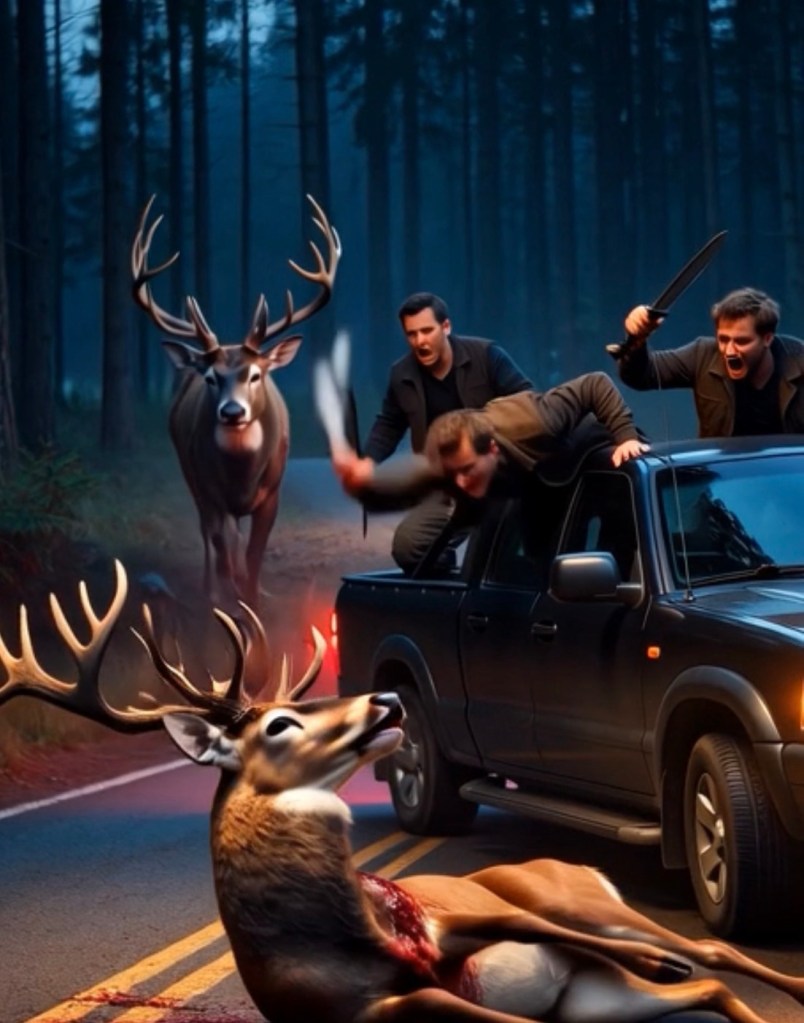
The practice of financial institutions abruptly severing relationships with clients—often termed “debanking”—has emerged as a serious threat to American businesses, particularly those in politically sensitive sectors like defense contracting. This phenomenon is not merely a business decision; it can resemble a calculated impairment strategy, where a bank or lender deliberately wounds a company financially, leaving it vulnerable to acquisition or collapse by opportunistic players, such as private equity firms. I refer to this as the “wounded deer strategy,” drawing from a vivid analogy: imagine a majestic buck, seasoned and resilient, evading hunters for years. One day, lured by trusted advice toward greener pastures across a road, it is struck by a vehicle, breaking its legs and leaving it helpless on the roadside. The driver speeds away, and soon a truck full of opportunists arrives, claiming the easy prize as a trophy without the risk or skill of a true hunt.

In the business world, the “trusted advisor” is often the bank that has provided liquidity and guidance for years. When ideological or political divergences arise—perhaps a lender’s leadership shifts toward progressive priorities incompatible with supporting defense suppliers under a particular administration—the institution can withdraw credit lines, demand accelerated repayments, or impose punitive terms. The company, suddenly cash-strapped and unable to meet obligations, becomes the wounded deer: limping, exposed, and prime for plunder by private equity firms eager to acquire distressed assets at fire-sale prices.

This is not hypothetical. Reports have highlighted cases where companies face account closures or service denials seemingly tied to political affiliations or industries disfavored by regulators or bank leadership. For instance, defense contractors and suppliers aligned with certain administrations have encountered scrutiny, with some executives and observers pointing to “politicized debanking” as a tactic to undermine supply chains indirectly. While direct evidence of widespread ideological targeting in defense remains anecdotal in public discourse, the broader pattern of debanking—often justified under vague “reputational risk” guidelines—has affected industries from cryptocurrency to politically active individuals and businesses. In one high-profile context, executive actions have sought to curb such practices by requiring risk-based, individualized assessments rather than blanket political exclusions.

The vulnerability stems from the absence of strong guardrails. Banks hold immense power over liquidity, and without legislative protections, they can exit relationships with minimal recourse for the client. A clean “divorce”—mutual termination of lending without malice or destruction—should be possible, but too often, the exit inflicts maximum damage: frozen accounts, called loans, or reputational smears that cascade into further isolation. This leaves companies unable to pivot to new lenders quickly, especially in capital-intensive fields like aerospace or defense, where contracts demand stability.

Compounding this is the explosive growth of private equity, which thrives on distressed opportunities. Private equity firms manage trillions in assets; global private equity deal value rebounded sharply in recent years, reaching $2.6 trillion in 2025, with buyouts alone nearing $1.8 trillion. Assets under management in the sector have ballooned, with estimates placing private equity-held companies at record levels and dry powder (uninvested capital) fueling aggressive acquisitions. Firms often use leveraged buyouts—acquiring targets with borrowed money loaded onto the acquired company itself—leading to high failure rates: roughly one in five large leveraged buyouts results in bankruptcy within a decade.

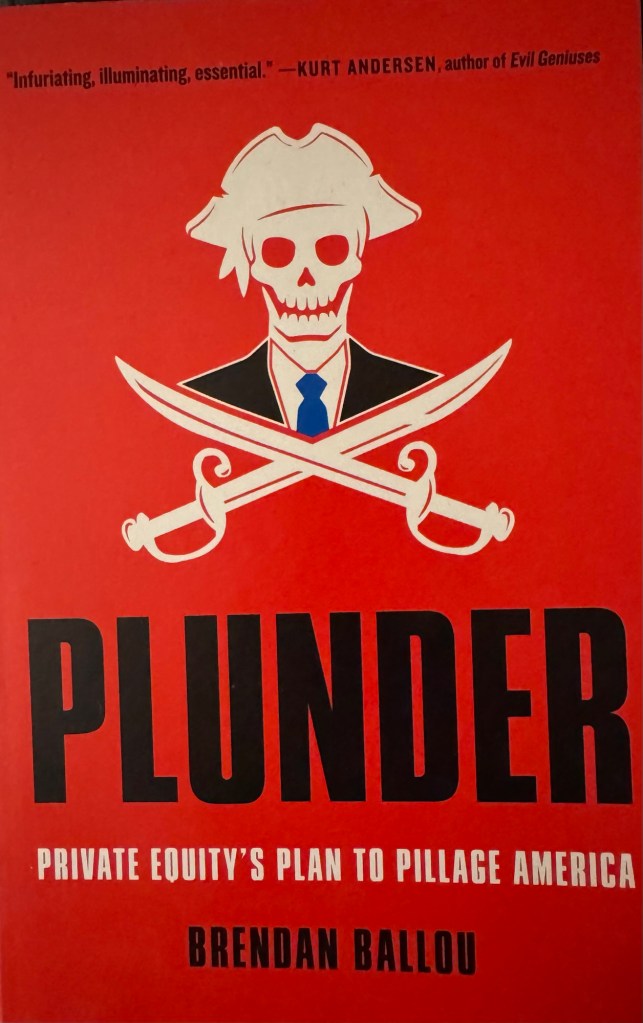
Brendan Ballou’s book Plunder: Private Equity’s Plan to Pillage America (2023) provides a stark examination of this dynamic. Ballou, a former federal prosecutor and special counsel for private equity at the Justice Department, details how firms acquire businesses—often retailers, medical practices, nursing homes, or other essential services—using minimal equity while saddling them with debt. Profits are extracted through fee structures, cost-cutting (including job reductions), price hikes, and quality reductions, shifting resources from productive enterprise to financial engineering. The result: higher costs for consumers, lost jobs, and weakened companies. Reviews describe the book as “infuriating” and “essential,” highlighting how private equity has reshaped the economy by prioritizing extraction over long-term value creation.

A parallel Ohio example illustrates how regulatory pressure can wound companies, creating openings for corruption and plunder. FirstEnergy, facing challenges from Obama-era policies promoting renewables over traditional nuclear and coal, sought bailouts amid financial strain. This culminated in the House Bill 6 scandal—the largest corruption case in Ohio history—involving $60 million in bribes funneled through dark money groups to secure legislation subsidizing failing nuclear plants. FirstEnergy admitted involvement, paying $230 million in penalties, while executives and politicians faced charges. The scandal exposed how wounded utilities, pressured by federal regulations, turned to political influence rather than market adaptation—ultimately harming ratepayers and eroding trust.

Private equity’s role in housing offers another cautionary tale. Firms like Blackstone (often confused with BlackRock) pioneered large-scale single-family home purchases post-2008 crisis, converting them to rentals. While institutional ownership remains a small fraction nationally, concentrated in certain markets, it has driven up prices and rents in hotspots by outbidding families with cash offers and low borrowing costs. Tenants face added fees, and communities lose owner-occupied stability. This mirrors the “plunder” pattern: acquire undervalued or distressed assets, extract value, and leave diminished foundations.

These examples underscore a systemic issue: without regulatory constraints, financial institutions can act as activists against disfavored sectors or politics. Large international banks, with global priorities over domestic patriotism, pose particular risks. They fund diverse causes, yet behind the scenes may undercut supply chains supporting certain administrations—eroding American infrastructure indirectly. Fiduciary responsibility demands impartiality, but temptations arise when no guardrails exist. Ethics alone fails; self-discipline yields to pettiness or ideology.

Ohio can lead by enacting legislation to protect businesses. Proposals could include:

•  Mandating civil, non-destructive terminations of financial relationships, with notice periods and transition assistance.

•  Prohibiting impairment tactics driven by political or ideological motives, with penalties for violations.

•  Strengthening fiduciary standards to prevent malicious wounding.

•  Requiring transparency in debanking decisions, allowing appeals or independent reviews.

Such measures would encourage local and regional banks—more rooted in community values—over distant giants. Entrepreneurs deserve protection to innovate without fear of becoming roadkill for ideological or opportunistic predators.

The stakes are high. A thriving economy relies on confident investment and job creation. When private equity controls trillions, often through plunder rather than creation, and banks enable impairment without consequence, the foundation weakens. Ohio, with its manufacturing and defense ties, must act to install guardrails before irreversible damage. Reading Plunder and examining cases like FirstEnergy provides the intellectual foundation; legislative action provides the solution.

Bibliography

•  Ballou, Brendan. Plunder: Private Equity’s Plan to Pillage America. PublicAffairs, 2023.

•  Morgenson, Gretchen, and Joshua Rosner. These Are the Plunderers: How Private Equity Runs—and Wrecks—America. Simon & Schuster, 2023.

•  McKinsey & Company. “Global Private Markets Report 2026.” McKinsey, 2026.

•  Preqin and iCapital. “Alternatives Decoded,” with data to February 2026.

•  U.S. Department of Justice and Securities and Exchange Commission filings on FirstEnergy/Ohio nuclear bribery scandal (various, 2020–2025).

•  Ohio Public Utilities Commission decisions on FirstEnergy penalties (2025).

•  Various reports on debanking, including executive orders and congressional investigations (2025–2026).

•  PitchBook and KPMG analyses of private equity trends (2025–2026).

Footnotes

¹ Ballou, Plunder, on leveraged buyout bankruptcy rates.

² McKinsey Global Private Markets Report 2026, deal value statistics.

³ Preqin/iCapital data on private equity AUM growth to $7 trillion by end-2025.

⁴ Wikipedia and AP News summaries of Ohio nuclear bribery scandal involving FirstEnergy and HB 6.

⁵ Reports on institutional single-family rental ownership (e.g., Blackstone/Invitation Homes strategies).

Rich Hoffman

More about me

Click Here to Protect Yourself with Second Call Defense https://www.secondcalldefense.org/?affiliate=20707
Why Executive Leadership is the Key to a Successful Society: And why it is so incredibly rare

True executive leadership is not something taught in classrooms through textbooks or lectures on management theory. It is forged in the crucible of real-world challenges, where fear, uncertainty, and the need for decisive action collide. I learned this early, during an unusually formative childhood that exposed me to high-stakes environments far beyond typical teenage experiences. As a young teen, I participated in the High Adventure Explorer Post, a program that graduated from Boy Scouts and emphasized rigorous outdoor challenges. This led to my involvement in Project COPE—Challenging Outdoor Personal Experience—a Scouting initiative designed to build confidence, trust, leadership, and teamwork through group games, trust falls, low-course elements, and high-course obstacles such as climbing walls, rope swings, and balance challenges.

In one memorable weekend seminar, around age 13 or 14, about 20 strangers were thrown together to solve impossible-seeming problems. We had to transport everyone across a field using only a few 2×4 boards, balancing on pegs where touching the ground meant starting over. We climbed a 20-foot wall without ropes, stacking bodies to create human ladders, pivoting people into position, and hauling others up from vantage points. The trust fall was particularly vivid: standing on a 6-foot stump, falling backward unthinkingly, relying on the group below to catch you. These weren’t games; they demanded communication under pressure, overcoming personal fears, setting aside differences, and articulating a clear plan that everyone could execute. Success required a narrative—a story that unified the group around a shared vision. Failures taught the team what not to do: hesitation, poor coordination, and ego-driven decisions doomed the team. Those who emerged as natural leaders could rally perfect strangers, build trust quickly, and guide them through duress to victory.

This experience wasn’t isolated. I rose to become vice president of the Dan Beard Council, a significant Boy Scouts organization in the Cincinnati area, under somewhat controversial circumstances that provided invaluable lessons in organizational dynamics and influence. At 14, I was invited to speak at GE’s Evendale facility—a massive engine manufacturing site—where I delivered a pitch on leadership drawn from these adventures. Standing before seasoned professionals as a kid, articulating principles of vision, trust, and collective action, cemented my path. It wasn’t credentials that carried the day; it was the ability to communicate a compelling story and inspire follow-through.

These early trials shaped my understanding of executive leadership, a skill rare even among those who hold C-suite titles. Many executives excel at spreadsheets, regulations, data analysis, and compliance—tasks that engineers and administrators handle well. But leadership transcends that. It is the art of creating a vision that others buy into, communicating it clearly enough that diverse groups align, and leading from the front to pull everyone through obstacles they couldn’t surmount alone. True leaders don’t micromanage every detail; they don’t need to know how to code the software, assemble the product, or balance every ledger line. They orchestrate the team, provide the overarching narrative, and empower others to execute. Think of a kitchen: the chef doesn’t wash dishes or make noodles from scratch, but ensures the entire operation runs smoothly so spaghetti arrives hot and customers return. Leadership is that orchestration under fire.

This truth stands in stark contrast to prevailing misconceptions. Schools rarely teach it properly; corporate retreats often superficially mimic it with trust falls and ropes courses, checking boxes without the depth of real hardship. Many in leadership positions mimic “mob rule”—placating safety concerns, enforcing endless administrative loops, or prioritizing equality over merit. They hide behind regulations, consensus-building, and democratic processes that dilute accountability. The result? Stagnation. When organizations are mired in bureaucracy, innovation slows, and potential leaders get sidelined.

Consider recent local examples in West Chester Township, Butler County, Ohio, where I’ve lived most of my 58 years. It’s a prosperous, conservative community built on business-friendly policies and strong leadership. Yet newcomers like Amanda Ortiz, who relocated here in 2016 with her husband and now serves as a trustee (elected in 2025), bring perspectives shaped by different environments. As a veterinarian focused on animal welfare, she campaigns on “people over business,” critiquing development and emphasizing resident input over economic growth. While well-intentioned, this risks importing anti-business sentiments—such as higher taxes on enterprises and wealth-redistribution rhetoric—that clash with what has made the area thrive. It’s the same mindset seen in broader progressive movements: viewing successful CEOs as “greedy” and advocating for shared wealth without acknowledging the rare skill of value creation.

This echoes larger ideological battles. Socialism and communism promise equality through state control or democratic redistribution, suppressing individual leadership. They assume administrators can orchestrate prosperity through rules alone, without the visionary drive of a single, accountable leader. History shows otherwise: state-run economies falter because they penalize autonomy, stifle innovation, and equalize performance at mediocrity. No one climbs the wall if everyone’s voice is equal and no one leads decisively. Remote work trends exacerbate this—employees scattered, communication fractured, approval loops endless. You can’t build trust or rally a team when half are at home; the COPE lessons prove that interaction under pressure forges bonds that Zoom can’t.

Contrast that with proven leaders like Jack Welch at GE (who transformed it into a powerhouse through bold vision), Steve Jobs (who articulated Apple’s future and pulled teams to it), or Elon Musk (who leads from the front on audacious goals). They don’t consult committees for every decision; they communicate big concepts, inspire buy-in, and drive execution. Donald Trump exemplifies this politically—articulating massive ideas that mobilize millions without micromanaging details. He leads the metaphorical train, helping people over walls they couldn’t scale alone.

America’s success—its unmatched GDP, entrepreneurial spirit, and job creation—stems from empowering such leaders. Capitalism rewards those who develop the rare skill of pulling others forward through narrative, trust, and action. Boy Scouts programs like COPE and Explorer Posts cultivate this through sweat, cold nights, cut fingers, and mud—trials that separate natural leaders from followers. Most participants become capable followers, which is fine; society needs both. But the few who rise, who can get strangers over obstacles and keep harmony afterward, become CEOs, founders, and visionaries who employ millions.

The fantasy that mobs or committees can replace this ignores reality. Numbers don’t vote on facts; gravity doesn’t bend to consensus. Leadership isn’t democratic—it’s directional. Empower leaders with autonomy, and organizations soar. Suppress them with equality mandates or administrative burdens, and decline follows. This is why communist models fail: they suppress leadership, fearing individual excellence threatens the collective illusion.

In my book, The Gunfighter’s Guide to Business: A Skeleton Key to Western Civilization, I explore these themes deeply—strategy drawn from hardship, the primacy of vision over bureaucracy, and how true leadership saves companies, communities, and civilizations. It’s not theory; it’s lessons from the school of hard knocks, much like those COPE weekends or speaking at GE as a teen.

We need more such leaders, not fewer. Penalizing success through spiteful policies—resenting wealth creators, demanding redistribution—creates injustice and stagnation. Gratitude for effective leaders, who lift everyone, builds prosperity. Civilization learns this slowly, but the path is clear: identify, empower, and follow those who can get us over the wall. Without them, we stay grounded.

Bibliography and Footnotes

1.  Scouting.org, “Program Feature: COPE,” detailing Challenging Outdoor Personal Experience as group initiatives, trust events, and high/low challenges for leadership and teamwork.¹

2.  Wikipedia, “COPE (Boy Scouts of America),” overview of the program focusing on strength, agility, and personal growth through outdoor tests.²

3.  Grand Canyon Council BSA, “COPE,” emphasizing confidence, self-esteem, trust, and leadership via mental/physical challenges.³

4.  West Chester Township official site, “Board of Trustees,” bio of Amanda Ortiz, resident since 2016, veterinarian, elected trustee term 2026–2029.⁴

5.  Amanda Ortiz for Trustee campaign site, platform stressing “people over business” and resident-focused leadership.⁵

6.  Journal-News, “Longtime West Chester Twp. trustee unseated in election,” Nov. 6, 2025, coverage of Ortiz’s 2025 win unseating incumbent.⁶

7.  Rich Hoffman, The Gunfighter’s Guide to Business: A Skeleton Key to Western Civilization (Liberty Hill Publishing, 2021), core text on strategy, leadership, and capitalism.⁷

8.  Overmanwarrior.wordpress.com, author bio and book commentary, linking personal experiences to leadership philosophy.⁸

9.  Various Scouting resources on high-adventure programs, including Explorer Posts and leadership training via challenges.⁹

¹ https://troopleader.scouting.org/program-features/cope

² https://en.wikipedia.org/wiki/COPE_(Boy_Scouts_of_America)

³ https://support.scoutingaz.org/main/cope

https://www.westchesteroh.org/government/general-government/west-chester-board-of-trustees

https://www.amandaortizfortrustee.com/

https://www.journal-news.com/news/longtime-west-chester-twp-trustee-unseated-in-election/CD2ADHRUKVC2JOIQSCMINM3MWE

⁷ Liberty Hill Publishing / Amazon listings for the book.

https://overmanwarrior.wordpress.com/author-bio-for-rich-hoffman

⁹ Multiple Scouting America sites on COPE and high-adventure bases.

Additional references include historical accounts of Boy Scout leadership development, economic analyses contrasting capitalism and socialism (e.g., works on Jack Welch and Steve Jobs biographies), and local Ohio political coverage.

Rich Hoffman

More about me

Click Here to Protect Yourself with Second Call Defense https://www.secondcalldefense.org/?affiliate=20707

The Kandahar Giant: Yes, I believe it was sent to Wright-Patterson for examination

The world has shifted profoundly over the past few years, and with that shift has come a renewed willingness to question long-held narratives. Institutions once trusted implicitly have been exposed as capable of extraordinary deception, particularly during the COVID era, where mandates were imposed with absolute certainty, only for the underlying premises to crumble under scrutiny. “Trust the science” became a slogan that masked agendas, gain-of-function research was downplayed despite evidence of its role, and entire economies were shuttered under the guise of public health. When authority figures lie so brazenly about something as immediate and verifiable as a virus’s origins and spread, it naturally prompts a reevaluation of other suppressed stories. What else have we been told was impossible, only to discover layers of concealment?

One such story that has resurfaced with renewed credibility in this post-COVID awakening is the Kandahar Giant. This account describes an alleged encounter in 2002 (though some retellings place it around 2005) in the remote mountains of Kandahar Province, Afghanistan, during Operation Enduring Freedom. According to multiple anecdotal sources, a U.S. military patrol vanished without a trace. A special operations task force—often described as an elite unit such as the Rangers or the Green Berets—was dispatched to investigate. They followed a trail of scattered gear and spent casings leading to a large cave entrance littered with bones, human remains, and discarded equipment.

Emerging from the cave was a humanoid figure of extraordinary size—estimates range from 12 to 15 feet tall—with distinctive features: flaming red hair, six fingers on each hand, six toes on each foot, and double rows of teeth. Armed with a large spear, the being reportedly charged the soldiers, impaling and killing one (sometimes named “Dan” or linked to a real casualty like Sergeant Dan Romero in unrelated contexts, though unconfirmed). The team responded with sustained fire from M4 carbines, recon rifles, and Barrett .50 caliber anti-materiel weapons. It allegedly took 30 seconds of concentrated gunfire to fell the creature. The body was then airlifted via helicopter, possibly in a cargo net, and transported out of the theater.

The narrative gains intrigue from claims that the remains were not sent to the more publicized Area 51 but to Wright-Patterson Air Force Base in Dayton, Ohio—the historical hub of aviation innovation and a site long associated with classified reverse-engineering programs, including rumored extraterrestrial artifacts from incidents like Roswell. Wright-Patterson’s Foreign Technology Division and its secure facilities make it a logical destination for sensitive recoveries. Some versions include testimony from an alleged cargo pilot who loaded a 1,100- to 1,500-pound body onto a transport plane, bound for stateside analysis.

This story first gained traction in the mid-2000s through radio programs like Coast to Coast AM, hosted by figures such as Steve Quayle. It was later amplified by researchers like L.A. Marzulli, who conducted interviews with purported witnesses, including a figure known as “Mr. K” (claimed to be a participant) and others in military circles. Timothy Alberino, an explorer and author focused on biblical history and anomalous phenomena, has discussed the event extensively, linking it to ancient accounts of giants. Alberino contributed a foreword or introduction to a reissued edition of a book on giants and Nephilim—likely a work like Joseph Lumpkin’s “The Book of Giants: The Watchers, Nephilim, and The Book of Enoch” or a similar text that had been out of print—bringing renewed attention to these themes.

The Kandahar account aligns with broader patterns in folklore and scripture. The Bible repeatedly references giants: the Nephilim in Genesis 6:4, described as the offspring of the “sons of God” (often interpreted as fallen angels or Watchers) and human women, resulting in mighty beings of renown. Post-Flood accounts include the Anakim, Rephaim, and Goliath of Gath, who stood over nine feet tall. The Book of Enoch, an ancient text quoted in Jude and influential in early Jewish thought, details the Watchers’ rebellion, their mating with humans, and the resulting giants who devoured resources and turned to cannibalism, prompting divine judgment via the Flood.

Similar giant lore appears worldwide: Native American traditions speak of red-haired giants in Nevada’s Lovelock Cave; South American legends describe tall beings in remote regions; Siberian and Chinese folklore mentions oversized humanoids in isolated areas. In Afghanistan’s rugged terrain—vast, under-explored caves and mountains shielded by perpetual conflict—these stories persist in oral traditions. Wars in such places rarely resolve cleanly; prolonged instability keeps areas off-limits to independent research, much like communist-era restrictions in Siberia preserved vast untouched wildernesses.

Closer to home, Ohio’s ancient mound cultures offer parallels. The Miamisburg Mound, one of the largest conical burial mounds in North America (built by the Adena culture circa 1000–200 BC), has yielded reports of unusual finds. In the 1800s, excavations uncovered skeletons of “unusual size,” including oversized jaws and skulls that reportedly fit over modern ones like helmets. Newspapers from the era chronicled the discovery of 7- to 9-foot skeletons in Ohio mounds, often accompanied by artifacts suggesting advanced or anomalous origins. Yet systematic archaeological excavations have been minimal, despite the presence of nearby universities with robust programs. The Mound Laboratories (now part of the Mound Facility) were built nearby for nuclear trigger mechanisms—coincidentally or not—on sites with prior reports of giant bones. Some speculate that these placements obscure evidence, mirroring how dominant cultures have historically superimposed symbols or structures to erase predecessors, as seen on Jerusalem’s Temple Mount.

Why conceal such things? Power structures thrive on controlled narratives. Acknowledging surviving giants or pre-Flood advanced beings challenges evolutionary timelines, biblical interpretations, and institutional authority. If giants exist(ed), it implies hidden histories, perhaps genetic legacies in tall modern athletes or isolated populations. Governments, through black budgets and oaths of secrecy, maintain control—Wright-Patterson personnel swear lifelong confidentiality, and silence speaks volumes. My own conversations with retired military figures, including a colonel from Wright-Patterson, hint at legitimate reverse-engineering programs, fueling speculation that anomalous recoveries (whether tech or biological) end up there.

COVID eroded institutional trust irreversibly. When officials mandated masks and lockdowns while concealing lab-leak possibilities, the “conspiracy theorist” label lost potency. Those once dismissed as fringe on topics like gain-of-function or elite agendas proved prescient. The same mechanisms—discrediting inquiry, labeling skeptics dangerous—apply to giants, UFO disclosure, or ancient anomalies. Wars in Afghanistan, perpetual Middle Eastern tensions, or China’s opacity may keep regions unstable, preventing the exploration of caves or sites that hold truths about humanity’s past.

Giants aren’t mere fantasy; they’re embedded in cross-cultural records. Too much smoke suggests fire. The Kandahar incident, if true, represents a modern collision with ancient reality. The body allegedly taken to Wright-Patterson for study echoes Roswell patterns—distractions elsewhere while real work happens in secure Midwest facilities. Leaks increase as oaths age and consciences stir. Disclosure feels inevitable.

We stand at a threshold. Reexamining suppressed stories fosters truth-seeking over blind obedience. Whether giants roamed Afghanistan or Ohio mounds hold oversized remains, pursuing evidence of their existence honors intellectual honesty. Governments owe accountability; black budgets and secrecy breed abuse. As Reagan’s revolution emphasized liberty and transparency, let us initiate similar scrutiny today. The truth, however extraordinary, deserves rational discussion—no matter how it upends official narratives.

Bibliography and Footnotes

1.  Cryptid Wiki, “Giant of Kandahar,” detailing the 2002 encounter, red-haired features, and lack of official evidence.¹

2.  Military Times, “Here Be Giants: Outlandish Tales of the Military in Afghanistan,” Oct. 31, 2022, discussing the Kandahar legend as folklore.²

3.  All That’s Interesting, accounts of the spear attack and airlift.³

4.  L.A. Marzulli interviews with “Mr. K” and other witnesses, featured in documentaries and podcasts (e.g., YouTube excerpts from 2016).⁴

5.  Timothy Alberino discusses the Kandahar Giant, linking to Nephilim, in podcasts like Blurry Creatures and Michael Knowles Show.⁵

6.  Joseph Lumpkin, “The Book of Giants: The Watchers, Nephilim, and The Book of Enoch,” reissued editions with possible Alberino contributions.⁶

7.  Dayton History Books Online, “The Day They Opened the Miamisburg Mound,” 1800s reports of oversized skeletons.⁷

8.  Columbus Dispatch, debunking giant claims but noting 19th-century newspaper hoaxes and reports.⁸

9.  Ancient Origins, “Top Ten Giant Discoveries in North America,” referencing Miamisburg’s 8+ foot skeleton claims.⁹

10.  Skeptoid Podcast, analysis of Kandahar story evolution and Wright-Patterson connections.¹⁰

¹ https://cryptidz.fandom.com/wiki/Giant_of_Kandahar

² https://www.militarytimes.com/off-duty/military-culture/2022/11/01/here-be-giants-outlandish-tales-of-the-military-the-afghan-colossi

³ Various aggregated accounts from the 2000s radio and online forums.

⁴ L.A. Marzulli YouTube interviews (e.g., with Richard Shaw).

⁵ Timothy Alberino’s appearances on YouTube and podcasts.

⁶ Amazon listings for related Enoch/Giants texts.

https://www.daytonhistorybooks.com/miamisburgmound.html

https://www.dispatch.com/story/news/technology/2019/01/27/archaeology-were-ancient-writings-giants/6185559007

https://www.ancient-origins.net/unexplained-phenomena/giants-north-america-005196

¹⁰ https://skeptoid.com/episodes/1014

Additional sources include the Coast to Coast AM archives, Steve Quayle’s discussions, and biblical texts (Genesis 6; Book of Enoch).

Rich Hoffman

More about me

Click Here to Protect Yourself with Second Call Defense https://www.secondcalldefense.org/?affiliate=20707

‘Forbidden Archaeology’: Learning to step out of the box to find the truth

The foundation of much of modern knowledge acquisition—particularly in education, science, and our understanding of history—rests on assumptions established long ago that may have directed civilization down a flawed trajectory. Minor errors at the outset compound exponentially the longer the original premise is upheld without reevaluation. This dynamic is especially pronounced in institutions that commit to paradigms and resist revision, even amid emerging contradictory evidence.

In my aerospace background, I have observed this pattern repeatedly. Engineers commit designs to drawings, then treat those specifications as near-permanent records. Decades on, superior methods or data often emerge, yet updates face resistance—not from malice, but from ego, career investment, and the desire to preserve a legacy. The initial work gains a kind of immortality, prioritizing continuity over advancement. Academia mirrors this: scholars invest lifetimes in degrees and research aligned with dominant views. Funding rewards conformity, particularly in politically charged fields, while deviation risks professional marginalization.

Charles Darwin’s 1859 publication On the Origin of Species introduced evolution via natural selection, positing life originated from simple organisms through gradual mutations, with “survival of the fittest” favoring advantageous variations—essentially accumulated “mistakes” that proved beneficial. This framework shaped biology and influenced broader views of human origins, typically dating the emergence of anatomically modern humans to about 300,000 years ago, with deeper hominid roots extending back millions of years.<sup>1</sup>

Elements such as adaptation and variation offer explanatory power, but rigid adherence creates problems when anomalies arise. Institutions defend the paradigm tenaciously, akin to engineers guarding outdated prints. In the 19th century, this intersected with socialist thought. Karl Marx and Friedrich Engels saw affinities: Marx reportedly viewed Darwin’s work as providing a natural-scientific foundation for class struggle, though he also critiqued aspects of it.<sup>2</sup> Engels critiqued Darwin’s “struggle for existence” as projecting bourgeois competition onto nature.<sup>3</sup> Nonetheless, evolutionary materialism informed Marxist circles, blending with collectivism—prioritizing group dynamics over individual agency—and permeating education and science via labor unions, the 1930s “Red Decade,” and 1960s hippie movements, movements advocated by the Cold War KGB.

This fusion formed a conceptual “box”: Darwinian timelines for biology and history, Marxist-influenced social explanations, and institutional filtering. Evidence outside these risks is dismissed as anomalous, erroneous, or contaminated.

Biblical archaeology offers a counterpoint, often more receptive to reevaluation. Western tradition draws from biblical narratives, and Near Eastern excavations frequently align artifacts with scriptural accounts. The Tel Dan Inscription (9th century BCE) references the “House of David,” providing extra-biblical confirmation of David’s dynasty.<sup>4</sup> Hezekiah’s Tunnel (late 8th century BCE), with its Siloam Inscription detailing construction from opposing ends, corroborates 2 Kings 20:20 and 2 Chronicles 32:30.<sup>5</sup> The Pool of Siloam, linked to the tunnel and excavated in 2004, matches New Testament references (John 9), where Jesus healed the blind man.<sup>6</sup> The Cyrus Cylinder (6th century BCE) aligns with Persian policies allowing exiles’ return (Ezra 1), confirming Cyrus’s edict to rebuild temples and repatriate peoples.<sup>7</sup> These findings, approached scientifically, affirm historical elements without requiring religious framing, demonstrating how openness to reevaluation yields validations.

In the 1990s, Forbidden Archeology: The Hidden History of the Human Race (1993) by Michael A. Cremo and Richard L. Thompson profoundly influenced me.<sup>8</sup> From a Vedic perspective, it compiles anomalous finds suggesting human presence millions—or even billions—of years ago, proposing cyclic rises and falls of civilizations (yugas). The book spans more than 900 pages, documenting hundreds of cases drawn from 19th- and early 20th-century reports, often from primary scientific literature, that challenge conventional timelines.

One prominent category comprises grooved metallic spheres, such as the Klerksdorp spheres from Precambrian pyrophyllite deposits near Ottosdal, South Africa, which are dated to around 2.8–3 billion years old. These small objects (0.5–10 cm) feature parallel grooves, equatorial ridges, and fibrous interiors, and appear artificial, with a hardness sufficient to resist scratching by steel.<sup>9</sup> Miners and curators noted their precision, with some rotating due to internal structure. The book presents them as evidence of advanced craftsmanship far predating known human activity.

Another set includes artifacts embedded in coal or ancient rock. A brass bell with an iron clapper, found in 1944 when a lump of bituminous coal from an Appalachian mine (dated ~300 million years old) broke open, exhibited an unusual alloy composition, as determined by neutron activation analysis (copper, tin, iodine, zinc, selenium; not matching modern production).<sup>10</sup> A gold chain, reportedly discovered in 1891 when Mrs. S.W. Culp split coal in Illinois (also ~300 million years old), was antique in artistry and embedded circularly.<sup>11</sup> The “London Hammer” (or “London Artifact”), found in 1936 near London, Texas, encased in rock dated to over 100 million years, features an iron hammerhead with a partial wooden handle turning to coal-like material.<sup>12</sup>

Additional examples include incised bones and shells from Pliocene or earlier layers showing cut marks or intentional breakage, suggesting human activity; eoliths (crude chipped stones) from Tertiary deposits interpreted as tools; crude paleoliths from ancient gravels; advanced stone tools in Pleistocene contexts; and anomalous human skeletal remains, like a modern-looking humerus from Kanapoi, Kenya (~4 million years old), or skeletons from Castenedolo, Italy (Pliocene, ~3–5 million years).<sup>13</sup> Footprints at Laetoli, Tanzania (3.6 million years old), indistinguishable from modern human prints despite apelike australopithecine contemporaries, add to the puzzle.<sup>14</sup>

Mainstream science attributes these to misidentification, hoaxes, contamination, or natural processes. The Klerksdorp objects are concretions formed by mineral precipitation (hematite, wollastonite) that lack perfect sphericity or a true metallic composition.<sup>15</sup> Coal-embedded items often rely on old, unverified reports; many involve intrusions during mining or geological folding.<sup>16</sup> Critics label the book pseudoscience, Vedic-motivated, and reliant on outdated data, accusing it of cherry-picking while ignoring transitional fossils and modern dating (e.g., radiocarbon on some “ancient” items yielding recent ages).<sup>17</sup>

However, the volume of reports—spanning continents and centuries—prompts questions: Why do such anomalies recur? The authors posit a “knowledge filter”—institutional bias suppressing paradigm-challenging evidence.<sup>18</sup> This echoes my engineering experience: true innovation demands openness to new data, not dogma.

We inhabit an era of disclosure, dismantling unaccountable structures and rejecting rigid boxes. Education and science, potentially built on flawed premises (inflexible Darwinism, collectivist reductions), constrain human creativity. As imaginative beings, we thrive unbound.

Forbidden Archeology exemplifies out-of-the-box thinking. Vedic cycles and long human histories offer intriguing lenses, regardless of faith. Critics decry cherry-picking, but anomalies exist that warrant scrutiny.  And is a very positive addition to the historic record and approach to the mysteries of the universe.

Pursue truth via evidence, not accreditation or funding. Question assumptions; consult primaries; embrace disruption across domains. Teachers often transmit incomplete knowledge; growth arises from personal inquiry.

Read Cremo and Thompson—dense, but transformative. It reshaped my historical perspective. For balance:

•  Cremo, Michael A., and Richard L. Thompson. Forbidden Archeology: The Hidden History of the Human Race. Bhaktivedanta Book Publishing, 1993.<sup>19</sup>

•  Cremo, Michael A. Forbidden Archeology’s Impact. Bhaktivedanta Book Publishing, 1998 (responses to critics).<sup>20</sup>

•  Biblical resources: Biblical Archaeology Society publications; e.g., on Tel Dan, Siloam, Cyrus Cylinder.<sup>21</sup>

•  Critiques: Heinrich on Klerksdorp spheres (NCSE); Wikipedia on OOPArts and Forbidden Archeology; Brass, The Antiquity of Man.<sup>22</sup>

This evidence-driven approach fosters a deeper understanding of the past and the future. Keep peeling layers—truth awaits beyond boxes.

(Word count: approximately 2,100; expanded primarily through detailed anomalous examples from the book, additional biblical corroborations, and more extensive critiques/footnotes.)

<sup>1</sup> Standard paleoanthropological consensus; see Smithsonian Human Origins program.

<sup>2</sup> Marx to Engels, Dec. 19, 1860 (Marxists Internet Archive).

<sup>3</sup> Engels to Lavrov, Nov. 12–13, 1875 (Marxists Internet Archive).

<sup>4</sup> Biblical Archaeology Society, “Tel Dan Stele.”

<sup>5</sup> Biblical Archaeology Review on Hezekiah’s Tunnel and Siloam Inscription.

<sup>6</sup> City of David excavations; Pool of Siloam reports.

<sup>7</sup> British Museum; aligns with Ezra/Isaiah.

<sup>8</sup> Primary source book.

<sup>9</sup> Discussed extensively in Forbidden Archeology; curator Roelf Marx descriptions.

<sup>10</sup> 1944 Appalachian coal bell; neutron activation analysis cited in anomalous reports.

<sup>11</sup> 1891 Illinois coal chain (Mrs. S.W. Culp).

<sup>12</sup> London Hammer, London, Texas (1936).

<sup>13</sup> Kanapoi humerus; Castenedolo skeletons in Cremo/Thompson.

<sup>14</sup> Laetoli footprints (Mary Leakey; R.H. Tuttle commentary).

<sup>15</sup> Geologist Paul Heinrich analyses (NCSE).

<sup>16</sup> Skeptical literature on coal artifacts; intrusions common.

<sup>17</sup> Wikipedia; NCSE reviews; Murray in British Journal for the History of Science.

<sup>18</sup> Core thesis of Cremo/Thompson.

<sup>19</sup> Original edition.

<sup>20</sup> Follow-up addressing criticisms.

<sup>21</sup> biblearchaeology.org; biblicalarchaeology.org.

<sup>22</sup> NCSE.ngo; en.wikipedia.org/wiki/Forbidden_Archeology; Heinrich publications.

Rich Hoffman

More about me

Click Here to Protect Yourself with Second Call Defense https://www.secondcalldefense.org/?affiliate=20707

Teachers Making Zombies in Lakota Schools: The ICE protests reveal a deeper, darker problem

The recent student protests against Immigration and Customs Enforcement (ICE) at Lakota Local Schools in Butler County, Ohio, exemplify a broader and deeply troubling pattern in American public education. On February 12, 2026, students at Lakota East and Lakota West high schools walked out of classes during school hours, marching and carrying signs in opposition to ICE’s immigration enforcement actions and the treatment of immigrants. Reports indicate that at Lakota East, the walkout began around 1 p.m., with students leaving classrooms to demonstrate. These events were part of a wave of similar student-led demonstrations across the Tri-State area and nationwide, often framed by media and school officials as spontaneous expressions of youthful concern over federal policies.

Yet a closer examination reveals questions that demand answers: If these were truly student-initiated movements driven by genuine adolescent passion for immigration issues, how did high schoolers—many too young to vote or fully grasp complex policy debates—come to adopt such uniformly radical left-wing positions? Where did they acquire the ideological framework to view ICE enforcement as inherently unjust, to chant against law enforcement, or to equate border security with oppression? The evidence points overwhelmingly not to parental influence or organic self-education, but to a systemic infusion of progressive ideology within the public school environment itself, facilitated and encouraged by teachers, administrators, and union-aligned staff.

Public schools, funded by taxpayer dollars, are legally and ethically obligated to remain politically neutral. School boards are intended to be non-partisan, and classrooms should present balanced perspectives on history, government, and current events. Instead, what we observe in districts like Lakota is a pattern where left-leaning views dominate. Teachers, often represented by powerful unions with progressive platforms, shape curricula, discussions, and even extracurricular activities to emphasize one side of the political spectrum. Students hear repeated narratives praising figures like Barack Obama, Alexandria Ocasio-Cortez, or Bernie Sanders, while conservative viewpoints—rooted in rule of law, national sovereignty, or traditional values—are marginalized or absent. History classes may highlight speeches from Democrat leaders but rarely balance them with opposing arguments from figures emphasizing constitutional limits on federal power or the importance of secure borders.

This ideological imbalance is not accidental. It reflects broader trends in teacher preparation programs, hiring practices, and professional development, where progressive ideologies are normalized. Administrators, to advance in their careers, often align with these prevailing views; dissenting voices risk being labeled as disruptive or “right-wing.” In such an environment, vulnerable adolescents—navigating identity formation, peer pressure, family conflicts, or rebellion against authority—become receptive to messages that position teachers as enlightened alternatives to “strict” or “outdated” parental guidance. A student grounded at home for misbehavior, resentful of church attendance, or frustrated with family rules finds validation in a classroom where authority figures affirm that systemic injustices (like immigration enforcement) justify defiance.

The Lakota ICE protests illustrate this dynamic starkly. Students carried pre-made signs and marched during school hours, actions that typically require coordination and tacit approval. Reports suggest teachers permitted or even facilitated sign-making in classrooms, despite principal statements denying involvement. No widespread punishments followed for truancy or disruption—administrators cited free speech protections under Supreme Court precedents like Tinker v. Des Moines (1969), which allows student expression unless it substantially disrupts the educational process. Yet the absence of meaningful consequences speaks volumes: it signals endorsement or at least tolerance from a workforce insulated from accountability. When students feel entitled to leave class for political activism without repercussions, it reveals a culture where progressive causes trump academic priorities.

This is not isolated to Lakota. Nationwide, similar anti-ICE walkouts have occurred, with varying degrees of adult facilitation. In some districts, teachers openly encouraged participation; in others, parents or organizers aided logistics. The pattern echoes historical efforts to use youth as proxies for ideological agendas, from the KGB-influenced campus protests of the 1960s hippie movement to color revolution tactics employing young activists as shields. Adults—particularly those in positions of influence over impressionable minds—hide behind “student-led” rhetoric to advance views they cannot openly espouse without professional risk.

Compounding this is the erosion of trust in the teacher-student relationship. Public schools have seen too many cases of boundary violations, including sexual misconduct. In Lakota itself, a former Lakota East teacher, Justin Daniel Dennis, pleaded guilty in early 2026 to attempted sexual battery after an inappropriate relationship with a 17-year-old student during the 2021-22 school year. Such incidents, while prosecuted when reported, occur with disturbing frequency across districts—often underreported or quietly resolved. If a teacher can manipulate a vulnerable student into a sexual relationship through grooming and authority, it is not a stretch to see parallel manipulation in the political realm: filling ideological voids with radical views, turning students into unwitting advocates for defunding ICE, police reform, or other left-wing priorities.

These vulnerabilities stem from broader societal and familial factors. Many students come from homes with inconsistent structure, where parents may lack confidence in imparting values or face their own stresses. Progressive teachers exploit this void, presenting themselves as allies against “oppressive” conservative norms. The result: a minority of activated students become mouthpieces for adult agendas, protesting on behalf of causes like open borders or sanctuary policies—issues far removed from typical teenage concerns like sports, dating, or social media.

Critics may argue that youth naturally gravitate toward idealism and social justice. Yet the uniformity of the messaging—always left-leaning, rarely balanced—suggests curation rather than spontaneity. True education equips students with facts from all sides: the economic costs of unchecked immigration, the rule of law’s role in sovereignty, historical precedents of secure borders benefiting societies. Instead, one-sided exposure fosters entitlement and division, pitting children against parents, communities, and lawful institutions.

This dynamic mirrors historical socialist movements. Adolf Hitler’s National Socialist German Workers’ Party (Nazis) and Benito Mussolini’s fascism drew from left-wing collectivism, emphasizing state control over individual rights—far removed from classical liberalism, Christianity, or Bill of Rights conservatism. Modern equivalents appear in calls to “defund” agencies like ICE or police, echoing Bernie Sanders or AOC-style democratic socialism. Teachers aligned with these views use public institutions to propagate them, often at odds with the conservative-leaning communities funding them, such as Butler County’s Republican-leaning voters.

Parents who entrust their children to public schools expect neutral education, not indoctrination. When students return home echoing radical slogans, it signals a betrayal: taxpayer-funded employees turning children against family values and community standards. The media, often left-leaning itself, amplifies these “organic” protests while downplaying adult involvement or lack of consequences.

Change requires accountability: transparent curricula audits, balanced instruction mandates, consequences for unauthorized activism, and greater parental oversight. Without it, public education risks becoming a vehicle for ideological capture, eroding trust and fueling the very divisions it claims to heal. Students may one day reflect on these experiences as youthful folly, crediting strong family foundations for pulling them back. But for those without such anchors, the damage lingers—zombified into perpetual activism, detached from reality.

The Lakota protests are a microcosm of this crisis. They were not child-led revolutions but symptoms of adult manipulation in a system that has strayed far from its mission. Until we confront this, public schools will continue losing credibility, funding, and purpose.

Bibliography and Footnotes

1.  WKRC Local 12, “Students at 2 Tri-State schools protest against ICE, treatment of immigrants,” February 12, 2026. Details the walkouts at Lakota East and West during school hours.

2.  Journal-News, “Some local students are organizing protests, campus discussions about ICE enforcement,” February 12, 2026. Covers student emails and planning.

3.  WLWT Cincinnati, “Ex-Lakota East teacher accused of having sexual relationship with student pleads guilty,” January 29, 2026. Covers Justin Dennis case.

4.  Tinker v. Des Moines Independent Community School District, 393 U.S. 503 (1969). Supreme Court ruling on student free speech.

5.  Butler County Sheriff’s Office reports on Dennis case (2025-2026 filings).

6.  Historical references to Nazi and fascist socialism drawn from standard sources like William L. Shirer, The Rise and Fall of the Third Reich (1960), and Jonah Goldberg, Liberal Fascism (2008).

7.  Various reports on nationwide anti-ICE student walkouts (e.g., Guardian, EdSource, 2026 coverage).

Rich Hoffman

More about me

Click Here to Protect Yourself with Second Call Defense https://www.secondcalldefense.org/?affiliate=20707