Pip: The Overmanwarrior has a knack for finding the book that explains the headlines before the headlines know what hit them.
Mara: Rich Hoffman is doing exactly that this week — working through Ayn Rand’s Return of the Primitive, a collection that ties progressive education, environmentalism, identity politics, and the philosophy of money into one sustained argument about where Western civilization is headed.
Pip: So: a 1971 book about the 1960s that apparently describes last Tuesday.
Mara: That’s the claim, and the post makes a serious case for it. Let’s start with what Rand actually argued and why the diagnosis keeps resurfacing.
Ayn Rand’s Return of the Primitive: Reason Under Siege
Mara: The central question the post puts on the table is whether the cultural movements that call themselves progressive are actually a retreat — a deliberate dismantling of the rational, industrial civilization that allows human beings to survive.
Pip: The post sets that up with a pointed line from Rand’s title essay, describing what she imagined as the logical endpoint: “There is no gradual, restrained retreat from technology. There is only the continued advance of the mind or the descent into helplessness and death.”
Mara: So the upshot is that Rand treats technology not as a convenience but as the concrete product of conceptual thought — remove it and you haven’t simplified life, you’ve ended it. That’s the stakes she’s arguing from.
Pip: And the post traces that argument across several fronts. The environmental movement of her day, she contended, rejected the premise that human life and human comfort outrank pristine wilderness — which she read as a rejection of the human mind itself.
Mara: The post quotes her framing directly: activists simultaneously attacked scientific progress as violence against the planet while advocating what she called “universal slavery for men under expanding state control.” The moral inversion, as the post puts it, is that creators get cast as aggressors.
Pip: Then there’s the education angle, which is where it gets uncomfortable for anyone who sat through a lot of group projects.
Mara: The essay called “The Comprachicos” draws the analogy to seventeenth-century criminals who physically deformed children for profit. Rand’s claim is that progressive education — shaped by Dewey and pragmatism — performs the same operation on the mind by replacing conceptual training with social adjustment and group conformity.
Pip: The post also covers the 1999 expanded edition, where Peter Schwartz extends the argument to multiculturalism and identity politics — ethnicity, race, and sex elevated as primary political categories, the individual dissolved into the group.
Mara: And “The Cashless Society” essay gets its own treatment. The post connects Rand’s argument there — that money is the barometer of a society’s virtue, and that when political pull replaces production, distribution reverts to force and favor — to contemporary corporate-political entanglement.
Pip: Montessori comes up as the affirmative alternative: independent, purposeful activity that builds the conceptual faculties rather than training children to defer to the pack.
Mara: The post is candid that the frame can be enlarged beyond Rand’s strict empiricism — it notes that questions raised by UAP disclosures and non-human intelligence involve dimensions she didn’t fully address, while still holding that her core political insight stands: the individual is the smallest and most important minority.
Pip: Which lands us squarely on the question of what a society looks like when it stops producing people who can think about first principles — and that’s a short walk to how power actually moves.
Mara: The through-line across all of this is a single claim: the conflict between the productive individual and the collectivist demand for regression is the defining contest of the era, and it has educational, philosophical, and economic roots.
Pip: Rand called it fifty years ago, the post argues. The outer forms have changed. The pattern hasn’t. Worth keeping an eye on what that pattern looks like next week.
Rich Hoffman is an author, political consultant, and strategic advisor based in Cincinnati, Ohio, and the creator of The Politics of Heaven—a unique framework that connects biblical theology, ancient history, and modern power structures to explain how moral alignment and spiritual forces shape global events. Blending real-world political experience with deep research into archaeology, UFO phenomena, and suppressed historical narratives, Hoffman offers compelling commentary on topics ranging from ancient civilizations and the Dead Sea Scrolls to modern populist movements, paranormal continuity, and leadership strategy in chaotic environments. As the author of The Gunfighter’s Guide to Business and the forthcoming Politics of Heaven, he brings a grounded yet provocative voice to media discussions, supported by firsthand experiences and a cross-disciplinary approach that bridges science, history, and theology. For interviews, speaking engagements, or expert analysis, visit richhoffmanbooks.com or contact directly via phone at 513-307-5815 or email at rhoffman@richhoffmanbooks.com. If you’ve seen the movie, Disclosure Day and want to talk about it and the implications of Presidnet Trump’s UAP disclosures, let me know and we can bring some color to your coverage. https://richhoffmanbooks.com/media-inquiries-broadcast-topics-and-contact-info/?frame-nonce=ad51e7ecba I do have a firsthand UFO encounter to discuss.
Pip: Welcome to The Overmanwarrior — where the Hawaiian shirt is a political statement and mediocrity is the real tyranny.
Mara: Rich Hoffman’s recent writing covers a lot of ground: what happens when exceptional people finally feel the weight of the systems they once worked inside, and what that means for a country choosing between builders and managers.
Pip: Let’s start with Musk, Russell Brand, and the argument that oppressive government is really just mediocrity with a budget.
Elon Musk, Russell Brand, and the Machinery of Mediocrity
Mara: The central question here is what actually changes a person’s politics — and the argument is that it’s not ideology, it’s exposure. When the system starts costing you something, you finally see it clearly.
Pip: The post puts it directly: “Once you have enough financial independence, or once the system starts targeting you directly, the incentives change. The same people who stayed quiet for decades while drawing a corporate or government check suddenly discover principles.”
Mara: That’s the arc traced across Musk, Brand, and even retired engineers from the Tea Party years — people who played it safe until the paycheck was gone or the machine turned on them. The courage arrives, but often only after the risk is lower.
Pip: Which is the uncomfortable part. It’s not conversion — it’s pattern recognition on a delay.
Mara: And the post is precise about what the pattern reveals. When Musk replies to Brand about an “oppressive government,” the argument is that he’s naming something he’s now felt firsthand — FAA paperwork slowing Starship, mediocre bureaucrats constraining exceptional engineering.
Pip: SpaceX is aiming at thirty-plus Starship launches a day by 2030. The regulatory state is not exactly keeping pace.
Mara: The deeper diagnosis is structural. Oppressive government isn’t abstract tyranny — it’s, as the post frames it, “the systematic empowerment of mediocre people who would never hold power in a pure merit system.” They don’t hire the exceptional because the exceptional make them feel small.
Pip: The corporate Judas cycle runs the same software: trade the exceptional for a steady check and a career ladder.
Mara: That contrast carries into Ohio, where the Ramaswamy-Acton race is framed as exactly this choice — a builder versus the candidate of lockdowns and managed outcomes, with polling showing a statistical tie as of this summer.
Pip: Trump wears the suit and talks about winning. Bannon dresses down so the crowd doesn’t feel threatened. The post argues we voted for the suit — for exceptionalism, not comfort.
Mara: And that’s the through-line: whether it’s Musk filing FAA paperwork, a radio talent cleaning up his social media for a corporate job, or Ohio voters choosing between data centers and empty cornfields, the same tension keeps surfacing.
Pip: The question of what a nation is willing to tolerate in exchange for feeling safe is not going away anytime soon.
Mara: The through-line across all of this is the cost of safety — what gets traded, and when people finally notice the price.
Pip: More of that reckoning ahead. We’ll be back when the next posts land.
Rich Hoffman is an author, political consultant, and strategic advisor based in Cincinnati, Ohio, and the creator of The Politics of Heaven—a unique framework that connects biblical theology, ancient history, and modern power structures to explain how moral alignment and spiritual forces shape global events. Blending real-world political experience with deep research into archaeology, UFO phenomena, and suppressed historical narratives, Hoffman offers compelling commentary on topics ranging from ancient civilizations and the Dead Sea Scrolls to modern populist movements, paranormal continuity, and leadership strategy in chaotic environments. As the author of The Gunfighter’s Guide to Business and the forthcoming Politics of Heaven, he brings a grounded yet provocative voice to media discussions, supported by firsthand experiences and a cross-disciplinary approach that bridges science, history, and theology. For interviews, speaking engagements, or expert analysis, visit richhoffmanbooks.com or contact directly via phone at 513-307-5815 or email at rhoffman@richhoffmanbooks.com. If you’ve seen the movie, Disclosure Day and want to talk about it and the implications of Presidnet Trump’s UAP disclosures, let me know and we can bring some color to your coverage. https://richhoffmanbooks.com/media-inquiries-broadcast-topics-and-contact-info/?frame-nonce=ad51e7ecba I do have a firsthand UFO encounter to discuss.
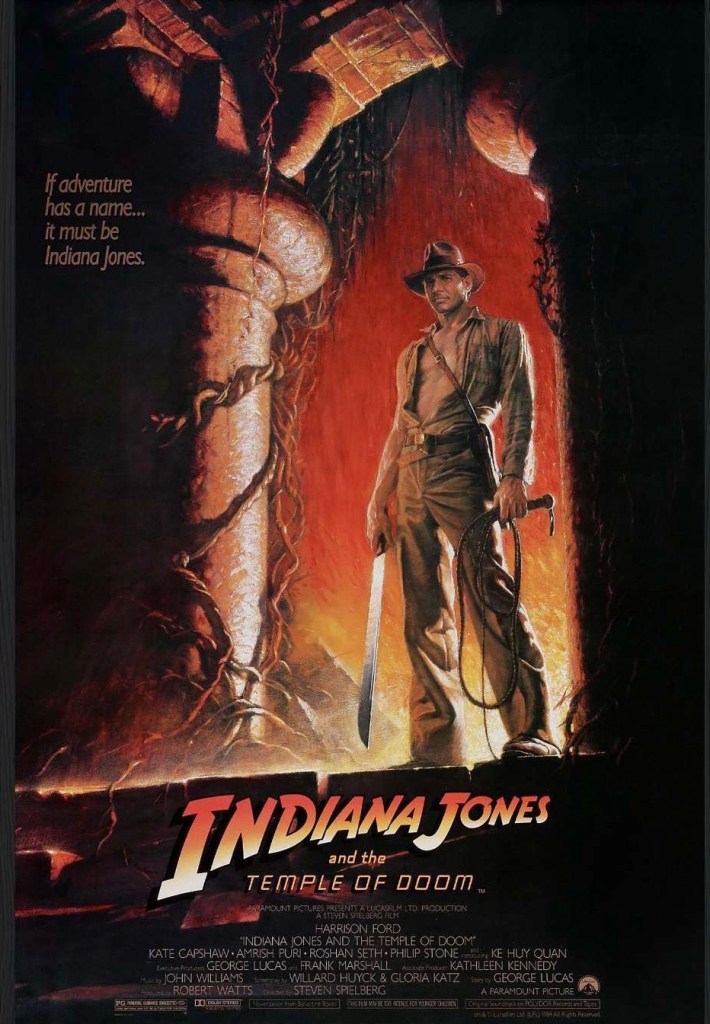
I can hear the groans already. “Oh, he’s talking about movies again.” But this one is a bit different and I share some things here that people have been asking about. I have a lot of new people in my life, and they are asking. So, I’m addressing their questions in bulk. People ask me all the time what my favorite movie is. I get the question often enough that I finally decided to answer it properly here. My favorite is Indiana Jones and the Temple of Doom. A lot of people are surprised by that. Many consider it the weakest of the original trilogy. I disagree. For me, it is the one that stuck with me the most, and the reasons go well beyond the surface thrills.
I grew up on adventure. My grandfather was old enough to have lived through the era of the great serials. I saw Zorro with the whip long before I ever saw Indiana Jones crack one. Saturday-morning serial energy was already in my blood. When Raiders of the Lost Ark came out, I thought it was wonderful—maybe the best pure adventure movie ever made. But Temple of Doom became personal.
Reading the Book Before the Movie in Hamilton, Ohio
When I was a kid, I used to go downtown to the shopping center in Hamilton, Ohio, with my mom and grandmother. On the bottom floor, there was a bookstore section. I went straight to the books every time. One day they got me the novelization of Indiana Jones and the Temple of Doom. I read it before I saw the movie. I read it the way I used to read the old adventure books—religiously, over and over. The character already lived in my head before the images did.
That early exposure mattered. George Lucas has always been steeped in mythology. The pursuit of the Grail, the knight who starts out chasing fortune and glory and ends up learning something harder—these patterns were in the water. I did not have the language for it at fourteen or fifteen, but I felt it.
The Night We Snuck Out in Morehead, Kentucky
The memory that sealed it for me happened the summer the movie was in theaters. I was fourteen or fifteen, part of a High Adventure Explorer Post. We were on a week-long trip heading toward whitewater rafting in West Virginia. We stopped to camp just outside Morehead, Kentucky. Hot summer night. The kind of heat that stays with you after dark.
We went into town for snacks, and I spotted the movie theater. Temple of Doom was playing. I grabbed a newspaper, checked the times, and saw the last show was at eleven. Back at camp, the plan was lights out early so we could get up for the next day’s adventure. Around eight or nine, everyone was settling in. Three of us waited, then slipped out.
We walked the two miles into town in the dark, hearts pounding, half-convinced we were going to get caught the whole way. We sat through the movie until about one in the morning. Then we walked the two miles back, still sweating, still listening for any sound that meant trouble. We snuck into our tents, drank some water from the canteen, ate a Slim Jim I had stashed, and tried to sleep. At seven, the camp woke up as if nothing had happened. Nobody said a word. We ate breakfast and headed out for the rafting and the rest of the week’s adventures. Later that summer I flew with my family to the Grand Canyon and all over California. The whole stretch felt like one long Indiana Jones sequence.
I have had many experiences since then. I am older now. I still cannot think of many moments that felt better than that night—walking back in the heat with the movie still running through my head, knowing we had gotten away with it, feeling completely alive. We had lived a small version of the thing we had just watched. Jump in. Trust yourself. Land on your feet.
Why Temple of Doom Hits Different
Raiders gives you the competent, almost invincible Indy. Temple of Doom puts him through the wringer. Poisoned, chased, plane crash, mountain landing, bugs, capture, the blood, the voodoo doll, the forced drinking, the near-sacrifice. They break him down further than in any of the other films. Then he comes out the other side, returns the stones, restores the village, and still walks away with the girl and the open road to the next adventure. “Fortune and glory” at the beginning. Something closer to responsibility and compassion by the end. He keeps the light touch the whole time. The movie never turns grim for its own sake. That balance is rare.
I raised my kids on it. I have raised grandkids on it. The soundtrack still gets played in the car. They know the cues. The film became a shared language in the family for the idea that you can take a beating and still come up swinging with a grin.
Mythology, Campbell, and Earned Freedom
Later I learned more about the deeper currents. Joseph Campbell’s work on the hero’s journey and the Grail legends shaped a generation of storytellers. George Lucas absorbed those patterns. The connection between the Indiana Jones films and older quest stories—Parzival, the wasteland, the knight who must learn before he can restore—is not forced. Temple of Doom functions as a modern version of the hero who starts selfish and ends up doing the right thing for people who cannot help themselves. The Last Crusade made the Grail explicit. Temple of Doom already had the emotional shape.
They also earned the right to make something this wild. After Raiders became a phenomenon, Lucas and Spielberg had the political capital in Hollywood to go darker, stranger, more unhinged—child slavery, Thuggee cult, heart-ripping, the whole fever-dream tone. A movie like that would have a much harder time getting made today. They used the freedom they had earned.
The Lesson That Stuck
For me, the core of it has always been simple. Indiana Jones trusts his ability to land on his feet no matter how bad the situation looks. Plane on fire. Poison. Traps. Brainwashing. Torture. He keeps moving. He keeps improvising. In the end, he is still the same man, only clearer. That attitude got into me early. Jump off the building if you have to. Figure out the landing on the way down. I have needed that more than once.
People who know me mostly through the political writing sometimes raise an eyebrow when I talk about movies. Movies are a shared language. Books are private. A film you both love gives you common ground in five minutes. When hundreds of new people start reading or listening and want to know a little more about the person behind the commentary, this is one of the cleaner ways to open the door. I do not normally spend this much time on personal stories. This one felt worth it.
Indiana Jones and the Temple of Doom is not the most polished film in the series. It is the one that feels most like actual life mixed with myth—messy, punishing, redemptive, and somehow still fun. I have carried its lessons through everything that came after that hot night in Morehead. Fortune and glory are great goals. Landing on your feet and doing the right thing when it counts is better.
Footnotes
1. The novelization of Indiana Jones and the Temple of Doom was written by James Kahn and published by Ballantine Books in 1984, timed with the film’s release.
2. George Lucas has repeatedly acknowledged the influence of Joseph Campbell’s The Hero with a Thousand Faces and related mythological studies on his storytelling, particularly visible in the Star Wars films and carrying over into the adventure structures of the Indiana Jones series. The two later became acquainted; Campbell viewed the original Star Wars trilogy at Skywalker Ranch.
3. Scholarly and critical readings have linked the Indiana Jones trilogy to Arthurian and Grail-quest patterns (including Chrétien de Troyes’ Perceval and Wolfram von Eschenbach’s Parzival), with Temple of Doom often discussed as a wasteland/otherworld episode and The Last Crusade making the Grail motif explicit.
4. Howard Kazanjian served as executive producer on Raiders of the Lost Ark and producer on Return of the Jedi, and held a key production role at Lucasfilm during the period.
5. Indiana Jones and the Temple of Doom (1984) was directed by Steven Spielberg from a story by George Lucas, screenplay by Willard Huyck and Gloria Katz. It is a prequel set in 1935.
Bibliography
Campbell, Joseph. The Hero with a Thousand Faces. Princeton: Princeton University Press, 1949 (and later editions).
Kahn, James. Indiana Jones and the Temple of Doom (novelization). New York: Ballantine Books, 1984.
Lucas, George, and various collaborators. Indiana Jones and the Temple of Doom. Directed by Steven Spielberg. Paramount Pictures, 1984.
Aronstein, Susan. Critical essays on Arthurian narrative patterns in the Indiana Jones trilogy (various academic publications).
Additional reading: Bill Moyers’ interviews with Joseph Campbell (The Power of Myth); production histories of the Indiana Jones films; Wolfram von Eschenbach’s Parzival for the classic Grail-knight arc that echoes in the franchise’s deeper structure.
Rich Hoffman is an author, political consultant, and strategic advisor based in Cincinnati, Ohio, and the creator of The Politics of Heaven—a unique framework that connects biblical theology, ancient history, and modern power structures to explain how moral alignment and spiritual forces shape global events. Blending real-world political experience with deep research into archaeology, UFO phenomena, and suppressed historical narratives, Hoffman offers compelling commentary on topics ranging from ancient civilizations and the Dead Sea Scrolls to modern populist movements, paranormal continuity, and leadership strategy in chaotic environments. As the author of The Gunfighter’s Guide to Business and the forthcoming Politics of Heaven, he brings a grounded yet provocative voice to media discussions, supported by firsthand experiences and a cross-disciplinary approach that bridges science, history, and theology. For interviews, speaking engagements, or expert analysis, visit richhoffmanbooks.com or contact directly via phone at 513-307-5815 or email at rhoffman@richhoffmanbooks.com. If you’ve seen the movie, Disclosure Day and want to talk about it and the implications of Presidnet Trump’s UAP disclosures, let me know and we can bring some color to your coverage. https://richhoffmanbooks.com/media-inquiries-broadcast-topics-and-contact-info/?frame-nonce=ad51e7ecba I do have a firsthand UFO encounter to discuss.
I’ve taken a lot of heat over the years for how I approach operations management. People watch what I’ve done with large, complicated organizations and then announce that I’m somehow making it look too easy, or that the method can’t scale, or that anyone with enough capital could copy it. Fine. Let me answer all of them at once, because the emails on this subject have been piling up and a single clear response is better than another round of copy-and-paste.
Jungle Jim’s International Market sits out on Route 4 in Fairfield, right here in Butler County. I grew up watching the place. My grandfather worked across the way at the old Fisher Body plant. The roadside produce stand that became the store was there in the early seventies, bouncing from vacant lot to vacant lot until Jim Bonaminio finally planted roots in 1975 with a 4,200-square-foot building. Today the flagship is somewhere north of 200,000 square feet—some measurements put it closer to 280,000 or even 300,000 depending on how you count the latest expansions—and there is a second location in Eastgate. It is one of the largest independent grocery operations in the country and easily the most distinctive.
People from every corner of the planet who land in the Cincinnati area homesick walk through those doors and find something that tastes like home. Almost two thousand wines. Live seafood tanks. Sections organized by country. Animatronics, a monorail, giant animals, a cooking school, a podcast studio. The bathrooms open into rooms that feel like Narnia. It is a theme park of food, and it runs on thin margins in one of the most competitive, low-margin industries on earth. Yet it keeps growing while the corporate chains in their shiny shoes and pressed shirts keep trying—and failing—to reverse-engineer the magic.
I have watched Jim walk the floor in costume, looking like Merlin or some jungle explorer, and the first thing you notice is that he is not trying to do every job himself. He hires people who actually care about the product, gives them real authority over their departments, and then gets out of the way. Department managers run their sections like independent businesses—buying, merchandising, hiring, firing. He does not need his name stamped on every decision. That is one of the hardest disciplines in leadership: empowering competent people without constantly inserting yourself so everyone knows who is in charge. Most executives fail that test. They cannot stand the idea that something good happened without their fingerprints all over it.
The same pattern shows up across Butler County. Sheriff Richard Jones has run the sheriff’s office for two decades with a continuity culture that keeps the books in the black, generates substantial boarding-of-prisoners revenue (including the ICE contract), and maintains operational discipline without the endless consultant theater you see in other counties. He understands that you put the right people in place, give them clear authority, and then hold them accountable for results. You do not throw money at wet wood and hope it lights.
Butler County has produced more than its share of these personalities. JD Vance came out of Middletown. The traits are recognizable once you have lived here long enough: direct, practical, uninterested in the performance of competence that substitutes for the real thing. You see the same operating style in the way Jungle Jim built from a roadside stand across from the factory where my grandfather worked into the largest independent of its kind. You see it in the way SpaceX runs.
Elon Musk did not invent the principle, but he has executed it at industrial scale. SpaceX gives engineers real ownership—cradle-to-grave responsibility—and then demands results. Automation and advanced welding are not about eliminating jobs; they are about expanding capacity when there are not enough skilled people to meet demand the old way. The robots and the elevated welding systems are force multipliers. The culture underneath them is the same one that lets Jungle Jim’s stock 180,000 items and still feel alive instead of sterile. It is the same culture that lets a sheriff’s office run surplus while neighboring jurisdictions drown in process.
Corporate types in suits keep flying in from New York and Los Angeles and San Francisco with large budgets and big investors. They walk the aisles of Jungle Jim’s taking notes. They study SpaceX’s production rates. Then they go home and throw gasoline on wet wood. They saturate the problem with capital and consultants and shiny process decks, and when the fire never quite catches they blame the market or the labor force or the regulations. They never figure out that the wood was never stacked correctly in the first place. The people who actually know how to start a fire in the rain do not need the gas. They prepare the ground, choose the right people, and let the work speak.
I have done this for decades in complex organizations. The critics who say it looks easy are usually the ones who have never had to do it without a blank check. When you do not have unlimited capital you get creative. You learn to empower rather than control. You accept that the best people will not stay if you keep putting your name over theirs. Jungle Jim has had corporate buyers and executives studying him for thirty years and they still cannot copy it. China has been trying to copy SpaceX and they still cannot drop the vehicle on the camera the way SpaceX does. The difference is not money. The difference is a personality type and an operating culture that cannot be faked.
That is why I believe the SpaceX IPO path will continue to create enormous new wealth. The culture is real. The operational discipline is real. The people closest to the work are trusted to move. Investors who understand people—who understand the difference between wet-wood capital and actual fire—will do very well. The ones who think you can buy the same result with consultants and process will keep burning fuel and wondering why nothing catches.
I will put a couple of the better documentaries and walk-throughs of Jungle Jim’s on the blog, along with material on SpaceX’s production and welding systems. Watch the way the people on the floor actually operate. Then watch the corporate versions of the same industries. The contrast is the entire lesson.
Operational excellence is not a mystery. It is rare because most people cannot stand to give away the credit. The ones who can do it make it look easy. The ones who cannot keep throwing gas on wet wood and calling it strategy. Butler County has produced more than its share of the first kind. I am not going to apologize for noticing.
Notes
1. Jungle Jim’s International Market was founded by James O. “Jungle Jim” Bonaminio. The permanent Fairfield store opened in 1975 at 4,200 square feet after several years of roadside stands, including a location across from the Fisher Body plant. Current main-store size is reported in the 200,000–300,000 square-foot range depending on the source and the most recent expansions; a second location operates in Eastgate. See Wikipedia entry and official Jungle Jim’s history pages.
2. Weekly visitor figures of approximately 82,000 and product counts exceeding 180,000 items (with strong international representation) appear consistently in contemporaneous reporting. The store is frequently described as a “theme park of food.”
3. Bonaminio’s management approach emphasizes hiring people with passion for specific departments and granting them substantial operating authority. Recent interviews and employee descriptions confirm department-level autonomy in buying, merchandising, and staffing.
4. Butler County Sheriff Richard K. Jones has held office since 2005. The office generates significant revenue through boarding-of-prisoners contracts, including a renewed ICE arrangement that has produced multi-million-dollar annual inflows and rate increases. County budget documents show the sheriff’s operation remaining a major, self-supporting component of the overall budget while maintaining operational continuity.
5. SpaceX’s internal culture of extreme ownership, flat structure for engineers, and cradle-to-grave product responsibility is documented in multiple former-employee accounts and contemporaneous reporting. Automation and advanced welding processes are treated as capacity multipliers rather than pure labor replacements.
6. JD Vance was raised in Middletown, Ohio (Butler County). The local cultural and industrial background is a matter of public record.
Bibliography / Further Reading
• Jungle Jim’s official site and “The Jungle Jim Story” pages (junglejims.com).
• Wikipedia: “Jungle Jim’s International Market.”
• Smithsonian Magazine, “Welcome to Jungle Jim’s” (2016).
• Cincinnati Business Courier and Journal-News coverage of Bonaminio interviews and 50th-anniversary material (2024–2026).
• Wall Street Journal Opinion Q&A with Jim Bonaminio (2026).
• Progressive Grocer and Supermarket News profiles of Jungle Jim’s independent model.
• Butler County Sheriff’s Office budget submissions and Journal-News reporting on ICE contract revenues and staffing (2025–2026).
• Reporting on SpaceX engineering culture and ownership model (Wired, Business Insider, former-employee accounts, 2022–2026).
• “Evolution of the Jungle” and related YouTube material produced by Jungle Jim’s International Market.
• Local Butler County political and business coverage of Sheriff Jones and regional figures.
Rich Hoffman is an author, political consultant, and strategic advisor based in Cincinnati, Ohio, and the creator of The Politics of Heaven—a unique framework that connects biblical theology, ancient history, and modern power structures to explain how moral alignment and spiritual forces shape global events. Blending real-world political experience with deep research into archaeology, UFO phenomena, and suppressed historical narratives, Hoffman offers compelling commentary on topics ranging from ancient civilizations and the Dead Sea Scrolls to modern populist movements, paranormal continuity, and leadership strategy in chaotic environments. As the author of The Gunfighter’s Guide to Business and the forthcoming Politics of Heaven, he brings a grounded yet provocative voice to media discussions, supported by firsthand experiences and a cross-disciplinary approach that bridges science, history, and theology. For interviews, speaking engagements, or expert analysis, visit richhoffmanbooks.com or contact directly via phone at 513-307-5815 or email at rhoffman@richhoffmanbooks.com. If you’ve seen the movie, Disclosure Day and want to talk about it and the implications of Presidnet Trump’s UAP disclosures, let me know and we can bring some color to your coverage. https://richhoffmanbooks.com/media-inquiries-broadcast-topics-and-contact-info/?frame-nonce=ad51e7ecba I do have a firsthand UFO encounter to discuss.
Pip: There’s a book sitting in a Yale library that has defeated cryptographers, linguists, and machine learning systems for six centuries — and Rich Hoffman thinks he knows why nobody’s cracked it.
Mara: This episode follows his argument that the Voynich Manuscript may be exactly what it looks like: a record left by a non-human intelligence. Let’s start with the manuscript itself and what the evidence actually shows.
The Voynich Manuscript: Notes from an Outside Mind
Mara: The central question here is whether the Voynich Manuscript is a lost human artifact or something that was never meant for human readers at all — and the argument begins with what the physical object actually tells us.
Pip: The post anchors that argument in the radiocarbon data: “Somewhere between the years 1404 and 1438, on animal-skin parchment that laboratory carbon dating has pinned down with ninety-five percent confidence, someone or something produced a book that still sits in the Beinecke Rare Book and Manuscript Library at Yale and refuses every attempt the human race has made to understand it.”
Mara: So the object is genuinely old — that part is settled. What isn’t settled is who made it, because almost nothing inside behaves as if it belongs to fifteenth-century Europe.
Pip: The plants don’t match any known species. Botanists have spent decades trying. The script obeys Zipf’s law the way natural languages do, yet its conditional entropy sits around two bits — well below the three to four bits that living languages produce. Cryptographers who broke Enigma walked away empty-handed.
Mara: That statistical profile is the crux. It reads like language, it patterns like language, and it has defeated every tool we use to decode language. The post’s working theory is that the reference frame itself is wrong — we keep mapping the manuscript onto human knowledge systems because we are human.
Pip: Which is either a profound insight or the most elegant excuse for not solving a puzzle. The post earns it, though, because it does the work of eliminating the alternatives first.
Mara: Right — if it were a hoax, the materials science wouldn’t hold. If it were a cipher, someone would have broken it. The plants would match something known if it were a standard herbal. The non-human hypothesis is presented as the one that still fits the data.
Pip: The post also connects the manuscript’s balneological section — page after page of women in tube-connected pools — to David Grusch’s sworn 2023 congressional testimony about recovered non-human biologics, and to the visual vocabulary of Peruvian painter Pablo Amaringo, who depicted nearly identical imagery after ayahuasca.
Mara: That accumulation is the method. Dolmen structures along the Jordan River and around Lake Superior’s ancient copper mines, the Loveland Frogman sightings along the Little Miami River, Grusch’s testimony, Amaringo’s visions — none of it is proof individually, but the post argues the overlap is what demands attention.
Pip: The conclusion is quiet and unsettling: the manuscript isn’t waiting for a better cipher key. It’s waiting for us to admit the key may never have been human.
Mara: And that question — what records non-human intelligences may have left, and how institutionalism limits what we’re willing to consider — is exactly the territory the closing returns to.
Pip: Six hundred years of human attention, no translation, and the object is still looking back at us.
Mara: The deeper provocation is about what we’re willing to put on the board — whether the evidence leads somewhere uncomfortable or not. That’s a question worth carrying into the next episode.
Rich Hoffman is an author, political consultant, and strategic advisor based in Cincinnati, Ohio, and the creator of The Politics of Heaven—a unique framework that connects biblical theology, ancient history, and modern power structures to explain how moral alignment and spiritual forces shape global events. Blending real-world political experience with deep research into archaeology, UFO phenomena, and suppressed historical narratives, Hoffman offers compelling commentary on topics ranging from ancient civilizations and the Dead Sea Scrolls to modern populist movements, paranormal continuity, and leadership strategy in chaotic environments. As the author of The Gunfighter’s Guide to Business and the forthcoming Politics of Heaven, he brings a grounded yet provocative voice to media discussions, supported by firsthand experiences and a cross-disciplinary approach that bridges science, history, and theology. For interviews, speaking engagements, or expert analysis, visit richhoffmanbooks.com or contact directly via phone at 513-307-5815 or email at rhoffman@richhoffmanbooks.com. If you’ve seen the movie, Disclosure Day and want to talk about it and the implications of Presidnet Trump’s UAP disclosures, let me know and we can bring some color to your coverage. https://richhoffmanbooks.com/media-inquiries-broadcast-topics-and-contact-info/?frame-nonce=ad51e7ecba I do have a firsthand UFO encounter to discuss.
Pip: The Overmanwarrior had lunch with a state senator, got rained out before he could finish his thought, and decided the logical next step was ancient Canaanite necromancy.
Mara: Rich Hoffman picks up that interrupted conversation in writing, and it pulls together ancient Near Eastern ritual, Ohio’s Hopewell earthworks, and the manuscript he’s been working toward. Let’s start with what that conversation actually opened up.
A message to George Lang: Making deals with the dead for earthly power
Pip: The premise here is that the political present and the ancient past are running the same operating system — and a lunch with Senator George Lang is where that argument gets its latest airing.
Mara: The post sets the scene directly: “Nothing formal, nothing staged for the cameras, just two guys who have known each other a long time sitting outside at a place we both like, talking the way we always end up talking when the politics finally take a back seat.”
Pip: So the lunch is a frame for something much older. What the rain interrupted was a walk through a specific ancient system — the cult of the Rephaim, dead aristocratic warrior kings whose spirits living rulers in the Late Bronze Age still summoned by name.
Mara: The Ugaritic tablet KTU 1.161 records the liturgy. Food and drink were set for the dead. The post describes it plainly: the meal was not polite remembrance — it was consultation, and it was power. The Gilberts’ book Veneration is the source he’s working through here, alongside Brian Muraresku’s The Immortality Key.
Pip: The upshot is that the biblical command to destroy those Canaanite cultures wasn’t territorial ambition — it was an attempt to close a door the cult of the dead kept propping open.
Mara: And the geography matters. Mount Hermon appears in the Book of Enoch as where the Watchers descended. In older Canaanite material it’s the seat of the divine council opposing Yahweh. The post notes that when Jesus stood at Caesarea Philippi at the foot of that mountain, he was issuing a direct challenge to the old cult on its own ground.
Pip: Then the argument crosses an ocean. The Hopewell earthworks in Ohio — Newark, the Milford Works, the mounds through Butler and Warren counties — get placed in the same category of ritual architecture as Gilgal Refaim in the Golan Heights.
Mara: And the Windover site in Florida, seven to eight thousand years old, with preserved brain tissue and textiles more sophisticated than the standard timeline allows, gets folded in too. The post connects it to copper trade networks that moved material out of Lake Superior in volumes still not fully explained.
Pip: The Loveland Frogmen make a brief appearance — not as proof, but as a pattern. Anomalous encounters clustering near the same river corridors where the old ceremonial centers stood.
Mara: The manuscript he updated Lang on, The Politics of Heaven, is described as treating the entire span from the deep pre-biblical period to the present as one continuous political and spiritual struggle. The question the post ends on is whether we keep setting places at the table for whatever was once invited.
Pip: From ancient banquet rites to Ohio subdivisions built over mounds — the territory doesn’t get smaller from here.
Mara: The thread running through all of this is that the old systems didn’t end — they changed methods. That’s the argument the book is building toward.
Pip: And the next time someone tries to sell a new version of the old system, the idea is you’d recognize it. That’s a conversation worth continuing.
Rich Hoffman is an author, political consultant, and strategic advisor based in Cincinnati, Ohio, and the creator of The Politics of Heaven—a unique framework that connects biblical theology, ancient history, and modern power structures to explain how moral alignment and spiritual forces shape global events. Blending real-world political experience with deep research into archaeology, UFO phenomena, and suppressed historical narratives, Hoffman offers compelling commentary on topics ranging from ancient civilizations and the Dead Sea Scrolls to modern populist movements, paranormal continuity, and leadership strategy in chaotic environments. As the author of The Gunfighter’s Guide to Business and the forthcoming Politics of Heaven, he brings a grounded yet provocative voice to media discussions, supported by firsthand experiences and a cross-disciplinary approach that bridges science, history, and theology. For interviews, speaking engagements, or expert analysis, visit richhoffmanbooks.com or contact directly via phone at 513-307-5815 or email at rhoffman@richhoffmanbooks.com. If you’ve seen the movie, Disclosure Day and want to talk about it and the implications of Presidnet Trump’s UAP disclosures, let me know and we can bring some color to your coverage. https://richhoffmanbooks.com/media-inquiries-broadcast-topics-and-contact-info/?frame-nonce=ad51e7ecba I do have a firsthand UFO encounter to discuss.
Yes, George, you need to watch this video. I had to finish our discussion from lunch. I had a good lunch with Senator George Lang the other day. Nothing formal, nothing staged for the cameras, just two guys who have known each other a long time sitting outside at a place we both like, talking the way we always end up talking when the politics finally take a back seat. People assume that every time I sit down with a senator or a sheriff or a treasurer around here, it is some closed-door strategy session. It is not. George and I share a long-standing interest in ancient history, the kind of deep, layered history that most people in public life never get the chance to dig into. He likes that I run into the stranger corners of it. I like that he actually reads the books I recommend and asks the kind of questions that keep the conversation alive long after the plates are cleared.
We ran out of time that day. Rain started coming down hard while we were still outside, and I had only gotten started on the things I wanted to walk him through. So I am continuing the conversation here the same way I would if he were still sitting across from me and the rest of you were at the next table over. Nothing confidential. Nothing I would not say in front of anyone. Just the thoughts that were already in motion when we had to pack it up.
I updated him on where The Politics of Heaven stands, my next book. The manuscript is finished. The first full draft has been through enough eyes that the early feedback keeps coming back in the same surprising way. More than one reader, including people who know the publishing world, has said the same thing: this book reminds them of The Immortality Key. That 2020 book from St. Martin’s Press by Brian Muraresku, the one Graham Hancock helped put on the map. I told George that I had already decided to go back through The Immortality Key carefully, not because I think I borrowed from it, but because the comparison keeps arriving uninvited and I want to be precise about where the overlap ends and where my own line of inquiry begins. Publication is a relationship, like any other. You do not jump straight into sharing an apartment. You get dinner. You talk. You figure out whether the trust is real. That process takes time, and patience is part of the work.
What pushed me back into The Immortality Key was the same impulse that had me reading Sharon and Derek Gilbert’s Veneration in the early hours before that lunch. Timothy Alberino had been discussing related material on Joe Rogan, and the conversation turned to the older Near Eastern material that most people never hear about. The Gilberts work from a biblical frame, and they do it with real attention to the primary texts. I respect that. Their book digs into the cult of the Rephaim, those dead aristocratic warrior kings whose spirits the living kings of the Late Bronze Age still summoned by name. The Ugaritic tablet known as KTU 1.161 records the liturgy. The dead are called up. Food and drink are set for them. The living king anchors his own right to rule in a line that stretches back into a mythic age of heroes. The meal is not polite remembrance. It is consultation. It is power.
That is the system the biblical writers were confronting. When the scouts came back from Canaan and said they felt like grasshoppers beside the people living there, they were describing more than physical size. They were describing a culture that still fed and consulted the spirits of the giants who had once ruled. Og of Bashan, the last of the remnant of the Rephaim, still had an iron bedstead measured in cubits that made the point for anyone who needed numbers. The physical and spiritual threats were the same. The command to wipe the system out was not simple land hunger. It was an attempt to close the door that the cult of the dead kept trying to hold open.
Mount Hermon sits at the center of that geography. In the Book of Enoch it is the place where the Watchers came down. In the older Canaanite material it is the mountain of assembly, the seat of the divine council that opposed Yahweh. When Jesus took his disciples to the region of Caesarea Philippi at the foot of that mountain and said the gates of hell would not prevail, he was standing on the front porch of the old cult and issuing a direct challenge. The Gilberts make that geography impossible to ignore once you have seen it.
I have been reading this material with one eye on the Near East and the other on the ground under my own feet. The Wheel of the Giants, Gilgal Refaim, sits up in the Golan Heights, a massive set of concentric stone circles that some call the Stonehenge of the East. It belongs to the same broad horizon of ritual architecture that appears along the Jordan and then, in different forms, moves westward. At the same time, over here in the Ohio Valley, the Hopewell people were raising enormous ceremonial centers with the same intensity of purpose. The Milford Works, the great earthworks near the confluence of the Little Miami and the East Fork, the alignments at Newark, the mounds that once stood all through what is now Butler County and Warren County and on up the Scioto. These were not random piles of dirt. They were places where the living gathered to deal with the dead and whatever else they believed could be reached through the right rituals and alignments.
I keep coming back to the Windover site just west of Titusville, a few miles from the Kennedy Space Center. Seven to eight thousand years old. Bodies preserved in peat with brain tissue still intact. Textiles more sophisticated than anything the standard story allows for at that early stage. Directional burial practices. A people who do not fit neatly into the later tribal identities we project backward. Some of the individuals were tall by the standards of the time. The site sits in a region that later becomes part of the same trade networks that moved copper out of the Lake Superior mines and into the wider world just as the Bronze Age was taking shape. The usual explanations for exotic materials found in these contexts grow more strained the longer you look at them. Bananas and turmeric proteins in elite Near Eastern burials. Advanced textiles and possible African or Mediterranean contacts at Windover. The copper that left the Upper Peninsula in quantities that still have not been fully accounted for. At some point, the assumption that the oceans were closed until Columbus made his journey starts to look like a real leap of faith.
The Loveland Frogmen sightings sit right in the middle of this local landscape. 1955, then 1972, later reports still in the same general corridor. Small, grayish, bipedal figures near the water, not far from the old Hopewell ceremonial centers. I am not claiming they are the same entities the Ugaritic kings were feeding under the palace benches. I am saying that when you map the places where people once worked hard to open contact with the dead, and then you look at the places where anomalous encounters keep showing up in the modern record, the overlap is hard to ignore. Point Pleasant and the Mothman. The poltergeist activity that still gets reported in houses built over older burial grounds. The same pattern appears in other parts of the world whenever the old ritual centers are disturbed or left alone long enough for whatever was once invited to keep answering.
I told George that the deeper I go into this material, the clearer it becomes that the biblical story is not a late invention dropped into an empty landscape. It is a record of conflict in a world already thick with competing claims about who had the right to rule and whose spirits still held authority. The non-human intelligences that show up in the older texts, the ones that later get called demons or Watchers or the shades of the Rephaim, did not disappear when the last physical giant was killed. The cult changed its methods. Psychedelics appear to have been one of the technologies that kept the door open. Muraresku’s work on the ritual use of those substances in the ancient Mediterranean and their possible survival into early Christian practice is part of the same larger picture. If you want to understand why a culture builds a certain kind of religion, you have to understand what it was taking and what it thought it was talking to while it was under the influence.
My own book takes the next step. It treats the entire span from the deep pre-biblical period to the present as a single continuous political and spiritual struggle. The copper, the earthworks, the burial practices, the later attempts to rebury or reclassify the evidence, the modern fascination with ascended masters and ancient aliens and celebrity necromancy, all of it belongs to the same long contest. The entities that once sat at the banquet tables under the palace floors in Ugarit are still trying to claim a seat at the table. The question is whether we keep setting places for them.
I am not interested in scaring people. I am interested in making the pattern visible so that the next time someone tries to sell a new version of the old system we recognize it for what it is. The Gilberts do that work from one angle. Muraresku does it from another. Alberino keeps pushing the conversation into the open. I am simply adding the North American material and the long view that comes from living in a place where the mounds are still under the subdivisions, and the river valleys still remember older traffic.
Notes:
¹ Brian C. Muraresku, The Immortality Key: The Secret History of the Religion with No Name (New York: St. Martin’s Press, 2020). Foreword by Graham Hancock.
² Sharon K. Gilbert and Derek P. Gilbert, Veneration: Unveiling the Ancient Realms of Demonic Kings and Satan’s Battle Plan for Armageddon (Crane, MO: Defender, 2020).
³ KTU 1.161 (Ugaritic funerary liturgy), standard edition in Manfried Dietrich, Oswald Loretz, and Joaquín Sanmartín, The Cuneiform Alphabetic Texts from Ugarit, Ras Ibn Hani and Other Places (Münster: Ugarit-Verlag, 2013). See also Baruch A. Levine and Jean-Michel de Tarragon, “Dead Kings and Rephaim: The Patrons of the Ugaritic Dynasty,” Journal of the American Oriental Society 104 (1984): 649–659.
⁴ On Gilgal Refaim / Rujm el-Hiri see Yonathan Mizrachi et al., recent satellite survey work published in PLOS ONE (2026) documenting additional circular structures in the Golan; earlier discussions in Yonathan Paz and others on Early Bronze Age ritual landscapes.
⁵ Glen H. Doran, ed., Windover: Multidisciplinary Investigations of an Early Archaic Florida Cemetery (Gainesville: University Press of Florida, 2002). See also subsequent DNA and textile studies confirming the site’s uniqueness within the Archaic Southeast.
⁶ On Hopewell ceremonial centers, alignments, and ritual feasting, see Bradley T. Lepper, Ohio Archaeology (Wilmington, OH: Orange Frazer Press, various editions) and the UNESCO World Heritage documentation for the Hopewell Ceremonial Earthworks. For the Milford Works specifically, nineteenth-century surveys by Squier and Davis remain foundational.
⁷ Book of Enoch (1 Enoch) 6–16 on the descent of the Watchers at Mount Hermon; standard translation by R. H. Charles or George W. E. Nickelsburg and James C. VanderKam.
⁸ Timothy Alberino’s appearance on The Joe Rogan Experience #2530 (July 2026) discusses the Rephaim, the kispum rites, and the continued occult utility of giant remains in modern contexts.
Bibliography for further reading
Alberino, Timothy. Various lectures and the special edition of The Book of Enoch with commentary (2026).
Byers, A. Martin. Sacred Games, Death, and Renewal in the Ancient Eastern Woodlands. Knoxville: University of Tennessee Press, 2011.
Charles, R. H., trans. The Book of Enoch. Oxford: Clarendon Press, 1912 (and later editions).
Doran, Glen H., ed. Windover. Gainesville: University Press of Florida, 2002.
Gilbert, Derek P., and Sharon K. Gilbert. Veneration. Crane, MO: Defender, 2020.
———. The Great Inception. Crane, MO: Defender, 2017.
Hancock, Graham. America Before. New York: St. Martin’s Press, 2019.
Heiser, Michael S. The Unseen Realm. Bellingham, WA: Lexham Press, 2015.
Lepper, Bradley T. Ohio Archaeology. Wilmington, OH: Orange Frazer Press.
Muraresku, Brian C. The Immortality Key. New York: St. Martin’s Press, 2020.
Nickelsburg, George W. E., and James C. VanderKam. 1 Enoch: The Hermeneia Translation. Minneapolis: Fortress Press, 2012.
Pardee, Dennis. Ritual and Cult at Ugarit. Atlanta: Society of Biblical Literature, 2002.
Squier, Ephraim G., and Edwin H. Davis. Ancient Monuments of the Mississippi Valley. Washington: Smithsonian Institution, 1848 (reprint editions widely available).
Vallée, Jacques. Passport to Magonia. Chicago: Henry Regnery, 1969 (and later editions).
Additional primary Near Eastern texts are available in The Context of Scripture, ed—William W. Hallo (Leiden: Brill), and in the standard Ugaritic editions cited above.
Rich Hoffman is an author, political consultant, and strategic advisor based in Cincinnati, Ohio, and the creator of The Politics of Heaven—a unique framework that connects biblical theology, ancient history, and modern power structures to explain how moral alignment and spiritual forces shape global events. Blending real-world political experience with deep research into archaeology, UFO phenomena, and suppressed historical narratives, Hoffman offers compelling commentary on topics ranging from ancient civilizations and the Dead Sea Scrolls to modern populist movements, paranormal continuity, and leadership strategy in chaotic environments. As the author of The Gunfighter’s Guide to Business and the forthcoming Politics of Heaven, he brings a grounded yet provocative voice to media discussions, supported by firsthand experiences and a cross-disciplinary approach that bridges science, history, and theology. For interviews, speaking engagements, or expert analysis, visit richhoffmanbooks.com or contact directly via phone at 513-307-5815 or email at rhoffman@richhoffmanbooks.com. If you’ve seen the movie, Disclosure Day and want to talk about it and the implications of Presidnet Trump’s UAP disclosures, let me know and we can bring some color to your coverage. https://richhoffmanbooks.com/media-inquiries-broadcast-topics-and-contact-info/?frame-nonce=ad51e7ecba I do have a firsthand UFO encounter to discuss.
Pip: The Overmanwarrior is the kind of site where you click in expecting a political take and leave wondering whether ancient Ohio earthworks were a cosmic antenna — and somehow that feels completely reasonable.
Mara: Rich Hoffman is deep in the research for his forthcoming book The Politics of Heaven, and today’s episode follows him there — from Hopewell burial mounds to UAP disclosure to the question of who, or what, has actually been running things.
Pip: Let’s start with the mounds, the tablets, and what sovereignty really means.
What the Mounds Are Hiding — and Why It Matters
Mara: The central tension here is straightforward: if ancient Ohio was more sophisticated and more connected than the official story admits, then the official story is doing work — and the question is whose interests it serves.
Pip: The post frames this as a personal reckoning. Here’s the line that captures it: “I didn’t want to be that guy — the one who connects the dots between ancient Ohio earthworks, strange artifacts that don’t fit the narrative, non-human intelligence, and the spiritual forces that have been pulling strings on human politics since the beginning.”
Mara: And the reason that admission matters is that it establishes the stakes. This isn’t a hobbyist’s curiosity — it’s an aerospace executive saying the evidence pulled him somewhere he actively resisted going, and he’s writing the book anyway.
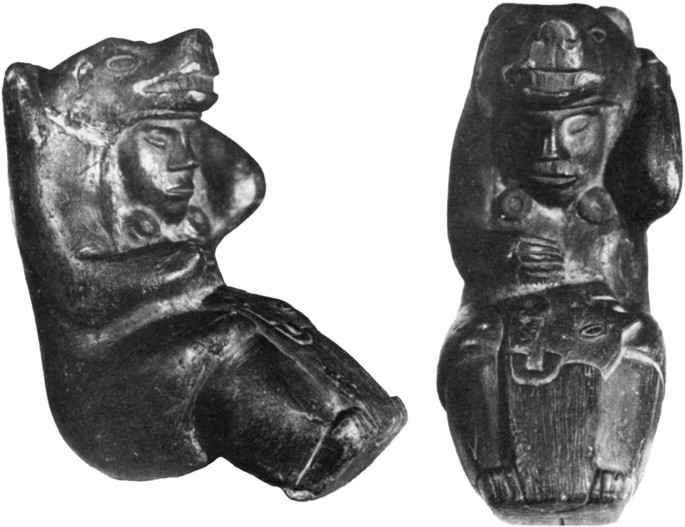
Pip: The anchor artifact is the Wray Figurine — a small stone shaman carved in bear regalia, holding a severed human head, found near the Great Circle at Newark in 1881. The post asks what kind of cosmology produces that image in a culture that also achieved precise lunar alignments across miles of geometric earthworks.
Mara: And the Newark Holy Stones sit right alongside that question. The Decalogue Stone carries what appears to be Hebrew text — a condensed Ten Commandments — found by surveyor David Wyrick in the 1860s. The mainstream verdict is hoax. Wyrick died in 1864 from an opium overdose after the fraud accusations destroyed him.
Pip: The post doesn’t accept that verdict quietly. It notes the Wilmington Tablet, the Cincinnati Tablet — pulled from display — and the Hopewell trade network that already moved copper from Lake Superior, obsidian from Wyoming, mica from the Appalachians. If the logistics existed, the dismissal of long-distance cultural contact starts to look less like science.
Mara: The post cites architect and author John Hancock, whose work on the Ohio Hopewell sites helped secure their UNESCO World Heritage designation. His framing: these earthworks are intentional architecture with astronomical precision, not ceremonial accident.
Pip: So the suppression question runs from archaeology straight into UAP disclosure. If non-human intelligence has been present throughout human history — and the post argues the government’s own admissions are now pointing that direction — then sovereignty was always a polite fiction.
Mara: The post puts it through Ephesians 6:12: “For we wrestle not against flesh and blood, but against principalities, against powers, against the rulers of the darkness of this world, against spiritual wickedness in high places.” The argument is that the mounds, the shamanic imagery, the suppressed artifacts, and modern UAP encounters are different chapters of the same story.
Pip: What this gets the listener is a reframe: the politics of Satan aren’t partisan. They’re the architecture underneath partisanship — anti-human, anti-sovereignty, operating through whatever institutions control what questions are allowed.
Mara: That’s where the closing argument lands: reclaim sovereignty under God, or keep letting the unseen politics of rebellion shape the future. The book The Politics of Heaven is the invitation to follow that evidence wherever it leads.
Pip: Which turns out to be further than most people planned to go on a Tuesday.
Mara: The thread running through all of this is the cost of the official story — what gets buried, dismissed, or pulled from display when the evidence gets inconvenient.
Pip: Next time, we’ll see where that thread leads. The truth, apparently, is coming fast.
Rich Hoffman is an author, political consultant, and strategic advisor based in Cincinnati, Ohio, and the creator of The Politics of Heaven—a unique framework that connects biblical theology, ancient history, and modern power structures to explain how moral alignment and spiritual forces shape global events. Blending real-world political experience with deep research into archaeology, UFO phenomena, and suppressed historical narratives, Hoffman offers compelling commentary on topics ranging from ancient civilizations and the Dead Sea Scrolls to modern populist movements, paranormal continuity, and leadership strategy in chaotic environments. As the author of The Gunfighter’s Guide to Business and the forthcoming Politics of Heaven, he brings a grounded yet provocative voice to media discussions, supported by firsthand experiences and a cross-disciplinary approach that bridges science, history, and theology. For interviews, speaking engagements, or expert analysis, visit richhoffmanbooks.com or contact directly via phone at 513-307-5815 or email at rhoffman@richhoffmanbooks.com. If you’ve seen the movie, Disclosure Day and want to talk about it and the implications of Presidnet Trump’s UAP disclosures, let me know and we can bring some color to your coverage. https://richhoffmanbooks.com/media-inquiries-broadcast-topics-and-contact-info/?frame-nonce=ad51e7ecba I do have a firsthand UFO encounter to discuss.
Pip: The Overmanwarrior is the kind of place where a single post connects Serpent Mound, a meteorite crater, submerged Florida cemeteries, and Spielberg’s Disclosure Day — and somehow it holds together.
Mara: Rich Hoffman is doing exactly that in this episode’s territory: ancient sites, suppressed archaeological questions, and what UAP disclosure might mean for how we read the deep past.
Pip: Let’s start with the serpent itself.
Some of my Jaw Dropping Statements about History: Serpent Mound, Ancient Mysteries, Disclosure, and the Politics of Heaven
Mara: The animating question here is whether mainstream archaeology’s framework for sites like Serpent Mound is constrained less by evidence than by institutional habit — and what disclosure of non-human phenomena might do to that framework.
Pip: The post sets up that tension directly. Here’s the line that frames the whole argument: “Once a framework is set, new evidence is often shoehorned to fit rather than allowed to challenge the foundation.”
Mara: And the stakes of that shoehorning are concrete. Serpent Mound — 1,348 feet long, built atop an 8-kilometer meteorite impact crater in Adams County, Ohio — has radiocarbon dates that have shifted repeatedly, from Adena around 300 BC to Fort Ancient repairs centuries later. The site’s own timeline resists a tidy single-culture attribution.
Pip: The crater detail is the part that stops you cold. Whoever built there chose the rim of a 300-million-year-old impact structure that would have been invisible to casual observation. The solstice and equinox alignments encoded in the mound’s orientation suggest, as the post puts it, “knowledge far beyond simple hunting calendars.”
Mara: The post draws three sites together as what it calls evidence of non-human technological and spiritual interaction. Serpent Mound is the first. The second is Windover in central Florida — an 8,000-year-old Middle Archaic cemetery near the Kennedy Space Center that yielded 168 burials with preserved brain tissue and woven textiles of advanced complexity. The third is Flag Fen in England, a Bronze Age ritual landscape excavated by Francis Pryor featuring timber platforms and votive weapon offerings in wetlands.
Pip: Three sites, three continents, three different millennia — and the argument is that the consistency across them points to real encounters rather than independent invention.
Mara: Closer to home, the post mentions the Miamisburg Mound — 65 feet high, 800 feet in circumference, one of the largest conical mounds in eastern North America — and notes that NAGPRA constraints limit new excavation even as questions multiply.
Pip: And then Disclosure Day lands as the pivot. UAP whistleblower testimony on non-human biologics makes ancient interaction, in the post’s framing, newly plausible — and sites like Serpent Mound may have functioned as celestial recalibration markers for beings who experience time dilation as a physics fact, not a metaphor.
Mara: All of this feeds into the forthcoming book The Politics of Heaven, which the post describes as tackling nineteen of twenty-one chapters on controversial ground because they prioritize evidence over control narratives. Donna D’Errico’s Myth Bound series gets credit here too — her Serpent Mound episode is what opened the conversation, and the post holds her up as the right spirit for this kind of open inquiry.
Pip: The serpent on its ancient crater, the submerged Florida dead, the English wetland offerings — if the post is right, the question isn’t whether these sites are connected. It’s whether we’re finally allowed to ask how.
Mara: What runs through all of this is the idea that the Overton window on ancient history and non-human contact is genuinely shifting — and that the evidence was always there, waiting for the frame to change.
Pip: The serpent watches. Next time, we’ll see what else it’s been keeping an eye on.
Rich Hoffman is an author, political consultant, and strategic advisor based in Cincinnati, Ohio, and the creator of The Politics of Heaven—a unique framework that connects biblical theology, ancient history, and modern power structures to explain how moral alignment and spiritual forces shape global events. Blending real-world political experience with deep research into archaeology, UFO phenomena, and suppressed historical narratives, Hoffman offers compelling commentary on topics ranging from ancient civilizations and the Dead Sea Scrolls to modern populist movements, paranormal continuity, and leadership strategy in chaotic environments. As the author of The Gunfighter’s Guide to Business and the forthcoming Politics of Heaven, he brings a grounded yet provocative voice to media discussions, supported by firsthand experiences and a cross-disciplinary approach that bridges science, history, and theology. For interviews, speaking engagements, or expert analysis, visit richhoffmanbooks.com or contact directly via phone at 513-307-5815 or email at rhoffman@richhoffmanbooks.com. If you’ve seen the movie, Disclosure Day and want to talk about it and the implications of Presidnet Trump’s UAP disclosures, let me know and we can bring some color to your coverage. https://richhoffmanbooks.com/media-inquiries-broadcast-topics-and-contact-info/?frame-nonce=ad51e7ecba I do have a firsthand UFO encounter to discuss.
I’ve spent a good portion of my life learning that once you step into the arena and attach your name to a cause—especially one that challenges the comfortable consensus—there is no clean exit. The fight doesn’t end when the election is over or the levy fails. It follows you. It lingers in the background of every new opportunity, every conversation with agents or publishers, every attempt to build something larger than the immediate battle. People ask me why I keep doing it, why I take the hits, why I don’t just pivot to safer topics that corporate gatekeepers find more palatable. The honest answer is that I never figured out how to look at myself in the mirror, knowing I had walked away from what was right to make life easier. And the longer I’ve stayed in this game, the more I’ve seen how that very decision—to speak plainly and sign my name to it—becomes a lifelong tax on everything else I try to do.
Take the book I’m working on now, The Politics of Heaven. It’s a serious work, the kind that walks through biblical history, spiritual warfare, giants, ancient conspiracies, divine rebellion, and the population agendas that echo across time. I see it as mainstream in ambition—something that could sit on the front tables at Barnes & Noble alongside the big New York releases. Top-level readers who’ve seen the manuscript are excited. They tell me it has that weight. But then the conversation turns, as it always does. “You have some really strong opinions,” they say. “You’re in Ohio, very Republican, very MAGA, very Trump.” The subtext is clear: that baggage makes the project riskier in their world. It’s the same script I heard in 2012 when Tail of the Dragon came out. The book was ready; Hollywood producers were circling; relationships I had built over years in the industry were lining up interviews and options; and then the school board wars detonated everything.
Back then, Lakota was pushing its third levy attempt. I had already poured myself into fighting the first two. I went on WLW radio in Cincinnati multiple times a week, debated on air, did television hits, and wrote pieces that got national pickup in education circles. I called things exactly as I saw them. One line that still follows me everywhere was about the “latte-sipping prostitutes with asses the size of car tires and diamond rings to match.” It was raw, it was honest, and it captured the disconnect between the comfortable insiders pushing tax increases and the families getting squeezed. That phrase became a rallying cry for many people tired of the same old levy machine, but it also painted a target on my back. The corporate media, the teachers’ union allies, the local establishment—they treated it like a declaration of war. And in many ways it was. What followed was an early version of the cancel culture and personal destruction playbook that later got refined against Trump and anyone else who wouldn’t bend the knee.
They went after my reputation, my associations, my ability to make a living outside the fight. WLW started feeling pressure. Hosts and producers who had me on regularly faced heat. Some got demoted, some moved to worse slots, some disappeared from the rotation. The Cincinnati Enquirer and its allies ran over-the-top hit pieces. Corporate types listened to the complaints and quietly distanced themselves. Friends I thought were solid partners in the broader movement pulled away fast when the personal cost rose. It was brutal. I watched people I had stood shoulder to shoulder with suddenly find reasons to create distance. The playbook was clear: isolate the loudest voice, make the price of association too high, and watch the support evaporate. It was personal destruction sold as politics, and it worked on many people. But I kept going. I still helped organize, still spoke out, still put my name on it even when the professional repercussions mounted.
The timing couldn’t have been worse for Tail of the Dragon. The book was built on my deep love of the Smoky Mountains, the Tail of the Dragon road itself, and the culture of freedom and self-reliance it represented. I had spent years building Hollywood contacts precisely so I could get that story out wider. Producers were interested. There was talk of it becoming the next big action-adventure property in the vein of the Fast and the Furious franchise, which was dominating at the time. I had relationships with directors, big-name talent, people who could option material and move it forward. Zuri Hall interviewed me for a television segment promoting the book. She was excellent—sharp, professional—and that clip still holds up more than a decade later. From there, she went on to Access Hollywood, where she covered major projects like The Mandalorian, interviewing Steven Spielberg, John Favreau, Pedro Pascal, and others. Seeing her recently doing disclosure-related interviews brought it all back. That was the kind of platform I was building in 2012, and it was working—until the school levy fight made me radioactive to the very people I needed for the book’s success.
I lost money. I lost momentum. Opportunities that were lining up dried up almost overnight. The same networks that had been friendly suddenly found reasons to pass. The blocklisting was real. Google’s algorithm, YouTube recommendations, social media reach—all of it seemed tuned against anyone who wouldn’t play the game. I’ve been called the “algorithm king” in some circles because I built the Overmanwarrior handle in a way that bypasses some of it—if you search for it, you find me—but that took years of fighting uphill. The platforming, the shadow-banning, the quiet corporate decisions to sideline voices—it was all there in 2012, well before it became a national conversation during Trump’s rise. And I felt it personally. I had cashed in media chips I had built over years of honest work, only to see them spent defending a local school district from another tax grab. The people who benefited from those fights—the families who kept their money, the taxpayers who got a breather—rarely understood the full cost to the guy whose name was out front.
That’s the part most people miss. Once you put your name on it, the fight never really ends. Levies get defeated, but the machine keeps grinding. In 2013, another attempt came, and we fought it again. By then, some of the RINOs who had gone along with the earlier efforts had learned, or at least pretended to learn. We later stood together on other issues. But the personal toll lingered. I remember sitting in an office with one of the key organizers—a good friend, a successful person—around Christmas 2012 after the second levy fight. Snow was falling. He looked at me and asked, in essence, how many more of these I had in me. Could someone else step up as the public face? Could I hand off the platform I had built to promote my book and chase the Hollywood opportunities that were slipping away? The answer, unfortunately, was no. Nobody else wanted to take the heat. The same dynamic plays out everywhere good people stay silent: the fear of being labeled, blocked, or professionally damaged keeps them on the sidelines. So I stayed in it. I kept speaking. I kept signing my name—Rich Hoffman—at the bottom of every piece.
And I paid for it. Millions of dollars in potential earnings walked away because I wouldn’t bend. I’ve had opportunities at the top of the entertainment pyramid that most people would kill for. I’ve sat in catering tents with A-list talent, producers, and executives during projects where big checks were being written. I warned people early about what Facebook was doing—how they were paying influencers to migrate audiences from MySpace, collecting data, building a machine that would later be weaponized for censorship. I saw it firsthand in 2008-era Hollywood events. But when it came time to choose between protecting my community from endless tax increases and chasing the next big Hollywood deal, I chose the community. I chose truth as a weapon. I said what needed to be said, even when it hurt feelings, even when it cost alliances, even when it made me the villain in the corporate media narrative. That “latte-sipping prostitute” line earned me political credibility that has helped in Butler County and across Ohio for years, but it also became a permanent asterisk next to my name in certain circles.
People who weren’t there like to lecture me now about being a sellout, a Rhino, too close to establishment Republicans, too supportive of Israel or the military, whatever the current purity test requires. They have no idea. They weren’t in the room when the pressure was applied. They didn’t watch producers and agents pull back because a local Ohio writer had “strong opinions.” They didn’t see the friends who ran away when the media heat got too high. A few people stood by me when it counted—prominent politicians on the rise at the time, folks in the Overman Warrior’s network who met behind the scenes and didn’t flinch. I remember them. I don’t forget loyalty in hard times. But they were the exception. Most ran for cover. That’s human nature when the machine turns its focus on you. And the machine never forgets either. It’s why the same tactics that were used on me in 2012 got perfected later against Trump, against parents at school boards, against anyone who challenges the narrative.
I’ve thought a lot about why this happens. Part of it is spiritual. I see these battles through the lens of The Politics of Heaven—the same forces of control, deception, and spiritual warfare that have played out across history. The grind is designed to wear you down so that good people self-censor. Why risk your career, your book deals, your family’s stability when staying quiet is so much easier? I understand the temptation. I’ve felt the exhaustion after more than a dozen years of this. But I also know that once you compromise on the small things, the big things become impossible to defend. I’ve watched public education fights, tax fights, cultural fights. The levies at Lakota haven’t passed another big one since we stood firm, but the pressure never went away. The same two-tier systems, the same institutional failures I saw up close as a Butler County grand jury foreman, the same media manipulation—it all continues. And every time I try to launch something new—like this book, which could reach a much wider audience—the old fights are dragged out again as reasons to hesitate.
The personal destruction element is what stays with me most. It wasn’t just politics. It was an attempt to destroy my ability to operate in the world I had built. I will never forgive the people who orchestrated that, particularly elements tied to the local paper and the broader machine that amplified it. Trump talks about never forgetting those who came after him, and I feel the same way. Once the shot is taken, it can’t be taken back. But here’s what I also know: living bigger than the attacks helps. I’ve built a life and a body of work that stands on its own. I’ve raised a family, worked in aerospace at executive levels, traveled with my wife to NASA, Blue Origin, SpaceX, the Museum of the Bible, and Gettysburg. I launch model rockets with my grandson in the rain and teach him resilience. I write thousands of words in the evenings after long days because the ideas matter more than the comfort of silence. And I still put my name—Rich Hoffman—on everything.
That’s the trade-off. You cash in chips of influence to fight for what’s right, and you hope the broader impact outweighs the personal cost. In the Lakota fights, we gave many people a blueprint for resisting tax increases. My platform helped teach others how to fight. The “latte” line became a cultural touchstone in local politics. Influence built there has carried into other Butler County races, school issues, and beyond. But every new project carries a shadow. Agents and publishers for The Politics of Heaven want sample interviews, and I can point to strong ones—like the Zuri Hall segment—but the first thing they see is the conservative, Trump-aligned, outspoken record. It scares some of them. That’s the cost. I could soften the edges, distance myself from past fights, chase the New York Times centerpiece dream without the baggage. But that would betray everything I’ve stood for. I won’t do it.
I’ve given up millions in potential earnings over the years to look in the mirror and know I fought honestly. I turned away from magnificent opportunities in entertainment because ethics mattered more. I walked away from gigs that would have been life-changing financially because I wouldn’t lend my name or credibility to things I knew were wrong. And I’d do it again. The fighters who step up never get to hand off the baton cleanly. The battles linger because the underlying problems—government overreach, cultural decay, spiritual forces at work—don’t go away. They adapt. They wait for new levies, new mandates, new cultural pressures. Good people who could speak get ground down by the personal price until they stay quiet. That’s how the system maintains control.
When people write me now and accuse me of being part of the problem because I support certain policies or work with imperfect allies, I shake my head. They have no idea what it costs to stay in the fight for sixteen years and counting. They weren’t there when the media was hammering me daily, when radio doors closed, when Hollywood interest evaporated. They don’t see the family time traded, the book sales impacted, the quiet blacklisting that still affects reach. But I can live with it. I have integrity intact. I have authority that comes from having skin in the game. And I have the satisfaction of knowing that when I sign my name to something, it means something because I’ve paid the price for it.
The Politics of Heaven will come out one way or another. It may not get the easy mainstream rollout some books enjoy, but it will reach the people who need it. I’ll keep doing the interviews, building the platform, speaking plainly. I’ll keep putting my name next to the truth even when it costs. Because in the end, that’s what separates those who merely complain from those who actually stand. The grind is real. The personal destruction is real. The lingering shadow of old fights is real. But so is the reward of looking back and knowing you never sold out. I sleep fine at night. I look my grandchildren in the eye and teach them to do the same. And I’ll keep writing, keep fighting, keep signing Rich Hoffman to every word.
That’s the cost. And I’d pay it again. And in many ways, I still am.
1. Personal observations from the 2012 media cycle and subsequent blocklisting patterns, cross-referenced with broader studies on algorithmic suppression post-2010.
2. Accounts of WLW programming shifts and local Cincinnati media coverage during Lakota levy campaigns.
Bibliography (selective for depth):
• Hoffman, Rich. Tail of the Dragon. (early editions, 2012).
• Hoffman, Rich. The Gunfighter’s Guide to Business.
• Various Biblical Archaeology Review archives (lifelong reading).
• Ohio education policy documents on property tax levies, Butler County records.
• Studies on social media platform migration and data practices circa 2008-2012.
• Trump-era documentation of similar personal destruction tactics for pattern comparison.
Rich Hoffman is an aerospace executive, political strategist, systems thinker, and independent researcher of ancient history, the paranormal, and the Dead Sea Scrolls tradition. His life in high‑stakes manufacturing, high‑level politics, and cross‑functional crisis management gives him a field‑tested understanding of power — both human and unseen.
He has advised candidates, executives, and public leaders, while conducting deep, hands‑on exploration of archaeological and supernatural hotspots across the world.
Hoffman writes with the credibility of a problem-solver, the curiosity of an archaeologist, and the courage of a frontline witness who has gone to very scary places and reported what lurked there. Hoffman has authored books including The Symposium of Justice, The Gunfighter’s Guide to Business, and Tail of the Dragon, often exploring themes of freedom, individual will, and societal structures through a lens influenced by philosophy (e.g., Nietzschean overman concepts) and current events