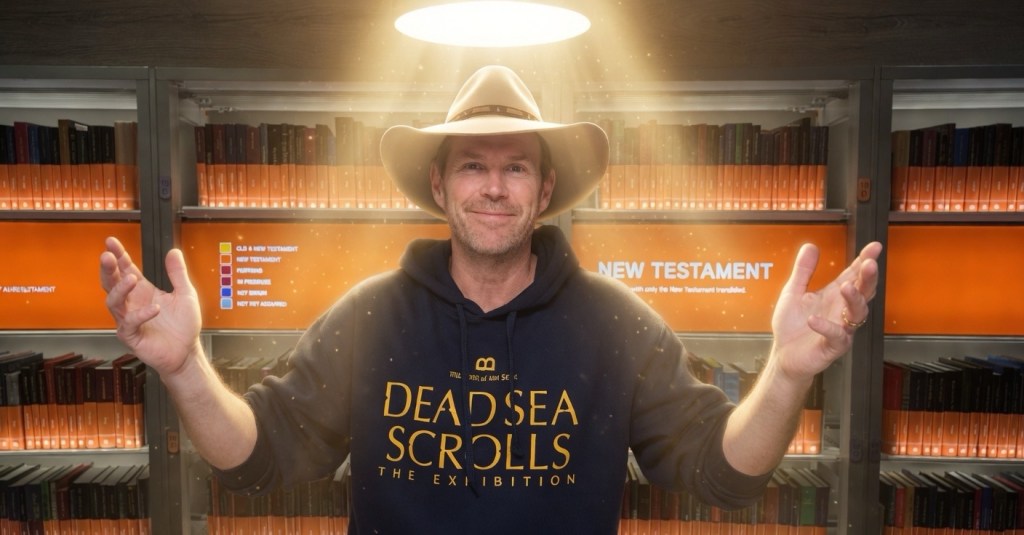
Rich Hoffman is an author, political consultant, and strategic advisor based in Cincinnati, Ohio, and the creator of The Politics of Heaven—a unique framework that connects biblical theology, ancient history, and modern power structures to explain how moral alignment and spiritual forces shape global events. Blending real-world political experience with deep research into archaeology, UFO phenomena, and suppressed historical narratives, Hoffman offers compelling commentary on topics ranging from ancient civilizations and the Dead Sea Scrolls to modern populist movements, paranormal continuity, and leadership strategy in chaotic environments. As the author of The Gunfighter’s Guide to Business and the forthcoming Politics of Heaven, he brings a grounded yet provocative voice to media discussions, supported by firsthand experiences and a cross-disciplinary approach that bridges science, history, and theology. For interviews, speaking engagements, or expert analysis, visit richhoffmanbooks.com or contact directly via phone at 513-307-5815 or email at rhoffman@richhoffmanbooks.com. If you’ve seen the movie, Disclosure Day and want to talk about it and the implications of Presidnet Trump’s UAP disclosures, let me know and we can bring some color to your coverage. https://richhoffmanbooks.com/media-inquiries-broadcast-topics-and-contact-info/?frame-nonce=ad51e7ecba I do have a firsthand UFO encounter to discuss.
Every once in a while, life hands you one of those small, perfect weeks with family — the kind that doesn’t need a grand destination or a complicated itinerary to feel meaningful. Recently, we packed up the RV and took a short family trip to The Wilds in central Ohio. It wasn’t far from home, and it wasn’t meant to be anything elaborate. But it turned into exactly the kind of experience that reminds you why family time matters and why stepping away from the noise is sometimes the best thing you can do.
My daughter put together a fantastic video from the trip, capturing the highlights in a way only she can. A few of my grandkids are featured in it, running around, laughing, exploring, and just being kids. Watching them in that setting—surrounded by open sky, quiet water, and the wide, rolling landscape—reminded me how grounding these moments can be. We spend so much of our lives dealing with big issues, heavy conversations, and responsibilities that stack up day after day. But weeks like this show the other side of life, the part that keeps you centered.
If you’ve followed my writing for any length of time, you know I spend a lot of time talking about sovereignty, community, history, politics, and the deeper questions that shape our world. Those topics matter, and they deserve the attention we give them. But it’s just as important to share the lighter moments—the real life that happens between all the big ideas. This trip was a perfect example of that balance. It wasn’t a grand expedition; it was simply a family outing, close to home, filled with the kind of memories that last longer than most of the headlines we chase. As I have said, I have spent most of 2026 on the road like this. Sometimes it’s just my wife and I. Sometimes, like this, it’s family, some of our family. Sometimes it’s all my family. I like RV travel because it lets me take my office with me. I write books, I do consulting, and I can do all that work from anywhere in the world with a TEAMS call. I never know where I’m going to be, so that’s why I do all the videos these days from the kitchen in my RV. It has good power and a comfortable, studio-like setting. Sometimes the internet isn’t great at our campgrounds, but that can be solved with Starlink, which I’ll likely do next year.
The World of Everywhere and Anything
RV camping has a way of slowing everything down. There’s something about being on the road, even for a short distance, that shifts your mindset. You’re not rushing. You’re not checking your phone every five minutes. You’re not thinking about the next meeting or the next project. You’re just present. The video my daughter made captures that feeling beautifully — the simplicity, the quiet, the laughter, the sense of being together without distraction. It’s a glimpse into how we travel, unwind, and stay connected as a family.
The Wilds itself is a unique place. Wide open spaces, wildlife roaming in the distance, and a sense of calm that settles in as soon as you arrive. It’s the kind of environment that encourages reflection without forcing it. You breathe a little deeper. You listen a little more. You notice things you might overlook in the rush of everyday life. And when your kids and grandkids surround you, those moments become even more meaningful.
It was a short trip, but it was packed with fun and full of the kind of small joys that make life feel full. These are the moments that remind us that life isn’t just about the big battles or the big ideas — it’s also about the quiet weekends, the shared meals, the kids running around, and the chance to breathe for a minute. It’s about remembering that the world is bigger than our worries and that the people closest to us are the ones who make the journey worthwhile.
So I’m sharing this little slice of our life not because it’s dramatic or extraordinary, but because it’s real. It’s honest. It’s the kind of thing we all need more of. And I think you’ll enjoy seeing that side of our world — the family side, the simple side, the part that keeps everything else in perspective.
Rich Hoffman is an author, political consultant, and strategic advisor based in Cincinnati, Ohio, and the creator of The Politics of Heaven—a unique framework that connects biblical theology, ancient history, and modern power structures to explain how moral alignment and spiritual forces shape global events. Blending real-world political experience with deep research into archaeology, UFO phenomena, and suppressed historical narratives, Hoffman offers compelling commentary on topics ranging from ancient civilizations and the Dead Sea Scrolls to modern populist movements, paranormal continuity, and leadership strategy in chaotic environments. As the author of The Gunfighter’s Guide to Business and the forthcoming Politics of Heaven, he brings a grounded yet provocative voice to media discussions, supported by firsthand experiences and a cross-disciplinary approach that bridges science, history, and theology. For interviews, speaking engagements, or expert analysis, visit richhoffmanbooks.com or contact directly via phone at 513-307-5815 or email at rhoffman@richhoffmanbooks.com. If you’ve seen the movie, Disclosure Day and want to talk about it and the implications of Presidnet Trump’s UAP disclosures, let me know and we can bring some color to your coverage. https://richhoffmanbooks.com/media-inquiries-broadcast-topics-and-contact-info/?frame-nonce=ad51e7ecba I do have a firsthand UFO encounter to discuss.
Pip: The Overmanwarrior has a talent for asking the question that makes a comfortable consensus squirm — and this time the question is about who was actually first.
Mara: Rich Hoffman digs into the Cherokee’s own oral tradition about a people who came before them in the southern Appalachians, and follows that thread into archaeology, rock art, and what the word “indigenous” is actually doing when we deploy it politically.
Pip: Let’s start with the moon-eyed people and the timeline they complicate.
The Moon-Eyed People and the Stolen-Land Clock
Mara: The core tension here is about where we freeze the historical frame — and who benefits when we freeze it at 1492 rather than looking at what the Cherokee themselves say about the mountains before they arrived.
Pip: The post sets it up directly: “when the Cherokee first came into the country they now inhabit, they found it possessed by certain moon-eyed people who could not see in the daytime, and they expelled them.” That is Benjamin Smith Barton in 1797, reporting what he was told by someone connected to the Cherokee.
Mara: What that means in practice is that the Cherokee, by their own account, displaced a prior people — which means the word “indigenous,” applied to the Cherokee in the Smokies, is already doing selective work. Someone else held the ridge first.
Pip: The moon-eyed people as described are small, pale, often bearded, light-sensitive — cave-dwellers who came out at night. Fort Mountain in north Georgia still has a wandering stone wall nobody has definitively attributed, and the park marker names them as possible builders. The Lost Sea in Craighead Caverns, the largest underground lake in the country, has Cherokee artifacts and a Pleistocene jaguar in the same system — a place that was a world before it became a tourist dock.
Mara: The post is careful here. The highly specific portrait — pale, bearded, giant light-sensitive eyes, full-moon battle — is thickest in late-eighteenth and nineteenth-century print, written by Euro-American men. Living Cherokee tradition also has the Yunwi Tsunsdi, the Little People of the rocks and caves, and some cultural workers say the pale-bearded version is not central to tribal history. The honest framing the post offers is that the Cherokee world contains stories of earlier people in the mountains, and the 1797 English sentence is one channel — not a DNA report.
Pip: Right, and the post extends the geography — the Cherokee County Historical Museum in Murphy, North Carolina, has a flat-faced stone figure with oversized crescent eyes that visitors identify with the moon-eyed people, and Three Rivers in New Mexico has more than twenty thousand Jornada Mogollon petroglyphs, many of them goggle-eyed masks. The post does not claim those are portraits of Appalachian cave-dwellers; it refuses to use distance as a veto on the question.
Mara: And the deeper archaeology reinforces the problem with a fixed 1492 clock. The Windover people of Florida buried their dead seven to eight thousand years ago — brain tissue and fiber still readable. The Old Copper Complex around Lake Superior was working native copper as early as the ninth millennium before the present.
Pip: So the political use of “indigenous” to mean the nations of 1500 is, as the post puts it, not doing archaeology — it is choosing a photograph.
Mara: The post is equally direct about the Trail of Tears: it was terrible, the removal was real, the Cherokee have a right to that grief. The argument is not that the later wrong didn’t happen. It is that one removal is allowed to organize a nation’s shame while the earlier one is treated as a campfire story too thin to count — and that asymmetry tracks usefulness, not evidence quality.
Pip: A question that has been sitting in the back of the room, it turns out, while the drums were going.
Mara: The closing test the post applies is worth stating plainly: if “indigenous” means first on the ground, the Cherokee fail their own story in the Smokies. If it means a 1492 diplomatic stamp, it is not deep history. If it means a moral title against the United States, it is a legal brief, not anthropology — and briefs pick their plaintiffs. They do not fund caves.
Pip: The moon-eyed question does not close when you leave the Smokies — it just gets quieter, which is a different thing.
Mara: Who was standing on any ridge before the people we memorialized is a question the dirt keeps answering whether the grant office is listening or not.
Rich Hoffman is an author, political consultant, and strategic advisor based in Cincinnati, Ohio, and the creator of The Politics of Heaven—a unique framework that connects biblical theology, ancient history, and modern power structures to explain how moral alignment and spiritual forces shape global events. Blending real-world political experience with deep research into archaeology, UFO phenomena, and suppressed historical narratives, Hoffman offers compelling commentary on topics ranging from ancient civilizations and the Dead Sea Scrolls to modern populist movements, paranormal continuity, and leadership strategy in chaotic environments. As the author of The Gunfighter’s Guide to Business and the forthcoming Politics of Heaven, he brings a grounded yet provocative voice to media discussions, supported by firsthand experiences and a cross-disciplinary approach that bridges science, history, and theology. For interviews, speaking engagements, or expert analysis, visit richhoffmanbooks.com or contact directly via phone at 513-307-5815 or email at rhoffman@richhoffmanbooks.com. If you’ve seen the movie, Disclosure Day and want to talk about it and the implications of Presidnet Trump’s UAP disclosures, let me know and we can bring some color to your coverage. https://richhoffmanbooks.com/media-inquiries-broadcast-topics-and-contact-info/?frame-nonce=ad51e7ecba I do have a firsthand UFO encounter to discuss.
I have watched this movie before. In 2015 and 2016, and again in 2024, the same class of people tried to tell America that Donald Trump’s wealth was a character defect. They said a rich man could not be trusted, that success itself was the indictment, that gold, planes, and golf were proof he was “not like you.” Voters put him in the White House twice anyway, because they understood something the professional scolds never will: independence is an asset. A man who does not need the job is harder to own. That is the lesson Ohio Democrats and a handful of leftover Republican wreckers are now trying to unlearn with Vivek Ramaswamy, and it is why Amy Acton spent Labor Day weekend screaming that you cannot buy Ohio.
She needed a chant. What she got was a gaffe.
The Speech That Sounded Like a Person Running Out of Road
Watch the clip. Acton is at a union picnic with Pete Buttigieg in tow, doing the ritual of the lockdown years: I am a doctor, not a politician, becoming one right in front of your eyes. Then she starts barking that Vivek cannot buy the state, cannot buy Ohio, cannot buy us, cannot buy us, cannot buy us in Ohio, that is the end of this. It is the sort of thing a campaign writes on a whiteboard when the internals look ugly and the only remaining argument is envy. The crowd does not catch fire. She looks like she is trying to start a wave at a funeral.
This is the same Amy Acton Ohio already knows. She ran public health under Mike DeWine when the state was locked down, businesses were smashed, kids were sent home, and “follow the science” became a political religion. She collected awards for it. A lot of Ohioans collected unemployment, missed funerals, and watched their Main Streets die. You can call that public service if you like. I call it the record she has to run on, and it is why the “I’m just like you” routine lands like a lead pipe. She is not just like you. She is the woman who told you to stay home while the people who write the rules kept their salaries.
The wealth attack is even thinner. Vivek flew to watch tennis. He likes tennis. He used to be a ranked junior. He has a court. He went to the U.S. Open and he has been to Paris. Wealthy people do that. Trump never ran from Mar-a-Lago or the golf course; he wore the gold clip and the silk tie and said, yes, I did well, and if you vote for me I will try to make it so you can do well too. That is a producer’s message. Acton’s message is the opposite: he has money, therefore he is illegitimate, therefore hand the keys to the people who want to tax the successful and redistribute the proceeds to the discontented. That is not a governing philosophy. That is a ransom note.
Why Attacking Wealth Is a Loser’s Tell
I have been thinking lately about the Apostle Paul. He was effective in part because he had standing and independence. He was not a ward of the movement. He could travel, argue, and endure because he was not begging the crowd for his next meal. Politics is not the church, but the principle is the same. A candidate who has already won in the private economy does not need Columbus the way a career public-health administrator needs Columbus. Vivek does not need a government job. That is supposed to be a feature. The people yelling “you can’t buy Ohio” are announcing that they cannot raise comparable money and cannot compete on growth, so they will compete on resentment.
David Pepper and the rest of the chorus have been working this line for months: billionaire, private jet, not one of us. Fine. Then explain why Trump’s jets and clubs did not stop two national victories, and why Ohioans who want plants, capital, and jobs might prefer a man who has already built companies to a woman whose signature achievement was closing the state. You can dislike Vivek’s style. You can argue policy. What you cannot do, with a straight face, is pretend that enjoying a tennis match is a civic crime while the alternative is more of the administrative state that already had its turn.
The other half of this farce is intra-Republican sabotage. After a primary, Democrats lock arms around whoever they nominated, even when she sounds like a chalkboard dragged down a stairwell. A slice of the right still wants to pick the scab. Nick Fuentes types, leftover primary rivals, the professional “I told you so” circuit—anyone who would rather be right about a Republican’s flaws than win the state—keep feeding the same clip. They did it to Trump in 2016 and 2024. He won anyway because voters vote their interest when the noise dies down. A good economy and job creators in your state beat a sermon about how the other guy’s plane is too nice.
Then Came the Fair, and the Overnight Conversion of a Shove Into an Assassination Plot
The timing is the tell. After the Labor Day chant made her look unhinged, the campaign needed a new story. Sunday at the Canfield Fair, a 38-year-old local named Patrick Havas pushed through a tent crowd toward Acton with a phone up, as if he were recording or trying to get close enough to be seen. He knocked over older people. Security took him down. After the fact, deputies found two pistols and a Taser-style device on him. He did not draw the guns. He did not fire. He did not brandish. Ohio is a constitutional-carry state. Carrying is not the same thing as attempting murder. The charges reported were disorderly conduct and misdemeanor assault for the people he knocked down. Acton was unhurt. The people who fell were assessed and, according to the sheriff, did not seek further treatment.
That is a bad scene at a fair. It is not a martyrdom. Campaign statements still said an “armed individual lunged” and injured multiple people. National copy followed the verb. By Saturday night into Sunday the lead was written as if Ohio had just watched a political assassination attempt. If there were clean video of a man trying to kill her, it would have been on every screen before supper. What we got instead was language inflation: lunge, attack, armed, threat—while the actual police story is a large man barreling for a better look or a confrontation, knocking seniors like bowling pins, and getting piled on by Highway Patrol.
This attack story is just another Democrat Jussie Smollett story, trying to gain sympathy and voter support through fake news talking points. This is the fullness of the Acton operation: when the speech is a disaster, change the subject to danger. When you cannot raise on growth, raise on fear. When you cannot debate or raise money, accuse the other side of buying the state. Look how many sucker politicians jumped on the bandwagon without knowing all the facts, which again came out looking like Amy Acton is a loser candidate.
What Ohio Actually Chooses When the Cameras Leave
Acton will keep the unions, the people who want the next transfer payment, and the media that still thinks 2020 was her finest hour. She will keep Pepper on the ticket as proof that the old Democratic machinery is still in the room. She will keep calling Vivek rich, which he is, and hoping Ohio has forgotten that successful people are allowed to like tennis, football Saturdays, and a life that is not a permanent campaign stop.
I want a state that recruits producers instead of lecturing them. If a man with a billion dollars in assets spends a few thousand to fly to a match, that is not the scandal. The scandal is a political class that treats his success as the crime and her lockdown résumé as the credential. Trump never apologized for winning. Vivek should not apologize for a court, a jet, or a seat at the Open. The people who need him to grovel are the same people who needed Trump to grovel. They lost that argument twice.
Vote like you want the factories and the payrolls. When things got tough for Amy Acton in 2026 she turned to fake news. Which only made everything worse. She is the lockdown lady and is horrible in every way a politician can be, which we all had a front-row seat to in 2020 when she destroyed Ohio’s economy and told everyone they could be superheroes if only they wore a mask in public. That is the person running for governor in Ohio as a Democrat. A disaster on a good day. On a bad day, she is a fake news agent of destruction and drunkenness.
Notes
1. Acton’s Labor Day-weekend remarks with Buttigieg at the Cincinnati AFL-CIO picnic, including the “you cannot buy this state / you can’t buy us” repetition, circulated widely on September 5–6, 2026. See WLWT coverage of the Hamilton picnic and contemporaneous rally video.
2. Acton served as Ohio Department of Health director under Gov. Mike DeWine beginning in 2019 and became the public face of the state’s COVID restrictions.
3. Criticism of Ramaswamy’s travel and tennis included Acton’s own Labor Day-weekend post attacking a U.S. Open appearance and earlier opinion pieces on a July 4 Paris trip.
4. Ramaswamy’s tennis background (junior player, Cincinnati Open ball boy, regular Open attendee) is part of his public biography and prior campaign videos.
5. Canfield Fair incident, September 6, 2026: Patrick Havas, 38, of Canfield, pushed through the Mahoning County Democratic Party tent, knocked down older attendees, was detained by Ohio State Highway Patrol executive protection; weapons recovered after detention; no brandishing reported; charges reported as disorderly conduct and two counts of misdemeanor assault. Acton uninjured.
6. Constitutional carry in Ohio means possession of a concealed firearm, without more, is not itself an assassination attempt.
7. Public polling through late summer 2026 generally showed a toss-up to slight-Ramaswamy edge depending on the house, which is consistent with a campaign hunting for a reset narrative.
8. Intra-GOP sniping after contested primaries is a recurring feature of the Trump era; Democrats have typically consolidated faster around flawed nominees.
Bibliography
Acton for Governor. Campaign statements and Labor Day / Canfield Fair remarks, September 2026.
Ballotpedia. “Amy Acton.” Candidate biography and office history.
CNN. “Armed man arrested after pushing through crowd toward Ohio Democratic gubernatorial nominee.” September 6, 2026.
Columbus Dispatch. “Armed man arrested after lunging at Amy Acton at Canfield Fair.” September 6, 2026.
Cincinnati Enquirer. Nick Anderson, “Ramaswamy’s Paris trip an example of his disconnect with Ohioans.” July 8, 2026.
HuffPost. “Vivek Ramaswamy Slammed For Leaving Ohio And Attending The U.S. Open.” September 6, 2026.
Mahoning County Sheriff’s Office / Ohio State Highway Patrol statements on the Canfield Fair detention of Patrick Havas, September 6, 2026.
New York Times. “Armed Man Arrested After Charging Toward Democratic Candidate for Ohio Governor.” September 6, 2026.
The Nerd Stash. “‘You Can’t Buy Us’: Ohio Dem Amy Acton Sparks Backlash After Awkward Rally Chant Aimed at Vivek Ramaswamy.” September 6, 2026.
Washington Post. “Armed individual ‘lunged’ at Democrat nominee for Ohio governor, campaign says.” September 6, 2026.
Wikipedia. “2026 Ohio gubernatorial election.” Polling averages and race ratings as of early September 2026.
WLWT. “Pete Buttigieg campaigns for Amy Acton, Greg Landsman at Cincinnati AFL-CIO picnic.” September 6, 2026.
Rich Hoffman is an author, political consultant, and strategic advisor based in Cincinnati, Ohio, and the creator of The Politics of Heaven—a unique framework that connects biblical theology, ancient history, and modern power structures to explain how moral alignment and spiritual forces shape global events. Blending real-world political experience with deep research into archaeology, UFO phenomena, and suppressed historical narratives, Hoffman offers compelling commentary on topics ranging from ancient civilizations and the Dead Sea Scrolls to modern populist movements, paranormal continuity, and leadership strategy in chaotic environments. As the author of The Gunfighter’s Guide to Business and the forthcoming Politics of Heaven, he brings a grounded yet provocative voice to media discussions, supported by firsthand experiences and a cross-disciplinary approach that bridges science, history, and theology. For interviews, speaking engagements, or expert analysis, visit richhoffmanbooks.com or contact directly via phone at 513-307-5815 or email at rhoffman@richhoffmanbooks.com. If you’ve seen the movie, Disclosure Day and want to talk about it and the implications of Presidnet Trump’s UAP disclosures, let me know and we can bring some color to your coverage. https://richhoffmanbooks.com/media-inquiries-broadcast-topics-and-contact-info/?frame-nonce=ad51e7ecba I do have a firsthand UFO encounter to discuss.
Pip: The Overmanwarrior is a show that refuses the easy road — no local gossip, no algorithm-friendly takes, just a man and a copper pit older than the pyramids’ reputation, asking whether the whole story of this continent needs to be rewritten.
Mara: Rich Hoffman’s recent work covers a lot of ground — Trump’s renaming of Lake Ontario, the deep prehistory of the Great Lakes, the Copper Scroll, and what the word “indigenous” is actually doing in a political argument. Let’s start with the lake, the copper, and why the naming fight is really about something much older.
Lake America and the Copper That Built the Ancient World
Pip: The segment opens with a provocation: Trump signed an executive order on August 27th renaming Lake Ontario as Lake America, and the argument here is that the outrage that followed is actually the point — that names are how institutions teach a public what to value and what to be ashamed of.
Mara: The post frames the whole project this way: “I am trying to encourage people to come down the rabbit hole and take whatever treasure they can carry back out.” That’s the method — not a seminar, not a grievance catalog, but a sustained question about what the naming fight is actually downstream of.
Pip: And what it’s downstream of, the argument goes, is an institutional habit of treating the founding of the United States as the continent’s original sin — where every pre-Columbian name becomes untouchable and every American assertion becomes an act of erasure.
Mara: Canada’s prime minister said the lake is called Ontario “today and forever.” New York’s governor said the state wouldn’t use the new name. The legal reality is narrow — Washington can rename what Washington prints, it cannot rename what Toronto says — but that gap is exactly why a name becomes a weapon.
Pip: The copper is where this gets genuinely interesting. The Old Copper Complex of the Upper Great Lakes — Isle Royale, the Keweenaw Peninsula — shows prehistoric pits worked by hunter-gatherers dating into the ninth millennium before the present. More than a thousand pits on Isle Royale alone. That is not a weekend hobby.
Mara: The post is careful here. Two things it calls firm: Archaic people of the Upper Great Lakes worked native copper very early, with some dates rivaling the oldest copper work in the Old World, and the metal is so pure it can be hammered without smelting. The leap — walking that copper across the Atlantic to Solomon’s Temple — is flagged as a leap that still needs isotope evidence.
Pip: Then there’s the Windover site in Florida — a pond cemetery near Titusville where a backhoe in 1982 pulled up human bone dating seven to eight thousand years before the present. Brain tissue. Woven fiber. A readable last meal. A civilization of burial custom standing on this peninsula while the Near East was still becoming Egypt.
Mara: The Moon-eyed people tradition rounds out the prehistory argument. Cherokee oral memory, as recorded by early settlers, described finding and displacing a pale, light-shy people already living in the southern Appalachians. The point isn’t to convict a ghost — it’s that if the Cherokee displaced someone, they were the latest people of that ridge, not the first.
Pip: Which is exactly the human story from the Levant to the Andes — and exactly what the political use of “indigenous” tries to freeze out of the frame. The Copper Scroll enters as a related question: not where did the Temple treasure go, but where did the metal economy that made such a list thinkable come from in the first place.
Mara: The post asks whether the ancient Near East’s enormous copper hunger has been fully inventoried. Timna and the Arabah are on the map; recent radiocarbon work has restored a tenth-century industrial peak there. Lake Superior is the name the textbooks treat as a category error. The argument is that asking the question is scholarship — treating the crossing as proven is not.
Pip: So “Lake America” is doing a lot of work for four syllables. It’s not cartography — it’s a forced discussion about whether the United States is allowed to name its own waters without first clearing the claim through a political story that starts in 1492 and ignores every copper pit that came before.
Mara: The post puts it plainly: the copper miners of Superior, the burial people of Windover, the builders on the dry bay floor — those are indigenous facts. The political slogan that uses “indigenous” to unmake the United States is, the argument goes, not a fact. It is a maneuver.
Pip: And if the question of who names a lake connects to who gets to name the country itself, then the next question is what other forces — beyond the political — might have an interest in keeping that shame in place.
Mara: The thread running through all of this is the same question applied at different scales — are we getting what we want from the story we’ve been handed, whether that story is about a lake, a copper pit, or a national identity?
Pip: Follow the copper. Follow the names. That’s the assignment — and something tells me the rabbit hole goes considerably deeper than the bottom of Lake Superior.
Rich Hoffman is an author, political consultant, and strategic advisor based in Cincinnati, Ohio, and the creator of The Politics of Heaven—a unique framework that connects biblical theology, ancient history, and modern power structures to explain how moral alignment and spiritual forces shape global events. Blending real-world political experience with deep research into archaeology, UFO phenomena, and suppressed historical narratives, Hoffman offers compelling commentary on topics ranging from ancient civilizations and the Dead Sea Scrolls to modern populist movements, paranormal continuity, and leadership strategy in chaotic environments. As the author of The Gunfighter’s Guide to Business and the forthcoming Politics of Heaven, he brings a grounded yet provocative voice to media discussions, supported by firsthand experiences and a cross-disciplinary approach that bridges science, history, and theology. For interviews, speaking engagements, or expert analysis, visit richhoffmanbooks.com or contact directly via phone at 513-307-5815 or email at rhoffman@richhoffmanbooks.com. If you’ve seen the movie, Disclosure Day and want to talk about it and the implications of Presidnet Trump’s UAP disclosures, let me know and we can bring some color to your coverage. https://richhoffmanbooks.com/media-inquiries-broadcast-topics-and-contact-info/?frame-nonce=ad51e7ecba I do have a firsthand UFO encounter to discuss.
Pip: The Overmanwarrior has a long memory and a short tolerance for school boards that treat a paid-off debt like a personal tragedy.
Mara: Rich Hoffman has one subject this episode: Lakota Local School District is back on the November ballot, and the case against it runs from enrollment projections to property-tax philosophy to who actually pays when apartments fill up.
Pip: Let’s start with the ballot itself and what the district is calling a non-increase.
No New Taxes, No Relief: Lakota Is Back on the Ballot
Mara: The core tension here is definitional — the district says this bond is not a tax increase, and the post argues that framing erases something real: the relief homeowners were about to receive.
Pip: The setup is precise. The Lakota Board voted on June 9, 2026, to place a bond before voters, and here is the sentence that does the most work: “You have been making a mortgage payment to the school district. The mortgage is almost paid off. Instead of celebrating the payoff, they want you to sign a new note for thirty-seven more years and call the signing a favor.”
Mara: The upshot is that a $223 million bond at 2.20 mills, timed to replace an expiring bond, keeps the bill identical — which means the cut you were owed never arrives. Collections begin in 2028, first due in 2029, right as the old debt dies.
Pip: And the $77-per-$100,000 headline is doing a lot of costume work. Liberty Township median sales run in the low-to-mid-500s. At $530,000, that’s roughly $408 a year — closer to a television than a rounding error, to borrow the post’s own framing.
Mara: The post also goes after the enrollment story the campaign depends on. District slides from September 2025 projected 19,074 students by 2033. But FutureThink, the consultants the district itself hired, delivered a March 2026 study showing 2025-26 enrollment at 16,913 and a ten-year path drifting toward the mid-sixteen thousands — not racing toward nineteen thousand.
Pip: So the spike that justifies a thirty-seven-year note may not be arriving on schedule.
Mara: There’s also the 2025 context. Last November’s package failed 60.81 percent to 39.19 percent — a $506.4 million bond plus a permanent-improvement levy. The post calls Phase One the same philosophy in a smaller first bite, and notes that Lakota’s general-fund operation already runs near $226 million annually for one suburban district.
Pip: The apartment argument ties it together: renters use the schools, one landlord sits on the tax duplicate, and the longtime homeowner gets the invoice. The post credits Liberty Township trustee Todd Minniear for understanding that math — his vote against adding apartments near Liberty Center is why Ford’s Garage exists instead of another stack of balconies.
Mara: The recommendation is direct: vote no on November 3. A failed bond means the old millage still expires, which is a tax cut in 2029. The post frames that outcome not as deprivation but as the reward the community already earned.
Pip: Which raises the question of what comes next — because the post is clear that a no vote is not the end of the conversation, just the beginning of a harder one about living inside $226 million.
Mara: The through-line is straightforward: a community that has been paying for decades is being asked to keep paying, and the argument for doing so depends on projections that the district’s own consultants don’t fully support.
Pip: November 3 is the answer, and then — if history holds — there will be another question in 2027. The ballot is apparently a perennial.
Rich Hoffman is an author, political consultant, and strategic advisor based in Cincinnati, Ohio, and the creator of The Politics of Heaven—a unique framework that connects biblical theology, ancient history, and modern power structures to explain how moral alignment and spiritual forces shape global events. Blending real-world political experience with deep research into archaeology, UFO phenomena, and suppressed historical narratives, Hoffman offers compelling commentary on topics ranging from ancient civilizations and the Dead Sea Scrolls to modern populist movements, paranormal continuity, and leadership strategy in chaotic environments. As the author of The Gunfighter’s Guide to Business and the forthcoming Politics of Heaven, he brings a grounded yet provocative voice to media discussions, supported by firsthand experiences and a cross-disciplinary approach that bridges science, history, and theology. For interviews, speaking engagements, or expert analysis, visit richhoffmanbooks.com or contact directly via phone at 513-307-5815 or email at rhoffman@richhoffmanbooks.com. If you’ve seen the movie, Disclosure Day and want to talk about it and the implications of Presidnet Trump’s UAP disclosures, let me know and we can bring some color to your coverage. https://richhoffmanbooks.com/media-inquiries-broadcast-topics-and-contact-info/?frame-nonce=ad51e7ecba I do have a firsthand UFO encounter to discuss.
Pip: The Overmanwarrior has a knack for finding the book that explains the headlines before the headlines know what hit them.
Mara: Rich Hoffman is doing exactly that this week — working through Ayn Rand’s Return of the Primitive, a collection that ties progressive education, environmentalism, identity politics, and the philosophy of money into one sustained argument about where Western civilization is headed.
Pip: So: a 1971 book about the 1960s that apparently describes last Tuesday.
Mara: That’s the claim, and the post makes a serious case for it. Let’s start with what Rand actually argued and why the diagnosis keeps resurfacing.
Ayn Rand’s Return of the Primitive: Reason Under Siege
Mara: The central question the post puts on the table is whether the cultural movements that call themselves progressive are actually a retreat — a deliberate dismantling of the rational, industrial civilization that allows human beings to survive.
Pip: The post sets that up with a pointed line from Rand’s title essay, describing what she imagined as the logical endpoint: “There is no gradual, restrained retreat from technology. There is only the continued advance of the mind or the descent into helplessness and death.”
Mara: So the upshot is that Rand treats technology not as a convenience but as the concrete product of conceptual thought — remove it and you haven’t simplified life, you’ve ended it. That’s the stakes she’s arguing from.
Pip: And the post traces that argument across several fronts. The environmental movement of her day, she contended, rejected the premise that human life and human comfort outrank pristine wilderness — which she read as a rejection of the human mind itself.
Mara: The post quotes her framing directly: activists simultaneously attacked scientific progress as violence against the planet while advocating what she called “universal slavery for men under expanding state control.” The moral inversion, as the post puts it, is that creators get cast as aggressors.
Pip: Then there’s the education angle, which is where it gets uncomfortable for anyone who sat through a lot of group projects.
Mara: The essay called “The Comprachicos” draws the analogy to seventeenth-century criminals who physically deformed children for profit. Rand’s claim is that progressive education — shaped by Dewey and pragmatism — performs the same operation on the mind by replacing conceptual training with social adjustment and group conformity.
Pip: The post also covers the 1999 expanded edition, where Peter Schwartz extends the argument to multiculturalism and identity politics — ethnicity, race, and sex elevated as primary political categories, the individual dissolved into the group.
Mara: And “The Cashless Society” essay gets its own treatment. The post connects Rand’s argument there — that money is the barometer of a society’s virtue, and that when political pull replaces production, distribution reverts to force and favor — to contemporary corporate-political entanglement.
Pip: Montessori comes up as the affirmative alternative: independent, purposeful activity that builds the conceptual faculties rather than training children to defer to the pack.
Mara: The post is candid that the frame can be enlarged beyond Rand’s strict empiricism — it notes that questions raised by UAP disclosures and non-human intelligence involve dimensions she didn’t fully address, while still holding that her core political insight stands: the individual is the smallest and most important minority.
Pip: Which lands us squarely on the question of what a society looks like when it stops producing people who can think about first principles — and that’s a short walk to how power actually moves.
Mara: The through-line across all of this is a single claim: the conflict between the productive individual and the collectivist demand for regression is the defining contest of the era, and it has educational, philosophical, and economic roots.
Pip: Rand called it fifty years ago, the post argues. The outer forms have changed. The pattern hasn’t. Worth keeping an eye on what that pattern looks like next week.
Rich Hoffman is an author, political consultant, and strategic advisor based in Cincinnati, Ohio, and the creator of The Politics of Heaven—a unique framework that connects biblical theology, ancient history, and modern power structures to explain how moral alignment and spiritual forces shape global events. Blending real-world political experience with deep research into archaeology, UFO phenomena, and suppressed historical narratives, Hoffman offers compelling commentary on topics ranging from ancient civilizations and the Dead Sea Scrolls to modern populist movements, paranormal continuity, and leadership strategy in chaotic environments. As the author of The Gunfighter’s Guide to Business and the forthcoming Politics of Heaven, he brings a grounded yet provocative voice to media discussions, supported by firsthand experiences and a cross-disciplinary approach that bridges science, history, and theology. For interviews, speaking engagements, or expert analysis, visit richhoffmanbooks.com or contact directly via phone at 513-307-5815 or email at rhoffman@richhoffmanbooks.com. If you’ve seen the movie, Disclosure Day and want to talk about it and the implications of Presidnet Trump’s UAP disclosures, let me know and we can bring some color to your coverage. https://richhoffmanbooks.com/media-inquiries-broadcast-topics-and-contact-info/?frame-nonce=ad51e7ecba I do have a firsthand UFO encounter to discuss.
Pip: Welcome to The Overmanwarrior — where the Hawaiian shirt is a political statement and mediocrity is the real tyranny.
Mara: Rich Hoffman’s recent writing covers a lot of ground: what happens when exceptional people finally feel the weight of the systems they once worked inside, and what that means for a country choosing between builders and managers.
Pip: Let’s start with Musk, Russell Brand, and the argument that oppressive government is really just mediocrity with a budget.
Elon Musk, Russell Brand, and the Machinery of Mediocrity
Mara: The central question here is what actually changes a person’s politics — and the argument is that it’s not ideology, it’s exposure. When the system starts costing you something, you finally see it clearly.
Pip: The post puts it directly: “Once you have enough financial independence, or once the system starts targeting you directly, the incentives change. The same people who stayed quiet for decades while drawing a corporate or government check suddenly discover principles.”
Mara: That’s the arc traced across Musk, Brand, and even retired engineers from the Tea Party years — people who played it safe until the paycheck was gone or the machine turned on them. The courage arrives, but often only after the risk is lower.
Pip: Which is the uncomfortable part. It’s not conversion — it’s pattern recognition on a delay.
Mara: And the post is precise about what the pattern reveals. When Musk replies to Brand about an “oppressive government,” the argument is that he’s naming something he’s now felt firsthand — FAA paperwork slowing Starship, mediocre bureaucrats constraining exceptional engineering.
Pip: SpaceX is aiming at thirty-plus Starship launches a day by 2030. The regulatory state is not exactly keeping pace.
Mara: The deeper diagnosis is structural. Oppressive government isn’t abstract tyranny — it’s, as the post frames it, “the systematic empowerment of mediocre people who would never hold power in a pure merit system.” They don’t hire the exceptional because the exceptional make them feel small.
Pip: The corporate Judas cycle runs the same software: trade the exceptional for a steady check and a career ladder.
Mara: That contrast carries into Ohio, where the Ramaswamy-Acton race is framed as exactly this choice — a builder versus the candidate of lockdowns and managed outcomes, with polling showing a statistical tie as of this summer.
Pip: Trump wears the suit and talks about winning. Bannon dresses down so the crowd doesn’t feel threatened. The post argues we voted for the suit — for exceptionalism, not comfort.
Mara: And that’s the through-line: whether it’s Musk filing FAA paperwork, a radio talent cleaning up his social media for a corporate job, or Ohio voters choosing between data centers and empty cornfields, the same tension keeps surfacing.
Pip: The question of what a nation is willing to tolerate in exchange for feeling safe is not going away anytime soon.
Mara: The through-line across all of this is the cost of safety — what gets traded, and when people finally notice the price.
Pip: More of that reckoning ahead. We’ll be back when the next posts land.
Rich Hoffman is an author, political consultant, and strategic advisor based in Cincinnati, Ohio, and the creator of The Politics of Heaven—a unique framework that connects biblical theology, ancient history, and modern power structures to explain how moral alignment and spiritual forces shape global events. Blending real-world political experience with deep research into archaeology, UFO phenomena, and suppressed historical narratives, Hoffman offers compelling commentary on topics ranging from ancient civilizations and the Dead Sea Scrolls to modern populist movements, paranormal continuity, and leadership strategy in chaotic environments. As the author of The Gunfighter’s Guide to Business and the forthcoming Politics of Heaven, he brings a grounded yet provocative voice to media discussions, supported by firsthand experiences and a cross-disciplinary approach that bridges science, history, and theology. For interviews, speaking engagements, or expert analysis, visit richhoffmanbooks.com or contact directly via phone at 513-307-5815 or email at rhoffman@richhoffmanbooks.com. If you’ve seen the movie, Disclosure Day and want to talk about it and the implications of Presidnet Trump’s UAP disclosures, let me know and we can bring some color to your coverage. https://richhoffmanbooks.com/media-inquiries-broadcast-topics-and-contact-info/?frame-nonce=ad51e7ecba I do have a firsthand UFO encounter to discuss.
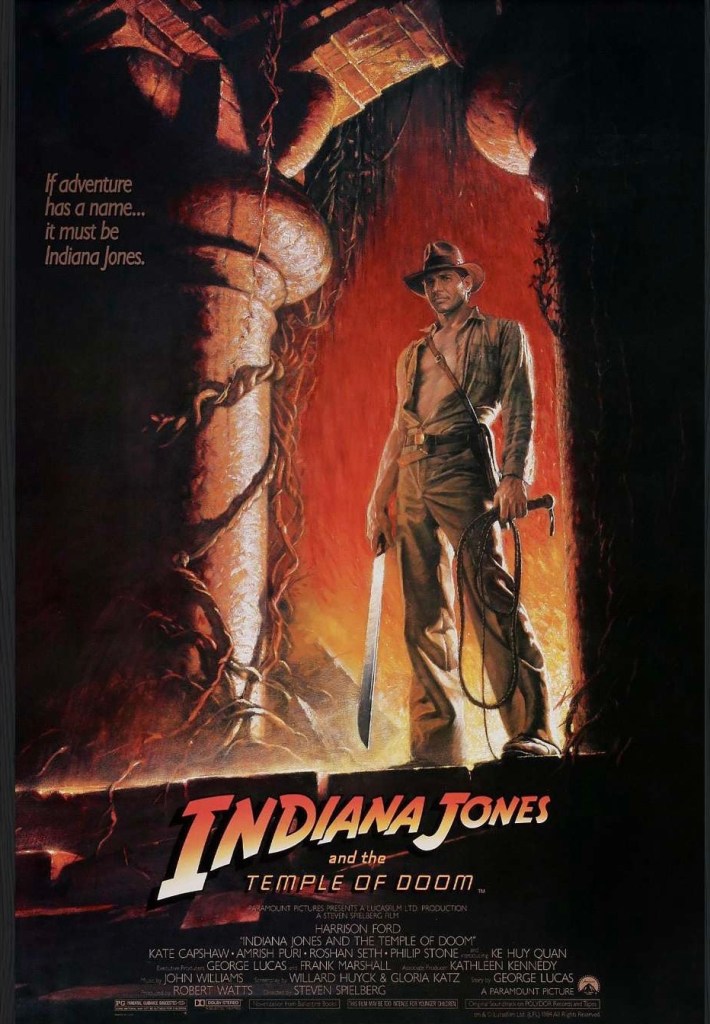
I can hear the groans already. “Oh, he’s talking about movies again.” But this one is a bit different and I share some things here that people have been asking about. I have a lot of new people in my life, and they are asking. So, I’m addressing their questions in bulk. People ask me all the time what my favorite movie is. I get the question often enough that I finally decided to answer it properly here. My favorite is Indiana Jones and the Temple of Doom. A lot of people are surprised by that. Many consider it the weakest of the original trilogy. I disagree. For me, it is the one that stuck with me the most, and the reasons go well beyond the surface thrills.
I grew up on adventure. My grandfather was old enough to have lived through the era of the great serials. I saw Zorro with the whip long before I ever saw Indiana Jones crack one. Saturday-morning serial energy was already in my blood. When Raiders of the Lost Ark came out, I thought it was wonderful—maybe the best pure adventure movie ever made. But Temple of Doom became personal.
Reading the Book Before the Movie in Hamilton, Ohio
When I was a kid, I used to go downtown to the shopping center in Hamilton, Ohio, with my mom and grandmother. On the bottom floor, there was a bookstore section. I went straight to the books every time. One day they got me the novelization of Indiana Jones and the Temple of Doom. I read it before I saw the movie. I read it the way I used to read the old adventure books—religiously, over and over. The character already lived in my head before the images did.
That early exposure mattered. George Lucas has always been steeped in mythology. The pursuit of the Grail, the knight who starts out chasing fortune and glory and ends up learning something harder—these patterns were in the water. I did not have the language for it at fourteen or fifteen, but I felt it.
The Night We Snuck Out in Morehead, Kentucky
The memory that sealed it for me happened the summer the movie was in theaters. I was fourteen or fifteen, part of a High Adventure Explorer Post. We were on a week-long trip heading toward whitewater rafting in West Virginia. We stopped to camp just outside Morehead, Kentucky. Hot summer night. The kind of heat that stays with you after dark.
We went into town for snacks, and I spotted the movie theater. Temple of Doom was playing. I grabbed a newspaper, checked the times, and saw the last show was at eleven. Back at camp, the plan was lights out early so we could get up for the next day’s adventure. Around eight or nine, everyone was settling in. Three of us waited, then slipped out.
We walked the two miles into town in the dark, hearts pounding, half-convinced we were going to get caught the whole way. We sat through the movie until about one in the morning. Then we walked the two miles back, still sweating, still listening for any sound that meant trouble. We snuck into our tents, drank some water from the canteen, ate a Slim Jim I had stashed, and tried to sleep. At seven, the camp woke up as if nothing had happened. Nobody said a word. We ate breakfast and headed out for the rafting and the rest of the week’s adventures. Later that summer I flew with my family to the Grand Canyon and all over California. The whole stretch felt like one long Indiana Jones sequence.
I have had many experiences since then. I am older now. I still cannot think of many moments that felt better than that night—walking back in the heat with the movie still running through my head, knowing we had gotten away with it, feeling completely alive. We had lived a small version of the thing we had just watched. Jump in. Trust yourself. Land on your feet.
Why Temple of Doom Hits Different
Raiders gives you the competent, almost invincible Indy. Temple of Doom puts him through the wringer. Poisoned, chased, plane crash, mountain landing, bugs, capture, the blood, the voodoo doll, the forced drinking, the near-sacrifice. They break him down further than in any of the other films. Then he comes out the other side, returns the stones, restores the village, and still walks away with the girl and the open road to the next adventure. “Fortune and glory” at the beginning. Something closer to responsibility and compassion by the end. He keeps the light touch the whole time. The movie never turns grim for its own sake. That balance is rare.
I raised my kids on it. I have raised grandkids on it. The soundtrack still gets played in the car. They know the cues. The film became a shared language in the family for the idea that you can take a beating and still come up swinging with a grin.
Mythology, Campbell, and Earned Freedom
Later I learned more about the deeper currents. Joseph Campbell’s work on the hero’s journey and the Grail legends shaped a generation of storytellers. George Lucas absorbed those patterns. The connection between the Indiana Jones films and older quest stories—Parzival, the wasteland, the knight who must learn before he can restore—is not forced. Temple of Doom functions as a modern version of the hero who starts selfish and ends up doing the right thing for people who cannot help themselves. The Last Crusade made the Grail explicit. Temple of Doom already had the emotional shape.
They also earned the right to make something this wild. After Raiders became a phenomenon, Lucas and Spielberg had the political capital in Hollywood to go darker, stranger, more unhinged—child slavery, Thuggee cult, heart-ripping, the whole fever-dream tone. A movie like that would have a much harder time getting made today. They used the freedom they had earned.
The Lesson That Stuck
For me, the core of it has always been simple. Indiana Jones trusts his ability to land on his feet no matter how bad the situation looks. Plane on fire. Poison. Traps. Brainwashing. Torture. He keeps moving. He keeps improvising. In the end, he is still the same man, only clearer. That attitude got into me early. Jump off the building if you have to. Figure out the landing on the way down. I have needed that more than once.
People who know me mostly through the political writing sometimes raise an eyebrow when I talk about movies. Movies are a shared language. Books are private. A film you both love gives you common ground in five minutes. When hundreds of new people start reading or listening and want to know a little more about the person behind the commentary, this is one of the cleaner ways to open the door. I do not normally spend this much time on personal stories. This one felt worth it.
Indiana Jones and the Temple of Doom is not the most polished film in the series. It is the one that feels most like actual life mixed with myth—messy, punishing, redemptive, and somehow still fun. I have carried its lessons through everything that came after that hot night in Morehead. Fortune and glory are great goals. Landing on your feet and doing the right thing when it counts is better.
Footnotes
1. The novelization of Indiana Jones and the Temple of Doom was written by James Kahn and published by Ballantine Books in 1984, timed with the film’s release.
2. George Lucas has repeatedly acknowledged the influence of Joseph Campbell’s The Hero with a Thousand Faces and related mythological studies on his storytelling, particularly visible in the Star Wars films and carrying over into the adventure structures of the Indiana Jones series. The two later became acquainted; Campbell viewed the original Star Wars trilogy at Skywalker Ranch.
3. Scholarly and critical readings have linked the Indiana Jones trilogy to Arthurian and Grail-quest patterns (including Chrétien de Troyes’ Perceval and Wolfram von Eschenbach’s Parzival), with Temple of Doom often discussed as a wasteland/otherworld episode and The Last Crusade making the Grail motif explicit.
4. Howard Kazanjian served as executive producer on Raiders of the Lost Ark and producer on Return of the Jedi, and held a key production role at Lucasfilm during the period.
5. Indiana Jones and the Temple of Doom (1984) was directed by Steven Spielberg from a story by George Lucas, screenplay by Willard Huyck and Gloria Katz. It is a prequel set in 1935.
Bibliography
Campbell, Joseph. The Hero with a Thousand Faces. Princeton: Princeton University Press, 1949 (and later editions).
Kahn, James. Indiana Jones and the Temple of Doom (novelization). New York: Ballantine Books, 1984.
Lucas, George, and various collaborators. Indiana Jones and the Temple of Doom. Directed by Steven Spielberg. Paramount Pictures, 1984.
Aronstein, Susan. Critical essays on Arthurian narrative patterns in the Indiana Jones trilogy (various academic publications).
Additional reading: Bill Moyers’ interviews with Joseph Campbell (The Power of Myth); production histories of the Indiana Jones films; Wolfram von Eschenbach’s Parzival for the classic Grail-knight arc that echoes in the franchise’s deeper structure.
Rich Hoffman is an author, political consultant, and strategic advisor based in Cincinnati, Ohio, and the creator of The Politics of Heaven—a unique framework that connects biblical theology, ancient history, and modern power structures to explain how moral alignment and spiritual forces shape global events. Blending real-world political experience with deep research into archaeology, UFO phenomena, and suppressed historical narratives, Hoffman offers compelling commentary on topics ranging from ancient civilizations and the Dead Sea Scrolls to modern populist movements, paranormal continuity, and leadership strategy in chaotic environments. As the author of The Gunfighter’s Guide to Business and the forthcoming Politics of Heaven, he brings a grounded yet provocative voice to media discussions, supported by firsthand experiences and a cross-disciplinary approach that bridges science, history, and theology. For interviews, speaking engagements, or expert analysis, visit richhoffmanbooks.com or contact directly via phone at 513-307-5815 or email at rhoffman@richhoffmanbooks.com. If you’ve seen the movie, Disclosure Day and want to talk about it and the implications of Presidnet Trump’s UAP disclosures, let me know and we can bring some color to your coverage. https://richhoffmanbooks.com/media-inquiries-broadcast-topics-and-contact-info/?frame-nonce=ad51e7ecba I do have a firsthand UFO encounter to discuss.
I’ve taken a lot of heat over the years for how I approach operations management. People watch what I’ve done with large, complicated organizations and then announce that I’m somehow making it look too easy, or that the method can’t scale, or that anyone with enough capital could copy it. Fine. Let me answer all of them at once, because the emails on this subject have been piling up and a single clear response is better than another round of copy-and-paste.
Jungle Jim’s International Market sits out on Route 4 in Fairfield, right here in Butler County. I grew up watching the place. My grandfather worked across the way at the old Fisher Body plant. The roadside produce stand that became the store was there in the early seventies, bouncing from vacant lot to vacant lot until Jim Bonaminio finally planted roots in 1975 with a 4,200-square-foot building. Today the flagship is somewhere north of 200,000 square feet—some measurements put it closer to 280,000 or even 300,000 depending on how you count the latest expansions—and there is a second location in Eastgate. It is one of the largest independent grocery operations in the country and easily the most distinctive.
People from every corner of the planet who land in the Cincinnati area homesick walk through those doors and find something that tastes like home. Almost two thousand wines. Live seafood tanks. Sections organized by country. Animatronics, a monorail, giant animals, a cooking school, a podcast studio. The bathrooms open into rooms that feel like Narnia. It is a theme park of food, and it runs on thin margins in one of the most competitive, low-margin industries on earth. Yet it keeps growing while the corporate chains in their shiny shoes and pressed shirts keep trying—and failing—to reverse-engineer the magic.
I have watched Jim walk the floor in costume, looking like Merlin or some jungle explorer, and the first thing you notice is that he is not trying to do every job himself. He hires people who actually care about the product, gives them real authority over their departments, and then gets out of the way. Department managers run their sections like independent businesses—buying, merchandising, hiring, firing. He does not need his name stamped on every decision. That is one of the hardest disciplines in leadership: empowering competent people without constantly inserting yourself so everyone knows who is in charge. Most executives fail that test. They cannot stand the idea that something good happened without their fingerprints all over it.
The same pattern shows up across Butler County. Sheriff Richard Jones has run the sheriff’s office for two decades with a continuity culture that keeps the books in the black, generates substantial boarding-of-prisoners revenue (including the ICE contract), and maintains operational discipline without the endless consultant theater you see in other counties. He understands that you put the right people in place, give them clear authority, and then hold them accountable for results. You do not throw money at wet wood and hope it lights.
Butler County has produced more than its share of these personalities. JD Vance came out of Middletown. The traits are recognizable once you have lived here long enough: direct, practical, uninterested in the performance of competence that substitutes for the real thing. You see the same operating style in the way Jungle Jim built from a roadside stand across from the factory where my grandfather worked into the largest independent of its kind. You see it in the way SpaceX runs.
Elon Musk did not invent the principle, but he has executed it at industrial scale. SpaceX gives engineers real ownership—cradle-to-grave responsibility—and then demands results. Automation and advanced welding are not about eliminating jobs; they are about expanding capacity when there are not enough skilled people to meet demand the old way. The robots and the elevated welding systems are force multipliers. The culture underneath them is the same one that lets Jungle Jim’s stock 180,000 items and still feel alive instead of sterile. It is the same culture that lets a sheriff’s office run surplus while neighboring jurisdictions drown in process.
Corporate types in suits keep flying in from New York and Los Angeles and San Francisco with large budgets and big investors. They walk the aisles of Jungle Jim’s taking notes. They study SpaceX’s production rates. Then they go home and throw gasoline on wet wood. They saturate the problem with capital and consultants and shiny process decks, and when the fire never quite catches they blame the market or the labor force or the regulations. They never figure out that the wood was never stacked correctly in the first place. The people who actually know how to start a fire in the rain do not need the gas. They prepare the ground, choose the right people, and let the work speak.
I have done this for decades in complex organizations. The critics who say it looks easy are usually the ones who have never had to do it without a blank check. When you do not have unlimited capital you get creative. You learn to empower rather than control. You accept that the best people will not stay if you keep putting your name over theirs. Jungle Jim has had corporate buyers and executives studying him for thirty years and they still cannot copy it. China has been trying to copy SpaceX and they still cannot drop the vehicle on the camera the way SpaceX does. The difference is not money. The difference is a personality type and an operating culture that cannot be faked.
That is why I believe the SpaceX IPO path will continue to create enormous new wealth. The culture is real. The operational discipline is real. The people closest to the work are trusted to move. Investors who understand people—who understand the difference between wet-wood capital and actual fire—will do very well. The ones who think you can buy the same result with consultants and process will keep burning fuel and wondering why nothing catches.
I will put a couple of the better documentaries and walk-throughs of Jungle Jim’s on the blog, along with material on SpaceX’s production and welding systems. Watch the way the people on the floor actually operate. Then watch the corporate versions of the same industries. The contrast is the entire lesson.
Operational excellence is not a mystery. It is rare because most people cannot stand to give away the credit. The ones who can do it make it look easy. The ones who cannot keep throwing gas on wet wood and calling it strategy. Butler County has produced more than its share of the first kind. I am not going to apologize for noticing.
Notes
1. Jungle Jim’s International Market was founded by James O. “Jungle Jim” Bonaminio. The permanent Fairfield store opened in 1975 at 4,200 square feet after several years of roadside stands, including a location across from the Fisher Body plant. Current main-store size is reported in the 200,000–300,000 square-foot range depending on the source and the most recent expansions; a second location operates in Eastgate. See Wikipedia entry and official Jungle Jim’s history pages.
2. Weekly visitor figures of approximately 82,000 and product counts exceeding 180,000 items (with strong international representation) appear consistently in contemporaneous reporting. The store is frequently described as a “theme park of food.”
3. Bonaminio’s management approach emphasizes hiring people with passion for specific departments and granting them substantial operating authority. Recent interviews and employee descriptions confirm department-level autonomy in buying, merchandising, and staffing.
4. Butler County Sheriff Richard K. Jones has held office since 2005. The office generates significant revenue through boarding-of-prisoners contracts, including a renewed ICE arrangement that has produced multi-million-dollar annual inflows and rate increases. County budget documents show the sheriff’s operation remaining a major, self-supporting component of the overall budget while maintaining operational continuity.
5. SpaceX’s internal culture of extreme ownership, flat structure for engineers, and cradle-to-grave product responsibility is documented in multiple former-employee accounts and contemporaneous reporting. Automation and advanced welding processes are treated as capacity multipliers rather than pure labor replacements.
6. JD Vance was raised in Middletown, Ohio (Butler County). The local cultural and industrial background is a matter of public record.
Bibliography / Further Reading
• Jungle Jim’s official site and “The Jungle Jim Story” pages (junglejims.com).
• Wikipedia: “Jungle Jim’s International Market.”
• Smithsonian Magazine, “Welcome to Jungle Jim’s” (2016).
• Cincinnati Business Courier and Journal-News coverage of Bonaminio interviews and 50th-anniversary material (2024–2026).
• Wall Street Journal Opinion Q&A with Jim Bonaminio (2026).
• Progressive Grocer and Supermarket News profiles of Jungle Jim’s independent model.
• Butler County Sheriff’s Office budget submissions and Journal-News reporting on ICE contract revenues and staffing (2025–2026).
• Reporting on SpaceX engineering culture and ownership model (Wired, Business Insider, former-employee accounts, 2022–2026).
• “Evolution of the Jungle” and related YouTube material produced by Jungle Jim’s International Market.
• Local Butler County political and business coverage of Sheriff Jones and regional figures.
Rich Hoffman is an author, political consultant, and strategic advisor based in Cincinnati, Ohio, and the creator of The Politics of Heaven—a unique framework that connects biblical theology, ancient history, and modern power structures to explain how moral alignment and spiritual forces shape global events. Blending real-world political experience with deep research into archaeology, UFO phenomena, and suppressed historical narratives, Hoffman offers compelling commentary on topics ranging from ancient civilizations and the Dead Sea Scrolls to modern populist movements, paranormal continuity, and leadership strategy in chaotic environments. As the author of The Gunfighter’s Guide to Business and the forthcoming Politics of Heaven, he brings a grounded yet provocative voice to media discussions, supported by firsthand experiences and a cross-disciplinary approach that bridges science, history, and theology. For interviews, speaking engagements, or expert analysis, visit richhoffmanbooks.com or contact directly via phone at 513-307-5815 or email at rhoffman@richhoffmanbooks.com. If you’ve seen the movie, Disclosure Day and want to talk about it and the implications of Presidnet Trump’s UAP disclosures, let me know and we can bring some color to your coverage. https://richhoffmanbooks.com/media-inquiries-broadcast-topics-and-contact-info/?frame-nonce=ad51e7ecba I do have a firsthand UFO encounter to discuss.