

Rich Hoffman
https://overmanwarrior.wordpress.com/2010/12/04/ten-rules-to-live-by/
http://twitter.com/#!/overmanwarrior
www.overmanwarrior.com
Category: Space theory
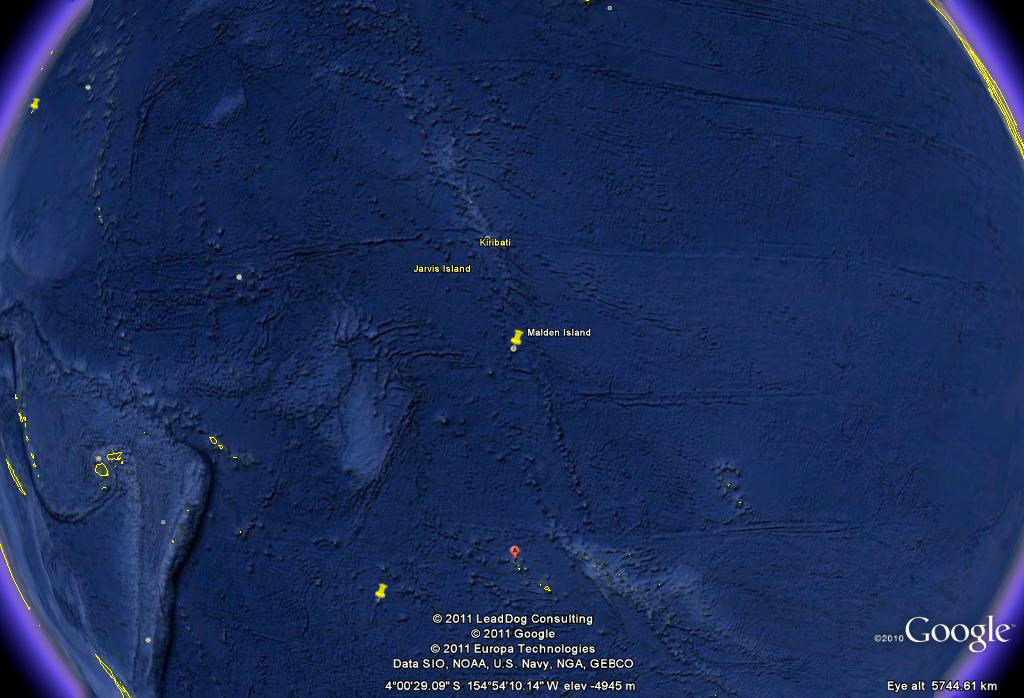
Secret of Malden Island: Why public education is hiding history
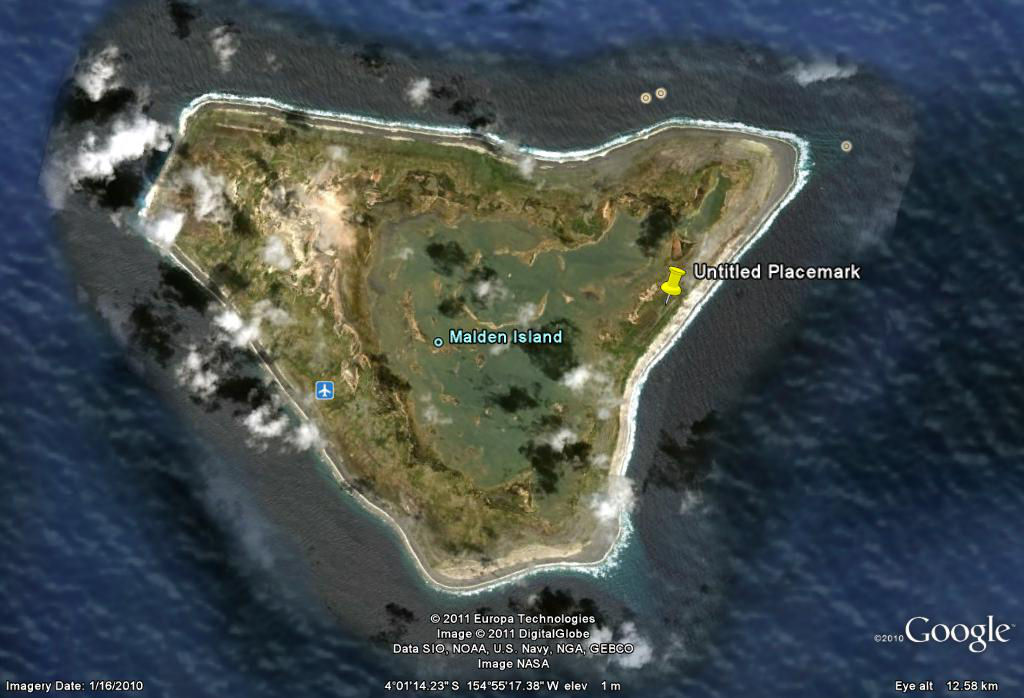
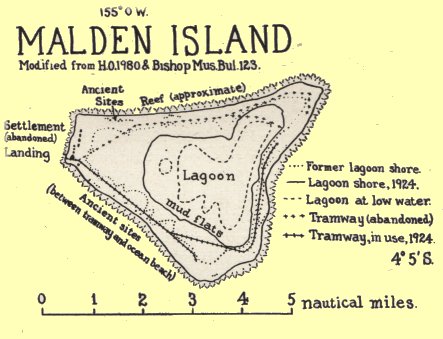
Source articles
http://mitchtestone.blogspot.com/2008/12/malden-island.html
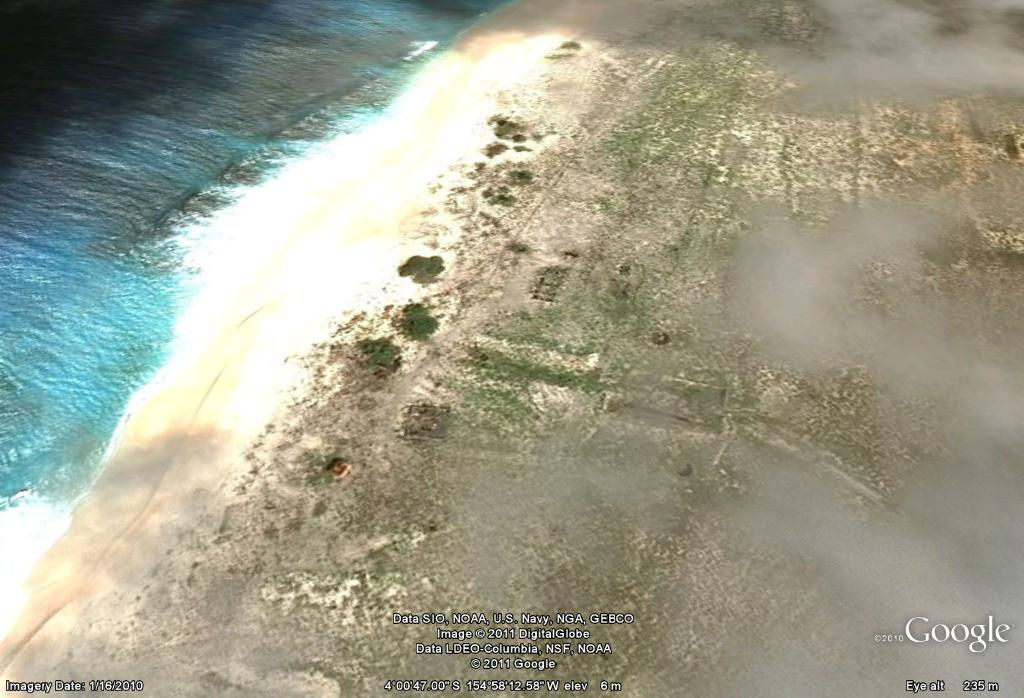 But there are more discoveries of strange, “very old” archeology spread all over the world that don’t fit nicely into conventional explanation. Here’s just a few from source link:
http://www.world-mysteries.com/mpl_10.htm
• A marble acropolis underwater across five acres of fluted columns raised on pillars.
Rich Hoffman
https://overmanwarrior.wordpress.com/2010/12/04/ten-rules-to-live-by/
http://twitter.com/#!/overmanwarrior
www.overmanwarrior.com
American Air Supremacy: But do we have the courage to keep it?



 The Chairman’s Club is a section set up for exclusive guests and many in the aviation business comfortably packed the tables in front of the gigantic mess hall tent, which did lower the temperature considerably with its high vaulted ceilings that allowed the hot air someplace to go, and to cool. It was a good design. The ice cream prior to the Thunderbirds show was a nice touch even if it did melt in a matter of minutes. As is the custom, many of the pilots and parachutists come to The Chairman’s Club to refresh after their portion of the show and meet some of the guests who help put their planes in the air. It is a chance for both sides of the aviation business to meet each other up close and personal. I told one of the guys who had drug his parachute into the area to repack after he had landed just moments after falling from 16,000 feet, “Bet you wish you were still up there.”










Liberty Twp Tea Party Turns Two Years Old: The Rise of a New Guard

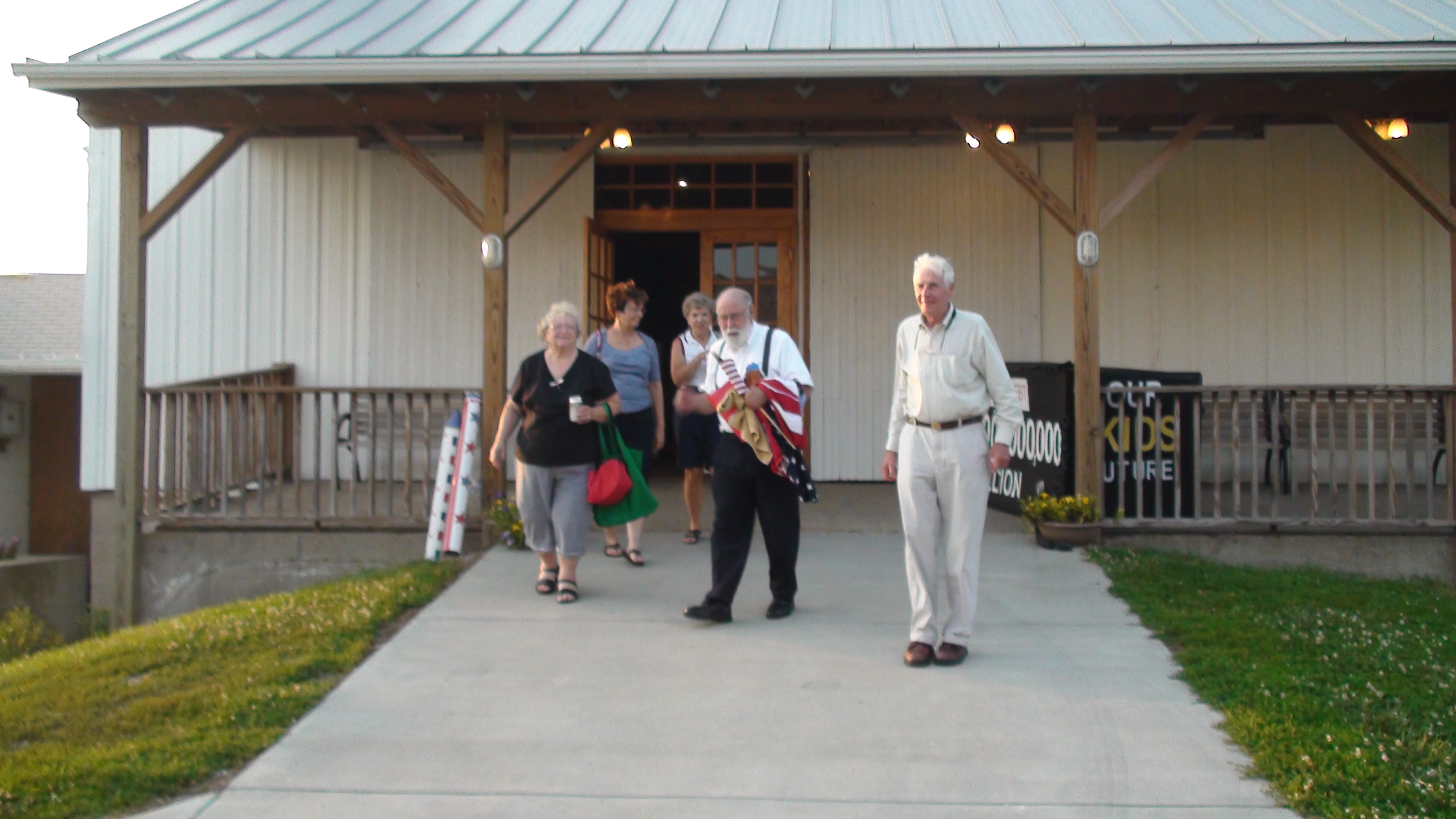


Home Away From Home: Beach bums, hippies, and strippers with their socialist dream
The following video is something I shot while at that fine place, as a rolling storm moved in.
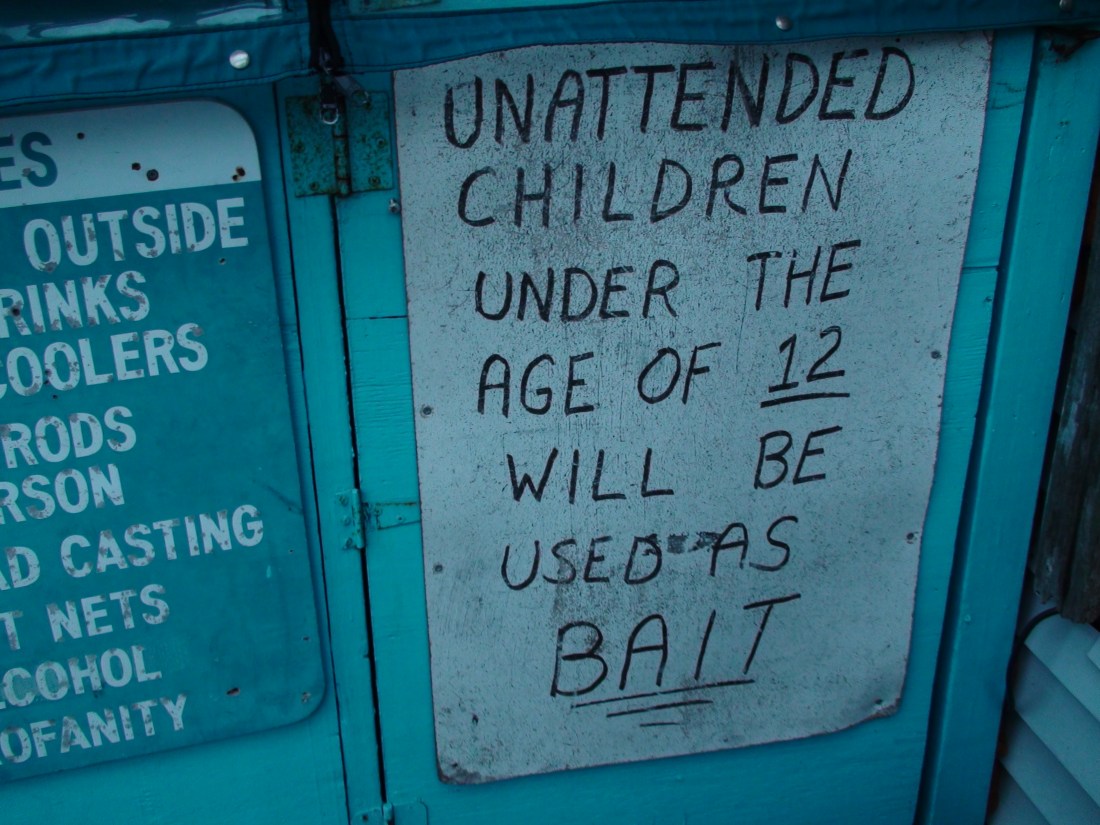
Remember wherever there is the sign of peace; it’s indicative of a political socialist. Like all sinister things in life, the truly dangerous are camouflaged with good intentions, like the idea of world peace that the hippies, beach bums and strippers find so appealing.
Rich Hoffman
https://overmanwarrior.wordpress.com/2010/12/04/ten-rules-to-live-by/
http://twitter.com/#!/overmanwarrior
www.overmanwarrior.com
Wild West Heroes: The Foundations of America!
Here are some examples of what I consider to be some of the best that America produces. Guns are very important to Americana. The six-shooter is as important to the United States as the Samurai Sword is to Japan.
Progressives and their globalist views, have sought to destroy American heritage which I find repulsive. I appreciate the beauty of a gunman that can handle a six-shooter effectively.
It is sad that progressives have successfully turned even the sight of a gun into a symbol of death.
Knife throwing is another heritage that is essential to American culture. I know several knife throwers personally and every one of them are wonderful people who appreciate life more, because they routinely dance with death.
You might recognize this guy from the first video. I’ve known Chris for a while, and he’s the real deal. He travels the world as an ambassador of the Western Arts.
Here’s another guy from the video above. This is another one of my close personal friends. You may have seen the newscast Gery and I did for a Dayton TV station.
Here’s an exhibition I did for the World Stunt Organization at a film festival.
Rich Hoffman
https://overmanwarrior.wordpress.com/2010/12/04/ten-rules-to-live-by/
http://twitter.com/#!/overmanwarrior
www.overmanwarrior.com
STAR WARS NEW RIDE: Star Tours and the discovery of a building on planet Mars!
It is not an accident that people of all ages from all places love Star Wars. Star Wars is about all the purest notions present in the minds of humanity.
Whenever there is a big Star Wars event, such as this latest one at Hollywood Studios fans from all over the country show up in costume to celebrate unbridled creativity and the spirit of adventure.
As for the ride itself, here is a sneak peek at the actual ride itself.
As a boy I was without question the fastest kid in my entire school. Nobody could run faster than me, in dodge ball I was always the last kid standing and I was one of the strongest. I won the pull-up contest in the winter Olympics event in the fifth grade; in fact I won the school equivalent of a gold medal. I was always really good at sports, all sports especially basketball and hockey, so of course a very pretty, very popular girl wanted to “go steady” with me, in the fifth grade. Now to the adults in my life, it looked as though I was headed in the right direction, cute girlfriend, the gym teacher was telling my parents that scholarships were in my future from any school of my choice because my physical abilities were unusually proficient, and aside from being very combative with my teachers, my future looked bright, except for that one small problem, I spent hours and hours and hours in the basement of my home playing Star Wars with my brother. My family couldn’t afford all the toys that Kenner was producing, so my brother and I built our own, all inspired from the Star Wars galaxy.
A very pretty girl who rode my bus was persistently letting me know she was interested in me. Under pressure from all the other “popular” girls that rode my school bus, and the boys that would soon become the “jocks” in later years, I told the little girl I’d go steady with her. Such a girl promised to be very adventurous. It was well-known that she would probably take off her clothes for me and let me do pretty much whatever I wanted, because she had said so to her girl friends intending me to find out. So I said yes.
At home that night I was doing the usual thing, eating my dinner as fast as possible so I could go downstairs and play Star Wars. During dinner that girl called me.
“Hello,” I said to her as my mom handed me the phone. My parents looked proudly at one another.
“Hey sweetie, what are you doing? I heard you said you’d go steady with me?” the little girl said.
I was looking at the clock. It was about 6:15 PM and I wanted to build a spaceship with some shoe boxes my mom had left in my room. I didn’t want to hang on the phone with some stupid girl. “Auh, yes.”
“So, can you get your mom to bring you over?”
“Tonight? To your house?” I said looking at my mom. I was thinking of the possibilities. This girl was one of those girls back then that had both parents with full occuapations so she was home by herself most of the time. In fact, during the summer, in her neighborhood most of the kids were home by themselves all summer because their parents were always working or too tired to pay attention to what the kids were doing.
“Yes silly, to my house. My mom is going to be gone till 9 and my dad is on a business trip. I’m here by myself and I want you to come over.”
I looked at my mom, my dad, and my brother who was ready to go downstairs and play Star Wars. “What are we going to do?”
The girl giggled on the other end of the phone. “We’ll think of something.”
I knew what that meant. This little girl had let quite a few of the boys she had “gone steady” with, see her naked, so that was what the girl had in mind. She figured that would seal the deal with me.
My life flashed before me. I realized that if I went to that girl’s house once, she’d want to do it again, and again. She’d also want to talk on the phone all the time like a lot of the girls from that time were doing. I did not want to spend my time talking to some stupid girl on the phone. I just wanted to see her naked, but not to get wrapped up in wasting my time. My heart’s desire was to go into the basement and play Star Wars.
“I don’t think I want to go out with you,” I said to the girl.
“What?”
“It’s a school night, and I’m busy.”
The girl started crying. My dad’s face dropped and my brother went downstairs knowing I was going to be off the phone soon. He was younger than me, in kindergarten at the time, so wanting to see a girl naked wasn’t even a relevant thought.
“Nobody has ever broke-up with me before. We’ve only been going out for a couple of hours. Is it because I’m ugly? I’ll do anything you want.”
“It’s not because you’re ugly. It’s just that I……..I’m busy.”
The girl hung up, I went downstairs and played Star Wars. The next day at school, all the girls’ friends were angry at me for breaking up with their friend. One girl who knew me very well because her brother played with my brother and I said, “You broke up with her so you could play that stupid, gay, little Star Wars thing you guys do. Isn’t it?”
“Yes,” I said honestly.
“I thought so. Well, I’m going to tell her why.”
She did, and from that day on, that girl and all her popular friends shut the door to me out of that rejection. She never really got over it, until we were seniors in high school and my friend and I had a ghastly reputation for excessive speeding, violent fights and other aggressive behavior, and were getting ready to leave school for the day when she came running across the parking lot to stop me. She asked me for a ride home from school.
I looked at the girl; she looked old at only 17. She had been having sex for many years, and virtually every popular boy in school had either seen her naked, or had sex with her in some form or another. She figured because of my reputation I’d want to spend time with her. I think she really needed a ride home, but she was looking for a chance I think. I instantly felt bad for her. She had been very attractive just a couple of years before, but now her skin was blotchy from where she went to the tanning bed too much. She actually had wrinkles around her eyes. Looking at her I couldn’t help but think she reminded me of a sperm suppository that had semen oozing out of the pores of her body.
“No, I can’t.”
I was surprised that her eyes actually welled up with tears. “Why, are you going to go and play Star Wars again?”
I looked at her to assess her pain. It was obvious she was trying to go back in time to fix something in her life, and I felt compelled to help her. But not compelled to stop doing what my friend and I were about to do.
“Sorry, but we’re getting ready to catch Rambo II. The movie starts in 45 minutes.”
I started up my car and skidded out of the school parking lot as was usual. That was the last time I ever saw or spoke to that girl.
The people who grew up successful and happy had little things like Star Wars in their life to help them through tough times. People like that girl, that filled the empty moments in her life with the penis of a young boy, in an attempt to steer that boy where she wanted ended up sick, diseased and terribly broken before they even hit 20 years old.
It is the child in all of us that must be kept alive, and not destroyed in some mindless pursuit of some perceived economic, or social value. The truth of mankind can be found in events like Star Tours.
Because there are many, many more discoveries that must be made for the human race to advance forward, we are a long way from completing the human adventure. So complacency of thought in the mundane realm of food and sex is not enough. When the entire world has the tools of academia at their disposal, it still takes the wondering adventurer, the outcast, the geek, to see what was always there.
Rich Hoffman
https://overmanwarrior.wordpress.com/2010/12/04/ten-rules-to-live-by/
http://twitter.com/#!/overmanwarrior
www.overmanwarrior.com
Oil Shale is a Solution, Al Gore, Think Progress and the President are the Problem: why our economy is hurting
Below is a great article from the Daily Reckoning about Oil Shale in Colorado. There is only one reason that our country is in a financial mess, and that is because fools are standing in the way. I am thinking of a speech from John Galt uttered in the book Atlas Shrugged. “You propose to establish a social order based on the following tenets: that you’re incompetent to run your own life, but competent to run the lives of others—that you’re unfit to exist in freedom, but fit to become an omnipotent ruler—that you’re unable to earn your living by the use of your own intelligence, but able to judge politicians and to vote them into jobs of total power over arts you have never seen, over sciences you have never studied, over achievements of which you have no knowledge, over the gigantic industries where you, by your own definition of your capacity, would be unable successfully to fill the job of assistant greaser.”
John Galt is right and evidence of it is in the following article. This is available to our nation right now, but of course the holdup is in government’s lack of vision. When you finish the article you will learn a lot about oil. And you’ll learn that our financial problems are completely self-imposed.
Oil Shale Reserves
Oil Shale Reserves: Stinky Water, Sweet Oil
A Daily Reckoning White Paper Report
By Dan Denning
You won’t think much of Rio Blanco County if you ever drive through it. In fact, unless you take a right turn off Interstate-70 West at Rifle, head north on Railroad Avenue and then west on Government road to Colorado state highway number thirteen, odds are you’ll never even step foot in Rio Blanco County.
But even if you keep heading west toward Grand Junction, through the town of Parachute and the shuttered oil shale refineries from the 1970s, you’ll see the Book Cliffs geologic formation on your right. For miles and miles. It’s a bleak landscape. Almost lunar. At first glance, it’s the kind of land you’d never want to explore, much less settle down in.
Oil Shale Reserves : America’s Strategic Future
In the small world of geologists, though, the region is well-known. In fact, you might even say it’s the single
most important patch of undeveloped, unloved, and desolate looking land in America. But you’d never guess this particular corner of the Great American Desert may play an integral role in America’s strategic future just by looking at it. You’d never guess that the whole stretch of brown, red, and orange land contains enough recoverable oil and gas to make you forget about the Middle East for the rest of time.
There are places in Rio Blanco County like Stinking Water Creek, named after the smelly mix of oil and water the first white settlers found there, that tell you oil’s always been around the Rocky Mountains. It’s just not always been easy to find. It’s one thing to find oil that bubbles out of the ground in liquid form. It’s quite another to drill a thousand feet down, and encounter oil locked up tight inside a greasy rock.
The first seeping pools of oil were discovered in Western Colorado as far back as 1876, the year the state entered the Union. But exploration didn’t get serious until drillers settled in the town of Rangely in Rio Blanco County.
By 1903, thirteen different drillers had come and gone in Rangely. According to the local museum, the only six wells that actually struck oil were producing just two to ten barrels of oil a day. Hardly a Spindeltop, the gusher that launched the Texas oil-boom on January 10th, 1901, and immediately began producing 100,000 barrels per day.
The energy reserves of the Piceance Basin, upon which Rio Blanco County sits, contain massive petroleum reserves of a very unusual nature: Oil shale.
Oil Shale Reserves : A Congressional Legacy
Most of the nation’s oil shale reserves rest under the control of the U.S. government – a legacy of a 95-year old Congressional Act. In 1910, Congress passed the Pickett Act, which authorized President Taft to set aside oil- bearing land in California and Wyoming as potential sources of fuel for the U.S. Navy. Taft did so right away. The Navy was in the process of switching from coal-burning ships to oil burning ships. And the U.S. military, conscious of the expanding role of America in the world, needed a dependable supply of fuel in case of a national emergency.
From 1910 to 1925 the Navy developed the Naval Petroleum and Oil Shale Reserves Program. The program became official in 1927 and President Roosevelt even expanded the scope of the program in 1942 as the U.S. geared up for war with Japan and Germany.
Several of the oil fields set aside for the nation’s first strategic reserve, particularly Elk Hills in California,
would go on to produce oil for the U.S. government. Elk Hills was eventually sold off to Occidental Petroleum for $3.65 billion in 1998 in the largest privatization in U.S. history. The shale reserves, however, still remain, locked 1,000 feet underground in the Colorado desert.
Unlocking The Future
The destruction of Hurricane Katrina shows the importance of a strategic petroleum reserve, or, more accurately, a strategic energy reserve. But the SPR in Louisiana only holds about 800 million barrels of emergency, enough to get the country through about 90 days of regular oil usage. That’s barely a band-aid for a country that faces a potential energy heart attack.
In other words, the future of oil shale may have finally arrived. Extracting oil from shale is no simple task, which is why the reserves remain almost completely undeveloped. But an emerging new technology promises to unlock the awesome potential of the oil shale.
“The technical groundwork may be in place for a fundamental shift in oil shale economics,” the Rand Corporation recently declared. “Advances in thermally conductive in-situ conversion may enable shale-derived oil to be competitive with crude oil at prices below $40 per barrel. If this becomes the case, oil shale development may soon occupy a very prominent position in the national energy agenda.”
Estimated U.S. oil shale reserves total an astonishing 1.5 trillion barrels of oil – or more than five times the
stated reserves of Saudi Arabia. This energy bounty is simply too large to ignore any longer, assuming that the reserves are economically viable. And yet, oil shale lies far from the radar screen of most investors.
But we here at The Daily Reckoning are on the case. Just yesterday, I caught a first-hand glimpse of a cutting-edge oil shale project spearheaded by Shell. I trekked out to a barren moonscape in Colorado to tour the facility with Shell geologists. To summarize my findings, oil shale holds tremendous promise, but the technologies that promise to unlock this promise remain somewhat experimental. But sooner or later, the oil trapped in the shale of Colorado will flow to the surface. And when it does, it will enrich investors who arrive early to the scene.
Can Oil Shale Change The World?
America’s oil shale reserves are enormous, totaling at least 1.5 trillion barrels of oil. That’s five times the
reserves of Saudi Arabia! And yet, no one is producing commercial quantities of oil from these vast deposits. All that oil is still sitting right where God left it, buried under the vast landscapes of Colorado and Wyoming.
Obviously, there are some very real obstacles to oil production from shale. After all, if it was such a good
thing, we’d be doing it already, right? “Oil shale is the fuel of the future, and always will be,” goes a popular
saying in Western Colorado.
But what if we could safely and economically get our hands on all that oil? Imagine how the world might change. The U.S. would instantly have the world’s largest oil reserves. Imagine…having so much oil we’d never have to worry about Saudi Arabia again, or Hugo Chavez, or the mullahs in Tehran. And instead of ships lined up in L.A.’s port to unload cheap Chinese goods, we might see oil tankers lined up waiting to export America’s tremendous oil bounty to the rest of the world. The entire geopolitical and economic map of the world would change…and the companies in the vanguard of oil shale development might make hundreds of billions of dollars as they convert America’s untapped shale reserves into a brand new energy revolution.
Presidents Gerald Ford and Jimmy Carter may have been entertaining similar ambitions in the late 1970s when they encouraged and funded the development of the West’s shale deposits. A shale-boom ensued, although not much oil flowed. The government spent billions and so did Exxon Mobil. New boomtowns sprung up in Rifle, Parachute, Rangely, and Meeker here in Colorado.
And then came Black Monday. May 2, 1982. The day Exxon shut down its $5 billion Colony Oil Shale project. The refineries closed. The jobs left (the American oil industry has lost nearly as many jobs in the last ten years as the automobile and steel industries.) And the energy locked in Colorado’s vast shale deposits sat untouched and unrefined.
Oil Shale Technology – Old & New
Extracting oil from the shale is no simple task. The earliest attempts to extract the oil utilized an environmentally unfriendly process known as “retorting.” Stated simply, retorting required mining the shale, hauling it to a processing facility that crushed the rock into small chunks, then extracted a petroleum substance called kerogen, then upgraded the kerogen through a process of hydrogenation (which requires lots of water) and refined it into gasoline or jet fuel.
But the difficulties of retorting do not end there, as my colleague, Byron King explains:
“After you retort the rock to derive the kerogen (not oil), the heating process has desiccated the shale (OK, that means that it is dried out). Sad to say, the volume of desiccated shale that you have to dispose of is now greater than that of the hole from which you dug and mined it in the first place. Any takers for trainloads of dried, dusty, gunky shale residue, rife with low levels of heavy metal residue and other toxic, but now chemically-activated crap? (Well, it makes for enough crap that when it rains, the toxic stuff will leach out and contaminate all of the water supplies to which gravity can reach, which is essentially all of ‘em. Yeah, right. I sure want that stuff blowin’ in my wind.) Add up all of the capital investment to build the retorting mechanisms, cost of energy required, cost of water, costs of transport, costs of environmental compliance, costs of refining, and you have some relatively costly end-product.”
But a new technology has emerged that may begin to tap the oil shale’s potential. Royal Dutch Shell, in fact, has recently completed a demonstration project (The Mahogany Ridge project) in which it produced 1,400 barrels of oil from shale in the ground, without mining the shale at all.
Instead, Shell utilized a process called “in situ” mining, which heats the shale while it’s still in the ground, to
the point where the oil leaches from the rock. Shell’s Terry O’Connor described the breakthrough in testimony before Congress earlier this summer (And Congress may have an acute interest in the topic, since the U.S. government controls 72% of all U.S. oil shale acreage):
“Some 23 years ago, Shell commenced laboratory and field research on a promising in ground conversion and recovery process. This technology is called the In-situ Conversion Process, or ICP. In 1996, Shell successfully carried out its first small field test on its privately owned Mahogany property in Rio Blanco County, Colorado some 200 miles west of Denver. Since then, Shell has carried out four additional related field tests at nearby sites. The most recent test was carried out over the past several months and produced in excess of 1,400 barrels of light oil plus associated gas from a very small test plot using the ICP technology…
“Most of the petroleum products we consume today are derived from conventional oil fields that produce oil and gas that have been naturally matured in the subsurface by being subjected to heat and pressure over very long periods of time. In general terms, the In-situ Conversion Process (ICP) accelerates this natural process of oil and gas maturation by literally tens of millions of years. This is accomplished by slow sub-surface heating of petroleum source rock containing kerogen, the precursor to oil and gas. This acceleration of natural processes is achieved by drilling holes into the resource, inserting electric resistance heaters into those heater holes and heating the subsurface to around 650-700F, over a 3 to 4 year period.
“During this time, very dense oil and gas is expelled from the kerogen and undergoes a series of changes. These changes include the shearing of lighter components from the dense carbon compounds, concentration of available hydrogen into these lighter compounds, and changing of phase of those lighter, more hydrogen rich compounds from liquid to gas. In gaseous phase, these lighter fractions are now far more mobile and can move in the subsurface through existing or induced fractures to conventional producing wells from which they are brought to the surface. The process results in the production of about 65 to 70% of the original “carbon” in place in the subsurface.
“The ICP process is clearly energy-intensive, as its driving force is the injection of heat into the subsurface.
However, for each unit of energy used to generate power to provide heat for the ICP process, when calculated on a life cycle basis, about 3.5 units of energy are produced and treated for sales to the consumer market. This energy efficiency compares favorably with many conventional heavy oil fields that for decades have used steam injection to help coax more oil out of the reservoir. The produced hydrocarbon mix is very different from traditional crude oils. It is much lighter and contains almost no heavy ends.
“However, because the ICP process occurs below ground, special care must be taken to keep the products of the process from escaping into groundwater flows. Shell has adapted a long recognized and established mining and construction ice wall technology to isolate the active ICP area and thus accomplish these objectives and to safe guard the environment. For years, freezing of groundwater to form a subsurface ice barrier has been used to isolate areas being tunneled and to reduce natural water flows into mines. Shell has successfully tested the freezing technology and determined that the development of a freeze wall prevents the loss of contaminants from the heated zone.”
It may seem, as O’Conner said, counter-intuitive to freeze the water around a shale deposit, and then heat up the contents within the deposit. It’s energy-intensive. And it’s a lot of work. What’s more, there’s no proof yet it can work on a commercial-scale.
Yet both technologies, the freeze wall and the heating of shale, have been proven in the field to work. The freeze wall was used most recently in Boston’s Big Dig project. It was also used to prevent ground water from seeping into the salt caverns at the Strategic Petroleum reserve in Weeks Island, LA.
But still, you may be wondering, does it really make sense to heat the ground up a thousand feet down for three or four years and wait? Of course it does. In case you missed O’Conner’s math, Shell could harvest up to a million barrels per acre, or a billion barrels per square mile, on an area covering over a thousand square miles.
It’s still early days in the oil shale fields of Colorado and Wyoming, but it looks to me like someone’s gonna make a lot of money out there. I’m working hard to discover how we outside investors can play along.
Shell’s Mahogany Ridge
Last week, I paid a visit to Royal Dutch Shell’s oil shale project in Colorado. The visit left me with more questions than answers, but I came away from the place with the sense that this opportunity is very real…or, at least, it soon will be.
After driving across a vast expanse of “Nowhere,” Colorado, my brother and I met up with a few geologists from Shell. Of course it’s just those large, unpopulated tracts of high desert that make the area so appealing from a geopolitical point of view. Tapping into the oil shale 2,000 feet underground isn’t going to bother too many people. And there are no spotted owls around either. If the technology to turn shale into oil works, the entire area will become a new American boom patch.
Soon after we arrived, the geologists escorted us around the facility, chatting all the while about the successes and challenges of their venture.
The two trickiest aspects of oil shale development, as the geologists and engineers explained, are heating the shale to extreme temperatures, while simultaneously surrounding the heated area with a subterranean ice wall. Shell doesn’t know, or isn’t saying, which part of the project will be the most challenging. If you were about to change the world by making it economic to tap into as much as 2 trillion barrels of oil under the Colorado plateau, you’d be pretty careful about showing your competitors how you were going to do it.
First, anything that heats up rock around it to around 600 or 700 degrees Fahrenheit has to conduct electrically generated heat well. The most conductive metals on the Periodic Table of Elements are, in order, silver, copper, and gold. Naturally, the number of heaters you put in a place affects the amount of time it takes to turn the shale goo into API 34 crude. The more heaters, the more cost, though.
And given the fact that Shell does not know yet if the heaters will be recoverable, you can see that sticking
silver, copper, or gold heaters 2000 meters underground and then leaving them there once the kerogen has been pumped has a serious effect on the economics of your operation.
At the moment, Shell is not sure what the optimal size of production zones ought to be. The big issue here is how big can a freeze-wall be to be effective and freezing the groundwater surrounding a shale deposit? The test projects, as you can see, were quite small. Shell doesn’t know, or isn’t saying, what the optimum size is for a each “pod” or “cell”. That’s what they’ll have to figure out at the next stage…and the picture with the dirt is a football field sized project….where rather than creating the freeze-wall at 50 meters down…they will do it at 1,000 ft. down…. with 2,000 being the desired and necessary depth for commercial viability. I’m not sure anyone has ever created a freeze-wall at that depth….neither is shell. But we’ll find out. The oil itself that comes from the process looks like…oil. No heavy refining needed.
Shell thinks the whole thing is economic at a crude price of $30. So barring a major reversal of geopolitical trends, they’re forging ahead.
Since the Bureau of Land Management owns about 80% of the oil shale acreage in Colorado, there is no investment play on private companies that might own land with rich shale deposits. Although, if Shell and the DOE are right that you can recover a million barrels of oil per acre…it wouldn’t take much land to make a man rich out here.
Oil Shale: Testing Public Lands
The Bureau of Land Management recently received ten applications (by eight companies) for a pilot program to develop Colorado’s shale reserves. The program allows the companies access to public lands for the purpose of testing shale-extraction technologies. You see below an interesting mix of large, publicly traded oil giants and small, privately held innovators.
- Natural Soda, Inc. of Rifle, Colorado.
- EGL Resources Inc. of Midland, Texas.
- Salt Lake City-based Kennecott Exploration Company.
- Independent Energy Partners of Denver, Colorado
- Denver-based Phoenix Wyoming, Inc.
- Chevron Shale Oil Company.
- Exxon Mobil Corporation.
- Shell Frontier Oil and Gas Inc
There is dispute within the industry over how long, if ever, demonstration extraction technologies can become commercially viable. I’ve spoken with some of the smaller companies that have applied for leases from the BLM. Some of them will have to raise money to conduct the project. And some of them have been less than forthcoming about how exactly their extraction technology is different or better than previous methods.
How will it all unfold? Well, for starters, it could all utterly fail. To me, Shell’s in-situ process looks the most
promising. It also makes the most sense economically. There may be a better, less energy-intensive way to heat up the ground than what Shell has come up with. But Shell, Chevron, and Exxon Mobil clearly have the resources to scoop up any private or small firm that makes a breakthrough.
And there are a host of smaller firms involved with the refining and drilling process that figure to play a key
role in the development of the industry, should that development pick up pace.
The Energy Policy Act of 2005, otherwise known as a listless piece of legislation without any strategic vision, does, at least, make provision for encouraging research into the development of shale. But government works slow, when it works at all. It’s going to take an external shock to the economy to really ratchet up interest and development of the nation’s energy reserves…say…something like a nuclear Iran.
Dan Denning
for The Daily Reckoning
Source article: http://dailyreckoning.com/oil-shale-reserves/
Read more: Oil Shale Reserves http://dailyreckoning.com/oil-shale-reserves/#ixzz1KTuP22A0
So what do you think about that? Here’s a cool video about the use of Oil shale.
So why aren’t we doing this? Because of communist leaning politicians like the old hippie Al Gore who still thinks he’s smoking pot in college and forcing the world to drive electric cars.
Al Gore and his friends of communism advocates want to stop the American economy and they are what is driving up our fuel costs by standing in the way of technological development. Our country is being run by fools and idiots by our default, because while the rest of us work at real jobs, those thieves of our tax dollars are using our own resources to destroy us. Those of us that think will never get along with communists. I’m going to call them that for now on, because that’s what they are. I don’t want the world they are advocating. I want oil, fast cars and government off my back.
Rich Hoffman
https://overmanwarrior.wordpress.com/2010/12/04/ten-rules-to-live-by/
http://twitter.com/#!/overmanwarrior
www.overmanwarrior.com
The Space Race is Just Beginning: As the Space Shuttles End.
Darryl Parks of 700 WLW hit on something sensitive with me on his March 10, 2011 show. He was reminiscing about the recent Space Shuttle landing with just two more shuttle missions to go. Listen to that broadcast here.
I’ve said it before and I’ll say it again, I think NASA in Florida and Epcot Center also in Florida are two of my favorite places on Earth. I am very supportive of massive cuts to the federal budget. But of all the programs that I think the government has done right it’s the work done at NASA that is the best. For NASA, I do not regret the tax money spent at all. It gives me a tremendous amount of pride to walk the NASA facility.
The work done at NASA directly propels our science and does create jobs making America much of what it has been regarding a technological powerhouse in the world marketplace. And it is a sign of the times that funding to our space work was one of the first things cut, well before the entitlement culture, which is a terrible shame. It will be a sad day when over 6,000 NASA employees are laid-off in the Florida facility and I will be deeply touched to watch one of the next two space shuttles land at Wright Patterson Air Force Base within the next couple of months.
So the obvious question that Darryl asks, and I’m asking and tens of thousands of aviation enthusiasts are asking is, “What’s next? What’s the plan?”
Well, the government is getting out of the space business and is turning it over to the private sector, which is the same thing many of us that are education reformers want to see happen with education regarding School Choice. I believe that once the government is out of the space business, private industry will suddenly find the chains cut and a technological leap will ensue.
So to give hope to that possibility read the below article from www.Space.com. This is the future, like School Choice is the future of education. While I am sad to see the great organization of NASA coming to an end as we know it, I am excited to see the unlimited possibilities that the private sector can unleash upon our civilization.
Link for the below article: http://www.space.com/10548-private-spaceflight-ready-2011.html
The private space industry has long been viewed as fledgling. But this once-pejorative term has taken on new meaning this year, as a roster of successes and fast-paced growth throughout 2010 suggests private spaceflight is ready to take off in 2011.
This year saw the very first launch of commercial space company SpaceX’s Falcon 9 booster, and later the first liftoff of the firm’s Dragon spacecraft, which launched atop a Falcon 9 to Earth orbit and then was recovered from the Pacific Ocean. Another company, Virgin Galactic, achieved some major milestones, including the first glide test of its suborbital spaceliner, SpaceShipTwo. [Gallery: First Solo Flight of SpaceShipTwo]
Multiple private-sector space firms are moving into full power, going well beyond powerpoints and hand-waving. Still, the coming year, according to experts and analysts contacted by SPACE.com, is likely to feature battles between “same old space” and the ascension of “new space.”
Commercial landscape
“The space industry has never seen such a rich and varied commercial landscape,” said Carissa Bryce Christensen, managing partner of consulting firm The Tauri Group in Alexandria, Va. “New markets are emerging and established ones are changing.”
Christensen said that entrepreneurs are testing new launch and on-orbit capabilities in the real world, trying to move beyond development and demonstration and into sustainable, profitable operation. Large firms are changing their game plans in response.
“The successes and setbacks of 2011 are going to make it the most interesting year in the history of commercial space,” Christensen predicted.
Commercial space is finally coming into its own, and 2011 represents a year of enormous potential for this developing industry, said David Livingston, founder and host of the radio/Internet talk show “The Space Show.”
“The key will be to systematically move forward, building success upon success,” Livingston said. “I believe the coming year will reward patience, achievable goals, business fundamentals, reasonable business risks and a safety mindset.”
In terms of trends for the space industry, Livingston foresees a move away from big government programs in favor of economically managed and leaner commercial space ventures and projects.
“I believe this trend will continue through 2011 and beyond. That said, I do not think our space program should be one or the other, government or private,” Livingston said.”I believe we can now, more than ever, effectively create public/private partnerships to guide us into space and our future.”
Squarely in the spotlight
The scheduled retirement of NASA’s three-orbiter space shuttle fleet next year will also likely affect the landscape.
“I think the environment for 2011, although much improved from the religious war in 2010, will still see continued debate about the future direction of NASA with shuttle retirement,” said Brett Alexander, president of the Commercial Spaceflight Federation, an industry group that includes commercial spaceflight developers, operators, spaceports, suppliers and service providers.
Alexander said he thinks commercial space will be “squarely in the spotlight” with an expected ramp-up of both suborbital flight testing and multiple orbital launches and re-entries under NASA’s Commercial Orbital Transportation Services (COTS) partnership agreements with U.S. industry.
NASA’s Commercial Crew and Cargo Program is investing financial and technical resources to stimulate efforts within the private sector to develop and demonstrate safe, reliable and cost-effective space transportation capabilities.
“So, with steady progress on the technical front, it should help to solidify NASA’s new direction to develop commercial capabilities,” Alexander said. Battleground “2010 was the year that war broke out between commercial and cost-plus space,” observed Jim Muncy, president and founder of PoliSpace, an independent space policy consultancy based in Alexandria, Va.
“A rational White House, which nobody can accuse of having an ideological bias in favor of commercial business and privatization, decided that the nation couldn’t do much, let alone everything, the ‘traditional’ way,” Muncy said. “To actually use the International Space Station and explore space, the private sector needed to play a greater role in both.”
Muncy said that as nasty and counterintuitive as the long debate of 2010 was, next year — especially in the context of the new Congress, which has vowed to cut government spending — will see “the rubber hit the road” in several fronts of this war.
For 2011, Muncy forecasts:
• At least two companies that operate suborbital reusable launch vehicles will fly science payloads for NASA, and piloted vehicles will have their first flight tests.
• A SpaceX Dragon will carry a mammal to low Earth orbit and possibly to the International Space Station.
• The effort to build a commercial crew spacecraft will move forward, while overall budget pressure on NASA will slow down Florida Senator Bill Nelson’s grand compromise (which, among other things, gave money to commercial companies and NASA to develop and build new rockets).
• The Commercial Space Launch Amendment Act’s “informed consent” regime for Federal Aviation Administration regulation of commercial human spaceflight will clash with some politicians’ desire to kill commercial crew efforts.
• The fight over human-rating of commercial crew will get heated, as will a scrap for control over this rating between NASA’s Johnson Space Center and the agency’s Kennedy Space Center.
“Not a prediction but a hope,” Muncy said, is that “Republicans will remember they like the private sector and stop mindlessly bashing commercial.”
Fiscal meltdown
Rand Simberg, a space policy and technology consultant and a former aerospace engineer, isn’t optimistic that Republicans will get fully behind commercial space.
“Despite the growing confidence in the ability of the commercial sector to do human spaceflight, the incoming Republicans may continue to wage war on the new NASA direction, in opposition to their usual stated principles of free enterprise and competition, for no reason other than it came from a weakened Obama White House,” Simberg said.
Overall, next year “may be the year that business-as-usual collides with budgetary reality,” he predicted.
Simberg said that “even the most pork-devoted politicians will have to recognize that the only way for NASA to have a viable human spaceflight program going forward is to rely on fixed-price launch contracts from new, more cost-effective providers for the now-mundane task of simply getting astronauts to orbit and back.”
On the suborbital front, Simberg said that 2011 may be the year that regular flights of fully reusable vehicles — both horizontal- and vertical-landing — will take off.
That being the case, Simberg added, such suborbital flights “will start to develop the experience in high-tempo launch operations that will inform the eventual development of cost-effective space transport all the way to orbit.”
Availability and schedule
Likely to be a nexus of private sector space action is Spaceport America, now under construction near Truth or Consequences, New Mexico.
Virgin Galactic will run commercial operations from Spaceport America, with billionaire founder Sir Richard Branson recently setting his sights beyond suborbital passenger takeoffs.
“Virgin Galactic has shown in the past few years how private sector investment and innovation can lead to a rapid transformation of stagnant technologies,” Branson said. “We are now very close to making the dream of suborbital space a reality for thousands of people at a cost and level of safety unimaginable even in the recent past.
“We know that many of those same people, including myself, would also love to take an orbital space trip in the future,” Branson added, “so we are putting our weight behind new technologies that could deliver that safely whilst driving down the enormous current costs of manned orbital flight by millions of dollars.”
Earlier this month, Branson revealed that Virgin Galactic will be supporting work done by Sierra Nevada Space Systems (SNC) and Orbital Sciences Corporation (OSC) on commercial space vehicles for NASA’s Commercial Crew Development Program.
Both SNC and OSC are pursuing vehicle designs featuring reusable lifting-wing bodies and runway landings, which Virgin Galactic sees as possibly revolutionizing orbital space flight.
Rick Homans, executive director of the New Mexico Spaceport Authority, said that the pace of activity continues to pick up throughout the industry — and Spaceport America is no exception.
“In 2011, we expect to be in the midst of our pre-operations phase — hiring contractors, developing policies and procedures and conducting all kinds of tests and drills to ensure we are ready to go operational in 2012,” Homans said.
Homans said that from the inquiries they have received, he anticipates Spaceport America’s vertical launch area should be very busy in 2011. Other companies such as UP Aerospace, Armadillo and other operators have already inquired about availability and schedule, he added.
“I see 2011 as the year to get ready for 2012, when I predict we will have our first commercial launches from Spaceport America,” Homans said.
• Gallery: Photos of the Dragon Space Capsule, Dragon Video
• Top 10 Private Spaceships Becoming Reality
• Photos: SpaceShipTwo’s First Solo Test Flight, Video of the Flight
Leonard David has been reporting on the space industry for more than five decades. He is past editor-in-chief of the National Space Society’s Ad Astra and Space World magazines and has written for SPACE.com since 1999.
_____________________________________________________________________
Now, listen to Richard Branson talk about Virgin Galactic.
Rich Hoffman
https://overmanwarrior.wordpress.com/2010/12/04/ten-rules-to-live-by/
http://twitter.com/#!/overmanwarrior
www.overmanwarrior.com
The Future of Medicine: The Art of Regenerative Tissue Repair
I’d much rather cover positive topics than negative ones. My anger at many of the rants that can be found here has a common source. A student from Mason that is enchanted with Stacy Schuler, the teacher that was arrested for having sex with five students from her school, told me that she was sure that if she analyzed me the way I do other people, that there were sure to be Freudian slips reveled in my behavior too.
Well, she’s right. There is a pattern to my so-called rants. I have an extreme anger at institutions that stand in the way of exciting new scientific developments. So I tend to lash out at politicians, union leaders, corrupt employees that favor job security over innovation and universities that cling to their past discoveries and subvert new discoveries that are controversial. I even set my sights on religion that holds back civilization with a desire to control the masses like sheep of which they offer themselves as a shepherd. In general, I support religious activity because it gives people something to hold themselves together, and the fear of god will keep them from committing wasteful sins such as over indulging in sex, substance abuse, and being vengeful toward their neighbors. But I often get frustrated when religion stands in front of science, because science offers constant new information that requires frequent adoption adding to religious ideology. To become fixated on events that happened 2000 or 4000 years ago holds people back, because there are miracles happening right now in front of our faces, but people don’t have a spiritual mechanism that allows them to see it. And that can be a real crisis.
When the congress of 2010 marched Health Care Reform down our throats in March of that year without even reading the bill, and voted on it strictly on ideology started by philosophies begun in the 1960’s and even earlier while communism from the Soviet Union was making a push to replace capitalism. Those congressmen didn’t care if Health Care was in violation of the United States Constitution because their plan is to change the law with Supreme Court Case Law. They also didn’t care that Health Care, as we’ve been doing it is going out of style.
Health Care of tomorrow won’t be controlled by pharmaceutical companies like it is now, the days where our elderly will take drugs and have costly operations with artificial body parts as replacements will be a thing of the past within the next decade. People won’t take drugs to extend their lives and regulate their bodies as they age and stop performing normal function. Science is literally on the cusp of regenerating parts of the body with its own cells, and that is the future of medicine.
Doc Thompson had on a doctor promoting a new show being exhibited on Nat Geo 10pm on February 7, 2011. After its initial run, the program will run again and probably be on YouTube, so make certain to look for it. It’s about the science of regenerative tissue. But for now you can listen to that doctor talking to Doc.
By the time Health Care becomes a staple of normality in our society like Social Security and Medicare is now, assuming that it stands up to a Supreme Court Ruling, which I don’t think it will, this new science will be mature enough for average people to participate in. And I can tell you right now that all those companies that are looking to the Health Care Industry to make money will oppose regenerative tissue technology. I will also say that religions will violently oppose it, because suddenly the whole idea of life expectation will change. If people can continue to heal all through their lives and build their own regenerative tissue from their own cells DNA, then people will live a LOT longer, and that will force religion to catch up and adapt, which they will be reluctant to do.
That’s why the Health Care Bill is a foolish, pointless piece of legislation. It needs to be repealed and politicians need to start looking to these emerging sciences to solve the problems we have with Social Security, and Medicare. With regenerative science, the cost of keeping people alive will dramatically decrease, and people who have built their lives in the health care field will have to find other things to do for careers. We are on the cusp of true technical marvels that will change the ideology of the human race. And we need to embrace those changes boldly, and not cling to the status quo.
So that young lady is right. My purpose here is to let people know where I see the walls that are holding back that changing ideology. I do rant about the walls I see. And my overall Freudian logic behind those rants is to do my part to break down those walls so we can all enjoy the benefits of mankind’s science without becoming lost as godless heathens. It’s important to recognize what we’ve done right as humans, and what we’ve done wrong, and to boldly go to the next step, because we are standing at the foot of those steps. All it takes now is to have the courage to walk up them.
Rich Hoffman
http://twitter.com/#!/overmanwarrior
www.overmanwarrior.com

