
Destroy Your Enemies: Let God sort out the mess

I have a lot to say about Peter Navarro’s new book, I went to Prison so You Won’t Have To.  But before going down that rabbit hole, let me say that it’s good to have enemies.  I was talking about that this past week, and my love of destroying enemies and the many Christian people who are always around me reminded me that my attitude was not the way of Christ, and that if Erika Kirk could forgive her enemies, why couldn’t I?  I said to them that I had no plans to hang around on a cross crucified by those same enemies for the concept of sacrifice to an evil power of timeless tyranny.  And their faces melted.  I continued to tell them that the Christ story in the Bible was told four different ways, from the perspective of Matthew, Mark, Luke, and John.  And that it is my thought that the Romans were looking for compliant citizens for their empire, so they told the Christ story as a way to shape a nice and compliant society.   And to emphasize the point, the Romans stopped talking about God being mad at the Israelites for making peace with the enemy and started talking about forgiveness to the death.  I like Jesus Christ.  But I have no desire to hang on a cross and to forgive sins.  If God wants to do that, have at it.  That won’t be me.  I’m with Trump on the forgiveness of enemies. I don’t think it’s a good idea, and it usually ends in your own personal crucifixion.  If God has a problem with it, he can let me know.  But so far in my life, God seems to enjoy it when I punish my enemies.  I would say I was built for it.  To go even further, I think God made me to defeat evil in a very Old Testament way.  So I’m not real keen on the hippie Jesus talk. 

And to that point, I think the value of a person is in the enemies they have.  It’s good to have enemies and to seek to destroy them.  Not to make peace with them.  But to kill them.  And I think that the destruction of God’s enemies is God’s work on earth.  So if you have a lot of enemies, you are doing a good job in the world.  If you don’t have enemies, then you aren’t doing enough to make the world a better place.  And I say all that because I knew I would be enraged by Peter’s book when he wrote it.  I wasn’t sure how much it would make me angry, but I knew it would.  So I wasn’t exactly looking forward to reading it.  I really like Peter Navarro and several of the old White House senior advisors of the first Trump administration, and I never liked what the bad guys did to him and Steve Bannon of the WarRoom.  We walked an excellent line in the days of Trump’s exile, playing by the rules just enough to last, so that the enemies could have those same rules turned around on them and be punished for what they did.  Things could have turned violent, and I’ll have to admit, I was very close to going full mercenary during the years of 2020 to 2024, many times when people would say to me, as they still do, what would Jesus do.  I would reply that he would be crucified at a terribly young age as a political prisoner and hung on a cross as a warning of non-compliance.  And that evil needed to be punished for that, not forgiven.

I would not have been able to do what Peter did that day; he and his girlfriend were arrested while getting on a plane at Reagan International Airport as they were traveling to Nashville to be on Mike Huckabee’s Fox News show.  The humiliation of it would have been enough to make me fight back.  They waited for him to be separated from the terminal and the crowd there so they could take him out the door just before entering the plane.  They were toying with him to embarrass him in front of a public scared of what could happen to them.  If a senior White House staff member could be put in leg irons and strip-searched the way Peter Navarro was, after they had let him through security, it could happen to anyone.  And that kind of evil in the world, which is the same personality of evil that hung Christ on the cross, I’m not going to play nice with.  So I consider it very valuable to have enemies in the world.  I love them.  And I love to destroy them.  If God doesn’t like it, he can let me know.  If he wants me to go to Hell, then that would be great.  Because there would be a lot of enemies there to destroy, and it would be Heaven for me.  It’s great to have enemies because it’s fun to destroy them.  And I say that for context, for all the enemies who must now be punished for what they have done.  That’s the Nancy Pelosis, the Jim Comey types.  John Bolton.  I want to see Clapper, Brennan, Pencil Neck, Big Tish, Fanny, and George Soros all punished. I want to rake them all over the coals and punish them to the point of them crying for mercy.  And I want to shower in their tears.  I hate them and want to see them utterly destroyed. 

And I think that is the right way to think about it.  I don’t know that I even want to pray for our enemies, as they like to say on the WarRoom.  As I said, I think history reads the Jesus story wrong.  Evil wants to be forgiven so they can sacrifice the innocent to their schemes of doom, which is why I am not a big supporter of organized religion.  Religion isn’t strict enough for me in fighting the nature of evil.  I like a God who says to destroy every one of your enemies completely, and utterly.  But before you can do that, you have to have enemies; the more the better.  And to destroy them as much as you can.  And I won’t be praying for their pathetic souls, or for hopes of redemption in the afterworld.  Once they are enemies, I would offer that you go into eternity, continuing to destroy them and punish them for their misdeeds.  And never to seek to make peace with them.  Peace is a really dumb idea when it means compromising with evil.  And Jesus even questioned it in the end, “Father, why hast thou forsaken me?”  I think Jesus should have cut the throats of all his captors in the middle of the night and led a revolt against the tyrannical establishment’s at the time, and not played into the game of sacrifice that has always been the assumption of the political left, to sacrifice to the forces of evil in the world, and feed their hungry spirits with the blood of the innocent.  No, I think evil needs to be punished, and with Trump’s second term, everyone who did him wrong, and all the rest of us, wrong, need to be punished viciously.  Even people who do the day-to-day things that are knowingly wrong and make themselves our enemies should all be punished and never forgiven.  And in the aftermath, we’ll let God sort it all out.  But it’s good to have enemies and to destroy them when they make themselves known. It’s not good to be hung on a cross to feed their unworthy souls with your life, expelled to their great joy.

Rich Hoffman

Click Here to Protect Yourself with Second Call Defense https://www.secondcalldefense.org/?affiliate=20707
Why People Play on the Smartphones: Proper methods of modern communication

I’m only sharing this because it was pretty helpful for others to hear what I had to say to an astute young professional who has a problem playing on his phone during important meetings and discussions with high-level people.  I understand the mystery of why people play on their cell phones all the time, and, in all honesty, I don’t blame them.  I also have grandchildren who are entering that teenage phase, and, of course, kids would rather lose themselves in their phones than talk to someone at a kitchen table.  It’s a relatively new phenomenon, and it has social psychologists pretty upset because of what it says about human behavior.  But I get it.  I understand.  However, just as with many of the things I have been talking about lately —back-of-the-train people and the essential leadership needs that only a human being can provide —we have to use all the tools available to us.  And in my example to the young professional, I explained that I love to wear sunglasses in public, but I consciously don’t when I know I’ll have to talk to a lot of people.  By choice, I avoid wearing sunglasses because I want to engage with others and use my eyes to express myself.  Even with all that’s going on, I chose to do videos with all my articles to show people that it’s not AI producing the material, but a living person walking with them and talking.  People can see my eye contact even though I look all over the place.  People can at least see my eyes, and AI programs can’t communicate like I can in a public presentation.  I purposely, even though I’d rather not, speak to people without sunglasses so that people can see and trust what I’m telling them.

And that’s why it’s a good idea not to retreat to your cell phones when you are in a group, talking to a lot of people.  But why do people do it? Why would they rather communicate with the smartphone than speak to a perfectly good person right in front of them?  If you go to a business meeting, half of the people, if the meeting is long, spend a lot of time checking their phones rather than talking to the real people who are present.  But why?  Well, it goes back to my sunglasses example, and a lot of the things I have been saying lately about social engagement and value, which have been on purpose for my audience.  I like to keep noisy people out of my life, who I call time eaters.  And when I go out in public, I almost always bump into people I know, or who want to talk to me for one reason or another.  So I wear sunglasses in public so that people can’t lock eyes with me and drag me into a conversation I don’t want to be in, because I’m always busy thinking about something important.  I don’t ever have leisure time to talk to other people about nothing.  So to avoid getting sucked into meaningless conversation, I wear sunglasses to protect myself from making eye contact with anyone who might use their eyes to get my attention and lock me into a conversation.  It’s the same reason that you can go to a crowded movie theater and nobody wants to sit next to each other if they can avoid it.  People, if they have a choice, no matter where in the world they are, especially in America, where there is an assumption of personal freedom, will choose to have their own thoughts rather than be captured by others’ concerns. 

This translates into the new technology of smartphones, which can give you all kinds of interesting information that you can choose to consume or not.  When people scroll through their text messages rather than listening to the person in front of them, they select information they control rather than deal with the randomness of another person outside their control.  It’s all about personal autonomy with cell phones.  People want to maintain their personal space rather than surrender it to other people.  This is why teenagers, not yet fully responsible for their own lives, want to lose themselves in smartphone interaction.  They can’t yet make all their own decisions in life, so the smartphone gives them that illusion, just as the video game experience does.  People prefer to think about what they want to think about, when they want to, even if the text message they are reading is just simple information that doesn’t lead to anything significant.  And the live person in front of them might be much more critical and say things infinitely more lofty than anything happening on someone’s smartphone.  But the freedom of choice is what people like and why they would rather interact with a smartphone than a real person. People, more than anything, want the freedom of choice.  And if given the option, from teenagers to high-powered business executives, will choose choice over a forced engagement with another human being they may not care much for, or want to interact with, such as in my sunglasses story.  To protect their own thoughts and keep the world at bay, they look for control over what they think through their smartphones, which are always there to provide a nice distraction. 

But as I told the young hotshot executive, just because you can, doesn’t mean you should.  If you want to be an effective communicator, put the cell phone down when you want to express yourself to other people.  Don’t let them know that there are other things more important to you than what they are saying.  If you want to be an effective communicator, you have to use everything, even your nonverbal expressions, to sell your ideas.  Otherwise, they will tune you out because if you are busy on your phone, you break that one-on-one interaction.  Put your phone down and don’t play with it so you can make other people listen to you when you have something important to say.  But don’t be surprised if people tune you out for their own protection if you give them an excuse to break social engagement.  For the same reason I provide videos for all my written articles, modern technology, especially AI, has made it so people never know if a real person is actually saying things.  And in my case, I let people see my eyes while I’m talking, and I even walk rather than sit in a chair for a podcast, because people can see my hands and my pace of walking with a moving background going by, which is very hard for AI to replicate. And once people know that all that information is something they can trust, they can listen to what I am saying in a way they can believe in.  And if you are hiding behind technology yourself, you can’t win over that trust to communicate what you need to.  So that is why playing on your smartphone while in conversation with others is not a good idea.  And it’s also why people do it.  I don’t take it personally.  I get it.  I actually like that about the human race: they seek their own space over shared space with others when given a choice.  But if you want to be a good communicator, you can’t hide behind sunglasses or your smartphone.  You have to actually look people in the eye and make them interact with you. 

Rich Hoffman

Click Here to Protect Yourself with Second Call Defense https://www.secondcalldefense.org/?affiliate=20707

Wells Fargo Analyst Matthew Akers Was Purposely Wrong: When bankers are more dangerous in the world than Hamas

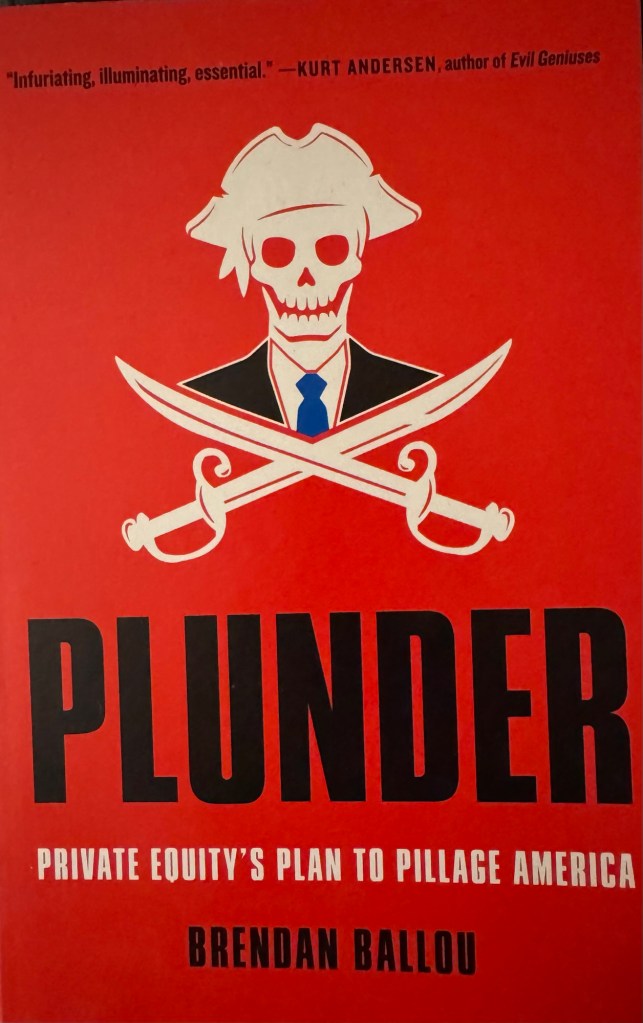
There’s a very public case going on right now that I’m in the middle of, and all this is on public record so that people can judge for themselves the contents.  But when I have to explain it to people —many thousands of people —the only thing that comes to mind is pirates.  People who rob other ships at sea and kill the crew and steal all the wealth on the ship.  The case I’m referring to involves a huge bank, Wells Fargo.  But as I have learned, what they are doing in the finance world is very common, not unique to just them.  We have a lot of plundering pirates in the finance and legal world, who, to put it mildly, steal wealth for all kinds of radical reasons.   And they have grown so large over the years that they have turned to piracy as their mode of operation.  The system we have allowed to exsist has created pirates in the finance industry that are completely stealing the kind of wealth that Trump is trying to unleash and based on my experience, because none of these people will ever admit any of this in court, it all comes back to politics and radicalism of human beings who have been allowed by law to get too much power over industry standards.  In the case I am talking about, Wells Fargo published an analytical opinion in April of 2025 that indicated the aerospace industry was going to suffer through a tough year.  This opinion appeared in multiple trade publications aimed at investors, and, to make a long story short, the intent of the opinion and its publication across multiple fronts was to depress the aerospace industry as a whole.  The comment by Wells Fargo analyst Matthew Akers regarding the poor performance of the aerospace industry was way off the mark, and I knew it then.  But the reason for the comment is that the piracy begins there, and is no different than the robbery we know occurred on the high seas in 1690, or in the finance industry in 2025. 

Banks like Wells Fargo did not get to be so big by their own power, there is a whole corrupt story that involves BlackRock, State Street, and Vanguard, and the Federal Reserve pumping a lot of printed money in the system that essentially gives public companies like Wells Fargo a pirate ship to attack the finance industry, while appearing to a media they largely control through advertising, to dress them up as good vessels.  Pirate ships used to perform this trick all the time: they would pretend to be a normal merchant vessel, then, just before they pulled up alongside another boat, they would hoist the Jolly Roger flag to scare the inhabitants of the ship they were trying to attack into surrendering.  And from there, the boat would be plundered for all its worth.  I see that happening to a lot of companies these days, especially after Trump was put back into office, which, based on the case I’m involved in, appears to be the motivating factor behind Matthew Akers’s statement.  I could have easily told him all about the aerospace industry and that he was incredibly wrong about his forecast in April of 2025.  But he wasn’t looking for the truth.  He was putting up a friendly flag to look helpful to the industry, to pull up alongside unsuspecting vessels to rob them.  That was the apparent purpose of his statement to the investment media.  And they thought they’d get away with it cleanly because they have for years, and have acquired more power, they believe, than our court systems can process.

There are a couple of strategies for why Matthew Akers and the people at Wells Fargo would make this prediction, knowing it was not the case.  2025 was projected to be a big year for the aerospace industry.  Trump was back in office.  The economy was poised to be red-hot.  And when people are happy and spending money, they fly to places.  Knowing a lot of people in this finance industry who are Democrat rats in disguise of pirates wearing suits, I would bet a lot of money that the purpose of the Wells Fargo statement to the industry was to attack the aerospace industry as a whole because they wanted to depress the incoming Trump economy.  If the Autopen president were still in office, I think the Wells Fargo forecast would have been the opposite.  And this is one of the primary reasons so many businesspeople are wishy-washy about politics.  They don’t want to be targeted by pirates who try to take over their business and industry.  So by depressing the industry, a large bank like Wells Fargo thinks it can actually shape politics.  And we see the same behavior wherever significant money is controlled by political radicals, such as in the pharmaceutical industry.  Only in aerospace, if you want to attack the military that Trump was to have access to, and the free flow of money into commercial aerospace because you want to protect the earth from the carbon footprint of a lot of new airplanes being built, you would if you could seek to tank the stock and harm the supply chain so that the industry would meet the expectations of a forecast that was not measured in real market value, but the strategic intent of the pirates involved at the front of the lending practices. 

Even worse than the political motivations is the ability to actually steal value.  In the case of the Wells Fargo April analysis, the mention was on the impact on Boeing stock, which a large bank’s opinion could greatly influence.  Such negative news could easily spark a mass sell-off and lower the price.  Only to have BlackRock, which owns a lot of Wells Fargo, sweep in and buy up all that stock for a very low cost.  And that money came straight from the Federal Reserve.  So we have a terrible game going on here that is really restricting a positive American economy and a global aerospace industry critical to Trump’s goals in the world.  In the case I’m involved in, the pirate ship is being fought; it was recognized well before they raised their pirate flag.  And the intention is to sink that pirate ship and bring disaster to all who are on it.  Ruthlessness has to be the means of proper conduct when its necessity is discovered.  But this practice isn’t unique; it’s common, and it is shocking how many court cases are spawned from this very behavioral practice.  These big banks have way too much confiscated power.  And Matthew Akers at Wells Fargo obviously is abusing that power for all kinds of political and financial reasons.  And the biggest threat to the American economy isn’t coming from foreign attackers, but from the banking industry that is entirely way too politically radicalized.  They keep their pirate flags lowered until it’s too late.  They pretend to be friends and helpful merchants.  But they are ruthless pirates by their conduct, and they intend to do anything to destroy positive financial growth in opposition to the politics they disagree with.  And in the case I mentioned, they went too far.  I know a lot more about the business of aerospace than Matthew Akers does.  So being wrong revealed a deeper problem, and it was easy to see in this case.  But often, nobody figures it out until it’s too late.  And if we want to have a good economy, we can’t let our bankers be more dangerous than Hamas. 

Rich Hoffman

Click Here to Protect Yourself with Second Call Defense https://www.secondcalldefense.org/?affiliate=20707
There Will Never Be Peace with Hamas: Releasing hostages that should have never been captured in the first place

After Trump posted support for Douglas Murray’s book, On Democracies and Death Cults: Israel and the Future of Civilization, I bought it quickly and read it because I wanted to know what Trump’s position on these hostage negotiations was with Hamas.  There are 48 total, with only 20 still alive, but none of them are in good shape.  Trump was wise to point to that particular book as an example of his policy on the issue, because it can be confusing.  But here’s the thing: it’s nice to do everything you can to save those poor people who have been hostages to Hamas.  And to return those bodies to their families.  But the solution is a deep one that I think will require much worse than Israel wants to do to all these Palestinian neighbors.  There is no way to achieve peace, and a two-state solution will never be realized.  One side will have to eliminate the other, and that will be the end of it.  That is the only way at this point.  The foundations of the religions at play are meant to provoke each other into conflict, and this is serving a greater evil that is far at work beyond normal sentiment.  There is a real lust for the death of the people involved that looms in the background.  And just for the record, when people ask me about AI and if I use it.  The answer is no, there is no AI program in the world, and I don’t think there ever will be, that can write the way I do.  It can attempt to copy my style, but it can’t think in the way I approach writing my articles.  AI could not write this article from scratch because it would require it to exceed human capacity to do so. To answer the question, no, I don’t use AI.  I do it the old-fashioned way because that’s the only way it works. 

I say all that because I think there is only one solution, especially after you read Murray’s book.  I’m not particularly impressed with Murray as a person; he is way too progressive for me and way too accepting of drug use.  There was a lot of drug use going on at that Nova dance party in southern Israel when Hamas ruthlessly attacked them over their Gaza Strip war.  Gaza is one of those positions where Israel tried to play nice and let the Palestinians live in some co-existence.  However, the terrorist mindset in the region simply cannot and won’t do it.  And they never will.  The minds at play are poisoned with hate, and we have to deal with that before we do anything, which is a radical leftist issue that is global.  It plays out beyond the façade of religion in the Middle East, as a validation between indigenous people and their territorial captors, as is the issue over the creation of Israel to begin with.  The primary assumption is that the Jewish people should not exist.  And the creation of Western Civilization behind biblical history should never have happened.  I know a lot more about this issue because I am very interested in the archaeology of the region and the politics on dig sites. At the most fundamental level, the situation is irreparable.  Islam is determined never to admit that there was ever a First Temple period, and they work really hard to make sure that science can never find anything from that period, which predates Islam by almost 2000 years.  There is a significant amount of historical revisionism occurring to validate their current political stance, which is unacceptable. 

Israel itself is way too progressive; the drug use at that festival was not appropriate for the young people who were slaughtered for no reason.  And the way Bibi Netanyahu has been untrustworthy as a leader of Israeli politics, claiming power, reveals how fractured the government really is at the highest levels.  The solution to it all is a much more conservative government and people far less inclined to liberal ideas.  The raids into border towns like Nir Oz, which had Hamas raiders going door to door and ripping out people from their homes and killing them ruthlessly, would not have happened if Israel had more guns in the hands of private citizens.  To answer the question about why such a thing as this doesn’t happen in the United States, it is because of the mass gun ownership that we have.  The same terrorists, using different masks, attack, and they kill ruthlessly and often.  Consider the recent situation involving Charlie Kirk.  It’s the same kind of leftist evil that is corrupting so many young people; there isn’t much difference between Charlie Kirk’s killer and the young people of Hamas who ruthlessly killed so many at the music festival and raided the homes of innocent people at Nir Oz.  But the incident cannot be widespread in America because every home is so well armed with personal firearms.  Terrorist elements would love to go door to door, raping and killing people in the suburbs of America.  However, they can’t because people can retaliate if the government fails them.  And in Israel, the government failed the people.  They should have known an attack was coming.  It took them too long to respond.  And it all could have been solved with wider gun ownership.  So Israel and its way-too-democratic government are too liberal to start with, which has caused them many of the problems they do have.  Without the United States, Israel would not exist, and everyone knows it.

The solution to the problem is not at the level of government.  The United States can’t get drawn into fighting Israel’s battles for it.  If we are going to say Israel should exist because God wants it to and we want to serve God, then let’s get serious.  Send in private contractors to wipe out Hamas wherever they are, pay them $100k per head, and hunt them down like dogs.  The solution to the violence is a lot more violence by private citizens.  I would volunteer for that.  I’d be happy to go and be a private contractor by going door to door where Hamas lives in Gaza, and other places, and just getting rid of them.  Forget about the armies, those are too structured.  Just take the violence to the enemy with profit-minded contractors, and beat the political left with their own game of terror, and stop playing nice.  I think it’s commendable that Trump is trying to secure the release of those hostages.  It’s a reasonable effort to try to make peace.  But, to really solve the problem, Hamas has to be hunted down and destroyed where they sleep.  That is the only way.  All the Hezbollah activity in the region, and the funding support that comes from Qatar and Iran, are just too deep.  When books like Mein Kampf and The Protocols of the Elders of Zion are as popularly sold in book stores in that region as they are, there is a much deeper evil at work for any logical negotiations.  And that evil wants the blood of humans for its personal consumption.  The only way to deal with it is to flood it with the blood of its own supporters.  Not the innocent.  And that is the only way.  I’m happy Trump is willing to try.  But the only solution is a lot of blood from the bad guys.  And the best definition of good in all human history has been defined by the Holy Bible.  And that’s the foundation of the entire fight.  You can’t make peace with that evil.  It has to be destroyed, and nothing else.

Rich Hoffman

Click Here to Protect Yourself with Second Call Defense https://www.secondcalldefense.org/?affiliate=20707
What’s Behind the $55 Billion Electronic Arts Deal: Fighting the new method of empire building by investment firms

War never went away; the idea of conquering another nation, or its inhabitants, in the way that Genghis Khan, Alexander the Great, Napoleon, Hitler, or even the modern communist movement did, persists.  All that really happened was that the nations of the world were neutered; however, the desire for conquest went underground and has since emerged in the finance industry.  Why did Napoleon invade Russia?  Because he wanted to rule over the largest empire the world had ever seen.  And so it is the same desire that a modern bank looks at a good, privately owned company and seeks to raid it, destroy it, and collect its assets for its own use.  Why did the Vikings raid other territories and kill all the men, and rape their women brutally?  To show conquest over them, to capture them, and rule over them.  And in the communist movement, the way to destroy capitalism as the world understands it is to control the means of production.  So, when people want to know why Electronic Arts suddenly wants to go private after being public for so long, and everyone is scratching their heads over the $55 billion deal, the largest of its kind ever, I’m saying this is a trend to prevent invasion, rather than to conduct innovative business.  Publicly traded companies have been vulnerable to radical leftist politics, which ultimately destroy their brands, so the trend of tomorrow is to maintain good old private ownership.  And this is something I am all too familiar with.  And most people don’t see it until it’s too late because the invaders are the types of people who work outside the rules of good business conduct.  And those rules are usually defined by what happens within the four walls of a business.  But the invaders are just as aggressive and malicious as any empire seeker ever was, and that power and desire for control starts with companies like BlackRock, State Street, and Vanguard, investment firms that run majority stock options to control the conduct of large companies that, in turn, control vast amounts of the population and their income. 

For instance, large banks like Wells Fargo have Vanguard, the investment firm, owning about 8% of their stock, BlackRock owns 7.9%, and State Street owns 4.1%.  Add them all up, and those huge progressive investment firms control a significant number of banks like that. We have seen very aggressive, woke policies embed themselves into those banking practices.  BlackRock isn’t shy about it; they are very aggressive about progressive politics, and when they own more shares of stock than the average 401K investor, they control the essential direction of the company, who they hire, and how they conduct themselves.  And it is that kind of menace that has essentially destroyed Disney as a company.  And they are doing the same to all large companies.  For instance, GE Aerospace has a nearly identical stock management portfolio, with Vanguard at 8.7%, BlackRock at 7.8%, and State Street at 4.2%.  See a pattern?  That translates to Vanguard controlling $27.4 billion, BlackRock $24.6 billion, and State Street at $13.2 billion.  Where did those investment firms get all that money to be able to buy up all that stock, and control that much of so many huge companies and banks, and to set policies of woke politics to steer them all in anti-American ways?  For Disney, it’s the same formula: Vanguard at $16.7 billion, BlackRock at $13.2 billion, and State Street at $8.2 billion.  Among the three, the same pattern emerges, and from there, power and control flow into every aspect of the industry.  The purpose of their enterprise was to control the means of production as Karl Marx envisioned it, and the method of achieving this was to be publicly traded. 

The crime of the century essentially started with the 2008 banking crisis, where the Fed began buying up a lot of bad debt. Through quantitative easing, the printing of money, they infused it into Wall Street, allowing people like Larry Fink to clean it up by buying up large companies.  To sustain the perception of value, they would clean up their portfolio by acquiring other companies and integrating them, attempting to conceal the inflationary trend of printed money that would lose its value on the open market.  It might look good on paper for everyone’s 401K plans, but what was lost as they imposed themselves on their conquered assets was the companies themselves.  This has become grotesquely obvious at Disney, where the public has rejected the new money-driven company in favor of Uncle Walt, who represented Main Street USA.  That vision was attacked by these big globalist bankers and investors who had the same motivations of invasion as any tyrant the world has ever seen.  However, the form of battle remains the same.  For those big companies mentioned, the conquered management hires people who facilitate the invading culture. Because of the nature of people to appease the powerful, they don’t question their reality so long as they can get a paycheck.  Who controls the paycheck, then controls the individual people.  But how did Vanguard, BlackRock, and State Street get all that money?  Because they printed it by gaining control of governments, such as the United States, through the Federal Reserve.  Whoever controls the money supply can theoretically control the world, on paper. 

I’ve been dealing with this kind of thing very up close and personal myself, and I’ve had to explain it to many hundreds of people over these last several weeks.  And most people don’t understand it because the invasion is happening on a vast scale that is even bigger than the management at those investment firms.  Larry Fink is aware of what he’s doing, to a point.  But it’s even bigger than him.  However, it’s no surprise that a giant video game developer would want to step off the publicly traded treadmill and seek to go private, where it can have better control over its management.  EA has been successful for a long time, but it’s challenging for a company to maintain its momentum once it matures, showcasing flashy PowerPoints and spreadsheets that demonstrate the kind of profit that keeps investors engaged.  And the big firms and their radical leftist politics need that cover of publicly traded companies to hide their influence over all these big firms.  So, it’s no surprise, especially now that the trend is emerging to see huge companies like Electronic Arts stepping away from the publicly traded scam.  This all became very clear to me as I watched an enormous bank do some really dumb things that made absolutely no fiduciary sense, but in the context of conquest as outlined by those top three investment firms and their global objectives.  It’s not the value of the companies themselves that they are after, but the need to hide their efforts behind real manufacturing that has not yet become encumbered by woke politics, and can still produce tangible goods.  Because those large firms are dealing with fake money printed by an out-of-control Federal Reserve, the value of the money means nothing to them.  But what that phony money can buy under the assumption of publicly traded companies does give them power that nobody else without that kind of access to the money supply can fight off.  At least for now, until more and more companies do as Electronic Arts is doing, and that is to step back into private ownership so that they can hedge away the influence of the liberal monsters of Wall Street, these practices will be a danger to any economy.

Rich Hoffman

Click Here to Protect Yourself with Second Call Defense https://www.secondcalldefense.org/?affiliate=20707

Violent Video Games and Furry Culture: Why so many trans kids are becoming killers

I would probably never know about this “furry” culture of sexual deviants if it weren’t for my grandchildren.  My oldest grandson came across them online while researching video game information.  Furries, as they are called, are people who like to dress up in animal costumes in public.  And that’s important because the killers of Charlie Kirk and his boyfriend were participants in this culture, as they would dress up for conventions and play video games that involved anthropomorphic animals having sex.  And of course, as the furry condition is a tremendous psychological concern for public health, we are dealing with a homosexual relationship with a couple of guys who had built up so much hate for the godly purity of Charlie Kirk that they made a move to murder him on a college campus.  And we are seeing a trend among many killers who are going through the same problem, killing people, as video games have desensitized them to killing without any genuine concept of consequences.  If you have read the text messages between Tyler Robinson and his boyfriend, Lance Twiggs, who is in the process of trying to convert to a woman, you will find that they were bizarrely out of touch.  So much so that people naturally think it was a fake narrative created by the deep state to hide the real killers, because it seems so outlandishly coherent, considering this kid just committed one of the most memorable assassinations the world has ever seen.  So a transsexual element is at play yet again, in addition to the furry culture obsession.  The killer of the Minneapolis church attack was a trans kid, and we know now that the assassination threat against Bret Kavanaugh of the Supreme Court was a man trying to become a girl.  So what’s going on here, and how is the gaming culture producing all these young killers?  It’s a question that goes way beyond free speech. 

I’m far from a person trying to reform the video game industry, but we’re no longer talking about Pac-Man here when we talk about video games and how they try to stand out from a very harsh crowd in the marketplace.  I saw the recent Wolverine preview for an upcoming video game, and it’s really very violent.  I have been alarmed at the level of violence in video games as developers have gotten away with more and more violence; there is no question of a desensitizing effect.  The popular game of Fortnite has more cartoon violence, but Call of Duty, Grand Theft Auto, and now this Disney-owned Marvel game, Wolverine, are very violent, where bones are ripped from the bodies of victims ruthlessly.  It is not a stretch to think that a small percentage of the population that plays these games is being desensitized to violence and is losing touch with reality.  I’ll repeat it, I used to write screenplays and I would submit them to studios and agents in the 1990s.  And I had a lot of mainstream people tell me that my screenplays were too violent for a mainstream audience, which Hollywood was a part of at that time.  They had a responsibility to the public good, that’s what they told me.  They would say to me I was a talented writer, but that resorting to so much violence took away from that talent, and they had a responsibility to the public not to be so graphic.  Then I saw Kill Bill and other Tarantino movies, and I mentioned to them that my work wasn’t any more violent than Tarantino’s.  And there really wasn’t an answer except that they said Tarentino’s violence was more comic book, and not as realistic as mine.  So, a line was being drawn, and watching that preview for Wolverine certainly was the result.  The self-censorship in the entertainment industry was ending about the time I mentioned, and it has devolved into what we see today, which is a very violent entertainment culture. 

For young people without strong father figures or good family structures, video games can distort reality.  And this Tyler Robinson supposedly came from a loving family.  Once he developed a sexual relationship with another young man, and they started crossing lines that society would judge them harshly over, they retreated into the violent world of video games, and we know that because those traits were marked on the shell casings from the gun used to murder Charlie Kirk.  We should be all over these traits because they keep repeating, the mode of operation for many of these killers is that they are involved in transexual practices and spend their free time on violent video games.  And when you spend many hours playing violent video games like Lance Twiggs did, there is a desensitization toward violence that ultimately becomes a psychological problem.   When kids delve into this rabbit hole, a trait emerges from this furry culture: the idea that people can be anything they want if only they wish it.  It’s consistent to make mistakes in a video game, where, if you wish, you can change the avatar of your character into anything you want to be.  And that is without question happening in these trans cases, where people make mistakes their families might look down on them for, and they turn to furries or trans sex to change their public image from mistakes they are ashamed of.  When society has opinions about those mistakes, they retreat into the world of video games, where you can be anything you want, you can change your name, and you can hide from society behind mass violence.  Given the frequency of these occurrences, this is a significant problem. 

This is one of those cases where treacherously evil acts are hiding behind conservative values, such as limited government oversight of the video game industry, allowing market forces to work out the problems.  Or to have a libertarian approach to sexuality.  We are told by those creating vile content that more oversight of these industry norms is intrusive.  Therefore, the attacks are occurring behind the values we advocate as businesspeople and conservative, market-driven economic values.  We’re not supposed to have an opinion on this topic because we support free markets, and in the free market, people want violence.  Just as we are supposed to accept that people want to smoke dope, or do other detrimental behaviors, that do not suit healthy mass psychology.  But that’s the thing, and it goes back to my days of writing scripts, when I was told that something was too violent, the standard was to go back and make the scenes less so, but just as impactful.  Violence is often used to make a point forcefully.  It can be necessary, but it can also serve as a creative crutch to avoid the details of actual artistic integrity.  Just like grotesque sex, violence is lazy in trying to appeal to our animal instincts.  And killing is a primal instinct we all have.  But we are expected to overcome that violent trait for something better.  And when we have artistic expression that feeds the fears and anxieties of a young generation with various insecurities, bad things can and do happen.  This video game culture is feeding them in a very negative way, and some of them are turning to actual killings.  And they are becoming desensitized to the world, especially once they start really embarrassing themselves with sexual practices they could never get their families to accept, and changing their public image like a video game avatar never solves their insecurities.  And before they turn to suicide, they are turning to mass social violence, which video games helped fuel their fantasies.  And we are now seeing a whole generation turning to violence and perversion to hide their mistakes, which they have never learned to deal with.  And it’s a really big problem that won’t go away on its own.

Rich Hoffman

Click Here to Protect Yourself with Second Call Defense https://www.secondcalldefense.org/?affiliate=20707

I Love War: The greatest joy in life is destroying your enemies

Erika Kirk’s statements at the memorial service for her husband were nice, but it has been something that has come up in my direction many more times than a few this past week.  I am more aligned with what President Trump said about his enemies: I hate them.  I don’t want to get along with them.  And I would be bored to death in life if I didn’t have someone to fight.  The idea of going to Heaven and sitting around playing a harp on a cloud all day for eternity is not appealing.  Forgiving enemies is not something I will ever do.  I love war, and I love being in fights with other people.  I love to destroy my enemies.  That destruction either happens fast or it happens over a great many years, depending on the circumstance.  But one way or another, the destruction of my enemies is something that is going to happen, and I spend a lot of my life thinking about it.  The idea of waking up every morning, sipping coffee, and watching the dew gather on blades of grass without having to fight is incredibly dull to me, and I would not be happy.  So even though the concept of Christianity is to forgive your enemies and all kinds of platitudes that I think were incorrectly interpreted over time into organized religion, that is where my thoughts end on these kinds of things.  I may share a lot of values with very religious people, but if there is no conflict involved in communicating those ideas, then I lose interest really fast.  Because to me, the fight is the only thing that matters, and if people aren’t fighting, they aren’t trying to get to the truth of a matter. 

Human beings are so deceitful; they have numerous value systems that protect their motivations behind the creative lies that surround their lives intensely.  That is the first problem with a society of peace: a lot of truth gets buried behind deceit.  When people ask me why I can sniff out so much truth about things, and have over a long period of time, it’s because I like to fight for that truth about people.  The pressure of conflict brings about the truth in people and exposes them from their hiding places.  In my experience, that is the only way to understand what people are all about truly.  Otherwise, they will conceal their true thoughts behind the façade of polite society.  If you love the truth, you have to love the means of extracting it from society in general, and the only real way to do that is through conflict.  People often reveal a great deal about themselves through conflict that they would otherwise conceal.  Along with war, I love uncovering the truth about things.  Whatever that truth may be.  I love war because I love the truth, and you can only learn it through conflict.  Because people, all people, will lie to protect their version of the truth until their dying day, if they are allowed to.  The reason for conflict is to settle differing ideas about things.  And to avoid war is to suppress the truth about what those things might be in favor of some common understanding that is usually a watered-down version of reality.  So the assumption of peace is the surrender of the truth, as people are willing to fight for it.  And that lowers the value of a society in general as a result. 

I suppose this has arisen recently, before Erika Kirk made her statements, because many truly reprehensible individuals believed they had some leverage over me.  And they have been very frustrated by my reaction to their aggressions.  Most people conduct strategies assuming that peace is the motivating factor in a human being.  To wake up in the morning and be left alone so that everything is just perfect.  I don’t see the world like that.  If there isn’t something to fight, then I’m bored.  So when I have a lot of enemies trying to plot my demise, I am far happier than if everyone just left me alone.  Many people are frustrated by my approach because they assumed, like most people, that I would do anything for peace.  They should have done their homework.  Ever since I was a little kid, most of my thoughts have been about war and fighting someone over something.  That’s why I love politics.  That’s why I love the business world.  That’s why I like most things, because they involve people, and those people are often at cross-purposes with each other. I love uncovering the truth behind concealed smiles and handshakes.  I never sit down with people and look for common ground or ways to enjoy another person.  I want to challenge them, with everyone, and to discover what it is they don’t want to be known for to the world.  I never assume that my interactions with anyone will be peaceful, and if they are, I lose interest in those people quickly.  In my youth, I wore army fatigues everywhere, under every circumstance, because they reminded me of my love for constant fighting.  I never wanted to join the military to “serve.”  Serving others was always a misguided idea because what if, in doing so, those people were found to be unworthy of my dedication, which is a common discovery in all institutionalism.  However, the fighting aspect has always been appealing. 

The teachings of Jesus are appealing ideas on the surface.  But if you like the truth of a matter, you will either be killed for it, as Jesus was, and John the Baptist was, and as was Charlie Kirk, and many others.  Or you will have to fight everyone, and like it.  And that means everyone, because most people are very deceitful even within their families.  There are plenty of fights, and if you want to know the truth about things, you’d better be willing to fight for it.  Fighting is more than just the physical aspect, because humans are very emotional creatures; they create many layers of deceit in their lives to protect themselves from the harm of judgment.  And the more people you deal with, the more deceit you can expect to be exposed to.  The only way to get to the truth of anything is through conflict, in stripping away the things people use to protect themselves so you can get to the foundation of their intellects.  Such a thing is never given up voluntarily; you have to pound away at their defenses to know who they really are, which only happens under duress.  So, if many people have found that they now have a handful with me, they should have thought about things a bit more carefully.  I am only thrilled when the world around me is on fire, and that is how it will always be with me, even in Heaven.  Heaven to me would be at the gates of Hell putting evil’s heads on a pike and spitting on their tortured bodies.  Everyone else can play a harp at the golden gates of Heaven and sing songs to each other in a quest for peace.  Which, for me, is the same as serving an obligation toward dishonesty.  Only in war do people really tell the truth, even in Heaven.

Rich Hoffman

Click Here to Protect Yourself with Second Call Defense https://www.secondcalldefense.org/?affiliate=20707

We Were Meant to Fight for the Bible: Not to get along with the devils of life, but to slay them

I’ve had what I can only describe as one of the worst weeks of my adult life. Not because of global events alone—though the assassination of Charlie Kirk and other disturbing developments certainly cast a shadow—but because of the personal weight of it all. It’s not the first time I’ve faced a week like this, and I’ve long since abandoned the illusion that life is meant to be luxurious or stable. Comfort, for those who fight for goodness, is not part of the equation. Life, at its core, is a battleground for ideas, for virtue, for truth. And when evil shows itself, as it often does, the only response is to stand firm and keep moving forward with a tenacious mind to defeat it.

For years, I’ve carried my Bible with me across the world. It’s not a crutch, nor a talisman—it’s a companion, a collection of wisdom that transcends time and geography. It has traveled with me through many airports, across countries, and into countless moments of philosophic contemplation. I consider it one of the greatest literary achievements of human intellect, not because it is flawless in form, but because it captures the essence of what it means to be human, striving toward the divine. It is a book that has shaped civilizations, inspired revolutions of thought, and anchored the moral compass of entire cultures.

My study of religion has been deep and wide, touching on comparative theology, mythology, and the psychology of belief systems. I’ve explored Hinduism, Buddhism, ancient tribal mythologies, and the spiritual frameworks of indigenous societies. I’ve read the Golden Bough and other seminal texts that attempt to decode the human relationship with the eternal. But none of these, in all their richness and diversity, have articulated the human struggle for goodness with the clarity and power of the Bible. It is not merely a religious text—it is a blueprint for civilization, a philosophical foundation upon which the most successful societies have been built.

Western civilization, with all its flaws and triumphs, emerged from the soil of biblical thought. The Bible did not just inspire personal piety; it gave rise to systems of law, ethics, governance, and human rights. It provided a framework for understanding the nature of life beyond primal survival. It allowed humanity to step beyond the dog-eat-dog existence and begin to dream of peace, justice, and purpose. The philosophies that emerged from biblical foundations—Judeo-Christian ethics, the sanctity of life, the dignity of labor, the value of truth—are not accidental. They are the fruits of a worldview that sees life as a sacred struggle, not a playground.

When we attempt to remove the Bible from our cultural foundation, we do not simply erase a book—we unravel the very fabric of our civilization. The degradation of social norms, the rise of hatred toward those who speak of God, family, and moral responsibility, are symptoms of a deeper sickness: the rejection of the very ideas that made our society possible. Why would anyone hate a man who speaks of goodness, of biblical values, of the importance of relationships rooted in truth? Because rebellion against the good is seductive. It promises freedom but delivers chaos. It offers novelty but strips away meaning.

There are many religions in the world, and many have contributed to the human story. Islam, Buddhism, and countless others have shaped cultures and guided lives. But when measured by the success of civilizations—by their ability to sustain peace, foster innovation, and uphold human dignity—the biblical worldview stands alone. It is not a matter of superiority in doctrine, but in outcome. Societies built on biblical principles have thrived, while those that rejected them have often descended into tyranny or stagnation. This is not a coincidence; it is a reflection of the power of truth.

The Bible does not promise comfort. It does not coddle the reader with easy answers or indulgent philosophies. It calls us to be warriors for goodness, to fight for what is right even when the world is falling apart. It teaches that life is not meant to be enjoyed passively but lived actively, with purpose and conviction. The stories within its pages—of struggle, redemption, sacrifice, and triumph—are not mere allegories. They are the roadmap for a life well-lived, a society well-ordered, and a soul well-formed.

Even in the midst of a miserable week, when everything seems to be unraveling, I find truth in the biblical perspective. It reminds me that suffering is not meaningless, that hardship is not failure, and that the pursuit of goodness is the highest calling. We are not here to be comfortable. We are here to fight for what is right, to build what is good, and to stand against what is evil. That is the essence of human existence, and it is captured more powerfully in the Bible than in any other literary or philosophical tradition.

Civilizations rise and fall, but the ideas that sustain them endure. The Bible has endured because it speaks to the deepest truths of the human condition. It does not shy away from pain, conflict, or complexity. It embraces them, transforms them, and uses them to point toward something greater. It is not a relic of the past—it is a guide for the future. And any society that seeks to thrive must return to its wisdom, not as dogma, but as a foundation for thought, action, and community.

We are living in a time when the foundations are being shaken. The rejection of biblical values is not leading to liberation—it is leading to confusion, division, and decay. The intellectual persistence that once defined our culture is being replaced by emotional reaction and ideological chaos. But there is still hope. There is still a path forward. And it begins with a return to the truths that have stood the test of time.

To fight for goodness is to embrace the struggle. It is to reject the lie that life is meant to be easy and to accept the challenge of living with purpose. The Bible teaches us that goodness is not a feeling—it is a discipline. It is a choice made daily, in the face of adversity, and in defiance of despair. It is the path of the warrior, not the tourist. And it is the only path that leads to true peace.

So even in the worst of weeks, I hold great respect for the Bible—not as a comfort, but as a compass. It points all society toward what matters. It reminds me of who I am and what I love to do, to fight, not for myself, but for the world that could be, if only we had the guts to be what we were meant to be.  We were not designed to sip lattes at Starbucks and to swat at bugs that land on our foreheads.  We were meant to step into the gaps in life and to fight the evil that resides there, without fear.  And with ruthlessness.  We are not meant to get along with the devils of life.  We are meant to slay them.  And to build the foundations of civilizations on their defeated corpses.  And to plant our flags of justice into the eye sockets of their decapitated heads.  Not to love our enemies, but to defeat them so that even the soil that captures their blood withers under our quest for justice.  And that the entire universe will shudder by our intentions for truth, justice and the AMERICAN way.  And no other way.

Rich Hoffman

Click Here to Protect Yourself with Second Call Defense https://www.secondcalldefense.org/?affiliate=20707

The Painted Concrete: Let the lover leave and learn the hard way

In the unfolding political drama of New York City, Zohran Mamdani has emerged as a compelling figure—a charismatic, progressive candidate whose platform promises sweeping reforms aimed at increasing affordability, promoting equity, and advancing social justice. As a self-described democratic socialist, Mamdani has galvanized a significant portion of the electorate, particularly younger voters and working-class communities, with proposals that include rent freezes, city-owned grocery stores, fare-free public transportation, and a $30 minimum wage by 2030. His campaign is not just a political movement; it is a cultural moment, a rebellion against the status quo, and a romanticized vision of a city reimagined through socialist ideals.

But beneath the surface of this enthusiasm lies a more profound concern—one that echoes through history and personal experience alike. The allure of radical change, especially when framed as a rebellion against perceived injustice, often blinds people to the long-term consequences of their decisions. Just as the excitement of an affair might tempt a spouse, voters may be seduced by the promises of a candidate like Mamdani, not because they fully understand or agree with his policies, but because they are rebelling against what they see as a broken system. The danger is not in the ideas themselves, but in the romanticization of rebellion, in the belief that anything different must be better.

And I would argue that sometimes the most effective way to confront such movements is not through resistance, but through allowance. Let the people vote for Mamdani. Let them experience the reality of his policies. Let them see, before it’s too late, what socialism and communism look like when implemented in a city as complex and economically diverse as New York. The goal is not to punish or shame, but to reveal—to strip away the green paint from the concrete and expose the cold, hard surface beneath.  When they say the grass is always greener on the other side, let them discover that it’s really just painted concrete, a cold and complex reality.

Mamdani’s platform is a communist one. He proposes freezing rent for nearly a million New Yorkers, building 200,000 affordable housing units, and strengthening tenant protections through expanded enforcement. He wants to create city-owned grocery stores that bypass traditional market mechanisms, eliminate bus fares, and provide free childcare for all children under the age of five. These ideas are undeniably appealing, especially to those struggling with the city’s high cost of living. But they also represent a fundamental shift away from market capitalism toward centralized control—a shift that history has shown to be fraught with unintended consequences.

I would attribute this lucrative challenge to the heartbreak of a cheating spouse. When someone is determined to leave, to chase the illusion of something better, no amount of pleading or logic will stop them. The best course of action, I would argue, is to open the window and let them go. Let them discover that the grass on the other side is not greener, but painted. Let them roll around in it and feel the concrete beneath. Only then will they understand the value of what they left behind.

This metaphor applies seamlessly to the current political climate. Mamdani’s rise is not just about policy—it’s about emotion, rebellion, and the seductive appeal of radical change. His supporters are not merely voting for a candidate; they are voting against a system they believe has failed them. They are climbing out the window, chasing a lover across town, convinced that the romance of socialism will heal their wounds. But romance fades, and reality sets in. The cost of these policies—economic stagnation, reduced investment, increased taxation, and bureaucratic inefficiency—will eventually become clear. And when it does, the pain will be real.

Rather than trying to stop this movement through opposition, a wiser strategy may be to let it unfold. Let Mamdani win. Let his policies be implemented. Let New York become the case study in what happens when idealism overrides pragmatism. This is not a call for sabotage or cynicism, but for strategic patience. Just as a parent might let a child touch a hot stove to learn a lesson, the city may need to feel the heat of socialism to understand its consequences.

This approach is not without risk. The damage could be significant, including economic decline, increased dependency, and a loss of competitiveness. But the alternative—prolonged resistance that only fuels the romanticism of rebellion—may be worse. By fighting against Mamdani’s movement, opponents risk turning him into a martyr, a symbol of suppressed hope. By letting him lead, they allow reality to do the teaching.

In business, this principle is well understood. Companies that fail to address cultural issues—such as a lack of motivation, poor work ethic, and resistance to change—cannot be saved by spreadsheets and whiteboards. They must confront the root of the problem, even if it means letting certain elements fail. Only then can proper restructuring occur. The same applies to politics. If voters are determined to embrace a candidate like Mamdani, let them. Let them see the results. Let them learn.

This strategy also respects the intelligence and autonomy of the electorate. It does not treat voters as children to be protected from themselves, but as adults capable of learning through experience. It acknowledges that people are not always honest with themselves or others, that they often need to see the consequences of their actions before they can change. It is a strategy rooted in respect, not condescension.

Mamdani’s campaign is built on the promise of a better life. He speaks to the pain of working-class families, the frustration of workers, and the despair of renters. He offers solutions that are bold, compassionate, and deeply appealing in their communist utterances. But he also represents a shift toward centralized control, higher taxes, and reduced market freedom. These are not just policy choices—they are philosophical ones. And they carry consequences that must be understood, not just imagined.

My advice—to let people go, to let them experience the consequences—is not about giving up. It is about choosing the most effective path to truth. It is about trusting that reality, not rhetoric, will ultimately shape public opinion. It is about believing that people, once they see the results of their choices, will return with a clearer understanding of what works and what doesn’t.

In the case of New York, this means allowing Mamdani’s vision to be put to the test. Let the city-owned grocery stores open. Let the rent freezes take effect. Let the buses run for free. And then, let the city measure the impact. Let businesses respond. Let investors react. Let residents feel the impact of these changes in their daily lives. The results will speak louder than any campaign ad or political debate.

This is not a strategy of cruelty, but of clarity. It is rooted in the belief that truth is the most potent force in politics. And sometimes, the only way to reach it is through experience. Just as a spouse who leaves for an affair may eventually return with a new appreciation for what they had, voters who embrace socialism will look back and see the value of market capitalism. But they must be allowed to make that journey.

Do not romanticize rebellion. Do not make it more appealing by resisting it. Instead, strip away the romance. Let reality do the work. Let people see the painted grass for what it is. Let them feel the concrete. And when they do, be there to help them rebuild—not with bitterness, but with wisdom.  Zohran Mamdani’s campaign represents a decisive moment in New York’s political history. It is a movement driven by hope, frustration, and the desire for change. But it is also a test—a test of ideas, of governance, and of the electorate’s ability to learn through experience. The best way to meet this moment is not through resistance, but through revelation. Let Mamdani lead. Let his policies be implemented. Let the city feel the consequences. And then, let the truth emerge. In that truth lies the path to real progress, grounded not in fantasy but in reality.

Rich Hoffman

Click Here to Protect Yourself with Second Call Defense https://www.secondcalldefense.org/?

The Department of War: Its time to take the fight to the enemy

In the realm of global power and national identity, the names we assign to our institutions carry profound meaning. They reflect not only the purpose of those institutions but also the philosophy and strategic posture of the nation itself. One such institution—the Department of Defense—has long stood as a symbol of American military might, yet its name belies a deeper issue. Originally known as the Department of War, its rebranding in 1947 marked a significant shift in how the United States viewed its role in the world. Today, as threats to American sovereignty and values grow more complex and aggressive, it is time to reconsider that change and restore the Department of War to its rightful place in our national framework.

The Department of War was established in 1789, shortly after the founding of the United States. Its mission was clear: to organize and execute military operations in defense of the nation’s sovereignty. It was a department built on the premise that America, as a free and independent republic, must be prepared to confront adversaries and secure its interests through strength and resolve. This clarity of purpose was essential in the early years of the republic, when threats were immediate and existential.

In 1947, following the end of World War II, the department was renamed the Department of Defense. This change was not merely semantic—it reflected a broader ideological shift. The United States, having emerged victorious and possessing unmatched military power, sought to reassure the world that it would not become an aggressor. The new name was intended to project restraint, signaling that America’s vast arsenal would be used only in defense. However, this rebranding coincided with the rise of globalism, the formation of the United Nations, and the beginning of America’s role as the world’s de facto police force. The Cold War, Korean War, Vietnam War, and numerous Middle Eastern conflicts followed, many of which were rooted in ideological battles stemming from the post-WWII global order. Ironically, the Department of Defense presided over some of the most prolonged and controversial military engagements in American history.

The term “defense” implies passivity. It suggests that the United States will only act when provoked, that it will wait for threats to materialize before responding. This posture has led to strategic ambiguity and has emboldened adversaries who perceive America as hesitant or unwilling to assert its interests proactively. Consider the psychological impact of the name “Department of Defense.” It evokes an image of a nation on its heels, waiting for an attack before it responds. It suggests a reluctance to engage, a preference for negotiation over action, and a tolerance for provocation. This perception has allowed hostile actors—whether state-sponsored or non-state entities like drug cartels—to operate with impunity, confident that the United States will not strike unless directly threatened.

In contrast, the name “Department of War” conveys strength, readiness, and resolve. It signals to the world that America is prepared to take decisive action against those who threaten its sovereignty, values, or citizens. It projects a posture of deterrence, not weakness—a message that is sorely needed in today’s geopolitical climate. The world has changed dramatically since 1947. The threats facing the United States are no longer confined to conventional warfare. They include cyberattacks, economic manipulation, ideological subversion, and transnational criminal enterprises. These threats require a proactive, assertive response—one that is better aligned with the mission of a Department of War.

Take, for example, the growing influence of drug cartels operating across the southern border. These organizations are not merely criminal; they are strategic threats to American stability. They poison communities, undermine law enforcement, and exploit weaknesses in border security. Yet under the current “defense” paradigm, the response is often reactive and constrained by diplomatic considerations. A Department of War would approach such threats differently. It would recognize them as hostile actors and treat their actions as acts of aggression. It would empower the United States to take the fight to the enemy’s doorstep, rather than waiting for the damage to be done. This shift in posture is not about promoting violence—it is about restoring deterrence and protecting American lives.

The renaming of the Department of War was part of a broader globalist agenda that sought to integrate the United States into a centralized international order. Institutions like the United Nations and NATO were created to manage global conflicts and promote collective security. While these organizations have had some success, they have also constrained American sovereignty and led to costly entanglements. Wars in Korea, Vietnam, Iraq, and Afghanistan were all influenced by globalist ideologies—fighting communism, securing oil, promoting democracy. These conflicts drained American resources, cost countless lives, and often failed to achieve lasting peace. They were not wars fought for direct national interest, but for abstract global ideals.

The Department of Defense, under this paradigm, became a tool of global management rather than national defense. It was used to enforce international norms, protect foreign borders, and stabilize regions far from American soil. Meanwhile, domestic threats—like the rise of socialism, the erosion of personal freedoms, and the spread of narcotics—were often neglected. Renaming the Department of Defense back to the Department of War is more than a symbolic gesture—it is a strategic realignment. It reasserts America’s commitment to its own sovereignty and sends a clear message to adversaries: aggression will be met with force.

This change also reflects a broader philosophical shift. It rejects the notion that peace is the ultimate goal at any cost. Peace is valuable, but not when it comes at the expense of justice, freedom, or national integrity. A nation must be willing to fight for its values, and it must make that willingness known. Critics may argue that such a change is provocative, that it sends the wrong message to the international community. But who decided that America’s role is to usher in peace while others plot its downfall? Who said that restraint is more virtuous than resolve? These are questions worth asking, especially in a world where hostile regimes and criminal networks operate without fear of reprisal.

President Trump’s executive order to restore the Department of War is a bold and necessary step. It acknowledges the failures of the post-WWII globalist framework and seeks to correct them. Congress’s support for this initiative indicates a growing recognition that America must reclaim its strategic identity. When one visits the Pentagon—a massive, imposing structure across from the National Mall—it should represent a nation prepared to defend itself through strength, not hesitation. The Department of War, housed within that building, would embody the spirit of a sovereign republic willing to confront threats head-on.

The renaming of the Department of Defense to the Department of War is not about glorifying conflict—it is about restoring clarity, purpose, and strength to America’s military posture. It is about recognizing that the world is not always peaceful, that threats are real, and that the United States must be prepared to act decisively. This change marks the end of an era defined by globalist entanglements and passive defense. It signals the beginning of a new chapter—one in which America reclaims its role as a sovereign power, committed to protecting its people, its values, and its future.

In a world filled with hostile actors, weak governments, and ideological adversaries, the Department of War stands as a beacon of resolve. It tells the world that America will no longer wait to be attacked—it will act to prevent aggression, secure its interests, and defend its way of life. And that, ultimately, is the message that must be sent—not just through words, but through the very institutions that define our national character.

Rich Hoffman

Click Here to Protect Yourself with Second Call Defense https://www.secondcalldefense.org/?affiliate=20707