
The Heart to Take Away Hearts: Taking a stand against mediocrity in Ohio

The 2025 redistricting process in Ohio has emerged as a pivotal moment in the broader national battle over congressional control, with implications that stretch far beyond the Buckeye State. On October 31, the Ohio Redistricting Commission unanimously approved a new congressional map that shifts the balance of power decisively toward Republicans, giving them a projected 12-3 advantage across the state’s 15 districts. This outcome was the result of a tense, behind-the-scenes negotiation between Republican and Democratic leaders, including Governor Mike DeWine, Secretary of State Frank LaRose, Auditor Keith Faber, and legislative appointees like Rep. Brian Stewart and Sen. Jane Timken. Democrats on the commission—Senate Minority Leader Nickie Antonio and House Minority Leader Dani Isaacsohn—reluctantly supported the map, citing the threat of a more extreme 13-2 GOP-dominated map if negotiations failed. The new map redraws key battlegrounds: Rep. Greg Landsman’s OH-1 district now leans Republican (54%-47%), Marcy Kaptur’s OH-9 shifts to a 54.5%-45.5% GOP tilt, while Emilia Sykes’ OH-13 becomes slightly more Democratic at 52%-48%. These changes reflect a broader national trend, where Republican-led states, such as Texas, Missouri, and North Carolina, have aggressively redrawn maps to consolidate power, often under direct encouragement from President Donald Trump. Ohio’s redistricting, however, was not entirely unilateral; constitutional reforms passed in 2015 and 2018 required bipartisan approval for maps to remain valid for a full decade. The compromise avoided a costly referendum that could have frozen the existing 10-5 map and delayed the 2026 primaries, potentially costing taxpayers $50 million.

The political personalities behind Ohio’s redistricting drama reflect the ideological fault lines within the Republican Party itself. Senator Bernie Moreno, a staunch Trump ally, predicted early on that Ohio Republicans would push for a map that reduced Democrats to just two seats. His comments echoed the sentiments of Rep. Warren Davidson and State Senator George Lang, both of whom have expressed frustration with what they perceive as excessive compromise with Democrats. Davidson’s own district, OH-8, has long been a textbook case of gerrymandering, stretching from Troy to majority-minority communities in Hamilton County, effectively diluting Democratic votes. Lang, known for his “business-first” approach, has remained relatively quiet on the specifics of redistricting but is widely seen as aligned with the GOP’s strategic goals. Secretary of State Frank LaRose, meanwhile, played a key role in supporting the bipartisan map, arguing that it reflected Ohio’s political geography and avoided a chaotic referendum fight backed by “dark money special interests”. His stance, however, has drawn criticism from grassroots activists and legal watchdogs, many of whom argue that the map remains a gerrymandered artifact of one-party rule. Former Attorney General Eric Holder, chair of the National Democratic Redistricting Committee, called the map “a gerrymander placed on top of another gerrymander,” though he acknowledged it preserved Democratic incumbents’ ability to compete.  And when you get a compliment from Eric Holder, you are doing the wrong thing for the wrong reasons.

Nationally, Ohio’s redistricting fits into a broader pattern of mid-decade map manipulation driven by Trump’s directive to Republican governors and legislatures. Texas led the charge, redrawing its map to flip five Democratic seats, followed by Missouri and North Carolina, each adding one GOP-leaning district. Ohio’s shift adds two more Republican-leaning districts to the national tally, bringing the potential GOP gain to nine seats before the 2026 midterms. Democrats have responded in kind: California passed Proposition 50, a ballot measure allowing the legislature to redraw its map to add five Democratic seats, countering Texas’s move. Virginia and Illinois are also considering redistricting maneuvers, while states like Indiana and Florida have begun legislative discussions under pressure from Trump and Vice President J.D. Vance. The redistricting arms race has triggered lawsuits, referendums, and constitutional amendments across the country, with the Supreme Court’s upcoming ruling on the Voting Rights Act poised to reshape the landscape further. In this context, Ohio’s 12-3 map is seen by many Republicans as a strategic win, while Democrats view it as a defensive maneuver to preserve viability in key districts. The bipartisan nature of Ohio’s deal, although rare, underscores the high stakes and complex trade-offs involved in redistricting under the Trump-era political landscape, which is a good thing.  The Trump White House understands the situation.

Ultimately, Ohio’s redistricting saga reveals the tension between political pragmatism and ideological purity. Democrats like Dani Isaacsohn and Nickie Antonio have defended their votes as necessary to preserve competitive districts and avoid a worse outcome, even as activists accuse them of capitulation. Republicans, meanwhile, remain divided between hardliners like Moreno and Davidson, who favor aggressive gerrymandering, and institutionalists like DeWine and LaRose, who prioritize stability and legal defensibility. The map itself, while favoring Republicans, does not guarantee outcomes; Democrats have won in GOP-leaning districts before, and the 2026 midterms will test the durability of these new boundaries. What’s clear is that redistricting has become a central battlefield in the fight for congressional control, with Ohio playing a critical role in shaping the national narrative. As Trump’s second term unfolds, and as Democrats mobilize to counteract GOP gains, the redistricting wars will continue to define the contours of American democracy. Whether Ohio’s compromise map proves to be a tactical success or a strategic misstep remains to be seen—but it has already become a case study in the politics of power, representation, and the enduring struggle between exceptionalism and mediocrity.

The fundamental flaw in compromising with Democrats during redistricting—especially under the guise of fairness—is that it inadvertently empowers the very mediocrity that exceptional societies must resist. While it may appear noble or politically sophisticated to preserve all viewpoints and accommodate ideological diversity, the reality is that mediocrity, when institutionalized, becomes a corrosive force. It stifles innovation, suppresses excellence, and erodes the competitive spirit that drives societal advancement. Democrats, often aligned with collectivist ideologies like socialism and Marxism, have historically championed policies that prioritize equality of outcome over merit-based achievement. In doing so, they mask mediocrity as compassion, and fairness becomes a Trojan horse for cultural stagnation. When Republicans yield ground in the name of bipartisanship, they risk legitimizing this mediocrity and weakening the foundations of a high-performing society. Authentic leadership demands the courage to elevate exceptionalism—not dilute it. Redistricting is not merely a cartographic exercise; it is a strategic opportunity to shape the future. If Republicans fail to assert dominance when the political terrain allows it, they may find themselves governed by the very forces they sought to contain. The Ohio map, while a tactical win, reflects a deeper philosophical hesitation—a reluctance to confront mediocrity head-on. And in that hesitation lies the danger of losing the war for cultural and political excellence.  So, while many think it was good to play nice with Democrats, the danger lies in compromise when standards are set and social norms are established.  A failure to take away the heart of mediocrity in a society advancing for greatness might appear to have a merit of its own.  However, in the context of achievement, it undermines the very foundation of excellence we strive for.  And in going forward with these mechanisms of government strategy, when you get a chance to put your foot on the throat of the enemy and put them out of existence, we should do it. Playing fair with Democrats if it brings down your entire society is not a good thing.  It might make those lunches with colleagues more approachable, less tense.  However, by letting mediocrity prevail over logic, nobody is enjoying a better life under the influence of compromise.

Rich Hoffman

Click Here to Protect Yourself with Second Call Defense https://www.secondcalldefense.org/?affiliate=20707
The Hidden Game: How Sports Betting is Giving Power to the Mob and the NFL

This is a story that quickly disappeared: the NBA gambling scandal.  However, one of the great things about money is that it reveals a lot about the people who want it. In the gambling world, where easy money is a prospect for those who are lazy, the character of all endeavors is relatively easy to reveal.  And it’s not just the NBA; I would say the rigged games in favor of betting odds are much worse in the NFL.  In the age of legalized sports betting, the question isn’t just who will win the game—it’s whether the game itself is being played fairly. As billions of dollars flow through betting platforms and fantasy leagues, the integrity of professional sports is under more scrutiny than ever. Recent scandals in the NBA and questionable officiating in the NFL have reignited concerns that games may be influenced not just by athletic performance, but by money, power, and even organized crime.

The NBA was rocked by a recent FBI investigation led by Kash Patel, which exposed a network of players and insiders allegedly involved in illegal gambling activities. The scandal implicated figures like Chauncey Billups, Terry Rozier, and Damon Jones, who were accused of sharing confidential injury information to manipulate betting outcomes. The scheme reportedly involved rigged poker games backed by mafia families and the use of cheating technologies like altered shuffling machines and hidden cameras.

This wasn’t just a case of players making side bets—it resembled insider trading. Athletes and coaches acted as “tippers,” passing non-public information to bettors who profited from the edge. The FBI’s involvement underscores the seriousness of the issue and suggests that this may be just the beginning of a broader crackdown.

The idea that sports can be rigged isn’t new. The infamous 1919 Black Sox scandal involved eight Chicago White Sox players who were accused of throwing the World Series in exchange for money from gamblers. Pete Rose, one of baseball’s greatest hitters, was banned for betting on games while managing the Cincinnati Reds, even back then.  These days, it can only be thought to be much, much worse.

In the NBA, referee Tim Donaghy admitted to betting on games he officiated and providing inside information to mob-connected bookies. His case revealed how easily a single official could influence the outcome of a match through foul calls, clock management, and momentum shifts.

Organized crime families like the Genovese, Gambino, Lucchese, and Bonanno have long used sports betting as a tool for money laundering and manipulation. With the legalization of sports betting in many states, the opportunities for corruption have only grown.  And would a referee be inclined to rig a game through penalties to cover a margin?  I would think the answer is an emphatic yes, and that it’s a problem that the NFL itself has very little control over.  Players aren’t welcomingly encouraged to criticize the referees.  They may disagree with the calls, but if they want to play the game, they have to honor the game within the game—the sports betting that is the real fuel for the industry. 

While basketball and baseball have their own vulnerabilities, the NFL may be the most susceptible sport to manipulation. Why? Because of the nature of clock management and the subjective power of referees.

In football, a single penalty can stop the clock, reverse a touchdown, or shift field position dramatically. Referees have enormous discretion in calling holding, pass interference, and roughing the passer—penalties that can change the momentum of a game in seconds.

A recent study from the University of Texas at El Paso found that referees disproportionately favor teams with large fan bases, such as the Dallas Cowboys and Kansas City Chiefs. This bias isn’t necessarily intentional, but it reflects the subtle pressures officials face in high-stakes environments.

One of the most glaring examples of potential manipulation came during the Tampa Bay Buccaneers’ matchup against the Detroit Lions. Tampa Bay, a team that had been gaining momentum and sitting at 4-1, faced a Detroit team also vying for NFC dominance.

The game was riddled with controversial calls:

• A missed tripping penalty on Baker Mayfield, who was clearly impeded while scrambling.

• A fourth-down catch by Cade Otton that was reviewed twice—despite NFL rules prohibiting double reviews.

• A reversal of a completed catch into a turnover on downs.

• Multiple missed defensive holding calls and phantom illegal contact penalties.

Mayfield, known for his competitive fire, publicly criticized the officiating, saying, “I work my ass off… when things I don’t deem are fair, I’m going to let somebody know.”

These calls didn’t just affect the scoreboard—they disrupted Tampa Bay’s rhythm, shifted momentum, and arguably changed the outcome of the game. For fans who know their team well, the inconsistencies were glaring.

The NFL is a multi-billion-dollar entertainment empire. When one team dominates the standings early in the season, it can lead to reduced viewer engagement and betting activity. A close, competitive playoff race keeps fans watching, betting, and spending.

If Tampa Bay had continued its winning streak, it could have created a lopsided picture in the NFC. By slowing their momentum—intentionally or not—the league maintains parity and keeps the narrative exciting. This benefits advertisers, sportsbooks, and the league itself.

Legalized betting has created a new layer of influence. Referees, who earn significantly less than star players, may be more susceptible to corruption. Even if the league itself isn’t orchestrating outcomes, individual officials could be incentivized to make calls that favor betting interests.

At some point, fans must ask: Is the NFL a sport or a scripted entertainment product?

Like professional wrestling, where outcomes are predetermined to maximize drama, the NFL may be leaning into narrative manipulation. Injuries, rivalries, and comeback stories make for compelling television—but when officiating inconsistencies align too neatly with betting odds, it raises eyebrows.

This doesn’t mean every game is rigged. Players still compete fiercely, and many games are decided by skill and strategy. However, the influence of money, media, and betting creates an environment where manipulation is not only possible but also profitable.

Legal sportsbooks have helped uncover scandals, such as the lifetime ban of NBA player Jontay Porter for betting violations. But they also create conflicts of interest. Integrity monitors like Sportradar and Genius Sports are financially tied to the leagues they’re supposed to oversee.

Betting is now embedded in broadcasts, apps, and team partnerships. Fans are encouraged to wager on everything from coin tosses to player stats. This normalization of gambling makes it increasingly difficult to distinguish between sport and speculation.

Despite these challenges, some teams still manage to win. Tampa Bay, led by Baker Mayfield and a strong coaching staff, has shown resilience. Even when calls go against them, they find ways to compete.

But it’s harder. When referees disrupt momentum, call phantom penalties, or ignore obvious infractions, it forces teams to play not just against their opponents—but against the system itself.

Professional sports are no longer just games—they’re entertainment products shaped by money, media, and betting interests. Fans must approach them with a critical eye, understanding that while the athleticism is real, the forces behind the scenes may not be.

The NBA scandal is a wake-up call. The NFL’s officiating inconsistencies are a warning. And the rise of legalized betting is a game-changer.

Enjoy the games. Cheer for your team. But remember: the real game is always happening off the field.

Rich Hoffman

Click Here to Protect Yourself with Second Call Defense https://www.secondcalldefense.org/?affiliate=20707
Bill Gates Walks Back Climate Alarmism: A Reckoning Years in the Making

Even if Trump is playing nice with Bill Gates these days, I’m still firmly in the camp where the Microsoft founder needs to be in jail for all that he did.  I remember it well, and I reported it here in a way that no other news outlet in the world did at the time, as it was happening.  Even Rush Limbaugh was slow to see what was happening.  But I said that it was a scam the day that Bill Gates and Dr. Fauci walked into the Oval Office and told President Trump to shut down the economy in the United States, which he did for a few weeks.  But by then, the damage had been done, and lots of very liberal governors of states had taken the sucker bait and followed, and it was really terrible.  Bill Gates needs to pay for his very active role in creating that crisis.  Created I say because we know that Covid was created by gain of function research to jump to hosts in ways that nature does not provide, so it was a bioweapon that had roots running into the DOD that Dr. Fauci knew all about and a lot of people died as a result of this virus that was created in a Chinese lab and let loose in the world on purpose, not by accident.  All the evidence points in that direction, and Bill Gates was one of the key insiders involved in the whole tragedy.  Few figures have polarized public opinion in the 21st century like Bill Gates. Once hailed as a visionary technologist and philanthropist, Gates’ role during the COVID-19 pandemic and his aggressive climate activism have drawn intense scrutiny. However, politics have changed significantly over the last five years, and now Gates realizes he has been excluded from almost everything, and he wants to get back in.  So he has been groveling to President Trump and is starting to walk back his ridiculous climate change proposals, which is quite extraordinary considering his level of tyrannical commitment.  He tried to rearrange our entire society.  So any walk back from him is astonishing, and very telling.  Now, in late 2025, Gates has released a memo that marks a significant shift in his stance on climate change—one that critics argue is a strategic retreat rather than a genuine change of heart.

In October 2025, Gates published a 17-page memo ahead of the COP30 climate summit in Brazil. In it, he argued that climate change, while profound, is not the apocalyptic threat many activists claim. He emphasized that:

• Climate change “will not lead to humanity’s demise.”

• The focus should shift from temperature targets to improving human welfare.

• Investments should prioritize poverty, disease, and economic development over emissions reduction

This pivot was immediately seized upon by climate skeptics and political figures, including President Donald Trump, who declared on Truth Social:

“I (WE!) just won the War on the Climate Change Hoax. Bill Gates has finally admitted that he was completely WRONG on the issue.”

Despite the celebratory tone from skeptics, Gates pushed back, calling Trump’s interpretation a “gigantic misreading.” He reaffirmed his belief that climate change is a serious issue, but argued that the “doomsday outlook” has led to the misallocation of resources.

“Every tenth of a degree of heating that we prevent is hugely beneficial because a stable climate makes it easier to improve people’s lives.”

Gates’ reputation suffered a significant blow during the COVID-19 pandemic. His advocacy for lockdowns, vaccine mandates, and digital surveillance tools, such as Microsoft Teams, was seen by many as overreach. Critics argue that Gates, alongside Dr. Anthony Fauci, played a central role in shaping a global response that devastated economies and civil liberties.

• Gates was accused of using the pandemic to push a technocratic agenda.

• His ties to gain-of-function research and vaccine monopolies raised ethical concerns.

• Public trust in Gates plummeted, with many calling for accountability and even criminal charges.

Climate Change: From Alarmism to Adaptation

Gates’ climate activism has long centered on achieving net-zero emissions. His 2021 book How to Avoid a Climate Disaster laid out a roadmap for decarbonization. But in 2025, Gates now argues that:

• The worst-case scenarios are no longer plausible.

• Technological innovation has already begun reducing emissions.

• Economic growth and health infrastructure are better defenses against climate impacts.

This shift aligns more closely with Elon Musk’s pragmatic approach to climate and energy—focusing on innovation rather than regulation.

Gates’ recent dinner with President Trump lasted over three hours and reportedly focused on global health, innovation, and pandemic preparedness.  While Gates has criticized Trump’s cuts to USAID, he appears to be recalibrating his public posture to remain relevant in a political landscape increasingly dominated by populist skepticism of climate alarmism.

One of the most striking elements of Gates’ memo is his implicit endorsement of adaptation over mitigation. He suggests that humanity has the tools to thrive—even in a warming world. This echoes broader conversations about terraforming Mars and using technology to reshape environments, rather than surrendering to climate fatalism.

Critics argue that Gates’ technocratic worldview—where unelected billionaires shape global policy—poses a threat to democracy. The COVID response and climate mandates are seen as examples of how centralized control can override individual freedoms.

“You can’t let tyrants rule. You have to have market pressures and competitive elections to check power.” Rich Hoffman

Bill Gates’ pivot on climate change is not just a policy shift—it’s a reckoning. It reflects the limits of technocratic influence and the resilience of democratic accountability. Whether Gates is genuinely rethinking his views or simply repositioning himself politically, the public response underscores a broader demand for transparency, humility, and checks on power.  If we had not elected Trump and put him back in office, people like Bill Gates would be running the world right now.  A lot of hard lessons were learned, and we are a lot better off now than we were. Trump is the kind of person who can keep everyone close, allowing him to negotiate effectively with them.  I think it’s very appropriate that President Trump is taking credit for this issue with Gates.  He could do a lot more to embarrass the techno geek.  However, this is a powerful position for Gates and the Climate Change hoax in general.  The world is not coming to an end because of artificial intelligence.  We could terraform the entire planet if we want to, as we are planning to do in other places around the solar system as we speak.  For Gates, it was always about control.  He wanted to control the management of the human race through techno tyranny, and he played President Trump as a sucker who trusted him during his first term.  So Gates has a lot of embarrassment coming.  And I would argue that there would be a lot of jail time.  However, his admission is a significant development and a major shift in the world toward a much stronger economy.  The walls on this ridiculous control mechanism are coming down, and people like Gates have lost power because of our free elections in America.  That’s why managing elections is so important; you can’t trust anybody to do anything right.  And if you don’t have secure polls or a way to elect someone like Trump to office, and Bill Gates clearly didn’t think that such a thing was possible, and that he’d get away with everything because he had enough money to insulate himself from that grim discovery, then these people will always threaten the entire human race.  In this case, due to the Trump election, we dodged a major catastrophe, and we should feel pretty good about Bill Gates walking back his previous statements.

Rich Hoffman

Click Here to Protect Yourself with Second Call Defense https://www.secondcalldefense.org/?affiliate=20707

The Shutdown Standoff and the Filibuster Flashpoint: A Political Reckoning with American communists

Speaking with Bernie Moreno recently, it’s clear that the U.S. Senate is at a pivotal moment. The government shutdown, now entering its 40th day, has become a crucible for ideological warfare, with President Trump urging Senate Republicans to reconsider the filibuster rule to break the impasse and reshape the future of American governance.  I think Trump has a good idea, and that the nuclear option should be used, never to let Democrats have power again, so there is no reason to play nice with them.  Democrats, most of them, and around 10-15 Republicans are the enemy of our country and should not be given a seat at the table. 

At the heart of the standoff are three distinct factions: a Democrat Party increasingly defined by its progressive wing, a MAGA-aligned Republican base pushing for aggressive reform, and a centrist bloc of senators hesitant to abandon institutional norms. The Democrats, led by figures like Chuck Schumer and bolstered by progressives otherwise known as “communists” such as Bernie Sanders and Alexandria Ocasio-Cortez, have refused to support any continuing resolution (CR) that doesn’t include a vote on extending Affordable Care Act (ACA) premium tax credits. Their strategy hinges on leveraging the shutdown to galvanize their base and preserve key health care provisions.  They are not that unlike the terrorists who bombed New York City with the 9/11 terrorist action.  If they destroyed commercial air travel to maintain socialized medicine, they are all for it.  They would love to harm the economy to slow down Trump ahead of the midterms.  These are the same people who wanted to use COVID to shut down the economy during Trump’s last year of his first term.  So this kind of economic terrorism is typical for them.

Meanwhile, Senate Republicans, under Majority Leader John Thune, have proposed a compromise: advance the House-passed CR and amend it with a “minibus” of three long-term appropriations bills, extending government funding through January 30, 2026. This deal, which has gained traction among at least eight Democrats, includes a future vote on ACA subsidies—a concession aimed at breaking the deadlock.  As I have always said, healthcare is a nasty hill to die on, because we are on the precipice of significant changes.  The way healthcare is today is not how it will be tomorrow, and the cost structure needs to be completely reinvented.  For Democrats, healthcare is about controlling the lives of individual people in a mass way, and has nothing to do with caring for people. 

Yet, the filibuster remains the elephant in the room. Trump’s call to eliminate the 60-vote threshold for passing legislation has reignited debate over Senate rules. He argues that the filibuster is a relic that Democrats have weaponized to obstruct progress, and that Republicans must act decisively to secure election reform, border security, and economic stability. “If we do it, we will never lose the midterms,” Trump declared, pressing for one-day voting and voter ID laws.  He’s right, there is no reason to play fair with the Democrats.  They almost went nuclear during Biden’s term, except for two senators who prevented it. Otherwise, they currently have 49 senators who were willing to go nuclear when they had power, a clear warning sign to Republicans.  So, if the shoe is ever on their feet again, they will do it; therefore, there is no reason to play fair now.  Don’t give them a chance at terrorism in the future because they are already thinking about it.  We are only here now because we dodged a bullet then.  Don’t expect that to happen twice.

Despite Trump’s pressure, Senate leadership remains divided. Thune and others have resisted the nuclear option, citing the need to preserve minority rights and avoid legislative chaos. A limited carve-out—lowering the threshold to 51 votes for clean CRs—was floated but appears unlikely to pass.

The shutdown’s impact is severe: over 1,000 flights have been canceled, SNAP benefits have been disrupted, and $5 billion in arms exports to NATO and Ukraine have been delayed. Air traffic controllers are stretched thin, and federal workers remain unpaid. The crisis has exposed the fragility of government-dependent systems and reignited calls for the privatization of critical infrastructure.  I’m certainly one of those who think we should not have a government involved in essential services like air traffic control.  Airlines should provide their own employees, and they would do a better job.  Sticking the government in the middle of critical infrastructure is a really dumb idea.  And to make matters worse, the pay scale and attitude of these employees are already poor, as they are unionized, which should be outlawed for all government positions.  In a short time, AI will be able to do a much better job with air traffic control than humans anyway, so why should we ever allow the government to stand in the way of human necessity?  It’s an incredibly dumb idea. 

In this climate, the filibuster debate is more than procedural—it’s existential. For Trump-aligned Republicans, eliminating it is a strategic imperative to prevent Democrats from regaining power and advancing what they view as radical, anti-capitalist policies. For moderates and institutionalists, it’s a dangerous precedent that could unravel the Senate’s deliberative foundation.  And that’s where the future of America is anyway, with Democrats moving hard socialist and communist as a party, we can’t let them have a seat at the table.  We have to draw the line somewhere.  Let the moderates be the new left-wing party, but don’t play nice with the communists and give them fairness.  Because they will destroy our country if given a chance, and that is at the heart of the debate.  Look at what they have been willing to do with the air traffic controllers.  If they can bring down American infrastructure to maintain control over healthcare, then they certainly will.  Those kinds of Democrats can never again be allowed to vote for the filibuster rule, because the next time, they will get it.  It’s been a race to beat the other to the punch for a long time, and we happen to be fortunate to have this impasse happening while Trump is in the White House. 

The stakes couldn’t be higher. The outcome will not only determine the fate of the shutdown but may also redefine the balance of power in Washington for years to come, regardless of any short-term CR. Whether the filibuster survives or falls, the political landscape is shifting—and the next chapter in America’s legislative history is being written in real time.  And you don’t want to lose your country by playing nice with those who wish to destroy it.  It was interesting to speak with Bernie Moreno about his first year as a senator.  Of course, we didn’t talk about any of these kinds of details; he’s a very level-headed person who was reporting on the lay of the land in the Senate.  But what is obvious is that we already have three parties, and one of them certainly wants to destroy the concept of a capitalist America and to push everything into communist control, much the way China operates.  And it’s me saying it, along with Trump, that we don’t want to be a sucker on this, we need to play tough, and forget playing fair.  This is a game of beating the other side to the punch, and that other side are radical communists, as exhibited by the newly elected New York Mayor, Zohran Mamdani. In a world where people like that are debating the Filibuster, they will go nuclear.  We are fortunate to be in a time when fairness still prevails, and we should be wise in utilizing that power while we still have it. Because there is nothing less patriotic than letting hostile agents destroy your country, and in case it’s still not known to the vast majority, the Democrats are the enemy. 

Rich Hoffman

Click Here to Protect Yourself with Second Call Defense https://www.secondcalldefense.org/?affiliate=20707
The Only Investment Guide You’ll Ever Need: How it all started

Here’s another good story about A.I. and why I think it is beneficial, not a hindrance to the human race.  I have a unique business philosophy regarding money and how to save a significant amount, allowing me to live comfortably without needing a lot of it for various reasons, which enables me to maintain my independence from parasitic individuals and vastly evil corporations.  And that started for me in the summer of 1987.  I don’t often tell this story because it’s usually better just to let the water drift under the bridge and move on.  We have a lot of family events each year, and I have to see many of these people and behave as nicely as possible. However, many things are simply unforgivable, and that’s what happened to me during the early stages of dating my wife, just after high school and before college.  She was being groomed to marry one of those race-to-mediocrity people from the Beckett Ridge Country Club during its heyday.  She was a model being considered for supermodel status, and her parents had ideas for her life that they wanted to be associated with.  When you have a beautiful kid like that, it’s hard not to want to cash in on her in some social way.  So the last thing they wanted was for her to let them know that she was dating a person whom everyone was scared of at the time.  To say I got into a lot of trouble would be an understatement.  I was not the kind of person that parents wanted their daughter to bring home.  Which I thought was always strange, and still do, because I am precisely the kind of person every parent should want their kids affiliated with, at least the way I see it.

So, her parents forbade the relationship. As is true with everything in my life, when someone challenges me to a fight, I never let go of it, and that would undoubtedly be the case in our marriage.  We’ve now been married for almost 38 years, but not without a lot of unnecessary hardship being imposed on us.  So our dating period got cut dramatically short when a family therapist advised them to throw her out of the house and force me to take care of her, essentially to take away all the fun stuff so that the romance would be taken out of our relationship and we’d break up and she would move back home and start dating people her parents liked, and be done with me.  So they kicked her out of her very nice house at the time and forced her to move in with me.  I had 36 points on my driver’s license and was at that time serving something like a 9-year suspension of my driver’s license, for reckless driving as society measures it.  I raced a lot of cars in those days, got into a lot of fights, and was in court a lot.  But I was willing to put that life away to marry this girl, because she was worth it.  It was, therefore, a very much a Romeo and Juliet romance, only without the tragic ending.  Instead, I was determined to fight off the world, whatever it took, and marry this young girl, making a family with her.  And nobody was going to get in the way.  So here I was in a little townhouse in Sharonville with a good friend of mine living on our own, and suddenly this girl was kicked out of her house and living with us in a kind of three-way arrangement that was very, very tough. 

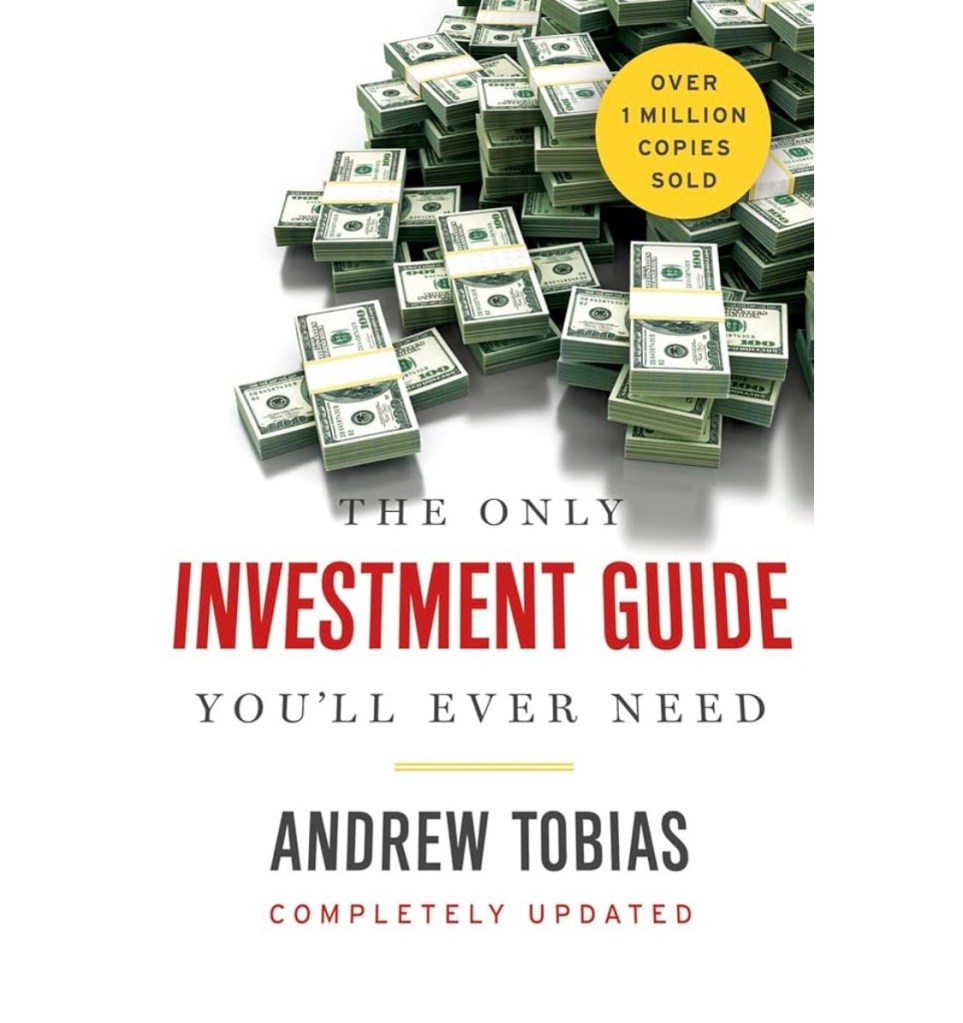
Like I usually do when things get tough, I read books. That summer, I had to learn a lot about money quickly so I could win the game of starting a family and become smart about the financial games of life.  I still do this, and it’s why I read an average of 3 to 4 books a week, still.  Because there’s a lot to know, and if you want to win at life, you have to know more than the people you are dealing with.  In that case, with my future wife, we would have been married a year later, but at that time, it was a tragedy of Shakespearean proportions, with all the ruthlessness one could imagine, difficult beyond reason or belief.  Crushing difficulty.  To alleviate that pressure, I went down the road from our townhouse and checked out Andrew Tobias’ very well-known book, ‘The Only Investment Guide You’ll Ever Need,’ from the library.  I spent the summer reading it, and the next several decades thinking about it, and it has formed my basic approach to wealth creation, to stay off the treadmill of social expectation, because there is a lot of wasted money spent on it, and to use good money to defeat bad, time and time again.  However, it is mostly on minimalism that Andrew Tobias discusses regarding money management. Stay out of the casino of money making, and you’ll actually come out way ahead.  And with that basic approach, my wife and I have navigated some treacherous waters over the years and defeated many formidable characters. 

I have been professionally dealing with a similar issue that involves a lot of money and people, and they have been commenting on my position, which gives them minimal access to my life and those in it, much to their frustration. This essentially stems from the basic strategy I formulated in that book so long ago.  But for the life of me, I couldn’t remember the title, just the contents.  Back then, I used to check out books at the library and had to return them.  These days, I put them on a shelf and refer to them repeatedly.  But that early in my life, I didn’t even have a house yet.  So once my wife moved back in with her parents and they reached out to me to see if we could all reconcile, I turned the book back into the Sharonville Library and never saw it again.  But at my current age, I wanted to reread it because it was relevant to my current circumstances and I wanted to reconnect with my roots.  So, I asked the Grok A.I. which book I had read on finance during the summer of 1987 from the Sharonville Library, and it told me within seconds, ‘The Only Investment Guide You’ll Ever Need.’  It was interesting because the book was on record in that library at the time, and they knew I had checked it out based on their reporting.  I was finally able to buy a copy from Amazon, and it was hand-delivered to my front porch the next day.  And I read it again and really enjoyed it.  It had been updated from the 1987 version I had read into a 2016 view of the world, but the same basic book was still there.  Same cover and everything.  It’s the kind of book everyone should read on finance, and that’s why it’s still popular, even today.  It has certainly helped me throughout the years, and strategically speaking, it works very well.  I have always thought of it, and because of A.I., I was able to reconnect with it.  Nobody will promise you a nice and easy future.  But if you are smart and apply innovative strategies to your life, you’d be surprised at what you can survive and endure.  And for a lot of reasons, Andrew’s book will always be a treasure for me.  A treasure I was able to enjoy because of A.I. and its ability to know so much, so quickly.

Rich Hoffman

Click Here to Protect Yourself with Second Call Defense https://www.secondcalldefense.org/?affiliate=20707

The Impairment Playbook: One of the biggest threats to American infrastructure

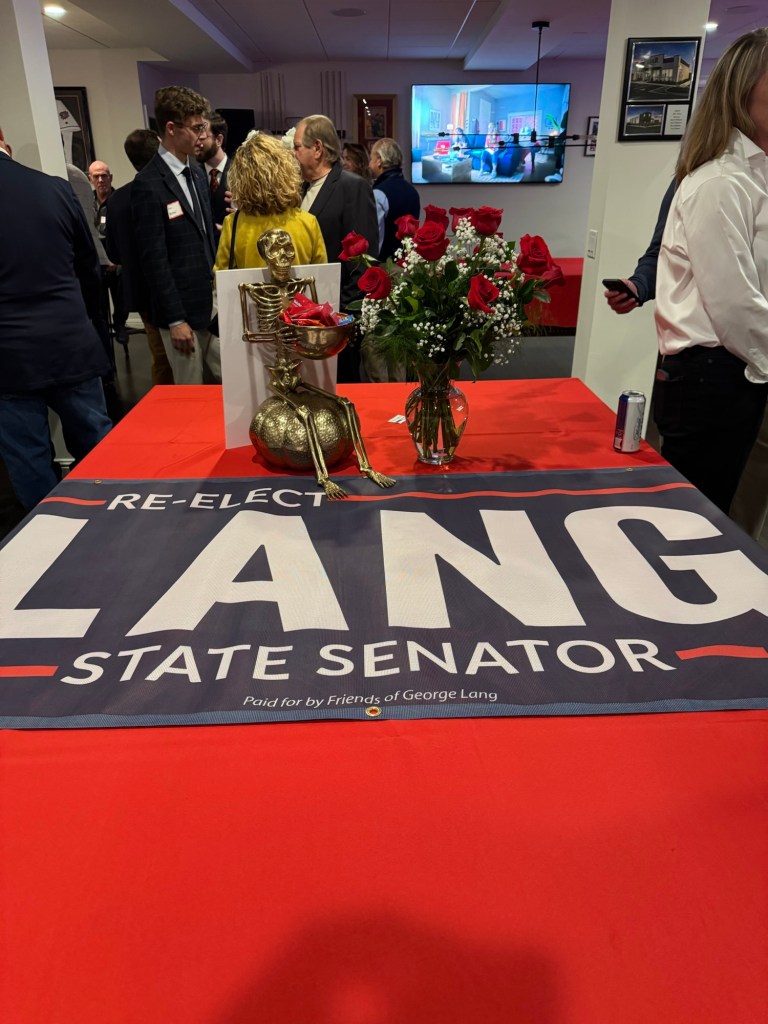
One of my many roles is Vice President of Manufacturing, Facilities, and Program Management at CTL Aerospace. At Senator George Lang’s fundraiser on November 1st, 2025, everyone I spoke with was primarily interested in an update on the Chapter 11 filing for the company.  After all, it wasn’t that long ago when Vivek Ramaswamy came to CTL to announce his run for Governor, so there were lots of people cheering that the company would find a way through to the other side of a challenging financial situation.  And to make matters worse, our case was not one of not having customers or income, but rather part of a widespread suppression campaign by our bank that many privately owned Tier 2 suppliers have experienced over the last decade.  Only in the case of CTL Aerospace, the ownership has shown a very rigorous desire to hold ownership rather than to be pushed aside, essentially by pirates who just wanted to raid our ship and steal all the plunder for a quick flip on the market, as a turn and burn, as they like to say.  The context and legal positioning regarding CTL Aerospace’s Chapter 11 proceedings, specifically the compelling basis for equitable subordination under 11 U.S.C. §510(c). The facts of our case, supported by documented creditor misconduct and predatory financial behavior, are now a very public matter, so the personalities involved are in the public record. 

CTL Aerospace—a 79-year-old aerospace manufacturer—has faced targeted financial suppression during a period of global supply chain instability. The aggressor in this case refused to extend forbearance, coupled with abrupt covenant enforcement and term manipulation, directly impaired our ability to procure raw materials and maintain operational continuity, resulting in massive damages for which everyone in the crowd I was speaking with was very interested. These actions were timed to coincide with industry-wide distress and reflect a pattern of bad faith and strategic impairment.  And the target against us was the “goodwill” of our business, the brand that we had built over a long period of time, the intangibles that are often overlooked in modern business because nobody prosecutes those kinds of cases anymore.  Even though they certainly should and would otherwise if the costs weren’t so prohibitively high.  Once you get into something like this, you see a real menace to the infrastructure of America that is determined to erode our manufacturing base by international banks, who, just like pirates, are seeking short-term plunder and quick sales on the hedge fund market.  When you attack a company’s “goodwill” through purposeful suppression techniques, which a bank can do since it is the mechanism through which all cash for a company flows, if it breaches that fiduciary trust, it can really wreck a business.  And as I found out during this process, it’s not just CTL Aerospace going through this kind of thing, but it’s common in the nation right now, as many private owners we know closely have had to step out of the game and get into the name change cycle every few years, which has caused all kinds of supply chain instability.  Again, much of this is now public record, and people have been following the case. They wanted me to provide an undercover perspective, as this is a very political problem, a matter of national security, which is undoubtedly the case at CTL Aerospace.

Case law supports our position, which is to fight back and seek damages for the massive financial impact on our company’s goodwill. In Citicorp Venture Capital, Ltd. v. Committee of Creditors Holding Unsecured Claims (In re Papercraft Corp.), 211 B.R. 813 (W.D. Pa. 1997), the court subordinated a creditor’s claim due to inequitable conduct that harmed other creditors and the debtor’s reorganization prospects. Similarly, In re Fabricators, Inc., 926 F.2d 1458 (5th Cir. 1991), emphasized that insider status and control over the debtor’s financial decisions can trigger subordination when used to the detriment of the estate.  And that was certainly the case at CTL Aerospace in really extraordinary ways.  But often, such defenses are never applied because by the time you go through the Chapter 11 process, a company doesn’t have the money to fight, which means you essentially have to hire $3000 per hour lawyers to run the case.  Because the banks certainly have those types on their side. In this case, the conduct—potentially documented in internal communications and covenant enforcement timelines—suggests a deliberate strategy to induce distress and position itself for asset acquisition or impairment accounting. We are actively pursuing discovery to uncover these records and may seek engagement with the DOJ or OCC for a lender liability review.  And based on the evidence we have and the timeline, which many have told us from an insider perspective is a classic case of “The Playbook,” would be an easy case to prosecute.  And likely a large settlement.  But that’s not where my mind is, or some of the people involved in this with me.  We want to see much deeper punishment for the entire financial industry, because this hasn’t just happened to us.  It’s a significant impediment to the economic backbone of the entire American manufacturing industry.  It’s not enough for us to survive, which we look poised to do.  However, to illustrate what was done. 

I explained it like this to many people at the fundraiser, and it was good to chat with Senator Bernie Moreno, who is doing a great job in D.C., and Congressman Warren Davidson who has been fantastic over the role of the Fed in government and is very cerebral in problem resolution, imagine you are a big deer with a full rack of antlers, a 10 pointer.  You have lived a long time, and it shows in the development of your antlers.  But one unfortunate day, you try to cross a road and you get hit by a car, breaking your hip or leg.  The driver keeps going.  You are lying there helpless.  Then a cringy pick-up truck comes along with a very loathsome character getting out, who sees an opportunity for a free mount on his cabin wall to brag about.  He sees the big deer with the whole rack and thinks it’s an excellent opportunity to kill the deer and hang the head on his wall for bragging rights.  He didn’t do the work of hunting the deer, but nobody will ever know.  Typically, in a business cycle, the deer would find a way to crawl away into the woods to heal and restore itself to life after such an accident.  In CTL’s business, a global supply chain issue put us under significant stress.  However, rather than helping CTL, the bank adopted a suppression strategy, essentially running the deer over with a car so they could hang the easy kill on their portfolio management wall for bragging rights and a path to easy money.  And from my perspective, based on the evidence, there is a prominent political position in all this, too, a hatred for the Trump administration and this notion of Making America Great Again.  Patriotic companies like CTL Aerospace, which are privately owned and conduct a significant amount of defense work, are prime targets.  They are the 10-point bucks that would look great on a very progressive trophy wall for financial institutions.  However, the facts of the case are sufficient.  It was a sloppy case on the opposition’s part; they made numerous mistakes that they thought they could hide behind expensive lawyers.  But the case law certainly doesn’t favor them. 

When everyone asked me what needs to happen in this case, I gave my point of view, which is prosecution on equitable subordination under 11 U.S.C. §510(c).  The attacker is demoted from a secured creditor, and their impairment play is wrapped up in a case law lesson.  However, the issue would have to be taken out of their control, as they currently hold a monopoly status in the courts and the financial mechanism.  At the very least, this is a case of predatory accounting that should serve as a cautionary lesson for similar cases.  And as long as it’s going on, it violates any notion that Ohio, or America, can sustain new business activity when these practices are hindering the behavior.  It’s a significant threat to our economy and national security.  Over the course of the last year, we spoke to a lot of people to get involved, and once they realized that CTL was in the squeeze play, they didn’t want to get wrapped up in the whole effort for fear of being sucked in themselves.  Like the deer example, they felt sorry for the deer but didn’t dare to help, fearing they would be poached themselves. 

I told the same story over and over, but it has a lot of details, so I wrote it down here, as most of the attendees are very interested in the topics I discuss.  This financial behavior is actually part of a larger collapse of political and social order that is occurring in most industries. This lack of respect for goodwill, for instance, is precisely why the Disney Company is struggling these days, as it owns intangibles such as movie rights, brand names, and amusement parks.  But they have, through woke corporate practices, destroyed the “goodwill” of the company that Uncle Walt built, and people wanted to be associated with.  Hedge fund people think in terms of tangibles, such as the head of a 10-point buck on their wall to brag about.  However, what truly adds value to the marketplace is the intangible of “goodwill.”  And that’s what the fight at CTL Aerospace is really about, and why so many people were interested in an update.  Most of these tier 2 companies don’t put up much of a fight.  Once wounded, they sell off to make the pain end as quickly as possible.  And that is what the opposition thought was going to happen here.  Only it didn’t, and the stand and fight part was not something they were quite ready for.  And that’s where the case is as of now. Significant reforms to the finance industry are needed, as this is certainly not the only example.  And suppose we really want to make America Great Again. In that case, we need to punish these predatory practices of fiduciary terrorism through “goodwill” destruction because it’s a real problem for virtually everyone whose lives are touched in terrifying ways by it.

Rich Hoffman

Click Here to Protect Yourself with Second Call Defense https://www.secondcalldefense.org/?affiliate=20707

Trump’s Big Beautiful Ballroom: Leading the world starting with real bathrooms

Of course, it’s been a suppression effort from the start, but that’s all behind us now.  Trump has torn down the East Wing of the White House and is building his Big Beautiful Ballroom, and Democrats are having a major meltdown over it.  But of course, the opposition isn’t about money, which the whole effort is being funded privately by Trump and his supporters; the goal is a continuation of what we have seen from Democrats going all the way back to the Clintons in the White House.  Remember when they would put sex toys on Christmas Trees when they were in the White House, and the scandal of them selling access to the Lincoln bedroom?  I’ve pointed it out here many times: the deliberate effort not to give speeches in the Oval Office and, as much as possible, to dethrone the role of the White House on the world stage, in their efforts to erase America and usher in the age of the global citizen.  Barack Obama was really obvious about taking as much of the Office of the White House —the role of the President of the United States — and diminishing it in the world, rather than propping it up.  And when we would point it out, it was called a conspiracy theory, a wild right-winged illusion!  But the truth has come out in the actions of Democrat presidents based on their behavior and their hatred of this Trump ballroom says it all, because it defies the logic of someone who wanted to be proud of their country.  It is conducive to someone who wants to see it destroyed.  And I say all this because my wife and I recently visited the White House, and I can report that the place is a lot different than when Biden was there. 

Remember when Biden would give speeches at that little film studio they did to replace the White House?  That was on purpose, to diminish the White House’s role in the world.  And they’ll tell you that much at the museum and visitors’ center for the White House on Pennsylvania Avenue, just to the east.  The White House was deliberately built small to avoid poking Europe in the eye.  We had built a nation that was throwing off the kingly role of government leadership, and the point was to downplay aristocracy as much as possible.  But we all knew what Trump was before we elected him.  Trump has always been about gold and showing off his winnings in the competitions of life.  And that’s one of the reasons we wanted him in the White House.  America was the world’s leading economy and offered the best opportunities for a good life to anyone who dared work for it.  And we wanted to inspire the world, not bend the knee to it, as Barack Obama had been doing.  When the White House was built, it was meant to send a message that Americans weren’t going to try to mimic the palaces of Europe, that America was planning to mind its own business, do the basic work of government, and retire to the countryside once the Executive jobs were done in the People’s House.  But that was a time when America was a new country trying to find its way.  What emerged defines the role of the White House, and it has needed something like a ballroom for a very long time.  Visiting the White House, nobody should be using a porta-potty for an important event. 

The new ballroom is over 90,000 square feet and costs around $300 million, with $200 million from private donors, including Trump himself.  Trump did get a legal settlement from YouTube for $22 million, which has gone toward the construction budget, so it’s a grand affair, being funded privately.  Certainly not by the taxpayers.  The goal is to have the ballroom finished by the end of Trump’s term in 2029.  The buzz out there says that only 25% of the public supports it, according to the Democrat suppression polls that are out there, which still hope to keep America in a state of depression.  That game is why Biden would speak at that weird little studio set rather than in and around the Oval Office.  They only used those traditional backgrounds when they had to.  But now everyone knows the game of suppression, that’s why Biden had people on his staff who would film themselves having sex in important buildings, a gay rights protestor was its spokesperson, the autopen became the real president that anybody could sign.  The decentralization of the White House was well at play during Biden’s term, which most reasonable people understand now was an overthrow of Trump’s first term.  And the point was to put him and the idea of a glorified and proud America out of the public eye.  And now, Trump is back and building a ballroom that would rival his private estate of Mar-a-Lago in Florida.  And it will be around for a long time.  It’s time that America stopped apologizing for being good and an inspiration to the downtrodden.  And start showing the world what adopting capitalism is all about, and why they should do it.  The ballroom should be their experience when visiting the White House, and when they leave, they should remember it for the rest of their lives. 

I recently sat down with a good friend of mine, Senator George Lang, and we talked about our years together fighting all kinds of issues.  His latest battle is one with stage 4 cancer, which many people consider a death sentence.  He doesn’t, and neither do I.  I think we have cures for cancer right now.  What we have is an oppressive healthcare system that wants people to die to rid the earth of their breathing presence.  And that same hatred is reflected in the attitude toward the White House.  Democrats want people sick and dependent.  And they want them to use the bathroom in a tent on the White House lawn when they visit.  But the senator and I agreed that we would celebrate him being cancer-free when we visited the White House together when the new ballroom opens, which tells you what he thinks about his chances of survival.  But by then, a lot will have changed for the better, and the White House improvements are just the cosmetic aspect of it.  America is learning to be what the world needs out of it.  And the bad guys who have been standing in the way are now getting run over.  So why appease them even slightly?  Why not build a grand ballroom with working bathrooms where people from around the world can come to the White House and be inspired to take capitalism home with them?  And George’s optimism about his own future isn’t rooted in blind sentiment and delusional hope, but in the facts of the matter.  Democrats have wanted American culture dead, and they certainly wanted to downplay the White House and its global significance.  We elected Trump to elevate the office because we didn’t like what Democrats had been doing to it during the Clinton years, during Obama’s time, and indeed when Joe Biden was inserted in as a stage puppet and his entire administration was run by consultants and public relations firms through the autopen.  As a country, we are turning away from all that, and the Trump Big Beautiful Ballroom is the result of that effort, which will usher in a whole new age for the world with America as the example of goodness, which is how it’s supposed to be.

Rich Hoffman

Click Here to Protect Yourself with Second Call Defense https://www.secondcalldefense.org/?affiliate=20707

The Lakota Levy of 2025 is Just the First Step: Until there are conservatives on the school board, public schools will seek tax increases

I’m really proud of the interview I did with Senator George Lang just ahead of the election of 2025.  George, first and foremost, is a friend of mine, so I tend not to drag him into things I’m involved in, and when it comes to politics, he and I agree on most everything.  The only significant difference is that he tends to be more considerate of people than I am.  He gives the other side more of a voice than I think they deserve, because he’s a nice guy.  During our interview, when he said that he thinks of Lakota school board members Julie Shaffer and Kelly Casper as friendly people, I disagreed with him.  I think between the two of them at a drunken school board meeting out of town, you couldn’t find enough clothes to half-dress one mannequin in the back of a Dillard’s.  Lakota’s school board is very liberal, and those two individuals lead it, which is embarrassing.  And expensive.  But George is good to everyone.  He has his opinions, but he gives everyone a fair shake, and I often don’t get to show that to people.  Neither does he, as the Majority Whip of Ohio’s Senate, a significant position with considerable influence.  He knows that around me, he can be himself and that I won’t run off and talk about anything that we discuss privately.  It was pretty unique that I got to put him on camera and talk for an hour about everything, from the upcoming Lakota levy to his battles with stage 4 cancer.  However, to clear up some misconceptions people had about George and a donation he was shown giving for the pro-Lakota levy efforts, we conducted an interview together that I think was better than he could have achieved anywhere, by any modern media method, news outlet, or podcaster. 

The only people who do the level of interview at the level of what George and I did were someone like Tucker Carlson or Joe Rogan, and I don’t think either of them could have done a better job.  George and I have known each other for several decades, but we had never sat down and just talked in front of the camera like that. What was captured was very useful to many people who wonder about various things.  I even asked George before the interview, “What’s off limits?  Is there anything you don’t want to talk about?”  He said quickly, “No, nothing, anything, and everything is on the table.”  So, we just talked like a couple of people and let others in to observe, and I was able to show them why I like George so much, even though he has evolved into a powerful politician and a prominent figure in Butler County politics.   And over the course of that interview, which was mainly about the upcoming Lakota levy, the most significant tax increase in the history of Ohio, I think he said a mouthful, which I completely agree with.  We all believe that the Lakota levy is going to crash and burn.  But don’t assume that this wasn’t their plan all along: to give the public a considerable blowout number and lose badly in an election.  Then, to say in the spring or summer that they listened to the public and came back with a reduced number.  Just because we defeated this levy in the 2025 election, it doesn’t mean it won’t come back in some form or another.  These public schools are only known for one thing: wasting tax money and asking the public for more, often on the back of property tax increases, to fund an overly progressive society. 

As George said, he thinks that the Lakota school board and its satellites, which include the treasurer and superintendent, are smart people.  I think what he calls “smart” is very maliciously manipulative, even evil.  But Genghis Khan was considered intelligent too, and so were most of the mass murderers of the world.  People thought that Jeffrey Dahmer was smart, even as he dismembered people in his kitchen and stored their remains in his refrigerator.  I would say that the Lakota school board members are very manipulative, which they have to be, given their liberal leanings.  Because people on the left often have to figure out how to get others to do things for them that they can’t do for themselves, they become pretty skilled at it over time.  However, as George and I reflected, this levy attempt is merely them dipping their toe in the water to see how the public reacts.  The details of that kind of election scope are why I think that interview is better than any other outlet could have pulled off, because we covered a lot of ground that most people would blank out after 15 minutes.  However, what we covered was essential to nearly every living, breathing human being, especially those residing in Butler County, Ohio.  It’s encouraging that in Butler County, an effective resistance to the Lakota tax increases has emerged in the No More Taxes group, which is fighting the Lakota levy.  And there are some really good people involved, and they have raised money not just for this levy, but for several upcoming ones as well.  However, for voters who have to show up and vote, they really need context on the scope of the problem.

So, how do we prevent more tax increases from being imposed in the future?  Well, don’t put liberals on the school board, and right now, there are four solid Democrats.  They call themselves other things to avoid the stigma of not being conservative in Butler County, but they are hard leftists on most policies.  And lefties love to waste money.  So, to stop wasting money, which Lakota already has a quarter of a billion dollar budget for a school, which I argue is just a dressed-up babysitting service, elect conservative school board members.  For this election, Ben Nguyen is the guy.  But in future elections, we need more people like Ben.  You need at least a three-vote majority, which we had for a while at Lakota.  And as soon as we didn’t, Lakota went for a tax increase.  That’s all they know to do—because they are liberals, and because liberals are never smart with money.  They might be manipulative, deceitful, scandalous, or monstrously unprincipled.  But they are spendthrifts who want to live off the efforts of others, starting with the real estate of Butler County.  Once Vivek Ramaswamy is the governor of Ohio next year, and Trump continues to dismantle the Department of Education and unleash the power of School Choice, all the public schools will have to change and do a lot more with less.  Their cost structure is significantly inflated due to their collective bargaining agreements, which stem from their union membership. We are all aware that unions often disrupt cost structures wherever they emerge, as they allow the mediocre to receive disproportionately high incomes.  And that is certainly the case at Lakota schools.  So, yes, the levy will likely fail in a big way on election day, provided people don’t sit on their hands and watch Netflix instead of voting.  People need to go out and vote.  But this is only step one.  People are going to have to dig in and fight to keep our taxes reasonably low until there is a new school board with conservatives on it.  Because, as sure as you are reading this, Lakota is planning the next levy, once the smoke clears from this one, because they have spent themselves into oblivion.  And only higher taxes can satisfy their never-ending hunger for more money to waste.

Rich Hoffman

Click Here to Protect Yourself with Second Call Defense https://www.secondcalldefense.org/?affiliate=20707

Six Flags is Ruining Kings Island: They have turned it into just another money grab revenue stream

Ownership matters. When a large company goes public and is traded among the slack-jawed loser clan, which is the vast majority, the company’s personal identity gets lost, and its value disappears most of the time.  That was certainly the case when Lucasfilm was sold to Disney.  George Lucas wanted all his Star Wars employees to have something to do while he retired, and the Disney people ruined the franchise, much to his frustration.  But that is the cost of private ownership that goes public and is traded among thieves, losers, and short-term bandits.  And that was what I was thinking at this year’s Halloween Haunt at Kings Island, which was recently bought out by Six Flags as they merged with Cedar Fair Amusement Parks.  Six Flags has made Kings Island worse, not better, and its brand has pulled down the popular Cincinnati amusement park.  When we talk about problems with capitalism, the flow of money, and the protection of private ownership, what has happened to some of these companies that go public is an important lesson.  And in the case of Kings Island, I have watched it all my life as it was initially owned by the Taft Broadcasting Company to create a family-friendly entertainment destination near Cincinnati. Back then, its rival to the north, Cedar Point, forced the two to outdo each other constantly, and the two parks developed their identities through direct competition, which made them what they are today.  But of course, when you build something good, there are always people who will want to take that value for themselves, so this concept of publicly traded companies is a real problem, because it facilitates the sale of value, and once that happens, a company loses itself once its personal identity is sold to the whims of collectivism.  In 1992, Paramount Communications bought Kings Island in an attempt to turn it into more of a Universal Studios, but that didn’t work out well, so they sold it to their rival, Cedar Point, owned by Cedar Fair Entertainment, in 2006.   

I thought Cedar Fair Amusements did an excellent job with Kings Island and the other parks it owned, because it understood what Midwest thrill parks were all about.  The problem was that amusement parks in the northern part of the state had to close during the off-season because it was too cold.  And competition from Six Flags, which operates mainly in the south and runs year-round, strains cash and makes shareholder returns challenging.  So, looking to generate year-round revenue as a large company, Six Flags joined with Cedar Fair and kept Six Flags as the parent company.  And Kings Island has suffered because of it.  Not that I’m thinking cheap about things, but this is the first year the Halloween Haunt has charged for its haunted houses on site.  I get it, it’s an expensive operation to hire all those actors and dress them up every night for full-scale haunted houses that rival everything on the open market during Halloween season.  Halloween Haunts is my favorite time to visit Kings Island.  I love the late-night operating hours, the cool nights, and the general atmosphere.  We invest pretty heavily in Gold passes for our entire family every year so we can all go there together, and that is my favorite time to attend.  So I was not happy to see that Six Flags started charging separately for all the haunted houses, and that they were taking Kings Island down the money-grab hole deeper than they had before. 

Now, this is the problem with publicly traded amusement parks.  During COVID, Kings Island was hit hard by ridiculous health regulations that nearly killed the company for a few years and drained it of cash.  And without question, it pushed them into this merger with Six Flags, seeking all year revenue on cash flow, making them appear to the public desperate.  Which then blows the whole entertainment vibe.  If people are having fun, they’ll spend money.  But if an amusement park starts looking desperate — which the year-round parks do, including Disney World — it becomes a drain that causes a lot of pain.  And not very fun.  What Six Flags has done to Kings Island is similar to what has happened to Disney World.  All the parks have fallen into the Fast Pass game, where they try to make the wait lines for rides excessively long so visitors will buy a Fast Pass to skip them.  They have done that at Disney World and Universal for years, and now they have adopted it at Six Flags and, ultimately, at Kings Island.  And when a Gold Pass doesn’t buy you much of anything special anymore, it’s almost cheaper to get general admission when you do want to go and to go less often.  Because the advantages of going all the time go away.  At Kings Island this year, the ride lines were really long —several hours long for the premier rides —because people weren’t waiting in the lines for the haunted houses like they usually do, since they cost money.  This forces people to buy Fast Passes to shorten the lines.  And it just took the fun out of the whole experience.

For instance, we were at Disney’s Hollywood Studios not that long ago, and my grandkids wanted to ride Slinky Dog.  We weren’t crazy about it because it’s not as exciting as the kinds of rides they have at Kings Island.  But it was a Toy Story-themed ride, and all my kids love that movie series, so they wanted to ride it.  It just so happened it had been raining heavily and had just stopped.  So they reopened the ride, and we were standing right at the front of the line when they did.  So we figured we’d jump right on.  The ride would be worth it if we only had to wait a few minutes.   We ended up waiting 45 minutes in line because they opened the fast-pass lane and let everyone ride first.  The standard line was now a holdover non-premium experience, and the girl at the front, who had a chart on how to fill the lines, tried to explain it all to me, not very well.  I had spent $20,000 on a vacation package to Disney World for my family, and here I was being told that wasn’t enough.  Give me a break.  And now, Kings Island had that same attitude, and it was a real turn-off.  A money grab to make shareholders happy with short-term gains, by destroying the long-term viability of the entertainment value.  And nobody cared because now everyone was doing the same thing: Six Flags, Universal, and, of course, Disney World.  It was a shame to see that Kings Island was now just like everyone else.  And it all started with COVID-19, another thing permanently ruined by the government’s overreach in the healthcare industry.  And it was not nearly as fun as it used to be, as most things are when they lose their identity as a privately held company, now driven by public sentiment, which is often short-sighted and greedy in its narrow scope.  And at Kings Island now, it shows.  What made Kings Island better than other parks was that at least they were owned by a Ohio based company that understood the Midwest, and they were different from the other parks.  But now, they are all the same, and none of them very good.  

Rich Hoffman

Click Here to Protect Yourself with Second Call Defense https://www.secondcalldefense.org/?affiliate=20707

Fighting Back Against Lawfare: What happened to Peter Navarro is unforgivable

I knew it was going to make me mad, and it certainly did.  I took my time with Peter Navarro’s new book, I Went to Prison so You Wouldn’t Have To: A Love and Lawfare Story in Trump Land, and I read it a few times before commenting on it.  I’m a law-and-order kind of guy, but if it had been me, what happened to Peter wouldn’t have turned out so nicely for the FBI.  The way they humiliatingly arrested him in the loading armature, almost on the plane he and his fiancé were taking to Nashville to appear on the Mike Huckabee show there, I wouldn’t have done it.  There would have been a fight that would have really hurt people, because some things in life are more valuable than compliance.  A lot of things are.  I’m not a very compliant person, and things like what Peter went through are where you draw the line.  So Peter’s book really made me mad, so I had to read it a few times to take the edge off.  Because it was infuriating.  When you have a legal system that pirates and criminals have essentially hijacked, something has to give. Peter Navarro, one of the top economists in the White House and a top advisor to President Trump, made the best out of it, and putting myself in his shoes, I would have done things much differently.  But it’s nice that he did, because the story he came back to tell was really remarkable.  I was really mad that he and his friend Steve Bannon went to jail for claiming immunity from appearing for the January 6th Committee, which was a completely crooked court pushed forward by Nancy Pelosi.  No, we are not obligated to yield to terrible forces and comply with them even when they openly break the law.  When someone like Peter does it to prove a point and protests without violence, we can learn a lot.  And we did. But punishment for the vile conduct is required in this case, and for me, that would have happened during the attempted arrest.  You can only play nice for so long. 

Peter Navarro was nice about everything, and the book is essentially a day-by-day diary of his experience in a Miami prison, where he was sentenced to 4 months.  The way the FBI went about it was unforgivable.  The way Peter was treated while in prison was also inexcusable.  Four months isn’t very long, but I’m not a fan of this Gandhi defense, of peaceful protest.  I think bad guys should be eradicated from the face of the earth.  And that when bad people present themselves —when are we going to learn from history, whether it’s Jesus Christ or John the Baptist, we must punish them?  For all the things that a person means to other people, you can never let them know that the world has more power over the people they care about, and to let them down under the pressure of a vile system.  And that is what happened to Peter in prison.  Yes, he made his point in support of the exiled President Trump.  Yes, everyone lived to fight another day, and Peter is now back in the White House. 

People can say that God was watching over Trump, Peter, Bannon, and a whole host of other people during a really evil process of lawfare, where an inserted president was put in charge of our country and had way too much power that wasn’t granted to him through a proper election.  People did not “consent” to be governed by the Biden people.  And what happened was essentially a coup of our entire government, and we tried to beat it with non-violent protest.  Peter Navarro allowed himself to be humiliated at that Miami airport, strip-searched, and treated like a rag doll in leg irons to be turned into an example of a police state that had power over the mass population.  And that is reprehensible in every way and cannot be tolerated.  We saw what they did to the J6 prisoners.  And this book says what they were willing to do to a top White House advisor.  And for me, individuality is more important than compliance with a hijacked legal system.  The FBI was way out of line.  The prison staff was terribly abusive to a person who deserved great respect.  And all that happened to Peter Navarro is, I think, a declaration of war.  So I think this punishment of all these people who worked against Trump and his supporters needs to go to jail themselves, or they need to be executed in a town square as a deterrent for all in the future who might try the same.  Sacrificing yourself to tyranny is never a good idea.  Fighting it is.  And Peter chose to fight it by exposing it.  But boy, it was a hard book to read, and to see just how bad that system truly is.  As I was reading that book, I kept thinking about what I know about prisons.  I have done stories on the Butler County Jail, which is a good one.  I have toured it and understand what those cell blocks are like.  I have met all the people involved from the top to the bottom, eaten the food, and I know what life is like in prison enough to put myself in Peter’s shoes as he reported his day-to-day circumstances.

I had friends in the audience who were there to meet Peter Navarro the day he was released, and he gave his famous speech at the Republican National Convention in Milwaukee.  They asked me what pictures I wanted, and I told them the most important person at the convention, aside from Trump, who had just a few days before, almost been assassinated with a bullet to the head, was Peter Navarro.  What he went through was terrible, and I was wondering what damage it had caused him.  I could tell something was off about him as he spoke, and I was disappointed in his speech.  He put on a good face, but there was a broken element to him.  Four months of having your personal freedom ripped away for purely political theater just wasn’t forgivable.  We are better off for it, and everyone should read his book.  They’ll learn a lot from it. But we just can’t have a society that arrests former members of the White House who are the best economic minds in the world, and puts them in jail, and parades them around in leg irons, to show the world that the best people of our society can be arrested like dogs and have everything taken from them.  The movie Rambo makes much more sense to me, except for the ending, where he eventually gives up.  If you are a criminal, you should be punished, and I think public executions are excellent, especially for the kind of people who put Navarro in jail.  Who wants to pay a lot of tax money to keep people like that in jail, alive?  Just get rid of them, and save the money.  But when you are innocent and you know it, fighting back is the best deterrent.  And it would be better never to give them leverage over you, as they did, and to abuse Peter Navarro.  He might be living a decent life now, but to yield ever to those clowns, he can never undo that.  And that is simply unforgivable.  What the FBI did to Peter Navarro is not forgivable.  Law enforcement cannot be allowed to be weaponized, which it clearly was, and there are still a lot of people who have to be punished for what they did. 

Rich Hoffman

Click Here to Protect Yourself with Second Call Defense https://www.secondcalldefense.org/?affiliate=20707