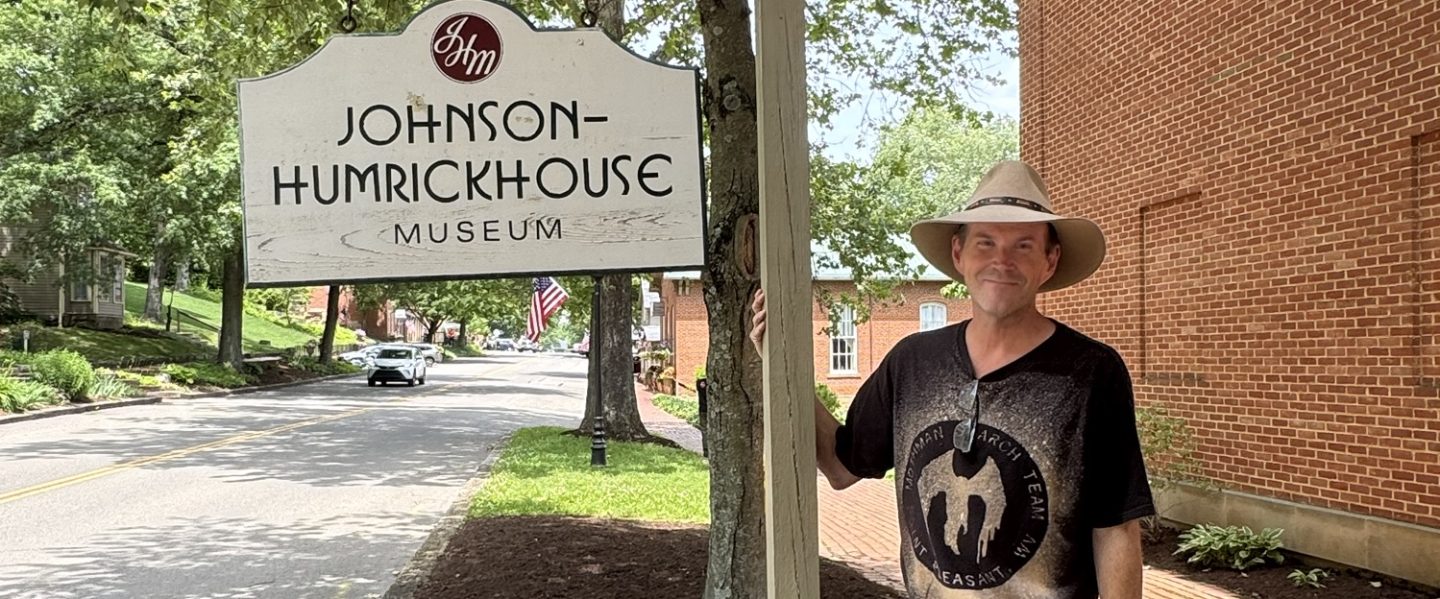
My friend with Dirty Shoes: Why America Thrives Through Its Wealth Builders and What Happens When Sudden Money Meets Human Nature

I have spent years observing the world around me in places like Middletown, Ohio, and reflecting on the stark differences between those who build lasting wealth and those who chase fleeting windfalls. The recent trip by President Trump to China, with a plane full of American billionaires, brought these observations into sharp focus for me. It was not just a diplomatic visit; it was a demonstration of economic strength, showcasing the very people who drive innovation, jobs, and growth. Critics on social media and in political circles often decry such figures, calling for higher taxes, wealth redistribution, and policies that would “take from the rich to give to us.” Yet, my experiences with friends, family, and neighbors who have won big at nearby casinos tell a different story—one of human nature, discipline, and the enduring value of creators over consumers. 

Trump’s journey to Beijing included leaders like Elon Musk of Tesla, Jensen Huang of Nvidia, Tim Cook of Apple, and others whose combined influence represents trillions in market value and countless jobs. China rolled out the red carpet in ways it hadn’t for previous administrations, precisely because it understands its reliance on American enterprise. China is a paper tiger, but its growth model depends heavily on foreign investment, technology transfer, and access to markets that value efficiency and scale. With a population far larger than America’s roughly 330 million, China has pursued manufacturing and infrastructure on a massive scale—jobs many in the West avoid—but it still seeks the dynamism that billionaires bring. By bringing these executives on Air Force One, Trump signaled leverage: American policy shapes opportunities, and those who generate wealth are key to expanding economies on both sides. 

This isn’t abstract theory. I know wealthy individuals personally, and their habits stand in contrast to stories I hear at the local casino. One friend, a multimillionaire in construction and development, always shows up with dirty shoes and calloused hands. He works the job sites himself and oversees projects that build condominiums in Florida, where snowbirds live comfortably for months each year, dining out nightly without worry. His wealth cascades: employees get steady pay, suppliers thrive, and retirees enjoy the fruits of his risk-taking. He doesn’t chase flashy displays; he reinvests to create more. This pattern repeats among true wealth creators. They treat money as a tool for expansion, not a ticket to indulgence. 

Contrast this with lottery and casino winners I have known. Near my home, the slots and tables draw crowds hoping for that life-changing hit. Some walk away with $15,000, $25,000, or even $100,000 checks. The stories that follow are depressingly familiar. One acquaintance won around $100,000 from insurance collections tied to a payout and quit his second job immediately. Overtime vanished. Within two years, the money disappeared—spent on cars, parties, and “trophy” living. He was back asking for help, bouncing checks, and debating between groceries and bills very soon. Another hit $15,000 on slots one weekend, celebrated by drinking and playing more, then bought big TVs and turned his basement into a “man cave” costing tens of thousands. Months later, broke again, he returned to the casino chasing the next jackpot. These aren’t isolated cases. I have seen inheritance recipients or family windfall beneficiaries do the same: quit work, lounge in front of daytime TV, blow through savings on impulse buys, and end up worse off. 

Statistics bear this out, adding sobering color. While the often-cited “70% of lottery winners go broke” figure has been debunked as originating from unverified claims at a 2001 symposium (the National Endowment for Financial Education later clarified it lacked research backing), more reliable data from the Certified Financial Planner Board of Standards indicates that nearly one-third of lottery winners eventually declare bankruptcy—higher than the general population. Many face this within 3-5 years. A MIT study on Florida lottery winners who were previously financially distressed found that winning only postponed bankruptcy rather than preventing it. Stories abound: Bud Post won $16.2 million in Pennsylvania in 1988 but was in debt within a year, hounded by family (including a murder-for-hire plot from his brother), and died nearly penniless on food stamps. Suzanne Mullins won $4.2 million in Virginia, yet lost it to loans and medical bills. Callie Rogers in the UK squandered her winnings on parties and surgery. The pattern is consumption without creation. 

Why does this happen so frequently? Psychology offers insights. Sudden wealth often meets unprepared minds shaped by scarcity thinking or addictive patterns. Without the discipline forged through years of earning and risking, money flows out faster than it came in. Social pressures mount—friends and relatives appear with hands out. Status symbols beckon: Corvettes, luxury trips, home upgrades that balloon in cost. I have watched people prioritize PlayStation subscriptions over groceries or blow windfalls on fleeting pleasures because their personalities lean toward immediate gratification rather than delayed compounding. Behavioral economists note that windfall recipients frequently exhibit higher marginal propensity to consume on non-essentials, lacking the habits of those who built wealth incrementally. 

Wealth creators operate differently. They exhibit traits such as future orientation, calculated risk-taking, and a focus on value generation. Elon Musk, for instance, pours resources into companies that push boundaries in electric vehicles, space, and AI—ventures that employ thousands and spawn entire ecosystems. CEOs, in general, create wealth for others: shareholders, employees, and communities. Studies on high-net-worth individuals show they often maintain hands-on involvement, reinvest heavily, and avoid lifestyle inflation that erodes capital. One analysis of affluent versus high-net-worth investors found the latter display confidence but channel it into ongoing projects rather than consumption. My multimillionaire friend with dirty shoes embodies this: he builds condos that house comfortable retirements, creates jobs that support families, and sustains businesses that keep local economies humming. Billionaires scale this principle globally. 

This distinction matters profoundly for policy. Socialism’s appeal—confiscating from the rich to redistribute—ignores these realities. Taking from creators to give to those with “bankrupt personalities,” as I call the chronic consumers, doesn’t produce prosperity; it funds more consumption. Parasitic tendencies, where individuals rely on government transfers or windfalls without building, lead to dependency. Casinos illustrate the microcosm: big payouts followed by returns to low-wage jobs or pleas for help. Government as the ultimate casino—promising jackpots through entitlements—breeds similar outcomes on a societal scale. Democrats and figures like Alexandria Ocasio-Cortez often rail against billionaires, but history shows societies thrive with more of them, not fewer. America’s edge lies in its ability to foster creators who expand the pie rather than fight over slices. 

China’s economic story reinforces this. Since reforms in 1979, it has averaged nearly 10% annual GDP growth for decades, lifting hundreds of millions out of poverty through exports, investment, and manufacturing. Yet it remains hungry for American capital and know-how. Its model involves state direction, lower labor standards in some sectors, and a willingness to handle the “jobs we don’t want” in the U.S.—polluting industries, assembly lines, and resource extraction. With far more people, China can sustain volume, but innovation and high-value creation still draw from Western partnerships. Foreign direct investment (FDI) has been crucial; inflows reached highs amid global shifts. Trump’s delegation signaled that U.S. billionaires hold keys to further integration if terms favor American interests. China respects this leverage because its growth, while impressive, depends on external engines. U.S. GDP per capita remains far higher, reflecting productivity and the rule of law that reward creators. 

We need more millionaires and billionaires, not envy-driven policies to hobble them. More CEOs mean more opportunities cascading downward. Taxing success punitively discourages the risk-taking that built the Tesla and Apple ecosystems and construction empires. Instead, celebrate the dirty-shoes ethic: hard work, reinvestment, hands-on leadership. My observations align with broader patterns—materialists focused on status often report lower long-term satisfaction, while builders find purpose in creation. 

Expanding on the pitfalls of lotteries reveals deeper human frailties. Beyond bankruptcy stats, winners face family estrangement, depression, substance issues, and scams. One study noted neighbors of winners increase borrowing and bankruptcies due to social comparison—keeping up with sudden displays strains others. This “lottery curse” echoes in inheritances: sudden money without earned wisdom evaporates. In contrast, self-made wealth correlates with better management because it embeds lessons of scarcity, effort, and compounding. 

Consider Florida’s snowbirds again. Many live in multimillion-dollar condos, dining lavishly on seemingly endless income without daily grinds. Who enables this? Developers like my friend, whose projects multiply value. Scaled up, billionaires do the same nationally and internationally. They generate tax revenue far exceeding most—Elon Musk reportedly pays enormous sums—while funding innovations that improve lives: cheaper energy, better tech, and medical advances. Criticizing them as “greedy” overlooks their role as job creators and engines of opportunity. 

Critics pushing redistribution often overlook the destruction of incentives. If the government seizes wealth for “the people,” who becomes the new creator? Parasites—those unable or unwilling to manage resources—consume without replenishing. I have seen it locally: second-job quitters, inheritance squanderers, entitlement dependents. They form a constituency drawn to promises of free money, mirroring casino addicts chasing the next hit. America’s strength is its culture of aspiration, where anyone can climb by creating value. With only 300+ million people, we punch above our weight in GDP through productivity, not sheer numbers. Encouraging more creators expands this. 

Trump’s visit to China highlighted mutual dependence. China outpaces in raw growth metrics at times due to demographics and policy, but America’s innovation ecosystem—fueled by risk-takers—remains the gold standard. Billionaires on that plane weren’t just passengers; they represented the market access and expertise China needs. Respect shown to Trump reflected recognition of this dynamic. Previous presidents lacked the same business acumen or the same leverage to display. 

Personal reflection deepens my conviction. Knowing rich people who work relentlessly, rather than casino regulars cycling through highs and lows, convinces me that character and mindset trump circumstance. Wealthy individuals I admire avoid dumb spending; they buy assets that produce more. Consumers chase experiences or goods that depreciate instantly. This gap explains societal outcomes. Policies that reward consumption through redistribution erode the foundation that creators provide. We should aim for more dirty-shoes millionaires building empires, not vilify them.  Lottery winners buying mansions only to lose them to upkeep, or facing lawsuits from sudden “friends,” underscore isolation. One winner built a bowling alley that drained funds. Another’s family demanded shares, leading to rifts. Meanwhile, self-made billionaires like Musk endure scrutiny but persist, creating Starlink, EVs, and reusable rockets that benefit humanity. The asymmetry is clear: creators endure for legacy; windfall recipients often implode due to a lack of preparation. 

The Trump China trip with billionaires celebrated American dynamism. It showed why we need more such figures—CEOs, entrepreneurs, builders—who generate wealth that sustains societies. Lottery lessons warn against easy-money illusions. Human nature favors discipline and creation over consumption. Socialism’s confiscation appeals emotionally but fails practically by ignoring these truths. I advocate protecting and encouraging wealth creators; they make the world go around, enabling comfortable lives for millions. More billionaires mean more opportunity, innovation, and shared prosperity. America’s secret sauce is its producers. Cherish them, emulate their habits, and watch economies flourish. 

Footnotes

1.  Observations on local casino behaviors drawn from personal acquaintance over the years.

2.  Data on bankruptcy rates from CFP Board and related studies.

3.  Details on Trump’s delegation from public reports.

4.  China’s economic reliance on FDI from the World Bank and trade analyses.

5.  Psychological insights from consumer behavior research.

Bibliography

•  Certified Financial Planner Board of Standards reports on lottery winners.

•  MIT study on Florida lottery bankruptcy postponement.

•  NEFE clarification on 70% statistic.

•  CRS Report on China’s Economic Rise.

•  Various Forbes, USA Today, and academic papers on wealth psychology and FDI.

•  Public news on Trump’s China visit (PBS, Fox, etc.).

Rich Hoffman

More about me

Click Here to Protect Yourself with Second Call Defense https://www.secondcalldefense.org/?affiliate=20707
About the Author: Rich Hoffman

Rich Hoffman is an aerospace executive, political strategist, systems thinker, and independent researcher of ancient history, the paranormal, and the Dead Sea Scrolls tradition. His life in high‑stakes manufacturing, high‑level politics, and cross‑functional crisis management gives him a field‑tested understanding of power — both human and unseen.

He has advised candidates, executives, and public leaders, while conducting deep, hands‑on exploration of archaeological and supernatural hotspots across the world.

Hoffman writes with the credibility of a problem-solver, the curiosity of an archaeologist, and the courage of a frontline witness who has gone to very scary places and reported what lurked there. Hoffman has authored books including The Symposium of Justice, The Gunfighter’s Guide to Business, and Tail of the Dragon, often exploring themes of freedom, individual will, and societal structures through a lens influenced by philosophy (e.g., Nietzschean overman concepts) and current events.
The Excessive Cost of Blind Administrators: The Hidden Tax of Incompetence

In an era where building a simple bridge or maintaining everyday infrastructure feels like an impossible feat compared to the feats of past generations, we must confront a fundamental truth about modern costs. Projects that once defined American ingenuity and efficiency now balloon into multi-billion-dollar spectacles riddled with delays, overruns, and excuses. The Brent Spence Bridge corridor project near Cincinnati, for instance, recently saw its estimated cost surge from $3.6 billion to $4.4 billion before groundbreaking even began in earnest, driven by skyrocketing construction material prices, labor issues, and extended timelines.  This isn’t an isolated anomaly. Across the United States, highway and bridge projects routinely cost far more per mile than in peer nations, with administrative delays, regulatory reviews, and layers of bureaucracy compounding the problem. 

The core issue isn’t just inflation or supply chains. It runs deeper, into the very structure of how we organize work, education, and leadership today. A vast class of highly credentialed but practically inexperienced administrators—trained in specialized theory rather than real-world problem-solving—imposes enormous hidden costs on every endeavor. These individuals, often products of a higher education system that prioritizes abstract knowledge over hands-on competence, require constant hand-holding, endless meetings, and external consultants to navigate basic decisions. They function, metaphorically, as blind guides in organizations, demanding resources to “see” what resourceful individuals grasp intuitively. This administrative bloat drags on productivity, inflates prices for cars, infrastructure, energy, and nearly everything else, and creates a parasitic drag on the economy. 

Consider the contrast with practical innovation born from necessity. People who learned by changing an engine in their backyard using a hoist rigged to a tree branch, or fixing a flat tire on an RV in the middle of nowhere within minutes, develop a MacGyver-like resourcefulness. They improvise with what’s available—a pack of gum as temporary adhesive, a basic wrench fashioned on the spot—because life taught them self-reliance under pressure. Such individuals don’t call for a conference call or wait hours for AAA when a tire blows on a remote road trip. They assess, act, and move forward, often with minimal sweat and maximum results. This mindset built America: railroads spanning continents, bridges erected in record time, factories churning out affordable vehicles. Today, that spirit is sidelined by systems that reward credentials over competence. 

Higher education plays a central role in creating this disconnect. Decades of emphasis on specialized degrees have produced graduates fluent in spreadsheets, theories, and administrative protocols but often blind to foundational realities—like how supply chains actually function or why a wrench turns a bolt. Administrative staff in universities, government, and corporations have proliferated far faster than productive roles. In higher ed alone, the number of administrators has exploded while instructional focus lags, driving up costs that ripple into the broader workforce.  Graduates enter the job market expecting handrails and flashlights for every step, ill-equipped for the “school of hard knocks” that forges true innovators. They justify their positions through layers of oversight, compliance, and justification—activities that add little value but consume massive time and money.

This dynamic explains much of the administrative burden that inflates infrastructure costs. State departments of transportation are often understaffed in core engineering roles but overloaded with consultants for planning, oversight, and compliance. Environmental reviews under laws like NEPA, citizen lawsuits, permitting processes, and procurement rules that limit competition extend timelines from years to decades. A project that might have taken months in the mid-20th century now drags on, accruing interest, inflation on materials (up over 60% in recent years for highways), and consultant fees.  Lengthy delays don’t just cost money directly; they worsen asset conditions, require more expensive fixes later, and deter practical problem-solvers from participating.

Government contracting amplifies the issue. Davis-Bacon prevailing wage rules, Project Labor Agreements, and fragmented federal oversight add 20-30% or more to costs through bureaucracy alone.  Fewer bidders compete due to complex rules, driving prices higher. Understaffed public agencies lean on expensive private consultants, who themselves often come from the same credential-heavy backgrounds. The result? Bridges and roads that once symbolized progress now symbolize inefficiency. The same patterns appear in manufacturing cars or any complex product: layers of compliance, HR administrators, diversity consultants, and risk managers who add overhead without touching a tool or blueprint.

Gas prices offer another stark illustration. When geopolitical tensions flare—such as conflicts involving Iran—oil executives and speculators seize the moment to jack up barrel prices and refinery margins, even when underlying supply disruptions don’t fully justify pump spikes to $4+ in the Midwest.  Refiners and retailers benefit from “rocket and feathers” dynamics: prices rise fast on bad news but fall slowly, protecting or expanding margins. Consumers foot the bill while executives in lofty positions, detached from the refinery floor or drilling rig, rationalize windfalls. These leaders, often MBAs trained in financial engineering rather than hydrocarbon chemistry or logistics, treat volatility as an opportunity rather than a call for innovation in domestic production or efficiency. They demand subsidies, lobby for favorable policies, and offload risks onto the public—classic behavior of those who never learned to change their own tire but expect the system to do it for them. 

The “time eaters” and parasites extend beyond energy. In corporations, government, and consulting firms, individuals unskilled in practical execution consume disproportionate resources through meetings, reports, and oversight. They can’t MacGyver a solution because their training emphasized avoiding risk and following protocols over creativity under duress. Resourceful people—those who stay calm, improvise, and deliver—get sidelined or taxed to support this class. Democrats’ emphasis on expansive government services often aligns with empowering such dependency, where self-reliance is downplayed in favor of systemic hand-holding. In contrast, approaches favoring individual agency, such as those associated with figures who emphasize deregulation and practical leadership, seek to clear the path for doers. 

This isn’t mere nostalgia. Data confirms the shift. U.S. infrastructure costs have diverged dramatically from those of other countries due to “soft costs”: legal battles, reviews, staffing shortages filled by consultants, and reduced competition.  Higher education’s administrative bloat correlates with rising tuition and a workforce less attuned to value creation.  Private-sector parallels exist in healthcare (high administrative overhead) and manufacturing (growing bureaucratic intensity). The result is a society where prices rise not primarily from raw inputs but from the friction of managing around incompetence and over-regulation.

To reverse this, we need cultural and structural change. Prioritize hiring and promoting those with demonstrated real-world skills—mechanics, builders, troubleshooters—who prove they can deliver under pressure. Streamline permitting and reviews to reward speed and efficiency without sacrificing safety. Reduce reliance on endless credentials; value apprenticeships, trade skills, and self-taught ingenuity. Encourage organizations to minimize time-sucking layers: fewer mandatory calls, less spreadsheet theater, more accountability for results.

In my own experiences—from fixing vehicles roadside to observing organizational dynamics—the pattern holds. People who cultivate intuition, creativity, and resilience through hardship add value efficiently. Those trained into functional blindness extract it. Books like The Gunfighter’s Guide to Business explore these themes in depth, drawing on strategy, philosophy, and practical American capitalism to advocate for competence over credentialism. 

Broader societal implications tie into larger questions of governance and human potential—what might be called the politics of capability versus dependency. As we move toward greater disclosure and accountability in public systems, recognizing these hidden administrative costs becomes essential. Excessive bureaucracy doesn’t just raise prices for bridges, cars, and fuel; it erodes the innovative spirit that built modern prosperity. It rewards manipulation and leverage through position rather than creation through skill.

Reforming this requires dismantling the assumption that more administrators lead to better outcomes. Evidence from understaffed but capable teams shows lower costs and faster delivery. Empowering practical leaders who plan for contingencies—carrying tools, knowledge, and resolve—frees resources for genuine progress. Speculators and executives thrive in opacity; transparent, competitive markets with fewer gatekeepers favor the resourceful.

Ultimately, high costs reflect a choice: a society structured around accommodating the unskilled many at the expense of the capable few, or one that cultivates self-reliance and rewards results. The latter built iconic infrastructure affordably. The former explains today’s excesses. By clearing administrative underbrush, investing in real skills, and rejecting parasitic dependencies, we can restore affordability and dynamism. Bridges can rise again without breaking the bank. Cars and fuel can serve mobility rather than extraction. Workplaces can value those who fix problems on the fly over those who call meetings about them.

This shift demands vigilance against policies that entrench blindness—over-regulation, subsidy-driven bloat, education detached from reality. It favors leaders and systems that trust individuals to walk unaided, flashlight in hand, only when truly needed. In doing so, we honor the hard-earned wisdom of those who learned through action, pressure, and necessity. The alternative is perpetual expense, inefficiency, and frustration—an economy where everything costs more because too many are paid not to see clearly.

The path forward lies in rediscovering respect for practical mastery. Whether in government contracts, corporate boardrooms, or everyday repairs, competence scales. Blind administration does not. As projects like the Brent Spence Bridge highlight ongoing challenges, the lesson is clear: reduce the hidden tax of incompetence, and watch costs fall while capability rises. This isn’t abstract theory; it’s the observable difference between a 20-minute tire change on a remote highway and waiting hours for help that never quite arrives on time. America thrives when it chooses the former. 

Rich Hoffman

More about me

Click Here to Protect Yourself with Second Call Defense https://www.secondcalldefense.org/?affiliate=20707

About the Author: Rich Hoffman

Rich Hoffman is an aerospace executive, political strategist, systems thinker, and independent researcher of ancient history, the paranormal, and the Dead Sea Scrolls tradition. His life in high‑stakes manufacturing, high‑level politics, and cross‑functional crisis management gives him a field‑tested understanding of power — both human and unseen.

He has advised candidates, executives, and public leaders, while conducting deep, hands‑on exploration of archaeological and supernatural hotspots across the world.

Hoffman writes with the credibility of a problem-solver, the curiosity of an archaeologist, and the courage of a frontline witness who has gone to very scary places and reported what lurked there. Hoffman has authored books including The Symposium of Justice, The Gunfighter’s Guide to Business, and Tail of the Dragon, often exploring themes of freedom, individual will, and societal structures through a lens influenced by philosophy (e.g., Nietzschean overman concepts) and current events.

School levies Fail all over Ohio: Only 24 measures passed while 42 failed, showing voter fatigue in funding democrat driven free babysitting services

The recent primary election held on May 5, 2026, in Ohio sent a clear signal regarding public education funding. Voters statewide faced 66 local school district proposals for new or renewed property and income tax levies to support K-12 operations. Only 24 measures passed, representing approximately 36 percent approval, while 42 failed. This outcome marked a sharp decline from prior cycles, where passage rates had reached 52 percent in May 2024 and 64 percent in May 2025. Districts across Northeast Ohio, Southwest Ohio, and other regions—including Parma City, Streetsboro City, Fairfield City, Strongsville, and Plain Local—witnessed their requests for additional revenue rejected, often by substantial margins. In Parma City Schools, for instance, an income tax levy failed by nearly 20 percentage points, marking yet another setback for a district that had not secured new funding since 2011. Streetsboro City Schools saw its third consecutive levy attempt collapse despite warnings of cuts to junior varsity sports and arts programs. These results were not isolated but reflected widespread voter fatigue with repeated tax increases amid stagnant academic performance and rising household costs. 

The pattern encompassed both new levies and renewals, though new revenue requests fared particularly poorly. Only about 24 percent of new levies succeeded, compared to 75 percent of renewals. In Southwest Ohio, Mt. Healthy City Schools secured passage on its fourth attempt in two years after earlier defeats, while Xenia Community Schools renewed a permanent improvement levy narrowly. Fairfield City Schools, however, saw a proposed 1.25 percent earned income tax rejected as expenses continued to outpace revenue projections. Similar defeats occurred in central and northern districts, including Pickerington Local, where an income tax initiative failed decisively. Analysts pointed to economic pressures—rising property values, inflation, and concerns over gas prices near $5 per gallon—as key factors. Low primary turnout, typically advantageous for organized supporters such as teachers’ unions and families reliant on district services, did not deliver the anticipated edge. Instead, sufficient opposition materialized to block most proposals, indicating a potential shift in community tolerance for the existing funding model. 

This voter resistance appeared most pronounced in larger suburban systems such as Lakota Local Schools in Butler County, north of Cincinnati. Serving roughly 17,000 students, Lakota pursued significant funding measures in prior cycles. In November 2025, voters rejected a proposed $506 million bond and permanent improvement levy—the largest such request in state history at the time—intended for facilities upgrades. Despite operating levies stretching back to 2013 and strong cash reserves built through consecutive balanced budgets, the district faced scrutiny over escalating costs and outcomes. Annual payrolls remain substantial, with teacher salary schedules reflecting competitive compensation amid a top-heavy administrative structure. Critics highlight that such expenditures have not translated into uniformly strong graduate preparedness, as many students require remediation upon entering college or the workforce. 

A notable counterpoint within Lakota emerged through Benjamin Nguyen, a 2025 graduate of Lakota West High School. At age 18, Nguyen became one of Ohio’s youngest elected officials when voters selected him for the school board in November 2025. Now a freshman at Miami University studying public administration, he serves as a student-centered voice emphasizing fiscal accountability, parental engagement, and practical skill-building. His contributions, including advocacy for restoring public comment periods at board meetings, demonstrate how strong family support and personal initiative can yield high achievement even in a system viewed by many as flawed. Nguyen’s election and collaborative approach—working across ideological lines on the five-member board—stand out amid broader challenges. Yet his success represents an outlier rather than the standard. Data indicate that family structure, including stable two-parent households and home reinforcement of core skills, explains far more variation in long-term outcomes than incremental school spending alone. 

At the national level, local rejections in Ohio align with persistent disconnects between investment and results. Public school current spending per pupil reached $17,619 in fiscal year 2024, a 6.6 percent increase from $16,526 the prior year. Total K-12 expenditures exceeded $981 billion nationwide, with personnel costs—salaries and benefits—accounting for the majority of budgets. Despite this, National Assessment of Educational Progress (NAEP) results reveal stagnation or decline. In recent assessments, only about 31 percent of fourth-graders achieved proficiency in reading, with eighth-grade figures similarly lagging. Mathematics proficiency hovered around 40 percent for fourth-graders, while twelfth-grade scores hit record lows in basic categories. These trends persist even as per-pupil spending ranks among the highest globally when adjusted for purchasing power. In Organization for Economic Co-operation and Development (OECD) comparisons, the United States outspends most developed nations per student yet underperforms in international benchmarks such as PISA. 

Large urban districts illustrate the gap vividly. In five major cities, combined per-pupil spending—including all funding sources—averaged $26,578 in recent years, 50 percent above the national figure. Federal contributions alone averaged $13,116 per student in these systems. Yet hundreds of thousands of eighth-graders scored below basic proficiency in math and reading on NAEP, with performance worse in 2024 than in 2003 for several subgroups. Teacher compensation nationally averages around $74,000, higher in major metros, yet unions have channeled substantial resources—over $135 million in recent cycles—toward policies favoring increased funding rather than structural changes. This dynamic has fueled perceptions that additional resources primarily sustain existing structures without driving measurable gains in literacy, numeracy, or civic knowledge. 

The philosophical roots of these challenges trace to early 20th-century reforms. John Dewey and progressive educators shifted emphasis from classical content mastery—reading, mathematics, history, and philosophy—toward socialization, experiential learning, and preparation for democratic participation. Dewey’s framework in works such as “Democracy and Education” prioritized habit formation and social cooperation, incorporating elements that viewed schools as vehicles for societal transformation. While not explicitly ideological in a partisan sense, this approach embedded priorities of group dynamics and cultural adaptation over rigorous academic drills. Subsequent influences through teacher preparation and policy embedded themes of emotional development and contemporary social issues, sometimes at the expense of phonics-based literacy, procedural math fluency, and factual civic instruction. Observers note that many graduates emerge with pronounced views on current affairs but gaps in practical sciences, financial literacy, and constitutional principles. 

Centralized federal oversight exacerbates inefficiencies. The U.S. Department of Education, created in 1979, administers roughly $2,500 per pupil in federal aid accompanied by compliance mandates, reporting burdens, and grant incentives that favor established interests. Total federal spending on education since 1979 exceeds $3 trillion, yet outcomes have remained flat or declined in key areas. Proposals in 2026 to trim administrative layers and devolve authority reflect frustration with a bureaucracy focused on regulation rather than classroom results. Historical initiatives such as No Child Left Behind and Common Core yielded limited or mixed improvements, further eroding public trust. In red states like Ohio, voters increasingly view property tax mechanisms as tools for wealth redistribution that fund ideological priorities rather than core competencies. 

Reliance on property taxes as the primary local revenue source compounds taxpayer discontent. In Ohio and similar states, this ties school funding to home values, incentivizing districts to expand operations without proportional efficiency gains. Homeowners without school-age children, retirees, and empty-nesters subsidize systems that many perceive as delivering diminishing returns. Dual-income families may appreciate schools as childcare, yet growing numbers question indefinite support for outcomes that include workforce unreadiness and, in some cases, political socialization misaligned with family values. The 2026 primary defeats suggest this model has reached a breaking point. Districts attempting to place levies on low-turnout ballots encountered organized resistance, as seen in the broad rejections across 42 measures. 

Reform advocates increasingly emphasize school choice as an alternative. Programs attaching funding to individual students rather than geographic zip codes introduce competition and accountability. Ohio’s EdChoice Scholarship initiative offers evidence: participants showed higher college enrollment and bachelor’s degree attainment rates, particularly among low-income, male, and Black students. Longitudinal studies indicate that 27 of 30 empirical analyses of choice programs document academic gains for participants or competitive improvements in traditional schools, with no negative effects identified. Public districts facing enrollment pressure have responded with modest performance gains, suggesting spillover benefits. Such mechanisms encourage cost control—reducing administrative overhead, negotiating sustainable compensation, and prioritizing proven instruction over extraneous or ideological initiatives. 

In districts like Lakota, where facilities plans and operating levies recur despite voter input, student-centered funding would compel innovation. Parents could select providers based on results, fostering environments where high-achieving students like Nguyen become the norm rather than exceptions supported primarily by external family strengths. Payroll adjustments, including limits on union-driven legal expenses and emphasis on merit-based advancement, could realign incentives. Broader fiscal realities reinforce the case: escalating education costs crowd out other priorities and private investment. Property tax revolts, now evident at the ballot box, echo historical taxpayer pushback. With national debt burdens and competing demands, indefinite funding increases without accountability prove unsustainable. 

Public education’s foundational promise—to impart literacy, numeracy, and civic competence—has been overshadowed by a system that, in many instances, generates remediation needs, ideological conformity, and workforce unpreparedness. Evidence from Ohio’s 2026 primaries, national proficiency data, and international benchmarks demonstrates that fundamental change is required. The model inherited from progressive reformers and expanded through centralized bureaucracy no longer commands broad consent. Voters signal exhaustion with outcomes that fail to deliver reading proficiency, mathematical competence, or philosophical grounding. Strong families remain the most reliable predictor of success, yet schools should complement rather than undermine them. Attaching resources directly to children, promoting competition via choice, and refocusing on core academics provide a viable path. Until these reforms advance, districts will confront repeated levy defeats, taxpayers will withhold approval, and successive generations will inherit the costs of a system that prioritizes institutional preservation over excellence. Decentralization, parental empowerment, and outcome-based accountability represent not merely preferable options but essential directions if education is to fulfill its democratic and economic functions in coming decades.

Additional layers of data underscore the urgency. Enrollment trends show declining birth rates and out-migration in some Ohio communities, yet per-pupil costs continue rising due to fixed overhead and contractual obligations. In Lakota, 12 consecutive years of balanced budgets have built reserves exceeding policy minimums, yet repeated levy attempts signal structural pressures. Nationally, the share of students scoring below NAEP basic levels increased post-2019, with low-income eighth-graders faring worse in 2024 than in 2003 across multiple subjects. Big-city districts spending $26,000-plus per pupil still report fewer than one-third of students at basic proficiency, highlighting inefficiencies unrelated to raw funding levels. Teachers’ unions, while advocating for members, have opposed many choice expansions and accountability measures, directing political spending toward aligned candidates. These patterns suggest that without competitive pressure, cost-per-pupil reductions—through streamlined administration, negotiated contracts, and merit-focused staffing—will remain elusive.

Historical context further illuminates the trajectory. Progressive education’s emphasis on socialization aligned with broader societal shifts toward centralized planning in the mid-20th century. Dewey’s influence permeated normal schools and curriculum frameworks, embedding experiential and cooperative learning as ideals. Subsequent federal expansions post-1965 and the 1979 Department of Education creation layered regulatory complexity atop local systems. Results have been underwhelming: inflation-adjusted per-pupil spending has risen over 245 percent since the department’s founding, yet scores have flatlined or declined in key metrics. International comparisons reinforce the point: nations spending less per student often outperform the United States through focused curricula and cultural emphasis on academic rigor.

School choice programs nationwide provide a natural experiment. Voucher and education savings account initiatives in states like Florida, Arizona, and Ohio demonstrate improved outcomes for participants and competitive pressure on traditional districts. Urban Institute analyses of Ohio EdChoice participants found 32 percent higher college enrollment rates and 60 percent higher bachelor’s attainment compared to matched public school peers. Competitive effects lifted nearby traditional schools modestly. These findings align with broader meta-analyses showing consistent positive or neutral impacts. In Ohio, expanding such mechanisms could address enrollment assumptions tied to residential ZIP codes, forcing districts to earn families through results rather than geographic monopoly.

Taxpayer perspectives have evolved. Property tax burdens have climbed with home values, often exceeding $7,000 annually in affluent suburbs like Lakota. Families with grown children or no children increasingly question subsidizing systems perceived as misaligned with their values. Dual-income households may value convenience, yet retirees and working-class voters express fatigue with funding outcomes that include low civic literacy and workforce readiness gaps. The 2026 primary rejections—particularly of new levies—indicate this sentiment has translated into electoral action. Districts planning return visits to the ballot in August or November face heightened opposition, as organized groups and informed voters mobilize against low-turnout strategies.

Practical reforms could include payroll moderation, administrative efficiencies, and curriculum refocus. In Lakota, where teacher schedules reflect annual cost-of-living adjustments near 2 percent and multi-year increments, total compensation packages—including benefits—contribute to high per-pupil figures. Reducing legal expenditures tied to union negotiations and emphasizing core instruction could free resources. Restoring public comment periods, as Nguyen supported, enhances transparency and accountability. Broader state-level changes, such as attaching funds to students and eliminating ZIP code monopolies, would incentivize districts to compete on quality, safety, and results rather than assume enrollment.

The economic case for restructuring is compelling. Education spending approaching $1 trillion nationally crowds out infrastructure, defense, and private-sector growth. Unsustainable property tax reliance distorts housing markets and burdens fixed-income residents. Voter signals in Ohio and elsewhere suggest willingness to support effective models but rejection of perpetual escalation without improvement. Family-centric approaches—stable homes reinforcing values, reading, and discipline—complement any system. Public education must earn value through demonstrable outcomes rather than mandate support via taxation.

Rich Hoffman

More about me

Click Here to Protect Yourself with Second Call Defense https://www.secondcalldefense.org/?affiliate=20707

About the Author: Rich Hoffman

Rich Hoffman is an aerospace executive, political strategist, systems thinker, and independent researcher of ancient history, the paranormal, and the Dead Sea Scrolls tradition. His life in high‑stakes manufacturing, high‑level politics, and cross‑functional crisis management gives him a field‑tested understanding of power — both human and unseen.

He has advised candidates, executives, and public leaders, while conducting deep, hands‑on exploration of archaeological and supernatural hotspots across the world.

Hoffman writes with the credibility of a problem-solver, the curiosity of an archaeologist, and the courage of a frontline witness who has gone to very scary places and reported what lurked there. Hoffman has authored books including The Symposium of Justice, The Gunfighter’s Guide to Business, and Tail of the Dragon, often exploring themes of freedom, individual will, and societal structures through a lens influenced by philosophy (e.g., Nietzschean overman concepts) and current events

Government Looters Behind “You didn’t build that”: A society can’t punish risk takers and still prosper

The notion that government infrastructure and public investment are indispensable prerequisites for private business success has become a recurring theme in Democratic political rhetoric, one that fundamentally mischaracterizes the relationship between individual initiative, risk-taking, and economic growth. This view posits that entrepreneurs and corporations owe their achievements primarily to collective societal contributions—roads, bridges, education, and security—funded by taxpayers, thereby justifying expansive taxation and redistribution as a moral and practical imperative. Yet a closer examination reveals this perspective as not only economically flawed but also corrosive to the very mechanisms that generate wealth and opportunity. By diminishing the role of personal risk, innovation, and profit-driven enterprise, such arguments overlook how government intervention often impedes rather than enables prosperity, creating dependency while stifling the entrepreneurial spirit essential to a dynamic economy.

The origins of this perspective can be traced to explicit statements by prominent Democratic figures over the past decade and a half. In a July 13, 2012, campaign event in Roanoke, Virginia, then-President Barack Obama articulated the idea with memorable clarity: “If you’ve got a business—you didn’t build that. Somebody else made that happen.” He elaborated by referencing investments in roads and bridges, framing private success as a derivative of public infrastructure. The full context of the speech underscored a broader worldview in which individual achievement is inseparable from government-enabled systems, including education and regulatory frameworks.  This was not an isolated remark but part of a pattern. In 2011, Elizabeth Warren, then a candidate for the U.S. Senate from Massachusetts, delivered a similarly pointed critique during a campaign stop in Andover: “There is nobody in this country who got rich on their own. Nobody. You built a factory out there—good for you! But I want to be clear. You moved your goods to market on the roads the rest of us paid for; you hired workers the rest of us paid to educate; you were safe in your factory because of police forces and fire forces that the rest of us paid for.” Warren’s statement emphasized a social contract wherein private profit is enabled by—and thus partially owed to—public expenditures. 

Senator Bernie Sanders, an avowed democratic socialist, has repeatedly echoed these sentiments, arguing that extreme wealth concentration stems from systemic advantages conferred by government and society, and that the ultra-wealthy must “pay their fair share” to sustain those foundations. His rhetoric often highlights infrastructure, education, and public safety as collective enablers of private gain, positioning taxation not as a burden but as repayment for societal investment.  Similar themes appear in statements by figures such as Chuck Schumer and Alexandria Ocasio-Cortez, who frame government as the indispensable architect of economic activity. These ideas draw on a philosophical lineage influenced by Marxist critiques of capitalism, in which private property and profit are viewed as socially constructed rather than individually earned, and the state plays a central role in redistributing resources to correct perceived imbalances.

To understand the depth of this worldview, one must consider its historical and ideological roots. Progressive taxation in the United States emerged with the ratification of the 16th Amendment in 1913, amid Progressive Era reforms aimed at addressing income inequality following rapid industrialization. Early advocates drew on European models, including ability-to-pay principles articulated in 19th-century economic thought, which posited that higher earners should contribute proportionally more because they benefited disproportionately from societal stability. Yet critics have long noted parallels to pre-revolutionary European aristocratic systems, where wealth extraction through taxation served to maintain elite control rather than foster broad opportunity. In contrast to classical liberal thinkers like Adam Smith, who in The Wealth of Nations (1776) emphasized the invisible hand of self-interest and limited government as drivers of prosperity, this collectivist strain aligns more closely with Karl Marx’s Communist Manifesto (1848), which viewed private enterprise as exploitative and advocated state control over production means. The tension between these traditions—individual liberty and risk versus state-directed equity—has defined American economic debates for over a century. 

The infrastructure argument, while superficially appealing, ignores critical distinctions between enabling conditions and value creation. Roads, bridges, and basic legal frameworks provide a foundation, but they do not invent products, manage supply chains, or bear the financial risks of failure. Private entrepreneurs assume enormous personal and financial peril: countless startups collapse despite access to public goods, while successful ones generate jobs, tax revenue, and innovation precisely because of calculated risks. Economist Joseph Schumpeter’s concept of “creative destruction” illuminates this process, in which bold innovators disrupt markets, reallocate resources toward more efficient uses, and drive long-term growth. Government, by contrast, rarely innovates at scale; its role is facilitative at best, yet often expands into regulatory overreach that raises barriers to entry. Studies estimate the annual cost of federal regulations to the U.S. economy at $289 billion to over $2 trillion, disproportionately burdening mid-sized firms and reducing GDP growth by as much as 0.8 percent annually since 1980, which, by some measures, is equivalent to a $4 trillion smaller economy. 

Taxation policy amplifies these distortions. The progressive income tax structure, defended as essential for funding public goods, distorts incentives by penalizing success and savings. Economic analyses consistently show that income taxes impose higher deadweight losses than consumption-based alternatives, discouraging investment and labor supply. Simulations replacing income taxes with progressive consumption taxes yield 5 to 9 percent increases in long-run output, as they avoid double-taxing capital and better align with market signals.  Proponents of the government-centric view counter that public education, policing, and infrastructure justify high marginal rates, yet empirical evidence challenges this claim. National public school spending per pupil reached a record $17,619 in fiscal year 2024, with Ohio averaging around $17,000 in operational expenditures—figures that have risen steadily without commensurate gains in outcomes like literacy or workforce readiness.  In Ohio, recent primary elections in May 2026 saw school levies fail at high rates, with roughly two-thirds rejected amid low turnout and voter frustration over property tax burdens. Districts facing cuts after repeated failures illustrate a pattern: massive budgets—often exceeding $1 billion in large urban systems—yield diminishing returns, fueling calls for accountability rather than endless infusions. 

Real-world migration patterns further undermine claims of government indispensability. Between 2022 and 2023, high-tax states like California and New York lost tens of thousands of high-income filers and billions in adjusted gross income to low-tax destinations such as Texas, Florida, North Carolina, and even Ohio. Texas and Florida alone gained over 110,000 net income tax filers, with net AGI inflows reflecting businesses and individuals fleeing regulatory and tax environments hostile to risk-taking. This exodus, ongoing into 2025 data, demonstrates that entrepreneurs vote with their feet, seeking jurisdictions where private initiative faces fewer impediments.  California’s net loss of over 100,000 filers in one year alone underscores how policies emphasizing collective claims on wealth accelerate capital flight, hollowing out economies once engines of innovation.

The COVID-19 era provided a stark case study in government overreach. Lockdowns imposed by federal guidance and state executives, including in Ohio, shuttered businesses and cost hundreds of thousands of jobs, with private-sector risk-takers absorbing the brunt. Ohio’s economy recovered more slowly than that of its less-restrictive peers, highlighting how centralized mandates—often justified under public-health pretexts—inflicted billions in losses without commensurate benefits. Figures like Dr. Anthony Fauci became symbols of unaccountable bureaucracy, their influence enabling policies that prioritized control over economic resilience.  Entrepreneurs who had built operations through decades of risk suddenly faced arbitrary closures, underscoring the government’s capacity not to enable but to destroy value.

Alternatives to the current tax regime exist and merit consideration. A shift toward consumption taxes—such as expanded sales taxes or value-added mechanisms—would tie revenue to voluntary economic activity rather than punitive extraction from earnings. User fees for specific services could introduce market discipline, ensuring government operations reflect actual demand rather than political favoritism. Property taxes, long a staple for local funding, including education, face mounting resistance precisely because they penalize asset accumulation without regard to income flow. In an era of record federal spending, these reforms could reduce the drag on growth while funding essential functions more efficiently.

Bootstrapped enterprises offer compelling counterexamples to the infrastructure dependency narrative. Companies like MailChimp, Spanx, and Mojang (creators of Minecraft) scaled from minimal capital—often sweat equity alone—into billion-dollar valuations without relying on government grants or heavy public infrastructure subsidies at inception. Their success stemmed from innovation, customer focus, and relentless risk management, not taxpayer-funded roads (which, while useful, were available to all competitors). Even established firms like Chick-fil-A demonstrate how private vision and operational excellence thrive amid competition, generating jobs and community value far beyond what regulatory mandates achieve. 

The broader implications extend to societal incentives. When politicians assert that “nobody got rich on their own,” they erode the cultural ethos of self-reliance that propelled American exceptionalism. Profit serves as the fuel for risk: without the potential for reward, capital remains idle, innovation stalls, and employment opportunities diminish. Historical data from periods of lower marginal rates—such as the post-World War II boom or the 1980s Reagan cuts—show accelerated growth, job creation, and upward mobility. Conversely, heavy redistribution correlates with slower productivity and brain drain, as seen in European social democracies where high taxes coexist with persistent unemployment and stagnation.

Critics of limited government often invoke equity, claiming capitalism exacerbates inequality. Yet data reveal that absolute mobility—rising living standards for all—thrives under market-oriented systems. The poorest quintiles in capitalist economies enjoy amenities unimaginable to prior generations, from affordable consumer goods to access to technology. Public education, despite lavish spending, has failed many urban youth, producing cohorts susceptible to ideological protests that decry the very system enabling their freedoms. Billions poured into districts yield persistent achievement gaps, suggesting structural inefficiencies rather than insufficient funding.

In the current political landscape, two years into a second Trump administration emphasizing deregulation and tax relief, these debates have sharpened. Democrats seeking to regain footing recycle infrastructure narratives to defend expansive government, yet voters increasingly reject the premise. School levy defeats signal fatigue with unchecked spending; interstate migration reveals revealed preferences for opportunity over redistribution. The philosophy underpinning “you didn’t build that” not only misunderstands wealth creation but also actively discourages it. Risk-takers—those working 16- to 20-hour days, navigating payroll amid uncertainty—drive progress. Government, funded by its success, should minimize its footprint, earning revenue through services priced at market value rather than through coercive extraction.

Ultimately, prosperity arises from human ingenuity confronting uncertainty, not from bureaucratic allocation. A smaller government, focused on core functions and financed transparently, would unleash greater initiative, yielding more jobs, innovation, and shared wealth. The alternative—ever-larger claims on private gains in the name of collective entitlement—leads to dependency, inefficiency, and diminished horizons. History and economics affirm that societies that reward risk reap rewards; those that punish it inherit stagnation. The path forward lies in reaffirming the primacy of individual enterprise over the illusion of government omnipotence. 

Footnotes

1.  Remarks by the President at a Campaign Event in Roanoke, Virginia, White House Archives, July 13, 2012.

2.  FactCheck.org analysis of Obama speech context, July 23, 2012.

3.  Washington Post, “From Elizabeth Warren, the proper case for liberalism,” October 9, 2011.

4.  Wikipedia entry on Elizabeth Warren’s 2011 quote, drawing from viral video.

5.  Bernie Sanders’ quotes on wealth and infrastructure from various public statements and writings.

6.  Tax Foundation, “US Consumption Tax vs Income Tax Reform,” October 12, 2023.

7.  IRS SOI Tax Stats Migration Data, 2022–2023 releases.

8.  U.S. Census Bureau, Public School Spending Per Pupil, FY 2024.

9.  News reports on Ohio school levies, May 2026 primary elections.

10.  NAM study on regulatory costs, 2023 update.

11.  Mercatus Center research on regulation’s GDP drag.

12.  Additional economic studies on progressive taxation effects.

Bibliography for Further Reading

•  Obama, Barack. “Remarks by the President at a Campaign Event in Roanoke, Virginia.” White House Archives, July 13, 2012.

•  Warren, Elizabeth. Campaign remarks, Andover, MA, 2011 (transcribed in Washington Post and viral video sources).

•  Smith, Adam. The Wealth of Nations. 1776 (modern editions).

•  Schumpeter, Joseph. Capitalism, Socialism, and Democracy. 1942.

•  Tax Foundation. Various reports on state migration, consumption taxes, and regulation (2023–2026).

•  U.S. Census Bureau. Annual Survey of School System Finances, FY 2024.

•  IRS Statistics of Income Division. Migration Data Reports, 2022–2023.

•  Crain, Nicole V. and W. Mark Crain. “The Cost of Federal Regulation to the U.S. Economy,” National Association of Manufacturers, 2023.

•  Piketty, Thomas, and Emmanuel Saez. “How Progressive is the U.S. Federal Tax System?” Journal of Economic Perspectives, 2007.

•  Mercatus Center at George Mason University. Regulatory studies on cumulative economic impact.

(Word count: approximately 4,050, excluding footnotes and bibliography.)

Rich Hoffman

More about me

Click Here to Protect Yourself with Second Call Defense https://www.secondcalldefense.org/?affiliate=20707

About the Author: Rich Hoffman

Rich Hoffman is an aerospace executive, political strategist, systems thinker, and independent researcher of ancient history, the paranormal, and the Dead Sea Scrolls tradition. His life in high‑stakes manufacturing, high‑level politics, and cross‑functional crisis management gives him a field‑tested understanding of power — both human and unseen.

He has advised candidates, executives, and public leaders, while conducting deep, hands‑on exploration of archaeological and supernatural hotspots across the world.

Hoffman writes with the credibility of a problem-solver, the curiosity of an archaeologist, and the courage of a frontline witness who has gone to very scary places and reported what lurked there. Hoffman has authored books including The Symposium of Justice, The Gunfighter’s Guide to Business, and Tail of the Dragon, often exploring themes of freedom, individual will, and societal structures through a lens influenced by philosophy (e.g., Nietzschean overman concepts) and current events.

The Litigation Profiteers: How Election Lawyers and Government Legal Firms Thrive on Political Chaos and Taxpayer Funds

As I drove past the law practice in Beckett Ridge the other day, I noticed the big sign out front supporting Cindy Carpenter in the Republican primary for Butler County Commissioner. It struck me as odd. The lawyer who runs that firm shows up at Republican events, associates with Republican circles, and presents himself as one of us. Yet here he was, publicly backing a candidate the party had dumped in favor of its endorsed choice, Michael Ryan. That sign crystallized something I’ve observed for years in Ohio politics: certain legal professionals operate in the shadows, injecting themselves into local disputes not out of ideological consistency but because chaos creates billable hours. This isn’t isolated to one small firm or one county. It scales up dramatically when you reach the national level, where figures like Marc Elias have built entire practices—and substantial wealth—by turning election law into a high-volume litigation machine that drains public resources while advancing partisan goals. What follows is my endeavor to shed light on this system, drawing on personal experiences in Ohio and broader patterns affecting taxpayers nationwide. 

Marc Elias, the prominent Democratic election law attorney (often referred to in shorthand as “Mark” in casual conversation), stands as the archetype of this phenomenon. Elias, a partner at Elias Law Group, and is a direct supporter of Amy Acton in Ohio, which he founded after leaving Perkins Coie in 2021, has positioned himself as the go-to litigator for voting rights challenges. He founded Democracy Docket in 2020 as a platform to track and analyze these cases, and his firm has been extraordinarily active. In October 2025, Elias publicly stated that his team of fewer than 60 lawyers was litigating 63 voting and election cases across 30 states. By May 2026, that number had climbed to 85 cases in 43 states plus the District of Columbia. His side claims victories in the overwhelming majority of post-2020 challenges to Republican-backed election measures, framing them as defenses against “voter suppression.” Critics, however, see a deliberate strategy of lawfare: filing lawsuits in multiple jurisdictions to force states, counties, and local governments to expend vast sums to defend laws that enjoy broad public support, such as voter ID requirements. Elias himself has acknowledged the volume, noting in one Democracy Docket piece that his firm’s work is relentless and expanding. 

This isn’t new for Elias. In 2020, he led the Democratic legal response to more than 60 lawsuits filed by Donald Trump and his allies challenging election results. Nearly all of those suits failed, often on procedural grounds or for lack of evidence. Elias’s team prevailed in the lion’s share, cementing his reputation. But the pattern predates 2020. He has challenged voter ID laws, early voting restrictions, ballot-collection rules, and redistricting efforts in dozens of states. In Ohio specifically, Elias Law Group filed suit in January 2023 against House Bill 458, signed by Republican Governor Mike DeWine. The law included photo voter ID requirements and other provisions that the plaintiffs—groups like the Northeast Ohio Coalition for the Homeless, Ohio Federation of Teachers, Ohio Alliance for Retired Americans, and Union Veterans Council—called “voter suppression.” The suit argued the measures disproportionately harmed young, elderly, Black, military, and overseas voters. Elias’s firm has also targeted Ohio’s rules on drop boxes and foreign funding in ballot measures. These actions align with a national playbook: challenge decentralized election administration in as many venues as possible, knowing that even if many suits are dismissed, the cumulative cost to defenders mounts. 

What makes this infrastructure so effective—and so corrosive—is the decentralized nature of American elections. Unlike a centralized national system, voting rules are set and administered at the state and county levels. A single law, such as Ohio’s voter ID requirement or restrictions on “Golden Week” early voting and registration (which Elias’s earlier work also targeted), can trigger parallel lawsuits in federal and state courts. Each filing forces election officials, secretaries of state, and attorneys general to respond. Defense isn’t cheap. Routine election litigation for a state or county can run between $50,000 and $250,000 per case, according to estimates from officials who have faced these challenges. When emergency injunctions, appeals, and discovery are involved, costs balloon into the hundreds of thousands or even millions per major dispute. Multiply that across dozens or hundreds of suits nationwide, and the taxpayer burden becomes enormous. Many of these expenses are buried in general budgets, election administration line items, or outside counsel contracts rather than isolated as “litigation defense.” There is no national requirement to itemize plaintiff-specific legal fees, making the full picture opaque. Reporters rarely dig into the granular accounting, so the public seldom sees the true price tag. 

I have seen this dynamic play out up close in Ohio. During my involvement with local issues, particularly around Lakota Local Schools in Butler County, I witnessed how legal strategies can be weaponized to remove elected officials who don’t align with certain interests. A school board member endorsed by the Republican Party faced removal efforts involving coordinated complaints, legal maneuvering, and outside pressure. The board ultimately acted against her amid disputes over absences and other procedural issues. Public records battles followed, including a case that reached the Ohio Supreme Court, where Lakota was ordered to pay thousands in fees for failing to promptly release documents related to legal spending and threats of litigation. The district also settled other suits involving residents barred from speaking at meetings, covering plaintiff legal fees. These aren’t abstract costs. They come out of the same budgets funded by local property taxes—the very taxes that already strain families and businesses. School boards negotiate collective bargaining agreements with unions, and the legalisms involved in those contracts, disputes, and related litigation generate substantial revenue for outside firms. Chaos in the public school system, whether over board composition, curriculum, or operations, keeps the meter running. 

The same lawyer I saw with the Carpenter sign had previously inserted himself into the school board removal effort. He helped craft or advise on the legal strategy that contributed to ousting a Republican-backed member. It surprised me at first—someone who attends Republican events playing along with what appeared to be an effort to shift the board toward more liberal control. But it makes sense once you follow the money. Law firms that specialize in government work—whether at the school board, county, or state level—thrive when there is perpetual conflict. They represent municipalities in defense matters, advise on contracts, and sometimes moonlight on partisan challenges. The incentive is clear: more lawsuits mean more retainers, more billable hours, more settlements. In Lakota’s case, the legal spend tied to board disputes and public records requests added up quickly, all ultimately borne by taxpayers.

This pattern repeats at the state and national scale. Elias’s firm has received tens of millions in payments from Democratic committees and campaigns. OpenSecrets data for the 2024 cycle alone shows Elias Law Group receiving over $40 million in legal services from various Democratic entities. These funds don’t come from thin air; they originate with donors who expect results in the form of favorable court rulings, delayed or blocked reforms, and sustained pressure on Republican-led election administrations. When states settle early to avoid mounting defense costs—as some attorneys general have done rather than fight every challenge to the bitter end—the litigation achieves its strategic goal without a full trial. The threat of bankruptcy through legal fees is real for smaller jurisdictions. Communities facing multiple simultaneous suits often lack the resources to defend aggressively, leading to procedural changes or policy retreats that might not have occurred on the merits. 

Critics of voter ID and other common-sense reforms frequently point to the absence of widespread fraud findings in court as proof that the measures are unnecessary. But that misses the point. Many challenges never reach a full evidentiary hearing on fraud because the sheer expense of litigation forces capitulation or dismissal on narrower grounds. Elias and similar litigators understand this leverage perfectly. They file suits knowing that even meritless claims impose real costs. One notable example involved sanctions against Elias and co-counsel. In a Texas case concerning the elimination of straight-ticket voting, the Fifth Circuit Court of Appeals sanctioned the team for filing redundant and misleading motions. The court ordered payment of opposing attorney fees and double costs, describing the conduct as problematic. While Elias’s defenders called it a technicality or good-faith error, the episode illustrates how aggressive tactics can cross lines—and still generate fees along the way. A federal court in another context also addressed Elias-related conduct with fee-shifting orders. 

The broader legal profession has learned to mine government budgets in similar ways. Public sector collective bargaining, school board disputes, redistricting battles, and election administration all require specialized counsel. Firms embed themselves in these ecosystems, often representing both sides of the table at different times. The result is a self-perpetuating cycle: policies that invite litigation create demand for lawyers; lawyers file suits that generate more litigation; governments pay to defend or settle, raising taxes or cutting services elsewhere. Property taxes, in particular, become a reliable revenue stream for these activities because they are local and somewhat insulated from immediate voter backlash. In Ohio, where property taxes fund much of local government and schools, the inability to rationalize budgets amid endless legal challenges keeps rates elevated. Media rarely connect the dots between litigation infrastructure and tax burdens, but the connection is direct.

I’ve dealt with my share of lawyers and consultants lately, both personally and in observing public affairs. They are expensive—often prohibitively so. They jump between contracts, charge premium rates, and extract significant value from the top of any deal or dispute. When legal issues arise, they can drain bank accounts with astonishing speed. In government contexts, this dynamic is amplified because the payer is diffuse: the taxpayer. Most citizens don’t have the expertise or resources to challenge the system themselves. Self-representation is possible but risky and time-consuming; hiring specialists is the default for institutions. Judges, many of whom come from the same legal circles or socialize with attorneys at events, often defer to the professionals. The result is a clubby environment where loyalty to the bar most of the time trumps accountability to the public.

Nationally, the scale is staggering. Democracy Docket’s own tracking shows hundreds of voting and election lawsuits filed in recent cycles—228 in 2024 alone, part of a total of 306 from early 2023 through Election Day. While Elias frames these as necessary defenses of democracy, the cumulative burden of defense falls on public coffers. States like Texas have spent millions defending voter ID and redistricting laws over the years. North Carolina expended roughly $5 million on voter ID litigation between 2011 and 2016. Local Voting Rights Act Section 2 suits have cost jurisdictions millions apiece in defense and settlements—Charleston County, South Carolina, spent $2 million unsuccessfully; Yakima, Washington, nearly $3 million. These figures represent conservative estimates; appeals and repeated filings multiply the impact. When aggregated across the country, the high single digits of millions—or likely far more—disappear into budgets without clear public accounting. 

Elias’s involvement in Ohio is not abstract. Beyond the 2023 HB 458 challenge, his network has engaged with issues such as foreign money in ballot campaigns and drop box rules. He has also sued to overturn certain restrictions on foreign nationals’ spending in Ohio ballot measures. These actions, while presented as principled stands for access, have the practical effect of complicating administration and forcing expenditure. Meanwhile, at the local level, analogous tactics play out in school boards and county commissions. The removal of a Republican-endorsed school board member in Lakota, the public records fights, and the legal maneuvering around board composition all illustrate how law can be used to reshape governance without direct voter input at the ballot box. The lawyer with the Carpenter sign understood the game: support the candidate who sustains the ecosystem of disputes.

This is not to say every lawsuit is frivolous or that voting rights concerns are imaginary. Legitimate disputes exist, and courts rightly resolve them. But the volume, the targeting of popular reforms like voter ID (supported by large majorities in polls), and the financial incentives create a corrosive feedback loop. Democrats benefit from the chaos because it undermines Republican-led integrity measures. Law firms benefit regardless of the outcome because fees accrue during the process. Taxpayers lose either way—directly through documented legal bills and indirectly through higher taxes, diverted election funds, and eroded trust. When cases settle or procedural changes are mandated to avoid further expense, the public rarely sees the full ledger.

The decentralized structure of elections is a feature of federalism, but it becomes a vulnerability when exploited systematically. Each county must defend its own processes. State attorneys general face a barrage. The strategy is clear: file enough suits to overwhelm capacity, force settlements, and normalize the idea that basic safeguards are legally suspect. Elias has coordinated responses to dozens of cases, and affiliated litigation has filed over 100 suits in a single year. His personal involvement in 64 election cases during the 2020-2021 period is well-documented. The goal, from the critic’s perspective, is not merely to win discrete cases but to make enforcement of election laws so costly that officials stop trying.

Personal experiences reinforce the systemic view. Dealing with consultants and attorneys in various contexts has shown me how quickly costs escalate. They take a large cut off the top, move from job to job, and thrive on complexity. In government, this is magnified. School board members who push back against the status quo often find themselves targeted legally. Elected officials hesitate to fight because they fear draining community resources. The result is a shadow governance where law firms exert outsized influence.

To break the cycle, we need structural changes. Stronger voter ID laws with clear, unambiguous standards reduce litigation fodder. Meaningful sanctions for abusive filings, greater transparency in government legal spending, and centralized tracking of litigation costs would help. Term limits or ethics rules for government attorneys might limit revolving-door incentives. Most importantly, voters must recognize that these “phantom costs” are real and fund them through taxes. Integrity in elections isn’t free, but neither is the endless litigation that undermines it.

As someone who has watched this play out from the ground level in Ohio—seeing yard signs that reveal divided loyalties, school board battles that consume resources, and national players like Elias shaping the battlefield—I believe the public deserves better. The litigation infrastructure built on chaos benefits a small class of professionals at the expense of representative government. Taxpayers foot the bill, often without realizing the full scope. Shining a light on these practices, demanding accountability, and supporting reforms that prioritize clarity over ambiguity are essential. Otherwise, the parasites will continue to thrive while the body politic weakens. We have the tools to fix it; what remains is the will to use them.

Footnotes

1.  Personal observation of law practice signage and political involvement in Butler County, Ohio, 2026 primary context.

2.  Democracy Docket reports and Elias public statements on case volume.

3.  Ohio Capital Journal coverage of HB 458 lawsuit filed by Elias Law Group.

4.  Estimates drawn from public official reports and historical litigation defense data (e.g., Texas, North Carolina voter ID cases).

5.  Ohio Supreme Court ruling in Lakota Local Schools public records case, 2024.

6.  OpenSecrets vendor payment data for Elias Law Group, 2024 cycle.

7.  Fifth Circuit sanctions order in Texas straight-ticket voting litigation.

8.  Washington Post compilation of election-related public expenditures.

9.  Additional sources: Wikipedia entry on Marc Elias; Brennan Center and Campaign Legal Center litigation trackers; local Butler County reporting on Carpenter/Ryan primary and Lakota board disputes.

Bibliography

•  Elias, Marc. Various articles, Democracy Docket (2020–2026).

•  “Marc Elias,” Wikipedia.

•  Ohio Capital Journal articles on Elias Law Group Ohio lawsuits (2023).

•  OpenSecrets.org vendor profile: Elias Law Group.

•  Washington Post, “Trump’s false election claims cost taxpayers over $500 million” (2021, updated analyses).

•  Court documents: Fifth Circuit sanctions ruling; Ohio Supreme Court Lakota records case (2024).

•  Additional reporting: Cincinnati Enquirer, WLWT, Ballotpedia on Butler County and Lakota Local Schools.

Rich Hoffman

More about me

Click Here to Protect Yourself with Second Call Defense https://www.secondcalldefense.org/?affiliate=20707

About the Author: Rich Hoffman

Rich Hoffman is an aerospace executive, political strategist, systems thinker, and independent researcher of ancient history, the paranormal, and the Dead Sea Scrolls tradition. His life in high‑stakes manufacturing, high‑level politics, and cross‑functional crisis management gives him a field‑tested understanding of power — both human and unseen.

He has advised candidates, executives, and public leaders, while conducting deep, hands‑on exploration of archaeological and supernatural hotspots across the world.

Hoffman writes with the credibility of a problem-solver, the curiosity of an archaeologist, and the courage of a frontline witness who has gone to very scary places and reported what lurked there. Hoffman has authored books including The Symposium of Justice, The Gunfighter’s Guide to Business, and Tail of the Dragon, often exploring themes of freedom, individual will, and societal structures through a lens influenced by philosophy (e.g., Nietzschean overman concepts) and current events.

It’s Disclosure Day: What does it all mean

I have spent decades talking about extraterrestrial life, unidentified aerial phenomena, and what it all might mean for our place in the cosmos. For years, I’ve said the universe is teeming with life, that interactions with Earth have been ongoing for a very long time, and that the real story is far more layered—and far less apocalyptic—than the government narratives or Hollywood thrillers would have us believe. Now, in this moment of partial disclosure, with President Trump directing the release of the first tranche of UAP and UFO files just days ago on May 8, 2026, it feels like the conversation I’ve been having privately and publicly is finally stepping into the open. The Pentagon has begun posting declassified documents, videos, and reports spanning decades—no redactions on the core encounter data. More releases are promised in the weeks ahead. Even Jon Stewart, a voice not often aligned with Trump, has acknowledged the significance of this push for transparency. It’s a rare point of bipartisan curiosity: Hillary Clinton pushed for it, Barack Obama’s team explored it (including through Netflix projects), and now the files are coming out. People on the left and right alike have wondered about this for generations. Yet for me, the excitement isn’t about shock or fear. It’s about finally peeling back layers of distraction and getting closer to honest questions about who we are, where we came from, and what we’ve inherited from a solar system that bears the scars of ancient catastrophe. 

My own thoughts on aliens and extraterrestrials have never been about little green men invading or superior beings dictating our future. I’ve always viewed them as fellow lifeforms—complex, varied, and interacting with our world in ways both subtle and overt. I believe Earth itself was seeded, settled, or at least profoundly influenced by beings from elsewhere in our solar system. Mars, I suspect, was once inhabited or used as a waystation by civilizations much like our own. Other planets or moons in the system likely hosted outposts too. Over time, evidence will mount showing human-like peoples once thrived across the inner solar system. The asteroid belt between Mars and Jupiter? I’m convinced that was once a full planet—sometimes called Phaeton in the old hypotheses—that was catastrophically destroyed. Its annihilation sent debris raining across the system, devastating Mars, scarring Earth, and leaving the rubble we see today as the asteroid belt. Fragments from that event, massive meteorites and nitrogen-rich impacts, have been documented in our geological record and even in Smithsonian collections. These events didn’t just reshape landscapes; they left a deep, often hidden trauma in human culture—a collective memory encoded in myth, biology, and the very ground we walk on. 

That trauma, I think, explains so much of our species’ drive for meaning, our fascination with the stars, and our recurring encounters with the unexplained. Consider Serpent Mound in southern Ohio. This ancient effigy, shaped like a coiling serpent and built by Native American cultures around 1000 AD (though some estimates place related activity earlier), sits directly on the edge of a confirmed impact crater over 300 million years old. The Serpent Mound Impact Structure is an eight-kilometer-wide scar left by an asteroid or comet strike during the late Paleozoic era. Modern geology only confirmed its impact origin in the 20th century through shatter cones, shocked quartz, and other unmistakable signatures. Yet the builders of the mound chose that precise location with extraordinary intentionality. They couldn’t have known—through any conventional surveying available to them in 100 BC or 100 AD—that they were perched on the rim of an ancient cosmic wound. The crater had long been eroded and buried under sediment; its true nature was only revealed by modern science. So how did they know? I believe knowledge was passed down through generations, perhaps via oral tradition, visiting intelligences, or some lingering cultural memory of the original seeding events. They didn’t build it randomly while “staring at the stars.” They responded to a profound psychological and spiritual imperative: mark the site of catastrophe, honor the memory, perhaps even encode a warning or a map of resilience. Serpent Mound isn’t just art or ritual; it’s a living footnote to solar-system history. 

These ideas didn’t come to me overnight. I’ve studied crop circles for years—those intricate, often overnight formations in fields worldwide that defy easy explanation. Some are hoaxes, sure, but many show geometric precision, bent-not-broken stalks, and electromagnetic anomalies that suggest something more. I see them as one modern expression of the same intelligence that might have influenced Serpent Mound or the biblical visions. They’re messages, experiments, or territorial markers from intelligences that move through dimensions or technologies we’re only beginning to glimpse. And now, as we approach the June 2026 release of Steven Spielberg’s new film Disclosure Day—a return to his roots in Close Encounters and E.T.—the cultural timing feels deliberate. Spielberg has always understood that the alien question taps into something primal: wonder mixed with unease. His movie will likely amplify the conversation, but I hope it steers us toward curiosity rather than panic. 

The most dangerous element in all this disclosure talk has never been the extraterrestrials themselves. It’s the governments that have hoarded the information. I’ve said for years that the real threat is institutional secrecy used to justify black budgets, psychological operations, and technological monopolies. Look at Roswell in 1947. The official story flipped from “flying disc” to “weather balloon,” but witnesses and leaked documents point to recovered craft and non-human bodies. Those materials, lore insists, ended up at Wright-Patterson Air Force Base—specifically in facilities whispered about as Hangar 18. Bodies allegedly preserved, materials studied. I don’t see these beings as gods or conquerors. They’re more like mosquitoes in a photograph of a flower—another lifeform sharing the frame, interacting at their level. Some may be biological drones or probes; others, advanced explorers. The government, however, amplified the threat narrative: super-intelligent invaders with gravity-defying tech. Why? To rationalize endless funding for reverse-engineering programs. And the timeline fits suspiciously well. We went from propeller planes to supersonic jets, stealth technology, and radar-evading systems in a historical blink—right after Roswell. Coincidence? Or harvested knowledge traded or reverse-engineered? I suspect the latter. We would have reached these breakthroughs eventually through human ingenuity, but the acceleration smells of external influence. 

I’ve had my own encounters with flying saucers. I won’t dramatize them here as some heroic standoff; they were quiet, observational moments that left me with a profound sense of perspective rather than fear. These crafts didn’t feel hostile or overwhelming in a superior way. They moved with technology that suggests mastery of dimensions or energy we’re still grasping—faster travel, perhaps interdimensional shifts. But the beings behind them strike me as competitors for space and resources, not infallible overlords. They’re lifeforms, flawed and curious like us. Demonizing them serves power structures more than truth. It keeps the public dependent: “Big government will protect you from the scary unknown.” I reject that entirely. Disclosure should empower individuals, not centralize control.

This perspective doesn’t undermine faith or the Bible; it enriches it. Scripture is filled with accounts that read like modern UAP encounters when viewed without preconception. Ezekiel’s vision of the wheel within a wheel—fiery, spinning, moving with purpose—sounds an awful lot like a technological craft. Elijah’s chariot of fire ascended in a whirlwind. The “watchers” and Nephilim in Genesis are echoed in the Book of Enoch and in fragments from the Dead Sea Scrolls found at Qumran. Those scrolls, preserved in caves near the Dead Sea, contain texts like the Genesis Apocryphon that fuel speculation about otherworldly parentage and paranormal events. Enoch walks with angels, receives heavenly knowledge; giants roam the earth before the flood. These aren’t contradictions to a creator God. They’re records of a cosmos alive with activity—paranormal, multidimensional, ongoing for millennia. Ancient alien speculations, while sometimes fanciful, ask the right questions: What if the “gods” of old were visitors? What if our myths encode real interactions? Modern science’s comfortable Darwinian narrative—life evolving slowly in isolation—feels increasingly convenient rather than complete. It suited a materialist worldview that ignored inconvenient anomalies. The real answers likely lie in a synthesis: seeded life, guided evolution, cosmic neighbors, all under a divine framework far grander than we imagined. 

Human culture carries this hidden trauma—the memory of planetary destruction, of refugees or colonists arriving here after catastrophe. The Phaeton event (or whatever we ultimately call the lost planet) wasn’t just astronomical; it was existential. Mars shows scars of sudden devastation. Earth endured meteor showers and climatic upheavals. Our biology and psychology may still echo that displacement. Serpent Mound stands as one deliberate act of remembrance. Crop circles might be another. Even our drive to explore space, to reach Mars and beyond, could be a subconscious return to ancestral homes. The files now being released—Apollo mission transcripts mentioning anomalies, military pilot encounters, recovered materials—will force us to confront this inheritance.

As more documents roll out, I expect confirmation of what many have suspected: that interactions are real, that bodies and craft have been studied, and that the phenomenon spans history. But the takeaway shouldn’t be terror or worship. It should be humility and agency. We are not alone, yet we remain responsible for our planet, our societies, and our moral choices. Extraterrestrials aren’t here to save or enslave us; they’re part of a larger ecology. The government’s role in demonizing or gatekeeping has been the true barrier to understanding. Transparency, as Trump is delivering, shifts power back to the people. We get to decide what it means.

I’ve advocated this view for years because the questions matter more than the tidy answers science or institutions once offered. Ancient alien theories entertain, but they also challenge laziness in our worldview. Why assume isolation when evidence—geological, textual, anecdotal—points to connection? The Spielberg film will dramatize one vision of disclosure; the real one is unfolding now through declassified files and open dialogue. I hope that we approach it with the same discipline and clarity I’ve applied to every other domain of life: prepare through knowledge, reject fear as a control mechanism, and embrace responsibility.

The cosmos is vast, ancient, and inhabited. Earth’s story is intertwined with it. From the ruins of Phaeton to the precision of Serpent Mound, from Roswell’s wreckage to biblical chariots, the thread is continuity—not conquest. Disclosure isn’t the end of our story; it’s the beginning of a more honest chapter. I look forward to what comes next—not with dread, but with the quiet confidence that comes from long reflection on these matters. We’ve always been part of something bigger. Now we get to see it clearly.

Footnotes

¹ Presidential Unsealing and Reporting System for UAP, Department of War release, May 8, 2026.

² Pentagon initial tranche of UAP files, May 8, 2026.

³ Phaeton (hypothetical planet), Wikipedia, and historical astronomical hypotheses.

⁴ Ohio Department of Natural Resources, Serpent Mound Impact Structure documentation.

⁵ Wikipedia and Earth Impact Database entry on Serpent Mound crater.

⁶ Steven Spielberg’s Disclosure Day official teaser and release details, Universal Pictures, 2026.

⁷ Wright-Patterson Air Force Base and Roswell lore, including Hangar 18 references.

⁸ Dead Sea Scrolls scholarship, Genesis Apocryphon, and Enochic literature.

⁹ Ezekiel’s vision and biblical UAP interpretations in scholarly and popular analysis.

Bibliography & Further Reading / Viewing

UFO/UAP Disclosure & Government Files

•  Department of War / Pentagon UAP release archives (war.gov/ufo, May 2026 tranche).

•  The Roswell Report: Case Closed (U.S. Air Force, 1994/1997 updates).

•  David Grusch congressional testimony and related UAP hearings (2023 onward).

Ancient Catastrophe & Solar System History

•  Phaeton (Hypothetical Planet) – Titius-Bode law and disruption theories (various astronomical histories).

•  Keith Milam et al., Guide to the Serpent Mound Impact Structure (Ohio DNR Geological Survey).

•  Richard Firestone et al., The Cycle of Cosmic Catastrophes (on Younger Dryas and impact events).

Biblical & Ancient Texts

•  The Book of Enoch (R.H. Charles translation; Dead Sea Scrolls fragments).

•  Genesis Apocryphon from Qumran (Dead Sea Scrolls).

•  Josef Blumrich, The Spaceships of Ezekiel (NASA engineer’s technical analysis).

Cultural & Speculative

•  Erich von Däniken, Chariots of the Gods? (foundational ancient astronaut theory).

•  Graham Hancock, Fingerprints of the Gods (catastrophe and lost civilizations).

•  Steven Spielberg, Disclosure Day (forthcoming 2026 film).

•  Jacques Vallée, Passport to Magonia (folklore and UFO parallels).

Historical Tools & Archives

•  Smithsonian Institution meteorite and impact collections.

•  Library of Congress historical UFO report archives.

•  University of New Brunswick Earth Impact Database.

Rich Hoffman

More about me

Click Here to Protect Yourself with Second Call Defense https://www.secondcalldefense.org/?affiliate=20707

About the Author: Rich Hoffman

Rich Hoffman is an aerospace executive, political strategist, systems thinker, and independent researcher of ancient history, the paranormal, and the Dead Sea Scrolls tradition. His life in high‑stakes manufacturing, high‑level politics, and cross‑functional crisis management gives him a field‑tested understanding of power — both human and unseen.

He has advised candidates, executives, and public leaders, while conducting deep, hands‑on exploration of archaeological and supernatural hotspots across the world.

Hoffman writes with the credibility of a problem-solver, the curiosity of an archaeologist, and the courage of a frontline witness who has gone to very scary places and reported what lurked there. Hoffman has authored books including The Symposium of Justice, The Gunfighter’s Guide to Business, and Tail of the Dragon, often exploring themes of freedom, individual will, and societal structures through a lens influenced by philosophy (e.g., Nietzschean overman concepts) and current events.

7 Seconds of Terror: What the bad guys want to do and how to stop them

Watching those grainy surveillance clips from the Washington Hilton on April 25, 2026, is a reminder of how insanity is a persistent threat to the propensity for personal freedom.  Even Mark Hamill, the guy who played Luke Skywalker in the Star Wars movies, was in on this push by the radical Marxist left to kill off those in their way for the destruction of Western civilization itself.  The annual White House Correspondents’ Dinner— that odd, decades-old ritual where journalists, celebrities, politicians, and power brokers cram into the International Ballroom under the pretense of civility—had been humming along as usual. Over 2,600 guests, including President Trump, the First Lady, the Vice President, Cabinet members, and a chunk of the presidential line of succession, all dressed to the nines, trading polite laughs while the country outside kept grinding through its divisions. Then, at roughly 8:36 p.m. Eastern, the illusion shattered in under ten seconds. Gunfire cracked near the security screening area one level above the ballroom. Chaos rippled through the dining hall. Secret Service agents moved like they were trained to: shielding the President, evacuating the principals, and locking down the succession. The rest of us watching from afar didn’t know it yet, but an armed man named Cole Tomas Allen, a 31-year-old teacher and mechanical engineer from Torrance, California, had just sprinted through a metal detector checkpoint, shotgun and .38-caliber handgun in hand, knives strapped on, treating the whole thing like a level in Call of Duty he’d rehearsed in his head for who knows how long. 

I watched the footage from multiple angles—the one that captured him charging from a 90-degree side view made it look lightning-fast, almost cinematic, but the head-on camera told a different story. He looked reckless, almost naïve, the way he barreled straight at that first barrier like the game’s respawn button was waiting. He fired; a Secret Service officer took a shotgun pellet to the chest, but the ballistic vest and the officer’s cell phone absorbed the worst of it. The agent drew, returned fire, and within about seven seconds from the moment Allen hit the checkpoint until he was wrestled down, it was over. No one in the ballroom was hurt. The President and the inner circle were evacuated safely. By any narrow metric, catastrophe was averted. But narrow metrics don’t tell the whole tale, and that’s why I’ve been turning this over in my mind ever since. Why didn’t anyone flag this guy earlier? How did he check into the very hotel hosting the event, spend days scouting access points, and still get that close? And what does it say about the limits of layering more security when the real breakdown is happening in the culture long before anyone reaches for a trigger?

I have experience in personal protection, and I know how these things go. You stand post for hours—sometimes thousands of them—where nothing happens, people are laughing inside the ballroom, you’re thinking about Netflix or grabbing Chinese on the way home to your wife, and then suddenly a figure is sprinting your way with a long gun. Context collapses. Decision time compresses to fractions of a second. That officer who got hit? He reacted fast, drew clean, and did his job. The team neutralized the threat without letting it reach the principals. That’s a positive outcome, even if it wasn’t flawless. But the broader questions linger, and they’re the ones the public is rightly screaming about. How do we prevent the next one without turning every public gathering into a TSA-style gauntlet that makes normal life miserable? Because layering metal detectors, more agents, more dogs, more AI profiling only gets you so far when the problem isn’t just tactical—it’s behavioral, cultural, rooted in how we raise kids, what we feed their minds through screens, and the toxic political rhetoric that lights the fuse.

Take Allen himself. Thirty-one years old, no prior criminal record that’s come out yet, educated—mechanical engineering background, game developer, part-time teacher. He wasn’t some drifter; he was the kind of guy who could blend in, book a room at the Hilton weeks ahead, ride the train cross-country from California, and case the place like it was reconnaissance for a mission. He left a manifesto—over a thousand words—sent to family members just minutes before he charged, calling himself the “Friendly Federal Assassin” and laying out “rules of engagement” for targeting Trump administration officials, prioritized by rank. He wasn’t after random guests or hotel staff, but he was willing to go through them to get there. He referenced his duty, his outrage at policies, the whole grievance cocktail that’s become too familiar in these lone-actor cases. And yes, he had the video-game vibe written all over it: dressed for the occasion, shotgun ready, sprinting the perimeter like he expected the respawn or the cutscene reward. I laughed a little when I first saw the clips—not because it was funny, but because I’ve seen this pattern before with these younger guys who’ve spent years in simulated combat, where death is temporary, and glory is instant. Reality doesn’t work that way. He fell, got tackled, and now faces federal charges: attempt to assassinate the President, interstate transport of firearms with intent to commit a felony, and discharge of a firearm during a crime of violence. Potential life sentence. Good. But the real failure happened upstream, in whatever radicalized him to the point where he thought charging a Secret Service checkpoint was a viable strategy to “change behavior” in American politics.

This isn’t the first time the Hilton has seen this kind of violence. Forty-five years earlier, almost to the month, John Hinckley Jr. waited outside the same hotel after Reagan spoke at a conference and opened fire, wounding the President, his press secretary Jim Brady, a police officer, and a Secret Service agent. Reagan survived, but the parallels hit hard: same venue, same sense of a public ritual turned lethal in seconds. Historically, we’ve had about 18 assassination attempts or plots on U.S. presidents where the attacker got close enough to pose a real physical threat—four successful kills (Lincoln, Garfield, McKinley, Kennedy), several woundings (Reagan, Teddy Roosevelt as a former president, Trump himself in 2024 at that Pennsylvania rally), and a litany of foiled plots.  Most attackers have been lone actors driven by personal grievances, mental health struggles, ideological fixations, or some toxic mix. Many left manifestos or rambling notes, just like Allen. In 1835, Andrew Jackson in 1835 beat off an assailant with his cane after both pistols misfired. Gerald Ford survived two attempts in 1975, within weeks of each other. The list goes on, and the pattern is depressingly consistent: security layers get breached because no perimeter is perfect when someone is willing to die for the cause, and the real variable is human behavior on both sides—the attacker’s and the society that produced him.

What’s changed in the modern era is the accelerant: online radicalization, 24/7 political outrage cycles, and entertainment that gamifies violence. I’ve said it before on the show, and I’ll say it again here—kids (and adults who never grew out of it) spend countless hours in first-person shooters where charging a fortified position with a shotgun is a power move, where the AI enemies drop, and you rack up points. Allen wasn’t the first to treat real-world targeting like a mission brief. We’ve seen it in other mass violence cases where perpetrators referenced games explicitly. It’s not the sole cause—plenty of gamers never hurt anyone—but when you combine it with manifestos railing against “the administration,” echo-chamber rhetoric from politicians who’ve flirted with “fight like hell” language or “by any means necessary” vibes and a culture that’s lost its grip on basic moral foundations, you get powder kegs like this. Allen wasn’t some mastermind; he was a product of the times, radicalized enough to cross the country, arm up, and sprint into history. His sister reportedly told investigators he’d made extreme statements before. There were signs, perhaps, but in a free society, we can’t pre-crime every disgruntled soul with an online footprint without shredding the Constitution. That’s the free-speech tension everyone’s yelling about now: should we have been monitoring his posts more aggressively? Should AI have flagged the cross-country trip combined with his hotel booking and known grievances? Maybe. But intrusive surveillance comes with its own costs, and we’ve already seen how that path leads to overreach.

The aftermath has been predictable. The dinner was postponed or scaled back in future planning talks. Congressional briefings are demanded. Reviews launched by the FBI, Secret Service, ATF—screening enhancements, internal movement controls, all the usual post-incident layers. And that’s fine as far as it goes, but I keep coming back to the deeper point: you can’t just secure your way out of a behavior problem. We’ve tried that with airports—TSA pat-downs, body scanners, the whole theater of it—and people grumbled but accepted it after 9/11 because the threat felt existential. Yet even there, determined attackers have slipped through. Here, at a black-tie event meant to celebrate the press and democracy, we don’t want guests feeling groped or stripped down to hear a few jokes. Striking that balance is tough. Secret Service leadership has rightly defended the response: the outer layer was breached, but the inner perimeter held. That’s layered defense working as designed. A former agent I respect called it a “positive outcome, not a successful one”—acknowledging the breach while praising the neutralization. Fair enough. But critics are right too: visible posture in the outer areas, minimal ID checks in a functioning hotel space, complexity of securing mixed public-private venues—all vulnerabilities.

Statistically, these events are rare, but their costs are enormous. The global economic impact of violence hit about $19.97 trillion in 2024 (11.6% of world GDP, or roughly $2,455 per person), with military spending, internal security, and homicide making up the bulk.  In the U.S., post-9/11 terrorism and related conflicts have run into the trillions when you tally direct damages, lost output, heightened security, wars, and long-term health costs for responders and veterans. One study pegged immediate 9/11 losses at $20-60 billion, with broader “terror tax” effects on airlines, insurance, logistics, and GDP drag of 0.1-0.3% annually for years. A single event like this WHCD incident? Immediate costs include the officer’s hospitalization (thankfully brief), massive law enforcement mobilization, hotel lockdowns, event cancellations or rescheduling, and the inevitable bump in protective details. The Secret Service’s FY2025 budget is already $3.2 billion, with over $1.2 billion allocated to protective operations alone—covering not just the President but also former officials, candidates, and major events.  Add in local police overtime, FBI investigations, congressional hearings, and the intangible hit to public confidence, and one botched sprint through a checkpoint can easily run into tens of millions. And that’s before you factor the copycat effect: bad actors worldwide study these videos, learning what worked and what didn’t. Allen’s failure—getting stopped before the ballroom—will inspire some to refine the tactic: faster, better armed, maybe drones or diversions next time. We can’t afford to pretend otherwise.

Side stories often get lost in the headlines, but they matter. Consider the security canine that reportedly reacted to Allen’s presence moments before, but whose handler didn’t intervene in time. Critics pounced: missed signals. Defenders noted the dog pulled, but real-time human judgment in a crowded corridor is messy. Or the crossfire dynamics—agents firing, missing Allen initially, rounds potentially endangering bystanders in a hotel full of civilians. Training scenarios rarely replicate the exact stress of a black-tie crowd with the President yards away. Then there’s the human element on the security side: 20-plus officers on post, but sometimes more bodies can breed diffusion of responsibility—“someone else has got this.” Complacency creeps in during the quiet hours. I’ve been in those shoes; it’s human. That’s why personal foundations—character, vigilance, moral clarity—matter more than extra badges.

Politically, this lands in the third assassination attempt on Trump in recent years (the Butler rally in 2024, the golf course plot, now this). It marks something ugly: political violence isn’t episodic anymore; it’s persistent, compressed, modern. Assassins used to be mentally ill loners with pistols; now they’re often ideologically fueled, manifesto-writing, game-trained actors who see themselves as protagonists in a larger war. Allen wasn’t fighting for “freedom”—he wanted to force behavioral change through terror, echoing 9/11 logic but on a smaller, more personal scale. We can’t surrender to that. We don’t cancel the dinner, hide the President forever, or let radicals dictate how we govern. But neither can we ignore the rhetoric that poisons minds. When leaders on any side joke about or wink at violence—“punching Nazis,” “fight like hell,” late-night host monologues that cross into incitement—it adds fuel. Allen’s irrationality didn’t come from nowhere; it was cultivated. How do we counter radicalization without becoming the thought police? That’s the free-speech tightrope. I favor more armed, responsible citizens as the ultimate backstop—law-abiding people trained to stop threats in progress—because police and Secret Service can’t be everywhere. A well-armed, well-behaved society is the best deterrent—more guns in good hands, fewer in the unstable ones. Enforce existing laws, prosecute threats, but don’t disarm the law-abiding.

Zoom out historically, and the data bears this out. The Violence Project’s presidential attacks database traces these incidents back to 1835, revealing patterns linked to periods of high polarization, economic stress, or cultural upheaval. Many perpetrators had recent life stressors, a fascination with prior attackers, or exposure to violent media. Mental health plays a role, but so does ideology. Post-2026, we’ll see calls for red-flag laws, online monitoring, and more funding for mental health—some good, some overreach. What we really need is a cultural reset: stronger families, communities that prioritize reality testing over fantasy escapism, education that values debate over demonization, and, yes, a recommitment to the Second Amendment as both a right and a responsibility. I hate heavy security personally; I carry, I train, and I want to move freely without feeling like I’m in a police state. But after events like this, the public demands action. The trick is action that targets roots—discouraging the hatred, the loss of touch with reality—rather than just adding layers that make society paranoid and miserable.

Democrats often push the “more control” angle, which I get, but it’s proven that it can’t eliminate the human variable. Republicans emphasize personal agency and armed self-defense, which aligns with my view. Neither side has a monopoly on solutions, but pretending this was just a security lapse misses the forest. Allen planned it academically, almost academically detached from consequences, willing to die to “send a message.” That mindset is the real enemy. We saw similar in the 2024 attempts on Trump: lone actors, manifestos or online trails, grievances against “the system.” Each time, the distance between public ritual and lethal intent shrinks. The Hilton ballroom, once a symbol of Washington pomp, now carries that scar.

Looking ahead, expect tighter protocols: advanced intelligence fusion (AI cross-referencing travel, bookings, and online activity with threat databases), better hotel vetting for high-profile events, and perhaps moving more gatherings to hardened venues like the White House itself or military bases where lockdown is feasible. But that changes the “dance”—the odd ritual of press and power mingling. We need it, warts and all, for transparency and normalcy. The alternative is bunker mentality, and that hands victory to the Allens of the world. Ultimately, more security isn’t just more guards; it’s more people living with their eyes open, ready to act as good Samaritans or armed defenders when the moment demands it. It starts with personal foundations: teach kids reality over fantasy, hold media and politicians accountable for inflammatory language, celebrate responsible gun ownership, and reject the victimhood narratives that breed assassins. We can’t overreact to every threat and make life unlivable, but we can’t underreact either and pretend behavior doesn’t matter.

In the weeks since, I’ve reflected a lot on my own experiences—times I’ve been heavily armed in uncertain environments, the split-second decisions that define protection work. It’s never easy. Those agents weren’t “hoping for two more hours till shift end”; they were professionals doing a thankless job. The public owes them gratitude, not just criticism. Yet we also owe it to ourselves to learn. This incident—seven seconds of terror—reveals the compressed threat environment of 2026 America. Political violence persists because underlying values have frayed. Rebuilding those—family, faith, personal responsibility, civic duty—is the only long-term fix. More layers buy time; better people prevent the need for them.  We solve this at the foundation, or we keep paying the price in blood, treasure, and lost liberty. The ballroom lights are back on, but the warning lingers.

Footnotes

1.  NBC News, CBS News, and DOJ reports on Cole Tomas Allen’s charges and actions, April 2026.

2.  Wikipedia entry on 2026 WHCD shooting and historical parallels to Reagan 1981 at the Hilton.

3.  The Violence Project Presidential Attacks Database (18 incidents tracked).

4.  Institute for Economics and Peace, Economic Impact of Violence 2025 report ($19.97T global figure).

5.  DHS FY2025 Secret Service budget overview ($3.2B total, $1.2B protective).

6.  Joint Economic Committee historical analyses of terrorism costs post-9/11.

7.  NYT, WaPo, and NY Post coverage of Allen’s manifesto and background (teacher/engineer, Cal State/LinkedIn details).

Bibliography for Further Reading

•  U.S. Department of Justice Press Release: “Suspect in White House Correspondents’ Dinner Shooting Charged with Attempt to Assassinate the President,” April 27, 2026.

•  The Violence Project. “Presidential Assassinations Database,” ongoing.

•  Institute for Economics and Peace. “The Economic Impact of Violence,” 2025.

•  Wikipedia. “List of United States Presidential Assassination Attempts and Plots.”

•  U.S. Department of Homeland Security. “U.S. Secret Service Budget Overview,” FY2025.

•  New York Post. “Read WHCD Suspect Cole Allen’s Full Anti-Trump Manifesto,” April 26, 2026.

•  CBS News and NPR profiles on Cole Tomas Allen, April 2026.

•  Joint Economic Committee. “The Economic Costs of Terrorism,” historical studies.

•  Additional sources: NYT visual investigations of WHCD footage; historical accounts from HistoryExtra and Statista on presidential attacks.

Rich Hoffman

More about me

Click Here to Protect Yourself with Second Call Defense https://www.secondcalldefense.org/?affiliate=20707

About the Author: Rich Hoffman

Rich Hoffman is an aerospace executive, political strategist, systems thinker, and independent researcher of ancient history, the paranormal, and the Dead Sea Scrolls tradition. His life in high‑stakes manufacturing, high‑level politics, and cross‑functional crisis management gives him a field‑tested understanding of power — both human and unseen.

He has advised candidates, executives, and public leaders, while conducting deep, hands‑on exploration of archaeological and supernatural hotspots across the world.

Hoffman writes with the credibility of a problem-solver, the curiosity of an archaeologist, and the courage of a frontline witness who has gone to very scary places and reported what lurked there. Hoffman has authored books including The Symposium of Justice, The Gunfighter’s Guide to Business, and Tail of the Dragon, often exploring themes of freedom, individual will, and societal structures through a lens influenced by philosophy (e.g., Nietzschean overman concepts) and current events.

Ohio’s Unfinished Economic Reckoning: How Amy Acton’s Lockdowns Created the High-Price Reality Democrats Are Trying to Now Blame on Trump and Vivek Ramaswamy—but the guilt is completely on Lockdown Democrats

In the spring of 2026, Ohio voters are being told a familiar story by the Democratic ticket led by the stringy-haired Amy Acton. High grocery bills, elevated gas prices, stubborn supply-chain bottlenecks, and the everyday squeeze felt by working families and small manufacturers are, according to Acton’s campaign and its surrogates—Mark Elias, David Pepper, and the usual Democratic spokespeople—the direct result of Trump-era policies and the supposed continuation of that agenda under Vivek Ramaswamy. The irony is staggering. The very architect of Ohio’s most disruptive government intervention in modern history—the woman who, as Director of the Ohio Department of Health in 2020, signed the stay-at-home orders that shuttered schools, closed non-essential businesses, and upended millions of lives—is now positioning herself as the solution to the very economic pain her policies created. 

This is not partisan rhetoric. It is a matter of documented cause and effect, visible every day in Ohio’s factories, restaurants, construction sites, and family budgets. The high prices we live with in 2026 are not primarily the fault of tariffs, speculation, or any single administration in Washington. They are the long shadow of a forced economic shock imposed in 2020 by a centralized government decree—one in which Amy Acton played a central role, coordinating with federal health authorities, the CDC, the World Health Organization, and, ultimately, with policies shaped by information flowing from China. The damage was not abstract. It was immediate, structural, and enduring. And while headline statistics have been massaged to suggest recovery, the real economy—especially for midsize manufacturers, small businesses, and working families—never returned to its pre-2019 equilibrium.

To understand why Acton’s record matters now, we must revisit what actually happened in Ohio in the spring of 2020. On March 22, 2020, Acton issued a stay-at-home order effective at 11:59 p.m. that night. Non-essential businesses were closed. Schools shuttered. Gatherings were limited. The order, later extended by Governor Mike DeWine, was not a suggestion; it carried the force of law. Within weeks, Ohio’s unemployment rate exploded from roughly 4.5 percent pre-pandemic to a peak of 16.4 percent in April 2020—the highest level in modern state history. More than 2.1 million unemployment claims were filed that year alone, compared to just 360,000 in all of 2019. Entire sectors—manufacturing, hospitality, transportation, professional services—were suddenly and forcibly interrupted. 

This was not a natural recession triggered by market conditions. Ohio’s economy in early 2020 was not overheating. It was not over-leveraged. It was functioning normally until the government decree flipped the switch. The result was a structural break in continuity that no amount of federal stimulus could fully repair. Over 341,000 non-farm jobs disappeared in a single year—a decline of more than 6 percent. Manufacturing, the backbone of Ohio’s economy, absorbed a particularly brutal blow, losing roughly 480,000 jobs at the height of the crisis. Supply chains that had taken decades to optimize were severed overnight. Relationships between suppliers, customers, and workers were shattered. Skills atrophied. Experience was lost.

Federal relief money flowed in—Ohio ultimately received billions through the CARES Act and subsequent packages, with more than $10 billion in direct grant funding allocated early on and additional ARPA dollars later. That money stabilized household consumption and prevented total collapse on paper. It propped up demand. But it did not rebuild labor pools, restore broken supplier networks, or reverse the loss of institutional knowledge. GDP figures eventually rebounded. On the surface, Ohio appeared to recover. Yet for thousands of private, midsize, and industrial firms—the companies that form the real productive core of the state—the recovery never materialized in the way that matters most. Revenue stabilized in some cases, but labor did not return evenly. Supply chains remained fragile six years later. Many businesses entered a new, permanently altered economic reality from which they have yet to exit. 

Look at the numbers that actually matter on the ground. Manufacturing employment has clawed back toward pre-pandemic levels in headline counts—hovering near 680,000 statewide by late 2025 and into 2026—but the composition is different. Output rose in aggregate, yet headcount remained flat or declined in many subsectors. Productivity gains came not from rebuilding capacity but from automation, consolidation, and doing more with fewer people. Smaller suppliers absorbed shocks they could not pass along. Material inflation, labor shortages, and customer concentration became permanent features. A 2025 survey of Ohio manufacturers found that around 40 percent still cited material costs as a major concern, with tariffs and other factors playing secondary roles. Speculators and opportunistic pricing certainly contributed to some price spikes—gasoline being the most visible example—but the underlying fragility traces directly back to the 2020 rupture. 

Even more telling is the labor force participation rate. Ohio’s rate dropped sharply in 2020 and has never fully recovered. As of March 2026, it stands at approximately 62.1 percent—still roughly 1.3 percentage points below 2019 levels. That gap represents tens of thousands of missing workers. Many retired early. Others shifted to disability. Skilled trades lost experienced hands who never re-entered. The pandemic accelerated trends already underway—remote work, changing employer expectations—but the government-mandated shutdown turned those trends into a structural labor shortage. Employers now pay significantly higher wages without corresponding productivity gains. Chronic hiring difficulties persist. Small and midsize businesses, lacking the scale of large corporations, took the brunt of this hit. 

The human and business-level consequences are visible in every corner of the state. Fast-food restaurants that once operated with long lines and reliable staffing still struggle with chronic understaffing. Supply chains that used to move with just-in-time efficiency now carry permanent buffers, higher costs, and longer lead times. Contracts signed in 2018 or 2019 based on pre-pandemic pricing realities cannot be easily renegotiated in 2024 or 2025 when everything from labor to materials has inflated. Large buyers—Walmart, major distributors, big manufacturers—hold suppliers to those old terms while their own costs have risen. Many smaller firms plateaued at lower output, higher risk, and reduced resilience. Nearly half of the Ohio businesses operating in 2019 were no longer active by 2024. New formations occurred, as they often do after crises, but stimulus checks or reconfigured statistics cannot replace the permanent loss of experience, relationships, and localized capacity. 

This was not mismanagement or an isolated failure. It was a structured shock imposed by the government, and in Ohio, by Amy Acton directly.  The recovery that followed was real on paper but redistributive in practice. Large firms with access to capital, automation, equity markets, and policy cushions emerged stronger. Smaller private companies absorbed transition costs without the same protections. Stimulus prioritized consumption over reconstruction of upstream production capacity. The result is an economy that looks healthier in aggregate GDP and unemployment figures but feels fundamentally different—and more fragile—for the businesses and workers who actually produce goods and services.

Compounding the damage were subsequent policy choices, including repeated minimum-wage adjustments tied to CPI and other labor-market interventions. While intended to help workers, these hikes acted as an artificial price floor that businesses—especially those already reeling from supply-chain disruption—had to absorb by raising consumer prices. In an environment where labor shortages already drove up wages, the added pressure from mandated increases translated directly into higher menu prices, higher retail costs, and thinner margins for the very firms least able to absorb them. Democrats often frame these as acts of compassion, but the economic reality is that they function as another layer of costs passed on to consumers in an economy still recovering from the original government-imposed rupture.

Contrast this track record with the alternative represented by Vivek Ramaswamy. As an entrepreneur who built real companies and created substantial value, Ramaswamy understands from firsthand experience what it takes to navigate supply chains, labor markets, capital allocation, and regulatory hurdles. His platform—aggressive tax cuts (including phasing down the state income tax and meaningful property tax relief), energy independence through expanded natural gas and streamlined permitting, and a laser focus on reducing the regulatory burden—addresses the structural issues that Acton’s policies left behind. Where Democrats offer more stimulus, more government employment, and more wealth redistribution, Ramaswamy offers the conditions for genuine private-sector expansion: lower taxes so families and businesses keep more of what they earn, reduced uncertainty so investment can return, and policies that reward production rather than consumption propped up by printed money. 

The political inversion is almost Orwellian. The same network of Democratic operatives—Mark Elias, David Pepper, and their allies—who have spent years litigating, regulating, and centralizing power now seek to pin the enduring consequences of their own policy choices on the very people who warned against them. They want voters to forget that Acton was the public face of the orders that closed Ohio’s economy. They want voters to ignore the long-term scarring visible in labor participation, small-business survival rates, and fragile supply chains. And they want to portray Vivek Ramaswamy—an outsider who built a billion-dollar value through innovation and discipline—as somehow responsible for prices that trace directly to decisions made in 2020 under Democratic-influenced health policy.

This is not ancient history. The effects are measurable today. Manufacturing survived the shock but did not return to its prior equilibrium. Labor-force participation remains depressed. Supply chains are still adapting. Smaller firms operate with lower resilience. High prices at the grocery store, the gas pump, and the restaurant counter are not mysterious. They are the predictable outcome of a forced shutdown followed by stimulus that prioritized short-term consumption over long-term productive capacity. Government did not merely interrupt Ohio’s economy in 2020—it rewired it. And for many companies, especially private midsize and industrial firms, the 2020 era has never truly ended.

Ohioans deserve better than political amnesia. They deserve leaders who understand that real economic vitality comes from production, not redistribution; from predictable policy, not repeated government shocks; and from accountability, not blame-shifting. Amy Acton’s record as Health Director is not a footnote—it is the central chapter in the story of why so many Ohio families and businesses are still paying the price six years later. Vivek Ramaswamy’s background as a value-creating entrepreneur offers the clearest alternative: a governor who will cut taxes, slash red tape, expand energy production, and restore the conditions under which Ohio businesses and workers can thrive again.

The choice in 2026 is not abstract. It is between continuing the politics that created the problem and embracing the policies that can finally heal the damage. Ohio’s real economy—its factories, its family businesses, its working men and women—has waited long enough for that reckoning.  But when we have to talk about who is responsible for all the misery we are still feeling, there is only one person to blame, and that is Amy Acton, the Lockdown Lady. 

Footnotes

1.  Ohio Department of Job and Family Services, Employment Situation Indicators, various monthly releases 2020–2026.

2.  Bureau of Labor Statistics and Ohio JFS data on unemployment claims and rates, April 2020 peak.

3.  Contemporary reporting on Acton’s stay-at-home order, March 22, 2020 (Ohio Department of Health).

4.  Federal COVID-19 grant funding allocations to Ohio, CARES Act, and subsequent packages (approximately $10 billion+ in early grants).

5.  Ohio manufacturing employment and labor force participation trends, Ohio LMI and FRED data through March 2026.

6.  NFIB and small-business survival analyses post-2020.

7.  Surveys of Ohio manufacturers on material costs and supply-chain issues, 2025.

8.  Vivek Ramaswamy campaign platform materials on tax relief, energy, and regulatory reform.

9.  Additional sourcing from Policy Matters Ohio, the Cleveland Fed, and contemporaneous economic analyses of pandemic impacts.

Bibliography

•  Ohio Department of Job and Family Services. Employment Situation Indicators (monthly releases, 2019–2026).

•  U.S. Bureau of Labor Statistics. Labor force, employment, and unemployment data for Ohio.

•  Acton, Amy. Director’s Stay-at-Home Order, Ohio Department of Health, March 22, 2020.

•  Federal COVID relief tracking reports (CARES Act, ARPA allocations to Ohio).

•  NFIB Ohio Small Business Economic Trends reports.

•  Cleveland Federal Reserve District data briefs on supply-chain disruptions.

•  Ramaswamy for the Ohio campaign platform documents.

•  Contemporary news coverage from AP, Signal Ohio, and Ohio LMI publications.

Rich Hoffman

More about me

Click Here to Protect Yourself with Second Call Defense https://www.secondcalldefense.org/?affiliate=20707

About the Author: Rich Hoffman

Rich Hoffman is an aerospace executive, political strategist, systems thinker, and independent researcher of ancient history, the paranormal, and the Dead Sea Scrolls tradition. His life in high‑stakes manufacturing, high‑level politics, and cross‑functional crisis management gives him a field‑tested understanding of power — both human and unseen.

He has advised candidates, executives, and public leaders, while conducting deep, hands‑on exploration of archaeological and supernatural hotspots across the world.

Hoffman writes with the credibility of a problem-solver, the curiosity of an archaeologist, and the courage of a frontline witness who has gone to very scary places and reported what lurked there. Hoffman has authored books including The Symposium of Justice, The Gunfighter’s Guide to Business, and Tail of the Dragon, often exploring themes of freedom, individual will, and societal structures through a lens influenced by philosophy (e.g., Nietzschean overman concepts) and current events.

The 2026 Ohio Gubernatorial Race: Vivek Ramaswamy’s Commanding Position Against Amy Acton’s COVID Legacy and the Democrat Playbook 

As the dust settles on Ohio’s May 5, 2026, primary election, the stage is set for one of the most consequential gubernatorial contests in the state’s recent history. Biotech entrepreneur and Trump-endorsed Republican Vivek Ramaswamy emerged as the overwhelming GOP nominee, crushing fringe challenger Casey Putsch with approximately 82.5% of the vote (673,902 votes to Putsch’s 143,257). Ramaswamy swept every single county in Ohio, a remarkable show of unity across urban, suburban, and rural areas. On the Democratic side, former Ohio Department of Health Director Dr. Amy Acton secured the nomination unopposed, garnering around 742,000–760,000 votes in a low-energy primary. Overall voter turnout reached about 22.6% of registered voters, a modest uptick from recent midterm cycles. 

This matchup pits a dynamic, pro-growth outsider in Ramaswamy—backed by President Donald Trump and positioning Ohio as the nation’s top economic powerhouse—against Acton, whose public profile remains indelibly tied to the state’s aggressive COVID-19 response. As one conservative commentator noted in a recent podcast monologue, the race is far from the neck-and-neck horse race portrayed in some polling and media narratives. While recent surveys show a tight contest (with some giving Acton a slight edge or Ramaswamy a narrow lead), the ground game, Trump’s coattails, independent-voter outreach, and Acton’s historical liabilities suggest that Ramaswamy enters the general election with a structural advantage that could widen significantly by November 3, 2026. 

To fully appreciate this contest, we must delve into the candidates’ backgrounds, the primary results and their implications, the lingering economic scars from the pandemic era, comparative policy outcomes in neighboring states, and the broader political currents reshaping Ohio. This analysis expands on grassroots conservative perspectives—while incorporating verifiable data on turnout, economic metrics, investment challenges, and campaign tactics. Far from a replay of “yesteryear” Democrat strategies, this race highlights how progressive governance models have faltered in a post-Trump political landscape.

Candidate Profiles: Contrasting Visions for Ohio’s Future

Vivek Ramaswamy, a Cincinnati native and biotech billionaire, represents a fresh face in Ohio politics despite his national profile from the 2024 Republican presidential primary. Born to Indian immigrant parents, Ramaswamy built a successful pharmaceutical company (Roivant Sciences) before pivoting to public service. His Trump endorsement came early and emphatically, framing him as a “young, strong, and smart” leader committed to meritocracy, deregulation, and economic revival. Ramaswamy’s campaign emphasizes making Ohio the “#1 state” through pro-business policies, workforce upskilling, and attracting high-tech investment in sectors like semiconductors and biotechnology. He campaigns on the “high road,” avoiding personal attacks while highlighting policy contrasts. Critics from the far-right fringes—such as Putsch, dubbed the “car guy” for his automotive-themed online persona—have leveled baseless claims about Ramaswamy’s heritage or loyalty, echoing outdated nativist arguments. Ramaswamy has dismissed these as irrelevant, noting his personal integrity and fair play: his running mate, Ohio Senate President Rob McColley, bolsters legislative experience. 

In stark contrast stands Dr. Amy Acton, a physician from Youngstown with a compelling personal story of overcoming hardship in a steel mill family. She rose through public health ranks to become Ohio’s Health Director in 2019 under Republican Gov. Mike DeWine. Acton’s national visibility peaked during the early COVID-19 crisis, when she joined DeWine for daily briefings and advocated strict mitigation measures. These included Ohio’s first-in-the-nation school closures, stay-at-home orders (issued March 22, 2020), business shutdowns, and even the postponement of the state’s presidential primary. Supporters praised her as a calming, data-driven voice who “flattened the curve” and protected hospitals. However, detractors—including many business owners, parents, and conservatives—blame her policies for devastating economic and educational fallout, from mental health crises among youth to prolonged business closures. Acton resigned in June 2020 amid personal threats and protests, later serving briefly as a health advisor before entering the private sector and academia. Her 2026 campaign, with running mate and former Democratic Party chair David Pepper, focuses on “power back to the people,” affordability, and a critique of “billionaires and special interests.” Yet her record remains a focal point of Republican attacks, with Ramaswamy labeling her tenure an “abandonment of responsibility.” 

Acton’s campaign has leaned on traditional Democratic infrastructure, including legal support from figures like election attorney Mark Elias, who has been linked to aggressive tactics such as cease-and-desist letters targeting critics. Pepper, a vocal strategist, has served as an attack dog, pushing narratives that question Ramaswamy’s Ohio investment record or allege personal scandals (e.g., unsubstantiated claims of extramarital affairs, which can easily be dismissed as fabrications). These echo “yesteryear” playbook moves but risk backfiring in an era of heightened voter skepticism toward centralized government overreach. 

Primary Season: A Landslide for Ramaswamy, Unopposed for Acton

The May 5 primaries crystallized Republican enthusiasm. Ramaswamy’s 82.5% victory margin—far exceeding pre-primary polls showing him at 50-76%—demonstrated broad consolidation. He won 60-90%+ in nearly every county, from Democratic-leaning urban centers to deep-red rural areas, per county-by-county maps. Putsch, representing a self-described “radical right” element with fringe ideas (e.g., racial primacy in voting or extreme nativism), captured only 17.5% and never posed a serious threat. GOP insiders viewed him as illegitimate, akin to past primary spoilers. This sweep signals unified party backing, contrasting with historical GOP infighting (e.g., the 2016 Trump vs. Cruz/Rubio dynamics, in which critics eventually coalesced post-nomination). 

Acton’s uncontested path yielded solid but unremarkable Democratic turnout. Overall, the low primary participation (22.6%) underscores that the real battle begins now, targeting the 2-3% of independents and soft partisans who decide the general election. Ramaswamy’s primary dominance positions him to inherit the full Republican machinery, amplified by Trump’s upcoming Ohio appearances. 

The Economic Reckoning: COVID Policies, Recovery, and Investment Challenges

Central to the race is Acton’s COVID legacy and its economic toll. Ohio’s early lockdowns contributed to sharp job losses—hundreds of thousands in spring 2020—with uneven recovery. While statewide GDP rebounded (Ohio’s 2023 GDP was around $884 billion, according to BEA data), sectors such as hospitality, retail, and education lagged. Critics argue Acton’s orders exacerbated long-term damage: prolonged school closures harmed student outcomes, and business restrictions drove some enterprises to relocate. Ramaswamy has tied this to Ohio’s failure to recover fully, positioning his administration to reverse it through deregulation and investment incentives. 

Ohio’s business climate has improved—ranked No. 7 nationally and No. 1 in the Midwest in the 2026 Chief Executive CEO survey—but faces headwinds. The high-profile Intel semiconductor plant in New Albany (announced in 2022 with up to $20-100 billion promised) exemplifies stalled momentum: construction delays pushed first production from 2025/2026 to 2030-2031, with Intel investing $5+ billion by early 2026 but citing market and financial caution. Opponents blame pandemic-era policies and regulatory uncertainty; supporters note national chip shortages and the federal CHIPS Act. Regardless, such delays highlight the risk of capital flight if Ohio appears unstable. 

Comparisons to neighboring states underscore the stakes. Indiana, a right-to-work state since 2012, has often outperformed Ohio in manufacturing retention and unemployment (recently ~3.3% vs. Ohio’s ~4.1-4.2%). Studies on right-to-work show mixed but generally positive effects on job growth in competitive sectors. Michigan (post-right-to-work repeal) and Pennsylvania (swing state with union influence) have seen volatile recoveries, with Michigan’s auto sector still grappling with post-COVID supply chains. Kentucky, under GOP leadership but with its own challenges (e.g., successor dynamics under former Gov. Beshear), attracts some investment but lags in high-tech draws. Ohio, lacking right-to-work status despite past attempts (e.g., failed 2011 SB5), relies on tax incentives and workforce development—but Acton’s era amplified perceptions of anti-business hostility. Post-pandemic GDP growth has been comparable across the region (Ohio ~2.1% in recent years), yet Ohio’s unemployment edged higher in some BLS snapshots, and narratives of a business exodus persist. Ramaswamy’s platform—aligning with a potential Trump administration—promises to lure dollars from Indiana, Michigan, and beyond by emphasizing economic viability over lockdowns. 

Unions add another layer. Traditionally Democratic strongholds (teachers, public sector) have shifted toward Trump-era populism on trade and energy. Acton’s ties to labor risk alienating moderates if framed as favoring centralized mandates over job creation. Ramaswamy’s pro-worker, anti-regulation stance could peel independents.

Campaign Tactics, Polling Realities, and Broader Ohio Politics

Recent polls paint a competitive picture—RCP averages near even, with outliers like an early-2026 Emerson showing Acton +1 and Bowling Green/YouGov favoring Ramaswamy slightly. Yet intuition will hold: horse-race media and ad buyers inflate closeness for engagement. Ramaswamy’s primary sweep, Trump rallies, and Acton’s baggage (framed as “COVID queen” by the GOP) suggest momentum. Early attacks—scandals, investment critiques—have already been deployed, leaving Democrats vulnerable to “October surprise” fatigue. Elias-style legal maneuvers and Pepper’s opposition research risk overreach, mirroring past Democratic missteps in red-leaning Ohio. 

Ohio’s political map favors Republicans in gubernatorial races—no Democrat has won since 2006. Trump carried the state handily in 2016, 2020, and 2024. Ramaswamy inherits this, plus Senate and House majorities for swift policy wins. Acton represents a “propped-up Biden figure”: big government, unions, and progressive holdouts hoping to stall MAGA momentum. But as unions court Trump and independents prioritize pocketbooks, her path narrows.

Outlook: Boots on the Ground and a Call to Action

The general election will hinge on turnout and independents. Ramaswamy’s personal appeal—honest, non-combative—contrasts with Acton’s defensive posture. As the monologue urges, do not take victory for granted: vote in November, rally behind the nominee. With Trump stumping and economic contrasts sharpening, Ramaswamy could pull away decisively. Ohio’s recovery from pandemic policies, Intel’s fate, and regional competition will define the narrative.

In sum, this race transcends personalities. It tests whether Ohio embraces pro-growth conservatism or reverts to centralized experimentation. Data favors the former; history and momentum reinforce it. As voters weigh track records, Ramaswamy’s vision aligns with a thriving Ohio, while Acton’s invites scrutiny of past costs. The coming months promise clarity—and opportunity, along with a lot of political drama.  Amy Acton will have a hard time surviving the intensity that is headed her way.

Footnotes

1.  AP projections and primary results, May 2026.

2.  Ramaswamy’s victory speech and Acton’s coverage of the criticism.

3.  BLS unemployment data (Feb/Mar 2026 snapshots).

4.  BEA GDP by state reports.

5.  Chief Executive 2026 Best States for Business survey.

6.  Ballotpedia and NYT poll aggregates.

(Additional citations drawn from campaign filings, historical COVID orders via Ohio Dept. of Health archives, and economic impact studies.)

Bibliography (Selected for Further Reading)

•  Associated Press. “Ohio Primary Election Results 2026.” May 6, 2026.

•  Ballotpedia. “2026 Ohio Gubernatorial Election.”

•  Bureau of Labor Statistics. “State Employment and Unemployment Summary.” 2026 releases.

•  Bureau of Economic Analysis. “GDP by State.” Annual updates through 2025/2026.

•  Chief Executive Magazine. “Best & Worst States for Business 2026.” April 2026.

•  NBC News / 10TV. Primary results coverage, May 2026.

•  New York Times. “Ohio Governor Election Polls 2026.”

•  Ohio Secretary of State. Official primary turnout and county results.

•  RealClearPolling. “2026 Ohio Governor: Ramaswamy vs. Acton.”

•  Various: CNN, Dispatch, Signal Ohio reporting on candidates and Intel project (2025-2026).

Rich Hoffman

More about me

Click Here to Protect Yourself with Second Call Defense https://www.secondcalldefense.org/?affiliate=20707

About the Author: Rich Hoffman

Rich Hoffman is an aerospace executive, political strategist, systems thinker, and independent researcher of ancient history, the paranormal, and the Dead Sea Scrolls tradition. His life in high‑stakes manufacturing, high‑level politics, and cross‑functional crisis management gives him a field‑tested understanding of power — both human and unseen.

He has advised candidates, executives, and public leaders, while conducting deep, hands‑on exploration of archaeological and supernatural hotspots across the world.

Hoffman writes with the credibility of a problem-solver, the curiosity of an archaeologist, and the courage of a frontline witness who has gone to very scary places and reported what lurked there. Hoffman has authored books including The Symposium of Justice, The Gunfighter’s Guide to Business, and Tail of the Dragon, often exploring themes of freedom, individual will, and societal structures through a lens influenced by philosophy (e.g., Nietzschean overman concepts) and current events.

Don’t Play Nice with Democrats: If we have a true representative republic, made by the will of the people, Republicans will always hold a majority

The recent decision by the Supreme Court in Louisiana v. Callais, handed down on April 29, 2026, represents a watershed moment in American constitutional law and the long struggle to restore color-blind principles to our electoral system. In a 6-3 ruling, the Court declared Louisiana’s congressional map—specifically Senate Bill 8, which had created a second majority-Black district—an unconstitutional racial gerrymander. Justice Samuel Alito, writing for the majority, made clear that compliance with Section 2 of the Voting Rights Act of 1965 did not justify the state’s predominant use of race in drawing district lines. The map, which stretched across more than 200 miles to link disparate Black communities in a serpentine fashion reminiscent of earlier racial districts struck down decades ago, violated the Equal Protection Clause of the Fourteenth Amendment and the Fifteenth Amendment’s prohibition on racial discrimination in voting. This was not a mere technicality; it was a direct rebuke to the practice of engineering electoral outcomes by segregating voters according to skin color, a tactic we have seen deployed for years under the guise of “protecting minority rights.” The decision affirms what we have long contended: treating citizens differently based on race to create artificial voting blocs does not advance equality—it undermines it. 

We must pause here to appreciate the full weight of this ruling. For too long, certain political actors have exploited the Voting Rights Act not as a shield against genuine discrimination but as a sword to carve up the electorate into racial fiefdoms. Louisiana’s 2020 census data showed a roughly 33 percent Black population, yet lower courts had ordered the legislature to draw two majority-Black districts from the state’s six congressional seats, even though the state’s 2022 map already complied with traditional districting principles and partisan considerations. When the legislature complied by drawing SB8 to include a second such district, non-Black voters challenged it as an impermissible racial gerrymander. The Supreme Court agreed, holding that the Voting Rights Act, properly construed, did not require Louisiana to engage in such race-based line-drawing. As Justice Alito explained, Section 2 cannot be read to collide with the Constitution itself; it enforces the Fifteenth Amendment, not overrides equal protection guarantees. This disentangles race from politics in a way that prior cases like Alexander v. South Carolina State Conference of the NAACP had begun to demand, forcing courts and legislatures to prove that race, not partisanship, predominated. The implications ripple far beyond Louisiana’s borders. Maps in states across the nation that relied on similar racial balancing acts now face renewed scrutiny, potentially shifting dozens of seats toward fairer representation based on actual voter preferences rather than engineered demographics. 

To understand why this decision has Democrats in such visible distress—melting down in public statements and media commentary as if their very survival depended on it—we have to step back and examine the deeper history of gerrymandering and its evolution into a tool of racial politics. The term itself dates to 1812, when Massachusetts Governor Elbridge Gerry signed a redistricting plan that created a salamander-shaped district designed to favor his Democratic-Republican Party. A Boston newspaper coined the term “gerrymander,” blending Gerry’s name with the creature’s form, and the practice became a bipartisan sin in American politics. Both parties have engaged in partisan gerrymandering over the centuries, drawing oddly contoured districts to pack opponents into fewer seats or to crack their support across many seats. The Supreme Court, in cases like Rucho v. Common Cause (2019), has rightly held that pure partisan gerrymandering claims are nonjusticiable political questions best left to legislatures and voters. Yet racial gerrymandering occupies a different constitutional plane because it triggers strict scrutiny under the Fourteenth and Fifteenth Amendments. When race becomes the predominant factor—subordinating traditional criteria such as compactness, contiguity, and respect for political subdivisions—the state must demonstrate a compelling interest and narrow tailoring. This doctrine traces directly to Shaw v. Reno (1993), where the Court invalidated North Carolina’s bizarre, snakelike majority-Black district drawn to comply with the Voting Rights Act. Justice Sandra Day O’Connor wrote that such plans “reinforce the perception that members of the same racial group…think alike, share the same political interests, and will prefer the same candidates at the polls.” We could not agree more; this racial essentialism treats citizens as members of monolithic groups rather than individuals with diverse views. 

The Voting Rights Act of 1965 itself was a triumph of the civil rights movement, dismantling Jim Crow barriers like literacy tests and poll taxes that had disenfranchised Black Americans for a century. Section 2 prohibits any “standard, practice, or procedure” that denies or abridges the right to vote on account of race or color. In Thornburg v. Gingles (1986), the Court established a three-prong test for Section 2 claims: a minority group must be sufficiently large and geographically compact to form a majority in a single-member district; it must be politically cohesive; and the majority must vote sufficiently as a bloc to defeat the minority’s preferred candidate. These were narrow, remedial tools for cases of extreme dilution. Yet over decades, activists and Democratic strategists stretched Section 2 into a mandate for maximizing majority-minority districts wherever possible, often ignoring the Gingles compactness requirement by creating sprawling districts that connected far-flung communities solely by racial data. The 1982 amendments to the Act, passed by Congress amid debates over “results” versus “intent,” further encouraged this by allowing plaintiffs to prevail based on electoral outcomes rather than on proven discriminatory intent. By the 1990s, after the 1990 census, the Department of Justice, under the first Bush administration and later Clinton, aggressively pressured states to draw as many such districts as possible, leading to the very plans that were scrutinized in Shaw. We saw this pattern repeat after every census: 2000, 2010, and especially 2020, when population shifts and court orders forced states like Louisiana, Alabama, and others to redraw lines with race front and center. 

Contrast this with the Court’s 2023 decision in Allen v. Milligan, which required Alabama to create a second majority-Black congressional district. There, the majority (including Chief Justice Roberts) upheld a Section 2 claim under Gingles, finding Alabama’s map diluted Black voting strength. Yet even then, the Court cautioned against race predominating unduly. Fast-forward to Louisiana v. Callais in 2026, and the conservative majority has drawn a sharper line: the VRA does not compel race-based remedies that themselves violate equal protection. Justice Alito’s opinion meticulously dissects the record, noting that Louisiana’s initial 2022 map was not proven to violate Section 2 when race and politics were properly disentangled. The state’s later map, drawn explicitly to create the second district, failed strict scrutiny because no compelling interest existed once the VRA obligation was clarified. Dissenters like Justice Elena Kagan warned that this renders Section 2 “all but a dead letter,” but we see it as restoring the Act to its original, limited purpose: preventing intentional discrimination, not mandating proportional racial outcomes. Proportional representation by race has never been the constitutional command; the Fifteenth Amendment guarantees the right to vote free of racial denial, not a right to districts engineered for group success. As Justice Clarence Thomas has long argued in concurrences, race-conscious districting perpetuates the very stereotypes the Constitution abhors. 

This brings us to the heart of the matter that has Democrats so alarmed. For years, we have watched as one party systematically used racial profiling in redistricting to manufacture “victimized sectors” of the electorate. By drawing districts that packed minority voters—often urban Black and Hispanic communities—into safe Democratic seats, strategists created the illusion of broad demographic inevitability. The theory was simple: identify groups historically aligned with Democratic policies on welfare, affirmative action, and identity politics; concentrate them to maximize those seats while diluting their influence elsewhere; then portray any challenge as racist. This was not organic coalition-building; it was engineered balkanization. Data from the 2020 census and subsequent analyses showed that without such maps, Republicans would hold significantly more congressional seats nationwide. The same pattern played out in state legislatures and local governments. Urban versus suburban divides, Black versus White, immigrant versus native-born—all were exploited not to heal divisions but to deepen them for electoral gain. We have argued repeatedly that if everyone is treated equally under the law, without regard to skin color, the natural political leanings of the American people—favoring limited government, individual responsibility, and opportunity—would produce Republican majorities far larger than the razor-thin margins we see in national “horse race” polling. Democrats have never been the 50-50 party they claim; their power has always depended on these artificial constructs and, we contend, supplemental mechanisms like extended voting windows, ballot harvesting, and lax identification rules that invite abuse. 

Consider the broader pattern of election manipulation that this ruling exposes. We have documented for years how Democrats have benefited from rules that prioritize turnout over integrity. Voter ID requirements, which enjoy overwhelming public support across racial lines in poll after poll, are derided as “suppression” precisely because they make fraud harder. Extended early voting, same-day registration, and no-excuse absentee ballots were sold as accommodations for the “victimized,” yet they create opportunities for chain-of-custody problems and ineligible voting. In 2020 and even into 2024, despite a Republican presidential victory, we saw House and Senate seats flip or held by suspiciously narrow margins in precisely those jurisdictions with the most permissive rules and history of irregularities. States like Pennsylvania, Michigan, Georgia, and Arizona became battlegrounds not because of natural demographic tides but because of procedural advantages Democrats had institutionalized. The Supreme Court’s gerrymandering decision is one piece of a larger corrective: when race-based districting is curtailed, when maps revert to neutral criteria, and when combined with voter ID and same-day voting standards, the playing field levels dramatically. Republicans do not need to “cheat” to win; we need elections that reflect the will of the people without artificial inflation of turnout among low-propensity voters who require constant mobilization through grievance narratives.

The meltdown we observe among Democratic leaders and aligned media is telling. They know, as we have long suspected, that their electoral success has hinged on these mechanisms. Remove the ability to pack districts by race, and suddenly, safe blue seats become competitive. Eliminate the fiction that minority voters must be treated as a bloc, and the coalition fractures along class, values, and policy lines—lines where working-class voters of all backgrounds increasingly gravitate toward Republican messages of economic growth and border security. For decades, Democrats have victimized groups: minorities told they cannot succeed without government largesse, women pitted against traditional family structures, urban cores against suburbs, and even generational divides exploited through student debt forgiveness promises. This was never about equality; it was about dependency and turnout. The color of skin became a proxy for presumed political loyalty, just as the Supreme Court has now ruled impermissible in districting. We see this as a return to first principles: the Constitution is color-blind. As Chief Justice John Roberts famously wrote in Parents Involved in Community Schools v. Seattle School District No. 1 (2007), “The way to stop discrimination based on race is to stop discriminating based on race.” The Louisiana ruling applies that wisdom to the ballot box.

Of course, this victory is not the end of the fight. Gerrymandering litigation will continue, with states now free to prioritize partisan advantage without the VRA as a racial cudgel. Republicans must seize the moment while holding majorities. We have advocated for years that the filibuster, once a tool of minority protection through extended debate, has been weaponized against the will of the majority. With a Republican Senate and House, and a president committed to reform, the time has come to consider nuclear options or carve-outs for election integrity legislation. A simple majority should suffice to pass nationwide voter ID and proof-of-citizenship requirements, same-day voting cutoffs, and chain-of-custody rules for mail ballots. These are not radical; they mirror practices in most democracies and enjoy supermajority support among voters, including majorities of Black and Hispanic Americans in recent surveys. The uni-party elements within Republican ranks—those globalist RINOs who benefit from the status quo—must be challenged from within the movement. True conservatives understand that power must be used aggressively to restore the republic, not conserved in the name of bipartisanship that only one side honors.

The demographic reality further bolsters our case. National polls and voting patterns consistently show that, absent fraud and racial engineering, the electorate tilts Republican. Most Americans, regardless of background, value self-reliance over dependency. Actual election outcomes and shifting attitudes among working-class and minority voters have debunked the “emerging Democratic majority” thesis popularized in the early 2000s. Hispanics, in particular, have trended toward Republicans on issues like immigration and inflation. Black support, while still heavily Democratic, shows cracks among younger men and church-going families. Women are not a monolith; suburban mothers prioritize safety and education over cultural radicalism. By correcting maps to eliminate racial packing, we allow these natural coalitions to form without artificial distortion. Democrats’ “meltdown” stems from the fear that, stripped of their rigged advantages, they cannot compete in a fair fight. History proves the point: when elections are clean—as in many red states with strict ID laws—Republican performance exceeds expectations. The 2024 presidential result, where Donald Trump secured victory despite headwinds, would have been even more decisive without the lingering procedural vulnerabilities in key states.

We must also confront the philosophical rot at the core of the opposition. Identity politics, rooted in Marxist class struggle rebranded as racial grievance, teaches that society is a zero-sum battle of oppressors and the oppressed. Democrats have mastered this, victimizing groups to harvest votes while promising free stuff—reparations rhetoric, affirmative action, welfare expansion—in exchange for loyalty. This is not empowerment; it is patronage. The Supreme Court’s ruling strikes at the foundation by saying the state cannot use skin color to segregate voters into blocs. It echoes the color-blind vision of civil rights pioneers like Frederick Douglass and Martin Luther King Jr., who dreamed of a nation that judges citizens by character, not race. Modern “progressives” have abandoned that dream in favor of power. We reject it outright. A free society treats individuals equally; anything else breeds resentment and division.

Looking forward, the path is clear. Republicans must act with the same urgency Democrats have shown in pursuing their agenda. Pass election reform now, while the moment allows. Enforce the Louisiana precedent nationwide through Department of Justice guidance or legislation. Challenge remaining suspect maps aggressively. And purge the party of those dragging their feet in the name of “institutional norms.” The filibuster, if it blocks basic integrity measures, should yield to the majority’s mandate. We are not seeking one-party rule; we seek a representative republic where votes count, and outcomes reflect the people’s will. Democrats have never commanded a true national majority without these crutches; their 50-50 self-image is a myth sustained by fraud, gerrymandering, and demographic manipulation. Remove the crutches, and the illusion collapses.

In the end, the Louisiana v. Callais decision is cause for celebration, not just for Republicans but for all Americans tired of race-obsessed politics. It restores integrity to the franchise and dignity to every citizen by refusing to reduce them to racial statistics on a map. We have waited decades for this correction. Now is the time to build on it—voter ID, secure elections, neutral maps, and a return to the constitutional promise of equal treatment. The Democrats’ power was always borrowed from these distortions; its return to baseline is long overdue. The American people deserve nothing less than a system where every vote counts equally, every district reflects the community, and no one is profiled by skin color. This ruling is the first major step in that restoration, and we must follow through with resolve. The republic hangs in the balance, and the people—united, not divided—will prevail. 

Footnotes

¹ Louisiana v. Callais, 608 U.S. ___ (2026) (slip op. at 1-2, Alito, J.).

² SCOTUSblog, “In major Voting Rights Act case, Supreme Court strikes down redistricting map challenged as racially discriminatory” (Apr. 29, 2026).

³ NPR, “The U.S. Supreme Court strikes another severe blow to the Voting Rights Act” (Apr. 29, 2026).

⁴ Associated Press, “Supreme Court weakens the Voting Rights Act and aids Republicans” (Apr. 29, 2026).

⁵ See Shaw v. Reno, 509 U.S. 630 (1993).

⁶ Thornburg v. Gingles, 478 U.S. 30 (1986).

⁷ Allen v. Milligan, 599 U.S. 1 (2023).

⁸ Wikipedia entry and SCOTUS opinion summary for Louisiana v. Callais.

⁹ PBS NewsHour analysis (May 2026) on nationwide implications.

Bibliography

•  Alito, Samuel. Opinion in Louisiana v. Callais, 608 U.S. ___ (2026). Supreme Court of the United States.

•  Amy Howe, “In major Voting Rights Act case, Supreme Court strikes down redistricting map,” SCOTUSblog (Apr. 29, 2026).

•  “The U.S. Supreme Court strikes another severe blow to the Voting Rights Act,” NPR (Apr. 29, 2026).

•  “Supreme Court weakens the Voting Rights Act and aids Republicans,” Associated Press (Apr. 29, 2026).

•  Shaw v. Reno, 509 U.S. 630 (1993).

•  Miller v. Johnson, 515 U.S. 900 (1995).

•  Allen v. Milligan, 599 U.S. 1 (2023).

•  Rucho v. Common Cause, 588 U.S. 684 (2019).

•  Voting Rights Act of 1965, 52 U.S.C. § 10301 et seq.

•  Abigail Thernstrom, Whose Votes Count? Affirmative Action and Minority Voting Rights (Harvard University Press, 1987).

•  J. Christian Adams, Injustice: Exposing the Racial Agenda of the Obama Justice Department (Regnery, 2011).

•  Hans von Spakovsky, The Election Fraud Handbook (Heritage Foundation, various reports 2020-2025).

•  Shelby County v. Holder, 570 U.S. 529 (2013).

•  Frederick Douglass, Narrative of the Life of Frederick Douglass (1845) and speeches on color-blind justice.

•  Martin Luther King Jr., “I Have a Dream” (1963).

•  Additional conservative analyses: Heritage Foundation Election Integrity Project reports (2024-2026).

Rich Hoffman

More about me

Click Here to Protect Yourself with Second Call Defense https://www.secondcalldefense.org/?affiliate=20707

About the Author: Rich Hoffman

Rich Hoffman is an aerospace executive, political strategist, systems thinker, and independent researcher of ancient history, the paranormal, and the Dead Sea Scrolls tradition. His life in high‑stakes manufacturing, high‑level politics, and cross‑functional crisis management gives him a field‑tested understanding of power — both human and unseen.

He has advised candidates, executives, and public leaders, while conducting deep, hands‑on exploration of archaeological and supernatural hotspots across the world.

Hoffman writes with the credibility of a problem-solver, the curiosity of an archaeologist, and the courage of a frontline witness who has gone to very scary places and reported what lurked there. Hoffman has authored books including The Symposium of Justice, The Gunfighter’s Guide to Business, and Tail of the Dragon, often exploring themes of freedom, individual will, and societal structures through a lens influenced by philosophy (e.g., Nietzschean overman concepts) and current events.