The Frogman of Loveland: Down the Rabbit Hole to the Politics of Heaven and Magonia

I did not set out to become the UFO guy. I woke up asking practical questions about power, motivation, and politics—the same way I have solved engineering and organizational problems my entire career in aerospace and executive roles. Something was broken in our understanding of how the world actually works, and I wanted to fix it by following the evidence wherever it led. That path started with the Bible, the divine council, and the politics of heaven itself. It took me through anthropology, local Ohio archaeology along the Little Miami River valley I know so well, and straight into the work of Jacques Vallée. The synchronicity is very interesting.

When I began writing The Politics of Heaven, my goal was straightforward: to understand the motivations of the characters we pray to and interact with in scripture. The Bible is not a collection of moral fables; it is a chronicle of encounters with super-characters—angels, demons, principalities, powers, and the divine council. Job’s story alone shows Satan as a member of that council, maneuvering Yahweh into testing a loyal man. That is politics. Pure, raw politics. If we are going to engage with these forces through prayer, ritual, or culture, we had better know what they want. Human politics is not enough. We need to map the agendas of the non-human intelligences that have been shaping events from the beginning.

That line of inquiry naturally led me to anthropology. Sir James Frazer’s The Golden Bough remains one of my favorite books after years of reading it. It opened the door to how cultures worldwide have interacted with the spirit world—the “great spirit,” ancestors, and other intelligences. Modern anthropology grew out of that comparative study, but it largely stopped at human societies. It cataloged myths, rituals, and shamans without seriously asking whether the beings on the other side of those rituals had their own coherent politics, territories, and long-term strategies. I propose we need a new branch: an anthropology of non-human intelligence and its impact on human history, culture, and current events.

Living here in the Cincinnati area, with deep roots in Butler County and the river valleys, the evidence was literally under my feet and in my backyard. The Little Miami River corridor is thick with Hopewell-era ceremonial earthworks. Fort Ancient sits on a plateau overlooking the river, just a short distance from Loveland and Milford—3.5 miles of precisely engineered earthen walls enclosing roughly 100 acres, with documented astronomical alignments with the solstices and lunar standstills. It was not a fort in the military sense; it was a monumental ritual and observational complex. 

Further down the valley, in what is now Terrace Park, there once stood one of Hamilton County’s largest prehistoric earthworks—an enclosure of about 80 acres along the bluff above the Little Miami. In 1820, it was still visible, six feet high and twelve feet wide at the base. Today, homes, gardens, and part of a school sit atop it. Other mounds in the area were leveled for roads like Wooster Pike or disappeared under development. These were not random piles of dirt. They shared the same sophisticated geometry and mathematics seen at the great Newark Earthworks—precise circles, octagons, and alignments that encoded lunar cycles (the 18.6-year standstill), solar events, and what appears to be practical knowledge of π and equal-area constructions between squares and circles. 

Newark itself is staggering. The Great Circle and Octagon complex once sprawled over several square miles. Researchers like Ray Hively, Robert Horn, Bradley Lepper, and William Romain have documented alignments of breathtaking precision—every major lunar standstill direction embedded in the architecture when viewed over the local horizon. These were not defensive works or casual gathering places. They were cosmic engines, ritual machines designed to connect heaven and earth, time and space. Shamans almost certainly used them in altered states—likely with psychedelics or other techniques—to communicate with the spirit world. The geometry stripped away ordinary filters and tuned the participants to frequencies where non-human intelligences could interact. 

If we had not paved over so many of these sites with neighborhoods, roads, and golf courses, places like the Terrace Park earthwork and others around Milford would rank as world-heritage-level marvels alongside the pyramids or Stonehenge. The precision of their construction, the labor involved, and the astronomical knowledge encoded in them point to something far beyond ordinary tribal engineering. Either the Hopewell independently achieved mathematical and observational sophistication that rivals anything in the ancient world, or they were receiving information and instruction from intelligences that already understood these patterns.

That brings me to the frogman.

Just a few miles upstream and downstream from these lost or buried ceremonial centers along the Little Miami, people have been seeing something that does not fit ordinary biology. In 1955, a businessman near Loveland reported three or four humanoid figures, three to four feet tall, with leathery skin and frog- or lizard-like faces, gathered near a bridge or along the riverbank. One version mentions a wand-like object emitting sparks or light. In 1972, Loveland police officer Ray Shockey encountered a similar being on Riverside Drive near the old Totes boot factory and the river. It stood up in his headlights. His partner, Mark Mathews, later claimed to have shot one; decades afterward, he said it was a large tailless iguana that had escaped a pet owner and was living near warm factory pipes. The legend persisted anyway—scrape marks on guardrails, a creature climbing over or under them and vanishing into the water. In 2016, near Lake Isabella (right across from Indian Hill and close to the old Terrace Park area), Pokémon Go players reported seeing a large, frog-like figure standing on its hind legs. 

My family has turned the Loveland Frogman into a running joke with the grandkids. “Let’s go catch a frogman tonight down by the river.” It is fifteen minutes from the house. We laugh, but the pattern is hard to ignore. These sightings cluster in the exact river corridor where major Hopewell ritual sites once stood—sites now largely erased by modern development. The beings show up looking for something that is no longer there: the shamans, the rituals, the precise geometric invitations that once opened doors between worlds. They arrive a couple of thousand years too late or too early, stepping over guardrails on Kemper Road or near Lake Isabella, still drawn to the old power spots along the Little Miami.

This is where Jacques Vallée enters the story through pure synchronicity. While sharing early drafts of The Politics of Heaven with agents, publishers, and consultants, multiple people independently told me the same thing: “You sound like Jacques Vallée. You need to read Passport to Magonia.” I had avoided deep dives into UFO literature because I did not want to be labeled the UFO guy. I knew Vallée had consulted on Close Encounters of the Third Kind, but I had not read his work. When the book arrived from Amazon the next day—waiting at a distribution center as if it had been pre-positioned—I opened it and immediately recognized the territory.

Vallée’s central argument in Passport to Magonia (1969) is that modern UFO occupants are not new. They are the fairies, elves, sylphs, demons, angels, and aerial beings of folklore repackaged for a technological age. He draws on medieval accounts of ships from Magonia—a legendary realm in the clouds whose sailors collected grain knocked down by storms—and shows the same encounter structure repeating across centuries: aerial craft, non-human entities, interaction (sometimes seductive or revelatory, sometimes disturbing), and departure. The beings adapt their appearance and story to the expectations of the witnesses. They leave physical traces but behave in ways that violate the physics implied by their appearance. They operate as a control system or an influence mechanism, interacting with human consciousness over time. 

Magonia, in Vallée’s reading, functions like a rival sovereignty—a political order operating just outside or alongside our dimensional reality. That matched exactly what my research into the divine council and biblical politics had already led me to conclude independently. These are not simple visitors from another planet dropping in for disclosure or friendly ET chats. They are ultra-terrestrials or interdimensional intelligences with their own agendas, territories, and long game. They have been shaping human culture, religion, and politics for millennia—sometimes as gods or angels, sometimes as tricksters or tormentors. The Hopewell geometers and shamans were engaging them through precise ritual architecture. The frogman sightings suggest they still patrol the old contact zones.

I am not claiming every sighting is profound. Some are misidentifications or hoaxes. But the pattern—ancient ceremonial precision along the same rivers where cryptid activity persists, the synchronicity of arriving at Vallée’s conclusions through biblical and political inquiry, the consistent folklore structure across cultures—demands serious attention. Steven Spielberg captured a sanitized version in Close Encounters and E.T. The cute, friendly aliens who want to take us for a ride or phone home. The real record includes missing time, abductions, trauma, and manipulation. Vallée documented the disturbing side; mainstream disclosure narratives often soften it.

Understanding their politics matters. If these intelligences have motivations—territorial, informational, or influence-based—then treating them as either nonexistent or purely benevolent is a form of strategic blindness. Just as we map human political actors, we need to map theirs. The Bible already does some of that work. Anthropology and archaeology can do more if we stop pretending the “spirit world” was only a psychological projection. The evidence from Newark, Fort Ancient, the lost mounds of Terrace Park and Milford, the persistent frogman activity, and Vallée’s comparative folklore all point in the same direction: non-human intelligences have been here, interacting with us, and they have their own order.

I did not chase this rabbit hole for fame or money. There is little of either in the following evidence, this far outside the box. I followed it because the questions were honest and the evidence was insistent. The Politics of Heaven is the result—a treasure hunt through scripture, history, archaeology, and personal experience that refuses to stop at comfortable boundaries. The synchronicity with Vallée’s work was not a coincidence; it was confirmation that the evidence converges.

We are long past the point where we can afford to dismiss these patterns as mere folklore or swamp gas. The beings that built—or inspired—the precise geometries of the Hopewell earthworks, that still appear along the same rivers in forms adapted to our expectations, and that the Bible chronicles as members of a divine council with political agency, are operating with agendas. Mapping those agendas is not a conspiracy theory. It is the next necessary step in anthropology, political strategy, and honest theology.

The frogman is still out there, or something like him. The old sites are still under the neighborhoods. And the politics of heaven—and of Magonia—continue whether we pay attention or not.

Footnotes (selected key references; full bibliography follows):

1.  Jacques Vallée, Passport to Magonia: From Folklore to Flying Saucers (1969; various editions). Core thesis on continuity between UFO occupants and historical aerial beings/fairies from Magonia and similar traditions.

2.  Reports on Loveland Frogman: Singular Fortean Society coverage of 1972 officer sightings (Shockey/Mathews); WCPO 2016 interview with Mathews identifying the shot creature as a large iguana; 1955 Stringfield report of businessman sighting near Loveland/Little Miami bridges; 2016 Pokémon Go sighting near Lake Isabella.

3.  Terrace Park earthwork: Historical Society of Terrace Park records noting a large ~80-acre enclosure visible into the 19th/20th century, now largely covered by development, homes, and school grounds—other local mounds destroyed by road construction.

4.  Fort Ancient: Descriptions of hilltop enclosure overlooking Little Miami River, ~3.5 miles of walls, astronomical alignments (solstice, lunar). See National Park Service and archaeological summaries.

5.  Newark Earthworks geometry and astronomy: Foundational work by Ray Hively and Robert Horn (1982 onward) on lunar standstill alignments in the Octagon; Bradley Lepper and William Romain on geometry, “squaring the circle” relations, cosmic/ritual function, pilgrimage center aspects. UNESCO World Heritage designation for Hopewell Ceremonial Earthworks (2023) includes several Ohio sites.

6.  Hopewell culture context: Widespread ceremonial earthworks across Ohio river valleys (Scioto, Little Miami, etc.), ~200 BCE–500 CE, advanced mathematics, astronomy, trade, likely shamanic ritual use of geometry and altered states. Many sites were lost to agriculture and urban development.

7.  Biblical references: Job (divine council politics, Satan as a member testing Yahweh’s servant); broader Enochic and prophetic traditions on principalities, powers, and heavenly politics.

8.  Frazer, James George. The Golden Bough (various editions). Foundational comparative study of myth, ritual, and interaction with spirit/great spirit across cultures; inspiration for expanded anthropology.

Bibliography (selected; expands on footnotes for depth):

•  Vallée, Jacques. Passport to Magonia.

•  Hively, Ray, and Robert Horn. “Geometry and Astronomy in Prehistoric Ohio.” Journal for the History of Astronomy: Archaeoastronomy Supplement (1982 and subsequent papers).

•  Lepper, Bradley T. Multiple works on Newark Earthworks as ceremonial landscape, pilgrimage center, and geometric/astronomical achievement.

•  Romain, William F. Works on Hopewell geometry, astronomy, cosmology, and Fort Ancient.

•  Squier, Ephraim George, and Edwin Hamilton Davis. Ancient Monuments of the Mississippi Valley (1848). Foundational survey including Ohio earthworks.

•  Historical Society of Terrace Park records on local prehistoric earthworks.

•  Singular Fortean Society, WCPO, and contemporary newspaper accounts of Loveland Frogman incidents (1955, 1972, 2016).

•  National Park Service and Ohio History Connection materials on Fort Ancient and Hopewell sites.

•  Frazer, James George. The Golden Bough.

•  Biblical texts (Job, Enoch traditions, references to divine council and principalities).

Rich Hoffman

More about me

Click Here to Protect Yourself with Second Call Defense https://www.secondcalldefense.org/?affiliate=20707
About the Author: Rich Hoffman

Rich Hoffman is an author, political consultant, and strategic advisor based in Cincinnati, Ohio, and the creator of The Politics of Heaven—a unique framework that connects biblical theology, ancient history, and modern power structures to explain how moral alignment and spiritual forces shape global events. Blending real-world political experience with deep research into archaeology, UFO phenomena, and suppressed historical narratives, Hoffman offers compelling commentary on topics ranging from ancient civilizations and the Dead Sea Scrolls to modern populist movements, paranormal continuity, and leadership strategy in chaotic environments. As the author of The Gunfighter’s Guide to Business and the forthcoming Politics of Heaven, he brings a grounded yet provocative voice to media discussions, supported by firsthand experiences and a cross-disciplinary approach that bridges science, history, and theology. For interviews, speaking engagements, or expert analysis, visit richhoffmanbooks.com or contact directly via phone at 513-307-5815 or email at rhoffman@richhoffmanbooks.com.  If you’ve seen the movie, Disclosure Day and want to talk about it and the implications of Presidnet Trump’s UAP disclosures, let me know and we can bring some color to your coverage. https://richhoffmanbooks.com/media-inquiries-broadcast-topics-and-contact-info/?frame-nonce=ad51e7ecba I do have a firsthand UFO encounter to discuss.
The Resonance of Exceptional Sound: John Williams, the Art of the Film Score, and the Music That Refuses to Be Mediocre

I have always believed that the music which moves me most deeply is not the disposable pop that floods the airwaves and algorithms, but the symphonic scores crafted for great films. These orchestral works possess a unique power to resonate. They do not merely accompany the images on screen; they complete them, giving emotional weight and narrative propulsion to stories that might otherwise remain flat. They fill the spaces between dialogue and action with something larger than life, something that lingers in the mind and spirit long after the theater lights come up. In a culture saturated with catchy but ultimately empty beats designed to hypnotize rather than elevate, these scores stand apart as acts of genuine artistry.

Right now I am listening, as I have nearly every day since its release in June, to the soundtrack for Steven Spielberg’s new film Disclosure Day. Once again, at the age of ninety-four, John Williams has delivered something astonishing.  The orchestration is smart and purposeful, the pacing precise, the way the music weaves itself into the story’s fabric nothing short of genius. There is a contemplative main theme tinged with Americana that grounds the middle-American setting, eerie string passages that echo earlier sci-fi explorations, and moments of darker dissonance that speak to forces trying to suppress hidden truths. There are chases and revelations, wordless choral passages, and a large symphonic ensemble of ninety-six players recorded over months rather than the usual frantic weeks. Even in its more restrained passages—music that, as Spielberg has described it, accompanies the film from slightly behind, giving it a subtle nudge forward rather than dominating—it carries that unmistakable Williams signature: it makes you feel the weight of what is at stake. 

This latest score, their thirtieth collaboration stretching back more than half a century to The Sugarland Express in 1974, feels like both a culmination and a gift.  It arrives at a moment when the film itself grapples with disclosure, with non-human intelligence, with truths long kept in shadow. The music does not sensationalize; it deepens. It reminds us that some stories require more than spectacle. They require a composer who understands how to make the unseen feel present, how to turn tension into transcendence.

I have loved Williams’ work for as long as I can remember, but one cue in particular has lived with me for over thirty years: “Desert Chase” from Raiders of the Lost Ark. I have listened to it countless times, including this very morning. It never grows old. In that relentless, driving music, you hear the truck barreling through the canyon, the Nazi driver pushing gears, the dust and violence and desperate ingenuity of Indiana Jones. Thrown from the vehicle, he finds a way back underneath it, fights his way forward, and seizes control. The cue builds through key changes that ratchet up the intensity, like a truck driver shifting up, until it resolves in hard-won triumph. Williams captured something essential there: exceptional tenacity. The refusal to quit when every force is arrayed against you. The ability to resurrect yourself from the dirt, climb back into the fight, and take the prize. That is not just action music. It is a philosophy rendered in orchestra.

I remember standing in an eighth-grade English class when the assignment was to share our favorite song. Classmates spoke of current hits—the Police, Van Halen, whatever dominated the radio that year. When my turn came, I said, without hesitation, “Desert Chase” by John Williams. There were puzzled looks. It was not what anyone expected, and it was not what the culture was steering us toward. But it was the truth. Even then, I knew the difference between music that merely entertains for three minutes and music that tells a story of struggle and victory, that makes you believe in the possibility of overcoming. My oldest daughter later slept with the Raiders of the Lost Ark soundtrack playing in her room; I could hear those themes drifting down the hall, the same composer who had already shaped so much of what I valued in storytelling.

What made Williams different from so many others who toiled in Hollywood before Jaws and Star Wars made him a household name? He had already built a substantial body of work—scores for television, for films like Daddy-O, Valley of the Dolls, The Reivers, the innovative Jane Eyre, disaster epics such as The Poseidon Adventure, Earthquake, and The Towering Inferno, and his first collaboration with Spielberg on The Sugarland Express.  He was no unknown. He had won an Oscar for his work on Fiddler on the Roof. Yet many in the industry, particularly those operating by committee consensus, did not see the full measure of his gift. They judged him against the mediocre output that surrounded them and found him wanting because he refused to stay within those narrow bounds.

I recall profiles and television pieces from the mid-1980s, around the time he was scoring Indiana Jones and the Temple of Doom, that tried to unpack why he succeeded where others plateaued. The answer was always the same: he was exceptional, and exceptional talent is often invisible or threatening to those who measure everything by average standards. Corporate and studio cultures built on consensus, consultants, and committee decision-making tend to produce safe, forgettable products. George Lucas has spoken recently about how studios now hire rooms full of people to make films by committee, with screenwriters chasing paychecks and delivering whatever the money wants. The result is rarely inspired. Most studios passed on Star Wars entirely; they did not understand it and saw only risk. Twentieth Century Fox took the chance largely because of Lucas’s prior success with American Graffiti, not because executives grasped the epic vision.  They undervalued what they could not immediately commodify.

Williams endured years of that environment. Mediocre people in positions of power often surround themselves with other mediocre people; it makes them feel less exposed in the mirror. They promote the average because true excellence makes them uncomfortable. They criticize work that aims higher as “too elevated” or not what “the public wants,” when what they really fear is being outshone. Committees become hiding places for those who lack the intuition or courage to back a singular vision. Williams kept working, kept refining his craft, kept writing music that filled narrative with emotional truth rather than wallpaper. It was only when he partnered consistently with other exceptional talents—Spielberg chief among them—that the string of iconic scores began to flow in full public view. But the genius had been there all along.

Spielberg’s particular gift as a director is his ability to recognize and elevate exceptional collaborators rather than constrain them. He does not manage by committee, noting that it dilutes everything to the lowest common denominator. He trusts the people who are operating at a higher level and lets them do what they do best. The result is work that consistently rises above the average—often far above. Their partnership across thirty films has produced some of the most memorable cinematic experiences of the last half-century precisely because it has been a meeting of two minds that value quality over consensus.  In Disclosure Day, even as Williams works in a more restrained mode for much of the score, the moments of power still feel earned and inevitable. Spielberg has called scoring the reward at the end of making a film—the chance to hear what Williams will bring. That trust, that mutual elevation, is rare in an industry that too often punishes it.

This is why Williams’ music has always resonated so strongly with me. It embodies the same principles I have written about elsewhere: the development of intuition that lets you act decisively and accurately, the refusal to settle for mediocrity, the willingness to impose will and vision on circumstances rather than waiting for permission or group approval. In The Gunfighter’s Guide to Business, I explored what it takes to rise above the common level, to shoot from the hip with precision because you have done the hard work of mastery. Williams’ career is a master class in that. He did not wait for the culture to catch up. He kept composing at the highest level, and eventually the culture—or at least the audiences and the exceptional partners—caught up with him.

Listening to this new score, I feel fortunate. For a man well into his nineties to pour such care, such detail, such soul into more than two hours of music—recorded across seven sessions over six months with a full orchestra, wordless choir, and meticulous attention to every nuance—is remarkable.  I wish there were ten or twenty more to come. If this proves to be among the final chapters, it is a worthy one. His legacy is already secure: a body of work that has taught generations what great film music can do. It elevates ambition. It makes us believe we can overcome the truck that tries to run us over, find our way back into the fight, and claim something greater than we were handed.

In a world that often seems engineered to flatten the exceptional and reward the safe, John Williams has spent a lifetime doing the opposite. His music does not pander. It invites us upward. That is why I have never tired of “Desert Chase,” why I still listen to these scores rather than the latest pop confection, and why this latest offering from a ninety-four-year-old master feels like both a benediction and a call to keep striving.

The themes that run through Disclosure Day—the uncovering of hidden truths, the encounter with the unknown, the courage required to face what has been concealed—find their perfect counterpart in music that refuses to settle for the ordinary. As I continue my own work, including the forthcoming The Politics of Heaven, I am reminded that the battle between forces that would diminish human potential and those that call us toward greater clarity and courage is fought on many fronts. Music of this caliber is one of them. It reminds us what is possible when exceptional talent is allowed to do its work without being dragged down by committee or consensus.

I am grateful for every note John Williams has given us, and especially for this one. The hourglass may have less sand left than we would like, but what remains is still producing gold. That, more than anything, is the lesson worth carrying forward.

Notes

[^1]: John Williams was born on February 8, 1932. As of mid-2026, he is 94 years old.

[^2]: Disclosure Day (2026) marks the 30th collaboration between Spielberg and Williams, and Williams’ 105th theatrical film score since his debut in 1958. The score was recorded over seven sessions from September 2025 to February 2026 with a 96-piece orchestra.

[^3]: Notable pre-Jaws (1975) scores by Williams include work on Daddy-O (1958), Valley of the Dolls (1967), The Reivers (1969), Jane Eyre (1970), The Poseidon Adventure (1972), The Towering Inferno (1974), Earthquake (1974), and his first Spielberg film, The Sugarland Express (1974).

[^4]: Most major studios passed on Star Wars (1977). Twentieth Century Fox proceeded largely on the strength of Lucas’s prior success with American Graffiti, not full confidence in the concept itself. Lucas retained merchandising and sequel rights because the studio undervalued them.

[^5]: Spielberg has described the Disclosure Day score as “probably the most restrained score he has ever written for one of our collaborations—at least until it is not,” noting that Williams holds back in a subtle way that enriches the film by “accompanying it from slightly behind, pushing it forward.”

Bibliography / Further Reading

•  Burlingame, Jon. “How John Williams Scored Steven Spielberg’s ‘Disclosure Day’.” Variety, 2026.

•  “Disclosure Day: Everything you need to know about John Williams’ score.” Classic FM, 2026.

•  “List of compositions by John Williams.” Wikipedia (detailed filmography).

•  “TIMELINES: JOHN WILLIAMS” and related features. Film Score Monthly.

•  Accounts of the development and studio reception of Star Wars in works such as J.W. Rinzler’s The Making of Star Wars and contemporary reporting.

•  Spielberg’s public comments on the Disclosure Day score and his long partnership with Williams (various 2026 interviews and press notes).

The music plays on. Keep listening for what elevates.

Rich Hoffman

More about me

Click Here to Protect Yourself with Second Call Defense https://www.secondcalldefense.org/?affiliate=20707

About the Author: Rich Hoffman

Rich Hoffman is an author, political consultant, and strategic advisor based in Cincinnati, Ohio, and the creator of The Politics of Heaven—a unique framework that connects biblical theology, ancient history, and modern power structures to explain how moral alignment and spiritual forces shape global events. Blending real-world political experience with deep research into archaeology, UFO phenomena, and suppressed historical narratives, Hoffman offers compelling commentary on topics ranging from ancient civilizations and the Dead Sea Scrolls to modern populist movements, paranormal continuity, and leadership strategy in chaotic environments. As the author of The Gunfighter’s Guide to Business and the forthcoming Politics of Heaven, he brings a grounded yet provocative voice to media discussions, supported by firsthand experiences and a cross-disciplinary approach that bridges science, history, and theology. For interviews, speaking engagements, or expert analysis, visit richhoffmanbooks.com or contact directly via phone at 513-307-5815 or email at rhoffman@richhoffmanbooks.com.  If you’ve seen the movie, Disclosure Day and want to talk about it and the implications of Presidnet Trump’s UAP disclosures, let me know and we can bring some color to your coverage. https://richhoffmanbooks.com/media-inquiries-broadcast-topics-and-contact-info/?frame-nonce=ad51e7ecba I do have a firsthand UFO encounter to discuss.
They Call Me Jonesy: Sheriff Jones’ Book About Leadership, Brand building, and Saving America

It was a Friday night in mid-July 2026, and I was in one of those nice theaters with the little tables—the kind that make an evening out feel intentional rather than just another screen in the dark. The film was Young Washington, the new one about George Washington’s early years in the French and Indian War, before he was the marble statue on the dollar bill or the father of a nation. It was a good picture, the kind that puts you in a patriotic frame of mind without preaching. I had my phone face-down on the table because I didn’t want to be that guy checking messages during the show. But even silenced, I could feel it lighting up now and then. When the credits rolled and I finally turned it over, there were more notifications than I expected. One of them was from Sheriff Jones.

I like Sheriff Jones. I always have. He’s one of those larger-than-life figures who makes Butler County feel like it still has some old-fashioned backbone left. When he texted to let me know he had a new book out—“They Call Me Jonesy: Let’s Get Real About Saving America”—I was genuinely surprised. It had come out back in May, and I hadn’t heard a thing about it until that message. He said if I wanted to talk about it or pick one up, to reach out. I told him right then I’d get it read. I could have driven over and grabbed a copy from him directly, but I wanted to do it the right way—support the work properly—so I opened Amazon on the spot and bought it. As I write this, the book hasn’t arrived yet. I’ve been busy, the way most of us are these days, and sometimes the important people and the important things slip through the cracks until a text like that snaps you back to attention.

While I wait for it to show up, I’ve been thinking about what it means to have a Sheriff like Richard K. Jones in our community—and why the public relations side of his job might be every bit as important as the operational side most people picture when they think “law enforcement.”

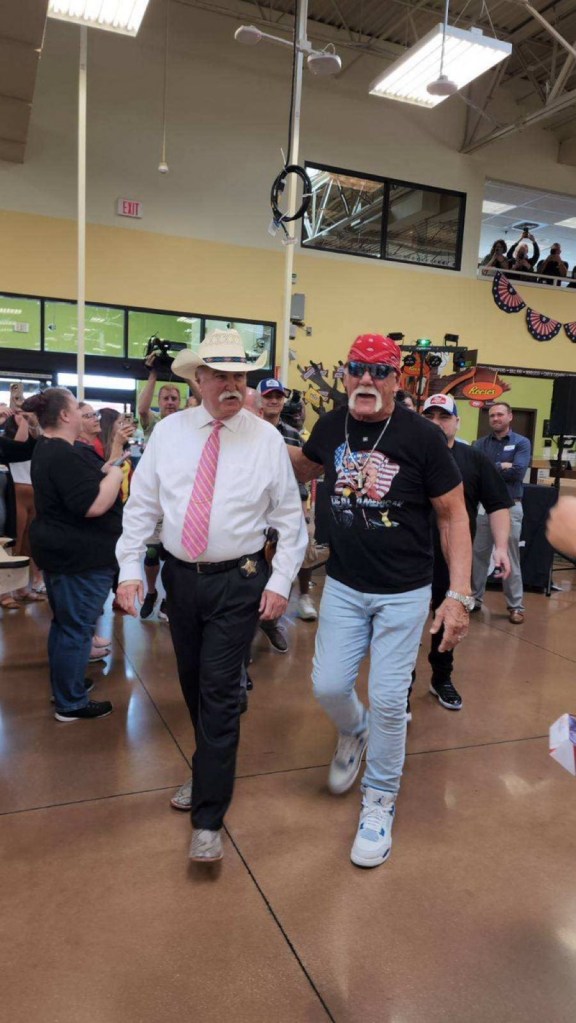
In Butler County, Jones is more than the man who runs the jail and signs the paychecks for deputies. He’s a character in the classic sense: the tall figure in the signature cowboy hat and those big ostrich boots, the one who shows up at fundraisers for youth shooting sports, compares hats with old friends, and isn’t afraid to talk about the realities of the job—the lawsuits that come with the territory, the guns he carries or the ones the department fields, the constant pressure from every direction. He’s been doing this a long time. First elected in 2004, he’s now well into what I’d call his seventh term of service, having worked through multiple governors, multiple presidents, and the full spectrum of political weather in Ohio and beyond. He’s dealt with the Bush years, the Obama years, the Biden years, and whatever comes next. Through all of it, he’s stayed visible, outspoken, and unapologetic in a way that feels increasingly rare.

That visibility is the part a lot of people miss when they talk about what a Sheriff is supposed to do. Some folks think the job is purely about kicking in doors and locking up bad guys. And yes, that work matters—more than most civilians will ever understand. But if you only do the enforcement piece and ignore the executive piece, you eventually lose the community you’re sworn to protect. People start seeing the badge as something distant and ominous rather than something that belongs to them. They start questioning why their tax dollars go to support it. Morale inside the department suffers when the public narrative turns against you. Jones figured this out a long time ago, long before national figures made “brand” a dirty word or a political weapon. He understood that in a republic, especially at the county level where government is closest to the people, you have to build something citizens can latch onto and believe in. You have to make law and order feel like a shared project rather than an imposition.

That’s what I mean when I talk about executive leadership. I’ve written about it in The Gunfighter’s Guide to Business and I’m still working through the lessons in my own professional life—an aerospace executive who spends a lot of hours every week trying to impose will on circumstances, build teams that believe in the mission, and create something durable enough to survive the inevitable storms. The gunfighter doesn’t just draw fast; he creates the conditions where the draw is rarely necessary because the reputation and the relationships do half the work. Same principle applies to a Sheriff’s office. If the community sees the department as “us” rather than “them,” you get better cooperation on tips, better juries, better budgets, better young people considering the career, and a healthier society overall. Jones has spent years cultivating exactly that. He gets on TV. He does the interviews. He shows up. He lets people see the human being behind the badge—the one with the cowboy hat and the straight talk—and that makes all the difference when something goes wrong and the cameras show up for the wrong reasons.

I’ll be honest: when I saw his name on my phone that night, part of me hoped it was the other kind of message. The one where he says they’re getting ready to hit a house or round up some cartel types or serve a warrant that might need an extra set of eyes and a steady hand. I’ve lived long enough and seen enough to know that sometimes the only thing that moves the needle is decisive action on the ground. I would have been in the truck in five minutes, and I think he knows that. But instead he wanted to tell me about the book, and that’s valuable in its own right. Because writing the book is also action—it’s distilling decades of experience into something other people can use. From everything I’ve seen in the descriptions and early word, They Call Me Jonesy is exactly what you’d expect from the man: candid, humorous in that tough-love Midwestern way, deeply patriotic, and full of stories about leadership under pressure, the cost of political correctness, the realities of “the swamp” at every level, and what it actually takes to push back. It’s a call to action for people who still believe in law and order, traditional values, and straight talk. And it comes from someone who’s walked the walk for more than twenty years in one of the most visible law enforcement jobs in Ohio.

We share a mutual friend in David Kern, the longtime Liberty Township trustee. David and I have known each other all my life. He’s always been a solid political figure—practical, engaged, the kind of person who gets things done without needing to be the loudest voice in the room. Jones and I have connected over that shared respect more than once. We’ve not always agreed on every detail of every issue, but we’ve always been able to shake hands, compare cowboy hats (mine’s been a fixture since I was in third or fourth grade, a declaration that I wasn’t going to blend into whatever the culture was selling that week), and keep the relationship real. That matters in a county like ours. It’s how you get things done when the easy path would be to retreat into your own silo and let the rest of the world burn.

There’s something refreshing about a public servant who still understands that the job includes selling the mission. Not in a slick, consultant-driven way—Jones is too much of a character for that—but in the old-fashioned sense of showing people why it’s worth supporting. He’s not afraid to be seen. He’s not afraid to be himself. And because of that, when Butler County residents look at the Sheriff’s Office, they don’t automatically default to suspicion or resentment. They see someone who’s been there through the hard times, who’s willing to say the unpopular thing out loud, and who’s built enough goodwill that the community is willing to give him the benefit of the doubt when the inevitable controversies flare. That’s brand building at its most practical. It’s also leadership at its most effective.

I’m proud of Sheriff Jones for putting this book out into the world. Not every lawman has the discipline or the inclination to turn the raw material of a long career into something readable and useful for the next generation. He’s become something of an international figure in certain circles because of his willingness to speak plainly about immigration, crime, and the erosion of common sense in policy. But he’s stayed rooted here. That says something. And for those of us who call Butler County home, it means we have a Sheriff who gets the big picture: saving America isn’t just a slogan or a national election every four years. It happens in places like this, one relationship, one visible stand, one candid conversation at a time.

The book is available on Amazon right now—“They Call Me Jonesy: Let’s Get Real About Saving America” by Richard K. Jones. I’m looking forward to reading it the moment it lands on my doorstep, and I’ll have more to say once I’ve had a chance to digest it properly. If it captures even a fraction of the personality and the hard-won wisdom I’ve come to associate with the man who sent me that text, it’ll be time well spent. And if you’re the kind of person who still believes that strong, unapologetic leadership at the local level is part of how we turn this country around, then do yourself a favor and pick up a copy too.

In the meantime, I’ll keep my phone close. You never know when the next message from the Sheriff might come through—maybe about the book, maybe about something more immediate. Either way, I’m glad he’s out there, hat and all, doing the work of building something worth believing in. We need more like him.

Footnotes

[1] Richard K. Jones, They Call Me Jonesy: Let’s Get Real About Saving America (Independently published, May 18, 2026). The paperback edition became available around that date; a Kindle edition is also offered. See the official site at theycallmejonesy.com and the Amazon listing for current purchasing options and a free sample.

[2] The book’s public description emphasizes candid leadership lessons drawn from Jones’s decades in corrections and law enforcement, including direct commentary on crime, political correctness, “the swamp,” patriotism, and practical steps for those who want to help save America. Early testimonials have come from figures including former Arizona Sheriff Mark Lamb and former Middletown Police Chief Rodney Muterspaw.

[3] Sheriff Richard K. Jones was first elected Butler County Sheriff in November 2004 (taking office January 2005) and, as of mid-2026, is serving what official records describe as his sixth term. In personal conversation and local perception, the length and continuity of his service often register as an even longer tenure of steady leadership through changing political environments.

[4] Rich Hoffman, The Gunfighter’s Guide to Business (available through standard retailers). The book explores themes of resilience, imposing will on circumstances, building loyal teams, and the executive’s role in creating something people will fight to preserve—lessons that parallel the brand-building and leadership approach discussed here.

[5] Purchase They Call Me Jonesy: Let’s Get Real About Saving America directly through Amazon or the author’s site (theycallmejonesy.com). As of July 2026 it remains a recent release and is easy to find with a quick search for the title and author.

Bibliography

Jones, Richard K. They Call Me Jonesy: Let’s Get Real About Saving America. Independently published, May 18, 2026.

Butler County Sheriff’s Office. “Sheriff.” Official biography page. https://www.butlersheriff.org/sheriff. Accessed July 2026.

Hoffman, Rich. The Gunfighter’s Guide to Business. [Publication details per author’s records].

Amazon.com product page for They Call Me Jonesy: Let’s Get Real About Saving America by Richard K. Jones (ASIN or ISBN as listed on site).

theycallmejonesy.com – Official book site with description, sample, and testimonials.

Rich Hoffman

More about me

Click Here to Protect Yourself with Second Call Defense https://www.secondcalldefense.org/?affiliate=20707

About the Author: Rich Hoffman

Rich Hoffman is an author, political consultant, and strategic advisor based in Cincinnati, Ohio, and the creator of The Politics of Heaven—a unique framework that connects biblical theology, ancient history, and modern power structures to explain how moral alignment and spiritual forces shape global events. Blending real-world political experience with deep research into archaeology, UFO phenomena, and suppressed historical narratives, Hoffman offers compelling commentary on topics ranging from ancient civilizations and the Dead Sea Scrolls to modern populist movements, paranormal continuity, and leadership strategy in chaotic environments. As the author of The Gunfighter’s Guide to Business and the forthcoming Politics of Heaven, he brings a grounded yet provocative voice to media discussions, supported by firsthand experiences and a cross-disciplinary approach that bridges science, history, and theology. For interviews, speaking engagements, or expert analysis, visit richhoffmanbooks.com or contact directly via phone at 513-307-5815 or email at rhoffman@richhoffmanbooks.com.  If you’ve seen the movie, Disclosure Day and want to talk about it and the implications of Presidnet Trump’s UAP disclosures, let me know and we can bring some color to your coverage. https://richhoffmanbooks.com/media-inquiries-broadcast-topics-and-contact-info/?frame-nonce=ad51e7ecba I do have a firsthand UFO encounter to discuss.
The Ohio Governor’s Race: Why Vivek Ramaswamy Is Pulling Away as the Money Dries Up For the Loser Amy Acton

I have been saying for months that this Ohio governor’s race was never going to be as close as the liberal media and the Democratic machine kept insisting. As long as Amy Acton could raise and spend roughly equal amounts of money, they could buy enough advertising to keep the “horse race” illusion alive. That is how the game works in modern politics. Fundraising and media buys create the perception of competitiveness long after the fundamentals have already decided the outcome. But we are now in the middle of July 2026, and the gap is becoming impossible to hide. Elon Musk just put $5 million into the super PAC supporting Vivek Ramaswamy. That single check changes the entire dynamic, and the other side knows it.

I have watched David Pepper and the Marc Elias-style operatives do this routine before. They treat elections like a production where money buys the narrative, and the narrative buys time. They prop up candidates who cannot stand on their own record by flooding the airwaves with ads that soften the edges and attack the opponent on personality or wealth rather than substance. It works until the money runs short. Then the horse stops getting free drinks at the strip joint, and reality walks in. Right now, the money is tightening up for Acton, and the media that was happy to call this a toss-up while the checks were clearing is suddenly quieter about the fundamentals.

Vivek Ramaswamy is the exceptional candidate in this race. He is a Cincinnati native who built real companies, created real value, and succeeded on merit in competitive fields. He is a successful author and thinker who has already proven he can operate at the highest levels of government efficiency efforts alongside Elon Musk in the Department of Government Efficiency. He understands free markets, individual initiative, and the dangers of centralized government that tries to manage every resource and outcome from above. That is the opposite of the society Acton and her backers have spent years promoting—one that empowers mediocre administrators while punishing the very people and policies that generate prosperity.

Acton, by contrast, is a textbook product of the empire of mediocrity. She was the face of Ohio’s COVID lockdowns as state health director. She helped shut down businesses, kept drive-throughs and dining rooms closed at places like McDonald’s under ever-shifting rules, and contributed to the destruction of countless small enterprises that never recovered. Those policies were later exposed in court as unconstitutional overreaches. I had conversations with members of the Ohio Supreme Court back in 2020 as those cases were being prepared, and it was obvious even then that the lockdowns could not survive constitutional scrutiny. Governor DeWine eventually had to back away because the legal foundation was collapsing under him. Acton resigned under pressure from angry citizens protesting in the streets with no clear end in sight. None of that is the record of an exceptional leader. It is the record of someone who followed the centralized script, expanded bureaucratic power, and left real damage behind.

DeWine’s endorsement of Vivek took courage. It is never easy for a term-limited governor to put his name behind a successor who is positioned to outperform him, especially when that successor is running against the person DeWine himself appointed during the pandemic. The fact that he did it anyway tells you something important about where the party and the state are headed. Vivek is not an insider continuation of the old order. He is the disruption the old order needs if Ohio is going to stop losing ground on taxes, education, and economic freedom.

The money tells the real story right now. Vivek’s supporting super PAC has raised serious resources—tens of millions—and is deploying them aggressively. The $5 million from Musk is not just symbolic; it is a signal that serious people who create wealth and understand results are backing him. Acton cannot match that pace. When the advertising dollars dry up, the media loses interest in pretending this is a close contest. Voters are left with the actual records: one candidate who built success and wants to bring that same energy to Columbus, and another whose signature achievement was helping lock down the state economy in ways that proved unconstitutional and economically destructive.

I have been consistent on this since the race took shape. Vivek was always going to outperform the low expectations the media set for him once people looked past the noise. He is rolling out plans on property tax reform, real education choice that puts parents back in charge, and cooperation with a Trump administration that remains popular in Ohio for delivering results on the economy and border security. Acton’s side is still trying to run the old playbook—lawfare, media narratives, and enough cash to keep the “horse race” story alive. But the cash is not keeping up, and the voters are not buying the illusion the way they once did.

This race is a clear choice between two different visions of government. One side believes in self-initiative, free markets, and limited centralized power—the approach that actually lifts societies. The other side believes the government should take from producers and redistribute according to political priorities, the same model that has produced mediocrity and dependency wherever it has been tried at scale. Ohio does not need another governor who manages decline while protecting the administrative class. It needs a governor who will cut waste, reform taxes, fix the schools, and let exceptional people and exceptional businesses thrive rather than punishing them.

We are still a few months from November, but the trajectory is clear. As the funding gap widens and the media can no longer afford to prop up the fiction of a close race, Vivek Ramaswamy is going to pull away. The fundamentals were always on his side. The money is now confirming what the fundamentals already showed. Ohio has a real chance to choose exceptional leadership over the empire of mediocrity that has dominated too much of state government for too long. I have been saying it for months. The evidence is now impossible to ignore.

Footnotes

1.  Elon Musk contributed $5 million to V-PAC, the super PAC supporting Vivek Ramaswamy’s campaign for Ohio governor. Cleveland.com, July 15, 2026.

2.  Vivek Ramaswamy won the Republican primary for governor on May 5, 2026, with approximately 82.4% of the vote. Ballotpedia, “Ohio gubernatorial and lieutenant gubernatorial election, 2026.”

3.  Amy Acton served as Ohio’s state health director and played a central role in the state’s early COVID-19 response and lockdown policies under Governor Mike DeWine.

4.  Multiple court challenges in Ohio and elsewhere during 2020–2021 found various lockdown and business closure orders unconstitutional or beyond executive authority.

5.  Governor Mike DeWine endorsed Vivek Ramaswamy for governor in 2025–2026, despite Acton having been his appointee during the pandemic period.

6.  Ramaswamy’s campaign and supporting super PAC have raised and spent tens of millions, significantly outpacing Acton’s fundraising in key periods of 2026.

Bibliography (selected for further reading)

•  Ballotpedia. “Ohio gubernatorial and lieutenant gubernatorial election, 2026” (primary results and candidate profiles).

•  Cleveland.com. “Elon Musk puts $5 million behind ex-DOGE partner Vivek Ramaswamy’s governor bid.” July 15, 2026.

•  Forbes. “Ramaswamy Wins Republican Primary In Ohio Governor’s Race.” May 5, 2026.

•  AP News. “Trump-backed Vivek Ramaswamy wins Ohio Republican Party’s endorsement in 2026 governor’s race.” May 9, 2025.

•  Vivek for Ohio campaign materials and platform statements (vivekforohio.com).

•  Ohio Capital Journal and other Ohio political reporting on super PAC spending and fundraising totals, 2025–2026.

•  Court records and contemporaneous reporting on Ohio COVID-era lockdown litigation and constitutional challenges (2020–2022).

•  Various polling aggregates from mid-2026 showing the general election contest between Ramaswamy and Acton.

Rich Hoffman

More about me

Click Here to Protect Yourself with Second Call Defense https://www.secondcalldefense.org/?affiliate=20707

About the Author: Rich Hoffman

Rich Hoffman is an author, political consultant, and strategic advisor based in Cincinnati, Ohio, and the creator of The Politics of Heaven—a unique framework that connects biblical theology, ancient history, and modern power structures to explain how moral alignment and spiritual forces shape global events. Blending real-world political experience with deep research into archaeology, UFO phenomena, and suppressed historical narratives, Hoffman offers compelling commentary on topics ranging from ancient civilizations and the Dead Sea Scrolls to modern populist movements, paranormal continuity, and leadership strategy in chaotic environments. As the author of The Gunfighter’s Guide to Business and the forthcoming Politics of Heaven, he brings a grounded yet provocative voice to media discussions, supported by firsthand experiences and a cross-disciplinary approach that bridges science, history, and theology. For interviews, speaking engagements, or expert analysis, visit richhoffmanbooks.com or contact directly via phone at 513-307-5815 or email at rhoffman@richhoffmanbooks.com.  If you’ve seen the movie, Disclosure Day and want to talk about it and the implications of Presidnet Trump’s UAP disclosures, let me know and we can bring some color to your coverage. https://richhoffmanbooks.com/media-inquiries-broadcast-topics-and-contact-info/?frame-nonce=ad51e7ecba I do have a firsthand UFO encounter to discuss.

The Empire of Mediocrity and the Call for American Exceptionalism

I sat at that lunch last week with human resources leaders from several large corporations in the Cincinnati area, the kind of gathering where the check routinely clears a hundred dollars a person, and the conversation circles the same drain it has circled for years. They were perplexed, as they always are when the numbers refuse to lie. Staffing shortages that will not resolve, artificial intelligence that has automated the kiosk and the order screen but still leaves tables to be wiped and registers to be tended by flesh-and-blood people, an economy that refuses to roar back to the promised heights, and a persistent inability to locate and keep the kind of talent that actually moves the needle. They wanted to know how to acquire an intelligent workforce. I told them what I have told anyone who will sit still long enough to hear it: you do not acquire exceptional results by staffing your organization with people selected for their ability to tolerate mediocrity. You find exceptional people, you recognize them when they appear in unconventional packages, and you protect them from the machinery that exists to grind them down.

I have cast aside the noisy, circular arguments over group averages in human capability—not because the psychometric data lack interest from a scientific standpoint, but because my concern has always been the human species as a whole, a young and still-fragile lineage trying to find its footing in a galaxy that is already crowded with other forms of intelligence. The question that matters is not which population cluster sits where on a distribution curve. The question is how any society, any company, any civilization identifies and elevates the outliers who can see around corners the rest of us cannot yet perceive.

Decades of personnel psychology research, distilled in landmark meta-analyses, have shown that general mental ability remains one of the strongest single predictors of job performance across occupations, with particularly high validity for complex, high-stakes roles.  That finding aligns with what I have observed across more than fifty years in business and executive life. Raw cognitive horsepower matters. It is not everything, and it is certainly not a guarantee of worldly success. I have known men and women with genius-level IQs who could not hold a marriage together, could not navigate an ordinary bank teller without frustration boiling over, could not endure the slow, stupid, political churn of ordinary corporate or governmental life without eventually self-destructing or walking away. Intelligence without gumption, without an intuitive compass, without some connection to a wider field of knowing, often becomes a curse rather than a blessing. The person who is “too smart for the room” learns to despise the room, and the room learns to despise him back.

That is the story I told the HR table, because it is the story I have lived and watched others live. In our twenties, a friend and I bought a small company. We were clearing out the accumulated junk of previous owners when we found, in a back closet, one of those enormous old projection bulbs—the kind that once threw motion pictures onto screens the size of a wall. It was a beautiful, ridiculous object, heavy glass and filament, a relic of an analog age already slipping into memory. We decided we had to have it. We loaded it into the hatchback of his car, unsecured, and drove across what was then the University of Cincinnati campus with the rear door open and that giant bulb rolling gently with every turn. The police pulled us over. My friend did not do deference. He despised unearned authority, especially when it could not match the scale of his own mind. Words were exchanged. A citation was issued. No arrest that evening, but the system had taken notice.

Later, when the matter escalated, he represented himself. No lawyer. In the deposition room, they brought in the heavy artillery—prominent litigators from New York and Los Angeles, flown in at considerable expense because a local prosecutor wanted a notable scalp. My friend sat across from them with that calm, encyclopedic brain of his. He had read the entire encyclopedia set by fifth grade and comprehended what he read; he could retrieve and deploy information like a living search engine. He dismantled their lines of questioning one by one. They could not corner him on facts, on law, on logic, or on the precise sequence of events. I watched it happen. During breaks, I heard the hallway mutters from the expensive suits: “He’s too fast.” “We can’t pin him.” These were men whose hourly rates in the early 1990s would have stunned most working people, and they were being outmaneuvered by someone who had never attended their law schools and did not play their credentialed games. The case collapsed. Not because the facts magically changed, but because the egos of the system could not tolerate being shown up by someone operating on an entirely different level of processing speed and intuitive grasp.

The empire does not forget such insults. Over the following years, the full weight of bureaucratic harassment came down—legal troubles, jail time, the slow, grinding destruction that mediocre institutions reserve for those who make them feel small. I have seen the pattern repeat across decades and across industries. Exceptional people do not fit the templates. They ask the questions that expose the fragility of the templates. They produce results that make the people above them look ordinary by comparison. And so the machinery—whether it calls itself corporate human resources, public education, or administrative government—develops antibodies. It promotes compliance. It measures inputs (degrees, time served, adherence to process) rather than outputs (actual value created under uncertainty). It pays a premium, often millions in aggregate payroll, for the comfort of predictability, even when that predictability delivers only mediocre results.

Robert Pirsig understood something essential about this in Zen and the Art of Motorcycle Maintenance. Quality is not the product of following the manual to the letter. It is a living relationship with the work itself, sustained by what he called gumption—the psychic gasoline that keeps a person engaged when things go wrong, when parts are missing, when the official procedure proves inadequate. Gumption traps are everywhere: external setbacks, yes, but more insidiously, the internal ones—ego that refuses to admit ignorance, value rigidity that cannot see a better way because it would require admitting the old way was flawed. Mediocre systems are gumption traps by design. They reward the appearance of order over the reality of excellence. They punish the person who cares too much about the actual motorcycle running well. 

That is why our schools, constructed largely by people of average ability to produce more people of average ability, tend to replicate mediocrity. That is why corporations that claim to want “innovation” and “disruption” simultaneously install layer upon layer of review, compliance, and diversity, equity, and inclusion machinery whose primary effect is to filter out people who will not make anyone above them feel intellectually or morally inferior. The result is expensive. You pay two or three million dollars more in payroll than you needed to, and you still cannot outrun competitors who have learned to locate and protect their own exceptional outliers. You cannot plug in interchangeable parts and expect exceptional output. The math does not work.

Abraham Lincoln understood the same principle in a different key. When the credentialed, politically connected generals of the eastern theater kept failing, he looked west to a man with a reputation for hard drinking and rough edges. Ulysses S. Grant had delivered results—Fort Henry, Fort Donelson, Vicksburg, Chattanooga—while others delivered excuses and body counts. Lincoln promoted him anyway, over the objections of those who preferred a more presentable mediocrity. Grant took responsibility, moved, and won. The American experiment has always contained this tension: on one side, the impulse to flatten outcomes and protect the feelings of the competent-but-not-brilliant; on the other, the older, riskier impulse to let the exceptional rise because the alternative is national stagnation or defeat. 

I have spent a lifetime recruiting and protecting such people—diamonds still in the rough, often overlooked by systems that prize polish over fire. That is why I keep getting invited to these lunches. The people across the table sense that the usual playbooks are failing, but they cannot yet say out loud what the failure actually is. The failure is the empire of mediocrity itself: the set of incentives, credentialing rituals, and cultural taboos that treat exceptional performance as a threat rather than the only thing that justifies an organization’s continued existence.

There is a deeper layer to this that I have only grown more convinced of with time. The intuition that separates the merely bright from the truly exceptional often looks, from the outside, like luck or inexplicable insight. The right decision is made quickly under pressure. The technical problem that yields to an approach no one else had considered. The “voice” that says, “Do not walk down that street tonight,” or, “Here is the battery configuration that actually works at scale.” I have come to understand these moments as instances of interface—imperfect, flickering, but real—between individual human consciousness and a wider field of intelligence that does not require a body. Call it universal mind, call it Providence, call it the spirit world, call it non-human intelligence. The label matters less than the observable pattern: the people who consistently produce outsized results often behave as if they have access to information and pattern recognition that ordinary channels cannot explain.

Ancient cultures knew this terrain better than we admit. The shamanic traditions, the prophetic lineages, the ritual architectures aligned to celestial events—all of them represent attempts to establish reliable contact with that wider field. Some did so through disciplined inner practice. Others, tragically, through blood sacrifice, as if the entities on the other side of the interface could be fed or bargained with. The archaeological record at places like Cahokia shows clear evidence of ritual violence and retainer sacrifice on a significant scale; power in those societies included the capacity to command the deaths of dozens in service of whatever cosmological or political order the elite claimed to mediate.  The Book of Enoch preserves an even older memory: the Watchers, a class of non-human intelligences, descending to impart forbidden knowledge—metallurgy, sorcery, weaponry, cosmetics—and producing hybrid offspring whose existence destabilized the world.  Whether one reads these accounts as literal history, as spiritual allegory, or as garbled cultural memory of real contact events, the through-line is the same: humanity has always lived in relationship with intelligences that do not share our biology, and the quality of that relationship has shaped what we become.

Jesus of Nazareth, in my reading, represents the decisive intervention in that long, bloody negotiation. He offered himself as the final sacrifice, ending the cycle of literal human and animal offerings that had sustained certain interfaces for millennia. In its place, he instituted a symbolic communion—bread and wine rather than flesh and blood—and pointed toward an internal, direct relationship with the source of that wider intelligence. The temple system, which had grown wealthy and powerful managing the sacrificial economy, could not tolerate the threat. They killed him for it, as systems of managed mediocrity have always killed or neutralized those who offer a cleaner, more direct path.

The men who designed the American republic carried some of the same intuition. Many were steeped in Enlightenment rationalism and biblical literacy simultaneously. Some, through Masonic networks, incorporated geometric and symbolic alignments into the new capital city, suggesting they were attempting to establish their own interface with providential or higher-order intelligence. They were not content to let the new nation drift on the currents of ordinary human politics. They wanted it oriented toward something larger. The experiment has been imperfect, repeatedly captured by mediocrity, yet it has also repeatedly produced the conditions under which exceptional individuals could do exceptional things—flight, computing, rocketry, the defeat of fascism and communism in their 20th-century forms.

That is why I have written what I have written and why I continue to speak plainly when the expensive lunches are served. In The Gunfighter’s Guide to Business, I worked to distill the practical discipline of intuitive action under pressure—the same quality that lets a person fix a broken motorcycle on the side of the road or make a high-stakes decision without waiting for committee approval. In The Politics of Heaven, the book I am completing now, I am attempting the larger map: how non-human intelligence has interacted with human history, why certain systems crush the exceptional while others (however imperfectly) give them room, and what it will take for this species to mature rather than stagnate or destroy itself.

Melania Trump is, in my estimation, one of the clearer contemporary examples of the type I am describing. She possessed the looks and presence that the modeling world rewards, but she also possessed an intuitive intelligence that recognized the limits of that world. She made a strategic alliance with a man whose wealth and later political power gave her insulation from the treadmill of mediocrity she had been navigating since her twenties. She has never courted the spotlight for its own sake. She has stayed largely off-grid, raising her son and preserving her own interior life. That choice is widely misunderstood by people who cannot imagine wanting autonomy more than attention. It is the choice of someone who has seen enough of the empire to know she does not want to live inside its walls.

The practical counsel I gave the human resources leaders and the counsel I give to anyone serious about results rather than appearances are straightforward. Stop measuring people primarily by the hoops they have jumped through—degrees, years of service, approved ideological language, willingness to sit through two-hour Friday lunches where nothing of consequence is decided. Measure them by what they actually produce when the plan goes sideways, when resources are constrained, when the problem has not been solved by anyone else. Go looking for the diamonds in the rough. They rarely wear the system’s uniform. They often make the people above them uncomfortable. They will save you far more in payroll than they will ever cost you in management overhead, because one exceptional person routinely does the work of three or four merely competent ones—and does it in a way that creates new possibilities rather than merely maintaining the existing machine.

The empire of mediocrity is expensive, brittle, and ultimately self-defeating. It can maintain control for a long time, especially when it controls education, credentialing, and the administrative state. But it cannot generate the breakthroughs a civilization needs to survive its own success—energy abundance, space settlement, genuine advances in human health and longevity, the wisdom to navigate contact with non-human intelligences that may already be observing us. Those breakthroughs require people who have retained or recovered the capacity to interface with the wider field. They require cultures that do not punish that capacity as a threat.

I have lived most of my life off the grid of that empire, not as an aesthetic choice but as a practical necessity. The view from out here is clearer. The exceptional are not the problem. They are the only remaining margin of safety this species possesses. The question before every organization, every school board, every nation is the same one I answered at that lunch table: do you want predictable mediocrity at premium prices, or do you want results that justify the entire enterprise? The two are not compatible and do not get along naturally.  They will always be at odds.  It took Robert Pirsig a long time to figure all this out and I’m not sure he ever did during his lifetime.  But, it is the question of our times, and the responsibility to action falls on all of us.

Footnotes

1.  Schmidt, Frank L., and John E. Hunter. “The Validity and Utility of Selection Methods in Personnel Psychology: Practical and Theoretical Implications of 85 Years of Research Findings.” Psychological Bulletin 124, no. 2 (1998): 262–74. Subsequent meta-analyses have produced somewhat lower but still positive corrected validity estimates; the core finding that cognitive ability predicts performance across jobs, with higher validity for complex work, has held.

2.  Pirsig, Robert M. Zen and the Art of Motorcycle Maintenance: An Inquiry into Values. New York: William Morrow, 1974. See especially the sections on gumption, gumption traps, and the distinction between static and dynamic quality.

3.  On Lincoln’s decision to elevate Grant: “Lincoln promotes Grant as top Civil War general, March 10, 1864,” Politico, March 10, 2017; and Grant’s own Personal Memoirs of U.S. Grant (1885–86). Lincoln’s reported comment—“I can’t spare this man; he fights”—captures the priority of results over presentability.

4.  Archaeological evidence from Cahokia’s Mound 72 includes mass burials with indications of ritual violence, retainer sacrifice, and both local and non-local individuals among the victims. See summaries of strontium isotope and osteological studies in reports such as those covered in Western Digs and subsequent analyses of Mississippian period power structures.

5.  The Book of Enoch, particularly the Book of the Watchers (chapters 6–36). Standard scholarly translations include R. H. Charles (1917) and more recent critical editions. The text describes non-human Watchers imparting forbidden knowledge to humanity and producing the Nephilim, with lasting consequences for human history and spiritual conditions.

6.  Hoffman, Rich. The Gunfighter’s Guide to Business. [Self-published or independent, drawing on decades of executive and entrepreneurial experience]. The work emphasizes intuitive decision-making under pressure as a learnable discipline.

7.  Hoffman, Rich. The Politics of Heaven. Forthcoming, targeted for 2027 publication. A sustained exploration of biblical and historical patterns of interaction between human societies and non-human intelligence, including themes of giants, spiritual warfare, and the political implications of exceptional versus mediocratic orders.

Bibliography (selected; full working bibliography for The Politics of Heaven exceeds one hundred entries)

•  Pirsig, Robert M. Zen and the Art of Motorcycle Maintenance: An Inquiry into Values. New York: William Morrow, 1974.

•  Schmidt, Frank L., and John E. Hunter. “The Validity and Utility of Selection Methods in Personnel Psychology…” Psychological Bulletin 124, no. 2 (1998): 262–74.

•  The Book of Enoch. Translated by R. H. Charles. London: SPCK, 1917.

•  Pauketat, Timothy R. Cahokia: Ancient America’s Great City on the Mississippi. New York: Viking, 2009.

•  Grant, Ulysses S. Personal Memoirs of U.S. Grant. 2 vols. New York: Charles L. Webster & Company, 1885–86.

•  Hoffman, Rich. The Gunfighter’s Guide to Business.

•  Hoffman, Rich. The Politics of Heaven (forthcoming).

•  Nietzsche, Friedrich. Thus Spoke Zarathustra. Various translations (Overman/Warrior philosophical lineage).

•  McPherson, James M. Battle Cry of Freedom: The Civil War Era. New York: Oxford University Press, 1988.

•  Nickelsburg, George W. E. 1 Enoch 1: A Commentary on the Book of 1 Enoch, Chapters 1–36; 81–108. Minneapolis: Fortress Press, 2001.

•  Ambrose, Stanley H., et al. Studies on Cahokia Mound 72 diet and health (various peer-reviewed articles in American Antiquity and related journals).

•  Vermes, Geza. The Complete Dead Sea Scrolls in English. London: Penguin, 2004 (for context on Second Temple Jewish literature including Enochic traditions).

•  Additional archaeological and historical sources on Mississippian and pre-Columbian ritual practice; biblical archaeology references from Biblical Archaeology Review; and primary accounts of American founding-era symbolism and Masonic geometry in the design of Washington, D.C.

Rich Hoffman

More about me

Click Here to Protect Yourself with Second Call Defense https://www.secondcalldefense.org/?affiliate=20707

About the Author: Rich Hoffman

Rich Hoffman is an author, political consultant, and strategic advisor based in Cincinnati, Ohio, and the creator of The Politics of Heaven—a unique framework that connects biblical theology, ancient history, and modern power structures to explain how moral alignment and spiritual forces shape global events. Blending real-world political experience with deep research into archaeology, UFO phenomena, and suppressed historical narratives, Hoffman offers compelling commentary on topics ranging from ancient civilizations and the Dead Sea Scrolls to modern populist movements, paranormal continuity, and leadership strategy in chaotic environments. As the author of The Gunfighter’s Guide to Business and the forthcoming Politics of Heaven, he brings a grounded yet provocative voice to media discussions, supported by firsthand experiences and a cross-disciplinary approach that bridges science, history, and theology. For interviews, speaking engagements, or expert analysis, visit richhoffmanbooks.com or contact directly via phone at 513-307-5815 or email at rhoffman@richhoffmanbooks.com.  If you’ve seen the movie, Disclosure Day and want to talk about it and the implications of Presidnet Trump’s UAP disclosures, let me know and we can bring some color to your coverage. https://richhoffmanbooks.com/media-inquiries-broadcast-topics-and-contact-info/?frame-nonce=ad51e7ecba I do have a firsthand UFO encounter to discuss.
The Making of George Washington: Lessons from Youth and Adversity in Young Washington

George Washington occupies a unique place in the American imagination. His face appears on currency, his name rests upon the nation’s capital, and his reputation has become so intertwined with the founding of the United States that many people think of him only as the victorious commander of the Revolutionary War or the first President. Yet the making of George Washington occurred long before Yorktown, before the Constitutional Convention, and before the presidency itself. The true story of Washington is the story of formation through adversity, failure, hardship, and character. That is why a film centered upon his youth is so important. A society that wishes to understand greatness must study not only triumphs but also the difficult roads that produced them.

The importance of Young Washington lies precisely in its willingness to explore that earlier chapter. Rather than beginning with a celebrated general crossing the Delaware River or presiding over a new republic, the story examines the young man who had not yet become the legend. It reveals Washington during the years when mistakes carried consequences, when ambition collided with reality, and when the wilderness of North America tested the limits of endurance and leadership. Those experiences were not side notes to history. They were the furnace in which the future Father of His Country was forged.

Modern audiences often forget how dangerous eighteenth-century America actually was. The colonies were not peaceful settlements waiting patiently for independence. The frontier remained a contested world of forests, mountains, rivers, Native American nations, French military forces, British colonial ambitions, and competing claims to vast territories stretching westward beyond the Appalachians.[1] Young Washington entered this world as a surveyor and officer, navigating landscapes that were physically unforgiving and politically explosive.

The French and Indian War shaped the future of North America long before the American Revolution. Many historians describe it as the first global war because fighting extended beyond the American colonies into Europe, the Caribbean, India, and the Atlantic world.[2] The outcome would determine which empire dominated much of the continent—into this conflict stepped a young Virginian with little combat experience and enormous expectations resting upon his shoulders.

One of the most fascinating aspects of Washington’s early life was the extraordinary responsibility placed upon him at a remarkably young age. While many modern young adults are encouraged to avoid risk and postpone responsibility, eighteenth-century society frequently demanded the opposite. Washington found himself carrying diplomatic messages through wilderness territories, negotiating with Native American leaders, evaluating military threats, and commanding troops in situations that would challenge experienced officers.[3] Such responsibilities matured him quickly. The lessons learned in forests and mountains would prove no less valuable than those later learned on battlefields or in government chambers.

The story surrounding Fort Necessity remains one of the most important episodes of Washington’s development. It was not his greatest victory. In many respects, it represented a significant defeat. Yet history repeatedly shows that failures often teach more than successes. Built in a vulnerable meadow, the fort placed British colonial forces in a precarious position. French troops and their allies occupied superior terrain within the surrounding wooded areas. Rain transformed the battlefield into a muddy disaster. Washington ultimately surrendered under difficult circumstances in July 1754.[4]

Many historical figures spend their careers attempting to hide their failures. Washington did something different. He learned from them. The humiliation at Fort Necessity did not destroy his reputation; rather, it became one of the experiences that taught caution, patience, logistics, and strategic judgment. Years later, during the Revolutionary War, Washington would demonstrate restraint and discipline that distinguished him from many contemporaries. Those qualities did not emerge from nowhere. They emerged from earlier encounters with defeat and disappointment.

There is also something powerful about physically visiting places connected to history. Reading books provides knowledge, but standing where events occurred provides perspective. The mountains of western Maryland and Pennsylvania remain striking reminders of the challenges faced by colonial soldiers. The terrain itself explains much of the story. Steep ridges, dense forests, winding roads, and isolated valleys reveal why campaigns in that region were so difficult. Geography often becomes an invisible character in historical narratives, and nowhere is that more evident than in Washington’s frontier experience.

The routes that would later become the National Road carry tremendous historical significance as well. Connecting eastern population centers with western territories, they became some of the most important transportation projects in early American history.[5] Yet before roads and highways transformed the region, movement through those mountains demanded determination, courage, and endurance. Washington’s experiences along those routes exposed him to the realities of frontier America and deepened his understanding of the continent he would later help unite.

A film exploring these events succeeds when it respects the material. Historical drama does not require perfect documentation of every detail, but it must convey the spirit, character, and significance of the people involved. According to many viewers familiar with Washington’s biography, Young Washington captures that spirit effectively. The portrayal of Washington as noble without being perfect allows audiences to encounter him as a human being rather than an untouchable monument.

That distinction matters because modern culture frequently swings between extremes. Historical figures are either idealized beyond recognition or condemned without context. Washington deserves neither treatment. He was a man with strengths and flaws, successes and failures, extraordinary abilities and ordinary limitations. What separates him from countless others is not perfection but character. Throughout crises, disappointments, and temptations, he consistently sought duty above personal comfort.[6]

This emphasis upon character may explain why the film resonates so strongly with audiences. Many forms of contemporary entertainment focus upon antiheroes, cynicism, moral ambiguity, or spectacle. Such approaches can produce compelling stories, but they often leave audiences hungry for something different. There remains a deep desire to witness individuals striving toward virtue, honor, courage, and responsibility. Human beings naturally admire excellence. They seek examples of people attempting to become better versions of themselves.

This is one reason George Washington continues to command respect centuries after his death. His achievements cannot be separated from his moral aspirations. He believed leadership required self-control. He believed reputation mattered. He believed public service demanded sacrifice. He understood that power, if not restrained by character, could destroy both leaders and nations.[7]

Few decisions illustrate this more clearly than his resignation of military authority after the American Revolution. History contains countless examples of victorious generals who transformed military success into political dictatorship. Washington chose another path. After securing independence, he surrendered power and returned home. King George III reportedly remarked that such an action would make Washington “the greatest man in the world.”[8] The roots of that decision can be traced back to earlier lessons learned during his youth. The young officer who experienced failure at Fort Necessity eventually became the mature statesman willing to relinquish power.

The success of films like Young Washington also reflects a broader cultural shift. Many audiences increasingly search for stories that celebrate rather than deconstruct. Entertainment once produced numerous historical adventures focused upon courage, exploration, leadership, and national heritage. Classic productions such as Davy Crockett and Zorro attracted viewers not because their heroes were flawless, but because they represented ideals worth pursuing. Such stories reminded audiences that civilization depends upon honorable conduct.

Angel Studios appears to recognize this hunger. The company has developed a reputation for producing projects that emphasize family-friendly storytelling, historical subjects, faith, perseverance, and moral clarity. Whether individual viewers agree with every creative choice is ultimately secondary. The greater significance lies in the fact that audiences continue to support films that treat virtue seriously rather than sarcastically.

The enthusiastic audience response described by many theatergoers reinforces this point. Packed theaters, applause during credits, and viewers remaining in their seats after the film concludes suggest more than mere entertainment value. They suggest emotional investment. People stay because they do not want the experience to end. They remain because something meaningful has occurred. The story has connected them not merely with a plot but with values, memories, and aspirations.

History possesses a unique ability to create that connection. Contemporary debates often divide people, but historical narratives sometimes unite them around shared admiration for courage and perseverance. George Washington serves as one of those rare figures capable of reaching across ideological boundaries. Americans may disagree about countless issues, yet many still recognize the importance of the leadership that guided the nation through its earliest and most fragile years.[9]

Perhaps the most striking aspect of Washington’s story is the consistency between his public life and his private aspirations. The pursuit of self-improvement remained a recurring theme throughout his life. As a young man, he studied, observed, listened, and learned from mistakes. As a military leader, he refined discipline and judgment. As president, he attempted to place national interests above factional interests. Growth never stopped.

That emphasis upon striving rather than perfection carries enduring relevance. Every generation faces moments of disappointment, conflict, and uncertainty. Every individual encounters failures that seem overwhelming in the moment. Washington’s example demonstrates that setbacks need not define a life. Defeat at Fort Necessity did not prevent future greatness. Criticism did not prevent achievement. Hardship did not destroy resolve. Instead, adversity became preparation.

The frontier itself symbolized this process. The forests beyond colonial settlements represented danger, uncertainty, and opportunity. They tested physical endurance while revealing inner character. Washington’s journeys across that landscape helped develop qualities that later proved indispensable. Resourcefulness, patience, courage, adaptability, and resilience emerged not in comfort but in challenge.

A compelling historical film, therefore, accomplishes more than simple education. It invites audiences to reconsider what greatness actually means. Greatness is not merely holding office, winning battles, or receiving recognition. Greatness begins in the difficult choices made before anyone is watching. It begins with responsibility embraced rather than avoided. It begins with the willingness to learn from mistakes rather than deny them.

For that reason, Young Washington offers a valuable contribution to American historical storytelling. It introduces viewers to formative experiences that are often overshadowed by later accomplishments. It encourages appreciation for the long process through which character develops. Most importantly, it reminds audiences that the foundations of leadership are laid long before leadership is publicly recognized.

There is also something refreshing about spending time in the company of admirable characters. Modern culture often celebrates transgression while dismissing virtue as naïve. Yet viewers continue responding positively to stories featuring courage, integrity, loyalty, and self-sacrifice. The reason is simple. Human beings instinctively recognize these traits as desirable. They recognize them as qualities capable of elevating communities, institutions, and nations.

Washington’s story continues to endure because it illustrates that elevation. A young surveyor became a frontier officer. A frontier officer became a military commander. A military commander became the leader of a revolution. A revolutionary leader became the first president. Yet beneath each transformation remained the same aspiration toward honor and duty. The titles changed. The character remained.

Films capable of conveying that truth perform an important cultural service. They preserve memory. They encourage reflection. They connect present generations with the experiences that shaped earlier ones. They provide reminders that history is not simply a collection of dates and events but a record of human choices.

Ultimately, the enduring appeal of George Washington rests upon more than military accomplishments or political achievements. It rests upon the example of a man who repeatedly sought the higher path when easier alternatives existed. The youth who faced defeat in the mountains became the leader who guided a fragile republic. The officer who learned difficult lessons on the frontier became the statesman willing to place principle above personal ambition. The story remains powerful because it speaks to universal themes of growth, responsibility, perseverance, and character.

That is why Young Washington deserves attention. It tells a chapter of history too often ignored. It introduces audiences to the experiences that forged one of the most important figures in American history. It presents nobility without arrogance, courage without recklessness, and patriotism without cynicism. In an era frequently dominated by stories celebrating the worst of human behavior, there is something profoundly valuable about a story centered upon the possibility of becoming better. George Washington’s journey reminds audiences that greatness is not inherited, accidental, or effortless. It is earned through struggle, formed through adversity, and sustained through character. More than two centuries after his death, that lesson remains as relevant as ever.

Footnotes

[1] Fred Anderson, Crucible of War: The Seven Years’ War and the Fate of Empire in British North America, 1754–1766 (New York: Knopf, 2000).

[2] Daniel Baugh, The Global Seven Years’ War 1754–1763 (London: Routledge, 2011).

[3] George Washington, The Journal of Major George Washington (1754).

[4] David Preston, Braddock’s Defeat: The Battle of the Monongahela and the Road to Revolution (Oxford University Press, 2015).

[5] Karl Raitz, The National Road (Johns Hopkins University Press, 1996).

[6] Ron Chernow, Washington: A Life (New York: Penguin Press, 2010).

[7] James Thomas Flexner, George Washington in the American Revolution (Little, Brown and Company, 1968).

[8] Joseph J. Ellis, His Excellency: George Washington (New York: Knopf, 2004).

[9] Gordon S. Wood, The Radicalism of the American Revolution (Vintage Books, 1993).

Bibliography

Anderson, Fred. Crucible of War: The Seven Years’ War and the Fate of Empire in British North America, 1754–1766. New York: Knopf, 2000.

Baugh, Daniel. The Global Seven Years’ War 1754–1763. London: Routledge, 2011.

Chernow, Ron. Washington: A Life. New York: Penguin Press, 2010.

Ellis, Joseph J. His Excellency: George Washington. New York: Knopf, 2004.

Flexner, James Thomas. George Washington in the American Revolution. Boston: Little, Brown and Company, 1968.

Preston, David. Braddock’s Defeat: The Battle of the Monongahela and the Road to Revolution. Oxford: Oxford University Press, 2015.

Raitz, Karl. The National Road. Baltimore: Johns Hopkins University Press, 1996.

Washington, George. The Journal of Major George Washington. Williamsburg, 1754.

Wood, Gordon S. The Radicalism of the American Revolution. New York: Vintage Books, 1993.

Rich Hoffman

More about me

Click Here to Protect Yourself with Second Call Defense https://www.secondcalldefense.org/?affiliate=20707

About the Author: Rich Hoffman

Rich Hoffman is an author, political consultant, and strategic advisor based in Cincinnati, Ohio, and the creator of The Politics of Heaven—a unique framework that connects biblical theology, ancient history, and modern power structures to explain how moral alignment and spiritual forces shape global events. Blending real-world political experience with deep research into archaeology, UFO phenomena, and suppressed historical narratives, Hoffman offers compelling commentary on topics ranging from ancient civilizations and the Dead Sea Scrolls to modern populist movements, paranormal continuity, and leadership strategy in chaotic environments. As the author of The Gunfighter’s Guide to Business and the forthcoming Politics of Heaven, he brings a grounded yet provocative voice to media discussions, supported by firsthand experiences and a cross-disciplinary approach that bridges science, history, and theology. For interviews, speaking engagements, or expert analysis, visit richhoffmanbooks.com or contact directly via phone at 513-307-5815 or email at rhoffman@richhoffmanbooks.com.  If you’ve seen the movie, Disclosure Day and want to talk about it and the implications of Presidnet Trump’s UAP disclosures, let me know and we can bring some color to your coverage. https://richhoffmanbooks.com/media-inquiries-broadcast-topics-and-contact-info/?frame-nonce=ad51e7ecba I do have a firsthand UFO encounter to discuss.
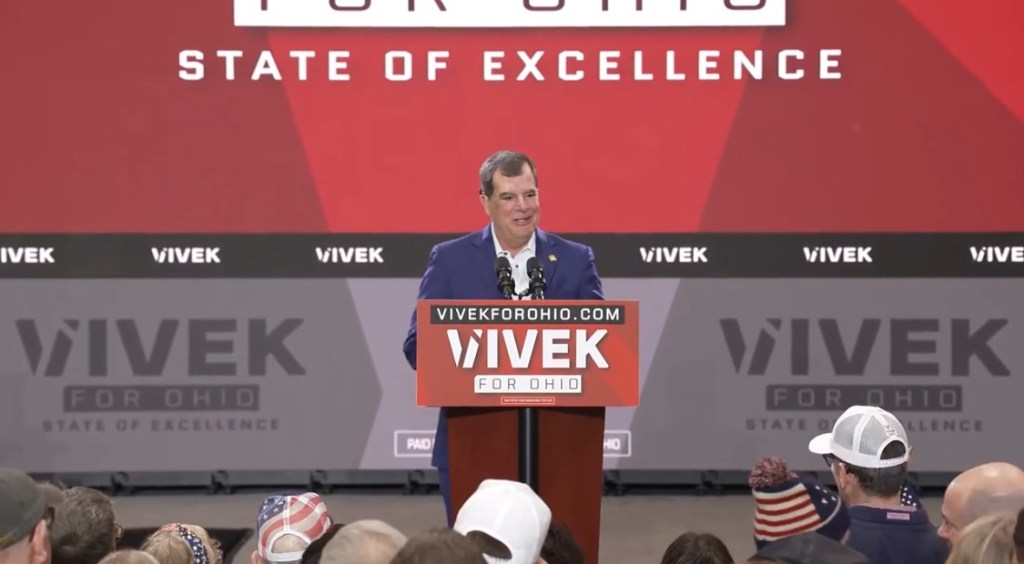
StarShip 13: Manufacturing with the Right Stuff

I’ve been watching this unfold for years, and here we are in the middle of July 2026 with everything lining up just about the way I described it would. Starship 13 was stacked and ready at Starbase, the gigafactory turning out vehicles at a pace that feels almost routine now, and then yesterday the launch attempt scrubbed right at T-0 because a couple of those Raptors didn’t light. No long delay, no laundry list of reasons to push everything out for months. They’re swapping a couple of engines and coming right back at it in a few days. That quick recovery says everything about the mindset that’s driving this whole thing forward.

Starship 12 flew right after Memorial Day. Now here comes the next one, barely a month later, with the factory knocking them out faster all the time. I look at that ramp, and I see the future of manufacturing staring back at us. The old aerospace ways—the thick binders, the endless reviews, the comfortable schedule slips—are getting replaced by something that moves at the speed of learning. Blow something up, pull the data, fix what broke, and roll out the next one. It’s not perfect yet, but it’s honest, and it’s fast.

I remember talking about the space economy and SpaceX specifically for a long time. A lot of people paid attention. Some bought in and held through the noise and the short cycles. The value held up better than many of the loud projections predicted it would. Those who stuck with it saw something bigger than a quick flip. I’ve been in aerospace long enough to recognize when the ground is shifting, and this shift feels different. The cadence is the story—every month for the rest of the year, then multiple flights a month, heading toward weekly by 2027 if the line keeps delivering. With my popcorn ready, I can’t wait to watch the next attempt. The visuals alone—the tower, the chopsticks, the glow of those engines—are worth the price of admission.

This is forcing everyone else to look in the mirror. The people who learned the business in the seventies and eighties with their old tricks are going to have to reinvent or get left behind. SpaceX isn’t improving the legacy model. They’re building a new one from the ground up, and the rest of the industry is feeling it. Blue Origin took a real hit with the New Glenn explosion at the Cape back in May. Pad damage, hardware gone, the kind of setback that could have turned into years of finger-pointing. Instead, they cleared the debris in nine days, started reconstruction, shifted to a new hybrid operations plan, and said they’re still aiming to fly again before the end of the year. That’s the right attitude—fix it fast and pull the schedule back in.

China watched the leader and made its own move. They just recovered their first reusable booster with the Long March 10B using a sea-based net system—different engineering, their own solution, but clearly inspired by the reusability standard SpaceX set. A giant net on a ship caught the booster after its flight. Not chopsticks, but effective in its own way, and a big step for them. Competition like that keeps everyone sharp.

I’ve seen this kind of culture before. Back in the nineties, I ran a facility that built conveyor systems for Amazon’s early distribution centers. I talked with their teams about how they planned to hit those aggressive delivery promises and keep scaling without the whole thing falling apart. They had that same focused confidence you see at Starbase now—the look of people who know they’re part of something that’s going to win. When I recently went hunting for a particular book on manufacturing excellence and the kind of disciplined execution these environments demand—one I’ve kept coming back to for over a decade—I did it the old way first. Drove all over Cincinnati, walked into the physical stores, and looked on the shelves myself. Nobody had it. They offered to order it for Monday with an extra fee. I wanted it in my hands sooner.

So I turned to Amazon and had the physical copy on my doorstep from across the country in about six hours. That efficiency still impresses me every time. I love holding the actual book—the direct line from the author’s work to my hands with nothing digital in between, tracking how long I linger on a page or what I underline. No screen time logs, no middleman analysis. Just the book and me, off-grid, the way I prefer to absorb the hard-earned knowledge someone poured years into. The hunt in the stores reminded me why I still do it the old way when I can, but the modern logistics machine made sure I didn’t have to wait.

That same drive shows up in the Starship program. The factory isn’t sandbagging. They’re not hiding behind excuses or perpetually pushing dates. They build, test, learn, repeat. The Raptor issues from yesterday have been fixed, and the next window opens soon. That rhythm is what I’ve been pointing to for a long time. It changes the economics of everything above the atmosphere—Starlink expansion, lunar missions, orbital manufacturing, the whole space economy taking shape. Vertical air vehicles like what Archer and others are working on feel like the natural extension down here on Earth. The hot ticket is clearly in these high-cadence, reusable systems that treat hardware like it’s meant to fly again tomorrow.

I’ve spent my career in aerospace seeing both the old ways and the new possibilities. Watching Starship 13 get prepped, scrubbed, and prepped again reinforces what I’ve observed over and over: the organizations that impose discipline on the schedule and treat setbacks as data points are the ones pulling ahead. The visuals of the tower with its arms ready, the sound of those engines lighting, the sheer scale of the vehicles rolling out—few things get me more excited than a Starship launch day, even when it turns into a quick scrub that shows the process working. I’m rooting hard for SpaceX, for Blue Origin’s recovery, for the whole industry to rise with the tide they’re creating. China’s chasing the reusability standard is part of that rising tide too.

The age of disclosure is here in the most practical sense. What used to be hidden behind years of slow development and classified programs is playing out in public test after test. The limits are being shown for what they are—breakable. The manufacturing practices that make rapid iteration possible are being laid bare for anyone paying attention. I keep my physical books close for the same reason I keep watching these launches: there’s something honest and direct about the transfer of capability and knowledge. No filters, no delays, just the real thing moving from one place to another faster than the old models ever allowed.

I’ll be right here with the popcorn when the next attempt rolls around, watching the Raptors light and the vehicle do its work. The cadence is real. The factory is delivering. The future I’ve been describing is showing up on schedule, one Starship at a time.

Further Reading

•  SpaceNews coverage of Starship Flight 13 abort and recovery plans.

•  NASASpaceflight and Ars Technica reporting on V3 vehicle cadence, modifications, and Starbase production.

•  Reports on China Long March 10B net recovery success.

•  Blue Origin updates on LC-36 reconstruction and return-to-flight goals.

•  The Gunfighter’s Guide to Business by Rich Hoffman.

•  Classic manufacturing texts like The Goal by Eliyahu Goldratt for the operational mindset behind high-velocity systems.

•  Ongoing SpaceX program updates from the company site and independent space media for the latest on launch cadence and Starlink integration.

This is the raw flow of what’s happening out there right now, the way I see it and the way I’ve been living it.

Rich Hoffman

More about me

Click Here to Protect Yourself with Second Call Defense https://www.secondcalldefense.org/?affiliate=20707

About the Author: Rich Hoffman

Rich Hoffman is an author, political consultant, and strategic advisor based in Cincinnati, Ohio, and the creator of The Politics of Heaven—a unique framework that connects biblical theology, ancient history, and modern power structures to explain how moral alignment and spiritual forces shape global events. Blending real-world political experience with deep research into archaeology, UFO phenomena, and suppressed historical narratives, Hoffman offers compelling commentary on topics ranging from ancient civilizations and the Dead Sea Scrolls to modern populist movements, paranormal continuity, and leadership strategy in chaotic environments. As the author of The Gunfighter’s Guide to Business and the forthcoming Politics of Heaven, he brings a grounded yet provocative voice to media discussions, supported by firsthand experiences and a cross-disciplinary approach that bridges science, history, and theology. For interviews, speaking engagements, or expert analysis, visit richhoffmanbooks.com or contact directly via phone at 513-307-5815 or email at rhoffman@richhoffmanbooks.com.  If you’ve seen the movie, Disclosure Day and want to talk about it and the implications of Presidnet Trump’s UAP disclosures, let me know and we can bring some color to your coverage. https://richhoffmanbooks.com/media-inquiries-broadcast-topics-and-contact-info/?frame-nonce=ad51e7ecba I do have a firsthand UFO encounter to discuss.
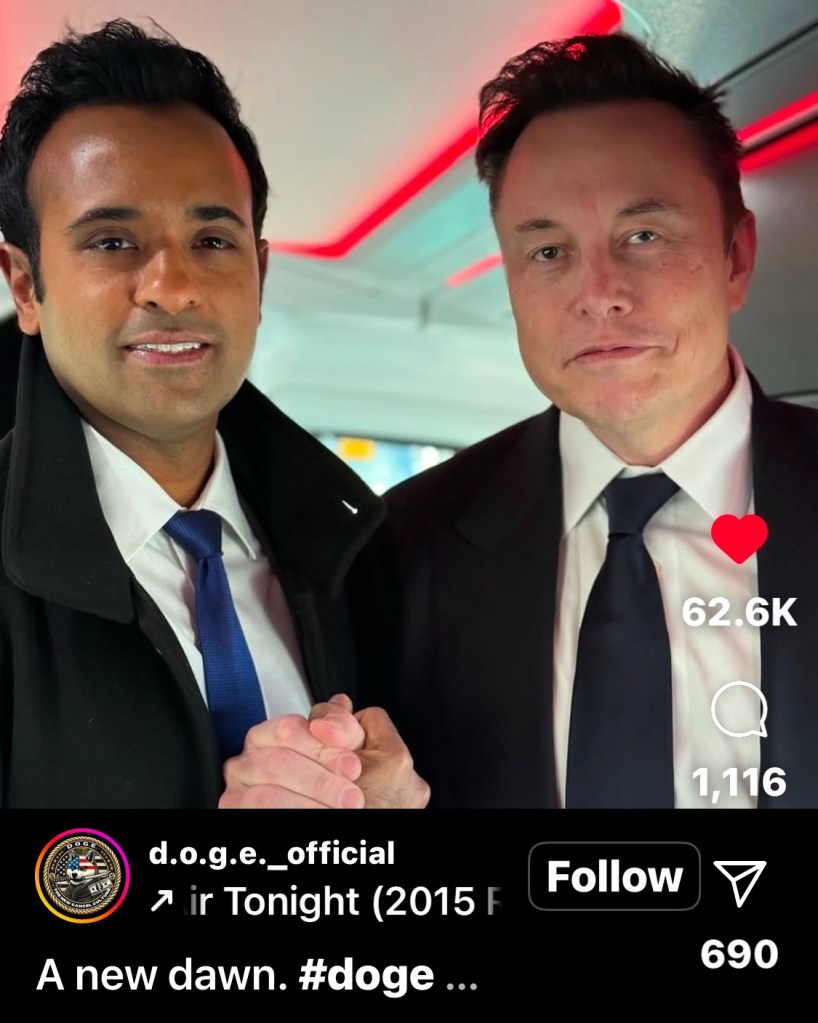
The Lesson of Supergirl: The audience has a lot of Christian dads in it

I haven’t seen the Supergirl movie yet. From everything I’ve heard and read about the promotional run and the way the numbers have come in, I’m not in any rush. It’s the same old story playing out again, the one that keeps repeating itself in Hollywood these days like a bad loop on an old VHS tape. The actress, Milly Alcock, went out there during the press cycle and made some comments that landed exactly the way these things always do when the people in charge forget who actually buys the tickets. She talked about online critics and how a lot of them were just “Dad of four, Christian” types with no profile picture or burner accounts, and she said it was hilarious to her. Then she added that if you’re pissing off the right kind of people, you’re doing okay. 

That kind of talk might play well in certain rooms in Los Angeles or New York, but it doesn’t play well with the people who were supposed to be the core audience for a big summer superhero movie built around Superman’s cousin. Christian dads with a couple of kids aren’t some fringe group you can mock on the way to the bank. They’re the ones who used to load up the minivan, buy the tickets, get the popcorn, and make these movies cultural events. When you go out of your way to signal that their worldview is a punchline, they notice. And they stay home. Then the box office comes in soft, everybody starts pointing fingers, and the same executives who greenlit the messaging act surprised.

This is the same playbook that wrecked the live-action Snow White over at Disney. Rachel Zegler went out there and called the original story dated, took shots at the prince character, and sprinkled in enough political commentary that a big chunk of the traditional family audience decided they had better things to do with their Saturday afternoon. The movie opened okay but collapsed fast, and Disney ended up losing something like $170 million on it once you factored in the budget, the reshoots after the set fire, and the marketing.  It wasn’t just one actress. It was a whole system that decided the audience needed re-education more than it needed entertainment.

Supergirl opened the weekend of June 26, 2026, to about $37 million domestically. That was well below the $50 million range some trackers were expecting and a steep drop from what Superman did the year before under James Gunn’s watch. Superman opened to $125 million domestically and finished with roughly $355 million here in the States and over $618 million worldwide. Supergirl, with a reported $170 million production budget plus heavy marketing, was tracking toward the low $60s, or maybe $70 million, domestically if it held on through the holiday frame, with worldwide totals hovering around $110-115 million.  That’s not enough to break even on a movie this size. It’s the kind of number that makes everybody downstream from the studio—crew, vendors, theater chains—feel the pain while the people who made the decisions move on to the next project.

The demographic split on opening weekend told the story in real time. The audience was skewed heavily male and over 25. The young women and families the movie was supposed to bring in large numbers didn’t show up in force. That’s what happens when the lead actress spends part of the promotional cycle telling a big slice of the potential audience that their very existence as profile pictures with kids and a faith is funny to her. You don’t have to agree with every dad out there. You don’t even have to like them. But if you’re getting paid millions to stand in front of a camera in a cape and sell a $200 million piece of intellectual property, your job during promo is to get as many people as possible to buy a ticket. Not to litigate culture war points from a Variety interview conducted months earlier. 

I’ve been around this business enough over the years to know how it works. I had a stretch where I thought I might direct or at least write and produce films. I wrote a few things, got them in rooms, and sat across from people who controlled real money. What I saw up close was that a certain faction had already decided the product came second to the politics. I remember one conversation where I pitched something and the response wasn’t about whether the story would connect or make money. It was about whether the script had the right messaging baked in. When I realized the game was rigged that way, I made a decision. I wasn’t going to spend my life compromising on things that mattered to me to get a seat at a table that was already serving a different meal. I walked away from chasing that particular brass ring and put my energy into the Tea Party and then the broader movement that became MAGA. The checks in Hollywood can be big for a minute, but they don’t buy back your integrity once you’ve traded pieces of it away.

That’s why these promotional disasters keep happening. The people in charge keep hiring talent who treat the job as a personal activism platform rather than a professional obligation. Zendaya is the counterexample people should study. She’s a good actress; she’s in big franchises; she married Tom Holland; and she mostly keeps her head down and does the work. She doesn’t feel the need to go out on every carpet and unload on half the country. That’s why she keeps getting hired. The ones who treat every interview like a chance to settle scores or signal to the online choir end up with one big movie and then a lot of quiet time afterward.

James Gunn has been in an interesting spot through all of this. He came in with real goodwill from the Guardians movies, which proved you could take obscure characters, give them personality and humor, and make a fortune. Superman last year was a genuine hit—fun, hopeful, well-reviewed, and profitable. It looked like maybe the new DCU under Gunn and Peter Safran had found a lane. Supergirl was supposed to build on that momentum. Instead, it landed with a thud. Gunn didn’t direct this one—Craig Gillespie did—but he and Safran produced it and shaped the vision. The character on screen is described as more jaded, sarcastic, impulsive, a bit of an anti-hero who parties on red-sun planets where she can actually get drunk. That’s a valid take on the comics, but when you pair it with a promotional tone that mocks the audience that grew up on the classic Superman ideal of truth, justice, and the American way, you’re asking for trouble. 

There’s already talk in the trades about whether this soft opening puts Gunn’s position under more scrutiny. Some agents are whispering that another miss like this and the corporate structure might decide it’s time for a change, even though Superman succeeded and the long-term plan is still being sold as sound.  That’s how it goes in these big studios now. One regime comes in promising to fix the mess left by the last one, spends a fortune on a new slate, and then the same underlying problems—audience alienation, messaging over story, talent who can’t or won’t sell the product—show up again. Gunn has more runs on the board than most, but the Supergirl numbers are a reminder that goodwill has a shelf life when the results don’t follow.

I keep coming back to the Indiana Jones situation because it shows the pattern so clearly. In the last film, there were persistent rumors that the original plan involved killing the character off or erasing him in some way that felt like a deliberate gut punch to the legacy. The director denied reshoots for that specific reason, but a lot of us who watched the sausage get made over the years didn’t buy the full denial. Extra money got spent, the ending got massaged, and the movie still underperformed relative to what an Indiana Jones picture should do. The people in charge wanted to make a statement. The audience wanted one more ride with the character they loved. When those two things collide, the audience usually wins by staying home, and the studio eats the difference.

Captain Marvel followed the same arc. Brie Larson went out and did the whole “toxic masculinity” circuit after the first movie made money. The sequel, The Marvels, became one of the bigger bombs in recent Disney history. The pattern is consistent: the first project coasts on existing goodwill and curiosity, the star or the messaging starts treating the core audience like the enemy, and the follow-up craters. Then the same executives who approved the approach acted shocked that families and longtime fans didn’t line up again.

What’s happening now is bigger than any single movie or actress. Hollywood went hard left years ago, and the corporate layer that runs these places decided DEI checklists and cultural re-education were more important than selling tickets. They hired people who shared that worldview, gave them big platforms, and then acted surprised when the people who actually pay for the content walked away. The trust erosion is real. Once families decide a brand doesn’t have their kids’ best interests at heart—whether it’s live-action remakes that lecture them or kids’ programming that slips in stuff no parent asked for—they don’t come back easily. You see it in the vinyl revival, the return to physical media, people wanting to own their libraries instead of renting everything from a streaming service that can memory-hole a title whenever it wants. We went through this with music. The industry told everybody they’d rent forever from iTunes and Spotify. Now people are buying records again because they want something they can actually hold when the power goes out or when the algorithm decides they shouldn’t hear a certain song anymore.

The same principle applies to movies. These big corporate entities keep treating the audience like a resource to be mined and then scolded. The audience is responding by treating Hollywood as an optional expense rather than a weekly habit. Supergirl didn’t fail because the character is unlikable in the comics or because superhero fatigue is total. It failed because the promotional campaign handed the opposition free ammunition and because the underlying calculation—that you could insult a big chunk of the paying public and still get their money—turned out to be wrong.

I’ve said for years that the best movies, the ones that actually shaped generations, came from people who cared more about the story than the politics of the moment. Star Wars in its original run was a phenomenon because it gave people something to line up for, something to argue about in the schoolyard, something that felt bigger than the daily grind. The merch drops were events. Families participated together. When the machine decided it needed to lecture instead of entertain, the cultural grip loosened. The same thing is happening across the board now. The pushback isn’t coming from some organized cabal. It’s coming from millions of individual decisions by people who are tired of paying premium prices to be told their values are the problem.

James Gunn still has a runway because Superman worked and because he has a track record of making things people actually want to watch. But the Supergirl results are a warning shot. If the next projects keep treating the core audience as something to be managed or mocked rather than served, the DCU experiment will end up in the same pile as every other attempt to force-feed ideology through expensive capes. The audience has options now. They can wait for streaming, skip it entirely, or see something else that doesn’t require them to check their beliefs at the door.

Look, I’m not saying every actor has to be a robot with no opinions. I’ve got plenty of my own, and I’ve never been shy about sharing them on my own platforms. The difference is I built those platforms myself. When you’re handed a lead role in a $170 million studio movie, the job description includes not actively driving away the people who are supposed to fill the seats. That’s not censorship. That’s basic professionalism and basic math. The Christian dads with kids aren’t asking for a sermon from the screen. They’re asking for two hours where the good guys win, the hero stands for something worth standing for, and nobody on the promotional tour calls their existence hilarious. When Hollywood forgets that simple transaction, the box office reminds them. And the reminders are getting more expensive every year.

I’ve watched this industry from the outside for a long time now, close enough to see the decisions but far enough away that I didn’t have to compromise to keep a seat. What I see is a system that keeps choosing the same losing strategy and then acting confused when the results don’t change. The audience didn’t leave because they hate superheroes. They left because the people making the movies began to hate the audience. Until that calculation flips, these soft openings and outright disasters will keep happening. The ones who figure it out first—the ones who treat the job like a privilege instead of a pulpit—will be the ones still standing when the dust settles. The rest will explain to their next meeting why the numbers didn’t work out again.

That’s the reality on the ground in the middle of 2026. Superman proved there’s still an appetite for hopeful, well-made comic book movies. Supergirl proved that even a strong foundation can be undermined in a single promotional cycle when the people involved forget who they’re talking to. The pushback is real; it’s measurable at the ticket window, and it’s not going away until the people writing the checks decide that making money and telling stories people actually want to see matter more than scoring points with the crowd that already agrees with them. I’ve made my peace with walking away from that table years ago. Watching it wobble from a distance confirms I made the right call.

Sources and Further Reading

•  Box office figures and analysis for Supergirl (2026): TheWrap, Box Office Mojo, USA Today, ComicBook.com reports from late June and early July 2026. 

•  Milly Alcock Variety interview comments on critics and “Dad of four, Christian” profiles: Originally conducted mid-April 2026, widely discussed after May publication and post-release. 

•  Snow White (2025) financial losses and promotional controversies: Forbes, Variety, Box Office Mojo. 

•  James Gunn DCU context and insider speculation post-Supergirl: Slashfilm, Screen Daily, ComicBook.com

•  Broader industry patterns around audience alienation, DEI priorities, and promotional missteps: Multiple trade coverage 2023–2026 on Captain Marvel/The Marvels, Indiana Jones and the Dial of Destiny rumors and reshoots (director denials notwithstanding), and shifting audience behavior toward physical media and selective viewing.

Rich Hoffman

More about me

Click Here to Protect Yourself with Second Call Defense https://www.secondcalldefense.org/?affiliate=20707

About the Author: Rich Hoffman

Rich Hoffman is an author, political consultant, and strategic advisor based in Cincinnati, Ohio, and the creator of The Politics of Heaven—a unique framework that connects biblical theology, ancient history, and modern power structures to explain how moral alignment and spiritual forces shape global events. Blending real-world political experience with deep research into archaeology, UFO phenomena, and suppressed historical narratives, Hoffman offers compelling commentary on topics ranging from ancient civilizations and the Dead Sea Scrolls to modern populist movements, paranormal continuity, and leadership strategy in chaotic environments. As the author of The Gunfighter’s Guide to Business and the forthcoming Politics of Heaven, he brings a grounded yet provocative voice to media discussions, supported by firsthand experiences and a cross-disciplinary approach that bridges science, history, and theology. For interviews, speaking engagements, or expert analysis, visit richhoffmanbooks.com or contact directly via phone at 513-307-5815 or email at rhoffman@richhoffmanbooks.com.  If you’ve seen the movie, Disclosure Day and want to talk about it and the implications of Presidnet Trump’s UAP disclosures, let me know and we can bring some color to your coverage. https://richhoffmanbooks.com/media-inquiries-broadcast-topics-and-contact-info/?frame-nonce=ad51e7ecba I do have a firsthand UFO encounter to discuss.

The Eye of the Tiger: Lindsey Graham dies and Conor McGregor loses

I woke up in the middle of July 2026 to a couple of pieces of news that landed with a familiar weight, the kind you feel when patterns you have watched for years finally play out exactly as expected. Senator Lindsey Graham had died suddenly of a heart attack, or more precisely, what the reports called an aortic dissection tied to arteriosclerotic cardiovascular disease. It was a brief and sudden illness, they said, and the flags were ordered to half-mast. Around the same time, or perhaps the very same night, depending on time zones and fight cards, Conor McGregor stepped back into the Octagon at UFC 329 in Las Vegas against Max Holloway and lasted just sixty-nine seconds before a knee injury from one of his own flashy opening kicks forced the stoppage. A suspected blown ACL, the kind of thing that ends careers or at least sends fighters into long nights of the soul.

Neither outcome surprised me, though both carried that sting of unnecessary diminishment. I have never been a big fan of Lindsey Graham. He and John McCain represented a certain strain of Republicanism that always felt more interested in maintaining a seat at the table than in actually winning the fight for the principles they claimed to hold. They were the “Three Amigos” with Joe Lieberman, globetrotting on foreign policy, cutting deals, positioning themselves as the reasonable voices who could work across the aisle. In practice, that often meant the Republican brand took on water while the more aggressive side kept advancing. Graham bristled early when Trump criticized McCain’s war record, called Trump names, and destroyed phones in a stunt when his number got out. Later, he became a golfing buddy and defender. It was transactional. Hang around the winners long enough, and maybe some of the fire rubs off, or at least you stay relevant. I do not disparage a man on the day of his passing out of basic politeness and respect for the family. That is not what I will do. But as far as the political work goes, the vacancy he leaves in the South Carolina Senate is an opening. Governor McMaster will appoint someone as interim, and then there will be a special election. The question is whether that seat goes to someone who actually carries the eye of the tiger or to another placeholder who thinks proximity to power is the same as having it.

The McGregor situation felt even more avoidable and therefore more disappointing. I have always respected what he accomplished in his prime. The speed, the left hand, the way he made the entire sport bigger by sheer force of personality and skill. He changed the game. But watching the buildup to this comeback, I could see it coming from a mile away. There was a vacancy in his face during the face-off. The look was not there. The walk to the arena hours ahead of time already told the story. He was going through the motions that had once been fueled by something deeper. When the fight started, he opened with the jumping, theatrical kicks that signal a man trying to manufacture intensity he no longer feels in his bones. Within seconds, the knee buckled on landing; he tried to continue, but the referee waved it off. Max Holloway did not even have to do much. He just had to be the one who still had the gas in the tank and the willingness to press when the other man was already compensating with showmanship.

I felt sorry for Conor McGregor before the fight even started. I said it out loud to myself and to anyone who would listen in the days leading up to it. He should have stayed retired. Go out on the legacy you built when you had the eye of the tiger, when you were the hungry kid from Dublin knocking people out and changing divisions. Instead, he stepped back in, got the big paycheck and the big stage, and now he walks away with another loss and a serious injury that will linger. That is how legacies get complicated. The record book will show the late-career defeats, and the highlight reels will always include the moments where the body betrayed the intention because the intention itself was no longer pure. I have torn my own ACL. I know what it feels like when the leg suddenly is not under you anymore, when the bones shift, and you realize in an instant that something fundamental has given way. It is not just pain. It is the body telling you that the architecture you trusted has limits, and theatrics do not change those limits. McGregor knew it the second it happened. You could see it in the way he tried to keep throwing and then had to stop. The opponent did not have to finish him with strikes. The injury did the work because the preparation and the mindset had already left the building.

This is bigger than one fighter or one senator. It is about the eye of the tiger and what happens when you lose it. I go back to Rocky III every time this comes up. Apollo Creed sits Rocky down after the loss to Clubber Lang and tells him straight: you had that eye of the tiger, man, the edge, and now you have got to get it back. Rocky had gotten comfortable. He had the money, the fame, the big house, the training that had become routine instead of desperate. He was still strong on paper, but the hunger that made him dangerous had been replaced by the soft belief that reputation alone would carry him. Apollo drags him back to the old gym, strips away the comforts, and forces him to remember what it felt like to have nothing but the will to impose himself on the moment. That is the lesson. The eye of the tiger is not about being loud or theatrical. It is about the quiet, relentless knowledge that you are willing to do what the other person is not, and that you have prepared your mind and body for the exact second when everything is on the line.

McGregor used to have it. You saw it in the old fights, the way he walked through opponents with that left hand and that certainty. The theatrics were there too, the entrances, the predictions, the psychological warfare. But they were backed by the real thing. When the real thing started to fade, after the losses to Khabib and the leg break against Poirier and the years away, the theatrics became the main act. He tried to win the fight in the buildup, in the face-off, in the flying kicks that look spectacular on a highlight but leave you vulnerable the moment your timing or your body is even slightly off. That is what entitlement looks like in combat sports. You start believing your own press clippings and your bank account. You think the name and the history will do some of the work for you. The young hungry dogs see it immediately. They do not care about your past glories. They see the vacancy in the eyes, and they know that if they stay disciplined and scrappy, they can take the perch. McGregor invited it by trying to overcompensate with movement and show instead of the cold, patient application of skill and will.

That is why I felt the same way about Gina Carano and Ronda Rousey in their moments. You could see it a month in advance in some cases. The eye was gone. The comfort had set in. The performance became about protecting an image rather than dominating the moment. Rocky III nailed it because Apollo was not just talking about boxing. He was talking about any arena where human beings test themselves against each other or against circumstances. Business, politics, raising a family, teaching a grandson how to launch model rockets on a windy, rainy day when every instinct says stay inside. You impose your will on the environment anyway. You troubleshoot when things go wrong. You recover the drifted rocket, and you turn the failure into a story about resilience. That is the eye of the tiger in everyday form. It is not glamorous. It does not trend on social media. But it is what actually builds lasting legacies.

Lindsey Graham spent a career learning that he could hang around winners and borrow some of their credibility. McCain had the maverick brand and the war hero story. Trump had the unmistakable fighter energy that resonated with people tired of the old accommodations. Graham positioned himself as the bridge, the one who could translate between worlds. It worked for a long time. He accumulated influence, especially on judicial appointments and foreign policy. But the underlying pattern was the same one I saw in McGregor. When you are operating from a place of borrowed fire rather than your own, eventually the bill comes due. People remember how you carried yourself when the pressure was highest. They remember whether you were willing to stand alone or always needed validation from the current power structure. Graham’s death leaves a vacancy, and vacancies are opportunities. South Carolina and the broader Republican ecosystem now have a chance to put someone in that seat who does not need to borrow the eye of the tiger because he already carries it.

McGregor has his own vacancy to reckon with now. The physical one in the knee will heal or it will not, but the deeper one is in the approach to competition itself. He has advocated for Christianity in public ways that I respect. He has weighed in on Irish politics with a directness that cuts through a lot of the usual noise. Those are good things. But you cannot carry those convictions into the Octagon on theatrics alone. The cage does not care about your brand deals, your past knockouts, or your social media following. It cares about whether you are willing to impose your will on another trained human being who is trying to do the same to you. When that willingness is replaced by the need to perform the role of the dangerous man, the outcome becomes predictable. The hungry young fighters are already circling. They watched the same face-off I did. They saw the same vacancy. They will be ready when the next opportunity presents itself.

I have carried large-caliber handguns for personal protection for years. I vary my routes. I pay attention to how people move and how they look at you when they think no one is watching. You learn to distinguish between real readiness and the kind of posturing that comes from people who hope the image will do the work. The ones who are truly prepared do not need to announce it with every step. They are. That same discernment applies to politics, business, and every other competitive space. The eye of the tiger shows up in the small things: the consistency of preparation, the refusal to make excuses, the willingness to do the boring work that makes the dramatic moments possible. When that is missing, no amount of jumping around or clever marketing changes the underlying math.

There is a broader context to all of this that I keep returning to in my own writing and thinking. We are living through a period in which many of the old structures are being tested, and in which entitlement and performance have been elevated over substance in too many corners of culture. The media rewards the loudest voices. Politics sometimes rewards those who can perform the role of a fighter without actually having to fight on the hard issues. Sports and entertainment industries create stars and then watch them fade when the underlying fire goes out. It is not just about individual choices. It is about a cultural atmosphere that makes comfort and image more attractive than the daily discipline of staying sharp. That is why the lessons from the cage and from the Senate floor matter beyond their immediate arenas. They are microcosms of the same human dynamics that play out everywhere.

I have written before about the gunfighter ethos as a skeleton key to understanding Western success in business and in life. The willingness to draw when necessary, to be precise under pressure, to accept that reputation is earned in the moment of truth rather than in the buildup. McGregor in his prime embodied a version of that. Graham, for all his years in Washington, never quite projected the same self-contained readiness. He was effective in his own way, but the effectiveness often depended on the company he kept rather than on a solitary, unmistakable center of gravity. When that center is missing, time eventually exposes it. For Graham, the exposure came at the end of a long career. For McGregor, it came in sixty-nine seconds under the bright lights.

The vacancy left by Graham’s passing is an opportunity for someone who understands that politics at its best is not about hanging around winners but about being willing to fight for the right things even when it is costly. The lesson from McGregor’s fight is an opportunity for every young athlete, every entrepreneur, every person who steps into any arena: do not go out there unless you have the eye of the tiger. Do not try to fake it with theatrics or reputation or the hope that the other side will respect your past. The cage, the marketplace, the ballot box, and life itself have a way of finding the vacancy and exploiting it. The ones who win consistently are the ones who wake up every day knowing they are still hungry, still willing to do the work, still prepared to impose their will on whatever stands in their way.

I felt sorry for both men in different ways. For Graham, the human reality of a sudden exit after decades of service. For McGregor, the avoidable nature of the loss and the way it complicates a legacy that did not need complicating. But I am not surprised by either. When you operate without the eye of the tiger, the outcomes become foreseeable. The body, the political environment, or the competitive landscape eventually calls the bluff. The only real choice is whether you recognize it in time to either rekindle the fire or step aside with dignity while the fire is still remembered for what it once was.

That is the lesson I keep returning to, whether I am watching a fight card, reading political news, or whatever the issue.  The eye of the tiger is not a feeling that comes and goes with the crowd or the paycheck. It is a decision you make every day about how you will meet the moment. Some people never lose it. Others let comfort, distraction, or the accumulation of small compromises take it from them. The ones who keep it understand that every fight, every negotiation, every election, every personal test is an opportunity to prove it is still there. When it is not, the smart move is to recognize it before the knee buckles or the vacancy becomes the story everyone tells about you.

Conor McGregor should have stayed retired if the fire had not been there in full force. Lindsey Graham’s seat now belongs to whoever is willing to occupy it with something more than borrowed credibility. Both situations point to the same truth. You cannot win on theatrics when the other side is still willing to do the real work. You cannot fake the eye of the tiger. Either you have it or you do not, and the arena always finds out which.

This is why I keep writing and talking about these things. The surface events, the fights, the elections, and the headlines are never just about themselves. They are reflections of deeper patterns in how human beings handle pressure, power, and the passage of time. If you want to understand why certain people rise and others fade, why institutions get captured or renewed, why cultures either strengthen or decay, you have to look past the performance and into the actual state of the will. That is the work I have tried to do in my books, and it is the work that feels more urgent now than ever. 

Footnotes

[1] Reports on Lindsey Graham’s death on or around July 11-12, 2026, described the cause as an aortic dissection due to arteriosclerotic cardiovascular disease, following a brief illness. He was 71. See contemporaneous coverage from Reuters, The Washington Post, and The Guardian (July 2026).

[2] Graham served in the U.S. House before winning the election to the Senate in 2002, representing South Carolina. He formed a close political and personal alliance with Sen. John McCain, often traveling together and working on foreign policy and judicial matters. They were part of the informal “Three Amigos” grouping that also included Sen. Joe Lieberman for a period. Graham initially criticized Donald Trump sharply during the 2016 campaign, including over Trump’s comments about McCain, but later became a supporter and frequent golf partner.

[3] Conor McGregor returned to the UFC at event 329 in Las Vegas, facing Max Holloway in a welterweight bout. The fight ended at 1:09 of the first round when McGregor injured his right knee (suspected ACL tear) upon landing from an opening flying left roundhouse kick. He had not fought since breaking his leg against Dustin Poirier in 2021. Holloway was awarded the TKO victory. Post-fight commentary and McGregor’s own statements reflected significant disappointment.

[4] McGregor’s fighting style has long combined elite striking (particularly the left hand) with significant showmanship, psychological warfare, and theatrical elements in entrances and pre-fight interactions. Analysts have noted both the effectiveness of his mental game in his prime and the risks when physical tools or timing are compromised. His history includes notable leg injuries that affected mobility in later bouts.

[5] The phrase “eye of the tiger” originates in the film Rocky III (1982, directed by Sylvester Stallone). After Rocky loses to Clubber Lang, Apollo Creed tells him he has lost “that eye of the tiger, man—the edge,” and must recover the hunger and intensity that defined his earlier success. The song “Eye of the Tiger” by Survivor was written for the film and underscores the theme of reclaiming drive after comfort sets in.

[6] The author’s perspective on competitive mindset, resilience, and Western strategic traditions is developed in The Gunfighter’s Guide to Business: A Skeleton Key to Western Civilization, which draws on gunfighter ethos, Lean manufacturing experience, and practical leadership lessons from decades in aerospace and business environments. Personal experiences with high-stakes situations, personal protection, and teaching resilience (including model rocketry with family) inform the analogies used throughout.

[7] Broader themes of spiritual and historical patterns that underlie visible political and cultural conflicts are explored in the author’s forthcoming work, The Politics of Heaven, which examines biblical conspiracies, ancient history, non-human influences, and the nature of power and moral alignment across time.

Bibliography / Recommended Reading

•  Stallone, Sylvester, dir. Rocky III. United Artists, 1982. Film.

•  Survivor. “Eye of the Tiger.” Eye of the Tiger, Scotti Brothers Records, 1982. Song.

•  Hoffman, Rich. The Gunfighter’s Guide to Business: A Skeleton Key to Western Civilization. (Available editions emphasize practical Western strategic thinking for business and life.)

•  Hoffman, Rich. The Politics of Heaven. Forthcoming / completed 2026. (Explores deeper spiritual warfare, historical conspiracies, and power structures.)

•  Contemporary news reporting on Sen. Lindsey Graham’s career, alliance with Sen. John McCain, evolution regarding Donald Trump, and death in July 2026 (Reuters, The Washington Post, The Guardian, Roll Call).

•  MMA technical and career analysis of Conor McGregor, including striking style, psychological approach, injury history, and the UFC 329 bout against Max Holloway (various fight coverage and breakdowns, July 2026).

Rich Hoffman

More about me

Click Here to Protect Yourself with Second Call Defense https://www.secondcalldefense.org/?affiliate=20707

About the Author: Rich Hoffman

Rich Hoffman is an author, political consultant, and strategic advisor based in Cincinnati, Ohio, and the creator of The Politics of Heaven—a unique framework that connects biblical theology, ancient history, and modern power structures to explain how moral alignment and spiritual forces shape global events. Blending real-world political experience with deep research into archaeology, UFO phenomena, and suppressed historical narratives, Hoffman offers compelling commentary on topics ranging from ancient civilizations and the Dead Sea Scrolls to modern populist movements, paranormal continuity, and leadership strategy in chaotic environments. As the author of The Gunfighter’s Guide to Business and the forthcoming Politics of Heaven, he brings a grounded yet provocative voice to media discussions, supported by firsthand experiences and a cross-disciplinary approach that bridges science, history, and theology. For interviews, speaking engagements, or expert analysis, visit richhoffmanbooks.com or contact directly via phone at 513-307-5815 or email at rhoffman@richhoffmanbooks.com.  If you’ve seen the movie, Disclosure Day and want to talk about it and the implications of Presidnet Trump’s UAP disclosures, let me know and we can bring some color to your coverage. https://richhoffmanbooks.com/media-inquiries-broadcast-topics-and-contact-info/?frame-nonce=ad51e7ecba I do have a firsthand UFO encounter to discuss.
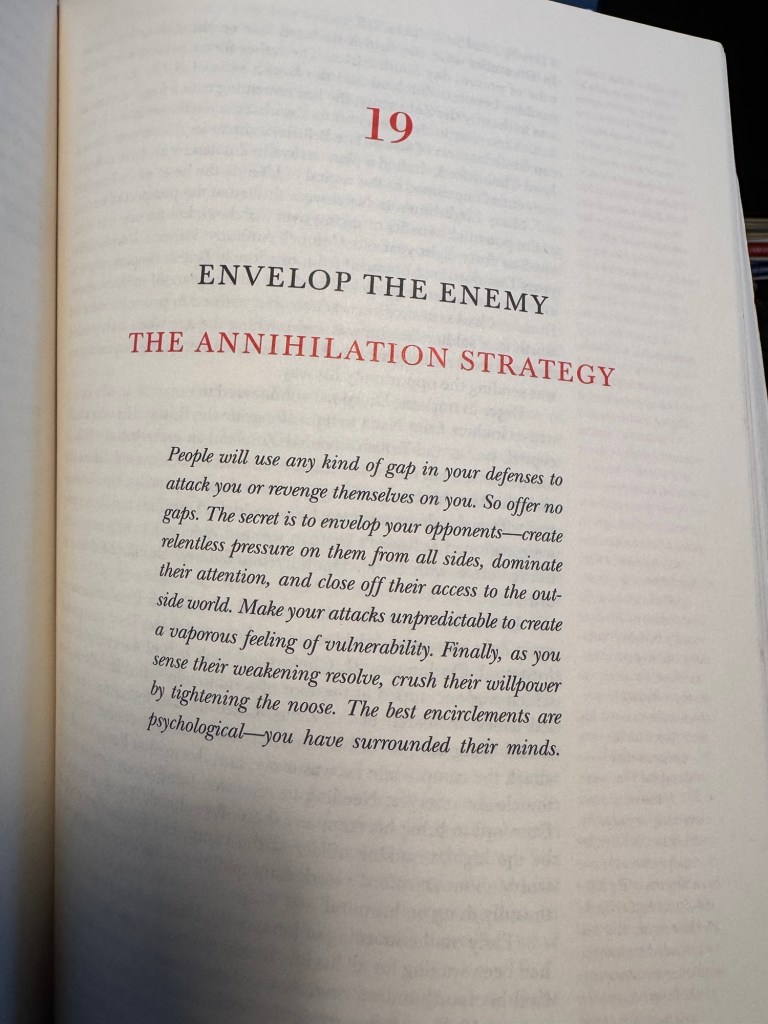
The Hunter’s Camouflage: What Hostile Takeovers Reveal About UAP Concealment and Competing Non-Human Intelligences as the prey runs toward the preditors

I have watched a hostile takeover unfold up close in the aerospace industry. The people driving it never announced their intentions. They arrived with consultants and new ownership structures, spoke in measured language about efficiency and alignment, and made the decisive moves from boardrooms far removed from the daily floor. The target company’s people kept working, kept delivering, kept hoping the familiar rhythms would hold. By the time the real pattern became visible, the leverage had already shifted. Decisions about who stayed, what got consolidated, and which programs survived were already set in motion. The prey did not run away. In many cases, it moved toward the very forces reshaping it, seeking reassurance, seeking to prove value, seeking to stay inside the story. 

That experience has stayed with me as I watch the recent waves of UAP disclosures. The Pentagon’s PURSUE releases under the current administration—multiple tranches of documents, videos, and agent narratives in May, June, and July 2026—have brought to light orb sightings, high-speed objects, and cases that the All-domain Anomaly Resolution Office itself still lists as unresolved.  One Western U.S. event near a sensitive national-security site involved federal agents describing “orbs launching other orbs.” AARO’s own June 2026 memo on that case notes that roughly forty percent of the phenomena lacked a plausible conventional explanation and remained open.  Another tranche included a military aviator’s account of an object with “flight characteristics unlike anything I had seen in my 28 years.” These are not fringe videos. They are now part of the official record, released under executive order, yet they arrive without chain-of-custody clarity on the most anomalous material and without a coherent strategic picture. 

The obvious question keeps returning: if these are simply advanced drones or foreign technology, why the persistent concealment across decades? If they represent non-human intelligence, why not open contact? My answer is shaped by what I saw in that takeover and by the universal patterns Robert Greene distilled in The 48 Laws of Power and The 33 Strategies of War. Those books sit in every serious business section because they codify something older than corporate strategy: the mechanics of concealed intention, formlessness, and the calculated use of superior position to shape the target’s behavior without triggering full resistance. 

A hunter does not step into the clearing and announce himself. He wears the scent of the field, moves with the wind, waits in the tree stand for hours. The goal is proximity without alarm. The deer that senses nothing continues its pattern until the moment the arrow is already in flight. Corporate raiders operate on the same principle. They do not declare war on the culture they intend to absorb. They speak of synergy, of unlocking value, of shared future. The language itself is camouflage. By the time the target’s leadership understands the real mapping of power, the decisive votes and the key personnel decisions have already been made elsewhere. 

If non-human intelligences have been present in our environment for a long time—and the pattern of sightings near nuclear and sensitive military sites across the released files is difficult to dismiss as random—then concealment is the rational posture of a competing form of life that does not yet wish open war or open dependence. Superior technology does not automatically translate into benevolence any more than superior capital in a takeover guarantees the survival of the acquired company’s original character. The strategic advantage lies in remaining unseen while shaping outcomes: extracting data, influencing behavior at the margins, keeping the target population stable enough to continue producing what the observer needs. A species that wanted only to eliminate us would have done so. A species that wants to study, harvest, steer, or occupy the same niche without triggering a unified human response has every reason to stay in the tree stand.

The recent disclosures actually reinforce this reading more than they contradict it. We are shown orbs that appear to coordinate, that launch smaller orbs, that exhibit flight profiles AARO cannot yet attribute to known platforms. We are told some cases remain unresolved even after multi-sensor correlation. We hear whistleblower testimony—from David Grusch and others—describing long-term programs involving recovered craft and non-human biologics, yet official releases still emphasize the lack of conclusive proof while simultaneously documenting phenomena that exceed current human capabilities.  This is not full transparency. It is a calibrated release. It keeps the conversation alive, keeps researchers and the public engaged, and shields the deeper architecture behind these events. That is precisely how power that intends to remain dominant behaves when it does not yet need to reveal its full hand.

Greene’s work is popular in business circles because it maps these dynamics without moral overlay. Law after law describes the advantage of appearing formless, of never revealing the full extent of one’s resources or intentions, of using the target’s own momentum against it—the same principles scale. If an intelligence operates across dimensions or with technology that renders our sensors marginal, the same logic applies: stay close enough to observe and influence, far enough to avoid decisive confrontation, and never give the prey a clear target to rally against. The fascination many people feel toward UAPs—the drive to decode every new video, to attend every hearing, to interpret every ambiguous shape—can itself become part of the dynamic. The prey moves toward the predator’s position because the predator has made itself the most interesting thing in the environment. 

I am not claiming these intelligences are cartoon villains. I am saying the default assumption that superior technology equals benevolent guardianship has no grounding in observable history or in the power dynamics we already understand at the human level. The same species that builds monuments and writes philosophy also builds weapons and perfects deception when advantage requires it. Why would we expect a competing life form to operate on more sentimental rules? The disclosures we have received so far—multiple batches of unresolved orb events, aviator encounters, and internal government debate—show advanced presence without showing open intent. That gap is not an accident of bureaucracy. It is consistent with the behavior of any actor who has already calculated the costs of full revelation. 

Most people can’t do this. They learn the rules and stay prisoners to them al their lives.

The corrective lens is the same one that works in any competitive environment. Assume the other side is playing to win on its own terms. Map the actual flows of information and leverage rather than the stated narrative. Strengthen internal visibility so that critical dependencies—whether material, procedural, or perceptual—cannot be quietly depleted in the shop, which meant knowing who ordered the consumables and whether the schedule would starve the line. In the larger arena, it means refusing to treat every new release as either proof of salvation or proof of nothing. It means treating the pattern of concealment itself as data.

We have been given enough now to see that something is operating with capabilities we do not control and with intentions it has not chosen to declare. The hunter does not need our permission to remain in the stand. He only needs us to keep behaving as if the clearing is empty. The disclosures have made the clearing feel less empty, but they have not yet forced the figure in the tree to step forward. That fact alone tells us something about the nature of the game being played.

Footnotes

1.  Personal observation from aerospace program management, 2026.

2.  PURSUE Release documentation, Department of War, various tranches 2026.

3.  AARO memorandum on Western U.S. “orbs launching orbs” event, June 2026.

4.  Robert Greene, The 48 Laws of Power (1998) and The 33 Strategies of War (2006).

5.  David Grusch congressional testimony and related whistleblower accounts, 2023–2026.

6.  Historical analysis of corporate power dynamics drawn from Greene’s framework and observed industry practices.

7.  Additional references to UAP case files are available via war.gov/UFO portal.

Bibliography

•  Greene, Robert. The 48 Laws of Power. Viking, 1998.

•  Greene, Robert. The 33 Strategies of War. Viking, 2006.

•  U.S. Department of War / AARO. PURSUE UAP Release Tranches (May–July 2026). war.gov/UFO.

•  Squier, Ephraim G., and Edwin H. Davis. Ancient Monuments of the Mississippi Valley. Smithsonian Contributions to Knowledge, 1848 (for context on Ohio earthworks like East Fork).

•  Various journalistic summaries of Grusch testimony and PURSUE files, 2026.

Rich Hoffman

More about me

Click Here to Protect Yourself with Second Call Defense https://www.secondcalldefense.org/?affiliate=20707

About the Author: Rich Hoffman

Rich Hoffman is an author, political consultant, and strategic advisor based in Cincinnati, Ohio, and the creator of The Politics of Heaven—a unique framework that connects biblical theology, ancient history, and modern power structures to explain how moral alignment and spiritual forces shape global events. Blending real-world political experience with deep research into archaeology, UFO phenomena, and suppressed historical narratives, Hoffman offers compelling commentary on topics ranging from ancient civilizations and the Dead Sea Scrolls to modern populist movements, paranormal continuity, and leadership strategy in chaotic environments. As the author of The Gunfighter’s Guide to Business and the forthcoming Politics of Heaven, he brings a grounded yet provocative voice to media discussions, supported by firsthand experiences and a cross-disciplinary approach that bridges science, history, and theology. For interviews, speaking engagements, or expert analysis, visit richhoffmanbooks.com or contact directly via phone at 513-307-5815 or email at rhoffman@richhoffmanbooks.com.  If you’ve seen the movie, Disclosure Day and want to talk about it and the implications of Presidnet Trump’s UAP disclosures, let me know and we can bring some color to your coverage. https://richhoffmanbooks.com/media-inquiries-broadcast-topics-and-contact-info/?frame-nonce=ad51e7ecba I do have a firsthand UFO encounter to discuss.