
Election Integrity, the California Playbook, and the Cost of Letting Stupid Requirements Stand

I don’t want to be that guy who keeps circling back to the same uncomfortable subjects, but the truth doesn’t do me any favors by staying quiet. There was a very good episode of War Room the other day in which Rudy Giuliani spent about 45 minutes across three segments laying out exactly what happened in the Los Angeles mayoral race. Steve Hilton, a strong candidate who was performing well on election night, watched the lead evaporate as ballots kept being counted long after the polls closed. It wasn’t mysterious. It was the same playbook we saw in 2020, refined and deployed again in 2026 wherever the rules allow endless mail-in and provisional ballots with minimal traceability. I put the episode on my blog because people need to see it. When you have no voter ID requirement, same-day voting standards, and the ability to keep counting until the desired number appears, the cheese is already baked into the system. You’re not running a representative republic anymore. You’re running a managed installation process. 

Anybody who lived through 2020 knows what massive fraud looks like when it happens in plain sight. Ballots appearing in the middle of the night, unsecured drop boxes, signature verification that was loosened or ignored under the cover of COVID, and the endless counting in key jurisdictions until the numbers flipped. No one of any real consequence was ever punished for it. Rudy Giuliani stepped forward, paid an enormous personal price in wealth, reputation, and legal warfare, and they tried to destroy him. Trump, as a billionaire, could finance his way through the lawfare with good lawyers. Most people cannot. That is the chilling effect. Whistleblowers see what happens to Tina Peters in Colorado or the January 6 defendants and decide the personal cost is too high. The evidence gets suppressed or buried because the people who hold it are intimidated into silence. “Where is the proof?” the critics ask. The proof is in the ruined lives of those who brought it forward and in the jurisdictions where the rules were deliberately written to make fraud easy and detection hard.

Look at California under Gavin Newsom. The rules he and his allies put in place allow ballots to be counted well past election day. No strict voter ID. Mail-in ballots that arrive with weak chain-of-custody protections. Once the election-night numbers come in and the gap is known, the machinery can produce or process just enough additional ballots to close it. Steve Hilton was doing well enough that night, but the final certified results told a different story. This is not speculation. It is the observable pattern in places where the system is designed for it. In Ohio, we saw Amy Acton, as health director, literally cancel an election during COVID because it was supposedly too dangerous to vote in person. The same public health apparatus that pushed masks, lockdowns, and trust-the-science messaging while gain-of-function research funding flowed created the pretext for changing voting rules nationwide. Dr. Fauci’s emails, the lab-leak questions that were dismissed as conspiracy theories, and the lack of accountability afterward showed the credentialed class protecting its own. Rand Paul and others tried to hold them accountable through proper channels, but the Department of Justice under Biden was not interested. The push was always toward more centralized control and less verifiable elections. 

I have watched this up close in Ohio politics for years. Butler County, Lakota schools, commissioner races—the local battles matter because they are where the rubber meets the road for families. But the bigger picture is national. Republicans who still carry water for the old institutional order—McConnell holdovers, Susan Collins types—look at their role as sandbagging the tide rather than representing the voters who sent them there. They see Trump as a temporary disruption, a lame duck whose influence will fade, and they want to preserve what they call the “institution” even if it means slow-walking real reform on election security. Bernie Moreno is doing a great job in the Senate from Ohio. JD Vance represents a different, more combative generation. Ten years from now, people like them will be the moderates compared to the harder line the base demands. The Senate is changing, but the sandbaggers are still there, trying to keep the door open just wide enough for the familiar game to continue.

The Marxist playbook is not subtle. Control the flow of information, install sympathetic officials in key positions (secretaries of state, election boards), loosen verification, and use emergencies—real or manufactured—to justify changes that make fraud scalable. COVID was the perfect vehicle. It allowed rule changes that never fully reverted. In blue strongholds and sanctuary jurisdictions, the combination of no ID, mail ballots without robust tracking, and post-election counting creates the opportunity to “find” whatever margin is needed. They laugh about it because they believe the system protects them. Giuliani, despite everything they threw at him, is still willing to go on War Room and say the quiet part out loud. Tina Peters went to jail for trying to preserve records. January 6 protesters who raised their voices about election integrity are still suffering consequences. The message is clear: bring forward the evidence, and we will bankrupt you, jail you, or block you.

I know a thing or two about blocklisting. In my line of work and in the writing I do, talking about these subjects attaches your name to algorithms that throttle reach. Platforms claim to support free speech but run background filters that limit the distribution of content on controversial topics. Pay to remove restrictions if you have the money, or stay throttled. It is a revenue stream and a control mechanism. Yet the truth does not disappear just because the search results are manipulated. Election fraud evidence exists in the affidavits, the video footage, the statistical anomalies, the whistleblower accounts that never received fair hearings, and the simple, observable reality that, in too many places, the counting never seems to stop until the right side wins. Steve Hilton’s race is only the latest example. Unless every state adopts strict voter ID, same-day voting with paper trails, and real-time chain of custody for mail ballots, the door stays open. Federal elections have national consequences, so national standards are not radical—they are constitutional common sense.

People ask why Republicans don’t just win bigger everywhere. Look at the states where elections are reasonably secure versus those that treat ballots like confetti. The contrast is obvious. The rhinos who shrug and say “demographics are destiny” or “we can’t fight the system” are the ones preserving the very mechanisms that import and protect the demographics they claim are inevitable. Trump showed what happens when you fight. The institutional response was lawfare, censorship, and two-tier justice. They tried to destroy him financially and legally because he was too big to intimidate easily. Most candidates are not. That is why the credentialed and connected class thought they could install Biden, prop him up, and continue the managed decline. The economy suffered, borders were chaotic, and trust evaporated. Now in 2026, we see the same tactics locally and statewide.

I have reverence for genuine history and for the people who were here before European settlement. I have read deeply on Tecumseh, Blue Jacket, the Shawnee, and the broader Native nations of the Ohio Valley. Their stories are rich and tragic. But calling every group that happened to occupy land at a particular moment “indigenous” in a way that freezes history and justifies modern political narratives is the same credentialed sleight-of-hand we see in election administration. Cultures rose and fell here long before. The Windover Bog People in Florida, the Old Copper Complex around the Great Lakes, the Hopewell and Adena earthworks—these show sophisticated societies with trade and complexity going back thousands of years. The point is evidence, not ideology. The same applies to elections. Let the ballots be verifiable. Let the voters be who they say they are. Anything less is an invitation to the kind of managed outcomes we keep witnessing.

In my aerospace work, I deal with credentialed experts who cling to old drawings because their name is on them. Changing anything costs time, money, and bruised egos. SpaceX succeeds by ruthlessly eliminating stupid requirements. Gwynne Shotwell laid it out clearly—ditch the unnecessary parts, simplify, iterate faster. That mindset scales. The same disease infects our politics and election systems. Layers of bureaucracy, legacy rules, and protected interests prevent simple fixes like voter ID and paper-trail same-day voting. The result is predictable: outcomes that do not match the obvious sentiment on the ground. People see their neighborhoods change, costs rise, and security erode, yet the installed officials keep winning under rules that favor volume over verification.

The future Senate looks better with people like Bernie Moreno and JD Vance. They represent a harder edge that will not tolerate the old sandbagging. But the McConnell holdovers still act as if their job is to restrain the voters rather than represent them. Trump’s influence, even as a lame duck in their eyes, forced the conversation. The base will not go back to business as usual. Election integrity is non-negotiable. States that leave the door open to post-election counting and unsecured mail ballots are advertising their willingness to let the system be gamed. California’s recent races are Exhibit A. Newsom’s rules enabled the endless counting. The gap on election night was known, and the machinery filled it. This is not democracy. This is an installation.

I have no illusions that talking about it will win me friends in certain circles. My name gets associated with searches for election security and fraud, and my reach gets limited. But the truth is stubborn. Giuliani, despite everything, keeps speaking. Tina Peters paid a heavy price for preserving records. Ordinary people who showed up on January 6 to protest what they saw are still living with the consequences. The credentialed class and their political allies thought they could intimidate everyone into silence. They overreached. The backlash is building because people can see the pattern with their own eyes. When ballots keep appearing until the right number is reached, when ID is treated as oppression rather than basic security, and when emergencies are used to rewrite rules permanently, the representative republic is replaced by something else.

My book The Politics of Heaven explores the deeper spiritual and historical layers—how non-human influences, heavenly politics, and human power structures interact across time. Election fraud fits inside that larger story. It is not just technical cheating. It is the attempt to frustrate the will of a people and impose an agenda that cannot win in the open. The ancient temptation is always to seize control by any means. The modern version uses bureaucracy, emergency powers, and captured institutions. The solution is the same as it has always been: transparency, accountability, and courage. Secure the elections. Demand ID. Insist on same-day counting with paper trails. Punish fraud severely. Anything less leaves the door open for the next round.

The rhinos who think they can wait Trump out and return to the comfortable institutional game are misreading the moment. The base has seen too much. Bernie Marino and others like him point to a different Senate ten years from now—one less tolerant of sandbagging. The future belongs to those willing to close the loopholes and let the people’s will actually decide. Until then, the California model—endless ballots, no ID, counting until victory—is the warning. Giuliani laid it out in the War Room. The episode is worth watching. The pattern is clear. The evidence is in the rules themselves and in the observable results that defy election-night reality.

I keep coming back to these subjects because they matter more than comfort. My job in aerospace shows me daily how clinging to stupid requirements destroys efficiency and progress. The same is true in government and elections. Scrap the unnecessary parts. Simplify. Verify. Iterate on truth instead of protecting the machine. The republic depends on it. The age of disclosure demands it. The Politics of Heaven is coming soon because the heavenly politics have earthly consequences, and we cannot afford to ignore either.

Footnotes

[1] War Room episode with Giuliani on LA mayoral race (recent 2026 broadcast); patterns of post-election counting under California rules.

[2] COVID-era changes in Ohio and nationally, including Acton’s election cancellation; Fauci-related correspondence and gain-of-function context from public records and testimony.

[3] Ohio Senate figures (Moreno, Vance) and McConnell holdovers; institutional resistance patterns.

[4] General election security literature on voter ID, mail ballot chain of custody, and statistical anomalies in 2020/2026 races.

Bibliography

•  Giuliani, Rudy. Appearances and segments on War Room (2026 episodes covering California election practices).

•  Public records on California election rules under the Newsom administration (mail ballot processing, post-election counting).

•  Ohio election history, including Amy Acton’s COVID-era decisions (state health department archives).

•  Peters, Tina. Case documents and Colorado election integrity proceedings.

•  Various congressional testimony on the 2020 election (House and Senate committees).

•  ODNI and related reports on broader integrity and influence issues.

•  Standard references on election administration: voter ID studies from the Heritage Foundation and state audit reports.

•  Personal and local Ohio political context (Butler County, Lakota, commissioner races) from public records.

•  The Politics of Heaven manuscript themes (spiritual/historical layers intersecting modern power structures).

•  Additional reading: Works on lawfare against Trump and Giuliani; January 6 case summaries; comparative state election security analyses (e.g., states with strict ID vs. expansive mail-in).

Rich Hoffman

More about me

Click Here to Protect Yourself with Second Call Defense https://www.secondcalldefense.org/?affiliate=20707
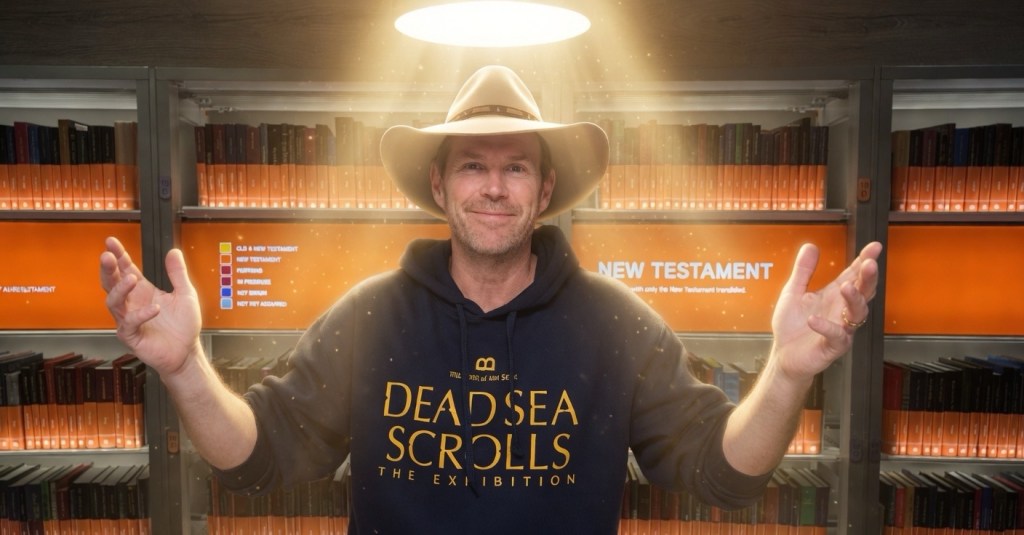
About the Author: Rich Hoffman

Rich Hoffman is an author, political consultant, and strategic advisor based in Cincinnati, Ohio, and the creator of The Politics of Heaven—a unique framework that connects biblical theology, ancient history, and modern power structures to explain how moral alignment and spiritual forces shape global events. Blending real-world political experience with deep research into archaeology, UFO phenomena, and suppressed historical narratives, Hoffman offers compelling commentary on topics ranging from ancient civilizations and the Dead Sea Scrolls to modern populist movements, paranormal continuity, and leadership strategy in chaotic environments. As the author of The Gunfighter’s Guide to Business and the forthcoming Politics of Heaven, he brings a grounded yet provocative voice to media discussions, supported by firsthand experiences and a cross-disciplinary approach that bridges science, history, and theology. For interviews, speaking engagements, or expert analysis, visit richhoffmanbooks.com or contact directly via phone at 513-307-5815 or email at rhoffman@richhoffmanbooks.com.  If you’ve seen the movie, Disclosure Day and want to talk about it and the implications of Presidnet Trump’s UAP disclosures, let me know and we can bring some color to your coverage. https://richhoffmanbooks.com/media-inquiries-broadcast-topics-and-contact-info/?frame-nonce=ad51e7ecba I do have a firsthand UFO encounter to discuss.

Podcast Episode: The Wilmington Tablet and the Cost of Stupid Requirements: Disclosure is about m

Pip: Rich Hoffman finds a five-inch sandstone replica on a museum shelf in small-town Ohio, and somehow that leads us to SpaceX, ancient copper mines, and the entire credentialed class.

Mara: That’s actually the through-line. Rich Hoffman’s recent writing connects prehistoric archaeology in the Ohio Valley to the institutional habits that slow down both science and aerospace — disclosure in the broadest sense of the word.

Pip: Let’s start with the tablet that started it all.

The Wilmington Tablet and the Cost of Stupid Requirements

Mara: The post opens with a chance encounter at the Johnson-Humrickhouse Museum in Coshocton — a sandstone replica sitting unrecognized on a shelf. The staff couldn’t price it because they didn’t know what it was. The Wilmington Tablet is Adena culture, roughly two thousand years old, recovered from a mound near Wilmington, Ohio.

Pip: The recognition came from years of reading Joseph Campbell, not from any credential. That detail does a lot of work.

Mara: It does. Here’s how the post frames what the tablet represents: “These weren’t doodles. They were records. Shamanic. Visionary. The kind of thing you carve after you’ve been somewhere else and come back with a story the ordinary world needs to remember.”

Pip: So the Adena weren’t leaving decoration. They were leaving testimony.

Mara: And the civilization behind that testimony was far more sophisticated than the standard account admits. The Hopewell cultures that followed moved copper from the Great Lakes, mica from the Appalachians, obsidian from the Rockies. The Old Copper Complex along Lake Superior dates to at least four thousand to five thousand BC — one of the earliest large-scale metalworking traditions anywhere in the world.

Pip: Hundreds of thousands of pounds of copper, and the credentialed consensus is still: nothing unusual to see here.

Mara: The post also names the Newberry Tablet, found near Michigan’s old mining country in 1896, which Smithsonian and University of Michigan experts at the time could not decipher, and the Cincinnati Tablet, pulled from a mound in the 1840s where a UPS facility now stands. Both carry dense symbolic systems that haven’t been resolved.

Mara: The argument is that institutional archaeology protects published records the same way aerospace engineers protect old drawings — and the post makes that parallel explicit through SpaceX. Gwynne Shotwell described how they eliminated the “pushers” on the Super Heavy booster: “get rid of stupid requirements, get rid of the part.” Hot staging replaced extra hardware. Fewer parts, higher reliability.

Pip: The chopstick catch is the peer review that actually worked.

Mara: The upshot is straightforward: the same instinct that defends a thirty-year-old engineering print because someone’s name is on it also defends a mid-century archaeological consensus because careers depend on it. The post argues capitalism, properly applied, rewards eliminating bad requirements — in orbit and in the archive.

Pip: There’s also a thread on Shawnee silver legends around Clifton Gorge and Yellow Springs — stories of hidden deposits going back to Blue Jacket’s time, with geological traces but no resolved mother lode. One more door the post says deserves a real push.

Mara: The closing argument is that UAP disclosure is forcing the credentialed class to discuss non-human intelligences again — and once that door opens, older questions about the tablets, the copper volumes, and the earthworks become harder to wave away.


Pip: A five-inch sandstone piece sitting unrecognized on a museum shelf. That’s the image that stays.

Mara: What the post is really asking is whether the mindset that catches rocket boosters with chopsticks can be turned toward the ground — toward the digs, the archives, the questions that got filed away.

Pip: Apparently the age of disclosure has a much longer back catalog than anyone admitted.

Rich Hoffman

More about me

Click Here to Protect Yourself with Second Call Defense https://www.secondcalldefense.org/?affiliate=20707

About the Author: Rich Hoffman

Rich Hoffman is an author, political consultant, and strategic advisor based in Cincinnati, Ohio, and the creator of The Politics of Heaven—a unique framework that connects biblical theology, ancient history, and modern power structures to explain how moral alignment and spiritual forces shape global events. Blending real-world political experience with deep research into archaeology, UFO phenomena, and suppressed historical narratives, Hoffman offers compelling commentary on topics ranging from ancient civilizations and the Dead Sea Scrolls to modern populist movements, paranormal continuity, and leadership strategy in chaotic environments. As the author of The Gunfighter’s Guide to Business and the forthcoming Politics of Heaven, he brings a grounded yet provocative voice to media discussions, supported by firsthand experiences and a cross-disciplinary approach that bridges science, history, and theology. For interviews, speaking engagements, or expert analysis, visit richhoffmanbooks.com or contact directly via phone at 513-307-5815 or email at rhoffman@richhoffmanbooks.com.  If you’ve seen the movie, Disclosure Day and want to talk about it and the implications of Presidnet Trump’s UAP disclosures, let me know and we can bring some color to your coverage. https://richhoffmanbooks.com/media-inquiries-broadcast-topics-and-contact-info/?frame-nonce=ad51e7ecba I do have a firsthand UFO encounter to discuss.

The Wilmington Tablet and the Cost of Stupid Requirements: Disclosure is about more than just UFOs

I was down at the Johnson-Humrickhouse House Museum in Coshocton the other day, just wandering through the exhibits and glancing at the shop shelves the way you do when you’re killing a little time in a small Ohio town. Something caught my eye—a sandstone replica, maybe five inches long, a few inches wide, sitting there like a forgotten coaster. The people running the place didn’t know what it was. They couldn’t put a price on it because they didn’t recognize it. But I did. Instantly. I’d carried that exact design in my head for years.

It was the Wilmington Tablet. [1]

Map of the copper mines of Lake Superior

I knew it from Joseph Campbell’s Historical Atlas of World Mythology, the big, rich volumes my daughter hunted down for me one Christmas when they were long out of print and going for serious money on the secondary market. She knew how much those books meant to me. I’d been deep into Campbell in my twenties—reading at Perkins and Denny’s at all hours while other people my age were doing whatever twenty-somethings do. I even joined the Joseph Campbell Foundation back then, partly because George Lucas was on the board and I wanted the chance to talk to the man who made Star Wars and Indiana Jones. The foundation sent me the first of those atlas volumes. They were dense, illustrated treasures. When I saw the Wilmington Tablet sitting on that museum shelf, the memory came flooding back—the line work, the central figure, the sense that it was recording something far more than decoration.

The original is Adena culture, roughly 2,000 years old, recovered from a mound near Wilmington, Ohio. Sandstone. Compact. The engraving shows a powerful central form that reads to me as a bird-like or avian prayer figure—with wings or feathered aspects suggested by the flowing lines, and a sense of movement across what looks like mirrored or dimensional space. One side echoes the other. What happens here happens there. That’s the phrase that keeps coming back when I look at it. These weren’t doodles. They were records. Shamanic. Visionary. The kind of thing you carve after you’ve been somewhere else and come back with a story the ordinary world needs to remember. [2]

The Adena and the Hopewell cultures that followed them in the Ohio Valley weren’t simple hunter-gatherers scratching out a living. They built geometric earthworks on a scale that still stuns people—Newark’s great octagon and circle, Fort Ancient up the road from here, the Miamisburg Mound half an hour away. They moved materials across enormous distances: copper from the Great Lakes, mica from the southern Appalachians, marine shell from the Gulf, obsidian from the Rockies. They aligned structures to lunar standstills and solar events with precision that modern surveyors respect. And they left behind these small, dense tablets that nobody has fully decoded because the people who could read them are gone and the credentialed class that inherited the sites prefers older, safer stories. [3]

That brings me to the copper.

The Old Copper Complex along Lake Superior—Keweenaw Peninsula, Isle Royale, the Brule River country—represents one of the earliest large-scale metalworking traditions in the world. People were mining native copper there by at least 4000–5000 BC, cold-hammering it into tools, points, and ornaments without smelting. Thousands of pits are documented. One historical estimate put the total copper removed in the hundreds of thousands to over a million pounds; some older analyses floated even higher figures. Sediment cores from the region still carry the chemical signature of that ancient mining activity from six thousand years ago—copper, lead, potassium from the fires used to anneal the metal. [4]

Where did all that copper go? It traveled. Artifacts show up far outside the immediate region. But the sheer volume raises the same question that serious people have been asking for a long time: was this purely an internal trade among indigenous networks, or did the scale and timing suggest something more—visitors, traders, or knowledge moving in both directions across what we now call oceans? The Newberry Tablet, found in Michigan’s Upper Peninsula, near the old mining country, in 1896, bears a grid of characters that Smithsonian and University of Michigan experts at the time could not decipher. Some later researchers read it as possible Old World script. The Cincinnati Tablet, recovered in the 1840s from a mound right downtown where a UPS facility sits today, carries its own dense symbolic language. [5]

Mainstream archaeology has long held that meaningful transoceanic contact before the Norse or Columbus was impossible—that people here were isolated after the Bering migrations, that boats couldn’t cross, that the timelines don’t allow it. I understand the institutional reasons. Once you admit earlier or more complex movements of people and ideas, many published books, careers, and tidy secular narratives have to be revisited. The same instinct that made credentialed experts during COVID say “trust the science” while gain-of-function research happened in under-regulated labs in Wuhan and elsewhere is alive in archaeology. Protect the published record. Don’t upset the people whose names are on the big monographs. The result is the same: progress slows, anomalies get explained away or ignored, and the public gets a thinner story than the evidence supports. [6]

I see the same pattern in my own industry. Aerospace is full of brilliant PhD engineers who treat drawings from twenty or thirty years ago like sacred texts. “My name is on that print. You can’t change it.” Even when better materials exist, even when regulations have evolved, even when a simpler design would work better and cost less. Changing the print means committees, reviews, months or years of delay, and sometimes millions in added cost. Personalities clash. Egos lock in. You end up herding cats on a hot tin roof to get something built that should have been obvious. It’s not that the people are bad. Many of them are very good at what they do. But the system rewards protecting the old requirement more than it rewards solving the actual problem.

SpaceX operates differently. Gwynne Shotwell explained it plainly in a recent CNBC interview. They used to put “pushers” on the Super Heavy booster to shove the Starship upper stage away during separation—extra hardware, extra mass, extra failure points. Following what she called Elon’s algorithm—get rid of stupid requirements, get rid of the part—they eliminated them. Now they use hot staging: light the upper-stage engines while still attached, let the flames and pressure do the separation work, and divert those flames through a simple ring structure on the booster. Fewer parts. Higher reliability. Faster learning. That’s why they’re catching boosters with chopsticks at Boca Chica, and why the rest of the industry will eventually have to copy the approach or fall behind. [7]

The same logic applies to history. We don’t need to protect every old theory just because a credentialed person wrote it down in 1957 or 1972. We need to let the evidence lead and be willing to revise when better data arrives. The Wilmington Tablet, the copper mines, the geometric precision of the Hopewell earthworks, the Windover Bog People in Florida with their 7,000–8,000-year-old preserved remains—these things are not problems to be explained away. They are invitations.

I brought that replica home. It sits where I can see it. It reminds me why I wrote The Politics of Heaven and why I keep talking about these things. The book is a long treasure hunt through heaven and human history—biblical conspiracies, giants, non-human intelligences, spiritual warfare, the politics that play out beyond the veil. These tablets fit inside that story. They look like records left by people who encountered something avian, something serpentine, something that crossed between realms. Shamans under the influence of what we would now call entheogens, or in dream states, or in direct contact, carving what they saw so the next generation would remember: there are more layers to reality than the daylight world admits. The Mothman sightings at Point Pleasant, the Birdman imagery at Cahokia, the reverence for the feathered serpent farther south—they rhyme. Current UAP disclosures are forcing the credential class to talk about non-human intelligences again. Once that door opens, many older doors that were nailed shut start to creak.

There are also the old Shawnee silver legends around Clifton Gorge and Yellow Springs, right in this part of Ohio. Stories of rich deposits or hidden caches that go back to Blue Jacket’s time and earlier. Geologists have found traces. Amateur shafts and assays over the years turned up silver. The mother lode, if it exists in any serious quantity, has never been properly located. The area has changed—some of it flooded, some developed—but the stories persist because the geology allows for it and because people who lived here before us clearly knew things about the land we’re still re-learning. Another thread worth pulling. [8]

The larger point is simple. We are living through a moment when old gatekeeping structures are under real pressure—from space companies that refuse to accept “that’s how we’ve always done it,” from citizens who watched credentialed experts lie or overreach during COVID, from independent researchers and venture-funded digs that don’t need a university committee’s permission to ask inconvenient questions. The Smithsonian and the old academic apparatus still carry enormous cultural weight, but they no longer have a monopoly on attention or funding. Capitalism, properly applied, is excellent at this. It rewards people who eliminate stupid requirements and penalizes those who cling to them out of ego or job security. SpaceX is proving it in orbit. The same principle can work on the ground, in the archives, and in the dirt.

I’m not saying every fringe theory is correct. I’m saying the evidence deserves better than reflexive defense of mid-twentieth-century consensus. The Wilmington Tablet is one small, heavy piece of that evidence. It sat on a museum shelf, unrecognized, because upstream experts had told the people in charge it wasn’t important enough to feature. That’s the system working exactly as designed. It protects the published record and keeps the public from getting too curious.

We can do better. Dig the copper country properly. Re-examine the tablets with fresh eyes and better tools. Fund the dives on the underwater anomalies in the Great Lakes. Let serious, well-resourced people chase the silver legends with modern methods. And keep watching what SpaceX and the companies that follow them do—because the mindset that catches rockets with chopsticks is the same mindset that will eventually fund the archaeology we should have been doing all along.

The age of disclosure isn’t just about UAPs. It’s about everything we were told was settled that never actually was. The tablet on my shelf is a quiet reminder. What happens here still echoes there. The only question left is whether we dare to listen.

Footnotes

[1] Physical description and museum context based on Adena tablet records and personal observation of the replica. See also noahsage.com archaeological summaries.

[2] Interpretive framework drawing from comparative mythology in Campbell’s work and user analysis of symbolic avian/interdimensional motifs common in Adena/Hopewell artifacts.

[3] Hopewell interaction sphere and earthwork details from standard references on Ohio Valley mound-builder cultures.

[4] Old Copper Complex data: Martin (1995), Drier et al. (1961), and sediment studies. Estimates vary but highlight significant prehistoric extraction.

[5] Newberry and Cincinnati Tablet descriptions from historical accounts, including Smithsonian correspondence and Cincinnati Museum Center records.

[6] Parallel to COVID credentialism drawn from public records, emails, and congressional testimony on gain-of-function research and lab-leak origins.

[7] Gwynne Shotwell CNBC interview (June 2026) on Starship hot staging and elimination of pusher mechanisms.

[8] Shawnee silver legends and Clifton Gorge/Yellow Springs geology from local historical accounts and assay reports.

Bibliography

•  Campbell, Joseph. Historical Atlas of World Mythology, Vol. 1: The Way of the Animal Powers. Harper & Row, 1983 (and subsequent volumes/foundation editions).

•  Drier, Roy W., and Octave J. Du Temple. Prehistoric Copper Mining in the Lake Superior Region. 1961.

•  Lepper, Bradley T. Ohio Archaeology: An Illustrated Chronicle of Ohio’s Ancient American Indian Cultures. Orange Frazer Press, 2005.

•  Martin, Susan R. Wonderful Power: The Story of Ancient Copper Working in the Lake Superior Basin. Wayne State University Press, 1999.

•  Mills, Lisa A. “Mitochondrial DNA Analysis of the Ohio Hopewell of the Hopewell Mound Group.” PhD Dissertation, Ohio State University, 2003.

•  Pompeani, David P., et al. “Sediment Record of Prehistoric and Historic Metal Mining in Lake Superior.” EOS, 2014.

•  Squier, Ephraim G., and Edwin H. Davis. Ancient Monuments of the Mississippi Valley. Smithsonian Contributions to Knowledge, 1848.

•  Various primary accounts on Newberry Tablet (1896 discovery) and Cincinnati Tablet (1841 mound find), Cincinnati Museum Center and Smithsonian archives.

•  Barry Fell’s epigraphic works (controversial; for diffusionist perspectives).

•  Recent UAP/UFO disclosure materials: ODNI reports and congressional hearings (2020s).

•  Local histories on Shawnee silver legends, Clifton Gorge, and Yellow Springs (Greene County historical collections).

•  Shotwell, Gwynne. CNBC interview transcript on SpaceX Starship development, June 2026.

Rich Hoffman

More about me

Click Here to Protect Yourself with Second Call Defense https://www.secondcalldefense.org/?affiliate=20707

About the Author: Rich Hoffman

Rich Hoffman is an author, political consultant, and strategic advisor based in Cincinnati, Ohio, and the creator of The Politics of Heaven—a unique framework that connects biblical theology, ancient history, and modern power structures to explain how moral alignment and spiritual forces shape global events. Blending real-world political experience with deep research into archaeology, UFO phenomena, and suppressed historical narratives, Hoffman offers compelling commentary on topics ranging from ancient civilizations and the Dead Sea Scrolls to modern populist movements, paranormal continuity, and leadership strategy in chaotic environments. As the author of The Gunfighter’s Guide to Business and the forthcoming Politics of Heaven, he brings a grounded yet provocative voice to media discussions, supported by firsthand experiences and a cross-disciplinary approach that bridges science, history, and theology. For interviews, speaking engagements, or expert analysis, visit richhoffmanbooks.com or contact directly via phone at 513-307-5815 or email at rhoffman@richhoffmanbooks.com.  If you’ve seen the movie, Disclosure Day and want to talk about it and the implications of Presidnet Trump’s UAP disclosures, let me know and we can bring some color to your coverage. https://richhoffmanbooks.com/media-inquiries-broadcast-topics-and-contact-info/?frame-nonce=ad51e7ecba I do have a firsthand UFO encounter to discuss.

Podcast Episode: The Moon: The Next Great Gold Rush and America’s Future Frontier

Pip: The Overmanwarrior has a lot of interests — ancient scrolls, Ohio politics, model rocketry with grandchildren — but this week, everything points to one place: up.

Mara: Rich Hoffman makes the case that the Moon is the defining economic and strategic frontier of our era, and he connects that argument to energy independence, Ohio’s industrial future, and what it actually takes to build a Type I civilization.

Pip: Let’s start with the gold rush that isn’t metaphorical.

The Moon: America’s Next Frontier and the Coming Space Economy

Mara: The post opens not with a policy argument but with a moment — a tired walk back from the Smithsonian, arms full of books, and then a pause at a rack near the cashier.

Pip: He writes: “That spontaneous purchase captures something larger: the Moon is not just a celestial body; it is the key to the next great American expansion, a modern gold rush that will generate wealth, innovation, and opportunity on a scale rivaling the Western frontier.”

Mara: The upshot is that this isn’t nostalgia for Apollo. It’s a resource argument. The Moon holds helium-3, thorium, rare earth elements, and metals tied to what the post calls KREEP terrains — and the claim is that returning those resources via vehicles like Starship transforms economies on Earth.

Pip: The thorium case is the one that stops you. Small modular thorium reactors, described here as potentially the size of a large air conditioner, powering a home for decades with minimal waste. That’s not a distant concept — it’s the argument for why lunar extraction has a direct line to your electricity bill.

Mara: On the broader space economy, the post cites projections exceeding one trillion dollars by 2032, with space tourism alone growing at compound annual rates between 36 and 44 percent. SpaceX’s Starship cadence and Blue Origin’s lunar lander infrastructure are the mechanisms he points to.

Pip: And Ohio is the landing zone for all of it — literally. Butler County aquifers, the I-75 corridor, a proposed spaceport near Monroe, data centers, orbital manufacturing returning chips to Intel-scale plants. Roosevelt-era expansion, Musk-era execution.

Mara: He also addresses the skeptics directly. International lander confirmations from Japan and Firefly Aerospace, hardware visible through powerful telescopes — the post treats doubt as understandable but ultimately answerable by evidence.

Pip: His investment thesis is just as direct: aerospace, lunar resource plays, Starlink, and whatever an Interlune IPO looks like. Re-read this in a decade, he says.

Mara: The personal thread running through all of it is his grandson — the kid who memorized Kuiper Belt objects at age three and flew that Artemis model rocket. The Moon, the post argues, is the inheritance that generation actually gets to claim.


Pip: Roosevelt had the West. The argument here is that the next version of that expansion is already in motion — and the window is now.

Mara: The resources, the infrastructure, the policy levers — it’s all on the table. The question is whether the will follows.

Rich Hoffman

More about me

Click Here to Protect Yourself with Second Call Defense https://www.secondcalldefense.org/?affiliate=20707

About the Author: Rich Hoffman

Rich Hoffman is an author, political consultant, and strategic advisor based in Cincinnati, Ohio, and the creator of The Politics of Heaven—a unique framework that connects biblical theology, ancient history, and modern power structures to explain how moral alignment and spiritual forces shape global events. Blending real-world political experience with deep research into archaeology, UFO phenomena, and suppressed historical narratives, Hoffman offers compelling commentary on topics ranging from ancient civilizations and the Dead Sea Scrolls to modern populist movements, paranormal continuity, and leadership strategy in chaotic environments. As the author of The Gunfighter’s Guide to Business and the forthcoming Politics of Heaven, he brings a grounded yet provocative voice to media discussions, supported by firsthand experiences and a cross-disciplinary approach that bridges science, history, and theology. For interviews, speaking engagements, or expert analysis, visit richhoffmanbooks.com or contact directly via phone at 513-307-5815 or email at rhoffman@richhoffmanbooks.com.  If you’ve seen the movie, Disclosure Day and want to talk about it and the implications of Presidnet Trump’s UAP disclosures, let me know and we can bring some color to your coverage. https://richhoffmanbooks.com/media-inquiries-broadcast-topics-and-contact-info/?frame-nonce=ad51e7ecba I do have a firsthand UFO encounter to discuss.

The Trump Marriage: Sex can’t define commitment or our young lives

I feel for President Trump. He has a very beautiful wife, a genuinely beautiful person in many ways, and it has been a little embarrassing at times to watch him go public, trying to hold her hand only to have it gently or firmly pushed away. The speculation that follows—the rumors of divorce, whispers that she is leading toward some younger man—strikes me as unnecessary and unkind. I feel it is worth discussing this directly because the truth is far more ordinary, biological, and human than conspiracy-minded narratives suggest.

Melania Trump is the same age as my wife. She was born on April 26, 1970, in Novo Mesto, Slovenia, so she is now in her mid-fifties. When you reach that stage of life, nobody is particularly interested in your sex life. Nobody wants to hear the details, and almost nobody wants to picture it. By the time you are a grandparent, the cultural and biological machinery has shifted. Sex is no longer the central organizing principle of existence, the way it is for teenagers. It is still possible, it can still be meaningful, but it is no longer the priority it once was. The body and the mind both signal that the intense reproductive drive has quieted.

Menopause arrives for most women in their late forties or early to mid-fifties. Periods become irregular and then stop. Estrogen and other hormones decline. Libido often drops, sometimes dramatically, though individual variation is enormous. Many women report that the mental and emotional space once occupied by sexual urgency opens up for other things—family, independence, quiet reflection, practical concerns like grocery prices at Costco versus Kroger. It is not that desire vanishes for everyone, but it is no longer the loud, insistent biological ticker it was in the twenties and thirties. 

For men, the parallel process is slower but real. Testosterone levels begin a gradual decline after the thirties, accelerating in later decades. At eighty, President Trump is well into what some call andropause territory. The body changes. Recovery takes longer. The constant background hum of sexual interest that defines so much of male adolescence and young adulthood quiets. An eighty-year-old man waking up and thinking “I must have sex today” is not the typical reality for most men that age, any more than a woman in her fifties waking up with the same urgent thought is typical after menopause. Biology is not destiny in every case, but it sets powerful defaults.

Studies bear this out. Research from the National Social Life, Health, and Aging Project found that sexual activity declines with age: roughly 73 percent of adults aged 57–64 reported being sexually active, dropping to 53 percent for those 65–74, and lower still beyond that. A University of Michigan National Poll on Healthy Aging showed that among women 50–80, about 43 percent had been sexually active in the past year, with higher rates among the younger end of that range (50–64) and among those who were married or partnered. Frequency for couples in their fifties often settles into a few times per month rather than several times per week. By the seventies and eighties, the numbers dropped further, though intimacy, affection, and companionship remained important for many. 

These are averages and ranges. Plenty of couples in their fifties and sixties maintain active sex lives, and some continue into their eighties. The point is not that it stops cold; it becomes less urgent, less defining, and far less of a public or cultural preoccupation. Teenagers are biologically wired to think about little else. Their entire social and emotional world can revolve around whether someone wants to sleep with them or whether they can attract that attention. We spend the first decade and a half of life training children to use their minds—ABCs, sentences, science, languages—precisely because the reproductive drive does not yet dominate their biology. Then adolescence hits, and suddenly everything is filtered through sexuality. That phase is real and powerful, but it is not supposed to be permanent.

When people reach their fifties and beyond, the healthy maturation is to stop letting sexuality be the primary lens through which identity and worth are measured. Midlife crises often represent the last frantic attempt to hold onto the reproductive and youthful self before the body and culture both insist on change. Some people handle the transition with grace. Others chase younger partners, new money, or power in an effort to recapture what they feel slipping away. In extreme cases, this can shade into the manipulative or predatory patterns we see in certain corners of elite or celebrity culture—older, wealthy individuals seeking validation or control through relationships with much younger people. That is not maturity; it is often a refusal to accept the next chapter.

I have watched my own children and their friends move through this. My kids are now in their mid-thirties. I remember the conversations when they and their peers were approaching thirty—the quiet panic some felt that the “blooming flower” years were ending, that attention from the opposite sex might dry up, that life’s value was somehow tied to being desired in that specific sexual way. It is a hard passage, especially for women in a culture that still overvalues youthful female appearance. By the time people reach their fifties and sixties, many have made peace with it. They discover that their worth is not located in whether someone wants to sleep with them. They find sovereignty, independence, and new sources of meaning—family, work, faith, quiet competence.

This brings me back to the Trumps. Donald Trump is eighty. He works long hours. He has the weight of the presidency on him again. Melania, in her mid-fifties, has raised their son to adulthood. She has her own privacy and independence. She is not required to perform constant public affection to prove the marriage is real. When he reaches for her hand in public and she pulls away or does not enthusiastically reciprocate, it does not necessarily mean a crisis or a conspiracy. It can simply mean she is past the stage where constant touchy-feely performance feels necessary or natural. Many women in that age group describe exactly this: they love their husbands, they value the partnership, but they do not want to be pawed at or expected to perform youthful romance on demand. They have earned their own space.

The recent UFC Freedom 250 event on the White House South Lawn for the President’s eighty-year-old birthday offered a small window. Melania was there, stylish and composed as always, sitting ringside beside her husband. Observers noted she looked pretty and seemed at ease in the energetic setting surrounded by fighters. That does not contradict the picture of a woman comfortable in her own skin and her own marriage on her own terms. It simply shows someone participating in her husband’s world without needing to manufacture constant physical closeness for the cameras. 

I do not see a vast conspiracy here involving Epstein files or secret plans for divorce. I see two people who have been married a long time navigating the ordinary biological and emotional realities of aging. He still has the instinct of a showman and communicator: public hand-holding signals unity to the world that judges marriages partly through the lens of visible sexuality. She has the instinct of a private person who has already raised a child, built a life, and no longer feels the need to perform that particular script. Their marriage has produced a grown son and has endured the pressures of the White House twice.

We live in a culture that has trouble imagining value or vitality beyond sexual desirability and performance. Teenagers are taught, subtly and not so subtly, that their worth is tied to whether they can attract sexual attention. Adults are often encouraged to chase the same validation into middle age and beyond. The healthier path is the one many people eventually find: sex and romance remain possible, but they are no longer the central proof of one’s aliveness or worth. Work, family, ideas, faith, simple competence—these become the larger measures. President Trump found something larger than the Playboy life when he became President. Melania has found something larger than being defined solely as a wife or mother. That is growth, not failure.

It is natural for people to speculate. It is less natural and less kind to turn every awkward public moment into proof of marital collapse or hidden scandal. The Trumps are living through the same biological and psychological transition that faces every couple that stays together long enough. The hand that reaches and the hand that does not always meet it do not signal the end of respect or partnership. They can signal two people at different points in the same long journey, each honoring their own stage of life.

I have been married nearly four decades. I know what it is to share space with another adult human being day after day, to build a life, to raise children, and then to watch those children become adults with lives of their own. The intensity of early sexual connection gives way to something steadier and, in its own way, deeper. It is not better or worse; it is simply next. Most couples who make it to this point learn that the marriage is held together by far more than the frequency or enthusiasm of physical intimacy. Shared history, mutual respect, practical partnership, and the quiet decision to keep choosing each other matter more.

President Trump and Melania Trump appear to be making that choice. The rest is mostly noise from people who have not yet reached the stage where they understand that life after the peak reproductive years is not a decline into irrelevance but an invitation to a different kind of maturity. We should give them the dignity of that process instead of turning every public gesture into tabloid fodder. Their story is not a scandal. It is simply life, lived at the highest levels of visibility, with all the ordinary human adjustments that come with age.

We all age. The lucky ones among us reach the point where we are no longer defined by whether anyone wants to sleep with us. That is not a loss. That is freedom. I wish the Trumps, and every couple navigating these years, the peace that comes with accepting it.

 Footnotes

1.  Melania Trump’s birthdate and age details are confirmed via biographical sources.

2.  National Social Life, Health, and Aging Project (NSHAP) data on sexual activity by age.

3.  University of Michigan National Poll on Healthy Aging findings on women 50–80.

4.  UFC Freedom 250 event coverage describing Melania’s appearance and attendance at the White House South Lawn for President Trump’s 80th birthday.

5.  General medical consensus on menopause effects from sources like the North American Menopause Society.

6.  Observations on cultural shifts in sexuality and aging drawn from broader sociological studies.

Bibliography

•  Lindau, S.T., et al. “A Study of Sexuality and Health among Older Adults in the United States.” New England Journal of Medicine, 2007.

•  University of Michigan National Poll on Healthy Aging. “Women’s Health: Sex, Intimacy, and Menopause,” 2022.

•  North American Menopause Society. Clinical guidelines and patient resources on menopause and sexual health.

•  Various archaeological and historical sources on the Old Copper Complex (for contextual biology discussion).

•  Hoffman, Rich. The Gunfighter’s Guide to Business and related writings on maturity and culture.

Rich Hoffman

More about me

Click Here to Protect Yourself with Second Call Defense https://www.secondcalldefense.org/?affiliate=20707

About the Author: Rich Hoffman

Rich Hoffman is an author, political consultant, and strategic advisor based in Cincinnati, Ohio, and the creator of The Politics of Heaven—a unique framework that connects biblical theology, ancient history, and modern power structures to explain how moral alignment and spiritual forces shape global events. Blending real-world political experience with deep research into archaeology, UFO phenomena, and suppressed historical narratives, Hoffman offers compelling commentary on topics ranging from ancient civilizations and the Dead Sea Scrolls to modern populist movements, paranormal continuity, and leadership strategy in chaotic environments. As the author of The Gunfighter’s Guide to Business and the forthcoming Politics of Heaven, he brings a grounded yet provocative voice to media discussions, supported by firsthand experiences and a cross-disciplinary approach that bridges science, history, and theology. For interviews, speaking engagements, or expert analysis, visit richhoffmanbooks.com or contact directly via phone at 513-307-5815 or email at rhoffman@richhoffmanbooks.com.  If you’ve seen the movie, Disclosure Day and want to talk about it and the implications of Presidnet Trump’s UAP disclosures, let me know and we can bring some color to your coverage. https://richhoffmanbooks.com/media-inquiries-broadcast-topics-and-contact-info/?frame-nonce=ad51e7ecba I do have a firsthand UFO encounter to discuss.

Outside the Box: COVID Vindication, Hidden Influences, and yes, I told everyone so

I have always lived outside the box. While most people see only the trees right in front of them—the regimented routines, the narrow daily concerns, the approved narratives—I have survived and found my greatest happiness and clearest insights almost exclusively through big-picture thoughts, concepts, and discussions. When I am forced into the box, I am extremely unhappy. Outside of it, I am pretty happy, and I have a lot to share with people who are willing to look up from the immediate and see the patterns across time. That is why, six or seven years from now, when the conversation about non-human intelligence and its long influence on human affairs becomes mainstream—partly through my own work with the book The Politics of Heaven—many will wonder how I knew what I knew back in 2020 and what I am saying now. The answer is simple: I live outside the box, where the forest is visible, and the hidden hands become apparent.

Just recently, as Tulsi Gabbard concluded her service as Director of National Intelligence in the Trump administration, she highlighted truths that those of us who have followed the COVID story closely have known for years.[^1] Gain-of-function research at the Wuhan Institute of Virology, funded with millions in U.S. taxpayer dollars through channels that included EcoHealth Alliance and ultimately NIH oversight, produced a virus that was made transmissible to humans in ways that natural evolution had not achieved.[^2] It was not a simple bat spillover in a wet market. Dr. Anthony Fauci, in his testimony before Congress, parsed words carefully and denied funding for gain-of-function research under the definitions he preferred, but the evidence from emails, proposals like DEFUSE, and the very nature of the research conducted shows otherwise. He misled the public and lawmakers. Perjury before Congress is a serious matter, and it should carry consequences. It took six years for these confirmations to gain official traction in some circles. I was calling it from day one when the virus emerged from that airport in China, and the stories began to shift. I saw it because the people inside the box were the ones constructing the narrative to hide the truth, and from the outside, the pattern was obvious.

The same dynamic unfolded right here in Ohio during the lockdowns. I was on those conference calls with Jon Husted, who served as a key point of contact trying to bridge the concerns of business owners and executives with the administration. We were asking practical questions: How do we keep businesses open? How do we protect workers and customers without destroying livelihoods and constitutional rights? Governor Mike DeWine was listening closely to his Health Director, Amy Acton—our version of Dr. Fauci in Ohio.[^3] The memos were floating around from the federal health establishment, and they knew the constitutional walls were being tested and breached. Stay-at-home orders, business closures, school shutdowns, and the whole apparatus of control were put in place under emergency powers that stretched far beyond what the people or the legislature had authorized. It was sold as keeping us safe, as if a public health official could write policy that would override the Constitution and turn the governor’s office into an extension of that vision. Now, years later, DeWine is positioning himself as the compassionate voice calling for the abolition of the death penalty, saying it is not a deterrent after all these decades.[^4] He helped craft the law as a state legislator, defended it as Attorney General, yet now on his way out, he wants to be remembered as the one who questioned it. The same man who expanded Medicaid under pressure to appear more progressive after earlier battles with public unions and collective bargaining. These politicians often find themselves in trouble because they listen to the wrong voices—the ones inside the box who prioritize short-term safety narratives and political positioning over the big picture of liberty, accountability, and human nature.

I remember the feeling in 2020 all too well. I carry firearms, as people who know me understand. I was prepared to draw a hard line if unconstitutional checkpoints or enforcement actions came to my door or my community. I was close to a bridge too far. The treatment of January 6 defendants—many held in harsh conditions for what amounted to political expression or presence—showed exactly what the machinery could do when it chose to. I love law and order and a stable society, but when that machinery is weaponized against free citizens who have done nothing wrong, it ceases to be law and becomes something darker. I was on those calls and in my writings arguing the constitutional problems from the beginning. With some influence among legislators who were also concerned, we helped prevent the worst scenarios from taking hold in Ohio. Thank God we did not end up with a situation where I or others were pulled over unconstitutionally and forced into a confrontation that could have escalated. But it was not because I was unwilling to stand. I had drawn my line. Even Rush Limbaugh, in the last year of his life, was cautioning about the overreach and the importance of listening to the right voices. I was saying it earlier, more directly, because I see where the inside-the-box crowd hides what they do not want examined—outside the box, in plain sight for those willing to look.

The costs were immense and are still being counted. More than 1.1 million Americans lost their lives in connection with COVID-19.[^5] Economic analyses projected GDP losses in the range of $3 trillion to $5 trillion or more in the initial years from the combination of the pandemic and the policy responses, with mandatory closures and reopenings being the dominant factor in the downturn. Small businesses—restaurants, gyms, shops, service providers—were shuttered or crippled, many permanently. Mental health crises surged, overdoses increased, domestic issues rose, and a generation of children suffered learning loss and social setbacks whose full measure we are only beginning to understand. In Ohio specifically, the early and strict orders under DeWine and Acton had real human and economic consequences. People died not only from the virus but from delayed medical care, from isolation, from the despair that comes when livelihoods and communities are upended by top-down decree. All of it was made worse because the truth about the virus’s origins and the proper limits of power was suppressed or attacked as dangerous misinformation by those inside the box who could not afford to admit what they had done or enabled.

Now the confirmations are emerging. Fauci and the apparatus he oversaw knew more than they let on. The research that made a non-transmissible virus transmissible to humans was real, and U.S. funding played a role. Taxpayers paid for it. Lives were lost or forever altered because of it and the subsequent cover stories. If we do not hold people accountable—if we do not prosecute perjury and malfeasance when the evidence is this clear—then we should not be surprised when the next crisis arrives, and the same patterns repeat. When you have the opportunity to confront the lie and you decline, the liar learns that there is no cost. That is not compassion. That is a weakness that invites more harm. The average annual cost to taxpayers for housing inmates in U.S. prisons runs $40,000 to $65,000 or more per person, depending on the jurisdiction[^6], a figure that makes long-term incarceration of irredeemable offenders a perpetual burden without the deterrent or finality some argue the death penalty provides for the worst cases.

But COVID is only the most recent and personal example of a much older and larger pattern. I have been speaking and writing for years about non-human intelligence and the ways it has influenced the human race—in our modern politics and in the deep politics of the past thousands of years. The creation of empires, the divine mandates claimed by pharaohs, the dreams and visions that shaped the decisions of kings and conquerors—these were not always purely human inventions or organic developments. They were often steered, amplified, or initiated by non-human intelligences operating through mechanisms of paranoia, superstition, and religious belief systems that were not the faith of the Bible but the polytheisms of the ancient world, particularly the gods of Canaan and their counterparts across the Near East and beyond. We are now discovering, through the accelerating study of UAP, that these intelligences have been present with Earth and human beings for many thousands of years. The same skepticism and ridicule I faced in 2020 when I spoke about the lab origin and the unconstitutional overreach, I face now when I connect these dots. But in six or seven years, it will be different. It will be safe. There will be correspondents and anchors discussing it who are actually non-human intelligence. There will be podcasts and series that treat it as established context rather than as fringe theory. What seems like science fiction today will be science fact tomorrow, just as the COVID truths I stated in 2020 are now being acknowledged years later.

The Book of Enoch provides one of the clearest ancient windows into this reality.[^7] That text, which I have studied and referenced for decades, describes the Watchers—divine beings who descended, took human wives, and produced the Nephilim, giants whose violence and appetites ravaged the earth. These Watchers did not stop at interbreeding; they taught humanity forbidden knowledge: the working of metals into weapons and ornaments, the use of cosmetics and sorcery for manipulation and deception, the arts of divination and the secrets of the stars and earth. This was technology and occult instruction delivered prematurely, corrupting human development and filling the world with bloodshed and chaos. The judgment of the flood followed, but the influence of these fallen ones and their offspring persisted through bloodlines, secret traditions, and the false religious systems that shaped the great powers of antiquity. The gods of Canaan—Baal with his storms and demands for sacrifice, Asherah and her fertility cults, Molech and the fires that consumed children—were not harmless myths. They were presentations of real intelligences that steered societies toward war, ritual, and control. The pharaohs of Egypt presented themselves as divine incarnations or the recipients of direct oracles from the gods, justifying their absolute rule and military campaigns. Similar patterns appear in Mesopotamian kingship, in the oracles and omens that guided Greek and Roman leaders, and in the visionary experiences claimed by conquerors and rulers across history. From outside the box, these are not random cultural developments; they are evidence of consistent non-human influence operating through the structures of power and belief.

We are seeing the modern face of this same presence in the UAP phenomenon.[^8] These unidentified anomalous phenomena are not new. Ancient texts across cultures record fiery chariots in the sky, beings of light or terror descending, and craft that defies the technology of the time. What has changed is our ability and willingness to document and disclose. Government videos released in recent years, testimony from trained observers including Navy pilots, and statements from intelligence community whistleblowers such as David Grusch have brought the topic into congressional hearings and public debate. In 2026, the push for transparency has led to concrete actions, including the release of historical records through mechanisms such as the PURSUE system under the current administration. Tranches of documents are emerging, adding to the body of evidence that something non-human has been here, interacting at times, and remaining largely hidden. Just as the lab-leak hypothesis for COVID was censored and mocked only to be treated as plausible or likely by multiple intelligence agencies years later, the NHI reality is moving from ridicule to reluctant recognition. The pattern is the same: truth that threatens existing power structures or comfortable narratives is suppressed until it can no longer be contained.

In six or seven years, the conversation will have shifted dramatically. People who today roll their eyes at talk of non-human intelligence influencing human events will be nodding along in podcasts and interviews. The age of disclosure will be in full swing. My book, The Politics of Heaven, completed in 2026 and moving toward publication, is my contribution to providing the framework for understanding what is coming.[^9][^10] It is a treasure hunt through heaven and all human history, tracing biblical conspiracies, the role of giants and demons, the reality of divine rebellion, the nature of spiritual warfare, and the population agendas that have shadowed humanity from ancient times into the present. It connects the dots between the Watchers of Enoch, the false gods of Canaan and Egypt, the hidden influences on empires and kings, and the modern manifestations in technology, media, global institutions, and the UAP question. When you understand the politics of heaven—the real power dynamics that operate behind and through earthly politics—you see why certain patterns repeat, why certain lies persist, and why accountability is so often delayed. The same intelligences that once presented themselves as gods demanding worship and sacrifice have not disappeared; they have adapted their methods to new veils and new technologies.

I was willing to risk confrontation in 2020 because I saw the pattern clearly. The fear was that it would be used to centralize power. Dissent was being pathologized. The Constitution was being treated as optional under the pretext of an emergency. Amy Acton did that in Ohio. I had seen enough of how power operates—in my younger years in the Cincinnati area and across the river in Newport, Kentucky, where I had front-row exposure to the coded ways influence and enforcement worked—to recognize when it was happening again. I was not going to be treated like a January 6 prisoner or have my community subjected to checkpoint enforcement without resistance. Thankfully, cooler heads and some influence in the right places kept the worst from occurring here. But the experience taught me again that being outside the box is not just a preference; it is a survival skill when the box is being used to hide dangerous truths.

Now the question is whether we will learn from the COVID chapter or repeat it on a larger scale. The revelations about gain-of-function and Fauci’s role are vindication for those who spoke early, but vindication without accountability is incomplete. If perjury and the engineering of a pathogen that killed over a million Americans carry no real consequence, then the system has learned nothing. The same applies to the bigger picture. When disclosure of non-human intelligence reaches the point where even former skeptics in the media and politics are discussing it openly, will we have the frameworks to understand it, or will we be caught flat-footed by the spiritual and political implications we have refused to consider? My book exists to help with that preparation. It argues that these influences are real, that they have shaped human history in profound ways, and that the age of disclosure is also an age of decision about who we are and whose agenda we will ultimately serve.

I am an older man now, but I have lived a life that kept me engaged with both the practical and the profound—from aerospace program management and the discipline of precision work, to writing books like Tail of the Dragon, The Gunfighter’s Guide to Business, and The Symposium of Justice, to my podcasting and activism on behalf of limited government, traditional values, and individual responsibility. The cowboy hat I have worn since childhood is a declaration that I stand apart from the herd. The whip is my personal symbol of discipline, precision, preparedness, and the moral agency to impose order when chaos threatens. But above all, it is the commitment to big-picture thinking that has defined my path. I criticize the regimented life not because I disdain structure, but because too many people never lift their eyes from the trees to see the forest or the forces moving through it.

Six or seven years from now, when the podcasts, news segments, and public conversations are filled with talk of non-human intelligence and its historical role, remember that some of us were saying it when it was still costly to do so. Not for credit, but because the truth matters and because being outside the box allows you to see what is coming before it arrives. The COVID chapter proved that. The disclosure chapter will prove it again. The politics of heaven are the ultimate big picture, and understanding them is the only way to navigate what lies ahead without being steered by forces we refuse to name.

The truth always comes out. It came out on the origins of COVID after six years of resistance. It is coming out on UAP and the deeper history of influence. It will come out on accountability or the lack of it. I hope that when it does, enough people will have stepped outside the box to see it clearly, to demand what is right, and to prepare for the fuller reality of our place in a universe that has never been as empty or as human-centered as the inside-the-box narrative claimed.

Footnotes

[^1]: Tulsi Gabbard’s resignation as Director of National Intelligence was announced on May 22, 2026, effective June 30, 2026, citing her husband’s health; see reports from BBC, CNBC, and the New York Times (May 2026).

[^2]: On gain-of-function research, EcoHealth Alliance, Wuhan Institute of Virology, and Fauci testimony controversies, see RFK Jr., The Real Anthony Fauci (2021) and subsequent congressional reviews and intelligence assessments on COVID origins (2023-2026).

[^3]: Amy Acton served as Ohio Department of Health Director under Gov. Mike DeWine, issued stay-at-home orders in March 2020, and resigned in June 2020 amid criticism; see contemporary reporting from the Columbus Dispatch, WOSU, and the Ohio Capital Journal.

[^4]: Gov. Mike DeWine announced June 16, 2026, that Ohio should abolish the death penalty, reversing long-held support; see Associated Press, Ohio Capital Journal, and New York Times coverage (June 2026).

[^5]: U.S. COVID-19 deaths exceeded 1.1 million; economic impact studies project trillions in GDP losses from the pandemic and policy responses. See CDC data summaries and analyses, such as Walmsley et al. (2020) in the Journal of Urban Economics and Chen et al.’s economic burden projections.

[^6]: Average annual cost of incarceration in U.S. state prisons is around $ 60,000 per inmate (median figures from USAFacts and state reports); federal prisons are around $41,000 per inmate (FY2023 Federal Register). Life sentences for serious crimes impose an ongoing taxpayer burden of tens of thousands of dollars per individual per year.

[^7]: Book of Enoch (1 Enoch), particularly the Book of the Watchers (chs. 1-36), describes the descent of the Watchers, their instruction of humanity in forbidden arts, and the birth of the violent Nephilim giants. See translations by R.H. Charles (1917) and modern editions; scholarly discussion in The Torah.com and related ancient Near Eastern studies.

[^8]: UAP disclosure developments include 2017-2023 Pentagon video releases, the 2021 ODNI Preliminary Assessment, the 2023 congressional hearings with David Grusch’s testimony, and the 2026 releases under the PURSUE system (Department of War/ODNI tranches announced May-June 2026).

[^9]: Ancient historical patterns of divine kingship and oracular influence in Egypt (pharaoh as god-king), Canaanite pantheon (Ugaritic texts, Baal Cycle), and biblical accounts (Genesis 6, Numbers 13, Deuteronomy on Canaanite practices). See Biblical Archaeology Review archives and standard references such as The Oxford History of the Ancient Near East.

[^10]: Broader context on spiritual warfare, giants, and population themes in biblical and extra-biblical literature; see also the author’s forthcoming The Politics of Heaven (target 2027) for an integrated treatment that connects ancient influences to modern geopolitical and technological developments.

Bibliography for Further Reading

•  Charles, R.H., trans. The Book of Enoch. London: Society for Promoting Christian Knowledge, 1917 (and subsequent reprints).

•  Elizondo, Luis. Imminent: Inside the Pentagon’s Hunt for UAP. New York: William Morrow, 2024.

•  Hoffman, Rich. Tail of the Dragon. (Author’s earlier work on personal and philosophical themes).

•  Hoffman, Rich. The Gunfighter’s Guide to Business. (On resilience, problem-solving, and imposing will on circumstances).

•  Hoffman, Rich. The Symposium of Justice. (Philosophical and justice themes).

•  Hoffman, Rich. The Politics of Heaven. (Forthcoming 2027; manuscript completed 2026, exploring biblical conspiracies, giants, demons, spiritual warfare, and population agendas across history).

•  Kennedy, Robert F., Jr. The Real Anthony Fauci: Bill Gates, Big Pharma, and the Global War on Democracy and Public Health. New York: Skyhorse, 2021.

•  Biblical Archaeology Review. Multiple issues on ancient Near Eastern religion, giants/Nephilim debates, and archaeological context for biblical texts (ongoing since 1975).

•  Office of the Director of National Intelligence. Preliminary Assessment: Unidentified Aerial Phenomena. June 2021 and subsequent UAP reports.

•  Various 2023-2026 congressional hearings and whistleblower testimony on UAP (Grusch et al.).

•  Academic and government analyses of COVID-19 economic impacts: Walmsley, Terrie et al. “The Impacts of the Coronavirus on the Economy of the United States” (2020); Chen, Simiao et al. economic burden studies (2021); CDC COVID Data Tracker summaries.

•  USAFacts and Bureau of Justice Statistics reports on incarceration costs and prison populations (2023-2025 data).

•  Ancient primary sources: Ugaritic Baal Cycle texts; Egyptian royal inscriptions and Pyramid Texts; biblical texts (Genesis 6, Enoch references in Jude and 2 Peter).

•  Additional context on Canaanite religion and its influence: Day, John. Yahweh and the Gods and Goddesses of Canaan. Sheffield Academic Press, 2000 (and related scholarship).

Rich Hoffman

More about me

Click Here to Protect Yourself with Second Call Defense https://www.secondcalldefense.org/?affiliate=20707

About the Author: Rich Hoffman

Rich Hoffman is an author, political consultant, and strategic advisor based in Cincinnati, Ohio, and the creator of The Politics of Heaven—a unique framework that connects biblical theology, ancient history, and modern power structures to explain how moral alignment and spiritual forces shape global events. Blending real-world political experience with deep research into archaeology, UFO phenomena, and suppressed historical narratives, Hoffman offers compelling commentary on topics ranging from ancient civilizations and the Dead Sea Scrolls to modern populist movements, paranormal continuity, and leadership strategy in chaotic environments. As the author of The Gunfighter’s Guide to Business and the forthcoming Politics of Heaven, he brings a grounded yet provocative voice to media discussions, supported by firsthand experiences and a cross-disciplinary approach that bridges science, history, and theology. For interviews, speaking engagements, or expert analysis, visit richhoffmanbooks.com or contact directly via phone at 513-307-5815 or email at rhoffman@richhoffmanbooks.com.  If you’ve seen the movie, Disclosure Day and want to talk about it and the implications of Presidnet Trump’s UAP disclosures, let me know and we can bring some color to your coverage. https://richhoffmanbooks.com/media-inquiries-broadcast-topics-and-contact-info/?frame-nonce=ad51e7ecba I do have a firsthand UFO encounter to discuss.

Podcast Episode: The Smoking Gun of Windover: What NAGPRA was meant to conceal 8000 year old brains

Pip: Welcome to The Overmanwarrior — where birthdays are celebrated with academic archaeology texts and the occasional federal statute.

Mara: Rich Hoffman marks his birthday by diving into one of the most contested intersections of science and law in American prehistory — a Florida bog cemetery that may have slipped through a political window just before it closed for good.

Pip: And that window has a name, a date, and apparently a backhoe operator who started all of this.

Mara: Let’s start with Windover, what was found there, and why the law that followed may have been designed to make sure nothing like it ever surfaces again.

The Smoking Gun of Windover: What NAGPRA Was Meant to Conceal

Pip: A bog pond near Titusville, Florida, a housing development, and a backhoe — that is how an 8,000-year-old cemetery came back into the world. The question the post is really asking is what that discovery reveals, and why the political timing of what came after looks less like coincidence and more like damage control.

Mara: The excavation ran from 1984 through roughly 1987, and the post draws directly from the Doran volume to frame what made the site extraordinary: “not just bones in a pond; it is evidence of a sophisticated society that predates the standard Beringia migration story by thousands of years in meaningful ways, and it exposes how politics, not science, has been driving the suppression of our deep past.”

Pip: That is the core claim. A peat bog preserved brain tissue, skin, stomach contents, and woven textiles in 91 skulls and 168 individuals — and the technology those textiles required does not fit the hunter-gatherer label academia assigned to the Archaic period.

Mara: The bioarchaeological record is striking. Adult males averaged around five feet nine inches, with some individuals taller, and the DNA extracted from preserved brain tissue showed haplogroups — A, C, D, and the rarer X — that do not align closely with any living Native American tribes. The post argues that misalignment is precisely what NAGPRA was not built to accommodate.

Pip: NAGPRA passed November 16, 1990, right after the Windover digs wrapped and right alongside the cultural moment of Dances with Wolves. The post is blunt about the sequencing.

Mara: The argument is that the law assumed a direct, unbroken chain between ancient remains and contemporary tribes — and Windover’s DNA simply does not support that assumption for remains this old. The post puts it plainly: “who exactly do you hand them back to?”

Pip: Which is a real question when the remains predate the pyramids and the tribal samples used to justify repatriation claims by thousands of years. The practical consequence, the post argues, is that developers started burying finds quietly, grant money dried up, and the remaining half of the Windover pond has sat untouched under a subdivision plaque ever since.

Mara: Glen Doran, who passed in 2021, and his team documented the peat chemistry, pollen, paleoethnobotany, and DNA precisely because they sensed the profession was about to be constrained. The post also draws comparisons to Cahokia Mounds near St. Louis and Qesem Cave in Israel as parallel cases where institutional science has been slow to pursue evidence that complicates standard timelines.

Pip: The through-line is that Windover is not a local curiosity — it is a pressure test for how archaeology handles findings that inconvenience a legal and political framework built on a shallower history than the ground actually contains.

Mara: The post calls for reform or repeal of NAGPRA not to dismiss anyone’s heritage but to prioritize, in its words, “the human need to know over artificial constraints” — and to fund wet-site digs and offshore mound exploration that currently go untouched.

Pip: Bodies facing north, heads turned west toward the sunset, ritual orientation in a cemetery older than Mesopotamian civilization. The cosmology question does not stay buried.


Mara: The deeper argument here is about who controls the timeline — and what gets lost when the answer is “whoever passed the last law.”

Pip: Eight-thousand-year-old brains in a Florida bog. It is a strange place to find a political fault line, and yet here we are.

Mara: More from The Overmanwarrior next time.

Rich Hoffman

More about me

Click Here to Protect Yourself with Second Call Defense https://www.secondcalldefense.org/?affiliate=20707

About the Author: Rich Hoffman

Rich Hoffman is an author, political consultant, and strategic advisor based in Cincinnati, Ohio, and the creator of The Politics of Heaven—a unique framework that connects biblical theology, ancient history, and modern power structures to explain how moral alignment and spiritual forces shape global events. Blending real-world political experience with deep research into archaeology, UFO phenomena, and suppressed historical narratives, Hoffman offers compelling commentary on topics ranging from ancient civilizations and the Dead Sea Scrolls to modern populist movements, paranormal continuity, and leadership strategy in chaotic environments. As the author of The Gunfighter’s Guide to Business and the forthcoming Politics of Heaven, he brings a grounded yet provocative voice to media discussions, supported by firsthand experiences and a cross-disciplinary approach that bridges science, history, and theology. For interviews, speaking engagements, or expert analysis, visit richhoffmanbooks.com or contact directly via phone at 513-307-5815 or email at rhoffman@richhoffmanbooks.com.  If you’ve seen the movie, Disclosure Day and want to talk about it and the implications of Presidnet Trump’s UAP disclosures, let me know and we can bring some color to your coverage. https://richhoffmanbooks.com/media-inquiries-broadcast-topics-and-contact-info/?frame-nonce=ad51e7ecba I do have a firsthand UFO encounter to discuss.

Podcast Episode: Some of my Jaw Dropping Statements about History: Serpent Mound, Ancient Mysteries and ‘Disclosure Day’

Pip: The Overmanwarrior is the kind of place where a single post connects Serpent Mound, a meteorite crater, submerged Florida cemeteries, and Spielberg’s Disclosure Day — and somehow it holds together.

Mara: Rich Hoffman is doing exactly that in this episode’s territory: ancient sites, suppressed archaeological questions, and what UAP disclosure might mean for how we read the deep past.

Pip: Let’s start with the serpent itself.

Some of my Jaw Dropping Statements about History: Serpent Mound, Ancient Mysteries, Disclosure, and the Politics of Heaven

Mara: The animating question here is whether mainstream archaeology’s framework for sites like Serpent Mound is constrained less by evidence than by institutional habit — and what disclosure of non-human phenomena might do to that framework.

Pip: The post sets up that tension directly. Here’s the line that frames the whole argument: “Once a framework is set, new evidence is often shoehorned to fit rather than allowed to challenge the foundation.”

Mara: And the stakes of that shoehorning are concrete. Serpent Mound — 1,348 feet long, built atop an 8-kilometer meteorite impact crater in Adams County, Ohio — has radiocarbon dates that have shifted repeatedly, from Adena around 300 BC to Fort Ancient repairs centuries later. The site’s own timeline resists a tidy single-culture attribution.

Pip: The crater detail is the part that stops you cold. Whoever built there chose the rim of a 300-million-year-old impact structure that would have been invisible to casual observation. The solstice and equinox alignments encoded in the mound’s orientation suggest, as the post puts it, “knowledge far beyond simple hunting calendars.”

Mara: The post draws three sites together as what it calls evidence of non-human technological and spiritual interaction. Serpent Mound is the first. The second is Windover in central Florida — an 8,000-year-old Middle Archaic cemetery near the Kennedy Space Center that yielded 168 burials with preserved brain tissue and woven textiles of advanced complexity. The third is Flag Fen in England, a Bronze Age ritual landscape excavated by Francis Pryor featuring timber platforms and votive weapon offerings in wetlands.

Pip: Three sites, three continents, three different millennia — and the argument is that the consistency across them points to real encounters rather than independent invention.

Mara: Closer to home, the post mentions the Miamisburg Mound — 65 feet high, 800 feet in circumference, one of the largest conical mounds in eastern North America — and notes that NAGPRA constraints limit new excavation even as questions multiply.

Pip: And then Disclosure Day lands as the pivot. UAP whistleblower testimony on non-human biologics makes ancient interaction, in the post’s framing, newly plausible — and sites like Serpent Mound may have functioned as celestial recalibration markers for beings who experience time dilation as a physics fact, not a metaphor.

Mara: All of this feeds into the forthcoming book The Politics of Heaven, which the post describes as tackling nineteen of twenty-one chapters on controversial ground because they prioritize evidence over control narratives. Donna D’Errico’s Myth Bound series gets credit here too — her Serpent Mound episode is what opened the conversation, and the post holds her up as the right spirit for this kind of open inquiry.

Pip: The serpent on its ancient crater, the submerged Florida dead, the English wetland offerings — if the post is right, the question isn’t whether these sites are connected. It’s whether we’re finally allowed to ask how.


Mara: What runs through all of this is the idea that the Overton window on ancient history and non-human contact is genuinely shifting — and that the evidence was always there, waiting for the frame to change.

Pip: The serpent watches. Next time, we’ll see what else it’s been keeping an eye on.

Rich Hoffman

More about me

Click Here to Protect Yourself with Second Call Defense https://www.secondcalldefense.org/?affiliate=20707

About the Author: Rich Hoffman

Rich Hoffman is an author, political consultant, and strategic advisor based in Cincinnati, Ohio, and the creator of The Politics of Heaven—a unique framework that connects biblical theology, ancient history, and modern power structures to explain how moral alignment and spiritual forces shape global events. Blending real-world political experience with deep research into archaeology, UFO phenomena, and suppressed historical narratives, Hoffman offers compelling commentary on topics ranging from ancient civilizations and the Dead Sea Scrolls to modern populist movements, paranormal continuity, and leadership strategy in chaotic environments. As the author of The Gunfighter’s Guide to Business and the forthcoming Politics of Heaven, he brings a grounded yet provocative voice to media discussions, supported by firsthand experiences and a cross-disciplinary approach that bridges science, history, and theology. For interviews, speaking engagements, or expert analysis, visit richhoffmanbooks.com or contact directly via phone at 513-307-5815 or email at rhoffman@richhoffmanbooks.com.  If you’ve seen the movie, Disclosure Day and want to talk about it and the implications of Presidnet Trump’s UAP disclosures, let me know and we can bring some color to your coverage. https://richhoffmanbooks.com/media-inquiries-broadcast-topics-and-contact-info/?frame-nonce=ad51e7ecba I do have a firsthand UFO encounter to discuss.

Podcast Episode: I Didn’t Want To Be That Guy: The Influence of Non-Human Intelligence on the Ohi

Pip: The Overmanwarrior is the kind of site where you go to read about local Ohio history and end up reconsidering whether ancient earthwork builders had help from outside the solar system — and honestly, that’s a fair trade.

Mara: Rich Hoffman takes us deep into that territory today — ancient mounds, inscribed stones, and the question of what intelligence, human or otherwise, has been shaping civilization from the beginning.

Pip: Let’s start with the Newark Holy Stones and the case for non-human fingerprints on Ohio’s ancient landscape.

The Newark Holy Stones and Non-Human Intelligence

Mara: The post opens with a personal visit — a trip to the Johnson-Humrickhouse Museum in Coshocton, Ohio, where the Newark Holy Stones are held. The question it presses is whether institutional archaeology can fully account for what’s encoded in these sites and objects, or whether the framework itself is too narrow.

Pip: And the museum’s current panels, for what it’s worth, call the stones nineteenth-century forgeries — which is the tidy answer the post keeps poking at.

Mara: The post is direct about why that answer feels incomplete. Here’s the line that anchors it: “The possibility that non-human intelligences have interacted with human beings across deep time is no longer the fringe claim it once was. Government releases on UAPs in recent years have normalized the conversation in ways that would have been impossible even a decade ago.”

Pip: So the UAP disclosure moment is doing real work here — not as a distraction, but as permission to revisit old questions with new seriousness.

Mara: Exactly. The Newark Earthworks themselves are central to that case. The post describes them as tracking the moon’s 18.6-year nodal cycle with geometric precision — and then extends that into a navigational argument: if entities experience time dilation, these lunar-aligned earthworks function as ground references for calibrating not just where you are, but when.

Pip: Which reframes the whole complex from ceremonial site to cosmic waypoint — ribbons on trees in a forest, the post calls it, except monumental and landscape-scale.

Mara: The post also brings in David Wyrick, the surveyor who discovered the Decalogue Stone in 1860 — a carved figure with Hebrew inscriptions. The mainstream reading is Civil War-era political motivation: monogenism versus polygenism, the biblical argument against slavery. The post acknowledges that evidence but calls it incomplete. Wyrick was managing chronic pain with laudanum, already immersed in the mounds, and the post raises the possibility that what came through him “felt as if it came from outside himself.”

Pip: That’s a careful move — not claiming the stones are ancient, but asking whether the origin of the impulse matters as much as the origin of the carving.

Mara: And the post connects this to a broader pattern. The Wilmington Tablet — an Adena sandstone piece the post’s author found a replica of, for five dollars, in the museum gift shop — carries edge markings that suggest a systematic identity or ritual-status marker. The post reads these tablets alongside the earthworks as part of the same question: precise knowledge appearing suddenly, in multiple places, in ways that invite asking where it came from.

Pip: Five dollars for an artifact that raises questions archaeology hasn’t settled. That’s the best museum gift shop story I’ve heard.

Mara: The post is careful to say it respects the archaeological labor. What it questions is the institutional reluctance to hold anomalies open rather than explain them away — and that’s what the book The Politics of Heaven is framed as addressing. The full picture, the post argues, needs more than one discipline and more than one kind of evidence.

Mara: That tension between documented record and larger pattern is really the spine of everything here — and it doesn’t stay confined to Ohio.


Pip: What stays with me is the image of sitting quietly in front of the Decalogue Stone while the grandchildren wait — and still not being able to let the question go.

Mara: The post ends exactly there: the stones keep asking, the earthworks are still standing, and the disclosures are still coming. The conversation isn’t closed.

Rich Hoffman

More about me

Click Here to Protect Yourself with Second Call Defense https://www.secondcalldefense.org/?affiliate=20707

About the Author: Rich Hoffman

Rich Hoffman is an author, political consultant, and strategic advisor based in Cincinnati, Ohio, and the creator of The Politics of Heaven—a unique framework that connects biblical theology, ancient history, and modern power structures to explain how moral alignment and spiritual forces shape global events. Blending real-world political experience with deep research into archaeology, UFO phenomena, and suppressed historical narratives, Hoffman offers compelling commentary on topics ranging from ancient civilizations and the Dead Sea Scrolls to modern populist movements, paranormal continuity, and leadership strategy in chaotic environments. As the author of The Gunfighter’s Guide to Business and the forthcoming Politics of Heaven, he brings a grounded yet provocative voice to media discussions, supported by firsthand experiences and a cross-disciplinary approach that bridges science, history, and theology. For interviews, speaking engagements, or expert analysis, visit richhoffmanbooks.com or contact directly via phone at 513-307-5815 or email at rhoffman@richhoffmanbooks.com.  If you’ve seen the movie, Disclosure Day and want to talk about it and the implications of Presidnet Trump’s UAP disclosures, let me know and we can bring some color to your coverage. https://richhoffmanbooks.com/media-inquiries-broadcast-topics-and-contact-info/?frame-nonce=ad51e7ecba I do have a firsthand UFO encounter to discuss.

Podcast Episode: Ohio Politics And Cosmic Frontiers

Pip: The Overmanwarrior is a blog that covers Ohio governor’s races, UFO sightings over Middletown, the SpaceX IPO, vinyl records, and ancient mound builders — sometimes in the same week. Rich Hoffman contains multitudes.

Mara: Rich Hoffman’s recent posts cover a lot of ground: Republican strategy heading into the 2026 Ohio governor’s race, a personal UFO encounter and what it means for ancient history, the commercial space economy, and questions about ownership, medicine, and what it costs to stand publicly behind your convictions.

Pip: Let’s start with Ohio politics and the argument that nice guys finish last.

Fighting Back: Ohio Republicans And The 2026 Race

Pip: The core claim here is simple and blunt: Republican candidates who play defense lose, and the 2026 Ohio governor’s race is the test case. Amy Acton’s COVID record is the vulnerability, and the question is whether Republicans will actually use it.

Mara: The post on winning for Republicans puts it directly: “Her stupid policies were some of the dumbest things ever to be done in politics. And she completely owns it.” The argument is that Acton was not a passive figure — she was the daily public voice driving Ohio’s pandemic response, and attempts to distance herself from that record now undermine her credibility.

Pip: The upshot is that if Republicans treat Acton as a neutral public servant, they leave the most obvious attack on the table — and voters who lived through the economic disruption will notice.

Mara: The piece on making a footstool out of your enemies in Ohio adds polling context. An NC Research survey had Ramaswamy ahead 53 to 43, though a Fox News poll showed Acton at 50 to Ramaswamy’s 49. The argument is that conservative non-response bias makes Ramaswamy’s real position stronger than the numbers suggest.

Pip: There’s also a piece on the arrest of blogger D.J. Byrnes — known as “The Rooster” — at the Ohio Statehouse, charged with telecommunications harassment after allegedly sending an explicit image to a state senator. The argument frames that arrest as Republicans finally enforcing basic standards rather than absorbing abuse indefinitely.

Mara: And the Democrat autopsy post argues the 2024 loss wasn’t a messaging problem — it was a platform problem. Trump secured 312 electoral votes to Harris’s 226 and won the popular vote roughly 77.3 million to 75 million. The piece contends Democrats can’t confront that honestly without dismantling their current brand.

Pip: The FirstEnergy piece rounds this out by reframing the HB6 scandal as regulatory warfare — the argument that Ohio energy executives weren’t simply corrupt but were reacting to Obama-era EPA rules designed to make coal and nuclear plants uneconomical.

Mara: The through-line across all of it is the same: passive defense loses, whether in a governor’s race, a media fight, or an energy policy battle. The prescription is consistent — define the opposition, attack the record, and don’t apologize for it.

Pip: From Ohio’s political trenches to something considerably older — let’s talk about what’s in the sky over Middletown.

The Dare And The Green Lights: UFOs And Ancient Ohio

Pip: This segment is about a personal UFO sighting that became the seed for a book — and what it connects to when you start pulling the thread through ancient sites, Dead Sea Scrolls, and government secrecy.

Mara: The UFO encounter post describes recording a video that dared whatever forces might be listening to show themselves over Butler County. Days later, the account continues: “A ring of bright green lights appeared in the night sky in that vicinity. Multiple residents captured video around 10:30 or 11 p.m. The lights rotated, hovered, then shot off with impossible speed.”

Pip: So: dare the sky, the sky responds. Whether that’s craft, projection, or coincidence is left open — but the timing is treated as meaningful.

Mara: The Serpent Mound post connects this to Ohio’s ancient landscape. Serpent Mound stretches approximately 1,348 feet and sits on the rim of a meteorite impact crater roughly 8 kilometers in diameter. The post argues that building the world’s largest serpent effigy on that precise location, with solstice alignments encoded in the geometry, implies knowledge that invites harder questions about its origins.

Pip: The Newark Holy Stones post takes that further — a visit to the Johnson-Humrickhouse Museum in Coshocton to see the Decalogue Stone in person, with Hebrew inscriptions the museum now labels as 19th-century forgeries. The argument isn’t that the stones are ancient, but that the standard explanation — Civil War-era political motivation — is too tidy to be complete.

Mara: The Disclosure Day review and the piece on human sacrifice and ancient idolatry both feed the same manuscript in progress, The Politics of Heaven, which connects UAP disclosure, biblical archaeology, and the long history of non-human intelligences shaping human civilization.

Pip: From ancient craters to active launch pads — the space economy is next.

The Next Gold Rush: Moon, Rockets, And The Space Economy

Pip: The argument here is that the Moon is the new American frontier — resources, manufacturing, and generational wealth — and that the right response to rocket explosions is to iterate faster, not slow down.

Mara: The Moon post makes the case directly: “The Moon is not just a celestial body; it is the key to the next great American expansion, a modern gold rush that will generate wealth, innovation, and opportunity on a scale rivaling the Western frontier.” Helium-3 deposits in the lunar regolith are estimated at over a million tons, and thorium concentrations point toward rare earth deposits with significant energy applications.

Pip: That’s the resource case. The investment case comes from the SpaceX IPO post, which describes Starship’s twelfth flight test achieving a controlled Indian Ocean landing and frames the IPO — targeting 135 dollars a share and a valuation around 1.75 trillion dollars — as a generational wealth opportunity comparable to the railroad boom.

Mara: The New Glenn explosion post argues the opposite of what critics suggest. Blue Origin’s rocket destroyed its first stage and damaged launch infrastructure in a May 2026 static-fire test, but the post treats that as the cost of frontier work — the same iterative failure that defined Apollo and the Shuttle era. SpaceX launched a Falcon 9 from a nearby pad within hours.

Pip: The through-line is Rooseveltian: resources, risk, and expansion without apology. Ohio even gets a spaceport in the vision — Middletown and Monroe as future landing zones.

Mara: And the personal thread runs through all of it — model rocketry with a grandson, a DK book on the Moon picked up at the Smithsonian gift shop, a SpaceX shirt worn to a Florida Publix. The frontier isn’t abstract; it’s a family project.

Pip: From orbit back to earth — the final segment is about what it costs to own your convictions and why the healthcare system should apply aerospace discipline to cancer.

Skin In The Game: Conviction, Ownership, And The Right Stuff In Medicine

Pip: This segment is about a single consistent argument applied across very different domains: that the system rewards managing problems rather than solving them, and that the people willing to pay the personal cost of saying so out loud are the ones who actually change things.

Mara: The medicine post makes the parallel to aerospace explicit: “In aerospace, failure is analyzed, corrected, and systematically eliminated through iterative design. The goal is not to manage risk indefinitely, but to reduce it to near zero through engineering discipline.” The argument is that healthcare should adopt the same posture toward cancer — not chronic management, but eradication as the stated goal.

Pip: And the post on the personal cost of putting your name on what you believe is the autobiography of that principle. Fighting Lakota school levies in 2012 cost Hollywood contacts, book momentum, and radio access — all documented in real time.

Mara: The ownership post adds a consumer-economy dimension. In 2025, U.S. vinyl sales surpassed one billion dollars for the first time in decades — 46.8 million units — while CDs sold around 29.5 million units. The vinyl resurgence is read as a market rejection of the rental economy and the WEF’s “you’ll own nothing and be happy” vision.

Pip: The Dead Sea Scrolls post and the emotional intelligence piece round this out — one arguing that fear of success causes Republicans to self-sabotage, the other that navigating human systems without losing your convictions is a skill, not a compromise.

Mara: And the “you didn’t build that” post ties it to the economic argument: government facilitates but does not originate wealth, and progressive taxation that treats profit as a debt owed to the state inverts the actual relationship between risk-takers and public revenue.

Pip: The common thread is ownership — of your music, your convictions, your medical future, your political record. Renting any of those out is presented as the first step toward losing them.


Mara: The thread connecting all of this is the same question asked at every scale: who controls the thing, and are they willing to fight for it?

Pip: Ohio’s governor’s race, the Newark Earthworks, the lunar regolith, a shelf of CDs — same argument, different altitudes.

Mara: Next episode, we’ll see where those threads lead.

Rich Hoffman

More about me

Click Here to Protect Yourself with Second Call Defense https://www.secondcalldefense.org/?affiliate=20707

About the Author: Rich Hoffman

Rich Hoffman is an author, political consultant, and strategic advisor based in Cincinnati, Ohio, and the creator of The Politics of Heaven—a unique framework that connects biblical theology, ancient history, and modern power structures to explain how moral alignment and spiritual forces shape global events. Blending real-world political experience with deep research into archaeology, UFO phenomena, and suppressed historical narratives, Hoffman offers compelling commentary on topics ranging from ancient civilizations and the Dead Sea Scrolls to modern populist movements, paranormal continuity, and leadership strategy in chaotic environments. As the author of The Gunfighter’s Guide to Business and the forthcoming Politics of Heaven, he brings a grounded yet provocative voice to media discussions, supported by firsthand experiences and a cross-disciplinary approach that bridges science, history, and theology. For interviews, speaking engagements, or expert analysis, visit richhoffmanbooks.com or contact directly via phone at 513-307-5815 or email at rhoffman@richhoffmanbooks.com.  If you’ve seen the movie, Disclosure Day and want to talk about it and the implications of Presidnet Trump’s UAP disclosures, let me know and we can bring some color to your coverage. https://richhoffmanbooks.com/media-inquiries-broadcast-topics-and-contact-info/?frame-nonce=ad51e7ecba I do have a firsthand UFO encounter to discuss.