The End of the Roll: Opportunities and Failure in Ohio’s Statehouse

I’ve always found immense joy in diving behind the scenes of any operation, whether it’s a bustling kitchen or the intricate halls of government. Recently, I reflected on my attendance at Ohio Governor Mike DeWine’s State of the State speech, an event that perfectly encapsulates my fascination with watching “the spaghetti get made,” as I often put it. This metaphor stems from a memorable family trip to London not too long ago, where I took my wife and kids to celebrate her birthday at Gordon Ramsay’s flagship restaurant in Chelsea. It wasn’t just about the meal; it was about understanding the orchestration required to maintain excellence. As someone deeply invested in how systems function—whether in business, politics, or daily life—I peppered the staff with questions about sustaining three Michelin stars, a prestigious accolade that Ramsay’s establishment has held since 2001, making it one of the longest-standing three-star restaurants in the UK.[^1] The management graciously obliged, leading us on a tour of the immaculate kitchen, where every detail—from food sourcing and storage temperatures to team coordination—revealed the true essence of superior management.

In that kitchen, I saw firsthand how the magic happens. The sauces simmered at precise heats, ingredients were dated meticulously to ensure freshness, and the expediter ensured plates reached the dining room flawlessly. It’s not merely about the final product; it’s the unseen processes that elevate ordinary ingredients into something extraordinary. Ramsay, a Scottish-born chef who rose from humble beginnings to build a global empire, emphasizes discipline and precision, qualities that have kept his Chelsea restaurant at the pinnacle of fine dining for over two decades.[^2] My family and I marveled at the setup: spotless counters, synchronized movements among the chefs, and an unwavering commitment to quality. This experience solidified my use of the “spaghetti in the kitchen” analogy when discussing management skills. You see, good management isn’t accidental; it’s deliberate. How do you select the right sausage for the meatballs? What temperature do you cook them at, and for how long? Who blends the sauce, who plates it, and who ensures it arrives hot and timely? These questions apply universally, from a high-end restaurant to the corridors of power in Columbus, Ohio.

Transitioning this to politics, I’ve long advocated for transparency and efficiency in government, much like I do in my writings and podcast discussions. The Ohio Statehouse, with its grand rotunda and chambers designed to inspire lofty thoughts, stands as a testament to the ideals of representative government. Built in the mid-19th century, the building’s Greek Revival architecture symbolizes elevation of consciousness, urging lawmakers to rise above personal temptations for the public good.[^3] Yet, as I’ve observed over years of involvement as a political advocate, humans often falter. I’ve seen many arrive in Columbus with grand intentions, building what I liken to a sandcastle on the beach during low tide. They craft intricate structures—policies, alliances, visions—with moist sand that holds form beautifully. Flags atop turrets, photos snapped for posterity. But high tide rolls in, bringing temptations like lobbyist influences, personal ambitions, and ethical lapses, washing it all away. Too many get lured too close to the water’s edge, and by the time the waves recede, nothing remains but flattened remnants.

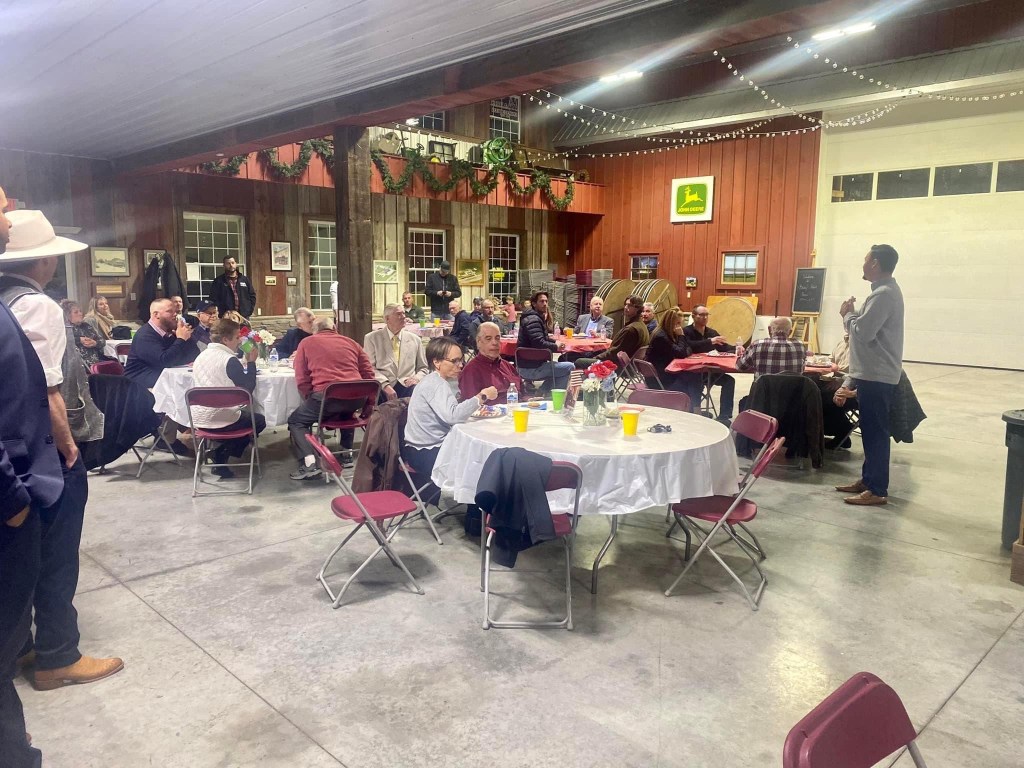
This brings me to Governor Mike DeWine’s recent State of the State address on March 10, 2026, his final one as he wraps up eight years in office.[^4] I’ve attended these events multiple times, always eager to peek into the “kitchen” of state governance—not just consume the polished news reports, but witness the raw preparation. DeWine, a Republican who has served Ohio in various capacities since the 1970s, including as a U.S. Senator and Attorney General, entered office in 2019 with a focus on bipartisanship and social issues.[^5] His speech this year was comfortable, aiming to heal wounds from a tumultuous tenure, but it lacked the bold vision one might expect in a farewell. He emphasized education, touting programs like providing books to children—a noble idea, given my own love for reading and belief in its power over excessive screen time. Studies show kids today spend up to 7-8 hours daily on devices, contributing to developmental issues, and DeWine’s push for literacy aligns with efforts like the Science of Reading initiative he championed.[^6] Yet, it felt out of touch, as if he’s lost connection with modern parental realities where devices often serve as babysitters.

Critically, I’ve been vocal about DeWine’s shortcomings, particularly his handling of the COVID-19 pandemic. Appointing Dr. Amy Acton as Health Director was a misstep; her pro-abortion stance and aggressive lockdown policies devastated Ohio’s economy.[^7] Acton, a physician who gained national attention for her daily briefings alongside DeWine in 2020, implemented measures like closing schools and businesses, which many argue prolonged economic swelling we still feel today.[^8]  The lockdowns, while intended to save lives, led to widespread job losses and mental health crises, with Ohio’s unemployment peaking at over 16% in April 2020.[^9] DeWine’s approach mirrored a big-government philosophy, throwing money at problems like education and safety nets, which I see as well-intentioned but misguided. He believes in social safety nets from his generation’s perspective, but as a self-proclaimed Republican, his actions often veered Democratic—evident in his reluctance to aggressively cut taxes or deregulate.

Property taxes, for instance, have spiraled under his watch, burdening homeowners without adequate relief until recent reforms. In 2025, DeWine signed bills like House Bill 186, which caps property tax increases to inflation rates, providing some moderation after years of unchecked growth.[^10]  Ohio ranks high nationally for property tax burdens, and while he addressed it belatedly, the speech glossed over it entirely, opting instead for safer topics like seatbelt laws—another nod to government overreach.[^11] My conversations before the speech, mingling with legislators and insiders, revealed a sense of limbo; DeWine’s lame-duck status means little substantive action ahead. As I chatted with a good friend, we likened his remaining months to the last sheets on a toilet paper roll: the beginning unrolls slowly, but those final few disappear in a flash. With the 2026 election looming, attention shifts to fresh faces.

Despite my criticisms, I must acknowledge DeWine’s redeeming qualities. Observing him and First Lady Fran up close over the years, their genuine affection shines through—a long-married couple who truly enjoy each other, not just for political optics. Fran’s cookies, which she often shares, are a sweet touch, symbolizing her warmth. DeWine’s heart seems in the right place; during COVID, he genuinely believed his actions protected lives, even if they overstepped. Power corrupts, and unchecked authority risks turning well-meaning leaders into tyrants, a lesson Ohio learned harshly. Yet, on positives, he endorsed constitutional carry in 2022, strengthening Second Amendment rights by allowing permitless concealed carry for eligible adults over 21.[^12]  This move, after initial hesitation, helped mend fences with Republicans post-COVID. Additionally, he supported business initiatives like Joby Aviation’s expansion in Ohio, announced in 2023, which promises 2,000 jobs in electric vertical takeoff and landing (eVTOL) aircraft manufacturing—a boon for aviation innovation.[^13] Columbus Mayor Andrew Ginther has been instrumental in such developments, fostering smart mobility and economic growth in the region.[^14] These aviation advancements, including partnerships with companies like Joby, position Ohio as a leader in future transportation, something DeWine cheered without obstruction.

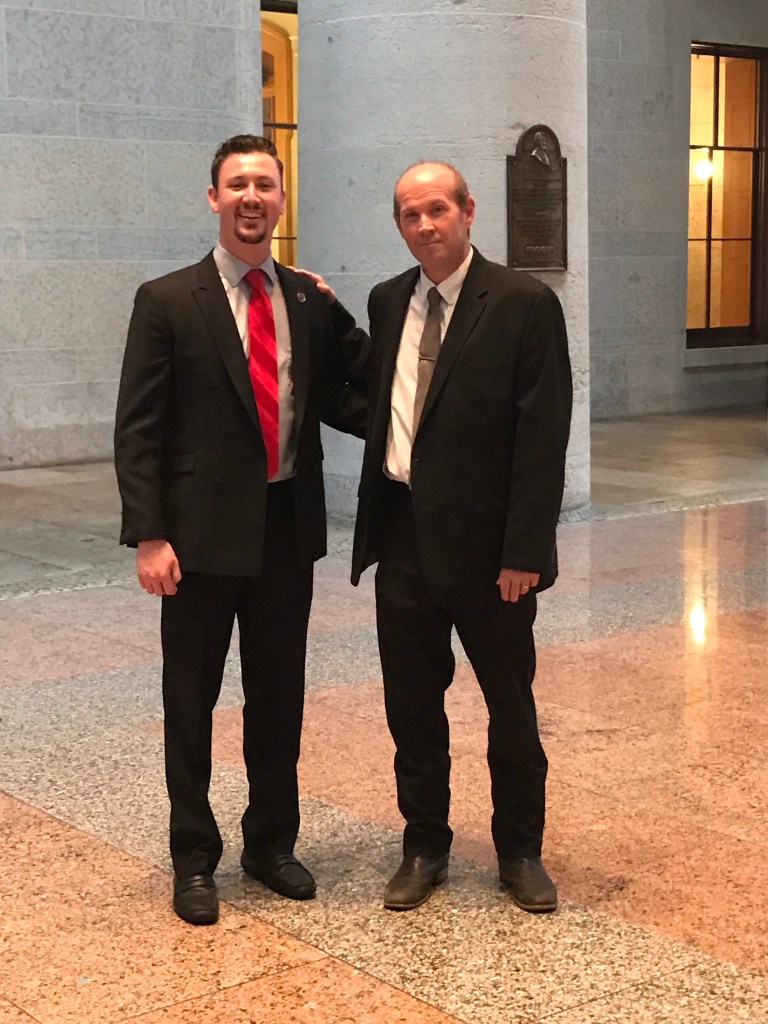
An awkward yet telling moment occurred when I ended up in a photo with DeWine. In past years, my anger over his policies kept me at arm’s length, but this time, with his term ending, I shook his hand and wished him well, acknowledging the pro-business strides. Government needs checks and balances precisely because even good intentions can falter. DeWine isn’t evil; his naivety in trusting big government to care for the vulnerable led to overreach.

Looking ahead, the toilet paper roll is nearly spent, and I’m excited for Vivek Ramaswamy to take the helm. Ramaswamy, a Cincinnati native and biotech entrepreneur who founded Roivant Sciences and ran for president in 2024, announced his gubernatorial bid in 2025 with Trump’s endorsement.[^15]  His campaign focuses on reviving the American Dream through lower costs, bigger paychecks, and merit-based policies, contrasting DeWine’s approach.[^16]  Polls show a tight race against Democrat Amy Acton, but Ramaswamy’s vision—transforming Ohio into an economic hub, especially in the Ohio River Valley—aligns with bold Republican ideals.[^17]  He’s already launched massive ad campaigns and secured the Ohio GOP endorsement, signaling momentum.[^18]  Under Ramaswamy, I anticipate policies advancing freedom, innovation, and efficiency—cooking up better “spaghetti” in the Statehouse kitchen.

Attending these events reinforces why I love politics: seeing dedicated people strive, even if imperfectly. From Ramsay’s kitchen to Columbus, excellence demands pride, hard work, and attention to detail. Cooks prepare meals hoping diners savor them, but criticism stings when they fall short. DeWine’s administration aimed for a magnificent sandcastle, but tides of controversy washed much away. Still, remnants like stronger gun rights and business growth endure. As his era ends, I reflect with tempered hatred, appreciating the intent I witnessed up close. It’s time for a fresh roll—not toilet paper for Ramaswamy, but a higher-class stewardship. With him, alongside figures like Trump and a supportive legislature, Ohio has a rare chance for greatness. I look forward to much better food coming out of the kitchen to come.

[^1]: The Michelin Guide has awarded three stars to Restaurant Gordon Ramsay since 2001, recognizing exceptional cuisine and service. 

[^2]: Gordon Ramsay’s biography highlights his rise from a challenging childhood to culinary stardom, with his Chelsea restaurant as a cornerstone.

[^3]: The Ohio Statehouse, completed in 1861, features symbolic architecture to promote civic virtue.

[^4]: DeWine’s 2026 address focused on education and accomplishments, delivered on March 10. 

[^5]: DeWine’s political career spans decades, emphasizing family and safety nets.

[^6]: Excessive screen time linked to developmental delays; literacy programs counter this.

[^7]: Acton supported abortion rights and led lockdowns.

[^8]: Acton’s role in COVID response included school closures. 

[^9]: Ohio’s economic impact from COVID policies.

[^10]: House Bill 186 caps tax increases. 

[^11]: Ohio’s high property tax ranking.

[^12]: Signed SB 215 in 2022. 

[^13]: Joby Aviation’s Ohio expansion creates jobs in eVTOL.

[^14]: Ginther promotes smart mobility in Columbus.

[^15]: Ramaswamy’s 2026 bid announced in 2025. 

[^16]: Campaign priorities include economic revival. 

[^17]: Polls show competitive race. 

[^18]: GOP endorsement in 2025. 

Bibliography

1.  Ramsay, Gordon. Humble Pie: My Autobiography. HarperCollins, 2006. (For insights into Ramsay’s management style.)

2.  DeWine, Mike. Ohio’s Path Forward. Ohio Governor’s Office Publications, 2025. (Overview of DeWine’s policies.)

3.  Ramaswamy, Vivek. Woke, Inc.: Inside Corporate America’s Social Justice Scam. Center Street, 2021. (Ramaswamy’s views on business and politics.)

4.  Acton, Amy. Leading Through Crisis: Lessons from Ohio’s Pandemic Response. Self-published, 2024. (Acton’s reflections on COVID.)

5.  Hoffman, Rich. The Gunfighter’s Guide to Business. Overman Warrior Publications, 2020. (My own book on management principles.)

6.  Ohio Historical Society. The Ohio Statehouse: A History of Democracy. Arcadia Publishing, 2015. (Background on the Statehouse.)

7.  Tax Foundation Reports. Property Tax Burdens in the U.S. Annual editions, 2020-2026. (Data on Ohio taxes.)

8.  National Rifle Association. Second Amendment Victories: Constitutional Carry Laws. NRA Publications, 2023. (On gun rights reforms.)

9.  Joby Aviation. Annual Report 2025. (Details on Ohio expansion.)

10.  Michelin Guide. Great Britain & Ireland. Michelin Travel Publications, annual. (Restaurant ratings.)

Rich Hoffman

More about me

Click Here to Protect Yourself with Second Call Defense https://www.secondcalldefense.org/?affiliate=20707
About the Author: Rich Hoffman

Rich Hoffman is an independent writer, philosopher, political advisor, and strategist based in the Cincinnati/Middletown, Ohio area. Born in Hamilton, Ohio, he has worked professionally since age 12 in various roles, from manual labor to high-level executive positions in aerospace and related industries. Known as “The Tax-killer” for his activism against tax increases, Hoffman has authored books including The Symposium of JusticeThe Gunfighter’s Guide to Business, and Tail of the Dragon, often exploring themes of freedom, individual will, and societal structures through a lens influenced by philosophy (e.g., Nietzschean overman concepts) and current events.

He publishes the blog The Overmanwarrior (overmanwarrior.wordpress.com), where he shares insights on politics, culture, history, and personal stories. Active on X as @overmanwarrior, Instagram, and YouTube, Hoffman frequently discusses space exploration, family values, and human potential. An avid fast-draw artist and family man, he emphasizes passing practical skills and intellectual curiosity to younger generations.

‘Pirate Money’ in Ohio: The way to fight back against a failed Federal Reserve and inflation-based big government economy

The question that often arises in discussions about state-issued currencies is whether such initiatives, like those proposed in Kentucky or Ohio, are constitutional. They function as a form of currency that could serve as a pillar of stability for our nation, especially in an era where federal monetary policy has led to rampant inflation and economic uncertainty. I found myself pondering this deeply during a recent visit to the Ohio Statehouse, where I reconnected with old friends who work there. It was a serendipitous encounter that led me straight into the office of Senator George Lang, a man I’ve always admired for his sharp intellect and unwavering commitment to conservative principles. Lang and I have shared many conversations over the years, often diving into the world of books—recommendations that challenge the status quo and inspire action. On this particular day, as we caught up, the discussion turned to a topic that has been gaining traction among legislators and economic thinkers alike: a return to sound money through a state-level gold standard.

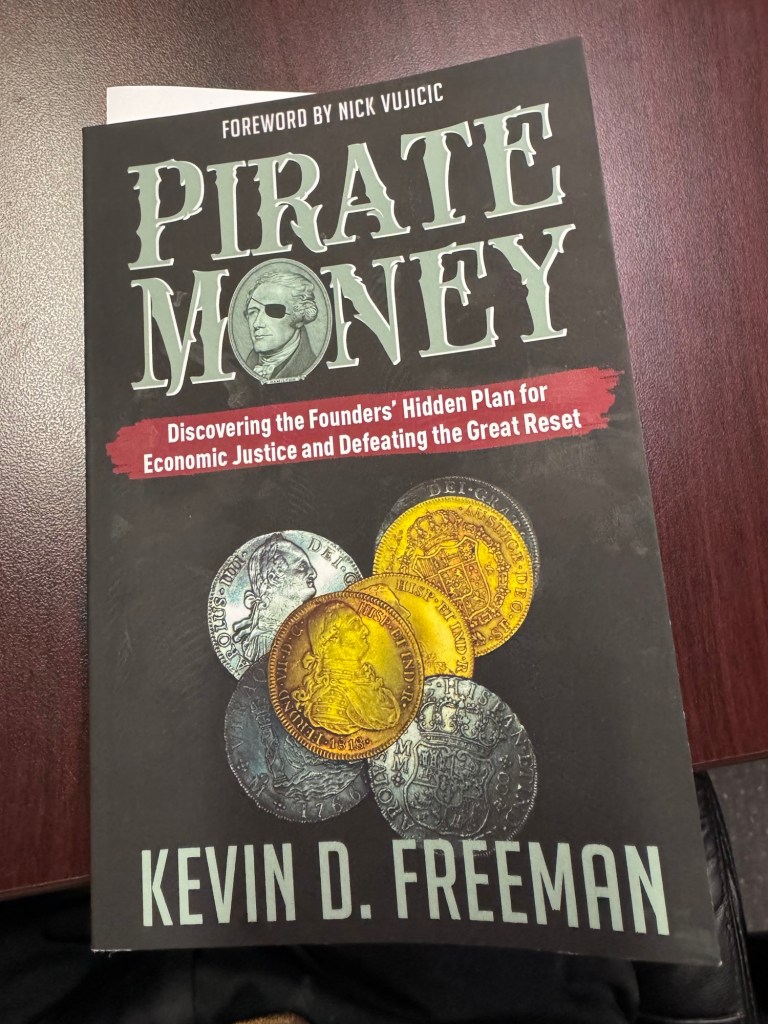
Lang handed me a copy of a relatively new book by Kevin Freeman, titled Pirate Money. The Blaze publishes it, and Freeman, whom I’ve followed through his economic commentary on that platform, draws from his extensive background advising the Pentagon and military leaders on financial warfare. I’ve known people at The Blaze over the years, and Freeman’s insights into global economics have always struck me as prescient. This book isn’t just another treatise on monetary policy; it’s a call to action, proposing an innovative way for states to reclaim control over their currencies using gold and silver, bypassing the Federal Reserve’s failures. As Lang and I talked, he mentioned that he’s been encouraging his colleagues in the legislature to read it by passing out copies from his office. The concept resonated with me immediately, especially after my own harrowing experiences with banks in 2025—a year that exposed the ugly underbelly of the financial industry in ways I hadn’t fully appreciated before.

You see, I’m not inherently anti-bank; they’ve served a purpose in facilitating commerce. But last year, I encountered the kind of predatory behavior that makes you question the entire system. Hidden fees, arbitrary account freezes, and a lack of transparency revealed the “ugly people” behind the polished facades—executives and regulators who prioritize control over service. This isn’t isolated; it’s symptomatic of a broader issue tied to the Federal Reserve and its monopoly on money creation. Freeman’s book delves into this, explaining how the Fed’s policies have enabled entities like BlackRock to amass unprecedented power, launder printed money through Wall Street, and impose agendas such as ESG (Environmental, Social, and Governance) criteria on corporations. If a CEO steps out of line, they risk deplatforming or worse—losing access to banking services based on social media profiles or political affiliations. I’ve seen this firsthand; banks now scrutinize applicants’ online presence, denying services to those deemed “undesirable.” This social credit system, imported from communist China, has infiltrated American finance, and it’s out of control.

My conversation with Lang covered a lot of ground, but the gold standard idea stood out. Freeman argues for a “constitutional backdoor” via Article 1, Section 10 of the U.S. Constitution, which prohibits states from coining money or emitting bills of credit but explicitly allows them to make “nothing but gold and silver coin a tender in payment of debts.”  This clause, rooted in the Founders’ distrust of fiat currency following the inflationary disasters of the Continental Dollar during the Revolutionary War, grants states the authority to establish gold and silver as legal tender. Freeman’s proposal builds on this: states could create vaults where citizens deposit gold, which is then used as backing for a digital debit card system. You’d buy gold with dollars, store it in the state vault, and spend it via a card that deducts the equivalent value in real time, adjusted for market prices. No need to carry physical coins; it’s as convenient as swiping a credit card, but insulated from inflation.

A new kind of gold card

This isn’t a pie-in-the-sky theory. Texas has already paved the way with its Texas Bullion Depository, established in 2015, a state-run facility for storing precious metals.  In 2025, Texas advanced further with House Bill 1056, enabling gold and silver deposits to be spent via debit-style cards, creating a digital payments platform backed by physical bullion.  By January 2026, the Texas Comptroller was seeking industry input on this system, aiming to implement it by May 2027 without state funding, relying instead on service fees.  Ohio is following suit. In April 2025, Representatives Brian Lorenz, Mark Johnson, and Josh Williams sponsored House Bill 208 (though some records refer to similar legislation as HB 206, sponsored by Representative Jennifer Gross), which aims to establish a transactional currency based on gold and silver.  The bill has been circulating but is currently stuck in the Judiciary Committee, needing leadership to push it forward. Lang and Gross are key supporters, with Lang distributing Freeman’s book to build momentum. This isn’t just for the wealthy; it’s a democratizing force that allows everyday people to protect their savings from erosion.

To understand why this is urgent, we must revisit the history of America’s monetary system—a tale of stability lost to central planning. In colonial America, currency was scarce and chaotic. The British Crown restricted silver and gold inflows to the colonies, forcing settlers to rely on foreign coins, barter, or makeshift scrip. The most common was the Spanish “piece of eight,” or eight-reales silver coin, minted in the New World and prized for its consistent value.  Pirates played a surprising role here; they plundered Spanish galleons, circulating these coins throughout the Atlantic world. Freeman draws the title Pirate Money from this era, noting that “pirate money”—looted Spanish silver—fueled early American commerce by evading royal monopolies.  These coins were often cut into “bits” for change—a one-reale bit equaled 12.5 cents, hence “two bits” for a quarter.  This decentralized, metal-backed system contrasted sharply with the inflationary paper-money experiments, such as Massachusetts’ pine-tree shillings or the Continental Congress’s fiat notes, which collapsed under overprinting.

The Founders, scarred by hyperinflation during the Revolution—where “not worth a Continental” became a proverb—enshrined sound money in the Constitution. Congress was granted the power to “coin money” and regulate its value, while states were barred from issuing fiat currency but were allowed to accept gold and silver tender.  The U.S. adopted a bimetallic standard in 1792, with the dollar defined as a specific weight of silver or gold. This stability propelled economic growth until the 20th century. But cracks appeared with the Civil War’s greenbacks, fiat notes that depreciated rapidly. Post-war, the U.S. returned to gold in 1879, enjoying decades of low inflation and prosperity.

The turning point came in 1913 with the Federal Reserve’s creation, ostensibly to stabilize banking, but it granted a private cartel monopoly over the money supply. Critics, including Freeman, argue this enabled endless printing, detached from real assets. Then, in 1933, amid the Great Depression, President Franklin D. Roosevelt issued Executive Order 6102, confiscating private gold holdings at $20.67 per ounce, only to revalue it at $35 shortly after via the Gold Reserve Act of 1934—a 69% devaluation that transferred wealth to the government.   This severed the dollar’s domestic full gold backing, though international convertibility persisted under Bretton Woods.

The final blow was the “Nixon Shock” in 1971. Facing gold outflows and inflation from Vietnam War spending, President Richard Nixon suspended dollar-to-gold convertibility on August 15, 1971, effectively ending the gold standard.   This unleashed fiat money, where dollars are backed only by faith in the government. The results? Catastrophic inflation. In the 1970s, prices soared, with annual rates peaking at 15% in 1980.  A dollar from 1970 buys just 13 cents worth of goods today—an 87% erosion.  Over the last century, the dollar has lost over 96% of its purchasing power since 1913.  From 1925 to 2025, it’s declined 95%, with stark generational impacts: $100 in 1975 is worth $16.40 today. 

This inflation isn’t accidental; it’s baked into the system. The Fed targets 2% annual inflation, but real rates often exceed that target, especially post-2020, with COVID stimulus flooding trillions into the economy. Homes, once affordable on a single income, now price out young families. Everything’s too expensive because money loses value yearly. Freeman highlights the shift from a production economy—making stuff—to a finance economy, where wealth comes from trading paper assets, interest rates, and debt manipulation. BlackRock exemplifies this: managing trillions, it influences CEOs via asset control, pushing agendas that prioritize globalism over American interests.  During the pandemic, the Fed hired BlackRock to manage bond purchases, raising conflict-of-interest concerns by blurring the lines between public policy and private profit.  

Compounding this domestic rot are external threats. President Trump understood this, cracking down on Iran, Venezuela, Mexico, and Canada to protect the dollar from attacks. Why Greenland? Strategic resources. But the real adversary is China, propped up since Nixon’s 1972 visit, which opened the door to currency manipulation and intellectual property theft.  Freeman, an expert in economic warfare, warns that wars today are fought through finance, not just bombs. China has been waging a stealth assault on the dollar: dumping U.S. Treasuries, stockpiling gold, and promoting the renminbi as a reserve currency.   In 2026, Beijing issued directives for financial institutions to divest Treasuries en masse, spiking yields and straining U.S. debt financing.  Allies like the BRICS nations follow suit, accelerating de-dollarization. If the dollar falls, America’s global clout crumbles—exactly China’s aim.

Trump provided a reprieve from 2017 to 2021, stabilizing the dollar amid these assaults. But with Democrats pushing centralized planning and Republicans sometimes complicit, the direction is toward more control. The Great Reset, championed by globalists, envisions a world where you “own nothing and be happy,” with currencies digitized for surveillance. Freeman’s Pirate Money counters this: states like Ohio and Texas can rebel by creating gold-backed systems, using the cashless infrastructure against the centralizers.

Imagine: You deposit your paycheck into an Ohio vault, converting it to gold at current prices. Your “black card” deducts value for purchases—gas, groceries, PlayStation—without inflation’s bite. Gold appreciates, so savings grow. No more losing 2-5% per year; your money retains value. This forces the Fed to compete, curbing excesses. It’s not Bitcoin’s volatility; it’s stable, tangible gold, recognized worldwide since antiquity.

Critics say it’s for the rich, but Freeman argues otherwise. Centralized bankers thrive on monopoly, leveraging inflation to steal value. By decentralizing, more people retain wealth, reducing inequality. In Ohio, HB 208 needs champions. Knock on Lang’s door; he’ll give you the book. Gross is sponsoring related efforts. With Vivek Ramaswamy as governor in Ohio and in partnership with a Trump administration, support could surge.

This isn’t radical; it’s constitutional. States have the right, and the time is now, while Trump stabilizes the dollar. Democrats should back it too—protecting value benefits all. If we wait, inflation will devour more. As Freeman notes, pirates used gold to win independence; we can too.

In conclusion, Kentucky’s notes—or any state’s gold tender—are constitutional under Article 1, Section 10. They stabilize our nation against Fed failures, BlackRock’s influence, and China’s attacks. Ohio, lead the way with HB 208. I’ll be one of the first to sign up. 

Footnotes

1.  U.S. Constitution, Article 1, Section 10: “No State shall… coin Money; emit Bills of Credit; make any Thing but gold and silver Coin a Tender in Payment of Debts…” 

2.  Kevin D. Freeman, Pirate Money (The Blaze, 2025), pp. 45-67, discussing colonial use of Spanish coins.

3.  Executive Order 6102, April 5, 1933, by Franklin D. Roosevelt, requiring the surrender of gold at below-market rates. 

4.  Gold Reserve Act of 1934, revaluing gold from $20.67 to $35 per ounce.

5.  Nixon Shock: Suspension of gold convertibility, August 15, 1971. 

6.  Inflation statistics: Dollar lost 87% value since the 1970s; peaked at 15% in 1980. 

7.  BlackRock’s role in Fed bond programs, 2020. 

8.  China’s Treasury divestment, 2026 directives. 

9.  Texas Bullion Depository, established 2015; HB 1056, 2025. 

10.  Ohio HB 206 (or 208 variant): Gold and silver transactional currency. 

Bibliography

•  Freeman, Kevin D. Pirate Money: The Constitutional Path to Sound Money. The Blaze, 2025.

•  Griffin, G. Edward. The Creature from Jekyll Island: A Second Look at the Federal Reserve. American Media, 1994.

•  Rothbard, Murray N. What Has Government Done to Our Money? Ludwig von Mises Institute, 1963.

•  Eichengreen, Barry. Golden Fetters: The Gold Standard and the Great Depression, 1919-1939. Oxford University Press, 1992.

•  Lowenstein, Roger. “The Nixon Shock.” Bloomberg Businessweek, August 4, 2011.

•  U.S. Constitution, Annotated Edition. Library of Congress.

•  Federal Reserve Economic Data (FRED). “Purchasing Power of the Consumer Dollar.”

•  Texas Comptroller of Public Accounts. “Request for Information: Digital Payment System Backed by Bullion,” January 2026.

•  Ohio House of Representatives. “H.B. No. 206: Establish a Transactional Currency Based on Gold and Silver.”

•  Freeman, Kevin D. Advisory Reports to Pentagon on Economic Warfare, Various Dates.

Rich Hoffman

More about me

Click Here to Protect Yourself with Second Call Defense https://www.secondcalldefense.org/?affiliate=20707

About the Author: Rich Hoffman

Rich Hoffman is an independent writer, philosopher, political advisor, and strategist based in the Cincinnati/Middletown, Ohio area. Born in Hamilton, Ohio, he has worked professionally since age 12 in various roles, from manual labor to high-level executive positions in aerospace and related industries. Known as “The Tax-killer” for his activism against tax increases, Hoffman has authored books including The Symposium of JusticeThe Gunfighter’s Guide to Business, and Tail of the Dragon, often exploring themes of freedom, individual will, and societal structures through a lens influenced by philosophy (e.g., Nietzschean overman concepts) and current events.

He publishes the blog The Overmanwarrior (overmanwarrior.wordpress.com), where he shares insights on politics, culture, history, and personal stories. Active on X as @overmanwarrior, Instagram, and YouTube, Hoffman frequently discusses space exploration, family values, and human potential. An avid fast-draw artist and family man, he emphasizes passing practical skills and intellectual curiosity to younger generations.

Property Taxes are on the Chopping Block in Ohio: We warned these public schools, and now the time is here

The push to eliminate property taxes represents one of the most significant challenges to longstanding fiscal structures in the United States, particularly in states like Ohio, where a citizen-led movement has gained substantial momentum. This effort is not merely a local grievance but part of a broader national conversation about taxation, homeownership, government dependence, and economic freedom. In Ohio, a proposed initiated constitutional amendment known as the Ohio Eliminate and Prohibit Taxes on Real Property Initiative has been cleared for signature gathering and targets the November 3, 2026, ballot. If successful, it would permanently prohibit taxes on real property, defined to include land, growing crops, and permanently attached buildings (though public utilities might still face some taxation under specific interpretations).

To qualify, proponents need 413,488 valid signatures (10% of votes cast in the preceding gubernatorial election), with signatures required from at least 5% of voters in 44 of Ohio’s 88 counties. Groups such as the Committee to Abolish Ohio Property Taxes and Citizens for Property Tax Reform have been actively collecting signatures, with reports indicating progress well in excess of 100,000 signatures as of late 2025 and early 2026, alongside widespread deployment of petitioners. The movement is explicitly citizen-driven, emerging from frustration with rising tax burdens rather than legislative initiative. Legislative allies and local officials express sympathy for taxpayer concerns but highlight the practical difficulties of abruptly replacing the revenue stream.

Property taxes in Ohio fund a substantial portion of local government operations, with estimates indicating they account for roughly 65% of regional revenue. For public schools, which receive over three-fifths of real property tax collections (approximately $13.6 billion for tax year 2024, payable in 2025), this is the largest single funding source—surpassing state aid and supporting the education of nearly 1.5 million students. Counties, townships, libraries, parks, fire districts, and other special districts also rely heavily on these funds for services ranging from emergency response and road maintenance to mental health, addiction treatment, developmental disabilities support, elderly services, and children’s protective services. In many townships, property taxes are the primary revenue source because they lack the authority to levy income or sales taxes.

Opponents of abolition, including local officials, school districts, and organizations like the Ohio Municipal League, warn that elimination would be “disastrous,” potentially forcing sharp increases in sales taxes (possibly to 18-20% in some areas) or income taxes (doubling or tripling rates) to fill the gap. Schools could face severe disruptions, including cuts to programs, staff, or facilities, amid already escalating costs from collective bargaining agreements and professional salaries. Now, where was all this concern when DeWine shut down schools for Covid protocols?  Talk about disruptions, how would any of this be different regarding a disruptive culture?  Recent legislative reforms—such as bills signed by Governor Mike DeWine in late 2025 that limit inflation-linked increases, expand homestead exemptions, and provide rollbacks—aim to provide relief without complete abolition, capping certain levies, and redirecting funds to homeowners. These measures offer partial mitigation but have been dismissed by advocates as insufficient, fueling continued signature drives.

This Ohio initiative aligns with similar debates in other states, where post-World War II rising home values have increased tax bills, eroding a sense of ownership. In North Dakota, proposals leverage oil revenues to phase out homeowner property taxes over a decade. Florida’s Governor Ron DeSantis has advocated phasing out non-school property taxes on homesteads, with multiple joint resolutions under consideration for gradual exemptions. Texas seeks to eliminate school-related property taxes, while Georgia, Indiana, Wyoming, and others are exploring offsets through sales tax expansions or state funds. These efforts reflect taxpayer discontent with “rent to the government” models, where perpetual payments undermine actual private ownership.

Historically, property taxes trace back to early American systems, evolving from feudal obligations and colonial practices. In Ohio, taxation of land began under territorial rule in the 1790s, with classifications by fertility until 1825, when an ad valorem system emerged. The 1851 Ohio Constitution mandated uniform taxation of real and personal property (with limited exemptions), and significant reforms followed, including the 1930s caps on unvoted levies (1% of actual value) and the shift away from state-level property taxes by 1932. The modern system solidified as local governments increasingly relied on property taxes for schools and services, especially after state income taxes (introduced in 1971) and other revenues reduced direct state dependence.

Critics frame property taxes as a “socialist enterprise,” enabling expansive government growth by treating property as a shared resource rather than a private asset. People like me argue that painless extraction—via escrow in mortgages or withholding—masks the burden, allowing unchecked expansion of services, union-driven salaries, and inefficiencies. High taxes, combined with stagnant or declining home values in some areas, risk forcing sales to corporate buyers such as private equity firms, thereby eroding individual wealth and control. This echoes broader concerns about progressive taxation funding “Great Society” programs, where expectations for government services outpace sustainable revenue.

Proponents of abolition envision a shift toward true market capitalism: lower utility costs, energy exports, improved deportation efficiency, and economic expansion that generates revenue through productivity and voluntary mechanisms such as sales taxes. Education could shift to competitive models—private, charter, homeschooling, or online—where families direct funds to preferred providers rather than relying on zip-code monopolies. This aligns with calls for accountability, in which services compete for “business” and excessive spending (e.g., inflated administrative costs or underperforming outcomes) is subject to market discipline.

Yet the transition poses risks. Abrupt revenue loss could destabilize essential services, exacerbate inequalities if alternatives favor the wealthy, or lead to regressive shifts toward consumption taxes. Historical precedents, such as the New Deal era’s expansion of government through property-based funding, suggest that entrenched interests resist change. Even sympathetic legislators face constraints from revenue dependencies and collective bargaining.

Ultimately, this debate transcends Ohio, reflecting a national reckoning with post-war fiscal models. Rising awareness that home ownership should confer security—not perpetual rent—fuels momentum. Whether through the 2026 ballot success or gradual reforms in the coming years (2027-2028), property taxes face severe scrutiny. The gravy train of unchecked expansion may indeed conclude, pushing society toward enterprise-driven wealth creation and limited government. Failure to adapt risks further alienation, while thoughtful restructuring could foster genuine prosperity.  I warned public schools, especially, for many years that they had built their entire foundation on this socialist property tax model, where government grows on the back of property ownership and, as an irresponsible action, grows too big.  In our family, all my grandchildren are being homeschooled because the product of public education is garbage.  And as it was for my own children when they were in school, I had to do most of the work of teaching anyway.  They traditionally attended public school for about two-thirds of their school days, and I had to unteach them all the material they learned in school.  So this day was long coming, and now, it’s here.  And people are seeing what they got for all that money that was wasted, and they don’t like it.

Bibliography for Further Reading

•  Ballotpedia: Ohio Eliminate and Prohibit Taxes on Real Property Initiative (2026). https://ballotpedia.org/Ohio_Eliminate_and_Prohibit_Taxes_on_Real_Property_Initiative_(2026)

•  Ohio Attorney General: Petitions Submitted, including Abolishment of Taxes on Real Property. https://www.ohioattorneygeneral.gov/Legal/Ballot-Initiatives

•  Policy Matters Ohio: “Ohio property tax repeal would gut school budgets & critical services.” https://policymattersohio.org/research/ohio-property-tax-repeal-would-gut-school-budgets-critical-services

•  Tax Foundation: “Property Tax Relief & Reform in 2025.” https://taxfoundation.org/research/state-tax/property-tax-relief

•  Ohio Department of Education: Overview of School Funding. https://education.ohio.gov/Topics/Finance-and-Funding/Overview-of-School-Funding

•  EH.net: “History of Property Taxes in the United States.” https://eh.net/encyclopedia/history-of-property-taxes-in-the-united-states

•  Ohio Capital Journal and Cleveland.com articles on 2025-2026 property tax reforms and initiatives.

Footnotes

¹ Ballotpedia, 2026 Ohio Initiative details.

² Policy Matters Ohio, funding allocation estimates.

³ Ohio Legislative Service Commission fiscal notes on recent bills.

⁴ Tax Foundation reports on multi-state proposals.

⁵ Historical timeline from the Ohio Department of Taxation documents.

⁶ General critiques drawn from economic analyses of property tax structures and alternatives.

Rich Hoffman

Click Here to Protect Yourself with Second Call Defense https://www.secondcalldefense.org/?affiliate=20707

Making The Butler County Republican Party Great Again: People don’t want to think of Boss Hogg when they think of politics

At first, I thought of the complaints as leftovers from contentious issues that have divided the party, such as the Thomas Hall battle with Matt King and the obvious rift with Sheriff Jones and Roger Reynolds. I tend to view those kinds of things as family squabbles within a household. Usually, people get over things and move on, which was happening with that nice event for Thomas Hall. But when people who don’t usually deal with the Butler County Republican Party are complaining, they don’t know about the details, only their experience with it. And that experience has not lived up to the reputation of the past, where Butler County had a lot of volunteers, high engagement, and the kind of national reputation that made President Trump want to come and campaign in the area. But the reputation that was developing, because of all the rifts from leadership that was flowing out into state and federal politics, was not a good one. For a community of over 400,000 people, small-town politics was back in fashion where a few party leaders had turned the wonderful Butler County Republican Party into something that would make Boss Hogg from the Dukes of Hazzard blush. And that was embarrassing to hear. I had been hoping that after the 2022 election, many of those trends would level out and that much of the problem had been not having the unifying factor of Trump to rally behind. Without Trump, the party has reverted back to the differences that it had during the early 2000s. But now that Trump was running again, my hope was that the party would unite again behind him. However, this time there appeared to be a different kind of problem. Many older people in leadership now are in the way of younger and hungrier personalities, and those elements feel restricted in their ambitions, which is not a good thing for future growth.

This problem reminded me of the Cincinnati Bengals and how the Brown family just can’t get out of their own way for success. Sure, they have had some good players over the years, but they just have not been able to put together a successful string of seasons to show fabulous organizational presence. They went to the Super Bowl last year and had a pretty good season. They had the whole off-season to get better and improve on the previous year with essentially the same players. The Bengals invested in a new offensive line, but the results were not good. The quarterback, Joe Burrow, has been sacked more than any other NFL quarterback. So the Bengals didn’t get better because the problems with the Bengals were in their coaching and front office. Not the players on the field. So if leadership was always the problem, the Bengals didn’t help themselves by investing in an offensive line; if they didn’t have the kind of coaches who could take advantage of those improvements, then, of course, the problem would still present itself as a problem. Obviously, the Butler County Republican Party was having the same issues. Many new talents are coming into the party who can network and connect with the world. There are lots of MAGA Republicans across the state who are newly engaged in politics and are looking for jobs to do. But then, when they interact with Butler County, we have this Boss Hogg image that people have of our elderly leadership, and it turns them off, and it’s starting to show to the outside world. 

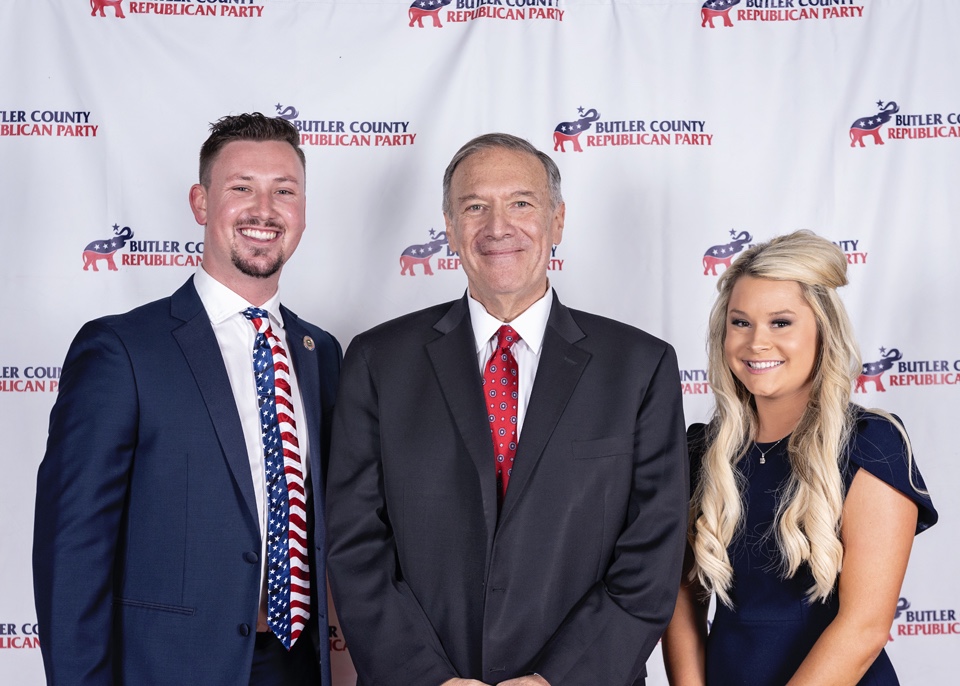
It was good to see a nice GOP event in Butler County dedicated to a victory celebration for Thomas Hall at the Majors Barn. It was a tough election season, and some hard feelings emerged during that race, which clearly split the Butler County Republican Party in half. But several people supported Matt King, who ran against Thomas for the 46th Representative Ohio seat. They were there to congratulate Thomas and to show leadership in coming together as a party now that the election was over. There were people there that I could speak with where things got pretty heated, and we had some nice conversations, and everyone made up. I know everyone couldn’t come, people were busy, but you could tell a lot about Republican Party leadership by who was there and who wasn’t. I can tell you someone, who was there, Roger Reynolds, was, and we had a nice conversation about the horrendous problem that was happening to him. I asked him if Sheriff Jones was going to pay for all his massive legal bills for the phony trial coming up for him in December of 2022, which to me looks like a complete political hit job. That is not the kind of thing that makes the Republican Party better, but something that has made it worse. Roger kind of smiled at me and shrugged his shoulders. He’s one of the good guys, and his only focus was on getting that mess behind him so he could live his life again. And Thomas and I spoke about the new Speaker of the House and what an excellent relationship those two had together, which was encouraging. Good things were happening. But I also received reports from some of the state people and the federal people who deal with Republican parties all over the country. Their impression of the Butler County Republican Party was not a good one. There were a lot of complaints about engagement, phone calls, appreciation letters, and just basic organization, and while I kept up a happy face inside, I was pretty mad. I am proud of the Butler County Republican Party and don’t like hearing people say bad things about it. 

Hey, I get it; we all get older. You look in the mirror and what looks back is a person falling apart. Age can be cruel. And when the dog doesn’t respect you, and your wife is complaining about you leaving your socks in the corner by the bathroom, and nobody thinks you’re all that special, it can feel great to go to a Party meeting and have everyone worship you for all the things you have done in your life. It’s hard to be big enough to get out of the way and let younger people step in and show their ambitions.   That has always been the Bengals problem; the Brown family has always gotten in the way of its own success. And that is what is happening with the Butler County Republican Party. It’s not just from the direction of the police, but there are commissioners, trustees, and many others who are holding positions as placeholders, then getting mad at the youth for nipping at their heels. And my advice to them, the elders, is if you really love the Republican Party, you would want to do the right thing, and that is to get out of the way and let those with the most ambition and freshest eyes step into leadership positions. Sometimes being a great leader is in getting out of the way. And hanging on to the past and living off a reputation to hide the aging process from your own eyes isn’t love. It’s selfish, and the only result is that you become the latest Boss Hogg in the world and become known not for good deeds but for corruption and ill-advised political fights that ruin everything a lifetime took to build.

Rich Hoffman

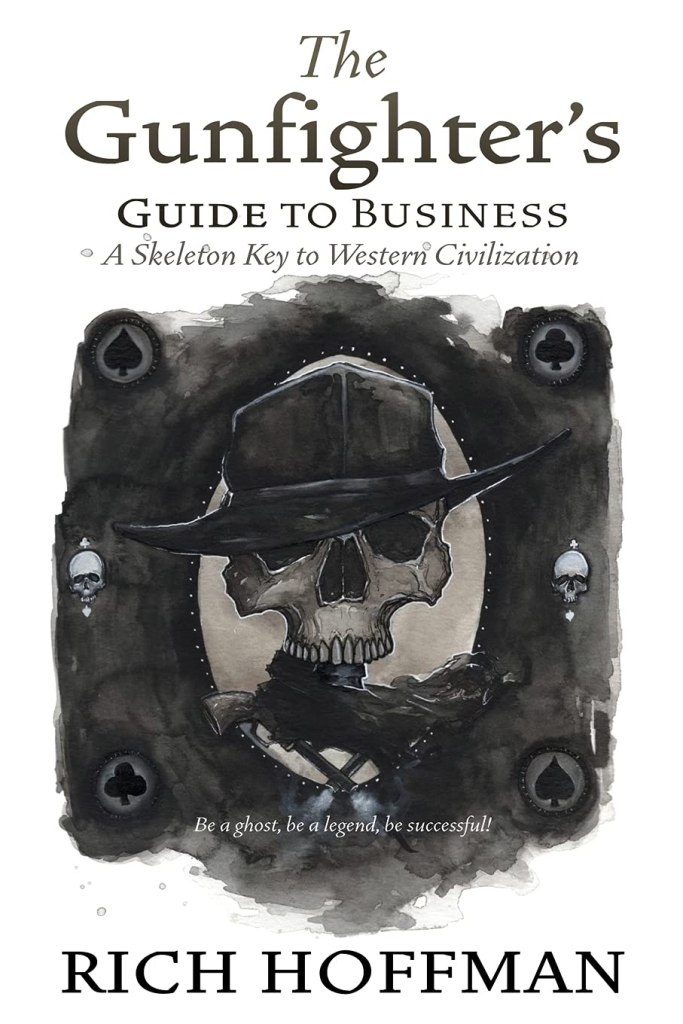
Click to buy The Gunfighter’s Guide to Business

Ohio’s Thomas Hall: The Man of Law Enforcement

It’s not hard now to know what we do about Sheriff Jones, why he dislikes the Ohio Representative of the 53rd District so much. I still tell all the people who now dislike the good Sheriff that he has done many good things over the years, and his brand has been good for the Republican Party and the first Trump term. Whether or not he continues to hold that lofty position is up to him. So far, he is turning hard left and headed for Mike DeWine country. But that’s his decision. Politics is a blood sport, and blood does get spilled. And that’s certainly the case with the feud between Thomas Hall and Sheriff Jones. Learning what I have, this problem goes far beyond just disagreements over sponsored bills or even kissing the ring by the youth to the elderly. Instead, it looks like insecurity that many older people go through when they realize a younger generation is replacing them. It can be hard to look in the mirror and acknowledge that you are no longer that guy. And for a guy with an ego the size of Sheriff Jones, of course, getting to the end of a long career in law enforcement will stir up emotions. After endorsing Thomas Hall for his next election, where Jones is trying to primary him out of contention, I stopped by the Statehouse in Columbus to see how Thomas was holding up. It’s been a rough campaign. Like many politicians, they have no idea really when the primary will happen. It’s set for May, but it might change to August. And in Thomas’s case, he doesn’t even know what district he’s running for because the Supreme Court might change it based on district mapping disputes. Yet, when I found Thomas in his natural habitat, I noticed that he was calm, cool, and sure of himself. And he quickly mentioned to me that Sheriff Jones’ labor union had endorsed him. 

Thomas told me all the measures he was taking to get re-elected, including all the door-to-door campaigns he had, regardless of how the districting broke down. We also talked strategy about the negative hits by Sheriff Jones. But now that the smoke had settled from the WLW incident back in November, where Jones went way out of his way to attempt to disparage Thomas in detrimentally belittling ways, the report from the outskirts of Butler County was that the Sheriff was losing his support. People in the rural parts of the county were always skeptical of Jones. They see him as more of a bully than a good cop, and that perception was already in place before Thomas Hall came into politics. The Sheriff is popular with the levy supporting Lakota moms and the big-government liberals, but not so much the rugged self-doers. When Jones supported Trump with them, they liked him. Now that he’s supporting Governor DeWine and is much more on the left than they are, they look at him with squinted eyes of skepticism. And in that way, most of Thomas Hall’s district falls under that category, so the attempts by Jones to disparage Hall have actually seemed to help the young congressman because he provides a protest vote to Jones.

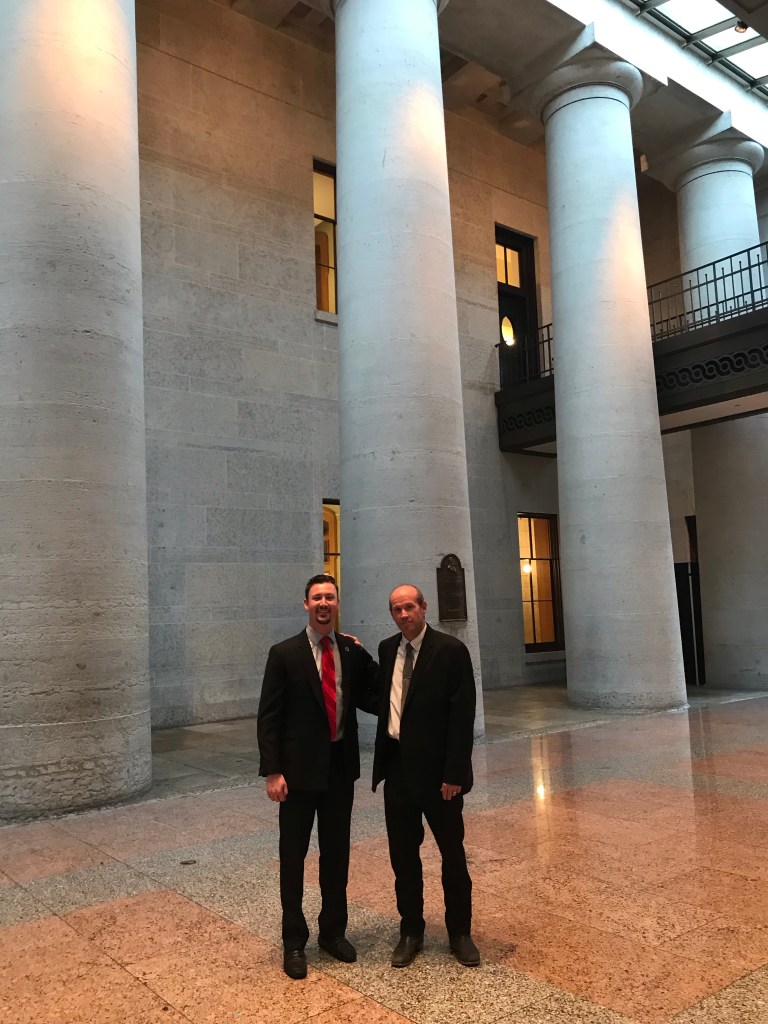
Thomas and I spent quite a lot of time catching up, walking through the rotunda and eventually down into the atrium with the giant Greek pillars standing as testaments of law and order. We took a few pictures and continued to talk about the campaign and his goals for his second term. But along the way, the Governor was walking around in the rotunda, taking pictures with whoever wanted them, so there was a significant police presence everywhere. While we talked, Thomas Hall stopped by each one along our path, thanked them for their service, and showed them how much he appreciated them. They were highly appreciative and receptive. This went on with a frequency that stopped our conversation about every 30 seconds. My thought at the time was that Thomas was doing this for my sake, so I wondered if he did that kind of thing all the time. After taking a few pictures, he had to run off for a session, and we parted ways. But my curiosity wondered if, even in a bit of a hurry and without me around, he would continue to shake hands with all the officers on his way back to his office. 

It was a formal occasion that day, so I was dressed in a suit like everyone else. It was easy for me to hang way back and follow Thomas Hall to his office. He didn’t know I was following as I blended into the crowd. And sure enough, he stopped by every officer, not the same ones as before, of course, and shook their hand and showed them how much he appreciated them. Now Thomas Hall is the son of the old cop who stopped the shooting at Madison Schools a few years prior. Hall grew up with a love of law enforcement and public service, which is why as such a young man, he is already moving toward another term as a House Rep after a past as a trustee in his community. But this reverence for the police was not fake. He didn’t know I was watching him, yet he was very sincere about it. Like I say all the time, don’t listen to what people say; watch what they do. The police of Butler County know what kind of young man Thomas Hall is, and they like him. And that looks to be the problem Sheriff Jones has with him. It’s more a problem that Jones has than what Thomas has. And when the Sheriff’s own police union supported Thomas Hall despite of the activism of Jones, the direction of the campaign was clearly headed in a direction favorable to Hall. The police can see where the future is, and Thomas Hall is their guy. And deservedly so. 

I always enjoy learning these kinds of things about people. We live in a world full of fake people and broken promises. There are few people out there who actually exceed expectations. I already liked Thomas Hall before our meeting at the Statehouse of Ohio, in those grand chambers of intellect and the pursuit of justice. But after watching him work with people and his behavior when he didn’t know anybody was looking, I knew that there was a lot special about Thomas Hall. It’s a shame that Sheriff Jones is trying to put a rift in the Butler County Republican Party the way he is. I understand that fear of becoming irrelevant. I would even think of it as a forgivable situation. Nobody wants to see the memory of the Sheriff be like that old dog that bit some little kid at the end of its life, erasing all the good things that had occurred over its lifetime. But that is for the Sheriff to work out for himself. The police and voters where it matters were clearly happy with Thomas Hall, and he was certainly willing to do whatever it took to defend his House seat. And he was confident the way unbeaten people in life usually are. And when you are as good and sincere as Thomas Hall is, it looks clear that he will remain unbeaten for the foreseeable future. Thomas Hall is the man of law enforcement, and the police know it and will reward him accordingly.    

Rich Hoffman

Click to buy The Gunfighter’s Guide to Business