
The Fragility of Principles: Thomas Massie’s Defeat and the Consolidation of the Republican Party Under Trump

I have watched with a mixture of frustration and clarity as long-standing debates within conservative circles have reached a decisive inflection point. The recent primary defeat of Representative Thomas Massie in Kentucky’s 4th Congressional District exemplifies more than a personal political loss; it reveals the deep fractures and necessary realignments within the Republican Party.  Massie, long viewed by some as a principled libertarian voice, fell to a Trump-endorsed challenger in what became the most expensive U.S. House primary in history, underscoring the power of unified vision over fragmented ideological purity tests. 

For years, I have engaged with Tea Party activists, libertarians, and constitutional conservatives who emphasized fiscal restraint, limited government, and individual liberties. Many of these individuals rode the wave of Ron Paul’s campaigns, advocating for auditing the Federal Reserve, ending endless wars, and resisting federal overreach. I respected their sincerity. Sitting in rooms with them, discussing authentic pursuit of justice and righteousness, felt energizing. Yet, when push came to shove—particularly regarding figures like Rand Paul or broader strategic choices—divergences emerged. Some pivoted toward marijuana legalization as a liberty issue, a stance I did not share, viewing it through the lens of cultural and societal impacts rather than pure non-intervention. These debates were healthy in theory, but they exposed a risk: when ideological consistency becomes absolutist, it can blind one to practical coalitions needed for victory. 

Massie’s loss was not merely about one congressman. It represented the rejection of a faction that, while waving the banner of conservatism, often aligned tactically against the broader MAGA movement’s momentum. Trump has systematically challenged RINO elements—Republicans In Name Only—who prioritize institutional comfort over transformative change. Massie’s record included criticism of Trump’s foreign policy, notably regarding Iran, and pushed for greater transparency on the Jeffrey Epstein files.  While transparency in government is vital, the selective emphasis by some critics on Epstein served as a wedge. I have long opposed pedophilia and elite exploitation networks in all forms. Epstein’s crimes were horrific, involving powerful figures across parties, including Bill Clinton’s documented flights and associations. Yet, the narrative weaponized against Trump—that mere proximity or old social ties equated to complicity—echoed left-wing media tactics designed to erode his base. 

I recall the Epstein files’ long shadow. Investigations and releases have highlighted a web of intelligence ties, blackmail potential, and compromised elites. Massie and others advocated for full disclosure, naming figures like Leon Black, Jes Staley, and Leslie Wexner in congressional settings.  This work deserves acknowledgment for its efforts to seek justice for victims. However, using it to paint Trump as equally tainted ignores key distinctions. Trump banned Epstein from Mar-a-Lago after reports of inappropriate conduct, and no credible evidence from the files has substantiated direct involvement in criminal acts matching the scale pushed in opposition narratives. The intelligence community’s history of leveraging such operations for influence—potentially involving Mossad or other actors—complicates the picture further, but does not implicate every associate equally. 

The pedophilia smear tactic is particularly insidious. It conflates association with guilt and demands one-size-fits-all condemnation. Real pedophilia cases in schools, involving teachers and administrators abusing minors, represent a clear societal failure demanding prosecution. Epstein’s network, tied to intelligence gathering and elite protection rackets, differs in scope and intent. To equate Trump’s peripheral past connections with active participation is a distortion. Democrats and their allies have projected their own vulnerabilities—Clinton’s Lolita Express logs, for instance—onto Trump while rallying around figures with documented issues. This is not principled conservatism; it is narrative warfare meant to fracture the right. 

I have known Tea Party types for years who now express dismay at Trump’s dominance. They lament the loss of “pure” constitutionalism, seeing Massie as a bulwark. Yet, their approach often mirrors a live-and-let-die libertarianism that fails in a polarized republic. Government is not absent; it is captured. Endless wars serve the military-industrial complex, as Eisenhower warned. Fiscal irresponsibility balloons debt. Cultural decay advances through institutions. Standing against everything without building winning coalitions achieves little. Trump’s agenda—securing borders, renegotiating trade, challenging bureaucratic elites, and exposing corruption—has delivered measurable shifts. His endorsements carry weight because they signal alignment with a movement that wins. 

Consider parallel dynamics in Ohio. Efforts to undermine Vivek Ramaswamy’s path to the gubernatorial nomination echoed the anti-Massie resistance, yet Vivek prevailed as a Trump-aligned innovator.  Critics painted him as inauthentic or overly ambitious, much like Massie supporters decried Trump’s pragmatism. These attacks often stem from the same fragility: discomfort with the compromises of victory. I prefer winning. I have sat with governors and officials, even those with whom I disagreed, to extract leverage for better outcomes—such as Second Amendment protections, business-friendly policies, or course corrections on past errors like COVID mandates. Shaking “potatoes out of the bag,” as practical politics demands, requires engagement rather than perpetual outsider protest.

Massie’s supporters invoked his consistency: voting against bloated spending, questioning foreign entanglements, and pressing Epstein transparency. These are defensible in isolation. However, consistency without adaptability risks irrelevance. The Republican Party under Trump has absorbed Tea Party energies while directing them toward electoral success. Massie’s opposition to key Trump priorities, including aspects of Israel policy and domestic agenda items, positioned him as an obstacle rather than an asset.  Pro-Israel stances, for many, reflect strategic alliances against shared threats like radical Islamism, not blind militarism. Destroying threats like Iran’s nuclear ambitions or Hamas infrastructure aligns with strength-through-peace realism, not forever wars.

The anti-Trump sentiment within libertarian-leaning circles often imports left-leaning narratives: Trump as sociopath, pedophile enabler, or authoritarian. These claims crumble under scrutiny. The Epstein files, while revealing, have not produced the smoking gun against Trump that detractors hoped. Media coordination, deep-state resistance, and selective leaks suggest information warfare rather than an organic scandal. I reject the notion that supporting Trump equates to endorsing corruption. Pedophilia is abhorrent regardless of politics. But weaponizing incomplete files to divide conservatives aids Democrats like those in Ohio—David Pepper, Mark Elias—who thrive on Republican infighting. 

My experience in media and commentary has reinforced independence. No sponsors dictate my views. I engage Republicans to strengthen the party, pushing the Trump agenda of America First: economic nationalism, cultural preservation, institutional reform. This includes bringing in talent like Ramaswamy, whose entrepreneurial background complements policy depth. Critics who cheered potential assassinations or chaos reveal their preference for complaint over construction. They validate existence through opposition, not governance.

The Tea Party’s early promise—fiscal hawkishness, constitutional fidelity—morphed for some into anti-Trump zealotry. Ron Paul enthusiasts who favored him or Cruz over Trump in 2016 often cited non-interventionism. Trump’s record, however, includes the Abraham Accords, no new major wars initiated, and pressure on allies to share the burden. Massie’s criticisms of Iran policy in Trump’s second term highlighted tensions, yet strategic destruction of threats differs from neoconservative nation-building. 

Epstein’s case warrants full accountability. Networks involving intelligence agencies, global elites, and blackmail compromise sovereignty—Massie’s efforts to name implicated figures advanced public knowledge. Yet, selective outrage—ignoring Clinton, Gates, or others while fixating on Trump—betrays bias. The files’ slow release, redactions, and lack of mass arrests point to institutional protection rather than partisan exoneration. Victims deserve justice beyond political theater. 

Broader lessons emerge. Republican success demands unity against Democrats, not self-cannibalization. Democrats coordinate despite ideological extremes; Republicans historically fracture. Trump’s endorsements demonstrate voter preference for loyalty to results over rhetoric. Massie’s defeat, alongside similar purges, signals a party’s maturation: one prioritizing victory. 

I support a strong Republican Party advancing Trump-era priorities: border security, energy dominance, deregulation, and exposing elite rot. Libertarian purity has value in discourse but falters in governance. Coalitions require compromise—agreeing on enough to defeat the left. Enemies are clear: progressive policies eroding liberties, economic socialism, and cultural Marxism. Internal division aids them.

Friends from Tea Party days feel betrayed by my stance. I value their sincerity but choose logic. Winning requires embracing imperfect vehicles for larger goals. Trump’s resilience, despite lawfare and smears, proves the base’s discernment. Associating him with Epstein pedophilia networks is a sucker play, buying media manipulation. Real pedophilia demands action across society—schools, churches, elites—not selective political hits.

In Ohio and nationally, patterns repeat. Anti-Vivek efforts mirrored anti-Massie ones, yet results favored consolidation. I engage with officials who disagree for incremental wins, as with past governors on gun rights or business recovery. Perpetual opposition yields nothing; leverage does.

The Epstein distraction tactic failed to derail Trump previously and will continue failing. Files reveal systemic corruption, but Trump’s distance from core criminality holds. This is not denial but contextual realism. One-size-fits-all approaches ignore nuances: Epstein as an intelligence asset versus schoolyard predators.

Ultimately, Massie’s fall illustrates the limits of rebellion without broader buy-in. Principles matter, but so does efficacy. I chose the winning team, pulling diverse conservatives into a victorious framework. Democrats are the primary adversary. Strengthening the GOP under Trump advances that fight. Libertarians who cannot adapt risk marginalization. Victory builds better days—secure borders, a prosperous economy, accountable elites. This path, though imperfect, delivers where isolation does not. 

Footnotes

¹ Primary results and spending data from AP and NPR reporting, May 2026.

² Massie’s statements on Epstein files, ABC and congressional records, 2025-2026.

³ Trump-Massie history, NBC and WSJ timelines.

⁴ Ohio gubernatorial primary outcomes, BBC and NBC, May 2026.

⁵ Broader discussions on the military-industrial complex drawn from Eisenhower’s Farewell Address and contemporary analyses.

Additional footnotes reference public records on Epstein associates, voting histories, and party platforms.

Bibliography for Further Reading

•  Associated Press. “Takeaways from Tuesday’s Primaries: Massie’s Loss Leaves No Doubt About Trump’s Power Over the GOP.” May 2026.

•  NPR. “Endorsed by Trump, Ed Gallrein Defeats Rep. Thomas Massie.” May 19, 2026.

•  The Hill. “Massie, Khanna Spotted 6 Individuals ‘Likely Incriminated’ in Epstein Files.” February 2026.

•  CBS Austin. “Lawmaker Names Three Men from the Epstein Files.” February 2026.

•  Wall Street Journal. “Thomas Massie’s Lonely and Expensive Fight Against Trump.” May 2026.

•  NBC News. “Rep. Thomas Massie Confronts the Full Force of Trump’s Wrath.” May 2026.

•  BBC. “Vivek Ramaswamy Wins Republican Nomination for Ohio Governor.” May 2026.

•  Wikipedia. “2026 Ohio Gubernatorial Election.” (For primary data).

•  Forbes. “Rep. Thomas Massie Loses Primary After Trump Nemesis Campaign.” May 2026.

•  Reuters. “Trump Purges Another Republican Critic with Massie Defeat.” May 2026.

•  Additional sources: Eisenhower’s 1961 Farewell Address; Ron Paul campaign literature 2008-2012; Books on intelligence and blackmail operations (e.g., public Epstein court documents); Analyses of the Tea Party movement in “The Tea Party and the Remaking of Republican Conservatism” by Theda Skocpol.

•  Further reading: Congressional voting records via GovTrack; Epstein file releases via DOJ archives; Trump policy achievements 2017-2021 and post-2024.

Rich Hoffman

More about me

Click Here to Protect Yourself with Second Call Defense https://www.secondcalldefense.org/?affiliate=20707
About the Author: Rich Hoffman

Rich Hoffman is an aerospace executive, political strategist, systems thinker, and independent researcher of ancient history, the paranormal, and the Dead Sea Scrolls tradition. His life in high‑stakes manufacturing, high‑level politics, and cross‑functional crisis management gives him a field‑tested understanding of power — both human and unseen.

He has advised candidates, executives, and public leaders, while conducting deep, hands‑on exploration of archaeological and supernatural hotspots across the world.

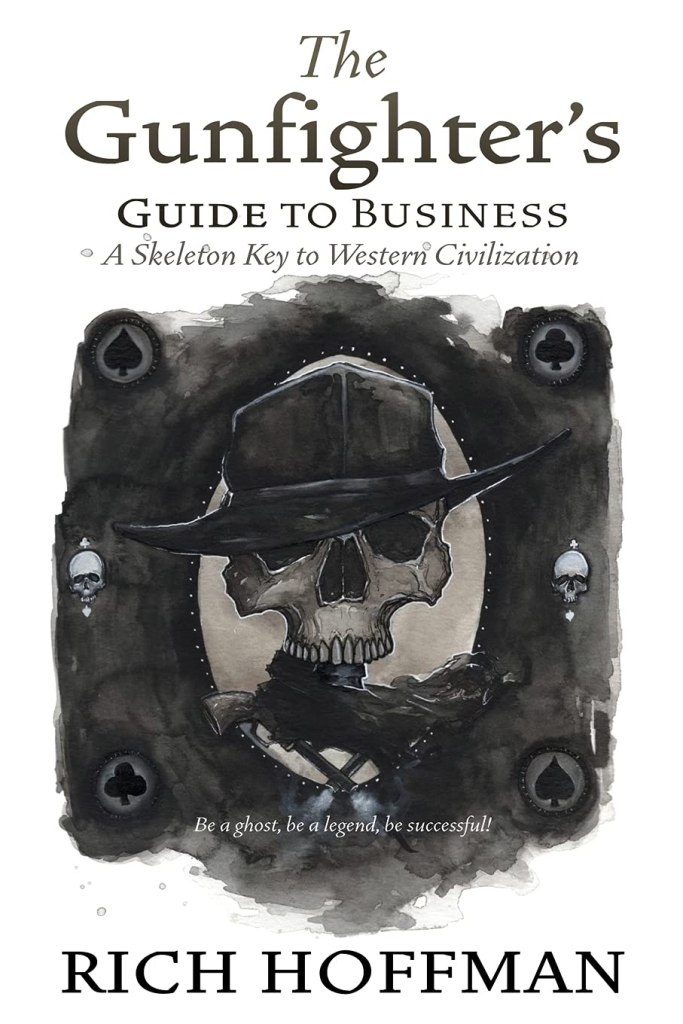
Hoffman writes with the credibility of a problem-solver, the curiosity of an archaeologist, and the courage of a frontline witness who has gone to very scary places and reported what lurked there. Hoffman has authored books including The Symposium of JusticeThe Gunfighter’s Guide to Business, and Tail of the Dragon, often exploring themes of freedom, individual will, and societal structures through a lens influenced by philosophy (e.g., Nietzschean overman concepts) and current events.


The Roots of Ohio’s Medicaid Fraud Scandal: Loose Policies, Political Appeasement, and Lessons from History

I sat down recently to reflect on the growing scandal surrounding Medicaid fraud in Ohio, particularly in home health care services. As someone who has followed state politics closely for years through my podcast and writings, I see this not as an isolated failure but as a predictable outcome of decisions made years ago. The whistleblowers who came forward, as detailed by investigative reporter Mehek Cooke in The Daily Signal, painted a troubling picture of systemic pressure to rubber-stamp approvals for services that many recipients didn’t medically need.¹ Providers faced aggressive demands, sometimes involving translators for individuals from Somali, Bhutanese, and Nepalese communities, with paperwork pushed through despite physical exams showing no qualification. When honest providers denied claims, they faced backlash. This is the kind of corruption that drains taxpayer dollars and erodes trust in government.

I remember when John Kasich first pushed Medicaid expansion in Ohio. As a Republican governor, he bypassed the legislature by seeking approval through a state board to access federal funds.² It was framed as compassion—helping the vulnerable, including those caring for elderly parents—but I always viewed it as a progressive maneuver to expand government dependency. Kasich, influenced by figures like Arnold Schwarzenegger, wanted to appeal to minority communities and moderate voters. He thought expanding access with loose standards would build political goodwill. Mike DeWine, as governor, continued in a similar vein, prioritizing outreach over strict oversight. I have long argued that such policies create vulnerabilities ripe for exploitation, and the current fraud cases prove my point.

The financial incentives are enormous. Ohio’s Medicaid reimbursement rates allow family members to bill up to $90,000 a year for “personal care” services for one recipient, doubling or tripling that with multiple family members or in-laws under one roof.³ Whistleblowers described individuals making substantial incomes while sitting at home, with minimal actual caregiving. Some appeared coached on what to say during evaluations. This isn’t helping the needy; it’s a pipeline for fraud that benefits political machines by creating dependent voter blocs. Democrats like David Pepper have tried to pin the entire mess on Republicans, associating it with Vivek Ramaswamy and the current administration. But I see it differently. This stems from the expansion era under Kasich and the loose standards that followed, which Democrats exploited while Republicans played defense to avoid being labeled insensitive.

I have spoken with people in Ohio politics who understand the dynamics. Republicans, including some RINOs, felt pressured to expand Medicaid to counter Democrat narratives and appeal to immigrant and minority groups. Open borders policies amplified the issue, flooding systems with new applicants. Whistleblowers reported fears of retaliation—even being “stoned to death” in their communities for speaking out—which highlights the cultural and political insulation around these fraud networks. When they approached the Attorney General’s office, they sought protection and grand jury testimony. Instead, they felt dismissed. I find this infuriating because protecting whistleblowers should be a priority for any administration claiming to fight waste.

This scandal connects to broader patterns I have observed. Government programs offering easy money invite abuse. Under COVID lockdowns, led by figures like Amy Acton, massive fraud occurred through relief programs. Now, similar vulnerabilities appear in home health care. Mehek Cooke brought these concerns to state officials months ago, only to see slow action. Independent reporting exposed what insiders tried to keep quiet. I respect those providers who refused to rubber-stamp false claims. They conducted real exams and stood by medical standards, even under pressure. That’s integrity we need more of in Ohio.

Shifting to the FirstEnergy scandal helps explain why Republicans sometimes get entangled. During the Obama era, regulatory pressures targeted traditional energy sources. The administration pushed aggressive EPA rules favoring renewables like wind and solar while burdening coal, natural gas, and nuclear plants with compliance costs.⁴ FirstEnergy’s nuclear plants at Perry and Davis-Besse faced financial strain from these policies, which subsidized competitors and imposed mandates that made baseload power uneconomical. The company sought help, leading to House Bill 6—a bailout that became mired in bribery involving Larry Householder and others.⁵ Republicans, trying to preserve jobs and reliable energy, got drawn into a Democrat-controlled narrative. Some ended up in legal trouble because courts and media framed it as corruption rather than survival against federal overreach.

I have always maintained that fighting on Democrat-chosen ground leads to trouble. Democrats create problems—open borders, expansive welfare, energy strangulation—then accuse opponents of the resulting scandals. Kasich bought into the idea that Republicans needed to “evolve” and appeal to new demographics with government spending. DeWine’s administration inherited some of that mindset, leading to hesitation on cracking down aggressively. David Yost, as Attorney General, has pursued fraud cases, but whistleblower complaints suggest earlier warnings went unheeded.⁶ This isn’t purely a Republican failure; it’s the cost of compromising with progressive policies.

Reflecting on my own experiences, I have seen how these schemes operate. Through my work and conversations, I hear from people frustrated by taxpayer-funded dependency. Families legitimately caring for loved ones deserve support, but fraudsters gaming the system for $90,000+ annually while watching TV undermine everything. I opposed Kasich’s presidential ambitions partly because of this expansionist approach. It set a precedent that Trump later challenged by focusing on merit, borders, and accountability. Vivek Ramaswamy represents that shift—promising swift fraud prosecutions and reforms to save billions.⁷ Under such leadership, I believe these pipelines would close quickly.

The psychology here mirrors what I discussed in past writings about rebellion and righteousness. Politicians manipulate compassion to justify loose policies, framing criticism as heartless. Yet true righteousness demands stewardship of public funds. Ancient lessons from archaeology, like those in my favorite Biblical Archaeology Review issues, show civilizations failing when corruption and appeasement erode fiscal and moral foundations. Ohio risks the same if we don’t reform.

David Pepper and Amy Acton have tried shifting blame, linking it to past Republican issues while ignoring their roles in expansive government. Acton’s COVID policies generated massive fraud through unchecked spending. Pepper uses it for campaign attacks. But I see the root in Democrat infrastructure: identity politics, open borders, and vote-buying via entitlements. Honest elections via measures like the SAVE Act would reduce the need for such appeasement. Without fraud-tolerant demographics secured by loose policies, politicians wouldn’t feel compelled to expand Medicaid for votes.

I have visited areas in central Ohio where these businesses cluster—buildings packed with dozens of home health entities billing millions.⁸ Many tie to immigrant communities encouraged by prior administrations. This isn’t organic care; it’s an industry built on incentives. Whistleblowers risked everything to expose it, fearing harassment. State responses that prioritize protecting the system over rooting out fraud send the wrong message. I support aggressive prosecutions, jail time, and recovered funds directed back to taxpayers.

Looking ahead, I remain hopeful. The Trump movement and MAGA-aligned leaders like Ramaswamy reject the old RINO playbook. Kasich is irrelevant now because voters saw through the compromises. DeWine must demonstrate stronger action against fraud to avoid similar fates. Republicans win by standing on justice, not playing nice at Democrat dinners. Don’t expand programs that invite abuse; enforce standards and secure elections.

Endnotes

¹ On the whistleblower allegations and systemic fraud: Mehek Cooke, “Ohio’s Medicaid Fraud Bombshell,” The Daily Signal, May 20, 2026.

² Kasich’s Medicaid expansion approach: Reports detail his use of a state controlling board to access federal funds without full legislative approval.

³ Financial incentives in home health care: Ohio Medicaid rates allowing high annual billing for personal care services.

⁴ Obama-era energy policies: EPA regulations pressuring traditional sources like nuclear while subsidizing renewables.

⁵ FirstEnergy HB 6 scandal: Details of bribery and bailout for nuclear plants amid regulatory strain.

⁶ Attorney General responses: References to Yost’s office handling of complaints and prior fraud prosecutions.

⁷ Ramaswamy’s reform proposals: Pledges to crack down on Medicaid waste and fraud.

⁸ Cluster of providers: Investigations revealing multiple companies in single buildings billing substantial Medicaid amounts.

Bibliography

•  Cooke, Mehek. “Ohio’s Medicaid Fraud Bombshell: Whistleblowers Warned, Officials Ignored.” The Daily Signal, May 20, 2026.

•  Hoffman, Rich. The Politics of Heaven.

•  Ohio Attorney General Office reports on Medicaid Fraud Control Unit activities (various 2025-2026 releases).

•  VanderKam, James, and Peter Flint. The Meaning of the Dead Sea Scrolls. HarperCollins, 2002. (For historical parallels on righteousness and corruption.)

•  Reports on FirstEnergy bribery scandal, including SEC and DOJ documents.

•  Kasich administration records on Medicaid expansion (2013-2015).

•  Borum, Randy. “Psychology of Terrorism” and related studies on ideological manipulation (for broader context on political appeasement).

Rich Hoffman

More about me

Click Here to Protect Yourself with Second Call Defense https://www.secondcalldefense.org/?affiliate=20707

About the Author: Rich Hoffman

Rich Hoffman is an aerospace executive, political strategist, systems thinker, and independent researcher of ancient history, the paranormal, and the Dead Sea Scrolls tradition. His life in high‑stakes manufacturing, high‑level politics, and cross‑functional crisis management gives him a field‑tested understanding of power — both human and unseen.

He has advised candidates, executives, and public leaders, while conducting deep, hands‑on exploration of archaeological and supernatural hotspots across the world.

Hoffman writes with the credibility of a problem-solver, the curiosity of an archaeologist, and the courage of a frontline witness who has gone to very scary places and reported what lurked there. Hoffman has authored books including The Symposium of JusticeThe Gunfighter’s Guide to Business, and Tail of the Dragon, often exploring themes of freedom, individual will, and societal structures through a lens influenced by philosophy (e.g., Nietzschean overman concepts) and current events.
How Lynda O’Connor has become more of a RINO over the last few years

If anybody needs a reminder, why not to vote for Lynda O’Conner on November 7th, 2023 here it is. While she was always something of a RINO, she has become excessively worse over the last several years. Remember this when you vote.

Rich Hoffman

The Evil of Staying in Your Lane: How bad behavior stays hidden and active

For all those people who are saying, “if I ever see Rich Hoffman out somewhere, I’ll give him a piece of my mind.” Well, I’m out and about a lot, and I talk to a lot of people. And when I do, nobody talks very tough to my face. So if you want the chance, I am at the Back Porch Saloon in West Chester a lot. And on one such occasion this past week, I was having lunch with a person going for their Ph.D., and he told me about the process and all the things he had to do to get into that elite club. And, in essence, that’s what it was, a club. The other Ph.D. panel members decide what the candidate must do, and if the applicant wants to be in the club, they’ll do it. The criteria differ from school to school and peer group to peer group. So really, getting a Ph.D. is similar to the rigors that are undergone to pass the BAR exam or any number of higher education gateways to an elite order. And socially, going to the college itself in our society is seen as one of those gateways, and the goal isn’t always what was taught but that the applicant endured the experience. All this came to my mind while I was listening to this guy list all the frustrating hurdles he had to jump over to achieve his goal. I thought about the situation at Lakota schools, where it was quite evident that people were having trouble confronting evil at face value. Most people privately had an opinion on it, but socially, they felt they had to stay in their lane and that they weren’t qualified to pass judgment on anybody, lest they be judged themselves. But why was this the case?

Well, most people go through something in their life where they must be initiated into some kind of group order. Usually, it starts in high school. And if it doesn’t happen there, it happens in college or the military. Hazing rituals for all group behavior are common experiences for people, even in religious groups, to some extent. All groups of people have barriers to entry, and to become part of it; people have to surrender a part of themselves to join the power of the group.   A homeowner’s association is a form of this. They may require you to keep your garage doors closed when not using your garage to maintain street face value. You can’t have boats in your driveway. You must keep your grass cut—those kinds of things. Very few people are indeed free to think what they want, about what they want, and when they want. They must do what groups tell them to do through their memberships because we are all taught early in life that acceptance by our peers is of utmost importance, whether it’s obtaining a Ph.D. for our career path or being selected in a local Mason lodge to advance to the higher degrees. And the truth of the matter is, most people stop intellectually growing at age 15, likely much lower than that these days and they put as a priority not fighting for truth, justice, and the American way but in “staying in their lane,” as people who don’t like to be challenged like to say all the time. And there just aren’t enough adults who make it through all these gateways of group associations to stand up to evil when it presents itself. They might have personal feelings about evil when they go to vote; so long as nobody is looking, they’ll express it. But in front of other people, they have been taught to stay in their lane, and that makes them trustworthy to all the slugs who accept them into their group associations who want to trust that smarter and better people won’t come along to knock them off their perch, which is what the group associations are really about, no matter what level they are pursued. People think there is power in groups and are willing to trade away personal value to gain access to that power without having to really do anything themselves. 

I remember my college days; I had friends in all the local schools who would invite me to house parties at the various fraternities and sororities at Ohio State, Miami University, and the University of Cincinnati. One I remember well occurred in Cincinnati, where I arrived to meet my friend, and I broke all kinds of rules that the fraternity brothers were distraught with me over. First of all, I walked across the emblem on the sidewalk outside without paying homage to all the ritualistic ways they required all people to do. So we got off to a rough start that didn’t improve as the night wore on. The party’s purpose was that the fraternity had hired a stripper to have sex with one of their newer members, a kid who was very shy with girls, so the fraternity brothers hoped that a really outrageous experience with this stripper would cure him of his shyness. So he had sex with the girl in front of everyone right there in the living room. Then once he was done, the rest of the fraternity members took turns with her, and this all went on in full view of a window where I could see police walking around down the sidewalk.

Additionally, the stripper was managed by her husband, who watched as if his wife was selling lemonade or Tupperware. It was awkward, I couldn’t wait to leave, and I did so at the earliest possible moment once it was clear I had satisfied all the reasons that my friend had invited me. It took a few years, but gradually, I stopped being friends with that person because we simply lost common attributes. Once he stepped over that line, there was no going back, and we had very little to talk about. That was the case with many people from that time, friends who turned into compliant people happy to stay in their lane in exchange for an easy job that they were well paid to essentially not challenge anybody in authority. 

Understanding that, it’s not hard to understand why people turn into turtles when they are confronted with evil. And evil knows it. They know that group associations are more important to most people they deal with, so they conduct evil right in front of everyone’s faces audaciously because they expect everyone to stay in their lane and never challenge them. Because they have their own skeletons in their closet, and who are they to judge anybody? That is the danger of becoming compromised. It might be fun at the moment. It might be nice to have the herd’s protection and rely on that protection to get jobs in life and financial security without having to work too hard or display much bravery. There are plenty of people in the world who are happy to pay people to stay in their lane, and that is ultimately achieved by joining group associations, whether a Ph.D. or a fraternity, where the brotherhood becomes more important than your own family. And that is why when bad things happen, there aren’t enough people around to stand up to it and to fight evil when it presents itself. Because once people participate in evil to be accepted into a group association, they are tainted for life and never feel once again that they have a right to pass judgment on anything. And they cower in fear when evil is so audacious that they end up feeding it with their complacency instead of doing what must be done to defend the world from the mechanisms of tyranny and the schemes of the stupid. 

Rich Hoffman

Click to buy The Gunfighter’s Guide to Business

Eric Greitens for Senate: Get your RINO Hunting card, there are no limits!

There seems to be some controversy about Eric Greitens’ new ad in Missouri, where he is running for Senate on an “anti-RINO” platform. In his ad, he uses real firearms to storm a home in a very military way to imply metaphorically that if elected, he promises to go “rino hunting” and that if you elect him, he will issue voters a “rino hunting license.” For that ad, the mainstreamers are apocalyptic; they are calling it an open invitation to fascism, where force is used to impose democratic order. Well, all this discussion merits some understanding because the political establishment continues to be perplexed about what the MAGA movement is and why there continue to be aggressive candidates running for office like Eric Greitens. They are winning primaries and setting up a general election that will not just destroy Democrat majorities in the House and Senate but knock off RINO Republicans as well. The entire media system is set up to appeal to RINOs and Democrats, and it’s been that way for many years. But slowly, since the election fraud of 2020, a decision was made by the voting public to vote for a different kind of politician, and Eric Greitens represents the standard for the new MAGA candidates. What voters want when they talk about “hunting RINOs” is revenge for selling out America over the years. In the minds of many, the behavior of Republicans in Name Only is worse than Democrats because they pretended to be something they weren’t and sought to deceive us, which deserves punishment. 

Fascism is what the Democrats have been doing: artificially raising gas prices to force the public to buy dumb electric cars. It’s about lying about birth certificates so they could run a radical as president to avoid questions of basic qualifications. It’s weaponizing the FBI to knock out political rivals. Using other countries as an excuse for bogus investigations. It’s deliberately collapsing our economy to fulfill the religious zealots advocating climate change through our Federal Reserve. Its riots in the streets over every little social issue. It’s gun control and attempting at every tragedy caused by liberal politics to erode away the constitution at every opportunity. We’ve watched fascism come into America through the Democrat Party, and we are sick of getting punched in the face over it. And we are sick of Republicans letting them do it. We elected Republicans to fight Democrats and protect our country’s constitution, but they haven’t done it. So there is justifiable anger at RINOs for talking tough but letting themselves get beat up by the bullies in the Democrat Party for many years and losing every time. What must be made clear is that Trump did not create this movement. The RINO hunting concept is not specific to President Trump. He was created out of a need to hunt RINOs. That’s why in 2015, when all the top Republicans were running for office, including people like Mike Huckabee, Ted Cruz, Marco Rubio, and even Rand Paul, nobody was biting on them so long as Donald Trump was on stage. People wanted a real fighter, someone from the outside to shake things up. They wanted revenge for how the political machine had sold us all out and opened the door for globalism to destroy our country. And they weren’t playing games. They voted for Trump and were happy they did. They liked the way their country ran under Trump, and now they want much more of it.

What we are seeing now is something many of us were trying to figure out how to make happen over ten years ago when the Tea Party began purging RINOs from the Republican Party at the level of central committees. Many Republicans had their feelings hurt as they were being called RINOs for just working with the other side, for reaching across the aisle to work with Democrats bipartisanly. After all, that’s what politics was, right? Nobody ever gets what they want entirely, so they have to give and take and work with people with different opinions. Going back to the Ross Perot campaign of 1992, after eight years of Reagan and four years of his successor, George Bush, a significant part of the population on the Republican side was sick of all the happy talk and compromise that was going on. Even Newt Gingrich, who organized the takeover in congress in 1994, didn’t go far enough because he and Bob Dole talked tough, but Clinton beat them in the media every time. They were like the Washington Generals playing games against the Harlem Globetrotters. The Generals never win and always end up losing in comedic ways to the Globetrotters. That’s not what we wanted in politicians. We wanted winners, and many people have worked their entire adult lives to build a platform where that could happen, where winners on the conservative side would actually occupy offices. What the political establishment did to Trump before, during, and after the presidential office has been disgraceful because they are mad that we gave them politicians as voters who refused to lose. Trump expected to win, and that’s essentially what the MAGA movement is in politics. We want revenge for all the losses Republicans have given up without a fight over the years, and we want a House and Senate that thinks the same way, so that is what we have been building now for several years culminating in the kind of campaign that Eric Greitens is running in Missouri for Senate. 

The Greitens campaign is not unusual, not the way the mainstreamers wish it were. And Trump is the vehicle to make a MAGA platform happen, which he’s been doing through this primary season. The goal is not to just win the presidency, which should be obvious. It has been a multi-year plan going all the way back into the 90s to replace all three branches of government with MAGA-type candidates. We have seen how well that has been working at the Supreme Court. Now we need that kind of representation in the House and Senate, and we are getting them. Eric Greitens is just one of many who will be joining the government at the federal level and represents a new kind of politician that more reflects what the voting public actually wants. If we had been talking about fascism, then we would have just taken our guns and taken over the government at gunpoint, which is still an option if the other side tosses out our constitution, as all progressives seem inclined to do.

No, we have been doing all this work through voting, which is why we’re so upset about the obvious election fraud in 2020. Progressive globalists knew they couldn’t beat President Trump, so they stole the election to get rid of him, hoping that all this MAGA populism would just go away and they’d get Karl Rove back running the Republican Party. But no, those loser Republicans are not coming back. We have been working within the Republican Party for a long time to change how Republicans play the game.   And we want revenge against the RINOs who have sold America out, people like Mitch McConnell. And we want Republicans who go to Washington D.C. and expect to win. Not who expects to “compromise” with evil and expect the country to survive. Democrats have shown they don’t like America, so compromising with them is not a good idea. And when a candidate like Greitens comes along and talks about RINO hunting, he’s speaking the language of most American voters. And there is nothing that the establishment can do to hide that fact. They’ve done enough damage already.

Rich Hoffman

Click to buy The Gunfighter’s Guide to Business