The Communist Mamdani in New York: Its time to pull away the masks

The election of Zohran Mamdani as mayor of New York City marks a turning point in American politics. For decades, the Democrat Party has flirted with socialist ideas under the guise of progressivism, soft-selling policies that inch toward state control while maintaining a capitalist façade. Figures like Hillary Clinton, Barack Obama, and Joe Biden represented this strategy—identity politics and incremental reforms masking deeper ideological ambitions. But Mamdani’s victory strips away the pretense. Running openly as a democratic socialist, he secured 50.4% of the vote, defeating establishment candidates and signaling that the radical wing of the Democratic Party is no longer content to operate in the shadows.

This is not an isolated phenomenon. It is the culmination of decades of ideological conditioning in public schools and universities, where Marxist thought has been normalized under academic freedom. The result? A generation of voters who see socialism not as a foreign threat but as a moral imperative. Mamdani’s platform—price controls, free transit, and housing guarantees—echoes the promises of past revolutions. His rhetoric of affordability resonates in a city where 1 in 5 residents cannot afford $2.90 for transit fare, a statistic he cited during his Oval Office meeting with Donald Trump. But beneath the compassionate language lies the same economic logic that has historically led nations down the path of stagnation and authoritarianism.

To understand the implications of Mamdani’s rise, one must revisit the Cuban Revolution. In 1959, Fidel Castro and Che Guevara overthrew Fulgencio Batista, promising justice, equality, and prosperity. Initially, they were hailed as liberators—a narrative strikingly similar to Mamdani’s portrayal of them as champions of the working class. Yet within two years, Cuba declared itself a Marxist-Leninist state aligned with the Soviet Union, cementing a system that would devastate its economy and freeze its society in time.

The revolution’s human cost was staggering. Che Guevara personally oversaw firing squads at La Cabaña fortress, where at least 151 executions occurred under his orders, and estimates suggest 5,600 Cubans died by firing squad overall during the early years of communist rule.  These were not isolated acts of violence but systemic purges designed to eliminate dissent—a grim reminder that revolutions promising equality often deliver tyranny.

Economically, Cuba became dependent on Soviet subsidies, which accounted for 20–25% of its GDP. When the USSR collapsed in 1991, Cuba’s GDP plummeted 35% between 1989 and 1993, imports fell 75%, and caloric intake dropped by 30%, causing widespread malnutrition. The island remains a museum of mid-20th-century technology, with 1950s cars still on the roads—a testament to how communism halts progress. These outcomes were not accidents; they were the inevitable result of policies that prioritize ideological purity over economic reality.

New York City is not Cuba, but the ideological blueprint is eerily familiar. Mamdani’s proposals—free bus fare, price controls on groceries, and expanded public housing—mirror the early promises of Castro’s regime. These measures appeal to voters crushed by rising costs, yet history warns that such policies rarely solve the underlying problems. Price controls distort markets, leading to shortages and black markets. Free services strain public budgets, necessitating higher taxes or debt financing, which in turn discourage investment and innovation.

The danger lies not in the intent but in the trajectory. Once the state assumes responsibility for housing, transportation, and food, the logic of control expands. Businesses become targets for regulation, then expropriation. Property rights erode, and with them, the foundation of capitalist prosperity. This is not speculation; it is the documented pattern of every Marxist experiment from Cuba to Venezuela. The question is not whether Mamdani’s policies will work—they won’t—but how far they will go before the economic engine of New York stalls.

Against this backdrop, Donald Trump’s meeting with Mamdani on November 21, 2025, was a study in strategic restraint. Despite branding Mamdani a “communist lunatic” during the campaign, Trump extended an olive branch, emphasizing shared priorities like crime reduction and housing. “The better he does, the happier I am,” Trump remarked—a statement that projects confidence while hedging against failure.  This was not mere politeness; it was a calculated move to position himself as the voice of reason should Mamdani’s socialist experiment implode.

Yet beneath the cordiality lurks an ideological fault line. Trump represents a populist capitalism that thrives on deregulation and private enterprise. Mamdani embodies democratic socialism, which seeks to redistribute wealth and expand state control. Their meeting was less a dialogue than a prelude to conflict—a clash of systems that cannot coexist indefinitely. If Mamdani’s policies trigger economic decline, Trump will claim vindication, framing the episode as proof that socialism fails.  The stakes extend far beyond New York City; they touch the core of America’s identity as a capitalist nation.

The Mamdani election is not an anomaly; it is the logical outcome of decades of ideological drift. For years, the left has advanced Marxist principles under softer labels—progressivism, social justice, democratic socialism—while conservatives clung to a crumbling center. That era is over. The façade has fallen, and the raw contest between capitalism and communism is back on the political stage. History offers a clear verdict: societies that embrace Marxism stagnate, starve, and silence dissent. Yet history also warns that complacency is fatal. If America fails to articulate and defend the merits of capitalism—innovation, property rights, individual liberty—the allure of “free everything” will prevail, and the cost will be measured not in dollars but in freedom.

The fight ahead is not about bike paths or zoning laws; it is about the system that will define America’s future. Will we remain a nation of entrepreneurs and private property, or will we slide into the gray uniformity of state control? The answer begins in New York City, with a mayor who calls himself a democratic socialist but walks the well-worn path of Marxist revolution. The question is whether we have learned enough from history to stop it.  And what did anybody expect when generations of youth trained in public schools toward outright communism are now the voters picking representatives?  Of course, they will want communism; they have been told all their lives that capitalism is bad and that communism is the future.  And now the future is here.  Bernie Sanders was always the populist wing of Democrats, and if they had not pushed him aside for Hillary and Biden, a communist would have been their presidential candidate.  Communism is what Antifa has wanted.  It’s what most of the minority disruptions have been pushing for.  It’s what all taxation on private property seeks to impose.  And while people might be shocked to see how Trump handled Mamdani, it was nothing short of how fighters treat each other before a big match.  Trump showed graciousness before the gloves had to be put on.  But the fight will occur, and I think it’s a good time for it.  People need to see this communist attempt without the smokescreen of identity politics to hide it.  And rather than worry about the results, the choice is better when all the factors are known.  Because when people have had to deal with open communism, they have suffered and turned away from it.  And that will be the same result in New York, as well as everywhere.  Take away the façade and show things as they always, really, have been.

Rich Hoffman

Click Here to Protect Yourself with Second Call Defense https://www.secondcalldefense.org/?affiliate=20707

Affordability in Crisis: Why Price Hikes Are a Symptom of Deeper Economic Mismanagement

 The Illusion of Prosperity

Affordability has become one of the most pressing economic issues of 2025. Everywhere you look—groceries, housing, dining, even basic services—prices have surged. Politicians blame “corporate greed,” consultants preach “raise your prices,” and consumers wonder why their paychecks don’t stretch as far as promised.

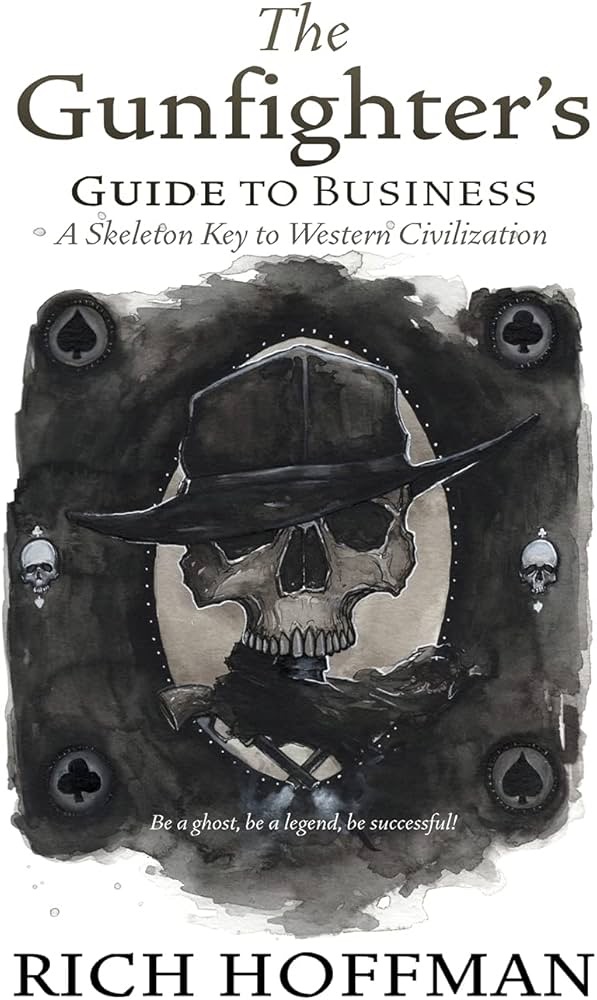
I warned about this years ago in my book, The Gunfighter’s Guide to Business. The affordability crisis isn’t a mystery—it’s the predictable outcome of government interference, consultant-driven short-term thinking, and a cultural abandonment of lean principles. What we’re seeing now is the result of artificial wage inflation, cost-plus pricing models, and a failure to defend capitalism’s core logic.

Section 1: The Wage-Price Spiral—How Policy Broke the Market

The roots of today’s affordability problem lie in political decisions, not market forces. When Democrats pushed for a $15 minimum wage, they claimed it would lift millions out of poverty. On paper, that sounds noble. In reality, it distorted the entire wage structure.

• Minimum wage hikes ripple upward: When entry-level pay jumps, mid-tier and senior wages follow. Businesses face higher labor costs across the board.

• Inflationary pressure kicks in: To cover these costs, companies raise prices. Consultants reinforce this with “cost-plus” advice—pass it on to the customer.

• Purchasing power stagnates: Even if workers earn more nominally, real wages barely improve because goods and services inflate proportionally.

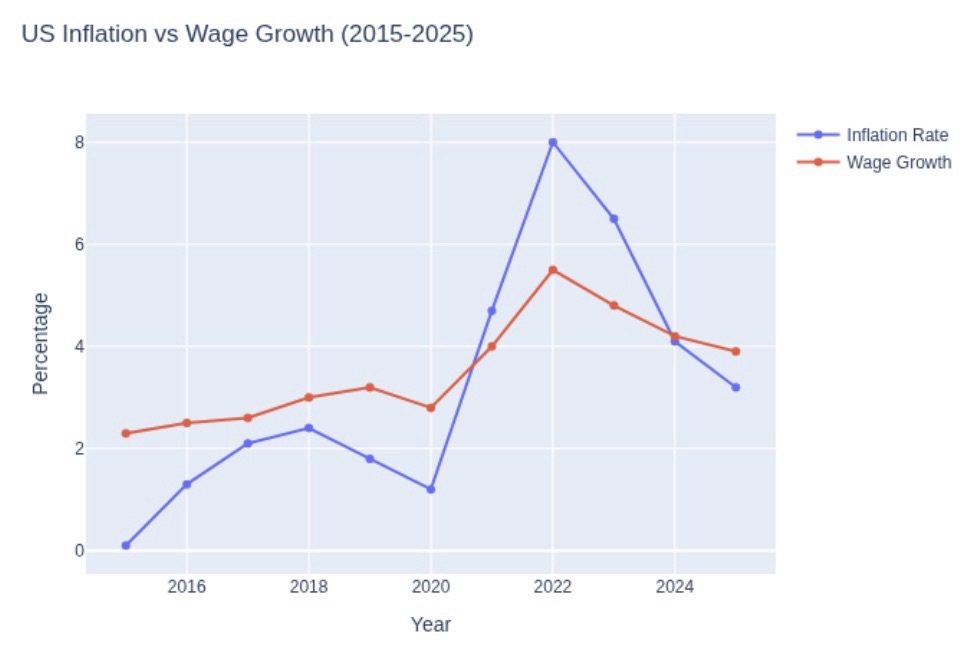
• Nominal wages rose 78.7% since 2006, but real wages (inflation-adjusted) grew only 11.9%.

• Inflation spiked to 9.1% in June 2022, while wage growth lagged at 4.8%, creating the sharpest negative gap in decades.

• From 2024 to 2025, inflation cooled to ~3%, but real wage gains remain modest—about 0.58%.

Timeline of Key Events:

• 2020: COVID pandemic disrupts labor markets.

• 2021: Stimulus checks and remote work incentives distort supply-demand.

• 2022: Inflation peaks amid supply chain chaos and wage hikes.

• 2025: Affordability crisis persists despite cooling inflation.

Section 2: Consultants and the Cost-Plus Trap

Post-COVID, businesses faced unprecedented disruption: supply chain chaos, labor shortages, and regulatory burdens. Enter the consultants—the self-proclaimed saviors of industry. Their universal advice? “Raise your prices.”

This is the lazy solution. Instead of driving waste out of operations, consultants push cost-plus models that normalize inefficiency. Every added layer—compliance costs, consultant fees, expedited shipping—gets baked into the price. Customers end up paying for waste, not value.

I warned about this in The Gunfighter’s Guide to Business:

“Consultants rarely take risks; they profit from yours. They stand on the sidelines, leeching off success, and when times get tough, they tell you to ‘charge more.’ That’s not strategy—that’s parasitism.”

Section 3: Global Contrast—Lean vs. Bloated

While American firms inflate prices to cover inefficiencies, Japanese manufacturers pursue the opposite: lean manufacturing. Rooted in the Toyota Production System, lean focuses on eliminating waste, optimizing flow, and maximizing customer value.

Toyota vs. Boeing: A Tale of Two Philosophies

• Toyota: Continuous improvement (Kaizen), Just-in-Time inventory, and employee empowerment drive costs out of the system.

• Boeing: Historically relied on cost-plus contracts with government clients, but has adopted lean principles in recent years to remain competitive.

• Boeing’s move toward Toyota-style production—standardization, automation, and flow lines—helped reduce assembly time for the 777X and 737 programs.

Key Insight: Toyota’s lean culture treats waste elimination as a moral imperative. Boeing, under pressure from SpaceX and Airbus, is learning that lean isn’t optional—it’s survival. 

Section 4: SpaceX—The Lean Disruptor

SpaceX represents the next generation of manufacturing efficiency. By vertically integrating production and reusing rocket boosters, SpaceX slashed launch costs by over 90%—from $25,000/kg to under $1,500/kg.

Compare that to Boeing and Lockheed’s United Launch Alliance (ULA), which historically charged $400 million per launch. Even after aggressive cost-cutting, ULA’s Vulcan rocket costs $110 million—still far above SpaceX’s $69 million Falcon 9 price.

Why SpaceX Wins:

• Reusability: 98% of Falcon 9 boosters reused.

• Vertical Integration: In-house production of engines and avionics.

• Lean Thinking: Eliminates waste at every stage, from design to launch.

Section 5: Post-COVID Price Chaos

COVID didn’t just disrupt supply chains—it rewired pricing behavior. Firms increased the frequency and size of price changes, often without corresponding improvements in value.

Drivers of inflation post-2020:

• Supply shocks: Energy volatility and shipping delays.

• Demand surges: Stimulus-fueled spending and pent-up consumption.

• Labor market distortions: Remote work incentives and wage bargaining power.

Instead of addressing structural inefficiencies, businesses defaulted to price hikes. Consultants validated this approach, creating a culture of inflationary complacency.

Section 6: Affordability vs. Value—The Chef Ramsay Analogy

Not all high prices are bad. I once paid $4,500 for a dinner at Chef Ramsay’s flagship restaurant in London. Why? The experience justified the cost, offering world-class cuisine, impeccable service, and a behind-the-scenes kitchen tour. That’s value-driven pricing.

Contrast that with a $12 fast-food burger inflated to $18 because of wage mandates and consultant fees. The product didn’t improve; the price did. That’s the essence of the affordability crisis: customers paying more for the same—or worse—experience.  In these examples, it’s all food. The only difference is essentially in the value of the brand built.  Nobody is going to confuse a Chef Ramsey restaurant with the McDonald’s experience.  But even McDonald’s these days is showing really high prices for something where the real value is in affordability.  And the less they cover their margin, the more temptation there is to raise their prices, which then makes fewer people use them for a cheap hamburger on the go.  Everyone loses when prices are raised in this process.

Section 7: Solutions—How to Restore Market Logic

1. Reinstate Market-Driven Wages

    • Stop politicizing pay scales. Let supply and demand set labor value.

2. Drive Waste Out

    • Adopt lean principles: eliminate inefficiencies instead of passing them to customers.

3. Reward True Value

    • Premium pricing should reflect premium experience—not bureaucratic overhead.

4. Reject Consultant Dependency

    • Build internal expertise. Consultants should advise, not dictate.

5. Defend Capitalism

    • Capitalism thrives on competition and efficiency—not government micromanagement or parasitic intermediaries.

The Gunfighter’s Perspective

In The Gunfighter’s Guide to Business, I infused into this discussion:

“If you want to shoot down the bandits in the street, don’t hire a posse of consultants who only loot the carcass after the fight. Learn to aim, pull the trigger, and own the risk.  And take the rewards for yourself, don’t share them with the parasites.  The dandies, who only come after all the hard stuff is done, only steal what is won in the fight after.”

That philosophy matters now more than ever. Affordability isn’t about price tags—it’s about value, efficiency, and courage to reject easy answers.

From the book:

“Shooting from the hip is an example of quality and delivery that should be sought after, not avoided.”
(The book reframes quick, decisive action as a strength in business.) [amazon.com]

“America’s Art of War — this book should be taught in every business school in America.”
(Positioning the book as a modern interpretation of strategic classics.) [amazon.com]

“They may have traded their six guns for ties, pens, and emails, but the goals are the same as they have always been: success!”
(Drawing parallels between gunfighters and modern professionals.) [amazon.com]

“A new view of management is unleashed here, termed by the author as ‘ghosting it.’”
(An original concept in the book about leadership and obscure objectives.) [bookstore….ishing.com]

“The old West is not dead but instead is very much alive as we aim our business goals toward space and look to conquer the next frontier.”

Closing Thoughts

America’s affordability crisis is self-inflicted. We let politics override economics, consultants override common sense, and waste override value. The solution isn’t another round of price hikes—it’s a return to market discipline and operational excellence.

If you want more on this, read The Gunfighter’s Guide to Business. It’s not just a book—it’s a manifesto for reclaiming capitalism from the parasites and restoring sanity to the marketplace.  I knew when I wrote that book that a tough time was coming, and everything is happening exactly as I said it would.  So I’m not just trying to sell you a book so I can fly my family to London to take them out to eat at Chef Ramsey’s signature restaurant again. The book has been out for a few years now, and it’s done what I intended.  But it would help everyone with this current crisis.  At the point where I wrote that book, I had watched for decades as consultants gutted the businesses they intended to help, because they were essentially parasites by nature.  Not that they meant to be that way, but that was their character.  And when it comes to all these affordability problems, it has been layers of Marxism hiding behind capitalism for a long time that caused the problem, and by another kind of evil, that is precisely what is driving people toward more Marxism because the consultants have essentially blamed the free market for everything, when it is too much tampering and collective value that has caused all the trouble.  So with this debate fully resurrected in a healthy Trump economy, it’s time to talk about the details, and when it comes to that, I literally wrote the book on the subject.  Something I have found is that everyone else in the consulting firms is only dancing around because they can’t look in the mirror and admit they’ve always been part of the problem.

Rich Hoffman

Click Here to Protect Yourself with Second Call Defense https://www.secondcalldefense.org/?affiliate=20707
Why Trump’s War on Drug Cartels Is the Right Fight for America: Blow up more drug boats and dealers

For decades, America has tolerated a slow-motion disaster disguised as “due process” and “fairness.” While courts crawled at the speed of molasses, drug cartels pumped billions of dollars’ worth of poison into our communities. The result? Generations destroyed, families shattered, and a culture softened for collapse. President Trump’s decision to take the fight directly to cartel operations—blowing up drug boats in international waters—is not just bold; it’s necessary. This is not about policing petty crime. It’s about defending the United States from a military-grade invasion disguised as commerce. Fentanyl alone killed 73,960 Americans in the 12 months ending April 2025, according to CDC data. That’s more than the total U.S. combat deaths in Vietnam. When Trump authorized strikes off the coast of Venezuela, he signaled a new era: America will no longer play defense while cartels wage war on our soil. Critics in Europe wring their hands about “due process,” but let’s be clear—cartels are not misunderstood entrepreneurs. They are terrorist organizations, and their weapon is chemical warfare.

Why did it take so long to get here? Because cartels mastered the art of hiding behind our own institutions. They’ve turned the American legal system into their own version of a Trojan horse. Every time a kingpin gets caught, billions flow into law firms to stall extradition, manipulate loopholes, and buy influence. The Sinaloa Cartel alone generates up to $11 billion annually, and much of that bankroll fuels legal defenses and bribery. Lawyers addicted to cartel money are as dangerous as people with an addiction to heroin. This isn’t hyperbole—it’s systemic corruption. Court cases drag on for years, not because justice is complicated, but because money makes complexity profitable. Meanwhile, politicians posture about “comprehensive reform” while quietly pocketing donations from interests tied to the drug economy. The result? A judiciary that moves more slowly than a glacier, while cartels move faster than a hypersonic missile. Trump’s approach bypasses this charade. No more plea deals. No more courtroom theater. When a cartel boat crosses international waters loaded with fentanyl, it’s not a defendant—it’s a target.

If you think this is just about drugs, think again. Cartels are not mere suppliers—they are warlords. Since 2006, Mexico has recorded over 460,000 homicides linked to cartel violence, according to the Council on Foreign Relations. That’s nearly half a million lives erased in less than two decades. In 2021 alone, 18,000 people died in cartel-related conflicts. These aren’t sanitized numbers—they represent real atrocities: beheadings, bodies hung from bridges, families slaughtered to send a message. And it’s not confined to Mexico. Along the U.S. border, innocent Americans have been kidnapped, tortured, and killed—crimes that rarely make headlines because they don’t fit the narrative of “immigration reform.” Illegal immigration has been the perfect smokescreen for cartel operations, scattering enforcement resources and creating chaos by design. Every migrant caravan is a Trojan horse, hiding cartel scouts and smugglers among desperate families. This is not immigration—it’s infiltration. And every fentanyl pill that slips through is a bullet aimed at America’s future.

The time for half-measures is over. Trump’s strikes on cartel boats are a start, but they must be the beginning of a relentless campaign: destroy cartel mansions, burn their plantations, seize their offshore accounts, and dismantle their propaganda networks. Treat them as what they are—terrorists. Fentanyl is not a recreational drug; it’s a weapon of mass destruction. In FY2023, U.S. authorities seized 27,000 pounds of fentanyl at the southern border, a staggering 480% increase since 2020. That’s enough to kill every man, woman, and child in America several times over. Over 107,000 Americans died from overdoses in 2022, with fentanyl responsible for 70% of those deaths. This is not a market—it’s a battlefield. And the enemy is winning because we’ve been too polite to call this what it is: war. Trump called it. He acted. And for that, he deserves not just support but a mandate to finish the job. Blow up more boats. Raid more compounds. Cut off the financial arteries that keep this beast alive. America cannot afford another decade of courtroom theater while cartels wage chemical warfare on our streets. The choice is simple: escalate or perish.

History will judge this moment. Will we continue to let cartels poison our culture under the guise of “due process,” or will we fight back with the full force of a nation that refuses to die on its knees? Trump chose the latter, and that’s one of the reasons we elected him.  Drug dealing is not a harmless, free market enterprise; it is meant to feed the worst of any society, the slack-jawed losers who supply the poison and the diabolical menaces who use them, and make them both the moral imperative of all social structure.  Because of the United States’ power and its successful military, threats against it have taken the form of guerrilla warfare.  They have no plans to fight a direct war with America, but they indeed plan to subvert it, which has undoubtedly been the case of many socialist countries around the world, and yes, Mexico and Canada fall in that category.  They are OK to support a power like the drug cartels to cause the inward destruction of America, and even the lawyers play their part by putting their personal profit over the good of the nation.  Just like the drugs the cartels deal, the money that spawns from it has given significant amounts of wealth to the legal profession in America to keep the dealers out of jail, for the most part.  The drugs themselves aren’t the only addiction meant to exploit a culture to its own self-destruction, and many enemy countries to America have learned to use a much more passive-aggressive approach to military attack.  Venezuela certainly falls under that category.  So knowing all that, I would like to see more drug boats blown from the water.  I would like to see their drug mansions raided and destroyed.  I would like to see all drug assets eradicated and the perpetrators punished to the fullest extent.  Drug dealing and use is not an innocent crime; it’s the poison of society itself.  There is no innocent drug use when the destruction of human minds is the intent.  And when you look at the many socialist countries where many of these drug dealers spawn from, the endeavor is all too obvious.  They let the cartels be their military and chaos their agent of destruction as they seek to overthrow capitalism and to usher in communism as the replacement for sanity.  And in large sections of America, it has been working.  When you trace back the origin of many of the anti-ICE riots in America to its root cause, the perpetrators are primarily drug users who have had their minds poisoned by the cartels, and in many cases, they are proud of it.  The many members of all communist movements, in most cases, also have a relationship to drug use because, in their destroyed minds, they lose the ability to think for themselves and instead seek centralized authorities to do it for them.  And that is the reason why these drug dealers need a spectacular end to their life of crime and villainy.  And the Trump administration couldn’t destroy enough of them to make me happy.   But I am glad to see the intent headed in the right direction.  I am looking forward to a lot more blowing up of drug dealers, and if the Trump team ever wants any help, call.  It would be a privilege. 

Rich Hoffman

Click Here to Protect Yourself with Second Call Defense https://www.secondcalldefense.org/?affiliate=20707
The Privacy Paradox and the Digital ID Debate: 2028’s presidential platform

The question of privacy in the modern era is no longer theoretical—it’s a daily decision. Every time we swipe a loyalty card, sign up for a rewards program, or accept a digital convenience, we trade a piece of our autonomy for a discount or a faster checkout. For many, this trade-off seems harmless. But for those of us who value privacy as a cornerstone of freedom, the implications are profound. I recently visited a new Barnes & Noble near my home—a store I frequent so often that my purchases probably keep the lights on. Yet, when asked if I wanted to join their rewards program, I declined, as I always do. Not because I don’t appreciate saving money, but because I refuse to surrender my personal data for a 10% discount. This small act reflects a larger resistance to the creeping normalization of digital IDs—a system designed to consolidate personal information under the guise of convenience. From Apple’s digital ID initiatives to Real ID requirements at airports, the infrastructure for a fully digitized identity system is being laid brick by brick. And while older generations instinctively recoil from this erosion of privacy, younger generations—raised in a world of constant connectivity—see it as the natural order of things. For them, convenience trumps confidentiality.

This generational divide poses a strategic challenge for political movements, particularly the Republican Party as it looks beyond 2028. Simply saying “no” to digital IDs will not resonate with voters who prioritize ease over encryption. To win the argument, conservatives must dismantle the premise that makes digital IDs seem indispensable: the centralized control of healthcare. The pandemic revealed the authoritarian potential of health-based governance. When government controls your medical access, it controls your life. Digital IDs are marketed as tools for streamlining health records, insurance claims, and prescription tracking—but their true function is to tether individual freedom to bureaucratic oversight. The antidote is not nostalgia for paper records; it is innovation that renders such control obsolete. If the most convenient healthcare option is not to get sick, then the rationale for universal health IDs collapses. And that is where regenerative medicine enters the conversation—not as a niche scientific curiosity, but as a political game-changer.

Regenerative medicine is no longer science fiction; it is a rapidly expanding industry poised to redefine healthcare economics and human longevity. The global regenerative medicine market was valued at $35.47 billion in 2024 and is projected to reach $90.01 billion by 2030, growing at a CAGR of 16.8%. Some forecasts are even more aggressive, predicting a market size of $233.5 billion by 2033. This growth is fueled by breakthroughs in stem cell therapy, tissue engineering, and gene editing—technologies that promise not just treatment, but prevention. Imagine a future where nanobots patrol your bloodstream, repairing cellular damage before symptoms appear. According to futurists like Ray Kurzweil, this reality could arrive by 2030, with DNA-based nanorobots already in animal trials for cancer treatment. AI-powered nanobots are being designed to deliver drugs with pinpoint accuracy, unclog arteries, and even perform microsurgeries autonomously. These innovations, combined with wearable health monitors like the Apple Watch—which now predicts health conditions with up to 92% accuracy using behavioral data—signal a paradigm shift: healthcare will move from reactive to proactive, from treatment to optimization.

The implications for cost and convenience are staggering. Traditional healthcare is built on a model of chronic intervention—doctor visits, prescriptions, surgeries—all of which generate revenue streams for insurers, hospitals, and pharmaceutical giants. Regenerative medicine disrupts this model by reducing the need for ongoing care. While stem cell therapy today can cost between $5,000 and $50,000 per treatment, its long-term savings are significant, eliminating recurring expenses for medications and procedures. Platelet-rich plasma (PRP) treatments, often priced between $4,500 and $9,000 per session, offer similar benefits. Compare this to the lifetime cost of managing conditions like diabetes or heart disease, which can exceed $100,000 per patient. As regenerative therapies scale and automation reduces labor costs, these prices will fall—especially as AI-driven surgical robots, already performing 1.8 million procedures annually worldwide, become standard practice. Hospitals adopting robotic systems report 30% fewer complications, 15–25% less postoperative pain, and 20% shorter recovery times, all of which translate into lower systemic costs.

For Republicans seeking to define the post-Trump era, regenerative medicine offers more than a healthcare solution—it offers a narrative that aligns with core conservative values: freedom, innovation, and individual empowerment. Democrats have staked their future on preserving a centralized, insurance-driven model of care, pouring trillions into socialized medicine schemes like Obamacare. Their argument hinges on fear: fear of losing coverage, fear of job displacement in healthcare, fear of change. And indeed, the healthcare sector is a major employer—12.1% of Butler County’s workforce is in health care and social assistance. Nationwide, millions of jobs depend on the current system. But clinging to inefficiency for the sake of employment is economic malpractice. Automation will reshape these roles regardless; AI is already reducing administrative burdens, diagnostic errors, and surgical risks, while creating new tech-driven positions in data analysis and robotics oversight. The question is not whether disruption will occur, but who will lead it—and how they will frame it.

Republicans can lead by making health freedom synonymous with privacy. Instead of forcing citizens into digital ID systems that track every prescription and procedure, offer them a future where such tracking is unnecessary because illness itself is rare. Position regenerative medicine as the ultimate convenience: no insurance battles, no bureaucratic gatekeepers, no invasive data collection—just a healthier life enabled by cutting-edge science. This approach neutralizes the Democrat platform, which depends on perpetuating dependency. It also resonates with younger voters, for whom convenience is king. If the GOP becomes the party that delivers both convenience and privacy, it wins not just the next election, but the next generation.  There is no benefit into holding on to the old model, the way healthcare has been.  This is the issue that will shape social discourse for the 2028 election.  The authority-based systems wore out their welcome during 2020 with COVID-19. 

The debate over digital IDs, privacy, and healthcare is not a technical argument—it is a cultural one. It asks whether Americans will accept a future of centralized control or demand a future of decentralized freedom. Regenerative medicine tilts the scales toward freedom by attacking the root premise of authoritarian health systems: the inevitability of sickness. By embracing technologies that prevent disease rather than manage it, we eliminate the need for surveillance-based care models. This is not speculative; it is imminent. The regenerative medicine market is doubling every few years, nanobot trials are underway, and AI-driven diagnostics are already in consumers’ hands. The party that seizes this moment—framing it not as a scientific curiosity but as a moral imperative—will own the political high ground for decades. For JD Vance, Vivek Ramaswamy, and the rising generation of conservative leaders, the message is clear: don’t just say no to digital IDs. Make them irrelevant. Offer a vision of health so advanced, so convenient, and so private that the old debates dissolve. In doing so, Republicans can transform healthcare from a liability into a legacy—and redefine what it means to make America great again.

Rich Hoffman

Click Here to Protect Yourself with Second Call Defense https://www.secondcalldefense.org/?affiliate=20707

The Illusion of Perpetual Wealth: A Crisis in Housing Affordability

In Butler County, Ohio, neighborhoods that were once sprawling fields of corn and cattle have transformed into tightly packed subdivisions of homes priced between $350,000 and $500,000. These homes, built 15 to 20 years ago for $150,000 to $200,000, now represent a perceived wealth that has ballooned far beyond the original investment. The transformation from farmland to suburban sprawl was driven by the promise of upward mobility and the American dream—owning a home, building equity, and passing on wealth. But as the next generation comes of age, the math behind this dream is beginning to unravel. The assumption that home values will perpetually increase, and that each generation will have the income to buy in at higher prices, is proving to be dangerously flawed.  Many young people, and I know a lot about this because I have kids in this age group, and I hear what they say, as well as what their friends are saying and doing.  They are not encouraged to do what built this economic system: getting married before they are 30, starting to have kids, and both parents working professional jobs where their combined incomes put them into the six figures.  That is no longer happening, as the goal is now out of reach for most of them.  They can’t participate. Instead, because of hook-up culture making sex easy, most of them are staying home, smoking pot, and playing video games because the traditional game their parents played isn’t something this next generation is willing to do.  They are getting off the hamster wheel and not showing a desire to get back on, which will dramatically change the political landscape and our entire economic system. 

According to the Harvard Joint Center for Housing Studies, the median price of an existing single-family home in the U.S. hit a record $412,500 in 2024, a 60% increase over six years. Meanwhile, the median household income in 2025 is $83,150, meaning the price-to-income ratio has climbed to 5.0—well above the traditional “affordable” benchmark of 3.0. This affordability gap is especially acute for younger Americans. The National Association of Realtors reports that the share of first-time homebuyers has plummeted to a record low of 21%, and the median age of first-time buyers has surged to 40 years old, up from 28 in 1991. Gen Z and millennials, burdened by student debt, stagnant wages, and rising costs, are increasingly opting out of homeownership altogether. Many are choosing to rent, live with their families, or delay major life milestones, such as marriage and having children—decisions that have cascading effects on the economy and social stability.  Most people over 40 have at least enjoyed some aspect of this game, but you can really see the impending doom in affordable items like cars.  When people no longer take pride in their vehicles, clothes, or any aspect of property ownership, there is nothing to hold them to the assumptions of wealth creation.  And when video games provide a more rewarding experience, they will instead put their time into those aspects of society rooted in fantasy rather than the managed economic system they inherited from their parents.  This really came to my mind the other day as I was interviewing several young people for a job right out of college, where they told me they needed six figures for their positions, which I, of course, asked them why.  They reported that they wanted to buy a house rather than rent, and they were 25 years old at the time of the interview.  And that kind of money just wasn’t on the table, especially for such a young person.  However, there are many thousands just like them who might have hopes of pursuing the American dream, but they haven’t yet realized just how unrealistic the income they will need to live it will be.  I felt sorry for the kid; he had a lot to learn about life, which was going to be very tough in the years to come. 

This generational shift is not just a cultural phenomenon—it’s a systemic economic crisis. The U.S. Chamber of Commerce estimates a shortage of 4.7 million homes, a deficit that has cost states billions in GDP and personal income. The National Low Income Housing Coalition reports a shortage of 7.1 million affordable rental homes for extremely low-income renters, with only 35 affordable units available per 100 households in need. These numbers underscore the unsustainable nature of our current housing model, which relies on perpetual price increases and assumes a steady stream of buyers with rising incomes. But with mortgage rates hovering around 6.8%, and the income needed to afford a median-priced home now exceeding $126,700, the dream is slipping away for millions. The result is a society where wealth is concentrated in aging homeowners, while younger generations are locked out of the market, fueling resentment and a growing interest in socialism and government intervention.  Most of the young people coming out of school these days, as it’s been for decades now at an increasing rate, have been taught socialism.  After speaking with very advanced financial experts and bankers recently, I am convinced that all of them have been caught up in the short-term game and never saw any of this coming.  When these kids can’t benefit from the system, of course, they were going to turn to what they were taught in public schools, and for the worst of our society, they knew what they were doing with the poison they fed everyone.  There really aren’t any defenders of capitalism when it was never capitalism that created this ownership bubble; it was managed economies that were always chained to a ticking time bomb.  That bomb was going to go off in a future generation.  And we have arrived at that destination point.  I would say that I have always been aware of it, but when those kids told me they needed $ 100,000 to start a white-collar job, it wasn’t laughter that first came to mind.  It was a hopelessness that resided behind the request.  An unrealistic expectation was the only path to hope that these young people had, who might otherwise be young Republicans looking to marry a nice person and start building a family.  If those same people, once they realized the reality of the labor market, waited until age 40 to start a family and buy a home, with a couple of cars in the driveway, many of these same homes would be nearly a million dollars by then.  And that is not realistic for any economy. 

This is the backdrop against which Vivek Ramaswamy’s campaign for Ohio governor is unfolding. Ramaswamy has made affordability a cornerstone of his platform, advocating for the elimination of income and property taxes, implementing work requirements for Medicaid, and revitalizing Ohio’s industrial base through biotech, semiconductors, and nuclear energy. He’s also pushing for zoning reform and merit-based pay for educators, aligning with national GOP efforts to address housing supply and affordability. But the challenge is deeper than policy—it’s philosophical. The GOP must confront the reality that many young Americans are rejecting capitalism, not because they understand socialism better, but because they’ve never seen capitalism work for them. If Republicans want to remain politically relevant, they must articulate a vision of capitalism that includes sustainable wealth creation, not just asset inflation. That means infusing wealth into the broader population, stabilizing the money supply, and reevaluating the assumptions that contributed to the housing bubble. The next generation isn’t getting on the treadmill—and unless we change course, the American dream may become a relic of the past.  It’s not a hopeless enterprise.  The solution lies in genuine capitalism, where genuine competition inspires actual market value, rather than protecting the house of cards of previous generations and their assumed cost structure.  The only way out for many young people is capitalism.  However, they must see it work before they will accept it as a viable path forward.  And that is the task of the next generation of political ambition.

Rich Hoffman

Click Here to Protect Yourself with Second Call Defense https://www.secondcalldefense.org/?affiliate=20707

The Heart to Take Away Hearts: Taking a stand against mediocrity in Ohio

The 2025 redistricting process in Ohio has emerged as a pivotal moment in the broader national battle over congressional control, with implications that stretch far beyond the Buckeye State. On October 31, the Ohio Redistricting Commission unanimously approved a new congressional map that shifts the balance of power decisively toward Republicans, giving them a projected 12-3 advantage across the state’s 15 districts. This outcome was the result of a tense, behind-the-scenes negotiation between Republican and Democratic leaders, including Governor Mike DeWine, Secretary of State Frank LaRose, Auditor Keith Faber, and legislative appointees like Rep. Brian Stewart and Sen. Jane Timken. Democrats on the commission—Senate Minority Leader Nickie Antonio and House Minority Leader Dani Isaacsohn—reluctantly supported the map, citing the threat of a more extreme 13-2 GOP-dominated map if negotiations failed. The new map redraws key battlegrounds: Rep. Greg Landsman’s OH-1 district now leans Republican (54%-47%), Marcy Kaptur’s OH-9 shifts to a 54.5%-45.5% GOP tilt, while Emilia Sykes’ OH-13 becomes slightly more Democratic at 52%-48%. These changes reflect a broader national trend, where Republican-led states, such as Texas, Missouri, and North Carolina, have aggressively redrawn maps to consolidate power, often under direct encouragement from President Donald Trump. Ohio’s redistricting, however, was not entirely unilateral; constitutional reforms passed in 2015 and 2018 required bipartisan approval for maps to remain valid for a full decade. The compromise avoided a costly referendum that could have frozen the existing 10-5 map and delayed the 2026 primaries, potentially costing taxpayers $50 million.

The political personalities behind Ohio’s redistricting drama reflect the ideological fault lines within the Republican Party itself. Senator Bernie Moreno, a staunch Trump ally, predicted early on that Ohio Republicans would push for a map that reduced Democrats to just two seats. His comments echoed the sentiments of Rep. Warren Davidson and State Senator George Lang, both of whom have expressed frustration with what they perceive as excessive compromise with Democrats. Davidson’s own district, OH-8, has long been a textbook case of gerrymandering, stretching from Troy to majority-minority communities in Hamilton County, effectively diluting Democratic votes. Lang, known for his “business-first” approach, has remained relatively quiet on the specifics of redistricting but is widely seen as aligned with the GOP’s strategic goals. Secretary of State Frank LaRose, meanwhile, played a key role in supporting the bipartisan map, arguing that it reflected Ohio’s political geography and avoided a chaotic referendum fight backed by “dark money special interests”. His stance, however, has drawn criticism from grassroots activists and legal watchdogs, many of whom argue that the map remains a gerrymandered artifact of one-party rule. Former Attorney General Eric Holder, chair of the National Democratic Redistricting Committee, called the map “a gerrymander placed on top of another gerrymander,” though he acknowledged it preserved Democratic incumbents’ ability to compete.  And when you get a compliment from Eric Holder, you are doing the wrong thing for the wrong reasons.

Nationally, Ohio’s redistricting fits into a broader pattern of mid-decade map manipulation driven by Trump’s directive to Republican governors and legislatures. Texas led the charge, redrawing its map to flip five Democratic seats, followed by Missouri and North Carolina, each adding one GOP-leaning district. Ohio’s shift adds two more Republican-leaning districts to the national tally, bringing the potential GOP gain to nine seats before the 2026 midterms. Democrats have responded in kind: California passed Proposition 50, a ballot measure allowing the legislature to redraw its map to add five Democratic seats, countering Texas’s move. Virginia and Illinois are also considering redistricting maneuvers, while states like Indiana and Florida have begun legislative discussions under pressure from Trump and Vice President J.D. Vance. The redistricting arms race has triggered lawsuits, referendums, and constitutional amendments across the country, with the Supreme Court’s upcoming ruling on the Voting Rights Act poised to reshape the landscape further. In this context, Ohio’s 12-3 map is seen by many Republicans as a strategic win, while Democrats view it as a defensive maneuver to preserve viability in key districts. The bipartisan nature of Ohio’s deal, although rare, underscores the high stakes and complex trade-offs involved in redistricting under the Trump-era political landscape, which is a good thing.  The Trump White House understands the situation.

Ultimately, Ohio’s redistricting saga reveals the tension between political pragmatism and ideological purity. Democrats like Dani Isaacsohn and Nickie Antonio have defended their votes as necessary to preserve competitive districts and avoid a worse outcome, even as activists accuse them of capitulation. Republicans, meanwhile, remain divided between hardliners like Moreno and Davidson, who favor aggressive gerrymandering, and institutionalists like DeWine and LaRose, who prioritize stability and legal defensibility. The map itself, while favoring Republicans, does not guarantee outcomes; Democrats have won in GOP-leaning districts before, and the 2026 midterms will test the durability of these new boundaries. What’s clear is that redistricting has become a central battlefield in the fight for congressional control, with Ohio playing a critical role in shaping the national narrative. As Trump’s second term unfolds, and as Democrats mobilize to counteract GOP gains, the redistricting wars will continue to define the contours of American democracy. Whether Ohio’s compromise map proves to be a tactical success or a strategic misstep remains to be seen—but it has already become a case study in the politics of power, representation, and the enduring struggle between exceptionalism and mediocrity.

The fundamental flaw in compromising with Democrats during redistricting—especially under the guise of fairness—is that it inadvertently empowers the very mediocrity that exceptional societies must resist. While it may appear noble or politically sophisticated to preserve all viewpoints and accommodate ideological diversity, the reality is that mediocrity, when institutionalized, becomes a corrosive force. It stifles innovation, suppresses excellence, and erodes the competitive spirit that drives societal advancement. Democrats, often aligned with collectivist ideologies like socialism and Marxism, have historically championed policies that prioritize equality of outcome over merit-based achievement. In doing so, they mask mediocrity as compassion, and fairness becomes a Trojan horse for cultural stagnation. When Republicans yield ground in the name of bipartisanship, they risk legitimizing this mediocrity and weakening the foundations of a high-performing society. Authentic leadership demands the courage to elevate exceptionalism—not dilute it. Redistricting is not merely a cartographic exercise; it is a strategic opportunity to shape the future. If Republicans fail to assert dominance when the political terrain allows it, they may find themselves governed by the very forces they sought to contain. The Ohio map, while a tactical win, reflects a deeper philosophical hesitation—a reluctance to confront mediocrity head-on. And in that hesitation lies the danger of losing the war for cultural and political excellence.  So, while many think it was good to play nice with Democrats, the danger lies in compromise when standards are set and social norms are established.  A failure to take away the heart of mediocrity in a society advancing for greatness might appear to have a merit of its own.  However, in the context of achievement, it undermines the very foundation of excellence we strive for.  And in going forward with these mechanisms of government strategy, when you get a chance to put your foot on the throat of the enemy and put them out of existence, we should do it. Playing fair with Democrats if it brings down your entire society is not a good thing.  It might make those lunches with colleagues more approachable, less tense.  However, by letting mediocrity prevail over logic, nobody is enjoying a better life under the influence of compromise.

Rich Hoffman

Click Here to Protect Yourself with Second Call Defense https://www.secondcalldefense.org/?affiliate=20707

Bill Gates Walks Back Climate Alarmism: A Reckoning Years in the Making

Even if Trump is playing nice with Bill Gates these days, I’m still firmly in the camp where the Microsoft founder needs to be in jail for all that he did.  I remember it well, and I reported it here in a way that no other news outlet in the world did at the time, as it was happening.  Even Rush Limbaugh was slow to see what was happening.  But I said that it was a scam the day that Bill Gates and Dr. Fauci walked into the Oval Office and told President Trump to shut down the economy in the United States, which he did for a few weeks.  But by then, the damage had been done, and lots of very liberal governors of states had taken the sucker bait and followed, and it was really terrible.  Bill Gates needs to pay for his very active role in creating that crisis.  Created I say because we know that Covid was created by gain of function research to jump to hosts in ways that nature does not provide, so it was a bioweapon that had roots running into the DOD that Dr. Fauci knew all about and a lot of people died as a result of this virus that was created in a Chinese lab and let loose in the world on purpose, not by accident.  All the evidence points in that direction, and Bill Gates was one of the key insiders involved in the whole tragedy.  Few figures have polarized public opinion in the 21st century like Bill Gates. Once hailed as a visionary technologist and philanthropist, Gates’ role during the COVID-19 pandemic and his aggressive climate activism have drawn intense scrutiny. However, politics have changed significantly over the last five years, and now Gates realizes he has been excluded from almost everything, and he wants to get back in.  So he has been groveling to President Trump and is starting to walk back his ridiculous climate change proposals, which is quite extraordinary considering his level of tyrannical commitment.  He tried to rearrange our entire society.  So any walk back from him is astonishing, and very telling.  Now, in late 2025, Gates has released a memo that marks a significant shift in his stance on climate change—one that critics argue is a strategic retreat rather than a genuine change of heart.

In October 2025, Gates published a 17-page memo ahead of the COP30 climate summit in Brazil. In it, he argued that climate change, while profound, is not the apocalyptic threat many activists claim. He emphasized that:

• Climate change “will not lead to humanity’s demise.”

• The focus should shift from temperature targets to improving human welfare.

• Investments should prioritize poverty, disease, and economic development over emissions reduction

This pivot was immediately seized upon by climate skeptics and political figures, including President Donald Trump, who declared on Truth Social:

“I (WE!) just won the War on the Climate Change Hoax. Bill Gates has finally admitted that he was completely WRONG on the issue.”

Despite the celebratory tone from skeptics, Gates pushed back, calling Trump’s interpretation a “gigantic misreading.” He reaffirmed his belief that climate change is a serious issue, but argued that the “doomsday outlook” has led to the misallocation of resources.

“Every tenth of a degree of heating that we prevent is hugely beneficial because a stable climate makes it easier to improve people’s lives.”

Gates’ reputation suffered a significant blow during the COVID-19 pandemic. His advocacy for lockdowns, vaccine mandates, and digital surveillance tools, such as Microsoft Teams, was seen by many as overreach. Critics argue that Gates, alongside Dr. Anthony Fauci, played a central role in shaping a global response that devastated economies and civil liberties.

• Gates was accused of using the pandemic to push a technocratic agenda.

• His ties to gain-of-function research and vaccine monopolies raised ethical concerns.

• Public trust in Gates plummeted, with many calling for accountability and even criminal charges.

Climate Change: From Alarmism to Adaptation

Gates’ climate activism has long centered on achieving net-zero emissions. His 2021 book How to Avoid a Climate Disaster laid out a roadmap for decarbonization. But in 2025, Gates now argues that:

• The worst-case scenarios are no longer plausible.

• Technological innovation has already begun reducing emissions.

• Economic growth and health infrastructure are better defenses against climate impacts.

This shift aligns more closely with Elon Musk’s pragmatic approach to climate and energy—focusing on innovation rather than regulation.

Gates’ recent dinner with President Trump lasted over three hours and reportedly focused on global health, innovation, and pandemic preparedness.  While Gates has criticized Trump’s cuts to USAID, he appears to be recalibrating his public posture to remain relevant in a political landscape increasingly dominated by populist skepticism of climate alarmism.

One of the most striking elements of Gates’ memo is his implicit endorsement of adaptation over mitigation. He suggests that humanity has the tools to thrive—even in a warming world. This echoes broader conversations about terraforming Mars and using technology to reshape environments, rather than surrendering to climate fatalism.

Critics argue that Gates’ technocratic worldview—where unelected billionaires shape global policy—poses a threat to democracy. The COVID response and climate mandates are seen as examples of how centralized control can override individual freedoms.

“You can’t let tyrants rule. You have to have market pressures and competitive elections to check power.” Rich Hoffman

Bill Gates’ pivot on climate change is not just a policy shift—it’s a reckoning. It reflects the limits of technocratic influence and the resilience of democratic accountability. Whether Gates is genuinely rethinking his views or simply repositioning himself politically, the public response underscores a broader demand for transparency, humility, and checks on power.  If we had not elected Trump and put him back in office, people like Bill Gates would be running the world right now.  A lot of hard lessons were learned, and we are a lot better off now than we were. Trump is the kind of person who can keep everyone close, allowing him to negotiate effectively with them.  I think it’s very appropriate that President Trump is taking credit for this issue with Gates.  He could do a lot more to embarrass the techno geek.  However, this is a powerful position for Gates and the Climate Change hoax in general.  The world is not coming to an end because of artificial intelligence.  We could terraform the entire planet if we want to, as we are planning to do in other places around the solar system as we speak.  For Gates, it was always about control.  He wanted to control the management of the human race through techno tyranny, and he played President Trump as a sucker who trusted him during his first term.  So Gates has a lot of embarrassment coming.  And I would argue that there would be a lot of jail time.  However, his admission is a significant development and a major shift in the world toward a much stronger economy.  The walls on this ridiculous control mechanism are coming down, and people like Gates have lost power because of our free elections in America.  That’s why managing elections is so important; you can’t trust anybody to do anything right.  And if you don’t have secure polls or a way to elect someone like Trump to office, and Bill Gates clearly didn’t think that such a thing was possible, and that he’d get away with everything because he had enough money to insulate himself from that grim discovery, then these people will always threaten the entire human race.  In this case, due to the Trump election, we dodged a major catastrophe, and we should feel pretty good about Bill Gates walking back his previous statements.

Rich Hoffman

Click Here to Protect Yourself with Second Call Defense https://www.secondcalldefense.org/?affiliate=20707

The Shutdown Standoff and the Filibuster Flashpoint: A Political Reckoning with American communists

Speaking with Bernie Moreno recently, it’s clear that the U.S. Senate is at a pivotal moment. The government shutdown, now entering its 40th day, has become a crucible for ideological warfare, with President Trump urging Senate Republicans to reconsider the filibuster rule to break the impasse and reshape the future of American governance.  I think Trump has a good idea, and that the nuclear option should be used, never to let Democrats have power again, so there is no reason to play nice with them.  Democrats, most of them, and around 10-15 Republicans are the enemy of our country and should not be given a seat at the table. 

At the heart of the standoff are three distinct factions: a Democrat Party increasingly defined by its progressive wing, a MAGA-aligned Republican base pushing for aggressive reform, and a centrist bloc of senators hesitant to abandon institutional norms. The Democrats, led by figures like Chuck Schumer and bolstered by progressives otherwise known as “communists” such as Bernie Sanders and Alexandria Ocasio-Cortez, have refused to support any continuing resolution (CR) that doesn’t include a vote on extending Affordable Care Act (ACA) premium tax credits. Their strategy hinges on leveraging the shutdown to galvanize their base and preserve key health care provisions.  They are not that unlike the terrorists who bombed New York City with the 9/11 terrorist action.  If they destroyed commercial air travel to maintain socialized medicine, they are all for it.  They would love to harm the economy to slow down Trump ahead of the midterms.  These are the same people who wanted to use COVID to shut down the economy during Trump’s last year of his first term.  So this kind of economic terrorism is typical for them.

Meanwhile, Senate Republicans, under Majority Leader John Thune, have proposed a compromise: advance the House-passed CR and amend it with a “minibus” of three long-term appropriations bills, extending government funding through January 30, 2026. This deal, which has gained traction among at least eight Democrats, includes a future vote on ACA subsidies—a concession aimed at breaking the deadlock.  As I have always said, healthcare is a nasty hill to die on, because we are on the precipice of significant changes.  The way healthcare is today is not how it will be tomorrow, and the cost structure needs to be completely reinvented.  For Democrats, healthcare is about controlling the lives of individual people in a mass way, and has nothing to do with caring for people. 

Yet, the filibuster remains the elephant in the room. Trump’s call to eliminate the 60-vote threshold for passing legislation has reignited debate over Senate rules. He argues that the filibuster is a relic that Democrats have weaponized to obstruct progress, and that Republicans must act decisively to secure election reform, border security, and economic stability. “If we do it, we will never lose the midterms,” Trump declared, pressing for one-day voting and voter ID laws.  He’s right, there is no reason to play fair with the Democrats.  They almost went nuclear during Biden’s term, except for two senators who prevented it. Otherwise, they currently have 49 senators who were willing to go nuclear when they had power, a clear warning sign to Republicans.  So, if the shoe is ever on their feet again, they will do it; therefore, there is no reason to play fair now.  Don’t give them a chance at terrorism in the future because they are already thinking about it.  We are only here now because we dodged a bullet then.  Don’t expect that to happen twice.

Despite Trump’s pressure, Senate leadership remains divided. Thune and others have resisted the nuclear option, citing the need to preserve minority rights and avoid legislative chaos. A limited carve-out—lowering the threshold to 51 votes for clean CRs—was floated but appears unlikely to pass.

The shutdown’s impact is severe: over 1,000 flights have been canceled, SNAP benefits have been disrupted, and $5 billion in arms exports to NATO and Ukraine have been delayed. Air traffic controllers are stretched thin, and federal workers remain unpaid. The crisis has exposed the fragility of government-dependent systems and reignited calls for the privatization of critical infrastructure.  I’m certainly one of those who think we should not have a government involved in essential services like air traffic control.  Airlines should provide their own employees, and they would do a better job.  Sticking the government in the middle of critical infrastructure is a really dumb idea.  And to make matters worse, the pay scale and attitude of these employees are already poor, as they are unionized, which should be outlawed for all government positions.  In a short time, AI will be able to do a much better job with air traffic control than humans anyway, so why should we ever allow the government to stand in the way of human necessity?  It’s an incredibly dumb idea. 

In this climate, the filibuster debate is more than procedural—it’s existential. For Trump-aligned Republicans, eliminating it is a strategic imperative to prevent Democrats from regaining power and advancing what they view as radical, anti-capitalist policies. For moderates and institutionalists, it’s a dangerous precedent that could unravel the Senate’s deliberative foundation.  And that’s where the future of America is anyway, with Democrats moving hard socialist and communist as a party, we can’t let them have a seat at the table.  We have to draw the line somewhere.  Let the moderates be the new left-wing party, but don’t play nice with the communists and give them fairness.  Because they will destroy our country if given a chance, and that is at the heart of the debate.  Look at what they have been willing to do with the air traffic controllers.  If they can bring down American infrastructure to maintain control over healthcare, then they certainly will.  Those kinds of Democrats can never again be allowed to vote for the filibuster rule, because the next time, they will get it.  It’s been a race to beat the other to the punch for a long time, and we happen to be fortunate to have this impasse happening while Trump is in the White House. 

The stakes couldn’t be higher. The outcome will not only determine the fate of the shutdown but may also redefine the balance of power in Washington for years to come, regardless of any short-term CR. Whether the filibuster survives or falls, the political landscape is shifting—and the next chapter in America’s legislative history is being written in real time.  And you don’t want to lose your country by playing nice with those who wish to destroy it.  It was interesting to speak with Bernie Moreno about his first year as a senator.  Of course, we didn’t talk about any of these kinds of details; he’s a very level-headed person who was reporting on the lay of the land in the Senate.  But what is obvious is that we already have three parties, and one of them certainly wants to destroy the concept of a capitalist America and to push everything into communist control, much the way China operates.  And it’s me saying it, along with Trump, that we don’t want to be a sucker on this, we need to play tough, and forget playing fair.  This is a game of beating the other side to the punch, and that other side are radical communists, as exhibited by the newly elected New York Mayor, Zohran Mamdani. In a world where people like that are debating the Filibuster, they will go nuclear.  We are fortunate to be in a time when fairness still prevails, and we should be wise in utilizing that power while we still have it. Because there is nothing less patriotic than letting hostile agents destroy your country, and in case it’s still not known to the vast majority, the Democrats are the enemy. 

Rich Hoffman

Click Here to Protect Yourself with Second Call Defense https://www.secondcalldefense.org/?affiliate=20707

I Have Written Over 8.1 Million Words Dedicated to Justice: Jack Smith needs more than jail

In the early 2010s, I found myself at a crossroads. I had spent years immersed in creative pursuits — writing screenplays, attending film festivals, and building a career in the entertainment industry. But something wasn’t sitting right. The characters I wrote about were fighting for justice, standing up against corruption, and defending the values of liberty and freedom. I realized that fiction wasn’t enough. The world needed real people to stand up and fight — not just stories. That realization led me to the Liberty Township Tea Party in Butler County, Ohio, where I began applying my skills to political activism.

I produced short videos on the 10th Amendment and illegal immigration — modest productions with a simple camera, aimed at educating and inspiring local citizens. These weren’t viral hits or high-budget documentaries. They were grassroots efforts aimed at sparking conversation and defending constitutional principles. But even these small acts of civic engagement drew the attention of powerful forces. The IRS, under Lois Lerner’s direction, targeted our Tea Party group, and I was swept into a campaign of intimidation and scrutiny. That moment changed everything. I abandoned my entertainment ambitions and committed myself fully to political writing and activism.  And looming in the background of the Lois Lerner activism was Jack Smith.

Since that turning point, I’ve written over 1200 words a day — every day — for more than 15 years. That’s millions of words, thousands of articles, and countless hours spent documenting, analyzing, and challenging the misuse of government power. My blog, Overmanwarrior’s Wisdom, became a platform for truth-telling, and my voice joined a chorus of others who refused to be silenced. I didn’t just write about politics — I lived it. I used my media connections to amplify the message, appearing on the radio and television, and producing daily videos to keep the conversation alive.  Since 2010, I’ve written more than 6.9 million words from daily writing alone. Additionally, I’ve authored three full-length books, contributing an additional 210,000 words, and published hundreds of periodical articles, totaling nearly 1 million more. Altogether, my body of work exceeds 8.1 million words, a testament to the discipline, passion, and relentless drive that fuel my efforts to challenge government overreach and defend the principles of representative government.  And when you do that much work, that’s why I’m able these days to speak on so many topics differently than anybody else does, anywhere in media, on any network, radio show, or podcast.

The catalyst for this relentless output was the abuse I experienced at the hands of the IRS and the Department of Justice — specifically under the influence of prosecutor Jack Smith. Smith, who later became a central figure in high-profile investigations, had long been part of a system that weaponized law enforcement against political dissent. His role in the IRS scandal, along with his broader pattern of targeting conservative voices, revealed a disturbing trend: the rise of a fourth branch of government, unaccountable to voters and hostile to the representative efforts of self-government.

Jack Smith’s actions weren’t isolated. They were part of a larger ecosystem of government overreach, where agencies like the FBI and DOJ operated with impunity. From spying on senators to leveraging investigations for political gain, these institutions strayed far from their constitutional mandates. The goal wasn’t justice — it was control. Figures like Letitia James in New York and James Clapper in the intelligence community, among others, followed similar paths, using their offices to suppress opposition and manipulate public perception.

This isn’t just about Donald Trump. It’s about every citizen who dares to speak out, organize, or challenge the status quo. Trump’s rise in 2015 and 2016 wasn’t a fluke — it was a response to years of systemic abuse. Americans saw the infection beneath the surface, and Trump pulled the scab off. What followed was a reckoning. The prosecutions, the media attacks, the relentless investigations — all of it was designed to punish dissent and preserve the power of entrenched elites. But it backfired. It awakened a movement that refuses to back down.

I’ve never been one to seek conflict, but I’ve always stood my ground. Whether facing bullies on the playground or bureaucrats in Washington, I don’t tolerate intimidation. Jack Smith and Lois Lerner made the mistake of targeting me — and I’ve spent the last decade making sure their actions don’t go unanswered. I’m not alone. Millions of Americans have joined this fight, demanding accountability, transparency, and a return to constitutional governance.

The pursuit of justice is finally catching up. Smith, James, Clapper — they’re all facing scrutiny, and rightly so. This isn’t about revenge. It’s about restoring trust in our institutions and sending a message that abuse of power will not be tolerated. I’ll continue writing, filming, and speaking out — not because I enjoy conflict, but because I believe in the promise of America. We are a nation of laws, not of men. And when those laws are twisted to serve political ends, it’s our duty to resist.  And in my case, it’s not just to lash back, but to hold the wrongdoers to unforgivable scrutiny and to destroy the lives of the perpetrators because of what they did.  I learned in those days of 2010 that you don’t fight people like this on turf they control, which is the courtrooms, with lawyers in their pocket, and judges they play golf with.  A system they built from the ground up to create terror among an unsuspecting population prone to blind trust.  I turned to writing because many of them are too dumb to have thoughts of their own, and they can’t defend an expanse of thoughtful debate.  At that point, their actions fall apart very quickly once people can scrutinize their efforts in relation to the discussion. 

So my method has been very effective.  Millions and millions of words are doing that work on my behalf all hours of the day, day in and day out, to all who care to contemplate questioning the system that people like Jack Smith have controlled for far too long.  And I am very proud of that role, with each of these prosecutions that have been released now that we are into the first year of Trump’s presidency.  I would have loved a more glorious and dramatic revenge for all that I have seen and experienced.  However, in whatever form justice may come, I have always been deeply committed to it.  I never forget or forgive anything, and I did all this essentially over just those two videos that the IRS scrutinized me over.  I have many other revenge plots working in the background over various issues that I will never get over, and I will see justice for all of them in due time.  Many tell me that I should forgive people, that all this hate hurts me.  I tell them that those thoughts are absolutely untrue.  I love getting revenge on bad people, and I think it is very healthy to express it, rather than suppressing it under some social expectation of forgiveness.  It is much better to express your hate than to be consumed by it.  And all these actions I have taken over the years toward the justice of people like Jack Smith are just the beginning.  But you can bet that I am happy to see people like him starting to fall from grace.  He deserves it.  And there are many more to come; either Trump will do it legally, or we’ll find some other means.  They should feel lucky that a system of law and order protects them, because what would otherwise be a lot harder on them, and much more spectacular, would be a ruthless act of revenge.  But regardless, justice is coming for them all, because it has to.

Rich Hoffman

We’re rebuilding the school board. Good management is the best way to defeat tax increases.

Click Here to Protect Yourself with Second Call Defense https://www.secondcalldefense.org/?affiliate=20707

Republicans Played Too Nicely in the Election of 2025: Who to blame in the West Chester Trustee race

It is a bit surprising to listen to everyone’s post-election analysis, where they think Democrats did a lot better than they actually did.  In West Chester, Ohio, there is a lot of chest beating that Democrats found themselves in a lot of seats, especially the West Chester Trustee position, where I went to bed feeling like my guy, Mark Welch, the incumbent who has done a good job, came in third in a six-person race for two spots, was going to win.  There was a Trojan horse effect there, where the average person didn’t know who the Democrats were.  In the West Chester race, that certainly would be the case.  Mark was a Republican-endorsed candidate, but there wasn’t much advertising for the Democrats running, as they hoped to slip under the radar without the general public knowing who they were.  I still felt Mark was strong enough to win anyway.  I might have had disagreements with the way that Republicans set themselves up for this election.  But I wasn’t surprised by anything in Virginia, New York, or California.  Where Republicans ran away from President Trump, Republicans lost to Democrats, and it’s pretty much that simple.  Republicans, the same old Never Trump types, a year after his magnificent election, tried to go it alone, and they lost.  I hear a lot of analysis, and they are all mostly missing the point.  The Republican Party traditionalists still don’t want to admit what MAGA America really is.  The West Chester race, like the Lakota levy issue, truly captured a national sentiment worth mentioning.  I’ve spoken to Mark, and he’ll have the opportunity to do many great things.  Meanwhile, West Chester was warned what electing a bunch of Democrats would do, which is what the Lakota school board has been experiencing.  And people are going to have to learn some hard lessons. 

But here’s the deal.  While I support and endorse various candidates, and I certainly did endorse Mark Welch, I disagreed with the “niceness” campaign.  Mark is a nice guy, but everyone has to remember he won as a Tea Party conservative, and the Republican Party at that time was led in that effort by a scrappy George Lang, who when pressed can be pretty ruthless to those he runs against.  It was the Tea Party types who went out and fought to put Mark on the Board of Trustees of one of the most successful communities in America, and he has been great in that position.  Over time, people have forgotten what it took to get there and what it takes to keep a community great.  New York is going through that same cycle. Over time, people get complacent when things are stable for a long time, and they dare to make changes that might sound “nicer.”  And when it comes to me and many political people, there are always these tagalongs who aren’t very savvy, and they certainly don’t like me.  When I see Mark at an event and speak to him, there are always those who swoop in after me and ask him why he gives me the time of day.  There are lots of whispers in the ears of some of these people who want to believe that the world is something other than what it is, and that I should not have a place in it.  But I’ll tell you what, if I were managing Mark Welch’s campaign, he wouldn’t have lost.  I would have advised him to be a lot more competitive and a less smiling, more angry, Mark.  The belief was that Mark needed to get Democrats to vote for him, so he needed to be more like Lee Wong, whom conservatives thought of as safe to vote for, but who would undoubtedly receive a bleed over of Democrat votes.  The belief was that in West Chester, if you wanted to win the trustee seat, Democrats would have to step over and vote for Mark. 

But in truth, as it was everywhere in the country, it’s the MAGA base that supports Trump that everyone had to tap into.  Because even there, there are already Democrats who have left the party and are voting for Republicans because of Trump.  So, in Mark’s case, and this is the fault of all those people who whisper in his ear when I leave the room, playing “keep away” with these office seats is not the way to win.  Democrats are trying to sneak under the door, and Republicans are trying not to look too mean to win over Democrats.  When the real desire is for MAGA Republicans to grow in number, and people in West Chester would have loved to know that Mark was much more MAGA than just being a nice guy incumbent.  The reason why Mark didn’t pull out one of the two top spots was engagement.  The MAGA people, the old Tea Party types, weren’t excited about this election cycle, so they stayed home.  And Democrats were desperate for relevancy, so they worked the polls, mailed out their mailers, knocked on doors, and tried to sneak under the door wherever possible so people wouldn’t know who they were.  Mark worked hard, but the people around him were on their heels, and that was obvious.  They were on cruise control and wanted him to play keep away, to not do anything that might steer away those Democrats that they are so afraid of. 

This year, more than other years, I have been doing a lot of video coverage of important political figures, not because I’m some radical right winged maniac, as those people who were whispering to Mark criticisms toward him for even talking to me, but because I know what I’m talking about and I always know how to handle these kinds of things with an excellent track record.  If someone listens to me, they will have a significantly better chance of winning their issue, regardless of who they are.  I’m so good at it that lots of people want to pay me a lot of money to do it, but I look down my nose at that kind of business, because I don’t respect people who take money for something that is essentially part of our republican form of government.  It should be a labor of love, in my opinion, not something you profit from.  So I already don’t respect a lot of those types of people who are critical of me.  Everything gets back to me, so I know who those people are.  And I think so little of them that I don’t even waste my time speaking with them at a lot of those events.  I see them as a waste of time.  They don’t understand the game, and they don’t respect the people who vote.  They are busy trying to make the world into what it isn’t.  Because they like Democrats secretly, and they don’t want to fight them, they want to get along with them.  I advocate destroying them.  Why wouldn’t you want to destroy people who are trying to ruin our civilization?  And I understand that a lot of the people I’m talking about don’t think of things on a vast scale for the actuality of existence.  That’s the only way I think.  So do I care if they find my outlook repulsive? Absolutely not.  I see them as a waste of time, and they have a lot to learn about life.  And when they give bad advice, as they certainly have been, don’t be surprised when your guy loses.  Republicans lost in races they could have won because they were too nice to Democrats.  And it’s that simple. 

Rich Hoffman

We’re rebuilding the school board. Good management is the best way to defeat tax increases.

Click Here to Protect Yourself with Second Call Defense https://www.secondcalldefense.org/?affiliate=20707