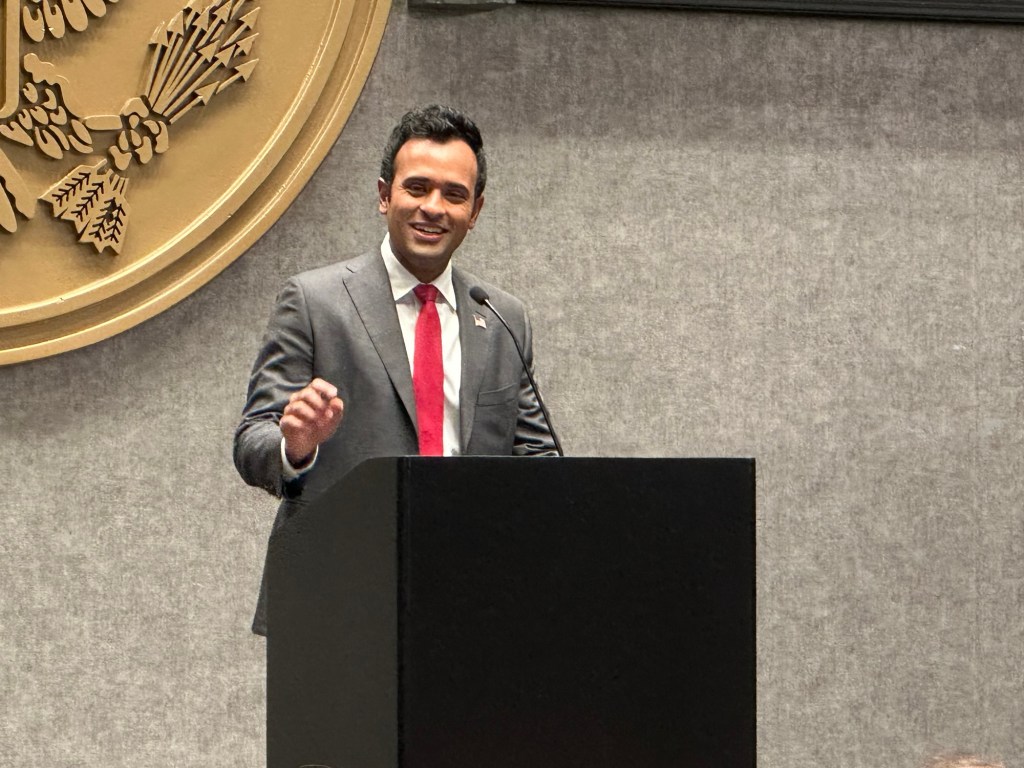
Give the Vice President a Copy of ‘Birthright’: The best political move that the White House could make would be to talk about Aliens and their relationship to mankind

In the quiet rhythms of a life well-lived in Middletown, Ohio—where the Ohio River Valley whispers stories of ancient mounds and forgotten giants—few pursuits bring deeper satisfaction than the steady arrival of a new issue of Biblical Archaeology Review. For decades, since I was eleven or twelve years old, these pages have anchored a lifelong fascination with the tangible remnants of Scripture: pottery shards from Israelite settlements, inscriptions confirming kings mentioned in the books of Kings and Chronicles, and excavation reports that ground the biblical narrative in real soil and stone rather than abstract myth.  That same reverence for evidence extends naturally to the majestic ESV Archaeology Study Bible from Crossway, a volume packed with hundreds of full-color photographs, detailed maps, timelines, and notes contributed by field-trained archaeologists who have walked the very sites they describe. It doesn’t indulge in wild speculation; instead, it methodically illuminates how discoveries at places like Megiddo, Hazor, Lachish, or the City of David correspond directly to the texts we hold dear, reinforcing that the Bible is not some detached spiritual allegory but a record deeply interwoven with verifiable history, geography, and material culture.   

The more one engages with these resources, the deeper the layers become. Archaeology confirms the plausibility of biblical events and places, but it also leaves space for the “paranormal” or supernatural dimensions that the texts themselves never shy away from—encounters with spiritual forces, hybrid beings, and cosmic rebellions that shape human destiny across millennia. This interplay becomes especially urgent in 2026, as Vice President J.D. Vance has spoken openly about his long-standing obsession with UFO files and his firm conviction that what many call extraterrestrial visitors are not aliens from distant planets in the conventional science-fiction sense. In a recent interview with podcaster Benny Johnson, Vance stated plainly, “I don’t think they’re aliens. I think they’re demons anyway.” He frames the phenomena through a Christian worldview: there is real good and real evil operating in the unseen realm, and entities engaging in “weird things to people”—abductions, genetic interference, or deceptive encounters—align more readily with biblical descriptions of spiritual deception than with benevolent or neutral visitors from another star system. Vance, drawing on his background as a Marine, lawyer, author of Hillbilly Elegy, and now Vice President with access to the highest-level classifications, has vowed that the Trump administration will pursue the genuine disclosure of classified UFO-related materials. His goal appears practical as well as curious: get ahead of cultural shaping moments, such as a potential new Spielberg film that could frame the narrative in purely secular or optimistic “space brothers” terms, much as Close Encounters of the Third Kind did in the late 1970s when it profoundly influenced public perception and even inspired my own fourth-grade report on UFO sightings. His sincerity stands out, especially coming from someone rooted in Midwestern values, family commitments, and a desire to serve effectively without descending into fringe hysteria. Many everyday “normies”—folks who grill hot dogs on weekends, mow lawns on Saturdays, follow the Cincinnati Reds, and focus on practical concerns like gas prices and raising kids—are now paying attention because the topic has shifted from taboo conspiracy to something discussed at the highest levels of government.    

This broad-brush linkage of UFO phenomena to “demons” carries real merit as an initial guardrail. It rightly rejects naive materialism that assumes everything must fit within a purely physical, Darwinian cosmos devoid of spiritual agency. It echoes concerns raised by figures like Tucker Carlson in recent years and acknowledges that evil is not merely a human construct but involves intelligent opposition to God’s order. Yet it also risks painting with strokes that are too wide, potentially collapsing distinct layers of a complex cosmic conflict into a single undifferentiated category. This is precisely where Timothy Alberino’s 2020 book Birthright: The Coming Posthuman Apocalypse and the Usurpation of Adam’s Dominion on Planet Earth stands out as one of the most articulate, Scripture-rooted, and up-to-date bridges available. Alberino, an explorer, filmmaker, and researcher who brings an almost Indiana Jones spirit to biblical scholarship—traveling to remote sites, engaging ancient texts, and connecting dots across disciplines—does not dismiss the demonic dimension. Instead, he refines the categories with precision drawn from Genesis, the Book of Enoch, the Epistle of Jude, Revelation, and the broader ancient Near Eastern context, while integrating modern reports of abductions, hybridization programs, and transhumanist trends.   

Alberino constructs his framework around a pre-Adamic galactic rebellion led by Lucifer, personified as the dragon or morning star, who fell from his exalted position. This insurrection caused widespread devastation across the cosmos, leaving planets and realms in a state of tohu va-bohu—formless and void, as Genesis 1:2 poetically describes the initial condition of Earth before renewal. God then restores the terrestrial realm and appoints Adam as regent, granting humanity the irrevocable birthright of dominion: to rule as image-bearers, sons and daughters of the Most High, exercising authority over creation in partnership with Heaven. Humanity is positioned as the “younger sibling” in a universe already populated by an “elder race”—advanced non-human beings, primarily angelic orders, possessing greater perception, capabilities, and even technology-like means of traversal (what we might today interpret as aerospace phenomena). This elder race includes both loyal servants of God and those who joined the rebellion.  

The critical transgression comes with the Watchers, a group of fallen angels detailed in Genesis 6:1-4 and expanded dramatically in the Book of Enoch (particularly the Book of the Watchers, chapters 1–36). These beings descend to Earth, take human women as wives, and produce hybrid offspring known as the Nephilim—violent giants who fill the earth with bloodshed, corruption, and forbidden knowledge. The Watchers teach humanity sorcery, metallurgy, cosmetics, weapons-making, and other arts that accelerate moral decay and violence. The Flood serves as a divine reset, wiping out the corrupted order, yet the disembodied spirits of the slain Nephilim persist as restless, tormented entities. These become the “demons” or unclean spirits familiar from the New Testament—beings that seek embodiment, oppress, possess, haunt, and torment humanity, craving the physicality they lost when their giant bodies perished. This distinction is crucial and consistent in Alberino’s analysis: demons are specifically the bodiless spirits of the dead Nephilim giants, operating primarily in the invisible spiritual realm.  

In contrast, modern UFO or “alien” phenomena—encounters with Grays, reported abductions, cattle mutilations, hybridization programs, and craft exhibiting advanced propulsion—represent a different but related layer. Alberino argues these are physical, biological entities, not mere disembodied spirits. They may be engineered hybrids, surviving bloodlines from pre-Flood or post-Flood incursions, or tools deployed by the ongoing Luciferian agenda. These beings operate with tangible technology, agendas centered on genetic tampering, and a long-term strategy to push humanity toward transhumanism—the merging of biology with machines, AI, or artificial enhancements that promise god-like power but ultimately corrupt the image of God in man. This echoes the ancient corruption of the human seed but updates it for a technological age. Labeling everything “demons” with a broad brush misses the tangible, fleshly (or bio-engineered) component of the warfare. Both the demonic spirits and the physical alien entities oppose God’s created order and seek to usurp Adam’s birthright, but they function on different fronts: one through invisible oppression and possession, the other through visible incursions, deception, and ideological subversion. The endgame Alberino warns of is a posthuman apocalypse, where humanity trades its divine inheritance for counterfeit upgrades, paving the way for a counterfeit kingdom ruled by an adversary who may even present through advanced aerospace means.  

This nuanced model provides profound ballast for any impending disclosure. If government files reveal physical craft, recovered bodies, or documented interactions, a simplistic “all demons in disguise” approach could leave people spiritually and intellectually unprepared for the fuller biblical cosmology. Alberino’s work equips readers to see the phenomena as part of an ancient, multi-front war rather than random anomalies or friendly visitors. It rejects both materialist reductionism (everything is just advanced human tech or natural phenomena) and unanchored mysticism, always anchoring back to Christ as the ultimate restorer of dominion and the One who reclaims the birthright on behalf of redeemed humanity. Transhumanism, in this light, is not neutral progress but the latest glittering bait—much like Esau trading his birthright for stew—designed to produce a species no longer eligible for the redemption offered through the seed of the woman.

This framework harmonizes beautifully with the hard archaeological and historical evidence that publications like Biblical Archaeology Review and study Bibles like the ESV edition help contextualize, while extending courageously into territories mainstream academia often avoids. Consider the work of Fritz Zimmerman, whose exhaustive compilations—The Encyclopedia of Ancient Giants in North America and related volumes—draw from thousands of 19th- and early 20th-century newspaper accounts, county histories, and pioneer reports. Across the Ohio River Valley and beyond, stories abound of massive human skeletons unearthed during farming, railroad construction, or mound excavations: individuals seven to twelve feet tall, sometimes with double rows of teeth, elongated skulls, or other anomalous features. These finds cluster particularly in Adena and Hopewell cultures, with large conical mounds, geometric earthworks, and burial practices that suggest a distinct ruling or priestly class. Many accounts describe bones that crumbled to dust upon exposure to air, or specimens that mysteriously vanished after being sent to institutions like the Smithsonian. Zimmerman documents hundreds of such cases across dozens of states, with especially dense concentrations in Ohio, Indiana, Kentucky, and West Virginia. Native American oral traditions in the region often speak of an earlier race of giants—red-haired, bearded, or technologically advanced—who warred with incoming tribes or were eventually driven out. These accounts align strikingly with biblical and extra-biblical references to post-Flood Rephaim, Anakim, Emim, and other giant clans, including Og of Bashan (whose iron bed measured over thirteen feet) and the family of Goliath. The pattern of suppression or dismissal of these finds mirrors the historical handling of UFO reports: both challenge purely materialist or evolutionary paradigms that prefer gradual human development without anomalous interventions.   

Closer to home here in Ohio, the Great Serpent Mound in Adams County offers another compelling intersection of geology, archaeology, and potential sacred knowledge. The effigy mound itself—an undulating serpent nearly a quarter-mile long, with a coiled tail and open mouth appearing to swallow an egg-like oval—sits precisely on the rim of a confirmed cryptoexplosion or impact structure. Geological surveys confirm this as a complex impact crater roughly eight miles in diameter, formed by an asteroid or comet strike between approximately 252 and 330 million years ago (late Paleozoic era). Evidence includes shatter cones in the bedrock, planar deformation features in quartz grains (indicating extreme shock pressures), breccias, and a central uplift with intensely faulted and folded strata. The structure features a central dome, transition zone, and ring graben. Why would ancient builders—likely Adena or Fort Ancient peoples—choose this precise location for such a monumental earthwork, investing enormous labor to shape the serpent with astronomical precision? The head aligns with the summer solstice sunset, and the overall form may track lunar standstills or equinoxes. Placing a sacred effigy at the edge of a massive ancient scar suggests either extraordinary astronomical observation or guidance from intelligences attuned to celestial and terrestrial energies. Similar patterns appear globally at megalithic sites built on anomalous geological features, hinting at interactions with forces or entities beyond ordinary human capability in the eras traditionally assigned. Erosion over deep time has softened the crater’s expression, but the underlying anomaly remains, inviting questions about why certain “high places” or power centers were repeatedly chosen for temples, mounds, or alignments across cultures.    

Alberino’s analysis gains further depth when paired with the Book of Enoch, preserved among the Dead Sea Scrolls and now available in editions with scholarly commentary, including contributions associated with Alberino. This ancient text expands dramatically on the sparse account in Genesis 6, detailing the Watchers’ descent on Mount Hermon, their oath-bound pact, the birth and rampaging violence of the giants, and the forbidden teachings that corrupted pre-Flood civilization. Enoch, the seventh from Adam, is taken up without dying and receives heavenly visions, serving as a scribe and intermediary. The text describes the giants’ spirits, after their bodies are destroyed in the Flood judgment, becoming evil spirits that afflict humanity—precisely the origin story for demons that Alberino and others distinguish from the physical players in the ongoing conflict. The Dead Sea Scrolls’ validation of Enochic material alongside canonical books underscores that these ideas circulated widely in Second Temple Judaism and influenced early Christian thought, even if the book itself was not included in the final Protestant canon. Reading Enoch alongside Genesis, Jude (which quotes it), and 2 Peter provides a richer scaffolding for understanding why paranormal activity persists rather than vanishing after the Flood or the cross: it adapted, going underground behind the distractions of polite society, technology, entertainment, and daily survival. Sports scores, mortgages, careers, and weekend routines occupy mental space, leaving little room for reflection on deeper cosmic narratives—yet the ancient texts insist the battle continues. 

David Flynn’s provocative research in Temple at the Center of Time adds yet another layer, building on Sir Isaac Newton’s extensive (and often private) studies of biblical prophecy, chronology, and sacred measurements. Newton, far from a purely secular scientist, devoted significant energy to deciphering what he saw as a “prisca sapientia”—an ancient pure knowledge embedded in Scripture and architecture. Flynn maps distances and geometries from the Jerusalem Temple Mount using modern tools and finds uncanny correlations with pivotal historical dates, including links to 1948 and the rebirth of Israel. The Temple functions not merely as a religious site but as a prophetic and temporal landmark, with measurements potentially encoding timelines and geographic centers of divine activity. Alberino engages such synchronicities appreciatively but cautiously, always subordinating them to the clear Christocentric gospel: Jesus as the true Temple, the restorer of dominion, and the One who defeats the dragon decisively at the end. This approach avoids numerological excess while honoring the idea that sacred geography and time may reflect deeper divine order amid the chaos of rebellion.  

Broader explorations by researchers like Graham Hancock—focusing on lost advanced civilizations, potential Younger Dryas cataclysms, megalithic sophistication predating conventional timelines, and underwater ruins—find partial integration in Alberino’s biblical axis without abandoning scriptural authority. Pre-Flood or immediately post-Babel influences could reflect lingering effects of rebel factions or their human collaborators, manifesting as pockets of advanced knowledge, monumental construction, or anomalous technology that later cultures remembered as “golden ages” or Atlantean echoes. The Tower of Babel itself, recently re-examined in Biblical Archaeology Review for grammatical nuances suggesting the structure may have been portrayed as completed before divine intervention, represents another rebellion against God’s order: humanity unified in pride, seeking to “make a name” through monumental architecture (likely a ziggurat in the Mesopotamian context) rather than trusting divine provision and scattering as commanded. Archaeological parallels to Mesopotamian ziggurats abound, yet the biblical emphasis remains theological—confusion of languages as judgment on centralized defiance. Recent articles explore whether the tower narrative assumes completion, deepening interpretive questions about human hubris and divine sovereignty. Alberino would see such events as recurring motifs in the usurpation attempt: centralized power, forbidden tech or knowledge, and attempts to breach heavenly boundaries. 

In an era when political necessities may soon force greater openness on classified files—driven by leaks, public pressure, and the need to shape the narrative before Hollywood or adversarial powers do—Birthright offers essential intellectual and spiritual preparation. It reframes UFO discourse away from pure mysticism or sci-fi optimism into a coherent biblical war narrative: not random extraterrestrial tourists, but a multi-front assault on humanity’s God-given role as stewards and image-bearers. Demonic spirits (Nephilim ghosts) handle much of the invisible torment, possession, and oppression; physical or bio-engineered entities advance genetic subversion, ideological erosion (through atheism, Darwinian reductionism, or self-deification), and the transhumanist trajectory toward a posthuman counterfeit. The Antichrist figure, in some interpretations Alberino entertains, could even emerge with aerospace or technological grandeur rather than purely supernatural spectacle. Yet the ultimate message remains one of hope and redemption: the birthright, though contested and partially squandered through deception, was never permanently revoked. Christ, the last Adam, reclaims and restores it for all who trust in Him, culminating in the final battle at Armageddon and the renewal of creation where dominion is exercised rightly under the King of Kings.

For those of us in Ohio, with Patterson Air Force Base lore circulating for generations—stories of reverse-engineered craft, anomalous materials, or even giant remains studied quietly—these discussions feel less abstract. Regional Bigfoot sightings, mound complexes, and persistent UFO reports over the years seem to belong to the same interwoven story when viewed through a biblical lens: remnants or echoes of ancient incursions, spiritual oppressions, and ongoing attempts to challenge humanity’s assigned role. Friends and acquaintances in politics, like State Senator George Lang, have shared late-night conversations about ancient aliens, Easter Island’s buried bodies, or megalithic mysteries with me—moments that transcend partisan lines and touch the deeper adventure of discovery. Even mainstream figures are now engaging topics once confined to podcasts or fringe circles, precisely because evidence from multiple disciplines has accumulated: archaeological anomalies, textual survivals like Enoch, eyewitness consistency in abduction reports, and technological leaps that raise questions about origins and agendas.

Vance’s instinct to categorize the phenomena demonically serves as a healthy initial filter against overly optimistic or materialist interpretations. Alberino’s added nuance—distinguishing layers while maintaining a unified adversarial agenda—prepares believers, seekers, and even policymakers to engage disclosure without panic, deception, or loss of grounding. It encourages deeper engagement with Scripture, cross-referencing using archaeological tools like the ESV Study Bible, insights from the Dead Sea Scrolls, and an honest evaluation of extra-biblical texts. The answers, as so often happens, rarely reside comfortably within the institutional boxes built by academia, government, or the media; they reward those willing to follow the evidence across archaeology, ancient literature, contemporary reports, and cosmic theology. The birthright of dominion remains humanity’s divine inheritance—contested, yes, but ultimately secured through the finished work of Christ.

Those interested in building a firmer foundation would do well to read Birthright multiple times, allowing its dense interconnections to settle. Pair it with Zimmerman’s giant compilations for regional grounding, Flynn for sacred geography explorations (read critically), primary Enoch translations with commentary, ongoing issues of Biblical Archaeology Review for fresh site reports (including recent discussions on Babel’s grammar and implications), and the ESV Archaeology Study Bible for visual and contextual depth. The puzzle’s outer edges have long been visible; the middle is filling rapidly with every honest inquiry. When fuller disclosure arrives—whether driven by political timing, inevitable leaks, or cultural momentum—it will rattle many worldviews. A framework anchored in dominion, rebellion, fall, redemption, and ultimate victory equips us not merely to understand strange phenomena but to stand firm in our created purpose amid the storm.

The adventure has always lain just beyond the handrails of “normal” life. For those who dare step out—whether a vice-presidential advisor seeking context, an Ohio resident curious about local mounds and base rumors, or anyone sensing that polite society’s distractions have hidden deeper truths—the rewards include a clearer vision of who we are, why the conflict persists, and how the story ends with restoration rather than extinction or usurpation. In the end, remembering the birthright is not about fear of aliens or demons but about reclaiming our identity as image-bearers destined for glory in a renewed creation. The evidence, both ancient and emerging, continues to point in that direction for those with eyes to see and ears to hear. And for all those reasons, and more, we need to give Vice President Vance a copy of Timothy Alberino’s Birthright, for a context to the White House narrative of Alien Disclosure and the many new questions that will come with it.

Beyond the immediate policy landscape, the issue of disclosure presents a unique cultural and political inflection point. At a time when the public is saturated with economic anxiety—elevated energy prices, trade tensions, contentious Supreme Court cases, and ongoing losses and gridlock in both the House and Senate—voters are increasingly responsive to issues that offer transparency, curiosity, and a sense of shared truth. Gas prices may fluctuate and stabilize over time, but public trust, once eroded, is far more difficult to recover. Disclosure, approached carefully and credibly, speaks directly to that trust deficit.

Historically, disclosure efforts have generated intense public interest but have often failed to deliver substantive clarity. Episodes surrounding the Epstein records or the long-promised JFK disclosures fueled attention, speculation, and media buzz, yet ultimately left many Americans dissatisfied by incrementalism and ambiguity. A future disclosure moment does not necessarily have to follow that pattern. If handled with seriousness, institutional credibility, and clear communication, it could stand apart as a rare instance where public curiosity is met with meaningful acknowledgment rather than prolonged deferral.

Culturally, the subject of disclosure—whether related to unexplained phenomena, advanced technologies, or anomalous encounters—has increasingly found resonance among communities traditionally aligned with progressive or countercultural movements. This has allowed one side of the political spectrum to dominate the narrative space, framing disclosure as an expression of openness, curiosity, and empathy for everyday people who report unusual experiences. That cultural alignment is not inevitable, however. There exists an opportunity for broader engagement that avoids sensationalism while still acknowledging the legitimacy of public interest in these phenomena.

Public-facing engagement does not require endorsement of every claim or abandoning analytical rigor. Rather, it involves meeting voter curiosity with respect—recognizing that unexplained observations and regional folklore often function as entry points into deeper questions about science, government transparency, and institutional credibility. When approached thoughtfully, this engagement can humanize leadership, counter perceptions of detachment, and prevent disclosure-related narratives from being monopolized or caricatured.

From a broader political perspective, disclosure also represents a rare issue capable of temporarily transcending partisan exhaustion. In a midterm environment where voters are seeking tangible “wins” amid legislative stalemate, disclosure—if it produces real information and measurable transparency—could serve as a confidence-building event rather than a distraction. Done well, it has the potential to occupy the public narrative during periods when other contentious issues naturally cool, offering space for recalibration rather than escalation.

For these reasons, disclosure is not merely a speculative subject but a test of institutional seriousness. Its success depends less on timing theatrics and more on whether it delivers clarity, credibility, and follow-through. Managed responsibly, it could become one of the defining public conversations of the coming election cycle—one remembered not for hype, but for substance.

Footnotes

¹ Personal reflection on lifelong subscription to Biblical Archaeology Review since childhood, aligning with its role in correlating finds with biblical texts.

² Crossway, ESV Archaeology Study Bible (2017/2018), with over 2,000 study notes, 400+ photographs, maps, and contributions from field archaeologists.

³ J.D. Vance interview with Benny Johnson (March 2026), where he explicitly states UFOs/aliens are “demons” and expresses an obsession with disclosure files.

⁴ Timothy Alberino, Birthright: The Coming Posthuman Apocalypse and the Usurpation of Adam’s Dominion on Planet Earth (2020). Key arguments include the pre-Adamic rebellion, the birthright of dominion, the distinction between Nephilim demons and physical alien entities, and the transhumanist endgame.

⁵ Genesis 6:1-4; 1 Enoch (Book of the Watchers).

⁶ Jude 6; 1 Enoch 15:8-9 on spirits of giants as evil spirits.

⁷ Alberino interviews and debates (e.g., Nephilim Death Squad, Michael Knowles), clarifying aliens as physical tools vs. disembodied demons.

⁸ Fritz Zimmerman, The Encyclopedia of Ancient Giants in North America (2015), compiling 888+ giant accounts from newspapers and histories, with emphasis on the Ohio Valley.

⁹ Ohio Department of Natural Resources and geological studies on Serpent Mound Impact Structure (8-mile diameter, ~252-330 million years ago).

¹⁰ Archaeological descriptions of Serpent Mound alignments (summer solstice sunset at head).

¹¹ David Flynn, Temple at the Center of Time: Newton’s Bible Codex Finally Deciphered and the Year 2012 (2008).

¹² Alberino-associated editions/commentary on the Book of Enoch.

¹³ Personal and regional observations on Ohio sites, Patterson AFB lore, and mound/giant traditions.

¹⁴ Transhumanism discussions in Birthright as modern usurpation.

¹⁵ Dead Sea Scrolls confirming Enochic texts.

¹⁶ Recent Biblical Archaeology Review (Spring 2026) on Tower of Babel grammar possibly indicating completion.

Bibliography

•  Alberino, Timothy. Birthright: The Coming Posthuman Apocalypse and the Usurpation of Adam’s Dominion on Planet Earth. 2020.

•  Crossway. ESV Archaeology Study Bible. 2017/2018.

•  Flynn, David. Temple at the Center of Time: Newton’s Bible Codex Finally Deciphered and the Year 2012. 2008.

•  The Book of Enoch (1 Enoch), various editions including those with modern commentary.

•  Biblical Archaeology Review, ongoing issues, including Spring 2026 article on Tower of Babel by Richelle and Vanderhooft.

•  Zimmerman, Fritz. The Encyclopedia of Ancient Giants in North America. 2015.

•  Ohio Division of Geological Survey reports on Serpent Mound Impact Structure.

•  Genesis, Jude, Revelation (ESV or standard translations).

•  Vance, J.D. Interview comments reported in Fox News, The Hill, Newsweek (March 2026).

Rich Hoffman

More about me

Click Here to Protect Yourself with Second Call Defense https://www.secondcalldefense.org/?affiliate=20707
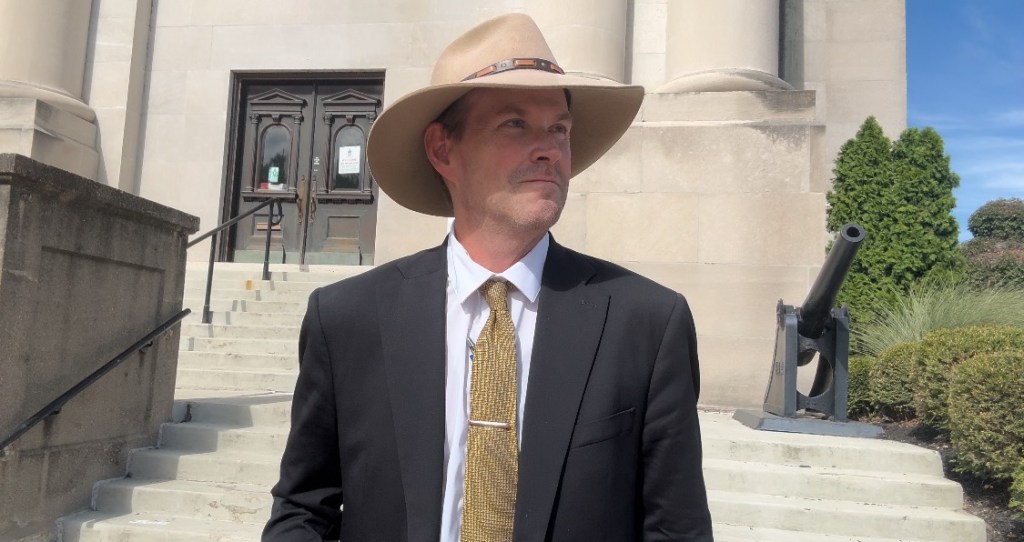
About the Author: Rich Hoffman

Rich Hoffman is an aerospace executive, political strategist, systems thinker, and independent researcher of ancient history, the paranormal, and the Dead Sea Scrolls tradition. His life in high‑stakes manufacturing, high‑level politics, and cross‑functional crisis management gives him a field‑tested understanding of power — both human and unseen.

He has advised candidates, executives, and public leaders, while conducting deep, hands‑on exploration of archaeological and supernatural hotspots across the world.

Hoffman writes with the credibility of a problem-solver, the curiosity of an archaeologist, and the courage of a frontline witness who has gone to very scary places and reported what lurked there. Hoffman has authored books including The Symposium of JusticeThe Gunfighter’s Guide to Business, and Tail of the Dragon, often exploring themes of freedom, individual will, and societal structures through a lens influenced by philosophy (e.g., Nietzschean overman concepts) and current events.
The Future of Healthcare Is Regenerative: Repulicans need to redefine the discussion for 2028 and beyond

The American healthcare system is broken. Not just cracked or inefficient—broken. It’s a bloated, bureaucratic monstrosity built not to heal, but to manage decline. It’s a system designed to keep people sick just long enough to extract maximum profit from their suffering. And the worst part? It’s been institutionalized through policies like Obamacare, which entrenched a model that props up insurance companies, pharmaceutical giants, and hospital unions at the expense of innovation, affordability, and actual healing.

Let’s be clear: the Affordable Care Act (ACA) didn’t fix healthcare. It expanded coverage, yes, but it did so by inflating costs and embedding a rigid structure that rewards inefficiency. Since its implementation in 2010, the uninsured rate dropped from 16.3% to 8%—a 51% improvement. But premiums for employer-sponsored family plans surged from $13,770 to $22,463—a 63% increase. Deductibles rose 67%, and federal spending on healthcare ballooned from $814 billion to $1.5 trillion. That’s not reform. That’s a transfer of wealth from taxpayers to insurance companies.  A lot of money was made off the healthcare industry, but it did not improve people’s lives, which was the whole debate after the 2025 government shutdown.  Republicans really need to take away the emotional message that Democrats tried to exploit for a system built on pure insanity.

The ACA’s economic impact is staggering. Over the decade from 2023 to 2032, the Congressional Budget Office estimates it will reduce the deficit by 0.5% of GDP annually, totaling $1.6 trillion. But that reduction comes with a catch: it’s built on a model that sustains high costs and low innovation. It’s a system where a basic CAT scan can cost thousands, not because of the technology, but because of the insurance and administrative overhead baked into every transaction.  The system is built on taking advantage of sick people who can’t afford the diligence of skepticism.  The worst kind of exploitation.

The future of healthcare is regenerative medicine. It’s not about managing decline—it’s about reversing it. It’s about healing, restoring, and optimizing the human body using stem cells, gene therapy, and cellular regeneration. It’s about moving beyond the pharmaceutical treadmill and embracing treatments that actually work.  For instance, in placentas, which hospitals throw away after every birth, there are a lot of stem cells that can save lives and dramatically improve healthcare.  Yet, you didn’t hear Democrats saying anything like this during the shutdown, because for them, it’s all about the scam of healthcare costs and padding the pockets of their donors. 

Consider the case of Ohio State Senator George Lang. Diagnosed with stage four colon cancer—a death sentence under traditional protocols—Lang refused to accept the managed decline model. He sought out regenerative treatments, including stem cell therapy, and spent a small fortune traveling the globe to access care that should be available in every Walgreens in America. Today, his tumor is shrinking. He’s not dying—he’s healing. And he’s living proof that regenerative medicine isn’t science fiction. It’s science fact.

Stem cell therapy is already showing success rates of 60–70% in blood cancers and up to 80% in autoimmune and joint conditions. The National Cancer Institute confirms that stem cell transplants are effective in treating leukemia, lymphoma, multiple myeloma, and other cancers. Yet these treatments remain out of reach for most Americans, locked behind regulatory barriers and insurance exclusions.

Why? Because the current system isn’t built to accommodate healing. It’s built to perpetuate illness. Pharmaceutical companies don’t profit from cures—they profit from chronic conditions. Insurance companies don’t thrive on competition—they thrive on predictable, inflated costs. Hospitals don’t want disruption—they want stability, even if it means stagnation.

Medicaid fraud alone costs the U.S. upwards of $100 billion annually. That’s not just waste—it’s theft. It’s money that could be funding regenerative research, subsidizing stem cell therapies, and building a decentralized, competitive healthcare model that puts patients first.

The regenerative medicine market is exploding globally. It’s projected to grow from $24.88 billion in 2025 to $148.42 billion by 2033—a compound annual growth rate of 25.09%. Over 3,100 companies are driving innovation, backed by $7.11 billion in investments from firms like Bayer, Merck, and Zimmer Biomet. The U.S. leads in patents, with over 430 filed in 2025 alone.

And yet, the FDA and insurance industry lag behind. Treatments that could save lives are stuck in clinical trial purgatory or only available overseas. Ivermectin, for example, is showing promise in cancer treatment by disrupting cancer stem cells and enhancing immune response. But it’s not available as a mainstream option because it threatens the status quo.

Republicans have a strategic opportunity here. Stop defending the old model. Stop arguing over the merits of Obamacare. It’s a dead system. Instead, embrace the future. Make regenerative medicine a campaign pillar. Show America that healing is possible—and affordable—when you unleash market forces and innovation.

JD Vance, as he gears up for 2028, should take note. This is a winning issue. It’s pro-life, pro-family, pro-freedom. It’s about giving people hope, not just coverage. It’s about making healthcare affordable by making it effective. It’s about taking away the emotional leverage Democrats have wielded for decades and replacing it with real solutions.

The insurance industry will adapt. They’ll have to. Just like energy is shifting toward decentralization and personal autonomy, healthcare must follow. The grid is outdated. The classroom is outdated. And the hospital is outdated. It’s time to reimagine the entire infrastructure.

Let’s build a system where every birth provides stem cells that can heal. Let’s make regenerative therapies as common as antibiotics. Let’s stop throwing billions at managed decline and start investing in managed recovery.

George Lang’s story is just the beginning. There are thousands more waiting for their chance—not just to survive, but to thrive. The science is here. The market is ready. All we need is the political will to make it happen.

Republicans, take the lead. Be the party of healing. Be the party of innovation. Be the party that ends the racket and restores the promise of American medicine.  Ohio is uniquely positioned to lead the charge in this transformation. Senator George Lang, drawing from his personal battle with stage four cancer, is preparing to introduce legislation that would make ivermectin and other emerging precancer treatments more widely available. His experience—traveling the world to access regenerative therapies that ultimately reversed his terminal diagnosis—has galvanized his commitment to reform.

This initiative gains even more momentum with the potential governorship of Vivek Ramaswamy, a biotech entrepreneur who understands the science and the stakes. Under his leadership, Ohio could become a national model for healthcare innovation, breaking the stranglehold of pharmaceutical monopolies and insurance cartels. Imagine a future where ivermectin, stem cells, and other regenerative treatments are available at your local Walgreens—not just in elite clinics overseas.

The COVID-19 pandemic exposed the fragility and politicization of our healthcare system. It also revealed untapped potential in treatments like ivermectin, which showed promise not only in viral suppression but also in inhibiting cancer cell replication. These discoveries, once dismissed, are now gaining traction among researchers and legislators alike. Lang’s proposed legislation would open the door to these therapies, allowing patients to access life-saving options before their conditions become terminal.

This is not just about Ohio. It’s about setting a precedent. If Ohio can pass laws that prioritize healing over decline, other states will follow. And if Republicans embrace this vision nationally, they can redefine the healthcare debate—away from coverage quotas and toward actual cures. It’s a chance to reframe the narrative, reclaim the moral high ground, and offer a future where healthcare is not a burden, but a blessing.  And, it would allow Republicans to take away from Democrats the moral argument of healthcare funding.  And once that is done, the Democrats would have nothing to stand on, politically. 

Rich Hoffman

Click Here to Protect Yourself with Second Call Defense https://www.secondcalldefense.org/?affiliate=20707

It’s All About Family: Why Michael Ryan is Right for Butler County Commissioner

It was a successful fundraiser for Michael Ryan on the West Side of Hamilton, Ohio, where he has served as a vice mayor for several years.  Ryan is running for Butler County Commissioner, so a fundraiser was held at the Shooter’s Event Center, which was very well attended and well represented among donors, showing a great early sign for his campaign.  Under normal conditions, a person like Michael Ryan would be an easy one to vote for.  However, this campaign represents a significant shift in direction for the Republican Party, as two incumbent candidates are running for the same position.  Cindy Carpenter is already a commissioner, and it’s her seat that is up for election.  There are some serious issues with her that we’ll address specifically.  But as to who is best for this commissioner seat, Michael Ryan is the easy favorite.  Then there is the latecomer to the race, Roger Reynolds, whom I have supported a lot in the past.  For him, this is the wrong seat at the wrong time for a lot of reasons.  Things I’d rather not discuss, but he put himself out there for a public seat, so it’s going to get uncomfortable.  As for the Michael Ryan fundraiser and why he is the best pick for the seat, as well as the future of the Butler County Republican Party being best represented by him, there is no question.  The task will be to show the average voter the differences between those three Republicans in name.  It really comes down to how we define what the “Grand Old Party” is, and I would say its economic viability as best represented by the MAGA movement and political figures like J.D. Vance, Vivek Ramaswamy, and locally, Michael Ryan.  They are all around the same age, and the young Republicans, who were well represented at Michael’s event, are looking toward the next generation.  Not the over-50 crowd.  Many people are seeking Republicans for a fresh start, and that is why Michael Ryan is the best candidate for consideration.

Lots of great options on High Street in Hamilton, Ohio

As I met Michael’s parents and his wife Amanda’s, I couldn’t help but notice a pattern in the kind of politician I most support, in virtually all cases.  They are good families with working relationships with their spouses.  One thing that really stands out about Michael is that his wife, Amanda, is very engaging, and they make a strong political couple, working together as a team to meet the needs of a political office.  For instance, there is a lot that goes into a political job that goes well beyond the function of doing the job itself.  Being a representative means talking to a lot of people all the time, and it is best when there is a supportive spouse to help with that task as a team.  And Amanda fits right into that role very well.  However, what’s also noticeable is that they both have very supportive and intact parents who are deeply involved in the process.  That’s great when it comes to Michael and Amanda, but it’s something I notice among all the political people I support.  They all have strong families that help them in the background, and for me, that is the first ingredient for success in a political position.  How can you offer yourself as a manager of the public trust if you can’t work with the trust within a family unit?  That is certainly the case with George and Debbie Lang, a compelling political couple who are supporting Michael Ryan’s campaign very early in the process.  George was supposed to attend the fundraiser, but was held up in Columbus and was running late. 

There were other notable couples present as well. Mark Welch has been very supportive, as a West Chester Trustee.  And Nancy Nix, who has a great relationship with her husband, Bob, ended up covering for George’s absence.  But what they all have in common, which I think a lot of, is that they have functional relationships with their spouses, which I would say is the foundation of any political office.  If you can’t work well together with your spouse, how can you work together with other people in the party, or the community as a whole?  Even more than that, I had a chance to talk to the Butler County Young Republicans, who were there to support Michael from Miami University, all dressed up in suits and ties. All of them were inclined toward that kind of life, including a healthy marriage, good personal decisions, and taking responsibility for themselves. Ben Nguyen, a very young man running for the Lakota school board, was there to support Michael Ryan as one of those young Republicans. He represents the new generation of hopeful people joining the Republican Party, which is very family-oriented. I am very encouraged by meeting them; they are part of the party that has emerged from Charlie Kirk’s efforts at Turning Point USA.  Gone are the days when the public would support scandalous figures who used a powerful political office to nurture sexual affairs and financial despondency by abusing the public trust.  No, these were all people who expect the best from those running for public office, and they are being judged on how well they handle their affairs, starting at home.

Downtown Hamilton is Thriving These Days

And whether it’s fair or not, for people to know what a good family is, it starts with having a good family, so it’s no surprise that Michael and Amanda Ryan both had their parents at this event, and they were very engaging.  They actually reminded me of a younger version of George and Debbie Lang, in terms of a couple who work well together.  When you deal with the public, you really need a good partner in life to help keep everything sorted out. Typically, that’s what I look for when supporting a political person: how well they maintain a relationship with their spouse.  If they are bouncing around between girlfriends or boyfriends and wearing gold rings on their pinky fingers, I likely won’t be endorsing them because, in my experience, those types of people don’t fare well in politics.  And ultimately, the measure of a good office holder is in what they have done, and for Michael, because he has a happy home life, that has translated into being an outstanding city council member who has helped build a good team that has brought excellent economic value to a city that has needed it.  Hamilton, Ohio, is on the uptick economically largely because Michael Ryan has been very effective at attracting investment interest to the town, and it all starts with being a good person who doesn’t get swept away by the tides of influence that often accompany such activity.  Having a good spouse to help keep everything grounded is a key to being successful when those pressures are applied.  And they are usually the difference between success and failure.  And upon meeting the family of Michael Ryan, it becomes obvious very quickly that the headlines that emerge from his public life will lean in the positive direction, rather than the negative, as people who lean into an office to fill a void inside them often do.  In my experience, to run a successful public office, you need a good private life with a supportive spouse as a partner.  And Michael Ryan certainly has that.

Rich Hoffman

Click Here to Protect Yourself with Second Call Defense https://www.secondcalldefense.org/?affiliate=20707

Capitol Hill is the Most Intelligent Place on Earth: Correcting humanity where they fell short in the Book of Judges

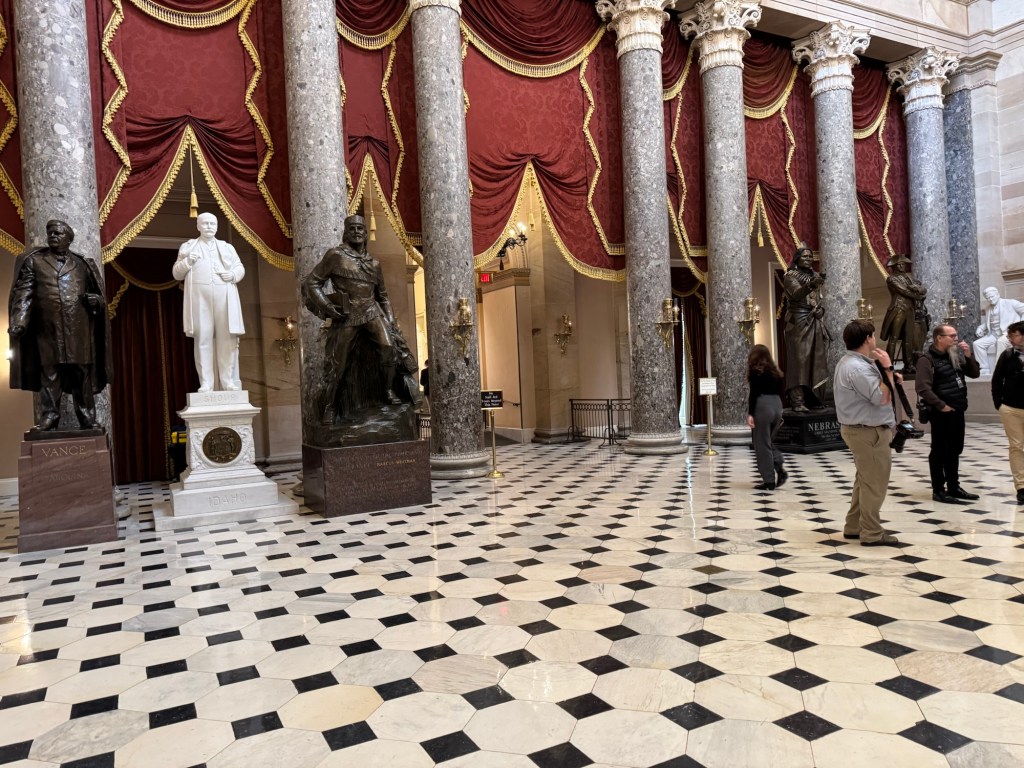
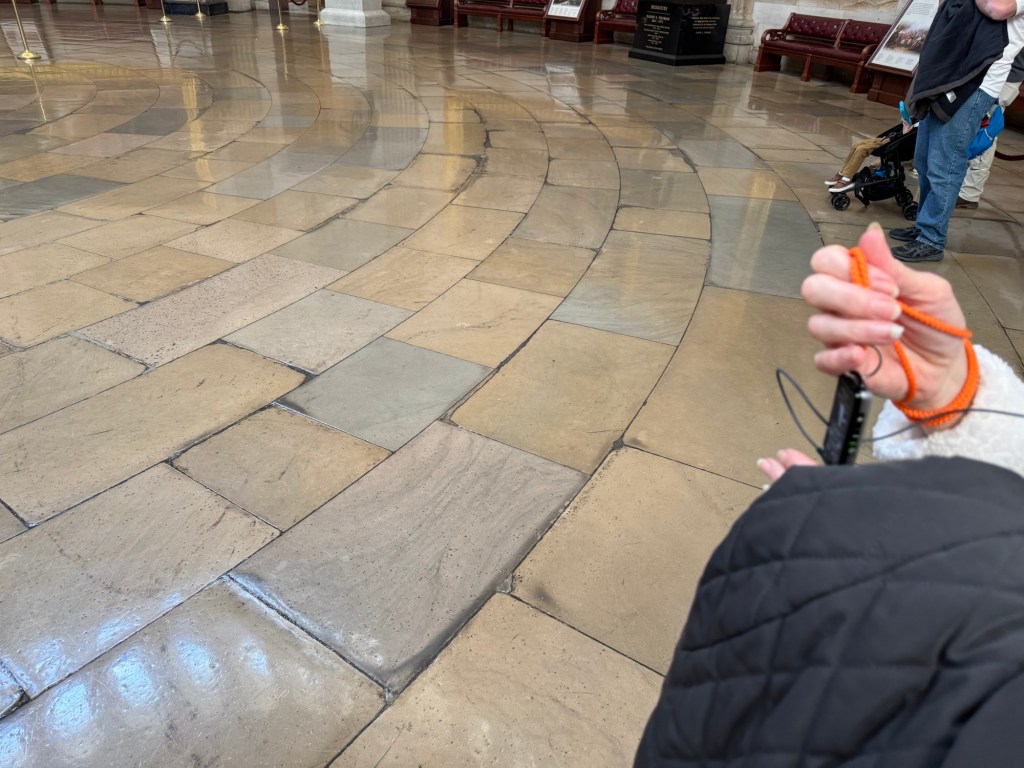
For the first time in my life, I was ready to give Washington D.C. a fair shake, only because Trump was in the White House, and Republicans now controlled the House and the Senate, and the Supreme court has a general 6 to 3 majority toward the thinking I think is necessary in our American Republic.  And I would say at no point before this precise moment would I say otherwise, because there has always been something wrong with our system of government which I affiliate with George Washington himself and his attachment to the Bible’s Book of Judges and the character of Gideon.  With those political conditions fulfilled, I wanted to return to Washington with a fresh perspective and allow myself to see it the way it was designed to be, not to the level that humans failed to live up to the lofty expectations that established the capital of America to begin with.  We typically view these kinds of things by how people fall short of the goals to achieve high honor.  But looking at Washington D.C. from the perspective of centuries, not days, weeks, months, or decades, I saw something coming together with Trump that I think our young nation was designed from the beginning to achieve, and now we have arrived at that moment.  So, with that in mind, my wife and I allowed ourselves to see Washington from a scholarly perspective and to love it.  To come to terms with it.  And to help lead it to this next phase of America’s fascinating story and in what I would say was the purpose all along, to restore to humanity the intention established in the Book of Judges to create the kind of government God wanted for the world, from the beginning. 

So before my wife and I could do what we intended to do, which was go and spend a few days specifically on Capitol Hill in the legislative corridors itself, then the Library of Congress, as well as a whole day at the Supreme Court, I needed a few days at the Museum of the Bible, and a day a George Washington’s home of Mt. Vernon.  We spent significant time on the Mall just reading and thinking and getting away from the noise of the current world and dug deep into the Masonic references that were all over the layout of the city that Pierre L’Enfant had intended with all of George Washington’s Master Mason friends from Alexandria just to the south.  To step beyond the conspiracies that have not understood the purpose from the very beginning, which had come into fulfilment through a lot of blood and sacrifice, to what kind of government we now had, with Elon Musk and President Trump up Pennsylvania Avenue at the White House, past Ford’s theater where Lincoln was shot, past the Trump hotel that has the steeple of the Old Post Office that points to celestial references on August 12th from the vantage point of the Capitol steps, to the truth of the matter.  And I mention those names, President Trump, and Elon Musk who are new best friends in all sincerity, only America could have produced people like that to do what they are doing now.  To see it, I needed to dive deep into Washington D. C’s history, to walk and touch things myself.  Over a couple days I bought 56 new books and read most of them by the middle of the following week in a fury because I was looking for an answer and upon visiting Capitol Hill with a fresh perspective and the context of 5000 years of human history, I felt I understood it in the way it was always intended.  And I can honestly say that I love the place for all its lofty ambitions. 

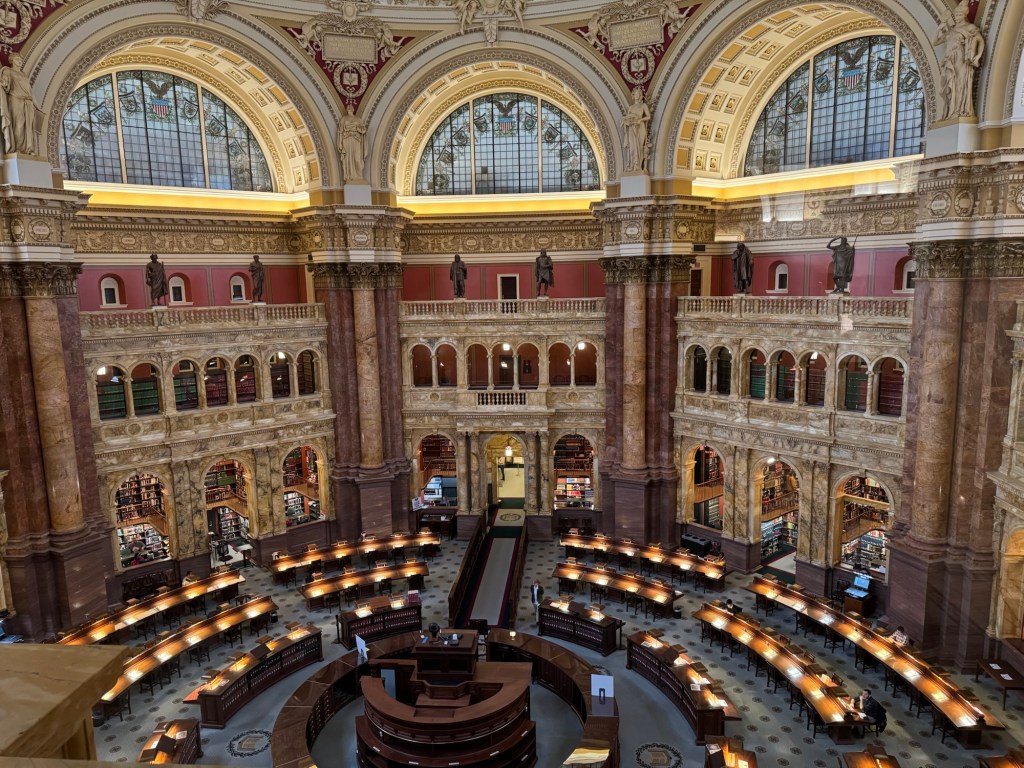
I was standing outside Speaker Johnson’s office with Steve Scalise when they recessed due to the disruptions in the Well during the censor of Al Green, for the mess he and other Democrats made of themselves during Trump’s State of the Union speech just a few days prior.  And I was thinking of that even in the context of the history I referenced.  The place itself, Capitol Hill, was dedicated to the best and most intelligent perspective that human beings could strive to unleash, and that was the point of the censor.  It wasn’t political as much as an insistence on a specific level of sincerity as a representative republic.  As I stood there, I thought of the J6 protestors overwhelming the security and what they were rightfully angry about.  The place had failed to live up to the expectations of “The People,” and they were letting the political characters know that they had failed and weren’t entitled to the gifts of Capitol Hill by default.  I had been to Washington D.C. on other occasions, but this was the first time with this perspective. After much research, I could honestly say that I understood it as intended.  To that point, I had never been to the Library of Congress, even though I’ve had a lot of interactions with it over the years.  I was impressed with the Capitol building, but I was astonished at the beauty and splendor of the Library of Congress once we took the tunnel from the Capitol cafeteria after eating some lunch down there with many recognizable characters that are on television all the time, and emerging directly into the basement of the Library of Congress.  My first thought was that this was a place intended to be Heaven on Earth, which is what my idea of Heaven would be.  The foyer was laced with gold and high ceilings of white marble, which was a purposeful statement about lofty American ambitions.  Why isn’t this place promoted more to the outside world? It was every bit as impressive as anything they have in Europe.  I would have to say that the Library of Congress is my favorite place on Earth because I love books so much. It is such a collection of intelligence placed into the context of Heavenly ambitions that seeing it in person, then going into the reading room, was as good as Heaven. I could spend an eternity there and never get tired of it. 

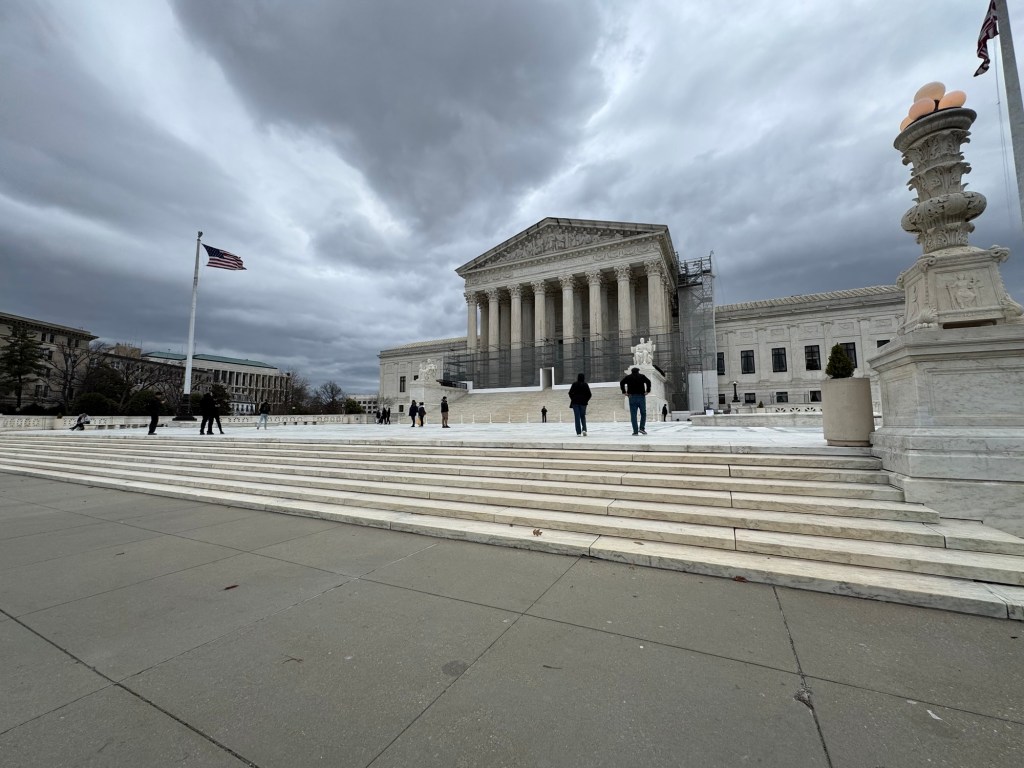
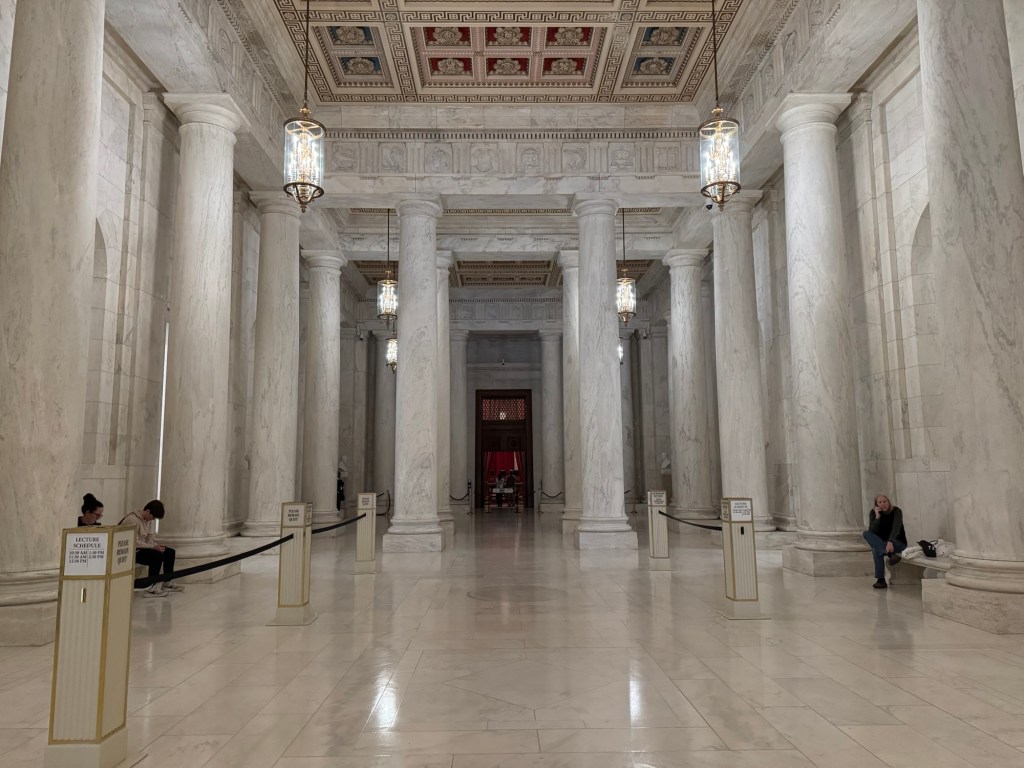
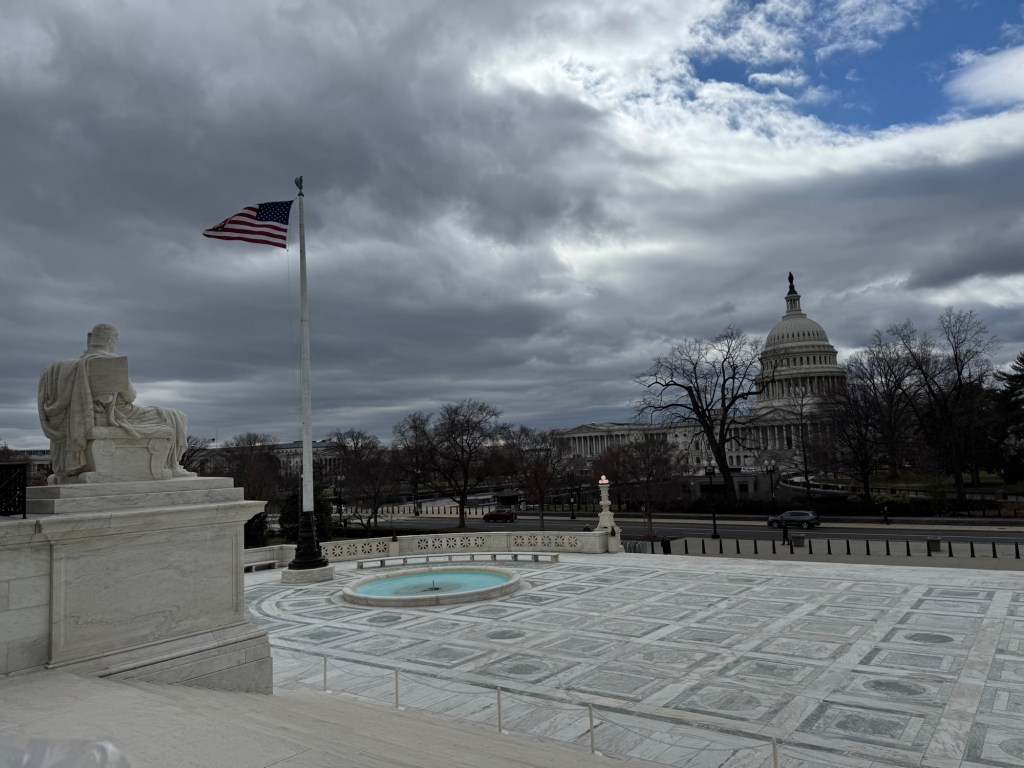
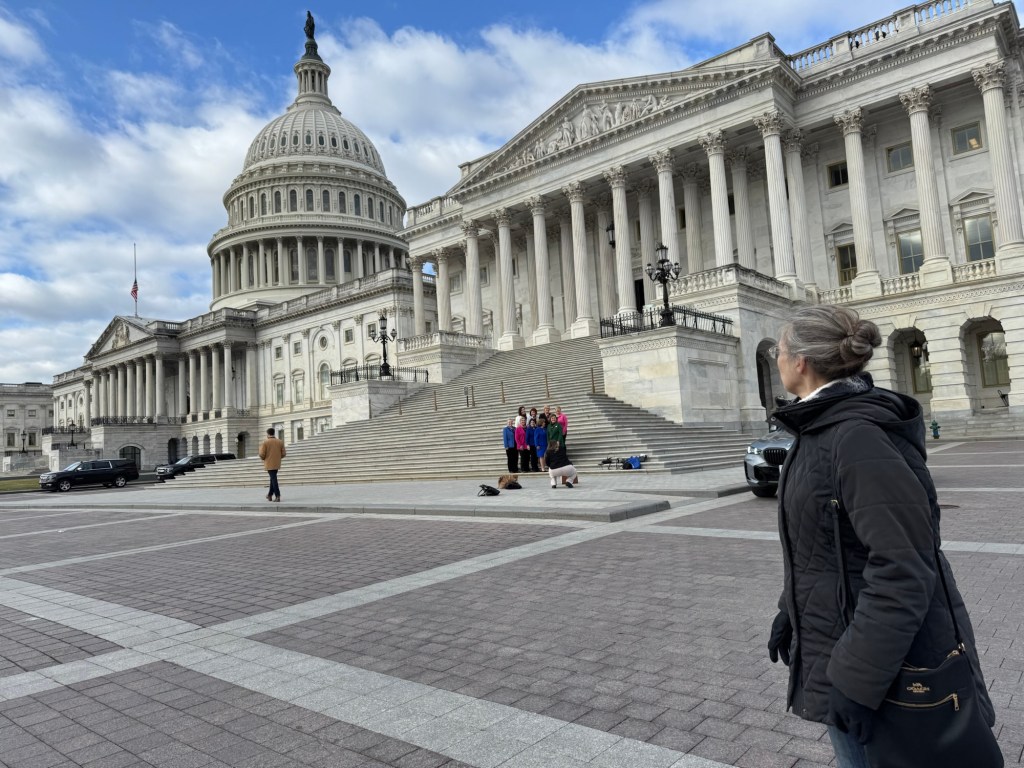
From there, my wife and I spent the day at the Supreme Court, next door.  I asked a lot of questions, so many that we were able to get into places that visitors aren’t typically allowed to go, and of course one of those places was the courtroom itself.  But I wanted to see the world the way members of the Supreme Court did.  Thinking of the Bible and the laws that successfully made their way into the creation of all Western Civilization, and were the foundations of the American Constitution, here was a place in the Supreme Court that was trying to do what the Israelites couldn’t in the Book of Judges, and that is have a prosperous self-governed society without screaming for a king to rule over them.  We sat on the Supreme Court’s steps after much reflection and looked over at the Library of Congress, then the Capitol building right in front of us.  I was thinking of Steve Bannon doing his famous podcast behind me over on A Street and all the intelligence happening on that little hill in Washington D.C., and it was the most intelligent place on Earth.  Many people don’t live up to that expectation, but the place was built to evoke in people the best they could utter.  From my perspective, I could see that it was working, and working better than any place in the world.  And finally, after many years of striving, it is evident that the American experiment in republic government, meant to correct humanity where they had failed in the Book of Judges, was succeeding in ways that were always intended.  But that it had taken a few hundred years to come into bloom.  And it was wonderful to see. 

The spot where Trump gave his Inauguration speech

Rich Hoffman

Click Here to Protect Yourself with Second Call Defense https://www.secondcalldefense.org/?affiliate=20707

The Story of the Card: When people do good things for all the right reasons

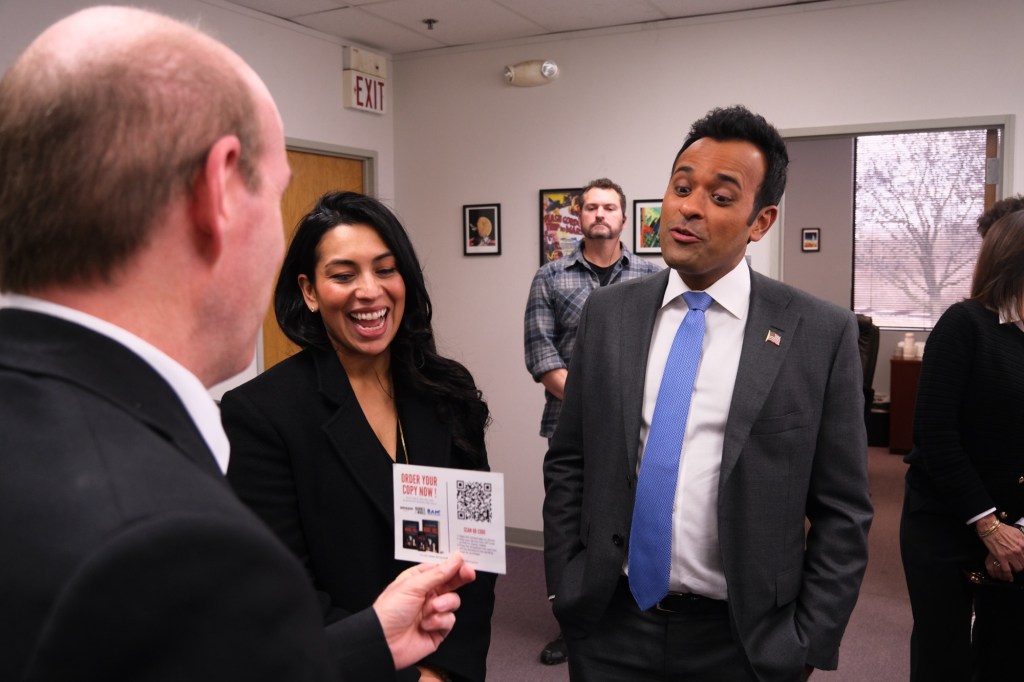
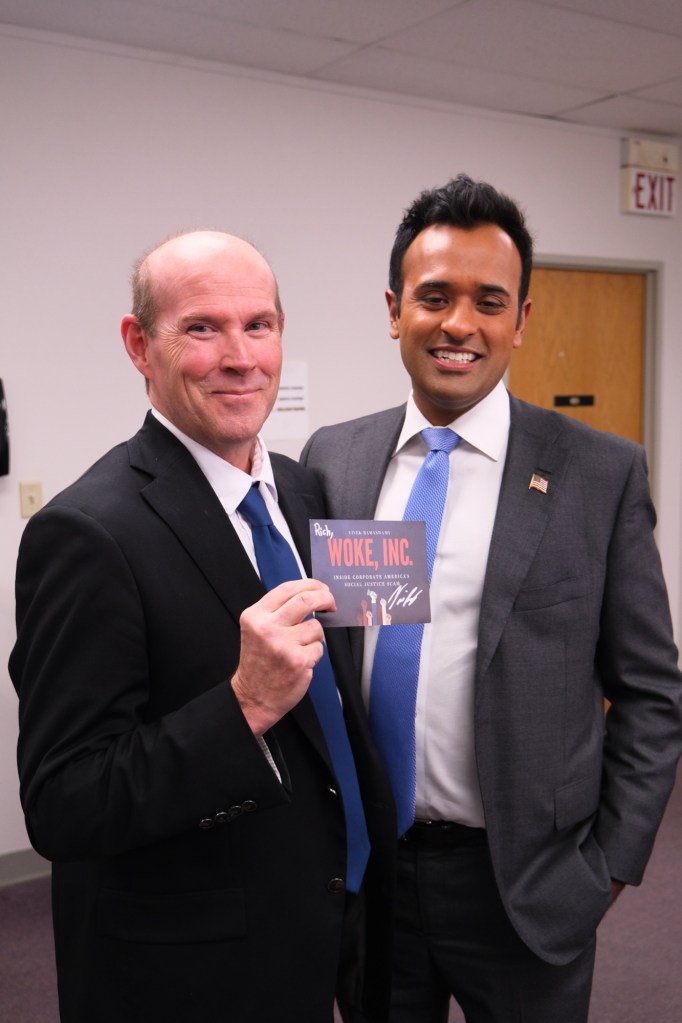
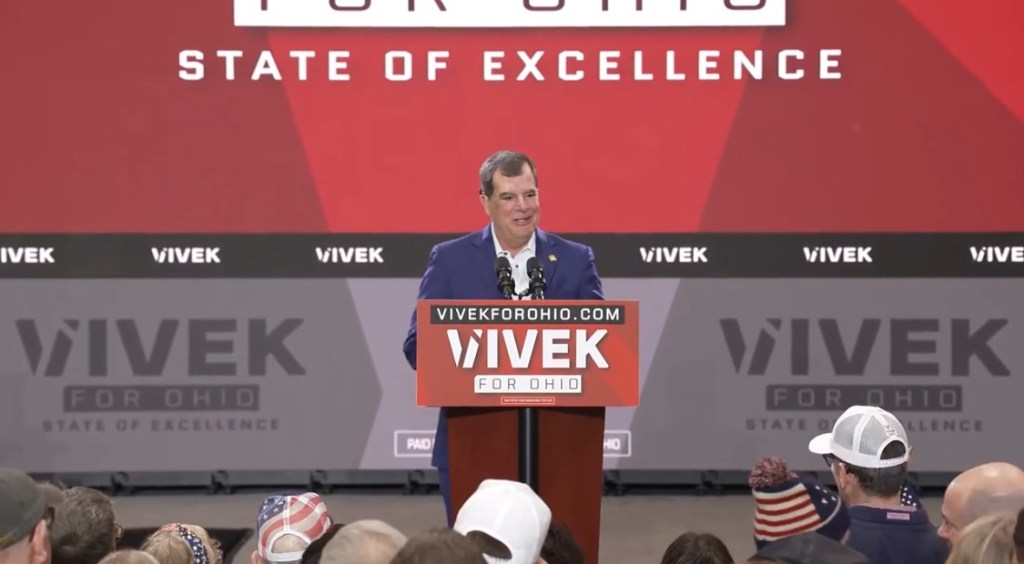
Interestingly, just a few weeks after Vivek Ramaswamy announced he was running for Governor of Ohio at CTL Aerospace in West Chester, we both found ourselves at the Library of Congress, for different reasons, on the same day.  Vivek is all in and doing media interviews every day on the prime-time Fox News shows and other places, and he was at the Library of Congress to celebrate Ohio’s birthday for statehood, which is a pretty interesting story.  And that, too, is interesting: since President Trump has returned to the White House, where he was rightfully supposed to be, many of my close friends have suddenly had a lot of business in Washington, D.C.  But one of the aspects of all this that I get asked about the most is that when Vivek came to West Chester to make his big announcement, people wondered why Vivek and I seemed to know each other and what was it with that card I showed him when he arrived.  The truth is, I didn’t know if he would remember me after all he had been through since the last time I saw him.  But he seemed to upon sight once he arrived and met with a small group of people responsible for the event at CTL Aerospace.  When it came time for him to greet me, his wife was already speaking with me. I wanted an ice breaker.  After all, he has met many people over the last couple of years and spent his time helping campaign for Trump, hanging out at Mar-a-Lago, and creating D.O.G.E. with Elon Musk.  So, to start our conversation, I showed him a card he gave me four years ago, which everyone has been asking about.  And when he saw it, he laughed.  He and his wife instantly knew what it was, and it kicked off a nice conversation about his personal political journey, which started at CTL Aerospace five years earlier. 

The card in question was a little promo thing he did for his book Woke Inc, which went on to be a game-changing bestseller, as I thought it would at the time.  Vivek was really one of the first in the country to figure out just how dangerous woke politics was, and the great Butler County Auditor Nancy Nix invited me to come to a special launch of his new book at the Middletown Republican Party Headquarters.  Vivek was trying out his messaging for a national campaign that would encompass Fox News, specifically Tucker Carlson, so he was trying out his platform to a kind of test showing in his hometown of Butler County, Ohio.  But that isn’t where the story started, as Vivek told me the same story he said at the governor’s announcement and why he wanted to return to CTL Aerospace to make his big pitch.  A year earlier, from the book launch, where all he had to give out was that card, because the book hadn’t officially come out for another three months at that point, I had set up a rally in support of President Trump.  He was in his last year in office and was starting to run again for a second term.  And Democrats were entrenched in impeaching him and trying to use the Russian story to knock him off.  So I, along with several other prominent Butler County Republicans set up a rally to support Trump during a very dark period, and the rally was at CTL Aerospace which many thought was bold, to politically stick their necks out to show open support for President Trump when everyeone else in the world was running away.

J.D. Vance was still coming off his popular book The Hillbilly Elegy and was getting attention wherever he went, and he already knew Nancy Nix, who of course was coming to the rally I was putting on.  And as the story goes, the future Vice President wanted Nancy to introduce a friend of his, Vivek Ramaswamy, to the world of politics because he was stepping away from a CEO job he had been doing at the time and was looking for something new to wrap his brilliant mind into next.  So he came to the rally, got a good taste of politics, and saw an anti-woke company that was not afraid to tell the world at the time.  Vivek told me a year later that the rally helped him define a virus he and his wife had been considering curing.  Not a disease of the body, but one of the mind, wokeness.  After that CTL rally, he sat down and refined those ideas into the now famous book, Woke Inc. There were many people in the audience that day at that rally, so I didn’t know Vivek from any other face in the crowd.  But a year later, as he explained, he had written his book and was pitching it to a hometown crowd before going nationwide with a more extensive campaign.  But my joke to him then was that he was doing a book launch without a book because it wasn’t out yetBut he did bring little cards with the cover printed on it.  I sat in the front row, because I love new books, and he gave me one of those cards and signed it.  And I looked at it and joked, “Is that it?”  Because I wanted an actual book to read, not just a silly little card. 

Well, it was a pretty good story, and I kept that card as a bookmark in some of my other books in my library.  A year after the Middletown event, I saw Vivek again at a Lincoln Dinner, and we were all in the VIP section as he was scheduled to speak that night.  Mike Pompeo was back there too, with a bunch of my personal friends, so it was a festive environment.  But I didn’t forget about the joke between Vivek and me, so I brought a copy of his book, Woke Inc, that I had long since read.  I got it for him to sign, which he did, and we joked about that card.  So now fast forward to three years after that, and Vivek was coming back to CTL Aerospace to make his governor announcement, and I pulled out that card for our greeting, curious as to whether he would remember all those events.  I didn’t want it to be weird for him to wonder, after seeing so many faces on his journey of running for President and traveling all over the United States, to see me and wonder how he knew me.  So I showed him that card before we even shook hands, and our conversation picked up exactly where it had last resided, and we had a lot of fun with the topic.  People watching and seeing all the pictures have been wondering what the story of the card was, how Vivek Ramaswamy stepped into politics to contribute his massive brain to the cause of freedom along the trajectory of the MAGA movement.  But I was there initially and played a part in his journey and was happy to see him doing good things with it.  You never know who might be in the audience when you host a rally or write articles like these daily.  But I have found many Vivek Ramaswamys out there thinking about doing something significant with their lives; sometimes, they need someone to hold the flashlight in the right direction so they can find their way to it.  And things cascade from there, so doing things is always important.  Vivek will be a great governor in Ohio and, undoubtedly, a great president after that.  He will do a lot of great things in the years to come.  And it will be because he is good and is willing to do all the hard work.  But sometimes great things happen just because of a little card and a story that grows with it.  That is the story of the card I have kept and the movement it launched, with the efforts of many people brought together with the common bond of just wanting to do the right thing. I’m very proud of Vivek Ramaswamy; he’s the right guy at the right time for all the right reasons and when you see things like this you can see the hidden hand of God working from behind a veil with a yearning for good things to happen with little miracles that make no sense under any other condition.  And I wouldn’t say that anything in this story is a miracle.  But what it is only happens when people refuse to bend the knee to darkness, and people so inclined to resist come together under a common cause and change the world, one little card at a time.

Rich Hoffman

Click Here to Protect Yourself with Second Call Defense https://www.secondcalldefense.org/?affiliate=20707

I’m Very Proud of J.D. Vance: Why he’s the best pick for 2028

It’s fair to say that I am very proud of J.D. Vance.  Now that he’s the Vice President in the White House, I can’t help but think of the various interactions I’ve had with him leading up to this opportunity, and I can’t help but think of it all in some divinely inspired way. It’s one of those things that you knew in the back of your mind, but conscious reality had no clue, and when those things come together, it’s just nice to look at, such as the Grand Canyon, Mt Rushmore, or the Washington Monument.  I like thinking about Washington, D.C. more these days since Trump is back in the White House. I think my wife and I are actually going to visit it soon and enjoy it with a fresh perspective.  But what’s different this time, and when I first met him, J.D. Vance already had celebrity status because of his book and Netflix movie, The Hillbilly Elegy, but to watch J.D. move up through obscurity and into the White House the way I remember it was quite a story and I have been reflecting a lot, almost as though I witnessed the hand of God move him as a chess piece through a wild and dark time.  And it took a lot of good people to make that chess move happen, and it’s a miracle.  But also an important lesson.  As I said well before Trump was re-elected, and back in July, a few days after being shot in the head from an assassination attempt, I said that people were going to be so happy with Trump that when his term was up in four years that nobody would want him to leave.  But J.D. Vance was a promising young man who would best be able to pick up the administration and continue it for another 8 years.  There will be many good people in the Republican Party who will run and offer themselves for the job.  But as J.D. Vance said to Maria Bartiromo on the first Sunday of February 2025, nobody has a front-row seat on how to be Trump in the White House other than this current Vice President.  He’ll be the best and most apparent pick to carry on what Trump started, and I’m just proud of him.

I first met J.D. Vance in the back of Nancy Nix’s yard, by her pool.  During the primaries, I was most supportive of that new senate seat for Josh Mandel because I knew he was a Tea Party kind of guy, and I was tired of RINOs in the Republican Party and didn’t want to support one more.  J.D. Vance back then had said bad things about Trump, and I wasn’t about to forget about them.  But Nancy was lobbying me to support the young man because, in a tight primary, I could have some critical things to say that might get people to vote one way or another.  So she called me and told me she would have J.D. Vance over at her house, and I should meet him.  I wasn’t excited because my wife and I were swamped then.  However, I always give Nancy time when she brings something up because she has excellent political instincts, so I went to her house to hear out J.D. Vance.  By her pool, I had a chance to talk to the future Vice President and communicated my reluctance to him and why.  I asked him why he thought he could be a good senator and withstand the temptations of all the corruption that goes on in Washington, D.C., for which he explained to me that he just wasn’t that kind of guy and that he would fight hard to represent us all well in that high office.  My first thought was that everyone says that.  But with J.D. Vance, it took on a bit more meaning, and I believed him and decided to support him.  It’s more for Nancy Nix than anything else.  But that would soon change into a life of its own.

Once J.D. Vance won, I saw him many times and always treated those times without much shock.  He was just another politician doing the work we needed him to do in Ohio, and I was happy with him.  But he was very accessible.  I was involved in a side event that involved many people for J.D. Vance to tour as part of his role as senator to bring attention to some crucial topics.  While I was talking to these people, we were talking about shared interests in the upcoming Lincoln Day Dinner, where Ron DeSantis would be the featured speaker.  I thought it might be a good idea to talk to J.D. Vance personally about other off-site things, but his people told me that Vance wouldn’t be going to the popular Butler County dinner because he didn’t want Trump to think he was endorsing the Florida Governor for President.  At that time, many people were pushing DeSantis to replace Trump in the 2024 election.  I admired that J.D. Vance was that much loyal to Trump when just about nobody else was.  And, of course, it would pay off later, down the stretch.  When it mattered most, Trump picked J.D. Vance as his VP because, under tremendous pressure, the future VP showed what he was made of when just about everyone, except for Nancy Nix, thought otherwise.

I’ve seen J.D. Vance quite a lot with Don Jr. and Bernie Moreno and had a nice front-row seat to see his political capital rise.  Looking back at all the hard work and the people who helped him along the way, with the best of intentions, he seemed pretty crazy at times to be so loyal to Trump and not appear at a very popular Butler County event to make sure his support was evident.  Nobody, except for me, thought Trump had a chance of returning to office.  But now that he has, I am pretty sure nobody will ever want to go back to the stuffy politics of a Republican in the White House again in the ways they were before Trump came along.  They will wish for Trump II, and right now, J.D. Vance is being personally trained to do that job.  And he has been doing it all the right way.  He’s from my area, there was always something special about him, even when everyone talked in their shorts under the hot summer sun in the back of Nancy Nix’s house by her pool.  And when I watch Vance on TV now and think of all the steps it took to get there because I was able to see many of them up close, it does display the hand of God reaching in and molding politics to build on earth the intentions of Heaven and to grant upon America the best that God can give to people he has picked to represent him.  So, it’s not too early to discuss J.D. Vance for 2028.  As we do, I have to say that I am proud of J.D. Vance for having the courage to accept God’s hand and not waiver when it would have been easy to do so.  He never did; he is as true to our cause as anyone on Earth.  I am proud to see him as a direct member of the Trump White House.  And the future looks very bright, and for all those reasons that he arrived there and more.

Rich Hoffman

Click Here to Protect Yourself with Second Call Defense https://www.secondcalldefense.org/?affiliate=20707

Vivek Ramaswamy Will Be Ohio’s Next Governor: The MAGA center of the universe, Middletown

The important lesson here is that when I tell you something, listen.  Don’t play around with debating things with me.  Just take the information I give you, do something good with it, and don’t waste time.  I told everyone weeks ago, like two weeks before Christmas in 2024 that Vivek Ramaswamy was going to be the next governor in Ohio.  DeWine would appoint Jon Husted as the senator appointee for J.D. Vance because Vance was going to the White House as Vice President.  It was more than a little irritating to watch during Trump’s inauguration that people still didn’t know why Vivek Ramaswamy was stepping away from the creation of D.O.G.E., a shared task with Elon Musk to bring efficiency and cost cutting to the government in general.   Things had changed since election day and I was letting people know about it so they could make plans.  But instead, people acted surprised by the news that Vivek was stepping away for some mysterious reason.  It’s not a mystery.  Vivek Ramaswamy is going to put his efforts behind running for governor, which takes work, and this is something that Trump wants.  In case people didn’t figure it out, J.D. Vance was being positioned to get some wins early in the Trump administration because he was the picked candidate to be the next president.  That’s why he’s so young, and when Trump was doing all the ceremonial stuff for the inauguration, it was clearly to put J.D. Vance in people’s minds to be the continuation of all the work Trump is about to do.  Vice Presidents are usually just background noise, but this was not the case when the Middletown High School band came to Washington, D.C., to perform at the parade, which was quite good to see.  Everything was happening for a new generation to pick up the baton and run with it, and this move with Vivek Ramaswamy is part of that plan. 

Ohio is positioned and nurtured to be the most technologically proficient state in America, an example of what MAGA politics can do for the rest of the country.  A boom looming in the background will require a person like Vivek Ramaswamy to make happen from the executive branch, not as President, but as the Governor of the State of Ohio.  Additionally, to facilitate all this, we now have two extremely pro-business senators, Bernie Moreno, and Jon Husted, to help make it all happen.  The signs for Middletown, Ohio, are already ready to place at the entrance to the city, indicating that it is the hometown of J.D. Vance, whom Trump will put on the fast track to some critical negotiations.  It’s all going to matter in a few short months, and by the time Governor DeWine steps away, and Vivek Ramaswamy steps in, we’re all going to be living in a different world.  It’s going to move, bewilderingly fast, and everyone will have to just hang on and make the most of it.  There’s a reason I even said anything at all.  I want to see people profit off the information because Ohio’s invention pace will matter much more than traditional media coverage.  Who knew what when so that the human race could advance?  Usually, in society, for something good to happen, there has to be a political will, and the point of all this Vivek Ramaswamy news is that there is a plan that comes straight out of the White House now that features Ohio as the place to be in the world for tech innovations, that only someone like Vivek Ramaswamy could bring about.

That’s also why I have been featuring the industries that will thrive under the Trump administration.  For all this time, most of the media coverage has been about whether or not Trump could ever become president again, and as Inauguration Day progressed and I had a chance to talk to thousands of people about it, it was pretty clear that I was the only one saying from day one of the Biden administration, that Trump would return to the White House and everything that happened on that great day on January 20th, 2025 would happen just as I said it would.  So when I tell everyone these things, listen.  Don’t argue with me when I talk about the hyperloop program in Ohio and sky taxi services that will replace Uber, and regenerative medicine, don’t debate me.  Take the information I give you and do something with it.  And I apologize in advance, not that I apologize for anything. We have to move fast here.  At my speed, not current culture speed.  I can’t possibly answer all the emails and call everyone who wants to talk to me.  Not because I want to be rude, but because there isn’t time in the day.  I had over 10,000 emails just yesterday, and there is no way I could read them all and still do everything I need to do.  Usually, I scan through for what looks like essential headings or people I know, and I give those more attention than the others.  But if I don’t call you back, it’s not personal.  My task is to let people know about each other and provoke them to take the following steps.  Because some of these ideas will take thousands of hours of planning and millions of dollars to facilitate, they will need champions to drive them. 

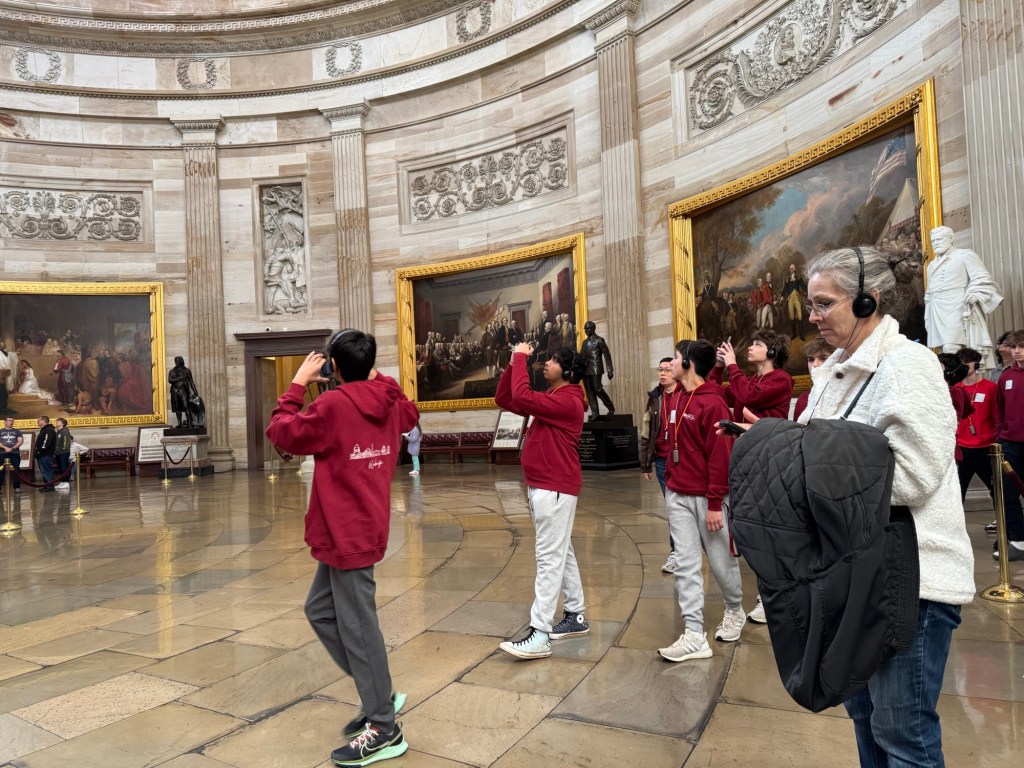
Vivek Ramaswamy is going to be the next governor of Ohio.  I have shown support for Attorney General Yost, but I’m sure there are accommodations for him to clear the way for Vivek because that’s the kind of person it will take to do all the things I mentioned and to make Middletown great again in the way that Trump wants to make America Great Again.  And it all comes down to J.D. Vance being in the White House for the next 12 years to carry on all the good work that is about to be done with Trump.  I first met Vivek at an event in Middletown, so this isn’t a new kind of thing.  Everything next-generation MAGA centers around Middletown, Ohio, and a restoration of an economy there that had been husked out by globalism.  But all that is coming to a fast end, and the things I have mentioned that are part of tomorrow’s economy only need the right people to make them happen.  And that is happening as we speak.  You might have noticed how Trump, after his speech in the Rotunda, specifically spoke with Vivek Ramaswamy and Kristi Noem before leaving.  Vivek is a rising star, not a descending one, just because he won’t be a part of D.O.G.E.  That is Elon Musk’s project.  Vivek has a different path, and it all points to a new tomorrow where Ohio, a Rust Belt state, will lead the world in a way that no country on Earth has yet.  More than Taiwan.  More than Dubai.  And much, much more than China.  But it all requires people to see the big picture, which I have handed to everyone so they can take the next steps and advance our culture in ways that have never been seen before.  Stop thinking small!

Rich Hoffman

Click Here to Protect Yourself with Second Call Defense https://www.secondcalldefense.org/?affiliate=20707

Mitch McConnell is Out in the Senate: Making a point, and making a difference

I thought it was a pathetic speech, Mitch McConnell’s last one as a senator in any leadership position.  He gave it right before Christmas in 2024, and it came across as petty but very revealing.  As I say all this, I get high-level politics and understand all too well how tough it can be working with people who disagree with you.  I am used to spending most of my time overcoming the objections of people who disagree with me and working hard to turn them into my way of thinking.  Not through force, but by showing them how much they would benefit from doing so.  Some of my best friends are powerful politicians who have to do that every day.  They work with everybody and anybody.  And for that matter, I understand Trump because he has all these traits naturally.  And since he first ran for office, or talked about it, back in the late 1990s with the Reform Party, I thought Trump would be great in a political role because he knows how to get things done and overcome people’s objections while showing them the benefit of agreeing with him.  That’s more of an Art of the Deal than a political thing.  However, that is what Mitch McConnell talked about in his last speech.  Instead, he referred insultingly to what he thinks people in politics are or should be doing.  And he narrowed it all down to two key ingredients that everyone who gets into political office seeks to do, based on all his vast years of experience in the Senate.  He says there are two kinds of people who go to the Senate: people who want to make a point, and those who want to make a difference. 

Mitch came across as an old man trying to learn to play video games.  What I heard from him was a frustrated person who realized that the game had changed from underneath him, and he had no idea how to adapt to it.  He was at the end of his career and wouldn’t be a part of anything under these new rules, and he was frustrated.  The world was going to move on without him, and he was not being revered as a great Senator who had been a leader for many decades.  He was being viewed as an Anti-Trump loser who sold our country out and was the kind of person who put his name on that CR at the end of 2024 that had been 1500 pages and lost the battle to Elon Musk and Vivek Ramaswamy on the X platform in getting the bill crushed before a vote could be made.  What replaced that bill was a much more narrowly focused CR with many bells and whistles removed, which bothered Mitch McConnell.  And that frustration came out in his speech when he referred to those against his way of doing politics as just getting involved to make a point.  I think what he said revealed why so many members of the Senate and the House have problems because they never did understand what getting into politics was supposed to be.  I find Mitch McConnell revolting, not because he was anti-Trump but because he had so much power, but he never used that power to build a replacement bridge on I-75 going over from Cincinnati into Northern Kentucky.  At one point in 2012, he shared the powers of government with John Boehner, who was Speaker of the House and lived right across the Ohio River and was just as motivated.  But both men dropped the ball and got caught up in the Washington game of Beltway politics where the lobbyists rule the day, and they became part of the problem.  Certainly not a solution. We still don’t have a bridge after decades of trying.  And they had all the levers of power to make it happen.

It’s not like I don’t know the type of people I think should be in the Senate.  I would say I know J.D. Vance pretty well.  He’s from my area, and I’ve met him often.  He’s nothing like Mitch McConnell.  I also know the newly elected Bernie Moreno.  I was one of his very first supporters and was invited to have lunch personally with him in the early stages of his campaign, and I was able to talk to him about why he was running.  He did not run for the Senate to make a difference or a point.  He wanted to be a good manager in the Senate, representing Ohio along the way.  When we voted for him, we were not voting for a MAGA disrupter who just wanted to make a point.  We wanted President Trump’s management support in the Senate so he could be a better president.  I also asked J.D. Vance and Bernie Moreno the same question privately.  I said, “If you get in, are you just going to be another louse hanging out on K-Street making deals with scum bags who want to destroy this country in trade for the benefits of some whore standing on the street corner?”  In both cases, they said to me “no Mr. Hoffman.  Absolutely not.”  J.D. Vance kept his promise so far and was an excellent Senator until Trump picked him to be V.P.  So we know the difference between a J.D. Vance, who was new, and an old corrupt politician like Mitch McConnell. 

And yes, when I spoke to both of those guys and many others in the House and Senate, that was my typical question to break the ice.  I am always interested in how they answer, and I can tell a lot by nonverbal communication, whether they are lying to me or sincere.  That’s my way of doing things, and it’s always why I tend to be in a position to ask those questions in the first place.  People respect my opinion and like it when I’m part of the process, especially on the front end.  In doing this kind of thing for several decades, I have known Mitch McConnell, and many have liked him over the years.  And they take the easy way out and listen to all the lobbyists when they shouldn’t.  And they played their role in jacking up our debt to over 35 trillion dollars and adding another trillion in wasteful spending every 100 days.  And they do all that calling the effort compromise.  When what they are doing is packing vast amounts of evil in these bills, passing them so everyone can get what they want, and selling that corruption as a good government that compromises with the bad guys.  Then, they say to their critics that compromising is more virtuous than standing your ground on anything.  And those who do are the kind of people who want to make a point.  They don’t understand how government works, and they certainly don’t understand the Senate.  But to my eyes, all that McConnell said on his way out the door sounded like a 90-year-old grandpa with one foot in the grave trying to learn to play Fortnite with a 7-year-old, slow, crusty and complaining about how fast the world was moving because he didn’t have the skills to play the game.  And that is why Mitch McConnell is out of the Senate, and we are all happy that he is.   

Rich Hoffman

Click Here to Protect Yourself with Second Call Defense https://www.secondcalldefense.org/?affiliate=20707

The World Has Been Run By Stupid People, Like Kamala Harris: Poor people are manufactured by bad decisions and wrong ideas

I’d say you could go back to the first moment human beings gathered together to form some government, but the game has been occurring for a long time.  It’s not new to our modern era.  However, only through the creation of the United States has it been exposed the way it has been, and even created a discussion point about the difference between worthless administrators and those who know and understand how to do work.  And that was the big difference between President Trump and the communist loser Kamala Harris at the presidential debate in 2024.  When people talk about the debate being rigged by the moderators of Disney-owned ABC, they are making an understatement.  It comes down to one fundamental issue I have been dealing with all of my adult life. It culminates in the understanding of free people living their lives to their fullest potential; a massive scam is unraveling.  Who does work, and who is best in a position to lead in some way?  Out of all this, I couldn’t help but think of the very good President Grant, who shared many traits with Trump.  He was a good president who knew how to get things done and made the country far better off.  But his memory is wrapped up in controversy and scandal, and he is remembered as one of the most corrupt administrations in the history of the world.  This wasn’t because Grant himself was corrupt, but because people grew to hate Grant because he was too good and would not bend the knee to an administrative class of bureaucrats, so they smeared his name in history for revenge on how bad and worthless Grant made them feel as people.  The same problem can be found in the ruins of Saqqara in Egypt, where the tombs of their worthless administrators attempted to rival those of the pharaohs in luxury and social impact.  What we see play out is the desire many have for self-worth propped up by the power of government disguised as a social benefit for the sheer desire of self-fulfillment. 

President Trump got where he was by being better than his competitors, resulting from a capitalist system of social enchantment.  Kamala Harris is the product of communist sentiment; she started life as a sex toy side girl who was put into a prosecutor’s office because of how she appeased power.  That is the result of her entire life, which dramatically unraveled on the stage against President Trump.  People thought it was a good debate because she could talk, compared to Joe Biden, who was whisked away to make way for Kamala to sit at the top of the ticket, as Trump said, “like a dog.”  The problem for many is that Trump existed at all as a representative of competence and performance because the Marxists who have been trying to undermine American culture for many decades could not live up to the high example of Trump, so their conglomeration of sentiment manifested by Kamala Harris attempted to throw out all the usual stop sticks that have repealed the human race from success for thousands of years, and Trump wasn’t having any of it.  That made people frustrated with Trump because he was supposed to be more dignified about that disguise, more like Grant was, or the countless pharaohs of Egyptian society, and give the allusion that what the world needed were more bureaucrats acting as village chiefs and ruling through administrative nonsense to give the illusion of leadership. 

And to that point, every single economist and government commentator has gotten the situation wrong, which I ran into firsthand when I was young.  In my 20s, I was invited to many powerful shindigs, with the kind of people that made Kamala Harris the person she became.  They were always radical Democrats, and there was no confusing me with anything but a hard-line conservative.  But, since the beginning, people have tried to use me because of my mouth and see if they might ride my coattails to some successful enterprise based on my gift of gab.  So, I was exposed to many people who ran and taught things, especially college professors and economists.  I’d talk to them at these events about their views of the world as they would explain to me that the future of the American economy would be service-oriented and that all the manufacturing jobs would be overseas where labor was cheaper and workers there were more willing to do it.  I would say to them, “That’s not going to work very well,” they would then laugh and assume that I had a lot to learn.  Well, they all turned out to be wrong, and they were not very smart to begin with, even though they were teaching society through colleges all the same points of view, which all turned out to be wrong.  And all these years later, we see just how bad they were.  And it was their kind of people who were trying to push Kamala Harris under the door, hoping nobody would notice how stupid they were all along.  Trump and his successes make them look foolish because he knows better and doesn’t feel even a bit of desire to politely bend the knee to them to make them feel part of the process.  And that is the essential case Kamala made on their behalf. 

But even deeper than that, from the point of view of my grand jury service in 2024, where through many criminal cases, I could see the totality of this stupidity up close, with my unique perspective of the world and its history.  The primary cause of most crime and the defeat of major cities are the failed policies of these destructive Democrats and their Marxist ideas that never valued work and honor but excuses and victimization sentiment.  To protect themselves from analysis, they have just sought to build a government to hide the folly of their failed enterprises.  And people are tired of the mess they have left behind.  Trump represents achievement and quality without bending the knee to an administrative class of worthless bureaucrats.  Harris provides a mask to all the world’s problems in a desire to perpetuate the scam just a year or two longer for their benefit.  Ultimately, they can’t run and hide forever.  They have been trying for thousands of years.  However, under the premise of a free society in America where power was decentralized and put to good use through capitalism, the surviving characteristic of the human race is emerging in ways that were never actually expressed before.  And, of course, the world is angry about it; they hate President Trump.  But Trump is the unyielding character we all want to see opening up opportunities for everyone else.  This exposes people like Kamala Harris, all the political pundits of the world, and the majority of economists of the United Nations as phonies.  And all the people who taught them all the wrong things along the way.  I saw it firsthand years ago, but at the time, I would tell them, “If you say so.”  Maybe they did know something I didn’t.  I gave them the benefit of the doubt.  But as it turned out, they didn’t.  They were just stupid and sought to hide that stupidity through government expansion and an aristocratic approach to the power achieved through mass collectivism.  The world they have made with those approaches is a failure based on their sheer stupidity, and people are tired of putting up with it.  Perhaps, for the first time in history.

Rich Hoffman

Click Here to Protect Yourself with Second Call Defense https://www.secondcalldefense.org/?affiliate=20707

Kamala Harris and Her Communist Democrats: Trying to escape the burden of what has been

One of the important things that Kamala Harris says repeatably in her public appearances is “what can be, unburdened by what has been.”  It is her most consistent statement and is the essential political platform of “progressives.”  They want change from their present condition, into what “can be.”  Usually, that consists of bad decisions that they have made and allows them to erase the implications of failure and replace it with some form of comfortable group acceptance. What Kamala is talking about is the summary of the Karl Marx book, The Communist Manifesto and has been the mantra of those types of people for well over a century now. Yet, in the most successful country in the world, which has empowered the most people over the longest period, why would we want all this change? Because what she is saying is that she and her kind want to change from the best country to the worst. That is what Barack Obama’s Hope and Change always was essentially, the hope of the communists of the world that America would change its practices and become just as bad as everyone else. When you are a loser, as Kamala Harris clearly has been, and made terrible decisions in life that are embarrassing, of course you would not want to be burdened with that memory for the rest of your life. So, for Democrats, this idea of not being burdened by what has been, is a chance to reinvent themselves away from all their mistakes. And that is what we are up against with the global Marxists, which Kamala Harris is their clear representative. What she is talking about in her radical political platform is an appeal to the losers of the world to hit a great reset and tear away the standards of success, so that she can make way for that unburdened judgment of social norms, such as not having reckless sex, and aborting the child as a result so that they can be unburdened from their mistakes.  Or using drugs to become unburdened by the impact of reality. Or going on welfare to be unburdened by the pressure of a need to produce income to support your family. That is the world of Kamala Harris and her Democrats of Doom in America.

It was not always easy for people to admit that there was a communist party platform in America that was seeking to undo all our lives. We always thought that the threat of invasion would be as it was presented in movies about war, such as The Longest Day with John Wayne. Or Red Dawn. But I have warned for years that much of what the Democrat party does is communist. And there has never been such an overt communist running for office than Kamala Harris and her VP pick the China loving Tim Walz. And yes, he loves China and has quite a long history with the communist country. These are not our friendly neighbors. These are hostile insurgents seeking to undo the American way of life, which is to say, a successful life of liberty and happiness for which we are all entitled to pursue under the freedom of self-assertion. I can say that I have seen a lot of stuff. And recently as part of an experience on a grand jury, I can say that I have seen a grotesque underbelly of what is really going on in society, and I will have a lot to say about it. But my opinions do not come from a vacuum of experiencing the world from the safety of my own peer groups. I have always stepped out of that comfort zone looking for added information and I can say that I have seen the worst of what people can do.

Sadly, I have always loved Middletown, Ohio, where J.D. Vance is from. It is a shame what has happened to it. But it is what happens to cities that end up with leadership like what Kamala Harris proposes, where too much communism is brought in to manage what used to be a thriving community. In the case of Middletown, diversity was brought in where shared values were not normalized. And the well-paying jobs of their economy were shipped away through policy to the needs of globalism. And what’s left is an entire community that cannot go on vacation without the burdens of society wanting to accept people taking over your home. I can say that I have seen a multitude of examples in just Middletown of the worst that people can do to each other where social collapse has happened as a direct result of communist policy hidden behind the political party of Democrats. And there are homes where drug use is as common as eating cereal for breakfast. People come and go from these homes wondering aimlessly through life and they seek drugs to bury their pains of horrendous decisions made through life in great abundance. And the weight of their bad decisions, unpaid for, brings the world around them into a landscape of misery. That is precisely what Kamala Harris, who has been a drug user herself, means when she wants to be unburdened from the past to make way for what can be. Whenever a society is running from their past where they did not achieve success due to bad decisions, you end up with a result of failure compounded because behavior was never inspired to change for the better. They just ran from the results of their failure, which never fixes anything.

What Democrats leave in their wake is the kind of nightmares that you see in high crime areas, what Democrats have essentially done to California, and communities like Middletown, Ohio. The way people who seek to unburden themselves from the mistakes of the past live is incredibly detrimental and the world would be shocked if forced to look at it for too long. It is one thing to hear about sad things going on in the world, its quite another to see and hear the details of a criminal underbelly that is the net result of lives lived under the mantra that Kamala Harris is uttering for the entire country. To be unburdened by the past to make way for what can be. She is not talking about success, because America has been successful with the most opportunities for the most people that there are in the world. Rather, Democrats want people to fail in life, because their entire platform is to replace that failure with the stolen redistribution of value that they use the government to steal from good people, and to give to desperate people who have lived their lives in horrible ways. And they seek to spread their influence on every corner of the globe with communism, because through shared guilt and penalty, the burden of a life lived poorly can be shared, so that those most guilty don’t have to be crushed by the burden of bad decisions for the rest of their lives.  Kamala Harris and her communist Democrats want people to make mistakes because she is offering redemption from those errors which then gives centralized government more power. And a world of individuality is destroyed as a result, which is the change that communists want to evoke in the world, especially in America.

Rich Hoffman

Click Here to Protect Yourself with Second Call Defense https://www.secondcalldefense.org/?affiliate=20707