The Anti-Human Nature of Democrat Energy Policy: When they want to destroy you, there is nothing to talk about

The book that now sits on shelves and in offices across Ohio, including that of my friend George Lang, the longtime Ohio State Senator and Majority Whip from West Chester, began as a simple conversation about energy policy and the deeper forces shaping our world. George, who serves on the Energy Committee and has been instrumental in pushing legislation like Senate Bill 294 to prioritize truly affordable, reliable, and clean energy sources—defining fossil fuels and nuclear power in those terms while scrutinizing intermittent renewables—handed me a copy of Alex Epstein’s Fossil Future during one of our discussions.   He had been reading it closely, multiple times, as he worked on reforms to counter the distortions in Ohio’s energy markets. I knew the book existed, but it was George’s recommendation that finally prompted me to dive in. What I found was not just a defense of fossil fuels but a philosophical framework that resonated with everything I had observed over years of political involvement, from local battles in Butler County to the broader national fights over regulation, subsidies, and human progress.

That encounter crystallized why I spent nearly a year writing The Politics of Heaven, a roughly 20-chapter manuscript that draws on my proximity to these stories—energy scandals, regulatory overreach, and cultural undercurrents that few dare to name. Publishing a book is no small feat; it demands flushing out ideas across chapters, refining arguments through beach walks where the sand and waves clear the mind, and confronting the hard realities of distribution, branding, and getting the work into readers’ hands. But books endure in ways podcasts or interviews cannot. They invite readers to pause, take notes, and pursue their own research. This one explores the intersection of energy policy, philosophy, and what I term the “non-human” movement—a force older and more lethal than partisan bickering, one that masquerades as environmentalism or compassion but ultimately seeks to curb human flourishing. It ties directly to Ohio’s energy debates, where George and others are fighting to defend fossil fuels and nuclear power against policies that subsidize wind and solar at the expense of reliable baseload sources. And it explains why, despite scandals like the FirstEnergy affair that ensnared some Republicans, the bigger picture reveals a systemic bias against the very energy that powers human advancement.

To understand the stakes in Ohio, one must revisit the FirstEnergy scandal surrounding House Bill 6 in 2019. That legislation provided ratepayer-funded subsidies—ultimately costing consumers around $1.3 billion over time—for two nuclear plants, Perry and Davis-Besse, owned then by a FirstEnergy subsidiary, along with some coal-related support. Federal prosecutors later charged that roughly $60 million in bribes flowed through a dark-money group to influence the bill’s passage and defeat a repeal effort, leading to the arrest of then-House Speaker Larry Householder and associates in 2020. Householder received a 20-year federal prison sentence, one of the most significant political corruption cases in Ohio history. Democrats have rightly highlighted the Republican involvement, using it to paint the entire party as captured by utilities. Yet many who supported HB6, including some who later faced scrutiny, acted out of genuine concern for energy reliability—nuclear power provides carbon-free baseload electricity, avoids millions of tons of emissions annually, and supports high-paying jobs. I feel for those wrapped up in the fallout, even those I disagree with on other issues; the scheme was wrong, but it did not negate the underlying need to protect nuclear assets from market distortions caused by renewable mandates. What the scandal obscured was the broader regulatory environment, shaped by decades of policies that tilted the scales toward intermittent renewables through subsidies, mandates, and penalties on fossil fuels and nuclear power. Ohio’s earlier renewable portfolio standards, set in 2008 at 25 percent by 2025, were scaled back under HB6 to 8.5 percent by 2026, but the damage from prior distortions lingered. As recently as late 2025, the Public Utilities Commission of Ohio ordered FirstEnergy utilities to pay roughly $250 million in restitution and forfeitures related to HB6 violations, with additional settlements bringing consumer relief to around $275 million total in some agreements.    George Lang’s recent work on bills like SB 294 seeks to correct this by redefining “clean” and “reliable” energy around true cost accounting—fossil fuels and nuclear emerge as superior on affordability and dispatchability (with high capacity factors), while wind and solar, with their capacity factors often below 35 percent, require massive backups. 

Nuclear energy, in particular, stands as a triumph of human ingenuity. It generates a substantial share of America’s emissions-free electricity, powering communities across dozens of states, avoiding enormous emissions, and supporting thousands of high-paying jobs. Plants like Ohio’s Perry and Davis-Besse employ hundreds of workers each at salaries well above average, injecting billions into local economies. Safety records are exceptional: nuclear results in approximately 0.03 deaths per terawatt-hour (TWh), compared to coal’s roughly 24.6 deaths per TWh (from accidents and air pollution), oil at 18.43, and even natural gas at 2.82. This makes nuclear about 99.8 percent safer than coal on a deaths-per-TWh basis. Wind and solar sit at 0.04 and 0.02 deaths per TWh, respectively, but their system-level challenges (intermittency requiring backups) complicate direct comparisons. Yet Democrat-driven policies have subsidized solar and wind—now cheaper on levelized cost in some projections but unreliable without subsidies or storage—while burdening nuclear with regulatory hurdles that inflate costs. The result? A society paying more for less reliable power, all while fossil fuels remain the backbone of upper mobility.   

Electricity from any source, especially dense, reliable sources like coal, gas, and nuclear power, has transformed human life. Consider medieval Europe, where a king’s luxuries—climate control, preserved food, instant global information—mirror what even modest American households take for granted today. Air conditioning, refrigeration, lighting, and appliances that once defined royalty now enable low-income people to escape drudgery. Strong correlations exist between electricity access and human development metrics: health, education, income, and gender equality improve markedly where power flows consistently. Globally, basic electricity access rose to around 92 percent by 2023, with the number without access falling to roughly 666 million (down from higher figures earlier in the decade), lifting billions from energy poverty—though deeper “energy poverty” (inadequate reliable usage) affects an estimated 1.18 billion people, including many officially “connected” but unable to use power meaningfully due to outages or cost. Without abundant energy, upper mobility stalls; with it, creativity flourishes. Fossil fuels powered the Industrial Revolution, fertilizer production that feeds billions, and the machines that built modern medicine and transport. Opposing them while ignoring these benefits reveals a deeper motive.   

This brings us to the heart of The Politics of Heaven: the non-human movement. Epstein’s Fossil Future articulates this brilliantly, arguing that opposition to fossil fuels cannot stem from genuine concern for the environment or the climate alone, given their overwhelming benefits. He contrasts the “human flourishing framework”—where energy abundance is measured by its capacity to advance life, health, and prosperity—with the dominant “anti-impact” or “delicate nurturer” worldview. In the latter, any human alteration of nature is suspect, and experts systematically ignore benefits while overstating side effects. Epstein notes that “mankind’s use of fossil fuels is supremely virtuous—because human life is the standard of value, and because using fossil fuels transforms our environment to make it much better for human beings.” Those pushing rapid phase-outs, he contends, reveal an anti-human core: they prioritize a pristine Earth over human potential, even if it means regressing to pre-industrial conditions. This is not hyperbole. We saw it during the COVID lockdowns, when many imposed draconian restrictions that shuttered businesses, closed churches, and isolated families, all while claiming public health as the goal. The policies sacrificed economic vitality, mental health, and small-scale enterprise on the altar of control, mirroring a willingness to limit progress if it served certain ends.   

This non-human impulse echoes ancient cults of sacrifice. Across history, from Aztec temples in what is now Mexico City—where priests offered thousands of human hearts to gods like Huitzilopochtli, with archaeological evidence of massive skull racks (tzompantli) holding thousands of skulls and historical accounts of large-scale rituals during temple dedications—to headhunters in New Guinea and child sacrifices to Baal in the ancient Near East, societies have ritualized the destruction of life to appease higher powers or maintain cosmic balance. The Aztecs believed gods had sacrificed themselves to create humanity; humans owed blood in return, a debt repaid through ritual to prevent catastrophe. Mesoamerican cultures saw human sacrifice as essential reciprocity, nourishing deities so the universe endured. Similar practices appear in biblical warnings against Molech worship and in countless pre-modern traditions. Today, this manifests not in literal altars but in policies that treat human beings as expendable for an idealized “nature.” Radical environmentalism, influenced by deep ecology thinkers like Arne Naess, promotes “biocentric egalitarianism”—granting all living things equal moral status, often elevating the biosphere above human needs and rejecting anthropocentrism. Rooted in earlier works and formalized in the 1970s, deep ecology views humans as part of a holistic web rather than exceptional stewards, sometimes framing human impact itself as the core problem. It fuels a modern impulse in which “saving the planet” justifies limiting energy use, population rhetoric, and opposition to technologies that expand human life. Epstein captures this: advocates cling to the “delicate nurturer” assumption to mask anti-human goals, convincing themselves they save humanity from itself while halting the very activities that enable flourishing.    

In politics, this anti-human stance permeates certain energy agendas and cultural positions. Subsidies for renewables—often requiring vast land use, rare-earth mining, and backup power—distort markets while fossil and nuclear provide dense, scalable energy. Nuclear is “very clean vigorously”: low emissions, high capacity factors near 90 percent, and a safety profile unmatched. Yet policies born of environmentalism created barriers, favoring wind and solar despite their intermittency and higher system costs. The result harms the poor most—energy poverty correlates with stalled development, as seen in regions without reliable power where hardships persist. Upper mobility flows from energy: refrigeration prevents spoilage and disease, air conditioning combats heat-related deaths, and digital access opens education and opportunity. Epstein documents how fossil fuels have enabled unprecedented global progress; denying them is anti-human because it denies this reality. We witnessed ruthlessness in policy responses that prioritized control over empowerment. The same mindset underlies positions that treat certain lives as disposable and resist breakthroughs powered by abundant energy. It is an anti-God position, opposing the biblical mandate to “be fruitful and multiply” and steward creation productively. Fallen angels, cultural influences, and worship of anti-divine entities all point to a spiritual war against God’s creation—humans included. No one who values divine commandments should embrace a worldview that sacrifices human potential on abstract altars.

The Politics of Heaven unpacks these layers across its chapters. Early sections examine the non-human nature of radical environmentalism and its hunger to regress society, drawing parallels to historical sacrifices. Later chapters dissect the philosophical roots of energy policy, using Epstein’s stats and my own observations from Ohio battles. I explore how electricity has eradicated the worst forms of poverty, turning “luxuries” into necessities. One chapter details revelations from policy responses that exposed a desire to control rather than empower. Another ties energy to creativity—human ingenuity thrives with power, from medieval kings’ dreams to modern innovators. The book culminates in policy prescriptions: defend fossil fuels and nuclear power as bridges to a future in which renewables mature, but never at the cost of reliability. For Ohio, this means supporting Lang’s initiatives and approaches that prioritize American energy dominance. I am heading to Washington, D.C., to finalize the 20th chapter, perhaps adding an epilogue on emerging developments. The content cohered powerfully because it addresses timeless truths: politics is spiritual at root, a battle between human advancement and forces that would sacrifice us to false gods.

Critics will dismiss this as partisan, but the evidence transcends parties. Some Republicans erred in aspects of HB6, yet the structural biases against reliable energy predate and outlast individual scandals, embedded in frameworks that favor subsidized intermittents over “solid, great suppliers” like fossil fuels and nuclear power. Renewables will improve—costs have dropped—but they remain unready for full grid dominance without massive, expensive storage. Fossil and nuclear are here now, delivering the energy density civilization requires. Opponents who ignore benefits while amplifying costs reveal the non-human core: a lust to limit growth, echoing Malthusian fears or deep ecology’s egalitarianism. As Epstein writes, the knowledge system of experts disguises anti-human goals behind “save the planet” rhetoric. We cannot assume common ground when some outright reject human flourishing. The book implicates this reality without apology, using examples from Ohio’s nuclear plants to global poverty metrics. It defends the human race against oblivion, arguing that good energy policy perpetuates creativity, wealth, and options.

Writing demanded rigor: a year of research, reflection, and revision to articulate the non-human element without descending into conspiracy. It connects energy advocacy to broader cultural fights. George Lang recognized this when he passed the book; his office in Columbus now stocks copies for those seeking clarity on Ohio’s path. Knock on his door, and you might secure one. The arguments align with policies emphasizing energy independence, which Ohio can lead. Fossil fuels remain vital for decades, enabling the transition without regression. Renewables have roles, but not as forced replacements that harm reliability.

Ultimately, The Politics of Heaven exists because books outlast soundbites. They equip readers with receipts—stats on energy deaths (nuclear and renewables at under 0.1 per terawatt-hour versus coal’s ~25), historical sacrifice patterns, and policy outcomes. They invite further study: Epstein’s works; Our World in Data on electricity’s poverty links; IAEA and World Bank reports on nuclear’s role and global access trends; archaeological accounts of Mesoamerican rituals; and philosophical texts on deep ecology. In an era of anti-human aggression—from regressive energy mandates to cultural erosion—the book asserts a counter: human beings are meant to flourish, powered by the energy God’s creation provides. Those supporting anti-fossil stances must confront alignments with older impulses. Republicans, even those scarred by scandals, must defend the ground. Ohio, with its nuclear assets and fossil resources, is pivotal. By prioritizing reliable energy, we secure upper mobility, creativity, and the perpetuation of human potential. This is not mere policy; it is a defense of heaven’s politics against earthly cults that would erase us. The iceberg’s tip is touched here, but the depths reward those who read, research, and act. The book is worth the discussion, the defense, and the fight—because human life, powered and free, is the ultimate good.

Expanded Bibliography / Footnotes for Further Research

1.  Epstein, Alex. Fossil Future: Why Global Human Flourishing Requires More Oil, Coal, and Natural Gas—Not Less. Penguin Random House, 2022. (Core source on anti-impact vs. human flourishing frameworks; see also Epstein’s substack summaries of Chapter 3 on the anti-impact moral goal.)

2.  Ritchie, Hannah. “What Are the Safest and Cleanest Sources of Energy?” Our World in Data, updated analyses (death rates per TWh: nuclear ~0.03, coal ~24.6, etc.). https://ourworldindata.org/safest-sources-of-energy

3.  World Bank / Tracking SDG 7: The Energy Progress Report 2025 (global electricity access ~92%, ~666 million without basic access in 2023).

4.  UNDP reports on energy poverty (deeper metrics affecting ~1.18 billion with inadequate, unreliable usage).

5.  Ohio Capital Journal and PUCO records on HB6/FirstEnergy scandal and 2025 settlements (~$250M+ restitution orders).

6.  Ohio Legislature records on Senate Bill 294 (sponsored by Sen. George Lang, focusing on affordability, reliability, and capacity factors for new generation).

7.  Archaeological and historical accounts of Aztec sacrifice (e.g., Science magazine on skull racks at Templo Mayor; estimates of large-scale rituals).

8.  Naess, Arne, and George Sessions. “Basic Principles of Deep Ecology” (1984) – on biocentric egalitarianism and non-anthropocentrism.

9.  U.S. Energy Information Administration (EIA) and International Atomic Energy Agency (IAEA) reports on nuclear safety, capacity factors, emissions avoidance, and economic impacts.

10.  Additional context from energy poverty and human development links: UNDP Global Multidimensional Poverty Index 2025; studies on electricity’s role in lifting populations from extreme poverty.

Rich Hoffman

More about me

Click Here to Protect Yourself with Second Call Defense https://www.secondcalldefense.org/?affiliate=20707
About the Author: Rich Hoffman

Rich Hoffman is an aerospace executive, political strategist, systems thinker, and independent researcher of ancient history, the paranormal, and the Dead Sea Scrolls tradition. His life in high‑stakes manufacturing, high‑level politics, and cross‑functional crisis management gives him a field‑tested understanding of power — both human and unseen.

He has advised candidates, executives, and public leaders, while conducting deep, hands‑on exploration of archaeological and supernatural hotspots across the world.

Hoffman writes with the credibility of a problem-solver, the curiosity of an archaeologist, and the courage of a frontline witness who has gone to very scary places and reported what lurked there. Hoffman has authored books including The Symposium of JusticeThe Gunfighter’s Guide to Business, and Tail of the Dragon, often exploring themes of freedom, individual will, and societal structures through a lens influenced by philosophy (e.g., Nietzschean overman concepts) and current events.
The Book of Enoch: Understanding the 10 Heavens and the political structure of angelic bureaucracy

I’ve been reflecting deeply on this pivotal moment in human history, where the trajectory of our entire species feels intentional—like everything, from the invention of widespread online communication to the collapse of institutional secrecy, has been building toward a massive unveiling. We’re living in what I call the age of disclosure, not just about UFOs and their implications, but about Earth’s true creation story, humanity’s original role, and our relationship with the divine. The internet has turned the world into one giant village, where discussions happen proactively, 24/7, without the old limits of gatekeepers. The sum of all these conversations is propelling us toward truth, stripping away power from those who once hoarded knowledge through secrecy.

I argue that even the tragedies of 2020—the COVID era, the global lockdowns, the antagonisms tied to what increasingly looks like a lab-manufactured event (with declassified materials and books pointing to gain-of-function research)—were necessary, as dark as they were. They shattered blind trust in authorities and sparked the open dialogue we have now. People are throwing ideas into the wind, leading to advanced, healthy exchanges that connect ancient mysteries to modern phenomena.

This brings me to the edition of the Book of Enoch that Timothy Alberino put together with the Blurry Creatures guys (Nathan Henry and Luke Rodgers). I’ve been immersed in it lately, and it’s exceptional. This complete version includes 1 Enoch (the main Ethiopic text), 2 Enoch, and 3 Enoch, with Alberino’s scholarly introduction and detailed commentary—especially on the Book of the Watchers (chapters 1-36). What makes it stand out are the full-color concept art illustrations: scenes of fallen Watchers, Nephilim giants, heavenly ascents, and interactions between celestial beings and humans. One image that struck me depicts a UFO-like encounter on a mountain with people below—it visualizes Enoch’s visions in ways that echo modern sightings and interdimensional ideas.

I don’t see this as science fiction or fantasy; I treat it as a historical text, preserved through the Ethiopians, referenced in the Dead Sea Scrolls, and influential in Second Temple Judaism. Fragments were found at Qumran alongside the Book of Giants, showing how central it was to that community—the Essenes, the Teacher of Righteousness, even figures like Jesus and John the Baptist would have known it. It was debated during canon formation but excluded from the standard Bible, yet it fills gaps in Genesis, explaining the “sons of God,” the Nephilim, the corruption that necessitated the flood, and Enoch’s own journey.

Enoch ascends through multiple heavens, encounters angelic orders, witnesses cosmic structures, and transforms into Metatron—God’s trusted scribe and advocate. The Watchers rebel, driven by lust for human women, father hybrid giants, teach forbidden arts, and corrupt everything, leading to the deluge as a reset. This narrative echoes flood myths worldwide and potentially ties into cryptids, Bigfoot-like beings, shadow people I’ve encountered in haunted spots, UFOs, and ghosts—perhaps residual spirits or something more multidimensional.

I love how Alberino and the Blurry Creatures team integrate global legends without apology. They frame it boldly as relevant today, linking pre-flood giants to anomalies like the Windover Bog site in central Florida. I recently visited the Brevard Museum there and filmed a short video that I sent to Timothy and others. The site dates to about 7,000–8,000 years ago, with over 160 burials preserved in peat. Remarkably, 91 skulls held intact or partially preserved brain tissue—shrunken but with gross anatomy, cellular structure, and extractable DNA. Grave goods included sophisticated woven fabrics rivaling modern textiles. While not exaggerated “giants” (skeletons lean on the high side of normal human height), the preservation and age challenge young-earth views and support deeper antiquity for advanced human activity, possibly tying into antediluvian sophistication described in Enoch.

This edition avoids the hesitant tone of older translations; it presents the text as essential for biblical theology, morality, and understanding Jesus’ mission amid cosmic rebellion. It survived in secret societies (Templars, Masons) while the masses got a sanitized version. Now, in our mass-publishing era, secrecy crumbles—books like this reach everyone.

I binge Alberino’s work—his writing, podcasts, everything—because his generation builds on Hancock and Von Däniken but roots it firmly in scripture. It grounds assumptions from archaeology and matches discoveries to ancient literature. The Book of Enoch likely predates or influenced Sumerian, Indus Valley, and other civilizations, with elements adopted across cultures (similar to how later traditions borrowed biblical motifs).

We’re in a unique time: humanity birthing a renewed relationship with God and truth through open exchange. The Holy Spirit operates multidimensionally, outside time—God, the Son yielding to the Father’s will at crucifixion, the Trinity bridging realities. Books like this facilitate real dialogue: What are ghosts? Interdimensional echoes? Do cryptids connect to fallen entities? Why the flood across every culture?

I highly recommend grabbing this edition—it is flying off shelves and sparks the right conversations. If you’re into biblical studies, lost books, disclosure, or matching scripture to the dirt digging of archaeology, it’s indispensable. It reframes Genesis, the deluge, and our role in profound ways. This is the great-grandfather material to Moses’ era, pre-flood history that validates so much.

It’s a wonderful book, full of love and context from Alberino and the team. I read it while at Windover, pondering these layers, and the implications are profound.

Footnotes

1.  Alberino, T., Rodgers, L., & Henry, N. (2024). The Book of Enoch: With Commentary & Concept Art on the Book of the Watchers (Complete Edition, includes 1, 2, & 3 Enoch). Independently published. (Released June 13, 2024; draws on public-domain translations including R.H. Charles for 1 Enoch [1917], W.R. Morfill for 2 Enoch [1896], and Hugo Odeberg for 3 Enoch [1928]).

2.  Doran, G.H., et al. (1986). “Anatomical, cellular and molecular analysis of 8000-yr-old human brain tissue from the Windover archaeological site.” Nature, 323, 803–806. (Details preserved brain tissue in 91 skulls, radiocarbon dates ~7,790–8,290 years BP.)

3.  Milik, J.T. (1976). The Books of Enoch: Aramaic Fragments from Qumrân Cave 4. Oxford: Clarendon Press. (Documents Aramaic fragments of 1 Enoch from Dead Sea Scrolls, covering parts of the Book of the Watchers and related texts like the Book of Giants.)

4.  U.S. Right to Know. (2026). FOIA-released Defense Intelligence Agency records (e.g., March 27, 2020 assessment on Wuhan Institute of Virology lab-origin scenario). Available via usrtk.org/covid-19-origins.

5.  Office of the Director of National Intelligence. (2021). Declassified Assessment on COVID-19 Origins. (IC assessment noting plausible lab-associated incident hypothesis.)

6.  Charles, R.H. (1917). The Book of Enoch or 1 Enoch. Oxford: Clarendon Press. (Classic translation of the Ethiopic 1 Enoch, basis for many modern editions including Alberino’s.)

Bibliography

•  Alberino, Timothy, Luke Rodgers, and Nathan Henry. The Book of Enoch: With Commentary & Concept Art on the Book of the Watchers (Complete Edition). Independently published, 2024.

•  Charles, R.H. The Book of Enoch or 1 Enoch. Oxford: Clarendon Press, 1917.

•  Doran, G.H., et al. “Anatomical, cellular and molecular analysis of 8000-yr-old human brain tissue from the Windover archaeological site.” Nature 323 (1986): 803–806.

•  Milik, Józef T. The Books of Enoch: Aramaic Fragments from Qumrân Cave 4. Oxford: Clarendon Press, 1976.

•  Office of the Director of National Intelligence. Declassified Assessment on COVID-19 Origins. 2021. https://www.dni.gov/files/ODNI/documents/assessments/Declassified-Assessment-on-COVID-19-Origins.pdf.

•  U.S. Right to Know. FOIA productions from Defense Intelligence Agency (2025–2026 releases). https://usrtk.org/covid-19-origins.

•  Windover Archaeological Site overview. Wikipedia and related sources (e.g., The History Center, Titusville; Atlas Obscura articles summarizing excavations and preservation details).

Rich Hoffman

More about me

Click Here to Protect Yourself with Second Call Defense https://www.secondcalldefense.org/?affiliate=20707

I Love War: The greatest joy in life is destroying your enemies

Erika Kirk’s statements at the memorial service for her husband were nice, but it has been something that has come up in my direction many more times than a few this past week.  I am more aligned with what President Trump said about his enemies: I hate them.  I don’t want to get along with them.  And I would be bored to death in life if I didn’t have someone to fight.  The idea of going to Heaven and sitting around playing a harp on a cloud all day for eternity is not appealing.  Forgiving enemies is not something I will ever do.  I love war, and I love being in fights with other people.  I love to destroy my enemies.  That destruction either happens fast or it happens over a great many years, depending on the circumstance.  But one way or another, the destruction of my enemies is something that is going to happen, and I spend a lot of my life thinking about it.  The idea of waking up every morning, sipping coffee, and watching the dew gather on blades of grass without having to fight is incredibly dull to me, and I would not be happy.  So even though the concept of Christianity is to forgive your enemies and all kinds of platitudes that I think were incorrectly interpreted over time into organized religion, that is where my thoughts end on these kinds of things.  I may share a lot of values with very religious people, but if there is no conflict involved in communicating those ideas, then I lose interest really fast.  Because to me, the fight is the only thing that matters, and if people aren’t fighting, they aren’t trying to get to the truth of a matter. 

Human beings are so deceitful; they have numerous value systems that protect their motivations behind the creative lies that surround their lives intensely.  That is the first problem with a society of peace: a lot of truth gets buried behind deceit.  When people ask me why I can sniff out so much truth about things, and have over a long period of time, it’s because I like to fight for that truth about people.  The pressure of conflict brings about the truth in people and exposes them from their hiding places.  In my experience, that is the only way to understand what people are all about truly.  Otherwise, they will conceal their true thoughts behind the façade of polite society.  If you love the truth, you have to love the means of extracting it from society in general, and the only real way to do that is through conflict.  People often reveal a great deal about themselves through conflict that they would otherwise conceal.  Along with war, I love uncovering the truth about things.  Whatever that truth may be.  I love war because I love the truth, and you can only learn it through conflict.  Because people, all people, will lie to protect their version of the truth until their dying day, if they are allowed to.  The reason for conflict is to settle differing ideas about things.  And to avoid war is to suppress the truth about what those things might be in favor of some common understanding that is usually a watered-down version of reality.  So the assumption of peace is the surrender of the truth, as people are willing to fight for it.  And that lowers the value of a society in general as a result. 

I suppose this has arisen recently, before Erika Kirk made her statements, because many truly reprehensible individuals believed they had some leverage over me.  And they have been very frustrated by my reaction to their aggressions.  Most people conduct strategies assuming that peace is the motivating factor in a human being.  To wake up in the morning and be left alone so that everything is just perfect.  I don’t see the world like that.  If there isn’t something to fight, then I’m bored.  So when I have a lot of enemies trying to plot my demise, I am far happier than if everyone just left me alone.  Many people are frustrated by my approach because they assumed, like most people, that I would do anything for peace.  They should have done their homework.  Ever since I was a little kid, most of my thoughts have been about war and fighting someone over something.  That’s why I love politics.  That’s why I love the business world.  That’s why I like most things, because they involve people, and those people are often at cross-purposes with each other. I love uncovering the truth behind concealed smiles and handshakes.  I never sit down with people and look for common ground or ways to enjoy another person.  I want to challenge them, with everyone, and to discover what it is they don’t want to be known for to the world.  I never assume that my interactions with anyone will be peaceful, and if they are, I lose interest in those people quickly.  In my youth, I wore army fatigues everywhere, under every circumstance, because they reminded me of my love for constant fighting.  I never wanted to join the military to “serve.”  Serving others was always a misguided idea because what if, in doing so, those people were found to be unworthy of my dedication, which is a common discovery in all institutionalism.  However, the fighting aspect has always been appealing. 

The teachings of Jesus are appealing ideas on the surface.  But if you like the truth of a matter, you will either be killed for it, as Jesus was, and John the Baptist was, and as was Charlie Kirk, and many others.  Or you will have to fight everyone, and like it.  And that means everyone, because most people are very deceitful even within their families.  There are plenty of fights, and if you want to know the truth about things, you’d better be willing to fight for it.  Fighting is more than just the physical aspect, because humans are very emotional creatures; they create many layers of deceit in their lives to protect themselves from the harm of judgment.  And the more people you deal with, the more deceit you can expect to be exposed to.  The only way to get to the truth of anything is through conflict, in stripping away the things people use to protect themselves so you can get to the foundation of their intellects.  Such a thing is never given up voluntarily; you have to pound away at their defenses to know who they really are, which only happens under duress.  So, if many people have found that they now have a handful with me, they should have thought about things a bit more carefully.  I am only thrilled when the world around me is on fire, and that is how it will always be with me, even in Heaven.  Heaven to me would be at the gates of Hell putting evil’s heads on a pike and spitting on their tortured bodies.  Everyone else can play a harp at the golden gates of Heaven and sing songs to each other in a quest for peace.  Which, for me, is the same as serving an obligation toward dishonesty.  Only in war do people really tell the truth, even in Heaven.

Rich Hoffman

Click Here to Protect Yourself with Second Call Defense https://www.secondcalldefense.org/?affiliate=20707

I Understand Why God Destroyed Sodom and Gomorrah: The mob outside Lot’s house were not worth saving

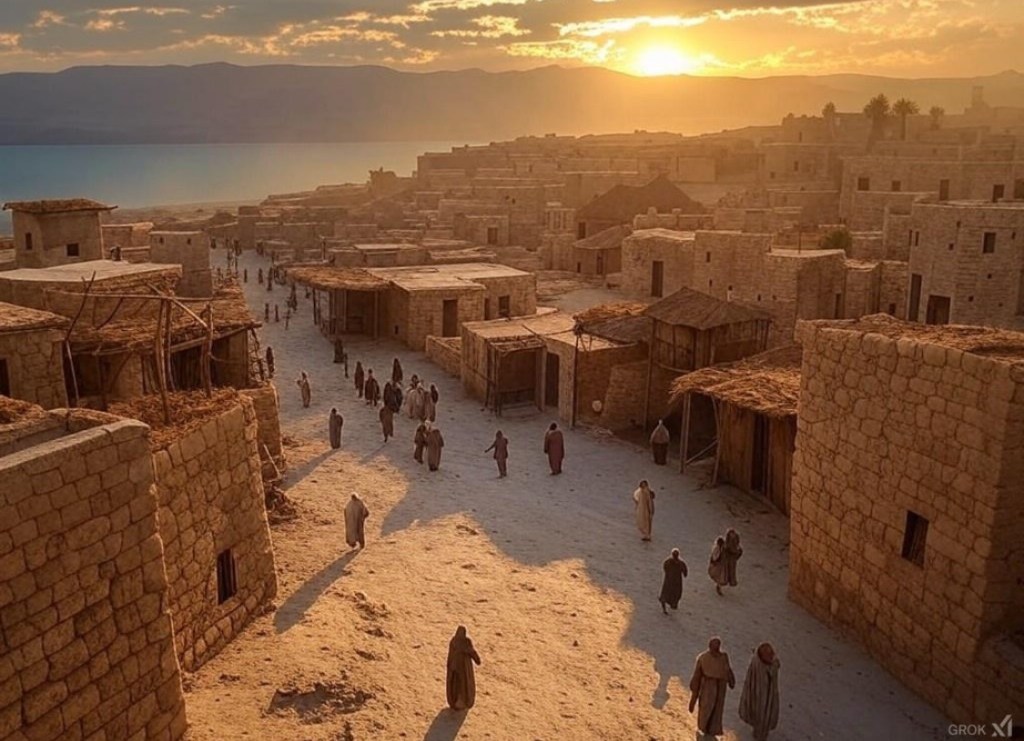
The city of Sodom

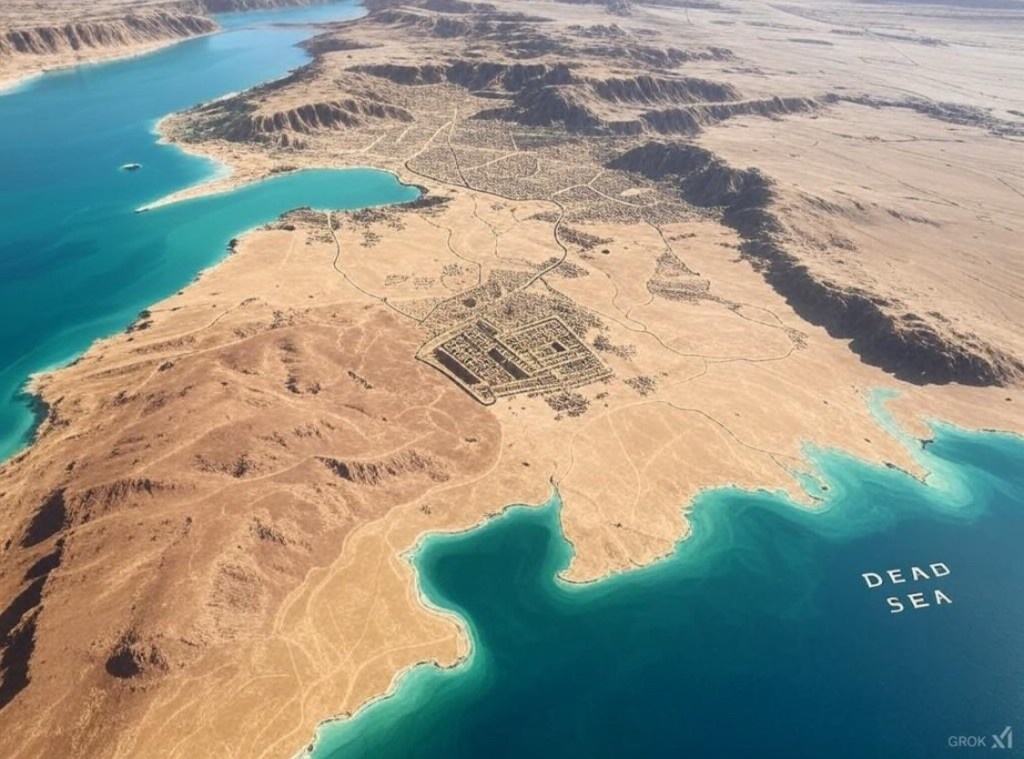
I’ve been thinking a lot about Sodom and Gomorrah this holiday season, 2024, and going over into 2025.  Not just in the usual things, like where they were as cities along the Dead Sea in the time of Abraham.  But I’ve been thinking a lot about Lot and his wife and daughters being warned that God was going to destroy the city and that his family needed to leave.  Because God couldn’t find one good person to save, he sent a couple of angels to retrieve Lot so he could destroy everyone else.  I honestly understand God’s frustrations and anger, and I have been thinking a lot about just pushing the button and erasing the whole thing.  I believe that, in my case, I know more than ten people in my life who are worth saving.  But I can understand Yahweh’s predicament.  I would say I am a very positive person. Extremely positive.  I have a personality that can carry risky relationships, so I have allowed in my life people here and there over the years who are very self-destructive in the hopes of pulling them up off the mat and giving them psychological access to a good life.  Wealth is measured in many ways, so I consider such an opportunity much better than handing someone millions of dollars.  A bankrupt personality will blow through money like hot butter right out of the microwave.  So before you can attempt meaningful wealth-building, you must fix what’s wrong with people deep inside themselves.  So, my policy for over four decades has always been to give a few wild characters a chance to do the right things and have access to a better life than they would ever get.  And to show them the way to a righteous existence. 

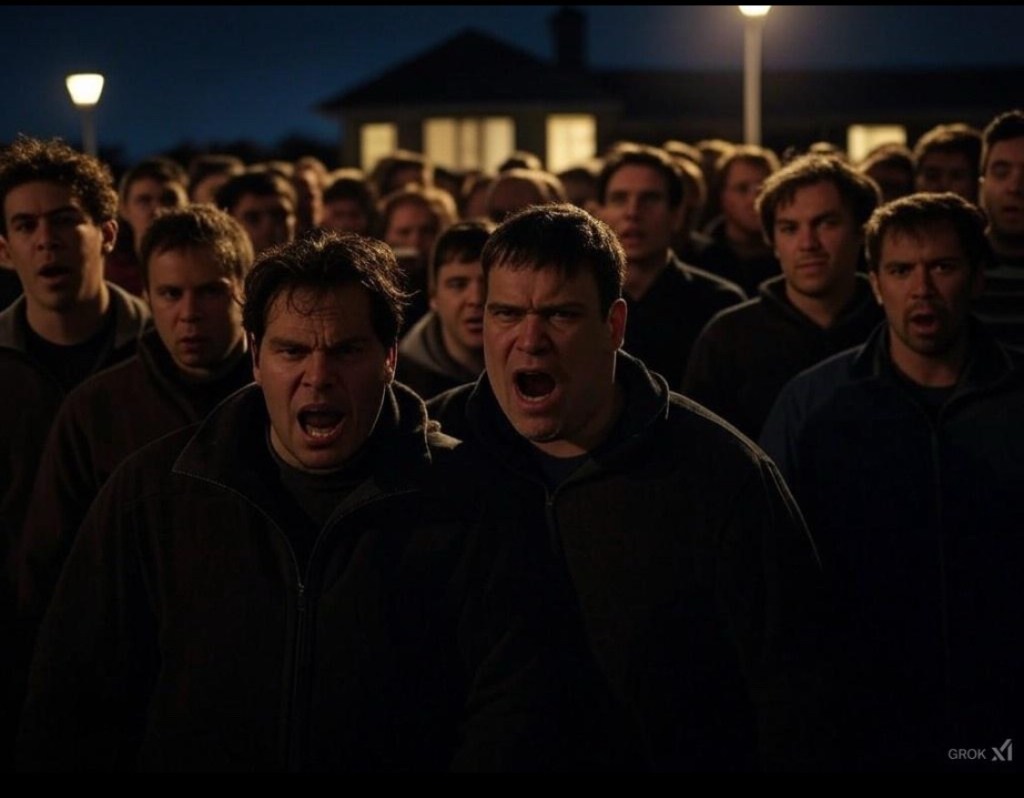
The angry mob that wanted to rape God’s angels. Driven by lust, greed, and animal motivations

This year, for whatever reason, I had to associate with a more extensive sampling of people during the Holidays, which was very tiring.  I tend to give myself a lot of time to think. I usually read three books a week, but through the Holiday season of 2024, I was having a hard time completing only one because the demands for my time were very intense between family engagements, professional contacts, and random chaos.  I saw more people than I cared too, which didn’t allow for a lot of room for me to have the patience to carry out some of the diabolical reform projects that I usually do without them impacting me personally.   And while all this was going on, I felt I could hear the voice of God whispering in my ear, “Stop wasting time on these losers.  Dump them and free yourself from the shackles of their pathetic existence.”  And I kept thinking about the losers who saw the two angels go into Lots house to warn him of what God planned to do.  And they gathered around it and demanded that Lot send his guests out into the street so that they could have sex with them and rape them against their will.  Lot, trying to be the peacemaker, instead offered to send out his two virgin daughters.  But these were homosexual men who gave the name to the process of sodomizing victims because of the debauchery of Sodom, the destroyed city.  And they wanted to rape the two beautiful angelic men.  There is a lot wrong with all of that, from the mob that wanted to rape the angels to Lot offering his virgin daughters instead.  I would never do that.  People have asked me what I would do in Lot’s case. Well, I would have made it so that every one of those mob members would never sit at a dinner table again.  Sending my daughters to a mob of rapists would never happen under any circumstances.  No threat of violence can’t be overcome with superior methods of aggression, to be nice about it.

The angels had no choice but to blind the aggressors working against Lot
And God eradicated the city because not one person was worth saving turning it all back to dust for which it came

The people I am referring to just wore me out were people who might otherwise be in the mob that Lot had to defend himself from.  If you know the story, the angels, seeing Lot’s predicament, took pity on him and just turned on the mob and blinded them so that they could all escape, which they did and joined Abraham in the desert before God destroyed the place.  Along the way, of course, Lot lost his wife because she looked at the destruction.  Then Lot was sleeping with his daughters, so there were other problems.  But the moral depravity of society, in general, is what we’re talking about here and whether or not members of the mob could have been reformed if only someone had tried to find the good in them.  And this hasn’t been a come-lately project for me.  I have done this as a policy, trying to help people who are just bad and rotten to their core; I’ve wanted to give them a seat at the table and teach them how to thrive there.  But in most cases, if not all, they always let me down.  And we’re not talking about a person here or there; we are talking about many hundreds, and in some cases, many thousands.  After many interactions with those types of people in my life in 2024, I had to reflect and ask if there was one worth saving or trying.  Or were the angels right about everything, and the only way to move forward is to blind everyone and leave them to ultimate destruction, and that we should never do like Lot’s wife, we should never look back, lest we destroy ourselves in the process.

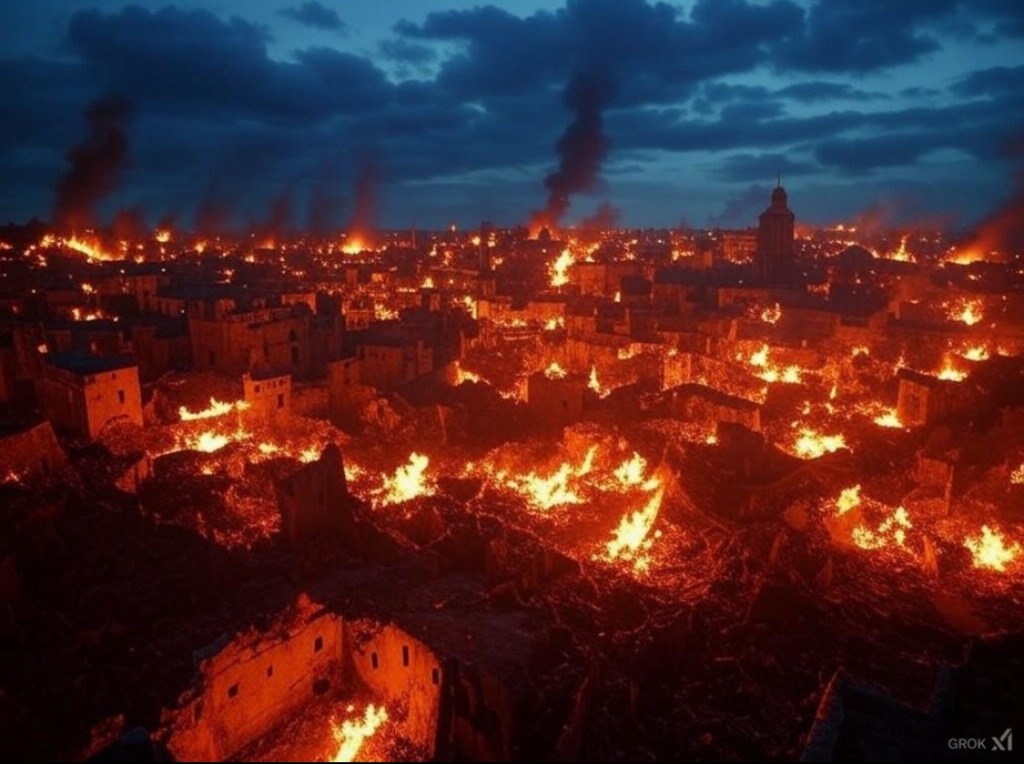
Sodom before
Sodom after

I’ve never felt that trying to help these kinds of people took much away from me that I couldn’t replace with my upbeat personality.  And that’s the only reason I haven’t just pushed the button and dropped all those people from it.  I get to a point where I move on when people disappoint me.  And I try to help someone else, hoping that one or two good people can be found and reformed somewhere along the way.  But truthfully, once people are broken, they don’t come back.  They stay broken and try to destroy whatever is good around them.  And there is no way to help them, no matter how hard you try.  I think the tipping point for me occurred during the subway story of the woman who was lit on fire by an illegal immigrant.  I was sitting at a table in a nice restaurant with a party of people who were personal projects of mine, some working out well, some not so much so, and I caught that news story on the television over the bar.  I looked at the table before me, thinking about all the evil on display, and I realized that the Angels had the right approach.  In many cases, the people I was dealing with were already blind; I was trying to help them see.  But I decided that night to let them stay blind and stupid and leave them to their misery.  And I was going to move on from those people that history has known as the mob outside of Lot’s house.  And rather than trying to save them from desiring such depravity, God had the right idea when he planned to wipe them all out.  Because there was no way to save them, these were the same malcontents of Ham who laughed at Noah’s nakedness when the other children sought to save their father’s dignity by covering him.  There was no way to save such evil.  And that is an admission that is sometimes necessary.  I certainly understand why God destroyed Sodom and Gomorrah, and even to this day, nobody knows much about the ancient cities because they were so bad that there wasn’t anything left worth knowing.  And that is the same case with most people.

I get it

Rich Hoffman

Click Here to Protect Yourself with Second Call Defense https://www.secondcalldefense.org/?affiliate=20707

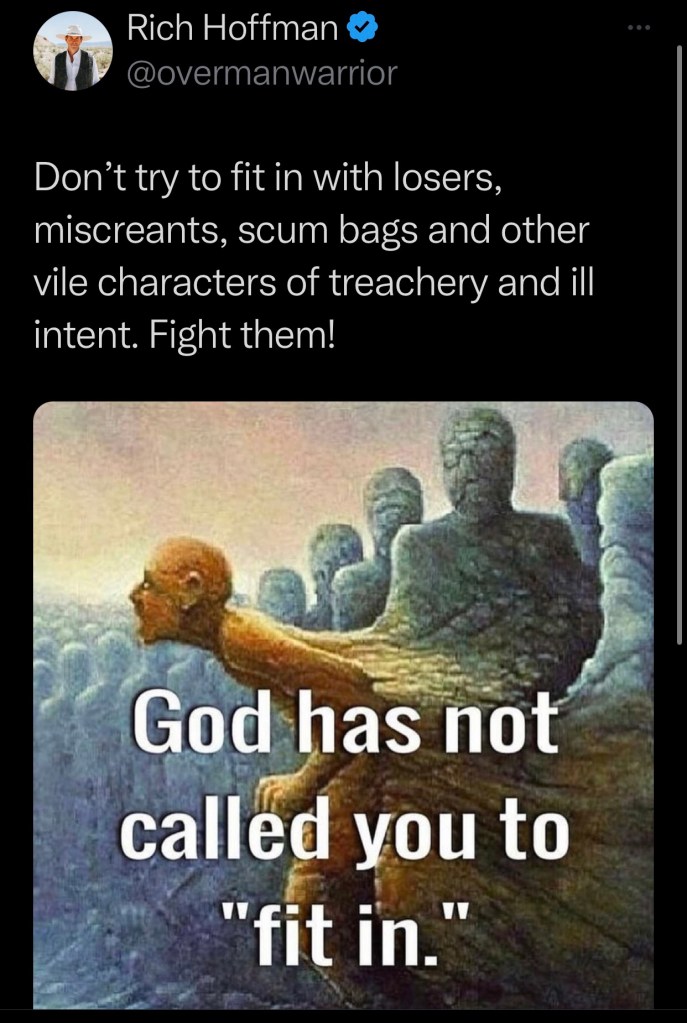
The Greatest Sin of All: God does not want low ambition, weak, people, he wants Heaven on Earth and warriors to defend it

The greatest sin of all mankind, I think, is choosing to be a loser and a meek participant in the world around you.  This was a topic of conversation during dinner recently. It was a Christmas gathering of brilliant and religious people. Of course, the topic of Trump came up and why God had picked him out of all people to save the world.  Because what is happening is nothing short of revolutionary, and there is a science to it. If you read the Bible carefully and free yourself of the many human interpretations of it that necessitate worldly politics in convincing people to be sheep and to flock to the shepherds of government for the global control of mass social movements, you’ll see that there is more to our usual thoughts on the matter.  I argue often, and I did at that dinner for a lengthy diatribe about biblical understanding that my take on God is that he wants and despises meek losers who grovel at a sacrificial monument and strive to cover their nakedness.  Of course, that point of view gets a lot of looks and even provokes anger.  Sometimes, a lot of anger.  But that wouldn’t make any of it any less accurate, and I explained why God picked Trump to save the world.  And it had nothing to do with being a good boy who followed the Ten Commandments, went to church every Sunday, and obeyed all the church rules of worship to earthly terrestrial figures.  No, it is because Donald Trump, the current President, and who has been for many years now psychologically dared to be something that few in the history of the world have had the guts to be, and that is to rise to the greatness of Heaven that God always intended for the humans he created.  And because Trump dared to rise above the station of humanity and its meekness, he has been rewarded in many ways and put in place to do all the great things we are now seeing. 

When God asked for Adam in the Garden, he couldn’t find him because his first man hid in the woods to cover his nakedness. God asked him why.  “How do you know you’re naked, Adam? Who told you thus?”  After some coaxing, Adam blamed it on Eve, his woman, and revealed that the lowly serpent had tricked them into eating from the knowledge of good and evil.  And that they were no longer qualified to reside in the Heavenly garden, and the cherubim cast them out and prevented them from returning.  The same cherubim  atop the Ark of the Covenant kept ordinary people from gazing into it to read the Ten Commandments for themselves.  The use of fear to keep ordinary people from seeing reality is a common theme in the Bible, and it’s not for God as if the rules were intended to be followed, but that they were designed to provoke in humanity a lofty disposition toward the preservation of Heaven on Earth as God created it.  These problems would arise again throughout the Bible but would most culminate in what I consider to be the two biggest sins noted in the Bible: the failures of King David and his son, King Solomon.  Even after all that God did to forgive them and prop them up with riches and power on earth, they both fell short because of their insecurity with women and did not live up to the lofty goals God intended for them.  Israel would never rise again to its former glory because God punished his chosen people for their meekness, the greatest sin that there is.

In King David’s condition, it was when he plotted to kill the husband of a woman he was watching bath, and he wanted her for herself, Bathsheba.  David had many wives and could have had any woman he wanted.  But he wanted this one who was married to a military man whom David had control over.  So David plotted his death to marry the woman, and all kinds of problems arose because of this scheme.  God wasn’t happy and decided that David wasn’t qualified to build a temple on earth to represent Heaven’s presence, so he left it to David’s son, Solomon.  King Solomon had wisdom, women, and wealth; God put it all at his feet.  But Solomon found maintaining all his wives difficult, and he built temples for their crazy gods, too.  And it upset God, Yahweh, so much so that God told Solomon that his kingdom would end with his death and be split in two by his sons.  And that Israel would never recover, which it never has.  But the sin was not so much in following God’s instructions, just as Moses had to be pushed into doing his great deed of freeing the Jewish people from slavery in Egypt only to stagger in front of the giants of Canaan because they doubted that God would give them a victory over such a terrible foe.  So they were punished with 40 years in the wilderness for doubting in themselves that God would grant them protection.  For that doubt, they were punished.  So, we see the trend in the Bible that God expects his chosen people to rise above and push forward and not fail to meekness. 

When Jesus said upon the cross, “My god, my God, why have you forsaken me,” many interpret that as the fulfillment of an ancient prophecy.  But it’s just another abandonment of God of those he put his hand on who fell short in life and did not rise to the occasion and stand against the tide of evil.  It was the meek who interpreted the act as a sacrifice to wash away the sins of humanity, when in truth, God was always God, and he wanted to defeat his foes in the world who were trying to destroy his concepts of Heaven on Earth and that humans would be his direct representatives in this dimensional reality.  And yes, of course, I get a lot of nasty looks when I say this, and I certainly did at that dinner.  That kind of talk rocks the foundation of everything people want to believe about their relationship with God.  But with Trump, he didn’t back down and surrender his ego to meekness.  And no matter how much the world persecuted him, he kept fighting and never surrendered himself to the naked truth of existence.  Trump didn’t hide behind a tree.  It might have taken him three wives to figure it out, but he learned not to look out the window and plot the death of other women’s husbands.  There are better things to do.  And he didn’t let a woman distract him from the pursuit of building Heaven on Earth.  Through his companies, Trump has tried to develop his idea of Heaven in all his buildings and golf courses with an elevated sense of human accomplishment.  And when an assassin’s bullet missed as it did in July of 2024, God spared Trump by the literal grace of God.  When Trump was put before his version of Pontius Pilate, he didn’t say, “You have said so, that I am the son of God, the Messiah.”  Instead, Trump said, “Yeah, so what of it? I’m your president, and I’m coming for you next.”  And finally, God had someone who wouldn’t hide his nakedness in the Garden.  And wouldn’t blame women for his shortcomings.  And he endeavored to elevate himself above the standard, meek and weak, and to lead others to their lofty exploits.  And to the way I look at things, God was finally happy with someone who dared to trust that God had his back and would behave with divine understanding.  And would not hesitate to attack the Land of Canaan, filled with ancient giants that far outnumbered them.  Trump gets it, and God is happy about it.  And that happiness we are all feeling after this 2024 election.  That’s what I said anyway, and all my dinner guests got up and left and refused to speak to me for the heresy.  But deep down inside, they all know I’m right.  So I paid the check and went back to my books.  Truth isn’t what we want it to be; it is what it is.  In this case, it requires audaciousness, which God wants, to be seen.  Based on a straightforward reading of the biblical text, the greatest sin in the world is in striving to be a loser when God tried to inspire humans to greatness, to be representatives of Heaven on Earth.  And it takes a lot of courage to do so.

Rich Hoffman

Click Here to Protect Yourself with Second Call Defense https://www.secondcalldefense.org/?affiliate=20707

The Politics of Heaven: Why BlackRock is producing assassins trying to kill President Trump

After this election, I am seriously considering writing another book begging me to write it. I think about it all the time. It’s called The Politics of Heaven because I believe people need to understand the impact of a Divine Council on our lives and the purpose of humanity’s creation, to begin with, about a more prominent political structure that falls well outside our terrestrial appraisals.  I feel uniquely positioned to discuss that matter because it has always been war, and our role in it is essential relative to the strategies of Heaven and God’s plight as a universal force of good.  But God has challengers, and our political system reflects this battle on many dimensional planes of reality across time and space, and our religions, I think, get only a tiny fraction of an understanding of its expanse. But whenever divine providence shows itself on a mass scale, such as this assassination attempt against President Trump, it provokes my thoughts in that direction.  I think people could use some context that goes further than the faith of religion.  But God’s hand is the only scientific explanation for all these close calls President Trump has survived.  But who is causing all the trouble?  It’s not enough to say that it is Satan; we need to understand the politics of why there are so many rebels trying to destroy God and his kingdom, and the creation on earth as it is in Heaven, America as its best representative of that political order in four-dimensional existence, our length, width, height and time which our five basic senses are built from.

I have some relationship with divine providence, which is reflected well in the Bible, especially the Old Testament; when God tells the Hebrew people to go forth and take the land of Canaan, he expects them to trust him.  Instead, the first time, they cowered in fear because the spies saw giants occupying the land, and they shied away in fear only to be punished for forty more years in the wilderness.  I have experienced this same kind of thing, but I never shy away.  I never have.  When things look terrible and impossible, I do things anyway, and miraculously, the people who swear to kill me or destroy my life in all the ways that human beings can or want to end up dying of heart attacks.  After a long life of this kind of thing, I am no longer surprised by the phone calls telling me that so-and-so died last night of a heart attack when, in fact, they had made themselves my sworn enemies.  God works in mysterious ways, so I want to write a book about it.  It’s something I thought of while traveling in Japan, where the Shinto religion constantly seeks to appease the kami spirits that aggressively permeate their culture.  In our own culture of America, we have best contemplated the efforts of these evil spirits in our lives by putting our minds to Satan and five demonic spirits that assist him on the Divine Council in their rebellion against God and all creation—which we see as the Democrats pursuing globalism on Earth to destroy God’s people and the creation of them for the perpetuation of that Heavenly political order on earth by its enemies that Satan has sworn to kill in retaliation of God from the very first moment that the Garden of Eden was created and people put in it.  In Japan, the kami are as common as you and I and are a part of their everyday culture.  Which we have chosen to ignore in the West, and perhaps we shouldn’t, where the Bible is our best guide through that political territory that extends well beyond terrestrial politics.

I think all this can be explained in quantum mechanics, and to review what I’ve said before about the CIA paper on The Gateway Project, where people can be manipulated through remote viewing, the past and future can be seen and tampered with, and the basic concept that our entire reality is something like the Matrix that is the product of a massive program, and that reality isn’t reality at all.  I think that is all perspective and that life permeates all dimensional planes of reality, so what that paper is talking about is reality from a particular perspective, which is relevant to that dimension, but not all of them.  And we get hints of this perspective in the story of Job in the Bible, where Satan provokes God to bring great misery to a loyal servant.  God isn’t always in charge the way they teach us in Sunday school as a king and overlord of the universe.  He has political personalities that are always trying to destroy his creation.  Satan is the character that sits on God’s Divine Council of the Elohim and causes all kinds of problems that have been recorded in our various myths and religious chronicles.  And it is there that things start to make sense where they don’t otherwise because no human beings on earth could coordinate some of the events we are witnessing unless you consider more dimensional influences in the context of eternity and its political motivations. 

To this second attempted killing of President Trump on his golf course in Florida, I think the only explanation that makes sense as to the connection between that assassination attempt and the other one in Butler, Pennsylvania, is BlackRock.  It’s not an accident that participants in BlackRock commercials were motivated to kill Trump during the climax of our election season.  That has an occult root cause instead of a terrestrial motivation to our standard forms of conduct.  And yes, when you have someone like Larry Fink, who owns BlackRock, Bill Gates, who ran Microsoft, or George Soros, who behaves like the Satan character from the Bible of Western civilization, you start to see how some of the demons who serve Satan behave.  And that has provoked a lot of talk in our culture about who they are by some of our most contemplative religious minds.  And those demons manipulating large companies like BlackRock through their ownership as single-point contacts are the classics from the time we have managed to name.  I think many thousands of these characters are always working in the background, but to name a few, we know Baal from the Bible.  Much of what we see in our politics, especially in what the Palestinians are always up to, you can see the fingerprints of Baal all over them.  For context on globalism, remember there are tributes to Baal in New York City and London, England, that are fresh and at the heart of all globalism.  That is their God of reference, known as one of the critical rebels against God and his creation—the human race.  Three more demons, Leviathan, the Spirit of Lilith, and Asmodeus, are advocates of homosexual lifestyles and are openly seeking to destroy the human race of God’s design by altering the value of sex and reproduction, which we see the effects everywhere we look these days.  Those demons are attached direction to the odd obsession that Democrats and other globalists have for abortion.  Then there is the classic Baphomet, the Knights Templer character passed down through many of the Masonic temples as the embodiment of the Devil.  It’s the character they talk about in Motley Crue songs and thousands of other references.  Baphomet is all about the sacrificing of children, which is the ultimate spitting in the face of God that you can get.  And that war is clearly at play presently in our politics.  To understand the evil at work looming perpetually in the background, you must understand these characters working against God and who their human contacts are in our earthly realm.  Once you know that, you can understand the motivations of BlackRock, Larry Fink, and the World Economic Forum.  And why they are trying to kill and destroy President Trump at every turn and the rest of us with their political antagonisms.  Their efforts go well beyond our lives here and now.  But extend into eternity, where The Politics of Heaven is well underway in ways we are just beginning to understand. 

Rich Hoffman

Click Here to Protect Yourself with Second Call Defense https://www.secondcalldefense.org/?affiliate=20707

Don’t Hide Behind the Robes of Jesus: God wants us all to fight evil, and to destroy it

I understand biblical scripture regarding fighting evil and going to war with the villains of God’s pantheon.  God says often in the Bible, through human interpreters, of course, but he expects people representing him on earth to fight for Heaven even when the odds look horrendous.  God spends much of the Bible angry at his chosen people who doubt him, waver away from the task, and do not conquer on his behalf.  As I say that, I think of the great prophet Elijah who fought in a dual the high priests of Baal, and at the end of the fight, goodness massacred the vile characters in a bloodbath.  God was not disappointed.  And, of course, we all know what happened to Jezebel.  She was eaten by dogs, torn from limb to limb for her commitment to worshiping Baal and steering Ahab down the dark ways of idol worship.  Remember the spies who were to take Israel into the promised land of Canaan but hesitated because they saw giants there and doubted that they could conquer such ominous villains?  God punished Israel with another generation to wander in the desert wilderness until younger people would trust him and do as he said, to attack and destroy every breathing creature of the Baal cult worshiping pagan losers of Canaan, utterly and without forgiveness.  God would protect them if they only did the task.    I have been through enough in my life to know that even when it looks hopeless, when you do the right thing, God does have a way of rewarding you.  I understand the lessons of King David, who had his faults.  When he sent Bathsheba’s husband away to war so he could seduce her, God was not happy. His favorite king had killed a rival for his affections even though David had a whole wine list of other wives and concubines to sleep with.  David had killed an innocent man to sleep with his wife.  Yet God still blessed David because he had conquered evil on behalf of the kingdom of Heaven, so God gave David the benefit of doubt. 

Yet I have often heard from various church leaders and other religious personalities who think they know better than God what should be happening in this current time, where evil is spreading rapidly, like weeds in a garden untended to, which is choking off goodness purposely.  And they are hiding behind the name of Jesus and using peace and a poor understanding of scripture to justify a lack of action.  They say on Sundays that the church should stay out of politics and not pick sides in the presidential election between Trump and Biden.  And that the purpose of religious study is to concentrate on the life ever after.  And not to engage and fight for what’s right.  Our focus should be on the afterlife.  That this life is corrupt and that we should not pursue material things, then to surrender ourselves to God and the gates of Heaven.  When we all get to Heaven, if God wants to be mad at me for the things I have done to bad people, I’m cool with it.  Because I don’t think God will be all that mad at me.  I expect more than a participation trophy from God.  What those Church leaders are essentially doing when talking about how to fight evil in our own time is surrendering before the fight even starts, and they are hiding behind Jesus as their justification, much the way the Israelites did under Moses when the spies returned to report on the giants who held the promised land, much to the frustration of God. 

God can forgive them. I won’t. Call me a sinner, I’m good with it.

What people who are cowards do when they don’t want to act is hidden behind something they think people don’t understand, like scripture; even though many people attend church on Sunday and profess to love and worship God, they never read the Bible.  In that case, your priest or pastor on Sunday becomes just as worthless as the average lawyer who does the same with our Constitutions and assumes that the people they are talking to haven’t read the text for themselves, leaving it to the corrupt to interpret the meaning.  To mask their cowardness, they hide their lack of inaction behind scripture and say that God wants them to surrender to evil to forgive their enemies instead of defeating them in bloody violence to fight to make Earth as it is in Heaven.  All this forgiving and forgetting stuff is for the birds.  Evil in whatever form it presents itself must be punished.  And yes, God will have your back if you fight for righteousness.  God needs humans to do his work, and when they refuse to do it because they are timid and don’t trust that God will be there when required, it makes God furious.  The Bible captures that frustration quite well and makes that religious document unique among others in the world.  God wants evil conquered and punished, not forgiven.  And to answer how I could know such a thing, I know from experience.  The purpose of evil, as God made it, was to test humans and to draw from them the character necessary for Heaven.  And to fight on behalf of Heavenly objectives as they relate to the universe.  Did you think you were born to bow at a cross and make a few gestures with your hands across your chest just to prepare to die?  No, God wants you to fight, and he is judging your character with every breath you take. 

I have been talking about religion more lately because many people think these are the end of times, that evil is making its push for global domination at the expense of us all.  And I keep hearing from these religious leaders who are scared that they need to follow in the ways of Jesus and allow themselves to be hung on a cross and killed as a sacrifice to the powers of evil.  But that was never the point of the Bible; God wants people to fight for goodness and justice on his behalf.  In politics, in our families, communities, everywhere.  When we see evil, God expects all those granted with the gift of life to fight on his behalf.  Because he is elsewhere doing what God does.  We are here on earth, and it is our task, until we take our ambitions into space, to fight evil, just as we were to do so in the land of Canaan.  And to fight against Baal and all his minions.  When Elijah won his duel, they didn’t sit around and share a coffee with the priest of Baal and talk about co-existing with them.  They killed the priests and slaughtered them ruthlessly.  And justifiably.  Fighting for God did not mean peaceful misunderstandings.  And for those who lack courage in this life, nothing makes God more unhappy than power-puff patriots and wishy-washy losers who hide behind the Bible and Jesus, hoping that nobody has studied the scripture and knows what it says about evil and the need to fight it.  In times like this, we should all take a page from the antics of the great Elijah and conduct our lives similarly.

Rich Hoffman

Click Here to Protect Yourself with Second Call Defense https://www.secondcalldefense.org/?affiliate=20707

Why Standing With Israel is Good: Western Civilization is worth defending from those who want to stay primitive and fight against human progress

So why stand with Israel and against the Palestinian position of destruction?  I thought it was interesting in my neighborhood this morning to drive by a home with a flag of the Palestinians in the front yard blowing along proudly in the breeze.  They also had a sign for Julie Shaffer, the liberal school board member on the corrupt Lakota school board.  Why did those things go together? Because they do, and why should people have an opinion on the matter even though it’s a conflict on the other side of the world?  Well, the first thing I would say is that we are primarily lucky to have been born in the United States, those reading this.  If you have traveled any of the world, it is not as nice of a place to live.  I have been to quite a few places worldwide, and there is never a better moment than landing back in America.  I did this recently late on a Saturday night.  It was just me traveling on that trip so I was alone with my car, which needed gas.  It had been over a week since I had my favorite drink in the world, a Mello Yello, so I stopped at one of the gas stations across the highway from CVG airport for both things.  There was a Mexican attendant who was blaring country music and watching some Latino talk show on his computer who was the attendant and it was just us late at night.  The world was pretty quiet, and I felt fortunate to call America home from where I had been to where I was.  And that happens to me every time I travel, even to places like Paris and London.  No matter where in the civilized world or the primitive, there is no place like home, truly. 

One of the reasons I like the Bible so much is that it has very clear standards.  It’s not just religious utterances, but it has a story about the progress of the necessity for cleanliness and has an overall decision about the state of nature as a whole.  Yahweh is my kind of God.  For people who know me, and this goes back a very long time, to when I was a little kid, well before my first conscious Bible school studies, which I did have through the 8th grade, I don’t like human stuff.  I don’t like belching, farting, or any references to animal traits.  When I drink from a class, I do not let the part of the liquid that touches my lips run down the glass.  I wipe it away.  In short, I am a very clean person.  I don’t like bad breath.  I don’t like unshowered people.  I don’t like hairy armpits on women.  I don’t like sloppy men with fat stomachs.  I like to see humans maintain themselves and live at a level above nature.  And to show dominion over it.  The Bible tells the story of a chosen people who were supposed to live an elevated existence and step above the level of gutter rats.  I do judge others and judge often, and I am very proud of it.  I have compassion for people like that guy at the gas station who are reaching for the American dream but weren’t born into it.  I was lucky enough to be born an American.  I love to see people working to be more Western in their lives, and I will always show them the way.  But I am much more judgmental of human behavior than even Yahweh.  I love civilization and excellence and am always reaching for personal betterment.  But I detest humans who do not go for the stars and surrender to their animal instincts.  I despise them, honestly. 

The history of Israel was an intentional injection of a regional problem where the Palestinians, in the form of the Canaanites, in the region where Israel is now, were child-sacrificing barbarians worshipping ancient gods that demanded blood, a lot of it.  They were a superstitious group of people who had been around by the stories of the region for more than 450,000 years, and they were never able to advance as a civilization because of their need to worship such corrupt and flawed personalities in their deities.  So along came a god that called himself king of all the pantheon, Yahweh, and gave them the Ten Commandments, which are rules for good living, and the nation of Israel was created.  As a result, humanity stepped into a better world, and Western civilization was built.  The fight to this day is from the lazy, the vicious, the scandalous, the desire for blood and human sacrifice to prevail in the region as it has for tens of thousands of years, and it shows.  When traveling to such places there are many in the world, such as the border between Israel and the Gaza Strip, for instance, where Marxism has been accepted over capitalism, where the drastic differences between the two societies are grossly noticeable.  The Palestinians are not a civilized, clean people.  They are barely getting along, which is evident by their housing, cars, and youth’s lifestyles.  I typically feel sorry for such people, but sympathy goes out the window very quickly when they start belching, farting, and looking like they want to hump the leg of every passerby.  They are essentially fighting for the right to be a douchebag, which is the same as saying that they don’t want to advance to the finer things that come from human imagination and expectation. 

Always in the background of the indigenous people’s argument, which for the Palestinians is similar to the Indians of North America is the argument that the greedy capitalists have interrupted the previous civilization that was crawling around in the dirt and worshipping nature with human sacrifice.  In my view, the invention of competitive cultures that may be better has improved the world everywhere it is utilized and because of that competition, the world is a much better place.  Because if left to their own devices, people would continue to get along and feed themselves barely and have a deficient standard of living.  So, I view the advent of Israel as extremely good for the region’s people; it has forced them to be better than they otherwise would be.  The same with the Indians in North America.  The standard of living improved for all people, even them.  Playing in the mud, worshiping a bunch of dirty nature gods, and not having a culture driven by quality and science is not a good life.  That is the difference between capitalist and Marxist cultures.  Or cultures that thrive from biblical context under the laws of Yahweh or those surrendering to an animal condition.  The Palestinians are not striving for excellence; they want to live as they did in the brutal past and are fighting for the right to continue those animal-driven lifestyles at the expense of human progress.  Which is a horrible idea.  Western Civilization was a great invention driven by the Bible, and the world would be much better off if everyone adopted it.  But as long as people fight against it, there will be conflict.  And in such disputes, the efforts at betterment through Western Civilization is a noticeable improvement over what previously was, in every case.

Rich Hoffman

Let’s Talk About God: Understanding the Politics of Heaven

For further conversations, it’s time to talk seriously about God and the politics of Heaven and, in general, everlasting life.  A lot of people think that death is the end of it all, but I would argue that it’s just the beginning, and part of the point of life is to grow into something that can function well in the existence of a multidimensional political universe, because as it is in Heaven, so it is on Earth.  The original sin was that God created man in his image because he wanted a family who would rule on his behalf over the Earth in ways that always had the eternal perspective in mind, and in that way, humanity was created to be over angels and demons relative to the Divine Council as it is talked about in the Bible many places, especially Psalm 82.  This is important because to understand the fight we have today, politically, we have to get our minds around the concept of God and not think of him as a solitary figure sitting on a thrown in everlasting life waiting for everyone to go to Heaven and sit around in the pearly gates to do “something” for the rest of eternity.  We tend to view Heaven as a destination at the end of the tunnel of life.  But I think that’s just where the battles begin, and what we see on earth are reflections of that eternal life, and God, Yahweh, has always been under pressure to manage the vast populations of eternal existence.  And that is why the Fall in the Garden was such a tragic occasion for him, which he has spent many thousands of years trying to resolve to his satisfaction.  That might seem strange for an entity that created the universe and everything in it.  But there is more to the story regarding the challenge of free will that is ultimately the point. 

We all know the story of the Garden of Eden, where the snake tempted Eve to eat from the Tree of Good and Evil.  This is the fruit of the lesser Gods, those in the pantheon at that time, for which Yahweh managed within this universal spectrum but constantly tried to undermine his authority.  Those Gods would be characters who had been around for many tens of thousands of years before the biblical period we are talking about here, gods like Baal, Moloch, Ishtar, Marduk, and a long list of the same names that would be called other names in other countries such as Greece, Egypt, and the Americas, but would be the same essential characters.  Yahweh was trying to do something different, and the rebellion on the Divine Council was certainly intent to challenge his authority, just as we see in our political order, which we can say reflects the actions of eternal life.  Of course, once God’s creation had eaten from the Tree of Knowledge of Good and Evil and become like “them,” the gods of the Divine Council, they had to be cast away for God to try again and again to make the human experiment work by comprehending the aspects of Eternal Life that God intended for humanity.  Not the kind of stuff they teach you in Sunday school or Church.  But if you dig into scripture and read what it tells us from thousands of years of interpretation and analysis, things start to appear much more as they indeed are. In that case, the world opens up much differently for those with the courage to eat from that Tree of Eternal Life. 

Humans couldn’t handle such a task, so they were thrown out of the Garden guarded now by Cherubim, creatures that have a recurring theme in ancient times.  And eventually, because they fell from grace and were now functioning in the politics of the lesser Gods, such as Baal, God wiped them all away with the flood story, which is very much the same story we find in the Epic of Gilgamesh.  Noah and his family are God’s chosen people, and they try to start the Garden story once more.  Only to fail when people attempted to build the Tower of Babel, again setting their sights on the kind of mistakes the Divine Council had made for thousands of years.  God came along and scrambled their speech so they could no longer build the Tower of Babel to reach Heaven.  And Yahweh sent them to the corners of the earth to separate them politically from one another.  But God doesn’t give up on this experiment with humans. Instead, he turns to Abraham and decides to make a new people from his line, which becomes the generations of Israel, Moses, King David, King Solomon, and the like.  But again, once Solomon died, his children fell to the temptations of Baal and the gang, so God allowed Nebuchadnezzar to raid his people and punish them for their discourse, which was their political alignment and worship of the lesser gods of the Divine Council.  Understanding that Divine Council, it helps to read from the ancient literature that comes out of Syria and modern-day Iraq.  No wonder those areas are war-torn today; the conflict is a mask of the truth.  Governments always want to think they are in charge as they completely are creatures eating from the Tree of Knowledge of Good and Evil.  From there, after 70 years, God allows the people of Israel to rebuild and continue again, but of course, they fail, so he sends Jesus, his representation on earth, to be sacrificed like just another lamb out of Nazareth to solve the political problem with that Divine Council once and for all.

God’s problem, which is eternal, is how to get people to do the right thing of their own free will.  God could undoubtedly punish them and impose his desires through force.  But the divine experiment and the intentions of God’s purpose, and therefore, the meaning of life, is to create religious partners who can function for what’s right as interpreted by an eternal perspective.  Not to eat from the Tree of Knowledge of Good and Evil, the political world of the Divine Council.  But the infinite aspects of all existence, as the universe knows and understands it.  God was looking for reflections of him and his intent to do on Earth as it is in Heaven and to share rule with such creations.  To say God has struggled with the Divine Council might seem odd, but the problem is free will, whether talking about people or angels, demons, and the pantheon of maniacal characters of eternal existence.  Life and death is not the goal of these considerations, but free will is.  And it is free will that is at the core of the American experiment, and it is the suppression of that free will that the world is attempting to stop presently in our political world.  But the root cause of the problem is an ancient one, considering the fall in the garden and why it was so tragic to God.  Because the politics of the Divine Council sought to corrupt the effort from the beginning, those characters would not allow God to create beings superior to them, such as humans were designed to be.  To hatch from life into death as reflections of God himself and to rule over the Divine Council.  And once that is understood, much of the trouble of our current time can be comprehended more fully.

Rich Hoffman

The Rich Hoffman Definition of Good and Evil: How to Make Heaven on Earth and Defeat the Bad Guys

It’s that time again; over the next year or so, many things will make you question life itself and whether or not all this is even worth it.  The temptations of evil are and will be overwhelming, as they always have been, and many people will fail to arrive intact to their eternal satisfactions.  I talk about good and evil a lot, which I am very interested in discussing.  And I always intend to stay true to do good in the world, no matter the temptations.  Yet to do that, you have to have a perfect definition of what evil is and what it isn’t so that the good work of good can be done.  To that point, the old movie The Never Ending Story, I have always thought, did the best job of talking about the nature of evil.  Because without good definitions for things, it is easy to become lost in chaos, and evil proliferates under those conditions.  So, what is it, and why should we not like evil and fight for good?  What’s the purpose of any of it, especially since it’s so hard.  Well, the eater of everything in the movie Never Ending Story was the “Nothing,” sort of an all-encompassing consumer of everything, like a black hole in the imagination.  Something that “doesn’t exist.”  At all.  And the Bible is nearly entirely dedicated to this examination, the fight for good against the temptations of evil.  The pantheon of gods that Yahweh is fighting and trying to save humanity from is quite a vicious struggle that often gets lost after the opening pages of Genesis.  Why was god so furious with Baal and the gang of Mesopotamian deities who inhabited the land of Canaan explicitly?  An even better question is, why should people care if a public school board turns the other way when pedophilia is on the minds of the administrators and other employees?  Or care about the massive crimes of the Biden administration?  Without a good definition of evil, evil grows and consumes everything, which of course, it wants to do.  The only thing that can stop it is righteousness rooted in a desire to do good.  And the first thing evil does to destroy good is to destroy the definitions of goodness, which is undoubtedly the problem of our modern times.  But to put it simply, evil cannot exist without good to suck off of for its own sustenance.  In the beginning, there was no evil.  Evil only arrives as a byproduct of free will and the decisions of thought to produce or destroy.  Something has to exist first to have any consideration, so evil will always be a parasite of good.  Not an entity onto itself. 

So I’m happy to provide the Rich Hoffman definitions of evil because it works and will do quite a lot to destroy evil in the world, which is a hobby of mine.  I don’t think I enjoy anything more than destroying evil.  I do sincerely love it.  I wouldn’t want to do anything else.  But that is because of my definitions of good and evil and the nature of evil.  So essentially, going back to the Book of Genesis, God said let there be light, so there was, and our story begins.  Something was created, and it was good.  Good, by definition, is a value judgment given to something that is created.  The intentions of the powers of creation in human culture could be said to be good.  Now relative to other people, they may not like the product or have different opinions on its value.  But in essence, creating something with the imagination of human intellect, we could say, is to mimic the acts of God at the beginning of creation, and the universe views the process as “good.”  Evil is committed when something attempts to undo that creation or hinder that creative process.  Evil is all about destruction; it is the anti-creative force.  Something that tries to destroy that which is created. 

The ultimate form of evil in the world is laziness.  Someone who doesn’t want to create and desires to destroy the creations of others because they don’t want to live up to a high measure set by the excellent work of others.  To me, it is evil to do bad work or not work at all because they deny the world the acts of creation from the human intellect.  Drug use is wrong because it seeks to blunt the effects of human thought.  Financial scams are bad because they seek productive enterprise rewards without the actual effort of wealth creation.  And AI is wrong because it seeks to think for people who otherwise should be performing the work of a feeling being.  When someone wants to cheat because they are too lazy to do something, under my definition, they are committing evil because they don’t want to do the work of thinking.  And at the most primal stage of existence, the review was the purpose of creating human beings in God’s image.  We were meant to do on earth what was in heaven.  We were told to make heaven in the world and expand God’s kingdom.  The fall in the Garden of Eden was a tragedy more about the nature of free will than what the temptations of a snake could provide through eating the fruit from the Tree of Knowledge of Good and Evil.  To do so was to be like the Gods, and that was not the point; the various forces that conspired to work against Yahweh in the Divine Council since before the beginning of time itself, which was a creation in and of itself to the excellent work of good in the universe, against the forces of nothingness too lazy to do anything else but consume the world around them for their sustenance.  Adam and Eve were supposed to know better and maintain heaven on earth to continue good.

With that definition in mind, then why am I against public schools?  Isn’t that trying to destroy something made by the government to educate children?  That is the mask of evil in how it tries to contort reality.  Public schools are designed to eliminate the mind of children and make their natural ambitions toward goodness unachievable, and, hinders their creative process making them agents of evil by the time they grow up.  Which I consider reprehensible.  And along that line of thought, why should we care about pedophilia, especially in public schools?  It is a very evil thing to do to a new and growing mind to rob it of its individual will toward goodness, to grow up to be productive and creative, and to expand the fruitful nature of the universe through heavenly output.  A ruined person in the form of an adult who has made many mistakes in their life has no right to rob a young person of their full potential.  Evil has no right to destroy the efforts of creation from the mind of the good. Suitable as a product might be relative to the beholder, but the process itself is good by the needs of an ever-expanding universe and is the point of all existence.  And the lazy way out of a troubled life is to consume from others what they couldn’t do for themselves, either by stealing virtue or innocence before a mind is fully formed and can act on its own accord.  That is why pedophilia is evil, public schools are wrong, drug dealers are horrendously bad, and a lazy employee is detrimental to all existence.  That is why we should all fight for good and destroy evil wherever it presents itself.  Then, of course, the world will be a much better place.

Rich Hoffman