Kimonos in Japan: If America wants to be Great Again, perhaps we should dress for that greatness

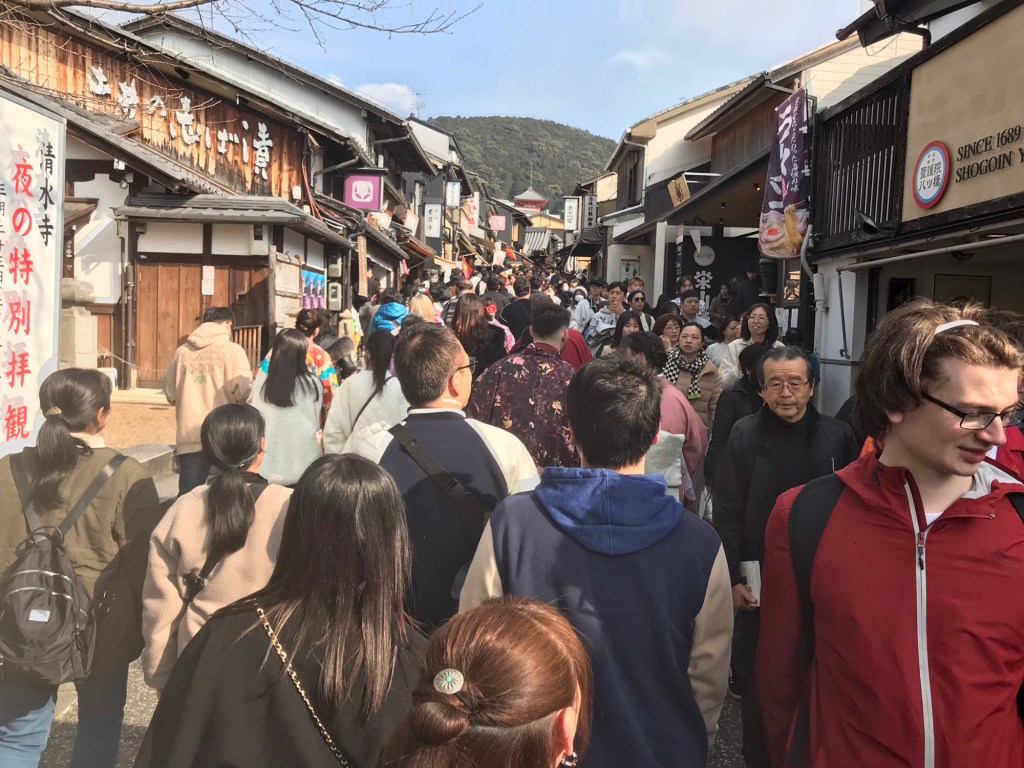
You might have heard about Jimmy Kimmel’s recent trip to Japan, a topic of its own.  But he is right about several things: Japan is clean, and crime is low.  He didn’t understand why, which I’ll break down in a separate article.  However, one thing that is quite clear that I admire about the Japanese people quite a lot is their embrace of their traditional culture and their kimono dress.  I, too, was recently in Japan. I’ve been there a few times during this year, so I am very familiar with some of the unique customs that they have there.  However, during this most recent trip, I saw quite a lot of Kyoto on a Thursday afternoon and for an extended period, and I was surprised by how they dressed.  Most of the people I encountered there were walking around the streets, the temples, and the bamboo forest in full kimonos, both men and women.  And there were rental shops everywhere that kimonos could be rented to wear around town.  It wasn’t a samurai cosplay convention, which was what I thought was going on.  This was how people dressed all the time, and it was very refreshing to see.  It reminded me of something I have been saying all the time, that in America, we need to embrace more of our traditions.  While in Japan, I fully expressed American culture, which they appreciated.  In America, I tend to wear a poncho to my gun competitions and other Second Amendment activities, the kind of Western wear that is very traditional to Western expansion and hard, cold nights on the open ranges next to campfires.   I have several of them, and when I wear them, I always get a lot of strange looks.  But I don’t think they should be considered strange at all.  And when I dressed that way to go out to the store in the middle of the night outside my hotel in Kobe, nobody in Japan thought it was strange at all. 

I had a few ponchos in Japan which I like to put on instead of a jacket, especially in inclement weather.  It’s like having a wrap-around blanket without worrying about it falling off your shoulders, so it frees up your arms underneath.  It’s suitable for short-term warmth without messing around with a cumbersome jacket.  And I like that a poncho hides a lot of what you might not want people to see, such as the many knives and guns that I carry all the time.  With concealed carry across multiple states, it is better to hide the big stuff with very baggy clothing instead of trying to contain the weapons in modern-day America’s conventional dress.  In Japan, their reverence for history, especially in their samurai culture, is unmistakable, and they openly embrace it, which I thought was very classy.  It was nice to see the women dressing up in these classic robes to go shopping and be seen around town.  And the men dressed similarly to accompany them.  Instead of being repealed by the display of my own dress, a few times on this latest trip, as I wore my poncho down to the local store to pick up supplies, people wanted to take a picture next to me in my boots, poncho, and Stetson cowboy hat to show they had met a “real American.”  And they were pleased about it.  As they snapped their pictures with me, I couldn’t help but think of one of my favorite quotes from the Dune books: “How else do humans invent the traps that betray us into mediocrity?” 

Mediocrity is what we have adopted in our modern Western cultures, with our associations with communism introduced through our education system.  They have rejected this mediocrity primarily in Japan due to their reverence for traditional values.  But in America, these days, we have associated fashion with an alliance with sportswear.  Nike, Adidas, and other brands seen from college sports programs have largely inspired our public presentation of ourselves.  These days, the idea of proper dress on casual Fridays is a golf shirt that shows we are interested in sports programs.  That is something that they don’t do as much in Japan.  They love sports, especially baseball, but they don’t go out of their way to show reverence for it out of disrespecting their traditional cultures.  But in America, we want to look like the coaches and players of our sports teams, which behind them have all kinds of corporate communism attached to them.  So, our American dress has shifted from individual expressions of a rugged outdoorsman to billboards for corporate influence over our sporting markets.  And the not-so-subtle message there is to accept that individuals are less important than the team’s greater good.  And, of course, behind that is that communism defines the greater good.  So, wearing a cowboy hat in America is quite a statement.  More people are doing it now than they used to, mainly because of the popular Yellowstone television show and the failed politics of the communist left.  People want to make America great again, and like the Japanese, they are turning to traditional dress to convey that trait.  But in America, our dress directly influences our society’s condition. 

I have always worn a cowboy hat.  But over the years, I have been less inclined toward sporting goods fashion trends in favor of my traditional gunslinger apparel.  I’ve been that way for many years.  I remember many late-night encounters in my twenties where I would wear my ponchos everywhere, including the Kenwood Mall in Cincinnati.  It’s one thing to do when you are in your 50s, as I am now.  But when you are in your 20s, many people look at you weird because you are so out of step with mainstream culture.  But it’s always been a visual hedge against mediocrity, which is how I view modern dress codes, and I largely reject the premise.  A culture should strive to stand out from the crowd in everything, individually.  Not to retreat into submission to the mob.  In Japan, particularly Kyoto and even Tokyo, even though the kimonos are uniformly similar in their loose-fitting robes, they are colorful and full of individualized expression.  I thought that seeing that expression was wonderful and was a major contributor to the quality of their society.  I had a chance to eat at a very nice restaurant in Kyoto with some friends.  It was a classic place; most people wore kimonos, and you had to take off your shoes while eating.  It had a spectacular garden to walk in while you waited for your food, and they provided you with slippers to do so.  I stepped into that place, mostly having to duck because the ceiling was low, and the whole place was primarily made of paper and wood.  They gave me a very large locker for my big cowboy boots, which is what they do when you enter to put your shoes in while you eat, but I still wore my cowboy hat.  And they took notice of it.  But it wasn’t in a “you’re not like us” way.  But rather, a respect for the culture that I came from.  And they were proud of their culture.  And what we all shared was a disrespect for sameness as defined by communism and an embrace of versatility as defined by capitalist markets.  They brought us mostly raw fish and vegetables, certainly not chicken nuggets as I might otherwise be used to in the States.  But it was a good look into a culture that embraced their uniqueness and certainly wasn’t shying away from their projection to the rest of the world.  And if America wants to be Great Again.  Perhaps we should start dressing for that greatness instead of playing everything down to some corporate version of casual and accepting sameness as a value rather than uniqueness. 
Rich Hoffman

Click Here to Protect Yourself with Second Call Defense https://www.secondcalldefense.org/?affiliate=20707
‘Yellowstone’ Has Been Made By A Bunch of Slack-Jawed Hippies: I’ve never seen a show because they are way too left for me

As of now, I have never seen one episode of the popular television series Yellowstone.  I’ve been to Yellowstone, the actual place, but I have never watched the show.  My wife and I have been looking for an opportunity to take the time to watch it, but as of 2.20.24, have not yet done so.  I’m sure we will at some point.  The main series and offshoots look pretty good.  I think they are great for what America has been going through lately, but honestly, they are too liberal for me, from what I do know of them.  The producers and actors, from my vantage point, are money-hating hippies from Hollywood, where the plot lines are all about the big, powerful money people beating up on the poor ranchers, which are classic Western themes.  A lot of good is talked about in these kinds of shows regarding the value of property ownership and family values, and those are the parts of the show that match the public interest.  But for me, they are all a bunch of Liz Cheney-supporting filmmakers who have built the Republican Party into the lame duck that it has been for far too many years until Trump has come along to bring an expectation of victory to party politics that it didn’t have before.  Classic westerns, and these modern ones, never really developed a proper relationship with money and power that is best reflected in American culture, and that has been frustrating to me, which is why, after all this time, and given the content, I have not yet watched the show.  It comes up a lot because of how I dress, and people think the show inspired me.  In reality, it’s likely the other way around. 

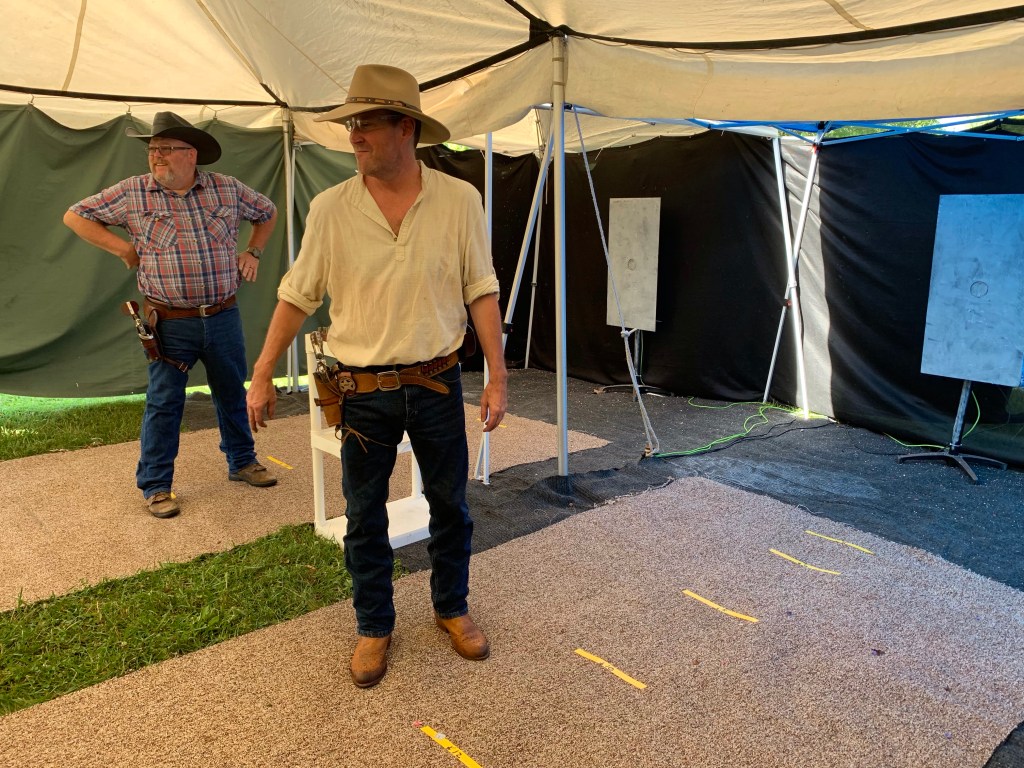
Since I was in the fourth grade, I have dressed the way I do, with a cowboy hat and boots just about everywhere I go.  I’ve always worn a hat of some kind, especially cowboy-style hats.  Many times, I go into public dressed in full gunslinger mode, complete with a poncho.  Especially in my 20s, I dressed ready for a gunfight everywhere because, in a lot of ways, every day was a gunfight.  I walked around the Kenwood Mall in Cincinnati dressed like I was off the set of A Fistful of Dollars, which is the Sergio Leone western with Clint Eastwood that I always loved because those movies embraced capitalism in a positive way, and I always liked them over the American westerns that had lots of socialism sprinkled into them by Hollywood.  And I always wanted to make it clear to those around me that I was not like them.  The cowboy hats were a clear signal that I rejected most of the premises they had built their lives around and that, for me, like a robe in the priesthood, my hat was a sign of an embrace of capitalism and a culture of property ownership and a rejection of European civilization as servitude to kings and aristocrats.  For me, the cowboy hat means freedom from those tyrants and a rejection of their desire to control our every move.  As things started getting more complicated socially in the 4th grade, I started wearing cowboy hats to let everyone know where I stood, which is still my practice.  I seldom ever leave my house without wearing a cowboy hat of some kind.  It’s certainly not something I have done lately because of the success of the show Yellowstone, as many have asked me. 

Several times a week people tell me I would love Yellowstone because of the character of Rip, who they say I remind them of, because of things I do in my community.  I’ve seen a few interviews from the Yellowstone cast that tell me that a train station is involved and that sometimes those kinds of eliminations of the enemy are part of living life.  When people won’t leave you alone or the people you tend to associate with, you can’t play patty cake with them.  Bad people don’t understand anything else.  So I get it.  And because of these constant comparisons, it has generated interest in me to watch it at some point.  But my wife and I don’t have that kind of time to watch television.  I watch a lot of news, and we watch documentaries, but my lifestyle is just too busy to watch a streaming series.  I read around three books a week and we do a lot of family activities.  I have to pick what I do for leisure pretty carefully.  A few years ago, when Kevin Costner, who stars in Yellowstone, came out in support of Liz Cheney over President Trump, and the creators of the show rejected the idea that Yellowstone was “red state” entertainment, I put the show on the back burner.  I’m not particularly keen on the whole Indian subplot.  I see all references to “Native Americans” as a communist attempt to degrade American culture by putting the nature-worshipping heathens of a primitive culture on a pedestal they don’t deserve.  I have studied Indian cultures and am not very keen on them.  They were collectivists and best represented by mass group behavior.  I have never been much of a fan of Kevin Costner movies.  He has made some decent westerns, my favorite with him was Silverado.  My least favorite is Dances with Wolves.  I don’t like movies that put down Western expansion at the expense of the Indians.

I like Teddy Roosevelt’s opinion on Western expansion and think it was one of the most important things human beings have ever done in the history of the world.  Many of the Hollywood ideas about Western expansion came from European migrants who brought all their socialism with them, and they found in the Indians someone they could identify with.  And at the core of Yellowstone, from what I do know about it, is that kind of reverence.   For me, a good western is where a gunslinging hero makes a lot of money, wins a beautiful wife, and kills all the bad guys.  But these Yellowstone kinds of filmmakers like to cry about victimization and how the all-powerful rich people and their government pawns destroy the little guy, and the little guy has to fight back, always on their heels and looking over their shoulder.   I can’t relate to that mentality.  My favorite westerns were movies like the Dollars trilogy, where Clint Eastwood never worried about being outnumbered or out financed.  He always won his gunfights and nobody was better than him.  And that carried over into other movies he did, like High Plains Drifter, one of my absolute favorites, The Outlaw Josey Wales, and Pale Rider.  You can keep The Unforgiven.  It was only good in the last five minutes.  The rest of the movie was a hippie diatribe from a bunch of Hollywood losers.  So, with all that in mind, you can see why Yellowstone still hasn’t been watched in my house.  They may dress the way I do, but that is more of them coming into fashion than me being inspired by it.  They are copying people they have seen in the world, and they put them in a television show.  But there is a lot they don’t understand about American culture, even if what they do get is something that starving Americans wanting to see something good about their country cling to.  I like seeing shows like Yellowstone being successful.  But for me, they are still being made by mind-numbing hippies who have a lot to learn.  Money is not evil; it reveals evil in people who would otherwise conceal their nature from the judgments of the sane.    

Rich Hoffman

Click Here to Protect Yourself with Second Call Defense https://www.secondcalldefense.org/?affiliate=20707
My New Hat From Jackson, Wyoming: A hidden treasure deep in the mountains

My New Hat from Jackson, Wyoming

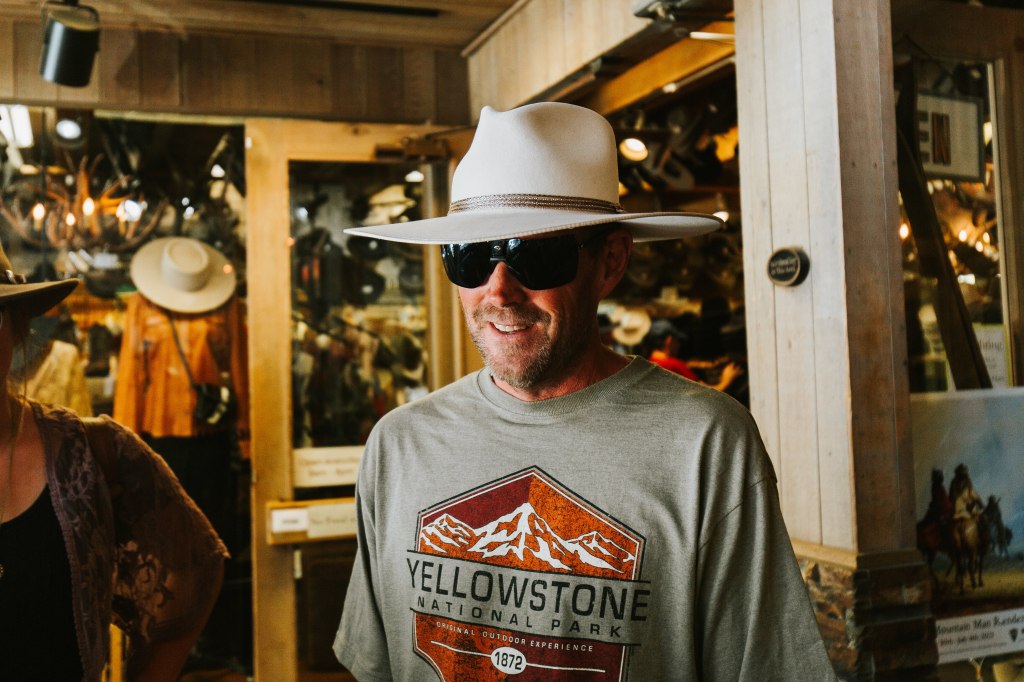
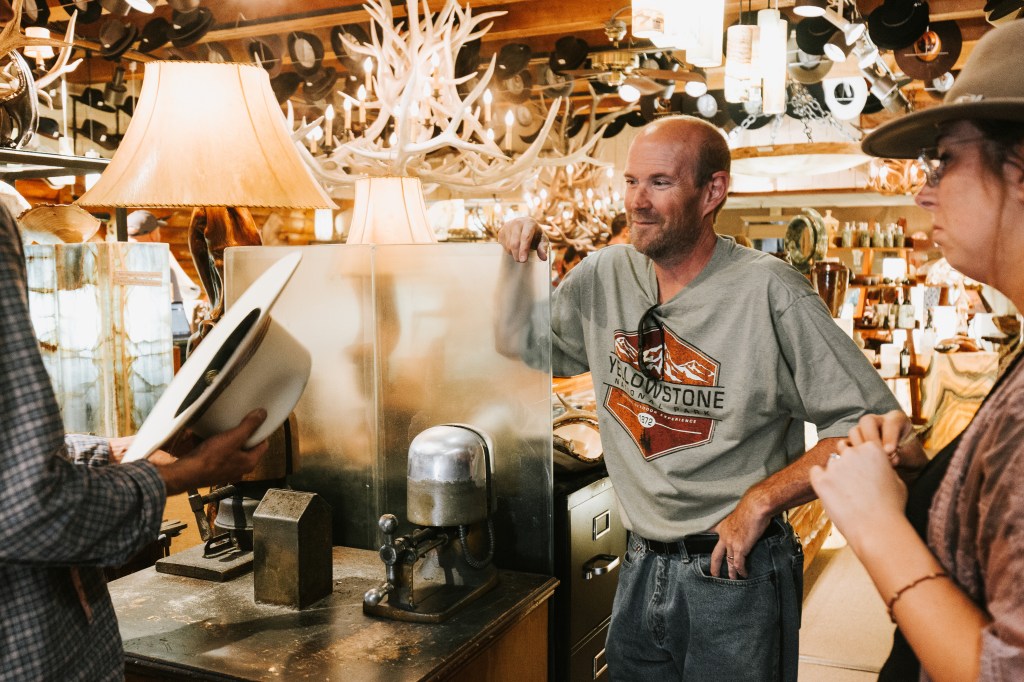
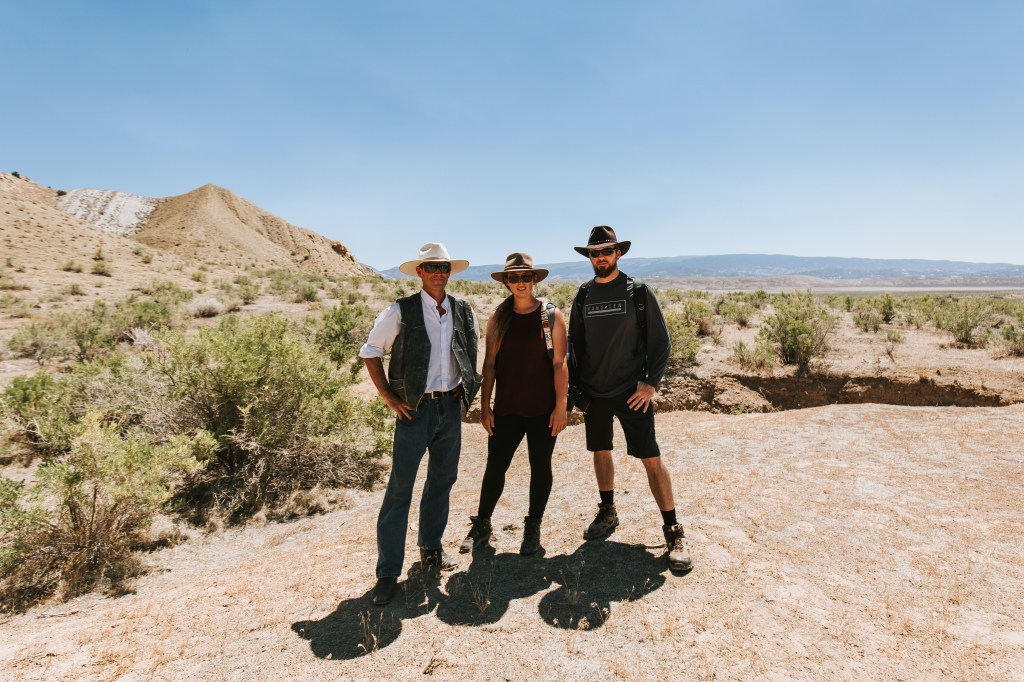
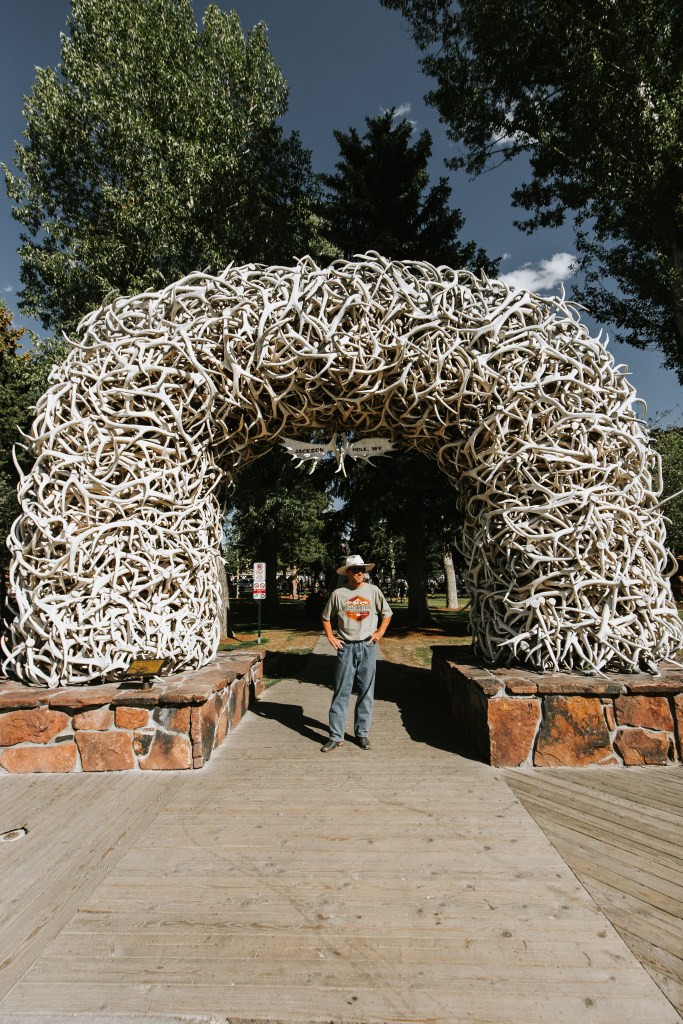
About a year ago, one of my daughters was in Jackson Hole, Wyoming, for a photography assignment in the Teton National Park.  As she waited for all the elements to come together, she stopped by The Beaver Creek Hats and Leather store in the ski town of Jackson to get a new hat, and she found a real treasure trove of a wonderful hat store.  She knew I was looking for some new hats for my collection, so she promptly told me about it.  We made a deal that if we were ever in Jackson, Wyoming together, I would get my next hat there because the variety and quality were unique due to the town’s economic circumstances.  That made it the perfect place for me to get my hat because Jackson is not only the highest per capita income center of the world, but a need for real cowboy hats founded it. It’s a high-altitude kind of place where the sun can do a number on you without some level of protection, making it a great place to buy a cowboy hat that not only looked good but was also functional.  After all, that’s why she had gone there in the first place.  It was quite a pleasant discovery, so at that moment, we started plotting ways to get both of us there at the same time accommodating our busy schedules.  About nine months later, we were in Jackson, Wyoming, with most of our entire immediate family and the first thing we did was buy my new white Stetson that I had been looking for that I needed to purchase for a while now.  My other hats are pretty beat up, and I needed one for some of the formal things I get myself into. 

It’s not that I couldn’t have gotten a hat in Cincinnati or the many other far-flung places I had been this year.  There were opportunities to get hats in other areas, such as Texas and New Mexico.  I saw nice hat stores in Oklahoma and Kansas, but I held out for that Jackson trip with my daughter for one because I had promised her I would.  But for the other, Jackson could afford to serve customers who had more money and therefore could afford to cater to more of the diverse needs of a hat buying public.  That gave me many more options for a very nice Stetson than I would have in other places.  As much as I think they should be, cowboy hats aren’t that popular in other parts of the country, and where they are popular, money isn’t all that easy to come by.  However, I have a particular taste in hats that is difficult to accommodate.  I like wide brims, especially now that I’m older, but I’m not particularly eager to curl them up in ridiculous ways.  I want the benefit of the brim to shield my face and head from the sun and the rain all seasons of the year, and as I did look around in some of those actual cowboy regions for a good hat, most of the styles just didn’t fit my needs for something uniquely me.  Because of that wealth in Jackson, all the correct elements combined, which is why my daughter made a big deal about it in the first place.  Her entire life, I have worn hats.  And well before she ever came along, deep into my childhood, I have always worn hats, specifically cowboy hats or outback hats from Australia. 

I had a lot of thoughts about the Tetons in general and Jackson the town specifically.  The town was wealthy because of Hollywood transplants.  Jackson Hole was the hideout of Butch Cassidy and the Wild Bunch of western legend.  After the movie with Paul Newman and Robert Redford, many actors made Jackson their home, including Harrison Ford, who has a house right around the corner from the McDonald’s there. That’s how the per capita income became so high because there is a low population density. The people who moved there from Hollywood and other high-paying industries set the benchmark which skewed the numbers from its origins as a cowboy town.  After John D. Rockefeller bought up secretly many of the old ranches of Jackson Hole and turned the Grand Tetons into a National Park, the government stepped in discreetly.   The government of Jackson has a mix of a rugged cowboy town foundation and exterior with the financial wealth of a tiny population that brought with all the California transplants their love of Agenda 21 United Nations policies in zoning which irritated me quite a lot.  But the tourists likely weren’t thinking about those things the way I was.  The Tetons is a paradise on earth where the government has obtained an illusion that they have discovered Utopia.  It is a place isolated from reality as the outside world well beyond the mountains that surrounded it was burning politically and literally.  It reminded me of other places I enjoy a lot, such as Glendale, California, and the Liberty Center area in my hometown.  But to say the least, I liked the way Jackson was, yet I was all too aware of the undercurrent of liberalism that was sapping itself off the fine history of the area. 

But all those elements made for a great cowboy hat buying trip, and I am proud to have found the perfect hat for me.  I am even prouder that I could get that hat with my daughter from that original trip several months prior.  My entire family ended up at that hat store, and it was fun to start a new thing for all of us.  I may make that hat store a regular thing for me.  It used to be for me that I wore the same hat no matter what the occasion and that was fun for me.  A perfect felt hat, after all, can serve such a purpose.  It might be battered a bit from crawling through caves and jumping through broken windows as most of my life has been everyday use for my hats.  But I’m a bit older now, and hats for an occasion are more of a thing than they used to be. I’m not so scrappy and earthy these days, which is a natural evolution.  Sometimes in life, you get where you are going, and you have to figure out what to do when you get there.  Because the mission was to get there, but what comes after is not always so well defined.  If it’s about the adventure, not the destination, then that problem will arise.  But getting there in life has its challenges, and for me, getting a nice hat in Jackson, Wyoming, couldn’t have made me happier.

A distant place on the map that is certainly hard to get to is now much closer.  Jackson by car is not easy.  To make it easy, you pretty much have to fly into it.  To the north is Yellowstone and its vast expanses.  To the south is a long drive up from the deserts of Utah.  To the east are deserts and more mountains and enormous open places.  And to the west was Idaho and a big mountain that must be crossed with 10% grades that take you up and over the range.  So it means something to get to Jackson and buy a hat from there, which enhances my life in positive ways every day in some manner my daughter and I will share for years to come.

Rich Hoffman

Sign up for Second Call Defense at the link below. Use my name to get added benefits.
http://www.secondcalldefense.org/?affiliate=20707
Share, subscribe, and see you later,https://rumble.com/embed/vciikp/?pub=3rih5#?secret=bniNjt4gIIhttps://rumble.com/embed/vd9a53/?pub=3rih5#?secret=I8cwvuaVB9

The Gunfighter’s Guide to Business

Be Proud of the Cowboy Hat: It is alright to be proud of western culture

I took it more than a little personal, the abandonment of Columbus Day and the way the media belittled Melania Trump’s choice of hats while on tour in Africa. Both of those issues were blatant attacks on western culture for which I happen to love, and I don’t take attacks on them lightly. On Melania’s hat several in the media stated that it looked too “colonial” and that she should have been more sensitive to blacks and their plight. And regarding Columbus Day, it was the attack of the Europeans that ruined the utopia of the Indian tribes that were encountered during 1492 and beyond. All things in western culture we have been told by modern-day academia was to cast aside and think of as a sickness. Well, to my observation, it is the opposite way of looking at things, it was western culture that has created opportunity for improvement for people of all races and is the best thing to ever have happened on planet earth. And nothing represents western culture more than the cowboy hat which I have worn all of my life. Anybody who wears a cowboy hat is making a bold statement about their appreciation of western culture, its inescapable. For instance, watch the following video of Sheriff Jones from Butler County, Ohio wear his hat on the way to the microphone to give a little speech. The addition of the cowboy hat says a lot about him and the culture he is functioning from.

I have worn a cowboy hat of some kind since my early days of grade school. I grew up on John Wayne and Clint Eastwood westerns and I thought everyone in the world wore them, until I went to school and learned otherwise. At that time some of the big progressive pushes that we know now were just getting started. It was out of fashion for a housewife to stay home with her children, they were made to feel bad if they did so. It was stunning how badly other women treated my mom because she was still a stay-at-home mom in the late 70s and early 80s. There was a great push by progressive society to get both parents out of the house and to turn over the raising of children to the state. My mom was one of the last hold outs and most of the kids in my classes wished she had been their mom, because they were children and wanted attention—and the public school couldn’t give it to them the way they wanted it. She volunteered at school a lot and all the kids knew her and wanted her to be their mother because she could give them attention.

Obviously, I was a very observational kid. The direction of society didn’t make much sense to me so I continued to wear my cowboy hats as a little kid just about everywhere I went. The more kids made fun of me over it the more I did it. I was always aware enough to understand that their behavior toward my hats were to put pressure on me to change my style of dress. It came to a point that I was determined to make a fashion statement all on my own, and I wore some form of a cowboy hat from my teenage years well into adulthood, actually up to the present. Those hats to me always represented a distinction, my vote for the sanctity of western culture. I never saw the cowboy with their guns and hats mounted on a bucking bronco to be the oppressors of the Indian. I never saw the headdress of some tribal leader to be equal to the cowboy and their big hats. The hat represented progress and human fulfillment, the Indian headdress the worship of nature and the limits of mother earth. The two sides were never meant to live together, their ideas were just too different from each other. For centuries the west and the east ran from each other until they collided in North America in the early 1700s ultimately and went to war over their differed philosophies.

My attire cost me, more than a few dates. Women are always the pace setters of social norms and even though I was dipping my feet into the waters of being a male model right out of high school my attractiveness could not erase the uncomfortable social pressure that dates felt when going out somewhere with me. I could have easily alienated the pressure by not wearing the hats and dressing more normally for what was expected in the late 80s, but I felt that would be selling myself out, so I never did it. I was most comfortable when wearing a cowboy hat so that’s what I did most of the time. I can say that as a young guy of about 24 to 25 when I was meeting with engineers and investors with some of Cincinnati’s most high-profile characters at the time I wore a brown western style trench coat and a very stylish cowboy hat all the time—to the point that it made people feel very uncomfortable. I had to work extra hard to get them to take me serious with that kind of attire which looked like it belonged in a 1870 western than in 1993—but it felt authentic so I kept doing it. I lived on the campus of the University of Cincinnati at the time and I dressed that way everywhere I went around that college. It was certainly out of pace with the rest of the world.

It took another twenty years before people stopped looking cross-eyed at me when I’d wear my cowboy hats into public. When you get to a certain age people stop caring what you do or how you dress. Once you are too old to run around with women, people no longer view you as a rival for their affections, so if you wear a cowboy hat out in public they just overlook you. But to me they were worth wearing and the pressure that came with them because I always had the feeling that it was my way of supporting western culture. And why not support western culture? If you didn’t accept the premise that all that came from Christopher Columbus was death and mayhem rather than the flowering of a new kind of society, then what else would you do? The Indian never built a railroad, they didn’t make guns or build buildings. They were superstitious nature lovers and what was great about that? Didn’t mankind have a mind to take the world and invent new things to expand life in unique ways? And who did that better in the history of the world but the western culture that founded North America as a free country with the idea of self-rule? And from that came this marvelous economy!

I still proudly wear my cowboy hats and I never regretted it. Hats are a purposeful statement about the values that the individual has. When you are the only one wearing one, it can feel awkward because it certainly sticks you out in a crowd, which is why most people don’t wear them. But at various periods of American development hats spoke about the kind of society we had and they were fashion statements that represented distinct values. And I don’t think any other form of fashion says more than when a person wears a cowboy hat. Doing so states that the person wearing it is proud of their western culture and that they reject the idea that eastern philosophies should take precedence in the realm of value. The criticism of Melania and Christopher Columbus has at its root the premise that western society should be abandoned—but for me and many others, it is the other way around. And the way to vote that sentiment is to wear the hat of western culture proudly and without apology. History knows the truth.

Rich Hoffman

Sign up for Second Call Defense here: http://www.secondcalldefense.org/?affiliate=20707 Use my name to get added benefits.