Buying the Truth: Peer reviewers have made over a billion dollars from the top four medical outlets

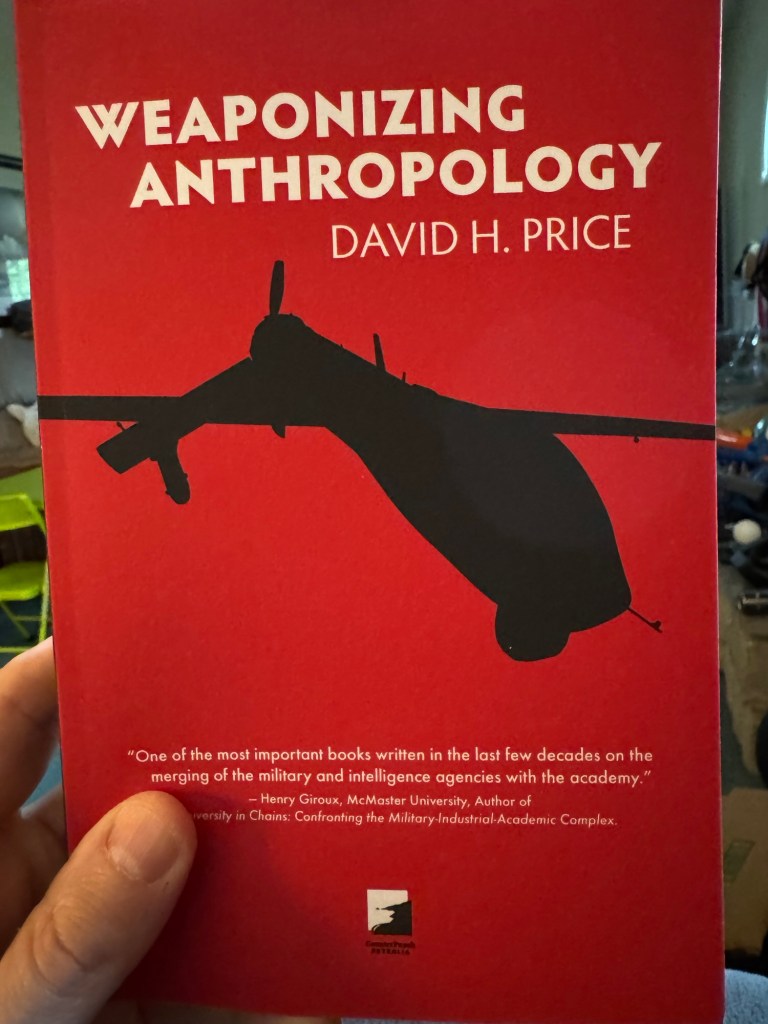
I read a fascinating book this week that I thought was very revealing about the field of anthropology by a professor of that field called Weaponizing Anthropology, which is about how the CIA has infiltrated that science and the colleges that teach it to shape narratives to build a social narrative.  The book by David Price, I think, explains a lot about just how wrong it is that we establish what we think of as a fact.  And it reminded me of the problems revealed during Covid from the Lancet in England, a very respected medical publication, where Bill Gates and Dr. Fauci found ways to manipulate the important news of hydroxychloroquine and Ivermectin to prevent and treat Covid-19.  And to take away that hope from millions of people suffering from the artificial virus, let loose from a lab in China to spread around the world, from gain-of-function research.  Regarding the field of anthropology and the related sciences, I have complained a lot about some of the ridiculous assumptions made about the mound building culture in the Ohio Valley for instance that steers concern more toward a hunter and gatherer mindset of gradual evolution when in fact we are looking at a Vico Cycle of continued decline and rebirth from cultures extending deep into the past, well beyond the Archaic Period.  And recently, we learned that peer reviewers for four of the top medical journals have received payments from drug and medical device manufacturers totaling around 1 billion dollars from 2020 to 2022.  This has opened the door to what big business it is to be in the peer review business.  People tend to trust information that is associated with an expert opinion.  But the deceit is that when that expert is paid to have an argument that the people writing the checks want them to have, the information is meaningless.  And in the context of the value of helpful information, we are finding that what we assume to be a reality is, in truth, only shaped by those paying for the definition of that reality, which endorses a need they have for mass public opinion to shade in their direction. 

This morning, I had 337,000 unread emails, and about a quarter of those are from people who offer peer review services and want me to pay them for their expert opinion to lend to the credibility of my material.  Or, they want me to review their material and are willing to pay for it.  It is an enormous business, and many people make a lot of money offering nothing more than an opinion, and the fee for being an expert in a field is very valuable.  But I don’t get into that money game for many reasons.  For a long time, I have not trusted peer-reviewed opinions for many reasons.  This recent information from the Weaponizing Anthropology book and this report on the peer review contributions to the top four medical journals has only solidified my opinion.  Which is sad because I would like to see the system work.  I read a lot of information, and I have my trusted sources.  I think the information is more credible when I see their name next to an article or a book.  But that’s how this whole racket got started in the first place.  Trust was for sale, and there were a lot of evil characters in the world willing to exploit it for all kinds of nefarious reasons.  That was indeed happening in the medical field.  And it was happening in large doses in anthropology and archaeology.  Those who pay for an opinion get to shape what that opinion is. 

I think we were a lot better off in the sciences when adventurers through discovery would publish wild finds in a search for fortune and glory.  The idea of profiting off finding a new treasure in the world and becoming rich in the process was more honest than what we have now, where experts are paid to shape an opinion and steer people as sponsored spokespeople toward some treatment that might not be good for them.  A good example is in the diagnosis of diabetes, for instance, where pancreatic health can be self-generated.  However, the medical approach shaped by paid experts wants to steer patients toward pharmaceutical treatments because that’s where the profit is.  The goal is not in saving lives with real and permanent treatment, it’s in keeping people sick so that pharma companies can profit off the demise of those patients.  The ability to purchase a peer-reviewed opinion then shapes reality, not toward the truth but toward the desire of profit seekers at the expense of honesty.  How often have I heard that the Clovis people migrated into North America across the frozen land bridge from Russia to Alaska 20,000 years ago?  When none of the expert opinions can begin to explain why there were such large skeletons found in Indian mounds all over North America from a people with very precise understandings of mathematics, and were certainly not hunters and gatherers, but sophisticated city dwellers, such as at the Cahokia site just outside of St. Louis that had cities larger than what was found in Europe at the time.  Most of that information has been suppressed by the peer review process, and only old-fashioned passion projects from seekers of fortune and glory have been able to shake that information loose from the world.

It has been a house of cards that was always going to fail, and that one billion dollars reported just for those four publications is just the tip of the iceberg.  This same practice is occurring in all our professional fields that produce experts.  Being an expert pays a lot of money once you establish yourself.  And as I said, I get a lot of offers, which I turn down because I don’t like the process, and would never take money for it.  Because I see it all as a huge problem.  These latest reports only confirm what I always suspected.  When you can pay cash to create a truth, can you say that a truth is real?  When opinion is for sale, I don’t see that it has any value.  An expert might work hard to build up credibility to put their name next to something, but the minute people discover that the opinion was purchased, all merit for the contents flies out the window.  That is what the CIA has been doing in the field of anthropology to shape social discourse by controlling the narrative with people on their staff, or with money paid to experts through black budgets not regulated by members of an elected body of government in Congress.  And since many people got caught over the Lancet issue regarding COVID, I don’t think the expert class will ever gain credibility back.  It will take more than time to get people to trust in the system again.  And the peer review process is now broken forever.  And that might lead to wild theories and speculations from a hungry public.  But honestly, that information is more valid than the opinions of people paid to shape a truth that might have no basis in reality.  But it might serve the plots of more scandalous people who do not have our best interests in mind. 

Rich Hoffman

Click Here to Protect Yourself with Second Call Defense https://www.secondcalldefense.org/?affiliate=20707

Evil Brujos Threatened to Kill Pablo Amaringo: The vast, diabolical menace behind the cult of Climate Change religion

Defining evil in the world can be tricky business. Evil might be good depending on the relative position of the participants; what might be bad for one person may be great for another, depending on whether they are on the losing or winning team. So, I am always looking for good definitions of evil because if you can’t define it, you can end up feeding it in the world and not even realizing it. And to stand for what’s good and to live a life of justice, a society must understand what evil is. Understanding all that, I have turned my gaze, relative to the problems of the day, toward the beliefs of globalism and the specific religion of climate change to understand how evil works in our world today and how it shapes current events. At face value, it may seem like an easy problem. Climate activists will say mankind is bad for planet earth, so if we want to preserve the earth, we must change our ways. Mankind will say, of course, but constraining the human imagination and the nature of invention is bad for developing human consciousness, which is a natural process of the laws of the universe. And from that point of view, they would also be right. So how can anybody know what to do about anything in the realm between fighting for what’s right and how to avoid perpetuating evil in the world or in the universe? For those answers, I turned to the very interesting work of Pablo Amaringo, a little Peruvian shaman from a little village outside of Lima, Peru. Pablo is a hero of the left, a symbol of the United Nations. He is at the core of much belief that points humanity toward the climate change religion, getting back to nature, calling materialism evil, and thus, the United States. So it is with Pablo that I delved into the craze of taking Ayahuasca to see the spirit world and to get advice from them the way shamans like Pablo have for thousands of years. And ultimately came to understand that the political left of the world has everything all wrong and has interpreted a reverence toward nature for all the wrong and truly evil reasons that nobody has yet figured out, until now.

Ayahuasca is a hallucinogenic drink that combines two different Amazonian plants into a brew that many call the Vine of the Dead because they believe it literally puts the user into communication with the disembodied souls of existence. Rock bands, anthropologists, academics of all kinds, and eclectic artists have discovered Ayahuasca and other hallucinogenic enterprises and assumed that by taking the drugs, they were getting back to nature and the real state of the world. Their assumption and promotion of people like Pablo were that the masters of nature had it right all along and that all the inventions of mankind were secondary to the magical abundance of the spirit world that was all around us, and that our goal in life was to get back to it. Not to grow away from it and develop individual lives and, thus, developed souls. In this way, the climate change lunatics have been able to attach the eternal aspect of a soul to the soup of a cosmic spirit world that is all around us all the time, giving us no real privacy. They are always with us, and by taking Ayahuasca, we could interact with them as they exist in a kind of hyper-reality beyond the known matter of our observable universe. Ayahuasca looks to rip away the filters that life puts on our brains at the level of the pinery gland and or the pituitary gland to make living normal life even possible. Powerful hallucinogens allow the brain to see what is always there and give us a glimpse into the spirit world that all religions refer to, but eliminate the normal role of a priest or government official as the mediator and take the user straight there. 

I am not and never will be a drug user. But if the answers to life’s questions go in that direction, I’m not going to ignore it either. In that case, many good books have been written about Pablo Amaringo that talk about his life, how he became famous, and what his art means with vivid displays, and I have read them. I don’t need to take Ayahuasca to get the gist of the experience. Pablo is the expert in the field, so by researching him, it’s been enough for me to become convinced that his well-intentioned actions as a village shaman have been abducted by evil in the world and used for the climate change movement to sucker in many weak-minded people to the alters of soul sacrifice. Sacrifice not just physically but at the fundamental essence of life. It was sold to them as moral conduct. I don’t need to talk to dead people to figure it out. I don’t ask for directions to the nearest gas station; I certainly don’t ask for advice on how to live life. So, from that perspective, it’s clear to me what has been happening with the United Nations’ push toward nature and the overall strategies against materialism and reverence toward climate change as a radical and diabolical religion. Something that I didn’t know, and apparently few do acknowledge even though they know, is that Pablo Amaringo was pushed out of the profession of shamanism by rival brujos (witchcraft practitioners) who act as hechiceros for their own personal needs or on behalf of paid clients. They told Pablo to get out of the shaman business, which he did. That’s how Pablo Amaringo came to paint his visions from his Ayahuasca sessions instead of continuing to do them as a shaman. Ironically, the world learned about Pablo because of this. But the evil brujos wanted to continue to operate in the world by manipulating the world of the dead behind the scenes without people like Pablo cutting in on their turf. Among these shamans in the Amazon rainforest, it was just another mob-like activity where they wouldn’t allow rivals to cut in on their racket. 

Yet, that racket was a very real thing; the hechiceros (sorcerers) promised Pablo they’d kill him either in the physical world or in the spirit world if he did not surrender to them, and being the nice guy that he was, he did. He took up painting and became pretty good at it. Now, if this were a western culture, I would say there would have been a fight to the death, like a gunfight in the street. Such threats are unacceptable, and resisting them is the fundamental belief system behind materialism and protecting the possessions acquired in life. But on a broader scale, what we see here is evil working its way under the radar, luring people to its cause where many hechiceros work behind the haze of Ayahuasca and other experiences to fill the empty minds of collectivism with the strategies of evil known only to demonic forces of ill intent. That makes the ritual practices we see today coming from the World Economic Forum types, the sex rituals, abortion sacrifices, drug abuse, vile violent music industry, family destruction, and homosexual agendas much more comprehensive.   Behind the veil of nature worship and protecting earth, evil uses this as a gateway into a realm they control. And once defenseless and vulnerable under the influence of drugs, they can have their way with you. Pablo Amaringo, with all his powerful skills as a shaman, shows the lost skills of previous cultures that have been lost to us over time through organized religion; we have seen a glimpse into this hidden world of evil and its strategies against all humanity. We are shown people like Pablo as the reason to journey into the grip of Ayahuasca and open ourselves to the wisdom of the hidden world. But when you get there, you find what Pablo found, a world filled with evil spirits who want to consume the souls of all humankind through mass sacrifice, and their intentions are barely hidden, especially when you pull away the veil of reality just a little bit. 

Rich Hoffman

Click to buy The Gunfighter’s Guide to Business

Where the Evidence Leads: The spirit world of Ayahuasca and shamanic life of Pablo Amaringo

You must go where the evidence takes you, and the truth is, many of the categories of a profession that we organize in our lives are primarily designed to conceal the truth of things so that an elite subculture of human beings can operate in leadership positions.  They maintain this illusion by keeping large sections of mankind busy on trivial tasks that keep them in siloed thinking, designed to conceal the reality of what truly is from their eyes.  But if you really want to know what is going on and who is pulling the strings in our physical reality and behind the veil of humanity from the same spirit world that many find comfort in praying to, you have to think out of the box for the answers.  Many never question to whom they pray; they do it trusting that whoever answers is friendly and wants to see good done in the great fight against evil.  But, what happens if it is evil answering and playing the classic wolf dressed up as grandmother only to find that the big teeth are meant to eat you with?  Then what?  Well, those are the questions of our day where vast evil has shown itself not just in our governments of the world, but in Covid and the medical industry, and the mass hypnosis that is invoked through our mobile devices that keep us in a tech-trance not in our control, but by the mysterious input of Silicon Valley geeks and Revenge of the Nerds losers.  Yet they have power over humanity; why?

Increasingly, the ideas of the political left and the religion of climate change itself, if looked at for their roots, point to occult practices predating Christianity.  I’ve never been one who has taken drugs of any kind but growing up, I was very interested in all the brightly colored posters they sold at Spencer Gifts to be displayed with black lights.  I always saw the psychedelic drug wave given to America through the KGB as destructive, yet you can’t just look for your car keys under a light when looking for answers.  You may have lost them somewhere else.  But most people in life only look for answers where it’s most convenient for them to look.  And for me, if the answers to the current problems of mass spirit world involvement in our political existence is a real problem, and if that communication was happening by way of political sacrifice, mass rituals to appease those spirits, and the way to communicate with that world was through cultural intoxication, then it became very obvious to me, while I was dining with some friends at the Agave & Rye in Liberty Township.  Looking at all the bizarre Ayahuasca-inspired artwork there, perhaps the answers to most modern problems weren’t in the physical world, but in the spirit, where all kinds of crazy creatures existed outside our visual spectrum, perhaps in the realm of the neutrino, in particle activity that defied the physics of relativity and was faster than the speed of light.  Only a drug-induced brain could see and communicate with them, which is precisely what the latest drug cult of Ayahuasca, a mixture of two plants found in the Amazon River basin, induces upon the mind.

For about ten years, the name of Pablo Amaringo came up in my reading about shamanism in Peru, but it took the activity well outside my comfort level of curiosity.  But those who take Ayahuasca consider it sacred and a direct communicator with the spirit world.  So while I was in a book store I love a lot in Dayton, I decided to go over the deep end and buy an art book called Ayahuasca Visions by Pablo Amaringo, which was the last book he put together before he died in 2009.  There is another taco place I like a lot called Condado at The Greene in Dayton, and there too is a lot of street art all over the walls that look modern but are displayed like the Ayahuasca art shown in Pablo’s book.  So I bought the book, studied the pictures, and read what Pablo said about them.  Now, Pablo was a nice guy who lived in a very remote part of the world.  They didn’t even have a TV in his village.  Their only entertainment was playing music in their thatched huts in the evenings with their families.  So there was no way that some of the images that Pablo painted in his paintings came from a conventional, modern resource.  Yet he paints about all kinds of crazy monsters, UFOs from other planets, and wild plant life brightly colored remembered from his Ayahuasca visions as a shaman to heal members of his community or speak to spirits there who talked back to him.  These were live conversations with entities not of earth.  They weren’t hallucinations induced by DNA coding deep in the wiring of the human body created through chemical reaction because the interactions were just as live as if he were talking to someone on a street corner.  So I have accepted the science that Ayahuasca strips away in trained users their filters to reality and allows them to interact with hyper beings on another dimensional plane, and that the spirit world is very much a real thing, and that it is interacting with us every minute of every day, much like ultraviolent light does, or the wind.  We can see neither, but their effects can certainly be felt.  And thus, Ayahuasca gives users a feeling into a realm they typically couldn’t see, and Pablo’s book gave people a chance to see into that world without having to take the drug. 

And in reading about various shamans all around the world, especially in remote cultures not trained in conventional ways of looking at the world, the spirit world is interactive.  There are good characters and bad characters everywhere.  And knowing that much, especially the way the drug culture has been thrust upon us by elements of the world that would like to destroy the concept of America, you can see why they would work very hard to raise an invisible army in the spirit world to make a menace of all our lives, from places we couldn’t quite reach by conventional means.  Before Covid-19, I might have laughed all this off, but after and seeing the sheer level of evil that people like Bill Gates and Dr. Fauci have been capable of, there is no earthly explanation for their behavior.  The only things that start to make sense are to gaze into the world of Pablo Amaringo and to look for the keys where they may actually be hidden, in a place nobody expects us as human beings to go.  By visiting some of these crazy taco places, it is evident to me that our human culture perceives the problem at a remote subconscious level, and they are looking for answers in drugs, specifically Ayahuasca.  And even some of our most popular restaurants are starting to reflect that deep desire for solutions from which all the evil of the world is operating, just beyond our reach.  But we must reach it, and to understand it; we must be able to see it.  And by reading Pablo’s very unique book, Ayahuasca Visions, I am getting a much clearer picture, which is the key to solving these kinds of problems in the long run. 

Rich Hoffman

Click to buy The Gunfighter’s Guide to Business

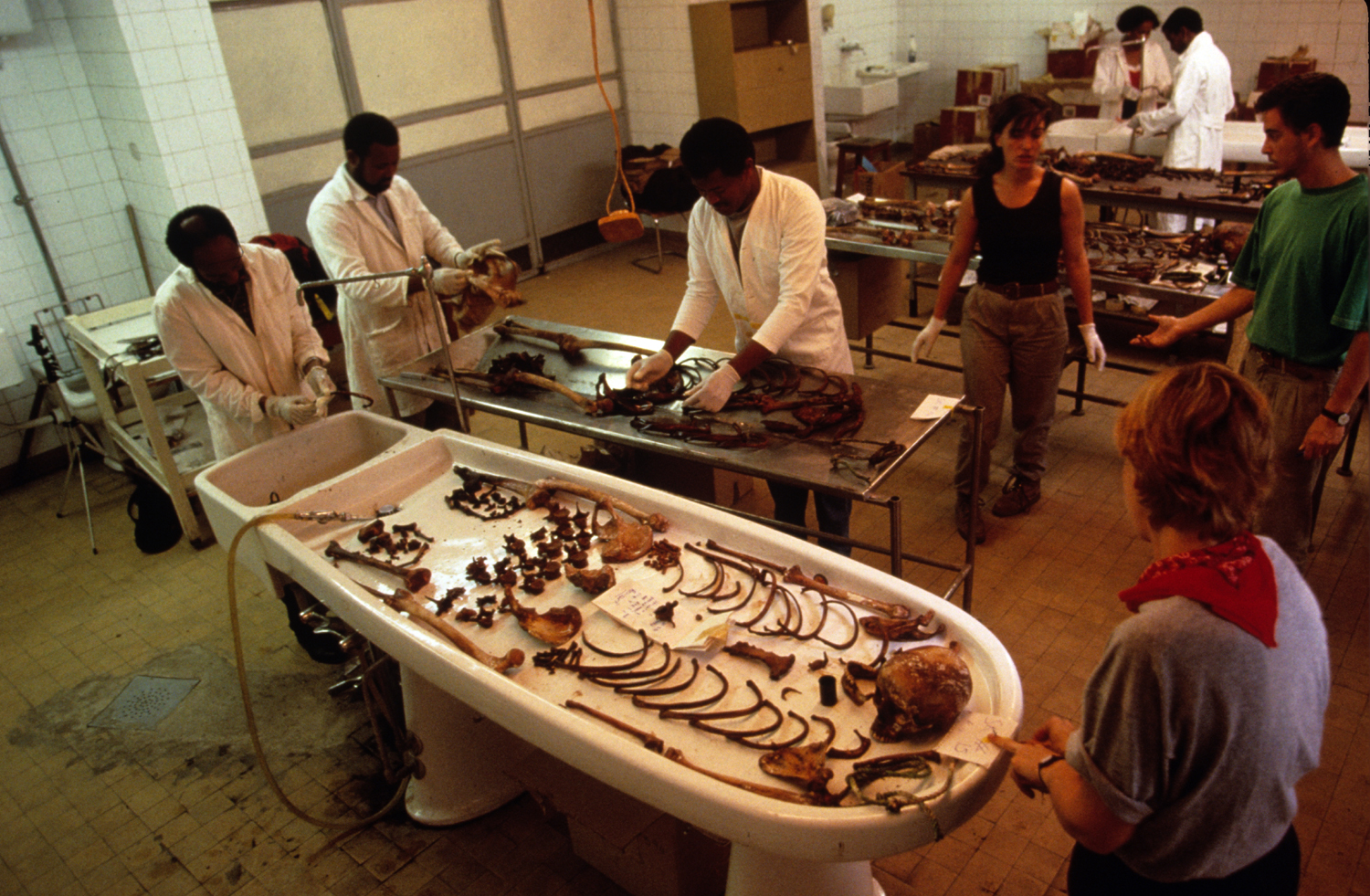
Forensic Anthropology Jobs Needed: Another Government Debacle

My wife and I had dinner with an instructor for Forensic Anthropology on Saturday and I learned how there is a shortage of Forensic Anthropologists. That little fact surprised me. “How can that be? Where do you find Forensic Anthropology employment? Who’s paying for them?” It was an honest question.
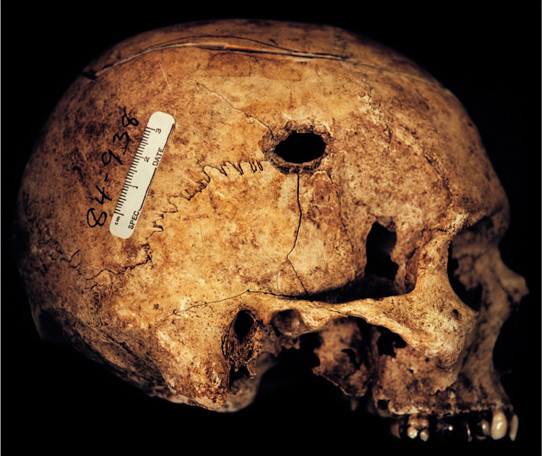
I received an honest answer. “The shortage is due to museums and other research facilities that are trying to comply with the “Native American Graves Protection and Repatriation Act”

“The what?” I asked. “What the hell is that?”

He proceeded to educate me which is most accurately described in this definition from Wikipedia.
________________________________________________________________________________________________________
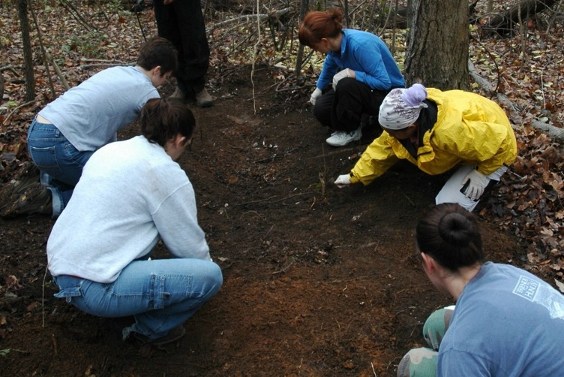
The Native American Graves Protection and Repatriation Act (NAGPRA), Pub.L. 101-601, 104 Stat. 3048, is a United States federal law passed on 16 November 1990 requiring federal agencies and institutions that receive federal funding[1] to return Native American cultural items and human remains to their respective peoples. Cultural items include funerary objects, sacred objects, and objects of cultural patrimony. In addition, it authorizes a program of federal grants to assist in the repatriation process. It is now the strongest federal legislation pertaining to aboriginal remains and artifacts.
_________________________________________________________________________________________________________
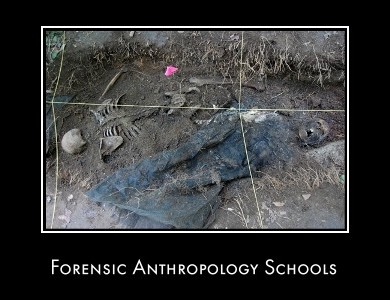
“Are you kidding me?” I asked. “What bunch of idiots passed that law? That has to cost a fortune.”

My dinner guest was agreeing with me, but being a man of science, he is eternally sympathetic to funding needs. Then I remembered when he and I had watched John Dunbar’s epic journey into the land of the Sioux Nation together around that time, then it came back to me. The film Dances with Wolves by Kevin Costner came out on November 21st of 1990. And the NAGPRA was passed just days before the release of the film.

The Heard Museum Report had been debated for three years starting in 1987 and had been passed by the 101st Congress as advanced copies of Dances With Wolves was circulating around Washington, after all Costner has just had a wild success with Field of Dreams. So there was a lot of buzz around the new movie about Native Americans. So with the usual sentimentality that engulfs the puffy coffee enriched minds of bureaucracy, they passed the NAGPRA without thinking much about the cost to science, or the tax payer.

“That is one of the dumbest ideas I’ve ever heard in the history of bad ideas,” I stated in clichéd fashion, knowing it was a cliché when I said it.

My dinner guest proceeded to educate me on various cases and pointed me in the direction of an article by Jan Bernstein:
________________________________________________________________________________________________________

NAGPRA – Future Applicability Rule
Article written for SPNHC by Jan Bernstein
Does the institution that you work for have Native American cultural items under its control or in its possession and does it also receive Federal funds? If so, more than likely you already know that your institution is a “museum” and therefore is legally required to comply with 25 U.S.C. 3001, which is more commonly known as the Native American Graves Protection and Repatriation Act or NAGPRA. But what you might not know is that there are new NAGPRA compliance rules for what is known in the Act as Future Applicability.

These rules apply to the following situations: 1) The museum or Federal agency acquires a new collection item or finds a previously unreported item that may be covered by the Act (covered items are Native American human remains, funerary objects, sacred objects, and objects of cultural patrimony; 2) A previously unrecognized Indian group is recognized by the Federal government as an Indian tribe. 3) An institution in possession or control of an item or items that may be covered by the Act receives Federal funds for the first time; and 4) The museum or Federal agency revises a decision previously published in the Federal Register.

The Native American Graves Protection and Repatriation Act (NAGPRA) was signed into law on November 16, 1990, but it wasn’t until March 21, 2007 that the final rule for §10.13 Future Applicability of NAGPRA was promulgated. It was published in Federal Register Volume 72, Number 54 and it applies to existing and newly acquired museum collections. Those are Sections Five, Six, and Seven of the Act. It does not apply to inadvertent discoveries or planned excavations which are addressed in Section Three of the Act.

The Future Applicability rules became effective on April 20, 2007. And on that date it established statutory deadlines for completion of NAGPRA Section Five Human Remains Inventories/Notices of Inventory Completion and NAGPRA Section Six Summaries (unassociated funerary objects, sacred objects, and objects of cultural patrimony). For you organization, the first deadline may be October 20, 2007. The rule set a six months deadline to produce and distribute a NAGPRA Section Six Summary for a new holding or a previously unreported holding newly located that may be unassociated funerary objects, sacred objects, or objects of cultural patrimony. October 20, 2007 is the deadline for the Summary distribution if the new holding was acquired or found prior to April 20, 2007. Your organization has two years from the promulgation date or acquisition/discovery date to prepare a NAGPRA Section Five Human Remains Inventory/Notice of Inventory Completion in consultation with affiliated Indian tribes or Native Hawaiian organizations. If the new holding was acquired or located prior to April 20, 2007, you have until April 20, 2009 to do culturally affiliation consultation and distribute a NAGPRA Section Five Human Remains Inventory and publish a Notice of Inventory Completion in the Federal Register.

A newly Federally recognized Indian tribe has standing under NAGPRA and museums and Federal agencies covered by the Act are required by the Future Applicability Rule to send Section Six Summaries to these Tribes within six month of recognition. Federal Agencies and museums are also required within two years of recognition to prepare in consultation with culturally affiliated Indian tribes NAGPRA Section Five Inventories/Notices of Inventory Completion.

Maybe your organization didn’t receive any Federal funds between November 16, 1990 when the law passed and November 16, 1995 when the last deadline occurred. But since that time it began to receive such funds. Those funds may be flowing directly to your organization or to your parent organization. For example, maybe you are working for private college anthropology or art department and another department at the college started to accept Federal contracts or grants after 11/16/1995. Those funds have redefined your department as a museum covered by NAGPRA. If this is the case, your organization is required to comply with NAGPRA. If you find your organization is in this situation, you must within three years from the time the Federal funds were received or from the effective date of the Rule (4/10/07), whichever is later provide a Section Six Summary to Indian tribes or Native Hawaiian organizations that are most likely to be culturally affiliated. Within Five years of the date of receipt of Federal funds, or within five years of the effective date of this Rule, whichever is later, you must prepare, in consultation with affiliated Indian tribes or Native Hawaiian organizations, a Section Five Human Remains Inventory/Notice of Inventory Completion.

If your organization previously published a Notice of Inventory Completion, but the information has since substantively changed, the Future Applicability Rule requires a Notice of Inventory Completion Correction be published in the Federal Register. A substantive change is a change in the culturally affiliated Indian tribes or a change in the minimum number of individuals count. The National NAGPRA Program will assist you with this process.

What does this mean for those of you who represent a Federally Recognized Indian tribe? Well, I hope you will see some new Summaries hitting your desk as well as an increase in the number of requests to consult in preparation of new human remains Inventories.
The rules can be found on the National NAGPRA Program’s web site. I wish you all great success in your NAGPRA compliance efforts.
________________________________________________________________________________________________________
“How can an anthropologist or archeologist be expected to return the remains of Indian Tribes when much of the tribal movements aren’t even understood by anybody yet? There are still completely mysterious cultures that no science organization understands regarding Native Americans.” I was thinking of Cahokia outside of St. Louis, and several of the mound builders in the Ohio Valley. The Shawnee had in fact migrated from Florida before settling in Ohio. Few tribes could be traced back for thousands of years.

The instructor laughed. “That’s part of the problem. There are a lot of finds and burial relics that predate 1492, so it is nearly impossible to return cultural items to specific tribes.”

I was getting angry. “What about the ancestors of Anglo Saxons that were fleeing tyrants of Europe to settle the frontier that were cannibalized in giant kettles and eaten like soup, entire families were slain for no reason what-so-ever.”

“That’s not politically correct,” he laughed at me.

“That’s politics, which is the same as what comes out of an elephants ass.”

“Well,” he said, “its business. Laws like that put people to work and make people feel like they’re doing something important.”

He mentioned Bernstein and Associates, who I looked up and read their literature.
_____________________________________________________________________________________________________
Bernstein & Associates, LLC
We work with Indian tribes, museums, universities, and governmental agencies on Native American Graves Protection and Repatriation Act (NAGPRA) compliance projects.

Services we provide to our clients

NAGPRA Grant Writing
We write successful Consultation/Documentation and Repatriation grant proposals.
Our clients have received over $1,000,000 (one million dollars) in
NAGPRA Consultation/Documentation and Repatriation Grant grant awards.
Annually since 1999, we have written at least one NAGPRA Consultation/Documentation grant for clients and every year we’ve had a grant funded.

Jan Bernstein teaches a two-day NAGPRA Grant Writing Seminar for the National Preservation Institute.

NAGPRA Consultation Support
There is a tremendous amount of work that goes into NAGPRA consultation planning, implementation, documentation, and follow-up. Official tribal representatives frequently praise our culturally sensitive, insightful, respectful approach to consultation. Bernstein & Associates helps Indian tribes, museums, and federal agencies with all phases to whatever degree suits your needs:
• Meeting planning
• Consultation preparation including document research and assembly
• Consultation documentation
• Consultation follow-up

Since 1990, we have organized and facilitated several hundred individual and group consultations with tribes that have traditional territory in all regions of the country including Alaska and Hawaii.

Repatriation, Physical Transfer, and Reburial
We have worked with tribal leaders, official tribal NAGPRA representatives, and traditional religious leaders in the Southwest, Plains, Great Basin, and Southeastern US as well as Peru (non-NAGPRA) to facilitate the repatriation and reburial of nearly 1000 individuals and hundreds of cultural items. Bernstein & Associates is available to:
• Write repatriation grant proposals for up to $15,000 to defray the costs associated with reburial
• Provide assistance in writing valid repatriation requests and repatriation claims
• Write draft notices of intent to repatriate
• Facilitate the development and implementation of reburial plans and agreements

NAGPRA Summary and Human Remains Inventory Preparation
Because of the long-standing, positive working relationships that we have built with the tribes throughout the U.S since the mid 1980s, we are extremely successful in aiding clients in the preparation of culturally sensitive NAGPRA Summaries and Inventories. Every client utilizes our services in a slightly different way. Some of the many services we provided to clients are:
. Assess collections to determine which tribes should receive summaries and invitations to consult on cultural affiliation for development of Inventories
– Write letters to tribes using our tribal contact database, which is constantly updated with current contact information for tribal leaders and NAGPRA reps, as well as consultation style preferences
– Initiate Summary consultation after initial correspondence
– Facilitate NAGPRA consultation conferences

Strategic Planning

We help clients assess what needs to be done to comply with NAGPRA, how long it will take, and develop a chronology. We then break it down into manageable projects that could be funded by grants for museum clients. We provide clients with a written plan that can be used to track progress.

____________________________________________________________
“So it’s all about getting federal grants,” I asked.

He smiled and sipped his wine. “It’s always about money, and that’s why there’s a need for Forensic Anthropologists.”
Then our conversation over the rest of the wine migrated to the Kennewick Man, which I found a nice back story below.
__________________________________________
Source World of Forensic Science
The remains of an ancient human found along a river in Kennewick, Washington, in 1996 set off a heated debate about the ownership and future of the skeleton. Scientists argued that the skeleton, dubbed Kennewick Man, could provide new information about human migration in North America, while Native Americans claimed him as an ancestor and wanted to bury him according to their rites. Forensic anthropological findings and cultural evidence were presented in court procedures over the course of nine years while the fate of the Kennewick Man was debated.

The story of Kennewick Man began in July 1996, when two college students watching hydroplane races found a human skeleton along the Columbia River. The young men turned the remains over to local police, who realized that they were probably very old. The bones were then given to forensic anthropologist James Chatters for evaluation. Chatters reconstructed the skeleton, which was 80–90% complete. He determined that it was from a man who was probably five feet nine or 10 inches and about 40–50 years old when he died. He showed little evidence of arthritis, indicating that he wasn’t used to carrying heavy weights and that he might have been a wandering hunter. Dental examinations showed that the skull contained 30 of the 32 teeth and that they were in good shape, indicating that he probably had a diet that included lots of soft foods like meat. He was taller and thinner than most ancient Native Americans and the back of his skull was not flattened from a cradleboard as is commonly observed in skeletons of ancient Native Americans. In addition, the man had a stone spear point lodged in his pelvis and there was evidence of severe trauma to his rib cage that probably limited the use of his arm. Using computerized tomography (CT), Chatters determined that the spear point was serrated and leaf-shaped and typical of the types of spears used between 8500–4500 years ago. He hypothesized that the skeleton was either from a European pioneer who had been attacked by native people using stone-age weapons or from an ancient human. Chatters sent pieces of the bones to a laboratory for carbon dating, which determined that the age of the skeleton was between 9,200–9,400 years old, making the skeleton one of the oldest, and most complete, ever found in North America.
Once the age of the skeleton was determined, several groups came forward, vying for control of the remains. A group of five Native American tribes in the region, the Umatilla, the Yakama, the Nez Perce, the Wanapum, and the Colville, wanted to accord the remains the same rites given to any Native American, namely a speedy burial. They cited the legal authority of the Native American Graves and Repatriation Act (NAGRA), which requires the return of American Indian remains to tribes. As news of the unique find spread throughout the scientific community, a coalition of eight anthropologists and archaeologists petitioned for their right to study the ancient remains prior to burial. The scientists believed that study of the Kennewick Man could reveal important information about early human migrations into North America. The Native American group believed that any manipulation of the remains would show enormous disrespect to the dead and vehemently opposed scientific investigation of the skeleton, which they called the Ancient One. Because some of the features of the Kennewick Man, such as his height and the shape of his skull, indicated that he might not be of Native American ancestry but rather of European descent, a group of people representing the ancient Norse religion called Asatru also petitioned the court for the right to the remains.

The ensuing legal battle raged for more than nine years. One of the key questions of debate in the courts concerned whether or not the skeleton was subject to NAGRA. NAGRA requires that all Native American remains be returned to the tribe for burial, however it was unclear if the Kennewick man was of Native American ancestry. Eventually the court ruled that some scientific study was required in order to establish the origin of the skeleton and between 1998 and 2000, the Department of the Interior coordinated these studies. A 1999 physical examination of the bones established that the Kennewick Man shared most physical characteristics with people from Southern Asia. In April 2000, samples of bone from the Kennewick Man’s skeleton were removed and sent to two different laboratories for DNA testing. Because of the age of the bones, it was impossible to extract sufficient DNA for analysis and the results of the study were inconclusive. After a series of appeals by all sides, in February 2004, a U.S. Federal judge ruled that it was impossible to prove that the Kennewick Man’s ancestry was culturally affiliated to any of the Native American tribes in the region and gave scientists the right to go forward with their investigation. In 2005, plans were outlined for study three-phase study involving as many as 23 different scientists.

The dinner was over and it was time to go home. The impact of this NAGPRA has seriously hampered science by bringing politics into the whole business and allowed ourselves to be hampered by sensitivity. America had allowed our guilt over pushing the Native American’s westward to cripple us the same way we currently do over slavery, neither of which we can do anything about now. All we can do is learn from those experiences, which is what science is all about.

Instead of learning and expanding our worldly knowledge, we’re wasting time appeasing political factions, getting grants so we can move some bones around the country and argue over bones that pre-date our known understanding of history, which is shallow at best.

But that is the nature of politics. It’s equivalent to living life in a straight jacket. All I can do is shake my head at the invention of yet another useless government created position, a Forensic Anthropologist that spends less time digging and understanding the past, and more time filling out papers to qualify for federal grants.

Rich Hoffman
http://twitter.com/#!/overmanwarrior
www.overmanwarrior.com