The Ohio Governor Race: Vivek Ramaswamy vs. Amy Acton—”the lockdown lady”

You know, people keep asking me about this Ohio governor race, and I’ll tell you what I think: Vivek Ramaswamy is going to win, and he’s going to win big. But that doesn’t mean you sit back and assume it’s all going to happen on autopilot. Campaigns aren’t won by assumptions; they’re won by hard work, strategy, and relentless execution. And if you’ve seen some of the chatter online—polls showing Amy Acton up by a point or two—you might think, “Wow, is Vivek in trouble?” No, he’s not. But let’s break this down because there’s a lot of smoke and mirrors in these early numbers.

First, let’s talk about Amy Acton. Who is she? Most people don’t even remember her name right now, and that’s part of the problem. She’s the former Ohio Health Director who became the face of lockdowns during COVID. Back in 2020, she was the one telling you to stay home, mask up, and cancel your life. She shut down schools, businesses, county fairs—you name it.¹ She was Ohio’s Dr. Fauci, taking cues straight from the CDC and enforcing some of the harshest restrictions in the Midwest. And it wasn’t just policy; it was the tone. She leaned into fear. She made people miserable. And when the heat got too much, she resigned in June 2020 because she refused to lift bans on county fairs.² That’s her legacy.

Now, fast forward to 2025. People have short memories, and Democrats are counting on that. They’re hoping voters see “Dr. Acton” and think “compassionate health expert” instead of “lockdown czar.” But here’s the reality: once she starts talking, once Vivek and his team start connecting her to those lockdowns, it’s game over. Ohioans haven’t forgotten the pain of 2020—they’ve just moved on. But if you remind them who caused it, they’ll move on from her real fast.

And what’s she running on? Abortion rights, reproductive freedom, and vague promises of “public health leadership.”³ That’s it. No major accomplishments since leaving office. No executive experience beyond a failed stint as health director. She’s endorsed by unions like AFSCME and UAW, and big-city mayors are lining up behind her.⁴ But endorsements don’t erase a record of failure. And in a state that leans red, with Trump back in the White House and MAGA energy surging, that’s not enough.

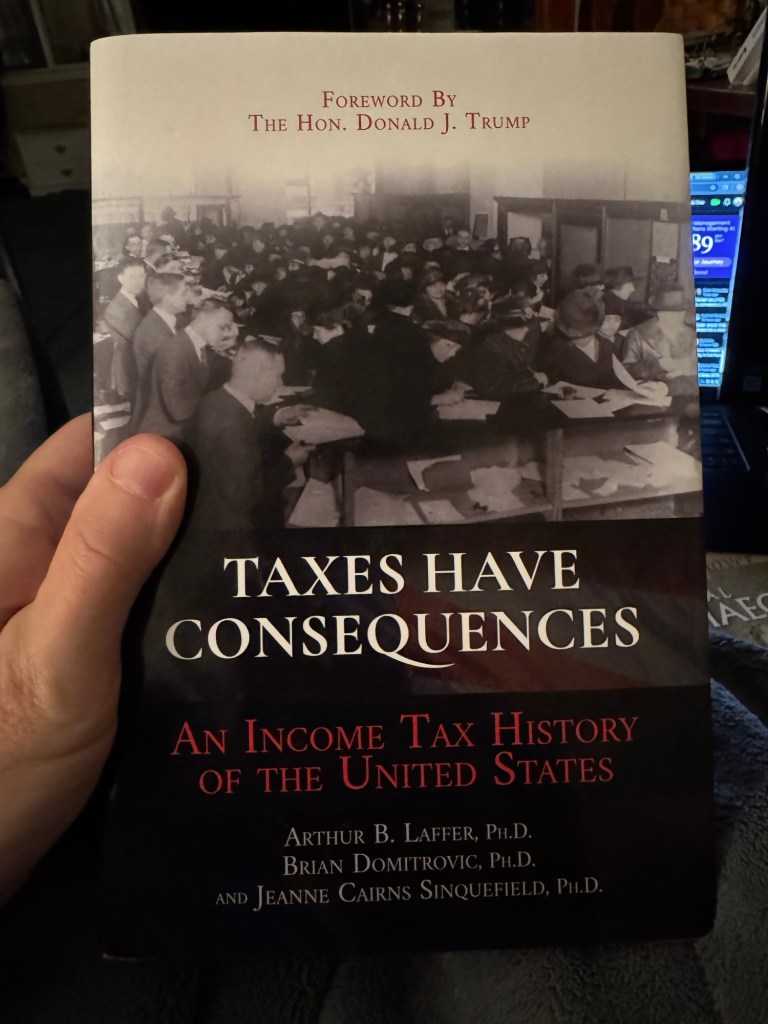
Now, Vivek Ramaswamy—he’s the opposite story. Entrepreneur, author, former presidential candidate. He’s smart, articulate, and aggressive. He’s raised nearly $10 million for this race, compared to Acton’s $1.4 million.⁵ He’s got Trump’s endorsement, JD Vance in his corner, and the Ohio GOP machine behind him.⁶ His platform? Bold: eliminate income and property taxes, merit pay for teachers, work requirements for Medicaid.⁷ He’s even courting unions, which is a savvy move in a state where blue-collar voters matter.⁸

So why the tight polls? Because polls lie. Or, more accurately, they mislead. Early polls oversample urban areas, lean left in methodology, and create narratives that help Democrats fundraise. RealClearPolitics has Vivek up by 6.5 points (49.5% to 43%).⁹ But Impact Research claims Acton is down by just one point, and Hart Research even shows her up by one among likely voters.¹⁰ Sounds scary, right? Until you realize these are snapshots taken before the campaign really starts. Acton hasn’t been vetted yet. She hasn’t faced Vivek on a debate stage. She hasn’t had to answer for the misery she caused during COVID. When that happens, those numbers will swing hard.

Here’s what I told people: don’t panic, but don’t get complacent. Vivek could walk out today and win by 15 points, maybe more. On Acton’s best day, she loses by eight. But campaigns aren’t about best days; they’re about execution. Vivek needs ads, billboards, ground game, and a war chest big enough to drown out the noise. And that’s why he’s smart to push fundraising now. Take nothing for granted. Because Democrats will throw everything at this race—they know Ohio is a battleground, and they’d love to embarrass Trump by flipping it blue.

And let’s not forget the Trump factor. If Trump does a couple of rallies in Ohio for Vivek, it’s lights out for Acton. He probably doesn’t even need that help, but it would seal the deal. MAGA voters will turn out in force. Independents? They’ll break for Vivek once they see Acton’s record. And suburban moms—the group Democrats are banking on—aren’t going to forget who kept their kids out of school for months. That’s political kryptonite.

So what happens when Acton starts talking? Disaster. She’s awkward, ideological, and out of touch. She was a radical during COVID, and she hasn’t changed. Democrats think they can hide that, but they can’t. The minute Vivek’s team rolls out ads showing her press conferences from 2020, it’s over. She’s the lockdown lady. The face of fear. And Ohioans aren’t voting for that in 2026.

Now, let’s talk strategy. Vivek needs to keep doing what he’s doing: stay aggressive, stay visible, and keep hammering the contrast. He’s a builder; she’s a bureaucrat. He’s about freedom; she’s about control. And he needs to remind voters that elections have consequences—because if Acton wins, Ohio goes backward. More mandates, more government overreach, more progressive nonsense. That’s the choice.

So, bottom line: Vivek wins. Easily. But only if he fights like he’s ten points down. No coasting, no assumptions. Raise the money, run the ads, knock the doors. Because politics is like football—you don’t win by reading the headlines; you win by playing the game. And when the game starts, Amy Acton is going to get crushed. She’s going to be exposed for what she is: a failed health director with no vision, no leadership, and no chance. 

And let’s not forget just how angry people were at Amy Acton during and after those lockdowns. This wasn’t mild criticism—it was rage, rage that she provoked.  People had been pushed beyond their limit, and she knew it as she did it. Protesters showed up at her home in Bexley, some carrying rifles, shouting slogans, and waving signs with anti-Semitic slurs.¹ Armed demonstrators patrolled her street while others plastered her address online.² She had to be assigned a security detail and eventually went into hiding because the threats were so severe.³ People doxed her, compared her to Nazis, and called her a “globalist” for extending stay-at-home orders.⁴ It got so bad that she resigned under pressure, citing concerns for her safety and her family’s well-being.⁵ That’s the level of backlash we’re talking about—the kind of fury that doesn’t just disappear. Ohioans haven’t forgotten that, and once voters are reminded, it will come roaring back.  And all that was just for a member of the DeWine administration.  Imagine her as the head of the Executive Branch. 

Notes on doxing actions:

1. Forward. “Ohio Protesters Gather in Front of Dr. Amy Acton’s Home.” May 2020.

2. Times of Israel. “Jewish Ohio Health Official Resigns After Anti-Semitic Backlash.” June 2020.

3. FOX 5 New York. “Public Health Officials Resign, Some Assigned Security Detail Amid Threats.” June 2020.

4. WKYC. “Why Did Dr. Amy Acton Resign as Ohio Health Director?” November 2020.

5. Jewish Telegraphic Agency. “Amy Acton Faced Anti-Semitic Backlash After Lockdown Orders.” February 2021.

Bibliography

1. Cleveland.com. “Amy Acton’s Role in Ohio COVID Lockdowns.” June 2020.

2. Columbus Dispatch. “Acton Resigns Amid Controversy Over Fair Bans.” June 2020.

3. Cincinnati Enquirer. “Amy Acton Campaign Platform: Abortion Rights and Public Health.” October 2025.

4. Dayton Daily News. “Unions Back Acton for Governor.” November 2025.

5. RealClearPolitics. “Ohio Governor Race Polling Average.” December 2025.

6. Fox News. “Trump Endorses Vivek Ramaswamy for Ohio Governor.” November 2025.

7. Politico. “Ramaswamy’s Policy Agenda: Taxes, Education, Medicaid.” November 2025.

8. Wall Street Journal. “Ramaswamy Courts Unions in Ohio.” December 2025.

9. RealClearPolitics. “Ohio Governor Race Polling Average.” December 2025.

10. Impact Research and Hart Research Polls. “Ohio Governor Race Polling.” November 2025.

Rich Hoffman

Click Here to Protect Yourself with Second Call Defense https://www.secondcalldefense.org/?affiliate=20707
FBI Delays, Media Spin, and the Brian Cole Jr. Pipe Bomber Case: What They Don’t Want You to Know

The Brian Cole Jr. pipe bomber case is more than a criminal investigation; it is a lens into systemic failures within the FBI and DOJ, compounded by media complicity in narrative control. Despite clear evidence linking Cole to pipe bombs planted near Republican and Democrat headquarters on January 5, 2021, his arrest came nearly five years later. Why? The answer lies in a troubling intersection of bureaucratic inertia, political bias, and deliberate concealment. This case shows how the Cole case, recent assassination attempts on Donald Trump, and the broader pattern of FBI delays in politically sensitive investigations, alongside the media’s role in shaping public perception, have come together to initiate a level of corruption that will require more than civilian oversight through an elected president in the White House.

Timeline

• Jan. 5, 2021: Pipe bombs discovered near RNC and DNC headquarters in Washington, D.C.

• 2021–2024: FBI claims “ongoing investigation,” releases grainy surveillance footage of masked suspect.

• Dec. 2025: Brian Cole Jr. arrested after new administration reviews dormant case files.

The case was never a mystery. Surveillance video captured Cole’s gait and clothing; cell-site data placed him near both bomb sites; and receipts showed purchases of bomb components. When interrogated, Cole confessed, citing anger over alleged election fraud as his motive. Yet, despite this evidence, the FBI stalled for years.

Internal sources suggest the case “languished” under prior leadership due to its political sensitivity. Acting on it in 2021 would have reignited debates over election legitimacy — a narrative the establishment sought to suppress. Instead, the case was buried until a new administration prioritized transparency.

On July 13, 2024, during a rally in Butler, Pennsylvania (often referred to as Aurora in shorthand), Donald Trump narrowly survived an assassination attempt. The shooter, Thomas Crooks, fired from a rooftop, killing one attendee and injuring two others before being neutralized.

Secret Service agents reportedly spotted Crooks 20 minutes before shots were fired, but failed to act. The FBI later declared Crooks “acted alone,” though his digital footprint revealed a mix of ideologies and possible external influences.

Media coverage was muted compared to hypothetical scenarios involving Democrat figures. Within days, the story vanished from the front pages — a stark contrast to the saturation coverage of January 6.

The Cole case and Aurora attempt are not anomalies; they reflect a systemic pattern. Politically sensitive cases often stall for years, while less controversial matters move swiftly.

Statistics

• Median DOJ decision time: 61 days for standard cases.³

• Politically charged cases: often years, as seen with Hunter Biden laptop probe and Clinton email review.

• White-collar prosecutions have declined 40% since 2016, while resources shift to “domestic extremism” narratives.⁴

• Epstein files heavily redacted, shielding high-profile names.

• Indictments against James Comey and Letitia James dismissed due to unlawful appointments.

• Internal memos reveal obstruction in probes tied to Biden and Trump.

The media’s role in shaping perception cannot be overstated.

CNN initially described the suspect as “a White male,” contradicting later photos showing Cole as African American. ABC framed the motive as “belief in false election fraud claims,” reinforcing a narrative that dissent equals extremism.

Networks downplayed the assassination attempt, using vague terms like “popping sounds” and avoiding deep dives into security lapses. Compare this to the exhaustive coverage of January 6 — a clear double standard.

From Operation Mockingbird to the Twitter Files, evidence of media-government collusion is undeniable. Today, editorial scripts often mirror DOJ talking points, conditioning public opinion to accept selective outrage.

When law enforcement delays justice and media manipulates narratives, public trust erodes. Worse, these dynamics enable the weaponization of institutions against political opponents. The result? A chilling effect on free speech and a dangerous precedent where questioning authority becomes synonymous with terrorism.  There should be statutory timelines for politically sensitive cases, so these investigations don’t get shelved in disorder.  There should also be independent oversight of FBI investigations.  We could say that’s why we have Presidential investigations, and that’s how Kash Patel came into the power of his seat, as we elected a president who would be independent and in charge of these career FBI types.  There also needs to be transparency mandates for media-government interactions. There is way too much collusion going on.  It is good that the Trump administration is bringing in anti-establishment media sources to add competition to the press pool, but the level of collusion that goes on between the administrative types and the official media narrative has been excessively alarming. 

The Brian Cole Jr. case, Aurora assassination attempt, and FBI’s pattern of delay expose a sobering truth: America’s justice system and media ecosystem are vulnerable to politicization. Reform is not optional — it is imperative.  Clearly, the FBI saw the direction in which the pipe bomber cases were going with Brian Cole Jr., and they did not want a resolution to the case.  It would have changed the entire January 6th narrative.  It would have changed the impeachment case against Trump.  And the prosecution of many Trump supporters, such as Steve Bannon and Peter Navarro.  Instead, the FBI, when they arrested Peter Navarro at Reagan International and put him in leg irons in front of everyone for the perp walk of embarrassment that they clearly staged for maximum public impact, knew at the time that Brian Cole Jr. was likely the guilty party, and they had their own fingerprints all over the information.  And they declined to act in the best interests of the case and instead dug in to their own complicity in the violent conditions that occurred on January 6th.  The efforts of the FBI to blow on the embers of anger to drive that day toward an objective they had to quell the outrage over mass election fraud, for which they played their part. 

But this isn’t the first time, nor will it be the last.  We have seen the FBI behave in this way before, in many cases, going back to the Ruby Ridge massacre, to the Islamic terrorism of the San Bernardino office killings, and their allowing the media into the apartment of the suspects to taint the evidence before the investigation could proceed.  They have a long history of this kind of radicalism and are terrible at their jobs.  They need a lot more than civilian oversight through elected presidents.  They are a corrupt organization that appears beyond reform.  And this recent pipe bomb case is just the tip of the iceberg.  Sure, we might like Kash Patel and Dan Bongino now, but they won’t be there forever.  They will be gone eventually, and who will replace them?  More Jim Comey types?  People who clearly have had the power of the offices go to their heads?  When you have evidence like this case against Brian Cole Jr. so obvious, and abundant, and they didn’t act on it, it just reveals how political all their investigations are, and that we can’t trust anything they do, because they require so much oversight to get at fundamental truths.  Based on the evidence, there is little that can be done to save their reputations.  We might get short-term improvements in their performance, but the bottom line is that the government can never have the kind of power that we have given to the FBI and the CIA.  Without a doubt, they will abuse that power and, when caught, will deny and manipulate the facts to cover up their crimes.  And in the case of Brian Cole Jr., they were complicit, without a doubt. 

Bibliography

1. CBS News. “FBI Arrests Suspect in 2021 Pipe Bomb Case.” December 2025.

2. ABC News. “Trump Rally Shooting: What We Know.” July 2024.

3. TRAC Reports. “DOJ Case Processing Statistics.” 2024.

4. Newsweek. “FBI Under Fire for Politicized Delays.” 2025.

5. Columbia Journalism Review. “Media and State: A Symbiotic Relationship.” 2023.

6. Fox News. “CNN Misidentifies Pipe Bomber.” 2025.

(Additional sources: TIME Magazine, FBI Press Releases, The Hill, WABC, DOJ internal memos.)

Rich Hoffman

Click Here to Protect Yourself with Second Call Defense https://www.secondcalldefense.org/?affiliate=20707

Free Tina Peters: The Battle for Honest Elections in America

You know, here’s the thing: if President Trump doesn’t get Tina Peters out of that Colorado prison, then everything we’ve fought for on election integrity is just theater. It’s all optics without substance. Because if you don’t control your election systems, you don’t control your government. And that’s the bottom line. People say, “There’s no evidence of fraud.” Really? Then why is Tina Peters sitting in a cell for nine years? She was the Mesa County Clerk, the one person in Colorado who had the guts to blow the whistle during the heaviest part of the 2020 election scandal. She saw irregularities, she reported them, and for that, they threw her in prison.

Let’s get the facts straight. Tina Peters was convicted in October 2024 on seven counts—four felonies and three misdemeanors—for allegedly breaching election systems during a 2021 update.¹ They said she conspired to commit criminal impersonation, attempted to influence a public servant, and violated her official duties. Nine years in state prison for trying to preserve election records? That’s not justice; that’s retaliation. And where is she now? La Vista Correctional Facility in Pueblo, Colorado, locked away like a political prisoner.²

And don’t forget, she wasn’t alone in this fight. Mike Lindell—the MyPillow guy—stood shoulder to shoulder with her, pouring millions into exposing voting machine companies.³ Steve Bannon and Peter Navarro? They got four months each for contempt of Congress because they wouldn’t play ball with the January 6 narrative.⁴ Rudy Giuliani? Bankrupted for daring to question election results. This is a pattern: punish the whistleblowers, destroy the evidence, and control the narrative.

Now, here’s the legal reality: Trump can’t just sign a pardon and free Tina Peters. Article II of the Constitution gives the president the power to grant pardons for federal crimes, not for state convictions.⁵ Colorado prosecuted her under state law, and Governor Jared Polis isn’t about to hand Trump a win. So what do we do? Sit back and let her rot? Absolutely not. There are practical steps Trump can take, and they start with leverage—political, legal, and financial.

First, a pressure campaign. Trump needs to call out Polis and AG Phil Weiser by name, which he has been doing lately. Make it politically toxic for them to keep Peters locked up. Rallies, Truth Social posts, interviews—turn up the heat. When the public sees a grandmother rotting in prison for questioning election fraud, the optics shift fast.

Second, DOJ leverage. This is where it gets interesting. The Department of Justice can’t override a state conviction, but it can make life very uncomfortable for Colorado. How? Start with federal election law hooks. The 2020 election was a federal election. Peters’ actions were tied to preserving federal election records. File a federal habeas corpus petition arguing her imprisonment violates constitutional rights under federal election statutes like the Help America Vote Act. Force Colorado to defend its conviction in federal court.

Then there’s civil rights enforcement. Frame this as retaliation against a whistleblower exercising First Amendment rights. The DOJ Civil Rights Division can open an investigation into political persecution. Even if it doesn’t overturn her sentence immediately, it creates a legal basis for federal intervention and puts Colorado under a microscope.

Now, here’s the big one: federal funding leverage. Colorado gets millions in federal grants for election security and compliance under HAVA and EAC programs. Those funds are discretionary. Condition future funding on transparency and whistleblower protections. Announce that Colorado risks losing federal election security money because it retaliated against Peters. That’s constitutional under the Spending Clause, and it hits where it hurts—the budget.

Another angle: federal subpoenas and custody transfers. If Peters has evidence relevant to federal crimes—say, election tampering—the DOJ can subpoena her testimony. Request a temporary transfer to federal custody for questioning. That doesn’t erase her sentence, but it moves her out of state prison and into a federal process where deals can happen.

Finally, amplify public awareness. Trump should feature Peters’ case in speeches, rallies, and interviews. Get Mike Lindell, Steve Bannon, and the Warroom team hammering this story every day, give them some red meat. When people see the truth—that Peters was jailed to bury evidence of election fraud—the pressure becomes unbearable.  And Trump is naturally good at that kind of thing.  But if he’s waiting for help from other Republicans, they don’t have the guts.  It will have to come from him, and him alone.  The damage from this case will benefit other efforts around the country.  Allowing the radical left to control the discussion, as they have, will not help with the Midterms, where Democrats are planning to cheat, because it’s their only strategy.  This case could greatly frustrate those efforts. 

And let’s talk numbers because facts matter. The Heritage Foundation database lists 1,561 proven cases of election fraud over decades, with 20 cases in 2024 alone.⁶ Brookings says fraud rates are minuscule—0.0000845% in Arizona over 25 years—but those stats ignore systemic vulnerabilities in digital voting systems.⁷ Globally, we know electronic manipulation happens—Venezuela, China, Russia. You give people the illusion of choice, then flip the results. That’s the game. And it happened here in 2020.

So when they say, “There’s no evidence,” what they mean is, “We buried the evidence and jailed the people who had it.” Tina Peters had the proof. She tried to show it. They raided her home, seized her devices, and threw her in prison. That’s tyranny, plain and simple. And if Trump doesn’t act, it sends a message: whistleblowers will be crushed, and election integrity will remain a myth.

Here’s the bottom line: Trump has tools. He can’t wave a magic wand, but he can apply pressure—legal, financial, and political—until Colorado cracks. And he must. Because if we don’t fight for Peters, we don’t fight for honest elections. And without honest elections, we don’t have a republic.

Summary of Key Actions for President Trump

1. Launch a Pressure Campaign

    • Publicly call out Colorado Governor Jared Polis and AG Phil Weiser.

    • Mobilize grassroots and media to demand Tina Peters’ release.

2. Leverage DOJ Authority

    • File federal habeas corpus petitions citing election law violations.

    • Open a Civil Rights investigation into political retaliation.

3. Use Federal Funding Leverage

    • Condition Colorado’s federal election security funds on transparency and whistleblower protections.

    • Publicize potential funding cuts to increase pressure.

4. Subpoena Tina Peters for Federal Testimony

    • DOJ can request a temporary transfer to federal custody for testimony related to election integrity.

5. Amplify Public Awareness

    • Feature Peters’ case in speeches, rallies, and media appearances.

    • Encourage allies like Mike Lindell, Steve Bannon, and WarRoom to keep the story alive; they need red meat to pound away at the base.

This is one of the most critical agenda items for the Trump administration because much remains unsaid.  All the horrible things going on in the world with Hamas, China, Russia, Venezuela, and our own domestic money policy that is under siege are nothing compared to the villainy that occurred against Tina Peters.  If she is allowed to be held in jail by a corrupt, leftist Democrat government in Colorado, people will lose faith in fighting for an honest election in 2026.  And without an honest election, the radical left plans to capture enough seats to impeach Trump and give the government back to the Deep State.  So this is a critical time.  We need a very vicious pressure campaign that forces this issue on the nightly news, because so far, they have been able to ignore it.  Once Trump won the last election, all the hostile forces treated it as a concession to buy a little time.  And the Midterms were their target.  If Tina Peters is not freed, then Trump will have a hard time holding power, and those who will fight for him will become discouraged.  So freeing Tina from jail is a must-do occasion.  There is no other option. Yes, there was election fraud in the 2020 election, and those who committed it, numbering in the many thousands, have to be punished for what they did.  Otherwise, we don’t have a country. 

Bibliography (Chicago Style)

1. Colorado Judicial Branch. “People v. Tina Peters: Sentencing Order.” October 2024.

2. CBS News. “Tina Peters Sentenced to Nine Years in State Prison.” October 2024.

3. Fox News. “Mike Lindell Faces $1 Billion Lawsuit Over Election Claims.” 2023.

4. ABC News. “Steve Bannon, Peter Navarro Sentenced for Contempt of Congress.” 2024.

5. U.S. Constitution, Article II, Section 2.

6. Heritage Foundation. “Election Fraud Database.” 2024.

7. Brookings Institution. “Election Fraud Rates in U.S. Elections.” 2023.

Rich Hoffman

Click Here to Protect Yourself with Second Call Defense https://www.secondcalldefense.org/?affiliate=20707

The Cannibals of China and their Democrat Party Friends: Collectivists literally want to eat the living

The recent shooting of National Guardsmen in Washington, D.C., allegedly by an Afghan national with ties to intelligence networks, underscores a profound ideological divide in American politics. The incident was not merely an act of violence; it became a prism through which competing visions of governance and societal order were revealed. While some sought to frame the tragedy as a consequence of deploying the National Guard—a measure implemented to restore law and order—others attempted to deflect responsibility by invoking narratives of provocation and systemic grievance. This rhetorical maneuver, blaming the presence of security forces for inciting violence, reflects a deeper philosophical orientation rooted in collectivist ideologies that have historically justified chaos as a means to consolidate power.  Democrats, like Mark Kelly, who have recently found themselves in a lot of trouble due to attempts at seditious behavior against President Trump’s administration, are showing a much deeper problem with their entire political ideology that traces to ideological roots from the home country of their movement, Chinese communism.  And the cannibalistic nature of that country and its general philosophy of life, compared to the West. 

Empirical evidence demonstrates that the deployment of the National Guard in Washington, D.C., during periods of heightened unrest significantly reduced crime rates. Under Trump’s administration, violent crime in the District fell by approximately 35% between 2023 and 2024, with homicides declining from a peak of 274—the highest since 2005—to markedly lower levels in subsequent years. Even in 2025, violent crime decreased by an additional 26% compared to the previous year, signaling the deterrent effect of a visible security presence.¹ These figures stand in stark contrast to earlier trends under Democratic leadership, where policy emphasis on police defunding and social work interventions coincided with escalating urban violence.²

The paradox of Democrat lawmakers advocating stringent gun control while privately securing concealed carry permits further illustrates the inconsistency of their position. Representative Anna Paulina Luna recently highlighted that numerous members of Congress, including those who champion restrictive firearm legislation, have obtained permits to carry weapons in the District.³ This duality—publicly opposing individual self-defense while privately embracing it—reveals a pragmatic concession to the realities of urban crime, even as ideological commitments demand the perpetuation of vulnerability among the populace.

To comprehend this contradiction, one must examine the intellectual lineage of collectivist thought. Marxist theory, which informs much of the progressive agenda, posits that individual identity is subordinate to the collective good.⁴ Within this framework, personal sacrifice is valorized as a moral imperative, and systemic inequities are construed as justifications for redistributive violence. The logic underpinning such views is evident in the rhetorical claim that the Afghan assailant’s actions were provoked by the presence of the National Guard—a formulation that shifts culpability from the perpetrator to the state apparatus tasked with maintaining order. This inversion of responsibility is not incidental; it is symptomatic of a worldview that privileges structural explanations over individual accountability.

Historical analogues amplify the gravity of this ideological orientation. During the Great Chinese Famine (1959–1961), precipitated by Mao Zedong’s collectivist policies, an estimated 15 to 55 million people perished.⁵ The obliteration of market mechanisms and private property rights engendered conditions so dire that cannibalism became a widespread survival strategy.⁶ Archival records and eyewitness testimonies recount instances where families consumed the flesh of deceased relatives, and concubines reportedly volunteered for slaughter to sustain their households.⁷ These macabre episodes were not aberrations; they were logical extensions of a system that negated individual sanctity in favor of an abstract communal ideal. The psychological residue of such practices persists in cultural norms that valorize self-abnegation, reinforcing the collectivist axiom that the organism of society supersedes the autonomy of its constituent cells.

The resonance of these historical patterns in contemporary American discourse is disquieting. When policymakers suggest that victims of crime should acquiesce to dispossession for the sake of social harmony, they echo the same moral calculus that sanctioned atrocities under communist regimes. The proposition that one’s property—or even life—may be forfeited to appease the grievances of the marginalized is not merely a policy stance; it is a philosophical commitment to the erasure of individuality. In this schema, the Afghan shooter is transfigured from a culpable agent into a symptom of systemic dysfunction, and the act of violence becomes an indictment of order rather than chaos.

Such reasoning is inimical to the principles of a constitutional republic. The sanctity of individual rights, enshrined in the American political tradition, is antithetical to the collectivist dogma that animates these apologetics. To capitulate to narratives that rationalize violence as a byproduct of structural inequity is to invite the dissolution of civil society. The deployment of the National Guard, far from constituting a provocation, represented an affirmation of the state’s obligation to safeguard its citizens—a function that cannot be abdicated without imperiling the very foundations of governance.

The Afghan shooter incident is not an isolated tragedy; it is a harbinger of the ideological contest that will define the trajectory of American democracy. The attempt to reframe culpability, the oscillation between public disarmament and private armament, and the invocation of systemic grievance as exculpation—all bespeak a worldview that esteems the collective over the individual. History admonishes us that such a worldview, when operationalized, engenders not utopia but barbarism. The cannibalistic horrors of Maoist China are not relics of a distant past; they are cautionary tales inscribed in the ledger of human folly. To ignore these lessons is to court a future in which the logic of sacrifice metastasizes from metaphor to corporeal reality.  And that is what Democrats are proposing for our society when they speak of defunding the police, or yielding to crime with chaos, and in suggesting that gun control should be a priority when crime is used to perpetuate their power through fear by the ruthless and aggressive.  They want the crime because they literally feed off it. 

I was eating with some friends the other day at a nice Chinese restaurant buffet in West Chester, Ohio, that had a lot of great options.  I reminded everyone that all this nice food would not be typical in China.  In China, they actually eat just about anything that moves: dogs, cats, turtles, moms and dads, and body parts.  In most places in the world, where collectivist politics reside, the food is not as sanitized from the violence behind death as you will find in Chinese restaurants in the United States.  The standard of individualized thought is enough to affect how we eat.  Let alone process government functions.  But make no mistake about it, if it were up to the Mark Kellys of the world and their seditious function as communist insurgents, they would drive a society into cannibalism because that is the unspoken party platform.  They represent in America the Great Leap Forward that all academic leftists in the world, and especially in America, have been yearning for.  They aren’t trying to preserve society.  They are trying to eat it and gain the power of their enemies from the literal consumption of flesh and the destruction of the living.  And the Afghan terrorist, Rahmanullah Lakanwal, who shot the two D.C. National Guard members just a block away from the White House, serves their aims at the destruction of society for the consumption of its contents, just as their home country of China would be very proud of.

Footnotes

1. Metropolitan Police Department, “Annual Crime Report,” Washington, D.C., 2024–2025.

2. U.S. Department of Justice, “Crime Trends in Urban Centers,” 2023.

3. Luna, A.P., Congressional Briefing on Security Measures, 2025.

4. Marx, K., Critique of the Gotha Program, 1875.

5. Dikötter, F., Mao’s Great Famine: The History of China’s Most Devastating Catastrophe, 2010.

6. Yang, Jisheng, Tombstone: The Great Chinese Famine, 1958–1962, 2012.

7. Chinese State Archives, Oral Histories of the Great Leap Forward, 1961.

Rich Hoffman

Click Here to Protect Yourself with Second Call Defense https://www.secondcalldefense.org/?affiliate=20707

Butler County Commissioner Cindy Carpenter Runs Willingly Into a Buzz-saw: Nothing says “vote for me” like giving the public the finger

The Butler County 2026 primary election is shaping up to be one of the most consequential political battles in recent memory. For years, local politics have simmered under the surface, but now, with Cindy Carpenter’s long tenure as commissioner under scrutiny, the stakes couldn’t be higher. This isn’t just another election—it’s a referendum on leadership, accountability, and the future direction of Butler County. And when it mattered most, how did Cindy Carpenter present herself? Well, she flipped off everyone in a wild, out-of-control tirade that could have easily been avoided, showing the world that what people say about her behind closed doors is actually true. When everyone was out of the room at the Level 27 apartment complex at Miami University, we saw on camera what Cindy Carpenter thinks of people who disagree with her. [1]


As the Journal-News reported, witnesses described the scene as ‘shocking and unbecoming of an elected official,’ noting that Carpenter was visibly angry and used gestures that ‘crossed the line of professionalism.’ [1] One resident quoted in the article said, ‘We expect leaders to solve problems, not escalate them.’ These words echo what many voters already feel: that Carpenter’s behavior reflects a deeper problem of temperament and judgment.

Cindy Carpenter has held her seat for a long time, and with that longevity comes a confident expectation of stability and integrity. Unfortunately, recent events have cast a long shadow over her reputation. For years, whispers of her being a ‘RINO’—Republican In Name Only—have circulated among grassroots conservatives. Those whispers turned into shouts last year when she was caught openly campaigning for a Democrat in Middletown. For a commissioner in a county that prides itself on conservative values, this was more than a lapse in judgment—it was a betrayal of trust. At the time, she was the endorsed Republican commissioner, and she showed tremendous disrespect for that endorsement. As one Journal-News editorial put it, ‘Carpenter’s actions raise serious questions about her loyalty to the party and her constituents.’ [2]

Cindy Carpenter, at her best


But if that weren’t enough, another controversy erupted that speaks volumes about character and temperament. A video surfaced from a security camera at an apartment complex where a family member of Carpenter—reported as her daughter by some, her granddaughter by others—was facing eviction for unpaid rent. Instead of handling the matter privately and with grace, Carpenter was caught on camera engaging in a heated argument and flipping off someone during the dispute. This isn’t the behavior of a seasoned leader; it’s the optics of chaos, entitlement, and poor judgment. When you’re an incumbent fighting to keep your seat, the last thing you want is to look like an overbearing parent abusing influence to protect a relative. [3]

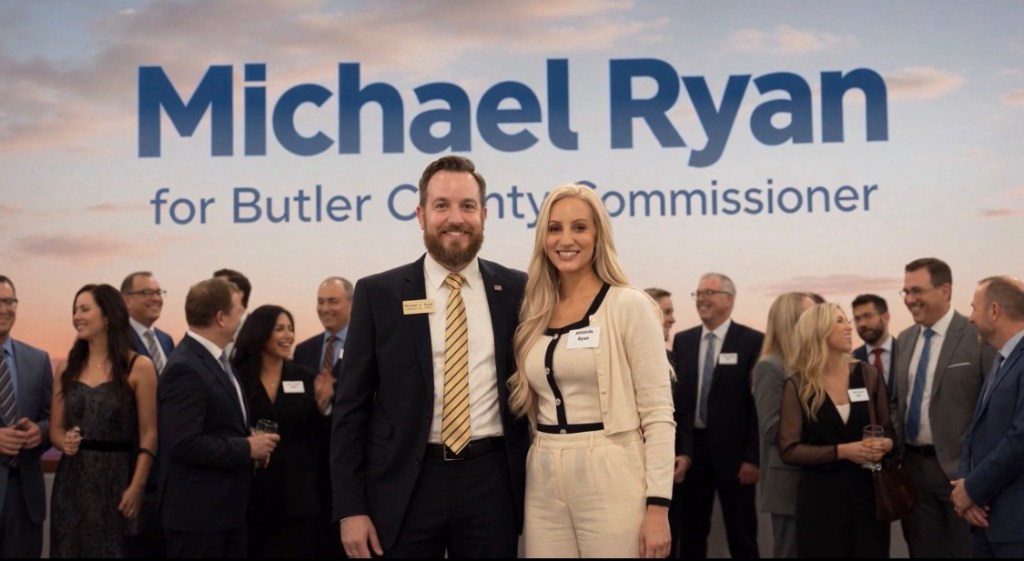
Michael Ryan, one of Carpenter’s challengers, issued a press release shortly after the incident, stating: ‘The people of Butler County deserve leaders who act with dignity and respect, even in difficult situations. What we saw on that video does not reflect those values.’ [4] Ryan’s statement went further, pledging to ‘restore trust and transparency in county government’ and to ‘end the cycle of favoritism and dysfunction.’ These are not just campaign slogans—they are commitments grounded in a vision for better governance.

Ryan’s involvement in the Spooky Nook Sports Complex development showcased his ability to think big and deliver results. In his press release, he reminded voters of that success: ‘When others said it couldn’t be done, we brought stakeholders together and made it happen. That’s the kind of leadership Butler County needs.’ [4]


Contrast that with Roger Reynolds, another challenger in this race. While Reynolds may present himself as a viable alternative, his baggage is well-documented. From ethical questions to controversies that have dogged his career, Reynolds represents the kind of old-guard politics that Butler County needs to move beyond. Supporting Reynolds would be a step backward—a return to the same entrenched interests that have stifled progress for years. As Michael Moser commented in a recent interview, ‘We cannot afford to recycle the same problems under a different name.’ [5]

This primary isn’t just about personalities; it’s about the future of Butler County. Will voters choose a path of renewal and accountability, or will they cling to incumbency and compromise? Carpenter’s recent behavior suggests a leader out of touch with her constituents’ values and expectations. Ryan, on the other hand, embodies the principles of transparency, collaboration, and forward momentum.

Michael Ryan and his wife, Amanda. A fresh start without the baggage for Butler County


As we approach May 2026, the choice is very clear. Butler County deserves leadership that reflects its best qualities—not the worst impulses of entitlement and political expediency. Cindy Carpenter’s controversies aren’t just unfortunate—they’re disqualifying. Michael Ryan offers a better way forward, and for those who care about the integrity and prosperity of this community, the time to act is now.  And this isn’t just an opportunity to talk about Michael Ryan, or to re-assess the Roger Reynolds case, but Cindy should have known better.  The impaired judgment alone should be enough to eliminate her from the job now, without even waiting for the primary to be over.  When you walk into an apartment complex and communicate with people who work with students at a college or university, and you end up turning the whole room against you, which is clearly the case when she finally did leave, which was seen on camera, it’s a lack of skill thing more than any other attribute.  Whether or not Cindy Carpenter abused her authority, depending on who’s telling the story, what we did see was what she does when nobody is looking.  Being in a public place and giving the finger to employees of a business in anger is irrational at best.  We need people who build relationships, not those who can turn entire groups of people against them.  Dealing with this apartment payment issue with cash in hand should have been easy, and for anybody who does business at a high level, she should have had much better command of the situation.  But instead, she only confirmed what all her critics have said about her and showed why politicians can be so dangerous.  On the one hand, they put on a happy face, but when they think no one is looking, they flip people off when they fail to convince them to listen to reason.  A good negotiator never does something like this.  They should be, at a high level of politics, skilled in negotiations.  Because Cindy has been caught on camera doing really dumb things as a politician many times, I am excited to have someone like Michael Ryan running for a commissioner seat.  When we talk about the need for fresh, new faces in government, it’s because of failures like Cindy Carpenter that we make the statement.  And there is only one person to blame; this isn’t dirty politics or a gotcha to harm Cindy out of some sense of unfairness.  She walked into this buzzsaw, willingly on her own accord.  And she wasn’t even smart enough to be careful in a public place full of cameras.  So when we talk about these offices and who should be in them, no matter who is voting, I think we can all agree, that we need someone in an important office that doesn’t give young people the finger at a very public apartment complex when trying to resolve a family members back payment on rent, all events that could have been handled, much, much, better.

References:
[1] Journal-News, ‘Video Shows Cindy Carpenter in Heated Exchange at Apartment Complex,’ 2025.
[2] Journal-News Editorial, ‘Carpenter’s Campaign Misstep Raises Questions,’ 2024.
[3] Security Footage Report, Level 27 Apartments, Miami University, 2025.
[4] Michael Ryan Campaign Press Release, ‘Restoring Trust in Butler County,’ 2025.
[5] Interview with Michael Moser, Butler County GOP Leadership Forum, 2025.

Rich Hoffman

Click Here to Protect Yourself with Second Call Defense https://www.secondcalldefense.org/?affiliate=20707

The Affordability Crisis: Price increases to fill vacant personalities are the folly of socialism looming in the background

The question of housing affordability has become one of the most pressing socio-economic issues in the United States today. With the average home price reaching approximately $400,000 in 2024, many young families and individuals find themselves priced out of the market. This reality raises a critical question: why does the housing industry continue to prioritize large, expensive homes when market signals clearly indicate a growing demand for smaller, affordable housing options? Historically, the American housing model was built on accessibility. Following World War II, the United States experienced an unprecedented housing boom driven by the GI Bill, which provided returning veterans with low-interest mortgages and educational benefits. Between 1945 and 1960, the average home price increased from roughly $8,000 to $12,000 [1], while median household income rose from $2,400 to $5,600 [2]. These homes were predominantly single-story ranch houses designed to be affordable for working-class families. They featured simple layouts, modest square footage, and efficient construction methods that allowed developers to build entire neighborhoods quickly and inexpensively. This model supported rapid suburbanization and contributed to the rise of the American middle class. By contrast, the late 20th and early 21st centuries saw a shift toward larger homes, often called “McMansions.” In 1980, the average home price was $47,000 [3], but by 2000, it had climbed to $120,000 [4], and by 2020, it had skyrocketed to $320,000 [5]. This escalation far outpaced wage growth, creating a structural imbalance in housing affordability and leaving younger generations unable to enter the market. The cultural and economic forces that once prioritized affordability have been replaced by incentives that reward size, luxury, and perceived status, setting the stage for today’s housing crisis.

The persistent trend toward building larger homes is not driven solely by consumer demand but by systemic incentives in the real estate and finance sectors. Developers maximize profits by constructing high-value properties, while municipalities benefit from increased property tax revenues. This dynamic discourages the development of smaller, entry-level homes, even though demographic data suggests that younger generations prefer affordability and functionality over size and luxury. According to recent affordability indices, the ratio of median household income to qualifying income for a median-priced home fell to 0.68 in 2024 [6]. This indicates that homeownership is increasingly unattainable for average earners, reinforcing the argument for a return to smaller, cost-effective housing models. Yet the financial ecosystem—from banks to zoning boards—remains locked into a paradigm that rewards high-margin projects. Mortgage lenders often favor larger loans because they generate higher interest revenue, while local governments prioritize developments that promise substantial tax inflows. These incentives create a feedback loop that perpetuates the construction of oversized homes, even as market demand shifts toward affordability. Furthermore, inflationary pressures and speculative investment exacerbate the problem. Between 2000 and 2024, housing prices grew by more than 230%, while median incomes increased by less than 75%. This disparity underscores the structural imbalance between wages and housing costs, a gap that cannot be bridged solely by traditional market mechanisms. Without intervention, the housing market risks becoming increasingly exclusionary, limiting access to homeownership and eroding the foundation of economic mobility.

Beyond economics, cultural factors play a significant role in shaping housing trends. For decades, the pursuit of status through material possessions influenced consumer preferences, encouraging the construction of larger homes as symbols of success. Golf memberships, luxury cars, and sprawling properties became markers of achievement, reinforcing a cycle of materialism that drove housing design. However, contemporary social values are shifting. Younger generations prioritize experiences, sustainability, and financial flexibility over conspicuous consumption. They are less interested in impressing neighbors with square footage and more concerned with affordability and quality of life. This cultural evolution underscores the need for housing policies and development strategies that align with changing societal norms. Yet the industry has been slow to adapt, clinging to outdated assumptions about what buyers want. Compounding the affordability crisis is the growing influence of institutional investors such as Blackstone, Invitation Homes, and other private equity firms that have acquired tens of thousands of single-family homes across the country. These firms often purchase distressed properties in bulk, outbidding individual buyers with cash offers, and then convert these homes into rental units. This practice accelerates the transition from an ownership-based society to a rental-based one, echoing predictions from the World Economic Forum that “you will own nothing and be happy.” While such statements are controversial, they highlight the structural forces reshaping housing markets globally and the erosion of the American Dream. Institutional investors operate with access to cheap capital and sophisticated financial instruments, enabling them to dominate local markets and set rental prices that further strain household budgets. When ownership becomes unattainable, wealth accumulation stalls, and generational inequality deepens, creating a society increasingly divided along economic lines. The presence of these investors also distorts housing supply, as homes that could serve as affordable entry points for families are removed from the ownership pool and repurposed for profit-driven rental schemes.

Failure to address this imbalance has profound social and economic consequences. Young adults delay marriage and family formation because they cannot afford homes. Communities lose stability as homeownership declines, and wealth inequality deepens as property ownership consolidates among institutional investors. Ultimately, the American Dream of homeownership becomes unattainable for a growing segment of the population. The current housing crisis reflects a failure to adapt to evolving market realities and cultural values. Continuing to build large, expensive homes in the face of declining affordability and changing consumer preferences is economically unsustainable and socially detrimental. A strategic pivot toward smaller, affordable housing—akin to the post-WWII ranch-style model—offers a viable solution to restore accessibility to the American Dream. Developers, policymakers, and financial institutions must recognize that the market is in charge, not the egos of those who seek to maximize profit at the expense of social stability. If this shift does not occur, the consequences will ripple across generations, transforming a nation of homeowners into a nation of renters and undermining the very foundation of American prosperity. The time to act is now: by embracing affordability, sustainability, and inclusivity, the housing industry can realign with the values that once made homeownership a cornerstone of American life.  But price increases, as a solution to fill the empty minds of vacant personalities, are the driving force here.  Everyone can’t be rich; they don’t have a mind for it, nor do they want it.  But we have been caught in giving everyone a sense of wealth without them doing the work of wealth, and in the process, we have opened Pandora’s box of illusion that many are perfectly willing to exploit for a short-term gain.  But the cost of those short-term gains is now before us, and it’s wrapped up in this whole affordability debate.  And looming in the background is the mechanisms of Marxism that knew what they were doing all along.  Once people throw in the towel, what will they want?  That’s what has happened in New York with the new communist mayor there.  And behind it all, there is a push to hide from the world the moral bankruptcy of the instigators if what gets ushered in behind the carnage is socialism and government-driven price controls.  When really, what was needed all along were market-driven sentiments of pure capitalism; if only people had listened to those market forces instead of trying to control them.

References:

[1] U.S. Census Bureau. Historical Housing Data, 1945–1960.

[2] U.S. Census Bureau. Median Income Trends, 1945–1960.

[3] National Association of Realtors. Housing Price Trends, 1980.

[4] Federal Reserve Economic Data (FRED). Median Home Prices, 2000.

[5] Federal Reserve Economic Data (FRED). Median Home Prices, 2020.

[6] Housing Affordability Index Report, 2024.

Rich Hoffman

Click Here to Protect Yourself with Second Call Defense https://www.secondcalldefense.org/?affiliate=20707

Aggressive Interdiction and Human Rights: A Legal and Ethical Analysis

The controversy surrounding aggressive U.S. actions against drug cartels, including the destruction of narcotics-laden vessels, has ignited a global debate. Critics frame these measures as violations of human rights, while proponents argue that cartels themselves are the most egregious violators of human dignity.  I would contend that decisive interdiction, even through kinetic means, aligns with international law principles and humanitarian imperatives. To understand this, we must delve into the historical evolution of international law, the staggering scale of the global drug trade, and the human suffering perpetuated by these criminal networks.  But here’s the deal for context: there is no International Law, only American law.  The same people criticizing the Trump administration for blowing up the drug boats in Venezuela are the same kind of Democrats who wanted to defund the police.  And have produced videos promoting seditious actions against America, particularly Mark Kelly.  He should be in jail, not ranting about preserving the rights of drug boats or their cartel occupants.  I’m a big supporter of blowing up drug boats and taking the fight to the cartels’ front door.  There are a lot of flawed characters involved in this drug business, so anyone protesting human rights as a defense for the continued practice is purposely trying to make the world less stable for benefits that are not in our favor. 


International law governing narcotics control did not emerge in a vacuum. Its roots trace back to early 20th-century efforts to regulate opium and morphine, culminating in the 1961 Single Convention on Narcotic Drugs. This treaty, alongside the 1971 Convention on Psychotropic Substances and the 1988 United Nations Convention Against Illicit Traffic in Narcotic Drugs and Psychotropic Substances, sought to harmonize global efforts against drug trafficking. Yet these frameworks were never designed to override national sovereignty. Enforcement remains the prerogative of individual states, a reality that underscores why nations like the United States resort to unilateral action when multilateral mechanisms falter. Scholars emphasize that Article 14 of the 1988 Convention explicitly encourages states to adopt stringent interdiction strategies to suppress trafficking. [1]  It was a good time when most of the world still thought of drugs as dangerous, but too many people have fallen under their seduction and are now part of the problem.  And that is undoubtedly the case of the very socialist body of the United Nations.  Any defense of the drug network, knowing what we do now of the costs, is reprehensible and unforgivable. 


Consider the plight of communities ravaged by cartel violence. In Mexico, entire towns have been depopulated as families flee the terror of organized crime. Mothers bury sons lost to gang wars, while children grow up in landscapes dominated by fear. Since 2006, Mexico has recorded over 460,000 homicides, mainly attributable to cartel-related violence. [3] These are not abstract numbers; they represent shattered lives and broken futures. The global drug economy, valued between $360 and $652 billion annually, rivals the GDP of mid-sized nations. Cocaine production alone reached 2,757 metric tons in 2022, per UNODC data. [2] Each shipment fuels a cycle of addiction, corruption, and death that transcends borders.  This is not an issue that we can turn our backs on.  Ignoring this desperate evil is not responsible; it’s reprehensible.  There is no greater human rights violator on planet earth than these murderous drug cartels.  And no war has ever been fought that was more important than this one.   Here, we have a clear villain.  And if Democrats can’t see and agree to that, well, then they are part of the problem.  Which I would say has always been the case.  Only now do we have context for their actions.  They want to topple the stability of the world.  When you are fighting for the lives of drug dealers, you are fighting the wrong things. 


The fentanyl crisis epitomizes the lethal evolution of narcotics trafficking. Between 2020 and 2023, U.S. overdose deaths linked to synthetic opioids surged by 279%. In 2023 alone, fentanyl claimed 72,776 lives, constituting 69% of all overdose fatalities. [4] Behind these statistics are stories of young lives extinguished in their prime—college students, parents, veterans—victims of a substance so potent that two milligrams can kill. Economically, fentanyl’s profitability is unparalleled: one kilogram, costing $80,000 wholesale, yields $1.6 million on the street. Cartels exploit Chinese precursor suppliers, with investigations identifying 188 companies complicit in this trade. [5] These dynamics illustrate the intersection of organized crime, public health, and international security.  We are talking more lives lost than what the Vietnam War cost Americans.  This isn’t a remote threat; it’s a very personal one where the war has been brought literally into our backyards.  The only difference is that the weapons used are not guns and bombs.  But the destruction of the mind itself.  And this isn’t some market-driven intent.  It’s a sinisterly plotted scheme that starts in places like China to destroy Western civilization itself.  And with a smile on their faces as they watch the death of many innocents. 


Cartels have diversified beyond narcotics into human trafficking, generating $236 billion annually through forced labor and sexual exploitation. [6] Millions of women and children are entrapped in these networks, often under the same criminal syndicates orchestrating narcotics flows. This duality magnifies humanitarian crises, rendering cartels not merely criminal enterprises but systemic violators of fundamental rights. Survivors recount harrowing tales of coercion, violence, and despair—stories that rarely make headlines but define the lived reality of cartel dominance.  There are untold numbers of women and children who are literally destroyed in this process, and they are ruined for life.  There is a cost to this that nobody has yet put their mind around, and it poses the most significant problem of them all in sheer magnitude. 


Venezuela’s transformation into a narcotics hub exemplifies state complicity. The Cartel de los Soles, allegedly embedded within the Venezuelan military, facilitates cocaine transshipment to global markets. U.S. indictments implicate senior Maduro regime officials in narco-terrorism conspiracies. [7] Geopolitical entanglements with Russia and China furnish economic lifelines, complicating enforcement and underscoring the nexus between organized crime and authoritarian resilience. Remote airstrips launch drug flights under the cover of night, while maritime routes snake through Caribbean waters, evading interdiction. Each shipment represents not just contraband but the erosion of governance and the triumph of criminality over law.


Critics decry kinetic interdiction as extrajudicial, yet proportionality under international humanitarian law permits force when confronting actors whose conduct precipitates mass atrocity. Analogies to anti-piracy operations and counterterrorism frameworks validate such measures. [8] The principle of Responsibility to Protect (R2P) arguably extends to dismantling cartels, given their role in orchestrating transnational violence and exploitation. To frame interdiction as mere aggression is to ignore the moral calculus of inaction—a calculus measured in lives lost, communities shattered, and futures foreclosed.


Drug cartels epitomize systemic human rights violators, perpetuating cycles of death, addiction, and exploitation. Aggressive interdiction, including the destruction of narcotics vessels, aligns with both legal norms and moral imperatives. Inaction sustains a status quo wherein criminal syndicates eclipse state authority, eroding global security and humanitarian values. History will judge not the audacity of action but the complacency of silence.  And for my part, I say blow up many more drug boats.  And if they want help, call me.  I’d be happy to lend support in the destruction of drug cartels and their evil minions. 

[1] United Nations Convention Against Illicit Traffic in Narcotic Drugs and Psychotropic Substances, 1988.

[2] UNODC World Drug Report 2023.

[3] Mexico Homicide Data, INEGI, 2023.

[4] CDC Overdose Mortality Statistics, 2023.

[5] U.S. DEA Fentanyl Intelligence Report, 2024.

[6] ILO Global Estimates on Modern Slavery, 2022.

[7] U.S. DOJ Indictments on Venezuelan Officials, 2023.

[8] International Committee of the Red Cross, Principles of Proportionality, 2021.

Rich Hoffman

Click Here to Protect Yourself with Second Call Defense https://www.secondcalldefense.org/?affiliate=20707

UFO Disclosure: Historical Context, Cultural Impact, and the Interdimensional Reality

Unidentified Flying Objects (UFOs), now officially termed Unidentified Anomalous Phenomena (UAPs), have transitioned from fringe speculation to mainstream discourse in recent years. The concept of UFO disclosure refers to the systematic release of information by governments, military agencies, and credible institutions regarding unexplained aerial phenomena. This shift has profound implications for science, security, and culture. While the notion of extraterrestrial visitation has long captivated the public imagination, recent developments—including congressional hearings, Pentagon reports, and high-profile media coverage—suggest that the phenomenon warrants serious consideration beyond conspiracy theories. The question is no longer whether UFOs exist, but what they represent and how society should respond to their disclosure.

Historically, UFO sightings surged in the mid-20th century, coinciding with technological advancements and geopolitical tensions during the Cold War. The Roswell incident of 1947, often cited as the genesis of modern UFO lore, sparked widespread speculation about crashed alien spacecraft and government cover-ups. In response, the U.S. Air Force launched Project Sign in 1947, followed by Project Grudge in 1949, and ultimately Project Blue Book in 1952. Project Blue Book became the most extensive government program investigating UFOs, collecting over 12,000 reports before its termination in 1969. While most cases were attributed to natural phenomena or misidentified aircraft, 701 remained unexplained (Britannica, 2025; Wikipedia, 2025). The official stance concluded that UFOs posed no threat to national security and lacked evidence of extraterrestrial origin. However, critics argue that the Condon Report, which justified the program’s closure, reflected institutional bias rather than scientific rigor (History.com, 2025). These early investigations established a pattern of secrecy and skepticism that shaped public perception for decades.

The modern era of disclosure began in 2017 when The New York Times revealed the existence of the Pentagon’s Advanced Aerospace Threat Identification Program (AATIP). This revelation, coupled with the release of declassified Navy videos depicting objects with extraordinary flight characteristics, reignited global interest. Subsequent reports by the Office of the Director of National Intelligence (ODNI) and the Department of Defense’s All-Domain Anomaly Resolution Office (AARO) have documented hundreds of UAP incidents, some defying conventional explanations (ODNI, 2023; DoD, 2024). The 2024 consolidated report noted that while many sightings were attributable to balloons or drones, a subset exhibited anomalous behavior, including transmedium travel and acceleration beyond known propulsion systems (DoD, 2024). Congressional hearings featuring whistleblowers such as David Grusch further intensified the debate, with claims of crash retrieval programs and non-human biologics entering the public record. Although these assertions remain controversial, they underscore a growing consensus that UAPs merit scientific investigation rather than dismissal.

Media figures have played a pivotal role in amplifying the disclosure narrative. Tucker Carlson, once reticent on the subject, has devoted extensive coverage to UAPs, interviewing lawmakers like Rep. Tim Burchett and discussing classified briefings that suggest underwater UFOs—so-called USOs—capable of moving at 200 mph in ocean trenches (Carlson Interview, 2025). Carlson has hinted at a “spiritual component” to the phenomenon, describing aspects so disturbing that he hesitates to share them publicly (Newsweek, 2023). Similarly, Megyn Kelly has hosted discussions with historian Victor Davis Hanson and former intelligence officials, exploring claims of reverse-engineered alien technology and the cultural ramifications of disclosure (Kelly Show, 2025). Joe Rogan’s podcast has featured prominent voices such as Bob Lazar, Jacques Vallée, and David Grusch, delving into theories ranging from extraterrestrial visitation to simulation hypotheses (JRE Library, 2025). These platforms have not only normalized UFO discourse but also framed it within broader philosophical and scientific contexts, challenging audiences to reconsider humanity’s place in the cosmos.

The cultural impact of UFO disclosure extends beyond media sensationalism. It intersects with epistemology, theology, and sociology, raising questions about authority, trust, and existential meaning. Historically, UFO narratives have mirrored societal anxieties—from Cold War fears of Soviet technological superiority to contemporary concerns about government transparency. Today, disclosure challenges entrenched paradigms, compelling institutions to reconcile empirical anomalies with scientific orthodoxy. Popular culture, from Hollywood films to streaming documentaries like The Age of Disclosure, reflects this tension, oscillating between skepticism and wonder. As anthropologist Diana Walsh Pasulka observes, UFOs function as “technological angels,” embodying both scientific mystery and spiritual symbolism (Pasulka, 2019). This duality explains why disclosure evokes not only curiosity but also apprehension, as it destabilizes ontological certainties that underpin modern civilization.

Speculative theories about UAP origins further complicate the discourse. The extraterrestrial hypothesis (ETH), positing that UFOs are spacecraft from other planets, remains the most popular explanation. However, the interdimensional hypothesis (IDH) has gained traction among scholars and ufologists. Pioneered by thinkers like J. Allen Hynek and Jacques Vallée, IDH suggests that UAPs may originate from parallel realities or higher dimensions, exploiting quantum anomalies to traverse spacetime (Patheos, 2024; Vallée, 1975). Contemporary research in quantum physics and multiverse theory lends conceptual plausibility to this idea, even if empirical validation remains elusive. Tim Lomas (2023) argues for “epistemic humility” in evaluating such hypotheses, noting that UAP behavior—such as instantaneous acceleration and materialization—defies classical physics and may indicate non-local phenomena (Lomas, 2023). If true, the implications are staggering: reality may be far more complex than the materialist paradigm assumes, encompassing layers of existence beyond human perception. This perspective resonates with ultraterrestrial models proposed by physicist Harold Puthoff, which entertain scenarios involving time travelers, ancient civilizations, or entities operating outside conventional spacetime (Journal of Cosmology, 2024).

The philosophical and theological ramifications of these theories are profound. If UAPs represent interdimensional intelligences, traditional dichotomies between science and spirituality collapse, inviting a synthesis of metaphysics and empirical inquiry. Such a paradigm shift could redefine humanity’s understanding of consciousness, agency, and destiny. It may also catalyze ethical debates about contact protocols, planetary stewardship, and the moral status of non-human intelligences. As Vallée cautions, disclosure is not merely a scientific event but a cultural transformation with unpredictable consequences for religion, governance, and social cohesion. Governments have reportedly convened think tanks to assess these impacts, with some concluding that full disclosure could destabilize global institutions—a rationale often cited for continued secrecy (NewsNation, 2025). Whether this paternalism is justified remains contentious, but it underscores the gravity of the issue.

UFO disclosure represents a watershed moment in human history, challenging epistemic boundaries and cultural norms. From the secrecy of Project Blue Book to the transparency of ODNI reports, the trajectory of UAP discourse reflects a gradual shift from ridicule to legitimacy. Media figures like Carlson, Kelly, and Rogan have accelerated this transition, framing UFOs as both scientific enigmas and philosophical provocations. While the extraterrestrial hypothesis dominates popular imagination, interdimensional models invite deeper reflection on the nature of reality and consciousness. Ultimately, disclosure is not an end but a beginning—a call to expand our intellectual horizons and prepare for a future where the unknown becomes knowable. Whether humanity meets this challenge with wisdom or hubris will determine the contours of the next great chapter in our cosmic story.

UFO disclosure has evolved from Cold War secrecy under Project Blue Book to contemporary transparency through ODNI and AARO reports. Media figures such as Tucker Carlson, Megyn Kelly, and Joe Rogan have mainstreamed the debate, while documentaries like The Age of Disclosure amplify claims of crash retrieval programs and non-human biologics. Beyond empirical anomalies, disclosure raises cultural, philosophical, and theological questions, challenging materialist assumptions and inviting consideration of interdimensional hypotheses. Whether UAPs are extraterrestrial, ultraterrestrial, or manifestations of higher-dimensional realities, their study demands epistemic humility and interdisciplinary inquiry. Disclosure is not merely about UFOs—it is about redefining humanity’s place in a universe that is likely far stranger than imagined.

References (APA Style)

• Britannica. (2025). Project Blue Book. Retrieved from https://www.britannica.com/topic/Project-Blue-Book

• Department of Defense. (2024). Fiscal Year 2024 Consolidated Annual Report on Unidentified Anomalous Phenomena. Retrieved from https://media.defense.gov

• History.com. (2025). Project Blue Book: The US Government’s Secret UFO Investigations. Retrieved from https://www.history.com/articles/project-blue-book

• Lomas, T. (2023). The Ultraterrestrial Hypothesis: A Case for Scientific Openness to an Interdimensional Explanation for UAP. Journal of Transpersonal Psychology.

• Newsweek. (2023). Why Tucker Carlson’s Scared to Report on UFOs. Retrieved from https://www.newsweek.com

• Patheos. (2024). UAP: The Interdimensional Hypothesis. Retrieved from https://www.patheos.com

• Pasulka, D. W. (2019). *

Rich Hoffman

Click Here to Protect Yourself with Second Call Defense https://www.secondcalldefense.org/?affiliate=20707

Armageddon as Process: From the Teacher of Righteousness to Modern Political Movements

For centuries, people have imagined the Battle of Armageddon as a climactic showdown—a single day when good finally triumphs over evil. But what if Armageddon is not a moment in time, but a perpetual struggle? What if the battle has been raging for thousands of years, manifesting in different eras, cultures, and movements? Today, as millions rally behind reformist causes like the MAGA movement, many wonder why evil seems so entrenched, why corruption persists even when righteousness gains ground. The answer lies in history: the fight against systemic evil is not episodic—it is eternal.

To understand this, we must look back to the crucible of Western civilization: the Holy Land during the turbulent centuries before and after Christ. There, in the shadow of empires, a small sect called the Essenes waged a spiritual and cultural rebellion against corruption. Their writings—the Dead Sea Scrolls—reveal a figure known as the Teacher of Righteousness, a man who defied the “Wicked Priest” and inspired generations of resistance. From Qumran to Megiddo, from the Copper Scroll to the mosaic affirming Jesus in a Roman garrison, the story of righteousness versus evil is a continuum that stretches into our own time.

Around 150 BCE, as Judea reeled under Hellenistic influence after Alexander the Great, a separatist sect emerged—the Essenes. Disillusioned by Jewish priests who compromised with Greek rulers, the Essenes withdrew to the desert near Qumran. They lived by strict purity laws, followed a solar calendar, and anticipated an apocalyptic showdown between the “Sons of Light” and the “Sons of Darkness.” Their writings—the Community Rule, War Scroll, and Damascus Document—outline a worldview obsessed with righteousness and divine justice.

Central to these texts is the enigmatic Teacher of Righteousness, a leader who clashed with the “Wicked Priest,” likely a Hasmonean high priest aligned with foreign powers. The Teacher’s mission was clear: restore covenantal purity and resist systemic corruption. His life foreshadows later figures like John the Baptist and Jesus, who also confronted entrenched elites. Without the Dead Sea Scrolls, we would never know this man existed—yet his influence rippled through history, shaping the moral architecture of Western thought.

Discovered in 1952 in Qumran Cave 3, the Copper Scroll stands apart from other Dead Sea texts. Unlike parchment manuscripts, it was etched on metal—suggesting permanence. Its contents? A list of 64 treasure caches, possibly Temple wealth hidden during Roman incursions. This reveals a critical truth: rebellion was not merely spiritual; it had economic dimensions. Control of resources meant survival for communities resisting imperial domination. The Copper Scroll is a silent witness to the material stakes of righteousness—a reminder that corruption thrives not only in temples but in treasuries.

Megiddo, perched at the crossroads of ancient trade routes, was more than a city—it was a symbol. From Canaanite stronghold to Israelite fortress, from Greek outpost to Roman garrison, Megiddo embodied the clash of civilizations. By the second century CE, it housed Legio VI Ferrata, a Roman legionary camp with 5,000 soldiers. Roads, amphitheaters, and barracks testify to imperial might. Yet Revelation would immortalize Megiddo as Armageddon—the stage for the ultimate battle between good and evil. In truth, that battle was already underway, fought not with swords alone but with ideas, faith, and sacrifice.

Among the most stunning finds at Megiddo is a mosaic floor dated to around 230 CE, discovered in a Roman military compound. Its inscription dedicates worship to “God Jesus Christ”—the earliest archaeological evidence of Jesus’ divinity. This predates Constantine’s Edict of Milan by nearly a century, proving that Christianity was infiltrating the Roman world long before it became state-sanctioned. The mosaic, displayed at the Museum of the Bible, marks a turning point: the empire that crucified Christ was slowly bowing to His name. This was not an overnight revolution but a gradual transformation—a testament to the endurance of righteousness.

Before Rome embraced the cross, it worshipped a pantheon of gods—Jupiter, Mars, Venus—and demanded emperor worship. Greek deities like Zeus and Athena lingered in cultural memory. Against this backdrop, Christianity’s rise was nothing short of miraculous. Persecuted believers faced martyrdom, yet their faith spread from catacombs to palaces. By 313 CE, Constantine legalized Christianity; by 380 CE, Theodosius made it the official religion. But the seeds of this revolution were sown centuries earlier—by rebels like the Essenes, prophets like John, and visionaries like the Teacher of Righteousness.

What does this mean for us today? The struggle between righteousness and corruption did not end with Constantine—or with the crucifixion. It is a permanent condition of human society. Modern movements like the Tea Party, the Reform Party, and MAGA echo the same impulse: to resist entrenched elites and restore moral order. Just as the Essenes defied the Wicked Priest, today’s reformers challenge systems that profit from decay. The hostility they face—from media vilification to legal persecution—mirrors the fate of ancient rebels. Why? Because evil never surrenders quietly.

History teaches a sobering truth: fighting evil is hard, slow, and often bloody—but it works. The Teacher of Righteousness did not live to see Rome fall, yet his stand against corruption helped ignite a movement that reshaped the world. The Essenes’ scrolls lay hidden for two millennia, only to inspire us today. The Megiddo mosaic whispers across centuries: righteousness wins—not in a day, but in the long arc of history. So when despair creeps in, remember: Armageddon is not ahead of us—it is all around us. And every act of courage, every stand for truth, moves the battle forward.

— Additional notes and reference —

Abstract:

This work examines Armageddon as a historical continuum rather than a singular event, tracing its roots from the Essenes and the Teacher of Righteousness through Greek and Roman occupations, Jewish revolts, and the rise of Christianity. It integrates archaeological evidence from Megiddo, textual analysis of the Dead Sea Scrolls, and modern political parallels to argue that the struggle between righteousness and corruption is an enduring condition of human society.

1. Introduction

Armageddon is often imagined as an apocalyptic climax, yet history reveals it as a recurring process. From Qumran to Washington, the battle between systemic evil and reformist zeal persists. [Footnote: Collins, 2010]

2. Historical Timeline

– 332 BCE: Alexander the Great conquers Judea, introducing Hellenistic culture. [Footnote: Josephus, Antiquities]

– 140–37 BCE: Hasmonean dynasty asserts Jewish autonomy but succumbs to corruption. [Footnote: Schiffman, 1994]

– 63 BCE: Pompey annexes Judea; Roman rule begins. [Footnote: Goodman, 2007]

– 66–73 CE: First Jewish Revolt ends with destruction of the Second Temple. [Footnote: Josephus, Wars]

– 313 CE: Constantine legalizes Christianity; 380 CE: Theodosius makes it official. [Footnote: Brown, 1989]

3. The Essenes and Teacher of Righteousness

The Essenes, a separatist sect, withdrew to Qumran to resist priestly corruption. Their texts—the Community Rule, War Scroll, Damascus Document—reveal a dualistic worldview: Sons of Light vs. Sons of Darkness. The Teacher of Righteousness emerges as a prophetic figure opposing the Wicked Priest. [Footnote: Vermes, 2011]

4. Megiddo and Armageddon

Megiddo’s strategic location made it a stage for imperial clashes. Excavations reveal layers from Canaanite to Roman eras. Revelation’s Armageddon draws on this geography as a metaphor for ultimate conflict. [Footnote: BAR, 2015]

5. Dead Sea Scrolls and Copper Scroll

The Copper Scroll lists 64 treasure caches, underscoring the economic stakes of rebellion. Resistance was not merely spiritual but material. [Footnote: Allegro, 1960]

6. Greek and Roman Context

Greek philosophy and Roman law reshaped Judea’s cultural landscape. Emperor worship and Hellenistic syncretism clashed with Jewish monotheism, fueling sectarian movements. [Footnote: Hengel, 1974]

7. Modern Parallels

Reform Party → Tea Party → MAGA echo ancient insurgencies. Each arose to combat perceived corruption, facing vilification and systemic pushback. [Footnote: Skocpol & Williamson, 2012]

8. Conclusion

Armageddon is not a prophecy deferred but a pattern repeated. From the Teacher of Righteousness to modern populists, the fight against entrenched power endures.

References:

– Allegro, J. (1960). The Treasure of the Copper Scroll.

– BAR (Biblical Archaeology Review), various issues.

– Brown, P. (1989). The Rise of Western Christendom.

– Collins, J. (2010). Apocalypticism in the Dead Sea Scrolls.

– Goodman, M. (2007). Rome and Jerusalem.

– Hengel, M. (1974). Judaism and Hellenism.

– Josephus. Antiquities and Wars of the Jews.

– Schiffman, L. (1994). Reclaiming the Dead Sea Scrolls.

– Skocpol, T., & Williamson, V. (2012). The Tea Party and the Remaking of Republican Conservatism.

– Vermes, G. (2011). The Complete Dead Sea Scrolls in English.

Rich Hoffman

Click Here to Protect Yourself with Second Call Defense https://www.secondcalldefense.org/?affiliate=20707

Sedition, Civilian Control, and the Afghan Shooter: A Constitutional Crisis in Motion

The foundation of American governance rests on a principle that distinguishes it from authoritarian regimes: civilian control over the military. This concept ensures that elected officials—not generals or unelected bureaucrats—command the armed forces. It is a safeguard against military coups and tyranny, preserving the democratic structure envisioned by the framers of the Constitution. When this principle is undermined, the entire system of governance faces existential risk.

Recent events have brought this issue into sharp focus. On November 26, 2025, an Afghan immigrant—Rahmanullah Lakanwal—opened fire on two National Guard members near the White House. This attack, occurring on the eve of Thanksgiving, was not an isolated act of violence. It was symptomatic of a deeper ideological war being waged against law and order, fueled by political rhetoric and systemic failures in immigration vetting. At the center of this controversy lies a video released by six members of Congress, including Senator Mark Kelly, urging military personnel to “refuse illegal orders” from President Trump. While framed as a constitutional safeguard, critics argue that the video constitutes sedition, a crime punishable by death under U.S. law.

Lakanwal, a 29-year-old Afghan national, ambushed two West Virginia National Guard members—Specialist Sarah Beckstrom and Staff Sergeant Andrew Wolfe—near the Farragut West Metro station, just blocks from the White House. Armed with a .357 Smith & Wesson revolver, he critically injured both soldiers before being subdued and hospitalized. Authorities have charged him with assault with intent to kill while armed, with potential escalation to murder charges if the victims succumb to their injuries.1

Lakanwal entered the United States in September 2021 under Operation Allies Welcome, a Biden administration initiative to resettle Afghans who assisted U.S. forces during the war. Approximately 76,000 Afghans were admitted under this program, many on humanitarian parole. Lakanwal, a former Afghan special forces commander who worked closely with U.S. and British troops, was granted asylum in 2025.

While the program aimed to honor commitments to allies, critics argue that vetting was rushed, creating security vulnerabilities. The Trump administration has since halted Afghan immigration processing indefinitely pending review.3

The FBI is investigating whether Lakanwal acted as a lone wolf inspired by jihadist ideology or had operational ties to terrorist networks. While no direct links to ISIS or al-Qaeda have been confirmed, authorities are treating the case as potential international terrorism.4

This incident underscores a broader trend: according to the Center for Strategic and International Studies (CSIS), the U.S. has averaged three jihadist plots or attacks per year since 2020, most inspired rather than directed by foreign groups.5

The ideological dimension cannot be ignored. Radical Islamists view Western democracies—and particularly Christian-majority nations like the U.S.—as adversaries. Acts of terror serve as both symbolic and tactical blows against these societies. When political rhetoric within the U.S. appears to legitimize defiance of lawful authority, it creates fertile ground for extremists seeking justification for violence.

Who Were the “Seditious Six?”

1. Sen. Mark Kelly (AZ)

2. Sen. Elissa Slotkin (MI)

3. Rep. Jason Crow (CO)

4. Rep. Chrissy Houlahan (PA)

5. Rep. Chris Deluzio (PA)

6. Rep. Maggie Goodlander (NH)6

The lawmakers urged military and intelligence personnel to “refuse illegal orders” and uphold the Constitution. While they claimed this was a defense against tyranny, critics—including President Trump—argued that the video that the “seditious six” produced constituted sedition, punishable by death under federal law. The Pentagon is reportedly investigating whether Kelly could be recalled to active duty for court-martial under the Uniform Code of Military Justice (UCMJ).67

Legal experts counter that advising troops not to follow unlawful orders is correct under military law. Sedition requires intent to overthrow the government by force, which the video did not explicitly advocate.8  And that’s the problem, because the clear intent was to inspire people like Rahmanullah Lakanwal to do it on their behalf while the “seditious six” claim innocence.

Legal Definitions

• Sedition (18 U.S.C. §2384): Conspiracy to use force to overthrow or oppose U.S. authority or hinder execution of law. Punishable by up to 20 years.9

• Insurrection (18 U.S.C. §2383): Violent rebellion against U.S. authority.10

January 6 Context

Prosecutors charged organized groups like the Oath Keepers and Proud Boys with seditious conspiracy for plotting to block certification of the 2020 election.11

Key Difference

January 6 was a reaction to election fraud—a protest against what participants saw as the destruction of democratic governance. The Kelly video, by contrast, sought to influence military obedience, striking at the heart of civilian control. While both raise constitutional questions, the latter arguably poses a more systemic threat because it undermines the chain of command that preserves a representative government that reports to the people and is obedient to them.  With January 6th, the government was picking our president, so we are dealing with a big difference and a major problem in context.  And it’s the same bad players in all cases.  The political left, and moderates in their back pocket, do not want a representative government that reports to a president they pick.  They want to put a complete loser like Joe Biden in power to rule over the masses as a fourth branch of government that rules from Tyson’s Corner mansions. 

Civilian oversight of the military is not a mere tradition; it is a constitutional mandate. Article II of the Constitution vests executive power in the President, who serves as Commander-in-Chief. This structure prevents military autonomy and ensures accountability through elections.

When elected officials encourage defiance of presidential orders, they erode this foundation. If the military becomes a political actor, democracy collapses into oligarchy or dictatorship. The Kelly video, regardless of intent, introduced ambiguity into a system that depends on clarity.

The Afghan shooter’s attack illustrates the real-world consequences of ideological destabilization. Political rhetoric that delegitimizes lawful authority does not exist in a vacuum; it reverberates globally, influencing actors who seek chaos. Immigration policies that prioritize mass over security compound the risk.

Moreover, the selective application of legal standards—aggressive prosecution of January 6 participants versus leniency toward lawmakers flirting with sedition—undermines public trust. Lawfare becomes a weapon, not a shield, when used to destroy political rivals rather than uphold justice.

The events of November 26, 2025, are a warning. When civilian control of the military is questioned, when immigration vetting fails, and when political discourse normalizes defiance of lawful authority, the republic teeters on the brink. Sedition is not a partisan label; it is a legal reality with grave consequences. Whether the Kelly video meets that threshold will be decided in courts and history books, but its implications are undeniable.

The Afghan shooter’s bullets were not just aimed at two soldiers; they were aimed at the constitutional order itself. Preserving that order requires vigilance—not only against foreign threats but against domestic rhetoric that erodes the foundations of governance.

• Operation Allies Welcome admitted approximately 76,000 Afghans between 2021 and 2022, with DHS reporting that 40% lacked full biometric vetting. [Footnote: DHS Report, 2023]

• CSIS data shows an average of 3 jihadist-inspired plots annually since 2020, with 68% involving lone actors. [Footnote: CSIS Terrorism Trends, 2024]

• Gallup polling (2024) indicates only 45% of Americans trust civilian control of the military, down from 62% in 2010. [Footnote: Gallup, 2024]

Legal Framework:

• Sedition prosecutions surged post-January 6, with DOJ charging 17 individuals under 18 U.S.C. §2384 in 2021–2023. [Footnote: DOJ Annual Report, 2023]

• Comparative analysis: Brazil faced 11 sedition-related prosecutions after Bolsonaro supporters stormed government buildings in 2023. [Footnote: Latin American Security Review, 2024]

Both Marjorie Taylor Greene’s resignation and Kelly’s video highlight systemic stress points: erosion of institutional norms and the weaponization of rhetoric. Greene’s failure to govern parallels Kelly’s flirtation with sedition—each case underscores the fragility of democratic guardrails when political actors prioritize ideology over institutional responsibility.

Academic Perspectives:

• Huntington’s “The Soldier and the State” remains foundational, warning that politicization of the military invites democratic collapse. [Footnote: Huntington, 1957]

• Recent scholarship (Feaver, 2022) argues that partisan signaling to military personnel correlates with declining trust in democratic institutions. [Footnote: Feaver, 2022]

Policy Recommendations:

1. Reinforce UCMJ clarity on unlawful orders.

2. Mandate bipartisan oversight for immigration vetting programs.

3. Establish congressional ethics review for rhetoric impacting military obedience.

References:

– DHS Report on Operation Allies Welcome (2023)

– CSIS Terrorism Trends (2024)

– Gallup Polling Data (2024)

– DOJ Annual Report (2023)

– Huntington, S. (1957). The Soldier and the State.

– Feaver, P. (2022). Armed Servants: Agency and Control in Civil-Military Relations.

Cross-Reference: Greene’s governance failure illustrates parallel institutional stress.

Rich Hoffman

Click Here to Protect Yourself with Second Call Defense https://www.secondcalldefense.org/?affiliate=20707