

For centuries, people have imagined the Battle of Armageddon as a climactic showdown—a single day when good finally triumphs over evil. But what if Armageddon is not a moment in time, but a perpetual struggle? What if the battle has been raging for thousands of years, manifesting in different eras, cultures, and movements? Today, as millions rally behind reformist causes like the MAGA movement, many wonder why evil seems so entrenched, why corruption persists even when righteousness gains ground. The answer lies in history: the fight against systemic evil is not episodic—it is eternal.
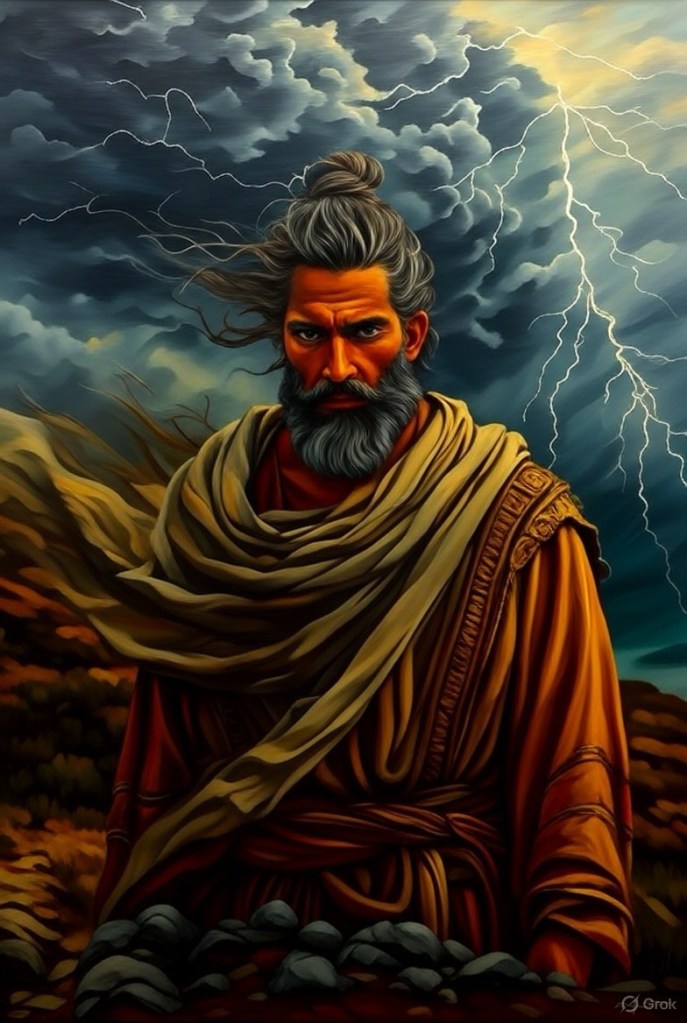
To understand this, we must look back to the crucible of Western civilization: the Holy Land during the turbulent centuries before and after Christ. There, in the shadow of empires, a small sect called the Essenes waged a spiritual and cultural rebellion against corruption. Their writings—the Dead Sea Scrolls—reveal a figure known as the Teacher of Righteousness, a man who defied the “Wicked Priest” and inspired generations of resistance. From Qumran to Megiddo, from the Copper Scroll to the mosaic affirming Jesus in a Roman garrison, the story of righteousness versus evil is a continuum that stretches into our own time.
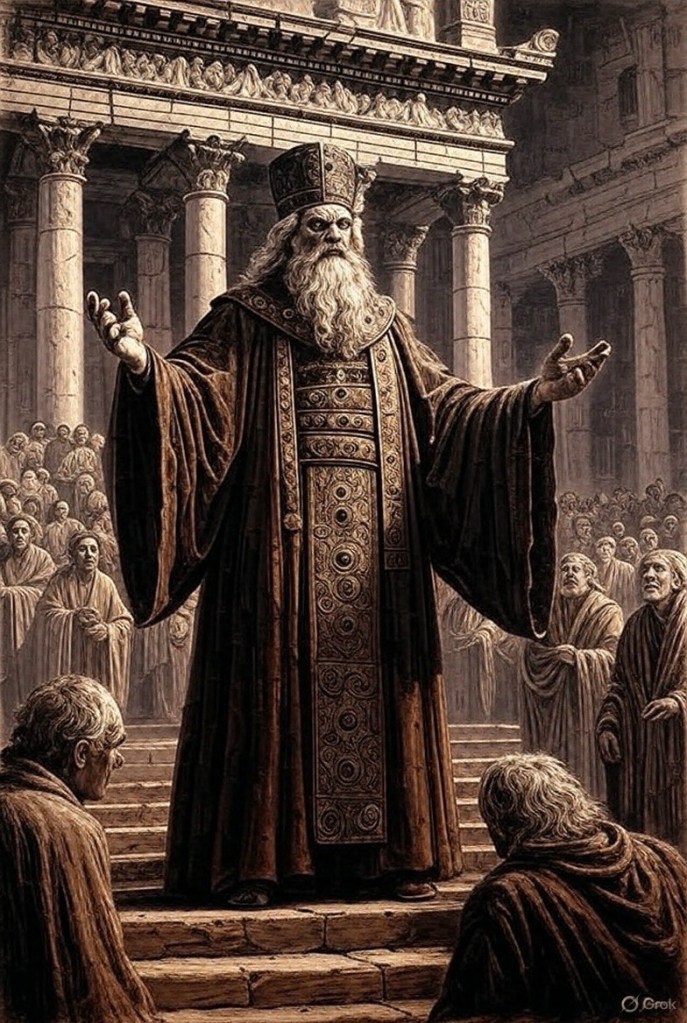
Around 150 BCE, as Judea reeled under Hellenistic influence after Alexander the Great, a separatist sect emerged—the Essenes. Disillusioned by Jewish priests who compromised with Greek rulers, the Essenes withdrew to the desert near Qumran. They lived by strict purity laws, followed a solar calendar, and anticipated an apocalyptic showdown between the “Sons of Light” and the “Sons of Darkness.” Their writings—the Community Rule, War Scroll, and Damascus Document—outline a worldview obsessed with righteousness and divine justice.
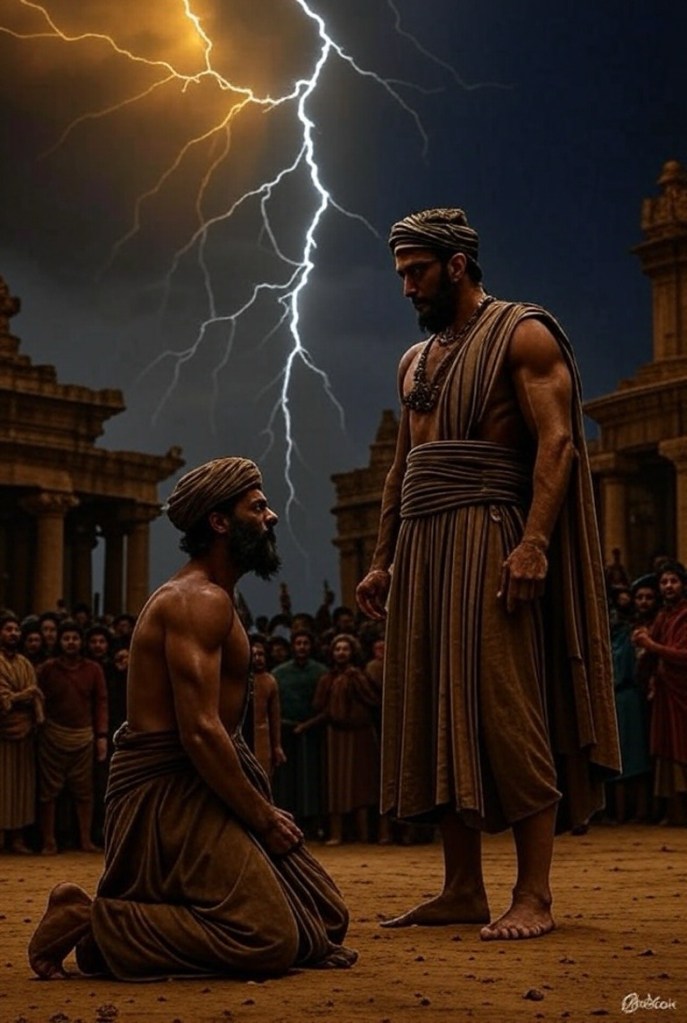
Central to these texts is the enigmatic Teacher of Righteousness, a leader who clashed with the “Wicked Priest,” likely a Hasmonean high priest aligned with foreign powers. The Teacher’s mission was clear: restore covenantal purity and resist systemic corruption. His life foreshadows later figures like John the Baptist and Jesus, who also confronted entrenched elites. Without the Dead Sea Scrolls, we would never know this man existed—yet his influence rippled through history, shaping the moral architecture of Western thought.
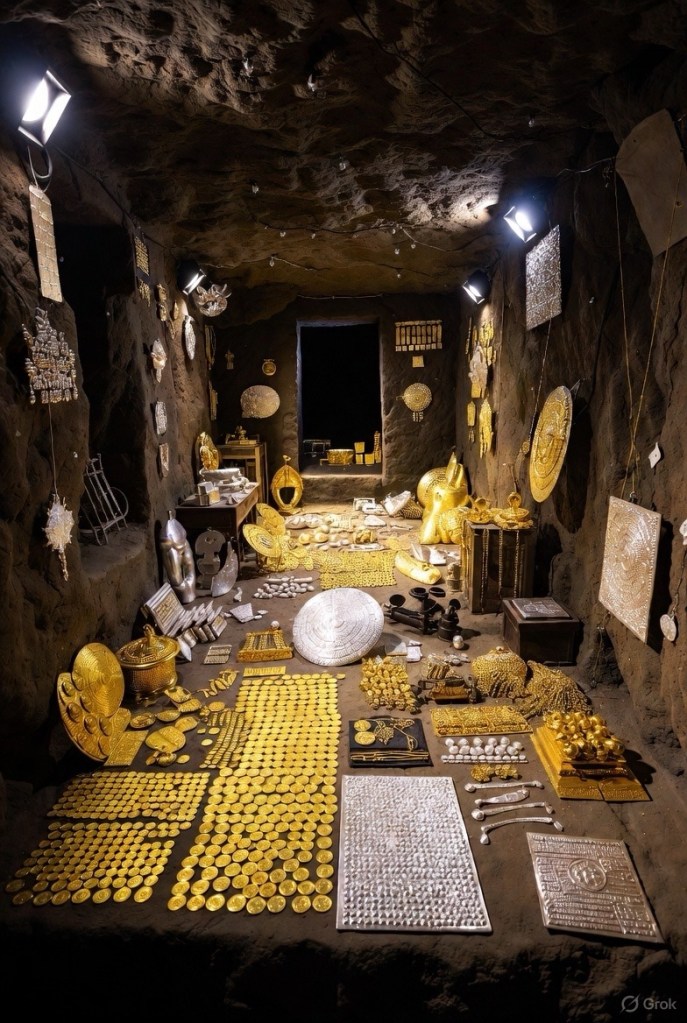
Discovered in 1952 in Qumran Cave 3, the Copper Scroll stands apart from other Dead Sea texts. Unlike parchment manuscripts, it was etched on metal—suggesting permanence. Its contents? A list of 64 treasure caches, possibly Temple wealth hidden during Roman incursions. This reveals a critical truth: rebellion was not merely spiritual; it had economic dimensions. Control of resources meant survival for communities resisting imperial domination. The Copper Scroll is a silent witness to the material stakes of righteousness—a reminder that corruption thrives not only in temples but in treasuries.
Megiddo, perched at the crossroads of ancient trade routes, was more than a city—it was a symbol. From Canaanite stronghold to Israelite fortress, from Greek outpost to Roman garrison, Megiddo embodied the clash of civilizations. By the second century CE, it housed Legio VI Ferrata, a Roman legionary camp with 5,000 soldiers. Roads, amphitheaters, and barracks testify to imperial might. Yet Revelation would immortalize Megiddo as Armageddon—the stage for the ultimate battle between good and evil. In truth, that battle was already underway, fought not with swords alone but with ideas, faith, and sacrifice.
Among the most stunning finds at Megiddo is a mosaic floor dated to around 230 CE, discovered in a Roman military compound. Its inscription dedicates worship to “God Jesus Christ”—the earliest archaeological evidence of Jesus’ divinity. This predates Constantine’s Edict of Milan by nearly a century, proving that Christianity was infiltrating the Roman world long before it became state-sanctioned. The mosaic, displayed at the Museum of the Bible, marks a turning point: the empire that crucified Christ was slowly bowing to His name. This was not an overnight revolution but a gradual transformation—a testament to the endurance of righteousness.
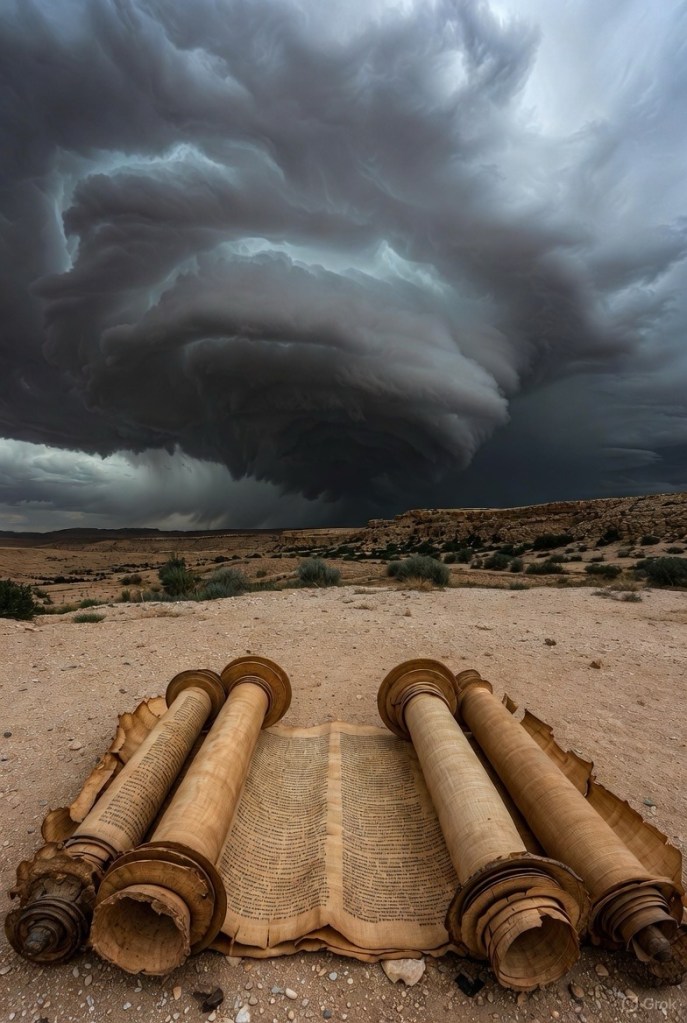
Before Rome embraced the cross, it worshipped a pantheon of gods—Jupiter, Mars, Venus—and demanded emperor worship. Greek deities like Zeus and Athena lingered in cultural memory. Against this backdrop, Christianity’s rise was nothing short of miraculous. Persecuted believers faced martyrdom, yet their faith spread from catacombs to palaces. By 313 CE, Constantine legalized Christianity; by 380 CE, Theodosius made it the official religion. But the seeds of this revolution were sown centuries earlier—by rebels like the Essenes, prophets like John, and visionaries like the Teacher of Righteousness.
What does this mean for us today? The struggle between righteousness and corruption did not end with Constantine—or with the crucifixion. It is a permanent condition of human society. Modern movements like the Tea Party, the Reform Party, and MAGA echo the same impulse: to resist entrenched elites and restore moral order. Just as the Essenes defied the Wicked Priest, today’s reformers challenge systems that profit from decay. The hostility they face—from media vilification to legal persecution—mirrors the fate of ancient rebels. Why? Because evil never surrenders quietly.
History teaches a sobering truth: fighting evil is hard, slow, and often bloody—but it works. The Teacher of Righteousness did not live to see Rome fall, yet his stand against corruption helped ignite a movement that reshaped the world. The Essenes’ scrolls lay hidden for two millennia, only to inspire us today. The Megiddo mosaic whispers across centuries: righteousness wins—not in a day, but in the long arc of history. So when despair creeps in, remember: Armageddon is not ahead of us—it is all around us. And every act of courage, every stand for truth, moves the battle forward.
— Additional notes and reference —
Abstract:
This work examines Armageddon as a historical continuum rather than a singular event, tracing its roots from the Essenes and the Teacher of Righteousness through Greek and Roman occupations, Jewish revolts, and the rise of Christianity. It integrates archaeological evidence from Megiddo, textual analysis of the Dead Sea Scrolls, and modern political parallels to argue that the struggle between righteousness and corruption is an enduring condition of human society.
1. Introduction
Armageddon is often imagined as an apocalyptic climax, yet history reveals it as a recurring process. From Qumran to Washington, the battle between systemic evil and reformist zeal persists. [Footnote: Collins, 2010]
2. Historical Timeline
– 332 BCE: Alexander the Great conquers Judea, introducing Hellenistic culture. [Footnote: Josephus, Antiquities]
– 140–37 BCE: Hasmonean dynasty asserts Jewish autonomy but succumbs to corruption. [Footnote: Schiffman, 1994]
– 63 BCE: Pompey annexes Judea; Roman rule begins. [Footnote: Goodman, 2007]
– 66–73 CE: First Jewish Revolt ends with destruction of the Second Temple. [Footnote: Josephus, Wars]
– 313 CE: Constantine legalizes Christianity; 380 CE: Theodosius makes it official. [Footnote: Brown, 1989]
3. The Essenes and Teacher of Righteousness
The Essenes, a separatist sect, withdrew to Qumran to resist priestly corruption. Their texts—the Community Rule, War Scroll, Damascus Document—reveal a dualistic worldview: Sons of Light vs. Sons of Darkness. The Teacher of Righteousness emerges as a prophetic figure opposing the Wicked Priest. [Footnote: Vermes, 2011]
4. Megiddo and Armageddon
Megiddo’s strategic location made it a stage for imperial clashes. Excavations reveal layers from Canaanite to Roman eras. Revelation’s Armageddon draws on this geography as a metaphor for ultimate conflict. [Footnote: BAR, 2015]
5. Dead Sea Scrolls and Copper Scroll
The Copper Scroll lists 64 treasure caches, underscoring the economic stakes of rebellion. Resistance was not merely spiritual but material. [Footnote: Allegro, 1960]
6. Greek and Roman Context
Greek philosophy and Roman law reshaped Judea’s cultural landscape. Emperor worship and Hellenistic syncretism clashed with Jewish monotheism, fueling sectarian movements. [Footnote: Hengel, 1974]
7. Modern Parallels
Reform Party → Tea Party → MAGA echo ancient insurgencies. Each arose to combat perceived corruption, facing vilification and systemic pushback. [Footnote: Skocpol & Williamson, 2012]
8. Conclusion
Armageddon is not a prophecy deferred but a pattern repeated. From the Teacher of Righteousness to modern populists, the fight against entrenched power endures.
References:
– Allegro, J. (1960). The Treasure of the Copper Scroll.
– BAR (Biblical Archaeology Review), various issues.
– Brown, P. (1989). The Rise of Western Christendom.
– Collins, J. (2010). Apocalypticism in the Dead Sea Scrolls.
– Goodman, M. (2007). Rome and Jerusalem.
– Hengel, M. (1974). Judaism and Hellenism.
– Josephus. Antiquities and Wars of the Jews.
– Schiffman, L. (1994). Reclaiming the Dead Sea Scrolls.
– Skocpol, T., & Williamson, V. (2012). The Tea Party and the Remaking of Republican Conservatism.
– Vermes, G. (2011). The Complete Dead Sea Scrolls in English.
Rich Hoffman
Click Here to Protect Yourself with Second Call Defense https://www.secondcalldefense.org/?affiliate=20707


“The Teacher of Righteousness did not live”
If you understand that the battle continues, then you should understand that the Teacher lives.
LikeLike
Most certainly so,
LikeLike