Armageddon as Process: From the Teacher of Righteousness to Modern Political Movements

For centuries, people have imagined the Battle of Armageddon as a climactic showdown—a single day when good finally triumphs over evil. But what if Armageddon is not a moment in time, but a perpetual struggle? What if the battle has been raging for thousands of years, manifesting in different eras, cultures, and movements? Today, as millions rally behind reformist causes like the MAGA movement, many wonder why evil seems so entrenched, why corruption persists even when righteousness gains ground. The answer lies in history: the fight against systemic evil is not episodic—it is eternal.
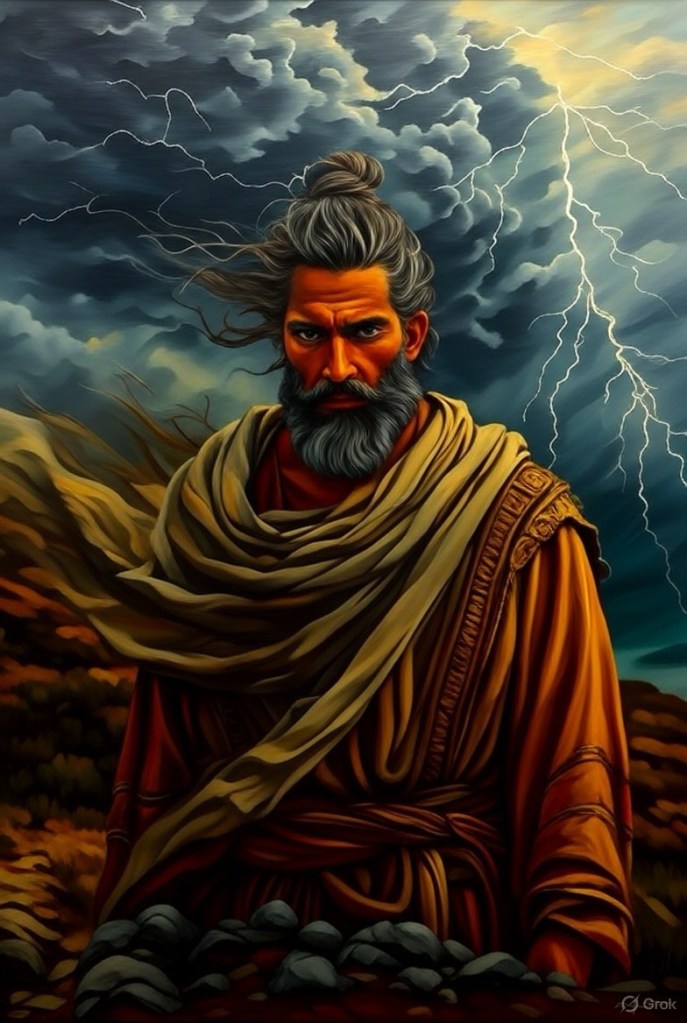
To understand this, we must look back to the crucible of Western civilization: the Holy Land during the turbulent centuries before and after Christ. There, in the shadow of empires, a small sect called the Essenes waged a spiritual and cultural rebellion against corruption. Their writings—the Dead Sea Scrolls—reveal a figure known as the Teacher of Righteousness, a man who defied the “Wicked Priest” and inspired generations of resistance. From Qumran to Megiddo, from the Copper Scroll to the mosaic affirming Jesus in a Roman garrison, the story of righteousness versus evil is a continuum that stretches into our own time.
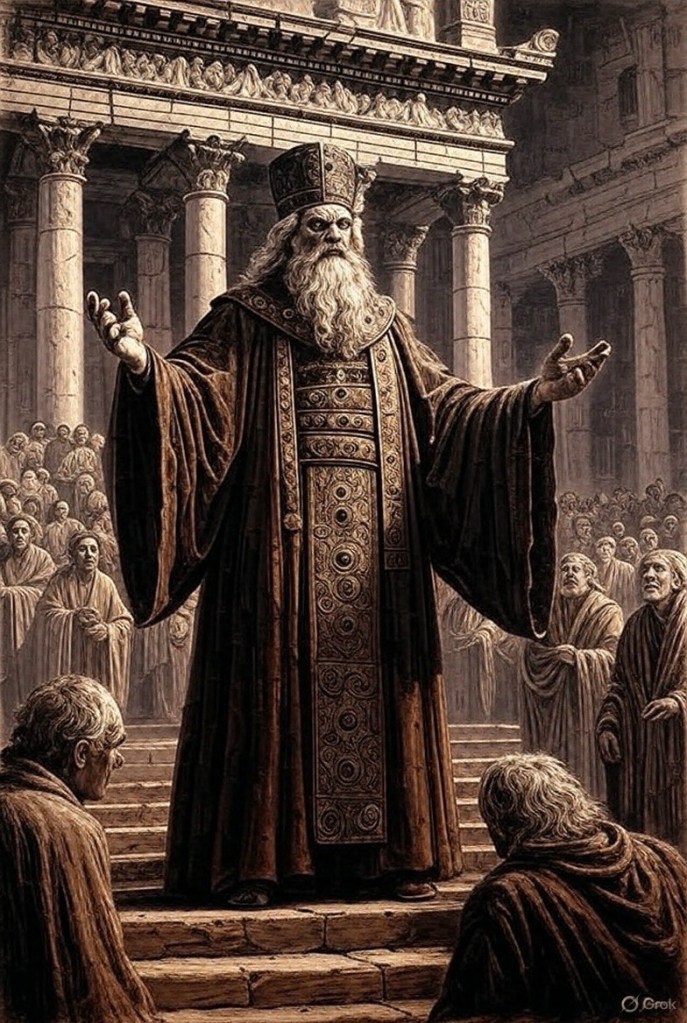
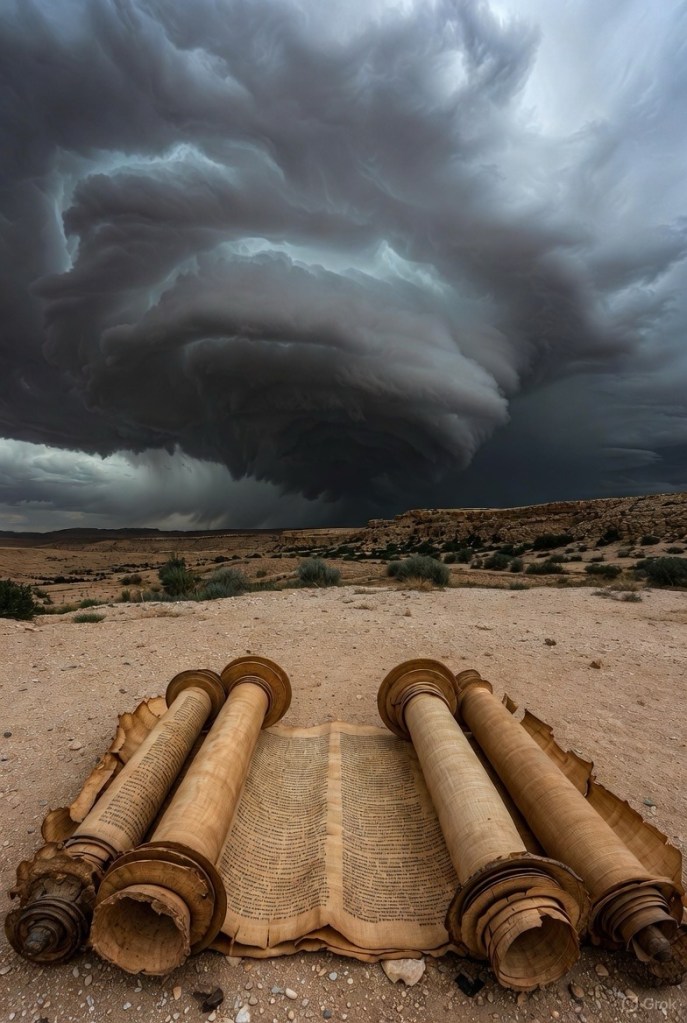
Around 150 BCE, as Judea reeled under Hellenistic influence after Alexander the Great, a separatist sect emerged—the Essenes. Disillusioned by Jewish priests who compromised with Greek rulers, the Essenes withdrew to the desert near Qumran. They lived by strict purity laws, followed a solar calendar, and anticipated an apocalyptic showdown between the “Sons of Light” and the “Sons of Darkness.” Their writings—the Community Rule, War Scroll, and Damascus Document—outline a worldview obsessed with righteousness and divine justice.

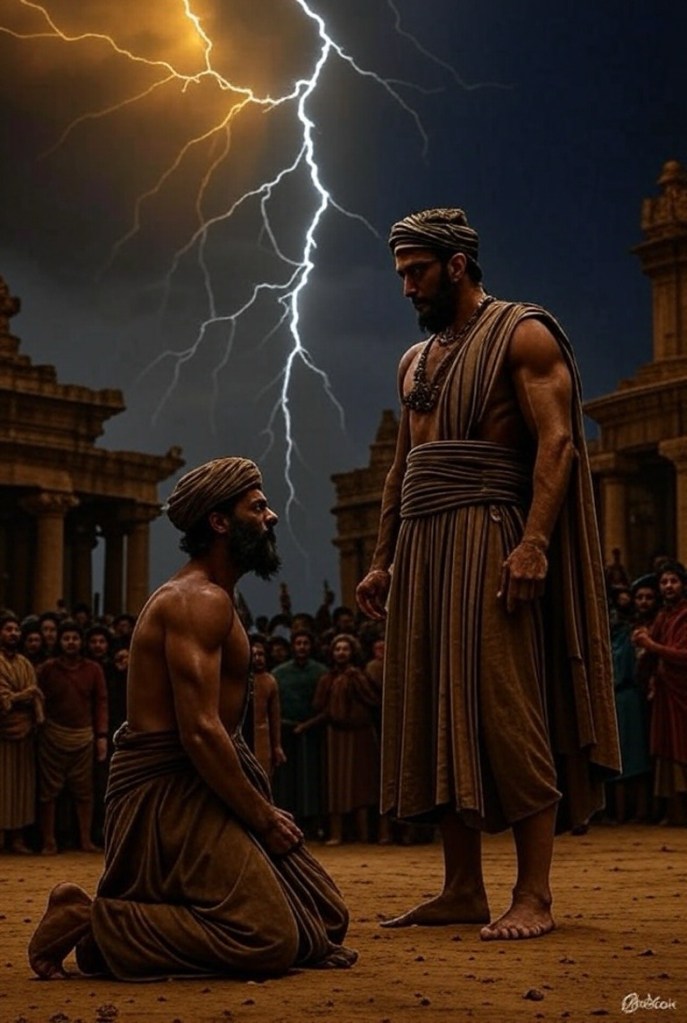
Central to these texts is the enigmatic Teacher of Righteousness, a leader who clashed with the “Wicked Priest,” likely a Hasmonean high priest aligned with foreign powers. The Teacher’s mission was clear: restore covenantal purity and resist systemic corruption. His life foreshadows later figures like John the Baptist and Jesus, who also confronted entrenched elites. Without the Dead Sea Scrolls, we would never know this man existed—yet his influence rippled through history, shaping the moral architecture of Western thought.
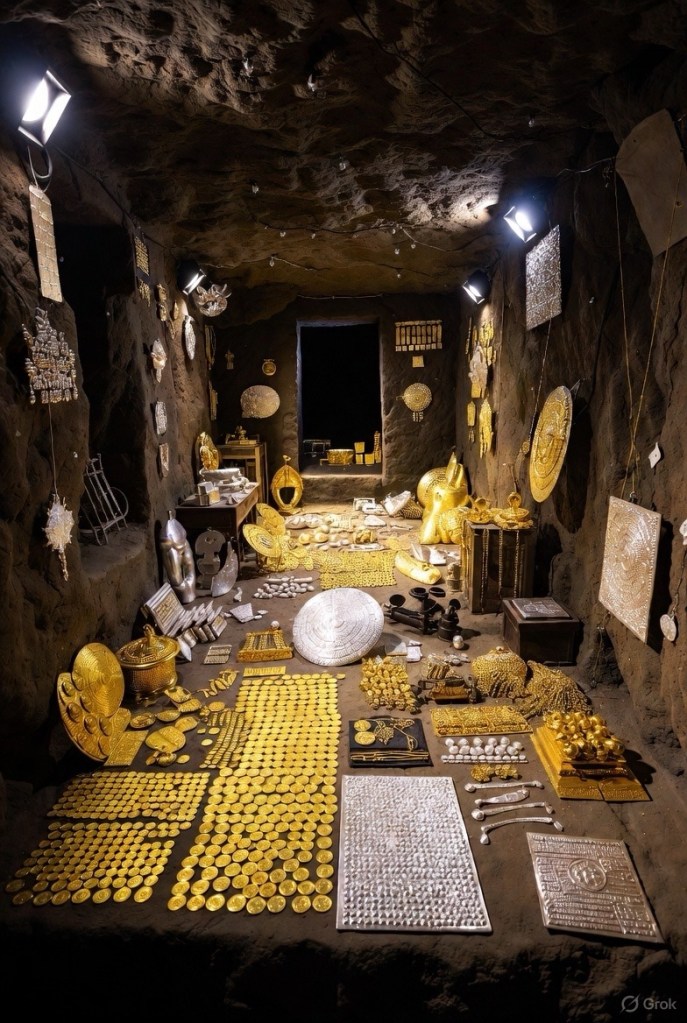
Discovered in 1952 in Qumran Cave 3, the Copper Scroll stands apart from other Dead Sea texts. Unlike parchment manuscripts, it was etched on metal—suggesting permanence. Its contents? A list of 64 treasure caches, possibly Temple wealth hidden during Roman incursions. This reveals a critical truth: rebellion was not merely spiritual; it had economic dimensions. Control of resources meant survival for communities resisting imperial domination. The Copper Scroll is a silent witness to the material stakes of righteousness—a reminder that corruption thrives not only in temples but in treasuries.

Megiddo, perched at the crossroads of ancient trade routes, was more than a city—it was a symbol. From Canaanite stronghold to Israelite fortress, from Greek outpost to Roman garrison, Megiddo embodied the clash of civilizations. By the second century CE, it housed Legio VI Ferrata, a Roman legionary camp with 5,000 soldiers. Roads, amphitheaters, and barracks testify to imperial might. Yet Revelation would immortalize Megiddo as Armageddon—the stage for the ultimate battle between good and evil. In truth, that battle was already underway, fought not with swords alone but with ideas, faith, and sacrifice.
Among the most stunning finds at Megiddo is a mosaic floor dated to around 230 CE, discovered in a Roman military compound. Its inscription dedicates worship to “God Jesus Christ”—the earliest archaeological evidence of Jesus’ divinity. This predates Constantine’s Edict of Milan by nearly a century, proving that Christianity was infiltrating the Roman world long before it became state-sanctioned. The mosaic, displayed at the Museum of the Bible, marks a turning point: the empire that crucified Christ was slowly bowing to His name. This was not an overnight revolution but a gradual transformation—a testament to the endurance of righteousness.
Before Rome embraced the cross, it worshipped a pantheon of gods—Jupiter, Mars, Venus—and demanded emperor worship. Greek deities like Zeus and Athena lingered in cultural memory. Against this backdrop, Christianity’s rise was nothing short of miraculous. Persecuted believers faced martyrdom, yet their faith spread from catacombs to palaces. By 313 CE, Constantine legalized Christianity; by 380 CE, Theodosius made it the official religion. But the seeds of this revolution were sown centuries earlier—by rebels like the Essenes, prophets like John, and visionaries like the Teacher of Righteousness.

What does this mean for us today? The struggle between righteousness and corruption did not end with Constantine—or with the crucifixion. It is a permanent condition of human society. Modern movements like the Tea Party, the Reform Party, and MAGA echo the same impulse: to resist entrenched elites and restore moral order. Just as the Essenes defied the Wicked Priest, today’s reformers challenge systems that profit from decay. The hostility they face—from media vilification to legal persecution—mirrors the fate of ancient rebels. Why? Because evil never surrenders quietly.

History teaches a sobering truth: fighting evil is hard, slow, and often bloody—but it works. The Teacher of Righteousness did not live to see Rome fall, yet his stand against corruption helped ignite a movement that reshaped the world. The Essenes’ scrolls lay hidden for two millennia, only to inspire us today. The Megiddo mosaic whispers across centuries: righteousness wins—not in a day, but in the long arc of history. So when despair creeps in, remember: Armageddon is not ahead of us—it is all around us. And every act of courage, every stand for truth, moves the battle forward.

— Additional notes and reference —

Abstract:

This work examines Armageddon as a historical continuum rather than a singular event, tracing its roots from the Essenes and the Teacher of Righteousness through Greek and Roman occupations, Jewish revolts, and the rise of Christianity. It integrates archaeological evidence from Megiddo, textual analysis of the Dead Sea Scrolls, and modern political parallels to argue that the struggle between righteousness and corruption is an enduring condition of human society.

1. Introduction

Armageddon is often imagined as an apocalyptic climax, yet history reveals it as a recurring process. From Qumran to Washington, the battle between systemic evil and reformist zeal persists. [Footnote: Collins, 2010]

2. Historical Timeline

– 332 BCE: Alexander the Great conquers Judea, introducing Hellenistic culture. [Footnote: Josephus, Antiquities]

– 140–37 BCE: Hasmonean dynasty asserts Jewish autonomy but succumbs to corruption. [Footnote: Schiffman, 1994]

– 63 BCE: Pompey annexes Judea; Roman rule begins. [Footnote: Goodman, 2007]

– 66–73 CE: First Jewish Revolt ends with destruction of the Second Temple. [Footnote: Josephus, Wars]

– 313 CE: Constantine legalizes Christianity; 380 CE: Theodosius makes it official. [Footnote: Brown, 1989]

3. The Essenes and Teacher of Righteousness

The Essenes, a separatist sect, withdrew to Qumran to resist priestly corruption. Their texts—the Community Rule, War Scroll, Damascus Document—reveal a dualistic worldview: Sons of Light vs. Sons of Darkness. The Teacher of Righteousness emerges as a prophetic figure opposing the Wicked Priest. [Footnote: Vermes, 2011]

4. Megiddo and Armageddon

Megiddo’s strategic location made it a stage for imperial clashes. Excavations reveal layers from Canaanite to Roman eras. Revelation’s Armageddon draws on this geography as a metaphor for ultimate conflict. [Footnote: BAR, 2015]

5. Dead Sea Scrolls and Copper Scroll

The Copper Scroll lists 64 treasure caches, underscoring the economic stakes of rebellion. Resistance was not merely spiritual but material. [Footnote: Allegro, 1960]

6. Greek and Roman Context

Greek philosophy and Roman law reshaped Judea’s cultural landscape. Emperor worship and Hellenistic syncretism clashed with Jewish monotheism, fueling sectarian movements. [Footnote: Hengel, 1974]

7. Modern Parallels

Reform Party → Tea Party → MAGA echo ancient insurgencies. Each arose to combat perceived corruption, facing vilification and systemic pushback. [Footnote: Skocpol & Williamson, 2012]

8. Conclusion

Armageddon is not a prophecy deferred but a pattern repeated. From the Teacher of Righteousness to modern populists, the fight against entrenched power endures.

References:

– Allegro, J. (1960). The Treasure of the Copper Scroll.

– BAR (Biblical Archaeology Review), various issues.

– Brown, P. (1989). The Rise of Western Christendom.

– Collins, J. (2010). Apocalypticism in the Dead Sea Scrolls.

– Goodman, M. (2007). Rome and Jerusalem.

– Hengel, M. (1974). Judaism and Hellenism.

– Josephus. Antiquities and Wars of the Jews.

– Schiffman, L. (1994). Reclaiming the Dead Sea Scrolls.

– Skocpol, T., & Williamson, V. (2012). The Tea Party and the Remaking of Republican Conservatism.

– Vermes, G. (2011). The Complete Dead Sea Scrolls in English.

Rich Hoffman
Click Here to Protect Yourself with Second Call Defense https://www.secondcalldefense.org/?affiliate=20707

Jesus and the Essenes: Regression theropy, past lives, extra planets and the slaughter of rebels

Sometimes, when you read as many books as I do, you run across some real treasures, and that was certainly the case with this old book by Dolores Cannon called Jesus and the Essenes.   It was written way back in 1992 and is considered a classic in New Age explorations, but I wanted to know more about the group that wrote the Dead Sea Scrolls and lived in a community at Qumran on the coast of the Dead Sea and hid their work in the caves once the Romans caught on to them and invaded to kill them all off for being such a threat to society—Roman society.  It was a case of cancel culture that took place in 70 AD and ended on the mountaintop fortress of Masada just a few miles down the sea, where the Essenes fled from the attacking Romans and were forced to commit suicide there before being captured by the authorities.  The Romans were putting down a Jewish revolt, and the Essenes were a radical offshoot who rebelled against the orthodox Jewish communities of the Pharisees and the Sadducees.  They were like the Tea Party of the modern Republican Party, which evolved into MAGA.  All the institutions at the time wanted to kill them off because of the threat they were to the natural order.  I like the Essenes for obvious reasons, and I wanted to learn more, so I read Delores’ book and was rather shocked by the contents.  The book’s point was to show archaeology differently, one that I think is explained by quantum entanglement, a field of study that still has a long way to go.  But Delores presented compelling evidence that she was communicating with a guy who was a member of the Essene community who taught John the Baptist and Jesus Christ at the magnificent library they had there at Qumran, which is what I was after.  And the results were quite remarkable. 

If you strip away the noise of the modern world and all the assumptions that people try to instruct upon your conscious mind for their own political and psychological motivations, we would all find that the way that Biblical characters interacted with the spirit world wasn’t so uncommon.  And that is what my conclusion was about the contents of Dolores Cannon’s fantastic journey and who she spoke with who were in some cases, long, long dead.  What is death anyway? Is it a measure of time, from a living form to one no longer confined to a body of physical embodiment?  Dolores Cannon is a regression hypnotist who was very good at her method.  Not everyone is receptive to it, but in the case of this book, Dolores ran into a young woman in her early 20s named Katie.  And Katie was a good subject for regressive hypnosis.  She seemed to have a personality that was much older than her body, and once Dolores got into her head over multiple sessions that went on for over a year, Dolores found that at least 26 different lives were living in this young woman, so it explained a lot of things regarding Katie’s personality.  I view the human body like a car; our souls drive those cars.  But there are sometimes other souls that ride in our vehicles and can take over if we don’t pay attention to what we are doing, or we give those souls the keys to our cars, and they do drive them.  I think that is a lot of what happens during intoxication when people you know act like people you have no idea who they become while drunk.  Through quantum entanglement, there are always competing spirits looking for a chance to take over and drive your car and we should be very cautious of them.  When someone brags that they were so drunk that they don’t remember what they were doing, there is likely more to it than just memory loss.

I would also say that some of the three lettered agencies, like the CIA, have figured out the political motives of some of these malicious characters, and they can inspire them to take over certain people and get the bodies of people to do whatever it is they want to be done.  However, in the case of this young Katie, who was given a name to hide her identity from her very religious parents, Dolores uncovered a lot of past lives living actively through the young lady.  Most of them were living boring, everyday lives without much going on.  Some of the personalities were men, some were women, and they lived at different times.  But one of the personalities turned out to be very fascinating.  His name was Suddi, and he was a teacher at the Essene community. Dolores talked directly to him during live time during many parts of his life through the host, Katie.  Sometimes, he was a young boy, an up-and-coming community member, and sometimes the teacher of John the Baptist and Jesus Christ.  And sometimes, he was already dead and speaking from beyond the grave.  I think Dolores presented her testimony in a way that showed a diligent scientific method.  This Suddi character could have just been some demonic spirit hanging around in quantum physics wanting to mess around with Dolores and Katie, playing games with them.  But I don’t think so because of the amount of work that was done. Instead, I think it’s another situation where science has to catch up to an observed reality.  And the information was interesting and valuable. 

For me, the biggest revelation was that Suddi described the library there at Qumran, which is a subject of significant fascination for me, and it turned out to be much more elaborate than archaeologists have so far been able to get their minds around.  It was a large two-story enterprise with a working model of the solar system, according to Suddi.  And it had ten planets in it, which Zacharia Sitchen has been saying for a long time.  This idea about extra planets in our solar system is a New Age consideration, just like the impact of astrology on the human mind and other out-of-the-box thinking about what’s expected.  But much of what Suddi described through his host, Katie, live time across thousands of years of perspective has been confirmed by archaeologists in a way that a 22-year-old girl would know nothing about.  So, I found it a fascinating testimony recorded in a remarkable book.  And I think there is a lot to learn from such a method of scientific inquiry and that it’s not such science fiction as many would like us to believe.  I think many powers on Earth have figured all this out and used it to attempt to control mass populations.  They can’t be trusted to use this emerging science destructively because only they have figured it out.  I think in her lifetime, Dolores Cannon broke some of this regression theory code and reported some interesting historical evidence that begins to open the door to quantum mechanics, especially the entanglement that can appear bizarre to our living eyes but make a lot of sense once you start looking at reality, differently.  But what a fascinating place Qumran was, and the role it seems to have played in the life of Jesus and the future of all human civilization through Christianity—no wonder the Romans wanted to kill them all off so severely.  But no matter how hard those forces work to do so, the spirit of rebellion always emerges to challenge the static order.  In modern times, it’s not the Essenes but the MAGA movement.  Only this time, I don’t think we will all be slaughtered on the mountaintop of Masada.  But the slaughter will be on the other foot, and it’s taken thousands of years to reach this point.  And continuously residing in the background are many rebels and rogues living in our cars (bodies) and influencing what happens on an eternal quest for freedom the way a soul wants it.  Not necessarily a living body.  Merry Christmas!

Rich Hoffman

Click Here to Protect Yourself with Second Call Defense https://www.secondcalldefense.org/?affiliate=20707

America Protects the World from Persecutions: It is the destruction of the rule of law and the Constitution that the enemies seek

A lot of people are noticing now that there is a level of persecution that has always existed.  But because of the rawness and desperation of the enemy, best described as the works of evil in the world, it is much more on their minds than in the modern past.  But as I was telling someone the other day, don’t ever forget the 9th of AV when the Spanish told the Jewish people to leave in 1492 or be killed.  Remember that three boats that were in the harbor that day were from Christopher Columbus, who was fleeing a different kind of persecution and seeking the discovery of something “not European.”  Free from the kind of world that those seeking a New World would find very inviting.  And in many ways, because of that, the Jewish people were not wiped from the face of the earth.  I also think of the Apostle Paul, who died a martyr in prison and became a significant contributor to the biblical text of the New Testament that we study today.  Or I think of John the Baptist from the Old Testament, who had his head cut off to appease the whims of a silly socialite.  Persecutions are not unique in history and are just as bad and frequent in the world as yesterday.  The will of the political left to persecute their enemies is the same as all those examples from the past.  As it stands, Christianity as a whole was founded on the persecution and crucifixion of Jesus Christ, a religion founded on the concept hoping to apply some logic to the practice that took people several thousand years to finally figure out, which ironically led to the preservation of the Jewish people on that fateful day in 1492 when Columbus sailed the ocean blue. 

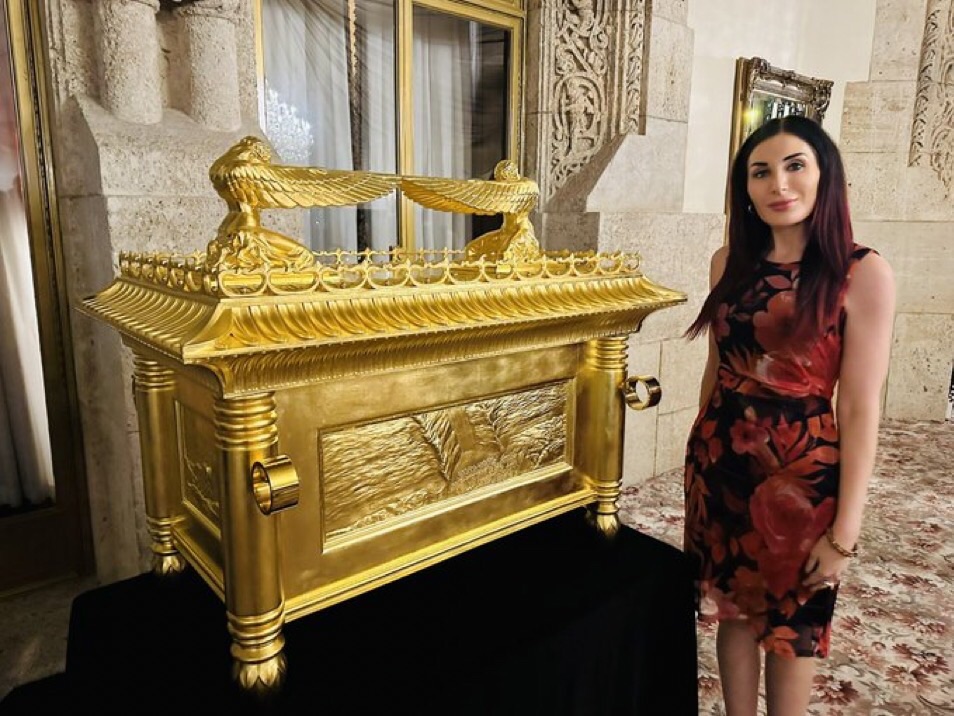
The Ark of the Covenant at Mar-a-Lago. How the rule of law created civilization

If not for the creation of the United States, the Jewish people would have finally been wiped out, just as they were determined to have done to them in the Book of Ester from the Bible.  When America was discovered, and the persecuted from around the world fled there to be away from tyrannies abundant wherever they came from, it was in the power of the United States to become the best shelter for the Jewish people that the world had produced.  And because of the strength of the United States, the Jewish people were able to have their homeland of Israel restored to them, which still has the forces of evil angry about it.  If America had never been discovered, there would be no place on earth where being persecuted for different opinions or backgrounds could shelter the innocent from the concept of persecution.  That we see it now coming from the political left is simply that European-style globalism has brought with it the expectation they have always had that those with the most power would have the right to rule over minority opinion.  And that most of the world’s antagonism against America is due to this precise problem.  But America did something never before accomplished anywhere on earth or in its vast history.  It wrote a Constitution that sheltered people from persecution, and our entire legal system was built around protecting people from it.  And it is in that way, under those expectations of the rule of law, that Trump can be president, even if the world would love to throw him in jail as they did the Apostle Paul or John the Baptist.  Or crucified the way that Jesus Christ was, a political murder by those in power against those they wished to suppress. 

By following America’s constitution, the oppressors of history finally have a legal means that takes away their power.  The reason behind creating the United States as a moral foundation is to prevent the government from gaining that kind of power.  Of course, it is unrealistic to expect the world to respect such a concept.  But whenever you pick up a Bible or meet a Jewish person, keep in mind that their entire existence is connected to America becoming a nation built on Constitutional law instead of the whims of corrupt European kings or dynasties of the Near and Far East.  The Puritans who fled Europe out of fear of the Roman Catholic Church specifically made America what it is today, a country where free people could exist without the fear of persecution.  If everyone follows the law, it is illegal in America.  All the discussions of stripping away free speech in America and jailing people who were part of the Trump White House, like Peter Navarro and Steve Bannon, or even local school board members who stood up to the international trade unions, such as what has occurred in my home school district of Lakota schools, where school board member Darbi Boddy has joined the ranks of those persecuted by radical globalists who hate the American Constitution.  The difference between American law and international globalism that is trying to destroy America is that repression and persecution are not acceptable.  While leftist judges are attempting to put Darbi in jail, Steve Bannon from Trump’s White House, and Trump himself for many made-up political charges, ultimately, the Constitution provides a safe harbor that John the Baptist never had or the Apostle Paul.  History deserves context, and without America, the world would still expect persecution as a priority instead of some back-door reality. 

And that is what we are fighting for today.  We don’t have an obligation to be persecuted by our enemies, and many enemies have no intention to “co-exist” with us.  They only want peace so they can get close enough to us to erode our laws so they can gain the ability to do as history has always done to people it doesn’t like and persecute them.  The reason that progressives hate our Constitution so much is because it keeps them from gaining the power actually to do as they have done all through human history.  And that is to keep the government small enough not to have the ability to persecute, which obviously by the attempts against Trump and many of his supporters, especially those from January 6th, and what is being done to Julian Assange presently, are common in the world.  Not unique.  The moment that we let America fall, or the Constitution that it is built on, the world regresses back to what it was before 1492, and nobody wants that, except the bad guys.  The world clamored for America and still does because of the American Constitution.  And it ultimately is why Supreme Court cases tend to outlast the radical prosecutions of those progressive elements that take over District Attorney offices by the same hostile forces that demanded the head of John the Baptist.  Because of mass communication culture, people see these persecutions more than at any time in history, and they think that the evil in the world now is unique.  But it’s not.  What is different now than in the past is that we expect the American Constitution not to have such harassment and that the keys to happiness are in the rule of law as established by it.  And as long as people know and understand the Constitution, they can expect not to be persecuted.  Which ultimately is the great miracle of our times. 

Rich Hoffman

Click Here to Protect Yourself with Second Call Defense https://www.secondcalldefense.org/?affiliate=20707