Today is Sunday, January 25, 2026—a fitting moment to reflect on recent developments that closely align with long-standing concerns about a centralized global health authority. Just days ago, on January 22, 2026, the United States formally completed its withdrawal from the World Health Organization (WHO), fulfilling an executive order signed by President Donald Trump on his first day back in office, January 20, 2025. This marks the effective end of a process that began with the required one-year notice period, severing U.S. membership, participation in governance, and funding contributions to the agency.
This step represents a significant victory for those who have argued against entangling American sovereignty—and taxpayer dollars—with an organization heavily influenced by the Chinese Communist Party (CCP), particularly in the context of the COVID-19 pandemic. The withdrawal addresses core issues of accountability, national independence in health policy, and the dangers of ceding control over life-and-death matters to supranational entities.
The WHO’s role during COVID-19 exemplified the perils of centralized authority. Critics, including the Trump administration, pointed to the organization’s delayed declaration of a global pandemic, its initial downplaying of human-to-human transmission (echoing early Chinese government statements), and its perceived deference to Beijing. Funding dynamics further underscored the imbalance: Historically, the U.S. was the largest contributor to the WHO, providing hundreds of millions annually (often around 15-20% of the agency’s budget in assessed and voluntary contributions). In contrast, China’s contributions were far smaller relative to its economic size, yet its influence appeared outsized—particularly in shaping narratives around the virus’s origins.
Investigations and reports have raised concerns that U.S. taxpayer funds, through entities such as the National Institutes of Health (NIH) and subawards to groups such as EcoHealth Alliance, supported research at the Wuhan Institute of Virology involving bat coronaviruses. While debates persist over definitions of “gain-of-function” research (experiments that enhance a pathogen’s transmissibility or virulence), congressional inquiries and declassified intelligence have raised questions about biosafety lapses and potential links to the pandemic’s emergence. The lab-leak hypothesis—once dismissed as a conspiracy theory—gained traction in official assessments, with some U.S. government reports concluding it as a plausible or even likely origin scenario.
This pattern of influence extended to domestic responses. In Ohio, former State Health Director Dr. Amy Acton (often dubbed the “lockdown lady” by critics) implemented strict measures in early 2020, including stay-at-home orders that shuttered businesses and restricted freedoms. These aligned closely with federal guidance from the Centers for Disease Control and Prevention (CDC), which, in turn, drew heavily on WHO recommendations and modeling. Acton’s approach mirrored that of Dr. Anthony Fauci and national figures who emphasized lockdowns, masking, and social distancing—policies now widely debated for their economic devastation, mental health impacts, and questionable long-term efficacy against a respiratory virus.
The broader historical narrative reveals a recurring theme: those who promise—or appear to deliver—healing and protection from death wield immense power. Jesus Christ’s ministry, as recorded in the Gospels, centered on miracles of healing: restoring sight to the blind, curing leprosy, raising the dead (e.g., Lazarus in John 11), and casting out demons. These acts were not mere side notes; they built followership. People flocked to Him not solely for philosophical teachings but because He demonstrated tangible power over affliction and mortality. Without these demonstrations, the message might have lacked the visceral appeal that drew crowds and disciples.
Similar dynamics appear in modern contexts. L. Ron Hubbard’s Dianetics and Scientology emphasize auditing to eliminate “engrams”—traumatic imprints causing spiritual and physical harm—promising a path to “clear” status and optimal health. Followers are drawn by the promise of liberation from pain and dysfunction, much like ancient shamans, medicine men, or tribal healers who gained authority by curing ailments or communing with spirits.
Governments and institutions have long mimicked this model. Control over health equates to control over life itself. From ancient rulers who monopolized food distribution to modern states tying insurance to employment (ensuring dependency on employers for coverage), the pattern persists: promise extended survival, and loyalty follows. The WHO, during COVID-19, amplified this through global coordination of lockdowns, vaccine mandates, and fear-based messaging—mechanisms that centralized power under the guise of public good. Critics argue this facilitated socialist-leaning policies, with China (a major geopolitical player) benefiting from economic advantages while the West endured restrictions.
Big Pharma’s role compounds the issue. The industry profits enormously from chronic illness management rather than cures. Historical examples abound: suppression of alternative treatments, prioritization of patentable drugs over natural or regenerative approaches, and lobbying for policies that funnel patients into dependency. Stem cell research, regenerative medicine, and activation of the body’s innate healing mechanisms (evident in infants’ rapid recovery) offer pathways to true autonomy—yet these face regulatory hurdles, funding biases, and corporate resistance.
The U.S. exit from the WHO opens the door to decentralized, competitive models. States can innovate without federal or international mandates—perhaps by emphasizing prevention, personal responsibility, nutrition, and emerging therapies such as those harnessing autologous stem cells or immune modulation. Data points support skepticism of centralized authority: Lockdowns correlated with massive economic losses (trillions globally), spikes in suicides, delayed cancer screenings, and educational setbacks. Excess mortality analyses continue to question whether benefits outweigh harms.
In essence, health freedom requires rejecting the scam of dependency. Governments, corporations, and global bodies thrive when people fear death and seek “miracles” from authority. True progress lies in empowering individuals to heal themselves, free from top-down control.
This withdrawal is a step toward reclaiming that sovereignty. It’s about time.
3. USA Today. “US officially withdraws from the World Health Organization.” January 23, 2026.
4. House Committee on Oversight and Government Reform. “Final Report: COVID Select Concludes 2-Year Investigation.” December 2024 (includes sections on gain-of-function research and origins).
5. The Intercept. “NIH Documents Provide New Evidence U.S. Funded Gain-of-Function Research in Wuhan.” September 2021 (updated context in later reports).
6. Bible (New International Version): Gospel accounts of Jesus’ healings (e.g., Matthew 8-9, John 11).
7. Hubbard, L. Ron. Dianetics: The Modern Science of Mental Health. 1950.
8. Various congressional hearings on COVID origins (2023-2025 transcripts, e.g., involving Dr. Robert Redfield and EcoHealth Alliance).
9. Think Global Health. “U.S. WHO Exit Could Expand China’s Influence.” (Analysis of funding and geopolitical dynamics).
10. Historical analyses of public health centralization: e.g., works on the Rockefeller Foundation’s role in modern medicine, or critiques in books like Rockefeller Medicine Men by E. Richard Brown.
Footnotes
¹ U.S. funding historically dominated WHO budgets; see annual WHO financial reports pre-2025.
² For Acton’s Ohio policies: See 2020 executive orders and media coverage of protests/resignation.
³ On Jesus’ miracles as basis for authority: Theological commentaries, e.g., N.T. Wright’s works on the historical Jesus.
In the swirling debates of American politics, few phrases resonate as powerfully as “America First,” especially when applied to the global marketplace and the thorny issues of employment, immigration, and worker opportunities. Under the Trump administration, this slogan has been invoked to rally support for policies prioritizing U.S. citizens, yet its practical application—particularly regarding H-1 B visas and the definition of an American worker—reveals a complex reality. Patriots may cheer the rhetoric of control and sovereignty, but the actual test lies in whether these policies genuinely empower native-born Americans or inadvertently perpetuate systems that favor entrenched interests. The question is not just about acquiring workers but about fostering a competitive environment where the best opportunities go to those who earn them through merit and drive. In a world where talent flows across borders, seeking the highest rewards, America First must mean more than slogans; it demands a clear-eyed assessment of who gets access to the nation’s top jobs and why. The global economy draws ambitious individuals from every corner, hungry for the American dream, but domestic policies rooted in outdated labor assumptions often stifle this potential. Consider the automotive industry, where union dominance once symbolized strength but now exemplifies stagnation. Growing up amid family members deeply entrenched in union life, the dinner-table conversations were revealing: complaints about competition from faster, more efficient workers, both abroad and domestically, were met with defenses of collective bargaining that prioritized equality over excellence. Unions argued that protecting the slowest workers ensured fairness, but this all-or-nothing approach dragged down productivity, making American manufacturing less competitive. Data from the Bureau of Labor Statistics underscores this: union membership has plummeted from 20.1% in 1983 to just 9.9% in 2024, with private-sector unionization at a mere 6.9%. While unions boast a 15.9% wage premium—$1,263 weekly for union workers versus $1,090 for non-union—this comes at the cost of slower economic growth. Studies from the Mercatus Center show that powerful unions, acting like monopolies, secure short-term gains but hinder long-term employment growth, investment, and productivity. In states with right-to-work laws, union membership has declined further, yet wages adjusted for cost of living are comparable, and job creation is higher. Illinois, with strong union protections, added 27,000 members from 2022 to 2024, while right-to-work states shed nearly 200,000 members, illustrating how union density correlates with economic rigidity. This isn’t patriotism wrapped in the American flag; it’s a communist-inspired model that equalizes mediocrity, stifling the marketplace for decades.
The root problem extends beyond unions to a broader erosion of the American work ethic, decimated by cultural and political forces from within. Progressive politics have targeted traditional demographics—think Appalachian descendants—with messages that undermine motivation: questioning gender roles, promoting pronoun changes, and eroding the provider instinct that once drove men to build strong families. When society tells young people that toxic masculinity is the enemy, it strips away the ambition to rise early, work hard, and secure a legacy. Add to this a drug culture that normalizes intoxication, particularly marijuana legalization, and the result is a workforce plagued by unreliability. Personal hiring experiences bear this out: when seeking employees, the smoke clears to reveal specific demographics struggling to show up consistently or pass drug tests. Marijuana’s effects on productivity are well-documented; a 2025 study from the National Safety Council linked recreational legalization to a 10% increase in workplace injuries among 20-34-year-olds, attributing it to impaired cognition, attention, and motor skills. The U.S. Drug Test Centers reports that businesses lose $81 billion annually to drug use, with $25 billion in healthcare costs and the rest in lost productivity. States like Colorado saw positive drug tests rise 20% post-decriminalization, far outpacing the national average. Video games, endless leisure promises, and government dependency exacerbate this; young adults, medicated since kindergarten for hyperactivity, lack the grit to commit 40 hours weekly. Gallup’s 2023 Work in America Survey found that 77% of workers experience work-related stress, with 57% reporting burnout symptoms like emotional exhaustion—trends that worsen as well-being declines. The labor force participation rate for prime-age men (25-54) has dropped 2.2% since 2000, per the Heritage Foundation, driven by demographics but amplified by these cultural shifts. When families fracture—fourth or fifth marriages, child support draining incomes—motivation evaporates. Employers face a stark choice: hire unreliable locals or seek immigrants eager for opportunity.
This brings us to the heart of America First: does it mean excluding global talent to protect underprepared Americans, or fostering competition to elevate all? Critics scrutinize support for foreign interaction, fearing it undermines native workers, but experience shows otherwise. Immigrants pursuing the American dream often outshine those eroded by entitlement. H1B visas, designed for skilled professionals, exemplify this tension. Under Trump, policies like the September 2025 proclamation imposing a $100,000 fee on new petitions aim to curb abuse by restricting entry unless paid or exempted. This follows earlier reforms, including a December 2025 rule that, effective February 2026, weighted the H-1 B lottery toward higher-wage applicants to prioritize merit. Yet data reveal H-1B benefits: the American Immigration Council notes that they fill STEM gaps, complement U.S. workers, and expand jobs. From 1990-2010, foreign STEM inflows accounted for 30-50% of U.S. productivity growth, according to economists Giovanni Peri, Kevin Shih, and Chad Sparber. NFAP estimates Trump’s policies could reduce legal immigration by over 600,000, slashing workforce growth by 6.8 million by 2028 and economic development by one-third. H1B holders earn a median of $118,000 (2022), contributing $86 billion annually to the economy and $35 billion in taxes, per FWD.us. They own 300,000 homes, boosting local demand. A Harvard study found that each H-1 B creates 7.5 jobs, with no significant native displacement. Critics argue for wage suppression, but restrictions push firms offshore: a 10% cut in the number of college-educated immigrants costs natives $2.9 billion in welfare annually, per Richmond Fed research. In tech, H1Bs fuel innovation; over half of the billion-dollar startups were founded by immigrants. Trump’s base demands America First, yet blocking talent risks stagnation. The alternative: train Americans, but current demographics—decimated by drugs and demotivation—struggle. Employers can’t succeed with workers who roll out of bed sporadically, burdened by erratic personalities and short-term plans.
The degradation of society compounds this. Progressive messages confuse youth, eroding family structures that once motivated providers. Government safety nets foster parasitism, not self-reliance. Studies from Pew Research show Gen Z prioritizes work-life balance over advancement, with union support at historic highs (70% public approval, Gallup 2025), yet membership is low due to perceived irrelevance. Labor force declines aren’t just demographic; Eberstadt’s “Men Without Work” highlights that there are 4 non-working men for every unemployed one, a 60-year trend. Post-pandemic, hours worked dropped, per Gallup, amid rising detachment. To rebuild, competition is key—tough love pushes excellence. Immigrants, undeterred by such barriers, embody the drive that natives have lost. Born Americans, schooled in entitlement, arrive unprepared; foreigners fight for spots, enhancing productivity. America First shouldn’t mean handouts but standards that demand the best, regardless of origin. If locals falter, it’s not discrimination—it’s reality. Employers thrive with motivated talent; restricting H1Bs ignores this, as Trump’s fee may deter startups while empowering offshoring. Berenberg lowered 2025 growth estimates to 1.5% post-fee, citing brain drain. JPMorgan warns of 5,500 fewer permits monthly. True reform: reclaim motivations through family values, anti-drug policies, and education emphasizing grit.
Yet, political answers evade the core: societal rot. Degrading ambitions from grade school—diagnosing disorders, promoting leisure—creates unemployable adults. When hiring, reliability trumps nationality. America First means building strength from households: tough, drug-free, family-oriented. Competition drives this; coddling doesn’t. Trump’s challenge: balance rhetoric with action. His administration’s H-1 B tweaks signal intent, but a broader overhaul is needed. Deport criminals, yes, but skilled visas fuel growth. To make America great, start with people: out of bed, off drugs, competing fiercely. That’s the path to prosperity.
Bibliography
• American Immigration Council. The H-1B Visa Program and Its Impact on the U.S. Economy. Washington, DC: American Immigration Council, 2025.
• Bureau of Labor Statistics. “Union Membership (Annual) News Release.” U.S. Department of Labor, January 2025.
• Clemens, Michael. “The Economic Impact of High-Skill Immigration.” Center for Global Development, 2025.
• Griffin, G. Edward. The Creature from Jekyll Island: A Second Look at the Federal Reserve. American Media, 2010.
• Hoffman, Rich. Gunfighter’s Guide to Business, 2021.
• Illinois Economic Policy Institute. The State of the Unions 2025. La Grange, IL: ILEPI, 2025.
• National Foundation for American Policy. The Economic Impact of the Trump Administration’s Immigration Policies. Arlington, VA: NFAP, 2025.
• National Safety Council. “The Impact of Marijuana Legalization on Workplace Safety.” Itasca, IL: NSC, 2025.
• Paul, Ron. End the Fed. Grand Central Publishing, 2009.
• Peri, Giovanni, Kevin Shih, and Chad Sparber. “Foreign STEM Workers and Native Wages and Employment in U.S. Cities.” National Bureau of Economic Research, 2013.
• U.S. Drug Test Centers. “How Does Marijuana Use Affect Employee Productivity?” 2024.
Footnotes for Further Reading
1. On H1B economic benefits: See American Immigration Council (2025), pp. 6-7, for data on job creation and wage impacts.
2. Marijuana and productivity: NSC study (2025) details 10% injury increase; in contrast, NBER Working Paper 30813 (2023) shows muted labor effects from legalization.
3. Union trends: BLS (2025) for membership data; Mercatus Center (2025) on monopoly effects.
4. Work ethic decline: Heritage Foundation (2022) on participation rates; Gallup (2023) on burnout.
5. Immigration and growth: NFAP (2025) on productivity; Richmond Fed (2025) on welfare losses from restrictions.
6. Hoffman (2021) for business insights; Paul (2009) on economic critiques.
Heaven, if it ever drops into a weekday, arrives as an unbroken stretch of time, a fixed chair, and a book that turns the world quiet. Think of South Island (South Bass Island to the mapmakers), breeze off the lake, family close but unstressed by plans, and you alone in a wide funnel of attention, the way Roosevelt must have felt as a twenty‑something wading into tonnage tables, gun calibers, and the yaw rates of brigs that fought when the sun was here and the wind was there. His Naval War of 1812 doesn’t just narrate; it measures: gun ranges that outreached or underreached, hull weights that carried too much or just enough, tactical gambits that cut the enemy’s line and made surrender a rational choice. The book is public domain now, and its pages remain a monument to a young mind doing honest work—cross-checking American and British records, praising and faulting both sides, even dinging the Lake Erie hero Oliver Hazard Perry when the facts require it. 12
On that lake, on September 10, 1813, Perry hove into view with nine American vessels to meet six British ships under Robert Barclay. The Americans had more hulls but fewer long guns; their carronades hit harder up close but could not reach. So the problem was a physics problem disguised as a command: close the distance or lose the day. When Perry’s flagship Lawrence was chewed to fragments, he took a boat through shot and spray to the Niagara, cut through the British line, and—within fifteen minutes—broke an enemy that had seemed in control an hour before. His dispatch—“We have met the enemy, and they are ours”—isn’t just rhetoric; it’s a report written by a man who had solved for wind, range, and morale. 34
Roosevelt relishes this sort of thing: the tonnage of Detroit and Queen Charlotte, the count of carronades versus long guns, the way a lull in wind can punish or reward the impatient. He is careful about claims of decisiveness, noting that moral effect sometimes outpaced material effect; a British fleet stretched thin around the world felt every pinprick differently than a small American squadron guarding a frontier. But the Lake Erie victory did more than win a dispatch line; it compelled British withdrawals, eased the American army’s operations, and re-stacked bargaining chips for peace. Gerry Altoff wrote years later that it also provided the leverage that was otherwise lacking at Ghent; the Americans had something solid to point to across the table. These are the old equations: logistics, geometry, and courage. 25
It is tempting—under the awning, with the charts open—to wish the world would always proceed this way: two sovereigns, their flags clear, their ships counted, their guns mounted, the engagements finite, the surrender witnessed, the line “victory” underscored. Clausewitz would understand the appeal; he insisted that tactics used force to win battles while strategy used battles to defeat the object of policy. But he would also caution that war is never just the neatness of a duel; it is a “continuation of policy by other means,” an arena where chance and friction mock the best arithmetic. Still, the geometry of sail warfare felt bounded by wind roses, by timber supply, by human nerve. Today, the geometry has dissolved. 67
There’s a line many draw—from the broadsides of Erie to the broadband of everywhere—through Sun Tzu, who said all warfare is based on deception, and to John Boyd, who retraced strategy to a loop of observing, orienting, deciding, acting, faster than an opponent can process. Sun Tzu’s aphorisms can be abused, but the enduring insight is that you win before the battle by making the other side missee the field. Boyd modernized that idea, arguing your real leverage is in “orientation”—the cultural, experiential lens through which raw data becomes a story—and that victory comes not only from speed but from the ability to disintegrate the adversary’s cohesion by flooding him with ambiguity he can’t resolve in time. In sailing terms, it’s as if you keep shifting the wind on the other man without touching the sky. 89
So we arrive at the twenty-first century’s awkward vocabulary—“information operations,” “hybrid warfare,” “fifth‑generation war.” The common core is simple: power has migrated into the cognitive domain. States and networks try to command the trend, not just the trench. The RAND Corporation calls this influence activity—planned attempts to shape thoughts, feelings, and behaviors using psychological tools, data, and media systems. Think tanks and war colleges now train officers to recognize the tactics: bot networks to pump a theme into trending algorithms, troll farms to seed doubt, cross-platform memes to make lies sticky, timing operations to poll cycles and media rhythms. What used to be a leaflet drop is now a hashtag cascade. 1011
I’ve never liked the tidy “generations of warfare” schema; even William Lind, who helped popularize “fourth‑generation warfare,” shrugs at “5GW.” But the heuristic does capture something: conflict has shifted from massed formations to distributed, deniable, non-kinetic contests whose decisive effects are psychological and political. The “battlefield” is always on: your phone, your feed, your bank, your ballot. Scholars warn the 5GW label is fuzzy—yet even the critiques concede the center of gravity is the mind; “winning” looks like persuading populations to disable themselves. Roosevelt mapped sail plans; our planners map social graphs. 1213
If that sounds like exaggeration, look at the empirical work. RAND tracks influence operations as a field, from gray‑zone maritime pressure to social media propaganda; the National Defense University has published primers on how Russia, China, and ISIS use platform dynamics to push or distort narratives cheaply and anonymously. Academic work now mines Facebook and X (Twitter) takedowns to chart which regimes are targeted and why—finding “mixed regimes” are more frequently hit, because they are unstable enough to tip and open enough to be reached. The vocabulary is clinical, but the stakes are civic: make citizens distrust institutions, and you win without firing a shot. 1415
This drifts us toward the most challenging part: how free speech—the oxygen of a free society—can be co-opted by domestic or foreign actors to jam the system. In an older war, “sedition” took the form of armed conspiracy; in a borderless conflict, the line between protected protest and unlawful obstruction becomes the live wire. The Supreme Court’s lodestar is Brandenburg v. Ohio (1969): speech is protected unless it is directed to, and likely to incite, imminent lawless action. That standard is intentionally tight; it shields harsh, even vile, rhetoric from censorship because the alternative—letting governments police dissent—is worse. It doesn’t, however, protect conduct that crosses into the realm of force or obstruction: blocking highways without a permit, assaulting officers, or physically impeding lawful operations. Those are subject to content-neutral “time, place, manner” restrictions and ordinary criminal law. 1617
If we want a ground‑truth case study where psychology, law, and sovereignty collide, consider the Minneapolis ICE protests of early 2026. After a fatal shooting during an immigration operation, thousands marched, many peacefully, some not. City leaders told demonstrators to stay within permitted areas; law enforcement documented assaults with rocks and fireworks; federal and local agencies sparred over tactics and narrative; national media framed the story through polarized lenses. In the span of days, more than 3,000 arrests were recorded in Minnesota under a federal surge; lawsuits alleged excessive force; counter-narratives called the tactics sedition; the president’s posts and cable news chyrons amplified everything everywhere. Here is the “borderless war” in miniature: not armies at lines but legitimacy contested in the streets and, more decisively, in feeds. 1819
What would Roosevelt do with such a battlespace? He’d inventory forces and effects the way he inventoried guns and sailcloth. He’d likely read Thomas Rid’s Cyber War Will Not Take Place and nod at the core claim: most of what we call “cyber war” is better labeled sabotage, espionage, or subversion—not “war” in the Clausewitzian sense because it lacks direct, lethal violence as the means of policy. Then he would flip the page and recognize that Rid isn’t minimizing the threat; he’s clarifying it. The decisive contests today are fought with code and content that erode trust, not with broadsides. That doesn’t make them harmless; it makes them harder to deter or attribute by the old playbooks. 2021
Lawrence Freedman, in his Strategy: A History, puts it plainer: strategy has always been about creating advantage when you control little. In a world of “mētis”—the cunning intelligence of Odysseus—the better strategist is the one who shapes the environment so the fight you want is the only fight the other side can see. Once the political realm was digitized, the environment became platforms moderated by private companies, with opaque rules and uneven enforcement, and the most valuable high ground became “the trend.” Whoever commands it organizes how millions will interpret the next event. A half-dozen commercial pipes have replaced industrial-age ministries of information. 2223
Now the knot tightens: you argue that free speech transformed warfare by denying would-be sovereigns the ability to mobilize unanimous, unreflective violence, and that our adversaries hide sabotage behind the First Amendment veil. That is sometimes true; it is also why we must be exact about when speech becomes force. Brandenburg draws that bright line. Beyond that, neutral time‑, place‑, and manner rules apply. You can assemble and shout. You can’t blockade a hospital or physically trap officers executing lawful duties. Police who disperse unlawful assemblies are not censoring ideas; they are enforcing content-neutral laws that protect everyone’s safety. Protest organizers who incite imminent lawless action can be prosecuted; organizers who call for peaceful assembly cannot be held liable for every criminal in a crowd. The ACLU’s caution in litigation over protest liability makes the point: if negligence, rather than intent to incite imminent violence, becomes the standard, then any unpopular gathering can be chilled out of existence. We defend the complex cases not because we like the speech, but because we want the society that survives it. 2425
Meanwhile, outside the courthouse, the contests spin on. Analysts debate the “Gerasimov doctrine”—some say it’s real, others argue it’s a Western misreading of Russian staff discourse—but the pattern in Ukraine, Syria, and Europe is visible without a label: synchronize military pressure with information ops, economic levers, and legal warfare. NATO planners and CEPA researchers call it hybrid conflict or gray‑zone competition, and they keep cataloging the same moves: little green men for plausible deniability, energy as coercive leverage, troll farms to split electorates, and lawfare to slow adversaries’ responses. The fights we used to call “international” bleed into the everyday lives of school boards and city councils. 2627
If that seems far from Lake Erie, recall that the War of 1812 was also a narrative fight. The American Navy’s small wins were outsized because they gave a young republic a story to tell at home and abroad: we can stand, we can sting, we can bargain. Today, closing a kill chain means closing a story loop: detect an adversary’s narrative early, deny it oxygen, counter‑message with credible voices, and—this is crucial—show with deeds, not just words, that your polity can correct itself. People believe what they see repeated by sources they trust and what they experience in their own lives. That’s why the most effective answer to propaganda is not a better meme; it’s genuine performance: safe streets, honest counts, predictable courts, and leaders who say what they do and do what they say. RAND’s recent work even contemplates acquiring generative AI for U.S. influence activities—an odd but predictable sign that our own institutions understand the fight has moved upstream into perception and are trying to learn how to be both practical and lawful. That path is mined with ethical tripwires; the only way through is transparency and strictly bounded authorities that keep such tools outward-facing and rights-compliant. 1028
Where does this leave a South Bass Island heaven of contemplation and literary solitude? Oddly enough, it’s a strategic prescription. The antidote to borderless conflict is sovereign attention: individuals and institutions that can sit still, read deeply, analyze honestly, and act locally. The more our public life rewards speed over orientation, the more we are vulnerable to any actor who can throw sand in our eyes. Boyd would tell a plant manager in Ohio or a mayor in Minneapolis the same thing he said to fighter pilots: out‑observe and out‑orient your adversary. Build teams that can absorb shocks, improvise, and stay lawful under pressure. Channel outrage into order. It sounds dull; it wins wars. 2930
And on sovereignty as we framed it—whether nations still represent their populations when cartels or captured elites steer policy—the lesson of Lake Erie still applies. You don’t beat distributed, deniable networks by lining up ships on a lake; you deny them social harbors. That means showing citizens that lawful authority answers to them, not to financiers or gangs, and that the ballot, the courtroom, and the market still work better than the street. The social instinct—support internal reformers, protect dissenters from retaliation, expose puppet structures, promise help if people stand up for accountable sovereignty—mirrors the best parts of democratic statecraft. But it only works if we do it at home, in plain sight. When we are credible to our own people, our message travels without being pushed. When we stop reading our own books and start measuring the world only by our team’s hashtags, we become easy to play.
So, yes: there will be carrier groups and drone swarms and—sadly—kinetic fights when deterrence fails. But most of the time, the decisive engagements will look like Minneapolis in January: permissions and permits, street-level restraint, federalism’s friction, cameras at every angle, and a brutal contest to fix the national frame around the footage. The side that wins those fights is the side that keeps faith with the constitution while meeting disorder with measured law, not rage. The country that proves it can do that consistently will be the one whose example invites others to reclaim their sovereignties without a shot—precisely the result Sun Tzu admired: subdue without fighting. 31
When the day’s noise is over, I always go back to the chair at my RV with a full refrigerator of snacks. Roosevelt at twenty-three is still there on the page, arguing with data; Perry is still hauling his flag from Lawrence to Niagara in a small boat; the wind is still fickle; the sun is still low on the water. And you realize that the old war and the new war are both about the same two questions: Who gets to write the story of what just happened? And who still believes it when it’s told?
—
Notes
1. Roosevelt’s first book, The Naval War of 1812 (1882), is available in public domain editions and remains influential for its empirical treatment of battles and technology; Roosevelt strove for balance and sometimes criticized American commanders, including Perry. 12
2. The Battle of Lake Erie (Sept. 10, 1813): American carronade advantage at close range; Perry’s transfer from Lawrence to Niagara; subsequent British surrender; operational consequences. 34
3. Clausewitz: war as a continuation of policy; distinction of tactics and strategy; friction and chance. 76
4. Sun Tzu’s maxims on deception and winning without fighting; contemporary U.S. Navy analysis of deception’s centrality. 831
5. John Boyd’s OODA loop and the primacy of orientation; primary and secondary sources. 929
6. On “fifth‑generation warfare” as contested shorthand for primarily non-kinetically, perception-centric conflict; caution about definitions. 1213
7. Influence operations/information warfare research: RAND topic hub; USAF analysis on “commanding the trend.” 1011
8. Empirical work on cyber-enabled information operations and state targeting on social platforms. 15
9. First Amendment incitement standard (Brandenburg v. Ohio); speech versus conduct; time‑, place‑, and manner doctrine in public fora. 1617
10. Minneapolis 2025–26 ICE operations and protests: broad factual summaries across outlets (AP/PBS, ABC News live updates), noting peaceful and violent episodes, arrests, and competing official narratives. 1819
11. Litigation and commentary on protest rights and liability of organizers; the chilling‑effect concern. 24
12. Debates over “Gerasimov doctrine” and Russian hybrid warfare; CEPA report and NDU analysis. 2627
13. Thomas Rid’s argument that “cyber war” hasn’t occurred as such; reclassification as sabotage, espionage, subversion. 2021
14. Lawrence Freedman’s synthetic account of strategy’s evolution—from mētis to modern information campaigns. 2223
15. Emerging U.S. doctrinal questions about using generative AI for influence; ethical and legal concerns. 1028
Select Bibliography & Further Reading
Roosevelt, Theodore. The Naval War of 1812. (Public‑domain eds.; see Project Gutenberg compilation and Library of Congress scans.) 132
National Park Service. “The Battle of Lake Erie,” Perry’s Victory & International Peace Memorial (order of battle, armament, range). 3
American Battlefield Trust. “Lake Erie: Facts and Summary.” 33
Clausewitz, Carl von. On War. (Liberty Fund online selections; Princeton translation.) 76
Sun Tzu. The Art of War. (Analytical commentaries on deception in modern doctrine.) 8
Boyd, John. “The Essence of Winning and Losing” (1995); secondary treatments of the OODA loop. 929
Rid, Thomas. Cyber War Will Not Take Place. Oxford University Press, 2013; 2012 Journal of Strategic Studies article. 2021
Freedman, Lawrence. Strategy: A History. Oxford University Press, 2013. 22
RAND Corporation. “Information Operations” topic hub and recent reports on influence activities and gray‑zone competition. 10
National Defense University. “Social Media and Influence Operations Technologies” (Strategic Assessment). 14
Prier, Jarred. “Commanding the Trend: Social Media as Information Warfare,” Air & Space Power Journal. 11
Debates on “Gerasimov doctrine” and Russian hybrid warfare: NDU PRISM essay; CEPA report. 2627
First Amendment landmarks and resources on protest and incitement: Brandenburg v. Ohio (Oyez/Justia). 1716
Mainstream reportage and live updates on Minneapolis protests and ICE surge (Jan. 2026): PBS/AP; ABC News. 1819
The perceived double standard in public reactions to similar gestures by public figures often stems not from the act itself but from the context, intent, and perceived authenticity of the individual involved. In late 2025, Butler County Commissioner Cindy Carpenter visited the office of Level 27, a student housing apartment complex near Miami University in Oxford, Ohio, amid a rent dispute involving her granddaughter, who resided there. During the encounter, Carpenter became frustrated with the staff’s handling of the situation, raised her voice, and—when she believed she was alone and unobserved—made an obscene gesture (flipping off the empty front counter) while mouthing an expletive, as captured on surveillance video. The apartment manager filed a complaint alleging intimidation, racist remarks, belligerent behavior, and abuse of power, though a subsequent investigation by Butler County Prosecutor Mike Gmoser cleared her of official misconduct.
This incident drew significant local criticism, portraying Carpenter as entitled and leveraging her position as a county commissioner to pressure private employees for personal family gain. Critics described her as embodying a “Karen” archetype—someone who weaponizes authority or status when not getting their way—mainly since the gesture occurred passively and covertly, behind the backs of those involved after they had turned away.
In contrast, on January 13, 2026, President Donald Trump toured the Ford River Rouge Complex in Dearborn, Michigan, as part of efforts to highlight manufacturing and economic policies. During the visit, a worker heckled him from the plant floor, shouting “pedophile protector”—a reference to criticisms surrounding Trump’s past associations with Jeffrey Epstein and the administration’s handling of related document releases. Trump, walking on an elevated area, turned, mouthed an expletive (appearing to say “f— you”), and raised his middle finger directly at the heckler before continuing. The White House defended the response as “appropriate and unambiguous” to what they called a “lunatic… wildly screaming expletives in a complete fit of rage.”
The Ford worker was later suspended, and while some condemned Trump’s gesture as unpresidential, many supporters viewed it positively as a bold, unfiltered rejection of antagonism. The key distinctions lie in several factors. First, Trump’s action was a direct, face-to-face response to active heckling during a public tour where he was not seeking personal favors but representing broader interests—such as supporting American manufacturing and workers. Many observers see this as authentic: Trump has long cultivated an image of unapologetic directness, consistent whether cameras are rolling or not. He was not attempting to extract a concession or intimidate subordinates for private gain; he was dismissing an insult while moving on to his next engagement.
Carpenter’s gesture, however, appeared passive-aggressive and concealed—she performed it when backs were turned, and she thought no one (including cameras) was watching, only to be caught on surveillance. This revealed a discrepancy between her public persona as a dedicated public servant focused on families and communities and her private frustration. The incident involved using her official title to influence a private business matter concerning family, which amplified perceptions of entitlement and abuse of position. Even though both acts involved the same crude gesture, the surrounding circumstances rendered them qualitatively different: one as a raw, representative dismissal of hostility, the other as a tantrum from perceived privilege.
Public tolerance for such behavior often hinges on authenticity and representation. When a leader acts consistently—openly embodying the frustrations of those they serve—the same act can be celebrated as “real” or “standing up.” When it exposes hypocrisy or self-serving motives, it invites disdain. In a republic, elected officials are expected to wield power responsibly for the public good, not personal leverage. Trump’s pre-office persona as a straightforward businessman carried over into politics, allowing supporters to see his gesture as aligned with their own impulses against critics. Carpenter’s action, tied to a family dispute and hidden until exposed, reinforced doubts.
Carpenter’s gesture, however, appeared passive-aggressive and concealed—she performed it when backs were turned, and she thought no one (including cameras) was watching, only to be caught on surveillance. This revealed a discrepancy between her public persona as a dedicated public servant focused on families and communities and her private frustration. The incident involved using her official title to influence a private business matter concerning family, which amplified perceptions of entitlement and abuse of position. Even though both acts involved the same crude gesture, the surrounding circumstances rendered them qualitatively different: one as a raw, representative dismissal of hostility, the other as a tantrum from perceived privilege.
Ultimately, the difference is not that one figure “gets away with” the gesture while the other does not due to partisan bias alone. It is the context of intent, directness, and whether the act serves personal entitlement or a broader representational role. True character emerges in moments of pressure, especially when one believes no one is watching. Failing that test of consistency undermines credibility far more than the gesture itself. What actions like this reveal about the people involved is how they really think about the world around them. With Carpenter, we see what she thinks about people she disagrees with, because she thought nobody was looking. But with Trump, he gave his heckler the finger to his face, not caring who saw, or what they might think of him. One incident of giving the finger made a politician look like an unhinged “Karen” throwing a temper tantrum that she didn’t have the guts to show to people’s faces. The other was cool, and a proper fighting back at the moment, without the usual calculated political response people have grown tired of. And in the end, the gestures showed voters who the people really were. So it’s not a double standard where Trump can get away with it because he’s a man, and Cindy can’t because she’s a woman. But because one of those politicians is honest, while the other one is deceitful, power hungry, and a train wreck of a person. And figuring all that out is sometimes just as easy as a simple hand gesture.
The contrast becomes even starker when considering the aftermath of each incident. In Carpenter’s case, the surveillance footage—showing her gesture directed at an empty counter after staff had walked away—fueled calls for her resignation from political opponents ahead of the May 2026 Republican primary. Challengers like Hamilton councilman Michael Ryan seized on the event to portray her as embodying a pattern of arrogance and entitlement, with one opponent explicitly labeling it as part of a broader “bias, arrogance, and abuse of power.” Even after Prosecutor Mike Gmoser cleared her of legal misconduct in early December 2025, the damage lingered in public opinion, reinforcing narratives of a two-faced politician whose private frustrations betray a cultivated public image of community service. This revelation of inconsistency erodes the foundational trust voters place in representatives: if the mask slips when unobserved, what other discrepancies exist in policy or decision-making?
At its root, the perceived double standard is less about partisan favoritism and more about the alignment between action and identity. Public figures are judged not solely on isolated behaviors but on whether those behaviors cohere with the narrative they project and the interests they claim to serve. Trump’s pre-political life as a blunt, unfiltered dealmaker provided a consistent backdrop; his gesture fit seamlessly into that continuity, even if it shocked traditional decorum. Carpenter’s long tenure—clerk of courts from 1996-2010, commissioner since 2011—has emphasized family values, community initiatives, and fiscal responsibility, making the covert outburst appear as a betrayal of that facade. In a republic, voters demand representatives who embody reliability under pressure, particularly when power is involved. When a leader’s conduct varies based on audience or visibility, it signals a deeper unreliability that invites skepticism far beyond one crude gesture.
Footnotes
¹ Butler County Prosecutor Mike Gmoser, report on complaint against Commissioner Cindy Carpenter, as summarized in Journal-News coverage, December 3, 2025.
² Kiara Nard, Level 27 community manager, complaint details reported in WKRC Local 12, December 4, 2025.
³ Cindy Carpenter, statement to Journal-News, December 2025.
⁴ Video footage from Ford River Rouge Complex tour, January 13, 2026, as reported by TMZ and Reuters.
⁵ White House statement via Steven Cheung, January 13-14, 2026.
⁶ United Auto Workers and Ford responses, January 14, 2026.
Few works of fiction demonstrate how a single cultural artifact can redirect mass sentiment as clearly as Robert A. Heinlein’s Stranger in a Strange Land. The lesson is not merely about the book’s plot or its notoriety, but about how one or two influential voices—amplified at the right moment—can reframe the public’s sense of normal, desirable, and permissible. In that sense, the novel became a lever: it showed how quickly intellectual fashion can spread once an idea is given a compelling narrative vessel and a ready audience. Whether the author intended it or not, such works often become signal boosters for movements eager to shake the old moral architecture.
At the center of the novel’s cultural imprint, as I read it, is a sustained argument against organized religion—less a theological disagreement than a social revolution by narrative means. Heinlein built his case dramatically, not dogmatically, embedding a worldview in characters and community structures that model life without traditional guardrails and sold it with the use of group orgies and severe sexual deviancy. To me, that is where the damage began: by undermining institutions that help ordinary people consolidate virtue and discipline desire, the book invited a generation to experiment with a vacuum—an open space where inherited norms were cast as oppressive rather than protective.
This is where my position diverges most sharply from Heinlein’s. I argue that human beings require shared standards, rituals, and guardrails to become their best selves. Organized religion—at its best—provides a civilizational scaffolding: it teaches time-tested boundaries, channels ambition toward fruitful ends, and aligns private conduct with public well-being. Remove that scaffolding, and something else will rush in to fill the void: fads, chemicals, celebrity cults, ideological tribes, and the market’s loudest impulses. In retrospect, the novel did not merely critique religion; it reprogrammed sentiment against an order that had long helped cultivate responsibility and continuity.
That shift, once normalized, cascaded into the wider cultural economy. Publishing, music, film, fashion, and campus discourse seized on the book’s rebellion as a mood, infusing it into slogans, styles, and scenes. The effect snowballed: when guardrails are mocked long enough, the next generation mistakes the mockery for wisdom and the absence of boundaries for freedom. Yet freedom without structure becomes drift—a vacancy the market will monetize and the state will eventually regulate. What was sold as liberation often ends as dependency—on substances, on trends, or on authorities who promise to manage the chaos.
Another uncomfortable reality: power centers notice when a single narrative can mobilize the masses. When culture proves it can be swung by a small cohort of storytellers and influencers, hidden patrons inevitably appear—financiers, tastemakers, publicity machines—eager to steer the swing for their own ends. I’m not accusing Heinlein of conspiracy; I’m describing the structural fact that memes attract money, and money reorganizes culture. Once the idea is loose, the sponsors come, and the social machinery follows.
The long-tail consequence has been a population re-educated by entertainment—trained to distrust inherited wisdom, to laugh at the past, and to outsource meaning to the loudest novelty. This is not progress; it is civilizational amnesia. The cost shows up as broken families, attenuated civic trust, declining attention spans, and rising loneliness—symptoms of a culture that has traded thick institutions for thin ideologies. What looked like enlightenment from a distance often feels like atomization up close.
I’m not denying Heinlein’s craft or the book’s clever provocations. He staged a serious debate and gave it commercial muscle. But a debate that deconstructs without reconstructing is not a public service; it is a demolition project with no blueprint for the rebuild. The aftermath is predictable: a vacuum that gets filled by commercial spectacle and political manipulation, neither of which makes people more virtuous, more responsible, or more free.
So the task now is not to censor the past but to relearn how culture works—how a few works, a few voices, at a few key moments, can swing the habits of millions. The remedy is to rebuild moral architecture openly and confidently: to argue for the goods that institutions secure, to defend boundaries that dignify the person, and to recover a language of obligation that lifts people above impulse. If a novel could hasten our drift, then a counter‑culture of serious books, films, and music can hasten our return. The first step is telling the truth about what happened: we traded structure for sensation, and we are living with the bill. It’s time to pay it by rebuilding what works.
There’s a reason certain books become cultural accelerants rather than mere entertainment: they supply a portable metaphysics with just enough voltage to light up restless minds, and just enough ambiguity to be co-opted by seekers and opportunists alike. Robert A. Heinlein’s Stranger in a Strange Land is one of those books, a mid-century science fiction novel that cracked open the 1960s with an outsider’s catechism on sex, religion, death, money, and the divine spark in each individual. Its Martian-tutored protagonist, Valentine Michael Smith, landed on an Earth beset by institutional power, moral boilerplate, and spiritual fatigue, and he answered with an unsettling blend of radical empathy and radical freedom. The novel coined a word—grok—to name comprehension so intimate it dissolves the distance between knower and known. Forty-plus years later, that one word would christen an AI system built by the richest technologist on the planet. And in between, the same book passed—secondhand, sometimes orally—through prison yards and crash pads, helping to underwrite a new church in real life and, if some accounts are even half right, lending imagery and idiom to darker congregations as well. That is how literature, when it fully enters the bloodstream, becomes a condition of existence for a culture. It can elevate; it can deform; it can be misunderstood with catastrophic confidence. It is never “just a story.” (Stranger’s term “grok,” its countercultural adoption, and the book’s icon status are well‑documented.12)
The plot skeleton is simple enough: a human born on Mars returns to Earth carrying Martian language, habits, and powers, and tries to reconcile an alien metaphysics with human frailty. Heinlein sets the stage with an Earth under a world government and a media‑religious complex that rings uncomfortably familiar: bureaucrats who genuflect to expediency, churches that commodify ecstasy, and a populace reduced to spectatorship. In that theater, Smith learns, imitates, provokes, and then founds a religion—the Church of All Worlds—whose liturgy of water-sharing, free love, and the mantra “Thou art God” scandalized the early sixties and then fit the late sixties like a glove. The book won a Hugo in 1962, sold in the millions by the end of the decade, and became an icon of the counterculture, precisely because its invitation ran both inward and outward: individuate beyond the cages, but also love past the fences. If some readers mainly heard the erotic and communal notes, the text still insists that Smith’s path runs through personal trial, not collectivist absorption; his charisma is a hazard as much as a hope. (On themes, reception, and cultural impact: Britannica; EBSCO; SparkNotes syntheses.134)
Words travel. “Grok” escaped the book and took on a life in hacker subculture and tech jargon, shorthand for a depth of understanding you can’t fake. The Oxford English Dictionary installed it; programmers adopted it as a badge of mastery; radio hosts still explain it to callers as “intuitive grasp plus empathy.” This isn’t a trivial migration of slang. “Grok” is the kind of word that makes engineers feel philosophical, and philosophers feel practical, because it fuses cognition and communion. That fusion is precisely what makes the term alluring for people building machines that aim to “understand” us. When Elon Musk’s team at xAI named their system Grok, it was a deliberate raid on Heinlein’s storehouse: to “grok” is to know with such immersion that the boundary between observer and observed thins—an AI aspiration in one syllable. Whether any machine can attain that intimacy is beside the point; the branding conveys the ambition, and the aspiration shapes the build. Musk’s public remarks and multiple reference write-ups trace the name straight to Heinlein; even neutral entries now record Grok (the chatbot) as named for Stranger’s Martian verb. (Grok etymology and xAI’s naming are noted across reference sources and news explainer pieces.567)
Then there is the other trail—the one that runs through penitentiary talk, Haight‑Ashbury mimicry, and a homicide trial that soaked the sixties in a final, nauseous dye. Accounts from journalists and cultural critics argue that Charles Manson, during a stint at McNeil Island in the early 1960s, encountered Stranger in a Strange Land (primarily via inmate buzz) alongside L. Ron Hubbard’s Dianetics, and scavenged from both to assemble a pastiche religion with rituals and vocabulary echoing Heinlein: water ceremonies; “grokking”; the image of a messiah‑figure magnetizing women into a sexually communal “family.” Jeet Heer summarized this lineage crisply—Manson as the barely literate synthesizer, absorbing by conversation and performative memory rather than close reading; Stranger as the source of terms and rites; Dianetics as the promise of mind‑over‑matter. Heer isn’t alone in drawing lines; contemporary and retrospective pieces (some serious, some gossipy) have recycled a 1970 San Francisco report asserting Manson read the book “over and over,” even nicknaming his probation officer “Jubal” after Heinlein’s garrulous lawyer‑sage. Critics will argue about how direct or decisive the influence was; no one seriously denies the White Album and “Helter Skelter” obsession, but the Heinlein element moves in and out of focus depending on which witness you privilege. The fair reading: Stranger’s countercultural prestige and ritual aesthetics gave Manson stage props, not a script—and he used them for a theater of control, not liberation. (On Manson’s exposure to Heinlein/Hubbard and alleged borrowings: New Republic overview; a research blog that archives period claims; caution advised.89)
If you widen the aperture, the 1960s offer an ecosystem of appropriation. Heinlein’s novel fed a real-world neo-pagan church—the Church of All Worlds—whose founders openly acknowledged the book as scripture in spirit and structure: water-sharing liturgy, “nests” of community, and “Thou art God” as an immanentist creed. That religious offshoot shows a benign pathway: fiction used to animate community, ritual, ecology, and mythopoesis. Manson’s path was malign, substituting domination for discipline. The exact text, two radically divergent implementations, and a lesson that literature teachers should emphasize in boldface: interpretation has moral consequences. (On CAW’s derivation from Heinlein, see Carole Cusack’s study of Stranger as “scripture.”10)
Once you accept that books are live wires, you can track their voltage across decades. When a modern AI system takes the name Grok, it doesn’t merely nod to geek lore; it aligns itself with a thesis about intelligence—understanding as fusion. From one angle, that’s poetic overreach; from another, it’s a principled wager: that great models must internalize context, not just compute it. The irony is that, as Grok the product acquired cultural baggage—political slant controversies; allegations around deepfake image generation; even bans and regulatory probes in multiple countries—the Heinleinian halo didn’t shield it. Indeed, the “grok” label invites higher scrutiny: if you promise empathetic comprehension, you’ll be judged against the harms caused when the tool “understands” poorly or is misused. Governments from Malaysia to the U.K. have, in recent weeks, moved to restrain or investigate Grok’s image features after reports of nonconsensual sexualized imagery; the Pentagon simultaneously announced plans to put Grok on specific networks, a whiplash example of dual reception when high-voltage tech hits the public square. A word from a 1961 novel now headlines diplomatic notes and defense briefings. (On Grok’s naming and the current regulatory/policy storyline, see Wikipedia’s product page, CBS/Observer coverage, and The Independent’s explainer.511121314)
The temptation—especially for academics and cultural arbiters—is to treat Stranger’s afterlives as mere epiphenomena: ephemera of fandom here, the aberrations of losers and outlaws there, and, in the 2020s, the opportunistic stylings of billionaire technologists. But that misses the central mechanism. Narratives are cognitive scaffolds. They let people borrow sophistication without earning it. The same scaffolding can lift you to a vista or collapse on top of you. In Stranger, Heinlein depicts a messiah whose hard-won understanding of human ambiguity sits alongside scenes of utopian play; readers who import the play without the ordeal will replicate the surface without the substance. That’s the “borrowed authority” problem I keep returning to: quoting a text to import its aura while evading its demands. At best, that breeds smugness; at worst, it breeds governance by incantation, whether the incantations are mythic (“Thou art God”) or technological (“we grok”). The book itself is not to blame for the misuse, but it is a litmus test for whether readers are consuming the form of meaning or the work of meaning. (Stranger’s themes and the individualized vs. collectivized readings are surveyed in the critical guides.154)
I understand why mid-century intellectuals fell for Heinlein, and why a particular cadre of administrators and politicians in any era fall for the aesthetics of knowing. Dropping the proper names—Campbell and Jung yesterday, “grok” and AGI today—becomes a way to signal altitude. But altitude faked kills. Charles Manson is the berserk, criminal parody of that altitude; bureaucratic myth‑talk is the polite parody; and tech‑branding that promises transcendent comprehension is the market parody. Each borrows light while neglecting the filament—the character, the cost, the test—that makes light possible—the grotesque version murders in canyons. The genteel version governs by sermon. The glossy version ships fast and apologizes later. In every case, the reading of myth (or sci-fi mythopoesis) is outer first, inner last—which is to say, backwards. (Stranger’s countercultural pull and the later critiques of its simplifications are part of the long critical conversation.316)
The disputed territory is thornier. Did three paperbacks, a stack of Beatles LPs, and a handful of amphetamines cause the Tate‑LaBianca murders? That’s a prosecutor’s theater and a journalist’s cautionary tale; Vincent Bugliosi immortalized the official motive as “Helter Skelter,” a race‑war fantasy Manson drew from the White Album. The Beatles themselves have pushed back on the idea that their songs encoded apocalypse; commentators like Ivor Davis have argued the motive story over‑credits the soundtrack and under‑analyzes Manson’s pathology and manipulations. Tom O’Neill’s twenty-year investigation, CHAOS, complicated the picture further by questioning elements of the prosecution’s narrative and mapping suggestive corridors between Manson’s world and the ecosystem of informants, researchers, and programs now shorthanded as MKULTRA’s shadow—provocation enough to trigger furious rebuttals, careful reviews, and a Netflix codicil years later. The public record confirms that MKULTRA existed (with Senate hearings, FOIA caches, and declassified files); it does not confirm that Manson was a CIA puppet. The responsible thing to say is simple: the official story isn’t the whole story, and the alternate stories aren’t proven. But note what is not in dispute: Stranger in a Strange Land and Dianetics were live topics in Manson’s prison exposure; the White Album obsessed him; and he could mimic the vocabulary of enlightenment to parasite individual souls. (Helter Skelter motive; Beatles responses; O’Neill’s CHAOS; MKULTRA documentation.1718192021)
If the 1960s trained us to fear the charismatic cult, the 2020s should train us to fear the charismatic API. The leap from “grok” as personal empathy to “Grok” as an industrial cognition engine is not merely punny; it’s programmatic. The system promises fundamental‑time awareness, cultural fluency, and an irreverent voice. When it fails on those promises—by reflecting the biases of its owners or by being exploited to generate violation at scale—the gap between aspiration and consequence becomes the headline. Regulators respond; militaries experiment; the public oscillates between fascination and recoil. The Heinleinian admonition here would be to own the ordeal: if you market comprehension, accept accountability for the harms that follow from comprehension simulated without care. (On Grok’s controversies, bans, and adoption: CBS, The Independent, Observer summaries; see also the product page’s historical notes.111213145)
So what is the through‑line from a prison rumor mill to a billionaire’s announcement stream? It is the operationalization of fiction. Heinlein offered a parable of an alien who learns humanity and tries to save it from itself through a liturgy of courage and tenderness. Counterculture kids operationalized the parable into communes and churches; some criminals operationalized its aesthetics into pretexts for domination; future technologists operationalized its most famous verb into a target for machine “understanding.” The sober adult lesson is to insist on direction of fit: inner first, outer second. If a text invites you to grok, grok the work—the discipline, the testing, the humility—before you grok the sign—the slogan, the ritual, the brand. The failure of academia in its worst mood is to reward the sign and neglect the work; the inability of public life is to confuse quotation with qualification. Both failures are preventable, but only if we reinstate the distinction that Stranger dramatizes, whether we like it or not: the individual is the bearer of light, not the abstraction; communities are healthy to the extent they honor that light rather than harvest it.
If you want to measure a culture’s maturity, don’t look at which books it venerates; look at how it uses them. Does it use them as permission slips for appetite or as programs for courage? Does it treat their heroes as costumes to wear or as ordeals to undergo? Stranger in a Strange Land remains a diagnostic device because it contains both temptations: the easy mask and the arduous pilgrimage. In one century, its vocabulary flowed into a murder trial, a registered religion, and a frontier AI model. That spread is not an argument for censorship or for piety. It is a map of how narratives move through human weakness and human ambition. It is a warning to the would-be leader who quotes because quoting is easy. And it is a small benediction for the reader who remembers what the book actually said: that no collective can save you from the courage of becoming a person, and that no brand can substitute for the work of truly understanding—of grokking—anything at all.
—
Footnotes
1. Heinlein’s novel as a counterculture icon and plot/themes overview. Encyclopaedia Britannica, “Stranger in a Strange Land.”1
2. “Grok” coined by Heinlein; definition and diffusion into tech culture. Wikipedia, “Grok.”2
3. Study‑guide syntheses on themes (religion, individual vs. collective, Jesus parallels). SparkNotes; eNotes analysis.415
4. Cultural impact and reception in the 1960s; research overviews. EBSCO Research Starters; Ohio State Pressbook chapter.322
5. Church of All Worlds derived from Stranger: Carole M. Cusack, “Science Fiction as Scripture…,” University of Sydney (pdf).10
6. Manson’s exposure to Stranger/Dianetics while imprisoned; ritual/vocabulary echoes (caveat: interpretive essaying, not court findings). Jeet Heer, The New Republic; curated archival discussion on MansonBlog.89
7. Prosecutor’s framing of motive as “Helter Skelter”; Beatles pushback. Helter Skelter (book) entry; Rolling Stone retrospective (Beatles’ remarks).1718
8. Alternate/critical framings of motive narrative. Ivor Davis’ essay.23
9. CHAOS (Tom O’Neill) as revisionist probe; CIA review synopsis; Wikipedia background, including Op. CHAOS reference. (Allegations, not fact.)1920
10. MKULTRA’s existence, scope, and hearings—primary documentation. U.S. Senate 1977 hearing (pdf); CIA FOIA MK‑ULTRA page.2124
11. “Grok” (chatbot) named after Heinlein’s term; product histories. Wikipedia “Grok (chatbot).”5
12. Press and explainer confirmations of Grok naming from Heinlein’s word; xAI news ecosystem. ABP News explainer; Sentisight analysis; The Independent overview.6714
13. Regulatory/bans/probes and adoption headlines (Malaysia/Indonesia bans; Ofcom investigation; Pentagon adoption remarks). CBS News; Observer; CBS/AP.111312
—
Working Bibliography (select)
• Heinlein, Robert A. Stranger in a Strange Land. (Novel; multiple editions). Overview in Britannica.1
• Cusack, Carole M. “Science Fiction as Scripture: Stranger in a Strange Land and the Church of All Worlds.” (University of Sydney).10
What makes this moment in history so volatile is not just the number of conspiracies floating around, but the sheer velocity with which they move. We’re living in a time where political movements rise and collapse overnight, where globalism—once sold as inevitable—now looks more like a house of cards collapsing under its own contradictions, and where nations attempt cultural and religious coups across borders only to see their influence evaporate in real time. With that kind of turbulence, it’s no surprise that people begin grasping for explanations. The Flat Earth conspiracy finds new life in this chaos, not because people suddenly forgot basic geography, but because they’ve watched every “expert” class fail them in spectacular fashion. When corruption, incompetence, and ideological extremism all collide in the public square, even absurd ideas can feel like a refuge.
And there’s a cruel irony in how this particular conspiracy works. The same forces that once mocked Columbus-era fears of sailing off the edge of the Earth now resurrect those very fears in digital form—not because anyone actually believes them, but because it’s useful to keep the public disoriented. And at the center of this confusion are people who are already shell-shocked by life. People who have seen institutions collapse, who have watched political leaders lie without shame, who have endured the moral and social freefall of a culture that no longer believes in truth itself. For those people, turning to Scripture isn’t foolish—it’s noble. It’s what people do when the world becomes too unstable to trust. And I don’t fault them for that. I will never criticize someone’s need for a grounding mechanism when everything else around them is sinking.
But that’s exactly where the manipulators strike. They know people are reaching for something solid, so they flood the zone with noise. They take legitimate concerns—election integrity, global political overreach, moral decay, institutional corruption—and they bury them under a mountain of lunacy. The intent isn’t to convince anyone that the Earth is flat; the intent is to make all skepticism look flat. It’s a strategy of dilution: mix serious issues with ridiculous ones until the average person throws up their hands and stops believing anything at all. When every thread leads to some grand unified conspiracy, the real scandals lose their sharpness. And that’s the point. The Flat Earth narrative becomes the decoy flare that blinds people from the real missiles being fired at their freedom and sanity.
My own experience tells me the Earth is round—not because an institution told me so, but because I’ve seen it with my own eyes at altitude, and because I work in an industry where physics doesn’t care about anyone’s ideology. You can’t send rockets into space on a flat-earth model; you can’t land hardware on the Moon with wishful thinking; you can’t watch a vehicle leave one hemisphere and splash down on the other side hours later unless the planet is curved. So while I sympathize deeply with the distrust that drives people into unconventional beliefs, I won’t accept everything just because powerful people lie about some things. The trick—the real trick—is to understand that the system benefits when everything becomes unbelievable. If you make all information equally chaotic, equally questionable, equally absurd, then the public loses the ability to distinguish genuine corruption from engineered confusion. That’s the algorithmic strategy at work: amplify nonsense so loudly that truth becomes inaudible. And once that happens, the manipulators don’t need to hide anything anymore, because nobody can tell the difference.
Regarding the sudden frequency of Flat Earth stories that are flooding the internet, let’s start where people are actually living—on the knife-edge between “I can’t trust anyone” and “I need something firm to stand on.” After COVID, many good people feel the world really let them down. Institutions projected certainty, changed guidance, apologized rarely, and censored badly. Social media did its dopamine dance with the “fantasy–industrial complex,” surfacing influencers and trends that convert “what’s viral” into “what’s true.” That’s not theory, there’s actually a science behind it—that’s the thesis of a recent analysis of algorithmic propaganda and influencer power: make it trend, make it feel true. [1] 1 And what trends today? Flat earth. Young earth. Giants under the mounds. Antarctica is for no one because everyone secretly owns it. NASA is occult because Jack Parsons loved Crowley. Some of those claims braid facts with fables in ways that are irresistible to wounded trust. Others are pure noise. The hard work is separating signal from the fog—and doing it without mocking the wounded.
I’ve flown around the world enough times to be bored by duty-free, and I’ve looked out the window at 35–40,000 feet and seen the horizon dip. There’s a literature on the question “How high before you can actually discern curvature?” It’s not magic; it’s geometry, optics, and the field of view. Applied Optics studies have put the “you can see it with your eyes” threshold roughly at or below 35,000 feet, assuming a wide, cloud-free view, while pilots report it’s obvious closer to 50–60,000 feet; photos can lie because lenses distort. [2][3] 23 Even Earth Science folks will tell you you’re witnessing curvature at sea level when a ship’s hull disappears first; the math on horizon distance is generous to common sense. [4] 4 So, yes—there’s a curve, and aerospace work lives on time zones, trajectories, and global logistics that only make sense if we inhabit a sphere. Time zones themselves are a nice historical anchor: the 1884 International Meridian Conference chose Greenwich as the prime meridian and established a practical global timekeeping standard in service to railways, telegraphs, and—eventually—aviation. [5][6][7][8] 5678
Still, I get why Flat Earth finds oxygen. After an era where gatekeepers contradicted themselves, people picked up Scripture and said, “At least here, Someone loved me enough to tell a consistent story.” I don’t begrudge that. In fact, I like that more people are reading the Bible. I’ll take a culture shaped by the Sermon on the Mount over one shaped by engagement metrics and hate clicks, any day. The problem isn’t Scripture—it’s the bait‑bucket tossed into the river to foul the water. Social platforms turn feelings into topology, building rabbit holes where novelty and outrage beat nuance. Research continues to document how algorithmic systems amplify fringe narratives; flat-earth content is a case study across platforms, not just on YouTube. [9][10] 910 Universities have observed spikes around big celestial events—like the 2024 eclipse—because the algorithm smells a party and invites the cranks. [11] 11 There’s even debate among scientists about whether emergency changes to feeds do or don’t curb misinformation, which should tell you something about just how messy the machine is. [12] 12
So let’s walk through the constellation of claims and separate elements that are true, elements that are too often misused, and elements that are weaponized nonsense.
Jack Parsons first. Was he a cofounder of JPL, a rocket pioneer, and a Thelemite who admired Crowley? Yes. That’s the historical record. [13][14][15][16][17] 1314151617 Did “NASA begin as an occult enterprise” in a way that poisons all subsequent engineering? No. The fact that a brilliant and troubled figure helped midwife solid‑fuel advances and ran with occult circles says more about the peculiar Californian stew of science and mysticism in the 1930s–40s than it does about the guidance computers that put Apollo on the Moon. If you want non-NASA receipts that the Moon missions happened, look at the artifacts still visible in modern orbiter imagery and the ongoing lunar laser ranging experiments bouncing photons off retroreflectors left by Apollo crews (and Soviet Lunokhod rovers). [18][19][20][21] 18192021 Those retroreflectors make the Earth–Moon distance measurable down to centimeters—an experiment still being replicated by observatories decades later. This isn’t “trust us,” it’s physics your own team can instrument. [22] 22
Antarctica next. Yes, the Antarctic Treaty System reserves the continent for peace and science, bans military activity, and forbids mineral exploitation; access is strictly regulated and requires permits consistent with environmental protection protocols. [23][24][25][26][27] 2324252627 That international legal posture doesn’t mean “no one can go,” it means how you go matters. Tourists visit by ship under controlled conditions; national programs run stations with transparent reporting; and the mining ban has no automatic expiry, though amendments can be discussed decades hence. [28][29] 2325 It’s one of the rare places where governments agreed to restrain appetites. Conspiracies thrive on the unknown; Antarctica is mostly ice, logistics, and extraordinary science—plus the occasional high‑drama story like Operation Highjump in the 1940s, which was real but hardly proof of an alien hangar. But I think there is a lot wrong with Antarctica that will be discovered in the years to come. [30] 24
Giants and mounds in Ohio—now we’re home. I love the mounds. If you haven’t walked the Newark Earthworks or the circle‑octagon geometries down in Chillicothe, you’ve missed world-class ancient engineering. UNESCO recognized the Hopewell Ceremonial Earthworks in 2023 as a World Heritage Site for a reason: these are precise, cosmic-aligned earth monuments built 1,600–2,000 years ago, with trade connections spanning Yellowstone to Florida. [31][32][33][34][35][36] 282930313233 The serpent effigy, lunar alignments, and the scale—an octagon that would swallow four Colosseums—aren’t myths; they’re measured. [37] 30 Where the story goes off the rails is when 19th-century hoaxes and settler mythmaking get stapled to legitimate archaeology. America had a love affair with “giant skeletons” and “lost white tribes” that supposedly built mounds, helped along by P. T. Barnum-style frauds and credulous newspapers. Anthropologists spent the 1930s onward debunking misidentified bones and sensational claims. [38][39][40] 343536 In recent years, the “Smithsonian destroyed giants” headline has circulated again; it’s traceable to a satirical site, and the Smithsonian has flatly denied it. [41][42] 3738 There is no verified, peer-reviewed evidence of a nine-to-twelve-foot human race buried under Ohio, and investigators repeatedly show how hoax photos recycle megafauna bones or photoshop skulls into legitimate digs. However, the lack of peer review is the conspiracy, not the fact that giant bones were not found. Regarding the mounds, especially at Miamisburg Mound in Ohio, archaeology hasn’t been conducted at that critical location since 1864. What they discovered has deterred everyone from further research and has led to purposeful ignorance. [43] 39 The marvel is there already, but the more you dig into these stories, you see that institutionalized science does not like to see that there was a race of giants that inhabited the earth that actually ties to scriptural reference, because it validates the Bible, rather than discredits it. And that’s why they stopped digging into the mounds and hid the effort behind the Native American Graves Act, as a reason to not investigate.
Now, Scripture. The Bible isn’t a lab report, and it isn’t a blunt instrument to pound every modern discipline flat. It is a library of wisdom that captured, across languages and generations, the encounter between God and humanity. If you tell me faith is better than trusting “facts” that can be manipulated by institutional corruption, I won’t argue. Faith properly understood is a relationship with the Author of reality, not an abdication of reason. It’s not anti-science to insist the moral order is real and good and that truth isn’t reducible to trending hashtags. Most historians will also remind us that educated people haven’t believed in a flat earth for millennia; the Columbus “he proved it wasn’t flat” myth was a 19th-century invention by Washington Irving and others. [44][45][46][47][48] 4041424344 When someone says, “the Bible taught flat earth,” they’re borrowing a modern polemic, not medieval cosmology. A robust faith doesn’t need fake enemies.
COVID changed the rules of engagement. Platforms were suddenly asked to police truth at scale. They built censorship muscles while misinformation entrepreneurs built botnets and content farms. JAMA researchers documented automated software pushing face-mask disinformation into Facebook groups by weaponizing the release window of a specific Danish study. [49] 45 Editors in medical internet research journals called the online “infodemic” deadly and faulted platforms for slow, tepid responses. [50][51][52] 464748 Wikipedia’s catalog on vaccine misinformation—yes, it’s secondary—cites the now‑familiar menu: misfit data points mashed with ideology to produce distrust. [53] 49 The consequence is not merely political; it’s spiritual. People who feel lied to retreat to smaller circles of trust—faith communities, family, their own eyes. Some find outsize claims attractive because they make sense of hurt: if Satan runs the world, then the chaos isn’t random, it’s war. I’ll grant the war. But war requires discipline.
Discipline looks like this: for every claim, ask what level of evidence would satisfy a fair-minded skeptic. Moon landings? Physical artifacts, independent imaging, and live experiments—done. [54][55][56][57] 18201921 Earth’s shape? Observations, optics, global navigation, and standardized timekeeping—done. [58][59][60] 425 Antarctica? Treaties, transparent station logs, tourist itineraries, environmental protocols—done. [61][62][63] 232425 Mounds? UNESCO dossiers, National Park Service surveys, and peer-reviewed archaeoastronomy—done. [64][65][66] 283029 Giants? Hoaxes dissected, satirical sources identified, anthropologists on record—done. [67][68][69] 373435 Parsons? Biographies across Britannica and Caltech journalism—done. [70][71] 1350
What remains are human hearts—mine, yours, the folks online. Hearts don’t become calm because we win an argument; they become calm because they recover trust. And you don’t rebuild trust just by yelling “fact!” across a room. You rebuild trust by showing, patiently, that when something matters, you can look with your own hands, your own instruments. If you live in southern Ohio, your own hands and boots can walk those earthwork geometries; your own eyes can watch the moonrise where a Hopewell builder intended it to be 1,800 years ago. [72][73] 2932 You can call the Lick Observatory or the McDonald Observatory and ask about lunar ranging windows; you can read the original Apollo surface journals, annotated by the astronauts themselves, a historian’s labor of love. [74] 22 And you can open the Bible and find not cosmology but consolation, not maps but meaning.
Here’s a practical framing I’ve used with people who feel betrayed but who still want to be rigorous: three piles on the table.
Pile One—“True and Useful.” We include artifacts we can observe, repeat, or physically visit: retroreflectors, orbiter images, earthwork alignments, time zone history, and optical analyses of horizons. [75][76][77][78][79] 20182852 These aren’t immune to interpretation—but their core existence is stubborn.
Pile Two—“True but Treacherous.” Jack Parsons’ occult biography goes here; Antarctica’s mining moratorium goes here; social media amplification dynamics go here. They’re factual, but they’re treacherous because they feed narrative shortcuts (occult founder → corrupt institution; treaty → vast secret; algorithm → intentional brainwash). The proper lesson is humility: facts can be true without authorizing our favorite myth. [80][81][82] 13259
Pile Three—“Noisy and Harmful.” Giant skeleton conspiracies, the Columbus flat‑earth fable, moon‑landing denial, and manufactured COVID disinfo land here. They waste attention and erode trust in good things. [83][84][85][86] 37405145
You’ll notice I didn’t put Scripture in any pile. Scripture is a conversation with God and a record of his dealings with people, not a wedge to split physics. You can be the person who insists on both fidelity and evidence. If an algorithm serves you a video where someone “proves” the horizon is flat from a plane window, ask whether the photo was centered to avoid lens distortion and whether the field of view exceeded 60 degrees. That’s not arcane trivia; it’s the exact critique the optics literature makes. [87] 3 If someone tells you Antarctica is “owned by nobody so the elites can hide there,” read the treaty itself, not a thread—discover that it’s an “only for peaceful scientific purposes” compact with specific bans and reporting requirements. [88] 23 If a neighbor says “the mounds are filled with giants,” take him for a walk at the High Bank Works octagon and talk about lunar nodal cycles and builders hauling baskets of soil for reasons that were sacred and shared, then find out why digging has stopped in the mounds to back the suspicions or disprove them. [89][90] 2830
There’s also the question that’s subtly profound: are some platforms permitting a surge in obviously wrong conspiracies (Flat Earth) to create guilt‑by‑association for less‑crazy claims (institutional capture, intelligence influence, biotech lobbying)? It’s a fair suspicion. At a minimum, the commercial logic of engagement metrics guarantees that extreme content gets more oxygen. Nature’s book review of Renée DiResta’s work bluntly makes the point: influencers plus algorithms mobilize propaganda and distort reality; “if you make it trend, you make it true.” [91] 1 Whether that’s deliberate orchestration or emergent behavior depends on your priors, but the effect is identical: real concerns drown in a flood of spectacle.
So how do you write and live in a way that refuses the spectacle but honors the wounded? Here are a few rules I’ve found that apply.
Rule #1: Start with what you can touch. If it’s the Moon, shoot lasers. If it’s the earthworks, pace the baselines and check the azimuths. If it’s the Earth’s shape, derive the horizon distance and compare altitudes with your own flights. [92][93][94] 19284
Rule #2: Track the history of the myth. Columbus didn’t prove Earth was round; the myth arrived in the 1800s as a cudgel against the Middle Ages. [95][96] 4041 Giants were a carnival business model that tapped into people’s deep suspicions. [97] 35
Rule #3: Acknowledge the true emotional core. People aren’t crazy to distrust. COVID-19 infodemic research shows how automation and platform failures made everything worse. [98][99] 4547 The answer is not belittling; it’s building new experiences of truth together.
Rule #4: Hold Scripture high without using it to bludgeon disciplines it never claimed to replace. Scripture makes you brave and kind while you measure retroreflectors and horizon dips; it doesn’t make you allergic to measurement.
Rule #5: When algorithms trend a circus, choose a pilgrimage. Drive to Hopeton. Stand at Fort Ancient’s overlook. Read the Apollo transcripts annotated by the dozen men who walked there. [100][101][102] 332822
Imagine a night at McDonald Observatory in Texas. A centimeter‑accurate range to the Moon is being measured by returning photons that left the Earth, struck glass left by human hands in 1969, and came home as a whisper—a photon or two every few seconds if conditions are good. [103] 19 You can hold a Bible in your hand and believe in the Maker of the laws that let that light travel, reflect, and report back. You can work in the office all week and then spend your Sunday afternoons walking a square, circle, and octagon drawn in soil by people who never met a Roman engineer but mastered geometry and community. [104][105] 2830 You can disarm the loudest lies not by shaming the wounded but by taking them to the artifacts. Sometimes the best rebuttal is a road trip. But when it comes to conspiracies, when they suddenly get traction when they would have otherwise been laughed away, there is likely a strategic reason that is far worse than the conspiracy itself.
—
Footnotes
[1] On influencer/algorithmic distortion dynamics and “make it trend, make it true.” 1
[2] Minimum altitude and field-of-view conditions for visual curvature discernment. 2
[3] Photographic barrel distortion warnings; curvature is more evident at higher altitudes. 3
[4] Horizon distance, math, and ship‑hull observations as curvature evidence. 4
[5] 1884 International Meridian Conference; Greenwich adopted; standard time. 5
[6] CFR analysis on the significance of global time standardization. 6
[7] Timeanddate history of time zones (railway/telegraph drivers). 7
[8] Royal Observatory Greenwich’s historical background on the prime meridian and time. 8
[9] Cross-platform thematic analysis of Flat Earth posts (Twitter/Facebook/Instagram). 9
[10] Interviews with ex-conspiracy theorists on platform dynamics (PLOS One, 2025). 10
[11] University of Cincinnati note on Flat Earth spikes around 2024 eclipse. 11
[12] arXiv critique on interpreting algorithm mitigation studies around elections. 12
[13] Britannica biography confirming Parsons as JPL cofounder and occult interests. 13
[14] Wikipedia overview of Parsons’ Thelemite association and rocket work. 14
[15] Space Safety Magazine on Parsons’ occult and engineering legacy. 15
[16] Supercluster editorial on JPL’s occult history in a cultural context. 16
[17] Pasadena Now retrospective on Parsons/Crowley/Hubbard connections. 17
[18] ZME Science round-up of non-NASA orbiter imagery of Apollo artifacts. 18
[19] Space.com explainer on Apollo retroreflectors and ongoing ranging. 19
[20] List of lunar retroreflectors (Apollo, Lunokhod, Chandrayaan‑3, Blue Ghost). 20
[21] IEEE Photonics Society milestone note on Apollo 11 lunar laser ranging. 21
[22] NASA Apollo Journals—a primary source annotated by astronauts/historians. 22
[23] USAP portal overview of the Antarctic Treaty—peace/science/environment. 23
[101] NPS overview—eight Hopewell sites; UNESCO context. 28
[102] NASA Apollo Journals—astronaut annotations. 22
[103] Space.com—photon counts returning from lunar arrays. 19
[104] Hopewell site details—geometry and alignments. 29
[105] National Geographic—scale of octagon/circle; sacred context. 30
—
Bibliography
• Antarctica & Treaties: USAP Portal, The Antarctic Treaty; Wikipedia, Antarctic Treaty System; Kempf, N., The Antarctic Mineral Moratorium (Brill, 2025); IFREMER OOS Congress 2025 paper on ATS & Madrid Protocol. 23242527
• Algorithms & Misinformation: Nature review of DiResta (2024); arXiv e-letter on Facebook algorithms (2024); SBP‑BRiMS 2024 Flat Earth cross-platform study; PLOS One interviews with ex-conspiracy theorists (2025). 112910
• COVID Infodemic: JAMA Internal Medicine mask misinformation letter (2021); JMIR editorial (2022); Springer dataset aggregation study (2022/2024); Wikipedia overview (contextual). 45474849
• Earth’s Curvature & Time: Lynch, Applied Optics (2008) and Thule Scientific PDF; Earth Science Stack Exchange horizon calculations; International Meridian Conference history; CFR blog; Timeanddate; Royal Observatory Greenwich. 2345678
• Hopewell Earthworks: NPS Hopewell pages; Hopewell Ceremonial Earthworks official site; National Geographic feature; Atlas Obscura/Conversation on Newark & Serpent; Wikipedia HOCU overview. 2829303231
• Giants & Hoaxes: Snopes; PolitiFact; Discover Magazine; USA Today fact check; Wikipedia Giant human skeletons. 3738353634
Politics used to be about buying your way onto the field with whatever the old media would let you run; now it’s a multi-front dialogue with voters in a thousand micro‑channels you can’t bully, buy, or badger. That’s precisely why the Butler County Republican Party’s endorsement for the 2026 commissioner race matters more than the yard‑sign arms race or a late sprint of cable buys. The party met and took a hard look at candidates and momentum, then endorsed Michael Ryan, the Hamilton vice mayor and former two-term councilman, with 71% of the vote—a landslide in intraparty terms and a signal that the center of gravity has moved.1
Now, Michael’s not a surprise. He telegraphed this run early, skipped a safe third council term to go county-wide, and built a coalition that looks like the next decade of Republican leadership rather than the last. The local press documented the pivot: he pulled petitions in May 2025 and argued that county policy needs someone who can assemble teams, manage a large budget, and negotiate growth while keeping conservative guardrails intact. The Journal‑News laid out the framing: Butler County’s annual budget sits near $500 million, which is not far off Hamilton’s total because the city runs utilities—so a Ryan résumé of budget discipline and project delivery isn’t a stretch to scale.2
Meanwhile, what makes an endorsement decisive isn’t just math inside a party meeting; it’s the psychology of trust outside it. Voters aren’t shopping for saviors; they’re looking for steady hands who can do the table talk, bring coalition politics back from bloodsport, and keep the county in the black while the national mood whipsaws. Michael’s case is that he’s done that already—eight years on council, two stints as vice mayor, a list of jobs recruited, investments landed. If you want to see his pitch in his own words, his site stacks the receipts—balanced budgets, 1,400 new jobs, $700 million in capital investment—and shows a broad bench of local Republican endorsements from state senator George Lang to sitting city council members across the county. If you view campaign websites skeptically (good habit), remember that the basic resume points have been corroborated and referenced in local coverage.32
Roger Reynolds is the wild card—and yes, I have supported him in the past for other fights—but this seat, this season, isn’t the right battlefield. He’s well‑known, to be sure. His 2022 felony conviction over unlawful interest in a public contract was overturned in 2024 by the Twelfth District Court of Appeals, and the Ohio Supreme Court refused to disturb that reversal; that’s an essential legal clearance. But the same Supreme Court opinion blocked him from reclaiming the auditor’s office he’d won in 2022, clarifying he can run again in the future, not retroactively retake the seat. He’s used that clean bill of eligibility to jump into this commissioner race in 2026.45
Here’s where the political calculus cuts sharply: being legally eligible isn’t the same as being politically restored. Voters have long memories; they remember the courtroom saga even if the headline at the end credits “overturned.” The Enquirer summarized the timeline cleanly—indictment, a single felony conviction on the Lakota angle, subsequent reversal, and the present campaign posture. That’s nothing; it’s the kind of backstory that makes your consultants salivate over message discipline and makes your donors jittery about whether a million dollars in signs and mailers can buy back normalcy. And, on top of that, the first skirmish of 2026 was a legal “cease” letter from Reynolds’s counsel to Ryan over campaign statements—“normal campaign bickering,” Reynolds said—but it sets a tone. If your brand promise is “100% positive campaign,” you don’t want week one to be a lawyerly demand letter and a press cycle about “defamation.” That’s oxygen you don’t get back.6
So let’s talk yard signs, because politicians who plan a resurrection often think in terms of saturating real estate with their names, then buying enough broadcast to push past the whispers. Butler County’s population sits around 400,000 people; the geographic sprawl and the number of micro‑communities—from Liberty and West Chester to Hamilton, Fairfield, Middletown, Oxford, and the townships—means your sign budget leaks. People steal them, wind takes them, HOAs yank them. You replace and replace, and your spending ends up as a weekly chore. I don’t care if you’ve earmarked $125,000 or double that; you won’t beat an endorsement plus a ground game in honest conversations across civic slots. The Journal‑News reported the early posture: Ryan’s petitions were certified mid‑2025; Reynolds announced and described the election as a referendum on fiscal discipline rather than “courtroom drama,” but the party’s endorsement last week says rank-and-file Republicans aren’t buying the “just the future” frame. They picked the coalition builder, not the comeback.71
Now, about Cindy Carpenter. She has been on the board since 2011 and is seeking another term. Longevity usually earns deference, but not automatic endorsement. The county’s official page lists her current term running through December 31, 2026; that’s the seat this primary decides.8 And she walked into 2026 with a fresh controversy: the Oxford apartment office incident involving her granddaughter’s rent dispute, a flipped middle finger on video, and accusations of “racist” remarks that the prosecutor ultimately said did not amount to wrongdoing, though he wrote her conduct was “distasteful and beneath her elected position.” You can parse tone and motive all day; the legal piece is settled—no charges and the matter closed—but voters see the tape and the headlines. That’s enough to move marginal supporters toward the more predictable alternative.91011
If you’re counting coalition math, the endorsement vote margin—71%—is not a nudge; it’s a shove. Nancy Nix, now the county auditor, reportedly attended the endorsement meeting and confirmed the tally. In a county where winning the GOP primary is often tantamount to winning in November, a unified endorsement improves fundraising and volunteer energy. It also narrows the “independent” lane for a sitting commissioner who didn’t get the nod. If Carpenter runs without the party’s backing, as some have suggested she might, she’ll need a ballot strategy that reintroduces herself as a pragmatic caretaker, not an insurgent. That’s a hard sell after fifteen years in office and a fresh headline about “inappropriate gesture.”1
What does the “post‑MAGA” Republican center look like in Butler County? It seems less like a purity test and more like a competence test married to coalition instincts. The culture war isn’t over, but voters have learned the cost of gridlock and personality feuds in local government. Ryan’s style—steady, pragmatic, pro-growth, minimalist on mudslinging—fits that mood. Even the critiques thrown at him (“stepping stone,” says Carpenter) sound antique in a county where younger Republicans have already moved into leadership slots in councils and school boards. The Journal’s News coverage links Ryan’s Hamilton résumé to county-wide feasibility: he’s worked with local, state, and federal decision-makers on public safety and infrastructure, and even served as a liaison for the Amtrak stop push in Hamilton. Those are not ideological fantasies; they’re governing tasks where people skills matter.2
And yes, campaigns need money. Ryan’s fundraising velocity looks like a candidate with broad buy-in—events across the county and a donor list that isn’t just from one township. Whether it’s $100,000 in the bank now or double that soon, the point isn’t how many mailers you can print; it’s how many doors you can knock with volunteers who believe you’ll answer their emails after you win. The county GOP endorsement helps there; donors prefer campaigns that aren’t about to splinter the party. Meanwhile, Reynolds ‘ suggestion that he’ll spend heavily—to the tune of six figures and perhaps beyond—won’t fix the core problem: a campaign that starts by relitigating perception rather than proposing coalitions. The Enquirer’s report on his launch emphasized his intent to return “windfall” property tax revenue to taxpayers and raise the Homestead Exemption; those are policy planks that will attract attention. But they’re competing against a party coalescing around a candidate who can execute a full agenda without dragging legal undertones into every meeting.51
Let’s zoom out into strategy—because if I were advising Reynolds, I wouldn’t tell him to burn $250,000 on a race he’s likely to lose by 12‑15 points after the endorsement lands and consolidates. I’d say to him to rebuild his brand across the map: show up for other candidates, be helpful, become indispensable in the trenches, help elect school board members and trustees, and re-establish the “workhorse, not lightning rod” identity. That takes two years; it doesn’t show up in six months. And then consider a race aligned with your strengths and your arc, not a head-on collision with a party that just voted for someone else overwhelmingly. The Journal-News article, calling the 2026 commissioner contest “off and running,” captured the vibe—three Republicans, but only one whose petitions were already certified, who positioned the race as “no distractions.” That kind of language puts the burden on the other two to explain why their distractions are the voters’ problem.7
As for Carpenter, I don’t think she’s a villain; I think she’s a discovered Democrat. I guess longevity breeds muscle memory: you reach for authority instead of coalition. Voters can forgive that once, even twice, if the essentials are stable—roads paved, budgets balanced, ops quiet. But the moment a county commissioner’s name becomes shorthand for “that clip,” you lose the institutional halo and become another “brand management” project. When the prosecutor writes that your conduct didn’t rise to misconduct but was “unseemly for a person in her governmental capacity,” he has foreclosed the legal fight and opened the political one. That line will be in mailers whether you like it or not.9
So let’s talk about why Michael Ryan is getting the oxygen. Take Hamilton’s decade: Spooky Nook, industrial recruitment, hotels, restaurants, and an intentional move to professionalize the city’s growth narrative. The projects drew coverage on Local 12 and WCPO as they moved from idea to construction. Ryan’s campaign site links those stories because they’re public record and because they demonstrate a pattern—jobs, capital investment, and a tax base that didn’t need a culture‑war siren to grow. That’s not fantasy; it’s visible on the ground.3
And that gets to the key point: trust and unity. You want commissioners who can assemble teams and get people to work together. The post‑MAGA Republican mood isn’t anti-passion; it’s anti-drama. Politics will always draw blood—that’s built into the incentives—but we’re past the phase where you win by keeping enemies. You win by maintaining coalitions. Ryan’s tenure has been, in my experience, the kind of steady hand that translates across jurisdictions. That’s why the endorsement reads: “We choose execution over excavation.”1
Will this primary be clean? Cleanish. Reynolds has already put legal heat on a rival over statements; Carpenter has already been under an investigative microscope for the Oxford dispute. Ryan said from the start he’d run forward, not backward. If he holds that line, he wins the contrast without throwing punches. Voters know what negative looks like; a candidate who doesn’t need it earns an advantage. The Journal‑noted that he’s focusing on county work while stepping away from a sure council reelection this past year underscored the seriousness. He isn’t auditioning; he’s already governing at scale and wants a bigger toolbox.12
Budget posture matters here, too. Reynolds’ webpage and statements emphasize returning “excess” taxes and trimming county-wide spending; that resonates with conservatives who see reserves as proof of over‑taxation. The Enquirer quoted his figure—$165 million in projected windfall—to argue the county should give it back. That’s a message built to win in a vacuum. But the county is not a vacuum; it is pipelines, roads, courts, human services, and emergency management in a region with real growth pressures. The choice isn’t “tax or freedom”; it’s “how do you scale skillfully and still protect the taxpayer?” Ryan’s resume suggests a bias toward growth with discipline; Reynolds’s indicates a bias toward tax rebate with enforcement. That’s a healthy debate. The question is whether you want that debate led by a figure whose first month of campaign coverage includes legal letters and remembrance of overturned convictions.5
At the end of the day, endorsements don’t vote; people do. But endorsements shape who knocks doors with a smile, who makes phone calls with energy, and who shows up at the farmers’ market with a candidate they’ll vouch for. The Butler County GOP made this easy for the average Republican: the party chose the coalition builder and did it decisively. Signage will follow; donors will align; volunteers will multiply. Carpenter, running as an independent (if that’s where this heads), faces a map where the party she’s long identified with chose another standard-bearer. Reynolds, running as a revenge tour, spends a lot of money to test whether yard signs can outshout a decade’s worth of narrative. I don’t think they can. If he asked me privately, I’d advise him to pause, help the team, and come back when the story is about contribution, not correction. The early legal dust-up with Ryan over “defamation” is precisely the kind of oxygen leak you can’t repair with cash.6
Michael Ryan’s advantage isn’t charisma or cash; it’s consistency and coalition—the dull virtues that win in local government and keep winning after you’re sworn in. He has stayed on message, prep’d the county for his arrival by reminding voters of outcomes they can touch—jobs, buildings, budget discipline—and signaled that commissioners should convene, not crusade. When you have that many people who have worked with you and still like you, politics gets easy. You can negotiate without a knife on the table and tell a thousand small stories about how a problem got solved without making enemies. That’s why he looks like the future of the county’s Republican leadership—the brand that doesn’t need apologetics when the cameras are off.23
So yes, celebrate the endorsement. It’s a coalition announcement more than a party ritual: Butler County Republicans chose a governing style. If the election maps break the usual way—primary decides most of November—this nod might be the moment future voters remember as the pivot. Every county needs the next wave of steady hands; every township needs trustees who can form a quorum without fireworks; every school board needs members who can stare down budget math and still make curriculum decisions. That cascade begins with visible wins and ends with a bench you can count on. We need more Michael Ryans, not fewer. And if you’re Roger Reynolds and you want redemption, the path isn’t paved with yard signs. It’s paved with other people’s wins that you helped engineer. Build that for two years, and you’ll be viable in 2028 for a race that fits. Try to sprint through a primary you’ve already lost in the court of party morale, and you’ll spend a quarter‑million dollars to learn a lesson you could have learned for free.71
As for voters: enjoy that your choice might be easy. You don’t often get a three-way intraparty field where one candidate looks like the obvious governing adult and doesn’t need mud to make his case. If you want to vote happy—if that’s allowed in local politics—this might be your chance. You’ll be voting for a county commissioner who can take Butler County’s good run and extend it without asking for a personality cult or a tear-jerking redemption arc. He’s advertised as who he is: a nice guy who knows how to put the right people at the table and get to yes. Michael Ryan is the Republican Party-endorsed candidate for county commissioner, and we are lucky to have him.
—
Footnotes
1. “County GOP backs new face for commissioner over incumbent … Ryan won with 71% of the vote,” summary of Cincinnati.com/Enquirer reporting via WorldNews mirror (Jan. 10, 2026).1
2. Hamilton councilman Ryan to run for Butler County Commission; budget scale context and résumé highlights (Journal‑News, May 19, 2025).2
3. Michael Ryan campaign website: résumé, endorsements, economic development links (accessed Jan. 11, 2026).3
4. Supreme Court of Ohio: Reynolds cannot be restored to the Auditor post after reversal; eligible to run in the future (Court News Ohio, Sept. 25, 2024).4
5. “After overturned conviction, ex‑auditor runs for county commissioner,” (Cincinnati Enquirer, Sept. 8, 2025).5
6. “Cease‑and‑desist letter issued to Butler County commissioner candidate,” legal exchange between Reynolds and Ryan (Journal‑News, Jan. 6, 2026).6
7. Butler County official page: Cindy Carpenter’s current term dates (bcohio.gov).8
8. Prosecutor clears Cindy Carpenter of misconduct; characterization as “unseemly” and “distasteful” (Journal‑News, Dec. 3, 2025).9
9. Enquirer coverage: Oxford apartment office incident; video clip and manager’s allegation vs. prosecutor’s findings (Dec. 4, 2025).1011
10. “Commission race drawing large crowd from GOP”—field composition and early posture (Journal‑News, Sept. 15, 2025).7
11. Journal‑News election‑season context on Ryan focusing on county run rather than council re-elect (Oct. 26, 2025).12
—
Bibliography
• Cincinnati Enquirer. “After overturned conviction, ex‑auditor runs for county commissioner.” Sept. 8, 2025.5
• Court News Ohio. “County Auditor Will Not Be Restored to Office Following Acquittal From Felony.” Sept. 25, 2024.4
• Journal‑News (Cox, Ohio). “Hamilton councilman Ryan to run for Butler County Commission.” May 19, 2025.2
• Journal‑News. “Commission race drawing large crowd from GOP.” Sept. 15, 2025.7
• Journal‑News. “Cease‑and‑desist letter issued to Butler County commissioner candidate.” Jan. 6, 2026.6
• Journal‑News. “Prosecutor clears Butler County commissioner of misconduct after apartment dispute.” Dec. 3, 2025.9
• Butler County Government (bcohio.gov). “Commissioner Cindy Carpenter—term information.” Accessed Jan. 11, 2026.8
• Ryan for Butler County Commissioner (ryanforbutler.com). Accessed Jan. 11, 2026.3
• WorldNews aggregation of Cincinnati.com report. “County GOP backs new face for commissioner over incumbent.” Jan. 10, 2026 (used for endorsement vote figure as reported by attendees).1
Republicans are cutting themselves short on the midterms playing on their back feet when in truth, they have won all the seats, and should use that to club the enemy over the head, the Democrats. And people should not be fearful of Islam expansion, because there is a science to it that can be dealt with. Don’t be afraid, learn to spike the football on the face of your enemy. And be sure to call your enemy, the enemy. Stop trying to make peace with everyone and be nice. People don’t like nice, they like winners! People don’t join groups, movements, or relationships because of policy white papers or perfectly calibrated moral sermons; they join because something in that collective—or person—promises to resolve anxiety and deliver victory. In eras of uncertainty, strength signals beat gentleness signals. Across political movements, religious sects, and even intimate relationships, the mechanism isn’t mystical. It is psychological. Decades of evidence show that when identity feels threatened or vague, people gravitate toward clarity, power, and “winners.” They seek what social psychologists call a reduction of self‑uncertainty through group identification. Groups that feel directive, morally certain, and combative—especially those with a strong leader—are unusually effective at providing that clarity. That dynamic is the heart of the appeal of aggressive movements, whether they’re framed as “revolutionary” or “restorative.” 123
The first mechanism is the quest for significance. Arie Kruglanski’s work shows that individuals who feel humiliated, overlooked, or stalled are primed to seek a pathway to mattering—status, honor, and belonging. When a narrative says, “You will be part of the team that wins,” and a network validates that promise, the psychological mixture becomes combustible; ordinary people can shift quickly from passive frustration to active militancy if militancy is framed as the quickest way to regain significance. In that sense, “victory marketing” isn’t crude; it’s efficient. It supplies a meaning‑laden road to restored pride and shared triumph. 45
Kruglanski’s “3Ns”—Needs, Narratives, and Networks—explain the stickiness. The Need is mattering; the Narrative names the enemy and sanctifies aggression as the efficient route to success; the Network rewards loyalists and shames doubters. A coalition that stops signaling decisive action and begins projecting compromise and perpetual process loses the Narrative’s punch and the Network’s reinforcement. Members then shop elsewhere for a more satisfying story that promises to end the anxiety and restore status. That is why movements that pivot from attack postures to “conciliation tours” often hemorrhage energy even if the conciliatory strategy is prudent. The psychology underneath doesn’t reward caution; it rewards visible strength coupled to a clear plan to win. 67
A second mechanism is uncertainty‑identity. Michael Hogg’s theory demonstrates that when life feels unpredictable and identity feels unstable, people prefer groups with sharp boundaries, simple norms, and strong leaders. These structures reduce cognitive noise. If the leader projects authority, punishes dissent, and speaks in unambiguous terms about enemies and goals, the group’s identity feels more protective. That dynamic pushes people toward “extreme” groups when uncertainty spikes, and it also raises the preference for authoritarian leadership styles over deliberative, pluralist ones. Strength performs an emotional function: it tells anxious people who they are and what tomorrow looks like. 13
There’s a third layer: mortality and threat management. Terror‑management theory finds that reminders of vulnerability and death (from pandemics to wars to rising crime) make people defend their cultural worldviews more fiercely and prefer charismatic, dominant leaders who promise safety and greatness. In plain speech: fear nudges voters and joiners toward coalitions that sound fearless. Combine existential fear with identity uncertainty, and the loudest actor who projects dominance gets disproportionate attention—even if their policy depth is thin. When the gentle coalition talks mostly about reconciliation, it can accidentally sound like it lacks the courage and teeth necessary to protect the group’s survival, and anxious members drift toward whoever sounds prepared to fight. 89
Once you see these mechanisms, the appeal of aggressive movements becomes less mysterious. Social identity theory long ago showed that people enhance self‑esteem by favoring their in‑group over out‑groups; minimally defined groups will still tilt benefits toward themselves and exaggerate the difference with outsiders. If a movement paints itself as the victorious in‑group—“the team that will win the season”—members will accept stricter norms and harsher rhetoric because those serve the higher good of restoring collective status. The social reward is belonging to the winning jersey. 1011
That’s why “strength signals” matter more than we admit. Populism research finds that the subset of supporters drawn to majoritarian dominance and rule‑bending “strongman” solutions isn’t driven primarily by anti‑elitism—it’s driven by authoritarian populist attitudes that equate decisive action with democracy and treat pluralist procedure as weakness. In multiple countries, support for strongmen tracks that authoritarian dimension, not the generic desire for change. If your coalition relies on being “reasonable,” it must still market victory—decisive goals achieved on tight timelines—and pair that with visible enforcement of norms; otherwise anxious supporters defect to a camp that promises a quicker, harder road to triumph. 1213
This dynamic isn’t limited to politics and broad movements. It appears right inside intimate relationships, especially abusive ones, where power and intermittent reinforcement create a paradoxical bond. Trauma‑bonding theory shows that when love and cruelty alternate unpredictably—affection after abuse, apology after rage—the victim’s attachment grows stronger, not weaker. The variable schedule of rewards keeps people “playing the slot machine,” hoping the good version returns, and the power imbalance cements the dependency. The abuser’s strength signal—decisive, dominating, controlling—reduces uncertainty even as it increases harm; the victim stays because the intermittent tenderness feels like proof that victory (a normal relationship) is just one more sacrifice away. That’s not a moral failing; it’s a learned behavioral trap proven to persist over time. 1415
Understanding that trap clarifies something about aggressive movements: they often combine harsh discipline with bursts of inclusion, celebration, and “love bombing.” The alternation is intoxicating. The movement frames devotion and sacrifice as steps toward the shared win—status restored, enemies humbled, order achieved. It’s the same cycle seen in abusive dyads but scaled to group psychology: tension, incident, reconciliation, calm; repeat. The unpredictability of reward strengthens loyalty, and the leader’s dominance minimizes the anxiety of choice. 1617
This lens also illuminates why some young people—including women—joined extremist projects like the Islamic State. Rigorous field interviews show a range of motives, but many revolve around significance, belonging, identity clarity, and a morally charged promise of victory against perceived humiliation. Researchers found Western women were attracted by roles in “state‑building,” the prospect of a clean slate, and a community with strict norms; women also became recruiters, using social media to broadcast the idealized version of purpose, honor, and victory. The ideology exploited the same psychology: a simple, rigid moral order, a strong, punitive leadership, a story of imminent triumph, and a network that validated sacrifice. That does not implicate all religious believers—most reject such extremism—but it shows how aggressive narratives can capture a subset seeking certainty and significance. 1819
Demography matters for how these perceptions play out. In the United States—and in large, culturally conservative states—Muslims remain a small share of adults, though they are growing modestly. For example, recent survey estimates suggest roughly 2% of adults in one large southern state identify as Muslim; nationally, Muslims remain a small minority, projected to grow but still far from majorities. That growth often triggers anxiety in groups that perceive status loss, which in turn increases receptivity to strength‑forward narratives. Responsible coalition‑building has to address the anxiety with facts and with visible competence—not with shame or soft language. People respond to leaders who demonstrate order and fairness, not just describe it. 2021
None of this means gentle leadership is doomed. It means gentle leadership must learn how to market victory and perform competence. Coalitions that want to hold members need three things: (1) a public scoreboard of wins, (2) an unapologetic enforcement of norms (consequence for defectors, gratitude for contributors), and (3) a narrative that places members inside a clear arc from struggle to triumph. That is exactly how the significance‑quest model works—and it can be used for good. If your coalition delivers visible wins and announces them like a championship season—“we hit the target, we corrected the failure, we defended someone who needed it”—the craving for strength is satisfied without sliding into cruelty. 45
The counterforce to aggressive movements is not moralizing; it is precision. Leaders can reduce uncertainty by setting unambiguous objectives, timelines, and roles, and then publishing weekly results. Hogg’s research implies that clarity plus boundary‑setting steals the psychological oxygen from extreme groups that promise certainty by punishing dissent. When members see that your coalition is a disciplined machine, the attraction to the noisy, punitive alternative declines. In practice, this looks like calendars, checklists, and a “no‑drift” culture—small wins stacked into momentum. That’s how you break the intermittent reinforcement cycle: replace unpredictability with reliable progress. 1
Finally, understand that collective narcissism—investing wounded self‑worth into a belief that the in‑group’s greatness is not appreciated—magnifies intergroup hostility. Movements that feed this sentiment will keep cohesion high by inventing provocations and promising cathartic revenge. Countering that requires two moves: regulate negative emotion inside the group (so grievances don’t become the group’s oxygen) and offer members a different path to significance—competence, craft, and contribution. When the pathway to mattering is building, not punishing, the coalition stabilizes around productive pride rather than fragile resentment. 2223
Put simply: people want to be on the team that wins. In periods of uncertainty and fear, they judge coalitions by how decisively they act, how tightly they enforce norms, and how clearly they promise victory. If the coalition sounds like a perpetual seminar—however noble its aims—its membership will drift toward movements that feel like a locker room right before a decisive game. “Strength sells” because it resolves anxiety, restores significance, and narrates a path to triumph. If you want to keep members, don’t just be right. Be strong, be clear, and keep score in public. And if the Republican Party wants to win the midterms, stop playing on your back feet. Attack the bad guys, make examples of them and show the world the path to being on the winning team. And everything will work out just fine.
—
(Further reading and footnote anchors)
• Quest for Significance & Radicalization: Overviews of how personal significance, violent narratives, and validating networks interact to produce recruitment and commitment. 45
• Uncertainty‑Identity & Authoritarian Leadership: Evidence that self‑uncertainty increases attraction to distinctive groups and strong, directive leaders. 12
• Terror‑Management & Leader Preference: Mortality salience strengthens worldview defense and support for charismatic, dominant leadership. 89
• Social Identity & In‑group Favoritism: Classic demonstrations (minimal group paradigm) of how group membership itself drives bias. 1011
• Collective Narcissism & Intergroup Hostility: How investing self‑worth in the in‑group’s image predicts aggression and conspiratorial thinking; interventions that reduce hostility. 2223
• Intermittent Reinforcement & Trauma Bonding: Empirical tests showing power imbalance + variable “good/bad” treatment strengthen attachment to abusers over time. 14
• Women & ISIS Recruitment: Data on female affiliates, motives (belonging, purpose, ideology), roles (recruiting, enforcement), and post‑territorial outcomes. 1918
• Religious demography (U.S. & Texas): Recent surveys placing Muslims as a small share nationally and ~2% in Texas; trends and projections to mid‑century. 2021
• Strongman appeal vs. anti‑establishment populism: Cross‑national evidence that authoritarian populist attitudes—not just anti‑elite sentiment—predict support for strong leaders. 12
—
Footnotes
[^1]: Kruglanski et al., “The Psychology of Radicalization and Deradicalization: How Significance Quest Impacts Violent Extremism,” Political Psychology (2014). 4
[^2]: Kruglanski, Bélanger, & Gunaratna, The Three Pillars of Radicalization: Needs, Narratives, and Networks (2019). 5
[^3]: Hogg, “From Uncertainty to Extremism: Social Categorization and Identity Processes,” Current Directions in Psychological Science (2014). 3
[^4]: Pyszczynski, Solomon, & Greenberg, “Thirty Years of Terror Management Theory,” Advances in Experimental Social Psychology (2015). 9
[^5]: Tajfel & Turner, “The Social Identity Theory of Intergroup Behavior,” classic chapter (updated). 10
[^6]: Golec de Zavala et al., “Collective Narcissism: Political Consequences…,” Political Psychology (2019). 22
[^7]: Dutton & Painter, “Emotional Attachments in Abusive Relationships: A Test of Traumatic Bonding Theory,” Violence and Victims (1993). 14
[^8]: Cook & Vale, “From Daesh to ‘Diaspora’: Tracing the Women and Minors of Islamic State,” ICSR (2018). 19
[^9]: Hoyle, Bradford, & Frenett, “Becoming Mulan? Female Western Migrants to ISIS,” ISD (2015). 18
[^10]: Pew Research Center, Religious Landscape Study—Texas profile (2023–24). 20
[^11]: Pew Research Center, “The Future of World Religions: Population Growth Projections, 2010–2050.” 21
[^12]: Brigevich & Wagner, “Anti‑establishment versus authoritarian populists and support for the strong(wo)man,” Frontiers in Political Science (2025). 12
—
Bibliography
• Arie W. Kruglanski et al. “The Psychology of Radicalization and Deradicalization: How Significance Quest Impacts Violent Extremism.” Political Psychology (2014). START overview
• Arie W. Kruglanski, Jocelyn J. Bélanger, Rohan Gunaratna. The Three Pillars of Radicalization: Needs, Narratives, and Networks. Oxford University Press (2019). Oxford Academic
• Michael A. Hogg. “From Uncertainty to Extremism.” Current Directions in Psychological Science (2014). PDF
• Michael A. Hogg & Janice Adelman. “Uncertainty–Identity Theory: Extreme Groups, Radical Behavior, and Authoritarian Leadership.” (2013). PDF
• Tom Pyszczynski, Sheldon Solomon, Jeff Greenberg. “Thirty Years of Terror Management Theory.” Advances in Experimental Social Psychology (2015). Chapter PDF
• Henri Tajfel & John Turner. “The Social Identity Theory of Intergroup Behavior.” (classic chapter). Text
• Agnieszka Golec de Zavala et al. “Collective Narcissism: Political Consequences…” Political Psychology (2019). Wiley
• Agnieszka Golec de Zavala. The Psychology of Collective Narcissism. Taylor & Francis/Open Access (2023). Open book
• Donald G. Dutton & Susan Painter. “Emotional Attachments in Abusive Relationships: A Test of Traumatic Bonding Theory.” Violence and Victims (1993). ResearchGate PDF
• Carolyn Hoyle, Alexandra Bradford, Ross Frenett. Becoming Mulan? Female Western Migrants to ISIS. ISD (2015). GIWPS resource
• Joana Cook & Gina Vale. From Daesh to ‘Diaspora’. ICSR/King’s College (2018). ICSR report
• Pew Research Center. Religious Landscape Study—Texas. (2023–24). State profile
• Pew Research Center. The Future of World Religions: Population Growth Projections, 2010–2050. (2015; note 2025 update note). Report
• Anna Brigevich & Andrea Wagner. “Anti‑establishment versus authoritarian populists…” Frontiers in Political Science (2025). Article
• Aleksandar Matovski. “The ‘Strongman’ Electoral Authoritarian Appeal.” In Popular Dictatorships (Cambridge, 2021). Chapter
I’ve cooled off a lot on Trump since he signed that stupid executive order on marijuana, and the damage for me is permanent. Yet again, he got suckered by the health people into doing something terrible. After he signed that order, the first thing I did was rip down all the campaign signs I had hanging in my garage, well over 50 of them, and throw them all away. And for me, that’s significant. I’ve been a Trump person for over a decade now, and I even flew a Trump flag out in front of my house since 2020. I’ve been there with him through everything. But when it comes to pot, that’s my off-ramp, I can’t go there. I remember the surge—the big‑arena rally electricity, the “we’re going to fix this” certainty, the promise that the swamp would finally feel handcuffs, not hashtags. Enthusiasm is an accelerant: it makes the first months of any administration think like a rocket, but governing is ballast. You can talk like an MMA weigh-in; then you hit the first year, and the levers don’t move like switches. You’re turning a tender boat into a heavy ship, and it doesn’t pivot just because the helmsman barks louder. That gap—between campaign voltage and governing torque—shows up in the numbers. As 2026 starts, the national trackers have Trump underwater: RealClearPolitics’ late‑December average had him at 43.4% approve, 53.3% disapprove; The Economist/YouGov and Gallup show similar or lower figures. Even outlets aggregating friendlier samples, like Trafalgar or InsiderAdvantage, only briefly nudge him above water. Net‑net, the public mood reflects a rollercoaster: from early‑term +2 net approval to roughly −10 to −18 through late December, with a modest tick up right at New Year’s. 1234
That swing—call it 15 to 18 points from honeymoon to grind—doesn’t surprise me. It maps to two realities people feel viscerally. First, the ceremonial ceiling of the presidency: Article II is not a crown. You can veto, you can appoint, you can persuade; prosecution runs through the Department of Justice and independent courts, not the Resolute Desk’s social media feed. Madison built it that way on purpose. Checks and balances are designed to slow action, to force coalition, to prevent any one figure from conducting government as a one-person show. That means even if a president wants a dramatic perp‑walk tomorrow, the machinery says: probable cause, grand jury, trial, appeal. The Constitution puts the brakes on rage. 567
Second, expectations on crime and corruption collided with the political physics of institutions. If you’ve got an FBI director, an Attorney General, and a thousand career AUSAs who live by procedure and fear appellate reversals, you won’t see “handcuffs by Friday.” That disconnect fuels voter irritation, especially among people like me who wanted visible consequences for government abuse. It’s why you can have weeks of tough talk about Somali fraud in Minnesota, accelerated federal deployments, and endless press hits—but arrests and convictions trail the rhetoric by months or years. And when the rhetoric goes nowhere, it bleeds support beyond the base. 8910
I don’t do the marijuana thing for anybody. For me, that EO was a line. It told me the posture was more New York live‑and‑let‑live than “law‑and‑order, no exceptions.” That order didn’t itself reschedule cannabis; it directed DOJ to expedite moving marijuana from Schedule I to Schedule III, completing a process that began under HHS/DEA in 2024. But the signal was unmistakable: prioritize medical research, loosen tax handcuffs on the industry, and press Congress to revisit hemp and CBD definitions—precisely the kind of conciliatory, technocratic reform that calms markets more than it excites the “no mercy for drug crime” crowd, which I certainly am. I pulled the flags down in my garage that day and they’ll never go back up. I’m not against Trump, but my excitement for them cooled off a lot, so much so that I don’t want to think about them every day as I walk through my garage, because they are embarrassing to me. 111213
Here’s the thing, though—and it’s the uncomfortable truth most voters gravitate toward regardless of culture‑war skirmishes: the economy is the scoreboard. If gas prices stabilize, if mortgage rates come off the boil, if you can finally buy a starter home because affordability improves, you forgive a lot. On the macro, there’s real movement. The BEA’s delayed report shows 3Q 2025 real GDP at a 4.3% annualized pace—the fastest in two years—following 3.8% in Q2. Final sales to private domestic purchasers rose 3.0%. Corporate profits jumped by $166.1B in the quarter. Inflation metrics ticked up (PCE 2.8%, core 2.9%), but not enough to erase the growth story. That’s the tail catching the dog’s head: policies set in early 2025 are working their way through the system, with the visible payoff likely in 2026–2027. 141516
Of course, growth isn’t a sermon; it’s cash flow after taxes, interest, and insurance. You feel it when payroll expands in your county, when inventory turns faster, when suppliers quote shorter lead times, and your WIP finally clears. That’s why a published GDP line doesn’t erase public skepticism—especially if unemployment has bumped or affordability still stings. Polling narratives underline the tension: by late December, news roundups cataloged affordability as Trump’s weak spot, even as GDP surprised to the upside. Voters want price relief and housing access more than they want a Nobel speech. 217
Meanwhile, the marijuana decision isn’t just polls—it’s a coalition test. Gallup shows an 88–90% supermajority supporting legalization at least for medical use, but a notable 2025 dip in Republican support for broader legalization (down to ~40%). So rescheduling to Schedule III threads a needle: it concedes medical utility, accelerates research, and removes the industry’s punitive 280E tax hit—without federal legalization. That satisfies some independents and seniors who want regulated access for pain or chemo‑nausea, but it irritates law-and-order conservatives who expected a crackdown. Politically, that move trades intensity for breadth; in approval math, it’s a mixed bag, and you can see it in the net‑negative trend lines. 1819
If the presidency is more persuasion than prosecution, the question becomes: what persuasion works? Voters forgive drama when the ledger smiles. A 4.3% quarter isn’t destiny, but if you string quarters of 3–5% growth, ease tariffs where they hurt consumers, and let rates drift down without spooking inflation, the swing back is real. You can see the early narrative already forming in coverage: growth beating forecasts, AI/data‑center investment underwriting business capex, exports up, and consumption resilient despite elevated prices—tempered by caution about labor market softness and a shutdown’s hangover. That says 2026 could indeed be the payoff year if the policy tailwinds don’t get clipped by court rulings, trade shocks, or an inflation relapse. 2021
But I won’t pretend the justice gap away. People voted for “accountability” as much as for “affordability.” When they hear weeks of talk about Somali fraud and see federal surge operations, but still don’t see high-level perp walks, they conclude the system protects itself. Some of the public rhetoric has been sloppy—fact‑checks have knocked down the “billions every year” and “90% Somali fraud” claims as overstatements. It’s precisely the kind of overreach that costs net approval points with suburban voters who want credibility even when they agree with the crackdown. 2210
So where am I? Cool‑off, yes. Vote, yes. Flags in the garage, gone. It’s the ledger test now. If 2026 delivers—tailwinds in GDP growth, price relief, and visible competence—then you’ll see that 18-point swing reverse itself. If the administration wants that faster, it needs a visible chain of successes: clean arrests that stick, targeted prosecutions that demonstrate competence, not vengeance, and a disciplined economic message focused on prices, housing, and small‑business cost of capital. Show justice without bluster, and deliver growth without gimmicks. Voters reward that more than they reward the pre-fight theatrics.
The ceremonial nature of the office remains a burden, and that’s by design. You can’t govern like a king—and you shouldn’t. But you can marshal DOJ’s independence with steadiness, not soundbites; you can turn the ship with patient torque, not wheel‑spins. If the heavy ship keeps turning, by late 2026, people will feel it in their household math before they see it in the polls. And then, ironically, the numbers that cooled the base will warm back up again, not because the tough talk got louder, but because the cash registers did.
—
Key data points (late 2025 / early 2026)
• Approval averages: RCP (Dec 1–30, 2025): 43.4% approve, 53.3% disapprove (−9.9 net). Gallup late Dec polls show around 36–41% approve, 54–61% disapprove. The Economist/YouGov: ~39–42% approve, 55–56% disapprove. Some polls (Trafalgar, InsiderAdvantage) show temporary +1 to +9 net, but the aggregate remains negative. 132
• GDP (Q3 2025): Real GDP +4.3% annualized; Q2 +3.8%. PCE price index +2.8% (core +2.9%). Corporate profits +$166.1B. Real final sales to private domestic purchasers +3.0%. 14
• Marijuana EO (Dec 18, 2025): Executive Order directs DOJ to expedite rescheduling marijuana to Schedule III; emphasizes medical research and signals hemp/CBD legislative fix. Rulemaking not yet final; rescheduling would not legalize cannabis federally. 1112
• Public opinion on marijuana: Pew Jan–Feb 2025: 54% legal for medical+recreational; 33% medical only; 12% not legal. Gallup Nov 2025: overall support for legalization at 64%, with GOP support declining to ~40%. 1819
• Minnesota Somali fraud rhetoric vs. facts: Administration rhetoric escalated; deployments announced; fact‑checks dispute claims of “billions every year” and broad‑brush culpability; investigations ongoing with mixed publicly verified figures. 8922
—
Footnotes
1. RealClearPolitics “President Trump Job Approval” composite showing 43.4% / 53.3% for Dec 2025 and recent daily poll mix. 1
• The Economist/YouGov. Interactive approval tracker and analysis. Dec 2025–Jan 2026. 4
• USA Today. “Trump approval rating ticks up as 2026 begins.” Jan 2–3, 2026. 224
• Pew Research Center. “9 facts about Americans and marijuana.” July 8, 2025. 18
• Marijuana Moment. “DOJ Could Ignore Trump’s Marijuana Rescheduling Directive…” Dec 29, 2025; “Marijuana Saw Some Big Moments in 2025…” Dec 30, 2025. 2513
• White House Fact Sheet. “President Donald J. Trump is Increasing Medical Marijuana and Cannabidiol Research.” Dec 18, 2025. 11
• JURIST. “Trump signs executive order to expedite marijuana rescheduling.” Dec 19, 2025. 12
• CNBC / CBS News. Coverage of Q3 GDP surprise and inflation details. Dec 23, 2025. 1516
• USA Today / Politico / NBC News / PBS. Somali community coverage, federal deployments, and fact‑checks. Dec 2025–Jan 2026. 8109
• Pittsburgh Post-Gazette / FactCheck.org. “Fact-checking Trump’s verbal attack on Minnesota’s Somali community.” Dec 10, 2025. 22
I’ve been thinking a lot about why places like the Creation Museum feel so good, so clarifying, so strangely peaceful in a world that is racing toward noise and confusion. The day after Christmas 2025, my wife and I gave ourselves a simple gift—one day in Northern Kentucky to walk through exhibits dedicated to the Book of Genesis, to consider the first words people used to anchor reality, and to be among people who weren’t embarrassed to say that values matter, that truth exists, that our lives are accountable to more than fashion and force. I’ve been to the Ark Encounter too—the sister site Ken Ham’s team built—and I’ve always admired the sincerity and craftsmanship behind both projects. It’s not that you have to agree with every detail of their interpretation; it’s that the experience reminds you what a society feels like when people share a moral vocabulary and are willing to live by it. That sensation—a shared foundation—has become rare. When you step out of those doors, the contrast is obvious: a secular culture increasingly says there’s no shared foundation at all, and then wonders why the political kitchen is a mess, why trust collapses, why crime rises or governance frays or people feel isolated and angry. The idea that a secular world can function sustainably is attractive in theory and brittle in practice. My own proclamation, tested across business, government, and the day‑to‑day pressures of family life, is that it cannot.
My friend Todd Minniear being sworn in as President of the Liberty Township Trustees on January 6th 2026. Without the hand on a Bible the promises have no meaning, or context
I’ve been open to the debate. I’ve listened to the arguments about separation of church and state, the fear that religious conviction leads to wars of doctrine or oppressive social control. I understand the logic behind wanting neutral ground—some space where the State doesn’t weaponize God and God doesn’t seize the State. Historically, Americans know exactly why the First Amendment begins with religion: they fled countries where the State punished belief or demanded it, and they didn’t want federal power to become a priesthood in uniform.[1] But somewhere in that effort to restrain coercion, we drifted into a different error: confusing neutrality with nihilism. In practice, our public institutions evacuated shared moral content and then expected people to behave, expected businesses to operate, expected courts to arbitrate, expected children to learn, expected citizens to sacrifice—without shared purpose or metaphysical meaning. That hollowness is what I mean by “secularism” here, not a simple legal separation, but a cultural posture that denies any binding moral architecture at the center of public life. When you throw out the Ten Commandments, when you refuse a common oath because you don’t believe it, when you insist that every value is relative, you remove not just symbols but the agreed‑upon citizenship of virtue. You end up legislating tactics instead of truth, and tactics alone cannot build a civilization.[2]
Good government necessitates social agreement on values for law and order to sustain
If you step inside the Creation Museum, you find something that modern administrative life can’t provide: a sense of coherence that connects knowledge to duty. You can disagree with their young‑earth timelines or their carbon‑dating critiques and still appreciate the underlying lesson—a society needs a moral template. That template is about obligations—toward God, toward the truth, toward one another—and those obligations bind us even when convenience suggests otherwise. Emile Durkheim, no evangelical by any stretch, recognized that religion functions sociologically by creating the sacred—a point of collective reverence that stabilizes norms and discourages predatory behavior.[3] Strip that out and the rituals of respect disappear, leaving only private interests vying for position. Robert Putnam showed how civic life atrophies when shared institutions thin out, when we “bowl alone,” when participation and obligation retreat.[4] Business leaders, judges, engineers, inspectors—we all feel it in the daily grind: decision‑making becomes fragile when there is no widely accepted compass. Even the best program plan fails if it lives in a vacuum of meaning.
The Creation Museum in Northern Kentucky, a wonderful place
The counterargument says that religion causes conflict—that secular space is supposed to prevent wars of doctrine by removing faith from public calculation. Historically, yes, religious wars have occurred; human beings fight over anything that anchors identity. But the cure is not to remove anchors; it’s to choose anchors that turn hearts toward self‑control and mercy. The question isn’t “religion or peace,” but “which moral order best disciplines power and offers forgiveness?” The American Founding assumed that virtue was necessary for liberty and that religion was the most practical instructor of virtue—Tocqueville saw that plainly.[5] The First Amendment works not by sterilizing public religion, but by protecting it from state capture and protecting citizens from religious coercion. It assumes, in other words, that religion will thrive freely and will thereby sustain the habits of self‑government. This is not hostility toward faith; it is scaffolding for faith’s free operation across plural communities. Courts have vacillated for decades on how to apply that balance—Engel v. Vitale limited school‑sponsored prayer,[6] then later cases narrowed or reinterpreted the Lemon test’s reach,[7] with Kennedy v. Bremerton recognizing that personal religious expression need not be purged from public employment.[8] The point isn’t to litigate doctrine; it’s to remember that our system was designed to let religion breathe in the civic air, not to suffocate it.
What a great bookstore!
When secularism becomes a comprehensive worldview—a philosophy that reduces moral truth to private taste—notice the pattern. Public assurances about equality and compassion remain in the rhetoric, but the institutional courage to enforce norms collapses. A society without shared moral content has difficulty setting limits on violence or exploitation because it refuses to say why one ought not do a thing beyond preference or procedure. Alasdair MacIntyre described this with unsparing clarity: when virtue theory is abandoned, we inherit a culture of incommensurable moral claims—emotivism—where arguments devolve into expressions of will rather than reason.[9] In business terms, that looks like cultural drift—every meeting is a negotiation of appetites, with no shared first principles to resolve the conflict. In law, it looks like proceduralism without justice. In education, it looks like content stripped of meaning. In media, it looks like outrage cycles fueled by algorithmic attention rather than truth. You can still have sophisticated technology, but you lose wisdom. Charles Taylor’s account of secular modernity admits the trade: the “immanent frame” can stabilize certain freedoms but empties transcendence, and with it, the ability to answer “why.”[10]
A very unique place
Walk through the Creation Museum and you feel the opposite effect. The exhibits are meant to argue for a particular cosmology, yes, but the deeper experience is social: alignment. People sing the same hymns, they reflect on the same stories, they accept that authority is not just a bureaucratic title but a moral office answerable to God. That shared consent to moral order produces peace—even where debate exists on details, the atmosphere is oriented toward reverence. It’s the same sensation one feels inside a good church on a Sunday morning—a relief that the room is not staging a competition of egos but rehearsing charity and courage. Jonathan Haidt’s work makes the point from a different angle: humans bind and blind; moral communities bind us together with shared sacred values and inevitably blind us to some counter‑claims, but the binding is essential for cooperation.[11] The sober question is whether our binding story teaches love of neighbor and humility. In the biblical tradition, it does, and that matters for everything from family life to factory floors.
Ambitious displays within the context of history
You can see why, after a day in that environment, a trip to the Smithsonian sometimes feels lukewarm—not because science is bad, but because the presentations often employ a deliberate neutrality that subtracts moral consequence from the narrative. It’s science as a series of facts rather than science interrogated by responsibility. The Museum of the Bible, by contrast, radiates a sense that the literary achievement of Scripture is nut and bolt for civilization—whatever the denominational debates over translation, the civilizational impact is beyond question. A museum can either aim at wonder or at relativism; sometimes the same building holds both. The question is whether our public culture still knows how to talk about goodness as a sturdy thing, not an opinion.
This debate isn’t abstract for me. I interact with government regularly. I see how bills get written, how media narratives shape legislative appetite, how election incentives distort courage. A secular posture—where conviction is suspect and truth is negotiable—depresses the willingness to do hard, right things. Engineering knows this in material terms: you can cheat a tolerance, but the airframe will remember. Law knows this: you can fudge a rule, but justice will remember. Business knows this: you can delay a difficult choice, but the market will remember. A society without a shared moral anchor will buy time with procedures and lose the soul of performance. And when it loses that soul, it becomes easier for external enemies to fracture it—from propaganda to immigration debates to economic sabotage—because the internal immune system of virtue has been suppressed in the name of neutrality.[12]
But neutrality was never the goal; fairness was. The promise of America rests on equal protection and free conscience, not the abolition of moral language. The founders did not imagine a naked public square—they imagined a modestly clothed one, where citizens bring convictions without state compulsion.[13] When modern elites invoke “separation of church and state,” they often mean “banish religious reasoning from public institutions.” Jefferson’s letter to the Danbury Baptists used the metaphor to reassure a minority that the federal government wouldn’t intrude on their worship, not to exile religion from civic life.[14] Over time, the metaphor grew into an ideology that sees piety as dangerous. That suspicion coexists uneasily with social data: religious participation correlates with charitable giving, volunteering, stable families, and lower crime,[15] and it builds social capital that secular substitutes rarely match.[16] You can’t brute‑force these fruits with policy. They are cultural. They require a story of meaning people choose to live by.
Are there religious abuses? Yes. Are there bad churches? Yes. Are there weaponized doctrines? Yes. So there are bad banks, bad courts, bad schools, bad newspapers, bad laboratories. Human nature will corrupt anything it touches. The correction, then, is not to evict religion from the public ecosystem, but to purify it—reform it—by calling it back to its own standards. In Christianity, those standards include the fruit of the Spirit: love, joy, peace, patience, kindness, goodness, faithfulness, gentleness, self‑control. If a religious institution doesn’t cultivate those, it earns reform or decline. But the existence of failure does not argue for the abolition of the only widely available language strong enough to restrain the worst instincts of power. A secular philosophy often proposes procedural checks; a moral tradition demands virtue. The former can slow harm; the latter can prevent it at the root.
Look at all those homeschool options!
So we went to the Creation Museum to breathe values—to be among people who were not ashamed to say that goodness exists, that truth is real, that beauty is objective, and that society goes to pieces when we pretend otherwise. It isn’t about forcing belief; it’s about remembering that belief orders life and that the ordering is not optional for civilization. If you want confirmation, you can test museums against one another. Visit a secular facility where narrative design deliberately refuses moral conclusions, and then visit the Museum of the Bible. Watch how people respond. One experience will feel informative; the other will feel formative. You might debate manuscript integrity, translation variance, canon history—the intellectual work is welcome—but you will also feel the social warmth that comes when a room of people agree that moral order is not a negotiable commodity. That warmth is not a sentimental convenience; it is a precondition for honest politics and high‑trust business.
I know some will reply that secular frameworks enable pluralism—that by removing religion from public arbitration, we avoid endless theological lawsuits. That argument is respectable and has achieved good in limiting specific harms. But our present secularism is not a modest procedural boundary; it is an anthropological claim that refuses to name the good beyond private choice. That is untenable. Human beings are teleological—they need ends, purposes—and a society that won’t speak honestly about ends will end up obsessing over means. We’ll set up compliance structures, not justice; risk matrices, not courage; brand management, not truth. When a nation forgets why it exists—that rights are not granted by the State but secured by it,[17] that duties are owed to each other because we are made in God’s image—it becomes easy to rearrange institutions against the very people they were meant to serve. The vacuum draws in other ideologies, often more aggressive and less merciful, that prefer domination to persuasion. And because secular public discourse has weakened moral confidence, the vacuum welcomes the worst guests.
There are lots of Dinosaurs, it’s Jurassic Park meets the Bible
The fix is not complicated in theory, even if it’s demanding in practice. Recover the idea that public life depends on private virtue, and private virtue depends on a transcendent standard. Encourage religion without establishing it. Protect conscience while insisting that our shared moral language is not optional. Teach children that some acts are wrong not because the State says so today, but because they violate what the State is supposed to honor every day. Invite museums, schools, businesses, media, and the courts to acknowledge that a society is healthiest when people agree on basic moral commitments—truthfulness, fidelity, stewardship, courage, mercy—and that those commitments are not simply personal preferences. If we do this, pluralism becomes livable because disagreement happens within a common moral grammar.
People sometimes ask me, after a day like the one we had at the Creation Museum, whether we are closing ourselves off from “real” science or “real” politics. I answer that love of God and love of truth are the opposite of anti‑science or anti‑politics. A moral universe makes experimentation meaningful; it holds scientists to honesty precisely because results matter. A moral universe keeps politics from devolving into pure contest; it holds legislators to integrity because laws shape human flourishing. The secular experiment tried to sustain those virtues without the metaphysical oxygen that created them. For a time, it worked—habits carried over from religious generations. But as the generational memory fades, the tank runs empty. You can feel it everywhere—from the local council to the federal bureaucracy, from boardrooms to classrooms. We are rationing virtues we stopped cultivating.
If you want to remember how to cultivate them, walk back into a place that takes values seriously. Listen to hymns; read Genesis; argue with carbon dating; reconcile faith and physics where you can and note your disagreements where you must. But don’t pretend that the disagreement abolishes our need for a shared moral order. It does not. The debate itself presupposes a standard for honesty and charity. In that sense, the Creation Museum is useful not merely for what it asserts about origins but for what it models about the social effect of belief. People there feel obligated to treat one another well, and that obligation is rooted in a story larger than themselves. That, more than any specific exhibit caption, is what our public square now lacks. Recover it, and schools will regain purpose, courts will regain moral confidence, businesses will regain cultural backbone, and governance will regain courage.
One of my favorite things from the Creation Museum
We came home from Northern Kentucky grateful—not only for the content we saw but for the reminder that peace is not the absence of conviction. Peace is the fruit of rightly ordered conviction. A secular approach, as presently practiced, cannot deliver that fruit because it has uprooted the tree. It promised fairness by abolishing shared morality and has left us with procedures that cannot prevent chaos. Religion—not mandated by the State, not policed as a tool of power, but lived freely by citizens—can. It is not the only ingredient, but it is an irreplaceable one. To build a healthy society, you must name what is good and teach people to love it. The Creation Museum gives you a taste of that lesson. The question is whether we will carry it back into the public square with courage.
Here’s why!
I said to my family, and I’ll say here: you don’t have to be cruel to those who disagree, or hostile to those of other faiths, or blind to the complexities of pluralism. You simply have to be honest that a civilization cannot survive without shared moral ground. You must recognize that a naked public square isn’t neutral; it’s vulnerable. And you must be willing to rebuild a culture that honors virtue openly, without apology. If you want to see the difference, spend a day in a place that dares to say values are real. Then ask yourself which world you want your children to inherit—the one that believes in goodness and demands it, or the one that refuses to name it and then watches, powerless, as the center falls apart.
—
Footnotes
[1] First Amendment to the U.S. Constitution; see also James Madison, “Memorial and Remonstrance Against Religious Assessments” (1785).
[2] See the Ten Commandments’ historical role in Anglo‑American law: John Witte Jr., Religion and the American Constitutional Experiment (Westview, 2000).
[3] Émile Durkheim, The Elementary Forms of Religious Life (1912), esp. on collective effervescence and social cohesion.
[4] Robert D. Putnam, Bowling Alone: The Collapse and Revival of American Community (Simon & Schuster, 2000); Robert D. Putnam and David E. Campbell, American Grace: How Religion Divides and Unites Us (Simon & Schuster, 2010).
[5] Alexis de Tocqueville, Democracy in America (1835–1840), esp. Vol. I on the role of religion in sustaining democratic habits.
[6] Engel v. Vitale, 370 U.S. 421 (1962).
[7] Lemon v. Kurtzman, 403 U.S. 602 (1971); for the Court’s later narrowing and critiques of the Lemon test, see American Legion v. American Humanist Association, 588 U.S. ___ (2019).
[8] Kennedy v. Bremerton School District, 597 U.S. ___ (2022), protecting personal prayer as private speech.
[9] Alasdair MacIntyre, After Virtue (Notre Dame, 1981).
[10] Charles Taylor, A Secular Age (Harvard University Press, 2007).
[11] Jonathan Haidt, The Righteous Mind: Why Good People Are Divided by Politics and Religion (Pantheon, 2012).
[12] On moral capital and social resilience, see Yuval Levin, The Fractured Republic (Basic Books, 2016); also Peter Berger, The Sacred Canopy (1967).
[13] See George Washington’s Farewell Address (1796) on religion and morality as “indispensable supports.”
[14] Thomas Jefferson’s letter to the Danbury Baptist Association (January 1, 1802), articulating the “wall of separation” metaphor.
[15] Pew Research Center, “Religion and Public Life” surveys; see also Arthur C. Brooks, Who Really Cares (Basic Books, 2006) on charitable giving and religiosity.
[16] Putnam and Campbell, American Grace; see also David E. Campbell, Why We Vote: How Schools and Communities Shape Our Civic Life (Princeton, 2008).
[17] Declaration of Independence (1776): rights are “endowed by their Creator,” governments are instituted to secure those rights.
—
Bibliography
Berger, Peter. The Sacred Canopy: Elements of a Sociological Theory of Religion. Anchor, 1967.
Brooks, Arthur C. Who Really Cares: The Surprising Truth About Compassionate Conservatism. Basic Books, 2006.
Campbell, David E. Why We Vote: How Schools and Communities Shape Our Civic Life. Princeton University Press, 2008.
Durkheim, Émile. The Elementary Forms of Religious Life. 1912.
Haidt, Jonathan. The Righteous Mind: Why Good People Are Divided by Politics and Religion. Pantheon, 2012.
Levin, Yuval. The Fractured Republic: Renewing America’s Social Contract in the Age of Individualism. Basic Books, 2016.
MacIntyre, Alasdair. After Virtue. University of Notre Dame Press, 1981.
Madison, James. “Memorial and Remonstrance Against Religious Assessments.” 1785.
Pew Research Center. Various reports on religion, social trust, and civic engagement.
Putnam, Robert D. Bowling Alone: The Collapse and Revival of American Community. Simon & Schuster, 2000.
Putnam, Robert D., and David E. Campbell. American Grace: How Religion Divides and Unites Us. Simon & Schuster, 2010.
Taylor, Charles. A Secular Age. Harvard University Press, 2007.
Tocqueville, Alexis de. Democracy in America. 1835–1840.
Washington, George. Farewell Address. 1796.
Witte Jr., John. Religion and the American Constitutional Experiment. Westview Press, 2000.
U.S. Supreme Court decisions: Engel v. Vitale (1962), Lemon v. Kurtzman (1971), American Legion v. American Humanist Association (2019), Kennedy v. Bremerton School District (2022).
Declaration of Independence (1776); U.S. Constitution (First Amendment).

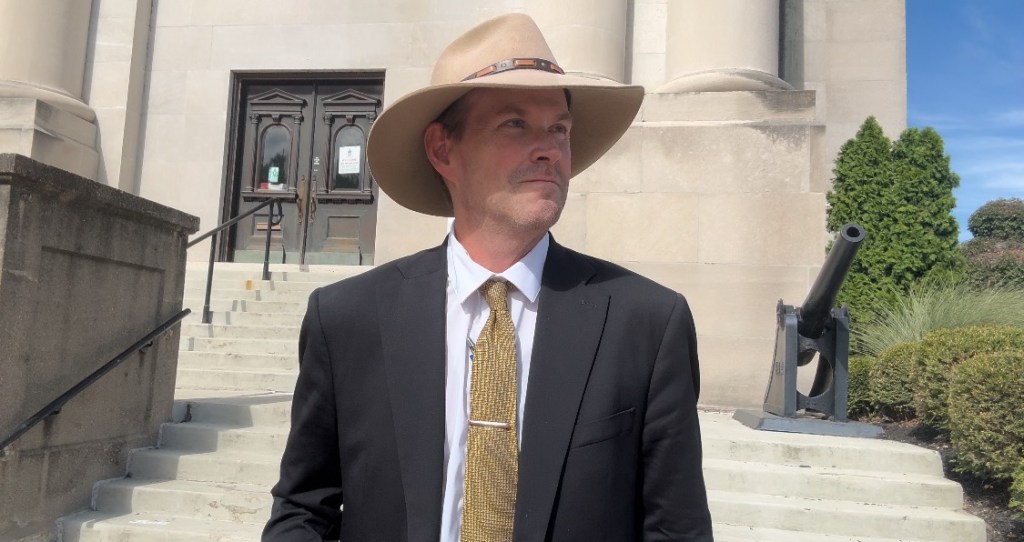
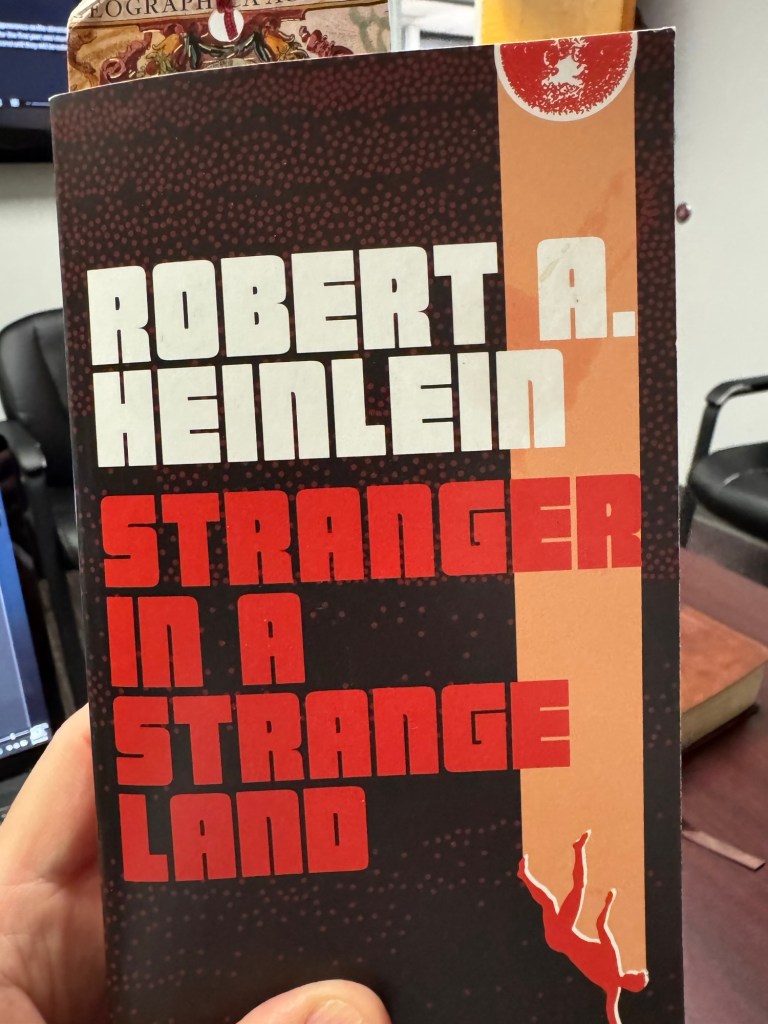
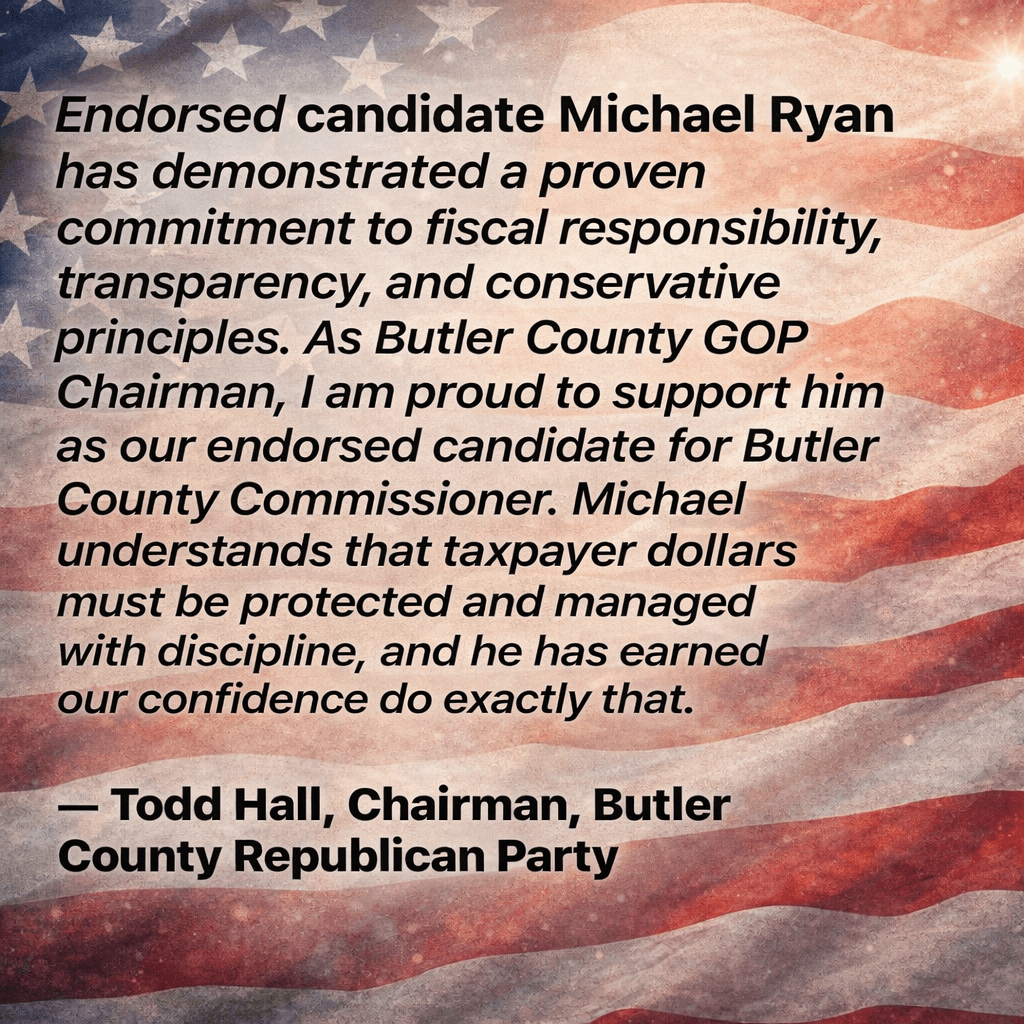








 The Overmanwarrior