The Heart to Take Away Hearts: Taking a stand against mediocrity in Ohio

The 2025 redistricting process in Ohio has emerged as a pivotal moment in the broader national battle over congressional control, with implications that stretch far beyond the Buckeye State. On October 31, the Ohio Redistricting Commission unanimously approved a new congressional map that shifts the balance of power decisively toward Republicans, giving them a projected 12-3 advantage across the state’s 15 districts. This outcome was the result of a tense, behind-the-scenes negotiation between Republican and Democratic leaders, including Governor Mike DeWine, Secretary of State Frank LaRose, Auditor Keith Faber, and legislative appointees like Rep. Brian Stewart and Sen. Jane Timken. Democrats on the commission—Senate Minority Leader Nickie Antonio and House Minority Leader Dani Isaacsohn—reluctantly supported the map, citing the threat of a more extreme 13-2 GOP-dominated map if negotiations failed. The new map redraws key battlegrounds: Rep. Greg Landsman’s OH-1 district now leans Republican (54%-47%), Marcy Kaptur’s OH-9 shifts to a 54.5%-45.5% GOP tilt, while Emilia Sykes’ OH-13 becomes slightly more Democratic at 52%-48%. These changes reflect a broader national trend, where Republican-led states, such as Texas, Missouri, and North Carolina, have aggressively redrawn maps to consolidate power, often under direct encouragement from President Donald Trump. Ohio’s redistricting, however, was not entirely unilateral; constitutional reforms passed in 2015 and 2018 required bipartisan approval for maps to remain valid for a full decade. The compromise avoided a costly referendum that could have frozen the existing 10-5 map and delayed the 2026 primaries, potentially costing taxpayers $50 million.

The political personalities behind Ohio’s redistricting drama reflect the ideological fault lines within the Republican Party itself. Senator Bernie Moreno, a staunch Trump ally, predicted early on that Ohio Republicans would push for a map that reduced Democrats to just two seats. His comments echoed the sentiments of Rep. Warren Davidson and State Senator George Lang, both of whom have expressed frustration with what they perceive as excessive compromise with Democrats. Davidson’s own district, OH-8, has long been a textbook case of gerrymandering, stretching from Troy to majority-minority communities in Hamilton County, effectively diluting Democratic votes. Lang, known for his “business-first” approach, has remained relatively quiet on the specifics of redistricting but is widely seen as aligned with the GOP’s strategic goals. Secretary of State Frank LaRose, meanwhile, played a key role in supporting the bipartisan map, arguing that it reflected Ohio’s political geography and avoided a chaotic referendum fight backed by “dark money special interests”. His stance, however, has drawn criticism from grassroots activists and legal watchdogs, many of whom argue that the map remains a gerrymandered artifact of one-party rule. Former Attorney General Eric Holder, chair of the National Democratic Redistricting Committee, called the map “a gerrymander placed on top of another gerrymander,” though he acknowledged it preserved Democratic incumbents’ ability to compete.  And when you get a compliment from Eric Holder, you are doing the wrong thing for the wrong reasons.

Nationally, Ohio’s redistricting fits into a broader pattern of mid-decade map manipulation driven by Trump’s directive to Republican governors and legislatures. Texas led the charge, redrawing its map to flip five Democratic seats, followed by Missouri and North Carolina, each adding one GOP-leaning district. Ohio’s shift adds two more Republican-leaning districts to the national tally, bringing the potential GOP gain to nine seats before the 2026 midterms. Democrats have responded in kind: California passed Proposition 50, a ballot measure allowing the legislature to redraw its map to add five Democratic seats, countering Texas’s move. Virginia and Illinois are also considering redistricting maneuvers, while states like Indiana and Florida have begun legislative discussions under pressure from Trump and Vice President J.D. Vance. The redistricting arms race has triggered lawsuits, referendums, and constitutional amendments across the country, with the Supreme Court’s upcoming ruling on the Voting Rights Act poised to reshape the landscape further. In this context, Ohio’s 12-3 map is seen by many Republicans as a strategic win, while Democrats view it as a defensive maneuver to preserve viability in key districts. The bipartisan nature of Ohio’s deal, although rare, underscores the high stakes and complex trade-offs involved in redistricting under the Trump-era political landscape, which is a good thing.  The Trump White House understands the situation.

Ultimately, Ohio’s redistricting saga reveals the tension between political pragmatism and ideological purity. Democrats like Dani Isaacsohn and Nickie Antonio have defended their votes as necessary to preserve competitive districts and avoid a worse outcome, even as activists accuse them of capitulation. Republicans, meanwhile, remain divided between hardliners like Moreno and Davidson, who favor aggressive gerrymandering, and institutionalists like DeWine and LaRose, who prioritize stability and legal defensibility. The map itself, while favoring Republicans, does not guarantee outcomes; Democrats have won in GOP-leaning districts before, and the 2026 midterms will test the durability of these new boundaries. What’s clear is that redistricting has become a central battlefield in the fight for congressional control, with Ohio playing a critical role in shaping the national narrative. As Trump’s second term unfolds, and as Democrats mobilize to counteract GOP gains, the redistricting wars will continue to define the contours of American democracy. Whether Ohio’s compromise map proves to be a tactical success or a strategic misstep remains to be seen—but it has already become a case study in the politics of power, representation, and the enduring struggle between exceptionalism and mediocrity.

The fundamental flaw in compromising with Democrats during redistricting—especially under the guise of fairness—is that it inadvertently empowers the very mediocrity that exceptional societies must resist. While it may appear noble or politically sophisticated to preserve all viewpoints and accommodate ideological diversity, the reality is that mediocrity, when institutionalized, becomes a corrosive force. It stifles innovation, suppresses excellence, and erodes the competitive spirit that drives societal advancement. Democrats, often aligned with collectivist ideologies like socialism and Marxism, have historically championed policies that prioritize equality of outcome over merit-based achievement. In doing so, they mask mediocrity as compassion, and fairness becomes a Trojan horse for cultural stagnation. When Republicans yield ground in the name of bipartisanship, they risk legitimizing this mediocrity and weakening the foundations of a high-performing society. Authentic leadership demands the courage to elevate exceptionalism—not dilute it. Redistricting is not merely a cartographic exercise; it is a strategic opportunity to shape the future. If Republicans fail to assert dominance when the political terrain allows it, they may find themselves governed by the very forces they sought to contain. The Ohio map, while a tactical win, reflects a deeper philosophical hesitation—a reluctance to confront mediocrity head-on. And in that hesitation lies the danger of losing the war for cultural and political excellence.  So, while many think it was good to play nice with Democrats, the danger lies in compromise when standards are set and social norms are established.  A failure to take away the heart of mediocrity in a society advancing for greatness might appear to have a merit of its own.  However, in the context of achievement, it undermines the very foundation of excellence we strive for.  And in going forward with these mechanisms of government strategy, when you get a chance to put your foot on the throat of the enemy and put them out of existence, we should do it. Playing fair with Democrats if it brings down your entire society is not a good thing.  It might make those lunches with colleagues more approachable, less tense.  However, by letting mediocrity prevail over logic, nobody is enjoying a better life under the influence of compromise.

Rich Hoffman

Click Here to Protect Yourself with Second Call Defense https://www.secondcalldefense.org/?affiliate=20707
The Shutdown Standoff and the Filibuster Flashpoint: A Political Reckoning with American communists

Speaking with Bernie Moreno recently, it’s clear that the U.S. Senate is at a pivotal moment. The government shutdown, now entering its 40th day, has become a crucible for ideological warfare, with President Trump urging Senate Republicans to reconsider the filibuster rule to break the impasse and reshape the future of American governance.  I think Trump has a good idea, and that the nuclear option should be used, never to let Democrats have power again, so there is no reason to play nice with them.  Democrats, most of them, and around 10-15 Republicans are the enemy of our country and should not be given a seat at the table. 

At the heart of the standoff are three distinct factions: a Democrat Party increasingly defined by its progressive wing, a MAGA-aligned Republican base pushing for aggressive reform, and a centrist bloc of senators hesitant to abandon institutional norms. The Democrats, led by figures like Chuck Schumer and bolstered by progressives otherwise known as “communists” such as Bernie Sanders and Alexandria Ocasio-Cortez, have refused to support any continuing resolution (CR) that doesn’t include a vote on extending Affordable Care Act (ACA) premium tax credits. Their strategy hinges on leveraging the shutdown to galvanize their base and preserve key health care provisions.  They are not that unlike the terrorists who bombed New York City with the 9/11 terrorist action.  If they destroyed commercial air travel to maintain socialized medicine, they are all for it.  They would love to harm the economy to slow down Trump ahead of the midterms.  These are the same people who wanted to use COVID to shut down the economy during Trump’s last year of his first term.  So this kind of economic terrorism is typical for them.

Meanwhile, Senate Republicans, under Majority Leader John Thune, have proposed a compromise: advance the House-passed CR and amend it with a “minibus” of three long-term appropriations bills, extending government funding through January 30, 2026. This deal, which has gained traction among at least eight Democrats, includes a future vote on ACA subsidies—a concession aimed at breaking the deadlock.  As I have always said, healthcare is a nasty hill to die on, because we are on the precipice of significant changes.  The way healthcare is today is not how it will be tomorrow, and the cost structure needs to be completely reinvented.  For Democrats, healthcare is about controlling the lives of individual people in a mass way, and has nothing to do with caring for people. 

Yet, the filibuster remains the elephant in the room. Trump’s call to eliminate the 60-vote threshold for passing legislation has reignited debate over Senate rules. He argues that the filibuster is a relic that Democrats have weaponized to obstruct progress, and that Republicans must act decisively to secure election reform, border security, and economic stability. “If we do it, we will never lose the midterms,” Trump declared, pressing for one-day voting and voter ID laws.  He’s right, there is no reason to play fair with the Democrats.  They almost went nuclear during Biden’s term, except for two senators who prevented it. Otherwise, they currently have 49 senators who were willing to go nuclear when they had power, a clear warning sign to Republicans.  So, if the shoe is ever on their feet again, they will do it; therefore, there is no reason to play fair now.  Don’t give them a chance at terrorism in the future because they are already thinking about it.  We are only here now because we dodged a bullet then.  Don’t expect that to happen twice.

Despite Trump’s pressure, Senate leadership remains divided. Thune and others have resisted the nuclear option, citing the need to preserve minority rights and avoid legislative chaos. A limited carve-out—lowering the threshold to 51 votes for clean CRs—was floated but appears unlikely to pass.

The shutdown’s impact is severe: over 1,000 flights have been canceled, SNAP benefits have been disrupted, and $5 billion in arms exports to NATO and Ukraine have been delayed. Air traffic controllers are stretched thin, and federal workers remain unpaid. The crisis has exposed the fragility of government-dependent systems and reignited calls for the privatization of critical infrastructure.  I’m certainly one of those who think we should not have a government involved in essential services like air traffic control.  Airlines should provide their own employees, and they would do a better job.  Sticking the government in the middle of critical infrastructure is a really dumb idea.  And to make matters worse, the pay scale and attitude of these employees are already poor, as they are unionized, which should be outlawed for all government positions.  In a short time, AI will be able to do a much better job with air traffic control than humans anyway, so why should we ever allow the government to stand in the way of human necessity?  It’s an incredibly dumb idea. 

In this climate, the filibuster debate is more than procedural—it’s existential. For Trump-aligned Republicans, eliminating it is a strategic imperative to prevent Democrats from regaining power and advancing what they view as radical, anti-capitalist policies. For moderates and institutionalists, it’s a dangerous precedent that could unravel the Senate’s deliberative foundation.  And that’s where the future of America is anyway, with Democrats moving hard socialist and communist as a party, we can’t let them have a seat at the table.  We have to draw the line somewhere.  Let the moderates be the new left-wing party, but don’t play nice with the communists and give them fairness.  Because they will destroy our country if given a chance, and that is at the heart of the debate.  Look at what they have been willing to do with the air traffic controllers.  If they can bring down American infrastructure to maintain control over healthcare, then they certainly will.  Those kinds of Democrats can never again be allowed to vote for the filibuster rule, because the next time, they will get it.  It’s been a race to beat the other to the punch for a long time, and we happen to be fortunate to have this impasse happening while Trump is in the White House. 

The stakes couldn’t be higher. The outcome will not only determine the fate of the shutdown but may also redefine the balance of power in Washington for years to come, regardless of any short-term CR. Whether the filibuster survives or falls, the political landscape is shifting—and the next chapter in America’s legislative history is being written in real time.  And you don’t want to lose your country by playing nice with those who wish to destroy it.  It was interesting to speak with Bernie Moreno about his first year as a senator.  Of course, we didn’t talk about any of these kinds of details; he’s a very level-headed person who was reporting on the lay of the land in the Senate.  But what is obvious is that we already have three parties, and one of them certainly wants to destroy the concept of a capitalist America and to push everything into communist control, much the way China operates.  And it’s me saying it, along with Trump, that we don’t want to be a sucker on this, we need to play tough, and forget playing fair.  This is a game of beating the other side to the punch, and that other side are radical communists, as exhibited by the newly elected New York Mayor, Zohran Mamdani. In a world where people like that are debating the Filibuster, they will go nuclear.  We are fortunate to be in a time when fairness still prevails, and we should be wise in utilizing that power while we still have it. Because there is nothing less patriotic than letting hostile agents destroy your country, and in case it’s still not known to the vast majority, the Democrats are the enemy. 

Rich Hoffman

Click Here to Protect Yourself with Second Call Defense https://www.secondcalldefense.org/?affiliate=20707
The Evils of Corporate Culture: Why we love and hate them

One of the things that is most ill-defined in our country, and certainly in the world, is the understanding of why we tend to hate corporate culture.  Yet almost in the same sentence, we desire to be a part of them.  It’s actually pretty straightforward and obvious, which goes back to the foundations of capitalism and the work of Adam Smith in 1776, as well as the intrusive and corrosive nature of Karl Marx’s communism, which ultimately have led to many of the problems we see today.  We hate communism with the same ambiguity, and the reason in all cases is that corporations exist to allow the mediocre to feel validated in mass society, and that it shields them from the insults of competition.  Corporate cultures are often characterized by collectivism and are seldom driven by unique individuals with great vision.  By the time a company goes “corporate,” it loses that unique leadership that likely built the company into something publicly traded and valuable.  So when we say that something is “corporate,” we are saying that it is of less quality than something that isn’t.  Corporations allow mass collectivism to appear valuable by leveraging the efforts that built a company.   I’ve been thinking about this recently because I have had a front-row seat to a corporate takeover, and it has been astonishing to watch.  The people involved are really dumb.  And I don’t say that as an insult, but as an observation where individual intelligence is completely vacant from the minds of those involved, which is typically associated with stupidity or dumbness if taken in isolation.  But if many such people assert something, then there is a belief that a majority then gives validation, even to stupidity.  It’s one thing to read about these things happening in the world and to know the type of people involved.  But I usually have some insulation from this kind of thing by living my life, until those types of people stepped into my interaction by their own choice.  And I have had to establish their base reality, the only way that it can be defined, that they are dumb people looking for easy money in the world, and they accomplish this through mass collectivism, the same way that labor unions are a problem.  Wherever people hide value in groups, we see a loss in the quality of the visionary experience.  You don’t think of a boardroom as a group of people who solve big problems.  Typically, we think of a group of individuals who appease each other in a setting, at the expense of innovation.

I tend to support large organizations because their creation generates the flow of money, and I like money as a measure of a healthy society.  The more money a society has, the more corporations that create it, the more opportunities that society has to improve the lives of its people.  However, that is a very high-level assumption because, unfortunately, most people do not have positive corporate experiences, as many of the ideas we have about things are flawed from the start.  Even all the years of economic evolution that brought about the excellent book, The Wealth of Nations, there is always uncertainty in individuals about their ability to function in the world productively, so they seek joint relationships to hide in, and that is how the corporation came about as these ideas of capitalism and Marxism emerged as the world became smaller and easier to travel in.  Even if there were more opportunities for boldness and adventure, it was still the same kind of people who took them, leaving most of the rest of the world looking for a way to participate without the risk of actually doing so.  We prefer corporate jobs for the high pay we can earn within their structure.  But the pay usually comes at the cost of individual integrity.  You have to give up one thing to get the security of another.  And as human beings, we look down our noses at such a concession because we deem it inherently evil.  Evil because it destroys individuals, rather than enhancing them.

It’s not unusual for a family to applaud that a youthful personality has just joined a respected corporation at Thanksgiving Dinner.  The applause comes because we care about the young person and want them to have financial security.  But also in the back of our minds, we know that something is dying in that person, the ability to become all the dreams of youth as a unique individual.  Corporate environments are about giving voice to mediocrity for the benefits of mass collectivism. So that unique person we knew growing up will likely give up some of their dreams in the process of conformity.  They might gain an extensive paycheck, but in the process, they’ll lose their soul.  And we now understand this process well, having undergone many years of separating business from being run by kingdoms.  However, by default, the corporation evolved to give the mediocre a kind of unionized collective bargaining against the tendency toward cowardice, the act of waking up in the morning and having the courage to be an individual.  I know about such people, but I usually avoid them like a sickness until I had to speak to them often, when they came to my doorstep.  And it’s remarkable how typical dumbness is.  And when we say “dumbness,” we are referring to a lack of individual thought, where a person thinks something and acts on it without careful consideration. Instead, they feel a sense of unity for the preservation of the group, and their ambitions are collectively shaped through the force of numbers, rather than individual vision.  So, obviously, a corporation run by a board, even if there is a strong CEO, ultimately exists to sell mass collectivism to a consuming public, and we only notice when it impacts us, because there aren’t many pure examples of capitalism to measure real value against. 

We might like money, but there haven’t been enough examples of corporations that have survived due to corporate social responsibility efforts to give better examples of how things should be, or how humans should even make a living.  I’m talking about Robert Pirsig’s Metaphysics of Quality again, the difference between back-of-the-train people and those who dare to live in the front.  The corporate environment was not intended to put the best in charge.  But to make mediocrity rule the masses through collective ambition.  The loss of individuality to the concept of just being another number.  And in the process, everything is less effective.  And so, there is this cheerleading effort by corporations to acquire privately owned companies, as the corporation and its inhabitants want to believe, through the force of confiscated resources, that they can be as good as the visionary owner.  But they never are, and that little secret rots them into their graves.  They may be able to buy a second home in Florida and have the nicest cars to drive.  They may make enough money to turn their kids into younger versions of themselves by sending them to a communist camp we call “college,” by saying we want to give those kids the best chance at life, when we secretly fear that they will grow up to be better than us.  There is a lot wrong with corporate thought and the people who have defined it over the years. Based on what I’ve seen of it, an entirely new definition for money-making needs to be introduced.  The faceless monster of corporate ownership is just an extension of Marxism that emerged in the void of any other definition at that time of its growth into everyday language.  And many of us really want to be associated with the corporate culture for the security of income.  However, it comes at the expense of individual integrity, and for that reason, we secretly view corporations as inherently evil.  However, since most of us lack the security of personal wealth and thought, we want to be associated with something so that, by default, other people won’t see what we really are.  And that we won’t be found out as phonies, even if that’s what we think each day when we get out of bed. 

Rich Hoffman

Click Here to Protect Yourself with Second Call Defense https://www.secondcalldefense.org/?affiliate=20707
Republicans Played Too Nicely in the Election of 2025: Who to blame in the West Chester Trustee race

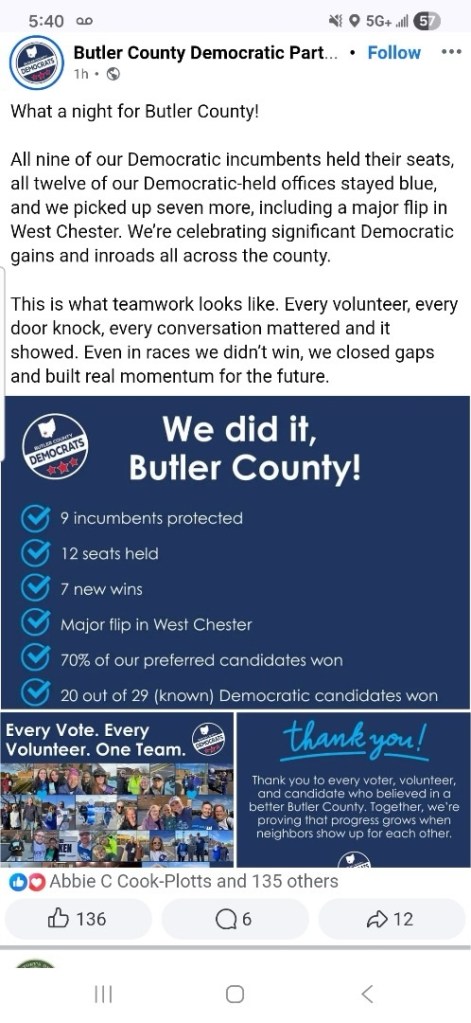
It is a bit surprising to listen to everyone’s post-election analysis, where they think Democrats did a lot better than they actually did.  In West Chester, Ohio, there is a lot of chest beating that Democrats found themselves in a lot of seats, especially the West Chester Trustee position, where I went to bed feeling like my guy, Mark Welch, the incumbent who has done a good job, came in third in a six-person race for two spots, was going to win.  There was a Trojan horse effect there, where the average person didn’t know who the Democrats were.  In the West Chester race, that certainly would be the case.  Mark was a Republican-endorsed candidate, but there wasn’t much advertising for the Democrats running, as they hoped to slip under the radar without the general public knowing who they were.  I still felt Mark was strong enough to win anyway.  I might have had disagreements with the way that Republicans set themselves up for this election.  But I wasn’t surprised by anything in Virginia, New York, or California.  Where Republicans ran away from President Trump, Republicans lost to Democrats, and it’s pretty much that simple.  Republicans, the same old Never Trump types, a year after his magnificent election, tried to go it alone, and they lost.  I hear a lot of analysis, and they are all mostly missing the point.  The Republican Party traditionalists still don’t want to admit what MAGA America really is.  The West Chester race, like the Lakota levy issue, truly captured a national sentiment worth mentioning.  I’ve spoken to Mark, and he’ll have the opportunity to do many great things.  Meanwhile, West Chester was warned what electing a bunch of Democrats would do, which is what the Lakota school board has been experiencing.  And people are going to have to learn some hard lessons. 

But here’s the deal.  While I support and endorse various candidates, and I certainly did endorse Mark Welch, I disagreed with the “niceness” campaign.  Mark is a nice guy, but everyone has to remember he won as a Tea Party conservative, and the Republican Party at that time was led in that effort by a scrappy George Lang, who when pressed can be pretty ruthless to those he runs against.  It was the Tea Party types who went out and fought to put Mark on the Board of Trustees of one of the most successful communities in America, and he has been great in that position.  Over time, people have forgotten what it took to get there and what it takes to keep a community great.  New York is going through that same cycle. Over time, people get complacent when things are stable for a long time, and they dare to make changes that might sound “nicer.”  And when it comes to me and many political people, there are always these tagalongs who aren’t very savvy, and they certainly don’t like me.  When I see Mark at an event and speak to him, there are always those who swoop in after me and ask him why he gives me the time of day.  There are lots of whispers in the ears of some of these people who want to believe that the world is something other than what it is, and that I should not have a place in it.  But I’ll tell you what, if I were managing Mark Welch’s campaign, he wouldn’t have lost.  I would have advised him to be a lot more competitive and a less smiling, more angry, Mark.  The belief was that Mark needed to get Democrats to vote for him, so he needed to be more like Lee Wong, whom conservatives thought of as safe to vote for, but who would undoubtedly receive a bleed over of Democrat votes.  The belief was that in West Chester, if you wanted to win the trustee seat, Democrats would have to step over and vote for Mark. 

But in truth, as it was everywhere in the country, it’s the MAGA base that supports Trump that everyone had to tap into.  Because even there, there are already Democrats who have left the party and are voting for Republicans because of Trump.  So, in Mark’s case, and this is the fault of all those people who whisper in his ear when I leave the room, playing “keep away” with these office seats is not the way to win.  Democrats are trying to sneak under the door, and Republicans are trying not to look too mean to win over Democrats.  When the real desire is for MAGA Republicans to grow in number, and people in West Chester would have loved to know that Mark was much more MAGA than just being a nice guy incumbent.  The reason why Mark didn’t pull out one of the two top spots was engagement.  The MAGA people, the old Tea Party types, weren’t excited about this election cycle, so they stayed home.  And Democrats were desperate for relevancy, so they worked the polls, mailed out their mailers, knocked on doors, and tried to sneak under the door wherever possible so people wouldn’t know who they were.  Mark worked hard, but the people around him were on their heels, and that was obvious.  They were on cruise control and wanted him to play keep away, to not do anything that might steer away those Democrats that they are so afraid of. 

This year, more than other years, I have been doing a lot of video coverage of important political figures, not because I’m some radical right winged maniac, as those people who were whispering to Mark criticisms toward him for even talking to me, but because I know what I’m talking about and I always know how to handle these kinds of things with an excellent track record.  If someone listens to me, they will have a significantly better chance of winning their issue, regardless of who they are.  I’m so good at it that lots of people want to pay me a lot of money to do it, but I look down my nose at that kind of business, because I don’t respect people who take money for something that is essentially part of our republican form of government.  It should be a labor of love, in my opinion, not something you profit from.  So I already don’t respect a lot of those types of people who are critical of me.  Everything gets back to me, so I know who those people are.  And I think so little of them that I don’t even waste my time speaking with them at a lot of those events.  I see them as a waste of time.  They don’t understand the game, and they don’t respect the people who vote.  They are busy trying to make the world into what it isn’t.  Because they like Democrats secretly, and they don’t want to fight them, they want to get along with them.  I advocate destroying them.  Why wouldn’t you want to destroy people who are trying to ruin our civilization?  And I understand that a lot of the people I’m talking about don’t think of things on a vast scale for the actuality of existence.  That’s the only way I think.  So do I care if they find my outlook repulsive? Absolutely not.  I see them as a waste of time, and they have a lot to learn about life.  And when they give bad advice, as they certainly have been, don’t be surprised when your guy loses.  Republicans lost in races they could have won because they were too nice to Democrats.  And it’s that simple. 

Rich Hoffman

We’re rebuilding the school board. Good management is the best way to defeat tax increases.

Click Here to Protect Yourself with Second Call Defense https://www.secondcalldefense.org/?affiliate=20707

How to Pick Up Women: Not hiding in the herd like a coward

I have several people in my life who are young and are just starting to be interested in girls, an anxiety that most men never get over. Forget about the modern attempt to rewrite human behavior; biology is biology.  Women, in the form of young girls, are meant to establish upon the human race a survival of the fittest kind of competition that is intended to inspire greatness.  I’ve told the story more than once about how I met my own wife; it was under very challenging circumstances, and I’m the type of person who doesn’t yield to anything.  Nothing is off limits to me.  So, I saw her in a car on a date with another guy, and I knocked on the window, essentially asking her to marry me.  And we’ve been married now for nearly 38 years.  I would advise all young people concerned about attracting young girls to be confident and direct.  Because here’s the secret.  Women don’t like slugs.  If you are outgoing, most women will want to leverage whatever attractiveness they have to reel you in, as they desire those qualities in their own family building and for their future children.  They may not be consciously aware of all that, but their essential biological necessity establishes it in their behavior quite clearly.  I think one of the wisest movies in the history of cinema came from the movie Scarface, starring Al Pacino, during the pool scene.  Tony Montana’s friend wanted to pick up a pretty girl at the pool and was being very obvious about his sexual intentions.  Tony tried to warn him not to be improper with her, but he did it anyway. He talked to her for a minute, then stuck his tongue out in a sexually suggestive manner, as if all the young woman wanted was sexual pleasure, and she slapped him. 

After that scene, Tony tried to help his wounded friend by telling him that in America, you have to make money first.  Then the women will love you.  But not until then.  Make some money, show that you are successful, and getting women will be no problem.  That is generally true in most cases.  No matter how much radical liberals try to rewrite human behavior, that basic biological necessity holds.  If you are confident, women in the form of young girls will see a basic ingredient for success, and they will find a way to make room for you under any condition.  Because the chances are, anybody they might happen to be dating, probably isn’t very confident.  Another rule is that any mildly attractive woman is likely attached to someone, but most of the time, until she’s around 35 years old, she is always looking for someone better.  Always, even on their wedding day.  This is why many women are drawn to successful individuals.  It’s the way that the human race is wired to sustain itself perpetually forward.  The privilege to sexual interaction can be psychologically constructed toward perpetuation, but that won’t stop a wandering eye from always zeroing in on someone who has the potential for great success.  So I always tell young people, ‘If you want girls, make yourself useful, and they’ll find you.’ You won’t have to go looking for them.  If you are a successful young person, you won’t be short on opportunities.  However, you must be the genuine article. If you dress for success and try to smooze over unsuspecting women at the club with too much cologne and a cheesy outfit, they’ll discover real quick that you aren’t what you sold yourself to be, and they’ll check out fast and move on to someone else.

Of course, I’m not talking about girls when I’m talking about girls.  But essential ingredients regarding the human race.  Women are often the standard bearers for all existence. If you want to be associated with a good one, you have to be a person they think of as good.  And most women are disappointed with the men in their lives, because our society teaches boys to be not very good men.  Boys learn all the cosmetic stuff, but when it comes time to change the oil, they are lost.  I have a friend in his fifties who is recently divorced.  He’s a demolition derby driver, professionally, so he knows how to tear down a car and rebuild it from the ground up.  He does it for fun almost every day of the week and throughout the weekend.  Once word got around that he was no longer married, he had about 40 different girls half his age wanting to date him; it was really out of control.  Now he’s not that wealthy by any means.  However, he knows how to work on cars, and most of them have cars that need to be repaired, so he possesses skills that the other men in the millennial age group don’t have.   And the girls are very aggressive about solving that problem by wanting to date my friend.  As I joke with him, I say that being able to change oil is like being a millionaire in this overly progressive society, where feminism has been a joke and a massive failure.  He is the evidence of that.  You can’t hoodwink skills over fake charm; women figure it out really fast. 

However, that same approach essentially carries over into all aspects of life.  You can’t fake it, whether you are dealing with women or men; people are people, and they judge each other based on these essential truths.  And once you understand this, it’s good to separate yourself from the herd by not chasing around traits that you think will make you likable, but are essentially a waste of time.  I often discuss the Metaphysics of Quality, particularly regarding the back-of-the-train types, which are most people.  Where you always want to be is in the front of the train, where it takes courage to be.  Of course, women will be more attracted to you there, as opposed to the back, where all the others are hiding.  But it’s not just women; all people respond similarly, even if they themselves don’t have that kind of personal courage.  They are attracted to those who do.  So, it’s best in life not to associate yourself with others who are considered losers, but are hiding that trait under some premise of collectivism to disguise their cowardly behavior, which reveals them to be back-of-the-train types, rather than leaders from the front.  As Tony Montana said in Scarface, to get the women in America, you have to make the money.  But even more than that, you have to be willing to emerge from the crowd and show a confidence that can achieve success, whether it’s making millions of dollars or just being able to change the oil in a car.  Apparently, millennial women are very stressed about being able to change oil. The bar for success has significantly lowered over the years, as it used to be that all young men could change their own oil.  But being able to do something better than everyone else is the key to getting opportunities in life.  And those who separate themselves from the masses have much better lives, in just about every case. 

Rich Hoffman

Click Here to Protect Yourself with Second Call Defense https://www.secondcalldefense.org/?affiliate=20707

Why Lakota Voters Should Reject the Largest School Levy in Ohio History: Vote for Ben Nguyen and listen to my Friend, Jamie Minniear on 55 KRC

In the heart of Butler County, the Lakota School District is asking voters to approve what would be the largest school tax levy in Ohio history—a staggering $506.4 million bond issue paired with a permanent improvement levy. This proposal, if passed, would cost homeowners $208 per year for every $100,000 of appraised property value, with collections beginning in 2029. While district officials claim the net increase will be closer to $93.10 per $100,000 due to retiring debt, the reality remains: this is a massive financial commitment for taxpayers, especially seniors and working families already burdened by inflation and rising costs. The levy’s purpose? To demolish nine existing schools—some only 40 years old—and build four new elementary schools, while reducing the total number of buildings from 21 to 16. But many residents, including Jamie and Todd Minniear, leaders of the No More Lakota Taxes campaign, argue that this plan is fiscally irresponsible and prioritizes construction over classroom needs.

Jamie Minniear, speaking on 55KRC with Brian Thomas, passionately advocated for Ben Nguyen, a 2025 Lakota graduate and conservative school board candidate who opposes the levy. She described Nguyen as a sharp, creative thinker with fresh ideas for education reform and a deep understanding of the district’s challenges. Nguyen’s candidacy represents a new generation of leadership—one that values fiscal discipline, educational outcomes, and community engagement over extravagant spending. Jamie emphasized that the levy is not about improving teacher pay or classroom instruction; it’s about tearing down buildings and replacing them with new ones, regardless of whether they truly need replacement. She and Brian Thomas, the host, recalled his own experience attending classes in trailers and rundown buildings, yet still receiving a quality education. Her point was clear: education doesn’t require luxury—it requires commitment, good teachers, and community support.

The Minniear-led opposition has gained traction by highlighting the lack of transparency and misleading ballot language. While the ballot shows a 5.94-mill increase, the district claims the real impact will be 2.66 mills due to debt roll-off. This discrepancy has confused voters and raised concerns about the district’s communication strategy. Moreover, the district’s plan to reconfigure grade bands, shift students between buildings, and consolidate campuses has sparked anxiety among parents who fear disruption and overcrowding. Critics argue that the district should focus on maintaining existing infrastructure, investing in teacher development, and enhancing academic programs—not launching a half-billion-dollar construction spree. The Ohio Facilities Construction Commission rated many of the buildings slated for demolition as “borderline” or “satisfactory,” further questioning the necessity of such drastic measures.

Ultimately, the levy represents a philosophical divide in the community: between those who believe more spending equals better education, and those who believe in doing more with less. Jamie Minniear and her husband Todd have galvanized a grassroots movement that champions responsible stewardship, local control, and student-centered priorities. Their campaign is not anti-education—it’s pro-accountability. They believe that rejecting this levy is the first step toward a broader conversation about what truly matters in public education. With Ben Nguyen on the ballot and a growing chorus of concerned citizens, Lakota voters have a chance to send a clear message: we support our schools, but we demand smarter solutions. On November 4, vote NO on the Lakota levy!

Rich Hoffman

Click Here to Protect Yourself with Second Call Defense https://www.secondcalldefense.org/?affiliate=20707
The Only Investment Guide You’ll Ever Need: How it all started

Here’s another good story about A.I. and why I think it is beneficial, not a hindrance to the human race.  I have a unique business philosophy regarding money and how to save a significant amount, allowing me to live comfortably without needing a lot of it for various reasons, which enables me to maintain my independence from parasitic individuals and vastly evil corporations.  And that started for me in the summer of 1987.  I don’t often tell this story because it’s usually better just to let the water drift under the bridge and move on.  We have a lot of family events each year, and I have to see many of these people and behave as nicely as possible. However, many things are simply unforgivable, and that’s what happened to me during the early stages of dating my wife, just after high school and before college.  She was being groomed to marry one of those race-to-mediocrity people from the Beckett Ridge Country Club during its heyday.  She was a model being considered for supermodel status, and her parents had ideas for her life that they wanted to be associated with.  When you have a beautiful kid like that, it’s hard not to want to cash in on her in some social way.  So the last thing they wanted was for her to let them know that she was dating a person whom everyone was scared of at the time.  To say I got into a lot of trouble would be an understatement.  I was not the kind of person that parents wanted their daughter to bring home.  Which I thought was always strange, and still do, because I am precisely the kind of person every parent should want their kids affiliated with, at least the way I see it.

So, her parents forbade the relationship. As is true with everything in my life, when someone challenges me to a fight, I never let go of it, and that would undoubtedly be the case in our marriage.  We’ve now been married for almost 38 years, but not without a lot of unnecessary hardship being imposed on us.  So our dating period got cut dramatically short when a family therapist advised them to throw her out of the house and force me to take care of her, essentially to take away all the fun stuff so that the romance would be taken out of our relationship and we’d break up and she would move back home and start dating people her parents liked, and be done with me.  So they kicked her out of her very nice house at the time and forced her to move in with me.  I had 36 points on my driver’s license and was at that time serving something like a 9-year suspension of my driver’s license, for reckless driving as society measures it.  I raced a lot of cars in those days, got into a lot of fights, and was in court a lot.  But I was willing to put that life away to marry this girl, because she was worth it.  It was, therefore, a very much a Romeo and Juliet romance, only without the tragic ending.  Instead, I was determined to fight off the world, whatever it took, and marry this young girl, making a family with her.  And nobody was going to get in the way.  So here I was in a little townhouse in Sharonville with a good friend of mine living on our own, and suddenly this girl was kicked out of her house and living with us in a kind of three-way arrangement that was very, very tough. 

Like I usually do when things get tough, I read books. That summer, I had to learn a lot about money quickly so I could win the game of starting a family and become smart about the financial games of life.  I still do this, and it’s why I read an average of 3 to 4 books a week, still.  Because there’s a lot to know, and if you want to win at life, you have to know more than the people you are dealing with.  In that case, with my future wife, we would have been married a year later, but at that time, it was a tragedy of Shakespearean proportions, with all the ruthlessness one could imagine, difficult beyond reason or belief.  Crushing difficulty.  To alleviate that pressure, I went down the road from our townhouse and checked out Andrew Tobias’ very well-known book, ‘The Only Investment Guide You’ll Ever Need,’ from the library.  I spent the summer reading it, and the next several decades thinking about it, and it has formed my basic approach to wealth creation, to stay off the treadmill of social expectation, because there is a lot of wasted money spent on it, and to use good money to defeat bad, time and time again.  However, it is mostly on minimalism that Andrew Tobias discusses regarding money management. Stay out of the casino of money making, and you’ll actually come out way ahead.  And with that basic approach, my wife and I have navigated some treacherous waters over the years and defeated many formidable characters. 

I have been professionally dealing with a similar issue that involves a lot of money and people, and they have been commenting on my position, which gives them minimal access to my life and those in it, much to their frustration. This essentially stems from the basic strategy I formulated in that book so long ago.  But for the life of me, I couldn’t remember the title, just the contents.  Back then, I used to check out books at the library and had to return them.  These days, I put them on a shelf and refer to them repeatedly.  But that early in my life, I didn’t even have a house yet.  So once my wife moved back in with her parents and they reached out to me to see if we could all reconcile, I turned the book back into the Sharonville Library and never saw it again.  But at my current age, I wanted to reread it because it was relevant to my current circumstances and I wanted to reconnect with my roots.  So, I asked the Grok A.I. which book I had read on finance during the summer of 1987 from the Sharonville Library, and it told me within seconds, ‘The Only Investment Guide You’ll Ever Need.’  It was interesting because the book was on record in that library at the time, and they knew I had checked it out based on their reporting.  I was finally able to buy a copy from Amazon, and it was hand-delivered to my front porch the next day.  And I read it again and really enjoyed it.  It had been updated from the 1987 version I had read into a 2016 view of the world, but the same basic book was still there.  Same cover and everything.  It’s the kind of book everyone should read on finance, and that’s why it’s still popular, even today.  It has certainly helped me throughout the years, and strategically speaking, it works very well.  I have always thought of it, and because of A.I., I was able to reconnect with it.  Nobody will promise you a nice and easy future.  But if you are smart and apply innovative strategies to your life, you’d be surprised at what you can survive and endure.  And for a lot of reasons, Andrew’s book will always be a treasure for me.  A treasure I was able to enjoy because of A.I. and its ability to know so much, so quickly.

Rich Hoffman

Click Here to Protect Yourself with Second Call Defense https://www.secondcalldefense.org/?affiliate=20707

The Impairment Playbook: One of the biggest threats to American infrastructure

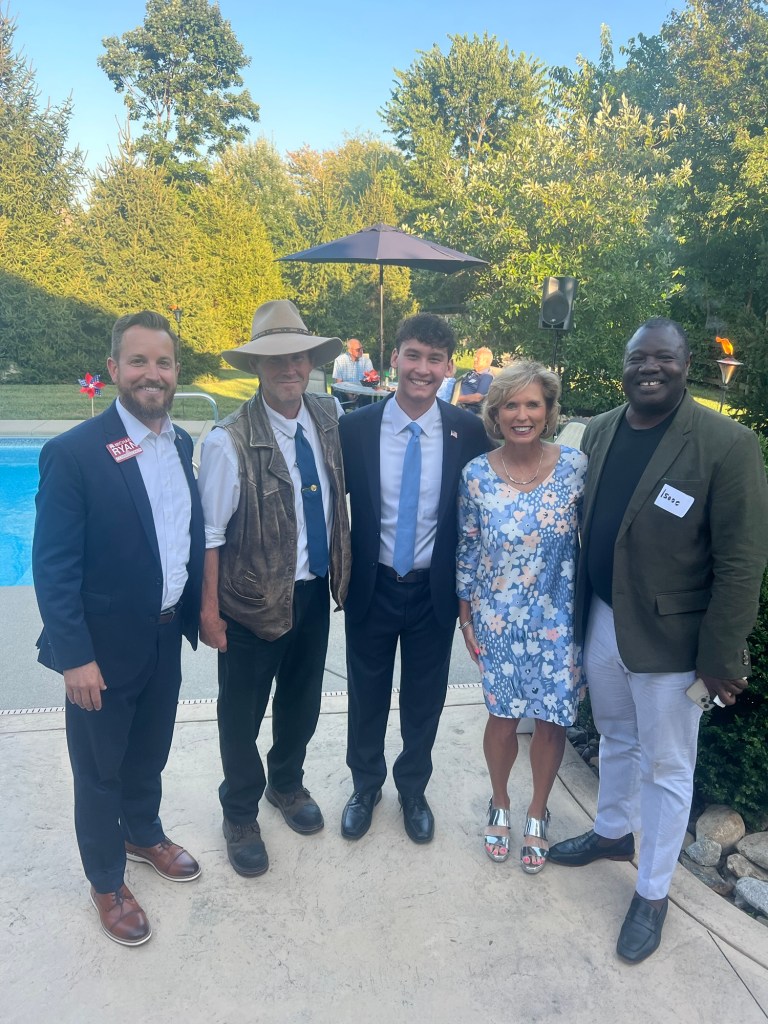
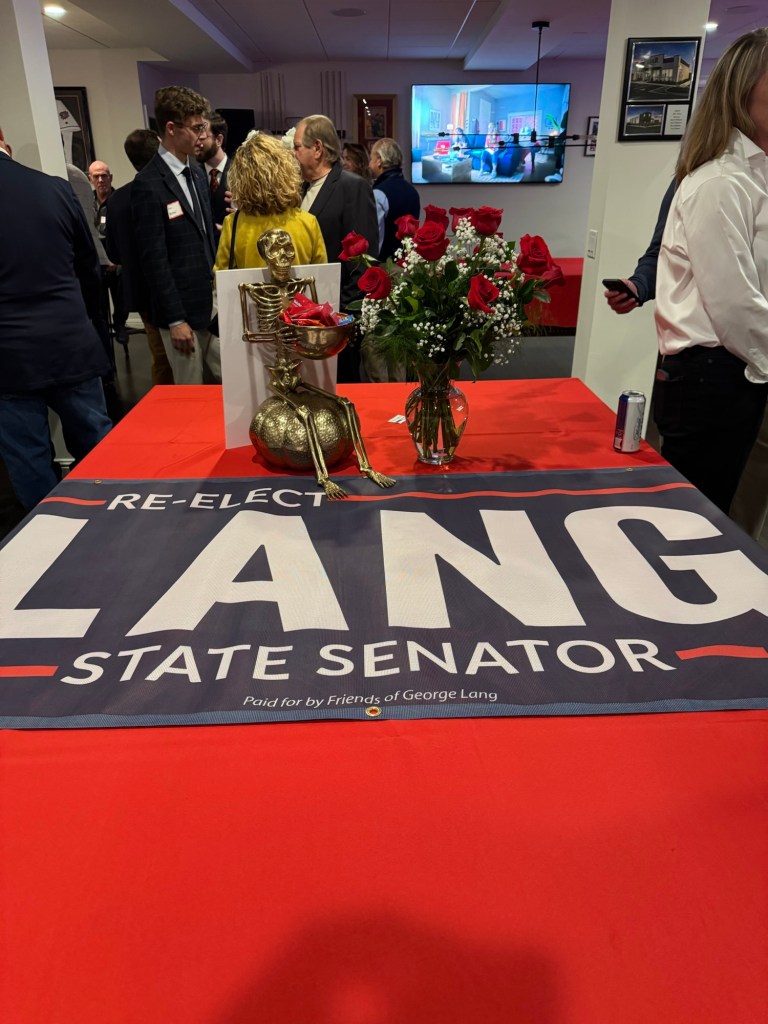
One of my many roles is Vice President of Manufacturing, Facilities, and Program Management at CTL Aerospace. At Senator George Lang’s fundraiser on November 1st, 2025, everyone I spoke with was primarily interested in an update on the Chapter 11 filing for the company.  After all, it wasn’t that long ago when Vivek Ramaswamy came to CTL to announce his run for Governor, so there were lots of people cheering that the company would find a way through to the other side of a challenging financial situation.  And to make matters worse, our case was not one of not having customers or income, but rather part of a widespread suppression campaign by our bank that many privately owned Tier 2 suppliers have experienced over the last decade.  Only in the case of CTL Aerospace, the ownership has shown a very rigorous desire to hold ownership rather than to be pushed aside, essentially by pirates who just wanted to raid our ship and steal all the plunder for a quick flip on the market, as a turn and burn, as they like to say.  The context and legal positioning regarding CTL Aerospace’s Chapter 11 proceedings, specifically the compelling basis for equitable subordination under 11 U.S.C. §510(c). The facts of our case, supported by documented creditor misconduct and predatory financial behavior, are now a very public matter, so the personalities involved are in the public record. 

CTL Aerospace—a 79-year-old aerospace manufacturer—has faced targeted financial suppression during a period of global supply chain instability. The aggressor in this case refused to extend forbearance, coupled with abrupt covenant enforcement and term manipulation, directly impaired our ability to procure raw materials and maintain operational continuity, resulting in massive damages for which everyone in the crowd I was speaking with was very interested. These actions were timed to coincide with industry-wide distress and reflect a pattern of bad faith and strategic impairment.  And the target against us was the “goodwill” of our business, the brand that we had built over a long period of time, the intangibles that are often overlooked in modern business because nobody prosecutes those kinds of cases anymore.  Even though they certainly should and would otherwise if the costs weren’t so prohibitively high.  Once you get into something like this, you see a real menace to the infrastructure of America that is determined to erode our manufacturing base by international banks, who, just like pirates, are seeking short-term plunder and quick sales on the hedge fund market.  When you attack a company’s “goodwill” through purposeful suppression techniques, which a bank can do since it is the mechanism through which all cash for a company flows, if it breaches that fiduciary trust, it can really wreck a business.  And as I found out during this process, it’s not just CTL Aerospace going through this kind of thing, but it’s common in the nation right now, as many private owners we know closely have had to step out of the game and get into the name change cycle every few years, which has caused all kinds of supply chain instability.  Again, much of this is now public record, and people have been following the case. They wanted me to provide an undercover perspective, as this is a very political problem, a matter of national security, which is undoubtedly the case at CTL Aerospace.

Case law supports our position, which is to fight back and seek damages for the massive financial impact on our company’s goodwill. In Citicorp Venture Capital, Ltd. v. Committee of Creditors Holding Unsecured Claims (In re Papercraft Corp.), 211 B.R. 813 (W.D. Pa. 1997), the court subordinated a creditor’s claim due to inequitable conduct that harmed other creditors and the debtor’s reorganization prospects. Similarly, In re Fabricators, Inc., 926 F.2d 1458 (5th Cir. 1991), emphasized that insider status and control over the debtor’s financial decisions can trigger subordination when used to the detriment of the estate.  And that was certainly the case at CTL Aerospace in really extraordinary ways.  But often, such defenses are never applied because by the time you go through the Chapter 11 process, a company doesn’t have the money to fight, which means you essentially have to hire $3000 per hour lawyers to run the case.  Because the banks certainly have those types on their side. In this case, the conduct—potentially documented in internal communications and covenant enforcement timelines—suggests a deliberate strategy to induce distress and position itself for asset acquisition or impairment accounting. We are actively pursuing discovery to uncover these records and may seek engagement with the DOJ or OCC for a lender liability review.  And based on the evidence we have and the timeline, which many have told us from an insider perspective is a classic case of “The Playbook,” would be an easy case to prosecute.  And likely a large settlement.  But that’s not where my mind is, or some of the people involved in this with me.  We want to see much deeper punishment for the entire financial industry, because this hasn’t just happened to us.  It’s a significant impediment to the economic backbone of the entire American manufacturing industry.  It’s not enough for us to survive, which we look poised to do.  However, to illustrate what was done. 

I explained it like this to many people at the fundraiser, and it was good to chat with Senator Bernie Moreno, who is doing a great job in D.C., and Congressman Warren Davidson who has been fantastic over the role of the Fed in government and is very cerebral in problem resolution, imagine you are a big deer with a full rack of antlers, a 10 pointer.  You have lived a long time, and it shows in the development of your antlers.  But one unfortunate day, you try to cross a road and you get hit by a car, breaking your hip or leg.  The driver keeps going.  You are lying there helpless.  Then a cringy pick-up truck comes along with a very loathsome character getting out, who sees an opportunity for a free mount on his cabin wall to brag about.  He sees the big deer with the whole rack and thinks it’s an excellent opportunity to kill the deer and hang the head on his wall for bragging rights.  He didn’t do the work of hunting the deer, but nobody will ever know.  Typically, in a business cycle, the deer would find a way to crawl away into the woods to heal and restore itself to life after such an accident.  In CTL’s business, a global supply chain issue put us under significant stress.  However, rather than helping CTL, the bank adopted a suppression strategy, essentially running the deer over with a car so they could hang the easy kill on their portfolio management wall for bragging rights and a path to easy money.  And from my perspective, based on the evidence, there is a prominent political position in all this, too, a hatred for the Trump administration and this notion of Making America Great Again.  Patriotic companies like CTL Aerospace, which are privately owned and conduct a significant amount of defense work, are prime targets.  They are the 10-point bucks that would look great on a very progressive trophy wall for financial institutions.  However, the facts of the case are sufficient.  It was a sloppy case on the opposition’s part; they made numerous mistakes that they thought they could hide behind expensive lawyers.  But the case law certainly doesn’t favor them. 

When everyone asked me what needs to happen in this case, I gave my point of view, which is prosecution on equitable subordination under 11 U.S.C. §510(c).  The attacker is demoted from a secured creditor, and their impairment play is wrapped up in a case law lesson.  However, the issue would have to be taken out of their control, as they currently hold a monopoly status in the courts and the financial mechanism.  At the very least, this is a case of predatory accounting that should serve as a cautionary lesson for similar cases.  And as long as it’s going on, it violates any notion that Ohio, or America, can sustain new business activity when these practices are hindering the behavior.  It’s a significant threat to our economy and national security.  Over the course of the last year, we spoke to a lot of people to get involved, and once they realized that CTL was in the squeeze play, they didn’t want to get wrapped up in the whole effort for fear of being sucked in themselves.  Like the deer example, they felt sorry for the deer but didn’t dare to help, fearing they would be poached themselves. 

I told the same story over and over, but it has a lot of details, so I wrote it down here, as most of the attendees are very interested in the topics I discuss.  This financial behavior is actually part of a larger collapse of political and social order that is occurring in most industries. This lack of respect for goodwill, for instance, is precisely why the Disney Company is struggling these days, as it owns intangibles such as movie rights, brand names, and amusement parks.  But they have, through woke corporate practices, destroyed the “goodwill” of the company that Uncle Walt built, and people wanted to be associated with.  Hedge fund people think in terms of tangibles, such as the head of a 10-point buck on their wall to brag about.  However, what truly adds value to the marketplace is the intangible of “goodwill.”  And that’s what the fight at CTL Aerospace is really about, and why so many people were interested in an update.  Most of these tier 2 companies don’t put up much of a fight.  Once wounded, they sell off to make the pain end as quickly as possible.  And that is what the opposition thought was going to happen here.  Only it didn’t, and the stand and fight part was not something they were quite ready for.  And that’s where the case is as of now. Significant reforms to the finance industry are needed, as this is certainly not the only example.  And suppose we really want to make America Great Again. In that case, we need to punish these predatory practices of fiduciary terrorism through “goodwill” destruction because it’s a real problem for virtually everyone whose lives are touched in terrifying ways by it.

Rich Hoffman

Click Here to Protect Yourself with Second Call Defense https://www.secondcalldefense.org/?affiliate=20707

Trump’s Big Beautiful Ballroom: Leading the world starting with real bathrooms

Of course, it’s been a suppression effort from the start, but that’s all behind us now.  Trump has torn down the East Wing of the White House and is building his Big Beautiful Ballroom, and Democrats are having a major meltdown over it.  But of course, the opposition isn’t about money, which the whole effort is being funded privately by Trump and his supporters; the goal is a continuation of what we have seen from Democrats going all the way back to the Clintons in the White House.  Remember when they would put sex toys on Christmas Trees when they were in the White House, and the scandal of them selling access to the Lincoln bedroom?  I’ve pointed it out here many times: the deliberate effort not to give speeches in the Oval Office and, as much as possible, to dethrone the role of the White House on the world stage, in their efforts to erase America and usher in the age of the global citizen.  Barack Obama was really obvious about taking as much of the Office of the White House —the role of the President of the United States — and diminishing it in the world, rather than propping it up.  And when we would point it out, it was called a conspiracy theory, a wild right-winged illusion!  But the truth has come out in the actions of Democrat presidents based on their behavior and their hatred of this Trump ballroom says it all, because it defies the logic of someone who wanted to be proud of their country.  It is conducive to someone who wants to see it destroyed.  And I say all this because my wife and I recently visited the White House, and I can report that the place is a lot different than when Biden was there. 

Remember when Biden would give speeches at that little film studio they did to replace the White House?  That was on purpose, to diminish the White House’s role in the world.  And they’ll tell you that much at the museum and visitors’ center for the White House on Pennsylvania Avenue, just to the east.  The White House was deliberately built small to avoid poking Europe in the eye.  We had built a nation that was throwing off the kingly role of government leadership, and the point was to downplay aristocracy as much as possible.  But we all knew what Trump was before we elected him.  Trump has always been about gold and showing off his winnings in the competitions of life.  And that’s one of the reasons we wanted him in the White House.  America was the world’s leading economy and offered the best opportunities for a good life to anyone who dared work for it.  And we wanted to inspire the world, not bend the knee to it, as Barack Obama had been doing.  When the White House was built, it was meant to send a message that Americans weren’t going to try to mimic the palaces of Europe, that America was planning to mind its own business, do the basic work of government, and retire to the countryside once the Executive jobs were done in the People’s House.  But that was a time when America was a new country trying to find its way.  What emerged defines the role of the White House, and it has needed something like a ballroom for a very long time.  Visiting the White House, nobody should be using a porta-potty for an important event. 

The new ballroom is over 90,000 square feet and costs around $300 million, with $200 million from private donors, including Trump himself.  Trump did get a legal settlement from YouTube for $22 million, which has gone toward the construction budget, so it’s a grand affair, being funded privately.  Certainly not by the taxpayers.  The goal is to have the ballroom finished by the end of Trump’s term in 2029.  The buzz out there says that only 25% of the public supports it, according to the Democrat suppression polls that are out there, which still hope to keep America in a state of depression.  That game is why Biden would speak at that weird little studio set rather than in and around the Oval Office.  They only used those traditional backgrounds when they had to.  But now everyone knows the game of suppression, that’s why Biden had people on his staff who would film themselves having sex in important buildings, a gay rights protestor was its spokesperson, the autopen became the real president that anybody could sign.  The decentralization of the White House was well at play during Biden’s term, which most reasonable people understand now was an overthrow of Trump’s first term.  And the point was to put him and the idea of a glorified and proud America out of the public eye.  And now, Trump is back and building a ballroom that would rival his private estate of Mar-a-Lago in Florida.  And it will be around for a long time.  It’s time that America stopped apologizing for being good and an inspiration to the downtrodden.  And start showing the world what adopting capitalism is all about, and why they should do it.  The ballroom should be their experience when visiting the White House, and when they leave, they should remember it for the rest of their lives. 

I recently sat down with a good friend of mine, Senator George Lang, and we talked about our years together fighting all kinds of issues.  His latest battle is one with stage 4 cancer, which many people consider a death sentence.  He doesn’t, and neither do I.  I think we have cures for cancer right now.  What we have is an oppressive healthcare system that wants people to die to rid the earth of their breathing presence.  And that same hatred is reflected in the attitude toward the White House.  Democrats want people sick and dependent.  And they want them to use the bathroom in a tent on the White House lawn when they visit.  But the senator and I agreed that we would celebrate him being cancer-free when we visited the White House together when the new ballroom opens, which tells you what he thinks about his chances of survival.  But by then, a lot will have changed for the better, and the White House improvements are just the cosmetic aspect of it.  America is learning to be what the world needs out of it.  And the bad guys who have been standing in the way are now getting run over.  So why appease them even slightly?  Why not build a grand ballroom with working bathrooms where people from around the world can come to the White House and be inspired to take capitalism home with them?  And George’s optimism about his own future isn’t rooted in blind sentiment and delusional hope, but in the facts of the matter.  Democrats have wanted American culture dead, and they certainly wanted to downplay the White House and its global significance.  We elected Trump to elevate the office because we didn’t like what Democrats had been doing to it during the Clinton years, during Obama’s time, and indeed when Joe Biden was inserted in as a stage puppet and his entire administration was run by consultants and public relations firms through the autopen.  As a country, we are turning away from all that, and the Trump Big Beautiful Ballroom is the result of that effort, which will usher in a whole new age for the world with America as the example of goodness, which is how it’s supposed to be.

Rich Hoffman

Click Here to Protect Yourself with Second Call Defense https://www.secondcalldefense.org/?affiliate=20707

The Lakota Levy of 2025 is Just the First Step: Until there are conservatives on the school board, public schools will seek tax increases

I’m really proud of the interview I did with Senator George Lang just ahead of the election of 2025.  George, first and foremost, is a friend of mine, so I tend not to drag him into things I’m involved in, and when it comes to politics, he and I agree on most everything.  The only significant difference is that he tends to be more considerate of people than I am.  He gives the other side more of a voice than I think they deserve, because he’s a nice guy.  During our interview, when he said that he thinks of Lakota school board members Julie Shaffer and Kelly Casper as friendly people, I disagreed with him.  I think between the two of them at a drunken school board meeting out of town, you couldn’t find enough clothes to half-dress one mannequin in the back of a Dillard’s.  Lakota’s school board is very liberal, and those two individuals lead it, which is embarrassing.  And expensive.  But George is good to everyone.  He has his opinions, but he gives everyone a fair shake, and I often don’t get to show that to people.  Neither does he, as the Majority Whip of Ohio’s Senate, a significant position with considerable influence.  He knows that around me, he can be himself and that I won’t run off and talk about anything that we discuss privately.  It was pretty unique that I got to put him on camera and talk for an hour about everything, from the upcoming Lakota levy to his battles with stage 4 cancer.  However, to clear up some misconceptions people had about George and a donation he was shown giving for the pro-Lakota levy efforts, we conducted an interview together that I think was better than he could have achieved anywhere, by any modern media method, news outlet, or podcaster. 

The only people who do the level of interview at the level of what George and I did were someone like Tucker Carlson or Joe Rogan, and I don’t think either of them could have done a better job.  George and I have known each other for several decades, but we had never sat down and just talked in front of the camera like that. What was captured was very useful to many people who wonder about various things.  I even asked George before the interview, “What’s off limits?  Is there anything you don’t want to talk about?”  He said quickly, “No, nothing, anything, and everything is on the table.”  So, we just talked like a couple of people and let others in to observe, and I was able to show them why I like George so much, even though he has evolved into a powerful politician and a prominent figure in Butler County politics.   And over the course of that interview, which was mainly about the upcoming Lakota levy, the most significant tax increase in the history of Ohio, I think he said a mouthful, which I completely agree with.  We all believe that the Lakota levy is going to crash and burn.  But don’t assume that this wasn’t their plan all along: to give the public a considerable blowout number and lose badly in an election.  Then, to say in the spring or summer that they listened to the public and came back with a reduced number.  Just because we defeated this levy in the 2025 election, it doesn’t mean it won’t come back in some form or another.  These public schools are only known for one thing: wasting tax money and asking the public for more, often on the back of property tax increases, to fund an overly progressive society. 

As George said, he thinks that the Lakota school board and its satellites, which include the treasurer and superintendent, are smart people.  I think what he calls “smart” is very maliciously manipulative, even evil.  But Genghis Khan was considered intelligent too, and so were most of the mass murderers of the world.  People thought that Jeffrey Dahmer was smart, even as he dismembered people in his kitchen and stored their remains in his refrigerator.  I would say that the Lakota school board members are very manipulative, which they have to be, given their liberal leanings.  Because people on the left often have to figure out how to get others to do things for them that they can’t do for themselves, they become pretty skilled at it over time.  However, as George and I reflected, this levy attempt is merely them dipping their toe in the water to see how the public reacts.  The details of that kind of election scope are why I think that interview is better than any other outlet could have pulled off, because we covered a lot of ground that most people would blank out after 15 minutes.  However, what we covered was essential to nearly every living, breathing human being, especially those residing in Butler County, Ohio.  It’s encouraging that in Butler County, an effective resistance to the Lakota tax increases has emerged in the No More Taxes group, which is fighting the Lakota levy.  And there are some really good people involved, and they have raised money not just for this levy, but for several upcoming ones as well.  However, for voters who have to show up and vote, they really need context on the scope of the problem.

So, how do we prevent more tax increases from being imposed in the future?  Well, don’t put liberals on the school board, and right now, there are four solid Democrats.  They call themselves other things to avoid the stigma of not being conservative in Butler County, but they are hard leftists on most policies.  And lefties love to waste money.  So, to stop wasting money, which Lakota already has a quarter of a billion dollar budget for a school, which I argue is just a dressed-up babysitting service, elect conservative school board members.  For this election, Ben Nguyen is the guy.  But in future elections, we need more people like Ben.  You need at least a three-vote majority, which we had for a while at Lakota.  And as soon as we didn’t, Lakota went for a tax increase.  That’s all they know to do—because they are liberals, and because liberals are never smart with money.  They might be manipulative, deceitful, scandalous, or monstrously unprincipled.  But they are spendthrifts who want to live off the efforts of others, starting with the real estate of Butler County.  Once Vivek Ramaswamy is the governor of Ohio next year, and Trump continues to dismantle the Department of Education and unleash the power of School Choice, all the public schools will have to change and do a lot more with less.  Their cost structure is significantly inflated due to their collective bargaining agreements, which stem from their union membership. We are all aware that unions often disrupt cost structures wherever they emerge, as they allow the mediocre to receive disproportionately high incomes.  And that is certainly the case at Lakota schools.  So, yes, the levy will likely fail in a big way on election day, provided people don’t sit on their hands and watch Netflix instead of voting.  People need to go out and vote.  But this is only step one.  People are going to have to dig in and fight to keep our taxes reasonably low until there is a new school board with conservatives on it.  Because, as sure as you are reading this, Lakota is planning the next levy, once the smoke clears from this one, because they have spent themselves into oblivion.  And only higher taxes can satisfy their never-ending hunger for more money to waste.

Rich Hoffman

Click Here to Protect Yourself with Second Call Defense https://www.secondcalldefense.org/?affiliate=20707