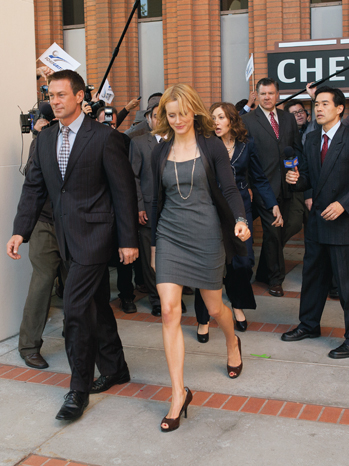
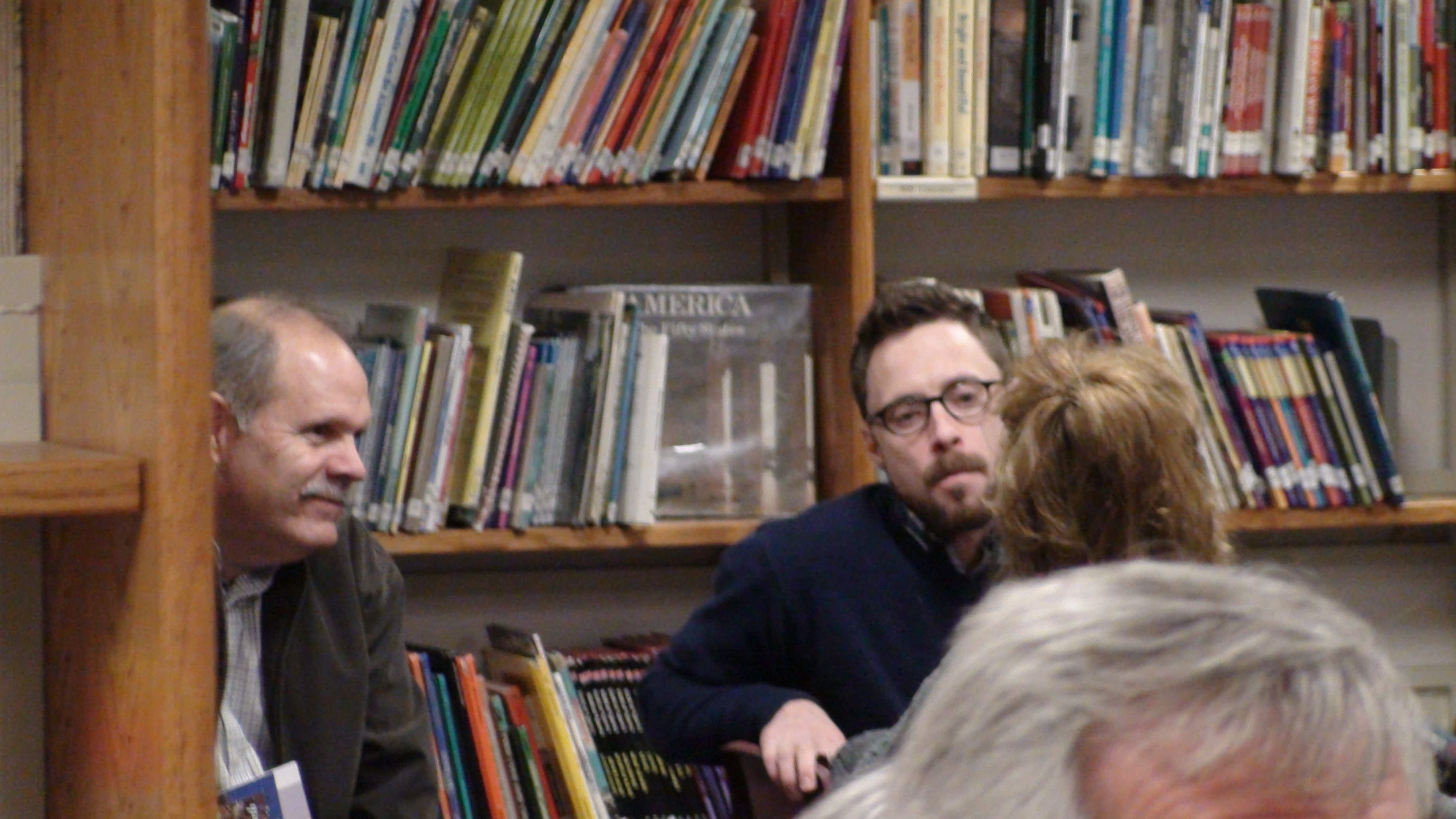
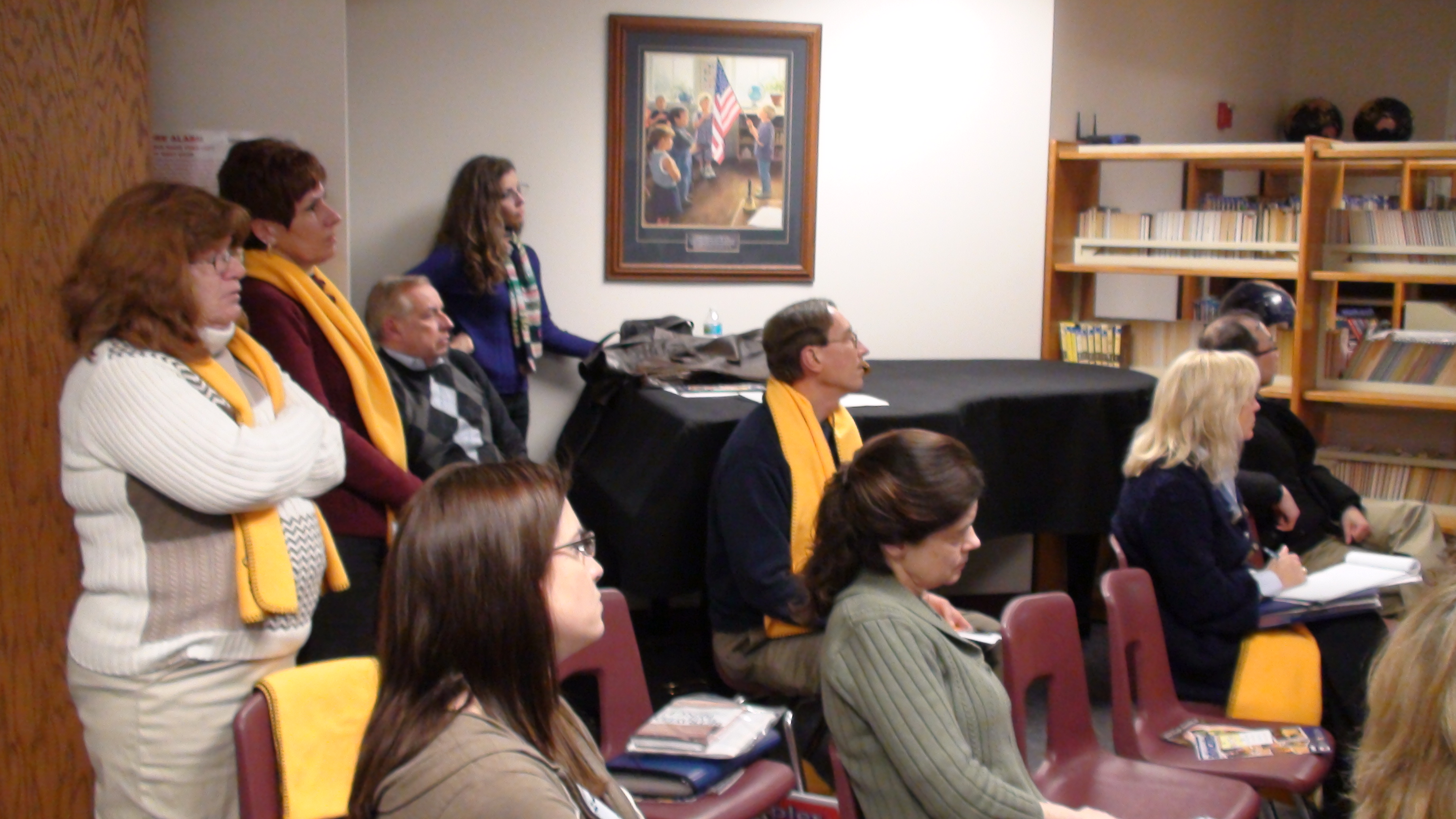
The rally at Glendale was very metaphoric. As I stood in the square filming and taking pictures there were three trains that passed by the station there, each at least 20 to 30 cars each. That meant there were 60 to 90 train cars going someplace coming from somewhere and that made me feel happy. The reason was that I had butterflies in my stomach over the premier of Atlas Shrugged Part 1 down at Newport on the Levy and I had read a lot of bad reviews from the Hollywood establishment and I loved the book and really wanted the movie to be good. The reviewers criticized the film for not adopting to the modern age by getting rid of the train oriented story line. And here I was watching three trains roar by in a half an hour from the CSX Line. Trains are a sign of an economy where things are happening. So it was my first inclination that the reviewers were missing the point of the film and were wrong about it. I had promised the booking agent for the film that Cincinnati would be a great market and I promised a sellout at the Newport on the Levy location, so all during the rally with the Cincinnati Tea Party I was thinking of our next destination which was the 8:20 PM showing of Atlas.
My wife and I left the rally to arrive at Newport in the drifting rain. The lights were on at Great American Ball Park across the river as the Reds were playing the Pirates. We arrived at around 7:45 and much to my relief, Atlas Shrugged was SOLD OUT! I have never been so glad to not be able to buy a ticket. We picked up tickets to the 10:45 show and headed to the Claddagh Irish Pub which is a favorite of ours when we go to Newport. We had a few beers, and watched the Reds game on the big screen while a major storm rolled in across the river outside. We like Claddagh because it’s a medieval looking place full of cubbyholes for the kind of meetings I attend a lot, where your neighbor can’t listen to what you’re saying. If offers the good kind of privacy for passing time, especially with your wife.
But that only went so far and after an hour or so, we went over to our favorite book store where I finished reading The Coming Insurrection. I became angry at the tone of that book, especially what was on the back cover shown in that picture.
We went to our movie; I was relieved that it was good. I already put up a review, so there isn’t any reason to repeat it here. Needless to say the weekend numbers were reputable. The film made a respectable $1,676,917 gross, averaging $5,608 per theater. The producers are considering expanding to over 1000 screens for the next weekend so that’s great.
I went to bed with hope that a violent future can be averted. If enough people become educated, watch movies that aren’t controlled by radical left-winged filmmakers which is just about everyone, and reading books that pander to a liberal publishing industry, while liberal unions are pushing for even more taxes to pay for their very expensive public wages, if the Tea Party continues to do its work and films like Atlas Shrugged are shown to people who haven’t or won’t read the book, this country has a chance.
If there is anything that one must reflect on tax day it’s, why do we pay so much in taxes, and why are there so many that want us to pay more!
I like the trend and I hope that the pendulum will continue to swing to the right and bring things more to the middle, because the radical talk I’m hearing from the left are fighting words that can only lead to one end, and that’s not what they want, believe me.
The Coming Insurrection might work in Europe where their minds are soft and their hearts are softer, but you can forget about it in the United States. Don’t even try it.
The theme of the article was that Lakota is operating with fewer administrators than the state average, so doesn’t that mean they are operating more efficiently than other school districts?
No. Statements like that, just like the president’s speech, is full of smoke and mirrors designed to justify excessively high costs of an out-of-control government at all levels, hoping that people will be foolish enough to just look at the smoke and not at what causes it.
Read that article here:
Lakota has 58% fewer administrators per pupil than state average, report says By Lindsey Hilty, Staff Writer Updated 1:43 AM Thursday, April 14, 2011
LIBERTY TWP. — At a time when finances of the Lakota Local School District have come under intense scrutiny from voters, officials say state data shows they are running a lean operation.
The district has 58 percent fewer administrators per pupil than the state average, and 20 percent fewer administrators than similar districts, which are categorized by size and demographics, according to the latest report released from the Ohio Department of Education in March.
In the 2009 report, Lakota had 43 percent fewer administrators than the state average, Interim Superintendent Ron Spurlcok said; however, “with our recent budget reductions and consolidations, we have seen that number grow.” While that number may be touted as a good thing for the bottom line, he warned that it puts a strain on operations.
Assistant principals are responsible for discipline and also must sit in on all individual education plan meetings for students with disabilities.
“We realize economies of scale by running larger buildings, so we can economize where possible,” Kursman said. However, fewer administrators in larger buildings means a bigger demand for their time, whether it is handling parent concerns, analyzing student data or reviewing teacher performance.
Many buildings now share assistant principals, she said, if the principal is called away for a meeting or to direct traffic due to transportation cuts, there is no one left to manage the building.
Levy opponent Rich Hoffman said he isn’t impressed with the numbers. “I don’t believe any of the stats they give me anymore, because the reality is that they could do a lot more with a lot less if things really get pushy,” he said.
Hoffman said administrators could be reduced more, but they aren’t the issue.
The problem, he said, is “I think Lakota has drowned itself in salary obligations, and when you’re trying to cover 22 buildings when management of those salary obligations has been bad, it turns out to be a catastrophic mistake. Administrators get paid a lot, but there aren’t so many of them that it affects the bottom line costs, so their damage to the budget is negligible.”
There are too many employees netting more than $65,000 annually, he said, and that is the crux of the problem. He pointed to the salary lists recently published in the Pulse-Journal, and said the increase in employees in just one year who reached the $65,000 plus benchmark is unsustainable.
“You have to get the costs in line, but the costs are your salaries … None of us can afford it anymore.” Hoffman called for tough negotiations as the board as the Lakota Education Association reopen the 2011-2012 school year contract, and said many in the community would stand behind the board as long as it was aggressive in controlling costs.
In fiscal year 2010, Lakota spent $96 million on salaries. In 2011, that number dropped $2 million due to retirements, no increase to the base salaries and a reduction in force. Employees still earned close to $2 million in step raises, Treasurer Jenni Logan said, but one third of employees, who are at the top of the pay scale, saw no step increase. As details from legislation like SB 5 keep the district in a holding pattern, Logan said, “Inside the walls of Lakota, we’re focusing on the job at hand, which is educating our students.”
The best way to combat this type of undercutting from the media is to prove them wrong. Go see the movie and support it with the purchase of a ticket.
Now, study how the left will attempt to frame the opinions of the masses in the review from Todd McCarthy of the Hollywood Reporter. Notice that many of the comments are similar to the way the government reports they can’t cut spending, or a school levy attempts passage. It’s spin toward a “collective” society.
Atlas Shrugged: Film Review
4:02 PM 4/7/2011 by Todd McCarthy
The Bottom Line
Flubbed, under-produced representation of the first third of Ayn Rand’s still controversial novel bodes ill for parts two and three.
Opens
April 15
Cast
Taylor Schilling, Grant Bowler, Matthew Marsden, Edi Gathegi, Grahame Beckel, Jsu Garcia, Jon Polito, Michael Lerner, Rebecca Wisocky, Neill Barry
Director
Paul Johansson
The independently financed-and-distributed rendition of the book’s first third is unlikely to generate sufficient box office to inspire production of the final two installments.
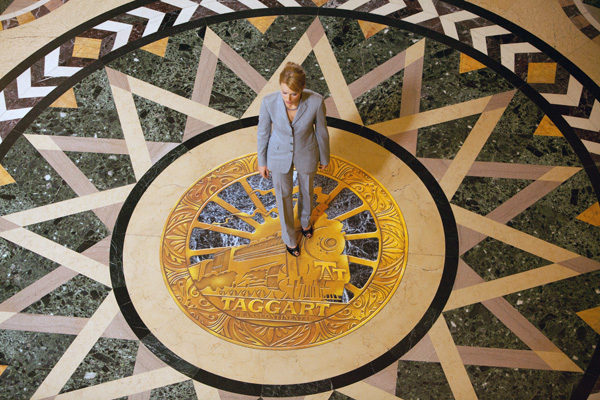
“There were a few rare men of talent around her, but they were becoming rarer every year,” it is lamented about the circle surrounding Ayn Rand‘s ultra-capable heroine Dagny Taggart in Atlas Shrugged, and the complaint certainly applies in the case of this botched partial screen adaptation of the mammoth novel that has materialized 54 years after the book’s publication. Although the recent surge in annual sales of the revered and despised author’s fictional manifesto arguably testifies to its continuing relevance, the central battle between fearsomely independent corporate mavericks and hostile big government has been updated in a half-baked, unconvincing way that’s exacerbated by button-pushing TV-style direction, threadbare production values and blah performances except for that of Taylor Schilling in the central role. Set to bow in roughly 200 theaters on April 15, this independently financed-and-distributed rendition of the book’s first third is unlikely to generate sufficient box office to inspire production of the final two installments (the 1,000-plus-page novel is divided into three sections of 10 chapters apiece), although the producers could conceivably forge ahead anyway if their pockets are deep enough. A TV miniseries with a high-powered cast–several were planned at various points over the past four decades–would have been a preferable way to go with this didactic, sometimes risible but still powerful material.
Published in 1957, Rand’s summation novel continues to compel and repel; designed as a paean and exhortation to fulfillment of personal excellence and unrestrained industrial productivity, it is also seen as an abject endorsement of wanton selfishness and the right of the capable few to lord it over the parasitical many. Especially as former Federal Reserve Chairman Alan Greenspan had been an ardent Randian, it’s recently become easier than ever to blame contemporary economic ills on the fallout from her unregulated philosophy, even if the fiscal blundering of many governments provides equally persuasive arguments on the other side.
These philosophical debates can and will go on forever, but screenwriters Brian Patrick O’Toole and John Aglialoro (also a producer) have themselves bungled in their attempt to remain faithful to the letter of the sacred text while moving the action to the near-future (specifically, 2016). Many scenes are devoted to dull conversations among business fatcats about the economics of railways and steel, central industries that helped drive the nation 60 years ago but seem like afterthoughts today (Amtrak, anyone?). Updating the story would provide a provocative test to any writer but could certainly be done; however, to do so without acknowledging the present-day realities of high-tech industries, outsourcing, shifting transportation modes and advanced information technology (the characters here actually read newspapers) places the action in an unrecognizable twilight zone. So does the fact that the central manufacturing triumph here is the construction of a high-speed train (managed from scratch within a few months, no less). Not only is it unremarked that Asia and Europe are decades ahead on this front, but conservatives who might be perceived as the core audience for this film are the very ones currently fighting against fast-train funding and construction in the U.S.
For these reasons alone, a serious cultural/historical disjunction derails the enterprise from the outset. Television news clips portray a nation in recognizable disarray and decay, as well as a Middle East that has imploded, triggering unimaginable oil prices, but these seem like overwhelming issues unlikely to be turned around by the efforts of the laser-focused Dagny to take over decision-making at rail giant Taggart Transcontinental from her ineffectual brother James (Matthew Marsden).
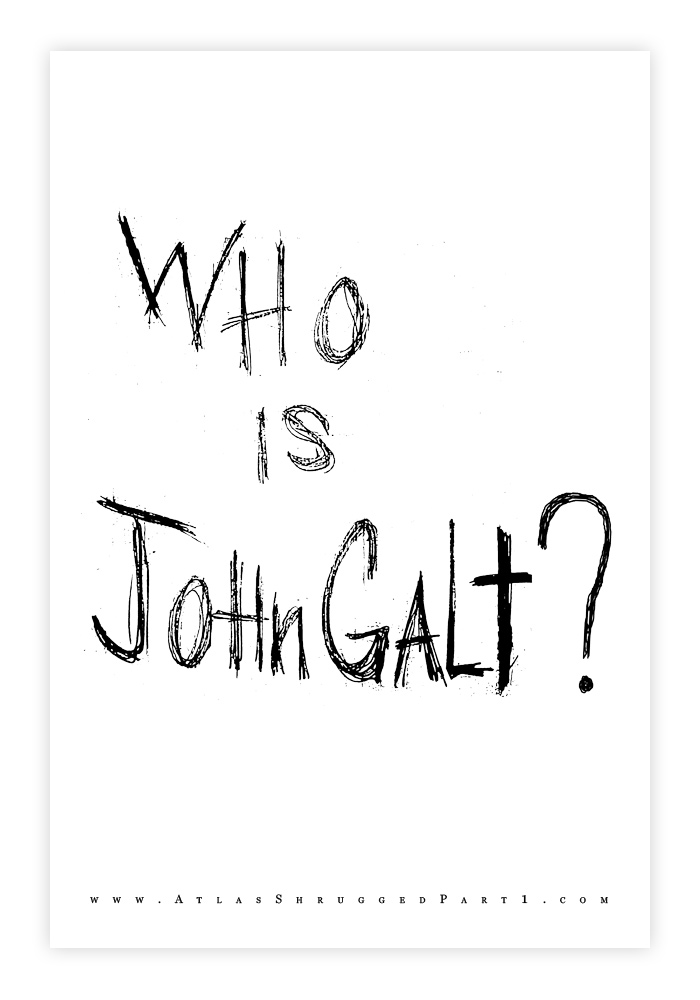
Poised, beautifully groomed and impeccably coiffed, Dagny strides through the corridors of male hesitation, indecision and ineffectuality with a fierce confidence shaken only by the inexplicable “retirement” of certain skilled executives and the baffling question she increasingly hears at unexpected moments, “Who is John Galt?” This is a query that may or may not ever be answered onscreen, depending upon whether the next two parts are made, but suffice it to say that in Part I he is a shadowy figure resembling the Humphrey Bogart character in Woody Allen‘s “Play It Again, Sam.”
Galt is impersonated here by Paul Johansson, a young actor who stepped in to direct Atlas Shrugged when the original director left shortly before shooting began. The best that can be said for his work is that it’s perfunctory, a word that also describes all the performances except that of Schilling, a blond beauty whose open face, direct gaze and plain speaking do more than anything else to make watching the film tolerable. One has little doubt that, in a more substantial version of this story, one populated by strong actors in the other principal roles, she would have held her own and moreso, justifying the casting of a relative unknown in the most important part.
Although ostensibly set in New York City, the film features various buildings and cityscapes recognizable from Los Angeles and Chicago.
Opens: April 15 (Strike Prods. Release)
Production: Harmon Kaslow, John Aglialoro Prods.
Cast: Taylor Schilling, Grant Bowler, Matthew Marsden, Edi Gathegi, Grahame Beckel, Jsu Garcia, Jon Polito, Michael Lerner, Rebecca Wisocky, Neill Barry
Director: Paul Johansson
Screenwriters: Brian Patrick O’Toole, John Aglialoro
If you’ve studied other cultures, their rise and fall, there are common themes. Visit any ruin of an ancient civilization and you will see that all those societies bankrupted themselves. They either ran out of water, food, or their currency. Visit Ankor Watt, Chitzen Itza, or any city in Egypt and you’ll see it. Study the past to see your future.
In Mel Gibson’s brilliant film, Apocalypto Gibson showed wonderfully the height of the Mayan Empire and displayed the problems they were having. The Mayans built huge cities, depleted their food supply and built a corrupt hierarchy of politics that sought human sacrifice to appease the mob, and to keep the masses believing that the ruling class held some sort of power with the “gods,” so that society could continue for just a bit longer hoping by some miracle that if they cut off just one more head, or paint their faces just a few more colors so the gods would take mercy on their lives and save them all. In this case the god is Kukulcan. For those of you that don’t know much about history, the main street in Cancun that all the nightclubs are on, is named after that god.
• A mass burial containing 40 men and women who appear to have been violently killed. The suggestion has been made that some of these were buried alive: “From the vertical position of some of the fingers, which appear to have been digging in the sand, it is apparent that not all of the victims were dead when they were interred – that some had been trying to pull themselves out of the mass of bodies.”
The relationship of these burials to the central burial is unclear. It is unlikely that they were all deposited at the same time. Wood in several parts of the mound has been radiocarbon-dated to between 950 and 1000 CE. Check out more about this from this article. http://en.wikipedia.org/wiki/Cahokia
Many people don’t even know that Cahokia is even there in the middle of the United States. It’s the giant hill alongside the highway on the way into St. Louis. You can see the arch of St. Louis easily from the ruins of Cahokia, yet people don’t know much about the ancient city. In fact, Cahokia wasn’t even discovered until developers tried to build a neighborhood over it. I wrote a screenplay about the place for some financial people a few years ago and we had an actress and a director, but the whole thing fell apart in pre-production. But here was the conception teaser for it. The history that I speak about is real. The modern aspect of it is fiction.
On the other hand there are people like Porter Standsberry out there that are “really” looking at the real problems coming to our culture, and people like Porter are the kind of people our government wants to cut their head off in human sacrifice, figuratively speaking of course.
John Galt is one of those characters that people will love once they meet him in the movie Atlas Shrugged which comes out on April 15th 2011. I think it is important for films like Atlas Shrugged to have success for all my personal reasons, because I have learned over the years that Hollywood certainly has an agenda and that agenda speaks loudly on television and film. The agenda is that people should not strive to be too good. People should not pay too close attention to the world around them. And people should focus on the “collective.” They routinely shy away from stories with strong characters, even though the box office shows a great hunger for such characters. And it is very rare that a major film makes it through the jungle of opposition and ends up on the screen with an anti-progressive message.
• How government regulation chokes off business.
• How people who invent new, and better products are bribed by the government to not reveal those products to the market place for fear of putting older companies out of business.
• You will learn the secret behind farm subsidies.
• You will see how corruption migrates from the smallest character on the street all the way up the political ladder.
• You will see how unions shape public policy through corrupt politics.
• You will see what the true nature of American pride is.
• You will understand the definition of merit.
Those are just a few of the topics from the film and this is just the first movie of a three movie series.
By seeing this movie you will do more than enjoy a good movie. You will send a powerful message to a progressive establishment. This film hopefully is the first of a wave of films and stories that will emerge in our society that grabs hold of what Americanism truly is. In American art, it is time to explore the American identity so that future generations can embrace that spirit. That’s a spirit not created in war, such as World War II. It’s not an identity created in the Revolution, or the Civil War. The American spirit was created in its inventions, and its industry. In its skyscrapers and its film culture. It’s in the farms all across the country on a Sunday afternoon with an AM radio blaring a baseball game from a garage.
I believe that once people who are intimidated by the length of the book, see the movie, they will become “enlightened” to what is now, and has been going on for quite some time, are the real motives of the progressive movement.
Take the challenge, read the book, and see the movie, many, many times. It’s important in so many ways. One of my passions is history, particularly archeology and anthropology along with comparative religion and mythology. I understand how important it is to discover relics from the past to help us comprehend our future. Atlas Shrugged is a relic from America’s past that is uniquely American. And by dusting it off and understanding it fully we can begin to identify finally and conclusively what being an “American” truly is. I can tell you what being an American isn’t, it’s not a white person, a black person, an Indian, a Jew, a Christian, or any hyphenated American term. An American is a thinker, an adventurer, a freedom craver among many things that are complete opposites of everything a progressive believes. It is now time to realize that in all of us is a little John Galt, and it’s time we awaken to that spirit.
This is what happened in Thus Spoke Zarathustra, which I’ve proclaimed openly, is my favorite book. Zarathustra came down out of the mountains to help “mankind” understand that they can become “better” than just human beings. That’s where the Ubermensch idea comes from translated loosely into English as “the overman.” I learned about Nietzsche reading a lot of Joseph Campbell and was drawn to Nietzsche’s anti-institutional ideas in quotes that littered the massive body of work known as The Masks of God, which is a four volume set that Campbell spent many years writing based on the course he taught at Sara Lawrence College. One thing that Campbell was doing in his comparative mythology work was breaking down the differences between collective societies, such as you find in the east, and individual oriented societies that you find in the Occident, otherwise the west.
Two bodies of literature jump out at me exhibiting these collectivism warnings. One is A Brave New World, the other is Atlas Shrugged.
I wrote my own book, The Symposium of Justice in 2004, many years before I eventually read Atlas Shrugged myself. I was surprised that Ayn Rand had created similar characters and themes as I did, and she did it over 50 years ago. It might have something to do with the fact that we both studied Nietzsche at some length. I’m thinking particularly of the diner scene, which seemed awfully close to something I did without knowledge of Ayn’s work. The reason? Because truth is truth. There aren’t these degrees of negotiation along some political lines where there are extreme right-winged views or extreme left-winged views and somehow in government these views must be compromised into some stew of thought representing everyone as best as possible. People who seek the truth and find it, come to similar conclusions that cannot be escaped.
Because of my kids, I get to meet a lot of young people, and I must say they are a very disappointing group, bent and distorted around years of progressive thought. I blame progressivism for their foolish behavior, the desire to get “trashed” as they put it, where their right of passage to adulthood is the ability to drink and lose consciousness. That is a pathetic goal. These young people are a soft species robbed of honor because they have been taught to be entirely too sensitive for their own good, indecisive, insecure, raised in broken homes where step parents are a major factor, the whole situation is a mess, and progressive thought is to blame. The most recent catastrophe cast upon the fragile psyche of today’s youth is a thing called Facebook Depression. Listen to Doc Thompson of 700 WLW talk about this mysterious new progressive illness here.
One young boy that my youngest daughter knows lost his job for sleeping and playing on Facebook during his work hours. The kid is a video game wiz so I know there is intelligence there. But he can’t handle basics of reality. For him, it is acceptable to fall off the horse and let the horse keep on running down the path leaving him behind. I feel sorry for the kid because his fundamental belief system will prevent him from seeing the truth of the reasons he continues to fail. You could sit the kid down and scream at him and it would be no different from yelling at a dog that wants to please you, but can only wag its tail or drop its ears, completely unable to understand what you’re trying to tell it.
This kid is just a product of progressivism. I don’t blame him as much as I feel pity, much like I feel pity of an insect that falls into a swimming pool and struggles to free itself, hoping a kind hand lifts it from the water before it drowns. There are millions upon millions of these kids functioning in the world today, most of them completely lost by adults that are just as lost. This is the result of progressivism. Progressives seek a level of fairness that is not earned, but is perceived as a right, which it’s not.
One element in that book that haunts me is the discovery of a new type of engine built by a genius that turns his back on the world in a way because he knows that the world as it is designed through progressive thought will reject new ideas because all new ideas threaten the security of people. This engine runs off strictly static electricity. It would never need fuel, oil or any other element. It would run along the same premise that lightning is generated in the atmosphere. The sickening thing about that bit of science fiction is that it is rooted in fact.
It is true that there will be suffering. Those that are feeders off society will have a difficult time adapting, but this process must happen. It is not a matter of right or left. It is literally right or wrong.
The key is that if you want to be a feeder, or a “looter,” then find yourself a creator that is a fair-minded person that appreciates your labor, because through competition, the creator in order to get a competitive edge over other creators will adapt to necessity, just as a stream will always run downhill and find the path of least resistance. If you want the benefit of that flow, put yourself in that path of least resistance and you’ll always be employed and of a benefit to a creator. And if you are a creator, create. Don’t attempt to be a feeder if you are a creator. You will only frustrate the hell out of yourself.
Every single politician in existence is a feeder. They are almost completely worthless. Yet they believe that they have some kind of dominion over everything that is created. And that is what needs to change. This is a belief given to us from Europe, which is a corrupt notion. It hasn’t worked for them, and it won’t work for us.
If you want to know how to do that, understand what needs to be done or how to fix what’s wrong with America and you want the truth go to your local book store and read Atlas Shrugged. The movie will be out soon also. But if you really want to soak up something that won’t lie to you, go get that book! Today! Then watch the news armed with the truth and see what you think about comments over the federal budget and what we can cut or should cut.
I would consider this a very important and timely film. One that contributes to our culture and it gives me great hope listening to the producer explain to Doc Thompson that the film makers are doing everything in their power to remain true to the original book. The last time a filmmaker spent that kind of time being authentic to a body of literary work it was a little film project called Lord of the Rings.
The Atlas Shrugged series will be divided into three parts the first of which is coming out this April. Hollywood will be watching closely how this film is received. It is entirely possible that the success of this film could change the direction of Hollywood for years.
The young people making films today are as lost as the films they are producing. The other day my wife and I were discussing whether or not we wanted to see the film Paul. I told her it looked a lot like ET to me. We’ll probably see it, but will come away feeling a hunger for more.
That’s why Atlas Shrugged has the potential to be more than just a movie. It has the potential to revitalize our American civilization at a time that many are asking the very questions that Ayn Rand offered in a time that nobody wanted to listen.
Go to the Atlas Shrugged web site and let them know you want a print of the film to be shown at Newport on the Levee. Also, contact that theater so they can set up a screening with the producers so we can help that film prove how powerful the viewings in the Midwest are. This will convince Hollywood to release the film on a wide release, which is of paramount importance.
Go to this link and just type in your zip code to cast your vote to bring this great film to Cincinnati, or whatever city you live in.
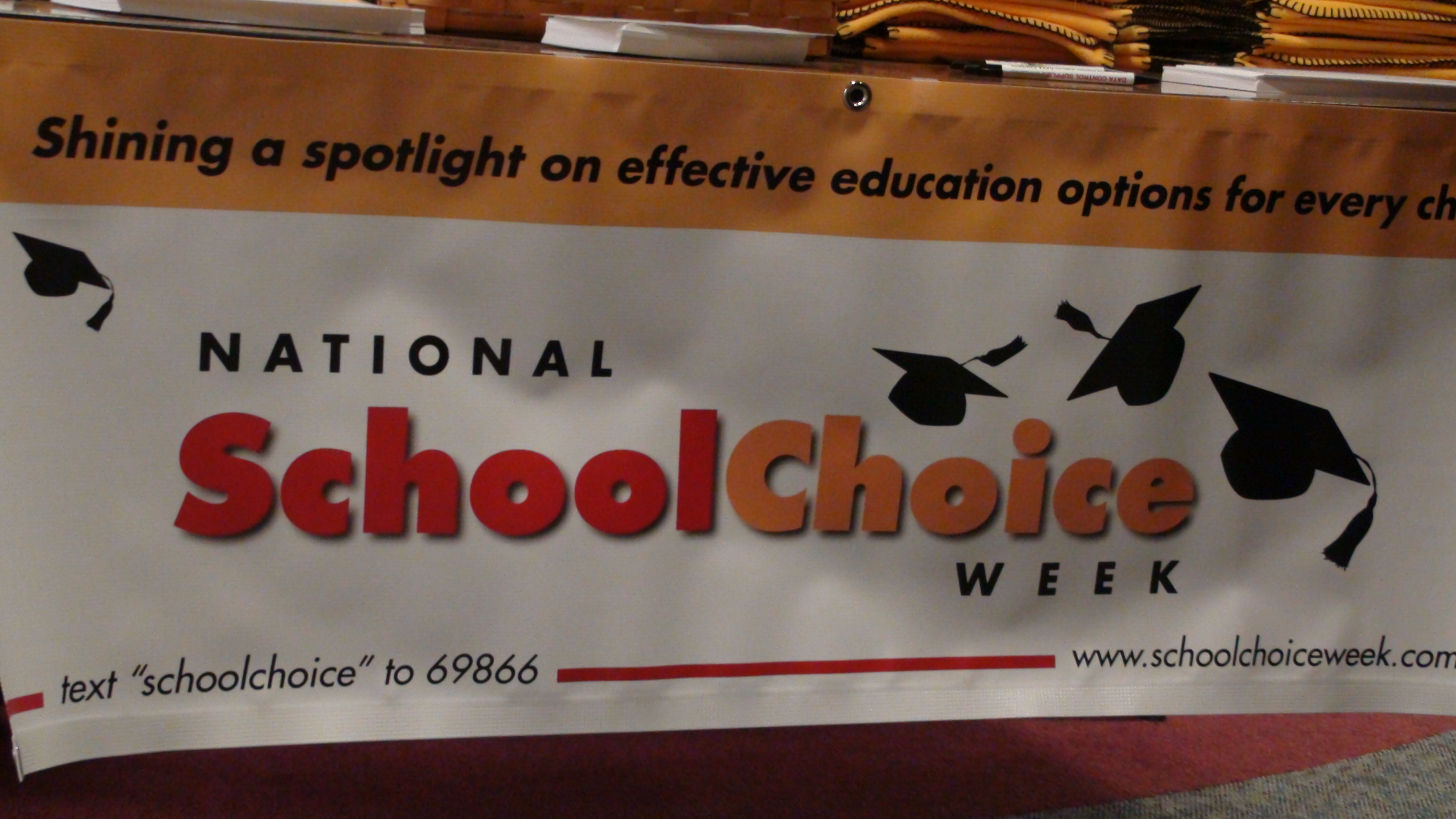
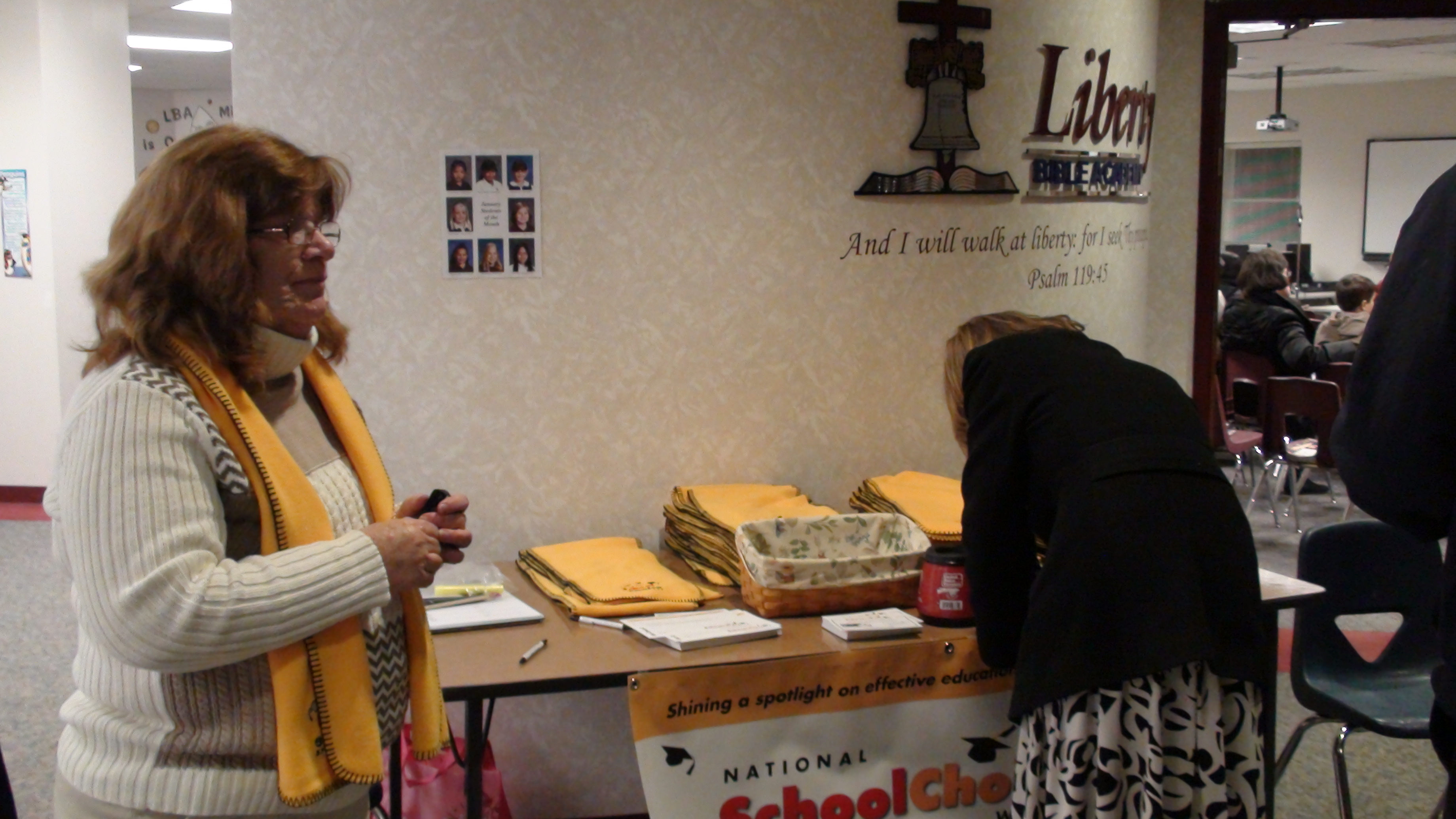
It was bitter cold as I gazed across the windswept snowy tundra of several suburban Mason yards to the towering mass of the Big One’s radio tower looming in the distance. The evening sun preparing to drop over the horizon at only 5 pm lit the tower in a majestic way. It made me wonder if Doc Thompson of 700 WLW would actually show up at the School Choice event culminating School Choice Week at the Liberty Bible Academy. He said he would, and announced the event over the station’s 50,000 watts, so my hopes were high.
“Is this a religious event?” My wife asked me as we stepped up to knock on the door to Jennifer Miller’s house. Jennifer is a former Mason School Board member and firebrand for School Choice. She was hosting a dinner for the “key” people in Southern Ohio behind education reform and she wanted me to personally meet Jeff Reed, who was the featured speaker at the event that started at 7 pm.
“Why, because it’s being held at a bible academy?” I knew what she was thinking. “No. But people firm in religion tend to be support choices in education, so that’s probably why the academy is donating the space for the event. “
Our conversation didn’t have time to advance as the small frame of Jennifer greeted us with an open door. Jennifer is a “small” woman, but she had a reputation for being very “LOUD” when she set her mind to a fight.
She led my wife and me to the dinner table and a reunion with Sharon Poe and her husband. Sharon led the anti-Mason Levy effort and worked closely with me while I did the same for Lakota. Sandra Tugrul was putting bread from the lasagna dinner on her husband Yil’s plate as she enthusiastically said hello to me. Sandy is a former Board of Education member for Lakota and is very active in education reform. She along with Jennifer had realized long ago that the system was irreparably broken, and School Choice was the best option on the horizon. The two of them were the architects of tonight’s event. As Jennifer took a seat placing a bowl of salad in the center of the table, Vicky Roarke, a former teacher helped her out from her seat at the head of the table.
My wife, Wendy sat down next to Doug, Jennifer’s husband, a man we had come to know already and I sat down directly across from Jeff Reed who was speaking so rapidly that he held the same piece of lasagna on his fork for exactly 7 minutes. “Good to meet you, I’ve heard a lot,” he said taking my hand. “Glad to see so many people around here taking an active position on this. It’s a great program. Jeb Bush has made great strides in Florida…….the teachers union tried everything they could to defeat him…..Indiana is moving in this direction…..and Ohio is further along than you might think……….” He went on like that until we reminded him to eat his food. His passion was evident!
“How many states are doing this,” I asked. I first heard about School Choice from Jennifer only a few months back as I was looking for options. My role in defeating the Lakota Levy with the NoLakotaLevy Group was noted, but I felt responsible to offer a solution to the district instead of just saying “No” to school levies.
Jeff gobbled up a few more bites of his food then said, “I’m glad you asked that! So far, Arizona, District of Columbia, Florida, Georgia, Illinois, Indiana, Iowa, Louisiana, Maine, Minnesota, Ohio, Oklahoma, Pennsylvania, Rhode Island, Utah, Vermont, and Wisconsin. Now they’re not what our goal is which 100% eligibility for every student in those states. Right now for instance, Ohio only has 3% eligibility, but it’s a start.”
My wife and I looked surprised at each other, and then I said to Jeff, “I’m surprised that I haven’t heard of this before.”
Jeff was still a young man with a well-groomed beard not yet 40, and fit looking. He smiled knowingly. “You probably wouldn’t. People are still attached to brick and mortar schools. And teachers unions have spent a lot of money to paint school vouchers in a bad way. For them, it’s protective business. School Choice brings competition to education, and that is something they don’t want.”
From that moment I liked Jeff Reed, he was speaking my language.
But Jeff wasn’t done. “Albert Shanker, who founded the teachers union, said it best regarding the union philosophy regarding education, ‘when school children start paying union dues, that’s when I’ll start representing the interests of schoolchildren.’ That is the behavior that we are all dealing with, and why they hate school vouchers.”
Jeff was reflecting an opinion that I had formulated during the Lakota Levy campaign which is modern education is basically being run like a flashy casino in Vegas. When you go to Vegas, or any casino for that matter, they use flashy lights, alcohol, sexy imagery, and exotic buffets to draw human beings like insects to a trap. The goal of the casino is to get you to spend money so the house makes money. They’re not in the business of giving away money, even though they sell their service that way. Brick and mortar schools use sports, local patriotism, luxurious accommodations, and convenience of transportation to get local residents “addicted” to their services. I’ve met many people who display addictive behavior toward alcohol, and gambling, and the look of a parent that has built their professional lives around their children’s schedule at school, and the promise of sports scholarships as a kind of “jackpot” is the same basic human frailty.
“So is School Choice just another name for school vouchers?” my wife asked.
Jeff took a few more bites and wanted to answer, but Jennifer did it for him. “No, not at all, school choice can be that of course, but the money comes from the state and goes directly to the parent for homeschooling, which has grown from 15,000 students in 1970 to over 1.5 million now, the money can go to virtual schools of online schooling, it can go to charter schools, or it can go to your public school. The key is that if the parent has options, it will force all schools to do like all businesses do and that’s be competitive, and that will bring responsibility to what education costs.”
Then Sandy chimed in, “and that’s how we can break up these monopolies that the unions have over public education. It’s just not fair to the students, and it’s really not fair to the parents to have to endure the outrageous costs of maintaining these monopolies.”
Sharon had been pretty quiet listening attentively, “the cost in Mason per pupil is now almost $10,000. And most of the cost of that is tied up in salaries and that’s what’s driving up the cost and forcing these levies.“
“Because they have monopoly statues that is protected by government.” I added.
Jeff finished chewing quickly so he could answer me, “exactly, do you know that schools in New Jersey are spending over $15,000 per student! And they aren’t getting any better results with those students than schools in say, Alabama, or Mississippi which are among the lowest per pupil.”
Up till this point Vicky, the former teacher, at the head of the table had been quiet. “Back when I was a teacher, when a levy was passed, we saw money. That was the talk in the teacher’s lounge and that was our primary worry, it was about the pay day.”
I looked at her, “how did you end up with this group?”
She looked back at me with sincerity. “I want to help make it right.”
Jeff was all smiles, “may I say that I LOVE THIS GROUP. Man, I wish everyone had this much enthusiasm.”
I looked at my wife, then at Sharon, Jennifer, Sandy, then at Jeff. “We’re very serious about this. Something is going to be done and that seed is planted here in Southern Ohio. We’re here to fight and move forward.“
The conversation went on for another hour going into more detail over those same topics, much of it revealed in Jeff’s speech at the Academy which you can see below.
As 7 pm approached we left Jennifer’s house and headed over to the Liberty Bible Academy where Sharon, Vicky and Jennifer had to get everything set up. I had to find a good spot to set up the camera, whether or not to use a tripod, and figure out how to get good sound to my camera. I elected not to use a tripod because the room filled quickly with over 60 people and I wanted the freedom to move the camera around for different angles. This gave me some rough video moments, but the effort was worth it in the end.
At just before 7 pm I met Doc Thompson out in the lobby. I was glad to see him, a guy of his reputation and talent could have done half a million things on a cold Thursday night on the last of January. I recognized his tall, lanky form instantly and grabbed his hand to shake it.
“Hey, good to see you. “
“Is this the place? I just had dinner at Bravo’s right over there recently,” Doc’s voice boomed. His voice was magnificent, belonging on the radio which is theater of the mind.
“Yes, you’re at the right place. This is Sharon who was on with you yesterday, and this little woman here is Jennifer who was on with you on Monday, the day you had on Kyle Olson of School Choice.”
Doc took their hands and was genuinely happy to meet them. He stood what looked like well over 6’,3” and towered over Jennifer. After his greeting he returned to me. “So, is this it in here,” looking into the crowded room behind us.
“Yeah, I think we’re about to get started.”
“Yeah, yeah, OK.” His long legs took him to the front where Jeff Reed sat, who had been on his show the day before as well. Doc took Jeff’s hand and shook it sincerely. I noticed shaking hands and looking people in the eye was important to Doc, which is an admirable trait. He took a seat in the front so he could be engaged with the speakers. I found I respected Doc even more than I had before. He had just completed a 12 hour day working between 700 WLW in Cincinnati, and WRVA in Richmond Virginia. And here he was as promised looking at education options like the rest of us. He was far more than just another “radio shock jock.” He cared about the issues he covered on the radio.
People fluttered in and took their seats as Jeff took the podium and gave his speech.
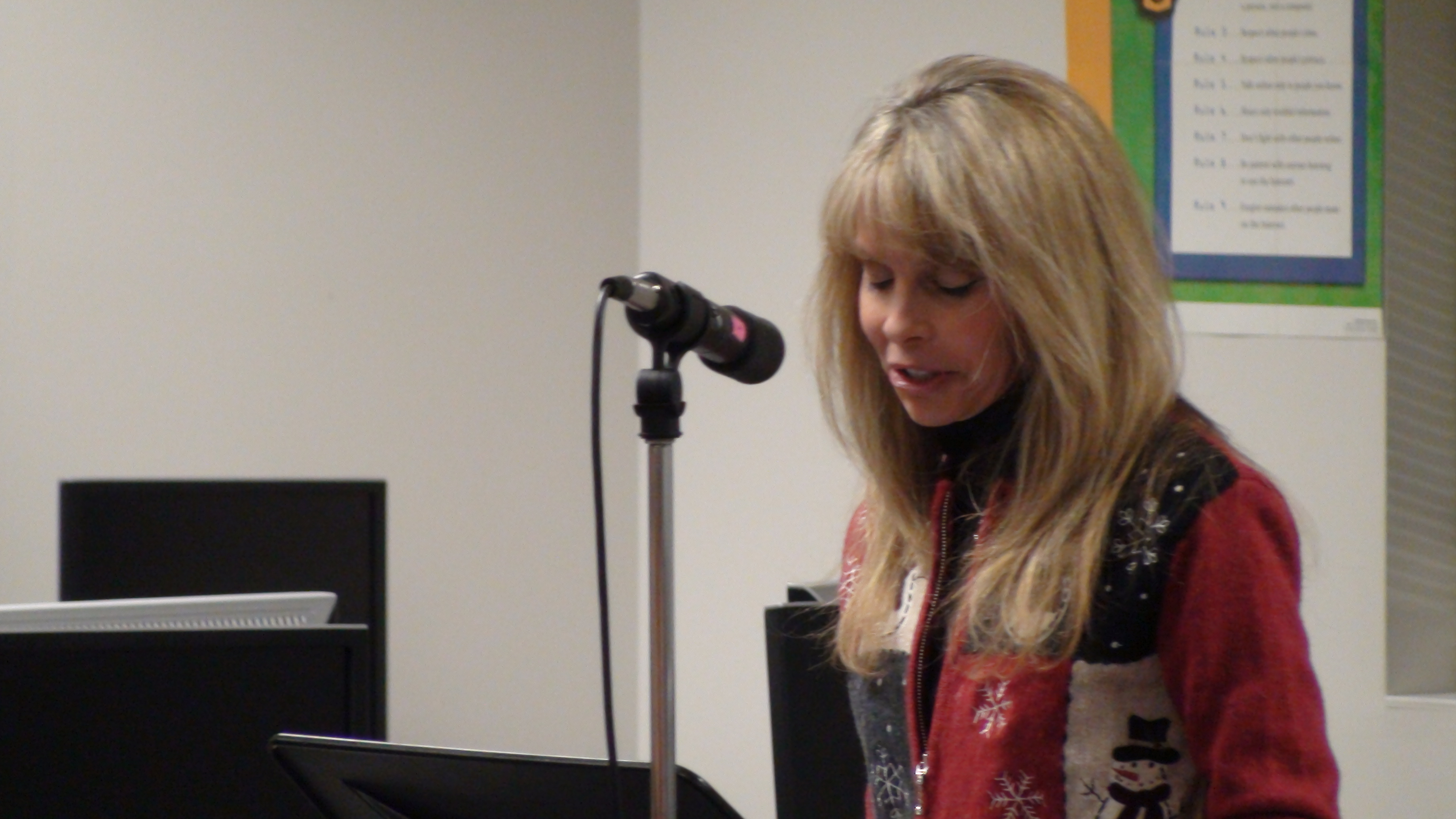
Pete Beck was the next speaker. Pete was mayor of Mason from 2007 to 2009 where he became a member of the Ohio House representing the 67th house district of Warren County. Pete before that was a member of Mason City Council from 1995 to 2007.
The next speaker was Bill Coley, whom I know because he represents me in Butler County. Bill did a good thing under the Strickland Administration. He managed to put Ohio on the doorstep to “true innovation” with digital technological learning. Under his plan, School Choice would be the ideal option to capitalize on the Ohio Revised Code that he’s already established, which is signed into law. In addition to being a Representative for the house 55th District he is an inaugural member with Governor Jeb Bush of the Digital Learning Council.
In this clip, Bill Coley is addressing State Senator Cates of District 4 who was in the back of the room sitting with my wife.
At the end, we all shook hands and went home. The event had the feeling of the “start” of something much larger. Doc spoke to Coley about putting him on his Richmond Radio show because this was the first Doc had heard about a digital learning bill that actually passed a state house anywhere and had a governor’s signature on it!
What I learned was this, that the money that the state would typically give the school district would go to the parent of the child instead, which sounds like a good idea. As far as who collects the property tax and where it goes is still something that will have to be debated in the state house. As discussed, the current method of collecting property tax was found unconstitutional. Currently the state of Ohio is spending about $4,100 on 13,000 students for a voucher program over 273 different schools. The program started in 2005 and began operation in 2006 and has increased steadily since then. That gives an idea how new the program is. The School Choice program would work much the same way. An amount of money determined by the state would go to the parent and depending on what school the parent wanted their child to go to, they’d cover the rest on their own. Either the parent would not pay the addition property tax and could afford to cover the difference in cost, or the property tax money would go into a savings account similar to the Flex accounts available in the insurance industry.
The reason School Choice as an option is important is the trend is for the cost of educating students in Ohio is hovering around $9,000 per student, communities all across the state must find a way to get those costs down, and only competition can do that.
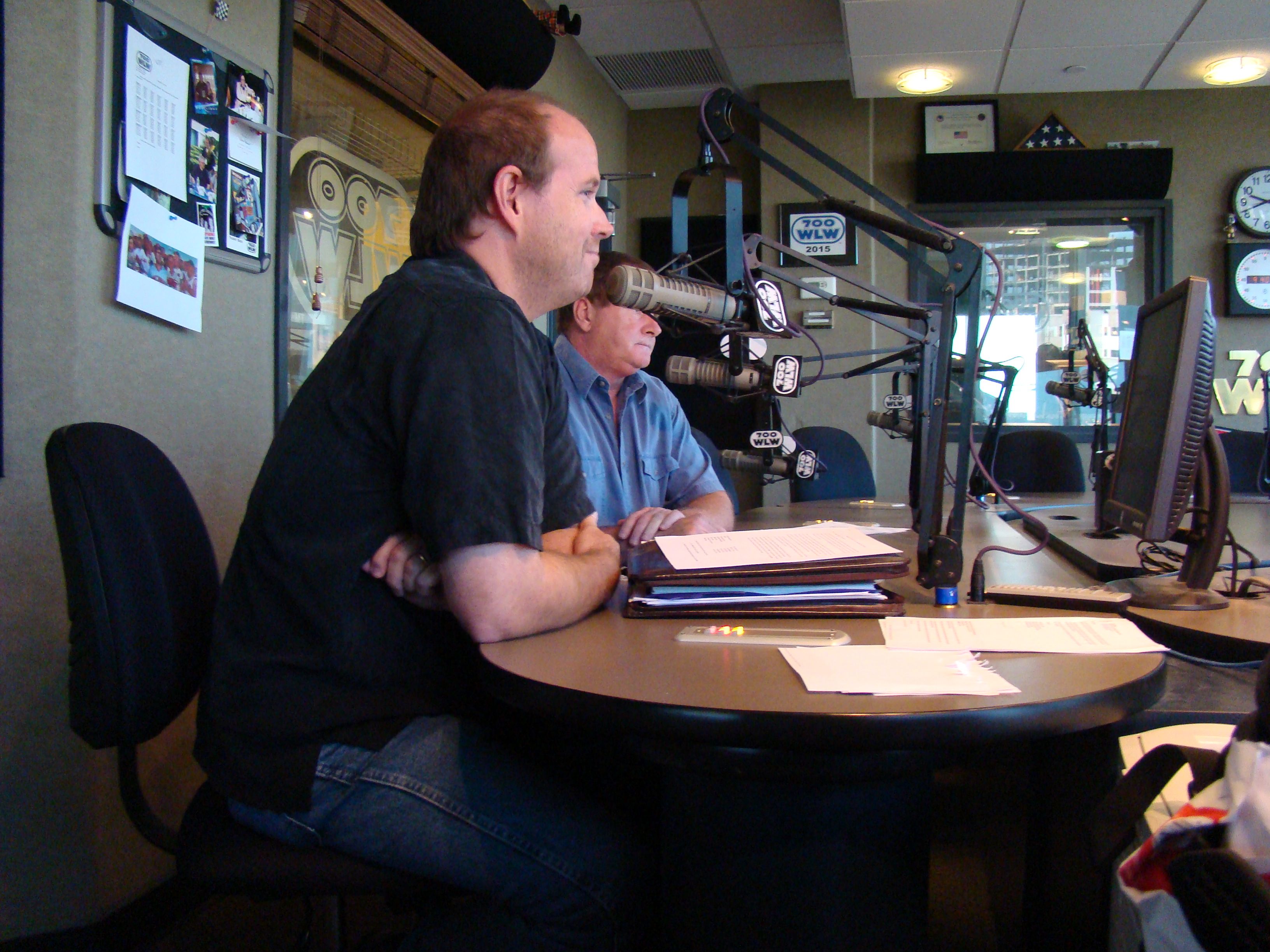
About 6 months ago when my daughter went to the studio of WLW with me to photograph the experience for promotional reasons we had a long talk while driving there. She doesn’t live with me any longer, but we’ve always been really close, and father, daughter talks are hard to come by without spouses and other people always around. “Quality time” is something that is rare when kids grow up and move away. So we made my trip to The Big One studio a fun, father daughter day, which is why staring at that tower on the way to Jennifer’s house held so much reverence for me.
“Dad, don’t take this wrong,” as we pulled into the parking garage at The Death Star, where all the Clear Channel Stations are located. Scott Sloan was promoting my visit as we hit the garage and my daughter thought I was getting in over my head a bit. “You’re kind of a fist fight in the parking lot kind of guy. Why are you suddenly interested in school reform? I mean, you wear a cowboy hat, and you hate politics.”
I parked the car and we sat there a moment in silence. “Because it’s the right thing to do. I see that these unions are controlling the school districts and it’s bankrupting the community. I’ve worked around unions all my life. I’ve seen them destroy companies, and people making their minds lazy because through collective bargaining people forget how to fight for anything, even knowledge. I see kids your age looking blank and passionless, and I see senior citizens scared that property tax increases will push them out of their homes since they’re on a fixed income. I see parents addicted to the services schools provide with glee, that behaving like education is a right that must be provided to them, because their “drug pushers” have convinced them they’re entitled to a type of collectivism more at home in communist theory than in the guts of what America was built on, and it’s time to fight the drug pushers.”
My daughter made a face. “You’re not going to say that on the air are you, sounds a bit extreme?”
“No, I’ll calm down before I say anything stupid, but between you and me, the kind of extortion these people are doing is worse than what the mob bosses in Las Vegas have been guilty of doing. These people use the children of our community to gain for themselves a level of selfishness that is evil, because they’d be willing to hurt countless families to secure their own livelihoods. And it has to stop somewhere. So we’re going up to the Scott Sloan show and we’re going to tell 500,000 people what the real problem is. And we’ll let the people figure out for themselves what to do. I’m only going to make them aware of what’s really behind the curtain.
And that’s what we did, and that fight is just getting started.
Back when I was in school, there weren’t any alternatives, because technology was evolving. But the guy that made Star Wars was using a lot of the money he made off those films to change the way kids learn much to my admiration.
A lot of people don’t know it, but George Lucas has been out in front of this whole issue for over twenty years. He founded a company called Lucas Learning which would be an ideal program for Bill Coley’s new legislation in Ohio.
Lucas has always been committed to helping improve education. Education was his primary reason for producing the very good Young Indiana Jones Chronicles, which used a very popular character to teach his viewers a bit about history at the turn of the century.
But now that the computer is here to stay, education under the research started at places like Lucas Learning can greatly enhance our children’s lives. George is now involved in a company called Edutopia. Check it out:
When I finished my spot on WLW that day, my daughter and I went to the Kenwood Mall and had a Smoothie, just the two of us. She told me she was proud that I restrained my anger. She knew what I was talking about when I spoke about the thug mentality of teachers unions. She had spent thousands and thousands of hours watching movies that I showed her and her sister over the years, The Young Indiana Jones Chronicles being most prominent and memorable among them. My wife and I had homeschooled our kids for a bit, and both kids finished their high school years online. So as a family we have experience in this issue and know what works and what doesn’t. My kids watched me and decided to push themselves into a lifelong education, not just a goal based education to secure employment.
Throwing money at public education just to meet the status quo isn’t the right thing to do. It doesn’t have any merit to me if a school has an “excellent” rating or not. Because the rating system comes from the same people that push the confusing and expensive legislation which are incentivized to support the whole current system that is producing mediocre results. If that’s what society wants, that’s fine with me. But I’m not going to endorse spending over $10,000 per kid to have it.
If mediocre results are what everyone wants, then I want a 50% reduction in cost.
Or we can embrace a program like School Choice to use competition to change the system not only for ourselves, but for the betterment of our children. If you still want your kids to go to Lakota, Mason, Little Miami, or wherever, that’s fine. But if those schools don’t give you good customer service, you could leave. And the threat of that will keep their costs in line.
It’s up to you. I have let you into my little circle of friends here, and introduced you to good people that have been working on education reform for decades. All you have to do is support their work and let them know you want options.
Let your state representatives know you want changes and will have their back if they extend themselves to the teeth of teachers unions and other lobbyist that will attempt to make life difficult for them. Let them know that you’re there for them with an email, or a letter. But before you do any of that have the courage in yourself to be “BOLD.”
Victory goes to those “Bold” enough to demand action. And our kids deserve to have “bold” members of the communities they are growing up in to give them better than a mediocre existence.