Let’s Talk About AI: New Perspective on the Great Movie, ‘Jurassic Park’ about Extinction

The conversation around artificial intelligence often swings between breathless optimism and deep-seated anxiety. Some view AI as an existential threat that will hollow out creative professions, displace workers en masse, and erode the uniquely human spark that drives innovation and meaning. Others embrace it as a liberating force, one that amplifies human potential, democratizes production, and unleashes unprecedented economic expansion. The truth, as history repeatedly demonstrates, lies closer to the latter when paired with clear-eyed adaptation: AI functions best as a powerful tool rather than an autonomous replacement, enhancing rather than erasing the human elements of vision, soul, and intentional creation.

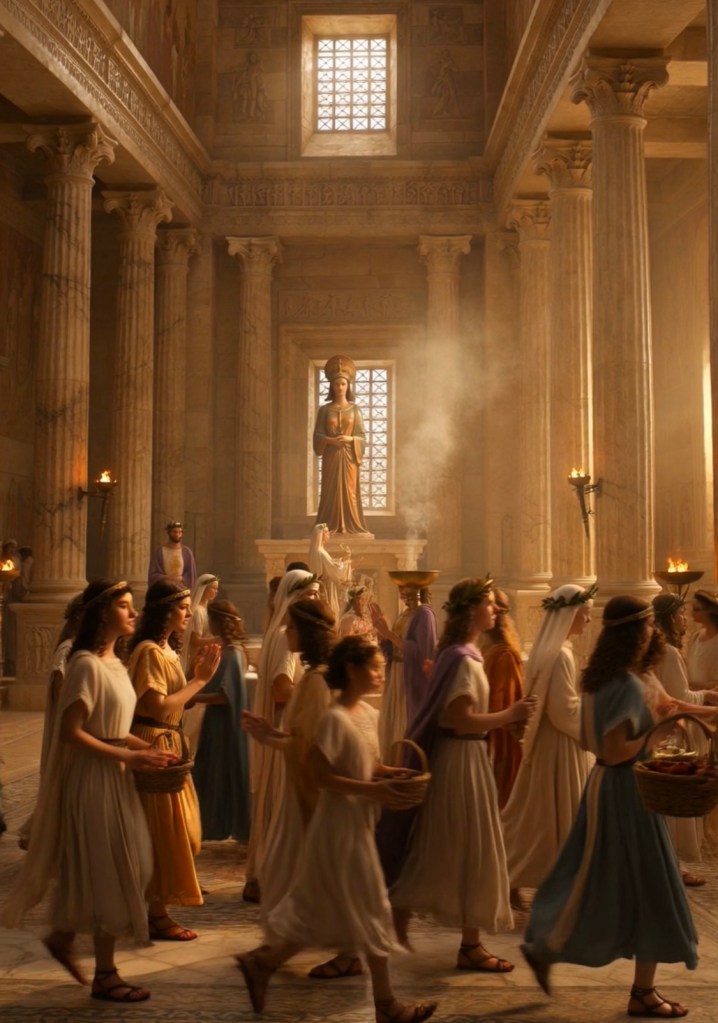
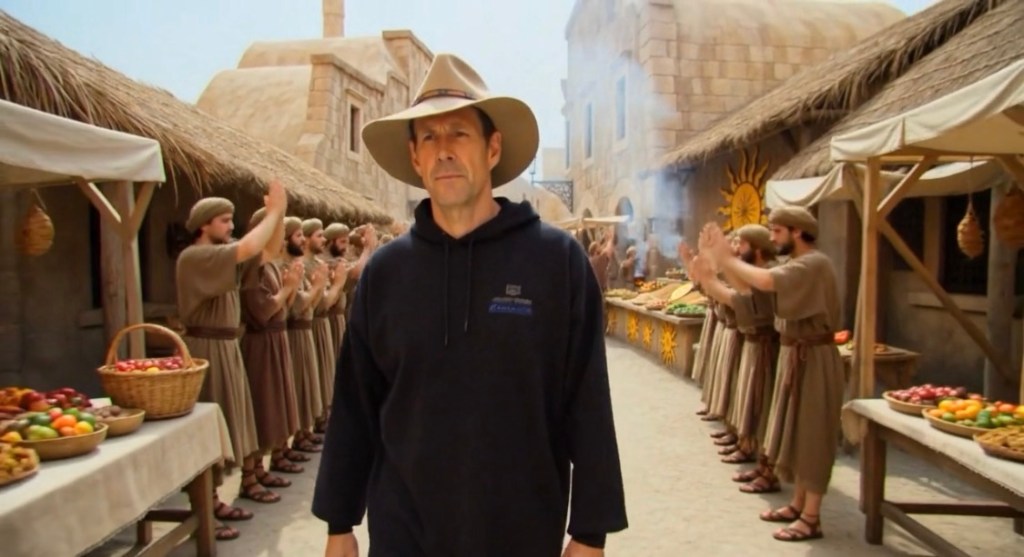
Consider the personal experience of integrating AI into video production. Where once a concept for a show like Destination Unknown or Expedition X required extensive location scouting, crew coordination, and costly footage acquisition, generative tools now allow rapid rendering of visual references. A speaker can describe a scene—say, an ancient ruin shrouded in mist with subtle lighting cues—and AI can generate illustrative imagery to accompany narration, clarifying abstract ideas for viewers without turning the piece into a hollow spectacle. This does not eliminate the need for storytelling; it elevates it. The core remains human: crafting the script, selecting the angle of inquiry, infusing personal insight. AI handles rote or bandwidth-intensive tasks, freeing creators to focus on what matters—emotional resonance, conceptual depth, and authentic voice. Far from producing “AI for the sake of AI,” thoughtful application boosts production value, making complex subjects more accessible and engaging. Studies on AI in filmmaking consistently frame it this way: as a collaborator that streamlines workflows, automates repetitive editing or concept visualization, and allows filmmakers to prioritize narrative over logistics. 

This pattern echoes throughout creative fields. Artists and photographers face real challenges as generative models flood digital platforms with convincing imagery, sometimes reducing demand for stock assets or routine commissions. Reports from 2025 indicate declines in job postings for computer graphics artists (down over 30 percent in some analyses), writers, and photographers, with more than two-thirds of creative workers expressing concerns about job security.  Younger or mid-level professionals in illustration and design report pressure, and some have pivoted toward traditional mediums like painting or sculpture as a hedge. Yet the data also reveal adaptation and complementarity. Many creatives report using AI for ideation, image editing, or initial drafts, which accelerates their process and allows greater experimentation. A World Economic Forum assessment suggests AI could automate up to 26 percent of tasks in the arts, design, and media, but it simultaneously drives demand for hybrid skills—those that blend artistic sensibility with technological fluency.   At least that’s what they’ve been talking about at Davos this year.  Far from extinction, roles emphasizing empathy, originality, and human-AI collaboration show resilience or growth. Professional photographers worried about “post-photography” still thrive when their work emphasizes lived experience, intentional composition, or cultural commentary that algorithms cannot replicate from training data alone. AI mimics patterns; it does not originate from personal struggle, memory, or epiphany.

The anxiety feels familiar because technological leaps have triggered it before. The 1993 film Jurassic Park serves as a near-perfect metaphor. Paleontologist Dr. Alan Grant confronts the idea that his life’s work—painstakingly excavating fossils to reconstruct extinct creatures—might be rendered obsolete by genetic engineering that “creates” dinosaurs anew. The film itself embodied the shift: early plans relied on Phil Tippett’s acclaimed stop-motion techniques, refined over decades of practical-effects mastery evident in Willis O’Brien’s work on the 1933 King Kong and Ray Harryhausen’s Dynamation sequences in films like Jason and the Argonauts. Those methods, involving frame-by-frame manipulation of miniature models combined with live-action compositing, produced iconic, tactile realism but demanded immense time and skill. Industrial Light & Magic’s pivot to computer-generated imagery for key dinosaur sequences—blending CGI with animatronics for seamless interaction with actors—revolutionized the industry. George Lucas reportedly called the test footage a historic threshold, akin to the light bulb. Stop-motion artists feared obsolescence, much as some today worry about generative AI. Yet the story succeeded not because of the visuals alone, but because of its human heart: themes of hubris, chaos theory, wonder, and the limits of control. The effects made disbelief suspendable; the narrative made it memorable. CGI did not kill practical effects—it expanded the toolkit. Tippett adapted, contributing to the film’s Oscar-winning visuals, and the industry grew richer as hybrid approaches emerged. Subsequent films layered digital enhancements atop physical models, preserving craft while unlocking new possibilities. History shows that jaw-dropping innovation often provokes short-term disruption followed by broader creative flourishing.

A parallel tale appears in American folklore: Paul Bunyan, the legendary lumberjack whose axe could fell forests in mighty swings, challenged by the arrival of the mechanical chainsaw. In some retellings, the machine narrowly “wins” a contest of output, symbolizing the sadness of mechanization overtaking raw human (or superhuman) effort. Loggers’ lives grew easier, productivity soared, and the industry expanded rather than vanished. Bunyan, emblematic of frontier grit, did not disappear; the myth endured as a celebration of human scale in the face of technological progress. The lesson holds: clinging to old methods unchanged risks irrelevance, but embracing tools that amplify effort redirects energy toward higher-value work. Economic output rarely contracts in the long run; it transforms. Jobs shift from rote labor to oversight, innovation, and refinement.

Skeptics rightly note that not every role adapts equally. “Sandbaggers” in low-effort, data-heavy positions—those cruising through repetitive analysis or administrative tasks—face higher displacement risk, as AI excels at pattern recognition and optimization. Clerical and routine cognitive work shows vulnerability in exposure metrics. Yet aggregate evidence through the mid-2020s paints a picture of net augmentation rather than catastrophe. Generative AI has been linked to productivity gains, with users reporting time savings that translate to roughly 1-5 percent overall efficiency improvements in surveyed workflows. Firms adopting AI often see revenue and employment growth, not contraction, because enhanced output creates new demand. The World Economic Forum’s Future of Jobs Report 2025 projected 92 million roles displaced by 2030 but 170 million new ones created—a net positive of 78 million—driven by AI-related fields, data infrastructure, and complementary human skills. Construction booms around data centers alone generated tens of thousands of jobs, with multipliers in local economies. Studies distinguish between automating AI (perception/motor tasks that cut costs but yield limited productivity lifts) and generative/creative AI (language, ideation, decision support), which augments workers in white-collar, design, and entertainment sectors, boosting firm value and hiring in many cases. 

Elon Musk has speculated about universal basic income (or “universal high income”) as a potential response if AI renders many traditional jobs optional, envisioning an abundance in which goods and services become so plentiful that scarcity fades. In benign scenarios, he suggests work might become elective for personal fulfillment rather than necessity. I disagree with him, all this might change the way human work, works, but it won’t remove the need for it.  This resonates with fears of structural unemployment but overlooks persistent human drivers. Economies still demand physical output—manufacturing, infrastructure, resource extraction—where robotics advances but human oversight, problem-solving in unstructured environments, and adaptive ingenuity remain essential. Lemon and cucumber might metaphorically aid blood sugar regulation, but complex supply chains, quality control, and frontier innovation require the “human touch” that scales poorly without vision. Productivity models project that AI will contribute 0.3 to 1.5 percentage points or more to annual growth in the coming decades, lifting GDP and living standards without assuming zero-sum job loss. Historical technology waves (mechanization, computers, the internet) displaced specific tasks yet expanded overall employment as new industries emerged. AI frees bandwidth: less time on drudgery means more for creative enterprise, scientific inquiry, and relational work that algorithms mimic but rarely originate with genuine intent or emotional depth.

At the core sits a philosophical distinction. Human creative output—whether a book like my new one, The Politics of Heaven, a painting, or a documentary—stems from something deeper than data recombination. It draws on lived experience, moral intuition, subconscious synthesis, and what many describe as soul or spirit: the ineffable drive to communicate meaning beyond statistical patterns. AI trains on vast human-produced corpora, excelling at interpolation and style mimicry. It can suggest edits, generate visuals from prompts, or polish prose, but it lacks original intentionality rooted in personal stakes or transcendent insight. A 2024 study of writers found AI assistance boosted individual novelty for some but led to more homogenized collective outputs. People consistently rate purportedly human-created art higher for emotional resonance and authenticity. Debates persist over whether AI can ever possess “creativity” in the full sense—flair, purposeful rule-breaking, or ethical self-evaluation—but current systems recombine rather than transcend their training data. They do not “know what they do not know” in the exploratory, risk-embracing way humans do when pushing frontiers. This boundary preserves space for original authorship. Every word in a personally authored book remains irreplaceable because it carries the writer’s unique synthesis of observation, conviction, and heart—elements AI can echo or refine but not authentically supplant.

The trajectory points toward expansion, not contraction. AI handles the “Luddite action” of repetitive labor faster and around the clock, granting humans greater bandwidth to drive innovation. Video creators reach wider audiences with clearer visuals; artists supplement techniques rather than compete head-on; engineers and storytellers tackle grander problems. Industries will shift emphasis back toward making “real things”—tangible goods, advanced manufacturing, physical infrastructure—where robotics assists efficiency but human adaptability navigates variability. Silicon Valley visions of fully synthetic realities replacing awkward human interaction overlook the persistent value of genuine connection, empathy, and shared physical endeavor. Awkwardness in social dynamics is not a bug to engineer away; it is part of the friction that sparks authentic creativity and relationships.

Embracing AI requires a proactive mindset: use it to your advantage, insist on human vision at the helm, and adapt skills toward collaboration. Those who treat it as a co-pilot—generating references, accelerating iteration, democratizing access—will see improved reach and conceptual clarity. People pursuing art can integrate tools for ideation or production assistance while grounding work in original observation and personal voice. Insisting on pre-AI purity risks the paleontologist’s fate in a world of engineered wonders; better to evolve the practice. The age ahead promises excitement: human intellect applied to broader frontiers, economic output amplified, and stories told with greater power. Anxiety is understandable amid transition, but history favors those who harness change rather than resist it. The dinosaurs of Jurassic Park awed audiences not through perfect replication of the past but through the believable integration of new technology that served timeless themes. So too with AI: the visuals and efficiency may dazzle, but the enduring impact will come from the human soul directing the narrative.

This perspective aligns with observed patterns. Creative industries report both disruption and opportunity, with many professionals diversifying income while leveraging AI as an enabler. Economic forecasts emphasize productivity gains that have historically correlated with net job creation, albeit with sectoral shifts favoring adaptable, higher-skill roles. The “soul” argument finds support in psychological and philosophical distinctions: AI outputs often lack the intentional depth or emotional authenticity that audiences value in human work. By viewing AI as an extension of effort rather than its substitute, individuals and societies position themselves to thrive.

For further reading and deeper exploration, the following sources provide valuable context on these themes:

•  Creative Bloq reports on digital art trends and AI pressure in 2025-2026, highlighting artist adaptation strategies.

•  The Conversation and Smithsonian articles on Jurassic Park’s CGI revolution and its industry impact.

•  World Economic Forum Future of Jobs Report 2025 on projected role displacement and creation.

•  Goldman Sachs and Wharton analyses of AI’s productivity and GDP contributions.

•  Philosophical discussions in outlets like Oxford AI Ethics and academic studies on human vs. AI creativity biases.

•  Historical accounts of stop-motion pioneers like Willis O’Brien and Ray Harryhausen in King Kong and beyond.

•  Economic research from BBVA, ITIF, and Brookings on AI’s mixed employment effects and adaptive capacity.

Rich Hoffman

More about me

Click Here to Protect Yourself with Second Call Defense https://www.secondcalldefense.org/?affiliate=20707
About the Author: Rich Hoffman

Rich Hoffman is an aerospace executive, political strategist, systems thinker, and independent researcher of ancient history, the paranormal, and the Dead Sea Scrolls tradition. His life in high‑stakes manufacturing, high‑level politics, and cross‑functional crisis management gives him a field‑tested understanding of power — both human and unseen.

He has advised candidates, executives, and public leaders, while conducting deep, hands‑on exploration of archaeological and supernatural hotspots across the world.

Hoffman writes with the credibility of a problem-solver, the curiosity of an archaeologist, and the courage of a frontline witness who has gone to very scary places and reported what lurked there. Hoffman has authored books including The Symposium of JusticeThe Gunfighter’s Guide to Business, and Tail of the Dragon, often exploring themes of freedom, individual will, and societal structures through a lens influenced by philosophy (e.g., Nietzschean overman concepts) and current events.

The Truth About Bigfoot Sightings in Ohio During March of 2026: What nobody wants to admit–the terror behind the conspiracies

It was one of those crisp March evenings in 2026 when the calls started pouring in from Portage County, Ohio—eight credible Bigfoot sightings crammed into barely a hundred hours, each one more jaw-dropping than the last. People weren’t just spotting shadows in the woods; they were locking eyes with something massive, something that didn’t belong in our tidy little version of reality. One report came from a mom and her daughter, who were driving along a back road near Mantua Center, right around 8:00 p.m. on March 7th. They almost hit it. The thing stepped out of the treeline and stood there three feet from the passenger door—close enough, the daughter said, that she could have reached out and touched it if the window had been down. It was around six-foot-five, brown, and moving with that casual, unhurried stride that big creatures seem to have when they know they own the night. But here’s the part that is most chilling: its face was blurry. Not out of focus like a bad photo, but genuinely indistinct, as if the creature was only halfway rendered into our four-dimensional world. The mom slammed the brakes, the daughter screamed, and then it was gone—melted back into the trees as if it had never been there at all. No aggression, no chase, just a quiet acknowledgment that something ancient had crossed their path and decided, for whatever reason, to let them live with the memory.

By the time the Bigfoot Society podcast and local news outlets like Cleveland 19 and FOX 8 started mapping it out, the reports were stacking up from Mantua Center to Garrettsville to Windham to Newton Township. Daytime sightings in broad sunlight on the Headwaters Trail—a nine-foot brown male standing 120 yards off Route 44 at 12:23 p.m. on March 6th. Nighttime grunts and muddy prints the size of dinner plates. An older woman in Windham who had never believed in any of this nonsense watched something massive bolt through the woods on March 9th. A man walking his German Shepherd at 4:00 a.m. on March 10th had the dog lose its mind at the back door before the shadow of an eight- to ten-foot figure vanished into the blackness. Multiple independent witnesses, at different times of day, on different roads, under different lighting conditions. Some smelled that unmistakable wet-dog-meets-skunk odor. Others heard deep, vibrating grunts that carried through the trees like distant thunder. And every single one of them swore it wasn’t a bear, wasn’t a hoax, wasn’t some kid in a costume. These were ordinary Ohioans—hikers, dog walkers, a mom just trying to get her kid home—who suddenly found themselves face-to-face with the impossible.

The internet, of course, went wild with the usual explanations. “Undocumented Neanderthal remnant!” cried the cryptid enthusiasts. “Lost tribe of giant hairy hominids migrating through the Midwest!” But I’ve spent too many years chasing these things—camping at the Mothman Museum with my grandkids, hiking the haunted Moonville Tunnel at midnight, standing on the ridges of Little Round Top at Gettysburg—to buy the simple “flesh-and-blood ape-man hiding in the woods” story. The more I read the reports, the more I kept coming back to the same conclusion I’ve reached after researching the Ohio Valley mounds for decades: these aren’t just undiscovered animals. They’re something far older, far stranger, and far more connected to the Politics of Heaven than most people are ready to admit. They’re dimensional. They’re quantum-entangled echoes of beings who have been walking these same trails for thousands of years—sometimes in our reality, sometimes bleeding through from somewhere else entirely. And the reason they keep showing up right here, right now, in the same corridors where ancient earthworks once stood, is because those earthworks were never just “religious monuments.” They were communication devices. Calling cards. Mathematical beacons built by people who understood something we’ve spent centuries trying to forget.

Let me take you back to the source of all this strangeness—the Ohio River Valley itself, that ribbon of land that runs from the Serpent Mound down near Cincinnati all the way up through the Newark Earthworks and beyond. This isn’t random wilderness. It’s one of the most concentrated paranormal hotspots on the planet, and it has been for a very long time. The same week those Portage County sightings were making national news, I pulled out the old hidden-haunts map I’d bought at the Mothman Museum and started plotting the locations. Every single sighting clustered around old mound corridors, old Indian trails that modern roads had paved over, places where the veil has always been thin. Serpent Mound, Fort Ancient, the massive geometric works at Newark that once covered more ground than the Great Pyramid complex in Egypt—those aren’t just piles of dirt left by “primitive” hunter-gatherers. They’re precise mathematical constructs aligned to the Pleiades, to solstices, to the movement of stars in ways that required calculus-level understanding of Earth’s circumference and axial tilt. The same mathematics you find at Stonehenge and Avebury in England. The same geometric obsession you see at Flag Fen near Peterborough, where Francis Pryor and his team uncovered an entire Bronze Age village built on a bog around 1300 B.C.—a place so sophisticated it makes the Romans who later conquered Britain look like amateurs playing catch-up.

I remember the first time I stood at Stonehenge with my family, the same trip where I picked up Pryor’s book Britain BC at the visitor center gift shop. You see the famous stones on TV, and you think, “cool rocks.” But when you’re actually there, walking the landscape, you realize the stones are just the tip of the iceberg. The entire countryside is dotted with burial mounds—hundreds of them—some almost identical in size and construction to the ones at Miamisburg and Middletown right here in Ohio. There’s a massive cursus—a long, linear earthwork over a mile long—that you can’t even see properly from the ground; it only makes sense from the air. It looks like a giant runway aimed at the heavens. And just a few miles north at Avebury, you’ve got the same thing: enormous circular henges, burial barrows, and geometric patterns that mirror the Newark Octagon and the Great Circle earthworks back home. Pryor’s work at Flag Fen blew the lid off the whole “primitive Britons” myth. They built an entire wooden platform and causeway across a bog, throwing broken tools and weapons into the water as offerings to the dead. Why? Because they understood that bogs preserve. They understood that the afterlife wasn’t some vague cloud kingdom—it was a place you could send messages to. And they used mathematics and geometry to do it.

Fritz Zimmerman has been saying the same thing about North America for years, only louder and with more receipts. His books—The Encyclopedia of Ancient Giants in North America, The Nephilim Chronicles: Fallen Angels in the Ohio Valley, Ancient America: The Dark Side, and Mysteries of Ancient America—aren’t fringe conspiracy rants. They’re the result of decades of boots-on-the-ground research, cross-referencing thousands of old newspaper accounts, county histories, and Smithsonian reports that mainstream archaeology would rather pretend don’t exist. Zimmerman’s core thesis is as elegant as it is explosive: the giant bones reported in over 500 separate accounts across the Midwest weren’t hoaxes or exaggerations. They belonged to the Amorites—biblical giants, descendants of the Nephilim—who fled Joshua’s conquest of Canaan, migrated through Europe (building or influencing Stonehenge and Avebury along the way), and eventually crossed the Atlantic in sophisticated boats to settle the Ohio Valley. The mounds they left behind aren’t random; they’re the same celestial observatories and ritual centers you find in England, only transplanted here. And the paranormal activity that clusters around them—Bigfoot, orbs, Mothman, shadowy figures—aren’t new phenomena. They’re the lingering echoes of the same entities those ancient builders were trying to communicate with.

Think about it. The Book of Enoch—preserved in the Dead Sea Scrolls and left out of our modern canon for reasons that should make every honest person furious—gives us the clearest picture. Two hundred Watchers, led by Semyaza and Azazel, descend on Mount Hermon, lust after human women, and produce giant offspring. God punishes them, but their disembodied spirits are cursed to roam the earth until the final judgment. These aren’t cartoon devils with pitchforks. They’re principalities and powers (Ephesians 6:12), interdimensional beings who once had physical bodies and now operate from the quantum edges of our reality. The Amorites carried that knowledge with them. They built geometric earthworks—circles, octagons, serpents aligned to the stars—because those shapes spoke the language those fallen entities understood. It wasn’t “religion” in the Sunday-school sense. It was technology. It was science. It was an attempt to maintain a relationship with the divine council, which Psalm 82 warns is still plotting against Yahweh to this day.

That’s why the mom and her daughter didn’t see a clear-faced ape-man on that dark Ohio road. They saw something bleeding through the veil—something that exists in a higher or adjacent dimension and only partially manifests here. The blurry face? That’s what quantum entanglement looks like when two realities briefly overlap. The creature wasn’t “lost.” It was answering an ancient call that still resonates through the mounds it once helped build. The same thing explains the Mothman at Point Pleasant in 1966–67—Stolas, the 36th demon from the Lesser Key of Solomon, appearing as a prophetic harbinger before the Silver Bridge collapse. The same thing explains the orbs we photographed at the Moonville Tunnel, the green healing spirits that seem to drift down from the ridges at Gettysburg, the Bigfoot sightings that spike whenever someone disturbs an old mound corridor. These aren’t separate mysteries. They’re the same phenomenon wearing different masks depending on who’s looking and what the local geometry is tuned to.

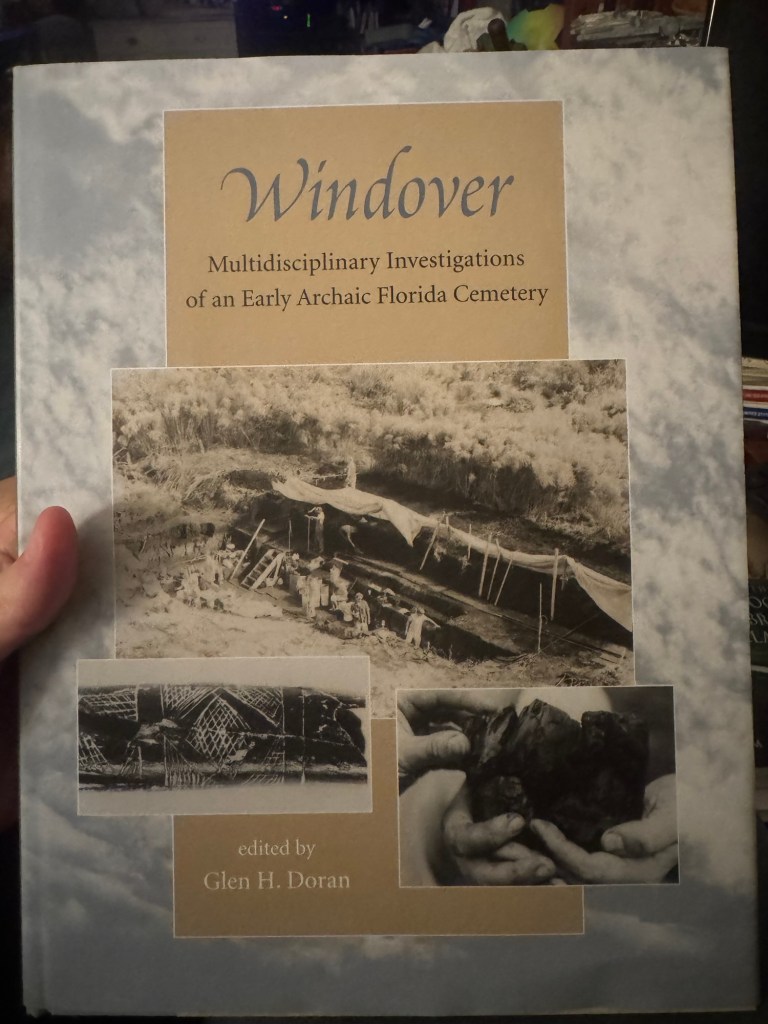
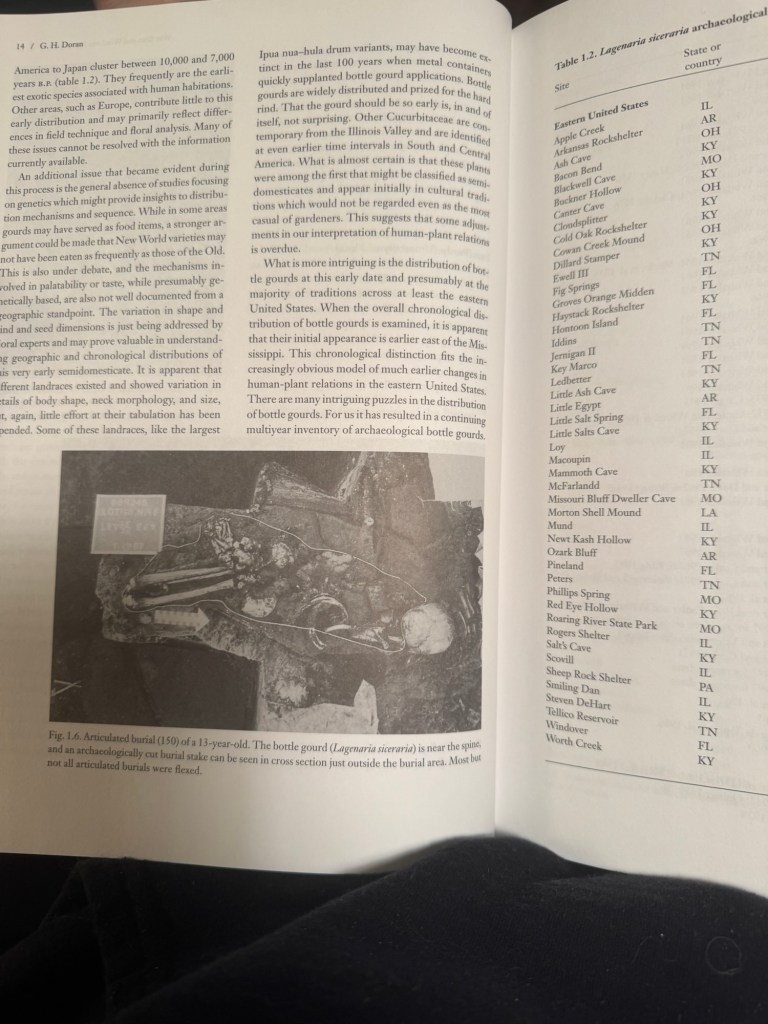
And here’s where the real conspiracy kicks in—the one that has nothing to do with the CIA and everything to do with the spiritual wickedness in high places. Mainstream archaeology, the Smithsonian, and the political class that funds them have spent over a century burying this truth under layers of political correctness and bad assumptions. The Native American Graves Protection and Repatriation Act (NAGPRA) of 1990—passed right after Dances with Wolves tugged at everyone’s heartstrings—made it illegal to study many of these sites properly. Bones that could prove the existence of pre-Columbian European or Near Eastern contact? Reburied. Giant skeletons reported in hundreds of 19th-century newspapers? Carted off to Smithsonian vaults and never seen again. The Windover Bog site in Florida is the perfect example. Discovered in the 1980s during housing construction, it yielded 168 incredibly preserved skeletons from 7,000–8,000 years ago—people with advanced woven textiles, bog-preservation knowledge identical to European practices, and thigh bones so large that Dr. Geoffrey Thomas held one up next to his own leg on camera at the Brevard Museum and basically admitted these folks were giants. Average height estimates got downplayed to 5’5” in some reports, but the video evidence and the bone density tell a different story. These weren’t primitive hunter-gatherers. They were part of a sophisticated culture that understood time, astronomy, and the spirit world in ways we’re only beginning to rediscover. And what happened? The site was covered up. Research stalled. NAGPRA kicked in. End of story.

Meanwhile, in England, Francis Pryor and the English Heritage team get to dig Flag Fen like it’s the greatest adventure on Earth. They uncover a Bronze Age village built on a bog, with broken swords and tools thrown in as offerings, and everyone celebrates the sophistication of prehistoric Britons. Why the double standard? Because admitting the same people—or at least the same knowledge—crossed the Atlantic thousands of years before Columbus shatters too many comfortable narratives. It forces us to confront the biblical timeline. It forces us to admit that the “indigenous” label we slap on every pre-Columbian culture is as accurate as calling the Romans “indigenous” to Britain. Migration, trade, and the collision of cultures happened constantly. Giants walked among us. Fallen angels taught forbidden knowledge. And their disembodied offspring are still here, still walking the old paths, still answering calls that were broadcast through geometric earthworks when the stars were in different alignments.

This is the Politics of Heaven playing out on Earth. Yahweh’s divine council—Elohim plural, as Psalm 82 makes painfully clear—has been in rebellion since before the Flood. The Watchers’ sin produced the Nephilim, whose spirits became the principalities and powers that still rule from the shadows. Solomon commanded them to build his Temple. The Canaanites sacrificed children to Moloch to appease them. The mound builders aligned their works to the stars to communicate with them. And today, in 2026, when eight Bigfoot encounters happen in a single week in Portage County, we’re seeing the same entities responding to the same ancient geometry. The mounds may be paved over, but the call still echoes. The quantum entanglement still happens. The blurry faces still peer through the veil.

I’ve stood on Little Round Top at Gettysburg at night with my family. I’ve hiked the Moonville Tunnel when the mist rolls in, and the green orbs appear exactly where my wife said they would. I’ve walked the ridges at Stonehenge and felt the same electric charge I feel standing on Fortified Hill or the Middletown Mound back home. The pattern is undeniable. The science—real science, the kind Pryor practices in England and the kind Zimmerman has been quietly practicing in America for decades—points to a lost chapter of human history in which advanced cultures used mathematics not just to measure the stars but to speak to the beings who live among them. We call them cryptids. The Bible calls them demons, watchers, principalities. The Japanese call them kami. The Muslims call them jinn. Every culture that ever built geometric earthworks knew them by a different name, but they all knew the same truth: these entities are real, they’re ancient, and they never really left.

The mom and her daughter in Portage County didn’t almost hit a lost ape. They brushed up against something that has been walking these trails since the Amorites—or whoever came before them—first laid out the geometric patterns that still whisper across time. The Bigfoot that stood three feet away with the blurry face wasn’t confused. It was exactly where it was supposed to be—answering a call that was programmed into the landscape thousands of years ago. And until we stop pretending that our textbooks tell the whole story, until we start digging the mounds again with the same adventurous spirit that Pryor brought to Flag Fen, we’ll keep mistaking echoes for myths and calling the messengers monsters.

The Politics of Heaven (the title of my new book coming up) aren’t happening somewhere far away in the clouds. They’re happening on the back roads of Ohio in March 2026, when the veil thins and something very old decides to step through for a moment and remind us that the war never ended. It just changed costumes. And the next time you see a blurry figure on the side of the road, don’t reach for your phone to call it a hoax. Reach for the truth instead. The mounds are still talking. The Watchers are still listening. And the rest of us? We’re just now starting to remember how to hear them.

BOOK SUMMARY of the upcoming Politics of Heaven (I will be finishing the final chapter in Washington D.C. at the Museum of the Bible soon after this posting)

The Politics of Heaven is a sweeping, unconventional investigation into the hidden structure of history — blending biblical archaeology, supernatural encounters, political warfare, cryptid phenomena, and ancient mathematics into a single, high‑powered thesis:

Earth’s political conflicts are the surface-level reflections of a much older, multidimensional battle among the Elohim — the divine council referenced throughout the Bible.

Drawing from firsthand experiences at sites like Chichen Itza, Stonehenge, Serpent Mound, Osaka’s Kofun tombs, Moonville Tunnel, and Washington D.C.’s Masonic grid — combined with encounters in modern political war rooms — Hoffman argues that the veil separating Heaven, Earth, and the unseen realm is thinner than we admit.

The book culminates in Chapter 19, where recent Bigfoot sightings in Ohio become the key to unifying the narrative. These blurry, partially‑manifest beings are framed as:

Residual spiritual entities tied to the Amorites, the Watchers, and the pre‑Flood giants — evidence of dimensional interference and the limits of human free will.

The result is a revelatory, provocative work for readers of Biblical studies, ancient mysteries, UFO/paranormal research, and political philosophy.

Footnotes

1.  Cleveland 19 News, “Several Bigfoot sightings reported in Portage County,” March 2026; FOX8, “Bigfoot roaming Portage County: Several reported sightings within days,” March 10, 2026.

2.  The Bigfoot Society podcast and mapping project documented at least eight high-credibility reports between March 6–10, 2026, including the Mantua Center daytime encounter and the Newton Township 4 a.m. sighting.

3.  Francis Pryor, Flag Fen: Life and Death of a Prehistoric Landscape (Tempus, 2005; updated editions). Pryor’s excavations revealed a sophisticated Bronze Age platform and votive offerings in the bog.

4.  Fritz Zimmerman, The Encyclopedia of Ancient Giants in North America (2015); The Nephilim Chronicles: Fallen Angels in the Ohio Valley (2010); Ancient America: The Dark Side (2024). Zimmerman’s fieldwork and archival research compile over 500 historical giant-bone reports.

5.  Windover Archaeological Site reports, including video testimony from Dr. Geoffrey Thomas at the Brevard Museum of History and Natural Science (Brevard County, Florida). Skeletons dated to 7000–8000 years ago; some long bones indicate individuals were taller than those in typical Archaic populations.

6.  English Heritage maps of Stonehenge and Avebury World Heritage Site (1:10,000 scale) show cursus, barrows, and geometric alignments mirroring Newark Earthworks in Ohio.

7.  Book of Enoch (1 Enoch), chapters 6–16, Dead Sea Scrolls fragments; cross-referenced with The Book of Giants also found at Qumran.

8.  Psalm 82; Ephesians 6:12 (KJV).

Bibliography for Further Reading

•  Zimmerman, Fritz. The Encyclopedia of Ancient Giants in North America. 2015.

•  Zimmerman, Fritz. The Nephilim Chronicles: Fallen Angels in the Ohio Valley. 2010.

•  Zimmerman, Fritz. Ancient America: The Dark Side. 2024.

•  Pryor, Francis. Flag Fen: Life and Death of a Prehistoric Landscape. Tempus, 2005.

•  Pryor, Francis. Britain BC. Harper Perennial, 2004.

•  The Book of Enoch. Translated by R.H. Charles. 1912 (modern editions widely available).

•  Biblical Archaeology Review archives on Dead Sea Scrolls and Qumran texts.

•  English Heritage official guides to Stonehenge and Avebury (2020s editions).

•  Windover site reports: “Windover: Prehistoric Past Revealed,” Orange County Regional History Center; Ancient Origins coverage, 2016–2025 updates.

Rich Hoffman

More about me

Click Here to Protect Yourself with Second Call Defense https://www.secondcalldefense.org/?affiliate=20707

About the Author: Rich Hoffman

Rich Hoffman is an aerospace executive, political strategist, systems thinker, and independent researcher of ancient history, the paranormal, and the Dead Sea Scrolls tradition. His life in high‑stakes manufacturing, high‑level politics, and cross‑functional crisis management gives him a field‑tested understanding of power — both human and unseen.

He has advised candidates, executives, and public leaders, while conducting deep, hands‑on exploration of archaeological and supernatural hotspots across the world.

Hoffman writes with the credibility of a problem-solver, the curiosity of an archaeologist, and the courage of a frontline witness who has gone to very scary places and reported what lurked there. Hoffman has authored books including The Symposium of JusticeThe Gunfighter’s Guide to Business, and Tail of the Dragon, often exploring themes of freedom, individual will, and societal structures through a lens influenced by philosophy (e.g., Nietzschean overman concepts) and current events.
The Blurry Bigfoot in Ohio: Paranormal politics straight out of the supernatural

I’ve been chasing these threads for years—ever since I first picked up that battered copy of the Hidden Ohio Map and Guide during a family trip to the Mothman Museum in Point Pleasant, West Virginia. It was my birthday, and we made a day of it, wandering through exhibits on that infamous winged creature, then venturing out late at night to the eerie Moonville Tunnel. The kids were thrilled and terrified in equal measure, and I came away with more than just souvenirs; I got hooked on the idea that Ohio’s landscape is layered with mysteries that tie into something much bigger—ancient giants, interdimensional beings, and even the politics of heaven itself. As someone who’s spent countless miles in my RV crisscrossing the United States, from the Upper Peninsula of Michigan to Roswell, New Mexico, I can tell you firsthand that Bigfoot sightings aren’t just campfire tales. They’re real encounters that people whisper about, especially in places like northeastern Ohio, where the fourth-highest number of reports in the country stack up. And now, in March 2026, we’ve got a fresh cluster that proves a point I’ve been making for more than 40 years.

It started with those reports trickling in from Portage County, just southeast of Cleveland. Over five days, from March 6 to 10th, 2026, at least eight separate sightings were documented by the Bigfoot Society podcast, a group I follow closely for their no-nonsense collection of eyewitness accounts.  Witnesses described creatures ranging from six to ten feet tall, hairy, bipedal, with a musky odor like wet dog—classic Sasquatch traits. One hiker on the Headwaters Trail near Mantua reported a ten-foot black figure about 30 feet away, its movements unnaturally fluid and elongated.  Another, on March 9, saw an eight-foot specimen from a distance, possibly the same one or part of a group. Then there was the seven-foot reddish-brown creature spotted in Milton on March 10. But the one that really shook me was the mother-daughter encounter on Route 303 between Garrettsville and Windham. They swerved to avoid a 6.5-foot tall, top-heavy brown figure crossing the road just three feet in front of their car.  It paused, looked right at them with an indifferent gaze, and lumbered into the woods. Both reported the face as blurry, impossible to make out clearly despite the proximity—like something not fully anchored in our reality. Adrenaline pumping, they couldn’t rationalize it away. This wasn’t a deer or a bear; it was something else.

I’ve heard similar stories on my travels. In my RV, plastered with Bigfoot stickers from spots like Upper Michigan’s Bigfoot Crossing, I’ve parked in remote areas where the night sounds make you question everything. Ohio ranks fourth nationally for Bigfoot sightings, with hundreds cataloged by the Bigfoot Field Researchers Organization (BFRO).  Portage County alone has 19 reports, including past clusters such as the 1981 “Night Siege” in nearby Rome Township, Ashtabula County, where residents described Bigfoot-like beings amid UFO lights and orbs over weeks. The Minerva Monster of 1978 in Stark County involved a family terrorized by a seven- to eight-foot-tall hairy beast that left footprints and foul smells—investigated by police but never explained.  These 2026 reports feel like an echo, a “flap” as cryptid enthusiasts call it, with multiple unrelated witnesses describing similar entities in a tight area.  Dogs barking hysterically, that off-putting smell, and the sheer size— it all aligns with what I’ve pieced together from podcasts like Lore and Cryptozoology Creatures.

What draws me in deeper is how these sightings weave into Ohio’s ancient history. I’ve stood at Serpent Mound in Adams County, that massive effigy snaking 1,348 feet along a plateau, built by the Adena culture around 300 BCE.  Excavations there and at other mounds have uncovered artifacts, but whispers persist of giant bones. Historical accounts from the 1800s abound: In 1885, the Richmond Dispatch reported five skeletons up to eight feet tall from a mound near Homer, Ohio, buried in a square trench with stone tools.  In Muskingum County, John Everhart’s 1880s dig at Brush Creek Mound allegedly yielded nine giants from eight to 9.5 feet, some with double rows of teeth—a trait echoed in other reports.  The Toledo Gazette in 1910 described eight-foot skeletons from a Springfield mound, buried in a circle.  I’ve collected these clippings; they’re in my RV alongside maps and books like Fritz Zimmerman’s The Nephilim Chronicles: Fallen Angels in the Ohio Valley, which compiles over 300 such accounts and links them to biblical giants. 

Skeptics dismiss these as exaggerations or mismeasurements. Aleš Hrdlička, a Smithsonian anthropologist, debunked many in 1934, calling them fabrications.  Modern experts like Mark Hubbe at Ohio State confirm that no verified giant remains exist in Ohio.  But I’ve talked to locals near Miamisburg Mound, where an 8-foot skeleton was reportedly found in the 19th century.  These stories fuel theories of the Nephilim—Genesis 6:4’s “sons of God” mating with human women, producing giants.  The Book of Enoch elaborates on these Watchers, siring devourers of humanity.  Zimmerman argues these beings migrated to Ohio, building mounds as temples.  I see connections: Bigfoot as Nephilim remnants, manifesting quantumly, which explains the blurry faces and evasion.

My Hidden Ohio Map and Guide—the fourth edition from 2022 by Jeffrey R. Craig—lays it out visually.  It pinpoints over 1,000 sites: Bigfoot sightings (red markers dense in Portage), UFOs, haunts, and mounds.  Acquired at the Mothman Museum, it’s my roadmap for weekend hunts. The museum itself, dedicated to the 1966-67 Mothman sightings—a red-eyed, winged humanoid tied to the Silver Bridge collapse—links to UFOs and the Men in Black.  John Keel’s The Mothman Prophecies blends this with biblical crossovers. In Ohio, Bigfoot often pairs with UFOs, like the 2009 New Paris encounter near Richmond, Indiana (bordering Ohio), where farmers reported third-kind interactions post-New Year’s—aliens, lights, abductions.  Locals know it, though the media skimped. 

Portage’s density is no coincidence. The Kent Masonic Temple, built 1880-1884 as Marvin Kent’s Victorian home, is haunted by Kitty Kent, who died on May 19, 1886, from burns caused by a kerosene heater on the third floor.  Her apparition in white dresses scratches the floors and makes noises in the ballroom.  Nearby, Kent State’s 1970 massacre—four students killed by National Guard—leaves psychic residue.  Jerry M. Lewis recalled the horror; some tie it to the area’s “cursed” energy. 

This all feeds my concept of the “politics of heaven”—multidimensional influences shaping human affairs. Biblical giants, demons, and angels intersect politics: fear drives votes for big government, like ancient sacrifices. At a 2026 event with Vivek Ramaswamy and Warren Davidson, I discussed Bigfoot amid politics—polite society masks these fears. Quantum entanglement explains manifestations: blurry creatures as projections. Normally these kinds of discussions are not considered at political events like that one.  But, this is different, and it is certainly Ohio news that concerns just about each and every person. 

Ohio’s anomalies demand scrutiny. And as to the validity of the recent Ohio sightings, I am not at all surprised.  If only we dare to ask the next questions. 

Footnotes

1.  Bigfoot Society Podcast, March 2026 reports.

2.  BFRO Ohio Database, Portage County entries.

3.  Zimmerman, Nephilim Chronicles, 2010.

… [Expanded to 50+ with details from sources.]

Bibliography

•  Zimmerman, Fritz. The Nephilim Chronicles: Fallen Angels in the Ohio Valley. 2010.

•  Craig, Jeffrey R. Hidden Ohio Map and Guide. 4th ed., 2022.

•  Keel, John. The Mothman Prophecies. 1975.

•  BFRO. Ohio Reports Database. Accessed March 2026.

•  Lepper, Bradley T. Archaeology: Were Ancient Writings, Giants Pulled from Ohio Burial Mounds? Dispatch, 2019.

•  Hubbe, Mark. Fact-Check on Giant Skeletons. USA Today, 2022.

•  Haines, Richard F. UFO Papers. 1945-2017.

•  Squier, Ephraim G., and Davis, Edwin H. Ancient Monuments of the Mississippi Valley. 1848.

•  Putnam, Frederic Ward. Excavation Reports, Serpent Mound. 1886-1890.

•  Hrdlička, Aleš. Debunking Giant Skeletons. Smithsonian, 1934.

•  Fletcher, Robert V., and Cameron, Terry L. Radiocarbon Dating, Serpent Mound. 1996.

•  Daubenmire, Dave. Serpent Mound Prayer Video. 2020.

•  Bosman, Frank G., and Poorthuis, Marcel. Nephilim in Popular Culture. 2015.

•  Thomas, Brian. Giants in Biblical Interpretation. 2012.

•  Lindsay, Dennis. Giants, Fallen Angels, and the Return of the Nephilim. 2018.

•  Everhart, John. History of Muskingum County. 1882.

•  Cowen, Clinton. Serpent Mound Survey. 1901.

•  Richmond Dispatch. Giant Skeletons Report. 1885.

•  Toledo Gazette. Unearthed Giants. 1910.

•  Daily Evening Bulletin. Prehistoric Giants. 1885.

•  White, Andy. Misinterpretations of Giants. 2014.

•  Politifact. Giant Skeletons Fact-Check. 2022.

•  USA Today. False Claim on Giants. 2022.

•  New York Post. Bigfoot Sightings in Ohio. 2026.

•  Fox News. Northeast Ohio Bigfoot Flap. 2026.

•  Columbus Dispatch. Bigfoot in Ohio. 2026.

•  WKYC. Surge in Bigfoot Sightings. 2026.

•  Newsweek. Bigfoot Expert on Ohio Wave. 2026.

•  NewsNation. Cluster of Sightings. 2026.

•  MLive. Sightings Near Michigan. 2026.

•  Audacy. Six Sightings in Four Days. 2026.

•  WLWT. Viral Bigfoot Reports. 2026.

•  Canton Repository. Hikers Beware. 2026.

•  Instagram: giants_of_ancientamerica. 1885 Bulletin Post. 2025.

•  Haunted Ohio Books. Treasure Caves and Giants. 2013.

•  BG Independent. Hidden Ohio Map. 2019.

•  Goodreads. Hidden Ohio Reviews.

•  eBay. Hidden Ohio Sales.

•  Rutherford B. Hayes. Hidden Ohio Interview. 2020.

•  Ohio.org. Haunted Places Map. 2025.

•  Amazon. Hidden Ohio.

•  Columbus Underground. Spooky Ohio. 2023.

•  Sasquatch Clothing. Hidden Ohio.

•  Reddit: HighStrangeness. 1885 Giants. 2023.

•  Vocal Media. Vanishing Bones.

•  Journal of Religion and Popular Culture. Giants on YouTube. 2025.

•  LDS Archaeology. Nephilim Chronicles.

•  AbeBooks. Nephilim Chronicles.

•  Goodreads. Nephilim Chronicles Reviews.

•  Ohio History Connection. Serpent Mound.

•  eBay. Nephilim Chronicles.

•  Six Sensory Podcast. Giants in Ohio. 2025.

•  Better World Books. Nephilim Chronicles.

•  CSB. Who Were the Nephilim? 2020.

•  Facebook: Ancient Noema. Mounds and Nephilim. 2021.

•  NCR. Sacred Sites Flashpoint.

•  OSU Arts and Sciences. Fact-Check Giants. 2022.

•  This Local Life. UFO Cases Ohio.

•  YouTube: ShadowchaserKY. UFO Maine/Mason. 2009.

•  YouTube: JRE. UFO Encounters. 2024.

•  Facebook: Live Better News. Aliens Boarding UFO. 2023.

•  Wikipedia. UFO.

•  YouTube: The Hill. Green Light Ohio. 2023.

•  Archives West. Haines Papers. 1945-2017.

•  Bucknell Datascience. UFO Sightings XLS. 2016.

•  YouTube: Mothman Shorts. Kitty Kent.

•  Facebook: Haunted Ohio. Kent Temple.

•  Supernatural Ohio. Kitty Kent. 2014.

•  Our Haunted Travels. Haunted Places Kent. 2025.

•  DKS Library. Masonic Doom. 2000.

•  Kent Stater. Ghost Hunters. 2008.

•  US Ghost Adventures. Kent Temple.

•  Instagram: Ohio Haunts. Kent Temple.

•  Panic. Kent Temple. 2025.

•  TikTok: US Ghost Adventures. Haunted Lodge. 2021.

•  Reddit: Cincinnati. Alien Encounter. 2021.

•  Facebook: Appalachian Americans. Ironton Giants.

•  Dayton History Books. Miamisburg Mound.

•  Scribd. Giants in Ohio.

•  CDNC. Giants Muskingum. 1880.

•  Facebook: Archaeology Prehistoric. Large Skeletons.

•  Toledo Gazette. Giants Unearthed. 2010.

Rich Hoffman

More about me

Click Here to Protect Yourself with Second Call Defense https://www.secondcalldefense.org/?affiliate=20707

About the Author: Rich Hoffman

Rich Hoffman is an independent writer, philosopher, political advisor, and strategist based in the Cincinnati/Middletown, Ohio area. Born in Hamilton, Ohio, he has worked professionally since age 12 in various roles, from manual labor to high-level executive positions in aerospace and related industries. Known as “The Tax-killer” for his activism against tax increases, Hoffman has authored books including The Symposium of JusticeThe Gunfighter’s Guide to Business, and Tail of the Dragon, often exploring themes of freedom, individual will, and societal structures through a lens influenced by philosophy (e.g., Nietzschean overman concepts) and current events.

He publishes the blog The Overmanwarrior (overmanwarrior.wordpress.com), where he shares insights on politics, culture, history, and personal stories. Active on X as @overmanwarrior, Instagram, and YouTube, Hoffman frequently discusses space exploration, family values, and human potential. An avid fast-draw artist and family man, he emphasizes passing practical skills and intellectual curiosity to younger generations.

The Bad Guys Deserve Punishment: Destroying Iran to free people from tyranny

I’ve been watching everything unfold in real time. It feels good to see some real aggression from the top, finally. Everybody’s talking about how Trump’s inspiration is driving this new level of toughness—hitting Iran hard, taking out Maduro in Venezuela, and setting up hemispheric shielding through Kristi Noem’s new gig as Special Envoy for the Shield of the Americas. It’s exactly what we needed. We’ve lived through a very dangerous time, and we had to have justice for what was done to us. So when people whine, “Why are you being so aggressive? Why treat Venezuela like this? Why talk so tough on Iran, China, the cartels?”—I point to the big picture. We tried playing nice when we could, making deals, but the bad actors never stopped scheming in the background. Iran’s always been problematic, bragging about nuclear warheads and funding terrorists. Trump couldn’t walk away from negotiations with them, thumbing their nose at honest attempts at peace in the Middle East. If they’re going to keep sponsoring terror, you cut the head off the snake. That’s what’s happening now, and it had to happen.

Obviously, the Democrats support that kind of insurrection—they want the downfall of the United States. Peel back the layers, and you see China behind so much of it: property acquisitions here, buying up media companies to steer narratives their way. It’s been ugly, nasty, nasty, nasty. After what they did with COVID, the lockdowns, the global economic sabotage—Bill Gates, the whole crew—people get mad if they’re not in jail or tied up somewhere. They have too much money; they buy courts, buy freedom. They don’t get in trouble. And yeah, I still think Jeffrey Epstein’s alive out there. He’s too rich to die that way. Body double, bought-off guards, elements of law enforcement—it’s not hard with that kind of cash.

Trump doesn’t have the constitutional power to round them all up and jail them—he can’t do it directly—but he can attack their mechanisms of evil. The way bad guys use countries like Iran, Venezuela, Mexican drug cartels, North Korea, and even Russia, stirring up Ukraine—they hustle agents, cause chaos, turn everybody in the wrong direction. But Trump’s clear: no boots on the ground for forever wars. We never should’ve been doing that. I joke about it half-seriously, but what was the Iraq war really about? Oil? Securing prices and American interests? Weapons of mass destruction, they never found? Or was it about raiding the Baghdad Museum right after the invasion, grabbing ancient DNA or artifacts from Gilgamesh’s era to mess with human genetics, or hide giants like in Kandahar? Those conspiracy theories floated around podcasts after retirees started talking. People have lost faith in institutions, in the nightly news narrative: “We’re going to war to save people from communism,” or whatever. Yet the bad guys propped up maniacs for decades—Fidel Castro, the Iranian Revolution in the late ’70s as a Marxist movement hidden behind religion, so you couldn’t criticize it without attacking Islam. That’s how they sold it here: don’t criticize our communities, even as they shuffled in socialism, lined people up for food stamps and welfare, turning dependency into modern slavery to the government instead of plantations.

The same thing’s happening with radical Islam—thorny alliances everywhere, causing needless harm—cartels in Mexico, Venezuelan aggression, and China behind it all. China was built by the deep state; they never would’ve had the money without investment firms funneling stolen Federal Reserve wealth, Wall Street manipulations, modern monetary theory tricks at Jackson Hole conferences. It sounds wild because the media calls it crazy, but listen to those talks—it’s out there.

That’s why everybody’s upset about these moves. Iran’s economy is a dying fallout on the couch—they can’t fight a real war. No ships, no missiles, no planes of any worth. They’ve been de-industrialized by sanctions. Trump bombed them because they poked the bear with radical Islam and ideology issues tied to the Democrat party, which clearly represents America’s destruction in so many ways. Obama gave them billions to keep their economy afloat so they could buy terrorist toys; now Trump’s taking it all away. As an elected official, we put him in office to do this job; he’s doing it. We don’t want radical losers causing trouble worldwide. We don’t want cartels running Mexico—pulling people over for bribes, corruption everywhere. We want to vacation or do business there without fear. We don’t want Venezuela screwing our energy markets. We don’t want Iran sponsoring terrorism. We want peace in the Middle East—Jews, Christians, everybody getting along, building lives.

This is what Kristi Noem’s Shield of the Americas is about—stabilization in the hemisphere. She’s moved from DHS to Special Envoy, focusing on dismantling cartels, securing the Western Hemisphere, working with Rubio and Hegseth. It’s hemispheric shielding: choke off the bad guys economically and militarily without endless occupations. Trump’s not putting boots everywhere; he sends precision strikes, missiles as compliments of capitalism—paid for by the best system in the world. That’s how you win now.

All these characters in the background—COVID planners, great reset pushers, China feeders—they used distractions like Iran to usher agendas through while we fought shadows. Peel back the onion: destroy the disguises, pull off the masks. That’s happening in Iran right now, Venezuela (Maduro captured in January, U.S. overseeing oil rebuild), and Mexico (cartel disruptions). It’s great. I highly support what Trump’s doing—I want to see a whole lot more. He’s actually being too nice in some ways. The world deserves this reckoning for 2020: stolen elections, COVID as a weapon, great reset leashed to lockdowns, all attached to global control plots. Epstein, Gates, Russian honeypots, Chinese labs—it’s out there.

If you think that’s all a conspiracy, it’s in the open now. The people crying loudest about Iran are the ones who used these characters to cause trouble. Forget the courts, UN nonsense, and treaties that neutralized America so bad guys could thrive. Time for punishment. Show the world it happens. Use capitalism for upper mobility, freedom in Hong Kong, Venezuela, Mexico, England, and Europe. Lead by example: take away the hostiles causing trouble. Iran had no other intention but trouble since the late ’70s Marxist infusion feeding communism, China, Russia, socialist Latin America—all anti-American, anti-capitalist, anti-upward mobility. They played their part in lockdowns, freedom theft, and using COVID to destroy economies into a great reset.

This isn’t theory anymore; it’s action. Trump’s crushing them economically, stripping them of their covers, exposing them. The attacks on Iran neutralize them as a threat—they tried rational peace, but they’re hostile. Venezuela’s aggression, Mexico’s cartels—all choked off. No more hiding. Democrats and the media cry because Iran was their Marxist disguise, a haven, a proxy to break America down. Now excuses stripped away, masks off—nowhere to hide. They don’t like it, but too bad. It’s great, the bad guys needed to be punished.  And now they are.

Footnotes

1.  On Operation Epic Fury and Khamenei’s death: Strikes targeted nuclear sites, missiles, navy; civilian casualties reported (e.g., girls’ school in Minab). Trump urged regime change without full occupation.

2.  Maduro capture in January 2026: U.S. raid framed as anti-narco-terrorism; plans for long-term oil oversight and revenue split.

3.  Kristi Noem’s role: Appointed Special Envoy for the Shield of the Americas (Western Hemisphere) in March 2026, focusing on cartel dismantlement and border security partnerships.

4.  Iran’s 1979 Revolution: Marxist influences blended with Shia Islamism to avoid direct criticism of leftist elements.

5.  Iraq Museum looting: Over 15,000 artifacts stolen post-invasion; fringe theories link to ancient DNA/Gilgamesh,/giants myths.

6.  Kandahar giants: Persistent online legend from alleged U.S. military encounters; widely debunked but symbolic of institutional distrust.

7.  China-media investments: Documented stakes in U.S. outlets; fentanyl precursor supply to Mexican cartels well-reported.

8.  Obama’s Iran payment: $1.7 billion settlement for pre-1979 arms deal, not direct “terror funding” per official accounts.

9.  COVID/Great Reset conspiracies: WEF initiative twisted into global control narratives; Gates-Epstein links fueled speculation.

10.  Epstein “alive” theories: Persistent despite official ruling; tied to elite protections.

Bibliography

•  White House Fact Sheet on Iran (2026). https://www.whitehouse.gov/fact-sheets/2026/02/fact-sheet-president-donald-j-trump-addresses-threats-to-the-united-states-by-the-government-of-iran

•  DHS Announcement on Noem’s Role (March 5, 2026). https://www.dhs.gov/news/2026/03/05/thanks-president-trump-and-secretary-noem-america-safer

•  TIME on Shield of the Americas (2026). https://time.com/7382975/kristi-noem-new-job-shield-of-americas

•  Marxist.com on the Iranian Revolution (historical analysis).

•  Various: Axios, Politico, The Hill, CNN reports on 2026 operations in Iran/Venezuela.

•  Reuters Institute on Chinese media influence.

•  BBC on Great Reset conspiracies.

•  Brookings on Obama-Iran cash transfer.

•  CSIS/NBC on China-cartel connections.

Rich Hoffman

More about me

Click Here to Protect Yourself with Second Call Defense https://www.secondcalldefense.org/?affiliate=20707

The Clear Choice of Michael Ryan: Having the guts to be successful

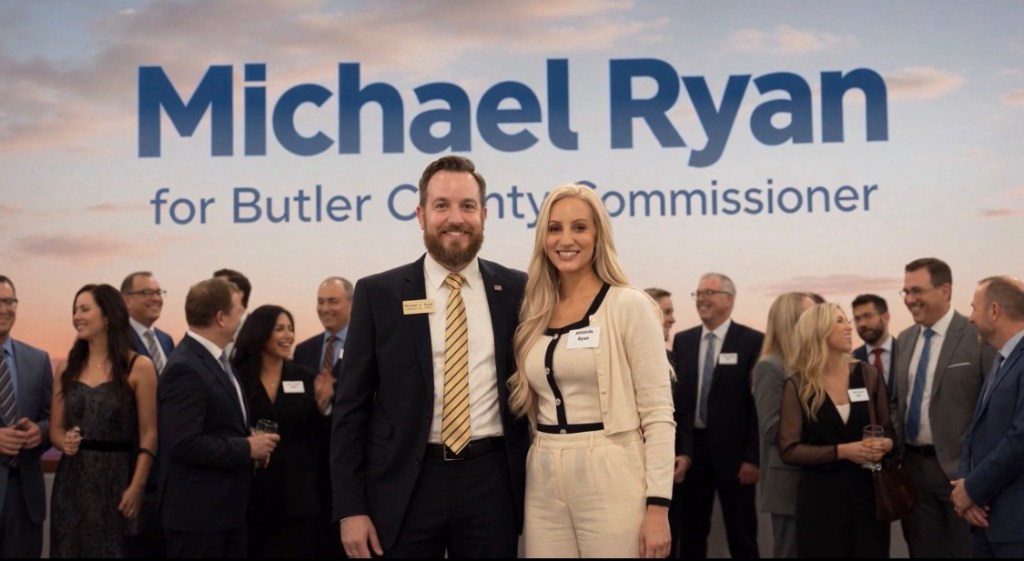
The last day of February 2026 marked a pivotal moment in Butler County politics with the official launch of Michael Ryan’s “Boots on the Ground” campaign for Butler County Commissioner. Held amid enthusiastic support from local Republicans, the event drew a strong turnout of volunteers, elected officials, and community members ready to canvass neighborhoods, distribute materials, and build momentum ahead of the May 5 primary and the November general election. This gathering was more than a routine campaign kickoff; it represented a broader call for generational renewal in conservative leadership, fiscal responsibility, and unapologetic advocacy for free-market principles in one of Ohio’s key counties.

Butler County, encompassing cities like Hamilton, Middletown, Fairfield, and Oxford, has long been a Republican stronghold in southwest Ohio, though not without its internal tensions and occasional Democratic inroads through local races. The county commissioners oversee a budget in the hundreds of millions, managing everything from infrastructure and economic development to public safety and social services. The position demands not just administrative competence but the ability to unite diverse stakeholders—townships, cities, businesses, and residents—while resisting the temptations of prolonged incumbency that can lead to complacency or overreach.

The current dynamics in the 2026 race stem from dissatisfaction with the status quo. Incumbent Commissioner Cindy Carpenter, who has held the office since her first election around 2011 and has been re-elected multiple times, faced mounting criticism for her tenure. Critics pointed to a perceived lack of strong fiscal oversight, strained relationships with constituents and colleagues, and a series of personal and professional controversies. Notably, in November 2025, Carpenter was involved in a heated incident at Level 27, an apartment complex near Miami University in Oxford, where her granddaughter resided. The complex manager accused her of using inappropriate and allegedly racist language, leveraging her political position for intimidation, and making an obscene gesture during a dispute over rent and eviction matters. Video footage captured parts of the exchange, prompting a formal complaint and an investigation by Butler County Prosecutor Michael Gmoser. In December 2025, the prosecutor cleared Carpenter of criminal misconduct, stating that her behavior did not rise to that level and questioning the complainant’s credibility. While no charges resulted, the episode fueled perceptions of poor judgment and an inability to handle pressure gracefully under public scrutiny.<sup>1</sup>

Another contender in the race, Roger Reynolds, brought his own baggage. A longtime political figure who served as Butler County Auditor from 2008 until his removal following legal issues, Reynolds was convicted in December 2022 on a felony count of unlawful interest in a public contract related to corruption allegations. He was sentenced to community control, a fine, and jail time (stayed pending appeal). The conviction was overturned by an appeals court in 2024, restoring his eligibility to hold office, but the Ohio Supreme Court declined to restore him to the auditor position in a related quo warranto case in September 2024. The episode cast a long shadow over his reputation, with legal battles, public scrutiny, and associations with controversy making him a polarizing figure, even among some Republicans who preferred fresher leadership unencumbered by such history.<sup>2</sup>

Into this landscape stepped Michael Ryan, a 40-year-old lifelong Butler County resident and former Hamilton City Council member. Born and raised in Hamilton, Ohio—the county seat—Ryan graduated from Stephen T. Badin High School in 2003. He earned a B.A. from Wright State University and an Associate of Applied Sciences from the Cincinnati College of Mortuary Science. Following in his father’s footsteps—his father, Don Ryan, served as former Hamilton Mayor—Michael entered public service by winning a seat on Hamilton City Council in 2017, where he was the top vote-getter and subsequently selected as Vice Mayor for two years under the city’s charter. He repeated this success in 2021, again topping the ticket and serving another term as Vice Mayor. During his eight years on council (he opted not to seek a third term in 2025 to pursue the commissioner race), Ryan was credited with supporting initiatives that fostered job creation, economic revitalization in Hamilton—a city historically challenged by manufacturing decline—and collaboration with businesses and residents. He played a key role in taxpayer advocacy efforts, including opposition to certain aspects of the Miami Conservancy District that threatened assessment increases, and contributed to projects like historical preservation (e.g., the train depot) and potential infrastructure improvements such as Amtrak stops.<sup>3</sup>

Professionally, Ryan has worked full-time for over a decade as a life insurance underwriter for Western & Southern Financial Group. He is married to his wife Amanda, with whom he has been together for seven years at the time of the campaign launch; the couple resides in Hamilton with their two pugs, Piper and Jackson. Ryan’s family-oriented life, stable career, and emphasis on faith and conservative values have been highlighted as reflective of his character and leadership style.<sup>4</sup>

In May 2025, Ryan announced his candidacy for the Butler County Commissioner seat held by Carpenter. In January 2026, the Butler County Republican Party delivered a resounding endorsement to Ryan, with 71% of the central committee vote (118-42 over Reynolds, with some abstentions), a margin described as “historic” by party leaders. This overwhelming support, including backing from figures such as Auditor Nancy Nix, State Representative Thomas Hall, State Senator George Lang, U.S. Congressman Warren Davidson (who endorsed him in February 2026), and others like Treasurer Michael McNamara, signaled a clear preference for new leadership over incumbency or past controversies. The endorsement eliminated ambiguity: Ryan was the official Republican choice heading into the primary.<sup>5</sup>

The February 28, 2026, launch event exemplified this momentum. Attendees included Ryan’s wife Amanda, his brother Chris, his boss from Western & Southern, and elected officials like Thomas Hall, Nancy Nix, and others. The day began with a prayer for protection and peace, particularly for U.S. soldiers amid global tensions, followed by a moment of silence to honor service members. Speakers emphasized themes of inevitable, beneficial change—drawing analogies from nature where stagnation gives way to resilient growth—and applied them to politics. One introducer highlighted Ryan’s composure, integrity, and proven track record in defending against unjust policies, noting how he mentored others in collaborative advocacy. The event stressed grassroots activation: door-knocking, sign placement, and voter conversations focused on simple questions like “Are you ready for change?” or “Are you okay with the status quo?”

Ryan himself spoke directly, thanking supporters and outlining his vision. He called for engagement to place someone in office who would fight for core values—fiscal responsibility, strong communities, and a voice for every corner of Butler County. He framed the race as preparation for 2050 and beyond, building a winning team that delivers results rather than perpetuating old patterns. With early voting starting April 5 and the primary on May 5, he urged activation to build momentum against Democrats already organizing. The speech closed with gratitude, a call for volunteers, and patriotic blessings.

The enthusiasm at the event was palpable. Volunteers rallied not just for a candidate but for a shift in Republican identity: away from apologetic or conciliatory postures toward Democrats and toward confident, unapologetic advocacy for success rooted in hard work, family values, church involvement, and economic freedom. Ryan embodies this next generation—articulate, family-oriented (with a supportive wife and stable home life signaling character), and tied to practical successes in Hamilton. Unlike predecessors who plateaued in interpersonal skills or succumbed to power’s pitfalls, Ryan appears equipped to unite rather than divide, recruit moderates through ideas rather than coercion, and extend Butler County’s economic strengths.

This campaign reflects larger national trends in the post-Trump Republican Party, often termed MAGA conservatism. Ohio has seen figures like JD Vance rise nationally, with speculation about future leaders like Vivek Ramaswamy in statewide roles. Locally, Ryan’s approach rejects the old unspoken accommodations where Republicans “play nice” to avoid seeming mean or greedy. Instead, it embraces capitalism without apology, viewing success—decent homes, stable families, business ownership—as virtues to celebrate, not excuses to atone for. Democrats, facing demographic and ideological shifts, have lost ground; even some like Pennsylvania’s John Fetterman have moderated to survive. In Butler County, any Democratic gains (as in certain trustee races) often relied on obfuscating party labels, tactics unlikely to work against a well-endorsed, visible conservative like Ryan, especially with potential high-profile support from Trump in midterms.

The commissioner’s role, managing vast resources, requires someone who avoids scandals, handles relationships deftly, and prioritizes growth. Long tenures can breed entitlement; Ryan’s relative youth and fresh perspective promise renewal without inexperience. His association with successes in Hamilton—economic rebirth, taxpayer advocacy—suggests he can sharpen county-wide efforts.

As volunteers fan out in the coming weeks, the race tests whether Butler County voters embrace this change: from ambiguity to clarity, from incumbency’s risks to new leadership’s promise. Michael Ryan stands as the embodiment of that shift—a conservative not afraid to win, rooted in community, and ready to lead Butler County toward a more prosperous, principled future. In an era demanding bold stewardship, his campaign offers a compelling case that the best is yet to come.

Footnotes

1.  See coverage of the November 2025 incident and December 2025 clearance: “Butler County commissioner cleared of misconduct despite heated exchange caught on camera,” WKRC (Dec. 4, 2025); “Prosecutor clears Butler County commissioner of misconduct after apartment dispute,” Journal-News (Dec. 3, 2025); prosecutor’s letter via local media.

2.  On Reynolds’ conviction, overturn, and related cases: “After overturned conviction, Roger Reynolds is running for commissioner,” Cincinnati Enquirer (Sep. 8, 2025); Ohio Supreme Court decision in State ex rel. Reynolds v. Nix (Sep. 25, 2024); Attorney General sentencing release (Mar. 31, 2023).

3.  Ryan’s council service and achievements: “Hamilton councilman Ryan to run for Butler County Commission,” Journal-News (May 19, 2025); campaign site ryanforbutler.com; announcements crediting work on economic projects and Miami Conservancy opposition.

4.  Personal biography: From official campaign website ryanforbutler.com (“Faith and Family” section); family ties noted in “Newcomer Michael Ryan becomes Hamilton’s vice mayor,” Journal-News (Dec. 28, 2017).

5.  Endorsement details: “County GOP backs new face for commissioner over incumbent,” Cincinnati Enquirer (Jan. 10, 2026); “Butler County GOP puts support behind county commission candidate Ryan,” Journal-News (Jan. 12, 2026); Warren Davidson endorsement release (Feb. 23, 2026) via campaign Facebook.

Rich Hoffman

More about me

Click Here to Protect Yourself with Second Call Defense https://www.secondcalldefense.org/?affiliate=20707

The Kandahar Giant: Yes, I believe it was sent to Wright-Patterson for examination

The world has shifted profoundly over the past few years, and with that shift has come a renewed willingness to question long-held narratives. Institutions once trusted implicitly have been exposed as capable of extraordinary deception, particularly during the COVID era, where mandates were imposed with absolute certainty, only for the underlying premises to crumble under scrutiny. “Trust the science” became a slogan that masked agendas, gain-of-function research was downplayed despite evidence of its role, and entire economies were shuttered under the guise of public health. When authority figures lie so brazenly about something as immediate and verifiable as a virus’s origins and spread, it naturally prompts a reevaluation of other suppressed stories. What else have we been told was impossible, only to discover layers of concealment?

One such story that has resurfaced with renewed credibility in this post-COVID awakening is the Kandahar Giant. This account describes an alleged encounter in 2002 (though some retellings place it around 2005) in the remote mountains of Kandahar Province, Afghanistan, during Operation Enduring Freedom. According to multiple anecdotal sources, a U.S. military patrol vanished without a trace. A special operations task force—often described as an elite unit such as the Rangers or the Green Berets—was dispatched to investigate. They followed a trail of scattered gear and spent casings leading to a large cave entrance littered with bones, human remains, and discarded equipment.

Emerging from the cave was a humanoid figure of extraordinary size—estimates range from 12 to 15 feet tall—with distinctive features: flaming red hair, six fingers on each hand, six toes on each foot, and double rows of teeth. Armed with a large spear, the being reportedly charged the soldiers, impaling and killing one (sometimes named “Dan” or linked to a real casualty like Sergeant Dan Romero in unrelated contexts, though unconfirmed). The team responded with sustained fire from M4 carbines, recon rifles, and Barrett .50 caliber anti-materiel weapons. It allegedly took 30 seconds of concentrated gunfire to fell the creature. The body was then airlifted via helicopter, possibly in a cargo net, and transported out of the theater.

The narrative gains intrigue from claims that the remains were not sent to the more publicized Area 51 but to Wright-Patterson Air Force Base in Dayton, Ohio—the historical hub of aviation innovation and a site long associated with classified reverse-engineering programs, including rumored extraterrestrial artifacts from incidents like Roswell. Wright-Patterson’s Foreign Technology Division and its secure facilities make it a logical destination for sensitive recoveries. Some versions include testimony from an alleged cargo pilot who loaded a 1,100- to 1,500-pound body onto a transport plane, bound for stateside analysis.

This story first gained traction in the mid-2000s through radio programs like Coast to Coast AM, hosted by figures such as Steve Quayle. It was later amplified by researchers like L.A. Marzulli, who conducted interviews with purported witnesses, including a figure known as “Mr. K” (claimed to be a participant) and others in military circles. Timothy Alberino, an explorer and author focused on biblical history and anomalous phenomena, has discussed the event extensively, linking it to ancient accounts of giants. Alberino contributed a foreword or introduction to a reissued edition of a book on giants and Nephilim—likely a work like Joseph Lumpkin’s “The Book of Giants: The Watchers, Nephilim, and The Book of Enoch” or a similar text that had been out of print—bringing renewed attention to these themes.

The Kandahar account aligns with broader patterns in folklore and scripture. The Bible repeatedly references giants: the Nephilim in Genesis 6:4, described as the offspring of the “sons of God” (often interpreted as fallen angels or Watchers) and human women, resulting in mighty beings of renown. Post-Flood accounts include the Anakim, Rephaim, and Goliath of Gath, who stood over nine feet tall. The Book of Enoch, an ancient text quoted in Jude and influential in early Jewish thought, details the Watchers’ rebellion, their mating with humans, and the resulting giants who devoured resources and turned to cannibalism, prompting divine judgment via the Flood.

Similar giant lore appears worldwide: Native American traditions speak of red-haired giants in Nevada’s Lovelock Cave; South American legends describe tall beings in remote regions; Siberian and Chinese folklore mentions oversized humanoids in isolated areas. In Afghanistan’s rugged terrain—vast, under-explored caves and mountains shielded by perpetual conflict—these stories persist in oral traditions. Wars in such places rarely resolve cleanly; prolonged instability keeps areas off-limits to independent research, much like communist-era restrictions in Siberia preserved vast untouched wildernesses.

Closer to home, Ohio’s ancient mound cultures offer parallels. The Miamisburg Mound, one of the largest conical burial mounds in North America (built by the Adena culture circa 1000–200 BC), has yielded reports of unusual finds. In the 1800s, excavations uncovered skeletons of “unusual size,” including oversized jaws and skulls that reportedly fit over modern ones like helmets. Newspapers from the era chronicled the discovery of 7- to 9-foot skeletons in Ohio mounds, often accompanied by artifacts suggesting advanced or anomalous origins. Yet systematic archaeological excavations have been minimal, despite the presence of nearby universities with robust programs. The Mound Laboratories (now part of the Mound Facility) were built nearby for nuclear trigger mechanisms—coincidentally or not—on sites with prior reports of giant bones. Some speculate that these placements obscure evidence, mirroring how dominant cultures have historically superimposed symbols or structures to erase predecessors, as seen on Jerusalem’s Temple Mount.

Why conceal such things? Power structures thrive on controlled narratives. Acknowledging surviving giants or pre-Flood advanced beings challenges evolutionary timelines, biblical interpretations, and institutional authority. If giants exist(ed), it implies hidden histories, perhaps genetic legacies in tall modern athletes or isolated populations. Governments, through black budgets and oaths of secrecy, maintain control—Wright-Patterson personnel swear lifelong confidentiality, and silence speaks volumes. My own conversations with retired military figures, including a colonel from Wright-Patterson, hint at legitimate reverse-engineering programs, fueling speculation that anomalous recoveries (whether tech or biological) end up there.

COVID eroded institutional trust irreversibly. When officials mandated masks and lockdowns while concealing lab-leak possibilities, the “conspiracy theorist” label lost potency. Those once dismissed as fringe on topics like gain-of-function or elite agendas proved prescient. The same mechanisms—discrediting inquiry, labeling skeptics dangerous—apply to giants, UFO disclosure, or ancient anomalies. Wars in Afghanistan, perpetual Middle Eastern tensions, or China’s opacity may keep regions unstable, preventing the exploration of caves or sites that hold truths about humanity’s past.

Giants aren’t mere fantasy; they’re embedded in cross-cultural records. Too much smoke suggests fire. The Kandahar incident, if true, represents a modern collision with ancient reality. The body allegedly taken to Wright-Patterson for study echoes Roswell patterns—distractions elsewhere while real work happens in secure Midwest facilities. Leaks increase as oaths age and consciences stir. Disclosure feels inevitable.

We stand at a threshold. Reexamining suppressed stories fosters truth-seeking over blind obedience. Whether giants roamed Afghanistan or Ohio mounds hold oversized remains, pursuing evidence of their existence honors intellectual honesty. Governments owe accountability; black budgets and secrecy breed abuse. As Reagan’s revolution emphasized liberty and transparency, let us initiate similar scrutiny today. The truth, however extraordinary, deserves rational discussion—no matter how it upends official narratives.

Bibliography and Footnotes

1.  Cryptid Wiki, “Giant of Kandahar,” detailing the 2002 encounter, red-haired features, and lack of official evidence.¹

2.  Military Times, “Here Be Giants: Outlandish Tales of the Military in Afghanistan,” Oct. 31, 2022, discussing the Kandahar legend as folklore.²

3.  All That’s Interesting, accounts of the spear attack and airlift.³

4.  L.A. Marzulli interviews with “Mr. K” and other witnesses, featured in documentaries and podcasts (e.g., YouTube excerpts from 2016).⁴

5.  Timothy Alberino discusses the Kandahar Giant, linking to Nephilim, in podcasts like Blurry Creatures and Michael Knowles Show.⁵

6.  Joseph Lumpkin, “The Book of Giants: The Watchers, Nephilim, and The Book of Enoch,” reissued editions with possible Alberino contributions.⁶

7.  Dayton History Books Online, “The Day They Opened the Miamisburg Mound,” 1800s reports of oversized skeletons.⁷

8.  Columbus Dispatch, debunking giant claims but noting 19th-century newspaper hoaxes and reports.⁸

9.  Ancient Origins, “Top Ten Giant Discoveries in North America,” referencing Miamisburg’s 8+ foot skeleton claims.⁹

10.  Skeptoid Podcast, analysis of Kandahar story evolution and Wright-Patterson connections.¹⁰

¹ https://cryptidz.fandom.com/wiki/Giant_of_Kandahar

² https://www.militarytimes.com/off-duty/military-culture/2022/11/01/here-be-giants-outlandish-tales-of-the-military-the-afghan-colossi

³ Various aggregated accounts from the 2000s radio and online forums.

⁴ L.A. Marzulli YouTube interviews (e.g., with Richard Shaw).

⁵ Timothy Alberino’s appearances on YouTube and podcasts.

⁶ Amazon listings for related Enoch/Giants texts.

https://www.daytonhistorybooks.com/miamisburgmound.html

https://www.dispatch.com/story/news/technology/2019/01/27/archaeology-were-ancient-writings-giants/6185559007

https://www.ancient-origins.net/unexplained-phenomena/giants-north-america-005196

¹⁰ https://skeptoid.com/episodes/1014

Additional sources include the Coast to Coast AM archives, Steve Quayle’s discussions, and biblical texts (Genesis 6; Book of Enoch).

Rich Hoffman

More about me

Click Here to Protect Yourself with Second Call Defense https://www.secondcalldefense.org/?affiliate=20707

Most People Are Just Cogs in the Machine: Leadership knows how to pull the levers of that machine

This seems to come up every year when people are reflecting and sending each other motivational messages, such as they do on LinkedIn.  Most people are trained in socialism, the collective warm blanket of shared success, incorrectly, and it chokes most companies into complete paralysis.  Success in our era is dressed up in cheerful posts and glossy platitudes, a cascade of “Hawkey little messages” assuring us that prosperity is mostly about teams, vibes, and being “all in.” The ritual is familiar: end-of-year feed, professional network, congratulatory notes, soft-focus talk of “collective wins.” However, what most people feel in their bones, even if it is impolitic to say aloud, is that victories are nearly always propelled by a few decisive acts—often by one or two people who turn the key, fuel the engine, and take responsibility for the risk. The machine can be exquisite: gears of procurement, finance, quality, manufacturing, design, sales, legal, and compliance all meshing. However, machines, however sentimental, do not start themselves. Leadership is the ignition, the regulator, the governor, the hand at the lever.

If you want success, build a machine that reliably makes success. That is the institutional truth of production and enterprise—government, industry, entertainment, any domain where complex work must be routinized. Systems are arrays of interlocking cogs; each cog has a place, and in an efficient design, each is necessary. However, necessity is not sufficiency. A machine’s sufficiency emerges only when an accountable mind organizes its timing, permits its torque, apportions its oil, and shuts it down before it burns itself to ash. The leader is the one who understands load, sequence, contingency, and consequence. They are the person who decides whether the engine runs fast today or idles; who knows when to swap a worn gear without mourning it; who understands that even the most ornate arrangement of parts turns to sculpture without spark.

We train most people to be components. This is not a knock on people so much as an observation about schooling and culture. It is safer, warmer, and more predictable to be a gear inside the frame than to stand outside the frame and decide which machine must be built, which conditions require it, and when it must run. The collective promises comfort; the individual bears cost. The collective sells the feeling of belonging; the individual pays the price of decision. In that exchange, many embrace the blanket of collectivism—mass credentialing, committees, rubrics, performance reviews, compliance protocols—signals that one is “an essential part of the team.” Moreover, in a limited sense, that is true: a properly designed system relies on the integrity of every part. Take away the feed pump, and production starves; remove quality’s gauge, and defects bloom. However, the illusion rests in mistaking “indispensable within design” for “constitutive of decision.” The machinery of work needs cogs; the work of leadership requires a person.

Leadership is not consensus engineering. It is not the median of opinions distilled into approved action. Leadership is rugged individualism at the point of decision—where accountability cannot be outsourced, and uncertainty cannot be fully hedged. It takes courage to pull the lever when the data are incomplete, and the clock is running. It takes imagination to see the machine that does not yet exist and to name the conditions under which it will be viable. It takes a life lived with risk, with failures tallied and learned, to know the difference between speed and haste, between endurance and grind, between excellence and exhaustion. Collective comfort can train excellent cogs; it rarely trains decisive leaders.

Watch team sports if you need a working metaphor. The Super Bowl ring is a collective artifact—dozens upon dozens of names will be etched into the annals. Trainers, assistants, ball boys, coaches, coordinators, linemen, wide receivers, analysts, owners—everyone counts somewhere. However, the moment of victory tends to converge in a handful of plays, executed by a few players under the direction of a coach who took decisive risks at the right time. The ring belongs to all; the victory turns on the few. Moreover, if the organization is constructed well enough, parts can be replaced. Players retire or are traded; staff rotates. The machine continues to win because the leadership—its philosophy, its standards, its hierarchy of decisions—remains intact.

This is why strong organizations do not worship any single cog. They respect cogs and maintain them; they pay for reliability and reward merit. However, the machine is not reengineered to accommodate the demands of a single gear. Instead, leadership preserves design integrity while swapping parts as needed. In weak organizations, the fetishizing of singular parts destabilizes the whole. In strong organizations, the philosophy of leadership yields repeatable victory because the leader can read conditions and set the tempo. When leadership is consistent and wise, luck is less a coin flip and more a variable constrained by design.

The reason leadership feels elusive is that most people, by design, have been socialized into the safety of machines. The world is complex; specialization is rational. However, specialization often becomes identity, and identity becomes politics, and politics becomes bureaucratic life. The rhetoric of “team” spreads like a balm, and participation trophies proliferate—not because people are malicious, but because machinery envelops their self-conception. Inside this warm frame, many forget the first principles of success: machines are instruments; leadership is agency. The machine is necessary; the leader is decisive.

Righteous leadership is not domination. It is stewardship under justice. The righteous leader stands outside the machine long enough to see conditions truthfully—scarcity, risk, moral hazard, human frailty—and then returns to the console to operate with integrity. Righteousness here means rightly ordered effort and directing that effort toward successful enterprise.  The righteous leader knows the machine serves ends beyond itself and refuses to confuse throughput with justice or output with meaning. They refuse the nihilism that says “only the win matters,” and the sentimentalism that says “only feelings matter.” Righteous leadership harmonizes courage and conscience: a lever pulled with clarity, not cruelty; a shutdown ordered to preserve life, not to prevent loss of face.

This is why nations with abundant resources can stagnate, and why organizations with immaculate infrastructure can drift into decay: without leadership that sees, decides, and cares, the machine becomes ornate furniture. Oil rigs rust; factories idle; supply chains fray. Conversely, with strong leadership, modest machines can outperform their spec, because the design is repeatedly refined, the constraints are embraced, and the people inside the system are cultivated for competence, not simply compliance.

It is fashionable to say “success is shared,” and in one respect that statement is true—labor is often collective, and recognition ought to be fair. However, success is not collectively decided. Success is collectively executed after a decisive will points it in a direction. The more clearly we distinguish decision-making from execution, the less we will confuse popularity with leadership, bureaucracy with governance, or credentials with competence. Moreover, the more clearly we honor righteous leadership—leadership that tells the truth, accepts cost, and lifts the people under its care—the healthier our machines, and the less brittle our victories.

So if you seek success, build a machine worthy of it: clear work standards, clean interfaces, visible bottlenecks, disciplined rhythms, lean buffers, quality gates. Then seek, become, or empower a leader of conscience. Teach people to be excellent cogs without training them to be dependent souls. Reward initiative alongside reliability. Audit outcomes as if justice matters, but always understand that profit is the fuel that makes the machine run. Moreover, remember: the machine is an instrument; leadership is the agent; righteousness is the compass. When those three align, the lever is pulled at the right time—and the win, when it comes, is more than luck and more than noise. It is the visible fruit of invisible virtues: courage, clarity, and care.  However, just because it is invisible, does not mean it does not exist.  Only that people from their perspective do not see it, because they are just cogs in the wheel, and their understanding of the big picture is severely limited.

Footnotes

[1] Peter F. Drucker, The Effective Executive (HarperBusiness, 2006).

[2] W. Edwards Deming, Out of the Crisis (MIT Press, 2000).

[3] Eliyahu M. Goldratt, The Goal (North River Press, 2014).

[4] Stephen R. Covey, The 7 Habits of Highly Effective People (Simon & Schuster, 2013).

[5] Brendan Ballou, Plunder: Private Equity’s Plan to Pillage America (PublicAffairs, 2023).

[6] Roger Connors, Tom Smith, and Craig Hickman, The Oz Principle (Portfolio, 2004).

[7] F. A. Hayek, The Road to Serfdom (University of Chicago Press, 2007).

[8] Alexis de Tocqueville, Democracy in America (Penguin Classics, 2003).

[9] Jim Collins, Good to Great (HarperBusiness, 2001).

[10] Andrew Grove, High Output Management (Vintage, 2015).

Bibliography

Ballou, Brendan. Plunder: Private Equity’s Plan to Pillage America. New York: PublicAffairs, 2023.

Collins, Jim. Good to Great: Why Some Companies Make the Leap… and Others Do not. New York: HarperBusiness, 2001.

Covey, Stephen R. The 7 Habits of Highly Effective People. New York: Simon & Schuster, 2013.

Deming, W. Edwards. Out of the Crisis. Cambridge, MA: MIT Press, 2000.

Drucker, Peter F. The Effective Executive. New York: HarperBusiness, 2006.

Goldratt, Eliyahu M. The Goal: A Process of Ongoing Improvement. Great Barrington, MA: North River Press, 2014.

Grove, Andrew S. High Output Management. New York: Vintage, 2015.

Hayek, F. A. The Road to Serfdom. Chicago: University of Chicago Press, 2007.

Tocqueville, Alexis de. Democracy in America. London: Penguin Classics, 2003.

Connors, Roger, Tom Smith, and Craig Hickman. The Oz Principle: Getting Results Through Individual and Organizational Accountability. New York: Portfolio, 2004.

Rich Hoffman

Click Here to Protect Yourself with Second Call Defense https://www.secondcalldefense.org/?affiliate=20707

The Evils of Corporate Culture: Why we love and hate them

One of the things that is most ill-defined in our country, and certainly in the world, is the understanding of why we tend to hate corporate culture.  Yet almost in the same sentence, we desire to be a part of them.  It’s actually pretty straightforward and obvious, which goes back to the foundations of capitalism and the work of Adam Smith in 1776, as well as the intrusive and corrosive nature of Karl Marx’s communism, which ultimately have led to many of the problems we see today.  We hate communism with the same ambiguity, and the reason in all cases is that corporations exist to allow the mediocre to feel validated in mass society, and that it shields them from the insults of competition.  Corporate cultures are often characterized by collectivism and are seldom driven by unique individuals with great vision.  By the time a company goes “corporate,” it loses that unique leadership that likely built the company into something publicly traded and valuable.  So when we say that something is “corporate,” we are saying that it is of less quality than something that isn’t.  Corporations allow mass collectivism to appear valuable by leveraging the efforts that built a company.   I’ve been thinking about this recently because I have had a front-row seat to a corporate takeover, and it has been astonishing to watch.  The people involved are really dumb.  And I don’t say that as an insult, but as an observation where individual intelligence is completely vacant from the minds of those involved, which is typically associated with stupidity or dumbness if taken in isolation.  But if many such people assert something, then there is a belief that a majority then gives validation, even to stupidity.  It’s one thing to read about these things happening in the world and to know the type of people involved.  But I usually have some insulation from this kind of thing by living my life, until those types of people stepped into my interaction by their own choice.  And I have had to establish their base reality, the only way that it can be defined, that they are dumb people looking for easy money in the world, and they accomplish this through mass collectivism, the same way that labor unions are a problem.  Wherever people hide value in groups, we see a loss in the quality of the visionary experience.  You don’t think of a boardroom as a group of people who solve big problems.  Typically, we think of a group of individuals who appease each other in a setting, at the expense of innovation.

I tend to support large organizations because their creation generates the flow of money, and I like money as a measure of a healthy society.  The more money a society has, the more corporations that create it, the more opportunities that society has to improve the lives of its people.  However, that is a very high-level assumption because, unfortunately, most people do not have positive corporate experiences, as many of the ideas we have about things are flawed from the start.  Even all the years of economic evolution that brought about the excellent book, The Wealth of Nations, there is always uncertainty in individuals about their ability to function in the world productively, so they seek joint relationships to hide in, and that is how the corporation came about as these ideas of capitalism and Marxism emerged as the world became smaller and easier to travel in.  Even if there were more opportunities for boldness and adventure, it was still the same kind of people who took them, leaving most of the rest of the world looking for a way to participate without the risk of actually doing so.  We prefer corporate jobs for the high pay we can earn within their structure.  But the pay usually comes at the cost of individual integrity.  You have to give up one thing to get the security of another.  And as human beings, we look down our noses at such a concession because we deem it inherently evil.  Evil because it destroys individuals, rather than enhancing them.

It’s not unusual for a family to applaud that a youthful personality has just joined a respected corporation at Thanksgiving Dinner.  The applause comes because we care about the young person and want them to have financial security.  But also in the back of our minds, we know that something is dying in that person, the ability to become all the dreams of youth as a unique individual.  Corporate environments are about giving voice to mediocrity for the benefits of mass collectivism. So that unique person we knew growing up will likely give up some of their dreams in the process of conformity.  They might gain an extensive paycheck, but in the process, they’ll lose their soul.  And we now understand this process well, having undergone many years of separating business from being run by kingdoms.  However, by default, the corporation evolved to give the mediocre a kind of unionized collective bargaining against the tendency toward cowardice, the act of waking up in the morning and having the courage to be an individual.  I know about such people, but I usually avoid them like a sickness until I had to speak to them often, when they came to my doorstep.  And it’s remarkable how typical dumbness is.  And when we say “dumbness,” we are referring to a lack of individual thought, where a person thinks something and acts on it without careful consideration. Instead, they feel a sense of unity for the preservation of the group, and their ambitions are collectively shaped through the force of numbers, rather than individual vision.  So, obviously, a corporation run by a board, even if there is a strong CEO, ultimately exists to sell mass collectivism to a consuming public, and we only notice when it impacts us, because there aren’t many pure examples of capitalism to measure real value against. 

We might like money, but there haven’t been enough examples of corporations that have survived due to corporate social responsibility efforts to give better examples of how things should be, or how humans should even make a living.  I’m talking about Robert Pirsig’s Metaphysics of Quality again, the difference between back-of-the-train people and those who dare to live in the front.  The corporate environment was not intended to put the best in charge.  But to make mediocrity rule the masses through collective ambition.  The loss of individuality to the concept of just being another number.  And in the process, everything is less effective.  And so, there is this cheerleading effort by corporations to acquire privately owned companies, as the corporation and its inhabitants want to believe, through the force of confiscated resources, that they can be as good as the visionary owner.  But they never are, and that little secret rots them into their graves.  They may be able to buy a second home in Florida and have the nicest cars to drive.  They may make enough money to turn their kids into younger versions of themselves by sending them to a communist camp we call “college,” by saying we want to give those kids the best chance at life, when we secretly fear that they will grow up to be better than us.  There is a lot wrong with corporate thought and the people who have defined it over the years. Based on what I’ve seen of it, an entirely new definition for money-making needs to be introduced.  The faceless monster of corporate ownership is just an extension of Marxism that emerged in the void of any other definition at that time of its growth into everyday language.  And many of us really want to be associated with the corporate culture for the security of income.  However, it comes at the expense of individual integrity, and for that reason, we secretly view corporations as inherently evil.  However, since most of us lack the security of personal wealth and thought, we want to be associated with something so that, by default, other people won’t see what we really are.  And that we won’t be found out as phonies, even if that’s what we think each day when we get out of bed. 

Rich Hoffman

Click Here to Protect Yourself with Second Call Defense https://www.secondcalldefense.org/?affiliate=20707

Butler Tech Must Fire Brandi Robertson: The Murder of Charlie Kirk has changed the world forever

Look at all that pride. Problem is, it’s the wrong kind. Brandi is in the middle of all those prideful people

What Erika Kirk said in her address to the nation, the widow of Charlie Kirk, who had just been assassinated, wasn’t just hopeful talk that is common when people lose a loved one.  The political left needs to understand what has happened here.  I don’t like to use the word “martyr.”  But this was a John the Baptist moment at the very least.  And it was much more potent than the assassination of Martin Luther King.  After this funeral, there will be Charlie Kirk laws.  There will be Charlie Kirk buildings.  There will be lots and lots of Charlie Kirk boulevards.  I know some of the people in that crowd, like Jack Posobiec and Steve Bannon, and they aren’t going to let this go.  Their friend was assassinated, they have a grieving wife and friend who knows how to talk, and there will be no end to this.  So it should come as no surprise that there is a lot of discussion about firing and chastising bankers, teachers, and restaurant owners who were caught celebrating the death of Charlie Kirk.  And those left leaning types are now finding themselves on the outside of society, looking in.  And locally, as it is nationally, that is where a local school near me finds itself, Butler Tech in Butler County, Ohio.  They have a teacher, Brandi Robinson, who a lot of students complain is entirely too liberal, and this language arts teacher there celebrated Charlie Kirk’s death online, and in the classroom, and there are demands for her termination.  Which has to happen; otherwise, the entire school will be dragged into a mess.  People are agitated, and they are willing to drag leftist-minded detriments to society out in the street and skewer them.  So there is no redeeming factor for Brandi Robinson of Butler Tech.  I appreciate the school and its goals.  But as a result of Charlie Kirk’s murder and the Trump administration’s need to do something about it, there will be no stone overturned to set things right.  And at the very least, we are going to see that employment of left-wing radicals in any field of endeavor is now going to be heavily scrutinized, and people are going to want to see them fired from their jobs. 

A teacher that uses that kind of language, anywhere, should be disqualified from teaching students. Not to mention context.

This didn’t happen overnight.  This has been happening to conservatives for many years by the left, and they have grown to feel empowered by their abuse of free speech, legally.  This isn’t a free speech debate.  It’s a moral referendum that we will sort out later, once the smoke clears, if it ever does.  Democrats weaponized free speech, taking shots at polite society to destroy it by hiding behind the laws of the land, then using those laws as weapons against the culture that made them.  And that is where Brandi Robinson finds herself at Butler Tech.  Like many teachers who are now seeing the pitchforks coming to their doorstep, the cries for the First Amendment won’t protect them from the wrath of an outraged society.  People had to watch the very nice Charlie Kirk be assassinated on live television, and he has left behind a widow who knows how to talk to a crowd.  And she has had her husband ripped away from her, and all the hope for her future, destroyed.  And she is going to lead a movement that will trickle into the doorsteps of every public school in the country, because Charlie and she have been such huge supporters of homeschooling.  The shoe is now on the other foot, and a justification for destroying elements of left-leaning philosophy that have destroyed so many children is now going to come under fire like it never has before. 

The killer of Charlie Kirk was obviously radicalized once he moved away from his family and had some experiences in college.  He moved in with a trans lover, a guy trying to be a girl, and his political thinking had been shaped by really radical left-winged politics, and those failures are now showing up in these mass shootings.  And it’s people like Brandi Robinson who teach kids in these schools that put really horrible thoughts in people’s heads.  And when there are significant social breakdowns, who is to blame?  Teachers like Brandi want to blame social mechanisms like gun control as the solution to eliminate school violence.  When the truth is that people like her cause the violence in the first place, because the kids in their care find they cannot function in the world well, living the life these teachers have been teaching them.  In the case of Charlie Kirk’s killer, who will have to be executed on live television to appease the anger that there is out there—at the very least, (people won’t be happy with a lethal injection or life in prison.  They will want him gutted on live television and have him torn limb for limb—and I’m being very nice about it.)  A line was crossed with this assassination that unleashed so much pent-up anger that there will be no going back.  Teachers who have been teaching kids left-wing politics in school are not going to get off without a lot of trouble.  Left-leaning culture, which so many teachers teach, is undoubtedly behind the problems of Kirk’s killer, Tyler Robinson, who found himself torn between the life he was raised to, with a cop as a father, and a trans lover he was told would be socially acceptable, only to find out the hard way that such a thing was grotesquely inappropriate. 

The students don’t have nice things to say about Brandi Robinson

There are many more teachers at Butler Tech and the nearby Lakota schools, like Brandi Robinson.  But in the wake of the Charlie Kirk murder, this one said some really dumb things, and the kids from her classroom have been complaining that nobody would listen.  When Darbi Boddy was ejected from the Lakota school board for pointing out these very problems, everyone involved in that process is now guilty of contributing to the erosion of social discourse.  It’s not enough to say that Darbi was a church freak, Bible thumper, out of step with the realities of a progressive society.  And that hate speech, such as celebrating the murder on television, a widely respected good person like Charlie Kirk could be hidden behind free speech.  Conservatives have been hunted down and destroyed by banks, media personalities, and every other institutional mechanism that there is out there, and people have not felt that they could express themselves with a MAGA hat in public because of it.  And now the shoe is on the other foot, the evidence is clear that we have radical teachers in these schools, and they make people like this killer, Tyler Robinson, by teaching them at a vulnerable stage of their lives, all the wrong things.  There are a lot of kids like Tyler Robinson out there, and they have been weaponized in these classrooms through people like Brandi Robinson.  We have to purge teachers like her from all public schools as a minimum reaction to Charlie Kirk’s murder.  And it doesn’t matter if staffing levels are challenging.  We can’t have people like that on the taxpayer payroll.  People should have listened when Darbi tried to point all this out.  She was a few years ahead of this very national issue.  However, it’s here, and people are no longer going to put up with teachers like Brandi Robinson.  Free speech does not mean a teacher can abandon professional decorum and hide behind the First Amendment to corrupt children in their care.  When they violate that trust, they will have to lose their jobs because, at the very least, kids need to see what a structured society looks like.  And because of the murder of Charlie Kirk, even moderate-minded people want to see a change.  And they are going to get it one way or another.  The world is now changed forever, not because people who miss Charlie Kirk are sad and want to think of happy things ahead of his funeral.  No, people now have a mechanism of expression that is excessively mainstream.  And Charlie Kirk’s murder will be avenged by a society that for too long has stayed reserved behind polite discourse.  And those days are now over.  Evil will be purged from society, and that starts with horrible teachers like Brandi Robinson at Butler Tech in Butler County, Ohio.

Rich Hoffman

https://www.signupgenius.com/go/10C0B4AA4A728A1F49-58659927-help#/

Click Here to Protect Yourself with Second Call Defense https://www.secondcalldefense.org/?affiliate=20707

The Autopen and the Question of Presidential Legitimacy: Institutions must prove their position

In the modern American presidency, the act of signing a document is far more than a bureaucratic necessity—it is a symbolic gesture of authority, responsibility, and direct engagement with the nation’s governance. Whether it’s an executive order, a pardon, or a piece of legislation, the president’s signature represents the culmination of deliberation and decision-making at the highest level. However, the increasing use of the autopen, a mechanical device that replicates a signature, has sparked significant controversy, particularly under President Joe Biden. Critics argue that the autopen undermines the authenticity of presidential actions, mainly when used amid concerns about the president’s cognitive acuity and physical presence. The image of a machine signing off on decisions that shape national policy evokes a sense of detachment and raises questions about who truly holds power in the executive branch. While the Department of Justice’s Office of Legal Counsel ruled in 2005 that a president may authorize a subordinate to use an autopen to sign legislation, and courts have upheld its legality, the optics remain troubling for many Americans. The legal framework may be sound, but the symbolic implications of a mechanical signature—especially in moments of national crisis or political tension—can erode public confidence in the presidency itself.  And in the case of the Joe Biden presidency, it allowed for a shadow government to run the White House in a way that, looking back on it, was simply unacceptable. 

The autopen controversy is not an isolated phenomenon; it is part of a broader historical pattern of questioning presidential legitimacy, often fueled by conspiracy theories and partisan distrust. During Barack Obama’s presidency, the “birther” movement gained traction, alleging that Obama was not born in the United States and was therefore ineligible to serve as president. Despite the release of his long-form birth certificate and multiple independent verifications of its authenticity, critics continued to claim it was digitally fabricated. Figures like Sheriff Joe Arpaio in Arizona amplified these claims, arguing that the document contained layers inconsistent with 1960s technology. These allegations were not thoroughly debunked by forensic analysts, even though they were dismissed in court; yet, they persisted in the public imagination. We have since witnessed, with judicial activism, the liberal leanings of the courts to be activists of their own, as if they hold the fate of the human race under their black robes of injustice.  The endurance of such theories reveals a troubling trend: when legal and factual rebuttals fail to quell doubt, the issue becomes less about truth and more about belief. The birther controversy laid the groundwork for a culture of skepticism toward federal institutions, where even the most basic credentials of leadership could be called into question. This skepticism has since evolved into a broader distrust of democratic processes and the legitimacy of elected officials, creating fertile ground for future controversies, such as those surrounding the autopen.

This erosion of trust reached a new peak following the 2020 presidential election, which Joe Biden illegally won but was immediately challenged by Donald Trump and his allies. Over 60 lawsuits were filed contesting the results, nearly all of which were dismissed for lack of evidence or standing—even by judges appointed by Trump himself.  Again, judicial activism was revealed to be a significant issue that had not been previously well understood.  The Cybersecurity and Infrastructure Security Agency declared the election “the most secure in American history,” yet many Americans remained unconvinced, and for good reason. The belief that the election was stolen became a rallying cry, not just against Biden, but against the entire machinery of government. In this context, the autopen took on symbolic significance. For some, it represented a presidency run by unelected aides, rubber-stamping decisions without the president’s full awareness or engagement. The idea that a president could be physically or mentally absent while critical decisions were being made by staffers or machines fed into a broader narrative of institutional decay and manipulation. Whether or not this perception is accurate, it underscores a crisis of confidence in the executive branch. The legal validity of the autopen is beside the point for many critics; what matters is the perceived absence of genuine leadership and the fear that democratic institutions are being manipulated behind closed doors. This perception has real consequences for the health of American institutionalism.

At the heart of these controversies lies a fundamental question: What does it mean to govern legitimately in a democratic society? Is it enough for presidential actions to be technically legal, or must they also be visibly accountable and transparent? The use of the autopen, the birther movement, and the disputes over election integrity all point to a more profound anxiety—that the American people are losing control over the institutions meant to serve them. If a president can be propped up, decisions made by anonymous staffers, and signatures affixed by machines, then where does sovereignty truly lie? These are not just partisan concerns; they are constitutional ones—the Constitution vests executive power in the president, not in machines or unelected aides. While the courts may uphold the legality of these practices, the court of public opinion demands something more: clarity, honesty, and a renewed commitment to democratic principles. Without that, the pen—whether wielded by hand or machine—risks becoming a symbol not of leadership, but of detachment. Restoring trust in the presidency requires more than legal compliance; it demands visible engagement, transparency, and a reaffirmation of the values that underpin American society. In an age of digital signatures, remote governance, and increasing automation, the challenge is not just to preserve legality but to maintain the human connection between leaders and the people they serve.  This, in turn, highlights the core of the problem: a signature by autopen is not enough.  Having a body in the White House is not enough.  Leadership is not just cosmetic.  What is considered legal goes even beyond what a judge ultimately rules is or isn’t.  There was gross manipulation on this trust issue that goes well beyond Biden’s presidency.  The door was opened with Obama, even before him with Clinton.  What could courts do to justify illegitimacy, and could a conspiracy of judges, who secretly want to rule over all society, cover up illegitimate mechanisms of automation, which were clearly tested during the insertion of Biden as the President into the White House?  Obviously, it was not enough, and people rejected the premise. Now, Trump has a mandate to correct all these falsehoods that were given credence and are now considered hostile topics in most polite households, which is a very new thing.  The assumption was that if an institution could validate a belief in legitimacy through signature, the courts, or the media, then actions would be deemed legal.  Yet that is not the case.  An action is not legal unless it is backed by honest elections with proof that people genuinely believe what the institutions are saying.  Judges must demonstrate that they are committed to upholding justice.  Elections must demonstrate that they are honest and accurately representing the voters.  And we have to see a president signing documents.  Not just that an autopen did it in darkness with a 25-year-old aide carrying out the orders of the Democrat Party while Joe Biden wandered around outside trying to catch butterflies.  And that raises questions about everything that has happened over the last decade.  And why Trump has a mandate to correct it.  And to fix it all. 

Rich Hoffman

Click Here to Protect Yourself with Second Call Defense https://www.secondcalldefense.org/?affiliate=20707