It All Comes Down to Sullivan: Live by the Legal Sword, die by it too

These people never learn. When you are the front runner in a serious commissioner election in Butler County, Ohio, as Michael Ryan is, the dirty tricks trying to prevent his momentum are just the kind of thing that give politics a bad name.  What starts you on the road to good health in politics isn’t kale or cardio, it’s truth without legalese, straight talk without a billable hour attached. I deal with lawyers all the time—good ones, bad ones, and the “print this from the shelf and scare them” variety—and my general opinion, even conceding that the profession began with noble intentions, is that far too much of it has drifted into a uniform intimidation racket. You’ve seen the type: the form-letter cease-and-desist that looks like an astrology reading for defamation, except the fortune costs you a retainer and the outcome is a long, nervous wait for a judge who usually tosses it after you’ve lost sleep and savings. The trick is the tone, not the law: it’s written to make you believe you must respond with a lawyer, because only priests of the temple may interpret the runes. I don’t like the practice and personally think it should be destroyed, and that the perpetrators of such legal manipulation should be thrown in jail and punished with career-ending justice, just for applying the kind of abuses of power that are all too common.
And then there’s this, additionally

This is why the old play of lawfare against rivals—especially in local races where reputations are accessible targets—needs to be called out. We’ve watched how it stains the process in Butler County. Roger Reynolds, who was convicted on a single count in late 2022, later saw that conviction overturned on appeal in May 2024 for “insufficient evidence,” with the appellate panel ordering an acquittal and discharge. The case centered on the golf academy idea tied to Lakota Schools and Four Bridges; the court noted that the proposal never matured, that the school board held the authority, and that the key witness’s legal counsel ended the discussion before any contract could be secured. 1234 In September 2024, the Ohio Supreme Court declined to restore him to the auditor’s office immediately (the seat had been filled due to the bar against felons holding office at the time of his conviction) but clarified he remains eligible to run in the future. 5 That’s the landscape: facts matter, timelines matter, and our politics should run on open argument, not legal intimidation.

Then there’s Cindy Carpenter. She recently walked into a student housing office in Oxford to resolve back rent tied to a family member. A surveillance camera caught her flipping off the counter during the exchange; staff alleged racist language and abuse of office. The Butler County Prosecutor investigated and concluded that her conduct, while “unseemly,” did not rise to the level of misconduct or abuse of power. 67 It’s all on tape and all public now; the gesture happened, the allegations were made, and the official finding closed the matter without charges. 86 You can dislike the behavior—I do—but voters deserve a campaign where candidates fight this out in daylight, not by hiring attorneys to stuff the mailbox of a rival.

Enter Michael Ryan. He’s a Hamilton City Councilman turned countywide candidate, and he’s collected a long list of conservative endorsements—state senator George Lang, multiple township trustees and councilmembers, and county auditor Nancy Nix among them—because he’s making the case for generational leadership and a forward-looking county agenda. 9 He launched his commission bid in May 2025, framing it around growth, jobs, and fewer distractions—promising to fight for every city, township, and village, and to recruit the next-generation workforce. 10 Ryan’s pitch has resonated in part because people are tired of courthouse drama and lawfare theatrics; they want a debate about budgets, infrastructure, and living standards, not another stack of demand letters mailed in bulk from counsel. And he’s not alone—the GOP field is crowded, with Reynolds and Carpenter in the mix for the May 2026 primary—but the voter mood described by local reporting is unmistakable: they’re weighing future capacity, not re-litigating yesterday’s trials. 11

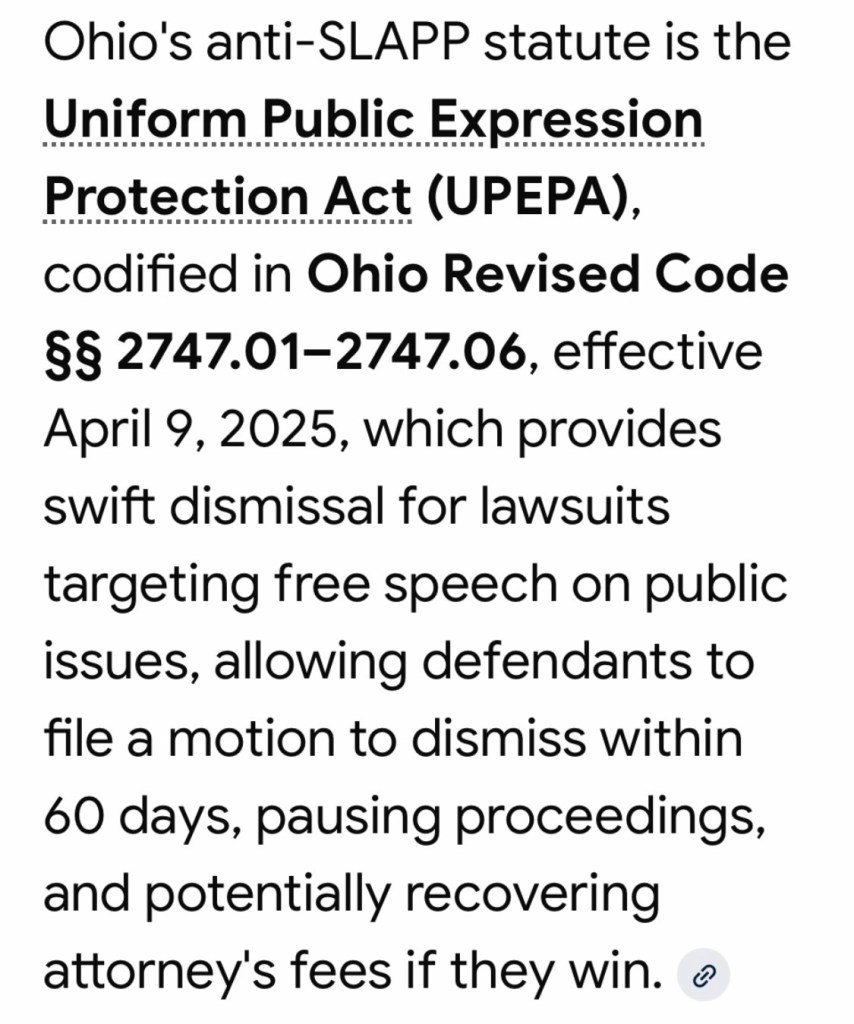
Now, when the intimidation letter lands—as it did from Reynolds to Ryan—you don’t have to swallow the premise that only a lawyer can answer it. You can answer it yourself, plainly and legally, because the guardrail is still the Sullivan standard from 1964. New York Times Co. v. Sullivan was a 9–0 Supreme Court decision that put a constitutional backbone into defamation law for public officials: to win, a public official must prove “actual malice,” meaning the speaker knew the statement was false or acted with reckless disregard for its truth, and must do so with “convincing clarity.” 1213 The case grew out of a civil rights-era advertisement that contained factual errors; a local jury hit the Times with $500,000 in damages, but the Supreme Court reversed, explaining that debate on public issues must be “uninhibited, robust, and wide-open,” even when the attacks are “vehement” and sometimes “unpleasantly sharp.” 1415

If you want numbers: the jury’s original $500,000 damage award (an enormous sum in 1960) was wiped away; the final holding established a higher burden that has, for six decades, made defamation claims by public officials very hard to win without proof of knowing falsity or reckless disregard. 1514 In practical terms, that means campaign statements, press releases, and political commentary about public officeholders are protected—unless the speaker crosses the line into deliberate falsehood or reckless disregard for the truth. 1316 The standard is why you don’t need to hire a lawyer to say, “We disagree, and our statements are protected political speech,” and it’s why cease-and-desist letters are so often theatre: they depend on the recipient’s fear, not on an actual path to winning under Sullivan.

So let’s put it together. Reynolds’ single-count conviction was reversed; whatever lessons he took from the ordeal, sending form-letter threats at a rival to police campaign commentary is the wrong takeaway. 12 Carpenter’s apartment-office incident was embarrassing but not criminal; voters can judge her temperament, but the prosecutor closed the file. 6 Ryan, meanwhile, has stacked endorsements and is running an argument-heavy, growth-forward race; that’s where the energy is. 9 Let them debate. Let voters see who can build coalitions and deliver results without resorting to legal cudgels. And when the legal cudgel shows up anyway, answer it with Sullivan—because in American political life, the First Amendment demands a high tolerance for hard speech about public officials, and the courts have enforced that by design. 1315

In the decades since Sullivan, the Supreme Court clarified and extended the actual-malice requirement through several landmark decisions:

Gertz v. Robert Welch, Inc. (1974)

This case distinguished between public officials, public figures, and private individuals. The Court held that the actual‑malice standard does not apply to defamation claims by private individuals. Instead, states may allow recovery with a lower standard of fault—such as negligence—when proven, and plaintiffs are limited to actual damages unless actual malice is shown 12.

• Outcome: Private individuals need not meet the high threshold; states can define fault and damages within constitutional bounds 23.

Curtis Publishing Co. v. Wally Butts (1967)

Extending Sullivan, the Court held that public figures (like former coach Wally Butts) must prove actual malice to prevail in libel suits. The investigation in question fell short of reasonable journalistic standards, leading to damages after the Court found reckless disregard for truth 45.

Philadelphia Newspapers v. Hepps (1986)

When private individuals sue over speech on matters of public concern, the Court ruled they must bear the burden of proving falsity—not leave it to the defendant. This ensures truth holds primacy in public discourse and avoids chilling speech 67.

Hustler Magazine, Inc. v. Falwell (1988)

This case affirmed that even intentional infliction of emotional distress torts related to offensive parody do not evade the actual‑malice rule when a public figure is involved. Religious leader Jerry Falwell could not recover without proving that Hustler knowingly published false statements or acted with reckless disregard 89.

• Result: Political satire and parody targeting public figures are constitutionally protected—even if deeply offensive—absent false statements made with actual malice.

Together, these rulings illustrate how Sullivan’s actual‑malice standard has been reinforced and nuanced:

• It does apply to both public officials and public figures (Butts, Falwell).

• It does not apply to private individuals (Gertz), though they must still show fault and harm.

• Plaintiffs challenge private or public speech tied to public concern must prove falsity (Hepps).

These cases bolster the legal shield for political speech—underscoring that public dialogue outpaces legal intimidation unless clearly false and malicious.

We’ve seen it too often, when candidates in politics can’t make a good argument, they turn to lawfare and hope that the public perception of expensive lawyers will do the work for them of winning an office they otherwise don’t deserve.  In Roger Reynold’s case, he is the one who got himself into trouble in the first place, and nobody wants to see that kind of trouble in the office of the Butler County Commissioners, just to repair the reputation of a person looking for respect that he lost during the process.  There are other ways to win respect, and this isn’t how you do it.  Showing leadership is the way to restore party integrity, not to make more rifts that cost more than reputations.  And hiring expensive, pin-headed lawyers to send out form letters of intimidation on a case they know is phony as they sent it, is why there are problems in politics to begin with.

Footnotes

1. New York Times Co. v. Sullivan set the “actual malice” standard for public officials, requiring proof that the defendant knew a statement was false or acted with reckless disregard, and emphasized “uninhibited, robust, and wide-open” debate on public issues. 1314

2. The original jury verdict in Alabama awarded L.B. Sullivan $500,000 in damages; the U.S. Supreme Court reversed unanimously in 1964. 15

3. Former Butler County Auditor Roger Reynolds’ 2022 unlawful-interest conviction was overturned for insufficient evidence in May 2024; the appeals court ordered acquittal and discharge. 12

4. The Ohio Supreme Court, in September 2024, declined to restore Reynolds to office mid-term but affirmed his eligibility to run in the future. 5

5. Butler County Prosecutor Michael Gmoser cleared Commissioner Cindy Carpenter of misconduct after the Oxford apartment incident, noting the gesture was “unseemly” but not unlawful. 6

6. Michael Ryan launched his commission bid in May 2025 and lists numerous Republican endorsements on his campaign website. 109

7. Local reporting describes a crowded May 2026 GOP primary field for the commission seat and outlines competing narratives about experience versus future focus. 11

Bibliography

• New York Times Co. v. Sullivan case summaries and analyses: LII / Cornell Wex; First Amendment Encyclopedia (MTSU); Wikipedia overview; FindLaw case history; Encyclopaedia Britannica.

• Reynolds appellate decision and related coverage: Twelfth District opinion (PDF); WCPO; Cincinnati Enquirer; WLWT; Ohio Supreme Court case update.

• Carpenter incident and prosecutorial review: Journal-News; Local 12 WKRC; Cincinnati.com video clip.

• Michael Ryan campaign and endorsements: Ryan for Butler County website; Journal-News launch story; Primary field coverage.

Rich Hoffman
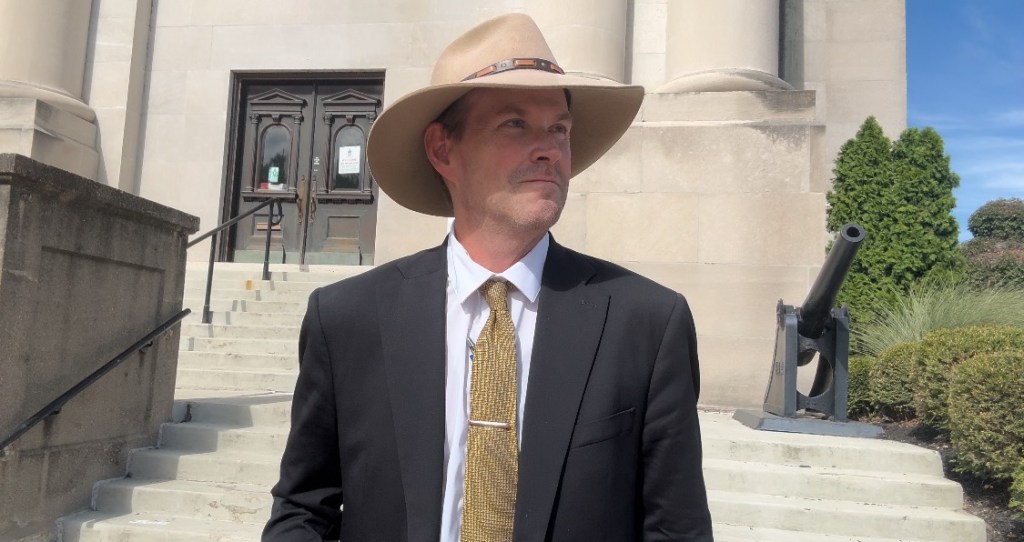
Click Here to Protect Yourself with Second Call Defense https://www.secondcalldefense.org/?affiliate=20707
The Future of Healthcare Is Regenerative: Repulicans need to redefine the discussion for 2028 and beyond

The American healthcare system is broken. Not just cracked or inefficient—broken. It’s a bloated, bureaucratic monstrosity built not to heal, but to manage decline. It’s a system designed to keep people sick just long enough to extract maximum profit from their suffering. And the worst part? It’s been institutionalized through policies like Obamacare, which entrenched a model that props up insurance companies, pharmaceutical giants, and hospital unions at the expense of innovation, affordability, and actual healing.

Let’s be clear: the Affordable Care Act (ACA) didn’t fix healthcare. It expanded coverage, yes, but it did so by inflating costs and embedding a rigid structure that rewards inefficiency. Since its implementation in 2010, the uninsured rate dropped from 16.3% to 8%—a 51% improvement. But premiums for employer-sponsored family plans surged from $13,770 to $22,463—a 63% increase. Deductibles rose 67%, and federal spending on healthcare ballooned from $814 billion to $1.5 trillion. That’s not reform. That’s a transfer of wealth from taxpayers to insurance companies.  A lot of money was made off the healthcare industry, but it did not improve people’s lives, which was the whole debate after the 2025 government shutdown.  Republicans really need to take away the emotional message that Democrats tried to exploit for a system built on pure insanity.

The ACA’s economic impact is staggering. Over the decade from 2023 to 2032, the Congressional Budget Office estimates it will reduce the deficit by 0.5% of GDP annually, totaling $1.6 trillion. But that reduction comes with a catch: it’s built on a model that sustains high costs and low innovation. It’s a system where a basic CAT scan can cost thousands, not because of the technology, but because of the insurance and administrative overhead baked into every transaction.  The system is built on taking advantage of sick people who can’t afford the diligence of skepticism.  The worst kind of exploitation.

The future of healthcare is regenerative medicine. It’s not about managing decline—it’s about reversing it. It’s about healing, restoring, and optimizing the human body using stem cells, gene therapy, and cellular regeneration. It’s about moving beyond the pharmaceutical treadmill and embracing treatments that actually work.  For instance, in placentas, which hospitals throw away after every birth, there are a lot of stem cells that can save lives and dramatically improve healthcare.  Yet, you didn’t hear Democrats saying anything like this during the shutdown, because for them, it’s all about the scam of healthcare costs and padding the pockets of their donors. 

Consider the case of Ohio State Senator George Lang. Diagnosed with stage four colon cancer—a death sentence under traditional protocols—Lang refused to accept the managed decline model. He sought out regenerative treatments, including stem cell therapy, and spent a small fortune traveling the globe to access care that should be available in every Walgreens in America. Today, his tumor is shrinking. He’s not dying—he’s healing. And he’s living proof that regenerative medicine isn’t science fiction. It’s science fact.

Stem cell therapy is already showing success rates of 60–70% in blood cancers and up to 80% in autoimmune and joint conditions. The National Cancer Institute confirms that stem cell transplants are effective in treating leukemia, lymphoma, multiple myeloma, and other cancers. Yet these treatments remain out of reach for most Americans, locked behind regulatory barriers and insurance exclusions.

Why? Because the current system isn’t built to accommodate healing. It’s built to perpetuate illness. Pharmaceutical companies don’t profit from cures—they profit from chronic conditions. Insurance companies don’t thrive on competition—they thrive on predictable, inflated costs. Hospitals don’t want disruption—they want stability, even if it means stagnation.

Medicaid fraud alone costs the U.S. upwards of $100 billion annually. That’s not just waste—it’s theft. It’s money that could be funding regenerative research, subsidizing stem cell therapies, and building a decentralized, competitive healthcare model that puts patients first.

The regenerative medicine market is exploding globally. It’s projected to grow from $24.88 billion in 2025 to $148.42 billion by 2033—a compound annual growth rate of 25.09%. Over 3,100 companies are driving innovation, backed by $7.11 billion in investments from firms like Bayer, Merck, and Zimmer Biomet. The U.S. leads in patents, with over 430 filed in 2025 alone.

And yet, the FDA and insurance industry lag behind. Treatments that could save lives are stuck in clinical trial purgatory or only available overseas. Ivermectin, for example, is showing promise in cancer treatment by disrupting cancer stem cells and enhancing immune response. But it’s not available as a mainstream option because it threatens the status quo.

Republicans have a strategic opportunity here. Stop defending the old model. Stop arguing over the merits of Obamacare. It’s a dead system. Instead, embrace the future. Make regenerative medicine a campaign pillar. Show America that healing is possible—and affordable—when you unleash market forces and innovation.

JD Vance, as he gears up for 2028, should take note. This is a winning issue. It’s pro-life, pro-family, pro-freedom. It’s about giving people hope, not just coverage. It’s about making healthcare affordable by making it effective. It’s about taking away the emotional leverage Democrats have wielded for decades and replacing it with real solutions.

The insurance industry will adapt. They’ll have to. Just like energy is shifting toward decentralization and personal autonomy, healthcare must follow. The grid is outdated. The classroom is outdated. And the hospital is outdated. It’s time to reimagine the entire infrastructure.

Let’s build a system where every birth provides stem cells that can heal. Let’s make regenerative therapies as common as antibiotics. Let’s stop throwing billions at managed decline and start investing in managed recovery.

George Lang’s story is just the beginning. There are thousands more waiting for their chance—not just to survive, but to thrive. The science is here. The market is ready. All we need is the political will to make it happen.

Republicans, take the lead. Be the party of healing. Be the party of innovation. Be the party that ends the racket and restores the promise of American medicine.  Ohio is uniquely positioned to lead the charge in this transformation. Senator George Lang, drawing from his personal battle with stage four cancer, is preparing to introduce legislation that would make ivermectin and other emerging precancer treatments more widely available. His experience—traveling the world to access regenerative therapies that ultimately reversed his terminal diagnosis—has galvanized his commitment to reform.

This initiative gains even more momentum with the potential governorship of Vivek Ramaswamy, a biotech entrepreneur who understands the science and the stakes. Under his leadership, Ohio could become a national model for healthcare innovation, breaking the stranglehold of pharmaceutical monopolies and insurance cartels. Imagine a future where ivermectin, stem cells, and other regenerative treatments are available at your local Walgreens—not just in elite clinics overseas.

The COVID-19 pandemic exposed the fragility and politicization of our healthcare system. It also revealed untapped potential in treatments like ivermectin, which showed promise not only in viral suppression but also in inhibiting cancer cell replication. These discoveries, once dismissed, are now gaining traction among researchers and legislators alike. Lang’s proposed legislation would open the door to these therapies, allowing patients to access life-saving options before their conditions become terminal.

This is not just about Ohio. It’s about setting a precedent. If Ohio can pass laws that prioritize healing over decline, other states will follow. And if Republicans embrace this vision nationally, they can redefine the healthcare debate—away from coverage quotas and toward actual cures. It’s a chance to reframe the narrative, reclaim the moral high ground, and offer a future where healthcare is not a burden, but a blessing.  And, it would allow Republicans to take away from Democrats the moral argument of healthcare funding.  And once that is done, the Democrats would have nothing to stand on, politically. 

Rich Hoffman

Click Here to Protect Yourself with Second Call Defense https://www.secondcalldefense.org/?affiliate=20707
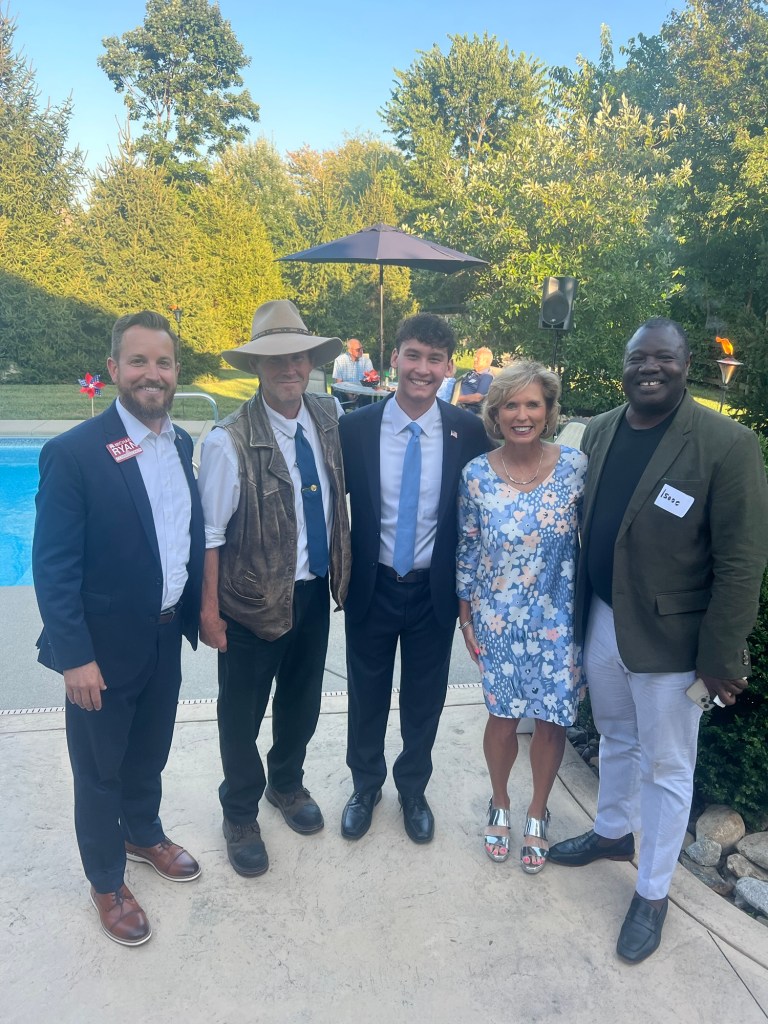
Congratulations to Ben Nguyen To the Lakota School Board: What would it take for me to support public schools

There’s a lot to say about the recent Lakota school board election, and I want to start by congratulating Ben Nguyen on his historic win. At just 18 years old, he’s now the youngest person ever elected to the Lakota Board of Education, and he achieved this with a clear, conservative message that resonated with voters in Butler County. Nguyen earned 18.61% of the vote, joining incumbent Kelley Casper and newcomer Alex Argo on the five-member board. His victory wasn’t just symbolic—it was a direct response to the district’s failed $506 million levy, which voters rejected by a 61% margin. That levy, which would have demolished nine buildings and built four new ones, was a bloated attempt to reinvent the district with taxpayer money. Nguyen’s campaign stood firmly against it, and his win signals that the community is tired of being asked to fund ideological experiments disguised as infrastructure upgrades.  However, there is much more to all this.  The questions that arose during this campaign and election season, in general, concern my support of Lakota schools, which school board member Doug Horton brought up in a video he posted just before the election.  In short, if Lakota management wants to know what it would take to get my support, I would say to them to stop destroying the kind of school board members that I support.  And I would be a lot less critical.  But when the school board pushes away good people and lobbies to keep the kind of people who glaze over sex scandals, horrendous Democrat strategies in the school to teach young people, and ask for tax increases, especially the most expensive in the history of Ohio, then I’m going to be very critical, and I will provide that criticism in voluminous detail so much so, that the anti tax movement in Butler County will continue to grow, as it has over these years since 2013, and even earlier.

Ben Nguyen is a start, not a solution to what I would call a detrimental school board full of liberal losers. The real problem is systemic. For years, we’ve seen conservative school board members pushed out by coordinated efforts from union-backed liberals and their media allies. Darbi Boddy is a prime example. Elected in 2021, she was removed in 2024 after a civil protection order filed by fellow board member Isaac Adi—once her political ally—barred her from attending meetings for over 90 days. The board declared her absence “insufficient,” and just like that, she was gone. Her removal wasn’t about functionality—it was a matter of political theater. Boddy had challenged DEI programs, opposed transgender policies, and criticized the district’s hiring practices. That made her a target. The board censured her, demanded her resignation, and ultimately replaced her with Christina French, a longtime district insider. It’s a pattern: elect a conservative, stir up controversy, isolate them, and replace them with someone more “manageable.”  I know all the characters of that conservative board very well, and I know what was done to pit them against each other, and when a school system plays that game, and expects to get away with it, well, they have another thing coming.  I’m not in the business of putting up with that, and I never will be.  I was in the district long before many of these people were even born, and I will be around long after they all leave to buy condos in Florida to escape the high taxes they leave behind.  Darbi is just one example of this kind of radical school board behavior; therefore, when asked what it would take to win my support for Lakota schools, the answer is easy.  Don’t run off school board members whom I support.  Radicalism can go both ways, ladies and gentlemen. 

This is why I’ve been so critical of Lakota Schools over the years. It’s not that I hate education—I would say my track record shows where my heart is; there are few people anywhere who love education more than I do.  I respect people who read books and work to sharpen and utilize their intelligence.  I do not trust institutionalized education because it’s often populated by less-than-great individuals, which is reflected directly in the product. And with public schools, I don’t respect the system that’s been built on a century-old foundation of progressive ideology. Public schools, as they exist today, are more about managing perception than delivering results. When you fill school boards with people like Julie Shaffer and Kelley Casper—both endorsed by the Butler County Democrat Party—you get a culture of spending, secrecy, and suppression. They don’t want scrutiny because scrutiny threatens their funding. They don’t wish to be judged because judgment exposes their failures. And when scandals happen—whether it’s inappropriate teacher behavior, administrative misconduct, or ideological overreach—they bury it. That’s why I created my own media platform: to report what they won’t. If you want to know what’s really going on in Lakota, you won’t find it in the district’s press releases. You’ll find it in the stories they try to silence.

So here’s the deal: I’ll support Lakota when Lakota supports the community. That means electing people like Ben Nguyen—people who understand the value of education without being beholden to the liberal establishment. It means rejecting levies that ask for hundreds of millions without accountability. It means standing up for parents, taxpayers, and students—not just the union’s comfort level of lazy labor desires, such as short workdays, fewer students to teach, summers off, and high pay for doing very little. I’ve seen good people try to make a difference on the board, only to be run off by political manipulation; it’s all well-documented. I’m encouraged that Nguyen, with his sharp mind and diplomatic personality, can navigate those waters and bring real change. If we can recruit two or three more like him, we might finally see a board that genuinely reflects the community’s values.  But given the election cycles, it’s going to take a while unless we push off some of these losers the way they have pushed away our conservatives, like Darbi, and Todd Parnell—even Lynda O’Connor.  And with Lynda, I know exactly how that game unfolded; she became so deeply involved in the liberal Lakota movement that she essentially had to adopt its values to attend the meetings.  I don’t think strong personalities like Ben Nguyen will be pushed away, because he has that extra gear that is so needed in these kinds of controversial political environments.  He, like Vivek Ramaswamy, who will be Ohio’s next governor, is part of a new generation that will play these old political games better than they have been played in the past.  We have tried to play it straight with these current school board members, and all they have given us are Antifa like union tactics of left-wing radicalism, and many people in the district simply aren’t going to put up with it.  I’m certainly not going to, under any conditions.  And until there are more options on the school board, I’ll continue to call it as I see it. If you want me to stop criticizing Lakota, stop putting bad people in charge. Put in people I can respect.  But asking, even demanding respect when Lakota hasn’t earned it, is a ridiculous proposition that only losers would even think of.  And until there are more people like Ben Nguyen involved in Lakota schools, I will criticize them extensively because they deserve it.

Rich Hoffman

Click Here to Protect Yourself with Second Call Defense https://www.secondcalldefense.org/?affiliate=20707

I Have Written Over 8.1 Million Words Dedicated to Justice: Jack Smith needs more than jail

In the early 2010s, I found myself at a crossroads. I had spent years immersed in creative pursuits — writing screenplays, attending film festivals, and building a career in the entertainment industry. But something wasn’t sitting right. The characters I wrote about were fighting for justice, standing up against corruption, and defending the values of liberty and freedom. I realized that fiction wasn’t enough. The world needed real people to stand up and fight — not just stories. That realization led me to the Liberty Township Tea Party in Butler County, Ohio, where I began applying my skills to political activism.

I produced short videos on the 10th Amendment and illegal immigration — modest productions with a simple camera, aimed at educating and inspiring local citizens. These weren’t viral hits or high-budget documentaries. They were grassroots efforts aimed at sparking conversation and defending constitutional principles. But even these small acts of civic engagement drew the attention of powerful forces. The IRS, under Lois Lerner’s direction, targeted our Tea Party group, and I was swept into a campaign of intimidation and scrutiny. That moment changed everything. I abandoned my entertainment ambitions and committed myself fully to political writing and activism.  And looming in the background of the Lois Lerner activism was Jack Smith.

Since that turning point, I’ve written over 1200 words a day — every day — for more than 15 years. That’s millions of words, thousands of articles, and countless hours spent documenting, analyzing, and challenging the misuse of government power. My blog, Overmanwarrior’s Wisdom, became a platform for truth-telling, and my voice joined a chorus of others who refused to be silenced. I didn’t just write about politics — I lived it. I used my media connections to amplify the message, appearing on the radio and television, and producing daily videos to keep the conversation alive.  Since 2010, I’ve written more than 6.9 million words from daily writing alone. Additionally, I’ve authored three full-length books, contributing an additional 210,000 words, and published hundreds of periodical articles, totaling nearly 1 million more. Altogether, my body of work exceeds 8.1 million words, a testament to the discipline, passion, and relentless drive that fuel my efforts to challenge government overreach and defend the principles of representative government.  And when you do that much work, that’s why I’m able these days to speak on so many topics differently than anybody else does, anywhere in media, on any network, radio show, or podcast.

The catalyst for this relentless output was the abuse I experienced at the hands of the IRS and the Department of Justice — specifically under the influence of prosecutor Jack Smith. Smith, who later became a central figure in high-profile investigations, had long been part of a system that weaponized law enforcement against political dissent. His role in the IRS scandal, along with his broader pattern of targeting conservative voices, revealed a disturbing trend: the rise of a fourth branch of government, unaccountable to voters and hostile to the representative efforts of self-government.

Jack Smith’s actions weren’t isolated. They were part of a larger ecosystem of government overreach, where agencies like the FBI and DOJ operated with impunity. From spying on senators to leveraging investigations for political gain, these institutions strayed far from their constitutional mandates. The goal wasn’t justice — it was control. Figures like Letitia James in New York and James Clapper in the intelligence community, among others, followed similar paths, using their offices to suppress opposition and manipulate public perception.

This isn’t just about Donald Trump. It’s about every citizen who dares to speak out, organize, or challenge the status quo. Trump’s rise in 2015 and 2016 wasn’t a fluke — it was a response to years of systemic abuse. Americans saw the infection beneath the surface, and Trump pulled the scab off. What followed was a reckoning. The prosecutions, the media attacks, the relentless investigations — all of it was designed to punish dissent and preserve the power of entrenched elites. But it backfired. It awakened a movement that refuses to back down.

I’ve never been one to seek conflict, but I’ve always stood my ground. Whether facing bullies on the playground or bureaucrats in Washington, I don’t tolerate intimidation. Jack Smith and Lois Lerner made the mistake of targeting me — and I’ve spent the last decade making sure their actions don’t go unanswered. I’m not alone. Millions of Americans have joined this fight, demanding accountability, transparency, and a return to constitutional governance.

The pursuit of justice is finally catching up. Smith, James, Clapper — they’re all facing scrutiny, and rightly so. This isn’t about revenge. It’s about restoring trust in our institutions and sending a message that abuse of power will not be tolerated. I’ll continue writing, filming, and speaking out — not because I enjoy conflict, but because I believe in the promise of America. We are a nation of laws, not of men. And when those laws are twisted to serve political ends, it’s our duty to resist.  And in my case, it’s not just to lash back, but to hold the wrongdoers to unforgivable scrutiny and to destroy the lives of the perpetrators because of what they did.  I learned in those days of 2010 that you don’t fight people like this on turf they control, which is the courtrooms, with lawyers in their pocket, and judges they play golf with.  A system they built from the ground up to create terror among an unsuspecting population prone to blind trust.  I turned to writing because many of them are too dumb to have thoughts of their own, and they can’t defend an expanse of thoughtful debate.  At that point, their actions fall apart very quickly once people can scrutinize their efforts in relation to the discussion. 

So my method has been very effective.  Millions and millions of words are doing that work on my behalf all hours of the day, day in and day out, to all who care to contemplate questioning the system that people like Jack Smith have controlled for far too long.  And I am very proud of that role, with each of these prosecutions that have been released now that we are into the first year of Trump’s presidency.  I would have loved a more glorious and dramatic revenge for all that I have seen and experienced.  However, in whatever form justice may come, I have always been deeply committed to it.  I never forget or forgive anything, and I did all this essentially over just those two videos that the IRS scrutinized me over.  I have many other revenge plots working in the background over various issues that I will never get over, and I will see justice for all of them in due time.  Many tell me that I should forgive people, that all this hate hurts me.  I tell them that those thoughts are absolutely untrue.  I love getting revenge on bad people, and I think it is very healthy to express it, rather than suppressing it under some social expectation of forgiveness.  It is much better to express your hate than to be consumed by it.  And all these actions I have taken over the years toward the justice of people like Jack Smith are just the beginning.  But you can bet that I am happy to see people like him starting to fall from grace.  He deserves it.  And there are many more to come; either Trump will do it legally, or we’ll find some other means.  They should feel lucky that a system of law and order protects them, because what would otherwise be a lot harder on them, and much more spectacular, would be a ruthless act of revenge.  But regardless, justice is coming for them all, because it has to.

Rich Hoffman

We’re rebuilding the school board. Good management is the best way to defeat tax increases.

Click Here to Protect Yourself with Second Call Defense https://www.secondcalldefense.org/?affiliate=20707

The Evils of Corporate Culture: Why we love and hate them

One of the things that is most ill-defined in our country, and certainly in the world, is the understanding of why we tend to hate corporate culture.  Yet almost in the same sentence, we desire to be a part of them.  It’s actually pretty straightforward and obvious, which goes back to the foundations of capitalism and the work of Adam Smith in 1776, as well as the intrusive and corrosive nature of Karl Marx’s communism, which ultimately have led to many of the problems we see today.  We hate communism with the same ambiguity, and the reason in all cases is that corporations exist to allow the mediocre to feel validated in mass society, and that it shields them from the insults of competition.  Corporate cultures are often characterized by collectivism and are seldom driven by unique individuals with great vision.  By the time a company goes “corporate,” it loses that unique leadership that likely built the company into something publicly traded and valuable.  So when we say that something is “corporate,” we are saying that it is of less quality than something that isn’t.  Corporations allow mass collectivism to appear valuable by leveraging the efforts that built a company.   I’ve been thinking about this recently because I have had a front-row seat to a corporate takeover, and it has been astonishing to watch.  The people involved are really dumb.  And I don’t say that as an insult, but as an observation where individual intelligence is completely vacant from the minds of those involved, which is typically associated with stupidity or dumbness if taken in isolation.  But if many such people assert something, then there is a belief that a majority then gives validation, even to stupidity.  It’s one thing to read about these things happening in the world and to know the type of people involved.  But I usually have some insulation from this kind of thing by living my life, until those types of people stepped into my interaction by their own choice.  And I have had to establish their base reality, the only way that it can be defined, that they are dumb people looking for easy money in the world, and they accomplish this through mass collectivism, the same way that labor unions are a problem.  Wherever people hide value in groups, we see a loss in the quality of the visionary experience.  You don’t think of a boardroom as a group of people who solve big problems.  Typically, we think of a group of individuals who appease each other in a setting, at the expense of innovation.

I tend to support large organizations because their creation generates the flow of money, and I like money as a measure of a healthy society.  The more money a society has, the more corporations that create it, the more opportunities that society has to improve the lives of its people.  However, that is a very high-level assumption because, unfortunately, most people do not have positive corporate experiences, as many of the ideas we have about things are flawed from the start.  Even all the years of economic evolution that brought about the excellent book, The Wealth of Nations, there is always uncertainty in individuals about their ability to function in the world productively, so they seek joint relationships to hide in, and that is how the corporation came about as these ideas of capitalism and Marxism emerged as the world became smaller and easier to travel in.  Even if there were more opportunities for boldness and adventure, it was still the same kind of people who took them, leaving most of the rest of the world looking for a way to participate without the risk of actually doing so.  We prefer corporate jobs for the high pay we can earn within their structure.  But the pay usually comes at the cost of individual integrity.  You have to give up one thing to get the security of another.  And as human beings, we look down our noses at such a concession because we deem it inherently evil.  Evil because it destroys individuals, rather than enhancing them.

It’s not unusual for a family to applaud that a youthful personality has just joined a respected corporation at Thanksgiving Dinner.  The applause comes because we care about the young person and want them to have financial security.  But also in the back of our minds, we know that something is dying in that person, the ability to become all the dreams of youth as a unique individual.  Corporate environments are about giving voice to mediocrity for the benefits of mass collectivism. So that unique person we knew growing up will likely give up some of their dreams in the process of conformity.  They might gain an extensive paycheck, but in the process, they’ll lose their soul.  And we now understand this process well, having undergone many years of separating business from being run by kingdoms.  However, by default, the corporation evolved to give the mediocre a kind of unionized collective bargaining against the tendency toward cowardice, the act of waking up in the morning and having the courage to be an individual.  I know about such people, but I usually avoid them like a sickness until I had to speak to them often, when they came to my doorstep.  And it’s remarkable how typical dumbness is.  And when we say “dumbness,” we are referring to a lack of individual thought, where a person thinks something and acts on it without careful consideration. Instead, they feel a sense of unity for the preservation of the group, and their ambitions are collectively shaped through the force of numbers, rather than individual vision.  So, obviously, a corporation run by a board, even if there is a strong CEO, ultimately exists to sell mass collectivism to a consuming public, and we only notice when it impacts us, because there aren’t many pure examples of capitalism to measure real value against. 

We might like money, but there haven’t been enough examples of corporations that have survived due to corporate social responsibility efforts to give better examples of how things should be, or how humans should even make a living.  I’m talking about Robert Pirsig’s Metaphysics of Quality again, the difference between back-of-the-train people and those who dare to live in the front.  The corporate environment was not intended to put the best in charge.  But to make mediocrity rule the masses through collective ambition.  The loss of individuality to the concept of just being another number.  And in the process, everything is less effective.  And so, there is this cheerleading effort by corporations to acquire privately owned companies, as the corporation and its inhabitants want to believe, through the force of confiscated resources, that they can be as good as the visionary owner.  But they never are, and that little secret rots them into their graves.  They may be able to buy a second home in Florida and have the nicest cars to drive.  They may make enough money to turn their kids into younger versions of themselves by sending them to a communist camp we call “college,” by saying we want to give those kids the best chance at life, when we secretly fear that they will grow up to be better than us.  There is a lot wrong with corporate thought and the people who have defined it over the years. Based on what I’ve seen of it, an entirely new definition for money-making needs to be introduced.  The faceless monster of corporate ownership is just an extension of Marxism that emerged in the void of any other definition at that time of its growth into everyday language.  And many of us really want to be associated with the corporate culture for the security of income.  However, it comes at the expense of individual integrity, and for that reason, we secretly view corporations as inherently evil.  However, since most of us lack the security of personal wealth and thought, we want to be associated with something so that, by default, other people won’t see what we really are.  And that we won’t be found out as phonies, even if that’s what we think each day when we get out of bed. 

Rich Hoffman

Click Here to Protect Yourself with Second Call Defense https://www.secondcalldefense.org/?affiliate=20707
Doug Horton in His Own Words: The Joy of Taking a Shower in Liberal Tears

I’m not the kind of person who spikes the football.  However, just before the Lakota levy attempt in 2025, school board member Doug Horton posted a video (shown here) where he emphasized the last levy won by Lakota back in 2013.  That was a swipe at me personally, so I have to address it, specifically.  He also indicated another Democrat talking point that has been circulating for many years, and that is that I, and about a dozen other anti-levy people, are a vociferous minority who do not represent the rest of the community.  So his message is not to listen to us and vote for his monstrous tax proposal because we love children.  However, these days, many more than a dozen people are opposed to the Lakota tax spending addictions.  And there are a lot more than I who take a position and help out during these political campaigns.  In this case, I had very little to do with the official campaign.  I do the things I always do, but with many more people working on the campaign, and they are brilliant and organized individuals.  And I’m proud of the great work they did.  And that effort is only going to grow in the future, especially with a successful defeat of the Lakota levy, the first one since 2013, which barely, and I mean barely, squeaked by.  Back then, it was Sheriff Jones who stepped over the line to support the public school teachers because he was still mad at the Tea Party effort to make public sector unions illegal in Ohio, which was the side I was on.  It was due to Sheriff Jones’ support that the 2013 levy passed by just a tiny bit, and another hasn’t passed since then. 

And why should a levy pass? It’s not like the community isn’t giving Lakota enough money.  They have a budget of over a quarter of a billion dollars per year, and for their collective bargaining contracts, that’s not enough for their insatiable desires.  It took about a decade, but Sheriff Jones and I are mostly on the same page, and that’s how the ball bounces in politics.  And for this levy attempt, and any others that Lakota proposes in a declining enrollment district with education changing dramatically in the years to come, that’s how it’s going to be.  This leaves people like Doug Horton on the extreme outside, and because he made the statements he did, we must address his point of view as a costly school board member and as a proper representative of the poor management currently on the board.  For many years, we had something of a conservative on the board who worked with everyone to keep more taxes off the ballot.  We even managed to get a majority on the board to control costs, which Horton referred to.  And I found some of his comments incredibly out of touch, especially regarding Darby Boddy, the conservative school board member whom Lakota, as an organization, lobbied hard to remove, literally the moment she was sworn in.  If Doug Horton is worried about Lakota headlines not being negative in the national media, then don’t support superintendents who have sex fests on Craigslist and tell the police that he fantasized about engaging with children who were going to the school at the time.  Horton proposes ignoring the problems so they can receive good press, pass tax increases, and gloss over trouble for the greater good of the school brand, which is a kind of fake sentiment that is at the heart of many problems when raising children.  A topic we could spend many books writing about, given its incorrect point of view. 

Doug Horton and many others in the background have worked hard to destabilize the school board so that they could get rid of the conservatives and essentially get to this big facilities plan, which has been in the planning phase since Trump’s last term, a very long time.  And they believed that if only they had enough liberals on the school board, the community would pass the levy.  And my thoughts have been for a long time to let them have the school board, let them try to run a levy, and let that levy crash and burn when they find out just how many people in the community are against them, many more than just a dozen or so.  In the case of this levy, the defeat was even more than I thought; it lost 60% to 39%.  I thought our side might get into the high 50s.  I was impressed to see it hit 60 in a down-year election, where engagement was naturally low.  It was actually a good simulation of what we expect Lakota to do next, and that is try to slide another levy under the door in May when people want to forget about school and turnout is low, or in August when nobody is thinking about politics.  Turnout was not very vigorous for this election, and still, Lakota lost massively, so that’s a good start for the tax defenders.  And it proves something even more profound that I knew we had to get to once we essentially kicked the control of the school board over to the liberals.  They needed to see what I’ve been telling them all along, which they obviously pay attention to, because Doug Horton essentially announced it to the world as a matter of fact.  People are not with them; they are against them in massive ways.  And they never believed it because they don’t speak to people outside their social circles, which are proportionally very small. 

The biggest problem with our conservative majority is that we let them play the game of division; they got our people all fighting each other with the belief that, in the vacuum, they would regain power and win the hearts of the public.  And Doug Horton does represent the rest of the board, especially Julie Shaffer and Kelly Casper, in his point of view, and that is the public would spend money on their dumb ideas if only I weren’t around, or a dozen or so noisy people, which they have justified to themselves as a small minority.  What reality says, however, is that those voices represent a majority of the Butler County population, and as I said would happen, when given a chance to talk, they would voice their opinion at the ballot box.  And they did, they crushed the Lakota levy.  I don’t think about it too much, but when I see videos like his, it’s a grotesque reminder of just how stupid some of these people are, and it really makes me sick that they are my neighbors.  I’ve lived in the area longer than most of these pro-levy types have been alive, and I will be around long after all of them are gone.  To me, they are the unwelcome noise of a thriving community, where people come from other places and bring their misguided ideas with them, which are socially very destructive.  But when things get tough, I like to let people show what they have, and he certainly did.  And rather than warn them not to pass a levy, I’m fine to let them try, which they did.  And what I said would happen, happened.  And it was because a lot more than a dozen people got information to the voters that helped them make the right decision.  And the amount of support we have had in that effort has grown over the years; it hasn’t declined.  The real solution lies in young people like Ben Nguyen, who was just elected to the school board, and I think will bring many good ideas with him, along with healthy and intelligent debate.  And we’ll need about three or four more like him to push off all these ridiculous liberals.  But first, they had to be exposed for what they were.  And they have, so now it’s time for a lot more work, focusing on school board building rather than defending our property values against those who are clearly out of touch and not very smart.

Rich Hoffman

We’re rebuilding the school board. Good management is the best way to defeat tax increases.

Click Here to Protect Yourself with Second Call Defense https://www.secondcalldefense.org/?affiliate=20707

Why Lakota Voters Should Reject the Largest School Levy in Ohio History: Vote for Ben Nguyen and listen to my Friend, Jamie Minniear on 55 KRC

In the heart of Butler County, the Lakota School District is asking voters to approve what would be the largest school tax levy in Ohio history—a staggering $506.4 million bond issue paired with a permanent improvement levy. This proposal, if passed, would cost homeowners $208 per year for every $100,000 of appraised property value, with collections beginning in 2029. While district officials claim the net increase will be closer to $93.10 per $100,000 due to retiring debt, the reality remains: this is a massive financial commitment for taxpayers, especially seniors and working families already burdened by inflation and rising costs. The levy’s purpose? To demolish nine existing schools—some only 40 years old—and build four new elementary schools, while reducing the total number of buildings from 21 to 16. But many residents, including Jamie and Todd Minniear, leaders of the No More Lakota Taxes campaign, argue that this plan is fiscally irresponsible and prioritizes construction over classroom needs.

Jamie Minniear, speaking on 55KRC with Brian Thomas, passionately advocated for Ben Nguyen, a 2025 Lakota graduate and conservative school board candidate who opposes the levy. She described Nguyen as a sharp, creative thinker with fresh ideas for education reform and a deep understanding of the district’s challenges. Nguyen’s candidacy represents a new generation of leadership—one that values fiscal discipline, educational outcomes, and community engagement over extravagant spending. Jamie emphasized that the levy is not about improving teacher pay or classroom instruction; it’s about tearing down buildings and replacing them with new ones, regardless of whether they truly need replacement. She and Brian Thomas, the host, recalled his own experience attending classes in trailers and rundown buildings, yet still receiving a quality education. Her point was clear: education doesn’t require luxury—it requires commitment, good teachers, and community support.

The Minniear-led opposition has gained traction by highlighting the lack of transparency and misleading ballot language. While the ballot shows a 5.94-mill increase, the district claims the real impact will be 2.66 mills due to debt roll-off. This discrepancy has confused voters and raised concerns about the district’s communication strategy. Moreover, the district’s plan to reconfigure grade bands, shift students between buildings, and consolidate campuses has sparked anxiety among parents who fear disruption and overcrowding. Critics argue that the district should focus on maintaining existing infrastructure, investing in teacher development, and enhancing academic programs—not launching a half-billion-dollar construction spree. The Ohio Facilities Construction Commission rated many of the buildings slated for demolition as “borderline” or “satisfactory,” further questioning the necessity of such drastic measures.

Ultimately, the levy represents a philosophical divide in the community: between those who believe more spending equals better education, and those who believe in doing more with less. Jamie Minniear and her husband Todd have galvanized a grassroots movement that champions responsible stewardship, local control, and student-centered priorities. Their campaign is not anti-education—it’s pro-accountability. They believe that rejecting this levy is the first step toward a broader conversation about what truly matters in public education. With Ben Nguyen on the ballot and a growing chorus of concerned citizens, Lakota voters have a chance to send a clear message: we support our schools, but we demand smarter solutions. On November 4, vote NO on the Lakota levy!

Rich Hoffman

Click Here to Protect Yourself with Second Call Defense https://www.secondcalldefense.org/?affiliate=20707

The Impairment Playbook: One of the biggest threats to American infrastructure

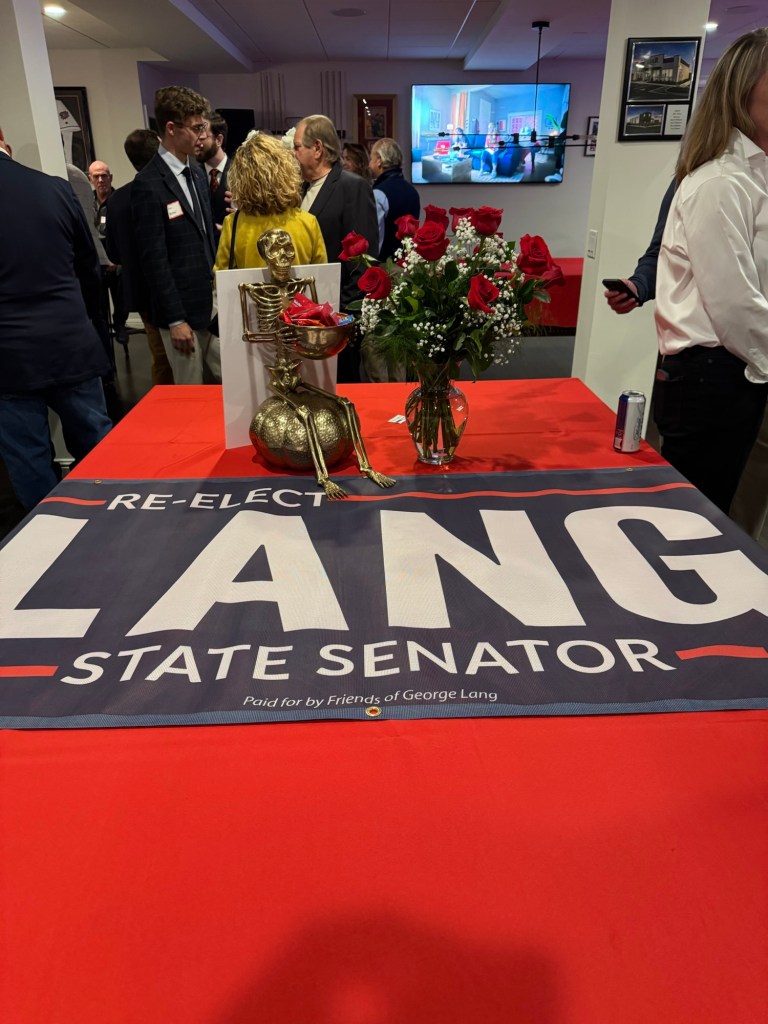
One of my many roles is Vice President of Manufacturing, Facilities, and Program Management at CTL Aerospace. At Senator George Lang’s fundraiser on November 1st, 2025, everyone I spoke with was primarily interested in an update on the Chapter 11 filing for the company.  After all, it wasn’t that long ago when Vivek Ramaswamy came to CTL to announce his run for Governor, so there were lots of people cheering that the company would find a way through to the other side of a challenging financial situation.  And to make matters worse, our case was not one of not having customers or income, but rather part of a widespread suppression campaign by our bank that many privately owned Tier 2 suppliers have experienced over the last decade.  Only in the case of CTL Aerospace, the ownership has shown a very rigorous desire to hold ownership rather than to be pushed aside, essentially by pirates who just wanted to raid our ship and steal all the plunder for a quick flip on the market, as a turn and burn, as they like to say.  The context and legal positioning regarding CTL Aerospace’s Chapter 11 proceedings, specifically the compelling basis for equitable subordination under 11 U.S.C. §510(c). The facts of our case, supported by documented creditor misconduct and predatory financial behavior, are now a very public matter, so the personalities involved are in the public record. 

CTL Aerospace—a 79-year-old aerospace manufacturer—has faced targeted financial suppression during a period of global supply chain instability. The aggressor in this case refused to extend forbearance, coupled with abrupt covenant enforcement and term manipulation, directly impaired our ability to procure raw materials and maintain operational continuity, resulting in massive damages for which everyone in the crowd I was speaking with was very interested. These actions were timed to coincide with industry-wide distress and reflect a pattern of bad faith and strategic impairment.  And the target against us was the “goodwill” of our business, the brand that we had built over a long period of time, the intangibles that are often overlooked in modern business because nobody prosecutes those kinds of cases anymore.  Even though they certainly should and would otherwise if the costs weren’t so prohibitively high.  Once you get into something like this, you see a real menace to the infrastructure of America that is determined to erode our manufacturing base by international banks, who, just like pirates, are seeking short-term plunder and quick sales on the hedge fund market.  When you attack a company’s “goodwill” through purposeful suppression techniques, which a bank can do since it is the mechanism through which all cash for a company flows, if it breaches that fiduciary trust, it can really wreck a business.  And as I found out during this process, it’s not just CTL Aerospace going through this kind of thing, but it’s common in the nation right now, as many private owners we know closely have had to step out of the game and get into the name change cycle every few years, which has caused all kinds of supply chain instability.  Again, much of this is now public record, and people have been following the case. They wanted me to provide an undercover perspective, as this is a very political problem, a matter of national security, which is undoubtedly the case at CTL Aerospace.

Case law supports our position, which is to fight back and seek damages for the massive financial impact on our company’s goodwill. In Citicorp Venture Capital, Ltd. v. Committee of Creditors Holding Unsecured Claims (In re Papercraft Corp.), 211 B.R. 813 (W.D. Pa. 1997), the court subordinated a creditor’s claim due to inequitable conduct that harmed other creditors and the debtor’s reorganization prospects. Similarly, In re Fabricators, Inc., 926 F.2d 1458 (5th Cir. 1991), emphasized that insider status and control over the debtor’s financial decisions can trigger subordination when used to the detriment of the estate.  And that was certainly the case at CTL Aerospace in really extraordinary ways.  But often, such defenses are never applied because by the time you go through the Chapter 11 process, a company doesn’t have the money to fight, which means you essentially have to hire $3000 per hour lawyers to run the case.  Because the banks certainly have those types on their side. In this case, the conduct—potentially documented in internal communications and covenant enforcement timelines—suggests a deliberate strategy to induce distress and position itself for asset acquisition or impairment accounting. We are actively pursuing discovery to uncover these records and may seek engagement with the DOJ or OCC for a lender liability review.  And based on the evidence we have and the timeline, which many have told us from an insider perspective is a classic case of “The Playbook,” would be an easy case to prosecute.  And likely a large settlement.  But that’s not where my mind is, or some of the people involved in this with me.  We want to see much deeper punishment for the entire financial industry, because this hasn’t just happened to us.  It’s a significant impediment to the economic backbone of the entire American manufacturing industry.  It’s not enough for us to survive, which we look poised to do.  However, to illustrate what was done. 

I explained it like this to many people at the fundraiser, and it was good to chat with Senator Bernie Moreno, who is doing a great job in D.C., and Congressman Warren Davidson who has been fantastic over the role of the Fed in government and is very cerebral in problem resolution, imagine you are a big deer with a full rack of antlers, a 10 pointer.  You have lived a long time, and it shows in the development of your antlers.  But one unfortunate day, you try to cross a road and you get hit by a car, breaking your hip or leg.  The driver keeps going.  You are lying there helpless.  Then a cringy pick-up truck comes along with a very loathsome character getting out, who sees an opportunity for a free mount on his cabin wall to brag about.  He sees the big deer with the whole rack and thinks it’s an excellent opportunity to kill the deer and hang the head on his wall for bragging rights.  He didn’t do the work of hunting the deer, but nobody will ever know.  Typically, in a business cycle, the deer would find a way to crawl away into the woods to heal and restore itself to life after such an accident.  In CTL’s business, a global supply chain issue put us under significant stress.  However, rather than helping CTL, the bank adopted a suppression strategy, essentially running the deer over with a car so they could hang the easy kill on their portfolio management wall for bragging rights and a path to easy money.  And from my perspective, based on the evidence, there is a prominent political position in all this, too, a hatred for the Trump administration and this notion of Making America Great Again.  Patriotic companies like CTL Aerospace, which are privately owned and conduct a significant amount of defense work, are prime targets.  They are the 10-point bucks that would look great on a very progressive trophy wall for financial institutions.  However, the facts of the case are sufficient.  It was a sloppy case on the opposition’s part; they made numerous mistakes that they thought they could hide behind expensive lawyers.  But the case law certainly doesn’t favor them. 

When everyone asked me what needs to happen in this case, I gave my point of view, which is prosecution on equitable subordination under 11 U.S.C. §510(c).  The attacker is demoted from a secured creditor, and their impairment play is wrapped up in a case law lesson.  However, the issue would have to be taken out of their control, as they currently hold a monopoly status in the courts and the financial mechanism.  At the very least, this is a case of predatory accounting that should serve as a cautionary lesson for similar cases.  And as long as it’s going on, it violates any notion that Ohio, or America, can sustain new business activity when these practices are hindering the behavior.  It’s a significant threat to our economy and national security.  Over the course of the last year, we spoke to a lot of people to get involved, and once they realized that CTL was in the squeeze play, they didn’t want to get wrapped up in the whole effort for fear of being sucked in themselves.  Like the deer example, they felt sorry for the deer but didn’t dare to help, fearing they would be poached themselves. 

I told the same story over and over, but it has a lot of details, so I wrote it down here, as most of the attendees are very interested in the topics I discuss.  This financial behavior is actually part of a larger collapse of political and social order that is occurring in most industries. This lack of respect for goodwill, for instance, is precisely why the Disney Company is struggling these days, as it owns intangibles such as movie rights, brand names, and amusement parks.  But they have, through woke corporate practices, destroyed the “goodwill” of the company that Uncle Walt built, and people wanted to be associated with.  Hedge fund people think in terms of tangibles, such as the head of a 10-point buck on their wall to brag about.  However, what truly adds value to the marketplace is the intangible of “goodwill.”  And that’s what the fight at CTL Aerospace is really about, and why so many people were interested in an update.  Most of these tier 2 companies don’t put up much of a fight.  Once wounded, they sell off to make the pain end as quickly as possible.  And that is what the opposition thought was going to happen here.  Only it didn’t, and the stand and fight part was not something they were quite ready for.  And that’s where the case is as of now. Significant reforms to the finance industry are needed, as this is certainly not the only example.  And suppose we really want to make America Great Again. In that case, we need to punish these predatory practices of fiduciary terrorism through “goodwill” destruction because it’s a real problem for virtually everyone whose lives are touched in terrifying ways by it.

Rich Hoffman

Click Here to Protect Yourself with Second Call Defense https://www.secondcalldefense.org/?affiliate=20707

The Lakota Levy of 2025 is Just the First Step: Until there are conservatives on the school board, public schools will seek tax increases

I’m really proud of the interview I did with Senator George Lang just ahead of the election of 2025.  George, first and foremost, is a friend of mine, so I tend not to drag him into things I’m involved in, and when it comes to politics, he and I agree on most everything.  The only significant difference is that he tends to be more considerate of people than I am.  He gives the other side more of a voice than I think they deserve, because he’s a nice guy.  During our interview, when he said that he thinks of Lakota school board members Julie Shaffer and Kelly Casper as friendly people, I disagreed with him.  I think between the two of them at a drunken school board meeting out of town, you couldn’t find enough clothes to half-dress one mannequin in the back of a Dillard’s.  Lakota’s school board is very liberal, and those two individuals lead it, which is embarrassing.  And expensive.  But George is good to everyone.  He has his opinions, but he gives everyone a fair shake, and I often don’t get to show that to people.  Neither does he, as the Majority Whip of Ohio’s Senate, a significant position with considerable influence.  He knows that around me, he can be himself and that I won’t run off and talk about anything that we discuss privately.  It was pretty unique that I got to put him on camera and talk for an hour about everything, from the upcoming Lakota levy to his battles with stage 4 cancer.  However, to clear up some misconceptions people had about George and a donation he was shown giving for the pro-Lakota levy efforts, we conducted an interview together that I think was better than he could have achieved anywhere, by any modern media method, news outlet, or podcaster. 

The only people who do the level of interview at the level of what George and I did were someone like Tucker Carlson or Joe Rogan, and I don’t think either of them could have done a better job.  George and I have known each other for several decades, but we had never sat down and just talked in front of the camera like that. What was captured was very useful to many people who wonder about various things.  I even asked George before the interview, “What’s off limits?  Is there anything you don’t want to talk about?”  He said quickly, “No, nothing, anything, and everything is on the table.”  So, we just talked like a couple of people and let others in to observe, and I was able to show them why I like George so much, even though he has evolved into a powerful politician and a prominent figure in Butler County politics.   And over the course of that interview, which was mainly about the upcoming Lakota levy, the most significant tax increase in the history of Ohio, I think he said a mouthful, which I completely agree with.  We all believe that the Lakota levy is going to crash and burn.  But don’t assume that this wasn’t their plan all along: to give the public a considerable blowout number and lose badly in an election.  Then, to say in the spring or summer that they listened to the public and came back with a reduced number.  Just because we defeated this levy in the 2025 election, it doesn’t mean it won’t come back in some form or another.  These public schools are only known for one thing: wasting tax money and asking the public for more, often on the back of property tax increases, to fund an overly progressive society. 

As George said, he thinks that the Lakota school board and its satellites, which include the treasurer and superintendent, are smart people.  I think what he calls “smart” is very maliciously manipulative, even evil.  But Genghis Khan was considered intelligent too, and so were most of the mass murderers of the world.  People thought that Jeffrey Dahmer was smart, even as he dismembered people in his kitchen and stored their remains in his refrigerator.  I would say that the Lakota school board members are very manipulative, which they have to be, given their liberal leanings.  Because people on the left often have to figure out how to get others to do things for them that they can’t do for themselves, they become pretty skilled at it over time.  However, as George and I reflected, this levy attempt is merely them dipping their toe in the water to see how the public reacts.  The details of that kind of election scope are why I think that interview is better than any other outlet could have pulled off, because we covered a lot of ground that most people would blank out after 15 minutes.  However, what we covered was essential to nearly every living, breathing human being, especially those residing in Butler County, Ohio.  It’s encouraging that in Butler County, an effective resistance to the Lakota tax increases has emerged in the No More Taxes group, which is fighting the Lakota levy.  And there are some really good people involved, and they have raised money not just for this levy, but for several upcoming ones as well.  However, for voters who have to show up and vote, they really need context on the scope of the problem.

So, how do we prevent more tax increases from being imposed in the future?  Well, don’t put liberals on the school board, and right now, there are four solid Democrats.  They call themselves other things to avoid the stigma of not being conservative in Butler County, but they are hard leftists on most policies.  And lefties love to waste money.  So, to stop wasting money, which Lakota already has a quarter of a billion dollar budget for a school, which I argue is just a dressed-up babysitting service, elect conservative school board members.  For this election, Ben Nguyen is the guy.  But in future elections, we need more people like Ben.  You need at least a three-vote majority, which we had for a while at Lakota.  And as soon as we didn’t, Lakota went for a tax increase.  That’s all they know to do—because they are liberals, and because liberals are never smart with money.  They might be manipulative, deceitful, scandalous, or monstrously unprincipled.  But they are spendthrifts who want to live off the efforts of others, starting with the real estate of Butler County.  Once Vivek Ramaswamy is the governor of Ohio next year, and Trump continues to dismantle the Department of Education and unleash the power of School Choice, all the public schools will have to change and do a lot more with less.  Their cost structure is significantly inflated due to their collective bargaining agreements, which stem from their union membership. We are all aware that unions often disrupt cost structures wherever they emerge, as they allow the mediocre to receive disproportionately high incomes.  And that is certainly the case at Lakota schools.  So, yes, the levy will likely fail in a big way on election day, provided people don’t sit on their hands and watch Netflix instead of voting.  People need to go out and vote.  But this is only step one.  People are going to have to dig in and fight to keep our taxes reasonably low until there is a new school board with conservatives on it.  Because, as sure as you are reading this, Lakota is planning the next levy, once the smoke clears from this one, because they have spent themselves into oblivion.  And only higher taxes can satisfy their never-ending hunger for more money to waste.

Rich Hoffman

Click Here to Protect Yourself with Second Call Defense https://www.secondcalldefense.org/?affiliate=20707

Investing in the Future: A huge growth sector is coming

I have to spend some time on A.I. because it’s probably the most significant psychological crisis our civilization will face over the next several thousand years.  And my wife is right there with many of you.  We were at Kings Island with the grandkids, and a Tesla Cybertruck was parked next to me, and I loved it.  I think it’s the best car on the road today, and I’m probably going to get one in the not-too-distant future.  But most people think it’s ugly and disgusting, and they believe that for a lot of deeply psychological reasons.  Yet it reminds me of the Starship, which is one of my favorite things in the world right now. As we discussed our opinions on Cybertruck, Starship 11 had just successfully landed in the Indian Ocean on a spectacular mission, which I was very excited about.  And the main reason was that it was a big, complicated rocket, but humans didn’t operate any of it.  Everything was autonomous.  All that engineering innovation took off from Texas and landed autonomously at precise points on the other side of the world.  And much of that technology has made its way into the Cybertruck and its autonomous driving.  And I would like that automatic driving feature.  My lifestyle would greatly benefit from it.  I could get a lot done with all that commuting around, which usually requires physical driving.  Which many people aren’t ready to accept.  But I would encourage everyone to shift a gear and get with the program, because a lot of exciting stuff is coming.  And human beings will be getting a lot busier —not less so —because vast amounts of the economy will be unlocked, and humans will benefit, not find themselves replaced. 

And my wife and I were compelled to have this discussion, as I have been having it with many people lately about labor.  I’m a 24/7 guy, certainly not a Monday-through-Friday 8-hour-max person.  I hate driving around on a Saturday and seeing so many manufacturing facilities closed up for the day.  I want to see more 7-day-a-week operations everywhere to maximize economic output.  That doesn’t mean people need to do all that work.  But sandbagging potential revenue when there is work to be done because some human doesn’t want to do it, or is trying to stuff labor hours into a box of convenient assumptions, is not the wave of the future.  More work, more often, is the new standard.  And what all this technology I’m talking about leads to is the new market trend of Tesla Optimus robots, which are being built rapidly, and the Gen 3 designs have nearly full articulation in the hands.  They will be about half as fast as a human on labor-intensive tasks, but they will be able to do them around the clock without complaint, seven days a week.  While people are in church on Sunday, Optimus robots will still be able to perform work.  And that is exciting because that means that humans will be able to settle space without having to do all the dangerous work on Starship.  In a few short years, Starships will be able to fly into space every day, and there will be thousands of them.  And none of them will likely have human beings on them.  Optimus robots, Gen 3 and beyond, will be the first to Mars, and by the time humans arrive in those remote places, there will already be infrastructure in place, built by robots and A.I., to make the trip much safer and easier.

I have been very impressed with the Grok A.I. program developed by Elon Musk’s team at the X platform.  It has been a strange chain of events: Musk bought Twitter and turned it into a free-speech platform, which played a significant role in getting Trump’s message out so people could vote for him.  But more than anything, it has captured all the information people have put into it, building a very sophisticated A.I. program that I already think of as a kind of personal C-3PO from Star Wars.  It’s swift at research and at conversational communication.  And that development of A.I. will roll straight into making the Optimus robots much more human-like and effective right out of the box.  I think all this technology will help human beings, not hurt them.  It will be more of a Star Wars relationship than 2001: A Space Odyssey or The Terminator.  Going back to the Cybertruck, the kind of hatred it generates is a reminder that the future has arrived and people are not ready for it, with such a radical design change that completely alters the aesthetic of what transportation is supposed to do.  Not only does it look different, but it acts differently, and it is more of an A.I. companion than a car, and that really rattles people, including my wife.  She is not happy about these changes, but I think it’s funny.  Because she’s not alone, we’re rapidly redefining many things, and in just a few short years, we will be looking at a very different economy, with most of the growth happening in space. 

As I talk to market types, that’s what I’m saying to those who want to listen: the 24/7 day work week is the future, and the growth is in space.  Starship 11 showed that SpaceX can launch and land a reusable craft exactly where they want it, without fear of human error.  It’s all autonomous.  And that means that soon, A.I. will be able to take over air traffic control and coordinate all these vehicles with great precision, without ever having to stop for a coffee break.  So, human limits won’t hold the economy back; it will grow enormously by trillions of dollars.  However, all that money generated won’t be spent by the A.I. technology.  They will have no use of money, only the currency of energy.  Humans will have a lot more leisure time and will see vastly improved incomes for the time they do commit to the job.  Which is why I like Cybertruck —it respects my time and lets me do so much more in a 24-hour day.  Work will greatly expand, but leisure time for humans will become much more manageable.  Humans will go to Mars and the Moon.  But to colonize them, it will essentially be A.I. and Tesla robots that build the vast infrastructure and cities needed to make human visits much safer and more reliable.  Robots, not humans, will perform the dangerous work.  And there will be many thousands and thousands of robots, adding to our labor force by necessity.  And I think it’s all very exciting and significant.   But for many, like my wife, they are very skeptical and see all this new technology as a serious threat to their very life essence.  But that’s what’s coming.  That’s what I’m telling everyone is the future of aerospace.  There will be lots of opportunities for great adventure and vast work, and it all becomes possible and reasonably achievable with that last Starship launch that was nearly perfect.  Grok’s advancements, a very sophisticated A.I. program, are directly feeding the Optimus robot’s development.  And that all points back to the practical use of the new Cybertruck.  A glimpse of the future, today.  And it might be scary to a lot of people.  But it’s coming, ready or not.

Rich Hoffman

Click Here to Protect Yourself with Second Call Defense https://www.secondcalldefense.org/?affiliate=20707