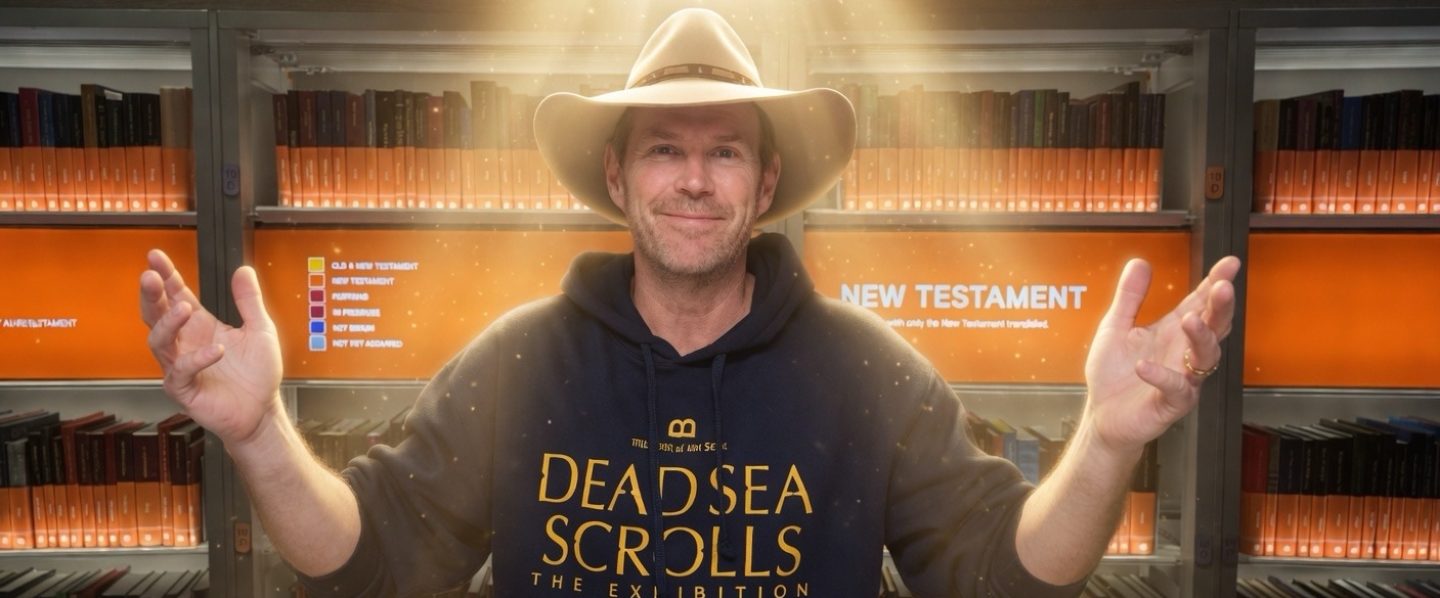
The Wonderful Dinosaur Store on the Space Coast: What good economies produce

The Dinosaur Store in Cocoa Beach, Florida, stands as a remarkable testament to personal passion, entrepreneurial spirit, and the enduring human fascination with the ancient world. Nestled at 250 West Cocoa Beach Causeway, just a short distance—literally a football’s throw—from the iconic Ron Jon Surf Shop, this family-run establishment has evolved from a modest fossil and mineral shop into one of the Space Coast’s most captivating attractions. For decades, it has drawn families, tourists, and enthusiasts alike, blending commerce with education in a way that feels refreshingly authentic in an era often dominated by corporate chains.

The story begins in November 1996, when the store first opened its doors as a small retail space focused on fossils, minerals, geodes, and related curiosities. Founded by Steve and Donna Cayer, it capitalized on a surge of interest in prehistoric life sparked by cultural phenomena like the 1993 blockbuster Jurassic Park. Visitors flocking to Cocoa Beach for sun, surf, and the nearby Ron Jon Surf Shop—a massive complex synonymous with Florida beach culture—would often wander over to pick up unique souvenirs: polished ammonites, shark teeth, or perhaps a necklace strung with genuine dinosaur bone fragments. The location was ideal, perched in a high-traffic tourist corridor along State Road 520, where beachgoers and space enthusiasts from nearby Cape Canaveral mingled.

What set the Dinosaur Store apart from typical souvenir shops was its authenticity. The family didn’t merely resell imported trinkets; they traveled extensively during the off-season, when summer crowds thinned and families headed to Disney World or other attractions. Steve and Donna ventured to fossil-rich sites across the globe, including the badlands of Montana, where heavy rains routinely erode sedimentary rock and expose new specimens. They collected ethically, often from permitted digs, and brought back high-quality pieces: Spinosaurus teeth, Allosaurus claws, brachiopods, and meteorites. These items formed the backbone of their inventory, supplemented by jewelry crafted from dinosaur fossils—pendants, earrings, and rings that turned ancient remnants into wearable history. Customers could purchase a Spinosaurus tooth or a slice of petrified wood table, items that carried a tangible connection to deep time.

Over the years, the store thrived. The post-Jurassic Park boom turned it into a lucrative family business, profitable enough to support not just daily operations but ambitious dreams. Rather than resting on success—perhaps buying a condo, a boat, or indulging in lavish vacations—the Cayers channeled their earnings into something far more enduring. They acquired property and constructed a multi-story building dedicated to their passions. What began as a single-floor operation in a strip mall setting expanded into a three-story edifice, transforming the ground level into a sprawling gift shop and adventure zone while reserving the upper floors for something extraordinary: the Museum of Dinosaurs and Ancient Cultures.

The museum opened to the public in April 2017 (on Earth Day) after roughly eight years of planning and development, following the store and Adventure Zone’s launch on the first floor in March 2009. It occupies approximately 20,000 to 26,000 square feet across the second and third floors (sources vary slightly on exact footage, but the scale is immense for a private venture). It operates as a nonprofit entity, with proceeds supporting preservation, education, and ongoing exhibits. Entry requires a ticket purchased downstairs (around $16 for adults, with discounts and combo options including the Adventure Zone downstairs), and last admissions are timed to ensure a full experience before closing.

The museum’s design is ingeniously immersive. Upon taking the elevator up, visitors enter a vast, open space where the second floor soars to the ceiling, allowing for life-sized dinosaur skeletons and models that dominate the view. A standout is the 46-foot Giganotosaurus skeleton, one of the largest theropod displays in a private setting. Floor-to-ceiling mounts include roaring recreations, fleshed-out models, and over 60 dinosaur skeletons alongside more than 80 taxidermy specimens spanning 200 million years of natural history. The layout encourages looking upward, with necks and heads stretching toward the rafters, creating a sense of awe akin to standing beneath towering Jurassic giants. Authentic fossils abound—real bones, claws, and teeth sourced from the family’s expeditions—blended seamlessly with high-quality replicas for educational impact. Additional features include a Mineral Cave with ultraviolet-reactive crystals and a Dawn of Man section with paleolithic tools and hominid skull casts.

The third floor adds a mezzanine-like platform that zigzags through the space, offering elevated views of the dinosaur exhibits below while transitioning into human history. Here, the focus shifts to ancient cultures, bridging paleontology with anthropology and archaeology. Dedicated galleries showcase regions worldwide: ancient Egypt features a detailed replication of King Tutankhamun’s tomb, complete with replicas of artifacts and mummified animals; China includes a diorama of Terracotta Army soldiers; Mesoamerica highlights Aztec and Mayan elements, such as Chichen Itza-inspired structures; and additional sections cover tribal Africa and New Guinea. Authentic artifacts—pottery, tools, jewelry—sit alongside taxidermy from relevant regions, creating a narrative that connects prehistoric life to the rise of human civilizations. The exhibits emphasize how cultures emerged over millennia, often in relation to the natural world preserved in the fossil record.

This integration is what makes the museum unique. While major institutions like the Field Museum in Chicago, the Smithsonian, or the British Museum boast world-class collections, they are often vast, bureaucratic, and spread across enormous campuses. The Dinosaur Store’s museum achieves comparable quality on a more intimate, privately funded scale. It feels personal—born from passion rather than institutional mandate. The Cayers’ love for digging, collecting, and sharing shines through: they didn’t stop at selling fossils; they built a bridge between dinosaurs and the ancient peoples who might have encountered similar wonders in myth or reality. In doing so, they’ve created a place where visitors can ponder the history of life on Earth—from extinct megafauna to the ingenuity of pyramid-builders and terra-cotta warriors.

For many families, including my own, the Dinosaur Store has been a recurring touchstone. Over the years, trips to the Space Coast—often tied to Kennedy Space Center visits or beach days—included obligatory stops here. My daughter once bought me a Spinosaurus tooth as a gift, a small but meaningful token that still sits on my shelf, evoking memories of laughter, wonder, and the simple joy of discovery. We’d browse the shop, admire the geodes and meteorites, then head out with a new trinket: a dinosaur bone necklace or a polished fossil slab. Those visits built family traditions, turning a roadside attraction into something heartfelt.

A decade passed without a return—life shifted to other pursuits, including following developments in the space program during periods of stagnation. But with renewed activity under recent administrations, the pull of the Space Coast returned in 2026. Stepping back into the store felt like greeting old friends. The family behind the counter remembered familiar faces, sharing stories of their travels and the museum’s growth. Ascending to the upper floors revealed the jaw-dropping evolution: the towering skeletons, the meticulous cultural dioramas, the seamless flow between prehistory and antiquity. It surpassed expectations—better than many celebrated exhibits elsewhere, achieved through private ambition and capitalist ingenuity.

This success story underscores a broader point about passion in free economies. In places like the Space Coast, with its vibrant tourism, surf culture, and proximity to high-tech endeavors, individuals can turn hobbies into legacies. The Cayers could have cashed out comfortably, but they invested in education and wonder. Their museum doesn’t just display bones and artifacts; it invites reflection on deep time, cultural continuity, and humanity’s place in the cosmos. In a world where many pursuits prioritize profit alone, here is a rare example of going above and beyond—creating something magnificent not for acclaim, but because the topic demands it. The project reportedly cost around $3.7 million to develop, with an estimated $3 million in artifacts at opening, underscoring the scale of their commitment.

If you find yourself near Disney, the beaches, or Cape Canaveral, make the detour. Park (free, conveniently located), grab a Ron Jon T-shirt if you like, then step into the Dinosaur Store. Browse the ground-floor treasures—perhaps snag a Spinosaurus tooth or a fossil necklace—then head upstairs. The museum awaits: a private passion project that rivals global institutions in ambition and execution. You’ll leave with a renewed appreciation for the ancient past, the power of dedication, and the simple thrill of discovery.

For those eager to explore further, the official website offers details on hours, tickets, and exhibits. Reviews on platforms like TripAdvisor and Google (consistently 4.4+ stars from thousands) echo the sentiment: it’s a hidden gem worth the trip. Academic resources on paleontology provide deeper context on fossils, while studies on ancient cultures offer complementary reading. The museum itself serves as an accessible gateway, proving that wonder can thrive in unexpected places when fueled by genuine enthusiasm.

Footnotes

¹ The Museum of Dinosaurs and Ancient Cultures opened in April 2017.¹

² The museum spans 20,000–26,000 square feet, with variations in reported size across sources.²

³ Development took approximately eight years, following the first-floor openings in 2009.³

⁴ Estimated cost of $3.7 million, with $3 million in artifacts at opening.⁴

⁵ Founders Steve and Donna Cayer.⁵

⁶ Giganotosaurus skeleton measures 46 feet.⁶

⁷ Over 60 dinosaur skeletons and 80+ taxidermy specimens.⁷

⁸ Nonprofit status supports preservation and education.⁸

⁹ Google rating of 4.4 stars from over 2,300 reviews.⁹

Bibliography

•  The Dinosaur Store. “Home.” Accessed March 2026. https://dinosaurstore.com/.

•  The Dinosaur Store. “Museum of Dinosaurs & Ancient Cultures.” Accessed March 2026. https://dinosaurstore.com/museum.

•  The Dinosaur Store. “About Us.” Accessed March 2026. https://dinosaurstore.com/about-us.

•  Wikipedia. “Museum of Dinosaurs and Ancient Cultures.” Accessed March 2026. https://en.wikipedia.org/wiki/Museum_of_Dinosaurs_and_Ancient_Cultures.

•  TripAdvisor. “The Dinosaur Store (2026).” Accessed March 2026. https://www.tripadvisor.com/Attraction_Review-g34145-d2285722-Reviews-The_Dinosaur_Store-Cocoa_Beach_Brevard_County_Florida.html.

•  Visit Space Coast. “Museum of Dinosaurs & Ancient Cultures.” Accessed March 2026. https://www.visitspacecoast.com/profile/cocoa-beach/things-to-do/museum-of-dinosaurs-ancient-cultures.

•  Florida Today. “This Cocoa Beach spot pays tribute to dinosaurs, ancient cultures.” October 9, 2025. https://www.floridatoday.com/story/news/hidden-gems/2025/10/09/beachside-brevard-building-houses-massive-ancient-cultures-dino-exhibit/86170682007.

•  USA Today. “Museum of Dinosaurs and Ancient Cultures opening in Cocoa Beach.” April 20, 2017. (Referenced in Wikipedia citation).

Rich Hoffman

More about me

Click Here to Protect Yourself with Second Call Defense https://www.secondcalldefense.org/?affiliate=20707
The Clear Choice of Michael Ryan: Having the guts to be successful

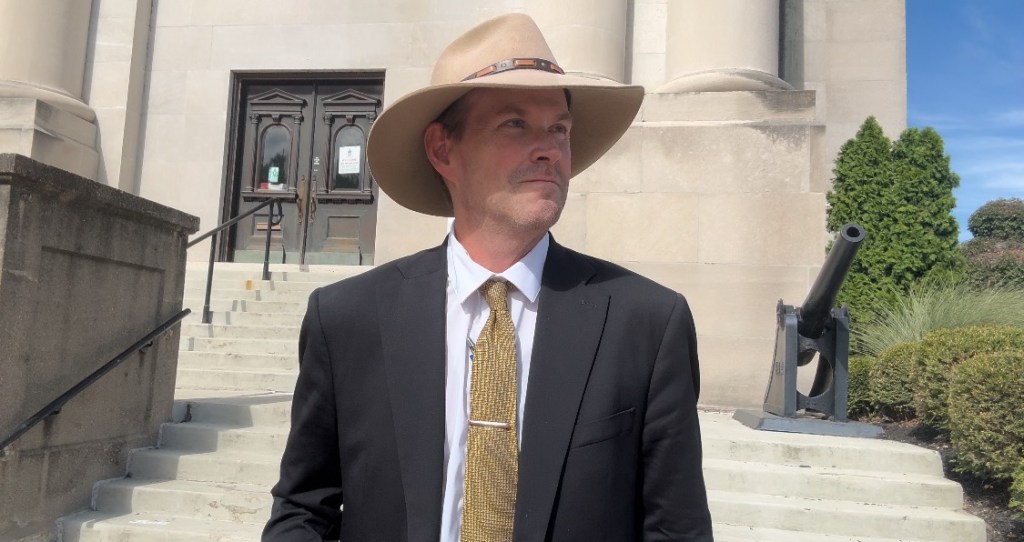
The last day of February 2026 marked a pivotal moment in Butler County politics with the official launch of Michael Ryan’s “Boots on the Ground” campaign for Butler County Commissioner. Held amid enthusiastic support from local Republicans, the event drew a strong turnout of volunteers, elected officials, and community members ready to canvass neighborhoods, distribute materials, and build momentum ahead of the May 5 primary and the November general election. This gathering was more than a routine campaign kickoff; it represented a broader call for generational renewal in conservative leadership, fiscal responsibility, and unapologetic advocacy for free-market principles in one of Ohio’s key counties.

Butler County, encompassing cities like Hamilton, Middletown, Fairfield, and Oxford, has long been a Republican stronghold in southwest Ohio, though not without its internal tensions and occasional Democratic inroads through local races. The county commissioners oversee a budget in the hundreds of millions, managing everything from infrastructure and economic development to public safety and social services. The position demands not just administrative competence but the ability to unite diverse stakeholders—townships, cities, businesses, and residents—while resisting the temptations of prolonged incumbency that can lead to complacency or overreach.

The current dynamics in the 2026 race stem from dissatisfaction with the status quo. Incumbent Commissioner Cindy Carpenter, who has held the office since her first election around 2011 and has been re-elected multiple times, faced mounting criticism for her tenure. Critics pointed to a perceived lack of strong fiscal oversight, strained relationships with constituents and colleagues, and a series of personal and professional controversies. Notably, in November 2025, Carpenter was involved in a heated incident at Level 27, an apartment complex near Miami University in Oxford, where her granddaughter resided. The complex manager accused her of using inappropriate and allegedly racist language, leveraging her political position for intimidation, and making an obscene gesture during a dispute over rent and eviction matters. Video footage captured parts of the exchange, prompting a formal complaint and an investigation by Butler County Prosecutor Michael Gmoser. In December 2025, the prosecutor cleared Carpenter of criminal misconduct, stating that her behavior did not rise to that level and questioning the complainant’s credibility. While no charges resulted, the episode fueled perceptions of poor judgment and an inability to handle pressure gracefully under public scrutiny.<sup>1</sup>

Another contender in the race, Roger Reynolds, brought his own baggage. A longtime political figure who served as Butler County Auditor from 2008 until his removal following legal issues, Reynolds was convicted in December 2022 on a felony count of unlawful interest in a public contract related to corruption allegations. He was sentenced to community control, a fine, and jail time (stayed pending appeal). The conviction was overturned by an appeals court in 2024, restoring his eligibility to hold office, but the Ohio Supreme Court declined to restore him to the auditor position in a related quo warranto case in September 2024. The episode cast a long shadow over his reputation, with legal battles, public scrutiny, and associations with controversy making him a polarizing figure, even among some Republicans who preferred fresher leadership unencumbered by such history.<sup>2</sup>

Into this landscape stepped Michael Ryan, a 40-year-old lifelong Butler County resident and former Hamilton City Council member. Born and raised in Hamilton, Ohio—the county seat—Ryan graduated from Stephen T. Badin High School in 2003. He earned a B.A. from Wright State University and an Associate of Applied Sciences from the Cincinnati College of Mortuary Science. Following in his father’s footsteps—his father, Don Ryan, served as former Hamilton Mayor—Michael entered public service by winning a seat on Hamilton City Council in 2017, where he was the top vote-getter and subsequently selected as Vice Mayor for two years under the city’s charter. He repeated this success in 2021, again topping the ticket and serving another term as Vice Mayor. During his eight years on council (he opted not to seek a third term in 2025 to pursue the commissioner race), Ryan was credited with supporting initiatives that fostered job creation, economic revitalization in Hamilton—a city historically challenged by manufacturing decline—and collaboration with businesses and residents. He played a key role in taxpayer advocacy efforts, including opposition to certain aspects of the Miami Conservancy District that threatened assessment increases, and contributed to projects like historical preservation (e.g., the train depot) and potential infrastructure improvements such as Amtrak stops.<sup>3</sup>

Professionally, Ryan has worked full-time for over a decade as a life insurance underwriter for Western & Southern Financial Group. He is married to his wife Amanda, with whom he has been together for seven years at the time of the campaign launch; the couple resides in Hamilton with their two pugs, Piper and Jackson. Ryan’s family-oriented life, stable career, and emphasis on faith and conservative values have been highlighted as reflective of his character and leadership style.<sup>4</sup>

In May 2025, Ryan announced his candidacy for the Butler County Commissioner seat held by Carpenter. In January 2026, the Butler County Republican Party delivered a resounding endorsement to Ryan, with 71% of the central committee vote (118-42 over Reynolds, with some abstentions), a margin described as “historic” by party leaders. This overwhelming support, including backing from figures such as Auditor Nancy Nix, State Representative Thomas Hall, State Senator George Lang, U.S. Congressman Warren Davidson (who endorsed him in February 2026), and others like Treasurer Michael McNamara, signaled a clear preference for new leadership over incumbency or past controversies. The endorsement eliminated ambiguity: Ryan was the official Republican choice heading into the primary.<sup>5</sup>

The February 28, 2026, launch event exemplified this momentum. Attendees included Ryan’s wife Amanda, his brother Chris, his boss from Western & Southern, and elected officials like Thomas Hall, Nancy Nix, and others. The day began with a prayer for protection and peace, particularly for U.S. soldiers amid global tensions, followed by a moment of silence to honor service members. Speakers emphasized themes of inevitable, beneficial change—drawing analogies from nature where stagnation gives way to resilient growth—and applied them to politics. One introducer highlighted Ryan’s composure, integrity, and proven track record in defending against unjust policies, noting how he mentored others in collaborative advocacy. The event stressed grassroots activation: door-knocking, sign placement, and voter conversations focused on simple questions like “Are you ready for change?” or “Are you okay with the status quo?”

Ryan himself spoke directly, thanking supporters and outlining his vision. He called for engagement to place someone in office who would fight for core values—fiscal responsibility, strong communities, and a voice for every corner of Butler County. He framed the race as preparation for 2050 and beyond, building a winning team that delivers results rather than perpetuating old patterns. With early voting starting April 5 and the primary on May 5, he urged activation to build momentum against Democrats already organizing. The speech closed with gratitude, a call for volunteers, and patriotic blessings.

The enthusiasm at the event was palpable. Volunteers rallied not just for a candidate but for a shift in Republican identity: away from apologetic or conciliatory postures toward Democrats and toward confident, unapologetic advocacy for success rooted in hard work, family values, church involvement, and economic freedom. Ryan embodies this next generation—articulate, family-oriented (with a supportive wife and stable home life signaling character), and tied to practical successes in Hamilton. Unlike predecessors who plateaued in interpersonal skills or succumbed to power’s pitfalls, Ryan appears equipped to unite rather than divide, recruit moderates through ideas rather than coercion, and extend Butler County’s economic strengths.

This campaign reflects larger national trends in the post-Trump Republican Party, often termed MAGA conservatism. Ohio has seen figures like JD Vance rise nationally, with speculation about future leaders like Vivek Ramaswamy in statewide roles. Locally, Ryan’s approach rejects the old unspoken accommodations where Republicans “play nice” to avoid seeming mean or greedy. Instead, it embraces capitalism without apology, viewing success—decent homes, stable families, business ownership—as virtues to celebrate, not excuses to atone for. Democrats, facing demographic and ideological shifts, have lost ground; even some like Pennsylvania’s John Fetterman have moderated to survive. In Butler County, any Democratic gains (as in certain trustee races) often relied on obfuscating party labels, tactics unlikely to work against a well-endorsed, visible conservative like Ryan, especially with potential high-profile support from Trump in midterms.

The commissioner’s role, managing vast resources, requires someone who avoids scandals, handles relationships deftly, and prioritizes growth. Long tenures can breed entitlement; Ryan’s relative youth and fresh perspective promise renewal without inexperience. His association with successes in Hamilton—economic rebirth, taxpayer advocacy—suggests he can sharpen county-wide efforts.

As volunteers fan out in the coming weeks, the race tests whether Butler County voters embrace this change: from ambiguity to clarity, from incumbency’s risks to new leadership’s promise. Michael Ryan stands as the embodiment of that shift—a conservative not afraid to win, rooted in community, and ready to lead Butler County toward a more prosperous, principled future. In an era demanding bold stewardship, his campaign offers a compelling case that the best is yet to come.

Footnotes

1.  See coverage of the November 2025 incident and December 2025 clearance: “Butler County commissioner cleared of misconduct despite heated exchange caught on camera,” WKRC (Dec. 4, 2025); “Prosecutor clears Butler County commissioner of misconduct after apartment dispute,” Journal-News (Dec. 3, 2025); prosecutor’s letter via local media.

2.  On Reynolds’ conviction, overturn, and related cases: “After overturned conviction, Roger Reynolds is running for commissioner,” Cincinnati Enquirer (Sep. 8, 2025); Ohio Supreme Court decision in State ex rel. Reynolds v. Nix (Sep. 25, 2024); Attorney General sentencing release (Mar. 31, 2023).

3.  Ryan’s council service and achievements: “Hamilton councilman Ryan to run for Butler County Commission,” Journal-News (May 19, 2025); campaign site ryanforbutler.com; announcements crediting work on economic projects and Miami Conservancy opposition.

4.  Personal biography: From official campaign website ryanforbutler.com (“Faith and Family” section); family ties noted in “Newcomer Michael Ryan becomes Hamilton’s vice mayor,” Journal-News (Dec. 28, 2017).

5.  Endorsement details: “County GOP backs new face for commissioner over incumbent,” Cincinnati Enquirer (Jan. 10, 2026); “Butler County GOP puts support behind county commission candidate Ryan,” Journal-News (Jan. 12, 2026); Warren Davidson endorsement release (Feb. 23, 2026) via campaign Facebook.

Rich Hoffman

More about me

Click Here to Protect Yourself with Second Call Defense https://www.secondcalldefense.org/?affiliate=20707
Fortune Favors the Bold: Attacking Iran had to happen

To answer the question of whether these events will hurt—or were worth the cost—the answer is uncomfortable but clear: this confrontation with Iran was inevitable. The threat was never theoretical. It was already present, already embedded, already metastasizing beneath the surface of polite society. What decisive action does is not create violence; it exposes where it has been hiding. When hostile regimes and their ideological proxies are allowed to operate unchallenged, they do not become peaceful—they become bolder. The choice is never between peace and conflict; it is between managed confrontation now or uncontrolled destruction later. What we are witnessing is the surfacing of a danger that already existed, and that visibility matters because it allows societies to identify, isolate, and ultimately dismantle networks that thrive only in darkness.

The regime change operation in Iran, which began with joint U.S.-Israeli strikes on February 28, 2026, has escalated dramatically into a full-scale conflict with profound implications for global security, domestic U.S. politics, and the broader fight against masked authoritarianism. President Donald Trump’s decision to target not just nuclear and military infrastructure but also key leadership—culminating in the confirmed death of Supreme Leader Ayatollah Ali Khamenei—marks a decisive break from decades of containment and diplomacy. This action, framed by Trump as the “single greatest chance for the Iranian people to take back their Country,” aligns with his executive approach: rapid, results-driven intervention over endless negotiations.

Intelligence from the CIA, shared with Israeli partners over months, enabled precise strikes that eliminated Khamenei along with approximately 48 senior leaders, including IRGC commanders and other officials, in the initial wave. U.S. forces have sunk at least nine Iranian warships, destroyed naval headquarters, and hit over 1,000 targets, including ballistic missile sites with B-2 stealth bombers armed with 2,000-pound bombs. Trump has described operations as “ahead of schedule” and “moving along very rapidly,” with potential continuation for weeks if needed. He has expressed openness to talks with Iran’s interim leadership council—comprising figures like President Masoud Pezeshkian and judiciary chief Gholamhossein Mohseni Ejehi—but warned of overwhelming force against further escalation.

Iran’s retaliation has been swift and widespread: missile and drone barrages on Israel, U.S. bases in Bahrain, Qatar, UAE, Kuwait, Jordan, Saudi Arabia, and others, killing three U.S. service members and wounding five seriously. Civilian casualties include reports of over 100 girls killed near a military site in one strike (per Iranian claims), blasts in Tehran, and disruptions to oil shipments and airports like Dubai. Israel has countered with new waves targeting Tehran and the internal security apparatus, such as Basij bases, involved in suppressing recent protests.

This exposes the regime’s true nature: a theocratic facade over Marxist-statist control since 1979, blending radical Islamism with centralized economic repression and proxy terrorism via the Axis of Resistance (Hezbollah, Houthis, Hamas). Long appeased to avoid violence, these elements are now lashing out openly. In the U.S., heightened alerts follow, with warnings of potential proxy activations like Hezbollah or Iraqi militias. Isolated incidents—stabbings, assaults—linked to radical Islamist actors have emerged post-strikes, reflecting latent threats provoked into visibility. This mirrors the “beast within” dynamic: when leadership is decapitated, desperate reactions expose networks for confrontation in wartime conditions.

Parallel events reinforce the pattern. In Mexico, the February 22-23, 2026, killing of CJNG leader Nemesio “El Mencho” Oseguera Cervantes—via a U.S.-aided Mexican raid—sparked unprecedented violence: road blockades, arson, attacks killing 25 National Guard members across 20+ states, stranding tourists, and disrupting infrastructure. Cartel reprisals, including 85+ burning blockades, highlight criminal-socialist entanglements exploiting weak governance. Trump’s pressure compelled Mexican action, weakening narco-influence tied to broader destabilization.

Venezuela’s reforms, under similar pressure, dismantle socialist structures that serve as Chinese leverage points in the hemisphere. These interconnected victories target the global Marxist push—hidden behind religion (Iran), race/feminism (West), or “fairness” rhetoric—responsible for millions dead and stifled prosperity since the 1970s.

Capitalism remains the counter: hard work yields upward mobility—no central planners ban “ice cream shops” or micromanage lives. Dubai and Abu Dhabi thrive despite Islamic roots when free from tyranny, proving compatibility with enterprise.

Politically, this bolsters Republicans. Voters reward bold winners delivering resolutions over complacency or UN globalism. Regime change in Iran, cartel disruptions in Mexico, and Venezuelan reforms project strength; people favor progress amid occasional downsides. Strong Trump-aligned Republicans will gain in the 2026 midterms; indecisiveness loses. Domestically, Democrats defend these ideologies, but freedom-seekers back opportunity.

The trajectory favors self-rule and honest elections, inspiring emulation in Hong Kong or elsewhere, weakening China’s proxies. Trump’s short-window decisiveness delivers what voters elected: America leading freedom’s advance.

The timing of recent domestic attacks underscores this reality. In Washington State, a brutal multiple‑fatality stabbing incident shocked the public, reminding Americans how fragile civil order can be when violent ideologies or psychological radicalization go unchecked—regardless of the specific motive still under investigation 1. More strikingly, in Austin, Texas, a mass shooting on March 1 left three people dead and at least fourteen wounded, prompting the FBI’s Joint Terrorism Task Force to investigate a potential nexus to terrorism. Federal authorities have stated there were “indicators” associated with the suspect and his vehicle suggesting ideological motivation, though the investigation remains ongoing and conclusions have not yet been finalized 23. These events did not occur in a vacuum. They occurred amid heightened global tensions and reflect the reality that ideological violence does not respect borders. When regimes built on terror feel pressure abroad, their sympathizers and offshoots often react domestically—not because they are newly inspired, but because they are newly threatened.

Politically, this will not punish decisive leadership—it will reward it. History shows that voters do not rally around hesitation; they rally around clarity and resolve. The Trump administration’s actions project strength at a moment when ambiguity would invite chaos. Yes, it is tragic that innocent people suffer—but innocent people have been suffering all along. The difference now is not the presence of violence, but the presence of attention. What was once ignored or reframed is now visible, named, and confronted. This is the hard truth of peace: it is not achieved by accommodation with evil, but by facing it directly, exposing its mechanisms, and denying it safe harbor. That is the path being taken now, and it is the only one that leads anywhere other than decline.

Footnotes

1.  Supreme Leader Ayatollah Ali Khamenei was confirmed killed in U.S.-Israeli strikes on February 28, 2026, per Iranian state media and U.S. sources.<sup>1</sup>

2.  Trump described operations as “ahead of schedule” in a CNBC interview, March 1, 2026.<sup>2</sup>

3.  U.S. forces sank nine Iranian warships and hit over 1,000 targets, including ballistic missile sites.<sup>3</sup>

4.  Three U.S. service members killed, five wounded in Iranian retaliatory strikes on regional bases.<sup>4</sup>

5.  Iran launched barrages on Israel and U.S. allies in Bahrain, Qatar, UAE, etc.<sup>5</sup>

6.  Mexico: El Mencho was killed on February 22-23, 2026; cartel violence killed 25 National Guard members, and there were widespread blockades.<sup>6</sup>

7.  CIA intelligence enabled Khamenei strike targeting a senior leaders’ meeting.<sup>7</sup>

8.  Interim Iranian leadership council formed amid power vacuum.<sup>8</sup>

9.  Protests and violence in Pakistan, India (Kashmir), etc., following Khamenei’s death.<sup>9</sup>

10.  Trump’s call for Iranian uprising and regime change in Truth Social posts and addresses.<sup>10</sup>

Bibliography

•  CNN. “February 28, 2026 — US-Israeli strikes on Iran.” Live updates. https://www.cnn.com/world/live-news/israel-iran-attack-02-28-26-hnk-intl

•  CNBC. “Live updates: Trump tells CNBC that Iran military operations are ‘ahead of schedule’.” March 1, 2026. https://www.cnbc.com/2026/03/01/us-iran-live-updates-khamenei-death-trump-gulf-strikes.html

•  CBS News. “U.S. confirms 3 troops killed in Iran war as Trump says operation is ‘ahead of schedule’.” March 1, 2026. https://www.cbsnews.com/live-updates/us-iran-war-israel-supreme-leader-khamenei-funeral-day-2

•  NPR. “Trump warns Iran not to retaliate after Ayatollah Ali Khamenei is killed.” March 1, 2026. https://www.npr.org/2026/03/01/nx-s1-5731333/iran-us-israel-strikes

•  The New York Times. “Iran Says Supreme Leader Killed in U.S.-Israeli Strikes.” February 28-March 1, 2026. https://www.nytimes.com/live/2026/02/28/world/iran-strikes-trump

•  Reuters. “US-Israeli strikes kill Khamenei, and Iranian retaliation shakes the Gulf.” February 28-March 1, 2026. https://www.reuters.com/world/iran-crisis-live-explosions-tehran-israel-announces-strike-2026-02-28

•  Understanding War (ISW). “Iran Update Morning Special Report: March 1, 2026.” https://understandingwar.org/research/middle-east/iran-update-morning-special-report-march-1-2026

•  CNN. “February 23, 2026 – Mexico cartel leader ‘El Mencho’ killing sparks chaos.” https://www.cnn.com/world/live-news/mexico-el-mencho-killed-travel-chaos-02-23-26-intl-hnk

•  CSIS. “Criminal Kingpin ‘El Mencho’ Is Dead, What Comes Next?” February 26, 2026. https://www.csis.org/analysis/criminal-kingpin-el-mencho-dead-what-comes-next

•  Wikipedia. “2026 Jalisco operation.” (Timeline overview). https://en.wikipedia.org/wiki/2026_Jalisco_operation

Rich Hoffman

More about me

Click Here to Protect Yourself with Second Call Defense https://www.secondcalldefense.org/?affiliate=20707
Yes, I Think Jeffery Epstein is Still Alive: They think we’re suckers, and treat us that way

The persistent suspicions surrounding high-profile figures who vanish from public view—whether through reported death, disappearance, or institutional cover-up—often stem from a deep-seated distrust in official narratives. In an era where information flows freely and institutional authority faces scrutiny, these doubts are amplified. Conspiracy theories, while frequently dismissed, sometimes point to genuine irregularities that warrant examination. This pattern appears in cases like Adolf Hitler’s fate after World War II, Jeffrey Epstein’s death in 2019, and recent speculations about Joe Biden’s identity and health. What unites them is the recurring theme of “smoke,” suggesting potential “fire”: procedural failures, missing evidence, powerful interests that could benefit from concealment, and a history of elite impunity that makes extraordinary claims feel plausible to many.

Jeffrey Epstein’s case exemplifies this. Epstein, a financier convicted of sex offenses and accused of trafficking minors to elite circles, died on August 10, 2019, in his cell at the Metropolitan Correctional Center (MCC) in New York City while awaiting trial on federal sex-trafficking charges. The New York City Chief Medical Examiner ruled the cause of death as hanging, with the manner classified as suicide. A comprehensive 2023 Department of Justice Office of the Inspector General report detailed significant operational lapses at MCC: guards failed to conduct required checks (some falsified logs, leading to charges), Epstein was left without a cellmate despite recommendations, and he had been removed from suicide watch after a prior incident in July 2019. The report highlighted a malfunction in the prison’s Digital Video Recorder system starting July 29, 2019, which prevented recording from many cameras (though live feeds continued). Only limited footage from one camera was available for the relevant area.

These lapses—combined with Epstein’s connections to figures like Bill Clinton, Prince Andrew, Donald Trump, and others—fueled theories that he was murdered to silence him or that his death was staged for escape. The meme “Epstein didn’t kill himself” captured widespread skepticism, amplified by his associations and the elite networks he cultivated. Recent document releases in 2025-2026, including tranches from the U.S. Department of Justice totaling millions of pages, have reignited claims. Some allege Epstein is alive—perhaps in Israel, on an island, or elsewhere—based on debunked AI-generated images (e.g., a bearded man in Tel Aviv sunglasses falsely claimed as him), misread emails, or even a Fortnite username change (“littlestjeff1”) that Fortnite confirmed was unrelated and from an existing user. No credible evidence supports him being alive; forensic autopsies, including toxicology showing no unusual substances and no defensive wounds inconsistent with suicide, counter speculation. A 2025 CBS News analysis of jail video revealed no “missing minute” as some claimed, and officials dismissed homicide indicators.

Ghislaine Maxwell, Epstein’s associate, convicted in 2021 of sex trafficking and sentenced to 20 years, has remained largely silent on key details. In a February 2026 congressional deposition before the House Oversight Committee (via video from Federal Prison Camp Bryan), she invoked her Fifth Amendment right repeatedly, refusing to discuss Epstein, trafficking links, or related matters. Her attorney cited a pending habeas petition and advised her to invoke the Fifth Amendment to avoid self-incrimination. Reports describe harsh prison conditions in her low-security facility, including limited space, isolation, and a small cell with a toilet near the bunk—echoing inmate accounts of psychological strain. Some interpret her silence as pressure or as protection for powerful figures; others see it as a legal strategy amid ongoing appeals. Conspiracy claims even suggested a body double in her deposition video, but her lawyer confirmed it was her, attributing changes to jail’s toll (including prior sleep deprivation).

Similar doubts surround Adolf Hitler’s death. Official history states Hitler died by suicide in his Berlin bunker on April 30, 1945, alongside Eva Braun, with their bodies burned. Soviet forces recovered remains, including dental fragments confirmed in 2018 by French forensic experts as matching Hitler’s 1944 X-rays, proving his death in 1945. Post-war rumors, fueled by declassified FBI/CIA files on unverified sightings, claimed Hitler escaped via U-boat to South America (Argentina, Colombia, etc.), living incognito until the 1960s. These relied on hearsay, dubious witnesses, and books like Grey Wolf, often debunked as fiction or plagiarism. Recent 2025 Argentine declassifications of Nazi fugitive files (under President Javier Milei) detailed tracking of figures like Eichmann and Mengele, but offered no new evidence for Hitler. Historians note some Nazis fled to South America with ratlines and support networks, but forensic dental matches, bunker eyewitnesses (e.g., Otto Günsche, Heinz Linge), and CIA dismissals of claims as “phony” override speculation. Theories persist due to Soviet disinformation campaigns and incomplete initial body photos.

More recently, theories claim Joe Biden died in 2019 (perhaps from health issues or foul play) and was replaced by a body double, actor, clone, or masked entity for the 2020 election. Proponents cite perceived changes in appearance (ear shape, height, gait, eyes), basement campaigning during COVID, and inconsistencies in behavior. Some tie this to Epstein-related files, with unverified 2026 emails echoing claims (amplified by Donald Trump in 2025 Truth Social reposts) of Biden’s “execution” and replacement. These resurfaced amid broader distrust in elections and institutions. No evidence supports this; claims stem from manipulated videos, aging effects, satire, or debunked deepfake accusations. Biden’s family, public appearances, and medical records show a pattern of continuity. Theories echo patterns of elite manipulation but lack substantiation beyond visual anomalies that can be explained by lighting, age, or editing.

Connections between these cases include elite networks and power imbalances. Epstein’s ties to figures like Bill Gates involved philanthropy discussions, including a 2015 email invitation (from a redacted sender) to a Geneva pandemic preparedness conference on “Preparing for Pandemics.” Epstein claimed interactions with Gates on biomedical projects, modeling, or even lurid personal matters (e.g., STI treatments), but Gates’ spokespeople called such allegations “absurd and completely false,” noting no financial ties or collaboration materialized. Melinda French Gates expressed discomfort with these details in 2026 interviews. These narratives thrive in low-trust environments where official accounts seem incomplete. Procedural failures (MCC lapses, missing Hitler body photos) invite doubt, amplified by 2026 file dumps fueling QAnon-adjacent extremism, AI hoaxes, and foreign disinformation.

Yet, extraordinary claims require extraordinary evidence. Forensic confirmations (Epstein’s autopsy, Hitler’s teeth) counter speculation, while body-double theories lack substantiation. In a free-information age, scrutiny is valuable, but patterns of “smoke” don’t always indicate fire—sometimes they reflect negligence, coincidence, or elite impunity without full criminal conspiracy. Healthy skepticism demands evidence over assumption. As disclosures continue (e.g., ongoing Epstein file reviews, potential Maxwell appeals), patterns may clarify, but current facts point to suicide for Epstein, death in 1945 for Hitler, and continuity for Biden. Distrust in power structures is justified; baseless leaps risk undermining legitimate inquiries into real abuses and cover-ups.  But then again, that’s what money can buy in these cases, a way to taint the evidence, and then shape the conspiracy within the realm of institutionalized analysis.  When we say there is no evidence, it’s because we rely on evidence that has been bought and paid for to tell a story the conspirator desired.  And in that way, the truth is always concealed. 

Bibliography and Further Reading

•  U.S. Department of Justice Office of the Inspector General. Investigation and Review of the Federal Bureau of Prisons’ Custody, Care, and Supervision of Jeffrey Epstein (June 2023).

•  Charlier, Philippe et al. “The remains of Adolf Hitler: A biomedical analysis and definitive identification.” European Journal of Internal Medicine (2018).

•  Various 2026 reports: CBS News (Epstein theories debunked), Reuters (AI images fact-check), NPR (Gates-Epstein ties), France 24 (Hitler escape debunk).

•  Wikipedia: “Death of Jeffrey Epstein,” “Conspiracy theories about Adolf Hitler’s death” (cross-reference primaries).

•  News: New York Times, Guardian, BBC on Maxwell deposition, file releases (2025-2026).

•  Books: Grey Wolf (critiqued escape claims).

Rich Hoffman

More about me

Click Here to Protect Yourself with Second Call Defense https://www.secondcalldefense.org/?affiliate=20707
‘Prehistoric Worlds Or, Vanished Races’: The truth of the anti-giant conspiracy

Not very long ago, my daughter called me in a rush from a used bookstore in downtown Middletown, Ohio—a place that’s seen better days, rough around the edges, but still holding onto some hidden gems. She told me I had to come right away because she’d found something special and was guarding it like a treasure. When I got there, she handed me an 1885 original edition of The Prehistoric World: Or, Vanished Races by E.A. Allen. The book is barely holding together after all these years, its pages fragile and yellowed, but it’s a remarkable artifact. I bought it for a reasonable price, and it’s become one of my prized possessions. It’s not just a book; it’s a window into a time when exploration and curiosity drove inquiry, before modern institutions locked down narratives with rigid assumptions.

I’ve always been drawn to these topics. Back in high school, even as far back as fifth and sixth grade, I was ahead of my teachers in history and anthropology classes. I’d read widely—Joseph Campbell’s works, myths, comparative religion—and I knew much of what was being taught was incomplete or outright wrong. I endured it to graduate and escape that institutionalized mindset, which I saw holding back real understanding. In my twenties, I dove deeper into Joseph Campbell and even joined the Joseph Campbell Foundation. My adventures around the world, combined with a lifelong connection to southern Ohio, shaped my views. My wife and I have been married nearly 39 years, and throughout that time, we’ve visited Serpent Mound repeatedly—every few years, it’s become a touchstone for us.

Living in southern Ohio, near Middletown and Hamilton, I’ve always had a personal relationship with these ancient sites. Serpent Mound, the massive effigy serpent earthwork in Adams County, is one of the most famous, but closer to home are the mounds along the Great Miami River Valley. There’s the Miamisburg Mound, one of the largest conical burial mounds in eastern North America, built by the Adena culture around 800 B.C. to A.D. 100. It’s 65 feet tall, 800 feet around, and excavations in 1869 revealed layered construction with possible stone facing and burial goods like pipes and effigies. There are even reports that they found skulls in that mound that would fit over the top of regular people, and that these finds terrified the excavators and they abandoned the site, never to return. Yet, despite its proximity—right near where I grew up—schools never took us there on field trips. We went to other places, heard stories about Native American burials and the sadness of destruction by Europeans, but nothing about these advanced earthworks.

Then there’s the area across from Joyce Park in Hamilton, where Pyramid Hill Sculpture Park now sits near Fortified Hill, an older than 2,000-year-old ceremonial earthworks site tied to the Hopewell or earlier traditions. In Allen’s 1885 book, there’s a description and illustration of a large effigy mound or structure in that vicinity—two high peaks carved or shaped, possibly reflecting ancient alignments, even to constellations like Aries, thought to be around 5,000 years old in some interpretations. The book chronicles many Ohio River Valley mounds, dedicating significant portions to the Miami and Mississippi cultures, Mexico, the Aztecs, and global prehistoric peoples. It’s an adventurous, Victorian-era take—profusely illustrated, speculative, open to wonders without the heavy filter of modern politics or funding constraints.

What strikes me most is how this 1885 book feels more honest about discoveries than much of what came later. During that era, explorers and adventurers reported findings without preconceived notions imposed by institutions. Allen’s work reflects a time when people were excited about vanished races and prehistoric worlds, including reports of mound contents that challenged emerging narratives. Many 19th-century accounts from Ohio mounds mentioned unusually large skeletons—sometimes described as 7 to 9 feet tall—unearthed during excavations. These were often speculatively linked to biblical giants or to ancient, advanced peoples. Newspapers and reports from the time sensationalized them, but they reflected genuine observations before professional archaeology standardized explanations. Mainstream archaeology today attributes these to the Adena and Hopewell cultures—sophisticated societies with wide trade networks, astronomical alignments in their earthworks, and ceremonial practices—but dismisses giant claims as misinterpretations, exaggerations, or hoaxes based on crumbling bones and poor documentation.  I have come to understand that the anti-giant conspiracy that has permeated the sciences was a secular construct intended to disprove biblical narratives, rather than to understand them, which was a critical error from that perspective.

I can’t help but feel that institutional science took a wrong turn. After the late 19th century, education and research became centralized, often prioritizing narratives that fit political or funding needs over raw observation. The mounds were attributed solely to ancestors of modern Native Americans, like the Adena (800 B.C.–A.D. 100) and Hopewell (200 B.C.–A.D. 500), who built massive geometric enclosures and burial sites with precision. These are now UNESCO-recognized, like the Hopewell Ceremonial Earthworks, celebrated for their engineering and cultural depth. Yet, in my view, this framing sometimes ignores anomalies or alternative interpretations to maintain control over the story.

This ties into broader questions I’ve pondered for decades. What if these earthworks—Serpent Mound with its debated alignments to solstices (summer sunset at the head, possible lunar or solar cycles), Miamisburg’s layered burials, Fortified Hill’s ceremonial space—are remnants of something older, perhaps offshoots of lost civilizations? Some speculate connections to Atlantis or pre-Ice Age advanced societies, which were wiped out by the Younger Dryas catastrophe around 12,900–11,600 years ago—a sudden cold snap possibly triggered by comet impacts and freshwater floods that disrupted ocean currents, leading to megafauna extinctions and cultural disruptions. Graham Hancock and others link this to Plato’s Atlantis, a global flood-like event ending an Ice Age civilization, with survivors possibly influencing later cultures.

In Ohio, the mounds don’t fit neatly into short timelines. Serpent Mound’s age is debated—some radiocarbon dates suggest an Adena date around 300 B.C., others a Fort Ancient date around A.D. 1100, with possible repairs—but its astronomical sophistication and serpent symbolism hint at deeper roots. The book I found predates the heavy institutionalization that followed, capturing a spirit of adventure where discoveries weren’t immediately boxed into “primitive Indians” or dismissed. It dedicates half its 800 pages to American earthworks, showing alignments and complexities that modern textbooks often downplay.

My frustration stems from this: growing up here, no one talked about these sites in school. No field trips to Pyramid Hill or Miamisburg. No discussion of potential giant remains or alignments that “they shouldn’t even know about” at the time. It felt like a deliberate omission to preserve a simple narrative. Institutions, chasing grants and political correctness, built assumptions around limited data, leading to dead ends. Meanwhile, independent researchers and adventurers are bypassing them, returning to direct observation and instinct.

This book reminds me how much more open inquiry was in 1885, before the Smithsonian and universities solidified control. It shows we knew—or at least wondered—more freely then. We’ve gone downhill in some ways, prioritizing preservation of timelines over pursuit of truth. My daughter recognized that instinctually when she saved it for me. It’s a benchmark: a call to question, explore, and reject complacency in institutionalized science.

We need to return to that adventurous spirit—observe these mounds, ask who built them, why, how old they truly are, and how they connect to our story today. The earthworks along the Ohio River Valley aren’t just relics; they’re evidence of advanced understanding—astronomical, engineering, spiritual—that challenges easy answers. By reflecting on books like Allen’s, we see where assumptions went wrong and how rediscovering truth requires going beyond the official path.

Bibliography

•  Allen, E. A. The Prehistoric World: Or, Vanished Races. Central Publishing House, 1885. (Available via Project Gutenberg and archives.)

•  Ohio History Connection. “Miamisburg Mound.” ohiohistory.org.

•  Ohio History Connection. “Serpent Mound.” ohiohistory.org.

•  Hopewell Ceremonial Earthworks. hopewellearthworks.org.

•  UNESCO. “Hopewell Ceremonial Earthworks.” whc.unesco.org.

•  Romain, William F. Various studies on Ohio earthworks astronomy.

•  Hancock, Graham. America Before: The Key to Earth’s Lost Civilization. St. Martin’s Press, 2019. (For Younger Dryas and catastrophe discussions.)

•  Various 19th-century newspaper reports on mound discoveries (e.g., via historical archives).

Footnotes

1.  Radiocarbon dating debates on Serpent Mound: See Monaghan and Hermann (2019) reconciliation of dates.

2.  Giant skeleton reports: Often debunked as mismeasurements (e.g., Columbus Dispatch, 2019), but reflect period observations.

3.  Younger Dryas Impact Hypothesis: Firestone et al. (2007) and subsequent studies.

4.  Adena/Hopewell mainstream views: National Park Service, Hopewell Culture National Historical Park.

Rich Hoffman

More about me

Click Here to Protect Yourself with Second Call Defense https://www.secondcalldefense.org/?affiliate=20707

The NFL’s Miscalculated Globalist Push: The Bad Bunny Halftime Show and the Perils of Prioritizing Foreign Markets Over Domestic Loyalty

The NFL’s Miscalculated Globalist Push: The Bad Bunny Halftime Show and the Perils of Prioritizing Foreign Markets Over Domestic Loyalty serves as a stark warning about the dangers of corporate strategies that chase international appeal at the expense of core domestic audiences. In the wake of Super Bowl LX (played February 8, 2026, concluding the 2025 NFL season), the decision to feature Puerto Rican superstar Bad Bunny as the halftime headliner ignited widespread discussion. While the performance celebrated Puerto Rican heritage through vibrant choreography, family-themed elements (including a live on-stage wedding), and Spanish-language hits, it coincided with a measurable dip in traditional U.S. viewership during the slot—highlighting tensions between global expansion ambitions and the league’s foundational American fanbase.

Official Nielsen data confirms the Super Bowl averaged 124.9 million viewers across NBC, Peacock, Telemundo, NBC Sports Digital, and NFL+ platforms—a solid but slightly declining figure from the prior year’s record of 127.7 million. The game’s peak reached an all-time high of 137.8 million in the second quarter (7:45–8:00 p.m. ET). However, Bad Bunny’s halftime show (8:15–8:30 p.m. ET) averaged 128.2 million viewers, ranking it fourth all-time behind Kendrick Lamar (133.5 million in 2025), Michael Jackson (133.4 million in 1993), and Usher (129.3 million in 2024). Quarter-hour breakdowns reveal the issue: viewership fell approximately 7% from the game’s peak (to around 128.2 million from 137.9 million in the prior high quarter), with a 5.7% drop from the immediate pre-halftime segment. This translated to an estimated loss of 9–10 million viewers in some windows compared to game highs, particularly among non-Latino English-speaking audiences, as Telemundo’s share surged during the set.

The performance’s entirely Spanish-language format boosted international and Hispanic viewership—Telemundo hit record levels, and social media clips amassed over 4 billion views in 24 hours (with more than 55% from overseas markets, per NFL and Ripple Analytics). Yet domestically, the shift prompted channel changes, as evidenced by the drop-off. Critics argued this reflected Roger Goodell’s broader strategy: using the halftime platform as cultural promotion for Latin American growth, akin to a televised showcase for Puerto Rican vibrancy, family structures, and resilience amid issues like power outages.

In direct response, Turning Point USA (TPUSA) mounted the All-American Halftime Show, featuring patriotic performances by Kid Rock, Brantley Gilbert, Lee Brice, Gabby Barrett, and others. Streamed on YouTube, Rumble, and allied platforms, it peaked at around 6.1 million concurrent viewers during overlap (with live estimates of 5–6.4 million across carriers). Post-event, the YouTube upload surpassed 21 million total views (some reports cited 19–25 million including Rumble). While dwarfed by the official show’s scale, it symbolized a bold conservative counter-narrative, drawing those alienated by perceived progressive undertones (e.g., immigration-related themes some interpreted in Bad Bunny’s presentation). TPUSA’s event amplified Charlie Kirk’s reach and positioned the group as a cultural alternative at a moment of peak visibility.

The real stakes lie in advertising revenue, where the Super Bowl’s value hinges on sustained high engagement. Thirty-second spots fetched $7–10 million in 2026, with advertisers expecting minimal churn during premium slots like halftime. The documented 7% drop during Bad Bunny’s set likely reduced effective impressions for those ads, potentially leading to under-delivery on promised audiences. Networks and the NFL may have faced pressure to justify rates amid the dip, even as overall game averages remained strong. The league’s bet on Bad Bunny—Spotify’s most-streamed artist in 2025—prioritized Latin market penetration over retaining every domestic viewer, but the cost showed in softer traditional metrics.

This mirrors the NFL’s aggressive international expansion. The league announced a record nine international games for 2026 across four continents, seven countries, and eight cities—including returns to Mexico City (at Estadio Banorte, with the San Francisco 49ers as a designated home team for a multiyear run), plus debuts or returns in Paris, Madrid, Rio de Janeiro, Melbourne, Munich, and London. Mexico and Brazil rank among the NFL’s largest overseas fanbases (tens of millions each), and Goodell has openly discussed future possibilities like dedicated international teams or further Latin ties, including deeper Puerto Rico involvement. Bad Bunny’s show aligned perfectly as soft-power outreach, highlighting cultural affinity to build loyalty in these markets.

Yet American football’s appeal—strategic individualism, decisive big plays—contrasts sharply with soccer’s more fluid, defense-heavy style, which some parallel to collectivist systems. Exporting the product risks dilution when overly customized for foreign preferences, potentially alienating the tailgating, weather-defying U.S. core that sustains the league financially.

Hollywood’s trajectory offers the clearest cautionary parallel. In the 2000s–2010s, studios chased China’s exploding box office, often prioritizing global totals in announcements and altering content to appease censors (e.g., removing sensitive themes). Blockbusters drew $100–200 million+ from China, sometimes rivaling or exceeding domestic hauls, offsetting ballooning U.S. union production costs. But over-reliance eroded trust: audiences sensed “watered-down” American essence, “woke” shifts alienated segments, and China’s domestic films surged to dominate 80–90% of its market. Hollywood’s U.S. theatrical revenue declined, theaters closed, streaming fragmented the model, and independents (e.g., Angel Studios) rose to fill voids. The pivot neglected the domestic foundation that once made global appeal possible.

The NFL treads similar ground. By assuming domestic loyalty while expanding abroad, it risks betraying advertisers targeting that base. Progressive framing in the show—perceived accommodations to immigration debates—further polarized, turning off viewers and dollars. Sustainable growth strengthens the home market first; overextension without it invites erosion.

Weeks after the event, data confirms the patterns: strong but not record-breaking U.S. numbers, explosive international/social metrics, yet a clear domestic halftime dip. Future Super Bowls could see trend lines worsen if bad choices persist. The league must recalibrate—honor the American essence that built its empire—or face permanent damage akin to Hollywood’s decline.  While I watched both shows to see how the stories would unfold, and Bad Bunny stayed on good behavior during the halftime show, the damage was done before the show ever started.  It was a bad decision to have Bad Bunny sell family values when advertisers bought viewer appeal, not a progressive rebellion.  And picking Bad Bunny with all the baggage was a letdown to the advertisers, and it will hurt the NFL product going into next year.  The betting problem of rigged games is already having an impact.  And this whole problem certainly didn’t help. 

Footnotes

1.  Nielsen, “Super Bowl LX Delivers 125.6 Million Viewers,” February 10, 2026. (Official averages and halftime figures.)

2.  ESPN, “Super Bowl LX, Bad Bunny’s halftime fall shy of ratings records,” February 10, 2026. (Peak and ranking details.)

3.  Front Office Sports, “Bad Bunny Halftime Viewership Fell 7% From Super Bowl Peak,” February 11, 2026. (Quarter-hour drop analysis.)

4.  The Athletic / New York Times, “Super Bowl LX draws 124.9 million viewers, Bad Bunny 128.2 million,” February 11, 2026. (Comparative declines.)

5.  Fox News / various outlets, coverage of TPUSA All-American Halftime Show (e.g., peaks at 6.1 million concurrent, 21+ million total views on YouTube).

6.  NFL.com announcements on 2026 international schedule (nine games, Mexico City return, etc.).

7.  Reuters / The Guardian, reports on Hollywood’s China market shift and subsequent domestic erosion (contextual parallels from industry analyses).

8.  Launchmetrics / Forbes, media impact value tied to Bad Bunny’s performance (e.g., $942M+ MIV for the event, heavy international skew).

Bibliography / Further Reading

•  Nielsen Big Data + Panel reports (February 2026).

•  ESPN, The Athletic, Front Office Sports, and Variety articles on ratings (February 10–13, 2026).

•  NFL.com international games announcements (February 2026).

•  Historical Hollywood analyses (e.g., Reuters, The Economist on China box office dynamics).

•  TPUSA and YouTube metrics for All-American Halftime Show.

Rich Hoffman

More about me

Click Here to Protect Yourself with Second Call Defense https://www.secondcalldefense.org/?affiliate=20707

The Hidden Library of Ecuador: Another block falling away from Disclosure

The narrative surrounding Erich von Däniken’s The Gold of the Gods (1973) exemplifies how speculative literature can propel real-world exploration, blending pseudoscience with genuine adventure and leaving enduring questions about hidden histories. Von Däniken’s book amplified claims originating from Juan Moricz, who described discovering artificial tunnels, gold artifacts, peculiar sculptures, and a “metallic library” of inscribed plates—potentially chronicling ancient knowledge or extraterrestrial intervention—within Ecuador’s Cueva de los Tayos, a sprawling natural cave system in the Morona-Santiago province amid the eastern Andean foothills. These assertions tied into von Däniken’s broader ancient astronaut hypothesis, suggesting advanced civilizations received extraterrestrial aid, and the book’s bestseller status amplified global fascination with the Amazon’s subterranean mysteries.

The claims directly catalyzed the most ambitious investigation of the site: the 1976 Anglo-Ecuadorian expedition, orchestrated by Scottish civil engineer and explorer Stan Hall. Inspired by von Däniken’s account, Hall secured backing from the governments of Ecuador and the United Kingdom, assembling a formidable team of more than 100 members. This included speleologists, archaeologists, geologists, biologists, film crews, and logistical support from British and Ecuadorian military forces—joint special forces handled security, helicopter transport, and clearing landing zones in dense jungle terrain. The operation, one of the largest and costliest cave explorations ever mounted, transported 45 tons of equipment and provisions into remote wilderness. At its helm as Honorary President stood Neil Armstrong, the first human to walk on the Moon in 1969 during Apollo 11. Armstrong, who had retired from NASA but retained an insatiable curiosity for uncharted frontiers, accepted Hall’s invitation—partly due to shared Scottish ancestral ties (Hall hailed from Dollar, near Armstrong’s family roots in Clackmannanshire). Armstrong’s participation lent unparalleled credibility, drawing media attention and underscoring the expedition’s serious intent beyond mere sensationalism.

The mission unfolded amid challenging conditions: participants descended via vine ladders or ropes through vertiginous entrances, including a primary 213-foot (65-meter) vertical shaft leading to vast chambers—one measuring 295 by 787 feet—and passages extending at least 4-5 km (with more potentially unmapped). The team employed rigorous scientific protocols, mapping the karstic limestone-sandstone system, documenting unique ecology (such as colonies of oilbirds, whose eerie screams echoed through the darkness, alongside newly identified species of bats, butterflies, and beetles), and recovering archaeological evidence. Artifacts and human remains dated to approximately 3500 BCE confirmed ancient indigenous use, likely for rituals or shelter, while natural formations like the symmetrical “Moricz Portal” briefly mimicked artificial construction before geological analysis affirmed their natural origins.

Despite exhaustive searches—no metallic library, gold mounds, inscribed plates, or extraterrestrial artifacts emerged—the expedition yielded substantial value. It advanced speleological knowledge, cataloged biodiversity, and highlighted human historical engagement with the cave. Armstrong, ever the reserved engineer, participated actively in descents and surveys, reportedly expressing profound satisfaction with the endeavor. Accounts from expedition members and later reflections suggest he viewed the underground journey as comparable in exploratory thrill to his lunar experience—entering unknown territories, confronting isolation, and learning anew. One reported remark framed both as profound encounters with the uncharted: ascending to the Moon and descending into Earth’s depths represented complementary frontiers of human inquiry. Though Armstrong remained characteristically private, avoiding extensive public commentary, his involvement spoke to a lifelong pursuit of discovery beyond fame.

Armstrong’s post-Apollo life reflected this exploratory ethos, often intersecting with mysteries and anomalies that fueled speculation. While mainstream records show no verified extraterrestrial encounters during Apollo 11—claims of UFOs trailing the spacecraft or structures on the lunar surface stem from hoaxes (e.g., those propagated by science fiction writer Otto Binder) or misinterpretations (jettisoned panels matching the craft’s velocity)—persistent rumors have linked his reticence to unspoken observations. Some narratives suggest the lunar mission’s isolation, the stark desolation of the regolith, or fleeting visual phenomena (like transient flashes reported by astronauts across missions) left lasting impressions. Armstrong’s reclusive retirement—avoiding interviews, shunning celebrity, and focusing on teaching aeronautics—has been interpreted by some as evidence of deeper reflections on cosmic unknowns, though he consistently emphasized scientific rigor over speculation.

His Tayos participation fits this pattern: drawn to a site steeped in legend, he approached it methodically, prioritizing evidence over myth. The expedition’s “failure” to locate von Däniken’s treasures did not diminish its legacy; instead, it exemplified how adventurous inquiry, even when debunking exaggeration, advances knowledge. The Shuar people, traditional stewards of the region with historical warrior practices including headhunting and tsantsa creation, likely influenced outcomes—guiding teams to accessible areas while protecting sacred or sensitive zones, contributing to incomplete searches amid cultural secrecy and remote dangers (jungle hazards, cartel-adjacent violence in parts of the Amazon).

Contemporary tools like LiDAR continue to validate the potential for hidden layers in such landscapes. Recent surveys in Ecuador’s Upano Valley revealed extensive pre-Columbian networks—platforms, roads, and settlements dating to 500 BCE—buried beneath the canopy, reshaping views of Amazonian complexity. Parallel discoveries in Peru, Bolivia, and Brazil uncover engineered features that align with indigenous lore, suggesting that legends like Tayos may encode real, undiscovered elements. Adjacent caves or modifications near Tayos could await detection, as LiDAR penetrates vegetation and soil anomalies.

Later explorations, including Josh Gates’ 2018 Expedition Unknown revisit with Shuar collaboration, employed drones and scanning to expand mapped areas, uncovering more tools and ceramics, but no library. Ongoing efforts propose UNESCO recognition of the Tayos as a natural and cultural geosite.

Von Däniken’s work, though critiqued for embellishment, ignited healthy debate and mobilization. It parallels transformative finds like the Dead Sea Scrolls, which authenticated ancient texts yet revealed only fragments of broader histories. The Amazon’s emerging record—vast subterranean and surface engineering—hints at greater mysteries, accessible through funded, technology-driven research.

In an era of accelerating disclosure through remote sensing and interdisciplinary collaboration, such stories highlight the interplay between speculation and science. Questioning narratives, when grounded in boots-on-the-ground verification, propels understanding of shared planetary history—preparing humanity for future frontiers, from Earth’s depths to space.  But with all that said, I think the library is still out there, not unlike what von Däniken proposed in his original text.  There is a lot hidden, sometimes in plain sight.  And when you have headhunters as your guides, I don’t think enough people questioned their methods of direction.  And that they well know of other caves in the area still hidden, and under their protection. And that with just a little bit of looking, we’ll find it.  And a whole lot more.

Bibliography / Further Reading

•  von Däniken, Erich. The Gold of the Gods. Putnam, 1973.

•  Hall, Stan. Tayos Gold: The Archives of Atlantis. The Athol Press, 2006.

•  Rostain, Stéphen et al. “2000 years of garden urbanism in the upper Amazon.” Science, vol. 383, no. 6679, 2024.

•  Wikipedia contributors. “Cueva de los Tayos.” Wikipedia.

•  Tayos.org (expedition archives).

•  Expedition Unknown, “Hunt for the Metal Library” (2018).

•  Toulkeridis, Theofilos. Geological studies on Tayos karst.

•  Atlas Obscura, “Cueva de los Tayos.”

•  Outside Online, “A Journey Inside the World’s Most Mysterious Cave” (2020).

•  Ancient Origins, Tayos expedition coverage.

Footnotes

1.  Von Däniken, The Gold of the Gods; Wikipedia, “Cueva de los Tayos.”

2.  Jason Colavito analyses: archaeological consensus.

3.  Tayos.org; BBC Mundo on Armstrong.

4.  Hall, Tayos Gold; Outside Online.

5.  Atlas Obscura; Ecuador Eco Adventure on Shuar.

6.  Expedition Unknown summaries.

7.  ResearchGate geosite proposals.

8.  Science 2024; BBC/Guardian Upano coverage.

9.  Smithsonian, Nature on Amazon LiDAR.

10.  Historical parallels; disclosure themes in exploration literature.

Rich Hoffman

More about me

Click Here to Protect Yourself with Second Call Defense https://www.secondcalldefense.org/?affiliate=20707

Dirty Hands at the Dinner Table: How Authority Conceals the Temple Mount Secrets

I find the stories of the Temple Mount in Israel infinitely fascinating.  The way authority figures hide things—whether it’s a father at the dinner table deflecting his daughter’s question in the movie Fire Walk with Me or entire systems built around keeping eyes off what’s buried—keeps echoing louder in the news and in the air. That scene isn’t just cinema; it’s a blueprint for how power protects itself. Laura asks the direct, impossible-to-ignore question—“Why were you in my room?”—and the response isn’t denial or apology. It’s inversion: Leland grabs her hand, inspects it closely, and declares, “Your hands are filthy… look, there is dirt way under this fingernail.” Suddenly, the spotlight shifts, the original inquiry evaporates, and the hierarchy snaps back into place. The abuser stays safe behind the façade of parental authority, and the victim is left doubting her own reality. I see that exact mechanism repeating at every scale, from family secrets to the kind of institutional cover that goes on at the Temple Mount.

What makes it so gripping is how deliberate it can feel when you zoom out. After the 1967 war, Israel had the Mount in hand—full military control, the keys to the gates, the ability to reshape everything. Yet the Waqf keeps running the show day to day. The official line has always been peace preservation: don’t inflame the Muslim world, avoid a wider religious war, and show tolerance as the new custodian of holy sites for all faiths. It sounded pragmatic at the time, almost noble. But layer on the archaeology angle, and it starts looking like genius-level deflection. Create a permanent tension zone where any serious dig—any probe into the tunnels, chambers, ancient wells, or pre-Davidic features—gets framed as an assault on Islam’s third-holiest site. The Waqf has a motive to block it (preserving their narrative overlay), the world has a motive to pressure Israel against escalation, and nothing changes underground. No permits for neutral international teams, no comprehensive mapping with modern tech without diplomatic blowback, no accidental exposure of whatever Solomon’s people might have sealed away before the Babylonians arrived. Hostility becomes the perfect guard dog: it barks at intruders, keeps the curious at bay, and nobody has to admit they’re hiding something.

The red heifer push keeps underscoring how serious this feels on the ground. Preparations haven’t stopped; they’ve accelerated in ways that are hard to ignore. The Temple Institute has been at it for over a decade, educating, crafting vessels, training priests, and monitoring candidates. Those five from Texas back in 2022 got a lot of attention—flown in, raised under strict conditions in Shiloh. Some were disqualified over time for developing imperfections (a single white hair can disqualify under halachic rules). There was that big July 1, 2025, event in the Samarian hills: a full simulation of the ritual burning with a disqualified animal, complete with priests in garments, ashes collected. The Institute clarified it was practice only, non-kosher because the heifer wasn’t perfect, and the setup wasn’t fully consecrated. Still, four candidates remain under observation there as of early 2026. Ministers have visited the site; photos circulate, and the message is clear: when a truly flawless one is ready, and everything else aligns, purification of the ashes becomes possible. That’s the biblical prerequisite for resuming Temple-level purity and service. No ashes, no Third Temple activity. With record numbers of Jewish visitors to the Mount lately—over 76,000 in 2025, shattering previous highs—and quiet shifts like police allowing limited prayer pages or sheets on site (a crack in the old status quo since late 2025 into this year), the momentum builds.

Those tunnels are key to the story. Explorers like Josh Gates have documented what they can—ancient passages, some possibly water systems from way back, others sealed or restricted. In episodes of Expedition Unknown, he rappels into shafts beneath Jerusalem, navigating cramped, centuries-sealed tunnels that hint at connections to the Mount area, though collapses and restrictions halt full exploration. Rabbis and Orthodox groups have long held traditions that the Ark never left Jerusalem: hidden by Solomon in purpose-built chambers, or by Josiah, or Jeremiah, or someone in that chain before the First Temple fell. A few bold digs happened quietly decades ago—1981 efforts by rabbis like Yehuda Getz chiseling into bedrock passages under the Mount, rumors of cleared rooms but no public Ark reveal. Modern statements from some rabbis lean hard on “it’s here, well hidden, we know where.” If it’s in those under-Mount networks—pre-David threshing-floor caves, Solomon-era vaults—the current setup is an ideal lock. Islamic administration means no Jewish-led archaeology without crisis. Muslim sensitivities mean no validation of biblical claims through digs. Politics means endless stalemate. And yet the pressure cooker is heating: October 7 still looms as a possible reaction to perceived Temple threats, red heifer talk fuels messianic expectations across lines, and post-COVID distrust means fewer people accept the old “don’t ask, don’t dig” deflection.

Whether it’s unaccountable governments sitting on restricted zones (Afghanistan caves, Chinese pyramids, Iraqi museums), or mystery-school oral traditions guarding knowledge, or straight gaslighting at the family level, the playbook is the same: manufacture antagonism or taboo to keep inquiry radioactive. But the erosion of blind trust changes everything. People aren’t swallowing “your hands are dirty” as an answer anymore. They’re asking why the room was entered in the first place. That’s why this feels like disclosure season—UFO files crack open, ancient anomalies get debated publicly, and the Temple Mount simmers closer to a boil. If the Ark surfaces, or a red heifer ritual goes live, or the status quo finally snaps, the cascade could rewrite maps, faiths, and power structures overnight.

Footnotes

1.  The dinner table scene in Twin Peaks: Fire Walk with Me, where Leland inspects Laura’s hands and says, “Your hands are filthy… look, there is dirt way under this fingernail,” is from the screenplay by David Lynch and Bob Engels (1991 shooting draft).

2.  Moshe Dayan’s decision to maintain the status quo on the Temple Mount, granting the Waqf administrative control while Israel handles external security, was made shortly after the Six-Day War in June 1967, without formal cabinet ratification.

3.  The Waqf’s role and the ban on Jewish prayer have been key elements of the status quo, though recent reports indicate limited allowances for Jewish prayer pages or sheets as of early 2026.

4.  Jewish visitor numbers to the Temple Mount reached record highs, with over 76,000 in 2025, according to activist groups.

5.  The Temple Institute conducted a practice red heifer ritual simulation on July 1, 2025, in the Samarian hills using a disqualified heifer; four candidates remain under monitoring in Shiloh as of early 2026.

6.  Explorations of tunnels beneath Jerusalem, including potential links to the Temple Mount, feature in Expedition Unknown episodes with Josh Gates, showing sealed passages and historical signatures but no conclusive Ark discovery due to restrictions.

7.  Jewish tradition and rabbinic statements often hold that the Ark was hidden in underground chambers beneath the Temple Mount before the Babylonian destruction, with some rabbis claiming knowledge of its location.

Bibliography

•  Lynch, David, and Bob Engels. Twin Peaks: Fire Walk with Me screenplay (shooting draft). Lynch/Frost Productions, August 8, 1991.

•  Shragai, Nadav. “The ‘Status Quo’ on the Temple Mount.” Jerusalem Center for Public Affairs, November-December 2014.

•  “What is the Temple Mount ‘status quo’?” JNS.org, June 19, 2022.

•  “Jewish prayer signals Temple Mount’s shifting status quo.” The Jerusalem Post, 2026.

•  “UPDATE AND CLARIFICATION REGARDING THE RED HEIFER.” The Temple Institute official website and Instagram, November 2025.

•  “Record Temple Mount Visits and Red Heifers Signal Prophetic Momentum in Israel.” MyCharisma.com, February 4, 2026.

•  “Josh Gates Searches For The Lost Ark Of The Covenant In Jerusalem.” Expedition Unknown, Discovery Channel.

•  “The Ark of the Covenant.” Associates for Biblical Research.

•  Moskoff, Harry H. “The Enigma of the Lost Ark of the Covenant.” The Times of Israel Blogs, September 10, 2017.

Rich Hoffman

More about me

Click Here to Protect Yourself with Second Call Defense https://www.secondcalldefense.org/?affiliate=20707

The Wounded Deer Strategy: When banks seek to destroy business for politically strategic reasons

The practice of financial institutions abruptly severing relationships with clients—often termed “debanking”—has emerged as a serious threat to American businesses, particularly those in politically sensitive sectors like defense contracting. This phenomenon is not merely a business decision; it can resemble a calculated impairment strategy, where a bank or lender deliberately wounds a company financially, leaving it vulnerable to acquisition or collapse by opportunistic players, such as private equity firms. I refer to this as the “wounded deer strategy,” drawing from a vivid analogy: imagine a majestic buck, seasoned and resilient, evading hunters for years. One day, lured by trusted advice toward greener pastures across a road, it is struck by a vehicle, breaking its legs and leaving it helpless on the roadside. The driver speeds away, and soon a truck full of opportunists arrives, claiming the easy prize as a trophy without the risk or skill of a true hunt.

In the business world, the “trusted advisor” is often the bank that has provided liquidity and guidance for years. When ideological or political divergences arise—perhaps a lender’s leadership shifts toward progressive priorities incompatible with supporting defense suppliers under a particular administration—the institution can withdraw credit lines, demand accelerated repayments, or impose punitive terms. The company, suddenly cash-strapped and unable to meet obligations, becomes the wounded deer: limping, exposed, and prime for plunder by private equity firms eager to acquire distressed assets at fire-sale prices.

This is not hypothetical. Reports have highlighted cases where companies face account closures or service denials seemingly tied to political affiliations or industries disfavored by regulators or bank leadership. For instance, defense contractors and suppliers aligned with certain administrations have encountered scrutiny, with some executives and observers pointing to “politicized debanking” as a tactic to undermine supply chains indirectly. While direct evidence of widespread ideological targeting in defense remains anecdotal in public discourse, the broader pattern of debanking—often justified under vague “reputational risk” guidelines—has affected industries from cryptocurrency to politically active individuals and businesses. In one high-profile context, executive actions have sought to curb such practices by requiring risk-based, individualized assessments rather than blanket political exclusions.

The vulnerability stems from the absence of strong guardrails. Banks hold immense power over liquidity, and without legislative protections, they can exit relationships with minimal recourse for the client. A clean “divorce”—mutual termination of lending without malice or destruction—should be possible, but too often, the exit inflicts maximum damage: frozen accounts, called loans, or reputational smears that cascade into further isolation. This leaves companies unable to pivot to new lenders quickly, especially in capital-intensive fields like aerospace or defense, where contracts demand stability.

Compounding this is the explosive growth of private equity, which thrives on distressed opportunities. Private equity firms manage trillions in assets; global private equity deal value rebounded sharply in recent years, reaching $2.6 trillion in 2025, with buyouts alone nearing $1.8 trillion. Assets under management in the sector have ballooned, with estimates placing private equity-held companies at record levels and dry powder (uninvested capital) fueling aggressive acquisitions. Firms often use leveraged buyouts—acquiring targets with borrowed money loaded onto the acquired company itself—leading to high failure rates: roughly one in five large leveraged buyouts results in bankruptcy within a decade.

Brendan Ballou’s book Plunder: Private Equity’s Plan to Pillage America (2023) provides a stark examination of this dynamic. Ballou, a former federal prosecutor and special counsel for private equity at the Justice Department, details how firms acquire businesses—often retailers, medical practices, nursing homes, or other essential services—using minimal equity while saddling them with debt. Profits are extracted through fee structures, cost-cutting (including job reductions), price hikes, and quality reductions, shifting resources from productive enterprise to financial engineering. The result: higher costs for consumers, lost jobs, and weakened companies. Reviews describe the book as “infuriating” and “essential,” highlighting how private equity has reshaped the economy by prioritizing extraction over long-term value creation.

A parallel Ohio example illustrates how regulatory pressure can wound companies, creating openings for corruption and plunder. FirstEnergy, facing challenges from Obama-era policies promoting renewables over traditional nuclear and coal, sought bailouts amid financial strain. This culminated in the House Bill 6 scandal—the largest corruption case in Ohio history—involving $60 million in bribes funneled through dark money groups to secure legislation subsidizing failing nuclear plants. FirstEnergy admitted involvement, paying $230 million in penalties, while executives and politicians faced charges. The scandal exposed how wounded utilities, pressured by federal regulations, turned to political influence rather than market adaptation—ultimately harming ratepayers and eroding trust.

Private equity’s role in housing offers another cautionary tale. Firms like Blackstone (often confused with BlackRock) pioneered large-scale single-family home purchases post-2008 crisis, converting them to rentals. While institutional ownership remains a small fraction nationally, concentrated in certain markets, it has driven up prices and rents in hotspots by outbidding families with cash offers and low borrowing costs. Tenants face added fees, and communities lose owner-occupied stability. This mirrors the “plunder” pattern: acquire undervalued or distressed assets, extract value, and leave diminished foundations.

These examples underscore a systemic issue: without regulatory constraints, financial institutions can act as activists against disfavored sectors or politics. Large international banks, with global priorities over domestic patriotism, pose particular risks. They fund diverse causes, yet behind the scenes may undercut supply chains supporting certain administrations—eroding American infrastructure indirectly. Fiduciary responsibility demands impartiality, but temptations arise when no guardrails exist. Ethics alone fails; self-discipline yields to pettiness or ideology.

Ohio can lead by enacting legislation to protect businesses. Proposals could include:

•  Mandating civil, non-destructive terminations of financial relationships, with notice periods and transition assistance.

•  Prohibiting impairment tactics driven by political or ideological motives, with penalties for violations.

•  Strengthening fiduciary standards to prevent malicious wounding.

•  Requiring transparency in debanking decisions, allowing appeals or independent reviews.

Such measures would encourage local and regional banks—more rooted in community values—over distant giants. Entrepreneurs deserve protection to innovate without fear of becoming roadkill for ideological or opportunistic predators.

The stakes are high. A thriving economy relies on confident investment and job creation. When private equity controls trillions, often through plunder rather than creation, and banks enable impairment without consequence, the foundation weakens. Ohio, with its manufacturing and defense ties, must act to install guardrails before irreversible damage. Reading Plunder and examining cases like FirstEnergy provides the intellectual foundation; legislative action provides the solution.

Bibliography

•  Ballou, Brendan. Plunder: Private Equity’s Plan to Pillage America. PublicAffairs, 2023.

•  Morgenson, Gretchen, and Joshua Rosner. These Are the Plunderers: How Private Equity Runs—and Wrecks—America. Simon & Schuster, 2023.

•  McKinsey & Company. “Global Private Markets Report 2026.” McKinsey, 2026.

•  Preqin and iCapital. “Alternatives Decoded,” with data to February 2026.

•  U.S. Department of Justice and Securities and Exchange Commission filings on FirstEnergy/Ohio nuclear bribery scandal (various, 2020–2025).

•  Ohio Public Utilities Commission decisions on FirstEnergy penalties (2025).

•  Various reports on debanking, including executive orders and congressional investigations (2025–2026).

•  PitchBook and KPMG analyses of private equity trends (2025–2026).

Footnotes

¹ Ballou, Plunder, on leveraged buyout bankruptcy rates.

² McKinsey Global Private Markets Report 2026, deal value statistics.

³ Preqin/iCapital data on private equity AUM growth to $7 trillion by end-2025.

⁴ Wikipedia and AP News summaries of Ohio nuclear bribery scandal involving FirstEnergy and HB 6.

⁵ Reports on institutional single-family rental ownership (e.g., Blackstone/Invitation Homes strategies).

Rich Hoffman

More about me

Click Here to Protect Yourself with Second Call Defense https://www.secondcalldefense.org/?affiliate=20707

Why Executive Leadership is the Key to a Successful Society: And why it is so incredibly rare

True executive leadership is not something taught in classrooms through textbooks or lectures on management theory. It is forged in the crucible of real-world challenges, where fear, uncertainty, and the need for decisive action collide. I learned this early, during an unusually formative childhood that exposed me to high-stakes environments far beyond typical teenage experiences. As a young teen, I participated in the High Adventure Explorer Post, a program that graduated from Boy Scouts and emphasized rigorous outdoor challenges. This led to my involvement in Project COPE—Challenging Outdoor Personal Experience—a Scouting initiative designed to build confidence, trust, leadership, and teamwork through group games, trust falls, low-course elements, and high-course obstacles such as climbing walls, rope swings, and balance challenges.

In one memorable weekend seminar, around age 13 or 14, about 20 strangers were thrown together to solve impossible-seeming problems. We had to transport everyone across a field using only a few 2×4 boards, balancing on pegs where touching the ground meant starting over. We climbed a 20-foot wall without ropes, stacking bodies to create human ladders, pivoting people into position, and hauling others up from vantage points. The trust fall was particularly vivid: standing on a 6-foot stump, falling backward unthinkingly, relying on the group below to catch you. These weren’t games; they demanded communication under pressure, overcoming personal fears, setting aside differences, and articulating a clear plan that everyone could execute. Success required a narrative—a story that unified the group around a shared vision. Failures taught the team what not to do: hesitation, poor coordination, and ego-driven decisions doomed the team. Those who emerged as natural leaders could rally perfect strangers, build trust quickly, and guide them through duress to victory.

This experience wasn’t isolated. I rose to become vice president of the Dan Beard Council, a significant Boy Scouts organization in the Cincinnati area, under somewhat controversial circumstances that provided invaluable lessons in organizational dynamics and influence. At 14, I was invited to speak at GE’s Evendale facility—a massive engine manufacturing site—where I delivered a pitch on leadership drawn from these adventures. Standing before seasoned professionals as a kid, articulating principles of vision, trust, and collective action, cemented my path. It wasn’t credentials that carried the day; it was the ability to communicate a compelling story and inspire follow-through.

These early trials shaped my understanding of executive leadership, a skill rare even among those who hold C-suite titles. Many executives excel at spreadsheets, regulations, data analysis, and compliance—tasks that engineers and administrators handle well. But leadership transcends that. It is the art of creating a vision that others buy into, communicating it clearly enough that diverse groups align, and leading from the front to pull everyone through obstacles they couldn’t surmount alone. True leaders don’t micromanage every detail; they don’t need to know how to code the software, assemble the product, or balance every ledger line. They orchestrate the team, provide the overarching narrative, and empower others to execute. Think of a kitchen: the chef doesn’t wash dishes or make noodles from scratch, but ensures the entire operation runs smoothly so spaghetti arrives hot and customers return. Leadership is that orchestration under fire.

This truth stands in stark contrast to prevailing misconceptions. Schools rarely teach it properly; corporate retreats often superficially mimic it with trust falls and ropes courses, checking boxes without the depth of real hardship. Many in leadership positions mimic “mob rule”—placating safety concerns, enforcing endless administrative loops, or prioritizing equality over merit. They hide behind regulations, consensus-building, and democratic processes that dilute accountability. The result? Stagnation. When organizations are mired in bureaucracy, innovation slows, and potential leaders get sidelined.

Consider recent local examples in West Chester Township, Butler County, Ohio, where I’ve lived most of my 58 years. It’s a prosperous, conservative community built on business-friendly policies and strong leadership. Yet newcomers like Amanda Ortiz, who relocated here in 2016 with her husband and now serves as a trustee (elected in 2025), bring perspectives shaped by different environments. As a veterinarian focused on animal welfare, she campaigns on “people over business,” critiquing development and emphasizing resident input over economic growth. While well-intentioned, this risks importing anti-business sentiments—such as higher taxes on enterprises and wealth-redistribution rhetoric—that clash with what has made the area thrive. It’s the same mindset seen in broader progressive movements: viewing successful CEOs as “greedy” and advocating for shared wealth without acknowledging the rare skill of value creation.

This echoes larger ideological battles. Socialism and communism promise equality through state control or democratic redistribution, suppressing individual leadership. They assume administrators can orchestrate prosperity through rules alone, without the visionary drive of a single, accountable leader. History shows otherwise: state-run economies falter because they penalize autonomy, stifle innovation, and equalize performance at mediocrity. No one climbs the wall if everyone’s voice is equal and no one leads decisively. Remote work trends exacerbate this—employees scattered, communication fractured, approval loops endless. You can’t build trust or rally a team when half are at home; the COPE lessons prove that interaction under pressure forges bonds that Zoom can’t.

Contrast that with proven leaders like Jack Welch at GE (who transformed it into a powerhouse through bold vision), Steve Jobs (who articulated Apple’s future and pulled teams to it), or Elon Musk (who leads from the front on audacious goals). They don’t consult committees for every decision; they communicate big concepts, inspire buy-in, and drive execution. Donald Trump exemplifies this politically—articulating massive ideas that mobilize millions without micromanaging details. He leads the metaphorical train, helping people over walls they couldn’t scale alone.

America’s success—its unmatched GDP, entrepreneurial spirit, and job creation—stems from empowering such leaders. Capitalism rewards those who develop the rare skill of pulling others forward through narrative, trust, and action. Boy Scouts programs like COPE and Explorer Posts cultivate this through sweat, cold nights, cut fingers, and mud—trials that separate natural leaders from followers. Most participants become capable followers, which is fine; society needs both. But the few who rise, who can get strangers over obstacles and keep harmony afterward, become CEOs, founders, and visionaries who employ millions.

The fantasy that mobs or committees can replace this ignores reality. Numbers don’t vote on facts; gravity doesn’t bend to consensus. Leadership isn’t democratic—it’s directional. Empower leaders with autonomy, and organizations soar. Suppress them with equality mandates or administrative burdens, and decline follows. This is why communist models fail: they suppress leadership, fearing individual excellence threatens the collective illusion.

In my book, The Gunfighter’s Guide to Business: A Skeleton Key to Western Civilization, I explore these themes deeply—strategy drawn from hardship, the primacy of vision over bureaucracy, and how true leadership saves companies, communities, and civilizations. It’s not theory; it’s lessons from the school of hard knocks, much like those COPE weekends or speaking at GE as a teen.

We need more such leaders, not fewer. Penalizing success through spiteful policies—resenting wealth creators, demanding redistribution—creates injustice and stagnation. Gratitude for effective leaders, who lift everyone, builds prosperity. Civilization learns this slowly, but the path is clear: identify, empower, and follow those who can get us over the wall. Without them, we stay grounded.

Bibliography and Footnotes

1.  Scouting.org, “Program Feature: COPE,” detailing Challenging Outdoor Personal Experience as group initiatives, trust events, and high/low challenges for leadership and teamwork.¹

2.  Wikipedia, “COPE (Boy Scouts of America),” overview of the program focusing on strength, agility, and personal growth through outdoor tests.²

3.  Grand Canyon Council BSA, “COPE,” emphasizing confidence, self-esteem, trust, and leadership via mental/physical challenges.³

4.  West Chester Township official site, “Board of Trustees,” bio of Amanda Ortiz, resident since 2016, veterinarian, elected trustee term 2026–2029.⁴

5.  Amanda Ortiz for Trustee campaign site, platform stressing “people over business” and resident-focused leadership.⁵

6.  Journal-News, “Longtime West Chester Twp. trustee unseated in election,” Nov. 6, 2025, coverage of Ortiz’s 2025 win unseating incumbent.⁶

7.  Rich Hoffman, The Gunfighter’s Guide to Business: A Skeleton Key to Western Civilization (Liberty Hill Publishing, 2021), core text on strategy, leadership, and capitalism.⁷

8.  Overmanwarrior.wordpress.com, author bio and book commentary, linking personal experiences to leadership philosophy.⁸

9.  Various Scouting resources on high-adventure programs, including Explorer Posts and leadership training via challenges.⁹

¹ https://troopleader.scouting.org/program-features/cope

² https://en.wikipedia.org/wiki/COPE_(Boy_Scouts_of_America)

³ https://support.scoutingaz.org/main/cope

⁴ https://www.westchesteroh.org/government/general-government/west-chester-board-of-trustees

⁵ https://www.amandaortizfortrustee.com/

⁶ https://www.journal-news.com/news/longtime-west-chester-twp-trustee-unseated-in-election/CD2ADHRUKVC2JOIQSCMINM3MWE

⁷ Liberty Hill Publishing / Amazon listings for the book.

⁸ https://overmanwarrior.wordpress.com/author-bio-for-rich-hoffman

⁹ Multiple Scouting America sites on COPE and high-adventure bases.

Additional references include historical accounts of Boy Scout leadership development, economic analyses contrasting capitalism and socialism (e.g., works on Jack Welch and Steve Jobs biographies), and local Ohio political coverage.

Rich Hoffman

More about me

Click Here to Protect Yourself with Second Call Defense https://www.secondcalldefense.org/?affiliate=20707