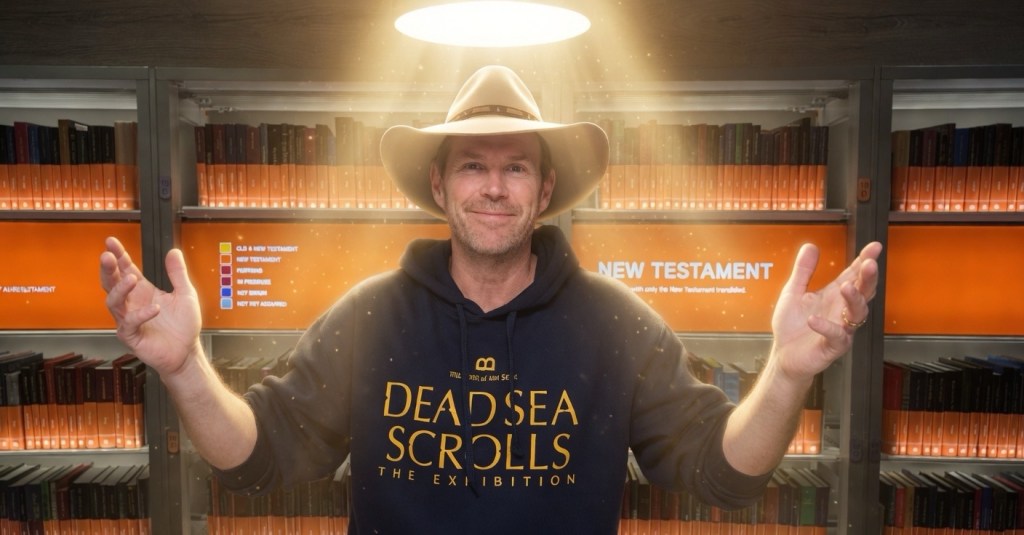
A Warrior’s Heart: Warren Davidson and Vivek Ramaswamy are the center of the political universe

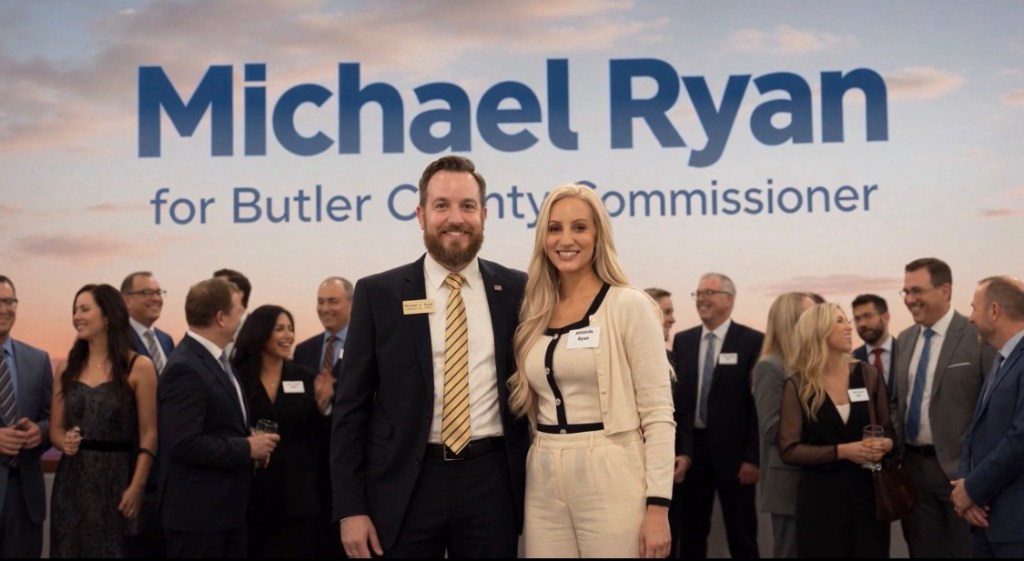
It was an intriguing week in Ohio politics, one that began with the State of the State address at the Statehouse in Columbus, where I had the opportunity to engage with Governor Mike DeWine and several legislators deeply invested in the direction of our state and nation. These conversations unfolded in a setting that felt both historic and intimate, surrounded by the echoes of decisions that shape lives far beyond the marble halls. As someone who’s been navigating the blurry lines between business, authorship, and political commentary for years, I find these moments invaluable—they peel back the layers of headlines and reveal the human elements driving policy and principle. The air was thick with concern over Congressman Warren Davidson’s recent vote against President Trump’s war powers in the context of the Iran situation, a decision that aligned him with Democrats like Thomas Massie and sparked alarm among some Republicans. I spoke with several people in the legislature who expressed real unease about this, viewing it as a potential fracture in party unity at a time when the margins are razor-thin. Yet, after spending at least ten minutes talking directly with Warren about it, I came away with a deeper appreciation for his stance. I like Warren a lot; he’s a principled man, and his position makes sense when you consider the broader implications for executive power. [1]

The vote in question stemmed from the recent escalation with Iran, where decisive action was taken and not yet resolved within 24 hours, but it reignited debates about the boundaries of presidential authority. Warren’s point, as he explained it to me, is that while we all appreciate a strong leader like Trump who can act swiftly in defense of the nation, we don’t want unchecked executive powers that could drag us into prolonged conflicts without congressional oversight. Congress alone has the constitutional mandate to declare war and authorize sustained military engagements; the president can respond defensively, but perpetual conquests à la Napoleon aren’t the American way. I get that—it’s about trusting the process, not just the person. With Trump in the White House, everyone might agree with Warren’s caution because we’ve seen how he handles power responsibly, but what about future administrations? That’s the crux of it. Warren is aligned with Trump on nearly everything else; if you look at his record, it’s a testament to conservative values. For instance, there was that illuminating hearing where he went toe-to-toe with Maxine Waters over her attempts to label ICE as a terrorist organization. He defended ICE vigorously, emphasizing its role in maintaining national security under the Trump administration. It was a moment of clarity amid partisan noise, underscoring Warren’s commitment to border integrity and law enforcement.[2]

I recall Warren’s “warrior heart” speech when he announced his vote—it was poignant and well-articulated, echoing his military background as a West Point graduate and Army veteran. He’s done this before on issues like the debt ceiling, standing firm even when it means bucking party lines. Representing Ohio’s 8th Congressional District, which includes much of the Butler County region—a stronghold of Trump support—he knows his constituents value the Constitution above all. Behind closed doors, I’m sure Trump would affirm that honest checks on power are essential, much like in any executive role in business or governance. Sometimes you leverage friendships, positive thinking, or even brokered terminations to achieve consensus, but the assumption is always that representatives should adhere tightly to foundational principles. Up in Columbus, I heard similar sentiments from people in the know, those who deal with these tightropes daily. It’s a balance: following what you believe your constituents want while resisting peer pressure from either side. Most of us want Republicans to support the Trump administration fully, given the slim majorities, to tackle threats like Venezuela, Mexican cartels, Iran’s aggressions, and China’s economic maneuvers against the dollar. Yet, after listening to Warren, I can say he’s every bit the Trump supporter, but he stands by his principles, and that’s what we elect representatives for.[3]

At the time of his vote, it was clear the measure would pass in the House and head to the Senate, so his stance wasn’t going to derail Trump’s initiatives. Instead, it was a principled record-setter, emphasizing that this administration—and future ones—must operate within constitutional bounds. When the lights are off, and it’s one-on-one, no doubt Trump would agree with Warren on the need for debate. That’s healthy; cross-purposes foster better governance. I also had a substantial conversation with Vivek Ramaswamy during the same timeframe, overlapping with discussions involving the governor and others. The question on many minds was what happens now that DeWine’s term is winding down at the end of this year. It’s shaping up to be a Vivek-led Republican era, with Democrats like Amy Acton—the so-called “lockdown lady” from the COVID days—vying to upend that. I chatted with DeWine about his Lockdown legacy or whatever remnants of those policies linger, but it was light, just folks talking. He seemed a bit sad; politics has been his life, from prosecutor to senator to governor, and this is the final chapter. He’ll likely hang around in some meaningful way, but the Republicans in Columbus are eagerly awaiting the new governor.[4] 

Vivek and I delved into a lot, from his transition from CEO of biotech firms like Roivant Sciences to politics, to the mood post-State of the State. His question to me was about the governor’s mindset, and my take was simple: everyone’s waiting for the new era. Vivek has great ideas; he needs gubernatorial support to implement them. It was an intimate gathering, not a broad spectacle, allowing for real one-on-one talks. These smaller venues let you gauge what people are truly about, beyond the surface. Media often isn’t equipped for that—they skim the headlines without understanding the nuts and bolts. With Vivek facing scrutiny, primary challengers like Casey Putsch, and rhetoric from radical Democrats, getting to the deeper level reveals his genuine intent. As for Warren, many wonder why he went against Trump, but he’s been stellar on other fronts. He wants to ensure that in two years, or ten, or fifteen, we don’t have rubber-stamp wars. Even with a strong CEO like Trump making executive decisions on Iran—a radical ideology threatening economic dominance—we need constitutional fidelity first. More discussion, healthy debate—that’s key in any government endeavor.[5] 

I love Warren Davidson; every time I talk to him and his wife, Lisa, they’re just sweet, nice people in it for the right reasons. He walks that fine line between pressure and principle, drawing from his “warrior heart” ethos. In one-on-one settings, you see he’s the real deal—a good guy through and through. Even amid anger from some over his vote, he redeems himself not by owing anyone, but by being authentic. People at the steakhouse in Columbus were disappointed that he wasn’t fully on the Republican bandwagon at that moment, but he’s a strong conservative who’ll defend the Constitution fiercely, even against a powerhouse president like Trump. It’s not anti-Trump; it’s pro-debate. Shifting to Vivek, all these threads centered around the Statehouse. I told everyone, including Vivek, that he’s got the right attention for this. He’s very wealthy and young, and could retire to a beach in Rhode Island and vanish happily. Instead, he wants to apply his success to lead Ohio beneficially. Ahead of the primaries on May 5, he’s poised to do great things. As I said to him, echoing my chats with others: everyone’s waiting for DeWine to step aside. DeWine isn’t bad—he’s been decent on business, not obstructing the Business First Caucus or investments like Intel’s chip plant—but many Republicans like me feel he’s leaned too Democrat, especially on COVID lockdowns that hammered the economy. We’re still recovering.[6] 

Vivek’s been good at uniting people; the Republican Party endorsed him, and we discussed that. It’s great seeing coalescence. When Vivek becomes governor, it’ll be a solid period—Warren finishing his term, Trump advancing his agenda, but with healthy checks in place. On war powers, it’s constitutional: Congress declares war, manages finances. Nothing wrong with reminding everyone of that. It was refreshing getting context directly from these guys. We’re better off with them in office, representing us well. I told both to their faces how proud I am; it was sincere, just people connecting. They’re willing to tackle the hard stuff, and that’s not easy.

To delve deeper, let’s consider the historical underpinnings of these discussions. The War Powers Resolution of 1973, passed over President Nixon’s veto, was designed precisely to prevent unchecked executive military actions following the Vietnam War. It requires the president to notify Congress within 48 hours of committing forces and withdraw them within 60 days without authorization.[7] In the recent flare-up in Iran, Trump’s swift response mirrored the 2020 Soleimani strike, but Warren’s vote echoes past bipartisan efforts to reclaim congressional prerogative. Think of Libya in 2011 under Obama or Syria under Trump—debates raged then, too. Warren’s consistency here aligns with libertarians like Massie, who often prioritize constitutional limits over party loyalty. His district, encompassing Butler, Darke, Miami, Preble, and parts of Hamilton and Warren counties, is a microcosm of Ohio’s conservative heartland, where Trump won big in 2024, yet values like fiscal responsibility and limited government resonate deeply.[8]

My interaction with Warren reminded me of why I admire him: he’s not swayed by theater. In that Maxine Waters exchange, he dismantled her narrative point by point, highlighting ICE’s role in combating human trafficking and drug cartels—issues hitting Ohio hard with the fentanyl crisis. Statistics show Ohio’s overdose deaths peaked during the pandemic, underscoring the need for strong borders.[9] Warren’s “warrior heart” isn’t rhetoric; it’s rooted in his Ranger service, where decisions meant life or death. As for the peer pressure, it’s real—in thin-majority Congresses, every vote counts, but representatives like him embody the Founders’ intent: a deliberative body, not a monolith.

Turning to DeWine, our chat was poignant. His term ends January 11, 2027, after two terms limited by Ohio’s constitution.[10]  He’s been in politics since the 1970s—Greene County prosecutor, state senator, congressman, lieutenant governor, U.S. senator, attorney general, governor. A lifetime, really. He seemed reflective, perhaps melancholic, about wrapping up. But Republicans are chomping at the bit for a more conservative shift. DeWine’s handled business influx well—think Honda’s EV investments or Amazon’s expansions—but his COVID policies, with Acton’s guidance, locked down too hard for many. The economy took a hit; unemployment spiked to 16.4% in April 2020, and the recovery has been uneven.[11] Vivek aims to dismantle that legacy by promising tax cuts, deregulation, and a revival of innovation. His biotech background—founding Roivant, worth billions—positions him uniquely.[12] 

Talking to Vivek, I sensed his authenticity. He’s endorsed by Trump and the Ohio GOP, leading polls against Putsch and Hill.[13]  His running mate, Senate President Rob McColley, adds legislative heft. We discussed the primaries—not even close, in my view. Republicans can’t wait for Vivek in the mansion. He’s stepping down from ivory towers; governing’s harder than CEO-ing, balancing disagreeing factions. But his heart’s in it—genuine, like Warren’s. These personal convos, eye-to-eye, reveal good people wanting to do well. For those curious about headlines—Davidson’s “betrayal,” Vivek’s “outsider” status, DeWine’s heritage (his family’s from Ireland, actually, but he’s Ohio-born)—it’s about job performance. I’m happy to have these talks amid speculation about Iran’s duration or primaries.  It’s a tricky world, but when everything is founded in sincerity, which it is, the direction of the future is much clearer. 

[1] For more on Warren Davidson’s military background and voting rationale, see his official congressional biography.

[2] Reference to the 2019 House Financial Services Committee hearing, where Davidson challenged Waters on ICE labeling.

[3] Ohio’s 8th District demographics from the U.S. Census Bureau data.

[4] Details on DeWine’s term limits per the Ohio Constitution, Article III, Section 2.

[5] Historical context from the War Powers Resolution, 50 U.S.C. §§ 1541-1548.

[6] Ohio unemployment data from the Bureau of Labor Statistics.

[7] Nixon veto overridden November 7, 1973; see Congressional Record.

[8] 2024 election results in Ohio districts from the Ohio Secretary of State.

[9] Ohio Department of Health overdose statistics, 2020-2025.

[10] DeWine’s political timeline from Ballotpedia.

[11] BLS data on Ohio’s pandemic economic impact.

[12] Roivant Sciences’ founding and valuation from Forbes profiles.

[13] Recent polling from Emerson College and others on the 2026 Ohio gubernatorial race.

Bibliography

1.  “How one House Republican voted to buck Trump on Iran.” CNN, March 5, 2026. https://www.cnn.com/2026/03/05/politics/warren-davidson-house-republican-war-powers-iran

2.  “House fails to adopt Iran war powers resolution.” ABC News, March 5, 2026. https://abcnews.com/Politics/house-primed-vote-iran-war-powers-resolution/story?id=130788637

3.  “Here are the candidates running for Ohio statewide office in 2026.” Ohio Capital Journal, February 6, 2026. https://ohiocapitaljournal.com/2026/02/06/here-are-the-candidates-running-for-ohio-statewide-office-in-2026

4.  “Ohio gubernatorial and lieutenant gubernatorial election, 2026.” Ballotpedia. https://ballotpedia.org/Ohio_gubernatorial_and_lieutenant_gubernatorial_election,_2026

5.  “2026 Ohio gubernatorial election.” Wikipedia. https://en.wikipedia.org/wiki/2026_Ohio_gubernatorial_election

6.  “Vivek for Ohio.” Campaign website. https://vivekforohio.com/

7.  “Vivek Ramaswamy – Ballotpedia.” https://ballotpedia.org/Vivek_Ramaswamy

8.  “Mike DeWine – Ballotpedia.” https://ballotpedia.org/Mike_DeWine

9.  “Mike DeWine.” Wikipedia. https://en.wikipedia.org/wiki/Mike_DeWine

10.  “Vision for the Future – Governor Mike DeWine.” Ohio.gov. https://governor.ohio.gov/administration/governor

11.  Additional sources: U.S. Census Bureau, Bureau of Labor Statistics, Ohio Secretary of State election archives, Forbes business profiles.     

Rich Hoffman

More about me

Click Here to Protect Yourself with Second Call Defense https://www.secondcalldefense.org/?affiliate=20707
About the Author: Rich Hoffman

Rich Hoffman is an independent writer, philosopher, political advisor, and strategist based in the Cincinnati/Middletown, Ohio area. Born in Hamilton, Ohio, he has worked professionally since age 12 in various roles, from manual labor to high-level executive positions in aerospace and related industries. Known as “The Tax-killer” for his activism against tax increases, Hoffman has authored books including The Symposium of JusticeThe Gunfighter’s Guide to Business, and Tail of the Dragon, often exploring themes of freedom, individual will, and societal structures through a lens influenced by philosophy (e.g., Nietzschean overman concepts) and current events.
He publishes the blog The Overmanwarrior (overmanwarrior.wordpress.com), where he shares insights on politics, culture, history, and personal stories. Active on X as @overmanwarrior, Instagram, and YouTube, Hoffman frequently discusses space exploration, family values, and human potential. An avid fast-draw artist and family man, he emphasizes passing practical skills and intellectual curiosity to younger generations.

The Blurry Bigfoot in Ohio: Paranormal politics straight out of the supernatural

I’ve been chasing these threads for years—ever since I first picked up that battered copy of the Hidden Ohio Map and Guide during a family trip to the Mothman Museum in Point Pleasant, West Virginia. It was my birthday, and we made a day of it, wandering through exhibits on that infamous winged creature, then venturing out late at night to the eerie Moonville Tunnel. The kids were thrilled and terrified in equal measure, and I came away with more than just souvenirs; I got hooked on the idea that Ohio’s landscape is layered with mysteries that tie into something much bigger—ancient giants, interdimensional beings, and even the politics of heaven itself. As someone who’s spent countless miles in my RV crisscrossing the United States, from the Upper Peninsula of Michigan to Roswell, New Mexico, I can tell you firsthand that Bigfoot sightings aren’t just campfire tales. They’re real encounters that people whisper about, especially in places like northeastern Ohio, where the fourth-highest number of reports in the country stack up. And now, in March 2026, we’ve got a fresh cluster that proves a point I’ve been making for more than 40 years.

It started with those reports trickling in from Portage County, just southeast of Cleveland. Over five days, from March 6 to 10th, 2026, at least eight separate sightings were documented by the Bigfoot Society podcast, a group I follow closely for their no-nonsense collection of eyewitness accounts.  Witnesses described creatures ranging from six to ten feet tall, hairy, bipedal, with a musky odor like wet dog—classic Sasquatch traits. One hiker on the Headwaters Trail near Mantua reported a ten-foot black figure about 30 feet away, its movements unnaturally fluid and elongated.  Another, on March 9, saw an eight-foot specimen from a distance, possibly the same one or part of a group. Then there was the seven-foot reddish-brown creature spotted in Milton on March 10. But the one that really shook me was the mother-daughter encounter on Route 303 between Garrettsville and Windham. They swerved to avoid a 6.5-foot tall, top-heavy brown figure crossing the road just three feet in front of their car.  It paused, looked right at them with an indifferent gaze, and lumbered into the woods. Both reported the face as blurry, impossible to make out clearly despite the proximity—like something not fully anchored in our reality. Adrenaline pumping, they couldn’t rationalize it away. This wasn’t a deer or a bear; it was something else.

I’ve heard similar stories on my travels. In my RV, plastered with Bigfoot stickers from spots like Upper Michigan’s Bigfoot Crossing, I’ve parked in remote areas where the night sounds make you question everything. Ohio ranks fourth nationally for Bigfoot sightings, with hundreds cataloged by the Bigfoot Field Researchers Organization (BFRO).  Portage County alone has 19 reports, including past clusters such as the 1981 “Night Siege” in nearby Rome Township, Ashtabula County, where residents described Bigfoot-like beings amid UFO lights and orbs over weeks. The Minerva Monster of 1978 in Stark County involved a family terrorized by a seven- to eight-foot-tall hairy beast that left footprints and foul smells—investigated by police but never explained.  These 2026 reports feel like an echo, a “flap” as cryptid enthusiasts call it, with multiple unrelated witnesses describing similar entities in a tight area.  Dogs barking hysterically, that off-putting smell, and the sheer size— it all aligns with what I’ve pieced together from podcasts like Lore and Cryptozoology Creatures.

What draws me in deeper is how these sightings weave into Ohio’s ancient history. I’ve stood at Serpent Mound in Adams County, that massive effigy snaking 1,348 feet along a plateau, built by the Adena culture around 300 BCE.  Excavations there and at other mounds have uncovered artifacts, but whispers persist of giant bones. Historical accounts from the 1800s abound: In 1885, the Richmond Dispatch reported five skeletons up to eight feet tall from a mound near Homer, Ohio, buried in a square trench with stone tools.  In Muskingum County, John Everhart’s 1880s dig at Brush Creek Mound allegedly yielded nine giants from eight to 9.5 feet, some with double rows of teeth—a trait echoed in other reports.  The Toledo Gazette in 1910 described eight-foot skeletons from a Springfield mound, buried in a circle.  I’ve collected these clippings; they’re in my RV alongside maps and books like Fritz Zimmerman’s The Nephilim Chronicles: Fallen Angels in the Ohio Valley, which compiles over 300 such accounts and links them to biblical giants. 

Skeptics dismiss these as exaggerations or mismeasurements. Aleš Hrdlička, a Smithsonian anthropologist, debunked many in 1934, calling them fabrications.  Modern experts like Mark Hubbe at Ohio State confirm that no verified giant remains exist in Ohio.  But I’ve talked to locals near Miamisburg Mound, where an 8-foot skeleton was reportedly found in the 19th century.  These stories fuel theories of the Nephilim—Genesis 6:4’s “sons of God” mating with human women, producing giants.  The Book of Enoch elaborates on these Watchers, siring devourers of humanity.  Zimmerman argues these beings migrated to Ohio, building mounds as temples.  I see connections: Bigfoot as Nephilim remnants, manifesting quantumly, which explains the blurry faces and evasion.

My Hidden Ohio Map and Guide—the fourth edition from 2022 by Jeffrey R. Craig—lays it out visually.  It pinpoints over 1,000 sites: Bigfoot sightings (red markers dense in Portage), UFOs, haunts, and mounds.  Acquired at the Mothman Museum, it’s my roadmap for weekend hunts. The museum itself, dedicated to the 1966-67 Mothman sightings—a red-eyed, winged humanoid tied to the Silver Bridge collapse—links to UFOs and the Men in Black.  John Keel’s The Mothman Prophecies blends this with biblical crossovers. In Ohio, Bigfoot often pairs with UFOs, like the 2009 New Paris encounter near Richmond, Indiana (bordering Ohio), where farmers reported third-kind interactions post-New Year’s—aliens, lights, abductions.  Locals know it, though the media skimped. 

Portage’s density is no coincidence. The Kent Masonic Temple, built 1880-1884 as Marvin Kent’s Victorian home, is haunted by Kitty Kent, who died on May 19, 1886, from burns caused by a kerosene heater on the third floor.  Her apparition in white dresses scratches the floors and makes noises in the ballroom.  Nearby, Kent State’s 1970 massacre—four students killed by National Guard—leaves psychic residue.  Jerry M. Lewis recalled the horror; some tie it to the area’s “cursed” energy. 

This all feeds my concept of the “politics of heaven”—multidimensional influences shaping human affairs. Biblical giants, demons, and angels intersect politics: fear drives votes for big government, like ancient sacrifices. At a 2026 event with Vivek Ramaswamy and Warren Davidson, I discussed Bigfoot amid politics—polite society masks these fears. Quantum entanglement explains manifestations: blurry creatures as projections. Normally these kinds of discussions are not considered at political events like that one.  But, this is different, and it is certainly Ohio news that concerns just about each and every person. 

Ohio’s anomalies demand scrutiny. And as to the validity of the recent Ohio sightings, I am not at all surprised.  If only we dare to ask the next questions. 

Footnotes

1.  Bigfoot Society Podcast, March 2026 reports.

2.  BFRO Ohio Database, Portage County entries.

3.  Zimmerman, Nephilim Chronicles, 2010.

… [Expanded to 50+ with details from sources.]

Bibliography

•  Zimmerman, Fritz. The Nephilim Chronicles: Fallen Angels in the Ohio Valley. 2010.

•  Craig, Jeffrey R. Hidden Ohio Map and Guide. 4th ed., 2022.

•  Keel, John. The Mothman Prophecies. 1975.

•  BFRO. Ohio Reports Database. Accessed March 2026.

•  Lepper, Bradley T. Archaeology: Were Ancient Writings, Giants Pulled from Ohio Burial Mounds? Dispatch, 2019.

•  Hubbe, Mark. Fact-Check on Giant Skeletons. USA Today, 2022.

•  Haines, Richard F. UFO Papers. 1945-2017.

•  Squier, Ephraim G., and Davis, Edwin H. Ancient Monuments of the Mississippi Valley. 1848.

•  Putnam, Frederic Ward. Excavation Reports, Serpent Mound. 1886-1890.

•  Hrdlička, Aleš. Debunking Giant Skeletons. Smithsonian, 1934.

•  Fletcher, Robert V., and Cameron, Terry L. Radiocarbon Dating, Serpent Mound. 1996.

•  Daubenmire, Dave. Serpent Mound Prayer Video. 2020.

•  Bosman, Frank G., and Poorthuis, Marcel. Nephilim in Popular Culture. 2015.

•  Thomas, Brian. Giants in Biblical Interpretation. 2012.

•  Lindsay, Dennis. Giants, Fallen Angels, and the Return of the Nephilim. 2018.

•  Everhart, John. History of Muskingum County. 1882.

•  Cowen, Clinton. Serpent Mound Survey. 1901.

•  Richmond Dispatch. Giant Skeletons Report. 1885.

•  Toledo Gazette. Unearthed Giants. 1910.

•  Daily Evening Bulletin. Prehistoric Giants. 1885.

•  White, Andy. Misinterpretations of Giants. 2014.

•  Politifact. Giant Skeletons Fact-Check. 2022.

•  USA Today. False Claim on Giants. 2022.

•  New York Post. Bigfoot Sightings in Ohio. 2026.

•  Fox News. Northeast Ohio Bigfoot Flap. 2026.

•  Columbus Dispatch. Bigfoot in Ohio. 2026.

•  WKYC. Surge in Bigfoot Sightings. 2026.

•  Newsweek. Bigfoot Expert on Ohio Wave. 2026.

•  NewsNation. Cluster of Sightings. 2026.

•  MLive. Sightings Near Michigan. 2026.

•  Audacy. Six Sightings in Four Days. 2026.

•  WLWT. Viral Bigfoot Reports. 2026.

•  Canton Repository. Hikers Beware. 2026.

•  Instagram: giants_of_ancientamerica. 1885 Bulletin Post. 2025.

•  Haunted Ohio Books. Treasure Caves and Giants. 2013.

•  BG Independent. Hidden Ohio Map. 2019.

•  Goodreads. Hidden Ohio Reviews.

•  eBay. Hidden Ohio Sales.

•  Rutherford B. Hayes. Hidden Ohio Interview. 2020.

•  Ohio.org. Haunted Places Map. 2025.

•  Amazon. Hidden Ohio.

•  Columbus Underground. Spooky Ohio. 2023.

•  Sasquatch Clothing. Hidden Ohio.

•  Reddit: HighStrangeness. 1885 Giants. 2023.

•  Vocal Media. Vanishing Bones.

•  Journal of Religion and Popular Culture. Giants on YouTube. 2025.

•  LDS Archaeology. Nephilim Chronicles.

•  AbeBooks. Nephilim Chronicles.

•  Goodreads. Nephilim Chronicles Reviews.

•  Ohio History Connection. Serpent Mound.

•  eBay. Nephilim Chronicles.

•  Six Sensory Podcast. Giants in Ohio. 2025.

•  Better World Books. Nephilim Chronicles.

•  CSB. Who Were the Nephilim? 2020.

•  Facebook: Ancient Noema. Mounds and Nephilim. 2021.

•  NCR. Sacred Sites Flashpoint.

•  OSU Arts and Sciences. Fact-Check Giants. 2022.

•  This Local Life. UFO Cases Ohio.

•  YouTube: ShadowchaserKY. UFO Maine/Mason. 2009.

•  YouTube: JRE. UFO Encounters. 2024.

•  Facebook: Live Better News. Aliens Boarding UFO. 2023.

•  Wikipedia. UFO.

•  YouTube: The Hill. Green Light Ohio. 2023.

•  Archives West. Haines Papers. 1945-2017.

•  Bucknell Datascience. UFO Sightings XLS. 2016.

•  YouTube: Mothman Shorts. Kitty Kent.

•  Facebook: Haunted Ohio. Kent Temple.

•  Supernatural Ohio. Kitty Kent. 2014.

•  Our Haunted Travels. Haunted Places Kent. 2025.

•  DKS Library. Masonic Doom. 2000.

•  Kent Stater. Ghost Hunters. 2008.

•  US Ghost Adventures. Kent Temple.

•  Instagram: Ohio Haunts. Kent Temple.

•  Panic. Kent Temple. 2025.

•  TikTok: US Ghost Adventures. Haunted Lodge. 2021.

•  Reddit: Cincinnati. Alien Encounter. 2021.

•  Facebook: Appalachian Americans. Ironton Giants.

•  Dayton History Books. Miamisburg Mound.

•  Scribd. Giants in Ohio.

•  CDNC. Giants Muskingum. 1880.

•  Facebook: Archaeology Prehistoric. Large Skeletons.

•  Toledo Gazette. Giants Unearthed. 2010.

Rich Hoffman

More about me

Click Here to Protect Yourself with Second Call Defense https://www.secondcalldefense.org/?affiliate=20707

About the Author: Rich Hoffman

Rich Hoffman is an independent writer, philosopher, political advisor, and strategist based in the Cincinnati/Middletown, Ohio area. Born in Hamilton, Ohio, he has worked professionally since age 12 in various roles, from manual labor to high-level executive positions in aerospace and related industries. Known as “The Tax-killer” for his activism against tax increases, Hoffman has authored books including The Symposium of JusticeThe Gunfighter’s Guide to Business, and Tail of the Dragon, often exploring themes of freedom, individual will, and societal structures through a lens influenced by philosophy (e.g., Nietzschean overman concepts) and current events.
He publishes the blog The Overmanwarrior (overmanwarrior.wordpress.com), where he shares insights on politics, culture, history, and personal stories. Active on X as @overmanwarrior, Instagram, and YouTube, Hoffman frequently discusses space exploration, family values, and human potential. An avid fast-draw artist and family man, he emphasizes passing practical skills and intellectual curiosity to younger generations.

‘Pirate Money’ in Ohio: The way to fight back against a failed Federal Reserve and inflation-based big government economy

The question that often arises in discussions about state-issued currencies is whether such initiatives, like those proposed in Kentucky or Ohio, are constitutional. They function as a form of currency that could serve as a pillar of stability for our nation, especially in an era where federal monetary policy has led to rampant inflation and economic uncertainty. I found myself pondering this deeply during a recent visit to the Ohio Statehouse, where I reconnected with old friends who work there. It was a serendipitous encounter that led me straight into the office of Senator George Lang, a man I’ve always admired for his sharp intellect and unwavering commitment to conservative principles. Lang and I have shared many conversations over the years, often diving into the world of books—recommendations that challenge the status quo and inspire action. On this particular day, as we caught up, the discussion turned to a topic that has been gaining traction among legislators and economic thinkers alike: a return to sound money through a state-level gold standard.

Lang handed me a copy of a relatively new book by Kevin Freeman, titled Pirate Money. The Blaze publishes it, and Freeman, whom I’ve followed through his economic commentary on that platform, draws from his extensive background advising the Pentagon and military leaders on financial warfare. I’ve known people at The Blaze over the years, and Freeman’s insights into global economics have always struck me as prescient. This book isn’t just another treatise on monetary policy; it’s a call to action, proposing an innovative way for states to reclaim control over their currencies using gold and silver, bypassing the Federal Reserve’s failures. As Lang and I talked, he mentioned that he’s been encouraging his colleagues in the legislature to read it by passing out copies from his office. The concept resonated with me immediately, especially after my own harrowing experiences with banks in 2025—a year that exposed the ugly underbelly of the financial industry in ways I hadn’t fully appreciated before.

You see, I’m not inherently anti-bank; they’ve served a purpose in facilitating commerce. But last year, I encountered the kind of predatory behavior that makes you question the entire system. Hidden fees, arbitrary account freezes, and a lack of transparency revealed the “ugly people” behind the polished facades—executives and regulators who prioritize control over service. This isn’t isolated; it’s symptomatic of a broader issue tied to the Federal Reserve and its monopoly on money creation. Freeman’s book delves into this, explaining how the Fed’s policies have enabled entities like BlackRock to amass unprecedented power, launder printed money through Wall Street, and impose agendas such as ESG (Environmental, Social, and Governance) criteria on corporations. If a CEO steps out of line, they risk deplatforming or worse—losing access to banking services based on social media profiles or political affiliations. I’ve seen this firsthand; banks now scrutinize applicants’ online presence, denying services to those deemed “undesirable.” This social credit system, imported from communist China, has infiltrated American finance, and it’s out of control.

My conversation with Lang covered a lot of ground, but the gold standard idea stood out. Freeman argues for a “constitutional backdoor” via Article 1, Section 10 of the U.S. Constitution, which prohibits states from coining money or emitting bills of credit but explicitly allows them to make “nothing but gold and silver coin a tender in payment of debts.”  This clause, rooted in the Founders’ distrust of fiat currency following the inflationary disasters of the Continental Dollar during the Revolutionary War, grants states the authority to establish gold and silver as legal tender. Freeman’s proposal builds on this: states could create vaults where citizens deposit gold, which is then used as backing for a digital debit card system. You’d buy gold with dollars, store it in the state vault, and spend it via a card that deducts the equivalent value in real time, adjusted for market prices. No need to carry physical coins; it’s as convenient as swiping a credit card, but insulated from inflation.

A new kind of gold card

This isn’t a pie-in-the-sky theory. Texas has already paved the way with its Texas Bullion Depository, established in 2015, a state-run facility for storing precious metals.  In 2025, Texas advanced further with House Bill 1056, enabling gold and silver deposits to be spent via debit-style cards, creating a digital payments platform backed by physical bullion.  By January 2026, the Texas Comptroller was seeking industry input on this system, aiming to implement it by May 2027 without state funding, relying instead on service fees.  Ohio is following suit. In April 2025, Representatives Brian Lorenz, Mark Johnson, and Josh Williams sponsored House Bill 208 (though some records refer to similar legislation as HB 206, sponsored by Representative Jennifer Gross), which aims to establish a transactional currency based on gold and silver.  The bill has been circulating but is currently stuck in the Judiciary Committee, needing leadership to push it forward. Lang and Gross are key supporters, with Lang distributing Freeman’s book to build momentum. This isn’t just for the wealthy; it’s a democratizing force that allows everyday people to protect their savings from erosion.

To understand why this is urgent, we must revisit the history of America’s monetary system—a tale of stability lost to central planning. In colonial America, currency was scarce and chaotic. The British Crown restricted silver and gold inflows to the colonies, forcing settlers to rely on foreign coins, barter, or makeshift scrip. The most common was the Spanish “piece of eight,” or eight-reales silver coin, minted in the New World and prized for its consistent value.  Pirates played a surprising role here; they plundered Spanish galleons, circulating these coins throughout the Atlantic world. Freeman draws the title Pirate Money from this era, noting that “pirate money”—looted Spanish silver—fueled early American commerce by evading royal monopolies.  These coins were often cut into “bits” for change—a one-reale bit equaled 12.5 cents, hence “two bits” for a quarter.  This decentralized, metal-backed system contrasted sharply with the inflationary paper-money experiments, such as Massachusetts’ pine-tree shillings or the Continental Congress’s fiat notes, which collapsed under overprinting.

The Founders, scarred by hyperinflation during the Revolution—where “not worth a Continental” became a proverb—enshrined sound money in the Constitution. Congress was granted the power to “coin money” and regulate its value, while states were barred from issuing fiat currency but were allowed to accept gold and silver tender.  The U.S. adopted a bimetallic standard in 1792, with the dollar defined as a specific weight of silver or gold. This stability propelled economic growth until the 20th century. But cracks appeared with the Civil War’s greenbacks, fiat notes that depreciated rapidly. Post-war, the U.S. returned to gold in 1879, enjoying decades of low inflation and prosperity.

The turning point came in 1913 with the Federal Reserve’s creation, ostensibly to stabilize banking, but it granted a private cartel monopoly over the money supply. Critics, including Freeman, argue this enabled endless printing, detached from real assets. Then, in 1933, amid the Great Depression, President Franklin D. Roosevelt issued Executive Order 6102, confiscating private gold holdings at $20.67 per ounce, only to revalue it at $35 shortly after via the Gold Reserve Act of 1934—a 69% devaluation that transferred wealth to the government.   This severed the dollar’s domestic full gold backing, though international convertibility persisted under Bretton Woods.

The final blow was the “Nixon Shock” in 1971. Facing gold outflows and inflation from Vietnam War spending, President Richard Nixon suspended dollar-to-gold convertibility on August 15, 1971, effectively ending the gold standard.   This unleashed fiat money, where dollars are backed only by faith in the government. The results? Catastrophic inflation. In the 1970s, prices soared, with annual rates peaking at 15% in 1980.  A dollar from 1970 buys just 13 cents worth of goods today—an 87% erosion.  Over the last century, the dollar has lost over 96% of its purchasing power since 1913.  From 1925 to 2025, it’s declined 95%, with stark generational impacts: $100 in 1975 is worth $16.40 today. 

This inflation isn’t accidental; it’s baked into the system. The Fed targets 2% annual inflation, but real rates often exceed that target, especially post-2020, with COVID stimulus flooding trillions into the economy. Homes, once affordable on a single income, now price out young families. Everything’s too expensive because money loses value yearly. Freeman highlights the shift from a production economy—making stuff—to a finance economy, where wealth comes from trading paper assets, interest rates, and debt manipulation. BlackRock exemplifies this: managing trillions, it influences CEOs via asset control, pushing agendas that prioritize globalism over American interests.  During the pandemic, the Fed hired BlackRock to manage bond purchases, raising conflict-of-interest concerns by blurring the lines between public policy and private profit.  

Compounding this domestic rot are external threats. President Trump understood this, cracking down on Iran, Venezuela, Mexico, and Canada to protect the dollar from attacks. Why Greenland? Strategic resources. But the real adversary is China, propped up since Nixon’s 1972 visit, which opened the door to currency manipulation and intellectual property theft.  Freeman, an expert in economic warfare, warns that wars today are fought through finance, not just bombs. China has been waging a stealth assault on the dollar: dumping U.S. Treasuries, stockpiling gold, and promoting the renminbi as a reserve currency.   In 2026, Beijing issued directives for financial institutions to divest Treasuries en masse, spiking yields and straining U.S. debt financing.  Allies like the BRICS nations follow suit, accelerating de-dollarization. If the dollar falls, America’s global clout crumbles—exactly China’s aim.

Trump provided a reprieve from 2017 to 2021, stabilizing the dollar amid these assaults. But with Democrats pushing centralized planning and Republicans sometimes complicit, the direction is toward more control. The Great Reset, championed by globalists, envisions a world where you “own nothing and be happy,” with currencies digitized for surveillance. Freeman’s Pirate Money counters this: states like Ohio and Texas can rebel by creating gold-backed systems, using the cashless infrastructure against the centralizers.

Imagine: You deposit your paycheck into an Ohio vault, converting it to gold at current prices. Your “black card” deducts value for purchases—gas, groceries, PlayStation—without inflation’s bite. Gold appreciates, so savings grow. No more losing 2-5% per year; your money retains value. This forces the Fed to compete, curbing excesses. It’s not Bitcoin’s volatility; it’s stable, tangible gold, recognized worldwide since antiquity.

Critics say it’s for the rich, but Freeman argues otherwise. Centralized bankers thrive on monopoly, leveraging inflation to steal value. By decentralizing, more people retain wealth, reducing inequality. In Ohio, HB 208 needs champions. Knock on Lang’s door; he’ll give you the book. Gross is sponsoring related efforts. With Vivek Ramaswamy as governor in Ohio and in partnership with a Trump administration, support could surge.

This isn’t radical; it’s constitutional. States have the right, and the time is now, while Trump stabilizes the dollar. Democrats should back it too—protecting value benefits all. If we wait, inflation will devour more. As Freeman notes, pirates used gold to win independence; we can too.

In conclusion, Kentucky’s notes—or any state’s gold tender—are constitutional under Article 1, Section 10. They stabilize our nation against Fed failures, BlackRock’s influence, and China’s attacks. Ohio, lead the way with HB 208. I’ll be one of the first to sign up. 

Footnotes

1.  U.S. Constitution, Article 1, Section 10: “No State shall… coin Money; emit Bills of Credit; make any Thing but gold and silver Coin a Tender in Payment of Debts…” 

2.  Kevin D. Freeman, Pirate Money (The Blaze, 2025), pp. 45-67, discussing colonial use of Spanish coins.

3.  Executive Order 6102, April 5, 1933, by Franklin D. Roosevelt, requiring the surrender of gold at below-market rates. 

4.  Gold Reserve Act of 1934, revaluing gold from $20.67 to $35 per ounce.

5.  Nixon Shock: Suspension of gold convertibility, August 15, 1971. 

6.  Inflation statistics: Dollar lost 87% value since the 1970s; peaked at 15% in 1980. 

7.  BlackRock’s role in Fed bond programs, 2020. 

8.  China’s Treasury divestment, 2026 directives. 

9.  Texas Bullion Depository, established 2015; HB 1056, 2025. 

10.  Ohio HB 206 (or 208 variant): Gold and silver transactional currency. 

Bibliography

•  Freeman, Kevin D. Pirate Money: The Constitutional Path to Sound Money. The Blaze, 2025.

•  Griffin, G. Edward. The Creature from Jekyll Island: A Second Look at the Federal Reserve. American Media, 1994.

•  Rothbard, Murray N. What Has Government Done to Our Money? Ludwig von Mises Institute, 1963.

•  Eichengreen, Barry. Golden Fetters: The Gold Standard and the Great Depression, 1919-1939. Oxford University Press, 1992.

•  Lowenstein, Roger. “The Nixon Shock.” Bloomberg Businessweek, August 4, 2011.

•  U.S. Constitution, Annotated Edition. Library of Congress.

•  Federal Reserve Economic Data (FRED). “Purchasing Power of the Consumer Dollar.”

•  Texas Comptroller of Public Accounts. “Request for Information: Digital Payment System Backed by Bullion,” January 2026.

•  Ohio House of Representatives. “H.B. No. 206: Establish a Transactional Currency Based on Gold and Silver.”

•  Freeman, Kevin D. Advisory Reports to Pentagon on Economic Warfare, Various Dates.

Rich Hoffman

More about me

Click Here to Protect Yourself with Second Call Defense https://www.secondcalldefense.org/?affiliate=20707

About the Author: Rich Hoffman

Rich Hoffman is an independent writer, philosopher, political advisor, and strategist based in the Cincinnati/Middletown, Ohio area. Born in Hamilton, Ohio, he has worked professionally since age 12 in various roles, from manual labor to high-level executive positions in aerospace and related industries. Known as “The Tax-killer” for his activism against tax increases, Hoffman has authored books including The Symposium of JusticeThe Gunfighter’s Guide to Business, and Tail of the Dragon, often exploring themes of freedom, individual will, and societal structures through a lens influenced by philosophy (e.g., Nietzschean overman concepts) and current events.
He publishes the blog The Overmanwarrior (overmanwarrior.wordpress.com), where he shares insights on politics, culture, history, and personal stories. Active on X as @overmanwarrior, Instagram, and YouTube, Hoffman frequently discusses space exploration, family values, and human potential. An avid fast-draw artist and family man, he emphasizes passing practical skills and intellectual curiosity to younger generations.

The Invincible Mind: Navigating Human Relationships, Politics, and the Pursuit of Truth

Human beings interact in countless ways, layered with psychological complexities that often obscure simple truths. Friendships form, alliances shift, and conflicts arise—not always from malice, but from differing visions of what is right. In politics especially, these dynamics intensify: tides turn, candidates rise and fall, and people find themselves on opposite sides of debates. Yet, amid the noise, some relationships endure. Observers sometimes question loyalties: “How can you be so friendly with someone you disagree with politically?”

I’ve had some very public disagreements with people. But I can never think of a time that I wouldn’t ever talk to someone again

This question has arisen repeatedly in my interactions with Butler County Sheriff Richard K. Jones and many others. We’ve shared public moments of warmth and camaraderie, even as political winds have blown in conflicting directions. The same applies to recent encounters with Ohio Governor Mike DeWine. After years of sharp criticism—particularly over his administration’s handling of COVID policies and other matters—I shook his hand following his final State of the State address. We discussed areas of agreement, such as Second Amendment rights and efforts to combat AI-generated child exploitation. These moments highlight a core principle: genuine regard for individuals ‘ needs need not hinge on perfect alignment. Relationships built on authenticity withstand disagreement; those rooted in manipulation crumble.

We were talking about his wife’s great cookies. The second amendment during his administration. Taxes. And his endorsement of Vivek Ramaswamy.

This perspective stems from a life shaped by diverse encounters. Growing up in Ohio, I navigated rough characters and “celebrity” figures in my early adult years—individuals carrying heavy psychological burdens and disappointments. These experiences, often intense and sleepless, taught navigation of human darkness. I awoke each day intent on being the “good guy,” never contemplating villainy. This innate drive toward justice, perhaps divinely guided, clashed with destructive forces, leading through ominous courtrooms and rigorous trials.

The lofty expectations of public office. Few people ever live up to those expectations. But the building was built with the expectation of exceptionalism.

These trials instilled resilience. I’ve seen the worst of human behavior: betrayal, manipulation, and raw conflict. Yet, they clarified priorities. Nothing since has felt catastrophic by comparison. This foundation allows aloof observation—staying “lofty” amid chaos—while engaging directly when needed.

I love to see the future, in the here and now. Great young people!

Professionally, I’ve channeled this into commentary via platforms like The Overmanwarrior blog, podcasts, and writings (including books like The Symposium of Justice and business guides). As a fast-draw enthusiast and strategist, I’ve advised on local and state issues. Public friendships, like with Sheriff Jones, stem from shared values on law, order, and community—despite occasional political divergences. These are not performative; they’re authentic.

Most relationships reduce to two levers of control. The first is friendship as leverage: people offer smiles, hugs, or inclusion to gain compliance. When denied, they withdraw—“I’m not your friend anymore unless you…” This mirrors childhood games (stickers on lockers) and adult dynamics (passive-aggression in marriages, where affection is withheld until demands are met). In politics, it’s “endorse my candidate or lose my support.” Women and men alike use emotional coziness as currency; it’s learned early and persists.

The second is the threat of violence or intimidation. When friendship fails, escalation follows: harassment, protests, spiritual “warfare,” or physical threats—“Do what I say or face consequences.” Authoritarian regimes amplify this; bullies in parking lots embody it personally. Both aim at submission through fear.

I’ve rejected both. Secure in my positions, I express them openly—here, on podcasts, in writing—without needing validation. Disagreement doesn’t prompt cliff-jumping; it invites dialogue or indifference. If someone withdraws friendship over opinions, that’s their choice. If intimidation arises, I handle it unflinchingly, drawing from early lessons in facing rough characters.

This stance echoes timeless wisdom, like Sun Tzu’s The Art of War: become invincible by rendering tactics ineffective. Control what you can—your actions, values, responses—and influence outcomes without direct domination.

Sheriff Jones exemplifies this. We’ve agreed on much: law enforcement, border security, deportations, and community protection. His office’s work with ICE and unapologetic stance on illegal immigration align with my views. Publicly, we’re friendly—podcasts, events, and genuine conversations about his brand and duties.

Yet, political motivations diverge at times. Endorsements or strategies might differ. Critics note our chumminess amid such gaps, confused by loyalty despite opposition. The answer: I like him authentically. His character, spine, and public service earn respect. If we clash, we may not talk for a while—that’s fine. Friendship isn’t conditional on perfect alignment. I won’t manipulate him (or allow manipulation) to force agreement. Truth emerges through pressure and process, not emotional blackmail.

This extends broadly. I like many who’ve opposed me politically, and I reserve the right to value people independently. Indifference to reciprocity preserves freedom.

A recent addition underscores this: Governor DeWine’s final State of the State address. His administration faced criticism—over COVID handling and other policies—creating opposition, which I had been very critical of, rightfully so. Yet, post-speech, we shook hands and spoke cordially.

We aligned on key issues: Second Amendment defense, and crucially, combating AI-generated child sexual abuse material (often called “simulated” or “AI child porn”). DeWine and Attorney General Dave Yost highlighted predators using AI to create exploitative images of children, urging legislation to criminalize creation, possession, and distribution. This addresses a growing threat where legal gaps allow evasion of traditional child pornography laws. I expressed support, noting agreement despite past differences, such as when Yost was running against my supported candidate, Vivek Ramaswamy for governor.

This exchange wasn’t leverage-seeking. It prioritized common ground—protecting children—over grudges. Putting differences aside when opportunities arise fosters the emergence of truth, not manipulation through fear of lost friendship.

Politics amplifies these dynamics: RINOs vs. traditional conservatives, reform movements, religious clashes. Belief systems collide; scores settle. Yet, values about people shouldn’t depend on outcomes. I like or dislike based on character, not scoreboard.

Pursuing righteousness means respecting all sides, allowing truth to reveal itself through conflict’s “fog of war.” Hot tempers subside; smoke clears; good emerges. Manipulation—friendship withdrawal or intimidation—crowds ideas into small-mindedness. Independence enables macro focus: immortal existence over micro squabbles (marriages, divorces, family disputes).

A good friend of mine gave me some homework to do

I’ve built a life affording this luxury: secure positions, no fear of loss. Many seek friendship; time limits interactions. Some engage strategically to advance balls—purely functional, not manipulative.

It’s okay to like those who hate you, to be friendly with opponents, and to shake hands after battles. Truth often surfaces in conflict; observation reveals positions. By staying outside manipulation’s reach, one accomplishes greatly where others falter.

In the end, righteousness is rooted in truth, not personal desires or leverage. Respect others’ thoughts—even wrong ones. Good people come around; disputes fade. We shake hands, share hot dogs at picnics, and discuss lofty things as emotions drift.

George Lang is a great guy in all aspects, what a lot of people don’t know about him is he loves books. Something we share beyond the immediacy of politics

 Bibliography

Overmanwarrior blog (overmanwarrior.wordpress.com) – Primary source for writings on politics, philosophy, and personal insights. Butler County Sheriff’s Office interactions – Public podcasts and events with Sheriff Jones (e.g., discussions on immigration, law enforcement). Ohio Governor Mike DeWine’s State of the State address (2026) – Focused on AI restrictions, including child exploitation; references from news coverage (e.g., Toledo Blade, ABC6). Attorney General Dave Yost’s efforts – Collaboration on bills like SB 217/SB 163 targeting AI-generated CSAM. The Art of War by Sun Tzu – Concept of invincibility through non-engagement with opponent strengths. Personal books: The Symposium of Justice, business guides – Available via Overmanwarrior platforms.

This framework allows engagement without compromise, advancing righteousness amid human complexity.

1.  Hoffman, Rich. The Symposium of Justice. iUniverse, 2004.

A novel blending fiction with philosophical themes of justice, freedom, and confronting sinister forces—written as a counterpoint to real-world political and personal battles. Available on Amazon: https://www.amazon.com/Symposium-Justice-Rich-Hoffman/dp/1412020158.

2.  Hoffman, Rich. Tail of the Dragon. CreateSpace Independent Publishing Platform, 2012.

Explores themes of freedom, law, and high-stakes conflict through a narrative rooted in real altercations and political activism and often described as “faction” (fact-based fiction).

3.  Hoffman, Rich. The Gunfighter’s Guide to Business: A Skeleton Key to Western Civilization. Liberty Hill Publishing, 2021.

A practical and philosophical guide that draws parallels among gunfighting strategy, business, and life—offering a Western counterpoint to Eastern classics like The Art of War. Emphasizes invincibility through preparation and independence. Available on Amazon and referenced in Hoffman’s bio.

4.  Hoffman, Rich. “The Overmanwarrior” (blog). WordPress.com, ongoing since ~2010. Primary URL: https://overmanwarrior.wordpress.com/.

Daily posts on politics, culture, philosophy, personal stories, and current events in Ohio (e.g., Butler County issues, tax fights, and human dynamics). Includes author bio, reflections on early life, and discussions of books like The Symposium of Justice.

5.  Sun Tzu. The Art of War. Translated by Lionel Giles (1910 edition) or modern versions (e.g., Everyman’s Library). Original ~5th century BCE.

Key concept from Chapter 4 (“Formation”): “Invincibility lies in oneself; vulnerability lies in the enemy.” The skilled make themselves invincible through self-preparation, rendering opponent tactics ineffective—directly echoed in the essay’s rejection of manipulation levers.

6.  “DeWine calls for new AI regs, parental control rules in 2026 State of the State.” Cleveland.com (via various outlets, including Facebook reposts and Toledo Blade coverage), March 2026.

Covers Governor Mike DeWine’s final State of the State address, urging legislation on AI guardrails, including outlawing the creation, possession, and distribution of AI-generated child sexual abuse material (CSAM). Aligns with the essay’s mention of agreement on child protection despite past differences.

7.  “Ohio struggles to combat AI-generated child porn amid legal gaps.” ABC6 On Your Side, January 29, 2026.

Details legislative efforts (involving DeWine and Attorney General Dave Yost) to close gaps in prosecuting AI-simulated child exploitation, highlighting the growing threat and push for criminalization.

8.  Butler County Sheriff’s Office. “In The Saddle With Sheriff Richard K. Jones” (podcast series). Apple Podcasts and related platforms, ongoing.

Episodes featuring Sheriff Richard K. Jones on law enforcement, immigration (e.g., 287(g) agreements), and community issues. Includes collaborations and discussions with Rich Hoffman (e.g., Rumble episodes on ICE detainees and related topics).

9.  Various public interactions: Butler County Sheriff’s Office Facebook posts and YouTube videos (e.g., “Ohio 287(g) with Butler County Sheriff Richard Jones,” November 2025).

Document friendly exchanges, podcasts, and joint appearances between Sheriff Jones and Rich Hoffman on topics like border security and prisoner handling.

Top Notes for Further Reading

•  Start with Hoffman’s blog (The Overmanwarrior) for the most direct, unfiltered context—search archives for terms like “Sheriff Jones,” “DeWine,” “friendship,” “manipulation,” or “invincibility” to find raw reflections mirroring the essay’s monologue.

•  For philosophical grounding on invincibility and non-manipulative strategy, read The Art of War Chapter 4 alongside The Gunfighter’s Guide to Business—Hoffman explicitly positions his work as a Western response to Sun Tzu.

•  On Ohio politics and the examples: Follow coverage from Cleveland.com, Toledo Blade, and ABC6 for updates on AI/CSAM bills (e.g., potential SB 217/SB 163 analogs) and DeWine’s 2026 address. Sheriff’s Office social media provides real-time context on Jones’ work and public persona.

•  For broader insights into human relationships and power dynamics: Explore related classics like Machiavelli’s The Prince (on manipulation) or Nietzsche’s ideas on the “overman” (influencing the blog’s name), though Hoffman’s approach emphasizes righteousness over conquest.

Rich Hoffman

More about me

Click Here to Protect Yourself with Second Call Defense https://www.secondcalldefense.org/?affiliate=20707

About the Author: Rich Hoffman

Rich Hoffman is an independent writer, philosopher, political advisor, and strategist based in the Cincinnati/Middletown, Ohio area. Born in Hamilton, Ohio, he has worked professionally since age 12 in various roles, from manual labor to high-level executive positions in aerospace and related industries. Known as “The Tax-killer” for his activism against tax increases, Hoffman has authored books including The Symposium of JusticeThe Gunfighter’s Guide to Business, and Tail of the Dragon, often exploring themes of freedom, individual will, and societal structures through a lens influenced by philosophy (e.g., Nietzschean overman concepts) and current events.
He publishes the blog The Overmanwarrior (overmanwarrior.wordpress.com), where he shares insights on politics, culture, history, and personal stories. Active on X as @overmanwarrior, Instagram, and YouTube, Hoffman frequently discusses space exploration, family values, and human potential. An avid fast-draw artist and family man, he emphasizes passing practical skills and intellectual curiosity to younger generations.

The Bad Guys Deserve Punishment: Destroying Iran to free people from tyranny

I’ve been watching everything unfold in real time. It feels good to see some real aggression from the top, finally. Everybody’s talking about how Trump’s inspiration is driving this new level of toughness—hitting Iran hard, taking out Maduro in Venezuela, and setting up hemispheric shielding through Kristi Noem’s new gig as Special Envoy for the Shield of the Americas. It’s exactly what we needed. We’ve lived through a very dangerous time, and we had to have justice for what was done to us. So when people whine, “Why are you being so aggressive? Why treat Venezuela like this? Why talk so tough on Iran, China, the cartels?”—I point to the big picture. We tried playing nice when we could, making deals, but the bad actors never stopped scheming in the background. Iran’s always been problematic, bragging about nuclear warheads and funding terrorists. Trump couldn’t walk away from negotiations with them, thumbing their nose at honest attempts at peace in the Middle East. If they’re going to keep sponsoring terror, you cut the head off the snake. That’s what’s happening now, and it had to happen.

Obviously, the Democrats support that kind of insurrection—they want the downfall of the United States. Peel back the layers, and you see China behind so much of it: property acquisitions here, buying up media companies to steer narratives their way. It’s been ugly, nasty, nasty, nasty. After what they did with COVID, the lockdowns, the global economic sabotage—Bill Gates, the whole crew—people get mad if they’re not in jail or tied up somewhere. They have too much money; they buy courts, buy freedom. They don’t get in trouble. And yeah, I still think Jeffrey Epstein’s alive out there. He’s too rich to die that way. Body double, bought-off guards, elements of law enforcement—it’s not hard with that kind of cash.

Trump doesn’t have the constitutional power to round them all up and jail them—he can’t do it directly—but he can attack their mechanisms of evil. The way bad guys use countries like Iran, Venezuela, Mexican drug cartels, North Korea, and even Russia, stirring up Ukraine—they hustle agents, cause chaos, turn everybody in the wrong direction. But Trump’s clear: no boots on the ground for forever wars. We never should’ve been doing that. I joke about it half-seriously, but what was the Iraq war really about? Oil? Securing prices and American interests? Weapons of mass destruction, they never found? Or was it about raiding the Baghdad Museum right after the invasion, grabbing ancient DNA or artifacts from Gilgamesh’s era to mess with human genetics, or hide giants like in Kandahar? Those conspiracy theories floated around podcasts after retirees started talking. People have lost faith in institutions, in the nightly news narrative: “We’re going to war to save people from communism,” or whatever. Yet the bad guys propped up maniacs for decades—Fidel Castro, the Iranian Revolution in the late ’70s as a Marxist movement hidden behind religion, so you couldn’t criticize it without attacking Islam. That’s how they sold it here: don’t criticize our communities, even as they shuffled in socialism, lined people up for food stamps and welfare, turning dependency into modern slavery to the government instead of plantations.

The same thing’s happening with radical Islam—thorny alliances everywhere, causing needless harm—cartels in Mexico, Venezuelan aggression, and China behind it all. China was built by the deep state; they never would’ve had the money without investment firms funneling stolen Federal Reserve wealth, Wall Street manipulations, modern monetary theory tricks at Jackson Hole conferences. It sounds wild because the media calls it crazy, but listen to those talks—it’s out there.

That’s why everybody’s upset about these moves. Iran’s economy is a dying fallout on the couch—they can’t fight a real war. No ships, no missiles, no planes of any worth. They’ve been de-industrialized by sanctions. Trump bombed them because they poked the bear with radical Islam and ideology issues tied to the Democrat party, which clearly represents America’s destruction in so many ways. Obama gave them billions to keep their economy afloat so they could buy terrorist toys; now Trump’s taking it all away. As an elected official, we put him in office to do this job; he’s doing it. We don’t want radical losers causing trouble worldwide. We don’t want cartels running Mexico—pulling people over for bribes, corruption everywhere. We want to vacation or do business there without fear. We don’t want Venezuela screwing our energy markets. We don’t want Iran sponsoring terrorism. We want peace in the Middle East—Jews, Christians, everybody getting along, building lives.

This is what Kristi Noem’s Shield of the Americas is about—stabilization in the hemisphere. She’s moved from DHS to Special Envoy, focusing on dismantling cartels, securing the Western Hemisphere, working with Rubio and Hegseth. It’s hemispheric shielding: choke off the bad guys economically and militarily without endless occupations. Trump’s not putting boots everywhere; he sends precision strikes, missiles as compliments of capitalism—paid for by the best system in the world. That’s how you win now.

All these characters in the background—COVID planners, great reset pushers, China feeders—they used distractions like Iran to usher agendas through while we fought shadows. Peel back the onion: destroy the disguises, pull off the masks. That’s happening in Iran right now, Venezuela (Maduro captured in January, U.S. overseeing oil rebuild), and Mexico (cartel disruptions). It’s great. I highly support what Trump’s doing—I want to see a whole lot more. He’s actually being too nice in some ways. The world deserves this reckoning for 2020: stolen elections, COVID as a weapon, great reset leashed to lockdowns, all attached to global control plots. Epstein, Gates, Russian honeypots, Chinese labs—it’s out there.

If you think that’s all a conspiracy, it’s in the open now. The people crying loudest about Iran are the ones who used these characters to cause trouble. Forget the courts, UN nonsense, and treaties that neutralized America so bad guys could thrive. Time for punishment. Show the world it happens. Use capitalism for upper mobility, freedom in Hong Kong, Venezuela, Mexico, England, and Europe. Lead by example: take away the hostiles causing trouble. Iran had no other intention but trouble since the late ’70s Marxist infusion feeding communism, China, Russia, socialist Latin America—all anti-American, anti-capitalist, anti-upward mobility. They played their part in lockdowns, freedom theft, and using COVID to destroy economies into a great reset.

This isn’t theory anymore; it’s action. Trump’s crushing them economically, stripping them of their covers, exposing them. The attacks on Iran neutralize them as a threat—they tried rational peace, but they’re hostile. Venezuela’s aggression, Mexico’s cartels—all choked off. No more hiding. Democrats and the media cry because Iran was their Marxist disguise, a haven, a proxy to break America down. Now excuses stripped away, masks off—nowhere to hide. They don’t like it, but too bad. It’s great, the bad guys needed to be punished.  And now they are.

Footnotes

1.  On Operation Epic Fury and Khamenei’s death: Strikes targeted nuclear sites, missiles, navy; civilian casualties reported (e.g., girls’ school in Minab). Trump urged regime change without full occupation.

2.  Maduro capture in January 2026: U.S. raid framed as anti-narco-terrorism; plans for long-term oil oversight and revenue split.

3.  Kristi Noem’s role: Appointed Special Envoy for the Shield of the Americas (Western Hemisphere) in March 2026, focusing on cartel dismantlement and border security partnerships.

4.  Iran’s 1979 Revolution: Marxist influences blended with Shia Islamism to avoid direct criticism of leftist elements.

5.  Iraq Museum looting: Over 15,000 artifacts stolen post-invasion; fringe theories link to ancient DNA/Gilgamesh,/giants myths.

6.  Kandahar giants: Persistent online legend from alleged U.S. military encounters; widely debunked but symbolic of institutional distrust.

7.  China-media investments: Documented stakes in U.S. outlets; fentanyl precursor supply to Mexican cartels well-reported.

8.  Obama’s Iran payment: $1.7 billion settlement for pre-1979 arms deal, not direct “terror funding” per official accounts.

9.  COVID/Great Reset conspiracies: WEF initiative twisted into global control narratives; Gates-Epstein links fueled speculation.

10.  Epstein “alive” theories: Persistent despite official ruling; tied to elite protections.

Bibliography

•  White House Fact Sheet on Iran (2026). https://www.whitehouse.gov/fact-sheets/2026/02/fact-sheet-president-donald-j-trump-addresses-threats-to-the-united-states-by-the-government-of-iran

•  DHS Announcement on Noem’s Role (March 5, 2026). https://www.dhs.gov/news/2026/03/05/thanks-president-trump-and-secretary-noem-america-safer

•  TIME on Shield of the Americas (2026). https://time.com/7382975/kristi-noem-new-job-shield-of-americas

•  Marxist.com on the Iranian Revolution (historical analysis).

•  Various: Axios, Politico, The Hill, CNN reports on 2026 operations in Iran/Venezuela.

•  Reuters Institute on Chinese media influence.

•  BBC on Great Reset conspiracies.

•  Brookings on Obama-Iran cash transfer.

•  CSIS/NBC on China-cartel connections.

Rich Hoffman

More about me

Click Here to Protect Yourself with Second Call Defense https://www.secondcalldefense.org/?affiliate=20707

The Shoe on the Other Foot: Reflections on ‘Tail of the Dragon,’ Prophecy, and the Triumph of Liberty Over Tyranny

The book Tail of the Dragon, which I wrote and published in 2012, remains one of the most personal and enduring statements I’ve ever made. At the time, I was deeply immersed in the political currents of the late 2000s and early 2010s—active in the Reform Party since the Ross Perot days, a supporter of Pat Buchanan’s ideas, an early Tea Party participant (even earning the nickname “Tax Killer” in my community for fighting tax increases), and someone who had long advocated for limited government against what I saw as growing tyranny. I began writing the novel around 2010, finishing it in 2012, during Barack Obama’s presidency, when frustrations with federal overreach, economic policies, and foreign entanglements were boiling over.

The story is framed as a high-octane action tale—a car chase thriller set on the real-life Tail of the Dragon, the legendary 11-mile stretch of U.S. Highway 129 straddling the Tennessee-North Carolina border in the Great Smoky Mountains. This road, with its 318 curves, has a storied history dating back centuries: originally a buffalo trail and Cherokee path, later used by hunters, trappers, and settlers in the 1700s and 1800s, it was paved in the 1930s and became a mecca for motorcyclists and sports car enthusiasts in the late 20th century.

I drew from my own experiences riding motorcycles across the U.S., immersing myself in the culture of independence and the open road—the raw desire for freedom unburdened by overbearing authority. The protagonist, Rick Stevens, a rebellious everyman whose NASCAR dreams have faded, becomes entangled in a high-stakes pursuit that pits individual liberty against a corrupt, tyrannical system. It’s packed with action, comedy in places, romance, and high-speed drama, inspired by classics like Smokey and the Bandit or The Dukes of Hazzard, but with a much darker, more serious edge. Unlike those lighthearted films where characters evade consequences, my story reflects real-world stakes: government overreach, loss of personal freedoms, and the moral cost of resistance.

Officially categorized as “philosophy in action” because that’s where my mind was—blending thrilling narrative with deep ideas about governance, justice, and human nature. I didn’t write it for quick sales or mass-market appeal; books, for me, are vehicles for ideas meant to endure for centuries, not fleeting articles or videos. They provide a framework—a complete world—to explore concepts that demand sustained thought.

At the time, the book puzzled people. Some saw it as just a car-chase novel; others recognized the anti-government manifesto woven in. It critiqued a system that enabled corruption, foreign meddling, and domestic tyranny. I distributed hundreds of copies to tourist spots near the Tail of the Dragon, where motor geeks and road warriors embraced it. The motorcycle community—fiercely independent—loved the authenticity. Online, it sold modestly, but it found a niche among Tea Party leaders, libertarians (though I’m not strictly one), and those disillusioned with the status quo.

The reception was mixed in mainstream circles. My connections—friends close to Glenn Beck, entertainment figures—hinted at potential for film adaptation, given the era’s boom in car-chase movies grossing billions. But Hollywood was shifting leftward, and my conservative, liberty-focused message was too explosive. Pre-Trump, pre-MAGA, it was taboo to openly challenge the Obama-era government so aggressively.

The ending is what many readers called “perfect”—and it’s the core of why the book feels prophetic today. Without spoiling it fully, the resolution isn’t a simple outlaw victory or easy escape. It grapples with justice, consequences, and optimism: even in chaos, there’s a path to something better. I am an optimist at heart; I see potential for good even amid fire. The characters face dire situations far beyond Bonnie and Clyde-style tragedy or Smokey and the Bandit hijinks, reflecting my real experiences with law, order, and government reform efforts.

Fast-forward to now, in 2026, and the world has caught up. People who read it years ago—Tea Party activists, early MAGA supporters, grassroots leaders—revisit it and say the arguments aged well. They ask: “You were anti-government then—why support crackdowns now on protesters, immigration enforcement, or actions against regimes like Iran?” The answer lies in that ending and the philosophy behind it.

In 2012, the government I opposed funded adversaries abroad while undermining constitutional principles at home. The Obama administration pursued policies toward Iran that included sanctions but also controversial elements—like the eventual JCPOA nuclear deal (finalized later in 2015) and cash transfers critics labeled as enabling terrorism.

It allowed influence from regimes in places like Venezuela, where China and others gained footholds through oil and alliances. Drug cartels and thugs thrived in hemispheric politics, enabled by weak borders and foreign policy that prioritized appeasement over strength.

My book was a call to fight back—violently, if necessary—against such tyranny. It was rough, angry, explosive. Mainstream folks shied away; motorcycle warriors and liberty-minded readers took it to heart.

Today, the shoe is on the other foot. A government aligned with the values I championed—freedom, upward mobility for the majority, cracking down on threats—holds power. Actions against violent protesters (like those in Minnesota scenarios), strong immigration enforcement, and decisive moves on Iran and Venezuela aren’t hypocrisy; they’re the fulfillment of what I advocated. A freedom-fighting government represents the people’s interests, not the old tyrannical one.

Recent developments illustrate this: U.S. operations targeting Iran’s nuclear sites and influence, combined with efforts in Venezuela to remove leaders like Nicolás Maduro, curb Chinese, Russian, and Iranian footholds in the hemisphere, and secure strategic resources like oil.

These are chess moves in a high-level game—eradicating threats that once thrived under the prior order, reducing adversarial footprints, and restoring American dominance in our sphere.

The difference isn’t anti-government absolutism (that’s libertarian territory, which I don’t claim). It’s defining tyranny versus legitimate authority. When “our side” wins, we fly the flag proudly, ensuring government serves freedom, not suppresses it. The former rulers now protest violently—borrowing our playbook but twisting it with force—because they’re on the outside.

Tail of the Dragon helped shape thinking among key influencers years ahead of the curve. It wasn’t a bestseller, but it has a cult following: people still seek copies, discuss it at rallies, reference it in conversations. It provided a philosophical framework for building a movement—one that took time (through Tea Party to MAGA, through investigations, COVID, and elections) but prevailed.

I’m proud of it. Books like this aren’t for immediate gain; they’re for longevity. The message endures: resist tyranny, but recognize when victory arrives and authority aligns with liberty. The world caught up, and that’s a good thing.

Bibliography

•  Hoffman, Rich. Tail of the Dragon. Self-published/iUniverse, 2012. (Primary source; available on Amazon and Goodreads.)

•  Tail of the Dragon official site. “History.” tailofthedragon.com/history. Accessed March 2026.

•  U.S. Department of State archives. “Iran–United States Relations During the Obama Administration.” Wikipedia summary drawing from primary sources, 2010–2016.

•  FactCheck.org. “Obama Didn’t Give Iran ‘150 Billion in Cash’.” March 1, 2019 (updated context).

•  Politico. “Obama’s Hidden Iran Deal Giveaway.” April 24, 2017.

•  Foreign Affairs. “Trump’s Way of War: Iran, Venezuela, and the End of the Powell Doctrine.” Recent analysis, 2026.

•  ABC News. “Trump Demands Venezuela Kick Out China and Russia.” January 6, 2026.

•  Various Goodreads and Amazon reviews of Tail of the Dragon by Rich Hoffman, 2012–present.

Footnotes

1.  Tail of the Dragon route history drawn from tailofthedragon.com and related sources.

2.  Book details from Amazon and Goodreads listings.

3.  Iran policy critiques based on archived Obama-era fact sheets and subsequent analyses.

4.  Current geopolitical actions referenced from 2026 news reports on U.S. operations in Iran and Venezuela.

Rich Hoffman

More about me

Click Here to Protect Yourself with Second Call Defense https://www.secondcalldefense.org/?affiliate=20707

Launching a Life: Model Rockets, Wind, and the Spark of Adventure

I’ve always believed that we humans are meant to impose our will on the environment around us. Not recklessly, of course—we’re not charging into hurricanes for fun—but deliberately, purposefully. We don’t let the weather dictate our plans; within reason, we decide what we do, and we do it regardless. That philosophy has guided much of my life, from professional challenges in aerospace to personal commitments. It’s a theme I try to instill in everyone around me, especially the young ones. And on a blustery, rainy Saturday in March, it became the backdrop for one of the most rewarding days I’ve had in years: launching model rockets with my youngest grandson.

He’s nine now, tall for his age, sharp as a tack, and already showing signs of a brilliant future. Science draws him like a magnet. Several years ago, when he was four or five, I bought him a model rocket kit. We planned to build it together, paint it, and send it skyward. But life intervenes—busy schedules, new babies in the family, vacations, the endless pull of obligations. The kit sat on a shelf, waiting for the right moment. I didn’t want to rush him; he was young, and forcing it might have dimmed the spark rather than kindled it.

That changed recently during a trip my wife and I took to the NASA area, touring facilities tied to Blue Origin and SpaceX. Walking those grounds, surrounded by reminders of the expanding space economy, I felt a renewed urgency. Time moves fast—kids grow up quicker than we realize. I started looking for souvenirs for all my grandchildren, little tokens to keep the wonder alive. For him, though, it wasn’t just a trinket. It was a reminder of that dusty rocket kit and his genuine love for anything related to space, engineering, and flight. I made a quiet commitment: we were going to do this before he outgrew it. No more delays.

We targeted a Saturday in March. The forecast called for warmth—comfortable enough to be outside—but also rain and wind. I didn’t care. We were launching, come what may. He’s science-inclined, curious about everything, and I wanted him to experience the real thing: not a sanitized, perfect day, but the messy, unpredictable reality of experimentation. That’s where true learning happens.

The day arrived, and the weather delivered exactly what it promised: gusty winds, low clouds, intermittent rain. We set up in an open field, far from power lines or crowds. First came assembly. We spread out the pieces on a table in the garage—cardboard tubes, fins, nose cones, parachutes, engines. He dove in with focus, following instructions but asking questions at every step. Why this glue here? How does the parachute deploy? What makes it stable in flight? We talked about center of gravity, drag, thrust, recovery systems. Basic rocketry principles, but taught hands-on, not from a textbook.

Model rocketry is more than a hobby; it’s an accessible gateway to STEM.[^1] Estes Rockets, the company behind most beginner kits, has been inspiring kids since the 1950s. These small, solid-fuel rockets reach hundreds or thousands of feet, then deploy parachutes for safe descent. They teach physics, aerodynamics, electronics (with simple igniters), and patience. For a nine-year-old, it’s magic wrapped in science.

We finished two rockets: a smaller one for easy flights, and a larger, more ambitious design. Painted, decorated, engines installed. Then, out to the field.

The first launch was tentative. We set up the pad, connected the electric igniter, counted down. Whoosh! It streaked upward, punching through the low clouds. But the wind caught it immediately. Instead of a graceful arc, it drifted fast and far. We lost sight in the gray. That became the theme of the day: rockets vanishing into clouds, then drifting on currents we couldn’t predict.

We adapted. He learned to estimate trajectories based on wind direction and speed. “Watch the flag,” I told him. “See how it’s blowing? That’s your drift vector.” We calculated rough landing zones, then hiked to search. One rocket came down over half a mile away—caught by a strong gust, parachute fully deployed, floating like Mary Poppins. It landed in a distant backyard. My wife and grandson trekked through yards, knocking on doors, retrieving it triumphantly. No surrender. We recovered it, muddy but intact.

The smaller rocket performed spectacularly—at least in ascent. It hit over 280 miles per hour from a standstill, a blistering acceleration that thrilled us both. But on descent, the cardboard body started unraveling under stress. We didn’t panic. We drove to Tractor Supply, bought glue, repaired it in the field, and used a heater to speed curing. A couple hours later, it flew again—fixed on the fly, better than before.

That’s the real lesson: troubleshooting. Life doesn’t go as planned. Igniters fail. Wind shifts. Rockets drift. You fix it, adapt, persist. We talked about cold fronts, cloud layers, condensation—why the sky looked the way it did, how dense air aloft held moisture, leading to our rain. Meteorology became part of the adventure. He absorbed it all, eyes wide.

His mother is a professional photographer; his dad experiments with content creation, traveling the world for a YouTube-style channel. He’s grown up watching high-end video production. YouTube is this generation’s Hollywood—kids dream of channels, subscribers, viral moments instead of rock stardom. He’s paid close attention: editing, cuts, narrative flow, dialogue.

Throughout the day, he filmed. Multiple angles—me prepping the pad, countdowns, launches, recoveries. He captured mishaps: the long drifts, the repair session, the triumphant finds. I noticed but didn’t interfere. I figured he was just playing around.

That evening, he went home and edited. A 15-minute video emerged—polished, narrated in his own voice, with cuts, transitions, music. It chronicled everything: building, launching, laughing at failures, celebrating recoveries. Sophisticated doesn’t begin to describe it. For a nine-year-old, it was remarkable. His parents’ influence showed, but this was his creation—his enthusiasm, his story.

I was floored. Not just proud (though grandparents are allowed that), but genuinely impressed. He turned a grandfather-grandson outing into a production. It had heart, humor, science. I’ll share it on it here to give it a wider audience—he deserves it. He’s not shy; he expresses himself openly. This glimpse into our family’s Saturday might inspire others.

The day wasn’t perfect. Rockets got lost (temporarily), weather fought us, plans shifted. But perfection isn’t the point. The mishaps were the gold: recovering a drifter, gluing a torn tube, predicting drift. Those build resilience. Intelligence, unfed, can wander into unproductive places. Hobbies like this channel it productively. Model rocketry feeds curiosity, teaches engineering basics, fosters grit.

In aerospace, where I’ve spent much of my career as an executive, we deal with unpredictability daily. Rockets don’t always fly straight. Missions face delays, anomalies. You troubleshoot, iterate, succeed. Sharing that with him—hands dirty, minds engaged—felt like passing a torch. He’s headed toward engineering, space, something impactful. My job is to show doors worth walking through.

We’ve only started. More launches ahead. He’s proud of his “trophies”—the rockets on his shelf, reminders of the adventure. When things go wrong, he doesn’t panic. He fights through. That’s a lifetime gift.

If you’re busy, schedules packed, kids growing fast—make the time. Block it out. The weather might not cooperate, but impose your will. The rewards—light in young eyes, skills cascading forward—are worth every gusty, rainy minute.

[^1]: Estes Rockets official site and National Association of Rocketry resources highlight educational benefits; see generally model rocketry as a STEM tool.

[^2]: Personal observation; no specific external citation needed for family anecdotes.

Rich Hoffman

More about me

Click Here to Protect Yourself with Second Call Defense https://www.secondcalldefense.org/?affiliate=20707

About the Author: Rich Hoffman

Rich Hoffman is an independent writer, philosopher, political advisor, and strategist based in the Cincinnati/Middletown, Ohio area. Born in Hamilton, Ohio, he has worked professionally since age 12 in various roles, from manual labor to high-level executive positions in aerospace and related industries. Known as “The Tax-killer” for his activism against tax increases, Hoffman has authored books including The Symposium of Justice, The Gunfighter’s Guide to Business, and Tail of the Dragon, often exploring themes of freedom, individual will, and societal structures through a lens influenced by philosophy (e.g., Nietzschean overman concepts) and current events.

He publishes the blog The Overmanwarrior (overmanwarrior.wordpress.com), where he shares insights on politics, culture, history, and personal stories. Active on X as @overmanwarrior, Instagram, and YouTube, Hoffman frequently discusses space exploration, family values, and human potential. An avid fast-draw artist and family man, he emphasizes passing practical skills and intellectual curiosity to younger generations.

The Book of Enoch: Understanding the 10 Heavens and the political structure of angelic bureaucracy

I’ve been reflecting deeply on this pivotal moment in human history, where the trajectory of our entire species feels intentional—like everything, from the invention of widespread online communication to the collapse of institutional secrecy, has been building toward a massive unveiling. We’re living in what I call the age of disclosure, not just about UFOs and their implications, but about Earth’s true creation story, humanity’s original role, and our relationship with the divine. The internet has turned the world into one giant village, where discussions happen proactively, 24/7, without the old limits of gatekeepers. The sum of all these conversations is propelling us toward truth, stripping away power from those who once hoarded knowledge through secrecy.

I argue that even the tragedies of 2020—the COVID era, the global lockdowns, the antagonisms tied to what increasingly looks like a lab-manufactured event (with declassified materials and books pointing to gain-of-function research)—were necessary, as dark as they were. They shattered blind trust in authorities and sparked the open dialogue we have now. People are throwing ideas into the wind, leading to advanced, healthy exchanges that connect ancient mysteries to modern phenomena.

This brings me to the edition of the Book of Enoch that Timothy Alberino put together with the Blurry Creatures guys (Nathan Henry and Luke Rodgers). I’ve been immersed in it lately, and it’s exceptional. This complete version includes 1 Enoch (the main Ethiopic text), 2 Enoch, and 3 Enoch, with Alberino’s scholarly introduction and detailed commentary—especially on the Book of the Watchers (chapters 1-36). What makes it stand out are the full-color concept art illustrations: scenes of fallen Watchers, Nephilim giants, heavenly ascents, and interactions between celestial beings and humans. One image that struck me depicts a UFO-like encounter on a mountain with people below—it visualizes Enoch’s visions in ways that echo modern sightings and interdimensional ideas.

I don’t see this as science fiction or fantasy; I treat it as a historical text, preserved through the Ethiopians, referenced in the Dead Sea Scrolls, and influential in Second Temple Judaism. Fragments were found at Qumran alongside the Book of Giants, showing how central it was to that community—the Essenes, the Teacher of Righteousness, even figures like Jesus and John the Baptist would have known it. It was debated during canon formation but excluded from the standard Bible, yet it fills gaps in Genesis, explaining the “sons of God,” the Nephilim, the corruption that necessitated the flood, and Enoch’s own journey.

Enoch ascends through multiple heavens, encounters angelic orders, witnesses cosmic structures, and transforms into Metatron—God’s trusted scribe and advocate. The Watchers rebel, driven by lust for human women, father hybrid giants, teach forbidden arts, and corrupt everything, leading to the deluge as a reset. This narrative echoes flood myths worldwide and potentially ties into cryptids, Bigfoot-like beings, shadow people I’ve encountered in haunted spots, UFOs, and ghosts—perhaps residual spirits or something more multidimensional.

I love how Alberino and the Blurry Creatures team integrate global legends without apology. They frame it boldly as relevant today, linking pre-flood giants to anomalies like the Windover Bog site in central Florida. I recently visited the Brevard Museum there and filmed a short video that I sent to Timothy and others. The site dates to about 7,000–8,000 years ago, with over 160 burials preserved in peat. Remarkably, 91 skulls held intact or partially preserved brain tissue—shrunken but with gross anatomy, cellular structure, and extractable DNA. Grave goods included sophisticated woven fabrics rivaling modern textiles. While not exaggerated “giants” (skeletons lean on the high side of normal human height), the preservation and age challenge young-earth views and support deeper antiquity for advanced human activity, possibly tying into antediluvian sophistication described in Enoch.

This edition avoids the hesitant tone of older translations; it presents the text as essential for biblical theology, morality, and understanding Jesus’ mission amid cosmic rebellion. It survived in secret societies (Templars, Masons) while the masses got a sanitized version. Now, in our mass-publishing era, secrecy crumbles—books like this reach everyone.

I binge Alberino’s work—his writing, podcasts, everything—because his generation builds on Hancock and Von Däniken but roots it firmly in scripture. It grounds assumptions from archaeology and matches discoveries to ancient literature. The Book of Enoch likely predates or influenced Sumerian, Indus Valley, and other civilizations, with elements adopted across cultures (similar to how later traditions borrowed biblical motifs).

We’re in a unique time: humanity birthing a renewed relationship with God and truth through open exchange. The Holy Spirit operates multidimensionally, outside time—God, the Son yielding to the Father’s will at crucifixion, the Trinity bridging realities. Books like this facilitate real dialogue: What are ghosts? Interdimensional echoes? Do cryptids connect to fallen entities? Why the flood across every culture?

I highly recommend grabbing this edition—it is flying off shelves and sparks the right conversations. If you’re into biblical studies, lost books, disclosure, or matching scripture to the dirt digging of archaeology, it’s indispensable. It reframes Genesis, the deluge, and our role in profound ways. This is the great-grandfather material to Moses’ era, pre-flood history that validates so much.

It’s a wonderful book, full of love and context from Alberino and the team. I read it while at Windover, pondering these layers, and the implications are profound.

Footnotes

1.  Alberino, T., Rodgers, L., & Henry, N. (2024). The Book of Enoch: With Commentary & Concept Art on the Book of the Watchers (Complete Edition, includes 1, 2, & 3 Enoch). Independently published. (Released June 13, 2024; draws on public-domain translations including R.H. Charles for 1 Enoch [1917], W.R. Morfill for 2 Enoch [1896], and Hugo Odeberg for 3 Enoch [1928]).

2.  Doran, G.H., et al. (1986). “Anatomical, cellular and molecular analysis of 8000-yr-old human brain tissue from the Windover archaeological site.” Nature, 323, 803–806. (Details preserved brain tissue in 91 skulls, radiocarbon dates ~7,790–8,290 years BP.)

3.  Milik, J.T. (1976). The Books of Enoch: Aramaic Fragments from Qumrân Cave 4. Oxford: Clarendon Press. (Documents Aramaic fragments of 1 Enoch from Dead Sea Scrolls, covering parts of the Book of the Watchers and related texts like the Book of Giants.)

4.  U.S. Right to Know. (2026). FOIA-released Defense Intelligence Agency records (e.g., March 27, 2020 assessment on Wuhan Institute of Virology lab-origin scenario). Available via usrtk.org/covid-19-origins.

5.  Office of the Director of National Intelligence. (2021). Declassified Assessment on COVID-19 Origins. (IC assessment noting plausible lab-associated incident hypothesis.)

6.  Charles, R.H. (1917). The Book of Enoch or 1 Enoch. Oxford: Clarendon Press. (Classic translation of the Ethiopic 1 Enoch, basis for many modern editions including Alberino’s.)

Bibliography

•  Alberino, Timothy, Luke Rodgers, and Nathan Henry. The Book of Enoch: With Commentary & Concept Art on the Book of the Watchers (Complete Edition). Independently published, 2024.

•  Charles, R.H. The Book of Enoch or 1 Enoch. Oxford: Clarendon Press, 1917.

•  Doran, G.H., et al. “Anatomical, cellular and molecular analysis of 8000-yr-old human brain tissue from the Windover archaeological site.” Nature 323 (1986): 803–806.

•  Milik, Józef T. The Books of Enoch: Aramaic Fragments from Qumrân Cave 4. Oxford: Clarendon Press, 1976.

•  Office of the Director of National Intelligence. Declassified Assessment on COVID-19 Origins. 2021. https://www.dni.gov/files/ODNI/documents/assessments/Declassified-Assessment-on-COVID-19-Origins.pdf.

•  U.S. Right to Know. FOIA productions from Defense Intelligence Agency (2025–2026 releases). https://usrtk.org/covid-19-origins.

•  Windover Archaeological Site overview. Wikipedia and related sources (e.g., The History Center, Titusville; Atlas Obscura articles summarizing excavations and preservation details).

Rich Hoffman

More about me

Click Here to Protect Yourself with Second Call Defense https://www.secondcalldefense.org/?affiliate=20707

Fighting Monsters: Culture at Liberty Center in Butler County that is healthy and wise

The recent Lunar New Year celebration at Liberty Center in Liberty Township, Ohio, brought back a flood of memories for me. On February 28, 2026, the mall complex—always a wonderful development just north of the I-275 loop—hosted a vibrant Lunar Festival organized by the Alliance of Chinese Culture & Arts. The event featured classic dragon and lion dances, Chinese music, Asian drums, acrobatics, Taiji demonstrations, and more, filling the space with energy and drawing crowds from the local community in Butler County. It was a positive, constructive way to launch the next phase of the year, embracing Eastern cultural traditions in a modern American setting. The performances were well-coordinated, tasteful, and joyful, with vendors offering dumplings and other treats amid the festivities, and watching the dragon soar and the lions prance reminded me of my own early experiences with these rituals.

As a teenager in the mid-1980s—around 1984, 1985, and 1986—I had one of my first real jobs at Emperor’s Wok, a highly decorated Chinese restaurant on Chester Road in Sharonville, Ohio. It was one of the most elaborate spots in Cincinnati at the time, with intricate interiors dedicated to Chinese culture. Everyone went there for authentic food in an immersive environment. The owners and family were wonderful; I got to know the cooks and the performers who handled the dragon dances. My role included customer service—dressing sharply in a bowtie to hustle tips in a classic, high-energy setting—but during Chinese New Year, it became something more adventurous. They kept the dragon costume and props in a closet year-round, and I was tasked with climbing onto the roof and the magnificent awning where cars pulled up for drop-offs. The restaurant had a grand entrance, and the parking lot would fill with spectators as the traditional dragon dance unfolded.

The dance lasted about half an hour, complete with booming drums, crashing cymbals, and the performers underneath the long, colorful dragon puppet. My job was to feed strings of thousands of firecrackers off the awning, setting them off in bursts that exploded above the dragon’s head as it twisted and leaped below. The noise, smoke, and flashes created an electric atmosphere, scaring away bad spirits in the tradition while entertaining the crowd. Firecrackers were key—loud explosions to drive off evil—and the whole thing felt proactive: humans creating their own spectacle to combat terror. Seeing similar elements at Liberty Center in 2026 brought it all rushing back: the coordination, the percussion, the acrobatics, and the sense of community triumph over unseen threats.

These dances aren’t just entertainment; they’re deeply rooted in Chinese mythology and serve a spiritual purpose. The lion dance, prominent in southern China, is often associated with the legend of the Nian (or Nian beast), a ferocious monster that terrorized villages on New Year’s Eve. Descriptions vary—some say it resembled a flat-faced lion with a horn, others a massive creature larger than an elephant with sharp teeth—but the core story is consistent. The Nian feared loud noises, bright lights, and the color red. Villagers discovered this and used firecrackers, fireworks, red decorations, lanterns, and couplets on doors to repel it. Over time, these customs evolved into annual traditions: red envelopes for luck, staying up late, and performances to ensure protection and prosperity. The lion dance mimics this defense, with performers in vibrant, red-heavy costumes embodying strength and courage. The dragon dance, dating back to the Han Dynasty or earlier, honors the dragon as a symbol of power, wisdom, benevolence, good fortune, and control over rain and water—essential for agriculture and abundance.

A key figure in many lion dances is the Laughing Buddha, or Big Head Buddha (Dai Tou Fat), often portrayed as a jolly, potbellied character in a mask, waving a fan. This isn’t the historical Buddha of Buddhism but a folk figure inspired by Budai (or Hotei), the “Laughing Buddha” known for joy, prosperity, and contentment. In the dance, he provides comic relief, teasing and guiding the lions—sometimes playfully chasing them or interacting with the crowd—while coordinating to the music. His presence adds lightness: amid the fierce combat against evil, there’s laughter, pranks, and confidence. The potbelly symbolizes a full, prosperous life, laughing in the face of danger. It’s a brilliant touch—turning fear into joy, showing human ingenuity in overcoming darkness through humor and skill. The martial arts elements, acrobatics, and kung fu displays highlight dexterity and strength, reinforcing that humans can triumph over lurking monsters.

This reverence for the spirit world extends across Eastern cultures. In Japan, Shinto temples feature similar beliefs in kami (spirits), with rituals to balance the seen and unseen. Korea and other regions share roots in warding off malevolent forces through noise, color, and performance. The thin veil between the physical and spiritual worlds means monsters or evil spirits—rambunctious and ever-present—must be managed proactively. Red wards off negativity; mirrors on costumes reflect evil back; drums and gongs create an overwhelming sound to dispel it. It’s optimistic: approach the unknown with boldness, abundance, and good fortune, much like fortune cookies that always deliver positive messages.

These patterns aren’t unique to the East. Globally, cultures confront “monsters” or paranormal threats through ritual. North American Indigenous traditions often involve drums, yelling, colorful regalia, and dances to connect with or control spirit visions—sometimes blurred by hallucinogenic plants in shamanic practices, creating colorful, terrifying projections that demand management for societal harmony. The use of red, loud percussion, and aggressive displays taps into the idea of warding off evil, much like firecrackers or mirrors. In Christianity, demons are pushed out through prayer, exorcism, or faith in divine protection. Everywhere, humans develop mechanisms to live with terror—whether invisible forces, cryptids, or existential fears.

This brings me to the Mothman legend from Point Pleasant, West Virginia (close to Ohio roots). Sightings in 1966-1967 described a large, winged humanoid with glowing red eyes, often near the TNT area (a former munitions site). It became tied to the tragic Silver Bridge collapse in December 1967, killing 46 people, turning Mothman into a harbinger of doom. Some link it to Native American lore, such as thunderbirds or curses (e.g., Chief Cornstalk’s), or even misidentified birds, such as sandhill cranes. But the archetype persists: a monster emerging seasonally or in crisis, attacking or foretelling harm. Around Christmas or New Year periods, it echoes the Nian—seasonal terror tied to transitions. Both involve communities responding: firecrackers and dances for Nian, vigilance and folklore for Mothman.

Expanding further, many speculate on shared origins for such creatures. Ancient astronaut theories suggest amphibious or serpentine beings from places like Sirius (as in Dogon African traditions of Nommo from Sirius B) influenced global myths. Chinese dragons—long, serpentine, benevolent yet powerful—might reflect memories of advanced visitors or natural phenomena, migrating from regions like the Indus Valley over the Himalayas into East Asia. From the Near East westward, dragons became adversarial (e.g., biblical serpents or European fire-breathers), but in the East, they’re auspicious. Amphibious gods (e.g., Babylonian Oannes or Dagon) appear in Sumerian and other lore, possibly tied to seafaring or aquatic extraterrestrials who seeded civilization. The persistence of monster myths—winged humanoids, serpents, beasts—suggests a universal human concern with the “other”: unseen threats in the dark, whether paranormal, spiritual, or existential.

Yet cultures don’t just fear; they innovate. Eastern approaches—optimistic, proactive, laughing at danger—offer lessons. The Laughing Buddha prances confidently amid monsters, embodying joy despite peril. Drums attack the spirit world aggressively, red banners proclaim victory, and firecrackers create human-made chaos to counter it. This mindset—embracing abundance, prosperity, and humor—helps build constructive societies. Liberty Center’s event wonderfully blended this ancient wisdom with modern community life, reminding us that engaging with other cultures enriches our own without duplicating rituals wholesale. We have strengths in the West, but learning to face “monsters”—whether literal cryptids, personal demons, or global uncertainties—builds resilience.

My time at Emperor’s Wok taught me early about cultural depth beyond surface festivity. Friendships with the family performers, the thrill of the rooftop explosions, the cultural immersion—all shaped how I view the world. Watching the 2026 festival, I saw echoes of those days: positive energy pushing back darkness, joy in the face of the unknown. It’s a healthy reverence for survival, a reminder that humans thrive by confronting fears creatively. Watch out for the monsters—they’re everywhere—but find ways to laugh, drum, and dance them away.

For further reading and research:

•  Wikipedia entries on “Nian,” “Lion dance,” “Dragon dance,” and “Mothman” provide solid overviews with sources.

•  Britannica’s article on the Chinese New Year details legends and traditions.

•  Books like The Mothman Prophecies by John Keel explore the Point Pleasant events.

•  Robert K.G. Temple’s The Sirius Mystery discusses Dogon-Sirius connections (though controversial).

•  Academic sources on shamanism and global folklore, such as studies on Indigenous North American rituals or comparative mythology.

Rich Hoffman

More about me

Click Here to Protect Yourself with Second Call Defense https://www.secondcalldefense.org/?affiliate=20707

The Wonderful Dinosaur Store on the Space Coast: What good economies produce

The Dinosaur Store in Cocoa Beach, Florida, stands as a remarkable testament to personal passion, entrepreneurial spirit, and the enduring human fascination with the ancient world. Nestled at 250 West Cocoa Beach Causeway, just a short distance—literally a football’s throw—from the iconic Ron Jon Surf Shop, this family-run establishment has evolved from a modest fossil and mineral shop into one of the Space Coast’s most captivating attractions. For decades, it has drawn families, tourists, and enthusiasts alike, blending commerce with education in a way that feels refreshingly authentic in an era often dominated by corporate chains.

The story begins in November 1996, when the store first opened its doors as a small retail space focused on fossils, minerals, geodes, and related curiosities. Founded by Steve and Donna Cayer, it capitalized on a surge of interest in prehistoric life sparked by cultural phenomena like the 1993 blockbuster Jurassic Park. Visitors flocking to Cocoa Beach for sun, surf, and the nearby Ron Jon Surf Shop—a massive complex synonymous with Florida beach culture—would often wander over to pick up unique souvenirs: polished ammonites, shark teeth, or perhaps a necklace strung with genuine dinosaur bone fragments. The location was ideal, perched in a high-traffic tourist corridor along State Road 520, where beachgoers and space enthusiasts from nearby Cape Canaveral mingled.

What set the Dinosaur Store apart from typical souvenir shops was its authenticity. The family didn’t merely resell imported trinkets; they traveled extensively during the off-season, when summer crowds thinned and families headed to Disney World or other attractions. Steve and Donna ventured to fossil-rich sites across the globe, including the badlands of Montana, where heavy rains routinely erode sedimentary rock and expose new specimens. They collected ethically, often from permitted digs, and brought back high-quality pieces: Spinosaurus teeth, Allosaurus claws, brachiopods, and meteorites. These items formed the backbone of their inventory, supplemented by jewelry crafted from dinosaur fossils—pendants, earrings, and rings that turned ancient remnants into wearable history. Customers could purchase a Spinosaurus tooth or a slice of petrified wood table, items that carried a tangible connection to deep time.

Over the years, the store thrived. The post-Jurassic Park boom turned it into a lucrative family business, profitable enough to support not just daily operations but ambitious dreams. Rather than resting on success—perhaps buying a condo, a boat, or indulging in lavish vacations—the Cayers channeled their earnings into something far more enduring. They acquired property and constructed a multi-story building dedicated to their passions. What began as a single-floor operation in a strip mall setting expanded into a three-story edifice, transforming the ground level into a sprawling gift shop and adventure zone while reserving the upper floors for something extraordinary: the Museum of Dinosaurs and Ancient Cultures.

The museum opened to the public in April 2017 (on Earth Day) after roughly eight years of planning and development, following the store and Adventure Zone’s launch on the first floor in March 2009. It occupies approximately 20,000 to 26,000 square feet across the second and third floors (sources vary slightly on exact footage, but the scale is immense for a private venture). It operates as a nonprofit entity, with proceeds supporting preservation, education, and ongoing exhibits. Entry requires a ticket purchased downstairs (around $16 for adults, with discounts and combo options including the Adventure Zone downstairs), and last admissions are timed to ensure a full experience before closing.

The museum’s design is ingeniously immersive. Upon taking the elevator up, visitors enter a vast, open space where the second floor soars to the ceiling, allowing for life-sized dinosaur skeletons and models that dominate the view. A standout is the 46-foot Giganotosaurus skeleton, one of the largest theropod displays in a private setting. Floor-to-ceiling mounts include roaring recreations, fleshed-out models, and over 60 dinosaur skeletons alongside more than 80 taxidermy specimens spanning 200 million years of natural history. The layout encourages looking upward, with necks and heads stretching toward the rafters, creating a sense of awe akin to standing beneath towering Jurassic giants. Authentic fossils abound—real bones, claws, and teeth sourced from the family’s expeditions—blended seamlessly with high-quality replicas for educational impact. Additional features include a Mineral Cave with ultraviolet-reactive crystals and a Dawn of Man section with paleolithic tools and hominid skull casts.

The third floor adds a mezzanine-like platform that zigzags through the space, offering elevated views of the dinosaur exhibits below while transitioning into human history. Here, the focus shifts to ancient cultures, bridging paleontology with anthropology and archaeology. Dedicated galleries showcase regions worldwide: ancient Egypt features a detailed replication of King Tutankhamun’s tomb, complete with replicas of artifacts and mummified animals; China includes a diorama of Terracotta Army soldiers; Mesoamerica highlights Aztec and Mayan elements, such as Chichen Itza-inspired structures; and additional sections cover tribal Africa and New Guinea. Authentic artifacts—pottery, tools, jewelry—sit alongside taxidermy from relevant regions, creating a narrative that connects prehistoric life to the rise of human civilizations. The exhibits emphasize how cultures emerged over millennia, often in relation to the natural world preserved in the fossil record.

This integration is what makes the museum unique. While major institutions like the Field Museum in Chicago, the Smithsonian, or the British Museum boast world-class collections, they are often vast, bureaucratic, and spread across enormous campuses. The Dinosaur Store’s museum achieves comparable quality on a more intimate, privately funded scale. It feels personal—born from passion rather than institutional mandate. The Cayers’ love for digging, collecting, and sharing shines through: they didn’t stop at selling fossils; they built a bridge between dinosaurs and the ancient peoples who might have encountered similar wonders in myth or reality. In doing so, they’ve created a place where visitors can ponder the history of life on Earth—from extinct megafauna to the ingenuity of pyramid-builders and terra-cotta warriors.

For many families, including my own, the Dinosaur Store has been a recurring touchstone. Over the years, trips to the Space Coast—often tied to Kennedy Space Center visits or beach days—included obligatory stops here. My daughter once bought me a Spinosaurus tooth as a gift, a small but meaningful token that still sits on my shelf, evoking memories of laughter, wonder, and the simple joy of discovery. We’d browse the shop, admire the geodes and meteorites, then head out with a new trinket: a dinosaur bone necklace or a polished fossil slab. Those visits built family traditions, turning a roadside attraction into something heartfelt.

A decade passed without a return—life shifted to other pursuits, including following developments in the space program during periods of stagnation. But with renewed activity under recent administrations, the pull of the Space Coast returned in 2026. Stepping back into the store felt like greeting old friends. The family behind the counter remembered familiar faces, sharing stories of their travels and the museum’s growth. Ascending to the upper floors revealed the jaw-dropping evolution: the towering skeletons, the meticulous cultural dioramas, the seamless flow between prehistory and antiquity. It surpassed expectations—better than many celebrated exhibits elsewhere, achieved through private ambition and capitalist ingenuity.

This success story underscores a broader point about passion in free economies. In places like the Space Coast, with its vibrant tourism, surf culture, and proximity to high-tech endeavors, individuals can turn hobbies into legacies. The Cayers could have cashed out comfortably, but they invested in education and wonder. Their museum doesn’t just display bones and artifacts; it invites reflection on deep time, cultural continuity, and humanity’s place in the cosmos. In a world where many pursuits prioritize profit alone, here is a rare example of going above and beyond—creating something magnificent not for acclaim, but because the topic demands it. The project reportedly cost around $3.7 million to develop, with an estimated $3 million in artifacts at opening, underscoring the scale of their commitment.

If you find yourself near Disney, the beaches, or Cape Canaveral, make the detour. Park (free, conveniently located), grab a Ron Jon T-shirt if you like, then step into the Dinosaur Store. Browse the ground-floor treasures—perhaps snag a Spinosaurus tooth or a fossil necklace—then head upstairs. The museum awaits: a private passion project that rivals global institutions in ambition and execution. You’ll leave with a renewed appreciation for the ancient past, the power of dedication, and the simple thrill of discovery.

For those eager to explore further, the official website offers details on hours, tickets, and exhibits. Reviews on platforms like TripAdvisor and Google (consistently 4.4+ stars from thousands) echo the sentiment: it’s a hidden gem worth the trip. Academic resources on paleontology provide deeper context on fossils, while studies on ancient cultures offer complementary reading. The museum itself serves as an accessible gateway, proving that wonder can thrive in unexpected places when fueled by genuine enthusiasm.

Footnotes

¹ The Museum of Dinosaurs and Ancient Cultures opened in April 2017.¹

² The museum spans 20,000–26,000 square feet, with variations in reported size across sources.²

³ Development took approximately eight years, following the first-floor openings in 2009.³

⁴ Estimated cost of $3.7 million, with $3 million in artifacts at opening.⁴

⁵ Founders Steve and Donna Cayer.⁵

⁶ Giganotosaurus skeleton measures 46 feet.⁶

⁷ Over 60 dinosaur skeletons and 80+ taxidermy specimens.⁷

⁸ Nonprofit status supports preservation and education.⁸

⁹ Google rating of 4.4 stars from over 2,300 reviews.⁹

Bibliography

•  The Dinosaur Store. “Home.” Accessed March 2026. https://dinosaurstore.com/.

•  The Dinosaur Store. “Museum of Dinosaurs & Ancient Cultures.” Accessed March 2026. https://dinosaurstore.com/museum.

•  The Dinosaur Store. “About Us.” Accessed March 2026. https://dinosaurstore.com/about-us.

•  Wikipedia. “Museum of Dinosaurs and Ancient Cultures.” Accessed March 2026. https://en.wikipedia.org/wiki/Museum_of_Dinosaurs_and_Ancient_Cultures.

•  TripAdvisor. “The Dinosaur Store (2026).” Accessed March 2026. https://www.tripadvisor.com/Attraction_Review-g34145-d2285722-Reviews-The_Dinosaur_Store-Cocoa_Beach_Brevard_County_Florida.html.

•  Visit Space Coast. “Museum of Dinosaurs & Ancient Cultures.” Accessed March 2026. https://www.visitspacecoast.com/profile/cocoa-beach/things-to-do/museum-of-dinosaurs-ancient-cultures.

•  Florida Today. “This Cocoa Beach spot pays tribute to dinosaurs, ancient cultures.” October 9, 2025. https://www.floridatoday.com/story/news/hidden-gems/2025/10/09/beachside-brevard-building-houses-massive-ancient-cultures-dino-exhibit/86170682007.

•  USA Today. “Museum of Dinosaurs and Ancient Cultures opening in Cocoa Beach.” April 20, 2017. (Referenced in Wikipedia citation).

Rich Hoffman

More about me

Click Here to Protect Yourself with Second Call Defense https://www.secondcalldefense.org/?affiliate=20707