

There is a silent evil that works in the world that I had to explain to a few smart people this past week, which deserves to be heard by everyone. One of the great examples of this evil is a road I have driven on for many decades, the By-Pass 4 interchange in Butler County, Ohio, one of the largest arteries for industrial traffic in a very productive county. It used to be that I could drive 100 mph down that road all the time, and it was never a problem. But these days, there are too many lights at every intersection to get up any speed before you have to slow down again, which is, of course, by design. Over the years, to answer all the upset families who lost people to car crashes, not to mention the complaints of the insurance industry who had to make payouts on all the minor fender bender claims, the answer to this overly managed world is to lower the speed limit, put up more stop signs and traffic lights to frustrate high-speed travel in the name of safety. But safety has a cost all its own, and productivity usually gets sacrificed. If you can’t drive 100 mph, you will arrive at your destination much later, and among the world’s bureaucrats, there is almost a delightful glee when they tell you that something is going to take time because “it’s better safe than sorry.” But to my eyes, the question must always be asked, “Is it?” I would argue, and do all the time, that things were much better when we could drive 100 mph down By-Pass 4. Sure, there were occasional crashes and deaths as a result. But drivers were noticeably better; they had to be. Whenever you dumb down a human population with over-processing, you tend to inspire them to think less, and high-speed driving makes people think more, and they are better people as a result.
The solution to the By-Pass 4 complaints by the central planners who tend to get involved in these political problems of traffic management was to slow everyone down to where it’s faster to ride a bicycle and to take as much risk out of the process to make it so that accidents rarely happened. This might be fine if the goal is to remove automobile accidents in your culture. But if productivity is the goal, and speed is associated with that objective, then the By-Pass 4 exchanges along its path are devastating, which I point out in my video. Without question, a World Economic Forum or United Nations statistician could show that such an arrangement will save lives and property value by eliminating crashes, but ultimately, the safest thing anybody could do if they didn’t want to have a collision is never to leave their house, and that looks to be the intention behind the traffic pattern design of Butler County. Without question, everyone had good intentions, but the result of all this activity has produced slow roads that greatly limit personal freedom and make driving a real pain in the neck. It takes a long time to get anywhere because political problems have always been solved over time by addressing complaints of every crash with more traffic lights, speed limits, and stop signs. In the case of By-Pass 4, presenting traffic in such a way that a driver-side door never faces oncoming traffic to eliminate crashes that statistically occurred often when traffic had to engage each other at 90-degree angles and human decisions had to be made for everyone’s preservation. By taking that decision-making process out of human hands, we must now ask whether we are all better off. Is a safe society better than a risky society if the result is dumber humans?
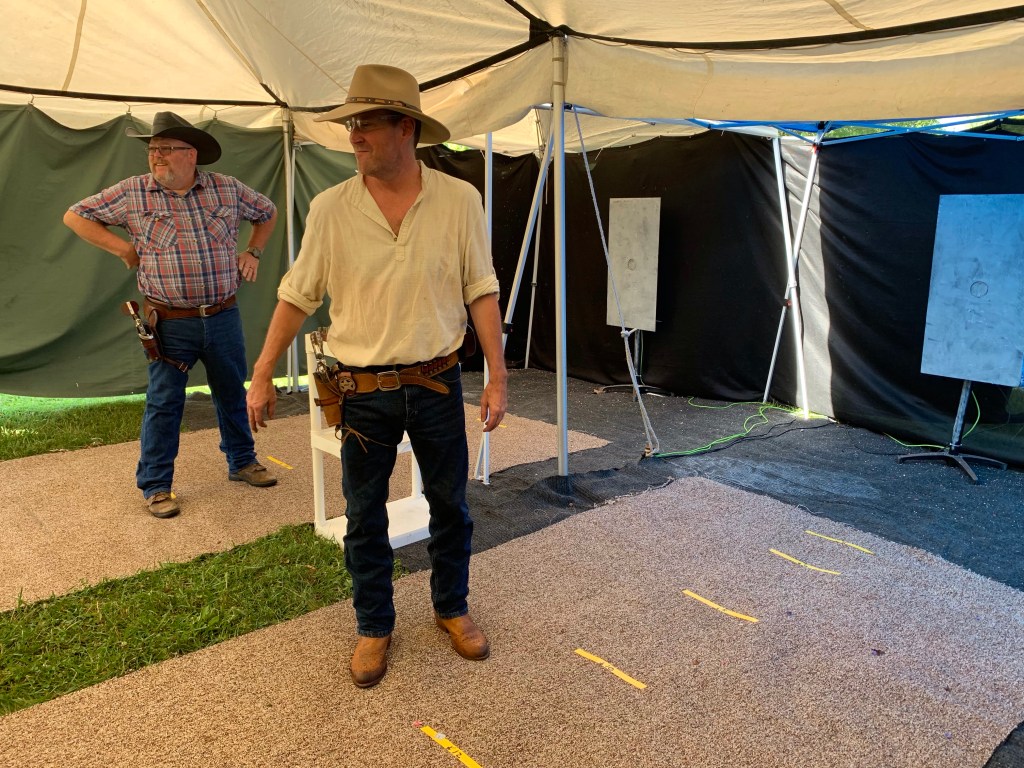
Of course, this is about more than traffic, and you can find this same mentality in almost every industry, particularly manufacturing. Whenever there is an employee accident or an engineering challenge, the trend of the college-trained European worshipper is to put up the stopsticks and slow down a process to make a safer world. But is it a better world, and I would argue it’s not? Safer does not make something better. That may be one value, but it’s certainly not the entire value. As I always say from my favorite sport, Fast Draw, you have to manage speed and accuracy with the amount of risk your skill level allows. If people are forced to improve their skills rather than pandering down to their weaknesses, often the result will be much better because the process of thinking makes it so that you get a better human being in the process, rather than playing to those weaknesses so that anybody can do anything. That is the trend in our highly regulatory environment filled with government bureaucrats. Their answer to everything is to slow things down so they can get their slow-minded, feeble minds wrapped around the problem. Once you accept that strategy, your entire society is filled with timid people who lose the skill to manage risk because their lives depend on it. Instead, they only need to know how to follow the rules and follow the guy in front of them as designed by some centralized planner.
The result is that you might have fewer accidents, and you may fix the problem of quality escapes in whatever business you might be operating. But like the traffic patterns, the safest thing you can do is to do nothing, and all too often, that is what we get out of society. We get things slow, but at least we live to get them. But the process of getting it kills us. Because we may be alive physically, but our minds are dying because we stop challenging ourselves. Such is the case in Butler County, Ohio; due to hundreds and thousands of traffic accidents and residential complaints, there are now traffic lights at almost every intersection where people travel. And it’s tough to get from one place to another. Not because the roads are bad. They are pretty good. But because there is too much starting and stopping, you can never get a good flow from your commute. That is because the political solution to traffic problems was to hire pin-headed European-oriented Marxists to solve a uniquely American problem. You embrace risk and manage it for personal fulfillment, resulting in productive output. Not that safety isn’t necessary, but it doesn’t take priority over productive enterprise, whether it’s getting to your destination 4-6 minutes faster or achieving a higher sales objective in your company. Managing risk is the way to improve output. Slowing everything down only panders to people’s weaknesses and, as a result, makes your society much less dynamic. Everyone might live in the end, but is that the goal of life? If everyone is just a brain-dead slug, is that better than a society where you could drive 100 mph to rock and roll music with the window down and vastly enjoy the experience because you don’t have to stop? I’ve seen it both ways, and I can say from experience that driving 100 mph is far better. Speed is better most of the time. Among the skilled, accuracy can also be achieved. But when you pander to society down to the weaknesses of the participants, then you get a lot more of it, and the satisfaction of an enterprise diminishes incredibly, such as we see every day at the By-Pass 4 interchanges created by monsters of Marxism and their bureaucratic plots of doom. It’s good to live a little dangerously; it makes you a better and much happier person.
Rich Hoffman
Click Here to Protect Yourself with Second Call Defense https://www.secondcalldefense.org/?affiliate=20707

