Beware of the “Time Eaters: Ways of attacking leadership in the world

As we talk about people who live in the back of the train and are not the leadership type, using Robert Pirsig’s Metaphysics of Quality, there are sure ways to detect their destructive attributes.  I call them “time eaters”: people who are afraid to do things in the world and disguise their impact by consuming time, hiding their lack of leadership.  Because they are too timid to live life in front of the train, they make a lot of noise to seem helpful in a fast-moving world.  They are the kind of people who want to consume your time with small talk or discussions about small things that are not important to the task.  And when you are doing important things in life, they seek to take up your time to associate themselves with some level of success without committing to fulfilling the endeavor.  And the really insulting thing about it is that when they want to waste your time, they fail to recognize that, as a fellow human being, you must be suffering from the same ailment as they are.  When people don’t know what to do, they seek means to disguise it with nonsense and waste time trying to look productive, but only with meaningless chatter.  A good example of this is the occasional salesperson who tries to sell you something in a shopping complex and stops you with “can I have a moment of your time?” as if that moment were not infinitely valuable.  The assumption is that, as two fellow human beings, you have some obligation to waste time on someone else just because they request it.  And in so doing, a lot of unproductive output occurs.  Being nice and accommodating will often leave you feeling empty because these people seek to drain you of your effort to fill up what’s empty inside them.

Using the metaphor of the speeding train, the people in life at the back of the train are always trying to bleed you of information when you are the leader type at the front.  So they are always trying to get you to come to the back, where they are, so that they can feel part of the process.  They, of course, wait for you to do something meaningful, then try to associate themselves with the success.  But because they are the back of the train types, they need to eat your time to gain something they didn’t earn.   And when you take the time to give it to them, trying to be nice, they fill the time of the exchange with nonsense, hoping to blend in and to look helpful.  They talk about sports, about the lottery, about wine, donuts, and college football teams.  But they never have the guts to talk about the things that really matter because they are in the back of the train and are only trying to appear as if they are part of a team.  When we talk about teams, there are usually leaders.  Then there are the people who like to spend time talking about silly things, trying to associate with success in the exchange.  I find wasting time with people in the back of the train talking about nonsense is a sure path to failure, because leadership is about being on the cutting edge, seeing things as they come, and dealing with them there.  Not talking about cutting the grass and what your neighbor is doing.  If it doesn’t involve life on the cutting edge, it’s mostly about wasting time. 

And in that way, I see a different kind of tyranny in the modern world designed by people who live in the back of the train.  They want you to always read their terms of service agreements for every little thing.  They want you to waste time figuring out a new software update for your smart TV that adds all-new control features to your remote.  They want to drag you into meaningless states for baseball stats and sports while the world outside burns away.  There is an evil in these time eaters that tries to keep you from getting to them by trying to trap you in the back of the train and away from the front so that they can work their malicious schemes.  And before you know it, on any given day, you have wasted 24 hours of your life and achieved very little.  Because your day was filled with “time eaters” who took away precious time to be on the leading edge with analysis from the back, trivial nonsense that are observations, not leadership-led.  And even in that sentiment is the notion that success should never be achieved at the cost of our humanity, of not communicating effectively, or of volunteering to waste time with people in the back of the train out of compassion for their position.  And that no achievement matters more than talking to another human being.  Even if what everyone is saying to each other is meaningless in the scheme of things.  The point of communication is to validate the lack of leadership that the other parties are terrified of, and the point of existence is to make them feel better about it. Not to actually achieve things. 

So beware of the “time eaters.”  I avoid them as I would any disease.  There is a real menace in their actions that intends to destroy the world, and I don’t like it at all.  And I say all this not to be mean, but to explain why I don’t allow myself to get stuck in projects or circumstances that are “time eaters.”  When I see and hear that the people I’m dealing with are “time eaters,” I remove myself from their company quickly and move on to something much more interesting.  If I feel what I’m doing isn’t important, then I don’t do it for long.  And people do take offense to it, but that’s OK.  I see value in the back of the train only in the analysis it provides.  But it only helps in a kind of future state, as leadership is fast and furious, and is not a team exercise.  The concept of teamwork is designed to be a time-eater of shared consumption of resources to appear busy and proactive.  When, in reality, it’s just intended to keep leaders from the front of the train and to trap them in the back with all the other slugs.  And the more time they waste keeping essential things from happening, the worse the world is.  Whether the issue is a discussion about a meaningless topic or wasting time with the TV remote, “time eaters” are a real problem imposed on us by an evil that lurks just beyond our senses.  And the war they have against us is a very real terror against the human race.  The lure is in compassion, wasting time with people who can’t contribute to success because they lack the ability.  And in that effort, the whole ship sinks, and this is by design.  So, to prevent that eventuality, beware of the time-eaters.  They will seek to destroy the world with nonsense and sell it as a value because of the human need to feel wanted by other human beings.  And in that exchange, vast evils are expressed and injected into society to undo all thoughts of goodness.

Rich Hoffman

Click Here to Protect Yourself with Second Call Defense https://www.secondcalldefense.org/?affiliate=20707
Speed and Risk Make Things Better: The nightmare of the By-Pass 4 interchanges

There is a silent evil that works in the world that I had to explain to a few smart people this past week, which deserves to be heard by everyone.  One of the great examples of this evil is a road I have driven on for many decades, the By-Pass 4 interchange in Butler County, Ohio, one of the largest arteries for industrial traffic in a very productive county.  It used to be that I could drive 100 mph down that road all the time, and it was never a problem.  But these days, there are too many lights at every intersection to get up any speed before you have to slow down again, which is, of course, by design.  Over the years, to answer all the upset families who lost people to car crashes, not to mention the complaints of the insurance industry who had to make payouts on all the minor fender bender claims, the answer to this overly managed world is to lower the speed limit, put up more stop signs and traffic lights to frustrate high-speed travel in the name of safety.  But safety has a cost all its own, and productivity usually gets sacrificed.  If you can’t drive 100 mph, you will arrive at your destination much later, and among the world’s bureaucrats, there is almost a delightful glee when they tell you that something is going to take time because “it’s better safe than sorry.”  But to my eyes, the question must always be asked, “Is it?”  I would argue, and do all the time, that things were much better when we could drive 100 mph down By-Pass 4.  Sure, there were occasional crashes and deaths as a result.  But drivers were noticeably better; they had to be. Whenever you dumb down a human population with over-processing, you tend to inspire them to think less, and high-speed driving makes people think more, and they are better people as a result.

The solution to the By-Pass 4 complaints by the central planners who tend to get involved in these political problems of traffic management was to slow everyone down to where it’s faster to ride a bicycle and to take as much risk out of the process to make it so that accidents rarely happened.  This might be fine if the goal is to remove automobile accidents in your culture.  But if productivity is the goal, and speed is associated with that objective, then the By-Pass 4 exchanges along its path are devastating, which I point out in my video.  Without question, a World Economic Forum or United Nations statistician could show that such an arrangement will save lives and property value by eliminating crashes, but ultimately, the safest thing anybody could do if they didn’t want to have a collision is never to leave their house, and that looks to be the intention behind the traffic pattern design of Butler County.  Without question, everyone had good intentions, but the result of all this activity has produced slow roads that greatly limit personal freedom and make driving a real pain in the neck.  It takes a long time to get anywhere because political problems have always been solved over time by addressing complaints of every crash with more traffic lights, speed limits, and stop signs.  In the case of By-Pass 4, presenting traffic in such a way that a driver-side door never faces oncoming traffic to eliminate crashes that statistically occurred often when traffic had to engage each other at 90-degree angles and human decisions had to be made for everyone’s preservation.  By taking that decision-making process out of human hands, we must now ask whether we are all better off.  Is a safe society better than a risky society if the result is dumber humans? 

Of course, this is about more than traffic, and you can find this same mentality in almost every industry, particularly manufacturing.  Whenever there is an employee accident or an engineering challenge, the trend of the college-trained European worshipper is to put up the stopsticks and slow down a process to make a safer world.  But is it a better world, and I would argue it’s not?  Safer does not make something better.  That may be one value, but it’s certainly not the entire value.  As I always say from my favorite sport, Fast Draw, you have to manage speed and accuracy with the amount of risk your skill level allows.  If people are forced to improve their skills rather than pandering down to their weaknesses, often the result will be much better because the process of thinking makes it so that you get a better human being in the process, rather than playing to those weaknesses so that anybody can do anything.  That is the trend in our highly regulatory environment filled with government bureaucrats.  Their answer to everything is to slow things down so they can get their slow-minded, feeble minds wrapped around the problem.  Once you accept that strategy, your entire society is filled with timid people who lose the skill to manage risk because their lives depend on it.  Instead, they only need to know how to follow the rules and follow the guy in front of them as designed by some centralized planner. 

The result is that you might have fewer accidents, and you may fix the problem of quality escapes in whatever business you might be operating.  But like the traffic patterns, the safest thing you can do is to do nothing, and all too often, that is what we get out of society.  We get things slow, but at least we live to get them.  But the process of getting it kills us.  Because we may be alive physically, but our minds are dying because we stop challenging ourselves.  Such is the case in Butler County, Ohio; due to hundreds and thousands of traffic accidents and residential complaints, there are now traffic lights at almost every intersection where people travel.  And it’s tough to get from one place to another.  Not because the roads are bad.  They are pretty good.  But because there is too much starting and stopping, you can never get a good flow from your commute.  That is because the political solution to traffic problems was to hire pin-headed European-oriented Marxists to solve a uniquely American problem. You embrace risk and manage it for personal fulfillment, resulting in productive output.  Not that safety isn’t necessary, but it doesn’t take priority over productive enterprise, whether it’s getting to your destination 4-6 minutes faster or achieving a higher sales objective in your company.  Managing risk is the way to improve output.  Slowing everything down only panders to people’s weaknesses and, as a result, makes your society much less dynamic.  Everyone might live in the end, but is that the goal of life?  If everyone is just a brain-dead slug, is that better than a society where you could drive 100 mph to rock and roll music with the window down and vastly enjoy the experience because you don’t have to stop?  I’ve seen it both ways, and I can say from experience that driving 100 mph is far better.  Speed is better most of the time.  Among the skilled, accuracy can also be achieved.  But when you pander to society down to the weaknesses of the participants, then you get a lot more of it, and the satisfaction of an enterprise diminishes incredibly, such as we see every day at the By-Pass 4 interchanges created by monsters of Marxism and their bureaucratic plots of doom.  It’s good to live a little dangerously; it makes you a better and much happier person.

Rich Hoffman

Click Here to Protect Yourself with Second Call Defense https://www.secondcalldefense.org/?affiliate=20707

Microsoft Was Never Our Friend: They don’t respect our time, our productivity, or our American sovereignty

I always liked the Paper Clip guy from early versions of Microsoft Windows. He might have been irritating, but he always came across as trying to be helpful, respectful of your time, and assuming that what you needed to do on the computer you were using was valuable. That sentiment has changed over time. Microsoft is well-known as a member of the Desecrators of Davos attempt to overthrow the world. Their obvious role in the scheme is to dumb people down with nonsense and steer society globally where the Klaus Schwab types want them to go. The Microsoft of the 1990s is long gone and what has been given to us in its wake is a significant intrusion of progressive intent to change the world as we know it. Microsoft thinks it can do it because they are essentially a monopoly that touches just about every computer in the world, other than Apple, which is just as bad.

I used to love Microsoft; I was a big fan of Word, of course. But I loved Excel, Project, PowerPoint, and everything Microsoft made. I was a fan of it all. But I entered the computer age at the ground level and watched this company evolve. And that also gives me the liberty to discuss how much it has changed from its original intentions. The Microsoft of today does not respect its users. They provide constant updates whenever they decide to; they don’t care what you are working on and have no value for it. They do what they want; they speak to you through messages as if they are a parent telling you to brush your teeth before going to bed and have lost their understanding of the original company mission in the beginning. Their goal now is globalism and steering mankind into the slaughterhouse of globalism, and they intend to use their software as the bait that drags everyone to that gloomy destination.

It’s out now, Bill Gates, when he stepped away from being the boss of Microsoft just as lockdowns were happening all across America in the spring of 2020, during a big election year where a virus that was planned at Event 201, sponsored by Bill Gates himself, was released. Gates wanted to protect Microsoft from his role in the virus and designed to work on the “climate change” initiative hoping that Microsoft would be shielded from public opinion as they learned what role Gates had in managing the virus in society and what the governments of the world would do about it. But Microsoft was just another front on the culture wars attack. I had been noticing that their edit software was already attacking strong usages of pronouns and other kinds of terminology that might be considered “too aggressive” as a means to control information flow and the quality of it as determined by the Desecrators of Davos, which Bill Gates is undoubtedly one of the founding members. Microsoft was no longer concerned about the quality of the individual users’ time; they were now concerned about controlling what the particular user did and what they thought while they were interfacing with their products. The footprints of global corporatism were unleashed, and people were so in love with the Microsoft product that they didn’t notice how sinister some of the changes truly were until it was too late. Microsoft went from being a helpful friend to essentially becoming the software of the terminators from one of Jim Cameron’s science fiction doomsday films. Only they weren’t intended to kill the user, only to make them suitable, compliant soldiers of the administrative state. The lure was to get people addicted to easy pornography, and a big brother was watching the users through the software all hours of the day, anywhere in the world that they might be. 

It was a baffling experience to see how Microsoft was pushing its Teams meeting system just as the governments of the world, all looking for Bill Gates donations, thought that the way to deal with the Covid virus, a virus created in a Chinese lab by Bill Gates’ friend, Dr. Fauci, and both of them worked hard to keep medicine away from those who caught it so they could push all these new social controls like social distancing. The wearing of useless masks to fight the virus was to work from home and use Microsoft Teams to communicate instead of actually going to the office. And the media followed that assumption with talk about a New Normal, coming straight off the pages of Claus Schwab’s latest book, titled The Great Reset. From the point of view of Bill Gates, who wants a zero-emission world to save the planet from some bizarre climate change religion that takes all mankind back essentially to The Law of One, the sun worship of pagan deities from an archaic past, keeping people off the roads and at home would save the planet from those pesky humans and their gas-guzzling cars. So Microsoft Teams was there to allow people to do business in their underwear which essentially shut the world down productively for more than a year and crippled the world’s economy. The Microsoft solution was to attempt to control the messaging through their various software updates, keep the public steered toward globalism, and discourage information that might say otherwise. 

But the footprints of globalism were there from the beginning. It’s just that while the market was taking off, Microsoft needed the customers to get addicted to their product like a drug dealer might give away free samples to get people addicted to the high. In its early versions before Windows 95, Microsoft wanted to appear helpful, productive, and respectful of its users. But after Windows 95, and the complaints about the product showed this trend, people saw that Microsoft was less interested in the user market and much more interested in making the users slaves to their system since, by then, most of the world was using a version of Windows to interact with computers in whatever way they were using them. The goal from the beginning was to gain control of the time the users spent on a computer and to get them to want to do more of it. Even when reality threw obvious problems their way, they simply ignored the information and proceeded on anyway, just as they did with the concept of Teams meetings replacing real human interaction in an office space. Microsoft’s stupidity in understanding the basic nature of productivity went straight to the door of Bill Gates, who never wanted to help society live better lives with a superior product. His goal was to use the information to control productivity and to dumb down the users to the point where they wouldn’t even see what was happening to them along the way. The Paper Clip guy was an illusion all along. Microsoft never intended actually to be helpful but to bait mankind into following them into mass control from global forces. That long-hatched plan culminated when Bill Gates resigned from Microsoft upon unleashing Covid from China. Microsoft went on to do its work as built by its founder, while Bill Gates went into full Desecrators of Davos mode and joined the others who were openly looking to take over the world. Microsoft was never our friend; it was only an enemy from within from the very beginning, and it is obvious that they don’t respect our time.   They only want our minds to do what they want with them to serve interests that are not American.

Rich Hoffman

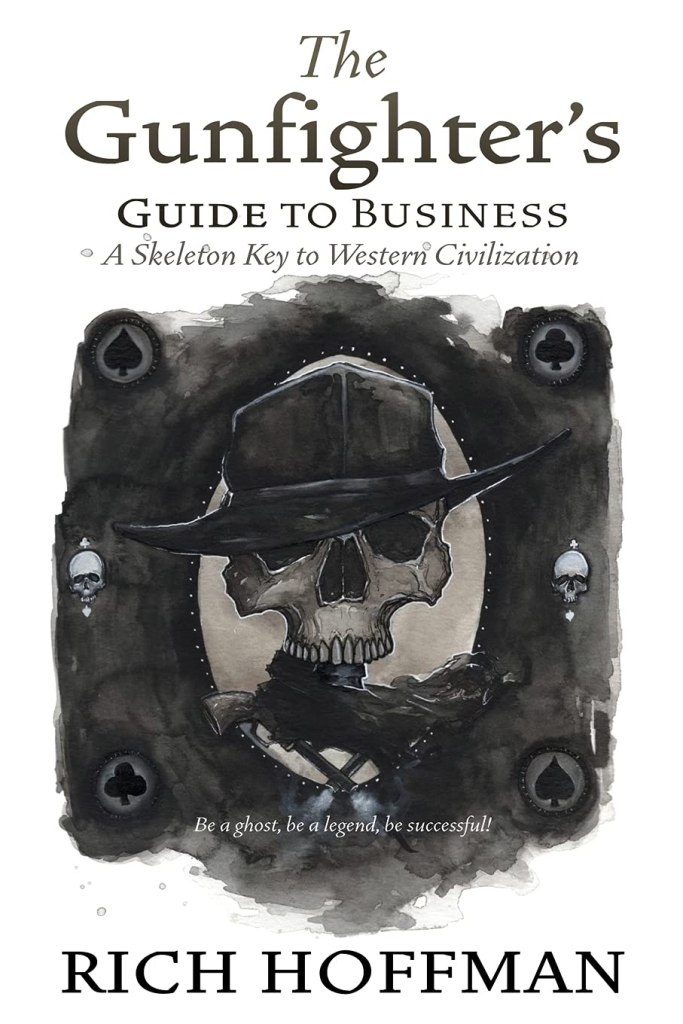
Click to buy The Gunfighter’s Guide to Business

My Vacation from Slow People: The need for speed is a very real thing, and is uniquely American

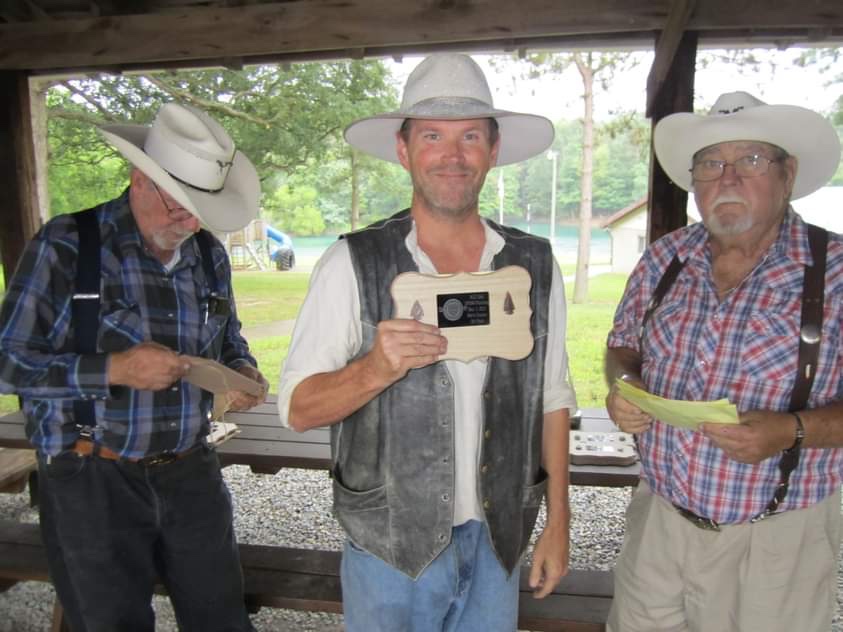
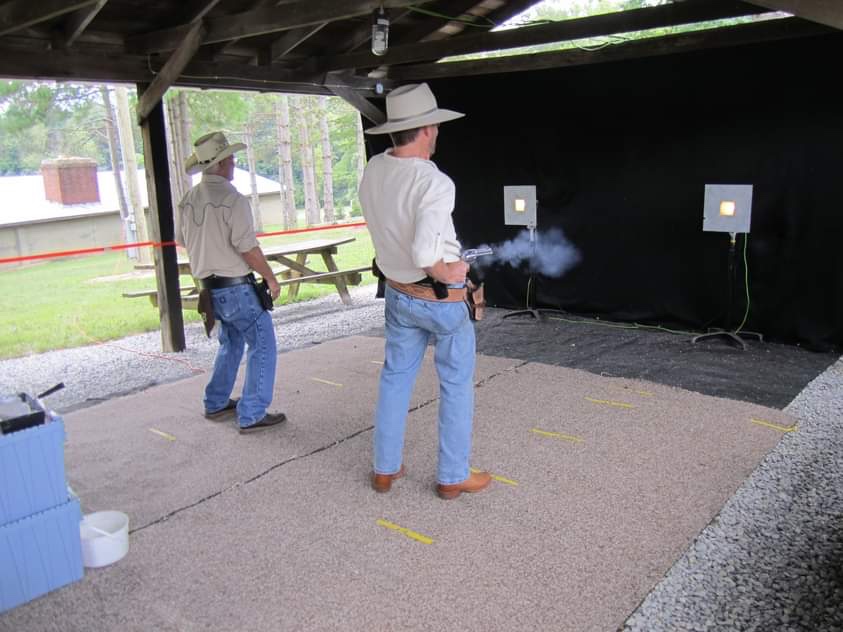
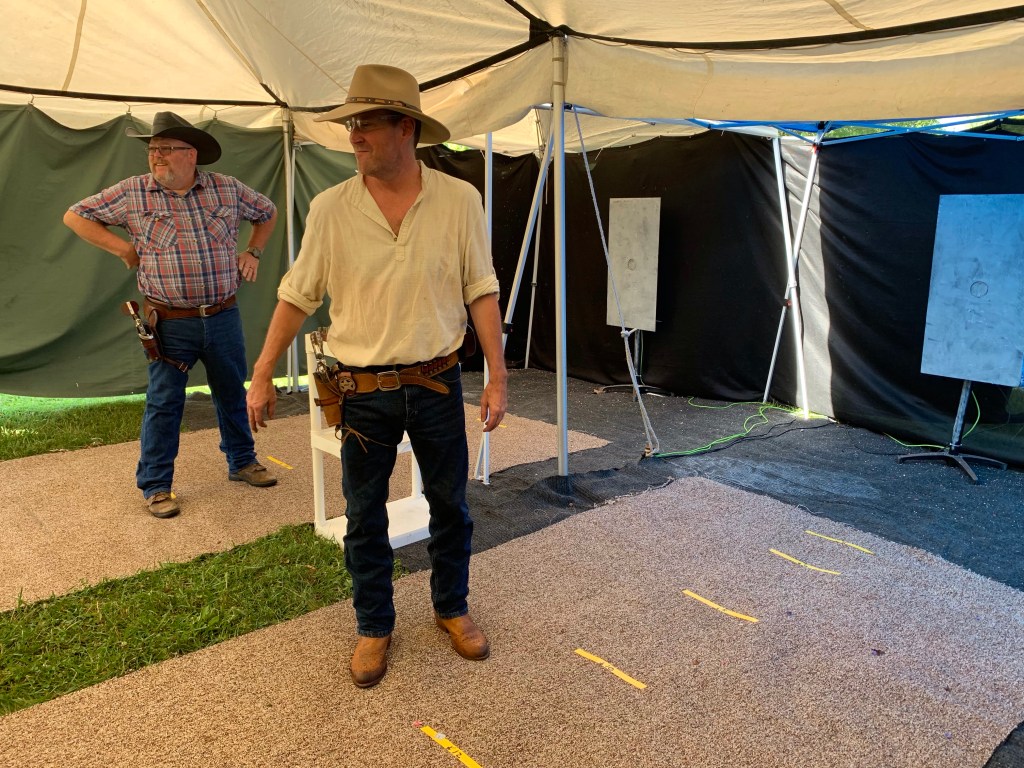
For purely selfish reasons, I have spent much more time shooting in Fast Draw competitions during the summer of 2022. I’ve always done competitions like this, but this year I went to all the Ohio Fast Draw events and traveled a lot more than usual to competitive events giving myself a much-needed vacation. The question that has come at me is why I was running myself ragged with all the events. There are a lot of easier things to do in life than competing with guns in stressful and very fast matches where things are measured in such small increments. Shooting and hitting a target in under half a second, or at nearly a quarter of a second as I typically do, isn’t what many people consider relaxing. But believe me, in my life, it is. That kind of speed and free flow of pure energy is a real benefit in ways that are hard to explain, which I’ve tried when people have asked, scratching their heads. But after a weekend shoot over Labor Day where I could shoot competitively with some really great shooters and the event was fast and very competent, I found myself grateful for the experience and the summation of all the other summer shoots. I was taking some of my own advice from my book The Gunfighter’s Guide to Business, and I’m very glad I did. Fast Draw is the fastest sport in the world, and when you have to deal with many hundreds of people per week, sometimes thousands, the chance to stand in front of a target and just let everything rip forth is wonderful.

The truth is that people are slow; they spend much of their lives looking for reasons not to do things, so when you find yourself dealing with many people, all who are doing their best to do very little, it can be very frustrating. And the world, after Covid, as a result of Klaus Schwab’s Great Reset and the intrusive actions of Bill Gates, making the governments of the world dance by the strings they control like wood-carved marionettes, has only become slower. Bureaucrats have one purpose in life: to make things go slower. Everyone in the world these days seems fully committed to going as slow as they can and to lobby for things to be slower and slower. You can see the difference in a typical drive-thru window; things have slowed down at McDonald’s and Wendy’s fast food restaurants due to a post-Covid world. The government has told employees they can take off all they want and still get paid. Doctors have become everyone’s parents and intercede when those mean old employers expect work performance for the pay they issue. It has become a real mess of incompetence that is the net result of the Biden administration’s attitude toward work, labor, and globalism, which has sucked the air out of the ambition of American effort in truly disgusting ways. And I have been getting angrier and angrier the more I deal with people causing me several times during the year of 2022 to consider just packing everything up, telling everyone to go to hell, and going to a mountaintop with all my books and saying, “peace out.” 

I live a very fast life; I always have. I love speed because the quicker you can do things, the more you get to do in life. So it is hard for me to slow down long enough to go to see medical people because time is always scheduled to their convenience, not yours. I hate going to the BMV for that very reason. It’s such a slow process. I have even been very frustrated with one of my favorite things, going to Kings Island on Friday nights after a busy professional week, because things have really slowed down there as well. My wife and I like to ride roller coasters to blow off steam. I get time to think about things while we wait in line, and of course, roller coasters are nice and fast. But the employees have been horrible this year, worse than at any other time in my life; they are slow, dim-witted, almost representatives of a zombie apocalypse. I don’t think that the people changed, but we lost IQ points during Covid, and the government has crippled young people into thinking in a lazy fashion that makes them barely functional. So even going to Kings Island to relax on roller coasters has not been as fulfilling as it normally is. I’ve never liked the European attitude toward work, which you can clearly see anytime you go to London, Paris, or the Netherlands; they don’t like the American expectation to have everything fast; they like to take their time and smell the roses as they say. But I find all that slowness disgusting. And with Covid and the Biden administration, those types of slow people have been empowered, and the more you deal with people, the more of that attitude you tend to interact with. And for me, it has been real torture. 

So that brings us back to Cowboy Fast Draw and competitive events. All the people in that sport get it. They understand the need for speed and the beauty of unleashing energy and flowing toward an objective as quickly as possible. And spending more time with those kinds of people has been truly wonderful. I can’t say that I will always be able to shoot in those competitive events as much as I did this year. What I did was probably excessive, but it benefited me wonderfully. But, I have been gone a lot. I am one who does not do well in traffic jams. I don’t like to get stuck under any conditions waiting for much of anything. When I get out of a traffic jam and back into the country where roads are wide open, I like to drive as fast as I can without people in my way to slow me down. And that’s how I am with most people. I like to pack a lifetime into a typical day, so when you end up dealing with people who would rather be asleep and multiply that by 100 or 200 people, it can be very frustrating. But I healed much of that this summer and accomplished many of my personal goals for shooting. I won a lot of events which made me happy. It was consistent even under great duress at times, so I learned a lot of good things in doing these events. But the ability to remove all the noise from my life and just let loose all the speed I can muster on something with intense focus has been wonderful. It has restored me some patience in dealing with a much slower world that needs motivation to go faster and be more competent. That is, after all, one of my core values to others, and when I get to the point where I don’t want to do it anymore, a lot of people end up suffering. So the Fast Draw events have been significant; I have been doing them almost every weekend and traveled to many places to participate in them with many like-minded people. And I can’t recommend Fast Draw as a sport enough, for all the reasons stated and more. Speed is great. Slowness is for the lazy. 

Rich Hoffman

Click to buy The Gunfighter’s Guide to Business

I Hate Slow People: Speed is the key to a good American life

One of the most painful things in the world for me to deal with is slow people. I’ve always been attracted to fast draw with guns, and I have spent a lot of time practicing Cowboy Fast Draw over the years, working out the details of my book, The Gunfighter’s Guide to Business. But before any of that, I have always driven fast, very fast. I do everything fast because speed is how I have been able to do so many things in my life in such a short period. My attitude certainly clashes with people when I go to Europe. They can be friendly people, but they are sloooooooowwwww at everything. If a psychologist were to peel back my hatred of progressives and Democrats in general, they would discover that my reasoning is that they think too much like slow-minded people worldwide, especially in Europe. In Europe, they will often indicate that there is no reason to be in a hurry to get anywhere, just to relax. Well, that’s not acceptable to me, so when I talk about fast draw with guns, that is a place where I am in my happiest place, in working with time in fractions of a second rather than minutes and hours or even days. I talk about often in my book of the benefit of thinking fast, professionally because it allows you to do many things in a business day that might take others weeks to do, even on the executive side of a business.

I find that in my life, I often do in a day what many who are in leadership might consider reasonable in a week. And when I say all that, I don’t mean it as a reckless endeavor.   Accuracy, to me, is just as important. The lazy people of the world have created a falsehood: speed happens as a compromise to accuracy, and that just isn’t the case. Instead, it displays good people against bad people, and speed has a value that brings to light a person’s quality. It is most often the case that lazy, stupid people are also deliberately slow, and they are the first to say that if they go too fast, they will make a mistake. All that says to me is that the person using speed as an excuse is simply trying to use the fear of a low-quality experience to cover for their lack of skill.

For whatever reason, over these last several months, I have dealt with more government pinheads than usual. Maybe with Covid gone and just realizing it, they have finally come out of their homes and back into the workplace. But they are back, and when you deal with them, they are talking the same nonsense as before, only now it is worse. Covid protocols by the slow-minded CDC losers have given the lazy of the world an excuse now. It’s acceptable more than ever to these government types to take the European mindset of slower is better, and we’ll get there eventually. Just this last week, I had to sit through a meeting with one of these guys, who I’m sure is a nice fellow. He probably has kids that love him. Maybe even a wife. But, wow, was he a slow-minded fool. He kept repeatedly saying, “we have to slow down so as not to make a mistake.” I tried to be as polite as I could, but the guy was taking a 15-minute conversation and turning it into 50, and asking for more time, which I never have to give to anybody. At least not some government bureaucrat. I hate government as much as I do because government is slow. The people in it are slow. And I just don’t like slow people. I understand our constitution is meant to slow down the speed of government. I certainly would never stand for the kind of authoritarian government that China has. They argue that they can move fast because they don’t have to get votes. It’s just one person who decides then everyone else follows. They made it look like it works in China by killing off all the types of people who might stand in their way, so in that way, they have made a very compliant society. But, they are still slow; they just don’t transfer that slowness through a bureaucracy. What they do is considerably worse, but it’s all bad in my mind. They measure actions in minutes, which I do in fractions of a second. 

Learning to think as fast as you must in Cowboy Fast Draw is unique to American culture, and it’s something we should be proud of. Thinking fast is hard-working and innovative. Thinking slow is lazy and accepting of the conditions of the world. By practicing a sport that requires a shooter to think in fractions of a second, it also impacts everything else in your life. It won’t take long to become frustrated with the slowness of everyone, the mask-wearing liberal who pulls out in traffic and is too slow to get up to speed, or the slow person fumbling with their groceries at the self-checkout. It takes them too long to bag their food and fumble with the payment display. Or, god forbid, going to the license bureau, participating in the medical industry, or visiting the post office—slow, slow, mind-numbing slow. It is my point of view, based on experience, that the key to American life is speed, not relaxing and waiting for things to happen. Americans make things happen, and they don’t take all day to do them. Part of Making America Great Again is in the speed in doing it. In not hiding laziness behind an illusion of quality. If a person doesn’t slow down, that bad quality will follow. Americans understand that bad quality happens when speed is pressing because the person doing the task is unskilled, and they haven’t spent their lives making themselves faster with practice. They have accepted the low expectations of government and slow-minded cultures as a way to disguise their own mundane outlook on the world. 

I’ve heard the excuse, especially from machining where tolerances are stoned into thousands of inches over a 10′ span, that they could screw up the whole project if they go fast. I say to those people, not if you are good at what you are doing. If you are good, you will be as fast as you can possibly be, even on delicate jobs. Learning to think fast helps a mind process more information, which makes for a better life lived. If speed causes stress, well, it’s because the mind isn’t equipped for it, and it should be. Americans should never accept slowness on anything. Yet that is the new expectation coming out of Covid: we should all slow down, like the Europeans, take our time. Maybe sit back and have some tea and crackers if we get too stressed out. That government pinhead I am referring to is the worst kind of human being, a lazy person who uses slowness as a moral assumption, then projects it to others to explain the lack of effort. And when dealing with such slow people, it is infuriating! 

Rich Hoffman

Click to buy The Gunfighter’s Guide to Business

Karoshi: The difference between efficiency and a lack of ability

Recently I’ve written a few articles on the scam which is Lean manufacturing.  It’s not that the work of Womack, Jones and Roos in The Machine that Changed the World is inaccurate in its observations of mass production cultures versus lean manufacturing strategies—but that their academic lenses failed to identify the crucial ingredient that made Asian efforts superior to those in the West.  In essence, it is the Japanese word Karoshi which allowed for the explosion on the scene of the revolutionary work ethic for which those three observers tried to capture in a bottle to save the West from itself and start a new kind of industrial revolution based on Lean manufacturing methods.  The Japanese specifically are willing to outwork the rest of the world and put country before self even over small things, which is why the comparisons in The Machine that Changed the World made traditional mass producers look so terrible in side by side productivity comparisons—yet nowhere in their book did they successfully make that point.  The closest they came was in declaring that the transplant operations in America were more successful when they had Japanese managers as opposed to American.  With all things considered equal, American workers, American labor laws, and American supply chains, Lean manufacturing did show dramatic improvements in American productivity—only they typically only worked best when the manufacturing plant was conducted by Japanese leadership as opposed to those of Westerners.  If you break that down even father it is because of the Japanese tendency toward Karoshi that one was more successful than another—the willingness to put in the time to build such a Lean culture at the management level.

For whatever reason at the end of the 2017 calendar year a lot of people have been pushing me to discover what my next book will be.  Honestly, I have a number of fiction projects brewing on the back burner but at this point in my life it’s all about business.  To many people from the outside they look at my life and think I, like the Japanese, are functioning from Karoshi—which is their word for burnout—or death by work.  After all I do work with people from those far-flung places on the other side of the world and even by their standards I work longer days and compress more into my 24 hour day than they can imagine.  What makes me different from other people is that I have this background in Western arts, (a form of martial art) that has also made me a very efficient person—personally, which for Christmas this year I shared with some of my employees for their benefit.  (click to view)  Working harder isn’t necessarily good—but working smarter is.  My lessons to others about the nature of the bullwhip is about more than just a novelty act—it’s an actual philosophy for which I run my life—and without it I’d be in the same boat as everyone else.  And now for the last couple of years I have been experimenting with Cowboy Fast Draw which has led me to several conclusions regarding Lean manufacturing—and that my next book will likely deal with these Western methods of approaching business that are of the next generation of thinking.  I need to tweak a few things first before committing them to paper—but my next literary project will likely have to do with this crucial issue.

One thing that led me to Cowboy Fast Draw to begin with was my engagement with many American manufacturers who were getting frustrated with my methods as we were setting up a massive supply chain together and many of them put up a lot of resistance—which ran counter to my way of thinking. Most of these people were classic mass production people—which I think still has a lot of merit to it from a traditional standpoint.  Their companies have made them adapt Lean techniques so being the typical students of Western education systems they went and memorized all the charts and graphs—and the Japanese words for things without understanding the core philosophy of what Lean manufacturing did.  When they ran up against me they would frustratingly utter that I’m all too willing to “shoot from the hip” too often which led to a name they called me behind my back as a “gunslinger” which to their minds was an insult.  We call quarterbacks in football gunslingers when we want to insult their impatience in the pocket to throw too many risky passes.  Only the risk isn’t that all that risky to my mind.  Using bullwhips and now shooting techniques that do not involve aiming I am extremely accurate and fast in those hobbies and naturally I carry those elements over into my personal life.  Just because you can make fast decisions on critical elements without a process map to guide you, it doesn’t make you risky, only “ultra efficient.”

With the help of Womack and many others Japan has been placed at the top of manufacturing respectability for the last half of a century and why not, they earned it. But there has been a cost.  Their very industrious culture in Japan is suffering from Karoshi to the point where 1 in every 5 people are suffering tremendously from it—and if you subtract females and elderly people, that leaves most of the adult males from age 20 to age 50 pressed with overburdened stress that actually makes them less productive.  Of course the slack-jawed hippies and micromanaging academics think that the solution for the entire industrial world is to force companies to regulate their workers to a 40 hour work week—which is pretty stupid.  That is no solution—because the work demand is a product of production necessity.  There is a need for the work, otherwise it wouldn’t exist.  And forcing workers to only work 60 hours a week forces payrolls higher which hurts companies because they have to add to their overhead—which academics don’t care about because that’s their solution to everything—being that’s their role within education societies.  The work is needed and you can’t just throw bodies at the problem because all those bodies are not equal—everyone can’t perform work at the same level.  But we can focus on performing work in the most efficient manner possible, and doing that we can greatly reduce the need to overwork ourselves.

I personally work 60 to 70 hours per week and I still have time for many things in my life.  Outsiders might look at my pace and declare that I’m at risk of Karoshi myself—but they don’t understand.  To explain it to them I’d use one of my bullwhip tricks in putting out a candle with it to show how speed, accuracy and judgment can all come together to project focused efficiency into very tight target radius.  Or in the case of Cowboy Fast Draw where a gun has to be drawn from a holster and shot into a target in under a half a second—the work still gets down.  If the goal is to shoot a gun into a target, that task can be done whether it takes a half a second or up to a minute as the shooter takes their time aiming the weapon and firing.  The fast draw artist is obviously much more efficient at performing that basic task.  They might be able to shoot that same target 20 or 30 times while the cumbersome minded shooter wastes huge amounts of time pointing and aiming. The aiming is only a task needed for those who lack the faith in themselves to perform the task.  So in essence, the reason that countries like Japan have so much trouble with Karoshi is that they have brought in so much work—their society cannot process it all on time using the methods of approaching that work which they are utilizing now.  They need methods that still perform the work, but only much faster and still have the accuracy needed.

When I hear some inefficient person—whether it’s the president of a company that is filled with inefficient workers and is struggling to meet quotas, or an old-fashioned engineer who says we are working too fast to not make mistakes I get pretty mad.  What they are really saying is that I should bend my life to their limits because I can do all those things fast and accurate.  Speed does not mean a lack of quality—it’s only a detriment if the person performing the task is an inefficient human being.  And that is the essence of human behavior that Womack never addressed in his Lean manufacturing work—and why I’m not a big fan of the guy.  The reason the Japanese beat the West in manufacturing over the last several decades is not because of Lean methods.  It’s because they simply were willing to outwork the world to climb back on top after they lost World War II.  It was their path to redemption.  Now however that the world has looked to them for the method to perform work, the pressure is crushing their culture with high incidents of Karoshi.  And I’m saying there is a better way, one that still has all the efficiencies—but puts more of an emphasis on speed so that productivity doesn’t stack up behind the incompetent—but that the good manager can figure out who can do more in less time than the sluggish mind of those less capable.  That is how we solve the problem of being overworked even as the world demands more productivity at a much more rapid pace.  We can’t say no to that challenge—we simply have to figure out a better way to do it—which I’m thinking seriously of helping to formulate.

Rich Hoffman

Sign up for Second Call Defense here:  http://www.secondcalldefense.org/?affiliate=20707  Use my name to get added benefits.