The Merger Is Complete: All Assets Secure – Why Ohio (and America) Cannot Talk Financial Stabilization Without Confronting Financialization and Returning to Real Production

The merger is complete. All assets are secure. That phrase has been echoing in my mind lately as I sit down with state leaders like Senator George Lang, the Ohio State Treasurer, and others in the growing movement here in the Buckeye State. We are not just talking about balancing budgets or tweaking tax policy anymore. We are staring down the barrel of a much deeper conversation—one that cannot happen in a vacuum. Preserving Ohio’s financial future, and by extension the country’s, demands we confront a natural byproduct of decades of drift into pure financial engineering: the dominance of financialization. It is the term that has surfaced repeatedly in our private discussions, and it is the invisible force that has warped our economy into something unrecognizable from the one the Founders envisioned.

Kevin Freeman, the author of Pirate Money: Discovering the Founders’ Hidden Plan for Economic Justice and Defeating the Great Reset, has laid out the principles that are now gaining traction. Under a potential Vivek Ramaswamy administration in 2026–2027—and with leaders like Senator Lang stepping forward—this idea is poised to evolve into policy. The core concept is straightforward yet revolutionary: states create a gold reserve managed directly by the treasurer. Citizens can hold value in physical gold or silver, stored securely in a state depository, and access it through a modern debit card or electronic transfer for everyday purchases. The money in your account is not fiat paper subject to endless printing; it is backed ounce-for-ounce by hard metal. You spend gold without ever carrying a coin. The value stays anchored to something real.  

Senator Lang has been vocal about this in legislative circles. Ohio House Bill 206, introduced by Representatives Jennifer Gross and Riordan McClain, already proposes exactly this framework: a state-managed transactional currency rooted in gold and silver. The treasurer would hold the bullion in a protected reserve, and citizens could buy, hold, and spend it electronically. Every “dollar” spent would be convertible to actual metal. It is optional, constitutional (states have clear authority under Article I, Section 10), and already working in pilot form in Texas, Florida, Louisiana, and elsewhere. Freeman calls it “gold you can spend.” I call it sanity.  

But here is the catch—and this is where the conversation with Lang and the treasurer always turns serious: you cannot build the infrastructure for a gold-backed system while the economy remains addicted to financialization. That addiction is the black hole at the center of everything. It is the reason Main Street has been swallowed by Wall Street. It is why so many companies that used to make things now make money off money. And it is why a growing number of us—myself included—have deliberately refused to play the game.

Financialization is not some abstract academic term. It is the process by which the financial sector—banks, hedge funds, private equity, asset managers—stops serving the real economy and instead becomes the economy. Profits come not from producing better hamburgers, better tires, better homes, or better steel, but from trading debt like baseball cards, leveraging interest rates, securitizing everything, and extracting fees from every layer of the transaction. BlackRock is the poster child. With over $10 trillion in assets under management, it is the largest shareholder in nearly 90 percent of the S&P 500. Larry Fink’s firm does not build factories; it owns pieces of every factory, every airline, every retailer. It profits whether the underlying company succeeds or fails because the game is now about ownership of the capital structure itself, not the output. 

This is not capitalism as Adam Smith or even Henry Ford understood it. This is a casino layered on top of the real economy. When you buy someone’s debt, package it, sell it, insure it, and then bet against it—all while the Federal Reserve keeps interest rates artificially low or high to favor the house—you create wealth that has no anchor in physical reality. The Dow Jones Industrial Average looks healthy on paper, but much of that “growth” is stock buybacks funded by cheap debt, not new factories humming three shifts a day. BlackRock and its peers have perfected this. They gained enormous power during the 2008 crisis by managing toxic assets for the Fed, then used the same tools to consolidate control. Today the Big Three (BlackRock, Vanguard, State Street) control roughly a fifth of all S&P 500 shares. They vote those shares, influence boards, and extract fees regardless of whether the company actually produces anything of lasting value. 

I have had a front-row seat to this vortex my entire adult life. I made deliberate choices—every single year, every opportunity—to stay out of it. I could have leveraged real estate deals, flipped debt instruments, ridden the private-equity wave, or parked money in funds that profited from the very inflation the Fed engineered. Many friends did exactly that. They have swimming pools of cash, second homes in the Bahamas, and portfolios that look impressive on a spreadsheet. I do not begrudge them the money. But I watched what it did to their thinking. Success became detached from making something people genuinely wanted. It became about timing the next rate cut, the next bailout, the next round of quantitative easing. The forbidden fruit of financialization tastes sweet in college textbooks and MBA programs, but it rots the soul of production.

This is why I have always measured my own economic decisions by a simple test: Does this create a better physical product or service that competes in the open market? If I make a better hamburger, I get rich because people buy more of them. If I build better homes with honest materials at honest prices, the market rewards me. The value is in the wood, the stone, the craftsmanship—not in how cleverly I can leverage a bank loan or securitize the mortgage payments into a derivative. When companies start measuring success by how much debt they can service or how many assets they can flip rather than how many units they ship, the culture shifts. Plants close on weekends. Third shifts disappear. Executives leave at 5 p.m. sharp and do not answer the phone. Why work harder when the real money comes from the interest-rate spread, the management fee, or the carried-interest loophole?

The data backs this up brutally. Since the United States fully abandoned the gold standard—first under FDR in 1933 with Executive Order 6102 (which confiscated private gold holdings) and then under Nixon in 1971—the dollar has lost roughly 90 percent of its purchasing power. That is not an accident. When money can be printed without limit, the incentive structure flips. Central bankers at Jackson Hole sip lattes and debate “monetary theory” while companies learn that the fastest path to shareholder value is not innovation but financial engineering. The Federal Reserve keeps rates high enough to reward bondholders and asset managers but low enough (in crisis) to bail them out. The result? An entire generation of executives who treat labor as a cost to minimize rather than a partner in production. They do not need to run three shifts seven days a week when leverage and cheap debt do the heavy lifting.  

Trump’s short-term approach—flood the system with energy, tariffs, and stimulus—will ignite the wet wood and create a roaring blaze of apparent prosperity. People will feel wealthier in their pockets for a while. That is the point of the first four years: get the engine turning again. But the long-term conversation, the one Lang, the treasurer, and Freeman are pushing in Ohio, is what happens next. How do we protect the value of that freshly created wealth? How do we prevent it from being inflated away or siphoned into the same financial black hole?

The answer is not complicated, but it is hard. We must divorce the economy from financialization and re-anchor it to Main Street production. A state gold reserve with a debit card is step one. It gives citizens an escape hatch from fiat volatility. But the deeper reform is cultural and structural: companies must be measured—and rewarded—by what they actually make, how efficiently they make it, and how many people willingly pay for it in the open market. Not by how cleverly they shuffle debt or extract fees. Not by how many weekends they can take off because the balance sheet looks good on paper.

I have lived this choice for thirty-plus years. I have walked past opportunities that would have made me “rich” by Wall Street standards because they required me to play the game I instinctively knew was phony. I would rather build something real—something that lasts, something people value—than swim in a pool of spreadsheet wealth that evaporates the moment the Fed changes course. That is not sacrifice; it is principle. And it is the principle Ohio must adopt if we are serious about a gold-backed system.

Look around manufacturing today. Plants that once ran 24/7 now shutter at 5 p.m. Friday and stay dark until Monday. Executives brag about “work-life balance” while the balance sheet is propped up by financial tricks. The workforce has absorbed the lesson: show up, collect the paycheck, go home. Why push for excellence when the real profits come from the Delta between phony valuation and actual output? This is the lazy class financialization has bred—not just at the top, but throughout the ranks. People with nice houses and nice cars who have never felt the exhaustion of building something that actually competes. They are the modern equivalent of the Ferris Bueller dads—out of touch, coasting on leverage, wondering why their kids do not respect them.

The Founders understood this danger. They wrote gold and silver into the Constitution precisely because they had lived through the chaos of unbacked paper money during the Revolution. States were explicitly forbidden from issuing bills of credit for good reason. Hamilton and Jefferson debated banks, but both agreed the ultimate measure of wealth was productive capacity, not financial sleight of hand. We drifted away from that wisdom first in 1933 and then decisively in 1971. The result is the hollowed-out economy we see today: record stock valuations alongside shuttered factories, record CEO pay alongside stagnant wages for those who still make things.

Ohio is at a crossroads. With leaders like Senator Lang and a treasurer willing to explore transactional gold, we have a chance to lead. Texas and Florida have already moved. More states are watching. If we pair a state gold depository and debit-card system with policies that reward actual production—tax incentives for three-shift operations, penalties for excessive financial engineering, honest accounting that separates real assets from leveraged paper—we can rebuild what was lost.

This is bigger than monetary policy. It is about the soul of work. Do we want an economy where success is measured by how many physical goods and services we create that the world actually wants? Or do we want one where success is measured by how cleverly we game the spreadsheets? The first path builds real wealth that can be passed to grandchildren. The second builds a pyramid that eventually collapses.

I have made my choice. I attach myself to hard assets and real output. I have sacrificed short-term paper gains for long-term substance. I will not change course now, even as the financialization racket reaches its peak. The game is ending. Trump’s four years will provide the fuel, but the states—and Ohio in particular—must provide the guardrails. A gold standard without a return to production-based measurement is just another pretty facade. We need both.

The merger is complete. All assets are secure. Now the real work begins: making sure those assets are real, not phantom. Ohio has the leaders, the moment, and the model. The question is whether the rest of the country—and especially the next generation—will have the courage to follow.

Footnotes

[1] Kevin Freeman, Pirate Money (Post Hill Press, 2024); see also his presentations to state legislatures on transactional gold, October 2024.

[2] Ohio House Bill 206 (2025), establishing state-managed gold/silver transactional currency.

[3] Senator George Lang, sponsor testimony on related financial legislation, Ohio Senate, 2025–2026 sessions.

[4] Executive Order 6102 (April 5, 1933), Franklin D. Roosevelt; full text available in Federal Register.

[5] BlackRock 10-K filings and asset-under-management reports, 2025–2026; see also analyses in Harvard Business Review on the “Big Three” asset managers.

[6] U.S. dollar purchasing-power loss since 1971, calculated via BLS and ShadowStats methodologies.

[7] Constitutional Currency / TransactionalGold.com resources on state-level gold legislation.

[8] Federal Reserve History essays on Roosevelt’s gold program and Nixon shock.

[9] Economic War Room with Kevin Freeman (BlazeTV) episodes on state depositories and debit-card systems.

Bibliography (selected for further research)

•  Freeman, Kevin D. Pirate Money: Discovering the Founders’ Hidden Plan for Economic Justice and Defeating the Great Reset. Post Hill Press, 2024.

•  Ohio Legislative Service Commission analyses of HB 206 and Senate Bill 269 (2025–2026).

•  “States Work To Make Gold And Silver Alternative Currencies,” Guildhall Precious Metals / Epoch Times, 2025–2026 reporting.

•  “How Asset Managers Like BlackRock Took Over the World,” LSE Review of Books, June 2025.

•  Federal Reserve History: “Roosevelt’s Gold Program” and related primary documents.

•  U.S. Senate Permanent Subcommittee on Investigations: “Wall Street and the Financial Crisis: Anatomy of a Financial Collapse,” 2011 (updated analyses available).

•  Constitutional Currency / TransactionalGold.com policy toolkits and model legislation.

•  Biblical Archaeology Review and related economic history archives for broader context on ancient sound-money systems (cross-reference for philosophical grounding).

•  Ohio Senate GOP and Business First Caucus materials on economic growth targets to $1 trillion GDP by 2030.

This is not theory. This is the hard conversation we must have before the next cycle of phony prosperity pulls us back under. The merger is complete. The assets are secure. Now let us make sure they stay that way—anchored to what we actually build, not what we pretend to own on paper.

Rich Hoffman

More about me

Click Here to Protect Yourself with Second Call Defense https://www.secondcalldefense.org/?affiliate=20707
About the Author: Rich Hoffman

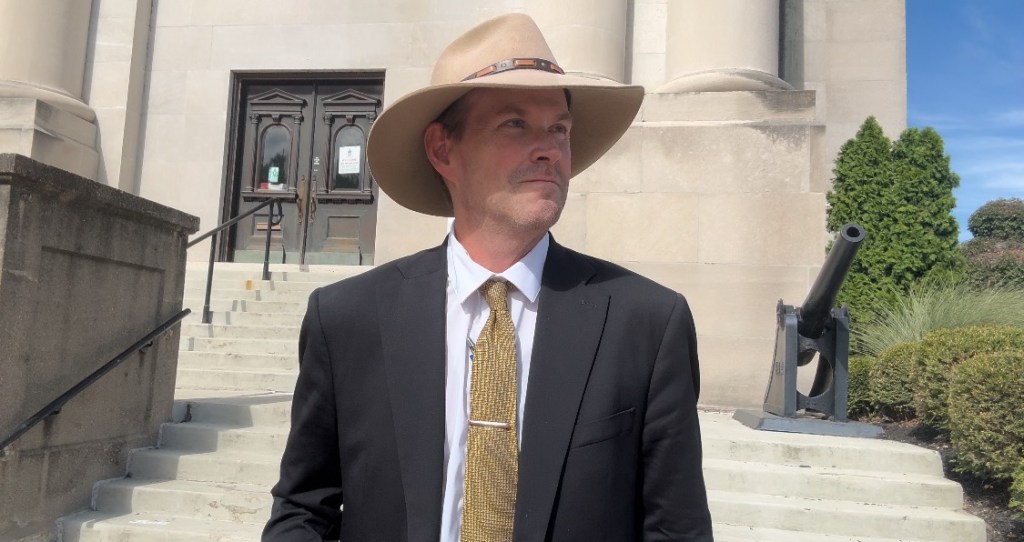
Rich Hoffman is an independent writer, philosopher, political advisor, and strategist based in the Cincinnati/Middletown, Ohio area. Born in Hamilton, Ohio, he has worked professionally since age 12 in various roles, from manual labor to high-level executive positions in aerospace and related industries. Known as “The Tax-killer” for his activism against tax increases, Hoffman has authored books including The Symposium of JusticeThe Gunfighter’s Guide to Business, and Tail of the Dragon, often exploring themes of freedom, individual will, and societal structures through a lens influenced by philosophy (e.g., Nietzschean overman concepts) and current events.

He publishes the blog The Overmanwarrior (overmanwarrior.wordpress.com), where he shares insights on politics, culture, history, and personal stories. Active on X as @overmanwarrior, Instagram, and YouTube, Hoffman frequently discusses space exploration, family values, and human potential. An avid fast-draw artist and family man, he emphasizes passing practical skills and intellectual curiosity to younger generations.
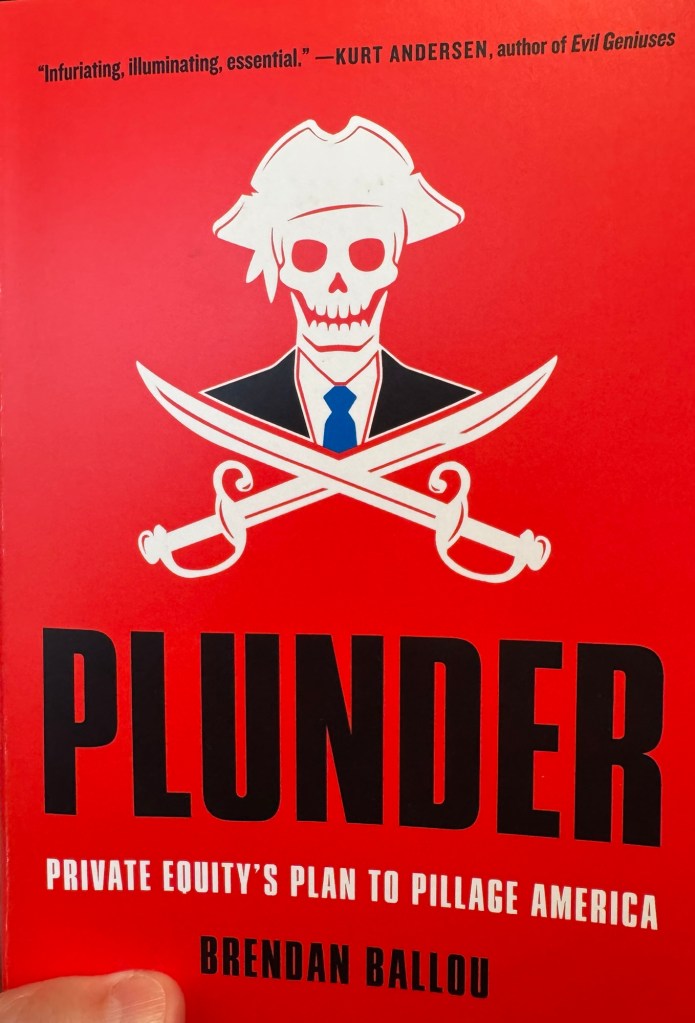
Modern Piracy: How Private Equity Looters Are Killing American Enterprise

In the heart of America’s industrial backbone, a quiet but devastating transformation is underway. Private equity and hedge fund takeovers of privately owned businesses are reshaping the landscape of capitalism—not through innovation or value creation, but through extraction, manipulation, and short-term profiteering. Having spent a lifetime affiliated with private ownership, I’ve witnessed firsthand the strength of entrepreneurial risk-taking, long-term stewardship, and the pride that comes with building something meaningful. But now, I find myself on the front lines of a hostile shift—watching a company in West Chester, Ohio, where I’ve long been involved, fall prey to the very forces that threaten the integrity of American enterprise. These financial entities, often cloaked in the language of capitalism, are anything but capitalist in nature. Their methods—leasebacks, dividend recapitalizations, strategic bankruptcies, and forced partnerships—are not tools of growth but instruments of plunder. They are not builders; they are pirates in suits, looting the value created by others and leaving behind hollowed-out shells of once-thriving companies.  This isn’t capitalism—it’s cannibalism. Private equity firms have become modern-day pirates, looting companies and leaving wreckage in their wake. From my personal experience in dealing with what I would consider an industry full of really stupid people, I intend to expose their tactics, highlight real-world consequences, and draw parallels to Atlas Shrugged’s prophetic warnings.  While the honeymoon is over for significant political change, it’s now time to do the real work and be honest about what we see, and determine if, as a culture, we dare to do what we need to.

The tactics used by private equity firms are as predictable as they are destructive. Leasebacks strip companies of their real estate assets, forcing them into long-term leases that drain future earnings and profits. Dividend recaps saddle businesses with debt to pay out investors, often exceeding the original equity investment. Strategic bankruptcies are engineered not from mismanagement but from deliberate overleveraging, allowing firms to walk away with profits while workers and communities bear the cost. Forced partnerships and roll-ups dilute control and homogenize operations, eroding brand identity and operational efficiency. Tax avoidance schemes shift liabilities away from investors and onto the companies themselves, while layoffs, price hikes, and quality cuts are implemented to fund the looting behavior. These are not isolated incidents—they are systemic. Brands like Toys ‘ R ‘ Us, Friendly’s Ice Cream, RadioShack, and countless others have been gutted by these practices. The result is a managed decline, not a capitalist renaissance. It’s a form of economic socialism, where wealth is redistributed—not to people with low incomes, but to the politically connected elite who manipulate the system for personal gain.

This phenomenon is not just economic—it’s deeply cultural. The people behind these financial maneuvers often hail from urban centers like New York, where they assume superiority over the so-called flyover states that actually produce the goods, labor, and logistics that drive the economy. They view the Midwest as backward, failing to grasp the value of raw materials, highway interchanges, and the human capital that exists outside their echo chambers. Their arrogance is matched only by their ignorance. They are not deep thinkers, nor are they builders. They are short-sighted opportunists who measure success by the size of their boats, the exclusivity of their golf clubs, and the social currency of their wealth. This mindset is perfectly captured in Ayn Rand’s Atlas Shrugged, where Lillian Rearden scoffs at the bracelet made from her husband’s revolutionary steel—not because it lacks beauty, but because it lacks social status. She is the embodiment of parasitic elitism, living off the efforts of others without appreciation. Today’s private equity managers are Lillian Reardons—dismissive of innovation, obsessed with optics, and blind to the value of creation. They destroy what they do not understand, and they do so with the full complicity of a political system that feeds off their donations and influence. 

The Rise of Private Equity

Private equity emerged in the 1980s during the leveraged buyout boom. Initially marketed as a way to unlock value, it quickly devolved into a system of extraction. Firms like KKR pioneered debt-fueled acquisitions, setting the stage for decades of corporate cannibalism.

The Playbook of Plunder

  • Sale-Leasebacks: Selling real estate to raise cash, then leasing it back at inflated rates.
  • Dividend Recaps: Loading companies with debt to pay investors massive dividends.
  • Strategic Bankruptcies: Using bankruptcy as a tool to shed obligations while owners profit.
  • Roll-Ups: Forcing mergers that destroy brand identity and operational efficiency.
  • Tax Schemes: Exploiting carried interest loopholes and offshore havens.

Mainstream Brand Casualties

  • Toys ‘R’ Us: Acquired by Bain Capital and KKR, saddled with $5B debt. Bankruptcy wiped out 33,000 jobs.
  • Sears & Kmart: Eddie Lampert’s hedge fund stripped assets, sold prime real estate, hollowed out iconic brands.
  • J.Crew: Leveraged to pay dividends, collapsed during COVID.
  • Payless ShoeSource: PE-backed buyout led to liquidation and 16,000 job losses.
  • Gymboree: Multiple bankruptcies under PE ownership.
  • RadioShack & Pier 1 Imports: Victims of debt-driven roll-ups.
  • Healthcare: Steward Health Care cut staff, and ER mortality rose 13.4%.

Atlas Shrugged Parallels

Hank Rearden represents builders—innovators who create value. James Taggart and Orren Boyle symbolize individuals who exploit systems for personal gain. Today’s private equity firms are Taggart incarnate: thriving on the virtue of producers while dismantling their creations. This is Lillian Rearden syndrome—obsession with optics over substance.

The Cultural Fallout

Communities hollowed out. Factories shuttered. Innovation stifled. From West Chester to Wichita, towns lose their lifeblood as PE firms chase short-term gains. Quality declines, prices rise, and workers bear the brunt of greed.

The Data Doesn’t Lie

  • 56% of large bankruptcies in 2024 were PE-backed despite only 6.5% of GDP.
  • $80.4B in dividend recaps in one year.
  • ER deaths up 13.4% post-acquisition.
  • Tens of thousands of layoffs annually.

Regional Devastation

Ohio’s manufacturing belt gutted by PE roll-ups. Texas hospitals closing under Cerberus Capital. California retail chains liquidated for real estate flips. Each region tells the same story: extraction over creation.

Solutions & Call to Action

  1. Tax Reform: End carried interest loopholes.
  2. Bankruptcy Oversight: Stop strategic bankruptcies.
  3. Ownership Incentives: Reward long-term stewardship.
  4. Transparency: Mandate disclosure of debt and payouts.
  5. Cultural Shift: Celebrate builders, shame looters.

Private equity is not capitalism—it’s piracy. Unless we act, America becomes a ghost ship. Builders must rise, looters must fall. Draw the line. Stop the plunder.  If we are serious about restoring economic integrity and making America great again, we must confront this modern piracy head-on. That means protecting private ownership, incentivizing long-term stewardship, and reforming the laws that allow financial looters to operate unchecked. We need tax reform that eliminates carried interest loopholes, bankruptcy oversight that prevents strategic exits, and transparency requirements that expose the true nature of these deals. We must elevate above-the-line thinking—solution-based, accountable, and proactive—over the victim-based, reactive mindset that dominates our administrative state. The Oz Principle teaches us that cultures thrive when they are led by people who ask, “What else can I do?” rather than “Who can I blame?” Private equity firms operate below the line, dragging down the businesses they acquire and the communities they affect. If we want a thriving economy, we must draw a line in the sand. We must stop the plunder, protect the creators, and reject the parasites. Only then can we preserve the legacy of American enterprise and ensure that the companies built by hard-working families are not sacrificed on the altar of short-term greed.

Rich Hoffman

Click Here to Protect Yourself with Second Call Defense https://www.secondcalldefense.org/?affiliate=20707

The Lords of Phony Money: A Dow Jones at over 40,000 is due to inflation, not actual wealth

It’s by logic more than choice that we have to look toward mobster activity as the playbook for modern tyranny.   It’s not just governments that get away from us that is the concern, which has happened.  However, the genuine concern is the behavior of organized crime and their ability to get away with making easy money at the expense of social peace.  People who are lazy but want to maximize their income through force seek collective associations, whether in unionized labor, elected office, or outright theft.  And this is a problem in any society, especially communism, where the government behaves like any organized crime family.  Only there isn’t a free society to dispute the actions.  In a free society, we can at least talk about it, which is what we do in the United States.  But organized crime goes back to when primitives conspired to bring down a woolly mammoth during a big game hunt for food.  When people realized they could work together to make labor more accessible, they naturally would head in that direction, no matter the endeavor.  Criminal thugs developed during Western expansion to rob trains and banks.  When the government became extensive and organized and started making rules people didn’t want, organized crime formed to meet the public demand at the expense of proper government, as a rival crime family, and the mobsters as we traditionally think of them were born.  But then, progressive society wanted a one-stop shop that would muscle out the crime families as Lords of Easy Money.  Of course, they had good intentions, but who could resist the temptation of money manipulation to satisfy the whims of the wicked and lazy?  And in that case, with an extensive criminal syndicate operating without the scrutiny of a free society, the illusions of power have become quite ostentatious.  And we see the level of corruption that is our present problem. 

Specifically, we’re talking about the money supply, and this is something that too many people, like pornography, enjoy the benefits of to criticize it properly.  However, this current scam of the Dow Jones closing at 40,000 is not good.  It’s a long series of mistakes and lousy policies catching up with us and being sold as a benefit when, in reality, it’s a massive crime no different than a classic bank robbery.  The government is playing the role of Jesse James and the gang of bank robbing barrons.  We shouldn’t expect the government to be anything less than an organized crime syndicate of collective-based losers seeking the easiest path to money and security through force as possible.  It’s human nature.  But here’s the gig on the Dow Jones, the 40,000 number that is preparing to break all records since the Dow opened first in 1885.  It’s an inflationary number propped up by an out-of-control money supply where too much money is chasing too few goods.  So it’s a record indicating a big problem, not an excellent report for everyone concerned about their 401Ks.  It’s like those classic bank robbers who break in and steal all the real money in gold and other assets, then leave behind a bunch of phony funds for the bank to give out to the public to keep them off the trail of the actual theft, and it’s a grave matter.  When Biden tries to claim credit for such a massive theft, done because of organized crime that moved from the local syndicates into the halls of government to commit just these kinds of crimes, he thinks he is throwing us off the trail of the truth. 

The Federal Reserve wasn’t a bad idea when it was first proposed in 1913, but under the best of conditions, it would require diligent management, and that just has not been the case.  The government learned it could print phony money with quantitative easing and apply that to a progressive Modern Monetary Theory, which is essentially the same as the transgender movement of claiming a man and a woman can be whatever sex they want any time they want to.  Modern Monetary Theory believes in debt maintenance by over-saturating the money supply by a government that doesn’t have to live by any rules but can make them up as they go.  This led to this crisis in 2008 with the too-big to fail in Housing that, failed.  So the Fed under Obama pumped a lot of fake money into the system and washed it like the crime families from the mob always did, through legitimate businesses, and pumped all that mess into the local economy.  In this case, the Fed printed a lot of money and dropped it into Wall Street to clean up, which was the role that Larry Fink, the political activist turned money manager for BlackRock, played.  And poof, just like that, a lot of money flowed into our economy, made up essentially on the back of a napkin and distributed as truthful.  But that game only works so long, as inflation is the direct result.  When President Trump took office in January 2017, the Dow was at 19,000 and had been going up since 2015, when it started to become evident that he might become president after years of stalled economic growth by the socialist actions of Obama’s administration.  The prospect of Trump did inspire a legitimate money movement in a positive direction.  But the number of 19,000 itself was phony as a carnival game on a hot July state fair. 

This is how BlackRock, Blackstone, Vanguard, and the rest of these popular money managers have gained so much power that they are buying up many companies with that phony money.  It’s a communist plan to make all property state-run, and this is one way that the organized crime elements of government-run enterprises can inflict a political philosophy into the money supply.  And don’t forget, Janet Yellen is Biden’s advisor on these things, and she is undoubtedly a communist sympathizer from the radical left.  She ran the Federal Reserve for a while and is a member of the World Economic Forum, behind the Covid release and centralized planning for a great reset.  This is all inconvenient to know, just as the porn hustling mobsters used to do behind the 22-year-old topless stripper in a peep show plaza.  People don’t want to think about why she is there and are putting twenty dollar bills in her G-string.  They want to enjoy the sights and sounds of sexual temptation.  Just as they want to believe that their 401K plans are making them a lot of money, but it’s all phony money, run by the Lords of Phony Money, the Fed, and its ties to globalism through international banking.  They have stolen real wealth and left us with fake bank notes and a fake economy propped up by a government that has fallen to the temptations of organized crime.  And to hide their efforts, they hope that full 401K accounts will keep the anger of pitchforks from coming after them until after this next election.  So before you get too excited about any economic news coming from government reporting, you must understand that the game is a crime and they are trying to get away with it.  Not profitability from the stock market participants.  The Lords of Easy Money have been hard at work robbing our wealth from our monetary system. They are not making it better.  And eventually, it’s all going to catch up to them.  Which, to my eyes, has already happened.

Rich Hoffman

Click Here to Protect Yourself with Second Call Defense https://www.secondcalldefense.org/?affiliate=20707

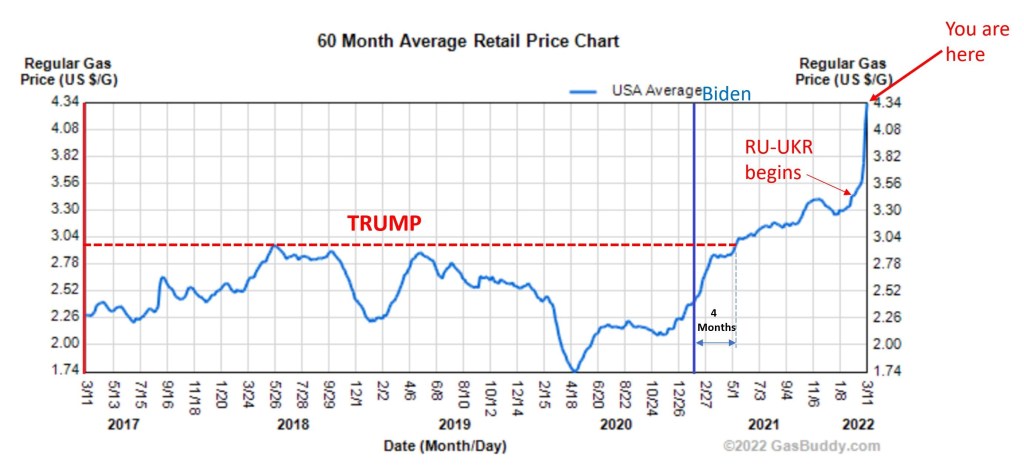
Why Gas Prices Are So High: It has nothing to do with Putin

I will explain it in great detail in the days to come, the whole situation with Ukraine and Russia. But it remains the Desecrators of Davos who are the real villains in the world, and they use these color revolutions around the world to inspire chaos while hiding in the shadows. But they are responsible for the high gas prices in the United States. Not Putin. The Desecrators of Davos are attacking Putin in the same way they have been attacking traditional America. The attack vector is the same. Oh, sure, Wall Street has been defensive this past week, especially in the wake of the attacks on Ukraine, which I have said from the beginning and continue to say, is just a WWE event. It’s just the latest scam to replace Covid on the world stage and hide the bad intent that global attackers intend for us all. Larry Fink has had his feelers out working the press to try to take away some of the anger that is forming over his ESG score invasion through BlackRock. When these World Economic Forum people came up with these plans to crush the world’s economies so they could profit off the uptick and gain power to run it from the United Nations, they didn’t think about all the anger they would generate. They were doing it. People are mad. They are angry at Wall Street. They are furious at the Federal Reserve for a good reason. Inflation is over 7% presently and is spiraling out of control quickly. Why? Because the Fed purposely created an asset bubble worth more than 8.5 trillion dollars on the Fed’s balance sheet, the only way to deal with it would have been to raise interest rates over the last few years. Instead, they have added 3 trillion to it and continue to add 120 billion per month to help it grow. But it was on purpose, and the people who did it have a lot of bad coming their way. And they are feeling the heat.

But this plan isn’t new. Klaus Schwab said it himself, by 2030, nobody will have private property; we will own nothing and like it. Well, how was that going to happen? People will lose their property, and they are going to like it? By whom, and under what conditions? Well, we are seeing the plan play out with Ukraine. We just had two years of Covid, and from one day to the next, we had an attack by Russia into Ukraine. Provoked by what, well, Kamala Harris went to Europe and urged Ukraine to join NATO, which is a big no, no for Vladimir Putin, and poof, it triggered him into an attack. The Biden administration knew it was throwing gas on a fire, but they needed the distraction if Covid was going away. They needed something to take people’s minds away from what they were doing, which was why they were installed into the presidency, to begin with. The American people didn’t vote for Joe Biden. It was the climate crazies at the World Economic Forum who did. They planned for Hillary to fulfill their plan, and when Donald Trump came along, it threatened to ruin everything. So, they got rid of Trump with massive election fraud, for which there is abundant evidence everywhere. There will be a decertification process because Joe Biden was not elected legally. But the Desecrators of Davos don’t care about American law. They hope to outrun the inevitable. By the time the legal system can install justice, they hope to crush America financially, switch the dollar’s value over to China for a stable currency, and seize all our property and force us to rent everything we experience through them. 

The writing was on the wall long ago. My daughter and I used to argue the merits of the new video game age where all new games are downloaded.   Video game makers wanted to get away from physical copies of games so that everything would be online. And even when you did buy a game, you had to maintain subscriptions to access it. And they would constantly charge you for updates. The video game manufacturers were ahead on the Davos plan for over a decade. Apple Music does much the same thing. They got rid of their iPod music player and now charge a monthly fee to access music. No longer can you buy your favorite music and download it on your player device for personal consumption. Now you must rent the music from them. The minute you don’t pay them money, you lose access to that music. Those were all testbeds to work out the system and condition us for the inevitable. It’s not that Electronic Arts is sitting on the board of some Illuminati meeting planning these things. But they are pushed in those directions by people like Larry Fink, who controls their boards of directors with ESG scores intent on fulfilling progressive political strategies through finance. Once you take money from them, they own you. Or, once they buy up a sizable amount of stock of your company with inflated asset bubbles the Fed created for Fink and the gang, then you lose control of your internal company strategies. Consumers will rent; they won’t own. 

And that is why gas prices are high. These Desecrators of Davos, whom Joe Biden works for, their pick for the White House, and they put him there with election fraud; they intend to eliminate all fossil fuels. Russia still uses a lot of fossil fuels as the basis for their economy, so they provoked him into a fight to gain control of Russia and fossil fuels. And while we were looking at that and blaming Putin for the high gas prices, we would be strangled in America. Our entire economy runs off oil, even planting a field for farming. So, as the Desecrators of Davos fully intend, the way to destroy America is to cut us off from fossil fuels entirely. That is the goal. And once all our wealth is redistributed to the Desecrators of Davos, that value will be transmitted to shadow banks in China, created by BlackRock. The groundwork is already established for this. They don’t intend to lose any money, but the math is easy to figure out with only 300 million Americans and over 1.4 billion Chinese. The Desecrators of Davos will create a new middle-class there and bankrupt the United States with all of us in it. And from there, they intend to rebuild us all back up with credit scores, universal wages, and a rent process that we’ll have for the rest of our lives.

We’ll pay them for everything and will never own anything. But don’t take my word for it. Klaus Schwab said it, and his buddy Larry Fink who is executing it in America along with John Kerry, Al Gore, Bill Gates, and Michael Bloomberg. There are, of course, a lot more, but that’s what we are dealing with. Now it’s up to us if we fall for it. Their plans are not solidified. But we should understand what their intentions are and fight back accordingly. And let them feel the heat because what they are doing, and plan to do, is reprehensible and is a theft of everything we stand for. And we should feel okay about fighting them over it.

Rich Hoffman

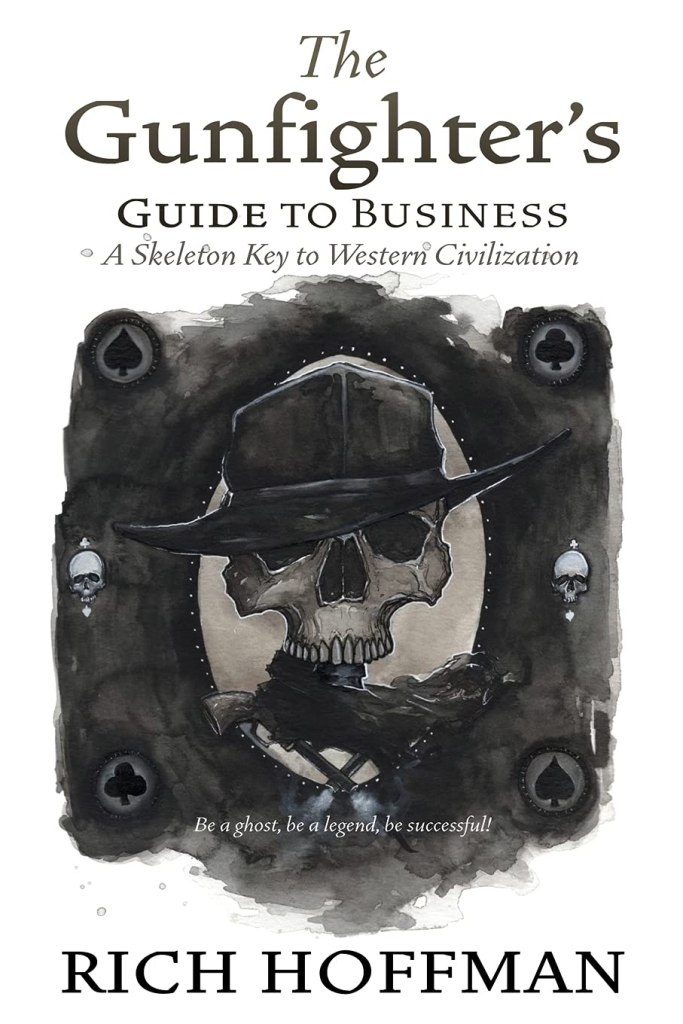
Click to buy The Gunfighter’s Guide to Business

A Review of ‘The Lords of Easy Money’: What’s behind the smokescreen they don’t want you to see

As bad as things seem, I’ll have to say I feel privileged to live in a culture that can produce books like The Lords of Easy Money. The new book by Christopher Leonard is what I consider a real treasure to a rich culture. After reading it, it spawned in me an insatiable appetite for solving some of our modern problems, and right there in those pages, everything was clear to see. I took last week off everything essentially to read an additional 12 books of all types of wide-ranging subjects connected to the subject of the Federal Reserve and the history of Banking in America and the Constitutional problems that are part of it. I think I slept 3 hours last week as my reading list was very aggressive. Good books are better than sleep to me.   We’ve all talked about this before, but never has there been a writer who was able to put their finger on the problem quite like Christopher Leonard has. For me, it was the big block in the puzzle that put everything else together, and I feel greatly enriched by it. Because of it, I am much more inclined than I was before toward the banking policies of Andrew Jackson as he let the charter expire for the second attempt to put centralized banking in charge of our central government. These subjects are too complicated for our news reporting, so they never get talked about, yet the corruption at play here is mind-blowing, and it is there that we must focus on in the future if we want to save our nation. I’ll have a lot to say about this book in the months to come, but for now, we’ll talk about the tip of the iceberg. 

The problem starts with the American Constitution and Alexander Hamilton and his debates with Thomas Jefferson over the merits of centralized banking. Hamilton’s interpretation comes from Article 1 Section 8 at the very end, “to make all Laws which shall be necessary and proper for carrying into Execution and Foregoing powers, and all other Powers by this Constitution in the Government of the United States, or in any Department or Office thereof.” In other words, if the government thinks it needs it, it can have it. This is also why the duel between Aaron Burr and Hamilton should have happened on the day before Jefferson and Hamilton had this discussion. Hamilton’s argument opened the door to the kind of crazy lunacy regarding fiscal policy that we see today. Lucky for us, we have had great presidents, such as Jackson, who fought this battle before. It has taken a lot of time for the crooks and thieves of Wall Street and politics to become emboldened to the level they are now, to rob openly, loot, steal, and sell out our country in the fashion that The Lords of Easy Money articulates. But make no mistake about it, Christopher Leonard is not arguing against the Fed. He is, in fact, a Democrat. He’s not at all crazy about the Tea Party movement or President Trump. He wants the system to work. He actually makes an excellent argument for the Federal Reserve. Still, in the research he conducted, which went on for years, the actual Federal Reserve regional bank president Thomas Hoenig out of Kansas, Missouri, where this real glimpse into the problems of the Federal Reserve came to light and is the heart of the whole book.

The Federal Reserve has a consistent problem because it functions as many school boards do or any government that emphasizes consensus rather than dissent and argument. In the case of the Federal Reserve, all the bank presidents who end up on the FOMC (the Federal Open Market Commission) consist of 5 appointed positions; the other seven are rotated among the regional bank presidents. There is always one permanent seat for the Federal Reserve Chairman and another for the New York Federal Reserve. Around 2010, when Fed Chair Ben Bernanke began a policy of quantitative easing to deal with the crash of 2008, the only person on the FOMC committee to vote against it was Thomas Hoenig, which was embarrassing for Bernanke. They had always had consensus up to that point, at least what they showed the public. But Hoenig felt that the policy was dangerous, and he continued to vote that way until he retired eventually. But the Fed ignored his vote and kept the policy going anyway until things really exploded out of control after Covid came and did its damage, which is our present problem. The most obvious problem that comes to mind with this arrangement is that all the members have PHDs from socialist-oriented schools where Marxism is heavily studied. So they all think the same way. Thomas Hoenig was considered a soft “r” Republican, but they all essentially thought the same way about fiscal policy. The value of something was supposed to need Fed action for it to be useful. Rather than dealing with what elements of the economy create value, such as free people able to function and produce, the Fed believed that all activity was more or less fixed. It was their job to manipulate interest rates or print money to inspire growth. When you have 12 people who all think the same way on these matters, you will get what you are going to get. 

In reaction to the housing bubble bursting in 2008 and the election of the socialist Barack Obama, who put tight controls on economic behavior, Ben Bernanke, then Janet Yellen, then Jerome Powell would turn to what they call ZIRP (zero interest rate policy) to flood the market with cheap money and to build up a massive asset bubble that Wall Street could count on a “Fed Put” strategy to bottom out the risks on an asset pricing strategy. For instance, to inspire the buy-up on all those risky mortgages after 2008 for which BlackRock became so wealthy, the Fed boosted the purchase with a public-private partnership that removed much of the risk by pumping up the potential losses with the money supply. There has never been a restoration to normal on the Fed’s balance sheet. What started as a mess on that balance sheet of 900 billion in inflated assets in 2009 ballooned to 4.5 trillion by the end of 2019. Now, after Covid, the balance sheet is at 8.2 trillion as of this writing, and it’s going up every month by 120 billion with no signs of an end to it. So now we have an asset bubble that is poised to burst at any moment, and the smoke and mirrors of the political arrangement between Congress, Wall Street, and the Fed is out of control and explains a lot of why major investors are putting so much effort into pumping up the Chinese economy. They are trying to hide the money they have gained during all this in a new economy for their own preservation. The whole situation truly is a mismanaged disaster. Of course, if money is all you care about, and you want to protect what you’ve built, China suddenly doesn’t look so bad. Why is everyone so upset over their human rights violations and communist central government?    

But the first step is in understanding it all. I never was, and I’m not now a person who will say we shouldn’t have a Fed. There needs to be a way to manage the money of society. As I said in the video above, with space exploration coming on fast, spikes in the gold standard and other precious metals will need to be managed through a stabilized currency. But when you create something like the Fed and put a bunch of people trained in Marxism in charge of it, well, you get the failures of Marxism as a result. Rather than have people running these banks who actually understand the value of labor and how to apply it to actual assets made by the human mind, instead, they have created a bureaucratic nightmare that is poised to blow up out of this artificial asset bubble that they have made at the Fed and will cause significant harm to all the people who depended on the Fed to do the right thing. And in doing that right thing, Thomas Hoenig has told his story of how painful it was, which is the point of the excellent book, The Lords of Easy Money. This has been the smokescreen nobody wants to talk about, behind nearly every news story that they hope you never find out about—until it’s too late.

Rich Hoffman

Click to buy The Gunfighter’s Guide to Business