What the TSA Funding and the Iranian Aggression in the Strait of Hormuz Reveal: Democrats want to harm the economy in both scenarios with an anti-American agenda

The recent developments in the Middle East, particularly the decisive military actions taken by the Trump administration against Iranian targets, have exposed deep fissures in American political life and revealed the true priorities of those who claim to represent progressive values. What began as a targeted bombing campaign to neutralize threats from a hostile regime has been met with a bizarre and troubling response from certain quarters of the Democratic Party and left-leaning media, where voices seem almost eager to amplify the remaining terrorist elements capable of disrupting global oil flows through the Strait of Hormuz. This narrow waterway, situated between Iran and the United Arab Emirates in the Persian Gulf, represents one of the most strategically vital passages in the world, funneling approximately 20 percent of global seaborne oil trade—roughly 21 million barrels per day under normal conditions—through a chokepoint as narrow as 21 miles at its most constricted point.  Historically, this strait has been a flashpoint for conflict; during the 1980s Tanker War between Iran and Iraq, both sides attacked commercial shipping, leading to U.S. naval intervention under Operation Earnest Will to protect oil tankers. The geography itself underscores the vulnerability: while 21 miles may seem vast on a map, it is narrow enough for modern anti-ship missiles, speedboats operated by Iran’s Islamic Revolutionary Guard Corps (IRGC), and even rudimentary mines to pose credible threats, yet wide enough that vessels cannot simply “hide” in open seas without sophisticated escort protection. Ships transiting the area must navigate between Iranian coastal defenses and the Omani side, making any disruption not just a regional issue but a global economic shock, as evidenced by past spikes in crude prices during similar crises.

The Trump administration’s campaign, which included precision strikes on military infrastructure such as those at Kharg Island—Iran’s primary oil export hub, where U.S. forces targeted over 90 military assets while sparing core oil facilities—has fundamentally altered the balance of power.  Reports indicate that these operations, coordinated in part with Israeli efforts, eliminated significant portions of Iran’s leadership succession bench, including the Supreme Leader Ayatollah Ali Khamenei and dozens of top commanders, effectively decapitating the command structure that once orchestrated proxy terrorism across the region.  This was no accidental escalation; it followed years of Iranian provocations, from nuclear enrichment programs set back by earlier U.S. actions in 2025 to support for groups like Hamas and Hezbollah, which have long destabilized the Middle East. The strikes targeted air defenses, missile batteries positioned along the Strait of Hormuz, and naval assets, rendering Iran’s ability to organize a sustained closure of the waterway severely compromised. In the immediate aftermath, Iranian remnants attempted retaliatory actions with speedboats and anti-ship missiles—tactics reminiscent of their “swarm” tactics in past incidents—but without centralized leadership or intact infrastructure, these efforts amount to little more than guerrilla harassment rather than a viable military strategy capable of halting commerce indefinitely.

Yet, rather than celebrating this reduction in a long-standing threat to American energy security and global stability, segments of the Democrat establishment and aligned media outlets have responded in ways that can only be described as cheerleading for the very terrorist elements left scrambling in Iran’s diminished capacity. Coverage has fixated on potential disruptions to oil shipments, speculating wildly about prolonged blockades that would drive gasoline prices skyward and derail economic progress under the current administration. This is not neutral reporting; it aligns with a broader ideological agenda that prioritizes weakening capitalist structures over securing American interests. The goal, as evidenced by repeated patterns, appears rooted in a desire to impose a net-zero-energy future, in which fossil fuel flows are throttled not by market forces but by engineered crises, forcing societies toward reliance on unreliable alternatives or, in the most extreme visions, a return to pre-industrial existence. One need only look at the climate rhetoric that has dominated left-leaning discourse for decades: shutting down pipelines, opposing domestic drilling, and now implicitly rooting for Iranian proxies to succeed where sanctions and diplomacy failed. This mindset views high energy prices not as a policy failure but as a feature, punishing consumers and industries alike to accelerate a transition that ignores practical realities like the intermittent nature of renewables and the immediate needs of working families.

The Strait of Hormuz incident encapsulates this perfectly. With the waterway’s narrowest stretch creating a natural bottleneck—vessels must slow and align in a predictable lane for safe passage—any residual Iranian speedboat attacks or missile launches from the mainland could theoretically endanger tankers. However, the scale of the U.S.-led degradation of Iranian naval and coastal capabilities has rendered such threats marginal. Iran’s “bass boat” navy, as critics have mockingly termed the IRGC’s small, fast-attack vessels used for fishing one moment and asymmetric warfare the next, lacks the logistical support or air cover to sustain operations against a coalition presence. Trump has already called for international partners, including approximately seven nations, to contribute minesweepers and escorts, leveraging alliances that recognize the shared interest in uninterrupted energy flows.  Traffic through the strait, while initially reduced to a trickle amid the early chaos of retaliatory strikes—with estimates of only dozens of vessels transiting in the first weeks compared to over 100 daily pre-conflict—has begun to recover as U.S. forces neutralize threats.  Iranian oil exports themselves continue at reduced but notable volumes, underscoring that the regime’s own economic lifeline persists even as it attempts to weaponize the passage against adversaries. The notion that this could spiral into another prolonged ground war akin to Iraq is pure speculation peddled by those invested in market volatility; boots-on-the-ground scenarios ignore the precision, standoff nature of the current operations, and the absence of any viable Iranian conventional force.

This cheerleading for disruption ties directly into a deeper anti-Trump animus that has stripped away the Democrat Party’s moderate facade. Once bolstered by centrist voices who could bridge divides, the party now stands exposed after waves of defections from its ranks. Union workers, laborers, and everyday Democrats who once formed the backbone of the coalition have shifted toward the Republican side, drawn by tangible results in economic security and a rejection of radical policies. Figures like Pennsylvania Senator John Fetterman, previously seen as a progressive stalwart, have moved toward positions that emphasize strength abroad and support for decisive action against threats such as Iran, aligning more closely with MAGA priorities on national security. Similarly, podcaster Joe Rogan—long a voice of independent inquiry—has critiqued leftward excesses and shown openness to perspectives once dismissed, including explorations of faith and personal responsibility. Elon Musk, who built revolutionary companies while navigating early left-leaning sympathies, has increasingly championed free-market principles and innovation unfettered by government overreach. Even Robert F. Kennedy Jr. has broken from family traditions to advocate for pragmatic governance. These are not Republicans migrating leftward; they represent a genuine realignment in which former Democrats, recognizing the failures of identity-driven radicalism and economic sabotage, have gravitated toward a growing GOP tent under Trump’s leadership. As someone who has held conservative convictions since childhood, I approach this influx with some caution—the “big tent” expands rapidly, incorporating voices that may not align perfectly on every issue—but the net effect is to strengthen the movement. It dilutes the radicals left behind, those who now dominate media narratives and push agendas that prioritize ideological purity over prosperity.

The absence of any remaining Iranian leadership structure capable of orchestrating a coherent closure of the strait further undermines the doomsday predictions. With key figures eliminated and succession plans disrupted, the regime’s Marxist-adjacent authoritarian framework—characterized by centralized control, suppression of dissent, and alliances with adversarial powers like China—lacks the organizational muscle for sustained operations. (Note: while the Islamic Republic is fundamentally a Shia theocratic system governed by the principle of velayat-e faqih, or guardianship of the jurist, it incorporated anti-imperialist and redistributive elements from the 1979 Revolution that some analysts have likened to Marxist influences, though communist factions were later purged.) This vacuum leaves scattered terrorist remnants, easily countered by American naval superiority and coalition patrols. Speculation about skyrocketing oil prices persisting at elevated levels—perhaps locking gasoline at around $3.50 per gallon indefinitely—ignores historical precedents in which resolved crises led to rapid stabilization. Markets react to uncertainty with volatility, but once security is restored, barrels will trade lower, potentially dipping gasoline below $2 in the not-too-distant future as domestic production ramps up and global flows normalize. Card sharks in futures markets may bet on prolonged pain, but those bets are being unwound as reality sets in: the region is being secured through justified force, not endless occupation.

This dynamic exposes the fundamental philosophical rift. Democrats, now largely unmasked without their moderate cover, pursue policies that undermine self-rule and free enterprise. From reluctance to fully fund transportation security amid shutdown threats—actions that could grind air travel to a halt and mirror desires to cripple economic engines—to broader efforts against fossil fuels, the pattern is consistent: hurt capitalism at all costs to usher in a managed decline. Chuck Schumer and similar figures exemplify this by framing fiscal standoffs in ways that prioritize partisan leverage over public safety, hoping disruptions erode support for the administration. In contrast, the Republican Party, bolstered by defectors seeking common ground, offers a vision of strength, innovation, and abundance. Trump’s approach—opening the tent wide while delivering results—facilitates this evolution. People who were once skeptical, including those who viewed certain figures as too far left during earlier campaigns, now see the logic under pressure from real-world governance. This is not Republicans compromising; it is a magnetic pull toward policies that work, evident in parallel movements worldwide: Italy’s shifts under Giorgia Meloni, Argentina’s Milei revolution against socialism, Brazil’s adjustments, Mexico’s easing of cartel pressures, Canada’s populist stirrings, and European realignments against entrenched elites.

Globally, the removal of threats like Iran’s regime reverberates. George Soros and his network, including successors, have long funded elements that sow discord, preferring chaos to organized self-governance where moneyed interests cannot play kingmaker. Their immature worldview clashes with representative systems that empower citizens. As Trump dismantles such obstacles—from Iranian proxies to domestic regulatory overreach—more individuals awaken to the benefits of ordered liberty. In the Strait of Hormuz specifically, oil will continue flowing because the infrastructure for interference has been neutralized. American dominance in the region, achieved through air and naval power rather than quagmires, ensures this. Media attempts to manufacture crises, portraying terrorists as underdogs or inevitable victors, ring hollow as facts emerge: no mass closure, no boots on the ground quagmire, no permanent economic sabotage.

The cheerleading for potential chaos reveals a side long suspected but now undeniable. Without the polite moderates who once provided camouflage, radicals stand exposed, rooting against American success, whether through domestic shutdowns or foreign disruptions. This anti-team America stance contrasts sharply with the defectors streaming into the broader conservative coalition. The trend accelerates over the coming years: four, six, or more, as global populist waves mirror the U.S. shift. Marxism’s allure—centralized control disguised as equity—fails under scrutiny, leaving adherents isolated. In Iran, the vacuum created by leadership losses prevents any orchestrated Strait closure, despite desperate attempts by holdouts. The illusion peddled in some outlets, suggesting a robust threat persists, crumbles in light of evidence of degraded capabilities.

Economically, the payoff is clear. With secure shipping lanes, energy abundance returns, lowering costs for families and industries. Speculative bets on perpetual high prices will falter as tankers resume normal transit under protection. This is the future: flourishing commerce, reduced threats, and a political landscape realigned toward prosperity. Those clinging to old ideologies find themselves sidelined, their masks removed by the very successes they decry. The Strait of Hormuz remains open not by Iranian sufferance but through American resolve, proving once more that strength deters aggression while weakness invites it.

Expanding on the historical context, the Persian Gulf has long been a theater of great-power competition. Pre-1979, Iran under the Shah was a U.S. ally, stabilizing oil flows; the Islamic Revolution reversed this, birthing a system that exported revolution via proxies. The 1980-1988 Iran-Iraq War saw the strait mined and tankers attacked, prompting reflagging operations where U.S. warships escorted Kuwaiti vessels. Lessons from that era inform today’s response: targeted naval interdiction can work without a full invasion. Iran’s current arsenal—anti-ship ballistic missiles like the Khalij Fars, fast-attack craft, and submarine threats—has been systematically degraded, as confirmed in post-strike assessments. Supplemental economic data reinforce optimism: pre-conflict, Gulf exports underpinned global supply chains; disruptions temporarily raise West Texas Intermediate crude prices, but diversification (U.S. shale, alliances with Saudi Arabia and the UAE) buffers the impact. Forecasts from energy analysts, accounting for resumed patrols, point to normalization within months, countering alarmist narratives.

Politically, the realignment transcends personalities. Labor unions, once Democrat mainstays, fracture over issues like energy jobs versus green mandates. Fetterman’s evolution—praising decisive foreign policy—exemplifies how representative pressures compel adaptation. Rogan’s platform amplifies voices questioning orthodoxy, fostering conversions through dialogue. Musk’s enterprises, from electric vehicles to space, thrive in open markets, his critiques of regulatory capture aligning with conservative skepticism. Kennedy’s independent run highlighted anti-establishment sentiment cutting across lines. This influx enlarges the tent, accommodating diverse views on fiscal matters and social issues while unifying around core principles: secure borders, energy dominance, and the rejection of globalist entanglements that empower adversaries.

The Marxist label applied to Iran merits nuance in background: the 1979 revolutionaries blended Islamist fervor with leftist economics, nationalizing industries and allying with Soviet remnants initially, but Khomeini’s purges eliminated true communists by the 1980s. Today’s regime blends theocracy with state capitalism, funneling oil revenues to proxies while partnering with China via Belt and Road initiatives. Its hostility stems from ideological opposition to Western liberalism, not from pure Marxism, yet it shares the goal of undermining capitalism through disruption. Allies in Beijing benefit from the chaos that elevates their influence. Removing this node weakens that axis, paving the way for regional realignments favoring stability.

On the domestic front, TSA funding battles illustrate the pattern: withholding resources to manufacture crises, hoping airport delays erode public confidence. This echoes broader shutdown tactics that prioritize narrative over function. Contrast with the Republican emphasis on funding security while streamlining bureaucracy. The exposure of such tactics accelerates defections, as average citizens—union members, small-business owners—recognize the disconnect from their livelihoods.

Worldwide echoes abound. Italy’s Meloni government curbs migration and revives industry; Argentina’s Milei slashes spending to combat inflation; Brazil navigates post-leftist adjustments; Mexico confronts cartels with renewed vigor; Canada faces provincial pushes against federal overreach; Europe contends with energy crises post-Russia sanctions, fueling populist surges. Each dismantles radical covers, mirroring U.S. trends. Soros-funded NGOs, promoting open borders and identity politics, lose ground as the public demands accountability.

Analysis of the Hormuz situation, speculation of endless hostility ignores military realities. U.S. and allied assets have cleared key threats; Iranian “fishing” boats repurposed for attacks lack sustainment. Oil flows resume, prices moderate. This victory, smooth and leadership-focused, signals broader progress against adversarial networks. Those celebrating potential setbacks reveal priorities that are misaligned with the national interest. The future belongs to the expanding coalition prioritizing strength, growth, and unity—Team America redefined through inclusion of the awakened. Gas prices will decline as security solidifies, economies flourish, and radical elements fade into irrelevance. This evolution, driven by results over rhetoric, defines the coming era.

Footnotes

1.  EIA estimates on global oil transit chokepoints (historical baseline for 21 million barrels/day figure).

2.  AP/Reuters reporting on coalition calls and vessel transits (March 2026 updates).

3.  Fox News and NPR accounts of leadership eliminations post-strikes.

4.  CNN and Politico details on Kharg Island targeting.

5.  Historical context from U.S. Naval Institute records on the 1980s Tanker War.

6.  Analyses of Iranian regime ideology from scholarly sources like those in Foreign Affairs archives.

7.  Examples of political shifts drawn from public statements by Fetterman, Rogan interviews, and Musk commentary.

8.  Oil price forecasts and shipping data from Kpler, TankerTrackers, and Lloyd’s List (2026 conflict metrics).

9.  Global populist movements referenced in comparative political studies (e.g., Journal of Democracy).

10.  U.S.-Iran relations timeline from Council on Foreign Relations backgrounders.

Bibliography

•  CNN. “Trump Administration Underestimated Iran War’s Impact on Strait of Hormuz.” March 13, 2026. https://www.cnn.com/2026/03/12/politics/hormuz-trump-administration-underestimated-iran

•  Al Jazeera. “Trump Says US May Hit Iran’s Kharg Island Again ‘Just for Fun’.” March 15, 2026. https://www.aljazeera.com/news/2026/3/15/trump-says-us-may-hit-irans-kharg-island-again-just-for-fun

•  AP News. “Trump Says He’s Asked ‘About 7’ Countries to Join Coalition to Police Iran’s Strait of Hormuz.” March 15, 2026. https://apnews.com/article/iran-iraq-us-trump-march-15-2026-9bbed3c906146844be08fdfd02595754

•  Fox News. “Trump Says Iran Strikes Eliminated Most Leadership.” March 3, 2026. https://www.foxnews.com/politics/trump-says-irans-succession-bench-wiped-out-israeli-strike-hits-leadership-deliberations

•  NPR. “Trump Warns Iran Not to Retaliate After Ayatollah Ali Khamenei Is Killed.” March 1, 2026. https://www.npr.org/2026/03/01/nx-s1-5731333/iran-us-israel-strikes

•  CNBC. “Traffic Is Trickling Through Strait of Hormuz.” March 18, 2026. https://www.cnbc.com/2026/03/18/hormuz-bottleneck-vessel-tanker-tracker-shipping-strait-of-hormuz.html

•  Reuters. “Oil Tankers ‘Starting to Dribble Through’ Strait of Hormuz.” March 17, 2026. https://www.reuters.com/business/energy/oil-tankers-starting-dribble-through-strait-hormuz-says-white-house-2026-03-17/

•  U.S. Energy Information Administration. “World Oil Transit Chokepoints.” Updated reports on Hormuz.

•  Council on Foreign Relations. “U.S.-Iran Relations Timeline.” Background primer.

•  Foreign Affairs. Articles on Iranian revolutionary ideology and regional proxies.

•  Additional references: Kpler energy analytics, Lloyd’s List Intelligence shipping data, and public statements from political figures as cited in mainstream coverage (March 2026). 202

Rich Hoffman

More about me

Click Here to Protect Yourself with Second Call Defense https://www.secondcalldefense.org/?affiliate=20707
About the Author: Rich Hoffman

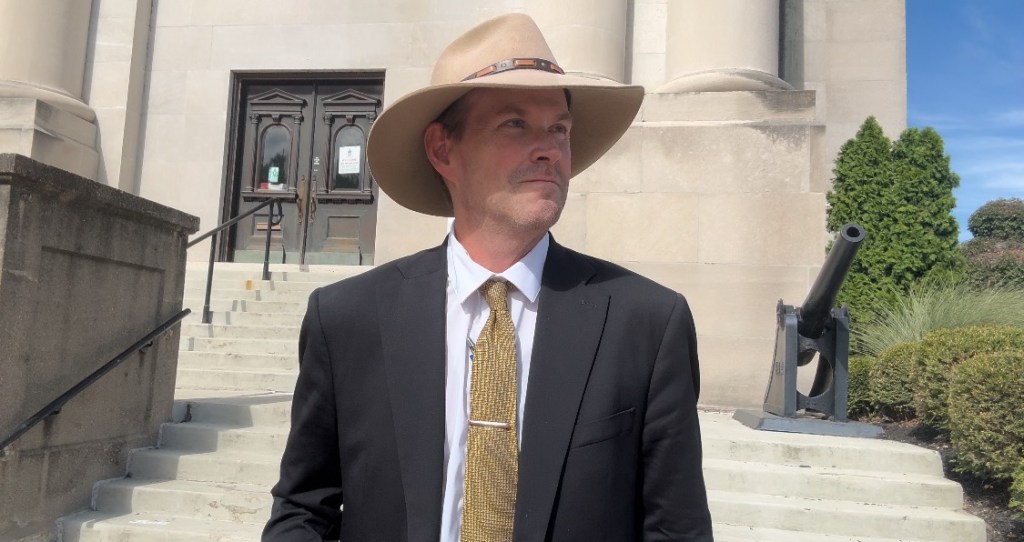
Rich Hoffman is an independent writer, philosopher, political advisor, and strategist based in the Cincinnati/Middletown, Ohio area. Born in Hamilton, Ohio, he has worked professionally since age 12 in various roles, from manual labor to high-level executive positions in aerospace and related industries. Known as “The Tax-killer” for his activism against tax increases, Hoffman has authored books including The Symposium of JusticeThe Gunfighter’s Guide to Business, and Tail of the Dragon, often exploring themes of freedom, individual will, and societal structures through a lens influenced by philosophy (e.g., Nietzschean overman concepts) and current events.

He publishes the blog The Overmanwarrior (overmanwarrior.wordpress.com), where he shares insights on politics, culture, history, and personal stories. Active on X as @overmanwarrior, Instagram, and YouTube, Hoffman frequently discusses space exploration, family values, and human potential. An avid fast-draw artist and family man, he emphasizes passing practical skills and intellectual curiosity to younger generations.

Thank Goodness Kristi Noem Thought to Ask the Question: We don’t have to take our shoes off at the airport anymore

Thank goodness Kristi Noem thought to ask the question, because many things in government are just like this.  Someone comes up with a stupid rule, and we end up following it for the rest of our lives without question, even though it was dumb to begin with.  And that was certainly the case when it came to the security measures that were implemented after 9/11.  Our FBI and CIA didn’t do a very good job in detecting a terrorist cell within the United States training to fly planes in Florida, but not caring to land them, and our security got caught napping, so those terrorists were able to get onto commercial planes and use them as weapons of war.  And the crises of that moment made people clamor for corrective action, which human beings most often overreact to.  And the Department of Homeland Security was created, giving us the TSA, and the dumb policy of removing shoes at the airport while going through security.  Now, over twenty years later, it hasn’t saved anyone anything, but it has certainly cost a lot of time and misery.  And until Kristi Noem was put in charge of Homeland Security and asked everyone working there why we were still taking off our shoes at security checks, nobody had an answer.  The only thing they could say was that we were doing it because we had always done it.  Never was the question asked whether we should be doing it at all.  Thankfully, Kristi Noem, due to the weak reaction to that question, changed the policy, and we no longer have to remove our shoes at airport security checkpoints.  It’s a significant step toward addressing many issues that amusement parks have already identified.  An overreaction to security to cover the impediment of actually doing the job the first time is a dumb idea, and it’s good to see that policy go.

It has been terrible to deal with the security procedures since the 9/11 terrorist attacks.  The entire creation of the unionized TSA has been a disaster, making traveling by plane a miserable experience.  I try not to do it unless I have to travel overseas, because essentially it takes all day to travel.  I never feel comfortable arriving at the airport less than two hours before a flight because many things can go wrong, especially at security.  Nobody is saying that we don’t want security on flights.  However, it’s the kind of overcompensation that we see with the TSA that’s the problem.  Private security would be much better than unionized labor, which often fails to perform effectively in any field.  There is plenty of technology these days that can detect bomb making equipment just through a quick scan.  We don’t need to take off half our clothes through the demeaning process of vulnerability in front of hundreds of other people.  This idea of stripping away your identity into a near locker room vulnerability is just dumb and lazy.  And it never made us a safer society.  It just made us feel that way.  If people just did their jobs the first time, many of the well-known terrorist attempts that we know of on airplanes wouldn’t have happened.  However, these days, the technology is so advanced and intrusive that there’s no need to take off all your clothes to board an airplane.  With domestic flights, and I fly out of Cincinnati, if the destination is east of the Mississippi River, it’s much better and faster to drive.  And because of that, think of how much money airlines lose because of the TSA rules.

People don’t talk about it as much as they should. Think how much money Homeland Security has cost airline companies by being such a pain in the neck that people don’t buy plane tickets.  It’s a massive opportunity cost.  Before the creation of Homeland Security and the introduction of the TSA’s overly restrictive rules, many airlines had significantly larger hubs.  Delta operated a central hub that served numerous destinations from Cincinnati well into the 1990s.  Because flying was easy and not so intrusive, people chose to do it.  Once they turned the experience into essentially a locker room at the YMCA, it has cost airlines a lot of money in lost opportunity cost.  Some of the low-cost carriers have found a way to adapt somewhat.  However, the experience of flying has deteriorated significantly.  If you want to dress up and go somewhere to show the best version of you to the world, you don’t fly in a plane.  Because it’s such a demeaning experience.  And for a long time, amusement parks were just as bad.  However, they have recently upgraded their scanners, and as a result, they wave everyone through much faster.  The scanners can practically see through your clothing, leaving nothing to the imagination.  But at least you don’t have to strip down almost naked to go through security.  We live in a society that needs to do things faster, not slower, or safer.  We need people to do their jobs better the first time, and everything would work so much better.  And to Kristi Noem’s point, nobody had even thought to ask the question, “Why are we doing this dumb thing?” all this time.  When the answer was, “because we have always done it.” 

The convenience of flying and getting somewhere far away quickly has become a ridiculous compromise of personal merit, and it never should have been.  The airport’s safety policies have ruined the experience of traveling with others because people often show up in their pajamas, knowing that their travel day is going to be intrusive and demeaning. When you pay that much money for something, it shouldn’t feel the way it does.  It should be fun and rewarding.  People should dress nicely when going to the airport.  By default, due to excessive regulations, airports have become unpleasant places with excessive security, ineffective communication systems, and dirty and uncomfortable seats.  And the staff treat the whole experience like you’re lucky to be there, rather than being grateful that you bought a ticket that funded all their jobs.  The concept of prioritizing safety over profits, when in reality it was always laziness that was the real problem, has made owning an airline too complicated and a draining experience for customers.  And if not for Homeland Security and the TSA specifically, we’d have many more consumer options in airports that are much better for us than what we currently have.  And most of the time, it always starts with asking the right questions from leadership. “Why are we doing this dumb thing?”  And when nobody can answer it, you eliminate the policy.  Thank goodness, because of Kristi Noem, we no longer have to take our shoes off at the airport.  And hopefully, we can roll back many other misguided ideas that were implemented in haste to make people feel safe, when the reality was far from the case.  In all things economic, whether it’s amusement parks or airports, faster is better, and more options are always preferred.  And we don’t want dumb, mindless rules to ruin economic activity that should bring us joy and opportunity.  Just because lazy security guards don’t take their jobs very seriously and have to be turned into a union-led monstrosity to give an illusion of effectiveness, the truth is very far from it.

Rich Hoffman

Click Here to Protect Yourself with Second Call Defense https://www.secondcalldefense.org/?affiliate=20707

Regulations are a Form of Domestic Terrorism: The way government workers slow everything down to rule over society

The reason I say that all these accidents and fires that we see tragically destroying people’s lives and even killing them are acts of terror is that some admissions must be made before the situation can be corrected.  Trump is disrupting a lot of government workers with terminations, and D.O.G.E. is going to cut into a lot of sacred cows, and there is a percentage of those employees who will imply terrorism to the system they control to force the world to see things their way.  For instance, whenever there are air traffic control accidents, the sentiment is to slow everything down and pander the workload to the worker’s feelings, not to make the worker step up to the job’s demands.  To protect this subconscious contract, regulators come up with more rules of conduct that keep the focus off personal performance and instead slow the world down to the weaknesses of the workforce.  In the case of all these airplane accidents, as has been the case in the past, a premise of safety first will force everything to slow down and encourage a population to throw money and more employees at the problem to deal with the compliance aspects of bad regulation rather than challenge the premise of them.  And if people complain, all federal employees will go slower, just like at your local BMV.  This attitude has flowed essentially down into every regulatory environment, from restaurants to tire making, and it’s a big problem.  The reason we have so much waste in government and way too many employees that can easily be removed is that we have allowed radicalism to rule over our labor without the expectation of good performance being a factor in any way.  Instead, our focus has been to make all jobs equal for all people. We have allowed these people to use regulations to hide dysfunction, and that is where we find ourselves today.

I have vast experience in this kind of thing; I have seen every type of ugly thing that human beings can do to each other.  I watch the Davos meetings every year, and this time, of course, all the talk was about Trump and his concept of deregulation to get the American economy moving again, which had them in a panic.  Many forces have been using regulation to artificially stop the American economy so globalism could sink in and empower other countries, such as China, to overtake it.  So whether people die in plane crashes or have their homes destroyed by fire, rules and regulations have been hiding for a pretty long time the true intentions of radical, socialized labor sponsored by an increasingly large government.  And the more that Trump’s administration proposes to cut federal workers and to get rid of ten regulations for every new one created, the more accidents will happen, and much more damage to private property will occur because terrorism is baked into the system.  So, to answer your question, dear reader, are some of these workers that radical? Would they kill their fellow human beings by short-staffing an air traffic control tower?  Yes.  Would they use technology to take vehicle systems over to cause life-taking accidents?  Yes.  Would they purposely start wildfires and destroy entire neighborhoods with arson?  You bet they would.  They will do anything and everything if they have the power to do it, and they will hide their crimes behind do-gooder rules and regulations that put the burden of proof on the compliance side of all business, leaving the provocateurs free to conduct devastating mischief.   This is how we ended up with the completely useless TSA after all, and if you tried to get rid of that unionized menace now, you would undoubtedly see an uptick in domestic terrorism involving airplanes, planned and perpetrated by them.

How do I know?  I could tell you many stories, dear reader, that would make your skin crawl.  However, one easy one comes to mind: I was involved with a rag-tag group of investors and treasure hunters to open a business that involved changing the use of a current location.  Keep in mind that I was in my mid-twenties and learning a lot.  But these lessons would last a lifetime.  I had to hire an engineer for this project to build a fire escape and a few other items that would require a drawing involving this “change of use,” so there were HVAC systems, handicapped accessibility ramps, plumbing, lighting, all kinds of compliance elements that were taking the cost of the project out of the range of the investors, so I had to push back and challenge all these crazy rules.  Because it was a simple business that didn’t need millions of dollars.  But to be compliant, the system required vast amounts of money to throw at the trolls.  I told the engineer and several lawyers that we wouldn’t spend 30K on a new air conditioning unit. And we were not going to do a 100K staircase for a third-floor building.  And we wouldn’t spend 20K on a new handicapped accessibility elevator.  We would challenge all those rules in court and with the Cincinnati Building Commission at City Hall.  Well, the engineer got mad; he was friends with all the CBC guys, and they were used to jacking up the price on entrepreneurs to milk the system for all the money they could get.  The scope of this project’s total budget was only 20K, so the numbers were way off.  However, the engineer and all the lawyers involved were upset that I wanted to bypass the system they had set up.

Long story short, I was involved with other people in this thing and it was a miserable experience that ruined a lot of lives in the process.  We ended up firing the engineer, and I essentially took over his job and all the legal work. It was the hardest thing I ever had to do to deal with those people.  I found loopholes in their giant regulatory book, which was 3000 pages long, and we got our change of use permit without all those extra costs that the engineer proposed.  It was challenging, and when we overcame all the objections the CBC guys had about our project, they laughed and moved the project along.  They knew and could have told us how to move the project forward.  But we had to figure it out or throw money at the problems through the expert class.  I ended up in court representing myself as legal counsel for the next two years, and it caused me all kinds of horrible trouble.  But we did get the permit at a significant cost.  I would say that for every federal job eliminated, there will be that level of trouble that will stick its head out of the sand, and the Trump administration will have to fight all of them in court.  It’s as bad and worse than you can imagine.  I would see much worse radicalism over the next three decades, and all the rules that come out of the compliance culture are every bit as horrendous and a real drag on any business enterprise.  Rules by themselves can make a project good if they are well thought out, and that’s what Trump means by saying that for every regulation created, you have to get rid of ten.  That doesn’t mean we have a worse society that is dangerous.  But we write rules better and do not impose them just to empower a radicalized workforce to nonproductive efforts and to be terrorists to the free market system.  Which they currently are.  And yes, they will kill and destroy anybody who gets in their way to preserve their power.  When you see an accident, do not assume, when it comes to federal employees and other government workers, that there isn’t an element of terror behind it.  Because there probably is.

Rich Hoffman

Click Here to Protect Yourself with Second Call Defense https://www.secondcalldefense.org/?affiliate=20707

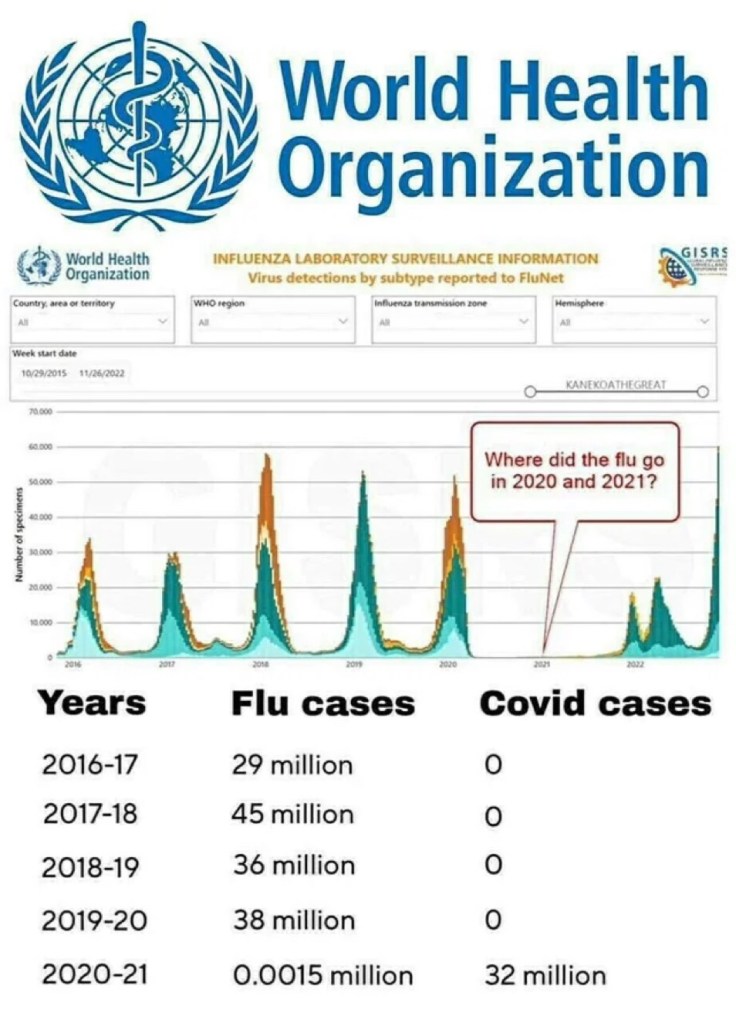
Covid Part 2 is Coming: Government is desperate to protect 2030 objectives and they don’t care who gets hurt in that process

You must understand what’s at stake here to grasp why Covid is coming back, these radical communists and socialists throughout the world have set gigantic social targets for the year 2030, and the re-election of Trump in 2024 will destroy those plans.  So, they will do everything to stop him, including returning to the playbook that worked before, releasing another version of Covid from one of the many bioweapon labs around the world, as they did in 2020.  But this one will be deadlier because the criticism from the first time was that Covid wasn’t deadly enough.  So, this one will kill more people, and they will do it because they got away with it before, four years ago.  That’s right, Covid, as I have said repeatably since that time, was a manufactured crisis, which the government seems to be doing a lot these days.  It was a “plandemic” not some act of nature.  These are bioweapons by a hostile regime of global communists who will do anything to get power and stay in control.  Anything.  And they’ve thrown everything at President Trump to stop him from running for President Again, and he keeps getting more popular, and they are in a bit of a panic now.  Joe Biden is just their representative in the White House.  He will do whatever they say, but Joe Biden is not in charge.  The script has already been written and leaked from several government sources.  Covid is coming back because they have no other choice, and it’s coming in September of 2023.  And by December of 2023, ahead of the election year, just as it was done in 2020, there will be new lockdowns and isolation rules much worse than before because it’s their only chess move, and you can bet they will make it, no matter who dies in the process.  These people should have been punished after what they did in 2020, but they weren’t.  And now that they got away with it, they are coming back.

Alex Jones has a reputation as a conspiracy theorist, but he’s often very right when he says something; it comes true eventually. I explain Alex Jones and myself, for that matter, with Robert Persig’s concept of the “Metaphysics of Quality.” Some people in life, the best leaders for that part, are those making decisions in the front of the train. But most people like to make decisions in the back of the train, where it’s safe. To justify why they are too chicken to live at the front, they call those who aren’t afraid conspiracy theorists to explain their cowardness. It’s a psychological problem, not an indicator of truth. So even though people might not like the big-time wrestling type of delivery that Alex Jones does when reporting the news, that doesn’t make his content any less relevant. And he has been told by a TSA contact that he has, as well as others, that the timeline for the Covid protocols has already been floated down through the ranks as led by the Biden administration. At the same time, these reports hit the marketplace, it was reported that the Biden administration will gear up for a return to the vaccine policies in September. Consistent with the timeline released by the TSA agent. Like before, everything related to Covid, or whatever they call this one, has been preplanned and politically motivated. It has nothing to do with health or nature. It’s all about instilling global communism as it rolls out to the door of origin, the World Economic Forum. And Trump threatens their agenda, as do his supporters, who they know are a majority in America because they also know what they did to commit election fraud under the guise of Covid to steal that 2020 election. And they are willing to do it again.

For those involved with state legislatures who thought that Covid was never coming back, here it is, so they’ll have to start working to get in front of the story. Not to stop the virus. Like a nuclear bomb, it’s out once Covid is released as the bioweapon it is. People are going to be harmed, and they will die. There will be no social distancing to stop it. There will be no masking that will prevent the spread. The only thing that the masks will do is show submission to those who control the virus outbreak. And this will always be a danger until those people are punished. Until then, we’ll have to live our lives and prevent panicky governors like Mike DeWine in Ohio from trying to shut down our states again with ridiculous rules of voodoo science. The goal is to disrupt the election of 2024 just as they did in 2020 by keeping people home and using mail-in ballots because people would be unable to vote in person. These bad guys know there is no way they can keep Joe Biden in power unless they change how people vote. Too many people now understand how the election of 2020 was stolen, and that information is much talked about as more and more evidence is stacking up. Joe Biden and his family are in trouble with corruption. The economy is horrendously bad. There isn’t anything that the Biden team can claim a victory on going into a critical election year in which they have tried to stop their political rival, Trump, in every way but physical assassination by all the powers of government, and Trump is still poised to win most of the states if Democrats don’t get control of the election counting process. So, they are going all in on Covid as their 2024 strategy.

There are no plans to put Biden on the campaign trail.  He’s going to hide in his basement like they did before.  The media will do most of his heavy lifting, and they need an excuse why their old man can’t stay awake for more than a few hours a day, so Covid is their only option.  We never had free and fair elections, at least not in a modern sense, and now that people are waking up to that situation, the only way to control elections is behind a massive crisis, a manufactured bioweapon made in a lab with government money to keep the government in power.  And the World Health Organization is already printing the press releases using Covid Part 2 as that weapon.  So the most essential thing that can be done now is to take away centralized power from the health directors in the various states to keep the economy and people constitutionally free.  If there are court cases that need to happen to challenge state power, we need to be ready to launch them early instead of a year into it like last time, after so much destruction had already taken place.  The constitution is not suspended during a crisis; otherwise, the government will continue manufacturing a problem to perform illegal acts.  And going into 2024, that is the only way to approach it constitutionally.  People must be able to vote, and the vote counters must be monitored carefully.  And no amount of death and mayhem caused by these globalist powers, under World Health Organization communist crises management, can be allowed to alter that process because they fully intend to for their survival.  You have been warned, use it to your advantage.

Rich Hoffman

Comey’s Disturbing Comments about Privacy: Security individually based as opposed to collectively sanctioned

I kept waiting for someone to do it, but only Sean Hannity that I know of even came close to covering the disturbing comments made by FBI Director James Comey at a Boston College speech on cyber security.  The media keyed in on a rather irrelevant issue that was said about the length of Comey’s remaining tenure as director—but missed the most important element he discussed rather bluntly—which was that no American had a “right” to privacy and that they could be compelled under court order to reveal anything at any time in the name of preservation of our national security.  He called this assumption a “bargain” made to live in a secure world.  I took the time to watch the whole thing because Comey’s most dangerous comments come at the 36 minute mark and context is important.  As presented, Comey sounds reasonable whereas if his comments on compelled information for national security sounded very dystopian if taken alone—so viewing the entire speech was important to this discussion which you should do now before going forth with this article.

I never made that bargain with the FBI or the federal government.  I am able to protect myself in most cases better than they can.  I don’t need the level of security they are assuming I need.  What has happened is that they have imposed themselves on us in reaction to the dangerous world we live in which has at its root, religious intolerance, economic depravity and the age old European tendency toward statism when challenged intellectually—so American intelligence gathering has filled the void of danger with the assumption that every single conversation in the world must be listened to and recorded so that any little bit of terrorist aggression can be stopped before it takes place.

Comey in that speech playing the good cop looking for recruitment into the “economically depraved” conditions of sacrifice for country probably believes what he’s saying while deliberately ignoring the facts of the matter. We know that the federal government cannot be trusted with our privacy.  For instance, just examine the situation with the Marines presently where men and women are placed together in the field only to have nude pictures placed online.  We warned that very situation would happen but the politics of the day said that we can’t discriminate between men and women and that women should be allowed to be in the same combat as men in service to their country.  Well, biology takes over when bullets aren’t flying and things happen when human beings are encouraged into primal circumstances.  The very same emotions that compel a person to run into a swarm of bullets and exploding projectiles are the same ones that procreate the human race.  So if a woman is in a muddy trench with a man, the two are going to want to get naked and explore each other—by their nature.  It should come as no surprise when abuses happen, yet politicians are and they really don’t know how to handle the situation leaving us with the present crises.

While traveling recently all over Europe I had to go through a lot of security—supposedly for the safety of everyone.  The rational was the same as what Comey said about private conversations and even thoughts—that nothing is private if the “state” has a need to know it for the security of everyone.  The assumption is that the “collective” is more valuable than the “individual” which is a false premise. If the individual is protected the natural byproduct is that everyone will be protected by default.  But because our intelligence and security organizations are filled with lazy minded louses most often than not—they default to seeing mankind in the plural rather than the singular because it makes their job easier.  Of course another aspect of modern progressive thought is that gay people can mix with straight people, and that bathrooms can be used by anybody exposing our private parts to the opposite sex without restraint.  This becomes a problem in these security lines.  For instance, at least once recently while going through TSA security I was singled out by a male officer for “extra security” just for the pat down.  I was with my family and wasn’t dressed in a way to provoke any suspicion and I was in line with hundreds of other people.  But the guy was obviously gay—stereotypically so—Beauty and the Beast gay as established by the live action character of LeFou and he wanted to feel my crotch to see if what was obvious was really there.  I suppose his justification was to see if I was smuggling something big in there, but the scanner would have shown that.  In fact they had a clear scanned image of my masculinity right there on the screen which women were able to see completely so I might as well have been nude walking through security.  Yet this security guy wanted to touch it and he used the law to exercise his personal sexual flavor and that was an abuse of power.  If I made a big deal about it, I would have missed my transfer flight and I still wouldn’t have been able to take it all back because that gay guy in the TSA had the might of Comey’s intelligence branch behind him protecting the TSA from individual protests—for the right of the collective.  But that TSA officer and the women watching the scanner were able to use that justification for their own personal pleasure while working on the job.  If an attractive person for their particular sexual tastes comes through the TSA line, and they are obviously always in a hurry to get to their flight—the TSA can indulge in that abuse all they want without fear of retaliation.  They try to give you pat downs of the same sex to preserve some semblance of sexual protection but if the person patting you down is gay, and you are a man—you might as well have given me a woman to do the job.  I never agreed to that bargain.  I can promise that I was able to protect the people on my flight better than those fat slobs working at the TSA—that’s for sure.

But the worst example of all is the recent presidential election of 2016 which James Comey’s FBI played such a large part.  We know that Hillary Clinton lied and that the Justice Department under Barack Obama was radicalized to abuse power for political preservation.  They did it before the election which was exposed by Wikileaks.  Hillary Clinton additionally destroyed evidence on her private server which she had to reduce the ability of government agents to see what crimes she was conducting through the Clinton Foundation.  When “compelled” by the FBI to tell the truth, the Clinton Campaign destroyed the evidence and refused to answer questions—so the whole notion that a judge can compel people to recall their memories falls apart under this examination.  Such an assumption bases itself on the Christian notion that a person will swear to tell the whole truth, nothing but the truth, so help them God. But if the person doing the swearing doesn’t believe in God, but rather is like John Podesta and invests his mind in “sprit cooking” rooted in old pagan rituals designed to conger up the spirits of the dead to help with living circumstances—lying under oath isn’t something they have a problem with.  So what compels a person to reveal their memories or even a conversation with a spouse?  Nothing.

There are some big problems with what James Comey said—the FBI’s position toward security of America is laced with half-baked assumptions designed to conceal their innate laziness as government employees—who are “underpaid” as Comey put it.  Give me a break—as I’ve reported often, government employees of all kinds make roughly 40% more than they would in the private sector, and that includes FBI agents.  I actually know a few and they aren’t hurting for money considering they structure their day around getting coffee every morning at the same time, then planning their lunches and afternoons in very predictable patterns.  They aren’t Eliot Ness types–that’s for sure.  And if they get tape of a couple having sex in their house—they do enjoy it—and they do share it among their other members.  They behave just as the Marines did in the recent sex scandal—when confronted with exclusive information, they often behave with their biological foundations—and they will abuse their power.

We’d like to believe that we can trust these people in our intelligence divisions, but we can’t.  While it’s true that we are better off having them as a layer of security between normal Americans and the bad guys—it doesn’t take much to make the intelligence officers of the FBI, CIA TSA and every other security division the villains—especially when sexes are mixed, gayness is promoted from within, and agents are encouraged to function from their primal instincts under duress.  So a blank check of authority is not the answer—Hillary Clinton proved it.  Wikileaks additionally has proven so by what they’ve released about the CIA.  These are not people we can trust.  They are currently using the power of government to attempt to destroy the Trump presidency—so what do you think they’d do to anybody else in America who challenges them?  The real answer is more private security individually based, not collectively sanctioned—and that requires a shift in basic national philosophy—which is hard for people like James Comey to do.  But that’s the direction we all need to be headed.

Rich Hoffman

 CLIFFHANGER RESEARCH & DEVELOPMENT

Sign up for Second Call Defense here:  http://www.secondcalldefense.org/?affiliate=20707  Use my name to get added benefits.

cropped-img_0202.jpg