The Great Work of Graham Hancock: Understanding more than just history, but in the dangers of institutionalism

I find it very enjoyable that more people are discovering Graham Hancock now than they have at any period in the past because he and others have done some very excellent work in the field of history and its study of it. Graham Hancock has been around for a long-time writing books and has a unique gift to make the past come alive with vigor while going well beyond the accepted norms of science, which ultimately is what is needed in our present time for many reasons. Of course, people are gaining so much understanding of Graham Hancock’s work because of the new Netflix show, Ancient Apocalypse, which features Graham Hancock as the narrator, resulting in over thirty years of his work. What Graham does uniquely is taking many years of hard study by archaeologists, anthropologists, paleontologists, geologists, astronomers, and the like, telling a narrative of the human race that would never be captured if people were only paying attention to those specific fields by themselves. When we have an advanced society like the one we are living in today, somebody must do this so it all makes sense and comes to some point that concerns everyone. I greatly admire scientists’ work; it’s often slow and cumbersome. I would never have the patience to do it, but I admire people who are wired in such a way. But they need someone like a Graham Hancock to tell their story. Just publishing academic papers isn’t enough. Graham’s background is as a journalist, which is precisely what makes him so good at reporting these historical issues. Without Graham, there is a lot of great work that the rest of the world would never know about. But without the great science that has gone on, there would be nothing for Graham to write about. Yet for me, whenever there is a new book by Graham Hancock, I read it with interest, as I do a local personality of a similar type, Ross Hamilton, or the archaeoastronomer Robert Bauval, and publisher/editor Mark Booth. I’ve read many of their books, understand what they are doing, and think it’s infinitely imperative. Yet we are just scratching the surface with all this stuff, there is a lot that we don’t know, and it is with the effort that they approach their subject that is required to do the work we must all do to understand where we came from, and where it’s all going.
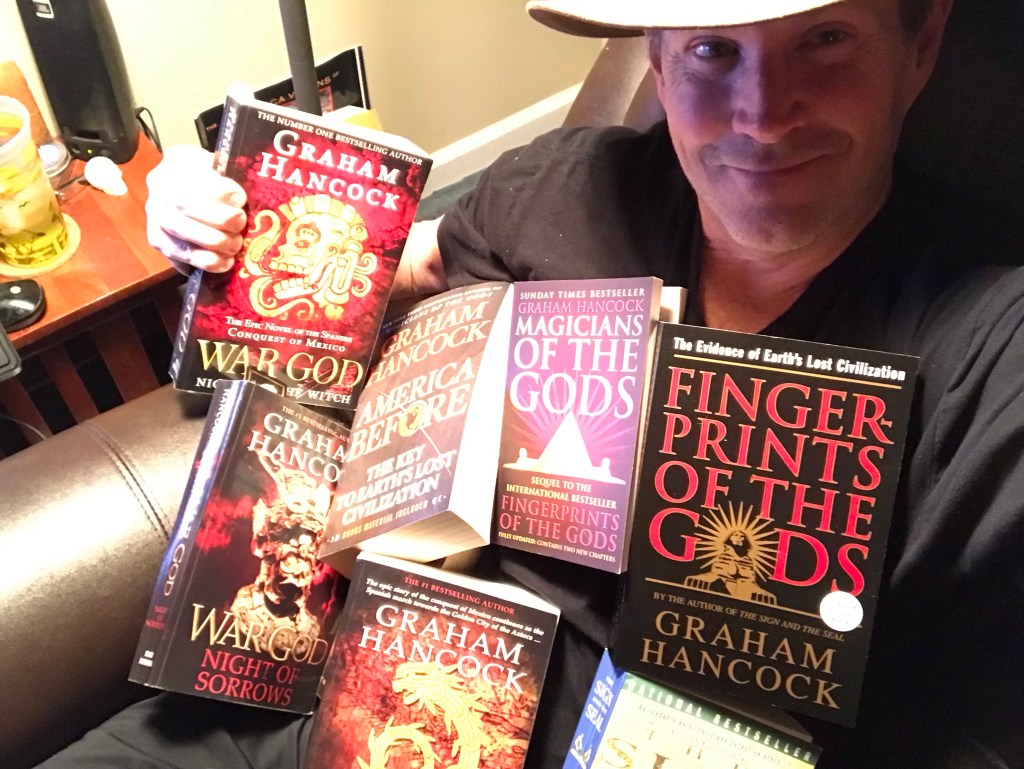
Graham Hancock is cautious not to be lumped in with the Ancient Aliens crowd even though I will say it, there was never a question for me after reading Robert Temple’s book on alien visitors from the Sirius star system over 5000 years ago that something to that effect occurred and is still likely happening today. Graham takes himself as an earnest journalist, so he presents the facts from the cutting edge boldly but specifically. He lets the evidence take things where they do. His quest is the search for an ancient civilization that was technically proficient in much the same way we are today and to understand it. Referring to Temple’s famous book The Sirius Mystery, written in 1977 and is a kind of prequel to the type of work Graham Hancock would dedicate himself to, I always wondered why Egyptians had all these strange gods in their pantheon of consideration. The mythologies of the world, which I have spent a great deal of time studying, never made sense until you start thinking in the way Temple proposed, not as some crackpot theory, but as a viable understanding of the facts that are presented. And if you read widely and over a significant number of subjects, then things start coming together to tell the real story of us all. And it is along those lines that the new Netflix show explores. But Graham’s work gives a lot of validity to the kind of thinking that a show like Ancient Aliens proposes, that alien life visited earth and helped seed many of the cultures we study today. Graham’s quest has been to prove or disprove that notion, and unlike Temple, who looked at the facts and took them where they went, Graham’s work is almost seeking a way to prove that not to be the case. But what he finds keeps taking advanced cultures in human civilization back much older than anybody previously considered. 

What’s important about all this is that it proves a fundamental flaw in human nature as to the conflict that has arisen between the expert community of academics and the reporting of Graham Hancock. Long before Covid came along, we caught the government in multiple conspiracies of controlling the media narrative to protect the way that science gets their funding by arriving at conclusions that governments want, not what the truth tells. The conflict over what the truth tells about human civilization is that we are much older than anybody previously thought and that there were global societies in the distant past, whether we call it Atlantis or something else. It’s not speculative musing anymore; it’s a scientific fact. And if the lies and manipulation by governments will make such a fuss over understanding our history, what would they be willing to do over much more serious issues? And that brings us to the present and how all this study is worth something useful.

But I’m not with these guys 100%, as much as I like them. I love them and their work and could talk to them for years without ever getting tired of it. But they likely wouldn’t like me. Like many people in science, publishing, and investigative sciences, they tend to lean more toward socialism than capitalism. I would argue, which they would dispute, that science was best when capital influences gave treasure hunters rewards for finding unique items. If a lot of discoveries that Graham Hancock writes about now were made today, we wouldn’t know much because of the way that science is funded by socialist governments under socialist economic policies for the benefit of institutionalism itself; we would never learn much because of the institutional controls, the same controls that told us we couldn’t take hydroxychloroquine or Ivermectin to fight Covid. Graham and his colleagues tend to see the Bible as an impediment to appreciating the technologies of the past and the worship of the sun and moon. Those religions I see are always trying to make a comeback and are presently in the climate change movement. And ultimately, that is the push behind how these great writers get published because they throw a bone to the religions of environmentalism that I would never do. I think of the Bible as a rebellion against those ancient stories and Canaan’s conquest as justified for human civilization’s progress. Instead of worshiping continued sacrifice to the forces of nature, mankind stepped boldly into self-assertiveness. When considered against the backdrop of what came before, many tens of thousands of years back, that was quite an achievement. But that doesn’t change the facts, only the perception of those facts. And because of the great work of Graham Hancock, we can have a more intelligent discussion about these matters than we ever have before. And I think that is fantastic!   


Rich Hoffman
Click to buy The Gunfighter’s Guide to Business

Giants Discoverd in Miamisburg, Ohio: Ross Hamilton’s report on American prehistory

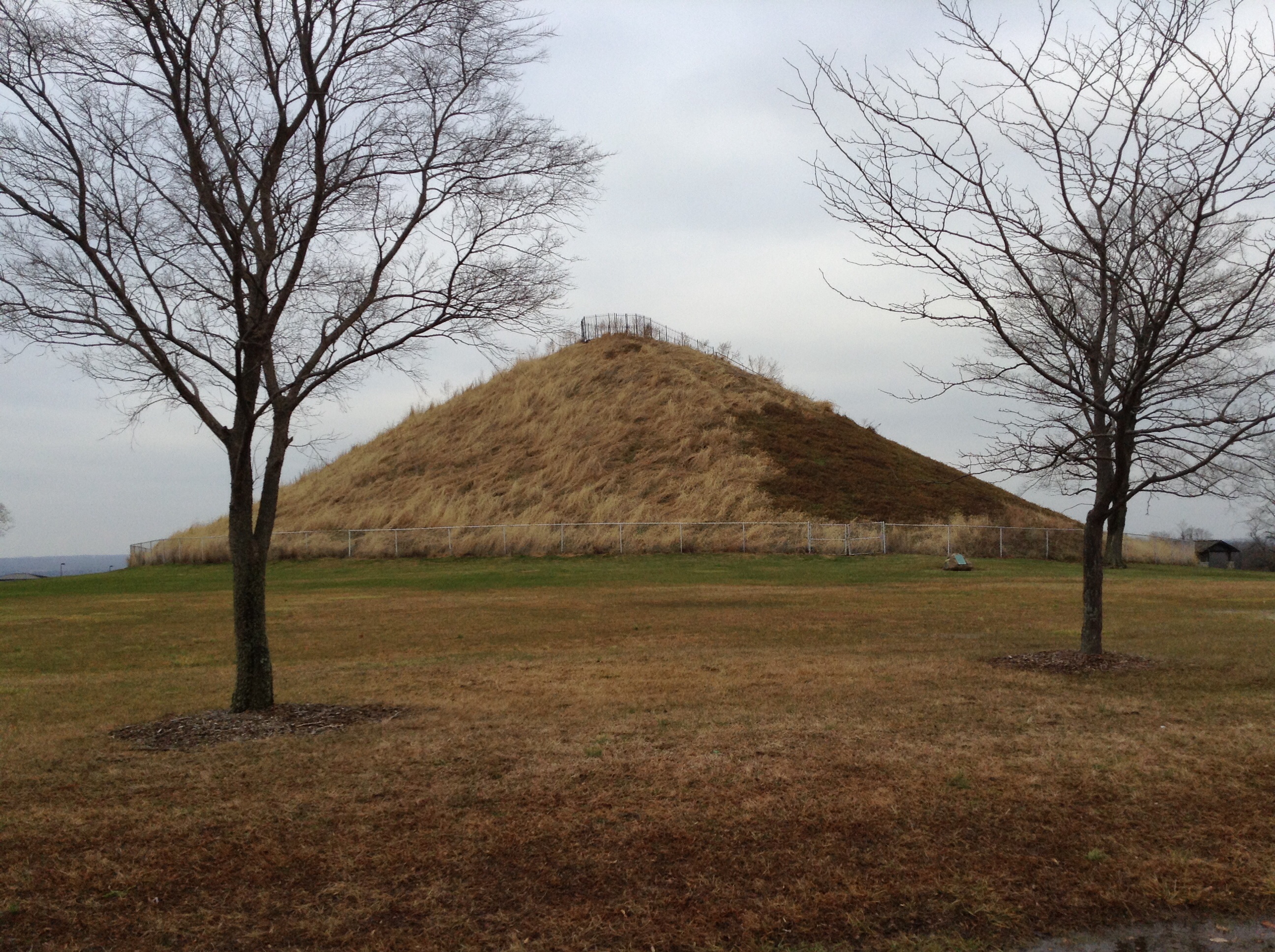
I was more than just a little surprised to find in Ross Hamilton’s very good academic paper, A Tradition of Giants: The Elite Social Hierarchy of American Prehistory that literally in my back yard at the Miamisburg Mound two full skeletons of an ancient race of people standing over 8’ tall was found. I’ve known about the mound for quite a long time, but didn’t think much of it, as I live in the land of mounds. By default, Fort Ancient and Serpent Mound have drawn most of my attention. Even in conventional archaeology book descriptions Miamisburg Mound is not given much fanfare as a relevant archaeological/anthropological memorial. I have done articles about American giants before, largely for fun, but the more research done into this strange phenomena the more obvious there is of a government cover-up on a massive scale and the evidence is legitimately right in America’s back yard in Miamisburg, just a few miles north-east of the Dayton Mall.

imagehttp://www.academia.edu/4693378/A_TRADITION_OF_GIANTS_The_Elite_Social_Hierarchy_of_American_Prehistory

Reading through Hamilton’s paper linked above two entries caught my attention in a big way as stated:

The body of a man more gigantic than any ever recorded in human history has been found in the Miami Valley in Ohio. The skeleton, it is calculated, must have belonged to a man 8’ feet 1 ½” inches in height. It was found within a half mile of Miamisburg in a location which contains many relics of the mound builders. Edward Gebhart and Edward Kauffman discovered it while they were working in a gravel pit…The bones have been placed on exhibition and many are the curious sight seers who have passed in wonder before them…Prof. Thomas Wilson, curator of prehistoric Anthropology, Smithsonian Institute, says of the find: “The authenticity of this skull is beyond any doubt. Its antiquity is unquestionably great though it is impossible to have a good guess as to its age. To my own personal knowledge several such crania were discovered in the Hopewell group of mounds in Ohio.


Reading that description it would place the discovery of that skeleton west of the Great Miami River across from the large park that sits between Chautauqua and Miamisburg. The other description was even more jolting. It is as follows:


“A pioneer relates that whilst powering in a field adjoining it [the Miamisburg Mound attributed to Adena], he discovered a grave of extraordinary size, which proved by actual measurement to be not less than ten feet in length. Upon one occasion, after a heavy storm had swept over the vicinity, a massive oak tree was up-rooted and from its bed came up a gigantic skeleton complete. Owing to some neglect, however, it was not preserved.”


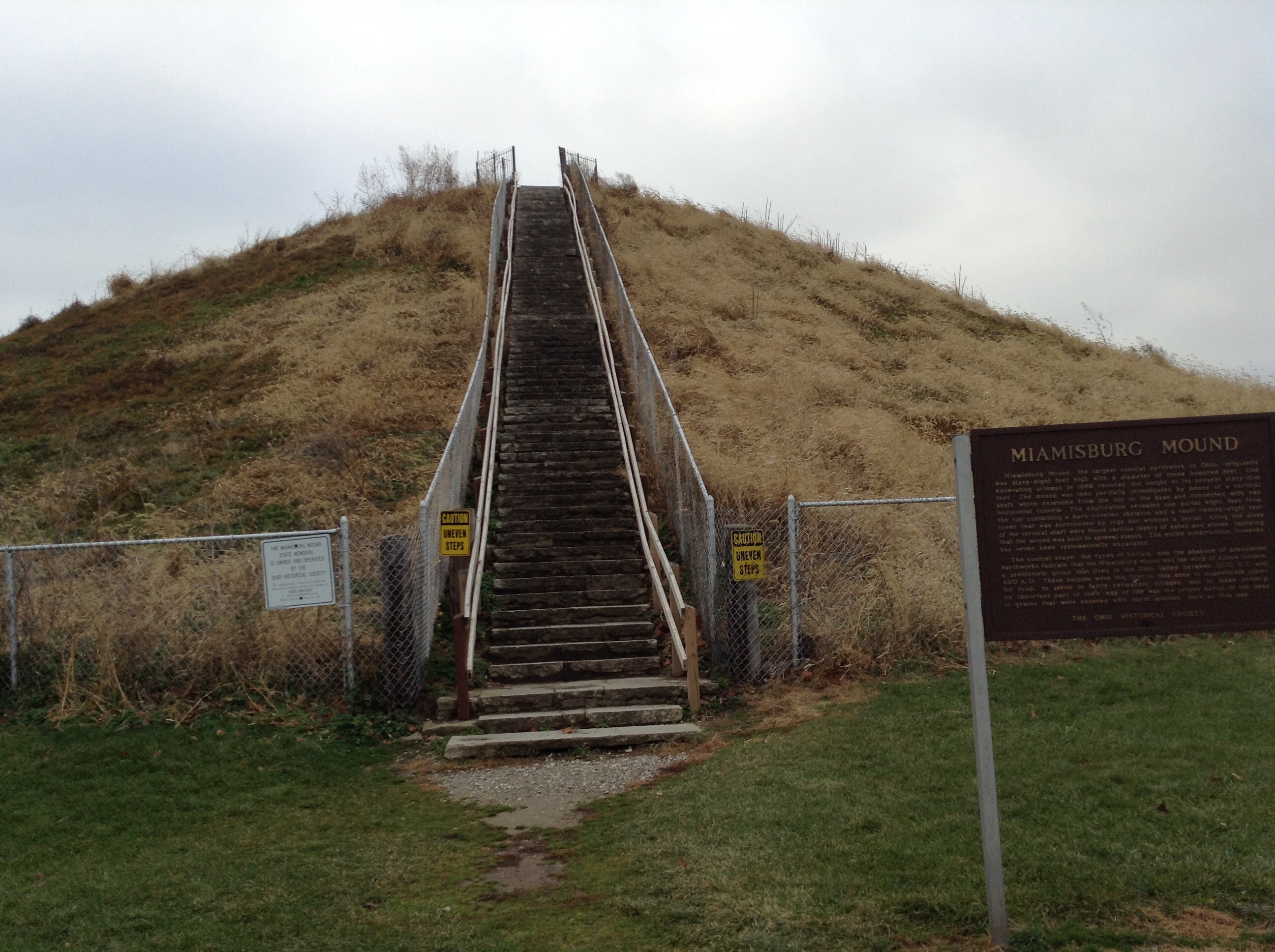
A visit to the mound site will show that on two sides of the mound north and south are ripe areas for the discovery of that giant skeleton. To the south is a neighborhood, to the north it is now a golf course. Looking at the mound it is obvious that one of the goals was to place the burial elements within it at an elevation superior to the surrounding countryside—particualrly to the west where the setting sun dips over the horizon each evening. The point of the mound is at 981 elevation where the high spots across the river to the west peak out at 900 feet. Only to the east near where the I-75 corridor passes through does the elevation increase to 1000. The mound architects were artificially attempting to raise the level of that particular hill-top to surpass the surrounding countryside. Excavation at the mound has been limited and ridiculously reckless. For such a site only a preliminary attempt at understanding was made in 1869 which discovered a skeleton 8 feet from the top which was approximately 68 feet in original height. Then digging down another 36 feet another burial vault was found. Without question, another 30 feet of exploration at any point around the 877 foot circumference would likely produce more skeletons and a much better understanding of what type of civilization lived and constructed such a magnificent human endeavor as the Miamisburg Mound.

 image

It is not enough to stick a plaque in front of the mound memorial site and say that Adena Indians built the site then died off or were pushed out of the area by Indian relocation methods. There is much excavation that needs to be done at the Miamisburg Mound site and there is simply no excuse not to. Nearby University of Dayton could fund such a dig with the proceeds of one Dayton Flyers basketball game, yet nobody even steps forward to try………….why? It’s not like the site in is the Middle East and too difficult to obtain permits from the volatile governments there. It’s not like it would cost a whole summer of travel to a far away land to spend in time and money. This site is within a few miles of the Greene Shopping complex. A dig at the Miamisburg Mound site would be luxurious for any anthropologist, and fairly cheap. So why isn’t it being done? I’ll get into that more with another article that is much more sinister. But for now, I will make this proclamation that I’m absolutely sure many other people know—there is proof of a race of giants under the Miamisburg Mound. Two of the largest skeletons of human beings ever found anywhere in the world have been discovered in the Miamisburg area and a gigantic burial mound shining on a hilltop like a beacon of invitation has not been even remotely explored by modern excavation methods because science already knows what they’ll find there.


When I visited the site over the first full weekend of December 2014 a used condom greeted my boots when I stepped out of my car. I didn’t step on the disgusting relic of some primitive sexual conquest performed in a park devoid of any real interest. As I looked around, the park had built a nice playground and some picnic areas, but had utterly failed to conduct a proper examination of the mound site for nearly 150 years—which is just inexcusable.

So until science can prove otherwise, based on the written and oral traditions of the Miamisburg area—before the government swept in and claimed the area mysteriously for nuclear research—giants were discovered in the area of a previously undocumented race that had technical ability not associated with any known Indian culture. The evidence is likely just a few feet from the playgrounds, the picnic area and the used condom that was in the parking lot during my visit. Just a short shovel depth into the mound likely would prove the assertions of Ross Hamilton’s academic paper. Likely, because the bones are in the Smithsonian log, the government knows what to expect in any excavation attempt into the Miamisburg Mound, and they really don’t want that information getting out. The reason will be the subject of my next article—but for now the evidence of a giant race of people is right in our back yards. All it would take to officially discover them is for us to do a little digging and prepare ourselves for the astonishing truth about our ancient past in America.

Rich Hoffman

Visit Cliffhanger Research and Development