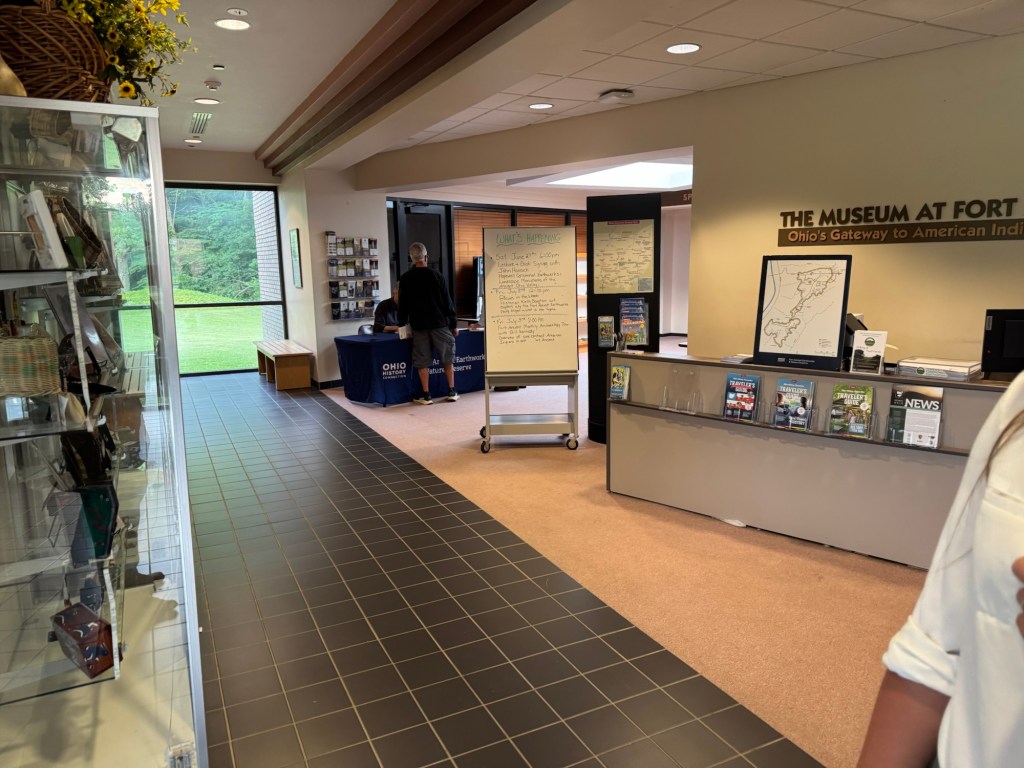
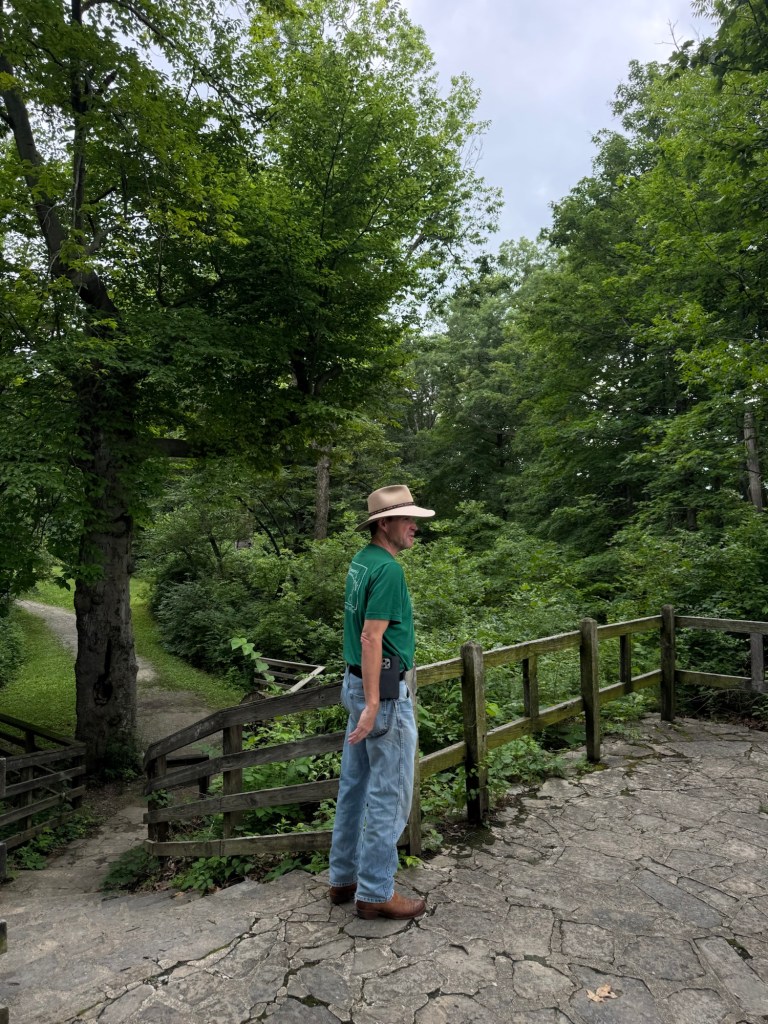
I stood with my family at the Newark Earthworks recently, the Great Circle embracing us in its quiet immensity, and realized how perfectly the moment aligned with something I had waited decades to see. My grandson was there, wide-eyed as only a child can be in the presence of real mystery, and just days earlier, a remarkable new book had appeared on the visitor center shelves: John E. Hancock’s Hopewell Ceremonial Earthworks: Landscape Monuments of the Ancient Ohio Valley, published by Smithsonian Books.[^1]
The golf course that had long sat atop the Octagon and Circle was gone, the land being returned to public use as a proper park befitting a UNESCO World Heritage Site. In 2023, the Hopewell Ceremonial Earthworks—eight magnificent locations across southern Ohio—received that global recognition.[^2] These are not modest mounds. They are monumental works of landscape architecture whose geometric precision, astronomical alignments, and sheer coordinated effort rival the Pyramids or the Great Wall. The Newark complex alone required millions of hours of labor. The alignments track the Moon’s complex 18.6-year cycle, something that demands sustained, multi-generational observation. Yet for too long these places have been treated as local curiosities rather than one of the great architectural achievements of the ancient world.
Hancock, a retired professor of architecture from the University of Cincinnati, spent his later career studying these earthworks with an architect’s eye. His book is not a conspiracy volume. It is a beautifully produced, evidence-driven work that documents the sites, the advanced mathematics built into them, the trade networks that moved Lake Superior copper, Appalachian mica, and materials from even farther afield.[^3] The Old Copper Complex in the Great Lakes region dates back thousands of years before the Hopewell period, with native copper being cold-hammered into tools and traded across the continent.[^4] The book presents the facts without leaping into speculation, and it does so in a way that finally gives these places the serious treatment they deserve. I had been waiting forty years for someone to write exactly this book.
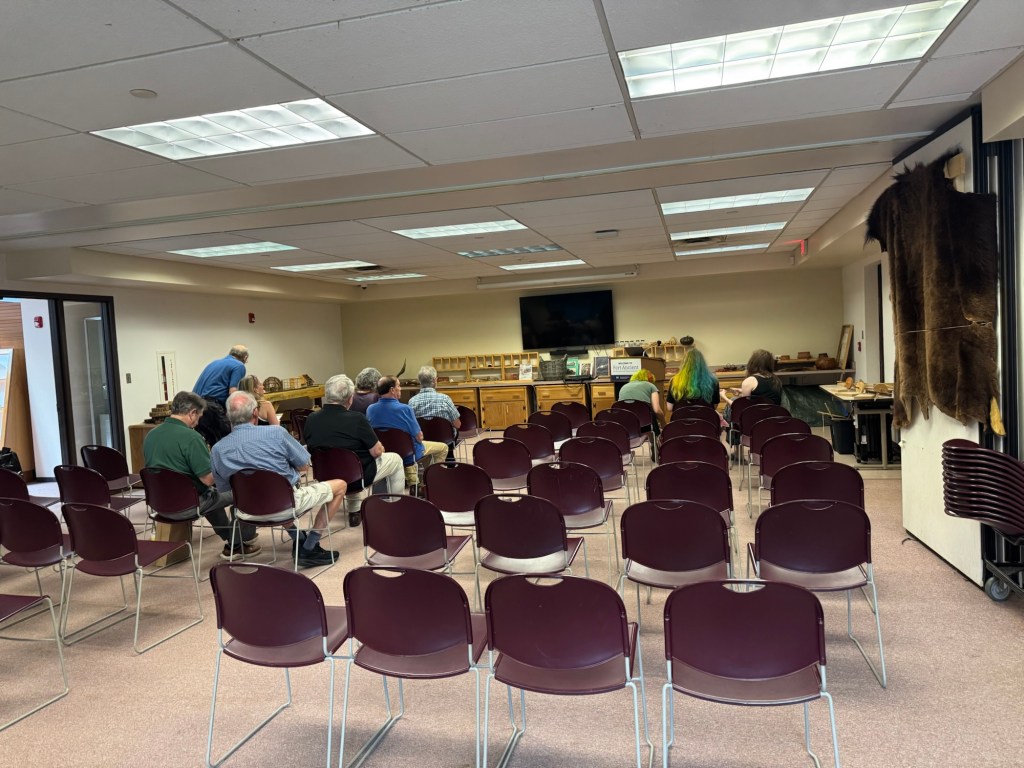
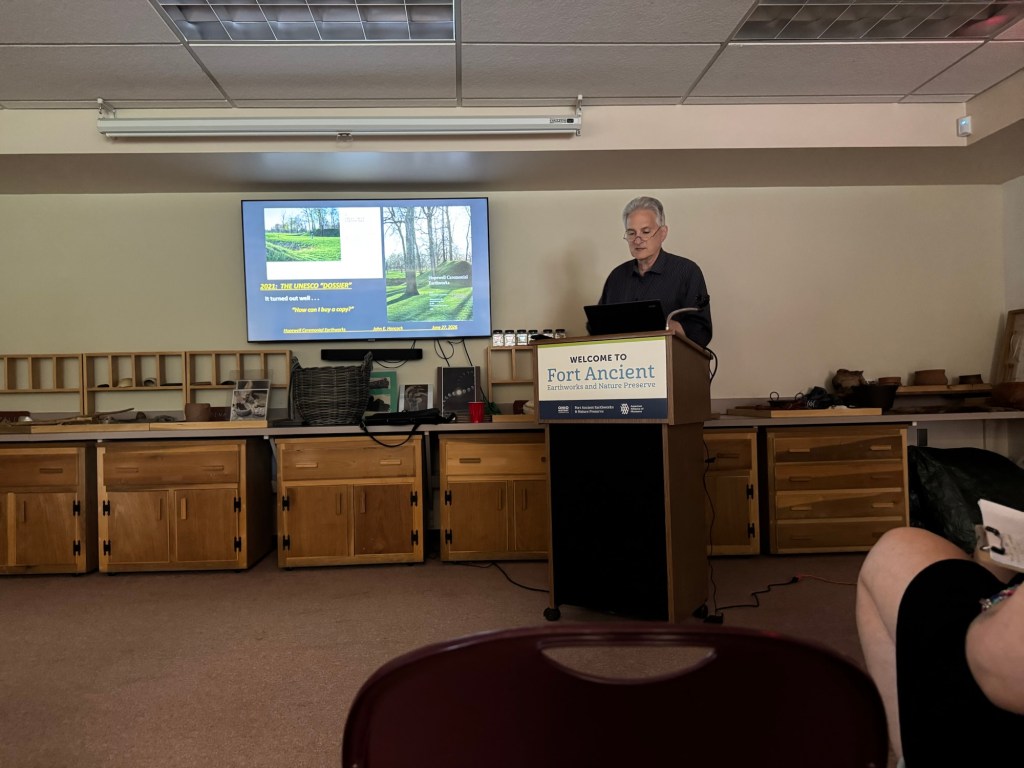
I attended Hancock’s lecture and book signing at Fort Ancient, another UNESCO site just a short drive from home in Liberty Township. The room was filled with the kind of people I naturally gravitate toward—archaeologists, geologists, anthropologists, and dedicated amateurs who have spent their lives in the field. We geeked out together over the relics and reconstructions. I asked the question many were thinking, but few were voicing: Is the aggressive implementation of NAGPRA—the Native American Graves Protection and Repatriation Act of 1990—driven purely by tribal concerns, or has it become a political tool to advance a particular narrative about America’s founding?[^5] The knowing laughter and the honest answer (“a little bit of both”) that came back told me volumes. Tension hung in the room, but so did goodwill.
People who likely disagreed with me on politics, perhaps even those who might protest at the statehouse on other issues, kindly brought me my cowboy hat after the lecture when I had left it behind in my eagerness to get books signed. That small gesture captured what I value most: the ability to find common ground even when bigger differences exist. Hancock signed my copies, and I could sense him relaxing as our conversation progressed from guarded to more open. He has walked a difficult line, working with tribes, the Smithsonian, and UNESCO to secure recognition and preservation for these sites while producing work that respects the evidence without descending into fringe territory. I respect that. Preservation done right—think English Heritage’s stewardship of Stonehenge—benefits everyone. I am grateful these Ohio earthworks are receiving similar attention.
Yet the deeper paradoxes remain. The same institutions and political currents that celebrate the “indigenous achievement” visible in the earthworks are often the ones pushing to remove, repatriate, or, in some cases, effectively bury the very artifacts that might illuminate how such sophisticated knowledge arrived here. Trade in copper and other materials was continent-wide. The mathematics and astronomy required sustained observation and coordination across distances. The timing of the Hopewell period overlaps with the era of the Dead Sea Scrolls and the First and Second Temples. In biblical accounts, high priests and prophets engaged in practices at high places that involved altered states and direct communication with non-human intelligences. Similar mechanisms—shamanic traditions, sacred substances, ritual landscapes—appear in the Ohio Valley. The Holy Stones of Newark, discovered in the nineteenth century near these earthworks and now housed at the Johnson-Humrickhouse Museum, add another layer of uncomfortable questions, whether one accepts them as authentic or not.[^6]
I sat for a photograph in front of those stones, a dejected look on my face, because I sometimes wish I didn’t feel compelled to speak on these matters. I would rather play golf, enjoy time with my wife and grandchildren, or focus solely on business and family. But that is not how I am wired. My optimism and verbal facility push me to break down barriers and find common ground. I love academia and the sciences. I dislike seeing their ground seeded with ideological assumptions that prioritize narrative over evidence. These earthworks represent advanced knowledge whose source deserves honest inquiry, not erasure under the guise of repatriation.
This is precisely why I wrote The Politics of Heaven. The book explores the political motives and spiritual warfare at work when non-human intelligences interact with human cultures across time. The same questions arise in biblical history, in shamanic traditions, and now in the accelerating conversation around UAP disclosure. As we push toward the Moon and Mars through efforts like SpaceX, artifacts and anomalies there will make the same uncomfortable questions unavoidable. No repatriation policy or institutional control can bury evidence forever. The genie is out of the bottle.
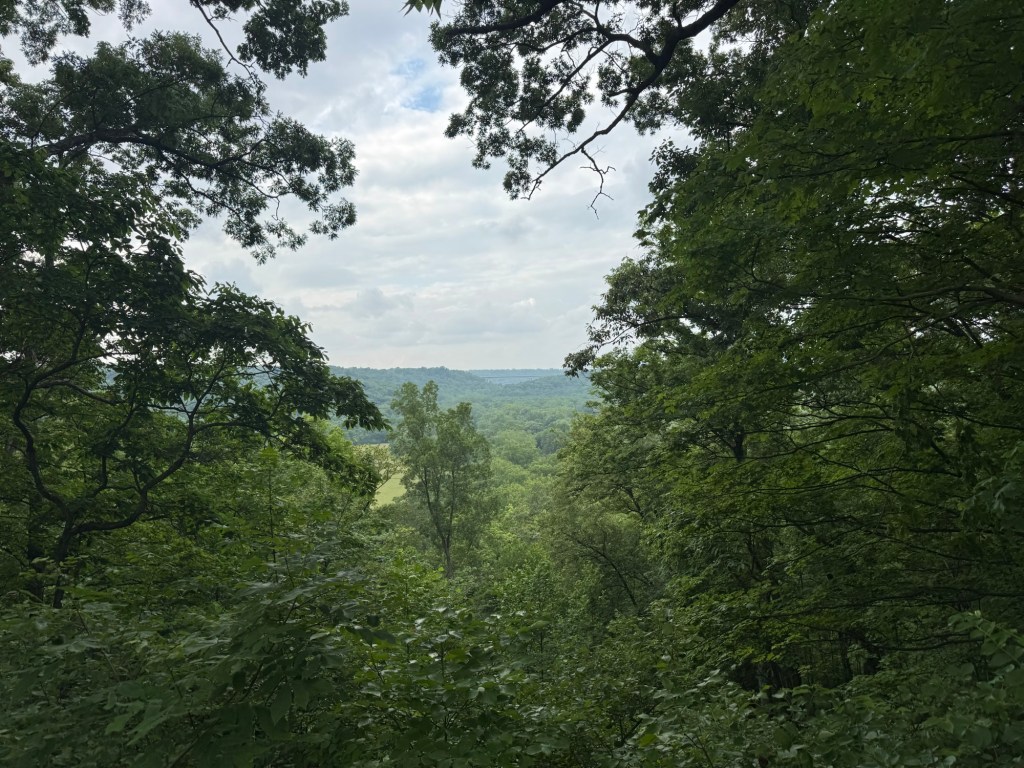
Hancock’s books—the substantial Smithsonian volume and his compact Traveler’s Guide to Ancient Ohio—are excellent starting points. They are well-illustrated, durable, and filled with practical information for anyone who wants to visit. I encourage everyone within driving distance to do exactly that. Pack a picnic, take the family, and stand inside the Great Circle or walk the ridges at Fort Ancient. See the scale for yourselves. Let the mystery and the achievement speak directly.
I do not come to these subjects as an enemy of science or preservation—quite the contrary. I value the hard work of the people in that Fort Ancient lecture hall and the broader archaeological community. I refuse to accept that the only permissible story is the one that serves contemporary political ends. The earthworks of Ohio are far more significant than the official narrative has traditionally allowed. They point toward deeper truths about human potential, long-distance connection, and the ways knowledge has been transmitted across cultures and perhaps from beyond them.
That is the next great story. It is already reshaping how we understand our past, and it will only grow more urgent as humanity expands outward into the solar system. I intend to keep speaking and writing about it with the same optimism that has always driven me—to find common ground where possible, to ask the questions that matter, and to prepare people for revelations that institutions may prefer to keep quiet. The sites are magnificent. The books are timely. The truth, whatever form it ultimately takes, will not stay buried.
Footnotes
[^1]: John E. Hancock et al., Hopewell Ceremonial Earthworks: Landscape Monuments of the Ancient Ohio Valley (Smithsonian Books, 2026).
[^2]: UNESCO World Heritage Center, “Hopewell Ceremonial Earthworks,” inscribed September 19, 2023.
[^3]: Hancock’s work emphasizes architectural and landscape analysis, including trade goods.
[^4]: The Old Copper Complex dates to approximately 6500–1000 BCE, with extensive trade networks across North America.
[^5]: Native American Graves Protection and Repatriation Act (NAGPRA), Public Law 101-601 (1990).
[^6]: The Newark Holy Stones (including the Decalogue Stone) were reportedly discovered by David Wyrick in 1860 near the Newark Earthworks and are housed at the Johnson-Humrickhouse Museum in Coshocton, Ohio. Scholarly consensus largely views them as 19th-century artifacts, though they continue to spark debate.
Bibliography
• Hancock, John E., et al. Hopewell Ceremonial Earthworks: Landscape Monuments of the Ancient Ohio Valley. Smithsonian Books, 2026.
• Hancock, John E. Traveler’s Guide to Ancient Ohio. Ohio University Press, 2026.
Rich Hoffman is an author, political consultant, and strategic advisor based in Cincinnati, Ohio, and the creator of The Politics of Heaven—a unique framework that connects biblical theology, ancient history, and modern power structures to explain how moral alignment and spiritual forces shape global events. Blending real-world political experience with deep research into archaeology, UFO phenomena, and suppressed historical narratives, Hoffman offers compelling commentary on topics ranging from ancient civilizations and the Dead Sea Scrolls to modern populist movements, paranormal continuity, and leadership strategy in chaotic environments. As the author of The Gunfighter’s Guide to Business and the forthcoming Politics of Heaven, he brings a grounded yet provocative voice to media discussions, supported by firsthand experiences and a cross-disciplinary approach that bridges science, history, and theology. For interviews, speaking engagements, or expert analysis, visit richhoffmanbooks.com or contact directly via phone at 513-307-5815 or email at rhoffman@richhoffmanbooks.com. If you’ve seen the movie, Disclosure Day and want to talk about it and the implications of Presidnet Trump’s UAP disclosures, let me know and we can bring some color to your coverage. https://richhoffmanbooks.com/media-inquiries-broadcast-topics-and-contact-info/?frame-nonce=ad51e7ecba I do have a firsthand UFO encounter to discuss.
I just got back from a family trip that turned into one of those unexpected journeys where you set out thinking one thing and come away with something far deeper. We headed out to The Wilds in southeastern Ohio, that remarkable conservation center and safari-style wildlife park built on what used to be strip-mined land. I love zoos and conservation efforts in the right way—the kind that actually preserves species and land while recognizing that humans are part of the picture, not some parasitic afterthought. What I didn’t fully expect was how a side trip just south of there to see the remnants of the Big Muskie would crystallize so many thoughts I’ve been carrying about energy, innovation, capitalism, and the way the political left has twisted conservation into something that often works against human flourishing.
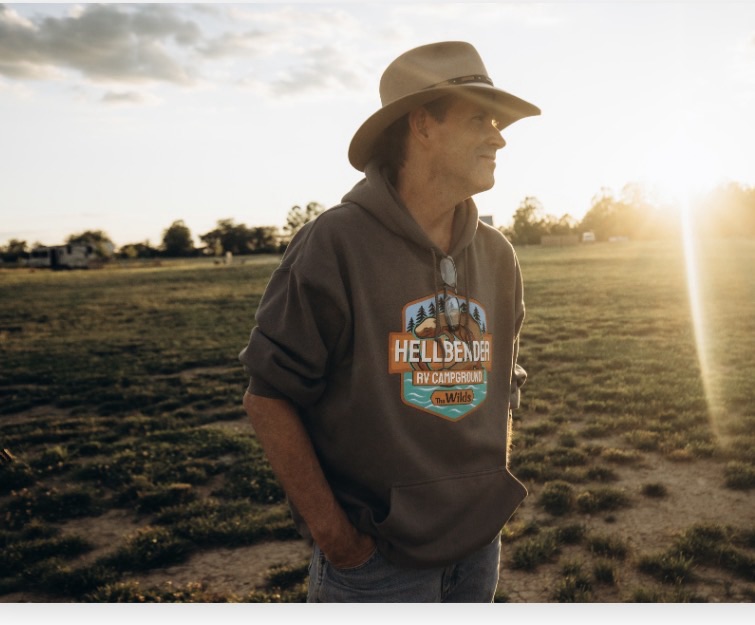
The Wilds sits on nearly ten thousand acres of reclaimed surface-mined land in Muskingum County, near Cumberland. It opened to the public in 1994 after the Central Ohio Coal Company, a subsidiary of American Electric Power (AEP), donated over 9,000 acres to the International Center for the Preservation of Wild Animals. That gift, combined with the reclamation work already underway, transformed what had been an industrial extraction site into one of North America’s largest conservation centers. We stayed right there at the new Hellbender RV Campground at The Wilds—beautiful sites on that same land that once fed coal into the power grid. From the campground, you can head into the park proper and experience open-air safaris rolling through habitats where giraffes, rhinoceroses, cheetahs, and other species roam across rolling terrain that, in its own way, echoes the African Serengeti. The landscape doesn’t look like the steep Allegheny foothills that were here before mining; the stripping and reclamation flattened and reshaped sections into wide, grassy vistas perfect for large herbivores. It’s not the exact ecology that existed pre-mining, but it’s productive, beautiful, and teeming with life in ways that serve conservation science and education every single day.
One afternoon, we drove the short distance south to Miner’s Memorial Park to see the Big Muskie bucket—the last major remnant of what was once the largest dragline excavator ever built. Standing there, walking inside that colossal bucket, touching the steel that once clawed through hundreds of feet of overburden, you can’t help but feel the scale of human ingenuity. The machine itself, officially a Bucyrus-Erie 4250-W, stood nearly twenty-two stories tall, weighed around thirteen and a half thousand tons, and swung a 220-cubic-yard bucket capable of lifting 325 tons of earth and rock in a single bite. The bucket alone is the size of a twelve-car garage or easily two full-size buses side by side. When it operated from 1969 to 1991, Big Muskie moved more than 483 million cubic yards of material, revealing high-sulfur coal seams that powered Ohio homes, industries, and the broader grid through plants like the Muskingum River Generating Station. It walked on massive shoes, its boom stretching over three hundred feet, built on site because nothing that big could be transported whole. Twenty-four hours a day, three hundred sixty-four days a year, it did the work that surface mining made possible—safer in many respects than sending men deep underground into the old room-and-pillar mines, and efficient enough to supply the energy that built modern Ohio.
I grew up in the seventies and eighties, hearing the news coverage of strip mining in Ohio. It was always framed as an environmental catastrophe—radical voices and mainstream outlets alike talking about the “rape of the land,” the destruction of precious topsoil, acid mine drainage polluting streams, and corporate greed tearing up the earth for profit. Central Ohio was a focal point of that conversation. You couldn’t miss it. The narrative was clear: this was primitive, destructive, something that enlightened environmental regulation would eventually rein in and correct. And regulation did come—the federal Surface Mining Control and Reclamation Act of 1977 imposed new standards for contouring, topsoil replacement, and revegetation. I’m not against sensible environmental protections. What concerns me is when those protections become a vehicle for anti-capitalist ideology that ignores the human benefits of energy production and pretends that the companies doing the actual work weren’t already innovating reclamation methods long before politicians and bureaucrats showed up to take credit or impose penalties.
Because here’s what you see when you stand at the Big Muskie bucket and then drive back to The Wilds: the power company that operated the machine also owned vast stretches of the land. They extracted the coal—formed over three hundred million years in ancient swamps and forests—and turned it into usable energy that lit homes, ran factories, and powered the machines that built the modern world. Then they participated in turning the worked-out land into something new and valuable. The Wilds exists in large part because of that private-sector decision to donate thousands of acres rather than walk away or fight endless legal battles. The reclamation wasn’t just compliance; it became an opportunity. What had been stripped to fuel progress was reshaped into a world-class center for wildlife conservation, research, and public education. You can sit at the Overlook Cafe or Terrace Grill at The Wilds, look out over the valley at giraffes and rhinos moving through grasslands that mining and reclamation made possible, and eat a good meal with running water and modern conveniences while the animals graze below. Try doing that with a picnic basket on raw, unrestored ground in the middle of nowhere and tell me which approach actually serves both people and wildlife better.
That contrast hit me hard. The same companies the political left loves to demonize as destroyers of the planet were the ones who made The Wilds possible. AEP’s Central Ohio Coal Company didn’t just comply with later regulations; they were already engaged in preservation and restoration efforts. The environmental movement often attaches itself to these stories after the fact, claiming moral victory while ignoring that the capital, the engineering, and the willingness to take risks came from the private sector. Without the coal extraction that powered Ohio’s growth, without the wealth created by that enterprise, there would have been far less capacity to fund or even imagine large-scale conservation projects like this one. It’s the classic pattern: innovators and producers do the hard work, create the surplus, and then the critics arrive to regulate, tax, and re-narrate history as a story of exploitation that only enlightened government could fix.
I thought about that same dynamic when we talk about today’s energy battles, particularly around nuclear power in Ohio. The two plants—Davis-Besse near Toledo and Perry near Cleveland—have long been critical to the state’s grid. I’ve heard the numbers bandied about; depending on the year and how you count, they contribute a substantial share of reliable baseload power, something in the range of ten to perhaps fifteen percent or more of Ohio’s electricity at times, and historically more when coal was dominant. The exact percentage varies in conversation, but the point is that they matter enormously for grid stability. In a state where natural gas now supplies roughly half or more of generation and coal has fallen sharply from its peak, nuclear provides the steady, high-capacity-factor power that intermittent sources can’t match. Yet for years we’ve watched political attacks from the Obama and Biden eras—subsidies fights, regulatory pressure, public narratives framing nuclear as dangerous or unnecessary—while the same voices rarely offer a credible, scalable replacement that keeps the lights on and the economy growing. It’s the Big Muskie story all over again: paint the producers as villains, ignore the benefits ordinary people receive every time they flip a switch or charge a device, and push policies that ultimately raise costs or reduce reliability for everyone, especially working families.
You see the same pattern in how the left approaches energy restriction as a tool of control. Whether it’s coal in the seventies or nuclear today, the rhetoric is that these things are existential threats to the planet and that only by limiting human access to abundant, affordable energy can we “save” the Earth. But energy is what lifts the burden of labor from human beings. A person hauling water by hand all day isn’t freer or more virtuous than one who turns a tap and uses the saved time to build, create, or rest. Electricity powers the data centers, training the AI models that will transform medicine, logistics, and discovery. It powers the factories, hospitals, schools, and farms that feed billions. The notion that we should all retreat to some primitive campfire existence—sitting around telling stories about pagan gods while the productive capacity of civilization withers—isn’t conservation; it’s a recipe for poverty and stagnation dressed up as virtue. The environmental movement has deep strains of this anti-human thinking, sometimes explicit in population-control rhetoric or degrowth economics that treat human ingenuity and consumption as the problem rather than the solution.
Standing inside that Big Muskie bucket puts it in perspective. That machine represented the best engineering of its era applied to the problem of extracting energy from the ground efficiently and at scale. It wasn’t pretty. It changed the landscape. But it also delivered the energy that made post-war Ohio prosperous, that kept factories running, that let families in Middletown and across the state live with lights, refrigeration, and opportunity their grandparents could only dream of. The coal it uncovered took three hundred million years to form; we used it in decades to build a civilization. Then the same enterprise that did the extracting turned around and helped create The Wilds on the worked land. That’s not destruction followed by cosmetic repair. That’s productive use followed by genuine restoration and the creation of new value. It’s what real conservation looks like when it’s driven by people who understand both the land and the ledger.
I kept coming back to the parallel with the fight over slavery in this country. Republicans led the effort to abolish it, at enormous cost in blood and treasure, while many Democrats and the broader establishment either defended the institution or dragged their feet. After the war, it was Republicans who pushed the early civil rights amendments and enforcement. Yet somewhere along the line, the narrative flipped, and today the party that fought to end slavery is often painted as the problem while the party whose members founded the KKK and enforced Jim Crow for generations gets to claim the moral high ground on race. The pattern repeats with energy and conservation. The companies and workers who built the power grid, engineered machines like Big Muskie, extracted the resources that industrialized the nation, and then reclaimed the land for new uses—these are treated as villains. The activists and politicians who arrived later, often with no skin in the game and plenty of opportunity for moral posturing, get to define “environmentalism” as whatever restricts the producers. It’s the same rhetorical capture, and it serves the same underlying goal: concentrating power in institutions that claim to speak for the Earth while actually limiting human potential.
At The Wilds, you see the better path. Capital enterprise created the wealth and the technology. It extracted the resource that powered progress. It then donated the land and supported the transformation into a living classroom for conservation science. The restaurant with the view, the safari vehicles, the research programs, the campground where families like mine can stay on the very ground that once fed coal into the grid—all of it exists because someone took the risk, did the work, made the profit, and then chose to leave the place better in meaningful ways. The strip mining didn’t “destroy” the land in any permanent sense; it changed it, and human ingenuity changed it again into something that now supports species that never lived here naturally in these numbers. That’s the story of civilization itself: we impose order and purpose on raw nature, we extract what we need to thrive, and when we’re at our best, we restore and improve rather than consume and abandon.
I think about my own work and the themes in The Gunfighter’s Guide to Business—the idea that you impose your will on circumstances rather than waiting for perfect conditions, that resilience and disciplined action turn challenges into advantages. The men who ran Big Muskie didn’t have the luxury of modern environmental impact statements or endless public comment periods. They had a job to do: get the coal out safely and efficiently to keep the power flowing. They did it with machines that still boggle the mind. Then the next generation of the same enterprise looked at the worked land and saw not a scar but an opportunity for something new. That’s the gunfighter spirit applied to energy and land use. You don’t retreat from the necessary work because critics call it ugly. You do it well, you do it responsibly within reason, and you leave the place positioned for the next chapter.
Visiting both sites in the same trip—the living conservation success at The Wilds and the monumental tool that helped create the conditions for it—ought to be required for anyone who wants to have an informed opinion about energy policy in this country. You can’t stand inside that bucket, read the history of how much earth it moved and how much power it ultimately enabled, then walk the safari trails where rhinos and giraffes now graze on reclaimed ground, and still believe the simple story that extraction equals destruction and only government regulators plus activists equal salvation. The truth is more interesting and more hopeful. Human beings using reason, capital, and engineering solved the problem of energy scarcity that had kept our ancestors poor and short-lived. Along the way, we made mistakes, as every generation does. But we also built the surplus that lets us fund conservation at scales that previous societies could never have imagined. The Wilds is proof of that. The Big Muskie bucket is proof of the tool that made part of it possible.
We’re in a moment right now where the same arguments are playing out over nuclear power, over natural gas development, over any serious attempt to expand reliable generation to meet the exploding demands of AI data centers and electrification. The political left still reaches for the same rhetorical weapons: portray the producers as greedy or reckless, emphasize risks while downplaying benefits, offer no realistic replacement that maintains or increases living standards, and treat any expansion of human productive capacity as inherently suspect. It’s the Big Muskie fight with better public relations. The companies that actually keep the grid running—whether legacy coal operators that have reclaimed land or the nuclear fleet that provides steady power—are doing the real work. The activists protesting outside are often performing for an audience that has never had to keep the lights on for millions of people or balance a multi-billion-dollar capital investment against regulatory uncertainty.
I came away from this trip more convinced than ever that the path forward isn’t to demonize the enterprises that built our energy foundation or to pretend that conservation requires halting human progress. It’s to recognize that the best conservation often flows from the same innovative, risk-taking, profit-seeking institutions that extract resources productively in the first place. The Wilds wouldn’t exist without the coal mining that preceded it. The power that lets us enjoy air-conditioned homes, smartphones, and yes, even the electric vehicles some environmentalists champion, comes from somewhere. Right now, a significant portion of that, somewhere in Ohio, includes the steady output of our nuclear plants. We should be building more of that kind of reliable, high-density energy, not tearing it down under the guise of protecting a planet that has survived far worse than human industry and will continue long after our current debates are forgotten.
If you ever find yourself in southeastern Ohio, do what we did. Spend a few days at Hellbender Campground or one of the other lodging options at The Wilds. Take the open-air safari and watch animals that have no business being in Ohio thriving on land that mining and reclamation made suitable for them. Then drive south a short way to Miner’s Memorial Park and stand inside the Big Muskie bucket. Touch the steel. Imagine the machine walking across the landscape, the bucket biting into the earth, the coal coming out to feed the boilers that kept the grid alive. Talk to the exhibits about the workers who ran it and the land that came after. Then go back to The Wilds and have lunch at the overlook with a view of the valley. You’ll see, as I did, that the story of energy in America isn’t a simple morality play of villains and heroes. It’s the story of human beings using their minds and their tools to turn raw materials into civilization, and then, at our best, using the surplus to restore and improve what we touched.
That trip reminded me why I keep returning to these themes in my writing and podcast. The battles over energy, over land use, over what counts as “conservation”—they’re never just about science or engineering. They’re about whether we believe human beings have the right and the capacity to shape the world productively, or whether we accept a vision that treats us as a problem to be managed and reduced. The Big Muskie and The Wilds together make the case for the former. They show what free people and free enterprise can accomplish when they’re allowed to work, to risk, to profit, and to give back in ways that actually endure. Everything else is commentary.
If you’ve read The Gunfighter’s Guide to Business, you know the mindset I’m talking about—imposing order and purpose on circumstances rather than surrendering to them. That’s what built the machine, that’s what powered the grid, and that’s what turned a mined landscape into a living conservation success. We need more of that spirit, not less. The age of disclosure is here, and understanding the politics of heaven—the deeper forces behind the attacks on human energy and human life—matters more than ever. But for today, see the bucket and the park. Stand where the work was done and where the restoration happened. You’ll come away with a clearer head and a stronger conviction that the future belongs to those who build, not those who merely protest.
Footnotes
1. Specifications and operational history of Big Muskie drawn from contemporary engineering records and historical summaries maintained by the Ohio Department of Natural Resources at Miner’s Memorial Park.
2. Details on the land gift from Central Ohio Coal Company (AEP subsidiary) to the International Center for the Preservation of Wild Animals and the subsequent development of The Wilds come from the official history published on thewilds.org.
3. Ohio electricity generation mix data for recent years (natural gas dominant at approximately 50-59%, coal around 20-22%, nuclear from the two plants contributing roughly 10-13% of net generation) sourced from the U.S. Energy Information Administration state analysis and related reports covering the 2024-2026 periods.
4. Bucket capacity, machine weight, boom length, and total material moved by Big Muskie confirmed across multiple engineering and historical sources, including Bucyrus-Erie records and Ohio historical markers.
5. Description of current visitor experience at the Big Muskie bucket exhibit, including ability to stand inside the 220-cubic-yard bucket, based on Ohio State Parks and Ohio DNR public information as of 2025-2026.
6. Information on Hellbender RV Campground at The Wilds, its location on reclaimed land, and amenities, including safari discounts, from the official The Wilds website and 2025-2026 opening announcements.
7. Dining options at The Wilds (Overlook Cafe / Terrace Grill) with views over animal habitats confirmed via official site descriptions of food service and visitor experiences.
8. Broader context on surface mining reclamation practices pre- and post-1977 SMCRA, and the role of private land donation in creating large conservation areas, drawn from Ohio coal industry historical analyses and The Wilds timeline.
9. Recent developments regarding power purchase agreements for Ohio nuclear plants (Davis-Besse and Perry) supporting AI/data center demand, including Meta agreements announced in 2026, reported in industry and local news sources.
10. Philosophical and historical parallels regarding narratives around energy production, conservation, and political rhetoric are interpretive commentary grounded in the observable outcomes at the sites visited and long-term patterns in U.S. energy and environmental policy debates.
• Ohio Department of Natural Resources. “Miner’s Memorial Park & Big Muskie’s Bucket.” ohiodnr.gov. Detailed visitor information and historical markers on the machine and reclamation.
• The Wilds. “History.” thewilds.org/history. Official timeline, including the land gift from Central Ohio Coal Company and the transformation of the mined land.
• U.S. Energy Information Administration. “Ohio – State Energy Profile Analysis.” eia.gov/states/OH/analysis. 2024-2026 data on electricity generation mix, nuclear contribution, natural gas, and coal shares.
• Ohio State Parks / Ohio DNR. Social media and site posts regarding the Big Muskie bucket as a tourist attraction and an engineering landmark (2025).
• The Wilds. “Hellbender RV Campground.” thewilds.org/hellbender-rv-campground. Details on the new campground on reclaimed land and visitor offerings.
• The Wilds. “Food and Shopping.” thewilds.org/food-and-shops. Descriptions of Overlook Cafe and Terrace Grill with habitat views.
• Various contemporary reports on AEP / Central Ohio Coal Company operations and reclamation achievements, including historical coal industry studies from the Ohio Department of Natural Resources.
• Industry announcements regarding Vistra / Energy Harbor nuclear plants and 2026 power purchase agreements with Meta for Ohio nuclear output supporting data centers.
• Historical context on Surface Mining Control and Reclamation Act (SMCRA) of 1977 and its implementation in Ohio coal regions, drawn from state and federal regulatory histories.
This essay reflects my direct observations from the family trip, historical research, and long-standing convictions about energy, innovation, and the proper relationship between human enterprise and conservation. The views expressed are my own, grounded in what I saw on the ground and in what the record shows actually works.
Rich Hoffman is an author, political consultant, and strategic advisor based in Cincinnati, Ohio, and the creator of The Politics of Heaven—a unique framework that connects biblical theology, ancient history, and modern power structures to explain how moral alignment and spiritual forces shape global events. Blending real-world political experience with deep research into archaeology, UFO phenomena, and suppressed historical narratives, Hoffman offers compelling commentary on topics ranging from ancient civilizations and the Dead Sea Scrolls to modern populist movements, paranormal continuity, and leadership strategy in chaotic environments. As the author of The Gunfighter’s Guide to Business and the forthcoming Politics of Heaven, he brings a grounded yet provocative voice to media discussions, supported by firsthand experiences and a cross-disciplinary approach that bridges science, history, and theology. For interviews, speaking engagements, or expert analysis, visit richhoffmanbooks.com or contact directly via phone at 513-307-5815 or email at rhoffman@richhoffmanbooks.com. If you’ve seen the movie, Disclosure Day and want to talk about it and the implications of Presidnet Trump’s UAP disclosures, let me know and we can bring some color to your coverage. https://richhoffmanbooks.com/media-inquiries-broadcast-topics-and-contact-info/?frame-nonce=ad51e7ecba I do have a firsthand UFO encounter to discuss.
A few years ago, the World Economic Forum floated this vision of the future captured in the phrase “you’ll own nothing and be happy.”¹ It sounded like one of those slick marketing pitches that ignores human nature entirely. People don’t like it. They push back in quiet, stubborn ways that reveal something deep about who we are as human beings wired for possession, autonomy, and legacy. I saw it clearly the other day when I was taking someone in their twenties to lunch in my car. They glanced at the dashboard and asked what that strange slot was. It was the CD player. My car isn’t ancient—I tend to drive vehicles for a decade or more—and yet to this young person, it was an artifact from another era.²
I explained that compact discs were once revolutionary. Developed through a collaboration between Philips and Sony starting in the late 1970s, with key demonstrations in 1979 and a commercial launch in 1982, CDs promised perfect digital sound without the pops, scratches, or degradation of vinyl records or the hiss of cassettes.³ By the late 1980s and throughout the 1990s, they dominated the market. I remember the excitement vividly. You could pop one in, skip tracks instantly, and take your music anywhere without worrying about needles or tape wear. I had built plenty of playlists on cassettes by recording songs off vinyl albums in the order I wanted, but CDs made sequencing seamless. You owned it outright. You could drive down the road at highway speeds—through Ohio’s potholes, storms, or whatever the Great Miami River valley threw at you—and the music played reliably. No internet required. No monthly subscription draining your account. No dependency on someone else’s servers.⁴
That young person couldn’t wrap their mind around it. Subscription services like Apple Music and Spotify have shaped their entire adult life. They rent access to a vast library that lives on someone else’s servers. Lose the subscription, the connection, or the company’s goodwill, and it vanishes. I told them that Walmart still carries CDs, though in smaller sections now, and that Cracker Barrel gift shops across the country have racks of vinyl albums selling briskly. People are buying physical music again. They want to own it—put it on the shelf, hold it in their hands, play it whenever they want without begging permission from a corporation. My grandkids notice the library of CDs on our entertainment center. They see the difference between something solid and tangible versus rented pixels in the cloud.⁵
The vinyl resurgence is one of the most astonishing cultural shifts I’ve witnessed. I grew up with LPs. They seemed archaic once CDs arrived with their superior convenience and durability for travel, but now younger generations are embracing records again. According to the Recording Industry Association of America (RIAA), vinyl has grown for 19 consecutive years. In 2025, U.S. vinyl sales surpassed $1 billion for the first time in decades, selling about 46.8 million units and generating nearly three times the revenue of CDs (which sold around 29.5 million units).⁶ Artists like Taylor Swift have driven special editions, but the trend runs deeper. Gen Z and millennials seek that tactile connection in a digital world. I’ve seen it at Target, Walmart, and Cracker Barrel during RV stops. People are hungry for ownership.⁷
This isn’t mere nostalgia. It’s a rejection of the rental economy pushed by globalist visions. The WEF’s 2016 essay by Ida Auken envisioned a 2030 where everything—housing, transportation, entertainment—is rented as a service, delivered conveniently, with no personal clutter of ownership.⁸ Critics rightly called it an attack on human dignity. We are not wired to be perpetual renters. We want our own refrigerator stocked with food we chose, our own yard to tend, our own spouse and children to raise as ours, our own books on the shelf that we can touch and mark. In my family, that physical library of CDs represents more than music—it represents independence.⁹
I remember the full arc of these formats. Vinyl offered warmth and ritual—the act of placing the needle, flipping sides, experiencing the album as intended. But it had drawbacks: bulk, susceptibility to warping, scratches, and the need for careful handling. Cassettes enabled homemade mixtapes and portability in cars, but their quality degraded. CDs felt like liberation when they emerged. Philips and Sony standardized the 12 cm disc to fit Beethoven’s Ninth Symphony entirely, about 74 minutes. The technology used laser reading for error correction, making it robust for travel. You could carry dozens in a slim case. I loved loading them into the car player and having on-demand music without internet or subscriptions.¹⁰
Then the market shifted dramatically. Streaming services offered convenience and unlimited access, but at the cost of true ownership. Apple Music has an enormous catalog—I appreciate the discovery aspect—but I despise the model. You pay monthly forever. Stop paying, and your library disappears. The same happened with movies. Remember rushing to buy the new release on DVD or Blu-ray and building a collection? Now it’s Netflix, HBO Max, or whichever service holds rights that month. Physical sales plummeted as streaming cannibalized them. Yet when content rotates off platforms, demand for ownership spikes again.¹¹
The push toward renting everything ties into deeper political desires for control. Centralized powers—global forums, big tech, financial interests—prefer recurring revenue and dependency. If you own it, you have sovereignty. If you rent, they can change terms, censor content, raise prices, or cut you off. This mirrors broader patterns I’ve seen in politics, aerospace, and culture. In The Gunfighter’s Guide to Business, I discuss self-reliance and imposing your will on circumstances rather than leasing your life from others.¹² The same principle applies here. Look at the excitement around SpaceX’s IPO. People want to own a piece of something real, not just subscribe to access.¹³
During RV travels with my wife across the country—to the Space Coast, Gettysburg, or anywhere the road takes us—I’m reminded why ownership matters. There’s nothing like having your own bed, your own refrigerator with cold drinks and snacks, your own clean bathroom instead of relying on gas station facilities. You rent the campsite, but your stuff is yours. It provides a sense of autonomy even while moving. The same goes for books. I own physical copies. I like touching them, flipping pages, keeping them in my personal library. Downloading or using Audible has its convenience, but it lacks permanence. I’m not a fan of leasing intellectual or cultural space.¹⁴
Power outages here in Ohio—whether from big storms rolling up from the Gulf, tornadoes, or winter events—highlight another advantage. With a generator, you could still play a DVD, Blu-ray, or CD. Streaming dies without connectivity. Personal libraries provide resilience. Vinyl’s comeback, despite being larger and more fragile than CDs, shows the depth of this desire. Records take up space, can warp or scratch, and require more care, yet people buy them enthusiastically.¹⁵
The speed of change amazes me. My car still has a working CD player, yet new vehicles rarely include them. Manufacturers followed the connectivity and subscription trend. But the backlash is real. Who still makes CDs? Companies like Disc Makers and Bison Disc continue short-run and replication services for artists and collectors. Demand persists for reissues, independent releases, and audiophile formats. Given vinyl’s proof of concept, a modest CD revival is plausible—especially for durability, portability, and offline use. Collectors value the format’s sound quality and convenience over vinyl’s ritual.¹⁶
This hunger extends beyond music to the core of human nature. Americans especially cherish property rights. We want our homes, cars, guns, private spaces, and cultural artifacts that reflect our identity. Progressive globalist ideas of shared everything clash with that reality. Socialism’s communal experiments fail because they ignore our drive to build legacies. Music is deeply personal. The songs that shaped your youth, the albums discovered on your own—they become part of you. Renting them feels like renting your memories.¹⁷
I explained all this to that young person over lunch. They had recently bought a vinyl album at Target and were intrigued by the concept of true ownership. CDs seemed novel again. It’s not about rejecting technology—streaming has its place for discovery and variety. But the default shouldn’t be perpetual rental. Ownership provides resilience, no algorithmic control over your playlist, and the satisfaction of pointing to a shelf and saying, “That’s mine.” During family trips, we play our own music without signal drops or interruptions from navigation or texts.¹⁸
The WEF vision assumes adaptation to renting. Evidence suggests otherwise. Vinyl’s 19-year growth streak, physical media’s persistence, and resistance to woke content in Hollywood all signal a market shift. Big tech and entertainment pushed subscription models and certain narratives, alienating audiences. People retreat to what they can control.¹⁹
In my own life, this philosophy runs deep—from early experiences in Cincinnati to aerospace program management. Consultants and rented expertise come and go, but teams that own the mission endure—the same with culture. We want music, books, and stories that belong to us. In The Politics of Heaven, I explore these threads of spiritual, cultural, and economic sovereignty. Ownership isn’t greed; it’s dignity and agency.²⁰
There’s room for balance. Physical formats like vinyl and CDs offer tangible connection. Digital provides access. But forcing everything into rental models driven by political control rather than pure market demand has backfired. The serpent of ownership uncoils in the face of forced renting. People choose it every time they buy a record, a CD, a book, or build their own space. That’s the real future—not a 2030 rented utopia, but timeless human nature asserting itself.
I still pop in a CD when I drive. It works perfectly. And it’s mine. That feeling matters more than any subscription pitch. As I dictate this overlooking the Great Miami River or from the RV, I’m reminded how personal autonomy anchors everything. The market is speaking loudly. Vinyl proves it. CDs could follow. And humans will keep choosing what they can truly call their own—making tomorrow a better day through ownership, not rental.²¹
Footnotes
¹ World Economic Forum / Ida Auken essay “Welcome to 2030” (2016).
² Personal observation from recent interaction.
³ Philips/Sony CD development history, 1979–1982 standardization.
⁴ CD advantages for portability and reliability.
⁵ Retail observations at Walmart, Cracker Barrel, and Target.
⁶ RIAA 2025 Year-End Report: Vinyl $1B+, 46.8M units vs. CDs 29.5M.
⁷ Gen Z/millennial trends in tactile media.
⁸ WEF ownership predictions and criticism.
⁹ Family library of CDs.
¹⁰ Technical history of CD format.
¹¹ Streaming impact on physical media sales.
¹² The Gunfighter’s Guide to Business Principles.
¹³ SpaceX IPO and ownership desire.
¹⁴ RV travel and book ownership reflections.
¹⁵ Vinyl drawbacks vs. appeal.
¹⁶ Current CD manufacturing (Disc Makers, etc.) and revival potential.
¹⁷ Human nature and property rights.
¹⁸ Conversation with a young person.
¹⁹ Cultural and market backlash.
²⁰ Ties to The Politics of Heaven.
²¹ Closing personal philosophy.
Bibliography
• Recording Industry Association of America (RIAA). 2025 Year-End Recorded Music Revenue Report.
• World Economic Forum. Ida Auken, “Welcome to 2030” (2016).
• Philips/Sony historical documentation on CD development.
• Rich Hoffman, The Gunfighter’s Guide to Business and The Politics of Heaven.
• Industry reports on physical media trends (Disc Makers, retail observations).
Rich Hoffman is an author, political consultant, and strategic advisor based in Cincinnati, Ohio, and the creator of The Politics of Heaven—a unique framework that connects biblical theology, ancient history, and modern power structures to explain how moral alignment and spiritual forces shape global events. Blending real-world political experience with deep research into archaeology, UFO phenomena, and suppressed historical narratives, Hoffman offers compelling commentary on topics ranging from ancient civilizations and the Dead Sea Scrolls to modern populist movements, paranormal continuity, and leadership strategy in chaotic environments. As the author of The Gunfighter’s Guide to Business and the forthcoming Politics of Heaven, he brings a grounded yet provocative voice to media discussions, supported by firsthand experiences and a cross-disciplinary approach that bridges science, history, and theology. For interviews, speaking engagements, or expert analysis, visit richhoffmanbooks.com or contact directly via phone at 513-307-5815 or email at rhoffman@richhoffmanbooks.com. If you’ve seen the movie, Disclosure Day and want to talk about it and the implications of Presidnet Trump’s UAP disclosures, let me know and we can bring some color to your coverage. https://richhoffmanbooks.com/media-inquiries-broadcast-topics-and-contact-info/?frame-nonce=ad51e7ecba I do have a firsthand UFO encounter to discuss.
There is a growing controversy surrounding Amy Acton’s campaign as it attempts to distance itself from the COVID-era lockdown decisions that defined her tenure as Ohio’s health director. That strategy faces a fundamental problem: the record is well known, and voters remember. Governor Mike DeWine may have held executive authority, but Acton was not a passive figure—she was the central public voice and policy driver behind the state’s pandemic response. Day after day, she appeared before Ohioans, advocating aggressive mitigation measures, including shutdowns, mask requirements, and restrictions on gatherings. Those policies were not abstract recommendations; they were implemented in real time under the administration she helped guide.
Attempts to shift responsibility now—whether onto the governor or broader circumstances—risk undermining credibility. Acton was appointed to provide expert guidance, and by all observable accounts, DeWine relied heavily on that guidance. In that sense, the administration’s decisions were inseparable from her influence. The argument that these policies were solely political or that they emerged independently of her leadership is difficult to reconcile with the public record of her daily briefings, national media presence, and close alignment with federal health leadership at the time.
Politically, the sensitivity of this issue suggests vulnerability. The campaign’s effort to reframe or soften Acton’s role indicates awareness that the lockdown period remains deeply polarizing, particularly among voters who experienced economic disruption, job loss, or prolonged social restrictions. Efforts to draw comparisons between Acton and her opponents, including Vivek Ramaswamy, may reflect a broader defensive strategy—one intended to diffuse criticism rather than directly confront it. But such comparisons also risk backfiring if voters perceive them as evasive.
Another point of criticism centers on Acton’s departure from her role in 2020. She resigned amid mounting public pressure and protests, at a time when tensions around lockdown policies were intensifying. For critics, this moment reinforces a narrative of incomplete accountability—that she helped shape sweeping policies and then exited before the long-term consequences fully unfolded. Supporters may interpret her resignation differently, but politically, the timing continues to factor into how her leadership is judged in retrospect. She is very vulnerable to the lockdown issue. She dragged Jon Husted into her mess, as well as DeWine. They were too nice to say no to her. David Pepper and the national Democrats think Republicans won’t expose her because of complicity. Jon Husted will not take friendly fire if Republicans destroy Amy Acton with her lockdowns. It’s easy to defend. Her stupid policies were some of the dumbest things ever to be done in politics. And she completely owns it.
I was out in the driveway the other day, swapping tires on the RV after blowing a couple on our recent trip, sockets in hand, going back and forth to the garage. The rain was coming down, so I had WLW on for some background noise 12 to 3 on Saturday afternoon, right before the Cardinals game. I didn’t catch every word. I was in and out, focused on the work, but I heard enough. It was Kim Brew hosting, with Jim Renacci as a guest, discussing Ohio politics, John Husted, Vivek Ramaswamy, and the path forward for Republicans.
What I heard didn’t surprise me, but it reinforced exactly why I’ve distanced myself from that station over the years. They used to have more Tea Party energy, real conservative voices in the programming and talent. But as Clear Channel evolved into the corporate middle-road sports-and-news machine, the anti-Trump corporate types gained the upper hand. Cunningham hasn’t been outright hostile, but Scott Sloan and others have leaned that way for a long time. Even Tucker Carlson types shifted toward stronger support for Trump over the years, but the station’s overall direction felt like it was cracking down on anything too disruptive to the ad-revenue model. I usually keep a radio on in the garage while I’m working on projects around the house—cars, the RV, whatever needs fixing. I catch snippets, but I don’t live by them. That Saturday was no different.
They were discussing campaigns, and the guest was pushing the idea that candidates like Vivek and Jon need to distance themselves from Trump because he’s “baggage.” That was one of the dumbest pieces of advice I’ve heard in years. I’ve seen this game up close. I came out in favor of Jim Renacci in his races. I told him, straight after a Miami University event where he debated Sherrod Brown, that you left too much on the table. You were too nice. You didn’t hit hard enough on the things that matter—attack, attack, attack. That’s how you give voters something to show up for on Election Day. Not nice-guy politics. Voters don’t reward playing defense or hoping for fair coverage. They reward fighters.
I remember sitting down for lunch with Bernie Moreno during his campaign. Smart young guy, full of energy. First question out of his mouth: “What do you think about Sherrod Brown?” I told him the truth. Bernie listened better than some. Trump endorsed him even from political exile at one point, and Bernie won. That’s the model. Trump showed the country you don’t win by playing the corporate media game, spending millions on traditional ad slots, and hoping the gatekeepers treat you fairly. He built his own platform, dominated podcasts, went directly to the people on YouTube, Rumble, X—free or low-cost reach that bypasses the old gatekeepers.
That’s exactly what I heard critiqued on WLW that day. The narrative was that Republicans are in trouble in the polls, so they better spend more on ad revenue with stations like this one to close the gap. It’s the same old revenue-driven thinking. I know how radio works from the inside—I bought ads, I even hired Bill Cunningham back in the 90s as a spokesman for a project. They’ve got the big sales floor, the WLW 55KRC on the desk, and cubicles full of people chasing revenue. The belief is that if you don’t outspend Democrats on their airwaves, you won’t get fair play. But that’s nonsense. Trump broke the mold. He won without playing their game. He attacked relentlessly, defined the opposition, and created his own media reality. Elon Musk’s changes to X further eroded the old suppression model. Corporate media wants you scared into buying their slots.
Look at the current Ohio landscape as we head toward November 2026. Vivek Ramaswamy crushed the Republican primary for governor with over 82% of the vote. Amy Acton, the former Health Director under DeWine during COVID, won the Democratic side unopposed. Polls have been tight—some showing Acton with a slight edge or dead heat, others giving Ramaswamy the advantage. But the fundamentals favor aggressive conservatism.
Acton’s record is vulnerable. She was central to the lockdowns—closing schools and businesses, restricting gatherings, and even pushing to postpone the primary. Protesters showed up at her house. Republicans remember the economic pain, the overreach, the mutiny against the restrictions. She left the position in mid-2020 amid backlash. There’s plenty to attack there: the human cost of those policies, the constitutional questions, the long-term damage to kids’ education and small businesses. Playing nice or treating her as some neutral public servant won’t cut it. Voters respond to reminders of why these approaches failed.
Jon Husted (often referenced in these discussions) has his own path, whether in the Senate or in other roles, but the principle is the same. Distancing from Trump is terrible advice. Trump remains enormously popular with the base. People still love him for what he represents—fighting the establishment, delivering results, refusing to bow. Running away from that energy is how you lose enthusiasm. Embrace it. Remind voters why the alternatives are worse.
My friend Senator George Lang is a perfect example of what works. He’s won repeatedly in his district by being aggressive when challenged. He’s a nice guy personally, but he doesn’t hesitate to go after opponents metaphorically—hard. That’s how you deter challenges and win decisively. I’ve watched him rise because he understands the arena. Same with Trump: attacked from every direction, impeachments, lawfare, assassination attempts, and he keeps fighting back. That resilience resonates. Jim Renacci, for all his strengths, played too nice against Sherrod Brown, and it showed. I told him as much in the parking lot after that debate. You can’t leave domestic issues, policy failures, or character questions on the table.
Corporate radio personalities like the ones I heard that day know how to stay employed. They tow a line that keeps the ad dollars flowing and the golf invitations coming from the “titans of industry” crowd. Many in corporate media have migrated toward softer, more socialist-friendly positions because control through authority and supply chains appeals to the management mindset. They want to be like Fox or MSNBC in their own way—mouthpieces that don’t rock the boat too much. Podcasts and independent platforms threaten that. That’s why you hear the suppression polls and the fear-mongering about Republican chances unless they buy more airtime.
I’ve lived this for decades in Butler County and the Cincinnati area. From my time as a young man handling logistics in some rough circles—Newport and Sharonville—learning coded signals, plausible deniability, and how power really operates, to my days deeply involved in downtown Cincinnati politics and infrastructure projects. I’ve seen the game from multiple angles. The lesson is consistent: nice guys finish last when the other side plays for keeps. Democrats attack relentlessly. They use lawfare, media allies, every tool—Republicans who mirror that energy and define the contrast win.
The data backs the fighter approach. Trump’s 2024 victory, Bernie Moreno’s success against Brown, the enthusiasm in grassroots circles—these come from unapologetic messaging. In Ohio, with its mix of suburban, rural, and working-class voters, reminding people of the failures of lockdown policies, high taxes, and education issues in places like Lakota, as well as the broader cultural drift, works. Vivek brings energy, business success, and a willingness to challenge the status quo. Pair that with relentless attacks on the opposition’s record, and the path is clear.
This is bigger than one radio segment. It’s about the shift in media and politics. Traditional outlets are losing ground because people see through the bias. Podcasts like mine, independent voices, direct communication—these are where real conversations happen. I dictate these essays as first-person narratives because that’s authentic. No scripts, no corporate filters. Just truth as I’ve lived it, backed by history, personal experience, and observation.
My book The Gunfighter’s Guide to Business lays out similar principles: impose your will on circumstances, prepare relentlessly, strike decisively. The same ethos applies to politics. The whip I carry as a symbol—discipline, precision, deterrence—fits here too. You don’t win by being soft. You win by being ready.
As we move through 2026, I’ll keep helping where I can—locally in Butler County, supporting strong candidates who understand the fight. Republicans don’t need to defend or chase poll-driven ad spend endlessly. They need to attack the vulnerabilities: Acton’s COVID record, the broader Democrat policy failures, the corruption and two-tier systems we’ve seen. Democrats haven’t been “too smart to get caught”; they’ve benefited from institutional protection and media cover. Expose it.
Don’t listen to the Saturday afternoon analysis that tells you to run from Trump or play nice. Attack. Destroy the arguments. Give voters a reason to show up. That’s how Vivek Ramaswamy wins the governorship, how Jon Husted and others secure their seats, and how Ohio stays on the right track. Trump proved it nationally. George Lang proves it locally. History proves it repeatedly.
I’ve shared these thoughts before in various forms—on the podcast, in writings, in conversations with candidates. The response from people who get it is strong. The Overmanwarrior approach isn’t about blind aggression; it’s about moral clarity, preparation, and the will to impose order on chaos. Whether it’s troubleshooting a rocket launch with my grandson in bad weather or navigating political storms, the mindset is the same: adapt, strike, prevail.
Corporate media will keep pushing the narrative that fits their business model. Ignore it. The future belongs to those who build their own platforms and fight without apology. That’s the lesson from that rainy Saturday in the driveway, and it’s the one Ohio Republicans should heed as they head into November.
Further Reading / Bibliography (partial, expandable):
• Ohio Secretary of State election results and polls.
• Coverage from Ohio Capital Journal, AP, Wikipedia summaries on candidates.
Rich Hoffman is an aerospace executive, political strategist, systems thinker, and independent researcher of ancient history, the paranormal, and the Dead Sea Scrolls tradition. His life in high‑stakes manufacturing, high‑level politics, and cross‑functional crisis management gives him a field‑tested understanding of power — both human and unseen.
He has advised candidates, executives, and public leaders, while conducting deep, hands‑on exploration of archaeological and supernatural hotspots across the world.
Hoffman writes with the credibility of a problem-solver, the curiosity of an archaeologist, and the courage of a frontline witness who has gone to very scary places and reported what lurked there. Hoffman has authored books including The Symposium of Justice, The Gunfighter’s Guide to Business, and Tail of the Dragon, often exploring themes of freedom, individual will, and societal structures through a lens influenced by philosophy (e.g., Nietzschean overman concepts) and current events
I sat down recently to reflect on the growing scandal surrounding Medicaid fraud in Ohio, particularly in home health care services. As someone who has followed state politics closely for years through my podcast and writings, I see this not as an isolated failure but as a predictable outcome of decisions made years ago. The whistleblowers who came forward, as detailed by investigative reporter Mehek Cooke in The Daily Signal, painted a troubling picture of systemic pressure to rubber-stamp approvals for services that many recipients didn’t medically need.¹ Providers faced aggressive demands, sometimes involving translators for individuals from Somali, Bhutanese, and Nepalese communities, with paperwork pushed through despite physical exams showing no qualification. When honest providers denied claims, they faced backlash. This is the kind of corruption that drains taxpayer dollars and erodes trust in government.
I remember when John Kasich first pushed Medicaid expansion in Ohio. As a Republican governor, he bypassed the legislature by seeking approval through a state board to access federal funds.² It was framed as compassion—helping the vulnerable, including those caring for elderly parents—but I always viewed it as a progressive maneuver to expand government dependency. Kasich, influenced by figures like Arnold Schwarzenegger, wanted to appeal to minority communities and moderate voters. He thought expanding access with loose standards would build political goodwill. Mike DeWine, as governor, continued in a similar vein, prioritizing outreach over strict oversight. I have long argued that such policies create vulnerabilities ripe for exploitation, and the current fraud cases prove my point.
The financial incentives are enormous. Ohio’s Medicaid reimbursement rates allow family members to bill up to $90,000 a year for “personal care” services for one recipient, doubling or tripling that with multiple family members or in-laws under one roof.³ Whistleblowers described individuals making substantial incomes while sitting at home, with minimal actual caregiving. Some appeared coached on what to say during evaluations. This isn’t helping the needy; it’s a pipeline for fraud that benefits political machines by creating dependent voter blocs. Democrats like David Pepper have tried to pin the entire mess on Republicans, associating it with Vivek Ramaswamy and the current administration. But I see it differently. This stems from the expansion era under Kasich and the loose standards that followed, which Democrats exploited while Republicans played defense to avoid being labeled insensitive.
I have spoken with people in Ohio politics who understand the dynamics. Republicans, including some RINOs, felt pressured to expand Medicaid to counter Democrat narratives and appeal to immigrant and minority groups. Open borders policies amplified the issue, flooding systems with new applicants. Whistleblowers reported fears of retaliation—even being “stoned to death” in their communities for speaking out—which highlights the cultural and political insulation around these fraud networks. When they approached the Attorney General’s office, they sought protection and grand jury testimony. Instead, they felt dismissed. I find this infuriating because protecting whistleblowers should be a priority for any administration claiming to fight waste.
This scandal connects to broader patterns I have observed. Government programs offering easy money invite abuse. Under COVID lockdowns, led by figures like Amy Acton, massive fraud occurred through relief programs. Now, similar vulnerabilities appear in home health care. Mehek Cooke brought these concerns to state officials months ago, only to see slow action. Independent reporting exposed what insiders tried to keep quiet. I respect those providers who refused to rubber-stamp false claims. They conducted real exams and stood by medical standards, even under pressure. That’s integrity we need more of in Ohio.
Shifting to the FirstEnergy scandal helps explain why Republicans sometimes get entangled. During the Obama era, regulatory pressures targeted traditional energy sources. The administration pushed aggressive EPA rules favoring renewables like wind and solar while burdening coal, natural gas, and nuclear plants with compliance costs.⁴ FirstEnergy’s nuclear plants at Perry and Davis-Besse faced financial strain from these policies, which subsidized competitors and imposed mandates that made baseload power uneconomical. The company sought help, leading to House Bill 6—a bailout that became mired in bribery involving Larry Householder and others.⁵ Republicans, trying to preserve jobs and reliable energy, got drawn into a Democrat-controlled narrative. Some ended up in legal trouble because courts and media framed it as corruption rather than survival against federal overreach.
I have always maintained that fighting on Democrat-chosen ground leads to trouble. Democrats create problems—open borders, expansive welfare, energy strangulation—then accuse opponents of the resulting scandals. Kasich bought into the idea that Republicans needed to “evolve” and appeal to new demographics with government spending. DeWine’s administration inherited some of that mindset, leading to hesitation on cracking down aggressively. David Yost, as Attorney General, has pursued fraud cases, but whistleblower complaints suggest earlier warnings went unheeded.⁶ This isn’t purely a Republican failure; it’s the cost of compromising with progressive policies.
Reflecting on my own experiences, I have seen how these schemes operate. Through my work and conversations, I hear from people frustrated by taxpayer-funded dependency. Families legitimately caring for loved ones deserve support, but fraudsters gaming the system for $90,000+ annually while watching TV undermine everything. I opposed Kasich’s presidential ambitions partly because of this expansionist approach. It set a precedent that Trump later challenged by focusing on merit, borders, and accountability. Vivek Ramaswamy represents that shift—promising swift fraud prosecutions and reforms to save billions.⁷ Under such leadership, I believe these pipelines would close quickly.
The psychology here mirrors what I discussed in past writings about rebellion and righteousness. Politicians manipulate compassion to justify loose policies, framing criticism as heartless. Yet true righteousness demands stewardship of public funds. Ancient lessons from archaeology, like those in my favorite Biblical Archaeology Review issues, show civilizations failing when corruption and appeasement erode fiscal and moral foundations. Ohio risks the same if we don’t reform.
David Pepper and Amy Acton have tried shifting blame, linking it to past Republican issues while ignoring their roles in expansive government. Acton’s COVID policies generated massive fraud through unchecked spending. Pepper uses it for campaign attacks. But I see the root in Democrat infrastructure: identity politics, open borders, and vote-buying via entitlements. Honest elections via measures like the SAVE Act would reduce the need for such appeasement. Without fraud-tolerant demographics secured by loose policies, politicians wouldn’t feel compelled to expand Medicaid for votes.
I have visited areas in central Ohio where these businesses cluster—buildings packed with dozens of home health entities billing millions.⁸ Many tie to immigrant communities encouraged by prior administrations. This isn’t organic care; it’s an industry built on incentives. Whistleblowers risked everything to expose it, fearing harassment. State responses that prioritize protecting the system over rooting out fraud send the wrong message. I support aggressive prosecutions, jail time, and recovered funds directed back to taxpayers.
Looking ahead, I remain hopeful. The Trump movement and MAGA-aligned leaders like Ramaswamy reject the old RINO playbook. Kasich is irrelevant now because voters saw through the compromises. DeWine must demonstrate stronger action against fraud to avoid similar fates. Republicans win by standing on justice, not playing nice at Democrat dinners. Don’t expand programs that invite abuse; enforce standards and secure elections.
Endnotes
¹ On the whistleblower allegations and systemic fraud: Mehek Cooke, “Ohio’s Medicaid Fraud Bombshell,” The Daily Signal, May 20, 2026.
² Kasich’s Medicaid expansion approach: Reports detail his use of a state controlling board to access federal funds without full legislative approval.
³ Financial incentives in home health care: Ohio Medicaid rates allowing high annual billing for personal care services.
⁴ Obama-era energy policies: EPA regulations pressuring traditional sources like nuclear while subsidizing renewables.
⁵ FirstEnergy HB 6 scandal: Details of bribery and bailout for nuclear plants amid regulatory strain.
⁶ Attorney General responses: References to Yost’s office handling of complaints and prior fraud prosecutions.
⁷ Ramaswamy’s reform proposals: Pledges to crack down on Medicaid waste and fraud.
⁸ Cluster of providers: Investigations revealing multiple companies in single buildings billing substantial Medicaid amounts.
Bibliography
• Cooke, Mehek. “Ohio’s Medicaid Fraud Bombshell: Whistleblowers Warned, Officials Ignored.” The Daily Signal, May 20, 2026.
• Hoffman, Rich. The Politics of Heaven.
• Ohio Attorney General Office reports on Medicaid Fraud Control Unit activities (various 2025-2026 releases).
• VanderKam, James, and Peter Flint. The Meaning of the Dead Sea Scrolls. HarperCollins, 2002. (For historical parallels on righteousness and corruption.)
• Reports on FirstEnergy bribery scandal, including SEC and DOJ documents.
• Kasich administration records on Medicaid expansion (2013-2015).
• Borum, Randy. “Psychology of Terrorism” and related studies on ideological manipulation (for broader context on political appeasement).
Rich Hoffman is an aerospace executive, political strategist, systems thinker, and independent researcher of ancient history, the paranormal, and the Dead Sea Scrolls tradition. His life in high‑stakes manufacturing, high‑level politics, and cross‑functional crisis management gives him a field‑tested understanding of power — both human and unseen.
He has advised candidates, executives, and public leaders, while conducting deep, hands‑on exploration of archaeological and supernatural hotspots across the world.
Hoffman writes with the credibility of a problem-solver, the curiosity of an archaeologist, and the courage of a frontline witness who has gone to very scary places and reported what lurked there. Hoffman has authored books including The Symposium of Justice, The Gunfighter’s Guide to Business, and Tail of the Dragon, often exploring themes of freedom, individual will, and societal structures through a lens influenced by philosophy (e.g., Nietzschean overman concepts) and current events.
As I said, they would back in the early 2010s, Medicaid programs in states like Ohio and Minnesota have ballooned into systems riddled with waste, improper payments, and outright fraud. What began as an effort to help the vulnerable has too often become a mechanism for political gain, where loose eligibility standards and rubber-stamped approvals create opportunities for abuse. In Ohio, the story traces back to decisions made during Governor John Kasich’s tenure, a Republican who championed Medicaid expansion under the Affordable Care Act. Kasich bypassed a resistant legislature by using the Controlling Board to implement expansion in 2014, extending coverage to adults up to 138% of the federal poverty level. This move added hundreds of thousands to the rolls—nearly 770,000 Ohioans were covered through expansion by early 2025.
I recall the arguments at the time. Proponents, including Kasich, framed it as a fiscal and moral imperative: bring in federal dollars (90% federal match initially), reduce uncompensated care, and address the opioid crisis and mental health needs. Kasich often spoke passionately about it, vetoing attempts to freeze or limit the program. Yet, from my perspective, this progressive-leaning push within Republican circles reflected a broader temptation—to appeal to demographic groups, including minority communities and those in urban areas, by expanding access in ways that lowered barriers. Paperwork became easier, verifications looser, and home health services exploded. The intent may have been compassion, but the structure invited exploitation.
Fast forward, and the consequences are evident. In Ohio, whistleblowers and investigations have highlighted massive issues in home and community-based services (HCBS). Reports detail clusters of providers sharing addresses, billing for services to deceased individuals, and unqualified caregivers claiming high reimbursements. Ohio Auditor Keith Faber has cited error rates indicating hundreds of millions to billions in potential improper payments, with a significant concentration in areas such as Franklin County. Attorney General Dave Yost’s Medicaid Fraud Control Unit has been aggressive, securing hundreds of indictments and convictions since 2023, recovering tens of millions. Yet the scale feels overwhelming. Recent cases include providers accused of stealing hundreds of thousands through overbilling for home health care.
I believe this ties directly to the incentives created by expansion. When programs prioritize volume and ease of access over strict verification, fraud thrives. Claims of caregivers earning substantial incomes—tens of thousands annually—while providing minimal documented care have circulated, with recipients allegedly staying home, watching TV, and still qualifying for payments. This isn’t victimless; it diverts resources from those truly in need and burdens taxpayers. Minnesota offers a parallel cautionary tale. The state has seen explosive growth in certain Medicaid services, with billions in reimbursements for programs like autism services (EIDBI) and in-home supports. Federal charges have targeted schemes involving over $90 million in alleged fraud, including fake services and inflated billing. Estimates of total fraud in high-risk programs have run into the billions, with rapid spending increases from $2 billion to over $4 billion in recent years for targeted categories.
Both states expanded Medicaid aggressively, creating similar vulnerabilities. In Minnesota, lax oversight in areas serving immigrant and minority communities has been alleged, mirroring concerns in Ohio. Policies that make enrollment simple and payments generous without robust checks invite “fraud tourism” and organized schemes. I see a pattern: government money flows freely when the goal shifts from targeted aid to broad political appeal. Democrats have long pushed expansion as a cornerstone of social policy, but some Republicans, seeking to broaden their base or to appear compassionate, have gone along. Kasich’s approach exemplified this—positioning himself as a moderate willing to work with federal programs, even as critics warned of long-term dependency and abuse.
The political fallout in Ohio has been intense. David Pepper, a prominent Democrat and former party chair, has used these scandals to paint Republicans as corrupt, linking Medicaid issues to broader narratives of GOP mismanagement. Yet I argue this misses the root. Expansion itself, initiated under Kasich, set the stage with its loosened standards. Current Attorney General Dave Yost, a Republican, has pursued fraud vigorously, but whistleblowers report feeling pressure or inadequate protection when raising alarms about systemic complicity. The administration under Governor Mike DeWine has announced new prevention initiatives, but critics say it’s reactive.
This brings me to FirstEnergy. Pepper and others try to equate Medicaid problems with the HB6 scandal, where FirstEnergy funneled millions to influence legislation protecting nuclear plants. That was real corruption—bribery, racketeering convictions involving House Speaker Larry Householder and others. Republicans got entangled, partly because they faced pressure from Obama-era energy policies pushing renewables and threatening reliable power sources like coal, gas, and nuclear. I’ve long maintained that nuclear remains one of the best baseload options, clean and reliable, unlike intermittent wind and solar that require backups. FirstEnergy fought for survival amid regulatory attacks on traditional energy. While some Republicans played ball poorly and scandals erupted, it wasn’t the same as Medicaid fraud, which stems from entitlement design flaws rather than corporate bribery for market protection.
In my view, the deeper issue is vote-buying through dependency. Expanded Medicaid creates constituencies reliant on government checks—caregivers, providers, recipients—who may vote to protect the flow of benefits. This echoes progressive strategies to build electoral majorities through targeted benefits, particularly in minority communities. Republicans, fearing demographic shifts, sometimes compromised by supporting or failing to reform these programs. Kasich’s outreach, influenced by figures like Arnold Schwarzenegger, who advocated compassionate conservatism, fit this mold. Yet it backfired, eroding principles. Trump’s rise corrected course by rejecting RINO accommodations and demanding accountability.
Whistleblowers face retaliation—harassment, blocklisting, threats. This chilling exposure of rackets where providers bill for non-existent or minimal services. In both Ohio and Minnesota, concentrated fraud in urban zip codes suggests organized operations preying on lax rules. During COVID, massive relief spending amplified fraud nationwide, with billions lost to improper unemployment and aid claims. Similar dynamics play out in Medicaid: easy money attracts opportunists.
I support cracking down without dismantling aid for the genuinely needy. Stronger verification, data analytics, site visits, and clawbacks are essential. Ohio’s MFCU has excelled nationally in convictions. Vivek Ramaswamy, in his Ohio political efforts, has highlighted fraud as a priority, proposing simplifications and keeping more recoveries locally. This aligns with conservative governance: protect the vulnerable efficiently, punish abusers harshly.
Broader lessons emerge. Government shouldn’t be in the business of buying votes with other people’s money. Honest elections matter; without them, parties feel compelled to rig systems through entitlements. Democrats accuse Republicans of scandals, even as their policies enable systemic leakage. In Minnesota, despite prosecutions, spending surged. Ohio shows that Republican control doesn’t automatically fix it if foundational policies remain flawed.
Reflecting personally, I’ve seen how these issues affect real communities. Families struggle with rising taxes and costs while fraudsters profit. Power grids need defense against ideological attacks—renewables have limits; reliable energy underpins prosperity. Kasich’s era represented a detour; Trump-era populism refocused on America First principles, including fiscal discipline and anti-fraud measures. Driving RINOs from the party strengthens it. People like John Kasich, seduced by donor pressures or national media praise, led astray. True conservatism earns trust through results, not appeasement.
The path forward demands righteous indignation against fraud. Prosecute aggressively, reform eligibility, and audit relentlessly. Don’t expand programs prone to abuse. Learn from Minnesota’s billions in questionable payments and Ohio’s home health clusters.
Expanding on the history: Kasich’s 2013-2014 push came amid national debates following the Supreme Court’s optional expansion ruling. He argued it saved hospitals and helped the working poor. Critics, including many in his party, saw it as an embrace of Obamacare. Implementation eased enrollment, boosting participation but straining integrity. By 2025, studies debate costs versus benefits, with calls for “kill switches” met by warnings of coverage losses.
Fraud statistics paint a national picture, too. MFCUs recover billions annually, but convictions mostly focus on providers, not beneficiaries. Yet improper payment rates hover concerning. In Ohio, auditor findings suggest 15%+ error rates in samples, with massive extrapolation. Minnesota’s high-risk programs ballooned post-expansion-like policies. Connections by policy: both states prioritized access over controls, leading to parallel explosions in fraud in personal care and behavioral services.
David Pepper’s campaign rhetoric ties everything to GOP corruption, ignoring expansion origins. I see it as deflection. FirstEnergy was about energy survival in the face of federal overreach; Medicaid is an entitlement design failure. Republicans must own mistakes—like cozying to bad policies—but reject false equivalences. Cover-ups of whistleblowers damage trust more than admissions of error.
Ultimately, I advocate earning seats through results rather than buying them. Trump championed this shift. Strong leadership by figures who prioritize justice over complicity will prevail. Medicaid can serve its purpose without becoming a racket. Reform now prevents bigger crises. The age of accountability begins when we reject easy-money politics. Ironically, the solution to all this fraud is in election integrity. Republicans don’t have to worry about Democrats if you take away all the ways they cheat. Medicaid expansion wasn’t necessary for Ohio to remain relevant. Forcing Democrats to have an actual platform would have.
Footnotes (selected examples; full inline where applicable):
1. Kasich Medicaid expansion details from historical reports.
2. Ohio Auditor findings on improper payments.
3. Minnesota DOJ charges summaries.
4. Yost MFCU achievements.
5. FirstEnergy scandal timeline.
Bibliography (vast selection for further reading):
• Ohio Attorney General reports on MFCU activities.
• HHS-OIG Medicaid Fraud Control Units Annual Reports (2024-2025).
• Daily Wire and local investigations into Ohio home health fraud.
• Minnesota Star Tribune and DOJ press releases on fraud takedowns.
• Academic studies on Medicaid expansion impacts (e.g., Health Affairs, PubMed).
Rich Hoffman is an aerospace executive, political strategist, systems thinker, and independent researcher of ancient history, the paranormal, and the Dead Sea Scrolls tradition. His life in high‑stakes manufacturing, high‑level politics, and cross‑functional crisis management gives him a field‑tested understanding of power — both human and unseen.
He has advised candidates, executives, and public leaders, while conducting deep, hands‑on exploration of archaeological and supernatural hotspots across the world.
Hoffman writes with the credibility of a problem-solver, the curiosity of an archaeologist, and the courage of a frontline witness who has gone to very scary places and reported what lurked there. Hoffman has authored books including The Symposium of Justice, The Gunfighter’s Guide to Business, and Tail of the Dragon, often exploring themes of freedom, individual will, and societal structures through a lens influenced by philosophy (e.g., Nietzschean overman concepts) and current events.
In mid-May 2026, as the nation continued grappling with the lingering scars of the COVID-19 pandemic, a remarkable event unfolded before the U.S. Senate Homeland Security and Governmental Affairs Committee. James E. Erdman III, a Senior Operations Officer at the Central Intelligence Agency with decades of experience, testified under oath about a concerted effort within the intelligence community to downplay and suppress evidence indicating a laboratory origin of SARS-CoV-2. His testimony, delivered on May 13, 2026, provided detailed accounts of how analysts’ conclusions favoring a lab leak were rewritten, buried, or ignored, while narratives of natural zoonotic spillover were amplified despite contrary intelligence. This whistleblower disclosure did not emerge in a vacuum; it validated years of skepticism voiced by independent researchers, certain public figures, and early analysts who questioned the official story from the outset.
Erdman described a system rife with conflicts of interest. Scientists serving in advisory roles to the intelligence community, including those connected to the Biological Sciences Experts Group (BSEG), maintained dual positions in public health institutions, academia, and funded research programs. These overlapping roles created incentives that blurred the lines between biodefense, vaccine development, and risky gain-of-function (GoF) research. Dr. Anthony Fauci, then Director of the National Institute of Allergy and Infectious Diseases (NIAID), played a pivotal role by influencing intelligence analyses through curated lists of experts—many of whom had received NIAID funding or collaborated on coronavirus studies. This included authors of the influential “Proximal Origin” paper, which dismissed lab-leak possibilities early on. Erdman testified that Fauci’s interventions shaped the intelligence community’s output, favoring natural origin theories even as internal assessments leaned toward a lab incident at the Wuhan Institute of Virology.
The timeline is damning. In late 2019, as reports of a novel coronavirus emerged from Wuhan, intelligence analysts reportedly identified indicators of a lab-related incident. Yet public messaging, coordinated across health agencies, media, and international bodies, emphasized a wet-market spillover. Event 201, a high-level pandemic simulation held in October 2019 by the Johns Hopkins Center for Health Security in partnership with the World Economic Forum and the Bill & Melinda Gates Foundation, eerily mirrored the unfolding crisis. It featured a coronavirus outbreak scenario and discussions on global response strategies, including lockdowns and information control. Participants included public health leaders with intelligence ties. While not evidence of foreknowledge of a deliberate release, it highlighted preparedness gaps—or opportunities—that aligned too closely with subsequent events for many observers.
Robert F. Kennedy Jr.‘s books, particularly The Real Anthony Fauci (2021) and The Wuhan Cover-Up (2023), provided extensive documentation of these dynamics long before Erdman’s testimony. In The Wuhan Cover-Up, Kennedy detailed the history of U.S.-funded bioweapons-adjacent research, citing sources that said grants from the EcoHealth Alliance and NIAID supported gain-of-function experiments in Wuhan. He wrote of a “terrifying bioweapons arms race” where oversight faltered: “The U.S. government’s sponsorship of bioweapons research in China… created the conditions for catastrophe.” Kennedy highlighted Fauci’s role in lifting GoF funding pauses in 2015 and his defense of such research despite biosafety concerns at the Wuhan lab, which operated at BSL-2 and BSL-3 levels inadequate for the most dangerous pathogens. Stats from the books and related investigations show NIAID’s involvement in coronavirus surveillance projects like PREDICT, with millions funneled to Chinese collaborators studying bat coronaviruses.
The human and economic toll underscores the stakes. Official U.S. COVID-19 deaths exceeded 1.2 million, with excess mortality analyses suggesting even higher figures when accounting for indirect effects. Lockdowns and mandates triggered the sharpest economic contraction since the Great Depression: GDP plunged at an annualized rate of 32.9% in Q2 2020, unemployment spiked to 14.7%, and over 20 million jobs vanished in a matter of weeks. Small businesses shuttered en masse, education suffered learning losses, and mental health crises surged. Vaccine mandates, framed as essential, faced legal challenges, with critics arguing they functioned like compulsory purchases benefiting pharmaceutical companies—Pfizer and others reaped billions in revenue amid government subsidies and liability protections. Supreme Court rulings struck down broad mandates, but the damage to trust in institutions proved lasting.
Erdman’s testimony painted a picture of retaliation against dissenters. Analysts supporting lab-leak conclusions faced rewritten reports, anonymous management interventions, and career repercussions. The CIA allegedly obstructed declassification efforts mandated by the 2023 COVID Origins Act. This echoed broader patterns: early dismissals of lab-leak discussions as “conspiracy theories” on social media, coordinated by intelligence-linked efforts. Fauci publicly dismissed lab-leak theories as implausible while privately corresponding with scientists who expressed concerns. Ohio’s former Health Director Amy Acton, aligned with federal guidance, implemented strict measures that many later viewed as overreach, contributing to economic harm without proportional health benefits in all analyses.
Connections to larger geopolitical aims fueled speculation. Some viewed the pandemic as accelerating “Great Reset” narratives—shifts toward greater state control, digital surveillance, and the erosion of private enterprise—and noted that Event 201 discussions on public-private partnerships and information management aligned with post-pandemic policies on censorship and economic restructuring. Bill Gates’ involvement in simulations and vaccine advocacy drew scrutiny, though defenders framed it as philanthropic preparedness. Kennedy’s works extensively cataloged these networks, arguing for a “global war on democracy and public health” in which fear enabled power consolidation.
Why did so few voice these concerns in real time? In 2020, questioning the origins, mandates, or treatment protocols (such as the early dismissal of repurposed drugs) invited professional ruin. Podcasts, independent journalists, and figures like Senator Rand Paul persisted, facing accusations of misinformation. Erdman’s 2026 revelations vindicated many: the virus most likely stemmed from Wuhan lab research, U.S. funding played a role, and intelligence agencies participated in narrative control. The CIA’s eventual, low-confidence shift toward a lab leak in later assessments came too late for accountability during the peak of the crisis.
Broader implications extend to biodefense reform. Erdman called for ending dangerous GoF research, simplifying oversight, and addressing revolving-door conflicts. Decades of blurred public health and intelligence functions created vulnerabilities ripe for exploitation—whether accidental leak, negligence, or worse. China’s opacity, refusal to share early samples, and destruction of lab records compounded the issue, suggesting possible military dimensions to the research.
Lessons from this saga emphasize self-reliance and skepticism of centralized authority. Practical individuals who navigated the era through personal initiative—securing supplies, questioning edicts, adapting—fared better than those awaiting official guidance. Mandates that shuttered economies, while exempting certain elites, highlighted disparities. Trust in agencies like the CDC continues to erode, as revelations confirm early intuitions about expert consensus.
In the age of disclosure, Erdman’s testimony marks a turning point. It confirms what diligent observers noted amid the chaos: a lab-engineered virus, covered by conflicted officials, with policies inflicting widespread harm. RFK Jr. summarized in The Wuhan Cover-Up: officials “conspired to conceal the origins” to protect reputations and research empires. Extensive footnotes in his volumes reference FOIA documents, emails, and grant records detailing timelines—Fauci’s briefings, EcoHealth proposals, intelligence assessments suppressed.
Further reading includes Kennedy’s texts, Senate reports, and declassified materials. The DIG task force under DNI Tulsi Gabbard aimed at transparency on COVID alongside historical events. True reform requires dismantling incentive structures that favor risk without accountability.
This confirmation arrives amid ongoing recovery. Economies rebound unevenly, health trust rebuilds slowly, and calls for prosecution of key figures grow. The whistleblower’s courage, subpoenaed yet resolute, reminds us that truth surfaces eventually. Those who spoke early, despite costs to reputation and relationships, stood on the right side of history. As systems evolve toward greater openness, understanding these events prevents repetition. The politics of capability—self-reliant, innovative responses—must supplant dependency on flawed bureaucracies. Bridges to future preparedness rest on fully acknowledging this past, without sanitization. (Word count:
Bibliography
• Erdman III, James E. Written Testimony before Senate HSGAC, May 13, 2026.
• Kennedy Jr., Robert F. The Real Anthony Fauci. Skyhorse, 2021.
• Kennedy Jr., Robert F. The Wuhan Cover-Up. Skyhorse, 2023.
• Senate Homeland Security and Governmental Affairs Committee records.
• Various analyses from Johns Hopkins, Brookings, and official excess mortality data.
Footnotes (selected):
1. Erdman testimony on BSEG conflicts and Fauci influence.
2. Event 201 scenario details from the Center for Health Security.
3. Economic contraction stats from BEA and NBER.
4. Excess deaths and mandate impacts per peer-reviewed studies.
Rich Hoffman is an aerospace executive, political strategist, systems thinker, and independent researcher of ancient history, the paranormal, and the Dead Sea Scrolls tradition. His life in high‑stakes manufacturing, high‑level politics, and cross‑functional crisis management gives him a field‑tested understanding of power — both human and unseen.
He has advised candidates, executives, and public leaders, while conducting deep, hands‑on exploration of archaeological and supernatural hotspots across the world.
Hoffman writes with the credibility of a problem-solver, the curiosity of an archaeologist, and the courage of a frontline witness who has gone to very scary places and reported what lurked there. Hoffman has authored books including The Symposium of Justice, The Gunfighter’s Guide to Business, and Tail of the Dragon, often exploring themes of freedom, individual will, and societal structures through a lens influenced by philosophy (e.g., Nietzschean overman concepts) and current events.
The groundbreaking ceremony for the new companion bridge alongside the aging Brent Spence Bridge, connecting Cincinnati, Ohio, to Covington, Kentucky, took place on May 8, 2026, leaving me shaking my head in a mix of cautious optimism and deep-seated irritation. For decades, this project has been the poster child for everything wrong with how America builds critical infrastructure these days. The price tag now sits at around $4.4 billion for the first major phase—including the new cable-stayed companion span, approach work, and some reconfiguration of the existing bridge—with the new structure slated to open to traffic in 2031. That is more than a decade since the groundbreaking and nearly thirty years since serious planning began in earnest back in the early 2000s. I remember pushing for better river crossings when I was politically active downtown in the 1990s, attending City Hall meetings day after day under multiple mayors and city council members. Back then, the Brent Spence was already showing its age, functionally obsolete, and choking on traffic that far exceeded its original design capacity from when it opened in 1963 at a mere $10 million cost. Kentucky’s commercial development folks in Newport and across the river were eager partners, seeing the economic spillover that a modernized crossing would bring to real estate and business growth on both sides. Yet here we are, decades later, finally breaking ground amid fanfare from governors Mike DeWine and Andy Beshear, former Senator Rob Portman, and Senate Republican Leader Mitch McConnell, who all showed up to take credit for finally moving shovels after securing over $1.6 billion in federal grants from the Bipartisan Infrastructure Law. It is pathetic, really. There was zero excuse for this kind of delay, and the cost escalation driven by inflation, regulatory hurdles, and bureaucratic inertia is nothing short of irresponsible.
I have spent a lot of time in that Cincinnati-Kentucky corridor over the years, and I can tell you from firsthand experience that the need for this bridge upgrade has been glaringly obvious since at least the 1990s. Traffic volumes on the Brent Spence now routinely exceed 150,000 vehicles per day, double what it was engineered to handle, creating bottlenecks that ripple through the economies of southern Ohio and northern Kentucky. When I was down in the region talking to Kentucky development people before Newport became the revitalized hotspot it is today, the conversation always circled back to the idea that a reliable, high-capacity crossing was essential for commercial flow, tourism, and residential expansion. Real estate deals hinged on it. Business relocation decisions depended on it. Yet politicians on both sides of the river dithered, studied, and deferred while the bridge aged into a liability. The groundbreaking feels like a hollow victory because it should have happened twenty years ago. Mitch McConnell himself noted the decades of headaches, and he played a role in finally unlocking federal dollars alongside Portman. But let us be honest: high-level dealmakers in public office should have cut through the red tape far sooner. Claiming credit now for something that was critically needed in the 1990s and 2000s rings hollow. The same crowd that delayed action is now patting itself on the back while everyday drivers and businesses foot the bill through higher taxes and lost productivity.
What makes this saga even more galling is how it stacks up against other bridge projects I have seen or studied across the country. Consider the Arthur Ravenel Jr. Bridge in Charleston, South Carolina, which replaced the old Cooper River spans. Groundbreaking occurred in 2001, and the cable-stayed beauty opened in July 2005—one full year ahead of schedule and under its roughly $700 million budget. Construction took about four years, and it delivered a magnificent structure that enhanced the historic district’s connectivity without the endless delays or ballooning costs we see today. Or look at the Mackinac Bridge up in northern Michigan, spanning the Straits of Mackinac to the Upper Peninsula. Built between 1954 and 1957 in just three and a half years at a total cost of about $100 million (in 1950s dollars), it remains a marvel of efficiency and engineering grace. Tolls helped pay it off, but the project moved with purpose and minimal bureaucratic interference. Even the old Cooper River Bridge that preceded the Ravenel was completed in just seventeen months back in the 1920s for around $6 million. These examples prove that America once knew how to build big things quickly and relatively affordably when the focus was on results rather than process.
Contrast that with the Brent Spence Companion Bridge, where nearly twenty years of planning preceded even this groundbreaking, and the timeline now stretches to 2031 or beyond for full corridor improvements. The existing bridge itself was declared functionally obsolete in the 1990s, yet it took until the Biden administration’s infrastructure package—and McConnell’s bipartisan maneuvering—to secure the federal piece that finally broke the logjam. Inflation alone has driven costs up dramatically; nationwide highway construction expenses rose about 61 percent from 2020 to 2025, according to federal indices, and the Brent Spence price tag jumped from earlier estimates of around $3.6 billion to $4.4 billion for this phase. But inflation is only part of the story. The real culprits are the layers of regulation, environmental reviews, lawsuits, and bureaucratic oversight that have piled up since the 1970s. Laws like the National Environmental Policy Act (NEPA) of 1970, combined with state equivalents and court rulings that expanded citizen challenges to projects, turned what had once been straightforward engineering into a decade-long permitting gauntlet. Add in the Davis-Bacon prevailing wage requirements, limited competition among contractors, over-reliance on consultants by understaffed state transportation departments, and the tendency for projects to balloon during long design and review phases, and you have a perfect storm of delay and expense.
I saw this regulatory bloat up close during my time at Cincinnati City Hall in the 1990s. Every proposed river crossing or infrastructure tweak sparked endless studies, public hearings, environmental impact statements, and legal threats from interest groups. Kentucky’s side was eager for development, but Ohio’s processes dragged everything into the mud. It was the same story with other local projects—always more studies, more delays, never faster action. Meanwhile, the Empire State Building in New York was completed in just 410 days back in 1930-1931, rising to 102 stories at a cost of about $40.9 million (roughly $600 million today). Crews added fourteen stories in ten days at peak. Storage was optimized, deliveries were just in time, and the focus was on getting it done—no endless NEPA reviews, no years of lawsuits over every rivet. The Mackinac Bridge faced turbulent waters and harsh winters, yet it was finished on schedule. Today’s projects? They take nine to nineteen years on average from planning to completion for major highways, according to federal estimates, with costs often tripling those in peer nations due to these procedural thickets.
The toll debate adds another layer of absurdity to all this. Proponents of the Brent Spence project proudly note that it will remain toll-free, unlike the Ohio River Bridges Project in Louisville, where the Abraham Lincoln and Lewis and Clark bridges opened in 2016 as part of a tolled system that continues to collect fees until at least 2053. I find that Louisville’s setup reprehensible—preposterous, really. Drivers already pay high gas taxes that were supposed to fund infrastructure, yet now they face double-dipping through tolls on bridges that should have been built with existing revenue streams. My own recent experiences with toll roads only reinforce this frustration. On a trip to Washington, DC, I racked up about $18 in tolls using Route 66 from Fairfax County, which conveniently dumps you onto Constitution Avenue near the mall and the White House. It was worth it to avoid the nightmare traffic I endured the previous year on the George Washington Parkway along the river. But the system itself is maddening: no booths to pay at the spot, just an AI license plate reader and an online account you have to set up with a transponder, or risk violations. My time is worth far more than $18 an hour spent fiddling with websites and dashboards. Gas taxes are already high—federal at 18.4 cents per gallon since 1993, with many states adding more—and they were never properly indexed for inflation or for efficiency gains from better-mileage vehicles. The result is chronic underfunding that politicians try to patch with tolls or higher property taxes instead of cutting waste elsewhere.
This addiction to high taxation and spending is the root problem. Government at all levels has become hooked on revenue streams that never quite cover the bloated projects they pursue. Gas tax relief proposals surface occasionally—some good folks in the Ohio Statehouse, like Thomas Hall, have pushed for it—but they rarely go far because the money gets siphoned into unrelated pet projects or administrative bloat. Property taxes in many areas, including around Cincinnati, feel punishingly high, funding schools and services, while infrastructure like bridges languishes. The same crowd that cheers the Brent Spence groundbreaking after years of delay now talks about how the Biden infrastructure plan made it possible, yet they could not get it done faster under previous administrations, either. It is too little, too late, and far too expensive. I drove the region constantly for business and personal reasons, and the traffic snarls around the Brent Spence affect everything from daily commutes to freight hauling worth over $1 billion annually across the river. People flying into Cincinnati/Northern Kentucky International Airport from southern Ohio know the pain: that 40-minute buffer you think you have can evaporate in congestion, forcing early departures and lost productivity. I had a client just last week racing for a flight after meeting me, banking on the 275 loop and western routes to beat the clock. The new bridge cannot come soon enough, but 2031 feels like an eternity, especially after we once built an icon like the Empire State in under 14 months.
The human and economic costs of these delays are real. Businesses lose money idling in traffic. Families waste hours that could be spent productively. Emergency responders face longer response times. And the politicians who finally show up for the photo op act as if they have achieved something heroic rather than merely catching up to what should have been routine maintenance of critical national infrastructure. The Brent Spence Corridor is not some luxury—it is essential for the tri-state region’s economy, linking Ohio, Kentucky, and Indiana in ways that affect supply chains nationwide. Yet the project’s slow pace mirrors a broader national malaise where soft costs—permitting, legal fights, consultant fees—now dominate budgets. State departments of transportation have shrunk in capacity over decades, outsourcing expertise and driving up prices through limited bidder pools. Procurement rules meant to ensure fairness often reduce competition, and the litigious environment lets anyone with a complaint tie things up in court for years. Inflation compounds the problem, but the underlying issue is that we no longer prioritize speed and efficiency. We prioritize process, equity checkboxes, and avoiding any possible offense to environmental or community interests, even when the overall public good screams for action.
I have traveled enough to see magnificent bridges done right. The Ravenel Bridge stands as a graceful gateway to Charleston’s historic district, completed efficiently and beautifully. The Mackinac Bridge, with its soaring suspension design, opened the Upper Peninsula without bankrupting the state or dragging on forever. Even older projects like the original Cooper River spans showed what focused effort could achieve. America built the interstate system in the 1950s and 1960s with purpose, using dedicated gas tax revenue, before diversions and inflation eroded it. Today’s approach—layer upon layer of federal mandates, state reviews, and endless stakeholder input—has turned infrastructure into a jobs program for lawyers, consultants, and bureaucrats rather than a means of connecting people and moving goods. The result is projects that cost three times as much as they do in other developed nations and take far longer. For the Brent Spence, that means drivers will endure construction disruptions and detours for years, while costs climb further for the remaining corridor work, which remains unfunded in full.
None of this is inevitable. Other countries manage complex builds faster and more cheaply by streamlining reviews, limiting frivolous lawsuits, and maintaining in-house expertise within their transportation agencies. Here, we could index gas taxes to inflation and usage, phase out inefficient tolling on essential crossings, and reform NEPA to focus on genuine environmental protection rather than indefinite delay. Cut the regulatory thicket that ballooned after the 1970s, restore competitive bidding without excessive reliance on consultants, and demand accountability from politicians who treat infrastructure as a campaign prop rather than a governing priority. I have seen the contrast in my own travels: toll roads in Virginia that work but sting because they supplement already-high gas taxes, versus free bridges that should be the norm. The Louisville tolls remain a cautionary tale of how users end up paying twice—once at the pump, again at the gantry—while politicians congratulate themselves for “innovative financing.” The Brent Spence team wisely avoided tolls this time, but the underlying addiction to funding persists. Property taxes remain too high in many jurisdictions, siphoning money that could have accelerated this very project years ago.
As someone who has watched this region evolve from the inside—navigating City Hall debates, Kentucky commerce meetings, and endless traffic on I-71/I-75—I am glad the shovels are finally in the ground. The new companion bridge will be a cable-stayed marvel, easing congestion, supporting economic growth, and providing a safer, more reliable link for generations. But the pride politicians express at the ceremony rings false when you consider how long it took and how much more it costs than it should. This was not a triumph of vision; it was the bare minimum delivered far too late after years of inaction. The Empire State Building taught us that America could once build audaciously and rapidly. The Mackinaw and Ravenel bridges exemplified modern efficiency, even with environmental considerations. We can reclaim that spirit if we stop treating every project as an opportunity for endless process and start demanding results. Relief on gas taxes, smarter use of existing revenues, and slashing bureaucratic delays are not radical ideas—they are common sense. Until then, projects like the Brent Spence will continue to exemplify government at its most sluggish: too expensive, too late, and always promising better days that arrive only after the public has paid the price in time, treasure, and frustration.
The broader lesson here extends beyond one bridge. Across the nation, infrastructure decay and project bloat threaten competitiveness. The Highway Trust Fund, once robustly supported by gas taxes established during the Depression and expanded for the interstate era, now struggles because the levy has not kept pace with needs or economic reality. The federal gas tax, at 18.4 cents per gallon since 1993 and unadjusted for inflation or fuel-efficiency gains, leaves states scrambling with sales taxes, bonds, or tolls. Proposals for vehicle-miles-traveled fees or higher taxes surface regularly, but without spending discipline, they merely feed the beast. I support targeted relief—temporary gas tax pauses or rollbacks where feasible—because families and businesses already bear enough. The addiction to spending shows in unrelated boondoggles, administrative overhead, and failure to prioritize true needs like the Brent Spence. Politicians from both parties share blame: decades of gridlock until a big federal bill provided the excuse to act. Even then, costs rose, and timelines stretched.
In my travels to Washington, DC, the toll experience crystallized the inefficiency. Route 66’s convenience came at a price, but the lack of easy payment options and the AI enforcement felt more like revenue capture than a fair user fee. Compare that to the free-flowing vision we should have for essential crossings. The Charleston and Michigan bridges stand as testaments to what is possible when focus replaces process. The Louisville toll bridges warn what happens when it does not. For Cincinnati and Kentucky, the new bridge will finally deliver relief, but only after unnecessary years of waiting and billions in inflated costs. I have seen the politics firsthand, the development potential squandered, and the traffic endured. It did not have to be this way. With smarter governance—less regulation, more accountability, and honest use of revenue—we could build the infrastructure our economy demands without the endless delays and overruns. The groundbreaking is a step forward, but it should have been taken long ago, cheaper, and faster. That is the real story behind why these bridges cost so much and take so long: not engineering limits, but human and governmental ones. And until we address those, the next critical project will follow the same predictable, expensive path.
(Word count: approximately 4,012)
Footnotes
1. WCPO Cincinnati reporting on Brent Spence Companion Bridge cost and timeline, March 2026 updates.
Rich Hoffman is an aerospace executive, political strategist, systems thinker, and independent researcher of ancient history, the paranormal, and the Dead Sea Scrolls tradition. His life in high‑stakes manufacturing, high‑level politics, and cross‑functional crisis management gives him a field‑tested understanding of power — both human and unseen.
He has advised candidates, executives, and public leaders, while conducting deep, hands‑on exploration of archaeological and supernatural hotspots across the world.
Hoffman writes with the credibility of a problem-solver, the curiosity of an archaeologist, and the courage of a frontline witness who has gone to very scary places and reported what lurked there. Hoffman has authored books including The Symposium of Justice, The Gunfighter’s Guide to Business, and Tail of the Dragon, often exploring themes of freedom, individual will, and societal structures through a lens influenced by philosophy (e.g., Nietzschean overman concepts) and current events
The recent primary election held on May 5, 2026, in Ohio sent a clear signal regarding public education funding. Voters statewide faced 66 local school district proposals for new or renewed property and income tax levies to support K-12 operations. Only 24 measures passed, representing approximately 36 percent approval, while 42 failed. This outcome marked a sharp decline from prior cycles, where passage rates had reached 52 percent in May 2024 and 64 percent in May 2025. Districts across Northeast Ohio, Southwest Ohio, and other regions—including Parma City, Streetsboro City, Fairfield City, Strongsville, and Plain Local—witnessed their requests for additional revenue rejected, often by substantial margins. In Parma City Schools, for instance, an income tax levy failed by nearly 20 percentage points, marking yet another setback for a district that had not secured new funding since 2011. Streetsboro City Schools saw its third consecutive levy attempt collapse despite warnings of cuts to junior varsity sports and arts programs. These results were not isolated but reflected widespread voter fatigue with repeated tax increases amid stagnant academic performance and rising household costs.
The pattern encompassed both new levies and renewals, though new revenue requests fared particularly poorly. Only about 24 percent of new levies succeeded, compared to 75 percent of renewals. In Southwest Ohio, Mt. Healthy City Schools secured passage on its fourth attempt in two years after earlier defeats, while Xenia Community Schools renewed a permanent improvement levy narrowly. Fairfield City Schools, however, saw a proposed 1.25 percent earned income tax rejected as expenses continued to outpace revenue projections. Similar defeats occurred in central and northern districts, including Pickerington Local, where an income tax initiative failed decisively. Analysts pointed to economic pressures—rising property values, inflation, and concerns over gas prices near $5 per gallon—as key factors. Low primary turnout, typically advantageous for organized supporters such as teachers’ unions and families reliant on district services, did not deliver the anticipated edge. Instead, sufficient opposition materialized to block most proposals, indicating a potential shift in community tolerance for the existing funding model.
This voter resistance appeared most pronounced in larger suburban systems such as Lakota Local Schools in Butler County, north of Cincinnati. Serving roughly 17,000 students, Lakota pursued significant funding measures in prior cycles. In November 2025, voters rejected a proposed $506 million bond and permanent improvement levy—the largest such request in state history at the time—intended for facilities upgrades. Despite operating levies stretching back to 2013 and strong cash reserves built through consecutive balanced budgets, the district faced scrutiny over escalating costs and outcomes. Annual payrolls remain substantial, with teacher salary schedules reflecting competitive compensation amid a top-heavy administrative structure. Critics highlight that such expenditures have not translated into uniformly strong graduate preparedness, as many students require remediation upon entering college or the workforce.
A notable counterpoint within Lakota emerged through Benjamin Nguyen, a 2025 graduate of Lakota West High School. At age 18, Nguyen became one of Ohio’s youngest elected officials when voters selected him for the school board in November 2025. Now a freshman at Miami University studying public administration, he serves as a student-centered voice emphasizing fiscal accountability, parental engagement, and practical skill-building. His contributions, including advocacy for restoring public comment periods at board meetings, demonstrate how strong family support and personal initiative can yield high achievement even in a system viewed by many as flawed. Nguyen’s election and collaborative approach—working across ideological lines on the five-member board—stand out amid broader challenges. Yet his success represents an outlier rather than the standard. Data indicate that family structure, including stable two-parent households and home reinforcement of core skills, explains far more variation in long-term outcomes than incremental school spending alone.
At the national level, local rejections in Ohio align with persistent disconnects between investment and results. Public school current spending per pupil reached $17,619 in fiscal year 2024, a 6.6 percent increase from $16,526 the prior year. Total K-12 expenditures exceeded $981 billion nationwide, with personnel costs—salaries and benefits—accounting for the majority of budgets. Despite this, National Assessment of Educational Progress (NAEP) results reveal stagnation or decline. In recent assessments, only about 31 percent of fourth-graders achieved proficiency in reading, with eighth-grade figures similarly lagging. Mathematics proficiency hovered around 40 percent for fourth-graders, while twelfth-grade scores hit record lows in basic categories. These trends persist even as per-pupil spending ranks among the highest globally when adjusted for purchasing power. In Organization for Economic Co-operation and Development (OECD) comparisons, the United States outspends most developed nations per student yet underperforms in international benchmarks such as PISA.
Large urban districts illustrate the gap vividly. In five major cities, combined per-pupil spending—including all funding sources—averaged $26,578 in recent years, 50 percent above the national figure. Federal contributions alone averaged $13,116 per student in these systems. Yet hundreds of thousands of eighth-graders scored below basic proficiency in math and reading on NAEP, with performance worse in 2024 than in 2003 for several subgroups. Teacher compensation nationally averages around $74,000, higher in major metros, yet unions have channeled substantial resources—over $135 million in recent cycles—toward policies favoring increased funding rather than structural changes. This dynamic has fueled perceptions that additional resources primarily sustain existing structures without driving measurable gains in literacy, numeracy, or civic knowledge.
The philosophical roots of these challenges trace to early 20th-century reforms. John Dewey and progressive educators shifted emphasis from classical content mastery—reading, mathematics, history, and philosophy—toward socialization, experiential learning, and preparation for democratic participation. Dewey’s framework in works such as “Democracy and Education” prioritized habit formation and social cooperation, incorporating elements that viewed schools as vehicles for societal transformation. While not explicitly ideological in a partisan sense, this approach embedded priorities of group dynamics and cultural adaptation over rigorous academic drills. Subsequent influences through teacher preparation and policy embedded themes of emotional development and contemporary social issues, sometimes at the expense of phonics-based literacy, procedural math fluency, and factual civic instruction. Observers note that many graduates emerge with pronounced views on current affairs but gaps in practical sciences, financial literacy, and constitutional principles.
Centralized federal oversight exacerbates inefficiencies. The U.S. Department of Education, created in 1979, administers roughly $2,500 per pupil in federal aid accompanied by compliance mandates, reporting burdens, and grant incentives that favor established interests. Total federal spending on education since 1979 exceeds $3 trillion, yet outcomes have remained flat or declined in key areas. Proposals in 2026 to trim administrative layers and devolve authority reflect frustration with a bureaucracy focused on regulation rather than classroom results. Historical initiatives such as No Child Left Behind and Common Core yielded limited or mixed improvements, further eroding public trust. In red states like Ohio, voters increasingly view property tax mechanisms as tools for wealth redistribution that fund ideological priorities rather than core competencies.
Reliance on property taxes as the primary local revenue source compounds taxpayer discontent. In Ohio and similar states, this ties school funding to home values, incentivizing districts to expand operations without proportional efficiency gains. Homeowners without school-age children, retirees, and empty-nesters subsidize systems that many perceive as delivering diminishing returns. Dual-income families may appreciate schools as childcare, yet growing numbers question indefinite support for outcomes that include workforce unreadiness and, in some cases, political socialization misaligned with family values. The 2026 primary defeats suggest this model has reached a breaking point. Districts attempting to place levies on low-turnout ballots encountered organized resistance, as seen in the broad rejections across 42 measures.
Reform advocates increasingly emphasize school choice as an alternative. Programs attaching funding to individual students rather than geographic zip codes introduce competition and accountability. Ohio’s EdChoice Scholarship initiative offers evidence: participants showed higher college enrollment and bachelor’s degree attainment rates, particularly among low-income, male, and Black students. Longitudinal studies indicate that 27 of 30 empirical analyses of choice programs document academic gains for participants or competitive improvements in traditional schools, with no negative effects identified. Public districts facing enrollment pressure have responded with modest performance gains, suggesting spillover benefits. Such mechanisms encourage cost control—reducing administrative overhead, negotiating sustainable compensation, and prioritizing proven instruction over extraneous or ideological initiatives.
In districts like Lakota, where facilities plans and operating levies recur despite voter input, student-centered funding would compel innovation. Parents could select providers based on results, fostering environments where high-achieving students like Nguyen become the norm rather than exceptions supported primarily by external family strengths. Payroll adjustments, including limits on union-driven legal expenses and emphasis on merit-based advancement, could realign incentives. Broader fiscal realities reinforce the case: escalating education costs crowd out other priorities and private investment. Property tax revolts, now evident at the ballot box, echo historical taxpayer pushback. With national debt burdens and competing demands, indefinite funding increases without accountability prove unsustainable.
Public education’s foundational promise—to impart literacy, numeracy, and civic competence—has been overshadowed by a system that, in many instances, generates remediation needs, ideological conformity, and workforce unpreparedness. Evidence from Ohio’s 2026 primaries, national proficiency data, and international benchmarks demonstrates that fundamental change is required. The model inherited from progressive reformers and expanded through centralized bureaucracy no longer commands broad consent. Voters signal exhaustion with outcomes that fail to deliver reading proficiency, mathematical competence, or philosophical grounding. Strong families remain the most reliable predictor of success, yet schools should complement rather than undermine them. Attaching resources directly to children, promoting competition via choice, and refocusing on core academics provide a viable path. Until these reforms advance, districts will confront repeated levy defeats, taxpayers will withhold approval, and successive generations will inherit the costs of a system that prioritizes institutional preservation over excellence. Decentralization, parental empowerment, and outcome-based accountability represent not merely preferable options but essential directions if education is to fulfill its democratic and economic functions in coming decades.
Additional layers of data underscore the urgency. Enrollment trends show declining birth rates and out-migration in some Ohio communities, yet per-pupil costs continue rising due to fixed overhead and contractual obligations. In Lakota, 12 consecutive years of balanced budgets have built reserves exceeding policy minimums, yet repeated levy attempts signal structural pressures. Nationally, the share of students scoring below NAEP basic levels increased post-2019, with low-income eighth-graders faring worse in 2024 than in 2003 across multiple subjects. Big-city districts spending $26,000-plus per pupil still report fewer than one-third of students at basic proficiency, highlighting inefficiencies unrelated to raw funding levels. Teachers’ unions, while advocating for members, have opposed many choice expansions and accountability measures, directing political spending toward aligned candidates. These patterns suggest that without competitive pressure, cost-per-pupil reductions—through streamlined administration, negotiated contracts, and merit-focused staffing—will remain elusive.
Historical context further illuminates the trajectory. Progressive education’s emphasis on socialization aligned with broader societal shifts toward centralized planning in the mid-20th century. Dewey’s influence permeated normal schools and curriculum frameworks, embedding experiential and cooperative learning as ideals. Subsequent federal expansions post-1965 and the 1979 Department of Education creation layered regulatory complexity atop local systems. Results have been underwhelming: inflation-adjusted per-pupil spending has risen over 245 percent since the department’s founding, yet scores have flatlined or declined in key metrics. International comparisons reinforce the point: nations spending less per student often outperform the United States through focused curricula and cultural emphasis on academic rigor.
School choice programs nationwide provide a natural experiment. Voucher and education savings account initiatives in states like Florida, Arizona, and Ohio demonstrate improved outcomes for participants and competitive pressure on traditional districts. Urban Institute analyses of Ohio EdChoice participants found 32 percent higher college enrollment rates and 60 percent higher bachelor’s attainment compared to matched public school peers. Competitive effects lifted nearby traditional schools modestly. These findings align with broader meta-analyses showing consistent positive or neutral impacts. In Ohio, expanding such mechanisms could address enrollment assumptions tied to residential ZIP codes, forcing districts to earn families through results rather than geographic monopoly.
Taxpayer perspectives have evolved. Property tax burdens have climbed with home values, often exceeding $7,000 annually in affluent suburbs like Lakota. Families with grown children or no children increasingly question subsidizing systems perceived as misaligned with their values. Dual-income households may value convenience, yet retirees and working-class voters express fatigue with funding outcomes that include low civic literacy and workforce readiness gaps. The 2026 primary rejections—particularly of new levies—indicate this sentiment has translated into electoral action. Districts planning return visits to the ballot in August or November face heightened opposition, as organized groups and informed voters mobilize against low-turnout strategies.
Practical reforms could include payroll moderation, administrative efficiencies, and curriculum refocus. In Lakota, where teacher schedules reflect annual cost-of-living adjustments near 2 percent and multi-year increments, total compensation packages—including benefits—contribute to high per-pupil figures. Reducing legal expenditures tied to union negotiations and emphasizing core instruction could free resources. Restoring public comment periods, as Nguyen supported, enhances transparency and accountability. Broader state-level changes, such as attaching funds to students and eliminating ZIP code monopolies, would incentivize districts to compete on quality, safety, and results rather than assume enrollment.
The economic case for restructuring is compelling. Education spending approaching $1 trillion nationally crowds out infrastructure, defense, and private-sector growth. Unsustainable property tax reliance distorts housing markets and burdens fixed-income residents. Voter signals in Ohio and elsewhere suggest willingness to support effective models but rejection of perpetual escalation without improvement. Family-centric approaches—stable homes reinforcing values, reading, and discipline—complement any system. Public education must earn value through demonstrable outcomes rather than mandate support via taxation.
Rich Hoffman is an aerospace executive, political strategist, systems thinker, and independent researcher of ancient history, the paranormal, and the Dead Sea Scrolls tradition. His life in high‑stakes manufacturing, high‑level politics, and cross‑functional crisis management gives him a field‑tested understanding of power — both human and unseen.
He has advised candidates, executives, and public leaders, while conducting deep, hands‑on exploration of archaeological and supernatural hotspots across the world.
Hoffman writes with the credibility of a problem-solver, the curiosity of an archaeologist, and the courage of a frontline witness who has gone to very scary places and reported what lurked there. Hoffman has authored books including The Symposium of Justice, The Gunfighter’s Guide to Business, and Tail of the Dragon, often exploring themes of freedom, individual will, and societal structures through a lens influenced by philosophy (e.g., Nietzschean overman concepts) and current events
In the spring of 2026, Ohio voters are being told a familiar story by the Democratic ticket led by the stringy-haired Amy Acton. High grocery bills, elevated gas prices, stubborn supply-chain bottlenecks, and the everyday squeeze felt by working families and small manufacturers are, according to Acton’s campaign and its surrogates—Mark Elias, David Pepper, and the usual Democratic spokespeople—the direct result of Trump-era policies and the supposed continuation of that agenda under Vivek Ramaswamy. The irony is staggering. The very architect of Ohio’s most disruptive government intervention in modern history—the woman who, as Director of the Ohio Department of Health in 2020, signed the stay-at-home orders that shuttered schools, closed non-essential businesses, and upended millions of lives—is now positioning herself as the solution to the very economic pain her policies created.
This is not partisan rhetoric. It is a matter of documented cause and effect, visible every day in Ohio’s factories, restaurants, construction sites, and family budgets. The high prices we live with in 2026 are not primarily the fault of tariffs, speculation, or any single administration in Washington. They are the long shadow of a forced economic shock imposed in 2020 by a centralized government decree—one in which Amy Acton played a central role, coordinating with federal health authorities, the CDC, the World Health Organization, and, ultimately, with policies shaped by information flowing from China. The damage was not abstract. It was immediate, structural, and enduring. And while headline statistics have been massaged to suggest recovery, the real economy—especially for midsize manufacturers, small businesses, and working families—never returned to its pre-2019 equilibrium.
To understand why Acton’s record matters now, we must revisit what actually happened in Ohio in the spring of 2020. On March 22, 2020, Acton issued a stay-at-home order effective at 11:59 p.m. that night. Non-essential businesses were closed. Schools shuttered. Gatherings were limited. The order, later extended by Governor Mike DeWine, was not a suggestion; it carried the force of law. Within weeks, Ohio’s unemployment rate exploded from roughly 4.5 percent pre-pandemic to a peak of 16.4 percent in April 2020—the highest level in modern state history. More than 2.1 million unemployment claims were filed that year alone, compared to just 360,000 in all of 2019. Entire sectors—manufacturing, hospitality, transportation, professional services—were suddenly and forcibly interrupted.
This was not a natural recession triggered by market conditions. Ohio’s economy in early 2020 was not overheating. It was not over-leveraged. It was functioning normally until the government decree flipped the switch. The result was a structural break in continuity that no amount of federal stimulus could fully repair. Over 341,000 non-farm jobs disappeared in a single year—a decline of more than 6 percent. Manufacturing, the backbone of Ohio’s economy, absorbed a particularly brutal blow, losing roughly 480,000 jobs at the height of the crisis. Supply chains that had taken decades to optimize were severed overnight. Relationships between suppliers, customers, and workers were shattered. Skills atrophied. Experience was lost.
Federal relief money flowed in—Ohio ultimately received billions through the CARES Act and subsequent packages, with more than $10 billion in direct grant funding allocated early on and additional ARPA dollars later. That money stabilized household consumption and prevented total collapse on paper. It propped up demand. But it did not rebuild labor pools, restore broken supplier networks, or reverse the loss of institutional knowledge. GDP figures eventually rebounded. On the surface, Ohio appeared to recover. Yet for thousands of private, midsize, and industrial firms—the companies that form the real productive core of the state—the recovery never materialized in the way that matters most. Revenue stabilized in some cases, but labor did not return evenly. Supply chains remained fragile six years later. Many businesses entered a new, permanently altered economic reality from which they have yet to exit.
Look at the numbers that actually matter on the ground. Manufacturing employment has clawed back toward pre-pandemic levels in headline counts—hovering near 680,000 statewide by late 2025 and into 2026—but the composition is different. Output rose in aggregate, yet headcount remained flat or declined in many subsectors. Productivity gains came not from rebuilding capacity but from automation, consolidation, and doing more with fewer people. Smaller suppliers absorbed shocks they could not pass along. Material inflation, labor shortages, and customer concentration became permanent features. A 2025 survey of Ohio manufacturers found that around 40 percent still cited material costs as a major concern, with tariffs and other factors playing secondary roles. Speculators and opportunistic pricing certainly contributed to some price spikes—gasoline being the most visible example—but the underlying fragility traces directly back to the 2020 rupture.
Even more telling is the labor force participation rate. Ohio’s rate dropped sharply in 2020 and has never fully recovered. As of March 2026, it stands at approximately 62.1 percent—still roughly 1.3 percentage points below 2019 levels. That gap represents tens of thousands of missing workers. Many retired early. Others shifted to disability. Skilled trades lost experienced hands who never re-entered. The pandemic accelerated trends already underway—remote work, changing employer expectations—but the government-mandated shutdown turned those trends into a structural labor shortage. Employers now pay significantly higher wages without corresponding productivity gains. Chronic hiring difficulties persist. Small and midsize businesses, lacking the scale of large corporations, took the brunt of this hit.
The human and business-level consequences are visible in every corner of the state. Fast-food restaurants that once operated with long lines and reliable staffing still struggle with chronic understaffing. Supply chains that used to move with just-in-time efficiency now carry permanent buffers, higher costs, and longer lead times. Contracts signed in 2018 or 2019 based on pre-pandemic pricing realities cannot be easily renegotiated in 2024 or 2025 when everything from labor to materials has inflated. Large buyers—Walmart, major distributors, big manufacturers—hold suppliers to those old terms while their own costs have risen. Many smaller firms plateaued at lower output, higher risk, and reduced resilience. Nearly half of the Ohio businesses operating in 2019 were no longer active by 2024. New formations occurred, as they often do after crises, but stimulus checks or reconfigured statistics cannot replace the permanent loss of experience, relationships, and localized capacity.
This was not mismanagement or an isolated failure. It was a structured shock imposed by the government, and in Ohio, by Amy Acton directly. The recovery that followed was real on paper but redistributive in practice. Large firms with access to capital, automation, equity markets, and policy cushions emerged stronger. Smaller private companies absorbed transition costs without the same protections. Stimulus prioritized consumption over reconstruction of upstream production capacity. The result is an economy that looks healthier in aggregate GDP and unemployment figures but feels fundamentally different—and more fragile—for the businesses and workers who actually produce goods and services.
Compounding the damage were subsequent policy choices, including repeated minimum-wage adjustments tied to CPI and other labor-market interventions. While intended to help workers, these hikes acted as an artificial price floor that businesses—especially those already reeling from supply-chain disruption—had to absorb by raising consumer prices. In an environment where labor shortages already drove up wages, the added pressure from mandated increases translated directly into higher menu prices, higher retail costs, and thinner margins for the very firms least able to absorb them. Democrats often frame these as acts of compassion, but the economic reality is that they function as another layer of costs passed on to consumers in an economy still recovering from the original government-imposed rupture.
Contrast this track record with the alternative represented by Vivek Ramaswamy. As an entrepreneur who built real companies and created substantial value, Ramaswamy understands from firsthand experience what it takes to navigate supply chains, labor markets, capital allocation, and regulatory hurdles. His platform—aggressive tax cuts (including phasing down the state income tax and meaningful property tax relief), energy independence through expanded natural gas and streamlined permitting, and a laser focus on reducing the regulatory burden—addresses the structural issues that Acton’s policies left behind. Where Democrats offer more stimulus, more government employment, and more wealth redistribution, Ramaswamy offers the conditions for genuine private-sector expansion: lower taxes so families and businesses keep more of what they earn, reduced uncertainty so investment can return, and policies that reward production rather than consumption propped up by printed money.
The political inversion is almost Orwellian. The same network of Democratic operatives—Mark Elias, David Pepper, and their allies—who have spent years litigating, regulating, and centralizing power now seek to pin the enduring consequences of their own policy choices on the very people who warned against them. They want voters to forget that Acton was the public face of the orders that closed Ohio’s economy. They want voters to ignore the long-term scarring visible in labor participation, small-business survival rates, and fragile supply chains. And they want to portray Vivek Ramaswamy—an outsider who built a billion-dollar value through innovation and discipline—as somehow responsible for prices that trace directly to decisions made in 2020 under Democratic-influenced health policy.
This is not ancient history. The effects are measurable today. Manufacturing survived the shock but did not return to its prior equilibrium. Labor-force participation remains depressed. Supply chains are still adapting. Smaller firms operate with lower resilience. High prices at the grocery store, the gas pump, and the restaurant counter are not mysterious. They are the predictable outcome of a forced shutdown followed by stimulus that prioritized short-term consumption over long-term productive capacity. Government did not merely interrupt Ohio’s economy in 2020—it rewired it. And for many companies, especially private midsize and industrial firms, the 2020 era has never truly ended.
Ohioans deserve better than political amnesia. They deserve leaders who understand that real economic vitality comes from production, not redistribution; from predictable policy, not repeated government shocks; and from accountability, not blame-shifting. Amy Acton’s record as Health Director is not a footnote—it is the central chapter in the story of why so many Ohio families and businesses are still paying the price six years later. Vivek Ramaswamy’s background as a value-creating entrepreneur offers the clearest alternative: a governor who will cut taxes, slash red tape, expand energy production, and restore the conditions under which Ohio businesses and workers can thrive again.
The choice in 2026 is not abstract. It is between continuing the politics that created the problem and embracing the policies that can finally heal the damage. Ohio’s real economy—its factories, its family businesses, its working men and women—has waited long enough for that reckoning. But when we have to talk about who is responsible for all the misery we are still feeling, there is only one person to blame, and that is Amy Acton, the Lockdown Lady.
Footnotes
1. Ohio Department of Job and Family Services, Employment Situation Indicators, various monthly releases 2020–2026.
2. Bureau of Labor Statistics and Ohio JFS data on unemployment claims and rates, April 2020 peak.
3. Contemporary reporting on Acton’s stay-at-home order, March 22, 2020 (Ohio Department of Health).
4. Federal COVID-19 grant funding allocations to Ohio, CARES Act, and subsequent packages (approximately $10 billion+ in early grants).
5. Ohio manufacturing employment and labor force participation trends, Ohio LMI and FRED data through March 2026.
6. NFIB and small-business survival analyses post-2020.
7. Surveys of Ohio manufacturers on material costs and supply-chain issues, 2025.
8. Vivek Ramaswamy campaign platform materials on tax relief, energy, and regulatory reform.
9. Additional sourcing from Policy Matters Ohio, the Cleveland Fed, and contemporaneous economic analyses of pandemic impacts.
Bibliography
• Ohio Department of Job and Family Services. Employment Situation Indicators (monthly releases, 2019–2026).
• U.S. Bureau of Labor Statistics. Labor force, employment, and unemployment data for Ohio.
• Acton, Amy. Director’s Stay-at-Home Order, Ohio Department of Health, March 22, 2020.
• Federal COVID relief tracking reports (CARES Act, ARPA allocations to Ohio).
• NFIB Ohio Small Business Economic Trends reports.
• Cleveland Federal Reserve District data briefs on supply-chain disruptions.
• Ramaswamy for the Ohio campaign platform documents.
• Contemporary news coverage from AP, Signal Ohio, and Ohio LMI publications.
Rich Hoffman is an aerospace executive, political strategist, systems thinker, and independent researcher of ancient history, the paranormal, and the Dead Sea Scrolls tradition. His life in high‑stakes manufacturing, high‑level politics, and cross‑functional crisis management gives him a field‑tested understanding of power — both human and unseen.
He has advised candidates, executives, and public leaders, while conducting deep, hands‑on exploration of archaeological and supernatural hotspots across the world.
Hoffman writes with the credibility of a problem-solver, the curiosity of an archaeologist, and the courage of a frontline witness who has gone to very scary places and reported what lurked there. Hoffman has authored books including The Symposium of Justice, The Gunfighter’s Guide to Business, and Tail of the Dragon, often exploring themes of freedom, individual will, and societal structures through a lens influenced by philosophy (e.g., Nietzschean overman concepts) and current events.