I have been saying this for years: ten years ago, twenty years ago, back when I was doing radio shows and walking people through Cleon Skousen’s The Naked Communist and the larger body of work that showed how the communist movement as a philosophy had already impregnated itself into American society. Most people did not want to talk about it then. They treated the subject like an embarrassment or a relic of the Cold War that had been safely buried. I wrote books of my own, put them out there, and kept advocating for capitalism because that is the actual economic engine of the United States. When we talk about America being so great, so wonderful, and we almost seem to have an insecure need to remind ourselves of it all the time, it is because we have been under sustained assault by forces that prefer a corporate form of socialism, and that assault has been aggressive for a very long time. It is a real problem, and the evidence is now sitting in plain sight.
What surprises me is how many people in the Fox News orbit, and in broader conservative media, act as if the sudden visibility of socialism and communism is some brand-new development. The same people who shrugged when I raised the issue years ago now look startled. Bernie Sanders was never an outlier; he was a representative of a current that had been moving on the left for decades. When Democrats start losing ground, you see figures like that gain oxygen, and you see cities and states that have voted blue for generations produce the logical results. New England has been practicing a softer version of this for a long time. New York is not an aberration. The kids running around calling themselves socialists did not invent the ideology in a vacuum. They were taught it. Public schools have been delivering pieces of that curriculum for years, and the culture has rewarded the language of grievance and redistribution. I warned about it. A lot of us did. Now the bill is coming due, and the people who once treated the warning as overheated are suddenly discovering that the problem did not simply disappear.
I like a lot of people in the broader movement. I like Steve Bannon a great deal. The way he has been treated, the jail time, the selective enforcement, the institutional effort to sideline him, has been corrupt and ugly. He has done important work with War Room and with the larger project of forcing attention onto the administrative state and the global arrangements that treat national sovereignty as an inconvenience. He made films, including serving as an executive producer on Julie Taymor’s Titus with Anthony Hopkins, a brutal and faithful take on Shakespeare’s bloodiest play, which is my favorite. That alone tells you something about the range of the man. He has operated inside the Hollywood sandbox for stretches of his career, raised money, dealt with the people who control distribution and narrative, and still tried to produce work that cut against the grain. The question I keep asking is whether you can play in that sandbox for years and come out entirely your own person. I have my doubts. The incentives are powerful. High-level politics and high-level media are environments where you sit around tables with people who do not share the same level of conviction about the productive core of the American experiment. You learn to speak in codes, to manage coalitions, to keep certain doors open. That is the nature of the work. It does not make the man worthless. It does mean the purity of the original impulse gets tested every single day.
What I cannot square is the apparent distaste for Ayn Rand. I have heard him talk about her work in ways that treat it as naïve, or as a kind of Wall Street cartoon of capitalism that turns people into commodities. He has distinguished that vision and what he calls the enlightened capitalism of the Judeo-Christian West. Fair enough as a philosophical difference. Rand was an atheist. She had a complicated personal life. She was more of a pure libertarian than a conservative in the traditional sense, and I am not a big libertarian myself. Yet the core of what she put on the page remains one of the clearest fictional diagnoses of the looter mentality that I have ever read, and it is bizarre to me that someone who understands the value of money, who has operated in finance, who drives people toward serious books, and who has spent years criticizing the Federal Reserve and the soft corruption of the system would keep her at arm’s length. Atlas Shrugged ranked as the second most frequently cited book after the Bible in a Library of Congress and Book-of-the-Month Club survey of works that shaped American lives. That is not a small data point. The novel is a sustained argument about what happens when the people who actually create value decide they will no longer carry the people who only know how to take it.
Rand fled the Soviet Union. The Bolsheviks confiscated her father’s pharmacy. She watched a functioning commercial order get smashed in the name of the collective, and she never got over it. That hatred of the communist method runs through everything she wrote. The Fountainhead came first, in 1943, and it is my favorite of her novels. Howard Roark is the architect who will not let his designs be diluted by committees and second-rate talents who want to ride his talent without earning it. There is a scene where he is invited to join an advisory board for a kind of world’s fair project, and he refuses. He will not lend his name and his mind so that lesser people can loot the prestige. Some readers find that extreme. In ordinary politics it is often impractical. George Lang and I have talked about this more than once. In a majority party you have to work with people whose instincts are not identical to yours if you want votes to move in a productive direction. Absolute purity can become a form of vanity. At the same time, Rand is right that there is a difference between tactical compromise with imperfect allies and the slow acceptance of actively evil principles. You cannot split the difference with people whose operating premise is that your productivity exists to be harvested. Roark’s refusal is a dramatic statement of that boundary. I see versions of it in the best of Trump’s refusal to play the expected game. I see versions of it in anyone who has built something real and then watched the administrative class try to regulate, tax, or shame it into submission.
Atlas Shrugged is the larger canvas. John Galt and the producers withdraw. They stop supplying the energy, the invention, the organizational talent that keeps the lights on. The looters are left with the machinery and no one who knows how to run it. The book is long, sometimes didactic, and unapologetic about the creator’s moral superiority over the expropriator. It is not a happy story. It is a warning written by someone who had witnessed the real thing in Russia and recognized the same intellectual currents moving through American universities and policy circles in the middle of the twentieth century. When the Tea Party erupted in 2009 and 2010, the novel found a new audience. “Who is John Galt?” showed up on signs. Sales spiked. People who had never read a word of Objectivist philosophy suddenly recognized the emotional truth of the strike. Hollywood had no interest in touching the material with any seriousness. The independent film trilogy that eventually appeared was made outside the studio system, with rotating casts, limited budgets, and the predictable critical hostility. Unions and the usual cultural gatekeepers treated the project as radioactive. Clint Eastwood and others circled The Fountainhead for years without ever getting a serious production off the ground. The resistance was not mysterious. The books argue that the people who make things have a moral right to the value they create, and that the people who only know how to consume or commandeer that value are not victims but predators. That message does not sit well with an industry and an academic class that has spent decades teaching the opposite.
I do not swallow every piece of Rand’s personal philosophy. She was extreme. The childhood wound of watching her father’s standing and property taken never fully healed, and it shows in the absolute tone of the later work. I am a Christian. I believe in family obligations that go beyond the pure calculation of self-interest. I do not think every social coordination is looting. But the central distinction she draws between producers and looters is still the cleanest language I have found for what is happening in large parts of American institutional life. Pirates board a ship, kill or maroon the people who built and sailed it, and then congratulate themselves on the redistribution of the cargo. Corporate raiders in the political sense do a slower version of the same thing. They capture the regulatory apparatus, the tax code, the university, the HR department, the foundation, and they extract. They call it equity, sustainability, or the common good. The result is the same: the people who know how to build eventually decide the game is no longer worth playing on those terms.
That is why the party culture matters more than most people want to admit. I watched the new Spider-Man film, No Way Home, and there is a scene where Peter Parker walks into an apartment full of people in their twenties. Beers are being handed around without ceremony. There is no real threshold, no sense that anyone is required to bring anything other than their presence and willingness to dissolve into the group. It is presented as normal, even warm. I have never liked that atmosphere. I married young and stepped out of it early. I do not romanticize the college or post-college party as some necessary rite of passage. Rand saw the same pattern in the Soviet and post-Soviet cultural residue and in the Western imitation of it: the deliberate lowering of standards, the free-love rhetoric that treats self-possession as bourgeois repression, the pressure to surrender individual judgment to the warmth of the crowd. The 1960s did not invent the impulse, but they industrialized it in the West. Once you train a generation to find identity in collective release rather than in the disciplined creation of value, you have prepared the ground for the political language of socialism. The kid who learns that adulthood begins by getting drunk and losing himself in a game or at a party is not being prepared to be a producer. He is being prepared for management.
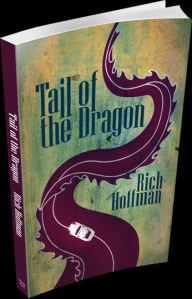
I am not Howard Roark. I am not prepared to dynamite the building rather than see it compromised. Politics requires more patience and more willingness to persuade than pure fiction allows. But I have learned to recognize the looter pattern early, and when I see it taking over an enterprise I tend to check out. Not with terrorism, not by vanishing into a Colorado valley, but by refusing to keep pouring effort into a structure that has already decided my contribution is collective property. My own book Tail of the Dragon was, among other things, an effort to work through the same themes of self-initiation and refusal to be pulled under by people who only know how to take. Readers who have lived the problem recognized it.
If I were twenty-five again, or just out of college, or interning for some member of Congress on the Hill with more time than obligations, I know exactly how I would spend it. I would get a Library of Congress reader card, which is free and available across the hall from the main reading room, and I would go into that magnificent space every day, with its gold ceiling and its quiet gravity. I would take Atlas Shrugged or, better, start with The Fountainhead, and I would read for an hour or two. The tunnels that run under the street connect the Capitol complex, the Court, and the Library, so the people who work there never have to step outside into the city’s ordinary weather. It is a physical expression of the idea that the serious business of the republic is intellectual before it is anything else. Steve Bannon lives essentially next door to that world. The proximity is not accidental. The same few blocks contain the Supreme Court, the Library, and the offices where the daily compromises of legislation are hammered out. It is the most concentrated expression of American institutional ambition I know. I would use it. I would also walk over to the Supreme Court cafeteria when I needed a break. The building itself is a statement that law is supposed to be something higher than the temporary majority. Spending months in that environment with Rand’s novels would do more for a young person’s understanding of the current crisis than any number of seminars on equity.
I did my own version of that education later at night, after second-shift work, at Perkins, Denny’s, and Waffle House between midnight and four in the morning, reading until it was time to go back on the clock—hundreds of books. The habit of sitting alone with a serious text and refusing the easy company of the moment is how you build the internal resources that later let you recognize a looter when he smiles and calls himself your partner. The same impulse took my family to Put-in-Bay just a few weeks ago. Sometimes you need an island, a stretch of water, a temporary removal from the people who treat your energy as an open account. It is not Atlantis. It is just a necessary interval of clarity.
The novels are fiction. They are also more accurate in their portrayal of the moral psychology of redistribution than most of the nonfiction assigned in schools. Socialism is not a discovery. It is the oldest temptation in political life: the belief that the people who did not build the thing have a superior claim on it because there are more of them, or because they feel more strongly, or because history is said to be moving in their direction. Rand had watched that claim enforced with guns in Russia. She wrote the American version of the warning. You do not have to accept her atheism or her more extreme personal conclusions to see that the warning still applies. The engine of the world is not the committee. It is not the hashtag. It is not the person who has learned to speak the language of the oppressed while living off the productivity of others. The engine is the individual mind that looks at raw material and sees a railroad, a new alloy, a better way to generate power, a story worth telling, and then does the long, unglamorous work of making it real.
That is what is under assault. That is why the old books keep finding new readers whenever the political temperature rises. And that is why I keep returning to them even when people I otherwise respect prefer to keep their distance. The argument is not finished. The strike is not over. The only question is how many people still remember what it means to refuse to be looted.
Notes
1. W. Cleon Skousen, The Naked Communist (Salt Lake City: Ensign Publishing, 1958; multiple later editions). Skousen, a former FBI agent, distilled Marxist theory and operational history into a widely circulated Cold War text that sold nearly two million copies.
2. On the 1991 Library of Congress / Book-of-the-Month Club survey ranking Atlas Shrugged second only to the Bible among books that most influenced respondents’ lives, see Los Angeles Times, “Bible Ranks 1 of Books That Changed Lives,” December 2, 1991; and subsequent discussions in libertarian and Objectivist literature.
3. Steve Bannon’s critical distinction between Randian capitalism and “enlightened capitalism of the Judeo-Christian West” appears in reporting from his 2014 remarks and later analyses, including Ralph Benko, “Ayn Rand’s Ghost Does Not Haunt The Trump Administration,” Forbes, December 18, 2016, and Wikipedia’s summary of Bannon’s economic nationalism.
4. Bannon’s role as executive producer on Titus (1999, dir. Julie Taymor) is documented in contemporary Variety coverage and later profiles, including The Paris Review, “Steve Bannon’s Obsession with Shakespeare’s Goriest Play,” November 29, 2016.
5. Ayn Rand’s family background and the confiscation of her father’s business after the Bolshevik Revolution are standard biographical facts; see Anne C. Heller, Ayn Rand and the World She Made (New York: Nan A. Talese/Doubleday, 2009), and Barbara Branden, The Passion of Ayn Rand (New York: Doubleday, 1986).
6. Sales surge and cultural visibility of Atlas Shrugged during the Tea Party period (2009–2010) are recorded in contemporary publishing data and reporting; “Who is John Galt?” signage became a common visual marker at rallies.
7. The independent Atlas Shrugged film trilogy (2011, 2012, 2014) was produced outside the major studio system after decades of unsuccessful Hollywood development efforts. Critical and commercial reception was poor; the producers widely noted union and cultural resistance.
8. Rand’s major fiction: Anthem (1938), The Fountainhead (1943), Atlas Shrugged (1957). Nonfiction collections include For the New Intellectual (1961) and The Virtue of Selfishness (1964).
9. Parallel readings of Atlas Shrugged and the original Star Wars (1977) as narratives of resistance to oppressive systems are interpretive; George Lucas has not affirmed direct influence, though readers of both frequently observe the thematic overlap with individual agency versus bureaucratic or imperial control.
10. Personal observations on party culture, the Spider-Man: No Way Home apartment scene, and the Put-in-Bay interval are drawn from direct experience and recent family travel.
Bibliography
Branden, Barbara. The Passion of Ayn Rand. New York: Doubleday, 1986.
Burns, Jennifer. Goddess of the Market: Ayn Rand and the American Right. New York: Oxford University Press, 2009.
Heller, Anne C. Ayn Rand and the World She Made. New York: Nan A. Talese/Doubleday, 2009.
Hoffman, Rich. Tail of the Dragon. [Publisher details per author’s edition].
Hoffman, Rich. The Gunfighter’s Guide to Business. [Publisher details per author’s edition].
Hoffman, Rich. The Politics of Heaven. Manuscript in final preparation, targeted 2027.
Peikoff, Leonard. Objectivism: The Philosophy of Ayn Rand. New York: Dutton, 1991.
Rand, Ayn. Anthem. London: Cassell, 1938; various later editions.
Rand, Ayn. Atlas Shrugged. New York: Random House, 1957.
Rand, Ayn. For the New Intellectual. New York: Random House, 1961.
Rand, Ayn. The Fountainhead. New York: Bobbs-Merrill, 1943.
Rand, Ayn. The Virtue of Selfishness. New York: New American Library, 1964.
Skousen, W. Cleon. The Naked Communist. Salt Lake City: Ensign Publishing, 1958; subsequent editions.
Shakespeare, William. Titus Andronicus. Multiple scholarly editions; film adaptation Titus (1999), dir: Julie Taymor, executive produced in part by Stephen K. Bannon.
Additional context on the Tea Party’s reception of Rand, Hollywood’s development history of the novels, and Bannon’s public economic commentary may be found in contemporary reporting from Forbes, The New York Times, Variety, and Objectivist periodicals such as The Objective Standard and New Ideal. For the Library of Congress survey, see the 1991 Book-of-the-Month Club / Center for the Book results as reported in the Los Angeles Times and subsequent secondary literature. Primary Marxist and progressive texts that form the intellectual background against which Rand wrote remain essential contrasting reading: Marx and Engels, The Communist Manifesto; and selected works of the American progressive and New Left traditions.
Rich Hoffman
More about me
Click Here to Protect Yourself with Second Call Defense https://www.secondcalldefense.org/?affiliate=20707
About the Author: Rich Hoffman
Rich Hoffman is an author, political consultant, and strategic advisor based in Cincinnati, Ohio, and the creator of The Politics of Heaven—a unique framework that connects biblical theology, ancient history, and modern power structures to explain how moral alignment and spiritual forces shape global events. Blending real-world political experience with deep research into archaeology, UFO phenomena, and suppressed historical narratives, Hoffman offers compelling commentary on topics ranging from ancient civilizations and the Dead Sea Scrolls to modern populist movements, paranormal continuity, and leadership strategy in chaotic environments. As the author of The Gunfighter’s Guide to Business and the forthcoming Politics of Heaven, he brings a grounded yet provocative voice to media discussions, supported by firsthand experiences and a cross-disciplinary approach that bridges science, history, and theology. For interviews, speaking engagements, or expert analysis, visit richhoffmanbooks.com or contact directly via phone at 513-307-5815 or email at rhoffman@richhoffmanbooks.com. If you’ve seen the movie, Disclosure Day and want to talk about it and the implications of Presidnet Trump’s UAP disclosures, let me know and we can bring some color to your coverage. https://richhoffmanbooks.com/media-inquiries-broadcast-topics-and-contact-info/?frame-nonce=ad51e7ecba I do have a firsthand UFO encounter to discuss.