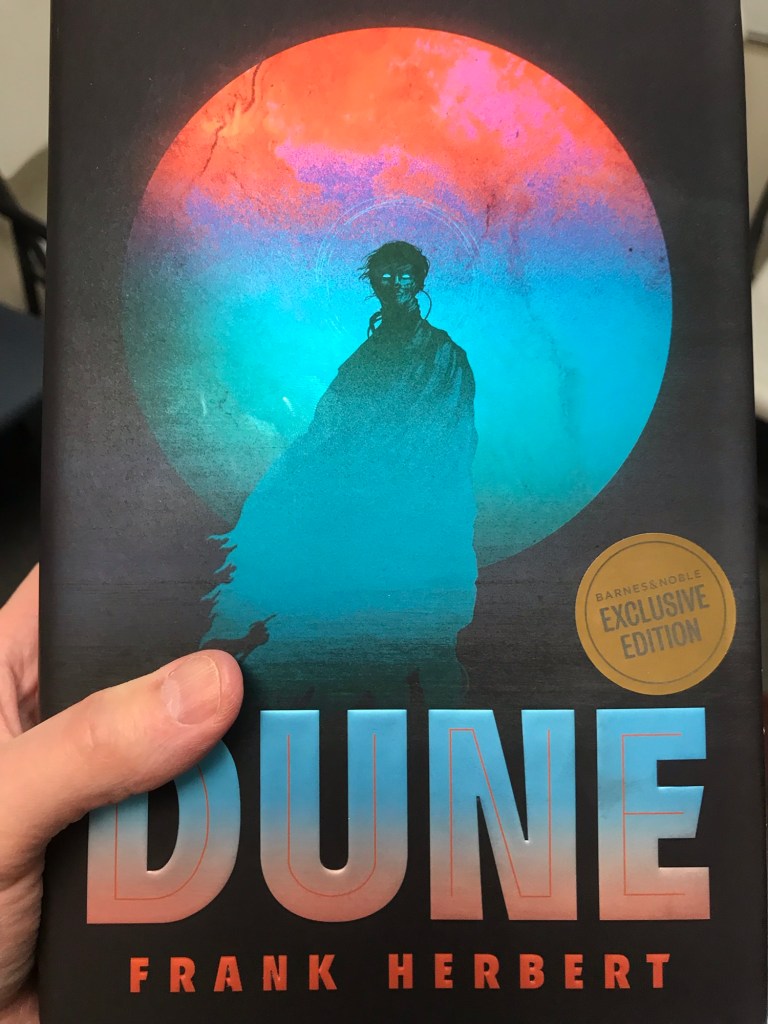
Frank Herbert’s ‘Dune’: The kind of political philosophy that will take mankind into a space economy

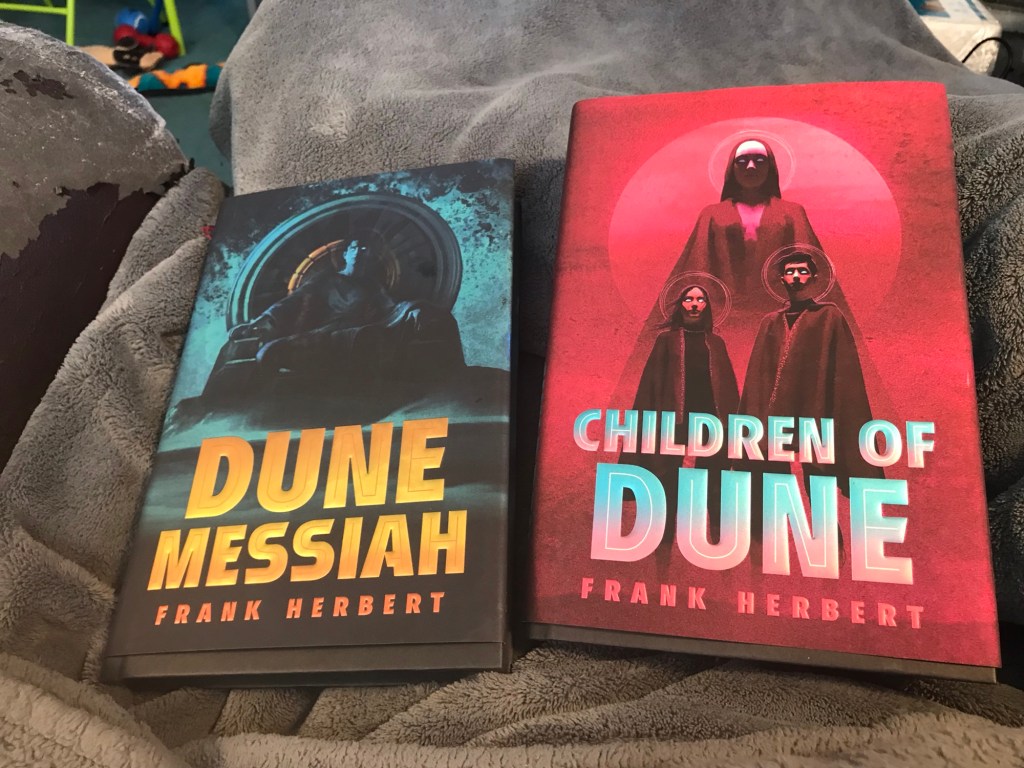
I spend a lot of time thinking about the challenges of becoming an interplanetary civilization.  When people ask me why I do what I do, I tell them it’s not for money, it’s not for popularity, and it’s certainly not for a platform for politics.  I am interested in philosophy as Socrates exhibited it, specifically, the thinking it will take to move humanity off the Earth and become a multi-planetary species.  This past week, two things happened that reminded me of this task. The first was the Starship launch, which was very successful with SpaceX.  The second Dune movie did very well at the box office, showing continued interest, which I think is terrific because it gives people access to the old Frank Herbert books, which I think are masterpieces on a biblical scale, as opposed to just science fiction.  I have been thinking a lot about Frank and his books lately, the six he wrote, then the final two in the original series that his son continued to conclusion. 
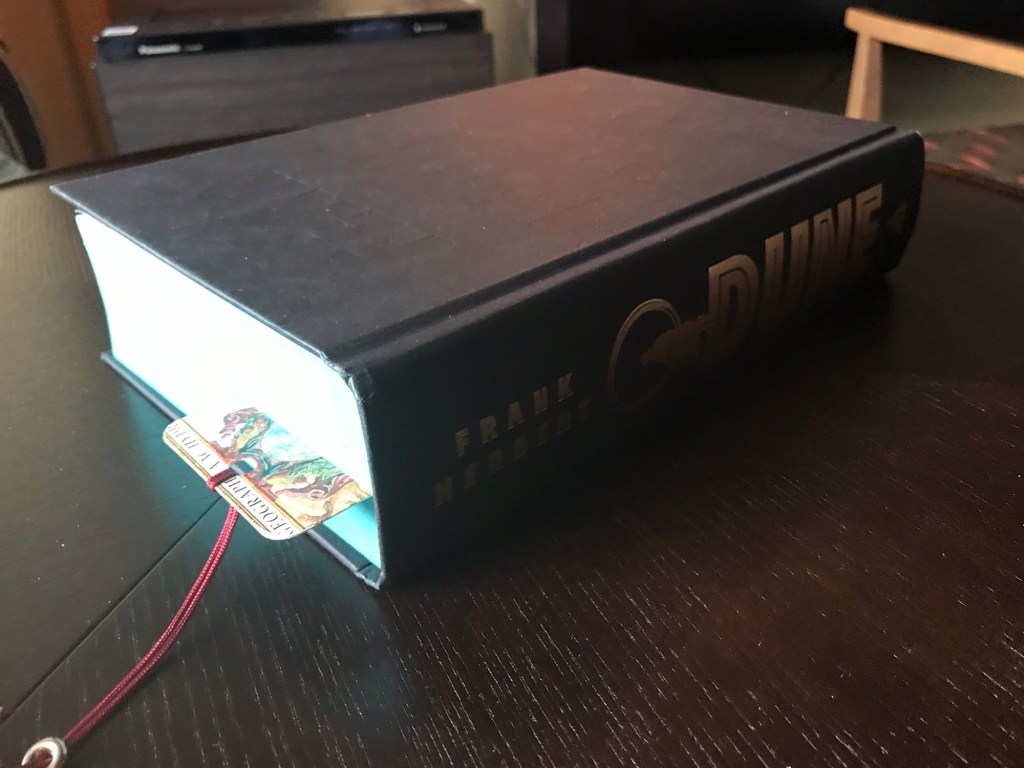
If we want to be an interplanetary civilization, we must first solve some fundamental problems. One of those is the problem of power and why people crave it. One great example of exploring that problem is the novels by Frank Herbert in, Dune, the eight-book analysis introduced to the world through the latest movies, which are very good. But just the start of quite a journey.  More people would better understand our current circumstances if they read Frank Herbert’s books because he deals with a lot of serious stuff in that fantastic series.  Yes, as in the movies, they are dealing with the human race as they have colonized space, all over the universe space, not just a regional galaxy, 10,000 years in the future.  The politics are very similar to the concerns of the Old Testament, with bloodlines and kingdoms at the heart of the story.  Frank is very concerned with the nature of politics, so these Dune books are more about sociology and politics than they are about science or fiction. In the movies, the one from 1984 and now these recent ones, the lead character rises to greatness to become the new emperor, and that’s the end of the story.  That fits a typical narrative for a Hollywood movie.  But Dune is much more than these things, so these stories have been hard to make into movies.  The point in building up the lead story and characters is that the rest of the book rips them apart in a kind of libertarian study of the human race and how power corrupts, or does it?  One thing that Frank does that I am very interested in, that very few anybodies has ever touched, is how the spirit world influences the politics of humanity.  It’s an offering of the kind of Divine Council discussed in Psalms 82 and certainly reflects what Paul talked about in Ephesians.  Who rules us from beyond the grave, and how far down the rabbit hole does it go?  In those Dune books, Herbert even calls his work a prediction, not fiction, as he sets out to study ecology.  I think of our political life as just the surface reflections of much deeper forces at work, not all of them human as we think of the word.  And not just spiritual as we think of Casper the ghost or the Holy Spirit.  We must look at the spirit world as it strives to exist outside our known universe and expect that they are using self-interest to manipulate our lives to their advantage.  Frank Herbert deals with that level of political management, and it’s fantastic and can’t really be captured in the movies. 
As crazy as our political system is, I consider it a healthy necessity.  What America is going through is needed for global management of political systems that can then carry over into off-world colonies, which are coming at us much faster than people realize.  And we must solve some of these problems before we come to that impasse.  We must have a political system based on a healthy understanding of capitalism before we start moon colonies and cities on Mars.  Too much micromanagement of adventures into space will stop progress, and as Herbert assumes in his books, humanity reverts to the biblical necessity of royal bloodlines through the Vico Cycle.  I disagree with a lot about Herbert, especially regarding drug use.  But like the work of Graham Hancock that I have talked about in using ayahuasca to communicate with the spirit world, the spice in Dune is essentially the same kind of thing, and I think Herbert is on to something essential as far back as 1965.  Many of the Baal worshipers of Canaan also used psychedelics in their rituals, and in that context, it is likely the cause of the frequent turning away from God that is a majority of the narrative in the Bible.  Frank Herbert in Dune explores why this is the case and when drugs are used to speak to other spirit beings, who they are, and what they are motivated by.  And by coming to terms with that, you can then understand the kind of evil that is loose in the world now, and understand it with some perspective. 

Herbert goes so far as to place political motivations for spiritual influence in his many Dune books and migrates beyond universal influence, which is pretty impressive as a work of fiction.  I would put it on the level of Atlas Shrugged and other Ayn Rand works.  I don’t agree with everything she does either, but the thought process is beneficial.  Somewhere in these intellectual works are the answers we need to become an interplanetary species, so I don’t get too excited about transitory elections.  What we are all fighting against each other to achieve is the war of ideas that survive into the future, and I tend to think of these efforts in the most extensive picture possible. The trajectory of change will far exceed standard election cycles.  It’s why people win that matters, why certain people are attracted to power, and how power corrupts or is helpful to society.  And how a tyrant today might be a benefactor tomorrow.  Morality is often not so much determined by what we see but by what we are growing to understand and how that understanding is influential across over 22 dimensions.  And as we continue to build nations and colonies in space, what kind of political system should they have to accommodate with all considerations available, as we can know them, through science or fiction.  The Dune books have some magnificent things to say along those lines, and I think it is wonderful that the movies are doing well and that people are learning about the books for the first time.   One thing that space travel needs is a healthy appreciation of government systems that embrace capitalism.  Future religions must be joined at the hip; otherwise, their value will fall apart.  So, it’s not enough to build a Starship and start moving people into a new space economy.  We must work on the deep philosophical problems that have permeated the human race since the beginning.  And we have to solve them with something fresh, and America is the leader of that movement.  In the long run, it will make much more sense for people.


Rich Hoffman
Click Here to Protect Yourself with Second Call Defense https://www.secondcalldefense.org/?affiliate=20707

Zandaya at the ‘Dune II’ Premier: There is hope for the human race yet

With all that’s going on in the world, there are traces of some fascinating things, and one that certainly attracted my attention was the premier of Dune II in London.  It’s not just because it’s a great science fiction story from 1965 put exceptionally well into a movie format, which people have been trying to do for many years.  They have tried it before with David Lynch.   A lot of people didn’t like that earlier movie.  I did like it and thought it was an exciting interpretation of Frank Herbert’s original story.  The first movie came out a few years ago and did quite well, being recognized as a cinematic masterpiece, where even critics agreed with the fans that Dune was something special.  The buzz for Dune II of course has been looming in the background because it’s essentially Part II of the original first book.  Dune is a massive story that takes place across six original books by Herbert. Then, after his death, his sons completed the story with two additional books, which span across the entire universe and involve thousands of years, and the whole thing isn’t just about science fiction but about the problems with power and how living things have difficulty managing it.  It’s very sophisticated and it looks like the producers of Dune understand the content of the story very well, and finally digital set design has caught up to the ambitions of the film and something really special ended up on screen.  But that’s not what dazzled me as a fan of the books and Herbert himself.  Zandaya showed up in a stunning robot outfit that reminded me of many things I had been thinking about lately.  And she made a bold proclamation that certainly did set the world on fire in more ways than one. 

The outfit itself was ultra sexy with cutouts that exposed the sexual areas of a female body in ways that reminded me of a Heavy Metal magazine cover from when I was growing up that put high science fiction concepts into sex appeal to young adolescent boys.  But I had never seen a young woman on such a widespread scale as Zandaya do something like that before.  It wasn’t slutty like something Madonna would do, or even Lady Gaga.  It was bold, innovative, and classy yet very ambitious.  I follow the launch of every Starship from SpaceX very closely, and another launch is coming up, the third for actual flights into space. The first thing I thought of was that her outfit matched the ambitions of these civilian space flights, and I instantly thought of the beautiful statues from the great novel Fountainhead as the perfect embodiment of this current time, when corporate communism and global fascism from that sector of the economy was spreading terror all over the world, A.I. was making people weary with worry about being controlled by machines.  Space travel was displacing all the philosophies and religions of the world with the uncomfortable reality of life on other planets.  Politically, the world was in a populist revolt.  And there was Zandaya boldly managing it all with a very knowledgeable understanding of it all by showing up to that movie premiere dressed in that outfit, which is what I would have expected as a young 12-year-old looking into the future of 2024 and considering what life should have been like.   She certainly understands the director of the film Dune and what he’s trying to do.  And she clearly understands the author of the book, Frank Herbert.  He certainly was not a socialist like H.G. Wells and some of those early European writers.  He was a small government kind of guy who appreciated the founding fathers, and that went into the extensive work of his Dune project, with all the books being between 600 and 800 pages each.  It was a very ambitious work, so there was a lot going on. 

And there were a few times over the last few years when I thought nothing like this would ever happen again, especially a young woman like Zandaya openly expressing her femininity and sex appeal without being raunchy about it.  Not after the Covid lockdowns destroyed the movie industry, and a firm commitment to socialism pretty much provided the final nail in the coffin.  I never thought I would see something like that again or for the first time.  I had all the Heavy Metal magazines for several years, and I loved the ambitious art.  I also loved the animated movie when I was a kid.  This Dune premier was all those magazine covers coming to life.  I think Zandaya is a pretty good kid.  She is younger than my daughters.  I thought she was perfect in the latest Spiderman movies, and she showed up at the end of the first Dune movie.  She’s a singer and a high fashion model who grew up as a Disney talent.  Despite all her early success, I think she has a pretty good head on her shoulders, which came out in interviews with Tom Holland while promoting the Spiderman films.  Unlike other Hollywood types, she is a good entertainment representative for this upcoming generation.  At least so far.  She didn’t have to show up to that premier with that outfit.  But that she did shows she understands far more about the nature of our current reality than most people do, and she was bold about it. 

What a gift she provided to the director of Dune, Denis Villeneuve.  He should be ecstatic with excitement that one of his stars from the new film so openly embraced the overall vision of the Herbert books, which is not to spoil it for anybody, but that Zandaya’s look explores what Frank thought was the background of the entire universe.  But that fashion model of Zandaya knew how to look and express the totality of Frank Herbert’s work with just a few simple gazes, and I felt the entire human race had just leveled up a bit.  Because of the Dune movies, more people will understand the point of Dune, which is a very anti-tyrannical effort that questions the nature of all life and how power flows down to every form of it.  With all the bad news that has been going on in the world, I saw this premiere for this movie as a bold rebellion against those vile forces.  In much the way that I was surprised by the Godzilla Minus One movie.  With all the bits of tyranny that have emerged, these little bits of hope are emerging from the human race.  And sometimes, someone like Zandaya captures the effort with high art and fashion in ways that seem iniquitous, even unintentional.  But you can’t go into public dressed like that, yet face everything down with such boldness without the intent being purposeful and intelligent, without scrutiny being applied.  And with the production of Dune, the launch of the Starships, and the political landscape lashing out at fascism the way it is, many elements came together in human expression that refused to be a victim to it all, which was very encouraging and a sign of a lot of good things to come.  I would say there is hope for the human race yet!

Rich Hoffman

Click Here to Protect Yourself with Second Call Defense https://www.secondcalldefense.org/?affiliate=20707