The NFL’s Miscalculated Globalist Push: The Bad Bunny Halftime Show and the Perils of Prioritizing Foreign Markets Over Domestic Loyalty serves as a stark warning about the dangers of corporate strategies that chase international appeal at the expense of core domestic audiences. In the wake of Super Bowl LX (played February 8, 2026, concluding the 2025 NFL season), the decision to feature Puerto Rican superstar Bad Bunny as the halftime headliner ignited widespread discussion. While the performance celebrated Puerto Rican heritage through vibrant choreography, family-themed elements (including a live on-stage wedding), and Spanish-language hits, it coincided with a measurable dip in traditional U.S. viewership during the slot—highlighting tensions between global expansion ambitions and the league’s foundational American fanbase.
Official Nielsen data confirms the Super Bowl averaged 124.9 million viewers across NBC, Peacock, Telemundo, NBC Sports Digital, and NFL+ platforms—a solid but slightly declining figure from the prior year’s record of 127.7 million. The game’s peak reached an all-time high of 137.8 million in the second quarter (7:45–8:00 p.m. ET). However, Bad Bunny’s halftime show (8:15–8:30 p.m. ET) averaged 128.2 million viewers, ranking it fourth all-time behind Kendrick Lamar (133.5 million in 2025), Michael Jackson (133.4 million in 1993), and Usher (129.3 million in 2024). Quarter-hour breakdowns reveal the issue: viewership fell approximately 7% from the game’s peak (to around 128.2 million from 137.9 million in the prior high quarter), with a 5.7% drop from the immediate pre-halftime segment. This translated to an estimated loss of 9–10 million viewers in some windows compared to game highs, particularly among non-Latino English-speaking audiences, as Telemundo’s share surged during the set.
The performance’s entirely Spanish-language format boosted international and Hispanic viewership—Telemundo hit record levels, and social media clips amassed over 4 billion views in 24 hours (with more than 55% from overseas markets, per NFL and Ripple Analytics). Yet domestically, the shift prompted channel changes, as evidenced by the drop-off. Critics argued this reflected Roger Goodell’s broader strategy: using the halftime platform as cultural promotion for Latin American growth, akin to a televised showcase for Puerto Rican vibrancy, family structures, and resilience amid issues like power outages.
In direct response, Turning Point USA (TPUSA) mounted the All-American Halftime Show, featuring patriotic performances by Kid Rock, Brantley Gilbert, Lee Brice, Gabby Barrett, and others. Streamed on YouTube, Rumble, and allied platforms, it peaked at around 6.1 million concurrent viewers during overlap (with live estimates of 5–6.4 million across carriers). Post-event, the YouTube upload surpassed 21 million total views (some reports cited 19–25 million including Rumble). While dwarfed by the official show’s scale, it symbolized a bold conservative counter-narrative, drawing those alienated by perceived progressive undertones (e.g., immigration-related themes some interpreted in Bad Bunny’s presentation). TPUSA’s event amplified Charlie Kirk’s reach and positioned the group as a cultural alternative at a moment of peak visibility.
The real stakes lie in advertising revenue, where the Super Bowl’s value hinges on sustained high engagement. Thirty-second spots fetched $7–10 million in 2026, with advertisers expecting minimal churn during premium slots like halftime. The documented 7% drop during Bad Bunny’s set likely reduced effective impressions for those ads, potentially leading to under-delivery on promised audiences. Networks and the NFL may have faced pressure to justify rates amid the dip, even as overall game averages remained strong. The league’s bet on Bad Bunny—Spotify’s most-streamed artist in 2025—prioritized Latin market penetration over retaining every domestic viewer, but the cost showed in softer traditional metrics.
This mirrors the NFL’s aggressive international expansion. The league announced a record nine international games for 2026 across four continents, seven countries, and eight cities—including returns to Mexico City (at Estadio Banorte, with the San Francisco 49ers as a designated home team for a multiyear run), plus debuts or returns in Paris, Madrid, Rio de Janeiro, Melbourne, Munich, and London. Mexico and Brazil rank among the NFL’s largest overseas fanbases (tens of millions each), and Goodell has openly discussed future possibilities like dedicated international teams or further Latin ties, including deeper Puerto Rico involvement. Bad Bunny’s show aligned perfectly as soft-power outreach, highlighting cultural affinity to build loyalty in these markets.
Yet American football’s appeal—strategic individualism, decisive big plays—contrasts sharply with soccer’s more fluid, defense-heavy style, which some parallel to collectivist systems. Exporting the product risks dilution when overly customized for foreign preferences, potentially alienating the tailgating, weather-defying U.S. core that sustains the league financially.
Hollywood’s trajectory offers the clearest cautionary parallel. In the 2000s–2010s, studios chased China’s exploding box office, often prioritizing global totals in announcements and altering content to appease censors (e.g., removing sensitive themes). Blockbusters drew $100–200 million+ from China, sometimes rivaling or exceeding domestic hauls, offsetting ballooning U.S. union production costs. But over-reliance eroded trust: audiences sensed “watered-down” American essence, “woke” shifts alienated segments, and China’s domestic films surged to dominate 80–90% of its market. Hollywood’s U.S. theatrical revenue declined, theaters closed, streaming fragmented the model, and independents (e.g., Angel Studios) rose to fill voids. The pivot neglected the domestic foundation that once made global appeal possible.
The NFL treads similar ground. By assuming domestic loyalty while expanding abroad, it risks betraying advertisers targeting that base. Progressive framing in the show—perceived accommodations to immigration debates—further polarized, turning off viewers and dollars. Sustainable growth strengthens the home market first; overextension without it invites erosion.
Weeks after the event, data confirms the patterns: strong but not record-breaking U.S. numbers, explosive international/social metrics, yet a clear domestic halftime dip. Future Super Bowls could see trend lines worsen if bad choices persist. The league must recalibrate—honor the American essence that built its empire—or face permanent damage akin to Hollywood’s decline. While I watched both shows to see how the stories would unfold, and Bad Bunny stayed on good behavior during the halftime show, the damage was done before the show ever started. It was a bad decision to have Bad Bunny sell family values when advertisers bought viewer appeal, not a progressive rebellion. And picking Bad Bunny with all the baggage was a letdown to the advertisers, and it will hurt the NFL product going into next year. The betting problem of rigged games is already having an impact. And this whole problem certainly didn’t help.
Footnotes
1. Nielsen, “Super Bowl LX Delivers 125.6 Million Viewers,” February 10, 2026. (Official averages and halftime figures.)
2. ESPN, “Super Bowl LX, Bad Bunny’s halftime fall shy of ratings records,” February 10, 2026. (Peak and ranking details.)
3. Front Office Sports, “Bad Bunny Halftime Viewership Fell 7% From Super Bowl Peak,” February 11, 2026. (Quarter-hour drop analysis.)
4. The Athletic / New York Times, “Super Bowl LX draws 124.9 million viewers, Bad Bunny 128.2 million,” February 11, 2026. (Comparative declines.)
5. Fox News / various outlets, coverage of TPUSA All-American Halftime Show (e.g., peaks at 6.1 million concurrent, 21+ million total views on YouTube).
6. NFL.com announcements on 2026 international schedule (nine games, Mexico City return, etc.).
7. Reuters / The Guardian, reports on Hollywood’s China market shift and subsequent domestic erosion (contextual parallels from industry analyses).
8. Launchmetrics / Forbes, media impact value tied to Bad Bunny’s performance (e.g., $942M+ MIV for the event, heavy international skew).
Bibliography / Further Reading
• Nielsen Big Data + Panel reports (February 2026).
• ESPN, The Athletic, Front Office Sports, and Variety articles on ratings (February 10–13, 2026).
• NFL.com international games announcements (February 2026).
• Historical Hollywood analyses (e.g., Reuters, The Economist on China box office dynamics).
• TPUSA and YouTube metrics for All-American Halftime Show.
True executive leadership is not something taught in classrooms through textbooks or lectures on management theory. It is forged in the crucible of real-world challenges, where fear, uncertainty, and the need for decisive action collide. I learned this early, during an unusually formative childhood that exposed me to high-stakes environments far beyond typical teenage experiences. As a young teen, I participated in the High Adventure Explorer Post, a program that graduated from Boy Scouts and emphasized rigorous outdoor challenges. This led to my involvement in Project COPE—Challenging Outdoor Personal Experience—a Scouting initiative designed to build confidence, trust, leadership, and teamwork through group games, trust falls, low-course elements, and high-course obstacles such as climbing walls, rope swings, and balance challenges.
In one memorable weekend seminar, around age 13 or 14, about 20 strangers were thrown together to solve impossible-seeming problems. We had to transport everyone across a field using only a few 2×4 boards, balancing on pegs where touching the ground meant starting over. We climbed a 20-foot wall without ropes, stacking bodies to create human ladders, pivoting people into position, and hauling others up from vantage points. The trust fall was particularly vivid: standing on a 6-foot stump, falling backward unthinkingly, relying on the group below to catch you. These weren’t games; they demanded communication under pressure, overcoming personal fears, setting aside differences, and articulating a clear plan that everyone could execute. Success required a narrative—a story that unified the group around a shared vision. Failures taught the team what not to do: hesitation, poor coordination, and ego-driven decisions doomed the team. Those who emerged as natural leaders could rally perfect strangers, build trust quickly, and guide them through duress to victory.
This experience wasn’t isolated. I rose to become vice president of the Dan Beard Council, a significant Boy Scouts organization in the Cincinnati area, under somewhat controversial circumstances that provided invaluable lessons in organizational dynamics and influence. At 14, I was invited to speak at GE’s Evendale facility—a massive engine manufacturing site—where I delivered a pitch on leadership drawn from these adventures. Standing before seasoned professionals as a kid, articulating principles of vision, trust, and collective action, cemented my path. It wasn’t credentials that carried the day; it was the ability to communicate a compelling story and inspire follow-through.
These early trials shaped my understanding of executive leadership, a skill rare even among those who hold C-suite titles. Many executives excel at spreadsheets, regulations, data analysis, and compliance—tasks that engineers and administrators handle well. But leadership transcends that. It is the art of creating a vision that others buy into, communicating it clearly enough that diverse groups align, and leading from the front to pull everyone through obstacles they couldn’t surmount alone. True leaders don’t micromanage every detail; they don’t need to know how to code the software, assemble the product, or balance every ledger line. They orchestrate the team, provide the overarching narrative, and empower others to execute. Think of a kitchen: the chef doesn’t wash dishes or make noodles from scratch, but ensures the entire operation runs smoothly so spaghetti arrives hot and customers return. Leadership is that orchestration under fire.
This truth stands in stark contrast to prevailing misconceptions. Schools rarely teach it properly; corporate retreats often superficially mimic it with trust falls and ropes courses, checking boxes without the depth of real hardship. Many in leadership positions mimic “mob rule”—placating safety concerns, enforcing endless administrative loops, or prioritizing equality over merit. They hide behind regulations, consensus-building, and democratic processes that dilute accountability. The result? Stagnation. When organizations are mired in bureaucracy, innovation slows, and potential leaders get sidelined.
Consider recent local examples in West Chester Township, Butler County, Ohio, where I’ve lived most of my 58 years. It’s a prosperous, conservative community built on business-friendly policies and strong leadership. Yet newcomers like Amanda Ortiz, who relocated here in 2016 with her husband and now serves as a trustee (elected in 2025), bring perspectives shaped by different environments. As a veterinarian focused on animal welfare, she campaigns on “people over business,” critiquing development and emphasizing resident input over economic growth. While well-intentioned, this risks importing anti-business sentiments—such as higher taxes on enterprises and wealth-redistribution rhetoric—that clash with what has made the area thrive. It’s the same mindset seen in broader progressive movements: viewing successful CEOs as “greedy” and advocating for shared wealth without acknowledging the rare skill of value creation.
This echoes larger ideological battles. Socialism and communism promise equality through state control or democratic redistribution, suppressing individual leadership. They assume administrators can orchestrate prosperity through rules alone, without the visionary drive of a single, accountable leader. History shows otherwise: state-run economies falter because they penalize autonomy, stifle innovation, and equalize performance at mediocrity. No one climbs the wall if everyone’s voice is equal and no one leads decisively. Remote work trends exacerbate this—employees scattered, communication fractured, approval loops endless. You can’t build trust or rally a team when half are at home; the COPE lessons prove that interaction under pressure forges bonds that Zoom can’t.
Contrast that with proven leaders like Jack Welch at GE (who transformed it into a powerhouse through bold vision), Steve Jobs (who articulated Apple’s future and pulled teams to it), or Elon Musk (who leads from the front on audacious goals). They don’t consult committees for every decision; they communicate big concepts, inspire buy-in, and drive execution. Donald Trump exemplifies this politically—articulating massive ideas that mobilize millions without micromanaging details. He leads the metaphorical train, helping people over walls they couldn’t scale alone.
America’s success—its unmatched GDP, entrepreneurial spirit, and job creation—stems from empowering such leaders. Capitalism rewards those who develop the rare skill of pulling others forward through narrative, trust, and action. Boy Scouts programs like COPE and Explorer Posts cultivate this through sweat, cold nights, cut fingers, and mud—trials that separate natural leaders from followers. Most participants become capable followers, which is fine; society needs both. But the few who rise, who can get strangers over obstacles and keep harmony afterward, become CEOs, founders, and visionaries who employ millions.
The fantasy that mobs or committees can replace this ignores reality. Numbers don’t vote on facts; gravity doesn’t bend to consensus. Leadership isn’t democratic—it’s directional. Empower leaders with autonomy, and organizations soar. Suppress them with equality mandates or administrative burdens, and decline follows. This is why communist models fail: they suppress leadership, fearing individual excellence threatens the collective illusion.
In my book, The Gunfighter’s Guide to Business: A Skeleton Key to Western Civilization, I explore these themes deeply—strategy drawn from hardship, the primacy of vision over bureaucracy, and how true leadership saves companies, communities, and civilizations. It’s not theory; it’s lessons from the school of hard knocks, much like those COPE weekends or speaking at GE as a teen.
We need more such leaders, not fewer. Penalizing success through spiteful policies—resenting wealth creators, demanding redistribution—creates injustice and stagnation. Gratitude for effective leaders, who lift everyone, builds prosperity. Civilization learns this slowly, but the path is clear: identify, empower, and follow those who can get us over the wall. Without them, we stay grounded.
Bibliography and Footnotes
1. Scouting.org, “Program Feature: COPE,” detailing Challenging Outdoor Personal Experience as group initiatives, trust events, and high/low challenges for leadership and teamwork.¹
2. Wikipedia, “COPE (Boy Scouts of America),” overview of the program focusing on strength, agility, and personal growth through outdoor tests.²
3. Grand Canyon Council BSA, “COPE,” emphasizing confidence, self-esteem, trust, and leadership via mental/physical challenges.³
4. West Chester Township official site, “Board of Trustees,” bio of Amanda Ortiz, resident since 2016, veterinarian, elected trustee term 2026–2029.⁴
5. Amanda Ortiz for Trustee campaign site, platform stressing “people over business” and resident-focused leadership.⁵
6. Journal-News, “Longtime West Chester Twp. trustee unseated in election,” Nov. 6, 2025, coverage of Ortiz’s 2025 win unseating incumbent.⁶
7. Rich Hoffman, The Gunfighter’s Guide to Business: A Skeleton Key to Western Civilization (Liberty Hill Publishing, 2021), core text on strategy, leadership, and capitalism.⁷
8. Overmanwarrior.wordpress.com, author bio and book commentary, linking personal experiences to leadership philosophy.⁸
9. Various Scouting resources on high-adventure programs, including Explorer Posts and leadership training via challenges.⁹
⁹ Multiple Scouting America sites on COPE and high-adventure bases.
Additional references include historical accounts of Boy Scout leadership development, economic analyses contrasting capitalism and socialism (e.g., works on Jack Welch and Steve Jobs biographies), and local Ohio political coverage.
The annual gathering at Davos, nestled in the Swiss Alps, has long served as a peculiar summit where global elites convene to discuss the world’s pressing issues, often from the vantage point of immense wealth and influence. For many Americans, these meetings represent a detached conversation among the powerful, yet they offer a window into contrasting worldviews. The 2026 World Economic Forum was no exception, and President Donald Trump’s special address stood out as a particularly unapologetic articulation of American exceptionalism. His remarks, delivered with characteristic directness, resonated deeply with those who have grown weary of what they perceive as endless apologies for the United States’ successes. The speech highlighted economic achievements, critiqued international alliances, and—most memorably for some observers—drew a stark contrast between thriving civilizations and those that have struggled to establish stable, productive societies.
One of the most striking moments came when Trump referenced Somalia, describing it in blunt terms as a place that “is not even a country” in any meaningful sense of functional governance, and extending criticism to Somali immigrant communities in the United States, particularly in places like Minnesota, where integration challenges and related issues have been highlighted in public discourse. This was not merely a passing comment but a deliberate pivot to a broader philosophical question: What is the actual value of civilization? Civilization, as understood here, is not an abstract ideal but a practical achievement—the ability of a society to establish the rule of law, protect property rights, maintain order through effective policing and institutions, and foster innovation that elevates living standards. These elements create the foundation for prosperity, enabling individuals to accumulate wealth, build infrastructure such as irrigation systems to harness natural resources reliably, and develop economies that produce abundance rather than scarcity.
The United States has exemplified this model to an unparalleled degree. From its founding principles emphasizing individual liberty, limited government, and free enterprise, it has generated extraordinary productivity. Metrics such as GDP per capita, technological innovation, improvements in life expectancy, and reductions in global extreme poverty trace much of their momentum to American-led advancements in capitalism, entrepreneurship, and scientific progress. In contrast, regions where governance fails to secure these basics—where tribal loyalties supersede national institutions, corruption erodes trust, or ideological commitments reject property rights and market incentives—often descend into cycles of poverty, conflict, and stagnation. Somalia serves as a poignant case study. Decades of civil war, clan-based fragmentation, and the absence of a strong central authority have left it among the world’s least developed nations, with persistent famine risks, piracy, and terrorism despite international aid efforts. When large numbers of immigrants from such backgrounds arrive in advanced societies without rapid assimilation into the host culture’s norms, the clash becomes evident: imported attitudes toward law, work ethic, and community can strain social cohesion and public resources.
Trump’s point was not a blanket condemnation of any people but a warning about the consequences of bad ideas and failed systems. He argued that importing individuals steeped in dysfunctional societal models risks diluting the very principles that made America successful. This echoes longstanding debates in political philosophy. Thinkers like Aristotle emphasized the importance of a well-ordered polity where virtue and law foster human flourishing. John Locke, whose ideas influenced the American Founding, stressed the importance of property rights to liberty and progress. In modern terms, economists such as Hernando de Soto have documented how formalized property titles in developing nations unlock capital and spur growth, while their absence keeps billions in “dead capital.” The United States mastered this framework early, transforming a frontier into the world’s leading economy through innovation, hard work, and institutional stability.
Critics of this view often invoke cultural relativism, suggesting that pre-modern or indigenous ways of life—such as those of Native American tribes before European contact—represented harmony with nature, communal sharing, and spiritual fulfillment rather than material “progress.” Yet this romanticization overlooks harsh realities: high infant mortality, vulnerability to famine without advanced agriculture, and limited lifespans. Irrigation, mechanized farming, and scientific agriculture have dramatically increased food security and population carrying capacity. Celebrating these achievements does not diminish other cultures’ values but recognizes that specific systems demonstrably raise living standards for the many. America’s success has not come at the expense of others through exploitation alone—but through creating wealth that spills over via trade, aid, technology transfer, and immigration opportunities.
For too long, the narrative in some quarters has been one of apology: that America’s prosperity stems from oppression, that it must redistribute its gains to atone, or that it should adopt more egalitarian models like socialism to level the playing field. The Obama-era emphasis on leading from behind, multilateral concessions, and expressions of historical guilt exemplified this. Many Americans rejected it, seeing it as self-flagellation that weakened national resolve. Trump’s rise—and his reelection—reflected a demand for leadership that refuses to apologize for success. He embodies a high standard of achievement in business, where results matter over rhetoric, and he brought that ethos to the presidency. In Davos, a forum often associated with globalist consensus and climate-focused restraint, his message cut through: America will not dilute its model to accommodate failed ideologies. Instead, others should emulate what works.
This extends beyond immigration to geopolitics. Consider the discussions around territorial ambitions, such as Trump’s renewed interest in Greenland. Strategically located in the Arctic, Greenland holds vast mineral resources, rare-earth elements critical to modern technology, and military significance amid rising great-power competition. Trump has argued that U.S. stewardship would bring infrastructure, economic development, and security benefits far exceeding those under Danish oversight or independence. Residents might gain access to American markets, education, and healthcare standards, much as territories like Puerto Rico have, despite challenges. Canada, too, benefits enormously from proximity to the U.S. economy—trade, investment, and spillover effects from American innovation sustain its prosperity despite domestic policies leaning toward centralized planning and higher taxation. Without the U.S. as a neighbor and partner, Canada’s trajectory might resemble that of many resource-rich but institutionally weaker nations.
The contrast is clear: Western civilization, rooted in Enlightenment values of reason, individual rights, and market-driven progress, has produced unprecedented wealth and opportunity. Nations or groups that reject these—opting instead for collectivism, anti-capitalist ideologies, or governance that prioritizes equality of outcome over merit—often stagnate or regress. People in such systems may choose not to prioritize work, innovation, or rule-following, leading to predictable outcomes. Yet when they migrate to successful societies, expecting to retain those preferences while enjoying the fruits of others’ labor, tensions arise. Trump articulated what many feel: the U.S. offers opportunity, but not at the cost of importing dysfunction. Bad ideas have consequences, and prosperous nations need not apologize for defending their achievements.
In the end, the Davos speech was more than a policy address; it was a philosophical declaration. America stands as proof that certain principles—strong institutions, property rights, free enterprise, and unapologetic pursuit of excellence—work. Others do not. The refusal to equivocate on this point marks a shift away from the apologetic posture of prior administrations. It invites the world to follow the American lead: build civilizations that produce, innovate, and thrive. Those who do will prosper; those who cling to failing models will not. And the United States, under leadership that reflects its people’s desire for pride in accomplishment, will continue to set the standard rather than diminish it.
Bibliography
• de Soto, Hernando. The Mystery of Capital: Why Capitalism Triumphs in the West and Fails Everywhere Else. Basic Books, 2000.
• Diamond, Jared. Guns, Germs, and Steel: The Fates of Human Societies. W.W. Norton & Company, 1997.
• Locke, John. Two Treatises of Government. 1689. (Cambridge University Press edition, 1988).
• Maddison, Angus. The World Economy: Historical Statistics. OECD Publishing, 2003.
• World Bank. “World Development Indicators.” Ongoing database, accessed 2026.
• Acemoglu, Daron, and James A. Robinson. Why Nations Fail: The Origins of Power, Prosperity, and Poverty. Crown Business, 2012.
• Trump, Donald J. Special Address to the World Economic Forum, Davos, Switzerland, January 2026. Transcript available via White House archives and WEF.org.
• Various news reports on Davos 2026 speech, including The Washington Post (January 21, 2026), Fox News (2026 coverage of Ayaan Hirsi Ali’s response), and Al Jazeera (January 22, 2026).
Footnotes
1. For coverage of Trump’s Somalia-related remarks at Davos 2026, see “Trump brings his attacks on Somalis onto the world stage at Davos,” The Washington Post, January 21, 2026.
2. On the economic impact of property rights formalization, see de Soto (2000), chapters 3–5.
3. Comparative historical GDP data showing U.S. divergence post-1800: Maddison (2003).
4. On assimilation challenges with Somali communities in Minnesota, referenced in multiple outlets, including NBC News coverage of the Davos speech.
5. Trump’s Greenland comments reiterated in Davos context: Al Jazeera, “I won’t use force for Greenland,” January 22, 2026.
6. Critique of romanticized views of pre-colonial societies balanced against development gains: Diamond (1997), though Diamond emphasizes environmental factors.
7. Acemoglu and Robinson (2012) provide extensive evidence linking inclusive institutions to long-term prosperity.
The truth about affordability, because that’s the tired drumbeat the Left will pound all the way into 2026: “prices are high, blame the billionaire.” It’s the same old class-war script—paint the rich guy as out of touch, pretend the pain at the pump and the grocery store fell from the sky, and hope voters forget who built the scaffolding for that pain. The truth is, affordability has roots—deep, structural roots—in policy choices that take years to unwind. Unwinding is slow; rebuilding competitive markets is slower; letting innovation breathe is slower still. But it happens. And when it happens—especially around energy and health care—you feel it first in the path of prices, then in the path of opportunity. That’s the meat and potatoes of the issue that everyone needs to understand as we go forward.
Starting with health care because it’s so grotesquely obvious—the Democrats’ favorite talking point and, paradoxically, their favorite controlled market. What the public senses as “expensive care” is really an industry whose cost structure is defended by regulation, protected monopolies, and financial engineering that prioritizes jobs and margin over cures. Just look at the macro: national health expenditures reached roughly $4.9 trillion in 2023—17.6% of GDP—and blew past $5 trillion in 2024, with CMS projecting the health share of the economy could hit 20.3% by 2033. That’s not me speculating; it’s the official actuaries. They estimate spending growth of 8.2% in 2024 and 7.1% in 2025—outpacing GDP—driven by rising utilization and coverage levels. 1234 You don’t need a PhD in economics to hear what that says: health care, as currently constituted, is set on an upward cost glide path that eats the economy.
Dig beneath the top line, and you find what patients feel: hospitals posted double-digit spending growth in 2023; physician services accelerated; prescription drugs jumped more than 11% in 2023 alone. 1 These are not isolated blips—they’re part of a financing machine that has learned to monetize chronic decline. It’s the difference between maintaining weakness for revenue and making patients truly well, which would shrink the revenue base. That philosophical choice drives both policy and practice.
Layer in the private‑equity wave. In health care, PE ownership has expanded rapidly across hospitals, specialty practices, nursing homes, and ancillaries. Systematic reviews in BMJ and updates from Wharton’s HMPI synthesize dozens of empirical studies and repeatedly find what clinicians and patients suspect: PE ownership is most consistently associated with higher costs to patients or payers and mixed-to-harmful impacts on quality. Staffing skews downward, administrative pressure increases, and the exit horizon is 3–7 years, with debt piled onto the acquired entity. 56 Even JAMA’s coverage of the evidence lands in the same place: higher costs, quality concerns. 7 Now, to be fair, not every PE hospital outcome is catastrophic; a late‑2025 research brief found no excess closures and cost-cutting concentrated in admin rather than core medicine, though patient satisfaction dipped. 8 But the through‑line is unmistakable: financialization has bridged into care delivery, and the pass-through is inflationary for payers and patients. When you lace debt service, management fees, and rapid roll-up incentives on top of already rising unit costs, affordability dies by a thousand cuts.
And we haven’t even touched the bigger affordability architecture—consolidation and financialization across supply chains. Ten years ago, lean shops squeezed costs by owning their processes and competing in open markets. Today, in many sectors—manufacturing, food processing, distribution—the playbook is add-on acquisitions, platform roll-ups, and fee-driven intermediaries. Private equity has poured roughly $262 billion into U.S. manufacturing firms since 2020, explicitly to consolidate and “unlock value at speed,” while debt financing has been layered into an already fragile logistics environment. 910 The National Economic Council’s 2021–2024 Quadrennial Supply Chain Review lays it out in sober terms: critical chains—from energy components to pharmaceuticals and agri‑food—were brittle, policy‑distorted, and subject to non-market practices that amplified shocks. 11
Why should voters care about that alphabet soup of capital and supply chain policy? Because the price on your shelf has a genealogy. COVID made that visible; economists at Brookings argue that the inflation shock was largely supply-driven, with long lags as delivery times normalized and margins reset—proving that what breaks upstream ripples downstream for years. 12 The Richmond Fed estimates that about half of a disruption’s total effect comes from amplification through the supply network; shocks abroad propagate into U.S. GDP and inflation, and re-shoring, redundancy, and inventory carry real cost. 13 Translation: if you replace diversified mom‑and‑pop networks with concentrated platforms, then hit those platforms with a once-in-a-century shock and policy friction, you get sticker shock that doesn’t vanish overnight.
Then there are the minimum wage mandates, which I warned about a decade ago when Democrats pushed for them and which, mainly, got what they wanted during Covid—the bottom-up piece of the affordability puzzle. The Left sells them as “free money,” then acts surprised when menus and price tags jump. The CPI tells a straightforward story: food away from home rose 3.6% in 2024, outpacing grocery inflation, and industry groups show menu prices still rising into late 2025. 1415 CNBC put a fine point on limited-service meals: almost 28% price growth from 2019 to 2023—well above the overall CPI—driven in part by labor cost increases that chains passed on to customers, especially in high-mandate states. 16 The academic literature fills in the mechanism. Recent meta-analysis estimates a 0.03–0.11 price elasticity to minimum wage changes—meaning a 10% hike produces roughly 0.3–1.1% price increases, bigger in labor-intensive sectors like restaurants. 17 NBER and Upjohn surveys show mixed employment effects but clear evidence of slower job growth and hours adjustments over time, with price pass-through in narrow industries. 1819 And when wage floors leap in gig delivery, the “unintended consequences” are no longer theoretical; a 2025 NBER working paper tracking Seattle’s 2024 ordinance found base pay doubled per task, but tips and order volume fell, netting out the gains for most active drivers within a month while delivery costs popped and idle time rose. 20 All that flows straight into the affordability experience at the counter. If your value meal used to be $5 and now feels like $10, it’s not imaginary—the chain is absorbing higher mandated labor costs, higher input volatility, and a consolidated middleman layer that taxes every step. The macro data confirm the sting: food prices rose 2.5% overall in 2024, but restaurant inflation was higher, and eggs, beef, and insurance were outliers. 14
The other pillar in the affordability conversation is energy—because it feeds trucks, ships, harvesters, ovens, and heat. Here’s some good news: U.S. oil production set records through 2024 and 2025, with the EIA projecting record crude and gas output in 2025, and AAA reports December 2025 gasoline averages around $2.89 nationally—the cheapest December since 2020. That’s not partisan; that’s a supply reality. 212223 The EIA’s Short‑Term Energy Outlook expects Brent to settle near $55/bbl through 2026 as inventories rise, while dry gas production continues climbing. 24 In plain English: drilling and efficiency gains—especially in the Permian—have kept domestic supply high and prices stable, muting one of the biggest drivers of household pain. 25 So when we say a pro‑production posture affects affordability, this is the line we draw: more barrels and cubic feet, fewer spikes at the pump, cheaper freight, easier input cost for food and goods.
Affordability isn’t “high versus low prices in a vacuum.” It’s the architecture of how costs stack up: energy feeds logistics; logistics feed input prices; input prices feed menus and store shelves; health care premiums drain the checking account regardless. If your cost stack is built on regulated scarcity, consolidated intermediaries, debt‑service layers, and mandated wage floors, you’ve engineered inflation. If you reverse the stack—by increasing supply (energy), rebuilding distributed ownership (manufacturing and ag), and unleashing cures (health)—you engineer disinflation. And yes, it has a lag because capital redeployments and networks re-route over quarters, not weeks.
Now, about health care’s future—the part that sounds disruptive because it is. The frontier is not the following billing code; it’s gene editing, cellular regeneration, and targeted micro‑devices that fix the plumbing without cracking open the chest. CRISPR-based therapies have already crossed the FDA threshold for specific indications, signaling that programmable biology isn’t science fiction anymore, though current price points are eye-watering and regulatory guardrails are tight. 26 Stem cell advances proceed unevenly under FDA frameworks, but the pipeline is real, and the durability of regenerative approaches changes the calculus on chronic disease costs. 27 As for “nanobots in arteries,” let’s be scientifically precise: at present, that’s experimental vision—nanotechnology for targeted delivery and plaque management is under research, but widespread, approved deployment in the U.S. is still a few years away, as in 2030. The trajectory, however, is toward minimally invasive, programmable interventions that obviate today’s expensive, labor-intensive procedures. If you strip the hype and ask, “What happens to costs if cures replace maintenance?” the answer is radical deflation in medical services that today require giant physical plants, armies of staff, and recurring billing. The only things stopping acceleration are policy acceptance and risk-tolerant frameworks that protect patients while allowing innovation to scale.
That leads to the tricky question: do we design a system that keeps people sick slowly—so the machine gets paid—or do we create a system that heals fast, and then reallocates labor to growth sectors like space, advanced manufacturing, and AI-enabled industrials? We can’t flip that switch in two months. If you liberated regenerative and gene therapies tomorrow without adjusting reimbursement and licensure, you’d displace millions of jobs and crash legacy revenue streams. But over a decade, with clear lanes for innovation and targeted transition support, you can migrate human capital to sectors that compound prosperity—what I call the “space economy” and adjacent fields—so people live longer, healthier lives and earn across extended productive spans. Morgan Stanley and others project trillion-dollar trajectories in space-enabled services, manufacturing, and communications; the point isn’t the exact number, it’s the labor shift: from managing decline to building frontiers. 28
Affordability also lives in the home. Property taxes are the most visible local lever, and they’ve been creeping up. ATTOM’s national analysis finds the average single-family property tax bill rose about 5–6% in 2024 to roughly $4,300, while effective rates ticked slightly down as home values rebounded. The press summary in early 2025 pegged average bills around $4,172 and highlighted regional variance, with Northeast/Midwest rates higher. Different methodologies, same lived experience: homeowners feel the pinch. 2930 AAA talks about gas as one side of the ledger; property taxes are the other, especially in school-heavy budgets. The Lincoln Institute’s state-by-state comparison shows effective rates are a function of reliance on property tax, home values, and spending levels, with Detroit at the high end and Honolulu at the low end for homestead effective rates. Assessment limits can shift burdens onto new buyers—a silent affordability killer. 31 Economists even argue that higher property taxes can—counterintuitively—reduce entry prices and reallocate homeownership toward younger families by capitalizing the tax burden into lower upfront costs, though that shifts pain onto older and low-income owners. 32 My point isn’t that one tax tweak fixes affordability; it’s that you can’t jack up wages, ignore supply, and raise local levies without squeezing families from three directions. If wages must rise for entry-level dignity, then energy, health, and taxes must fall—or the squeeze is intolerable. That’s arithmetic.
Ask yourself: who broke the affordability architecture? Food-at-home inflation cooled in 2024—USDA pegs it at around 1.2%—because some inputs normalized after supply shocks, yet restaurants remained pricier because labor and overhead didn’t normalize. Eggs spiked again on disease resurgence; beef rose on low cattle inventories. 33 Meanwhile, gasoline trended down year‑over‑year into late 2025; the national average sat below $3 by December. 2223 None of that aligns with the “blame the billionaire” slogan. It aligns with policy levers: energy supply, wage mandates, consolidation rules, and the health care financing model.
So when critics sneer, “What does a billionaire know about affordability?” the answer is: affordability isn’t about your bank account, it’s about whether you understand the machine. In 2017-2019, we saw what pro-production energy, plus regulatory breathing room, can do—pump prices stabilized, and freight costs fell. In 2024‑2026, EIA projections show strong domestic output and soft global prices—potential tailwinds if you don’t throttle drilling or overregulate pipelines. 2124 In the next three to five years, health innovation could begin to bend the cost curve—but only if you let it. And over the same window, you can chip away at consolidation by encouraging distributed ownership, limiting fee extraction, and restoring competitive procurement in sectors like aerospace and ag.
Agriculture is instructive. USDA reports 1.89 million farms in 2023—down slightly—with land in farms also down and acreage concentrating in high‑sales classes. In 2023, farms with $500,000+ in sales operated roughly half of all farmland—a consolidation pattern built over decades. 34 ERS’s historical work shows crop acreage shifting persistently toward larger operations; livestock consolidation has been episodic but dramatic in some lines. 3536 Production expenditures climbed to about $482 billion in 2023, with feed, labor, and services dominating the cost share. 37 That’s not a mom-and-pop landscape; it’s an industrial farm economy whose cost base moves with energy, labor, and finance. If you push mandates and taxes up while tolerating monopolized inputs, you get $6 milk and $10 burgers.
Affordability doesn’t fix itself in a quarter. It takes enthusiasm and patience—years, not months. In a MAGA-style agenda, you’d do three things at once: push energy to keep gasoline, diesel, and electricity stable; open lanes for regenerative medicine and gene therapy with reimbursement and safety frameworks that accelerate cures; and de-financialize chokepoints in supply chains by favoring private ownership, competition, and transparency over fee-stacked intermediaries. The lag effect is real. CMS projects health’s share of GDP rising, not falling, through 2033 under current assumptions; turning that curve requires more than rhetoric. 38 But you can feel affordability improve in the interim if energy and freight stay tame and food inflation stays cooled—as the 2024 numbers did. 1433
The choice at the center of health care affordability, because it’s moral as much as economic: do we maintain people’s weaknesses to preserve a sprawling, union-protected, fee-protected medical services empire, or do we make them strong again—knowing we must redeploy those workers into frontier industries? If you want the second outcome, embrace innovation and plan the transition. The space economy, industrials, AI-enabled maintenance, precision manufacturing—those aren’t sci-fi; they’re labor sinks ready to absorb talent. 28 You don’t solve affordability by berating billionaires; you solve it by designing an economy that doesn’t require families to hemorrhage cash for energy, food, and maintenance of decline.
Today’s gas is under $3 in many regions. 22 Food-at-home inflation cooled to near 1%. 33 Health spending is still climbing because we feed the maintenance machine. 1 Minimum wage hikes push menus higher, especially in limited‑service. 1617 Consolidation and financialization tax every step of the supply chain. 1110 Property taxes squeeze homeowners even as effective rates wobble with valuation cycles. 29 If you want affordability, you have to unwind the stack that made it scarce—and that takes leadership, authentic leadership that is very hard to get and takes a lot of guts to utilize.
—
Footnotes
1. National health expenditures and projections: CMS NHE Fact Sheet and analyses indicate $4.9T in 2023 (17.6% GDP); projected 8.2% spending growth in 2024 and continued gains through 2033 to ~20.3% of GDP. 123
10. Seattle gig delivery minimum wage outcomes (2024–2025): NBER working paper coverage. 20
11. Energy production and prices: EIA STEO (Dec 2025), projections of record crude/gas; AAA national average ~$2.89 in Dec 2025; EIA weekly regional gasoline data. 24212223
12. U.S. oil production highs in 2025 (EIA/Reuters round-ups). 25
13. CRISPR therapy approvals and trajectory: FDA‑tracked approvals in 2023–2024; cost and regulation context. 26
14. Stem cell therapy/regulatory status: overviews and policy context. 27
15. Space economy outlooks and manufacturing metrics: NIST manufacturing report (2024) for macro context; industry projections. 28
16. Property tax trends: ATTOM 2024 analysis; Mortgage Professional America summary (2025); Lincoln Institute 50-state comparison; Minneapolis Fed analysis on property taxes and home prices. 29303132
17. Agriculture consolidation and expenditure trends: USDA NASS Farms and Land in Farms (2023); ERS “Three Decades of Consolidation”; AEI policy slides; NASS production expenditures (2023). 34353637
18. Food‑at‑home inflation easing in 2024; category specifics and 2025 outlook: USDA ERS Charts of Note. 33
The tactics used by private equity firms are as predictable as they are destructive. Leasebacks strip companies of their real estate assets, forcing them into long-term leases that drain future earnings and profits. Dividend recaps saddle businesses with debt to pay out investors, often exceeding the original equity investment. Strategic bankruptcies are engineered not from mismanagement but from deliberate overleveraging, allowing firms to walk away with profits while workers and communities bear the cost. Forced partnerships and roll-ups dilute control and homogenize operations, eroding brand identity and operational efficiency. Tax avoidance schemes shift liabilities away from investors and onto the companies themselves, while layoffs, price hikes, and quality cuts are implemented to fund the looting behavior. These are not isolated incidents—they are systemic. Brands like Toys ‘ R ‘ Us, Friendly’s Ice Cream, RadioShack, and countless others have been gutted by these practices. The result is a managed decline, not a capitalist renaissance. It’s a form of economic socialism, where wealth is redistributed—not to people with low incomes, but to the politically connected elite who manipulate the system for personal gain.
This phenomenon is not just economic—it’s deeply cultural. The people behind these financial maneuvers often hail from urban centers like New York, where they assume superiority over the so-called flyover states that actually produce the goods, labor, and logistics that drive the economy. They view the Midwest as backward, failing to grasp the value of raw materials, highway interchanges, and the human capital that exists outside their echo chambers. Their arrogance is matched only by their ignorance. They are not deep thinkers, nor are they builders. They are short-sighted opportunists who measure success by the size of their boats, the exclusivity of their golf clubs, and the social currency of their wealth. This mindset is perfectly captured in Ayn Rand’s Atlas Shrugged, where Lillian Rearden scoffs at the bracelet made from her husband’s revolutionary steel—not because it lacks beauty, but because it lacks social status. She is the embodiment of parasitic elitism, living off the efforts of others without appreciation. Today’s private equity managers are Lillian Reardons—dismissive of innovation, obsessed with optics, and blind to the value of creation. They destroy what they do not understand, and they do so with the full complicity of a political system that feeds off their donations and influence.
The Rise of Private Equity
Private equity emerged in the 1980s during the leveraged buyout boom. Initially marketed as a way to unlock value, it quickly devolved into a system of extraction. Firms like KKR pioneered debt-fueled acquisitions, setting the stage for decades of corporate cannibalism.
The Playbook of Plunder
Sale-Leasebacks: Selling real estate to raise cash, then leasing it back at inflated rates.
Dividend Recaps: Loading companies with debt to pay investors massive dividends.
Strategic Bankruptcies: Using bankruptcy as a tool to shed obligations while owners profit.
Roll-Ups: Forcing mergers that destroy brand identity and operational efficiency.
Tax Schemes: Exploiting carried interest loopholes and offshore havens.
Mainstream Brand Casualties
Toys ‘R’ Us: Acquired by Bain Capital and KKR, saddled with $5B debt. Bankruptcy wiped out 33,000 jobs.
Sears & Kmart: Eddie Lampert’s hedge fund stripped assets, sold prime real estate, hollowed out iconic brands.
J.Crew: Leveraged to pay dividends, collapsed during COVID.
Payless ShoeSource: PE-backed buyout led to liquidation and 16,000 job losses.
Gymboree: Multiple bankruptcies under PE ownership.
RadioShack & Pier 1 Imports: Victims of debt-driven roll-ups.
Healthcare: Steward Health Care cut staff, and ER mortality rose 13.4%.
Atlas Shrugged Parallels
Hank Rearden represents builders—innovators who create value. James Taggart and Orren Boyle symbolize individuals who exploit systems for personal gain. Today’s private equity firms are Taggart incarnate: thriving on the virtue of producers while dismantling their creations. This is Lillian Rearden syndrome—obsession with optics over substance.
The Cultural Fallout
Communities hollowed out. Factories shuttered. Innovation stifled. From West Chester to Wichita, towns lose their lifeblood as PE firms chase short-term gains. Quality declines, prices rise, and workers bear the brunt of greed.
The Data Doesn’t Lie
56% of large bankruptcies in 2024 were PE-backed despite only 6.5% of GDP.
$80.4B in dividend recaps in one year.
ER deaths up 13.4% post-acquisition.
Tens of thousands of layoffs annually.
Regional Devastation
Ohio’s manufacturing belt gutted by PE roll-ups. Texas hospitals closing under Cerberus Capital. California retail chains liquidated for real estate flips. Each region tells the same story: extraction over creation.
Transparency: Mandate disclosure of debt and payouts.
Cultural Shift: Celebrate builders, shame looters.
Private equity is not capitalism—it’s piracy. Unless we act, America becomes a ghost ship. Builders must rise, looters must fall. Draw the line. Stop the plunder. If we are serious about restoring economic integrity and making America great again, we must confront this modern piracy head-on. That means protecting private ownership, incentivizing long-term stewardship, and reforming the laws that allow financial looters to operate unchecked. We need tax reform that eliminates carried interest loopholes, bankruptcy oversight that prevents strategic exits, and transparency requirements that expose the true nature of these deals. We must elevate above-the-line thinking—solution-based, accountable, and proactive—over the victim-based, reactive mindset that dominates our administrative state. The Oz Principle teaches us that cultures thrive when they are led by people who ask, “What else can I do?” rather than “Who can I blame?” Private equity firms operate below the line, dragging down the businesses they acquire and the communities they affect. If we want a thriving economy, we must draw a line in the sand. We must stop the plunder, protect the creators, and reject the parasites. Only then can we preserve the legacy of American enterprise and ensure that the companies built by hard-working families are not sacrificed on the altar of short-term greed.
One of the things that is most ill-defined in our country, and certainly in the world, is the understanding of why we tend to hate corporate culture. Yet almost in the same sentence, we desire to be a part of them. It’s actually pretty straightforward and obvious, which goes back to the foundations of capitalism and the work of Adam Smith in 1776, as well as the intrusive and corrosive nature of Karl Marx’s communism, which ultimately have led to many of the problems we see today. We hate communism with the same ambiguity, and the reason in all cases is that corporations exist to allow the mediocre to feel validated in mass society, and that it shields them from the insults of competition. Corporate cultures are often characterized by collectivism and are seldom driven by unique individuals with great vision. By the time a company goes “corporate,” it loses that unique leadership that likely built the company into something publicly traded and valuable. So when we say that something is “corporate,” we are saying that it is of less quality than something that isn’t. Corporations allow mass collectivism to appear valuable by leveraging the efforts that built a company. I’ve been thinking about this recently because I have had a front-row seat to a corporate takeover, and it has been astonishing to watch. The people involved are really dumb. And I don’t say that as an insult, but as an observation where individual intelligence is completely vacant from the minds of those involved, which is typically associated with stupidity or dumbness if taken in isolation. But if many such people assert something, then there is a belief that a majority then gives validation, even to stupidity. It’s one thing to read about these things happening in the world and to know the type of people involved. But I usually have some insulation from this kind of thing by living my life, until those types of people stepped into my interaction by their own choice. And I have had to establish their base reality, the only way that it can be defined, that they are dumb people looking for easy money in the world, and they accomplish this through mass collectivism, the same way that labor unions are a problem. Wherever people hide value in groups, we see a loss in the quality of the visionary experience. You don’t think of a boardroom as a group of people who solve big problems. Typically, we think of a group of individuals who appease each other in a setting, at the expense of innovation.
I tend to support large organizations because their creation generates the flow of money, and I like money as a measure of a healthy society. The more money a society has, the more corporations that create it, the more opportunities that society has to improve the lives of its people. However, that is a very high-level assumption because, unfortunately, most people do not have positive corporate experiences, as many of the ideas we have about things are flawed from the start. Even all the years of economic evolution that brought about the excellent book, The Wealth of Nations, there is always uncertainty in individuals about their ability to function in the world productively, so they seek joint relationships to hide in, and that is how the corporation came about as these ideas of capitalism and Marxism emerged as the world became smaller and easier to travel in. Even if there were more opportunities for boldness and adventure, it was still the same kind of people who took them, leaving most of the rest of the world looking for a way to participate without the risk of actually doing so. We prefer corporate jobs for the high pay we can earn within their structure. But the pay usually comes at the cost of individual integrity. You have to give up one thing to get the security of another. And as human beings, we look down our noses at such a concession because we deem it inherently evil. Evil because it destroys individuals, rather than enhancing them.
It’s not unusual for a family to applaud that a youthful personality has just joined a respected corporation at Thanksgiving Dinner. The applause comes because we care about the young person and want them to have financial security. But also in the back of our minds, we know that something is dying in that person, the ability to become all the dreams of youth as a unique individual. Corporate environments are about giving voice to mediocrity for the benefits of mass collectivism. So that unique person we knew growing up will likely give up some of their dreams in the process of conformity. They might gain an extensive paycheck, but in the process, they’ll lose their soul. And we now understand this process well, having undergone many years of separating business from being run by kingdoms. However, by default, the corporation evolved to give the mediocre a kind of unionized collective bargaining against the tendency toward cowardice, the act of waking up in the morning and having the courage to be an individual. I know about such people, but I usually avoid them like a sickness until I had to speak to them often, when they came to my doorstep. And it’s remarkable how typical dumbness is. And when we say “dumbness,” we are referring to a lack of individual thought, where a person thinks something and acts on it without careful consideration. Instead, they feel a sense of unity for the preservation of the group, and their ambitions are collectively shaped through the force of numbers, rather than individual vision. So, obviously, a corporation run by a board, even if there is a strong CEO, ultimately exists to sell mass collectivism to a consuming public, and we only notice when it impacts us, because there aren’t many pure examples of capitalism to measure real value against.
We might like money, but there haven’t been enough examples of corporations that have survived due to corporate social responsibility efforts to give better examples of how things should be, or how humans should even make a living. I’m talking about Robert Pirsig’s Metaphysics of Quality again, the difference between back-of-the-train people and those who dare to live in the front. The corporate environment was not intended to put the best in charge. But to make mediocrity rule the masses through collective ambition. The loss of individuality to the concept of just being another number. And in the process, everything is less effective. And so, there is this cheerleading effort by corporations to acquire privately owned companies, as the corporation and its inhabitants want to believe, through the force of confiscated resources, that they can be as good as the visionary owner. But they never are, and that little secret rots them into their graves. They may be able to buy a second home in Florida and have the nicest cars to drive. They may make enough money to turn their kids into younger versions of themselves by sending them to a communist camp we call “college,” by saying we want to give those kids the best chance at life, when we secretly fear that they will grow up to be better than us. There is a lot wrong with corporate thought and the people who have defined it over the years. Based on what I’ve seen of it, an entirely new definition for money-making needs to be introduced. The faceless monster of corporate ownership is just an extension of Marxism that emerged in the void of any other definition at that time of its growth into everyday language. And many of us really want to be associated with the corporate culture for the security of income. However, it comes at the expense of individual integrity, and for that reason, we secretly view corporations as inherently evil. However, since most of us lack the security of personal wealth and thought, we want to be associated with something so that, by default, other people won’t see what we really are. And that we won’t be found out as phonies, even if that’s what we think each day when we get out of bed.
I have to spend some time on A.I. because it’s probably the most significant psychological crisis our civilization will face over the next several thousand years. And my wife is right there with many of you. We were at Kings Island with the grandkids, and a Tesla Cybertruck was parked next to me, and I loved it. I think it’s the best car on the road today, and I’m probably going to get one in the not-too-distant future. But most people think it’s ugly and disgusting, and they believe that for a lot of deeply psychological reasons. Yet it reminds me of the Starship, which is one of my favorite things in the world right now. As we discussed our opinions on Cybertruck, Starship 11 had just successfully landed in the Indian Ocean on a spectacular mission, which I was very excited about. And the main reason was that it was a big, complicated rocket, but humans didn’t operate any of it. Everything was autonomous. All that engineering innovation took off from Texas and landed autonomously at precise points on the other side of the world. And much of that technology has made its way into the Cybertruck and its autonomous driving. And I would like that automatic driving feature. My lifestyle would greatly benefit from it. I could get a lot done with all that commuting around, which usually requires physical driving. Which many people aren’t ready to accept. But I would encourage everyone to shift a gear and get with the program, because a lot of exciting stuff is coming. And human beings will be getting a lot busier —not less so —because vast amounts of the economy will be unlocked, and humans will benefit, not find themselves replaced.
And my wife and I were compelled to have this discussion, as I have been having it with many people lately about labor. I’m a 24/7 guy, certainly not a Monday-through-Friday 8-hour-max person. I hate driving around on a Saturday and seeing so many manufacturing facilities closed up for the day. I want to see more 7-day-a-week operations everywhere to maximize economic output. That doesn’t mean people need to do all that work. But sandbagging potential revenue when there is work to be done because some human doesn’t want to do it, or is trying to stuff labor hours into a box of convenient assumptions, is not the wave of the future. More work, more often, is the new standard. And what all this technology I’m talking about leads to is the new market trend of Tesla Optimus robots, which are being built rapidly, and the Gen 3 designs have nearly full articulation in the hands. They will be about half as fast as a human on labor-intensive tasks, but they will be able to do them around the clock without complaint, seven days a week. While people are in church on Sunday, Optimus robots will still be able to perform work. And that is exciting because that means that humans will be able to settle space without having to do all the dangerous work on Starship. In a few short years, Starships will be able to fly into space every day, and there will be thousands of them. And none of them will likely have human beings on them. Optimus robots, Gen 3 and beyond, will be the first to Mars, and by the time humans arrive in those remote places, there will already be infrastructure in place, built by robots and A.I., to make the trip much safer and easier.
I have been very impressed with the Grok A.I. program developed by Elon Musk’s team at the X platform. It has been a strange chain of events: Musk bought Twitter and turned it into a free-speech platform, which played a significant role in getting Trump’s message out so people could vote for him. But more than anything, it has captured all the information people have put into it, building a very sophisticated A.I. program that I already think of as a kind of personal C-3PO from Star Wars. It’s swift at research and at conversational communication. And that development of A.I. will roll straight into making the Optimus robots much more human-like and effective right out of the box. I think all this technology will help human beings, not hurt them. It will be more of a Star Wars relationship than 2001: A Space Odyssey or The Terminator. Going back to the Cybertruck, the kind of hatred it generates is a reminder that the future has arrived and people are not ready for it, with such a radical design change that completely alters the aesthetic of what transportation is supposed to do. Not only does it look different, but it acts differently, and it is more of an A.I. companion than a car, and that really rattles people, including my wife. She is not happy about these changes, but I think it’s funny. Because she’s not alone, we’re rapidly redefining many things, and in just a few short years, we will be looking at a very different economy, with most of the growth happening in space.
As I talk to market types, that’s what I’m saying to those who want to listen: the 24/7 day work week is the future, and the growth is in space. Starship 11 showed that SpaceX can launch and land a reusable craft exactly where they want it, without fear of human error. It’s all autonomous. And that means that soon, A.I. will be able to take over air traffic control and coordinate all these vehicles with great precision, without ever having to stop for a coffee break. So, human limits won’t hold the economy back; it will grow enormously by trillions of dollars. However, all that money generated won’t be spent by the A.I. technology. They will have no use of money, only the currency of energy. Humans will have a lot more leisure time and will see vastly improved incomes for the time they do commit to the job. Which is why I like Cybertruck —it respects my time and lets me do so much more in a 24-hour day. Work will greatly expand, but leisure time for humans will become much more manageable. Humans will go to Mars and the Moon. But to colonize them, it will essentially be A.I. and Tesla robots that build the vast infrastructure and cities needed to make human visits much safer and more reliable. Robots, not humans, will perform the dangerous work. And there will be many thousands and thousands of robots, adding to our labor force by necessity. And I think it’s all very exciting and significant. But for many, like my wife, they are very skeptical and see all this new technology as a serious threat to their very life essence. But that’s what’s coming. That’s what I’m telling everyone is the future of aerospace. There will be lots of opportunities for great adventure and vast work, and it all becomes possible and reasonably achievable with that last Starship launch that was nearly perfect. Grok’s advancements, a very sophisticated A.I. program, are directly feeding the Optimus robot’s development. And that all points back to the practical use of the new Cybertruck. A glimpse of the future, today. And it might be scary to a lot of people. But it’s coming, ready or not.
I knew it was going to make me mad, and it certainly did. I took my time with Peter Navarro’s new book, I Went to Prison so You Wouldn’t Have To: A Love and Lawfare Story in Trump Land, and I read it a few times before commenting on it. I’m a law-and-order kind of guy, but if it had been me, what happened to Peter wouldn’t have turned out so nicely for the FBI. The way they humiliatingly arrested him in the loading armature, almost on the plane he and his fiancé were taking to Nashville to appear on the Mike Huckabee show there, I wouldn’t have done it. There would have been a fight that would have really hurt people, because some things in life are more valuable than compliance. A lot of things are. I’m not a very compliant person, and things like what Peter went through are where you draw the line. So Peter’s book really made me mad, so I had to read it a few times to take the edge off. Because it was infuriating. When you have a legal system that pirates and criminals have essentially hijacked, something has to give. Peter Navarro, one of the top economists in the White House and a top advisor to President Trump, made the best out of it, and putting myself in his shoes, I would have done things much differently. But it’s nice that he did, because the story he came back to tell was really remarkable. I was really mad that he and his friend Steve Bannon went to jail for claiming immunity from appearing for the January 6th Committee, which was a completely crooked court pushed forward by Nancy Pelosi. No, we are not obligated to yield to terrible forces and comply with them even when they openly break the law. When someone like Peter does it to prove a point and protests without violence, we can learn a lot. And we did. But punishment for the vile conduct is required in this case, and for me, that would have happened during the attempted arrest. You can only play nice for so long.
Peter Navarro was nice about everything, and the book is essentially a day-by-day diary of his experience in a Miami prison, where he was sentenced to 4 months. The way the FBI went about it was unforgivable. The way Peter was treated while in prison was also inexcusable. Four months isn’t very long, but I’m not a fan of this Gandhi defense, of peaceful protest. I think bad guys should be eradicated from the face of the earth. And that when bad people present themselves —when are we going to learn from history, whether it’s Jesus Christ or John the Baptist, we must punish them? For all the things that a person means to other people, you can never let them know that the world has more power over the people they care about, and to let them down under the pressure of a vile system. And that is what happened to Peter in prison. Yes, he made his point in support of the exiled President Trump. Yes, everyone lived to fight another day, and Peter is now back in the White House.
People can say that God was watching over Trump, Peter, Bannon, and a whole host of other people during a really evil process of lawfare, where an inserted president was put in charge of our country and had way too much power that wasn’t granted to him through a proper election. People did not “consent” to be governed by the Biden people. And what happened was essentially a coup of our entire government, and we tried to beat it with non-violent protest. Peter Navarro allowed himself to be humiliated at that Miami airport, strip-searched, and treated like a rag doll in leg irons to be turned into an example of a police state that had power over the mass population. And that is reprehensible in every way and cannot be tolerated. We saw what they did to the J6 prisoners. And this book says what they were willing to do to a top White House advisor. And for me, individuality is more important than compliance with a hijacked legal system. The FBI was way out of line. The prison staff was terribly abusive to a person who deserved great respect. And all that happened to Peter Navarro is, I think, a declaration of war. So I think this punishment of all these people who worked against Trump and his supporters needs to go to jail themselves, or they need to be executed in a town square as a deterrent for all in the future who might try the same. Sacrificing yourself to tyranny is never a good idea. Fighting it is. And Peter chose to fight it by exposing it. But boy, it was a hard book to read, and to see just how bad that system truly is. As I was reading that book, I kept thinking about what I know about prisons. I have done stories on the Butler County Jail, which is a good one. I have toured it and understand what those cell blocks are like. I have met all the people involved from the top to the bottom, eaten the food, and I know what life is like in prison enough to put myself in Peter’s shoes as he reported his day-to-day circumstances.
I had friends in the audience who were there to meet Peter Navarro the day he was released, and he gave his famous speech at the Republican National Convention in Milwaukee. They asked me what pictures I wanted, and I told them the most important person at the convention, aside from Trump, who had just a few days before, almost been assassinated with a bullet to the head, was Peter Navarro. What he went through was terrible, and I was wondering what damage it had caused him. I could tell something was off about him as he spoke, and I was disappointed in his speech. He put on a good face, but there was a broken element to him. Four months of having your personal freedom ripped away for purely political theater just wasn’t forgivable. We are better off for it, and everyone should read his book. They’ll learn a lot from it. But we just can’t have a society that arrests former members of the White House who are the best economic minds in the world, and puts them in jail, and parades them around in leg irons, to show the world that the best people of our society can be arrested like dogs and have everything taken from them. The movie Rambo makes much more sense to me, except for the ending, where he eventually gives up. If you are a criminal, you should be punished, and I think public executions are excellent, especially for the kind of people who put Navarro in jail. Who wants to pay a lot of tax money to keep people like that in jail, alive? Just get rid of them, and save the money. But when you are innocent and you know it, fighting back is the best deterrent. And it would be better never to give them leverage over you, as they did, and to abuse Peter Navarro. He might be living a decent life now, but to yield ever to those clowns, he can never undo that. And that is simply unforgivable. What the FBI did to Peter Navarro is not forgivable. Law enforcement cannot be allowed to be weaponized, which it clearly was, and there are still a lot of people who have to be punished for what they did.
Don’t forget how Big Tish James, the New York Attorney General, looked at President Trump every day in court when she was purposely trying to bankrupt him over some evaluation prosecution in his company, the Trump Organization. Big Tish went for blood—and then some—eventually fining over $ 515 million in penalties against Trump, which, through the appeals process, was just relieved this past month as excessive. But for a grueling several years, the case dragged on, and if Trump had not been a billionaire, too big to drain financially like she was trying to do, he would not have survived the process. Lucky for him, during this year of 2024 Truth Social went public and Trump essentially made back all the money he had lost in these court cases, in fees and legal costs, and it essentially put the case James was trying to form out of reach and it was a miserable loss for her and the corrupt New York judge Arthur Engoron, on all fronts. But don’t forget what she tried to do, because this happens way too often. The communists of our culture feel they have control of the courts, and essentially, they do. We have trusted the courts too much without oversight, and the situation has gotten out of control. We had been wondering about it, but this case against Trump by Tish James made it clear to everyone, and she really thought she was going to get away with it. So it was more than a little satisfying that with all the charges she was trying to impose against Trump, like most Democrats who conduct social policy where they try to deflect from things they are actually guilty of, we learned that the Attorney General was guilty of far worse. And now that we know, there can’t be any mercy for her. She has to be made an example of.
So in that context, I think we can all root for the worst possible to happen to that corrupt communist, Big Tish James, and that she will do big time in the big house for her audacious crimes. Audacious because she had tried to blame Trump for manipulating the values of his properties for better bank interest rates, which she indicated was a form of fraud. She set the bar where it is now, and from which she is now judged. Because now she is being prosecuted for much more obvious fraud, which she undoubtedly knew. It’s so audacious that mistakes are impossible; she knew what she was doing, and that was to deceive the public and lenders to get benefits on real estate she owned. As the Attorney General of New York, she can’t say she was ignorant of the law. She had just tried to prosecute the President of the United States using the same logic. She clearly knew where to look because she was guilty of the same thing, so this is an easy case being led by prosecutor Lindsey Halligan, one of Trump’s personal lawyers, formally. Big Tish is being prosecuted for bank fraud under 18 U.S.C. § 1344: knowingly misrepresenting the property’s use to obtain a favorable loan and making false statements to a financial institution. Specifically, James signed a “second home rider” on a Fannie Mae-backed mortgage, certifying that a three-bedroom house would serve as her second residence and qualifying her for a lower fixed interest rate of 3%. The loan terms, which she openly violated, prohibited renting it out as an investment. And according to the court documents, Big Tish was clearly trying to save $18,933 over the life of the loan.
These people were always communists, these kinds of Democrats, so it’s appropriate to indicate who they really are and what the movement intends. Just as is reflected in this mayor race in New York, all this communist sentiment has snuck up on many people, biting them now that it’s too late. Big Tish was elected by people who called themselves Democrats in an America that doesn’t like communists. So they just changed their name so that people would vote for them. But ideologically, they are all capitalist-hating communists, and they meant to gain control over our institutions, which has obviously happened in our court system, at all levels. Most lawyers, even though they might not identify as communists by name, have beliefs about the world that are very much from the pages of Karl Marx. And with the strength of that assumption, Leticia James thought she would get away with destroying the financial life of one of New York City’s most famous people and richest, and make an example of him with a different kind of execution. It might have left him alive, but the case intended to destroy the Trump Organization so that the President wouldn’t have any wealth to defend himself. She meant to personally bankrupt a former and future president of the United States, and enough people in New York who identify as communists supported her in that effort of destruction. So let’s not kid ourselves here. The communists who linger in this country in the background are looking for blood and to advance their party more deeply into power with fear. Big Tish was showing the world that she controlled the courts and could destroy anyone in the legal process. And she put everything she had into the effort regarding state power. Trump was not supposed to survive.
So when we talk about the grace of God in this case, I say let him do what he wants with her eternal soul. I would recommend her destruction and to make it as public as possible. Show absolutely no compassion for her in any way. I would like to see her publicly humiliated to the utmost extent that the law will allow, and to see her permanently ruined for her efforts. Because this is more than just a war of ideas, this is a communist invasion that has resided behind a kind of curtain that the Democrat Party put up to let these people gain hold of important public offices. And their purpose was the destruction of the American way of life. And they meant to control all of us by scaring people with what they did to popular people with a lot of money, like Trump. The case with Trump, as I said in the very early days, was never going to stick. Big Tish thought the courts were corrupt enough to make anything stick. But legally, they had all kinds of problems. But when that same prosecution by the New York Attorney General gets caught actually committing the crimes she was trying to paint on Trump, well, you have to throw the book at her. And the kitchen sink as well. She deserves destruction and no mercy. For what she and her supporters tried to do to Trump and this country, we have to view it as treasonous, and nothing less. This was no accident or a meaningless banking transaction. No, this is the intent to gain control of a legal system to destroy political opponents personally. And now the shoe is on the other foot, and Trump has a chance to take action that will be meaningful for centuries. And I’m thrilled to see him do it. There are many people who need to be punished for what they did. And Big Tish James is just the start of it.
In the unfolding political drama of New York City, Zohran Mamdani has emerged as a compelling figure—a charismatic, progressive candidate whose platform promises sweeping reforms aimed at increasing affordability, promoting equity, and advancing social justice. As a self-described democratic socialist, Mamdani has galvanized a significant portion of the electorate, particularly younger voters and working-class communities, with proposals that include rent freezes, city-owned grocery stores, fare-free public transportation, and a $30 minimum wage by 2030. His campaign is not just a political movement; it is a cultural moment, a rebellion against the status quo, and a romanticized vision of a city reimagined through socialist ideals.
But beneath the surface of this enthusiasm lies a more profound concern—one that echoes through history and personal experience alike. The allure of radical change, especially when framed as a rebellion against perceived injustice, often blinds people to the long-term consequences of their decisions. Just as the excitement of an affair might tempt a spouse, voters may be seduced by the promises of a candidate like Mamdani, not because they fully understand or agree with his policies, but because they are rebelling against what they see as a broken system. The danger is not in the ideas themselves, but in the romanticization of rebellion, in the belief that anything different must be better.
And I would argue that sometimes the most effective way to confront such movements is not through resistance, but through allowance. Let the people vote for Mamdani. Let them experience the reality of his policies. Let them see, before it’s too late, what socialism and communism look like when implemented in a city as complex and economically diverse as New York. The goal is not to punish or shame, but to reveal—to strip away the green paint from the concrete and expose the cold, hard surface beneath. When they say the grass is always greener on the other side, let them discover that it’s really just painted concrete, a cold and complex reality.
Mamdani’s platform is a communist one. He proposes freezing rent for nearly a million New Yorkers, building 200,000 affordable housing units, and strengthening tenant protections through expanded enforcement. He wants to create city-owned grocery stores that bypass traditional market mechanisms, eliminate bus fares, and provide free childcare for all children under the age of five. These ideas are undeniably appealing, especially to those struggling with the city’s high cost of living. But they also represent a fundamental shift away from market capitalism toward centralized control—a shift that history has shown to be fraught with unintended consequences.
I would attribute this lucrative challenge to the heartbreak of a cheating spouse. When someone is determined to leave, to chase the illusion of something better, no amount of pleading or logic will stop them. The best course of action, I would argue, is to open the window and let them go. Let them discover that the grass on the other side is not greener, but painted. Let them roll around in it and feel the concrete beneath. Only then will they understand the value of what they left behind.
This metaphor applies seamlessly to the current political climate. Mamdani’s rise is not just about policy—it’s about emotion, rebellion, and the seductive appeal of radical change. His supporters are not merely voting for a candidate; they are voting against a system they believe has failed them. They are climbing out the window, chasing a lover across town, convinced that the romance of socialism will heal their wounds. But romance fades, and reality sets in. The cost of these policies—economic stagnation, reduced investment, increased taxation, and bureaucratic inefficiency—will eventually become clear. And when it does, the pain will be real.
Rather than trying to stop this movement through opposition, a wiser strategy may be to let it unfold. Let Mamdani win. Let his policies be implemented. Let New York become the case study in what happens when idealism overrides pragmatism. This is not a call for sabotage or cynicism, but for strategic patience. Just as a parent might let a child touch a hot stove to learn a lesson, the city may need to feel the heat of socialism to understand its consequences.
This approach is not without risk. The damage could be significant, including economic decline, increased dependency, and a loss of competitiveness. But the alternative—prolonged resistance that only fuels the romanticism of rebellion—may be worse. By fighting against Mamdani’s movement, opponents risk turning him into a martyr, a symbol of suppressed hope. By letting him lead, they allow reality to do the teaching.
In business, this principle is well understood. Companies that fail to address cultural issues—such as a lack of motivation, poor work ethic, and resistance to change—cannot be saved by spreadsheets and whiteboards. They must confront the root of the problem, even if it means letting certain elements fail. Only then can proper restructuring occur. The same applies to politics. If voters are determined to embrace a candidate like Mamdani, let them. Let them see the results. Let them learn.
This strategy also respects the intelligence and autonomy of the electorate. It does not treat voters as children to be protected from themselves, but as adults capable of learning through experience. It acknowledges that people are not always honest with themselves or others, that they often need to see the consequences of their actions before they can change. It is a strategy rooted in respect, not condescension.
Mamdani’s campaign is built on the promise of a better life. He speaks to the pain of working-class families, the frustration of workers, and the despair of renters. He offers solutions that are bold, compassionate, and deeply appealing in their communist utterances. But he also represents a shift toward centralized control, higher taxes, and reduced market freedom. These are not just policy choices—they are philosophical ones. And they carry consequences that must be understood, not just imagined.
My advice—to let people go, to let them experience the consequences—is not about giving up. It is about choosing the most effective path to truth. It is about trusting that reality, not rhetoric, will ultimately shape public opinion. It is about believing that people, once they see the results of their choices, will return with a clearer understanding of what works and what doesn’t.
In the case of New York, this means allowing Mamdani’s vision to be put to the test. Let the city-owned grocery stores open. Let the rent freezes take effect. Let the buses run for free. And then, let the city measure the impact. Let businesses respond. Let investors react. Let residents feel the impact of these changes in their daily lives. The results will speak louder than any campaign ad or political debate.
This is not a strategy of cruelty, but of clarity. It is rooted in the belief that truth is the most potent force in politics. And sometimes, the only way to reach it is through experience. Just as a spouse who leaves for an affair may eventually return with a new appreciation for what they had, voters who embrace socialism will look back and see the value of market capitalism. But they must be allowed to make that journey.
Do not romanticize rebellion. Do not make it more appealing by resisting it. Instead, strip away the romance. Let reality do the work. Let people see the painted grass for what it is. Let them feel the concrete. And when they do, be there to help them rebuild—not with bitterness, but with wisdom. Zohran Mamdani’s campaign represents a decisive moment in New York’s political history. It is a movement driven by hope, frustration, and the desire for change. But it is also a test—a test of ideas, of governance, and of the electorate’s ability to learn through experience. The best way to meet this moment is not through resistance, but through revelation. Let Mamdani lead. Let his policies be implemented. Let the city feel the consequences. And then, let the truth emerge. In that truth lies the path to real progress, grounded not in fantasy but in reality.


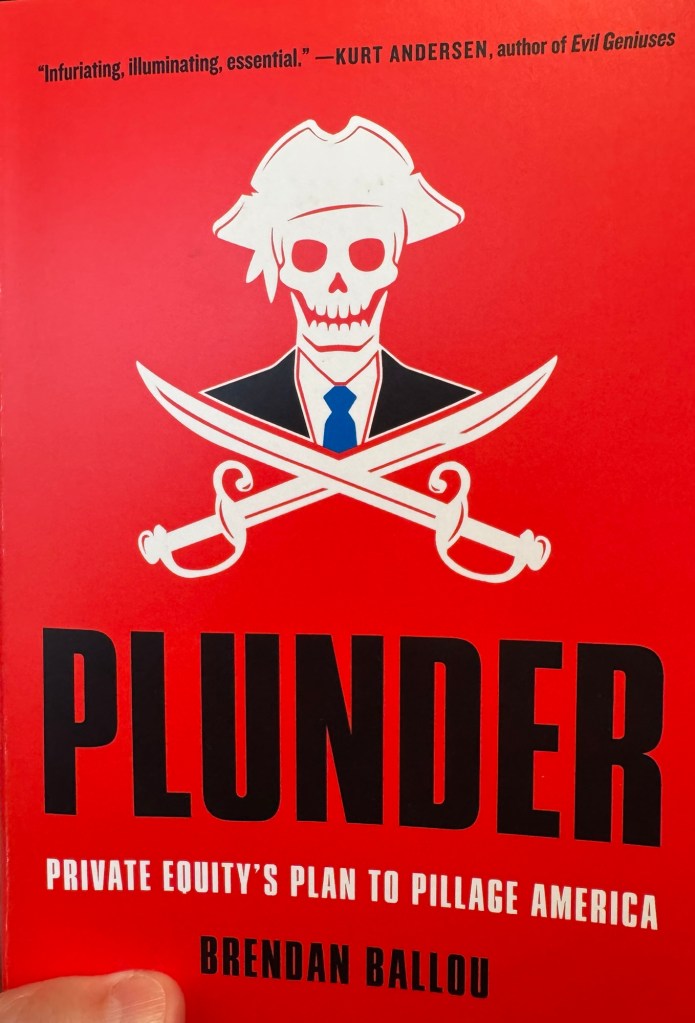





 The Overmanwarrior