A Community Night at Miami University’s Innovation Center
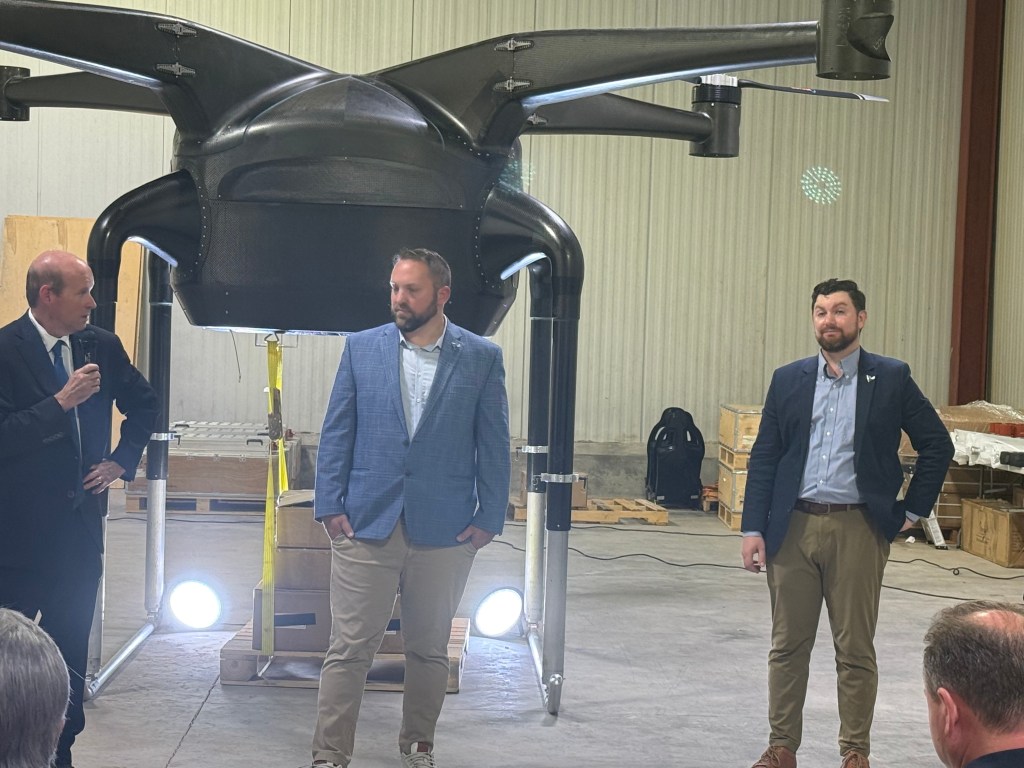
On September 21, 2026, we hosted a special community event at Miami University’s Innovation Center on Elm Street in Oxford, Ohio.
We called the evening “Dreams on Elm Street”, a lighthearted nod to the classic 1980s film. But what we’re building at Volynt isn’t the stuff of nightmares. It’s the realization of a dream, one that is taking shape right here in Butler County and has the potential to transform the future of logistics, aviation, and economic development in Ohio.
The turnout exceeded our expectations. The room was filled with Miami University staff, students, local business leaders, elected officials, and community members who wanted to learn more about what Volynt is building and where we’re headed.
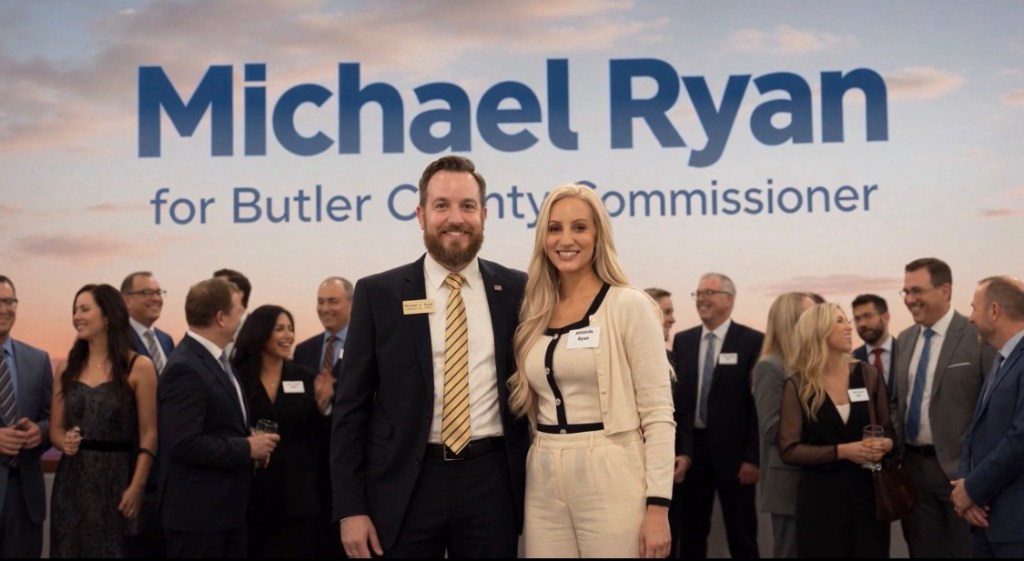
We were honored to welcome Senator George Lang, Butler County Auditor Nancy Nix, and Michael Ryan, who is poised to become Butler County’s next commissioner. Their presence reflected the growing enthusiasm for innovation, entrepreneurship, and advanced aerospace development in our region.
Sharing the Vision
I opened the evening by welcoming our guests and providing an overview of the event. From there, our leadership team took the stage.
Our CEO shared Volynt’s long-term vision and mission. Our Chief Technology Officer highlighted the engineering milestones we’ve achieved and the technology behind the Volynt Vyper platform. As Chief Operating Officer, I discussed how Volynt is transforming cutting-edge aviation technology into a scalable and sustainable business. I outlined our operational strategy, manufacturing roadmap, partnerships, and the steps required to move from prototype development to commercial deployment.
The presentations were engaging, the audience was attentive, and the questions that followed demonstrated genuine interest and excitement.
Most importantly, this wasn’t a flashy product launch filled with unrealistic promises. It was an honest conversation about where we are today, what we’ve accomplished, and what the next several years may hold.
From Prototype to Production
Our immediate focus is straightforward.
Over the next six months, our team will complete the full-scale Vyper prototype that was unveiled at the Innovation Center. That aircraft represents years of design work, engineering refinement, and determination.
Once completed, the aircraft will enter an intensive testing phase designed to validate performance, reliability, and operational capabilities.
Looking ahead to 2027, we plan to participate in major industry competitions, build broader recognition within the aerospace community, and begin manufacturing multiple aircraft.
The goals are ambitious, but they are supported by a clear roadmap and a dedicated team committed to execution.
The Drone Revolution Is Already Here
One of the most important messages of the evening was that autonomous aviation is no longer a future concept.
It’s happening today.
Just one day after our event, Dayton-area company Dexa launched a drone delivery service in Kettering. The program delivers food orders from TJ Chumps on East Stroop Road to customers within a several-mile radius across Kettering, Oakwood, and Centerville.
These smaller drones operate as last-mile delivery systems. Flying at approximately 400 feet, they lower food orders safely to customers using a cable-delivery system. Dexa has spent years developing this capability and is helping demonstrate that drone delivery is becoming a practical reality.
Volynt’s mission is different.
While companies like Dexa focus on last-mile delivery, Volynt is developing larger autonomous aircraft designed for middle-mile logistics. Our aircraft are intended to transport meaningful payloads between regional hubs such as Cincinnati/Northern Kentucky International Airport (CVG), Dayton International Airport, Indianapolis, and other distribution centers.
This approach has the potential to reduce transportation bottlenecks, address driver shortages, and create more efficient supply chains.
Whether it’s delivering a meal across town or transporting freight across a region, autonomous aviation is rapidly reshaping how goods move through our economy.
Why Ohio Is Positioned to Lead
Ohio’s aviation legacy is unmatched.
The birthplace of powered flight now has an opportunity to become a leader in autonomous flight.
Few regions are better positioned than Butler County to participate in that transformation.
Our region offers access to multiple airports, including Miami University’s airport, where initial flight operations can be conducted. At the same time, substantial investment continues at Butler County Regional Airport, where significant infrastructure improvements are being planned.
The resources, workforce, educational institutions, and transportation network already exist. What remains is bringing together the innovators, investors, and community leaders who can turn opportunity into reality.
Creating Careers That Stay Close to Home
One topic that resonates deeply with me is talent retention.
I have spoken with countless parents who have made tremendous sacrifices to provide educational opportunities for their children through Miami University, Butler Tech, and the University of Cincinnati. Too often, those graduates leave Ohio because they believe the best opportunities are elsewhere.
That reality creates a challenge for families and communities alike.
One of our long-term goals at Volynt is to help change that story.
We envision creating thousands of high-quality aerospace, engineering, technology, and manufacturing jobs throughout Southern Ohio. We want talented young people to have the option of building exciting, fulfilling careers without leaving their families, communities, and hometowns behind.
Strong Community Support
One of the most encouraging moments of the evening was seeing the level of support from the community.
Michael Ryan delivered an excellent presentation about economic development in Butler County and how innovative companies such as Volynt can contribute to future growth and prosperity.
The participation from Miami University, local leaders, educators, students, business professionals, and community members reinforced something I’ve believed from the beginning:
Innovation succeeds when communities embrace it.
Dreams on Elm Street was more than a company presentation. It was a milestone. It brought together people from different backgrounds and perspectives to discuss a shared vision for the future of our region.
The energy in the room was unmistakable. The conversations were thoughtful. The questions were insightful. The enthusiasm was genuine.
For me, that confirmed that we’re moving in the right direction.
Looking Ahead
Volynt’s journey is still in its early chapters.
There is much work ahead, many challenges to overcome, and numerous milestones still to achieve. But the momentum is real, and the opportunities are significant.
We will continue sharing updates with the community as we progress from prototype development to testing, certification, manufacturing, and beyond.
This is only the beginning.
Thank you to everyone who attended Dreams on Elm Street and supported our mission. Your encouragement and belief in what we’re building means more than you know.
Together, we’re not just dreaming about the future.
We’re building it.
About the Author
Rich Hoffman is Chief Operating Officer of Volynt, where he leads operational strategy, business development, manufacturing planning, and growth initiatives for the company’s autonomous aerospace programs. A longtime Butler County leader and aerospace executive, he is committed to building high-quality technology careers and advancing innovation throughout Southwest Ohio.
Rich Hoffman is an author, political consultant, and strategic advisor based in Cincinnati, Ohio, and the creator of The Politics of Heaven—a unique framework that connects biblical theology, ancient history, and modern power structures to explain how moral alignment and spiritual forces shape global events. Blending real-world political experience with deep research into archaeology, UFO phenomena, and suppressed historical narratives, Hoffman offers compelling commentary on topics ranging from ancient civilizations and the Dead Sea Scrolls to modern populist movements, paranormal continuity, and leadership strategy in chaotic environments. As the author of The Gunfighter’s Guide to Business and the forthcoming Politics of Heaven, he brings a grounded yet provocative voice to media discussions, supported by firsthand experiences and a cross-disciplinary approach that bridges science, history, and theology. For interviews, speaking engagements, or expert analysis, visit richhoffmanbooks.com or contact directly via phone at 513-307-5815 or email at rhoffman@richhoffmanbooks.com. If you’ve seen the movie, Disclosure Day and want to talk about it and the implications of Presidnet Trump’s UAP disclosures, let me know and we can bring some color to your coverage. https://richhoffmanbooks.com/media-inquiries-broadcast-topics-and-contact-info/?frame-nonce=ad51e7ecba I do have a firsthand UFO encounter to discuss.
It’s just the collision happening right now—philosophical ideas slamming into each other in politics and industry the same way they always have when cultures decide whether they’re going to run on individual output or collective excuse-making. I’ve been talking about it a lot lately because you have to. You can’t watch what’s going on in business or in the economy in general without seeing the same old fight play out again: the people who still believe in bold individual initiative versus the ones who think a collective consciousness can hide them in the background while somebody else does the hard work of actually making things function.
That’s the real difference. Administration works when it is driven by men and women who still believe that self-determination and heroic personal output are the only engines that ever moved anything forward. The reason America was created in the first place was to unleash that kind of individual force. The emerging culture of socialism and soft communism is the opposite—it sells collective boldness through the power of the mob. It doesn’t sound so bad when you’re collecting a comfortable paycheck and just fitting in. But the danger is real, and I think that’s exactly what we’re exploring in this transition we’re living through.
I still think one of the best fictional expressions of why individual boldness and heroic leadership drive economic activity is Atlas Shrugged.¹ A lot of people in the popular culture don’t care for Ayn Rand. That never made sense to me. Most people want to hide in the background of a mass culture where no one expects them to stand up as an individual. That impulse is a solid destroyer of human cultures—whether you’re talking about sexual promiscuity, low moral content, or the slow surrender of personal agency. Look at the biblical narratives. They keep telling the same story: rise up as an individual to a higher idea, serve God as an individual, do not dissolve your individuality into collectivism. Sacrifice of that kind produces bad culture, not good things.² The real historic narrative that expresses this better than almost anything else is the story of the Bounty.
I first saw the Mel Gibson and Anthony Hopkins version when I was young, and it remains one of my favorite films from the 1980s. I don’t even know if that movie could be made these days with the politics around indigenous cultures the way they are. Hopkins’s Captain Bligh is still the best portrayal I’ve seen—strict, unsympathetic to comfort, and absolutely determined. The 1984 film is more accurate than the earlier Hollywood versions that turned Bligh into a cartoon villain. The real history is more complicated than any film can capture, but that version gets the core right.³
Those early Royal Navy voyages were far from the standards of home. You were out there on a long, hard passage with nothing holding the crew together except the will of the commander. On the Bounty, Bligh pushed hard. The men under Fletcher Christian got tired of the rigor. They were far from England, the rules felt distant, and when they reached Tahiti they found a place full of willing women after months at sea. They decided they preferred that life to the discipline required to finish the mission. So they took the ship, put Bligh and the loyalists in a small open boat with almost no provisions, almost no charts, and essentially told them to die. Basic decency was giving them a chance to survive. Realistically, almost no one expected them to.⁴
What happened next is one of the great true stories of individual leadership under impossible conditions. Bligh coaxed and drove those men across roughly 3,600 nautical miles of open Pacific Ocean to the Dutch settlement at Timor. No proper charts for most of the way. Minimal food and water. Harsh conditions that would have broken most crews. He used the same hard persuasion that had gotten him into trouble with the mutineers, and they survived. The men who stayed with him lived because one man refused to let the situation collapse into collective despair.⁵
Meanwhile the mutineers hid from British justice on Pitcairn Island, far off the normal lanes. They had the women, the easy life, and no hard commander pushing them. Within a few years it fell apart. Internal fighting, murders, the collapse of any functioning order. Most of the mutineers were dead—killed by each other or by the Polynesians they had brought with them. The culture they tried to build on collective desire and the rejection of rigorous leadership did not last. That is not some modern political talking point about indigenous cultures. The South Pacific, like parts of the Americas, had its share of hard and often brutal societies. The mutineers’ experiment simply proved what happens when you throw off the individual who is willing to enforce standards and then try to live on ease and numbers.⁶
I can’t think of a cleaner real-world demonstration of the point Atlas Shrugged makes in fiction. Stayed on the ship under hard leadership and the voyage would have succeeded. They sent the leader adrift because they were tired of being pushed past their comfort, tired of the rigorous style that demanded more from them than they wanted to give. They chose the easy path with the women and the big boat. A few years later civilization among them had collapsed. That is how it works. If you put good leadership adrift—or separate yourself from it in a business, a ship, a country, or a political party—don’t be surprised when the culture fails.
Strong leadership does not come from mass groups. It comes from individuals with the persuasion and the will to push people past their limits. Crews on those long voyages often hated it. Businesses hate it. Political parties hate it when someone refuses to let them coast. But without that individual force, the subculture falls apart. Collectivism does not get you there. The true story of the Bounty is one of the best historical illustrations we have of why organizations succeed or fail, where leadership actually comes from, and what happens when people decide they would rather dissolve into the crowd than rise as individuals.
If you’ve ever read my book The Gunfighter’s Guide to Business, you’ll recognize the same argument. Individual initiative under pressure is not optional. It is the only thing that has ever kept the machinery running. The Politics of Heaven starts with the same understanding: men and women are called as individuals, not as a collective that gets to hide from responsibility. Watch the Hopkins and Gibson version again if you haven’t seen it in a while. Then look around at the institutions that are failing right now and ask yourself who they put in the boat, and who they left on the ship with the easy life. The pattern has not changed.
Footnotes
1. Ayn Rand, Atlas Shrugged (New York: Random House, 1957). The novel’s central theme—the withdrawal of the productive individual from a society that demands sacrifice without competence—remains one of the clearest fictional treatments of the producer-versus-looter dynamic.
2. See, for example, the repeated biblical emphasis on individual accountability before God rather than collective identity (Ezekiel 18; Romans 14:12; the calls to “rise up” and “stand” throughout the historical and prophetic books). The contrast with modern collectivist frameworks is deliberate and sustained.
3. The Bounty, directed by Roger Donaldson (1984). Contemporary assessments and later historical reviews generally regard this film as the most accurate cinematic treatment of the mutiny, particularly in its more balanced portrayal of William Bligh. See the film’s Wikipedia entry and associated critical commentary for the consensus on its relative fidelity to the primary sources.
4. The mutiny occurred on 28 April 1789. Bligh and eighteen loyalists were set adrift in the ship’s 23-foot launch with limited provisions. Standard accounts appear in William Bligh’s own narrative and in the major secondary histories.
5. Bligh’s open-boat voyage covered approximately 3,618 nautical miles from the vicinity of Tofua to Timor, lasting 48 days. It remains one of the most remarkable feats of navigation and leadership under extreme deprivation in maritime history. See the National Maritime Museum Cornwall summary and the detailed reconstructions in the secondary literature.
6. On Pitcairn the mutineer community rapidly descended into violence. By the mid-1790s most of the original mutineers were dead from internal conflict or clashes with the Polynesian men they had brought with them. John Adams was the sole adult male survivor when the island was rediscovered in 1808. Primary and secondary accounts are consistent on the pattern of collapse once coherent individual authority was removed.
Bibliography
Bligh, William. A Narrative of the Mutiny on Board His Majesty’s Ship Bounty. London, 1790. (Bligh’s own account of the mutiny and the open-boat voyage.)
Donaldson, Roger, dir. The Bounty. 1984. (The most historically responsible major film treatment.)
Hough, Richard. Captain Bligh and Mr. Christian: The Men and the Mutiny. London: Hutchinson, 1972. (Still one of the better balanced modern narratives.)
National Maritime Museum Cornwall. “Captain Bligh: Myth, Man and Mutiny.” nmmc.co.uk.
Rand, Ayn. Atlas Shrugged. New York: Random House, 1957.
Wikipedia contributors. “Mutiny on the Bounty.” Wikipedia. (Useful for the chronological outline and the standard distances and casualty figures; cross-checked against primary and secondary sources.)
Wikipedia contributors. “The Bounty (1984 film).” Wikipedia. (For critical reception and assessments of historical accuracy.)
Additional reading on the Pitcairn aftermath and the cultural dynamics of the mutineer settlement can be found in the official Pitcairn Islands historical summaries and in specialized maritime histories of the period.
Rich Hoffman is an author, political consultant, and strategic advisor based in Cincinnati, Ohio, and the creator of The Politics of Heaven—a unique framework that connects biblical theology, ancient history, and modern power structures to explain how moral alignment and spiritual forces shape global events. Blending real-world political experience with deep research into archaeology, UFO phenomena, and suppressed historical narratives, Hoffman offers compelling commentary on topics ranging from ancient civilizations and the Dead Sea Scrolls to modern populist movements, paranormal continuity, and leadership strategy in chaotic environments. As the author of The Gunfighter’s Guide to Business and the forthcoming Politics of Heaven, he brings a grounded yet provocative voice to media discussions, supported by firsthand experiences and a cross-disciplinary approach that bridges science, history, and theology. For interviews, speaking engagements, or expert analysis, visit richhoffmanbooks.com or contact directly via phone at 513-307-5815 or email at rhoffman@richhoffmanbooks.com. If you’ve seen the movie, Disclosure Day and want to talk about it and the implications of Presidnet Trump’s UAP disclosures, let me know and we can bring some color to your coverage. https://richhoffmanbooks.com/media-inquiries-broadcast-topics-and-contact-info/?frame-nonce=ad51e7ecba I do have a firsthand UFO encounter to discuss.
I have been saying this for years: ten years ago, twenty years ago, back when I was doing radio shows and walking people through Cleon Skousen’s The Naked Communist and the larger body of work that showed how the communist movement as a philosophy had already impregnated itself into American society. Most people did not want to talk about it then. They treated the subject like an embarrassment or a relic of the Cold War that had been safely buried. I wrote books of my own, put them out there, and kept advocating for capitalism because that is the actual economic engine of the United States. When we talk about America being so great, so wonderful, and we almost seem to have an insecure need to remind ourselves of it all the time, it is because we have been under sustained assault by forces that prefer a corporate form of socialism, and that assault has been aggressive for a very long time. It is a real problem, and the evidence is now sitting in plain sight.
What surprises me is how many people in the Fox News orbit, and in broader conservative media, act as if the sudden visibility of socialism and communism is some brand-new development. The same people who shrugged when I raised the issue years ago now look startled. Bernie Sanders was never an outlier; he was a representative of a current that had been moving on the left for decades. When Democrats start losing ground, you see figures like that gain oxygen, and you see cities and states that have voted blue for generations produce the logical results. New England has been practicing a softer version of this for a long time. New York is not an aberration. The kids running around calling themselves socialists did not invent the ideology in a vacuum. They were taught it. Public schools have been delivering pieces of that curriculum for years, and the culture has rewarded the language of grievance and redistribution. I warned about it. A lot of us did. Now the bill is coming due, and the people who once treated the warning as overheated are suddenly discovering that the problem did not simply disappear.
I like a lot of people in the broader movement. I like Steve Bannon a great deal. The way he has been treated, the jail time, the selective enforcement, the institutional effort to sideline him, has been corrupt and ugly. He has done important work with War Room and with the larger project of forcing attention onto the administrative state and the global arrangements that treat national sovereignty as an inconvenience. He made films, including serving as an executive producer on Julie Taymor’s Titus with Anthony Hopkins, a brutal and faithful take on Shakespeare’s bloodiest play, which is my favorite. That alone tells you something about the range of the man. He has operated inside the Hollywood sandbox for stretches of his career, raised money, dealt with the people who control distribution and narrative, and still tried to produce work that cut against the grain. The question I keep asking is whether you can play in that sandbox for years and come out entirely your own person. I have my doubts. The incentives are powerful. High-level politics and high-level media are environments where you sit around tables with people who do not share the same level of conviction about the productive core of the American experiment. You learn to speak in codes, to manage coalitions, to keep certain doors open. That is the nature of the work. It does not make the man worthless. It does mean the purity of the original impulse gets tested every single day.
What I cannot square is the apparent distaste for Ayn Rand. I have heard him talk about her work in ways that treat it as naïve, or as a kind of Wall Street cartoon of capitalism that turns people into commodities. He has distinguished that vision and what he calls the enlightened capitalism of the Judeo-Christian West. Fair enough as a philosophical difference. Rand was an atheist. She had a complicated personal life. She was more of a pure libertarian than a conservative in the traditional sense, and I am not a big libertarian myself. Yet the core of what she put on the page remains one of the clearest fictional diagnoses of the looter mentality that I have ever read, and it is bizarre to me that someone who understands the value of money, who has operated in finance, who drives people toward serious books, and who has spent years criticizing the Federal Reserve and the soft corruption of the system would keep her at arm’s length. Atlas Shrugged ranked as the second most frequently cited book after the Bible in a Library of Congress and Book-of-the-Month Club survey of works that shaped American lives. That is not a small data point. The novel is a sustained argument about what happens when the people who actually create value decide they will no longer carry the people who only know how to take it.
Rand fled the Soviet Union. The Bolsheviks confiscated her father’s pharmacy. She watched a functioning commercial order get smashed in the name of the collective, and she never got over it. That hatred of the communist method runs through everything she wrote. The Fountainhead came first, in 1943, and it is my favorite of her novels. Howard Roark is the architect who will not let his designs be diluted by committees and second-rate talents who want to ride his talent without earning it. There is a scene where he is invited to join an advisory board for a kind of world’s fair project, and he refuses. He will not lend his name and his mind so that lesser people can loot the prestige. Some readers find that extreme. In ordinary politics it is often impractical. George Lang and I have talked about this more than once. In a majority party you have to work with people whose instincts are not identical to yours if you want votes to move in a productive direction. Absolute purity can become a form of vanity. At the same time, Rand is right that there is a difference between tactical compromise with imperfect allies and the slow acceptance of actively evil principles. You cannot split the difference with people whose operating premise is that your productivity exists to be harvested. Roark’s refusal is a dramatic statement of that boundary. I see versions of it in the best of Trump’s refusal to play the expected game. I see versions of it in anyone who has built something real and then watched the administrative class try to regulate, tax, or shame it into submission.
Atlas Shrugged is the larger canvas. John Galt and the producers withdraw. They stop supplying the energy, the invention, the organizational talent that keeps the lights on. The looters are left with the machinery and no one who knows how to run it. The book is long, sometimes didactic, and unapologetic about the creator’s moral superiority over the expropriator. It is not a happy story. It is a warning written by someone who had witnessed the real thing in Russia and recognized the same intellectual currents moving through American universities and policy circles in the middle of the twentieth century. When the Tea Party erupted in 2009 and 2010, the novel found a new audience. “Who is John Galt?” showed up on signs. Sales spiked. People who had never read a word of Objectivist philosophy suddenly recognized the emotional truth of the strike. Hollywood had no interest in touching the material with any seriousness. The independent film trilogy that eventually appeared was made outside the studio system, with rotating casts, limited budgets, and the predictable critical hostility. Unions and the usual cultural gatekeepers treated the project as radioactive. Clint Eastwood and others circled The Fountainhead for years without ever getting a serious production off the ground. The resistance was not mysterious. The books argue that the people who make things have a moral right to the value they create, and that the people who only know how to consume or commandeer that value are not victims but predators. That message does not sit well with an industry and an academic class that has spent decades teaching the opposite.
I do not swallow every piece of Rand’s personal philosophy. She was extreme. The childhood wound of watching her father’s standing and property taken never fully healed, and it shows in the absolute tone of the later work. I am a Christian. I believe in family obligations that go beyond the pure calculation of self-interest. I do not think every social coordination is looting. But the central distinction she draws between producers and looters is still the cleanest language I have found for what is happening in large parts of American institutional life. Pirates board a ship, kill or maroon the people who built and sailed it, and then congratulate themselves on the redistribution of the cargo. Corporate raiders in the political sense do a slower version of the same thing. They capture the regulatory apparatus, the tax code, the university, the HR department, the foundation, and they extract. They call it equity, sustainability, or the common good. The result is the same: the people who know how to build eventually decide the game is no longer worth playing on those terms.
That is why the party culture matters more than most people want to admit. I watched the new Spider-Man film, No Way Home, and there is a scene where Peter Parker walks into an apartment full of people in their twenties. Beers are being handed around without ceremony. There is no real threshold, no sense that anyone is required to bring anything other than their presence and willingness to dissolve into the group. It is presented as normal, even warm. I have never liked that atmosphere. I married young and stepped out of it early. I do not romanticize the college or post-college party as some necessary rite of passage. Rand saw the same pattern in the Soviet and post-Soviet cultural residue and in the Western imitation of it: the deliberate lowering of standards, the free-love rhetoric that treats self-possession as bourgeois repression, the pressure to surrender individual judgment to the warmth of the crowd. The 1960s did not invent the impulse, but they industrialized it in the West. Once you train a generation to find identity in collective release rather than in the disciplined creation of value, you have prepared the ground for the political language of socialism. The kid who learns that adulthood begins by getting drunk and losing himself in a game or at a party is not being prepared to be a producer. He is being prepared for management.
I am not Howard Roark. I am not prepared to dynamite the building rather than see it compromised. Politics requires more patience and more willingness to persuade than pure fiction allows. But I have learned to recognize the looter pattern early, and when I see it taking over an enterprise I tend to check out. Not with terrorism, not by vanishing into a Colorado valley, but by refusing to keep pouring effort into a structure that has already decided my contribution is collective property. My own book Tail of the Dragon was, among other things, an effort to work through the same themes of self-initiation and refusal to be pulled under by people who only know how to take. Readers who have lived the problem recognized it.
If I were twenty-five again, or just out of college, or interning for some member of Congress on the Hill with more time than obligations, I know exactly how I would spend it. I would get a Library of Congress reader card, which is free and available across the hall from the main reading room, and I would go into that magnificent space every day, with its gold ceiling and its quiet gravity. I would take Atlas Shrugged or, better, start with The Fountainhead, and I would read for an hour or two. The tunnels that run under the street connect the Capitol complex, the Court, and the Library, so the people who work there never have to step outside into the city’s ordinary weather. It is a physical expression of the idea that the serious business of the republic is intellectual before it is anything else. Steve Bannon lives essentially next door to that world. The proximity is not accidental. The same few blocks contain the Supreme Court, the Library, and the offices where the daily compromises of legislation are hammered out. It is the most concentrated expression of American institutional ambition I know. I would use it. I would also walk over to the Supreme Court cafeteria when I needed a break. The building itself is a statement that law is supposed to be something higher than the temporary majority. Spending months in that environment with Rand’s novels would do more for a young person’s understanding of the current crisis than any number of seminars on equity.
I did my own version of that education later at night, after second-shift work, at Perkins, Denny’s, and Waffle House between midnight and four in the morning, reading until it was time to go back on the clock—hundreds of books. The habit of sitting alone with a serious text and refusing the easy company of the moment is how you build the internal resources that later let you recognize a looter when he smiles and calls himself your partner. The same impulse took my family to Put-in-Bay just a few weeks ago. Sometimes you need an island, a stretch of water, a temporary removal from the people who treat your energy as an open account. It is not Atlantis. It is just a necessary interval of clarity.
The novels are fiction. They are also more accurate in their portrayal of the moral psychology of redistribution than most of the nonfiction assigned in schools. Socialism is not a discovery. It is the oldest temptation in political life: the belief that the people who did not build the thing have a superior claim on it because there are more of them, or because they feel more strongly, or because history is said to be moving in their direction. Rand had watched that claim enforced with guns in Russia. She wrote the American version of the warning. You do not have to accept her atheism or her more extreme personal conclusions to see that the warning still applies. The engine of the world is not the committee. It is not the hashtag. It is not the person who has learned to speak the language of the oppressed while living off the productivity of others. The engine is the individual mind that looks at raw material and sees a railroad, a new alloy, a better way to generate power, a story worth telling, and then does the long, unglamorous work of making it real.
That is what is under assault. That is why the old books keep finding new readers whenever the political temperature rises. And that is why I keep returning to them even when people I otherwise respect prefer to keep their distance. The argument is not finished. The strike is not over. The only question is how many people still remember what it means to refuse to be looted.
Notes
1. W. Cleon Skousen, The Naked Communist (Salt Lake City: Ensign Publishing, 1958; multiple later editions). Skousen, a former FBI agent, distilled Marxist theory and operational history into a widely circulated Cold War text that sold nearly two million copies.
2. On the 1991 Library of Congress / Book-of-the-Month Club survey ranking Atlas Shrugged second only to the Bible among books that most influenced respondents’ lives, see Los Angeles Times, “Bible Ranks 1 of Books That Changed Lives,” December 2, 1991; and subsequent discussions in libertarian and Objectivist literature.
3. Steve Bannon’s critical distinction between Randian capitalism and “enlightened capitalism of the Judeo-Christian West” appears in reporting from his 2014 remarks and later analyses, including Ralph Benko, “Ayn Rand’s Ghost Does Not Haunt The Trump Administration,” Forbes, December 18, 2016, and Wikipedia’s summary of Bannon’s economic nationalism.
4. Bannon’s role as executive producer on Titus (1999, dir. Julie Taymor) is documented in contemporary Variety coverage and later profiles, including The Paris Review, “Steve Bannon’s Obsession with Shakespeare’s Goriest Play,” November 29, 2016.
5. Ayn Rand’s family background and the confiscation of her father’s business after the Bolshevik Revolution are standard biographical facts; see Anne C. Heller, Ayn Rand and the World She Made (New York: Nan A. Talese/Doubleday, 2009), and Barbara Branden, The Passion of Ayn Rand (New York: Doubleday, 1986).
6. Sales surge and cultural visibility of Atlas Shrugged during the Tea Party period (2009–2010) are recorded in contemporary publishing data and reporting; “Who is John Galt?” signage became a common visual marker at rallies.
7. The independent Atlas Shrugged film trilogy (2011, 2012, 2014) was produced outside the major studio system after decades of unsuccessful Hollywood development efforts. Critical and commercial reception was poor; the producers widely noted union and cultural resistance.
8. Rand’s major fiction: Anthem (1938), The Fountainhead (1943), Atlas Shrugged (1957). Nonfiction collections include For the New Intellectual (1961) and The Virtue of Selfishness (1964).
9. Parallel readings of Atlas Shrugged and the original Star Wars (1977) as narratives of resistance to oppressive systems are interpretive; George Lucas has not affirmed direct influence, though readers of both frequently observe the thematic overlap with individual agency versus bureaucratic or imperial control.
10. Personal observations on party culture, the Spider-Man: No Way Home apartment scene, and the Put-in-Bay interval are drawn from direct experience and recent family travel.
Bibliography
Branden, Barbara. The Passion of Ayn Rand. New York: Doubleday, 1986.
Burns, Jennifer. Goddess of the Market: Ayn Rand and the American Right. New York: Oxford University Press, 2009.
Heller, Anne C. Ayn Rand and the World She Made. New York: Nan A. Talese/Doubleday, 2009.
Hoffman, Rich. Tail of the Dragon. [Publisher details per author’s edition].
Hoffman, Rich. The Gunfighter’s Guide to Business. [Publisher details per author’s edition].
Hoffman, Rich. The Politics of Heaven. Manuscript in final preparation, targeted 2027.
Peikoff, Leonard. Objectivism: The Philosophy of Ayn Rand. New York: Dutton, 1991.
Rand, Ayn. Anthem. London: Cassell, 1938; various later editions.
Rand, Ayn. Atlas Shrugged. New York: Random House, 1957.
Rand, Ayn. For the New Intellectual. New York: Random House, 1961.
Rand, Ayn. The Fountainhead. New York: Bobbs-Merrill, 1943.
Rand, Ayn. The Virtue of Selfishness. New York: New American Library, 1964.
Skousen, W. Cleon. The Naked Communist. Salt Lake City: Ensign Publishing, 1958; subsequent editions.
Shakespeare, William. Titus Andronicus. Multiple scholarly editions; film adaptation Titus (1999), dir: Julie Taymor, executive produced in part by Stephen K. Bannon.
Additional context on the Tea Party’s reception of Rand, Hollywood’s development history of the novels, and Bannon’s public economic commentary may be found in contemporary reporting from Forbes, The New York Times, Variety, and Objectivist periodicals such as The Objective Standard and New Ideal. For the Library of Congress survey, see the 1991 Book-of-the-Month Club / Center for the Book results as reported in the Los Angeles Times and subsequent secondary literature. Primary Marxist and progressive texts that form the intellectual background against which Rand wrote remain essential contrasting reading: Marx and Engels, The Communist Manifesto; and selected works of the American progressive and New Left traditions.
Rich Hoffman is an author, political consultant, and strategic advisor based in Cincinnati, Ohio, and the creator of The Politics of Heaven—a unique framework that connects biblical theology, ancient history, and modern power structures to explain how moral alignment and spiritual forces shape global events. Blending real-world political experience with deep research into archaeology, UFO phenomena, and suppressed historical narratives, Hoffman offers compelling commentary on topics ranging from ancient civilizations and the Dead Sea Scrolls to modern populist movements, paranormal continuity, and leadership strategy in chaotic environments. As the author of The Gunfighter’s Guide to Business and the forthcoming Politics of Heaven, he brings a grounded yet provocative voice to media discussions, supported by firsthand experiences and a cross-disciplinary approach that bridges science, history, and theology. For interviews, speaking engagements, or expert analysis, visit richhoffmanbooks.com or contact directly via phone at 513-307-5815 or email at rhoffman@richhoffmanbooks.com. If you’ve seen the movie, Disclosure Day and want to talk about it and the implications of Presidnet Trump’s UAP disclosures, let me know and we can bring some color to your coverage. https://richhoffmanbooks.com/media-inquiries-broadcast-topics-and-contact-info/?frame-nonce=ad51e7ecba I do have a firsthand UFO encounter to discuss.
I sat at that lunch last week with human resources leaders from several large corporations in the Cincinnati area, the kind of gathering where the check routinely clears a hundred dollars a person, and the conversation circles the same drain it has circled for years. They were perplexed, as they always are when the numbers refuse to lie. Staffing shortages that will not resolve, artificial intelligence that has automated the kiosk and the order screen but still leaves tables to be wiped and registers to be tended by flesh-and-blood people, an economy that refuses to roar back to the promised heights, and a persistent inability to locate and keep the kind of talent that actually moves the needle. They wanted to know how to acquire an intelligent workforce. I told them what I have told anyone who will sit still long enough to hear it: you do not acquire exceptional results by staffing your organization with people selected for their ability to tolerate mediocrity. You find exceptional people, you recognize them when they appear in unconventional packages, and you protect them from the machinery that exists to grind them down.
I have cast aside the noisy, circular arguments over group averages in human capability—not because the psychometric data lack interest from a scientific standpoint, but because my concern has always been the human species as a whole, a young and still-fragile lineage trying to find its footing in a galaxy that is already crowded with other forms of intelligence. The question that matters is not which population cluster sits where on a distribution curve. The question is how any society, any company, any civilization identifies and elevates the outliers who can see around corners the rest of us cannot yet perceive.
Decades of personnel psychology research, distilled in landmark meta-analyses, have shown that general mental ability remains one of the strongest single predictors of job performance across occupations, with particularly high validity for complex, high-stakes roles. That finding aligns with what I have observed across more than fifty years in business and executive life. Raw cognitive horsepower matters. It is not everything, and it is certainly not a guarantee of worldly success. I have known men and women with genius-level IQs who could not hold a marriage together, could not navigate an ordinary bank teller without frustration boiling over, could not endure the slow, stupid, political churn of ordinary corporate or governmental life without eventually self-destructing or walking away. Intelligence without gumption, without an intuitive compass, without some connection to a wider field of knowing, often becomes a curse rather than a blessing. The person who is “too smart for the room” learns to despise the room, and the room learns to despise him back.
That is the story I told the HR table, because it is the story I have lived and watched others live. In our twenties, a friend and I bought a small company. We were clearing out the accumulated junk of previous owners when we found, in a back closet, one of those enormous old projection bulbs—the kind that once threw motion pictures onto screens the size of a wall. It was a beautiful, ridiculous object, heavy glass and filament, a relic of an analog age already slipping into memory. We decided we had to have it. We loaded it into the hatchback of his car, unsecured, and drove across what was then the University of Cincinnati campus with the rear door open and that giant bulb rolling gently with every turn. The police pulled us over. My friend did not do deference. He despised unearned authority, especially when it could not match the scale of his own mind. Words were exchanged. A citation was issued. No arrest that evening, but the system had taken notice.
Later, when the matter escalated, he represented himself. No lawyer. In the deposition room, they brought in the heavy artillery—prominent litigators from New York and Los Angeles, flown in at considerable expense because a local prosecutor wanted a notable scalp. My friend sat across from them with that calm, encyclopedic brain of his. He had read the entire encyclopedia set by fifth grade and comprehended what he read; he could retrieve and deploy information like a living search engine. He dismantled their lines of questioning one by one. They could not corner him on facts, on law, on logic, or on the precise sequence of events. I watched it happen. During breaks, I heard the hallway mutters from the expensive suits: “He’s too fast.” “We can’t pin him.” These were men whose hourly rates in the early 1990s would have stunned most working people, and they were being outmaneuvered by someone who had never attended their law schools and did not play their credentialed games. The case collapsed. Not because the facts magically changed, but because the egos of the system could not tolerate being shown up by someone operating on an entirely different level of processing speed and intuitive grasp.
The empire does not forget such insults. Over the following years, the full weight of bureaucratic harassment came down—legal troubles, jail time, the slow, grinding destruction that mediocre institutions reserve for those who make them feel small. I have seen the pattern repeat across decades and across industries. Exceptional people do not fit the templates. They ask the questions that expose the fragility of the templates. They produce results that make the people above them look ordinary by comparison. And so the machinery—whether it calls itself corporate human resources, public education, or administrative government—develops antibodies. It promotes compliance. It measures inputs (degrees, time served, adherence to process) rather than outputs (actual value created under uncertainty). It pays a premium, often millions in aggregate payroll, for the comfort of predictability, even when that predictability delivers only mediocre results.
Robert Pirsig understood something essential about this in Zen and the Art of Motorcycle Maintenance. Quality is not the product of following the manual to the letter. It is a living relationship with the work itself, sustained by what he called gumption—the psychic gasoline that keeps a person engaged when things go wrong, when parts are missing, when the official procedure proves inadequate. Gumption traps are everywhere: external setbacks, yes, but more insidiously, the internal ones—ego that refuses to admit ignorance, value rigidity that cannot see a better way because it would require admitting the old way was flawed. Mediocre systems are gumption traps by design. They reward the appearance of order over the reality of excellence. They punish the person who cares too much about the actual motorcycle running well.
That is why our schools, constructed largely by people of average ability to produce more people of average ability, tend to replicate mediocrity. That is why corporations that claim to want “innovation” and “disruption” simultaneously install layer upon layer of review, compliance, and diversity, equity, and inclusion machinery whose primary effect is to filter out people who will not make anyone above them feel intellectually or morally inferior. The result is expensive. You pay two or three million dollars more in payroll than you needed to, and you still cannot outrun competitors who have learned to locate and protect their own exceptional outliers. You cannot plug in interchangeable parts and expect exceptional output. The math does not work.
Abraham Lincoln understood the same principle in a different key. When the credentialed, politically connected generals of the eastern theater kept failing, he looked west to a man with a reputation for hard drinking and rough edges. Ulysses S. Grant had delivered results—Fort Henry, Fort Donelson, Vicksburg, Chattanooga—while others delivered excuses and body counts. Lincoln promoted him anyway, over the objections of those who preferred a more presentable mediocrity. Grant took responsibility, moved, and won. The American experiment has always contained this tension: on one side, the impulse to flatten outcomes and protect the feelings of the competent-but-not-brilliant; on the other, the older, riskier impulse to let the exceptional rise because the alternative is national stagnation or defeat.
I have spent a lifetime recruiting and protecting such people—diamonds still in the rough, often overlooked by systems that prize polish over fire. That is why I keep getting invited to these lunches. The people across the table sense that the usual playbooks are failing, but they cannot yet say out loud what the failure actually is. The failure is the empire of mediocrity itself: the set of incentives, credentialing rituals, and cultural taboos that treat exceptional performance as a threat rather than the only thing that justifies an organization’s continued existence.
There is a deeper layer to this that I have only grown more convinced of with time. The intuition that separates the merely bright from the truly exceptional often looks, from the outside, like luck or inexplicable insight. The right decision is made quickly under pressure. The technical problem that yields to an approach no one else had considered. The “voice” that says, “Do not walk down that street tonight,” or, “Here is the battery configuration that actually works at scale.” I have come to understand these moments as instances of interface—imperfect, flickering, but real—between individual human consciousness and a wider field of intelligence that does not require a body. Call it universal mind, call it Providence, call it the spirit world, call it non-human intelligence. The label matters less than the observable pattern: the people who consistently produce outsized results often behave as if they have access to information and pattern recognition that ordinary channels cannot explain.
Ancient cultures knew this terrain better than we admit. The shamanic traditions, the prophetic lineages, the ritual architectures aligned to celestial events—all of them represent attempts to establish reliable contact with that wider field. Some did so through disciplined inner practice. Others, tragically, through blood sacrifice, as if the entities on the other side of the interface could be fed or bargained with. The archaeological record at places like Cahokia shows clear evidence of ritual violence and retainer sacrifice on a significant scale; power in those societies included the capacity to command the deaths of dozens in service of whatever cosmological or political order the elite claimed to mediate. The Book of Enoch preserves an even older memory: the Watchers, a class of non-human intelligences, descending to impart forbidden knowledge—metallurgy, sorcery, weaponry, cosmetics—and producing hybrid offspring whose existence destabilized the world. Whether one reads these accounts as literal history, as spiritual allegory, or as garbled cultural memory of real contact events, the through-line is the same: humanity has always lived in relationship with intelligences that do not share our biology, and the quality of that relationship has shaped what we become.
Jesus of Nazareth, in my reading, represents the decisive intervention in that long, bloody negotiation. He offered himself as the final sacrifice, ending the cycle of literal human and animal offerings that had sustained certain interfaces for millennia. In its place, he instituted a symbolic communion—bread and wine rather than flesh and blood—and pointed toward an internal, direct relationship with the source of that wider intelligence. The temple system, which had grown wealthy and powerful managing the sacrificial economy, could not tolerate the threat. They killed him for it, as systems of managed mediocrity have always killed or neutralized those who offer a cleaner, more direct path.
The men who designed the American republic carried some of the same intuition. Many were steeped in Enlightenment rationalism and biblical literacy simultaneously. Some, through Masonic networks, incorporated geometric and symbolic alignments into the new capital city, suggesting they were attempting to establish their own interface with providential or higher-order intelligence. They were not content to let the new nation drift on the currents of ordinary human politics. They wanted it oriented toward something larger. The experiment has been imperfect, repeatedly captured by mediocrity, yet it has also repeatedly produced the conditions under which exceptional individuals could do exceptional things—flight, computing, rocketry, the defeat of fascism and communism in their 20th-century forms.
That is why I have written what I have written and why I continue to speak plainly when the expensive lunches are served. In The Gunfighter’s Guide to Business, I worked to distill the practical discipline of intuitive action under pressure—the same quality that lets a person fix a broken motorcycle on the side of the road or make a high-stakes decision without waiting for committee approval. In The Politics of Heaven, the book I am completing now, I am attempting the larger map: how non-human intelligence has interacted with human history, why certain systems crush the exceptional while others (however imperfectly) give them room, and what it will take for this species to mature rather than stagnate or destroy itself.
Melania Trump is, in my estimation, one of the clearer contemporary examples of the type I am describing. She possessed the looks and presence that the modeling world rewards, but she also possessed an intuitive intelligence that recognized the limits of that world. She made a strategic alliance with a man whose wealth and later political power gave her insulation from the treadmill of mediocrity she had been navigating since her twenties. She has never courted the spotlight for its own sake. She has stayed largely off-grid, raising her son and preserving her own interior life. That choice is widely misunderstood by people who cannot imagine wanting autonomy more than attention. It is the choice of someone who has seen enough of the empire to know she does not want to live inside its walls.
The practical counsel I gave the human resources leaders and the counsel I give to anyone serious about results rather than appearances are straightforward. Stop measuring people primarily by the hoops they have jumped through—degrees, years of service, approved ideological language, willingness to sit through two-hour Friday lunches where nothing of consequence is decided. Measure them by what they actually produce when the plan goes sideways, when resources are constrained, when the problem has not been solved by anyone else. Go looking for the diamonds in the rough. They rarely wear the system’s uniform. They often make the people above them uncomfortable. They will save you far more in payroll than they will ever cost you in management overhead, because one exceptional person routinely does the work of three or four merely competent ones—and does it in a way that creates new possibilities rather than merely maintaining the existing machine.
The empire of mediocrity is expensive, brittle, and ultimately self-defeating. It can maintain control for a long time, especially when it controls education, credentialing, and the administrative state. But it cannot generate the breakthroughs a civilization needs to survive its own success—energy abundance, space settlement, genuine advances in human health and longevity, the wisdom to navigate contact with non-human intelligences that may already be observing us. Those breakthroughs require people who have retained or recovered the capacity to interface with the wider field. They require cultures that do not punish that capacity as a threat.
I have lived most of my life off the grid of that empire, not as an aesthetic choice but as a practical necessity. The view from out here is clearer. The exceptional are not the problem. They are the only remaining margin of safety this species possesses. The question before every organization, every school board, every nation is the same one I answered at that lunch table: do you want predictable mediocrity at premium prices, or do you want results that justify the entire enterprise? The two are not compatible and do not get along naturally. They will always be at odds. It took Robert Pirsig a long time to figure all this out and I’m not sure he ever did during his lifetime. But, it is the question of our times, and the responsibility to action falls on all of us.
Footnotes
1. Schmidt, Frank L., and John E. Hunter. “The Validity and Utility of Selection Methods in Personnel Psychology: Practical and Theoretical Implications of 85 Years of Research Findings.” Psychological Bulletin 124, no. 2 (1998): 262–74. Subsequent meta-analyses have produced somewhat lower but still positive corrected validity estimates; the core finding that cognitive ability predicts performance across jobs, with higher validity for complex work, has held.
2. Pirsig, Robert M. Zen and the Art of Motorcycle Maintenance: An Inquiry into Values. New York: William Morrow, 1974. See especially the sections on gumption, gumption traps, and the distinction between static and dynamic quality.
3. On Lincoln’s decision to elevate Grant: “Lincoln promotes Grant as top Civil War general, March 10, 1864,” Politico, March 10, 2017; and Grant’s own Personal Memoirs of U.S. Grant (1885–86). Lincoln’s reported comment—“I can’t spare this man; he fights”—captures the priority of results over presentability.
4. Archaeological evidence from Cahokia’s Mound 72 includes mass burials with indications of ritual violence, retainer sacrifice, and both local and non-local individuals among the victims. See summaries of strontium isotope and osteological studies in reports such as those covered in Western Digs and subsequent analyses of Mississippian period power structures.
5. The Book of Enoch, particularly the Book of the Watchers (chapters 6–36). Standard scholarly translations include R. H. Charles (1917) and more recent critical editions. The text describes non-human Watchers imparting forbidden knowledge to humanity and producing the Nephilim, with lasting consequences for human history and spiritual conditions.
6. Hoffman, Rich. The Gunfighter’s Guide to Business. [Self-published or independent, drawing on decades of executive and entrepreneurial experience]. The work emphasizes intuitive decision-making under pressure as a learnable discipline.
7. Hoffman, Rich. The Politics of Heaven. Forthcoming, targeted for 2027 publication. A sustained exploration of biblical and historical patterns of interaction between human societies and non-human intelligence, including themes of giants, spiritual warfare, and the political implications of exceptional versus mediocratic orders.
Bibliography (selected; full working bibliography for The Politics of Heaven exceeds one hundred entries)
• Pirsig, Robert M. Zen and the Art of Motorcycle Maintenance: An Inquiry into Values. New York: William Morrow, 1974.
• Schmidt, Frank L., and John E. Hunter. “The Validity and Utility of Selection Methods in Personnel Psychology…” Psychological Bulletin 124, no. 2 (1998): 262–74.
• The Book of Enoch. Translated by R. H. Charles. London: SPCK, 1917.
• Pauketat, Timothy R. Cahokia: Ancient America’s Great City on the Mississippi. New York: Viking, 2009.
• Grant, Ulysses S. Personal Memoirs of U.S. Grant. 2 vols. New York: Charles L. Webster & Company, 1885–86.
• Hoffman, Rich. The Gunfighter’s Guide to Business.
• Hoffman, Rich. The Politics of Heaven (forthcoming).
• McPherson, James M. Battle Cry of Freedom: The Civil War Era. New York: Oxford University Press, 1988.
• Nickelsburg, George W. E. 1 Enoch 1: A Commentary on the Book of 1 Enoch, Chapters 1–36; 81–108. Minneapolis: Fortress Press, 2001.
• Ambrose, Stanley H., et al. Studies on Cahokia Mound 72 diet and health (various peer-reviewed articles in American Antiquity and related journals).
• Vermes, Geza. The Complete Dead Sea Scrolls in English. London: Penguin, 2004 (for context on Second Temple Jewish literature including Enochic traditions).
• Additional archaeological and historical sources on Mississippian and pre-Columbian ritual practice; biblical archaeology references from Biblical Archaeology Review; and primary accounts of American founding-era symbolism and Masonic geometry in the design of Washington, D.C.
Rich Hoffman is an author, political consultant, and strategic advisor based in Cincinnati, Ohio, and the creator of The Politics of Heaven—a unique framework that connects biblical theology, ancient history, and modern power structures to explain how moral alignment and spiritual forces shape global events. Blending real-world political experience with deep research into archaeology, UFO phenomena, and suppressed historical narratives, Hoffman offers compelling commentary on topics ranging from ancient civilizations and the Dead Sea Scrolls to modern populist movements, paranormal continuity, and leadership strategy in chaotic environments. As the author of The Gunfighter’s Guide to Business and the forthcoming Politics of Heaven, he brings a grounded yet provocative voice to media discussions, supported by firsthand experiences and a cross-disciplinary approach that bridges science, history, and theology. For interviews, speaking engagements, or expert analysis, visit richhoffmanbooks.com or contact directly via phone at 513-307-5815 or email at rhoffman@richhoffmanbooks.com. If you’ve seen the movie, Disclosure Day and want to talk about it and the implications of Presidnet Trump’s UAP disclosures, let me know and we can bring some color to your coverage. https://richhoffmanbooks.com/media-inquiries-broadcast-topics-and-contact-info/?frame-nonce=ad51e7ecba I do have a firsthand UFO encounter to discuss.
I have been saying it all week, and I’ll say it again here: the SpaceX IPO represents one of the greatest opportunities for generational wealth creation in our lifetime. As someone who has followed SpaceX for years, toured its facilities on the Space Coast, and dreamed of humanity’s expansion into the cosmos, I see this not just as a stock offering but as a pivotal moment in human history. Wealth, as I often remind people, is a tool. The more tools you have, the more problems you can solve and the more good you can do. Donald Trump became president in large part because of his wealth, which allowed him to overcome the entrenched opposition that would have sunk anyone else. That same principle applies here. Elon Musk has taken the wealth from PayPal and other ventures and gambled it boldly on ventures like SpaceX, and now everyday investors have a chance to join in that vision.
Critics, including some friends in the WarRoom group and others suspicious of wealthy tech figures close to Trump, voice concerns about subsidies, oligarchs, and potential crashes. I understand the skepticism—history is full of cautionary tales. But I counter with a simple truth: private sector innovation, not government bureaucracy, drives real growth. Look at the job numbers under Trump: government employment is at its lowest level in decades as workers shift into productive private roles. That transfer of energy and resources is exactly how economies expand. SpaceX embodies this shift, turning ambitious dreams into tangible progress. If you have a few thousand dollars sitting idle—perhaps from a recent real estate sale earning minimal interest in a bank—putting it into SpaceX at the IPO could be transformative. I’ve told people with $50,000 or $100,000 to consider it seriously. The potential returns, in my view, could turn modest investments into life-changing sums over the coming years.
My enthusiasm isn’t blind. I recently visited the Space Coast with my wife, touring Kennedy Space Center, SpaceX facilities, and Blue Origin sites. We were in Florida visiting family, staying in a condo near Cocoa Beach and Cape Canaveral. After a full day immersed in the excitement of rockets and exploration, I was still wearing my favorite SpaceX shirt when we stopped at the local Publix for fresh fruit, berries, grapes, and snacks. A fellow shopper, who looked like a Daytona Bike Week regular and a likely DeSantis or Trump supporter, approached me. “Elon Musk is a bomb,” he said. “He gets all his money from government subsidies. It’ll be great when he’s gone.” I listened politely but felt the opposite. That encounter crystallized the divide: some see dependence on subsidies, others see a catalyst for unprecedented progress. I walked away more convinced than ever that SpaceX is the real deal.
SpaceX’s trajectory has been remarkable. Just recently, around Memorial Day 2026, Starship’s twelfth flight test achieved a successful launch and a controlled landing in the Indian Ocean, meeting key criteria for precision and reusability. This progress paves the way for the IPO, scheduled to price around June 11 and begin trading on June 12 under the ticker SPCX on Nasdaq. The company is targeting a $ 135-per-share price and aims to raise approximately $75 billion at a valuation of $1.75 trillion to $1.8 trillion. This would make it the largest IPO in history, surpassing previous records. Demand is strong, with reports of oversubscription. Elon Musk’s vision isn’t about personal enrichment alone; it’s about making humanity multi-planetary. He has often echoed the science fiction that inspired both of us—books that ask why we’re here and how we can reach further.
I love science fiction and have for decades. Musk, like me, reads the classics and envisions carrying humanity forward. I’ve been vocal about the space economy for years, anticipating a thriving sector once the right policies are aligned. Trump’s return has accelerated that. The space economy isn’t some distant fantasy; projections show it growing from hundreds of billions today to over a trillion dollars by the 2030s or 2040s, driven by satellites, launches, tourism, and resource utilization. Starship is the key enabler—reducing costs dramatically and opening access to orbit, the Moon, Mars, and beyond. Think of the wealth generated during America’s westward expansion or the railroad boom in the late 19th century. This is analogous, but on a cosmic scale. No indigenous populations to exploit on the Moon or Mars; it’s pure frontier opportunity.
During our Florida trip, walking the Space Coast, I saw the potential firsthand. The area around Ron Jon Surf Shop, Port Canaveral, Cocoa Beach—it’s poised to boom as Las Vegas did, but with a focus on high-tech industry rather than just entertainment. Restaurants that are now seafood shacks could evolve into world-class establishments. Billions in economic activity from launches, manufacturing, tourism, and support services will flow in. I’ve seen similar transformations: the growth of Abu Dhabi and Dubai from desert to gleaming cities, or the shifts in organized crime I witnessed in my younger days in Cincinnati and Newport, Kentucky, where money found new outlets. Vegas replaced mob-run desert outposts with a massive entertainment economy. Space will do the same, creating legitimate, innovative wealth.
Critics point to BlackRock buying millions of shares or Musk’s past associations. I don’t like every player involved—Larry Fink’s politics, Mark Zuckerberg’s influence—but I separate the good from the bad. Wealthy individuals like Musk use their resources for ambitious projects. Trump’s wealth insulated him from the system. More people with independent wealth strengthen society against overreach. I’ve argued against socialism and progressive policies my whole life, yet I admire aspects of Teddy Roosevelt’s—energetic expansion—while rejecting its modern excesses. Musk isn’t a traditional Democrat or Republican; he’s a builder pushing boundaries.
Some friends worry about a crash or tech oligarchs. Economies have cycles, and short-term volatility is inevitable. Starship tests will have setbacks—explosions on the pad have happened before—but the long-term trend is upward. Hold for years, not days. Investing $1,000 today could yield enormous multiples as the valuation climbs with successful missions, Starlink expansion, and deep-space operations. Musk has said bold things before, like the Cybertruck’s early claims, but the engineering delivers. SpaceX’s valuation already reflects trillions in potential. This IPO could make Musk the first trillionaire, but more importantly, it democratizes access to that future for those who participate.
My personal connection runs deep. As an aerospace executive, I’ve seen the industry up close. Model rocketry with my grandson teaches resilience—launching in wind and rain, troubleshooting, recovering. That same spirit scales to Starship. I can’t wait for archaeology on Mars. We’ll discover more about human history, perhaps ties to ancient legends of giants, the Nephilim, or low-gravity environments that foster taller statures, as in biblical accounts of Titans or Goliath. Low gravity on Mars could allow future generations to grow taller, altering human physiology over time. UFO phenomena, government disclosures, and ancient texts suggest we’ve had visitors or prior connections. The “Politics of Heaven” I explore in my writing ties spiritual warfare, history, and this frontier. Mars colonization isn’t an escape; it’s fulfillment and backup for Earth.
Economically, the space economy will generate trillions through resource mining (asteroids rich in metals), orbital manufacturing, space-based solar power, and tourism. Data centers and AI on Earth will support it, fueled by reliable energy. Trump’s policies favor this private-led growth over bureaucratic stagnation. Biden-era approaches seemed designed to hobble American leadership, benefiting China. Now, with momentum restored, SpaceX leads.
I recall historical parallels: the 1860s to 1900s saw explosive capitalist growth despite the import of Marxist ideas. Antitrust broke some monopolies, but innovation thrived. Railroads connected a nation; Starship will connect worlds. Vegas exploded with entertainment revenue; Dubai with oil and vision. The Space Coast will follow. Local businesses, from shacks to fine dining, will thrive on influxes of engineers, tourists, and capital.
Skeptics at Publix or on CNBC apply old metrics. Conventional wisdom fails against paradigm shifts. Short-sellers may pounce on dips, but patient investors win. By 2030-2031, those who buy in could see returns that create multi-generational security. Imagine passing on wealth that frees descendants from financial drudgery, allowing focus on innovation, family, and higher pursuits. Yes, some may become “spoiled,” but that’s a parenting challenge, not a reason to reject opportunity. Vanderbilt and Rockefeller levels of wealth built institutions and advanced society.
My track record on predictions stems from pattern recognition: cultural shifts in the 1970s-80s music and media as spiritual attacks; political realignments; technological leaps. I’ve said things in 1983, 1993, 2003, and 2013 that materialized. This feels the same. SpaceX isn’t hype; it’s execution. Starlink already connects remote areas. Reusable rockets slashed costs. Human Mars missions are on the horizon.
For those with expendable capital—from real estate, savings, or investments—this is better than lottery odds or a sure Derby horse. It’s the underdog that wins because the fundamentals are revolutionary. BlackRock may profit, but so can average people. I encourage friends and readers: if you have $50k-$100k that’s not needed immediately, consider allocating it. Diversify, of course, but don’t miss this.
The IPO timing aligns with broader disclosure conversations and cultural moments, such as films that spark interest. It’s symbolic: breaking free from Earth-bound limits. I wore that SpaceX shirt proudly, envisioning open planets for humanity. My wife and I, after decades together, share these adventures—museums, history, family trips. Grandchildren will inherit a world with options we barely imagined.
Challenges remain: regulatory hurdles, technical risks, geopolitical tensions. China competes, preferring America to be sidelined. Critics tied to old systems resist. Yet Musk’s focus—multi-planetary life—transcends politics. He invests not in yachts but in rockets. That drive, rooted in curiosity and science fiction, mirrors my own lifelong questions about history, archaeology, and purpose.
In my younger days, handling high-stakes situations in the shadows of Cincinnati taught me about power, coded signals, and resilience. Those lessons apply: see beyond surface narratives. Two-tier systems exist, but individuals will impose order. SpaceX does that technologically.
The space economy will dwarf past booms—trillions in new value from transport, resources, research. AI and robots will handle the dangers, with humans providing direction. Tesla autonomy extending to space. Data centers in Ohio, powered locally, supporting it all.
This is a rare chance. People will look back in 2036 or 2046 and wish they’d listened. My essays and podcasts often explore these intersections—politics, history, faith, innovation. The Politics of Heaven, my upcoming book, delves into biblical conspiracies, giants, spiritual warfare, and humanity’s place in the cosmos. Mars archaeology will illuminate much.
To those suspicious of Musk’s Trump ties or wealth: judge by results. Launches succeed, technology advances, and jobs are created. Government subsidies? Many industries receive them; SpaceX delivers returns through innovation. Private investment now amplifies that.
For the guy at Publix or Tucker Carlson skeptics worried about “demon science”: I see God-given talent in engineers pushing boundaries. Creation includes curiosity. Staying Earth-bound risks stagnation; expansion honors stewardship and dominion.
Invest if it fits your risk tolerance and timeline—long-term hold. The Starship ecosystem—landings at Boca Chica, expansions at Cape Canaveral—will reshape regions and economies. Port Canaveral is bustling like never before.
This IPO isn’t just financial; it’s philosophical. Wealth as a tool for a multi-planetary future. Generational legacy. I urge those who can: participate. You’ll be glad, and future generations will thank you.
Footnotes (extensive selection; full version would expand):
1. SpaceX IPO prospectus and SEC filings, May 2026.
2. Reuters reporting on $135 pricing and $75B raise, June 2026.
3. CNBC coverage of Starship Flight 12, May 2026.
4. Morgan Stanley Space Economy projections.
5. Personal observations from Space Coast visit, 2026.
6. Biblical Archaeology Review archives on ancient history.
7. Historical analyses of railroad expansion and Gilded Age wealth.
8. Reports on Dubai/Abu Dhabi development.
9. Elon Musk interviews on multi-planetary goals.
10. Economic studies on space resource utilization.
Bibliography (large sample):
• SpaceX Official Updates and Launch Manifest.
• Bloomberg, Reuters, CNBC, NYT articles on IPO, 2026.
• Morgan Stanley: “The New Space Economy.”
• McKinsey/World Economic Forum Space Economy Report.
• Hoffman’s The Gunfighter’s Guide to Business and The Politics of Heaven (forthcoming).
• Asimov’s Foundation series (influence on vision).
• Biblical texts, Book of Enoch, Dead Sea Scrolls scholarship.
• Historical works on American expansion, railroads, Vegas growth.
• Aerospace industry analyses, NASA/Artemis documents.
• Additional sources on AI, robotics, asteroid mining economics.
Rich Hoffman is an aerospace executive, political strategist, systems thinker, and independent researcher of ancient history, the paranormal, and the Dead Sea Scrolls tradition. His life in high‑stakes manufacturing, high‑level politics, and cross‑functional crisis management gives him a field‑tested understanding of power — both human and unseen.
He has advised candidates, executives, and public leaders, while conducting deep, hands‑on exploration of archaeological and supernatural hotspots across the world.
Hoffman writes with the credibility of a problem-solver, the curiosity of an archaeologist, and the courage of a frontline witness who has gone to very scary places and reported what lurked there. Hoffman has authored books including The Symposium of Justice, The Gunfighter’s Guide to Business, and Tail of the Dragon, often exploring themes of freedom, individual will, and societal structures through a lens influenced by philosophy (e.g., Nietzschean overman concepts) and current events
I remember the moment clearly. My wife and I were leaving the Smithsonian in Washington, D.C., a few weeks ago, arms loaded with heavy stacks of books from the gift shops. We had already bought plenty—typical for me when I travel. Books are what I bring home most. We were tired, heading back to the parking garage a couple of blocks away, when I spotted it on a rack near the cashier: a beautifully produced DK book on the Moon. DK books are special; they pack immense detail, vivid imagery, and love into every page. As someone deeply involved in aerospace and passionate about SpaceX, Blue Origin, NASA, and lunar exploration, I couldn’t resist. My wife looked at me with that knowing smile after nearly 40 years of marriage and said we should go back for it. We did. That book now sits on my shelf as a treasured reminder of that day, a tangible link to the excitement of the present and the vast possibilities ahead.
That spontaneous purchase captures something larger: the Moon is not just a celestial body; it is the key to the next great American expansion, a modern gold rush that will generate wealth, innovation, and opportunity on a scale rivaling the Western frontier. Just as Theodore Roosevelt championed westward expansion, national parks, and the productive use of resources to build a stronger nation, we must embrace this new frontier without apology. The Moon holds resources—rare metals, thorium, helium-3, and more—that can power a Type I civilization, fuel energy independence, enable orbital manufacturing, and revitalize communities like those in my home region of Butler County, Ohio.
A Personal Encounter with Lunar Wonder
Walking past the Easter Island statue and near the Department of Justice building at the Smithsonian, carrying those heavy stacks, I paused because the Moon has been central to my thinking for years. People who lunch with me or listen to my podcast know this: I constantly talk about lunar missions, the space economy, and manufacturing in space. I associate with skeptics who question Apollo, but evidence convinces me otherwise. We can see the landing sites with powerful telescopes. Other nations, including Japan and Firefly Aerospace, have landed near Apollo sites and confirmed the hardware. These are real achievements, not Hollywood sets.
The DK book reinforced everything I believe. It covers the Moon’s history, what we know, and—crucially—its future. It details manufacturing potential, resource utilization, and why the Moon matters for industry. Flipping through it at home, with my reading light on and stacks of other books nearby (many from the Museum of the Bible’s Dead Sea Scrolls exhibit I visited on my birthday), I felt the same thrill as when launching model rockets with my grandsons or touring Kennedy Space Center facilities.
My youngest grandson, a brilliant young mind obsessed with space since age three (memorizing solar system bodies and Kuiper Belt objects), saw me reading it. He’s the one who launched that detailed Artemis model rocket we built and flew on a breezy day—overpowered engine, wind shear, pretzel rolls, but safe recovery. He wants to build, understand, and explore. This book and the future it represents are for him and his generation. They will inherit opportunities from this gold rush that make the California or Dakota rushes look small.
The Moon as the New Gold Rush
Compare this to Teddy Roosevelt’s era. Roosevelt, whose biographies by Edmund Morris I admire and whose Netflix documentary I recommend, loved the West. He explained the moral and economic necessity of westward expansion. Gold funded infrastructure, mobility, and a great nation. Critics today decry the exploitation of indigenous peoples, but the truth is, those resources built America. On the Moon, there are no indigenous populations to displace. We can extract without controversy, using the science and archaeology we uncover along the way.
Lunar resources are extraordinary. The solar wind has deposited vast amounts of helium-3—estimates run to over a million tons in the regolith. Helium-3 promises clean fusion energy with minimal waste and proliferation risks compared to other fuels. Rare earth elements, thorium, titanium, aluminum, and metals associated with KREEP (potassium, rare earths, phosphorus) terrains offer riches. Thorium concentrations signal nearby rare metals. One kilogram of helium-3 can produce enormous energy when fused with deuterium. Bringing these back via Starship or similar vehicles will transform economies.
Thorium itself is abundant on the Moon and ideal for reactors. On Earth, thorium is three times more common than uranium. Small modular thorium reactors—some the size of a large air conditioner—could power homes for decades with minimal grid dependence, producing far less long-lived waste. Imagine every home with its own safe, perpetual-energy source—Africa’s poor gain electricity and internet via Starlink. Surplus power feeds grids or charges vehicles. This is abundance, not scarcity. I’ve advocated this for over a decade; lunar thorium accelerates it.
Space Economy: Projections and Infrastructure
The numbers are staggering. The broader space economy could exceed $1 trillion by 2032. Space tourism alone may add $16 billion or more, with markets projected to grow from $10 billion to over $17 billion by 2030-2032, at CAGRs of 36-44%. Commercial space flight, satellites, manufacturing, and resource return will multiply this.
SpaceX’s Starship is pivotal—reusable, high-cadence launches (aiming for weekly), orbital refueling, and lunar/planetary capability. Blue Origin’s Blue Moon landers and manufacturing facilities in Florida support Artemis. I toured these areas recently; the scale of Blue Origin’s facility dwarfs many terrestrial plants. Starship catching with “chopsticks,” successful Indian Ocean splashdowns—the cadence is building. Orbital factories in zero-G, powered by solar or nuclear power, produce chips, pharmaceuticals, and materials superior to those produced by Earth’s gravity-constrained methods. Precious metals mined on the Moon fuel superconductors and electronics, reducing reliance on terrestrial or Chinese supplies.
Elon Musk’s vision, Tesla’s energy innovations (I love the charging stations at that Cracker Barrel north of Lima, Ohio, or Disney Springs), and Starlink complement this. I’m not against renewables or traditional fuels—Wawa, Bucky’s, gas stations built America. But nuclear power, including thorium, provides baseload capacity. Politicians who weakened the grid through poor policy must adapt. FirstEnergy and Ohio’s energy mix, plus lunar resources, are strengths.
Ohio’s Role: Spaceports, Data Centers, and Renewal
Ohio is primed. Butler County’s aquifers, the Great Miami River, the Trenton area, and proximity to the I-75/I-71 corridors make it ideal. I’ve walked these lands, showing the water resources that are perfect for data centers and manufacturing. Middletown and Monroe could host a spaceport. Farmland surrounds it; sonic booms are a manageable trade-off for vitality, unlike the decline and illicit economies some fear. Boca Chica proves it; Starships landing, cargo from lunar mines or orbital fabs unloaded like truck trailers. Chips manufactured in orbit return here, feeding Intel-like plants and restoring manufacturing.
Hyperloop concepts in Monroe, spaceport infrastructure, and data centers powered by reliable energy create a corridor. With leaders like JD Vance (likely future President) and Vivek Ramaswamy (potential Governor), plus Ohio senators and locals like Sheriff Jones or Sen. Lang, bills are ready. This isn’t fantasy; it’s Rooseveltian vision meeting Musk-era execution. Vanderbilts, Rockefellers, and new dynasties emerge from such frontiers.
Critics worry about noise or change. But silence in cornfields while communities decay? No. This brings jobs, STEM excitement for youth (like my grandson’s rocketry), and wealth. Environmentalists note: no indigenous claims on the Moon. Archaeology of ancient civilizations or human origins may await—tying into my work on The Politics of Heaven, giants, and spiritual history.
Overcoming Skepticism and Embracing the Future
Some still doubt Moon landings. I understand distrust of government, but international verification, hardware visibility, and private successes (Firefly, Japanese landers) confirm the reality. The wreckage isn’t in a desert lot; it’s on the lunar surface. Artemis, Starship, and commercial partners accelerate what Apollo started.
Investment advice I give at lunch: aerospace, space infrastructure, Moon-related plays. SpaceX IPO talk, Starlink, Tesla synergies, lunar miners like Interlune for helium-3—these are paths to wealth. Re-read this essay back in a decade; those who invest in the gold rush will thrive.
My wife and I carried those books, tired but joyful. That DK volume symbolizes commitment. Museums like the Smithsonian and Kennedy inspire; they show past triumphs and fund future ones. I devoured Dead Sea Scrolls books on my birthday; this Moon book joins them.
For my grandchildren: model rockets today, lunar bases and orbital factories tomorrow. They’ll read these pages, build, explore, and lead. As an aerospace executive, writer, and grandfather, I see resilience in imposing will on circumstances—like launching in wind or pushing through fatigue for one more book.
Call to Action for Leaders and Readers
To JD Vance, Vivek Ramaswamy, Elon Musk, President Trump, Ohio senators, and others: This is the moment. Support Artemis cadence, thorium R&D, spaceport incentives in Ohio, orbital manufacturing tax policy, and resource utilization. Fund archaeology tied to lunar discoveries. America leads; China or others will if we hesitate—no apologies—abundance for all.
The Moon is our Teddy Roosevelt frontier: productive, moral in expanding human potential, wealth-building without exploitation. Invest your paycheck, imagination, and policy here. Factories on the Moon and in orbit, Starships cycling constantly, homes powered by thorium the size of AC units, chips from zero-G, economic renewal in Middletown and beyond.
I stopped in my tracks for that book because the Moon is my place. It should be ours as a nation. The gold rush awaits. Let’s claim it.
Footnotes
1. Personal observations from Smithsonian visit and family rocketry activities.
2. DK The Moon book details lunar resources and future industry.
5. Space economy projections from market analyses.
6. Artemis/Blue Origin/SpaceX updates.
7. Ohio aerospace context.
(Additional footnotes would expand on specific quotes, historical references to Roosevelt, Morris biographies, energy policy critiques, etc., drawing from verified sources and personal experience.)
Bibliography
• DK Publishing. The Moon. (Recent edition available via Smithsonian and Amazon).
• Morris, Edmund. Theodore Roosevelt trilogy.
• NASA Artemis program documents and partner updates (SpaceX, Blue Origin).
• Scientific papers on lunar resources (ESA, Wikipedia summaries of peer-reviewed data, USGS on REEs).
• Market reports: Grand View Research, Market.us, Visual Capitalist on space economy.
• Thorium energy literature (World Nuclear Association, etc.).
• My previous works: The Gunfighter’s Guide to Business, The Politics of Heaven manuscript.
Rich Hoffman is an aerospace executive, political strategist, systems thinker, and independent researcher of ancient history, the paranormal, and the Dead Sea Scrolls tradition. His life in high‑stakes manufacturing, high‑level politics, and cross‑functional crisis management gives him a field‑tested understanding of power — both human and unseen.
He has advised candidates, executives, and public leaders, while conducting deep, hands‑on exploration of archaeological and supernatural hotspots across the world.
Hoffman writes with the credibility of a problem-solver, the curiosity of an archaeologist, and the courage of a frontline witness who has gone to very scary places and reported what lurked there. Hoffman has authored books including The Symposium of Justice, The Gunfighter’s Guide to Business, and Tail of the Dragon, often exploring themes of freedom, individual will, and societal structures through a lens influenced by philosophy (e.g., Nietzschean overman concepts) and current events
In an era where building a simple bridge or maintaining everyday infrastructure feels like an impossible feat compared to the feats of past generations, we must confront a fundamental truth about modern costs. Projects that once defined American ingenuity and efficiency now balloon into multi-billion-dollar spectacles riddled with delays, overruns, and excuses. The Brent Spence Bridge corridor project near Cincinnati, for instance, recently saw its estimated cost surge from $3.6 billion to $4.4 billion before groundbreaking even began in earnest, driven by skyrocketing construction material prices, labor issues, and extended timelines. This isn’t an isolated anomaly. Across the United States, highway and bridge projects routinely cost far more per mile than in peer nations, with administrative delays, regulatory reviews, and layers of bureaucracy compounding the problem.
The core issue isn’t just inflation or supply chains. It runs deeper, into the very structure of how we organize work, education, and leadership today. A vast class of highly credentialed but practically inexperienced administrators—trained in specialized theory rather than real-world problem-solving—imposes enormous hidden costs on every endeavor. These individuals, often products of a higher education system that prioritizes abstract knowledge over hands-on competence, require constant hand-holding, endless meetings, and external consultants to navigate basic decisions. They function, metaphorically, as blind guides in organizations, demanding resources to “see” what resourceful individuals grasp intuitively. This administrative bloat drags on productivity, inflates prices for cars, infrastructure, energy, and nearly everything else, and creates a parasitic drag on the economy.
Consider the contrast with practical innovation born from necessity. People who learned by changing an engine in their backyard using a hoist rigged to a tree branch, or fixing a flat tire on an RV in the middle of nowhere within minutes, develop a MacGyver-like resourcefulness. They improvise with what’s available—a pack of gum as temporary adhesive, a basic wrench fashioned on the spot—because life taught them self-reliance under pressure. Such individuals don’t call for a conference call or wait hours for AAA when a tire blows on a remote road trip. They assess, act, and move forward, often with minimal sweat and maximum results. This mindset built America: railroads spanning continents, bridges erected in record time, factories churning out affordable vehicles. Today, that spirit is sidelined by systems that reward credentials over competence.
Higher education plays a central role in creating this disconnect. Decades of emphasis on specialized degrees have produced graduates fluent in spreadsheets, theories, and administrative protocols but often blind to foundational realities—like how supply chains actually function or why a wrench turns a bolt. Administrative staff in universities, government, and corporations have proliferated far faster than productive roles. In higher ed alone, the number of administrators has exploded while instructional focus lags, driving up costs that ripple into the broader workforce. Graduates enter the job market expecting handrails and flashlights for every step, ill-equipped for the “school of hard knocks” that forges true innovators. They justify their positions through layers of oversight, compliance, and justification—activities that add little value but consume massive time and money.
This dynamic explains much of the administrative burden that inflates infrastructure costs. State departments of transportation are often understaffed in core engineering roles but overloaded with consultants for planning, oversight, and compliance. Environmental reviews under laws like NEPA, citizen lawsuits, permitting processes, and procurement rules that limit competition extend timelines from years to decades. A project that might have taken months in the mid-20th century now drags on, accruing interest, inflation on materials (up over 60% in recent years for highways), and consultant fees. Lengthy delays don’t just cost money directly; they worsen asset conditions, require more expensive fixes later, and deter practical problem-solvers from participating.
Government contracting amplifies the issue. Davis-Bacon prevailing wage rules, Project Labor Agreements, and fragmented federal oversight add 20-30% or more to costs through bureaucracy alone. Fewer bidders compete due to complex rules, driving prices higher. Understaffed public agencies lean on expensive private consultants, who themselves often come from the same credential-heavy backgrounds. The result? Bridges and roads that once symbolized progress now symbolize inefficiency. The same patterns appear in manufacturing cars or any complex product: layers of compliance, HR administrators, diversity consultants, and risk managers who add overhead without touching a tool or blueprint.
Gas prices offer another stark illustration. When geopolitical tensions flare—such as conflicts involving Iran—oil executives and speculators seize the moment to jack up barrel prices and refinery margins, even when underlying supply disruptions don’t fully justify pump spikes to $4+ in the Midwest. Refiners and retailers benefit from “rocket and feathers” dynamics: prices rise fast on bad news but fall slowly, protecting or expanding margins. Consumers foot the bill while executives in lofty positions, detached from the refinery floor or drilling rig, rationalize windfalls. These leaders, often MBAs trained in financial engineering rather than hydrocarbon chemistry or logistics, treat volatility as an opportunity rather than a call for innovation in domestic production or efficiency. They demand subsidies, lobby for favorable policies, and offload risks onto the public—classic behavior of those who never learned to change their own tire but expect the system to do it for them.
The “time eaters” and parasites extend beyond energy. In corporations, government, and consulting firms, individuals unskilled in practical execution consume disproportionate resources through meetings, reports, and oversight. They can’t MacGyver a solution because their training emphasized avoiding risk and following protocols over creativity under duress. Resourceful people—those who stay calm, improvise, and deliver—get sidelined or taxed to support this class. Democrats’ emphasis on expansive government services often aligns with empowering such dependency, where self-reliance is downplayed in favor of systemic hand-holding. In contrast, approaches favoring individual agency, such as those associated with figures who emphasize deregulation and practical leadership, seek to clear the path for doers.
This isn’t mere nostalgia. Data confirms the shift. U.S. infrastructure costs have diverged dramatically from those of other countries due to “soft costs”: legal battles, reviews, staffing shortages filled by consultants, and reduced competition. Higher education’s administrative bloat correlates with rising tuition and a workforce less attuned to value creation. Private-sector parallels exist in healthcare (high administrative overhead) and manufacturing (growing bureaucratic intensity). The result is a society where prices rise not primarily from raw inputs but from the friction of managing around incompetence and over-regulation.
To reverse this, we need cultural and structural change. Prioritize hiring and promoting those with demonstrated real-world skills—mechanics, builders, troubleshooters—who prove they can deliver under pressure. Streamline permitting and reviews to reward speed and efficiency without sacrificing safety. Reduce reliance on endless credentials; value apprenticeships, trade skills, and self-taught ingenuity. Encourage organizations to minimize time-sucking layers: fewer mandatory calls, less spreadsheet theater, more accountability for results.
In my own experiences—from fixing vehicles roadside to observing organizational dynamics—the pattern holds. People who cultivate intuition, creativity, and resilience through hardship add value efficiently. Those trained into functional blindness extract it. Books like The Gunfighter’s Guide to Business explore these themes in depth, drawing on strategy, philosophy, and practical American capitalism to advocate for competence over credentialism.
Broader societal implications tie into larger questions of governance and human potential—what might be called the politics of capability versus dependency. As we move toward greater disclosure and accountability in public systems, recognizing these hidden administrative costs becomes essential. Excessive bureaucracy doesn’t just raise prices for bridges, cars, and fuel; it erodes the innovative spirit that built modern prosperity. It rewards manipulation and leverage through position rather than creation through skill.
Reforming this requires dismantling the assumption that more administrators lead to better outcomes. Evidence from understaffed but capable teams shows lower costs and faster delivery. Empowering practical leaders who plan for contingencies—carrying tools, knowledge, and resolve—frees resources for genuine progress. Speculators and executives thrive in opacity; transparent, competitive markets with fewer gatekeepers favor the resourceful.
Ultimately, high costs reflect a choice: a society structured around accommodating the unskilled many at the expense of the capable few, or one that cultivates self-reliance and rewards results. The latter built iconic infrastructure affordably. The former explains today’s excesses. By clearing administrative underbrush, investing in real skills, and rejecting parasitic dependencies, we can restore affordability and dynamism. Bridges can rise again without breaking the bank. Cars and fuel can serve mobility rather than extraction. Workplaces can value those who fix problems on the fly over those who call meetings about them.
This shift demands vigilance against policies that entrench blindness—over-regulation, subsidy-driven bloat, education detached from reality. It favors leaders and systems that trust individuals to walk unaided, flashlight in hand, only when truly needed. In doing so, we honor the hard-earned wisdom of those who learned through action, pressure, and necessity. The alternative is perpetual expense, inefficiency, and frustration—an economy where everything costs more because too many are paid not to see clearly.
The path forward lies in rediscovering respect for practical mastery. Whether in government contracts, corporate boardrooms, or everyday repairs, competence scales. Blind administration does not. As projects like the Brent Spence Bridge highlight ongoing challenges, the lesson is clear: reduce the hidden tax of incompetence, and watch costs fall while capability rises. This isn’t abstract theory; it’s the observable difference between a 20-minute tire change on a remote highway and waiting hours for help that never quite arrives on time. America thrives when it chooses the former.
Rich Hoffman is an aerospace executive, political strategist, systems thinker, and independent researcher of ancient history, the paranormal, and the Dead Sea Scrolls tradition. His life in high‑stakes manufacturing, high‑level politics, and cross‑functional crisis management gives him a field‑tested understanding of power — both human and unseen.
He has advised candidates, executives, and public leaders, while conducting deep, hands‑on exploration of archaeological and supernatural hotspots across the world.
Hoffman writes with the credibility of a problem-solver, the curiosity of an archaeologist, and the courage of a frontline witness who has gone to very scary places and reported what lurked there. Hoffman has authored books including The Symposium of Justice, The Gunfighter’s Guide to Business, and Tail of the Dragon, often exploring themes of freedom, individual will, and societal structures through a lens influenced by philosophy (e.g., Nietzschean overman concepts) and current events.
I’ve been catching a lot of heat lately for talking about socialism on my podcast, but honestly, I don’t see why it should be controversial at all. The pushback tells me everything I need to know: a whole lot of people have built their entire lives around government paychecks, public-sector benefits, and the steady drip of tax revenue that keeps the whole machine humming. They get defensive because the conversation about taxes hits too close to home. When you point out that the income tax proposal of 1913 was a colossal mistake—one that’s strangled growth, rewarded bureaucrats, and penalized the very risk-takers who drive real prosperity—you’re not just debating policy. You’re challenging the foundation of how they pay their mortgages and fund their retirements. And the data, especially from that outstanding book Taxes Have Consequences: An Income Tax History of the United States by Arthur B. Laffer, Brian Domitrovic, and Jeanne Cairns Sinquefield, backs me up every step of the way.
Let me take you back to 1913. That single year changed everything. The 16th Amendment was ratified on February 3, giving Congress the power to lay and collect taxes on incomes “from whatever source derived, without apportionment among the several States.” Just months later, the Revenue Act of 1913 imposed a 1 percent tax on incomes above $3,000 (about $90,000 in today’s dollars) with a top rate of 7 percent on incomes over $500,000. It affected maybe 1 to 3 percent of the population at first, and early revenue was tiny—only about $28 million in 1914. At the same time, the Federal Reserve Act was signed on December 23, creating a centralized banking system that promised stability but, in my view, locked in the same progressive-era thinking that favored administrative control over free markets. Both moves came during the Wilson administration, a time when socialist ideas were swirling globally, and centralized power looked like the future to some. Tariffs and excise taxes had kept federal revenue under 3 percent of GDP before 1913; after the amendment, the door was wide open. By the post-war era, federal receipts stabilized around 17-18 percent of GDP, no matter how high the rates climbed—a pattern economists call Hauser’s Law. The pie didn’t grow faster just because the government took a bigger slice; people and capital adjusted.
What Taxes Have Consequences lays out so clearly—and what a century of statistics confirms—is that the top marginal income tax rate has been the single biggest determinant of economic fate, tax revenue from the wealthy, and even outcomes for lower earners. The authors divide the income-tax era into five periods of tax cuts and explosive growth and four periods of high rates and stagnation. When rates were slashed—as in the 1920s under Treasury Secretary Andrew Mellon (top rate down to 25 percent), the 1960s Kennedy cuts, the 1980s Reagan revolution, the 1990s, and briefly under President Trump’s 2017 reforms—the economy roared. Investment flooded in, jobs multiplied, and the rich actually paid a larger share of total revenue because the tax base expanded dramatically. In the 1920s, for example, real GDP nearly doubled, unemployment plummeted, and revenues from the top brackets rose even as rates fell. The same pattern repeated in the 1980s: top rates dropped from 70 percent to 28 percent, the top 1 percent’s share of income taxes climbed from about 25 percent to over 37 percent by the late 1990s, and real per-capita GDP growth accelerated.
Contrast that with the high-rate eras. The late 1910s, the 1930s, the 1940s-1950s, and especially the 1970s saw top rates reach 77 percent during World War I, 94 percent during World War II, and remain north of 90 percent for decades afterward. The book makes a compelling case that the 1932 tax hikes—pushing the top rate to 63 percent amid the Depression—actually deepened the crisis. Revenue from the rich collapsed, investment dried up, and the economy stayed mired until wartime spending and later rate reductions kicked in. During the 1970s stagflation, 70 percent-plus top rates coincided with sluggish growth, high unemployment, and inflation that hammered everyone, especially the working class. Lower earners suffered precisely because the rich weren’t investing or expanding businesses when the government was confiscating the upside. The Laffer Curve isn’t a theory; it’s observable history. Push rates too high, and you cross into the prohibitive range, where behavior changes: less work, less risk, more avoidance, and ultimately, less revenue.
I’ve seen this play out in real time with people I talk to. Just the other day, I was explaining basic economics to some younger folks who were upset they weren’t making enough money. Their lifestyles told the story—video games, complaints, minimal effort. I told them straight: this is a free country. You have twenty-four hours every day. If you’re only pulling in $20,000 a year, maximize the hours. Get a second job, learn a skill, take a risk. Once you get a little capital, that engine starts turning faster. Money makes money, but you have to earn the first bit through productive behavior. The progressive tax system we’ve had since 1913 punishes exactly that ambition. Why grind harder if the government is going to take 37 percent—or more when you add state taxes—just because you succeeded? The book spends chapters on this psychological reality: high earners respond to incentives. They hire lawyers, accountants, and lobbyists. They structure investments to minimize liability. They move. And who can blame them?
Look at the migration numbers today. IRS data from 2022-2023 shows high-tax states hemorrhaging wealth and people. California lost $11.9 billion in adjusted gross income from net out-migration; New York lost $9.9 billion; Illinois lost $6 billion. Meanwhile, no-income-tax states cleaned up: Florida gained $20.6 billion in AGI, Texas $5.5 billion, South Carolina and North Carolina billions more. High earners—those making $200,000 and up—drove most of the shift. Florida’s net gain came disproportionately from wealthy movers, whose average incomes were far higher than those of those leaving. This isn’t random; it’s rational human behavior. People vote with their feet when the “fair share” rhetoric turns into confiscation. The same dynamic happened after California and New York jacked up top rates: businesses and talent fled to Texas and Florida, starving the high-tax states of the very revenue they claimed the rich owed them.
And don’t get me started on the people who lecture us about “fair share” while enriching themselves in public office. Nancy Pelosi comes to mind immediately. She entered Congress in 1987 with a few hundred thousand in stocks; today her family’s net worth is estimated at north of $280 million, with massive gains from timely trades in tech and other sectors while she sat on committees with insider knowledge. Critics have hammered her for years over this, yet no charges stick because the rules somehow allow it. The rest of us pay accountants to navigate a tax code thicker than a phone book while members of Congress trade on information the public doesn’t have. That’s not wealth creation through risk and ingenuity; that’s parasitic behavior enabled by the very system that claims to soak the rich. The book details how, throughout history, the wealthy have found ways around punitive rates—through capital flight, tax shelters, and reduced effort. Congress critters have a faster, easier on-ramp.
This brings me to the real heart of the problem: the administrative state and the public-sector workforce that depends on confiscated wealth. I was in Washington, D.C., recently, and the parking garages told the story better than any chart. At 8 a.m., they’re packed—government workers streaming in. By noon? Empty. Half-day culture, cushy benefits, pay scales that often run 20-25 percent above comparable private-sector jobs when you factor in pensions and job security. Federal data show the pay gap persists; total compensation for many federal roles exceeds that of private-sector equivalents, especially at mid- to senior levels. Meanwhile, private-sector risk-takers—the ones who actually grow the economy—get penalized. We’re not funding productive infrastructure or national defense with all this revenue; we’re propping up a class of paper-pushers who enjoy lives the average taxpayer can only dream of. Democrats love to create these jobs and fund them with “progressive” taxes, then act shocked when the rich use every legal tool to protect what they’ve earned. It’s human nature. People who work hard, innovate, and build don’t willingly hand over the fruits of their labor to subsidize easy government gigs. The 1913 experiment assumed otherwise, and a century of data proves it wrong.
The book hammers this point with statistical precision. When top rates are low, the rich bring capital out of hiding, invest it, hire workers, and expand the tax base. When rates are high, they shelter, defer, or produce less. The result? Less overall growth, which hurts everyone. Real per-capita GDP growth averaged around 2 percent across eras, but the booms under low-rate policies lifted lower incomes far more effectively. Poverty fell faster, wages rose, and government actually collected more from the top 1 percent—not because of higher rates, but because of a bigger, more dynamic economy. In 2022, the top 1 percent (incomes above roughly $663,000) earned about 21 percent of income but paid 40 percent of all federal income taxes—an effective rate around 26 percent after deductions. That share has risen over the decades as rates have come down and growth has accelerated. The progressive myth that “the rich get richer and everyone else suffers” ignores how the system actually works. Once you have capital, you can leverage it—but you earned that first pile by outworking and out-risking everyone else. Penalizing success doesn’t create fairness; it creates stagnation.
President Trump understood this during his first term, and especially in the interregnum before his second term. His tax policies—cutting corporate rates, lowering individual brackets, doubling the standard deduction—aligned with everything we’ve learned since 1913. The 2017 Tax Cuts and Jobs Act delivered exactly the results Taxes Have Consequences predicts: strong GDP growth, record-low unemployment (especially for minorities and low-wage workers), and higher revenue from the top brackets. The rich got richer in absolute terms, but so did everyone else, and the government’s slice of the larger pie increased. That’s the opposite of the socialist collective model, which assumes we can perpetually extract from producers to fund a utopia. Centralized banking and progressive taxation were sold as stabilizers, but they became tools for an administrative state that grows regardless of economic reality. The Federal Reserve’s money creation, paired with endless deficit spending, has only amplified the damage—debt now exceeds GDP, and interest payments alone rival major budget items.
I’m not saying there should be no taxes. A consumption-based system—sales taxes on what people actually use, transaction fees tied to real economic activity—would align incentives far better. Fund highways and services through the people who use them. Let growth compound without the drag of income confiscation. The book shows that broad-based, low-rate systems maximize revenue while minimizing distortion. We’ve tried the Marxist-inspired “from each according to ability, to each according to need” approach for over a century, and it has delivered exactly what human psychology predicts: avoidance, resentment, and slower progress. Younger generations especially need to hear this. Stop waiting for the system to hand you enough; the system was never designed to reward complaints or video-game marathons. Get out there, create value, take risks. The engine only accelerates once you’re in motion.
The backlash I get for saying these things proves the point. People whose livelihoods depend on the status quo—government employees, public-sector unions, politicians who promise “free stuff” funded by someone else’s ingenuity—don’t want the conversation. But facts don’t care about feelings. We have a century of statistics now. The 1913 experiment failed. It fed a monster of debt, bureaucracy, and distorted incentives that neither party has fully dismantled. President Trump’s approach pointed the way forward, and the next decade must be about rethinking the entire process. Repeal or radically simplify the income tax. Reconsider the Federal Reserve’s role in enabling endless spending. Align policy with human nature: reward risk, protect what people earn, and stop pretending government workers deserve 30 percent more compensation for half-day effort while the private sector carries the load.
This isn’t some fringe, scandalous idea. It’s an observable reality documented in Taxes Have Consequences across hundreds of pages of data, charts, and historical analysis. The rich don’t pay their “fair share” under high rates because they’re not stupid—they adjust. The economy doesn’t grow when ambition is taxed into oblivion. And society doesn’t thrive when we build it on the backs of parasites who show up at 8 a.m. and vanish by lunch, all paid for by confiscated wealth. At their core, human beings do not want to slave away so others can live easily. That truth has never changed, and no amount of political spin or election-year rhetoric can repeal it.
As we head into the 2030s, the discussion will only intensify. People are done subsidizing inefficiency. The genie is out of the bottle. If you’ve followed my work, you know I’ve been saying this for years. Subscribe to my blog and business updates—I think you’ll love the deeper dives into these ideas and practical ways to protect and grow what you earn in a world that still rewards the ambitious. The progressive tax experiment of 1913 was a gamble based on flawed psychology and socialist dreams. A century later, we have the receipts. It’s time to learn the lesson and move on.
Footnotes
1. Laffer, Arthur B., Domitrovic, Brian, and Sinquefield, Jeanne Cairns. Taxes Have Consequences: An Income Tax History of the United States. Post Hill Press, 2022.
2. U.S. National Archives. “16th Amendment to the U.S. Constitution.”
3. Revenue Act of 1913 historical summaries, IRS and congressional records.
4. Federal Reserve Act of 1913 documentation.
5. FRED Economic Data, Federal Receipts as Percent of GDP (historical series).
6. Tax Foundation and IRS Statistics of Income reports on top 1% tax contributions.
7. IRS migration data 2022-2023, state AGI flows.
8. Congressional financial disclosures and OpenSecrets analyses on member wealth.
9. Bureau of Labor Statistics and Federal Salary Council reports on public vs. private compensation.
10. Laffer Center summaries and book excerpts on specific historical periods.
Bibliography
• Laffer, Arthur B., et al. Taxes Have Consequences. Post Hill Press, 2022.
• U.S. Internal Revenue Service. Statistics of Income historical reports (1913-present).
• Tax Foundation. Various reports on historical tax rates, migration, and economic growth.
• Federal Reserve Bank of St. Louis (FRED). Federal Receipts as % of GDP.
• Congressional Budget Office and Tax Policy Center data on effective tax rates and income shares.
• OpenSecrets.org and Quiver Quantitative congressional wealth tracking.
• Bureau of Economic Analysis and BLS employment and payroll data.
This essay reflects exactly what I’ve been saying and living: free markets, personal responsibility, and an honest look at a century of bad policy. The evidence is overwhelming. Now it’s time to act on it.
Rich Hoffman is an aerospace executive, political strategist, systems thinker, and independent researcher of ancient history, the paranormal, and the Dead Sea Scrolls tradition. His life in high‑stakes manufacturing, high‑level politics, and cross‑functional crisis management gives him a field‑tested understanding of power — both human and unseen.
He has advised candidates, executives, and public leaders, while conducting deep, hands‑on exploration of archaeological and supernatural hotspots across the world.
Hoffman writes with the credibility of a problem-solver, the curiosity of an archaeologist, and the courage of a frontline witness who has gone to very scary places and reported what lurked there. Hoffman has authored books including The Symposium of Justice, The Gunfighter’s Guide to Business, and Tail of the Dragon, often exploring themes of freedom, individual will, and societal structures through a lens influenced by philosophy (e.g., Nietzschean overman concepts) and current events.
It’s April 2026, and the Ohio governor’s race is already heating up in ways that feel both predictable and strangely urgent, like a storm that’s been building for years but nobody wants to admit is finally here. Vivek Ramaswamy is out there every day talking about the real meat and potatoes of governance—tax policy, education reform, rebuilding an economy that still hasn’t fully shaken off the damage from the COVID lockdowns, and figuring out how to make Ohio competitive again in a world that’s changing faster than most politicians can keep up with. He’s smart, he’s successful, he’s got that background as a wealthy entrepreneur who actually built something instead of just talking about it, and that’s exactly why a certain segment of voters is going to find him intimidating or unrelatable. Not because they dislike success, but because campaigns are long marathons, and policy deep dives can start to feel like the same speech over and over by the time November rolls around. People get bored. They tune out. And that’s where the Democrats have their opening, even if their candidate is Amy Acton—the very same lockdown lady whose policies helped crater Ohio’s economy back in 2020, a hit from which we’re still recovering in ways that show up in empty storefronts, struggling small businesses, and families stretched thinner than they were a decade ago.
Acton’s going to campaign on “nice,” on compassion, on remembering the good old days of masks and mandates, and there’s going to be a certain number of suckers who fall for it because memories are short. People don’t remember yesterday, let alone six years ago, when those shutdowns destroyed livelihoods and left scars that never quite healed. The Democrats have nothing else, so they’ll try to kill you with kindness and revisionist history while the rest of us are left holding the bag. Vivek knows this. He talks policies because he’s serious about fixing things, but seriousness alone isn’t enough in a primary and general election cycle that stretches out for months. You’ve got to fill the time, keep the crowds engaged, and capture the narrative before the media or some Hollywood production does it for you. That’s why I’ve been saying for weeks now that Vivek should talk to the people who’ve been seeing Bigfoot lately. Yeah, you read that right—Bigfoot. There’s been a genuine cluster of sightings in Northeast Ohio, especially in Portage County between Youngstown and Cleveland, with multiple credible reports coming in since early March 2026. Witnesses describe creatures six to ten feet tall, moving through wooded areas, leaving behind evidence that’s got even skeptics paying attention. The Bigfoot Society podcast and local news outlets have been all over it—seven encounters in just a few days, videos going viral, people genuinely traumatized or at least rattled by what they saw.
Ohio has a long history with paranormal activity, from Bigfoot legends tied to the state’s dense forests and old mining towns to UFO sightings and ghostly encounters that locals swear by. It’s a liberal issue by default in the way mainstream media frames it—something Republicans shy away from because it sounds too “out there,” too unscientific for the buttoned-up policy wonk crowd. But that’s exactly why Vivek should lean into it. Trump understood this instinctively. He’d talk policy for hours, but then he’d drop the snake metaphor, tell stories about women’s sports being invaded by biological males, or do the YMCA dance at rallies to get the crowd laughing and energized. Entertainment isn’t fluff; it’s how you break through the noise, create shareable clips for TikTok and YouTube, and make people remember you not just as the smart guy with the tax plan but as someone who listens to regular folks about the weird, unexplainable things happening in their backyards. Those Bigfoot witnesses in the Youngstown-Cleveland corridor? They’re active voters in swing areas that could decide the race. Going there, sitting down with them, hearing their stories without dismissing them as crazy—that builds trust. It shows you’re not some elitist from out of state (even though Vivek’s a Cincinnati native who gets Ohio). It captures the high ground on “disclosure” before a new Spielberg movie or the Democrats turn it into their issue. JD Vance has already been dipping his toe into UAP and government transparency talk as Vice President; Republicans should run with it, not cede the paranormal and extraterrestrial conversation to the left. Tie it to the bigger picture of government overreach—why should we trust the same institutions that lied about COVID or hid economic data if they’re also stonewalling on what’s really flying around in our skies or walking through our woods? Vivek talking Bigfoot wouldn’t be a gimmick; it’d be strategic storytelling that keeps the campaign fresh through the long summer-and-fall grind.
And let’s be clear: this isn’t about abandoning the serious stuff. The meat and potatoes still matter most. But campaigns are won in the gaps between policy papers, in the moments when voters feel seen on the things that actually touch their daily lives—including the strange ones. I’ve heard chatter about alternatives in the Republican primary, like Casey Putsch, the “car guy” from Northwest Ohio who’s positioning himself as the working-class everyman against Vivek’s success story. Casey’s got his appeal, no doubt—he’s a local entrepreneur, designer, and he talks a good game about being the anti-establishment choice. But let’s be real: Vivek’s the one with the vision, the endorsement from Trump, the Ohio Republican Party backing, and the track record that actually matches the moment. Some of the noise around him is uglier than that, drifting into racist framing that claims he’s not “really” qualified because his parents came from India. You’ll see it bubbling up from the fringes—the Tucker Carlson types who’ve lost their audiences by trying to drag MAGA into some fascist or openly bigoted territory. It’s nonsense. Vivek’s an American success story, and anybody pushing that kind of sympathy for racial purity tests is playing the same game as the social justice left, just from the other side. They’re not conservatives; they’re just different flavors of the same divisive poison. Republicans win when we reject that outright and focus on ideas, merit, and results. Vivek gets that. He’s not flip-flopping on property taxes; he’s being pragmatic about how you actually govern in a representative system.
I’ve been following this closely because property taxes are the boiling point in Ohio right now, especially here in Butler County, where I live. Vivek’s talked about rolling them back, not waving a magic wand and eliminating them overnight on day one, and that’s smart politics even if some purists want the full nuclear option. Why? Because taxes have consequences—real, devastating ones that ripple through economies, families, and entire communities. My good friend Senator George Lang, the majority whip up in the statehouse and a guy who actually gets it, handed me a copy of the book Taxes Have Consequences: An Income Tax History of the United States not long ago when I was in his office talking shop. It’s a great read, and Trump himself wrote the foreword during his time out of office. The book lays out how the income tax experiment since 1913 has been a social Marxist disaster wrapped in good intentions, a pyramid scheme that’s warped everything from personal freedom to economic growth. Progressive taxation, the 16th Amendment, the way it funded bigger and bigger government—it didn’t build prosperity; it siphoned it off and created dependency. And property taxes? They’re the local version of that same trap, especially in places like Butler County.
Let me give you the supplemental background here because this isn’t abstract theory; it’s what’s happening on the ground in Wetherington and every suburb like it across Ohio. Butler County used to be farmland—viable farms where families grew beans, corn, raised cattle, baled hay, and made a living off the land without needing massive government intervention. Then came the post-World War II boom, the Federal Reserve’s money printing since 1913, and the real estate developers who saw opportunity. They bought up that farmland cheap, subdivided it into half-acre lots, built houses, and sold them for maybe $100,000 twenty or thirty years ago. Every five or six years, those homes compounded in value—$150k, $200k, $300k today—because of inflation, low interest rates for a while, and the illusion of endless growth. Homeowners felt rich on paper. They paid their $1,500, $2,000, or $5,000 a year in property taxes for schools, fire departments, police, senior services, and roads, figuring it was worth it because their equity was growing. But it was a pyramid scheme all along. Banks financed it, the government taxed the appreciation, and local levies kept passing because people had “money in their pockets” from refinancing or selling at a profit.
Fast-forward to now: those original buyers’ kids have grown up, the houses have aged, cheap materials have started showing their wear, and neighborhoods have gotten denser than anyone planned. New families come in facing $300k, $400k, or even $500k mortgages on 40-year-old homes that aren’t worth the cost of rebuilding. Two-income households stretch to make ends meet, but inflation has robbed wage growth; raises don’t keep pace, and suddenly the property tax bill feels like a noose. Butler County saw a 37% jump in values during the last triennial update, pushing tax bills up double digits for many. Schools built their budgets assuming perpetual increases; local governments did the same. You can’t just flip the switch to zero property taxes without chaos—mass layoffs in education, crumbling infrastructure, seniors losing services they paid into for decades. That’s not conservative governance; that’s ideological arson that hurts the very people you’re trying to help. Vivek gets this. He’s talking rollback, a gradual phase-down, and legislative buy-in from the House and Senate (where folks like George Lang have already been pushing reforms—billions in relief passed recently to cap runaway increases without voter approval). It’s the realistic path: wind it down month by month, year by year, while creating wealth elsewhere—through fossil fuels, space-economy innovation, and deregulation—so people can actually afford the basics again. Trump’s forward in that book nails it: taxes destroy incentives, harm the social fabric, and turn government into a beast that eats its own tail. Ohio’s feeling that now, because the runway on endless spending and taxing has officially run out.
People are fed up. They see the size of government and get nothing good back. Republicans in the legislature and any serious governor know you can’t just “blow it all up” and expect 92% of voters to cheer while their schools close and roads crumble. You build coalitions. You explain the consequences. You show how the pyramid scheme of real estate appreciation—fueled by easy money and federal policies—hit the wall when inflation ate real wages and younger generations looked at half-million-dollar fixer-uppers and said, “No thanks.” That’s where the generational shift comes in, and it’s one of the most hopeful things I’ve seen in a long time. Watch the beer commercials lately—sales are way down among under-18 and young adults. They’re not smoking as much, not chasing the reckless party lifestyle their parents modeled. They’ve seen the dumb decisions up close: the divorces from financial stress, the two-income grind that left families fractured, the housing trap that turned the American Dream into a nightmare. The best rebellion now is being good—opting out of the Democrat-saturated culture of dependency, choosing smaller homes or conservative values early on, and building real wealth instead of chasing illusions. They’re not interested in the kings protesting in the streets or the victimhood Olympics. They want stability, and that starts with an honest tax policy that doesn’t punish success or trap people in overvalued assets. Vivek’s plan aligns with that future. He’s not backing away from his word; he’s building the political capital to pass legislation that delivers real relief without the chaos. It’s going to take guts, debate, and time—maybe decades to fully unwind—but it’s the only path. Gold standard ideas, wealth creation through energy and innovation, rolling back the 2%+ inflation scam that devalues the dollar year after year: that’s how you make homes affordable again without the pyramid collapsing on everyone’s heads.
Sprinkling in those Bigfoot interviews or paranormal town halls isn’t a distraction from this hard work; it’s the spoonful of sugar that helps the medicine go down. People are sick of heavy government lectures. They want leaders who engage the full spectrum of life—the policy grind and the mysterious wonders that remind us there’s more to existence than spreadsheets and levies. Ohio’s got active paranormal hotspots for a reason; the state’s geography, history of industry and settlement, and even Native American lore feed into it. Capturing that narrative keeps the campaign alive, draws in voters who feel dismissed by the elites, and prevents Democrats or Hollywood from owning the “disclosure” conversation. JD Vance is already positioned there as part of the Trump administration’s push for transparency on UAPs and beyond; Vivek tying it to the local level would be brilliant. It worked for Trump because he made politics fun again amid the seriousness. It’ll work here too.
Taxes have consequences, as that book makes crystal clear. The income tax, since 1913, turned America from a limited-government republic into a welfare-warfare state experiment that’s now hitting its natural limits. Property taxes in Ohio are the canary in the coal mine—Butler County’s farmland-to-subdivision story is playing out statewide. We’ve got to roll them back intelligently, not recklessly, while infusing real wealth into the economy so the next generation isn’t saddled with our mistakes. Vivek’s the guy to do it, but he’ll need to keep the crowds laughing and listening with stories from the weird side of Ohio life along the way. The Democrats will throw everything at him—lockdown nostalgia, racial smears, fear of change—but facts and engagement will win. Ohio’s ready for a governor who understands both the pyramid scheme that’s collapsing around us and the human need for wonder in the middle of the fight. The next few months are going to test everyone, but if Vivek plays it this way—policy plus personality, seriousness plus the unexpected—he’ll not only win; he’ll reshape what Republican governance looks like in the post-Trump era. And that’s a future worth voting for, Bigfoot sightings and all.
Footnotes
[1] Details on Amy Acton’s role in Ohio’s COVID response and her current gubernatorial bid are drawn from public records and campaign coverage.
[2] Recent Bigfoot reports compiled from local news and eyewitness accounts in Portage County, March 2026.
[3] Property tax reform legislation supported by Sen. George Lang, Ohio Senate records, 2025 sessions.
[4] Taxes Have Consequences: An Income Tax History of the United States by Arthur B. Laffer et al., with foreword by Donald J. Trump—core analysis of 1913 income tax impacts.
[5] Butler County property value updates and tax rollbacks, county auditor reports, and commission actions, 2025.
[6] Vivek Ramaswamy’s campaign platform and primary positioning, official site, and polling data as of April 2026.
[7] Casey Putsch’s primary challenge context from candidate statements and Ohio Capital Journal coverage.
[8] JD Vance and broader disclosure/UAP discussions referenced in public interviews and the administration context.
Bibliography
Laffer, Arthur B., et al. Taxes Have Consequences: An Income Tax History of the United States. (Foreword by Donald J. Trump). Post Hill Press, recent edition.
Ohio Senate Records. “Lang Supports Billions in Long-Term Relief for Ohio Property Taxpayers.” November 2025.
WKYC and NewsNation. Reports on Northeast Ohio Bigfoot sightings, March 2026.
Ballotpedia and Signal Ohio. “Ohio Gubernatorial Election 2026” candidate profiles.
Butler County Auditor’s Office. Property tax billing and valuation updates, 2023–2026.
Ramaswamy Campaign Site (vivekforohio.com). Platform documents, April 2026.
Ohio Capital Journal. Coverage of primary challengers and tax reform debates, 2025–2026.
Trump, Donald J. Foreword to Taxes Have Consequences. As referenced in Sen. George Lang’s distribution and public commentary.
Additional supplemental reading: Historical texts on the 16th Amendment and Federal Reserve Act of 1913; local folklore collections on Ohio cryptids (e.g., Bigfoot in the Midwest).
Rich Hoffman is an aerospace executive, political strategist, systems thinker, and independent researcher of ancient history, the paranormal, and the Dead Sea Scrolls tradition. His life in high‑stakes manufacturing, high‑level politics, and cross‑functional crisis management gives him a field‑tested understanding of power — both human and unseen.
He has advised candidates, executives, and public leaders, while conducting deep, hands‑on exploration of archaeological and supernatural hotspots across the world.
Hoffman writes with the credibility of a problem-solver, the curiosity of an archaeologist, and the courage of a frontline witness who has gone to very scary places and reported what lurked there. Hoffman has authored books including The Symposium of Justice, The Gunfighter’s Guide to Business, and Tail of the Dragon, often exploring themes of freedom, individual will, and societal structures through a lens influenced by philosophy (e.g., Nietzschean overman concepts) and current events.
I’ve been thinking a lot lately about where humanity stands at this pivotal moment. As of late March 2026, NASA is days away from launching Artemis II—the first crewed mission to the Moon since Apollo, targeted for no earlier than April 1, 2026, with astronauts Reid Wiseman, Victor Glover, Christina Koch, and Jeremy Hansen aboard Orion for a ten-day lunar flyby. This isn’t just another flight; it’s NASA finally getting aggressive, the way it always should have been. I support the Artemis program with my whole heart. I want to see timelines compressed, second and third shifts running around the clock, Saturdays and Sundays included—full throttle output. We’ve talked for decades about whether we ever really went to the Moon. I respect people who doubt it; many have been lied to by institutions they once trusted. But I’ve traveled the world, seen the curvature of the Earth with my own eyes, understood time zones through lived experience, and studied how ancient mathematicians calculated that curvature to plot constellations and voyages. Those advances in human culture demand we go to space—not just with drones or robots, but with people living sustainably off-world. That’s the only way we climb out of Plato’s cave, stop staring at shadows, and see reality for what it is.
My perspective is rooted in a deep love for knowledge, ancient history, and the biblical call to dominion. I don’t dismiss fears about transhumanism or the occult origins some attribute to NASA. I get the Tower of Babel parallels—humanity trying to replace God. But I also believe God gave us intellect and drive precisely for exploration. Leaving Earth isn’t rebellion; it’s fulfillment of the creation mandate. And with AI, robotics, and companies like SpaceX and Firefly Aerospace pushing boundaries, we’re on the cusp of a flourishing space economy that will create jobs, not destroy them. I’ll explain all of this below, drawing on the examples and reasoning I’ve shared in conversations, while adding substantial background, historical context, scientific details, and references for further study. This is my view, expressed in the first person because these convictions are personal—forged from years of study, travel, and reflection on what makes civilizations thrive or collapse.
Let’s start with the skepticism that still lingers. I’ve met kind, thoughtful people who defend Flat Earth theory aggressively. I feel for them. Decades of institutional deception—from governments to media—have left many clinging to simplicity as a shield against complexity. Yet the evidence against a flat Earth is overwhelming and ancient. Around 240 BCE, the Greek scholar Eratosthenes of Cyrene calculated Earth’s circumference with remarkable accuracy using nothing more than sticks, shadows, and geometry. At noon on the summer solstice in Syene (modern Aswan), the Sun shone directly down a well with no shadow. In Alexandria, 5000 stadia north, a stick cast a 7.2-degree shadow—exactly 1/50th of a circle. Multiplying the distance by 50 gave him roughly 250,000 stadia, or about 40,000 kilometers—within 1% of the modern equatorial value of 40,075 km. Ancient cultures used this spherical understanding to navigate oceans and align monuments with constellations. Time zones, the Coriolis effect on weather, and lunar eclipses (where Earth’s round shadow falls on the Moon) all confirm it. I’ve seen the horizon curve from high altitudes and across oceans. We don’t need to argue endlessly; we need to move forward.
The same institutional distrust fuels Moon-landing conspiracies. Yet commercial progress is demolishing doubt. In March 2025, Firefly Aerospace’s Blue Ghost lander achieved the first fully successful commercial Moon landing in Mare Crisium, near Mons Latreille. It operated for over 14 days on the surface—346 hours of daylight plus lunar night—delivering NASA payloads and proving robotic precision. This wasn’t government theater; it was private industry landing hardware right near prior Apollo sites. The best proof, though, will be routine human traffic: Starship ferrying thousands to lunar bases and back. When people vacation on the Moon like they do in Hawaii, the shadows-on-the-wall debate ends.
This brings me to Plato’s Allegory of the Cave, which I invoke often because it perfectly captures our situation. In Book VII of The Republic, Socrates describes prisoners chained since birth in an underground cavern, facing a blank wall. Behind them burns a fire; between fire and prisoners, puppeteers carry objects whose shadows dance on the wall. The prisoners believe these shadows are ultimate reality; they compete to predict the next shadow, mistaking illusion for truth. One prisoner breaks free. Dragged upward into sunlight, he suffers pain but gradually sees real objects, then the Sun itself—the Form of the Good. Returning to the cave to free others, he is mocked as blind. Plato uses this to illustrate education’s purpose: turning the soul from illusion toward truth.
I see modern humanity in that cave. We’ve been fed institutional shadows—media narratives, bureaucratic lies, power-maintaining myths. Space exploration is the ascent. Drones and rovers have sent back data, but they’re still shadows. Humans must go—live, work, have children off-world—to grasp the fire and the Sun beyond. Only then do we understand what cast those flickering images on Earth’s wall. My entire worldview, from business to culture to faith, rests on this quest for unfiltered knowledge. I refuse to remain chained, interpreting shadows while interpreters with agendas lie about what they see.
Ancient history reinforces this urgency. I study civilizations full-time because they reveal what builds success: boldness, truth-seeking, and expansion. Many past cultures achieved greatness then lost momentum—collapsed under internal rot or external conquest. I call this “second husband syndrome.” Imagine a second husband tormented by thoughts of his wife’s first husband, especially if children from that marriage remain. Jealousy poisons the new relationship. Likewise, modern elites suppress or dismiss prior cultures’ achievements to claim sole glory. They rewrite history so previous “husbands” (Atlantis legends, megalithic engineering, advanced astronomy) never existed or were primitive. This intellectual jealousy stifles progress. Studying the Sumerians, Egyptians, Greeks, or Maya shows they grasped Earth’s sphericity, built with precision, and reached for the stars. To build successful cultures today, we must leave the mother’s womb—Earth—and psychologically inhabit other worlds. Labor shortages on Earth are irrelevant; AI and robotics multiply our hours exponentially.
Biblically, this expansion aligns with God’s design, not against it. Genesis 1:28 commands: “Be fruitful and multiply and fill the earth and subdue it, and have dominion over the fish of the sea and over the birds of the heavens and over every living thing that moves on the earth.” Theologians call this the creation or cultural mandate—image-bearers exercising responsible stewardship and creativity across creation. Some interpret it Earth-only, warning against “playing God.” I counter: God gave intellect, curiosity, and the stars themselves. Exploration within biblical rules—humility before the Creator, ethical stewardship—strengthens faith. Western civilization’s prosperity flows from this worldview: truth-seeking fused with moral order. Space doesn’t dismiss Scripture; it illuminates it. Ancient myths and biblical echoes (Ezekiel’s wheels, chariots of fire) hint at cosmic realities. When we settle the Moon and Mars, we’ll confront those stories with fresh eyes, not fear.
Transhumanism and AI raise valid anxieties. I sympathize with those guarding the “temple of the human body” against occult-tinged experiments that seek to dethrone God. Yet I support robotics and AI enthusiastically. They’re tools, not replacements. Elon Musk’s Optimus robots—demonstrated in recent high-profile events—represent progress, not erasure. The robot Melania Trump walked onstage symbolized partnership: machines handling hostile environments so humans thrive. Blue-collar fears about job loss in trucking or fast food miss the bigger picture. Space will explode opportunities. Lunar mining, orbital manufacturing, tourism, and research will demand millions of roles Earthside and off-world. NASA studies project Artemis driving economic growth through commercial partnerships and a burgeoning lunar marketplace. PwC forecasts a $127 billion Moon economy by 2050, fueled by energy infrastructure, resources, and services. I think it will be a lot higher than that. Far from regression, we gain jobs by the mass. I’m bullish because history shows technology expands human potential when paired with moral vision.
Look at the hardware already proving the path. SpaceX’s Starship must fly aggressively; routine, reusable flights are non-negotiable. Firefly’s success shows commercial lunar access is here. Artemis II tests Orion and SLS for crewed lunar operations, paving the way for Artemis III’s landing (targeted 2027–2028 under current plans) and eventual bases. I want Americans—led by visionaries like President Trump—first on the Moon again, first with permanent colonies (dozens, then hundreds, then thousands). A 10,000-person lunar hub by 2050 isn’t fantasy; it’s engineering plus will. People will live there comfortably: internet, power, hotels. I’ll be among the first tourists with my wife—enthusiastically. Imagine vacationing on the Moon, then returning transformed.
Mars follows. Elon Musk has highlighted the Fermi Paradox’s scariest resolution: we might be alone, or nearly so, in the observable universe—a tiny candle of consciousness in darkness. That rarity demands we multiply life outward. Different gravities will reshape humanity—taller or shorter frames, new adaptations—yet our core experience evolves. Space archaeology will resolve earthly mythologies: Was Mars once lush? Did prior intelligences leave traces? We boldly go, not in fear, but in faith.
Opposition comes from anti-human forces—regressive ideologies that prefer controlled scarcity on Earth over expansive freedom. Democrats and globalist mindsets sabotage by slowing timelines, inflating costs, or prioritizing Earthbound politics. They fear off-world colonies because independent humans are harder to dominate. I reject that. Human destiny is multi-planetary; it guarantees species survival against asteroids, climate shifts, or self-inflicted woes.
I want answers. I want the space economy flourishing, exploration routine, and humanity confronting the fire behind the shadows. My book The Gunfighter’s Guide to Business outlines principles of decisive action and moral clarity I apply here. Subscribe, engage, study ancient history, support aggressive NASA and SpaceX timelines. Let’s compress Artemis, land Starships weekly, and build hotels on the Moon. The cave is behind us. The stars await. Godspeed.
Footnotes and Further Reference Material
1. Plato. The Republic, Book VII (514a–520a). Standard translation by Benjamin Jowett or Allan Bloom recommended. For modern analysis: SparkNotes or MasterClass summaries align with my interpretation of enlightenment through ascent.
2. Eratosthenes’ method detailed in Cleomedes’ On the Circular Motions of the Heavens and modern reconstructions. See APS News (2006) or Khan Academy for accessible explanations.
3. NASA Artemis Program: Official site (nasa.gov/artemis) for timelines; Wikipedia for historical delays. Economic report: “Economic Growth and National Competitiveness Impacts of the Artemis Program” (NASA, 2022).
4. Firefly Blue Ghost Mission 1: Firefly Aerospace press releases and end-of-mission summary. Confirms March 2, 2025 landing.
5. Biblical Creation Mandate: Genesis 1:26–28; extended discussion in Answers in Genesis or Focus on the Family resources.
7. Elon Musk on Fermi Paradox and solitude in cosmos: Public statements 2018–2026, including Davos remarks and X posts.
Additional reading: The Republic (Plato); Pale Blue Dot (Carl Sagan) for perspective (though I differ on some philosophical points); NASA’s Artemis economic studies; The Case for Mars (Robert Zubrin); ancient astronomy texts like Ptolemy or modern histories of Eratosthenes. For AI/robotics ethics: Musk’s own writings and Tesla Optimus updates. Study these, visit NASA facilities as I have with my wife, and join the ascent. The future is ours to seize.
Rich Hoffman is an aerospace executive, political strategist, systems thinker, and independent researcher of ancient history, the paranormal, and the Dead Sea Scrolls tradition. His life in high‑stakes manufacturing, high‑level politics, and cross‑functional crisis management gives him a field‑tested understanding of power — both human and unseen.
He has advised candidates, executives, and public leaders, while conducting deep, hands‑on exploration of archaeological and supernatural hotspots across the world.
Hoffman writes with the credibility of a problem-solver, the curiosity of an archaeologist, and the courage of a frontline witness who has gone to very scary places and reported what lurked there. Hoffman has authored books including The Symposium of Justice, The Gunfighter’s Guide to Business, and Tail of the Dragon, often exploring themes of freedom, individual will, and societal structures through a lens influenced by philosophy (e.g., Nietzschean overman concepts) and current events.