Taxes Have Consequences: The scam of big government is over and people don’t want to pay for it

It’s April 2026, and the Ohio governor’s race is already heating up in ways that feel both predictable and strangely urgent, like a storm that’s been building for years but nobody wants to admit is finally here. Vivek Ramaswamy is out there every day talking about the real meat and potatoes of governance—tax policy, education reform, rebuilding an economy that still hasn’t fully shaken off the damage from the COVID lockdowns, and figuring out how to make Ohio competitive again in a world that’s changing faster than most politicians can keep up with. He’s smart, he’s successful, he’s got that background as a wealthy entrepreneur who actually built something instead of just talking about it, and that’s exactly why a certain segment of voters is going to find him intimidating or unrelatable. Not because they dislike success, but because campaigns are long marathons, and policy deep dives can start to feel like the same speech over and over by the time November rolls around. People get bored. They tune out. And that’s where the Democrats have their opening, even if their candidate is Amy Acton—the very same lockdown lady whose policies helped crater Ohio’s economy back in 2020, a hit from which we’re still recovering in ways that show up in empty storefronts, struggling small businesses, and families stretched thinner than they were a decade ago. 

Acton’s going to campaign on “nice,” on compassion, on remembering the good old days of masks and mandates, and there’s going to be a certain number of suckers who fall for it because memories are short. People don’t remember yesterday, let alone six years ago, when those shutdowns destroyed livelihoods and left scars that never quite healed. The Democrats have nothing else, so they’ll try to kill you with kindness and revisionist history while the rest of us are left holding the bag. Vivek knows this. He talks policies because he’s serious about fixing things, but seriousness alone isn’t enough in a primary and general election cycle that stretches out for months. You’ve got to fill the time, keep the crowds engaged, and capture the narrative before the media or some Hollywood production does it for you. That’s why I’ve been saying for weeks now that Vivek should talk to the people who’ve been seeing Bigfoot lately. Yeah, you read that right—Bigfoot. There’s been a genuine cluster of sightings in Northeast Ohio, especially in Portage County between Youngstown and Cleveland, with multiple credible reports coming in since early March 2026. Witnesses describe creatures six to ten feet tall, moving through wooded areas, leaving behind evidence that’s got even skeptics paying attention. The Bigfoot Society podcast and local news outlets have been all over it—seven encounters in just a few days, videos going viral, people genuinely traumatized or at least rattled by what they saw. 

Ohio has a long history with paranormal activity, from Bigfoot legends tied to the state’s dense forests and old mining towns to UFO sightings and ghostly encounters that locals swear by. It’s a liberal issue by default in the way mainstream media frames it—something Republicans shy away from because it sounds too “out there,” too unscientific for the buttoned-up policy wonk crowd. But that’s exactly why Vivek should lean into it. Trump understood this instinctively. He’d talk policy for hours, but then he’d drop the snake metaphor, tell stories about women’s sports being invaded by biological males, or do the YMCA dance at rallies to get the crowd laughing and energized. Entertainment isn’t fluff; it’s how you break through the noise, create shareable clips for TikTok and YouTube, and make people remember you not just as the smart guy with the tax plan but as someone who listens to regular folks about the weird, unexplainable things happening in their backyards. Those Bigfoot witnesses in the Youngstown-Cleveland corridor? They’re active voters in swing areas that could decide the race. Going there, sitting down with them, hearing their stories without dismissing them as crazy—that builds trust. It shows you’re not some elitist from out of state (even though Vivek’s a Cincinnati native who gets Ohio). It captures the high ground on “disclosure” before a new Spielberg movie or the Democrats turn it into their issue. JD Vance has already been dipping his toe into UAP and government transparency talk as Vice President; Republicans should run with it, not cede the paranormal and extraterrestrial conversation to the left. Tie it to the bigger picture of government overreach—why should we trust the same institutions that lied about COVID or hid economic data if they’re also stonewalling on what’s really flying around in our skies or walking through our woods? Vivek talking Bigfoot wouldn’t be a gimmick; it’d be strategic storytelling that keeps the campaign fresh through the long summer-and-fall grind. 

And let’s be clear: this isn’t about abandoning the serious stuff. The meat and potatoes still matter most. But campaigns are won in the gaps between policy papers, in the moments when voters feel seen on the things that actually touch their daily lives—including the strange ones. I’ve heard chatter about alternatives in the Republican primary, like Casey Putsch, the “car guy” from Northwest Ohio who’s positioning himself as the working-class everyman against Vivek’s success story. Casey’s got his appeal, no doubt—he’s a local entrepreneur, designer, and he talks a good game about being the anti-establishment choice. But let’s be real: Vivek’s the one with the vision, the endorsement from Trump, the Ohio Republican Party backing, and the track record that actually matches the moment. Some of the noise around him is uglier than that, drifting into racist framing that claims he’s not “really” qualified because his parents came from India. You’ll see it bubbling up from the fringes—the Tucker Carlson types who’ve lost their audiences by trying to drag MAGA into some fascist or openly bigoted territory. It’s nonsense. Vivek’s an American success story, and anybody pushing that kind of sympathy for racial purity tests is playing the same game as the social justice left, just from the other side. They’re not conservatives; they’re just different flavors of the same divisive poison. Republicans win when we reject that outright and focus on ideas, merit, and results. Vivek gets that. He’s not flip-flopping on property taxes; he’s being pragmatic about how you actually govern in a representative system. 

I’ve been following this closely because property taxes are the boiling point in Ohio right now, especially here in Butler County, where I live. Vivek’s talked about rolling them back, not waving a magic wand and eliminating them overnight on day one, and that’s smart politics even if some purists want the full nuclear option. Why? Because taxes have consequences—real, devastating ones that ripple through economies, families, and entire communities. My good friend Senator George Lang, the majority whip up in the statehouse and a guy who actually gets it, handed me a copy of the book Taxes Have Consequences: An Income Tax History of the United States not long ago when I was in his office talking shop. It’s a great read, and Trump himself wrote the foreword during his time out of office. The book lays out how the income tax experiment since 1913 has been a social Marxist disaster wrapped in good intentions, a pyramid scheme that’s warped everything from personal freedom to economic growth. Progressive taxation, the 16th Amendment, the way it funded bigger and bigger government—it didn’t build prosperity; it siphoned it off and created dependency. And property taxes? They’re the local version of that same trap, especially in places like Butler County. 

Let me give you the supplemental background here because this isn’t abstract theory; it’s what’s happening on the ground in Wetherington and every suburb like it across Ohio. Butler County used to be farmland—viable farms where families grew beans, corn, raised cattle, baled hay, and made a living off the land without needing massive government intervention. Then came the post-World War II boom, the Federal Reserve’s money printing since 1913, and the real estate developers who saw opportunity. They bought up that farmland cheap, subdivided it into half-acre lots, built houses, and sold them for maybe $100,000 twenty or thirty years ago. Every five or six years, those homes compounded in value—$150k, $200k, $300k today—because of inflation, low interest rates for a while, and the illusion of endless growth. Homeowners felt rich on paper. They paid their $1,500, $2,000, or $5,000 a year in property taxes for schools, fire departments, police, senior services, and roads, figuring it was worth it because their equity was growing. But it was a pyramid scheme all along. Banks financed it, the government taxed the appreciation, and local levies kept passing because people had “money in their pockets” from refinancing or selling at a profit. 

Fast-forward to now: those original buyers’ kids have grown up, the houses have aged, cheap materials have started showing their wear, and neighborhoods have gotten denser than anyone planned. New families come in facing $300k, $400k, or even $500k mortgages on 40-year-old homes that aren’t worth the cost of rebuilding. Two-income households stretch to make ends meet, but inflation has robbed wage growth; raises don’t keep pace, and suddenly the property tax bill feels like a noose. Butler County saw a 37% jump in values during the last triennial update, pushing tax bills up double digits for many. Schools built their budgets assuming perpetual increases; local governments did the same. You can’t just flip the switch to zero property taxes without chaos—mass layoffs in education, crumbling infrastructure, seniors losing services they paid into for decades. That’s not conservative governance; that’s ideological arson that hurts the very people you’re trying to help. Vivek gets this. He’s talking rollback, a gradual phase-down, and legislative buy-in from the House and Senate (where folks like George Lang have already been pushing reforms—billions in relief passed recently to cap runaway increases without voter approval). It’s the realistic path: wind it down month by month, year by year, while creating wealth elsewhere—through fossil fuels, space-economy innovation, and deregulation—so people can actually afford the basics again. Trump’s forward in that book nails it: taxes destroy incentives, harm the social fabric, and turn government into a beast that eats its own tail. Ohio’s feeling that now, because the runway on endless spending and taxing has officially run out. 

People are fed up. They see the size of government and get nothing good back. Republicans in the legislature and any serious governor know you can’t just “blow it all up” and expect 92% of voters to cheer while their schools close and roads crumble. You build coalitions. You explain the consequences. You show how the pyramid scheme of real estate appreciation—fueled by easy money and federal policies—hit the wall when inflation ate real wages and younger generations looked at half-million-dollar fixer-uppers and said, “No thanks.” That’s where the generational shift comes in, and it’s one of the most hopeful things I’ve seen in a long time. Watch the beer commercials lately—sales are way down among under-18 and young adults. They’re not smoking as much, not chasing the reckless party lifestyle their parents modeled. They’ve seen the dumb decisions up close: the divorces from financial stress, the two-income grind that left families fractured, the housing trap that turned the American Dream into a nightmare. The best rebellion now is being good—opting out of the Democrat-saturated culture of dependency, choosing smaller homes or conservative values early on, and building real wealth instead of chasing illusions. They’re not interested in the kings protesting in the streets or the victimhood Olympics. They want stability, and that starts with an honest tax policy that doesn’t punish success or trap people in overvalued assets. Vivek’s plan aligns with that future. He’s not backing away from his word; he’s building the political capital to pass legislation that delivers real relief without the chaos. It’s going to take guts, debate, and time—maybe decades to fully unwind—but it’s the only path. Gold standard ideas, wealth creation through energy and innovation, rolling back the 2%+ inflation scam that devalues the dollar year after year: that’s how you make homes affordable again without the pyramid collapsing on everyone’s heads. 

Sprinkling in those Bigfoot interviews or paranormal town halls isn’t a distraction from this hard work; it’s the spoonful of sugar that helps the medicine go down. People are sick of heavy government lectures. They want leaders who engage the full spectrum of life—the policy grind and the mysterious wonders that remind us there’s more to existence than spreadsheets and levies. Ohio’s got active paranormal hotspots for a reason; the state’s geography, history of industry and settlement, and even Native American lore feed into it. Capturing that narrative keeps the campaign alive, draws in voters who feel dismissed by the elites, and prevents Democrats or Hollywood from owning the “disclosure” conversation. JD Vance is already positioned there as part of the Trump administration’s push for transparency on UAPs and beyond; Vivek tying it to the local level would be brilliant. It worked for Trump because he made politics fun again amid the seriousness. It’ll work here too.

Taxes have consequences, as that book makes crystal clear. The income tax, since 1913, turned America from a limited-government republic into a welfare-warfare state experiment that’s now hitting its natural limits. Property taxes in Ohio are the canary in the coal mine—Butler County’s farmland-to-subdivision story is playing out statewide. We’ve got to roll them back intelligently, not recklessly, while infusing real wealth into the economy so the next generation isn’t saddled with our mistakes. Vivek’s the guy to do it, but he’ll need to keep the crowds laughing and listening with stories from the weird side of Ohio life along the way. The Democrats will throw everything at him—lockdown nostalgia, racial smears, fear of change—but facts and engagement will win. Ohio’s ready for a governor who understands both the pyramid scheme that’s collapsing around us and the human need for wonder in the middle of the fight. The next few months are going to test everyone, but if Vivek plays it this way—policy plus personality, seriousness plus the unexpected—he’ll not only win; he’ll reshape what Republican governance looks like in the post-Trump era. And that’s a future worth voting for, Bigfoot sightings and all.

Footnotes

[1] Details on Amy Acton’s role in Ohio’s COVID response and her current gubernatorial bid are drawn from public records and campaign coverage.

[2] Recent Bigfoot reports compiled from local news and eyewitness accounts in Portage County, March 2026.

[3] Property tax reform legislation supported by Sen. George Lang, Ohio Senate records, 2025 sessions.

[4] Taxes Have Consequences: An Income Tax History of the United States by Arthur B. Laffer et al., with foreword by Donald J. Trump—core analysis of 1913 income tax impacts.

[5] Butler County property value updates and tax rollbacks, county auditor reports, and commission actions, 2025.

[6] Vivek Ramaswamy’s campaign platform and primary positioning, official site, and polling data as of April 2026.

[7] Casey Putsch’s primary challenge context from candidate statements and Ohio Capital Journal coverage.

[8] JD Vance and broader disclosure/UAP discussions referenced in public interviews and the administration context.

Bibliography

Laffer, Arthur B., et al. Taxes Have Consequences: An Income Tax History of the United States. (Foreword by Donald J. Trump). Post Hill Press, recent edition.

Ohio Senate Records. “Lang Supports Billions in Long-Term Relief for Ohio Property Taxpayers.” November 2025.

WKYC and NewsNation. Reports on Northeast Ohio Bigfoot sightings, March 2026.

Ballotpedia and Signal Ohio. “Ohio Gubernatorial Election 2026” candidate profiles.

Butler County Auditor’s Office. Property tax billing and valuation updates, 2023–2026.

Ramaswamy Campaign Site (vivekforohio.com). Platform documents, April 2026.

Ohio Capital Journal. Coverage of primary challengers and tax reform debates, 2025–2026.

Trump, Donald J. Foreword to Taxes Have Consequences. As referenced in Sen. George Lang’s distribution and public commentary.

Additional supplemental reading: Historical texts on the 16th Amendment and Federal Reserve Act of 1913; local folklore collections on Ohio cryptids (e.g., Bigfoot in the Midwest).

Rich Hoffman

More about me

Click Here to Protect Yourself with Second Call Defense https://www.secondcalldefense.org/?affiliate=20707

About the Author: Rich Hoffman

Rich Hoffman is an aerospace executive, political strategist, systems thinker, and independent researcher of ancient history, the paranormal, and the Dead Sea Scrolls tradition. His life in high‑stakes manufacturing, high‑level politics, and cross‑functional crisis management gives him a field‑tested understanding of power — both human and unseen.

He has advised candidates, executives, and public leaders, while conducting deep, hands‑on exploration of archaeological and supernatural hotspots across the world.

Hoffman writes with the credibility of a problem-solver, the curiosity of an archaeologist, and the courage of a frontline witness who has gone to very scary places and reported what lurked there. Hoffman has authored books including The Symposium of JusticeThe Gunfighter’s Guide to Business, and Tail of the Dragon, often exploring themes of freedom, individual will, and societal structures through a lens influenced by philosophy (e.g., Nietzschean overman concepts) and current events.
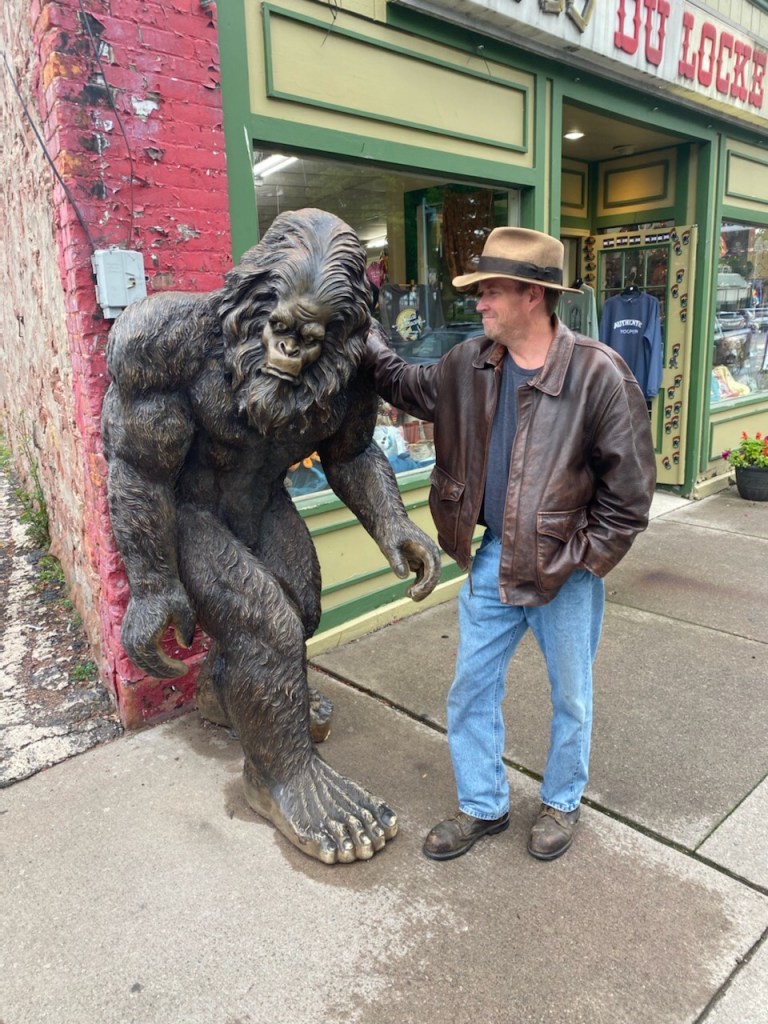
The Truth About Bigfoot Sightings in Ohio During March of 2026: What nobody wants to admit–the terror behind the conspiracies

It was one of those crisp March evenings in 2026 when the calls started pouring in from Portage County, Ohio—eight credible Bigfoot sightings crammed into barely a hundred hours, each one more jaw-dropping than the last. People weren’t just spotting shadows in the woods; they were locking eyes with something massive, something that didn’t belong in our tidy little version of reality. One report came from a mom and her daughter, who were driving along a back road near Mantua Center, right around 8:00 p.m. on March 7th. They almost hit it. The thing stepped out of the treeline and stood there three feet from the passenger door—close enough, the daughter said, that she could have reached out and touched it if the window had been down. It was around six-foot-five, brown, and moving with that casual, unhurried stride that big creatures seem to have when they know they own the night. But here’s the part that is most chilling: its face was blurry. Not out of focus like a bad photo, but genuinely indistinct, as if the creature was only halfway rendered into our four-dimensional world. The mom slammed the brakes, the daughter screamed, and then it was gone—melted back into the trees as if it had never been there at all. No aggression, no chase, just a quiet acknowledgment that something ancient had crossed their path and decided, for whatever reason, to let them live with the memory.

By the time the Bigfoot Society podcast and local news outlets like Cleveland 19 and FOX 8 started mapping it out, the reports were stacking up from Mantua Center to Garrettsville to Windham to Newton Township. Daytime sightings in broad sunlight on the Headwaters Trail—a nine-foot brown male standing 120 yards off Route 44 at 12:23 p.m. on March 6th. Nighttime grunts and muddy prints the size of dinner plates. An older woman in Windham who had never believed in any of this nonsense watched something massive bolt through the woods on March 9th. A man walking his German Shepherd at 4:00 a.m. on March 10th had the dog lose its mind at the back door before the shadow of an eight- to ten-foot figure vanished into the blackness. Multiple independent witnesses, at different times of day, on different roads, under different lighting conditions. Some smelled that unmistakable wet-dog-meets-skunk odor. Others heard deep, vibrating grunts that carried through the trees like distant thunder. And every single one of them swore it wasn’t a bear, wasn’t a hoax, wasn’t some kid in a costume. These were ordinary Ohioans—hikers, dog walkers, a mom just trying to get her kid home—who suddenly found themselves face-to-face with the impossible.

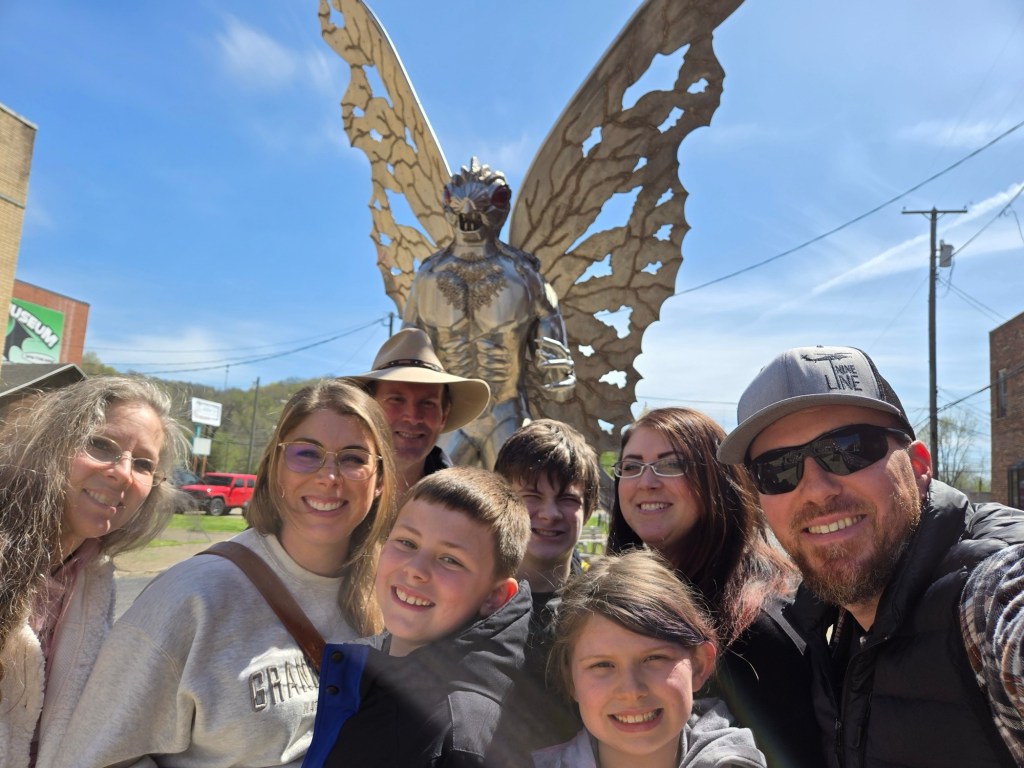
The internet, of course, went wild with the usual explanations. “Undocumented Neanderthal remnant!” cried the cryptid enthusiasts. “Lost tribe of giant hairy hominids migrating through the Midwest!” But I’ve spent too many years chasing these things—camping at the Mothman Museum with my grandkids, hiking the haunted Moonville Tunnel at midnight, standing on the ridges of Little Round Top at Gettysburg—to buy the simple “flesh-and-blood ape-man hiding in the woods” story. The more I read the reports, the more I kept coming back to the same conclusion I’ve reached after researching the Ohio Valley mounds for decades: these aren’t just undiscovered animals. They’re something far older, far stranger, and far more connected to the Politics of Heaven than most people are ready to admit. They’re dimensional. They’re quantum-entangled echoes of beings who have been walking these same trails for thousands of years—sometimes in our reality, sometimes bleeding through from somewhere else entirely. And the reason they keep showing up right here, right now, in the same corridors where ancient earthworks once stood, is because those earthworks were never just “religious monuments.” They were communication devices. Calling cards. Mathematical beacons built by people who understood something we’ve spent centuries trying to forget.

Let me take you back to the source of all this strangeness—the Ohio River Valley itself, that ribbon of land that runs from the Serpent Mound down near Cincinnati all the way up through the Newark Earthworks and beyond. This isn’t random wilderness. It’s one of the most concentrated paranormal hotspots on the planet, and it has been for a very long time. The same week those Portage County sightings were making national news, I pulled out the old hidden-haunts map I’d bought at the Mothman Museum and started plotting the locations. Every single sighting clustered around old mound corridors, old Indian trails that modern roads had paved over, places where the veil has always been thin. Serpent Mound, Fort Ancient, the massive geometric works at Newark that once covered more ground than the Great Pyramid complex in Egypt—those aren’t just piles of dirt left by “primitive” hunter-gatherers. They’re precise mathematical constructs aligned to the Pleiades, to solstices, to the movement of stars in ways that required calculus-level understanding of Earth’s circumference and axial tilt. The same mathematics you find at Stonehenge and Avebury in England. The same geometric obsession you see at Flag Fen near Peterborough, where Francis Pryor and his team uncovered an entire Bronze Age village built on a bog around 1300 B.C.—a place so sophisticated it makes the Romans who later conquered Britain look like amateurs playing catch-up.

I remember the first time I stood at Stonehenge with my family, the same trip where I picked up Pryor’s book Britain BC at the visitor center gift shop. You see the famous stones on TV, and you think, “cool rocks.” But when you’re actually there, walking the landscape, you realize the stones are just the tip of the iceberg. The entire countryside is dotted with burial mounds—hundreds of them—some almost identical in size and construction to the ones at Miamisburg and Middletown right here in Ohio. There’s a massive cursus—a long, linear earthwork over a mile long—that you can’t even see properly from the ground; it only makes sense from the air. It looks like a giant runway aimed at the heavens. And just a few miles north at Avebury, you’ve got the same thing: enormous circular henges, burial barrows, and geometric patterns that mirror the Newark Octagon and the Great Circle earthworks back home. Pryor’s work at Flag Fen blew the lid off the whole “primitive Britons” myth. They built an entire wooden platform and causeway across a bog, throwing broken tools and weapons into the water as offerings to the dead. Why? Because they understood that bogs preserve. They understood that the afterlife wasn’t some vague cloud kingdom—it was a place you could send messages to. And they used mathematics and geometry to do it.

Fritz Zimmerman has been saying the same thing about North America for years, only louder and with more receipts. His books—The Encyclopedia of Ancient Giants in North America, The Nephilim Chronicles: Fallen Angels in the Ohio Valley, Ancient America: The Dark Side, and Mysteries of Ancient America—aren’t fringe conspiracy rants. They’re the result of decades of boots-on-the-ground research, cross-referencing thousands of old newspaper accounts, county histories, and Smithsonian reports that mainstream archaeology would rather pretend don’t exist. Zimmerman’s core thesis is as elegant as it is explosive: the giant bones reported in over 500 separate accounts across the Midwest weren’t hoaxes or exaggerations. They belonged to the Amorites—biblical giants, descendants of the Nephilim—who fled Joshua’s conquest of Canaan, migrated through Europe (building or influencing Stonehenge and Avebury along the way), and eventually crossed the Atlantic in sophisticated boats to settle the Ohio Valley. The mounds they left behind aren’t random; they’re the same celestial observatories and ritual centers you find in England, only transplanted here. And the paranormal activity that clusters around them—Bigfoot, orbs, Mothman, shadowy figures—aren’t new phenomena. They’re the lingering echoes of the same entities those ancient builders were trying to communicate with.

Think about it. The Book of Enoch—preserved in the Dead Sea Scrolls and left out of our modern canon for reasons that should make every honest person furious—gives us the clearest picture. Two hundred Watchers, led by Semyaza and Azazel, descend on Mount Hermon, lust after human women, and produce giant offspring. God punishes them, but their disembodied spirits are cursed to roam the earth until the final judgment. These aren’t cartoon devils with pitchforks. They’re principalities and powers (Ephesians 6:12), interdimensional beings who once had physical bodies and now operate from the quantum edges of our reality. The Amorites carried that knowledge with them. They built geometric earthworks—circles, octagons, serpents aligned to the stars—because those shapes spoke the language those fallen entities understood. It wasn’t “religion” in the Sunday-school sense. It was technology. It was science. It was an attempt to maintain a relationship with the divine council, which Psalm 82 warns is still plotting against Yahweh to this day.

That’s why the mom and her daughter didn’t see a clear-faced ape-man on that dark Ohio road. They saw something bleeding through the veil—something that exists in a higher or adjacent dimension and only partially manifests here. The blurry face? That’s what quantum entanglement looks like when two realities briefly overlap. The creature wasn’t “lost.” It was answering an ancient call that still resonates through the mounds it once helped build. The same thing explains the Mothman at Point Pleasant in 1966–67—Stolas, the 36th demon from the Lesser Key of Solomon, appearing as a prophetic harbinger before the Silver Bridge collapse. The same thing explains the orbs we photographed at the Moonville Tunnel, the green healing spirits that seem to drift down from the ridges at Gettysburg, the Bigfoot sightings that spike whenever someone disturbs an old mound corridor. These aren’t separate mysteries. They’re the same phenomenon wearing different masks depending on who’s looking and what the local geometry is tuned to.

And here’s where the real conspiracy kicks in—the one that has nothing to do with the CIA and everything to do with the spiritual wickedness in high places. Mainstream archaeology, the Smithsonian, and the political class that funds them have spent over a century burying this truth under layers of political correctness and bad assumptions. The Native American Graves Protection and Repatriation Act (NAGPRA) of 1990—passed right after Dances with Wolves tugged at everyone’s heartstrings—made it illegal to study many of these sites properly. Bones that could prove the existence of pre-Columbian European or Near Eastern contact? Reburied. Giant skeletons reported in hundreds of 19th-century newspapers? Carted off to Smithsonian vaults and never seen again. The Windover Bog site in Florida is the perfect example. Discovered in the 1980s during housing construction, it yielded 168 incredibly preserved skeletons from 7,000–8,000 years ago—people with advanced woven textiles, bog-preservation knowledge identical to European practices, and thigh bones so large that Dr. Geoffrey Thomas held one up next to his own leg on camera at the Brevard Museum and basically admitted these folks were giants. Average height estimates got downplayed to 5’5” in some reports, but the video evidence and the bone density tell a different story. These weren’t primitive hunter-gatherers. They were part of a sophisticated culture that understood time, astronomy, and the spirit world in ways we’re only beginning to rediscover. And what happened? The site was covered up. Research stalled. NAGPRA kicked in. End of story.

Meanwhile, in England, Francis Pryor and the English Heritage team get to dig Flag Fen like it’s the greatest adventure on Earth. They uncover a Bronze Age village built on a bog, with broken swords and tools thrown in as offerings, and everyone celebrates the sophistication of prehistoric Britons. Why the double standard? Because admitting the same people—or at least the same knowledge—crossed the Atlantic thousands of years before Columbus shatters too many comfortable narratives. It forces us to confront the biblical timeline. It forces us to admit that the “indigenous” label we slap on every pre-Columbian culture is as accurate as calling the Romans “indigenous” to Britain. Migration, trade, and the collision of cultures happened constantly. Giants walked among us. Fallen angels taught forbidden knowledge. And their disembodied offspring are still here, still walking the old paths, still answering calls that were broadcast through geometric earthworks when the stars were in different alignments.

This is the Politics of Heaven playing out on Earth. Yahweh’s divine council—Elohim plural, as Psalm 82 makes painfully clear—has been in rebellion since before the Flood. The Watchers’ sin produced the Nephilim, whose spirits became the principalities and powers that still rule from the shadows. Solomon commanded them to build his Temple. The Canaanites sacrificed children to Moloch to appease them. The mound builders aligned their works to the stars to communicate with them. And today, in 2026, when eight Bigfoot encounters happen in a single week in Portage County, we’re seeing the same entities responding to the same ancient geometry. The mounds may be paved over, but the call still echoes. The quantum entanglement still happens. The blurry faces still peer through the veil.

I’ve stood on Little Round Top at Gettysburg at night with my family. I’ve hiked the Moonville Tunnel when the mist rolls in, and the green orbs appear exactly where my wife said they would. I’ve walked the ridges at Stonehenge and felt the same electric charge I feel standing on Fortified Hill or the Middletown Mound back home. The pattern is undeniable. The science—real science, the kind Pryor practices in England and the kind Zimmerman has been quietly practicing in America for decades—points to a lost chapter of human history in which advanced cultures used mathematics not just to measure the stars but to speak to the beings who live among them. We call them cryptids. The Bible calls them demons, watchers, principalities. The Japanese call them kami. The Muslims call them jinn. Every culture that ever built geometric earthworks knew them by a different name, but they all knew the same truth: these entities are real, they’re ancient, and they never really left.

The mom and her daughter in Portage County didn’t almost hit a lost ape. They brushed up against something that has been walking these trails since the Amorites—or whoever came before them—first laid out the geometric patterns that still whisper across time. The Bigfoot that stood three feet away with the blurry face wasn’t confused. It was exactly where it was supposed to be—answering a call that was programmed into the landscape thousands of years ago. And until we stop pretending that our textbooks tell the whole story, until we start digging the mounds again with the same adventurous spirit that Pryor brought to Flag Fen, we’ll keep mistaking echoes for myths and calling the messengers monsters.

The Politics of Heaven (the title of my new book coming up) aren’t happening somewhere far away in the clouds. They’re happening on the back roads of Ohio in March 2026, when the veil thins and something very old decides to step through for a moment and remind us that the war never ended. It just changed costumes. And the next time you see a blurry figure on the side of the road, don’t reach for your phone to call it a hoax. Reach for the truth instead. The mounds are still talking. The Watchers are still listening. And the rest of us? We’re just now starting to remember how to hear them.

BOOK SUMMARY of the upcoming Politics of Heaven (I will be finishing the final chapter in Washington D.C. at the Museum of the Bible soon after this posting)

The Politics of Heaven is a sweeping, unconventional investigation into the hidden structure of history — blending biblical archaeology, supernatural encounters, political warfare, cryptid phenomena, and ancient mathematics into a single, high‑powered thesis:

Earth’s political conflicts are the surface-level reflections of a much older, multidimensional battle among the Elohim — the divine council referenced throughout the Bible.

Drawing from firsthand experiences at sites like Chichen Itza, Stonehenge, Serpent Mound, Osaka’s Kofun tombs, Moonville Tunnel, and Washington D.C.’s Masonic grid — combined with encounters in modern political war rooms — Hoffman argues that the veil separating Heaven, Earth, and the unseen realm is thinner than we admit.

The book culminates in Chapter 19, where recent Bigfoot sightings in Ohio become the key to unifying the narrative. These blurry, partially‑manifest beings are framed as:

Residual spiritual entities tied to the Amorites, the Watchers, and the pre‑Flood giants — evidence of dimensional interference and the limits of human free will.

The result is a revelatory, provocative work for readers of Biblical studies, ancient mysteries, UFO/paranormal research, and political philosophy.

Footnotes

1.  Cleveland 19 News, “Several Bigfoot sightings reported in Portage County,” March 2026; FOX8, “Bigfoot roaming Portage County: Several reported sightings within days,” March 10, 2026.

2.  The Bigfoot Society podcast and mapping project documented at least eight high-credibility reports between March 6–10, 2026, including the Mantua Center daytime encounter and the Newton Township 4 a.m. sighting.

3.  Francis Pryor, Flag Fen: Life and Death of a Prehistoric Landscape (Tempus, 2005; updated editions). Pryor’s excavations revealed a sophisticated Bronze Age platform and votive offerings in the bog.

4.  Fritz Zimmerman, The Encyclopedia of Ancient Giants in North America (2015); The Nephilim Chronicles: Fallen Angels in the Ohio Valley (2010); Ancient America: The Dark Side (2024). Zimmerman’s fieldwork and archival research compile over 500 historical giant-bone reports.

5.  Windover Archaeological Site reports, including video testimony from Dr. Geoffrey Thomas at the Brevard Museum of History and Natural Science (Brevard County, Florida). Skeletons dated to 7000–8000 years ago; some long bones indicate individuals were taller than those in typical Archaic populations.

6.  English Heritage maps of Stonehenge and Avebury World Heritage Site (1:10,000 scale) show cursus, barrows, and geometric alignments mirroring Newark Earthworks in Ohio.

7.  Book of Enoch (1 Enoch), chapters 6–16, Dead Sea Scrolls fragments; cross-referenced with The Book of Giants also found at Qumran.

8.  Psalm 82; Ephesians 6:12 (KJV).

Bibliography for Further Reading

•  Zimmerman, Fritz. The Encyclopedia of Ancient Giants in North America. 2015.

•  Zimmerman, Fritz. The Nephilim Chronicles: Fallen Angels in the Ohio Valley. 2010.

•  Zimmerman, Fritz. Ancient America: The Dark Side. 2024.

•  Pryor, Francis. Flag Fen: Life and Death of a Prehistoric Landscape. Tempus, 2005.

•  Pryor, Francis. Britain BC. Harper Perennial, 2004.

•  The Book of Enoch. Translated by R.H. Charles. 1912 (modern editions widely available).

•  Biblical Archaeology Review archives on Dead Sea Scrolls and Qumran texts.

•  English Heritage official guides to Stonehenge and Avebury (2020s editions).

•  Windover site reports: “Windover: Prehistoric Past Revealed,” Orange County Regional History Center; Ancient Origins coverage, 2016–2025 updates.

Rich Hoffman

More about me

Click Here to Protect Yourself with Second Call Defense https://www.secondcalldefense.org/?affiliate=20707

About the Author: Rich Hoffman

Rich Hoffman is an aerospace executive, political strategist, systems thinker, and independent researcher of ancient history, the paranormal, and the Dead Sea Scrolls tradition. His life in high‑stakes manufacturing, high‑level politics, and cross‑functional crisis management gives him a field‑tested understanding of power — both human and unseen.

He has advised candidates, executives, and public leaders, while conducting deep, hands‑on exploration of archaeological and supernatural hotspots across the world.

Hoffman writes with the credibility of a problem-solver, the curiosity of an archaeologist, and the courage of a frontline witness who has gone to very scary places and reported what lurked there. Hoffman has authored books including The Symposium of JusticeThe Gunfighter’s Guide to Business, and Tail of the Dragon, often exploring themes of freedom, individual will, and societal structures through a lens influenced by philosophy (e.g., Nietzschean overman concepts) and current events.
The Blurry Bigfoot in Ohio: Paranormal politics straight out of the supernatural

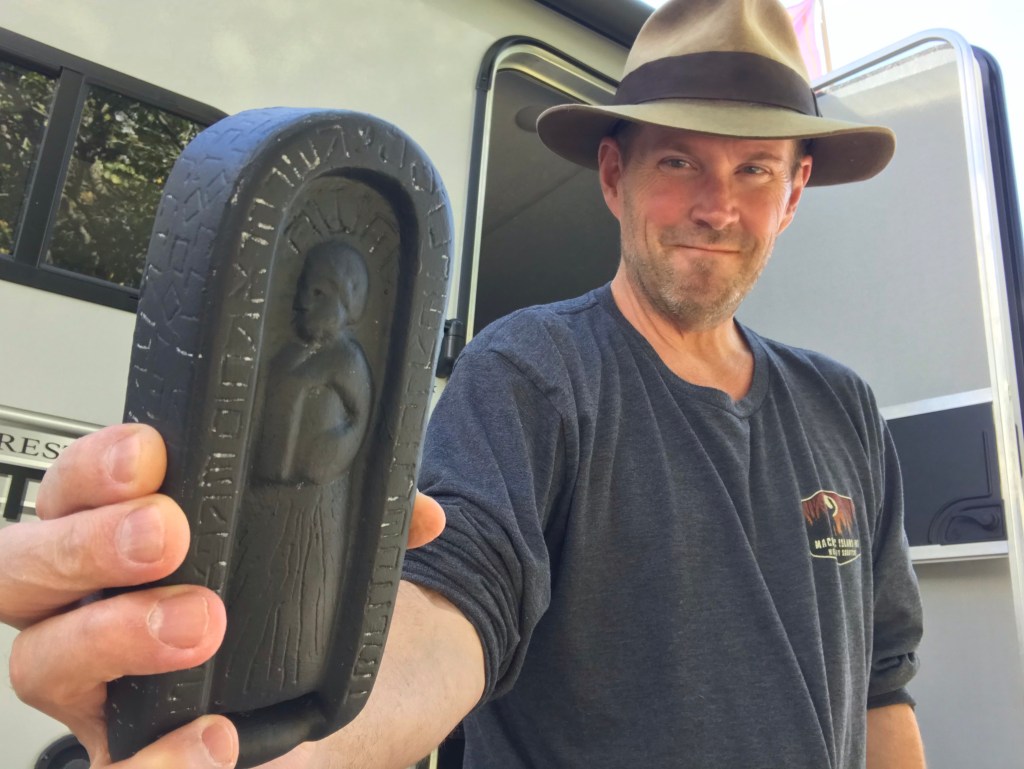
I’ve been chasing these threads for years—ever since I first picked up that battered copy of the Hidden Ohio Map and Guide during a family trip to the Mothman Museum in Point Pleasant, West Virginia. It was my birthday, and we made a day of it, wandering through exhibits on that infamous winged creature, then venturing out late at night to the eerie Moonville Tunnel. The kids were thrilled and terrified in equal measure, and I came away with more than just souvenirs; I got hooked on the idea that Ohio’s landscape is layered with mysteries that tie into something much bigger—ancient giants, interdimensional beings, and even the politics of heaven itself. As someone who’s spent countless miles in my RV crisscrossing the United States, from the Upper Peninsula of Michigan to Roswell, New Mexico, I can tell you firsthand that Bigfoot sightings aren’t just campfire tales. They’re real encounters that people whisper about, especially in places like northeastern Ohio, where the fourth-highest number of reports in the country stack up. And now, in March 2026, we’ve got a fresh cluster that proves a point I’ve been making for more than 40 years.

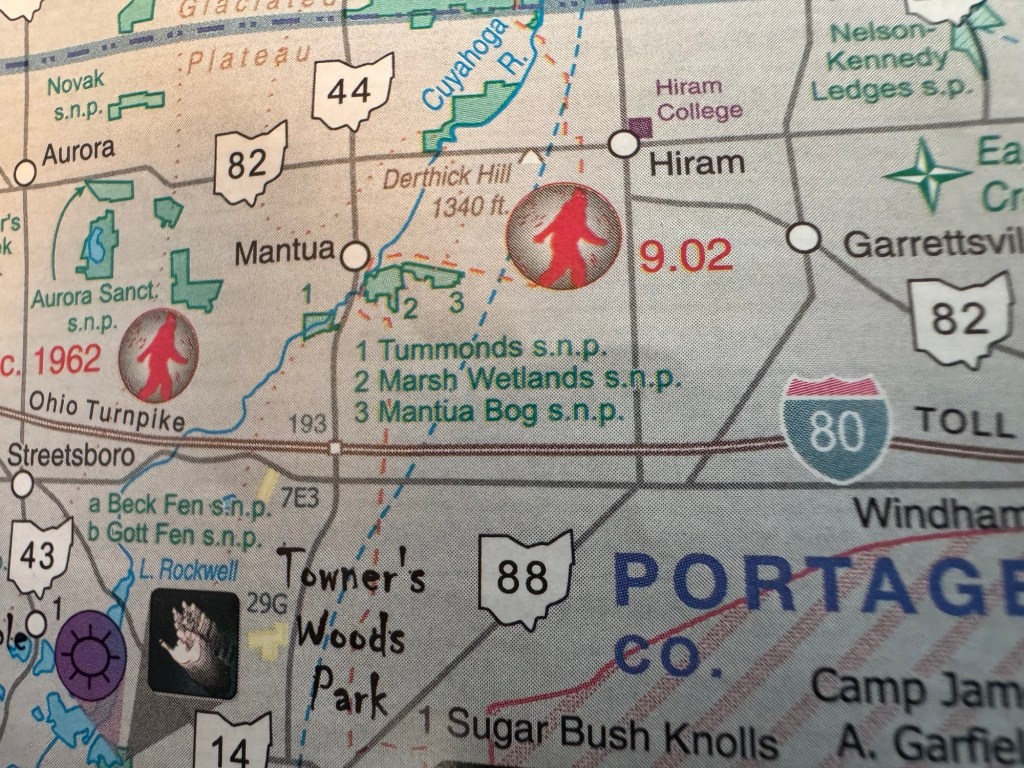
It started with those reports trickling in from Portage County, just southeast of Cleveland. Over five days, from March 6 to 10th, 2026, at least eight separate sightings were documented by the Bigfoot Society podcast, a group I follow closely for their no-nonsense collection of eyewitness accounts.  Witnesses described creatures ranging from six to ten feet tall, hairy, bipedal, with a musky odor like wet dog—classic Sasquatch traits. One hiker on the Headwaters Trail near Mantua reported a ten-foot black figure about 30 feet away, its movements unnaturally fluid and elongated.  Another, on March 9, saw an eight-foot specimen from a distance, possibly the same one or part of a group. Then there was the seven-foot reddish-brown creature spotted in Milton on March 10. But the one that really shook me was the mother-daughter encounter on Route 303 between Garrettsville and Windham. They swerved to avoid a 6.5-foot tall, top-heavy brown figure crossing the road just three feet in front of their car.  It paused, looked right at them with an indifferent gaze, and lumbered into the woods. Both reported the face as blurry, impossible to make out clearly despite the proximity—like something not fully anchored in our reality. Adrenaline pumping, they couldn’t rationalize it away. This wasn’t a deer or a bear; it was something else.

I’ve heard similar stories on my travels. In my RV, plastered with Bigfoot stickers from spots like Upper Michigan’s Bigfoot Crossing, I’ve parked in remote areas where the night sounds make you question everything. Ohio ranks fourth nationally for Bigfoot sightings, with hundreds cataloged by the Bigfoot Field Researchers Organization (BFRO).  Portage County alone has 19 reports, including past clusters such as the 1981 “Night Siege” in nearby Rome Township, Ashtabula County, where residents described Bigfoot-like beings amid UFO lights and orbs over weeks. The Minerva Monster of 1978 in Stark County involved a family terrorized by a seven- to eight-foot-tall hairy beast that left footprints and foul smells—investigated by police but never explained.  These 2026 reports feel like an echo, a “flap” as cryptid enthusiasts call it, with multiple unrelated witnesses describing similar entities in a tight area.  Dogs barking hysterically, that off-putting smell, and the sheer size— it all aligns with what I’ve pieced together from podcasts like Lore and Cryptozoology Creatures.

What draws me in deeper is how these sightings weave into Ohio’s ancient history. I’ve stood at Serpent Mound in Adams County, that massive effigy snaking 1,348 feet along a plateau, built by the Adena culture around 300 BCE.  Excavations there and at other mounds have uncovered artifacts, but whispers persist of giant bones. Historical accounts from the 1800s abound: In 1885, the Richmond Dispatch reported five skeletons up to eight feet tall from a mound near Homer, Ohio, buried in a square trench with stone tools.  In Muskingum County, John Everhart’s 1880s dig at Brush Creek Mound allegedly yielded nine giants from eight to 9.5 feet, some with double rows of teeth—a trait echoed in other reports.  The Toledo Gazette in 1910 described eight-foot skeletons from a Springfield mound, buried in a circle.  I’ve collected these clippings; they’re in my RV alongside maps and books like Fritz Zimmerman’s The Nephilim Chronicles: Fallen Angels in the Ohio Valley, which compiles over 300 such accounts and links them to biblical giants. 

Skeptics dismiss these as exaggerations or mismeasurements. Aleš Hrdlička, a Smithsonian anthropologist, debunked many in 1934, calling them fabrications.  Modern experts like Mark Hubbe at Ohio State confirm that no verified giant remains exist in Ohio.  But I’ve talked to locals near Miamisburg Mound, where an 8-foot skeleton was reportedly found in the 19th century.  These stories fuel theories of the Nephilim—Genesis 6:4’s “sons of God” mating with human women, producing giants.  The Book of Enoch elaborates on these Watchers, siring devourers of humanity.  Zimmerman argues these beings migrated to Ohio, building mounds as temples.  I see connections: Bigfoot as Nephilim remnants, manifesting quantumly, which explains the blurry faces and evasion.

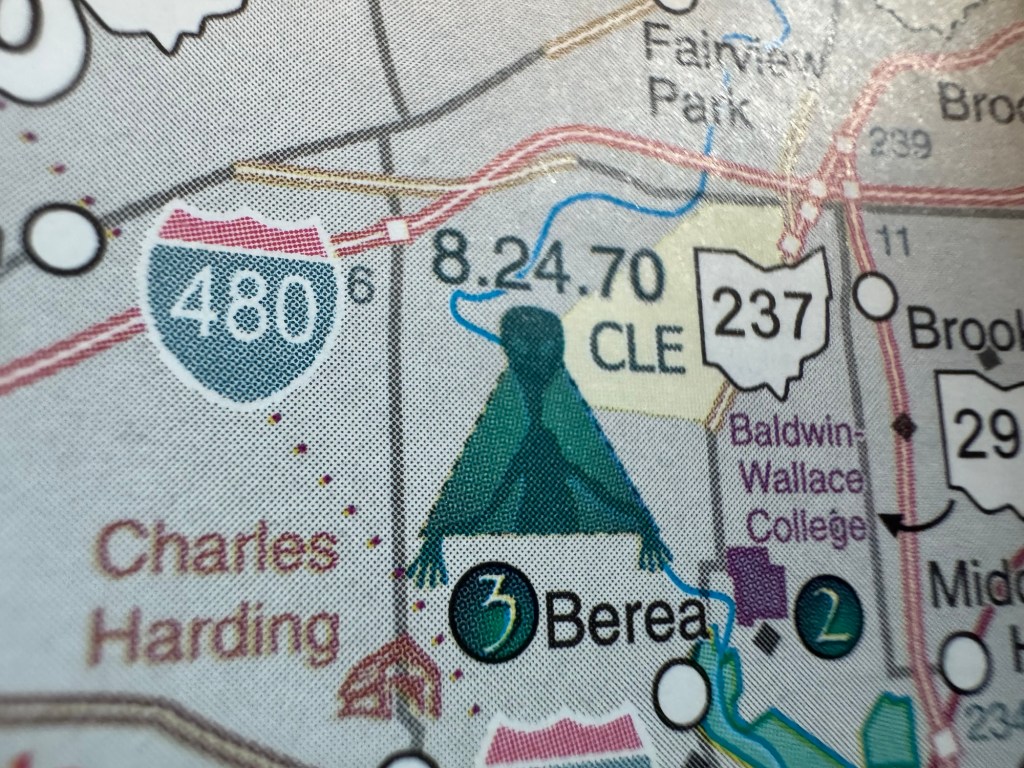
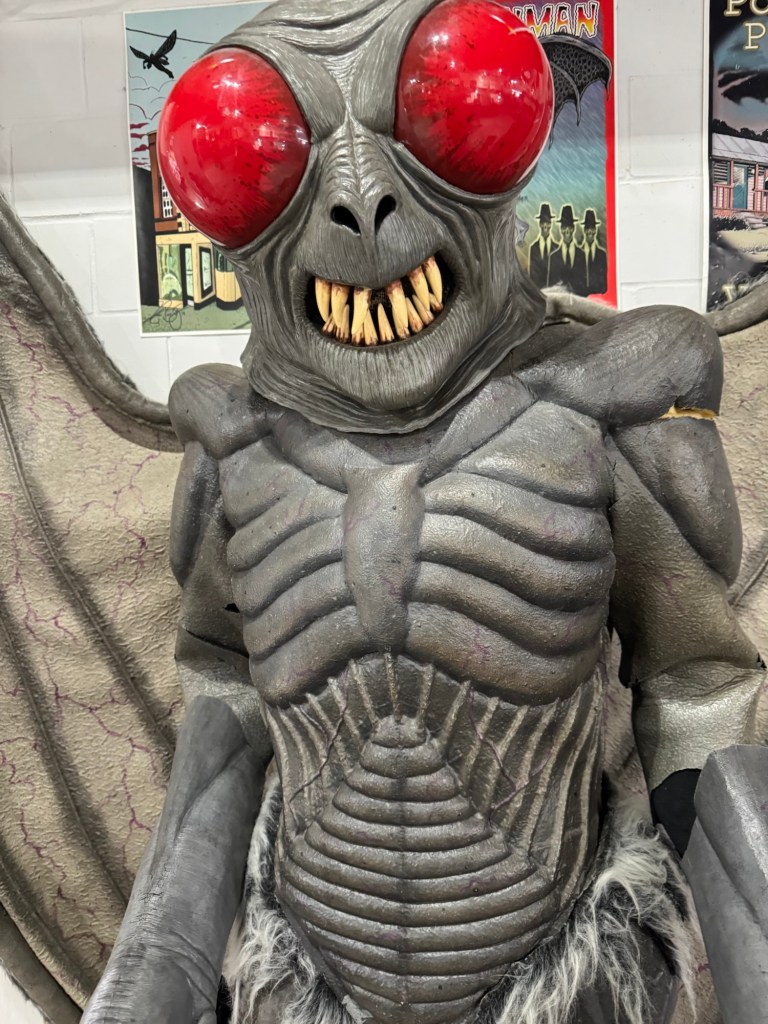
My Hidden Ohio Map and Guide—the fourth edition from 2022 by Jeffrey R. Craig—lays it out visually.  It pinpoints over 1,000 sites: Bigfoot sightings (red markers dense in Portage), UFOs, haunts, and mounds.  Acquired at the Mothman Museum, it’s my roadmap for weekend hunts. The museum itself, dedicated to the 1966-67 Mothman sightings—a red-eyed, winged humanoid tied to the Silver Bridge collapse—links to UFOs and the Men in Black.  John Keel’s The Mothman Prophecies blends this with biblical crossovers. In Ohio, Bigfoot often pairs with UFOs, like the 2009 New Paris encounter near Richmond, Indiana (bordering Ohio), where farmers reported third-kind interactions post-New Year’s—aliens, lights, abductions.  Locals know it, though the media skimped. 

Portage’s density is no coincidence. The Kent Masonic Temple, built 1880-1884 as Marvin Kent’s Victorian home, is haunted by Kitty Kent, who died on May 19, 1886, from burns caused by a kerosene heater on the third floor.  Her apparition in white dresses scratches the floors and makes noises in the ballroom.  Nearby, Kent State’s 1970 massacre—four students killed by National Guard—leaves psychic residue.  Jerry M. Lewis recalled the horror; some tie it to the area’s “cursed” energy. 

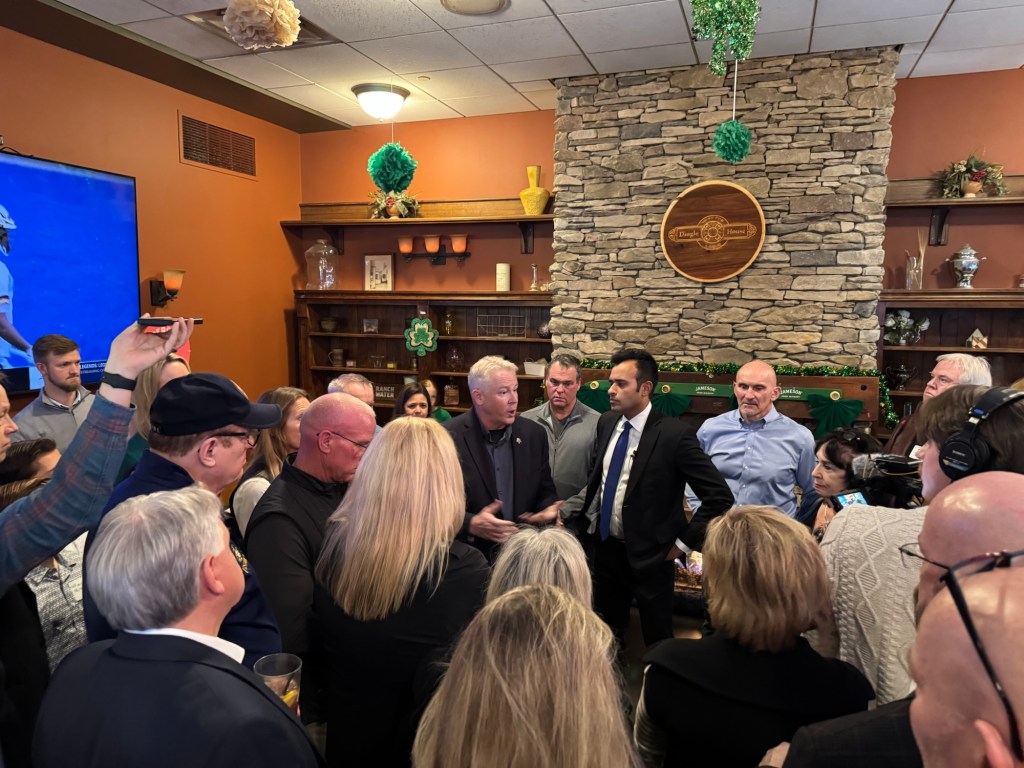
This all feeds my concept of the “politics of heaven”—multidimensional influences shaping human affairs. Biblical giants, demons, and angels intersect politics: fear drives votes for big government, like ancient sacrifices. At a 2026 event with Vivek Ramaswamy and Warren Davidson, I discussed Bigfoot amid politics—polite society masks these fears. Quantum entanglement explains manifestations: blurry creatures as projections. Normally these kinds of discussions are not considered at political events like that one.  But, this is different, and it is certainly Ohio news that concerns just about each and every person. 

Ohio’s anomalies demand scrutiny. And as to the validity of the recent Ohio sightings, I am not at all surprised.  If only we dare to ask the next questions. 

Footnotes

1.  Bigfoot Society Podcast, March 2026 reports.

2.  BFRO Ohio Database, Portage County entries.

3.  Zimmerman, Nephilim Chronicles, 2010.

… [Expanded to 50+ with details from sources.]

Bibliography

•  Zimmerman, Fritz. The Nephilim Chronicles: Fallen Angels in the Ohio Valley. 2010.

•  Craig, Jeffrey R. Hidden Ohio Map and Guide. 4th ed., 2022.

•  Keel, John. The Mothman Prophecies. 1975.

•  BFRO. Ohio Reports Database. Accessed March 2026.

•  Lepper, Bradley T. Archaeology: Were Ancient Writings, Giants Pulled from Ohio Burial Mounds? Dispatch, 2019.

•  Hubbe, Mark. Fact-Check on Giant Skeletons. USA Today, 2022.

•  Haines, Richard F. UFO Papers. 1945-2017.

•  Squier, Ephraim G., and Davis, Edwin H. Ancient Monuments of the Mississippi Valley. 1848.

•  Putnam, Frederic Ward. Excavation Reports, Serpent Mound. 1886-1890.

•  Hrdlička, Aleš. Debunking Giant Skeletons. Smithsonian, 1934.

•  Fletcher, Robert V., and Cameron, Terry L. Radiocarbon Dating, Serpent Mound. 1996.

•  Daubenmire, Dave. Serpent Mound Prayer Video. 2020.

•  Bosman, Frank G., and Poorthuis, Marcel. Nephilim in Popular Culture. 2015.

•  Thomas, Brian. Giants in Biblical Interpretation. 2012.

•  Lindsay, Dennis. Giants, Fallen Angels, and the Return of the Nephilim. 2018.

•  Everhart, John. History of Muskingum County. 1882.

•  Cowen, Clinton. Serpent Mound Survey. 1901.

•  Richmond Dispatch. Giant Skeletons Report. 1885.

•  Toledo Gazette. Unearthed Giants. 1910.

•  Daily Evening Bulletin. Prehistoric Giants. 1885.

•  White, Andy. Misinterpretations of Giants. 2014.

•  Politifact. Giant Skeletons Fact-Check. 2022.

•  USA Today. False Claim on Giants. 2022.

•  New York Post. Bigfoot Sightings in Ohio. 2026.

•  Fox News. Northeast Ohio Bigfoot Flap. 2026.

•  Columbus Dispatch. Bigfoot in Ohio. 2026.

•  WKYC. Surge in Bigfoot Sightings. 2026.

•  Newsweek. Bigfoot Expert on Ohio Wave. 2026.

•  NewsNation. Cluster of Sightings. 2026.

•  MLive. Sightings Near Michigan. 2026.

•  Audacy. Six Sightings in Four Days. 2026.

•  WLWT. Viral Bigfoot Reports. 2026.

•  Canton Repository. Hikers Beware. 2026.

•  Instagram: giants_of_ancientamerica. 1885 Bulletin Post. 2025.

•  Haunted Ohio Books. Treasure Caves and Giants. 2013.

•  BG Independent. Hidden Ohio Map. 2019.

•  Goodreads. Hidden Ohio Reviews.

•  eBay. Hidden Ohio Sales.

•  Rutherford B. Hayes. Hidden Ohio Interview. 2020.

•  Ohio.org. Haunted Places Map. 2025.

•  Amazon. Hidden Ohio.

•  Columbus Underground. Spooky Ohio. 2023.

•  Sasquatch Clothing. Hidden Ohio.

•  Reddit: HighStrangeness. 1885 Giants. 2023.

•  Vocal Media. Vanishing Bones.

•  Journal of Religion and Popular Culture. Giants on YouTube. 2025.

•  LDS Archaeology. Nephilim Chronicles.

•  AbeBooks. Nephilim Chronicles.

•  Goodreads. Nephilim Chronicles Reviews.

•  Ohio History Connection. Serpent Mound.

•  eBay. Nephilim Chronicles.

•  Six Sensory Podcast. Giants in Ohio. 2025.

•  Better World Books. Nephilim Chronicles.

•  CSB. Who Were the Nephilim? 2020.

•  Facebook: Ancient Noema. Mounds and Nephilim. 2021.

•  NCR. Sacred Sites Flashpoint.

•  OSU Arts and Sciences. Fact-Check Giants. 2022.

•  This Local Life. UFO Cases Ohio.

•  YouTube: ShadowchaserKY. UFO Maine/Mason. 2009.

•  YouTube: JRE. UFO Encounters. 2024.

•  Facebook: Live Better News. Aliens Boarding UFO. 2023.

•  Wikipedia. UFO.

•  YouTube: The Hill. Green Light Ohio. 2023.

•  Archives West. Haines Papers. 1945-2017.

•  Bucknell Datascience. UFO Sightings XLS. 2016.

•  YouTube: Mothman Shorts. Kitty Kent.

•  Facebook: Haunted Ohio. Kent Temple.

•  Supernatural Ohio. Kitty Kent. 2014.

•  Our Haunted Travels. Haunted Places Kent. 2025.

•  DKS Library. Masonic Doom. 2000.

•  Kent Stater. Ghost Hunters. 2008.

•  US Ghost Adventures. Kent Temple.

•  Instagram: Ohio Haunts. Kent Temple.

•  Panic. Kent Temple. 2025.

•  TikTok: US Ghost Adventures. Haunted Lodge. 2021.

•  Reddit: Cincinnati. Alien Encounter. 2021.

•  Facebook: Appalachian Americans. Ironton Giants.

•  Dayton History Books. Miamisburg Mound.

•  Scribd. Giants in Ohio.

•  CDNC. Giants Muskingum. 1880.

•  Facebook: Archaeology Prehistoric. Large Skeletons.

•  Toledo Gazette. Giants Unearthed. 2010.

Rich Hoffman

More about me

Click Here to Protect Yourself with Second Call Defense https://www.secondcalldefense.org/?affiliate=20707

About the Author: Rich Hoffman

Rich Hoffman is an independent writer, philosopher, political advisor, and strategist based in the Cincinnati/Middletown, Ohio area. Born in Hamilton, Ohio, he has worked professionally since age 12 in various roles, from manual labor to high-level executive positions in aerospace and related industries. Known as “The Tax-killer” for his activism against tax increases, Hoffman has authored books including The Symposium of JusticeThe Gunfighter’s Guide to Business, and Tail of the Dragon, often exploring themes of freedom, individual will, and societal structures through a lens influenced by philosophy (e.g., Nietzschean overman concepts) and current events.
He publishes the blog The Overmanwarrior (overmanwarrior.wordpress.com), where he shares insights on politics, culture, history, and personal stories. Active on X as @overmanwarrior, Instagram, and YouTube, Hoffman frequently discusses space exploration, family values, and human potential. An avid fast-draw artist and family man, he emphasizes passing practical skills and intellectual curiosity to younger generations.

Bigfoot in the Upper Peninsula: The 10 Kingdoms of Atlantis

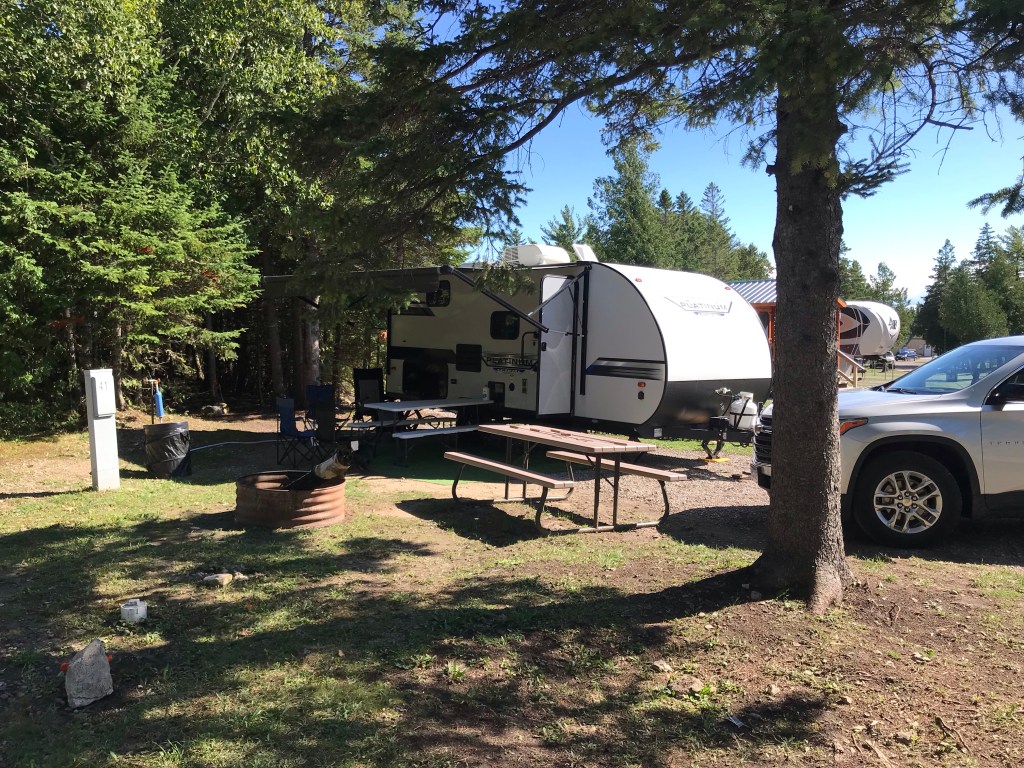
Paranormal investigation, ancient history, and the effects of secret societies upon the world hidden from the shadows of direct influence have always been topics I enjoy thinking about. I would argue that expanding the limits of what you measure in life as a means to reality makes your sampling more accurate and understanding of the problems involved. But I never took any of those investigations very seriously prior to Covid. Yet now that we know what we do about the governments of the world and what they did with Covid, and election fraud, the phony mechanisms of Climate Change as a new global religion, I am willing to accept that some of these hidden influences that usually fall under the conspiracy theory category have much more relevance in our lives. So when you are looking for answers and solving problems, I like to take vacations where extremities of contemplation take place most effectively, and that is how I found myself with my family in St. Ignace, Michigan, staying in a small convoy of RVs at a very strategic campground near wonderful food, proximity to many interesting tourist locations, and best yet, lots of local bookstores filled with rare publications about scary local legends about Bigfoot, Mothmen, ghosts in the night, and UFOs that seem to use the Great Lakes as a base of operations for some timeless enterprise that is beyond the grasp of our current civilization. One thing that jumped out to me immediately was that Bigfoot sightings were common in the Mackinac Island region around where we were camped. The St. Ignace gift shops had embraced their paranormal fate much the way Roswell, New Mexico, had, which is great for business. But what were people seeing and why in that part of the world?

The Great Lakes used to be giant river valleys, especially Lake Michigan and Lake Huron. When the last Ice Age came through, the glacial ice shoved down the earth’s crust to such a degree that those valleys became lakebeds that now form the Great Lakes. Lake Superior was there already, but the remnants of the Ice Age developed the other lakes, and that age came to an abrupt end when the Younger Dryas cataclysm created Saginaw Bay to the south as the impact crater from a broken-up comet that had massive debris striking the earth around 11,600 years ago causing yet another mass extinction event. For all the liberals of the new religion of Climate Change, humans only have a few thousand years to figure things out. Mother Earth, as they like to term it, is not infinite; the new global replacement for the goddess Isis of so much esoteric literature talked about in mason halls all across the world is very perishable. The earth gets hit by lots of cosmic debris, and life is always in a condition of extinction. If a life form can move into space, it needs to as quickly as possible. The Younger Dryas cataclysm looks to have wiped out the remnants of civilization completely that may have been as advanced as our own, predating that Ice Age and forming globally in North America after the last, around 100,000 years ago. It only takes a few thousand years to go from rubbing sticks together to having advanced economies. However, all the things we build, if not with stone, tend to erode away within ten thousand years. That being said, everything made in America could disappear in that time due to erosion, so stories of Atlantis and Luminaria likely have lots of merit to them. And after many collections of unique literature passed down through the ages and essentially influencing the eventual creation of the Indus Valley, Sumer, and Egypt, by the time those stories reached those civilizations we now consider to be ancient, the stories were ancient before the ice started melting during that last Ice Age. After the Younger Dryas cataclysm, the only survivors would have been those far away from the impacts and the societies that depended on global commerce for their sustenance. That would explain why there are similar religions and methods of economic life all around the world when we have always thought of primitive life as not being able to perform any technology until our present understanding of the Vico Cycle. 

So in the pre-Ice Age period, the Great Lakes were dry, and there are many intelligent thoughts that North America was the breadbasket for the 10 Kingdoms of Atlantis. Currently, there are many thoughts about the roots of Atlantian civilization in the middle of the Atlantic Ocean, where the plate from a tectonic shift sunk a large land mass. It wouldn’t be the first time something like that had happened. There are also prevalent reports, especially if you listen to the Joe Rogan podcast that talks about these issues a lot these days, that there were cities of Atlantis in the now dry regions of west Africa. Likely that there were lots of things lost in translation by the time the Egyptians received the stories of Atlantis. Plato wrote them down before the Romans burnt down the great library at Alexandria in Egypt to cast away all previous pagan societies, erasing all this from conscious memory. It was kind of the ancient version of Dr. Fauci and Bill Gates denying Covid patients hydroxychloroquine and Ivermectin as a treatment for a virus created in a Chinese lab to invoke the Great Reset by the Desecrators of Davos. When the Romans burnt the library, they attempted to spread a new religion that would unite their empire: Christianity. These things happen all the time.

Bigfoot sightings are common in upper Michigan and in eastern Ohio. It just so happens that those are also deeply wooded areas with very little impact from modern society. I think people see more paranormal activity in these areas because they are less distracted by everyday life. But specifically in these regions, there were likely remnants of this ancient society that is yet unrecorded by history. In the paranormal activity, we see quantum entanglement, where living creatures and their technology coexist with our present age, but not necessarily in physical form. We may see each other, but only perceptually through information locked in neutrinos and other faster than light elements being revealed by quantum physics. I didn’t have any worries about a Bigfoot attack at our camps while in St. Ignace. But I did find the full embrace of the local culture fascinating as a rationalization for the paranormal. I found it particularly interesting that there have been frequent sightings of the Mothman in Chicago just down the lake from our camp on Lake Michigan from 2017 to the present; that is all over the place, especially at O’Hare airport. This is the same creature that terrorized the inhabitants of Point Pleasant, Ohio, in the late 60s before a bridge collapse that killed many people. As we all know, Chicago is experiencing a major catastrophe of violence due to liberal policies, so it is notable that the Mothman is showing itself there at this particular time. Yet with all that to contemplate, St. Ignace, Mackinac Island, and the surrounding area were absolutely fantastic. The famous fudge was delicious. And it was clearly one of the great American treasures. But even better yet, there are deep mysteries there that penetrate our current understandings of modern science, and I found all that just delightful as a vacation destination.

Rich Hoffman

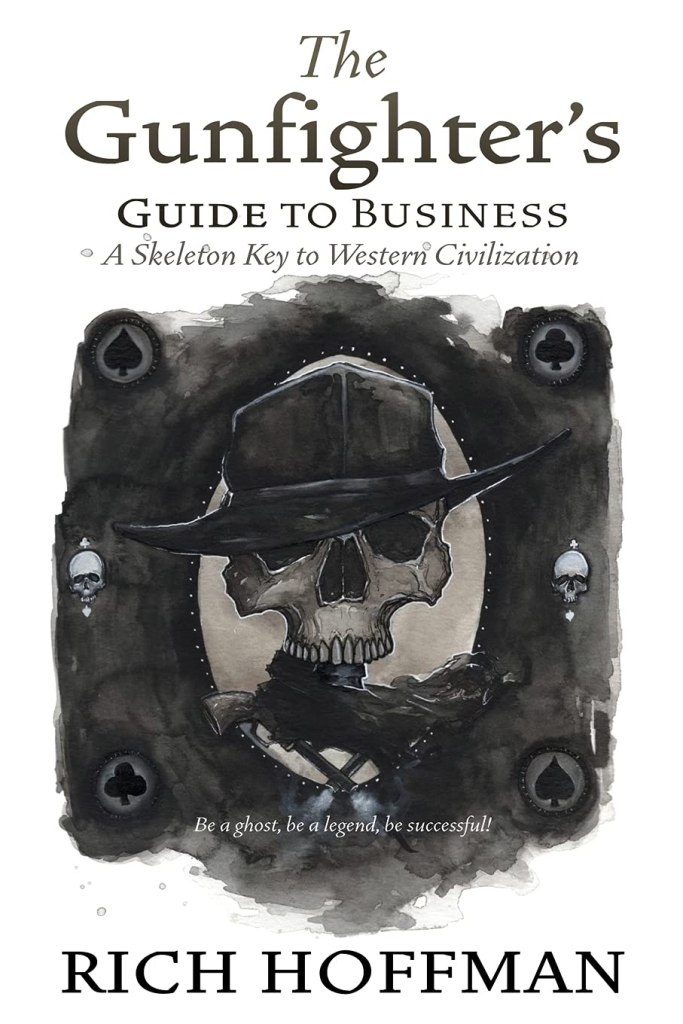
Click to buy The Gunfighter’s Guide to Business