Jim Cameron Has Lost It: Democrat movies are bad for theatre owners and very irresponsible

I’m not rooting for this new Avatar film to be a bust. I want the theaters breathing; I want popcorn machines humming; I want the marquee lights on for people who built these auditoriums and stuck it out through shutdowns, strikes, and the great experiment of “day‑and‑date” streaming. I’ve always liked the filmmaker; I’m not rooting for him to fail. But I can read a marketplace, and I can listen to what regular moviegoers tell each other—at the concession stand, online, at church, at work—and they’ll forgive almost anything except being lectured when they paid to be entertained. If the third one—this Fire and Ash one—lands, I’m happy for every exhibitor who cashes tickets and sells a few extra souvenir cups. If it stumbles, the reason won’t be the craft; Jim Cameron still builds technical worlds like few others. It will be the message mismatch in a market that has shifted under his feet. And that shift isn’t in our imaginations; it’s in the numbers. Opening weekend? $345 million globally, $88–89 million domestic—second‑largest global debut of 2025 behind Zootopia 2, but materially softer than The Way of Water’s $435 million holiday launch in 2022. The third film’s premium formats carried a heavy share—IMAX alone did $43.6 million, and 3D/IMAX accounted for 66% of grosses—proof that the draw remains “event tech” even when general interest cools a bit. 12

And yes, Jim Cameron knows exhibition math, over the years, he’s been the best at it; these films play for legs, not for a single weekend spike. The first one opened to $77 million domestically but camped at No. 1 for seven weeks and marched past $2.9 billion lifetime—still the all-time champ after reclaiming the crown via China re-release. The second one opened bigger—$134.1 million domestic—and legged out to $2.343 billion worldwide. So “Fire and Ash” starting below Way of Water doesn’t predetermine the finish line, but it does announce the current climate: domestic ticket buyers are more selective; they save their premium formats for must-see spectacles and otherwise wait for streaming. 34

Cameron bets that Fire and Ash can give Pandora a human core the audience bonds with again. He’s been telling the press that family—love, bonds, empathy—moved to the forefront after Way of Water’s reception, and that the “Ash People” show a different angle on the Na’vi. The studios pushed all of that: ABC’s primer explains the arc and the 197-minute run; USA TODAY walked folks through the romance pivot with Spider and Kiri; People and the official Avatar site laid out the December 19 release, cast, and creative. It’s all there if you want the meta‑story of the franchise’s evolution and Cameron’s tinkering to tune it to audience reaction. 5678

But I’m going to say the part people mutter in the lobby: Avatar is FernGully in space, Dances With Wolves in space, hippie parables in space. Beautiful, yes. Bioluminescent, yes. But the heart isn’t the creature; it’s the ride. You can see it at Disney’s Animal Kingdom—Pandora is a marvel of engineering; Flight of Passage is a technical knockout. People queue for hours, glow under the blacklight, and walk out saying, “That was cool.” Then they turn left and head for Everest or the safari. The land is loved; the Na’vi dolls are not driving retail like Marvel or Star Wars. Pandora is foremost an experience of tech and design. 910

That’s the sore truth Cameron wrestles with: he won the world by selling a technical spectacle and then tried to use that platform to teach environmentalism and human restraint to a culture whose purchasing habits—phones, trucks, streaming subscriptions—declare that they want harmony with technology, not a scolding about it. If you can make the metaphor land without the wagging finger, you’re in business. But modern audiences, especially domestic ones, have tuned their ears to “message movies,” and they pick them carefully. When they don’t like yours, you feel it in the Friday night cash drawer. Ask the theater managers: they’ll tell you that premium‑format demand spikes when the spectacle is undeniable—and the rest of the release slate lives or dies by word of mouth about fun, action, and escape, not the righteousness of the lecture. 1

And since we’re talking about keeping theaters alive, let’s talk economics. The domestic yearly box office has clawed back to $8.2 billion as of mid December 2025—up from pandemic lows but still well below the $11+ billion of pre-COVID years. Ticket sales around 726 million and an average price in the $11 range (with premium surcharges pushing the “effective” average higher for event weeks) tell you how fragile attendance remains even when tentpoles overperform. Zootopia 2 blasted the family corridor and crossed $1 billion in just 17 days—the fastest PG film ever to the milestone—demonstrating that when a title hits, America still shows up with kids and grandparents. But the recovery is uneven; mid-budget adult films continue to crater, and exhibitors need reliable pipelines of four-quadrant hits to pay the rent. 11121314

Operating a theater is unforgiving math: payroll, lease, utilities, insurance, and the studio’s cut, which is heaviest in the opening weeks. Concessions are the lifeline—popcorn and soda can carry margins north of 80%; ticket revenue shares may be 70–90% to studios in week one, easing toward 50/50 later. So the survival instinct for exhibitors is simple—give them blockbusters frequently enough that the concession engine runs hot, and use subscription programs to smooth the demand curve. That’s how you pay the $83K monthly OpEx and keep the HVAC humming. When tentpoles slide, and streaming conditions lead audiences to wait, that cash‑flow logic breaks down. 1516

Industry analysts tracked closures: roughly 5% of U.S./Canada screens gone between 2019 and 2022; AMC closed 106 net theaters through 2023; Regal/Cineworld shed dozens through bankruptcy. Foot traffic dropped by double digits across major chains in late 2023–mid 2024 because strikes delayed releases. Even with 2025’s steadier slate, domestic totals were still hovering in the low eighths by December, threatening fatigue if the holiday anchors didn’t deliver. That’s the context in which exhibitors watch Avatar 3: if it has legs, the end-of-year swing can push totals toward $9B; if it behaves like a front-loaded blockbuster without the legs, the last two weeks don’t bail out the ledger. 1718

Meanwhile, the streaming battlefield grew sharper. Households averaged 2.9 paid streamers, spending ~$46/month, with Netflix the most used; Amazon introduced default ads unless you pay to remove them; Disney tightened windows on high‑performers like Zootopia 2, stretching theatrical exclusivity into 2026. Consumers say inflation bites their entertainment budget, but they don’t cancel streaming easily; ad-supported tiers make the price stickier. All of that pulls casual theatergoers away from opening weekends—unless the title is a true “you gotta see it on the big screen” phenomenon. That’s the point: theaters remain vital for communal spectacles; streaming dominates convenience. 192021

So where does Cameron’s messaging collide with that behavior? Hollywood’s data on “woke” communication is complicated: some research finds inclusive advertising drives sales and engagement; other research warns consumers may perceive “woke‑washing,” eroding brand trust. In exhibition terms, the American audience isn’t a monolith—some will welcome explicit themes on environment, identity, or politics; others recoil if they feel preached to. When a movie becomes the avatar of a social crusade, it risks trading broad escapism for factional passion. That can be commercially fine when the target demos are wide (family animation, for instance). It’s harder when the film expects legions of repeat adult viewers to sustain $400M budgets. 222324

Technically, Cameron is still a master. The franchise’s premium format share proves that—audiences paid more than the average to see the images in the best way possible. Guinness World Records still catalogs the original’s mountain of achievements: the highest-grossing 3D film at the time, the fastest to a billion at the time, and global king. Way of Water reinforced that technical leadership, but here’s the 3D lesson of the last fifteen years: outside of Avatar (and a handful of bespoke releases), 3D became a surcharge for middling conversions. Audiences noticed; the novelty wore off. When Avatar returns, people remember, “Oh, this is what 3D is supposed to feel like,” and they show up in IMAX. But it doesn’t rehabilitate 3D as a default; it just says “this franchise is the exception.” That’s both a badge of honor for Cameron and a ceiling he can’t escape: as long as the brand’s primary hook is visual immersion, the story has to be world-beating to keep legs beyond the tech hit. 2526

You can ride that tech wave into theme parks. Pandora at Animal Kingdom opened in 2017 and became a crown jewel; it did exactly what the films do best—make you feel like you’re inside a place. But again, the halo is experiential. People gush about the floating mountains and Flight of Passage. They don’t fill shelves with Na’vi figurines the way they do Marvel characters. That’s not a moral judgment; it’s a merchandising truth that tells you what audiences connect to: the ride and the view. 10

Now, to the box office chessboard of 2025. Zootopia 2 became the highest-grossing American film of the year, blowing past $1 billion in record time for a PG title, with China acting as a rocket booster—over $430–$ 447 million there, second only to Endgame among MPA releases. Family content remains the most reliable play in a jittery market; inside Disney’s slate, you can see the split personality—animated juggernauts on one end, adult mid-budget dramedies like Ella McCay face-planting on the other. Exhibitors need the former to keep the concession margin pumping through the holidays, and they will take any Cameron-sized spectacle that keeps teens, dads, and gearheads buying premium tickets. 271314

On that score, Fire and Ash didn’t exactly bomb, initially—it managed to gain a $345 million worldwide opening and posted more assertive China than Way of Water’s first frame. But domestically, it’s under the sequel’s pace. Not the kind of performance that a film like this needs, given how many resources went into making it.  They are expensive to make and market.  And this kind of performance doesn’t come close to what the industry needs.  Analysts called out the new reality: three years after Way of Water—without the thirteen-year nostalgia gap—brand saturation and the streaming habit create a ceiling. Cameron is competing against his own legacy. The question is legs: holiday weekdays that behave like weekends, repeat viewings in premium formats, and the overseas skew that has always been Pandora’s ally. If the film holds like the first two, the break-even—reported budgets of ~$400 million plus $150 million in marketing—demand $1B+ to be comfortable. Disney’s decision tree on parts 4 and 5 will look at those legs, not the Friday surge. 2829

But let’s say the worst happens and domestic audiences shrug after two weekends. What does that mean? It doesn’t mean theaters are doomed. It means studios must feed exhibitors with a genre spread that respects what Americans actually buy: action they can cheer, family movies they can share, comedy that feels “earned” not sermonized, and adult thrillers that find urgency beyond streaming. The market is proving it will sprint for the right reasons—look at 2025’s slate: Minecraft, Wicked: For Good, Superman, Jurassic World Rebirth—all fueled weekends over $90–160 million. The domestic total we saw in Box Office Mojo’s year page—low eights as of Dec 22—can still jump if the holiday corridor behaves and Cameron’s legs show up. But the macro trend is stubborn: we’re not at $11 billion, and we won’t be until release pipelines and consumer habits align. 1211

A word for the owners who lasted this long: your business is still, fundamentally, concessions powered by event content. Subscription passes (AMC Stubs A-List, Regal Unlimited) cushion attendance; laser projection, PLF screens, and dine-in service lift per-patron revenue. But your fixed costs don’t care about critical scores; they care about whether Friday brings teenagers who buy buckets of popcorn and dads who add an IPA. So when a Cameron tentpole arrives, you pray for the old magic: repeat viewings, premium surcharges, and a “must see on the big screen” vibe. That’s why, regardless of anyone’s politics, I want Avatar to do well enough to float the end of the year for the exhibitor class. 30

And the politics—since we’re being honest—matter in a way studios underestimated. The 2016–2025 period trained Americans to see media as partisan signaling. Some studies say inclusive marketing drives sales; other data points to backlash when consumers smell inauthenticity. The Bud Light saga, Target backlash, Disney controversies—they taught brand managers to avoid overt culture‑war stands unless they can carry the consequences. Films became lightning rods. When a blockbuster’s press tour tilts into liberal advocacy—it can polarize the chatter that would otherwise be “did you see that set piece?” Cameron seems to have steered Fire and Ash toward grief, family, and character, perhaps as a recalibration. But if the audience has already filed Avatar under “lecture about environment,” you need months of word‑of‑mouth to prove you’ve delivered a narrative they can feel passion for. 2231

Cameron at his peak was never “woke” in the modern meme sense; he was a master of romance in catastrophe (Titanic) and man‑versus‑machine (Terminator), of Marines versus xenomorphs (Aliens). Those are universal frames you fill with craft, pace, and heart. Avatar’s universalism is visual; its message is particular. The bigger the individual, the narrower the net. Maybe Fire and Ash, with Lo’ak’s POV and Neytiri’s grief, has found the core that makes Pandora feel like a home family fights for rather than a lecture on planetary stewardship. Reviews and audience scores suggest the gap between critics (67%) and audiences (91%) is real—if the crowd likes it, the legs can happen. That’s the best-case path: the people drown out the pundits and get their friends to go. 32

As for me, I’m still walking into Pandora at Animal Kingdom and grinning at the floating mountains. I’m glad the tech exists, but my wish this holiday is practical: give exhibitors enough cash flow to survive. Give them Zootopia 2 numbers every Thanksgiving and Cameron-sized legs every Christmas, and then scatter a year with mid-range hits that fill Tuesdays. Give the owners who survived a marketplace with streaming siphons and political crossfire a break. They’re the stewards of a civic experience—strangers laughing together in the dark—that no algorithm can replace. If Fire and Ash ends up short of the Way of Water’s heights, I hope it’s still long enough to keep the box office humming while studios recalibrate toward stories that are fun first, message second, and always worth buying a large popcorn for. And when the exhibitors tally the year—$8.2B domestic, maybe a late surge to $9B if the holiday miracles stack—they’ll know the path forward. Audiences haven’t disappeared; they’ve become choosier. Earn the trip. Earn the concession upsell.  But a fair warning for Cameron and the rest of the Hollywood lefty types, when you find out that people don’t support your fantasy messaging for a Democrat platform at the movies, don’t be surprised that people reject you. 3311

Footnotes

1. “Box Office: ‘Avatar: Fire and Ash’ Powers to $345 Million Globally… Premium formats accounted for 66%; IMAX $43.6M.” Variety/Yahoo syndication (Dec 21, 2025). 1

2. Box Office Mojo: Avatar: The Way of Water totals and opening; franchise legs. 3

3. Wikipedia: List of box office records set by Avatar; regaining #1 worldwide via 2021 China re-release. 4

4. ABC News: “Everything to know about ‘Avatar: Fire and Ash’” including runtime and Dec. 19 release. 5

5. USA TODAY: Cameron’s emphasis on relationships; Ash People context. 6

6. People.com: Fire and Ash overview; Ash People framing; Dec. 19 release. 7

7. Avatar.com: official runtime, cast, awards notes. 8

8. Walt Disney World: Pandora – The World of Avatar land overview. 9

9. Pandora – The World of Avatar (Wikipedia): acreage, attractions, opening history. 10

10. Deadline: Domestic box office crossed $8B in 2025; holiday expectations tied to Fire and Ash. 33

11. Box Office Mojo: Domestic Yearly Box Office (historical totals). 12

12. Deadline/Hollywood Reporter/Variety: Zootopia 2 crosses $1B in record time for PG; China lift. 133427

13. Variety: Ella McCay opening; mid-budget adult titles struggling. 14

14. eFinancialModels: Concession margins and opening‑week revenue shares, typical breakdown. 15

15. Financial Models Lab: Example OpEx profile (payroll, lease, utilities) for a theater. 16

16. IndieWire/Yahoo: NATO/Cinema Foundation report—average ticket price $10.53 (2022) and ~5% screen decline 2019–2022. 1735

17. RetailStat industry outlook: chain closures, strike impacts, foot‑traffic declines. 18

18. Forbes Home: 2025 streaming habits—average subs and spend; Netflix share. 19

19. Inside the Magic: Zootopia 2 theatrical window held into 2026. 20

20. Nielsen Consumer Survey (2023): inflation concerns; ad-free streaming preference stability. 21

21. Kantar Brand Inclusion Index (2024): Inclusive advertising drives purchase decisions. 22

22. Journal of Brand Management (2023/2024): “woke” brand communication engagement; polarization nuance. 23

23. International Journal of Advertising (2024/2025): woke‑washing risks to brand trust. 24

24. Guinness World Records: Avatar records; 3D/IMAX dominance; analysts projecting Fire and Ash domestic potential. 25

25. ScreenRant (Oct 14, 2025): 3D boom and decline context; post‑conversion fatigue. 26

Bibliography & Further Reading

• Brueggemann, Tom. “The NATO Annual Report… Average Price of a Movie Theater Ticket.” IndieWire, Mar. 9, 2023. 17

• Rubin, Rebecca. “‘Zootopia 2’ Crosses $1 Billion Globally…” Variety, Dec. 12, 2025. 27

• Tartaglione, Nancy. “‘Zootopia 2’ Crosses $1 Billion… Fastest Hollywood Animation Ever.” Deadline, Dec. 12, 2025. 13

• “Avatar: The Way of Water – Box Office Mojo.” boxofficemojo.com. 3

• “List of Box Office Records Set by Avatar.” Wikipedia. 4

• “Pandora – The World of Avatar.” Walt Disney World Resort. 9

• “Pandora – The World of Avatar.” Wikipedia. 10

• “Economic Contributions of the US Movie Theater Industry (2019).” Ernst & Young for NATO (Cinema United). Aug. 2021. 36

• RetailStat. “Movie Theater Industry Outlook.” Sept. 12, 2024. 18

• Forbes Home. “2025 Media Streaming Stats You Should Know.” Nov. 27, 2025. 19

• Nielsen. “2023 Consumer Survey Report.” Nov. 2023. 21

• Kantar. “Brand Inclusion Index 2024.” July 15, 2024. 22

• Journal of Brand Management. “How persuasive is woke brand communication…” Dec. 21, 2023 (Vol. 31/2024). 23

• International Journal of Advertising. “Is woke advertising necessarily woke‑washing?” 2025 (accepted 2024). 24

• Guinness World Records. “Unbelievable amount of records Avatar has broken…” Dec. 19, 2025. 25

• ScreenRant. “The Rise and Fall of 3D Movies: Avatar’s Unfulfilled Promise.” Oct. 14, 2025. 26

Rich Hoffman

Click Here to Protect Yourself with Second Call Defense https://www.secondcalldefense.org/?affiliate=20707

Avatar, the United Nations Message about Sustainable Development: Liberalism has killed movies and Disney in general

I feel like it’s appropriate to gloat a bit about the box office disappointment of Avatar: The Way of Water is seeing. I predicted this poor showing several weeks away from the release in December of 2022, and everything is happening just as I said it would. I like Jim Cameron, and I have been very supportive of Disney as a company over the years. But these people and companies have moved much more to the leftover political time and use their entertainment platforms to communicate radical left ideas. And Avatar is essentially a United Nations sustainable development advertisement that centerpieces a save the whales campaign. In the world we live in today, people are tired of having left-leaning messages crammed down their throats. And that is what this new Avatar film is, a massive environmental message about how primitive society is superior to a technological capitalist one, and people aren’t exactly flocking to see it. Now with the first Avatar, back in 2009, when people assumed that there were freedoms of choice and that the political left deserved a chance to be heard from after eight years of George W. Bush, the massive growth of government after 9/11, and the belief that liberalism and conservatism could all live well together, people were willing to give Avatar a chance. And because it was a visually spectacular film, they went to see it and listened to what James Cameron had to say about the benefits of worshipping nature.

I don’t hate Avatar; here, my wife and I are at the Avatar land at Disney. I think it’s fantastic. But it certainly advocates a political, environmental message as its purpose. We filmed this for my children to see who were curious about what we were doing on our vacation.

This new Avatar film is doing good business from all normal measures. It is on track to break a billion dollars quickly with global box office numbers. Avatar is doing fantastic in countries where the United Nations is much more respected, such as Europe, and the greenie-weenie message is more accepted than in the United States. The liberal message with the fantastic visuals is worth seeing for people. But this film is now two weeks out and tracking with other blockbusters, and from the beginning, Disney was hoping this movie would be something special and that people would flock to see it like the previous movie. After all, Disney is committed to several more sequels of these Avatar films, and they think they will all make a few billion dollars each. Instead, what they are finding is a product with brand damage. In a post-Covid world, people are a lot more jaded about the liberal messages that are in movies. People watched their president being stolen from them. Instead, we were given by American intelligence agencies a loser in Joe Biden and told that all fossil fuels would be eliminated and we’d be forced to deal with power losses due to a lack of sustainability of solar and wind power. And the reason for Democrats is essentially the plot of Avatar 2. We have to save the whales. Capitalism is bad. And white people in big technical ships want to exploit indigenous people who live in harmony with nature. It’s the same argument against the formation of America and arguing that the Indians found in North America had their lives taken from them in favor of a greedy capitalist culture of technology lovers who are too into themselves and not bowing at the feet of mother universe.   

Of course, the pin-heads at Disney believe that the World Economic Forum people in Davos are the future and have bought into it. Larry Fink’s BlackRock has bought up much of the board at Disney. Now their leadership is filled with purple haired transexuals who think the grooming of kids in kindergarten is appropriate. They wanted to go to war with Ron DeSantis in Florida to throw their weight around as a company, which would somehow work out fine on the public trust front. When the first Avatar film was made, it was produced by 20th Century Fox, but now that Disney has acquired that production company, Disney has the rights to Jim Cameron’s creations. And behind the scenes, they have been attached at the hip with their environmentalism messages. While Avatar doesn’t appear to have much going on with gay characters, the politics of the green movement is clearly the driving force. And people get enough of that on CNN, MSNBC, and all the newspapers these days. They are not inclined to spend money seeing a 3-hour movie about those topics. In days before the government showed all its ugliness with election fraud, FBI insurrections to throw a popularly picked president out of office, and all the evils government showed with Covid and the lockdowns, we are in a much different world than when the first Avatar film came out. Cameron has always flirted with liberal messages in his films, the Terminator films were cautionary tales of the evils of technology, and the Abyss was all about aliens who were warning us about our own tendencies toward destruction. But the old truck driver in Jim Cameron managed to speak a language of violence and independence that people could relate to. Hence, they overlooked the growing liberal in Cameron because his movies were good.  After all, at the end of the Alien films, it was always the woman, Ripley, dressed in underwear, who representing Mother Earth would defeat the terror and save the quest.  The message was always obvious in those films, the feminine aspect of nature would always save the day.  But back then, Cameron and his fellow filmmakers were coyer about it.

But the success of Titanic, then Avatar went to Cameron’s head, and he has forgotten what made his movies great. Now he thinks he has the political capital to put very liberal messages in his movies, and people will love his movies so much that they might just learn something along the way. And that clearly is the belief of the Disney people who have drunk the Cameron Kool-aid. Where Cameron used to disguise his liberalism much better in the past, now he’s like the old man who farts at the table and just doesn’t care who might protest because everyone is hoping that they’ll get a nice present from that crazy old man at Christmas time, so they keep their mouths shut. And that Emperor Has No Clothes on mentality has hurt Jim Cameron. He has lost touch with his audience and thinks people like these blue people he created in Avatar are much beloved. But in truth, and this is the fact he hasn’t faced yet, it is because of technology, not the nature message, that people have gone to see Avatar at all. It’s all about the visual spectacle, not the message that people go to see, and this time around, people have seen it and done it. And liberalism is driving them away. It’s certainly not bringing them into the theaters. This isn’t Top Gun: Maverick which I would say is an average film from the 80s done now that people desperately crave a return to. People went to see Maverick because it made them feel good. Not because the movie was great but because they wanted to see that kind of patriotic story, even in places around the world separated from American influence. Avatar is the opposite; people go see it for the colors and the curiosity. But they forget the names of the characters after because they really don’t care about the people. Only the pretty scenery. And that gets them into the seats the first time, but we see that they go once and then forget about it. The film doesn’t have legs, and that is because of the grotesque liberalism contained in the story that has ultimately destroyed the Disney brand forever.

Rich Hoffman

Click to buy The Gunfighter’s Guide to Business


The Liberalism Behind ‘Avatar Way of Water’: It won’t turn out the way Disney hopes

Usually, the people reading the tea leaves on television and radio get it all wrong because the leaves they are reading aren’t the right ones. I would suggest a different approach: to read the leaves of media currents themselves and to study what the public likes and doesn’t like as a much more accurate measure. And to that effect, much of where the world is going by way of populism, corporate control, and the way many treacherous characters hide their acts of malice behind liberal causes are on a crash course with destiny and collapsed diabolical intent. With that in mind, I’m talking about the new Avatar film, Way of Water, as if the world is being steered back to nature, into some oriental wisdom from the ancient past to reveal to our modern selves how far we have fallen from the tree. Because the tea leaves that Jim Cameron, the director and writer of the film, and the parent company of the new Avatar films, Disney, are reading the tea leaves of a wilted plant from the past that has long died. The world is a much different place from when the first Avatar movie came out, which earned a record-breaking 2 billion dollars at the box office. I was doing some work with Hollywood then, specifically with RealD 3D, so I knew what many producers and distributers wanted to do with 3D to convince movie goers to put their butts in seats instead of staying home watching movies on their magnificent home theater systems. And the first Avatar movie benefited from a good story, a great filmmaker, and outstanding cutting-edge 3D technology. But people at that time were comfortable with their lives; they trusted that America would always be there and that government wasn’t nearly as corrupt as we know it to be now. And the World Economic Forum was something that nobody knew much of anything about. People lived their lives and were open to strange ideas about environmentalism because there was room in a comfortable life to accept such ideas, so long as they could go home in their gas-powered car and had a full bank account. Church on Sunday put their minds to ease about what would happen tomorrow. 

It will be interesting to watch how audiences accept this new Avatar movie, released over a decade after the first. Disney hopes it will make a lot of money like the first, but I think it will be far short of the original. As will the subsequent films that are already planned will be. People will go see the movie for the same reason they are waiting in line for more than two hours to ride the magnificent ride at Disney World’s Animal Kingdom because they want to step out of their lives and into a unique experience. The Avatar ride at Animal Kingdom in Florida is one of the most outstanding technical achievements I have ever seen for human imagination. The whole Avatar land there is a monument to what the human imagination can produce, and I think it’s great. But, the cat is out of the bag now on Disney and Jim Cameron, who are both much more liberal than they used to be, and the country of America isn’t that liberal. The Desecrators of Davos “back to nature” message is not the priority for the people living in the world. With an overt message of environmentalism versus technical achievement, humans tend to cheer on the products of their minds, not the pagan superstitions of the past, which is the true intent of liberalism and its desire to reset the Vico Cycle into anarchy and back to a theocracy where nature is worshipped as the modern Earth Goddess. The first Avatar walked a very fine line between overt lectures about the terrors of corporate greed and the majesty of nature’s wisdom. And that redeeming message is the heart of the Desecrators of Davos plan to unite all the corporations of the world behind their pagan religions and to drag everyone in the world who uses those products with them to the Liberal World Order priorities for existence. 

It’s not that the new Avatar film The Way of Water will be boring. I’m sure that after ten years of making the movie, Jim Cameron has done some great things in film. But the message itself, this Dances with Wolves in space concept of rejecting technology for the idea that we are all cells within the body of something greater than ourselves, is a political message that people don’t want to hear. It’s been crammed down their throats for a long time now. Since the first Avatar movie in 2009, we’ve been through the Obama presidency and all the terrible things that happened as a result. That led people to vote for Trump in 2016. And when the great America that came from the Trump administration was taken from people in 2020, the Desecrators of Davos through their election tampering, especially with Facebook, they gave us Joe Biden, an embarrassment who has declared war on fossil fuels and represents the forces which essentially want to create Pandora, the land from the Avatar films, here on earth and as a political platform. Through public relations trickery, they can attempt to show that elections are close in America, just as in other places worldwide, such as Brazil. But in reality, people do not vote against their best interests, and this evidence shows in other aspects of our culture the kind of things people choose to be entertained by.

And that’s ultimately the problem with the new Avatar films; they are essentially the Biden political platform, the new religion of the globalists around the world of earth worship, presented as entertainment behind top-level special effects and all the magic a movie theater experience can provide. There are movies scheduled all the way through Avatar 5 that I think are getting way out over their skis. If they were just entertainment, people might enjoy them. But if you have read Klaus Schwab’s books from the World Economic Forum, you would see that Avatar and Disney’s production of them is essentially the world they want to get to hear on earth; it’s a political platform and their goals for the transformation of the world. They want us all to strip down naked, make love to our animal powers, get right with nature, and bend to its will, like the characters in Avatar do. And because of that, I think people will reject the films aside from their initial spectacle and the lack of anything else to see at a movie theater. I predict that all the hard work that Jim Cameron has put into these films will ultimately be lost on a public that is sick of the politics of liberalism being pushed into their lives from every direction, especially in their entertainment. And the results will be embarrassing for Disney and Cameron in the end. It is one thing to visit the Avatar World at Animal Kingdom and to marvel at the technical achievements that essentially attempt to make a primitive life great again in the minds of the Desecrators of Davos. But when you get tired of it, you can go back to your nice hotel, get a nice meal, sit by a very modern pool, and enjoy the world of technology and business with all the audacity that American capitalism can provide. But the point of the Avatar films, and the liberalism behind them, is to get rid of that comfort and to return mankind to a primitive state, so there is nowhere else to go. And people don’t like that message at all, and it will show in the box office results and, ultimately, Disney’s stock.   

Rich Hoffman

Click to buy The Gunfighter’s Guide to Business

The Best Rides at Disney World: Enjoying the technical marvels of boundless imagination

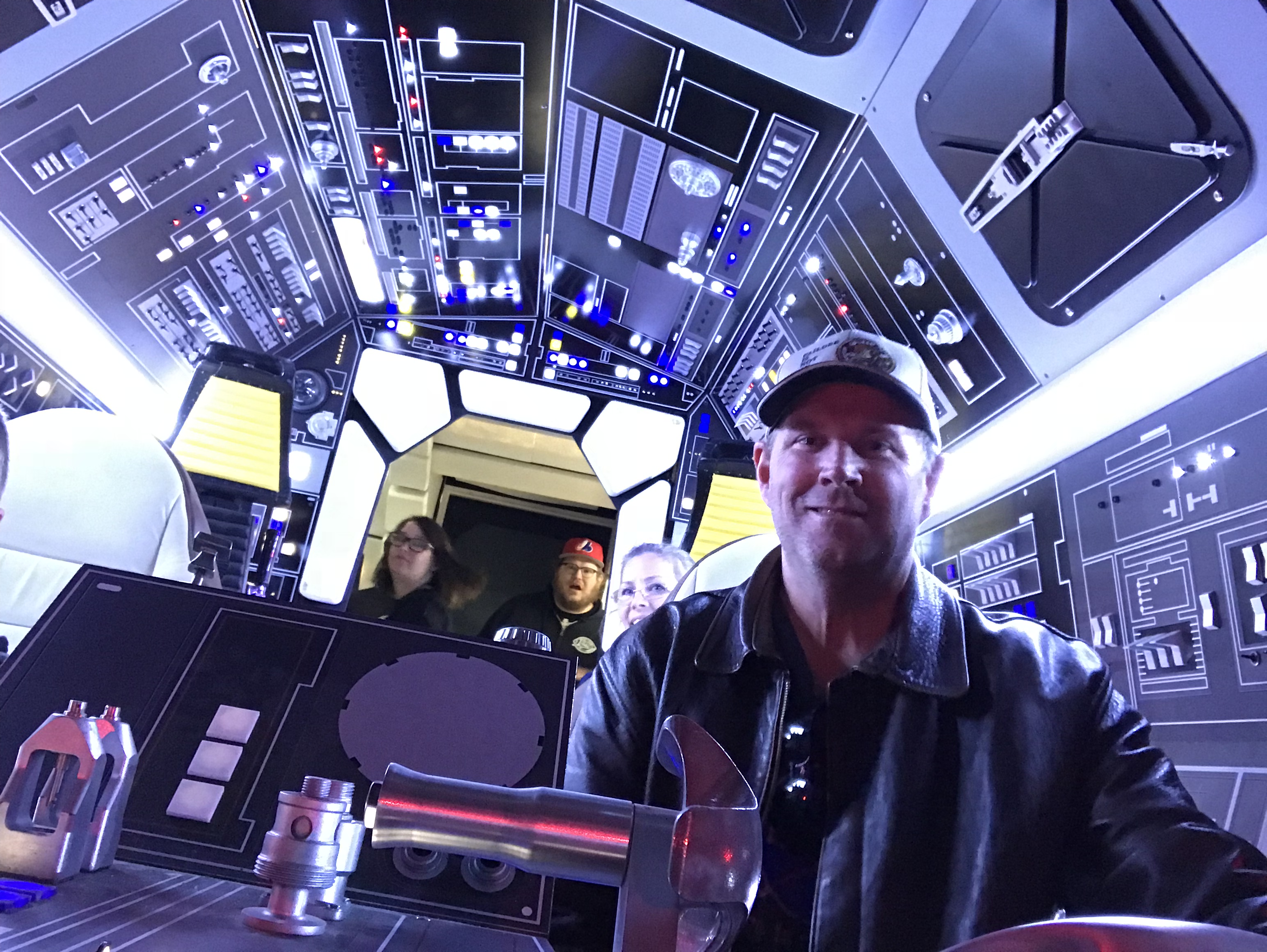
I suppose I enjoy writing about anything, but rarely I get to write about something as enjoyable as the topic of today. Sure, even with all the concerns that there are in the world, it is nice to take a moment to have a little fun, and that’s what I did for myself for Christmas this year. I’m a fan of Star Wars, and very specifically the Millennium Falcon and it just so happens that they opened recently the new ride Smuggler’s Run at Disney World. So, I planned a trip to ride it giving myself no cost restrictions due to the unique nature of this particular vacation. I timed my visit to enjoy another Star Wars ride that just opened called Rise of the Resistance which appears to be the most technical ride ever created anywhere in the world to date. The result was an extremely enjoyable five amusement park journey over a 5-day period and over 40 miles of walking that exposed me to some really wonderful moments of pop culture development and technical mastery through wild imaginations. The story I tell here is one that would have helped me while planning this trip so I offer it to those who are in such a need, so that they can enjoy their vacations as much, or more than I did.

I wasn’t going to spend that much money and time dedication to a vacation and not see the most technical ride ever made that was themed to Star Wars so seeing Rise of the Resistance for me was paramount. The ride opened on December 5th and I targeted my visit for five days later once some of the technical kinks and consumer drop off had occurred. I hoped that the Star Wars franchise had been damaged to the point where I might actually be able to get on the ride in the middle of a work week at Disney World on a winter day between Holidays. But, the demand for this ride from the public was so intense that the ride was selling out just minutes after the park was opening each day, so approaching my dates at the parks, I was getting a little worried. I wasn’t sure if the ride would even stay running long enough to allow the visitors who wanted to ride the thing time to actually ride it. So there was a lot that could have kept me from riding it which made getting the opportunity a unique adventure in perseverance.

While my wife and I were traveling to Orlando Disney had created a boarding party policy to help alleviate all the intense traffic that wanted to ride the ride each day, something they were calling a virtual line. In their other very cool and technical ride that has now been open for over a year, the Avatar attraction called Flight of Passage, the average wait times are in the 190-minute range. Disney knew that for Rise of the Resistance that the times would be even greater, so they used this virtual line concept to get people access to the rides. That meant that you had to get to the park early and get in line to get a boarding pass designation that would then give you a kind of time slot to ride the ride. This is where things got tricky, the boarding passes couldn’t be booked but by a phone app, once you entered the park. There was a lot of digital interactions that I was very weary of, because I felt a lot of things could have gone wrong, and often do in other places. But the level of Disney competence turned out to be extraordinary and it all worked out in the end with hindsight. But it was very stressful if you were dead set in riding this new attraction—which I was. People were lining up to get their place in line essentially at 4 AM. The gates to Hollywood Studios, which is the Disney park that holds the new Star Wars rides didn’t post openings until 8 AM, yet unofficially the gates were being opened at 6:30 AM and within a few moments of that early time, all the boarding passes for the entire day were being given out. I knew we had to get to the park early—really early, and that we’d have to fight our way to get a boarding pass from a restless crowd.

What made things even worse, was that the ride was breaking down a lot and the park wasn’t getting through all their boarding passes issued in a day so even if you managed to get a boarding pass, you still might not get to ride. So to ensure that we’d get a boarding pass we arrived at the park at 3:50 in the morning and were the seventh car in line waiting for the parking lot to open. And sure enough, more people started arriving in droves. Security let everyone enter the parking lot without paying since they didn’t have any workers at the park yet to run the admittance booth. By 4 AM a massive line had formed at the security check in that lasted until it was thousands of people. At around 5:30 AM they ran everyone through security so that a new line could form at the front gate of Hollywood Studios. It was there where the real race would be on. You had to zap your way into the park before they’d allow you to join a boarding party for Rise of the Resistance and all those people would be doing the same thing at essentially the same time. Boarding parties could change, you might be one of the first people in the park, but if you had trouble with your phone, or the system crashed, a ten-minute delay could put you from 20 to 50 quickly. Anything under 50 had a good shot of riding that day, anything over was sketchy. The Rise of the Resistance looked to do about 100 boarding parties per day, so there weren’t infinite rides to accommodate all the people who were there. So we were stressed about getting that boarding pass even though we were at the front of the lines in all the phases. Still, lots of things could have gone wrong.

At 6:30 AM, they let us in, my wife and I zapped our Magic Bands at the station and in we were. Within seconds we had the app opened and much to my relief, we were boarding party 13, which meant we were sure to get a ride that day. And as it turned out, we’d have the chance to get on the ride in about a half hour. By 7:30 AM we were off the ride and in line to ride the great Smuggler’s Run. By 9 AM we had explored most of what we wanted to see at the new Galaxy’s Edge and were free to use our Park Hopper option to explore the other parks and the best of their best attractions. It was good that Disney had opened their park so early to take away the pressure of the day and to give themselves more time to give everyone they could rides on Rise of the Resistance. Without knowing but hoping that they’d do the same kind of thing at Animal Kingdom for the new Avatar ride, we showed up at 8 AM for the 9 AM open and were delighted that Disney opened the park there early as well, at 8:30 AM. Since we were one of the first in line we headed to Flight of Passage and were able to get on the ride before 9 AM.

In the end after riding everything, which was spectacular, the Smuggler’s Run turned out to be my favorite ride at Disney. My wife and I rode a lot of rides on our vacation, but we ended up riding Smuggler’s Run 8 times and each time I found myself enjoying it more and more. It wasn’t just because I’m sentimental toward the Millennium Falcon, but because the ride is a technical marvel to me that was a lot of fun to fly. I was equally impressed by Flight of Passage and Rise of the Resistance, but the flamboyant nature of Smuggler’s Run won the day for me. It turned out to be a couple of the most enjoyable days of my life.

Disney was brilliant in their marketing strategy. They liked that Rise of the Resistance was overselling and that they had to show sell-outs which only increased the desire for demand. People not willing to get up as early as I did weren’t going to get a ticket, and that made it the hottest ticket in the country for something that turned out to be more Broadway play than amusement park attraction. All these rides were more than just rides, they were theatrical experiences in many ways and were deeply impressive. Disney turned out to be very flexible on their openings so that they could build up ride experiences by thinking out of the box and I was very impressed with them. They not only built some of the greatest rides in the history of the world released all within a short time of each other, but they knew how to build the anticipation. Getting on Rise of the Resistance was more treasure hunt than just slugging through a line, and that made it that much more special. And that turned out to be the secret to getting on the rides at Disney World that people wanted to see so much. If you were willing to get there early, they’d find a way. They get the long lines to market, you get to experience something very cool, and that did make it a truly magical experience.

Rich Hoffman