
Protecting the Supreme Court, Correcting the 14th Amendment’s Ambiguity, and Why President Trump’s Executive Order on Birthright Citizenship Must Stand: A Defense of Sovereignty, History, and the Republic Against Democrat Weaponization.

I have said it repeatedly, and the events of recent years only reinforce my conviction: the stability of the United States rests on strong institutions that resist the short-term, destructive impulses of partisan power grabs. I am a vocal supporter of the Supreme Court. America is far better off because we have this body of nine justices, even when they do not always rule exactly as I or any single citizen might prefer. That independence is its strength. Yet independence does not mean immunity from political pressure or erosion. We must guard the Court fiercely against attempts to pack it—something Democrats have openly discussed and pursued whenever they sense they can regain majorities in Congress and the White House. Court packing would destroy the legitimacy of the judiciary, turning it into just another partisan tool rather than the constitutional anchor it was designed to be. In the future, preventing such packing is issue number one if we want to preserve the Republic as the Founders and the Reconstruction-era Republicans envisioned it.

This brings us directly to the current debate before the Supreme Court in Trump v. Barbara and the related challenge to President Donald Trump’s executive order on birthright citizenship. On his first day back in office in January 2025, President Trump issued Executive Order No. 14,160, titled “Protecting the Meaning and Value of American Citizenship.” The order sought to clarify and limit automatic birthright citizenship under the 14th Amendment for children born in the United States to parents who are here illegally or on temporary visas. Trump attended the oral arguments himself on April 1, 2026—the first sitting president to do so in such a historic case—because the stakes could not be higher. He wanted the justices to see him, to understand that this is not abstract legal theory but a direct defense of American sovereignty against deliberate abuse. 

I watched the arguments closely, as did many Americans. The presentations from the White House side were strong, but I believe they could have been plainer in connecting the dots for the broader public and, frankly, for any justice still wrestling with the text. Some justices, including moderates like Chief Justice Roberts and Justice Barrett, seemed focused on the literal wording of the 14th Amendment’s Citizenship Clause. That is understandable in a chamber built for deep constitutional deliberation. But context, history, and the clear evil intent behind modern exploitation of that language demand more than wooden literalism. The Supreme Court has the opportunity—and I would argue the duty—to rule in favor of the executive order, or at least to rein in lower courts from overstepping while setting a precedent that corrects the ambiguity Democrats have weaponized for decades.

Let’s go back to the text and the moment that produced it. Section 1 of the 14th Amendment, ratified in 1868 during Reconstruction, reads: “All persons born or naturalized in the United States, and subject to the jurisdiction thereof, are citizens of the United States and of the State wherein they reside. No State shall make or enforce any law which shall abridge the privileges or immunities of citizens of the United States; nor shall any State deprive any person of life, liberty, or property, without due process of law; nor deny to any person within its jurisdiction the equal protection of the laws.”

The key phrase is “subject to the jurisdiction thereof.” This was not written in a vacuum. The Republican Party was founded explicitly to abolish slavery. The Constitution itself contained mechanisms—free speech, open debate, federalism with sovereign states competing against one another—that allowed moral philosophy to challenge the evil of slavery through open discussion. Slavery was not uniquely American; it was a global human tragedy. The Hebrew enslaved people in Egypt, freed by Moses and God through forty years in the wilderness, remind us that this is not about skin color but about the human experience of bondage. Every ancient culture practiced it. In the antebellum world, it remained economically entrenched because the Industrial Revolution had not yet provided mechanical alternatives to physical labor on plantations.

Democrats of that era were the party of the plantation South, defending slavery as essential to their economic and political power. Republicans, led by figures like Abraham Lincoln, fought to end it. The Civil War nearly destroyed the nation. Think of Gettysburg: the pivotal Union victory where Robert E. Lee overreached, and the Confederacy lost Stonewall Jackson earlier. Had things gone differently, slavery might have persisted longer, and the Democrat vision could have dominated. But Ulysses S. Grant took command after Gettysburg, ground down Lee’s army through superior resources and will, and the Union prevailed. Reconstruction followed, and the 14th Amendment was crafted with strong, deliberate language to protect the children of formerly enslaved people from being undermined by resentful Southern Democrats. It overrode the horrific Dred Scott decision and ensured that those born on American soil to people now under full U.S. jurisdiction would be citizens with equal protection. The strong wording was necessary because the country had almost died; Republicans needed ironclad guarantees against future subversion by the very forces that had supported secession and slavery. 

The amendment was never intended as an open invitation for the entire world to produce “anchor babies” by entering the United States—legally or illegally—and claiming automatic citizenship for their children as a pathway to chain migration and demographic transformation. That perversion creates an administrative nightmare and devalues the priceless gift of American citizenship. Only about 3 million people are born in the U.S. each year with that “lottery ticket.” Opening the borders to everyone dilutes its worth to nothing. You do not see mass “birth tourism” or anchor strategies overwhelming France, Germany, or other European nations in the same way because the U.S. Constitution’s freedoms and opportunities are uniquely attractive. Parents exploit this to give their children benefits they themselves lack, while the broader society bears the cost.

Democrats have exploited this ambiguity with vicious intent. Just as they once defended slavery and later resisted Reconstruction, they now use the 14th Amendment’s language—written to heal a broken nation after a war over bondage—as a Trojan horse for open borders. The strategy is clear: flood the country with illegal immigration, encourage births on U.S. soil, and secure a new voting base that tilts heavily Democrat. They have lain in wait behind the scenes, playing the long game, just as they did during Reconstruction when they sought to undermine enslaved people formerly. If they regain majorities, their plans include court packing to dilute the current conservative-leaning Court, eliminating the filibuster where convenient, and accelerating policies that erode national sovereignty in favor of a “citizens of the world” globalism. They are counting on literal readings that ignore the “subject to the jurisdiction” qualifier and the original context of full allegiance to the United States.

President Trump’s executive order directly corrects this abuse. It does not rewrite the Constitution; it restores the original meaning by directing agencies to interpret “jurisdiction” properly—excluding those whose parents owe primary allegiance elsewhere (illegal entrants or temporary visa holders not fully subject to U.S. authority in the complete sense intended). This aligns with historical exceptions noted even in cases like United States v. Wong Kim Ark (1898), which involved children of lawful, domiciled residents, not illegal or transient populations. The order prevents the slow erosion that Democrats rely on, where administrative inertia and activist lower courts allow the problem to fester until it becomes irreversible. We do not have decades to wait for a new amendment; the border crisis and demographic shifts are immediate threats. Republicans have often been too nice, playing by rules that Democrats discard when inconvenient. Trump’s presence in the courtroom signaled: this is serious; the people who elected me demand action now.

I cannot understand why any justice would struggle purely on constitutional grounds if they weigh the full history. The 14th Amendment’s strong language protected the most vulnerable—children of formerly enslaved people—from the very Democrats who had championed slavery. Now those same political forces (in evolved form) flip the script, using that protective language to punish America by overwhelming it with migration that collapses social services, wages, and cultural cohesion in under two years if unchecked. It is the same evil at work: resentment, power through numbers, destruction of the Republic’s foundations. Slavery was about controlling labor; today’s open-border policies are about controlling future electorates through imported dependency.

The Supreme Court sits in one of the most magnificent intellectual environments on Earth. The chamber, connected by tunnel to the Library of Congress with its majestic architecture and vast repository of human knowledge, invites precisely the deep consideration this case requires. I suggest to the justices: take a break from arguments, walk that tunnel, sit amid the great books, and reflect on humanity’s trajectory. The Republic pivots on decisions like this. The Library of Congress and Capitol Hill represent the accumulated wisdom that brought us here—from the wilderness with Moses, through the philosophical debates that birthed the Republican Party, through the blood of Gettysburg and the resolve of Grant, to the Reconstruction amendments that stitched the nation back together.

Chief Justice Roberts and Justice Barrett, in particular, have the chance to cement their places in history not as strict literalists who enable modern subversion, but as guardians who adapt to the clear wartime-like conditions at the border without destroying the Court’s integrity. A two-part ruling could work: affirm the executive branch’s authority to interpret and enforce the “jurisdiction” clause against abuse, while cautioning against overreach. Or uphold the order’s core while leaving room for Congress to legislate further clarity. Either way, failing to support it risks handing Democrats the weapon they crave. They will wait out Trump, then pack the Court if given power, bust the filibuster, and accelerate the “citizens of the world” agenda that treats American sovereignty as an outdated obstacle.

This is not abstract. As I have written in my books, including ongoing work like The Politics of Heaven, spiritual and cultural warfare underlies these battles. The same forces that resisted abolition now resist secure borders and a coherent national identity. Slavery was a global curse divorced from humanity through moral debate, protected by American mechanisms. Christianity and Western philosophy advanced the idea of divorce. Today, the blood cults of old may be gone, but new mechanisms—demographic replacement, erosion of citizenship’s value—serve similar ends of control and destruction of God’s ordered creation under sovereign nations.

Trump’s order offers the corrective language the 14th Amendment needed but could not foresee in 1868, when the threat was resurgent Southern Democrats undermining formerly enslaved people, not global migration engineered for partisan gain. The executive order prevents the administrative nightmare of “anchor” policies that reward lawbreaking. It honors the Reconstruction Republicans’ intent to build a stable, sovereign nation where citizenship means full jurisdiction and allegiance, not a loophole for invasion by birth.

I urge the Supreme Court to rule in favor of the order. Do so knowing that Democrats play by no rules when power is at stake. They have shown their hand with past court-packing proposals and threats to undermine safeguards. Republicans must not be “too nice” here. The slow pace of constitutional amendment cannot match the urgency; evil percolates in the interim. Support the executive order, set the precedent, and preserve the Court’s role as a bulwark rather than a casualty of partisan war.

This decision will be judged for centuries. Get it right. Visit the Library of Congress, absorb the weight of history—from the Exodus to Gettysburg to today—and return to chambers ready to defend the Republic. The human intellect that built these institutions demands it. American sovereignty, the value of citizenship, and the stability of our constitutional order hang in the balance. Trump showed up because he cares. The justices must now do their part in history.

Footnotes

1.  Text of the 14th Amendment, Section 1, ratified July 9, 1868.

2.  United States v. Wong Kim Ark, 169 U.S. 649 (1898), distinguishing lawful domiciled residents.

3.  Executive Order No. 14,160, “Protecting the Meaning and Value of American Citizenship,” January 20, 2025.

4.  Historical accounts of Reconstruction and the Joint Committee on Reconstruction’s intent to protect enslaved people’s children formerly.

5.  Debates surrounding Democratic resistance to abolition and Reconstruction policies.

6.  Oral arguments in Trump v. Barbara, April 1, 2026.

7.  References to court-packing proposals by Democrats in recent Congresses.

8.  Civil War context, including the Battle of Gettysburg and Ulysses S. Grant’s campaign.

9.  Biblical parallels to slavery and liberation (Exodus narrative).

10.  My prior writings on sovereignty, spiritual warfare, and cultural mechanisms in The Politics of Heaven and related works.

Bibliography for Further Reading

•  Hoffman, Rich. The Politics of Heaven: Evidence of a Vast Conspiracy Involving Giants, Disembodied Evil Spirits, and the Ancient Book of Enoch (ongoing project).

•  Hoffman, Rich. The Gunfighter’s Guide to Business.

•  Foner, Eric. Reconstruction: America’s Unfinished Revolution, 1863–1877.

•  United States v. Wong Kim Ark, 169 U.S. 649 (1898).

•  The Fourteenth Amendment to the U.S. Constitution (full text and ratification history).

•  Donald J. Trump, Executive Order No. 14,160 (January 20, 2025).

•  SCOTUSblog coverage of Trump v. Barbara oral arguments (April 2026).

•  Senate records on Reconstruction and the 14th Amendment.

•  Battlefields.org and National Park Service resources on Gettysburg, Grant, and Reconstruction.

•  Heritage Foundation analyses of birthright citizenship and the original intent of the 14th Amendment.

•  Jonathan Cahn’s works on recurring spiritual patterns in history (for broader cultural context).

Rich Hoffman

More about me

Click Here to Protect Yourself with Second Call Defense https://www.secondcalldefense.org/?affiliate=20707

About the Author: Rich Hoffman

Rich Hoffman is an aerospace executive, political strategist, systems thinker, and independent researcher of ancient history, the paranormal, and the Dead Sea Scrolls tradition. His life in high‑stakes manufacturing, high‑level politics, and cross‑functional crisis management gives him a field‑tested understanding of power — both human and unseen.

He has advised candidates, executives, and public leaders, while conducting deep, hands‑on exploration of archaeological and supernatural hotspots across the world.

Hoffman writes with the credibility of a problem-solver, the curiosity of an archaeologist, and the courage of a frontline witness who has gone to very scary places and reported what lurked there. Hoffman has authored books including The Symposium of JusticeThe Gunfighter’s Guide to Business, and Tail of the Dragon, often exploring themes of freedom, individual will, and societal structures through a lens influenced by philosophy (e.g., Nietzschean overman concepts) and current events.

I Hate Slow People: Speed is the key to a good American life

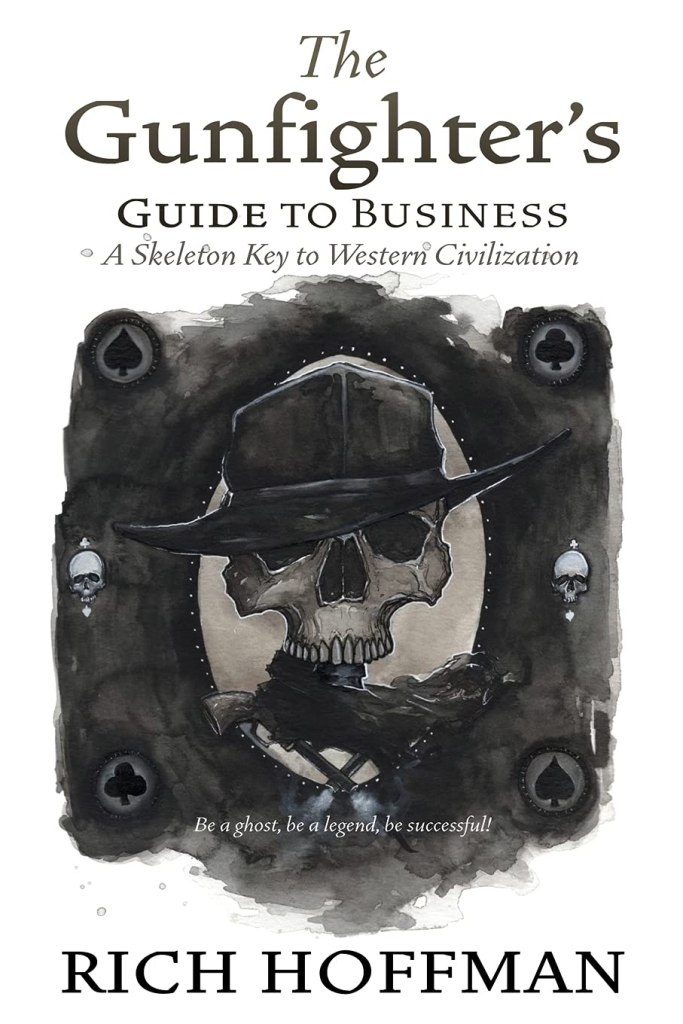
One of the most painful things in the world for me to deal with is slow people. I’ve always been attracted to fast draw with guns, and I have spent a lot of time practicing Cowboy Fast Draw over the years, working out the details of my book, The Gunfighter’s Guide to Business. But before any of that, I have always driven fast, very fast. I do everything fast because speed is how I have been able to do so many things in my life in such a short period. My attitude certainly clashes with people when I go to Europe. They can be friendly people, but they are sloooooooowwwww at everything. If a psychologist were to peel back my hatred of progressives and Democrats in general, they would discover that my reasoning is that they think too much like slow-minded people worldwide, especially in Europe. In Europe, they will often indicate that there is no reason to be in a hurry to get anywhere, just to relax. Well, that’s not acceptable to me, so when I talk about fast draw with guns, that is a place where I am in my happiest place, in working with time in fractions of a second rather than minutes and hours or even days. I talk about often in my book of the benefit of thinking fast, professionally because it allows you to do many things in a business day that might take others weeks to do, even on the executive side of a business.

I find that in my life, I often do in a day what many who are in leadership might consider reasonable in a week. And when I say all that, I don’t mean it as a reckless endeavor.   Accuracy, to me, is just as important. The lazy people of the world have created a falsehood: speed happens as a compromise to accuracy, and that just isn’t the case. Instead, it displays good people against bad people, and speed has a value that brings to light a person’s quality. It is most often the case that lazy, stupid people are also deliberately slow, and they are the first to say that if they go too fast, they will make a mistake. All that says to me is that the person using speed as an excuse is simply trying to use the fear of a low-quality experience to cover for their lack of skill.

For whatever reason, over these last several months, I have dealt with more government pinheads than usual. Maybe with Covid gone and just realizing it, they have finally come out of their homes and back into the workplace. But they are back, and when you deal with them, they are talking the same nonsense as before, only now it is worse. Covid protocols by the slow-minded CDC losers have given the lazy of the world an excuse now. It’s acceptable more than ever to these government types to take the European mindset of slower is better, and we’ll get there eventually. Just this last week, I had to sit through a meeting with one of these guys, who I’m sure is a nice fellow. He probably has kids that love him. Maybe even a wife. But, wow, was he a slow-minded fool. He kept repeatedly saying, “we have to slow down so as not to make a mistake.” I tried to be as polite as I could, but the guy was taking a 15-minute conversation and turning it into 50, and asking for more time, which I never have to give to anybody. At least not some government bureaucrat. I hate government as much as I do because government is slow. The people in it are slow. And I just don’t like slow people. I understand our constitution is meant to slow down the speed of government. I certainly would never stand for the kind of authoritarian government that China has. They argue that they can move fast because they don’t have to get votes. It’s just one person who decides then everyone else follows. They made it look like it works in China by killing off all the types of people who might stand in their way, so in that way, they have made a very compliant society. But, they are still slow; they just don’t transfer that slowness through a bureaucracy. What they do is considerably worse, but it’s all bad in my mind. They measure actions in minutes, which I do in fractions of a second. 

Learning to think as fast as you must in Cowboy Fast Draw is unique to American culture, and it’s something we should be proud of. Thinking fast is hard-working and innovative. Thinking slow is lazy and accepting of the conditions of the world. By practicing a sport that requires a shooter to think in fractions of a second, it also impacts everything else in your life. It won’t take long to become frustrated with the slowness of everyone, the mask-wearing liberal who pulls out in traffic and is too slow to get up to speed, or the slow person fumbling with their groceries at the self-checkout. It takes them too long to bag their food and fumble with the payment display. Or, god forbid, going to the license bureau, participating in the medical industry, or visiting the post office—slow, slow, mind-numbing slow. It is my point of view, based on experience, that the key to American life is speed, not relaxing and waiting for things to happen. Americans make things happen, and they don’t take all day to do them. Part of Making America Great Again is in the speed in doing it. In not hiding laziness behind an illusion of quality. If a person doesn’t slow down, that bad quality will follow. Americans understand that bad quality happens when speed is pressing because the person doing the task is unskilled, and they haven’t spent their lives making themselves faster with practice. They have accepted the low expectations of government and slow-minded cultures as a way to disguise their own mundane outlook on the world. 

I’ve heard the excuse, especially from machining where tolerances are stoned into thousands of inches over a 10′ span, that they could screw up the whole project if they go fast. I say to those people, not if you are good at what you are doing. If you are good, you will be as fast as you can possibly be, even on delicate jobs. Learning to think fast helps a mind process more information, which makes for a better life lived. If speed causes stress, well, it’s because the mind isn’t equipped for it, and it should be. Americans should never accept slowness on anything. Yet that is the new expectation coming out of Covid: we should all slow down, like the Europeans, take our time. Maybe sit back and have some tea and crackers if we get too stressed out. That government pinhead I am referring to is the worst kind of human being, a lazy person who uses slowness as a moral assumption, then projects it to others to explain the lack of effort. And when dealing with such slow people, it is infuriating! 

Rich Hoffman

Click to buy The Gunfighter’s Guide to Business

Dr. Fauci Learned Too Late: Americans will never accept the limits of an administrative state

The Limits of an Administrative State

In a lot of ways, I’m grateful for this mass chaos that we are seeing today.  I have been warning about it for so many years. Finally, there is context to the warnings.  Now people who don’t think about these kinds of government problems very much can see the cost of what a bad government can bring them.  I wish it weren’t so costly, but I think people needed to see it in a way that impacted them.  In their busy lives of paying the bills and picking their kids up from soccer practice, most people don’t have time to think very deeply about the things that impact them most.  And in many ways, the pressure put upon Dr. Fauci under the coronavirus management has been a fantastic exhibition of why the concept of the Administrative State is a perpetual failure every time it was tried.  But too often, these failures have been hidden behind successes that happen by accident.  Because President Trump left the White House and Biden came behind him, it left Dr. Fauci exposed.  As soon as we took away the positive sales talk of Trump, Covid-19 and its perpetrators were left open to their commitment to administrative failure. I’ve been talking about the Edward Bellamy book Looking Backward because it was the formation essentially of big government at the start of the Progressive era, from the perspective of 1888.  And its stupidity in assuming that creating an all-powerful administrative state would be the cure-all for corruption and door for all future progress was misplaced from the start.  Many have always known this, but not enough could see it clear enough to act on that knowledge, that is, until now. 

From the Sunday Morning interview with the defender of the progressive administrative state, Ted Koppel, Dr. Fauci was exposed.  It’s clear that during all the lead-up to the pandemic crises role-playing that had been done at events like Event 201 in New York during October of 2019, that the American constitution was not discussed as a limiting factor to crises management on a global scale.  No matter what role Bill Gates and Dr. Fauci had in creating the Wuhan virus through gain of function research in partnership with China, it is quite evident that they did not understand how Americans would react to their protocols.  At first, people gave Dr. Fauci the benefit of the doubt.  They allowed lockdowns.  They allowed for masks, social distancing, and all kinds of crazy ideas created by the administrative state Edward Bellamy and Karl Marx had always dreamed of.  One world functioning under the rules and regulations of medical professionals to essentially nationalize all industry under a Covid emergency.  But Americans expect a plan to solve a problem.  They were never going to accept a perpetual change state where the medical industry that we count on to keep us healthy would become some parental government figure telling us what to do all the time, over everything.  And that ultimately is what Dr. Fauci didn’t understand at the beginning, which he is learning about now. 

Do I think Dr. Fauci and Bill Gates are the intentional embodiment of evil?  No, I think they are typical bureaucrats who create evil by injecting themselves into a process as an administrative impediment to innovation, which is typical in all bureaucratic management bodies.  From their perspective, they were doing the right thing.  But see, that’s the problem.  The definition of the “right thing” is always determined based on the limited understanding of the characters involved. The administrative state that manages all that activity, as Edward Bellamy fantasized about, and progressives for the last 150 years have been trying to implement through our education system, was always going to be determined by the weakest links, which is something Americans ran from in Europe.  It was the cause of westward expansion.   Whatever anybody thinks about the destruction of the Indian nations, or the battles to free people from slavery, the revolutions, the piracy in the Caribbean, it all came from people wanting to be free of the administrative state, not chained to it more.  People like Dr. Fauci followed rugged Americans to their homes and now, through the media, were in every part of their lives.  So when there was no plan for getting rid of Covid, it would only be natural that people would grow to hate Dr. Fauci, as they hate all people who constantly intrude on their lives.  It’s clear now that Dr. Fauci and Bill Gates never understood how Americans think or why, among others, in the administrative state. 

To indicate that Americans have a misplaced belief about individual rights over the demands of a public health crisis is not to understand the essence of our country.  Progressives like the billionaires attacking America like Bill Gates, George Soros, Michael Bloomberg, and many others have shown why we all want freedom from an overarching administrative state.  Whenever a thought process is siloed, as it is in the case of a heavily bureaucratic government where someone like Dr. Fauci sets a policy that everyone else must follow, then you are limited in your life to the limits of such people.  If they are not the smartest in the world or even the best, people will get frustrated and get stuck behind them.  For instance, I say this often, but when people tell you to stay in your lane, what they mean is that they expect you to stay behind some big truck on a highway that is only going 40 mph up a big hill, and they don’t want you to pass them.  They want you to follow the rules and to lower your own speed limit and expectations to the weakest link on the highway.  But Americans like to travel at their own speed, and if they come upon such a slow-moving vehicle, they expect to pass.  When the administrative state says they cannot give them room to pass, there will be angry people.  And Dr. Fauci obviously never planned for that reaction, which he should have considered from the outset. 

Before this debacle of the Biden administration and Dr. Fauci’s massive failures, by sticking himself into all our lives so recklessly, people tended to forget about the slow-moving trucks once they could pass.  By the time they got where they were going, their tempers lowered considerably, and life went on.  But now, because people have been restricted for so long, and there are no plans for a fix, people are getting justifiably angry.  America was founded as a solution to the administrative state.  We left the world to start our own life in North America.  We did it to be free of people like Dr. Fauci.  Not to become more managed by them.  Free people will give them the benefit of the doubt until it goes on too long and they get tired of being stuck behind the slow-moving truck. “They will not stay in their lane forever.” It’s a lesson Dr. Fauci and the rest of them learned too late.  No matter how good the intentions were, the rule in America is that administration state incompetency will not be tolerated, whereas it’s generally accepted in the rest of the world.   They accept it in other countries because they have learned to.  But in America, the nature of the people who make up the country and have a constitution that limits the powers of government on purpose, the concept of yielding to infinite authority isn’t in the cards.  Eventually, people will pass the administrators, and if their goals were to slow down society with their slow-moving truck, they would always end up disappointed.  The hatred of Dr. Fauci and the political division that has erupted over Covid is healthy, and it’s good for people to see it this way instead of through actual violence.  Perhaps this lesson will sink in and make us a better society.  But it won’t change America into an administrative state. Instead, maybe now people will listen better when we warn about it in the future. 

Rich Hoffman

Click to buy The Gunfighter’s Guide to Business

The Experts in Plato’s Cave: Fear of learning the truth

Plato’s Cave Wall

When things start getting disjointed and the pressure starts blurring reality, I always turn to books for clarity—the process of reading books levels out the mind in very productive ways.  I don’t care if it’s a comic book; reading anything helps solve many thought problems.  And that is certainly the case in the news these days, where various Covid variants are scaring people into looking at everything but the fundamental issues of politics.  I told everyone what was coming when we started learning about Dr. Fauci and his connection to China, how China has long ago declared war on America. Still, we have not matched that aggression, and then there are election fraud problems from the 2020 elections.  There are some big topics out there that could topple our government in a very negative way.  There is some bad stuff going on that is now well out of control, so the perspective is needed. That’s when I turn to books to solve problems, and it always works.  Doing extensive reading brought my mind back to an old topic, the Cave Analogy from Plato’s Republic, a favorite.   In the video above, I explain it and how it applies to the politics of our times.  The problem we all have is that we know what is making the shadows on the cave wall. Still, we have an expert class that insists on staying in control of what we see and hear, even though their information is entirely irrelevant for 2021 sensibilities.

If you haven’t heard it before, this problem of experts attempting to shape reality based on their limited perspective is not a new problem.  It goes back several thousand years to around 375 BC to the times of the Greeks when they were trying to figure out how to operate a Republic as a form of government.  The assumption is that we are all chained to a pole looking at a cave wall and behind us in a cave is a fire burning.  Behind us are people walking around, for which we have never seen.  All we know of them is the shadows they cast on the cave wall.  Other people chained with us to a pole facing in the same direction have learned to predict the movements of the shadows on the cave wall depending on what time of day it was.  Again, not knowing that the shadows are caused by people moving about out of our sight.  Well, one person eventually manages to get loose and turn around and see for themselves the source of the shadows.  Breaking free, they attempt to tell the others tied to the poles what can be seen, but the experts don’t want people to pay attention.  So, the freed person goes by themselves into the world beyond the fire into the people moving about, talking with them, and learning who they are.  Eventually, the person finds themselves moving out of the cave altogether, and outside they see the sun and the more significant evidence of civilization.    

This evidence of reality provokes excitement, so the freed person returns to their colleagues tied to the pole and tells them what was seen outside the cave.  This causes anger from the experts because the threat to them is genuine.  Their entire value in existence has been to predict when the shadows will appear on the cave wall and determine their movements.  Obtaining a higher knowledge of what makes the shadows destroys everything that gives power to their lives, and they find it threatening.  They would much prefer to keep the public ignorant to be important by predicting the shadows on the cave wall.  Learning what makes the shadows for such people is the worst thing in the world.  Well, that pretty much spells out the problems of our modern times.  We have a lot of people in politics who make good livings predicting what the shadows will do.  But we live in a time where information is abundant, and we don’t need experts to tell us what things mean.  We have decentralization of information, and if one expert class attempts to keep us facing a direction we don’t want to be facing, we have the choice to look somewhere else anyway.  If we’re going to know what causes the shadows, we can look for ourselves.  That is the tension of our current political world.

Literature is such a good method of resolving problems because, as in the Allegory of the Cave, Plato had the same issues then as we do now.  There is nothing new about what we see out of the behavior of humanity.  There might be some modern tapestries to what we see, but the essence is always the same.  But what we should expect is to learn from history so that we don’t keep repeating it.  I think we can feel sympathy for those experts who only see the value of their lives in predicting where the shadows come from.  Or we can hate them for their attempt to control us.  Dr. Fauci comes to mind, a government expert who has spent his whole life predicting shadows and trying to scare us into behavior the government desired.  For him, we long ago untied ourselves and could see what was causing the shadows, even as the government has insisted that we not look behind us to where the fire cast its shadows.  Notice how we are talking about a Covid variant, but we never talk about a natural solution such as hydroxychloroquine. That’s when you know the expert class doesn’t care about you; all they do care about is their retention of power, their ability to scare you into behaving the way they want you to do, and they use the shadows to do it.  Once you know what causes the shadows, the experts lose all their power.

We have the same problem with the election fraud deniers, who want to look at the cave wall and let the experts translate what we see.  The election fraud of 2020 happened in the world beyond the fire, so the shadows of their existence don’t even show up on the cave wall.  Yet it happened all the same.  It just occurred beyond the vision of what we are looking at.  If we get up and away from our pole and look, we’ll see the evidence in the corner of the cave just beyond the firelight.  It’s not that the evidence isn’t there, but the experts expect to hide it from us by keeping our perspective from turning around and seeing it.  Because if we do get up and see for ourselves, the experts lose their power, which is terrifying.  Then what will happen to them once we realize how much we have been lied to.  For all those reasons and more, I love time with my books.  They are not connected to the internet.  Nobody is tracking what I’m reading by keystrokes.  It’s just me and my book in my reading chair.  If all the power in the world went out, I would still be fine and able to read history and reflect upon it.  And that is very empowering, especially in times like this.  But knowing something is only half the battle.  The trick is in making history different based on what we’ve learned.  And that is what our next step will be. 

Rich Hoffman

Click to buy The Gunfighter’s Guide to Business