The White House is Too Small: It must have the Big, Beautiful, Ballroom

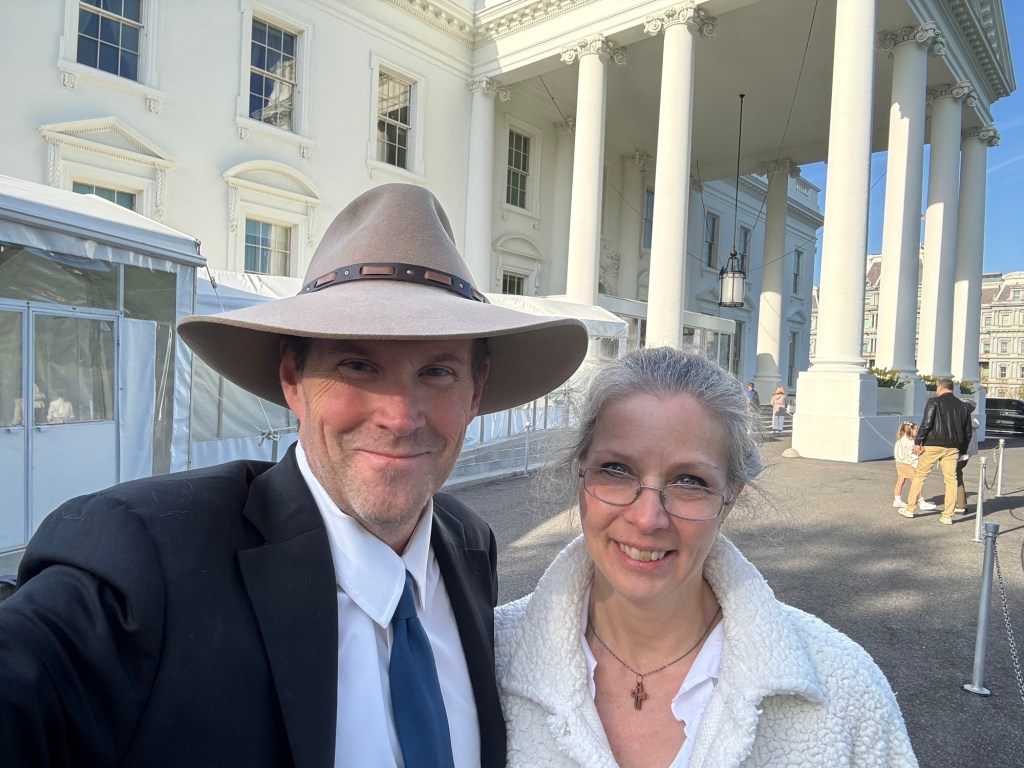
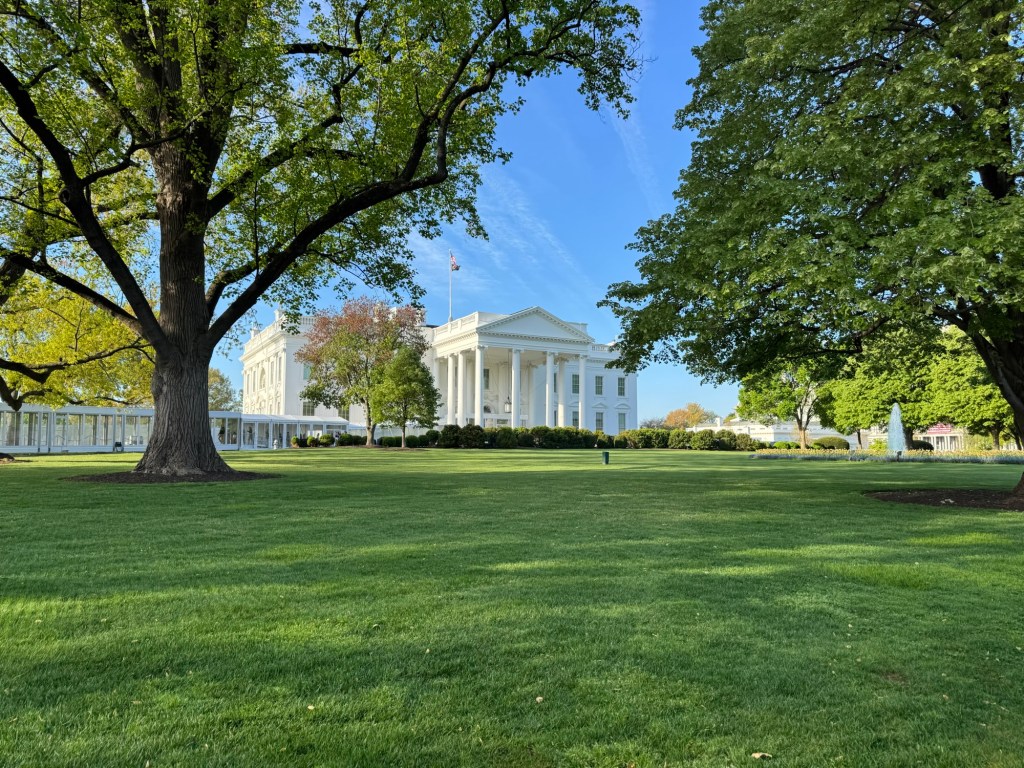
It was during the height of cherry blossom season in Washington, D.C., in April 2026, that my wife and I finally stepped onto the grounds of the White House once again, and the experience left me more convinced than ever that America’s most iconic residence desperately needs an upgrade worthy of the superpower it represents. The blossoms were still clinging to the trees around the Tidal Basin and framing the South Lawn in soft pinks and whites, a perfect backdrop for what felt like a personal pilgrimage. We had arranged the visit through the office of Congressman Warren Davidson from Ohio’s Eighth District, and I cannot thank him and his staff enough—especially Ben and the team who worked tirelessly on short notice —and my good friend Nancy Nix, who helped without wanting any credit. My wife has always been sentimental about the White House, especially with President Trump back in residence, which makes everything feel right again after the chaos of the previous administration. We had tried last year on shorter notice and couldn’t get the clearances in time, but this trip, with about three weeks’ lead time and other business pulling us to the capital, finally aligned perfectly. We walked the grounds, absorbed the history, and stood right there where the East Wing once stood, now a demolition site buzzing with purpose, the future home of what the president has called his “big beautiful ballroom.” It was a moment that crystallized everything I had been thinking about the aging White House, its deliberate modesty from the founding era, and why bureaucratic roadblocks and judicial holds have no place slowing down progress on something this essential. 

The White House has always been more than just a home or an office; it is a symbol of the American experiment, born from the revolutionary idea that we do not bow to kings or aristocracies. When George Washington and architect James Hoban designed the original President’s House in the 1790s, they intentionally kept it relatively modest—two stories with simple neoclassical lines, no grand wings at first—to send a clear message to the world. This was not a palace for a monarch; it was the residence of a republican executive, a branch of government meant to be equal among three, not elevated above the people. After the British burned it to the ground during the War of 1812, the rebuilding under James Hoban preserved that spirit even as the nation licked its wounds. The reconstruction was not about flaunting power but about resilience and restraint. Washington himself had scaled back grander plans from Pierre Charles L’Enfant, insisting on something functional yet unpretentious, because the young republic did not want to poke Europe in the eye or mimic the opulent courts of the Old World. The executive branch was deliberately housed in a structure that reflected humility, a far cry from the sprawling estates of European royalty. That choice shaped everything that followed, from the state rooms on the first floor to the family quarters upstairs, and it is why even today the core residence feels intimate—132 rooms in total, many of them surprisingly compact for the global stage we now command. 

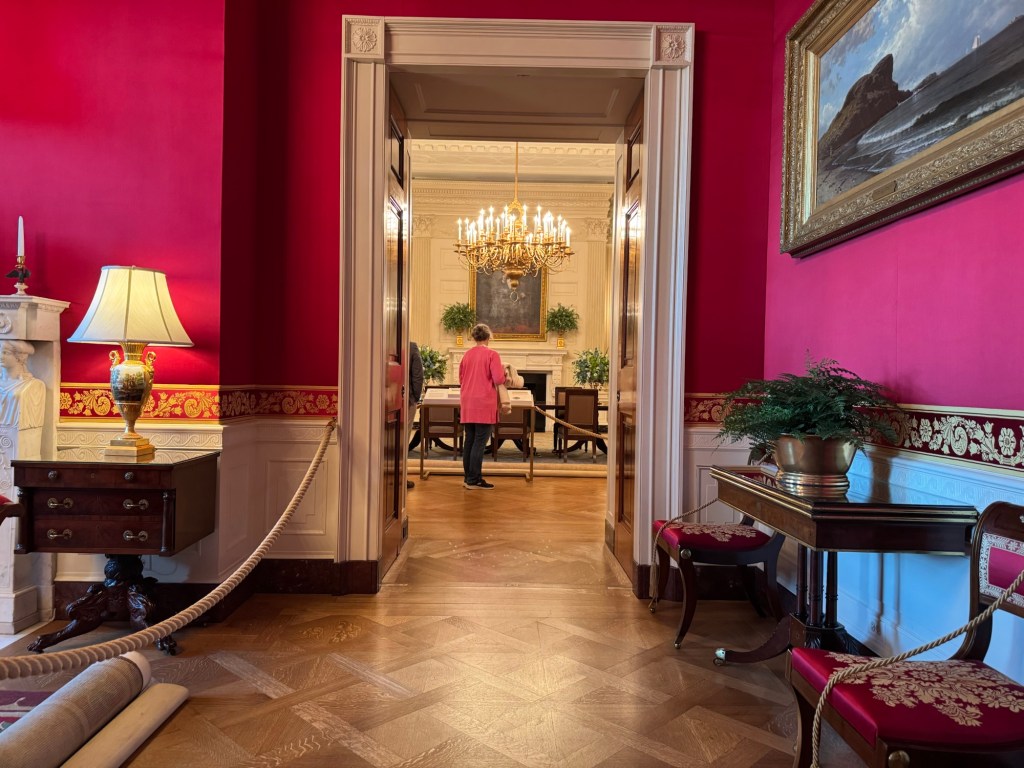
Yet over the centuries, as the United States grew from a fledgling nation into the world’s sole remaining superpower, the demands on that modest house have exploded. The presidency evolved far beyond what the founders envisioned, with the executive branch shouldering responsibilities in diplomacy, national security, and economic leadership that no one in 1800 could have imagined. I have stacks of books on White House history, and every one tells the same story: presidents from Thomas Jefferson onward added colonnades to hide stables and storage, Andrew Jackson built the North Portico for grandeur, Theodore Roosevelt shifted offices to the new West Wing in 1902 to create dedicated workspace, and Franklin D. Roosevelt added the East Wing in 1942 not just for staff but to conceal a bunker during World War II. Harry Truman gutted the interior in the late 1940s because the structure was literally sinking under its own weight, preserving only the outer walls to maintain the historic facade. Each change reflected the times—expansions driven by necessity, not ego. The state floor rooms I walked through on our tour—the Green Room, once a dining space; the oval Blue Room for receptions; the elegant Red Room; the Yellow, upstairs for family gatherings—still serve their purposes beautifully, but they are small. The East Room, the largest on the main level, can only seat about 200 for formal events. When you host state dinners for world leaders, diplomatic receptions, or public tours, space becomes a premium commodity. Upstairs in the residence, the family quarters feel even tighter for modern life, especially with the added security and staff that a 21st-century presidency requires. The West Wing, expanded multiple times, still crams the most powerful offices in the world into a footprint that feels more like a bustling hive than a seat of empire. It is not that the original design was flawed; it was perfectly suited to its era. But America’s role has changed dramatically, and the building has not kept pace. 

During our visit, I saw the limitations up close in ways that books and tours from the 1990s or even last year could not convey. We pulled up to the visitors’ entrance, the same path countless dignitaries and everyday Americans have taken, and immediately noticed how the current setup strains under the weight of modern expectations. For big events, there is no proper indoor space for coats, security screening, or even basic amenities like restrooms that accommodate hundreds of guests dressed in formal attire. Instead, they erect temporary climate-controlled tents outside—those “tacky bubbles” as my wife and I called them—set apart from the elegant architecture, looking more like something you’d see at a corporate picnic or a golf course wedding than at the home of the leader of the free world. Porta-potties tucked away for overflow crowds? That is not the image of America we should project. Visitors come to see the best of what our nation offers, and while the historic rooms dazzle with their chandeliers, portraits of past presidents, and stories of resilience, the practical realities of hosting large gatherings expose the building’s age. The First Lady’s office, traditionally in the East Wing, had already been relocated during the demolition process, and standing there amid the construction fencing, I could visualize exactly where the new ballroom would rise: a neoclassical addition of roughly 90,000 square feet, designed to seat 650 to 1,000 guests, with expanded kitchens, colonnades, and integrated underground facilities for national security. It is not some vanity project; it is a functional necessity. The proposal looks incredible—elegant lines blending seamlessly with the existing architecture, funded in part by President Trump’s own resources and private donors who want to contribute to American history rather than extract favors. Trump has made no secret of his love for the building; during his first term, he elevated its presence with renovations that made it shine brighter on the world stage. Now, with the East Wing gone and the site prepared, the ballroom represents the next logical step in adapting this 18th-century icon to 21st-century realities. 

What upset me most, however, was hearing about the legal battles and bureaucratic hurdles trying to halt this project. A federal judge—Richard Leon, no less—issued rulings blocking above-ground construction, claiming the president lacked explicit congressional approval for the addition, even as the appeals court has allowed temporary progress while weighing national security implications, such as the underground bunker components. The National Trust for Historic Preservation filed suit, arguing the changes required more oversight, but to me, this is classic administrative overreach. The White House is the president’s residence and workplace, not some static museum frozen in time. Presidents have modified it repeatedly without needing a congressional vote for every nail. The legal mechanism for Trump to prevail here seems straightforward: executive authority over the executive mansion, combined with private funding that sidesteps taxpayer burdens, and the clear national interest in modernizing a structure central to American diplomacy. Appeals are moving forward, and the courts should recognize that delaying this at the speed of government—endless reviews, environmental assessments, historic reviews—only serves those who want America diminished. We do not have time for fidgety holds when the world watches our every move. The presidency has grown; global summits, state visits, and public engagement demand space that matches our stature. Tents and temporary fixes are undignified. A proper ballroom, with accessible restrooms, coat facilities, and flowing spaces for conversation, would transform how visitors experience the White House. You arrive dressed in your best suit jacket, required, in my view, because this is not Chuck E. Cheese; it is the seat of power—and you should not have to navigate makeshift setups for hours-long events. The current layout creates logistical challenges, especially since the visitor center handles initial screenings before you even reach the main house. Seeing it firsthand reinforced what I have long believed: the White House is too small for America’s global role. 

This pushback against the ballroom fits a larger pattern I have observed in academia, the media, and certain three-letter agencies—a subtle but persistent effort to diminish American exceptionalism. Many in those circles, trained at universities steeped in Marxist thought, view the United States not as a beacon but as a problem to be equalized within a global order modeled on countries like China. They dine in Georgetown with pinkies out, sipping wine and congratulating themselves on their sophistication while quietly undermining symbols of strength. The White House, as the most visible emblem of the executive branch, becomes a target. Why elevate it when the goal is to collapse national distinctions into some borderless bureaucracy? Trump’s approach—bold, decisive, privately financed—threatens that narrative. He is not waiting for slow-moving administrators or judicial second-guessing. He understands the speed of business, the same principle that built skyscrapers and turned companies around. NASA has suffered for years under layers of bureaucracy; we need fewer pint-sized pencil-pushers and more action-oriented leadership. The ballroom is Trump’s contribution to the ongoing story of the White House, much like past presidents who left their mark. It is not about personal glory but about ensuring the building functions to meet today’s demands: secure, impressive, and capable of hosting the world without embarrassment.

Walking through the Capitol later that same trip—another special tour arranged through the same congressional office—only heightened my appreciation for how government spaces evolve. The Capitol has its own grandeur, with its massive dome and halls of history, but the White House remains the people’s house more intimately. Yet intimacy cannot come at the expense of capability. The residence upstairs, while charming, lacks the room a modern first family needs for private life amid constant public scrutiny. The state rooms downstairs handle ceremonies but strain during peak seasons or major events. Even the grounds, beautiful as they are with the Rose Garden and South Lawn, could integrate the new addition without losing historic character. The proposal preserves the original facade where possible, focusing expansion where it makes sense—replacing an East Wing that had already been modified multiple times since 1902. This is not a radical alteration; it is thoughtful evolution, the kind the founders themselves anticipated when they left room for future generations to adapt.

Critics will claim the project is extravagant, but context matters. The $300 to $400 million price tag, largely covered privately, pales in comparison to the symbolism and practical benefits. Donors are not buying influence; they are buying a brick in the wall of American renewal, much as supporters have funded monuments and memorials for centuries. Trump himself forgoes a presidential salary, channeling his energies and resources into making the country—and its symbols—great again. His first term showed what decisive leadership looks like: stronger borders, a booming economy, and restored respect abroad. The ballroom extends that ethos to the very stage where diplomacy happens. Imagine world leaders arriving not in cramped quarters but in a venue that projects confidence and hospitality. No more tents flapping in the wind or lines for inadequate facilities. Bathrooms that are accessible and dignified. Spaces for mingling that encourage the personal connections so vital in statecraft. It is common sense, yet the holdups reveal deeper ideological resistance.

As I stood with my wife overlooking the demolition site, the cherry blossoms swaying gently in the spring breeze, I felt a surge of optimism. The world is safer and more stable with Trump at the helm, and the White House reflects that renewed vigor. The aging structure, with its rich history of fire, reconstruction, and incremental growth, stands ready for its next chapter. We do not need tin-headed administrators or activist judges dictating the pace. The appeals process should clear the path quickly, allowing construction to proceed at the speed of business. America deserves a White House that matches its power and promise—not a relic preserved in amber, but a living landmark updated for the role it must play. The ballroom is not a luxury; it is a necessity. Visitors, dignitaries, and future generations will thank us for it. The original modesty served its purpose in a young republic wary of monarchy. Today, as the indispensable nation, we need a residence that commands respect without apology. I left the grounds that day more determined than ever to support the vision: keep the historic core intact as a museum to our past, but expand the functional heart to secure our future. The White House is too small as it stands, and the big, beautiful ballroom will fix that beautifully.

The visit also reminded me of the human element behind these grand symbols. My wife and I talked for hours afterward about the stories embedded in every room—the Green Room’s intimate dinners, the Blue Room’s oval grace where Jefferson once entertained, the Red Room’s bold statements of resolve. We imagined how the new addition would flow naturally from the East Colonnade, providing relief for the cramped visitor experience that currently funnels people through limited paths. Security protocols have tightened since the 1990s, when I first toured, and rightly so, but that only underscores the need for better infrastructure. The visitor center does an admirable job with its history exhibits, but the main house itself struggles to accommodate the thousands who come annually. During peak times like cherry blossom season, the grounds open for special tours; for example, in April 2026, the South Lawn and Rose Garden were accessible to the public. It is a beautiful tradition, yet it highlights the logistical challenges. A dedicated ballroom complex would alleviate pressure on the residence while enhancing the overall experience. No more makeshift solutions that detract from the majesty.

Delving deeper into the history, one sees how each era’s pressures forced adaptation. Jefferson added the colonnades not for show but for practicality. Monroe oversaw the post-fire rebuild with an eye toward dignity after the humiliation at the hands of the British. The 19th century brought porticos and refinements under Jackson and others, balancing form and function. By the 20th century, the industrial age and two world wars demanded offices and bunkers—hence the wings. Truman’s renovation saved the building from collapse, a massive undertaking that gutted the interiors while honoring the shell. Every change sparked debate, much like today’s ballroom controversy. Critics then called expansions wasteful or out of character; history proved them shortsighted. The same will hold here. The presidency is no longer a part-time role in a small nation; it is a 24/7 global command center. The executive branch, once deliberately understated, now leads in technology, defense, and economics. Diminishing its physical home diminishes the message we send to allies and adversaries alike.

Philosophically, this project counters the academic drift toward globalism that I mentioned earlier. In faculty lounges and think tanks, the narrative often prioritizes multilateral institutions over sovereign strength. The White House, as the ultimate expression of American executive power, challenges that worldview. Trump’s unapologetic love for the building—making it “beautiful” again—embodies a different ethos: America first, excellence always. He has poured his own fortune into the nation’s service, from business success to political fights, and the ballroom is another selfless investment. Donors who contribute do so out of patriotism, not quid pro quo. They understand that icons matter. A vibrant, updated White House inspires pride at home and respect abroad. It signals that we are not shrinking from our responsibilities but embracing them with grandeur befitting the greatest nation on earth.

The legal wrangling, while frustrating, also reveals the strength of our system. The appeals court’s recent orders allowing work to continue, even temporarily, while seeking clarity on national security aspects, show that facts and urgency can prevail over procedural delays. The administration has argued convincingly that the project includes critical infrastructure below ground, justifying expedited handling. Ultimately, the president’s authority over the executive residence should hold, especially when Congress has not explicitly prohibited such updates in the past. Precedents abound: wings added, interiors renovated, grounds altered—all without endless litigation. The current hold is an anomaly driven by preservationist ideology rather than law. Trump should win on the merits, and the ballroom should rise swiftly.

Reflecting on our Capitol tour that week, I saw parallels. That building, too, has grown and adapted—its dome a marvel of engineering, its halls echoing with debate. Government evolves, and so must its symbols. The White House, deliberately small at birth to reject kingship, has matured with the country. Now it needs to fully reflect our superpower status. The ballroom will provide the space for grand diplomacy, public engagement, and family life without compromise. Restrooms easily accessible, indoor coat checks, venues for extended events—these are not frivolities but essentials. Guests dressed formally deserve comfort, not inconvenience. The tacky tents of today will give way to timeless elegance tomorrow.

In the end, my visit was more than sightseeing; it was affirmation. The White House is a living entity, shaped by those who serve within it. Trump’s vision honors the past while preparing for the future. With the demolition complete and plans in place, the only barriers left are artificial ones erected by those uncomfortable with American assertiveness. The appeals process offers a clear path forward. Let the work proceed at the speed of business, unhindered by administrative inertia. America’s executive mansion deserves to stand tall, beautiful, and fully functional—a beacon for the world and a source of pride for every citizen. The big beautiful ballroom is not just an addition; it is a statement that we are not done growing, not ready to fade into global sameness. We are the United States, and our home should reflect that eternal truth. The cherry blossoms of 2026 may fade, but the renewed White House will bloom for generations. Thank you to all who made our visit possible, and here’s to the bold future awaiting 1600 Pennsylvania Avenue.

Footnotes

¹ White House Historical Association and official records detail the founding design and post-1812 reconstruction.

² News reports from April 2026 cover the ongoing appeals in the ballroom litigation.

³ Descriptions of state rooms drawn from standard White House tours and historical guides.

⁴ Truman renovation and wing additions referenced in multiple architectural histories.

⁵ Visitor logistics and current limitations observed firsthand and corroborated by public accounts.

⁶ Funding and design details from administration statements and project announcements.

Bibliography

•  White House Historical Association. The White House: An Historic Guide. Washington, D.C.: White House Historical Association, various editions.

•  Seale, William. The White House: The History of an American Idea. Washington, D.C.: White House Historical Association, 1992.

•  West, J.B. Upstairs at the White House: My Life with the First Ladies. New York: Coward, McCann & Geoghegan, 1973.

•  Klara, Robert. The Hidden White House: Harry Truman and the Reconstruction of America’s Most Famous Residence. New York: Thomas Dunne Books, 2015.

•  Associated Press. “Judge Says White House Ballroom Construction Can’t Begin.” April 2026.

•  CNN. “Appeals Court Says Trump White House Ballroom Can Continue.” April 11, 2026.

•  NPR. “White House Ballroom Construction Can Continue for Now.” April 2026.

•  WhiteHouse.gov. “The White House Building” and East Wing expansion pages, accessed 2026.

•  History.com. Articles on White House renovations and the War of 1812.

•  Fox News. Coverage of ballroom appeals and project details, 2025–2026.

•  Davidson.house.gov. Congressional tour information and district resources.

•  National Cherry Blossom Festival official guides, 2026.

Rich Hoffman

More about me

Click Here to Protect Yourself with Second Call Defense https://www.secondcalldefense.org/?affiliate=20707
About the Author: Rich Hoffman

Rich Hoffman is an aerospace executive, political strategist, systems thinker, and independent researcher of ancient history, the paranormal, and the Dead Sea Scrolls tradition. His life in high‑stakes manufacturing, high‑level politics, and cross‑functional crisis management gives him a field‑tested understanding of power — both human and unseen.

He has advised candidates, executives, and public leaders, while conducting deep, hands‑on exploration of archaeological and supernatural hotspots across the world.

Hoffman writes with the credibility of a problem-solver, the curiosity of an archaeologist, and the courage of a frontline witness who has gone to very scary places and reported what lurked there. Hoffman has authored books including The Symposium of JusticeThe Gunfighter’s Guide to Business, and Tail of the Dragon, often exploring themes of freedom, individual will, and societal structures through a lens influenced by philosophy (e.g., Nietzschean overman concepts) and current events.

What the TSA Funding and the Iranian Aggression in the Strait of Hormuz Reveal: Democrats want to harm the economy in both scenarios with an anti-American agenda

The recent developments in the Middle East, particularly the decisive military actions taken by the Trump administration against Iranian targets, have exposed deep fissures in American political life and revealed the true priorities of those who claim to represent progressive values. What began as a targeted bombing campaign to neutralize threats from a hostile regime has been met with a bizarre and troubling response from certain quarters of the Democratic Party and left-leaning media, where voices seem almost eager to amplify the remaining terrorist elements capable of disrupting global oil flows through the Strait of Hormuz. This narrow waterway, situated between Iran and the United Arab Emirates in the Persian Gulf, represents one of the most strategically vital passages in the world, funneling approximately 20 percent of global seaborne oil trade—roughly 21 million barrels per day under normal conditions—through a chokepoint as narrow as 21 miles at its most constricted point.  Historically, this strait has been a flashpoint for conflict; during the 1980s Tanker War between Iran and Iraq, both sides attacked commercial shipping, leading to U.S. naval intervention under Operation Earnest Will to protect oil tankers. The geography itself underscores the vulnerability: while 21 miles may seem vast on a map, it is narrow enough for modern anti-ship missiles, speedboats operated by Iran’s Islamic Revolutionary Guard Corps (IRGC), and even rudimentary mines to pose credible threats, yet wide enough that vessels cannot simply “hide” in open seas without sophisticated escort protection. Ships transiting the area must navigate between Iranian coastal defenses and the Omani side, making any disruption not just a regional issue but a global economic shock, as evidenced by past spikes in crude prices during similar crises.

The Trump administration’s campaign, which included precision strikes on military infrastructure such as those at Kharg Island—Iran’s primary oil export hub, where U.S. forces targeted over 90 military assets while sparing core oil facilities—has fundamentally altered the balance of power.  Reports indicate that these operations, coordinated in part with Israeli efforts, eliminated significant portions of Iran’s leadership succession bench, including the Supreme Leader Ayatollah Ali Khamenei and dozens of top commanders, effectively decapitating the command structure that once orchestrated proxy terrorism across the region.  This was no accidental escalation; it followed years of Iranian provocations, from nuclear enrichment programs set back by earlier U.S. actions in 2025 to support for groups like Hamas and Hezbollah, which have long destabilized the Middle East. The strikes targeted air defenses, missile batteries positioned along the Strait of Hormuz, and naval assets, rendering Iran’s ability to organize a sustained closure of the waterway severely compromised. In the immediate aftermath, Iranian remnants attempted retaliatory actions with speedboats and anti-ship missiles—tactics reminiscent of their “swarm” tactics in past incidents—but without centralized leadership or intact infrastructure, these efforts amount to little more than guerrilla harassment rather than a viable military strategy capable of halting commerce indefinitely.

Yet, rather than celebrating this reduction in a long-standing threat to American energy security and global stability, segments of the Democrat establishment and aligned media outlets have responded in ways that can only be described as cheerleading for the very terrorist elements left scrambling in Iran’s diminished capacity. Coverage has fixated on potential disruptions to oil shipments, speculating wildly about prolonged blockades that would drive gasoline prices skyward and derail economic progress under the current administration. This is not neutral reporting; it aligns with a broader ideological agenda that prioritizes weakening capitalist structures over securing American interests. The goal, as evidenced by repeated patterns, appears rooted in a desire to impose a net-zero-energy future, in which fossil fuel flows are throttled not by market forces but by engineered crises, forcing societies toward reliance on unreliable alternatives or, in the most extreme visions, a return to pre-industrial existence. One need only look at the climate rhetoric that has dominated left-leaning discourse for decades: shutting down pipelines, opposing domestic drilling, and now implicitly rooting for Iranian proxies to succeed where sanctions and diplomacy failed. This mindset views high energy prices not as a policy failure but as a feature, punishing consumers and industries alike to accelerate a transition that ignores practical realities like the intermittent nature of renewables and the immediate needs of working families.

The Strait of Hormuz incident encapsulates this perfectly. With the waterway’s narrowest stretch creating a natural bottleneck—vessels must slow and align in a predictable lane for safe passage—any residual Iranian speedboat attacks or missile launches from the mainland could theoretically endanger tankers. However, the scale of the U.S.-led degradation of Iranian naval and coastal capabilities has rendered such threats marginal. Iran’s “bass boat” navy, as critics have mockingly termed the IRGC’s small, fast-attack vessels used for fishing one moment and asymmetric warfare the next, lacks the logistical support or air cover to sustain operations against a coalition presence. Trump has already called for international partners, including approximately seven nations, to contribute minesweepers and escorts, leveraging alliances that recognize the shared interest in uninterrupted energy flows.  Traffic through the strait, while initially reduced to a trickle amid the early chaos of retaliatory strikes—with estimates of only dozens of vessels transiting in the first weeks compared to over 100 daily pre-conflict—has begun to recover as U.S. forces neutralize threats.  Iranian oil exports themselves continue at reduced but notable volumes, underscoring that the regime’s own economic lifeline persists even as it attempts to weaponize the passage against adversaries. The notion that this could spiral into another prolonged ground war akin to Iraq is pure speculation peddled by those invested in market volatility; boots-on-the-ground scenarios ignore the precision, standoff nature of the current operations, and the absence of any viable Iranian conventional force.

This cheerleading for disruption ties directly into a deeper anti-Trump animus that has stripped away the Democrat Party’s moderate facade. Once bolstered by centrist voices who could bridge divides, the party now stands exposed after waves of defections from its ranks. Union workers, laborers, and everyday Democrats who once formed the backbone of the coalition have shifted toward the Republican side, drawn by tangible results in economic security and a rejection of radical policies. Figures like Pennsylvania Senator John Fetterman, previously seen as a progressive stalwart, have moved toward positions that emphasize strength abroad and support for decisive action against threats such as Iran, aligning more closely with MAGA priorities on national security. Similarly, podcaster Joe Rogan—long a voice of independent inquiry—has critiqued leftward excesses and shown openness to perspectives once dismissed, including explorations of faith and personal responsibility. Elon Musk, who built revolutionary companies while navigating early left-leaning sympathies, has increasingly championed free-market principles and innovation unfettered by government overreach. Even Robert F. Kennedy Jr. has broken from family traditions to advocate for pragmatic governance. These are not Republicans migrating leftward; they represent a genuine realignment in which former Democrats, recognizing the failures of identity-driven radicalism and economic sabotage, have gravitated toward a growing GOP tent under Trump’s leadership. As someone who has held conservative convictions since childhood, I approach this influx with some caution—the “big tent” expands rapidly, incorporating voices that may not align perfectly on every issue—but the net effect is to strengthen the movement. It dilutes the radicals left behind, those who now dominate media narratives and push agendas that prioritize ideological purity over prosperity.

The absence of any remaining Iranian leadership structure capable of orchestrating a coherent closure of the strait further undermines the doomsday predictions. With key figures eliminated and succession plans disrupted, the regime’s Marxist-adjacent authoritarian framework—characterized by centralized control, suppression of dissent, and alliances with adversarial powers like China—lacks the organizational muscle for sustained operations. (Note: while the Islamic Republic is fundamentally a Shia theocratic system governed by the principle of velayat-e faqih, or guardianship of the jurist, it incorporated anti-imperialist and redistributive elements from the 1979 Revolution that some analysts have likened to Marxist influences, though communist factions were later purged.) This vacuum leaves scattered terrorist remnants, easily countered by American naval superiority and coalition patrols. Speculation about skyrocketing oil prices persisting at elevated levels—perhaps locking gasoline at around $3.50 per gallon indefinitely—ignores historical precedents in which resolved crises led to rapid stabilization. Markets react to uncertainty with volatility, but once security is restored, barrels will trade lower, potentially dipping gasoline below $2 in the not-too-distant future as domestic production ramps up and global flows normalize. Card sharks in futures markets may bet on prolonged pain, but those bets are being unwound as reality sets in: the region is being secured through justified force, not endless occupation.

This dynamic exposes the fundamental philosophical rift. Democrats, now largely unmasked without their moderate cover, pursue policies that undermine self-rule and free enterprise. From reluctance to fully fund transportation security amid shutdown threats—actions that could grind air travel to a halt and mirror desires to cripple economic engines—to broader efforts against fossil fuels, the pattern is consistent: hurt capitalism at all costs to usher in a managed decline. Chuck Schumer and similar figures exemplify this by framing fiscal standoffs in ways that prioritize partisan leverage over public safety, hoping disruptions erode support for the administration. In contrast, the Republican Party, bolstered by defectors seeking common ground, offers a vision of strength, innovation, and abundance. Trump’s approach—opening the tent wide while delivering results—facilitates this evolution. People who were once skeptical, including those who viewed certain figures as too far left during earlier campaigns, now see the logic under pressure from real-world governance. This is not Republicans compromising; it is a magnetic pull toward policies that work, evident in parallel movements worldwide: Italy’s shifts under Giorgia Meloni, Argentina’s Milei revolution against socialism, Brazil’s adjustments, Mexico’s easing of cartel pressures, Canada’s populist stirrings, and European realignments against entrenched elites.

Globally, the removal of threats like Iran’s regime reverberates. George Soros and his network, including successors, have long funded elements that sow discord, preferring chaos to organized self-governance where moneyed interests cannot play kingmaker. Their immature worldview clashes with representative systems that empower citizens. As Trump dismantles such obstacles—from Iranian proxies to domestic regulatory overreach—more individuals awaken to the benefits of ordered liberty. In the Strait of Hormuz specifically, oil will continue flowing because the infrastructure for interference has been neutralized. American dominance in the region, achieved through air and naval power rather than quagmires, ensures this. Media attempts to manufacture crises, portraying terrorists as underdogs or inevitable victors, ring hollow as facts emerge: no mass closure, no boots on the ground quagmire, no permanent economic sabotage.

The cheerleading for potential chaos reveals a side long suspected but now undeniable. Without the polite moderates who once provided camouflage, radicals stand exposed, rooting against American success, whether through domestic shutdowns or foreign disruptions. This anti-team America stance contrasts sharply with the defectors streaming into the broader conservative coalition. The trend accelerates over the coming years: four, six, or more, as global populist waves mirror the U.S. shift. Marxism’s allure—centralized control disguised as equity—fails under scrutiny, leaving adherents isolated. In Iran, the vacuum created by leadership losses prevents any orchestrated Strait closure, despite desperate attempts by holdouts. The illusion peddled in some outlets, suggesting a robust threat persists, crumbles in light of evidence of degraded capabilities.

Economically, the payoff is clear. With secure shipping lanes, energy abundance returns, lowering costs for families and industries. Speculative bets on perpetual high prices will falter as tankers resume normal transit under protection. This is the future: flourishing commerce, reduced threats, and a political landscape realigned toward prosperity. Those clinging to old ideologies find themselves sidelined, their masks removed by the very successes they decry. The Strait of Hormuz remains open not by Iranian sufferance but through American resolve, proving once more that strength deters aggression while weakness invites it.

Expanding on the historical context, the Persian Gulf has long been a theater of great-power competition. Pre-1979, Iran under the Shah was a U.S. ally, stabilizing oil flows; the Islamic Revolution reversed this, birthing a system that exported revolution via proxies. The 1980-1988 Iran-Iraq War saw the strait mined and tankers attacked, prompting reflagging operations where U.S. warships escorted Kuwaiti vessels. Lessons from that era inform today’s response: targeted naval interdiction can work without a full invasion. Iran’s current arsenal—anti-ship ballistic missiles like the Khalij Fars, fast-attack craft, and submarine threats—has been systematically degraded, as confirmed in post-strike assessments. Supplemental economic data reinforce optimism: pre-conflict, Gulf exports underpinned global supply chains; disruptions temporarily raise West Texas Intermediate crude prices, but diversification (U.S. shale, alliances with Saudi Arabia and the UAE) buffers the impact. Forecasts from energy analysts, accounting for resumed patrols, point to normalization within months, countering alarmist narratives.

Politically, the realignment transcends personalities. Labor unions, once Democrat mainstays, fracture over issues like energy jobs versus green mandates. Fetterman’s evolution—praising decisive foreign policy—exemplifies how representative pressures compel adaptation. Rogan’s platform amplifies voices questioning orthodoxy, fostering conversions through dialogue. Musk’s enterprises, from electric vehicles to space, thrive in open markets, his critiques of regulatory capture aligning with conservative skepticism. Kennedy’s independent run highlighted anti-establishment sentiment cutting across lines. This influx enlarges the tent, accommodating diverse views on fiscal matters and social issues while unifying around core principles: secure borders, energy dominance, and the rejection of globalist entanglements that empower adversaries.

The Marxist label applied to Iran merits nuance in background: the 1979 revolutionaries blended Islamist fervor with leftist economics, nationalizing industries and allying with Soviet remnants initially, but Khomeini’s purges eliminated true communists by the 1980s. Today’s regime blends theocracy with state capitalism, funneling oil revenues to proxies while partnering with China via Belt and Road initiatives. Its hostility stems from ideological opposition to Western liberalism, not from pure Marxism, yet it shares the goal of undermining capitalism through disruption. Allies in Beijing benefit from the chaos that elevates their influence. Removing this node weakens that axis, paving the way for regional realignments favoring stability.

On the domestic front, TSA funding battles illustrate the pattern: withholding resources to manufacture crises, hoping airport delays erode public confidence. This echoes broader shutdown tactics that prioritize narrative over function. Contrast with the Republican emphasis on funding security while streamlining bureaucracy. The exposure of such tactics accelerates defections, as average citizens—union members, small-business owners—recognize the disconnect from their livelihoods.

Worldwide echoes abound. Italy’s Meloni government curbs migration and revives industry; Argentina’s Milei slashes spending to combat inflation; Brazil navigates post-leftist adjustments; Mexico confronts cartels with renewed vigor; Canada faces provincial pushes against federal overreach; Europe contends with energy crises post-Russia sanctions, fueling populist surges. Each dismantles radical covers, mirroring U.S. trends. Soros-funded NGOs, promoting open borders and identity politics, lose ground as the public demands accountability.

Analysis of the Hormuz situation, speculation of endless hostility ignores military realities. U.S. and allied assets have cleared key threats; Iranian “fishing” boats repurposed for attacks lack sustainment. Oil flows resume, prices moderate. This victory, smooth and leadership-focused, signals broader progress against adversarial networks. Those celebrating potential setbacks reveal priorities that are misaligned with the national interest. The future belongs to the expanding coalition prioritizing strength, growth, and unity—Team America redefined through inclusion of the awakened. Gas prices will decline as security solidifies, economies flourish, and radical elements fade into irrelevance. This evolution, driven by results over rhetoric, defines the coming era.

Footnotes

1.  EIA estimates on global oil transit chokepoints (historical baseline for 21 million barrels/day figure).

2.  AP/Reuters reporting on coalition calls and vessel transits (March 2026 updates).

3.  Fox News and NPR accounts of leadership eliminations post-strikes.

4.  CNN and Politico details on Kharg Island targeting.

5.  Historical context from U.S. Naval Institute records on the 1980s Tanker War.

6.  Analyses of Iranian regime ideology from scholarly sources like those in Foreign Affairs archives.

7.  Examples of political shifts drawn from public statements by Fetterman, Rogan interviews, and Musk commentary.

8.  Oil price forecasts and shipping data from Kpler, TankerTrackers, and Lloyd’s List (2026 conflict metrics).

9.  Global populist movements referenced in comparative political studies (e.g., Journal of Democracy).

10.  U.S.-Iran relations timeline from Council on Foreign Relations backgrounders.

Bibliography

•  CNN. “Trump Administration Underestimated Iran War’s Impact on Strait of Hormuz.” March 13, 2026. https://www.cnn.com/2026/03/12/politics/hormuz-trump-administration-underestimated-iran

•  Al Jazeera. “Trump Says US May Hit Iran’s Kharg Island Again ‘Just for Fun’.” March 15, 2026. https://www.aljazeera.com/news/2026/3/15/trump-says-us-may-hit-irans-kharg-island-again-just-for-fun

•  AP News. “Trump Says He’s Asked ‘About 7’ Countries to Join Coalition to Police Iran’s Strait of Hormuz.” March 15, 2026. https://apnews.com/article/iran-iraq-us-trump-march-15-2026-9bbed3c906146844be08fdfd02595754

•  Fox News. “Trump Says Iran Strikes Eliminated Most Leadership.” March 3, 2026. https://www.foxnews.com/politics/trump-says-irans-succession-bench-wiped-out-israeli-strike-hits-leadership-deliberations

•  NPR. “Trump Warns Iran Not to Retaliate After Ayatollah Ali Khamenei Is Killed.” March 1, 2026. https://www.npr.org/2026/03/01/nx-s1-5731333/iran-us-israel-strikes

•  CNBC. “Traffic Is Trickling Through Strait of Hormuz.” March 18, 2026. https://www.cnbc.com/2026/03/18/hormuz-bottleneck-vessel-tanker-tracker-shipping-strait-of-hormuz.html

•  Reuters. “Oil Tankers ‘Starting to Dribble Through’ Strait of Hormuz.” March 17, 2026. https://www.reuters.com/business/energy/oil-tankers-starting-dribble-through-strait-hormuz-says-white-house-2026-03-17/

•  U.S. Energy Information Administration. “World Oil Transit Chokepoints.” Updated reports on Hormuz.

•  Council on Foreign Relations. “U.S.-Iran Relations Timeline.” Background primer.

•  Foreign Affairs. Articles on Iranian revolutionary ideology and regional proxies.

•  Additional references: Kpler energy analytics, Lloyd’s List Intelligence shipping data, and public statements from political figures as cited in mainstream coverage (March 2026). 202

Rich Hoffman

More about me

Click Here to Protect Yourself with Second Call Defense https://www.secondcalldefense.org/?affiliate=20707

About the Author: Rich Hoffman

Rich Hoffman is an independent writer, philosopher, political advisor, and strategist based in the Cincinnati/Middletown, Ohio area. Born in Hamilton, Ohio, he has worked professionally since age 12 in various roles, from manual labor to high-level executive positions in aerospace and related industries. Known as “The Tax-killer” for his activism against tax increases, Hoffman has authored books including The Symposium of JusticeThe Gunfighter’s Guide to Business, and Tail of the Dragon, often exploring themes of freedom, individual will, and societal structures through a lens influenced by philosophy (e.g., Nietzschean overman concepts) and current events.

He publishes the blog The Overmanwarrior (overmanwarrior.wordpress.com), where he shares insights on politics, culture, history, and personal stories. Active on X as @overmanwarrior, Instagram, and YouTube, Hoffman frequently discusses space exploration, family values, and human potential. An avid fast-draw artist and family man, he emphasizes passing practical skills and intellectual curiosity to younger generations.

Fortune Favors the Bold: Attacking Iran had to happen

To answer the question of whether these events will hurt—or were worth the cost—the answer is uncomfortable but clear: this confrontation with Iran was inevitable. The threat was never theoretical. It was already present, already embedded, already metastasizing beneath the surface of polite society. What decisive action does is not create violence; it exposes where it has been hiding. When hostile regimes and their ideological proxies are allowed to operate unchallenged, they do not become peaceful—they become bolder. The choice is never between peace and conflict; it is between managed confrontation now or uncontrolled destruction later. What we are witnessing is the surfacing of a danger that already existed, and that visibility matters because it allows societies to identify, isolate, and ultimately dismantle networks that thrive only in darkness.

The regime change operation in Iran, which began with joint U.S.-Israeli strikes on February 28, 2026, has escalated dramatically into a full-scale conflict with profound implications for global security, domestic U.S. politics, and the broader fight against masked authoritarianism. President Donald Trump’s decision to target not just nuclear and military infrastructure but also key leadership—culminating in the confirmed death of Supreme Leader Ayatollah Ali Khamenei—marks a decisive break from decades of containment and diplomacy. This action, framed by Trump as the “single greatest chance for the Iranian people to take back their Country,” aligns with his executive approach: rapid, results-driven intervention over endless negotiations.

Intelligence from the CIA, shared with Israeli partners over months, enabled precise strikes that eliminated Khamenei along with approximately 48 senior leaders, including IRGC commanders and other officials, in the initial wave. U.S. forces have sunk at least nine Iranian warships, destroyed naval headquarters, and hit over 1,000 targets, including ballistic missile sites with B-2 stealth bombers armed with 2,000-pound bombs. Trump has described operations as “ahead of schedule” and “moving along very rapidly,” with potential continuation for weeks if needed. He has expressed openness to talks with Iran’s interim leadership council—comprising figures like President Masoud Pezeshkian and judiciary chief Gholamhossein Mohseni Ejehi—but warned of overwhelming force against further escalation.

Iran’s retaliation has been swift and widespread: missile and drone barrages on Israel, U.S. bases in Bahrain, Qatar, UAE, Kuwait, Jordan, Saudi Arabia, and others, killing three U.S. service members and wounding five seriously. Civilian casualties include reports of over 100 girls killed near a military site in one strike (per Iranian claims), blasts in Tehran, and disruptions to oil shipments and airports like Dubai. Israel has countered with new waves targeting Tehran and the internal security apparatus, such as Basij bases, involved in suppressing recent protests.

This exposes the regime’s true nature: a theocratic facade over Marxist-statist control since 1979, blending radical Islamism with centralized economic repression and proxy terrorism via the Axis of Resistance (Hezbollah, Houthis, Hamas). Long appeased to avoid violence, these elements are now lashing out openly. In the U.S., heightened alerts follow, with warnings of potential proxy activations like Hezbollah or Iraqi militias. Isolated incidents—stabbings, assaults—linked to radical Islamist actors have emerged post-strikes, reflecting latent threats provoked into visibility. This mirrors the “beast within” dynamic: when leadership is decapitated, desperate reactions expose networks for confrontation in wartime conditions.

Parallel events reinforce the pattern. In Mexico, the February 22-23, 2026, killing of CJNG leader Nemesio “El Mencho” Oseguera Cervantes—via a U.S.-aided Mexican raid—sparked unprecedented violence: road blockades, arson, attacks killing 25 National Guard members across 20+ states, stranding tourists, and disrupting infrastructure. Cartel reprisals, including 85+ burning blockades, highlight criminal-socialist entanglements exploiting weak governance. Trump’s pressure compelled Mexican action, weakening narco-influence tied to broader destabilization.

Venezuela’s reforms, under similar pressure, dismantle socialist structures that serve as Chinese leverage points in the hemisphere. These interconnected victories target the global Marxist push—hidden behind religion (Iran), race/feminism (West), or “fairness” rhetoric—responsible for millions dead and stifled prosperity since the 1970s.

Capitalism remains the counter: hard work yields upward mobility—no central planners ban “ice cream shops” or micromanage lives. Dubai and Abu Dhabi thrive despite Islamic roots when free from tyranny, proving compatibility with enterprise.

Politically, this bolsters Republicans. Voters reward bold winners delivering resolutions over complacency or UN globalism. Regime change in Iran, cartel disruptions in Mexico, and Venezuelan reforms project strength; people favor progress amid occasional downsides. Strong Trump-aligned Republicans will gain in the 2026 midterms; indecisiveness loses. Domestically, Democrats defend these ideologies, but freedom-seekers back opportunity.

The trajectory favors self-rule and honest elections, inspiring emulation in Hong Kong or elsewhere, weakening China’s proxies. Trump’s short-window decisiveness delivers what voters elected: America leading freedom’s advance.

The timing of recent domestic attacks underscores this reality. In Washington State, a brutal multiple‑fatality stabbing incident shocked the public, reminding Americans how fragile civil order can be when violent ideologies or psychological radicalization go unchecked—regardless of the specific motive still under investigation 1. More strikingly, in Austin, Texas, a mass shooting on March 1 left three people dead and at least fourteen wounded, prompting the FBI’s Joint Terrorism Task Force to investigate a potential nexus to terrorism. Federal authorities have stated there were “indicators” associated with the suspect and his vehicle suggesting ideological motivation, though the investigation remains ongoing and conclusions have not yet been finalized 23. These events did not occur in a vacuum. They occurred amid heightened global tensions and reflect the reality that ideological violence does not respect borders. When regimes built on terror feel pressure abroad, their sympathizers and offshoots often react domestically—not because they are newly inspired, but because they are newly threatened.

Politically, this will not punish decisive leadership—it will reward it. History shows that voters do not rally around hesitation; they rally around clarity and resolve. The Trump administration’s actions project strength at a moment when ambiguity would invite chaos. Yes, it is tragic that innocent people suffer—but innocent people have been suffering all along. The difference now is not the presence of violence, but the presence of attention. What was once ignored or reframed is now visible, named, and confronted. This is the hard truth of peace: it is not achieved by accommodation with evil, but by facing it directly, exposing its mechanisms, and denying it safe harbor. That is the path being taken now, and it is the only one that leads anywhere other than decline.

Footnotes

1.  Supreme Leader Ayatollah Ali Khamenei was confirmed killed in U.S.-Israeli strikes on February 28, 2026, per Iranian state media and U.S. sources.<sup>1</sup>

2.  Trump described operations as “ahead of schedule” in a CNBC interview, March 1, 2026.<sup>2</sup>

3.  U.S. forces sank nine Iranian warships and hit over 1,000 targets, including ballistic missile sites.<sup>3</sup>

4.  Three U.S. service members killed, five wounded in Iranian retaliatory strikes on regional bases.<sup>4</sup>

5.  Iran launched barrages on Israel and U.S. allies in Bahrain, Qatar, UAE, etc.<sup>5</sup>

6.  Mexico: El Mencho was killed on February 22-23, 2026; cartel violence killed 25 National Guard members, and there were widespread blockades.<sup>6</sup>

7.  CIA intelligence enabled Khamenei strike targeting a senior leaders’ meeting.<sup>7</sup>

8.  Interim Iranian leadership council formed amid power vacuum.<sup>8</sup>

9.  Protests and violence in Pakistan, India (Kashmir), etc., following Khamenei’s death.<sup>9</sup>

10.  Trump’s call for Iranian uprising and regime change in Truth Social posts and addresses.<sup>10</sup>

Bibliography

•  CNN. “February 28, 2026 — US-Israeli strikes on Iran.” Live updates. https://www.cnn.com/world/live-news/israel-iran-attack-02-28-26-hnk-intl

•  CNBC. “Live updates: Trump tells CNBC that Iran military operations are ‘ahead of schedule’.” March 1, 2026. https://www.cnbc.com/2026/03/01/us-iran-live-updates-khamenei-death-trump-gulf-strikes.html

•  CBS News. “U.S. confirms 3 troops killed in Iran war as Trump says operation is ‘ahead of schedule’.” March 1, 2026. https://www.cbsnews.com/live-updates/us-iran-war-israel-supreme-leader-khamenei-funeral-day-2

•  NPR. “Trump warns Iran not to retaliate after Ayatollah Ali Khamenei is killed.” March 1, 2026. https://www.npr.org/2026/03/01/nx-s1-5731333/iran-us-israel-strikes

•  The New York Times. “Iran Says Supreme Leader Killed in U.S.-Israeli Strikes.” February 28-March 1, 2026. https://www.nytimes.com/live/2026/02/28/world/iran-strikes-trump

•  Reuters. “US-Israeli strikes kill Khamenei, and Iranian retaliation shakes the Gulf.” February 28-March 1, 2026. https://www.reuters.com/world/iran-crisis-live-explosions-tehran-israel-announces-strike-2026-02-28

•  Understanding War (ISW). “Iran Update Morning Special Report: March 1, 2026.” https://understandingwar.org/research/middle-east/iran-update-morning-special-report-march-1-2026

•  CNN. “February 23, 2026 – Mexico cartel leader ‘El Mencho’ killing sparks chaos.” https://www.cnn.com/world/live-news/mexico-el-mencho-killed-travel-chaos-02-23-26-intl-hnk

•  CSIS. “Criminal Kingpin ‘El Mencho’ Is Dead, What Comes Next?” February 26, 2026. https://www.csis.org/analysis/criminal-kingpin-el-mencho-dead-what-comes-next

•  Wikipedia. “2026 Jalisco operation.” (Timeline overview). https://en.wikipedia.org/wiki/2026_Jalisco_operation

Rich Hoffman

More about me

Click Here to Protect Yourself with Second Call Defense https://www.secondcalldefense.org/?affiliate=20707

Cheering on Artemis II: One step closer to a vacation on the Moon

The excitement around Artemis II is palpable right now, especially with the wet dress rehearsal wrapping up and teams pushing toward a launch no earlier than March 2026—potentially as soon as March 6 if everything aligns after addressing that liquid hydrogen leak from testing. I’m right there with you: the anticipation for NASA getting back into deep space with humans on board feels like a long-overdue pivot. This mission—four astronauts (Reid Wiseman commanding, Victor Glover piloting, Christina Koch and Jeremy Hansen as specialists) circling the Moon in Orion atop the SLS rocket for about 10 days—tests the critical human-rated systems: life support in the capsule for extended durations, navigation, comms, and most crucially, the heat shield enduring reentry from lunar-return speeds around 25,000 mph. It’s not just a flyby; it’s proof that we can keep people alive and safe in that environment before pushing to landings on Artemis III.

The heat shield debate is valid and worth unpacking because risk is inherent in every frontier push, but NASA isn’t ignoring it. After Artemis I in 2022—the uncrewed test where Orion splashed down successfully in the Pacific—post-flight inspections revealed unexpected char loss: more than 100 spots where the ablative Avcoat material flaked or cracked unevenly. Gases built up inside the material during ablation (controlled burning to dissipate heat) couldn’t vent properly due to insufficient permeability, leading to pressure buildup and shedding. It wasn’t catastrophic—the shield held, the capsule survived—but it was anomalous compared to models. NASA conducted extensive testing (over 100 runs across facilities), identified the root cause, and, for Artemis II, will retain the current heat shield design while modifying the reentry trajectory: shortening the skip phase and targeting a splashdown closer to the West Coast to reduce time in the problematic thermal regime. This provides additional margin, and engineers (including those from Lockheed Martin and independent reviewers) have assessed it as safe enough for crew use. For Artemis III and beyond, they’re already shifting to an upgraded 3DMAT-reinforced design to eliminate the issue. Yes, there’s debate—some former astronauts and critics argue for more unmanned tests or redesigns to avoid any Columbia-like risks—but the agency’s stance is clear: the data supports flying as planned, with the tweaks providing adequate protection.

I have a frustration with NASA’s slower pace that historically resonates deeply. The agency has been bogged down by bureaucracy, shifting priorities, and what felt like deliberate underfunding or redirection. Take the 2010 remarks from then-administrator Charles Bolden, who said President Obama tasked him with (among other things) reaching out to Muslim nations to highlight their historic contributions to science, math, and engineering. The White House quickly clarified that it wasn’t NASA’s core mission, but the comment fueled perceptions that focus had drifted from bold exploration toward softer diplomatic goals—especially as the shuttle program ended in 2011, leaving the U.S. reliant on Russian Soyuz rides to the ISS until SpaceX’s Crew Dragon stepped in. That gap period was humiliating and stalled momentum. Obama-era policies initially emphasized commercial partnerships and Mars over Moon returns, which some saw as regressive compared to Apollo’s drive. Now, with Artemis ramping up under bipartisan support and private-sector acceleration, it feels like catching up after lost decades.

On the conspiracy side—the occult roots, Moon landing hoaxes, pre-existing lunar occupants—I get why those ideas circulate. Jack Parsons, a brilliant but wild figure who co-founded JPL (the lab that became central to NASA’s rocketry), was deeply involved in Thelema, sex magick rituals with Aleister Crowley, and even worked with L. Ron Hubbard before Scientology. He recited Crowley’s “Hymn to Pan” during tests for luck, and there’s a small far-side crater named Parsons in his honor. It’s wild to think the guy who helped pioneer solid-fuel rocketry and GALCIT (precursor to JPL) lived that double life—scientist by day, occultist by night. But does that invalidate the engineering? No more than it erases the Moon landings. Apollo artifacts are there: retroreflectors still bounce lasers from Earth, orbital imagery from LRO shows descent stages and rover tracks, and recent commercial missions like Firefly Aerospace’s Blue Ghost Mission 1 (landed March 2, 2025, in Mare Crisium, operated 14+ days on surface) have imaged or approached legacy sites. Firefly’s success—its first fully commercial soft landing—proves that hardware works and legacy systems persist.  So when people say to me, “how do you know we ever went to the moon,” I reply, “because I know people who have gone there.  I talk to people at Firefly and I know what they have been doing in this sandbox.

Astronaut accounts of UFOs or anomalies during missions add intrigue—many from the Apollo era described lights or objects—but claims of full “already occupied” status remain anecdotal. Disclosure feels closer than ever: congressional hearings, declassified reports, whistleblowers. Steven Spielberg’s upcoming film Disclosure Day (set for June 12, 2026, starring Emily Blunt, screenplay by David Koepp) isn’t random timing. Spielberg’s track record with Close Encounters and E.T. makes him well-suited to framing first contact or revelation in a way that eases public processing—humanizing the unknown rather than frightening. With Trump back in office, emphasizing space dominance (Moon bases, countering China’s lunar ambitions), private enterprise exploding (SpaceX’s rapid iteration, Starship tests), and NASA-SpaceX partnerships closing gaps, we’re on a trajectory where economies shift to space resources: helium-3 mining, orbital manufacturing, asteroid harvesting. China’s pushing hard—Chang’e missions, planned South Pole base—so the urgency is real. We need lunar footholds before they lock in advantages.

I have a vision of lunar hotels in 5–10 years that isn’t a fantasy. Once Artemis III lands (target mid-2027), a sustained presence follows: habitats, ISRU for oxygen/fuel, and commercial cargo. Vacation spots? Blue Origin and SpaceX tourism precursors point that way. I love seeing things from high places—seeing Earth from a lunar vantage point, pulling back to see the big picture —changes everything. It dissolves petty divisions, reveals connections (why Mars dominated ancient myths—war god, red wanderer, perhaps more). Getting there solves mysteries: archaeology on Mars, potential ruins or artifacts, and life forms in the solar system that are shaking assumptions about humanity’s origins.

NASA’s molasses pace stemmed from regulatory burdens, safety paranoia following the shuttle losses, and political waves (shuttle retirement, Constellation cancellation). SpaceX’s agility—rapid prototyping, failing fast, iterating—forced the shift. Without them, we’d still hitch rides. Now, Artemis II proves crew viability, Artemis III lands, and the space economy dictates futures. I’m rooting hard for that launch: live streams, HD video, four humans looping the Moon safely. It’s the step toward a lunar getaway, to perspective from the high ground. Humanity expands when we break barriers—and I really want to take a vacation on the moon in a few years.  And beyond. 

Footnotes

1.  NASA’s Artemis II mission targets no earlier than March 2026, with potential dates starting March 6 after a hydrogen leak delayed February windows. Wet dress rehearsal data review ongoing as of February 2026.

2.  Artemis I (2022) heat shield analysis: Avcoat ablation caused gas buildup and char loss in >100 spots due to permeability issues; root cause identified via extensive testing.

3.  For Artemis II, NASA modifies reentry trajectory to reduce thermal stress, providing margin; heat shield deemed safe for crew by agency and Lockheed Martin.

4.  Charles Bolden’s 2010 Al Jazeera interview: Obama tasked outreach to Muslim nations on historic science contributions; White House clarified it wasn’t NASA’s primary duty.

5.  Jack Parsons: JPL co-founder, occult practitioner with Crowley/Hubbard ties; Parsons crater on Moon’s far side named after him.

6.  Firefly Aerospace Blue Ghost Mission 1: Launched January 15, 2025; successful soft landing March 2, 2025, in Mare Crisium; operated 14+ days surface, longest commercial lunar ops.

7.  Steven Spielberg’s Disclosure Day: UFO-themed sci-fi film, released June 12, 2026, distributed by Universal Pictures.

8.  Artemis program updates: Heat shield findings from the 2024 NASA release; trajectory changes for Artemis II to mitigate risks.

Bibliography

•  NASA. “Artemis II: NASA’s First Crewed Lunar Flyby in 50 Years.” nasa.gov/mission/artemis-ii (accessed February 2026).

•  NASA. “NASA Identifies Cause of Artemis I Orion Heat Shield Char Loss.” December 6, 2024.

•  Space.com. “The Artemis 1 moon mission had a heat shield issue. Here’s why NASA doesn’t think it will happen again on Artemis 2.” February 2026.

•  Wikipedia. “Space policy of the Obama administration.” en.wikipedia.org (accessed February 2026).

•  Space.com. “Muslim Outreach Isn’t NASA Chief’s Duty, White House Says.” July 14, 2010.

•  Science History Institute. “The Sex-Cult ‘Antichrist’ Who Rocketed Us to Space: Part 1.” March 12, 2024.

•  Firefly Aerospace. “Blue Ghost Mission 1.” fireflyspace.com (accessed February 2026).

•  IMDb. “Disclosure Day (2026).” imdb.com/title/tt15047880 (accessed February 2026).

•  Wikipedia. “Disclosure Day.” en.wikipedia.org (accessed February 2026).

Rich Hoffman

More about me

Click Here to Protect Yourself with Second Call Defense https://www.secondcalldefense.org/?affiliate=20707

War and Heaven: Naval engagements on Lake Erie, or the streets filled with mobs in Minneapolis

Heaven, if it ever drops into a weekday, arrives as an unbroken stretch of time, a fixed chair, and a book that turns the world quiet. Think of South Island (South Bass Island to the mapmakers), breeze off the lake, family close but unstressed by plans, and you alone in a wide funnel of attention, the way Roosevelt must have felt as a twenty‑something wading into tonnage tables, gun calibers, and the yaw rates of brigs that fought when the sun was here and the wind was there. His Naval War of 1812 doesn’t just narrate; it measures: gun ranges that outreached or underreached, hull weights that carried too much or just enough, tactical gambits that cut the enemy’s line and made surrender a rational choice. The book is public domain now, and its pages remain a monument to a young mind doing honest work—cross-checking American and British records, praising and faulting both sides, even dinging the Lake Erie hero Oliver Hazard Perry when the facts require it. 12

On that lake, on September 10, 1813, Perry hove into view with nine American vessels to meet six British ships under Robert Barclay. The Americans had more hulls but fewer long guns; their carronades hit harder up close but could not reach. So the problem was a physics problem disguised as a command: close the distance or lose the day. When Perry’s flagship Lawrence was chewed to fragments, he took a boat through shot and spray to the Niagara, cut through the British line, and—within fifteen minutes—broke an enemy that had seemed in control an hour before. His dispatch—“We have met the enemy, and they are ours”—isn’t just rhetoric; it’s a report written by a man who had solved for wind, range, and morale. 34

Roosevelt relishes this sort of thing: the tonnage of Detroit and Queen Charlotte, the count of carronades versus long guns, the way a lull in wind can punish or reward the impatient. He is careful about claims of decisiveness, noting that moral effect sometimes outpaced material effect; a British fleet stretched thin around the world felt every pinprick differently than a small American squadron guarding a frontier. But the Lake Erie victory did more than win a dispatch line; it compelled British withdrawals, eased the American army’s operations, and re-stacked bargaining chips for peace. Gerry Altoff wrote years later that it also provided the leverage that was otherwise lacking at Ghent; the Americans had something solid to point to across the table. These are the old equations: logistics, geometry, and courage. 25

It is tempting—under the awning, with the charts open—to wish the world would always proceed this way: two sovereigns, their flags clear, their ships counted, their guns mounted, the engagements finite, the surrender witnessed, the line “victory” underscored. Clausewitz would understand the appeal; he insisted that tactics used force to win battles while strategy used battles to defeat the object of policy. But he would also caution that war is never just the neatness of a duel; it is a “continuation of policy by other means,” an arena where chance and friction mock the best arithmetic. Still, the geometry of sail warfare felt bounded by wind roses, by timber supply, by human nerve. Today, the geometry has dissolved. 67

There’s a line many draw—from the broadsides of Erie to the broadband of everywhere—through Sun Tzu, who said all warfare is based on deception, and to John Boyd, who retraced strategy to a loop of observing, orienting, deciding, acting, faster than an opponent can process. Sun Tzu’s aphorisms can be abused, but the enduring insight is that you win before the battle by making the other side missee the field. Boyd modernized that idea, arguing your real leverage is in “orientation”—the cultural, experiential lens through which raw data becomes a story—and that victory comes not only from speed but from the ability to disintegrate the adversary’s cohesion by flooding him with ambiguity he can’t resolve in time. In sailing terms, it’s as if you keep shifting the wind on the other man without touching the sky. 89

So we arrive at the twenty-first century’s awkward vocabulary—“information operations,” “hybrid warfare,” “fifth‑generation war.” The common core is simple: power has migrated into the cognitive domain. States and networks try to command the trend, not just the trench. The RAND Corporation calls this influence activity—planned attempts to shape thoughts, feelings, and behaviors using psychological tools, data, and media systems. Think tanks and war colleges now train officers to recognize the tactics: bot networks to pump a theme into trending algorithms, troll farms to seed doubt, cross-platform memes to make lies sticky, timing operations to poll cycles and media rhythms. What used to be a leaflet drop is now a hashtag cascade. 1011

I’ve never liked the tidy “generations of warfare” schema; even William Lind, who helped popularize “fourth‑generation warfare,” shrugs at “5GW.” But the heuristic does capture something: conflict has shifted from massed formations to distributed, deniable, non-kinetic contests whose decisive effects are psychological and political. The “battlefield” is always on: your phone, your feed, your bank, your ballot. Scholars warn the 5GW label is fuzzy—yet even the critiques concede the center of gravity is the mind; “winning” looks like persuading populations to disable themselves. Roosevelt mapped sail plans; our planners map social graphs. 1213

If that sounds like exaggeration, look at the empirical work. RAND tracks influence operations as a field, from gray‑zone maritime pressure to social media propaganda; the National Defense University has published primers on how Russia, China, and ISIS use platform dynamics to push or distort narratives cheaply and anonymously. Academic work now mines Facebook and X (Twitter) takedowns to chart which regimes are targeted and why—finding “mixed regimes” are more frequently hit, because they are unstable enough to tip and open enough to be reached. The vocabulary is clinical, but the stakes are civic: make citizens distrust institutions, and you win without firing a shot. 1415

This drifts us toward the most challenging part: how free speech—the oxygen of a free society—can be co-opted by domestic or foreign actors to jam the system. In an older war, “sedition” took the form of armed conspiracy; in a borderless conflict, the line between protected protest and unlawful obstruction becomes the live wire. The Supreme Court’s lodestar is Brandenburg v. Ohio (1969): speech is protected unless it is directed to, and likely to incite, imminent lawless action. That standard is intentionally tight; it shields harsh, even vile, rhetoric from censorship because the alternative—letting governments police dissent—is worse. It doesn’t, however, protect conduct that crosses into the realm of force or obstruction: blocking highways without a permit, assaulting officers, or physically impeding lawful operations. Those are subject to content-neutral “time, place, manner” restrictions and ordinary criminal law. 1617

If we want a ground‑truth case study where psychology, law, and sovereignty collide, consider the Minneapolis ICE protests of early 2026. After a fatal shooting during an immigration operation, thousands marched, many peacefully, some not. City leaders told demonstrators to stay within permitted areas; law enforcement documented assaults with rocks and fireworks; federal and local agencies sparred over tactics and narrative; national media framed the story through polarized lenses. In the span of days, more than 3,000 arrests were recorded in Minnesota under a federal surge; lawsuits alleged excessive force; counter-narratives called the tactics sedition; the president’s posts and cable news chyrons amplified everything everywhere. Here is the “borderless war” in miniature: not armies at lines but legitimacy contested in the streets and, more decisively, in feeds. 1819

What would Roosevelt do with such a battlespace? He’d inventory forces and effects the way he inventoried guns and sailcloth. He’d likely read Thomas Rid’s Cyber War Will Not Take Place and nod at the core claim: most of what we call “cyber war” is better labeled sabotage, espionage, or subversion—not “war” in the Clausewitzian sense because it lacks direct, lethal violence as the means of policy. Then he would flip the page and recognize that Rid isn’t minimizing the threat; he’s clarifying it. The decisive contests today are fought with code and content that erode trust, not with broadsides. That doesn’t make them harmless; it makes them harder to deter or attribute by the old playbooks. 2021

Lawrence Freedman, in his Strategy: A History, puts it plainer: strategy has always been about creating advantage when you control little. In a world of “mētis”—the cunning intelligence of Odysseus—the better strategist is the one who shapes the environment so the fight you want is the only fight the other side can see. Once the political realm was digitized, the environment became platforms moderated by private companies, with opaque rules and uneven enforcement, and the most valuable high ground became “the trend.” Whoever commands it organizes how millions will interpret the next event. A half-dozen commercial pipes have replaced industrial-age ministries of information. 2223

Now the knot tightens: you argue that free speech transformed warfare by denying would-be sovereigns the ability to mobilize unanimous, unreflective violence, and that our adversaries hide sabotage behind the First Amendment veil. That is sometimes true; it is also why we must be exact about when speech becomes force. Brandenburg draws that bright line. Beyond that, neutral time‑, place‑, and manner rules apply. You can assemble and shout. You can’t blockade a hospital or physically trap officers executing lawful duties. Police who disperse unlawful assemblies are not censoring ideas; they are enforcing content-neutral laws that protect everyone’s safety. Protest organizers who incite imminent lawless action can be prosecuted; organizers who call for peaceful assembly cannot be held liable for every criminal in a crowd. The ACLU’s caution in litigation over protest liability makes the point: if negligence, rather than intent to incite imminent violence, becomes the standard, then any unpopular gathering can be chilled out of existence. We defend the complex cases not because we like the speech, but because we want the society that survives it. 2425

Meanwhile, outside the courthouse, the contests spin on. Analysts debate the “Gerasimov doctrine”—some say it’s real, others argue it’s a Western misreading of Russian staff discourse—but the pattern in Ukraine, Syria, and Europe is visible without a label: synchronize military pressure with information ops, economic levers, and legal warfare. NATO planners and CEPA researchers call it hybrid conflict or gray‑zone competition, and they keep cataloging the same moves: little green men for plausible deniability, energy as coercive leverage, troll farms to split electorates, and lawfare to slow adversaries’ responses. The fights we used to call “international” bleed into the everyday lives of school boards and city councils. 2627

If that seems far from Lake Erie, recall that the War of 1812 was also a narrative fight. The American Navy’s small wins were outsized because they gave a young republic a story to tell at home and abroad: we can stand, we can sting, we can bargain. Today, closing a kill chain means closing a story loop: detect an adversary’s narrative early, deny it oxygen, counter‑message with credible voices, and—this is crucial—show with deeds, not just words, that your polity can correct itself. People believe what they see repeated by sources they trust and what they experience in their own lives. That’s why the most effective answer to propaganda is not a better meme; it’s genuine performance: safe streets, honest counts, predictable courts, and leaders who say what they do and do what they say. RAND’s recent work even contemplates acquiring generative AI for U.S. influence activities—an odd but predictable sign that our own institutions understand the fight has moved upstream into perception and are trying to learn how to be both practical and lawful. That path is mined with ethical tripwires; the only way through is transparency and strictly bounded authorities that keep such tools outward-facing and rights-compliant. 1028

Where does this leave a South Bass Island heaven of contemplation and literary solitude? Oddly enough, it’s a strategic prescription. The antidote to borderless conflict is sovereign attention: individuals and institutions that can sit still, read deeply, analyze honestly, and act locally. The more our public life rewards speed over orientation, the more we are vulnerable to any actor who can throw sand in our eyes. Boyd would tell a plant manager in Ohio or a mayor in Minneapolis the same thing he said to fighter pilots: out‑observe and out‑orient your adversary. Build teams that can absorb shocks, improvise, and stay lawful under pressure. Channel outrage into order. It sounds dull; it wins wars. 2930

And on sovereignty as we framed it—whether nations still represent their populations when cartels or captured elites steer policy—the lesson of Lake Erie still applies. You don’t beat distributed, deniable networks by lining up ships on a lake; you deny them social harbors. That means showing citizens that lawful authority answers to them, not to financiers or gangs, and that the ballot, the courtroom, and the market still work better than the street. The social instinct—support internal reformers, protect dissenters from retaliation, expose puppet structures, promise help if people stand up for accountable sovereignty—mirrors the best parts of democratic statecraft. But it only works if we do it at home, in plain sight. When we are credible to our own people, our message travels without being pushed. When we stop reading our own books and start measuring the world only by our team’s hashtags, we become easy to play.

So, yes: there will be carrier groups and drone swarms and—sadly—kinetic fights when deterrence fails. But most of the time, the decisive engagements will look like Minneapolis in January: permissions and permits, street-level restraint, federalism’s friction, cameras at every angle, and a brutal contest to fix the national frame around the footage. The side that wins those fights is the side that keeps faith with the constitution while meeting disorder with measured law, not rage. The country that proves it can do that consistently will be the one whose example invites others to reclaim their sovereignties without a shot—precisely the result Sun Tzu admired: subdue without fighting. 31

When the day’s noise is over, I always go back to the chair at my RV with a full refrigerator of snacks. Roosevelt at twenty-three is still there on the page, arguing with data; Perry is still hauling his flag from Lawrence to Niagara in a small boat; the wind is still fickle; the sun is still low on the water. And you realize that the old war and the new war are both about the same two questions: Who gets to write the story of what just happened? And who still believes it when it’s told?

Notes

1. Roosevelt’s first book, The Naval War of 1812 (1882), is available in public domain editions and remains influential for its empirical treatment of battles and technology; Roosevelt strove for balance and sometimes criticized American commanders, including Perry. 12

2. The Battle of Lake Erie (Sept. 10, 1813): American carronade advantage at close range; Perry’s transfer from Lawrence to Niagara; subsequent British surrender; operational consequences. 34

3. Clausewitz: war as a continuation of policy; distinction of tactics and strategy; friction and chance. 76

4. Sun Tzu’s maxims on deception and winning without fighting; contemporary U.S. Navy analysis of deception’s centrality. 831

5. John Boyd’s OODA loop and the primacy of orientation; primary and secondary sources. 929

6. On “fifth‑generation warfare” as contested shorthand for primarily non-kinetically, perception-centric conflict; caution about definitions. 1213

7. Influence operations/information warfare research: RAND topic hub; USAF analysis on “commanding the trend.” 1011

8. Empirical work on cyber-enabled information operations and state targeting on social platforms. 15

9. First Amendment incitement standard (Brandenburg v. Ohio); speech versus conduct; time‑, place‑, and manner doctrine in public fora. 1617

10. Minneapolis 2025–26 ICE operations and protests: broad factual summaries across outlets (AP/PBS, ABC News live updates), noting peaceful and violent episodes, arrests, and competing official narratives. 1819

11. Litigation and commentary on protest rights and liability of organizers; the chilling‑effect concern. 24

12. Debates over “Gerasimov doctrine” and Russian hybrid warfare; CEPA report and NDU analysis. 2627

13. Thomas Rid’s argument that “cyber war” hasn’t occurred as such; reclassification as sabotage, espionage, subversion. 2021

14. Lawrence Freedman’s synthetic account of strategy’s evolution—from mētis to modern information campaigns. 2223

15. Emerging U.S. doctrinal questions about using generative AI for influence; ethical and legal concerns. 1028

Select Bibliography & Further Reading

Roosevelt, Theodore. The Naval War of 1812. (Public‑domain eds.; see Project Gutenberg compilation and Library of Congress scans.) 132

National Park Service. “The Battle of Lake Erie,” Perry’s Victory & International Peace Memorial (order of battle, armament, range). 3

American Battlefield Trust. “Lake Erie: Facts and Summary.” 33

Clausewitz, Carl von. On War. (Liberty Fund online selections; Princeton translation.) 76

Sun Tzu. The Art of War. (Analytical commentaries on deception in modern doctrine.) 8

Boyd, John. “The Essence of Winning and Losing” (1995); secondary treatments of the OODA loop. 929

Rid, Thomas. Cyber War Will Not Take Place. Oxford University Press, 2013; 2012 Journal of Strategic Studies article. 2021

Freedman, Lawrence. Strategy: A History. Oxford University Press, 2013. 22

RAND Corporation. “Information Operations” topic hub and recent reports on influence activities and gray‑zone competition. 10

National Defense University. “Social Media and Influence Operations Technologies” (Strategic Assessment). 14

Prier, Jarred. “Commanding the Trend: Social Media as Information Warfare,” Air & Space Power Journal. 11

Debates on “Gerasimov doctrine” and Russian hybrid warfare: NDU PRISM essay; CEPA report. 2627

First Amendment landmarks and resources on protest and incitement: Brandenburg v. Ohio (Oyez/Justia). 1716

Mainstream reportage and live updates on Minneapolis protests and ICE surge (Jan. 2026): PBS/AP; ABC News. 1819

Rich Hoffman

Click Here to Protect Yourself with Second Call Defense https://www.secondcalldefense.org/?affiliate=20707

There’s Not a Lot of Compassion for Rob Reiner: Hollywood has made itself the enemy of America

The December 2025 killings of filmmaker Rob Reiner and his wife, photographer and producer Michele Singer Reiner, and the subsequent charging of their son Nick Reiner, ignited polarized reactions across news and social platforms.   The recent tragedy has sparked intense debate—not only about the crime itself but about the cultural backdrop that shaped this family. Critics have noted that President Trump’s response lacked overt compassion, but this reaction must be understood in context. Rob Reiner was not just a filmmaker; he was a leading voice in Hollywood’s anti-Trump activism, often positioning himself against traditional American values. For years, Hollywood has distanced itself from the everyday realities of most Americans, creating a cultural divide that has eroded public sympathy for its employees.  Hollywood has made itself the enemy of traditional America, and in that regard, Rob Reiner was considered an immoral slob that nobody should feel sorry for. 

The contrast between Trump’s family values and Hollywood’s permissive lifestyle is stark. Trump famously raised his children with strict rules—no drugs, no drinking, no tattoos—reinforcing accountability and discipline. Hollywood, by contrast, often fosters environments where excess and indulgence are normalized. This permissiveness has consequences: many children of Hollywood figures struggle with addiction and instability. In Nick Reiner’s case, reports of substance abuse and personal turmoil underscore a broader pattern—liberal culture rarely emphasizes personal responsibility, and the fallout can be devastating.

Examples abound. From Sean “Diddy” Combs’ recent court revelations of grotesque excess to Charlie Sheen’s own admissions of destructive behavior, the Hollywood lifestyle often spirals into dysfunction. These stories are not isolated—they reflect an industry that glamorizes extremes while neglecting the foundations of family and morality. When tragedy strikes in such a context, the expectation of widespread public compassion becomes complicated. Americans increasingly view these outcomes as the predictable result of choices and values that run counter to the principles most families hold dear.

This is not about piling on during a tragedy; it is about recognizing the cultural divide. Rob Reiner championed a worldview that sought to undermine traditional norms, and the consequences of that worldview are now painfully evident. While no one justifies violence, the reality is that Hollywood’s broken culture produces broken lives. When those lives implode, the public’s reaction—muted sympathy at best—reflects a growing rejection of the values Hollywood promotes.

The timeline:

• Discovery and identification: On December 14, 2025, Los Angeles authorities found Rob Reiner (78) and Michele Singer Reiner (70) dead in their Brentwood home. The L.A. County Medical Examiner later listed the cause of death as “multiple sharp force injuries,” manner: homicide. 123

• Arrest and charges: Police arrested Nick Reiner (32) hours later, and he was charged with two counts of first-degree murder, with special‑circumstance allegations that could carry life without parole or the death penalty; he is being held without bail. 456

• Court appearances and schedule: Nick appeared in court on Dec. 17; his arraignment was set for Jan. 7, 2026, after his counsel waived speedy arraignment. 789

• Family statements: Siblings Jake and Romy Reiner issued a statement calling the loss “horrific and devastating” and asking for privacy and compassion. 710

Medical Examiner determinations and arrest/charging information are consistent across CBS News, Deadline, USA TODAY, and ABC reports. The dates (Dec. 14–17, 2025) and charging language (“first‑degree murder” with exceptional circumstances) appear verbatim or in close paraphrase across those outlets. 1254 

• In contrast, documented coverage after the killings focused on President Trump’s own posts, in which he mocked Reiner and attributed the deaths to “Trump Derangement Syndrome.” Mainstream outlets, not fabricated screenshots, reported these remarks. 1415

Snopes (Dec. 17 & 19) and Lead Stories (Dec. 17) show no record of Reiner endorsing political violence; USA TODAY and Axios document Trump’s remarks following the homicide. 1211131415

• Nick Reiner’s publicly discussed struggles with addiction date back to his teens, including multiple rehab stints, homelessness, and collaborative work with his father on Being Charlie (2015/16), a film loosely inspired by those experiences. 1617

• After the killings, reporting highlighted Nick’s longstanding challenges, with sources and past interviews noting volatility and non-linear recovery—common in chronic substance‑use disorders. None of these reports. 185

USA TODAY and PEOPLE provide direct quotations from earlier interviews/podcasts, situating addiction history in a verifiable record while avoiding speculative causation. 1617

1. Celebrity activism and partisanship: Rob Reiner’s role as a high-profile critic of Trump and supporter of Democratic causes shaped how political audiences perceived him—before and after his death. 1415

2. Media dynamics: The Reiner case drew wall-to-wall coverage, but notable outlets also ran fact‑checks to counter false claims (e.g., fabricated posts, conspiracy theories about “secret tunnels”). The effect: a fractured information environment in which audiences pick narratives that fit their priors. 20

USA TODAY/Axios frames Reiner’s political profile; Snopes/AFP/AllSides documents rumor‑correction cycles that coexist with breaking news coverage. 1415111920

• Responsible inferences: It is fair to conclude that political identity and celebrity status influence public reaction, that false quotes altered perceptions of Reiner’s character, and that addiction history was part of Nick’s public narrative before 2025.  Those quotes that were attributed to Reiner were in the spirit of the way he projected himself, leading people to draw their own conclusions past the clean public relations efforts that actors often use to hide their true feelings which they utter to other people in private. 121417

• Where we should not refrain: this family’s tragedy is a sweeping indictment of entire political or cultural communities in regard to Hollywood as a culture.  And we must make claims of definitive causation without court findings because the courts as we have seen recently no longer represent the kind of justice Americans expect, and we don’t have time to wait on them. Nick Reiner’s case is ongoing; presumption of innocence applies even as the blood drips from the weapons he used to conduct the killings. 5

While in the past a story like this might have sparked weeks of discussion and reflection on Rob Reiner’s life, as an artist most people knew something about.  But in the wake of his political statements and his attempts to steer people away from supporting Trump, he has essentially angered most of the country.  And when something bad happens in Hollywood culture now, people have much less compassion and are ready to move on from the story much more quickly.  Forgiveness of these terrible Hollywood families and the lifestyles they live, and produce children out of, is not on the table any longer.  And Trump represents that evolution in his comments after the murders.  Because it’s not Trump that leads the nation, it’s Trump who is a creation of that nation and their sentiments.  And Hollywood, clearly, didn’t respect that process, and they took advantage of the power they did have within the entertainment desires of American culture.

Footnotes

1. L.A. County Medical Examiner cause of death: “multiple sharp force injuries,” homicide; Dec. 17, 2025. 12

2. LAPD and DA timeline; arrest, charges, special‑circumstance allegations. 45

3. Court appearance and arraignment scheduling. 78

4. Family statements requesting compassion and privacy. 710

5. Debunked quotes attributed to Reiner about the Trump shooting attempt. 1112

6. Documented coverage of President Trump’s remarks after Reiner’s death. 1415

7. Nick Reiner’s publicly discussed addiction history; Being Charlie context. 1716

8. Rumor‑correction cycle (fabricated posts; conspiracy content). 1920

Bibliography & Further Reading

• CBS News — “L.A. County medical examiner releases Rob and Michele Reiner’s causes of death.” Link

• Deadline — “Rob Reiner’s Official Cause Of Death Revealed By LA Medical Examiner.” Link

• ABC News — “Rob Reiner’s son, Nick Reiner, charged with 1st‑degree murder with special circumstances.” Link

• USA TODAY — “Rob Reiner’s son Nick charged with murder in parents’ deaths.” Link

• CBS News — “Nick Reiner, Rob and Michele Reiner’s son, appears in court; arraignment set for Jan. 7.” Link

• Snopes — “Rumor claiming Rob Reiner said he wished would‑be Trump assassin ‘hadn’t missed’ is unfounded.” Link

• Snopes — “Did Rob Reiner say ‘too bad he turned his head’ about Trump assassination attempt? There’s no proof.” Link

• USA TODAY — “What did Rob Reiner say about Trump? POTUS called it ‘derangement.” Link

• Axios — “Trump mocks Rob Reiner after death. Here’s what Reiner said about Trump and Charlie Kirk.” Link

• PEOPLE — “Rob Reiner’s Son Nick Previously Spoke About His Struggles with Drug Addiction and Homelessness.” Link

• USA TODAY — “Rob Reiner’s son Nick once ‘wrecked’ his parents’ guest house” (podcast recollections). Link

• AllSides (Snopes reprint) — “False claim of secret tunnels beneath Rob Reiner’s home spreads online.”

Rich Hoffman

Click Here to Protect Yourself with Second Call Defense https://www.secondcalldefense.org/?affiliate=2070

The Department of War: Its time to take the fight to the enemy

In the realm of global power and national identity, the names we assign to our institutions carry profound meaning. They reflect not only the purpose of those institutions but also the philosophy and strategic posture of the nation itself. One such institution—the Department of Defense—has long stood as a symbol of American military might, yet its name belies a deeper issue. Originally known as the Department of War, its rebranding in 1947 marked a significant shift in how the United States viewed its role in the world. Today, as threats to American sovereignty and values grow more complex and aggressive, it is time to reconsider that change and restore the Department of War to its rightful place in our national framework.

The Department of War was established in 1789, shortly after the founding of the United States. Its mission was clear: to organize and execute military operations in defense of the nation’s sovereignty. It was a department built on the premise that America, as a free and independent republic, must be prepared to confront adversaries and secure its interests through strength and resolve. This clarity of purpose was essential in the early years of the republic, when threats were immediate and existential.

In 1947, following the end of World War II, the department was renamed the Department of Defense. This change was not merely semantic—it reflected a broader ideological shift. The United States, having emerged victorious and possessing unmatched military power, sought to reassure the world that it would not become an aggressor. The new name was intended to project restraint, signaling that America’s vast arsenal would be used only in defense. However, this rebranding coincided with the rise of globalism, the formation of the United Nations, and the beginning of America’s role as the world’s de facto police force. The Cold War, Korean War, Vietnam War, and numerous Middle Eastern conflicts followed, many of which were rooted in ideological battles stemming from the post-WWII global order. Ironically, the Department of Defense presided over some of the most prolonged and controversial military engagements in American history.

The term “defense” implies passivity. It suggests that the United States will only act when provoked, that it will wait for threats to materialize before responding. This posture has led to strategic ambiguity and has emboldened adversaries who perceive America as hesitant or unwilling to assert its interests proactively. Consider the psychological impact of the name “Department of Defense.” It evokes an image of a nation on its heels, waiting for an attack before it responds. It suggests a reluctance to engage, a preference for negotiation over action, and a tolerance for provocation. This perception has allowed hostile actors—whether state-sponsored or non-state entities like drug cartels—to operate with impunity, confident that the United States will not strike unless directly threatened.

In contrast, the name “Department of War” conveys strength, readiness, and resolve. It signals to the world that America is prepared to take decisive action against those who threaten its sovereignty, values, or citizens. It projects a posture of deterrence, not weakness—a message that is sorely needed in today’s geopolitical climate. The world has changed dramatically since 1947. The threats facing the United States are no longer confined to conventional warfare. They include cyberattacks, economic manipulation, ideological subversion, and transnational criminal enterprises. These threats require a proactive, assertive response—one that is better aligned with the mission of a Department of War.

Take, for example, the growing influence of drug cartels operating across the southern border. These organizations are not merely criminal; they are strategic threats to American stability. They poison communities, undermine law enforcement, and exploit weaknesses in border security. Yet under the current “defense” paradigm, the response is often reactive and constrained by diplomatic considerations. A Department of War would approach such threats differently. It would recognize them as hostile actors and treat their actions as acts of aggression. It would empower the United States to take the fight to the enemy’s doorstep, rather than waiting for the damage to be done. This shift in posture is not about promoting violence—it is about restoring deterrence and protecting American lives.

The renaming of the Department of War was part of a broader globalist agenda that sought to integrate the United States into a centralized international order. Institutions like the United Nations and NATO were created to manage global conflicts and promote collective security. While these organizations have had some success, they have also constrained American sovereignty and led to costly entanglements. Wars in Korea, Vietnam, Iraq, and Afghanistan were all influenced by globalist ideologies—fighting communism, securing oil, promoting democracy. These conflicts drained American resources, cost countless lives, and often failed to achieve lasting peace. They were not wars fought for direct national interest, but for abstract global ideals.

The Department of Defense, under this paradigm, became a tool of global management rather than national defense. It was used to enforce international norms, protect foreign borders, and stabilize regions far from American soil. Meanwhile, domestic threats—like the rise of socialism, the erosion of personal freedoms, and the spread of narcotics—were often neglected. Renaming the Department of Defense back to the Department of War is more than a symbolic gesture—it is a strategic realignment. It reasserts America’s commitment to its own sovereignty and sends a clear message to adversaries: aggression will be met with force.

This change also reflects a broader philosophical shift. It rejects the notion that peace is the ultimate goal at any cost. Peace is valuable, but not when it comes at the expense of justice, freedom, or national integrity. A nation must be willing to fight for its values, and it must make that willingness known. Critics may argue that such a change is provocative, that it sends the wrong message to the international community. But who decided that America’s role is to usher in peace while others plot its downfall? Who said that restraint is more virtuous than resolve? These are questions worth asking, especially in a world where hostile regimes and criminal networks operate without fear of reprisal.

President Trump’s executive order to restore the Department of War is a bold and necessary step. It acknowledges the failures of the post-WWII globalist framework and seeks to correct them. Congress’s support for this initiative indicates a growing recognition that America must reclaim its strategic identity. When one visits the Pentagon—a massive, imposing structure across from the National Mall—it should represent a nation prepared to defend itself through strength, not hesitation. The Department of War, housed within that building, would embody the spirit of a sovereign republic willing to confront threats head-on.

The renaming of the Department of Defense to the Department of War is not about glorifying conflict—it is about restoring clarity, purpose, and strength to America’s military posture. It is about recognizing that the world is not always peaceful, that threats are real, and that the United States must be prepared to act decisively. This change marks the end of an era defined by globalist entanglements and passive defense. It signals the beginning of a new chapter—one in which America reclaims its role as a sovereign power, committed to protecting its people, its values, and its future.

In a world filled with hostile actors, weak governments, and ideological adversaries, the Department of War stands as a beacon of resolve. It tells the world that America will no longer wait to be attacked—it will act to prevent aggression, secure its interests, and defend its way of life. And that, ultimately, is the message that must be sent—not just through words, but through the very institutions that define our national character.

Rich Hoffman

Click Here to Protect Yourself with Second Call Defense https://www.secondcalldefense.org/?affiliate=20707

Trump Hosting the Tech Bros: Making enemies work for you, instead of against you

A lot of people from the MAGA side of things had a lot of problems with Trump hosting the Tech Bros in the White House, the Bill Gates types, along with Zuckerbucks, and many others.  All the big tech companies, such as Microsoft, Facebook, Google, Apple, and many others, worked hard against Trump to destroy him, not just to beat him in an election.  And with Bill Gates, he has his hands all over COVID, and many deaths that resulted from the created bioweapon.  Why was he sitting next to Melania?  He should be in jail!  I get it.  I don’t like any of them.  But I understand what Trump is doing, and I think it’s a great idea.  It would be hard to cheerlead a dominant, thriving economy and to leave those guys out of it.  And there is a bigger point to make about it that we’ll get to.  However, the wealth creation that comes from the tech sector is truly massive – the kind of economy that most European countries would love to have from just one of the people sitting at that table.  And here was Trump getting all of them, former enemies, cheerleading his efforts to expand economic opportunity through the use of AI.  As I have been saying from the beginning of AI, our experience isn’t going to be Skynet from the Terminator movies; it’s going to be more servant-oriented, like Star Wars, where bandwidth expansion will make human beings busier than ever.  AI is going to want to serve the human race, not to take it over, and the people at that dinner were happy to have a President who could put differences aside and help bring their passion projects to life.  I personally love Apple products, and it has bothered me to see them working against the Trump administration all this time, except for recently.  Watching everyone at that big table praise the Trump administration was more than a little satisfying.  And I only see good things coming out of it.  Should we trust any of them?  Of course not.  But it’s good to get your enemies to work on your behalf, any time you can.

Now, there are many things to consider, especially regarding technology.  The downside to AI and computer software in general is the impact on the human mind as it attempts to adapt to it.  The Furry Culture that people are discovering now, as a result of Tyler Robinson, is very sexually disturbing, but emerges from a mind incorporating these new changes from technology to reality.  Tyler Robinson is the killer of Charlie Kirk and his boyfriend, who was a persistent gamer who seldom ever left the house, and lived in that virtual world, losing touch with reality, obviously.  If there weren’t so much anxiety between this new technical gamer culture and reality, would Charlie Kirk be alive today?  Would the world be better off?  And many would say that technology is the root of evil, corrupting the youth.  And there is a lot of evidence in that direction that is perfectly justified.  However, with all these new elements comes the need to ground all thinking in the traditions of the past that have proven effective, and to build a future around them.  And that responsibility comes directly from leadership, which is what President Trump is providing.  In many ways, Trump’s embracing of those who have worked against him allows rebellion to be pushed aside and for the human race to accommodate the changes it needs for its own sake much better.  With leadership, people will find their way through the changes, rather than letting them emerge in a vacuum where everyone loses touch with reality.

But even more important is the notion that the Trump administration is a fascist one, that suddenly has all kinds of implications after the murder of Charlie Kirk.  Why do young people think that Trump is a fascist, or anybody from the MAGA movement, for that matter?  Elon Musk obviously fell off the wagon as a tech leader, which has continued to mystify people who wonder why Musk was ever drawn to Trump at all.  But why would Trump let these crazy characters near him in any way when they have shown themselves to be enemies?  Well, because it’s better to have people close than isolated.  And nothing dispels the fascist accusation more than not being one, and being accommodating of all people with all kinds of different beliefs and working them toward a common goal that they share with many other people.  When Trump sits down with people who have not been friendly toward MAGA positions, he is building the party.  Elon Musk, for instance, is leaning against trying to start a new party, but is considering getting behind J.D. Vance after the Vice President did a nice job hosting The Charlie Kirk Show podcast after his assassination.  You do much better in life bringing people together than in driving them apart, and in so doing, Trump takes the air out of any fears leveled at him that he wants to rule as a dictator.  The argument falls apart whenever Trump does these big meetings with people many think he should make enemies out of, or pay back with revenge.  That kind of thinking is what holds back the world.  As a businessman, Trump believes he can utilize everyone as an asset that benefits the task at hand.  In this case, a thriving economy that benefits all people, providing many with upward mobility.

I personally have a lot of enemies, and people I wouldn’t trust with a 30-foot pole.  However, in my day-to-day life, I don’t let everyone know who my enemies are.  If they want to talk to me, I accommodate them and measure if there is anything useful that can come from the experience.  But I don’t trust them.  And I’m sure that is the case with Trump.  If you are powerful, you don’t need the approval of others, and Trump doesn’t need the approval of the Tech Bros.  But they need him, and if he can bring them all to a table to expand the economy and work with him instead of against him, then so be it.  We don’t have to prove anything by putting them in jail.  There is still time for Bill Gates to atone for the harm he has caused to the world and many others.  But if there is a benefit to be extracted from them in some way, you will never know it if you don’t open the door to the possibility.  And that traditional way of validating honor is what we’re talking about.  When people mean to do you wrong, we measure a resistance to them as the only ethical outcome.  However, building larger entities, such as an economy or a political party that truly affords people personal freedoms, is even better.  And people shouldn’t know where they stand with you.  Conflicting with people you hate isn’t always the best thing. Instead, it seldom is.  However, if you can get them working in a direction you support and can guide them in that direction without compromising yourself in the process, then that is best.  And that’s undoubtedly what Trump is doing.  And I think it’s a good idea that many good things will come from it.  Not without their challenges, but they are things that will improve the world we live in.  And that is always a good idea.   

Rich Hoffman

Click Here to Protect Yourself with Second Call Defense https://www.secondcalldefense.org/?affiliate=20707

Jen Psaki Says We Don’t Need Prayer: Would gun control have saved poor Iryna Zarutsk

It’s not enough to pray anymore. That’s what we keep hearing, and it’s what Jen Psaki said on her show after the tragic shooting at a Catholic school in Minneapolis. A trans-identifying individual walked into a place of worship and safety and shattered lives. And while the media tries to frame this as another gun issue, another mental health crisis, another moment for policy debate, the more profound truth is being ignored. We’re watching a society unravel because it’s been taught to outsource its soul to the government.

Who is more valuable in our society?

This wasn’t just a shooting. It was a symptom. A symptom of a culture that’s been told it doesn’t need to believe in anything higher than itself. It doesn’t need family, doesn’t need faith, and doesn’t need personal responsibility. Just laws. Just feelings. Just government. And when Psaki says prayer isn’t enough, what she’s really saying is: don’t trust God, trust us. Trust the system. Trust the people who’ve been failing to protect our kids for decades.

But we’ve seen what happens when people put their faith in government over God, over family, over community. We’ve seen the rise in violence, in confusion, in identity crises. We’ve seen kids who don’t know who they are, who’ve been told they can be anything, do anything, change anything—even their biology—and then collapse under the weight of that illusion. And when they do, when they lash out, when they hurt others, we’re told it’s society’s fault. It’s guns. It’s a mental illness. It’s everything but the ideology that created the conditions.

The shooter in Minneapolis wasn’t just mentally ill. He was a product of a political culture that celebrates victimhood and confusion. He was someone who had been told that feelings are truth, that identity is fluid, that morality is subjective. And when you build a society on those foundations, you get chaos. You get violence. You get kids who don’t just feel lost—they act on it.

And then the media steps in. They sanitize it. They politicize it. They use it. Every tragedy becomes a tool to exert more control, enact more laws, and expand government. But the people pushing these policies aren’t the ones raising strong families. They aren’t the ones teaching kids discipline, faith, and resilience. They’re the ones telling them they’re victims who need help, that they need the state to be their parent.

You don’t see this kind of violence coming from strong family units. You don’t see it in communities that teach self-respect and personal responsibility. You see it where people have been trained to outsource their identity to politics. Where they’ve been told that the government will make them feel safe, feel wealthy, feel whole. But it can’t. It never could.

And that’s why the Second Amendment matters. That’s why guns matter—not just as tools of defense, but as symbols of self-reliance. When you take away people’s ability to protect themselves, you’re not just making them vulnerable physically—you’re making them dependent emotionally. You’re telling them they need someone else to keep them safe. And that message is dangerous.

Because the people who want to run society through centralized control are often the least equipped to do so, they’re not grounded. They’re not stable. They’re not empowered. They’re often the very people who’ve been broken by the system they now want to expand. And when you give administrative power to people who are emotionally unstable, ideologically confused, and disconnected from reality, you get dangerous outcomes.

We’ve seen it in cities run by big government. High crime. High victimization. Low accountability. And every time something terrible happens, the answer is always the same: more laws, more control, more government. But that’s not the solution. The solution is empowerment. It’s strong families. It’s faith. It’s a community. It’s teaching kids that they are responsible for their own lives, their own choices, their own futures.

I’m showing this interview again, because this is the law enforcement attitude that every community should have. We must punish criminals, aggressively.

And yes, it’s guns. Because guns represent the ability to say, “I will protect myself. I will protect my family. I will not wait for someone else to do it.” That’s not violence. That’s virtue. That’s a strength. That’s what built this country.

The shooter in Minneapolis didn’t have that strength. Robert Westman had confusion. He had an ideology. He had a system that told him he was a victim and then gave him no tools to rise above it. And when you combine that with mental illness, with identity instability, with political manipulation, you get tragedy.

And then you get people like Psaki telling us that prayer isn’t enough. We need laws. That we need government. But what we really need is truth. We need to stop pretending that feelings are facts. That identity is whatever you want it to be. That morality is optional. We need to stop raising kids in a culture of confusion and start growing them in a culture of clarity.

Because every time we ignore these truths, we create more victims. More shooters. More tragedies. And every time we politicize those tragedies, we move further away from the real solutions. We don’t need more laws. We need more courage. More conviction. More community. More faith.

And yes, we need prayer. But we also need action. Not the kind of action that expands government power, but the kind that builds personal power. That teaches kids to be strong, moral, and responsible. That teaches them that they don’t need the government to be their parent. They need to be their own person.

That’s the only way we stop this cycle. That’s the only way we protect our kids. That’s the only way we build a society that doesn’t just survive—but thrives.

And what is anybody to make of Decarlos Brown Jr., who stabbed in the neck a very young and beautiful Ukrainian refugee, just minding her own business?  What kind of evil provokes a person to stab someone to death without any provocation?  Would gun control have stopped that terrible crime on a Charlotte, North Carolina, train?  The killer had 14 prior cases; he was sentenced to six years in North Carolina prison for robbery with a dangerous weapon, breaking, and larceny.  He had a history of mental illness and homelessness.  So what would have kept him from killing young Iryna Zarutska, who came to America to escape the ravages of her war-torn country?  Only to be ruthlessly stabbed in the neck three times and to die just because she sat down in front of a killer riding a train, in a city that should be somewhat safe, by perception compared to places like New York or Los Angeles.  These killers are creations by Democrats and their platform of putting feelings above empowerment, leaving in their wake dangerous personalities in society that cannot manage themselves.  Democrats have been soft on crime, assertive on victimization, letting their supporters believe that degraded personalities can thrive in society, that a big daddy government will carry them forward.  But when that doesn’t happen, these personalities turn to violence.  And they believed that because they believed in the politics of Democrats who were soft on crime, soft on punishment.  And most importantly, soft on self-empowerment.  There is no amount of laws in the world that can correct these kinds of personalities, and no gun law would have saved poor Iryna Zarutska.  And gun control would assume that we could trust Democrats to run a healthy society, which we know from vast amounts of evidence, not to be the case.

Rich Hoffman

Click Here to Protect Yourself with Second Call Defense https://www.secondcalldefense.org/?affiliate=20707

Proverbs 22:7: Why America rules over the rest of the world

It is a topic that has come up a lot, especially since Trump has been trying to negotiate peace between Russia and Ukraine and end the war there.  Why the United States?  Why do we get to set a dollar standard?  Why do airports have to speak English universally?  Why is it that the United States thinks it needs to be, or can be, involved in the world’s affairs?  How can the world be equal if the United States consistently views itself as the best or wealthiest country in the world, and that somehow gives it power over all other countries?  And the answer is simple: only the United States has adopted capitalism as an economic model, while all other countries in the world have some degree of socialism in their economies, which restricts their financial growth.  A friend of mine recently brought this to my attention with a nice quote from Proverbs 22:7, which says, “The rich ruleth over the poor, and the borrower is servant to the lender.”  And that’s very true.  If a country penalizes itself from wealth creation, it loses the ability to be equal in any discussion.  And being poor, especially by choice, will always leave a member of a negotiating party at a disadvantage.  America has the power that it does because it’s a rich country, and it’s rich because of capitalism.  And you’d think other countries would have woken up to that fact, because they are poor by choice.  The reason America has the power and influence it does is that it has a population of only 300 million, yet it produces the largest GDP in the world, competing directly with countries like China and India, which have populations of over a billion each.  Because all other countries in the world have adopted Marxist ideas, they have limited their wealth generation and ultimately their influence at the table regarding the fate of the world.

The issue of fairness arises frequently in these discussions.  Is it fair that the world is designed like this, where human beings are valued more for their wealth than for their better values, which reflect power and influence?  It’s a matter of leverage; people in the world want money and will do this or that or something else to get it.  And when too many artificial restrictions are created to access money, then naturally, people with less of it are on the wrong side of any negotiations.  So, by choice, those who have very little money are in that position because they chose to do other things than make money, and the world does not honor their choice. We have invented money and wealth as measures of achievement, and in all human cultures, achievement is highly respected.  Gaining wealth is a measure that, by default, is universally understood by all people.  And to lobby for making some other value more critical, such as compassion for the weak, or valuing vacations over working too hard, will ultimately leave the one without money at a disadvantage, leveraged by those who do control the money, because they have more of it.  Money comes in many forms but what the book of Proverbs has always struggled with as a foundation of Christianity for instance, because even Jesus struggled with this problem by attacking the vendors at the Temple which led to his crucifixion, is that the meek are overlooked and often oppressed by the rich people of the world, and that everlasting life in Heaven might give them relief from that reality.  This is a debate that has been ongoing since the beginning of time, but the rules have remained unchanged—he who owns the gold rules.

Trump has been effective because he understands how to control leverage in negotiations, as he always puts himself on the side of smart money.  And whoever does that will win the argument every time.  Not some of the time.  All of the time.   And the question of fairness is then a universal law that is the same here as it would be on the other side of a black hole in space, on the other side of reality.  This rule would never change.  The Bible struggled with the same idea: what power does the Lord in Heaven have over the earth if people will do anything for money and what it can buy.  And the answer is a hard one, because money represents wealth creation and how people measure such things in polite society.  The rest of the world has chosen to rebel against the premise of money, and they counted on peer pressure to create other value systems that the world respected, such as transgender rights, or helping people experiencing poverty when people have been deliberately made poor with terrible social policy.  For instance, because of capitalism, a poor person in America is infinitely wealthier than a person in a Marxist hellhole, like some African country that has deliberately suppressed capitalism.  Their poor state is a result of a desire to control wealth creation, so that people can be ruled over, and that they won’t acquire personal wealth to compete with their overlords.  When a government seeks to exert power over its people, it must limit their access to wealth so that private individuals cannot undermine the government’s authority over them.  So that decision ultimately constricts their ability to generate wealth. 

Trump has spent his life accumulating wealth, and his ability to do so has given him the capacity to negotiate at multiple levels.  Being rich for him means he gets to win the argument.  And from that perspective, he can command the world to sit at his feet, as the members of NATO remarkably did in front of his desk in the Oval Office recently, after Vladimir Putin came to Alaska to visit with Trump after quite a spectacle.  The world came to Trump to appease him because of the power of the American economy.  And because they don’t have money themselves, due to poor economic decisions, they find themselves at a disadvantage in the discussions they have with all other parties.  With all the talk about Russian power and military might, it’s worth noting that they don’t have a very robust economy, which leaves them at a disadvantage at the negotiating table.  People can talk about how mean Putin is as a tyrant, but because of his need to maintain control over his people, the Russian economy is too restricted and always at a disadvantage to a capitalist country like the United States.  And when push comes to shove, the capitalist country will always outleverage the authoritarian government that has put too many barriers on personal wealth.  So that is why America plays the role in the world that it does.  Fairness is a sentiment, not a value.  It’s an intellectual observation that doesn’t align with the realities of the world.  Jesus might have struggled with the same issue involving the money changers at the temple, as many are declaring that America shouldn’t have the kind of power in the world that it does.  However, it has that power because humans use money to measure value, and value is derived from the things we do.  And when things are restricted by policy, then who is to blame?  Or, if individuals refuse to work, they are always at a disadvantage in life compared to those who work hard and have financial means.  Who is to blame?  America has given upward mobility to many people through the premise of freedom.  And that is why the United States has a better leverage position over all other countries that are too restrictive on individual wealth creation.  And in that moral quandary is the ethics of wealth creation, and why the world is much better off because of it.

Rich Hoffman

Click Here to Protect Yourself with Second Call Defense https://www.secondcalldefense.org/?affiliate=20707