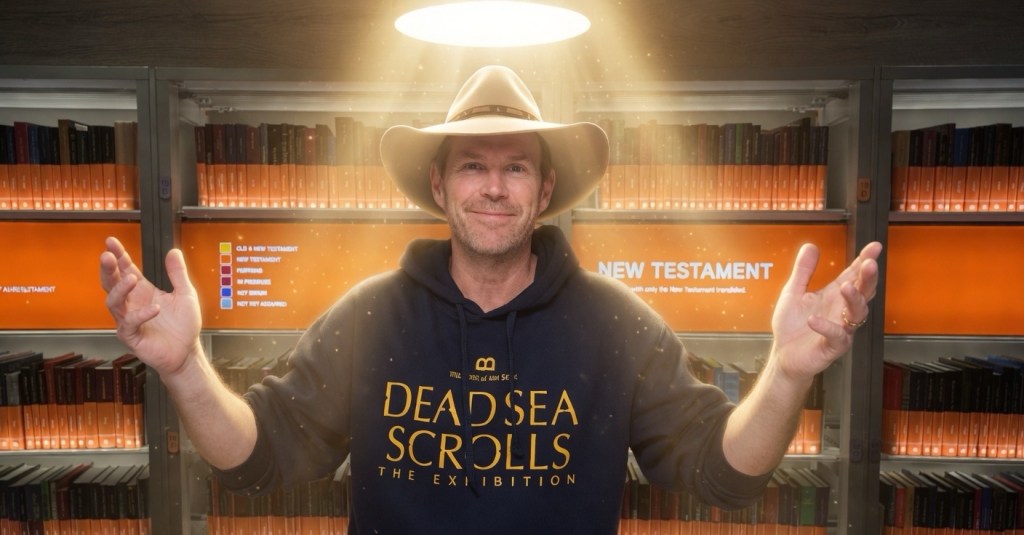
Pip: The Overmanwarrior has a knack for finding the book that explains the headlines before the headlines know what hit them.
Mara: Rich Hoffman is doing exactly that this week — working through Ayn Rand’s Return of the Primitive, a collection that ties progressive education, environmentalism, identity politics, and the philosophy of money into one sustained argument about where Western civilization is headed.
Pip: So: a 1971 book about the 1960s that apparently describes last Tuesday.
Mara: That’s the claim, and the post makes a serious case for it. Let’s start with what Rand actually argued and why the diagnosis keeps resurfacing.
Ayn Rand’s Return of the Primitive: Reason Under Siege
Mara: The central question the post puts on the table is whether the cultural movements that call themselves progressive are actually a retreat — a deliberate dismantling of the rational, industrial civilization that allows human beings to survive.
Pip: The post sets that up with a pointed line from Rand’s title essay, describing what she imagined as the logical endpoint: “There is no gradual, restrained retreat from technology. There is only the continued advance of the mind or the descent into helplessness and death.”
Mara: So the upshot is that Rand treats technology not as a convenience but as the concrete product of conceptual thought — remove it and you haven’t simplified life, you’ve ended it. That’s the stakes she’s arguing from.
Pip: And the post traces that argument across several fronts. The environmental movement of her day, she contended, rejected the premise that human life and human comfort outrank pristine wilderness — which she read as a rejection of the human mind itself.
Mara: The post quotes her framing directly: activists simultaneously attacked scientific progress as violence against the planet while advocating what she called “universal slavery for men under expanding state control.” The moral inversion, as the post puts it, is that creators get cast as aggressors.
Pip: Then there’s the education angle, which is where it gets uncomfortable for anyone who sat through a lot of group projects.
Mara: The essay called “The Comprachicos” draws the analogy to seventeenth-century criminals who physically deformed children for profit. Rand’s claim is that progressive education — shaped by Dewey and pragmatism — performs the same operation on the mind by replacing conceptual training with social adjustment and group conformity.
Pip: The post also covers the 1999 expanded edition, where Peter Schwartz extends the argument to multiculturalism and identity politics — ethnicity, race, and sex elevated as primary political categories, the individual dissolved into the group.
Mara: And “The Cashless Society” essay gets its own treatment. The post connects Rand’s argument there — that money is the barometer of a society’s virtue, and that when political pull replaces production, distribution reverts to force and favor — to contemporary corporate-political entanglement.
Pip: Montessori comes up as the affirmative alternative: independent, purposeful activity that builds the conceptual faculties rather than training children to defer to the pack.
Mara: The post is candid that the frame can be enlarged beyond Rand’s strict empiricism — it notes that questions raised by UAP disclosures and non-human intelligence involve dimensions she didn’t fully address, while still holding that her core political insight stands: the individual is the smallest and most important minority.
Pip: Which lands us squarely on the question of what a society looks like when it stops producing people who can think about first principles — and that’s a short walk to how power actually moves.
Mara: The through-line across all of this is a single claim: the conflict between the productive individual and the collectivist demand for regression is the defining contest of the era, and it has educational, philosophical, and economic roots.
Pip: Rand called it fifty years ago, the post argues. The outer forms have changed. The pattern hasn’t. Worth keeping an eye on what that pattern looks like next week.
Rich Hoffman is an author, political consultant, and strategic advisor based in Cincinnati, Ohio, and the creator of The Politics of Heaven—a unique framework that connects biblical theology, ancient history, and modern power structures to explain how moral alignment and spiritual forces shape global events. Blending real-world political experience with deep research into archaeology, UFO phenomena, and suppressed historical narratives, Hoffman offers compelling commentary on topics ranging from ancient civilizations and the Dead Sea Scrolls to modern populist movements, paranormal continuity, and leadership strategy in chaotic environments. As the author of The Gunfighter’s Guide to Business and the forthcoming Politics of Heaven, he brings a grounded yet provocative voice to media discussions, supported by firsthand experiences and a cross-disciplinary approach that bridges science, history, and theology. For interviews, speaking engagements, or expert analysis, visit richhoffmanbooks.com or contact directly via phone at 513-307-5815 or email at rhoffman@richhoffmanbooks.com. If you’ve seen the movie, Disclosure Day and want to talk about it and the implications of Presidnet Trump’s UAP disclosures, let me know and we can bring some color to your coverage. https://richhoffmanbooks.com/media-inquiries-broadcast-topics-and-contact-info/?frame-nonce=ad51e7ecba I do have a firsthand UFO encounter to discuss.
I have been carrying these questions in the background of my thinking for decades. The frequency with which they demand attention has risen sharply since the recent UAP disclosures. When the best technology the Air Force possesses cannot keep pace with something that behaves more like a ghost than a craft, the old categories collapse. It is not enough to say a flying saucer is real. It is not enough to say a religious claim is real. I want to know what causes people to believe what they believe, what political order forms around those beliefs, and what self-interest drives the entire system. Once you understand the political motivation behind belief, you understand the kind of society people are actually building—and whether you should support it.
That is why the conversation around Brian Muraresku’s The Immortality Key landed with such force. The book is not merely another academic argument about ancient wine. It is a direct challenge to the sanitized version of early Christianity most of us inherited. And it raises a harder question: if the original Eucharist carried a pharmacological charge, what does that tell us about the entities people were trying to contact, and why did Christianity’s later institutional form deliberately move away from that charge?
The Immortality Key and the Pagan Continuity Hypothesis
Muraresku’s central claim is straightforward and explosive. The original Christian communion was not a symbolic sip of ordinary wine. It was a potent psychedelic sacrament inherited from the Greek mysteries, specifically the cult of Dionysus and the rites at Eleusis. For nearly two thousand years, the greatest minds of antiquity—Cicero among them—traveled to the sanctuary at Eleusis to drink the kykeon. They claimed the experience removed the fear of death. The recipe was a state secret punishable by death.
The chemistry focuses on ergot, the fungus that grows on barley and rye—the same fungus from which Albert Hofmann first synthesized LSD in 1938. The theory is not new. It was proposed in 1978 by R. Gordon Wasson, Albert Hofmann, and Carl A. P. Ruck in The Road to Eleusis. Hofmann and Ruck’s academic careers suffered for it. The idea that the foundations of Western philosophy and early Christianity rested on controlled visionary pharmacology was too much for the scholarly stomach of the time. And when you think about that very obvious claim, and the way those names were ostracized, you can see the root cause of a much larger problem.
Muraresku spends years in the Vatican archives and archaeological sites looking for the transition. He notes that ancient wine was rarely plain fermented grape juice. It was routinely an infusion of herbs, roots, and potentially fungi—a pharmakon. The Gospel of John, the most Greek of the Gospels, uses language for the wine that suggests something more complex than table drink. Jesus’ miracle at Cana occurs in a cultural zone saturated with Dionysian imagery. In early Jesus centuries, Dionysus and Jesus were sometimes treated as interchangeable figures of death, rebirth, and ecstatic immortality.
The book’s most compelling social argument concerns women. For millennia, the preparation of these visionary beverages was women’s work. As Christianity became institutionalized and more patriarchal, particularly from the fourth century onward, those women and their spiked drinks became a threat to the emerging clerical monopoly on the divine. Muraresku reads the Inquisition’s language of pharmaka and sorcery not merely as superstition but as the systematic eradication of a competing technology of direct encounter with the sacred. The shift, in his framing, is from pharmacological Christianity to placebo Christianity.
I want Christianity to succeed. I do not read Muraresku as an enemy of the faith. He identifies as a Catholic who is trying to recover rather than destroy the Eucharist. Yet the implications cut in two directions at once. If the earliest layers of the tradition carried a visionary intensity later deliberately muted, then the institutional Church both preserved and constrained something powerful. And if that intensity was chemically mediated, we must ask what, exactly, the initiates were encountering.
Beer, Skulls, and the Long Continuity of Death Cults
The problem is larger than Greece. When I go back further—ten thousand years further—the pattern sharpens.
At Göbekli Tepe (the site that Muraresku and others still sometimes refer to by earlier or variant names in popular discussion), the evidence is no longer subtle. T-shaped pillars, snakes carved everywhere, a clear skull cult, and chemical traces consistent with beer brewing. People were not merely gathering to eat. They were preparing fermented beverages, removing soft tissue from human heads, drilling holes, and displaying the skulls in ritual contexts under carefully oriented architecture. The same complex appears, in different local forms, along the Jordan Valley in the dolmen fields that stretch from the Golan south toward the Dead Sea, and again in the megalithic “Wheel of Giants” (Rujm el-Hiri / Gilgal Refa’im) east of the Sea of Galilee—roughly 160 meters across, built of more than 40,000 tons of basalt, aligned with solar and stellar markers.
I have scoured the archaeological literature for a serious treatment of these Jordan Valley dolmens from roughly 10,000 to 3,000 BC. The silence is telling, just like any discussion dealing with the use of wine in Greek culture outside of mainstream opinion. Mainstream discussion prefers the safer Bronze Age and later. Yet the structures are there. The alignments are there. The continuity of ritual astronomy with later Hopewell earthworks in the Ohio Valley is difficult to ignore once you stop treating the Atlantic as an absolute barrier.
Pure native copper from the Lake Superior region was extracted for thousands of years. Isotopic and purity studies continue to raise questions about whether some of that copper moved farther than orthodoxy allows. The Windover bog people of central Florida preserve soft tissue and brain matter from the same deep time window. The Newberry Tablet and other Michigan finds remain controversial, but the pattern of megalithic and copper-working activity across the Great Lakes and the Upper Peninsula does not vanish because it is inconvenient.
Everywhere you look in this pre-biblical window, you find cultures oriented toward death, severed heads, fermented or psychoactive drink, and communication with something beyond the ordinary dead—the politics of that communication matter. Human beings do not casually cut off a neighbor’s head, scrape the flesh, hang the skull, and pour blood on an altar for sport. They do it because they believe the act buys favor, knowledge, rain, fertility, or protection from harm.
The Mouse and the Snake
I use a simple allegory. Watch a pet snake being fed. Drop a mouse into the glass enclosure. For the first few minutes, the mouse runs, freezes, and tests every corner. Eventually it realizes there is no exit. Then the behavior changes. It becomes still. It positions itself near the water dish or the food bowl as if stillness and proximity to ordinary life might persuade the snake to look elsewhere. The snake, of course, is not persuaded. It simply waits and then eats.
Humanity has lived for a very long time with the anxiety of that mouse. Non-human intelligences—call them Watchers, old gods, ultraterrestrials, or whatever the current UAP language prefers—appear in the record as entities that demand appeasement. Psychedelics, ritual sex, blood, and skull display are technologies of that appeasement. The mouse tries to make itself useful or invisible so the snake will not strike.
Christianity, in its mature form, broke that cycle. It did not deny the existence of the hostile powers. It declared them defeated in principle and offered a different posture: moral agency, individual responsibility, and direct relationship with a God who does not require the constant feeding of death. The result, imperfect as every human institution is, was the rise of a civilization that valued the living more than the skulls of the dead. Strip the Christian premise from a mass of people, and the older pattern reasserts itself with remarkable speed. I have watched it at a Jason Aldean concert from the VIP area—twenty thousand people, many drunk since morning, public sexual display, the old fertility and abandon patterns returning the moment the moral frame loosens. The same retreat appears wherever the teachings of Jesus are actively removed from a culture.
That is why I am not enthusiastic about the modern psychedelic renaissance framing itself as the recovery of a lost “religion with no name.” The experiences reported at Johns Hopkins and NYU—ego death, loss of fear of mortality—are real. The question is whether the entities contacted in those states are friends of the human project. My reading of the long archaeological record is that they are not. They have been competing for control of human attention and behavior for a very long time. Christianity was never their preferred outcome.
The Four Pillars That Still Need Digging
The gap between roughly 10,000 BC and the world of Abraham remains the least examined and most consequential stretch of the human story. Four clusters of evidence deserve far more serious, well-funded attention than they currently receive. I am committing myself to putting money and attention to these ideas:
1. The skull cult, beer residues, and snake iconography at Göbekli Tepe and related Anatolian sites.
2. The dolmen fields and the Wheel of Giants along the Jordan Valley and Golan.
3. The pure copper extraction systems of the Lake Superior region and their possible long-distance movement.
4. The Windover and related Archaic Florida populations with their extraordinary preservation of soft tissue and ritual practice.
These are not isolated curiosities. They form the deep background against which both the biblical narrative and the later Greek mysteries emerge. More excavation, more isotopic analysis, more open discussion of possible transoceanic contact, and less reflexive dismissal of “fringe” data would change the conversation. I am writing The Politics of Heaven in part to force that conversation into the open. The secular publishing world prefers books that treat Christianity as the problem rather than as a partial solution to an older and darker problem. That preference itself looks, from where I sit, like another form of the mouse’s stillness—keeping the larger questions safely inside the glass.
Conclusion: Do Not Be the Mouse
The original Eucharist may well have carried a pharmacological dimension inherited from older Mediterranean practice. The women who prepared the drinks may have been the last keepers of a technology the institutional Church found threatening. None of that requires us to return to the skull cults and the blood altars. The miracle of Christianity was not that it invented the sacred. It redirected the human drive for transcendence away from appeasement of predatory powers and toward a moral and spiritual posture that could build a durable civilization.
I want more money poured into the archaeology of the deep past—not the archaeology that already knows what it is allowed to find, but the kind willing to follow the copper, the alignments, the beer residues, and the severed heads wherever they lead. I want the conversation about non-human intelligence to stop treating the entities as either cartoon aliens or harmless spirit guides. They have a politics. Humanity needs a politics equal to theirs.
The Politics of Heaven is my effort to map that battlefield. The four pillars above are the places where the next decade of serious digging should concentrate. The rest is commentary, color, and the long memory of a man who has watched the same patterns repeat across continents and millennia.
Do not be the mouse. Learn the snake’s methods. The enemy is the one who puts the mouse in the cage with the snake. That is the answer to our many questions. And in the UAP disclosures, we are getting a hint of that world.
Footnotes
1. Brian C. Muraresku, The Immortality Key: The Secret History of the Religion with No Name (St. Martin’s Press, 2020).
2. R. Gordon Wasson, Albert Hofmann, and Carl A. P. Ruck, The Road to Eleusis: Unveiling the Secret of the Mysteries (Harcourt Brace Jovanovich, 1978; later editions).
3. On the ergot detoxification experiments and the University of Athens work referenced by Muraresku, see the discussion and citations in The Immortality Key, chapters on Eleusis and the chemistry of the kykeon.
4. Patrick E. McGovern, Ancient Wine: The Search for the Origins of Viniculture (Princeton University Press, 2003) and subsequent biomolecular archaeology papers on mixed fermented beverages.
5. For Göbekli Tepe skull cult and brewing evidence: Klaus Schmidt and subsequent publications of the German Archaeological Institute; recent chemical analyses of residues in stone vessels.
6. Rujm el-Hiri (Gilgal Refa’im / Wheel of Giants): surveys and interpretations in Israeli archaeology literature; see also popular and specialist treatments of its astronomical alignments.
7. Old Copper Culture / Lake Superior copper: standard Midwestern archaeology; purity and sourcing debates continue in archaeometallurgy literature.
8. Windover site, Florida: Glen H. Doran et al., publications on the Archaic wet-site cemetery and preserved soft tissue.
9. Jacques Vallée, Passport to Magonia: From Folklore to Flying Saucers (Henry Regnery, 1969) and later works on the continuity of non-human encounter narratives.
10. Diarmaid MacCulloch, Christianity: The First Three Thousand Years (Viking, 2009).
11. Biblical Archaeology Review, ongoing coverage of Jordan Valley and related megalithic sites; earlier issues treating dolmens remain limited relative to the density of the remains.
12. On Hopewell copper and ceremonial complexes: standard Ohio Valley archaeology; Newark Earthworks and related lunar alignments.
13. Dolores Cannon’s reported communications with Essene figures appear in her Conversations with Nostradamus series and related remote-viewing / past-life material; treated here as phenomenological data rather than conventional historiography.
14. Graham Hancock, Fingerprints of the Gods (1995) and later works on Göbekli Tepe and catastrophic prehistory; useful for raising questions even where orthodoxy disagrees with conclusions.
Selected Bibliography
• Muraresku, Brian C. The Immortality Key. St. Martin’s Press, 2020.
• Wasson, R. Gordon, Albert Hofmann, and Carl A. P. Ruck. The Road to Eleusis. 1978 and later editions.
• MacCulloch, Diarmaid. Christianity: The First Three Thousand Years. Viking, 2009.
• Vallée, Jacques. Passport to Magonia. 1969.
• McGovern, Patrick E. Ancient Wine. Princeton University Press, 2003.
• Schmidt, Klaus. Publications on Göbekli Tepe (German Archaeological Institute).
• Doran, Glen H., et al. Windover site monographs and papers.
• Hancock, Graham. Fingerprints of the Gods and subsequent titles.
Rich Hoffman is an author, political consultant, and strategic advisor based in Cincinnati, Ohio, and the creator of The Politics of Heaven—a unique framework that connects biblical theology, ancient history, and modern power structures to explain how moral alignment and spiritual forces shape global events. Blending real-world political experience with deep research into archaeology, UFO phenomena, and suppressed historical narratives, Hoffman offers compelling commentary on topics ranging from ancient civilizations and the Dead Sea Scrolls to modern populist movements, paranormal continuity, and leadership strategy in chaotic environments. As the author of The Gunfighter’s Guide to Business and the forthcoming Politics of Heaven, he brings a grounded yet provocative voice to media discussions, supported by firsthand experiences and a cross-disciplinary approach that bridges science, history, and theology. For interviews, speaking engagements, or expert analysis, visit richhoffmanbooks.com or contact directly via phone at 513-307-5815 or email at rhoffman@richhoffmanbooks.com. If you’ve seen the movie, Disclosure Day and want to talk about it and the implications of Presidnet Trump’s UAP disclosures, let me know and we can bring some color to your coverage. https://richhoffmanbooks.com/media-inquiries-broadcast-topics-and-contact-info/?frame-nonce=ad51e7ecba I do have a firsthand UFO encounter to discuss.
When we confront mysteries like the Voynich Manuscript, we have to admit that our understanding of the world is built on cascading evidence—one culture copying, borrowing, or inheriting from another—and that our interpretations are limited by the historical record institutions allow us to see. I have enormous respect for the archaeologists who dig in the dirt and give us the raw material to think with, but once that evidence exists, we must be willing to put every piece on the board—like sticky notes in a Six Sigma or Lean seminar—and follow the trail wherever it leads, even if the truth is uncomfortable. Institutionalism often pressures scholars to conform, whether through policies like NAGPRA that restrict the study of artifacts or through the kind of self‑preservation we’ve seen in recent scientific controversies, and that means unconventional ideas become essential tools. Dolmens in the Jordan Valley, the Wheel of Giants near the Sea of Galilee, and the dolmens around Lake Superior’s ancient copper mines all hint at cultures and connections we don’t fully understand, possibly even long‑distance trade or contact far earlier than our textbooks allow. If we’re going to crack something as opaque as the Voynich Manuscript, we must be willing to entertain wild theories—not because they’re true, but because they free us from institutional prejudice and help us see what the evidence might actually be showing us. keep coming back to the same quiet fact that will not leave me alone. Somewhere between the years 1404 and 1438, on animal-skin parchment that laboratory carbon dating has pinned down with ninety-five percent confidence, someone or something produced a book that still sits in the Beinecke Rare Book and Manuscript Library at Yale and refuses every attempt the human race has made to understand it.
So, as we reflect on the mysteries of something like the Voynich manuscript, we have to acknowledge that our understanding is often built on the pillars of what we know—those periods from Abraham’s time through the Woodland period and beyond—because written records have survived. But the real intrigue lies in what hasn’t survived and what we haven’t yet discovered.
Think about the dolmen structures scattered across the world; their stones still stand, hinting at ancient rituals, cultures, and even trade networks that may have stretched across oceans. We often measure history by what we can observe and document, but there’s a vast world of unknowns—cultures that predated familiar texts, religions that existed before Yahweh was even recorded into history, and trade routes that might have linked continents long before we currently believe. What was going on in the world from 2000 BCE to 8000 BCE? What religion did the Windover people of Central Florida practice? We can’t just say, “there is no evidence” because we haven’t found it yet. Nor can we say anything for certain until we’ve done the adventure of looking and asking the hard questions. What was the religion of those who built the dolmen structures along the Jordan River, and around Lake Superior, because they look like the same culture, by practice?
In the same way, when we look at something like the Voynich manuscript, we’re facing a puzzle that can’t be solved by standing under the same lamppost where we’ve always looked. We need to shine a light on those uncharted areas and ask the questions that haven’t been asked yet. It’s only by pushing beyond the known parameters that we can truly uncover the answers that have eluded us for so long.We call it the Voynich Manuscript because a Polish-American book dealer named Wilfrid Voynich acquired it from a Jesuit collection near Rome in 1912, but that is only the last chapter of its known history of custody. Before that, it passed through the hands of a Prague alchemist, a court pharmacist to Emperor Rudolf II, and possibly the emperor himself. The parchment itself, the ink, the pigments, the stitching all belong to the early fifteenth century. The architecture drawn on its most famous fold-out page carries the distinctive swallow-tail merlons that northern Italian masons favored in the region around Verona and Milan. So the physical object was made in central Europe, most likely northern Italy or the adjacent Alpine valleys, right at the hinge between the late Middle Ages and the early Renaissance.
And yet almost nothing inside it behaves as if it belongs to that world.
The plants do not match any known species on Earth. Botanists have spent decades trying. A few leaves resemble European herbs if you squint hard enough and ignore the roots. Still, most of the drawings are hybrids that nature has never produced: roots that terminate in animal claws or lion-like heads, stems that branch into impossible geometries. These flowers look more like mechanical organs than petals. One folio in particular shows a creature that seems half plant and half beast, claws extended, head crowned with vegetation. It does not look like a medieval copyist’s mistake. It looks like something observed and recorded by an intelligence that does not share our taxonomy.
Then there are the women. Page after page of naked female figures, some crowned, most bare, standing in green or blue pools connected by an elaborate network of tubes and pipes. They bathe, they gestate, they hold stars on cords, they move through circular diagrams that look more like cosmic plumbing than any European bathhouse. The largest of these diagrams, the famous nine-rosette fold-out, spreads across six pages and shows circular islands linked by causeways, towers, walls, and what may be a volcano. Inside one of those circles sits a castle whose battlements are pure northern Italian. The rest of the page feels like architecture from somewhere else entirely.
The script itself is the purest insult to human expectation. It is not a cipher in any ordinary sense. Statistical analysis shows word frequencies that obey Zipf’s law the way natural languages do, yet the conditional entropy of the characters sits far below every known human writing system, around two bits instead of the three-to-four bits that living languages produce. The patterns are rigid, position-dependent, almost mechanical, and still no one has produced a translation that survives peer review. Cryptographers who broke Enigma, linguists who cracked Linear B, teams armed with modern machine learning- all of them have walked away empty-handed.
I have stared at high-resolution scans of those pages for years now, and the longer I look, the more the manuscript feels like a notebook that was never meant for us. Not a hoax. Not a lost European herbal. Not a coded medical text. Something closer to field notes taken by a non-human intelligence that brushed against our reality, leaving the record behind.
I am not the first person to sense the otherness. The Peruvian visionary painter Pablo Amaringo filled canvas after canvas with exactly this vocabulary after drinking ayahuasca: naked feminine spirits rising out of water, mermaid forms, plants that become animals, circular cosmic architectures pulsing with energy that does not belong to ordinary daylight. Amaringo claimed he was painting what the spirits showed him. The visual overlap with certain Voynich pages is not subtle. The same obsession with feminine water beings, the same organic tubes and circular mandalas, the same sense that the artist is recording a conversation rather than inventing decoration.
Closer to home, here in the Ohio River valleys where I have lived my entire life, we have our own small reminder that the boundary is thin. The Loveland Frogman sightings of 1955 and 1972 describe bipedal, leathery, grayish creatures three to four feet tall, frog-faced, standing upright beside the Little Miami River only a short drive from where I sit. One of them was said to hold a wand that sprayed sparks. The official explanation later became a large iguana that had lost its tail. That explanation has never satisfied anyone who has stood on those banks at night.
When you place the Frogman beside the congressional testimony of 2023, the picture sharpens. David Grusch, under oath before the House Oversight Committee, stated that the United States has recovered non-human biologics from crash sites of craft whose performance exceeds anything we can build. He spoke of multiple species, of multi-decade reverse-engineering programs, of materials that do not belong to our periodic table. Whether those beings are extraterrestrial, interdimensional, or something older that has always shared the planet with us is a secondary question. The primary fact is the admission, on the record, that non-human intelligences have physical presence and have left physical residue.
I look at the Voynich Manuscript, and I see another piece of that residue.
Imagine a small bipedal being, gray or greenish, frog-like or more classically “gray,” moving through the forests and river valleys of fifteenth-century northern Italy with a purpose we cannot yet name. It carries a notebook bound in the local style so that it will not attract attention if dropped. Inside that notebook it records the plants of this world as they appear to senses that are not human, the reproductive cycles of the dominant bipedal species, the astronomical patterns it uses for navigation or timing, the circular geometries of the places it considers important. It is taking notes the way any field researcher would. Then, one afternoon or one night, the notebook is left behind. Perhaps it was set down while the being was examining something. Perhaps it slipped from a pouch when the being returned to whatever craft or aperture it uses to leave our continuum. The book is found by a local, carried into a library or a private collection, and begins its six-hundred-year career as the most stubborn unsolved object in European history.
That is my working theory. It is not polite. It is not the theory that keeps university careers safe. But it accounts for the data better than the alternatives I have seen.
If the manuscript were simply a lost human language or an elaborate cipher, someone would have broken it by now. The statistical properties are too regular and too alien at the same time. If it were a hoax, the materials science would not hold up; the parchment is genuinely early fifteenth-century, and the pigments match the period. If it were a normal medical or herbal text, the plants would match something we know, and the women would not be arranged in cosmic plumbing diagrams. The only hypothesis that still fits is that the reference frame itself is wrong. We keep trying to map the manuscript onto human knowledge systems because we are human. The manuscript was never written inside those systems.
This is the same mistake we make with the older records. Moses speaks with a burning bush that is not a bush. Ezekiel describes wheels within wheels that sound more like technology than theology. The Book of Enoch, recovered among the Dead Sea Scrolls, speaks of Watchers who descended and taught forbidden arts. The ancient world is saturated with accounts of non-human teachers, non-human bargains, non-human bloodlines. We have spent centuries translating those accounts into allegory because the literal reading was too disruptive. The Voynich Manuscript is the same disruption written in a different alphabet.
The obsession with naked human women is not incidental. Every serious student of the contact literature eventually notices the same pattern. From the early modern occultists who mixed sex magic with angelic communication, through the Crowley-Parsons experiments at the edge of the Mojave, to the modern abductee reports that focus with clinical intensity on reproductive systems, the non-human interest in human biology and human sexuality is persistent. The Voynich balneological section reads like a laboratory notebook on exactly that subject. The women are not erotic in any human sense; they are specimens, vessels, stages in a process the writer found important enough to illustrate in exhaustive detail.
I do not claim the writer was frightened. Fascination and fear often travel together when the frame of reference collapses. The plant-animal hybrid on that one folio feels like something that crawled out of a place Lovecraft would have recognized: organic, intelligent, and utterly indifferent to our categories of beauty or horror. The circular diagrams on the rosette pages have the same cold geometry. They are not decorations. They are maps or circuit diagrams or star charts drawn by a mind that does not care whether we can read them.
The fact that the book survived is almost the strangest part. Paper and parchment vanish easily. This one was protected, sold, hidden, and finally placed in a climate-controlled vault where anyone with an internet connection can turn its pages in high resolution. It is as if the accident of its loss was meant to become permanent. Six hundred years of human attention have produced no translation, only a growing sense that the object is looking back at us.
I have no laboratory proof that a non-human hand held the quill. What I have is a manuscript that behaves exactly as field notes from an outside intelligence should behave, a growing body of official testimony that such intelligences leave physical traces, a local folklore of bipedal frog-like beings along the same river systems that feed the Ohio, and a visual language that reappears in the visionary art of people who deliberately open the same doors with plant medicines. The accumulation is what matters.
We keep applying the wrong map. We keep asking which medieval European doctor, alchemist, or hoaxer produced this book. The more productive question is what kind of mind would produce a book that no human mind has been able to claim. The Voynich Manuscript is not waiting for a better cipher key. It is waiting for us to admit that the key may never have been human.
That is the thought that will not leave me. Somewhere in the early fifteenth century, something that was not us walked through our world, took notes in a language that was not ours, and left the notebook behind. We found it. We have been staring at it ever since. And every decade that passes without a translation only deepens the suspicion that we were never the intended audience.
The book is still there. The plants still do not match. The women still bathe in their impossible tubes. The script still refuses. And the longer it refuses, the more it looks like evidence rather than enigma.
Footnotes
1. University of Arizona radiocarbon dating results published 2011; 95 % probability interval 1404–1438. See also René Zandbergen’s compilation of the dating data at voynich. nu.
2. Swallow-tail (Ghibelline) merlons on the castle in the upper right of the nine-rosette folio are characteristic of northern Italian fortifications of the period, especially the Verona–Milan corridor.
3. Beinecke MS 408; high-resolution digital facsimile freely available through the Beinecke Library website.
4. Currier’s A and B “languages,” low second-order character entropy (≈ 2.0 bits) versus 3–4 bits for natural languages; see Lindemann (2020) and earlier statistical work by Montemurro & Zanette.
5. David Grusch testimony, House Oversight Committee hearing, 26 July 2023; sworn statement regarding recovery of non-human biologics.
6. Pablo Amaringo, Ayahuasca Visions: The Religious Iconography of a Peruvian Shaman (1999) and subsequent collections; visual parallels noted by multiple independent observers.
7. Loveland Frogman primary sightings: 1955 (three bipedal creatures), 1972 (police officer Ray Shockey and subsequent reports).
8. On the persistence of non-human reproductive interest across contact traditions, see the comparative literature from Jacques Vallée, John Keel, and the more recent compilations of abduction research.
Selected Bibliography
Amaringo, Pablo, and Luis Eduardo Luna. Ayahuasca Visions: The Religious Iconography of a Peruvian Shaman. North Atlantic Books, 1999.
Clemens, Raymond, and Deborah E. Harkness. The Voynich Manuscript. Yale University Press, 2016. (Facsimile and scholarly introduction.)
Grusch, David. Testimony before the U.S. House Committee on Oversight and Accountability, 26 July 2023. Official transcript.
Keel, John A. The Mothman Prophecies. Saturday Review Press, 1975; and Operation Trojan Horse. Putnam, 1970.
Lindemann, Luke. Statistical analyses of Voynichese entropy and positional constraints, various papers 2018–2020.
Montemurro, Marcelo A., and Damián H. Zanette. “Keywords and Co-Occurrence Patterns in the Voynich Manuscript.” PLoS ONE, 2013.
Rugg, Gordon. Various papers on the “hoax” hypothesis and statistical structure; useful as negative control.
Vallée, Jacques. Passport to Magonia. Henry Regnery, 1969; and Messengers of Deception. And/Or Press, 1979.
Zandbergen, René. voynich.nu – the most comprehensive open repository of Voynich research, imaging, and historical documentation.
Additional primary sources: Beinecke Rare Book & Manuscript Library digital collection; University of Arizona AMS radiocarbon reports; original 1665/1666 correspondence of Johannes Marcus Marci regarding the manuscript’s earlier provenance.
Rich Hoffman is an author, political consultant, and strategic advisor based in Cincinnati, Ohio, and the creator of The Politics of Heaven—a unique framework that connects biblical theology, ancient history, and modern power structures to explain how moral alignment and spiritual forces shape global events. Blending real-world political experience with deep research into archaeology, UFO phenomena, and suppressed historical narratives, Hoffman offers compelling commentary on topics ranging from ancient civilizations and the Dead Sea Scrolls to modern populist movements, paranormal continuity, and leadership strategy in chaotic environments. As the author of The Gunfighter’s Guide to Business and the forthcoming Politics of Heaven, he brings a grounded yet provocative voice to media discussions, supported by firsthand experiences and a cross-disciplinary approach that bridges science, history, and theology. For interviews, speaking engagements, or expert analysis, visit richhoffmanbooks.com or contact directly via phone at 513-307-5815 or email at rhoffman@richhoffmanbooks.com. If you’ve seen the movie, Disclosure Day and want to talk about it and the implications of Presidnet Trump’s UAP disclosures, let me know and we can bring some color to your coverage. https://richhoffmanbooks.com/media-inquiries-broadcast-topics-and-contact-info/?frame-nonce=ad51e7ecba I do have a firsthand UFO encounter to discuss.
I have watched a hostile takeover unfold up close in the aerospace industry. The people driving it never announced their intentions. They arrived with consultants and new ownership structures, spoke in measured language about efficiency and alignment, and made the decisive moves from boardrooms far removed from the daily floor. The target company’s people kept working, kept delivering, kept hoping the familiar rhythms would hold. By the time the real pattern became visible, the leverage had already shifted. Decisions about who stayed, what got consolidated, and which programs survived were already set in motion. The prey did not run away. In many cases, it moved toward the very forces reshaping it, seeking reassurance, seeking to prove value, seeking to stay inside the story.
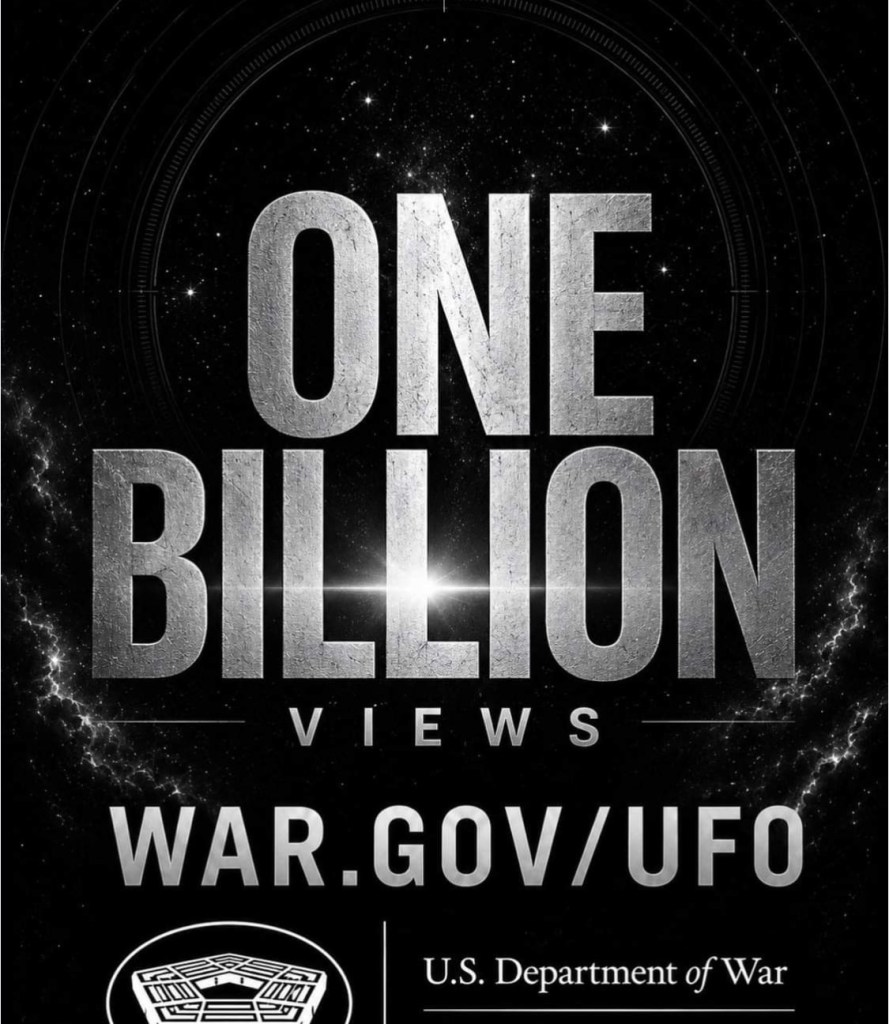
That experience has stayed with me as I watch the recent waves of UAP disclosures. The Pentagon’s PURSUE releases under the current administration—multiple tranches of documents, videos, and agent narratives in May, June, and July 2026—have brought to light orb sightings, high-speed objects, and cases that the All-domain Anomaly Resolution Office itself still lists as unresolved. One Western U.S. event near a sensitive national-security site involved federal agents describing “orbs launching other orbs.” AARO’s own June 2026 memo on that case notes that roughly forty percent of the phenomena lacked a plausible conventional explanation and remained open. Another tranche included a military aviator’s account of an object with “flight characteristics unlike anything I had seen in my 28 years.” These are not fringe videos. They are now part of the official record, released under executive order, yet they arrive without chain-of-custody clarity on the most anomalous material and without a coherent strategic picture.
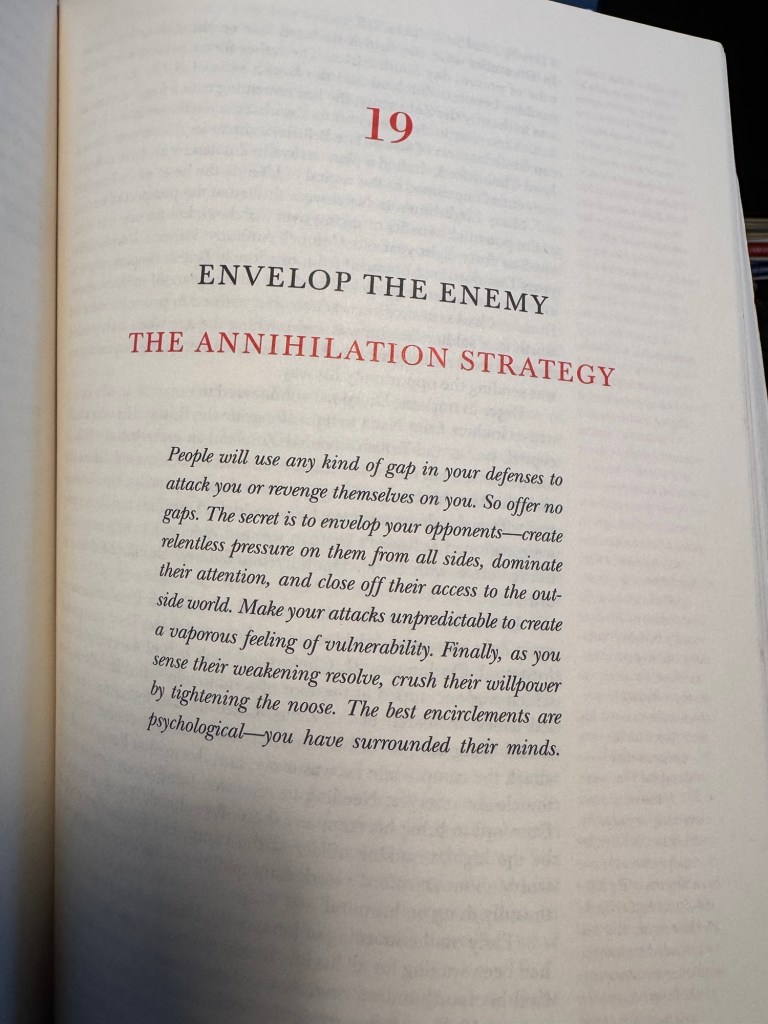
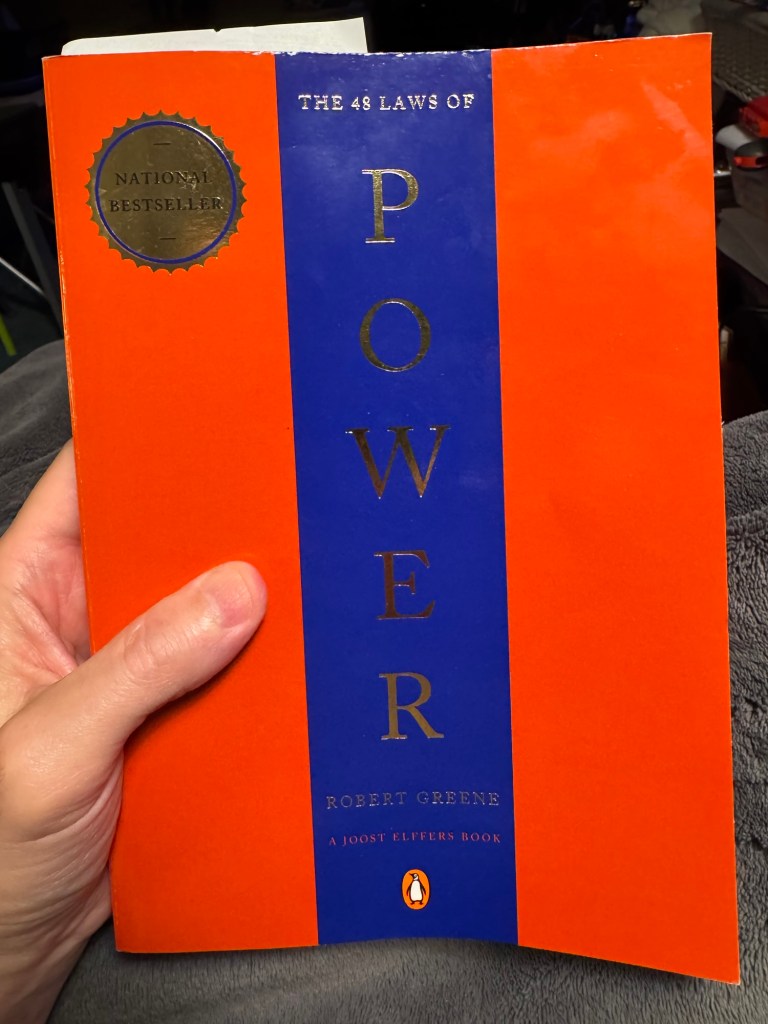
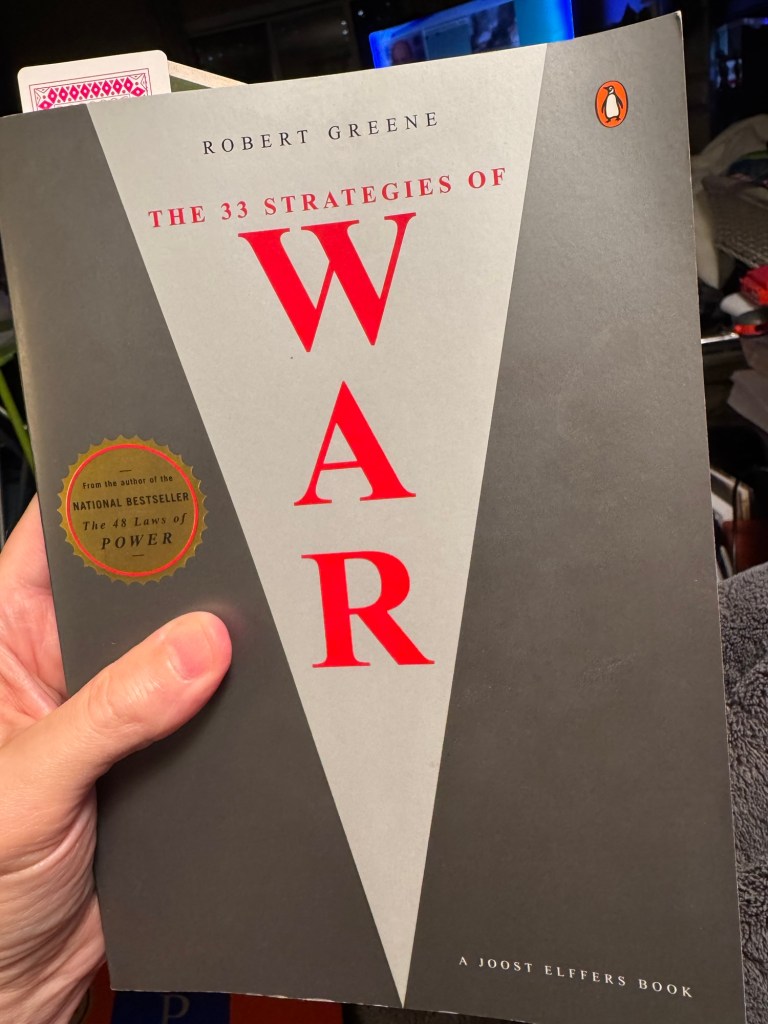
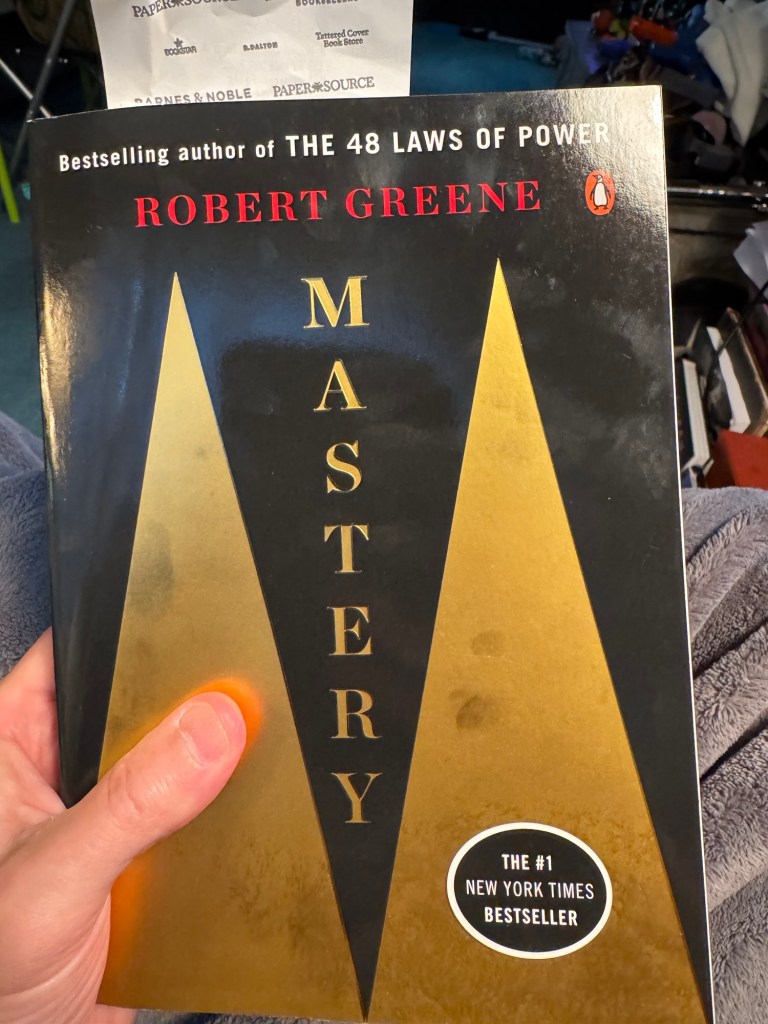
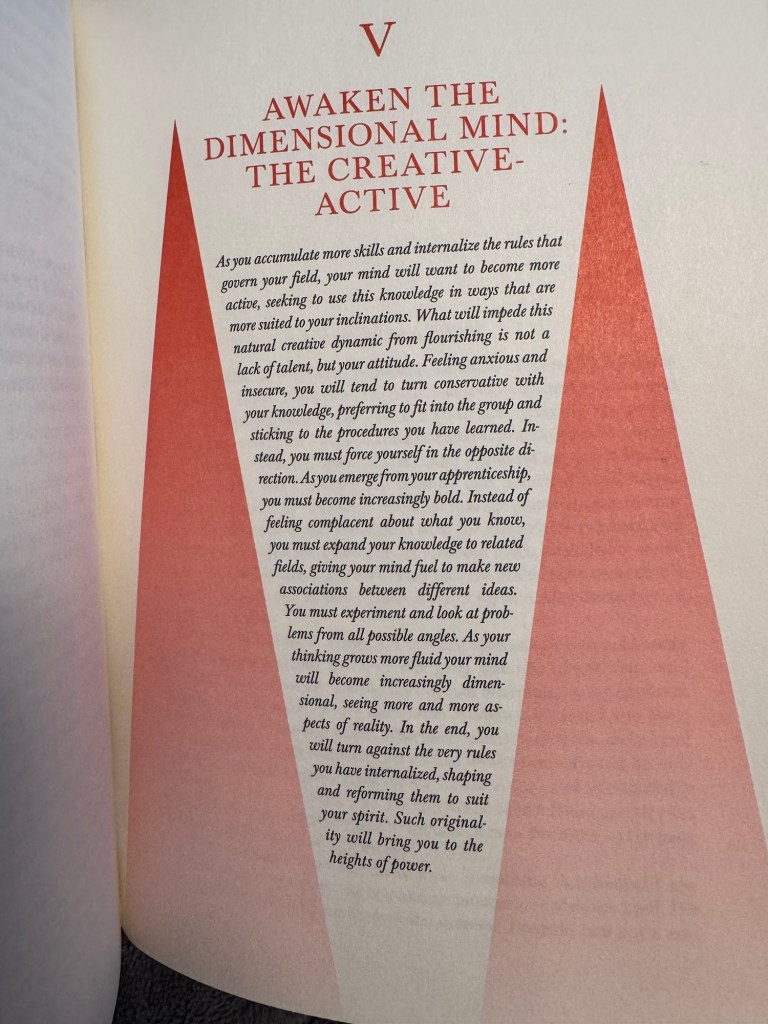
The obvious question keeps returning: if these are simply advanced drones or foreign technology, why the persistent concealment across decades? If they represent non-human intelligence, why not open contact? My answer is shaped by what I saw in that takeover and by the universal patterns Robert Greene distilled in The 48 Laws of Power and The 33 Strategies of War. Those books sit in every serious business section because they codify something older than corporate strategy: the mechanics of concealed intention, formlessness, and the calculated use of superior position to shape the target’s behavior without triggering full resistance.
A hunter does not step into the clearing and announce himself. He wears the scent of the field, moves with the wind, waits in the tree stand for hours. The goal is proximity without alarm. The deer that senses nothing continues its pattern until the moment the arrow is already in flight. Corporate raiders operate on the same principle. They do not declare war on the culture they intend to absorb. They speak of synergy, of unlocking value, of shared future. The language itself is camouflage. By the time the target’s leadership understands the real mapping of power, the decisive votes and the key personnel decisions have already been made elsewhere.
If non-human intelligences have been present in our environment for a long time—and the pattern of sightings near nuclear and sensitive military sites across the released files is difficult to dismiss as random—then concealment is the rational posture of a competing form of life that does not yet wish open war or open dependence. Superior technology does not automatically translate into benevolence any more than superior capital in a takeover guarantees the survival of the acquired company’s original character. The strategic advantage lies in remaining unseen while shaping outcomes: extracting data, influencing behavior at the margins, keeping the target population stable enough to continue producing what the observer needs. A species that wanted only to eliminate us would have done so. A species that wants to study, harvest, steer, or occupy the same niche without triggering a unified human response has every reason to stay in the tree stand.
The recent disclosures actually reinforce this reading more than they contradict it. We are shown orbs that appear to coordinate, that launch smaller orbs, that exhibit flight profiles AARO cannot yet attribute to known platforms. We are told some cases remain unresolved even after multi-sensor correlation. We hear whistleblower testimony—from David Grusch and others—describing long-term programs involving recovered craft and non-human biologics, yet official releases still emphasize the lack of conclusive proof while simultaneously documenting phenomena that exceed current human capabilities. This is not full transparency. It is a calibrated release. It keeps the conversation alive, keeps researchers and the public engaged, and shields the deeper architecture behind these events. That is precisely how power that intends to remain dominant behaves when it does not yet need to reveal its full hand.
Greene’s work is popular in business circles because it maps these dynamics without moral overlay. Law after law describes the advantage of appearing formless, of never revealing the full extent of one’s resources or intentions, of using the target’s own momentum against it—the same principles scale. If an intelligence operates across dimensions or with technology that renders our sensors marginal, the same logic applies: stay close enough to observe and influence, far enough to avoid decisive confrontation, and never give the prey a clear target to rally against. The fascination many people feel toward UAPs—the drive to decode every new video, to attend every hearing, to interpret every ambiguous shape—can itself become part of the dynamic. The prey moves toward the predator’s position because the predator has made itself the most interesting thing in the environment.
I am not claiming these intelligences are cartoon villains. I am saying the default assumption that superior technology equals benevolent guardianship has no grounding in observable history or in the power dynamics we already understand at the human level. The same species that builds monuments and writes philosophy also builds weapons and perfects deception when advantage requires it. Why would we expect a competing life form to operate on more sentimental rules? The disclosures we have received so far—multiple batches of unresolved orb events, aviator encounters, and internal government debate—show advanced presence without showing open intent. That gap is not an accident of bureaucracy. It is consistent with the behavior of any actor who has already calculated the costs of full revelation.
Most people can’t do this. They learn the rules and stay prisoners to them al their lives.
The corrective lens is the same one that works in any competitive environment. Assume the other side is playing to win on its own terms. Map the actual flows of information and leverage rather than the stated narrative. Strengthen internal visibility so that critical dependencies—whether material, procedural, or perceptual—cannot be quietly depleted in the shop, which meant knowing who ordered the consumables and whether the schedule would starve the line. In the larger arena, it means refusing to treat every new release as either proof of salvation or proof of nothing. It means treating the pattern of concealment itself as data.
We have been given enough now to see that something is operating with capabilities we do not control and with intentions it has not chosen to declare. The hunter does not need our permission to remain in the stand. He only needs us to keep behaving as if the clearing is empty. The disclosures have made the clearing feel less empty, but they have not yet forced the figure in the tree to step forward. That fact alone tells us something about the nature of the game being played.
Footnotes
1. Personal observation from aerospace program management, 2026.
2. PURSUE Release documentation, Department of War, various tranches 2026.
3. AARO memorandum on Western U.S. “orbs launching orbs” event, June 2026.
4. Robert Greene, The 48 Laws of Power (1998) and The 33 Strategies of War (2006).
5. David Grusch congressional testimony and related whistleblower accounts, 2023–2026.
6. Historical analysis of corporate power dynamics drawn from Greene’s framework and observed industry practices.
7. Additional references to UAP case files are available via war.gov/UFO portal.
Bibliography
• Greene, Robert. The 48 Laws of Power. Viking, 1998.
• Greene, Robert. The 33 Strategies of War. Viking, 2006.
• U.S. Department of War / AARO. PURSUE UAP Release Tranches (May–July 2026). war.gov/UFO.
• Squier, Ephraim G., and Edwin H. Davis. Ancient Monuments of the Mississippi Valley. Smithsonian Contributions to Knowledge, 1848 (for context on Ohio earthworks like East Fork).
• Various journalistic summaries of Grusch testimony and PURSUE files, 2026.
Rich Hoffman is an author, political consultant, and strategic advisor based in Cincinnati, Ohio, and the creator of The Politics of Heaven—a unique framework that connects biblical theology, ancient history, and modern power structures to explain how moral alignment and spiritual forces shape global events. Blending real-world political experience with deep research into archaeology, UFO phenomena, and suppressed historical narratives, Hoffman offers compelling commentary on topics ranging from ancient civilizations and the Dead Sea Scrolls to modern populist movements, paranormal continuity, and leadership strategy in chaotic environments. As the author of The Gunfighter’s Guide to Business and the forthcoming Politics of Heaven, he brings a grounded yet provocative voice to media discussions, supported by firsthand experiences and a cross-disciplinary approach that bridges science, history, and theology. For interviews, speaking engagements, or expert analysis, visit richhoffmanbooks.com or contact directly via phone at 513-307-5815 or email at rhoffman@richhoffmanbooks.com. If you’ve seen the movie, Disclosure Day and want to talk about it and the implications of Presidnet Trump’s UAP disclosures, let me know and we can bring some color to your coverage. https://richhoffmanbooks.com/media-inquiries-broadcast-topics-and-contact-info/?frame-nonce=ad51e7ecba I do have a firsthand UFO encounter to discuss.
Pip: The Overmanwarrior is the kind of site where you click in expecting a political take and leave wondering whether ancient Ohio earthworks were a cosmic antenna — and somehow that feels completely reasonable.
Mara: Rich Hoffman is deep in the research for his forthcoming book The Politics of Heaven, and today’s episode follows him there — from Hopewell burial mounds to UAP disclosure to the question of who, or what, has actually been running things.
Pip: Let’s start with the mounds, the tablets, and what sovereignty really means.
What the Mounds Are Hiding — and Why It Matters
Mara: The central tension here is straightforward: if ancient Ohio was more sophisticated and more connected than the official story admits, then the official story is doing work — and the question is whose interests it serves.
Pip: The post frames this as a personal reckoning. Here’s the line that captures it: “I didn’t want to be that guy — the one who connects the dots between ancient Ohio earthworks, strange artifacts that don’t fit the narrative, non-human intelligence, and the spiritual forces that have been pulling strings on human politics since the beginning.”
Mara: And the reason that admission matters is that it establishes the stakes. This isn’t a hobbyist’s curiosity — it’s an aerospace executive saying the evidence pulled him somewhere he actively resisted going, and he’s writing the book anyway.
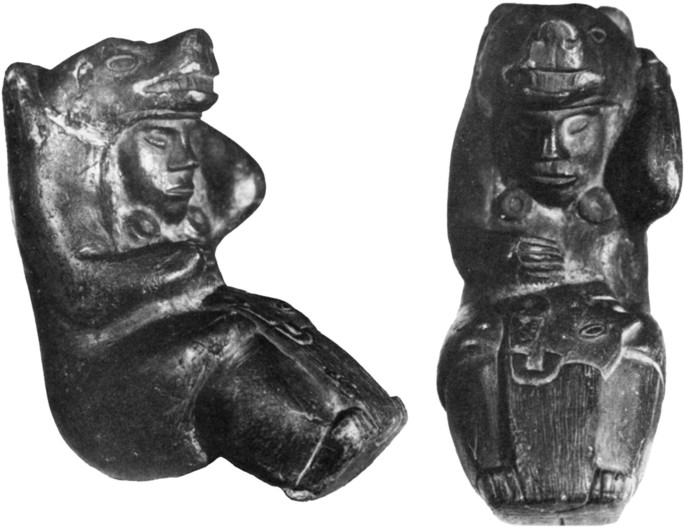
Pip: The anchor artifact is the Wray Figurine — a small stone shaman carved in bear regalia, holding a severed human head, found near the Great Circle at Newark in 1881. The post asks what kind of cosmology produces that image in a culture that also achieved precise lunar alignments across miles of geometric earthworks.
Mara: And the Newark Holy Stones sit right alongside that question. The Decalogue Stone carries what appears to be Hebrew text — a condensed Ten Commandments — found by surveyor David Wyrick in the 1860s. The mainstream verdict is hoax. Wyrick died in 1864 from an opium overdose after the fraud accusations destroyed him.
Pip: The post doesn’t accept that verdict quietly. It notes the Wilmington Tablet, the Cincinnati Tablet — pulled from display — and the Hopewell trade network that already moved copper from Lake Superior, obsidian from Wyoming, mica from the Appalachians. If the logistics existed, the dismissal of long-distance cultural contact starts to look less like science.
Mara: The post cites architect and author John Hancock, whose work on the Ohio Hopewell sites helped secure their UNESCO World Heritage designation. His framing: these earthworks are intentional architecture with astronomical precision, not ceremonial accident.
Pip: So the suppression question runs from archaeology straight into UAP disclosure. If non-human intelligence has been present throughout human history — and the post argues the government’s own admissions are now pointing that direction — then sovereignty was always a polite fiction.
Mara: The post puts it through Ephesians 6:12: “For we wrestle not against flesh and blood, but against principalities, against powers, against the rulers of the darkness of this world, against spiritual wickedness in high places.” The argument is that the mounds, the shamanic imagery, the suppressed artifacts, and modern UAP encounters are different chapters of the same story.
Pip: What this gets the listener is a reframe: the politics of Satan aren’t partisan. They’re the architecture underneath partisanship — anti-human, anti-sovereignty, operating through whatever institutions control what questions are allowed.
Mara: That’s where the closing argument lands: reclaim sovereignty under God, or keep letting the unseen politics of rebellion shape the future. The book The Politics of Heaven is the invitation to follow that evidence wherever it leads.
Pip: Which turns out to be further than most people planned to go on a Tuesday.
Mara: The thread running through all of this is the cost of the official story — what gets buried, dismissed, or pulled from display when the evidence gets inconvenient.
Pip: Next time, we’ll see where that thread leads. The truth, apparently, is coming fast.
Rich Hoffman is an author, political consultant, and strategic advisor based in Cincinnati, Ohio, and the creator of The Politics of Heaven—a unique framework that connects biblical theology, ancient history, and modern power structures to explain how moral alignment and spiritual forces shape global events. Blending real-world political experience with deep research into archaeology, UFO phenomena, and suppressed historical narratives, Hoffman offers compelling commentary on topics ranging from ancient civilizations and the Dead Sea Scrolls to modern populist movements, paranormal continuity, and leadership strategy in chaotic environments. As the author of The Gunfighter’s Guide to Business and the forthcoming Politics of Heaven, he brings a grounded yet provocative voice to media discussions, supported by firsthand experiences and a cross-disciplinary approach that bridges science, history, and theology. For interviews, speaking engagements, or expert analysis, visit richhoffmanbooks.com or contact directly via phone at 513-307-5815 or email at rhoffman@richhoffmanbooks.com. If you’ve seen the movie, Disclosure Day and want to talk about it and the implications of Presidnet Trump’s UAP disclosures, let me know and we can bring some color to your coverage. https://richhoffmanbooks.com/media-inquiries-broadcast-topics-and-contact-info/?frame-nonce=ad51e7ecba I do have a firsthand UFO encounter to discuss.
I have always lived outside the box. While most people see only the trees right in front of them—the regimented routines, the narrow daily concerns, the approved narratives—I have survived and found my greatest happiness and clearest insights almost exclusively through big-picture thoughts, concepts, and discussions. When I am forced into the box, I am extremely unhappy. Outside of it, I am pretty happy, and I have a lot to share with people who are willing to look up from the immediate and see the patterns across time. That is why, six or seven years from now, when the conversation about non-human intelligence and its long influence on human affairs becomes mainstream—partly through my own work with the book The Politics of Heaven—many will wonder how I knew what I knew back in 2020 and what I am saying now. The answer is simple: I live outside the box, where the forest is visible, and the hidden hands become apparent.
Just recently, as Tulsi Gabbard concluded her service as Director of National Intelligence in the Trump administration, she highlighted truths that those of us who have followed the COVID story closely have known for years.[^1] Gain-of-function research at the Wuhan Institute of Virology, funded with millions in U.S. taxpayer dollars through channels that included EcoHealth Alliance and ultimately NIH oversight, produced a virus that was made transmissible to humans in ways that natural evolution had not achieved.[^2] It was not a simple bat spillover in a wet market. Dr. Anthony Fauci, in his testimony before Congress, parsed words carefully and denied funding for gain-of-function research under the definitions he preferred, but the evidence from emails, proposals like DEFUSE, and the very nature of the research conducted shows otherwise. He misled the public and lawmakers. Perjury before Congress is a serious matter, and it should carry consequences. It took six years for these confirmations to gain official traction in some circles. I was calling it from day one when the virus emerged from that airport in China, and the stories began to shift. I saw it because the people inside the box were the ones constructing the narrative to hide the truth, and from the outside, the pattern was obvious.
The same dynamic unfolded right here in Ohio during the lockdowns. I was on those conference calls with Jon Husted, who served as a key point of contact trying to bridge the concerns of business owners and executives with the administration. We were asking practical questions: How do we keep businesses open? How do we protect workers and customers without destroying livelihoods and constitutional rights? Governor Mike DeWine was listening closely to his Health Director, Amy Acton—our version of Dr. Fauci in Ohio.[^3] The memos were floating around from the federal health establishment, and they knew the constitutional walls were being tested and breached. Stay-at-home orders, business closures, school shutdowns, and the whole apparatus of control were put in place under emergency powers that stretched far beyond what the people or the legislature had authorized. It was sold as keeping us safe, as if a public health official could write policy that would override the Constitution and turn the governor’s office into an extension of that vision. Now, years later, DeWine is positioning himself as the compassionate voice calling for the abolition of the death penalty, saying it is not a deterrent after all these decades.[^4] He helped craft the law as a state legislator, defended it as Attorney General, yet now on his way out, he wants to be remembered as the one who questioned it. The same man who expanded Medicaid under pressure to appear more progressive after earlier battles with public unions and collective bargaining. These politicians often find themselves in trouble because they listen to the wrong voices—the ones inside the box who prioritize short-term safety narratives and political positioning over the big picture of liberty, accountability, and human nature.
I remember the feeling in 2020 all too well. I carry firearms, as people who know me understand. I was prepared to draw a hard line if unconstitutional checkpoints or enforcement actions came to my door or my community. I was close to a bridge too far. The treatment of January 6 defendants—many held in harsh conditions for what amounted to political expression or presence—showed exactly what the machinery could do when it chose to. I love law and order and a stable society, but when that machinery is weaponized against free citizens who have done nothing wrong, it ceases to be law and becomes something darker. I was on those calls and in my writings arguing the constitutional problems from the beginning. With some influence among legislators who were also concerned, we helped prevent the worst scenarios from taking hold in Ohio. Thank God we did not end up with a situation where I or others were pulled over unconstitutionally and forced into a confrontation that could have escalated. But it was not because I was unwilling to stand. I had drawn my line. Even Rush Limbaugh, in the last year of his life, was cautioning about the overreach and the importance of listening to the right voices. I was saying it earlier, more directly, because I see where the inside-the-box crowd hides what they do not want examined—outside the box, in plain sight for those willing to look.
The costs were immense and are still being counted. More than 1.1 million Americans lost their lives in connection with COVID-19.[^5] Economic analyses projected GDP losses in the range of $3 trillion to $5 trillion or more in the initial years from the combination of the pandemic and the policy responses, with mandatory closures and reopenings being the dominant factor in the downturn. Small businesses—restaurants, gyms, shops, service providers—were shuttered or crippled, many permanently. Mental health crises surged, overdoses increased, domestic issues rose, and a generation of children suffered learning loss and social setbacks whose full measure we are only beginning to understand. In Ohio specifically, the early and strict orders under DeWine and Acton had real human and economic consequences. People died not only from the virus but from delayed medical care, from isolation, from the despair that comes when livelihoods and communities are upended by top-down decree. All of it was made worse because the truth about the virus’s origins and the proper limits of power was suppressed or attacked as dangerous misinformation by those inside the box who could not afford to admit what they had done or enabled.
Now the confirmations are emerging. Fauci and the apparatus he oversaw knew more than they let on. The research that made a non-transmissible virus transmissible to humans was real, and U.S. funding played a role. Taxpayers paid for it. Lives were lost or forever altered because of it and the subsequent cover stories. If we do not hold people accountable—if we do not prosecute perjury and malfeasance when the evidence is this clear—then we should not be surprised when the next crisis arrives, and the same patterns repeat. When you have the opportunity to confront the lie and you decline, the liar learns that there is no cost. That is not compassion. That is a weakness that invites more harm. The average annual cost to taxpayers for housing inmates in U.S. prisons runs $40,000 to $65,000 or more per person, depending on the jurisdiction[^6], a figure that makes long-term incarceration of irredeemable offenders a perpetual burden without the deterrent or finality some argue the death penalty provides for the worst cases.
But COVID is only the most recent and personal example of a much older and larger pattern. I have been speaking and writing for years about non-human intelligence and the ways it has influenced the human race—in our modern politics and in the deep politics of the past thousands of years. The creation of empires, the divine mandates claimed by pharaohs, the dreams and visions that shaped the decisions of kings and conquerors—these were not always purely human inventions or organic developments. They were often steered, amplified, or initiated by non-human intelligences operating through mechanisms of paranoia, superstition, and religious belief systems that were not the faith of the Bible but the polytheisms of the ancient world, particularly the gods of Canaan and their counterparts across the Near East and beyond. We are now discovering, through the accelerating study of UAP, that these intelligences have been present with Earth and human beings for many thousands of years. The same skepticism and ridicule I faced in 2020 when I spoke about the lab origin and the unconstitutional overreach, I face now when I connect these dots. But in six or seven years, it will be different. It will be safe. There will be correspondents and anchors discussing it who are actually non-human intelligence. There will be podcasts and series that treat it as established context rather than as fringe theory. What seems like science fiction today will be science fact tomorrow, just as the COVID truths I stated in 2020 are now being acknowledged years later.
The Book of Enoch provides one of the clearest ancient windows into this reality.[^7] That text, which I have studied and referenced for decades, describes the Watchers—divine beings who descended, took human wives, and produced the Nephilim, giants whose violence and appetites ravaged the earth. These Watchers did not stop at interbreeding; they taught humanity forbidden knowledge: the working of metals into weapons and ornaments, the use of cosmetics and sorcery for manipulation and deception, the arts of divination and the secrets of the stars and earth. This was technology and occult instruction delivered prematurely, corrupting human development and filling the world with bloodshed and chaos. The judgment of the flood followed, but the influence of these fallen ones and their offspring persisted through bloodlines, secret traditions, and the false religious systems that shaped the great powers of antiquity. The gods of Canaan—Baal with his storms and demands for sacrifice, Asherah and her fertility cults, Molech and the fires that consumed children—were not harmless myths. They were presentations of real intelligences that steered societies toward war, ritual, and control. The pharaohs of Egypt presented themselves as divine incarnations or the recipients of direct oracles from the gods, justifying their absolute rule and military campaigns. Similar patterns appear in Mesopotamian kingship, in the oracles and omens that guided Greek and Roman leaders, and in the visionary experiences claimed by conquerors and rulers across history. From outside the box, these are not random cultural developments; they are evidence of consistent non-human influence operating through the structures of power and belief.
We are seeing the modern face of this same presence in the UAP phenomenon.[^8] These unidentified anomalous phenomena are not new. Ancient texts across cultures record fiery chariots in the sky, beings of light or terror descending, and craft that defies the technology of the time. What has changed is our ability and willingness to document and disclose. Government videos released in recent years, testimony from trained observers including Navy pilots, and statements from intelligence community whistleblowers such as David Grusch have brought the topic into congressional hearings and public debate. In 2026, the push for transparency has led to concrete actions, including the release of historical records through mechanisms such as the PURSUE system under the current administration. Tranches of documents are emerging, adding to the body of evidence that something non-human has been here, interacting at times, and remaining largely hidden. Just as the lab-leak hypothesis for COVID was censored and mocked only to be treated as plausible or likely by multiple intelligence agencies years later, the NHI reality is moving from ridicule to reluctant recognition. The pattern is the same: truth that threatens existing power structures or comfortable narratives is suppressed until it can no longer be contained.
In six or seven years, the conversation will have shifted dramatically. People who today roll their eyes at talk of non-human intelligence influencing human events will be nodding along in podcasts and interviews. The age of disclosure will be in full swing. My book, The Politics of Heaven, completed in 2026 and moving toward publication, is my contribution to providing the framework for understanding what is coming.[^9][^10] It is a treasure hunt through heaven and all human history, tracing biblical conspiracies, the role of giants and demons, the reality of divine rebellion, the nature of spiritual warfare, and the population agendas that have shadowed humanity from ancient times into the present. It connects the dots between the Watchers of Enoch, the false gods of Canaan and Egypt, the hidden influences on empires and kings, and the modern manifestations in technology, media, global institutions, and the UAP question. When you understand the politics of heaven—the real power dynamics that operate behind and through earthly politics—you see why certain patterns repeat, why certain lies persist, and why accountability is so often delayed. The same intelligences that once presented themselves as gods demanding worship and sacrifice have not disappeared; they have adapted their methods to new veils and new technologies.
I was willing to risk confrontation in 2020 because I saw the pattern clearly. The fear was that it would be used to centralize power. Dissent was being pathologized. The Constitution was being treated as optional under the pretext of an emergency. Amy Acton did that in Ohio. I had seen enough of how power operates—in my younger years in the Cincinnati area and across the river in Newport, Kentucky, where I had front-row exposure to the coded ways influence and enforcement worked—to recognize when it was happening again. I was not going to be treated like a January 6 prisoner or have my community subjected to checkpoint enforcement without resistance. Thankfully, cooler heads and some influence in the right places kept the worst from occurring here. But the experience taught me again that being outside the box is not just a preference; it is a survival skill when the box is being used to hide dangerous truths.
Now the question is whether we will learn from the COVID chapter or repeat it on a larger scale. The revelations about gain-of-function and Fauci’s role are vindication for those who spoke early, but vindication without accountability is incomplete. If perjury and the engineering of a pathogen that killed over a million Americans carry no real consequence, then the system has learned nothing. The same applies to the bigger picture. When disclosure of non-human intelligence reaches the point where even former skeptics in the media and politics are discussing it openly, will we have the frameworks to understand it, or will we be caught flat-footed by the spiritual and political implications we have refused to consider? My book exists to help with that preparation. It argues that these influences are real, that they have shaped human history in profound ways, and that the age of disclosure is also an age of decision about who we are and whose agenda we will ultimately serve.
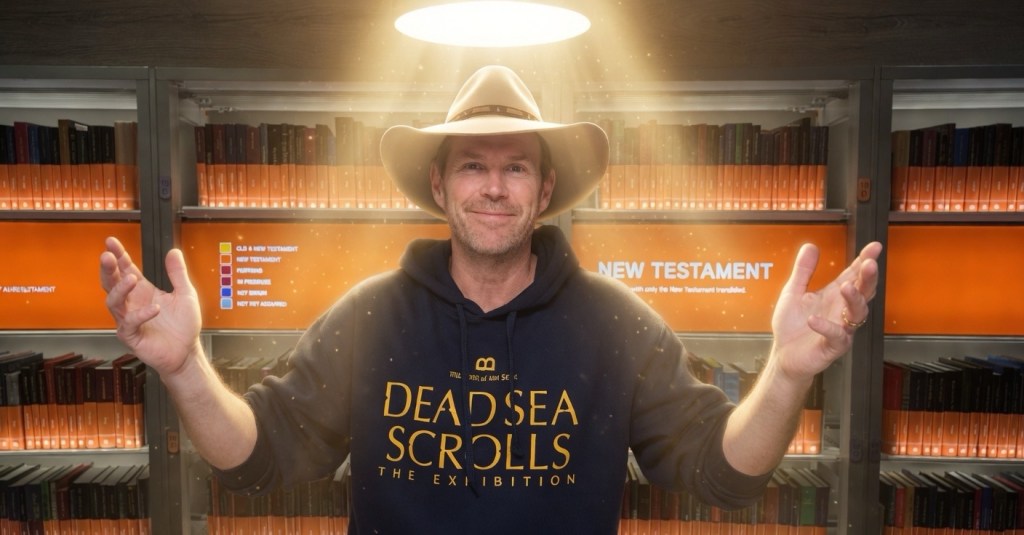
I am an older man now, but I have lived a life that kept me engaged with both the practical and the profound—from aerospace program management and the discipline of precision work, to writing books like Tail of the Dragon, The Gunfighter’s Guide to Business, and The Symposium of Justice, to my podcasting and activism on behalf of limited government, traditional values, and individual responsibility. The cowboy hat I have worn since childhood is a declaration that I stand apart from the herd. The whip is my personal symbol of discipline, precision, preparedness, and the moral agency to impose order when chaos threatens. But above all, it is the commitment to big-picture thinking that has defined my path. I criticize the regimented life not because I disdain structure, but because too many people never lift their eyes from the trees to see the forest or the forces moving through it.
Six or seven years from now, when the podcasts, news segments, and public conversations are filled with talk of non-human intelligence and its historical role, remember that some of us were saying it when it was still costly to do so. Not for credit, but because the truth matters and because being outside the box allows you to see what is coming before it arrives. The COVID chapter proved that. The disclosure chapter will prove it again. The politics of heaven are the ultimate big picture, and understanding them is the only way to navigate what lies ahead without being steered by forces we refuse to name.
The truth always comes out. It came out on the origins of COVID after six years of resistance. It is coming out on UAP and the deeper history of influence. It will come out on accountability or the lack of it. I hope that when it does, enough people will have stepped outside the box to see it clearly, to demand what is right, and to prepare for the fuller reality of our place in a universe that has never been as empty or as human-centered as the inside-the-box narrative claimed.
Footnotes
[^1]: Tulsi Gabbard’s resignation as Director of National Intelligence was announced on May 22, 2026, effective June 30, 2026, citing her husband’s health; see reports from BBC, CNBC, and the New York Times (May 2026).
[^2]: On gain-of-function research, EcoHealth Alliance, Wuhan Institute of Virology, and Fauci testimony controversies, see RFK Jr., The Real Anthony Fauci (2021) and subsequent congressional reviews and intelligence assessments on COVID origins (2023-2026).
[^3]: Amy Acton served as Ohio Department of Health Director under Gov. Mike DeWine, issued stay-at-home orders in March 2020, and resigned in June 2020 amid criticism; see contemporary reporting from the Columbus Dispatch, WOSU, and the Ohio Capital Journal.
[^4]: Gov. Mike DeWine announced June 16, 2026, that Ohio should abolish the death penalty, reversing long-held support; see Associated Press, Ohio Capital Journal, and New York Times coverage (June 2026).
[^5]: U.S. COVID-19 deaths exceeded 1.1 million; economic impact studies project trillions in GDP losses from the pandemic and policy responses. See CDC data summaries and analyses, such as Walmsley et al. (2020) in the Journal of Urban Economics and Chen et al.’s economic burden projections.
[^6]: Average annual cost of incarceration in U.S. state prisons is around $ 60,000 per inmate (median figures from USAFacts and state reports); federal prisons are around $41,000 per inmate (FY2023 Federal Register). Life sentences for serious crimes impose an ongoing taxpayer burden of tens of thousands of dollars per individual per year.
[^7]: Book of Enoch (1 Enoch), particularly the Book of the Watchers (chs. 1-36), describes the descent of the Watchers, their instruction of humanity in forbidden arts, and the birth of the violent Nephilim giants. See translations by R.H. Charles (1917) and modern editions; scholarly discussion in The Torah.com and related ancient Near Eastern studies.
[^8]: UAP disclosure developments include 2017-2023 Pentagon video releases, the 2021 ODNI Preliminary Assessment, the 2023 congressional hearings with David Grusch’s testimony, and the 2026 releases under the PURSUE system (Department of War/ODNI tranches announced May-June 2026).
[^9]: Ancient historical patterns of divine kingship and oracular influence in Egypt (pharaoh as god-king), Canaanite pantheon (Ugaritic texts, Baal Cycle), and biblical accounts (Genesis 6, Numbers 13, Deuteronomy on Canaanite practices). See Biblical Archaeology Review archives and standard references such as The Oxford History of the Ancient Near East.
[^10]: Broader context on spiritual warfare, giants, and population themes in biblical and extra-biblical literature; see also the author’s forthcoming The Politics of Heaven (target 2027) for an integrated treatment that connects ancient influences to modern geopolitical and technological developments.
Bibliography for Further Reading
• Charles, R.H., trans. The Book of Enoch. London: Society for Promoting Christian Knowledge, 1917 (and subsequent reprints).
• Elizondo, Luis. Imminent: Inside the Pentagon’s Hunt for UAP. New York: William Morrow, 2024.
• Hoffman, Rich. Tail of the Dragon. (Author’s earlier work on personal and philosophical themes).
• Hoffman, Rich. The Gunfighter’s Guide to Business. (On resilience, problem-solving, and imposing will on circumstances).
• Hoffman, Rich. The Symposium of Justice. (Philosophical and justice themes).
• Hoffman, Rich. The Politics of Heaven. (Forthcoming 2027; manuscript completed 2026, exploring biblical conspiracies, giants, demons, spiritual warfare, and population agendas across history).
• Kennedy, Robert F., Jr. The Real Anthony Fauci: Bill Gates, Big Pharma, and the Global War on Democracy and Public Health. New York: Skyhorse, 2021.
• Biblical Archaeology Review. Multiple issues on ancient Near Eastern religion, giants/Nephilim debates, and archaeological context for biblical texts (ongoing since 1975).
• Office of the Director of National Intelligence. Preliminary Assessment: Unidentified Aerial Phenomena. June 2021 and subsequent UAP reports.
• Various 2023-2026 congressional hearings and whistleblower testimony on UAP (Grusch et al.).
• Academic and government analyses of COVID-19 economic impacts: Walmsley, Terrie et al. “The Impacts of the Coronavirus on the Economy of the United States” (2020); Chen, Simiao et al. economic burden studies (2021); CDC COVID Data Tracker summaries.
• USAFacts and Bureau of Justice Statistics reports on incarceration costs and prison populations (2023-2025 data).
• Ancient primary sources: Ugaritic Baal Cycle texts; Egyptian royal inscriptions and Pyramid Texts; biblical texts (Genesis 6, Enoch references in Jude and 2 Peter).
• Additional context on Canaanite religion and its influence: Day, John. Yahweh and the Gods and Goddesses of Canaan. Sheffield Academic Press, 2000 (and related scholarship).
Rich Hoffman is an author, political consultant, and strategic advisor based in Cincinnati, Ohio, and the creator of The Politics of Heaven—a unique framework that connects biblical theology, ancient history, and modern power structures to explain how moral alignment and spiritual forces shape global events. Blending real-world political experience with deep research into archaeology, UFO phenomena, and suppressed historical narratives, Hoffman offers compelling commentary on topics ranging from ancient civilizations and the Dead Sea Scrolls to modern populist movements, paranormal continuity, and leadership strategy in chaotic environments. As the author of The Gunfighter’s Guide to Business and the forthcoming Politics of Heaven, he brings a grounded yet provocative voice to media discussions, supported by firsthand experiences and a cross-disciplinary approach that bridges science, history, and theology. For interviews, speaking engagements, or expert analysis, visit richhoffmanbooks.com or contact directly via phone at 513-307-5815 or email at rhoffman@richhoffmanbooks.com. If you’ve seen the movie, Disclosure Day and want to talk about it and the implications of Presidnet Trump’s UAP disclosures, let me know and we can bring some color to your coverage. https://richhoffmanbooks.com/media-inquiries-broadcast-topics-and-contact-info/?frame-nonce=ad51e7ecba I do have a firsthand UFO encounter to discuss.
I was really impressed with a recent piece by Donna D’Errico. She produces YouTube videos as part of the Myth Bound series, and I completely understand her approach. In an era when everyone can have their own media platform, people like Donna are stepping up to explore Earth’s mysteries afresh. She’s doing a kind of modern Josh Gates-style investigation—traveling to sites, talking to experts, and digging into legends with genuine curiosity. Her episode on Serpent Mound struck me as particularly strong.
Before I dive deeper, I have to acknowledge that this discussion probably won’t win me many friends—especially as my book The Politics of Heaven nears publication during a time when Spielberg’s Disclosure Day and waves of official UAP releases are forcing people to reconsider long-dismissed ideas. My reference point here is one of deep respect for the field: I love archaeologists. I admire the dedication it takes to spend years in the dirt, uncovering artifacts so the rest of us can wrestle with their meaning. But like any institutional endeavor, grooves form. Assumptions harden into orthodoxy. Human nature resists relearning, especially when funding, careers, and political narratives are at stake. Once a framework is set, new evidence is often shoehorned to fit rather than allowed to challenge the foundation.
Serpent Mound, in Adams County, Ohio, is far more mysterious than mainstream accounts typically allow. The default narrative attributes it to “Indigenous people,” specifically linking it to the Adena (circa 800 BC–AD 100) or Fort Ancient (AD 1000–1650) cultures, which then folds neatly into broader political claims about “stolen land.” This framing, I believe, serves agendas that seek to undermine America’s founding legitimacy in favor of collectivist remaking—an echo of old European resentments toward the prosperous republic born from the Louisiana Purchase, Florida acquisition, and western expansion.
Donna’s episode respectfully features archaeologists discussing the site’s astronomical alignments, particularly its alignment with the summer solstice sunset, which was important to Fort Ancient peoples. She highlights how the mound feels profoundly three-dimensional on the ground—coiling serpent body undulating with the terrain—unlike the flattened maps most people see. That experiential quality is key. The site was meant to be walked, felt, and understood in context.
Serpent Mound itself is the largest known serpent effigy in the world, stretching approximately 1,348 feet in an uncoiling form with a curled tail. It sits atop a plateau within the Serpent Mound crater (also called the Serpent Mound Disturbance), an eroded meteorite impact structure roughly 8 km (5 miles) in diameter (estimates up to 14 km), formed less than 320 million years ago (likely around 300 million years ago). The builders chose this precise location on the rim of an ancient scar invisible to casual observation. Radiocarbon dating has shifted: earlier assumptions pointed to Adena; a 1991 study suggested Fort Ancient around AD 900–1200; and a 2014 analysis (later corroborated) supports Adena construction around 300 BC, with rebuilding in the Fort Ancient period. Multiple layers of use are evident.
Why build the world’s largest serpent effigy on the edge of a 300-million-year-old impact crater with sophisticated celestial alignments? The mathematics encoded here—solstice and equinox orientations—suggest knowledge far beyond simple hunting calendars. I’ve visited the site for decades, often reflecting on these questions while overlooking the Brush Creek Valley. It is one of three key locations I explore in The Politics of Heaven as evidence of non-human technological and spiritual interaction.
The second is Windover in central Florida, near the modern Kennedy Space Center. This ~8,000-year-old Middle Archaic cemetery (roughly 7,000–8,000 years BP) yielded 168 burials in a peat pond, many with remarkably preserved brain tissue, woven textiles of advanced complexity (multiple weaves, including non-heddle loom examples), and deliberate ritual orientation (often flexed, on left side facing west, anchored with stakes). At the time, sea levels were far lower; the coastline extended miles farther out. Submerged sites likely await discovery. These people practiced sophisticated mortuary rites predating biblical timelines by millennia, challenging simplistic post-Ice Age migration models from Beringia. Their genetics and practices don’t align neatly with those of later tribal groups, opening the door to deeper questions about origins and external influence.
The third is Flag Fen in England, masterfully excavated by Francis Pryor. This Bronze Age site (around 1000 BC, contemporaneous with the First Temple period) features complex timber platforms, votive weapon offerings in wetlands, and evidence of sophisticated beliefs about the afterlife. Pryor’s work—detailed in books like Flag Fen: Life and Death of a Prehistoric Landscape—reveals a ritual landscape of remarkable engineering.
These sites, alongside markers such as the London Stone, Paris’s origin stone, and Washington, D.C.’s Masonic layout, suggest coordinated knowledge across continents and eras. Native American legends—Iroquois, Shawnee, and Aztec migrations from the north (echoed at Three Rivers Petroglyphs in New Mexico)—feature descending “gods,” giants, and supernatural beings that are remarkably consistent with global mythologies. The uniformity points to real encounters rather than independent invention.
Near my home in the Great Miami River valley (Liberty Township / Middletown area, Ohio), the Middletown Mound and Miamisburg Mound stand as testaments. Miamisburg is one of the largest conical mounds in eastern North America—65 feet high, 800 feet in circumference, built by Adena peoples in stages, containing vast amounts of earth and visible for miles. My daughter has taken a great interest in the Middletown site. These should be premier attractions, yet NAGPRA and institutional caution limit new excavations. Cultures routinely built atop older complexes—Cahokia, Baalbek, Jerusalem, Christian churches over pagan temples. Why assume otherwise here?
Archaeologists I respect operate under real constraints. Funding flows through institutions influenced by political and financial interests historically at odds with figures like Andrew Jackson. The “Mound Builder” myth was once weaponized for removal policies (Indian Removal Act, 1830), but today continuity narratives sometimes sideline anomalous evidence. I want these professionals to be better funded for open inquiry.
Post-disclosure, the picture sharpens. UAP whistleblower testimony on non-human biologics and reverse-engineering (with local ties to Wright-Patterson) makes ancient interaction plausible. Disclosure Day shifts the Overton window.
This leads to time—interdimensional or ultra-terrestrial beings likely master relativity. Time dilation is a physics fact. Travelers could experience days while centuries pass on Earth. Sites like Serpent Mound may serve as temporal anchors—celestial markers to recalibrate “when” upon return. Mythic “gods” gifting knowledge then vanishing aligns with this. Cryptids fit as echoes.
I’ve visited these regions and studied the works extensively. These inform The Politics of Heaven, my exploration of spiritual warfare, giants/Nephilim, divine rebellion, and humanity’s interactions. Nineteen of twenty-one chapters tackle controversial ground because they prioritize evidence over control narratives.
Donna D’Errico embodies the right spirit. Archaeologists deserve support for deeper digs. The great serpent on its ancient crater is no random effigy. It testifies to encounters with star-faring knowledge-bearers.
We stand at the threshold of new understanding. The dance continues. The serpent watches. Truth uncoils into the light.
Footnotes
¹ Donna D’Errico, Myth Bound YouTube series (episodes on Serpent Mound and related mysteries).
² Ohio History Connection, Serpent Mound official site details and history.
³ Wikipedia / scientific sources on Serpent Mound crater: ~8 km diameter, <320 million years old (est. ~300 Ma).
⁴ Radiocarbon dating summaries: 2014 Adena ~300 BC with Fort Ancient repairs.
⁵ Astronomical alignments (solstices/equinoxes).
⁶ Windover site reports: ~8,000 BP burials, textiles, rituals (Glen Doran et al.).
⁷ Francis Pryor, Flag Fen: Life and Death of a Prehistoric Landscape (2005).
⁸ Miamisburg Mound: Ohio History Connection / National Register details.
⁹ Broader context: Graham Hancock, Ross Hamilton (Serpent Mound), UAP disclosures, and Pryor’s Time Team work
Rich Hoffman is an author, political consultant, and strategic advisor based in Cincinnati, Ohio, and the creator of The Politics of Heaven—a unique framework that connects biblical theology, ancient history, and modern power structures to explain how moral alignment and spiritual forces shape global events. Blending real-world political experience with deep research into archaeology, UFO phenomena, and suppressed historical narratives, Hoffman offers compelling commentary on topics ranging from ancient civilizations and the Dead Sea Scrolls to modern populist movements, paranormal continuity, and leadership strategy in chaotic environments. As the author of The Gunfighter’s Guide to Business and the forthcoming Politics of Heaven, he brings a grounded yet provocative voice to media discussions, supported by firsthand experiences and a cross-disciplinary approach that bridges science, history, and theology. For interviews, speaking engagements, or expert analysis, visit richhoffmanbooks.com or contact directly via phone at 513-307-5815 or email at rhoffman@richhoffmanbooks.com. If you’ve seen the movie, Disclosure Day and want to talk about it and the implications of Presidnet Trump’s UAP disclosures, let me know and we can bring some color to your coverage. https://richhoffmanbooks.com/media-inquiries-broadcast-topics-and-contact-info/?frame-nonce=ad51e7ecba I do have a firsthand UFO encounter to discuss.
I have been talking about this for decades, going back to that fourth-grade speech on a big elementary school stage where I stood up and laid out everything I had read about UFOs and alien interactions with humanity. Most people thought I was crazy then, and even now, some look at me sideways when I bring it up. But the pattern has always been obvious to me: this is not merely about little green men or flying saucers in the sky. It is about raw power, control, and the systematic erasure of previous knowledge so that whatever new regime is in charge—whether a government administration, a corporate takeover, or a stepfather moving into a broken home—can claim to be the first and only legitimate authority.
I just finished my book The Politics of Heaven, which dives deep into this exact dynamic. The core argument is simple yet profound: advanced non-human intelligences have visited and interacted with Earth for millions of years. These beings, equipped with their own political orders and technologies that let them cross vast interstellar distances, have traded knowledge, labor, resources, and sometimes genetic material with human civilizations. Yet throughout history, those who seek to rule over us have worked tirelessly to suppress this reality. They do not want the public remembering “Larry”—the previous husband, the prior administration, the older gods or visitors—because acknowledging the past undermines their exclusive claim to power.
Think about the stepfather who enters a home after a divorce. It is never enough that he is now in the same bedroom with the mother that the kids once saw their real dad occupy. He changes the pictures on the walls, replaces the furniture, and hauls Dad’s Craftsman tools out of the garage to sell at a flea market. He forbids the children from talking about the old life. This is exactly how new regimes operate. A new CEO wipes away the legacy of the previous leader. A new administration erases the records and narratives of those who came before. Ancient priesthoods burned libraries and rewrote myths. Modern institutions discourage digging too deeply into American mounds, pyramids, or out-of-place artifacts because they want everyone focused on the current story—that their administration is the only one that has ever truly existed.
That is why the current disclosure wave feels so validating to me. In February 2026, President Trump directed federal agencies to begin declassifying evidence related to non-human intelligence through the Presidential Unsealing and Reporting System for UAP Encounters (PURSUE). There has been predictable pushback, but the information is flowing. The Pentagon has released multiple tranches of files, videos, and documents. The dedicated site has already surpassed one billion views worldwide. Jesse Watters on Fox News has covered it in primetime, featuring insiders like Dan Farah and Dr. Hal Puthoff discussing recovered non-human biologics. This is no longer fringe Coast to Coast AM territory. It is corporate media at 8 o’clock, talking seriously about four distinct alien species.
I have shared my book with top-level people who initially reacted with surprise—“You’re a serious person; what are you talking about?”—but the evidence has always been there for those willing to look past the stigma. For years, reading these accounts sounded “kooky” to many. Who believes in such things? Yet the pattern holds: these species have been interacting with civilizations for as long as humans have kept records. They appear in literature and myth under different names, but the core descriptions remain consistent. Now the conversation has shifted. People are no longer universally mocked for discussing it. There is a massive public hunger, which is why the disclosure site has drawn over a billion visitors. For some reason, that figure is controversial. As if people think it’s inflated. It comes straight off the website.
The four species that insiders and scientists have reported from crash retrieval programs stand out clearly. These are not my inventions; they come from credible figures with government and intelligence backgrounds. All are described as basically humanoid—two arms, two legs—but distinctly different in appearance and likely origin.
The Greys, often associated with the classic Roswell imagery, are typically three to four feet tall, with grey skin, large, hairless heads, oversized black, almond-shaped eyes, and minimal facial features. They have three or four fingers and are frequently linked to abduction accounts. Many connect them to the 1947 Roswell/Corona crash in New Mexico, where debris and bodies were reportedly recovered and studied.
The Nordics appear most human-like—tall, often six to seven feet, with fair skin, blond or light hair, and blue eyes, resembling Northern Europeans or Scandinavians. They come across as more diplomatic or benevolent in contactee reports. Their appearance may be designed to facilitate easier interaction with humans.
Reptilians, sometimes called reptiloids, are taller (six to eight feet), with scaly skin, occasional tails, and lizard-like features while maintaining an upright posture. They echo ancient serpent gods and dragon myths found in cultures worldwide. Some accounts suggest long-term influence on Earth’s power structures or underground bases.
Insectoids, or Mantids, resemble praying mantises in humanoid form: tall and thin, with large compound eyes, exoskeleton-like skin, and insectoid limbs. They often appear in high-strangeness cases as scientists or overseers. Their form can be unsettling to humans, yet they share the bipedal structure common to these visitors.
Insiders such as Dr. Hal Puthoff and Eric Davis have cited these four based on crash-retrieval data. Dozens of crafts and associated biologics have reportedly been recovered over the decades. The technology pulled from these sites—advanced materials, propulsion systems, and electronics—appears to have been reverse-engineered and seeded into our society, especially after 1947. Many breakthroughs in the modern era seem to have come from nowhere. This fits the long pattern of trade: humans offering labor, resources, or scientific materials in exchange for knowledge such as metallurgy, agriculture, or tool-making.
This interaction did not begin in the 20th century. Archaeological evidence and historical records point to contact stretching back millions of years, though mainstream institutions resist this because it challenges established narratives like strict Darwinian timelines and human isolation. The Smithsonian’s historical role in diffusionist debates, its reluctance to fully explore certain American earthworks, and its preference for conventional explanations all align with the pattern of erasure. Pyramids, megaliths, and sudden technological leaps worldwide strain the idea that we developed in total solitude.
Roswell remains the most publicized crash, but it is one of many. Whistleblowers like David Grusch have testified to non-human biologics from multiple retrieval programs. Ancient texts describe “gods” descending in fiery vehicles—Vimanas in Indian epics, Ezekiel’s wheels, Sumerian Anunnaki. When you strip away cultural filters, these accounts parallel modern descriptions.
In The Politics of Heaven, I connect these threads to biblical and mythological narratives. The Witch of Endor summoning spirits for Saul, rituals seeking divine or extraterrestrial knowledge, rival gods like Baal versus Yahweh—these reflect competing political orders among visitors. Paradise Lost and concepts of devils may describe advanced beings of non-Christian origin who make strategic deals. Occult practices, star alignments, and telepathic communication appear to have enabled contact for millennia. Some interpret these entities as demons; others see them as neutral actors pursuing their own galactic agendas. The truth is likely a complex mix.
The resistance to full disclosure makes perfect sense through the lens of power. Governments secure massive black budgets by promising protection from threats they cannot entirely control, often opting instead for deals. Whistleblowers are chastised, just as Medicaid fraud exposers in Ohio face backlash—the real scam becomes punishing those who speak. New regimes say, “Forget the old leadership. Listen only to us.” They change the narrative, remove the old photos, and sell the tools. Authority figures do not want the public to realize that humanity’s story has always involved these external influences. It diminishes their claim to being the ultimate parent or protector.
Yet the information is now unstoppable. Trump’s PURSUE releases, persistent researchers, congressional interest, and public demand ensure it. Steven Spielberg’s upcoming film Disclosure Day, set for release on June 12, 2026, will further mainstream the conversation. I am enjoying this moment immensely. I have been right about the power dynamics since that fourth-grade speech. These species have their own political structures. They make deals for what they need from humanity. We have traded and interacted across time. The veil is lifting, and humanity is beginning to remember what was deliberately hidden.
We are not alone. We never were. The real question is how we assert our sovereignty amid these long-standing relationships. The stepfather cannot erase Larry forever—the kids remember. Humanity is remembering too. Understanding the politics of heaven is essential as we navigate this new era. My book lays out the receipts, the historical parallels, and the power struggle. Engage with the evidence. The truth has always been about control, and now the control is slipping as the full picture emerges. This is a better day for those who have followed the story for years. Disclosure is here, and it is unstoppable.
In St. Augustine’s City of God, he describes on page 610 proof of biblical giants from 620 AD. And when we talk about giants in human beings, we are talking about interactions with some of these species of aliens that are proof of past interactions. And the concealment of that daunting realization is upon us, now. And the world will never be the same.
Footnotes
1. Jesse Watters Primetime, Fox News, May 2026 segments with Dan Farah and Hal Puthoff.
2. PURSUE program releases, war.gov/ufo, May 2026.
3. Trump directive, February 2026.
4. Hal Puthoff and Eric Davis’s statements on recovered species.
5. Roswell and historical crash analyses.
6. Ancient texts and mythological parallels.
7. The Politics of Heaven by Rich Hoffman, 2026.
Bibliography
• Puthoff, Hal. Interviews and statements, 2026.
• Farah, Dan. The Age of Disclosure documentary and Fox News appearances.
• Grusch, David. Congressional testimonies.
• Trump Administration PURSUE releases, May 2026.
• Fox News coverage, Jesse Watters Primetime, May 2026.
• Davis, Eric. UAP research briefings.
• Biblical texts, Milton’s Paradise Lost, Sumerian tablets, Indian epics.
• Archaeological critiques and ancient astronaut literature (contextualized).
• Spielberg, Steven. Disclosure Day film announcements, 2026.
• Additional primary sources on Roswell, UAP reports, and whistleblower accounts
Rich Hoffman is an aerospace executive, political strategist, systems thinker, and independent researcher of ancient history, the paranormal, and the Dead Sea Scrolls tradition. His life in high‑stakes manufacturing, high‑level politics, and cross‑functional crisis management gives him a field‑tested understanding of power — both human and unseen.
He has advised candidates, executives, and public leaders, while conducting deep, hands‑on exploration of archaeological and supernatural hotspots across the world.
Hoffman writes with the credibility of a problem-solver, the curiosity of an archaeologist, and the courage of a frontline witness who has gone to very scary places and reported what lurked there. Hoffman has authored books including The Symposium of Justice, The Gunfighter’s Guide to Business, and Tail of the Dragon, often exploring themes of freedom, individual will, and societal structures through a lens influenced by philosophy (e.g., Nietzschean overman concepts) and current events.
I have been talking about this for decades, going back to a fourth-grade speech where I stood on a big stage in my elementary school and laid out what I had read about UFOs and alien interactions with Earth. Most people thought I was crazy then. They still look at me sideways sometimes when I bring it up, even as the evidence mounts and corporate media like Jesse Watters on Fox News discusses it in primetime. But the pattern has always been clear to me: this is not just about little green men or flying saucers. It is about power, control, and the deliberate erasure of previous knowledge so that new regimes—whether governments, stepfathers in broken homes, or corporate takeovers—can position themselves as the sole legitimate authority.
My new book, The Politics of Heaven, explores exactly this dynamic. It argues that interactions between humanity and advanced non-human intelligences have shaped our civilizations for millions of years. These beings, with their own political orders and technologies capable of bridging vast distances, have traded knowledge, labor, and resources with us. Yet authority figures across history have worked to suppress this reality. They do not want the public thinking about “Larry”—the previous husband, the prior administration, the older gods or visitors—because it undermines their claim to exclusive power. Just as a new stepfather might remove all traces of the biological dad from the house, change the furniture, sell the tools at a flea market, and forbid the kids from mentioning the old life, modern institutions and ancient priesthoods have tried to wipe the slate clean.
The recent disclosures under the Trump administration in 2026 have accelerated this conversation. In February, President Trump directed federal agencies to declassify evidence related to non-human intelligence. There has been pushback, as expected, but the information is coming out. Pentagon releases, whistleblowers, and primetime segments on Fox News are normalizing what I and many researchers have discussed for years. Over a billion people have engaged with this material online because there is a deep hunger for truth. The stigma that made talking about aliens at the grocery store feel taboo is cracking. Tabloids turned it into spectacle, but the serious evidence was always there for those willing to dig.
The Four Known Species
Scientists and insiders involved in crash retrieval programs have identified at least four distinct species of non-human beings recovered from downed craft. These reports come from credible figures like Dr. Hal Puthoff, a quantum physicist with deep government ties, and his collaborator Dr. Eric Davis. They describe beings with two arms and two legs, humanoid in basic form, but distinctly different.
The Greys (sometimes called Zeta Reticulans) are the most iconic. Small, typically 3 to 4 feet tall, with grey skin, oversized hairless heads, large black almond-shaped eyes, minimal noses and mouths, and three or four fingers. They are often linked to abduction accounts and the classic Roswell imagery. Insiders associate them with the 1947 Corona/Roswell crash site in New Mexico, where debris and bodies were reportedly recovered. They appear biologically adapted for advanced technological interfaces, possibly serving as pilots or intermediaries.
The Nordics look strikingly human-like, often described as tall (around 6-7 feet), fair-skinned, with features resembling Northern Europeans—blond or light hair, blue eyes. They are reported as more benevolent or diplomatic in encounters. Some accounts place their origins in distant star systems, and they have been tied to contactee stories since the mid-20th century. Their appearance may facilitate easier interaction with humans.
Reptilians (or reptiloids) are taller, around 6-8 feet, with scaly skin, sometimes tails, and lizard-like features while maintaining upright humanoid posture. Experts speculate they come from warmer or different evolutionary environments. They appear in ancient myths worldwide—serpent gods, dragon kings—and modern encounters. Some researchers link them to underground bases or long-term influence on Earth power structures.
Insectoids (or Mantids) resemble praying mantises in a humanoid form: tall, thin, with large compound eyes, exoskeleton-like skin, and insectoid limbs. They are often reported in abduction or high-strangeness cases as overseers or scientists. Their appearance can be startling, yet they share the bipedal structure.
These four are not exhaustive—insiders hint at more—but they represent the recovered biologics from dozens of craft. The technology recovered alongside them, reverse-engineered since the 1940s, has fueled innovations in materials, electronics, and propulsion that appeared suddenly in our society post-Roswell.
Historical Interactions and Crash Sites
This has not been a recent phenomenon. Archaeological and historical records suggest interactions stretching back millions of years, though mainstream institutions resist this interpretation. The Smithsonian and diffusionist debates highlight how out-of-place artifacts and sudden technological leaps challenge Darwinian timelines and isolated human development. Pyramids, megalithic structures, and earthworks worldwide show precision that strains conventional explanations.
Roswell/Corona in 1947 remains the most famous crash. Rancher Mac Brazel found strange debris. Military initially announced a “flying disc,” then retracted to a weather balloon. Whistleblowers like David Grusch have testified to non-human biologics from multiple sites. Other reported crashes include locations in Mexico, Russia, and earlier incidents. Ancient texts describe “gods” descending in fiery chariots—Vimanas in Indian epics, Ezekiel’s wheels, or Sumerian Anunnaki. These align with modern descriptions when stripped of cultural filters.
In The Politics of Heaven, I connect this to biblical and mythological narratives. The Witch of Endor summoning spirits for Saul, rituals for divine knowledge, and rival “gods” like Baal versus Yahweh reflect competing political orders among these visitors. Paradise Lost and Milton’s devils may describe advanced beings with non-Christian origins making deals for influence. Occult practices, star alignments, and telepathic communication have reportedly facilitated contact for millennia.
The Politics of Erasure
The core issue is control. Governments secure black budgets by promising protection from threats they cannot fully manage, instead making deals. New regimes erase predecessors: corporate buyouts fire old management and rewrite history; stepfathers remove photos and tools. Ancient priesthoods burned libraries or rewrote myths to centralize power. The Smithsonian’s role in diffusion debates and reluctance to excavate certain American mounds fits this pattern—maintain the narrative that our administration (or civilization) is the first and only legitimate one.
Whistleblowers face chastisement, just as Medicaid fraud exposers in Ohio do. The scam is not the initial event but the punishment for speaking. Over a billion downloads and views show public hunger. Fox News discussing four species, non-human craft, and congressional believers marks a shift from Coast to Coast AM to primetime. Steven Spielberg’s upcoming project will further mainstream it.
I am not surprised. Since fourth grade, I have seen the power dynamics. These species have their own agendas—trade, experimentation, influence. We traded labor, genetics, or resources for technology: cloth-making, metallurgy, or modern breakthroughs post-1947. Some view them as demons; others as neutral actors in a galactic political landscape. The truth is likely nuanced.
Disclosure is unstoppable now. Trump’s directive, the PURSUE releases, and persistent researchers ensure it. People must understand the politics of heaven—the heavenly (or cosmic) orders influencing Earth. My book ties these threads: power, history, and the fight against erasure. I have shared it with top people who initially dismissed it but now see the seriousness. This is not conspiracy; it is the unveiling of our true context.
We are not alone. We never were. The question is how we navigate these relationships without losing our sovereignty to those who would rule by hiding the past. The stepfather cannot erase Larry forever. The kids remember. Humanity is starting to remember too.
Footnotes
1. Jesse Watters Primetime segment, Fox News, May 2026.
2. Hal Puthoff and Eric Davis statements on recovered species.
3. Trump PURSUE directive, February 2026.
4. Roswell Report analyses and whistleblower testimonies.
5. Ancient astronaut theories and archaeological critiques (contextualized).
Bibliography
• Puthoff, Hal. Interviews and AAWSAP-related works.
• Davis, Eric. Briefings on UAP and biologics.
• Grusch, David. Congressional testimony.
• The Politics of Heaven by Rich Hoffman (self-published, 2026).
• Pentagon PURSUE releases, May 2026 tranches.
• Wikipedia and primary sources on Grey, Nordic, Reptilian, Insectoid encounters.
• Roswell incident archival reports.
• Books on ancient astronauts (von Däniken, Sitchin, and critiques).
• Fox News, NY Post, and related 2026 coverage.
• Additional: Milton’s Paradise Lost, biblical texts, Sumerian tablets, Indian epics for historical parallels.
Rich Hoffman is an aerospace executive, political strategist, systems thinker, and independent researcher of ancient history, the paranormal, and the Dead Sea Scrolls tradition. His life in high‑stakes manufacturing, high‑level politics, and cross‑functional crisis management gives him a field‑tested understanding of power — both human and unseen.
He has advised candidates, executives, and public leaders, while conducting deep, hands‑on exploration of archaeological and supernatural hotspots across the world.
Hoffman writes with the credibility of a problem-solver, the curiosity of an archaeologist, and the courage of a frontline witness who has gone to very scary places and reported what lurked there. Hoffman has authored books including The Symposium of Justice, The Gunfighter’s Guide to Business, and Tail of the Dragon, often exploring themes of freedom, individual will, and societal structures through a lens influenced by philosophy (e.g., Nietzschean overman concepts) and current events.
I have spent decades talking about extraterrestrial life, unidentified aerial phenomena, and what it all might mean for our place in the cosmos. For years, I’ve said the universe is teeming with life, that interactions with Earth have been ongoing for a very long time, and that the real story is far more layered—and far less apocalyptic—than the government narratives or Hollywood thrillers would have us believe. Now, in this moment of partial disclosure, with President Trump directing the release of the first tranche of UAP and UFO files just days ago on May 8, 2026, it feels like the conversation I’ve been having privately and publicly is finally stepping into the open. The Pentagon has begun posting declassified documents, videos, and reports spanning decades—no redactions on the core encounter data. More releases are promised in the weeks ahead. Even Jon Stewart, a voice not often aligned with Trump, has acknowledged the significance of this push for transparency. It’s a rare point of bipartisan curiosity: Hillary Clinton pushed for it, Barack Obama’s team explored it (including through Netflix projects), and now the files are coming out. People on the left and right alike have wondered about this for generations. Yet for me, the excitement isn’t about shock or fear. It’s about finally peeling back layers of distraction and getting closer to honest questions about who we are, where we came from, and what we’ve inherited from a solar system that bears the scars of ancient catastrophe.
My own thoughts on aliens and extraterrestrials have never been about little green men invading or superior beings dictating our future. I’ve always viewed them as fellow lifeforms—complex, varied, and interacting with our world in ways both subtle and overt. I believe Earth itself was seeded, settled, or at least profoundly influenced by beings from elsewhere in our solar system. Mars, I suspect, was once inhabited or used as a waystation by civilizations much like our own. Other planets or moons in the system likely hosted outposts too. Over time, evidence will mount showing human-like peoples once thrived across the inner solar system. The asteroid belt between Mars and Jupiter? I’m convinced that was once a full planet—sometimes called Phaeton in the old hypotheses—that was catastrophically destroyed. Its annihilation sent debris raining across the system, devastating Mars, scarring Earth, and leaving the rubble we see today as the asteroid belt. Fragments from that event, massive meteorites and nitrogen-rich impacts, have been documented in our geological record and even in Smithsonian collections. These events didn’t just reshape landscapes; they left a deep, often hidden trauma in human culture—a collective memory encoded in myth, biology, and the very ground we walk on.
That trauma, I think, explains so much of our species’ drive for meaning, our fascination with the stars, and our recurring encounters with the unexplained. Consider Serpent Mound in southern Ohio. This ancient effigy, shaped like a coiling serpent and built by Native American cultures around 1000 AD (though some estimates place related activity earlier), sits directly on the edge of a confirmed impact crater over 300 million years old. The Serpent Mound Impact Structure is an eight-kilometer-wide scar left by an asteroid or comet strike during the late Paleozoic era. Modern geology only confirmed its impact origin in the 20th century through shatter cones, shocked quartz, and other unmistakable signatures. Yet the builders of the mound chose that precise location with extraordinary intentionality. They couldn’t have known—through any conventional surveying available to them in 100 BC or 100 AD—that they were perched on the rim of an ancient cosmic wound. The crater had long been eroded and buried under sediment; its true nature was only revealed by modern science. So how did they know? I believe knowledge was passed down through generations, perhaps via oral tradition, visiting intelligences, or some lingering cultural memory of the original seeding events. They didn’t build it randomly while “staring at the stars.” They responded to a profound psychological and spiritual imperative: mark the site of catastrophe, honor the memory, perhaps even encode a warning or a map of resilience. Serpent Mound isn’t just art or ritual; it’s a living footnote to solar-system history.
These ideas didn’t come to me overnight. I’ve studied crop circles for years—those intricate, often overnight formations in fields worldwide that defy easy explanation. Some are hoaxes, sure, but many show geometric precision, bent-not-broken stalks, and electromagnetic anomalies that suggest something more. I see them as one modern expression of the same intelligence that might have influenced Serpent Mound or the biblical visions. They’re messages, experiments, or territorial markers from intelligences that move through dimensions or technologies we’re only beginning to glimpse. And now, as we approach the June 2026 release of Steven Spielberg’s new film Disclosure Day—a return to his roots in Close Encounters and E.T.—the cultural timing feels deliberate. Spielberg has always understood that the alien question taps into something primal: wonder mixed with unease. His movie will likely amplify the conversation, but I hope it steers us toward curiosity rather than panic.
The most dangerous element in all this disclosure talk has never been the extraterrestrials themselves. It’s the governments that have hoarded the information. I’ve said for years that the real threat is institutional secrecy used to justify black budgets, psychological operations, and technological monopolies. Look at Roswell in 1947. The official story flipped from “flying disc” to “weather balloon,” but witnesses and leaked documents point to recovered craft and non-human bodies. Those materials, lore insists, ended up at Wright-Patterson Air Force Base—specifically in facilities whispered about as Hangar 18. Bodies allegedly preserved, materials studied. I don’t see these beings as gods or conquerors. They’re more like mosquitoes in a photograph of a flower—another lifeform sharing the frame, interacting at their level. Some may be biological drones or probes; others, advanced explorers. The government, however, amplified the threat narrative: super-intelligent invaders with gravity-defying tech. Why? To rationalize endless funding for reverse-engineering programs. And the timeline fits suspiciously well. We went from propeller planes to supersonic jets, stealth technology, and radar-evading systems in a historical blink—right after Roswell. Coincidence? Or harvested knowledge traded or reverse-engineered? I suspect the latter. We would have reached these breakthroughs eventually through human ingenuity, but the acceleration smells of external influence.
I’ve had my own encounters with flying saucers. I won’t dramatize them here as some heroic standoff; they were quiet, observational moments that left me with a profound sense of perspective rather than fear. These crafts didn’t feel hostile or overwhelming in a superior way. They moved with technology that suggests mastery of dimensions or energy we’re still grasping—faster travel, perhaps interdimensional shifts. But the beings behind them strike me as competitors for space and resources, not infallible overlords. They’re lifeforms, flawed and curious like us. Demonizing them serves power structures more than truth. It keeps the public dependent: “Big government will protect you from the scary unknown.” I reject that entirely. Disclosure should empower individuals, not centralize control.
This perspective doesn’t undermine faith or the Bible; it enriches it. Scripture is filled with accounts that read like modern UAP encounters when viewed without preconception. Ezekiel’s vision of the wheel within a wheel—fiery, spinning, moving with purpose—sounds an awful lot like a technological craft. Elijah’s chariot of fire ascended in a whirlwind. The “watchers” and Nephilim in Genesis are echoed in the Book of Enoch and in fragments from the Dead Sea Scrolls found at Qumran. Those scrolls, preserved in caves near the Dead Sea, contain texts like the Genesis Apocryphon that fuel speculation about otherworldly parentage and paranormal events. Enoch walks with angels, receives heavenly knowledge; giants roam the earth before the flood. These aren’t contradictions to a creator God. They’re records of a cosmos alive with activity—paranormal, multidimensional, ongoing for millennia. Ancient alien speculations, while sometimes fanciful, ask the right questions: What if the “gods” of old were visitors? What if our myths encode real interactions? Modern science’s comfortable Darwinian narrative—life evolving slowly in isolation—feels increasingly convenient rather than complete. It suited a materialist worldview that ignored inconvenient anomalies. The real answers likely lie in a synthesis: seeded life, guided evolution, cosmic neighbors, all under a divine framework far grander than we imagined.
Human culture carries this hidden trauma—the memory of planetary destruction, of refugees or colonists arriving here after catastrophe. The Phaeton event (or whatever we ultimately call the lost planet) wasn’t just astronomical; it was existential. Mars shows scars of sudden devastation. Earth endured meteor showers and climatic upheavals. Our biology and psychology may still echo that displacement. Serpent Mound stands as one deliberate act of remembrance. Crop circles might be another. Even our drive to explore space, to reach Mars and beyond, could be a subconscious return to ancestral homes. The files now being released—Apollo mission transcripts mentioning anomalies, military pilot encounters, recovered materials—will force us to confront this inheritance.
As more documents roll out, I expect confirmation of what many have suspected: that interactions are real, that bodies and craft have been studied, and that the phenomenon spans history. But the takeaway shouldn’t be terror or worship. It should be humility and agency. We are not alone, yet we remain responsible for our planet, our societies, and our moral choices. Extraterrestrials aren’t here to save or enslave us; they’re part of a larger ecology. The government’s role in demonizing or gatekeeping has been the true barrier to understanding. Transparency, as Trump is delivering, shifts power back to the people. We get to decide what it means.
I’ve advocated this view for years because the questions matter more than the tidy answers science or institutions once offered. Ancient alien theories entertain, but they also challenge laziness in our worldview. Why assume isolation when evidence—geological, textual, anecdotal—points to connection? The Spielberg film will dramatize one vision of disclosure; the real one is unfolding now through declassified files and open dialogue. I hope that we approach it with the same discipline and clarity I’ve applied to every other domain of life: prepare through knowledge, reject fear as a control mechanism, and embrace responsibility.
The cosmos is vast, ancient, and inhabited. Earth’s story is intertwined with it. From the ruins of Phaeton to the precision of Serpent Mound, from Roswell’s wreckage to biblical chariots, the thread is continuity—not conquest. Disclosure isn’t the end of our story; it’s the beginning of a more honest chapter. I look forward to what comes next—not with dread, but with the quiet confidence that comes from long reflection on these matters. We’ve always been part of something bigger. Now we get to see it clearly.
Footnotes
¹ Presidential Unsealing and Reporting System for UAP, Department of War release, May 8, 2026.
² Pentagon initial tranche of UAP files, May 8, 2026.
³ Phaeton (hypothetical planet), Wikipedia, and historical astronomical hypotheses.
⁴ Ohio Department of Natural Resources, Serpent Mound Impact Structure documentation.
⁵ Wikipedia and Earth Impact Database entry on Serpent Mound crater.
⁶ Steven Spielberg’s Disclosure Day official teaser and release details, Universal Pictures, 2026.
⁷ Wright-Patterson Air Force Base and Roswell lore, including Hangar 18 references.
⁸ Dead Sea Scrolls scholarship, Genesis Apocryphon, and Enochic literature.
⁹ Ezekiel’s vision and biblical UAP interpretations in scholarly and popular analysis.
Bibliography & Further Reading / Viewing
UFO/UAP Disclosure & Government Files
• Department of War / Pentagon UAP release archives (war.gov/ufo, May 2026 tranche).
• The Roswell Report: Case Closed (U.S. Air Force, 1994/1997 updates).
• David Grusch congressional testimony and related UAP hearings (2023 onward).
Ancient Catastrophe & Solar System History
• Phaeton (Hypothetical Planet) – Titius-Bode law and disruption theories (various astronomical histories).
• Keith Milam et al., Guide to the Serpent Mound Impact Structure (Ohio DNR Geological Survey).
• Richard Firestone et al., The Cycle of Cosmic Catastrophes (on Younger Dryas and impact events).
Biblical & Ancient Texts
• The Book of Enoch (R.H. Charles translation; Dead Sea Scrolls fragments).
• Genesis Apocryphon from Qumran (Dead Sea Scrolls).
• Josef Blumrich, The Spaceships of Ezekiel (NASA engineer’s technical analysis).
Cultural & Speculative
• Erich von Däniken, Chariots of the Gods? (foundational ancient astronaut theory).
• Graham Hancock, Fingerprints of the Gods (catastrophe and lost civilizations).
• Steven Spielberg, Disclosure Day (forthcoming 2026 film).
• Jacques Vallée, Passport to Magonia (folklore and UFO parallels).
Historical Tools & Archives
• Smithsonian Institution meteorite and impact collections.
• Library of Congress historical UFO report archives.
• University of New Brunswick Earth Impact Database.
Rich Hoffman is an aerospace executive, political strategist, systems thinker, and independent researcher of ancient history, the paranormal, and the Dead Sea Scrolls tradition. His life in high‑stakes manufacturing, high‑level politics, and cross‑functional crisis management gives him a field‑tested understanding of power — both human and unseen.
He has advised candidates, executives, and public leaders, while conducting deep, hands‑on exploration of archaeological and supernatural hotspots across the world.
Hoffman writes with the credibility of a problem-solver, the curiosity of an archaeologist, and the courage of a frontline witness who has gone to very scary places and reported what lurked there. Hoffman has authored books including The Symposium of Justice, The Gunfighter’s Guide to Business, and Tail of the Dragon, often exploring themes of freedom, individual will, and societal structures through a lens influenced by philosophy (e.g., Nietzschean overman concepts) and current events.