The Hidden Game: How Sports Betting is Giving Power to the Mob and the NFL

This is a story that quickly disappeared: the NBA gambling scandal.  However, one of the great things about money is that it reveals a lot about the people who want it. In the gambling world, where easy money is a prospect for those who are lazy, the character of all endeavors is relatively easy to reveal.  And it’s not just the NBA; I would say the rigged games in favor of betting odds are much worse in the NFL.  In the age of legalized sports betting, the question isn’t just who will win the game—it’s whether the game itself is being played fairly. As billions of dollars flow through betting platforms and fantasy leagues, the integrity of professional sports is under more scrutiny than ever. Recent scandals in the NBA and questionable officiating in the NFL have reignited concerns that games may be influenced not just by athletic performance, but by money, power, and even organized crime.

The NBA was rocked by a recent FBI investigation led by Kash Patel, which exposed a network of players and insiders allegedly involved in illegal gambling activities. The scandal implicated figures like Chauncey Billups, Terry Rozier, and Damon Jones, who were accused of sharing confidential injury information to manipulate betting outcomes. The scheme reportedly involved rigged poker games backed by mafia families and the use of cheating technologies like altered shuffling machines and hidden cameras.

This wasn’t just a case of players making side bets—it resembled insider trading. Athletes and coaches acted as “tippers,” passing non-public information to bettors who profited from the edge. The FBI’s involvement underscores the seriousness of the issue and suggests that this may be just the beginning of a broader crackdown.

The idea that sports can be rigged isn’t new. The infamous 1919 Black Sox scandal involved eight Chicago White Sox players who were accused of throwing the World Series in exchange for money from gamblers. Pete Rose, one of baseball’s greatest hitters, was banned for betting on games while managing the Cincinnati Reds, even back then.  These days, it can only be thought to be much, much worse.

In the NBA, referee Tim Donaghy admitted to betting on games he officiated and providing inside information to mob-connected bookies. His case revealed how easily a single official could influence the outcome of a match through foul calls, clock management, and momentum shifts.

Organized crime families like the Genovese, Gambino, Lucchese, and Bonanno have long used sports betting as a tool for money laundering and manipulation. With the legalization of sports betting in many states, the opportunities for corruption have only grown.  And would a referee be inclined to rig a game through penalties to cover a margin?  I would think the answer is an emphatic yes, and that it’s a problem that the NFL itself has very little control over.  Players aren’t welcomingly encouraged to criticize the referees.  They may disagree with the calls, but if they want to play the game, they have to honor the game within the game—the sports betting that is the real fuel for the industry. 

While basketball and baseball have their own vulnerabilities, the NFL may be the most susceptible sport to manipulation. Why? Because of the nature of clock management and the subjective power of referees.

In football, a single penalty can stop the clock, reverse a touchdown, or shift field position dramatically. Referees have enormous discretion in calling holding, pass interference, and roughing the passer—penalties that can change the momentum of a game in seconds.

A recent study from the University of Texas at El Paso found that referees disproportionately favor teams with large fan bases, such as the Dallas Cowboys and Kansas City Chiefs. This bias isn’t necessarily intentional, but it reflects the subtle pressures officials face in high-stakes environments.

One of the most glaring examples of potential manipulation came during the Tampa Bay Buccaneers’ matchup against the Detroit Lions. Tampa Bay, a team that had been gaining momentum and sitting at 4-1, faced a Detroit team also vying for NFC dominance.

The game was riddled with controversial calls:

• A missed tripping penalty on Baker Mayfield, who was clearly impeded while scrambling.

• A fourth-down catch by Cade Otton that was reviewed twice—despite NFL rules prohibiting double reviews.

• A reversal of a completed catch into a turnover on downs.

• Multiple missed defensive holding calls and phantom illegal contact penalties.

Mayfield, known for his competitive fire, publicly criticized the officiating, saying, “I work my ass off… when things I don’t deem are fair, I’m going to let somebody know.”

These calls didn’t just affect the scoreboard—they disrupted Tampa Bay’s rhythm, shifted momentum, and arguably changed the outcome of the game. For fans who know their team well, the inconsistencies were glaring.

The NFL is a multi-billion-dollar entertainment empire. When one team dominates the standings early in the season, it can lead to reduced viewer engagement and betting activity. A close, competitive playoff race keeps fans watching, betting, and spending.

If Tampa Bay had continued its winning streak, it could have created a lopsided picture in the NFC. By slowing their momentum—intentionally or not—the league maintains parity and keeps the narrative exciting. This benefits advertisers, sportsbooks, and the league itself.

Legalized betting has created a new layer of influence. Referees, who earn significantly less than star players, may be more susceptible to corruption. Even if the league itself isn’t orchestrating outcomes, individual officials could be incentivized to make calls that favor betting interests.

At some point, fans must ask: Is the NFL a sport or a scripted entertainment product?

Like professional wrestling, where outcomes are predetermined to maximize drama, the NFL may be leaning into narrative manipulation. Injuries, rivalries, and comeback stories make for compelling television—but when officiating inconsistencies align too neatly with betting odds, it raises eyebrows.

This doesn’t mean every game is rigged. Players still compete fiercely, and many games are decided by skill and strategy. However, the influence of money, media, and betting creates an environment where manipulation is not only possible but also profitable.

Legal sportsbooks have helped uncover scandals, such as the lifetime ban of NBA player Jontay Porter for betting violations. But they also create conflicts of interest. Integrity monitors like Sportradar and Genius Sports are financially tied to the leagues they’re supposed to oversee.

Betting is now embedded in broadcasts, apps, and team partnerships. Fans are encouraged to wager on everything from coin tosses to player stats. This normalization of gambling makes it increasingly difficult to distinguish between sport and speculation.

Despite these challenges, some teams still manage to win. Tampa Bay, led by Baker Mayfield and a strong coaching staff, has shown resilience. Even when calls go against them, they find ways to compete.

But it’s harder. When referees disrupt momentum, call phantom penalties, or ignore obvious infractions, it forces teams to play not just against their opponents—but against the system itself.

Professional sports are no longer just games—they’re entertainment products shaped by money, media, and betting interests. Fans must approach them with a critical eye, understanding that while the athleticism is real, the forces behind the scenes may not be.

The NBA scandal is a wake-up call. The NFL’s officiating inconsistencies are a warning. And the rise of legalized betting is a game-changer.

Enjoy the games. Cheer for your team. But remember: the real game is always happening off the field.

Rich Hoffman
Click Here to Protect Yourself with Second Call Defense https://www.secondcalldefense.org/?affiliate=20707
The Shutdown Standoff and the Filibuster Flashpoint: A Political Reckoning with American communists

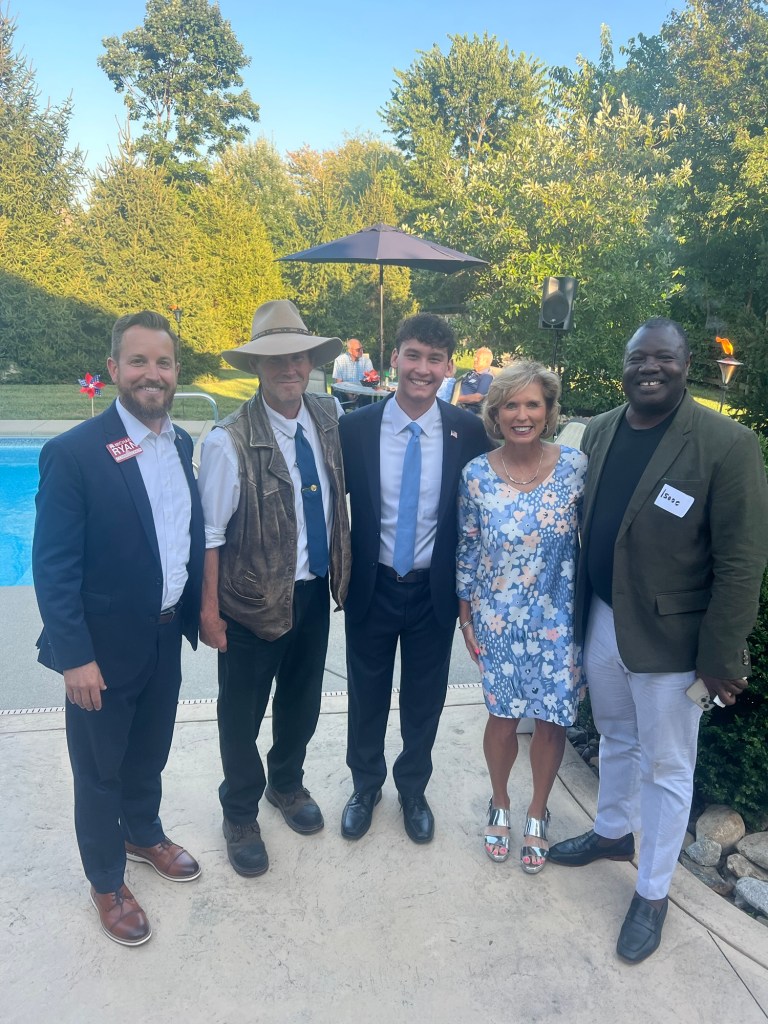
Speaking with Bernie Moreno recently, it’s clear that the U.S. Senate is at a pivotal moment. The government shutdown, now entering its 40th day, has become a crucible for ideological warfare, with President Trump urging Senate Republicans to reconsider the filibuster rule to break the impasse and reshape the future of American governance.  I think Trump has a good idea, and that the nuclear option should be used, never to let Democrats have power again, so there is no reason to play nice with them.  Democrats, most of them, and around 10-15 Republicans are the enemy of our country and should not be given a seat at the table. 

At the heart of the standoff are three distinct factions: a Democrat Party increasingly defined by its progressive wing, a MAGA-aligned Republican base pushing for aggressive reform, and a centrist bloc of senators hesitant to abandon institutional norms. The Democrats, led by figures like Chuck Schumer and bolstered by progressives otherwise known as “communists” such as Bernie Sanders and Alexandria Ocasio-Cortez, have refused to support any continuing resolution (CR) that doesn’t include a vote on extending Affordable Care Act (ACA) premium tax credits. Their strategy hinges on leveraging the shutdown to galvanize their base and preserve key health care provisions.  They are not that unlike the terrorists who bombed New York City with the 9/11 terrorist action.  If they destroyed commercial air travel to maintain socialized medicine, they are all for it.  They would love to harm the economy to slow down Trump ahead of the midterms.  These are the same people who wanted to use COVID to shut down the economy during Trump’s last year of his first term.  So this kind of economic terrorism is typical for them.

Meanwhile, Senate Republicans, under Majority Leader John Thune, have proposed a compromise: advance the House-passed CR and amend it with a “minibus” of three long-term appropriations bills, extending government funding through January 30, 2026. This deal, which has gained traction among at least eight Democrats, includes a future vote on ACA subsidies—a concession aimed at breaking the deadlock.  As I have always said, healthcare is a nasty hill to die on, because we are on the precipice of significant changes.  The way healthcare is today is not how it will be tomorrow, and the cost structure needs to be completely reinvented.  For Democrats, healthcare is about controlling the lives of individual people in a mass way, and has nothing to do with caring for people. 

Yet, the filibuster remains the elephant in the room. Trump’s call to eliminate the 60-vote threshold for passing legislation has reignited debate over Senate rules. He argues that the filibuster is a relic that Democrats have weaponized to obstruct progress, and that Republicans must act decisively to secure election reform, border security, and economic stability. “If we do it, we will never lose the midterms,” Trump declared, pressing for one-day voting and voter ID laws.  He’s right, there is no reason to play fair with the Democrats.  They almost went nuclear during Biden’s term, except for two senators who prevented it. Otherwise, they currently have 49 senators who were willing to go nuclear when they had power, a clear warning sign to Republicans.  So, if the shoe is ever on their feet again, they will do it; therefore, there is no reason to play fair now.  Don’t give them a chance at terrorism in the future because they are already thinking about it.  We are only here now because we dodged a bullet then.  Don’t expect that to happen twice.

Despite Trump’s pressure, Senate leadership remains divided. Thune and others have resisted the nuclear option, citing the need to preserve minority rights and avoid legislative chaos. A limited carve-out—lowering the threshold to 51 votes for clean CRs—was floated but appears unlikely to pass.

The shutdown’s impact is severe: over 1,000 flights have been canceled, SNAP benefits have been disrupted, and $5 billion in arms exports to NATO and Ukraine have been delayed. Air traffic controllers are stretched thin, and federal workers remain unpaid. The crisis has exposed the fragility of government-dependent systems and reignited calls for the privatization of critical infrastructure.  I’m certainly one of those who think we should not have a government involved in essential services like air traffic control.  Airlines should provide their own employees, and they would do a better job.  Sticking the government in the middle of critical infrastructure is a really dumb idea.  And to make matters worse, the pay scale and attitude of these employees are already poor, as they are unionized, which should be outlawed for all government positions.  In a short time, AI will be able to do a much better job with air traffic control than humans anyway, so why should we ever allow the government to stand in the way of human necessity?  It’s an incredibly dumb idea. 

In this climate, the filibuster debate is more than procedural—it’s existential. For Trump-aligned Republicans, eliminating it is a strategic imperative to prevent Democrats from regaining power and advancing what they view as radical, anti-capitalist policies. For moderates and institutionalists, it’s a dangerous precedent that could unravel the Senate’s deliberative foundation.  And that’s where the future of America is anyway, with Democrats moving hard socialist and communist as a party, we can’t let them have a seat at the table.  We have to draw the line somewhere.  Let the moderates be the new left-wing party, but don’t play nice with the communists and give them fairness.  Because they will destroy our country if given a chance, and that is at the heart of the debate.  Look at what they have been willing to do with the air traffic controllers.  If they can bring down American infrastructure to maintain control over healthcare, then they certainly will.  Those kinds of Democrats can never again be allowed to vote for the filibuster rule, because the next time, they will get it.  It’s been a race to beat the other to the punch for a long time, and we happen to be fortunate to have this impasse happening while Trump is in the White House. 

The stakes couldn’t be higher. The outcome will not only determine the fate of the shutdown but may also redefine the balance of power in Washington for years to come, regardless of any short-term CR. Whether the filibuster survives or falls, the political landscape is shifting—and the next chapter in America’s legislative history is being written in real time.  And you don’t want to lose your country by playing nice with those who wish to destroy it.  It was interesting to speak with Bernie Moreno about his first year as a senator.  Of course, we didn’t talk about any of these kinds of details; he’s a very level-headed person who was reporting on the lay of the land in the Senate.  But what is obvious is that we already have three parties, and one of them certainly wants to destroy the concept of a capitalist America and to push everything into communist control, much the way China operates.  And it’s me saying it, along with Trump, that we don’t want to be a sucker on this, we need to play tough, and forget playing fair.  This is a game of beating the other side to the punch, and that other side are radical communists, as exhibited by the newly elected New York Mayor, Zohran Mamdani. In a world where people like that are debating the Filibuster, they will go nuclear.  We are fortunate to be in a time when fairness still prevails, and we should be wise in utilizing that power while we still have it. Because there is nothing less patriotic than letting hostile agents destroy your country, and in case it’s still not known to the vast majority, the Democrats are the enemy. 

Rich Hoffman

Click Here to Protect Yourself with Second Call Defense https://www.secondcalldefense.org/?affiliate=20707
I Have Written Over 8.1 Million Words Dedicated to Justice: Jack Smith needs more than jail

In the early 2010s, I found myself at a crossroads. I had spent years immersed in creative pursuits — writing screenplays, attending film festivals, and building a career in the entertainment industry. But something wasn’t sitting right. The characters I wrote about were fighting for justice, standing up against corruption, and defending the values of liberty and freedom. I realized that fiction wasn’t enough. The world needed real people to stand up and fight — not just stories. That realization led me to the Liberty Township Tea Party in Butler County, Ohio, where I began applying my skills to political activism.

I produced short videos on the 10th Amendment and illegal immigration — modest productions with a simple camera, aimed at educating and inspiring local citizens. These weren’t viral hits or high-budget documentaries. They were grassroots efforts aimed at sparking conversation and defending constitutional principles. But even these small acts of civic engagement drew the attention of powerful forces. The IRS, under Lois Lerner’s direction, targeted our Tea Party group, and I was swept into a campaign of intimidation and scrutiny. That moment changed everything. I abandoned my entertainment ambitions and committed myself fully to political writing and activism.  And looming in the background of the Lois Lerner activism was Jack Smith.

Since that turning point, I’ve written over 1200 words a day — every day — for more than 15 years. That’s millions of words, thousands of articles, and countless hours spent documenting, analyzing, and challenging the misuse of government power. My blog, Overmanwarrior’s Wisdom, became a platform for truth-telling, and my voice joined a chorus of others who refused to be silenced. I didn’t just write about politics — I lived it. I used my media connections to amplify the message, appearing on the radio and television, and producing daily videos to keep the conversation alive.  Since 2010, I’ve written more than 6.9 million words from daily writing alone. Additionally, I’ve authored three full-length books, contributing an additional 210,000 words, and published hundreds of periodical articles, totaling nearly 1 million more. Altogether, my body of work exceeds 8.1 million words, a testament to the discipline, passion, and relentless drive that fuel my efforts to challenge government overreach and defend the principles of representative government.  And when you do that much work, that’s why I’m able these days to speak on so many topics differently than anybody else does, anywhere in media, on any network, radio show, or podcast.

The catalyst for this relentless output was the abuse I experienced at the hands of the IRS and the Department of Justice — specifically under the influence of prosecutor Jack Smith. Smith, who later became a central figure in high-profile investigations, had long been part of a system that weaponized law enforcement against political dissent. His role in the IRS scandal, along with his broader pattern of targeting conservative voices, revealed a disturbing trend: the rise of a fourth branch of government, unaccountable to voters and hostile to the representative efforts of self-government.

Jack Smith’s actions weren’t isolated. They were part of a larger ecosystem of government overreach, where agencies like the FBI and DOJ operated with impunity. From spying on senators to leveraging investigations for political gain, these institutions strayed far from their constitutional mandates. The goal wasn’t justice — it was control. Figures like Letitia James in New York and James Clapper in the intelligence community, among others, followed similar paths, using their offices to suppress opposition and manipulate public perception.

This isn’t just about Donald Trump. It’s about every citizen who dares to speak out, organize, or challenge the status quo. Trump’s rise in 2015 and 2016 wasn’t a fluke — it was a response to years of systemic abuse. Americans saw the infection beneath the surface, and Trump pulled the scab off. What followed was a reckoning. The prosecutions, the media attacks, the relentless investigations — all of it was designed to punish dissent and preserve the power of entrenched elites. But it backfired. It awakened a movement that refuses to back down.

I’ve never been one to seek conflict, but I’ve always stood my ground. Whether facing bullies on the playground or bureaucrats in Washington, I don’t tolerate intimidation. Jack Smith and Lois Lerner made the mistake of targeting me — and I’ve spent the last decade making sure their actions don’t go unanswered. I’m not alone. Millions of Americans have joined this fight, demanding accountability, transparency, and a return to constitutional governance.

The pursuit of justice is finally catching up. Smith, James, Clapper — they’re all facing scrutiny, and rightly so. This isn’t about revenge. It’s about restoring trust in our institutions and sending a message that abuse of power will not be tolerated. I’ll continue writing, filming, and speaking out — not because I enjoy conflict, but because I believe in the promise of America. We are a nation of laws, not of men. And when those laws are twisted to serve political ends, it’s our duty to resist.  And in my case, it’s not just to lash back, but to hold the wrongdoers to unforgivable scrutiny and to destroy the lives of the perpetrators because of what they did.  I learned in those days of 2010 that you don’t fight people like this on turf they control, which is the courtrooms, with lawyers in their pocket, and judges they play golf with.  A system they built from the ground up to create terror among an unsuspecting population prone to blind trust.  I turned to writing because many of them are too dumb to have thoughts of their own, and they can’t defend an expanse of thoughtful debate.  At that point, their actions fall apart very quickly once people can scrutinize their efforts in relation to the discussion. 

So my method has been very effective.  Millions and millions of words are doing that work on my behalf all hours of the day, day in and day out, to all who care to contemplate questioning the system that people like Jack Smith have controlled for far too long.  And I am very proud of that role, with each of these prosecutions that have been released now that we are into the first year of Trump’s presidency.  I would have loved a more glorious and dramatic revenge for all that I have seen and experienced.  However, in whatever form justice may come, I have always been deeply committed to it.  I never forget or forgive anything, and I did all this essentially over just those two videos that the IRS scrutinized me over.  I have many other revenge plots working in the background over various issues that I will never get over, and I will see justice for all of them in due time.  Many tell me that I should forgive people, that all this hate hurts me.  I tell them that those thoughts are absolutely untrue.  I love getting revenge on bad people, and I think it is very healthy to express it, rather than suppressing it under some social expectation of forgiveness.  It is much better to express your hate than to be consumed by it.  And all these actions I have taken over the years toward the justice of people like Jack Smith are just the beginning.  But you can bet that I am happy to see people like him starting to fall from grace.  He deserves it.  And there are many more to come; either Trump will do it legally, or we’ll find some other means.  They should feel lucky that a system of law and order protects them, because what would otherwise be a lot harder on them, and much more spectacular, would be a ruthless act of revenge.  But regardless, justice is coming for them all, because it has to.

Rich Hoffman

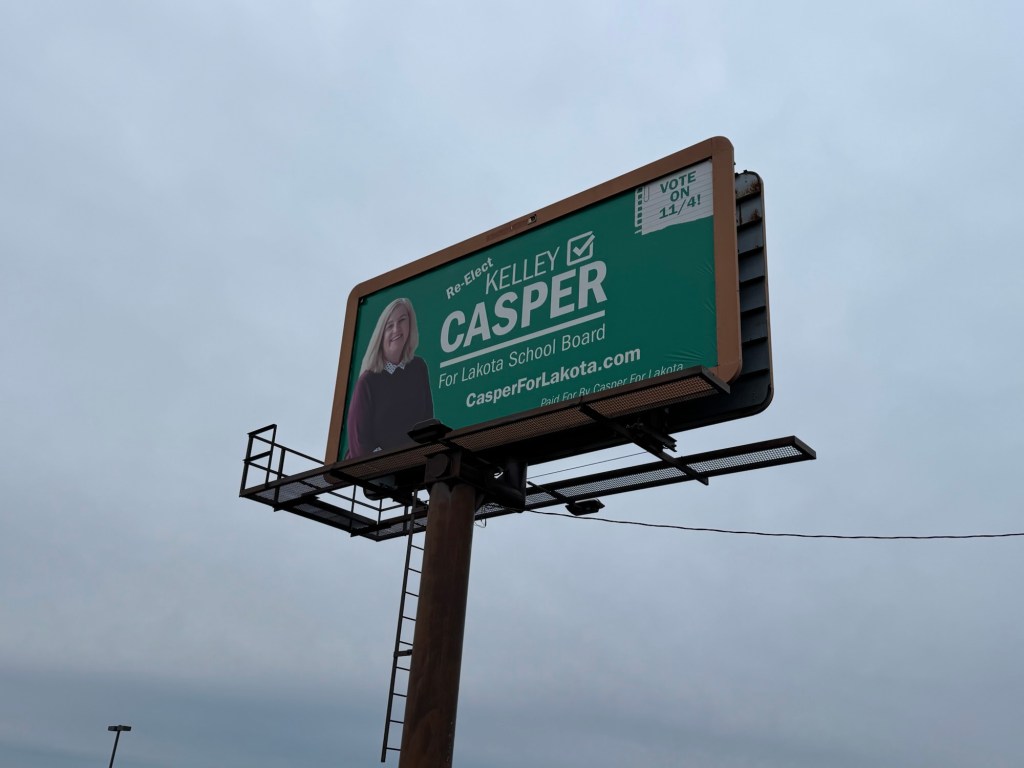
We’re rebuilding the school board. Good management is the best way to defeat tax increases.

Click Here to Protect Yourself with Second Call Defense https://www.secondcalldefense.org/?affiliate=20707
The Lakota Levy of 2025 Goes Down in Flames: How the rest of the country looks ahead of the Midterms

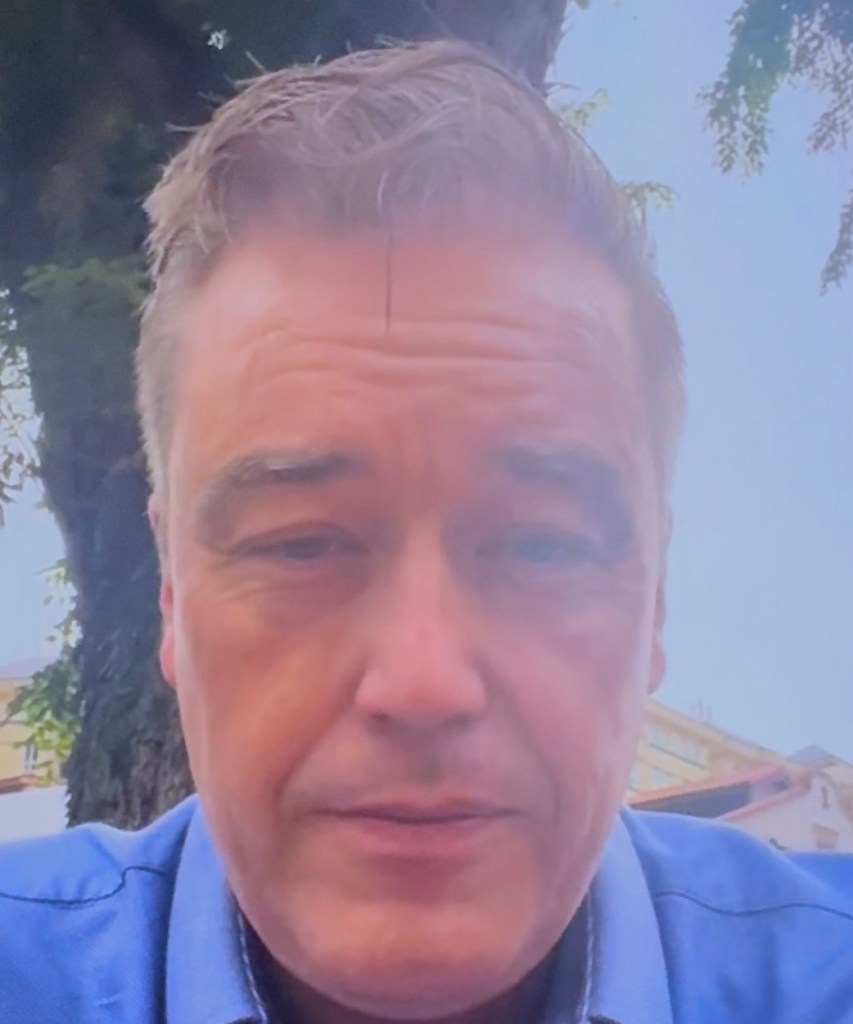
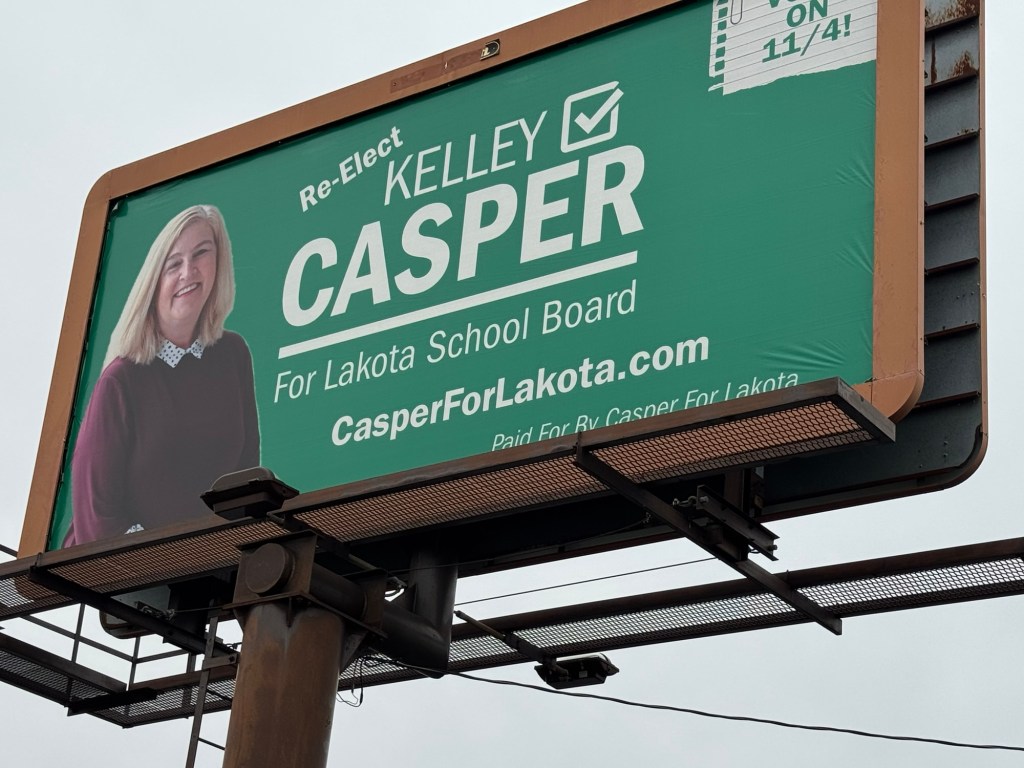
There weren’t too many surprises in the elections of 2025, locally or nationally.  The trend of the country can best be stated in the Lakota school levy of 2025, where their $500 million proposal to tear down a bunch of buildings and replace them with new ones for really no reason told the story of voter sentiment.  While it might seem wise not to get too excited about election results ahead of the midterms, so as not to take the edge off voter engagement, because you want to inspire your side to go and vote, the races around the rest of the country told the story very well.  In areas like New York, Virginia, California, and New Jersey, the never Trumpers were trying to go it alone and win elections without Trump, and we saw where that got everyone.  Predictable losses, and as for Mamdani in the New York mayor race, that is a trend happening in a lot of mature areas where open communism has been taught through the public school system, and people have become complacent to the economic math, and susceptible to free stuff.  That was certainly the case in West Chester where I live regarding the trustee race there.  West Chester has been very successful and people turned to the hard left in what they think is compassion.  But it says more about community cycles than it does the real place voters reside, as an average.  And for that, the Lakota levy, with a very vigilant beat, says where most of the country stands, and the way they will vote in the upcoming Midterms.  As to Trump’s warning that Democrats will win if Republicans don’t learn to play hardball, he’s right.  But voters want to vote for hard-hitting winners, and the Democrats have put the loser label on their own party.

The shutdown by the Democrats tells that whole story of what they know about themselves.  It was a desperate attempt to out-leverage Trump, and they have lost in a big way there, making it Democrats who wouldn’t pay for military troops, or SNAP benefits.  The grotesque nature of giving away free things to desperate or overly comfortable people doesn’t have the appeal that it used to.  People as a whole have shown that they want MAGA Republicans, not Dick Cheney Republicans.  The more MAGA, the better, which paves a clear path for the upcoming Midterms.  In the chess game of redistricting the maps of states to pick up more seats for Republicans, or whether Democrats can do the same in California, or other places, the lesson is, people are people and Democrats can’t win if they don’t cheat.  They just don’t have the numbers.  The final votes for the Lakota levy were 60,81% against, to 39.1% for, which is a good sampling of where the entire country is on the Midterm sweep.  While the Lakota levy is a public school sample that is regional, the assumption of how Democrats might leverage their position is reflective of national politics and the general demographics.  I have said many times that if you take away the cheating, Democrats are likely only 25% of the country.  The rest of the country, 75% of whom agree on most things, just want to see things not get in their way.  Democrats in the Lakota school district assumed that more people were with them because they only speak to their social networks.  So they overestimated their chances.  They are in a state of denial, just as they were over the Schumer Shutdown, that their ability to give away free stuff would get them more votes without the help of election fraud and illegal immigration.  But that hasn’t turned out to be the case.

Welcome to the Doug Horton Lakota School Board

One of the dangers of a thriving community, such as what we have in the Lakota school system, where people from all over the country want to move to it to enjoy its success, it’s the same kind of reason that New York City has a lot of diverse people and when you break things down to a lot of choices, such as what it was for the West Chester trustee race where everyone running only obtained around 20% of the vote it captures in people the indecision that they feel when given a choice based on the spectrum of sentiment that people possess.  But when it’s a single issue where it’s either good or bad, as in the case of the Lakota levy, then the decision is a lot clearer.  People are messy, and when Democrats recruit them to their cause, they have numerous entry points of value.  But even with an infusion of people moving into a region from all over the country, which is certainly the case with the Lakota school district, it’s still the mature residents who have always been in the region that hold the cultural power of maintaining an area’s value.  And that will be the case nationally for the Midterms.  Whatever hopes that Democrats have gained through cheating the system, with illegal immigration, shut down extortion, mail-in voting fraud, any way they could utilize to close the gaps just don’t work when it forces them actually to perform.  When people are given a choice, as in the Lakota levy, there is no playing nice with the other side; people will decisively pick the winner, which is a lesson all Republicans should utilize. 

A big mouth who wants big taxes

Just as in the concessions on the redrawing of the congressional map in Ohio were promoted as a good thing for all sides involved, playing nice isn’t going to win elections.  And playing nice with Democrats in Ohio over the congressional map isn’t going to help win the Midterms.  Trump is right, and Republicans need to learn from him.  When they try to play nice, they lose, to the many ways that Democrats cheat, even if the fraud is in packing high-density areas with demographics that might be inclined to socialism, such as in New York, and even in West Chester, Ohio.  But since the number of actual Democrats isn’t a very high proportion, as shown in the very diverse community of Lakota schools, where a vast amount of the population is represented, and when given a real choice, will pick the winning message, even if it’s not the popular message, but the winning one.  That is how Trump won in 2024, and that is how the Midterms will be won, and voters will pick in favor of the Republicans, if the GOP doesn’t get into all this playing nice stuff.  The only side that benefits from playing nice is the Democrats.  They are always vulnerable because they are the minority in situations involving physical confrontations.  They win when Republicans play fair and friendly.  It’s part of their fraud mechanism.  And if there was anything to learn from this 2025 election, it’s that, where Trump was not on the ticket, Republicans lost.  Where GOP politics ran away from Trump, as they certainly did in Virginia, Republicans didn’t perform well.  Playing nice only feeds Democrats and their chances.  But not playing nice helps give voters an accurate emotional representation in GOP politics.  And that was certainly the case with the Lakota levy of Butler County.  How many times have people told me that the opposition forces need to be nicer to the bad guys?  A lot!  But the opposition forces didn’t listen, and they played hardball, as was deserved.  And the issue wasn’t even close.  That is the model for the rest of the country: play hardball, take away the cheating mechanisms of Democrats, and they can’t win.  The shutdown of the government was a desperate attempt by them to find their footing, and it didn’t work, forcing them to concessions they would rather not admit to.  And going into the midterms, that is the way that Republicans can pick up seats, not just hold their majority.  But don’t play nice; only losers do that.  When you have the means to win, do it, and don’t apologize for it.  Or feel sorry for the other side.  Because when the shoe is on the other foot, they aren’t nice, but ruthless, and they never look back. 

Rich Hoffman

We’re rebuilding the school board. Good management is the best way to defeat tax increases.

Click Here to Protect Yourself with Second Call Defense https://www.secondcalldefense.org/?affiliate=20707

The Only Investment Guide You’ll Ever Need: How it all started

Here’s another good story about A.I. and why I think it is beneficial, not a hindrance to the human race.  I have a unique business philosophy regarding money and how to save a significant amount, allowing me to live comfortably without needing a lot of it for various reasons, which enables me to maintain my independence from parasitic individuals and vastly evil corporations.  And that started for me in the summer of 1987.  I don’t often tell this story because it’s usually better just to let the water drift under the bridge and move on.  We have a lot of family events each year, and I have to see many of these people and behave as nicely as possible. However, many things are simply unforgivable, and that’s what happened to me during the early stages of dating my wife, just after high school and before college.  She was being groomed to marry one of those race-to-mediocrity people from the Beckett Ridge Country Club during its heyday.  She was a model being considered for supermodel status, and her parents had ideas for her life that they wanted to be associated with.  When you have a beautiful kid like that, it’s hard not to want to cash in on her in some social way.  So the last thing they wanted was for her to let them know that she was dating a person whom everyone was scared of at the time.  To say I got into a lot of trouble would be an understatement.  I was not the kind of person that parents wanted their daughter to bring home.  Which I thought was always strange, and still do, because I am precisely the kind of person every parent should want their kids affiliated with, at least the way I see it.

So, her parents forbade the relationship. As is true with everything in my life, when someone challenges me to a fight, I never let go of it, and that would undoubtedly be the case in our marriage.  We’ve now been married for almost 38 years, but not without a lot of unnecessary hardship being imposed on us.  So our dating period got cut dramatically short when a family therapist advised them to throw her out of the house and force me to take care of her, essentially to take away all the fun stuff so that the romance would be taken out of our relationship and we’d break up and she would move back home and start dating people her parents liked, and be done with me.  So they kicked her out of her very nice house at the time and forced her to move in with me.  I had 36 points on my driver’s license and was at that time serving something like a 9-year suspension of my driver’s license, for reckless driving as society measures it.  I raced a lot of cars in those days, got into a lot of fights, and was in court a lot.  But I was willing to put that life away to marry this girl, because she was worth it.  It was, therefore, a very much a Romeo and Juliet romance, only without the tragic ending.  Instead, I was determined to fight off the world, whatever it took, and marry this young girl, making a family with her.  And nobody was going to get in the way.  So here I was in a little townhouse in Sharonville with a good friend of mine living on our own, and suddenly this girl was kicked out of her house and living with us in a kind of three-way arrangement that was very, very tough. 

Like I usually do when things get tough, I read books. That summer, I had to learn a lot about money quickly so I could win the game of starting a family and become smart about the financial games of life.  I still do this, and it’s why I read an average of 3 to 4 books a week, still.  Because there’s a lot to know, and if you want to win at life, you have to know more than the people you are dealing with.  In that case, with my future wife, we would have been married a year later, but at that time, it was a tragedy of Shakespearean proportions, with all the ruthlessness one could imagine, difficult beyond reason or belief.  Crushing difficulty.  To alleviate that pressure, I went down the road from our townhouse and checked out Andrew Tobias’ very well-known book, ‘The Only Investment Guide You’ll Ever Need,’ from the library.  I spent the summer reading it, and the next several decades thinking about it, and it has formed my basic approach to wealth creation, to stay off the treadmill of social expectation, because there is a lot of wasted money spent on it, and to use good money to defeat bad, time and time again.  However, it is mostly on minimalism that Andrew Tobias discusses regarding money management. Stay out of the casino of money making, and you’ll actually come out way ahead.  And with that basic approach, my wife and I have navigated some treacherous waters over the years and defeated many formidable characters. 

I have been professionally dealing with a similar issue that involves a lot of money and people, and they have been commenting on my position, which gives them minimal access to my life and those in it, much to their frustration. This essentially stems from the basic strategy I formulated in that book so long ago.  But for the life of me, I couldn’t remember the title, just the contents.  Back then, I used to check out books at the library and had to return them.  These days, I put them on a shelf and refer to them repeatedly.  But that early in my life, I didn’t even have a house yet.  So once my wife moved back in with her parents and they reached out to me to see if we could all reconcile, I turned the book back into the Sharonville Library and never saw it again.  But at my current age, I wanted to reread it because it was relevant to my current circumstances and I wanted to reconnect with my roots.  So, I asked the Grok A.I. which book I had read on finance during the summer of 1987 from the Sharonville Library, and it told me within seconds, ‘The Only Investment Guide You’ll Ever Need.’  It was interesting because the book was on record in that library at the time, and they knew I had checked it out based on their reporting.  I was finally able to buy a copy from Amazon, and it was hand-delivered to my front porch the next day.  And I read it again and really enjoyed it.  It had been updated from the 1987 version I had read into a 2016 view of the world, but the same basic book was still there.  Same cover and everything.  It’s the kind of book everyone should read on finance, and that’s why it’s still popular, even today.  It has certainly helped me throughout the years, and strategically speaking, it works very well.  I have always thought of it, and because of A.I., I was able to reconnect with it.  Nobody will promise you a nice and easy future.  But if you are smart and apply innovative strategies to your life, you’d be surprised at what you can survive and endure.  And for a lot of reasons, Andrew’s book will always be a treasure for me.  A treasure I was able to enjoy because of A.I. and its ability to know so much, so quickly.

Rich Hoffman

Click Here to Protect Yourself with Second Call Defense https://www.secondcalldefense.org/?affiliate=20707

The Impairment Playbook: One of the biggest threats to American infrastructure

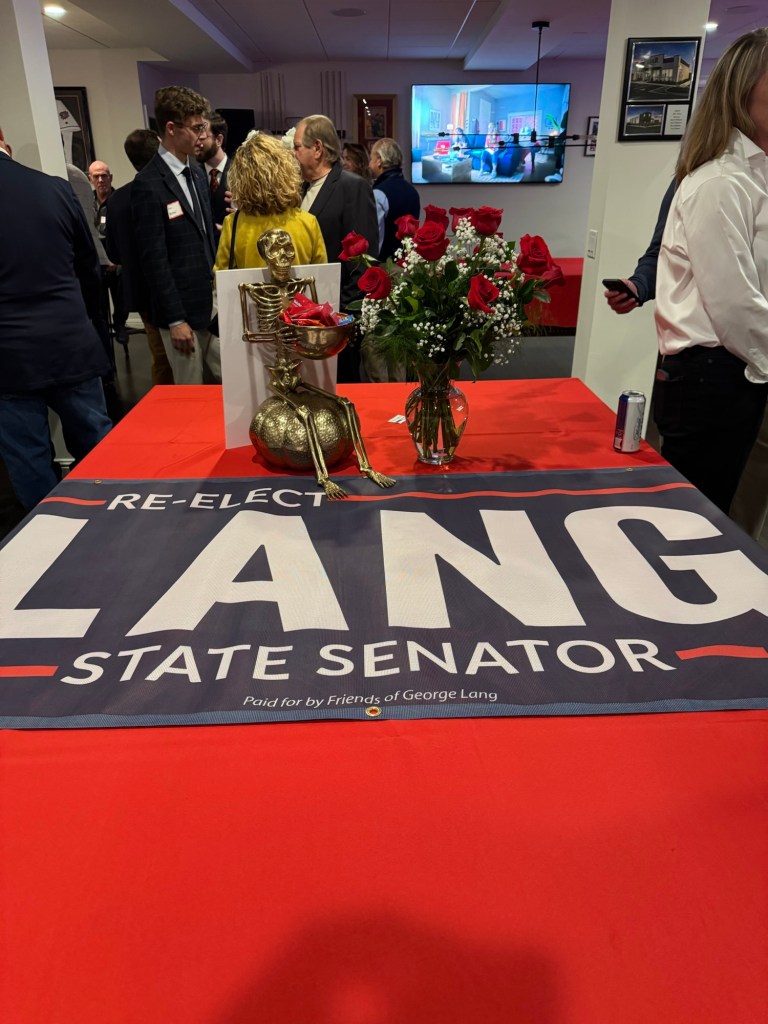
One of my many roles is Vice President of Manufacturing, Facilities, and Program Management at CTL Aerospace. At Senator George Lang’s fundraiser on November 1st, 2025, everyone I spoke with was primarily interested in an update on the Chapter 11 filing for the company.  After all, it wasn’t that long ago when Vivek Ramaswamy came to CTL to announce his run for Governor, so there were lots of people cheering that the company would find a way through to the other side of a challenging financial situation.  And to make matters worse, our case was not one of not having customers or income, but rather part of a widespread suppression campaign by our bank that many privately owned Tier 2 suppliers have experienced over the last decade.  Only in the case of CTL Aerospace, the ownership has shown a very rigorous desire to hold ownership rather than to be pushed aside, essentially by pirates who just wanted to raid our ship and steal all the plunder for a quick flip on the market, as a turn and burn, as they like to say.  The context and legal positioning regarding CTL Aerospace’s Chapter 11 proceedings, specifically the compelling basis for equitable subordination under 11 U.S.C. §510(c). The facts of our case, supported by documented creditor misconduct and predatory financial behavior, are now a very public matter, so the personalities involved are in the public record. 

CTL Aerospace—a 79-year-old aerospace manufacturer—has faced targeted financial suppression during a period of global supply chain instability. The aggressor in this case refused to extend forbearance, coupled with abrupt covenant enforcement and term manipulation, directly impaired our ability to procure raw materials and maintain operational continuity, resulting in massive damages for which everyone in the crowd I was speaking with was very interested. These actions were timed to coincide with industry-wide distress and reflect a pattern of bad faith and strategic impairment.  And the target against us was the “goodwill” of our business, the brand that we had built over a long period of time, the intangibles that are often overlooked in modern business because nobody prosecutes those kinds of cases anymore.  Even though they certainly should and would otherwise if the costs weren’t so prohibitively high.  Once you get into something like this, you see a real menace to the infrastructure of America that is determined to erode our manufacturing base by international banks, who, just like pirates, are seeking short-term plunder and quick sales on the hedge fund market.  When you attack a company’s “goodwill” through purposeful suppression techniques, which a bank can do since it is the mechanism through which all cash for a company flows, if it breaches that fiduciary trust, it can really wreck a business.  And as I found out during this process, it’s not just CTL Aerospace going through this kind of thing, but it’s common in the nation right now, as many private owners we know closely have had to step out of the game and get into the name change cycle every few years, which has caused all kinds of supply chain instability.  Again, much of this is now public record, and people have been following the case. They wanted me to provide an undercover perspective, as this is a very political problem, a matter of national security, which is undoubtedly the case at CTL Aerospace.

Case law supports our position, which is to fight back and seek damages for the massive financial impact on our company’s goodwill. In Citicorp Venture Capital, Ltd. v. Committee of Creditors Holding Unsecured Claims (In re Papercraft Corp.), 211 B.R. 813 (W.D. Pa. 1997), the court subordinated a creditor’s claim due to inequitable conduct that harmed other creditors and the debtor’s reorganization prospects. Similarly, In re Fabricators, Inc., 926 F.2d 1458 (5th Cir. 1991), emphasized that insider status and control over the debtor’s financial decisions can trigger subordination when used to the detriment of the estate.  And that was certainly the case at CTL Aerospace in really extraordinary ways.  But often, such defenses are never applied because by the time you go through the Chapter 11 process, a company doesn’t have the money to fight, which means you essentially have to hire $3000 per hour lawyers to run the case.  Because the banks certainly have those types on their side. In this case, the conduct—potentially documented in internal communications and covenant enforcement timelines—suggests a deliberate strategy to induce distress and position itself for asset acquisition or impairment accounting. We are actively pursuing discovery to uncover these records and may seek engagement with the DOJ or OCC for a lender liability review.  And based on the evidence we have and the timeline, which many have told us from an insider perspective is a classic case of “The Playbook,” would be an easy case to prosecute.  And likely a large settlement.  But that’s not where my mind is, or some of the people involved in this with me.  We want to see much deeper punishment for the entire financial industry, because this hasn’t just happened to us.  It’s a significant impediment to the economic backbone of the entire American manufacturing industry.  It’s not enough for us to survive, which we look poised to do.  However, to illustrate what was done. 

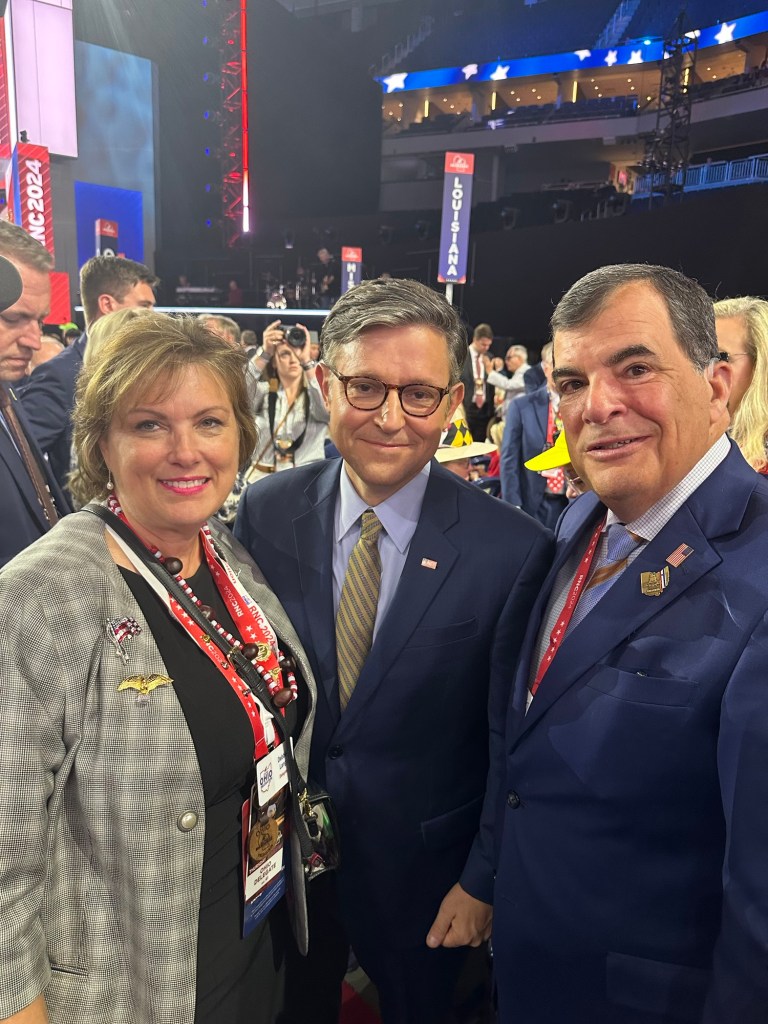
I explained it like this to many people at the fundraiser, and it was good to chat with Senator Bernie Moreno, who is doing a great job in D.C., and Congressman Warren Davidson who has been fantastic over the role of the Fed in government and is very cerebral in problem resolution, imagine you are a big deer with a full rack of antlers, a 10 pointer.  You have lived a long time, and it shows in the development of your antlers.  But one unfortunate day, you try to cross a road and you get hit by a car, breaking your hip or leg.  The driver keeps going.  You are lying there helpless.  Then a cringy pick-up truck comes along with a very loathsome character getting out, who sees an opportunity for a free mount on his cabin wall to brag about.  He sees the big deer with the whole rack and thinks it’s an excellent opportunity to kill the deer and hang the head on his wall for bragging rights.  He didn’t do the work of hunting the deer, but nobody will ever know.  Typically, in a business cycle, the deer would find a way to crawl away into the woods to heal and restore itself to life after such an accident.  In CTL’s business, a global supply chain issue put us under significant stress.  However, rather than helping CTL, the bank adopted a suppression strategy, essentially running the deer over with a car so they could hang the easy kill on their portfolio management wall for bragging rights and a path to easy money.  And from my perspective, based on the evidence, there is a prominent political position in all this, too, a hatred for the Trump administration and this notion of Making America Great Again.  Patriotic companies like CTL Aerospace, which are privately owned and conduct a significant amount of defense work, are prime targets.  They are the 10-point bucks that would look great on a very progressive trophy wall for financial institutions.  However, the facts of the case are sufficient.  It was a sloppy case on the opposition’s part; they made numerous mistakes that they thought they could hide behind expensive lawyers.  But the case law certainly doesn’t favor them. 

When everyone asked me what needs to happen in this case, I gave my point of view, which is prosecution on equitable subordination under 11 U.S.C. §510(c).  The attacker is demoted from a secured creditor, and their impairment play is wrapped up in a case law lesson.  However, the issue would have to be taken out of their control, as they currently hold a monopoly status in the courts and the financial mechanism.  At the very least, this is a case of predatory accounting that should serve as a cautionary lesson for similar cases.  And as long as it’s going on, it violates any notion that Ohio, or America, can sustain new business activity when these practices are hindering the behavior.  It’s a significant threat to our economy and national security.  Over the course of the last year, we spoke to a lot of people to get involved, and once they realized that CTL was in the squeeze play, they didn’t want to get wrapped up in the whole effort for fear of being sucked in themselves.  Like the deer example, they felt sorry for the deer but didn’t dare to help, fearing they would be poached themselves. 

I told the same story over and over, but it has a lot of details, so I wrote it down here, as most of the attendees are very interested in the topics I discuss.  This financial behavior is actually part of a larger collapse of political and social order that is occurring in most industries. This lack of respect for goodwill, for instance, is precisely why the Disney Company is struggling these days, as it owns intangibles such as movie rights, brand names, and amusement parks.  But they have, through woke corporate practices, destroyed the “goodwill” of the company that Uncle Walt built, and people wanted to be associated with.  Hedge fund people think in terms of tangibles, such as the head of a 10-point buck on their wall to brag about.  However, what truly adds value to the marketplace is the intangible of “goodwill.”  And that’s what the fight at CTL Aerospace is really about, and why so many people were interested in an update.  Most of these tier 2 companies don’t put up much of a fight.  Once wounded, they sell off to make the pain end as quickly as possible.  And that is what the opposition thought was going to happen here.  Only it didn’t, and the stand and fight part was not something they were quite ready for.  And that’s where the case is as of now. Significant reforms to the finance industry are needed, as this is certainly not the only example.  And suppose we really want to make America Great Again. In that case, we need to punish these predatory practices of fiduciary terrorism through “goodwill” destruction because it’s a real problem for virtually everyone whose lives are touched in terrifying ways by it.

Rich Hoffman

Click Here to Protect Yourself with Second Call Defense https://www.secondcalldefense.org/?affiliate=20707

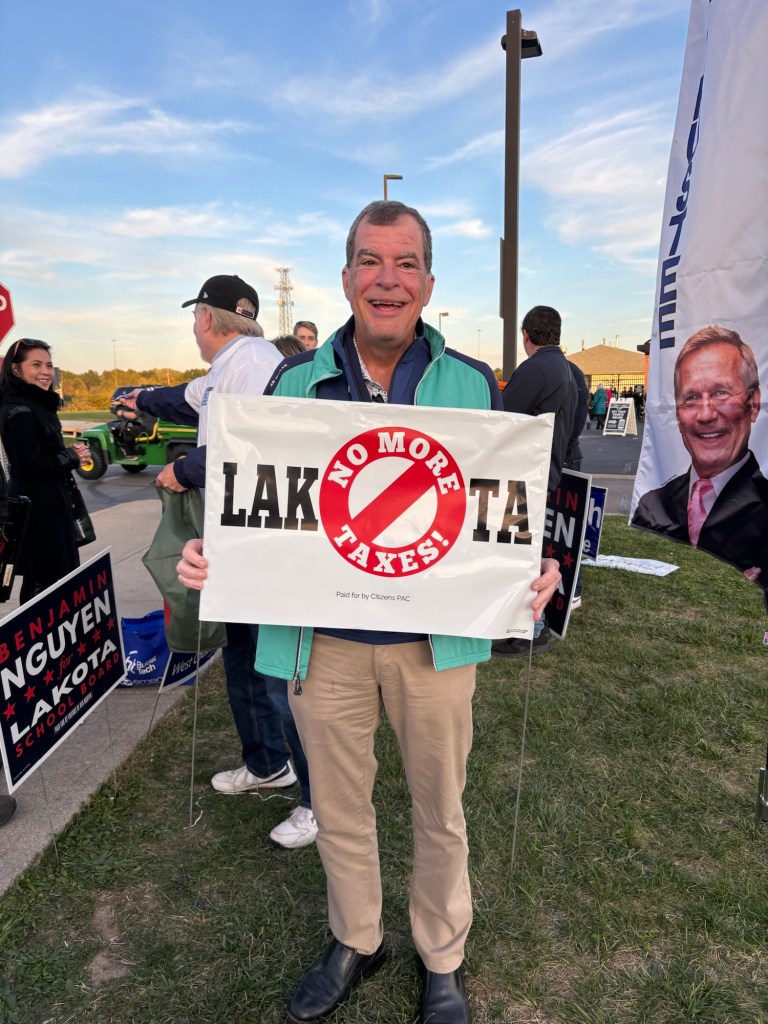
George Lang Donated A Lot of Money to No More Taxes at Lakota: Fighting and beating stage 4 cancer

I’ve known George Lang for a long time, and I would say I know a fighting side of him that a lot of people don’t know about.  And we talked about all those fights as he gave an update on his stage 4 cancer treatment. And to let you know how well it’s going, after we concluded our interview, we made a promise to each other to attend the White House together once the new ballroom opens.  So he’s not planning to die, he expects to beat the cancer thoroughly, and he gave details on just how and what comes next during our discussion.  But speaking of cancers, there was a lot of controversy when his name appeared on a donation list for the pro-levy campaign for Lakota schools, for $2000.  When I first heard about that, I was skeptical, yet his name was there.  I happen to know that George gave at least $2000 to the No More Taxes group opposing Lakota.  So what was going on?  George explained that, too, as best he could.  In the end, he gave $4000 to the No Tax Levy Lakota group and asked the Pro Lakota Levy people for his money back, which they were in the process of doing as we spoke.  I’ve known George for well over two decades, and we’ve talked about that long history and the many fights we’ve both been in over the years.  So I thought it was weird that he would suddenly be for any tax increases.  As it turned out, he very much wanted me to know that it was an accident and that he wasn’t all of a sudden a supporter of higher taxes.  Tax rates are killers of communities, and for his entire life, George has fought high taxes.

No More Taxes!

So the next question everyone has is: how could his $2000 have been an accident?  Wouldn’t he notice a missing $2000?  Well, when I saw it, I thought George was trying to be supportive of Lakota schools because he works with them a lot as a legislator.  One thing in politics is that making enemies isn’t a great way to bring people together.  And as a politician, you are supposed to represent all people, not just your own point of view.  But then again, people vote for you based on your point of view, and they expect you to be authentic.  So right out of the gate, no matter what you do, someone is going to be mad at you.  George has told me for years that I have a lot of talent for politics and has tried to nudge me into several offices, but I have been very resistant, because I reserve the right to throw rocks.  In political theater, there needs to be lots of personalities to test the market of ideas, and we need rock throwers.  But we also need bridgebuilders.  George has always been a bridgebuilder, and I respect him for that.  I have always been a rock thrower.  And he respects me for that.  And we both like a good fight, which is what we have in common.  I figured that if he was donating money to the Lakota levy, there must be a strategic reason, and that he would explain it to me.  I couldn’t imagine what that good reason would be.  But I would be at least open to his explanation.  But as it turned out, he blamed it on his wife, Debbie.  And they get involved in several hundred thousand dollars a year in political donations, and in the amount of that, George didn’t notice the charge on his credit card, because there were so many transactions. 

She voted for the largest tax increase in Ohio’s history!

I’ve known Debbie for a long time too, and I know where her mind is.  She and George give everyone the benefit of the doubt.  I hold grudges forever, and most of the time when people do me wrong, I never forget it.  But Debbie is a loving person.  I could see her playing nice with the Lakota school board.  She and George want to work with the board to make things work well.  Lakota Schools is the largest employer in Butler County, so they aren’t the kind of people to draw lines that they can’t walk out of if they need to.  Knowing both of them, I can’t imagine a scenario in which they accidently voted for a tax increase.  But they give a lot of things, and when it involves that much money, it is possible to get the wires crossed.  George and Debbie have worked very hard for a very long time, and they are very successful.  They didn’t get that way because of politics.  But they have carried their business success into their interest in politics and their desire to make the world a little better through their political involvement.  A lot of us on this Lakota issue see the public school as a vile enemy, teaching children all kinds of terrible things, and wasting a lot of money while doing it.  I am in that camp.  But Debbie’s always hopeful and uses her vibrant personality to build relationships wherever possible.  The important thing to me is that, once they realized where the donation had gone, they worked to correct it, put their money where it counts, and donated against the Lakota levy of 2025. 

A lot of people can’t imagine writing a $2000 check once in their life, let alone writing so many of them that you don’t even notice it on a credit card statement.  And to make sure everyone is clear on the subject, to turn around and give $2000 more to the No Tax Lakota group, in addition to the previous amount.  I say it all the time, politics is a blood sport.  Sometimes you have to be brutal.  Sometimes you want to be nice.  Sometimes you have to be a combination of all kinds of approaches; no one thing works every time for everything.  But when you have been successful for a long time, and survived a lot of battles over the years, which stage 4 cancer is just the latest, resource management can give you all kinds of options.  And what matters is how those resources are managed.  And as soon as he could, George called me and wanted to set the record straight, because he cares about these things.  We spoke for over an hour, about a lot of topics.  And for everything anyone would want to know, the interview with George was great, full of fascinating details.  But even through the fog of politics, which can get hazy at times, I have seen George fight through some really tough moments with his wife, and they are a good team.  They certainly aren’t phonies, which I think makes them very unique, given that they have achieved a lot of success by anybody’s measure with a level of authenticity that many would think wouldn’t be possible.  But I know it’s true.  And we talked about it all.  And I am looking forward to George beating the cancer, to the Lakota levy going down in spectacular flames, and to Trump building that new ballroom.  I think by then we will all have earned a nice night out on the town to see it for the first time.  The White House is a special place, but only because there are special people who have fought in the trenches to make it so.  And George and Debbie Lang are among those who have.  And with their donation to the No More Tax group of Lakota, they are supporting the next generation of fighters, who have a lot of good work ahead of them.  And by the time the smoke clears, we’ll all be proud of the roles we played in that magnificent contest.

Somebody wasted a lot of money on this!

Rich Hoffman

Click Here to Protect Yourself with Second Call Defense https://www.secondcalldefense.org/?affiliate=20707
Defending the Backbone: Why America Must Protect Its Independent Tier 2 Aerospace Suppliers

People often ask me why I’ve chosen to stay involved with CTL Aerospace, especially during a time when the company is facing significant challenges. The truth is, I could be doing a lot of other things—more lucrative work of a much higher profile, more socially visible roles, or ventures with less resistance.  As someone told me this past week, I’m too talented to waste my key income years on hopeless crusades.  But I don’t measure value in dollars alone. I measure it in independence, in impact, and in the preservation of something uniquely American: privately held ownership. CTL Aerospace in West Chester, Ohio is a Tier 2 supplier, and that position in the supply chain is not just operational—it’s strategic. It’s where innovation meets execution, and where long-term thinking still matters. In an industry increasingly dominated by public ownership and institutional investors, CTL represents a rare and vital piece of our national infrastructure that still answers to its owners, not to shareholders chasing quarterly returns.

My involvement is rooted in a belief that private ownership is essential to the health of American aerospace and defense. When companies go public or fall into the hands of investment firms, they often lose their soul. Decisions get made by boards, not builders. Products get rushed to market, not refined through years of R&D. And the personal accountability that comes from direct ownership disappears. In aerospace, where development cycles span decades and reliability is non-negotiable, this shift is dangerous. You can’t trade supply chain integrity like a stock. You can’t outsource stewardship. And you certainly can’t afford to lose the kind of long-term commitment that privately held companies bring to the table. That’s why I fight for Tier 2 suppliers—because it’s where the real work happens, and where the future of American capability is quietly being decided.

This isn’t just about CTL. It’s about a broader economic trend that’s squeezing out private owners across industries—from aerospace to agriculture. Just like family farms are taxed out of existence and sold off to developers, small and mid-sized manufacturers are being pressured to sell to conglomerates and investment firms. The result is a loss of continuity, a dilution of expertise, and a breakdown in the relationships that make supply chains resilient. When you call a privately owned company, you talk to someone who knows your name, your order, and your expectations. When you call a publicly traded one, you get an intern while the investors are off playing golf. That erosion of personal investment is a catastrophe for our market economy. So when people ask me why I associate myself with CTL Aerospace, I tell them it’s because this fight—this defense of Tier 2 suppliers—is one of the most important stories in America today. It’s about protecting the kind of ownership that built this country, and ensuring it still has a place in the industries that will define our future.

In the shadows of America’s aerospace resurgence lies a quiet but critical battle—one that could determine the future of our industrial independence, national security, and economic resilience. At the heart of this fight are the Tier 2 suppliers: the specialized, often family-owned or privately held companies that manufacture the complex, high-precision components essential to modern flight. These firms are now under siege—not by foreign competitors, but by a coordinated squeeze from financial institutions and private equity firms seeking to consolidate, control, and commoditize a sector that was never meant to be run like a hedge fund.

The Strategic Role of Tier 2s

Tier 2 suppliers like CTL Aerospace in West Chester, Ohio are the connective tissue of the aerospace supply chain. They produce composite nacelles, thrust reversers, engine components, and structural assemblies that Tier 1s and OEMs depend on to meet FAA certification standards and delivery schedules. These are not interchangeable parts. They require decades of engineering expertise, proprietary tooling, and a workforce trained in the art of precision manufacturing.

With the FAA mandating lighter, more fuel-efficient aircraft, the demand for advanced composites has surged. Programs like the GE9X and LEAP engines require vast quantities of carbon fiber sandwich structures—components that only a handful of Tier 2s can produce at scale. Yet, despite their strategic importance, these firms are vanishing.

A Shrinking Ecosystem

According to Deloitte and other industry outlooks, independent Tier 2 suppliers now make up less than 15–20% of the mid-tier aerospace pool—a dramatic decline from a decade ago. The rest have been acquired, merged, or shuttered under pressure from banks and consolidators. The pandemic accelerated this trend, exposing the fragility of just-in-time supply chains and the vulnerability of undercapitalized firms.

Private equity firms like Arcline, AE Industrial, and others—have seized on this moment. M&A activity in aerospace surged from $218 billion in 2024 to projections of $382 billion by 2030, with a disproportionate focus on Tier 2s. Their strategy is clear: acquire specialized suppliers, vertically integrate them into larger portfolios, and feed the Boeing and Airbus backlog without the regulatory headaches of organic growth.

The Financial Squeeze Play

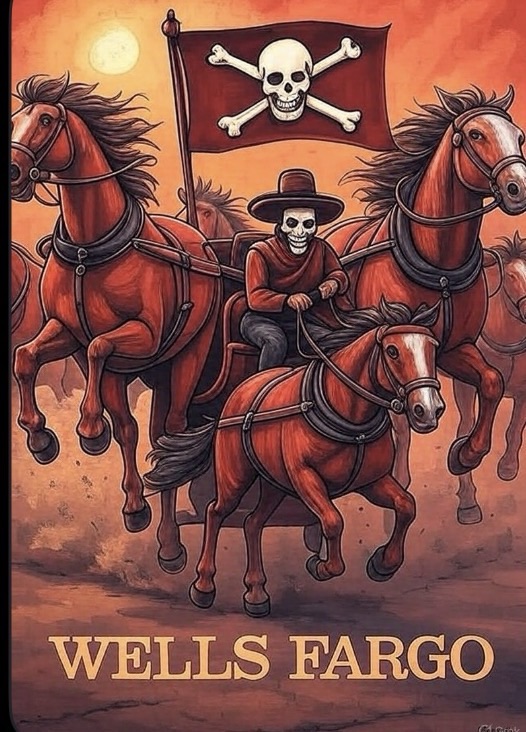
The playbook is ruthless but effective. Financial institutions—Wells Fargo among them—tighten liquidity through covenant manipulation, triggering technical defaults or cash flow crises. This artificially depresses the company’s market value, making it ripe for acquisition. Once the target is weakened, PE firms swoop in with lowball offers, often backed by the very banks that created the distress.

Why This Matters to America

This is not just a business story. It’s a national security issue. The United States cannot afford to lose its independent manufacturing base—not when global tensions are rising, supply chains are under strain, and aerospace remains one of our last great industrial strongholds.

If Tier 2s are absorbed into opaque financial structures, we lose visibility, agility, and control. We risk turning our aerospace sector into a brittle, over-leveraged system where decisions are made in boardrooms, not shop floors. The ability to respond to military needs, commercial surges, or technological shifts will be compromised.

A Path Forward: Defense Through Independence

The solution is not to resist change, but to reassert control. Independent Tier 2s must:

  • Form strategic alliances with OEMs or Tier 1s that respect their autonomy.
  • Pursue minority investments from family offices, aerospace-focused VCs, or patriotic capital sources that don’t demand board control.
  • Implement governance defenses like staggered boards or poison pills to deter hostile takeovers.
  • Audit and challenge predatory lending practices, potentially invoking antitrust or shareholder protections.

The Optimistic Case

Despite the pressure, there is reason for hope. The scarcity of capable Tier 2s makes them more valuable than ever. OEMs are desperate for reliable partners who can scale without compromising quality. Investors are beginning to recognize that long-term value lies not in flipping assets, but in building enduring capabilities.

If we can hold the line—if we can resist the short-termism of Wall Street and the opportunism of consolidation—we can emerge stronger. We can preserve the independence, innovation, and integrity that made American aerospace the envy of the world.

A Call to Action

To policymakers, regulators, and industry leaders: this is your moment. Protect the Tier 2s. Investigate the lending practices that are hollowing out our industrial base. Support capital structures that reward stewardship, not speculation.

To investors: look beyond the spreadsheet. Understand the strategic value of independence in a world where resilience is the new ROI.

To our peers in the industry: stand together. Share intelligence, form coalitions, and defend the middle tier. The future of aerospace depends on it.

Rich Hoffman

Click Here to Protect Yourself with Second Call Defense https://www.secondcalldefense.org/?affiliate=20707
The Value of “Goodwill”: Attacking America infrastructure behind the banking industry

There are a lot of bad people out there doing a lot of nasty stuff, and often it’s not over the pursuit of ideological differences.  One of the greatest perpetrators of evil in the world is the pursuit of easy money because people are too lazy to make it for themselves.  And that is certainly the case with a conflict I’m involved in with Wells Fargo, where I have witnessed many layers of evil driven by those types of sentiments that really put a challenge to all the assumptions people have of freedom.  It’s one thing to work toward MAGA goals of self-government and personal fulfillment.  It’s quite another to see how a mobster-type of network running behind the legal profession thinks of itself as a government behind a government, and that when they want to steal something from you, they believe they can do it without recourse, because their efforts are so predictably parasitic that a whole new layer of concern unfolds before you.  When I warn people about the problems with modern banking, it comes from direct experience.  And when you have something really valuable, there will always be entities out there who will want to steal it, perhaps for purely ideological reasons.  But mostly, because they can and they lack that value themselves.  So if you leave your doors unlocked in a crowded area, you can almost guarantee that someone will try to open your door and steal the contents of your car.  Especially if it looks like something valuable might be in it.  You cannot trust that good deeds will always maintain civility.  More often than not, you will see the worst of the human race if you allow them to show it to you, and that is the case with a conflict I’m involved in with a team of others that finds itself in a dispute with a vast bank that thinks it has more power than the United States government, and that they have complete control over the legal profession, and can essentially make anything happen that they want to see happen.

Not to get into the specifics of the case I’m involved in, which is a very public case.  Nothing much shocks me; I’ve pretty much been there and done everything.  But in the Wells Fargo case, which most people dealing with them outside the coloring lines of normal loans and transactions report, the level of evil they utilize these days is long over the rainbow.  But to see their behavior and arrogance displayed before the courts is essentially a lesson on why the creation of the Fed at Jekyll Island was such a bad idea in 1913.  It’s one thing to vote for the right to vote.  To pass a school levy.  Or even to go to war with another country.  But this idea that we’d let some global terrorists run our monetary policy and be able to control financial interests in the defense of our country, essentially, is reprehensibly wrong, which is the issue at the center of the case I’m involved in.  How would a bank like Wells Fargo get so much power to begin with, or BlackRock, which owns so many companies with a controlling financial interest in them, as BlackRock does with Wells Fargo?  The answer starts with the Fed printing trillions of dollars and issuing the phony money into Wall Street over a long period of time to wash it.  And essentially give the handlers of that money control over all the means of production in the world through finance.  When we study how communism has spread beyond the borders of politics, look at the finance industry, and you’ll see what a menace all this is. 

But for the depth of it, I had a front row seat as we were securing counsel for a vigorous defense of essentially a hostile takeover.  And while looking for that level of counsel, we found that most of the top talent across the country had to recuse themselves because they had some financial tie to Wells Fargo, in some way.  And the obvious answer that comes to mind is how could any one bank acquire that much power?  To influence to such an extent the entire legal industry.  And they had no fear of law enforcement or political reform of their holdings.  They acquired that power from the Lords of Easy Money, who print money at the Fed to saturate the market with a flood of cash, no matter what its real value to gold is.  It’s the perception of value that they control because there are no auditors on the face of the planet who could come in and scrutinize them for their deeds.  And when we did, it was hard to find a lawyer anywhere who was not on the take somehow by just that one bank.  Then apply that same standard to the many banks that control our lives, and you start to see a real problem.  They think they are well beyond political controls to be regulated by the people of a nation through an election process.  We’ve learned a lot over these last few years about how these sinister characters operate behind the curtain.  And we were all too polite to even ask the question, until this latest Trump term where we have seen a lot of evil behavior that assumed it had control of the political process including the FBI, CIA, and of course, the banking industry, hiding behind a Federal Reserve that never should have been created in the first place, for these very reasons.

There is a legal standard in cases like this where “goodwill” is the real commodity.  It’s not the dollars and sense that buy material or pay payroll, it’s the intangibles of what a company or entity means to society in general.  And that looks to be the case here, where money doesn’t mean anything to the attackers, because they work in an industry where they can print all they want to flush it through the system through hedge fund investors like a personal assassination squad.  The attack is on the value of something to society, not in the hardware it uses to produce the product.  In this case, a company openly supportive of the Trump administration and a very woke bank that wanted to attack the “goodwill” of that brand to take that chess piece off the map, essentially.  And it’s not so much the politics of it as it comes down to a case of private ownership, on the premise of privately held companies versus publicly traded ones, where the means of production are out of the hands of private people, but collectively owned.  The amount of money that it takes to keep the entire legal profession on a retainer is essentially enormous.  Yet that is the case as I see it; it is an astonishing level of power that no bank, no single entity, should ever have for themselves.  And a lot has been revealed in their arrogance, which is worth fighting.  And that will undoubtedly be the case here.  But to see just how bad it is up close and personal has been alarming.  It’s one thing to talk about these things as they happen and are observed.  It’s another to be personally involved.  And to see the rot up close and to meet the characters.  If we thought the situation was bad before, now we know it.  And we can’t unsee what we have seen.  Nor can we put that genie back in the bottle.  The wrath of justice has to take place because we can’t let it endure untethered.  Knowing what I do about cases like this, it is astonishing to consider how much “goodwill” has been attacked by phony money to destroy businesses from the inside out.  And to determine, based on that assessment, what the real threat to American infrastructure truly is.

Rich Hoffman

Click Here to Protect Yourself with Second Call Defense https://www.secondcalldefense.org/?affiliate=20707
The Success of Operation Midway Blitz: Pushing communism under the door with illegal immigration

Happy to report that Operation Midway Blitz in Chicago has been very successful, with over 1500 arrests since the start of September.  The Department of Homeland Security has been targeting alleged criminals like pedophiles and gang members with some of the arrests spilling over outside of Illinois.  ICE agents have been very successful in removing the criminal elements that have been deliberately put in place by Democrats to serve progressive causes, and it has the radical left very upset, which is good.  That’s what happens when you start solving problems that want to exist so they can exert power over all society.  The high crime in Chicago was deliberately placed and left alone, and it’s time to clean up that city, even if the mayor, Brandon Johnson, and Governor J.B. Pritzker have been doing everything they can to facilitate the continuation of the high crime.  Why, because they know, as all Democrats do, that the key to their insurrection party is illegal immigration, who bring with it criminal elements to destabilize society in detrimental ways and convince people to turn to big government for safety and security.  Governor Pritzker has to have high crime to justify the kind of personal intrusions and government growth that the Democratic Party intends.  Otherwise, the whole premise of their existence falls apart. Trump pushing for Operation Midway Blitz exposed this strategy for what it was, and it has now been very successful.  Crime is down, and that started before the blitz because caution was in the air as criminals realized the game was up and their free roam of the city streets was at an end.  There is more going on with Chicago than just this latest issue; it was built to be a progressive invasion in America, and if we want that to stop, the city itself and its politics have to be attacked.  So this is more than a symbolic exercise; it’s a strategy that should have been implemented long ago.

Chicago is one of the great American cities, located in the heart of the Midwest.  I interact with Chicago a lot, and it has been part of my story for many years.  Not that I meant to, but I worked for several organized crime groups early in my life, who were centered out of Chicago, for one, the Chinese mob.  And the second was a money-laundering outfit that operated car dealerships to launder money.  I started in these enterprises through the usual application process: getting a job and earning money straight away.  But because of my personality, I was quickly sought out to do the things other people are scared to do, and I learned, up close and personal, how the life of crime worked, always in the background.  I did not become a criminal, but I did get into a lot of entanglements, some of which were very violent and dangerous.  But let’s just say I have first-hand knowledge of the kind of world Governor Pritzker is trying to protect and maintain.  I was so outraged by everything I learned that I have dedicated my life to eradicating that evil, which is why I do many of the things I do for free.  I don’t like evil, and I really don’t like crime that spawns from it.  And with all that said, I am thrilled Trump has declared war against this terrible tyranny always looming in the background.  Chicago wasn’t always the crime-ridden pit that it is today.  It was made that way on purpose, and we should all be insulted by the intention, which is now finally being corrected.

If you fly into O’Hara, you’ll see miles and miles of communist style apartment complexes where people have been stacked on top of each other for as far as the eye can see.  There is quite an attempt right now to show China as the example of what communism can bring, with its centrally planned efforts producing great architecture and technology, all the while in America using that same centralized management approach to depress Americans away from free markets and free enterprise.  Even the positive effects of a supposedly democratic system, where people pick their representatives in a republic-style government.  In both cases, centralized governments used their power to prop up one international standard over the other.  Globalist elites drove the push toward Chinese communism.  And it has been they who have shaped Chicago into the crime-ridden hell-hole that it is.  The downtown areas are not too bad —deliberately so —especially around McCormick Place and Soldier Field.  The northside isn’t too bad once you get well past the city.  But to the south and west of downtown, it’s pretty rough.  If you get gas anywhere in those zones, you can expect an engagement with crime, and all that is on purpose.  Crime doesn’t just happen; in this case, it was invited in with the purpose of illegal immigration.  And the Democrat party knows they need crime and illegal immigration to fulfill their communist plans of pushing people away from capitalism and into outright Chinese communism.  Chicago and its crime were always part of the plan of suppression.  To save the great American city, the push was for America to adopt more Chinese communism so we could be more like their shining example. 

The way that Chicago set up its neighborhoods tells the whole story of why they have crime now; it was always meant to.  Free enterprise was never part of how the modern city was put together; it was meant to bring in and hide illegal immigrants who would funnel the drug trade in behind the chaos and destabilize polite society from behind a political firewall.  While society was debating the proper pay for women in the workplace and abortion, criminals were undercutting one of the great American cities with grotesque violence occurring every day to the point where it was normalized, and people expected a suppressed environment.  It wasn’t just about Chicago; it was about pushing communism under the door of the Midwest and bringing down America from the inside out.  Poisoning the highway system to all the other big cities with crime, and those destabilizing attempts started with illegal immigration hidden in the apartment slums of west Chicago, to the point where the crime spilled over into the outside world to destroy the American dream like a Trojan Horse in the middle of the night, to slit all our throats while we slept.  That is why Democrats are so upset about Operation Midway Blitz.  And why it’s so good to see it succeed, no matter how long it continues.  Democrats need illegal immigration to pull off their communist scam.  And instead of just accepting that, as we have for many decades —essentially an entire century —we are fighting back and taking Chicago away from the criminal elements, which is leaving Democrats in a panic as to what to do next.  Pritzker, unable to shake Trump off the trail, turned to gambling to pump up his already deflated image.  But his political hopes are being cleaned away, too, in all this.  He took a stand to protect illegal immigration, and Trump is ripping that away, leaving Democrats helpless as a result.  And for the first time in many decades, the truth about Chicago is finally being seen.  And a lot of people will live, who usually would have been sacrificed to the need for crime by Democrats who have been cheerleading communism all along.

Rich Hoffman

Click Here to Protect Yourself with Second Call Defense https://www.secondcalldefense.org/?affiliate=20707