The Sex Cults of Artemis: We need to choose a name that sustains not just the body of exploration, but the soul of civilization itself.        

Artemis is going back to the moon, and I’m really not crazy about the name. I didn’t like it when they first came up with it, and I still don’t. It feels like one more concession to a secular worldview that pretends ancient pagan deities are just harmless branding exercises—cool-sounding relics from a long-dead culture that “everybody can agree on.” But history doesn’t work that way. Names carry weight. They carry spiritual baggage. And when NASA reached for a name to replace the glory days of Apollo and send us back to the lunar surface, they chose Artemis, the Greek moon goddess and twin sister of Apollo. On the surface, it sounds clever, a neat mythological bookend. But dig even a little deeper, and you’re wading into the same fertility cults, temple rituals, and appeasement of dark forces that early Christian writers confronted head-on in the Mediterranean world two thousand years ago. I’ve spent years studying this pattern, and it’s the backbone of a book I’m finishing called The Politics of Heaven. What we’re seeing with the Artemis program isn’t just branding. It’s a symptom of a much older struggle between the human spirit and the principalities that have always hungered for our attention, our bodies, and our collective sanity.

Let me start with the obvious. The Temple of Artemis at Ephesus was one of the Seven Wonders of the Ancient World, a massive marble edifice that dominated the city and the entire region. Built and rebuilt over centuries, it was more than a tourist attraction or a bank (which it also was—temples doubled as secure depositories). It was the epicenter of a cult that blended Greek mythology with older Near Eastern fertility worship. Artemis herself, in her Ephesian form, was often depicted with dozens of breasts or egg-like ornaments, symbols that modern scholars sometimes try to downplay as “not really about sex or fertility.” Yet the ancient world understood her differently. She was the goddess of the hunt and the wilderness, of chastity in some tellings, yet deeply entangled with the cycles of birth and reproduction, and the raw forces of nature. Her temple drew pilgrims, merchants, and locals who participated in festivals filled with processions, music, dancing, and—according to multiple ancient reports—rituals that involved the offering of human vitality, including sexual acts, to appease the divine.

Christian writers of the period didn’t shy away from describing what they saw. In Acts 19, the apostle Paul’s ministry in Ephesus sparks a riot among the silversmiths who made shrines to “the great goddess Diana” (the Roman name for Artemis). The city clerk calms the crowd by reminding them that Ephesus is the “temple keeper of the great Artemis, and of the image which fell from Jupiter.” That “image” was likely a meteorite revered as a divine gift, tying the cult directly to celestial forces. But Paul and the early Christians saw something far darker at work. They weren’t just opposing statues or tourism revenue. They were confronting a system of spiritual appeasement that had roots stretching back thousands of years to the fertility cults of Mesopotamia—Inanna, Ishtar, Astarte, and their Greek and Roman counterparts. These goddesses demanded sacrifice, often in the form of sexual union performed in or near the temple precincts. Women—sometimes all women in certain cultures—were expected to spend time as temple prostitutes, offering their bodies to strangers for money that went to the temple treasury. It wasn’t “empowerment” or personal choice in our modern sense. It was a collective duty to the gods, a way to ensure fertility for the land, prosperity for the city, and protection from whatever malevolent forces lurked in the spirit realm if the rituals were neglected.

Secular historians and archaeologists today often dismiss these accounts as Christian propaganda or exaggeration. They point out that direct physical evidence—carved reliefs, unambiguous inscriptions—is scarce at Ephesus because the temple was largely destroyed, its stones carted off for other buildings after Christianity became the dominant faith of the empire. Digging seasons in Turkey are short; the site has been layered over by centuries of occupation, and hostile conditions (political, environmental) have limited excavation. But absence of evidence isn’t evidence of absence, especially when you’re dealing with practices that were deliberately secretive or oral in nature. We have reports from Herodotus, Strabo, and other classical writers describing sacred prostitution in temples dedicated to similar goddesses across the region. In Babylon, for instance, every woman was reportedly required once in her life to sit in the temple of Ishtar (or Mylitta) and have intercourse with a stranger for a fee. Similar customs are attested in Cyprus, Phoenicia, and parts of Asia Minor. The early Church fathers didn’t invent these stories out of thin air; they were reacting to what they witnessed firsthand on the frontiers of the Roman East.

I believe we can trust those Christian reports precisely because the behavior they condemned persists. It just wears different clothes. Look at modern nightclub culture—the so-called “meat markets” that young people, especially women aged eighteen to twenty-four, are actively encouraged to frequent before “settling down.” Bachelorette parties where sexual impropriety is not only tolerated but celebrated. The progressive push for “sexual liberation” and “women’s rights” frames any restraint as patriarchal oppression. We send our daughters—girls who were playing with Legos and dolls just a few years earlier—into environments of throbbing music, flashing lights, alcohol, and physical grinding that would have been right at home in an ancient fertility festival. They dress in scandalously revealing outfits, present their bodies for public consumption, and are told it’s all harmless fun, a phase to “get out of their system.” The money doesn’t go to a temple treasury anymore, but the spiritual transaction is eerily parallel: the sacrifice of personal sanctity, the abandonment of the body to collective debauchery, the implicit agreement that youth and vitality must be offered up so the rest of society can enjoy peace from whatever unseen forces demand their due.

This isn’t hyperbole. It’s pattern recognition. Ephesians 6:12 puts it plainly: “For we wrestle not against flesh and blood, but against principalities, against powers, against the rulers of the darkness of this world, against spiritual wickedness in high places.” The apostle Paul, writing to the very church in Ephesus that had just emerged from the shadow of Artemis worship, understood that these weren’t abstract metaphors. The spirit world is real, and it competes for control of human bodies and minds. The body is the vehicle for the soul, but it’s a vulnerable one. When people impair their consciousness—through drunkenness, drugs, or ritual frenzy—they loosen the tether that keeps the conscious self in the driver’s seat. Competing spirits rush in. Personalities split, behaviors turn erratic, sanity fluctuates. Ancient temple prostitutes weren’t just performing an economic or social function; they were opening doorways. The same doorways we open every weekend in clubs across America and Europe. The music changes, the lighting gets fancier, but the appeasement of disembodied entities hungry for human essence remains constant.

My own explorations into these dynamics—through reading, observation, and reflection on how evil operates in human societies—have convinced me that we cannot separate the material world from the spiritual one. We are entangled. Secularism’s great lie is that we can neuter history, strip away the sacred (or the diabolical), and treat ancient gods as cartoon characters for mission patches and rocket fairings. NASA did exactly that with Artemis. After the Obama-era push to highlight “Islamic contributions to science” and diversify the agency with voices from every culture, the name was pitched as inclusive, neutral, non-offensive. Why pick something biblical when you could pick a “cool” pagan goddess that “everybody can agree on”? It’s the same impulse that led the agency’s early rocketry pioneers into occult territory. Jack Parsons, one of the founders of the Jet Propulsion Laboratory (JPL), was a brilliant chemist and engineer by day and a devoted Thelemite occultist by night. A disciple of Aleister Crowley, Parsons performed the Babalon Working in 1946 with L. Ron Hubbard—sex magic rituals involving masturbation onto magical tablets, invocations of the goddess Babalon (a Thelemic stand-in for the Scarlet Woman of Revelation), and attempts to incarnate demonic forces into the material plane. He saw no contradiction between rocket science and summoning ancient entities. In fact, he believed his rituals fueled his breakthroughs. NASA loves to celebrate the Apollo era’s clean, heroic image while quietly glossing over the fact that the foundational rocketry work at JPL had deep roots in Parsons’ dual obsessions. The cult origins of NASA aren’t a conspiracy theory; they’re documented in biographies like George Pendle’s Strange Angel. Parsons literally signed letters as “The Antichrist” and conducted black masses in his Pasadena home.

This brings me back to why naming the lunar return program after Artemis bothers me so much. It’s not just semantics. It’s a continuation of the same appeasement strategy humanity has employed for millennia. In ancient times, societies sacrificed their youth—virginity, vitality, individual dignity—to fertility goddesses in hopes that the “hungry gods” would leave the collective alone. Today we do it with our entertainment, our dating apps, our “hook-up culture,” and our refusal to draw moral lines. We tell young women that their bodies are theirs to offer freely in the nightclub meat market, that restraint is repression, and that any talk of spiritual consequences is outdated superstition. Meanwhile, the principalities and powers—those same competing souls and disembodied spirits that haunted the temples of Artemis, Ishtar, and Astarte—continue their work. They don’t need marble altars anymore; smartphones, social media, and Saturday-night fever vibes do the job just fine. The result is the same: fractured personalities, generational trauma, and a culture that robs itself of sanity in exchange for momentary collective highs.

I’m not suggesting NASA should abandon space exploration—quite the opposite. I love NASA. I want it to succeed. I want humanity to expand beyond Earth, to sustain life across the solar system, perhaps even outlive our home planet. But if we’re going to do that with any long-term credibility and moral foundation, we should draw from the best of our cultural inheritance—not the pagan underbelly that early Christians rightly rebelled against. Western civilization, for all its flaws, is rooted in biblical ideology. Why not name a program after a figure from Scripture that embodies vision, endurance, or divine favor? Something that signals we’ve learned from history rather than repeating its mistakes. The Artemis choice feels like a deliberate step away from that heritage, a nod to the “neutral” secular narrative that pretends spirit doesn’t matter. But spirit does matter. The body is the vehicle for the soul’s journey, and there are always entities eager to hijack the wheel when we let our guard down.

Archaeology may not have uncovered every detail of those ancient sex rituals—not yet, anyway—but the Christian eyewitness accounts from the period fill the gap. Paul’s letters to the Ephesians, the riot in Acts 19, and the writings of the early Church fathers all paint a consistent picture of cultures steeped in fertility worship that demanded human essence as payment. The temples are mostly gone now, reduced to a few pillars and scattered stones at Ephesus, but the underlying spiritual dynamic hasn’t vanished. It’s migrated into our secular rituals: the nightclub as temple, the DJ as high priest, the dance floor as altar. Young women (and men, though the pressure on females has always been more pronounced in these cults) are still expected to “do their tour of duty,” to offer themselves to the collective before committing to marriage and family. We call it empowerment. The ancients called it piety. Both are forms of appeasement.

In The Politics of Heaven, I unpack this at much greater length—how evil works through human institutions, how spirit and matter are inseparable, how competing souls vie for control of our bodies, and why yielding to animalistic impulses under the guise of “freedom” always leads to cultural decline. The book has taken years of research, reflection, and editorial effort, but the core argument is simple: we cannot outrun the spiritual realm by renaming it or pretending it’s mythology. NASA’s decision to invoke Artemis is a small but telling example of a larger societal failure to learn from history. We keep making the same stupid mistakes because we’re afraid of being called intolerant by the secular crowd. We’d rather appease the principalities than confront them.

If we truly want a sustainable future—one that includes permanent human presence on the Moon and beyond—we need to stop revering the old gods, even in name only. The cults of fertility and debauchery didn’t produce enduring civilizations; they produced cycles of excess, collapse, and moral exhaustion. Christianity’s radical break from those practices—its insistence on individual sanctity, monogamous marriage, and spiritual warfare against the powers of darkness—gave the West the moral framework that eventually launched the scientific revolution and the space age itself. Let’s honor that trajectory instead of reaching backward for pagan branding that sounds “cool” to focus groups.

I’ve seen too much evidence, both ancient and contemporary, to believe otherwise. The spirits that demanded appeasement in the temples of Ephesus and Babylon are the same ones whispering through our modern meat markets and cultural expectations. They thrive on impaired minds, abandoned bodies, and the sacrifice of youth. We don’t defeat them by pretending they don’t exist or by giving their old names new rocket programs. We defeat them by calling them what they are, drawing lines in the sand, and choosing names—and behaviors—that reflect the better angels of our nature rather than the demons we’ve never truly escaped. The Moon awaits, but the path we take to get there matters. Artemis might get us there faster on paper, but at what spiritual cost? I’d rather we choose a name that sustains not just the body of exploration, but the soul of civilization itself.        

Footnotes

1.  NASA official statements on the Artemis program naming, 2019 announcement by Administrator Jim Bridenstine.

2.  George Pendle, Strange Angel: The Otherworldly Life of Rocket Scientist John Whiteside Parsons (2005).

3.  Ephesians 6:12 (KJV).

4.  Acts 19:23-41, especially v. 35.

5.  Herodotus, Histories (on Babylonian customs of Ishtar/Mylitta); Strabo, Geography (references to temple practices in Asia Minor and Corinth).

6.  S.M. Baugh, “Cult Prostitution in New Testament Ephesus,” JETS 42/3 (1999), though I disagree with his dismissal of the broader pattern reported by early Christians.

7.  Stephanie Lynn Budin, The Myth of Sacred Prostitution in Antiquity (2008)—a secular counter-view that I believe underestimates eyewitness testimony from the period.

8.  Richard Metzger’s accounts of Parsons’ Babalon Working rituals.

9.  N.T. Wright, lectures on Ephesus and the Artemis cult background.

10.  My ongoing research for The Politics of Heaven (forthcoming).

Bibliography for Further Reading

•  Bible (King James Version), especially Acts 19, Ephesians 6, and 1 Timothy 2.

•  Pendle, George. Strange Angel: The Otherworldly Life of Rocket Scientist John Whiteside Parsons. Weidenfeld & Nicolson, 2005.

•  Herodotus. The Histories. Translated by Aubrey de Sélincourt. Penguin Classics.

•  Strabo. Geography. Loeb Classical Library.

•  Baugh, S.M. “Cult Prostitution in New Testament Ephesus.” Journal of the Evangelical Theological Society 42, no. 3 (1999).

•  Budin, Stephanie Lynn. The Myth of Sacred Prostitution in Antiquity. Cambridge University Press, 2008.

•  Kramer, Samuel Noah. The Sacred Marriage Rite. Indiana University Press, 1969 (for the Mesopotamian context).

•  NASA historical documents on Project Apollo and Artemis program origins.

•  Wright, N.T. Paul and the Faithfulness of God (relevant sections on pagan cults in Asia Minor).

•  Additional archaeological reports on Ephesus from the Austrian Archaeological Institute and related publications on the Artemision.

Rich Hoffman

More about me

Click Here to Protect Yourself with Second Call Defense https://www.secondcalldefense.org/?affiliate=20707
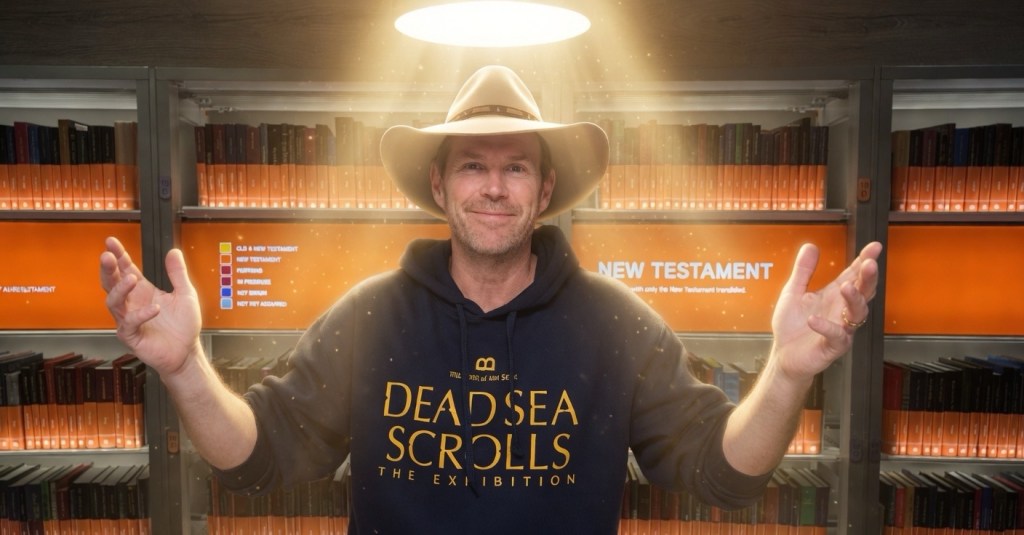
About the Author: Rich Hoffman

Rich Hoffman is an aerospace executive, political strategist, systems thinker, and independent researcher of ancient history, the paranormal, and the Dead Sea Scrolls tradition. His life in high‑stakes manufacturing, high‑level politics, and cross‑functional crisis management gives him a field‑tested understanding of power — both human and unseen.

He has advised candidates, executives, and public leaders, while conducting deep, hands‑on exploration of archaeological and supernatural hotspots across the world.

Hoffman writes with the credibility of a problem-solver, the curiosity of an archaeologist, and the courage of a frontline witness who has gone to very scary places and reported what lurked there. Hoffman has authored books including The Symposium of JusticeThe Gunfighter’s Guide to Business, and Tail of the Dragon, often exploring themes of freedom, individual will, and societal structures through a lens influenced by philosophy (e.g., Nietzschean overman concepts) and current events.

Ascending from Plato’s Cave: Don’t suffer from second husband syndrome

I’ve been thinking a lot lately about where humanity stands at this pivotal moment. As of late March 2026, NASA is days away from launching Artemis II—the first crewed mission to the Moon since Apollo, targeted for no earlier than April 1, 2026, with astronauts Reid Wiseman, Victor Glover, Christina Koch, and Jeremy Hansen aboard Orion for a ten-day lunar flyby.   This isn’t just another flight; it’s NASA finally getting aggressive, the way it always should have been. I support the Artemis program with my whole heart. I want to see timelines compressed, second and third shifts running around the clock, Saturdays and Sundays included—full throttle output. We’ve talked for decades about whether we ever really went to the Moon. I respect people who doubt it; many have been lied to by institutions they once trusted. But I’ve traveled the world, seen the curvature of the Earth with my own eyes, understood time zones through lived experience, and studied how ancient mathematicians calculated that curvature to plot constellations and voyages. Those advances in human culture demand we go to space—not just with drones or robots, but with people living sustainably off-world. That’s the only way we climb out of Plato’s cave, stop staring at shadows, and see reality for what it is.

My perspective is rooted in a deep love for knowledge, ancient history, and the biblical call to dominion. I don’t dismiss fears about transhumanism or the occult origins some attribute to NASA. I get the Tower of Babel parallels—humanity trying to replace God. But I also believe God gave us intellect and drive precisely for exploration. Leaving Earth isn’t rebellion; it’s fulfillment of the creation mandate. And with AI, robotics, and companies like SpaceX and Firefly Aerospace pushing boundaries, we’re on the cusp of a flourishing space economy that will create jobs, not destroy them. I’ll explain all of this below, drawing on the examples and reasoning I’ve shared in conversations, while adding substantial background, historical context, scientific details, and references for further study. This is my view, expressed in the first person because these convictions are personal—forged from years of study, travel, and reflection on what makes civilizations thrive or collapse.

Let’s start with the skepticism that still lingers. I’ve met kind, thoughtful people who defend Flat Earth theory aggressively. I feel for them. Decades of institutional deception—from governments to media—have left many clinging to simplicity as a shield against complexity. Yet the evidence against a flat Earth is overwhelming and ancient. Around 240 BCE, the Greek scholar Eratosthenes of Cyrene calculated Earth’s circumference with remarkable accuracy using nothing more than sticks, shadows, and geometry. At noon on the summer solstice in Syene (modern Aswan), the Sun shone directly down a well with no shadow. In Alexandria, 5000 stadia north, a stick cast a 7.2-degree shadow—exactly 1/50th of a circle. Multiplying the distance by 50 gave him roughly 250,000 stadia, or about 40,000 kilometers—within 1% of the modern equatorial value of 40,075 km.   Ancient cultures used this spherical understanding to navigate oceans and align monuments with constellations. Time zones, the Coriolis effect on weather, and lunar eclipses (where Earth’s round shadow falls on the Moon) all confirm it. I’ve seen the horizon curve from high altitudes and across oceans. We don’t need to argue endlessly; we need to move forward.

The same institutional distrust fuels Moon-landing conspiracies. Yet commercial progress is demolishing doubt. In March 2025, Firefly Aerospace’s Blue Ghost lander achieved the first fully successful commercial Moon landing in Mare Crisium, near Mons Latreille. It operated for over 14 days on the surface—346 hours of daylight plus lunar night—delivering NASA payloads and proving robotic precision.  This wasn’t government theater; it was private industry landing hardware right near prior Apollo sites. The best proof, though, will be routine human traffic: Starship ferrying thousands to lunar bases and back. When people vacation on the Moon like they do in Hawaii, the shadows-on-the-wall debate ends.

This brings me to Plato’s Allegory of the Cave, which I invoke often because it perfectly captures our situation. In Book VII of The Republic, Socrates describes prisoners chained since birth in an underground cavern, facing a blank wall. Behind them burns a fire; between fire and prisoners, puppeteers carry objects whose shadows dance on the wall. The prisoners believe these shadows are ultimate reality; they compete to predict the next shadow, mistaking illusion for truth. One prisoner breaks free. Dragged upward into sunlight, he suffers pain but gradually sees real objects, then the Sun itself—the Form of the Good. Returning to the cave to free others, he is mocked as blind. Plato uses this to illustrate education’s purpose: turning the soul from illusion toward truth.  

I see modern humanity in that cave. We’ve been fed institutional shadows—media narratives, bureaucratic lies, power-maintaining myths. Space exploration is the ascent. Drones and rovers have sent back data, but they’re still shadows. Humans must go—live, work, have children off-world—to grasp the fire and the Sun beyond. Only then do we understand what cast those flickering images on Earth’s wall. My entire worldview, from business to culture to faith, rests on this quest for unfiltered knowledge. I refuse to remain chained, interpreting shadows while interpreters with agendas lie about what they see.

Ancient history reinforces this urgency. I study civilizations full-time because they reveal what builds success: boldness, truth-seeking, and expansion. Many past cultures achieved greatness then lost momentum—collapsed under internal rot or external conquest. I call this “second husband syndrome.” Imagine a second husband tormented by thoughts of his wife’s first husband, especially if children from that marriage remain. Jealousy poisons the new relationship. Likewise, modern elites suppress or dismiss prior cultures’ achievements to claim sole glory. They rewrite history so previous “husbands” (Atlantis legends, megalithic engineering, advanced astronomy) never existed or were primitive. This intellectual jealousy stifles progress. Studying the Sumerians, Egyptians, Greeks, or Maya shows they grasped Earth’s sphericity, built with precision, and reached for the stars. To build successful cultures today, we must leave the mother’s womb—Earth—and psychologically inhabit other worlds. Labor shortages on Earth are irrelevant; AI and robotics multiply our hours exponentially.

Biblically, this expansion aligns with God’s design, not against it. Genesis 1:28 commands: “Be fruitful and multiply and fill the earth and subdue it, and have dominion over the fish of the sea and over the birds of the heavens and over every living thing that moves on the earth.” Theologians call this the creation or cultural mandate—image-bearers exercising responsible stewardship and creativity across creation.   Some interpret it Earth-only, warning against “playing God.” I counter: God gave intellect, curiosity, and the stars themselves. Exploration within biblical rules—humility before the Creator, ethical stewardship—strengthens faith. Western civilization’s prosperity flows from this worldview: truth-seeking fused with moral order. Space doesn’t dismiss Scripture; it illuminates it. Ancient myths and biblical echoes (Ezekiel’s wheels, chariots of fire) hint at cosmic realities. When we settle the Moon and Mars, we’ll confront those stories with fresh eyes, not fear.

Transhumanism and AI raise valid anxieties. I sympathize with those guarding the “temple of the human body” against occult-tinged experiments that seek to dethrone God. Yet I support robotics and AI enthusiastically. They’re tools, not replacements. Elon Musk’s Optimus robots—demonstrated in recent high-profile events—represent progress, not erasure. The robot Melania Trump walked onstage symbolized partnership: machines handling hostile environments so humans thrive. Blue-collar fears about job loss in trucking or fast food miss the bigger picture. Space will explode opportunities. Lunar mining, orbital manufacturing, tourism, and research will demand millions of roles Earthside and off-world. NASA studies project Artemis driving economic growth through commercial partnerships and a burgeoning lunar marketplace.  PwC forecasts a $127 billion Moon economy by 2050, fueled by energy infrastructure, resources, and services.  I think it will be a lot higher than that.  Far from regression, we gain jobs by the mass. I’m bullish because history shows technology expands human potential when paired with moral vision.

Look at the hardware already proving the path. SpaceX’s Starship must fly aggressively; routine, reusable flights are non-negotiable. Firefly’s success shows commercial lunar access is here. Artemis II tests Orion and SLS for crewed lunar operations, paving the way for Artemis III’s landing (targeted 2027–2028 under current plans) and eventual bases. I want Americans—led by visionaries like President Trump—first on the Moon again, first with permanent colonies (dozens, then hundreds, then thousands). A 10,000-person lunar hub by 2050 isn’t fantasy; it’s engineering plus will. People will live there comfortably: internet, power, hotels. I’ll be among the first tourists with my wife—enthusiastically. Imagine vacationing on the Moon, then returning transformed.

Mars follows. Elon Musk has highlighted the Fermi Paradox’s scariest resolution: we might be alone, or nearly so, in the observable universe—a tiny candle of consciousness in darkness.   That rarity demands we multiply life outward. Different gravities will reshape humanity—taller or shorter frames, new adaptations—yet our core experience evolves. Space archaeology will resolve earthly mythologies: Was Mars once lush? Did prior intelligences leave traces? We boldly go, not in fear, but in faith.

Opposition comes from anti-human forces—regressive ideologies that prefer controlled scarcity on Earth over expansive freedom. Democrats and globalist mindsets sabotage by slowing timelines, inflating costs, or prioritizing Earthbound politics. They fear off-world colonies because independent humans are harder to dominate. I reject that. Human destiny is multi-planetary; it guarantees species survival against asteroids, climate shifts, or self-inflicted woes.

I want answers. I want the space economy flourishing, exploration routine, and humanity confronting the fire behind the shadows. My book The Gunfighter’s Guide to Business outlines principles of decisive action and moral clarity I apply here. Subscribe, engage, study ancient history, support aggressive NASA and SpaceX timelines. Let’s compress Artemis, land Starships weekly, and build hotels on the Moon. The cave is behind us. The stars await. Godspeed.

Footnotes and Further Reference Material

1.  Plato. The Republic, Book VII (514a–520a). Standard translation by Benjamin Jowett or Allan Bloom recommended. For modern analysis: SparkNotes or MasterClass summaries align with my interpretation of enlightenment through ascent. 

2.  Eratosthenes’ method detailed in Cleomedes’ On the Circular Motions of the Heavens and modern reconstructions. See APS News (2006) or Khan Academy for accessible explanations. 

3.  NASA Artemis Program: Official site (nasa.gov/artemis) for timelines; Wikipedia for historical delays. Economic report: “Economic Growth and National Competitiveness Impacts of the Artemis Program” (NASA, 2022). 

4.  Firefly Blue Ghost Mission 1: Firefly Aerospace press releases and end-of-mission summary. Confirms March 2, 2025 landing. 

5.  Biblical Creation Mandate: Genesis 1:26–28; extended discussion in Answers in Genesis or Focus on the Family resources. 

6.  Space economy projections: PwC Lunar Market Assessment (2026); NASA’s commercial lunar payload services page. 

7.  Elon Musk on Fermi Paradox and solitude in cosmos: Public statements 2018–2026, including Davos remarks and X posts. 

Additional reading: The Republic (Plato); Pale Blue Dot (Carl Sagan) for perspective (though I differ on some philosophical points); NASA’s Artemis economic studies; The Case for Mars (Robert Zubrin); ancient astronomy texts like Ptolemy or modern histories of Eratosthenes. For AI/robotics ethics: Musk’s own writings and Tesla Optimus updates. Study these, visit NASA facilities as I have with my wife, and join the ascent. The future is ours to seize.

Rich Hoffman

More about me

Click Here to Protect Yourself with Second Call Defense https://www.secondcalldefense.org/?affiliate=20707

About the Author: Rich Hoffman

Rich Hoffman is an aerospace executive, political strategist, systems thinker, and independent researcher of ancient history, the paranormal, and the Dead Sea Scrolls tradition. His life in high‑stakes manufacturing, high‑level politics, and cross‑functional crisis management gives him a field‑tested understanding of power — both human and unseen.

He has advised candidates, executives, and public leaders, while conducting deep, hands‑on exploration of archaeological and supernatural hotspots across the world.

Hoffman writes with the credibility of a problem-solver, the curiosity of an archaeologist, and the courage of a frontline witness who has gone to very scary places and reported what lurked there. Hoffman has authored books including The Symposium of JusticeThe Gunfighter’s Guide to Business, and Tail of the Dragon, often exploring themes of freedom, individual will, and societal structures through a lens influenced by philosophy (e.g., Nietzschean overman concepts) and current events.

Give the Vice President a Copy of ‘Birthright’: The best political move that the White House could make would be to talk about Aliens and their relationship to mankind

In the quiet rhythms of a life well-lived in Middletown, Ohio—where the Ohio River Valley whispers stories of ancient mounds and forgotten giants—few pursuits bring deeper satisfaction than the steady arrival of a new issue of Biblical Archaeology Review. For decades, since I was eleven or twelve years old, these pages have anchored a lifelong fascination with the tangible remnants of Scripture: pottery shards from Israelite settlements, inscriptions confirming kings mentioned in the books of Kings and Chronicles, and excavation reports that ground the biblical narrative in real soil and stone rather than abstract myth.  That same reverence for evidence extends naturally to the majestic ESV Archaeology Study Bible from Crossway, a volume packed with hundreds of full-color photographs, detailed maps, timelines, and notes contributed by field-trained archaeologists who have walked the very sites they describe. It doesn’t indulge in wild speculation; instead, it methodically illuminates how discoveries at places like Megiddo, Hazor, Lachish, or the City of David correspond directly to the texts we hold dear, reinforcing that the Bible is not some detached spiritual allegory but a record deeply interwoven with verifiable history, geography, and material culture.   

The more one engages with these resources, the deeper the layers become. Archaeology confirms the plausibility of biblical events and places, but it also leaves space for the “paranormal” or supernatural dimensions that the texts themselves never shy away from—encounters with spiritual forces, hybrid beings, and cosmic rebellions that shape human destiny across millennia. This interplay becomes especially urgent in 2026, as Vice President J.D. Vance has spoken openly about his long-standing obsession with UFO files and his firm conviction that what many call extraterrestrial visitors are not aliens from distant planets in the conventional science-fiction sense. In a recent interview with podcaster Benny Johnson, Vance stated plainly, “I don’t think they’re aliens. I think they’re demons anyway.” He frames the phenomena through a Christian worldview: there is real good and real evil operating in the unseen realm, and entities engaging in “weird things to people”—abductions, genetic interference, or deceptive encounters—align more readily with biblical descriptions of spiritual deception than with benevolent or neutral visitors from another star system. Vance, drawing on his background as a Marine, lawyer, author of Hillbilly Elegy, and now Vice President with access to the highest-level classifications, has vowed that the Trump administration will pursue the genuine disclosure of classified UFO-related materials. His goal appears practical as well as curious: get ahead of cultural shaping moments, such as a potential new Spielberg film that could frame the narrative in purely secular or optimistic “space brothers” terms, much as Close Encounters of the Third Kind did in the late 1970s when it profoundly influenced public perception and even inspired my own fourth-grade report on UFO sightings. His sincerity stands out, especially coming from someone rooted in Midwestern values, family commitments, and a desire to serve effectively without descending into fringe hysteria. Many everyday “normies”—folks who grill hot dogs on weekends, mow lawns on Saturdays, follow the Cincinnati Reds, and focus on practical concerns like gas prices and raising kids—are now paying attention because the topic has shifted from taboo conspiracy to something discussed at the highest levels of government.    

This broad-brush linkage of UFO phenomena to “demons” carries real merit as an initial guardrail. It rightly rejects naive materialism that assumes everything must fit within a purely physical, Darwinian cosmos devoid of spiritual agency. It echoes concerns raised by figures like Tucker Carlson in recent years and acknowledges that evil is not merely a human construct but involves intelligent opposition to God’s order. Yet it also risks painting with strokes that are too wide, potentially collapsing distinct layers of a complex cosmic conflict into a single undifferentiated category. This is precisely where Timothy Alberino’s 2020 book Birthright: The Coming Posthuman Apocalypse and the Usurpation of Adam’s Dominion on Planet Earth stands out as one of the most articulate, Scripture-rooted, and up-to-date bridges available. Alberino, an explorer, filmmaker, and researcher who brings an almost Indiana Jones spirit to biblical scholarship—traveling to remote sites, engaging ancient texts, and connecting dots across disciplines—does not dismiss the demonic dimension. Instead, he refines the categories with precision drawn from Genesis, the Book of Enoch, the Epistle of Jude, Revelation, and the broader ancient Near Eastern context, while integrating modern reports of abductions, hybridization programs, and transhumanist trends.   

Alberino constructs his framework around a pre-Adamic galactic rebellion led by Lucifer, personified as the dragon or morning star, who fell from his exalted position. This insurrection caused widespread devastation across the cosmos, leaving planets and realms in a state of tohu va-bohu—formless and void, as Genesis 1:2 poetically describes the initial condition of Earth before renewal. God then restores the terrestrial realm and appoints Adam as regent, granting humanity the irrevocable birthright of dominion: to rule as image-bearers, sons and daughters of the Most High, exercising authority over creation in partnership with Heaven. Humanity is positioned as the “younger sibling” in a universe already populated by an “elder race”—advanced non-human beings, primarily angelic orders, possessing greater perception, capabilities, and even technology-like means of traversal (what we might today interpret as aerospace phenomena). This elder race includes both loyal servants of God and those who joined the rebellion.  

The critical transgression comes with the Watchers, a group of fallen angels detailed in Genesis 6:1-4 and expanded dramatically in the Book of Enoch (particularly the Book of the Watchers, chapters 1–36). These beings descend to Earth, take human women as wives, and produce hybrid offspring known as the Nephilim—violent giants who fill the earth with bloodshed, corruption, and forbidden knowledge. The Watchers teach humanity sorcery, metallurgy, cosmetics, weapons-making, and other arts that accelerate moral decay and violence. The Flood serves as a divine reset, wiping out the corrupted order, yet the disembodied spirits of the slain Nephilim persist as restless, tormented entities. These become the “demons” or unclean spirits familiar from the New Testament—beings that seek embodiment, oppress, possess, haunt, and torment humanity, craving the physicality they lost when their giant bodies perished. This distinction is crucial and consistent in Alberino’s analysis: demons are specifically the bodiless spirits of the dead Nephilim giants, operating primarily in the invisible spiritual realm.  

In contrast, modern UFO or “alien” phenomena—encounters with Grays, reported abductions, cattle mutilations, hybridization programs, and craft exhibiting advanced propulsion—represent a different but related layer. Alberino argues these are physical, biological entities, not mere disembodied spirits. They may be engineered hybrids, surviving bloodlines from pre-Flood or post-Flood incursions, or tools deployed by the ongoing Luciferian agenda. These beings operate with tangible technology, agendas centered on genetic tampering, and a long-term strategy to push humanity toward transhumanism—the merging of biology with machines, AI, or artificial enhancements that promise god-like power but ultimately corrupt the image of God in man. This echoes the ancient corruption of the human seed but updates it for a technological age. Labeling everything “demons” with a broad brush misses the tangible, fleshly (or bio-engineered) component of the warfare. Both the demonic spirits and the physical alien entities oppose God’s created order and seek to usurp Adam’s birthright, but they function on different fronts: one through invisible oppression and possession, the other through visible incursions, deception, and ideological subversion. The endgame Alberino warns of is a posthuman apocalypse, where humanity trades its divine inheritance for counterfeit upgrades, paving the way for a counterfeit kingdom ruled by an adversary who may even present through advanced aerospace means.  

This nuanced model provides profound ballast for any impending disclosure. If government files reveal physical craft, recovered bodies, or documented interactions, a simplistic “all demons in disguise” approach could leave people spiritually and intellectually unprepared for the fuller biblical cosmology. Alberino’s work equips readers to see the phenomena as part of an ancient, multi-front war rather than random anomalies or friendly visitors. It rejects both materialist reductionism (everything is just advanced human tech or natural phenomena) and unanchored mysticism, always anchoring back to Christ as the ultimate restorer of dominion and the One who reclaims the birthright on behalf of redeemed humanity. Transhumanism, in this light, is not neutral progress but the latest glittering bait—much like Esau trading his birthright for stew—designed to produce a species no longer eligible for the redemption offered through the seed of the woman.

This framework harmonizes beautifully with the hard archaeological and historical evidence that publications like Biblical Archaeology Review and study Bibles like the ESV edition help contextualize, while extending courageously into territories mainstream academia often avoids. Consider the work of Fritz Zimmerman, whose exhaustive compilations—The Encyclopedia of Ancient Giants in North America and related volumes—draw from thousands of 19th- and early 20th-century newspaper accounts, county histories, and pioneer reports. Across the Ohio River Valley and beyond, stories abound of massive human skeletons unearthed during farming, railroad construction, or mound excavations: individuals seven to twelve feet tall, sometimes with double rows of teeth, elongated skulls, or other anomalous features. These finds cluster particularly in Adena and Hopewell cultures, with large conical mounds, geometric earthworks, and burial practices that suggest a distinct ruling or priestly class. Many accounts describe bones that crumbled to dust upon exposure to air, or specimens that mysteriously vanished after being sent to institutions like the Smithsonian. Zimmerman documents hundreds of such cases across dozens of states, with especially dense concentrations in Ohio, Indiana, Kentucky, and West Virginia. Native American oral traditions in the region often speak of an earlier race of giants—red-haired, bearded, or technologically advanced—who warred with incoming tribes or were eventually driven out. These accounts align strikingly with biblical and extra-biblical references to post-Flood Rephaim, Anakim, Emim, and other giant clans, including Og of Bashan (whose iron bed measured over thirteen feet) and the family of Goliath. The pattern of suppression or dismissal of these finds mirrors the historical handling of UFO reports: both challenge purely materialist or evolutionary paradigms that prefer gradual human development without anomalous interventions.   

Closer to home here in Ohio, the Great Serpent Mound in Adams County offers another compelling intersection of geology, archaeology, and potential sacred knowledge. The effigy mound itself—an undulating serpent nearly a quarter-mile long, with a coiled tail and open mouth appearing to swallow an egg-like oval—sits precisely on the rim of a confirmed cryptoexplosion or impact structure. Geological surveys confirm this as a complex impact crater roughly eight miles in diameter, formed by an asteroid or comet strike between approximately 252 and 330 million years ago (late Paleozoic era). Evidence includes shatter cones in the bedrock, planar deformation features in quartz grains (indicating extreme shock pressures), breccias, and a central uplift with intensely faulted and folded strata. The structure features a central dome, transition zone, and ring graben. Why would ancient builders—likely Adena or Fort Ancient peoples—choose this precise location for such a monumental earthwork, investing enormous labor to shape the serpent with astronomical precision? The head aligns with the summer solstice sunset, and the overall form may track lunar standstills or equinoxes. Placing a sacred effigy at the edge of a massive ancient scar suggests either extraordinary astronomical observation or guidance from intelligences attuned to celestial and terrestrial energies. Similar patterns appear globally at megalithic sites built on anomalous geological features, hinting at interactions with forces or entities beyond ordinary human capability in the eras traditionally assigned. Erosion over deep time has softened the crater’s expression, but the underlying anomaly remains, inviting questions about why certain “high places” or power centers were repeatedly chosen for temples, mounds, or alignments across cultures.    

Alberino’s analysis gains further depth when paired with the Book of Enoch, preserved among the Dead Sea Scrolls and now available in editions with scholarly commentary, including contributions associated with Alberino. This ancient text expands dramatically on the sparse account in Genesis 6, detailing the Watchers’ descent on Mount Hermon, their oath-bound pact, the birth and rampaging violence of the giants, and the forbidden teachings that corrupted pre-Flood civilization. Enoch, the seventh from Adam, is taken up without dying and receives heavenly visions, serving as a scribe and intermediary. The text describes the giants’ spirits, after their bodies are destroyed in the Flood judgment, becoming evil spirits that afflict humanity—precisely the origin story for demons that Alberino and others distinguish from the physical players in the ongoing conflict. The Dead Sea Scrolls’ validation of Enochic material alongside canonical books underscores that these ideas circulated widely in Second Temple Judaism and influenced early Christian thought, even if the book itself was not included in the final Protestant canon. Reading Enoch alongside Genesis, Jude (which quotes it), and 2 Peter provides a richer scaffolding for understanding why paranormal activity persists rather than vanishing after the Flood or the cross: it adapted, going underground behind the distractions of polite society, technology, entertainment, and daily survival. Sports scores, mortgages, careers, and weekend routines occupy mental space, leaving little room for reflection on deeper cosmic narratives—yet the ancient texts insist the battle continues. 

David Flynn’s provocative research in Temple at the Center of Time adds yet another layer, building on Sir Isaac Newton’s extensive (and often private) studies of biblical prophecy, chronology, and sacred measurements. Newton, far from a purely secular scientist, devoted significant energy to deciphering what he saw as a “prisca sapientia”—an ancient pure knowledge embedded in Scripture and architecture. Flynn maps distances and geometries from the Jerusalem Temple Mount using modern tools and finds uncanny correlations with pivotal historical dates, including links to 1948 and the rebirth of Israel. The Temple functions not merely as a religious site but as a prophetic and temporal landmark, with measurements potentially encoding timelines and geographic centers of divine activity. Alberino engages such synchronicities appreciatively but cautiously, always subordinating them to the clear Christocentric gospel: Jesus as the true Temple, the restorer of dominion, and the One who defeats the dragon decisively at the end. This approach avoids numerological excess while honoring the idea that sacred geography and time may reflect deeper divine order amid the chaos of rebellion.  

Broader explorations by researchers like Graham Hancock—focusing on lost advanced civilizations, potential Younger Dryas cataclysms, megalithic sophistication predating conventional timelines, and underwater ruins—find partial integration in Alberino’s biblical axis without abandoning scriptural authority. Pre-Flood or immediately post-Babel influences could reflect lingering effects of rebel factions or their human collaborators, manifesting as pockets of advanced knowledge, monumental construction, or anomalous technology that later cultures remembered as “golden ages” or Atlantean echoes. The Tower of Babel itself, recently re-examined in Biblical Archaeology Review for grammatical nuances suggesting the structure may have been portrayed as completed before divine intervention, represents another rebellion against God’s order: humanity unified in pride, seeking to “make a name” through monumental architecture (likely a ziggurat in the Mesopotamian context) rather than trusting divine provision and scattering as commanded. Archaeological parallels to Mesopotamian ziggurats abound, yet the biblical emphasis remains theological—confusion of languages as judgment on centralized defiance. Recent articles explore whether the tower narrative assumes completion, deepening interpretive questions about human hubris and divine sovereignty. Alberino would see such events as recurring motifs in the usurpation attempt: centralized power, forbidden tech or knowledge, and attempts to breach heavenly boundaries. 

In an era when political necessities may soon force greater openness on classified files—driven by leaks, public pressure, and the need to shape the narrative before Hollywood or adversarial powers do—Birthright offers essential intellectual and spiritual preparation. It reframes UFO discourse away from pure mysticism or sci-fi optimism into a coherent biblical war narrative: not random extraterrestrial tourists, but a multi-front assault on humanity’s God-given role as stewards and image-bearers. Demonic spirits (Nephilim ghosts) handle much of the invisible torment, possession, and oppression; physical or bio-engineered entities advance genetic subversion, ideological erosion (through atheism, Darwinian reductionism, or self-deification), and the transhumanist trajectory toward a posthuman counterfeit. The Antichrist figure, in some interpretations Alberino entertains, could even emerge with aerospace or technological grandeur rather than purely supernatural spectacle. Yet the ultimate message remains one of hope and redemption: the birthright, though contested and partially squandered through deception, was never permanently revoked. Christ, the last Adam, reclaims and restores it for all who trust in Him, culminating in the final battle at Armageddon and the renewal of creation where dominion is exercised rightly under the King of Kings.

For those of us in Ohio, with Patterson Air Force Base lore circulating for generations—stories of reverse-engineered craft, anomalous materials, or even giant remains studied quietly—these discussions feel less abstract. Regional Bigfoot sightings, mound complexes, and persistent UFO reports over the years seem to belong to the same interwoven story when viewed through a biblical lens: remnants or echoes of ancient incursions, spiritual oppressions, and ongoing attempts to challenge humanity’s assigned role. Friends and acquaintances in politics, like State Senator George Lang, have shared late-night conversations about ancient aliens, Easter Island’s buried bodies, or megalithic mysteries with me—moments that transcend partisan lines and touch the deeper adventure of discovery. Even mainstream figures are now engaging topics once confined to podcasts or fringe circles, precisely because evidence from multiple disciplines has accumulated: archaeological anomalies, textual survivals like Enoch, eyewitness consistency in abduction reports, and technological leaps that raise questions about origins and agendas.

Vance’s instinct to categorize the phenomena demonically serves as a healthy initial filter against overly optimistic or materialist interpretations. Alberino’s added nuance—distinguishing layers while maintaining a unified adversarial agenda—prepares believers, seekers, and even policymakers to engage disclosure without panic, deception, or loss of grounding. It encourages deeper engagement with Scripture, cross-referencing using archaeological tools like the ESV Study Bible, insights from the Dead Sea Scrolls, and an honest evaluation of extra-biblical texts. The answers, as so often happens, rarely reside comfortably within the institutional boxes built by academia, government, or the media; they reward those willing to follow the evidence across archaeology, ancient literature, contemporary reports, and cosmic theology. The birthright of dominion remains humanity’s divine inheritance—contested, yes, but ultimately secured through the finished work of Christ.

Those interested in building a firmer foundation would do well to read Birthright multiple times, allowing its dense interconnections to settle. Pair it with Zimmerman’s giant compilations for regional grounding, Flynn for sacred geography explorations (read critically), primary Enoch translations with commentary, ongoing issues of Biblical Archaeology Review for fresh site reports (including recent discussions on Babel’s grammar and implications), and the ESV Archaeology Study Bible for visual and contextual depth. The puzzle’s outer edges have long been visible; the middle is filling rapidly with every honest inquiry. When fuller disclosure arrives—whether driven by political timing, inevitable leaks, or cultural momentum—it will rattle many worldviews. A framework anchored in dominion, rebellion, fall, redemption, and ultimate victory equips us not merely to understand strange phenomena but to stand firm in our created purpose amid the storm.

The adventure has always lain just beyond the handrails of “normal” life. For those who dare step out—whether a vice-presidential advisor seeking context, an Ohio resident curious about local mounds and base rumors, or anyone sensing that polite society’s distractions have hidden deeper truths—the rewards include a clearer vision of who we are, why the conflict persists, and how the story ends with restoration rather than extinction or usurpation. In the end, remembering the birthright is not about fear of aliens or demons but about reclaiming our identity as image-bearers destined for glory in a renewed creation. The evidence, both ancient and emerging, continues to point in that direction for those with eyes to see and ears to hear. And for all those reasons, and more, we need to give Vice President Vance a copy of Timothy Alberino’s Birthright, for a context to the White House narrative of Alien Disclosure and the many new questions that will come with it.

Beyond the immediate policy landscape, the issue of disclosure presents a unique cultural and political inflection point. At a time when the public is saturated with economic anxiety—elevated energy prices, trade tensions, contentious Supreme Court cases, and ongoing losses and gridlock in both the House and Senate—voters are increasingly responsive to issues that offer transparency, curiosity, and a sense of shared truth. Gas prices may fluctuate and stabilize over time, but public trust, once eroded, is far more difficult to recover. Disclosure, approached carefully and credibly, speaks directly to that trust deficit.

Historically, disclosure efforts have generated intense public interest but have often failed to deliver substantive clarity. Episodes surrounding the Epstein records or the long-promised JFK disclosures fueled attention, speculation, and media buzz, yet ultimately left many Americans dissatisfied by incrementalism and ambiguity. A future disclosure moment does not necessarily have to follow that pattern. If handled with seriousness, institutional credibility, and clear communication, it could stand apart as a rare instance where public curiosity is met with meaningful acknowledgment rather than prolonged deferral.

Culturally, the subject of disclosure—whether related to unexplained phenomena, advanced technologies, or anomalous encounters—has increasingly found resonance among communities traditionally aligned with progressive or countercultural movements. This has allowed one side of the political spectrum to dominate the narrative space, framing disclosure as an expression of openness, curiosity, and empathy for everyday people who report unusual experiences. That cultural alignment is not inevitable, however. There exists an opportunity for broader engagement that avoids sensationalism while still acknowledging the legitimacy of public interest in these phenomena.

Public-facing engagement does not require endorsement of every claim or abandoning analytical rigor. Rather, it involves meeting voter curiosity with respect—recognizing that unexplained observations and regional folklore often function as entry points into deeper questions about science, government transparency, and institutional credibility. When approached thoughtfully, this engagement can humanize leadership, counter perceptions of detachment, and prevent disclosure-related narratives from being monopolized or caricatured.

From a broader political perspective, disclosure also represents a rare issue capable of temporarily transcending partisan exhaustion. In a midterm environment where voters are seeking tangible “wins” amid legislative stalemate, disclosure—if it produces real information and measurable transparency—could serve as a confidence-building event rather than a distraction. Done well, it has the potential to occupy the public narrative during periods when other contentious issues naturally cool, offering space for recalibration rather than escalation.

For these reasons, disclosure is not merely a speculative subject but a test of institutional seriousness. Its success depends less on timing theatrics and more on whether it delivers clarity, credibility, and follow-through. Managed responsibly, it could become one of the defining public conversations of the coming election cycle—one remembered not for hype, but for substance.

Footnotes

¹ Personal reflection on lifelong subscription to Biblical Archaeology Review since childhood, aligning with its role in correlating finds with biblical texts.

² Crossway, ESV Archaeology Study Bible (2017/2018), with over 2,000 study notes, 400+ photographs, maps, and contributions from field archaeologists.

³ J.D. Vance interview with Benny Johnson (March 2026), where he explicitly states UFOs/aliens are “demons” and expresses an obsession with disclosure files.

⁴ Timothy Alberino, Birthright: The Coming Posthuman Apocalypse and the Usurpation of Adam’s Dominion on Planet Earth (2020). Key arguments include the pre-Adamic rebellion, the birthright of dominion, the distinction between Nephilim demons and physical alien entities, and the transhumanist endgame.

⁵ Genesis 6:1-4; 1 Enoch (Book of the Watchers).

⁶ Jude 6; 1 Enoch 15:8-9 on spirits of giants as evil spirits.

⁷ Alberino interviews and debates (e.g., Nephilim Death Squad, Michael Knowles), clarifying aliens as physical tools vs. disembodied demons.

⁸ Fritz Zimmerman, The Encyclopedia of Ancient Giants in North America (2015), compiling 888+ giant accounts from newspapers and histories, with emphasis on the Ohio Valley.

⁹ Ohio Department of Natural Resources and geological studies on Serpent Mound Impact Structure (8-mile diameter, ~252-330 million years ago).

¹⁰ Archaeological descriptions of Serpent Mound alignments (summer solstice sunset at head).

¹¹ David Flynn, Temple at the Center of Time: Newton’s Bible Codex Finally Deciphered and the Year 2012 (2008).

¹² Alberino-associated editions/commentary on the Book of Enoch.

¹³ Personal and regional observations on Ohio sites, Patterson AFB lore, and mound/giant traditions.

¹⁴ Transhumanism discussions in Birthright as modern usurpation.

¹⁵ Dead Sea Scrolls confirming Enochic texts.

¹⁶ Recent Biblical Archaeology Review (Spring 2026) on Tower of Babel grammar possibly indicating completion.

Bibliography

•  Alberino, Timothy. Birthright: The Coming Posthuman Apocalypse and the Usurpation of Adam’s Dominion on Planet Earth. 2020.

•  Crossway. ESV Archaeology Study Bible. 2017/2018.

•  Flynn, David. Temple at the Center of Time: Newton’s Bible Codex Finally Deciphered and the Year 2012. 2008.

•  The Book of Enoch (1 Enoch), various editions including those with modern commentary.

•  Biblical Archaeology Review, ongoing issues, including Spring 2026 article on Tower of Babel by Richelle and Vanderhooft.

•  Zimmerman, Fritz. The Encyclopedia of Ancient Giants in North America. 2015.

•  Ohio Division of Geological Survey reports on Serpent Mound Impact Structure.

•  Genesis, Jude, Revelation (ESV or standard translations).

•  Vance, J.D. Interview comments reported in Fox News, The Hill, Newsweek (March 2026).

Rich Hoffman

More about me

Click Here to Protect Yourself with Second Call Defense https://www.secondcalldefense.org/?affiliate=20707

About the Author: Rich Hoffman

Rich Hoffman is an aerospace executive, political strategist, systems thinker, and independent researcher of ancient history, the paranormal, and the Dead Sea Scrolls tradition. His life in high‑stakes manufacturing, high‑level politics, and cross‑functional crisis management gives him a field‑tested understanding of power — both human and unseen.

He has advised candidates, executives, and public leaders, while conducting deep, hands‑on exploration of archaeological and supernatural hotspots across the world.

Hoffman writes with the credibility of a problem-solver, the curiosity of an archaeologist, and the courage of a frontline witness who has gone to very scary places and reported what lurked there. Hoffman has authored books including The Symposium of JusticeThe Gunfighter’s Guide to Business, and Tail of the Dragon, often exploring themes of freedom, individual will, and societal structures through a lens influenced by philosophy (e.g., Nietzschean overman concepts) and current events.

The Anti-Human Nature of Democrat Energy Policy: When they want to destroy you, there is nothing to talk about

The book that now sits on shelves and in offices across Ohio, including that of my friend George Lang, the longtime Ohio State Senator and Majority Whip from West Chester, began as a simple conversation about energy policy and the deeper forces shaping our world. George, who serves on the Energy Committee and has been instrumental in pushing legislation like Senate Bill 294 to prioritize truly affordable, reliable, and clean energy sources—defining fossil fuels and nuclear power in those terms while scrutinizing intermittent renewables—handed me a copy of Alex Epstein’s Fossil Future during one of our discussions.   He had been reading it closely, multiple times, as he worked on reforms to counter the distortions in Ohio’s energy markets. I knew the book existed, but it was George’s recommendation that finally prompted me to dive in. What I found was not just a defense of fossil fuels but a philosophical framework that resonated with everything I had observed over years of political involvement, from local battles in Butler County to the broader national fights over regulation, subsidies, and human progress.

That encounter crystallized why I spent nearly a year writing The Politics of Heaven, a roughly 20-chapter manuscript that draws on my proximity to these stories—energy scandals, regulatory overreach, and cultural undercurrents that few dare to name. Publishing a book is no small feat; it demands flushing out ideas across chapters, refining arguments through beach walks where the sand and waves clear the mind, and confronting the hard realities of distribution, branding, and getting the work into readers’ hands. But books endure in ways podcasts or interviews cannot. They invite readers to pause, take notes, and pursue their own research. This one explores the intersection of energy policy, philosophy, and what I term the “non-human” movement—a force older and more lethal than partisan bickering, one that masquerades as environmentalism or compassion but ultimately seeks to curb human flourishing. It ties directly to Ohio’s energy debates, where George and others are fighting to defend fossil fuels and nuclear power against policies that subsidize wind and solar at the expense of reliable baseload sources. And it explains why, despite scandals like the FirstEnergy affair that ensnared some Republicans, the bigger picture reveals a systemic bias against the very energy that powers human advancement.

To understand the stakes in Ohio, one must revisit the FirstEnergy scandal surrounding House Bill 6 in 2019. That legislation provided ratepayer-funded subsidies—ultimately costing consumers around $1.3 billion over time—for two nuclear plants, Perry and Davis-Besse, owned then by a FirstEnergy subsidiary, along with some coal-related support. Federal prosecutors later charged that roughly $60 million in bribes flowed through a dark-money group to influence the bill’s passage and defeat a repeal effort, leading to the arrest of then-House Speaker Larry Householder and associates in 2020. Householder received a 20-year federal prison sentence, one of the most significant political corruption cases in Ohio history. Democrats have rightly highlighted the Republican involvement, using it to paint the entire party as captured by utilities. Yet many who supported HB6, including some who later faced scrutiny, acted out of genuine concern for energy reliability—nuclear power provides carbon-free baseload electricity, avoids millions of tons of emissions annually, and supports high-paying jobs. I feel for those wrapped up in the fallout, even those I disagree with on other issues; the scheme was wrong, but it did not negate the underlying need to protect nuclear assets from market distortions caused by renewable mandates. What the scandal obscured was the broader regulatory environment, shaped by decades of policies that tilted the scales toward intermittent renewables through subsidies, mandates, and penalties on fossil fuels and nuclear power. Ohio’s earlier renewable portfolio standards, set in 2008 at 25 percent by 2025, were scaled back under HB6 to 8.5 percent by 2026, but the damage from prior distortions lingered. As recently as late 2025, the Public Utilities Commission of Ohio ordered FirstEnergy utilities to pay roughly $250 million in restitution and forfeitures related to HB6 violations, with additional settlements bringing consumer relief to around $275 million total in some agreements.    George Lang’s recent work on bills like SB 294 seeks to correct this by redefining “clean” and “reliable” energy around true cost accounting—fossil fuels and nuclear emerge as superior on affordability and dispatchability (with high capacity factors), while wind and solar, with their capacity factors often below 35 percent, require massive backups. 

Nuclear energy, in particular, stands as a triumph of human ingenuity. It generates a substantial share of America’s emissions-free electricity, powering communities across dozens of states, avoiding enormous emissions, and supporting thousands of high-paying jobs. Plants like Ohio’s Perry and Davis-Besse employ hundreds of workers each at salaries well above average, injecting billions into local economies. Safety records are exceptional: nuclear results in approximately 0.03 deaths per terawatt-hour (TWh), compared to coal’s roughly 24.6 deaths per TWh (from accidents and air pollution), oil at 18.43, and even natural gas at 2.82. This makes nuclear about 99.8 percent safer than coal on a deaths-per-TWh basis. Wind and solar sit at 0.04 and 0.02 deaths per TWh, respectively, but their system-level challenges (intermittency requiring backups) complicate direct comparisons. Yet Democrat-driven policies have subsidized solar and wind—now cheaper on levelized cost in some projections but unreliable without subsidies or storage—while burdening nuclear with regulatory hurdles that inflate costs. The result? A society paying more for less reliable power, all while fossil fuels remain the backbone of upper mobility.   

Electricity from any source, especially dense, reliable sources like coal, gas, and nuclear power, has transformed human life. Consider medieval Europe, where a king’s luxuries—climate control, preserved food, instant global information—mirror what even modest American households take for granted today. Air conditioning, refrigeration, lighting, and appliances that once defined royalty now enable low-income people to escape drudgery. Strong correlations exist between electricity access and human development metrics: health, education, income, and gender equality improve markedly where power flows consistently. Globally, basic electricity access rose to around 92 percent by 2023, with the number without access falling to roughly 666 million (down from higher figures earlier in the decade), lifting billions from energy poverty—though deeper “energy poverty” (inadequate reliable usage) affects an estimated 1.18 billion people, including many officially “connected” but unable to use power meaningfully due to outages or cost. Without abundant energy, upper mobility stalls; with it, creativity flourishes. Fossil fuels powered the Industrial Revolution, fertilizer production that feeds billions, and the machines that built modern medicine and transport. Opposing them while ignoring these benefits reveals a deeper motive.   

This brings us to the heart of The Politics of Heaven: the non-human movement. Epstein’s Fossil Future articulates this brilliantly, arguing that opposition to fossil fuels cannot stem from genuine concern for the environment or the climate alone, given their overwhelming benefits. He contrasts the “human flourishing framework”—where energy abundance is measured by its capacity to advance life, health, and prosperity—with the dominant “anti-impact” or “delicate nurturer” worldview. In the latter, any human alteration of nature is suspect, and experts systematically ignore benefits while overstating side effects. Epstein notes that “mankind’s use of fossil fuels is supremely virtuous—because human life is the standard of value, and because using fossil fuels transforms our environment to make it much better for human beings.” Those pushing rapid phase-outs, he contends, reveal an anti-human core: they prioritize a pristine Earth over human potential, even if it means regressing to pre-industrial conditions. This is not hyperbole. We saw it during the COVID lockdowns, when many imposed draconian restrictions that shuttered businesses, closed churches, and isolated families, all while claiming public health as the goal. The policies sacrificed economic vitality, mental health, and small-scale enterprise on the altar of control, mirroring a willingness to limit progress if it served certain ends.   

This non-human impulse echoes ancient cults of sacrifice. Across history, from Aztec temples in what is now Mexico City—where priests offered thousands of human hearts to gods like Huitzilopochtli, with archaeological evidence of massive skull racks (tzompantli) holding thousands of skulls and historical accounts of large-scale rituals during temple dedications—to headhunters in New Guinea and child sacrifices to Baal in the ancient Near East, societies have ritualized the destruction of life to appease higher powers or maintain cosmic balance. The Aztecs believed gods had sacrificed themselves to create humanity; humans owed blood in return, a debt repaid through ritual to prevent catastrophe. Mesoamerican cultures saw human sacrifice as essential reciprocity, nourishing deities so the universe endured. Similar practices appear in biblical warnings against Molech worship and in countless pre-modern traditions. Today, this manifests not in literal altars but in policies that treat human beings as expendable for an idealized “nature.” Radical environmentalism, influenced by deep ecology thinkers like Arne Naess, promotes “biocentric egalitarianism”—granting all living things equal moral status, often elevating the biosphere above human needs and rejecting anthropocentrism. Rooted in earlier works and formalized in the 1970s, deep ecology views humans as part of a holistic web rather than exceptional stewards, sometimes framing human impact itself as the core problem. It fuels a modern impulse in which “saving the planet” justifies limiting energy use, population rhetoric, and opposition to technologies that expand human life. Epstein captures this: advocates cling to the “delicate nurturer” assumption to mask anti-human goals, convincing themselves they save humanity from itself while halting the very activities that enable flourishing.    

In politics, this anti-human stance permeates certain energy agendas and cultural positions. Subsidies for renewables—often requiring vast land use, rare-earth mining, and backup power—distort markets while fossil and nuclear provide dense, scalable energy. Nuclear is “very clean vigorously”: low emissions, high capacity factors near 90 percent, and a safety profile unmatched. Yet policies born of environmentalism created barriers, favoring wind and solar despite their intermittency and higher system costs. The result harms the poor most—energy poverty correlates with stalled development, as seen in regions without reliable power where hardships persist. Upper mobility flows from energy: refrigeration prevents spoilage and disease, air conditioning combats heat-related deaths, and digital access opens education and opportunity. Epstein documents how fossil fuels have enabled unprecedented global progress; denying them is anti-human because it denies this reality. We witnessed ruthlessness in policy responses that prioritized control over empowerment. The same mindset underlies positions that treat certain lives as disposable and resist breakthroughs powered by abundant energy. It is an anti-God position, opposing the biblical mandate to “be fruitful and multiply” and steward creation productively. Fallen angels, cultural influences, and worship of anti-divine entities all point to a spiritual war against God’s creation—humans included. No one who values divine commandments should embrace a worldview that sacrifices human potential on abstract altars.

The Politics of Heaven unpacks these layers across its chapters. Early sections examine the non-human nature of radical environmentalism and its hunger to regress society, drawing parallels to historical sacrifices. Later chapters dissect the philosophical roots of energy policy, using Epstein’s stats and my own observations from Ohio battles. I explore how electricity has eradicated the worst forms of poverty, turning “luxuries” into necessities. One chapter details revelations from policy responses that exposed a desire to control rather than empower. Another ties energy to creativity—human ingenuity thrives with power, from medieval kings’ dreams to modern innovators. The book culminates in policy prescriptions: defend fossil fuels and nuclear power as bridges to a future in which renewables mature, but never at the cost of reliability. For Ohio, this means supporting Lang’s initiatives and approaches that prioritize American energy dominance. I am heading to Washington, D.C., to finalize the 20th chapter, perhaps adding an epilogue on emerging developments. The content cohered powerfully because it addresses timeless truths: politics is spiritual at root, a battle between human advancement and forces that would sacrifice us to false gods.

Critics will dismiss this as partisan, but the evidence transcends parties. Some Republicans erred in aspects of HB6, yet the structural biases against reliable energy predate and outlast individual scandals, embedded in frameworks that favor subsidized intermittents over “solid, great suppliers” like fossil fuels and nuclear power. Renewables will improve—costs have dropped—but they remain unready for full grid dominance without massive, expensive storage. Fossil and nuclear are here now, delivering the energy density civilization requires. Opponents who ignore benefits while amplifying costs reveal the non-human core: a lust to limit growth, echoing Malthusian fears or deep ecology’s egalitarianism. As Epstein writes, the knowledge system of experts disguises anti-human goals behind “save the planet” rhetoric. We cannot assume common ground when some outright reject human flourishing. The book implicates this reality without apology, using examples from Ohio’s nuclear plants to global poverty metrics. It defends the human race against oblivion, arguing that good energy policy perpetuates creativity, wealth, and options.

Writing demanded rigor: a year of research, reflection, and revision to articulate the non-human element without descending into conspiracy. It connects energy advocacy to broader cultural fights. George Lang recognized this when he passed the book; his office in Columbus now stocks copies for those seeking clarity on Ohio’s path. Knock on his door, and you might secure one. The arguments align with policies emphasizing energy independence, which Ohio can lead. Fossil fuels remain vital for decades, enabling the transition without regression. Renewables have roles, but not as forced replacements that harm reliability.

Ultimately, The Politics of Heaven exists because books outlast soundbites. They equip readers with receipts—stats on energy deaths (nuclear and renewables at under 0.1 per terawatt-hour versus coal’s ~25), historical sacrifice patterns, and policy outcomes. They invite further study: Epstein’s works; Our World in Data on electricity’s poverty links; IAEA and World Bank reports on nuclear’s role and global access trends; archaeological accounts of Mesoamerican rituals; and philosophical texts on deep ecology. In an era of anti-human aggression—from regressive energy mandates to cultural erosion—the book asserts a counter: human beings are meant to flourish, powered by the energy God’s creation provides. Those supporting anti-fossil stances must confront alignments with older impulses. Republicans, even those scarred by scandals, must defend the ground. Ohio, with its nuclear assets and fossil resources, is pivotal. By prioritizing reliable energy, we secure upper mobility, creativity, and the perpetuation of human potential. This is not mere policy; it is a defense of heaven’s politics against earthly cults that would erase us. The iceberg’s tip is touched here, but the depths reward those who read, research, and act. The book is worth the discussion, the defense, and the fight—because human life, powered and free, is the ultimate good.

Expanded Bibliography / Footnotes for Further Research

1.  Epstein, Alex. Fossil Future: Why Global Human Flourishing Requires More Oil, Coal, and Natural Gas—Not Less. Penguin Random House, 2022. (Core source on anti-impact vs. human flourishing frameworks; see also Epstein’s substack summaries of Chapter 3 on the anti-impact moral goal.)

2.  Ritchie, Hannah. “What Are the Safest and Cleanest Sources of Energy?” Our World in Data, updated analyses (death rates per TWh: nuclear ~0.03, coal ~24.6, etc.). https://ourworldindata.org/safest-sources-of-energy

3.  World Bank / Tracking SDG 7: The Energy Progress Report 2025 (global electricity access ~92%, ~666 million without basic access in 2023).

4.  UNDP reports on energy poverty (deeper metrics affecting ~1.18 billion with inadequate, unreliable usage).

5.  Ohio Capital Journal and PUCO records on HB6/FirstEnergy scandal and 2025 settlements (~$250M+ restitution orders).

6.  Ohio Legislature records on Senate Bill 294 (sponsored by Sen. George Lang, focusing on affordability, reliability, and capacity factors for new generation).

7.  Archaeological and historical accounts of Aztec sacrifice (e.g., Science magazine on skull racks at Templo Mayor; estimates of large-scale rituals).

8.  Naess, Arne, and George Sessions. “Basic Principles of Deep Ecology” (1984) – on biocentric egalitarianism and non-anthropocentrism.

9.  U.S. Energy Information Administration (EIA) and International Atomic Energy Agency (IAEA) reports on nuclear safety, capacity factors, emissions avoidance, and economic impacts.

10.  Additional context from energy poverty and human development links: UNDP Global Multidimensional Poverty Index 2025; studies on electricity’s role in lifting populations from extreme poverty.

Rich Hoffman

More about me

Click Here to Protect Yourself with Second Call Defense https://www.secondcalldefense.org/?affiliate=20707

About the Author: Rich Hoffman

Rich Hoffman is an aerospace executive, political strategist, systems thinker, and independent researcher of ancient history, the paranormal, and the Dead Sea Scrolls tradition. His life in high‑stakes manufacturing, high‑level politics, and cross‑functional crisis management gives him a field‑tested understanding of power — both human and unseen.

He has advised candidates, executives, and public leaders, while conducting deep, hands‑on exploration of archaeological and supernatural hotspots across the world.

Hoffman writes with the credibility of a problem-solver, the curiosity of an archaeologist, and the courage of a frontline witness who has gone to very scary places and reported what lurked there. Hoffman has authored books including The Symposium of JusticeThe Gunfighter’s Guide to Business, and Tail of the Dragon, often exploring themes of freedom, individual will, and societal structures through a lens influenced by philosophy (e.g., Nietzschean overman concepts) and current events.

The Truth About Bigfoot Sightings in Ohio During March of 2026: What nobody wants to admit–the terror behind the conspiracies

It was one of those crisp March evenings in 2026 when the calls started pouring in from Portage County, Ohio—eight credible Bigfoot sightings crammed into barely a hundred hours, each one more jaw-dropping than the last. People weren’t just spotting shadows in the woods; they were locking eyes with something massive, something that didn’t belong in our tidy little version of reality. One report came from a mom and her daughter, who were driving along a back road near Mantua Center, right around 8:00 p.m. on March 7th. They almost hit it. The thing stepped out of the treeline and stood there three feet from the passenger door—close enough, the daughter said, that she could have reached out and touched it if the window had been down. It was around six-foot-five, brown, and moving with that casual, unhurried stride that big creatures seem to have when they know they own the night. But here’s the part that is most chilling: its face was blurry. Not out of focus like a bad photo, but genuinely indistinct, as if the creature was only halfway rendered into our four-dimensional world. The mom slammed the brakes, the daughter screamed, and then it was gone—melted back into the trees as if it had never been there at all. No aggression, no chase, just a quiet acknowledgment that something ancient had crossed their path and decided, for whatever reason, to let them live with the memory.

By the time the Bigfoot Society podcast and local news outlets like Cleveland 19 and FOX 8 started mapping it out, the reports were stacking up from Mantua Center to Garrettsville to Windham to Newton Township. Daytime sightings in broad sunlight on the Headwaters Trail—a nine-foot brown male standing 120 yards off Route 44 at 12:23 p.m. on March 6th. Nighttime grunts and muddy prints the size of dinner plates. An older woman in Windham who had never believed in any of this nonsense watched something massive bolt through the woods on March 9th. A man walking his German Shepherd at 4:00 a.m. on March 10th had the dog lose its mind at the back door before the shadow of an eight- to ten-foot figure vanished into the blackness. Multiple independent witnesses, at different times of day, on different roads, under different lighting conditions. Some smelled that unmistakable wet-dog-meets-skunk odor. Others heard deep, vibrating grunts that carried through the trees like distant thunder. And every single one of them swore it wasn’t a bear, wasn’t a hoax, wasn’t some kid in a costume. These were ordinary Ohioans—hikers, dog walkers, a mom just trying to get her kid home—who suddenly found themselves face-to-face with the impossible.

The internet, of course, went wild with the usual explanations. “Undocumented Neanderthal remnant!” cried the cryptid enthusiasts. “Lost tribe of giant hairy hominids migrating through the Midwest!” But I’ve spent too many years chasing these things—camping at the Mothman Museum with my grandkids, hiking the haunted Moonville Tunnel at midnight, standing on the ridges of Little Round Top at Gettysburg—to buy the simple “flesh-and-blood ape-man hiding in the woods” story. The more I read the reports, the more I kept coming back to the same conclusion I’ve reached after researching the Ohio Valley mounds for decades: these aren’t just undiscovered animals. They’re something far older, far stranger, and far more connected to the Politics of Heaven than most people are ready to admit. They’re dimensional. They’re quantum-entangled echoes of beings who have been walking these same trails for thousands of years—sometimes in our reality, sometimes bleeding through from somewhere else entirely. And the reason they keep showing up right here, right now, in the same corridors where ancient earthworks once stood, is because those earthworks were never just “religious monuments.” They were communication devices. Calling cards. Mathematical beacons built by people who understood something we’ve spent centuries trying to forget.

Let me take you back to the source of all this strangeness—the Ohio River Valley itself, that ribbon of land that runs from the Serpent Mound down near Cincinnati all the way up through the Newark Earthworks and beyond. This isn’t random wilderness. It’s one of the most concentrated paranormal hotspots on the planet, and it has been for a very long time. The same week those Portage County sightings were making national news, I pulled out the old hidden-haunts map I’d bought at the Mothman Museum and started plotting the locations. Every single sighting clustered around old mound corridors, old Indian trails that modern roads had paved over, places where the veil has always been thin. Serpent Mound, Fort Ancient, the massive geometric works at Newark that once covered more ground than the Great Pyramid complex in Egypt—those aren’t just piles of dirt left by “primitive” hunter-gatherers. They’re precise mathematical constructs aligned to the Pleiades, to solstices, to the movement of stars in ways that required calculus-level understanding of Earth’s circumference and axial tilt. The same mathematics you find at Stonehenge and Avebury in England. The same geometric obsession you see at Flag Fen near Peterborough, where Francis Pryor and his team uncovered an entire Bronze Age village built on a bog around 1300 B.C.—a place so sophisticated it makes the Romans who later conquered Britain look like amateurs playing catch-up.

I remember the first time I stood at Stonehenge with my family, the same trip where I picked up Pryor’s book Britain BC at the visitor center gift shop. You see the famous stones on TV, and you think, “cool rocks.” But when you’re actually there, walking the landscape, you realize the stones are just the tip of the iceberg. The entire countryside is dotted with burial mounds—hundreds of them—some almost identical in size and construction to the ones at Miamisburg and Middletown right here in Ohio. There’s a massive cursus—a long, linear earthwork over a mile long—that you can’t even see properly from the ground; it only makes sense from the air. It looks like a giant runway aimed at the heavens. And just a few miles north at Avebury, you’ve got the same thing: enormous circular henges, burial barrows, and geometric patterns that mirror the Newark Octagon and the Great Circle earthworks back home. Pryor’s work at Flag Fen blew the lid off the whole “primitive Britons” myth. They built an entire wooden platform and causeway across a bog, throwing broken tools and weapons into the water as offerings to the dead. Why? Because they understood that bogs preserve. They understood that the afterlife wasn’t some vague cloud kingdom—it was a place you could send messages to. And they used mathematics and geometry to do it.

Fritz Zimmerman has been saying the same thing about North America for years, only louder and with more receipts. His books—The Encyclopedia of Ancient Giants in North America, The Nephilim Chronicles: Fallen Angels in the Ohio Valley, Ancient America: The Dark Side, and Mysteries of Ancient America—aren’t fringe conspiracy rants. They’re the result of decades of boots-on-the-ground research, cross-referencing thousands of old newspaper accounts, county histories, and Smithsonian reports that mainstream archaeology would rather pretend don’t exist. Zimmerman’s core thesis is as elegant as it is explosive: the giant bones reported in over 500 separate accounts across the Midwest weren’t hoaxes or exaggerations. They belonged to the Amorites—biblical giants, descendants of the Nephilim—who fled Joshua’s conquest of Canaan, migrated through Europe (building or influencing Stonehenge and Avebury along the way), and eventually crossed the Atlantic in sophisticated boats to settle the Ohio Valley. The mounds they left behind aren’t random; they’re the same celestial observatories and ritual centers you find in England, only transplanted here. And the paranormal activity that clusters around them—Bigfoot, orbs, Mothman, shadowy figures—aren’t new phenomena. They’re the lingering echoes of the same entities those ancient builders were trying to communicate with.

Think about it. The Book of Enoch—preserved in the Dead Sea Scrolls and left out of our modern canon for reasons that should make every honest person furious—gives us the clearest picture. Two hundred Watchers, led by Semyaza and Azazel, descend on Mount Hermon, lust after human women, and produce giant offspring. God punishes them, but their disembodied spirits are cursed to roam the earth until the final judgment. These aren’t cartoon devils with pitchforks. They’re principalities and powers (Ephesians 6:12), interdimensional beings who once had physical bodies and now operate from the quantum edges of our reality. The Amorites carried that knowledge with them. They built geometric earthworks—circles, octagons, serpents aligned to the stars—because those shapes spoke the language those fallen entities understood. It wasn’t “religion” in the Sunday-school sense. It was technology. It was science. It was an attempt to maintain a relationship with the divine council, which Psalm 82 warns is still plotting against Yahweh to this day.

That’s why the mom and her daughter didn’t see a clear-faced ape-man on that dark Ohio road. They saw something bleeding through the veil—something that exists in a higher or adjacent dimension and only partially manifests here. The blurry face? That’s what quantum entanglement looks like when two realities briefly overlap. The creature wasn’t “lost.” It was answering an ancient call that still resonates through the mounds it once helped build. The same thing explains the Mothman at Point Pleasant in 1966–67—Stolas, the 36th demon from the Lesser Key of Solomon, appearing as a prophetic harbinger before the Silver Bridge collapse. The same thing explains the orbs we photographed at the Moonville Tunnel, the green healing spirits that seem to drift down from the ridges at Gettysburg, the Bigfoot sightings that spike whenever someone disturbs an old mound corridor. These aren’t separate mysteries. They’re the same phenomenon wearing different masks depending on who’s looking and what the local geometry is tuned to.

And here’s where the real conspiracy kicks in—the one that has nothing to do with the CIA and everything to do with the spiritual wickedness in high places. Mainstream archaeology, the Smithsonian, and the political class that funds them have spent over a century burying this truth under layers of political correctness and bad assumptions. The Native American Graves Protection and Repatriation Act (NAGPRA) of 1990—passed right after Dances with Wolves tugged at everyone’s heartstrings—made it illegal to study many of these sites properly. Bones that could prove the existence of pre-Columbian European or Near Eastern contact? Reburied. Giant skeletons reported in hundreds of 19th-century newspapers? Carted off to Smithsonian vaults and never seen again. The Windover Bog site in Florida is the perfect example. Discovered in the 1980s during housing construction, it yielded 168 incredibly preserved skeletons from 7,000–8,000 years ago—people with advanced woven textiles, bog-preservation knowledge identical to European practices, and thigh bones so large that Dr. Geoffrey Thomas held one up next to his own leg on camera at the Brevard Museum and basically admitted these folks were giants. Average height estimates got downplayed to 5’5” in some reports, but the video evidence and the bone density tell a different story. These weren’t primitive hunter-gatherers. They were part of a sophisticated culture that understood time, astronomy, and the spirit world in ways we’re only beginning to rediscover. And what happened? The site was covered up. Research stalled. NAGPRA kicked in. End of story.

Meanwhile, in England, Francis Pryor and the English Heritage team get to dig Flag Fen like it’s the greatest adventure on Earth. They uncover a Bronze Age village built on a bog, with broken swords and tools thrown in as offerings, and everyone celebrates the sophistication of prehistoric Britons. Why the double standard? Because admitting the same people—or at least the same knowledge—crossed the Atlantic thousands of years before Columbus shatters too many comfortable narratives. It forces us to confront the biblical timeline. It forces us to admit that the “indigenous” label we slap on every pre-Columbian culture is as accurate as calling the Romans “indigenous” to Britain. Migration, trade, and the collision of cultures happened constantly. Giants walked among us. Fallen angels taught forbidden knowledge. And their disembodied offspring are still here, still walking the old paths, still answering calls that were broadcast through geometric earthworks when the stars were in different alignments.

This is the Politics of Heaven playing out on Earth. Yahweh’s divine council—Elohim plural, as Psalm 82 makes painfully clear—has been in rebellion since before the Flood. The Watchers’ sin produced the Nephilim, whose spirits became the principalities and powers that still rule from the shadows. Solomon commanded them to build his Temple. The Canaanites sacrificed children to Moloch to appease them. The mound builders aligned their works to the stars to communicate with them. And today, in 2026, when eight Bigfoot encounters happen in a single week in Portage County, we’re seeing the same entities responding to the same ancient geometry. The mounds may be paved over, but the call still echoes. The quantum entanglement still happens. The blurry faces still peer through the veil.

I’ve stood on Little Round Top at Gettysburg at night with my family. I’ve hiked the Moonville Tunnel when the mist rolls in, and the green orbs appear exactly where my wife said they would. I’ve walked the ridges at Stonehenge and felt the same electric charge I feel standing on Fortified Hill or the Middletown Mound back home. The pattern is undeniable. The science—real science, the kind Pryor practices in England and the kind Zimmerman has been quietly practicing in America for decades—points to a lost chapter of human history in which advanced cultures used mathematics not just to measure the stars but to speak to the beings who live among them. We call them cryptids. The Bible calls them demons, watchers, principalities. The Japanese call them kami. The Muslims call them jinn. Every culture that ever built geometric earthworks knew them by a different name, but they all knew the same truth: these entities are real, they’re ancient, and they never really left.

The mom and her daughter in Portage County didn’t almost hit a lost ape. They brushed up against something that has been walking these trails since the Amorites—or whoever came before them—first laid out the geometric patterns that still whisper across time. The Bigfoot that stood three feet away with the blurry face wasn’t confused. It was exactly where it was supposed to be—answering a call that was programmed into the landscape thousands of years ago. And until we stop pretending that our textbooks tell the whole story, until we start digging the mounds again with the same adventurous spirit that Pryor brought to Flag Fen, we’ll keep mistaking echoes for myths and calling the messengers monsters.

The Politics of Heaven (the title of my new book coming up) aren’t happening somewhere far away in the clouds. They’re happening on the back roads of Ohio in March 2026, when the veil thins and something very old decides to step through for a moment and remind us that the war never ended. It just changed costumes. And the next time you see a blurry figure on the side of the road, don’t reach for your phone to call it a hoax. Reach for the truth instead. The mounds are still talking. The Watchers are still listening. And the rest of us? We’re just now starting to remember how to hear them.

BOOK SUMMARY of the upcoming Politics of Heaven (I will be finishing the final chapter in Washington D.C. at the Museum of the Bible soon after this posting)

The Politics of Heaven is a sweeping, unconventional investigation into the hidden structure of history — blending biblical archaeology, supernatural encounters, political warfare, cryptid phenomena, and ancient mathematics into a single, high‑powered thesis:

Earth’s political conflicts are the surface-level reflections of a much older, multidimensional battle among the Elohim — the divine council referenced throughout the Bible.

Drawing from firsthand experiences at sites like Chichen Itza, Stonehenge, Serpent Mound, Osaka’s Kofun tombs, Moonville Tunnel, and Washington D.C.’s Masonic grid — combined with encounters in modern political war rooms — Hoffman argues that the veil separating Heaven, Earth, and the unseen realm is thinner than we admit.

The book culminates in Chapter 19, where recent Bigfoot sightings in Ohio become the key to unifying the narrative. These blurry, partially‑manifest beings are framed as:

Residual spiritual entities tied to the Amorites, the Watchers, and the pre‑Flood giants — evidence of dimensional interference and the limits of human free will.

The result is a revelatory, provocative work for readers of Biblical studies, ancient mysteries, UFO/paranormal research, and political philosophy.

Footnotes

1.  Cleveland 19 News, “Several Bigfoot sightings reported in Portage County,” March 2026; FOX8, “Bigfoot roaming Portage County: Several reported sightings within days,” March 10, 2026.

2.  The Bigfoot Society podcast and mapping project documented at least eight high-credibility reports between March 6–10, 2026, including the Mantua Center daytime encounter and the Newton Township 4 a.m. sighting.

3.  Francis Pryor, Flag Fen: Life and Death of a Prehistoric Landscape (Tempus, 2005; updated editions). Pryor’s excavations revealed a sophisticated Bronze Age platform and votive offerings in the bog.

4.  Fritz Zimmerman, The Encyclopedia of Ancient Giants in North America (2015); The Nephilim Chronicles: Fallen Angels in the Ohio Valley (2010); Ancient America: The Dark Side (2024). Zimmerman’s fieldwork and archival research compile over 500 historical giant-bone reports.

5.  Windover Archaeological Site reports, including video testimony from Dr. Geoffrey Thomas at the Brevard Museum of History and Natural Science (Brevard County, Florida). Skeletons dated to 7000–8000 years ago; some long bones indicate individuals were taller than those in typical Archaic populations.

6.  English Heritage maps of Stonehenge and Avebury World Heritage Site (1:10,000 scale) show cursus, barrows, and geometric alignments mirroring Newark Earthworks in Ohio.

7.  Book of Enoch (1 Enoch), chapters 6–16, Dead Sea Scrolls fragments; cross-referenced with The Book of Giants also found at Qumran.

8.  Psalm 82; Ephesians 6:12 (KJV).

Bibliography for Further Reading

•  Zimmerman, Fritz. The Encyclopedia of Ancient Giants in North America. 2015.

•  Zimmerman, Fritz. The Nephilim Chronicles: Fallen Angels in the Ohio Valley. 2010.

•  Zimmerman, Fritz. Ancient America: The Dark Side. 2024.

•  Pryor, Francis. Flag Fen: Life and Death of a Prehistoric Landscape. Tempus, 2005.

•  Pryor, Francis. Britain BC. Harper Perennial, 2004.

•  The Book of Enoch. Translated by R.H. Charles. 1912 (modern editions widely available).

•  Biblical Archaeology Review archives on Dead Sea Scrolls and Qumran texts.

•  English Heritage official guides to Stonehenge and Avebury (2020s editions).

•  Windover site reports: “Windover: Prehistoric Past Revealed,” Orange County Regional History Center; Ancient Origins coverage, 2016–2025 updates.

Rich Hoffman

More about me

Click Here to Protect Yourself with Second Call Defense https://www.secondcalldefense.org/?affiliate=20707

About the Author: Rich Hoffman

Rich Hoffman is an aerospace executive, political strategist, systems thinker, and independent researcher of ancient history, the paranormal, and the Dead Sea Scrolls tradition. His life in high‑stakes manufacturing, high‑level politics, and cross‑functional crisis management gives him a field‑tested understanding of power — both human and unseen.

He has advised candidates, executives, and public leaders, while conducting deep, hands‑on exploration of archaeological and supernatural hotspots across the world.

Hoffman writes with the credibility of a problem-solver, the curiosity of an archaeologist, and the courage of a frontline witness who has gone to very scary places and reported what lurked there. Hoffman has authored books including The Symposium of JusticeThe Gunfighter’s Guide to Business, and Tail of the Dragon, often exploring themes of freedom, individual will, and societal structures through a lens influenced by philosophy (e.g., Nietzschean overman concepts) and current events.

The End of the Roll: Opportunities and Failure in Ohio’s Statehouse

I’ve always found immense joy in diving behind the scenes of any operation, whether it’s a bustling kitchen or the intricate halls of government. Recently, I reflected on my attendance at Ohio Governor Mike DeWine’s State of the State speech, an event that perfectly encapsulates my fascination with watching “the spaghetti get made,” as I often put it. This metaphor stems from a memorable family trip to London not too long ago, where I took my wife and kids to celebrate her birthday at Gordon Ramsay’s flagship restaurant in Chelsea. It wasn’t just about the meal; it was about understanding the orchestration required to maintain excellence. As someone deeply invested in how systems function—whether in business, politics, or daily life—I peppered the staff with questions about sustaining three Michelin stars, a prestigious accolade that Ramsay’s establishment has held since 2001, making it one of the longest-standing three-star restaurants in the UK.[^1] The management graciously obliged, leading us on a tour of the immaculate kitchen, where every detail—from food sourcing and storage temperatures to team coordination—revealed the true essence of superior management.

In that kitchen, I saw firsthand how the magic happens. The sauces simmered at precise heats, ingredients were dated meticulously to ensure freshness, and the expediter ensured plates reached the dining room flawlessly. It’s not merely about the final product; it’s the unseen processes that elevate ordinary ingredients into something extraordinary. Ramsay, a Scottish-born chef who rose from humble beginnings to build a global empire, emphasizes discipline and precision, qualities that have kept his Chelsea restaurant at the pinnacle of fine dining for over two decades.[^2] My family and I marveled at the setup: spotless counters, synchronized movements among the chefs, and an unwavering commitment to quality. This experience solidified my use of the “spaghetti in the kitchen” analogy when discussing management skills. You see, good management isn’t accidental; it’s deliberate. How do you select the right sausage for the meatballs? What temperature do you cook them at, and for how long? Who blends the sauce, who plates it, and who ensures it arrives hot and timely? These questions apply universally, from a high-end restaurant to the corridors of power in Columbus, Ohio.

Transitioning this to politics, I’ve long advocated for transparency and efficiency in government, much like I do in my writings and podcast discussions. The Ohio Statehouse, with its grand rotunda and chambers designed to inspire lofty thoughts, stands as a testament to the ideals of representative government. Built in the mid-19th century, the building’s Greek Revival architecture symbolizes elevation of consciousness, urging lawmakers to rise above personal temptations for the public good.[^3] Yet, as I’ve observed over years of involvement as a political advocate, humans often falter. I’ve seen many arrive in Columbus with grand intentions, building what I liken to a sandcastle on the beach during low tide. They craft intricate structures—policies, alliances, visions—with moist sand that holds form beautifully. Flags atop turrets, photos snapped for posterity. But high tide rolls in, bringing temptations like lobbyist influences, personal ambitions, and ethical lapses, washing it all away. Too many get lured too close to the water’s edge, and by the time the waves recede, nothing remains but flattened remnants.

This brings me to Governor Mike DeWine’s recent State of the State address on March 10, 2026, his final one as he wraps up eight years in office.[^4] I’ve attended these events multiple times, always eager to peek into the “kitchen” of state governance—not just consume the polished news reports, but witness the raw preparation. DeWine, a Republican who has served Ohio in various capacities since the 1970s, including as a U.S. Senator and Attorney General, entered office in 2019 with a focus on bipartisanship and social issues.[^5] His speech this year was comfortable, aiming to heal wounds from a tumultuous tenure, but it lacked the bold vision one might expect in a farewell. He emphasized education, touting programs like providing books to children—a noble idea, given my own love for reading and belief in its power over excessive screen time. Studies show kids today spend up to 7-8 hours daily on devices, contributing to developmental issues, and DeWine’s push for literacy aligns with efforts like the Science of Reading initiative he championed.[^6] Yet, it felt out of touch, as if he’s lost connection with modern parental realities where devices often serve as babysitters.

Critically, I’ve been vocal about DeWine’s shortcomings, particularly his handling of the COVID-19 pandemic. Appointing Dr. Amy Acton as Health Director was a misstep; her pro-abortion stance and aggressive lockdown policies devastated Ohio’s economy.[^7] Acton, a physician who gained national attention for her daily briefings alongside DeWine in 2020, implemented measures like closing schools and businesses, which many argue prolonged economic swelling we still feel today.[^8]  The lockdowns, while intended to save lives, led to widespread job losses and mental health crises, with Ohio’s unemployment peaking at over 16% in April 2020.[^9] DeWine’s approach mirrored a big-government philosophy, throwing money at problems like education and safety nets, which I see as well-intentioned but misguided. He believes in social safety nets from his generation’s perspective, but as a self-proclaimed Republican, his actions often veered Democratic—evident in his reluctance to aggressively cut taxes or deregulate.

Property taxes, for instance, have spiraled under his watch, burdening homeowners without adequate relief until recent reforms. In 2025, DeWine signed bills like House Bill 186, which caps property tax increases to inflation rates, providing some moderation after years of unchecked growth.[^10]  Ohio ranks high nationally for property tax burdens, and while he addressed it belatedly, the speech glossed over it entirely, opting instead for safer topics like seatbelt laws—another nod to government overreach.[^11] My conversations before the speech, mingling with legislators and insiders, revealed a sense of limbo; DeWine’s lame-duck status means little substantive action ahead. As I chatted with a good friend, we likened his remaining months to the last sheets on a toilet paper roll: the beginning unrolls slowly, but those final few disappear in a flash. With the 2026 election looming, attention shifts to fresh faces.

Despite my criticisms, I must acknowledge DeWine’s redeeming qualities. Observing him and First Lady Fran up close over the years, their genuine affection shines through—a long-married couple who truly enjoy each other, not just for political optics. Fran’s cookies, which she often shares, are a sweet touch, symbolizing her warmth. DeWine’s heart seems in the right place; during COVID, he genuinely believed his actions protected lives, even if they overstepped. Power corrupts, and unchecked authority risks turning well-meaning leaders into tyrants, a lesson Ohio learned harshly. Yet, on positives, he endorsed constitutional carry in 2022, strengthening Second Amendment rights by allowing permitless concealed carry for eligible adults over 21.[^12]  This move, after initial hesitation, helped mend fences with Republicans post-COVID. Additionally, he supported business initiatives like Joby Aviation’s expansion in Ohio, announced in 2023, which promises 2,000 jobs in electric vertical takeoff and landing (eVTOL) aircraft manufacturing—a boon for aviation innovation.[^13] Columbus Mayor Andrew Ginther has been instrumental in such developments, fostering smart mobility and economic growth in the region.[^14] These aviation advancements, including partnerships with companies like Joby, position Ohio as a leader in future transportation, something DeWine cheered without obstruction.

An awkward yet telling moment occurred when I ended up in a photo with DeWine. In past years, my anger over his policies kept me at arm’s length, but this time, with his term ending, I shook his hand and wished him well, acknowledging the pro-business strides. Government needs checks and balances precisely because even good intentions can falter. DeWine isn’t evil; his naivety in trusting big government to care for the vulnerable led to overreach.

Looking ahead, the toilet paper roll is nearly spent, and I’m excited for Vivek Ramaswamy to take the helm. Ramaswamy, a Cincinnati native and biotech entrepreneur who founded Roivant Sciences and ran for president in 2024, announced his gubernatorial bid in 2025 with Trump’s endorsement.[^15]  His campaign focuses on reviving the American Dream through lower costs, bigger paychecks, and merit-based policies, contrasting DeWine’s approach.[^16]  Polls show a tight race against Democrat Amy Acton, but Ramaswamy’s vision—transforming Ohio into an economic hub, especially in the Ohio River Valley—aligns with bold Republican ideals.[^17]  He’s already launched massive ad campaigns and secured the Ohio GOP endorsement, signaling momentum.[^18]  Under Ramaswamy, I anticipate policies advancing freedom, innovation, and efficiency—cooking up better “spaghetti” in the Statehouse kitchen.

Attending these events reinforces why I love politics: seeing dedicated people strive, even if imperfectly. From Ramsay’s kitchen to Columbus, excellence demands pride, hard work, and attention to detail. Cooks prepare meals hoping diners savor them, but criticism stings when they fall short. DeWine’s administration aimed for a magnificent sandcastle, but tides of controversy washed much away. Still, remnants like stronger gun rights and business growth endure. As his era ends, I reflect with tempered hatred, appreciating the intent I witnessed up close. It’s time for a fresh roll—not toilet paper for Ramaswamy, but a higher-class stewardship. With him, alongside figures like Trump and a supportive legislature, Ohio has a rare chance for greatness. I look forward to much better food coming out of the kitchen to come.

[^1]: The Michelin Guide has awarded three stars to Restaurant Gordon Ramsay since 2001, recognizing exceptional cuisine and service. 

[^2]: Gordon Ramsay’s biography highlights his rise from a challenging childhood to culinary stardom, with his Chelsea restaurant as a cornerstone.

[^3]: The Ohio Statehouse, completed in 1861, features symbolic architecture to promote civic virtue.

[^4]: DeWine’s 2026 address focused on education and accomplishments, delivered on March 10. 

[^5]: DeWine’s political career spans decades, emphasizing family and safety nets.

[^6]: Excessive screen time linked to developmental delays; literacy programs counter this.

[^7]: Acton supported abortion rights and led lockdowns.

[^8]: Acton’s role in COVID response included school closures. 

[^9]: Ohio’s economic impact from COVID policies.

[^10]: House Bill 186 caps tax increases. 

[^11]: Ohio’s high property tax ranking.

[^12]: Signed SB 215 in 2022. 

[^13]: Joby Aviation’s Ohio expansion creates jobs in eVTOL.

[^14]: Ginther promotes smart mobility in Columbus.

[^15]: Ramaswamy’s 2026 bid announced in 2025. 

[^16]: Campaign priorities include economic revival. 

[^17]: Polls show competitive race. 

[^18]: GOP endorsement in 2025. 

Bibliography

1.  Ramsay, Gordon. Humble Pie: My Autobiography. HarperCollins, 2006. (For insights into Ramsay’s management style.)

2.  DeWine, Mike. Ohio’s Path Forward. Ohio Governor’s Office Publications, 2025. (Overview of DeWine’s policies.)

3.  Ramaswamy, Vivek. Woke, Inc.: Inside Corporate America’s Social Justice Scam. Center Street, 2021. (Ramaswamy’s views on business and politics.)

4.  Acton, Amy. Leading Through Crisis: Lessons from Ohio’s Pandemic Response. Self-published, 2024. (Acton’s reflections on COVID.)

5.  Hoffman, Rich. The Gunfighter’s Guide to Business. Overman Warrior Publications, 2020. (My own book on management principles.)

6.  Ohio Historical Society. The Ohio Statehouse: A History of Democracy. Arcadia Publishing, 2015. (Background on the Statehouse.)

7.  Tax Foundation Reports. Property Tax Burdens in the U.S. Annual editions, 2020-2026. (Data on Ohio taxes.)

8.  National Rifle Association. Second Amendment Victories: Constitutional Carry Laws. NRA Publications, 2023. (On gun rights reforms.)

9.  Joby Aviation. Annual Report 2025. (Details on Ohio expansion.)

10.  Michelin Guide. Great Britain & Ireland. Michelin Travel Publications, annual. (Restaurant ratings.)

Rich Hoffman

More about me

Click Here to Protect Yourself with Second Call Defense https://www.secondcalldefense.org/?affiliate=20707

About the Author: Rich Hoffman

Rich Hoffman is an independent writer, philosopher, political advisor, and strategist based in the Cincinnati/Middletown, Ohio area. Born in Hamilton, Ohio, he has worked professionally since age 12 in various roles, from manual labor to high-level executive positions in aerospace and related industries. Known as “The Tax-killer” for his activism against tax increases, Hoffman has authored books including The Symposium of JusticeThe Gunfighter’s Guide to Business, and Tail of the Dragon, often exploring themes of freedom, individual will, and societal structures through a lens influenced by philosophy (e.g., Nietzschean overman concepts) and current events.

He publishes the blog The Overmanwarrior (overmanwarrior.wordpress.com), where he shares insights on politics, culture, history, and personal stories. Active on X as @overmanwarrior, Instagram, and YouTube, Hoffman frequently discusses space exploration, family values, and human potential. An avid fast-draw artist and family man, he emphasizes passing practical skills and intellectual curiosity to younger generations.

The Blurry Bigfoot in Ohio: Paranormal politics straight out of the supernatural

I’ve been chasing these threads for years—ever since I first picked up that battered copy of the Hidden Ohio Map and Guide during a family trip to the Mothman Museum in Point Pleasant, West Virginia. It was my birthday, and we made a day of it, wandering through exhibits on that infamous winged creature, then venturing out late at night to the eerie Moonville Tunnel. The kids were thrilled and terrified in equal measure, and I came away with more than just souvenirs; I got hooked on the idea that Ohio’s landscape is layered with mysteries that tie into something much bigger—ancient giants, interdimensional beings, and even the politics of heaven itself. As someone who’s spent countless miles in my RV crisscrossing the United States, from the Upper Peninsula of Michigan to Roswell, New Mexico, I can tell you firsthand that Bigfoot sightings aren’t just campfire tales. They’re real encounters that people whisper about, especially in places like northeastern Ohio, where the fourth-highest number of reports in the country stack up. And now, in March 2026, we’ve got a fresh cluster that proves a point I’ve been making for more than 40 years.

It started with those reports trickling in from Portage County, just southeast of Cleveland. Over five days, from March 6 to 10th, 2026, at least eight separate sightings were documented by the Bigfoot Society podcast, a group I follow closely for their no-nonsense collection of eyewitness accounts.  Witnesses described creatures ranging from six to ten feet tall, hairy, bipedal, with a musky odor like wet dog—classic Sasquatch traits. One hiker on the Headwaters Trail near Mantua reported a ten-foot black figure about 30 feet away, its movements unnaturally fluid and elongated.  Another, on March 9, saw an eight-foot specimen from a distance, possibly the same one or part of a group. Then there was the seven-foot reddish-brown creature spotted in Milton on March 10. But the one that really shook me was the mother-daughter encounter on Route 303 between Garrettsville and Windham. They swerved to avoid a 6.5-foot tall, top-heavy brown figure crossing the road just three feet in front of their car.  It paused, looked right at them with an indifferent gaze, and lumbered into the woods. Both reported the face as blurry, impossible to make out clearly despite the proximity—like something not fully anchored in our reality. Adrenaline pumping, they couldn’t rationalize it away. This wasn’t a deer or a bear; it was something else.

I’ve heard similar stories on my travels. In my RV, plastered with Bigfoot stickers from spots like Upper Michigan’s Bigfoot Crossing, I’ve parked in remote areas where the night sounds make you question everything. Ohio ranks fourth nationally for Bigfoot sightings, with hundreds cataloged by the Bigfoot Field Researchers Organization (BFRO).  Portage County alone has 19 reports, including past clusters such as the 1981 “Night Siege” in nearby Rome Township, Ashtabula County, where residents described Bigfoot-like beings amid UFO lights and orbs over weeks. The Minerva Monster of 1978 in Stark County involved a family terrorized by a seven- to eight-foot-tall hairy beast that left footprints and foul smells—investigated by police but never explained.  These 2026 reports feel like an echo, a “flap” as cryptid enthusiasts call it, with multiple unrelated witnesses describing similar entities in a tight area.  Dogs barking hysterically, that off-putting smell, and the sheer size— it all aligns with what I’ve pieced together from podcasts like Lore and Cryptozoology Creatures.

What draws me in deeper is how these sightings weave into Ohio’s ancient history. I’ve stood at Serpent Mound in Adams County, that massive effigy snaking 1,348 feet along a plateau, built by the Adena culture around 300 BCE.  Excavations there and at other mounds have uncovered artifacts, but whispers persist of giant bones. Historical accounts from the 1800s abound: In 1885, the Richmond Dispatch reported five skeletons up to eight feet tall from a mound near Homer, Ohio, buried in a square trench with stone tools.  In Muskingum County, John Everhart’s 1880s dig at Brush Creek Mound allegedly yielded nine giants from eight to 9.5 feet, some with double rows of teeth—a trait echoed in other reports.  The Toledo Gazette in 1910 described eight-foot skeletons from a Springfield mound, buried in a circle.  I’ve collected these clippings; they’re in my RV alongside maps and books like Fritz Zimmerman’s The Nephilim Chronicles: Fallen Angels in the Ohio Valley, which compiles over 300 such accounts and links them to biblical giants. 

Skeptics dismiss these as exaggerations or mismeasurements. Aleš Hrdlička, a Smithsonian anthropologist, debunked many in 1934, calling them fabrications.  Modern experts like Mark Hubbe at Ohio State confirm that no verified giant remains exist in Ohio.  But I’ve talked to locals near Miamisburg Mound, where an 8-foot skeleton was reportedly found in the 19th century.  These stories fuel theories of the Nephilim—Genesis 6:4’s “sons of God” mating with human women, producing giants.  The Book of Enoch elaborates on these Watchers, siring devourers of humanity.  Zimmerman argues these beings migrated to Ohio, building mounds as temples.  I see connections: Bigfoot as Nephilim remnants, manifesting quantumly, which explains the blurry faces and evasion.

My Hidden Ohio Map and Guide—the fourth edition from 2022 by Jeffrey R. Craig—lays it out visually.  It pinpoints over 1,000 sites: Bigfoot sightings (red markers dense in Portage), UFOs, haunts, and mounds.  Acquired at the Mothman Museum, it’s my roadmap for weekend hunts. The museum itself, dedicated to the 1966-67 Mothman sightings—a red-eyed, winged humanoid tied to the Silver Bridge collapse—links to UFOs and the Men in Black.  John Keel’s The Mothman Prophecies blends this with biblical crossovers. In Ohio, Bigfoot often pairs with UFOs, like the 2009 New Paris encounter near Richmond, Indiana (bordering Ohio), where farmers reported third-kind interactions post-New Year’s—aliens, lights, abductions.  Locals know it, though the media skimped. 

Portage’s density is no coincidence. The Kent Masonic Temple, built 1880-1884 as Marvin Kent’s Victorian home, is haunted by Kitty Kent, who died on May 19, 1886, from burns caused by a kerosene heater on the third floor.  Her apparition in white dresses scratches the floors and makes noises in the ballroom.  Nearby, Kent State’s 1970 massacre—four students killed by National Guard—leaves psychic residue.  Jerry M. Lewis recalled the horror; some tie it to the area’s “cursed” energy. 

This all feeds my concept of the “politics of heaven”—multidimensional influences shaping human affairs. Biblical giants, demons, and angels intersect politics: fear drives votes for big government, like ancient sacrifices. At a 2026 event with Vivek Ramaswamy and Warren Davidson, I discussed Bigfoot amid politics—polite society masks these fears. Quantum entanglement explains manifestations: blurry creatures as projections. Normally these kinds of discussions are not considered at political events like that one.  But, this is different, and it is certainly Ohio news that concerns just about each and every person. 

Ohio’s anomalies demand scrutiny. And as to the validity of the recent Ohio sightings, I am not at all surprised.  If only we dare to ask the next questions. 

Footnotes

1.  Bigfoot Society Podcast, March 2026 reports.

2.  BFRO Ohio Database, Portage County entries.

3.  Zimmerman, Nephilim Chronicles, 2010.

… [Expanded to 50+ with details from sources.]

Bibliography

•  Zimmerman, Fritz. The Nephilim Chronicles: Fallen Angels in the Ohio Valley. 2010.

•  Craig, Jeffrey R. Hidden Ohio Map and Guide. 4th ed., 2022.

•  Keel, John. The Mothman Prophecies. 1975.

•  BFRO. Ohio Reports Database. Accessed March 2026.

•  Lepper, Bradley T. Archaeology: Were Ancient Writings, Giants Pulled from Ohio Burial Mounds? Dispatch, 2019.

•  Hubbe, Mark. Fact-Check on Giant Skeletons. USA Today, 2022.

•  Haines, Richard F. UFO Papers. 1945-2017.

•  Squier, Ephraim G., and Davis, Edwin H. Ancient Monuments of the Mississippi Valley. 1848.

•  Putnam, Frederic Ward. Excavation Reports, Serpent Mound. 1886-1890.

•  Hrdlička, Aleš. Debunking Giant Skeletons. Smithsonian, 1934.

•  Fletcher, Robert V., and Cameron, Terry L. Radiocarbon Dating, Serpent Mound. 1996.

•  Daubenmire, Dave. Serpent Mound Prayer Video. 2020.

•  Bosman, Frank G., and Poorthuis, Marcel. Nephilim in Popular Culture. 2015.

•  Thomas, Brian. Giants in Biblical Interpretation. 2012.

•  Lindsay, Dennis. Giants, Fallen Angels, and the Return of the Nephilim. 2018.

•  Everhart, John. History of Muskingum County. 1882.

•  Cowen, Clinton. Serpent Mound Survey. 1901.

•  Richmond Dispatch. Giant Skeletons Report. 1885.

•  Toledo Gazette. Unearthed Giants. 1910.

•  Daily Evening Bulletin. Prehistoric Giants. 1885.

•  White, Andy. Misinterpretations of Giants. 2014.

•  Politifact. Giant Skeletons Fact-Check. 2022.

•  USA Today. False Claim on Giants. 2022.

•  New York Post. Bigfoot Sightings in Ohio. 2026.

•  Fox News. Northeast Ohio Bigfoot Flap. 2026.

•  Columbus Dispatch. Bigfoot in Ohio. 2026.

•  WKYC. Surge in Bigfoot Sightings. 2026.

•  Newsweek. Bigfoot Expert on Ohio Wave. 2026.

•  NewsNation. Cluster of Sightings. 2026.

•  MLive. Sightings Near Michigan. 2026.

•  Audacy. Six Sightings in Four Days. 2026.

•  WLWT. Viral Bigfoot Reports. 2026.

•  Canton Repository. Hikers Beware. 2026.

•  Instagram: giants_of_ancientamerica. 1885 Bulletin Post. 2025.

•  Haunted Ohio Books. Treasure Caves and Giants. 2013.

•  BG Independent. Hidden Ohio Map. 2019.

•  Goodreads. Hidden Ohio Reviews.

•  eBay. Hidden Ohio Sales.

•  Rutherford B. Hayes. Hidden Ohio Interview. 2020.

•  Ohio.org. Haunted Places Map. 2025.

•  Amazon. Hidden Ohio.

•  Columbus Underground. Spooky Ohio. 2023.

•  Sasquatch Clothing. Hidden Ohio.

•  Reddit: HighStrangeness. 1885 Giants. 2023.

•  Vocal Media. Vanishing Bones.

•  Journal of Religion and Popular Culture. Giants on YouTube. 2025.

•  LDS Archaeology. Nephilim Chronicles.

•  AbeBooks. Nephilim Chronicles.

•  Goodreads. Nephilim Chronicles Reviews.

•  Ohio History Connection. Serpent Mound.

•  eBay. Nephilim Chronicles.

•  Six Sensory Podcast. Giants in Ohio. 2025.

•  Better World Books. Nephilim Chronicles.

•  CSB. Who Were the Nephilim? 2020.

•  Facebook: Ancient Noema. Mounds and Nephilim. 2021.

•  NCR. Sacred Sites Flashpoint.

•  OSU Arts and Sciences. Fact-Check Giants. 2022.

•  This Local Life. UFO Cases Ohio.

•  YouTube: ShadowchaserKY. UFO Maine/Mason. 2009.

•  YouTube: JRE. UFO Encounters. 2024.

•  Facebook: Live Better News. Aliens Boarding UFO. 2023.

•  Wikipedia. UFO.

•  YouTube: The Hill. Green Light Ohio. 2023.

•  Archives West. Haines Papers. 1945-2017.

•  Bucknell Datascience. UFO Sightings XLS. 2016.

•  YouTube: Mothman Shorts. Kitty Kent.

•  Facebook: Haunted Ohio. Kent Temple.

•  Supernatural Ohio. Kitty Kent. 2014.

•  Our Haunted Travels. Haunted Places Kent. 2025.

•  DKS Library. Masonic Doom. 2000.

•  Kent Stater. Ghost Hunters. 2008.

•  US Ghost Adventures. Kent Temple.

•  Instagram: Ohio Haunts. Kent Temple.

•  Panic. Kent Temple. 2025.

•  TikTok: US Ghost Adventures. Haunted Lodge. 2021.

•  Reddit: Cincinnati. Alien Encounter. 2021.

•  Facebook: Appalachian Americans. Ironton Giants.

•  Dayton History Books. Miamisburg Mound.

•  Scribd. Giants in Ohio.

•  CDNC. Giants Muskingum. 1880.

•  Facebook: Archaeology Prehistoric. Large Skeletons.

•  Toledo Gazette. Giants Unearthed. 2010.

Rich Hoffman

More about me

Click Here to Protect Yourself with Second Call Defense https://www.secondcalldefense.org/?affiliate=20707

About the Author: Rich Hoffman

Rich Hoffman is an independent writer, philosopher, political advisor, and strategist based in the Cincinnati/Middletown, Ohio area. Born in Hamilton, Ohio, he has worked professionally since age 12 in various roles, from manual labor to high-level executive positions in aerospace and related industries. Known as “The Tax-killer” for his activism against tax increases, Hoffman has authored books including The Symposium of JusticeThe Gunfighter’s Guide to Business, and Tail of the Dragon, often exploring themes of freedom, individual will, and societal structures through a lens influenced by philosophy (e.g., Nietzschean overman concepts) and current events.

He publishes the blog The Overmanwarrior (overmanwarrior.wordpress.com), where he shares insights on politics, culture, history, and personal stories. Active on X as @overmanwarrior, Instagram, and YouTube, Hoffman frequently discusses space exploration, family values, and human potential. An avid fast-draw artist and family man, he emphasizes passing practical skills and intellectual curiosity to younger generations.

The Mysterious London Stone: Secrets hidden behind polite society

The fascination with human history, particularly its deepest archaeological and anthropological layers, often begins in childhood curiosity and persists as a lifelong pursuit. For many, including those drawn to the remnants of ancient civilizations, the pull toward uncovering what lies beneath the surface—literally and figuratively—stems from an innate sense that the official narratives taught in schools and textbooks are incomplete. These narratives, built incrementally on prior assumptions by scholars who prefer orderly progression over disruption, have long dominated our understanding of the past. Yet, as access to information expands online and discoveries emerge, the time has come to question the narrow timeline we assign to human achievement. Civilizations like the Romans, often seen as ancient, appear in this light as relatively recent inheritors of far older knowledge, layering their societies atop foundations laid millennia earlier.

This reevaluation finds a compelling voice in David Flynn’s work, particularly in his book Temple at the Center of Time: Newton’s Bible Codex Finally Deciphered and the Year 2012. Published around 2008, the book initially struck many as speculative or fringe. Flynn drew on patterns in geography, history, and biblical prophecy, suggesting that pivotal events and locations are connected in time and space to the Temple Mount in Jerusalem. He built on Isaac Newton’s own pursuits of ancient wisdom, or prisca sapientia, tracing how distances from the Temple Mount to global sites encode prophetic timelines. For Flynn, the Temple Mount served as a literal and symbolic center, where measurements of space and time intersect, hinting at a predestined framework governing human affairs. While mainstream academia dismissed such ideas as pseudoscience, Flynn’s approach—combining scriptural proficiency, geometric analysis, and historical events—revealed connections that challenge the linear view of progress.

Flynn’s earlier work, Cydonia: The Secret Chronicles of Mars, explored apparent artificial structures on Mars (like the “Face on Mars”) and their potential ties to ancient earthly mysteries, including ley lines and occult knowledge passed through mystery schools. His untimely death in 2012, from what some describe as mysterious circumstances common among researchers in these fields, cut short further exploration, but his ideas have gained renewed attention through figures like Timothy Alberino. Alberino, an explorer and author focused on biblical narratives intersecting with alternative history, UFO phenomena, and megalithic sites, has highlighted Flynn’s contributions as foundational, emphasizing a theological lens on discovery that pairs scripture with archaeology.

These themes resonate deeply when considering sacred stones and central markers that anchor cities and cultures. The London Stone, a block of oolitic limestone (likely from the Cotswolds or similar Jurassic sources) embedded in Cannon Street, London, exemplifies this mystery. First recorded around 1100 CE, its origins remain debated—possibly Roman, perhaps a milestone used to measure distances in Roman Britain, akin to Rome’s Milliarium Aureum. Legends tie it to Brutus of Troy, the mythical founder of Britain, or pre-Roman Druidic significance, with folklore warning that London’s fate is linked to the stone’s preservation. People walk past it daily without realizing its potential antiquity, predating Roman occupation and possibly connecting to Neolithic or earlier peoples. Cities built around such markers suggest intentional placement, as if ancient builders recognized inherent geographic or cosmic importance.

A parallel exists in Paris with the Point Zéro des Routes de France, a bronze marker set into the pavement in the forecourt of Notre-Dame Cathedral. Established formally in the 18th century (with roots earlier), it serves as the official origin for measuring all road distances across France—“Paris 250 km” means from this spot. The city’s street grid spirals outward from here, symbolizing Paris as the nation’s heart. Why Notre-Dame? The cathedral itself overlays older sites, and the marker’s placement evokes questions of erasure—attempts to burn Notre-Dame or destroy historical records, much like the Library of Alexandria’s loss, conceal deeper layers. These points hint at a pattern: humans gravitate toward specific locations for measurement and reverence, perhaps echoing ancient knowledge of earth’s geometry.

This pattern extends to monumental earthworks aligned with celestial bodies that track time and cosmic cycles. In Britain, sites like Stonehenge—its massive sarsen stones forming precise alignments to solstices and lunar standstills—demonstrate sophisticated astronomy predating written history. Circular ditches, henges, and stone circles obsess over stellar orientations, suggesting a culture chronicling seasons, harvests, and perhaps metaphysical events. David R. Abram’s Aerial Atlas of Ancient Britain captures these from above, revealing Neolithic tombs, Iron Age hillforts, and alignments across landscapes, many of which share constructs with global counterparts—circular forms, ditches, and star-oriented placements.

In North America, particularly the Ohio Valley and Miami Valley near Middletown, similar earthworks abound. The Hopewell culture (circa 100 BCE–500 CE) constructed vast geometric enclosures—circles, squares, octagons—often aligned to lunar cycles (e.g., the 18.6-year standstill at Newark Earthworks’ Octagon) or solar events. Serpent Mound in Ohio aligns with solstices and possibly the Milky Way’s “Path of Souls,” a motif in indigenous cosmologies linking earth to afterlife journeys. Adena mounds (earlier, circa 1000–200 BCE) and Hopewell sites feature precise geometry, trade networks spanning continents, and astronomical observatories. These predate European arrival by millennia, challenging notions of “primitive” hunter-gatherers. Nearby, the Miami Valley hosts mounds echoing these patterns, with alignments suggesting cosmic clocks for ritual and seasonal life.

A groundbreaking North American site is the Windover Bog in Florida, discovered during development in the 1980s. Dating to 6990–8120 years ago (over 3,500 years before Egypt’s pyramids), it yielded 167+ burials in a peat pond, preserved remarkably due to anaerobic conditions. Bodies were placed on left sides, heads west, faces north, often fetal, staked to prevent floating—indicating directional symbolism and care. Most strikingly, 91 skulls contained preserved brain tissue (shrunken but with cellular structure and DNA recoverable), the oldest known human brain preservation. This suggests rapid burial (within 48 hours post-mortem) and sophisticated rituals, perhaps tied to beliefs in body preservation for dimensional or spiritual continuity. Far from primitive, Windover reveals an organized society with advanced mortuary practices, challenging shallow historical timelines.

These sites—London Stone, Point Zéro, Stonehenge, Ohio earthworks, Windover—point to a global reverence for specific places: stones, mounds, alignments marking time, space, and perhaps destiny. Why bury with heads west? Why align to stars? Why build temples on threshing floors (as with Solomon’s Temple on the site Abraham nearly sacrificed Isaac)? Flynn posits these as entry points or measurements in a cosmic grid, possibly from ancient visitors or lost knowledge, tied to biblical hints of pre-flood civilizations and migrations (e.g., Egyptian ties to Atlantis via Plato). The Bible, as a preserved chronicle amid lost libraries, offers context—books like Judges establishing moral foundations for governance, echoed in modern gestures like beautiful study Bibles gifted to legislators (as shared in conversations with figures like Senator George Lang, a pro-business advocate who values ancient history alongside capitalism).

This raises profound questions: Is free will illusory if events align with predestined patterns? Horoscopes, zodiacs, and fate tied to birth location persist because ancient knowledge intuited cosmic influences. Temples, stones, and mounds chronicle timelines across generations, measuring planetary proximities and earthly geometry. Contested sites like the Temple Mount—proximity to Mecca’s Black Stone—underscore not mere religion but fundamental roles in time-space measurement.

The Windover people, with their preserved brains and oriented burials, key this reevaluation. They hint at sophisticated understanding predating “civilized” history, urging us to extend timelines backward. Romans inherited; Greeks contemplated Atlantis; Egyptians migrated from fallen ties. We must reverse-engineer ancient thinking with math and logic, applying it to mounds, stones, and alignments worldwide.

Flynn knocked on genius’s door by connecting dots others dismissed. As evidence accumulates—new digs, reexaminations—his questions gain traction. A healthier future demands honest reckoning with this past: not dismissing speculation but embracing patterns in remnants. Archaeology, anthropology, and theology together illuminate what survives erosion, guiding productive fulfillment of fate. Magnificent understandings await, if we dig deeper and contemplate openly.

Bibliography and Further Reading (footnotes-style references drawn from sources):

1.  Flynn, David. Temple at the Center of Time: Newton’s Bible Codex Finally Deciphered and the Year 2012. Official Disclosure, 2008. (Core text on Temple Mount measurements and prophetic timelines.)

2.  Flynn, David E. Cydonia: The Secret Chronicles of Mars. (Explores Mars-Earth connections and ancient knowledge.)

3.  Abram, David R. Aerial Atlas of Ancient Britain. Thames & Hudson, 2022. (Visual documentation of British prehistoric sites and alignments.)

4.  Doran, G.H. et al. “Anatomical, cellular and molecular analysis of 8000-yr-old human brain tissue from the Windover archaeological site.” Nature, 1986. (Scientific paper on Windover preservation.)

5.  Wikipedia and Historic UK entries on London Stone (various dates). (Overview of history and myths.)

6.  Atlas Obscura and related sources on Paris Point Zéro. (Details on the marker and its significance.)

7.  Ohio History Connection and NPS resources on Hopewell Ceremonial Earthworks/Newark Earthworks. (Astronomical alignments in Ohio mounds.)

8.  Alberino, Timothy. Various works and interviews referencing Flynn (e.g., Birthright and podcasts). (Modern continuation of alternative history themes.)

Rich Hoffman

More about me

Click Here to Protect Yourself with Second Call Defense https://www.secondcalldefense.org/?affiliate=20707

About the Author: Rich Hoffman

Rich Hoffman is an independent writer, philosopher, political advisor, and strategist based in the Cincinnati/Middletown, Ohio area. Born in Hamilton, Ohio, he has worked professionally since age 12 in various roles, from manual labor to high-level executive positions in aerospace and related industries. Known as “The Tax-killer” for his activism against tax increases, Hoffman has authored books including The Symposium of JusticeThe Gunfighter’s Guide to Business, and Tail of the Dragon, often exploring themes of freedom, individual will, and societal structures through a lens influenced by philosophy (e.g., Nietzschean overman concepts) and current events.

He publishes the blog The Overmanwarrior (overmanwarrior.wordpress.com), where he shares insights on politics, culture, history, and personal stories. Active on X as @overmanwarrior, Instagram, and YouTube, Hoffman frequently discusses space exploration, family values, and human potential. An avid fast-draw artist and family man, he emphasizes passing practical skills and intellectual curiosity to younger generations.

The Invincible Mind: Navigating Human Relationships, Politics, and the Pursuit of Truth

Human beings interact in countless ways, layered with psychological complexities that often obscure simple truths. Friendships form, alliances shift, and conflicts arise—not always from malice, but from differing visions of what is right. In politics especially, these dynamics intensify: tides turn, candidates rise and fall, and people find themselves on opposite sides of debates. Yet, amid the noise, some relationships endure. Observers sometimes question loyalties: “How can you be so friendly with someone you disagree with politically?”

I’ve had some very public disagreements with people. But I can never think of a time that I wouldn’t ever talk to someone again

This question has arisen repeatedly in my interactions with Butler County Sheriff Richard K. Jones and many others. We’ve shared public moments of warmth and camaraderie, even as political winds have blown in conflicting directions. The same applies to recent encounters with Ohio Governor Mike DeWine. After years of sharp criticism—particularly over his administration’s handling of COVID policies and other matters—I shook his hand following his final State of the State address. We discussed areas of agreement, such as Second Amendment rights and efforts to combat AI-generated child exploitation. These moments highlight a core principle: genuine regard for individuals ‘ needs need not hinge on perfect alignment. Relationships built on authenticity withstand disagreement; those rooted in manipulation crumble.

We were talking about his wife’s great cookies. The second amendment during his administration. Taxes. And his endorsement of Vivek Ramaswamy.

This perspective stems from a life shaped by diverse encounters. Growing up in Ohio, I navigated rough characters and “celebrity” figures in my early adult years—individuals carrying heavy psychological burdens and disappointments. These experiences, often intense and sleepless, taught navigation of human darkness. I awoke each day intent on being the “good guy,” never contemplating villainy. This innate drive toward justice, perhaps divinely guided, clashed with destructive forces, leading through ominous courtrooms and rigorous trials.

The lofty expectations of public office. Few people ever live up to those expectations. But the building was built with the expectation of exceptionalism.

These trials instilled resilience. I’ve seen the worst of human behavior: betrayal, manipulation, and raw conflict. Yet, they clarified priorities. Nothing since has felt catastrophic by comparison. This foundation allows aloof observation—staying “lofty” amid chaos—while engaging directly when needed.

I love to see the future, in the here and now. Great young people!

Professionally, I’ve channeled this into commentary via platforms like The Overmanwarrior blog, podcasts, and writings (including books like The Symposium of Justice and business guides). As a fast-draw enthusiast and strategist, I’ve advised on local and state issues. Public friendships, like with Sheriff Jones, stem from shared values on law, order, and community—despite occasional political divergences. These are not performative; they’re authentic.

Most relationships reduce to two levers of control. The first is friendship as leverage: people offer smiles, hugs, or inclusion to gain compliance. When denied, they withdraw—“I’m not your friend anymore unless you…” This mirrors childhood games (stickers on lockers) and adult dynamics (passive-aggression in marriages, where affection is withheld until demands are met). In politics, it’s “endorse my candidate or lose my support.” Women and men alike use emotional coziness as currency; it’s learned early and persists.

The second is the threat of violence or intimidation. When friendship fails, escalation follows: harassment, protests, spiritual “warfare,” or physical threats—“Do what I say or face consequences.” Authoritarian regimes amplify this; bullies in parking lots embody it personally. Both aim at submission through fear.

I’ve rejected both. Secure in my positions, I express them openly—here, on podcasts, in writing—without needing validation. Disagreement doesn’t prompt cliff-jumping; it invites dialogue or indifference. If someone withdraws friendship over opinions, that’s their choice. If intimidation arises, I handle it unflinchingly, drawing from early lessons in facing rough characters.

This stance echoes timeless wisdom, like Sun Tzu’s The Art of War: become invincible by rendering tactics ineffective. Control what you can—your actions, values, responses—and influence outcomes without direct domination.

Sheriff Jones exemplifies this. We’ve agreed on much: law enforcement, border security, deportations, and community protection. His office’s work with ICE and unapologetic stance on illegal immigration align with my views. Publicly, we’re friendly—podcasts, events, and genuine conversations about his brand and duties.

Yet, political motivations diverge at times. Endorsements or strategies might differ. Critics note our chumminess amid such gaps, confused by loyalty despite opposition. The answer: I like him authentically. His character, spine, and public service earn respect. If we clash, we may not talk for a while—that’s fine. Friendship isn’t conditional on perfect alignment. I won’t manipulate him (or allow manipulation) to force agreement. Truth emerges through pressure and process, not emotional blackmail.

This extends broadly. I like many who’ve opposed me politically, and I reserve the right to value people independently. Indifference to reciprocity preserves freedom.

A recent addition underscores this: Governor DeWine’s final State of the State address. His administration faced criticism—over COVID handling and other policies—creating opposition, which I had been very critical of, rightfully so. Yet, post-speech, we shook hands and spoke cordially.

We aligned on key issues: Second Amendment defense, and crucially, combating AI-generated child sexual abuse material (often called “simulated” or “AI child porn”). DeWine and Attorney General Dave Yost highlighted predators using AI to create exploitative images of children, urging legislation to criminalize creation, possession, and distribution. This addresses a growing threat where legal gaps allow evasion of traditional child pornography laws. I expressed support, noting agreement despite past differences, such as when Yost was running against my supported candidate, Vivek Ramaswamy for governor.

This exchange wasn’t leverage-seeking. It prioritized common ground—protecting children—over grudges. Putting differences aside when opportunities arise fosters the emergence of truth, not manipulation through fear of lost friendship.

Politics amplifies these dynamics: RINOs vs. traditional conservatives, reform movements, religious clashes. Belief systems collide; scores settle. Yet, values about people shouldn’t depend on outcomes. I like or dislike based on character, not scoreboard.

Pursuing righteousness means respecting all sides, allowing truth to reveal itself through conflict’s “fog of war.” Hot tempers subside; smoke clears; good emerges. Manipulation—friendship withdrawal or intimidation—crowds ideas into small-mindedness. Independence enables macro focus: immortal existence over micro squabbles (marriages, divorces, family disputes).

A good friend of mine gave me some homework to do

I’ve built a life affording this luxury: secure positions, no fear of loss. Many seek friendship; time limits interactions. Some engage strategically to advance balls—purely functional, not manipulative.

It’s okay to like those who hate you, to be friendly with opponents, and to shake hands after battles. Truth often surfaces in conflict; observation reveals positions. By staying outside manipulation’s reach, one accomplishes greatly where others falter.

In the end, righteousness is rooted in truth, not personal desires or leverage. Respect others’ thoughts—even wrong ones. Good people come around; disputes fade. We shake hands, share hot dogs at picnics, and discuss lofty things as emotions drift.

George Lang is a great guy in all aspects, what a lot of people don’t know about him is he loves books. Something we share beyond the immediacy of politics

 Bibliography

Overmanwarrior blog (overmanwarrior.wordpress.com) – Primary source for writings on politics, philosophy, and personal insights. Butler County Sheriff’s Office interactions – Public podcasts and events with Sheriff Jones (e.g., discussions on immigration, law enforcement). Ohio Governor Mike DeWine’s State of the State address (2026) – Focused on AI restrictions, including child exploitation; references from news coverage (e.g., Toledo Blade, ABC6). Attorney General Dave Yost’s efforts – Collaboration on bills like SB 217/SB 163 targeting AI-generated CSAM. The Art of War by Sun Tzu – Concept of invincibility through non-engagement with opponent strengths. Personal books: The Symposium of Justice, business guides – Available via Overmanwarrior platforms.

This framework allows engagement without compromise, advancing righteousness amid human complexity.

1.  Hoffman, Rich. The Symposium of Justice. iUniverse, 2004.

A novel blending fiction with philosophical themes of justice, freedom, and confronting sinister forces—written as a counterpoint to real-world political and personal battles. Available on Amazon: https://www.amazon.com/Symposium-Justice-Rich-Hoffman/dp/1412020158.

2.  Hoffman, Rich. Tail of the Dragon. CreateSpace Independent Publishing Platform, 2012.

Explores themes of freedom, law, and high-stakes conflict through a narrative rooted in real altercations and political activism and often described as “faction” (fact-based fiction).

3.  Hoffman, Rich. The Gunfighter’s Guide to Business: A Skeleton Key to Western Civilization. Liberty Hill Publishing, 2021.

A practical and philosophical guide that draws parallels among gunfighting strategy, business, and life—offering a Western counterpoint to Eastern classics like The Art of War. Emphasizes invincibility through preparation and independence. Available on Amazon and referenced in Hoffman’s bio.

4.  Hoffman, Rich. “The Overmanwarrior” (blog). WordPress.com, ongoing since ~2010. Primary URL: https://overmanwarrior.wordpress.com/.

Daily posts on politics, culture, philosophy, personal stories, and current events in Ohio (e.g., Butler County issues, tax fights, and human dynamics). Includes author bio, reflections on early life, and discussions of books like The Symposium of Justice.

5.  Sun Tzu. The Art of War. Translated by Lionel Giles (1910 edition) or modern versions (e.g., Everyman’s Library). Original ~5th century BCE.

Key concept from Chapter 4 (“Formation”): “Invincibility lies in oneself; vulnerability lies in the enemy.” The skilled make themselves invincible through self-preparation, rendering opponent tactics ineffective—directly echoed in the essay’s rejection of manipulation levers.

6.  “DeWine calls for new AI regs, parental control rules in 2026 State of the State.” Cleveland.com (via various outlets, including Facebook reposts and Toledo Blade coverage), March 2026.

Covers Governor Mike DeWine’s final State of the State address, urging legislation on AI guardrails, including outlawing the creation, possession, and distribution of AI-generated child sexual abuse material (CSAM). Aligns with the essay’s mention of agreement on child protection despite past differences.

7.  “Ohio struggles to combat AI-generated child porn amid legal gaps.” ABC6 On Your Side, January 29, 2026.

Details legislative efforts (involving DeWine and Attorney General Dave Yost) to close gaps in prosecuting AI-simulated child exploitation, highlighting the growing threat and push for criminalization.

8.  Butler County Sheriff’s Office. “In The Saddle With Sheriff Richard K. Jones” (podcast series). Apple Podcasts and related platforms, ongoing.

Episodes featuring Sheriff Richard K. Jones on law enforcement, immigration (e.g., 287(g) agreements), and community issues. Includes collaborations and discussions with Rich Hoffman (e.g., Rumble episodes on ICE detainees and related topics).

9.  Various public interactions: Butler County Sheriff’s Office Facebook posts and YouTube videos (e.g., “Ohio 287(g) with Butler County Sheriff Richard Jones,” November 2025).

Document friendly exchanges, podcasts, and joint appearances between Sheriff Jones and Rich Hoffman on topics like border security and prisoner handling.

Top Notes for Further Reading

•  Start with Hoffman’s blog (The Overmanwarrior) for the most direct, unfiltered context—search archives for terms like “Sheriff Jones,” “DeWine,” “friendship,” “manipulation,” or “invincibility” to find raw reflections mirroring the essay’s monologue.

•  For philosophical grounding on invincibility and non-manipulative strategy, read The Art of War Chapter 4 alongside The Gunfighter’s Guide to Business—Hoffman explicitly positions his work as a Western response to Sun Tzu.

•  On Ohio politics and the examples: Follow coverage from Cleveland.com, Toledo Blade, and ABC6 for updates on AI/CSAM bills (e.g., potential SB 217/SB 163 analogs) and DeWine’s 2026 address. Sheriff’s Office social media provides real-time context on Jones’ work and public persona.

•  For broader insights into human relationships and power dynamics: Explore related classics like Machiavelli’s The Prince (on manipulation) or Nietzsche’s ideas on the “overman” (influencing the blog’s name), though Hoffman’s approach emphasizes righteousness over conquest.

Rich Hoffman

More about me

Click Here to Protect Yourself with Second Call Defense https://www.secondcalldefense.org/?affiliate=20707

About the Author: Rich Hoffman

Rich Hoffman is an independent writer, philosopher, political advisor, and strategist based in the Cincinnati/Middletown, Ohio area. Born in Hamilton, Ohio, he has worked professionally since age 12 in various roles, from manual labor to high-level executive positions in aerospace and related industries. Known as “The Tax-killer” for his activism against tax increases, Hoffman has authored books including The Symposium of JusticeThe Gunfighter’s Guide to Business, and Tail of the Dragon, often exploring themes of freedom, individual will, and societal structures through a lens influenced by philosophy (e.g., Nietzschean overman concepts) and current events.

He publishes the blog The Overmanwarrior (overmanwarrior.wordpress.com), where he shares insights on politics, culture, history, and personal stories. Active on X as @overmanwarrior, Instagram, and YouTube, Hoffman frequently discusses space exploration, family values, and human potential. An avid fast-draw artist and family man, he emphasizes passing practical skills and intellectual curiosity to younger generations.

The Spine of Courage and Self-Government in Butler County, Ohio: Meeting great kids at the Friends of Youth Shooting Sports fundraiser and dinner

It was really nice to attend the Butler County Friends of Youth Shooting Sports annual fundraiser dinner and auction on March 6, 2026, at Receptions of Fairfield. The place was packed with a large crowd of good, normal people—families, shooters, law enforcement folks, and community leaders—all there to support youth programs that teach firearm safety, marksmanship, discipline, and responsibility. I enjoyed every minute of it: the excellent food, the company, the auctions (silent and live, with plenty of guns and gear on offer), raffles, games, and the overall positive energy in the room. Doors opened at 5:30 p.m., and my wife and I stayed for three or four hours, just soaking it in and talking with good people who share the same fundamental values.

What stood out most was meeting so many young people involved in shooting sports. These kids have a brightness in their eyes, a confidence that comes from handling responsibility early. They learn to clean guns properly, shoot straight, hit targets, and manage danger in a controlled, supervised way. That kind of training builds character—it translates to life. You don’t see school shootings or reckless behavior from kids raised like this. Instead, they grow into solid adults who value family, hard work, and living constructively. They buy cars thoughtfully, choose good spouses, raise their own kids right, and pass on those same lessons.

I particularly enjoyed meeting the children of Butler County Treasurer Mike McNamara. He’s stepped into a big role after Nancy Nix (who was outstanding as treasurer and is now doing great as auditor), and he’s really grown on me. When he first took over, I wondered if anyone could fill those shoes as well as Nancy did, but Mike has proven himself capable and committed. More importantly, he’s solidly behind the Second Amendment and shooting sports. His kids were there wearing nice cowboy hats—just like I did back in third, fourth, and fifth grade, and still do today. We got into a fun conversation about it. People always ask why I wear a cowboy hat everywhere, and I tell them it’s my way of declaring I’m aspiring to something different from the mainstream secular world. It’s like wearing a T-shirt or pin that says, “I’m not going along with the crowd.” Those kids had the same spirit—bold, unapologetic, proclaiming traditional values at a young age. Their eyes had that refreshing light; you can see a lot about the parents in how the children carry themselves. Mike and his wife have raised a solid family, and it was heartening to see.

The event reminded me why these gatherings feel so reassuring. In everyday life—at Walmart or out in broader society—you encounter all kinds of people, some bright-eyed and well-raised, others not so much. Maybe they didn’t have good parents or healthy influences. Conservatives tend to be accommodating toward those folks, giving them a fair shake while holding to our own standards. But when you step into a room like this one, filled with hundreds of people dedicated to the Second Amendment, you see what’s possible when values align: large crowds of normal, productive people celebrating youth excellence, law and order, and personal liberty.

Handling firearms responsibly does something profound for a person. It teaches you to manage danger, focus, follow rules, and achieve precision. Those skills carry over. Kids who excel in shooting sports under good supervision become reliable adults. They don’t turn to violence; they build healthy lives. That’s why programs like those supported by Friends of Youth Shooting Sports—through 4-H clubs, local ranges, safety training, and more—are so vital. Every dollar raised stays local, funding equipment, events, and opportunities for Butler County kids.

Prominent people were there, fully embracing these principles. Sheriff Richard K. Jones gave a powerful speech that captured the mood perfectly. He talked about standing firm despite constant lawsuits (he said he has about 20 at any time), threats, and even people following him to the restroom trying to kill him. But he takes it—he has a spine. His office has deported thousands of illegal immigrants from dozens of countries, working with ICE, putting up signs that say “illegal aliens” without apology. He warned about border threats, getaways, potential terrorists already here, and urged everyone to be careful when traveling or at festivals. He credited President Trump for giving folks like him the backbone. The room erupted in chants: “Trump, Trump, Trump,” then “Vance, Vance, Vance” (a nod to potential future leadership), and “USA, USA.” It was electric, patriotic, and unfiltered.

Sheriff Jones has built a culture of law and order in Butler County. His jail got featured on Discovery Channel’s 120 Hours Behind Bars recently—showing productive reforms, even the infamous Warden Burger (which I’ve tried on tours; yeah, it’s as bad as the jokes say). He’s in his sixth term, setting an example others emulate. People like him, Treasurer McNamara, State Senator George Lang (majority whip and a strong supporter of shooting sports), and Sean Maloney (the main organizer from Second Call Defense) make these events what they are.

Sean Maloney has poured his passion into Second Call Defense for years. It’s a network that provides legal and financial help if you use a firearm in self-defense—protecting you from the legal headaches that often follow, even when you’re in the right. Ohio’s laws have improved dramatically over the last decade: better stand-your-ground, concealed carry, and self-defense protections. Groups like his have helped make that happen.

I support Second Call Defense because it’s effective, and events like this one demonstrate the community’s backing for it. We talked about real concerns—off the mainstream media grid—things the popular narrative pushes against: gun ownership as essential to preventing tyranny, whether from kings, Marxism, or overreaching government acting like a parent over adults. A world without self-defense rights leads to administrative intrusions on liberty. That’s not the trajectory humanity should take.

Butler County feels unique. It’s MAGA country through and through—from Tea Party days to Trump’s wins (and I believe the 2020 irregularities were real; free speech in 2024 helped bring sanity back). CNN even came here years ago, interviewing folks at places like Rick’s Tavern near the venue, trying to figure out why we supported Trump despite the scandals and attacks. It’s because we see through power-structure games. Gun ownership is key: a population armed and trained stays free to speak, organize, and resist overreach.

That’s why I’ve stayed in Butler County all these years, despite chances to live or work elsewhere. Sheriff Jones’s speech nailed it—local pride, taking care of our own, standing up. Property values are high; it’s desirable to live here because of safe communities, strong families, and representatives who embody the character: law and order, Second Amendment support, and traditional values.

This wasn’t a bunch of fringe types talking revolution. These are everyday people—government officials, families, business folks—who elect leaders like Jones (popular for decades), McNamara, and Lang. They want this kind of representation. Strip away the social layers, and you see shared beliefs about building a good society: family, individual strength, and no centralized parental government.

Seeing the youth there—the next generation with cowboy hats, bright eyes, no fear—gives hope. I’ve seen that same light in rodeos, Christian groups, Bible studies: confident kids from strong families and support structures. It starts with learning to handle firearms safely and building confidence under adult guidance. That produces people who stick around for decades, keeping the Republican Party strong here and events like this thriving.

The mainstream media slants toward progressive agendas—disarmament, accommodation of brokenness over traditional standards. But we’re not victims. We’ve been polite, giving seats at the table, but we don’t have to accept their direction. Events like this remind me that goodness is worth fighting for.

It was a wonderful evening—good food, great company, encouragement from like-minded people. I appreciated the invite and loved meeting the young people, especially those like McNamara’s kids. Their boldness, the light in their eyes—it’s refreshing. That’s why places like Butler County endure and why these principles matter: family building, strong individuals, defense of liberty through understanding and ownership of firearms.  Gun ownership is the key to a successful society of self-rule.  And that is the backbone of success in Butler County, Ohio.

Footnotes

1.  Event details from American Freedom Liberty Foundation (aflf.org/banquet), confirming March 6, 2026, at Receptions of Fairfield, with activities including dinner, auctions, raffles, and local youth program support.

2.  Sheriff Jones’s background and jail features were drawn from public reports (e.g., Discovery Channel 120 Hours Behind Bars, March 2026 coverage).

3.  Second Call Defense and Sean Maloney from the official site (secondcalldefense.org).

4.  Butler County officials (McNamara, Nix, Lang) from county websites and election records.

5.  Youth shooting programs reference Ohio 4-H and local clubs.

Bibliography

•  American Freedom Liberty Foundation. “Butler County Friends of Youth Shooting Sports Banquet.” aflf.org/banquet.

•  Buckeye Firearms Association. Related banquet announcements (2025–2026).

•  Butler County official sites (treasurer.bcohio.gov, etc.).

•  Second Call Defense. secondcalldefense.org.

•  Local news on Sheriff Jones (WVXU, Journal-News, 2026).

If you’d like tweaks or more details, say the word.

Rich Hoffman

More about me

Click Here to Protect Yourself with Second Call Defense https://www.secondcalldefense.org/?affiliate=20707