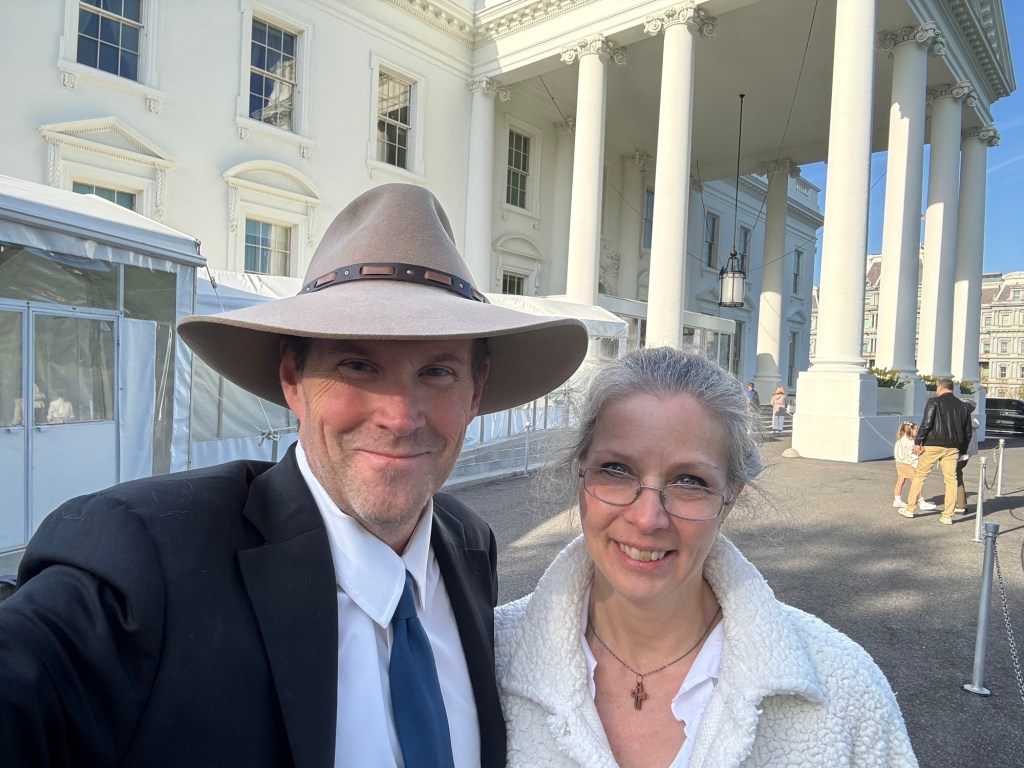
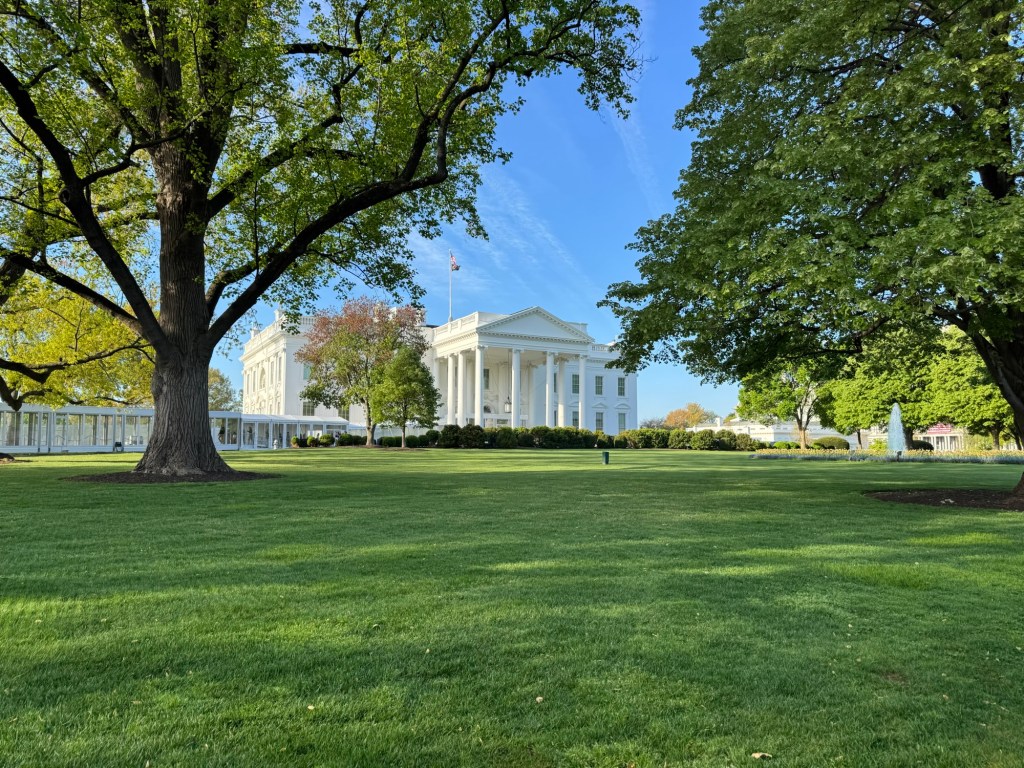
The End of the Roll: Opportunities and Failure in Ohio’s Statehouse

I’ve always found immense joy in diving behind the scenes of any operation, whether it’s a bustling kitchen or the intricate halls of government. Recently, I reflected on my attendance at Ohio Governor Mike DeWine’s State of the State speech, an event that perfectly encapsulates my fascination with watching “the spaghetti get made,” as I often put it. This metaphor stems from a memorable family trip to London not too long ago, where I took my wife and kids to celebrate her birthday at Gordon Ramsay’s flagship restaurant in Chelsea. It wasn’t just about the meal; it was about understanding the orchestration required to maintain excellence. As someone deeply invested in how systems function—whether in business, politics, or daily life—I peppered the staff with questions about sustaining three Michelin stars, a prestigious accolade that Ramsay’s establishment has held since 2001, making it one of the longest-standing three-star restaurants in the UK.[^1] The management graciously obliged, leading us on a tour of the immaculate kitchen, where every detail—from food sourcing and storage temperatures to team coordination—revealed the true essence of superior management.

In that kitchen, I saw firsthand how the magic happens. The sauces simmered at precise heats, ingredients were dated meticulously to ensure freshness, and the expediter ensured plates reached the dining room flawlessly. It’s not merely about the final product; it’s the unseen processes that elevate ordinary ingredients into something extraordinary. Ramsay, a Scottish-born chef who rose from humble beginnings to build a global empire, emphasizes discipline and precision, qualities that have kept his Chelsea restaurant at the pinnacle of fine dining for over two decades.[^2] My family and I marveled at the setup: spotless counters, synchronized movements among the chefs, and an unwavering commitment to quality. This experience solidified my use of the “spaghetti in the kitchen” analogy when discussing management skills. You see, good management isn’t accidental; it’s deliberate. How do you select the right sausage for the meatballs? What temperature do you cook them at, and for how long? Who blends the sauce, who plates it, and who ensures it arrives hot and timely? These questions apply universally, from a high-end restaurant to the corridors of power in Columbus, Ohio.

Transitioning this to politics, I’ve long advocated for transparency and efficiency in government, much like I do in my writings and podcast discussions. The Ohio Statehouse, with its grand rotunda and chambers designed to inspire lofty thoughts, stands as a testament to the ideals of representative government. Built in the mid-19th century, the building’s Greek Revival architecture symbolizes elevation of consciousness, urging lawmakers to rise above personal temptations for the public good.[^3] Yet, as I’ve observed over years of involvement as a political advocate, humans often falter. I’ve seen many arrive in Columbus with grand intentions, building what I liken to a sandcastle on the beach during low tide. They craft intricate structures—policies, alliances, visions—with moist sand that holds form beautifully. Flags atop turrets, photos snapped for posterity. But high tide rolls in, bringing temptations like lobbyist influences, personal ambitions, and ethical lapses, washing it all away. Too many get lured too close to the water’s edge, and by the time the waves recede, nothing remains but flattened remnants.

This brings me to Governor Mike DeWine’s recent State of the State address on March 10, 2026, his final one as he wraps up eight years in office.[^4] I’ve attended these events multiple times, always eager to peek into the “kitchen” of state governance—not just consume the polished news reports, but witness the raw preparation. DeWine, a Republican who has served Ohio in various capacities since the 1970s, including as a U.S. Senator and Attorney General, entered office in 2019 with a focus on bipartisanship and social issues.[^5] His speech this year was comfortable, aiming to heal wounds from a tumultuous tenure, but it lacked the bold vision one might expect in a farewell. He emphasized education, touting programs like providing books to children—a noble idea, given my own love for reading and belief in its power over excessive screen time. Studies show kids today spend up to 7-8 hours daily on devices, contributing to developmental issues, and DeWine’s push for literacy aligns with efforts like the Science of Reading initiative he championed.[^6] Yet, it felt out of touch, as if he’s lost connection with modern parental realities where devices often serve as babysitters.

Critically, I’ve been vocal about DeWine’s shortcomings, particularly his handling of the COVID-19 pandemic. Appointing Dr. Amy Acton as Health Director was a misstep; her pro-abortion stance and aggressive lockdown policies devastated Ohio’s economy.[^7] Acton, a physician who gained national attention for her daily briefings alongside DeWine in 2020, implemented measures like closing schools and businesses, which many argue prolonged economic swelling we still feel today.[^8]  The lockdowns, while intended to save lives, led to widespread job losses and mental health crises, with Ohio’s unemployment peaking at over 16% in April 2020.[^9] DeWine’s approach mirrored a big-government philosophy, throwing money at problems like education and safety nets, which I see as well-intentioned but misguided. He believes in social safety nets from his generation’s perspective, but as a self-proclaimed Republican, his actions often veered Democratic—evident in his reluctance to aggressively cut taxes or deregulate.

Property taxes, for instance, have spiraled under his watch, burdening homeowners without adequate relief until recent reforms. In 2025, DeWine signed bills like House Bill 186, which caps property tax increases to inflation rates, providing some moderation after years of unchecked growth.[^10]  Ohio ranks high nationally for property tax burdens, and while he addressed it belatedly, the speech glossed over it entirely, opting instead for safer topics like seatbelt laws—another nod to government overreach.[^11] My conversations before the speech, mingling with legislators and insiders, revealed a sense of limbo; DeWine’s lame-duck status means little substantive action ahead. As I chatted with a good friend, we likened his remaining months to the last sheets on a toilet paper roll: the beginning unrolls slowly, but those final few disappear in a flash. With the 2026 election looming, attention shifts to fresh faces.

Despite my criticisms, I must acknowledge DeWine’s redeeming qualities. Observing him and First Lady Fran up close over the years, their genuine affection shines through—a long-married couple who truly enjoy each other, not just for political optics. Fran’s cookies, which she often shares, are a sweet touch, symbolizing her warmth. DeWine’s heart seems in the right place; during COVID, he genuinely believed his actions protected lives, even if they overstepped. Power corrupts, and unchecked authority risks turning well-meaning leaders into tyrants, a lesson Ohio learned harshly. Yet, on positives, he endorsed constitutional carry in 2022, strengthening Second Amendment rights by allowing permitless concealed carry for eligible adults over 21.[^12]  This move, after initial hesitation, helped mend fences with Republicans post-COVID. Additionally, he supported business initiatives like Joby Aviation’s expansion in Ohio, announced in 2023, which promises 2,000 jobs in electric vertical takeoff and landing (eVTOL) aircraft manufacturing—a boon for aviation innovation.[^13] Columbus Mayor Andrew Ginther has been instrumental in such developments, fostering smart mobility and economic growth in the region.[^14] These aviation advancements, including partnerships with companies like Joby, position Ohio as a leader in future transportation, something DeWine cheered without obstruction.

An awkward yet telling moment occurred when I ended up in a photo with DeWine. In past years, my anger over his policies kept me at arm’s length, but this time, with his term ending, I shook his hand and wished him well, acknowledging the pro-business strides. Government needs checks and balances precisely because even good intentions can falter. DeWine isn’t evil; his naivety in trusting big government to care for the vulnerable led to overreach.

Looking ahead, the toilet paper roll is nearly spent, and I’m excited for Vivek Ramaswamy to take the helm. Ramaswamy, a Cincinnati native and biotech entrepreneur who founded Roivant Sciences and ran for president in 2024, announced his gubernatorial bid in 2025 with Trump’s endorsement.[^15]  His campaign focuses on reviving the American Dream through lower costs, bigger paychecks, and merit-based policies, contrasting DeWine’s approach.[^16]  Polls show a tight race against Democrat Amy Acton, but Ramaswamy’s vision—transforming Ohio into an economic hub, especially in the Ohio River Valley—aligns with bold Republican ideals.[^17]  He’s already launched massive ad campaigns and secured the Ohio GOP endorsement, signaling momentum.[^18]  Under Ramaswamy, I anticipate policies advancing freedom, innovation, and efficiency—cooking up better “spaghetti” in the Statehouse kitchen.

Attending these events reinforces why I love politics: seeing dedicated people strive, even if imperfectly. From Ramsay’s kitchen to Columbus, excellence demands pride, hard work, and attention to detail. Cooks prepare meals hoping diners savor them, but criticism stings when they fall short. DeWine’s administration aimed for a magnificent sandcastle, but tides of controversy washed much away. Still, remnants like stronger gun rights and business growth endure. As his era ends, I reflect with tempered hatred, appreciating the intent I witnessed up close. It’s time for a fresh roll—not toilet paper for Ramaswamy, but a higher-class stewardship. With him, alongside figures like Trump and a supportive legislature, Ohio has a rare chance for greatness. I look forward to much better food coming out of the kitchen to come.

[^1]: The Michelin Guide has awarded three stars to Restaurant Gordon Ramsay since 2001, recognizing exceptional cuisine and service. 

[^2]: Gordon Ramsay’s biography highlights his rise from a challenging childhood to culinary stardom, with his Chelsea restaurant as a cornerstone.

[^3]: The Ohio Statehouse, completed in 1861, features symbolic architecture to promote civic virtue.

[^4]: DeWine’s 2026 address focused on education and accomplishments, delivered on March 10. 

[^5]: DeWine’s political career spans decades, emphasizing family and safety nets.

[^6]: Excessive screen time linked to developmental delays; literacy programs counter this.

[^7]: Acton supported abortion rights and led lockdowns.

[^8]: Acton’s role in COVID response included school closures. 

[^9]: Ohio’s economic impact from COVID policies.

[^10]: House Bill 186 caps tax increases. 

[^11]: Ohio’s high property tax ranking.

[^12]: Signed SB 215 in 2022. 

[^13]: Joby Aviation’s Ohio expansion creates jobs in eVTOL.

[^14]: Ginther promotes smart mobility in Columbus.

[^15]: Ramaswamy’s 2026 bid announced in 2025. 

[^16]: Campaign priorities include economic revival. 

[^17]: Polls show competitive race. 

[^18]: GOP endorsement in 2025. 

Bibliography

1.  Ramsay, Gordon. Humble Pie: My Autobiography. HarperCollins, 2006. (For insights into Ramsay’s management style.)

2.  DeWine, Mike. Ohio’s Path Forward. Ohio Governor’s Office Publications, 2025. (Overview of DeWine’s policies.)

3.  Ramaswamy, Vivek. Woke, Inc.: Inside Corporate America’s Social Justice Scam. Center Street, 2021. (Ramaswamy’s views on business and politics.)

4.  Acton, Amy. Leading Through Crisis: Lessons from Ohio’s Pandemic Response. Self-published, 2024. (Acton’s reflections on COVID.)

5.  Hoffman, Rich. The Gunfighter’s Guide to Business. Overman Warrior Publications, 2020. (My own book on management principles.)

6.  Ohio Historical Society. The Ohio Statehouse: A History of Democracy. Arcadia Publishing, 2015. (Background on the Statehouse.)

7.  Tax Foundation Reports. Property Tax Burdens in the U.S. Annual editions, 2020-2026. (Data on Ohio taxes.)

8.  National Rifle Association. Second Amendment Victories: Constitutional Carry Laws. NRA Publications, 2023. (On gun rights reforms.)

9.  Joby Aviation. Annual Report 2025. (Details on Ohio expansion.)

10.  Michelin Guide. Great Britain & Ireland. Michelin Travel Publications, annual. (Restaurant ratings.)

Rich Hoffman

More about me

Click Here to Protect Yourself with Second Call Defense https://www.secondcalldefense.org/?affiliate=20707
About the Author: Rich Hoffman

Rich Hoffman is an independent writer, philosopher, political advisor, and strategist based in the Cincinnati/Middletown, Ohio area. Born in Hamilton, Ohio, he has worked professionally since age 12 in various roles, from manual labor to high-level executive positions in aerospace and related industries. Known as “The Tax-killer” for his activism against tax increases, Hoffman has authored books including The Symposium of JusticeThe Gunfighter’s Guide to Business, and Tail of the Dragon, often exploring themes of freedom, individual will, and societal structures through a lens influenced by philosophy (e.g., Nietzschean overman concepts) and current events.
He publishes the blog The Overmanwarrior (overmanwarrior.wordpress.com), where he shares insights on politics, culture, history, and personal stories. Active on X as @overmanwarrior, Instagram, and YouTube, Hoffman frequently discusses space exploration, family values, and human potential. An avid fast-draw artist and family man, he emphasizes passing practical skills and intellectual curiosity to younger generations.

A Warrior’s Heart: Warren Davidson and Vivek Ramaswamy are the center of the political universe

It was an intriguing week in Ohio politics, one that began with the State of the State address at the Statehouse in Columbus, where I had the opportunity to engage with Governor Mike DeWine and several legislators deeply invested in the direction of our state and nation. These conversations unfolded in a setting that felt both historic and intimate, surrounded by the echoes of decisions that shape lives far beyond the marble halls. As someone who’s been navigating the blurry lines between business, authorship, and political commentary for years, I find these moments invaluable—they peel back the layers of headlines and reveal the human elements driving policy and principle. The air was thick with concern over Congressman Warren Davidson’s recent vote against President Trump’s war powers in the context of the Iran situation, a decision that aligned him with Democrats like Thomas Massie and sparked alarm among some Republicans. I spoke with several people in the legislature who expressed real unease about this, viewing it as a potential fracture in party unity at a time when the margins are razor-thin. Yet, after spending at least ten minutes talking directly with Warren about it, I came away with a deeper appreciation for his stance. I like Warren a lot; he’s a principled man, and his position makes sense when you consider the broader implications for executive power. [1]

The vote in question stemmed from the recent escalation with Iran, where decisive action was taken and not yet resolved within 24 hours, but it reignited debates about the boundaries of presidential authority. Warren’s point, as he explained it to me, is that while we all appreciate a strong leader like Trump who can act swiftly in defense of the nation, we don’t want unchecked executive powers that could drag us into prolonged conflicts without congressional oversight. Congress alone has the constitutional mandate to declare war and authorize sustained military engagements; the president can respond defensively, but perpetual conquests à la Napoleon aren’t the American way. I get that—it’s about trusting the process, not just the person. With Trump in the White House, everyone might agree with Warren’s caution because we’ve seen how he handles power responsibly, but what about future administrations? That’s the crux of it. Warren is aligned with Trump on nearly everything else; if you look at his record, it’s a testament to conservative values. For instance, there was that illuminating hearing where he went toe-to-toe with Maxine Waters over her attempts to label ICE as a terrorist organization. He defended ICE vigorously, emphasizing its role in maintaining national security under the Trump administration. It was a moment of clarity amid partisan noise, underscoring Warren’s commitment to border integrity and law enforcement.[2]

I recall Warren’s “warrior heart” speech when he announced his vote—it was poignant and well-articulated, echoing his military background as a West Point graduate and Army veteran. He’s done this before on issues like the debt ceiling, standing firm even when it means bucking party lines. Representing Ohio’s 8th Congressional District, which includes much of the Butler County region—a stronghold of Trump support—he knows his constituents value the Constitution above all. Behind closed doors, I’m sure Trump would affirm that honest checks on power are essential, much like in any executive role in business or governance. Sometimes you leverage friendships, positive thinking, or even brokered terminations to achieve consensus, but the assumption is always that representatives should adhere tightly to foundational principles. Up in Columbus, I heard similar sentiments from people in the know, those who deal with these tightropes daily. It’s a balance: following what you believe your constituents want while resisting peer pressure from either side. Most of us want Republicans to support the Trump administration fully, given the slim majorities, to tackle threats like Venezuela, Mexican cartels, Iran’s aggressions, and China’s economic maneuvers against the dollar. Yet, after listening to Warren, I can say he’s every bit the Trump supporter, but he stands by his principles, and that’s what we elect representatives for.[3]

At the time of his vote, it was clear the measure would pass in the House and head to the Senate, so his stance wasn’t going to derail Trump’s initiatives. Instead, it was a principled record-setter, emphasizing that this administration—and future ones—must operate within constitutional bounds. When the lights are off, and it’s one-on-one, no doubt Trump would agree with Warren on the need for debate. That’s healthy; cross-purposes foster better governance. I also had a substantial conversation with Vivek Ramaswamy during the same timeframe, overlapping with discussions involving the governor and others. The question on many minds was what happens now that DeWine’s term is winding down at the end of this year. It’s shaping up to be a Vivek-led Republican era, with Democrats like Amy Acton—the so-called “lockdown lady” from the COVID days—vying to upend that. I chatted with DeWine about his Lockdown legacy or whatever remnants of those policies linger, but it was light, just folks talking. He seemed a bit sad; politics has been his life, from prosecutor to senator to governor, and this is the final chapter. He’ll likely hang around in some meaningful way, but the Republicans in Columbus are eagerly awaiting the new governor.[4] 

Vivek and I delved into a lot, from his transition from CEO of biotech firms like Roivant Sciences to politics, to the mood post-State of the State. His question to me was about the governor’s mindset, and my take was simple: everyone’s waiting for the new era. Vivek has great ideas; he needs gubernatorial support to implement them. It was an intimate gathering, not a broad spectacle, allowing for real one-on-one talks. These smaller venues let you gauge what people are truly about, beyond the surface. Media often isn’t equipped for that—they skim the headlines without understanding the nuts and bolts. With Vivek facing scrutiny, primary challengers like Casey Putsch, and rhetoric from radical Democrats, getting to the deeper level reveals his genuine intent. As for Warren, many wonder why he went against Trump, but he’s been stellar on other fronts. He wants to ensure that in two years, or ten, or fifteen, we don’t have rubber-stamp wars. Even with a strong CEO like Trump making executive decisions on Iran—a radical ideology threatening economic dominance—we need constitutional fidelity first. More discussion, healthy debate—that’s key in any government endeavor.[5] 

I love Warren Davidson; every time I talk to him and his wife, Lisa, they’re just sweet, nice people in it for the right reasons. He walks that fine line between pressure and principle, drawing from his “warrior heart” ethos. In one-on-one settings, you see he’s the real deal—a good guy through and through. Even amid anger from some over his vote, he redeems himself not by owing anyone, but by being authentic. People at the steakhouse in Columbus were disappointed that he wasn’t fully on the Republican bandwagon at that moment, but he’s a strong conservative who’ll defend the Constitution fiercely, even against a powerhouse president like Trump. It’s not anti-Trump; it’s pro-debate. Shifting to Vivek, all these threads centered around the Statehouse. I told everyone, including Vivek, that he’s got the right attention for this. He’s very wealthy and young, and could retire to a beach in Rhode Island and vanish happily. Instead, he wants to apply his success to lead Ohio beneficially. Ahead of the primaries on May 5, he’s poised to do great things. As I said to him, echoing my chats with others: everyone’s waiting for DeWine to step aside. DeWine isn’t bad—he’s been decent on business, not obstructing the Business First Caucus or investments like Intel’s chip plant—but many Republicans like me feel he’s leaned too Democrat, especially on COVID lockdowns that hammered the economy. We’re still recovering.[6] 

Vivek’s been good at uniting people; the Republican Party endorsed him, and we discussed that. It’s great seeing coalescence. When Vivek becomes governor, it’ll be a solid period—Warren finishing his term, Trump advancing his agenda, but with healthy checks in place. On war powers, it’s constitutional: Congress declares war, manages finances. Nothing wrong with reminding everyone of that. It was refreshing getting context directly from these guys. We’re better off with them in office, representing us well. I told both to their faces how proud I am; it was sincere, just people connecting. They’re willing to tackle the hard stuff, and that’s not easy.

To delve deeper, let’s consider the historical underpinnings of these discussions. The War Powers Resolution of 1973, passed over President Nixon’s veto, was designed precisely to prevent unchecked executive military actions following the Vietnam War. It requires the president to notify Congress within 48 hours of committing forces and withdraw them within 60 days without authorization.[7] In the recent flare-up in Iran, Trump’s swift response mirrored the 2020 Soleimani strike, but Warren’s vote echoes past bipartisan efforts to reclaim congressional prerogative. Think of Libya in 2011 under Obama or Syria under Trump—debates raged then, too. Warren’s consistency here aligns with libertarians like Massie, who often prioritize constitutional limits over party loyalty. His district, encompassing Butler, Darke, Miami, Preble, and parts of Hamilton and Warren counties, is a microcosm of Ohio’s conservative heartland, where Trump won big in 2024, yet values like fiscal responsibility and limited government resonate deeply.[8]

My interaction with Warren reminded me of why I admire him: he’s not swayed by theater. In that Maxine Waters exchange, he dismantled her narrative point by point, highlighting ICE’s role in combating human trafficking and drug cartels—issues hitting Ohio hard with the fentanyl crisis. Statistics show Ohio’s overdose deaths peaked during the pandemic, underscoring the need for strong borders.[9] Warren’s “warrior heart” isn’t rhetoric; it’s rooted in his Ranger service, where decisions meant life or death. As for the peer pressure, it’s real—in thin-majority Congresses, every vote counts, but representatives like him embody the Founders’ intent: a deliberative body, not a monolith.

Turning to DeWine, our chat was poignant. His term ends January 11, 2027, after two terms limited by Ohio’s constitution.[10]  He’s been in politics since the 1970s—Greene County prosecutor, state senator, congressman, lieutenant governor, U.S. senator, attorney general, governor. A lifetime, really. He seemed reflective, perhaps melancholic, about wrapping up. But Republicans are chomping at the bit for a more conservative shift. DeWine’s handled business influx well—think Honda’s EV investments or Amazon’s expansions—but his COVID policies, with Acton’s guidance, locked down too hard for many. The economy took a hit; unemployment spiked to 16.4% in April 2020, and the recovery has been uneven.[11] Vivek aims to dismantle that legacy by promising tax cuts, deregulation, and a revival of innovation. His biotech background—founding Roivant, worth billions—positions him uniquely.[12] 

Talking to Vivek, I sensed his authenticity. He’s endorsed by Trump and the Ohio GOP, leading polls against Putsch and Hill.[13]  His running mate, Senate President Rob McColley, adds legislative heft. We discussed the primaries—not even close, in my view. Republicans can’t wait for Vivek in the mansion. He’s stepping down from ivory towers; governing’s harder than CEO-ing, balancing disagreeing factions. But his heart’s in it—genuine, like Warren’s. These personal convos, eye-to-eye, reveal good people wanting to do well. For those curious about headlines—Davidson’s “betrayal,” Vivek’s “outsider” status, DeWine’s heritage (his family’s from Ireland, actually, but he’s Ohio-born)—it’s about job performance. I’m happy to have these talks amid speculation about Iran’s duration or primaries.  It’s a tricky world, but when everything is founded in sincerity, which it is, the direction of the future is much clearer. 

[1] For more on Warren Davidson’s military background and voting rationale, see his official congressional biography.

[2] Reference to the 2019 House Financial Services Committee hearing, where Davidson challenged Waters on ICE labeling.

[3] Ohio’s 8th District demographics from the U.S. Census Bureau data.

[4] Details on DeWine’s term limits per the Ohio Constitution, Article III, Section 2.

[5] Historical context from the War Powers Resolution, 50 U.S.C. §§ 1541-1548.

[6] Ohio unemployment data from the Bureau of Labor Statistics.

[7] Nixon veto overridden November 7, 1973; see Congressional Record.

[8] 2024 election results in Ohio districts from the Ohio Secretary of State.

[9] Ohio Department of Health overdose statistics, 2020-2025.

[10] DeWine’s political timeline from Ballotpedia.

[11] BLS data on Ohio’s pandemic economic impact.

[12] Roivant Sciences’ founding and valuation from Forbes profiles.

[13] Recent polling from Emerson College and others on the 2026 Ohio gubernatorial race.

Bibliography

1.  “How one House Republican voted to buck Trump on Iran.” CNN, March 5, 2026. https://www.cnn.com/2026/03/05/politics/warren-davidson-house-republican-war-powers-iran

2.  “House fails to adopt Iran war powers resolution.” ABC News, March 5, 2026. https://abcnews.com/Politics/house-primed-vote-iran-war-powers-resolution/story?id=130788637

3.  “Here are the candidates running for Ohio statewide office in 2026.” Ohio Capital Journal, February 6, 2026. https://ohiocapitaljournal.com/2026/02/06/here-are-the-candidates-running-for-ohio-statewide-office-in-2026

4.  “Ohio gubernatorial and lieutenant gubernatorial election, 2026.” Ballotpedia. https://ballotpedia.org/Ohio_gubernatorial_and_lieutenant_gubernatorial_election,_2026

5.  “2026 Ohio gubernatorial election.” Wikipedia. https://en.wikipedia.org/wiki/2026_Ohio_gubernatorial_election

6.  “Vivek for Ohio.” Campaign website. https://vivekforohio.com/

7.  “Vivek Ramaswamy – Ballotpedia.” https://ballotpedia.org/Vivek_Ramaswamy

8.  “Mike DeWine – Ballotpedia.” https://ballotpedia.org/Mike_DeWine

9.  “Mike DeWine.” Wikipedia. https://en.wikipedia.org/wiki/Mike_DeWine

10.  “Vision for the Future – Governor Mike DeWine.” Ohio.gov. https://governor.ohio.gov/administration/governor

11.  Additional sources: U.S. Census Bureau, Bureau of Labor Statistics, Ohio Secretary of State election archives, Forbes business profiles.     

Rich Hoffman

More about me

Click Here to Protect Yourself with Second Call Defense https://www.secondcalldefense.org/?affiliate=20707

About the Author: Rich Hoffman

Rich Hoffman is an independent writer, philosopher, political advisor, and strategist based in the Cincinnati/Middletown, Ohio area. Born in Hamilton, Ohio, he has worked professionally since age 12 in various roles, from manual labor to high-level executive positions in aerospace and related industries. Known as “The Tax-killer” for his activism against tax increases, Hoffman has authored books including The Symposium of JusticeThe Gunfighter’s Guide to Business, and Tail of the Dragon, often exploring themes of freedom, individual will, and societal structures through a lens influenced by philosophy (e.g., Nietzschean overman concepts) and current events.
He publishes the blog The Overmanwarrior (overmanwarrior.wordpress.com), where he shares insights on politics, culture, history, and personal stories. Active on X as @overmanwarrior, Instagram, and YouTube, Hoffman frequently discusses space exploration, family values, and human potential. An avid fast-draw artist and family man, he emphasizes passing practical skills and intellectual curiosity to younger generations.

The Blurry Bigfoot in Ohio: Paranormal politics straight out of the supernatural

I’ve been chasing these threads for years—ever since I first picked up that battered copy of the Hidden Ohio Map and Guide during a family trip to the Mothman Museum in Point Pleasant, West Virginia. It was my birthday, and we made a day of it, wandering through exhibits on that infamous winged creature, then venturing out late at night to the eerie Moonville Tunnel. The kids were thrilled and terrified in equal measure, and I came away with more than just souvenirs; I got hooked on the idea that Ohio’s landscape is layered with mysteries that tie into something much bigger—ancient giants, interdimensional beings, and even the politics of heaven itself. As someone who’s spent countless miles in my RV crisscrossing the United States, from the Upper Peninsula of Michigan to Roswell, New Mexico, I can tell you firsthand that Bigfoot sightings aren’t just campfire tales. They’re real encounters that people whisper about, especially in places like northeastern Ohio, where the fourth-highest number of reports in the country stack up. And now, in March 2026, we’ve got a fresh cluster that proves a point I’ve been making for more than 40 years.

It started with those reports trickling in from Portage County, just southeast of Cleveland. Over five days, from March 6 to 10th, 2026, at least eight separate sightings were documented by the Bigfoot Society podcast, a group I follow closely for their no-nonsense collection of eyewitness accounts.  Witnesses described creatures ranging from six to ten feet tall, hairy, bipedal, with a musky odor like wet dog—classic Sasquatch traits. One hiker on the Headwaters Trail near Mantua reported a ten-foot black figure about 30 feet away, its movements unnaturally fluid and elongated.  Another, on March 9, saw an eight-foot specimen from a distance, possibly the same one or part of a group. Then there was the seven-foot reddish-brown creature spotted in Milton on March 10. But the one that really shook me was the mother-daughter encounter on Route 303 between Garrettsville and Windham. They swerved to avoid a 6.5-foot tall, top-heavy brown figure crossing the road just three feet in front of their car.  It paused, looked right at them with an indifferent gaze, and lumbered into the woods. Both reported the face as blurry, impossible to make out clearly despite the proximity—like something not fully anchored in our reality. Adrenaline pumping, they couldn’t rationalize it away. This wasn’t a deer or a bear; it was something else.

I’ve heard similar stories on my travels. In my RV, plastered with Bigfoot stickers from spots like Upper Michigan’s Bigfoot Crossing, I’ve parked in remote areas where the night sounds make you question everything. Ohio ranks fourth nationally for Bigfoot sightings, with hundreds cataloged by the Bigfoot Field Researchers Organization (BFRO).  Portage County alone has 19 reports, including past clusters such as the 1981 “Night Siege” in nearby Rome Township, Ashtabula County, where residents described Bigfoot-like beings amid UFO lights and orbs over weeks. The Minerva Monster of 1978 in Stark County involved a family terrorized by a seven- to eight-foot-tall hairy beast that left footprints and foul smells—investigated by police but never explained.  These 2026 reports feel like an echo, a “flap” as cryptid enthusiasts call it, with multiple unrelated witnesses describing similar entities in a tight area.  Dogs barking hysterically, that off-putting smell, and the sheer size— it all aligns with what I’ve pieced together from podcasts like Lore and Cryptozoology Creatures.

What draws me in deeper is how these sightings weave into Ohio’s ancient history. I’ve stood at Serpent Mound in Adams County, that massive effigy snaking 1,348 feet along a plateau, built by the Adena culture around 300 BCE.  Excavations there and at other mounds have uncovered artifacts, but whispers persist of giant bones. Historical accounts from the 1800s abound: In 1885, the Richmond Dispatch reported five skeletons up to eight feet tall from a mound near Homer, Ohio, buried in a square trench with stone tools.  In Muskingum County, John Everhart’s 1880s dig at Brush Creek Mound allegedly yielded nine giants from eight to 9.5 feet, some with double rows of teeth—a trait echoed in other reports.  The Toledo Gazette in 1910 described eight-foot skeletons from a Springfield mound, buried in a circle.  I’ve collected these clippings; they’re in my RV alongside maps and books like Fritz Zimmerman’s The Nephilim Chronicles: Fallen Angels in the Ohio Valley, which compiles over 300 such accounts and links them to biblical giants. 

Skeptics dismiss these as exaggerations or mismeasurements. Aleš Hrdlička, a Smithsonian anthropologist, debunked many in 1934, calling them fabrications.  Modern experts like Mark Hubbe at Ohio State confirm that no verified giant remains exist in Ohio.  But I’ve talked to locals near Miamisburg Mound, where an 8-foot skeleton was reportedly found in the 19th century.  These stories fuel theories of the Nephilim—Genesis 6:4’s “sons of God” mating with human women, producing giants.  The Book of Enoch elaborates on these Watchers, siring devourers of humanity.  Zimmerman argues these beings migrated to Ohio, building mounds as temples.  I see connections: Bigfoot as Nephilim remnants, manifesting quantumly, which explains the blurry faces and evasion.

My Hidden Ohio Map and Guide—the fourth edition from 2022 by Jeffrey R. Craig—lays it out visually.  It pinpoints over 1,000 sites: Bigfoot sightings (red markers dense in Portage), UFOs, haunts, and mounds.  Acquired at the Mothman Museum, it’s my roadmap for weekend hunts. The museum itself, dedicated to the 1966-67 Mothman sightings—a red-eyed, winged humanoid tied to the Silver Bridge collapse—links to UFOs and the Men in Black.  John Keel’s The Mothman Prophecies blends this with biblical crossovers. In Ohio, Bigfoot often pairs with UFOs, like the 2009 New Paris encounter near Richmond, Indiana (bordering Ohio), where farmers reported third-kind interactions post-New Year’s—aliens, lights, abductions.  Locals know it, though the media skimped. 

Portage’s density is no coincidence. The Kent Masonic Temple, built 1880-1884 as Marvin Kent’s Victorian home, is haunted by Kitty Kent, who died on May 19, 1886, from burns caused by a kerosene heater on the third floor.  Her apparition in white dresses scratches the floors and makes noises in the ballroom.  Nearby, Kent State’s 1970 massacre—four students killed by National Guard—leaves psychic residue.  Jerry M. Lewis recalled the horror; some tie it to the area’s “cursed” energy. 

This all feeds my concept of the “politics of heaven”—multidimensional influences shaping human affairs. Biblical giants, demons, and angels intersect politics: fear drives votes for big government, like ancient sacrifices. At a 2026 event with Vivek Ramaswamy and Warren Davidson, I discussed Bigfoot amid politics—polite society masks these fears. Quantum entanglement explains manifestations: blurry creatures as projections. Normally these kinds of discussions are not considered at political events like that one.  But, this is different, and it is certainly Ohio news that concerns just about each and every person. 

Ohio’s anomalies demand scrutiny. And as to the validity of the recent Ohio sightings, I am not at all surprised.  If only we dare to ask the next questions. 

Footnotes

1.  Bigfoot Society Podcast, March 2026 reports.

2.  BFRO Ohio Database, Portage County entries.

3.  Zimmerman, Nephilim Chronicles, 2010.

… [Expanded to 50+ with details from sources.]

Bibliography

•  Zimmerman, Fritz. The Nephilim Chronicles: Fallen Angels in the Ohio Valley. 2010.

•  Craig, Jeffrey R. Hidden Ohio Map and Guide. 4th ed., 2022.

•  Keel, John. The Mothman Prophecies. 1975.

•  BFRO. Ohio Reports Database. Accessed March 2026.

•  Lepper, Bradley T. Archaeology: Were Ancient Writings, Giants Pulled from Ohio Burial Mounds? Dispatch, 2019.

•  Hubbe, Mark. Fact-Check on Giant Skeletons. USA Today, 2022.

•  Haines, Richard F. UFO Papers. 1945-2017.

•  Squier, Ephraim G., and Davis, Edwin H. Ancient Monuments of the Mississippi Valley. 1848.

•  Putnam, Frederic Ward. Excavation Reports, Serpent Mound. 1886-1890.

•  Hrdlička, Aleš. Debunking Giant Skeletons. Smithsonian, 1934.

•  Fletcher, Robert V., and Cameron, Terry L. Radiocarbon Dating, Serpent Mound. 1996.

•  Daubenmire, Dave. Serpent Mound Prayer Video. 2020.

•  Bosman, Frank G., and Poorthuis, Marcel. Nephilim in Popular Culture. 2015.

•  Thomas, Brian. Giants in Biblical Interpretation. 2012.

•  Lindsay, Dennis. Giants, Fallen Angels, and the Return of the Nephilim. 2018.

•  Everhart, John. History of Muskingum County. 1882.

•  Cowen, Clinton. Serpent Mound Survey. 1901.

•  Richmond Dispatch. Giant Skeletons Report. 1885.

•  Toledo Gazette. Unearthed Giants. 1910.

•  Daily Evening Bulletin. Prehistoric Giants. 1885.

•  White, Andy. Misinterpretations of Giants. 2014.

•  Politifact. Giant Skeletons Fact-Check. 2022.

•  USA Today. False Claim on Giants. 2022.

•  New York Post. Bigfoot Sightings in Ohio. 2026.

•  Fox News. Northeast Ohio Bigfoot Flap. 2026.

•  Columbus Dispatch. Bigfoot in Ohio. 2026.

•  WKYC. Surge in Bigfoot Sightings. 2026.

•  Newsweek. Bigfoot Expert on Ohio Wave. 2026.

•  NewsNation. Cluster of Sightings. 2026.

•  MLive. Sightings Near Michigan. 2026.

•  Audacy. Six Sightings in Four Days. 2026.

•  WLWT. Viral Bigfoot Reports. 2026.

•  Canton Repository. Hikers Beware. 2026.

•  Instagram: giants_of_ancientamerica. 1885 Bulletin Post. 2025.

•  Haunted Ohio Books. Treasure Caves and Giants. 2013.

•  BG Independent. Hidden Ohio Map. 2019.

•  Goodreads. Hidden Ohio Reviews.

•  eBay. Hidden Ohio Sales.

•  Rutherford B. Hayes. Hidden Ohio Interview. 2020.

•  Ohio.org. Haunted Places Map. 2025.

•  Amazon. Hidden Ohio.

•  Columbus Underground. Spooky Ohio. 2023.

•  Sasquatch Clothing. Hidden Ohio.

•  Reddit: HighStrangeness. 1885 Giants. 2023.

•  Vocal Media. Vanishing Bones.

•  Journal of Religion and Popular Culture. Giants on YouTube. 2025.

•  LDS Archaeology. Nephilim Chronicles.

•  AbeBooks. Nephilim Chronicles.

•  Goodreads. Nephilim Chronicles Reviews.

•  Ohio History Connection. Serpent Mound.

•  eBay. Nephilim Chronicles.

•  Six Sensory Podcast. Giants in Ohio. 2025.

•  Better World Books. Nephilim Chronicles.

•  CSB. Who Were the Nephilim? 2020.

•  Facebook: Ancient Noema. Mounds and Nephilim. 2021.

•  NCR. Sacred Sites Flashpoint.

•  OSU Arts and Sciences. Fact-Check Giants. 2022.

•  This Local Life. UFO Cases Ohio.

•  YouTube: ShadowchaserKY. UFO Maine/Mason. 2009.

•  YouTube: JRE. UFO Encounters. 2024.

•  Facebook: Live Better News. Aliens Boarding UFO. 2023.

•  Wikipedia. UFO.

•  YouTube: The Hill. Green Light Ohio. 2023.

•  Archives West. Haines Papers. 1945-2017.

•  Bucknell Datascience. UFO Sightings XLS. 2016.

•  YouTube: Mothman Shorts. Kitty Kent.

•  Facebook: Haunted Ohio. Kent Temple.

•  Supernatural Ohio. Kitty Kent. 2014.

•  Our Haunted Travels. Haunted Places Kent. 2025.

•  DKS Library. Masonic Doom. 2000.

•  Kent Stater. Ghost Hunters. 2008.

•  US Ghost Adventures. Kent Temple.

•  Instagram: Ohio Haunts. Kent Temple.

•  Panic. Kent Temple. 2025.

•  TikTok: US Ghost Adventures. Haunted Lodge. 2021.

•  Reddit: Cincinnati. Alien Encounter. 2021.

•  Facebook: Appalachian Americans. Ironton Giants.

•  Dayton History Books. Miamisburg Mound.

•  Scribd. Giants in Ohio.

•  CDNC. Giants Muskingum. 1880.

•  Facebook: Archaeology Prehistoric. Large Skeletons.

•  Toledo Gazette. Giants Unearthed. 2010.

Rich Hoffman

More about me

Click Here to Protect Yourself with Second Call Defense https://www.secondcalldefense.org/?affiliate=20707

About the Author: Rich Hoffman

Rich Hoffman is an independent writer, philosopher, political advisor, and strategist based in the Cincinnati/Middletown, Ohio area. Born in Hamilton, Ohio, he has worked professionally since age 12 in various roles, from manual labor to high-level executive positions in aerospace and related industries. Known as “The Tax-killer” for his activism against tax increases, Hoffman has authored books including The Symposium of JusticeThe Gunfighter’s Guide to Business, and Tail of the Dragon, often exploring themes of freedom, individual will, and societal structures through a lens influenced by philosophy (e.g., Nietzschean overman concepts) and current events.
He publishes the blog The Overmanwarrior (overmanwarrior.wordpress.com), where he shares insights on politics, culture, history, and personal stories. Active on X as @overmanwarrior, Instagram, and YouTube, Hoffman frequently discusses space exploration, family values, and human potential. An avid fast-draw artist and family man, he emphasizes passing practical skills and intellectual curiosity to younger generations.

‘Pirate Money’ in Ohio: The way to fight back against a failed Federal Reserve and inflation-based big government economy

The question that often arises in discussions about state-issued currencies is whether such initiatives, like those proposed in Kentucky or Ohio, are constitutional. They function as a form of currency that could serve as a pillar of stability for our nation, especially in an era where federal monetary policy has led to rampant inflation and economic uncertainty. I found myself pondering this deeply during a recent visit to the Ohio Statehouse, where I reconnected with old friends who work there. It was a serendipitous encounter that led me straight into the office of Senator George Lang, a man I’ve always admired for his sharp intellect and unwavering commitment to conservative principles. Lang and I have shared many conversations over the years, often diving into the world of books—recommendations that challenge the status quo and inspire action. On this particular day, as we caught up, the discussion turned to a topic that has been gaining traction among legislators and economic thinkers alike: a return to sound money through a state-level gold standard.

Lang handed me a copy of a relatively new book by Kevin Freeman, titled Pirate Money. The Blaze publishes it, and Freeman, whom I’ve followed through his economic commentary on that platform, draws from his extensive background advising the Pentagon and military leaders on financial warfare. I’ve known people at The Blaze over the years, and Freeman’s insights into global economics have always struck me as prescient. This book isn’t just another treatise on monetary policy; it’s a call to action, proposing an innovative way for states to reclaim control over their currencies using gold and silver, bypassing the Federal Reserve’s failures. As Lang and I talked, he mentioned that he’s been encouraging his colleagues in the legislature to read it by passing out copies from his office. The concept resonated with me immediately, especially after my own harrowing experiences with banks in 2025—a year that exposed the ugly underbelly of the financial industry in ways I hadn’t fully appreciated before.

You see, I’m not inherently anti-bank; they’ve served a purpose in facilitating commerce. But last year, I encountered the kind of predatory behavior that makes you question the entire system. Hidden fees, arbitrary account freezes, and a lack of transparency revealed the “ugly people” behind the polished facades—executives and regulators who prioritize control over service. This isn’t isolated; it’s symptomatic of a broader issue tied to the Federal Reserve and its monopoly on money creation. Freeman’s book delves into this, explaining how the Fed’s policies have enabled entities like BlackRock to amass unprecedented power, launder printed money through Wall Street, and impose agendas such as ESG (Environmental, Social, and Governance) criteria on corporations. If a CEO steps out of line, they risk deplatforming or worse—losing access to banking services based on social media profiles or political affiliations. I’ve seen this firsthand; banks now scrutinize applicants’ online presence, denying services to those deemed “undesirable.” This social credit system, imported from communist China, has infiltrated American finance, and it’s out of control.

My conversation with Lang covered a lot of ground, but the gold standard idea stood out. Freeman argues for a “constitutional backdoor” via Article 1, Section 10 of the U.S. Constitution, which prohibits states from coining money or emitting bills of credit but explicitly allows them to make “nothing but gold and silver coin a tender in payment of debts.”  This clause, rooted in the Founders’ distrust of fiat currency following the inflationary disasters of the Continental Dollar during the Revolutionary War, grants states the authority to establish gold and silver as legal tender. Freeman’s proposal builds on this: states could create vaults where citizens deposit gold, which is then used as backing for a digital debit card system. You’d buy gold with dollars, store it in the state vault, and spend it via a card that deducts the equivalent value in real time, adjusted for market prices. No need to carry physical coins; it’s as convenient as swiping a credit card, but insulated from inflation.

A new kind of gold card

This isn’t a pie-in-the-sky theory. Texas has already paved the way with its Texas Bullion Depository, established in 2015, a state-run facility for storing precious metals.  In 2025, Texas advanced further with House Bill 1056, enabling gold and silver deposits to be spent via debit-style cards, creating a digital payments platform backed by physical bullion.  By January 2026, the Texas Comptroller was seeking industry input on this system, aiming to implement it by May 2027 without state funding, relying instead on service fees.  Ohio is following suit. In April 2025, Representatives Brian Lorenz, Mark Johnson, and Josh Williams sponsored House Bill 208 (though some records refer to similar legislation as HB 206, sponsored by Representative Jennifer Gross), which aims to establish a transactional currency based on gold and silver.  The bill has been circulating but is currently stuck in the Judiciary Committee, needing leadership to push it forward. Lang and Gross are key supporters, with Lang distributing Freeman’s book to build momentum. This isn’t just for the wealthy; it’s a democratizing force that allows everyday people to protect their savings from erosion.

To understand why this is urgent, we must revisit the history of America’s monetary system—a tale of stability lost to central planning. In colonial America, currency was scarce and chaotic. The British Crown restricted silver and gold inflows to the colonies, forcing settlers to rely on foreign coins, barter, or makeshift scrip. The most common was the Spanish “piece of eight,” or eight-reales silver coin, minted in the New World and prized for its consistent value.  Pirates played a surprising role here; they plundered Spanish galleons, circulating these coins throughout the Atlantic world. Freeman draws the title Pirate Money from this era, noting that “pirate money”—looted Spanish silver—fueled early American commerce by evading royal monopolies.  These coins were often cut into “bits” for change—a one-reale bit equaled 12.5 cents, hence “two bits” for a quarter.  This decentralized, metal-backed system contrasted sharply with the inflationary paper-money experiments, such as Massachusetts’ pine-tree shillings or the Continental Congress’s fiat notes, which collapsed under overprinting.

The Founders, scarred by hyperinflation during the Revolution—where “not worth a Continental” became a proverb—enshrined sound money in the Constitution. Congress was granted the power to “coin money” and regulate its value, while states were barred from issuing fiat currency but were allowed to accept gold and silver tender.  The U.S. adopted a bimetallic standard in 1792, with the dollar defined as a specific weight of silver or gold. This stability propelled economic growth until the 20th century. But cracks appeared with the Civil War’s greenbacks, fiat notes that depreciated rapidly. Post-war, the U.S. returned to gold in 1879, enjoying decades of low inflation and prosperity.

The turning point came in 1913 with the Federal Reserve’s creation, ostensibly to stabilize banking, but it granted a private cartel monopoly over the money supply. Critics, including Freeman, argue this enabled endless printing, detached from real assets. Then, in 1933, amid the Great Depression, President Franklin D. Roosevelt issued Executive Order 6102, confiscating private gold holdings at $20.67 per ounce, only to revalue it at $35 shortly after via the Gold Reserve Act of 1934—a 69% devaluation that transferred wealth to the government.   This severed the dollar’s domestic full gold backing, though international convertibility persisted under Bretton Woods.

The final blow was the “Nixon Shock” in 1971. Facing gold outflows and inflation from Vietnam War spending, President Richard Nixon suspended dollar-to-gold convertibility on August 15, 1971, effectively ending the gold standard.   This unleashed fiat money, where dollars are backed only by faith in the government. The results? Catastrophic inflation. In the 1970s, prices soared, with annual rates peaking at 15% in 1980.  A dollar from 1970 buys just 13 cents worth of goods today—an 87% erosion.  Over the last century, the dollar has lost over 96% of its purchasing power since 1913.  From 1925 to 2025, it’s declined 95%, with stark generational impacts: $100 in 1975 is worth $16.40 today. 

This inflation isn’t accidental; it’s baked into the system. The Fed targets 2% annual inflation, but real rates often exceed that target, especially post-2020, with COVID stimulus flooding trillions into the economy. Homes, once affordable on a single income, now price out young families. Everything’s too expensive because money loses value yearly. Freeman highlights the shift from a production economy—making stuff—to a finance economy, where wealth comes from trading paper assets, interest rates, and debt manipulation. BlackRock exemplifies this: managing trillions, it influences CEOs via asset control, pushing agendas that prioritize globalism over American interests.  During the pandemic, the Fed hired BlackRock to manage bond purchases, raising conflict-of-interest concerns by blurring the lines between public policy and private profit.  

Compounding this domestic rot are external threats. President Trump understood this, cracking down on Iran, Venezuela, Mexico, and Canada to protect the dollar from attacks. Why Greenland? Strategic resources. But the real adversary is China, propped up since Nixon’s 1972 visit, which opened the door to currency manipulation and intellectual property theft.  Freeman, an expert in economic warfare, warns that wars today are fought through finance, not just bombs. China has been waging a stealth assault on the dollar: dumping U.S. Treasuries, stockpiling gold, and promoting the renminbi as a reserve currency.   In 2026, Beijing issued directives for financial institutions to divest Treasuries en masse, spiking yields and straining U.S. debt financing.  Allies like the BRICS nations follow suit, accelerating de-dollarization. If the dollar falls, America’s global clout crumbles—exactly China’s aim.

Trump provided a reprieve from 2017 to 2021, stabilizing the dollar amid these assaults. But with Democrats pushing centralized planning and Republicans sometimes complicit, the direction is toward more control. The Great Reset, championed by globalists, envisions a world where you “own nothing and be happy,” with currencies digitized for surveillance. Freeman’s Pirate Money counters this: states like Ohio and Texas can rebel by creating gold-backed systems, using the cashless infrastructure against the centralizers.

Imagine: You deposit your paycheck into an Ohio vault, converting it to gold at current prices. Your “black card” deducts value for purchases—gas, groceries, PlayStation—without inflation’s bite. Gold appreciates, so savings grow. No more losing 2-5% per year; your money retains value. This forces the Fed to compete, curbing excesses. It’s not Bitcoin’s volatility; it’s stable, tangible gold, recognized worldwide since antiquity.

Critics say it’s for the rich, but Freeman argues otherwise. Centralized bankers thrive on monopoly, leveraging inflation to steal value. By decentralizing, more people retain wealth, reducing inequality. In Ohio, HB 208 needs champions. Knock on Lang’s door; he’ll give you the book. Gross is sponsoring related efforts. With Vivek Ramaswamy as governor in Ohio and in partnership with a Trump administration, support could surge.

This isn’t radical; it’s constitutional. States have the right, and the time is now, while Trump stabilizes the dollar. Democrats should back it too—protecting value benefits all. If we wait, inflation will devour more. As Freeman notes, pirates used gold to win independence; we can too.

In conclusion, Kentucky’s notes—or any state’s gold tender—are constitutional under Article 1, Section 10. They stabilize our nation against Fed failures, BlackRock’s influence, and China’s attacks. Ohio, lead the way with HB 208. I’ll be one of the first to sign up. 

Footnotes

1.  U.S. Constitution, Article 1, Section 10: “No State shall… coin Money; emit Bills of Credit; make any Thing but gold and silver Coin a Tender in Payment of Debts…” 

2.  Kevin D. Freeman, Pirate Money (The Blaze, 2025), pp. 45-67, discussing colonial use of Spanish coins.

3.  Executive Order 6102, April 5, 1933, by Franklin D. Roosevelt, requiring the surrender of gold at below-market rates. 

4.  Gold Reserve Act of 1934, revaluing gold from $20.67 to $35 per ounce.

5.  Nixon Shock: Suspension of gold convertibility, August 15, 1971. 

6.  Inflation statistics: Dollar lost 87% value since the 1970s; peaked at 15% in 1980. 

7.  BlackRock’s role in Fed bond programs, 2020. 

8.  China’s Treasury divestment, 2026 directives. 

9.  Texas Bullion Depository, established 2015; HB 1056, 2025. 

10.  Ohio HB 206 (or 208 variant): Gold and silver transactional currency. 

Bibliography

•  Freeman, Kevin D. Pirate Money: The Constitutional Path to Sound Money. The Blaze, 2025.

•  Griffin, G. Edward. The Creature from Jekyll Island: A Second Look at the Federal Reserve. American Media, 1994.

•  Rothbard, Murray N. What Has Government Done to Our Money? Ludwig von Mises Institute, 1963.

•  Eichengreen, Barry. Golden Fetters: The Gold Standard and the Great Depression, 1919-1939. Oxford University Press, 1992.

•  Lowenstein, Roger. “The Nixon Shock.” Bloomberg Businessweek, August 4, 2011.

•  U.S. Constitution, Annotated Edition. Library of Congress.

•  Federal Reserve Economic Data (FRED). “Purchasing Power of the Consumer Dollar.”

•  Texas Comptroller of Public Accounts. “Request for Information: Digital Payment System Backed by Bullion,” January 2026.

•  Ohio House of Representatives. “H.B. No. 206: Establish a Transactional Currency Based on Gold and Silver.”

•  Freeman, Kevin D. Advisory Reports to Pentagon on Economic Warfare, Various Dates.

Rich Hoffman

More about me

Click Here to Protect Yourself with Second Call Defense https://www.secondcalldefense.org/?affiliate=20707

About the Author: Rich Hoffman

Rich Hoffman is an independent writer, philosopher, political advisor, and strategist based in the Cincinnati/Middletown, Ohio area. Born in Hamilton, Ohio, he has worked professionally since age 12 in various roles, from manual labor to high-level executive positions in aerospace and related industries. Known as “The Tax-killer” for his activism against tax increases, Hoffman has authored books including The Symposium of JusticeThe Gunfighter’s Guide to Business, and Tail of the Dragon, often exploring themes of freedom, individual will, and societal structures through a lens influenced by philosophy (e.g., Nietzschean overman concepts) and current events.
He publishes the blog The Overmanwarrior (overmanwarrior.wordpress.com), where he shares insights on politics, culture, history, and personal stories. Active on X as @overmanwarrior, Instagram, and YouTube, Hoffman frequently discusses space exploration, family values, and human potential. An avid fast-draw artist and family man, he emphasizes passing practical skills and intellectual curiosity to younger generations.

The Mysterious London Stone: Secrets hidden behind polite society

The fascination with human history, particularly its deepest archaeological and anthropological layers, often begins in childhood curiosity and persists as a lifelong pursuit. For many, including those drawn to the remnants of ancient civilizations, the pull toward uncovering what lies beneath the surface—literally and figuratively—stems from an innate sense that the official narratives taught in schools and textbooks are incomplete. These narratives, built incrementally on prior assumptions by scholars who prefer orderly progression over disruption, have long dominated our understanding of the past. Yet, as access to information expands online and discoveries emerge, the time has come to question the narrow timeline we assign to human achievement. Civilizations like the Romans, often seen as ancient, appear in this light as relatively recent inheritors of far older knowledge, layering their societies atop foundations laid millennia earlier.

This reevaluation finds a compelling voice in David Flynn’s work, particularly in his book Temple at the Center of Time: Newton’s Bible Codex Finally Deciphered and the Year 2012. Published around 2008, the book initially struck many as speculative or fringe. Flynn drew on patterns in geography, history, and biblical prophecy, suggesting that pivotal events and locations are connected in time and space to the Temple Mount in Jerusalem. He built on Isaac Newton’s own pursuits of ancient wisdom, or prisca sapientia, tracing how distances from the Temple Mount to global sites encode prophetic timelines. For Flynn, the Temple Mount served as a literal and symbolic center, where measurements of space and time intersect, hinting at a predestined framework governing human affairs. While mainstream academia dismissed such ideas as pseudoscience, Flynn’s approach—combining scriptural proficiency, geometric analysis, and historical events—revealed connections that challenge the linear view of progress.

Flynn’s earlier work, Cydonia: The Secret Chronicles of Mars, explored apparent artificial structures on Mars (like the “Face on Mars”) and their potential ties to ancient earthly mysteries, including ley lines and occult knowledge passed through mystery schools. His untimely death in 2012, from what some describe as mysterious circumstances common among researchers in these fields, cut short further exploration, but his ideas have gained renewed attention through figures like Timothy Alberino. Alberino, an explorer and author focused on biblical narratives intersecting with alternative history, UFO phenomena, and megalithic sites, has highlighted Flynn’s contributions as foundational, emphasizing a theological lens on discovery that pairs scripture with archaeology.

These themes resonate deeply when considering sacred stones and central markers that anchor cities and cultures. The London Stone, a block of oolitic limestone (likely from the Cotswolds or similar Jurassic sources) embedded in Cannon Street, London, exemplifies this mystery. First recorded around 1100 CE, its origins remain debated—possibly Roman, perhaps a milestone used to measure distances in Roman Britain, akin to Rome’s Milliarium Aureum. Legends tie it to Brutus of Troy, the mythical founder of Britain, or pre-Roman Druidic significance, with folklore warning that London’s fate is linked to the stone’s preservation. People walk past it daily without realizing its potential antiquity, predating Roman occupation and possibly connecting to Neolithic or earlier peoples. Cities built around such markers suggest intentional placement, as if ancient builders recognized inherent geographic or cosmic importance.

A parallel exists in Paris with the Point Zéro des Routes de France, a bronze marker set into the pavement in the forecourt of Notre-Dame Cathedral. Established formally in the 18th century (with roots earlier), it serves as the official origin for measuring all road distances across France—“Paris 250 km” means from this spot. The city’s street grid spirals outward from here, symbolizing Paris as the nation’s heart. Why Notre-Dame? The cathedral itself overlays older sites, and the marker’s placement evokes questions of erasure—attempts to burn Notre-Dame or destroy historical records, much like the Library of Alexandria’s loss, conceal deeper layers. These points hint at a pattern: humans gravitate toward specific locations for measurement and reverence, perhaps echoing ancient knowledge of earth’s geometry.

This pattern extends to monumental earthworks aligned with celestial bodies that track time and cosmic cycles. In Britain, sites like Stonehenge—its massive sarsen stones forming precise alignments to solstices and lunar standstills—demonstrate sophisticated astronomy predating written history. Circular ditches, henges, and stone circles obsess over stellar orientations, suggesting a culture chronicling seasons, harvests, and perhaps metaphysical events. David R. Abram’s Aerial Atlas of Ancient Britain captures these from above, revealing Neolithic tombs, Iron Age hillforts, and alignments across landscapes, many of which share constructs with global counterparts—circular forms, ditches, and star-oriented placements.

In North America, particularly the Ohio Valley and Miami Valley near Middletown, similar earthworks abound. The Hopewell culture (circa 100 BCE–500 CE) constructed vast geometric enclosures—circles, squares, octagons—often aligned to lunar cycles (e.g., the 18.6-year standstill at Newark Earthworks’ Octagon) or solar events. Serpent Mound in Ohio aligns with solstices and possibly the Milky Way’s “Path of Souls,” a motif in indigenous cosmologies linking earth to afterlife journeys. Adena mounds (earlier, circa 1000–200 BCE) and Hopewell sites feature precise geometry, trade networks spanning continents, and astronomical observatories. These predate European arrival by millennia, challenging notions of “primitive” hunter-gatherers. Nearby, the Miami Valley hosts mounds echoing these patterns, with alignments suggesting cosmic clocks for ritual and seasonal life.

A groundbreaking North American site is the Windover Bog in Florida, discovered during development in the 1980s. Dating to 6990–8120 years ago (over 3,500 years before Egypt’s pyramids), it yielded 167+ burials in a peat pond, preserved remarkably due to anaerobic conditions. Bodies were placed on left sides, heads west, faces north, often fetal, staked to prevent floating—indicating directional symbolism and care. Most strikingly, 91 skulls contained preserved brain tissue (shrunken but with cellular structure and DNA recoverable), the oldest known human brain preservation. This suggests rapid burial (within 48 hours post-mortem) and sophisticated rituals, perhaps tied to beliefs in body preservation for dimensional or spiritual continuity. Far from primitive, Windover reveals an organized society with advanced mortuary practices, challenging shallow historical timelines.

These sites—London Stone, Point Zéro, Stonehenge, Ohio earthworks, Windover—point to a global reverence for specific places: stones, mounds, alignments marking time, space, and perhaps destiny. Why bury with heads west? Why align to stars? Why build temples on threshing floors (as with Solomon’s Temple on the site Abraham nearly sacrificed Isaac)? Flynn posits these as entry points or measurements in a cosmic grid, possibly from ancient visitors or lost knowledge, tied to biblical hints of pre-flood civilizations and migrations (e.g., Egyptian ties to Atlantis via Plato). The Bible, as a preserved chronicle amid lost libraries, offers context—books like Judges establishing moral foundations for governance, echoed in modern gestures like beautiful study Bibles gifted to legislators (as shared in conversations with figures like Senator George Lang, a pro-business advocate who values ancient history alongside capitalism).

This raises profound questions: Is free will illusory if events align with predestined patterns? Horoscopes, zodiacs, and fate tied to birth location persist because ancient knowledge intuited cosmic influences. Temples, stones, and mounds chronicle timelines across generations, measuring planetary proximities and earthly geometry. Contested sites like the Temple Mount—proximity to Mecca’s Black Stone—underscore not mere religion but fundamental roles in time-space measurement.

The Windover people, with their preserved brains and oriented burials, key this reevaluation. They hint at sophisticated understanding predating “civilized” history, urging us to extend timelines backward. Romans inherited; Greeks contemplated Atlantis; Egyptians migrated from fallen ties. We must reverse-engineer ancient thinking with math and logic, applying it to mounds, stones, and alignments worldwide.

Flynn knocked on genius’s door by connecting dots others dismissed. As evidence accumulates—new digs, reexaminations—his questions gain traction. A healthier future demands honest reckoning with this past: not dismissing speculation but embracing patterns in remnants. Archaeology, anthropology, and theology together illuminate what survives erosion, guiding productive fulfillment of fate. Magnificent understandings await, if we dig deeper and contemplate openly.

Bibliography and Further Reading (footnotes-style references drawn from sources):

1.  Flynn, David. Temple at the Center of Time: Newton’s Bible Codex Finally Deciphered and the Year 2012. Official Disclosure, 2008. (Core text on Temple Mount measurements and prophetic timelines.)

2.  Flynn, David E. Cydonia: The Secret Chronicles of Mars. (Explores Mars-Earth connections and ancient knowledge.)

3.  Abram, David R. Aerial Atlas of Ancient Britain. Thames & Hudson, 2022. (Visual documentation of British prehistoric sites and alignments.)

4.  Doran, G.H. et al. “Anatomical, cellular and molecular analysis of 8000-yr-old human brain tissue from the Windover archaeological site.” Nature, 1986. (Scientific paper on Windover preservation.)

5.  Wikipedia and Historic UK entries on London Stone (various dates). (Overview of history and myths.)

6.  Atlas Obscura and related sources on Paris Point Zéro. (Details on the marker and its significance.)

7.  Ohio History Connection and NPS resources on Hopewell Ceremonial Earthworks/Newark Earthworks. (Astronomical alignments in Ohio mounds.)

8.  Alberino, Timothy. Various works and interviews referencing Flynn (e.g., Birthright and podcasts). (Modern continuation of alternative history themes.)

Rich Hoffman

More about me

Click Here to Protect Yourself with Second Call Defense https://www.secondcalldefense.org/?affiliate=20707

About the Author: Rich Hoffman

Rich Hoffman is an independent writer, philosopher, political advisor, and strategist based in the Cincinnati/Middletown, Ohio area. Born in Hamilton, Ohio, he has worked professionally since age 12 in various roles, from manual labor to high-level executive positions in aerospace and related industries. Known as “The Tax-killer” for his activism against tax increases, Hoffman has authored books including The Symposium of JusticeThe Gunfighter’s Guide to Business, and Tail of the Dragon, often exploring themes of freedom, individual will, and societal structures through a lens influenced by philosophy (e.g., Nietzschean overman concepts) and current events.

He publishes the blog The Overmanwarrior (overmanwarrior.wordpress.com), where he shares insights on politics, culture, history, and personal stories. Active on X as @overmanwarrior, Instagram, and YouTube, Hoffman frequently discusses space exploration, family values, and human potential. An avid fast-draw artist and family man, he emphasizes passing practical skills and intellectual curiosity to younger generations.

The Invincible Mind: Navigating Human Relationships, Politics, and the Pursuit of Truth

Human beings interact in countless ways, layered with psychological complexities that often obscure simple truths. Friendships form, alliances shift, and conflicts arise—not always from malice, but from differing visions of what is right. In politics especially, these dynamics intensify: tides turn, candidates rise and fall, and people find themselves on opposite sides of debates. Yet, amid the noise, some relationships endure. Observers sometimes question loyalties: “How can you be so friendly with someone you disagree with politically?”

I’ve had some very public disagreements with people. But I can never think of a time that I wouldn’t ever talk to someone again

This question has arisen repeatedly in my interactions with Butler County Sheriff Richard K. Jones and many others. We’ve shared public moments of warmth and camaraderie, even as political winds have blown in conflicting directions. The same applies to recent encounters with Ohio Governor Mike DeWine. After years of sharp criticism—particularly over his administration’s handling of COVID policies and other matters—I shook his hand following his final State of the State address. We discussed areas of agreement, such as Second Amendment rights and efforts to combat AI-generated child exploitation. These moments highlight a core principle: genuine regard for individuals ‘ needs need not hinge on perfect alignment. Relationships built on authenticity withstand disagreement; those rooted in manipulation crumble.

We were talking about his wife’s great cookies. The second amendment during his administration. Taxes. And his endorsement of Vivek Ramaswamy.

This perspective stems from a life shaped by diverse encounters. Growing up in Ohio, I navigated rough characters and “celebrity” figures in my early adult years—individuals carrying heavy psychological burdens and disappointments. These experiences, often intense and sleepless, taught navigation of human darkness. I awoke each day intent on being the “good guy,” never contemplating villainy. This innate drive toward justice, perhaps divinely guided, clashed with destructive forces, leading through ominous courtrooms and rigorous trials.

The lofty expectations of public office. Few people ever live up to those expectations. But the building was built with the expectation of exceptionalism.

These trials instilled resilience. I’ve seen the worst of human behavior: betrayal, manipulation, and raw conflict. Yet, they clarified priorities. Nothing since has felt catastrophic by comparison. This foundation allows aloof observation—staying “lofty” amid chaos—while engaging directly when needed.

I love to see the future, in the here and now. Great young people!

Professionally, I’ve channeled this into commentary via platforms like The Overmanwarrior blog, podcasts, and writings (including books like The Symposium of Justice and business guides). As a fast-draw enthusiast and strategist, I’ve advised on local and state issues. Public friendships, like with Sheriff Jones, stem from shared values on law, order, and community—despite occasional political divergences. These are not performative; they’re authentic.

Most relationships reduce to two levers of control. The first is friendship as leverage: people offer smiles, hugs, or inclusion to gain compliance. When denied, they withdraw—“I’m not your friend anymore unless you…” This mirrors childhood games (stickers on lockers) and adult dynamics (passive-aggression in marriages, where affection is withheld until demands are met). In politics, it’s “endorse my candidate or lose my support.” Women and men alike use emotional coziness as currency; it’s learned early and persists.

The second is the threat of violence or intimidation. When friendship fails, escalation follows: harassment, protests, spiritual “warfare,” or physical threats—“Do what I say or face consequences.” Authoritarian regimes amplify this; bullies in parking lots embody it personally. Both aim at submission through fear.

I’ve rejected both. Secure in my positions, I express them openly—here, on podcasts, in writing—without needing validation. Disagreement doesn’t prompt cliff-jumping; it invites dialogue or indifference. If someone withdraws friendship over opinions, that’s their choice. If intimidation arises, I handle it unflinchingly, drawing from early lessons in facing rough characters.

This stance echoes timeless wisdom, like Sun Tzu’s The Art of War: become invincible by rendering tactics ineffective. Control what you can—your actions, values, responses—and influence outcomes without direct domination.

Sheriff Jones exemplifies this. We’ve agreed on much: law enforcement, border security, deportations, and community protection. His office’s work with ICE and unapologetic stance on illegal immigration align with my views. Publicly, we’re friendly—podcasts, events, and genuine conversations about his brand and duties.

Yet, political motivations diverge at times. Endorsements or strategies might differ. Critics note our chumminess amid such gaps, confused by loyalty despite opposition. The answer: I like him authentically. His character, spine, and public service earn respect. If we clash, we may not talk for a while—that’s fine. Friendship isn’t conditional on perfect alignment. I won’t manipulate him (or allow manipulation) to force agreement. Truth emerges through pressure and process, not emotional blackmail.

This extends broadly. I like many who’ve opposed me politically, and I reserve the right to value people independently. Indifference to reciprocity preserves freedom.

A recent addition underscores this: Governor DeWine’s final State of the State address. His administration faced criticism—over COVID handling and other policies—creating opposition, which I had been very critical of, rightfully so. Yet, post-speech, we shook hands and spoke cordially.

We aligned on key issues: Second Amendment defense, and crucially, combating AI-generated child sexual abuse material (often called “simulated” or “AI child porn”). DeWine and Attorney General Dave Yost highlighted predators using AI to create exploitative images of children, urging legislation to criminalize creation, possession, and distribution. This addresses a growing threat where legal gaps allow evasion of traditional child pornography laws. I expressed support, noting agreement despite past differences, such as when Yost was running against my supported candidate, Vivek Ramaswamy for governor.

This exchange wasn’t leverage-seeking. It prioritized common ground—protecting children—over grudges. Putting differences aside when opportunities arise fosters the emergence of truth, not manipulation through fear of lost friendship.

Politics amplifies these dynamics: RINOs vs. traditional conservatives, reform movements, religious clashes. Belief systems collide; scores settle. Yet, values about people shouldn’t depend on outcomes. I like or dislike based on character, not scoreboard.

Pursuing righteousness means respecting all sides, allowing truth to reveal itself through conflict’s “fog of war.” Hot tempers subside; smoke clears; good emerges. Manipulation—friendship withdrawal or intimidation—crowds ideas into small-mindedness. Independence enables macro focus: immortal existence over micro squabbles (marriages, divorces, family disputes).

A good friend of mine gave me some homework to do

I’ve built a life affording this luxury: secure positions, no fear of loss. Many seek friendship; time limits interactions. Some engage strategically to advance balls—purely functional, not manipulative.

It’s okay to like those who hate you, to be friendly with opponents, and to shake hands after battles. Truth often surfaces in conflict; observation reveals positions. By staying outside manipulation’s reach, one accomplishes greatly where others falter.

In the end, righteousness is rooted in truth, not personal desires or leverage. Respect others’ thoughts—even wrong ones. Good people come around; disputes fade. We shake hands, share hot dogs at picnics, and discuss lofty things as emotions drift.

George Lang is a great guy in all aspects, what a lot of people don’t know about him is he loves books. Something we share beyond the immediacy of politics

 Bibliography

Overmanwarrior blog (overmanwarrior.wordpress.com) – Primary source for writings on politics, philosophy, and personal insights. Butler County Sheriff’s Office interactions – Public podcasts and events with Sheriff Jones (e.g., discussions on immigration, law enforcement). Ohio Governor Mike DeWine’s State of the State address (2026) – Focused on AI restrictions, including child exploitation; references from news coverage (e.g., Toledo Blade, ABC6). Attorney General Dave Yost’s efforts – Collaboration on bills like SB 217/SB 163 targeting AI-generated CSAM. The Art of War by Sun Tzu – Concept of invincibility through non-engagement with opponent strengths. Personal books: The Symposium of Justice, business guides – Available via Overmanwarrior platforms.

This framework allows engagement without compromise, advancing righteousness amid human complexity.

1.  Hoffman, Rich. The Symposium of Justice. iUniverse, 2004.

A novel blending fiction with philosophical themes of justice, freedom, and confronting sinister forces—written as a counterpoint to real-world political and personal battles. Available on Amazon: https://www.amazon.com/Symposium-Justice-Rich-Hoffman/dp/1412020158.

2.  Hoffman, Rich. Tail of the Dragon. CreateSpace Independent Publishing Platform, 2012.

Explores themes of freedom, law, and high-stakes conflict through a narrative rooted in real altercations and political activism and often described as “faction” (fact-based fiction).

3.  Hoffman, Rich. The Gunfighter’s Guide to Business: A Skeleton Key to Western Civilization. Liberty Hill Publishing, 2021.

A practical and philosophical guide that draws parallels among gunfighting strategy, business, and life—offering a Western counterpoint to Eastern classics like The Art of War. Emphasizes invincibility through preparation and independence. Available on Amazon and referenced in Hoffman’s bio.

4.  Hoffman, Rich. “The Overmanwarrior” (blog). WordPress.com, ongoing since ~2010. Primary URL: https://overmanwarrior.wordpress.com/.

Daily posts on politics, culture, philosophy, personal stories, and current events in Ohio (e.g., Butler County issues, tax fights, and human dynamics). Includes author bio, reflections on early life, and discussions of books like The Symposium of Justice.

5.  Sun Tzu. The Art of War. Translated by Lionel Giles (1910 edition) or modern versions (e.g., Everyman’s Library). Original ~5th century BCE.

Key concept from Chapter 4 (“Formation”): “Invincibility lies in oneself; vulnerability lies in the enemy.” The skilled make themselves invincible through self-preparation, rendering opponent tactics ineffective—directly echoed in the essay’s rejection of manipulation levers.

6.  “DeWine calls for new AI regs, parental control rules in 2026 State of the State.” Cleveland.com (via various outlets, including Facebook reposts and Toledo Blade coverage), March 2026.

Covers Governor Mike DeWine’s final State of the State address, urging legislation on AI guardrails, including outlawing the creation, possession, and distribution of AI-generated child sexual abuse material (CSAM). Aligns with the essay’s mention of agreement on child protection despite past differences.

7.  “Ohio struggles to combat AI-generated child porn amid legal gaps.” ABC6 On Your Side, January 29, 2026.

Details legislative efforts (involving DeWine and Attorney General Dave Yost) to close gaps in prosecuting AI-simulated child exploitation, highlighting the growing threat and push for criminalization.

8.  Butler County Sheriff’s Office. “In The Saddle With Sheriff Richard K. Jones” (podcast series). Apple Podcasts and related platforms, ongoing.

Episodes featuring Sheriff Richard K. Jones on law enforcement, immigration (e.g., 287(g) agreements), and community issues. Includes collaborations and discussions with Rich Hoffman (e.g., Rumble episodes on ICE detainees and related topics).

9.  Various public interactions: Butler County Sheriff’s Office Facebook posts and YouTube videos (e.g., “Ohio 287(g) with Butler County Sheriff Richard Jones,” November 2025).

Document friendly exchanges, podcasts, and joint appearances between Sheriff Jones and Rich Hoffman on topics like border security and prisoner handling.

Top Notes for Further Reading

•  Start with Hoffman’s blog (The Overmanwarrior) for the most direct, unfiltered context—search archives for terms like “Sheriff Jones,” “DeWine,” “friendship,” “manipulation,” or “invincibility” to find raw reflections mirroring the essay’s monologue.

•  For philosophical grounding on invincibility and non-manipulative strategy, read The Art of War Chapter 4 alongside The Gunfighter’s Guide to Business—Hoffman explicitly positions his work as a Western response to Sun Tzu.

•  On Ohio politics and the examples: Follow coverage from Cleveland.com, Toledo Blade, and ABC6 for updates on AI/CSAM bills (e.g., potential SB 217/SB 163 analogs) and DeWine’s 2026 address. Sheriff’s Office social media provides real-time context on Jones’ work and public persona.

•  For broader insights into human relationships and power dynamics: Explore related classics like Machiavelli’s The Prince (on manipulation) or Nietzsche’s ideas on the “overman” (influencing the blog’s name), though Hoffman’s approach emphasizes righteousness over conquest.

Rich Hoffman

More about me

Click Here to Protect Yourself with Second Call Defense https://www.secondcalldefense.org/?affiliate=20707

About the Author: Rich Hoffman

Rich Hoffman is an independent writer, philosopher, political advisor, and strategist based in the Cincinnati/Middletown, Ohio area. Born in Hamilton, Ohio, he has worked professionally since age 12 in various roles, from manual labor to high-level executive positions in aerospace and related industries. Known as “The Tax-killer” for his activism against tax increases, Hoffman has authored books including The Symposium of JusticeThe Gunfighter’s Guide to Business, and Tail of the Dragon, often exploring themes of freedom, individual will, and societal structures through a lens influenced by philosophy (e.g., Nietzschean overman concepts) and current events.

He publishes the blog The Overmanwarrior (overmanwarrior.wordpress.com), where he shares insights on politics, culture, history, and personal stories. Active on X as @overmanwarrior, Instagram, and YouTube, Hoffman frequently discusses space exploration, family values, and human potential. An avid fast-draw artist and family man, he emphasizes passing practical skills and intellectual curiosity to younger generations.

The Bad Guys Deserve Punishment: Destroying Iran to free people from tyranny

I’ve been watching everything unfold in real time. It feels good to see some real aggression from the top, finally. Everybody’s talking about how Trump’s inspiration is driving this new level of toughness—hitting Iran hard, taking out Maduro in Venezuela, and setting up hemispheric shielding through Kristi Noem’s new gig as Special Envoy for the Shield of the Americas. It’s exactly what we needed. We’ve lived through a very dangerous time, and we had to have justice for what was done to us. So when people whine, “Why are you being so aggressive? Why treat Venezuela like this? Why talk so tough on Iran, China, the cartels?”—I point to the big picture. We tried playing nice when we could, making deals, but the bad actors never stopped scheming in the background. Iran’s always been problematic, bragging about nuclear warheads and funding terrorists. Trump couldn’t walk away from negotiations with them, thumbing their nose at honest attempts at peace in the Middle East. If they’re going to keep sponsoring terror, you cut the head off the snake. That’s what’s happening now, and it had to happen.

Obviously, the Democrats support that kind of insurrection—they want the downfall of the United States. Peel back the layers, and you see China behind so much of it: property acquisitions here, buying up media companies to steer narratives their way. It’s been ugly, nasty, nasty, nasty. After what they did with COVID, the lockdowns, the global economic sabotage—Bill Gates, the whole crew—people get mad if they’re not in jail or tied up somewhere. They have too much money; they buy courts, buy freedom. They don’t get in trouble. And yeah, I still think Jeffrey Epstein’s alive out there. He’s too rich to die that way. Body double, bought-off guards, elements of law enforcement—it’s not hard with that kind of cash.

Trump doesn’t have the constitutional power to round them all up and jail them—he can’t do it directly—but he can attack their mechanisms of evil. The way bad guys use countries like Iran, Venezuela, Mexican drug cartels, North Korea, and even Russia, stirring up Ukraine—they hustle agents, cause chaos, turn everybody in the wrong direction. But Trump’s clear: no boots on the ground for forever wars. We never should’ve been doing that. I joke about it half-seriously, but what was the Iraq war really about? Oil? Securing prices and American interests? Weapons of mass destruction, they never found? Or was it about raiding the Baghdad Museum right after the invasion, grabbing ancient DNA or artifacts from Gilgamesh’s era to mess with human genetics, or hide giants like in Kandahar? Those conspiracy theories floated around podcasts after retirees started talking. People have lost faith in institutions, in the nightly news narrative: “We’re going to war to save people from communism,” or whatever. Yet the bad guys propped up maniacs for decades—Fidel Castro, the Iranian Revolution in the late ’70s as a Marxist movement hidden behind religion, so you couldn’t criticize it without attacking Islam. That’s how they sold it here: don’t criticize our communities, even as they shuffled in socialism, lined people up for food stamps and welfare, turning dependency into modern slavery to the government instead of plantations.

The same thing’s happening with radical Islam—thorny alliances everywhere, causing needless harm—cartels in Mexico, Venezuelan aggression, and China behind it all. China was built by the deep state; they never would’ve had the money without investment firms funneling stolen Federal Reserve wealth, Wall Street manipulations, modern monetary theory tricks at Jackson Hole conferences. It sounds wild because the media calls it crazy, but listen to those talks—it’s out there.

That’s why everybody’s upset about these moves. Iran’s economy is a dying fallout on the couch—they can’t fight a real war. No ships, no missiles, no planes of any worth. They’ve been de-industrialized by sanctions. Trump bombed them because they poked the bear with radical Islam and ideology issues tied to the Democrat party, which clearly represents America’s destruction in so many ways. Obama gave them billions to keep their economy afloat so they could buy terrorist toys; now Trump’s taking it all away. As an elected official, we put him in office to do this job; he’s doing it. We don’t want radical losers causing trouble worldwide. We don’t want cartels running Mexico—pulling people over for bribes, corruption everywhere. We want to vacation or do business there without fear. We don’t want Venezuela screwing our energy markets. We don’t want Iran sponsoring terrorism. We want peace in the Middle East—Jews, Christians, everybody getting along, building lives.

This is what Kristi Noem’s Shield of the Americas is about—stabilization in the hemisphere. She’s moved from DHS to Special Envoy, focusing on dismantling cartels, securing the Western Hemisphere, working with Rubio and Hegseth. It’s hemispheric shielding: choke off the bad guys economically and militarily without endless occupations. Trump’s not putting boots everywhere; he sends precision strikes, missiles as compliments of capitalism—paid for by the best system in the world. That’s how you win now.

All these characters in the background—COVID planners, great reset pushers, China feeders—they used distractions like Iran to usher agendas through while we fought shadows. Peel back the onion: destroy the disguises, pull off the masks. That’s happening in Iran right now, Venezuela (Maduro captured in January, U.S. overseeing oil rebuild), and Mexico (cartel disruptions). It’s great. I highly support what Trump’s doing—I want to see a whole lot more. He’s actually being too nice in some ways. The world deserves this reckoning for 2020: stolen elections, COVID as a weapon, great reset leashed to lockdowns, all attached to global control plots. Epstein, Gates, Russian honeypots, Chinese labs—it’s out there.

If you think that’s all a conspiracy, it’s in the open now. The people crying loudest about Iran are the ones who used these characters to cause trouble. Forget the courts, UN nonsense, and treaties that neutralized America so bad guys could thrive. Time for punishment. Show the world it happens. Use capitalism for upper mobility, freedom in Hong Kong, Venezuela, Mexico, England, and Europe. Lead by example: take away the hostiles causing trouble. Iran had no other intention but trouble since the late ’70s Marxist infusion feeding communism, China, Russia, socialist Latin America—all anti-American, anti-capitalist, anti-upward mobility. They played their part in lockdowns, freedom theft, and using COVID to destroy economies into a great reset.

This isn’t theory anymore; it’s action. Trump’s crushing them economically, stripping them of their covers, exposing them. The attacks on Iran neutralize them as a threat—they tried rational peace, but they’re hostile. Venezuela’s aggression, Mexico’s cartels—all choked off. No more hiding. Democrats and the media cry because Iran was their Marxist disguise, a haven, a proxy to break America down. Now excuses stripped away, masks off—nowhere to hide. They don’t like it, but too bad. It’s great, the bad guys needed to be punished.  And now they are.

Footnotes

1.  On Operation Epic Fury and Khamenei’s death: Strikes targeted nuclear sites, missiles, navy; civilian casualties reported (e.g., girls’ school in Minab). Trump urged regime change without full occupation.

2.  Maduro capture in January 2026: U.S. raid framed as anti-narco-terrorism; plans for long-term oil oversight and revenue split.

3.  Kristi Noem’s role: Appointed Special Envoy for the Shield of the Americas (Western Hemisphere) in March 2026, focusing on cartel dismantlement and border security partnerships.

4.  Iran’s 1979 Revolution: Marxist influences blended with Shia Islamism to avoid direct criticism of leftist elements.

5.  Iraq Museum looting: Over 15,000 artifacts stolen post-invasion; fringe theories link to ancient DNA/Gilgamesh,/giants myths.

6.  Kandahar giants: Persistent online legend from alleged U.S. military encounters; widely debunked but symbolic of institutional distrust.

7.  China-media investments: Documented stakes in U.S. outlets; fentanyl precursor supply to Mexican cartels well-reported.

8.  Obama’s Iran payment: $1.7 billion settlement for pre-1979 arms deal, not direct “terror funding” per official accounts.

9.  COVID/Great Reset conspiracies: WEF initiative twisted into global control narratives; Gates-Epstein links fueled speculation.

10.  Epstein “alive” theories: Persistent despite official ruling; tied to elite protections.

Bibliography

•  White House Fact Sheet on Iran (2026). https://www.whitehouse.gov/fact-sheets/2026/02/fact-sheet-president-donald-j-trump-addresses-threats-to-the-united-states-by-the-government-of-iran

•  DHS Announcement on Noem’s Role (March 5, 2026). https://www.dhs.gov/news/2026/03/05/thanks-president-trump-and-secretary-noem-america-safer

•  TIME on Shield of the Americas (2026). https://time.com/7382975/kristi-noem-new-job-shield-of-americas

•  Marxist.com on the Iranian Revolution (historical analysis).

•  Various: Axios, Politico, The Hill, CNN reports on 2026 operations in Iran/Venezuela.

•  Reuters Institute on Chinese media influence.

•  BBC on Great Reset conspiracies.

•  Brookings on Obama-Iran cash transfer.

•  CSIS/NBC on China-cartel connections.

Rich Hoffman

More about me

Click Here to Protect Yourself with Second Call Defense https://www.secondcalldefense.org/?affiliate=20707

The Shoe on the Other Foot: Reflections on ‘Tail of the Dragon,’ Prophecy, and the Triumph of Liberty Over Tyranny

The book Tail of the Dragon, which I wrote and published in 2012, remains one of the most personal and enduring statements I’ve ever made. At the time, I was deeply immersed in the political currents of the late 2000s and early 2010s—active in the Reform Party since the Ross Perot days, a supporter of Pat Buchanan’s ideas, an early Tea Party participant (even earning the nickname “Tax Killer” in my community for fighting tax increases), and someone who had long advocated for limited government against what I saw as growing tyranny. I began writing the novel around 2010, finishing it in 2012, during Barack Obama’s presidency, when frustrations with federal overreach, economic policies, and foreign entanglements were boiling over.

The story is framed as a high-octane action tale—a car chase thriller set on the real-life Tail of the Dragon, the legendary 11-mile stretch of U.S. Highway 129 straddling the Tennessee-North Carolina border in the Great Smoky Mountains. This road, with its 318 curves, has a storied history dating back centuries: originally a buffalo trail and Cherokee path, later used by hunters, trappers, and settlers in the 1700s and 1800s, it was paved in the 1930s and became a mecca for motorcyclists and sports car enthusiasts in the late 20th century.

I drew from my own experiences riding motorcycles across the U.S., immersing myself in the culture of independence and the open road—the raw desire for freedom unburdened by overbearing authority. The protagonist, Rick Stevens, a rebellious everyman whose NASCAR dreams have faded, becomes entangled in a high-stakes pursuit that pits individual liberty against a corrupt, tyrannical system. It’s packed with action, comedy in places, romance, and high-speed drama, inspired by classics like Smokey and the Bandit or The Dukes of Hazzard, but with a much darker, more serious edge. Unlike those lighthearted films where characters evade consequences, my story reflects real-world stakes: government overreach, loss of personal freedoms, and the moral cost of resistance.

Officially categorized as “philosophy in action” because that’s where my mind was—blending thrilling narrative with deep ideas about governance, justice, and human nature. I didn’t write it for quick sales or mass-market appeal; books, for me, are vehicles for ideas meant to endure for centuries, not fleeting articles or videos. They provide a framework—a complete world—to explore concepts that demand sustained thought.

At the time, the book puzzled people. Some saw it as just a car-chase novel; others recognized the anti-government manifesto woven in. It critiqued a system that enabled corruption, foreign meddling, and domestic tyranny. I distributed hundreds of copies to tourist spots near the Tail of the Dragon, where motor geeks and road warriors embraced it. The motorcycle community—fiercely independent—loved the authenticity. Online, it sold modestly, but it found a niche among Tea Party leaders, libertarians (though I’m not strictly one), and those disillusioned with the status quo.

The reception was mixed in mainstream circles. My connections—friends close to Glenn Beck, entertainment figures—hinted at potential for film adaptation, given the era’s boom in car-chase movies grossing billions. But Hollywood was shifting leftward, and my conservative, liberty-focused message was too explosive. Pre-Trump, pre-MAGA, it was taboo to openly challenge the Obama-era government so aggressively.

The ending is what many readers called “perfect”—and it’s the core of why the book feels prophetic today. Without spoiling it fully, the resolution isn’t a simple outlaw victory or easy escape. It grapples with justice, consequences, and optimism: even in chaos, there’s a path to something better. I am an optimist at heart; I see potential for good even amid fire. The characters face dire situations far beyond Bonnie and Clyde-style tragedy or Smokey and the Bandit hijinks, reflecting my real experiences with law, order, and government reform efforts.

Fast-forward to now, in 2026, and the world has caught up. People who read it years ago—Tea Party activists, early MAGA supporters, grassroots leaders—revisit it and say the arguments aged well. They ask: “You were anti-government then—why support crackdowns now on protesters, immigration enforcement, or actions against regimes like Iran?” The answer lies in that ending and the philosophy behind it.

In 2012, the government I opposed funded adversaries abroad while undermining constitutional principles at home. The Obama administration pursued policies toward Iran that included sanctions but also controversial elements—like the eventual JCPOA nuclear deal (finalized later in 2015) and cash transfers critics labeled as enabling terrorism.

It allowed influence from regimes in places like Venezuela, where China and others gained footholds through oil and alliances. Drug cartels and thugs thrived in hemispheric politics, enabled by weak borders and foreign policy that prioritized appeasement over strength.

My book was a call to fight back—violently, if necessary—against such tyranny. It was rough, angry, explosive. Mainstream folks shied away; motorcycle warriors and liberty-minded readers took it to heart.

Today, the shoe is on the other foot. A government aligned with the values I championed—freedom, upward mobility for the majority, cracking down on threats—holds power. Actions against violent protesters (like those in Minnesota scenarios), strong immigration enforcement, and decisive moves on Iran and Venezuela aren’t hypocrisy; they’re the fulfillment of what I advocated. A freedom-fighting government represents the people’s interests, not the old tyrannical one.

Recent developments illustrate this: U.S. operations targeting Iran’s nuclear sites and influence, combined with efforts in Venezuela to remove leaders like Nicolás Maduro, curb Chinese, Russian, and Iranian footholds in the hemisphere, and secure strategic resources like oil.

These are chess moves in a high-level game—eradicating threats that once thrived under the prior order, reducing adversarial footprints, and restoring American dominance in our sphere.

The difference isn’t anti-government absolutism (that’s libertarian territory, which I don’t claim). It’s defining tyranny versus legitimate authority. When “our side” wins, we fly the flag proudly, ensuring government serves freedom, not suppresses it. The former rulers now protest violently—borrowing our playbook but twisting it with force—because they’re on the outside.

Tail of the Dragon helped shape thinking among key influencers years ahead of the curve. It wasn’t a bestseller, but it has a cult following: people still seek copies, discuss it at rallies, reference it in conversations. It provided a philosophical framework for building a movement—one that took time (through Tea Party to MAGA, through investigations, COVID, and elections) but prevailed.

I’m proud of it. Books like this aren’t for immediate gain; they’re for longevity. The message endures: resist tyranny, but recognize when victory arrives and authority aligns with liberty. The world caught up, and that’s a good thing.

Bibliography

•  Hoffman, Rich. Tail of the Dragon. Self-published/iUniverse, 2012. (Primary source; available on Amazon and Goodreads.)

•  Tail of the Dragon official site. “History.” tailofthedragon.com/history. Accessed March 2026.

•  U.S. Department of State archives. “Iran–United States Relations During the Obama Administration.” Wikipedia summary drawing from primary sources, 2010–2016.

•  FactCheck.org. “Obama Didn’t Give Iran ‘150 Billion in Cash’.” March 1, 2019 (updated context).

•  Politico. “Obama’s Hidden Iran Deal Giveaway.” April 24, 2017.

•  Foreign Affairs. “Trump’s Way of War: Iran, Venezuela, and the End of the Powell Doctrine.” Recent analysis, 2026.

•  ABC News. “Trump Demands Venezuela Kick Out China and Russia.” January 6, 2026.

•  Various Goodreads and Amazon reviews of Tail of the Dragon by Rich Hoffman, 2012–present.

Footnotes

1.  Tail of the Dragon route history drawn from tailofthedragon.com and related sources.

2.  Book details from Amazon and Goodreads listings.

3.  Iran policy critiques based on archived Obama-era fact sheets and subsequent analyses.

4.  Current geopolitical actions referenced from 2026 news reports on U.S. operations in Iran and Venezuela.

Rich Hoffman

More about me

Click Here to Protect Yourself with Second Call Defense https://www.secondcalldefense.org/?affiliate=20707

Launching a Life: Model Rockets, Wind, and the Spark of Adventure

I’ve always believed that we humans are meant to impose our will on the environment around us. Not recklessly, of course—we’re not charging into hurricanes for fun—but deliberately, purposefully. We don’t let the weather dictate our plans; within reason, we decide what we do, and we do it regardless. That philosophy has guided much of my life, from professional challenges in aerospace to personal commitments. It’s a theme I try to instill in everyone around me, especially the young ones. And on a blustery, rainy Saturday in March, it became the backdrop for one of the most rewarding days I’ve had in years: launching model rockets with my youngest grandson.

He’s nine now, tall for his age, sharp as a tack, and already showing signs of a brilliant future. Science draws him like a magnet. Several years ago, when he was four or five, I bought him a model rocket kit. We planned to build it together, paint it, and send it skyward. But life intervenes—busy schedules, new babies in the family, vacations, the endless pull of obligations. The kit sat on a shelf, waiting for the right moment. I didn’t want to rush him; he was young, and forcing it might have dimmed the spark rather than kindled it.

That changed recently during a trip my wife and I took to the NASA area, touring facilities tied to Blue Origin and SpaceX. Walking those grounds, surrounded by reminders of the expanding space economy, I felt a renewed urgency. Time moves fast—kids grow up quicker than we realize. I started looking for souvenirs for all my grandchildren, little tokens to keep the wonder alive. For him, though, it wasn’t just a trinket. It was a reminder of that dusty rocket kit and his genuine love for anything related to space, engineering, and flight. I made a quiet commitment: we were going to do this before he outgrew it. No more delays.

We targeted a Saturday in March. The forecast called for warmth—comfortable enough to be outside—but also rain and wind. I didn’t care. We were launching, come what may. He’s science-inclined, curious about everything, and I wanted him to experience the real thing: not a sanitized, perfect day, but the messy, unpredictable reality of experimentation. That’s where true learning happens.

The day arrived, and the weather delivered exactly what it promised: gusty winds, low clouds, intermittent rain. We set up in an open field, far from power lines or crowds. First came assembly. We spread out the pieces on a table in the garage—cardboard tubes, fins, nose cones, parachutes, engines. He dove in with focus, following instructions but asking questions at every step. Why this glue here? How does the parachute deploy? What makes it stable in flight? We talked about center of gravity, drag, thrust, recovery systems. Basic rocketry principles, but taught hands-on, not from a textbook.

Model rocketry is more than a hobby; it’s an accessible gateway to STEM.[^1] Estes Rockets, the company behind most beginner kits, has been inspiring kids since the 1950s. These small, solid-fuel rockets reach hundreds or thousands of feet, then deploy parachutes for safe descent. They teach physics, aerodynamics, electronics (with simple igniters), and patience. For a nine-year-old, it’s magic wrapped in science.

We finished two rockets: a smaller one for easy flights, and a larger, more ambitious design. Painted, decorated, engines installed. Then, out to the field.

The first launch was tentative. We set up the pad, connected the electric igniter, counted down. Whoosh! It streaked upward, punching through the low clouds. But the wind caught it immediately. Instead of a graceful arc, it drifted fast and far. We lost sight in the gray. That became the theme of the day: rockets vanishing into clouds, then drifting on currents we couldn’t predict.

We adapted. He learned to estimate trajectories based on wind direction and speed. “Watch the flag,” I told him. “See how it’s blowing? That’s your drift vector.” We calculated rough landing zones, then hiked to search. One rocket came down over half a mile away—caught by a strong gust, parachute fully deployed, floating like Mary Poppins. It landed in a distant backyard. My wife and grandson trekked through yards, knocking on doors, retrieving it triumphantly. No surrender. We recovered it, muddy but intact.

The smaller rocket performed spectacularly—at least in ascent. It hit over 280 miles per hour from a standstill, a blistering acceleration that thrilled us both. But on descent, the cardboard body started unraveling under stress. We didn’t panic. We drove to Tractor Supply, bought glue, repaired it in the field, and used a heater to speed curing. A couple hours later, it flew again—fixed on the fly, better than before.

That’s the real lesson: troubleshooting. Life doesn’t go as planned. Igniters fail. Wind shifts. Rockets drift. You fix it, adapt, persist. We talked about cold fronts, cloud layers, condensation—why the sky looked the way it did, how dense air aloft held moisture, leading to our rain. Meteorology became part of the adventure. He absorbed it all, eyes wide.

His mother is a professional photographer; his dad experiments with content creation, traveling the world for a YouTube-style channel. He’s grown up watching high-end video production. YouTube is this generation’s Hollywood—kids dream of channels, subscribers, viral moments instead of rock stardom. He’s paid close attention: editing, cuts, narrative flow, dialogue.

Throughout the day, he filmed. Multiple angles—me prepping the pad, countdowns, launches, recoveries. He captured mishaps: the long drifts, the repair session, the triumphant finds. I noticed but didn’t interfere. I figured he was just playing around.

That evening, he went home and edited. A 15-minute video emerged—polished, narrated in his own voice, with cuts, transitions, music. It chronicled everything: building, launching, laughing at failures, celebrating recoveries. Sophisticated doesn’t begin to describe it. For a nine-year-old, it was remarkable. His parents’ influence showed, but this was his creation—his enthusiasm, his story.

I was floored. Not just proud (though grandparents are allowed that), but genuinely impressed. He turned a grandfather-grandson outing into a production. It had heart, humor, science. I’ll share it on it here to give it a wider audience—he deserves it. He’s not shy; he expresses himself openly. This glimpse into our family’s Saturday might inspire others.

The day wasn’t perfect. Rockets got lost (temporarily), weather fought us, plans shifted. But perfection isn’t the point. The mishaps were the gold: recovering a drifter, gluing a torn tube, predicting drift. Those build resilience. Intelligence, unfed, can wander into unproductive places. Hobbies like this channel it productively. Model rocketry feeds curiosity, teaches engineering basics, fosters grit.

In aerospace, where I’ve spent much of my career as an executive, we deal with unpredictability daily. Rockets don’t always fly straight. Missions face delays, anomalies. You troubleshoot, iterate, succeed. Sharing that with him—hands dirty, minds engaged—felt like passing a torch. He’s headed toward engineering, space, something impactful. My job is to show doors worth walking through.

We’ve only started. More launches ahead. He’s proud of his “trophies”—the rockets on his shelf, reminders of the adventure. When things go wrong, he doesn’t panic. He fights through. That’s a lifetime gift.

If you’re busy, schedules packed, kids growing fast—make the time. Block it out. The weather might not cooperate, but impose your will. The rewards—light in young eyes, skills cascading forward—are worth every gusty, rainy minute.

[^1]: Estes Rockets official site and National Association of Rocketry resources highlight educational benefits; see generally model rocketry as a STEM tool.

[^2]: Personal observation; no specific external citation needed for family anecdotes.

Rich Hoffman

More about me

Click Here to Protect Yourself with Second Call Defense https://www.secondcalldefense.org/?affiliate=20707

About the Author: Rich Hoffman

Rich Hoffman is an independent writer, philosopher, political advisor, and strategist based in the Cincinnati/Middletown, Ohio area. Born in Hamilton, Ohio, he has worked professionally since age 12 in various roles, from manual labor to high-level executive positions in aerospace and related industries. Known as “The Tax-killer” for his activism against tax increases, Hoffman has authored books including The Symposium of Justice, The Gunfighter’s Guide to Business, and Tail of the Dragon, often exploring themes of freedom, individual will, and societal structures through a lens influenced by philosophy (e.g., Nietzschean overman concepts) and current events.

He publishes the blog The Overmanwarrior (overmanwarrior.wordpress.com), where he shares insights on politics, culture, history, and personal stories. Active on X as @overmanwarrior, Instagram, and YouTube, Hoffman frequently discusses space exploration, family values, and human potential. An avid fast-draw artist and family man, he emphasizes passing practical skills and intellectual curiosity to younger generations.

The Spine of Courage and Self-Government in Butler County, Ohio: Meeting great kids at the Friends of Youth Shooting Sports fundraiser and dinner

It was really nice to attend the Butler County Friends of Youth Shooting Sports annual fundraiser dinner and auction on March 6, 2026, at Receptions of Fairfield. The place was packed with a large crowd of good, normal people—families, shooters, law enforcement folks, and community leaders—all there to support youth programs that teach firearm safety, marksmanship, discipline, and responsibility. I enjoyed every minute of it: the excellent food, the company, the auctions (silent and live, with plenty of guns and gear on offer), raffles, games, and the overall positive energy in the room. Doors opened at 5:30 p.m., and my wife and I stayed for three or four hours, just soaking it in and talking with good people who share the same fundamental values.

What stood out most was meeting so many young people involved in shooting sports. These kids have a brightness in their eyes, a confidence that comes from handling responsibility early. They learn to clean guns properly, shoot straight, hit targets, and manage danger in a controlled, supervised way. That kind of training builds character—it translates to life. You don’t see school shootings or reckless behavior from kids raised like this. Instead, they grow into solid adults who value family, hard work, and living constructively. They buy cars thoughtfully, choose good spouses, raise their own kids right, and pass on those same lessons.

I particularly enjoyed meeting the children of Butler County Treasurer Mike McNamara. He’s stepped into a big role after Nancy Nix (who was outstanding as treasurer and is now doing great as auditor), and he’s really grown on me. When he first took over, I wondered if anyone could fill those shoes as well as Nancy did, but Mike has proven himself capable and committed. More importantly, he’s solidly behind the Second Amendment and shooting sports. His kids were there wearing nice cowboy hats—just like I did back in third, fourth, and fifth grade, and still do today. We got into a fun conversation about it. People always ask why I wear a cowboy hat everywhere, and I tell them it’s my way of declaring I’m aspiring to something different from the mainstream secular world. It’s like wearing a T-shirt or pin that says, “I’m not going along with the crowd.” Those kids had the same spirit—bold, unapologetic, proclaiming traditional values at a young age. Their eyes had that refreshing light; you can see a lot about the parents in how the children carry themselves. Mike and his wife have raised a solid family, and it was heartening to see.

The event reminded me why these gatherings feel so reassuring. In everyday life—at Walmart or out in broader society—you encounter all kinds of people, some bright-eyed and well-raised, others not so much. Maybe they didn’t have good parents or healthy influences. Conservatives tend to be accommodating toward those folks, giving them a fair shake while holding to our own standards. But when you step into a room like this one, filled with hundreds of people dedicated to the Second Amendment, you see what’s possible when values align: large crowds of normal, productive people celebrating youth excellence, law and order, and personal liberty.

Handling firearms responsibly does something profound for a person. It teaches you to manage danger, focus, follow rules, and achieve precision. Those skills carry over. Kids who excel in shooting sports under good supervision become reliable adults. They don’t turn to violence; they build healthy lives. That’s why programs like those supported by Friends of Youth Shooting Sports—through 4-H clubs, local ranges, safety training, and more—are so vital. Every dollar raised stays local, funding equipment, events, and opportunities for Butler County kids.

Prominent people were there, fully embracing these principles. Sheriff Richard K. Jones gave a powerful speech that captured the mood perfectly. He talked about standing firm despite constant lawsuits (he said he has about 20 at any time), threats, and even people following him to the restroom trying to kill him. But he takes it—he has a spine. His office has deported thousands of illegal immigrants from dozens of countries, working with ICE, putting up signs that say “illegal aliens” without apology. He warned about border threats, getaways, potential terrorists already here, and urged everyone to be careful when traveling or at festivals. He credited President Trump for giving folks like him the backbone. The room erupted in chants: “Trump, Trump, Trump,” then “Vance, Vance, Vance” (a nod to potential future leadership), and “USA, USA.” It was electric, patriotic, and unfiltered.

Sheriff Jones has built a culture of law and order in Butler County. His jail got featured on Discovery Channel’s 120 Hours Behind Bars recently—showing productive reforms, even the infamous Warden Burger (which I’ve tried on tours; yeah, it’s as bad as the jokes say). He’s in his sixth term, setting an example others emulate. People like him, Treasurer McNamara, State Senator George Lang (majority whip and a strong supporter of shooting sports), and Sean Maloney (the main organizer from Second Call Defense) make these events what they are.

Sean Maloney has poured his passion into Second Call Defense for years. It’s a network that provides legal and financial help if you use a firearm in self-defense—protecting you from the legal headaches that often follow, even when you’re in the right. Ohio’s laws have improved dramatically over the last decade: better stand-your-ground, concealed carry, and self-defense protections. Groups like his have helped make that happen.

I support Second Call Defense because it’s effective, and events like this one demonstrate the community’s backing for it. We talked about real concerns—off the mainstream media grid—things the popular narrative pushes against: gun ownership as essential to preventing tyranny, whether from kings, Marxism, or overreaching government acting like a parent over adults. A world without self-defense rights leads to administrative intrusions on liberty. That’s not the trajectory humanity should take.

Butler County feels unique. It’s MAGA country through and through—from Tea Party days to Trump’s wins (and I believe the 2020 irregularities were real; free speech in 2024 helped bring sanity back). CNN even came here years ago, interviewing folks at places like Rick’s Tavern near the venue, trying to figure out why we supported Trump despite the scandals and attacks. It’s because we see through power-structure games. Gun ownership is key: a population armed and trained stays free to speak, organize, and resist overreach.

That’s why I’ve stayed in Butler County all these years, despite chances to live or work elsewhere. Sheriff Jones’s speech nailed it—local pride, taking care of our own, standing up. Property values are high; it’s desirable to live here because of safe communities, strong families, and representatives who embody the character: law and order, Second Amendment support, and traditional values.

This wasn’t a bunch of fringe types talking revolution. These are everyday people—government officials, families, business folks—who elect leaders like Jones (popular for decades), McNamara, and Lang. They want this kind of representation. Strip away the social layers, and you see shared beliefs about building a good society: family, individual strength, and no centralized parental government.

Seeing the youth there—the next generation with cowboy hats, bright eyes, no fear—gives hope. I’ve seen that same light in rodeos, Christian groups, Bible studies: confident kids from strong families and support structures. It starts with learning to handle firearms safely and building confidence under adult guidance. That produces people who stick around for decades, keeping the Republican Party strong here and events like this thriving.

The mainstream media slants toward progressive agendas—disarmament, accommodation of brokenness over traditional standards. But we’re not victims. We’ve been polite, giving seats at the table, but we don’t have to accept their direction. Events like this remind me that goodness is worth fighting for.

It was a wonderful evening—good food, great company, encouragement from like-minded people. I appreciated the invite and loved meeting the young people, especially those like McNamara’s kids. Their boldness, the light in their eyes—it’s refreshing. That’s why places like Butler County endure and why these principles matter: family building, strong individuals, defense of liberty through understanding and ownership of firearms.  Gun ownership is the key to a successful society of self-rule.  And that is the backbone of success in Butler County, Ohio.

Footnotes

1.  Event details from American Freedom Liberty Foundation (aflf.org/banquet), confirming March 6, 2026, at Receptions of Fairfield, with activities including dinner, auctions, raffles, and local youth program support.

2.  Sheriff Jones’s background and jail features were drawn from public reports (e.g., Discovery Channel 120 Hours Behind Bars, March 2026 coverage).

3.  Second Call Defense and Sean Maloney from the official site (secondcalldefense.org).

4.  Butler County officials (McNamara, Nix, Lang) from county websites and election records.

5.  Youth shooting programs reference Ohio 4-H and local clubs.

Bibliography

•  American Freedom Liberty Foundation. “Butler County Friends of Youth Shooting Sports Banquet.” aflf.org/banquet.

•  Buckeye Firearms Association. Related banquet announcements (2025–2026).

•  Butler County official sites (treasurer.bcohio.gov, etc.).

•  Second Call Defense. secondcalldefense.org.

•  Local news on Sheriff Jones (WVXU, Journal-News, 2026).

If you’d like tweaks or more details, say the word.

Rich Hoffman

More about me

Click Here to Protect Yourself with Second Call Defense https://www.secondcalldefense.org/?affiliate=20707