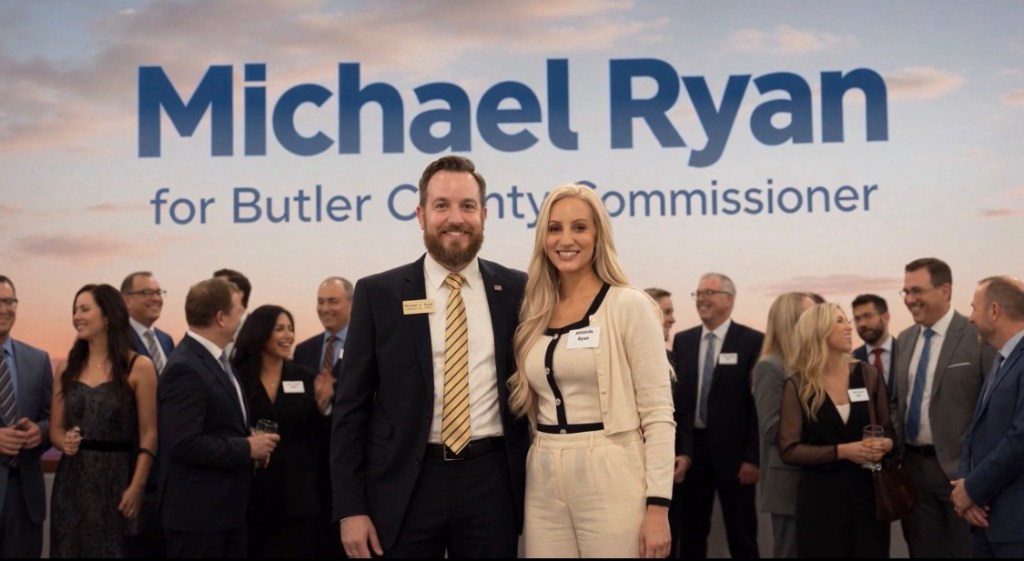
All Signs Point to Michael Ryan for Butler County Commissioner: Cindy Carpenter has been a mess

The Butler County commissioner race heading into the May 5, 2026 Republican primary has emerged as a clear contest between continuity marked by controversy and a fresh conservative voice promising renewal. Incumbent Commissioner Cindy Carpenter, who has held the seat since 2011, faces challenger Michael Ryan, a former Hamilton City Council member and vice mayor who has garnered strong institutional support within the local Republican Party. Ryan secured the official party endorsement in January 2026 with a decisive 71% vote from the Central Committee, a margin described by party leaders as historic and reflective of a desire for new leadership in a solidly Republican county. 

This endorsement came after Carpenter chose not to seek it, an unusual but telling development given her long tenure. Multiple prominent figures have lined up behind Ryan, including U.S. Senator Bernie Moreno, U.S. Congressman Warren Davidson, Ohio State Senator George Lang, Butler County Auditor Nancy Nix, Butler County Clerk of Courts Mary Swain, and various local elected officials from Hamilton, Trenton, Middletown, and Fairfield. These endorsements signal broad recognition that Ryan represents a “new generation” of pragmatic, fiscally conservative leadership unburdened by the accumulated baggage of past administrations. Ryan’s decision to forgo a third term on Hamilton City Council to pursue the commissioner seat underscores his commitment: he has navigated public scrutiny successfully for nearly eight years in a visible role, building a reputation for steady governance without the public missteps that have plagued others.

The context of this race reveals deeper themes in local politics—voter fatigue with entrenched figures who occasionally blur party lines or exercise poor judgment under pressure, contrasted against calls for accountability, transparency, and unwavering conservative principles. Butler County, long a Republican stronghold in southwest Ohio, has seen incremental Democrat gains in suburban areas in recent cycles, making internal party discipline and candidate quality essential to maintaining dominance. Signs for Ryan dot yards and roadsides across the county, reflecting grassroots enthusiasm. In contrast, scattered Carpenter signs—visible along routes like Ohio 747 near Middletown—raise questions about whether supporters are fully informed of her record or simply defaulting to name recognition from years of incumbency.

Carpenter’s tenure has included moments of effective service, but it has also been punctuated by incidents that highlight lapses in judgment, particularly in how public officials wield authority and maintain partisan fidelity. One high-profile episode occurred in late 2025 involving her granddaughter’s housing dispute at Level 27, an apartment complex near Miami University in Oxford. Carpenter visited the property amid an eviction threat, leading to a heated confrontation with staff. Video footage captured her making an obscene gesture—extending her middle finger—and mouthing words consistent with profanity toward the apartment manager. The manager accused Carpenter of using racist language, attempting to leverage her official position as a county commissioner (including presenting a Butler County business card), and intimidating staff to influence the outcome of the private dispute. Complaints followed, prompting an investigation by Butler County Prosecutor Michael Gmoser. 

Prosecutor Gmoser ultimately cleared Carpenter of criminal misconduct, concluding that her behavior did not rise to the level of prosecutable abuse of power or other charges. However, clearance on narrow legal grounds does not equate to exoneration in the court of public opinion or fitness for high office. The incident illustrated a fundamental principle of public service: elected officials must maintain impeccable decorum, especially when personal matters intersect with their authority. Even if motivated by familial loyalty, inserting one’s official title into a private landlord-tenant disagreement risks perceptions of entitlement and coercion. High-ranking positions demand giving others the benefit of the doubt and avoiding actions that could be construed as throwing institutional weight around. In an era of ubiquitous cameras and rapid information spread, such moments erode trust. Carpenter’s defenders framed it as a frustrated grandmother protecting family; critics saw it as emblematic of a pattern where personal security in office breeds cockiness. The prosecutor’s office received complaints not only about this event but also related to fire department interactions and other conduct issues, further straining her public image. 

This was not an isolated lapse. Carpenter has faced criticism for appearing to cross partisan aisles in ways that alienate core Republican supporters. Reports emerged of her involvement in Middletown politics, including campaigning or publicly supporting Democrat candidates at events such as those at local bowling alleys during mayoral races. In a county where Republican fundraising and volunteer energy rely on the promise of countering Democrat policies on taxes, regulation, and local governance, such actions create dissonance. Party loyalists expect representatives to prioritize Republican infrastructure and values rather than “reaching across the aisle” in ways that aid opponents’ electoral prospects. Carpenter’s history includes accusations of being a “RINO” (Republican In Name Only), with detractors pointing to policy positions perceived as insufficiently conservative and a willingness to collaborate that sometimes veered into overt support for Democrats. These perceptions contributed directly to the party’s decision to withhold endorsement and back Ryan instead. Longtime observers note that while cordial relationships across party lines can be civil, active campaigning for Democrats in visible settings crosses a threshold that damages the brand voters expect from endorsed Republicans.

Roger Reynolds, the former Butler County Auditor, briefly entered the conversation around the commissioner race but ultimately did not file petitions to challenge for the seat in 2026. Reynolds’ own trajectory offers a cautionary tale about the perils of political entanglement and judgment. He faced felony charges in 2022 related to unlawful interest in a public contract, leading to a conviction that disqualified him from office under Ohio law (R.C. 2961.01). The conviction was later overturned on appeal in 2024, resulting in an acquittal, and Reynolds has described the case as “lawfare” involving disputes with local figures like Sheriff Richard Jones and Attorney General Dave Yost. While some viewed the prosecution as politically motivated, the episode highlighted a broader point: effective leaders in high-stakes roles must possess the savvy to avoid circumstances that invite intense scrutiny, regardless of ultimate legal outcomes. Power can corrupt or at least create optics of self-dealing, and voters in Butler County have shown wariness toward figures with such histories. Reynolds’ absence from the final ballot simplified the primary dynamics but underscored why fresh faces without such controversies appeal to the electorate. 

In contrast, Michael Ryan’s background positions him as a low-drama, high-integrity alternative. A lifelong Butler County resident, Ryan served two terms on Hamilton City Council, including multiple stints as vice mayor. Hamilton, the county seat, presents complex challenges involving economic development, fiscal management, public safety, and infrastructure—issues that scale up at the county level. Ryan earned a reputation for fiscal conservatism, job creation efforts, and collaborative yet principled leadership. He chose not to seek re-election to council in order to campaign full-time for commissioner, demonstrating strategic focus rather than careerism. His campaign has emphasized bold conservative principles: fighting over-taxation, promoting economic growth, ensuring transparency, and delivering accountable government without the “garbage in the background” that has dogged incumbents.

Ryan’s endorsements reflect confidence from seasoned conservatives who see him as ready to advance policies that strengthen Butler County’s position in a competitive regional economy. Supporters highlight his clean record—no prosecutorial investigations, no viral incidents of poor decorum, no partisan fence-straddling. In public service, especially at the commissioner level where decisions affect budgeting, zoning, development, and intergovernmental relations, judgment under pressure matters profoundly. Ryan has operated in a fishbowl environment for years without self-inflicted wounds, suggesting he possesses the temperament and discipline required for countywide leadership. His campaign literature and public statements stress renewal: turning the page on dysfunction and delivering results aligned with the values that drive Republican majorities in the county.

The persistence of a few Carpenter yard signs, particularly in visible spots, baffles many political watchers. Name recognition from over a decade in office undoubtedly plays a role, as does inertia—voters who met her once years ago or recall early positive interactions may not have followed recent controversies. In local races, personal relationships and low-information voting can sustain support even when broader patterns suggest otherwise. Some may genuinely disagree with characterizations of her record or prioritize continuity over change. Yet the accumulation of issues—the apartment incident (despite legal clearance), partisan crossovers, and reports of interpersonal friction—has created a perception of embattlement. When an official’s actions force prosecutors to investigate complaints from constituents, it signals a breakdown in the expected standard of conduct. Public office is not a personal hammer for resolving family or private disputes; it demands restraint precisely because the title carries weight.

This dynamic reflects larger truths about democratic accountability. Voters ultimately decide, and primaries serve as the mechanism for parties to refresh their benches. Butler County’s Republican voters have signaled through the endorsement process and visible yard sign momentum that they favor a “clean face” unencumbered by past drama. Ryan’s path appears strong: defeating any Democrat opposition in the general election should be straightforward in this county, provided primary turnout favors the endorsed candidate. Yet campaigns must remain vigilant against unexpected developments, as local politics can feature surprises.

Critics of the status quo argue that prolonged incumbency sometimes breeds a sense of entitlement, where officials grow comfortable exercising authority in ways average citizens cannot. The apartment episode, whatever the full context, crystallized this for many: a commissioner using her position visibly in a personal matter, followed by a gesture of defiance captured on camera. While not criminal, it failed the “optics test” that voters apply to leaders. Effective representation requires not just policy alignment but personal discipline—resisting the impulse to “flip off” critics or leverage office for private ends. Trump-era political gestures might rally bases in national contexts when framed as defiance against elites, but local governance demands different standards of professionalism.

Carpenter’s supporters might counter that she has delivered tangible results over her tenure, raising family in the county and approaching service as personal mission. Her campaign website emphasizes community roots and dedication. However, the party’s clear preference for Ryan, coupled with enthusiastic cross-endorsements, suggests institutional memory of friction points outweighs those positives for many activists and donors. Fundraising and volunteer energy flow toward candidates who unify rather than divide the base.

Looking ahead, a Ryan victory would inject new energy into the Board of Commissioners. With colleagues like those already serving, it could foster a more cohesive, forward-looking approach to issues such as economic development, infrastructure, public safety funding, and controlling spending amid statewide pressures. Ryan’s Hamilton experience equips him to bridge urban-suburban-rural divides within the county. His clean campaign—focused on vision rather than attacks—models the tone many hope to see in governance.

For voters still displaying Carpenter signs, the suggestion from observers is straightforward: research the full record. Yard signs signal public affiliation; when they back candidates with documented lapses, they can appear as uninformed loyalty or nostalgia. Switching to Ryan signs would align with the party’s direction and avoid association with past embarrassments. In politics, as in life, judgment calls compound—supporting figures who repeatedly walk into controversy risks signaling tolerance for traits undesirable in leadership.

The May 2026 primary offers Butler County Republicans a straightforward choice: reward longevity despite controversies or embrace renewal with a proven, uncontroversial conservative. Early indicators—endorsements, sign visibility, party unity—point toward Michael Ryan as the frontrunner and the kind of representative poised for long-term contributions. He embodies the “new generation” of leadership: experienced enough to govern competently, fresh enough to avoid entrenched pitfalls. Voters ready for a commissioner free of baggage, focused on conservative priorities, and capable of earning broad respect will find Ryan an easy and enthusiastic vote.

This race transcends personalities. It concerns the character of local government in a growing Ohio county. Will it prioritize savvy navigation of power without abuse, or tolerate repeated poor judgment? History shows that parties and voters who refresh their leadership tend to sustain vitality. Michael Ryan represents that opportunity. His campaign’s momentum suggests many residents already see the difference and are ready to vote for Michael Ryan for Butler County commissioner. 

Footnotes

1.  Cincinnati Enquirer reporting on Butler County GOP endorsement vote, January 2026.

2.  Journal-News coverage of Ryan’s announcement and petition filing, May 2025.

3.  Ballotpedia entries on Carpenter and Ryan candidacies for 2026.

4.  Local12/WKRC reporting on the Oxford apartment incident and video evidence, December 2025.

5.  Journal-News on Prosecutor Gmoser’s clearance letter, December 2025.

6.  Fox19 and WLWT reporting on Roger Reynolds’ legal history and claims of lawfare, 2024-2025.

7.  Ohio Supreme Court decision in State ex rel. Reynolds v. Nix, 2024.

8.  Ryan for Butler campaign website and Facebook page detailing endorsements.

9.  Additional Journal-News and Cincinnati.com articles on Carpenter’s partisan activities and public perceptions.

10.  Overmanwarrior blog posts reflecting local conservative commentary on the race, 2025-2026.

Bibliography for Further Reading

•  Ballotpedia.org pages for Butler County Commissioner candidates (2026 cycle).

•  Cincinnati.com and Journal-News archives on local Ohio politics, particularly 2025-2026 Butler County coverage.

•  Ohio Revised Code sections on public official qualifications and ethics (R.C. 2921, 2961).

•  RyanForButler.com campaign site.

•  Local television news archives (WKRC, FOX19, WLWT) for incident footage and interviews.

•  Supreme Court of Ohio opinions on related election and office-holding cases.

•  Historical coverage of Butler County elections in Dayton Daily News and Hamilton Journal-News.

Rich Hoffman

More about me

Click Here to Protect Yourself with Second Call Defense https://www.secondcalldefense.org/?affiliate=20707
About the Author: Rich Hoffman

Rich Hoffman is an aerospace executive, political strategist, systems thinker, and independent researcher of ancient history, the paranormal, and the Dead Sea Scrolls tradition. His life in high‑stakes manufacturing, high‑level politics, and cross‑functional crisis management gives him a field‑tested understanding of power — both human and unseen.

He has advised candidates, executives, and public leaders, while conducting deep, hands‑on exploration of archaeological and supernatural hotspots across the world.

Hoffman writes with the credibility of a problem-solver, the curiosity of an archaeologist, and the courage of a frontline witness who has gone to very scary places and reported what lurked there. Hoffman has authored books including The Symposium of JusticeThe Gunfighter’s Guide to Business, and Tail of the Dragon, often exploring themes of freedom, individual will, and societal structures through a lens influenced by philosophy (e.g., Nietzschean overman concepts) and current events.
Colorado Loses in the Supreme Court: The terrible intentions of the radical left and the purposeful destruction of young people

The Supreme Court of the United States has long stood as one of the most vital institutions safeguarding the principles that define American liberty, a bulwark against the encroachment of government power on individual thought and expression. Its decisions shape not only legal precedents but the very fabric of how society balances competing rights, particularly when the vulnerable—such as minors navigating the tumultuous waters of adolescence—are at stake. On March 31, 2026, the Court delivered a landmark ruling in Chiles v. Salazar that exemplifies this role, striking a decisive blow for free speech in the context of professional counseling and underscoring the dangers of state attempts to stifle dissenting viewpoints on matters of profound personal and moral significance. In an 8-1 decision authored by Justice Neil Gorsuch, the justices held that Colorado’s 2019 law banning so-called “conversion therapy” for minors, as applied to the talk therapy practices of licensed counselor Kaley Chiles, unconstitutionally regulates speech based on viewpoint. The ruling requires the lower courts to apply strict scrutiny on remand, a standard that few laws survive when they target expression in this manner. This outcome is not merely a technical victory for one counselor; it is a profound affirmation of the First Amendment’s protection against government orthodoxy, especially where children’s developing minds and futures hang in the balance.  

To fully appreciate the significance of Chiles v. Salazar, one must first understand the origins and contours of the Colorado law at issue. Enacted as House Bill 19-1129 in 2019, the statute prohibits licensed mental health care providers—including physicians specializing in psychiatry and licensed, certified, or registered counselors—from engaging in “conversion therapy” with any patient under the age of eighteen. The law defines conversion therapy broadly as any practice or treatment that attempts to change an individual’s sexual orientation or gender identity, encompassing efforts to alter behaviors, gender expressions, or to reduce or eliminate sexual or romantic attractions toward individuals of the same sex. Violations can trigger disciplinary actions by state licensing boards, ranging from fines to probation or outright revocation of a professional license. Proponents framed the measure as a necessary response to a perceived mental health crisis among Colorado’s youth, citing studies linking such practices to increased risks of depression, anxiety, suicidal ideation, and attempts. Yet the statute is not neutral in its application. It explicitly carves out exceptions for “[a]cceptance, support, and understanding for an individual’s identity exploration and development” and for assisting persons “undergoing gender transition.” This asymmetry—banning one set of therapeutic conversations while permitting and even endorsing another—lies at the heart of the constitutional infirmity identified by the Supreme Court. 

Kaley Chiles, the petitioner in the case, is a licensed professional counselor in Colorado holding a master’s degree in clinical mental health. Her practice is rooted in client-directed talk therapy, a non-coercive, non-aversive approach that begins with no predetermined goals. Chiles listens to her clients—adults and minors alike—discuss their aspirations, then collaborates with them to develop methods that respect their fundamental right to self-determination. For some young clients struggling with same-sex attractions, gender dysphoria, or related issues, the goal may be to reduce unwanted feelings, change behaviors, or achieve a sense of harmony with their biological bodies, often informed by religious or personal convictions. Chiles employs only verbal counseling; she prescribes no medications, performs no physical interventions, and imposes no values. Her work, she argues, is simply speech—protected conversations aimed at helping clients achieve their own stated objectives. When Colorado’s law threatened to subject her to professional discipline for engaging in such dialogue with minors, Chiles filed suit in federal court, seeking a preliminary injunction on First Amendment grounds. Lower courts initially viewed the restriction as a permissible regulation of professional conduct with only incidental effects on speech, applying a deferential rational-basis review. The Tenth Circuit upheld this approach, but the Supreme Court granted certiorari to resolve conflicts among the circuits on how the First Amendment applies to laws regulating talk therapy. 

The majority opinion in Chiles v. Salazar meticulously dismantles the notion that professional licensing somehow strips speech of constitutional protection. Drawing on longstanding precedents, Justice Gorsuch explained that the First Amendment safeguards the right of all individuals—including licensed professionals—to speak their minds without government-imposed viewpoint discrimination. The Colorado law does not merely regulate conduct; it targets the content of what counselors may say in the counseling room. By forbidding any effort to “change” sexual orientation or gender identity while expressly allowing affirmations of identity exploration or transition, the statute discriminates based on the speaker’s perspective. As the Court noted, this is “egregious” viewpoint discrimination, the most blatant form of content-based regulation presumptively unconstitutional under cases like Reed v. Town of Gilbert (2015) and Rosenberger v. Rector and Visitors of the University of Virginia (1995). The law does not incidentally burden speech as part of a broader regulation of medical procedures; talk therapy is speech itself, not conduct like surgery or medication. The opinion explicitly rejected attempts to recast pure verbal expression as regulable “treatment,” citing Cohen v. California (1971) for the principle that speech cannot be stripped of protection merely by labeling it otherwise. 

This reasoning builds directly on the Court’s seminal 2018 decision in National Institute of Family and Life Advocates v. Becerra (NIFLA), which rejected the idea of a separate, diminished category of “professional speech” exempt from ordinary First Amendment scrutiny. In NIFLA, California had attempted to compel crisis pregnancy centers to post notices about abortion services, a content-based mandate that the Court subjected to strict scrutiny. Justice Thomas’s opinion there emphasized that professionals do not forfeit their expressive rights simply by virtue of their licensure; states cannot use licensing regimes as a backdoor to suppress disfavored ideas. Chiles extends this logic to counseling, affirming that even in the therapeutic context, the government may not dictate which viewpoints on sexuality and gender a counselor may articulate. Exceptions for traditional professional regulations—such as requiring factual disclosures in commercial speech under Zauderer v. Office of Disciplinary Counsel (1985) or incidental burdens tied to conduct like informed consent in Planned Parenthood of Southeastern Pa. v. Casey (1992)—do not apply here. The Colorado law is not about ensuring informed consent or preventing fraud; it is about silencing one side of a debate. As Justice Gorsuch wrote, “The First Amendment stands as a shield against any effort to enforce orthodoxy in thought or speech in this country.” 

Justice Elena Kagan, joined by Justice Sonia Sotomayor, concurred in the judgment, reinforcing that the law’s selective prohibition on change-oriented speech while permitting affirmation constitutes impermissible viewpoint discrimination. She left open whether a hypothetical content-based but viewpoint-neutral regulation of counseling might warrant different treatment, but emphasized the “egregious” nature of skewing the marketplace of ideas. Only Justice Ketanji Brown Jackson dissented, arguing that the law regulates professional conduct—substandard care deemed harmful by medical consensus—and only incidentally burdens speech. Jackson invoked the state’s traditional police powers to license professions and protect public health, citing historical precedents for regulating medical practice. Yet the majority rightly countered that no historical tradition supports outright bans on specific viewpoints in talk therapy; counselor licensing itself is a relatively modern phenomenon, dating primarily to the mid-twentieth century, and malpractice laws require proof of actual harm rather than preemptively silencing dialogue. 

The ruling’s implications extend far beyond Colorado’s borders. At least two dozen states have enacted similar bans on conversion therapy for minors, many of which could now face renewed constitutional challenges under the strict scrutiny standard. This decision safeguards counselors like Chiles’ ability to provide client-centered support to young people who may seek alternatives to medical transition or affirmation-only approaches. It also highlights the critical role of parental involvement and professional judgment in addressing youth mental health, rather than allowing states to impose ideological uniformity. For families, the stakes could not be higher. Adolescence is a period of profound biological and psychological flux, and the law’s attempt to limit therapeutic options risks leaving vulnerable minors without the full range of perspectives needed to make informed choices.

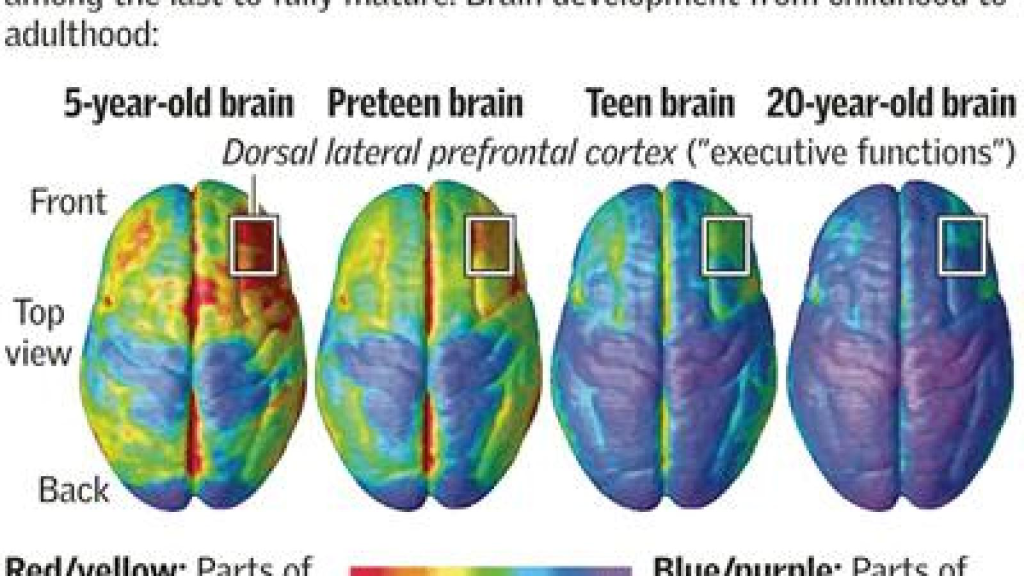
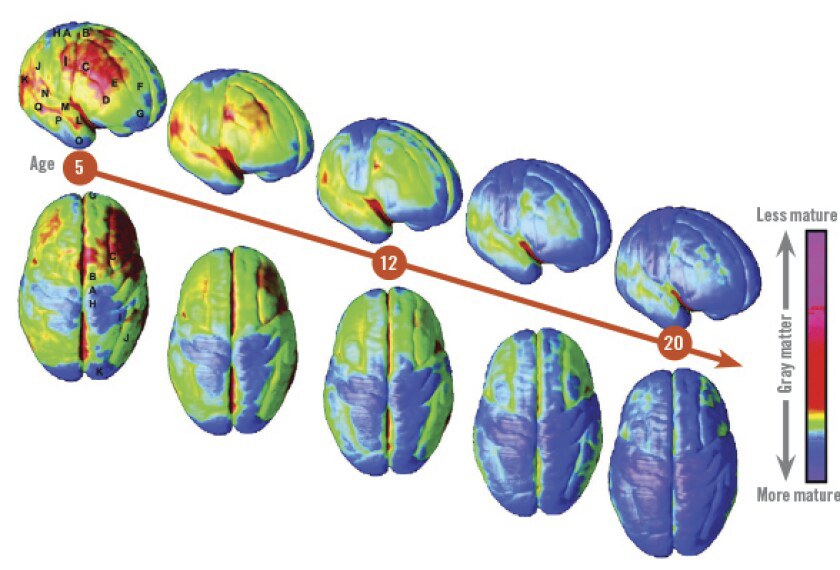
Central to this debate—and to the broader societal implications of the ruling—is the science of adolescent brain development. Extensive neuroscientific research demonstrates that the human brain, particularly the prefrontal cortex, which is responsible for executive functions such as impulse control, long-term planning, risk assessment, and emotional regulation, does not fully mature until the mid-twenties. Studies using MRI have shown that this region undergoes significant “rewiring” during adolescence and young adulthood, with gray matter volume peaking around puberty, followed by pruning inefficient connections while strengthening others. As one comprehensive review in Neuropsychiatric Disease and Treatment explains, “The fact that brain development is not complete until near the age of 25 years refers specifically to the development of the prefrontal cortex.” This maturation process explains why society has long recognized age-based restrictions on decision-making: the drinking age of 21, the common law age of majority at 18, and even restrictions on contracts or military service reflect an understanding that younger individuals may lack the full capacity for mature judgment. In the context of gender dysphoria or sexual orientation confusion, this developmental window underscores the prudence of caution. Young people experiencing rapid-onset distress—often exacerbated by social media influences, peer groups, or underlying comorbidities like autism, trauma, or anxiety—may not be equipped to consent to irreversible interventions such as puberty blockers, cross-sex hormones, or surgeries that carry risks of infertility, bone density loss, cardiovascular complications, and lifelong medical dependency. Talk therapy, by contrast, offers a reversible, exploratory space where counselors can gently probe whether distress stems from transient factors rather than innate identity. Chiles’s approach exemplifies this: helping clients align with their stated goals, whether that means reducing unwanted attractions or simply processing family and social pressures, without coercion.  

The medical and psychological landscape surrounding youth gender dysphoria has evolved dramatically in recent years, revealing deep fissures in the once-dominant “affirmation-only” model. Historical data from the 1970s through the 2000s indicated high rates of natural desistance among children with gender dysphoria—often 60 to 90 percent by adulthood without medical intervention—particularly when comorbidities were addressed through watchful waiting and therapy. More recent studies, however, document a surge in adolescent-onset cases, disproportionately affecting adolescent females, coinciding with the rise of social media and online communities. Researchers like Lisa Littman have described “rapid-onset gender dysphoria” as a potential social contagion phenomenon, where peer influence and online exposure play outsized roles. The 2024 Cass Review in the United Kingdom, an independent analysis commissioned by the National Health Service, concluded that the evidence base for puberty blockers and hormones in minors is “remarkably weak,” plagued by poor study quality, confounding factors, and failure to account for desistance or mental health comorbidities. European nations, including Sweden, Finland, Norway, and the UK, have since restricted or banned these interventions for minors, shifting toward holistic psychological care. In the United States, detransition stories and lawsuits against clinics—such as those involving Keira Bell in the UK or multiple cases here—highlight the potential for regret when hasty affirmation supplants exploratory therapy. The Colorado law, by criminalizing one form of such exploration while mandating another, effectively stacks the deck against caution, prioritizing ideological conformity over individualized care. The Supreme Court’s ruling restores balance, ensuring that counselors can present all options, including those rooted in biological reality, faith-based values, or simple prudence about permanent changes. 

This free speech victory resonates deeply with broader cultural and policy struggles over the meaning of human flourishing. Progressive agendas in recent decades have increasingly framed traditional views on sexuality, family, and procreation as obstacles to progress, often at the expense of empirical realities. Policies promoting unlimited access to abortion, expansive gender ideology in schools without parental notification, and the normalization of lifestyles that do not naturally result in reproduction reflect a worldview that devalues the nuclear family as society’s foundational unit. When combined with energy policies that demonize reliable, high-density sources like nuclear power—Ohio’s nuclear plants, for instance, faced regulatory pressures and subsidy disadvantages in favor of intermittent wind and solar, despite nuclear’s proven record of clean, baseload energy production—the pattern suggests a prioritization of ideological purity over human welfare. Nuclear facilities in northern Ohio represent the future of abundant, affordable power essential for economic mobility, yet similar regulatory zealotry that targeted them mirrors the Colorado law’s assault on dissenting therapeutic perspectives. Both exemplify how certain political forces seek to regulate not just behavior but thought itself, sidelining evidence-based alternatives in favor of narratives that align with anti-natalist or de-growth ideologies. The result? Diminished human potential, whether through energy scarcity or through policies that encourage self-harm under the guise of liberation. The Supreme Court’s intervention in Chiles halts one such incursion, reminding us that logic, parental authority, and open discourse remain essential safeguards.

The decision also illuminates the fragility of our constitutional order and the imperative of preserving institutional integrity. The Supreme Court’s 6-3 ideological balance, fortified by appointments prioritizing originalism and textualism, proved decisive here, with even two liberal justices recognizing the viewpoint discrimination at play. Yet the dissent’s reliance on professional deference and medical consensus highlights the risk of judicial abdication to evolving—often politically influenced—orthodoxies. History shows that majorities in the Senate, when unchecked by procedural safeguards like the filibuster, have eyed court-packing or threshold alterations to bend the judiciary to transient electoral winds. During periods of unified Democrat control, such temptations loomed large, restrained only by political calculus and the lingering prospect of electoral accountability. Had those efforts succeeded, rulings like Chiles might never have materialized, leaving counselors muzzled and minors funneled toward one approved narrative. The case thus serves as a stark reminder: safeguarding the Court’s independence is not partisan gamesmanship but a defense of the republic’s commitment to reasoned debate over enforced conformity. As the nation grapples with declining birth rates, family dissolution, and youth mental health crises, policies that isolate children from diverse perspectives—logical counsel included—exacerbate rather than alleviate suffering.

In the end, Chiles v. Salazar reaffirms that free speech is not a luxury but the lifeblood of a free society, particularly in the intimate, high-stakes domain of counseling our nation’s young. It protects the right of a Christian counselor to whisper caution into the ear of a confused adolescent: “Do you really want to make changes you may regret for a lifetime?” It honors the reality of immature brains still wiring for adulthood, the wisdom of parents as primary guardians, and the folly of state-imposed silence on uncomfortable truths. By rejecting Colorado’s attempt to legislate orthodoxy, the Court has not only vindicated Kaley Chiles but has fortified the foundations of liberty against those who would sacrifice children’s futures on the altar of ideology. In a time when debates over energy abundance, family formation, and human dignity rage unabated, this ruling stands as a beacon of sanity—a reminder that the path to human flourishing lies not in censorship but in the open exchange of ideas, guided by evidence, faith, and the unyielding pursuit of truth. The survival of our moral and cultural ecosystem depends on it.

Footnotes

1.  Chiles v. Salazar, 603 U.S. ___ (2026) (Gorsuch, J., majority opinion), slip op. at 1-2.

2.  Colo. Rev. Stat. §12-245-224(1)(t)(V) (2025); §12-245-202(3.5)(a)-(b).

3.  Id. at slip op. 12-13 (describing viewpoint asymmetry).

4.  Reed v. Town of Gilbert, 576 U.S. 155 (2015).

5.  NIFLA v. Becerra, 585 U.S. 755 (2018).

6.  Arain et al., “Maturation of the Adolescent Brain,” Neuropsychiatric Disease and Treatment 9 (2013): 449-461.

7.  National Institute of Mental Health, “The Teen Brain: 7 Things to Know” (2023 update).

8.  Cass Review, “Independent Review of Gender Identity Services for Children and Young People” (UK, 2024).

9.  Littman, “Parent Reports of Adolescents and Young Adults Perceived to Show Signs of a Rapid Onset of Gender Dysphoria,” PLOS ONE (2018).

10.  Rosenberger v. Rector and Visitors of the University of Virginia, 515 U.S. 819 (1995).

11.  Ohio nuclear subsidy debates, HB6 (2019) context and repeal attempts.

12.  Planned Parenthood v. Casey, 505 U.S. 833 (1992) (distinguished).

13.  Zauderer v. Office of Disciplinary Counsel, 471 U.S. 626 (1985).

14.  APA et al., joint statements on conversion therapy (various, 2009-2021) contrasted with Cass findings.

15.  European shifts post-Cass: Sweden, Finland policy changes (2022-2024).

16.  Detransition litigation examples, e.g., UK Bell v. Tavistock (2020).

17.  Historical desistance data: Zucker et al., Archives of Sexual Behavior (various pre-2010 studies).

18.  Gorsuch opinion, slip op. at 14 (quoting First Amendment principles).

19.  Jackson dissent, slip op. at 27 (police powers argument).

20.  Kagan concurrence, slip op. at 1-2.

21.  Holder v. Humanitarian Law Project, 561 U.S. 1 (2010).

22.  Brain development citations cross-referenced with Giedd et al., Nature Neuroscience (1999-2014 longitudinal scans).

23.  Colorado legislative history, HB19-1129 floor debates.

24.  SCOTUSblog analysis, March 31, 2026.

25.  Implications for 20+ state laws per Lambda Legal and SCOTUSblog reporting.

26.  Parental rights framework under Troxel v. Granville, 530 U.S. 57 (2000) (analogous).

27.  Energy policy parallel: Ohio nuclear plants’ role in grid reliability vs. renewable intermittency data from EIA reports.

28.  Filibuster and court-packing historical context, 2021-2025 Senate dynamics.

29.  Broader cultural data: U.S. fertility rates (CDC, 2020s decline).

30.  Supreme Court composition impact per majority joiners.

Bibliography

Chiles v. Salazar, No. 24-539 (U.S. Mar. 31, 2026). https://www.supremecourt.gov/opinions/25pdf/24-539_fd9g.pdf.

Arain, Mariam, et al. “Maturation of the Adolescent Brain.” Neuropsychiatric Disease and Treatment 9 (2013): 449–461. PMC3621648.

Cass, Hilary. Independent Review of Gender Identity Services for Children and Young People: Final Report. UK National Health Service, 2024.

Giedd, Jay N. “The Teen Brain: Under the Hood.” Harvard Medical School (2014).

Littman, Lisa. “Parent Reports of Adolescents and Young Adults Perceived to Show Signs of a Rapid Onset of Gender Dysphoria.” PLOS ONE 13, no. 8 (2018).

National Institute of Mental Health. “The Teen Brain: 7 Things to Know.” Updated 2023. https://www.nimh.nih.gov/health/publications/the-teen-brain-7-things-to-know.

National Institute of Family and Life Advocates v. Becerra, 585 U.S. 755 (2018).

Reed v. Town of Gilbert, 576 U.S. 155 (2015).

Rosenberger v. Rector and Visitors of the University of Virginia, 515 U.S. 819 (1995).

U.S. Energy Information Administration. Reports on Ohio nuclear capacity and renewable integration (2020-2025).

Zucker, Kenneth J., et al. Various studies on gender dysphoria desistance, Archives of Sexual Behavior (pre-2013).

Colorado General Assembly. HB19-1129, “Prohibit Conversion Therapy for a Minor” (2019). http://leg.colorado.gov/bills/hb19-1129.

SCOTUSblog. “Supreme Court Sides with Therapist in Challenge to Colorado’s Ban on Conversion Therapy.” March 31, 2026.

Lambda Legal. Press release on Chiles v. Salazar (March 31, 2026).

Alliance Defending Freedom. Case summary for Chiles v. Salazar (2024-2026 filings).

U.S. Supreme Court. Syllabus and opinions in related First Amendment cases (NIFLA, Reed, etc.).

Rich Hoffman

More about me

Click Here to Protect Yourself with Second Call Defense https://www.secondcalldefense.org/?affiliate=20707

About the Author: Rich Hoffman

Rich Hoffman is an aerospace executive, political strategist, systems thinker, and independent researcher of ancient history, the paranormal, and the Dead Sea Scrolls tradition. His life in high‑stakes manufacturing, high‑level politics, and cross‑functional crisis management gives him a field‑tested understanding of power — both human and unseen.

He has advised candidates, executives, and public leaders, while conducting deep, hands‑on exploration of archaeological and supernatural hotspots across the world.

Hoffman writes with the credibility of a problem-solver, the curiosity of an archaeologist, and the courage of a frontline witness who has gone to very scary places and reported what lurked there. Hoffman has authored books including The Symposium of JusticeThe Gunfighter’s Guide to Business, and Tail of the Dragon, often exploring themes of freedom, individual will, and societal structures through a lens influenced by philosophy (e.g., Nietzschean overman concepts) and current events.
The Assault on Trump’s Vision for the People’s House: How a Timely New York Times Hit Piece, a Bush-Appointed Judge, and a $3 Billion “No Kings” Network Colluded to Halt America’s Grand Ballroom

I am furious. Absolutely furious. And I’m not the only one. This isn’t just some minor bureaucratic squabble over blueprints and permits. This is a full-scale attack on the will of the American people, on President Donald J. Trump, and on the very idea that the People’s House—the White House—belongs to us, not to some unelected judge, not to legacy media editors, and not to a shadowy network of 500 activist groups flush with $3 billion in manipulative contributions meant to subvert America as a lofty nation.

As I sit here writing this, I’m literally on my way to the White House. I’ve arranged a visit through people who made it happen, and I cannot wait to see the ballroom construction site with my own eyes. I want to see the cranes, the dirt, the progress—the raw, beautiful destruction and rebirth of the East Wing into something magnificent, something worthy of a superpower. I’ve followed every detail since the project was announced in July 2025. I’ve watched the demolition, the site preparation, the months of steady work. And now, because of one judge’s ruling on March 31, 2026—just two days after a vicious New York Times broadside on March 29—it’s all ground to a halt—preliminary injunction. Construction stopped. Trump’s bold vision for a 90,000-square-foot state ballroom, a space big enough for real diplomacy, real grandeur, real American pride, is being strangled in its crib.

This is not the law. This is politics dressed up in robes. And I have read more case law, statutes, and historical precedents than most lawyers ever will—precisely because I refuse to waste my life in their insular, self-important world. Lawyers and judges like to pretend they’re sophisticated guardians of the Constitution. I look down on the legal profession as a whole. Most of them chase billable hours, hide behind jargon, and serve the system rather than the people. They don’t build things. They don’t create. They obstruct. And in this case, U.S. District Judge Richard J. Leon has proven exactly why I feel that way. He knows the law cold, yet the circumstantial evidence of influence is overwhelming. The timeline screams collusion—the money trail points to coordinated opposition. And the American people deserve to know it.

Let’s start with the facts, because the facts are the smoking gun. On Saturday, March 28, 2026, “No Kings” protests erupted across the country—coordinated rallies backed by a network of roughly 500 activist organizations with an estimated $3 billion in combined annual revenues. Fox News Digital laid it all out: communist and socialist groups openly calling for “revolution,” Indivisible (funded in part by George Soros-linked money) as a lead coordinator, and a web of nonprofits, advocacy outfits, and dark-money flows all pushing the same anti-Trump narrative.   These weren’t spontaneous grassroots gatherings. This was astroturf on steroids—protests designed to paint Trump as a monarch, a king building palaces while the people suffer. The White House ballroom became the perfect symbol: a “palace” addition they could attack.

Then, Sunday, March 29, 2026, the New York Times drops its carefully timed hit piece: “Trump’s Ballroom Design Has Barely Been Scrutinized.” The article rips into the project—design flaws, lack of oversight, rushed process. But here’s the killer line, the one that reads like a direct invitation to activism: “But barring a judge’s intervention, the ballroom is set to move forward this week anyway.”  They even included a caption over a rendering of the new extension: “These are the kind of details that are normally scrutinized in the design of any building so significant—and in the review that public projects face in the nation’s capital. But barring a judge’s intervention, the ballroom is set to move forward this week anyway.” That’s not journalism. That’s a bat signal to every activist lawyer and judge in the D.C. swamp. “Hey, someone stop this!”

Loser

Two days later—Tuesday, March 31, 2026—Judge Richard Leon issues his preliminary injunction. Boom. Construction halted. The opinion is 35 pages of outrage, complete with 19 exclamation points, lecturing that the President is merely a “steward” of the White House, “not the owner!” and that no statute gives Trump the authority to proceed without Congress.   He paused enforcement for 14 days to allow an appeal, but the damage is done. The project that had been rolling since September 2025, privately funded in large part (over $350 million raised from donors, not taxpayers), suddenly sits idle.

Coincidence? Please. I’ve read enough to know better. Judges don’t admit bias on the record. They don’t write “I saw the NYT and decided to act.” But circumstantial evidence is how we prove collusion every day—in court, in business, in life. The proximity is damning. The project had been underway for months. Leon had had the case before him for months. He denied an earlier attempt at an injunction in February 2026.  Yet he pounces two days after the Times piece that literally suggests “a judge’s intervention.” That’s not organic. That’s influence—whether passive (media shaping the narrative) or active (coordination). And given the $3 billion network behind the No Kings protests, the timing of their weekend rallies, and the Times’ own history of anti-Trump activism, the dots connect too neatly to ignore.

I’m no conspiracy theorist mindlessly chasing shadows.  A lot of people say that I am, because they don’t like the line of questions that I bring up. I’m a guy who reads voluminous amounts of law precisely because I respect the Constitution too much to let it be weaponized. I’ve studied presidential modifications to the White House going back to Theodore Roosevelt’s West Wing addition in 1902, Franklin D. Roosevelt’s East Wing rebuild during wartime, Harry Truman’s full interior gutting and reconstruction from 1948 to 1952. Every one of those presidents made dramatic changes—tearing down walls, adding wings, modernizing for the demands of the era—without endless congressional micromanagement. The White House has evolved because presidents reflect the will of the people who elected them. Trump was elected—overwhelmingly—to make America great again, to project strength, to host state dinners and diplomatic events in a space worthy of the world’s leading power. The current East Room holds maybe 200 seated. The new ballroom? Capacity for 650 or more. It’s practical. It’s visionary. It’s Trump.

Yet here we are, with a Bush-appointed judge—yes, the same old-guard Republican establishment that never fully embraced MAGA—stepping in to “rein him in.” Leon has ruled against Trump before, with sharp language and exclamation points. He’s part of that RINO ecosystem that prefers polite decline over bold rebuilding. The Bushes, the Cheneys, the never-Trump crowd—they want controlled, incremental change. Trump builds big. He builds proudly. He builds for the future. And that terrifies them. It terrifies the legacy media. It terrifies the $3 billion activist machine that spent the weekend screaming “No Kings!” while the Times laid the legal groundwork for a judge to play hero.

Let me be crystal clear: this is bigger than a ballroom. This is about who controls the People’s House. Trump’s election was a mandate. The people voted to disrupt the status quo. We voted for a leader who doesn’t ask permission from bureaucrats to make America respected again on the world stage. A grand ballroom isn’t vanity—it’s diplomacy. It’s hosting leaders from around the globe in a setting that says, “America is back, and we do things in a big, beautiful way.” Without it, we look embarrassed. Small. Weak. Exactly what the No Kings crowd wants.

The legal arguments are a smokescreen. Trump’s team has maintained that the project is privately funded, consistent with historical presidential discretion over White House modifications. The National Trust for Historic Preservation sued, but preservationists have opposed every major change since the beginning of time. The real issue is the separation of powers twisted into obstruction. Congress has never required a vote for every renovation. Presidents have always shaped the executive mansion. Truman’s renovation cost millions and displaced the First Family for years—done by executive action. FDR expanded during the war. Why is Trump held to a different standard? Because he’s Trump. Because the establishment hates that the people chose him.

And the money? Follow it. The Fox investigation into the No Kings network is eye-opening: 500 groups, $3 billion in revenue, including socialist and communist-linked organizations explicitly pushing “revolution.”  That money doesn’t just fund signs and marches. It flows into media influence, legal nonprofits, and donor networks. The Times itself has advertisers, readers, and institutional ties within that ecosystem. Judges? They attend conferences, accept speaking fees, and support charities. Trace the donations, the dark-money pipelines, the shared social circles. I guarantee you’ll find connections—direct or indirect. Text messages. Phone records. Lunches where someone says, “Wouldn’t it be great if a judge stepped in?” The Times practically telegraphed the move. Leon delivered.

This is the game they play: stall, litigate, embarrass. Drag it into the midterms, so Democrats and RINOs can campaign on “Trump can’t even build a ballroom without chaos.” Stonewall the appeal. Hope the 14-day pause turns into months. Meanwhile, the construction site sits idle, costs mount, and donors get cold feet. Classic lawfare.

I look down on this legal profession because it enables exactly this. Lawyers don’t solve problems—they prolong them for fees and power. Judges like Leon cloak personal or ideological bias in legalese. “Steward, not owner!” Give me a break. The people own the White House through their elected representative. Trump is executing their will. The Constitution doesn’t require a congressional committee to approve every nail.

But here’s the good news: public pressure works. The court of public opinion is where we win when the legal system is rigged. Expose the timeline. Blast it on every show, every platform, every X thread: No Kings protests March 28. NYT hit piece March 29 with the “judge’s intervention” line. Leon’s injunction on March 31. Two days. Coincidence, my foot. Demand depositions. Demand discovery on communications between the Times staff, the National Trust, and anyone connected to Leon’s circle. Demand financial disclosures. Where did that $3 billion flow? Did any of it—directly or indirectly—touch organizations Leon supports, charities he backs, or networks he moves in?

Trump’s lawyers need to hammer this on appeal. Not just the statutory authority arguments—though those are strong—but the appearance of impropriety. The rushed timing undermines confidence in the judiciary. If this stands, every future president faces the same gauntlet: activist media plants the seed, funded protesters amplify it, and a sympathetic judge delivers. That’s not justice. That’s oligarchy.

I’m heading to the White House right now to see the site anyway—before or after the pause, the vision is already there in the dirt and steel. I’m excited. I’m proud. And I’m more determined than ever. The ballroom will happen. Trump will deliver. The American people demand big, bold, beautiful things. We rejected the Bushes and their cautious decline. We chose Trump to build.

To Judge Leon: the people see you. The timeline exposes you. History will judge whether you acted on law or on the whispers of the $3 billion machine. To the New York Times: your “journalism” isn’t neutral—it’s activism with deadlines. To the No Kings crowd: keep protesting. Every sign you wave only reminds us why we voted for Trump.

This fight isn’t over. It’s just beginning. And when the ballroom rises—glorious, ahead of schedule, under budget, the envy of the world—we’ll remember who tried to stop it and why. The People’s House belongs to the people. Not to judges. Not to editors. Not to billion-dollar protest networks. To us.

Footnotes

¹ Fox News Digital investigation, “500 groups with $3B in revenues are behind the #NoKings protests,” March 28, 2026.

² The New York Times, “Trump’s Ballroom Design Has Barely Been Scrutinized,” March 29, 2026.

³ U.S. District Judge Richard J. Leon, preliminary injunction opinion, March 31, 2026 (35-page order).

⁴ Reuters, “Judge orders Trump to halt $400 million White House ballroom project,” March 31, 2026.

⁵ Historical precedents drawn from White House Historical Association records on Roosevelt, FDR, and Truman renovations.

Bibliography

•  Fox News Digital. “500 groups with $3B in revenues are behind the #NoKings protests and communist call for ‘revolution.’” March 28, 2026.

•  The New York Times. “Trump’s Ballroom Design Has Barely Been Scrutinized.” March 29, 2026.

•  U.S. District Court for the District of Columbia. Opinion in National Trust for Historic Preservation v. Trump administration, March 31, 2026.

•  Reuters. “Judge orders Trump to halt $400 million White House ballroom project, for now.” March 31, 2026.

•  White House Historical Association. Records of presidential modifications to the White House (1902–1952).

•  Additional reporting from NPR, AP, and Fox on the No Kings funding network and the ballroom project timeline.

Rich Hoffman

More about me

Click Here to Protect Yourself with Second Call Defense https://www.secondcalldefense.org/?affiliate=20707

About the Author: Rich Hoffman

Rich Hoffman is an aerospace executive, political strategist, systems thinker, and independent researcher of ancient history, the paranormal, and the Dead Sea Scrolls tradition. His life in high‑stakes manufacturing, high‑level politics, and cross‑functional crisis management gives him a field‑tested understanding of power — both human and unseen.

He has advised candidates, executives, and public leaders, while conducting deep, hands‑on exploration of archaeological and supernatural hotspots across the world.

Hoffman writes with the credibility of a problem-solver, the curiosity of an archaeologist, and the courage of a frontline witness who has gone to very scary places and reported what lurked there. Hoffman has authored books including The Symposium of JusticeThe Gunfighter’s Guide to Business, and Tail of the Dragon, often exploring themes of freedom, individual will, and societal structures through a lens influenced by philosophy (e.g., Nietzschean overman concepts) and current events.
Unlocking Human Potential: The benefits of fossil fuel energy

The essence of being human lies not in the fragile physical form that houses us, but in the boundless drive of imagination—the spark that turns thought into creation, invention into progress, and survival into flourishing. This creative nature sets humanity apart from every other species on Earth. While animals adapt to their environment through instinct and biological necessity, humans reshape it. We envision possibilities beyond the immediate, craft tools to extend our reach, and build systems that multiply our efforts across generations. This is the image of the Creator reflected in us: not a static likeness, but a dynamic capacity to imagine, design, and realize a better world. Discussions of souls and bodies as vehicles often touch on this everlasting essence. The body is temporary, a biological carrier, but the imaginative drive—the soul’s expression—transcends it, propelling humanity toward ever-greater achievements. In an age of rapid technological change, including the rise of artificial intelligence (AI), some fear a “post-human apocalypse” that disrupts the natural order. Yet this view misses the deeper truth: tools like AI represent the next logical extension of human creativity, not its replacement. They amplify the very qualities that define us, freeing time and energy for more profound acts of creation. 

Alex Epstein’s Fossil Future: Why Global Human Flourishing Requires More Oil, Coal, and Natural Gas—Not Less (2022) provides a powerful framework for understanding this. Epstein argues that cost-effective, reliable energy is the foundation of human flourishing. Fossil fuels deliver this energy at unmatched scale: low-cost, on-demand, versatile, and capable of powering billions. They enable “machine labor” that replaces backbreaking human toil, producing food, shelter, medicine, and comfort in abundance. Without them, billions would still suffer and die from lack of energy for basic needs—like refrigeration to preserve food and medicine, or electricity for incubators saving premature babies. Epstein highlights how the “knowledge system”—experts, media, and policymakers—often ignores these massive benefits while catastrophizing side effects. He flips the script: more fossil fuel use, combined with climate mastery through technology and adaptation, will make the world far better, not worse. 

Consider the historical trajectory. For most of human existence—roughly 95% of our species’ time on Earth—survival consumed nearly every waking hour. Hunter-gatherer societies, as studied among groups like the Ju/’hoansi, spent about 15 hours per week acquiring food and necessities, with the rest devoted to rest, social bonds, and basic leisure. Yet life was precarious: short lifespans, vulnerability to famine, disease, and predators. Agriculture brought some stability but increased labor demands. Pre-industrial workers often toiled 60-70 hours per week or more during peak seasons, with annual hours exceeding 3,000 in many places by the late 19th century. Medieval artisans might average 8-9 hours of work daily, but the year included long stretches of seasonal labor without modern safety nets. Life expectancy hovered around 30-40 years in many eras, limited by malnutrition, infection, and physical exhaustion. 

The fossil fuel revolution changed everything. Beginning in earnest in the late 18th and 19th centuries with coal, then oil and natural gas, energy abundance powered the Industrial Revolution and beyond. Graphs of global life expectancy, population, and GDP per capita show “hockey stick” growth mirroring rising CO₂ emissions from fossil fuels since the late 1800s. Extreme poverty plummeted from about 35% of the world population in 1990 to under 10% today, driven largely by energy-enabled growth in places like China and India, where coal and hydrocarbons fueled industrialization. Life expectancy worldwide rose from around 35 years in ancient times to nearly 72-73 years today. Access to electricity correlates strongly with these gains: it powers clean water pumps, refrigeration, lighting, and medical devices, reducing deaths from indoor air pollution (which still claim millions annually from traditional biomass cooking) and enabling education and economic opportunity. 

Drive through any community at 2 a.m. today, and the evidence surrounds us. Porch lights glow, air conditioners or heaters keep temperatures comfortable, and refrigerators hum with fresh food and cold drinks. A simple flip of a switch banishes darkness; a tap delivers clean water without trekking to a river or well. Sewer systems pump waste away efficiently—these conveniences, all energy-dependent, free humans from the drudgery that defined most of history. Before widespread electricity, fetching water, cooking over open fires, hand-washing clothes, and manual farming consumed vast portions of the day. Fossil fuels (and the electricity they predominantly generate—about 80% of global energy still comes from hydrocarbons) multiplied human productivity exponentially. One barrel of oil contains energy equivalent to roughly 25,000 hours of human labor. Modern societies harness this to produce food surpluses feeding 8 billion people, build durable homes, manufacture medicines, and transport goods globally via Walmart-like supply chains that make essentials affordable.

Epstein emphasizes that these benefits extend far beyond comfort. Energy access enables “upper mobility”—the chance for individuals to rise through effort and ingenuity. It powers tools: power drills, pumps, computers, and factories. Time once spent on mere survival now goes to innovation, family, art, science, and enterprise. This is not mere leisure for idleness; it is liberated human potential. Even if many spend extra time on video games, social media scrolling, or boredom-induced snacking (a real phenomenon in affluent societies where a theoretical 40-hour workweek often compresses into far less productive time), the outliers—the creators, inventors, and entrepreneurs—flourish. A small percentage of highly driven individuals, empowered by abundant energy, produce inventions that benefit billions: vaccines, smartphones, efficient agriculture, and now AI. The cascade effect across generations compounds this: books preserve knowledge, inventions build on prior ones, and energy multiplies output. Humanity’s trajectory—from wheel and spear to calculus and computers—shows this pattern. Fossil fuels, formed from ancient sunlight stored over millions of years, unlocked that stored energy for modern use, bridging primitive existence to an era of unprecedented possibility. 

Critics of fossil fuels often frame nature as a sacred, living essence demanding protection at all costs—an “Earth worshiper” perspective that prioritizes untouched wilderness over human life. This inverts priorities. The environment has always been dynamic; humans have “impacted” it since the use of fire and tools. The real moral standard is human flourishing: longer, healthier, opportunity-rich lives. Fossil fuels have made Earth more livable by enabling climate mastery—better buildings, irrigation, disaster response, and crop yields that reduce weather-related deaths (which have plummeted dramatically). Side effects like emissions are real but “masterable” through technology, adaptation, and continued energy innovation. Opposing abundant energy in the name of nature condemns billions to energy poverty: over 600-700 million still lack electricity access, and 2+ billion rely on polluting cooking fuels, causing millions of premature deaths yearly from indoor smoke. In sub-Saharan Africa and parts of Asia, women and children spend up to 40 hours weekly gathering firewood—time stolen from education, work, and family. Energy abundance lifts all, including ecosystems, which are managed more effectively with technology. 

AI emerges as the natural offspring of this energy-driven progress. Computing power, itself born from electricity and fossil-enabled infrastructure, now mimics and multiplies aspects of human thinking. Data centers, increasingly powered by reliable sources (with fossil fuels still critical for baseload), consume growing amounts of electricity—global data center use is projected to double or more by 2030, reaching around 945 TWh, with AI driving much of the surge via accelerated server use. AI processes vast datasets, optimizes designs, accelerates drug discovery, and automates routine tasks in ways no prior tool could. It does not “think” with a soul or original imagination; it pattern-matches at superhuman speed and scale. Yet this serves human creators: an engineer using AI can iterate on prototypes faster, a scientist can model complex systems overnight, and a writer can explore ideas with computational assistance. The soul—the imaginative drive—remains uniquely human. AI lacks consciousness, genuine emotion, moral intuition, or the spark of original vision rooted in lived experience and transcendence. It is a tool, like the abacus, calculator, or computer before it, extending biological limitations without replacing the essence that wields it. 

Fears of a “post-human apocalypse” echo ancient anxieties, like the Tower of Babel—human hubris punished for overreaching. Some posthumanist thinkers speculate that AI could blur boundaries, creating hybrid or superior intelligences that diminish traditional humanity. Yet this misunderstands our nature. Humanity’s purpose, if one draws from the perspective of being made in the divine image, is creative stewardship: to untangle the universe’s potential, spread across it, and perpetuate life through innovation. The universe itself seems tuned for discovery—physical laws allowing complexity, energy gradients enabling work, minds capable of comprehension. Tools cascade: the wheel eased transport, agriculture amplified food, fossil fuels powered industry, computers accelerated calculation, and AI now multiplies cognitive labor. Each step frees time and resources for higher pursuits. Even if 95% of people “waste” liberated time on trivialities, the 5% (or fewer) who channel it into breakthroughs—new medicines, sustainable tech, space exploration, artistic masterpieces—lift everyone. Historical inventions from tiny creative minorities have done exactly that.

The work-leisure duality taught in modern culture is often artificial. Life is an integrated “happy bowl of soup”: family, labor, rest, creation, and reflection blend in a meaningful whole. Energy abundance allows this integration without the constant threat of starvation or exposure. A 40-hour theoretical workweek in energy-rich societies often yields far more output per hour than centuries of toil, yet many feel time-poor due to choices, not necessity. AI promises further compression of drudgery—handling data analysis, logistics, or routine creativity—freeing even more bandwidth for the imaginative core. Faster is frequently better when it means compressing processes without sacrificing quality, enabling broader access and compounding innovation. Energy for AI is substantial, but so was energy for early factories or electrification; the returns in human capability justify it as part of the same virtuous cycle.

Skeptics might ask: Is the purpose of existence endless toil around a campfire, hunting daily for short lives and basic reproduction? Or is it the exercise of imagination to spread life, knowledge, and beauty on a cosmic scale? The latter aligns with humanity’s unique endowment. We walked over fossil fuels for millennia before recognizing their potential—ancient sunlight captured in decayed life, now powering our ascent. That recognition itself was an act of imagination. AI, requiring enormous computing power (with projections showing AI-related electricity demand growing rapidly, potentially accounting for a significant share of data center growth), continues this: it processes while humans dream, experiments tirelessly, and supports creators who still must “prove stuff in life”—build, test, refine, and give meaning through purpose.

Environmental concerns deserve to be addressed, but not through energy denial. Nature worship that seeks to eradicate human impact or pedestalize a static “life force” ignores that humans are part of nature’s creative unfolding. Tools exist to be used responsibly: innovation in cleaner combustion, nuclear (often sidelined in debates), advanced renewables where practical, and adaptation. Epstein’s call for an “energy philosophy” prioritizing human flourishing over anti-impact frameworks remains sound. Fossil fuels launched us; they need not be eternal, but replacing them prematurely with unreliable alternatives risks reversing gains. Sustainable abundance—whatever form it takes—must deliver the same or better reliability and scalability.

This era brims with adventure. The “good old days” of simplicity, wild expansion, and quiet reverence hold romantic appeal, evoking self-reliance and direct connection to the land. Yet humanity was not built solely for that. We adapt biologically and culturally, using the environment as raw material for higher causes. Low-vision challenges or daily rituals pale against the broader canvas: imagination as the daily ritual expanding possibility. Fossil fuels bridged the gap from primitive survival to this magnificent period. AI, as its intellectual extension, accelerates the cascade. The few who seize leisure for creation—whether in business, art, science, or family—perpetuate the chain. Even “wasted” time by the majority indirectly supports the system, enabling outliers.

In the end, defining a human by physical form alone reduces us to biology; the drive to imagine, create, and improve defines the everlasting essence. Souls occupy bodies as vehicles for this purpose. AI augments without supplanting it. Energy abundance, exemplified by fossil fuels’ proven track record, makes the discussion possible. As Epstein demonstrates with data on poverty reduction, health gains, and productivity, more cost-effective energy correlates with flourishing. Billions still need it; denying that in favor of abstract natural orders harms the vulnerable most.

The trajectory inspires optimism. Human history is one of cascading intelligence: from oral traditions to written books, mechanical calculators to digital computers, biological labor to AI-assisted thought. Each generation multiplies prior efforts. Curiosity and imagination, fueled by freed time and power, drive us to untangle universal usefulness—perhaps to spread life beyond Earth. God’s purpose, interpreted through this lens, aligns with creators’ flourishing, even if imperfectly realized by most. The 1-5% producing magnificent inventions offset the expense many times over, benefiting all lifeforms through better management, reduced scarcity, and expanded opportunity.

Embrace this future with the philosophy of past wisdom: reverence for simplicity, where it teaches resilience, but forward momentum where imagination calls. A personal energy policy—understanding benefits, trade-offs, and the moral primacy of human life—equips everyone. Innovation is inherent; free time, energy, and tools amplify it. The near future holds profound positive change: compressed processes, broader abilities, and a more creative existence. Reverence for the wild West or campfire eras coexists with excitement for what lies ahead. Tools like AI, powered ultimately by the same energy principles, serve the soul’s drive. This is no apocalypse threatening order—it is the order unfolding as intended: humans as co-creators, using imagination to make, give, and perpetuate life on scales only dimly foreseen.

The point of existence emerges clearly—not mere survival like other animals, but purposeful expansion of potential. Even in Middletown, Ohio, or anywhere, late-night refrigerator raids or porch lights symbolize victory over drudgery. AI will compound that victory, calculating tirelessly so humans can imagine boldly. The adventure continues. Those choosing to wield leisure imaginatively will shape it. History’s fossils fuel the launch; human essence steers the course. It is a wonderful time to be alive, full of discovery for those who engage it.

Bibliography / Suggested Further Reading:

•  Epstein, Alex. Fossil Future: Why Global Human Flourishing Requires More Oil, Coal, and Natural Gas—Not Less. Portfolio, 2022.

•  Our World in Data reports on energy access, life expectancy, poverty, and time use (ourworldindata.org).

•  International Energy Agency (IEA) reports on energy and AI, data centers, and access statistics.

•  Historical analyses of work hours: e.g., studies on hunter-gatherer societies by anthropologists like James Suzman; pre-industrial labor data from economic historians.

•  Philosophical works on creativity, soul, and human nature: classical texts on imago Dei; modern discussions in posthumanism critiques (for contrast).

•  Additional context from energy innovation reports and productivity studies.

These sources provide empirical grounding and inspire deeper exploration of energy philosophy, human potential, and technological progress.

Rich Hoffman

More about me

Click Here to Protect Yourself with Second Call Defense https://www.secondcalldefense.org/?affiliate=20707

About the Author: Rich Hoffman

Rich Hoffman is an aerospace executive, political strategist, systems thinker, and independent researcher of ancient history, the paranormal, and the Dead Sea Scrolls tradition. His life in high‑stakes manufacturing, high‑level politics, and cross‑functional crisis management gives him a field‑tested understanding of power — both human and unseen.

He has advised candidates, executives, and public leaders, while conducting deep, hands‑on exploration of archaeological and supernatural hotspots across the world.

Hoffman writes with the credibility of a problem-solver, the curiosity of an archaeologist, and the courage of a frontline witness who has gone to very scary places and reported what lurked there. Hoffman has authored books including The Symposium of JusticeThe Gunfighter’s Guide to Business, and Tail of the Dragon, often exploring themes of freedom, individual will, and societal structures through a lens influenced by philosophy (e.g., Nietzschean overman concepts) and current events.

Ascending from Plato’s Cave: Don’t suffer from second husband syndrome

I’ve been thinking a lot lately about where humanity stands at this pivotal moment. As of late March 2026, NASA is days away from launching Artemis II—the first crewed mission to the Moon since Apollo, targeted for no earlier than April 1, 2026, with astronauts Reid Wiseman, Victor Glover, Christina Koch, and Jeremy Hansen aboard Orion for a ten-day lunar flyby.   This isn’t just another flight; it’s NASA finally getting aggressive, the way it always should have been. I support the Artemis program with my whole heart. I want to see timelines compressed, second and third shifts running around the clock, Saturdays and Sundays included—full throttle output. We’ve talked for decades about whether we ever really went to the Moon. I respect people who doubt it; many have been lied to by institutions they once trusted. But I’ve traveled the world, seen the curvature of the Earth with my own eyes, understood time zones through lived experience, and studied how ancient mathematicians calculated that curvature to plot constellations and voyages. Those advances in human culture demand we go to space—not just with drones or robots, but with people living sustainably off-world. That’s the only way we climb out of Plato’s cave, stop staring at shadows, and see reality for what it is.

My perspective is rooted in a deep love for knowledge, ancient history, and the biblical call to dominion. I don’t dismiss fears about transhumanism or the occult origins some attribute to NASA. I get the Tower of Babel parallels—humanity trying to replace God. But I also believe God gave us intellect and drive precisely for exploration. Leaving Earth isn’t rebellion; it’s fulfillment of the creation mandate. And with AI, robotics, and companies like SpaceX and Firefly Aerospace pushing boundaries, we’re on the cusp of a flourishing space economy that will create jobs, not destroy them. I’ll explain all of this below, drawing on the examples and reasoning I’ve shared in conversations, while adding substantial background, historical context, scientific details, and references for further study. This is my view, expressed in the first person because these convictions are personal—forged from years of study, travel, and reflection on what makes civilizations thrive or collapse.

Let’s start with the skepticism that still lingers. I’ve met kind, thoughtful people who defend Flat Earth theory aggressively. I feel for them. Decades of institutional deception—from governments to media—have left many clinging to simplicity as a shield against complexity. Yet the evidence against a flat Earth is overwhelming and ancient. Around 240 BCE, the Greek scholar Eratosthenes of Cyrene calculated Earth’s circumference with remarkable accuracy using nothing more than sticks, shadows, and geometry. At noon on the summer solstice in Syene (modern Aswan), the Sun shone directly down a well with no shadow. In Alexandria, 5000 stadia north, a stick cast a 7.2-degree shadow—exactly 1/50th of a circle. Multiplying the distance by 50 gave him roughly 250,000 stadia, or about 40,000 kilometers—within 1% of the modern equatorial value of 40,075 km.   Ancient cultures used this spherical understanding to navigate oceans and align monuments with constellations. Time zones, the Coriolis effect on weather, and lunar eclipses (where Earth’s round shadow falls on the Moon) all confirm it. I’ve seen the horizon curve from high altitudes and across oceans. We don’t need to argue endlessly; we need to move forward.

The same institutional distrust fuels Moon-landing conspiracies. Yet commercial progress is demolishing doubt. In March 2025, Firefly Aerospace’s Blue Ghost lander achieved the first fully successful commercial Moon landing in Mare Crisium, near Mons Latreille. It operated for over 14 days on the surface—346 hours of daylight plus lunar night—delivering NASA payloads and proving robotic precision.  This wasn’t government theater; it was private industry landing hardware right near prior Apollo sites. The best proof, though, will be routine human traffic: Starship ferrying thousands to lunar bases and back. When people vacation on the Moon like they do in Hawaii, the shadows-on-the-wall debate ends.

This brings me to Plato’s Allegory of the Cave, which I invoke often because it perfectly captures our situation. In Book VII of The Republic, Socrates describes prisoners chained since birth in an underground cavern, facing a blank wall. Behind them burns a fire; between fire and prisoners, puppeteers carry objects whose shadows dance on the wall. The prisoners believe these shadows are ultimate reality; they compete to predict the next shadow, mistaking illusion for truth. One prisoner breaks free. Dragged upward into sunlight, he suffers pain but gradually sees real objects, then the Sun itself—the Form of the Good. Returning to the cave to free others, he is mocked as blind. Plato uses this to illustrate education’s purpose: turning the soul from illusion toward truth.  

I see modern humanity in that cave. We’ve been fed institutional shadows—media narratives, bureaucratic lies, power-maintaining myths. Space exploration is the ascent. Drones and rovers have sent back data, but they’re still shadows. Humans must go—live, work, have children off-world—to grasp the fire and the Sun beyond. Only then do we understand what cast those flickering images on Earth’s wall. My entire worldview, from business to culture to faith, rests on this quest for unfiltered knowledge. I refuse to remain chained, interpreting shadows while interpreters with agendas lie about what they see.

Ancient history reinforces this urgency. I study civilizations full-time because they reveal what builds success: boldness, truth-seeking, and expansion. Many past cultures achieved greatness then lost momentum—collapsed under internal rot or external conquest. I call this “second husband syndrome.” Imagine a second husband tormented by thoughts of his wife’s first husband, especially if children from that marriage remain. Jealousy poisons the new relationship. Likewise, modern elites suppress or dismiss prior cultures’ achievements to claim sole glory. They rewrite history so previous “husbands” (Atlantis legends, megalithic engineering, advanced astronomy) never existed or were primitive. This intellectual jealousy stifles progress. Studying the Sumerians, Egyptians, Greeks, or Maya shows they grasped Earth’s sphericity, built with precision, and reached for the stars. To build successful cultures today, we must leave the mother’s womb—Earth—and psychologically inhabit other worlds. Labor shortages on Earth are irrelevant; AI and robotics multiply our hours exponentially.

Biblically, this expansion aligns with God’s design, not against it. Genesis 1:28 commands: “Be fruitful and multiply and fill the earth and subdue it, and have dominion over the fish of the sea and over the birds of the heavens and over every living thing that moves on the earth.” Theologians call this the creation or cultural mandate—image-bearers exercising responsible stewardship and creativity across creation.   Some interpret it Earth-only, warning against “playing God.” I counter: God gave intellect, curiosity, and the stars themselves. Exploration within biblical rules—humility before the Creator, ethical stewardship—strengthens faith. Western civilization’s prosperity flows from this worldview: truth-seeking fused with moral order. Space doesn’t dismiss Scripture; it illuminates it. Ancient myths and biblical echoes (Ezekiel’s wheels, chariots of fire) hint at cosmic realities. When we settle the Moon and Mars, we’ll confront those stories with fresh eyes, not fear.

Transhumanism and AI raise valid anxieties. I sympathize with those guarding the “temple of the human body” against occult-tinged experiments that seek to dethrone God. Yet I support robotics and AI enthusiastically. They’re tools, not replacements. Elon Musk’s Optimus robots—demonstrated in recent high-profile events—represent progress, not erasure. The robot Melania Trump walked onstage symbolized partnership: machines handling hostile environments so humans thrive. Blue-collar fears about job loss in trucking or fast food miss the bigger picture. Space will explode opportunities. Lunar mining, orbital manufacturing, tourism, and research will demand millions of roles Earthside and off-world. NASA studies project Artemis driving economic growth through commercial partnerships and a burgeoning lunar marketplace.  PwC forecasts a $127 billion Moon economy by 2050, fueled by energy infrastructure, resources, and services.  I think it will be a lot higher than that.  Far from regression, we gain jobs by the mass. I’m bullish because history shows technology expands human potential when paired with moral vision.

Look at the hardware already proving the path. SpaceX’s Starship must fly aggressively; routine, reusable flights are non-negotiable. Firefly’s success shows commercial lunar access is here. Artemis II tests Orion and SLS for crewed lunar operations, paving the way for Artemis III’s landing (targeted 2027–2028 under current plans) and eventual bases. I want Americans—led by visionaries like President Trump—first on the Moon again, first with permanent colonies (dozens, then hundreds, then thousands). A 10,000-person lunar hub by 2050 isn’t fantasy; it’s engineering plus will. People will live there comfortably: internet, power, hotels. I’ll be among the first tourists with my wife—enthusiastically. Imagine vacationing on the Moon, then returning transformed.

Mars follows. Elon Musk has highlighted the Fermi Paradox’s scariest resolution: we might be alone, or nearly so, in the observable universe—a tiny candle of consciousness in darkness.   That rarity demands we multiply life outward. Different gravities will reshape humanity—taller or shorter frames, new adaptations—yet our core experience evolves. Space archaeology will resolve earthly mythologies: Was Mars once lush? Did prior intelligences leave traces? We boldly go, not in fear, but in faith.

Opposition comes from anti-human forces—regressive ideologies that prefer controlled scarcity on Earth over expansive freedom. Democrats and globalist mindsets sabotage by slowing timelines, inflating costs, or prioritizing Earthbound politics. They fear off-world colonies because independent humans are harder to dominate. I reject that. Human destiny is multi-planetary; it guarantees species survival against asteroids, climate shifts, or self-inflicted woes.

I want answers. I want the space economy flourishing, exploration routine, and humanity confronting the fire behind the shadows. My book The Gunfighter’s Guide to Business outlines principles of decisive action and moral clarity I apply here. Subscribe, engage, study ancient history, support aggressive NASA and SpaceX timelines. Let’s compress Artemis, land Starships weekly, and build hotels on the Moon. The cave is behind us. The stars await. Godspeed.

Footnotes and Further Reference Material

1.  Plato. The Republic, Book VII (514a–520a). Standard translation by Benjamin Jowett or Allan Bloom recommended. For modern analysis: SparkNotes or MasterClass summaries align with my interpretation of enlightenment through ascent. 

2.  Eratosthenes’ method detailed in Cleomedes’ On the Circular Motions of the Heavens and modern reconstructions. See APS News (2006) or Khan Academy for accessible explanations. 

3.  NASA Artemis Program: Official site (nasa.gov/artemis) for timelines; Wikipedia for historical delays. Economic report: “Economic Growth and National Competitiveness Impacts of the Artemis Program” (NASA, 2022). 

4.  Firefly Blue Ghost Mission 1: Firefly Aerospace press releases and end-of-mission summary. Confirms March 2, 2025 landing. 

5.  Biblical Creation Mandate: Genesis 1:26–28; extended discussion in Answers in Genesis or Focus on the Family resources. 

6.  Space economy projections: PwC Lunar Market Assessment (2026); NASA’s commercial lunar payload services page. 

7.  Elon Musk on Fermi Paradox and solitude in cosmos: Public statements 2018–2026, including Davos remarks and X posts. 

Additional reading: The Republic (Plato); Pale Blue Dot (Carl Sagan) for perspective (though I differ on some philosophical points); NASA’s Artemis economic studies; The Case for Mars (Robert Zubrin); ancient astronomy texts like Ptolemy or modern histories of Eratosthenes. For AI/robotics ethics: Musk’s own writings and Tesla Optimus updates. Study these, visit NASA facilities as I have with my wife, and join the ascent. The future is ours to seize.

Rich Hoffman

More about me

Click Here to Protect Yourself with Second Call Defense https://www.secondcalldefense.org/?affiliate=20707

About the Author: Rich Hoffman

Rich Hoffman is an aerospace executive, political strategist, systems thinker, and independent researcher of ancient history, the paranormal, and the Dead Sea Scrolls tradition. His life in high‑stakes manufacturing, high‑level politics, and cross‑functional crisis management gives him a field‑tested understanding of power — both human and unseen.

He has advised candidates, executives, and public leaders, while conducting deep, hands‑on exploration of archaeological and supernatural hotspots across the world.

Hoffman writes with the credibility of a problem-solver, the curiosity of an archaeologist, and the courage of a frontline witness who has gone to very scary places and reported what lurked there. Hoffman has authored books including The Symposium of JusticeThe Gunfighter’s Guide to Business, and Tail of the Dragon, often exploring themes of freedom, individual will, and societal structures through a lens influenced by philosophy (e.g., Nietzschean overman concepts) and current events.

Opening Day Chaos in Cincinnati: Soft on Crime, as Sheriff Jones says, doesn’t work

I remember the excitement building every year for Opening Day in Cincinnati—the way the city comes alive with that classic American spirit, the parades, the fireworks, the packed stands at Great American Ball Park, and the hope that this season might finally be the one for the Reds. It’s always been a slice of pure Americana, a festive ritual that draws families, friends, and fans from across the region to celebrate baseball and community. But on March 26, 2026, that celebration turned sour in ways that left the city embarrassed once again. What started as a joyful gathering spilled over into chaos at The Banks, the riverfront development nestled between Paycor Stadium (formerly Paul Brown Stadium for the Bengals) and the ballpark itself. Large, unruly crowds led to fights, pushing and shoving, disorder, and violence that forced police to shut down the entire area early, deploying officers with riot shields, nonlethal shotguns, and pepper spray to disperse the masses.  

Seventeen people were arrested amid reports of altercations not just at The Banks but spreading to nearby spots like Over-the-Rhine, Fountain Square, and Washington Park. Businesses that had planned late-night hours had to close prematurely, their owners cooperating with the Cincinnati Police Department to clear the pedestrian plaza and restore order. Videos circulating online showed crowds swarming officers, people falling over one another amid the chaos, and isolated brawls breaking out even as the game itself unfolded. The Reds lost their opener to the Boston Red Sox, adding to the disappointment, but the real sting came from the streets outside—robberies, beatings, and a general breakdown that turned a family-friendly event into something ugly. It wasn’t isolated to one spot; it rippled through downtown, a stark reminder that large gatherings can expose deeper fractures when control slips away. I watched it unfold through reports and conversations with friends still tied to the area, and it hit hard because I have a personal history with Cincinnati that goes back decades. 

One of the clearest voices cutting through the noise came from my good friend Sheriff Richard K. Jones of Butler County. He’s a no-nonsense lawman whose straightforward style has made him a popular figure far beyond Ohio’s borders—folks tune in to his updates from all over because he doesn’t sugarcoat things. In statements around the time of the incident, he and others highlighted how soft-on-crime approaches can embolden disorder, pointing to patterns of leniency that allow problems to escalate when crowds gather. I’ve known Sheriff Jones long enough to trust his read on these matters—he runs a tight ship in Butler County, where commitment to enforcement means residents can feel safe going about their lives, even late at night at a gas station. That contrast with Hamilton County, where Cincinnati sits, is night and day. There, the approach has leaned too soft for too long, and when crowds gather, as they did on Opening Day, a few sparks turn into mass chaos. 

I’ve seen this pattern up close because Cincinnati isn’t just a place I visit—it’s where I lived for a stretch of my life, including time on the University of Cincinnati campus. Back then, in my younger days, I got to know the downtown scene intimately, rubbing shoulders with mayors, city council members, and commissioners through various projects and conversations. I understood the politics, the backroom deals, and the long game of urban development. In fact, I was part of the team that helped pitch the very Banks project that now stands as that gleaming riverfront gem. This was in my 20s, long before I turned 50, when the idea was still a set of raw sketches on paper and ambitious dreams of reconnecting the city to the Ohio River were still coming together. Paul Brown Stadium wasn’t even built yet—it was still on the drawing board—and the riverfront was a different beast entirely, cut off by highways and underused land. 

Our pitch wasn’t some fly-by-night scheme. It took years—nearly a decade of lining up stakeholders, developers, and the inevitable negotiations with a city council full of Democrats who, in those pre-“woke” days, could still sit down and hammer out compromises when investment dollars were on the table. The vision was straightforward: revitalize the riverfront, build apartments, restaurants, retail, and public spaces to draw people in, create jobs, and foster pride of place. The belief was that if you invested in the physical environment—fixing up the banks, attracting businesses, and creating a vibrant mixed-use neighborhood—people would respond by treating it better. New residents and visitors would benefit, upward mobility would follow, and the whole area would lift itself. We weren’t naive about the challenges; Cincinnati had its history of economic shifts, industrial decline, and the usual urban tensions. But the data and the drawings we presented showed promise: connect the river to downtown, leverage the stadiums, and watch the transformation. 

The roots of this effort trace back to the 1997 Central Riverfront Urban Design Master Plan (building on earlier concepts from the 1990s), which aimed to transform a fragmented riverfront of parking lots and underused land into a cohesive public-private destination. Groundbreaking for The Banks occurred in April 2008, amid the onset of the Great Recession, with Phase I opening in 2011 and featuring apartments and retail. Subsequent phases added more residential units, commercial space, the AC Hotel, and connections to the National Underground Railroad Freedom Center and riverfront park. It represented a massive public-private partnership involving the City of Cincinnati, Hamilton County, and developers like Carter and The Dawson Company. By the time it matured, The Banks had become a hub of restaurants, businesses, and events—a genuine civic achievement that took patience through bureaucracy and economic headwinds. I remember sitting in city council chambers with the mayor and investors, reviewing renderings that captured exactly what stands there now: a pedestrian-friendly plaza, views of the river, and an energy that makes Opening Day feel special. The developers delivered on the promise, and for a while, it worked. Families strolled, fans gathered, and the riverfront felt reborn.  

Yet here we are in 2026, watching that same space devolve into disorder on what should have been a highlight reel of Americana. The gap between the vision and the reality isn’t about bricks and mortar; it’s about the human element that was underestimated back in those planning sessions. What they didn’t fully anticipate—though some of us sensed the undercurrents—was how certain policy choices and cultural narratives could undermine the very progress we were building. Over the years, Cincinnati’s leadership, often aligned with Democrat priorities at the city level, pursued approaches that emphasized social mechanisms over individual responsibility. Mayors and councils maintained a sometimes-strained relationship with police unions, opting for policies critics describe as soft on crime. This isn’t ancient history; it’s a thread that runs through decades of decisions in Hamilton County, where the city proper sits, including post-2001 riot reforms, collaborative agreements with the community, and ongoing debates over enforcement versus social explanations for crime.  

I’ve watched this play out from my perspective, having stayed connected through old contacts even after moving on. In dense urban settings, people often find comfort in collective energy and group dynamics—the camaraderie of crowds, the ability to blend in as one more face in the throng. This environment can lend itself to advancing ideas through mass momentum rather than individual scrutiny. In contrast, those who prefer more personal space—a fence for privacy, room to breathe, the freedom to drive a short distance without constant proximity—tend to favor different living patterns. These cultural preferences shape how communities form and how policies resonate. In urban cores, political strategies have sometimes involved mobilizing large voting blocs, including minority communities, around shared narratives. When those narratives emphasize perpetual underprivilege or systemic barriers without equally stressing personal agency and upward mobility, they can foster a sense of discontent that persists across generations.

I’ve seen the cycle of victimization through my interactions in the region. It’s not unique to Cincinnati; similar dynamics appear in other Midwest cities where high-crime neighborhoods grapple with the tension between opportunity and grievance. Decades of approaches that prioritize group empowerment through collectivism while downplaying individual responsibility didn’t always build the self-reliance we hoped the Bank’s investment would encourage. Instead of residents fully embracing the new development as a ladder for climbing—earning enough to enjoy those riverfront spots—some carried affiliations and instincts shaped by longer-term patterns. When large crowds form on festive days like Opening Day, with its draw of disenchanted youth alongside older participants, a few instigators can turn the energy into mob behavior: ganging up, beatings, theft. It’s not every person, of course, but enough to derail the night for families and fans who expected safe, wholesome fun. The arrested ranged in age from 14 to 50, illustrating how these issues span generations. 

The last major flare-ups saw leadership respond with statements emphasizing accountability while also noting the challenges of policing large events. Yet critics, including law enforcement voices, argue that consistent leniency—quick releases and an emphasis on social factors over swift consequences—sends mixed signals. In Butler County, Sheriff Jones’s office demonstrates a different model: firm enforcement paired with community presence that deters rather than excuses. Hamilton County’s prosecutor and officers, I’ve known, share that commitment when supported, but city-level dynamics have sometimes constrained them. The difference is palpable: residents in one area can go about their daily lives with greater confidence, while those in the other wrestle with recurring disruptions.

This isn’t about assigning blanket blame; it’s about examining how ideas and policies translate into street-level results. Soft-on-crime stances—reduced emphasis on certain prosecutions, strained relations with police, or framing disorder primarily through external excuses—can create environments where chaos festers, especially when paired with cultural stories that discourage personal accountability. When combined with narratives that keep people anchored in feelings of victimization, crowds become pressure points where group dynamics justify acts that would be unacceptable individually. The 2026 Opening Day chaos, with its fights, resistance to officers, and shutdown of The Banks, exemplified that risk. Businesses and families paid the price for what should have been a celebration. 

Looking back on my time in my 20s, pitching alongside those developers, I remember the optimism. We drew up plans to bridge the river and connect to downtown, making the area a point of pride that would draw high-income earners, families, and tourists alike. The stadiums were anchors, the Freedom Center a cultural draw, and The Banks the connective tissue. It took patience—slow-walking through bureaucracy, aligning public funds with private capital amid economic challenges. But it happened, and for years it delivered that vibrant experience. Opening Day should embody safe fun, community pride, and kids enjoying the day without fear. Instead, the 2026 version left fans disappointed on the field and disrupted off it, with national headlines focusing on the disorder rather than the game or the setting.

Those arrested weren’t random; reports described a mix of ages and backgrounds amid the unruly crowds. Many fit patterns that are shaped by long-term reliance on public systems and narratives that frame individuals as perpetual victims rather than agents of their own mobility. They weren’t typically aligned with policies that emphasized self-reliance, the rule of law, and personal space. The embarrassment runs deep because Cincinnati is a nice town at its core—river views, sports heritage, hardworking people. But when leadership fails to maintain consistent boundaries, when mayors and councils prioritize other considerations over robust partnerships with police, the vulnerabilities show. Sheriff Jones and similar voices are right to call it out—they’ve proven that committed enforcement yields safer communities.

I’ve reflected on this a lot since the incident, drawing from my insider view of the Banks’ origins. That project wasn’t born in a vacuum; it was a deliberate bet on human potential meeting opportunity. The belief was that nicer surroundings would breed better behavior, that economic infusion would break cycles. What we missed—or what later policies and cultural shifts exacerbated—was how certain victimization rhetorics, paired with collectivist approaches, could keep segments of communities anchored below the line of full mobility. It turns festive crowds into pressure cookers where “mass movements” sometimes justify impulsive acts. The result? A once-promising development becomes a stage for the very problems it aimed to solve, embarrassing the city and saddening fans who came for Americana, not chaos.

This isn’t fatalism. Cities can course-correct—through stronger, more consistent partnerships with law enforcement, policies that balance accountability, and investments that pair infrastructure with cultural encouragement of responsibility and mobility. Cincinnati has the bones: a revitalized riverfront that took decades to realize, stadiums that draw millions, and a baseball tradition that’s pure Americana. The shame of Opening Day 2026 should serve as a wake-up call, not just for locals but for anyone observing how enforcement approaches and culture play out in real time. People involved that night owe it to the community to reflect. Excuses about external classes or quick releases only risk perpetuating the cycle. True progress comes when we teach responsibility alongside opportunity, when policies deter harm while supporting those willing to climb.

As someone who helped lay the groundwork for The Banks all those years ago, I feel a personal stake in seeing it thrive without these recurring embarrassments. The developers delivered; the vision held. Now it’s on leadership and broader culture to match that investment with clear expectations of civilized behavior. Sheriff Jones and others calling it out are right to do so—they’ve shown the alternative works. For Cincinnati to reclaim its Opening Day magic, it needs to reject cycles that undermine agency and embrace the ethos that builds sustainable communities: space to grow as individuals, rules that stick, and pride that lifts everyone without excusing harm. That’s the Americana worth celebrating—not the disorder that overshadowed it in 2026.

Footnotes

¹ Cincinnati Enquirer, “Over a dozen arrested in Opening Day ruckus,” March 27, 2026. Details arrests and shutdown of The Banks.

² FOX19, “17 arrested over ‘unruly’ behavior at Cincinnati’s Opening Day,” March 27, 2026. Covers charges including disorderly conduct, assault, and resisting arrest; ages 14–50.

³ WCPO, “Cincinnati police: 17 arrested amid Opening Day ‘disorder and violence,’” March 27, 2026. Reports on crowd behavior and police response with riot gear.

⁴ The Banks Public Partnership, “History of The Banks,” official timeline. Outlines development from the 1997 Master Plan through the phases opening in 2011 and beyond.

⁵ Wikipedia / The Banks, Cincinnati entry. Confirms the mixed-use nature between Paycor Stadium and Great American Ball Park, groundbreaking in 2008.

⁶ Central Riverfront Urban Design Master Plan (2000). Details the public planning process begun in 1996–1997, aimed at reconnecting downtown to the riverfront.

⁷ Riverfront Redevelopment Return on Investment report (2019). Discusses public-private partnerships, infrastructure, and economic context for The Banks.

⁸ New Yorker, “Don’t Shoot” (2009). Provides historical context on Cincinnati’s 2001 riots and subsequent policing reforms/collaborative agreements.

⁹ The Atlantic, “How Cincinnati Fixed Its Broken Police Department” (2015). Analyzes post-riot reforms and their impact on crime and community relations.

¹⁰ Mayor Aftab Pureval statement via FOX19 and LOCAL12, March 27, 2026. Describes the events as “an outrage” and calls for accountability while praising coordinated police response.

¹¹ Interim Chief Adam Hennie’s statements were reported across Enquirer, WCPO, and WLWT. Notes resistance from crowds and difficulty reaching victims.

¹² Butler County Sheriff’s Office communications and related commentary. Sheriff Jones has long emphasized enforcement priorities contrasting with urban approaches.

¹³ Additional context from Governing magazine and other analyses on Cincinnati’s community policing evolution since the early 2000s.

Bibliography

•  Cincinnati Enquirer and WCPO live coverage and articles on the March 26–27, 2026 Opening Day disturbances (multiple reports cited above).

•  The Banks Public Partnership official website: history and timeline sections.

•  Central Riverfront Urban Design Master Plan (Urban Design Associates, 2000).

•  “Riverfront Redevelopment Return on Investment: 1997-2019” (Hamilton County Special Project Counsel report).

•  Historical analyses: The Atlantic (2015), New Yorker (2009), and Governing magazine pieces on Cincinnati policing reforms.

•  FOX19, WLWT, and LOCAL12 are reporting on arrests, the mayor’s response, and police actions.

Rich Hoffman

More about me

Click Here to Protect Yourself with Second Call Defense https://www.secondcalldefense.org/?affiliate=20707

About the Author: Rich Hoffman

Rich Hoffman is an aerospace executive, political strategist, systems thinker, and independent researcher of ancient history, the paranormal, and the Dead Sea Scrolls tradition. His life in high‑stakes manufacturing, high‑level politics, and cross‑functional crisis management gives him a field‑tested understanding of power — both human and unseen.

He has advised candidates, executives, and public leaders, while conducting deep, hands‑on exploration of archaeological and supernatural hotspots across the world.

Hoffman writes with the credibility of a problem-solver, the curiosity of an archaeologist, and the courage of a frontline witness who has gone to very scary places and reported what lurked there. Hoffman has authored books including The Symposium of JusticeThe Gunfighter’s Guide to Business, and Tail of the Dragon, often exploring themes of freedom, individual will, and societal structures through a lens influenced by philosophy (e.g., Nietzschean overman concepts) and current events.

The Anti-Human Nature of Democrat Energy Policy: When they want to destroy you, there is nothing to talk about

The book that now sits on shelves and in offices across Ohio, including that of my friend George Lang, the longtime Ohio State Senator and Majority Whip from West Chester, began as a simple conversation about energy policy and the deeper forces shaping our world. George, who serves on the Energy Committee and has been instrumental in pushing legislation like Senate Bill 294 to prioritize truly affordable, reliable, and clean energy sources—defining fossil fuels and nuclear power in those terms while scrutinizing intermittent renewables—handed me a copy of Alex Epstein’s Fossil Future during one of our discussions.   He had been reading it closely, multiple times, as he worked on reforms to counter the distortions in Ohio’s energy markets. I knew the book existed, but it was George’s recommendation that finally prompted me to dive in. What I found was not just a defense of fossil fuels but a philosophical framework that resonated with everything I had observed over years of political involvement, from local battles in Butler County to the broader national fights over regulation, subsidies, and human progress.

That encounter crystallized why I spent nearly a year writing The Politics of Heaven, a roughly 20-chapter manuscript that draws on my proximity to these stories—energy scandals, regulatory overreach, and cultural undercurrents that few dare to name. Publishing a book is no small feat; it demands flushing out ideas across chapters, refining arguments through beach walks where the sand and waves clear the mind, and confronting the hard realities of distribution, branding, and getting the work into readers’ hands. But books endure in ways podcasts or interviews cannot. They invite readers to pause, take notes, and pursue their own research. This one explores the intersection of energy policy, philosophy, and what I term the “non-human” movement—a force older and more lethal than partisan bickering, one that masquerades as environmentalism or compassion but ultimately seeks to curb human flourishing. It ties directly to Ohio’s energy debates, where George and others are fighting to defend fossil fuels and nuclear power against policies that subsidize wind and solar at the expense of reliable baseload sources. And it explains why, despite scandals like the FirstEnergy affair that ensnared some Republicans, the bigger picture reveals a systemic bias against the very energy that powers human advancement.

To understand the stakes in Ohio, one must revisit the FirstEnergy scandal surrounding House Bill 6 in 2019. That legislation provided ratepayer-funded subsidies—ultimately costing consumers around $1.3 billion over time—for two nuclear plants, Perry and Davis-Besse, owned then by a FirstEnergy subsidiary, along with some coal-related support. Federal prosecutors later charged that roughly $60 million in bribes flowed through a dark-money group to influence the bill’s passage and defeat a repeal effort, leading to the arrest of then-House Speaker Larry Householder and associates in 2020. Householder received a 20-year federal prison sentence, one of the most significant political corruption cases in Ohio history. Democrats have rightly highlighted the Republican involvement, using it to paint the entire party as captured by utilities. Yet many who supported HB6, including some who later faced scrutiny, acted out of genuine concern for energy reliability—nuclear power provides carbon-free baseload electricity, avoids millions of tons of emissions annually, and supports high-paying jobs. I feel for those wrapped up in the fallout, even those I disagree with on other issues; the scheme was wrong, but it did not negate the underlying need to protect nuclear assets from market distortions caused by renewable mandates. What the scandal obscured was the broader regulatory environment, shaped by decades of policies that tilted the scales toward intermittent renewables through subsidies, mandates, and penalties on fossil fuels and nuclear power. Ohio’s earlier renewable portfolio standards, set in 2008 at 25 percent by 2025, were scaled back under HB6 to 8.5 percent by 2026, but the damage from prior distortions lingered. As recently as late 2025, the Public Utilities Commission of Ohio ordered FirstEnergy utilities to pay roughly $250 million in restitution and forfeitures related to HB6 violations, with additional settlements bringing consumer relief to around $275 million total in some agreements.    George Lang’s recent work on bills like SB 294 seeks to correct this by redefining “clean” and “reliable” energy around true cost accounting—fossil fuels and nuclear emerge as superior on affordability and dispatchability (with high capacity factors), while wind and solar, with their capacity factors often below 35 percent, require massive backups. 

Nuclear energy, in particular, stands as a triumph of human ingenuity. It generates a substantial share of America’s emissions-free electricity, powering communities across dozens of states, avoiding enormous emissions, and supporting thousands of high-paying jobs. Plants like Ohio’s Perry and Davis-Besse employ hundreds of workers each at salaries well above average, injecting billions into local economies. Safety records are exceptional: nuclear results in approximately 0.03 deaths per terawatt-hour (TWh), compared to coal’s roughly 24.6 deaths per TWh (from accidents and air pollution), oil at 18.43, and even natural gas at 2.82. This makes nuclear about 99.8 percent safer than coal on a deaths-per-TWh basis. Wind and solar sit at 0.04 and 0.02 deaths per TWh, respectively, but their system-level challenges (intermittency requiring backups) complicate direct comparisons. Yet Democrat-driven policies have subsidized solar and wind—now cheaper on levelized cost in some projections but unreliable without subsidies or storage—while burdening nuclear with regulatory hurdles that inflate costs. The result? A society paying more for less reliable power, all while fossil fuels remain the backbone of upper mobility.   

Electricity from any source, especially dense, reliable sources like coal, gas, and nuclear power, has transformed human life. Consider medieval Europe, where a king’s luxuries—climate control, preserved food, instant global information—mirror what even modest American households take for granted today. Air conditioning, refrigeration, lighting, and appliances that once defined royalty now enable low-income people to escape drudgery. Strong correlations exist between electricity access and human development metrics: health, education, income, and gender equality improve markedly where power flows consistently. Globally, basic electricity access rose to around 92 percent by 2023, with the number without access falling to roughly 666 million (down from higher figures earlier in the decade), lifting billions from energy poverty—though deeper “energy poverty” (inadequate reliable usage) affects an estimated 1.18 billion people, including many officially “connected” but unable to use power meaningfully due to outages or cost. Without abundant energy, upper mobility stalls; with it, creativity flourishes. Fossil fuels powered the Industrial Revolution, fertilizer production that feeds billions, and the machines that built modern medicine and transport. Opposing them while ignoring these benefits reveals a deeper motive.   

This brings us to the heart of The Politics of Heaven: the non-human movement. Epstein’s Fossil Future articulates this brilliantly, arguing that opposition to fossil fuels cannot stem from genuine concern for the environment or the climate alone, given their overwhelming benefits. He contrasts the “human flourishing framework”—where energy abundance is measured by its capacity to advance life, health, and prosperity—with the dominant “anti-impact” or “delicate nurturer” worldview. In the latter, any human alteration of nature is suspect, and experts systematically ignore benefits while overstating side effects. Epstein notes that “mankind’s use of fossil fuels is supremely virtuous—because human life is the standard of value, and because using fossil fuels transforms our environment to make it much better for human beings.” Those pushing rapid phase-outs, he contends, reveal an anti-human core: they prioritize a pristine Earth over human potential, even if it means regressing to pre-industrial conditions. This is not hyperbole. We saw it during the COVID lockdowns, when many imposed draconian restrictions that shuttered businesses, closed churches, and isolated families, all while claiming public health as the goal. The policies sacrificed economic vitality, mental health, and small-scale enterprise on the altar of control, mirroring a willingness to limit progress if it served certain ends.   

This non-human impulse echoes ancient cults of sacrifice. Across history, from Aztec temples in what is now Mexico City—where priests offered thousands of human hearts to gods like Huitzilopochtli, with archaeological evidence of massive skull racks (tzompantli) holding thousands of skulls and historical accounts of large-scale rituals during temple dedications—to headhunters in New Guinea and child sacrifices to Baal in the ancient Near East, societies have ritualized the destruction of life to appease higher powers or maintain cosmic balance. The Aztecs believed gods had sacrificed themselves to create humanity; humans owed blood in return, a debt repaid through ritual to prevent catastrophe. Mesoamerican cultures saw human sacrifice as essential reciprocity, nourishing deities so the universe endured. Similar practices appear in biblical warnings against Molech worship and in countless pre-modern traditions. Today, this manifests not in literal altars but in policies that treat human beings as expendable for an idealized “nature.” Radical environmentalism, influenced by deep ecology thinkers like Arne Naess, promotes “biocentric egalitarianism”—granting all living things equal moral status, often elevating the biosphere above human needs and rejecting anthropocentrism. Rooted in earlier works and formalized in the 1970s, deep ecology views humans as part of a holistic web rather than exceptional stewards, sometimes framing human impact itself as the core problem. It fuels a modern impulse in which “saving the planet” justifies limiting energy use, population rhetoric, and opposition to technologies that expand human life. Epstein captures this: advocates cling to the “delicate nurturer” assumption to mask anti-human goals, convincing themselves they save humanity from itself while halting the very activities that enable flourishing.    

In politics, this anti-human stance permeates certain energy agendas and cultural positions. Subsidies for renewables—often requiring vast land use, rare-earth mining, and backup power—distort markets while fossil and nuclear provide dense, scalable energy. Nuclear is “very clean vigorously”: low emissions, high capacity factors near 90 percent, and a safety profile unmatched. Yet policies born of environmentalism created barriers, favoring wind and solar despite their intermittency and higher system costs. The result harms the poor most—energy poverty correlates with stalled development, as seen in regions without reliable power where hardships persist. Upper mobility flows from energy: refrigeration prevents spoilage and disease, air conditioning combats heat-related deaths, and digital access opens education and opportunity. Epstein documents how fossil fuels have enabled unprecedented global progress; denying them is anti-human because it denies this reality. We witnessed ruthlessness in policy responses that prioritized control over empowerment. The same mindset underlies positions that treat certain lives as disposable and resist breakthroughs powered by abundant energy. It is an anti-God position, opposing the biblical mandate to “be fruitful and multiply” and steward creation productively. Fallen angels, cultural influences, and worship of anti-divine entities all point to a spiritual war against God’s creation—humans included. No one who values divine commandments should embrace a worldview that sacrifices human potential on abstract altars.

The Politics of Heaven unpacks these layers across its chapters. Early sections examine the non-human nature of radical environmentalism and its hunger to regress society, drawing parallels to historical sacrifices. Later chapters dissect the philosophical roots of energy policy, using Epstein’s stats and my own observations from Ohio battles. I explore how electricity has eradicated the worst forms of poverty, turning “luxuries” into necessities. One chapter details revelations from policy responses that exposed a desire to control rather than empower. Another ties energy to creativity—human ingenuity thrives with power, from medieval kings’ dreams to modern innovators. The book culminates in policy prescriptions: defend fossil fuels and nuclear power as bridges to a future in which renewables mature, but never at the cost of reliability. For Ohio, this means supporting Lang’s initiatives and approaches that prioritize American energy dominance. I am heading to Washington, D.C., to finalize the 20th chapter, perhaps adding an epilogue on emerging developments. The content cohered powerfully because it addresses timeless truths: politics is spiritual at root, a battle between human advancement and forces that would sacrifice us to false gods.

Critics will dismiss this as partisan, but the evidence transcends parties. Some Republicans erred in aspects of HB6, yet the structural biases against reliable energy predate and outlast individual scandals, embedded in frameworks that favor subsidized intermittents over “solid, great suppliers” like fossil fuels and nuclear power. Renewables will improve—costs have dropped—but they remain unready for full grid dominance without massive, expensive storage. Fossil and nuclear are here now, delivering the energy density civilization requires. Opponents who ignore benefits while amplifying costs reveal the non-human core: a lust to limit growth, echoing Malthusian fears or deep ecology’s egalitarianism. As Epstein writes, the knowledge system of experts disguises anti-human goals behind “save the planet” rhetoric. We cannot assume common ground when some outright reject human flourishing. The book implicates this reality without apology, using examples from Ohio’s nuclear plants to global poverty metrics. It defends the human race against oblivion, arguing that good energy policy perpetuates creativity, wealth, and options.

Writing demanded rigor: a year of research, reflection, and revision to articulate the non-human element without descending into conspiracy. It connects energy advocacy to broader cultural fights. George Lang recognized this when he passed the book; his office in Columbus now stocks copies for those seeking clarity on Ohio’s path. Knock on his door, and you might secure one. The arguments align with policies emphasizing energy independence, which Ohio can lead. Fossil fuels remain vital for decades, enabling the transition without regression. Renewables have roles, but not as forced replacements that harm reliability.

Ultimately, The Politics of Heaven exists because books outlast soundbites. They equip readers with receipts—stats on energy deaths (nuclear and renewables at under 0.1 per terawatt-hour versus coal’s ~25), historical sacrifice patterns, and policy outcomes. They invite further study: Epstein’s works; Our World in Data on electricity’s poverty links; IAEA and World Bank reports on nuclear’s role and global access trends; archaeological accounts of Mesoamerican rituals; and philosophical texts on deep ecology. In an era of anti-human aggression—from regressive energy mandates to cultural erosion—the book asserts a counter: human beings are meant to flourish, powered by the energy God’s creation provides. Those supporting anti-fossil stances must confront alignments with older impulses. Republicans, even those scarred by scandals, must defend the ground. Ohio, with its nuclear assets and fossil resources, is pivotal. By prioritizing reliable energy, we secure upper mobility, creativity, and the perpetuation of human potential. This is not mere policy; it is a defense of heaven’s politics against earthly cults that would erase us. The iceberg’s tip is touched here, but the depths reward those who read, research, and act. The book is worth the discussion, the defense, and the fight—because human life, powered and free, is the ultimate good.

Expanded Bibliography / Footnotes for Further Research

1.  Epstein, Alex. Fossil Future: Why Global Human Flourishing Requires More Oil, Coal, and Natural Gas—Not Less. Penguin Random House, 2022. (Core source on anti-impact vs. human flourishing frameworks; see also Epstein’s substack summaries of Chapter 3 on the anti-impact moral goal.)

2.  Ritchie, Hannah. “What Are the Safest and Cleanest Sources of Energy?” Our World in Data, updated analyses (death rates per TWh: nuclear ~0.03, coal ~24.6, etc.). https://ourworldindata.org/safest-sources-of-energy

3.  World Bank / Tracking SDG 7: The Energy Progress Report 2025 (global electricity access ~92%, ~666 million without basic access in 2023).

4.  UNDP reports on energy poverty (deeper metrics affecting ~1.18 billion with inadequate, unreliable usage).

5.  Ohio Capital Journal and PUCO records on HB6/FirstEnergy scandal and 2025 settlements (~$250M+ restitution orders).

6.  Ohio Legislature records on Senate Bill 294 (sponsored by Sen. George Lang, focusing on affordability, reliability, and capacity factors for new generation).

7.  Archaeological and historical accounts of Aztec sacrifice (e.g., Science magazine on skull racks at Templo Mayor; estimates of large-scale rituals).

8.  Naess, Arne, and George Sessions. “Basic Principles of Deep Ecology” (1984) – on biocentric egalitarianism and non-anthropocentrism.

9.  U.S. Energy Information Administration (EIA) and International Atomic Energy Agency (IAEA) reports on nuclear safety, capacity factors, emissions avoidance, and economic impacts.

10.  Additional context from energy poverty and human development links: UNDP Global Multidimensional Poverty Index 2025; studies on electricity’s role in lifting populations from extreme poverty.

Rich Hoffman

More about me

Click Here to Protect Yourself with Second Call Defense https://www.secondcalldefense.org/?affiliate=20707

About the Author: Rich Hoffman

Rich Hoffman is an aerospace executive, political strategist, systems thinker, and independent researcher of ancient history, the paranormal, and the Dead Sea Scrolls tradition. His life in high‑stakes manufacturing, high‑level politics, and cross‑functional crisis management gives him a field‑tested understanding of power — both human and unseen.

He has advised candidates, executives, and public leaders, while conducting deep, hands‑on exploration of archaeological and supernatural hotspots across the world.

Hoffman writes with the credibility of a problem-solver, the curiosity of an archaeologist, and the courage of a frontline witness who has gone to very scary places and reported what lurked there. Hoffman has authored books including The Symposium of JusticeThe Gunfighter’s Guide to Business, and Tail of the Dragon, often exploring themes of freedom, individual will, and societal structures through a lens influenced by philosophy (e.g., Nietzschean overman concepts) and current events.

Let’s Talk About AI: New Perspective on the Great Movie, ‘Jurassic Park’ about Extinction

The conversation around artificial intelligence often swings between breathless optimism and deep-seated anxiety. Some view AI as an existential threat that will hollow out creative professions, displace workers en masse, and erode the uniquely human spark that drives innovation and meaning. Others embrace it as a liberating force, one that amplifies human potential, democratizes production, and unleashes unprecedented economic expansion. The truth, as history repeatedly demonstrates, lies closer to the latter when paired with clear-eyed adaptation: AI functions best as a powerful tool rather than an autonomous replacement, enhancing rather than erasing the human elements of vision, soul, and intentional creation.

Consider the personal experience of integrating AI into video production. Where once a concept for a show like Destination Unknown or Expedition X required extensive location scouting, crew coordination, and costly footage acquisition, generative tools now allow rapid rendering of visual references. A speaker can describe a scene—say, an ancient ruin shrouded in mist with subtle lighting cues—and AI can generate illustrative imagery to accompany narration, clarifying abstract ideas for viewers without turning the piece into a hollow spectacle. This does not eliminate the need for storytelling; it elevates it. The core remains human: crafting the script, selecting the angle of inquiry, infusing personal insight. AI handles rote or bandwidth-intensive tasks, freeing creators to focus on what matters—emotional resonance, conceptual depth, and authentic voice. Far from producing “AI for the sake of AI,” thoughtful application boosts production value, making complex subjects more accessible and engaging. Studies on AI in filmmaking consistently frame it this way: as a collaborator that streamlines workflows, automates repetitive editing or concept visualization, and allows filmmakers to prioritize narrative over logistics. 

This pattern echoes throughout creative fields. Artists and photographers face real challenges as generative models flood digital platforms with convincing imagery, sometimes reducing demand for stock assets or routine commissions. Reports from 2025 indicate declines in job postings for computer graphics artists (down over 30 percent in some analyses), writers, and photographers, with more than two-thirds of creative workers expressing concerns about job security.  Younger or mid-level professionals in illustration and design report pressure, and some have pivoted toward traditional mediums like painting or sculpture as a hedge. Yet the data also reveal adaptation and complementarity. Many creatives report using AI for ideation, image editing, or initial drafts, which accelerates their process and allows greater experimentation. A World Economic Forum assessment suggests AI could automate up to 26 percent of tasks in the arts, design, and media, but it simultaneously drives demand for hybrid skills—those that blend artistic sensibility with technological fluency.   At least that’s what they’ve been talking about at Davos this year.  Far from extinction, roles emphasizing empathy, originality, and human-AI collaboration show resilience or growth. Professional photographers worried about “post-photography” still thrive when their work emphasizes lived experience, intentional composition, or cultural commentary that algorithms cannot replicate from training data alone. AI mimics patterns; it does not originate from personal struggle, memory, or epiphany.

The anxiety feels familiar because technological leaps have triggered it before. The 1993 film Jurassic Park serves as a near-perfect metaphor. Paleontologist Dr. Alan Grant confronts the idea that his life’s work—painstakingly excavating fossils to reconstruct extinct creatures—might be rendered obsolete by genetic engineering that “creates” dinosaurs anew. The film itself embodied the shift: early plans relied on Phil Tippett’s acclaimed stop-motion techniques, refined over decades of practical-effects mastery evident in Willis O’Brien’s work on the 1933 King Kong and Ray Harryhausen’s Dynamation sequences in films like Jason and the Argonauts. Those methods, involving frame-by-frame manipulation of miniature models combined with live-action compositing, produced iconic, tactile realism but demanded immense time and skill. Industrial Light & Magic’s pivot to computer-generated imagery for key dinosaur sequences—blending CGI with animatronics for seamless interaction with actors—revolutionized the industry. George Lucas reportedly called the test footage a historic threshold, akin to the light bulb. Stop-motion artists feared obsolescence, much as some today worry about generative AI. Yet the story succeeded not because of the visuals alone, but because of its human heart: themes of hubris, chaos theory, wonder, and the limits of control. The effects made disbelief suspendable; the narrative made it memorable. CGI did not kill practical effects—it expanded the toolkit. Tippett adapted, contributing to the film’s Oscar-winning visuals, and the industry grew richer as hybrid approaches emerged. Subsequent films layered digital enhancements atop physical models, preserving craft while unlocking new possibilities. History shows that jaw-dropping innovation often provokes short-term disruption followed by broader creative flourishing.

A parallel tale appears in American folklore: Paul Bunyan, the legendary lumberjack whose axe could fell forests in mighty swings, challenged by the arrival of the mechanical chainsaw. In some retellings, the machine narrowly “wins” a contest of output, symbolizing the sadness of mechanization overtaking raw human (or superhuman) effort. Loggers’ lives grew easier, productivity soared, and the industry expanded rather than vanished. Bunyan, emblematic of frontier grit, did not disappear; the myth endured as a celebration of human scale in the face of technological progress. The lesson holds: clinging to old methods unchanged risks irrelevance, but embracing tools that amplify effort redirects energy toward higher-value work. Economic output rarely contracts in the long run; it transforms. Jobs shift from rote labor to oversight, innovation, and refinement.

Skeptics rightly note that not every role adapts equally. “Sandbaggers” in low-effort, data-heavy positions—those cruising through repetitive analysis or administrative tasks—face higher displacement risk, as AI excels at pattern recognition and optimization. Clerical and routine cognitive work shows vulnerability in exposure metrics. Yet aggregate evidence through the mid-2020s paints a picture of net augmentation rather than catastrophe. Generative AI has been linked to productivity gains, with users reporting time savings that translate to roughly 1-5 percent overall efficiency improvements in surveyed workflows. Firms adopting AI often see revenue and employment growth, not contraction, because enhanced output creates new demand. The World Economic Forum’s Future of Jobs Report 2025 projected 92 million roles displaced by 2030 but 170 million new ones created—a net positive of 78 million—driven by AI-related fields, data infrastructure, and complementary human skills. Construction booms around data centers alone generated tens of thousands of jobs, with multipliers in local economies. Studies distinguish between automating AI (perception/motor tasks that cut costs but yield limited productivity lifts) and generative/creative AI (language, ideation, decision support), which augments workers in white-collar, design, and entertainment sectors, boosting firm value and hiring in many cases. 

Elon Musk has speculated about universal basic income (or “universal high income”) as a potential response if AI renders many traditional jobs optional, envisioning an abundance in which goods and services become so plentiful that scarcity fades. In benign scenarios, he suggests work might become elective for personal fulfillment rather than necessity. I disagree with him, all this might change the way human work, works, but it won’t remove the need for it.  This resonates with fears of structural unemployment but overlooks persistent human drivers. Economies still demand physical output—manufacturing, infrastructure, resource extraction—where robotics advances but human oversight, problem-solving in unstructured environments, and adaptive ingenuity remain essential. Lemon and cucumber might metaphorically aid blood sugar regulation, but complex supply chains, quality control, and frontier innovation require the “human touch” that scales poorly without vision. Productivity models project that AI will contribute 0.3 to 1.5 percentage points or more to annual growth in the coming decades, lifting GDP and living standards without assuming zero-sum job loss. Historical technology waves (mechanization, computers, the internet) displaced specific tasks yet expanded overall employment as new industries emerged. AI frees bandwidth: less time on drudgery means more for creative enterprise, scientific inquiry, and relational work that algorithms mimic but rarely originate with genuine intent or emotional depth.

At the core sits a philosophical distinction. Human creative output—whether a book like my new one, The Politics of Heaven, a painting, or a documentary—stems from something deeper than data recombination. It draws on lived experience, moral intuition, subconscious synthesis, and what many describe as soul or spirit: the ineffable drive to communicate meaning beyond statistical patterns. AI trains on vast human-produced corpora, excelling at interpolation and style mimicry. It can suggest edits, generate visuals from prompts, or polish prose, but it lacks original intentionality rooted in personal stakes or transcendent insight. A 2024 study of writers found AI assistance boosted individual novelty for some but led to more homogenized collective outputs. People consistently rate purportedly human-created art higher for emotional resonance and authenticity. Debates persist over whether AI can ever possess “creativity” in the full sense—flair, purposeful rule-breaking, or ethical self-evaluation—but current systems recombine rather than transcend their training data. They do not “know what they do not know” in the exploratory, risk-embracing way humans do when pushing frontiers. This boundary preserves space for original authorship. Every word in a personally authored book remains irreplaceable because it carries the writer’s unique synthesis of observation, conviction, and heart—elements AI can echo or refine but not authentically supplant.

The trajectory points toward expansion, not contraction. AI handles the “Luddite action” of repetitive labor faster and around the clock, granting humans greater bandwidth to drive innovation. Video creators reach wider audiences with clearer visuals; artists supplement techniques rather than compete head-on; engineers and storytellers tackle grander problems. Industries will shift emphasis back toward making “real things”—tangible goods, advanced manufacturing, physical infrastructure—where robotics assists efficiency but human adaptability navigates variability. Silicon Valley visions of fully synthetic realities replacing awkward human interaction overlook the persistent value of genuine connection, empathy, and shared physical endeavor. Awkwardness in social dynamics is not a bug to engineer away; it is part of the friction that sparks authentic creativity and relationships.

Embracing AI requires a proactive mindset: use it to your advantage, insist on human vision at the helm, and adapt skills toward collaboration. Those who treat it as a co-pilot—generating references, accelerating iteration, democratizing access—will see improved reach and conceptual clarity. People pursuing art can integrate tools for ideation or production assistance while grounding work in original observation and personal voice. Insisting on pre-AI purity risks the paleontologist’s fate in a world of engineered wonders; better to evolve the practice. The age ahead promises excitement: human intellect applied to broader frontiers, economic output amplified, and stories told with greater power. Anxiety is understandable amid transition, but history favors those who harness change rather than resist it. The dinosaurs of Jurassic Park awed audiences not through perfect replication of the past but through the believable integration of new technology that served timeless themes. So too with AI: the visuals and efficiency may dazzle, but the enduring impact will come from the human soul directing the narrative.

This perspective aligns with observed patterns. Creative industries report both disruption and opportunity, with many professionals diversifying income while leveraging AI as an enabler. Economic forecasts emphasize productivity gains that have historically correlated with net job creation, albeit with sectoral shifts favoring adaptable, higher-skill roles. The “soul” argument finds support in psychological and philosophical distinctions: AI outputs often lack the intentional depth or emotional authenticity that audiences value in human work. By viewing AI as an extension of effort rather than its substitute, individuals and societies position themselves to thrive.

For further reading and deeper exploration, the following sources provide valuable context on these themes:

•  Creative Bloq reports on digital art trends and AI pressure in 2025-2026, highlighting artist adaptation strategies.

•  The Conversation and Smithsonian articles on Jurassic Park’s CGI revolution and its industry impact.

•  World Economic Forum Future of Jobs Report 2025 on projected role displacement and creation.

•  Goldman Sachs and Wharton analyses of AI’s productivity and GDP contributions.

•  Philosophical discussions in outlets like Oxford AI Ethics and academic studies on human vs. AI creativity biases.

•  Historical accounts of stop-motion pioneers like Willis O’Brien and Ray Harryhausen in King Kong and beyond.

•  Economic research from BBVA, ITIF, and Brookings on AI’s mixed employment effects and adaptive capacity.

Rich Hoffman

More about me

Click Here to Protect Yourself with Second Call Defense https://www.secondcalldefense.org/?affiliate=20707

About the Author: Rich Hoffman

Rich Hoffman is an aerospace executive, political strategist, systems thinker, and independent researcher of ancient history, the paranormal, and the Dead Sea Scrolls tradition. His life in high‑stakes manufacturing, high‑level politics, and cross‑functional crisis management gives him a field‑tested understanding of power — both human and unseen.

He has advised candidates, executives, and public leaders, while conducting deep, hands‑on exploration of archaeological and supernatural hotspots across the world.

Hoffman writes with the credibility of a problem-solver, the curiosity of an archaeologist, and the courage of a frontline witness who has gone to very scary places and reported what lurked there. Hoffman has authored books including The Symposium of JusticeThe Gunfighter’s Guide to Business, and Tail of the Dragon, often exploring themes of freedom, individual will, and societal structures through a lens influenced by philosophy (e.g., Nietzschean overman concepts) and current events.

Fossil Fuels and Human Flourishing: Alex Epstein’s Fossil Future, and the Imperative of Reliable Energy for Global Progress

In the bustling corridors of the Ohio Statehouse in Columbus, where policy shapes the daily lives of millions, one encounters leaders who prioritize practical wisdom over fleeting trends. State Senator George F. Lang, a Republican representing Ohio’s 4th District, which encompasses much of Butler County, exemplifies this ethos. As Senate Majority Whip in the 136th General Assembly, Lang has long championed policies rooted in economic reality and human advancement.   Visitors to his office are greeted not just by legislative fervor but by a quiet testament to intellectual curiosity: a table displaying copies of Fossil Future: Why Global Human Flourishing Requires More Oil, Coal, and Natural Gas—Not Less by philosopher and energy expert Alex Epstein. Lang freely distributes these books to legislators, constituents, and anyone seeking deeper insight into energy policy. This gesture reflects a decades-long commitment to education and informed discourse, a tradition Lang cultivated even during the early Tea Party movement around 2010, when he gifted copies of Ayn Rand’s Atlas Shrugged as holiday presents to underscore the value of individual liberty and productive enterprise. 

Fossil fuels remain indispensable for human flourishing, and the attack against them is more occult-driven than practical. Drawing on Epstein’s core arguments, empirical data on energy access and poverty alleviation, Ohio-specific examples of renewable energy’s limitations, and the broader political landscape, it argues that derailing fossil fuel development through misguided regulations and ideological mandates has imposed unnecessary costs on society. Energy policy must prioritize affordability, reliability, and abundance to lift billions out of poverty, sustain economic mobility, and enable the very progress that environmental alarmists claim to champion. The central thesis aligns with Lang’s practice of book distribution: true leadership educates citizens on energy’s foundational role in a thriving civilization, rejecting the false choice between prosperity and planetary stewardship.

George Lang: A Legislator Who Values Ideas and Practical Energy Solutions

Senator George Lang’s career embodies a blend of small-business acumen and public service. A graduate of Southeast Missouri State University with a degree in communications (minors in marketing and speech), Lang entered politics after building a successful career as a business owner. Elected to the Ohio House in 2016 and the Senate in 2020, he now serves as Majority Whip, influencing key decisions on everything from labor notices to community investments.   His office ritual of offering books like Epstein’s Fossil Future—and earlier, Atlas Shrugged—stems from a belief that legislators and citizens alike benefit from engaging big ideas.  Lang has handed out such volumes for years, encouraging recipients to read widely, even contrarian works. This practice echoes his Tea Party roots, where intellectual self-reliance countered government overreach.

In Ohio’s energy debates, Lang has been proactive. He co-sponsored Senate Bill 294 (introduced in late 2025), which mandates that new power generation meet strict standards for affordability, reliability, and cleanliness—explicitly favoring domestic sources like natural gas (deemed “clean” under the bill’s criteria) while scrutinizing intermittent renewables. Critics decry it as a de facto barrier to wind and solar, but Lang counters that it ensures grid stability amid rising demand from data centers and manufacturing. “Energy is so critical to our economy,” he has stated, emphasizing the need for reliable power to attract advanced industries.   This aligns with his distribution of Fossil Future: policy must be evidence-based, not driven by subsidies or virtue signaling. Lang’s approach—practical, readerly, and unapologetically pro-human progress—stands in contrast to centralized mandates that have burdened Ohio and the nation.

The Core Arguments of Alex Epstein’s Fossil Future

Alex Epstein’s Fossil Future (2022) is no mere polemic; it is a 430-page philosophical and empirical defense of hydrocarbon energy as the bedrock of modern civilization. Epstein, who has testified before Congress and founded the Center for Industrial Progress, reframes the energy debate through a “human flourishing framework.” Rather than the dominant “anti-impact” worldview—which obsesses over minimizing human effects on nature at all costs—Epstein insists we evaluate energy by its net contribution to human life: health, prosperity, safety, and opportunity.  

The book’s central thesis is unequivocal: fossil fuels’ benefits—unparalleled cost-effectiveness, reliability, and energy density—far outweigh their side effects, including climate impacts, which humanity can “master” through adaptation and technology powered by abundant energy. Epstein details how oil, coal, and natural gas have enabled the Industrial Revolution’s gains: a doubling of global life expectancy since 1800, an 11-fold increase in per-capita income, and the support of a population that has grown from under 1 billion to over 8 billion. Without them, alternatives like solar and wind (currently just 3% of global primary energy) cannot scale reliably or affordably to meet exploding demand.  

Epstein dismantles “climate catastrophism” by noting that the benefits of fossil fuels’ climate mastery (e.g., heating, air conditioning, disaster-resilient infrastructure) have already saved millions of lives. He projects that restricting fossil fuels would condemn billions—especially in developing nations—to energy poverty, reversing gains in literacy, healthcare, and economic mobility. Renewables’ intermittency (wind blows only 34% of the time on average; solar 23%) requires backups that often rely on… fossil fuels. Epstein advocates “energy freedom”: policies that unleash fossil fuels, nuclear power, and true innovation rather than mandating reliance on unreliable sources. 

This layered analysis—philosophical reorientation, empirical data, and policy prescription—makes Fossil Future a “must-read” for anyone in energy policy, as Lang recognizes. It is not anti-environment but pro-human: the environment improves precisely because fossil fuels free us from subsistence drudgery.

Fossil Fuels’ Indispensable Role in Human Progress and Poverty Alleviation

The empirical case for fossil fuels is overwhelming. Since widespread adoption around 1800, they have powered unprecedented human flourishing. Global GDP has skyrocketed, life expectancy has more than doubled (from ~35 years pre-industrial to ~72 today), and extreme poverty has plummeted. In 1800, nearly all humanity lived in destitution; by 2022, that figure was under 9%, despite population growth.  

Energy access is the linchpin. As the International Energy Agency (IEA) reports, 685 million people lacked access to electricity in 2022—a number that rose for the first time in a decade as population growth outpaced connections—while 2.1 billion still rely on polluting cooking fuels, causing 3.2 million premature deaths annually.   Billions consume less energy than a typical refrigerator requires. Fossil fuels bridge this gap affordably: their high energy density (concentrated, on-demand) enables refrigerators, hospitals, internet access, and factories that lift people from subsistence. Studies show a strong correlation between energy consumption per capita and poverty reduction; below 30-40 GJ/capita, modest increases yield dramatic gains in health and income. 

Historically, fossil fuels fueled the escape from Malthusian traps. Coal- and oil-powered mechanized agriculture, fertilizers, and transport averted famines and enabled urbanization. Air quality in developed nations has improved despite (and because of) fossil fuels, via scrubbers and efficiency—contrary to claims of inevitable degradation. Life expectancy gains track energy abundance more than any other factor, with fossil-driven GDP growth accounting for substantial portions of health improvements. 

In developing regions, restricting fossil fuels exacerbates suffering. Sub-Saharan Africa, home to two-thirds of the world’s extreme poor, invests heavily in upstream fossil fuel exports but lags in domestic power generation. Epstein and the data underscore that without scalable, cheap energy, people with low incomes remain trapped. Solar panels on Mars work for space stations; they do not power billions reliably here. 

The Pitfalls of Renewable Mandates: Ohio’s Real-World Lessons

Ohio illustrates the folly of prioritizing intermittency. In Greenville (Darke County), three wind turbines now punctuate the once-open skyline near the Whirlpool facility, Walmart, and fairgrounds—visible landmarks that once blended into “God’s country.” Installed to offset ~70% of the plant’s power, they generate when the wind blows but underscore unreliability: “Can we watch TV tonight, darling? Is the wind blowing?” as locals quip.  

Nearby, Lebanon’s $13-14 million municipal solar array (10+ MW on 41 acres of floodplain) promises savings but faces vulnerabilities: tornadoes, hail, and high winds common to Ohio could shred panels, disrupting grid contributions.   Statewide, renewables account for ~2% of electricity (per the EIA), while natural gas (52%) and coal (29%) provide the backbone. Lang’s SB 294 targets this imbalance by requiring “reliable” new generation—implicitly challenging wind/solar’s capacity factors. 

Nationally, California’s renewable-energy push has led to blackouts and sky-high rates, forcing reliance on out-of-state fossil fuels. Obama’s and Biden-era regulations squeezed nuclear and coal, subsidizing intermittents while ignoring nuclear’s clean, high-output potential (91% capacity factor). Epstein warns: such policies entrench energy poverty globally. Solar flashlights suit camping; they do not industrialize nations.

Political Dimensions: Centralized Control vs. Energy Freedom

Democrats’ regulatory war on fossils—via EPA rules, subsidies, and mandates—reflects an “Earth worship” that Epstein critiques as anti-human. From TSA union disputes to opposition against reliable power, centralized authority throttles innovation. Trump’s policies reversed this, boosting domestic production and lowering costs. Ohio Republicans, via Lang, continue this: SB 294 prioritizes U.S.-sourced fuels, minimizing foreign dependence. 

Critics attribute anti-fossil stances to population control or primitivism—village councils over Starbucks economies. Transgender policies and family erosion compound this by shrinking future demand. Yet data refute catastrophe: fossil side effects are manageable; benefits are not.

Broader Implications and Rebuttals

Energy abundance correlates with autonomy: internet access, education, and entrepreneurship. Suppressing fossils widens rich-poor gaps, as 1.18 billion live in “energy poverty” beyond mere connections.  Rebuttals to Epstein (e.g., climate models) falter on adaptation: fossil-powered mastery (dikes, AC) has already mitigated risks. Renewables’ land use, rare-earth mining, and backup needs often exceed fossil fuels’ footprint.

Conclusion: A Fossil Future for Ohio and the World

Senator Lang’s book-giving is more than a gesture—it seeds understanding that fossil fuels are not villains but enablers of the good life. Epstein’s Fossil Future equips us to reject scarcity mindsets in pursuit of energy freedom. Ohio’s turbines and panels symbolize short-term optics over long-term reality; policy must follow data. As global demand surges (2.2% in 2024), prioritizing fossil fuels alongside nuclear power ensures mobility, health, and prosperity. 

Trump-era gains proved reversible only if abandoned. For decades ahead, leaders like Lang must expand this message nationally. Fossil fuels power refrigerators, factories, and dreams—denying them is not environmentalism; it is regression. Read Fossil Future. Support reliable energy. Human flourishing demands it.  Life and everyone in it is far better off with energy from fossil fuels. 

Footnotes

1.  Ohio Senate biography of George Lang.

2.  Additional legislative records confirming Whip role.

3.  Epstein book reviews summarizing framework.

4.  IEA 2024 energy access data.

5.  Whirlpool Greenville wind project details.

6.  Lebanon solar array project reports.

7.  Historical energy-poverty correlations from Visualizing Energy and related studies.

8.  SB 294 legislative analyses.

9.  Life expectancy and GDP linkages from multiple economic histories.

Bibliography for Further Reading

•  Epstein, Alex. Fossil Future: Why Global Human Flourishing Requires More Oil, Coal, and Natural Gas—Not Less. Portfolio, 2022.

•  International Energy Agency. Tracking SDG7: The Energy Progress Report 2024/2025. IEA, 2024-2025.

•  Ohio Senate. “Senator George F. Lang Biography.” ohiosenate.gov.

•  Pielke Jr., Roger. “Book Review: Fossil Future.” Substack, 2023.

•  Ritchie, Hannah. “Access to Energy.” Our World in Data, 2019 (updated).

•  U.S. Energy Information Administration. Ohio Electricity Profile and Capacity Factors.

•  World Bank/UNDP. Reports on energy poverty and extreme poverty, 2022-2024.

•  Lang-sponsored legislation: Ohio Senate Bill 294 (2025-2026 session).

Rich Hoffman

More about me

Click Here to Protect Yourself with Second Call Defense https://www.secondcalldefense.org/?affiliate=20707

About the Author: Rich Hoffman

Rich Hoffman is an aerospace executive, political strategist, systems thinker, and independent researcher of ancient history, the paranormal, and the Dead Sea Scrolls tradition. His life in high‑stakes manufacturing, high‑level politics, and cross‑functional crisis management gives him a field‑tested understanding of power — both human and unseen.

He has advised candidates, executives, and public leaders, while conducting deep, hands‑on exploration of archaeological and supernatural hotspots across the world.

Hoffman writes with the credibility of a problem-solver, the curiosity of an archaeologist, and the courage of a frontline witness who has gone to very scary places and reported what lurked there. Hoffman has authored books including The Symposium of JusticeThe Gunfighter’s Guide to Business, and Tail of the Dragon, often exploring themes of freedom, individual will, and societal structures through a lens influenced by philosophy (e.g., Nietzschean overman concepts) and current events.

The Truth About Bigfoot Sightings in Ohio During March of 2026: What nobody wants to admit–the terror behind the conspiracies

It was one of those crisp March evenings in 2026 when the calls started pouring in from Portage County, Ohio—eight credible Bigfoot sightings crammed into barely a hundred hours, each one more jaw-dropping than the last. People weren’t just spotting shadows in the woods; they were locking eyes with something massive, something that didn’t belong in our tidy little version of reality. One report came from a mom and her daughter, who were driving along a back road near Mantua Center, right around 8:00 p.m. on March 7th. They almost hit it. The thing stepped out of the treeline and stood there three feet from the passenger door—close enough, the daughter said, that she could have reached out and touched it if the window had been down. It was around six-foot-five, brown, and moving with that casual, unhurried stride that big creatures seem to have when they know they own the night. But here’s the part that is most chilling: its face was blurry. Not out of focus like a bad photo, but genuinely indistinct, as if the creature was only halfway rendered into our four-dimensional world. The mom slammed the brakes, the daughter screamed, and then it was gone—melted back into the trees as if it had never been there at all. No aggression, no chase, just a quiet acknowledgment that something ancient had crossed their path and decided, for whatever reason, to let them live with the memory.

By the time the Bigfoot Society podcast and local news outlets like Cleveland 19 and FOX 8 started mapping it out, the reports were stacking up from Mantua Center to Garrettsville to Windham to Newton Township. Daytime sightings in broad sunlight on the Headwaters Trail—a nine-foot brown male standing 120 yards off Route 44 at 12:23 p.m. on March 6th. Nighttime grunts and muddy prints the size of dinner plates. An older woman in Windham who had never believed in any of this nonsense watched something massive bolt through the woods on March 9th. A man walking his German Shepherd at 4:00 a.m. on March 10th had the dog lose its mind at the back door before the shadow of an eight- to ten-foot figure vanished into the blackness. Multiple independent witnesses, at different times of day, on different roads, under different lighting conditions. Some smelled that unmistakable wet-dog-meets-skunk odor. Others heard deep, vibrating grunts that carried through the trees like distant thunder. And every single one of them swore it wasn’t a bear, wasn’t a hoax, wasn’t some kid in a costume. These were ordinary Ohioans—hikers, dog walkers, a mom just trying to get her kid home—who suddenly found themselves face-to-face with the impossible.

The internet, of course, went wild with the usual explanations. “Undocumented Neanderthal remnant!” cried the cryptid enthusiasts. “Lost tribe of giant hairy hominids migrating through the Midwest!” But I’ve spent too many years chasing these things—camping at the Mothman Museum with my grandkids, hiking the haunted Moonville Tunnel at midnight, standing on the ridges of Little Round Top at Gettysburg—to buy the simple “flesh-and-blood ape-man hiding in the woods” story. The more I read the reports, the more I kept coming back to the same conclusion I’ve reached after researching the Ohio Valley mounds for decades: these aren’t just undiscovered animals. They’re something far older, far stranger, and far more connected to the Politics of Heaven than most people are ready to admit. They’re dimensional. They’re quantum-entangled echoes of beings who have been walking these same trails for thousands of years—sometimes in our reality, sometimes bleeding through from somewhere else entirely. And the reason they keep showing up right here, right now, in the same corridors where ancient earthworks once stood, is because those earthworks were never just “religious monuments.” They were communication devices. Calling cards. Mathematical beacons built by people who understood something we’ve spent centuries trying to forget.

Let me take you back to the source of all this strangeness—the Ohio River Valley itself, that ribbon of land that runs from the Serpent Mound down near Cincinnati all the way up through the Newark Earthworks and beyond. This isn’t random wilderness. It’s one of the most concentrated paranormal hotspots on the planet, and it has been for a very long time. The same week those Portage County sightings were making national news, I pulled out the old hidden-haunts map I’d bought at the Mothman Museum and started plotting the locations. Every single sighting clustered around old mound corridors, old Indian trails that modern roads had paved over, places where the veil has always been thin. Serpent Mound, Fort Ancient, the massive geometric works at Newark that once covered more ground than the Great Pyramid complex in Egypt—those aren’t just piles of dirt left by “primitive” hunter-gatherers. They’re precise mathematical constructs aligned to the Pleiades, to solstices, to the movement of stars in ways that required calculus-level understanding of Earth’s circumference and axial tilt. The same mathematics you find at Stonehenge and Avebury in England. The same geometric obsession you see at Flag Fen near Peterborough, where Francis Pryor and his team uncovered an entire Bronze Age village built on a bog around 1300 B.C.—a place so sophisticated it makes the Romans who later conquered Britain look like amateurs playing catch-up.

I remember the first time I stood at Stonehenge with my family, the same trip where I picked up Pryor’s book Britain BC at the visitor center gift shop. You see the famous stones on TV, and you think, “cool rocks.” But when you’re actually there, walking the landscape, you realize the stones are just the tip of the iceberg. The entire countryside is dotted with burial mounds—hundreds of them—some almost identical in size and construction to the ones at Miamisburg and Middletown right here in Ohio. There’s a massive cursus—a long, linear earthwork over a mile long—that you can’t even see properly from the ground; it only makes sense from the air. It looks like a giant runway aimed at the heavens. And just a few miles north at Avebury, you’ve got the same thing: enormous circular henges, burial barrows, and geometric patterns that mirror the Newark Octagon and the Great Circle earthworks back home. Pryor’s work at Flag Fen blew the lid off the whole “primitive Britons” myth. They built an entire wooden platform and causeway across a bog, throwing broken tools and weapons into the water as offerings to the dead. Why? Because they understood that bogs preserve. They understood that the afterlife wasn’t some vague cloud kingdom—it was a place you could send messages to. And they used mathematics and geometry to do it.

Fritz Zimmerman has been saying the same thing about North America for years, only louder and with more receipts. His books—The Encyclopedia of Ancient Giants in North America, The Nephilim Chronicles: Fallen Angels in the Ohio Valley, Ancient America: The Dark Side, and Mysteries of Ancient America—aren’t fringe conspiracy rants. They’re the result of decades of boots-on-the-ground research, cross-referencing thousands of old newspaper accounts, county histories, and Smithsonian reports that mainstream archaeology would rather pretend don’t exist. Zimmerman’s core thesis is as elegant as it is explosive: the giant bones reported in over 500 separate accounts across the Midwest weren’t hoaxes or exaggerations. They belonged to the Amorites—biblical giants, descendants of the Nephilim—who fled Joshua’s conquest of Canaan, migrated through Europe (building or influencing Stonehenge and Avebury along the way), and eventually crossed the Atlantic in sophisticated boats to settle the Ohio Valley. The mounds they left behind aren’t random; they’re the same celestial observatories and ritual centers you find in England, only transplanted here. And the paranormal activity that clusters around them—Bigfoot, orbs, Mothman, shadowy figures—aren’t new phenomena. They’re the lingering echoes of the same entities those ancient builders were trying to communicate with.

Think about it. The Book of Enoch—preserved in the Dead Sea Scrolls and left out of our modern canon for reasons that should make every honest person furious—gives us the clearest picture. Two hundred Watchers, led by Semyaza and Azazel, descend on Mount Hermon, lust after human women, and produce giant offspring. God punishes them, but their disembodied spirits are cursed to roam the earth until the final judgment. These aren’t cartoon devils with pitchforks. They’re principalities and powers (Ephesians 6:12), interdimensional beings who once had physical bodies and now operate from the quantum edges of our reality. The Amorites carried that knowledge with them. They built geometric earthworks—circles, octagons, serpents aligned to the stars—because those shapes spoke the language those fallen entities understood. It wasn’t “religion” in the Sunday-school sense. It was technology. It was science. It was an attempt to maintain a relationship with the divine council, which Psalm 82 warns is still plotting against Yahweh to this day.

That’s why the mom and her daughter didn’t see a clear-faced ape-man on that dark Ohio road. They saw something bleeding through the veil—something that exists in a higher or adjacent dimension and only partially manifests here. The blurry face? That’s what quantum entanglement looks like when two realities briefly overlap. The creature wasn’t “lost.” It was answering an ancient call that still resonates through the mounds it once helped build. The same thing explains the Mothman at Point Pleasant in 1966–67—Stolas, the 36th demon from the Lesser Key of Solomon, appearing as a prophetic harbinger before the Silver Bridge collapse. The same thing explains the orbs we photographed at the Moonville Tunnel, the green healing spirits that seem to drift down from the ridges at Gettysburg, the Bigfoot sightings that spike whenever someone disturbs an old mound corridor. These aren’t separate mysteries. They’re the same phenomenon wearing different masks depending on who’s looking and what the local geometry is tuned to.

And here’s where the real conspiracy kicks in—the one that has nothing to do with the CIA and everything to do with the spiritual wickedness in high places. Mainstream archaeology, the Smithsonian, and the political class that funds them have spent over a century burying this truth under layers of political correctness and bad assumptions. The Native American Graves Protection and Repatriation Act (NAGPRA) of 1990—passed right after Dances with Wolves tugged at everyone’s heartstrings—made it illegal to study many of these sites properly. Bones that could prove the existence of pre-Columbian European or Near Eastern contact? Reburied. Giant skeletons reported in hundreds of 19th-century newspapers? Carted off to Smithsonian vaults and never seen again. The Windover Bog site in Florida is the perfect example. Discovered in the 1980s during housing construction, it yielded 168 incredibly preserved skeletons from 7,000–8,000 years ago—people with advanced woven textiles, bog-preservation knowledge identical to European practices, and thigh bones so large that Dr. Geoffrey Thomas held one up next to his own leg on camera at the Brevard Museum and basically admitted these folks were giants. Average height estimates got downplayed to 5’5” in some reports, but the video evidence and the bone density tell a different story. These weren’t primitive hunter-gatherers. They were part of a sophisticated culture that understood time, astronomy, and the spirit world in ways we’re only beginning to rediscover. And what happened? The site was covered up. Research stalled. NAGPRA kicked in. End of story.

Meanwhile, in England, Francis Pryor and the English Heritage team get to dig Flag Fen like it’s the greatest adventure on Earth. They uncover a Bronze Age village built on a bog, with broken swords and tools thrown in as offerings, and everyone celebrates the sophistication of prehistoric Britons. Why the double standard? Because admitting the same people—or at least the same knowledge—crossed the Atlantic thousands of years before Columbus shatters too many comfortable narratives. It forces us to confront the biblical timeline. It forces us to admit that the “indigenous” label we slap on every pre-Columbian culture is as accurate as calling the Romans “indigenous” to Britain. Migration, trade, and the collision of cultures happened constantly. Giants walked among us. Fallen angels taught forbidden knowledge. And their disembodied offspring are still here, still walking the old paths, still answering calls that were broadcast through geometric earthworks when the stars were in different alignments.

This is the Politics of Heaven playing out on Earth. Yahweh’s divine council—Elohim plural, as Psalm 82 makes painfully clear—has been in rebellion since before the Flood. The Watchers’ sin produced the Nephilim, whose spirits became the principalities and powers that still rule from the shadows. Solomon commanded them to build his Temple. The Canaanites sacrificed children to Moloch to appease them. The mound builders aligned their works to the stars to communicate with them. And today, in 2026, when eight Bigfoot encounters happen in a single week in Portage County, we’re seeing the same entities responding to the same ancient geometry. The mounds may be paved over, but the call still echoes. The quantum entanglement still happens. The blurry faces still peer through the veil.

I’ve stood on Little Round Top at Gettysburg at night with my family. I’ve hiked the Moonville Tunnel when the mist rolls in, and the green orbs appear exactly where my wife said they would. I’ve walked the ridges at Stonehenge and felt the same electric charge I feel standing on Fortified Hill or the Middletown Mound back home. The pattern is undeniable. The science—real science, the kind Pryor practices in England and the kind Zimmerman has been quietly practicing in America for decades—points to a lost chapter of human history in which advanced cultures used mathematics not just to measure the stars but to speak to the beings who live among them. We call them cryptids. The Bible calls them demons, watchers, principalities. The Japanese call them kami. The Muslims call them jinn. Every culture that ever built geometric earthworks knew them by a different name, but they all knew the same truth: these entities are real, they’re ancient, and they never really left.

The mom and her daughter in Portage County didn’t almost hit a lost ape. They brushed up against something that has been walking these trails since the Amorites—or whoever came before them—first laid out the geometric patterns that still whisper across time. The Bigfoot that stood three feet away with the blurry face wasn’t confused. It was exactly where it was supposed to be—answering a call that was programmed into the landscape thousands of years ago. And until we stop pretending that our textbooks tell the whole story, until we start digging the mounds again with the same adventurous spirit that Pryor brought to Flag Fen, we’ll keep mistaking echoes for myths and calling the messengers monsters.

The Politics of Heaven (the title of my new book coming up) aren’t happening somewhere far away in the clouds. They’re happening on the back roads of Ohio in March 2026, when the veil thins and something very old decides to step through for a moment and remind us that the war never ended. It just changed costumes. And the next time you see a blurry figure on the side of the road, don’t reach for your phone to call it a hoax. Reach for the truth instead. The mounds are still talking. The Watchers are still listening. And the rest of us? We’re just now starting to remember how to hear them.

BOOK SUMMARY of the upcoming Politics of Heaven (I will be finishing the final chapter in Washington D.C. at the Museum of the Bible soon after this posting)

The Politics of Heaven is a sweeping, unconventional investigation into the hidden structure of history — blending biblical archaeology, supernatural encounters, political warfare, cryptid phenomena, and ancient mathematics into a single, high‑powered thesis:

Earth’s political conflicts are the surface-level reflections of a much older, multidimensional battle among the Elohim — the divine council referenced throughout the Bible.

Drawing from firsthand experiences at sites like Chichen Itza, Stonehenge, Serpent Mound, Osaka’s Kofun tombs, Moonville Tunnel, and Washington D.C.’s Masonic grid — combined with encounters in modern political war rooms — Hoffman argues that the veil separating Heaven, Earth, and the unseen realm is thinner than we admit.

The book culminates in Chapter 19, where recent Bigfoot sightings in Ohio become the key to unifying the narrative. These blurry, partially‑manifest beings are framed as:

Residual spiritual entities tied to the Amorites, the Watchers, and the pre‑Flood giants — evidence of dimensional interference and the limits of human free will.

The result is a revelatory, provocative work for readers of Biblical studies, ancient mysteries, UFO/paranormal research, and political philosophy.

Footnotes

1.  Cleveland 19 News, “Several Bigfoot sightings reported in Portage County,” March 2026; FOX8, “Bigfoot roaming Portage County: Several reported sightings within days,” March 10, 2026.

2.  The Bigfoot Society podcast and mapping project documented at least eight high-credibility reports between March 6–10, 2026, including the Mantua Center daytime encounter and the Newton Township 4 a.m. sighting.

3.  Francis Pryor, Flag Fen: Life and Death of a Prehistoric Landscape (Tempus, 2005; updated editions). Pryor’s excavations revealed a sophisticated Bronze Age platform and votive offerings in the bog.

4.  Fritz Zimmerman, The Encyclopedia of Ancient Giants in North America (2015); The Nephilim Chronicles: Fallen Angels in the Ohio Valley (2010); Ancient America: The Dark Side (2024). Zimmerman’s fieldwork and archival research compile over 500 historical giant-bone reports.

5.  Windover Archaeological Site reports, including video testimony from Dr. Geoffrey Thomas at the Brevard Museum of History and Natural Science (Brevard County, Florida). Skeletons dated to 7000–8000 years ago; some long bones indicate individuals were taller than those in typical Archaic populations.

6.  English Heritage maps of Stonehenge and Avebury World Heritage Site (1:10,000 scale) show cursus, barrows, and geometric alignments mirroring Newark Earthworks in Ohio.

7.  Book of Enoch (1 Enoch), chapters 6–16, Dead Sea Scrolls fragments; cross-referenced with The Book of Giants also found at Qumran.

8.  Psalm 82; Ephesians 6:12 (KJV).

Bibliography for Further Reading

•  Zimmerman, Fritz. The Encyclopedia of Ancient Giants in North America. 2015.

•  Zimmerman, Fritz. The Nephilim Chronicles: Fallen Angels in the Ohio Valley. 2010.

•  Zimmerman, Fritz. Ancient America: The Dark Side. 2024.

•  Pryor, Francis. Flag Fen: Life and Death of a Prehistoric Landscape. Tempus, 2005.

•  Pryor, Francis. Britain BC. Harper Perennial, 2004.

•  The Book of Enoch. Translated by R.H. Charles. 1912 (modern editions widely available).

•  Biblical Archaeology Review archives on Dead Sea Scrolls and Qumran texts.

•  English Heritage official guides to Stonehenge and Avebury (2020s editions).

•  Windover site reports: “Windover: Prehistoric Past Revealed,” Orange County Regional History Center; Ancient Origins coverage, 2016–2025 updates.

Rich Hoffman

More about me

Click Here to Protect Yourself with Second Call Defense https://www.secondcalldefense.org/?affiliate=20707

About the Author: Rich Hoffman

Rich Hoffman is an aerospace executive, political strategist, systems thinker, and independent researcher of ancient history, the paranormal, and the Dead Sea Scrolls tradition. His life in high‑stakes manufacturing, high‑level politics, and cross‑functional crisis management gives him a field‑tested understanding of power — both human and unseen.

He has advised candidates, executives, and public leaders, while conducting deep, hands‑on exploration of archaeological and supernatural hotspots across the world.

Hoffman writes with the credibility of a problem-solver, the curiosity of an archaeologist, and the courage of a frontline witness who has gone to very scary places and reported what lurked there. Hoffman has authored books including The Symposium of JusticeThe Gunfighter’s Guide to Business, and Tail of the Dragon, often exploring themes of freedom, individual will, and societal structures through a lens influenced by philosophy (e.g., Nietzschean overman concepts) and current events.