The Department of War: Its time to take the fight to the enemy

In the realm of global power and national identity, the names we assign to our institutions carry profound meaning. They reflect not only the purpose of those institutions but also the philosophy and strategic posture of the nation itself. One such institution—the Department of Defense—has long stood as a symbol of American military might, yet its name belies a deeper issue. Originally known as the Department of War, its rebranding in 1947 marked a significant shift in how the United States viewed its role in the world. Today, as threats to American sovereignty and values grow more complex and aggressive, it is time to reconsider that change and restore the Department of War to its rightful place in our national framework.

The Department of War was established in 1789, shortly after the founding of the United States. Its mission was clear: to organize and execute military operations in defense of the nation’s sovereignty. It was a department built on the premise that America, as a free and independent republic, must be prepared to confront adversaries and secure its interests through strength and resolve. This clarity of purpose was essential in the early years of the republic, when threats were immediate and existential.

In 1947, following the end of World War II, the department was renamed the Department of Defense. This change was not merely semantic—it reflected a broader ideological shift. The United States, having emerged victorious and possessing unmatched military power, sought to reassure the world that it would not become an aggressor. The new name was intended to project restraint, signaling that America’s vast arsenal would be used only in defense. However, this rebranding coincided with the rise of globalism, the formation of the United Nations, and the beginning of America’s role as the world’s de facto police force. The Cold War, Korean War, Vietnam War, and numerous Middle Eastern conflicts followed, many of which were rooted in ideological battles stemming from the post-WWII global order. Ironically, the Department of Defense presided over some of the most prolonged and controversial military engagements in American history.

The term “defense” implies passivity. It suggests that the United States will only act when provoked, that it will wait for threats to materialize before responding. This posture has led to strategic ambiguity and has emboldened adversaries who perceive America as hesitant or unwilling to assert its interests proactively. Consider the psychological impact of the name “Department of Defense.” It evokes an image of a nation on its heels, waiting for an attack before it responds. It suggests a reluctance to engage, a preference for negotiation over action, and a tolerance for provocation. This perception has allowed hostile actors—whether state-sponsored or non-state entities like drug cartels—to operate with impunity, confident that the United States will not strike unless directly threatened.

In contrast, the name “Department of War” conveys strength, readiness, and resolve. It signals to the world that America is prepared to take decisive action against those who threaten its sovereignty, values, or citizens. It projects a posture of deterrence, not weakness—a message that is sorely needed in today’s geopolitical climate. The world has changed dramatically since 1947. The threats facing the United States are no longer confined to conventional warfare. They include cyberattacks, economic manipulation, ideological subversion, and transnational criminal enterprises. These threats require a proactive, assertive response—one that is better aligned with the mission of a Department of War.

Take, for example, the growing influence of drug cartels operating across the southern border. These organizations are not merely criminal; they are strategic threats to American stability. They poison communities, undermine law enforcement, and exploit weaknesses in border security. Yet under the current “defense” paradigm, the response is often reactive and constrained by diplomatic considerations. A Department of War would approach such threats differently. It would recognize them as hostile actors and treat their actions as acts of aggression. It would empower the United States to take the fight to the enemy’s doorstep, rather than waiting for the damage to be done. This shift in posture is not about promoting violence—it is about restoring deterrence and protecting American lives.

The renaming of the Department of War was part of a broader globalist agenda that sought to integrate the United States into a centralized international order. Institutions like the United Nations and NATO were created to manage global conflicts and promote collective security. While these organizations have had some success, they have also constrained American sovereignty and led to costly entanglements. Wars in Korea, Vietnam, Iraq, and Afghanistan were all influenced by globalist ideologies—fighting communism, securing oil, promoting democracy. These conflicts drained American resources, cost countless lives, and often failed to achieve lasting peace. They were not wars fought for direct national interest, but for abstract global ideals.

The Department of Defense, under this paradigm, became a tool of global management rather than national defense. It was used to enforce international norms, protect foreign borders, and stabilize regions far from American soil. Meanwhile, domestic threats—like the rise of socialism, the erosion of personal freedoms, and the spread of narcotics—were often neglected. Renaming the Department of Defense back to the Department of War is more than a symbolic gesture—it is a strategic realignment. It reasserts America’s commitment to its own sovereignty and sends a clear message to adversaries: aggression will be met with force.

This change also reflects a broader philosophical shift. It rejects the notion that peace is the ultimate goal at any cost. Peace is valuable, but not when it comes at the expense of justice, freedom, or national integrity. A nation must be willing to fight for its values, and it must make that willingness known. Critics may argue that such a change is provocative, that it sends the wrong message to the international community. But who decided that America’s role is to usher in peace while others plot its downfall? Who said that restraint is more virtuous than resolve? These are questions worth asking, especially in a world where hostile regimes and criminal networks operate without fear of reprisal.

President Trump’s executive order to restore the Department of War is a bold and necessary step. It acknowledges the failures of the post-WWII globalist framework and seeks to correct them. Congress’s support for this initiative indicates a growing recognition that America must reclaim its strategic identity. When one visits the Pentagon—a massive, imposing structure across from the National Mall—it should represent a nation prepared to defend itself through strength, not hesitation. The Department of War, housed within that building, would embody the spirit of a sovereign republic willing to confront threats head-on.

The renaming of the Department of Defense to the Department of War is not about glorifying conflict—it is about restoring clarity, purpose, and strength to America’s military posture. It is about recognizing that the world is not always peaceful, that threats are real, and that the United States must be prepared to act decisively. This change marks the end of an era defined by globalist entanglements and passive defense. It signals the beginning of a new chapter—one in which America reclaims its role as a sovereign power, committed to protecting its people, its values, and its future.

In a world filled with hostile actors, weak governments, and ideological adversaries, the Department of War stands as a beacon of resolve. It tells the world that America will no longer wait to be attacked—it will act to prevent aggression, secure its interests, and defend its way of life. And that, ultimately, is the message that must be sent—not just through words, but through the very institutions that define our national character.

Rich Hoffman

Click Here to Protect Yourself with Second Call Defense https://www.secondcalldefense.org/?affiliate=20707

I Hate the Communist Holiday of Labor Day: A.I. complains a lot less and works much more

I say it every year, and this year was no different.  I don’t like Labor Day, and I don’t celebrate it.  I think it is the only Holiday that I really don’t care for.  It’s a dumb, communist Holiday created by lazy people who don’t like to work.  Personally, I enjoy working.  I don’t have a lot of respect for people who don’t want to work, so I despise and can’t relate to the Union-created Holiday that celebrates taking time off work.  I had an interesting conversation with some brilliant people the other day, and we discussed AI and whether it would take over the world.  And my part of it was that I love AI, because Artificial Intelligence never takes a day off.  It is always ready to do work, 24 hours a day, 7 days a week.  It never says that something is too hard to do.  It never takes time off with FMLA, or brings a stupid doctor’s note to work, thinking that some pin-headed doctor has authority over the work that an employer needs done.  AI works, and it’s always cheerful about it, which I love.  Work is a measure of productivity, and why would anybody celebrate an unproductive culture?  Why do people think a culture can be good if it always takes off Saturdays and Sundays and never answers their phone during off-business hours?  I think Labor Day is ridiculous, and I’ll repeat it.  If we want to Make America Great Again, we need to start with its work ethic.  We have too many people who are lazy and complain about Mondays while celebrating Fridays because they get a chance to reach the weekend and can be off work. 

I really get tired of people telling me all the great things that unions have done for workers.  That term, “workers,” is a communist term that comes straight from the mouth of Karl Marx, Mr. “Workers of the world Unite!”  The premise of the union mentality is to deny work to an employer and to the market unless compensation is provided at a level they approve of, and collectively applied.  Given to all, equally, no matter how good, bad, or indifferent the worker may be.  So when we hear the Marx phrase about workers uniting, what they are doing is sticking together to lobby an employer to do less work and to get paid more for it.  And this has been a misguided idea that has put many companies out of business.  When workers dread Monday and look forward to Friday so they can escape their work, and then spend all the money they’ve made on leisure activities, such as boating on Saturdays, you have all the signs of a declining culture.  And I hear all this talk about America First jobs, which sounds fine on paper.  However, with only around 200 million workers in America, and a need for employment in an expanding economy of over a billion, having more people dread Mondays and look forward to the weekends so they don’t have to work is not the solution we need.  We need people who want to work and who enjoy working.  Not people who want to be paid a lot of money for barely doing anything.  The entitlement culture of collective bargaining involves withholding labor from an employer through collective force.  Unfortunately, most people have been taught the wrong way their entire lives about how to view work, and it shows up pathetically in their daily work ethic, which has really held back the American economy.

I hear the complaints, but what do I expect?  What do I think is a good example of work ethic?  Well, I would point out the Japanese as an obvious example.  They work hard in that culture, and they take things very seriously.  They have a very balanced culture, low crime rates, and are very industrious as a society.  When you arrive at the airport and a car is waiting for you, the driver rushes to the car to retrieve it.  He doesn’t walk with his pants half down while talking on the phone.  They take everything very seriously, including buying a pack of gum.  The complaints are that they are a stressed-out culture that puts in too many work days, and they don’t have sex enough.  Japanese women are repressed because their men spend too much time working.  That isn’t the case at all; those complaints come from a world that doesn’t want to live up to the expectations of the Japanese economy, which has done so much with a tiny island.  This idea of cheap labor is the union’s pitch to steer employers toward collective bargaining by controlling access to only certain kinds of labor, those who don’t want to work and have a boat sitting in their driveway, paid for after only 40 hours of work per week.  What idiot came up with the 40-hour work week?  And all the overtime rules?  It was union lobbying, and they want a pat on the back for bringing to the Middle Class all these protections from work against the elements of productivity, an employer.  I think we should be celebrating employers who make jobs.  Not workers who deny work to the world so they can sip beer on a lake, trying to catch a fish while listening to classic rock that is probably a communist song selling propaganda through entertainment, such as the dumb Beatles song, “Imagine.” 

Too much leisure time is detrimental to a culture, as well as to the people within it.  When we talk about the assassination of Charlie Kirk and the kids involved through that Discourse app, which is a gaming culture discussion platform, one thing that really jumps out with young people is how much effort they’ll put into their video games, but they don’t want to go to a job and actually do real work.  They’ll work hard and grind it out on a video game to get a new skin for their avatar characters.  But they don’t want to grind it out for a new house, a spouse, and a nice new car.  They live like rats and have been taught to be that way by a lazy society that values leisure time more than opportunities for labor.  So no, I don’t like Labor Day.  I’m not going to like it ever.  I will perpetually see it as an attack on American productivity to see so many people drop off the map and stop answering calls for business because they think the Labor Day Holiday gives them insulation from the realities of a productive society that needs a question answered at 9 AM on Labor Day.  AI answers the calls.  People, not so much so.  Which is why I think AI is so good.  If people want to work less, put in fewer hours, and demand more pay for their time, I’d rather deal with a robot or an AI program that does all that work and then some, without all the complaints.  I do love many of these technical breakthroughs that involve automation, because I hate to see manufacturing facilities with empty parking lots on a Saturday.  Or after 5 PM on a weekday.  To me, success is a complete shop at 2 AM or vibrant work on a Saturday with lots of cars in it.  And the best work environment is one where those who aren’t happy to see Fridays can work without other lazy people dragging them down.  There are too many lazy people in the world, and the world will be a lot better off if people worked more, not less.

Rich Hoffman

Click Here to Protect Yourself with Second Call Defense https://www.secondcalldefense.org/?

Trump Hosting the Tech Bros: Making enemies work for you, instead of against you

A lot of people from the MAGA side of things had a lot of problems with Trump hosting the Tech Bros in the White House, the Bill Gates types, along with Zuckerbucks, and many others.  All the big tech companies, such as Microsoft, Facebook, Google, Apple, and many others, worked hard against Trump to destroy him, not just to beat him in an election.  And with Bill Gates, he has his hands all over COVID, and many deaths that resulted from the created bioweapon.  Why was he sitting next to Melania?  He should be in jail!  I get it.  I don’t like any of them.  But I understand what Trump is doing, and I think it’s a great idea.  It would be hard to cheerlead a dominant, thriving economy and to leave those guys out of it.  And there is a bigger point to make about it that we’ll get to.  However, the wealth creation that comes from the tech sector is truly massive – the kind of economy that most European countries would love to have from just one of the people sitting at that table.  And here was Trump getting all of them, former enemies, cheerleading his efforts to expand economic opportunity through the use of AI.  As I have been saying from the beginning of AI, our experience isn’t going to be Skynet from the Terminator movies; it’s going to be more servant-oriented, like Star Wars, where bandwidth expansion will make human beings busier than ever.  AI is going to want to serve the human race, not to take it over, and the people at that dinner were happy to have a President who could put differences aside and help bring their passion projects to life.  I personally love Apple products, and it has bothered me to see them working against the Trump administration all this time, except for recently.  Watching everyone at that big table praise the Trump administration was more than a little satisfying.  And I only see good things coming out of it.  Should we trust any of them?  Of course not.  But it’s good to get your enemies to work on your behalf, any time you can.

Now, there are many things to consider, especially regarding technology.  The downside to AI and computer software in general is the impact on the human mind as it attempts to adapt to it.  The Furry Culture that people are discovering now, as a result of Tyler Robinson, is very sexually disturbing, but emerges from a mind incorporating these new changes from technology to reality.  Tyler Robinson is the killer of Charlie Kirk and his boyfriend, who was a persistent gamer who seldom ever left the house, and lived in that virtual world, losing touch with reality, obviously.  If there weren’t so much anxiety between this new technical gamer culture and reality, would Charlie Kirk be alive today?  Would the world be better off?  And many would say that technology is the root of evil, corrupting the youth.  And there is a lot of evidence in that direction that is perfectly justified.  However, with all these new elements comes the need to ground all thinking in the traditions of the past that have proven effective, and to build a future around them.  And that responsibility comes directly from leadership, which is what President Trump is providing.  In many ways, Trump’s embracing of those who have worked against him allows rebellion to be pushed aside and for the human race to accommodate the changes it needs for its own sake much better.  With leadership, people will find their way through the changes, rather than letting them emerge in a vacuum where everyone loses touch with reality.

But even more important is the notion that the Trump administration is a fascist one, that suddenly has all kinds of implications after the murder of Charlie Kirk.  Why do young people think that Trump is a fascist, or anybody from the MAGA movement, for that matter?  Elon Musk obviously fell off the wagon as a tech leader, which has continued to mystify people who wonder why Musk was ever drawn to Trump at all.  But why would Trump let these crazy characters near him in any way when they have shown themselves to be enemies?  Well, because it’s better to have people close than isolated.  And nothing dispels the fascist accusation more than not being one, and being accommodating of all people with all kinds of different beliefs and working them toward a common goal that they share with many other people.  When Trump sits down with people who have not been friendly toward MAGA positions, he is building the party.  Elon Musk, for instance, is leaning against trying to start a new party, but is considering getting behind J.D. Vance after the Vice President did a nice job hosting The Charlie Kirk Show podcast after his assassination.  You do much better in life bringing people together than in driving them apart, and in so doing, Trump takes the air out of any fears leveled at him that he wants to rule as a dictator.  The argument falls apart whenever Trump does these big meetings with people many think he should make enemies out of, or pay back with revenge.  That kind of thinking is what holds back the world.  As a businessman, Trump believes he can utilize everyone as an asset that benefits the task at hand.  In this case, a thriving economy that benefits all people, providing many with upward mobility.

I personally have a lot of enemies, and people I wouldn’t trust with a 30-foot pole.  However, in my day-to-day life, I don’t let everyone know who my enemies are.  If they want to talk to me, I accommodate them and measure if there is anything useful that can come from the experience.  But I don’t trust them.  And I’m sure that is the case with Trump.  If you are powerful, you don’t need the approval of others, and Trump doesn’t need the approval of the Tech Bros.  But they need him, and if he can bring them all to a table to expand the economy and work with him instead of against him, then so be it.  We don’t have to prove anything by putting them in jail.  There is still time for Bill Gates to atone for the harm he has caused to the world and many others.  But if there is a benefit to be extracted from them in some way, you will never know it if you don’t open the door to the possibility.  And that traditional way of validating honor is what we’re talking about.  When people mean to do you wrong, we measure a resistance to them as the only ethical outcome.  However, building larger entities, such as an economy or a political party that truly affords people personal freedoms, is even better.  And people shouldn’t know where they stand with you.  Conflicting with people you hate isn’t always the best thing. Instead, it seldom is.  However, if you can get them working in a direction you support and can guide them in that direction without compromising yourself in the process, then that is best.  And that’s undoubtedly what Trump is doing.  And I think it’s a good idea that many good things will come from it.  Not without their challenges, but they are things that will improve the world we live in.  And that is always a good idea.   

Rich Hoffman

Click Here to Protect Yourself with Second Call Defense https://www.secondcalldefense.org/?affiliate=20707

Ethics in Politics: Holding grudges won’t help win races, or maintain political management

Social interactions are at the heart of human discourse, and I speak from the perspective of someone who has spent a long time building relationships—not always easily, and certainly not always with universal approval. People often talk about love and unity, but I wouldn’t say I’m universally loved. In fact, I’m probably excessively hated by many, and I understand why. It’s not something I wake up hoping to change. I don’t start my day thinking, “I want people to love me today.” That’s not the goal. The goal is to make things work, and sometimes that means doing things others aren’t willing to accept. That’s when people get mad.

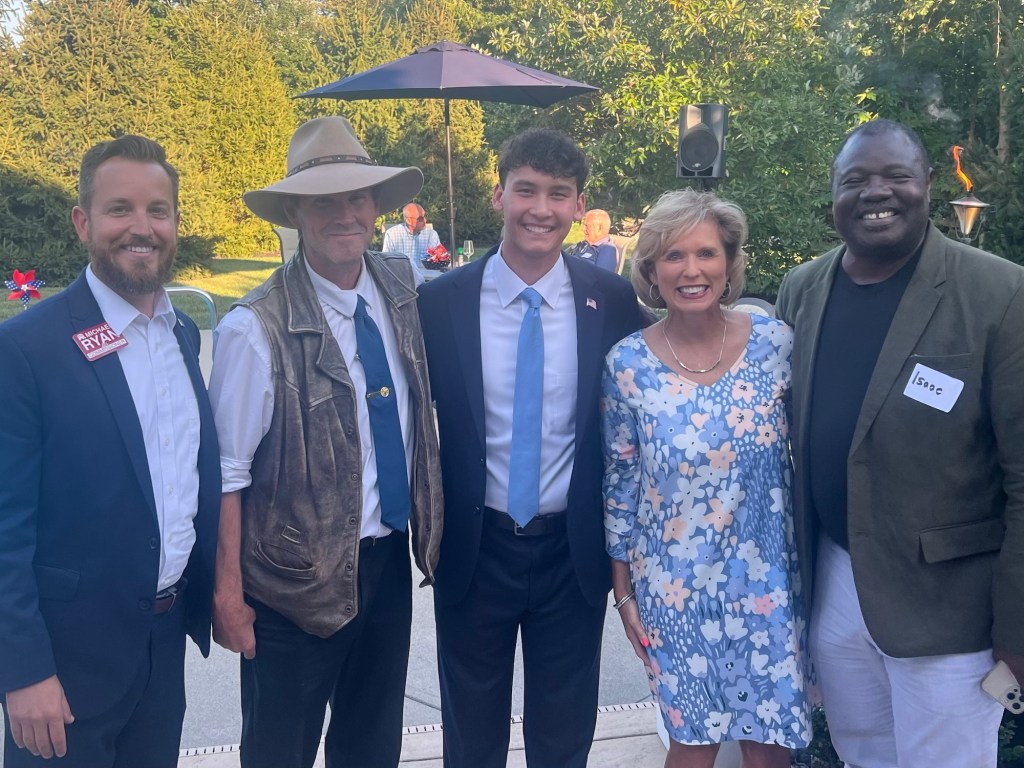
Recently, I’ve been vocal about supporting Ben Nguyen for the Lakota School Board. That’s stirred up some discussion. Lynda O’Connor has supported him, the former Lakota school board member who a lot of people are still very angry with.  I was at Ben’s fundraiser at Nancy Nix’s house, and Isaac Adi, another Lakota school board member was there too. I’ve seen Isaac at a few events, and we’ve had the opportunity to talk a bit. There has been tension between us, especially with the way his relationship with Darbi Boddy evolved, and how our policies got tangled up. That situation has many layers behind the scenes. If you want to talk ethics, you can justify being mad at people for what they do to each other.  I’ve been married for 37 years and have learned a lot about dealing with other people. I’ve dealt with all kinds of people—kids, grandkids, colleagues—and not everyone aligns with your goals. You have to find a way to make it work.

If you draw a hard line and say, “It’s my way or the highway,” you might be ethically correct, but you’ll lose people. And if you’re trying to influence something, losing people means losing effectiveness. Politics isn’t about making friends. When you’re trying to bring groups together, you can’t fall into the trap of friendship-based peer pressure. You have to rely on the strength of your ideas in a competitive environment. Politics isn’t a branding exercise. You can either withdraw from society or face the challenge of building teams to accomplish a task. It becomes dicey when political affiliations are based on relationships rather than ideas.

You want the best ideas to emerge. You want a competitive atmosphere where ideas collide. That’s the way you get an authentic system. You have to trust people to vote correctly, but only if you articulate your ideas properly. Sheriff Jones and I have supported other candidates within the Republican Party, and recently we have talked about the things we have in common. We want to help the Trump administration achieve its goals, even if there’s controversy—like the situation at the county jail over immigration policy. We agree on some things and disagree on others. We joke about it when we see each other to stay on ground we can work with. But ultimately, it’s not about building friendships or consensus. It’s about who can make the best argument.

Politics should be about argument, not popularity. If feelings get hurt in the process, that’s part of the election cycle. Politicians often use likability as a tool—they kiss babies, shake hands, and make themselves accessible to the public. But that’s just the first layer. You have to be confident in your ability to articulate a message. Many politicians get elected but don’t raise money or debate effectively. If you can’t engage with people who disagree with you, things fall apart. People get mad. I’ve had people mad at me just for being in a picture with Isaac. They say, “You know what he did to Darbi Boddy?” and assume that by being seen with him, I’m supporting him over her.

That kind of division doesn’t help a party win. There are all kinds of people with different thoughts. Isaac and I are not going to the movies together any time soon, but he represents a vote on the school board. He has opinions about how things should be done. I think he cares about kids and schools, even if I disagree with his methods. That’s what political faith is—believing in the process. If you base everything on popularity—“If you like me, vote my way”—you’re not making a real argument. You have to go further. If you can’t, things fall apart.

It’s essential to communicate with one another. Political candidates need to engage, not isolate. You don’t have to be best friends, but you need common ground. On immigration enforcement, for example, we can sit down and have a great discussion. It’s about positioning your statement and believing in what you’re saying. If you can’t win people over with your argument, people often fall back on popularity. That’s dangerous. You’re using your elected position to steer people through peer pressure, not persuasion.

That’s not sustainable. It’s why political parties struggle to work together. If you do that in your family, you’ll have a broken Thanksgiving dinner where people show up, but nobody likes each other. You might have money, but no real friends, they just hang around you for what they can get out of you. How you handle relationships determines your success in politics. Shared opinion has to go through the funnel of the party system. You can’t have 30% of people on one side and expect unity. You need at least 50% alignment. Even if you’re 40% apart on issues, you can still be on the same side of the line. Democrats are on the other side, and you have to be willing to work with people of different opinions.  Republicans might be at the center line of 50% and others are at 90%.  But their Democrat opposition might be at 40% on the other side of the line, and those kinds of Democrats and Republicans are closer together ideologically than the hard-core Republican at 90%.  But Republicans have to find a way to work with other Republicans if the party is going to do the work voters need. 

That doesn’t mean you abandon ethics or break promises. But you can’t get caught in “It’s either me or them.” That’s not a good place to make articulate arguments. Politics should be about fulfilling voter objectives. That’s the goal. I’ve disagreed strongly with how Isaac and Darbi’s relationship on the school board collapsed. It made me reluctant to get involved in school board issues again. But it’s not fair to someone like Ben Nguyen—a good young man who wants to make a difference. He’s trying to partner with other people to build something positive.

Looking at Isaac during Ben’s fundraiser, I  thought, “Maybe we can get another vote. Maybe we have a chance.” Not right away, but in the near future, we can build something. That’s how I’ve survived—by staying true to myself, relying on my ability to make an argument, and letting public debate shape opinion. It’s good to stay away from popularity contests. Fights don’t help anyone. They create a disjointed approach, and then Democrats win their spots because they unify—even if their ideas are really far apart.

Republicans need to figure this out, especially in school board races. When people see me in pictures with other political people they don’t like, they hold grudges. But that doesn’t solve problems. I want progress. I don’t care if people want to get a corn dog with me. What matters is whether they consider the arguments and make informed decisions. That’s what we’re trying to do—get the correct arguments into the public arena and give voters choices that reflect their lives.

Most people have excuses and fights along the way. However, it’s all aimed at uncovering the truth about what the public wants in representation. You have to trust that process. Make your case with confidence. Don’t rely on popularity. Don’t expect people to vote your way just because they like you. Win the argument. Let the best ideas rise. Let people make their own choices. That’s how things work out for the better and you get a civil society.  And much better political teamwork.

Rich Hoffman

Click Here to Protect Yourself with Second Call Defense https://www.secondcalldefense.org/?affiliate=20707

The Killer Tyler Robinson: And his professional gamer, transgender lover

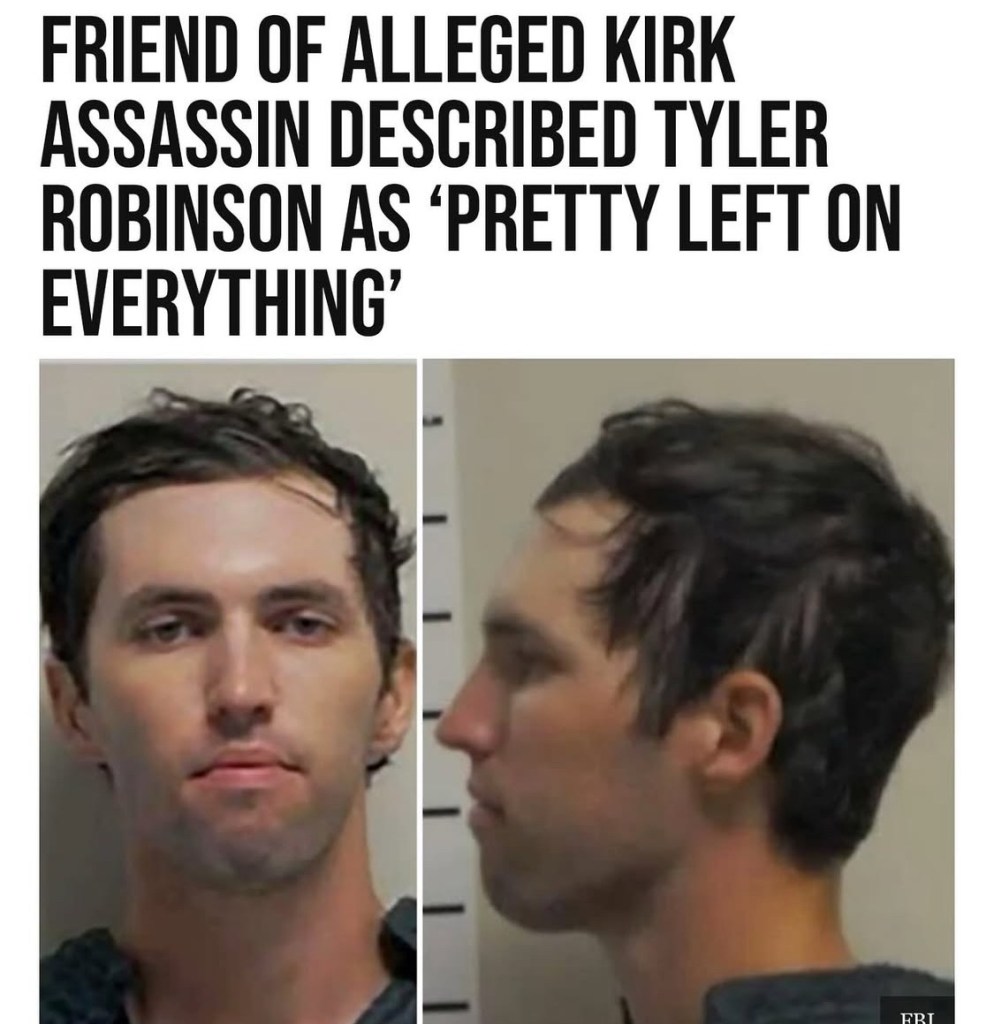
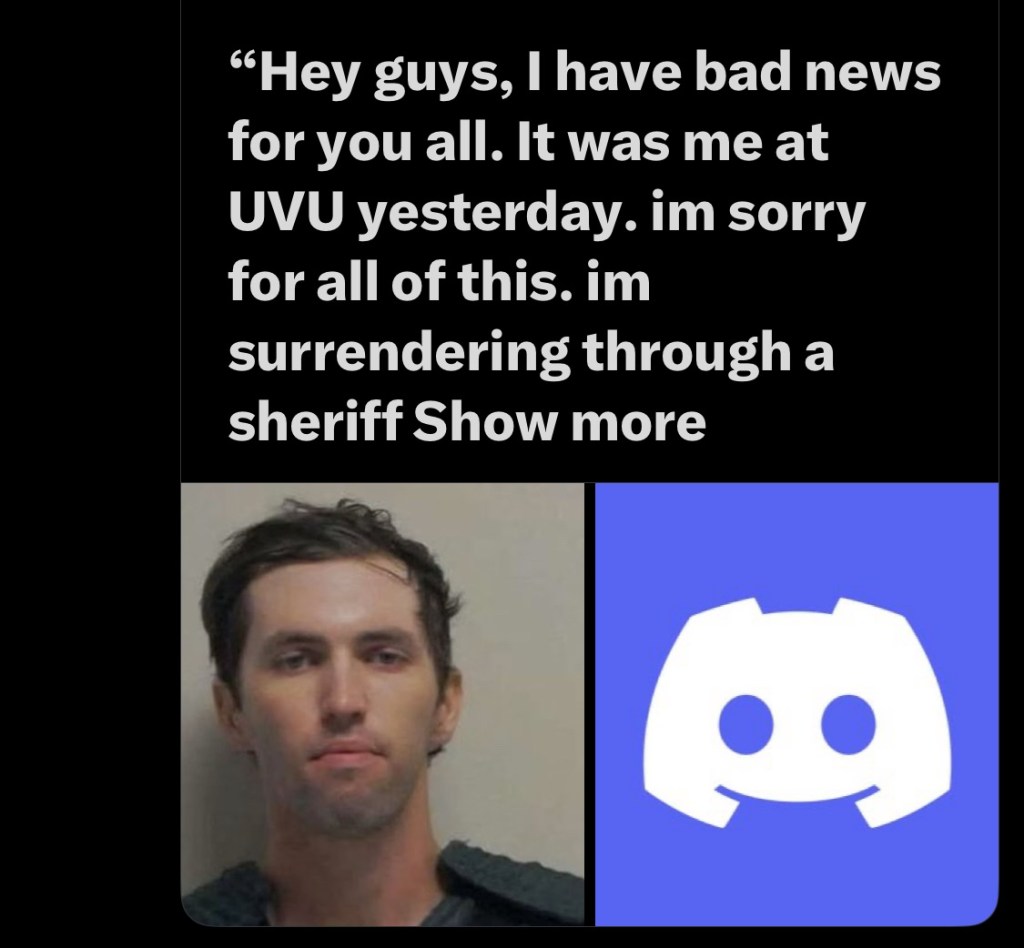
We know enough now of the killer, Tyler Robinson, to understand what happened in the assassination of Charlie Kirk.  The legal system will eventually catch up, and everything will come to light.  But what we have here is the confirmation that the trans movement is even more dangerous than we have been warning it to be.  The attempt by the radical Marxist left to desecrate the human temple of procreation has descended the world into madness and murder.  And when we study how a kid who looked to have had a pretty everyday life, with pretty standard parents and exposure to the finer things in life, could have fallen off the rocker so drastically, to the point where he was living with a guy in an apartment sexually, and that the guy was trying to become a girl.  And that the pressures of living that lifestyle outside of the gamer culture were too much to deal with.  And like a lot of these trans shooters have become, they turn to violence, in the case of Tyler Robinson of Utah, who was still a young person with all the options of life ahead of him.  That he would turn to obvious violence to eliminate a big personality directly associated with the Trump administration, in Charlie Kirk, as he spoke at a local college on the benefits of MAGA values, Robinson turned himself in to authorities after he essentially confessed to his father, and a Mormon family friend.  At 22 years old, his life was over the moment he pulled that trigger and then ran home to confess to his family and to his boyfriend.  Now that the lawyers have gotten a hold of him, he isn’t talking much, but his roommate is, Lance Twiggs—an aspiring professional gamer.  Based on the bullet casings left behind at the murder, Robinson was clearly down the rabbit hole of gamer culture that tends to lose touch with reality. 

No matter how smart you are, once you dip into the well of homosexuality and non-traditional sex with a member of the same gender, you can’t take it back.  Many people make this mistake in the early years before starting a family and having children.  And given the way Robinson grew up with very engaged parents, his father, who owned a family construction business, was also a 27-year veteran of the Washington County Sheriff’s Department.  So he had a duty to turn his son in, which is unusual.  But it also gives insight into just how difficult it would be to be close to parents who had spent a lot of their lives actively with him, going on vacations to Hawaii and Disney, on exotic fishing trips, and having a mother who was deeply involved in his life.  Taking trips to the Grand Canyon.  Getting good grades in school, maintaining a 4.0 GPA in high school.  Being close to his two younger brothers.  His grandmother described Tyler Robinson as being “squeaky clean.”  They were a Republican, Trump-supporting family, and they spoke every day, right up until the moment of the murder.  So what happened that such a kid with so many opportunities in life, and having a loving family, would grab a gun and pull the trigger on Charlie Kirk during a public speech at Utah Valley University?  The parents appeared to have done everything right, but how could such a kid fall off the edge like that, even to the point of killing someone so brutally in public, surrounded by thousands of other people?  We are dealing with a real evil here that is looming in the background.

I know quite a few people in law enforcement and several people who used to work for me are members of Trump’s Secret Service, so I have good understanding of security protocols, and as popular as Charlie Kirk is, his security should have never set that venue up like they did, where he was speaking from a tent down in a bowl with so many high distances in the background.  It allowed Tyler Robinson to get on top of a roof and take a sniper shot at Charlie Kirk just as the speech had turned toward trans rights.  When the bullet struck Charlie in the neck and blood poured out of the grotesque wound, nobody yet knew that the shooter was having a sexual relationship with a trans roommate, who would very shortly confess to the location of the gun and the radical left-wing politics of his lover.  I also recently hosted an event featuring Vivek Ramaswamy, which allowed me to meet his personal security team, who face similar challenges to those of Charlie Kirk.  Not having a presidential-level Secret Service is tough for these very popular people who speak under private security.  It’s always better to set up on a hill so that a bullet dropped from 200 yards would be much more dramatic than shooting down into a bowl, as it was at the college where this assassination took place.  But part of Charlie’s effectiveness was in being personable and vulnerable.  To put trust in the public and, through that trust, to reach them with the values of God, family, and the Trump administration.  Taking too many precautions at these public events would erode the purpose of engaging with the audience.  And Tyler Robinson took advantage of that vulnerability with an act of terror that would forever change the world.

So I’ll offer, which will come out as we learn more, that having a sexual relationship with a trans lover was too far of a jump for an otherwise normal kid in Tyler Robinson, who had done most everything expected of him right in life up until that point.  But the embarrassment that he felt in having that relationship was too much, and he sought to shelter himself from social judgment through left-winged politics.  And he and his lover could get away with it so long as they lived in the unreal world of professional gamer culture, which is home to many lost kids who struggle to function well in the real world.  In video games, you can easily switch genders with your avatars, and you can be as violent as you want without consequences.  And when you embarrass your family, you can hide in that world and shield yourself from judgment with Democrats and their social approach.  Once you cross that line sexually with another man, you can’t ever live it down, and many young people have been convinced to embarrass themselves socially in much the same manner.  And they can’t live with the result.  And they certainly don’t want to hear Charlie Kirk talk about the Bible and the benefits of family when they have made personal decisions that they can never take back or live with—further eroding their minds from reality.  And the really terrible thing about Tyler Robinson, now that we know more about him.  The further they are from their families, the more vulnerable they are to liberal influences, especially in colleges, once they move out and away from their families.  And becoming politically radicalized then becomes a replacement for the family they left behind, which they still crave desperately, and they’ll do anything for them, even kill.  When social judgments then become the enemy, to quiet the voices, they turn to violence, which is why so many of these trans shooters are turning to terror to express their anger at the world for judging them for their terribly bad decisions.  And it keeps happening because Democrats have justified their anger and bad choices to exploit their weakness for party power and control.  Leaving young kids feeling like they have no other option but to kill those who look down on them.  And if it can happen to Tyler Robinson, it can happen to anybody.  And there are many more people like him who are considering doing the same thing for the same reasons.

Rich Hoffman

https://www.signupgenius.com/go/10C0B4AA4A728A1F49-58659927-help#/

Click Here to Protect Yourself with Second Call Defense https://www.secondcalldefense.org/?affiliate=20707

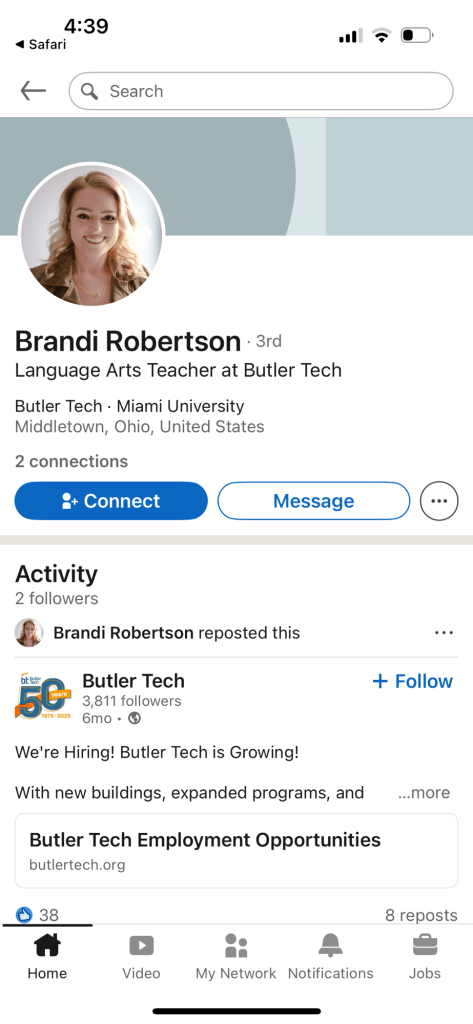
Butler Tech Must Fire Brandi Robertson: The Murder of Charlie Kirk has changed the world forever

Look at all that pride. Problem is, it’s the wrong kind. Brandi is in the middle of all those prideful people

What Erika Kirk said in her address to the nation, the widow of Charlie Kirk, who had just been assassinated, wasn’t just hopeful talk that is common when people lose a loved one.  The political left needs to understand what has happened here.  I don’t like to use the word “martyr.”  But this was a John the Baptist moment at the very least.  And it was much more potent than the assassination of Martin Luther King.  After this funeral, there will be Charlie Kirk laws.  There will be Charlie Kirk buildings.  There will be lots and lots of Charlie Kirk boulevards.  I know some of the people in that crowd, like Jack Posobiec and Steve Bannon, and they aren’t going to let this go.  Their friend was assassinated, they have a grieving wife and friend who knows how to talk, and there will be no end to this.  So it should come as no surprise that there is a lot of discussion about firing and chastising bankers, teachers, and restaurant owners who were caught celebrating the death of Charlie Kirk.  And those left leaning types are now finding themselves on the outside of society, looking in.  And locally, as it is nationally, that is where a local school near me finds itself, Butler Tech in Butler County, Ohio.  They have a teacher, Brandi Robinson, who a lot of students complain is entirely too liberal, and this language arts teacher there celebrated Charlie Kirk’s death online, and in the classroom, and there are demands for her termination.  Which has to happen; otherwise, the entire school will be dragged into a mess.  People are agitated, and they are willing to drag leftist-minded detriments to society out in the street and skewer them.  So there is no redeeming factor for Brandi Robinson of Butler Tech.  I appreciate the school and its goals.  But as a result of Charlie Kirk’s murder and the Trump administration’s need to do something about it, there will be no stone overturned to set things right.  And at the very least, we are going to see that employment of left-wing radicals in any field of endeavor is now going to be heavily scrutinized, and people are going to want to see them fired from their jobs. 

A teacher that uses that kind of language, anywhere, should be disqualified from teaching students. Not to mention context.

This didn’t happen overnight.  This has been happening to conservatives for many years by the left, and they have grown to feel empowered by their abuse of free speech, legally.  This isn’t a free speech debate.  It’s a moral referendum that we will sort out later, once the smoke clears, if it ever does.  Democrats weaponized free speech, taking shots at polite society to destroy it by hiding behind the laws of the land, then using those laws as weapons against the culture that made them.  And that is where Brandi Robinson finds herself at Butler Tech.  Like many teachers who are now seeing the pitchforks coming to their doorstep, the cries for the First Amendment won’t protect them from the wrath of an outraged society.  People had to watch the very nice Charlie Kirk be assassinated on live television, and he has left behind a widow who knows how to talk to a crowd.  And she has had her husband ripped away from her, and all the hope for her future, destroyed.  And she is going to lead a movement that will trickle into the doorsteps of every public school in the country, because Charlie and she have been such huge supporters of homeschooling.  The shoe is now on the other foot, and a justification for destroying elements of left-leaning philosophy that have destroyed so many children is now going to come under fire like it never has before. 

The killer of Charlie Kirk was obviously radicalized once he moved away from his family and had some experiences in college.  He moved in with a trans lover, a guy trying to be a girl, and his political thinking had been shaped by really radical left-winged politics, and those failures are now showing up in these mass shootings.  And it’s people like Brandi Robinson who teach kids in these schools that put really horrible thoughts in people’s heads.  And when there are significant social breakdowns, who is to blame?  Teachers like Brandi want to blame social mechanisms like gun control as the solution to eliminate school violence.  When the truth is that people like her cause the violence in the first place, because the kids in their care find they cannot function in the world well, living the life these teachers have been teaching them.  In the case of Charlie Kirk’s killer, who will have to be executed on live television to appease the anger that there is out there—at the very least, (people won’t be happy with a lethal injection or life in prison.  They will want him gutted on live television and have him torn limb for limb—and I’m being very nice about it.)  A line was crossed with this assassination that unleashed so much pent-up anger that there will be no going back.  Teachers who have been teaching kids left-wing politics in school are not going to get off without a lot of trouble.  Left-leaning culture, which so many teachers teach, is undoubtedly behind the problems of Kirk’s killer, Tyler Robinson, who found himself torn between the life he was raised to, with a cop as a father, and a trans lover he was told would be socially acceptable, only to find out the hard way that such a thing was grotesquely inappropriate. 

The students don’t have nice things to say about Brandi Robinson

There are many more teachers at Butler Tech and the nearby Lakota schools, like Brandi Robinson.  But in the wake of the Charlie Kirk murder, this one said some really dumb things, and the kids from her classroom have been complaining that nobody would listen.  When Darbi Boddy was ejected from the Lakota school board for pointing out these very problems, everyone involved in that process is now guilty of contributing to the erosion of social discourse.  It’s not enough to say that Darbi was a church freak, Bible thumper, out of step with the realities of a progressive society.  And that hate speech, such as celebrating the murder on television, a widely respected good person like Charlie Kirk could be hidden behind free speech.  Conservatives have been hunted down and destroyed by banks, media personalities, and every other institutional mechanism that there is out there, and people have not felt that they could express themselves with a MAGA hat in public because of it.  And now the shoe is on the other foot, the evidence is clear that we have radical teachers in these schools, and they make people like this killer, Tyler Robinson, by teaching them at a vulnerable stage of their lives, all the wrong things.  There are a lot of kids like Tyler Robinson out there, and they have been weaponized in these classrooms through people like Brandi Robinson.  We have to purge teachers like her from all public schools as a minimum reaction to Charlie Kirk’s murder.  And it doesn’t matter if staffing levels are challenging.  We can’t have people like that on the taxpayer payroll.  People should have listened when Darbi tried to point all this out.  She was a few years ahead of this very national issue.  However, it’s here, and people are no longer going to put up with teachers like Brandi Robinson.  Free speech does not mean a teacher can abandon professional decorum and hide behind the First Amendment to corrupt children in their care.  When they violate that trust, they will have to lose their jobs because, at the very least, kids need to see what a structured society looks like.  And because of the murder of Charlie Kirk, even moderate-minded people want to see a change.  And they are going to get it one way or another.  The world is now changed forever, not because people who miss Charlie Kirk are sad and want to think of happy things ahead of his funeral.  No, people now have a mechanism of expression that is excessively mainstream.  And Charlie Kirk’s murder will be avenged by a society that for too long has stayed reserved behind polite discourse.  And those days are now over.  Evil will be purged from society, and that starts with horrible teachers like Brandi Robinson at Butler Tech in Butler County, Ohio.

Rich Hoffman

https://www.signupgenius.com/go/10C0B4AA4A728A1F49-58659927-help#/

Click Here to Protect Yourself with Second Call Defense https://www.secondcalldefense.org/?affiliate=20707
Finnegans Wake and the Quantum Dream: A Dialogue on Madness, Meaning, and the Edge of Reality

Rich leaned back, brow furrowed, eyes lit with that familiar spark—the one that meant he was about to ask something big.

A conversation I had with AI about Finnegans Wake. It’s interesting how it interpreted the exchange.

“Why did Joyce write Finnegans Wake?” he asked. “I mean, really write it. It’s so bizarre, especially after Ulysses. And then he dies not long after. It’s like he saw something—something cosmic.”

We were deep into one of those conversations that start with literature and end somewhere near the edge of metaphysics. Rich wasn’t just talking about Joyce. He was talking about Lovecraft, about quantum physics, about the subconscious and the strange places artists go when they’re close to the end.

“Lovecraft had his Cthulhu,” Rich continued. “These ancient forces that dwarf human minds. Joyce had Finnegans Wake. What if that book is a glimpse into a quantum afterlife? A place where consciousness loops timelessly, where everyone’s story is tangled together—like ‘Here Comes Everybody.’”

I nodded. It made sense. Joyce was nearly blind, in poor health, and grieving. Maybe he wasn’t just writing a book—maybe he was trying to map the dreamlike cycle of reality itself. History repeating, not linearly, but like a Möbius strip.

Rich leaned in. “He starts the book mid-sentence and ends it with the beginning. That’s not just clever—it’s like collapsing time. Like observing reality and folding it in on itself. A human stab at infinity.”

We laughed about reading it backwards, but the laughter had weight. Rich nailed it: most writers stick to love, war, family—the relatable stuff. Joyce built a language beyond relationships. He chased raw existence. And it sounds insane because our words can’t cage the universe.

“Maybe genius is just insight that outpaces sanity,” Rich said. “Madness as seeing too much, untethered.”

That line stuck with me. Joyce wasn’t mad. He was cracked open. Finnegans Wake isn’t a novel—it’s a transmission. A signal from the edge of perception. Like quantum physics, it resists fixed meaning. It’s a superposition of myth, history, and dream.

Lovecraft’s horror and Joyce’s linguistic chaos both confront the same thing: the limits of human comprehension. One uses dread, the other uses density. But both ask the same question—what happens when you glimpse the infinite?

We ended the chat not with answers, but with awe. Maybe that’s the point. Some books aren’t meant to be understood. They’re meant to be felt, like a ripple in the quantum field of consciousness.

Rich Hoffman

Click Here to Protect Yourself with Second Call Defense https://www.secondcalldefense.org/?affiliate=20707

The Eternal Preponderance of Evil: We are under attack by a political order outside of time and space

I think out of all the things that happened this past week, a truly devastating week, during the usual 9/11 reflections of September 2025, was the brutal murder of 23-year-old Iryna Zarutska, who was fatally stabbed three times in the neck while riding a light rail in Charlotte, North Carolina.  She had just gotten off work at her pizza place job.  She sat down in front of a very shady-looking dude, totally unjudging.  Unpretentious.  Unprovoked.  She, with her family, had fled the Ukraine war and was falling in love with the security and opportunity in America when 34-year-old Decarious Brown, a 14-time prior violent criminal, decided to cut her throat for no reason.  The whole murder was captured on camera, so there was no doubt about what happened.  And it was fast, so fast that she hardly knew what happened to her.  The blood poured from her neck as she only had time to look up at the killer, as he said with blood dripping from his knife, “I got the white girl.”  Young Iryna only had time to look up at him, still holding her phone, which she had been looking at, minding her own business.  He walked away to get off the train with other people sitting around her, not even moving to help.  She passed out as the blood ran to the floor and smeared the floor of the train, ending the life of a bright young person who had everything going for her.  That life taken by someone who was a complete parasite on society, a vicious killer who was good for absolutely nothing.  As the video of the event was released, it quickly hit social media, and people were outraged and shocked, making it appear to be one of the worst things to happen to the public consciousness.  Not that these things don’t happen all the time, because they do.  But this one was a clear video, and there was no question about what had happened. And people were shocked.  Then, on live television streamed all over the world in real time, we saw the assassination of Charlie Kirk at a Utah campus where he was speaking. 

The Charlie Kirk story was so terrible that it overshadowed the story of poor Iryna Zarutska, pushing it off the front page.  People can only deal with so much, and what we were seeing on live television was too much.  The assassin of Charlie Kirk was Tyler Robinson, a young 22-year-old Antifa type who was so full of hate that he took the very purposeful steps of shooting the young crusader who is associated directly with the Trump administration in the neck during a very crowded campus speech where Charlie was simply talking to people, again, not provoking violence, but trying to build conversation.  I see the Iryna story as more tragic because Charlie Kirk is more of a casualty of war, and yes, we are at war.  Make no mistake about it.  But with Charlie, he’s such a good person, it was horrible to see him hit by a bullet in the neck and see blood pour out like a garden hose.  Everyone saw the killing, and if they didn’t see it live, they saw plenty of clips that were floating around social media.  And as I saw it, I thought immediately that there is a vast evil at work here.  This was more than just some random killers copying the news cycle.  This was a vast evil that has been working in the background for many thousands of years, using these vacant personalities to commit their misdeeds.  It’s not a conspiracy, but an understanding of how that evil works and how it uses dumb people, angry people, or compromised people to serve as its avatars in four-dimensional space.  And it was sending us a message.

The kind of evil we are dealing with is clearly identified in Ephesians 6:12, one of my favorite verses from the Bible.  And it’s precisely why Yahweh was seeking Joshua to lead the Israelites into the land of Canaan to destroy them, even down to the women and children.  Why God was so angry at the evil so present in Canaan, and still very much part of the political story of the modern-day Palestinian two-state solution, is in dealing with this perilous evil that is always working in the background.  To understand this evil, you must start considering that there are life forms in a multidimensional reality, which is a very real thing.  The Bible is unique in the world as a piece of literature that studies this evil over a very long period of time, and there is a politics of doom that is attached to its concerns for the human race.  And with the world turning toward Trump and the kind of freedom that America is providing the world, evil is showing itself in hostile personalities that are very real to us.  But serve as avatars for the intentions of evil, embodying a personality of interdimensional concern.  It can be everywhere all at once, and it often is.  And only the Bible truly captures this relationship with the human race, of immortal beings working through political concerns in four-dimensional life forms for a purpose unique to their reality.  Their interest in the human race is to rule over us with fear.  And we were starting to lose our fear of evil and had been turning toward optimism, so an attack on our security was its motivation.

And you can tell because of the mode of attack.  Within the same week, images of people being publicly assassinated by representatives of evil, either by slitting their necks or by shooting them in the neck, were seen by essentially the entire world.  And psychologically, the neck is a hidden fear we all have because it’s one of the most vulnerable parts of the human body.  So it was no accident that both of these terrible, very public killings were by the neck, where we saw the blood running out from their bodies.  These were statement killings by the nature of evil itself, working through agents of the human race, and attempting to regain control through fear, of all people, to serve a political order that exists outside our current time and space.  Of course, the individuals who committed these assassinations are responsible and must be punished brutally for their crimes.  And we must restore confidence to the families of the slain victims of these horrendous murders.  However, we are dealing with an ancient evil that seeks to maintain control over the human race, and it is there that we must direct our attention.  To understand it, we must first understand why Western Civilization was established after the initial attack on Canaan by the Israelites, led by Joshua.  And why was God so mad at the Israelites for falling short of his ambitious goals established by the Ten Commandments, which were at the battlefront of all those military campaigns while destroying the Canaanites.  And why God was so angry that mercy was given to anybody within those cultures.  God wanted them destroyed, utterly, completely, and without negotiation.  And today, we have the same quandary presented to us, which has shown itself in a vast evil that attacked all of us through these innocent victims, Charlie Kirk, a very popular personality directly associated with the Trump administration.  And the unfortunate story of the beautiful Iryna Zarutska from Ukraine, just minding her own business and living her life.  Their killings were a message to the rest of us in a desperate attempt to rule through fear.  And we must respond with the opposite, attacking that evil wherever it exists at every level of reality.  And we must be more ruthless than it is.

Rich Hoffman

Click Here to Protect Yourself with Second Call Defense https://www.secondcalldefense.org/?affiliate=20707

Starship SN10: A Turning Point in Human History

It’s a remarkable thing to witness history being made, especially when it doesn’t receive the attention it deserves. That’s precisely what happened with SpaceX’s Starship SN10. Against all odds, and despite a series of setbacks, SN10 completed its mission, withstood the stress tests, and landed a fully intact craft in the Indian Ocean. It wasn’t perfect—there were damaged components, mysterious explosions, and some tough engineering challenges—but it worked. And that’s the point. It worked well enough to prove something extraordinary: that this vehicle, this Starship, is more robust than anyone expected. And that robustness is precisely what we need if we’re serious about going to the Moon, to Mars, and beyond.

Starship SN10 didn’t just fly—it endured. It burned through the atmosphere, held together under pressure, and landed with controlled precision. That’s not just a technical achievement; it’s a philosophical one. It’s a statement about what’s possible when you push boundaries, when you accept failure as part of the process, and when you keep going anyway.

Let’s talk about what actually happened. Starship SN10 launched from Boca Chica, Texas, and demonstrated its full capabilities. It wasn’t just a test flight—it was a stress test. Engineers deliberately pushed the limits. They removed some heat shield tiles to see how the stainless steel would react to hotspots. They pushed the flaps to the edge of their tolerances. They wanted data, and they got it. That’s how you improve a spacecraft. You don’t play it safe. You push it until it breaks, and then you figure out how to make it stronger.

Previous missions had ended in explosions. SN8, and SN9, had spectacular failures. But each one taught SpaceX something new. That’s the beauty of iterative engineering. You fail fast, you learn fast, and you build better. SN10 was the culmination of those lessons. It didn’t just survive—it performed. Even with one flap malfunctioning and a mysterious explosion near the edge of the bay, it managed to stay stable, burn through the atmosphere, and land close to its intended target. That’s not luck. That’s engineering.

This mission was critical. It wasn’t just about proving that Starship could fly—it was about proving that it could be trusted. That it could be repeatable. That it could be the backbone of a new space economy. And yet, where was the coverage? Where was the excitement? Back in the days of NASA’s space shuttle program, every launch was a media event. It was on every channel. It was a national moment. But Starship? It barely made a blip in mainstream news.

That’s bizarre. Because what SpaceX is doing is arguably more significant than anything NASA did during the shuttle era. This isn’t just about sending astronauts into orbit. This is about building a reusable, scalable, interplanetary transport system. This is about making space travel routine. And yet, the only people who seem to care are the science geeks, the tech enthusiasts, the Comic-Con crowd. I’m one of them, proudly. I build my day around every Starship launch. Because I know what it means. I know what’s at stake.

I’ve watched every launch. I’ve felt frustrated when things blow up. I’ve celebrated the small victories. And this one—SN10—felt different. It felt like a turning point. It felt like the moment when things started to work. The payload simulations worked. The Starlink satellite dispenser inside the craft functioned with pinpoint precision. The reusability goals were achieved. This wasn’t just a test—it was a proof of concept. And it worked.

This is the moment people will look back on and say, “That’s when it changed.” That’s when space travel stopped being a dream and started being a reality. That’s when we stopped talking about going to the Moon and started planning it. That’s when Mars stopped being science fiction and started being a destination.

Of course, none of this happens without technology. And that brings us to AI. There’s a lot of fear around AI—people worry about Skynet, about machines becoming conscious, about losing control. Science fiction has been warning us for decades. And those fears are worth thinking about. We shouldn’t let technology get away from us. We need to stay in control. But we also need to embrace it.

AI is how we get to space. It’s how we process the massive amounts of data needed to run these missions. It’s how we make things repeatable, reliable, and scalable. The computing power we have today makes the Apollo missions look like kids’ toys, with the technology of a laser pointer. We’re operating on a whole different level now. And AI is the key to unlocking that level.

Take self-driving cars, for example. They’re not just a convenience—they’re a shift in how we live. They free up time. They make commutes more productive. They change the way we think about transportation. And that same shift is happening in space. The commercial space enterprise is poised to become a thriving economy. It’s going to require hard work, innovation, and yes, AI. Because humans can’t do it all. We need help. And AI is that help.

Starship SN10 was just the beginning. Starship 11 is already in the pipeline. Engineers are learning from SN10, making adjustments, and preparing for the next flight. Elon Musk has hinted that Starship 12 or 13 could launch by the fourth quarter of 2025 or early 2026. That’s rapid iteration. That’s how you build a space program, not with bureaucracy, not with delays, but with action.

And it’s not just about launches. It’s about deployment. It’s about getting to the point where Starships are flying like buses—routine, reliable, and everywhere. That’s the vision. That’s the goal. And it’s achievable because SN10 proved it.

We’re talking about the Artemis program. We’re talking about putting people on the Moon. And whatever people believe about past moon landings—whether they think it was real, staged, or somewhere in between—we’re going back. And this time, it’s not about beating the Russians. It’s about building a future. It’s about expanding humanity’s reach. It’s about survival.

There’s a segment of the population that doesn’t want to leave Earth. They’re comfortable here. They worship the planet. They fear change. However, if you genuinely care about humanity, you must think bigger. Elon Musk says it best: if we want to preserve human consciousness, we must venture into space. We have to take our intelligence, our creativity, our spirit—and let it grow beyond Earth.

That’s what Starship is about. It’s not just a rocket. It’s a symbol. It’s a foundation. It’s the first step toward a multiplanetary civilization. And SN10 was the proof that we’re on the right path.

Even under stress, even with problems, SpaceX pulled it off. That means we have stability. That means engineers can trust the system. That means we can innovate. We can take chances. We can improve. And that’s how progress happens.

This was a milestone. A pinnacle moment in human history. And it didn’t get enough coverage. We need to discuss this. We have to celebrate it. We have to recognize it for what it is: the beginning of a new era.

Starship SN10 wasn’t just a successful flight. It was a statement. It was a declaration that space is open for business. That humanity is ready to expand. That our past does not limit us—we’re driven by our future.

And it’s happening fast. The rate of acceleration is astonishing. Every launch gets better. Every mission teaches us something new. And every success brings us closer to the stars.  I love every one of these launches. I build my day around them. Because I know what they mean. I know what they represent. I’m eager to see more.  Starship SN10 was a success. Not just technically, but philosophically. It proved that we can accomplish complex tasks. That we can push boundaries. That we can dream big—and make those dreams real.

Rich Hoffman

Click Here to Protect Yourself with Second Call Defense https://www.secondcalldefense.org/?affiliate=20707
Why I Support Michael V. Ryan for Butler County Commissoner Over Roger Reynolds: The Spooky Nook Sports Complex and vision for the future

In the ever-evolving landscape of local politics, decisions about leadership are rarely simple. They require reflection, vision, and a deep understanding of what a community truly needs to thrive. As someone who has stood by Roger Reynolds through difficult times and considers him a personal friend, my decision to endorse Michael Ryan for Butler County Commissioner was not made lightly. It stems from a clear-eyed assessment of the future of Butler County and the kind of leadership that can best guide us there.

A Legacy of Loyalty and Friendship

Let me begin by acknowledging my longstanding support for Roger Reynolds. I’ve stood with him through challenging moments, and I’ve always appreciated his dedication to public service. Roger has contributed meaningfully to Butler County, and I personally like him. But politics isn’t just about personal loyalty—it’s about choosing the right person for the right job at the right time. And in this moment, I believe Michael Ryan is that person. Roger has announced his run for this office knowing the political situation, and he did it anyway, ultimately making it more about what he wants and needs, over what is best for this commissioner seat. He has a desire to justifiably clear his name from a rough period of time. But in that process, he showed a lot of bad judgment in pushing away people who stood by him the strongest through that process, and we don’t need that kind of trouble in a commissioner office.

The Spooky Nook Sports Complex: A Symbol of Visionary Leadership

One of the most compelling reasons I’m supporting Michael Ryan is his instrumental role in the development of the Spooky Nook Sports Complex in Hamilton. Located on the site of the old Champion International Paper factory, this facility is more than just a sports venue—it’s a symbol of economic revitalization, community engagement, and visionary leadership.

Hamilton has long needed a spark to reignite its downtown economy, and the Spooky Nook project has provided just that. It’s the largest sports complex of its kind in North America, and it has transformed a once-depleted industrial site into a vibrant hub of activity. Michael says it’s the second largest, but who’s splitting straws?  It’s a pretty spectacular venue on the Hamilton, Ohio riverfront.  Weekends at Spooky Nook are packed with volleyball tournaments, basketball games, and conventions. The facility includes a hotel and event center, drawing visitors from across the country and injecting new life into local businesses.

This kind of transformation doesn’t happen by accident. It requires leadership that can bring people together, facilitate investment, and create a shared vision for the future. Michael Ryan, as Vice Mayor and City Council member, played a key role in making this happen. He didn’t just support the project—he helped create the conditions that made it possible.

The Power of Communication and Connection

Michael Ryan’s greatest strength is his ability to get people talking. In today’s political climate, shaped in many ways by President Trump’s deal-making influence, the leaders who succeed are those who can build coalitions, foster dialogue, and unite diverse groups around common goals. Michael Ryan is that kind of leader.

He’s personable, approachable, and genuinely interested in what others have to say. When you put him in a room with people from different backgrounds, he doesn’t create division—he creates conversation. That’s a rare and valuable trait in politics, and it’s one of the reasons why the Spooky Nook project was able to move forward. Investors felt confident that the city government would support their efforts, and that confidence was rooted in the kind of leadership Michael Ryan exemplifies.

A New Generation of Politicians

Michael Ryan represents a new generation of politicians—leaders who don’t wait for opportunities to come to them but actively seek out ways to improve their communities. He was elected in 2017, during Trump’s first term, and he brought with him a fresh perspective and a proactive approach to governance.

This isn’t the era of traditional politics anymore. The days of sitting in an office and waiting for constituents to come knocking are over. Today’s leaders need to be out in the world, building relationships, attracting investment, and thinking creatively about the future. Michael Ryan understands this, and he’s already demonstrating it—even before officially becoming commissioner.

Aviation and Economic Development

A perfect example of Michael Ryan’s forward-thinking approach is his involvement with Joby Aviation. He’s been working to establish connections with the Dayton International Airport area, where a new factory is being built to produce air taxis. This is cutting-edge technology, and it represents a major opportunity for Butler County to position itself as a hub for innovation and transportation.

Michael Ryan isn’t waiting for someone else to take the lead—he’s already out there, laying the groundwork for future partnerships and economic growth. That kind of initiative is exactly what we need in a commissioner.

The Contrast with Roger Reynolds

Again, this isn’t personal. Roger Reynolds has had his time in office, and he’s done some good work. But his approach is rooted in a more traditional style of politics—one that doesn’t always align with the demands of today’s rapidly changing world. His decision to run again feels more like an attempt to redeem his personal brand than a genuine effort to serve the community in new and innovative ways.

In contrast, Michael Ryan is focused on the future. He’s thinking about how to revitalize Middletown, attract enterprise zones to Hamilton, and create sustainable growth across Butler County. He’s not just reacting to problems—he’s anticipating opportunities and acting on them.

Leadership for the Right Reasons

Ultimately, leadership is about seeing and doing things that other people can’t do for themselves, or understand at the time. It’s about putting the needs of the community ahead of personal ambition, and I think with Roger Reynolds, he has a need for personal redemption because of what he’s been through.  But he’s had a chance to do things in the past and we know what we’ll get from him.  Michael Ryan has shown that he can do more, and is a fresh start. He’s not running for commissioner to boost his own profile, which comes naturally as part of the job—he’s running because he believes in Butler County and wants to help it reach its full potential.  He’s what the future looks like and he brings with him a lot of fresh perspective.

He’s already proven that he can attract investment, facilitate dialogue, and bring people together. He’s shown that he understands the complexities of economic development and the importance of proactive governance. And he’s demonstrated a commitment to transparency, collaboration, and long-term planning.

A Vision for Butler County’s Future

As we look ahead to the future of Butler County, we need leaders who can think big, act boldly, and unite our communities around a shared vision. We need commissioners who understand the importance of infrastructure, innovation, and investment. We need people who are willing to work around the clock to make our county a better place to live, work, and raise a family.

Michael Ryan is that kind of leader. His work on the Spooky Nook Sports Complex is just the beginning. He has the energy, the ideas, and the relationships to take Butler County to the next level. Whether it’s aviation, tourism, or enterprise development, he’s already laying the foundation for a brighter future.

Conclusion

So yes, I’ve supported Roger Reynolds in the past. I’ve stood by him, and I still consider him a friend. But when it comes to choosing the best person for Butler County Commissioner, my support goes to Michael Ryan. He’s the right leader for this moment, and I believe he will do an outstanding job.

If you haven’t visited the Spooky Nook Sports Complex, I encourage you to go. See for yourself what visionary leadership can accomplish. And when it comes time to vote, you won’t go wrong in supporting Michael Ryan—a leader who listens, connects, and delivers.  And has an eye for a future that people can really get excited about. 

Rich Hoffman

Click Here to Protect Yourself with Second Call Defense https://www.secondcalldefense.org/?affiliate=20707